Article

Molecular Structure-Sensitive Detection in MALDI-MS Utilizing Ag, CdTe, and Water-Splitting Photocatalyst

1
Bio-Nano Electronics Research Centre, Toyo University, 2100 Kujirai, Kawagoe 350-8585, Japan
2
Department of Applied Chemistry, Graduate School of Science and Engineering, Toyo University, 2100 Kujirai, Kawagoe 350-8585, Japan
*
Author to whom correspondence should be addressed.
Analytica 2025, 6(4), 53; https://doi.org/10.3390/analytica6040053 (registering DOI)
Submission received: 24 October 2025 / Revised: 19 November 2025 / Accepted: 28 November 2025 / Published: 1 December 2025
(This article belongs to the Section Sample Pretreatment and Extraction)

Abstract

We have developed mold matrices that can be employed to distinguish between enantiomers (D- and L-glucose) and structural isomers (n- and iso-stearic acid) in matrix-assisted laser desorption/ionization mass spectrometry. Utilizing a temperature-responsive polymer, a molecular structure recognition film was created around metal or semiconductor particles, such as silver (Ag) or cadmium telluride (CdTe), forming the core. Molecules that fit the template structure were selectively ionized. To elucidate the properties of the mold matrix, the relationship between molecular recognition rate and peak intensity of analyte ion was investigated by varying polymer film thickness around the core. The relationship between molecular recognition rate and hydrophobicity of the template molecule was also examined. It was found that increasing the amount of polymer forming the molecular recognition film improved the molecular recognition rate. However, the peak intensity of the analyte ion decreased. It was also found that using highly hydrophobic molecules as template molecules resulted in high molecular recognition rates. In addition, a water-splitting photocatalyst was synthesized and utilized to fabricate the mold matrix. It was applicable to both positive and negative ion generation while recognizing the molecular structure of the analyte.

1. Introduction

In many organisms, including humans, often only one enantiomer exhibits a therapeutic effect. In the case of a racemate, its efficacy may be reduced to half or even less. An enantiomer that does not produce the desired therapeutic effect may cause unexpected side effects in some cases [1]. For this reason, technology for synthesizing only one of the enantiomers is essential, and techniques for separating and measuring enantiomers are highly anticipated.
Mass spectrometry is generally more sensitive than optical spectroscopic techniques. However, although mass spectrometry measures the mass of molecules, it is unable to separate structural isomers or enantiomers on its own. For this reason, studies employing mass spectrometry coupled with chromatography have been conducted [2,3,4]. In a recent report, chiral molecules were induced to rotate by applying dual electric fields in two perpendicular directions, and mass spectrometry using the ion trap method was performed [5]. Matrix-assisted laser desorption/ionization mass spectrometry (MALDI-MS) is a soft ionization technique to determine the molecular weight of an analyte [6,7,8]. Although MALDI-MS can rapidly and easily detect an analyte, it cannot separately detect compounds having the same molecular weight. The ion mobility technique can detect compounds with structural differences [9,10,11]. However, it is difficult to distinguish between molecules that differ only slightly in structure, such as enantiomers. The differentiation of isotope-labeled enantiomers with a cyclodextrin cavity (CD) has been proposed [12] because CD shows different host–guest interactions. However, the separate detection of optical isomers by MALDI-MS remains challenging.
On this background, we have developed a “mold matrix” that selectively recognizes enantiomers for ionization by MALDI-MS [13]. This mold matrix is composed of a molecular recognition film made of a temperature-responsive polymer around a conventional MALDI matrix, 2,4,6-trihydroxyacetophenone (THAP). We used this mold matrix to separate and measure enantiomers of the amino acid alanine. In this study, we developed mold matrices with silver (Ag), cadmium telluride (CdTe) particles, or a water-splitting photocatalyst as the matrix core. Ag is easily produced as a monovalent ion and can be used as an ionization probe, as protons and alkali metal cations. CdTe is a semiconductor that releases electrons by photoexcitation. For water-splitting photocatalysts, both the electrons and holes generated by photoexcitation may be used for ionization.
Polymers, such as n-isopropylacrylamide (PNIPAM) and polyvinyl methyl ether (PVME), show phase transition with temperature changes [14,15]. Below the critical solution temperature (LCST), polymers exist as coils by forming hydrogen bonds with water molecules and are highly soluble in water. However, above the LCST, hydrogen bonds formed with water molecules are weakened, and globules are formed. The polymer solution becomes cloudy, and precipitates are formed. Polymer films having molds of analyte molecules are fabricated around core particles. In addition, molecular structure-sensitive detection was achieved by using a water-splitting photocatalyst as the core. The water-splitting photocatalyst exhibited high basicity, promoting specific ionization not often observed with conventional MALDI matrices.

2. Materials and Methods

Ag particles (Ag, <100 nm) and CdTe particles (CdTe, <250 μm) were purchased from Sigma-Aldrich. A water-splitting photocatalyst was synthesized according to the literature [16]. Briefly, solids (Na2CO3:La2O3:Ta2O5 = 1.03:0.02:1/mol) were placed in a mortar and mixed with a pestle for 20 min. The mixture was transferred to a platinum crucible and calcined at 1170 K for 1 h. Then, the mixture was ground again for 15 min and calcined at 1420 K for 10 h. The mixture was washed in ion-exchanged water with stirring to remove excess Na2CO3, and the resulting product was dried at 320 K for 2 h to obtain NaTaO3:La(2%). To this, 0.2 wt% NiO(NO3)2·6H2O was added, and water was evaporated by heating and stirring. The residue was calcined at 500 K for 1 h to obtain NiO:NaTaO3:La(2%). Hereinafter, NaTaO3:La(2%) and NiO:NaTaO3:La(2%) will be abbreviated as NTOL and NiONTOL, respectively.
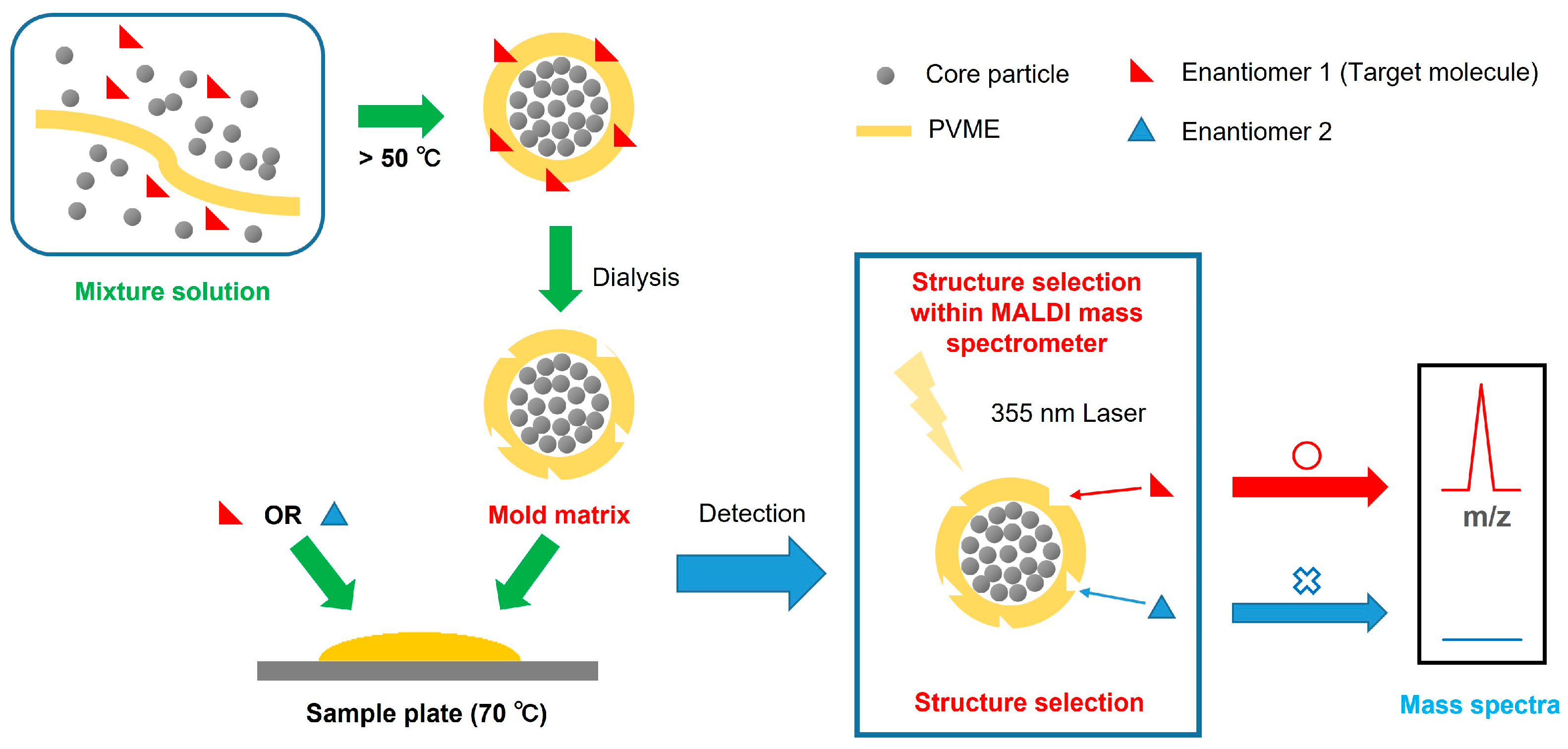
The mold matrix used for MALDI-MS was prepared as follows. For a mold matrix with a 1:1 weight ratio of polyvinyl methyl ether (PVME) to core, for example, 80 mg of core, 800 mg of 10 wt% PVME solution, and 10 mg of template (target) molecule were mixed, and 20 mL of pure water was added. The final concentration of core was 4 mg/mL, and that of the template molecule was 0.5 mg/mL. When the temperature of the mixed solution exceeded 50 °C, PVME underwent phase transition, becoming globular, and the solution turned cloudy. The solution was transferred to a dialysis tube and dialyzed three times with warm water at 70 °C to wash out molecules used as templates. When stearic acid was used as the template, preparation and dialysis were performed using a 1:1 (v/v) water and ethanol mixed solvent. One microliter of analyte solution (1 mg/mL) was pipetted onto a sample plate whose temperature was kept at 343 K, and then one microliter of the solution after dialysis (mold matrix dispersion) was pipetted. After the solvent was evaporated, the sample plate was placed inside a commercial MALDI/TOF (rapifleX, Bruker, Billerica, MA, USA, 355 nm ex.), and mass spectrometry was performed. The schematic diagram of mold matrix fabrication and MALDI-MS measurement is shown in Figure 1.

3. Results and Discussion

3.1. Mold Matrix by Ag Core

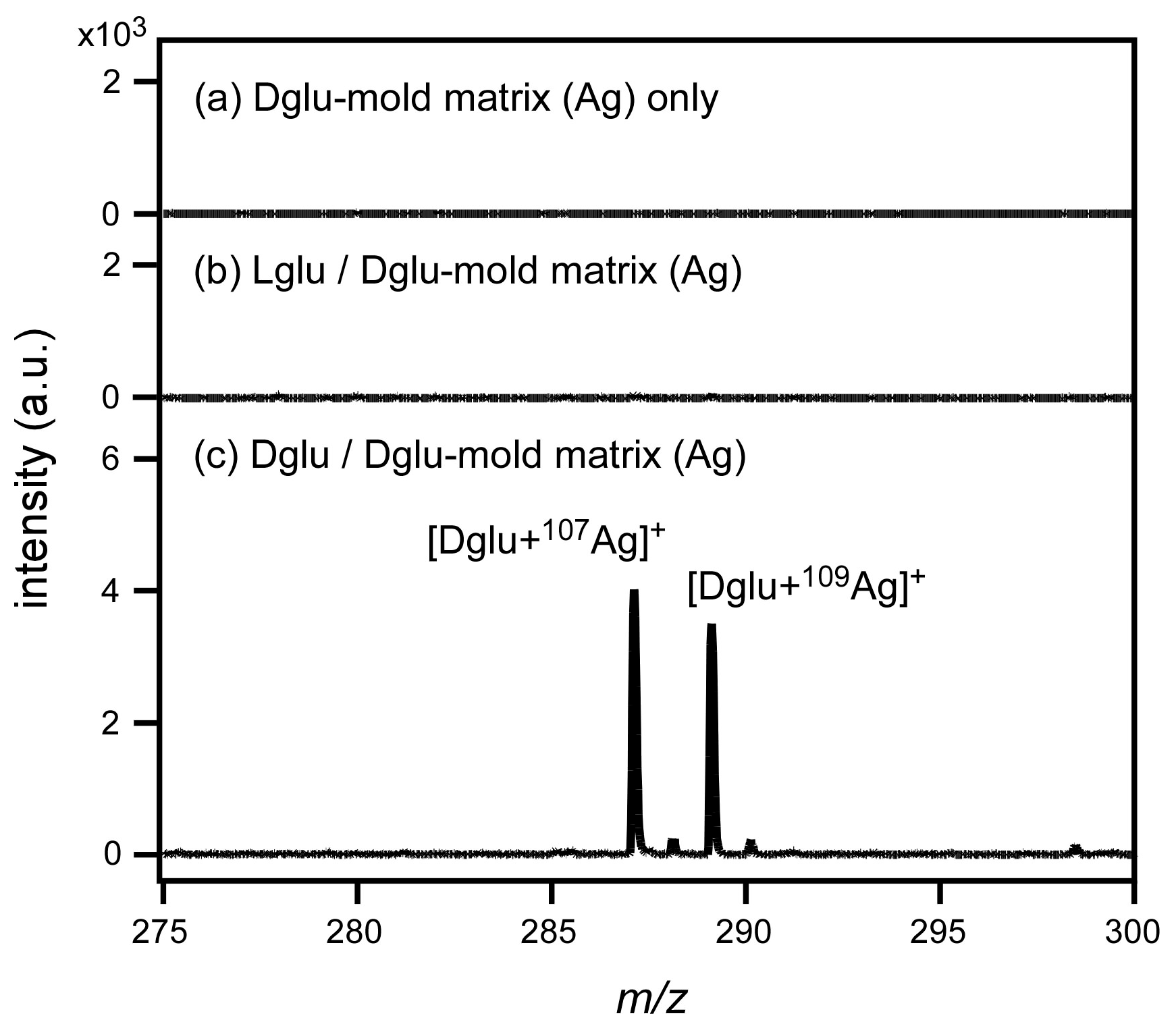
A mold matrix that recognizes the molecular structural differences between D-glucose (Dglu) and L-glucose (Lglu) and ionizes Dglu only was created. Dglu was used as the template molecule, and the weight ratio of PVME polymer to Ag nanoparticles as the core was set at 2:1. Figure 2a shows the laser desorption/ionization mass spectrum of the mold matrix only (without analyte). At the end of mold matrix preparation, Dglu template molecules were washed out by dialysis. Therefore, peaks of Ag+-adducted Dglu, [Dglu + 107Ag]+ and [Dglu + 109Ag]+, were not observed in Figure 2a. This means that Dglu used as a mold molecule was completely washed out by dialysis. Then, this matrix was applied to the measurement of Lglu as an analyte, and the result is shown in Figure 2b. The peak attributable to [Lglu + 107Ag]+ or [Lglu + 109Ag]+ was almost negligible at the scale magnification of this figure. As Lglu and Dglu are enantiomers, Lglu cannot fit into the molecular template created by Dglu; therefore, Lglu was not ionized. On the other hand, when Dglu was used as an analyte, peaks corresponding to [Dglu + 107Ag]+ and [Dglu + 109Ag]+ were observed, as shown in Figure 2c. This indicates that the molecular recognition film functioned as intended, ionizing Dglu only through Ag+ adduction.
Accurate separation of molecules with different structures may depend on polymer film thickness. For this purpose, a molecular recognition film was created by changing the PVME:Ag coverage rate to 0.5:1, 1:1, 2:1, or 3:1, where Dglu was used as the template. Molecular recognition rate (%) was defined as Equation (1) using the peak intensity when Lglu or Dglu was used as the analyte.
[ D g l u + Ag 107 ] + [ D g l u + Ag 107 ] + + [ L g l u + Ag 107 ] + × 100
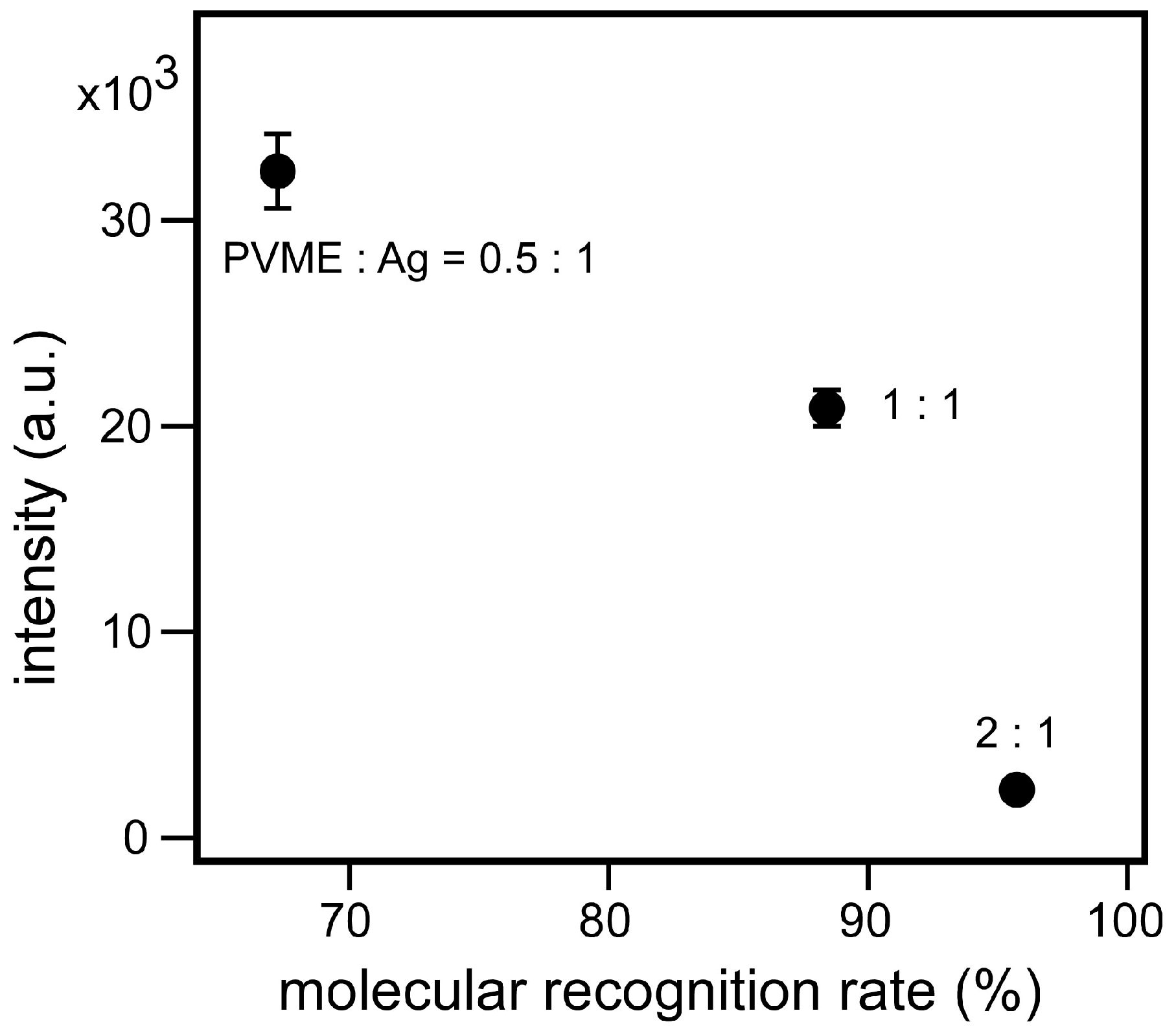
The relationship between peak intensity of [Dglu + 107Ag]+ and molecular recognition rate is shown in Figure 3. At a low coverage rate of 0.5:1, the molecular recognition rate was 67%, although the peak intensity of [Dglu + 107Ag]+ was the highest. This was likely because the polymer film could not completely cover the surface of Ag, allowing Lglu to directly interact with Ag and become ionized. On the other hand, at coverage rates of 1:1 and 2:1, the molecular recognition rates increased to 88 and 96%, respectively. However, as the molecular recognition film became thicker, it may become more difficult for Dglu to reach Ag at the core, resulting in a decrease in the peak intensity of [Dglu + 107Ag]+. When the coverage rate was 3:1, the molecular recognition film was too thick to obtain a sufficient peak intensity of [Dglu + 107Ag]+. Therefore, in this system, we determined that the optimal coverage rate was 2:1.
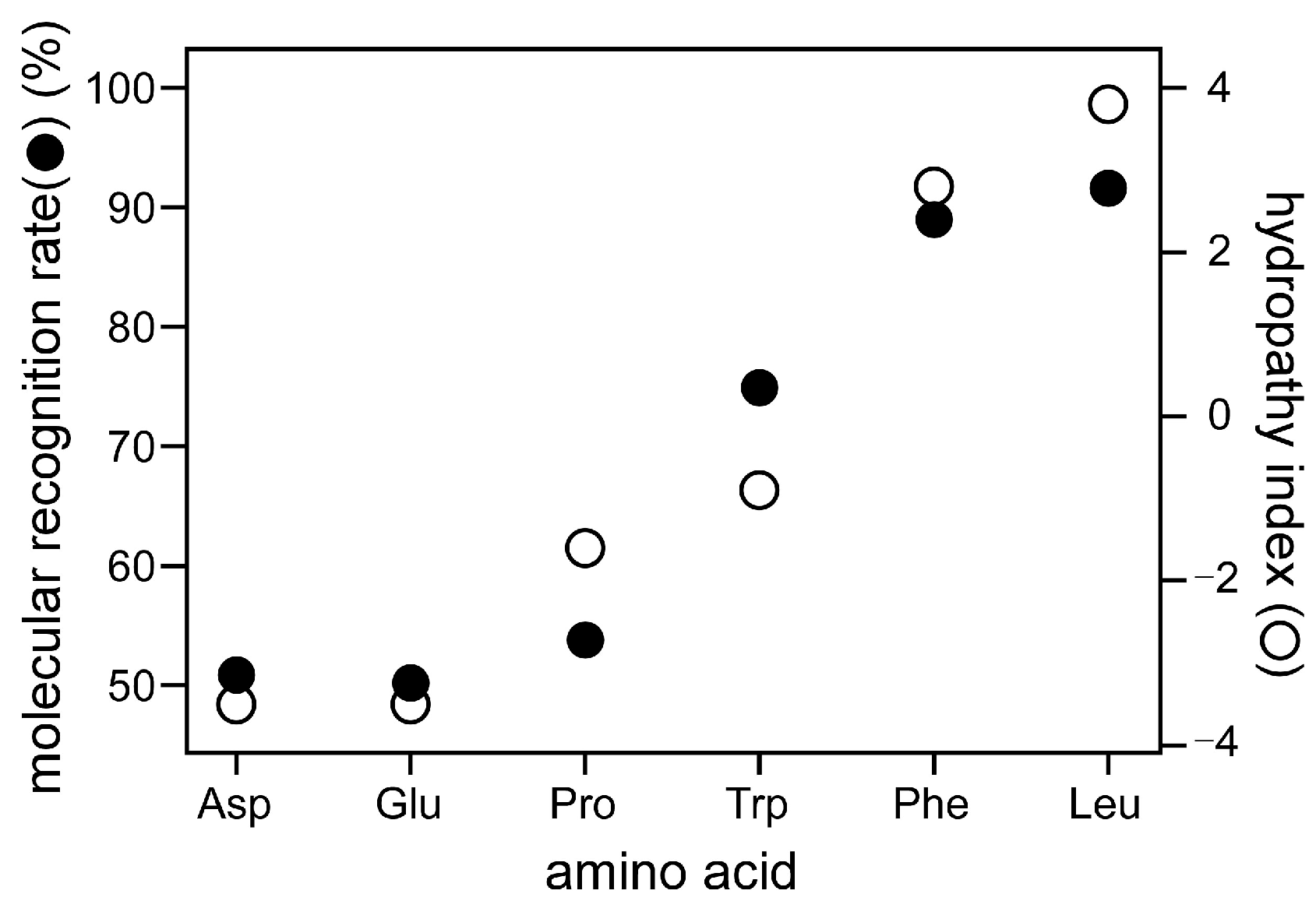
PVME forms hydrogen bonds with water molecules at temperatures below the LCST, making it water-soluble. As the temperature of the polymer rises and the hydrogen bonds between the polymer and water weaken, the hydrophobic parts of the polymer begin to make globules [14,15]. Therefore, as the hydrophobicity of template molecules increases, they are incorporated, and a molecular recognition film is formed, so it is thought that highly hydrophobic molecules can easily create templates. Conversely, highly hydrophilic molecules are pushed toward the areas closest to water, i.e., the outer surface, during globule formation, and, therefore, these templates are thought to have low molecular recognition ability for highly hydrophilic molecules. Next, several amino acids with different degrees of hydrophilicity were selected, and their molecular recognition rates were compared. Figure 4 shows the molecular recognition rates of selected amino acids. The amino acids were arranged in order of hydropathy index, which indicates hydrophobicity. The most hydrophobic amino acid in the figure is leucine (index = 3.8), and the least hydrophobic (most hydrophilic) amino acid is aspartic acid (index = −3.5) [17]. Although the amino acids have different structures, it is clear from Figure 4 that the more hydrophobic the molecule, the higher the molecular recognition rate. This result coincided with the prediction that highly hydrophilic template molecules would be detached from the polymer, rendering it impossible to form templates effectively. One may notice that Pro and Trp have close values in the hydropathy index but quite different in recognition rate. Pro has a simple structure with no side chain, while Trp is an amino acid with a large side chain. This suggests that the side chain is involved in molecular recognition, causing a large difference in molecular recognition rate. However, as organic molecules typically have many hydrophobic parts and only some highly hydrophilic parts, our method is believed to be generally applicable, considering that the molecular template is formed mainly using highly hydrophobic parts.

3.2. Mold Matrix by CdTe Core

Next, CdTe was used to produce a mold matrix for negative ion detection. Photoexcitation of CdTe results in the emission of electrons through the Auger recombination process. Electrons excited to the conduction band collide with each other, one of which returns to the valence band, and the other is released to a higher electronic state or into the vacuum. Because this process utilizes collisions between electrons, the electron density in the conduction band must be high. In other words, a high excitation laser power is necessary to emit electrons from CdTe. The emitted electrons react with molecules, particularly those having carboxyl groups in their structure, as follows [18]:
2 R C O O H + 2 e   2 R C O O +   H 2
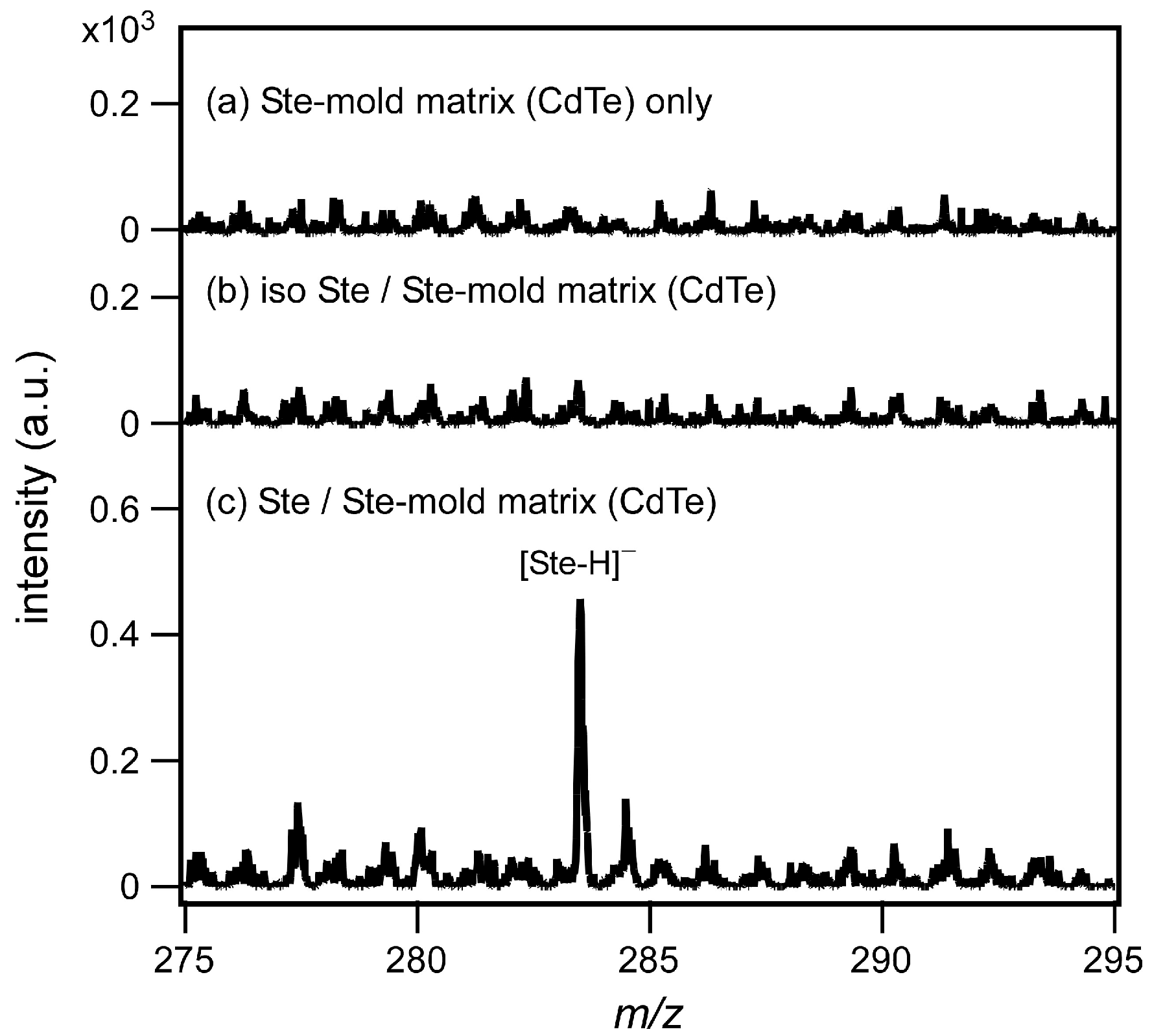
Here, R represents other groups of analyte molecules. A mold matrix was created using CdTe as the core and stearic acid (Ste) as the template molecule (PVME:CdTe = 1:1). Figure 5a shows the laser desorption/ionization mass spectrum of the mold matrix only (without an analyte). No deprotonated peak of Ste was observed, indicating that Ste used as the template molecule was completely washed away by dialysis. Then, the measurement of iso-stearic acid (iso Ste) as an analyte was performed, and the results are shown in Figure 5b. The molecular structure of iso Ste is significantly different from that of Ste, so iso Ste cannot fit into the created molecular template. Iso Ste was not close enough to be ionized by electrons from CdTe. On the other hand, when measurements were performed using Ste as an analyte, Ste was ionized by electrons supplied by CdTe (Figure 5c) as Ste could fit into the molecular template. In the case of Ag core in the previous section, Ag+ was supplied from the core and added to the analyte. However, in the case of CdTe, even when electrons were supplied from the core, they could be used to ionize the analyte without being captured by PVME in the surroundings.

3.3. Water-Splitting Photocatalyst and Application to a Mold Matrix

Electron emission from CdTe requires high-intensity photoexcitation as it utilizes nonlinear processes such as multiphoton excitation or Auger recombination. As photoexcitation with high laser power may lead to fragmentation of some analytes, it is necessary to develop a matrix that functions at low laser power. For this purpose, a water-splitting photocatalyst, NaTaO3:La(2%) (NTOL), was synthesized. The correct synthesis was confirmed by measuring the diffuse reflectance spectrum, and the spectral feature was almost consistent with that reported in the literature [16]. The band gap of NTOL was calculated to be 4.15 eV by using the spectrum depicted in Figure S1. This value was only 1.47% larger than the published value of 4.09 eV, supporting the synthesis of the desired photocatalyst. The spectrum of NiO:NaTaO3:La(2%) (NiONTOL) was also shown in Figure S1. Through the photoexcitation of NTOL or NiONTOL, holes in the valence band react with water molecules to produce protons. The generated protons can be used as a probe for analyte ionization in the positive ion mode. On the other hand, electrons in the conduction band can be effectively used for the ionization of analytes in the negative ion mode. In this way, the mold matrix with NTOL or NiONTOL at its core is expected to be effective in both positive and negative ion generation.
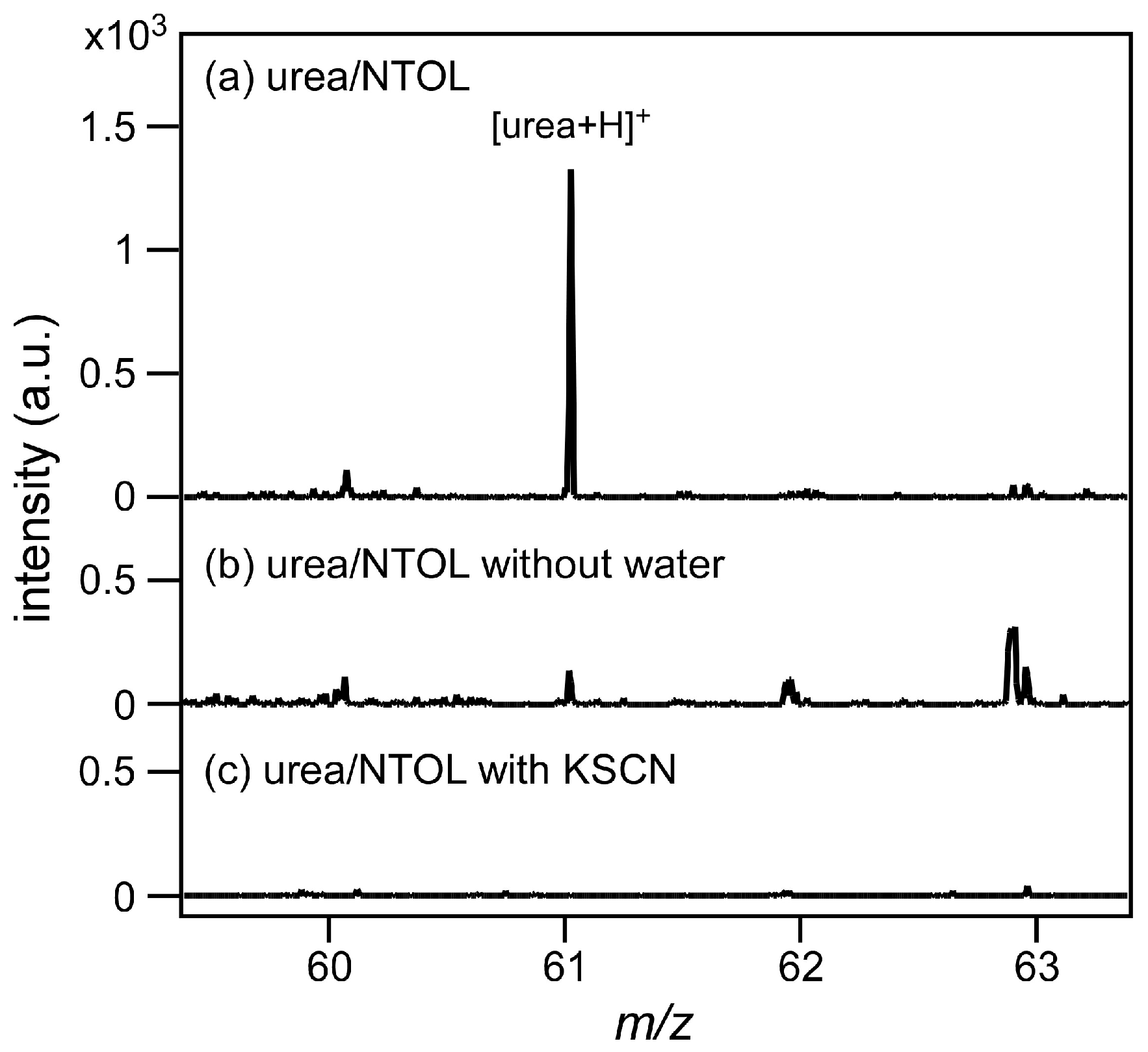
Mass measurements were performed to confirm whether NTOL functions as a matrix. Figure 6a shows the mass spectrum of urea measured with NTOL. The peak of protonated urea was observed at m/z = 61. It was considered that urea was ionized by protons supplied by the water-splitting reaction of NTOL using water molecules that remained in the preparation of mixed crystals for MALDI-MS. In fact, when a sample solution of urea was prepared using only acetonitrile, the peak intensity of protonated urea was drastically reduced, as shown in Figure 6b. Furthermore, when NTOL was mixed with KSCN, a hole scavenger, the peak of protonated urea disappeared, as shown in Figure 6c. These results demonstrated that protons generated during the photocatalytic process were used for the ionization.
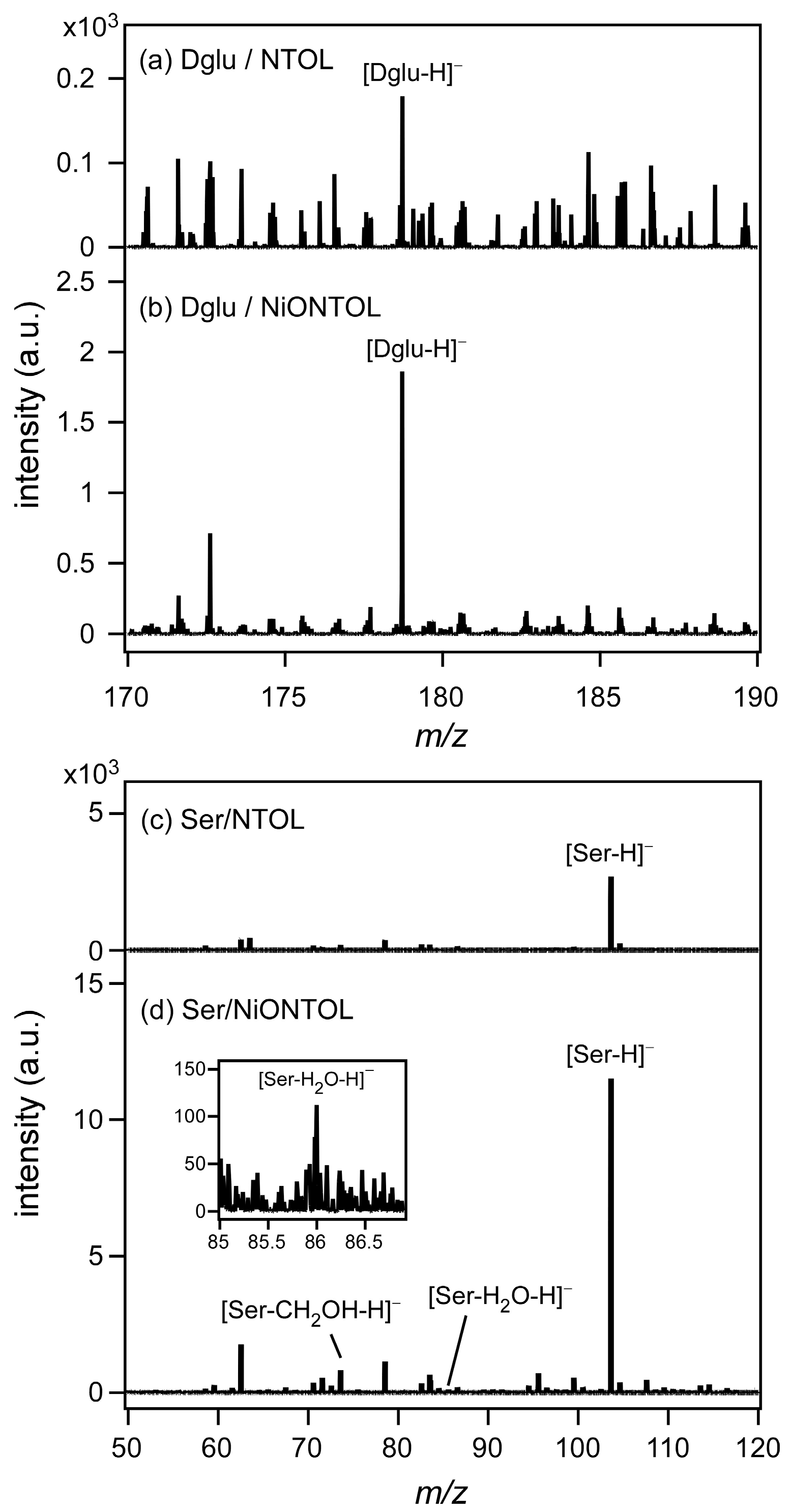
Negative ion generation was also confirmed. Figure 7a shows the mass spectrum of D-glucose (Dglu) measured with NTOL in the negative ion mode. A very small peak was observed at m/z = 179, which is probably due to the deprotonated Dglu. As the pKa value of Dglu is 12.1~12.5 [19], Dglu requires very strong basicity to dissociate. The presence of the deprotonated Dglu peak indicated that NTOL may impart very strong basic properties. The basicity would be further strengthened by a cocatalyst, NiO, as it is capable of retaining electrons efficiently. In fact, when NiONTOL was used as the matrix, the peak intensity of deprotonated Dglu ([Dglu-H]) was enhanced compared with that when NTOL was used, as shown in Figure 7b. It should be mentioned that the peak of deprotonated Dglu was not observed when conventional matrix CHCA was used, or when CdTe was used (Figure S2).
Next, MALDI-MS measurements of serine (HOH2C-CH(NH2)COOH; Ser), a hydrophilic amino acid, were performed using NTOL and NiONTOL as the matrix. The mass spectra are shown in Figure 7c,d, respectively. Ser was observed at m/z = 104 as a deprotonated species (HOH2C-CH(NH2)COO). In addition, a peak was observed at m/z = 73, assignable to a deprotonated radical that was formed as a result of the cleavage of a CH2OH group (CH(NH2)COO). Owing to the water-splitting property, a peak of the deprotonated species of dehydrated serine, CH2C(NH2)COO, was observed at m/z = 86. A magnified view is shown in the inset. For Ser, the pKa values are 2.19 for the carboxyl group, 9.21 for the amino group [20]. For the hydroxyl group on the side chain, the pKa value is thought to be around 14, assuming that of water. In the Dglu experiments, it was suggested that NTOL and NiONTOL provided strong basicity around pKa = 12. However, in the case of Ser, no peaks corresponding to divalent species were observed. NTOL and NiONTOL may produce divalent ions derived from the amide anion (-NH) instantaneously. However, it is expected that they will be easily protonated by the protons present in the reaction. The fact that negative divalent ions were not observed also meant the deprotonation of the side chain did not occur (OH2C-CH(NH2)COO). As the pKa value of the hydroxyl group on the side chain was high, NTOL and NiONTOL were considered to be matrices that provided an environment with pKa values of around 12.
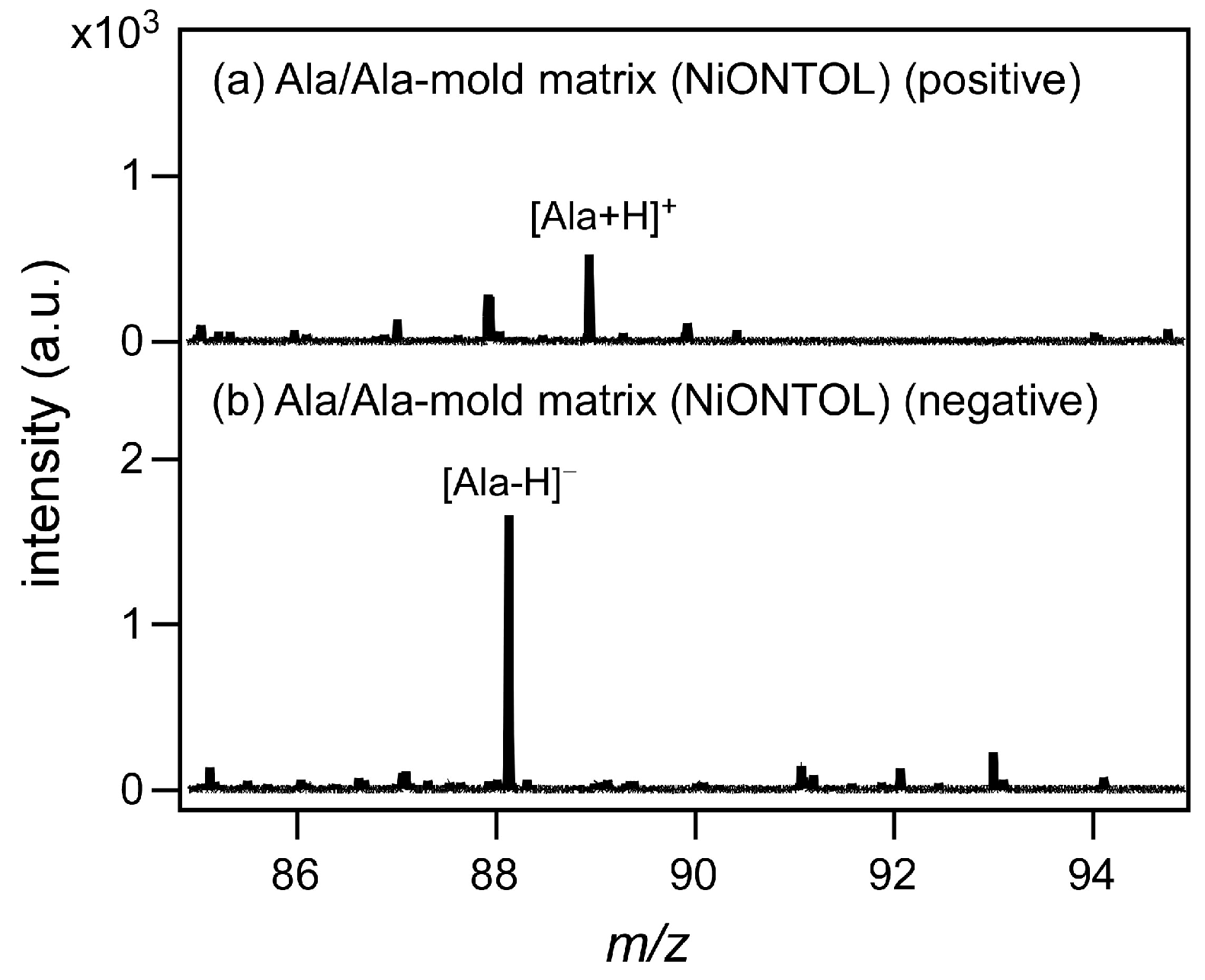
Finally, a mold matrix was produced using NiONTOL as the core, with L-alanine (Ala) as the template molecule (PVME:NiONTOL = 1:1). From the mass spectra of Ala in Figure 8, it was found that Ala fit the template well and was ionized in the positive and negative ion modes. In other words, NiONTOL utilizes protons or electrons generated through the decomposition of remaining water molecules, making it possible to accomplish mold measurements without considering whether the analyte should be measured in the positive or negative ion mode.

4. Conclusions

Mold matrices that can be used to distinguish between enantiomers and structural isomers in laser desorption/ionization mass spectrometry were developed. A molecular structure recognition film was created around core particles (Ag, CdTe) through coil–globule phase transition in the temperature-responsive polymer PVME. Using highly hydrophobic molecules as template molecules resulted in high molecular recognition rates. The water-splitting photocatalyst NTOL was synthesized and used as the core. It was found that NTOL acted as a highly basic matrix. A mold matrix using NiONTOL as the core could be used to generate both positive and negative ions.

Supplementary Materials

The following supporting information can be downloaded at: https://www.mdpi.com/article/10.3390/analytica6040053/s1, Figure S1: Diffuse reflectance spectra of NTOL, NiONTOL, and NiO; Figure S2: Mass spectra of Dglu measured with (a) CHCA and (b) CdTe in the negative ion mode.

Author Contributions

J.X. and T.F. performed the experiments, analyzed the data, and contributed reagents/materials/analysis tools. T.F. conceived and designed the experiments. T.F. wrote the paper. All authors have read and agreed to the published version of the manuscript.

Funding

This research received no external funding.

Data Availability Statement

Raw data are available upon request from the corresponding author of this work.

Conflicts of Interest

The authors declare that there are no competing interests and ethics problems.

Abbreviations

The following abbreviations are used in this manuscript:
MALDIMatrix-assisted laser desorption ionization
NTOLNaTaO3:La(2%)
NiONTOLNiO:NaTaO3:La(2%)
SteStearic acid
PVMEPolyvinyl methyl ether
DgluD-glucose
CHCAα-cyano-4-hydroxycinnamic acid

References

  1. Smith, R.L.; Mitchell, S.C. Thalidomide-type teratogenicity: Structure–activity relationships for congeners. Toxicol. Res. 2018, 7, 1036–1047. [Google Scholar] [CrossRef] [PubMed]
  2. Hensley, D.; Cody, J.T. Simultaneous Determination of Amphetamine, Methamphetamine, Methylenedioxyamphetamine (MDA), Methylenedioxymethamphetamine (MDMA), and Methylenedioxyethylamphetamine (MDEA) Enantiomers by GC-MS. J. Anal. Toxicol. 1999, 23, 518–523. [Google Scholar] [CrossRef] [PubMed]
  3. Naidong, W.; Ring, P.R.; Midtlien, C.; Jiang, X. Development and validation of a sensitive and robust LC–tandem MS method for the analysis of warfarin enantiomers in human plasma. J. Pharm. Biomed. Anal. 2001, 25, 219–226. [Google Scholar] [CrossRef] [PubMed]
  4. Wang, S.; Cyronak, M.; Yang, E. Does a stable isotopically labeled internal standard always correct analyte response?: A matrix effect study on a LC/MS/MS method for the determination of carvedilol enantiomers in human plasma. J. Pharm. Biomed. Anal. 2007, 43, 701–707. [Google Scholar] [CrossRef] [PubMed]
  5. Zhou, X.; Wang, Z.; Li, S.; Rong, X.; Bu, J.; Liu, Q.; Ouyang, Z. Differentiating enantiomers by directional rotation of ions in a mass spectrometer. Science 2024, 383, 612–618. [Google Scholar] [CrossRef] [PubMed]
  6. Hillenkamp, F.; Karas, M. Matrix-assisted laser desorption/ionisation, an experience. Int. J. Mass Spectrom. 2000, 200, 71–77. [Google Scholar] [CrossRef]
  7. Hillenkamp, F.; Karas, M.; Beavis, R.C.; Chait, B.T. Matrix-Assisted Laser Desorption/Ionization Mass Spectrometry of Biopolymers. Anal. Chem. 1991, 63, 1193A–1203A. [Google Scholar] [CrossRef]
  8. Tanaka, K.; Waki, H.; Ido, Y.; Akita, S.; Yoshida, Y.; Yoshida, T. Protein and polymer analyses up to m/z 100000 by laser ionization time-of-flight mass spectrometry. Rapid Commun. Mass Spectrom. 1988, 2, 151–153. [Google Scholar] [CrossRef]
  9. Jackson, S.N.; Ugarov, M.; Egan, T.; Post, J.D.; Langlais, D.; Schultz, J.A.; Woods, A.S. MALDI-ion mobility-TOFMS imaging of lipids in rat brain tissue. J. Mass Spectrom. 2007, 42, 1093–1098. [Google Scholar] [CrossRef] [PubMed]
  10. Koomen, J.M.; Ruotolo, B.T.; Gillig, K.J.; McLean, J.A.; Russell, D.H.; Kang, M.; Dunbar, K.R.; Fuhrer, K.; Gonin, M.; Schultz, A.J. Oligonucleotide analysis with MALDI–ion-mobility–TOFMS. Anal. Bioanal. Chem. 2002, 373, 612–617. [Google Scholar] [CrossRef] [PubMed]
  11. Stone, E.; Gillig, K.J.; Ruotolo, B.; Fuhrer, K.; Gonin, M.; Schultz, A.; Russell, D.H. Surface-Induced Dissociation on a MALDI-Ion Mobility-Orthogonal Time-of-Flight Mass Spectrometer:  Sequencing Peptides from an “In-Solution” Protein Digest. Anal. Chem. 2001, 73, 2233–2238. [Google Scholar] [CrossRef] [PubMed]
  12. So, M.P.; Wan, T.S.M.; Chan, T.-W.D. Differentiation of enantiomers using matrixassisted laser desorption/ionization mass spectrometry. Rapid Commun. Mass Spectrom. 2000, 14, 692–695. [Google Scholar] [CrossRef]
  13. Fujii, Y.; Xu, J.; Fujino, T. Chirality and structure-selective MALDI using mold matrix. Sci. Rep. 2018, 8, 13138. [Google Scholar] [CrossRef] [PubMed]
  14. Maeda, Y. IR Spectroscopic Study on the Hydration and the Phase Transition of Poly(vinyl methyl ether) in Water. Langmuir 2001, 17, 1737–1742. [Google Scholar] [CrossRef]
  15. Maeda, Y.; Higuchi, T.; Ikeda, I. Change in Hydration State during the Coil−Globule Transition of Aqueous Solutions of Poly(N-isopropylacrylamide) as Evidenced by FTIR Spectroscopy. Langmuir 2000, 16, 7503–7509. [Google Scholar] [CrossRef]
  16. Kato, H.; Asakura, K.; Kudo, A. Highly Efficient Water Splitting into H2 and O2 over Lanthanum-Doped NaTaO3 Photocatalysts with High Crystallinity and Surface Nanostructure. J. Am. Chem. Soc. 2003, 125, 3082–3089. [Google Scholar] [CrossRef] [PubMed]
  17. Kyte, J.; Doolittle, R.F. A Simple Method for Displaying the Hydropathic Character of a Protein. J. Mol. Biol. 1982, 157, 105–132. [Google Scholar] [CrossRef] [PubMed]
  18. Yang, M.; Fujino, T. Quantitative analysis of free fatty acids in human serum using biexciton Auger recombination in cadmium telluride nanoparticles loaded on zeolite. Anal. Chem. 2014, 86, 9563–9569. [Google Scholar] [CrossRef] [PubMed]
  19. Lim, D.; Fairbanks, A.J. Selective anomeric acetylation of unprotected sugars in water. Chem. Sci. 2017, 8, 1896–1900. [Google Scholar] [CrossRef] [PubMed]
  20. Ebihara, K. Kagaku Binran, 3rd ed.; Maruzen: Tokyo, Japan, 1984. (in Japanese) [Google Scholar]
Figure 1. Schematic diagram of mold matrix fabrication and MALDI-MS measurement.
Analytica 06 00053 g001
Figure 2. Mass spectra of (a) mold matrix (without analyte), (b) mold matrix with Lglu, and (c) mold matrix with Dglu. The mold matrix was composed of Ag nanoparticles as the core and Dglu as the template molecule.
Analytica 06 00053 g002
Figure 3. Relationship between peak intensity of [Dglu + 107Ag]+ and molecular recognition rate (%) for various PVME:Ag coverage rates.
Analytica 06 00053 g003
Figure 4. Relationship between the molecular recognition rate of each amino acid and the hydropathy index.
Analytica 06 00053 g004
Figure 5. Mass spectra of (a) mold matrix (without analyte), (b) mold matrix with iso Ste, and (c) mold matrix with Ste. The mold matrix was composed of CdTe as the core and Ste as the template molecule.
Analytica 06 00053 g005
Figure 6. Mass spectra of urea measured with (a) NTOL, (b) NTOL without water during sample preparation, and (c) KSCN.
Analytica 06 00053 g006
Figure 7. Mass spectra of Dglu measured with (a) NTOL and (b) NiONTOL. Mass spectra of Ser measured with (c) NTOL and (d) NiONTOL.
Analytica 06 00053 g007
Figure 8. Mass spectra of Ala in the (a) positive and (b) negative ion modes measured with the mold matrix made with NiONTOL as the core and Ala as the template molecule.
Analytica 06 00053 g008
Disclaimer/Publisher’s Note: The statements, opinions and data contained in all publications are solely those of the individual author(s) and contributor(s) and not of MDPI and/or the editor(s). MDPI and/or the editor(s) disclaim responsibility for any injury to people or property resulting from any ideas, methods, instructions or products referred to in the content.