

The Role of the Urinary and Gut Microbiome in Bladder Cancer: Emerging Insights and Clinical Implications

 , ,
, , 
Abstract
1. Introduction
2. The Urinary Microbiome: Composition and Function
2.1. Factors Affecting the Urinary Microbiome Composition
2.2. Sampling Methods and Analysis
3. Microbiome and Bladder Carcinogenesis
3.1. Mechanistic Insights
3.2. Preclinical and Human Evidence
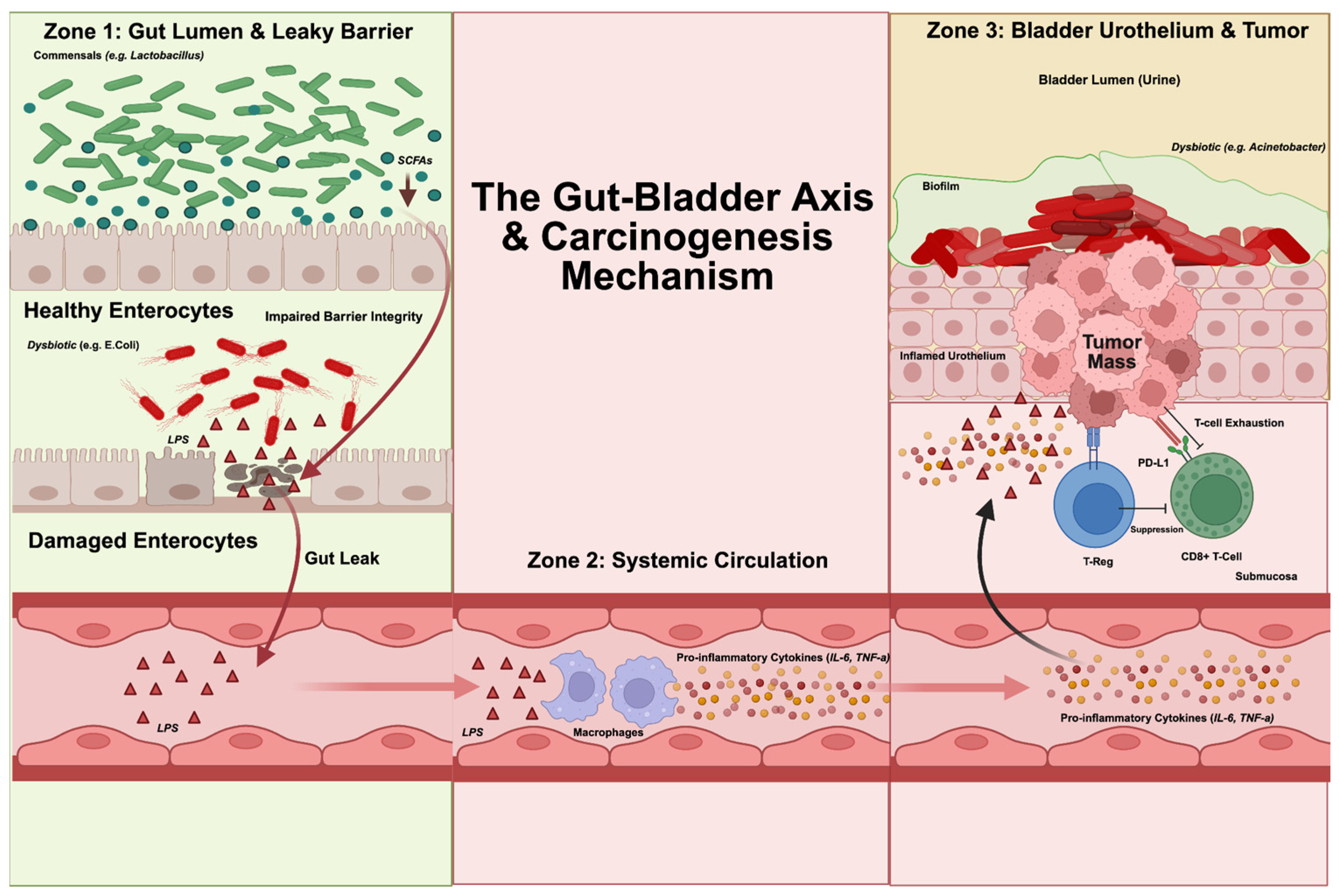
4. Gut Microbiome and Systemic Immunity in Bladder Cancer
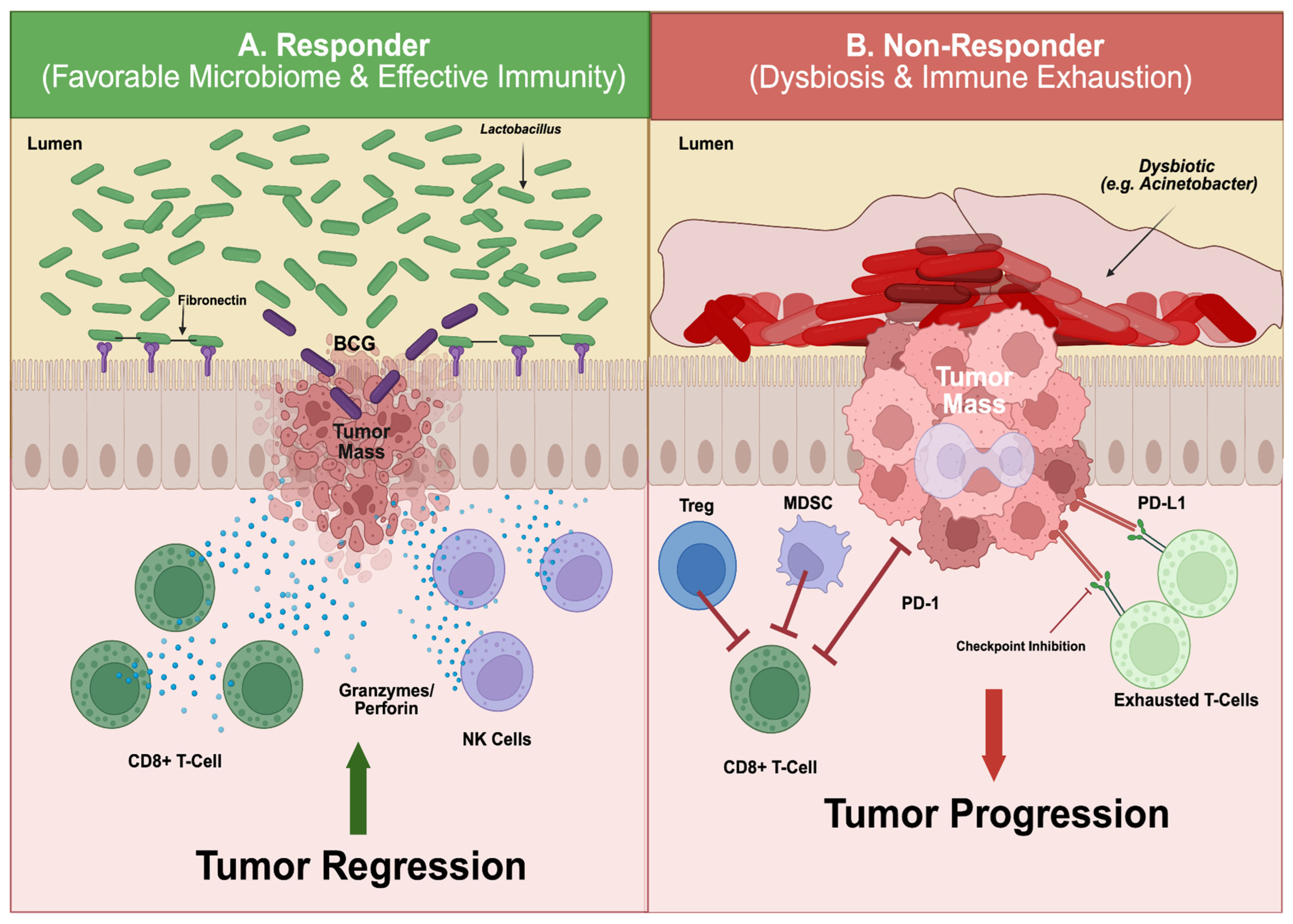
5. Microbiome and Treatment Response
5.1. Bacillus Calmette–Guérin (BCG) Therapy
5.2. Immune Checkpoint Inhibitors
6. Therapeutic Modulation of the Microbiome
7. Translational and Clinical Implications
Role of UM in Treating BCG Non-Responsive NMIBC
8. Limitations of Urinary Microbiome Study
9. Future Directions
10. Conclusions
Author Contributions
Funding
Data Availability Statement
Conflicts of Interest
Abbreviations
| BCa | Bladder cancer |
| UM | Urinary microbiome |
| GM | Gut microbiome |
| SCFAs | Short-chain fatty acids |
| FMT | Fecal microbiota transplantation |
| BCG | Bacillus Calmette–Guérin |
| ICI | Immune checkpoint inhibitors |
| TUC | Transurethral catheterization |
| SPA | Suprapubic aspiration |
| NMIBC | Non-muscle-invasive bladder cancer |
| MIBC | Muscle-invasive bladder cancer |
| APCs | Antigen-presenting cells |
| NK | Natural killer |
| FDA | Food and Drug Administration |
| AUC | Area under the curve |
| TRAIL | TNF-related apoptosis-inducing ligand |
| PD-1 | Programmed Cell Death Protein 1 |
| PD-L1 | Programmed Death Ligand 1 |
| MMP-8 | Matrix metalloproteinase-8 |
| NLR | Neutrophil-to-lymphocyte ratio |
| HDAC | Histone deacetylase |
| GPR43 | G protein-coupled receptor 43 |
| GPR109A | G protein-coupled receptor 109A |
| NF-κB | Nuclear factor kappa-light-chain-enhancer of activated B cells |
| IL-6 | Interleukin-6 |
| LPS | Lipopolysaccharide |
| IFN-γ | Interferon-gamma |
| TNF-α | Tumor necrosis factor-alpha |
| Treg | Regulatory T-cell |
| 3-IAA | 3-indoleacetic acid |
| WNT | Wingless-related integration site |
| β-catenin | Beta-catenin |
| DC | Dendritic cell |
References
- Kustrimovic, N.; Bilato, G.; Mortara, L.; Baci, D. The Urinary Microbiome in Health and Disease: Relevance for Bladder Cancer. Int. J. Mol. Sci. 2024, 25, 1732. [Google Scholar] [CrossRef] [Scilit] [PubMed]
- Popović, V.B.; Šitum, M.; Chow, C.-E.T.; Chan, L.S.; Roje, B.; Terzić, J. The urinary microbiome associated with bladder cancer. Sci. Rep. 2018, 8, 12157. [Google Scholar] [CrossRef] [Scilit] [PubMed]
- Che, K.; Qian, D.; Cui, S.; Xie, F. Dissecting Causal Relationships Between Gut Microbiota, Plasma Metabolites and Bladder Cancer: A Two-Step Mendelian Randomization Study. Health Sci. Rep. 2025, 8, e71206. [Google Scholar] [CrossRef] [Scilit] [PubMed]
- Liu, Z.; Yang, X.; Chen, J.; Ge, S.; Dai, S.; Zhu, S.; Xian, Z. From dysbiosis to precision therapy: Decoding the gut-bladder axis in bladder carcinogenesis. Front. Oncol. 2025, 15, 1630726. [Google Scholar] [CrossRef] [Scilit]
- Zou, J.; Xu, B.; Luo, P.; Chen, T.; Duan, H. Non-coding RNAs in bladder cancer, a bridge between gut microbiota and host? Front. Immunol. 2024, 15, 1482765. [Google Scholar] [CrossRef] [Scilit]
- Tláskal, V.; Hrbáček, J.; Hanáček, V.; Baránková, P.; Čermák, P.; Zachoval, R.; Thiago Dobbler, P. Short- and mid-term temporal variability of the human urinary microbiota: A prospective observational cohort study. BMC Microbiol. 2025, 25, 222. [Google Scholar] [CrossRef] [Scilit]
- Aragón, I.M.; Herrera-Imbrodaa, B.; Queipo-Ortuñob, M.I.; Castillo, E.; Del Morald, J.S.-G.; Gómez-Milláne, J.; Yucelf, G.; Lara, M.F. The Urinary Tract Microbiome in Health and Disease. Eur. Urol. Focus 2018, 4, 128–138. [Google Scholar] [CrossRef] [Scilit]
- Heidrich, V.; Andrades, É.V.; Pinto, A.R.; Schlindwein, A.D.; Cavalcanti, I.M.F.; Campos, T.A.; Ferreira, R.B.R.; Morales, H.M.; Siqueira, J.D.; Soares, M.A.; et al. The bladder microbiota is not significantly altered by intravesical BCG therapy. Urol. Oncol. Semin. Orig. Investig. 2024, 42, 22.e13–22.e21. [Google Scholar] [CrossRef] [Scilit]
- Jubber, I.; Ong, S.; Bukavina, L.; Black, P.C.; Compérat, E.; Kamat, A.M.; Kiemeney, L.; Lawrentschuk, N.; Lerner, S.P.; Meeks, J.J.; et al. Epidemiology of Bladder Cancer in 2023: A Systematic Review of Risk Factors. Eur. Urol. 2023, 84, 176–190. [Google Scholar] [CrossRef] [Scilit]
- International Agency for Research on Cancer. List of Classifications by Cancer Sites with Sufficient or Limited Evidence in Humans, IARC Monographs Volumes 1–139; International Agency for Research on Cancer: Lyon, France, 2019; Available online: https://monographs.iarc.who.int/wp-content/uploads/2019/07/Classifications_by_cancer_site.pdf (accessed on 3 November 2025).
- Bukavina, L.; Ginwala, R.; Eltoukhi, M.; Sindhani, M.; Prunty, M.; Geynisman, D.M.; Ghatalia, P.; Valentine, H.; Calaway, A.; Correa, A.F.; et al. Role of Gut Microbiome in Neoadjuvant Chemotherapy Response in Urothelial Carcinoma: A Multi-institutional Prospective Cohort Evaluation. Cancer Res. Commun. 2024, 4, 1505–1516. [Google Scholar] [CrossRef] [Scilit]
- Sheng, Z.; Liu, J.; Wang, M.; Chen, X.; Xu, J.; Zhang, C.; Xu, Y.; Zhang, H.; Zhu, J.; Qin, N.; et al. Exploring bladder cancer through urinary microbiota: Innovative ‘urinetypes’ classification and establishment of a diagnostic model. J. Transl. Med. 2025, 23, 809. [Google Scholar] [CrossRef] [Scilit] [PubMed]
- Liu, F.; Liu, A.; Lu, X.; Zhang, Z.; Xue, Y.; Xu, J.; Zeng, S.; Xiong, Q.; Tan, H.; He, X.; et al. Dysbiosis signatures of the microbial profile in tissue from bladder cancer. Cancer Med. 2019, 8, 6904–6914. [Google Scholar] [CrossRef] [Scilit] [PubMed]
- Houser, M.C.; Smith, D.J.; Rhodes, D.; Glick-Smith, J.L.; Chovan, P.; Ferranti, E.; Dunbar, S.B.; Tansey, M.G.; Hertzberg, V.; Mac, V.V. Inflammatory profiles, gut microbiome, and kidney function are impacted after high-fidelity firefighter training. Int. J. Hyg. Environ. Health 2023, 248, 114107. [Google Scholar] [CrossRef] [Scilit] [PubMed]
- Mansour, B.; Monyók, Á.; Makra, N.; Gajdács, M.; Vadnay, I.; Ligeti, B.; Juhász, J.; Szabó, D.; Ostorházi, E. Bladder cancer-related microbiota: Examining differences in urine and tissue samples. Sci. Rep. 2020, 10, 11042. [Google Scholar] [CrossRef] [Scilit] [PubMed]
- Siddiqui, H.; Nederbragt, A.J.; Lagesen, K.; Jeansson, S.L.; Jakobsen, K.S. Assessing diversity of the female urine microbiota by high throughput sequencing of 16S rDNA amplicons. BMC Microbiol. 2011, 11, 244. [Google Scholar] [CrossRef] [Scilit] [PubMed]
- Knorr, J.; Lone, Z.; Werneburg, G.; Adler, A.; Agudelo, J.; Suryavanshi, M.; Campbell, R.A.; Ericson, K.; Qiu, H.; Bajic, P.; et al. An exploratory study investigating the impact of the bladder tumor microbiome on Bacillus Calmette Guerin (BCG) response in non-muscle invasive bladder cancer. Urol. Oncol. Semin. Orig. Investig. 2024, 42, 291.e1–291.e11. [Google Scholar] [CrossRef] [Scilit]
- Zeng, J.; Zhang, G.; Chen, C.; Li, K.; Wen, Y.; Zhao, J.; Wu, P. Alterations in Urobiome in Patients With Bladder Cancer and Implications for Clinical Outcome: A Single-Institution Study. Front. Cell. Infect. Microbiol. 2020, 10, 555508. [Google Scholar] [CrossRef] [Scilit]
- Butt, U.A.; De Biase, D. The Urinary Microbiota and the Gut–Bladder Axis in Bladder Cancer. Int. J. Mol. Sci. 2025, 26, 10558. [Google Scholar] [CrossRef] [Scilit]
- Parizadeh, M.; Arrieta, M.-C. The global human gut microbiome: Genes, lifestyles, and diet. Trends Mol. Med. 2023, 29, 789–801. [Google Scholar] [CrossRef] [Scilit]
- Abdill, R.J.; Graham, S.P.; Rubinetti, V.; Ahmadian, M.; Hicks, P.; Chetty, A.; McDonald, D.; Ferretti, P.; Gibbons, E.; Rossi, M.; et al. Integration of 168,000 samples reveals global patterns of the human gut microbiome. Cell 2025, 188, 1100–1118.e17. [Google Scholar] [CrossRef] [Scilit]
- Bray, F.; Laversanne, M.; Sung, H.; Ferlay, J.; Siegel, R.L.; Soerjomataram, I.; Jemal, A. Global cancer statistics 2022: GLOBOCAN estimates of incidence and mortality worldwide for 36 cancers in 185 countries. CA Cancer J. Clin. 2024, 74, 229–263. [Google Scholar] [CrossRef] [Scilit] [PubMed]
- Isali, I.; Almassi, N.; Nizam, A.; Campbell, R.; Weight, C.; Gupta, S.; Ghatalia, P.; Fulmes, A.; Mishra, K.; Abbosh, P.; et al. Current Trends and Challenges of Microbiome Research in Bladder Cancer. Curr. Oncol. Rep. 2024, 26, 292–298. [Google Scholar] [CrossRef] [Scilit] [PubMed]
- Brubaker, L.; Gourdine, J.-P.F.; Siddiqui, N.Y.; Holland, A.; Halverson, T.; Limeria, R.; Pride, D.; Ackerman, L.; Forster, C.S.; Jacobs, K.M.; et al. Forming Consensus To Advance Urobiome Research. mSystems 2021, 6, e01371-20. [Google Scholar] [CrossRef] [Scilit] [PubMed]
- Lai, Z.-L.; Su, Y.-D.; Lin, H.-H.; Wang, S.-Y.; Lin, Y.-C. Deciphering the impact of contaminating microbiota in DNA extraction reagents on metagenomic next-generation sequencing workflows. Microbiol. Spectr. 2025, 13, e03119-24. [Google Scholar] [CrossRef] [Scilit]
- Fierer, N.; Leung, P.M.; Lappan, R.; Eisenhofer, R.; Ricci, F.; Holland, S.I.; Dragone, N.; Blackball, L.L.; Dong, X.; Dorador, C.; et al. Guidelines for preventing and reporting contamination in low-biomass microbiome studies. Nat. Microbiol. 2025, 10, 1570–1580. [Google Scholar] [CrossRef] [Scilit]
- Bharucha, T.; Oeser, C.; Balloux, F.; Brown, J.R.; Carbo, E.C.; Charlett, A.; Chiu, C.Y.; Claas, E.C.J.; de Goffau, M.C.; de Vries, J.J.C.; et al. STROBE-metagenomics: A STROBE extension statement to guide the reporting of metagenomics studies. Lancet Infect. Dis. 2020, 20, e251–e260. [Google Scholar] [CrossRef] [Scilit]
- Thomas-White, K.; Brady, M.; Wolfe, A.J.; Mueller, E.R. The Bladder Is Not Sterile: History and Current Discoveries on the Urinary Microbiome. Curr. Bladder Dysfunct. Rep. 2016, 11, 18–24. [Google Scholar] [CrossRef] [Scilit]
- Sheng, Z.; Xu, J.; Wang, M.; Xu, X.; Zhu, J.; Zeng, S.; Xu, C.; Zhang, Z. The role of urinary microbiota in primary and recurrent bladder cancer: Insights from a propensity score matching study. BMC Cancer 2025, 25, 468. [Google Scholar] [CrossRef] [Scilit]
- Stražar, M.; Mourits, V.P.; Koeken, V.A.C.M.; de Bree, L.C.J.; Moorlag, S.J.C.F.M.; Joosten, L.A.B.; van Crevel, R.; Vlamakis, H.; Netea, M.G.; Xavier, R.J. The influence of the gut microbiome on BCG-induced trained immunity. Genome Biol. 2021, 22, 275. [Google Scholar] [CrossRef] [Scilit]
- Kang, C.; Lee, J.; Baek, M.-G.; Kim, N.-E.; Son, H.; Yoo, S.; Yi, H. Urinary microbiome in non-muscle invasive bladder cancer: Impact of sample types and sex differences. BMC Microbiol. 2025, 25, 623. [Google Scholar] [CrossRef] [Scilit]
- Ranjan, R.; Rani, A.; Metwally, A.; McGee, H.S.; Perkins, D.L. Analysis of the microbiome: Advantages of whole genome shotgun versus 16S amplicon sequencing. Biochem. Biophys. Res. Commun. 2016, 469, 967–977. [Google Scholar] [CrossRef] [Scilit] [PubMed]
- Shin, J.; Park, J.; Kim, S.; Lee, J.; Choi, W.; Kim, H. Strategies for Overcoming Immune Evasion in Bladder Cancer. Int. J. Mol. Sci. 2024, 25, 3105. [Google Scholar] [CrossRef] [Scilit] [PubMed]
- Chorbińska, J.; Krajewski, W.; Nowak, Ł.; Bardowska, K.; Żebrowska-Różańska, P.; Łaczmański, Ł.; Pacyga-Prus, K.; Górska, S.; Małkiewicz, B.; Szydełko, T. Is the Urinary and Gut Microbiome Associated With Bladder Cancer? Clin. Med. Insights Oncol. 2023, 17, 11795549231206796. [Google Scholar] [CrossRef] [Scilit] [PubMed]
- Schneider, A.K.; Chevalier, M.F.; Derré, L. The multifaceted immune regulation of bladder cancer. Nat. Rev. Urol. 2019, 16, 613–630. [Google Scholar] [CrossRef] [Scilit]
- Ginwala, R.; Bukavina, L.; Sindhani, M.; Nachman, E.; Peri, S.; Franklin, J.; Drevik, J.; Christianson, S.; Geynisman, D.M.; Kutikov, A.; et al. Bladder cancer microbiome and its association with chemoresponse. Front. Oncol. 2025, 15, 1506319. [Google Scholar] [CrossRef] [Scilit]
- Wang, B.; Shangguan, W.; Li, W.; Xie, M.; Yu, Y.; Yang, Q.; Sun, Q.; Xue, J.; Zhu, Z.; Zhu, Y.; et al. Blautia coccoides and its metabolic products enhance the efficacy of bladder cancer immunotherapy by promoting CD8+ T cell infiltration. J. Transl. Med. 2024, 22, 964. [Google Scholar] [CrossRef] [Scilit]
- Uzelac, M.; Xin, R.; Chen, T.; John, D.; Li, W.T.; Rajasekaran, M.; Ongkeko, W.M. Urinary Microbiome Dysbiosis and Immune Dysregulations as Potential Diagnostic Indicators of Bladder Cancer. Cancers 2024, 16, 394. [Google Scholar] [CrossRef] [Scilit]
- Matsumoto, Y.; Hitaka, Y.; Hirata, H.; Yamamoto, Y.; Kobayashi, K.; Isoyama, N.; Matsubara, T.; Watanabe, K.; Misukami, Y.; Nakagawa, S.; et al. Exploration of predictive factors based on oral and intestinal bacterial flora for treating patients with urothelial carcinoma. PLoS ONE 2025, 20, e0324814. [Google Scholar] [CrossRef] [Scilit]
- James, C.; Gomez, K.; Desai, S.; Patel, H.D.; Rac, G.; Doshi, C.P.; Dornbier, R.; Bajic, P.; Halverson, T.; Gupta, G.N.; et al. Impact of intravesical Bacillus Calmette-Guérin and chemotherapy on the bladder microbiome in patients with non-muscle invasive bladder cancer. Front. Cell. Infect. Microbiol. 2023, 13, 1125809. [Google Scholar] [CrossRef] [Scilit]
- Hussein, A.A.; Elsayed, A.S.; Durrani, M.; Jing, Z.; Iqbal, U.; Gomez, E.C.; Singh, P.K.; Liu, S.; Smith, G.; Tang, L.; et al. Investigating the association between the urinary microbiome and bladder cancer: An exploratory study. Urol. Oncol. Semin. Orig. Investig. 2021, 39, 370.e9–370.e19. [Google Scholar] [CrossRef] [Scilit]
- Boban, T.; Milić Roje, B.; Knezović, D.; Jerončić, A.; Šošić, H.; Šitum, M.; Terzić, J. Urinary microbiota changes among NMIBC patients during BCG therapy: Comparing BCG responders and non-responders. Front. Cell. Infect. Microbiol. 2025, 15, 1479795. [Google Scholar] [CrossRef] [Scilit] [PubMed]
- Chipollini, J.; Wright, J.R.; Nwanosike, H.; Kepler, C.Y.; Batai, K.; Lee, B.R.; Spiess, P.E.; Stewart, D.B.; Lamendella, R. Characterization of urinary microbiome in patients with bladder cancer: Results from a single-institution, feasibility study. Urol. Oncol. Semin. Orig. Investig. 2020, 38, 615–621. [Google Scholar] [CrossRef] [Scilit] [PubMed]
- Gopalakrishnan, V.; Spencer, C.N.; Nezi, L.; Reuben, A.; Andrews, M.C.; Karpinets, T.V.; Prieto, P.A.; Vicente, D.; Hoffman, K.; Wei, S.C.; et al. Gut microbiome modulates response to anti–PD-1 immunotherapy in melanoma patients. Science 2018, 359, 97–103. [Google Scholar] [CrossRef] [Scilit] [PubMed]
- Li, W.; Shangguan, W.; Huang, W.; Zhao, J.; Zhu, Y.; Xie, M.; Yu, Y.; Yang, Q.; Zheng, J.; Sun, Q.; et al. Gut Parabacteroides distasonis-derived Indole-3-Acetic Acid Promotes Phospholipid Remodeling and Enhances Ferroptosis Sensitivity via the AhR-FASN Axis in Bladder Cancer. Adv. Sci. 2025, 12, e04688. [Google Scholar] [CrossRef] [Scilit]
- Chen, C.; Huang, Z.; Huang, P.; Li, K.; Zeng, J.; Wen, Y.; Li, B.; Zhao, J.; Wu, P. Urogenital Microbiota:Potentially Important Determinant of PD-L1 Expression in Male Patients with Non-muscle Invasive Bladder Cancer. BMC Microbiol. 2022, 22, 7. [Google Scholar] [CrossRef] [Scilit]
- Min, K.; Zheng, C.-M.; Kim, S.; Kim, H.; Lee, M.; Piao, X.M.; Byun, Y.J.; Kim, Y.; Joo, Y.; Cho, B.; et al. Differential Urinary Microbiome and Its Metabolic Footprint in Bladder Cancer Patients Following BCG Treatment. Int. J. Mol. Sci. 2024, 25, 11157. [Google Scholar] [CrossRef] [Scilit]
- Yang, H.; Jin, C.; Li, J.; Zhang, Z.; Zhao, K.; Yin, X.; Wang, Z.; Zhu, G.; Yan, X.; Jiang, Z.; et al. Causal relationship between bladder cancer and gut microbiota contributes to the gut-bladder axis: A two-sample Mendelian randomization study. Urol. Oncol. Semin. Orig. Investig. 2025, 43, 267.e9–267.e18. [Google Scholar] [CrossRef] [Scilit]
- Hourigan, S.K.; Zhu, W.; S.W.Wong, W.; Clemency, N.C.; Provenzano, M.; Vilboux, T.; Niederhuber, J.E.; Deeken, J.; Chung, S.; McDaniel-Wiley, K.; et al. Studying the urine microbiome in superficial bladder cancer: Samples obtained by midstream voiding versus cystoscopy. BMC Urol. 2020, 20, 5. [Google Scholar] [CrossRef] [Scilit]
- Lin, A.; Huang, L.; Jiang, A.; Zhu, L.; Mou, W.; Li, Y.; Zhang, C.; Liu, Z.; Zhang, J.; Cheng, Q.; et al. Microbiota boost immunotherapy? A meta-analysis dives into fecal microbiota transplantation and immune checkpoint inhibitors. BMC Med. 2025, 23, 341. [Google Scholar] [CrossRef] [Scilit]
- Takeuchi, T.; Nakanishi, Y.; Ohno, H. Microbial Metabolites and Gut Immunology. Annu. Rev. Immunol. 2024, 42, 153–178. [Google Scholar] [CrossRef] [Scilit]
- Shinnoh, M.; Horinaka, M.; Yasuda, T.; Yoshikawa, S.; Morita, M.; Yamada, T.; Miki, T.; Sakai, T. Clostridium butyricum MIYAIRI 588 shows antitumor effects by enhancing the release of TRAIL from neutrophils through MMP-8. Int. J. Oncol. 2013, 42, 903–911. [Google Scholar] [CrossRef] [Scilit] [PubMed]
- Dadgar-Zankbar, L.; Mokhtaryan, M.; Bafandeh, E.; Javanmard, Z.; Asadollahi, P.; Darbandi, T.; Afifiradd, R.; Dashtbin, S.; Darbandi, A.; Ghanavati, R. Microbiome and bladder cancer: The role of probiotics in treatment. Future Microbiol. 2025, 20, 73–90. [Google Scholar] [CrossRef] [Scilit] [PubMed]
- Bars-Cortina, D.; Ramon, E.; Rius-Sansalvador, B.; Guinó, E.; Garcia-Serrano, A.; Mach, N.; Khannous-Lleiffe, O.; Saus, E.; Gabaldón, T.; Ibáñez-Sanz, G.; et al. Comparison between 16S rRNA and shotgun sequencing in colorectal cancer, advanced colorectal lesions, and healthy human gut microbiota. BMC Genom. 2024, 25, 730. [Google Scholar] [CrossRef] [Scilit] [PubMed]
- Li, J.K.M.; Wang, L.; Tse, R.T.H.; Leung, C.H.; Liu, K.; Zhao, H.; Cheng, C.K.L.; Wong, C.Y.P.; Tsui, S.K.W.; Giannarini, G.; et al. A cross-sectional study on the effects of intravesical BCG on urinary microbiota in bladder cancer patients. Int. Urol. Nephrol. 2025, 58, 67–76. [Google Scholar] [CrossRef] [Scilit] [PubMed]
- Wang, Q.; Meng, Q.; Chen, Y.; Liu, Y.; Li, X.; Zhou, J.; Ma, Y.; Yu, Z.; Chen, X. Interaction between gut microbiota and immunity in health and intestinal disease. Front. Immunol. 2025, 16, 1673852. [Google Scholar] [CrossRef] [Scilit] [PubMed]
- Adak, A.; Khan, M.R. An insight into gut microbiota and its functionalities. Cell. Mol. Life Sci. 2018, 76, 473–493. [Google Scholar] [CrossRef] [Scilit] [PubMed]
- Rizzatti, G.; Lopetuso, L.R.; Gibiino, G.; Binda, C.; Gasbarrini, A. Proteobacteria: A Common Factor in Human Diseases. BioMed Res. Int. 2017, 2017, 9351507. [Google Scholar] [CrossRef] [Scilit] [PubMed]
- Qu, R.; Zhang, Y.; Ma, Y.; Zhou, X.; Sun, L.; Jiang, C.; Zhang, Z.; Fu, W. Role of the Gut Microbiota and Its Metabolites in Tumorigenesis or Development of Colorectal Cancer. Adv. Sci. 2023, 10, 2205563. [Google Scholar] [CrossRef] [Scilit]
- Isali, I.; Almassi, N.; Nizam, A.; Campbell, R.; Weight, C.; Gupta, S.; Ghatalia, P.; Fulmes, A.; Mishra, K.; Abbosh, P.; et al. State of the Art: The Microbiome in Bladder Cancer. Urol. Oncol. Semin. Orig. Investig. 2025, 43, 199–208. [Google Scholar] [CrossRef] [Scilit]
- Xu, H.; Cao, C.; Ren, Y.; Weng, S.; Liu, L.; Guo, C.; Wang, L.; Han, X.; Ren, J.; Liu, Z. Antitumor effects of fecal microbiota transplantation: Implications for microbiome modulation in cancer treatment. Front. Immunol. 2022, 13, 949490. [Google Scholar] [CrossRef] [Scilit]
- Gazzaniga, F.S.; Kasper, D.L. The gut microbiome and cancer response to immune checkpoint inhibitors. J. Clin. Investig. 2025, 135, e184321. [Google Scholar] [CrossRef] [Scilit] [PubMed]
- Li, R.; Gilbert, S.M.; Kamat, A.M. Unraveling the Mechanism of the Antitumor Activity of Bacillus Calmette-Guérin. Eur. Urol. 2021, 80, 1–3. [Google Scholar] [CrossRef] [Scilit] [PubMed]
- Colautti, A.; Orecchia, E.; Comi, G.; Iacumin, L. Lactobacilli, a Weapon to Counteract Pathogens through the Inhibition of Their Virulence Factors. J. Bacteriol. 2022, 204, e0027222. [Google Scholar] [CrossRef] [Scilit] [PubMed]
- Mayoux, M.; Roller, A.; Pulko, V.; Sammicheli, S.; Chen, S.; Sum, E.; Jost, C.; Fransen, M.F.; Buser, R.B.; Kowanetz, M.; et al. Dendritic cells dictate responses to PD-L1 blockade cancer immunotherapy. Sci. Transl. Med. 2020, 12, eaav7431. [Google Scholar] [CrossRef] [Scilit]
- Borst, J.; Busselaar, J.; Bosma, D.M.T.; Ossendorp, F. Mechanism of action of PD-1 receptor/ligand targeted cancer immunotherapy. Eur. J. Immunol. 2021, 51, 1911–1920. [Google Scholar] [CrossRef] [Scilit]
- Compérat, E.; Amin, M.B.; Cathomas, R.; Choudhury, A.; De Santis, M.; Kamat, A.; Stenzl, A.; Thoeny, H.C.; Witjes, J.A. Current best practice for bladder cancer: A narrative review of diagnostics and treatments. Lancet 2022, 400, 1712–1721. [Google Scholar] [CrossRef] [Scilit]
- Simpson, R.C.; Shanahan, E.R.; Scolyer, R.A.; Long, G.V. Towards modulating the gut microbiota to enhance the efficacy of immune-checkpoint inhibitors. Nat. Rev. Clin. Oncol. 2023, 20, 697–715. [Google Scholar] [CrossRef] [Scilit]
- Markowski, M.C.; Boorjian, S.A.; Burton, J.P.; Hahn, N.M.; Ingersoll, M.A.; Maleki Vareki, S.; Pal, S.K.; Sfanos, K.S. The Microbiome and Genitourinary Cancer: A Collaborative Review. Eur. Urol. 2019, 75, 637–646. [Google Scholar] [CrossRef] [Scilit]
- Suez, J.; Zmora, N.; Zilberman-Schapira, G.; Mor, U.; Dori-Bachash, M.; Bashiardes, S.; Zur, M.; Regev-Lehavi, D.; Ben-Zeev Brik, R.; Federici, S.; et al. Post-Antibiotic Gut Mucosal Microbiome Reconstitution Is Impaired by Probiotics and Improved by Autologous FMT. Cell 2018, 174, 1406–1423.e16. [Google Scholar] [CrossRef] [Scilit]
- Ohashi, Y.; Nakai, S.; Tsukamoto, T.; Masumori, N.; Akaza, H.; Miyanaga, N.; Kitamura, T.; Kawabe, K.; Kotake, T.; Kuroda, M.; et al. Habitual Intake of Lactic Acid Bacteria and Risk Reduction of Bladder Cancer. Urol. Int. 2002, 68, 273–280. [Google Scholar] [CrossRef] [Scilit]
- Larsson, S.C.; Andersson, S.-O.; Johansson, J.-E.; Wolk, A. Cultured milk, yogurt, and dairy intake in relation to bladder cancer risk in a prospective study of Swedish women and men. Am. J. Clin. Nutr. 2008, 88, 1083–1087. [Google Scholar] [CrossRef] [Scilit]
- Xie, H.; Dong, C.; Li, Y.; Guo, J.; Yang, Y.; Yang, J.; Li, X.; Cha, J.; Hu, S.; Lin, C.; et al. XGBoost-based urinary microbial signatures enable non-invasive diagnosis and prognosis for urothelial carcinoma. BMC Microbiol. 2025, 25, 732. [Google Scholar] [CrossRef] [Scilit]
- Wu, C.; Wei, X.; Huang, Z.; Zheng, Z.; Zhang, W.; Chen, J.; Hong, H.; Li, W. Urinary microbiome dysbiosis is associated with an inflammatory environment and perturbed fatty acids metabolism in the pathogenesis of bladder cancer. J. Transl. Med. 2024, 22, 628. [Google Scholar] [CrossRef] [Scilit]
- Wang, B.; Weight, C.; Calaway, A.; Abouassaly, R.; Correa, A.; Campbell, R.; Nandwana, D.; Curtis, F.; Bratslavasky, G.; Jacob, J.; et al. Intravesical nadofaragene firadenovec gene therapy for BCG-unresponsive non-muscle-invasive bladder cancer, a study with 5-year follow-up: A plain language summary. Future Oncol. 2025, 21, 1601–1611. [Google Scholar] [CrossRef] [Scilit]
- Balar, A.V.; Kamat, A.M.; Kulkarni, G.S.; Uchio, E.M.; Boormans, J.L.; Roumiguié, M.; Krieger, L.E.M.; Singer, E.A.; Bajorin, D.F.; Grivas, P.; et al. Keynote 057: Phase II trial of Pembrolizumab (pembro) for patients (pts) with high-risk (HR) nonmuscle invasive bladder cancer (NMIBC) unresponsive to bacillus calmette-guérin (BCG). J. Clin. Oncol. 2019, 37, 350. [Google Scholar] [CrossRef] [Scilit]
- Karstens, L.; Asquith, M.; Caruso, V.; Rosenbaum, J.T.; Fair, D.A.; Braun, J.; Gregory, W.T.; Nardos, R.; McWeeney, S.K. Community profiling of the urinary microbiota: Methodological considerations for low microbial biomass biological samples. Nat. Rev. Urol. 2018, 15, 735–749. [Google Scholar] [CrossRef] [Scilit]



| Sample Type | Male/Female | Key Microbial Findings | Clinical Endpoint | Reference |
|---|---|---|---|---|
| Urine | NA | Smoking linked to Enterobacter, Uruburuella, Rouxiella enrichment | BCa risk association | [6] |
| Urine | NA | Smoking-associated with Anaerostipes; Mycobacterium undetectable > 1 week post-BCG | BCG response | [8] |
| Urine | NA | BCa enriched in Fusobacterium, Actinobaculum, Facklamia, Veillonella, Corynebacterium | BCa vs. control | [2] |
| Urine | NA | Pesticide exposure linked to Cupriavidus; Lactobacillus/Pseudomonas/Bacillus activate anticancer pathways | BCG response | [13] |
| Stool | NA | Firefighters show Peptostreptococcus anaerobius enrichment, Streptococcus depletion | Occupational exposure | [14] |
| Tissue | NA | Pre-BCG: Actinobacteriota predominance; non-recurrence: Lactobacillus enrichment | BCG response/recurrence | [17] |
| Urine, Tissue | NA | Curvibacter enriched in BCa; tissue shows Acinetobacter, Akkermansia, Sphingomonas | BCa vs. control | [31] |
| Urine | NA | Pre-BCG enrichment of Actinobacteriota, Bacteroidetes, Proteobacteria, Firmicutes | BCG-induced immunity | [30] |
| Urine | NA | Prevotella/Corynebacterium-dominant urinetypes associated with higher disease risk; 12-genus model AUC ~90% | BCa diagnosis | [29] |
| Urine, Tissue | NA | Acinetobacter/Corynebacterium decreased in elderly; recurrence linked to specific taxa | BCa/recurrence | [15] |
| Urine | NA | Lower alpha diversity in non-recurrence; higher diversity linked to recurrence risk | Recurrence-free survival | [18] |
| Tissue | NA | Sphingomonas, Massilia, Aquabacterium enriched; reduced GM diversity in BCa | BCa tissue dysbiosis | [13] |
| Urine | NA | Recurrence: Prevotella, Massilia, Thermomonas enriched; reduced Lactobacillus | BCa recurrence | [29] |
| Urine | NA | BCG transiently alters UM toward pro-inflammatory state | BCG response | [34] |
| Urine, Tissue | NA | Escherichia–Shigella associated with reduced gemcitabine efficacy; Pseudomonas/Bifidobacterium protective | Chemotherapy response | [36] |
| Stool | NA | Prevotella enriched; Lactobacillus, Bifidobacterium, Ruminococcus reduced in BCa | Neoadyuvant chemotherapy response | [11] |
| Stool | NA | Blautia coccoides/trigonelline enhance CD8+ T-cell killing; Bacteroides/Blautia in recurrence | ICI/BCG response | [37] |
| Urine | NA | Reduced Pseudomonas fluorescens/putida impairs DNA sensing, antigen presentation | NMIBC to MIBC progression | [38] |
| Stool | NA | Veillonellaceae/Prevotellaceae correlate with poor survival, elevated neutrophil-to-lymphocyte ratio (NLR) | ICI response/survival | [39] |
| Urine | NA | Recurrence group: reduced Lactobacillus/Lacticaseibacillus; less diversity | BCG/chemo response | [40] |
| Urine | NA | Pre-BCG: Corynebacterium, Prevotella, Streptococcus enriched | BCa vs. control | [41] |
| Urine | NA | BCG responders vs. non-responders show distinct urinary microbiota | BCG response | [42] |
| Urine | NA | Higher alpha diversity associated with increased recurrence risk | BCa recurrence | [43] |
| Stool | NA | Clostridiales/Ruminococcaceae/Faecalibacterium: increased effector T-cells post anti-PD-1 | ICI response | [44] |
| Stool | NA | Parabacteroides distasonis produces 3-IAA; inhibits tumor migration | BCa prognosis | [45] |
| Taxon | Association | Sample Source | Male/Female | Proposed Mechanism | Reference |
|---|---|---|---|---|---|
| Acinetobacter | Risk | Urine, Tissue | NA | Mucin degradation, epithelial barrier disruption; decreased in elderly populations | [1] |
| Actinobaculum | Risk | Urine | NA | Not specified | [2] |
| Actinomyces | Risk | Urine | NA | Not specified (pre-BCG enrichment) | [41] |
| Akkermansia | Risk | Tissue | NA | Mucin degradation, epithelial barrier disruption | [1] |
| Anaerococcus | Risk | Urine | NA | Not specified | [1] |
| Anaerostipes | Risk | Urine | NA | Smoking-associated UM shift | [11] |
| Anoxybacillus | Risk | Urine, Tissue | NA | Oxidative damage, metabolic disturbances | [47] |
| Aquabacterium | Risk | Urine | NA | Pro-inflammatory milieu | [29] |
| Atopobium | Risk | Urine | NA | Not specified | [15] |
| Bacteroides | Risk | Urine, Gut | NA | Mucin degradation, epithelial barrier disruption; elevated regulatory T-cells and myeloid-derived suppressor cells | [1] |
| Bacteroides salyersiae | Risk | Gut | NA | Increased N-palmitoyl-sphinganine and N-methylproline production | [3] |
| Bilophila | Risk | Gut | NA | Established role in carcinogenesis and inflammatory conditions | [48] |
| Blautia | Risk (recurrence) | Urine, Gut | NA | Associated with recurrence post-BCG | [37] |
| Campylobacter | Risk | Urine | NA | Not specified | [36] |
| Corynebacterium | Risk/Context-dependent | Urine, Tissue | NA | Pro-inflammatory milieu; variable by context | [31] |
| Cupriavidus | Risk | Urine, Tissue | NA | Linked to pesticide exposure | [13] |
| Curvibacter | Risk | Urine | NA | Pro-inflammatory milieu | [31] |
| Dorea | Risk | Gut | NA | Increased metabolite production associated with BCa | [3] |
| Enterobacter | Risk | Urine, Tissue | NA | Pro-inflammatory milieu | [6] |
| Enterobacteriaceae | Risk | Urine, Tissue | NA | Colibactin production causing DNA double-strand breaks and genomic instability | [1] |
| Escherichia | Risk | Urine, Tissue | NA | Not specified; increased in postmenopausal women | [1] |
| Escherichia–Shigella | Risk | Urine | NA | Associated with reduced gemcitabine efficacy | [36] |
| Facklamia | Risk | Urine | NA | Not specified | [36] |
| Faecalibacterium | Risk (recurrence) | Urine, Gut | NA | Associated with recurrence post-BCG | [44] |
| Firmicutes | Risk | Urine, Gut | NA | Oxidative damage, metabolic disturbances (expansion in dysbiosis) | [18,29,42] |
| Fusobacterium | Risk | Urine, Gut | NA | Pro-inflammatory; established role in carcinogenesis | [36] |
| Geobacillus | Risk | Tissue | NA | Not specified | [15] |
| Jonquetella anthropi | Risk | Urine | NA | Not specified | [2] |
| Klebsiella | Risk | Urine, Tissue | NA | Pro-inflammatory milieu | [1] |
| Klebsiella pneumoniae | Risk | Tissue | NA | Colibactin production causing DNA double-strand breaks and genomic instability | [1] |
| Lachnospirales | Risk (recurrence) | Gut | NA | Associated with recurrence | [37] |
| Lachnospiraceae | Risk (recurrence) | Gut | NA | Linked to recurrence and progression post-treatment | [37] |
| Massilia | Risk | Urine | NA | Pro-inflammatory milieu; oxidative damage | [29] |
| Parabacteroides | Risk | Urine | NA | Pro-inflammatory milieu | [45] |
| Peptostreptococcus anaerobius | Risk | Gut | NA | Enriched in firefighters (occupational exposure) | [14] |
| Porphyromonas | Risk | Urine | NA | Not specified (pre-BCG enrichment) | [11] |
| Prevotella | Risk | Urine, Gut | NA | Pro-inflammatory milieu; poorer survival outcomes | [18,49] |
| Pelomonas | Risk | Tissue | NA | Not specified | [15] |
| Prevotellaceae | Risk | Gut | NA | Poorer survival, elevated neutrophil-to-lymphocyte ratio | [39] |
| Proteobacteria | Risk | Urine, Gut | NA | Oxidative damage, metabolic disturbances; expansion in dysbiosis | [2] |
| Proteus | Risk (recurrence) | Urine | NA | Associated with recurrence post-BCG | [36] |
| Ralstonia | Risk | Tissue | NA | Not specified | [29] |
| Rhodococcus | Risk | Tissue | NA | Not specified | [38] |
| Rhizobium | Risk | Tissue | NA | Not specified | [38] |
| Rubrobacter | Risk | Tissue | NA | Not specified | [1] |
| Rouxiella | Risk | Urine | NA | Smoking-associated UM shift | [6] |
| Ruminococcaceae | Risk | Urine | NA | Not specified | [44] |
| Ruminococcus torques | Risk (recurrence) | Gut | NA | Associated with recurrence | [37] |
| Shigella | Risk | Urine, Tissue | NA | Not specified | [15] |
| Sphingomonas | Risk | Urine | NA | Pro-inflammatory milieu | [31] |
| Staphylococcus | Risk (recurrence) | Urine | NA | Associated with recurrence post-BCG | [18] |
| Streptococcus | Risk/Context-dependent | Urine, Gut | NA | Increased metabolite production; context-dependent | [14] |
| Thermomonas | Risk | Urine | NA | Oxidative damage, metabolic disturbances | [29] |
| Tolumonas | Risk (recurrence) | Urine | NA | Associated with recurrence post-BCG | [11] |
| Uruburuella | Risk | Urine | NA | Smoking-associated UM shift | [6] |
| Veillonella | Risk (recurrence) | Urine, Gut | NA | Associated with recurrence post-BCG | [29] |
| Veillonellaceae | Risk | Gut | NA | Poorer survival, elevated neutrophil-to-lymphocyte ratio | [39] |
| Bacteroides dorei | Protective | Gut | NA | Production of 2,3-dihydroxypyridine | [3] |
| Bifidobacterium | Protective | Urine, Gut | NA | Reduced antigen presentation/immune evasion when lost; SCFA production; enhances anti-PD-L1 efficacy | [11] |
| Bifidobacterium longum | Protective | Gut | NA | Enhances ICI response via FMT | [50] |
| Blautia | Protective (SFA producer) | Gut | NA | SCFA production (context-dependent) | [51] |
| Blautia coccoides | Protective | Gut | NA | Enhances CD8+ T-cell-mediated tumor killing; reduces pro-inflammatory cytokines; metabolite trigonelline inhibits β-catenin | [37] |
| Clostridiales | Protective | Gut | NA | Increased circulating effector CD4+ and CD8+ T-cells post anti-PD-1 | [44] |
| Clostridium butyricum MIYARI 588 | Protective | Gut | NA | Promotes TRAIL and MMP-8 secretion; suppresses angiogenesis; reduces metastasis-associated cytokines | [52] |
| Eubacterium | Protective | Gut | NA | SCFA production | [51] |
| Enterococcus faecium | Protective | Gut | NA | Enhances ICI response via FMT | [50] |
| Akkermansia muciniphila | Protective | Gut | NA | Enhances ICI response via FMT; SCFA production | [50] |
| Faecalibacterium | Protective (ICI response) | Gut | NA | Increased circulating effector CD4+ and CD8+ T-cells post anti-PD-1 | [44] |
| Lactobacillus | Protective | Urine, Gut | NA | Anti-inflammatory SCFA production (butyrate, propionate); lactic acid and bacteriocin production; competition for adhesion sites; increases BCG internalization via fibronectin binding; activation of antioxidant/anticancer pathways | [51] |
| Lactobacillus delbrueckii | Protective | Gut | NA | Anticarcinogenic properties and immune-enhancing effects (fermented dairy) | [53] |
| Lactobacillus_mucosae | Protective | Gut | NA | Increased in non-recurrence groups | [37] |
| Lacticaseibacillus | Protective | Urine | NA | Anti-inflammatory SCFA production; immunoregulatory mechanism stabilizing urinary microenvironment | [40] |
| Lactococcus | Protective | Urine | NA | Immunoregulatory mechanism; lactate production | [51] |
| Methanobrevibacter | Protective | Urine, Gut | NA | Increased in non-recurrence groups post-BCG | [37] |
| Mycobacterium | Protective (BCG-related) | Urine | NA | BCG-induced pro-inflammatory immune response supporting tumor control | [17] |
| Parabacteroides distasonis | Protective | Gut | NA | Produces 3-indoleacetic acid (3-IAA) inhibiting tumor cell migration; reduces fatty acid synthase and stearoyl-CoA desaturase expression | [45] |
| Pseudomonas | Protective | Urine, Tissue | NA | Reduced antigen presentation/immune evasion when lost; activation of antioxidant/anticancer pathways (LPS biosynthesis pathway) | [51] |
| Pseudomonas fluorescens | Protective | Urine | NA | Activates DNA sensing, antigen presentation, leukocyte transendothelial migration pathways | [38] |
| Pseudomonas putida | Protective | Urine | NA | Activates DNA sensing, antigen presentation, cytokine signaling, WNT/β-catenin pathways | [38] |
| Roseburia | Protective | Gut | NA | SCFA production | [51] |
| Ruminococcus | Protective | Urine, Gut | NA | Reduced antigen presentation/cytosolic DNA sensing when lost; SCFA production; increased effector T-cells post anti-PD-1 | [11] |
| Streptococcus thermophilus | Protective | Gut | NA | Anticarcinogenic properties and immune-enhancing effects (fermented dairy) | [53] |
| Title | Publication Year | Sample Size | Male/Female Ratio | Mean Age | Sample Type | Method of Characterization | Predominant Bacteria | Reference | |||
|---|---|---|---|---|---|---|---|---|---|---|---|
| Responders/Non-Recurrence | Non-Responders/Recurrence | ||||||||||
| Abundance | Scarce | Abundance | Scarce | ||||||||
| Investigating the association between the urinary microbiome and bladder cancer: An exploratory study | 2021 | N = 53 | 36/7 | 70 | Urine | 16S rRNA sequencing | Firmicutes Proteobacteria Brochothrix Serratia Negativicoccus Escherichia–Shigella Pseudomonas | Brochothrix Escherichia–Shigella Negativicoccus Serratia Pseudomonas | [38] | ||
| Blautia coccoides and its metabolic products enhance the efficacy of bladder cancer immunotherapy by promoting—CD8+ T-cell infiltration | 2024 | N = 50 | 41/9 | 60 | Stool | 16S rDNA sequencing | Bacteroides Blautia Faecalibacterium Lachnospirales Lachnospiraceae Ruminococcus torques Firmicutes Proteobacteria Bacteroidota | Actinobacteria Streptococcus Lactobacillus | Methanobrevibacter Lactobacillus_ mucosae Enterobacter | Fusobacteriota Ruminococcus torques | [34] |
| Impact of intravesical Bacillus Calmette-Guérin and chemotherapy on the bladder microbiome in patients with non-muscle-invasive bladder cancer | 2023 | N = 29 | 22/7 | 67.8 | Urine | 16S rRNA sequencing | Escherichia/Shigella Ureaplasma | Aerococcus | [37] | ||
| An exploratory study investigating the impact of the bladder tumor microbiome on Bacillus Calmette Guerin (BCG) response in non-muscle-invasive bladder cancer | 2024 | N = 11 | Only male | 72 | Urine and Tissue | 16S rRNA and shotgun metagenomics | Lactobacillus gasseri and johnsonii | Corynebacterium Streptococcus | [17] | ||
| Alterations in Urobiome in Patients with Bladder Cancer and Implications for Clinical Outcome: A Single-Institution Study | 2020 | N = 81 | Only male | 65 | Urine and Tissue | 16S rRNA (V4) amplicon sequencing | Corynebacterium Prevotella Staphylococcus Streptococcus | Lactobacillus | [18] | ||
| The role of urinary microbiota in primary and recurrent bladder cancer: insights from a propensity score matching study. | 2025 | N = 170 | BCa-Primary 107/18 BCa-Recurrence 31/14 | 67 | Urine | 16S rRNA sequencing | Firmicutes Aeromonas Bradyrhizobium Cupriavidus Escherichia/Shigella Lactobacillus Ralstonia Veillonella | Bacteroidetes | [26] | ||
| Urinary microbiota changes among NMIBC patients during BCG therapy: comparing BCG responders and non-responders | 2025 | N = 12 | Only male | 72 | Urine | 16S rRNA sequencing | Actinobacteriota 9.2% Firmicutes 43.7% Proteobacteria 36.9%, Enterococcus 14.8% Lactobacillus 5.4% Serratia 15.8% | Actinobacteriota 9.8% Firmicutes 32.6% Proteobacteria 40.5% Enhydrobacter 6.9% Lactobacillus 6.5% Pseudomonas 5.4% | [39] | ||
| Differential urinary microbiome and its metabolic footprint in bladder cancer patients following BCG treatment | 2024 | N = 87 | Benign only male BCa 46/12 | 73 | Urine | 16S rRNA sequencing | Klebsiella oxytoca Morganella morganii Salmonella enterica | Anoxybacillus kestanbolensis Bacillus flexus | did not exhibit a significant difference in microbial composition | [44] | |
| PD42-04 Tumor microbiome associated with BCG response in non-muscle-invasive bladder cancer | 2021 | NR | Tissue | 16S high-throughput sequencing | Corynebacterium Pseudomonas | Acinetobacter Lactobacillus Corynebacterium Pseudomonas Staphylococcus Mycobacterium bovis | [62] | ||||
| PD12-01 Bladder tumor microbiome may augment response to BCG in non-muscle-invasive bladder cancer | 2022 | N = 47 | NR | Tissue | 16S next-generation sequencing (NGS) and shotgun metagenomics | Lactobacillus spp. | Corynebacterium spp. | [63] | |||
| Association of the commensal urinary microbiome with response to Bacillus Calmette–Guérin (BCG) immunotherapy in non-muscle-invasive bladder cancer. | 2019 | N = 31 | 22/9 | 69 | Urine | 16S rRNA sequence | Firmicutes Lactobacillale | Proteobacteria | [64] | ||
| Bladder cancer microbiome and its association with chemoresponse | 2025 | N = 76 | 62/24 | 70 | Urine | 16S rRNA sequence | E. Faecalis | Granulicatella Proteus | [33] | ||
| Stool microbiome signature associated with Rrsponse to neoadjuvant Pembrolizumab in patients with muscle-invasive bladder cancer | 2023 | N = 42 | NR | Stool | Proteobacteria Sutterella | R. bromii | [65] | ||||
| Gut microbiota Parabacteroides distasonis enhances the efficacy of immunotherapy for bladder cancer by activating antitumor immune responses | 2024 | N = 50 | NR | Stool | 16S rDNA sequencing | Lachnospira | Parabacteroides | Parabacteroides | [66] | ||
| Association of Bacteroides acidifaciens relative abundance with high-fiber diet-associated radio-sensitization | 2020 | NR | Stool | 16S rRNA sequencing | Bacteroides acidifaciens Allobaculum Bacteroidaceae Flavobacterium Flavobacteriales Lactococcus Streptococcus Streptococcaceae Allobaculum Erysipelotrichales | Bifidobacterium Bidifobacteriaceae Bifidobacteriales Parabacteroides Porphyromonadaceae Lactobacillus Lactobacillaceae Lactobacillales | [67] | ||||
| Role of Gut Microbiome in Neoadjuvant Chemotherapy Response in Urothelial Carcinoma: A Multi-institutional Prospective Cohort Evaluation | 2024 | N = 142 | NR | Stool | 16S rRNA sequencing | Proteus Fastidiosipila Tolumona Lachnospiraceae | Bacteroides Pseudomonas | [11] | |||
| Profiling the Urinary Microbiota in Male Patients with Bladder Cancer in China | 2018 | N = 49 | Only male | 60 | Urine | 16S rRNA sequencing | Herbaspirillum Gemella Bacteroides Porphyrobacter Faecalibacterium Aeromonas Herbaspirillum Porphyrobacter Bacteroides Marmoricola | [68] | |||
| Intervention Type | Male/Female | Specific Agent/Strain | Target Mechanism | Observed Outcome | Reference |
|---|---|---|---|---|---|
| FMT | NA | Donor fecal microbiota | GM reshaping; enrichment of Bifidobacterium longum, Enterococcus faecium, Akkermansia muciniphila | Enhanced ICI response; increased gut microbial alpha diversity; reduced inflammation | [50] |
| FMT | NA | Donor fecal microbiota (with dual ICI) | Restore favorable microbial ecosystem | Higher response rates with anti-PD-1 plus anti-CTLA-4 vs. ICI monotherapy | [61] |
| FMT | NA | Autologous FMT | Post-antibiotic mucosal reconstitution | Improved gut microbiome recovery vs. probiotics | [70] |
| Probiotic | NA | Lactobacillus spp. | Enhanced neutrophilic chemotaxis; CD8+ T and NK cell recruitment; macrophage infiltration; IFN-γ and TNF-α release | Antitumor effects in preclinical models | [57] |
| Probiotic | NA | Lactobacillus spp. | Increased BCG internalization via fibronectin binding | Improved BCG efficacy | [60] |
| Probiotic | NA | Lactobacillus + Pseudomonas + Bacillus | Activation of LPS biosynthesis pathway; antioxidant and anticancer pathways | Enhanced BCG response | [51] |
| Probiotic | NA | Clostridium butyricum MIYARI 588 | TRAIL and MMP-8 secretion; angiogenesis suppression; reduced metastasis-associated cytokines | Antitumor activity in preclinical models | [52] |
| Probiotic | NA | Bifidobacterium spp. | DC priming enhancement; T-cell activation modulation | Improved anti-PD-L1 efficacy in murine models | [51] |
| Probiotic | NA | Bacteroides fragilis | Partial reversal of antibiotic-induced immunosuppression | Restored anti-CTLA-4 response | [61] |
| Probiotic | NA | Blautia coccoides | Trigonelline production; β-catenin inhibition | Enhanced CD8+ T-cell cytotoxicity against BCa | [37] |
| Diet | NA | Fermented dairy (yogurt) | Lactobacillus delbrueckii and Streptococcus thermophilus delivery | Reduced BCa risk; anticarcinogenic and immune-enhancing effects | [53] |
| Diet | NA | High-fiber diet | Increased Lachnospiraceae and Bacteroides; SCFA production | HDAC inhibition; GPR43/GPR109A activation; NF-κB suppression; DC-driven Regulatory T-cell (Treg) differentiation; enhanced systemic immunity | [57] |
| Diet | NA | Western-style diet (high saturated fat, animal protein) | Increased bile acid secretion; secondary bile acid production | Tumor-promoting inflammation and carcinogenesis (negative outcome) | [61] |
| Antibiotic | NA | Prophylactic antibiotics (surgical) | Microbial depletion; mucosal integrity disruption | Reduced immunotherapy efficacy (negative outcome) | [70] |
| Antibiotic | NA | Concomitant antibiotics (with ICI) | GM disruption | Reduced anti-CTLA-4 antitumor response (negative outcome) | [70] |
| Antibiotic | NA | Renal-excreted antibiotics | UM modulation (systemic effects) | No significant UM alteration with short-term prophylaxis in one study | [36] |
| Antibiotic | NA | Antibiotic “reset” + probiotic | Microbiome depletion followed by targeted recolonization | Bacterial presence during supplementation; delayed return to homeostasis post-arrest | [70] |
| Synbiotic/Postbiotic | NA | Defined microbial metabolites or engineered consortia | Expand beneficial taxa (e.g., Blautia coccoides); reduce systemic inflammation | Potential for enhanced BCG/ICI efficacy; lower NLR; minimized live microbial administration risks | [39] |
| Postbiotic | NA | 3-indoleacetic acid (3-IAA) from Parabacteroides distasonis | AhR-FASN axis modulation; fatty acid synthase and stearoyl-CoA desaturase inhibition | Inhibited tumor cell migration; improved BCa prognosis | [45] |
| Postbiotic | NA | Trigonelline (from Blautia coccoides) | β-catenin pathway inhibition | Augmented CD8+ T-cell cytotoxicity | [37] |
| Postbiotic | NA | SCFAs (butyrate, propionate, acetate) | HDAC inhibition; GPR43/GPR109A signaling; NF-κB suppression; Treg modulation | Tumor-suppressive effects; enhanced systemic immune activation | [57] |
Disclaimer/Publisher’s Note: The statements, opinions and data contained in all publications are solely those of the individual author(s) and contributor(s) and not of MDPI and/or the editor(s). MDPI and/or the editor(s) disclaim responsibility for any injury to people or property resulting from any ideas, methods, instructions or products referred to in the content. |
© 2026 by the authors. Licensee MDPI, Basel, Switzerland. This article is an open access article distributed under the terms and conditions of the Creative Commons Attribution (CC BY) license.
Share and Cite
Lazcano-Ornelas, A.; Ajabshir, D.; Almiron, G.; Choudhary, M.; Tillu, N. The Role of the Urinary and Gut Microbiome in Bladder Cancer: Emerging Insights and Clinical Implications. Uro 2026, 6, 10. https://doi.org/10.3390/uro6020010
Lazcano-Ornelas A, Ajabshir D, Almiron G, Choudhary M, Tillu N. The Role of the Urinary and Gut Microbiome in Bladder Cancer: Emerging Insights and Clinical Implications. Uro. 2026; 6(2):10. https://doi.org/10.3390/uro6020010
Chicago/Turabian StyleLazcano-Ornelas, Alexandra, Daniel Ajabshir, Giulia Almiron, Manish Choudhary, and Neeraja Tillu. 2026. "The Role of the Urinary and Gut Microbiome in Bladder Cancer: Emerging Insights and Clinical Implications" Uro 6, no. 2: 10. https://doi.org/10.3390/uro6020010
APA StyleLazcano-Ornelas, A., Ajabshir, D., Almiron, G., Choudhary, M., & Tillu, N. (2026). The Role of the Urinary and Gut Microbiome in Bladder Cancer: Emerging Insights and Clinical Implications. Uro, 6(2), 10. https://doi.org/10.3390/uro6020010