
Coexistent Hepatitis B Virus and Metabolic Dysfunction-Associated Steatotic Liver Disease Under the New Definition: A New Era for Established Diseases


Abstract
1. Introduction
2. Search Strategy
3. Coexistence of MASLD and CHB
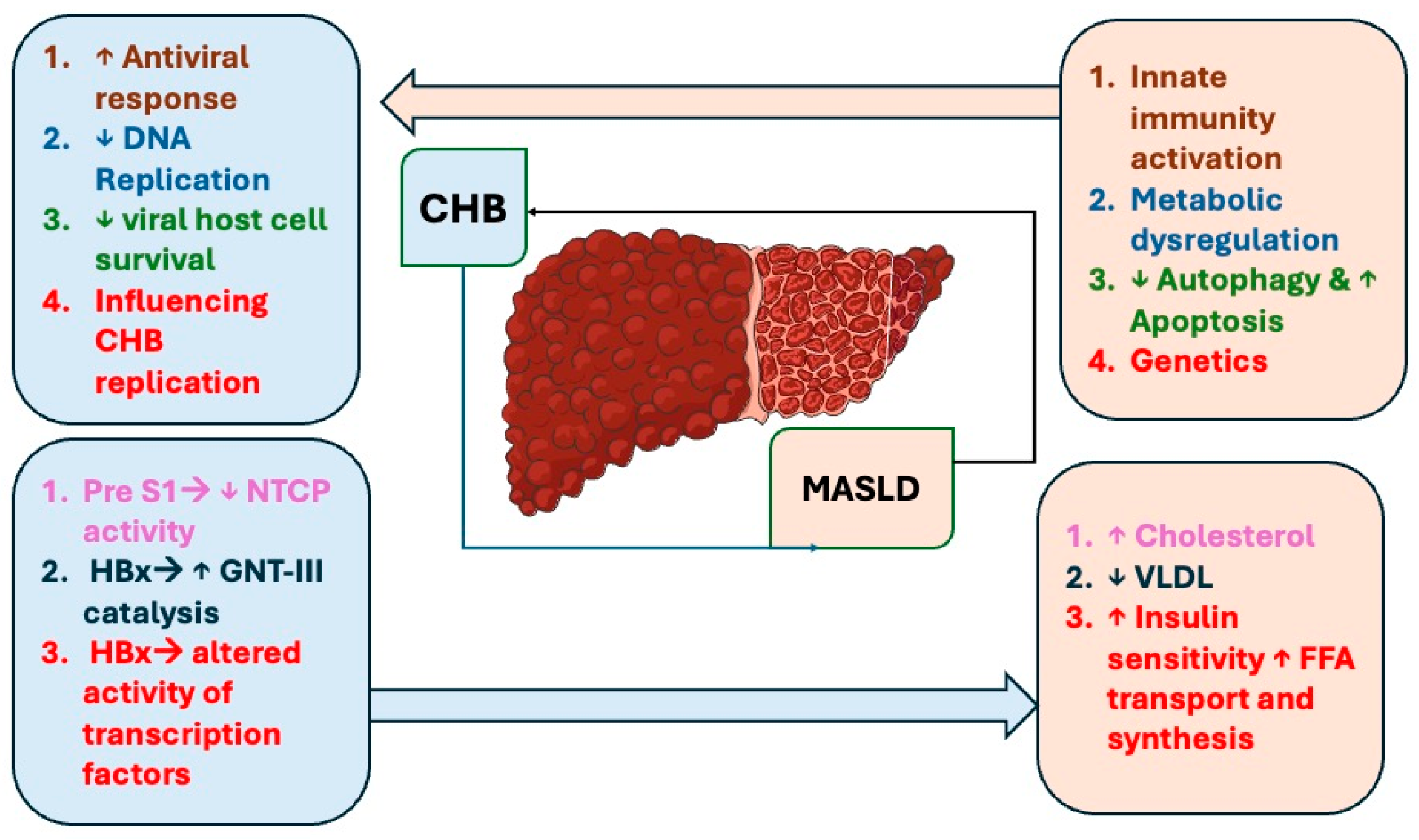
4. The Interaction Between MASLD and CHB
5. Effect of MASLD on the Viral Load
6. Effect of Coexistence of MASLD and CHB on Development of MASH and Liver Fibrosis
7. Effect of Coexistence of MASLD and CHB on HCC Development
8. Effect of Metabolic Dysregulation on the CHB-Related HCC Diagnosis
9. Relationship Between CHB and Metabolic Syndrome Components
9.1. CHB and Dyslipidemia
9.2. CHB and Atherosclerosis
9.3. CHB and Insulin Resistance
10. Effect of MASLD on the Response to Antivirals of CHB
11. Effect of CHB Antivirals on MASLD
12. Lipid-Lowering Agents and Viral Replication
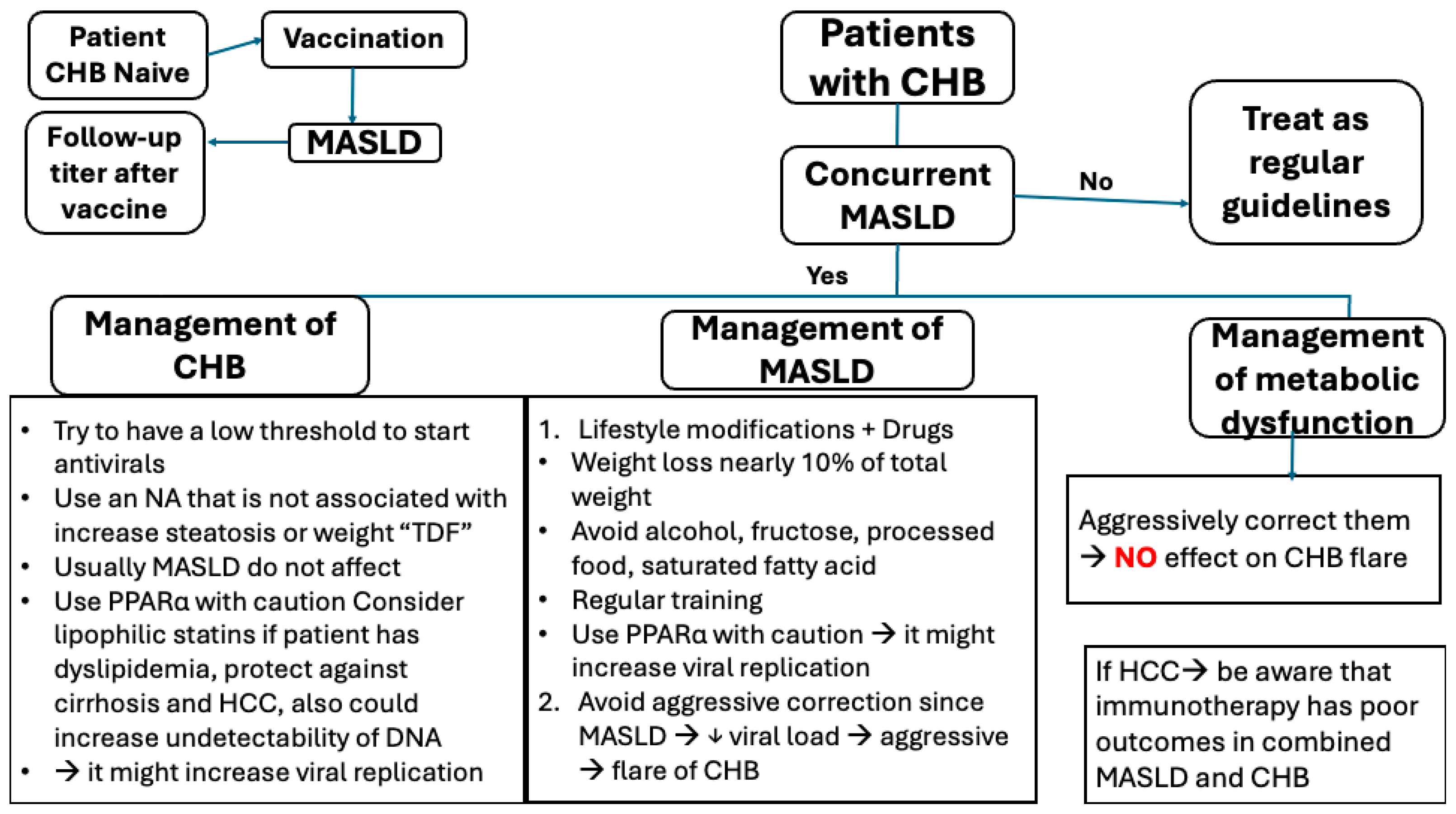
13. Effects of MASLD Correction on the CHB Viral Load
14. Effect of MASLD on CHB-Related HCC Immunotherapy
15. Effect of MASLD on Hepatitis B Virus Vaccination
16. Conclusions
Author Contributions
Funding
Institutional Review Board Statement
Informed Consent Statement
Data Availability Statement
Conflicts of Interest
Abbreviations
References
- Pouwels, S.; Sakran, N.; Graham, Y.; Leal, A.; Pintar, T.; Yang, W.; Kassir, R.; Singhal, R.; Mahawar, K.; Ramnarain, D. Non-alcoholic fatty liver disease (NAFLD): A review of pathophysiology, clinical management and effects of weight loss. BMC Endocr. Disord. 2022, 22, 63. [Google Scholar] [CrossRef] [PubMed] [PubMed Central]
- Eslam, M.; Newsome, P.N.; Sarin, S.K.; Anstee, Q.M.; Targher, G.; Romero-Gomez, M.; Zelber-Sagi, S.; Wong, V.W.-S.; Dufour, J.F.; Schattenberg, J.M.; et al. A new definition for metabolic dysfunction-associated fatty liver disease: An international expert consensus statement. J. Hepatol. 2020, 73, 202–209. [Google Scholar] [CrossRef] [PubMed]
- Rinella, M.E.; Lazarus, J.V.; Ratziu, V.; Francque, S.M.; Sanyal, A.J.; Kanwal, F.; Romero, D.; Abdelmalek, M.F.; Anstee, Q.M.; Arab, J.P.; et al. A multisociety Delphi consensus statement on new fatty liver disease nomenclature. Hepatology 2023, 78, 1966–1986. [Google Scholar] [CrossRef] [PubMed] [PubMed Central]
- Younossi, Z.M.; Golabi, P.; Paik, J.; Owrangi, S.; Yilmaz, Y.; El-Kassas, M.; Alswat, K.; Alqahtani, S.A. Prevalence of metabolic dysfunction-associated steatotic liver disease in the Middle East and North Africa. Liver Int. 2024, 44, 1061–1070. [Google Scholar] [CrossRef] [PubMed]
- Razavi-Shearer, D.; Gamkrelidze, I.; Pan, C.; Jia, J.; Berg, T.; Gray, R.; Lim, Y.-S.; Chen, C.-J.; Ocama, P.; Desalegn, H.; et al. Global prevalence, cascade of care, and prophylaxis coverage of hepatitis B in 2022: A modelling study. Lancet Gastroenterol. Hepatol. 2023, 8, 879–907. [Google Scholar] [CrossRef] [PubMed]
- Machado, M.V.; Oliveira, A.G.; Cortez-Pinto, H. Hepatic steatosis in hepatitis B virus infected patients: Meta-analysis of risk factors and comparison with hepatitis C infected patients. J. Gastroenterol. Hepatol. 2011, 26, 1361–1367. [Google Scholar] [CrossRef] [PubMed]
- Chan, A.W.; Wong, G.L.; Chan, H.Y.; Tong, J.H.; Yu, Y.H.; Choi, P.C.; Chan, H.L.; To, K.F.; Wong, V.W. Concurrent fatty liver increases risk of hepatocellular carcinoma among patients with chronic hepatitis B. J. Gastroenterol. Hepatol. 2017, 32, 667–676. [Google Scholar] [CrossRef] [PubMed]
- Mak, L.Y.; Hui, R.W.; Fung, J.; Liu, F.; Wong, D.K.; Cheung, K.S.; Yuen, M.F.; Seto, W.K. Diverse effects of hepatic steatosis on fibrosis progression and functional cure in virologically quiescent chronic hepatitis B. J. Hepatol. 2020, 73, 800–806. [Google Scholar] [CrossRef] [PubMed]
- Liu, L.; Li, H.; Zhang, Y.; Zhang, J.; Cao, Z. Hepatitis B virus infection combined with nonalcoholic fatty liver disease: Interaction and prognosis. Heliyon 2023, 9, e13113. [Google Scholar] [CrossRef] [PubMed] [PubMed Central]
- Shi, Y.X.; Huang, C.J.; Yang, Z.G. Impact of hepatitis B virus infection on hepatic metabolic signaling pathway. World J. Gastroenterol. 2016, 22, 8161–8167. [Google Scholar] [CrossRef] [PubMed] [PubMed Central]
- Huang, S.C.; Su, T.H.; Tseng, T.C.; Chen, C.L.; Hsu, S.J.; Liu, C.H.; Liao, S.H.; Hong, C.M.; Lan, T.Y.; Yang, H.C.; et al. Metabolic Dysfunction-Associated Steatotic Liver Disease Facilitates Hepatitis B Surface Antigen Seroclearance and Seroconversion. Clin. Gastroenterol. Hepatol. 2024, 22, 581–590.e6. [Google Scholar] [CrossRef] [PubMed]
- Lee, M.-H.; Chen, Y.-T.; Huang, Y.-H.; Lu, S.-N.; Yang, T.-H.; Huang, J.-F.; Yin, S.-C.; Yeh, M.-L.; Huang, C.-F.; Dai, C.-Y.; et al. Chronic Viral Hepatitis B and C Outweigh MASLD in the Associated Risk of Cirrhosis and HCC. Clin. Gastroenterol. Hepatol. 2024, 22, 1275–1285.e2. [Google Scholar] [CrossRef] [PubMed]
- Huang, S.C.; Su, T.H.; Tseng, T.C.; Liao, S.H.; Hsu, S.J.; Hong, C.M.; Lan, T.Y.; Liu, C.H.; Yang, H.C.; Liu, C.J.; et al. Pre-Existing and New-Onset Metabolic Dysfunctions Increase Cirrhosis and Its Complication Risks in Chronic Hepatitis B. Am. J. Gastroenterol. 2024, 120, 401–409. [Google Scholar] [CrossRef] [PubMed]
- Han, J.; Kuai, W.; Yang, L.; Tao, X.; Wang, Y.; Zeng, M.; Li, Y.; Mi, Y.; Zhang, N.; Lu, W.; et al. Impact of metabolic dysfunction-associated steatotic liver disease on the efficacy of immunotherapy in patients with chronic hepatitis B-related hepatocellular carcinoma. Cancer Biol. Med. 2024, 21, 813–825. [Google Scholar] [CrossRef] [PubMed Central]
- Hong, S.; Hao, Y.; Sun, L.; Li, P.; Yang, J.; Zhang, F.; He, L.; Zhang, J.; Wei, H. Prevalence and risk factors of significant fibrosis in chronic hepatitis B patients with concurrent metabolic dysfunction-associated steatotic liver disease. Ann. Hepatol. 2024, 30, 101589. [Google Scholar] [CrossRef] [PubMed]
- Huynh, C.N.; Tsai, Y.C.; Tsai, M.J.; Tsai, C.J.; Wang, C.C.; Lin, C.C.; Yen, Y.H.; Hung, C.H.; Kuo, Y.H.; Tai, W.C.; et al. Impact of concurrent MASLD on early-stage HCC following curative resection in chronic hepatitis B. Am. J. Cancer Res. 2024, 14, 4567–4579. [Google Scholar] [CrossRef] [PubMed] [PubMed Central]
- Rui, F.; Ni, W.; Yeo, Y.H.; Tan, Y.; Xu, L.; Shi, J.; Li, J. The Reduced Accuracy of Non-invasive Tests for Significant Fibrosis in Chronic Hepatitis B Patients with Metabolic Dysfunction-associated Steatotic Liver Disease. J. Clin. Transl. Hepatol. 2024, 12, 827–829. [Google Scholar] [CrossRef] [PubMed] [PubMed Central]
- Lin, M.; Gao, B.; Peng, M.; Chen, X.; Xiao, H.; Shi, M.; Zhang, X.; Zeng, F.; Chi, X. Metabolic dysfunction-associated steatotic liver disease increases hepatocellular carcinoma risk in chronic hepatitis B patients: A retrospective cohort study. Front. Physiol. 2024, 15, 1347459. [Google Scholar] [CrossRef] [PubMed] [PubMed Central]
- Adali, G.; Aykut, H.; Bilgic, N.M.; Yilmaz, Y. Chronic hepatitis B and metabolic dysfunction-associated steatotic liver disease: Metabolic risk factors are key drivers of hepatocellular carcinoma. Heliyon 2024, 10, e37990. [Google Scholar] [CrossRef] [PubMed Central]
- Wu, X.; Li, P.; Mi, Y.Q. Analysis of advanced fibrosis in metabolic dysfunction-associated fatty liver disease patients with chronic hepatitis B. Zhonghua Nei Ke Za Zhi 2024, 63, 53–58. [Google Scholar] [CrossRef] [PubMed]
- Yi, S.; Ren, G.; Zhu, Y.; Cong, Q. Correlation analysis of hepatic steatosis and hepatitis B virus: A cross-sectional study. Virol. J. 2024, 21, 22. [Google Scholar] [CrossRef] [PubMed]
- Rugivarodom, M.; Pongpaibul, A.; Chainuvati, S.; Nimanong, S.; Chotiyaputta, W.; Tanwandee, T.; Charatcharoenwitthaya, P. Prognostic Relevance of Metabolic Dysfunction-associated Steatohepatitis for Patients with Chronic Hepatitis B. J. Clin. Transl. Hepatol. 2023, 11, 76–87. [Google Scholar] [CrossRef] [PubMed] [PubMed Central]
- Lv, H.; Jiang, Y.; Zhu, G.; Liu, S.; Wang, D.; Wang, J.; Zhao, K.; Liu, J. Liver fibrosis is closely related to metabolic factors in metabolic associated fatty liver disease with hepatitis B virus infection. Sci. Rep. 2023, 13, 1388. [Google Scholar] [CrossRef]
- Chen, X.; Zhou, J.; Wu, L.; Zhu, X.; Deng, H. MAFLD is Associated with the Risk of Liver Fibrosis and Inflammatory Activity in HBeAg-Negative CHB Patients. Diabetes Metab. Syndr. Obes. 2022, 15, 673–683. [Google Scholar] [CrossRef] [PubMed] [PubMed Central]
- Xue, J.; Wang, Q.X.; Xiao, H.M.; Shi, M.J.; Xie, Y.B.; Li, S.; Lin, M.; Chi, X.L. Impact of Metabolic Dysfunction Associated Fatty Liver Disease on the Prognosis of Patients with Hepatitis B Virus-Related Hepatocellular Carcinoma Based on Propensity Score Matching Analysis. Cancer Manag. Res. 2022, 14, 2193–2202. [Google Scholar] [CrossRef] [PubMed] [PubMed Central]
- Wang, Q.X.; Xue, J.; Shi, M.J.; Xie, Y.B.; Xiao, H.M.; Li, S.; Lin, M.; Chi, X.L. Association Between Metabolic Dysfunction-Associated Fatty Liver Disease and the Risk of Cirrhosis in Patients with Chronic Hepatitis B—A Retrospective Cohort Study. Diabetes Metab. Syndr. Obes. 2022, 15, 2311–2322. [Google Scholar] [CrossRef] [PubMed] [PubMed Central]
- van Kleef, L.A.; Choi, H.S.J.; Brouwer, W.P.; Hansen, B.E.; Patel, K.; de Man, R.A.; Janssen, H.L.A.; de Knegt, R.J.; Sonneveld, M.J. Metabolic dysfunction-associated fatty liver disease increases risk of adverse outcomes in patients with chronic hepatitis B. JHEP Rep. 2021, 3, 100350. [Google Scholar] [CrossRef]
- Huang, J.; Jing, M.; Wang, C.; Wang, M.; You, S.; Lin, S.; Zhu, Y. The impact of hepatitis B virus infection status on the prevalence of nonalcoholic fatty liver disease: A population-based study. J. Med. Virol. 2020, 92, 1191–1197. [Google Scholar] [CrossRef] [PubMed]
- Huang, S.C.; Liu, C.J. Chronic hepatitis B with concurrent metabolic dysfunction-associated fatty liver disease: Challenges and perspectives. Clin. Mol. Hepatol. 2023, 29, 320–331. [Google Scholar] [CrossRef] [PubMed] [PubMed Central]
- Joo, E.J.; Chang, Y.; Yeom, J.S.; Ryu, S. Hepatitis B virus infection and decreased risk of nonalcoholic fatty liver disease: A cohort study. Hepatology 2017, 65, 828–835. [Google Scholar] [CrossRef] [PubMed]
- Wang, M.M.; Wang, G.S.; Shen, F.; Chen, G.Y.; Pan, Q.; Fan, J.G. Hepatic steatosis is highly prevalent in hepatitis B patients and negatively associated with virological factors. Dig. Dis. Sci. 2014, 59, 2571–2579. [Google Scholar] [CrossRef] [PubMed]
- Jiang, W.; Liu, C.H.; Wu, D.; Wang, Y.J.; Tang, H. Abnormal transaminase and lipid profiles in coexisting diseases in patients with fatty liver: A population study in Sichuan. Biosci. Rep. 2021, 41, BSR20211769. [Google Scholar] [CrossRef] [PubMed] [PubMed Central]
- Yoon, S.; Jung, J.; Kim, T.; Park, S.; Chwae, Y.J.; Shin, H.J.; Kim, K. Adiponectin, a downstream target gene of peroxisome proliferator-activated receptor γ, controls hepatitis B virus replication. Virology 2011, 409, 290–298. [Google Scholar] [CrossRef] [PubMed]
- Wong, V.W.; Wong, G.L.; Yu, J.; Choi, P.C.; Chan, A.W.; Chan, H.Y.; Chu, E.S.; Cheng, A.S.; Chim, A.M.; Chan, F.K.; et al. Interaction of adipokines and hepatitis B virus on histological liver injury in the Chinese. Am. J. Gastroenterol. 2010, 105, 132–138. [Google Scholar] [CrossRef] [PubMed]
- Michelsen, K.S.; Wong, M.H.; Shah, P.K.; Zhang, W.; Yano, J.; Doherty, T.M.; Akira, S.; Rajavashisth, T.B.; Arditi, M. Lack of Toll-like receptor 4 or myeloid differentiation factor 88 reduces atherosclerosis and alters plaque phenotype in mice deficient in apolipoprotein E. Proc. Natl. Acad. Sci. USA 2004, 101, 10679–10684. [Google Scholar] [CrossRef] [PubMed] [PubMed Central]
- Yang, L.; Seki, E. Toll-like receptors in liver fibrosis: Cellular crosstalk and mechanisms. Front. Physiol. 2012, 3, 138. [Google Scholar] [CrossRef] [PubMed] [PubMed Central]
- Paik, Y.H.; Schwabe, R.F.; Bataller, R.; Russo, M.P.; Jobin, C.; Brenner, D.A. Toll-like receptor 4 mediates inflammatory signaling by bacterial lipopolysaccharide in human hepatic stellate cells. Hepatology 2003, 37, 1043–1055. [Google Scholar] [CrossRef] [PubMed]
- Du, Y.; Wu, J.; Liu, J.; Zheng, X.; Yang, D.; Lu, M. Toll-like receptor-mediated innate immunity orchestrates adaptive immune responses in HBV infection. Front. Immunol. 2022, 13, 965018. [Google Scholar] [CrossRef] [PubMed Central]
- Zhang, E.; Lu, M. Toll-like receptor (TLR)-mediated innate immune responses in the control of hepatitis B virus (HBV) infection. Med. Microbiol. Immunol. 2015, 204, 11–20. [Google Scholar] [CrossRef] [PubMed] [PubMed Central]
- Yu, M.W.; Lin, C.L.; Liu, C.J.; Huang, Y.W.; Hu, J.T.; Wu, W.J.; Wu, C.F. Hepatic steatosis and development of type 2 diabetes: Impact of chronic hepatitis B and viral specific factors. J. Formos. Med. Assoc. 2022, 121, 1478–1487. [Google Scholar] [CrossRef] [PubMed]
- Mao, X.; Cheung, K.S.; Peng, C.; Mak, L.Y.; Cheng, H.M.; Fung, J.; Peleg, N.; Leung, H.H.; Kumar, R.; Lee, J.H.; et al. Steatosis, HBV-related HCC, cirrhosis, and HBsAg seroclearance: A systematic review and meta-analysis. Hepatology 2023, 77, 1735–1745. [Google Scholar] [CrossRef] [PubMed]
- Tang, Y.; Bian, Z.; Zhao, L.; Liu, Y.; Liang, S.; Wang, Q.; Han, X.; Peng, Y.; Chen, X.; Shen, L.; et al. Interleukin-17 exacerbates hepatic steatosis and inflammation in non-alcoholic fatty liver disease. Clin. Exp. Immunol. 2011, 166, 281–290. [Google Scholar] [CrossRef] [PubMed Central]
- Li, H.J.; Kang, F.B.; Li, B.S.; Yang, X.Y.; Zhang, Y.G.; Sun, D.X. Interleukin-21 inhibits HBV replication in vitro. Antivir. Ther. 2015, 20, 583–590. [Google Scholar] [CrossRef] [PubMed]
- Zheng, Q.; Zou, B.; Wu, Y.; Yeo, Y.; Wu, H.; Stave, C.D.; Cheung, R.C.; Nguyen, M.H. Systematic review with meta-analysis: Prevalence of hepatic steatosis, fibrosis and associated factors in chronic hepatitis B. Aliment. Pharmacol. Ther. 2021, 54, 1100–1109. [Google Scholar] [CrossRef] [PubMed]
- Wu, Y.L.; Peng, X.E.; Zhu, Y.B.; Yan, X.L.; Chen, W.N.; Lin, X. Hepatitis B Virus X Protein Induces Hepatic Steatosis by Enhancing the Expression of Liver Fatty Acid Binding Protein. J. Virol. 2016, 90, 1729–1740. [Google Scholar] [CrossRef] [PubMed] [PubMed Central]
- Yang, F.; Yan, S.; He, Y.; Wang, F.; Song, S.; Guo, Y.; Zhou, Q.; Wang, Y.; Lin, Z.; Yang, Y.; et al. Expression of hepatitis B virus proteins in transgenic mice alters lipid metabolism and induces oxidative stress in the liver. J. Hepatol. 2008, 48, 12–19. [Google Scholar] [CrossRef] [PubMed]
- Hajjou, M.; Norel, R.; Carver, R.; Marion, P.; Cullen, J.; Rogler, L.E.; Rogler, C.E. cDNA microarray analysis of HBV transgenic mouse liver identifies genes in lipid biosynthetic and growth control pathways affected by HBV. J. Med. Virol. 2005, 77, 57–65. [Google Scholar] [CrossRef] [PubMed]
- Choi, H.S.J.; Brouwer, W.P.; Zanjir, W.M.R.; de Man, R.A.; Feld, J.J.; Hansen, B.E.; Janssen, H.L.A.; Patel, K. Nonalcoholic Steatohepatitis Is Associated With Liver-Related Outcomes and All-Cause Mortality in Chronic Hepatitis B. Hepatology 2020, 71, 539–548. [Google Scholar] [CrossRef] [PubMed]
- Yao, R.; Lu, S.; Xue, R.; Wang, J.; Qiu, Y.; Chen, Y.; Liu, J.; Zhu, L.; Zhan, J.; Jiang, S.; et al. NAFLD is associated with less severe liver fibrosis in chronic hepatitis B: A multi-center, retrospective study. Ann. Hepatol. 2024, 29, 101155. [Google Scholar] [CrossRef]
- Jiang, D.; Chen, C.; Liu, X.; Huang, C.; Yan, D.; Zhang, X.; Zhou, Y.; Lin, Y.; Zhou, Y.; Guan, Z.; et al. Concurrence and impact of hepatic steatosis on chronic hepatitis B patients: A systematic review and meta-analysis. Ann. Transl. Med. 2021, 9, 1718. [Google Scholar] [CrossRef] [PubMed Central]
- Huang, Y.; Gan, Q.; Lai, R.; Wang, W.; Guo, S.; Sheng, Z.; Chen, L.; Guo, Q.; Cai, W.; Wang, H.; et al. Application of Fatty Liver Inhibition of Progression Algorithm and Steatosis, Activity, and Fibrosis Score to Assess the Impact of Non-Alcoholic Fatty Liver on Untreated Chronic Hepatitis B Patients. Front. Cell. Infect. Microbiol. 2022, 11, 733348. [Google Scholar] [CrossRef]
- Seto, W.K.; Hui, R.W.H.; Mak, L.Y.; Fung, J.; Cheung, K.S.; Liu, K.S.H.; Wong, D.K.; Lai, C.L.; Yuen, M.F. Association Between Hepatic Steatosis, Measured by Controlled Attenuation Parameter, and Fibrosis Burden in Chronic Hepatitis B. Clin. Gastroenterol. Hepatol. 2018, 16, 575–583.e2. [Google Scholar] [CrossRef] [PubMed]
- Kanwal, F.; Kramer, J.R.; Mapakshi, S.; Natarajan, Y.; Chayanupatkul, M.; Richardson, P.A.; Li, L.; Desiderio, R.; Thrift, A.P.; Asch, S.M.; et al. Risk of Hepatocellular Cancer in Patients With Non-Alcoholic Fatty Liver Disease. Gastroenterology 2018, 155, 1828–1837.e2. [Google Scholar] [CrossRef] [PubMed Central]
- Jean, K.; Tawheed, A.; Luong Nguyen, L.B.; Heikal, T.; Eldaly, U.; Gaber Elhadidy, N.; Elghaieb, A.; Aboudonia, A.; Tondeur, L.; Dublineau, A.; et al. A Comparison of Presentation, Treatment, and Survival After Hepatocellular Carcinoma of Viral and Non-Viral Etiology in Damietta, Egypt, 2007–2019. J. Hepatocell. Carcinoma 2024, 11, 997–1004. [Google Scholar] [CrossRef] [PubMed] [PubMed Central]
- Jean, K.; Tawheed, A.; Luong Nguyen, L.B.; Heikal, T.; Eldaly, U.; Elhadidy, N.; Elghaieb, A.; Aboudonia, A.; Tondeur, L.; Dublineau, A.; et al. Changes in Presentation, Treatment, and Survival of Patients with Hepatocellular Carcinoma in Damietta, Egypt, 2007–2019: A Retrospective Monocentric Cohort Study. J. Hepatocell. Carcinoma 2023, 10, 99–111. [Google Scholar] [CrossRef] [PubMed Central]
- Li, J.; Yang, H.I.; Yeh, M.L.; Le, M.H.; Le, A.K.; Yeo, Y.H.; Dai, C.Y.; Barnett, S.; Zhang, J.Q.; Huang, J.F.; et al. Association Between Fatty Liver and Cirrhosis, Hepatocellular Carcinoma, and Hepatitis B Surface Antigen Seroclearance in Chronic Hepatitis B. J. Infect. Dis. 2021, 224, 294–302. [Google Scholar] [CrossRef] [PubMed]
- Oh, J.H.; Lee, H.W.; Sinn, D.H.; Park, J.Y.; Kim, B.K.; Kim, S.U.; Kim, D.Y.; Ahn, S.H.; Kang, W.; Gwak, G.Y.; et al. Controlled attenuation parameter value and the risk of hepatocellular carcinoma in chronic hepatitis B patients under antiviral therapy. Hepatol. Int. 2021, 15, 892–900. [Google Scholar] [CrossRef] [PubMed]
- Toh, C.; Sanit, K.; Sripongpun, P.; Chamroonkul, N.; Liangpunsakul, S.; Piratvisuth, T.; Kaewdech, A. Impact of cardiometabolic risk factors on hepatocellular carcinoma incidence in patients with chronic hepatitis B: A retrospective cohort study. PLoS ONE 2026, 21, e0341366. [Google Scholar] [CrossRef] [PubMed] [PubMed Central]
- Kim, M.; Jun, B.G.; Shin, H.S.; Yi, J.J.; Kim, S.G.; Yi, S.W. Impact of high body mass index on hepatocellular carcinoma risk in chronic liver disease: A population-based prospective cohort study. PLoS ONE 2025, 20, e0316175. [Google Scholar] [CrossRef] [PubMed] [PubMed Central]
- Fridman, W.H.; Pagès, F.; Sautès-Fridman, C.; Galon, J. The immune contexture in human tumours: Impact on clinical outcome. Nat. Rev. Cancer 2012, 12, 298–306. [Google Scholar] [CrossRef] [PubMed]
- Zheng, B.; Yang, Y.; Han, Q.; Yin, C.; Pan, Z.; Zhang, J. STAT3 directly regulates NKp46 transcription in NK cells of HBeAg-negative CHB patients. J. Leukoc. Biol. 2019, 106, 987–996. [Google Scholar] [CrossRef] [PubMed]
- Huang, F.; Geng, X.P. Chemokines and hepatocellular carcinoma. World J. Gastroenterol. 2010, 16, 1832–1836. [Google Scholar] [CrossRef] [PubMed] [PubMed Central]
- Smagris, E.; BasuRay, S.; Li, J.; Huang, Y.; Lai, K.M.; Gromada, J.; Cohen, J.C.; Hobbs, H.H. Pnpla3I148M knockin mice accumulate PNPLA3 on lipid droplets and develop hepatic steatosis. Hepatology 2015, 61, 108–118. [Google Scholar] [CrossRef] [PubMed] [PubMed Central]
- Liu, Y.; Liu, L.; Zhou, Y.; Zhou, P.; Yan, Q.; Chen, X.; Ding, S.; Zhu, F. CKLF1 Enhances Inflammation-Mediated Carcinogenesis and Prevents Doxorubicin-Induced Apoptosis via IL6/STAT3 Signaling in HCC. Clin. Cancer Res. 2019, 25, 4141–4154. [Google Scholar] [CrossRef] [PubMed]
- Bruschi, F.V.; Claudel, T.; Tardelli, M.; Caligiuri, A.; Stulnig, T.M.; Marra, F.; Trauner, M. The PNPLA3 I148M variant modulates the fibrogenic phenotype of human hepatic stellate cells. Hepatology 2017, 65, 1875–1890. [Google Scholar] [CrossRef] [PubMed]
- Murakami, S. Hepatitis B virus X protein: A multifunctional viral regulator. J. Gastroenterol. 2001, 36, 651–660. [Google Scholar] [CrossRef] [PubMed]
- Tian, Z.; Xu, C.; Yang, P.; Lin, Z.; Wu, W.; Zhang, W.; Ding, J.; Ding, R.; Zhang, X.; Dou, K. Molecular pathogenesis: Connections between viral hepatitis-induced and non-alcoholic steatohepatitis-induced hepatocellular carcinoma. Front. Immunol. 2022, 13, 984728. [Google Scholar] [CrossRef] [PubMed] [PubMed Central]
- Shen, K.Y.; Zhu, Y.; Xie, S.Z.; Qin, L.X. Immunosuppressive tumor microenvironment and immunotherapy of hepatocellular carcinoma: Current status and prospectives. J. Hematol. Oncol. 2024, 17, 25. [Google Scholar] [CrossRef] [PubMed] [PubMed Central]
- Trivedi, Y.; Bolgarina, Z.; Desai, H.N.; Senaratne, M.; Swami, S.S.; Aye, S.L.; Mohammed, L. The Role of Gut Microbiome in Hepatocellular Carcinoma: A Systematic Review. Cureus 2023, 15, e43862. [Google Scholar] [CrossRef] [PubMed] [PubMed Central]
- Hrncir, T.; Hrncirova, L.; Kverka, M.; Hromadka, R.; Machova, V.; Trckova, E.; Kostovcikova, K.; Kralickova, P.; Krejsek, J.; Tlaskalova-Hogenova, H. Gut Microbiota and NAFLD: Pathogenetic Mechanisms, Microbiota Signatures, and Therapeutic Interventions. Microorganisms 2021, 9, 957. [Google Scholar] [CrossRef] [PubMed] [PubMed Central]
- Kirsoy, F.; Yalniz, M.; Bahçecioğlu, İ.H.; Artaş, H.; Türkoğlu, S.; Solmaz, O.; Tawheed, A. The gut-pancreas axis: Investigating the relationship between microbiota metabolites and pancreatic steatosis. Intern. Emerg. Med. 2024, 19, 1887–1896. [Google Scholar] [CrossRef] [PubMed]
- Chen, Y.H.; Wu, W.K.; Wu, M.S. Microbiota-Associated Therapy for Non-Alcoholic Steatohepatitis-Induced Liver Cancer: A Review. Int. J. Mol. Sci. 2020, 21, 5999. [Google Scholar] [CrossRef] [PubMed] [PubMed Central]
- Li, Y.G.; Yu, Z.J.; Li, A.; Ren, Z.G. Gut microbiota alteration and modulation in hepatitis B virus-related fibrosis and complications: Molecular mechanisms and therapeutic inventions. World J. Gastroenterol. 2022, 28, 3555–3572. [Google Scholar] [CrossRef] [PubMed Central]
- Zuo, D.; Xiao, J.; An, H.; Chen, Y.; Li, J.; Yang, X.; Wang, X.; Ren, L. Screening for Lipid-Metabolism-Related Genes and Identifying the Diagnostic Potential of ANGPTL6 for HBV-Related Early-Stage Hepatocellular Carcinoma. Biomolecules 2022, 12, 1700. [Google Scholar] [CrossRef] [PubMed] [PubMed Central]
- Hu, G.; Gao, F.; Wang, G.; Fang, Y.; Guo, Y.; Zhou, J.; Gu, Y.; Zhang, C.; Gao, N.; Wen, Q.; et al. Use of proteomics to identify mechanisms of hepatocellular carcinoma with the CYP2D6*10 polymorphism and identification of ANGPTL6 as a new diagnostic and prognostic biomarker. J. Transl. Med. 2021, 19, 359. [Google Scholar] [CrossRef] [PubMed] [PubMed Central]
- Meena, D.S.; Kumar, D.; Garg, M.K.; Meena, M.; Seju, B.; Bohra, G.K.; Midha, N.K.; Banerjee, M. The evaluation of serum lipid profile in chronic Hepatitis B patients at a Tertiary Care Centre in Western India: A cross-sectional study. Ann. Afr. Med. 2022, 21, 316–321. [Google Scholar] [CrossRef] [PubMed] [PubMed Central]
- Chen, J.Y.; Wang, J.H.; Lin, C.Y.; Chen, P.F.; Tseng, P.L.; Chen, C.H.; Chang, K.C.; Tsai, L.S.; Chen, S.C.; Lu, S.N. Lower prevalence of hypercholesterolemia and hyperglyceridemia found in subjects with seropositivity for both hepatitis B and C strains independently. J. Gastroenterol. Hepatol. 2010, 25, 1763–1768. [Google Scholar] [CrossRef] [PubMed]
- Su, T.C.; Lee, Y.T.; Cheng, T.J.; Chien, H.P.; Wang, J.D. Chronic hepatitis B virus infection and dyslipidemia. J. Formos. Med. Assoc. 2004, 103, 286–291. [Google Scholar] [PubMed]
- Hsu, C.S.; Liu, C.H.; Wang, C.C.; Tseng, T.C.; Liu, C.J.; Chen, C.L.; Chen, P.J.; Chen, D.S.; Kao, J.H. Impact of hepatitis B virus infection on metabolic profiles and modifying factors. J. Viral Hepat. 2012, 19, e48–e57. [Google Scholar] [CrossRef] [PubMed]
- Quaye, O.; Amuzu, B.G.; Adadey, S.M.; Tagoe, E.A. Effect of Hepatitis B Virus (HBV) Infection on Lipid Profile in Ghanaian Patients. Virol. Res. Treat. 2019, 10, 1178122x19827606. [Google Scholar] [CrossRef] [PubMed] [PubMed Central]
- Ranković, I.; Milivojević, V.; Pavlović Marković, A.; Bezmarević, M. Interplay between chronic hepatitis B and atherosclerosis: Innovative perspectives and theories. World J. Gastroenterol. 2022, 28, 497–499. [Google Scholar] [CrossRef] [PubMed] [PubMed Central]
- Amirzadegan, A.; Davoodi, G.; Boroumand, M.A.; Darabyan, S.; Dehkordi, M.R.; Goodarzynejad, H. Association between hepatitis B surface antibody seropositivity and coronary artery disease. Indian J. Med. Sci. 2007, 61, 648–655. [Google Scholar] [PubMed]
- Tong, D.Y.; Wang, X.H.; Xu, C.F.; Yang, Y.Z.; Xiong, S.D. Hepatitis B virus infection and coronary atherosclerosis: Results from a population with relatively high prevalence of hepatitis B virus. World J. Gastroenterol. 2005, 11, 1292–1296. [Google Scholar] [CrossRef] [PubMed] [PubMed Central]
- Wang, C.-H.; Chen, C.-J.; Lee, M.-H.; Yang, H.-I.; Hsiao, C.K. Chronic hepatitis B infection and risk of atherosclerosis-related mortality: A 17-year follow-up study based on 22,472 residents in Taiwan. Atherosclerosis 2010, 211, 624–629. [Google Scholar] [CrossRef]
- Targher, G.; Bertolini, L.; Padovani, R.; Rodella, S.; Arcaro, G.; Day, C. Differences and similarities in early atherosclerosis between patients with non-alcoholic steatohepatitis and chronic hepatitis B and C. J. Hepatol. 2007, 46, 1126–1132. [Google Scholar] [CrossRef] [PubMed]
- Wu, D.; Xiong, F.; Ran, Q.; Liu, J.; Wu, Q.; Wang, L.; Lv, W. Mendelian randomization of chronic hepatitis B and cardiovascular disease. Front. Cardiovasc. Med. 2024, 11, 1332557. [Google Scholar] [CrossRef] [PubMed] [PubMed Central]
- Purnak, T.; Efe, C.; Beyazit, Y.; Ozaslan, E.; Astan, R.; Milanloglu, A.; Ozbalkan, Z.; Rizzo, M. Recent insights into the relationship between inflammatory liver diseases and atherosclerosis. J. Investig. Med. 2011, 59, 904–911. [Google Scholar] [CrossRef] [PubMed]
- Karsen, H.; Binici, I.; Sunnetcioglu, M.; Baran, A.I.; Ceylan, M.R.; Selek, S.; Celik, H. Association of paraoxonase activity and atherosclerosis in patients with chronic hepatitis B. Afr. Health Sci. 2012, 12, 114–118. [Google Scholar] [CrossRef] [PubMed] [PubMed Central]
- Wang, C.C.; Hsu, C.S.; Liu, C.J.; Kao, J.H.; Chen, D.S. Association of chronic hepatitis B virus infection with insulin resistance and hepatic steatosis. J. Gastroenterol. Hepatol. 2008, 23, 779–782. [Google Scholar] [CrossRef] [PubMed]
- Lee, J.G.; Lee, S.; Kim, Y.J.; Cho, B.M.; Park, J.S.; Kim, H.H.; Cheong, J.; Jeong, D.W.; Lee, Y.H.; Cho, Y.H.; et al. Association of chronic viral hepatitis B with insulin resistance. World J. Gastroenterol. 2012, 18, 6120–6126. [Google Scholar] [CrossRef] [PubMed] [PubMed Central]
- Hsieh, P.S.; Hsieh, Y.J. Impact of liver diseases on the development of type 2 diabetes mellitus. World J. Gastroenterol. 2011, 17, 5240–5245. [Google Scholar] [CrossRef] [PubMed Central]
- Holstein, A.; Hinze, S.; Thiessen, E.; Plaschke, A.; Egberts, E.H. Clinical implications of hepatogenous diabetes in liver cirrhosis. J. Gastroenterol. Hepatol. 2002, 17, 677–681. [Google Scholar] [CrossRef] [PubMed]
- Senoymak, M.C.; Ozkan, H. Evaluation of the Relationship between Insulin Resistance and HBV DNA Level in Patients with HBeAg-negative Chronic HBV Infection (Natural Course Phase 3). Euroasian J. Hepatogastroenterol. 2020, 10, 85–91. [Google Scholar] [CrossRef] [PubMed] [PubMed Central]
- Ye, J.; Hu, X.; Wu, T.; Wu, Y.; Shao, C.; Li, F.; Lin, Y.; Feng, S.; Wang, W.; Zhong, B. Insulin resistance exhibits varied metabolic abnormalities in nonalcoholic fatty liver disease, chronic hepatitis B and the combination of the two: A cross-sectional study. Diabetol. Metab. Syndr. 2019, 11, 45. [Google Scholar] [CrossRef] [PubMed]
- Fung, J.; Lai, C.-L.; Seto, W.-K.; Yuen, M.-F. Nucleoside/nucleotide analogues in the treatment of chronic hepatitis B. J. Antimicrob. Chemother. 2011, 66, 2715–2725. [Google Scholar] [CrossRef]
- Chen, J.; Wang, M.L.; Long, Q.; Bai, L.; Tang, H. High value of controlled attenuation parameter predicts a poor antiviral response in patients with chronic hepatits B. Hepatobiliary Pancreat. Dis. Int. 2017, 16, 370–374. [Google Scholar] [CrossRef] [PubMed]
- Zhu, Y.; Yang, Q.; Lv, F.; Yu, Y. The Effect of Hepatosteatosis on Response to Antiviral Treatment in Patients with Chronic Hepatitis B: A Meta-Analysis. Gastroenterol. Res. Pract. 2017, 2017, 1096406. [Google Scholar] [CrossRef] [PubMed] [PubMed Central]
- Li, J.; Le, A.K.; Chaung, K.T.; Henry, L.; Hoang, J.K.; Cheung, R.; Nguyen, M.H. Fatty liver is not independently associated with the rates of complete response to oral antiviral therapy in chronic hepatitis B patients. Liver Int. 2020, 40, 1052–1061. [Google Scholar] [CrossRef] [PubMed]
- Charatcharoenwitthaya, P.; Pongpaibul, A.; Kaosombatwattana, U.; Bhanthumkomol, P.; Bandidniyamanon, W.; Pausawasdi, N.; Tanwandee, T. The prevalence of steatohepatitis in chronic hepatitis B patients and its impact on disease severity and treatment response. Liver Int. 2017, 37, 542–551. [Google Scholar] [CrossRef] [PubMed]
- Yao, J.; Zhou, L.; Hua, X.; Kong, M.; Chen, Y.; Duan, Z. Effects of nucleos(t)ide analogs on body composition in HBV-infected men: An age- and BMI-matched, cross-sectional study. Nutrition 2016, 32, 1206–1210. [Google Scholar] [CrossRef] [PubMed]
- Shaheen, A.A.; AlMattooq, M.; Yazdanfar, S.; Burak, K.W.; Swain, M.G.; Congly, S.E.; Borman, M.A.; Lee, S.S.; Myers, R.P.; Coffin, C.S. Tenofovir disoproxil fumarate significantly decreases serum lipoprotein levels compared with entecavir nucleos(t)ide analogue therapy in chronic hepatitis B carriers. Aliment. Pharmacol. Ther. 2017, 46, 599–604. [Google Scholar] [CrossRef] [PubMed]
- Lim, J.; Choi, W.M.; Shim, J.H.; Lee, D.; Kim, K.M.; Lim, Y.S.; Lee, H.C.; Choi, J. Efficacy and safety of tenofovir alafenamide versus tenofovir disoproxil fumarate in treatment-naïve chronic hepatitis B. Liver Int. 2022, 42, 1517–1527. [Google Scholar] [CrossRef] [PubMed]
- Yeh, M.L.; Liang, P.C.; Trinh, S.; Huang, C.I.; Huang, C.F.; Hsieh, M.Y.; Huang, J.F.; Dai, C.Y.; Chuang, W.L.; Nguyen, M.H.; et al. Body weight changes in treated hepatitis B patients switching to tenofovir alafenamide(☆). J. Formos. Med. Assoc. 2022, 121, 1273–1282. [Google Scholar] [CrossRef] [PubMed]
- Huang, J.Y.; Chou, S.F.; Lee, J.W.; Chen, H.L.; Chen, C.M.; Tao, M.H.; Shih, C. MicroRNA-130a can inhibit hepatitis B virus replication via targeting PGC1α and PPARγ. RNA 2015, 21, 385–400. [Google Scholar] [CrossRef] [PubMed] [PubMed Central]
- Shiue, S.J.; Ho, T.H.; Lin, H.Y.; Cheng, S.W.; Wu, L.W.; Chan, T.S.; Chen, C.N.; Cheng, C.L.; Lee, Y.K.; Yang, H.Y.; et al. Impact of Metabolic Associated Steatotic Liver Disease on Antiviral Therapy Outcomes on Chronic Hepatitis B Patients Receiving Antiviral Therapy. J. Med. Virol. 2026, 98, e70864. [Google Scholar] [CrossRef] [PubMed] [PubMed Central]
- Wu, D.C. Hepatitis B virus reactivation associated with atorvastatin. Int. J. Infect. Dis. 2013, 17, e1069–e1070. [Google Scholar] [CrossRef]
- Gharehbeglou, M.; Yazdani, S.; White, K.; Haeri, M.R.; Masoumzadeh, N. Atorvastatin Rapidly Reduces Hepatitis B Viral Load in Combination with Tenofovir: A Prospective Clinical Trial. Can. J. Infect. Dis. Med. Microbiol. 2022, 2022, 3443813. [Google Scholar] [CrossRef]
- Wang, Y.; Xiong, J.; Niu, M.; Chen, X.; Gao, L.; Wu, Q.; Zheng, K.; Xu, K. Statins and the risk of cirrhosis in hepatitis B or C patients: A systematic review and dose-response meta-analysis of observational studies. Oncotarget 2017, 8, 59666–59676. [Google Scholar] [CrossRef] [PubMed] [PubMed Central]
- Eberlein, M.; Heusinger-Ribeiro, J.; Goppelt-Struebe, M. Rho-dependent inhibition of the induction of connective tissue growth factor (CTGF) by HMG CoA reductase inhibitors (statins). Br. J. Pharmacol. 2001, 133, 1172–1180. [Google Scholar] [CrossRef] [PubMed Central]
- Paradis, V.; Dargere, D.; Bonvoust, F.; Vidaud, M.; Segarini, P.; Bedossa, P. Effects and regulation of connective tissue growth factor on hepatic stellate cells. Lab. Investig. 2002, 82, 767–774. [Google Scholar] [CrossRef] [PubMed]
- Marrone, G.; Russo, L.; Rosado, E.; Hide, D.; Garcia-Cardena, G.; Garcia-Pagan, J.C.; Bosch, J.; Gracia-Sancho, J. The transcription factor KLF2 mediates hepatic endothelial protection and paracrine endothelial-stellate cell deactivation induced by statins. J. Hepatol. 2013, 58, 98–103. [Google Scholar] [CrossRef] [PubMed]
- Tsan, Y.T.; Lee, C.H.; Wang, J.D.; Chen, P.C. Statins and the risk of hepatocellular carcinoma in patients with hepatitis B virus infection. J. Clin. Oncol. 2012, 30, 623–630. [Google Scholar] [CrossRef] [PubMed]
- Li, Z.; Li, Y.; Li, X.; Zhang, L.; Zhao, N.; Du, H.; Zhou, B.; Ye, Y. Statins in Hepatitis B or C Patients Is Associated With Reduced Hepatocellular Carcinoma Risk: A Systematic Review and Meta-Analysis. Turk. J. Gastroenterol. 2022, 33, 136–144. [Google Scholar] [CrossRef] [PubMed] [PubMed Central]
- Sinn, D.H.; Kang, D.; Park, Y.; Kim, H.; Hong, Y.S.; Cho, J.; Gwak, G.-Y. Statin use and the risk of hepatocellular carcinoma among patients with chronic hepatitis B: An emulated target trial using longitudinal nationwide population cohort data. BMC Gastroenterol. 2023, 23, 366. [Google Scholar] [CrossRef]
- Jiang, P.; Mukthavaram, R.; Chao, Y.; Nomura, N.; Bharati, I.S.; Fogal, V.; Pastorino, S.; Teng, D.; Cong, X.; Pingle, S.C.; et al. In vitro and in vivo anticancer effects of mevalonate pathway modulation on human cancer cells. Br. J. Cancer 2014, 111, 1562–1571. [Google Scholar] [CrossRef] [PubMed] [PubMed Central]
- Cao, Z.; Fan-Minogue, H.; Bellovin, D.I.; Yevtodiyenko, A.; Arzeno, J.; Yang, Q.; Gambhir, S.S.; Felsher, D.W. MYC phosphorylation, activation, and tumorigenic potential in hepatocellular carcinoma are regulated by HMG-CoA reductase. Cancer Res. 2011, 71, 2286–2297. [Google Scholar] [CrossRef] [PubMed] [PubMed Central]
- Simon, T.G.; Duberg, A.S.; Aleman, S.; Hagstrom, H.; Nguyen, L.H.; Khalili, H.; Chung, R.T.; Ludvigsson, J.F. Lipophilic Statins and Risk for Hepatocellular Carcinoma and Death in Patients with Chronic Viral Hepatitis: Results From a Nationwide Swedish Population. Ann. Intern. Med. 2019, 171, 318–327. [Google Scholar] [CrossRef] [PubMed] [PubMed Central]
- Hamid, O.; Sarmini, M.T.; Eltelbany, A.; Alchirazi, K.A.; Nanah, R.; Wakim-Fleming, J. S1383 Impact of Lipophilic vs Hydrophilic Statin on the Risk of Hepatocellular Carcinoma: A US Cohort Propensity-Matched Study. Am. J. Gastroenterol. 2023, 118, S1060–S1061. [Google Scholar] [CrossRef]
- Pfister, D.; Núñez, N.G.; Pinyol, R.; Govaere, O.; Pinter, M.; Szydlowska, M.; Gupta, R.; Qiu, M.; Deczkowska, A.; Weiner, A.; et al. NASH limits anti-tumour surveillance in immunotherapy-treated HCC. Nature 2021, 592, 450–456. [Google Scholar] [CrossRef] [PubMed Central]
- Joshi, S.S.; Davis, R.P.; Ma, M.M.; Tam, E.; Cooper, C.L.; Ramji, A.; Kelly, E.M.; Jayakumar, S.; Swain, M.G.; Jenne, C.N.; et al. Reduced immune responses to hepatitis B primary vaccination in obese individuals with nonalcoholic fatty liver disease (NAFLD). npj Vaccines 2021, 6, 9. [Google Scholar] [CrossRef]



| Study | Nomenclature | Total Cohort Number | Subgroup (MASLD/MAFLD) or CHB | Patients | Conclusion |
|---|---|---|---|---|---|
| Huang et al. 2024 [11] | MASLD | 4084 | 887 | CHB treatment-naive | MASLD patients had lower HBsAg and viral load and a higher chance of HBsAg clearance |
| Lee et al. 2024 [12] | MASLD | 122,669 (MASLD) | 16,859 (CHB) | CHB | MASLD increased the risk of cirrhosis and HCC in patients with CHB |
| Huang et al. 2024 [13] | MASLD | 11,502 | 7314 (metabolic dysfunction) | CHB treatment naïve noncirrhotic | Patients with MASLD exhibited a higher cirrhosis risk and lower viral load |
| Han et al. 2024 [14] | MASLD | 155 | 38 | CHB-HCC received ICI | MASLD resulted in poorer efficacy of ICI and shorter PFS |
| Hong et al. 2024 [15] | MASLD | 1818 | 974 | CHB with MASLD | Those with MASLD and those with >2 CMRF had higher fibrosis stage |
| Huynh et al. 2024 [16] | MASLD | 952 | 275 | CHB-HCC underwent curative resection | MASLD improved survival in patients with CHB-related HCC following curative resection, especially in females with BMI ≥ 23 and noncirrhotic patients |
| Rui et al. 2024 [17] | MASLD | 1063 | -- | CHB with MASLD | Lower diagnostic accuracy of noninvasive tests for fibrosis in patients with MASLD and CHB and those with >1CMRF |
| Lin et al. 2024 [18] | MASLD | 1613 | 483 | CHB with liver biopsy | MASLD increased the risk of HCC |
| Adali et al. 2024 [19] | MASLD | 535 | 187 | CHB on antivirals | CMRF increased the risk of HCC |
| Wu et al. 2024 [20] | MAFLD | 382 | 272 | CHB with liver biopsy | Patients with MAFLD have an increased risk of advanced fibrosis. MAFLD with type 2 diabetes mellitus was associated with advanced fibrosis. |
| Yi et al. 2024 [21] | MAFLD | 272 | 144 | CHB treatment-naïve or stopped antiviral treatment for >6 months | The viral load and HbsAg were lower in patients with MASLD |
| Rugivarodom et al. 2023 [22] | MAFLD | 868 | 152 | CHB with liver biopsy | MAFLD increased the risk of long-term mortality transplantation adverse events in patients with CHB |
| Lv et al. 2023 [23] | MAFLD | 401 (MAFLD) | 179 (CHB) | CHB with liver biopsy | MAFLD and CMRF increased the risk of fibrosis MAFLD requires noninvasive exclusion of fibrosis, and if advanced fibrosis, then a liver biopsy |
| Chen et al. 2022 [24] | MAFLD | 399 | 112 | Treatment-naïve CHB with liver biopsy | Increased risk of liver fibrosis and hepatitis in HBeAg-negative CHB patients |
| Xue et al. 2022 [25] | MAFLD | 549 | 169 | HBV-related HCC | MAFLD increased the risk of poor prognosis, especially if ≥2 CMRF |
| Wang et al. 2022 [26] | MAFLD | 1223 | 355 | CHB patients | MAFLD increased the risk of cirrhosis |
| Van Kleef et al. 2021 [27] | MAFLD | 1076 | 279 | CHB with liver biopsy | MAFLD increased the risk of liver-related adverse events and death |
| Study | Number | Concurrent | Effect on Fibrosis | Mechanism |
|---|---|---|---|---|
| Choi et al., 2020 [48] | 1074 | 334 | MASH was independently associated with higher liver-related outcomes (aHR: 1.62; 95% CI: 1.05–2.51; p = 0.03). | Accumulation of toxic lipid species induces ER stress and ROS, driving apoptosis and HSC activation. |
| Yao et al., 2024 [49] | 1496 | 290 | MASLD was independently associated with a lower risk of significant fibrosis (aOR: 0.61; 95% CI: 0.45–0.82; p = 0.001). | Steatosis may trigger TLR4-mediated innate immune responses that actively suppress HBV replication and HBsAg expression. |
| Zheng et al., 2021 [44] | 28,648 | 9396 | No significant difference in advanced fibrosis prevalence with or without steatosis (40.1% vs. 42.2%; Pooled OR: 0.87; 95% CI: 0.54–1.39). | In broad populations, HBV replication kinetics and immune clearance phases dominate the early fibrogenic drive, obscuring the impact of mild metabolic dysfunction. |
| Jiang et al., 2021 [50] | 17,664 | 5228 | Coexistence of steatosis did not significantly increase the risk of advanced fibrosis (Pooled OR: 0.68; 95% CI: 0.44–1.05). | The pro-fibrotic signaling induced by insulin resistance is counterbalanced by the steatosis-induced suppression of viral necroinflammation. |
| Study | Number | Concurrent | Effect on HCC Risk | Mechanism |
|---|---|---|---|---|
| Mao et al. [41] | 68,268 | 22,392 | Increased risk OR: 1.59 (95% CI: 1.12–2.26) | Upregulation of TNF-alpha and IL-6 activates NF-κB and STAT3 pathways, promoting malignant survival. |
| Lin et al. [18] | 1613 | 483 | Increased HCC risk regardless of CMRF | Lipid peroxidation and DNA damage serve as independent carcinogenic drivers in CHB patients. |
| Li et al. [56] | 6786 | 1605 | Decreased risk 10-year risk: 3.7% vs. 6.2% (HR: 0.41, p < 0.001) | Steatosis may suppress HBsAg expression and CHB viral replication, reducing the primary viral “hit.” |
| Oh et al. [57] | 1823 | 565 | Decreased aHR: 0.47 (for patients with high stiffness) | Lipid accumulation may trigger localized immune monitoring that clears pre-malignant hepatocytes. |
| Adali et al. [19] | 535 | 187 | Steatosis alone: Non-significant > 3 CMRFs: High Risk. | HCC risk is driven by CMRFs rather than isolated intrahepatic fat. |
| Huynh et al. [16] | 952 | 275 | Better survival in non-cirrhotic females with BMI > 23. | Higher BMI in specific subgroups may indicate better nutritional status or altered tumor microenvironments. |
| Study | Number | Effect on Treatment Response |
|---|---|---|
| Chen et al. [96] | 170 | Impaired Response: Elevated CAP values predicted failure to achieve undetectable DNA and hindered ALT normalization. |
| Li et al. [98] | 1212 | Hepatic steatosis was not an independent predictor of virological or biochemical response. |
| Charatcharoenwitthaya et al. [99] | 323 | Steatohepatitis did not significantly alter the rates of virological suppression or HBeAg loss. |
| Huang et al. [11] | 4084 | MASLD was associated with a higher probability of HBsAg seroclearance in treatment-naive patients. |
| Adali et al. [19] | 535 | While steatosis was neutral for response > 3, CMRFs significantly increased long-term HCC risk despite AVT. |
Disclaimer/Publisher’s Note: The statements, opinions and data contained in all publications are solely those of the individual author(s) and contributor(s) and not of MDPI and/or the editor(s). MDPI and/or the editor(s) disclaim responsibility for any injury to people or property resulting from any ideas, methods, instructions or products referred to in the content. |
© 2026 by the authors. Licensee MDPI, Basel, Switzerland. This article is an open access article distributed under the terms and conditions of the Creative Commons Attribution (CC BY) license.
Share and Cite
Tawheed, A.; Mahmoud, A.A.; Aly, H.H.; El-Kassas, M. Coexistent Hepatitis B Virus and Metabolic Dysfunction-Associated Steatotic Liver Disease Under the New Definition: A New Era for Established Diseases. Livers 2026, 6, 44. https://doi.org/10.3390/livers6030044
Tawheed A, Mahmoud AA, Aly HH, El-Kassas M. Coexistent Hepatitis B Virus and Metabolic Dysfunction-Associated Steatotic Liver Disease Under the New Definition: A New Era for Established Diseases. Livers. 2026; 6(3):44. https://doi.org/10.3390/livers6030044
Chicago/Turabian StyleTawheed, Ahmed, Abdulla A. Mahmoud, Hussein Hassan Aly, and Mohamed El-Kassas. 2026. "Coexistent Hepatitis B Virus and Metabolic Dysfunction-Associated Steatotic Liver Disease Under the New Definition: A New Era for Established Diseases" Livers 6, no. 3: 44. https://doi.org/10.3390/livers6030044
APA StyleTawheed, A., Mahmoud, A. A., Aly, H. H., & El-Kassas, M. (2026). Coexistent Hepatitis B Virus and Metabolic Dysfunction-Associated Steatotic Liver Disease Under the New Definition: A New Era for Established Diseases. Livers, 6(3), 44. https://doi.org/10.3390/livers6030044