Article

A Carbohydrate-Restricted Diet in Obese Female Mice Reduces Hepatic Lipogenesis Through a Low-Grade Proinflammatory State


by
Laura M. Frago
1,2,3,†,
Alfonso Gómez-Romero
1,2,3,†,
María E. Casado
1,2,
Sandra Canelles
1,2,
María Jiménez-Hernáiz
1,
Purificación Ros
2,4,
Daniel Azorín-Cuadrillero
5,
Jesús Argente
1,2,3,6,
Gabriel Á. Martos-Moreno
1,2,3,* and
Vicente Barrios
1,2,*
1
Department of Endocrinology, Hospital Infantil Universitario Niño Jesús, Instituto de Investigación La Princesa, 28009 Madrid, Spain
2
Centro de Investigación Biomédica en Red de Fisiopatología de la Obesidad y Nutriciόn (CIBEROBN), Instituto de Salud Carlos III, 28009 Madrid, Spain
3
Department of Pediatrics, Universidad Autónoma de Madrid, 28049 Madrid, Spain
4
Department of Pediatrics, Hospital Universitario Puerta de Hierro-Majadahonda, 28222 Madrid, Spain
5
Department of Pathology, Hospital Infantil Universitario Niño Jesús, 28009 Madrid, Spain
6
Instituto Madrileño de Estudios Avanzados (IMDEA), 28049 Madrid, Spain
*
Authors to whom correspondence should be addressed.
These authors contributed equally to this work.
Livers 2026, 6(2), 28; https://doi.org/10.3390/livers6020028
Submission received: 27 January 2026 / Revised: 16 March 2026 / Accepted: 3 April 2026 / Published: 13 April 2026

Abstract

Background/Objectives: Carbohydrate-restricted diets (CHRs) are increasingly employed in the treatment of obesity. We aimed to investigate the effects of a CHR on hepatic lipid anabolism and its association with changes in the proinflammatory environment and insulin signaling. Methods: Forty-eight C57BL/6J female mice were used in this study. We aimed to analyze the impact of a CHR on the hepatic proinflammatory profile and its relationship with changes in insulin signaling and fatty acid anabolism in obese female mice after two months on a high-fat diet. We also examined the impact of a one-month chow diet after CHR. Blood samples were collected, and the liver was processed during all-time study periods for analyses of biochemical, hormonal, and inflammatory markers, as well as possible changes in leptin and insulin signaling pathways. Results: Compared with chow-fed mice, CHR mice showed increased interleukin (IL)-1β and IL-2 levels, as well as leptin-related signaling in the liver. There was also a decrease in the expression of fatty acid synthase and the phosphorylation of ATP-citrate lyase, which was associated with a reduction in the activation of the insulin receptor, Akt, the mammalian target of rapamycin, cAMP-response element-binding protein, and glycogen synthase kinase 3β. The subsequent reintroduction of a chow diet after CHR resulted in lower hepatic free fatty acid and triglyceride levels than in obese mice without previous CH restriction. Conclusions: This study suggests that CHR inhibits de novo hepatic lipogenesis in obese mice by attenuating insulin signaling in a low-grade proinflammatory state.

1. Introduction

The excessive consumption of high-fat diets (HFDs) disrupts energy homeostasis by impairing the mechanisms that regulate energy intake and expenditure, resulting in overweight and obesity. Obesity is a global health problem that causes low-grade inflammation and provokes changes in lipid metabolism in several tissues [1]. Disruption of the balance between metabolism and inflammation can alter insulin sensitivity and cellular homeostasis, exacerbating the inflammatory state and leading to the onset of additional comorbidities, such as type 2 diabetes and metabolic dysfunction-associated steatotic liver disease (MASLD) [2]. According to recent epidemiological studies, the global prevalence of MASLD in adults is approximately 30–35% of the world population, with an annual incidence of 5%, which is a third higher in men compared to females. It is estimated that its progression to the most severe form, metabolic dysfunction-associated steatohepatitis (MASH), occurs in one-third of reported cases [3].
Various strategies have been employed to help patients with obesity achieve weight loss and improve their inflammatory status. In addition to the use of drugs for weight loss and improved insulin sensitivity [4], the most commonly used strategies have been the use of different diets, including carbohydrate-restricted diets (CHRs), which are mainly composed of fat and protein, with small amounts of carbohydrates. These diets directly reduce insulinemia, independently of weight loss [5], in a mirror image of ketosis suppression, which increases insulin resistance [6]. Patients with obesity that followed a low-calorie, carbohydrate-restricted diet achieved significant weight loss and a decrease in liver fat fraction, thereby improving MASDL [7].
The interconnection between insulin signaling and a proinflammatory environment is particularly evident in situations of obesity and following the administration of carbohydrate-restricted diets, which modulate these pathways [8]. Insulin resistance, which is present in obesity, is linked to an increase in proinflammatory cytokines [9]. Saturated fatty acids cause endoplasmic reticulum stress which promotes inflammation and the synthesis of cytokines, such as interleukin (IL)-1β and IL-2, which stimulate proinflammatory pathways and deactivate insulin receptor substrates, thereby triggering insulin resistance [10]. Conversely, carbohydrate-restricted diets with a high content of unsaturated fatty acid content are optimal for weight loss, improving insulin sensitivity and decreasing pro-inflammatory markers [11].
The liver plays a crucial role in metabolic and proinflammatory responses to CHRs. There is controversy about the inflammatory effects of carbohydrate-restricted diets on the liver, particularly in rodents, with the duration of these diets often being the triggering factor [12]. A key aspect is to distinguish between pro-inflammatory processes that can eventually lead to inflammation and chronic inflammation itself. In a proinflammatory process, increased lipid intake can stimulate the synthesis of acute-phase cytokines such as interferon (IFN)-γ and IL-1β, among others, that exert different effects that may ultimately result in a chronic inflammatory process. The main pathological feature is the recruitment of granulocytes in liver tissue through different chemokines. Factors such as monocyte chemoattractant protein-1 (MCP-1) and IP-10 can attract macrophages and monocytes, also recruiting activated T lymphocytes [13].
A decrease in circulating insulin promotes hepatic lipolysis, generating ketone bodies that reduce inflammation [14]. A reduction in de novo lipogenesis has also been described [15], which may be related to an incipient proinflammatory profile; however, data on hepatic inflammation in response to these diets are inconsistent [16,17]. In humans and experimental animals, the attenuation of inflammation leads to decreased insulin resistance [18,19,20], whereas proinflammatory cytokines mediate insulin resistance in the early stages of MASLD. However, hepatic IL-1 receptor knockout mice exhibit a superior homeostatic model assessment of the insulin resistance (HOMA-IR) index and stable insulin signaling in response to a high-fat diet compared to wild-type mice [21]. The preservation of insulin signaling requires an adequate inflammatory environment, with aberrant inflammatory responses to reduce the activation of the insulin signaling cascade [22], triggering inadequate lipogenesis. The activation of leptin signaling can interfere with insulin signaling, either directly or by triggering proinflammatory pathways [23].
CHRs may be a more effective approach to weight loss for men than for women, since women are less sensitive to lipolytic agents and have greater difficulty mobilizing and utilizing fat. Simultaneously, females show greater metabolic protection against high-fat diets and lower glucose intolerance [24]. Likewise, female rodents show greater metabolic protection against high-fat diets and lower glucose intolerance, whereas males lose more weight after food restriction but accumulate more fat after refeeding [25]. Male rodents exhibit a more harmful proinflammatory profile than females in response to high-fat diets, with females having a higher proportion of M2 cells, which have anti-inflammatory functions [26]. However, female rodents have been studied less frequently in previous years because metabolic disorders are more clearly exhibited by males [27]. Estradiol protects by promoting fat storage in subcutaneous deposits through adipocyte hyperplasia, limiting hypertrophy and favoring an anti-inflammatory environment [28]. In addition, circulating adiponectin levels, an anti-inflammatory adipokine that increases insulin sensitivity, present higher levels in women [29,30]. These factors have led to most studies being conducted on males, in whom the effects are more pronounced.
This study aimed to analyze whether an unrestricted CHR can decrease hepatic triglyceride levels by inhibiting de novo lipogenesis. Changes to this anabolic pathway are associated with reduced insulin action and a proinflammatory profile. To this end, we evaluated the effects of CHR over the course of one month in female mice with obesity induced by an HFD, examining the relationship between fatty acid anabolism and interleukin levels in the liver. In order to determine whether this diet was related to the development of chronic hepatic inflammation, we analyzed several chemokines involved in cell recruitment processes and circulating transaminase levels. We also analyzed the effects of transitioning from a CHR diet to a standard diet on these parameters.

2. Materials and Methods

2.1. Ethical Statement

This study was designed and performed according to the European Communities Council Directive (2010/63/UE) and the Spanish Royal Decree 53/2013 concerning the protection of experimental animals. This study was approved by the Ethical Committee of Animal Experimentation of the Hospital Puerta de Hierro of Madrid and the Animal Welfare Organ of the Community of Madrid (PROEX 009.4/24, 12 February 2024). The number of animals used was reduced to the minimum required. The study design and reporting of the results adhered to the ARRIVE guidelines (https://arriveguidelines.org, accessed on 3 January 2026).

2.2. Chemicals

All chemicals were obtained from Merck (Darmstadt, Germany) unless otherwise stated. The antibodies against vinculin were from Thermo Fisher Scientific (Waltham, MA, USA), and the long-chain acyl-CoA synthetase (ACSL)1 and phosphorylated (p) ATP citrate lyase (ACL) were from Cell Signaling Technology (Danvers, MA, USA). The Immun-Star Western C kit was purchased from Bio-Rad Laboratories (Hercules, CA, USA). Secondary antibodies conjugated with horseradish peroxidase (HRP) were purchased from Thermo Fisher Scientific. The reagents used in this study are listed in Supplementary Table S1.

2.3. Animals and Experimental Design

Forty-eight C57BL/6J female mice (6 weeks) were purchased from Envigo RMS Spain (Sant Feliu de Codines, Barcelona, Spain). The animals were weighed, and two mice were randomly placed in each cage. Stratified randomization was conducted using a predefined numerical selection pattern to minimize weight differences between groups. The number of cages per group was three. They had free access to standard rodent chow and tap water and were allowed to acclimate to their new environment for one week. The mice were maintained at 22 ± 2 °C with free access to tap water in a stable 12 h light–dark cycle.
After 1 week, one group of 18 mice was fed a standard rodent chow diet ad libitum (C, 3.41 Kcal/g, 6% Kcal from fat, 17% Kcal from proteins, 77% from carbohydrates, 3.41 kcal/g, Panlab, Barcelona, Spain) for 2, 3, or 4 months and served as controls (C, n = 6 per group). Another group of 30 mice received an HFD ad libitum (5.23 kcal/g, 62% Kcal from fat, 18% Kcal from proteins, 20% Kcal from carbohydrates, LabDiet, Sodispan Research SL, Madrid, Spain) for 2 months. After this period, six animals were euthanized (F group) and the remainder were subdivided into two groups: one received a chow diet and the other a carbohydrate-restricted diet, both ad libitum (6.43 Kcal/g, 84% Kcal from fat, 11% Kcal from proteins, 5% Kcal from carbohydrates, 6.4 kcal/g, Altromin, Lage, Germany; n = 12 per group). The composition of the chow, high-fat, and carbohydrate-restricted diets is specified in Table S2. After one month, six animals from each group were euthanized (FC and FH, respectively), after which the remaining mice were fed a chow diet and euthanized one month later (FCC and FHC, respectively). This resulted in eight experimental groups (n = 6 per group): C and F at 2 months; C, FC and FH at 3 months; and C, FCC, and FHC at 4 months. A scheme of the experimental design is shown in Figure 1.
Food intake was monitored weekly by weighing the remaining food from a set quantity, including pieces that fell into the cages. Mean energy efficiency was calculated as weight gained in grams divided by calories consumed. To synchronize the estrous cycle avoiding variability, the bedding from the males’ cages was mixed with that from the females’ cages 4 days before sacrifice. The reproductive cycle was verified by vaginal cytology, with 79% of the females being sacrificed at estrus. After a 12 h fasting period, the animals were euthanized by decapitation. Their livers were then dissected, weighed, and lysed for colorimetric, immunological, or expression studies. The inguinal and mesenteric fat was also dissected and weighed. Peripheral blood was obtained after decapitation, collected in specific polypropylene tubes, and left for 30 min until it coagulated. It was centrifuged at 1800× g for 15 min at 4 °C, and the serum was aliquoted and frozen at −80 °C.

2.4. Colorimetric Methods

A Freestyle Optimum Neo glucometer (Abbott, Whitney, UK) was employed to determine the serum glucose levels. Serum levels of β-hydroxybutyrate, free fatty acids (FFA), and triglycerides (TG) were measured using colorimetric kits (AkrivisBio, Fremont, CA, USA), following the manufacturer’s instructions. To determine the levels of FFA and TG in the liver, total lipids were extracted following the method of Folch et al. [31] and determined using the same techniques.
Serum levels of alanine-transaminase (ALT) and aspartate-transaminase (AST) were determined with colorimetric kits (AAT Bioquest, Pleasanton, CA, USA), following the manufacturer’s recommendations. The intra- and inter-assay coefficients of variation were below 10%.

2.5. Enzyme-Linked Immunosorbent Assays (ELISAs)

2.5.1. Adiponectin, Insulin, and Leptin

Serum adiponectin levels were determined using an ELISA kit from BioVendor (Brno, Czech Republic), while insulin and leptin levels were measured using kits from Merck, following the manufacturer’s recommendations. The Homeostatic Model Assessment for Insulin Resistance (HOMA-IR) was calculated using the following equation:
HOMA-IR = [glycemia (mmol/L) × insulin (mU/L)]/22.5

2.5.2. High Molecular Weight (HMW)-Adiponectin

Serum HMW-adiponectin concentrations were measured using an ELISA kit from Fujirebio (Tokyo, Japan) in diluted samples (from 1/50 to 1/500) with assay buffer, as indicated by the manufacturer.

2.5.3. Estradiol

Circulating estradiol concentrations were determined using a competitive ELISA kit (Elabscience Biotechnology, Houston, TX, USA). The provided plate was coated with estradiol. Samples or standards and HRP-linked antibody were added to the wells. Estradiol in the samples or standards competes with the estradiol in the solid phase. After washing, the substrate solution was added to each well, and after the addition of the stop solution, the optical density was measured.

2.5.4. Phosphorylation of Insulin Receptor

The solid phase sandwich ELISA was from Assay Solution (Woburn, MA, USA) and detects phosphorylated insulin receptor β. After incubation with liver lysates, the ligand bound to the monoclonal antibody in the microplate. The quantity of the insulin receptor phosphorylated was proportional to the absorbance. The intra- and inter-assay variation coefficients were both lower than 10%.

2.5.5. SOCS3

Hepatic suppressor of cytokine signaling 3 (SOCS3) levels were measured using an ELISA kit (Aviva Systems Biology, San Diego, CA, USA). Diluted homogenates of liver (5 µg protein/100 µL) were incubated in a coated plate with a poly-clonal anti-ceramide antibody with an HRP conjugate for 60 min at 37 °C. After washing, the substrate was added and incubated for 15 min at 37 °C. The absorbance of the plate was measured at a 450 nm wavelength. The intra- and inter-assay variation coefficients were below 10% in all assays.

2.5.6. Ceramides

The mouse ceramide ELISA kit was from MyBioSource (San Diego, CA, USA). Standards, lysates, and HRP-conjugate reagent were added, and after 60 min of incubation at 37 °C and washing, a chromogen solution was added. After stopping the reaction, the absorbance was measured at 450 nm. The intra- and inter-assay variation coefficients were both lower than 15%.

2.6. Protein Lysate Preparation

To detect phosphorylated (p)Ser473-Akt, Akt, pATP-citrate lyase (pATP-CL), pSer133-cAMP response element binding protein (pSer133CREB), CREB, pSer9 glycogen synthase kinase (pSer9GSK)3β, GSK3β, IFN-γ, IL-1β, IL-2, IL-6, p-insulin receptor (pIR), IFN-γ-induced protein 10 (IP-10), MCP-1, SOCS3, pTyr705 signal transducer and activator of transcription (pTyr705STAT)3, pSer2448 mechanistic target of rapamycin (pSer2448mTOR), mTOR, tumor necrosis factor (TNF)-α, and vinculin, 30 mg of liver tissue from the same lobe was taken from all animals that were homogenized on ice in 350 μL of lysis buffer (Merck). The lysates were frozen for 16 h at −80 °C. Next, the samples were centrifuged at 12,000× g for 5 min at 4 °C, after which the resulting supernatant was stored at −80 °C until assayed. Protein levels were measured using the Bradford procedure (Bio-Rad Laboratories).

2.7. Western Blotting Analysis

Western blotting was performed as described previously [32]. Twenty µg of protein was resolved on 6% sodium dodecyl sulphate-denaturing polyacrylamide gels and transferred to polyvinylidene difluoride membranes. The membranes were then incubated with primary antibody for pATP-CL (dilution 1:1000) overnight at 4 °C. The following day, the membranes were washed and incubated with secondary antibodies (1:2000 for pATP-CL and 1:5000 for vinculin). Peroxidase activity was detected using an ECL system (Bio-Rad Laboratories), and the chemiluminescent signal was calculated using ImageQuant Las 4000 Software (GE Healthcare Life Sciences, Barcelona, Spain). Vinculin was employed as the loading control.

2.8. Multiplexed Bead Immunoassays

The phosphorylated and total levels of Akt, CREB, GSK3β, mTOR, and STAT-3 in the liver, as well as the serum and tissue levels of IFN-γ, IL-1β, IL-2, IL-6, IP-10, MCP-1, and TNF-α, were quantified using multiplexed bead immunoassays (Bio-Rad Laboratories and Merck), following the manufacturer’s guidelines. Briefly, antibodies coupled to magnetic beads and lysates were incubated overnight at room temperature or 4 °C. After washing with a magnetic separation block (Merck), the antibodies coupled to biotin were added and incubated for 30 min at room temperature. A streptavidin-phycoerythrin complex was then added and incubated for the same period. At least 50 beads per analyte were examined using the Bio-Plex suspension array system 200 (Bio-Rad Laboratories). The raw data (median fluorescence intensity, MFI) were evaluated using Bio-Plex Manager Software 6.2 (Bio-Rad Laboratories).

2.9. RNA Extraction and Quantitative Real-Time Polymerase Chain Reaction (RT-qPCR)

An RNeasy Plus Mini Kit (Qiagen, Hilden, Germany) was used to extract RNA from the liver according to the manufacturer’s instructions. For RT-qPCR, 1 μg of RNA was retrotranscribed by using an NZY First-Strand cDNA Synthesis Kit (NZYTech, Lisbon, Portugal). TaqMan probes for carnitine palmitoyl-transferase 1a (Cpt1a, Mm01231183_m1) and fatty acid synthase (Fasn, Mm00662319_m1) were used, and a QuantStudio 3 Real-Time PCR System (Applied Biosystems, Carlsbad, CA, USA) was employed for detection. A GAPDH endogenous control (Applied Biosystems) was chosen as the endogenous control gene. The ΔΔCT method was performed for the mathematical analysis. The results were normalized and expressed as a percentage of the corresponding female chow group.

2.10. Oil-Red O Staining

Liver samples that had been frozen at −80 °C were transferred to −20 °C and cut into 12 µm sections [33]. After thawing, the samples were fixed in a buffered solution of 10% formaldehyde solution for 10 min, dehydrated in 60% isopropanol, and stained for 15 min in a solution of 0.5% Oil Red O (ORO, Sigma-Aldrich, Darmstadt, Germany) diluted in 60% isopropanol. Subsequently, the sections were treated with 60% isopropanol, washed with water, mounted with Clear Mount (Electron Microscopy Sciences, Hatfield, PA, USA), and observed under an Axio Lab A1 microscope (Zeiss, Jena, Germany). Lipid droplets are observed as orange–red deposits.

2.11. Statistical Analysis

Data are reported as the mean ± standard error of the mean (SEM). The sample size calculation was based on a difference in means of 25%, with a standard deviation of 15%. With a statistical power of 80% and an alpha level of 0.05, the sample size was six animals per group. All statistical analyses were performed using GraphPad Prism software (version 8.0.1; GraphPad Software, San Diego, CA, USA). Differences between two groups were determined using Student’s t-test for unpaired samples. Statistical significance for multiple group comparisons was determined using one-way ANOVA followed by Bonferroni’s post hoc tests. Linear regression analysis was used to determine the possible relationships between specific parameters. In all analyses, p < 0.05 was considered significant.

3. Results

3.1. Changes in Body Weight, Energy Intake and Efficiency, and Weight of Liver and Fat Depots

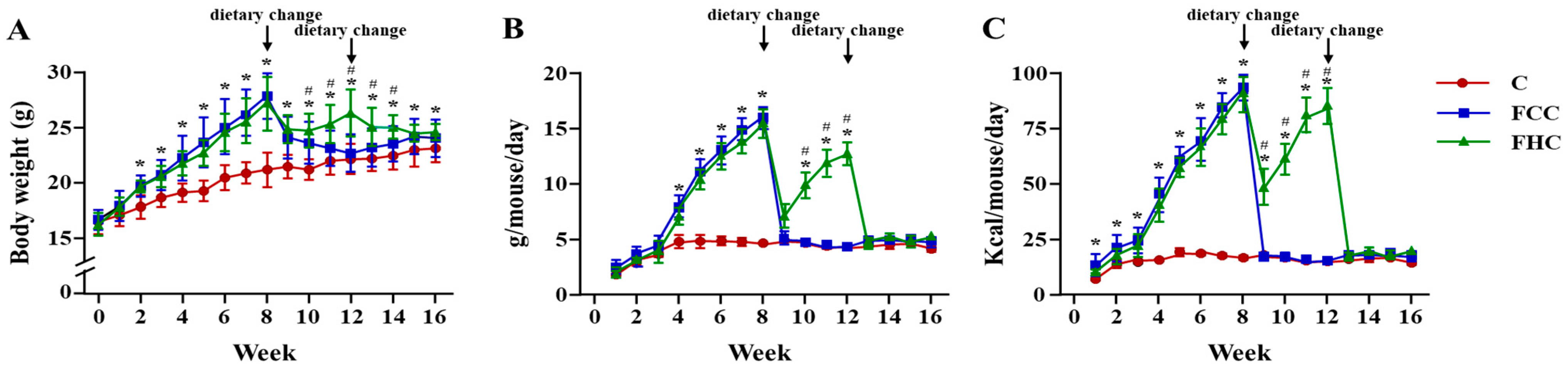
Significant weight gain was observed from two weeks on an HFD onwards (F group). After 2 weeks of diet shift, obese animals on a CHR unrestricted diet (FH group) showed higher weight gain than those receiving an unrestricted chow diet (FC group). Three weeks after switching to the chow diet, both subgroups (FHC and FCC groups) showed similar weights. This was higher than that of the controls (chow diet throughout the entire follow-up period) at the end of the study (Figure 2B, Table 1).
From the first week onwards, the energy intake was higher in the HFD group than in the control group. After CHR was introduced to the obese animals, their energy intake was higher than that of mice fed a chow diet. Reintroducing a chow diet to the CHR group normalized the caloric intake within a week, which was maintained until the end of the study (Figure 2C and Table 1).
HFD reduced the percentage of liver weight and increased inguinal and mesenteric fat deposits. Obese mice fed a chow or CHR diet normalized the percentage of liver weight and mesenteric fat. However, inguinal fat mass remained unchanged during the CHR diet, although it normalized after reintroducing the chow diet (Table 1).

3.2. Effect of Diets on Serum Biochemical Parameters and Glycemia, Insulinemia, and Adipokine Levels

3.2.1. HFD Administration (2 Months)

Mice on HFD (F group) showed higher levels of serum β-hydroxybutyrate and insulin, as well as a higher HOMA-IR index than the control group. However, total and high molecular weight (HMW) adiponectin levels were similar between both groups (Table 2).

3.2.2. CHR or Chow Diet Administration to Obese Mice (Third Month)

After CHR, serum levels of β-hydroxybutyrate and HMW-adiponectin were higher and insulin, and the HOMA-IR index was lower in obese mice after CHR (FH group) than in the FC and C groups. No intergroup differences were observed in serum glucose or total adiponectin concentrations. Chow diet administration to obese mice (FC group) did not induce any differences in the studied parameters compared with the control group (C group, Table 2).

3.2.3. Effect of Chow Diet on FC and FH Groups (Forth Month)

At 4 months, after one month on a chow diet, the serum levels of β-hydroxybutyrate, glucose, and insulin in mice with former CH restriction (the FHC group) were similar to those in the control group, as was the HOMA-IR index. However, the FHC group showed higher total adiponectin and high molecular weight form. Serum estradiol levels did not differ between the experimental groups at any of the three time points studied (Table 2).

3.3. CHR Partially Reduces the Serum Inflammatory Profile Generated by HFD Administration

Mice fed HFD (F group) showed higher serum levels of IL-1β, IL-2, IL-6, IP-10, and TNF-α than the control (Table 3). After 3 months, serum IL-2, IFN-γ, and TNF-α levels were lower than those in the controls, but IL-6 levels were higher in obese animals fed CHR (the FH group) than in the controls (FC group). The levels of IP-10 were higher in the F and FH groups with respect their respective controls.
One month after chow diet reintroduction, serum IL-1β and IL-6 levels were lower and TNF-α levels were higher in obese animals with prior CH restriction (FHC group) compared to those on a prior chow diet (FCC group) (Table 3).

3.4. HFD and CHR Partially Increase the Liver Proinflammatory Profile

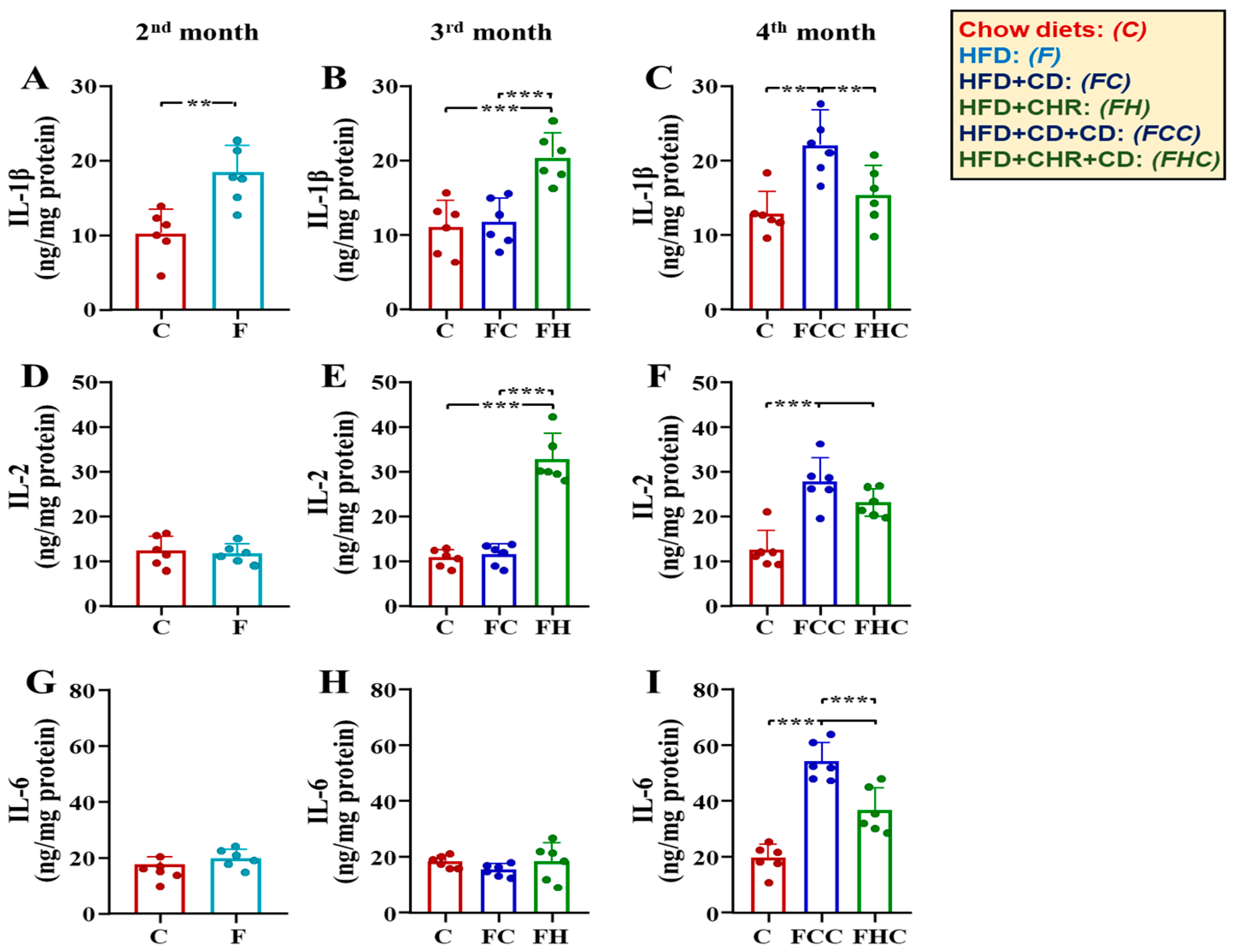
Hepatic concentrations of IL-1β increased in the HFD group (Figure 3A). The introduction of CHR to obese mice resulted in higher IL-1β and IL-2 levels than those in controls and obese mice on a chow diet (Figure 3B and Figure 3E, respectively). After 4 months, IL-1β and IL-6 levels were lower in mice that had previously been fed a CHR than in those that had not (Figure 3C and Figure 3I, respectively). The concentrations of IL-2 were increased compared to the controls (Figure 3F).
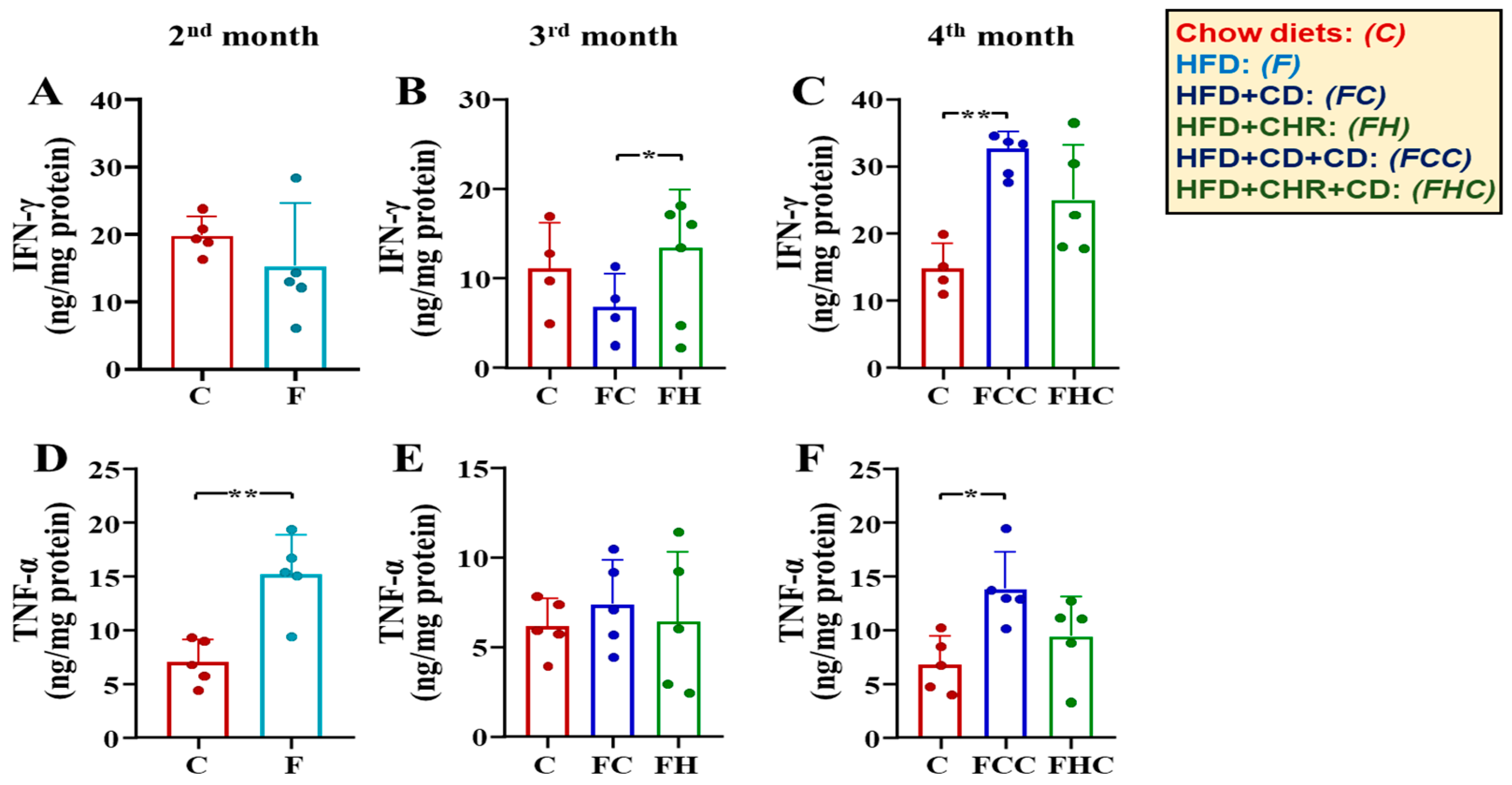
HFD did not alter hepatic IFN-γ (Figure 4A), but increased hepatic TNF-α concentrations under HFD were observed (Figure 4D). The introduction of CHR resulted in higher IFN-γ levels compared to obese mice without CHR (Figure 4B), without changes in TNF-α concentrations (Figure 4E). Reintroducing a chow diet increased hepatic IFN-γ and TNF-α concentrations in mice without previous CH restriction compared to the controls (Figure 4C and Figure 4F, respectively).

3.5. HFD and CHR Increase Serum Transaminase Levels but Do Not Modify the Hepatic Content of Inflammatory Chemokines

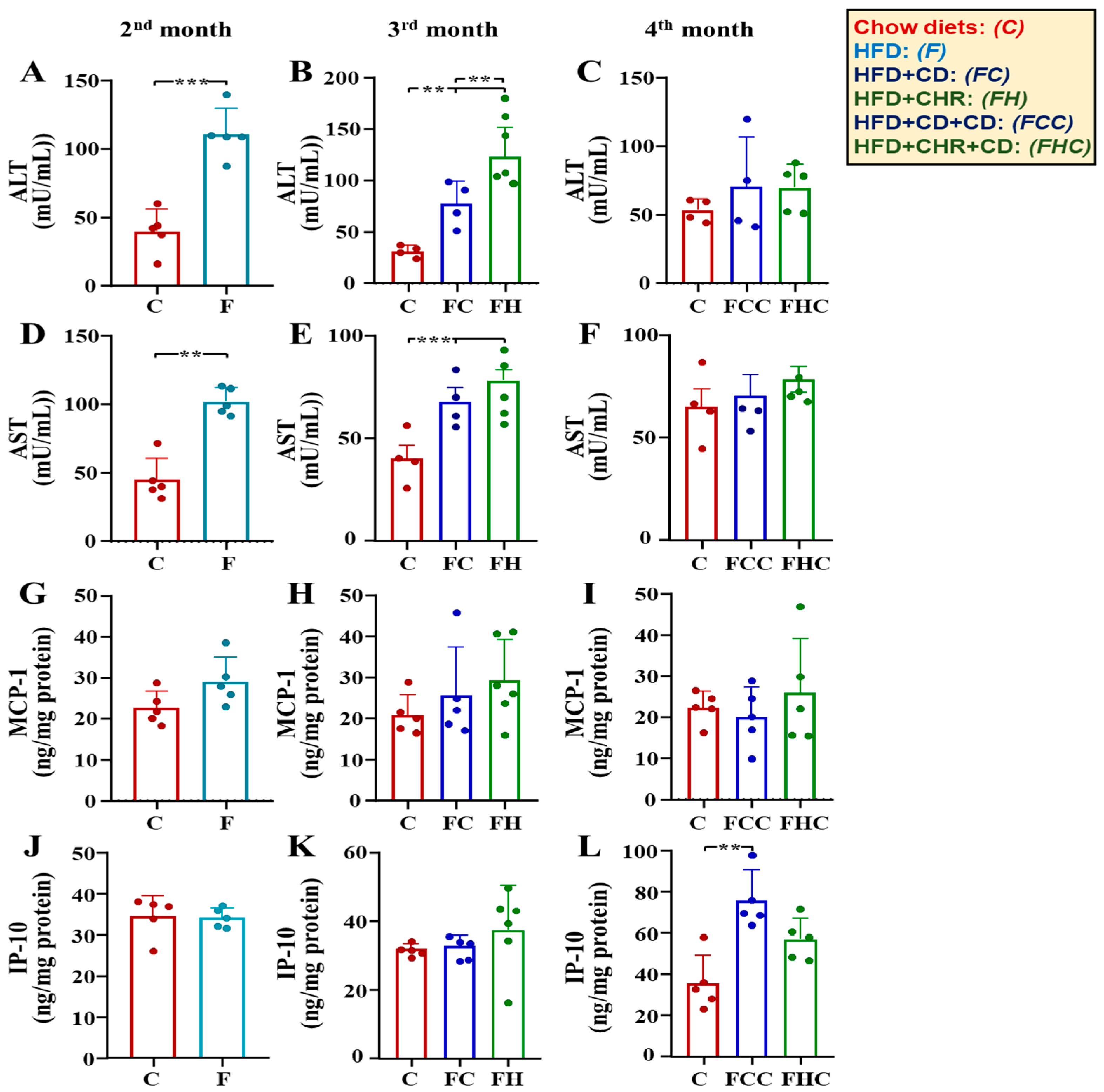
Both diets increased circulating levels of ALT and AST (Figure 5A,B,D,E). The reintroduction of a chow diet normalized serum transaminase levels (Figure 5C,F). The hepatic content of MCP-1 and IP-10 was unaffected by either the HFD or CHR diet (Figure 5G,H,J,K). Reintroducing a chow diet increased hepatic IP-10 concentrations in mice without previous CH restriction compared to controls (Figure 5L).

3.6. HFD and CHR Reduce Fatty Acid Synthase Gene Expression in Liver

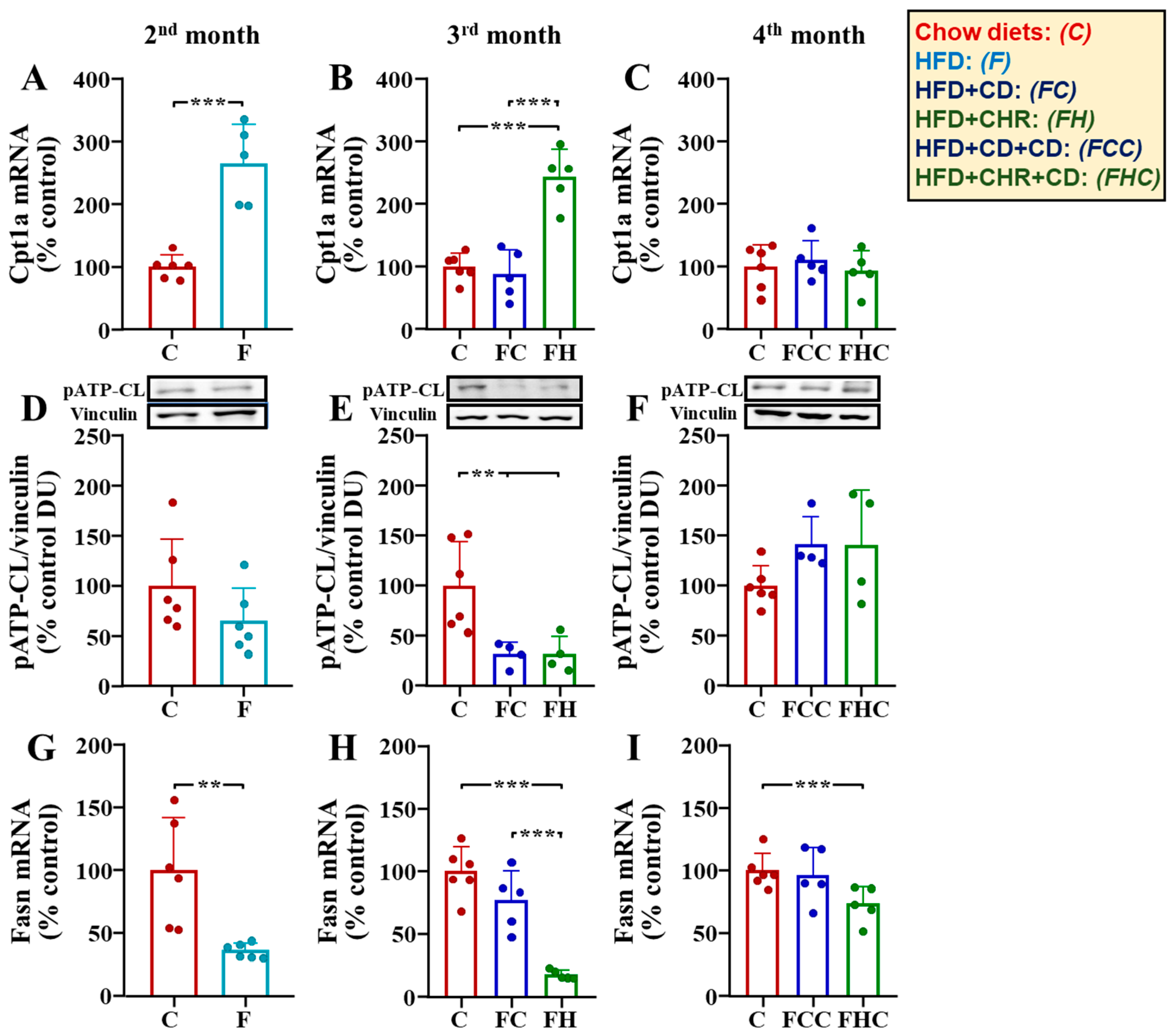
Mice fed HFD had higher levels of Cpt1a mRNA and lower levels of Fasn mRNA than the controls (Figure 6A and Figure 6G, respectively). No changes were found in ATP-CL phosphorylation (Figure 6D).
Compared to the controls and obese mice on a chow diet, the introduction of CHR resulted in increased Cpt1a and decreased Fasn mRNA levels (Figure 6B and Figure 6H, respectively). ATP-CL phosphorylation was lower in both groups of obese mice than in the controls, regardless of the diet (Figure 6E). After one month on a chow diet, CHR-fed animals maintained lower Fasn mRNA levels than controls (Figure 5I, with no changes in any of the other parameters in the different experimental groups (Figure 6C,F). Vinculin levels did not differ among the groups for Western blot normalization. The Western blot images are shown in Figure S1.

3.7. HFD and CHR Increase Activation of Leptin Signaling

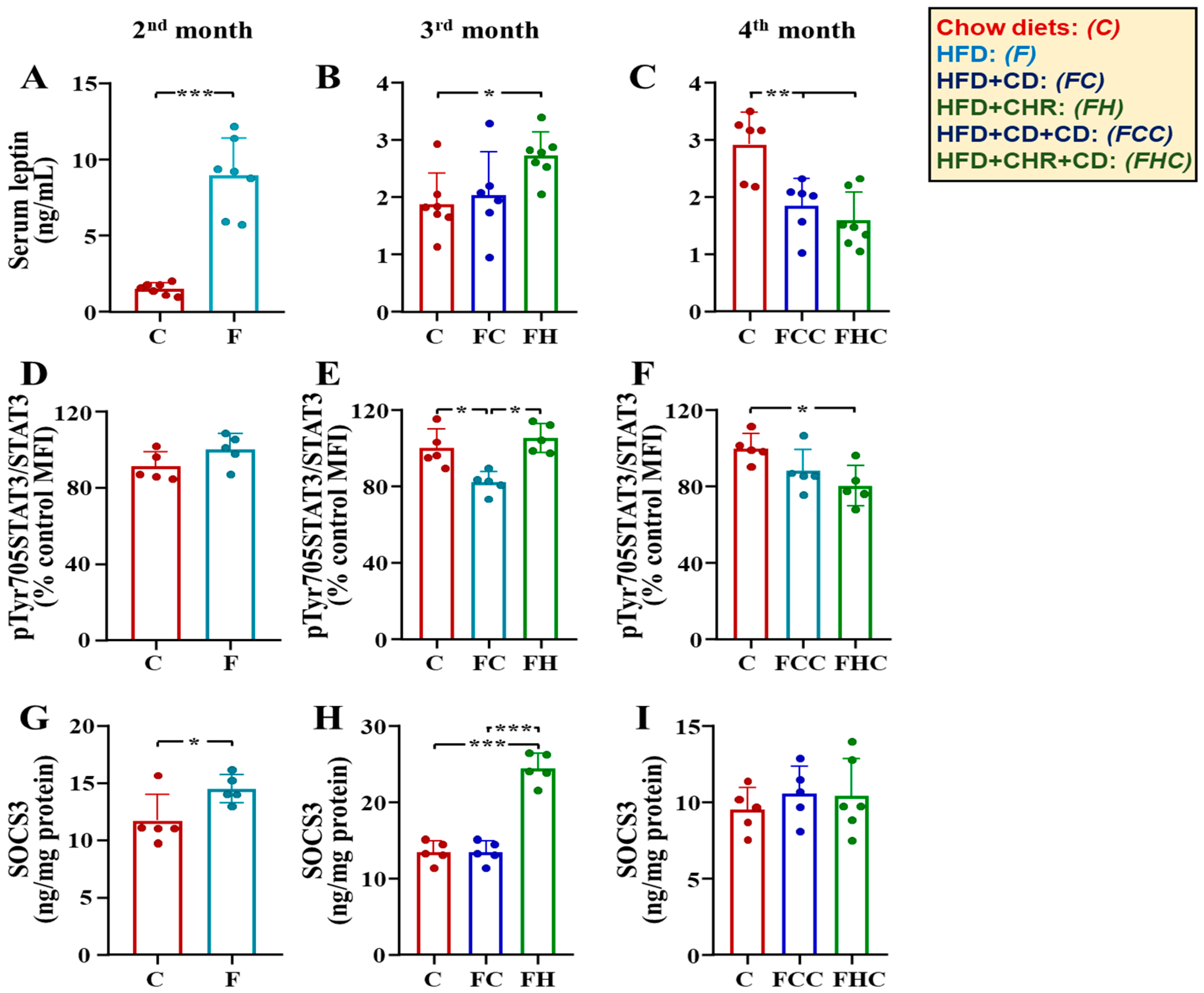
HFD resulted in higher serum leptin levels and hepatic SOCS3 concentrations than those in the control group (Figure 7A and Figure 7G, respectively). No changes were found in hepatic STAT3 phosphorylation (Figure 7D).
The introduction of CHR increased serum leptin levels and hepatic SOCS3 concentrations (Figure 7B and Figure 7H, respectively), whereas the phosphorylation of STAT3 was lower in obese mice on a chow diet (Figure 7E). After one subsequent month on a chow diet, CHR-fed animals presented lower serum leptin levels and lower hepatic phosphorylation of STAT3 (Figure 7C and Figure 7F, respectively), with no difference in hepatic SOCS3 concentrations (Figure 7I).

3.8. CHR Decreases Activation of Akt-Related Signaling in Obese Mice

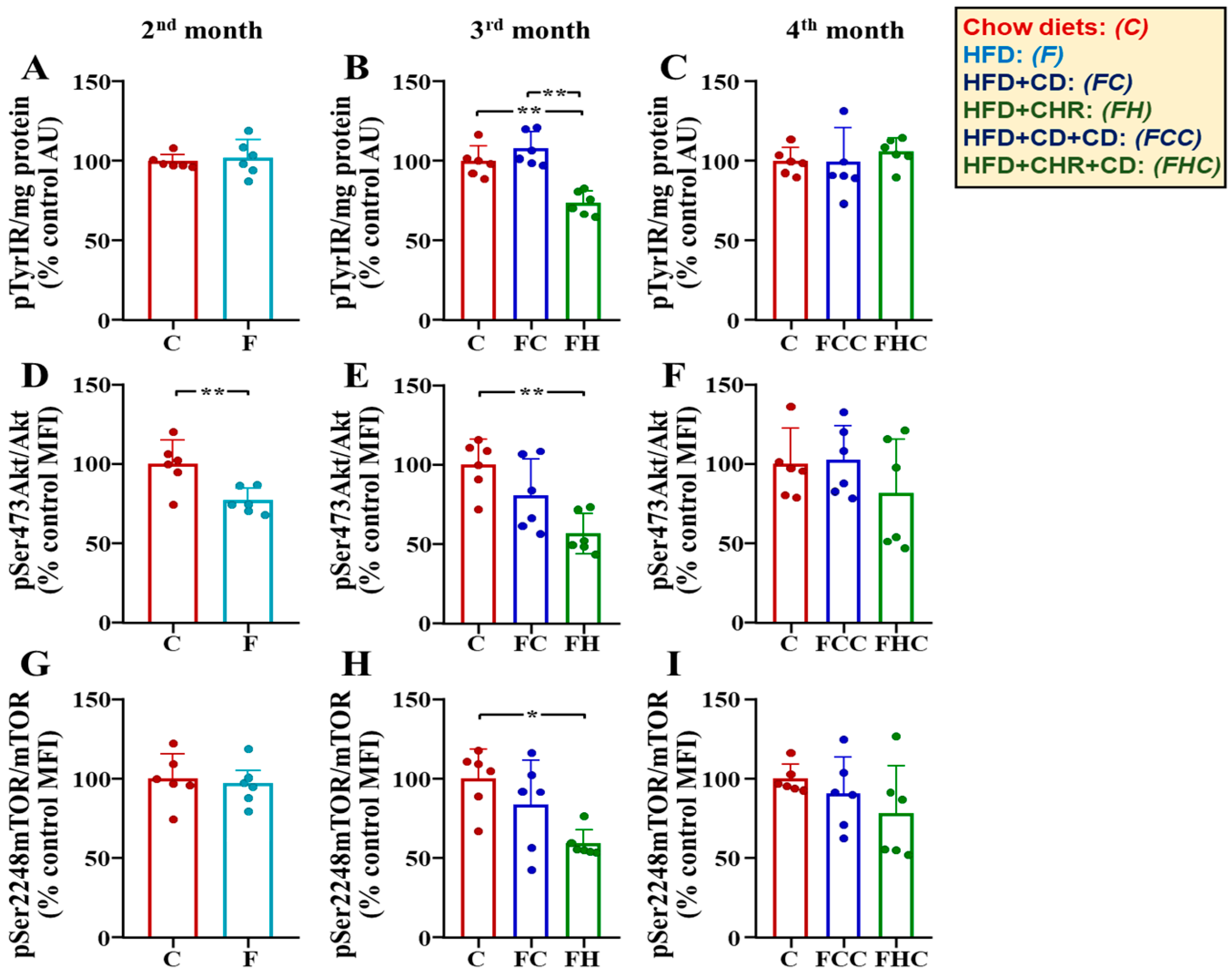
The phosphorylation of Akt was lower in the liver of HFD than in controls (Figure 8D), with no differences in the phosphorylation of the insulin receptor (IR) or mammalian target of rapamycin (mTOR, Figure 8A and Figure 8G, respectively). Obese animals that underwent CHR showed lower IR phosphorylation than controls and obese mice on a chow diet (Figure 8B). Additionally, Akt and mTOR phosphorylation was reduced in the CHR group compared to the control group (Figure 8E and Figure 8H, respectively). All of these intergroup differences were abolished after the introduction of the chow diet in the last month of the study (Figure 8C,F,I).
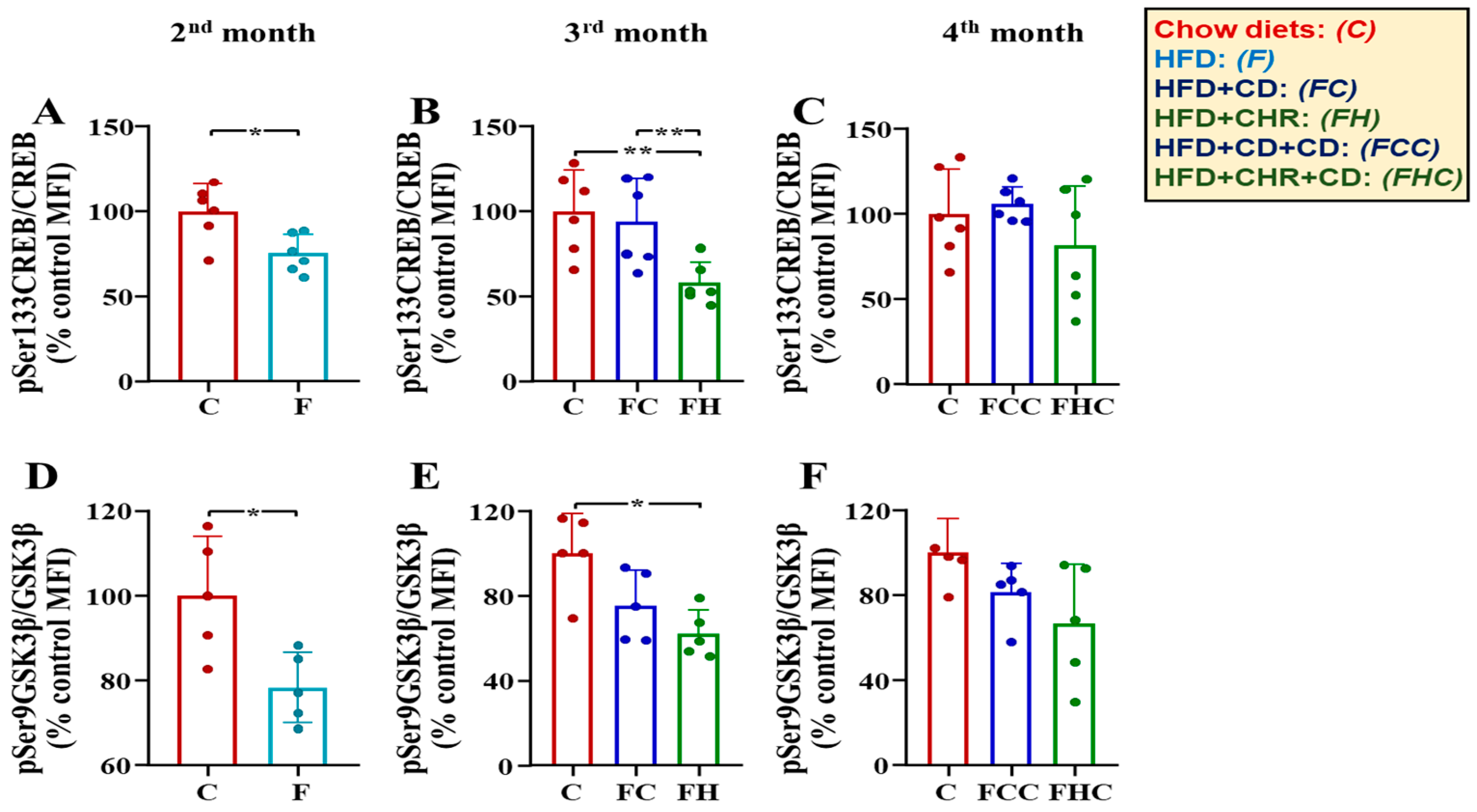
Activation of CREB and GSK3β decreased after HFD treatment (Figure 9A and Figure 9D, respectively). CHR introduction to obese female mice resulted in the lower phosphorylation of CREB than that in controls and obese mice on a chow diet (Figure 9B) and decreased GSK3β phosphorylation than that in controls (Figure 9E). After 4 months, there were no differences in the phosphorylation of either targets (Figure 9C,F).

3.9. Activation of Akt-Related Signaling Is Inversely Correlated with Hepatic Levels of Proinflammatory Cytokines

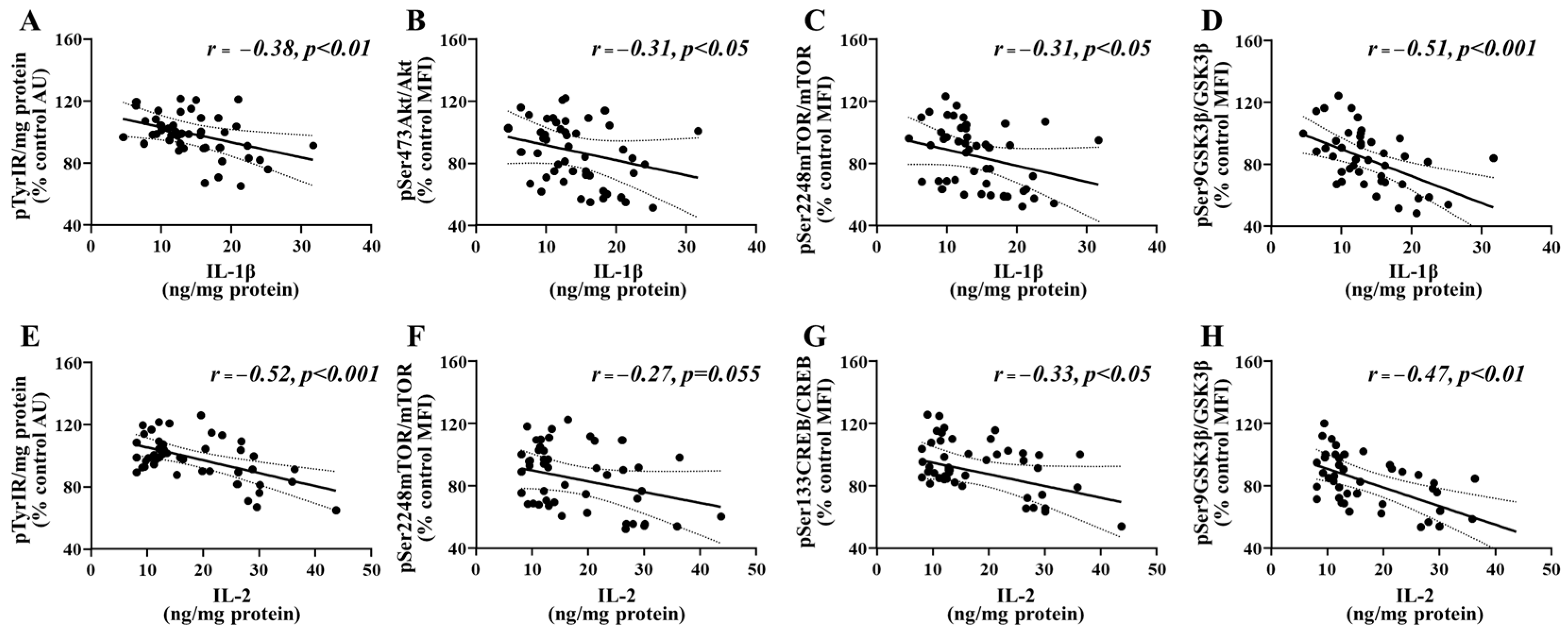
Hepatic IL-1β concentrations were inversely correlated with the phosphorylation of IR, Akt, mTOR, and GSK3β (Figure 10A, Figure 10B, Figure 10C and Figure 10D, respectively) while IL-2 levels showed an inverse correlation with IR, CREB, and GSK3β activation (Figure 10E, Figure 10G and Figure 10H, respectively). No significant correlations were found between IL-6, IFN-γ, IP-10, and TNF-α and the activation of Akt-related signaling targets.

3.10. CHR Prevents the Increase in Free Fatty Acid Concentration and Reduces Triglyceride Levels in the Liver of Obese Animals

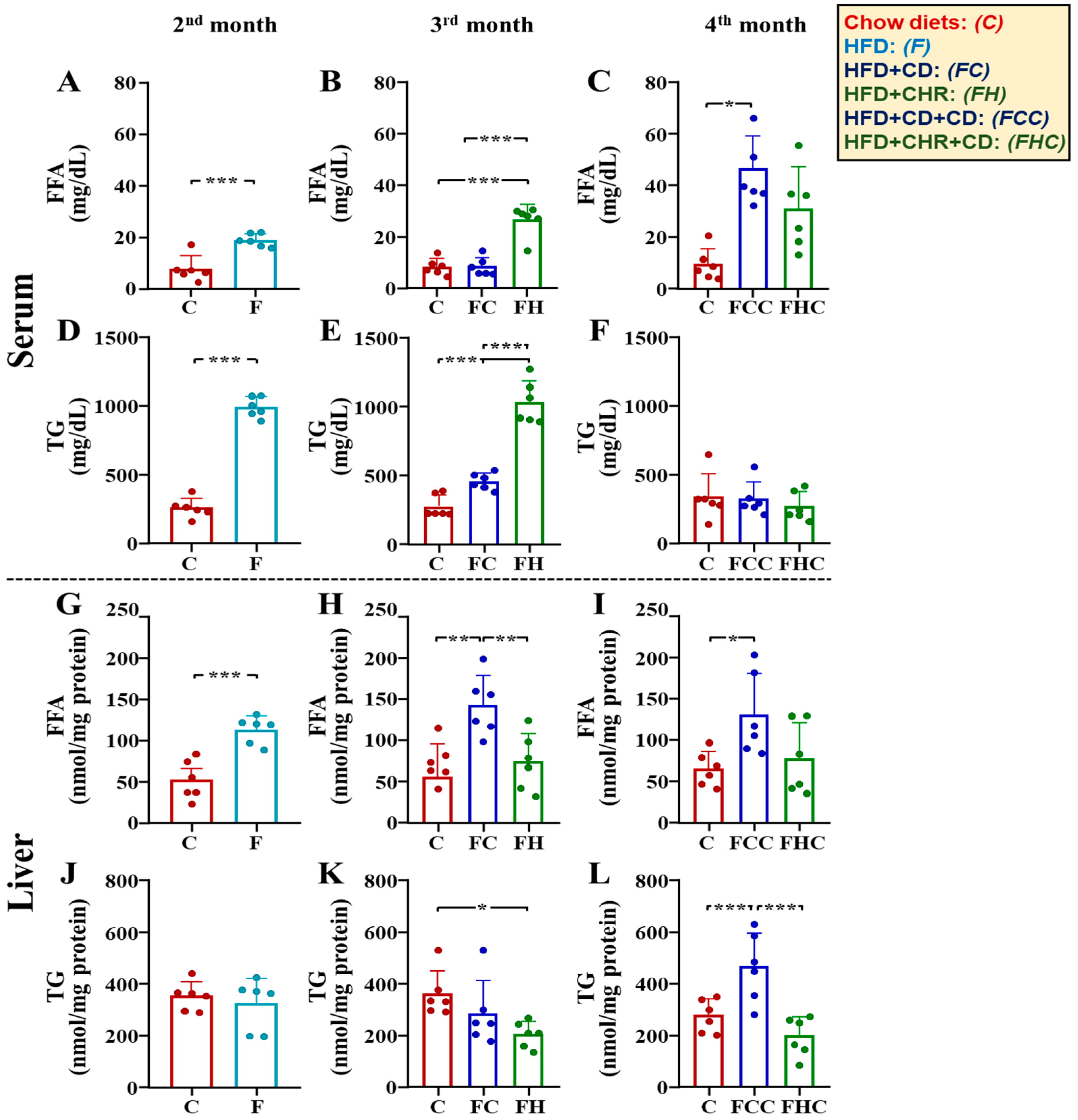
Both HFD and CHR diets increased circulating levels of free fatty acids (Figure 11A and Figure 11B, respectively) and triglycerides (Figure 11D and Figure 11E, respectively) compared to the chow diet in control and obese mice, respectively. In the liver, HFD increased FFA levels (Figure 11G), whereas the CHR diet lowered FFA levels to control levels (Figure 11H) and even resulted in lower TG concentrations than in the control group (Figure 11K). Hepatic FFA levels in obese animals fed a chow diet at 3 months and liver TG levels at 4 months were higher than those in the other experimental groups (Figure 11L).

3.11. Changes in Hepatic Lipid Content After High-Fat and Carbohydrate-Restricted Diets

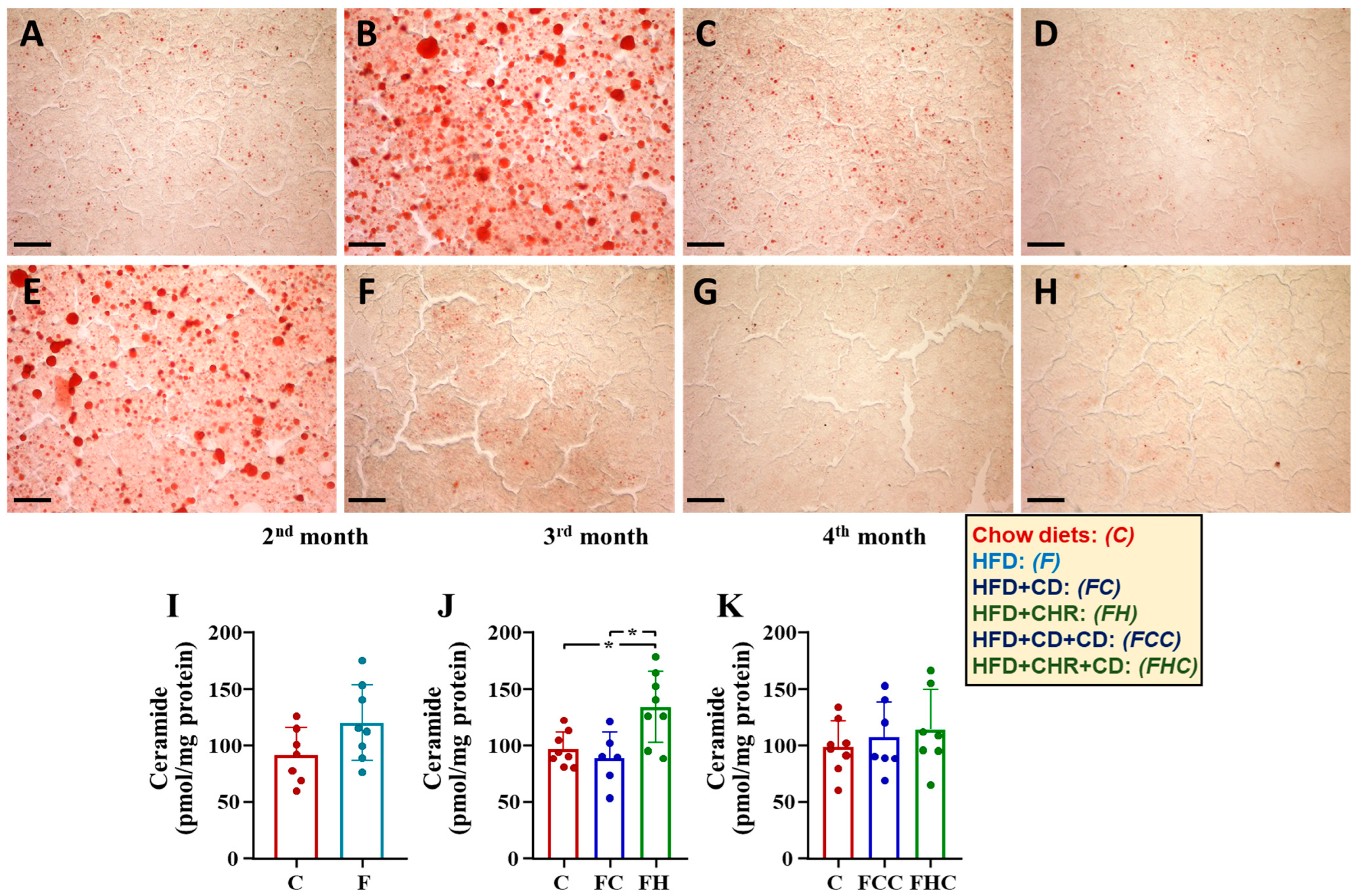
Red O staining of liver sections revealed an increase in intrahepatic lipid accumulation after HFD and KD that normalized after reintroducing the chow diet (Figure 12A–H).
The hepatic content of ceramides remained unaffected after HFD (Figure 12I) and increased with a CHR diet (Figure 12J). After 4 months, there were no differences between the experimental groups ((Figure 12K).

4. Discussion

Most studies comparing the effects of carbohydrate-restricted diets on both sexes have shown greater benefits in men and male rodents [34,35,36]. However, recent studies in rodents suggest that these diets are more beneficial for females than for males in terms of oxidative stress and cellular senescence [37], whereas male mice appear to be more susceptible to glucose intolerance than female mice [38]. The data presented in this study support the notion that a carbohydrate-restricted diet may be beneficial in preventing triglyceride accumulation in the liver in cases of diet-induced obesity. Carbohydrate restriction reduced the hepatic fatty acid and triglyceride content in obese female mice, in contrast to the administration of a chow diet to obese mice. After the reintroduction of a chow diet, free fatty acid and triglyceride levels remained lower in the livers of mice that had previously been fed a CHR than in those that did not undergo transient carbohydrate restriction. Our results suggest that this decrease in hepatic fatty acid and triglyceride content is closely related to the lower expression or activation of the key enzymes involved in lipid anabolism. Furthermore, the reduced activation of insulin signaling pathways associated with low-grade inflammation appears to play an important role in the regulation of hepatic lipogenesis after carbohydrate restriction.
Mice generally prefer an HFD to standard laboratory diets, particularly the C57BL/6J strain [39]. Therefore, palatability is a factor to consider, as only from the fourth week onwards, daily consumption is higher than that in mice on an HFD, while the kcal intake is higher from the first week onwards. In contrast, when mice were on a CHR diet, they tended to restrict their intake, possibly due to the lower palatability of this diet [40]. Our study showed lower food intake in the CHR group than in the HFD group, even though the total calories ingested were similar at the end of the respective periods. Therefore, in both cases, it is advisable to allow some time after a change in diet. Carbohydrate-restricted diets are characterized by a high proportion of unsaturated fatty acids. When these diets include fish oil supplements, they improve hepatic markers and intestinal inflammation compared to classic ketogenic diets [41]. However, they also have a high proportion of saturated fatty acids that could mask their beneficial effects. In this regard, our results show an increase in hepatic ceramide content, possibly promoted by the massive influx of saturated acids from CHR. These compounds exert toxic effects, and it has also been reported that these diets promote cellular senescence [42].
Despite the higher calorie intake of those under CHR, the weight gain in obese animals on the CHR or chow diet was similar at the end of the study. This is due to the lower energy efficiency of low-carbohydrate diets, which are related to minor metabolic efficiency, greater activation of thermogenesis, and poorer digestibility than diets with an adequate proportion of carbohydrates [43,44]. Due to the higher lipid content, an increase in hepatic CPT1A expression and circulating ketone bodies was observed after CHR. The regulation of CPT1A is inhibited by insulin and intermediaries in fatty acid synthesis [45], and both insulin signaling pathways and enzymes in fatty acid metabolism are reduced in mice fed with CHR.
Kupffer cells are the main source of numerous cytokines and chemokines that serve as messengers between hepatic cells and the circulation, driving inflammatory responses [46]. It has been reported that ketogenic diets increase proinflammatory and long-term inflammatory markers in the liver [47]. These proinflammatory mechanisms are more pronounced in male mice, where there is a greater increase in proinflammatory cytokines and in cellular senescence. This does not occur in females and is related to the presence of estrogens [37]. There is also a greater attenuation of insulin signaling in males [48], which is related to the higher hepatic content of proinflammatory cytokines. We found an increase in circulating leptin, a proinflammatory adipokine, after HFD and CHR interventions, influenced by increased weight gain. The proinflammatory profile of the serum was worse in mice fed an HFD than in those fed a CHR; however, hepatic inflammation was higher after CHR in mice under HFD, as previously reported [49].
A proinflammatory profile persists in obese mice after a chow diet is administered. The increase in IL-1β could be due to adipose tissue remodeling, which can induce nuclear factor kappa-light-chain-enhancer of activated B cells (NF-κB) signaling, which leads to transcriptional activation of this interleukin [50]. However, we observed differential effects on IL1β and TNFα levels after 3 and 4 months. While the transcription of both factors depends on NF-κB activation [50], the IL-1β gene is stimulated by a diet rich in saturated fatty acids that activate the NOD-, LRR-, and pyrin domain-containing protein 3 (NLRP3) inflammasome [51]. In this regard, CHR has more saturated fatty acids than the HFD. By the end of the study, fat deposits had normalized. When fat loss occurs, adipose tissue undergoes a process of tissue reorganization during which macrophages can release IFN-γ. With respect to increased hepatic IFN-γ content, when the chow diet is established, stored triglycerides are mobilized, releasing free fatty acids that can activate toll-like receptors and induce Th1 responses, increasing IFN-γ. In addition, there is the temporary activation of immune cells in the liver that secrete IFN-γ to reduce oxidized lipids or tissue damage accrued from high-fat diets [52]. However, our findings showed a discrete increase in circulating transaminase levels without changes in hepatic chemokines involved in the recruitment of granulocytes and activated T lymphocytes [53]. These data seem to indicate that the administration of a CHR diet for one month did not provoke hepatic inflammation. Here, we displayed a previous process, the increase in acute phase cytokines, which can sometimes lead to the onset of chronic liver inflammation.
Dietary carbohydrate restriction reduces serum insulin levels, as previously published [54], and improves indirect estimators of insulin sensitivity, such as the HOMA-IR index. In humans, carbohydrate restriction reduces the HOMA-IR index during 3–6 months, while in mice, the results are more complex due to their dietary preferences for fats. Rodents also tend to improve glucose tolerance, although they can present some metabolic disorders [55]. However, we found a reduction in the activation of insulin signaling pathways in the liver. There is evidence in the literature of decreased hepatic insulin signaling after a carbohydrate-restricted diet. This effect is mediated, among other factors, by lipid accumulation and the activation of proinflammatory signaling pathways [56]. The lower phosphorylation of IR observed in this study may be related to the higher hepatic IL-1β and IL-2 content in the CHR group. Indeed, in vitro studies have shown that an increase in IL-1β content mediates insulin resistance in liver-derived cells through reduced IR activation [57] and inhibits insulin signaling by increasing the phosphorylation of the inhibitory insulin receptor substrate-1 (IRS-1) and decreasing total IRS-1 protein abundance [58]. The decrease in IR activation, also provoked by IL-2 [59], can reduce downstream insulin signaling activation, affecting Akt, mTOR, CREB, and GSK3β phosphorylation, as we found in this study.
GSK3β promotes inflammatory pathways, whereas phosphorylation at Ser9 inhibits its actions [60]. Following the administration of HFD and CHR, phosphorylation of this residue decreased, indicating enzyme activation. This could lead to increased STAT3 activation, as well as the synthesis and release of inflammatory interleukins, such as IL-1β [61], promoting the generation of an inflammatory environment in the liver.
The interconnection between a low-intensity proinflammatory environment and changes in different metabolic pathways has been associated with multiple endocrine diseases, such as obesity and diabetes [62]. Here, the decreased activation of insulin signaling pathways may connect inflammation with alterations in fatty acid synthesis in the liver after CHR exposure. We found a reduction in the phosphorylation of ATP-citrate lyase, whose activity is regulated by insulin signaling, in obese animals under CHR [63] and also under chow diet. This could be related to the decrease in STAT3 activation, since this leptin target decreased ATP-CL activity [64]. We also found a decrease in the expression of FASN after CHR along with a decrease in mTOR phosphorylation, a target of Akt signaling that regulates FASN through the modulation of sterol regulatory element binding protein-1c (SREBP-1c), a key transcription factor for lipogenesis [65]. Another possible explanation for the decrease in FASN expression is the lower phosphorylation of CREB, which is also modulated by Akt signaling and has been shown to induce FASN expression [66]. This decrease in FASN persists after reintroducing a chow diet to mice fed a CRH and may be important, as a probable reduction in FASN activity could restrain inflammatory responses [67].
Many of the lipid and insulin signaling targets included in this study are modulated by the circadian clock machinery via changes in SREBP1c and PPAR-γ expression, as well as CREB activation [68]. This circadian regulation is important in the context of translational medicine, as changes in the composition of food intake and irregular mealtimes can affect this machinery and cause serious liver disorders, such as MASLD or fibrosis [69].
HFD increased hepatic FFA content, whereas CHR significantly reduced FFA and TG concentrations in obese mice compared to the chow diet. These differences were maintained after one month of a chow diet in both subgroups. These data are consistent with a decrease in the expression or degree of activation of several lipid anabolic enzymes, reinforcing previous observations suggesting that carbohydrate-restricted diets decrease intrahepatic lipid content via reduced lipogenesis [70]. In this regard, the tissue-specific knockout of ATP-citrate lyase expression in the mouse liver protected against the development of hepatic steatosis and dyslipidemia [71]. Switching to a healthy standard diet carries risk, including weight regain if the change is not well planned and an increase in insulin due to the reintroduction of carbohydrates [72]. However, our findings do not show weight gain, as intake is lower when reintroducing the chow diet due to its lower palatability. However, there is a pronounced increase in insulinemia and the HOMA-IR index.
Several caveats should be considered when evaluating these results. First, the absence of histological studies of immune activity did not allow for an analysis of the degree of neutrophil presence, which is typical in a proinflammatory state. Additionally, extending the period of CHR diet administration would have enabled us to analyze whether the proinflammatory process involving an increase in acute-phase cytokines could have triggered the onset of an inflammatory condition. Another limitation of the unrestricted CHR diet was the increase in inguinal fat, which can modify the circulating levels of FFA and TG. Finally, it should be noted that energy expenditure was not recorded electronically, which is susceptible to error.

5. Conclusions

This study indicates that CHR reduces triglyceride content in obese female mice, which is related to a decrease in de novo lipogenesis. These effects were associated with the attenuation of insulin signaling, which is possibly associated with a low-grade proinflammatory environment. The introduction of a chow diet to obese mice CHR normalized the hepatic triglyceride content, while those on a chow diet exhibited higher levels of triglyceride. In summary, these effects may be mediated by changes in insulin signaling, a mechanism that connects the metabolic and inflammatory pathways.
Future research should focus on understanding the mechanisms by which the circadian clock inhibits TGF-β signaling through nuclear receptor subfamily 1 group D member 1 (NR1D1 or REV-ERB), a gene that encodes a transcription factor that acts as a core regulator of circadian rhythms, metabolism, and inflammation [73]. It is a transcriptional repressor that slows down TGF-β-mediated fibrotic processes and controls the daily rhythm of the insulin-mediated suppression of glucose production in the liver. Understanding these pathophysiological mechanisms and their relationship with schedules and dietary changes will help clinicians in the fight against MASLD and fibrosis.

Supplementary Materials

The following supporting information can be downloaded at: https://www.mdpi.com/article/10.3390/livers6020028/s1, Figure S1: Western blot images corresponding to Figure 6; Table S1. Reagents used in this study. Table S2: Composition of chow, high-fat, and carbohydrate-restricted diets.

Author Contributions

Conceptualization, L.M.F., A.G.-R., G.Á.M.-M. and V.B.; methodology, A.G.-R., M.E.C., S.C., M.J.-H., P.R. and D.A.-C.; validation, J.A., P.R. and V.B.; formal analysis, L.M.F. and V.B.; writing—original draft preparation, G.Á.M.-M. and V.B.; writing—review and editing, L.M.F., A.G.-R., P.R., J.A., G.Á.M.-M. and V.B.; funding acquisition, L.M.F., G.Á.M.-M. and V.B. All authors have read and agreed to the published version of the manuscript.

Funding

This research was funded by the Spanish Ministry of Science, Innovation, and Universities with the help of European FEDER funding (FIS PI22/01820 and PID2021-122653OB-I00) and the Network Center for Biomedical Research on Obesity and Nutrition (CIBEROBN) Instituto Carlos III. A.G.-R. was supported by Programa de Ayudas Predoctorales of Spanish Ministry of Science, Innovation, and Universities with the help of European FEDER funding (PRE2022-103731). M.E.C. and S.C. were supported by CIBEROBN. M.J.-H. was supported by by Biomedical Research Foundation Hospital I.U. Niño Jesús.

Institutional Review Board Statement

The study was conducted in accordance with the Declaration of Helsinki and approved by the Ethical Committee of Animal Experimentation of the Hospital Puerta de Hierro of Madrid and the Animal Welfare Organ of the Community of Madrid (PROEX 009.4/24, 12 February 2024).

Informed Consent Statement

Not applicable.

Data Availability Statement

The data used and/or analyzed during this study are available at https://10.5281/zenodo.17473211.

Conflicts of Interest

The authors declare no conflicts of interest. The funders had no role in the design of the study; in the collection, analyses, or interpretation of data; in the writing of the manuscript; or in the decision to publish the results.

Abbreviations

AktProtein kinase B
ALTAlanine aminotransferase
ANOVAAnalysis of variance
ATP-CLATP citrate lyase
ASTAspartate aminotransferase
AUAbsorbance units
CDChow diet
CHRCarbohydrate-restricted diet
CPT1ACarnitine palmitoyl-transferase 1A
CREBcAMP response element-binding protein
DUDensitometry units
ELISAEnzyme-linked immunosorbent assay
FASNFatty acid synthase
FFAFree fatty acid
GAPDHGlyceraldehyde 3-phosphate dehydrogenase
GSK3βGlycogen synthase kinase 3 beta
HFDHigh-fat diet
HMWHigh molecular weight
HOMA-IRHomeostatic model assessment for insulin resistance
IFN-γInterferon-gamma
ILInterleukin
IP-10IFN-γ-induced protein 10
IRInsulin receptor
KDKetogenic diet
MASHMetabolic dysfunction-associated steatohepatitis
MASLDMetabolic dysfunction-associated steatotic liver disease
MCP-1Monocyte chemoattractant protein-1
MFIMedian fluorescence intensity
mTORMammalian target of rapamycin
NF-κBNuclear factor kappa-light-chain-enhancer of activated B cells
NLRP3NOD-, LRR- and pyrin domain-containing protein 3
NR1D1Nuclear receptor subfamily 1 group D member 1
PPAR-γPeroxisome proliferator-activated receptor-gamma
RT-qPCRReal-time polymerase chain reaction
SEMStandard error of the mean
SOCS3Suppressor of cytokine signaling 3
SREBP-1cSterol regulatory element-binding protein-1c
STAT3Signal transducer and activator of transcription 3
TGTriglyceride
TGF-βTransforming growth factor-beta
TNF-αTumor necrosis factor-alpha

References

  1. Glass, C.K.; Olefsky, J.M. Inflammation and lipid signaling in the etiology of insulin resistance. Cell Metab. 2012, 15, 635–645. [Google Scholar] [CrossRef]
  2. Lee, W.H.; Kipp, Z.A.; Bates, E.A.; Pauss, S.N.; Martinez, G.J.; Hinds, T.D., Jr. The physiology of MASLD: Molecular pathways between liver and adipose tissues. Clin. Sci. 2025, 139, CS20257571. [Google Scholar] [CrossRef] [PubMed]
  3. Kan, C.; Zhang, K.; Hou, N.; Zheng, T.; Sheng, S.; Li, X.; Han, F.; Sun, X. Epidemiology of metabolic dysfunction-associated steatotic liver disease-related liver diseases: 1990–2021 and projections to 2045. Eur. J. Gastroenterol. Hepatol. 2026, 38, 222–232. [Google Scholar] [CrossRef] [PubMed]
  4. Taylor, S.I.; Montasser, M.E.; Yuen, A.H.; Fan, H.; Yazdi, Z.S.; Whitlatch, H.B.; Mitchell, B.D.; Shuldiner, A.R.; Muniyappa, R.; Streeten, E.A.; et al. Acute pharmacodynamic responses to exenatide: Drug-induced increases in insulin secretion and glucose effectiveness. Diabetes Obes. Metab. 2023, 25, 2586–2594. [Google Scholar] [CrossRef]
  5. Effinger, D.; Hirschberger, S.; Yoncheva, P.; Schmid, A.; Heine, T.; Newels, P.; Schütz, B.; Meng, C.; Gigl, M.; Kleigrewe, K.; et al. A ketogenic diet substantially reshapes the human metabolome. Clin. Nutr. 2023, 42, 1202–1212. [Google Scholar] [CrossRef] [PubMed]
  6. Cooper, I.D.; Petagine, L.; Soto-Mota, A.; Duraj, T.; Scarborough, A.; Norwitz, N.G.; Seyfried, T.N.; Furoni, M.A.; Kyriakidou, Y. Ketosis Suppression and Ageing (KetoSAge): The Effect of Suppressing Ketosis on GKI and Liver Biomarkers in Healthy Females. Livers 2025, 5, 41. [Google Scholar] [CrossRef]
  7. Barrea, L.; Verde, L.; Galasso, M.; Savastano, S.; Colao, A.; Muscogiuri, G. Very low energy ketogenic therapy: An anti-inflammatory medical nutritional approach for MASLD in obesity. J. Transl. Med. 2025, 23, 1403. [Google Scholar] [CrossRef]
  8. Szukiewicz, D. Molecular Mechanisms for the Vicious Cycle between Insulin Resistance and the Inflammatory Response in Obesity. Int. J. Mol. Sci. 2023, 24, 9818. [Google Scholar] [CrossRef]
  9. Kwaifa, I.K.; Bahari, H.; Yong, Y.K.; Noor, S.M. Endothelial Dysfunction in Obesity-Induced Inflammation: Molecular Mechanisms and Clinical Implications. Biomolecules 2020, 10, 291. [Google Scholar] [CrossRef]
  10. Hafizi Abu Bakar, M.; Kian Kai, C.; Wan Hassan, W.N.; Sarmidi, M.R.; Yaakob, H.; Zaman Huri, H. Mitochondrial dysfunction as a central event for mechanisms underlying insulin resistance: The roles of long chain fatty acids. Diabetes Metab. Res. Rev. 2015, 31, 453–475. [Google Scholar] [CrossRef]
  11. Santamarina, A.B.; Moreira, R.G.; Mennitti, L.V.; Martins Ferreira, Y.A.; Jucá, A.; Prado, C.M.; Pisani, L.P. Low-carbohydrate diet enriched with omega-3 and omega-9 fatty acids modulates inflammation and lipid metabolism in the liver and white adipose tissue of a mouse model of obesity. Nutr. Metab. Cardiovasc. Dis. 2025, 35, 103932. [Google Scholar] [CrossRef]
  12. Marra, F.; Tacke, F. Roles for chemokines in liver disease. Gastroenterology 2014, 147, 577–594.e1. [Google Scholar] [CrossRef]
  13. Liao, Y.J.; Wang, Y.H.; Wu, C.Y.; Hsu, F.Y.; Chien, C.Y.; Lee, Y.C. Ketogenic Diet Enhances the Cholesterol Accumulation in Liver and Augments the Severity of CCl(4) and TAA-Induced Liver Fibrosis in Mice. Int. J. Mol. Sci. 2021, 22, 2934. [Google Scholar] [CrossRef]
  14. Provera, A.; Ramavath, N.N.; Gadipudi, L.L.; Vecchio, C.; Caputo, M.; Antonioli, A.; Tini, S.; Sheferaw, A.N.; Reano, S.; Filigheddu, N.; et al. Vegetal oil-based ketogenic diet improves inflammation and fibrosis in experimental metabolic dysfunction-associated steatohepatitis. Front. Immunol. 2025, 16, 1518687. [Google Scholar] [CrossRef]
  15. Yang, Z.; Mi, J.; Wang, Y.; Xue, L.; Liu, J.; Fan, M.; Zhang, D.; Wang, L.; Qian, H.; Li, Y. Effects of low-carbohydrate diet and ketogenic diet on glucose and lipid metabolism in type 2 diabetic mice. Nutrition 2021, 89, 111230. [Google Scholar] [CrossRef] [PubMed]
  16. Watanabe, M.; Tozzi, R.; Risi, R.; Tuccinardi, D.; Mariani, S.; Basciani, S.; Spera, G.; Lubrano, C.; Gnessi, L. Beneficial effects of the ketogenic diet on nonalcoholic fatty liver disease: A comprehensive review of the literature. Obes. Rev. 2020, 21, e13024. [Google Scholar] [CrossRef] [PubMed]
  17. Ravaut, G.; Carneiro, A.; Mounier, C. Exploring the impacts of ketogenic diet on reversible hepatic steatosis: Initial analysis in male mice. Front. Nutr. 2024, 11, 1290540. [Google Scholar] [CrossRef]
  18. Festa, A.; D’Agostino, R., Jr.; Howard, G.; Mykkänen, L.; Tracy, R.P.; Haffner, S.M. Chronic subclinical inflammation as part of the insulin resistance syndrome: The Insulin Resistance Atherosclerosis Study (IRAS). Circulation 2000, 102, 42–47. [Google Scholar] [CrossRef]
  19. Donath, M.Y.; Shoelson, S.E. Type 2 diabetes as an inflammatory disease. Rev. Nat. Rev. Immunol. 2011, 11, 98–107. [Google Scholar] [CrossRef]
  20. Zhang, T.; Fan, J.; Wen, X.; Duan, X. The TWIK2-mtDNA-NLRP3 inflammasome signaling in hepatic macrophages facilitates exercise-induced attenuation of hepatic inflammation and insulin resistance in db/db mice. J. Physiol. Biochem. 2025, 81, 313–328. [Google Scholar] [CrossRef] [PubMed]
  21. Gehrke, N.; Hofmann, L.J.; Straub, B.K.; Rühle, F.; Waisman, A.; Galle, P.R.; Schattenberg, J.M. Hepatic interleukin-1 receptor type 1 signalling regulates insulin sensitivity in the early phases of nonalcoholic fatty liver disease. Clin. Transl. Med. 2022, 12, e1048. [Google Scholar] [CrossRef]
  22. Lu, Y.; Qiu, W.; Liao, R.; Cao, W.; Huang, F.; Wang, X.; Li, M.; Li, Y. Subacute PM2.5 Exposure Induces Hepatic Insulin Resistance Through Inflammation and Oxidative Stress. Int. J. Mol. Sci. 2025, 26, 812. [Google Scholar] [CrossRef]
  23. Chen, L.; Chen, R.; Wang, H.; Liang, F. Mechanisms Linking Inflammation to Insulin Resistance. Int. J. Endocrinol. 2015, 2015, 508409. [Google Scholar] [CrossRef]
  24. Jiao, Y.; Chen, X.; Liu, L.; Lu, Y.; Gao, M.; Wang, Q.; Chi, X.; Mo, Y. Sex differences in ketogenic diet: Are men more likely than women to lose weight? Front. Nutr. 2025, 12, 1600927. [Google Scholar] [CrossRef] [PubMed]
  25. de Souza, G.O.; Wasinski, F.; Donato, J., Jr. Characterization of the metabolic differences between male and female C57BL/6 mice. Life Sci. 2022, 301, 120636. [Google Scholar] [CrossRef] [PubMed]
  26. Braga Tibaes, J.R.; Barreto Silva, M.I.; Wollin, B.; Vine, D.; Tsai, S.; Richard, C. Sex differences in systemic inflammation and immune function in diet-induced obesity rodent models: A systematic review. Obes. Rev. 2024, 25, e13665. [Google Scholar] [CrossRef]
  27. Mauvais-Jarvis, F.; Arnold, A.P.; Reue, K. A Guide for the Design of Pre-clinical Studies on Sex Differences in Metabolism. Cell Metab. 2017, 25, 1216–1230. [Google Scholar] [CrossRef]
  28. Shen, M.; Kumar, S.P.; Shi, H. Estradiol regulates insulin signaling and inflammation in adipose tissue. Horm. Mol. Biol. Clin. Investig. 2014, 17, 99–107. [Google Scholar] [CrossRef]
  29. Martos-Moreno, G.A.; Barrios, V.; Argente, J. Normative data for adiponectin, resistin, interleukin 6, and leptin/receptor ratio in a healthy Spanish pediatric population: Relationship with sex steroids. Eur. J. Endocrinol. 2006, 155, 429–434. [Google Scholar] [CrossRef] [PubMed]
  30. Martos-Moreno, G.Á.; Mastrangelo, A.; Barrios, V.; García, A.; Chowen, J.A.; Rupérez, F.J.; Barbas, C.; Argente, J. Metabolomics allows the discrimination of the pathophysiological relevance of hyperinsulinism in obese prepubertal children. Int. J. Obes. 2017, 41, 1473–1480. [Google Scholar] [CrossRef]
  31. Folch, J.; Lees, M.; Sloane Stanley, G.H. A simple method for the isolation and purification of total lipides from animal tissues. J. Biol. Chem. 1957, 226, 497–509. [Google Scholar] [CrossRef] [PubMed]
  32. Barrios, V.; Campillo-Calatayud, A.; Guerra-Cantera, S.; Canelles, S.; Martín-Rivada, Á.; Frago, L.M.; Chowen, J.A.; Argente, J. Opposite Effects of Chronic Central Leptin Infusion on Activation of Insulin Signaling Pathways in Adipose Tissue and Liver Are Related to Changes in the Inflammatory Environment. Biomolecules 2021, 11, 1734. [Google Scholar] [CrossRef]
  33. Mehlem, A.; Hagberg, C.E.; Muhl, L.; Eriksson, U.; Falkevall, A. Imaging of neutral lipids by oil red O for analyzing the metabolic status in health and disease. Nat. Protoc. 2013, 8, 1149–1154. [Google Scholar] [CrossRef]
  34. Sjödin, A.; Hellström, F.; Sehlstedt, E.; Svensson, M.; Burén, J. Effects of a Ketogenic Diet on Muscle Fatigue in Healthy, Young, Normal-Weight Women: A Randomized Controlled Feeding Trial. Nutrients 2020, 12, 955. [Google Scholar] [CrossRef]
  35. Smolensky, I.; Zajac-Bakri, K.; Odermatt, T.S.; Brégère, C.; Cryan, J.F.; Guzman, R.; Timper, K.; Inta, D. Sex-specific differences in metabolic hormone and adipose tissue dynamics induced by moderate low-carbohydrate and ketogenic diet. Sci. Rep. 2023, 13, 16465. [Google Scholar] [CrossRef]
  36. Muscogiuri, G.; Verde, L.; Frias-Toral, E.; Reytor-González, C.; Annunziata, G.; Proganò, M.; Savastano, S.; Simancas-Racines, D.; Colao, A.; Barrea, L. Weight loss, changes in body composition and inflammatory status after a very low-energy ketogenic therapy (VLEKT): Does gender matter? J. Transl. Med. 2024, 22, 949. [Google Scholar] [CrossRef]
  37. Wei, S.J.; Schell, J.; Qian, W.; Silguero, M.; Baseviciene, A.; Chen, W.H.; Trevino, R., Jr.; Chocron, E.S.; Ogle, M.M.; Varmazyad, M.; et al. Divergent sex-specific effects on a ketogenic diet: Male, but not female, mice exhibit oxidative stress and cellular senescence. Cell Rep. 2025, 44, 116026. [Google Scholar] [CrossRef]
  38. Sprankle, K.W.; Knappenberger, M.A.; Locke, E.J.; Thompson, J.H.; Vinovrski, M.F.; Knapsack, K.; Kolwicz, S.C., Jr. Sex- and Age-Specific Differences in Mice Fed a Ketogenic Diet. Nutrients 2024, 16, 2731. [Google Scholar] [CrossRef]
  39. Sclafani, A.; Glendinning, J.I. Sugar and fat conditioned flavor preferences in C57BL/6J and 129 mice: Oral and postoral interactions. Am. J. Physiol. Regul. Integr. Comp. Physiol. 2005, 289, R712–R720. [Google Scholar] [CrossRef] [PubMed]
  40. Liu, Y.M.; Wang, H.S. Medium-chain triglyceride ketogenic diet, an effective treatment for drug-resistant epilepsy and a comparison with other ketogenic diets. Biomed. J. 2013, 36, 9–15. [Google Scholar] [CrossRef] [PubMed]
  41. Elisia, I.; Yeung, M.; Kowalski, S.; Shyp, T.; Tee, J.; Hollman, S.; Wong, A.; King, J.; Dyer, R.; Sorensen, P.H.; et al. A ketogenic diet rich in fish oil is superior to other fats in preventing NNK-induced lung cancer in A/J mice. Sci. Rep. 2024, 14, 5610. [Google Scholar] [CrossRef]
  42. Wei, S.J.; Schell, J.R.; Chocron, E.S.; Varmazyad, M.; Xu, G.; Chen, W.H.; Martinez, G.M.; Dong, F.F.; Sreenivas, P.; Trevino, R., Jr.; et al. Ketogenic diet induces p53-dependent cellular senescence in multiple organs. Sci. Adv. 2024, 10, eado1463. [Google Scholar] [CrossRef]
  43. Ahmad, Y.; Seo, D.S.; Jang, Y. Metabolic Effects of Ketogenic Diets: Exploring Whole-Body Metabolism in Connection with Adipose Tissue and Other Metabolic Organs. Int. J. Mol. Sci. 2024, 25, 7076. [Google Scholar] [CrossRef] [PubMed]
  44. Kirchgessner, M.; Müller, H.L. Thermogenesis from the breakdown of a ketogenic diet in an experimental model using swine. Int. J. Vitam. Nutr. Res. 1984, 54, 99–106. [Google Scholar] [PubMed]
  45. Schlaepfer, I.R.; Joshi, M. CPT1A-mediated Fat Oxidation, Mechanisms, and Therapeutic Potential. Endocrinology 2020, 161, bqz046. [Google Scholar] [CrossRef] [PubMed]
  46. Lin, W.; Chen, Y.; Lu, M.; Peng, C.; Chen, X.; Liu, X.; Wang, Y. Identification and validation of neutrophil-related biomarkers in acute-on-chronic liver failure. Front. Immunol. 2025, 16, 1477342. [Google Scholar] [CrossRef]
  47. Rezazadeh, K.; Barzegar, M.; Nezamdoost, E.; Shoaran, M.; Abbasi, M.M.; Ghasemi, B.; Madadi, S.; Raeisi, S. Hepatic toll of keto: Unveiling the inflammatory and structural consequences of ketogenic diet in rats. BMC Nutr. 2025, 11, 72. [Google Scholar] [CrossRef]
  48. Gado, M.; Tsaousidou, E.; Bornstein, S.R.; Perakakis, N. Sex-based differences in insulin resistance. J. Endocrinol. 2024, 261, e230245. [Google Scholar] [CrossRef]
  49. Long, F.; Bhatti, M.R.; Kellenberger, A.; Sun, W.; Modica, S.; Höring, M.; Liebisch, G.; Krieger, J.P.; Wolfrum, C.; Challa, T.D. A low-carbohydrate diet induces hepatic insulin resistance and metabolic associated fatty liver disease in mice. Mol. Metab. 2023, 69, 101675. [Google Scholar] [CrossRef] [PubMed]
  50. Shi, H.; Kokoeva, M.V.; Inouye, K.; Tzameli, I.; Yin, H.; Flier, J.S. TLR4 links innate immunity and fatty acid-induced insulin resistance. J. Clin. Investig. 2006, 116, 3015–3025. [Google Scholar] [CrossRef] [PubMed]
  51. Wen, H.; Gris, D.; Lei, Y.; Jha, S.; Zhang, L.; Huang, M.T.; Brickey, W.J.; Ting, J.P. Fatty acid-induced NLRP3-ASC inflammasome activation interferes with insulin signaling. Nat. Immunol. 2011, 12, 408–415. [Google Scholar] [CrossRef]
  52. Alwarawrah, Y.; Kiernan, K.; MacIver, N.J. Changes in Nutritional Status Impact Immune Cell Metabolism and Function. Front. Immunol. 2018, 9, 1055. [Google Scholar] [CrossRef]
  53. Oo, Y.H.; Shetty, S.; Adams, D.H. The role of chemokines in the recruitment of lymphocytes to the liver. Dig. Dis. 2010, 28, 31–44. [Google Scholar] [CrossRef]
  54. Saidi, K.; Nilholm, C.; Roth, B.; Ohlsson, B. A carbohydrate-restricted diet for patients with irritable bowel syndrome lowers serum C-peptide, insulin, and leptin without any correlation with symptom reduction. Nutr. Res. 2021, 86, 23–36. [Google Scholar] [CrossRef] [PubMed]
  55. Cai, L.; Xia, X.; Gu, Y.; Hu, L.; Li, C.; Ma, X.; Yin, J. Opposite effects of low-carbohydrate high-fat diet on metabolism in humans and mice. Lipids Health Dis. 2023, 22, 191. [Google Scholar] [CrossRef] [PubMed]
  56. Garbow, J.R.; Doherty, J.M.; Schugar, R.C.; Travers, S.; Weber, M.L.; Wentz, A.E.; Ezenwajiaku, N.; Cotter, D.G.; Brunt, E.M.; Crawford, P.A. Hepatic steatosis, inflammation, and ER stress in mice maintained long term on a very low-carbohydrate ketogenic diet. Am. J. Physiol. Gastrointest. Liver Physiol. 2011, 300, G956–G967. [Google Scholar] [CrossRef]
  57. Nov, O.; Kohl, A.; Lewis, E.C.; Bashan, N.; Dvir, I.; Ben-Shlomo, S.; Fishman, S.; Wueest, S.; Konrad, D.; Rudich, A. Interleukin-1beta may mediate insulin resistance in liver-derived cells in response to adipocyte inflammation. Endocrinology 2010, 151, 4247–4256. [Google Scholar] [CrossRef]
  58. Aye, I.L.; Jansson, T.; Powell, T.L. Interleukin-1β inhibits insulin signaling and prevents insulin-stimulated system A amino acid transport in primary human trophoblasts. Mol. Cell. Endocrinol. 2013, 381, 46–55. [Google Scholar] [CrossRef] [PubMed]
  59. Yan, H.F.; Liu, Z.Y.; Guan, Z.A.; Guo, C. Deferoxamine ameliorates adipocyte dysfunction by modulating iron metabolism in ob/ob mice. Endocr. Connect. 2018, 7, 604–616. [Google Scholar] [CrossRef]
  60. De Sarno, P.; Li, X.; Jope, R.S. Regulation of Akt and glycogen synthase kinase-3 beta phosphorylation by sodium valproate and lithium. Neuropharmacology 2002, 43, 1158–1164. [Google Scholar] [CrossRef]
  61. Shu, G.; Qiu, Y.; Hao, J.; Fu, Q.; Deng, X. gamma-Oryzanol alleviates acetaminophen-induced liver injury: Roles of modulating AMPK/GSK3beta/Nrf2 and NF-kappaB signaling pathways. Food Funct. 2019, 10, 6858–6872. [Google Scholar] [CrossRef]
  62. Han, J.H. Immuno-metabolic diseases and therapeutics: Molecular mechanisms via inflammasome signaling. Cell. Commun. Signal. 2025, 23, 373. [Google Scholar] [CrossRef] [PubMed]
  63. Liu, P.; Wang, Y.; Li, X.; Liu, Z.; Sun, Y.; Liu, H.; Shao, Z.; Jiang, E.; Zhou, X.; Shang, Z. Enhanced lipid biosynthesis in oral squamous cell carcinoma cancer-associated fibroblasts contributes to tumor progression: Role of IL8/AKT/p-ACLY axis. Cancer Sci. 2024, 115, 1433–1445. [Google Scholar] [CrossRef] [PubMed]
  64. Dai, M.; Yang, B.; Chen, J.; Liu, F.; Zhou, Y.; Zhou, Y.; Xu, Q.; Jiang, S.; Zhao, S.; Li, X.; et al. Nuclear-translocation of ACLY induced by obesity-related factors enhances pyrimidine metabolism through regulating histone acetylation in endometrial cancer. Cancer Lett. 2021, 513, 36–49. [Google Scholar] [CrossRef]
  65. Thiel, G.; Guethlein, L.A.; Rössler, O.G. Insulin-Responsive Transcription Factors. Biomolecules 2021, 11, 1886. [Google Scholar] [CrossRef] [PubMed]
  66. Klemm, D.J.; Leitner, J.W.; Watson, P.; Nesterova, A.; Reusch, J.E.; Goalstone, M.L.; Draznin, B. Insulin-induced adipocyte differentiation. Activation of CREB rescues adipogenesis from the arrest caused by inhibition of prenylation. J. Biol. Chem. 2001, 276, 28430–28435. [Google Scholar] [CrossRef]
  67. Tehrani, S.S.; Goodarzi, G.; Panahi, G.; Zamani-Garmsiri, F.; Meshkani, R. The combination of metformin with morin alleviates hepatic steatosis via modulating hepatic lipid metabolism, hepatic inflammation, brown adipose tissue thermogenesis, and white adipose tissue browning in high-fat diet-fed mice. Life Sci. 2023, 323, 121706. [Google Scholar] [CrossRef]
  68. Oosterman, J.E.; Kalsbeek, A.; la Fleur, S.E.; Belsham, D.D. Impact of nutrients on circadian rhythmicity. Am. J. Physiol. Regul. Integr. Comp. Physiol. 2015, 308, R337–R350. [Google Scholar] [CrossRef]
  69. Mukherji, A.; Tharaux, P.L.; Ray, D.W.; Baumert, T.F. Perturbation of the circadian clock in chronic diseases involving organ fibrosis. J. Clin. Investig. 2025, 135, e194018. [Google Scholar] [CrossRef]
  70. Jani, S.; Da Eira, D.; Stefanovic, M.; Ceddia, R.B. The ketogenic diet prevents steatosis and insulin resistance by reducing lipogenesis, diacylglycerol accumulation and protein kinase C activity in male rat liver. J. Physiol. 2022, 600, 4137–4151. [Google Scholar] [CrossRef]
  71. Wang, Q.; Jiang, L.; Wang, J.; Li, S.; Yu, Y.; You, J.; Zeng, R.; Gao, X.; Rui, L.; Li, W.; et al. Abrogation of hepatic ATP-citrate lyase protects against fatty liver and ameliorates hyperglycemia in leptin receptor-deficient mice. Hepatology 2009, 49, 1166–1175. [Google Scholar] [CrossRef] [PubMed]
  72. Honors, M.A.; Davenport, B.M.; Kinzig, K.P. Effects of consuming a high carbohydrate diet after eight weeks of exposure to a ketogenic diet. Nutr. Metab. 2009, 6, 46. [Google Scholar] [CrossRef] [PubMed]
  73. Wang, W.; Gao, Y.; Chen, Y.; Cheng, M.; Sang, Y.; Wei, L.; Dai, R.; Wang, Y.; Zhang, L. TGF-beta inhibitors: The future for prevention and treatment of liver fibrosis? Front. Immunol. 2025, 16, 1583616. [Google Scholar] [CrossRef]
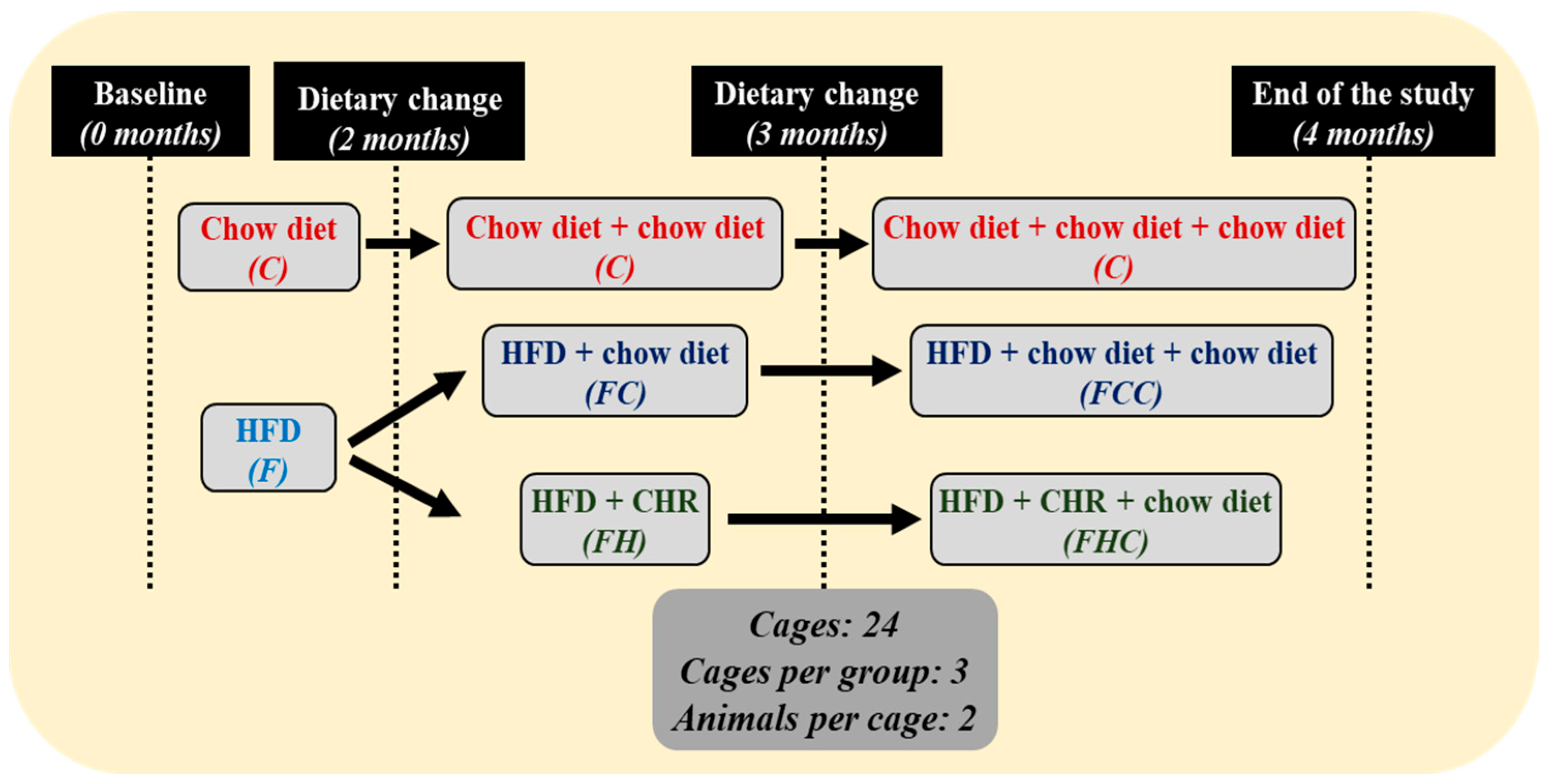
Figure 1. Schematic representation of the experimental design. High-fat diet (HFD); carbohydrate-restricted diet (CHR). Female mice on a chow diet remained on this diet until the end of the study. A group of mice receiving an HFD were sacrificed, after which the remaining mice were switched to a chow diet or carbohydrate-restricted diet for 4 weeks. Finally, all groups received a chow diet for the remaining 4 weeks.
Livers 06 00028 g001
Figure 2. (A) Weekly body weight progression. (B) food intake, and (C) energy intake of females exposed to a high-fat diet (HFD) or chow diet for 8 weeks. Female mice on a chow diet remained on this diet until the end of the study. A group of mice receiving an HFD were sacrificed, after which the remaining mice were switched to a chow diet or carbohydrate-restricted diet for 4 weeks. Finally, all groups received a chow diet for the remaining 4 weeks of the study. Energy intake data were not recorded electronically and represented consumption per cage, with two animals per cage. High-fat diet (HFD); carbohydrate-restricted diet (CHR). * p < 0.01, different from chow diet; # p < 0.01, different from HFD. For details on the groups, see Figure 1.
Livers 06 00028 g002
Figure 3. Carbohydrate-restricted diet increases proinflammatory interleukins in the liver. Hepatic IL-1β levels in controls (C) and in obese female mice after high-fat diet (F), obese female mice after chow diet (FC) or carbohydrate-restricted diet (FH) and after reintroduction of chow diet (FCC and FHC, respectively) (panels (A), (B), and (C); respectively), IL-2 in the same groups (panels (D), (E), and (F); respectively), and IL-6 in the same groups (panels (G), (H), and (I); respectively). ** p < 0.01, *** p < 0.001. For details on the groups, see Figure 1.
Livers 06 00028 g003
Figure 4. A carbohydrate-restricted diet modifies cytokines in the liver. Hepatic IFN-γ levels in controls (C) and in obese female mice after high-fat diet (F), obese female mice after chow diet (FC) or carbohydrate-restricted diet (FH) and after reintroduction of chow diet (FCC and FHC, respectively) (panels (A), (B), and (C); respectively), and TNF-α in the same groups (panels (D), (E), and (F); respectively). IFN, interferon; TNF, tumor necrosis factor. * p < 0.05, ** p < 0.01. For details on the groups, see Figure 1.
Livers 06 00028 g004
Figure 5. High-fat and carbohydrate-restricted diets increases circulating transaminase levels and do not affect the hepatic content of inflammatory chemokines. Serum ALT levels in controls (C) and in obese female mice after high-fat diet (F), obese female mice after chow diet (FC) or carbohydrate-restricted diet (FH) and after reintroduction of chow diet (FCC and FHC, respectively) (panels (A), (B), and (C); respectively), serum AST in the same groups (panels (D), (E), and (F); respectively), hepatic content of MCP-1 (panels (G), (H), and (I); respectively), and IP-10 (panels (J), (K), and (L); respectively). ALT, alanine transaminase; AST, aspartate transaminase; MCP-1, monocyte chemoattractant protein-1; IP-10, interferon-γ-induced protein 10. ** p < 0.01, *** p < 0.001. For details on the groups, see Figure 1.
Livers 06 00028 g005
Figure 6. Effects of high-fat diet, administration of carbohydrate-restricted diet, and reintroduction of chow diet on the expression of carnitine palmitoyl-transferase 1A (Cpt1a) and on the activation or expression of enzymes of fatty acid anabolism. Relative Cpt1a mRNA levels in controls (C) and in obese female mice after high-fat diet (F), obese female mice after chow diet (FC) or carbohydrate-restricted diet (FH) and after the reintroduction of chow diet (FCC and FHC, respectively) (panels (A), (B), and (C); respectively), relative protein levels of ATP-CL phosphorylated at Ser455 in the same groups (panels (D), (E), and (F); respectively), and relative Fasn mRNA levels in the same groups (panels (G), (H), and (I); respectively). ATP-CL, ATP citrate lyase; DU, densitometry units, Fasn, fatty acid synthase. ** p < 0.01, *** p < 0.001. For details on the groups, see Figure 1.
Livers 06 00028 g006
Figure 7. The activation of leptin signaling is increased after the administration of high-fat or carbohydrate-restricted diets. Serum levels of leptin in controls (C) and in obese female mice after high-fat diet (F), obese female mice after chow diet (FC) or carbohydrate-restricted diet (FH) and after reintroduction of chow diet (FCC and FHC, respectively) (panels (A), (B), and (C); respectively), STAT3 phosphorylated at Tyr705 (pTyr705STAT3) in the same groups (panels (D), (E), and (F); respectively), and SOCS3 in the same groups (panels (G), (H), and (I); respectively). MFI, median fluorescence intensity; SOCS3, suppressor of cytokine signaling 3; STAT3, signal transducer and activator of transcription 3. * p < 0.05, ** p < 0.01, *** p < 0.001. For details on the groups, see Figure 1.
Livers 06 00028 g007
Figure 8. The activation of the insulin signaling pathway is reduced after the administration of a carbohydrate-restricted diet. Relative protein levels of insulin receptor (IR) phosphorylated at Tyr residues (pTyrIR) in controls (C) and in obese female mice after high-fat diet (F), obese female mice after chow diet (FC) or carbohydrate-restricted diet (FH) and after reintroduction of chow diet (FCC and FHC, respectively) (panels (A), (B), and (C); respectively), Akt phosphorylated at Ser473 (pSer473Akt) in the same groups (panels (D), (E), and (F); respectively), and mammalian target of rapamycin (mTOR) phosphorylated at Ser2248 (pSer2248mTOR) in the same groups, (panels (G), (H), and (I); respectively). AU, absorbance units; MFI, median fluorescence intensity. * p < 0.05, ** p < 0.01. For details on the groups, see Figure 1.
Livers 06 00028 g008
Figure 9. Activation of downstream Akt-signaling targets is reduced after the administration of high-fat or carbohydrate-restricted diets. Relative protein levels of cAMP response element binding protein (CREB) phosphorylated at Ser133 (pSer133CREB) in controls (C) and in obese female mice after a high-fat diet (F), obese female mice after a chow diet (FC) or carbohydrate-restricted diet (FH) and after reintroduction of chow diet (FCC and FHC, respectively) (panels (A), (B), and (C); respectively), and glycogen synthase kinase-3β (GSK3β) phosphorylated at Ser9 (pSer9GSK3β) in the same groups (panels (D), (E), and (F); respectively). AU, absorbance units; MFI, median fluorescence intensity. * p < 0.05, ** p < 0.01. For details on the groups, see Figure 1.
Livers 06 00028 g009
Figure 10. Correlations between proinflammatory interleukins and activation of insulin-related targets in the liver. Linear correlations between interleukin (IL)-1β and relative protein levels of insulin receptor (IR) phosphorylated (p) on Tyr residues (pTyrIR) (A), Akt phosphorylated on Ser473 (pSer473Akt) (B), mechanistic target of rapamycin (mTOR) phosphorylated on Ser2448 (pSer2448mTOR) (C), glycogen synthase kinase-3β (GSK3β) phosphorylated on Ser9 (pSer9GSK3β) (D), IL-2 and pTyrIR (E), pSer2448mTOR (F), cAMP response element-binding protein (CREB) phosphorylated on Ser133 (pSer133CREB) (G), and pSer9GSK3β (H). AU, absorbance units; MFI, median fluorescent intensity. The 95% confidence interval is indicated by hatched curves. Correlation coefficients (r) and p values are represented for each analysis. Dots represent the individual data.
Livers 06 00028 g010
Figure 11. Carbohydrate-restricted diet and the reintroduction of a chow diet reduces hepatic triglyceride content in obese female mice. Serum levels of free fatty acids in controls (C) and in obese female mice after high-fat diet (F), obese female mice after control (FC) or carbohydrate-restricted diet (FH) and after reintroduction of chow diet (FCC and FHC, respectively) (panels (A), (B), and (C); respectively), serum levels of triglycerides (TG) in the same groups (panels (D), (E), and (F); respectively), hepatic levels of FFA in the same groups (panels (G), (H), and (I); respectively), and hepatic levels of TG in the same groups (panels (J), (K), and (L); respectively). * p < 0.05, ** p < 0.01, *** p < 0.001. For details on the groups, see Figure 1.
Livers 06 00028 g011
Figure 12. Lipid accumulation in the livers of control mice (C, 2 months, panel (A)), obese female mice after high-fat diet (F, panel (B)), control mice (3 months, (C)), obese female mice after chow diet (FC, panel (D)) or carbohydrate-restricted diet (FH, panel (E)), as well as in control mice (4 months, panel (F)) and after reintroducing a chow diet to mice previously fed a chow diet (FCC, panel (G)) or carbohydrate-restricted diet (FHC, panel (H)). Hepatic levels of ceramides in the same groups ((I), (J) and (K), respectively). Scale bars, 50 µm; magnification, ×40. * p < 0.05.
Livers 06 00028 g012
Table 1. Weight gain, energy efficiency, and percentage of liver weight and fat depots through the study.
Parameter (Baseline–2 Months)CF
Δ Weight (g)4.70 ± 0.4311.15 ± 1.05 ***
Energy efficiency8.2 ± 0.15.4 ± 0.2 ***
Liver weight (%)4.12 ± 0.233.39 ± 0.14 *
Inguinal fat (%)0.82 ± 0.133.40 ± 0.36 ***
Mesenteric fat (%)1.27 ± 0.181.72 ± 0.11 *
Parameter (3 months)CFCFH
Δ Weight (g)0.99 ± 0.28−5.12 ± 0.88 ***−0.92 ± 1.19 ###
Energy efficiency (×10−3)3.1 ± 0.3−5.2 ± 0.9 ***−1.1 ± 0.4 ###
Liver weight (%)4.53 ± 0.074.53 ± 0.124.40 ± 0.19
Inguinal fat (%)1.15 ± 0.161.32 ± 0.212.24 ± 0.29 ** ##
Mesenteric fat (%)1.62 ± 0.091.51 ± 0.081.59 ± 0.17
Parameter (4 months)CFCCFHC
Δ Weight (g)0.97 ± 0.211.36 ± 0.18−1.88 ± 0.22 *** ###
Energy efficiency (×10−3)3.0 ± 0.3 3.5 ± 0.1 −3.7 ± 0.5 *** ###
Liver weight (%)4.84 ± 0.224.67 ± 0.294.96 ± 0.17
Inguinal fat (%)1.18 ± 0.121.35 ± 0.211.23 ± 0.10
Mesenteric fat (%)1.75 ± 0.091.64 ± 0.091.81 ± 0.08
Parameter (Baseline–4 months)CFCCFHC
Δ Weight (g)6.66 ± 0.347.39 ± 0.458.35 ± 0.32 *
Total energy efficiency (×10−3)5.5 ± 0.12.4 ± 0.1 ***2.3 ± 0.1 ***
C, chow diet; F, high fat diet (HFD) during 2 months; FC, HFD during 2 months plus C during 1 month; FH, HFD during 2 months plus carbohydrate-restricted diet (CHR) during 1 month; FCC, FC plus C during another month; FHC, FH plus C during one month. * p < 0.05, ** p < 0.01, *** p < 0.001 vs. C; ## p < 0.01, ### p < 0.001 vs. FC or FCC. Data are presented as the mean ± SEM. Weight gain refers to the weight at the time of the previous dietary change. The percentage of liver and fat depots is the ratio of the weights of the liver and inguinal and mesenteric fat to the total body weight of the mouse. For details on the groups, refer to Figure 1.
Table 2. Serum levels of β-hydroxybutyrate, glucose, insulin, estradiol, and adipokines through the study.
Parameter (Baseline–2 Months)CF
β-hydroxybutyrate (mg/dL)12.6 ± 3.021.4 ± 1.4 *
Glucose (mg/dL)95.1 ± 10.493.4 ± 10.0
Insulin (ng/mL)0.88 ± 0.17 3.16 ± 0.86 **
HOMA-IR4.74 ± 1.0816.37 ± 3.74 **
Estradiol (pg/mL)27.1 ± 6.734.2 ± 7.5
Adiponectin (µg/mL)4.66 ± 0.653.60 ± 0.42
HMW-adiponectin (µg/mL)1.39 ± 0.311.16 ± 0.27
Parameter (3 months)CFCFH
β-hydroxybutyrate (mg/dL)11.4 ± 0.818.0 ± 4.030.3 ± 3.4 ** ##
Glucose (mg/dL)102.1 ± 12.785.1 ± 3.681.4 ± 6.3
Insulin (ng/mL)1.23 ± 0.121.22 ± 0.230.48 ± 0.10 ** ##
HOMA-IR8.11 ± 1.586.31 ± 1.182.43 ± 0.59 ** ##
Estradiol (pg/mL)28.2 ± 6.525.0 ± 9.129.2 ± 8.3
Adiponectin (µg/mL)4.53 ± 0.364.17 ± 0.344.13 ± 0.49
HMW-adiponectin (µg/mL)1.36 ± 0.230.96 ± 0.282.44 ± 0.38 * #
Parameter (4 months)CFCCFHC
β-hydroxybutyrate (mg/dL)11.2 ± 2.512.7 ± 1.69.5 ± 1.7
Glucose (mg/dL)86.2 ± 3.985.0 ± 8.481.9 ± 6.7
Insulin (ng/mL)1.47 ± 0.091.18 ± 0.241.40 ± 0.21
HOMA-IR7.80 ± 0.485.54 ± 1.097.02 ± 1.30
Estradiol (pg/mL)27.8 ± 6.223.6 ± 7.326.7 ± 5.9
Adiponectin (µg/mL)3.94 ± 0.284.56 ± 0.476.20 ± 0.44 ** ##
HMW-adiponectin (µg/mL)1.25 ± 0.271.42 ± 0.312.35 ± 0.37 *
C, chow diet; F, high-fat diet (HFD) during 2 months; FC, HFD during 2 months plus C during 1 month; FH, HFD during 2 months plus carbohydrate-restricted diet (CHR) during 1 month; FCC, FC plus C during another month; FHC, FH plus C during one month; HMW; high molecular weight; HOMA-IR, homeostatic model assessment for insulin resistance. * p < 0.05, ** p < 0.01 vs. C; # p < 0.05, ## p < 0.01 vs. FC or FCC. The data are the means ± SEM. For details on the groups, refer to Figure 1.
Table 3. Circulating levels of interleukins through the study.
Parameter (Baseline–2 Months)CF
IL-1β (pg/mL)20.54 ± 2.8329.70 ± 3.68 *
IL-2 (pg/mL)1.79 ± 0.19 3.52 ± 0.60 *
IL-6 (pg/mL)6.35 ± 0.8012.76 ± 1.29 **
IFN-γ (pg/mL)10.86 ± 2.2815.15 ± 3.11
IP-10 (pg/mL)118.5 ± 29.6219.3 ± 23.4 *
MCP-1 (pg/mL)32.69 ± 5.1159.25 ± 5.24 **
TNF-α (pg/mL)7.12 ± 1.2221.62 ± 3.38 **
Parameter (3 months)CFCFH
IL-1β (pg/mL)24.05 ± 4.0442.87 ± 5.54 *43.72 ± 4.91 *
IL-2 (pg/mL)1.42 ± 0.172.53 ± 0.15 ***1.59 ± 0.18 ###
IL-6 (pg/mL)6.31 ± 0.909.50 ± 1.3622.19 ± 2.45 *** ###
IFN-γ (pg/mL)10.37 ± 1.4514.50 ± 2.337.58 ± 1.19 #
IP-10 (pg/mL)129.3 ± 35.2226.8 ± 54.3303.5 ± 52.8 *
MCP-1 (pg/mL)32.52 ± 2.8136.39 ± 3.6856.58 ± 3.40 *** ###
TNF-α (pg/mL)6.12 ± 1.4218.92 ± 4.40 **7.58 ± 1.87 ##
Parameter (4 months)CFCCFHC
IL-1β (pg/mL)28.35 ± 3.9965.76 ± 6.97 ***29.24 ± 3.92 ##
IL-2 (pg/mL)1.81 ± 0.252.01 ± 0.211.94 ± 0.18
IL-6 (pg/mL)7.51 ± 1.0810.34 ± 0.656.40 ± 1.00 #
IFN-γ (pg/mL)12.14 ± 3.1215.21 ± 4.0018.42 ± 3.21
IP-10 (pg/mL)149.4 ± 21.7168.3 ± 45.8146.7 ± 22.4
MCP-1 (pg/mL)35.03 ± 2.6435.66 ± 3.5031.18 ± 4.16
TNF-α (pg/mL)6.47 ± 0.853.03 ± 0.40 ***8.13 ± 0.74 ###
C, chow diet; F, high-fat diet (HFD) for 2 months; FC, HFD for 2 months plus C for 1 month; FH, HFD for 2 months plus carbohydrate-restricted diet (CHR) for 1 month; FCC, FC plus C for another month; FHC, FH plus C for one month; IL, interleukin. * p < 0.05, ** p < 0.01, *** p < 0.001 vs. C; # p < 0.05, ## p < 0.01, ### p < 0.001 vs. FC or FCC. The data are presented as the mean ± SEM. Details of the groups are shown in Figure 1.
Disclaimer/Publisher’s Note: The statements, opinions and data contained in all publications are solely those of the individual author(s) and contributor(s) and not of MDPI and/or the editor(s). MDPI and/or the editor(s) disclaim responsibility for any injury to people or property resulting from any ideas, methods, instructions or products referred to in the content.