Perspective

Primary Biliary Cholangitis—The Changing Biomarker Paradigms for Staging Fibrosis

by
Terence N. Moyana
Division of Diagnostic & Molecular Pathology, University of Ottawa and The Ottawa Hospital, 501 Smyth Road, General Campus, Ottawa, ON K1H 8L6, Canada
Livers 2026, 6(2), 23; https://doi.org/10.3390/livers6020023
Submission received: 28 November 2025 / Revised: 10 February 2026 / Accepted: 5 March 2026 / Published: 16 March 2026
(This article belongs to the Special Issue Mechanistic and Prognostic Biomarkers in Liver Diseases)

Abstract

Primary biliary cholangitis (PBC) is an autoimmune-mediated disease characterized by chronic, non-suppurative, small-duct lymphocytic cholangitis. The prognosis largely depends on early disease recognition and treatment. Suboptimal response to first-line therapy (ursodeoxycholic acid) is associated with risk for disease progression. Reliable biomarkers are also required to enhance risk stratification. The traditional gold standard for assessing fibrosis is liver biopsy, but it is invasive and unsuitable for serial evaluations. Hence, trends are towards non-invasive surrogate biomarkers (blood-based and imaging biomarkers respectively) which have a much better safety profile. Blood-based biomarkers include: (i) Fibrosis-4 [Fib-4], (ii) Aspartate Aminotransferase to Platelet Ratio Index [APRI], (iii) Enhanced Liver Fibrosis score [ELF], and (iv) total bile acid to platelet ratio [TPR]. They show much potential but are not particularly sensitive tests. Ultrasound-based imaging biomarkers are increasingly being utilized for liver stiffness measurement (LSM), with vibration-controlled transient elastography (VCTE) emerging as the preferred technique. However, despite its growing popularity, VCTE is limited by technical issues. Hence, currently, none of the non-invasive tests fulfill the prerequisites to be the new gold standard as defined by the FDA. Nonetheless, there may be value to combining LSM with various serum biomarkers such as Fib-4, APRI, as aforementioned. The hope is to create nomograms for predicting liver-related events and decision tree algorithms. Newer studies are investigating microbiota in the gut-liver axis, biomolecules such as nanovesicles/nanofibers, and metabolic reprogramming as it pertains to e.g., proteomics and lipidomics. These approaches hold much promise, and if validated, could significantly change the management of PBC.

1. Introduction

Primary biliary cholangitis (PBC) is a chronic autoimmune liver disease characterized by damage and destruction of interlobular and proximal septal bile ducts [1,2]. It primarily affects middle-aged women with a peak incidence in the 40 to 60-year age group. Despite the strong 9:1 female predominance, recent studies suggest that epidemiologic shifts may be underway with increasing male incidence [1,3,4]. For example, the age-adjusted incidence of PBC in the United States per 1 million person-years for women is 45, and 7 for men [5]. Although PBC occurs worldwide and has been found in all races, there is considerable geographic variation e.g., more cases reported in North America and Europe compared to the Asia-Pacific region or Africa [3,4]. However, unlike other autoimmune liver diseases, it is exceptionally rare in the pediatric age group.
Most patients with PBC initially present without any symptoms and the disease is discovered incidentally through routine bloodwork for other conditions. The abnormal test is often an elevated alkaline phosphatase (ALP), which then triggers other tests, including antimitochondrial antibody (AMA). Not surprisingly, the true incidence of PBC is rising as more screening tests, such as liver chemistry and lipid profiles, are performed in otherwise healthy individuals [1,2]. For those patients who do have symptoms, fatigue is the most common complaint, being documented in approximately 80%, and often rated as the most disabling. The underlying mechanism of the fatigue is poorly understood, and there is no specific treatment for it [6]. Another common symptom is pruritus, which can be severe and widespread, often causing insomnia. Patients may also have abdominal pain, arthralgia, depression and cognitive dysfunction. In addition, they are at a higher risk of having other autoimmune disorders, such as Sjogren’s syndrome, Hashimoto’s thyroiditis and rheumatoid arthritis, which may concurrently present with their own symptoms. With disease progression, features of chronicity start to appear. Cutaneous xanthelasmas may develop, a manifestation that harkens back to the 1940s when the disease was called xanthogranulomatous biliary cirrhosis [7]. Other manifestations of advanced disease (e.g., jaundice, skin hyperpigmentation, edema and bleeding) are basically reflective of portal hypertension, cirrhosis or liver failure.
The etiology is thought to be multifactorial, with genetic susceptibility, environmental triggers and epigenetic factors being implicated [8,9,10]. The genetic predisposition is inferred from the strong prevalence of the disease in first-degree relatives, particularly daughters of women with PBC [11,12]. A high degree of disease concordance in monozygotic twins has also been observed [13]. A number of human leukocyte antigen (HLA) allele associations have been reported with PBC, the most prominent being DQA1*0401, DQB1*0301, DQB1*0402, DQB1*0602, DRB1*08, DRB1*0803, DRB1*11, and DRB1*1101; some of these alleles may overlap with other autoimmune diseases [14,15,16]. The putative environmental triggers include various xenobiotics such as bacteria, drugs, plant constituents, cosmetics, industrial chemicals, food additives, fragrances, toxic waste, hair dyes and cigarette smoking. It is thought that, in genetically susceptible individuals, these environmental triggers induce an autoimmune reaction to an intracytoplasmic antigen that is manifested by the presence of AMAs. The AMAs target the lipoyl domain on the E2 subunit of the pyruvate dehydrogenase complex (PDC-E2) located on the inner mitochondrial membrane.

2. Cholangiocyte Pathophysiology

Cholangiocytes are exposed to very high concentrations of hydrophobic bile acids, which have detergent effects on the cell membrane. These bile acids are sensed by receptors located on the cholangiocyte membrane, leading to an increased secretion of chloride and bicarbonate, and, consequently, to stabilization of the biliary bicarbonate umbrella. The process is mostly regulated by the bicarbonate-chloride exchanger protein called anion exchanger 2 (AE2). Studies suggest that altered intracellular pH regulation, mediated by AE2 downregulation, predisposes cholangiocytes to damage by hydrophobic bile acids [10,16,17,18,19]. This leads to senescence, dysregulated autophagy, defective clearance of apoptotic debris, and expression of intact PDC-E2 on their cell membrane, potentially enabling an autoantibody-mediated immune attack [10,16,20]. Thus, according to this hypothesis, bile duct injury is initiated by increased bile acid toxicity, which then creates a cascade that leads to autoimmunity.

3. Autoantibodies

AMAs are detected in >90% of PBC patients, and being rare outside PBC, they are quite specific. Hence, they are regarded as the serologic hallmark of PBC [21,22]. However, they are not the only autoantibodies found in this condition. Antinuclear antibodies (ANAs) can be detected in 30–50% of PBC patients. Amongst the ANAs, anti-gp210 and anti-sp100 are highly specific for PBC, making them particularly useful in the diagnosis of PBC patients who are negative for AMA [23,24,25]. Furthermore, while AMA is not associated with disease progression, these ANAs are associated with disease severity and confer a worse prognosis compared to conventional PBC patients [23,24,25]. Two different PBC disease progression patterns have been observed with ANAs: anti-gp210 is associated with hepatic failure type progression whereas anti-centromere antibodies are associated with portal hypertension [23,24,25,26]. Within the context of autoimmune liver disease, the ANA positivity due to anti-double-stranded (ds-DNA) antibodies is considered a specific serological marker of the overlap syndrome AIH-PBC [27,28].

4. The Treatment Response

Ursodeoxycholic acid (UDCA), which modulates bile acid metabolism, is an FDA-approved first-line treatment for PBC and the current standard-of-care [1,2,4]. When administered in the early stages of the disease, UDCA can improve biochemical tests, lessen symptoms, slow progression, and potentially delay end-stage liver disease. However, up to 40% of patients have a suboptimal response and are identified as high-risk i.e., more likely to progress to cirrhosis and liver failure unless transplantation is carried out. This raises the question about the definition of treatment response to UDCA. While there is currently no consensus, the common denominator relates to the degree of improvement in biochemical surrogates of cholestasis, particularly as measured by ALP and/or bilirubin, AST or GGT. The duration of treatment also varies from 6 to 24 months depending on the protocol e.g., the Rochester, Paris, Barcelona, Toronto or Rotterdam protocol. Recent guidelines recommend additional medications such as FXR agonists (e.g., obeticholic acid), PPAR ligands (e.g., bezafibrate) or other novel and repurposed drugs for use as combination therapies in the high-risk patients [1,2,4]. Nevertheless, it can take a long time to determine the treatment response. Thus, reliable biomarkers that can identify high-risk patients early are urgently needed for refining therapy strategies [1,2,4,28,29,30]. The liver biopsy is one of the time-honored biomarkers that has been used to assess such PBC patients (Table 1).

5. Liver Biopsy

In the proper clinical context, a diagnosis of PBC can be established on the basis of any 2 of 3 criteria based on traditional biomarkers: (i) persistent unexplained biochemical cholestasis, (ii) positive anti-mitochondrial antibodies, and (iii) compatible liver histology (Figure 1) [1,4]. Though liver biopsy is not mandatory for the diagnosis, strong consideration should be given to procuring it under these circumstances: (i) in patients without PBC-specific autoantibodies, (ii) for the PBC-AIH variant since these patients can benefit from immunosuppressive therapy, (iii) to identify concurrent liver disorders such as metabolic dysfunction-associated steatotic liver disease (MASLD), and (iv) for risk stratification in PBC after diagnosis [2,4,37].
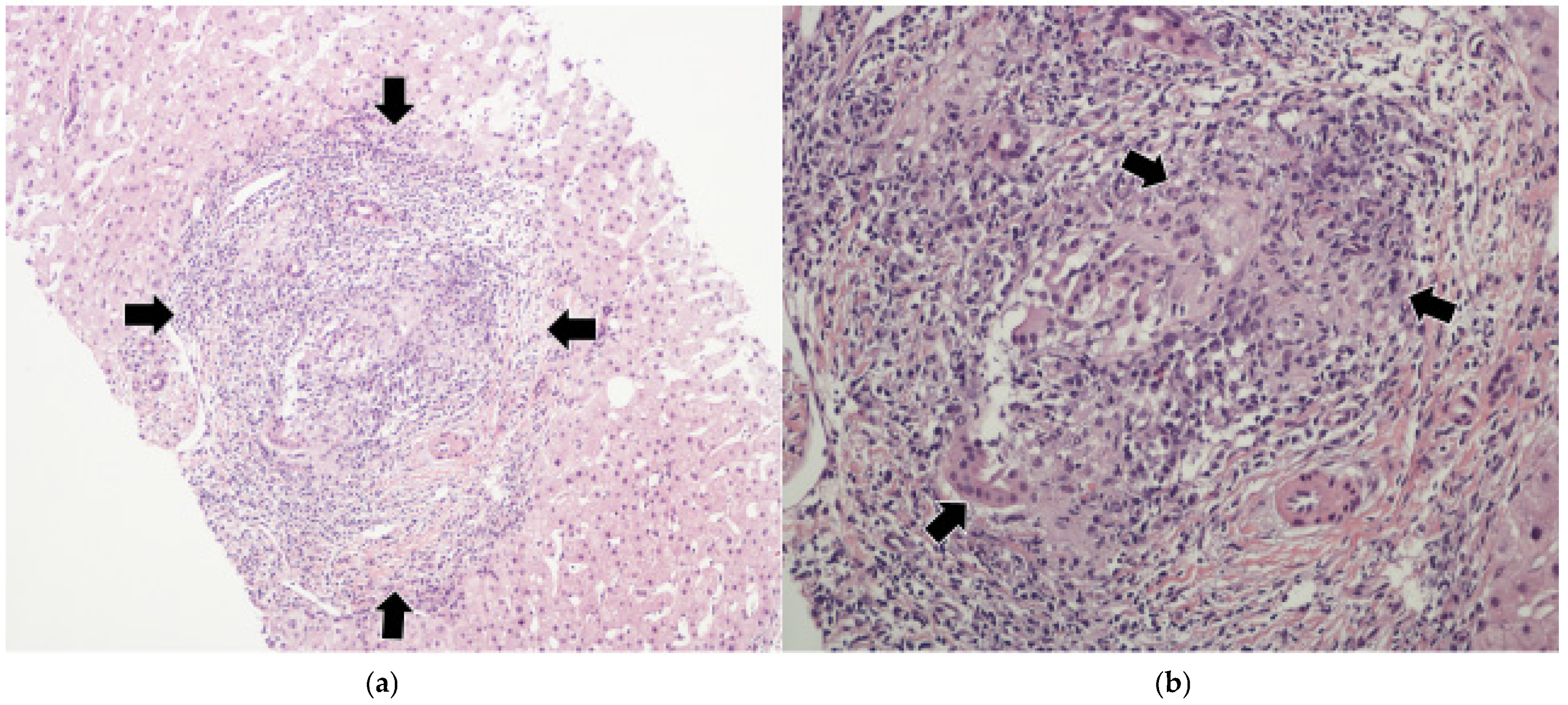
The pathognomonic histologic features of PBC can be found in the early stages (Figure 2) but the typical lesion can be difficult to identify in advanced disease where fibrotic scars can obscure interlobular bile ducts making them hardly discernible [38,39]. As a result, the value of staging core biopsies has been somewhat downgraded due to the uneven distribution of the pathology within the liver as a whole. Nonetheless, the disease has traditionally been classified into 4 histologic stages in an attempt to understand its progression and natural history [40,41].

6. Traditional Histologic Staging

Over the years, many histologic staging systems have been developed. However, the most well-known were based on the works of Scheuer and Ludwig [40,41]. They each proposed their own system but, by and large, the classifications are broadly similar, namely:
  • Stage 1: Chronic non-suppurative cholangitis with or without the florid duct lesion (Figure 2)
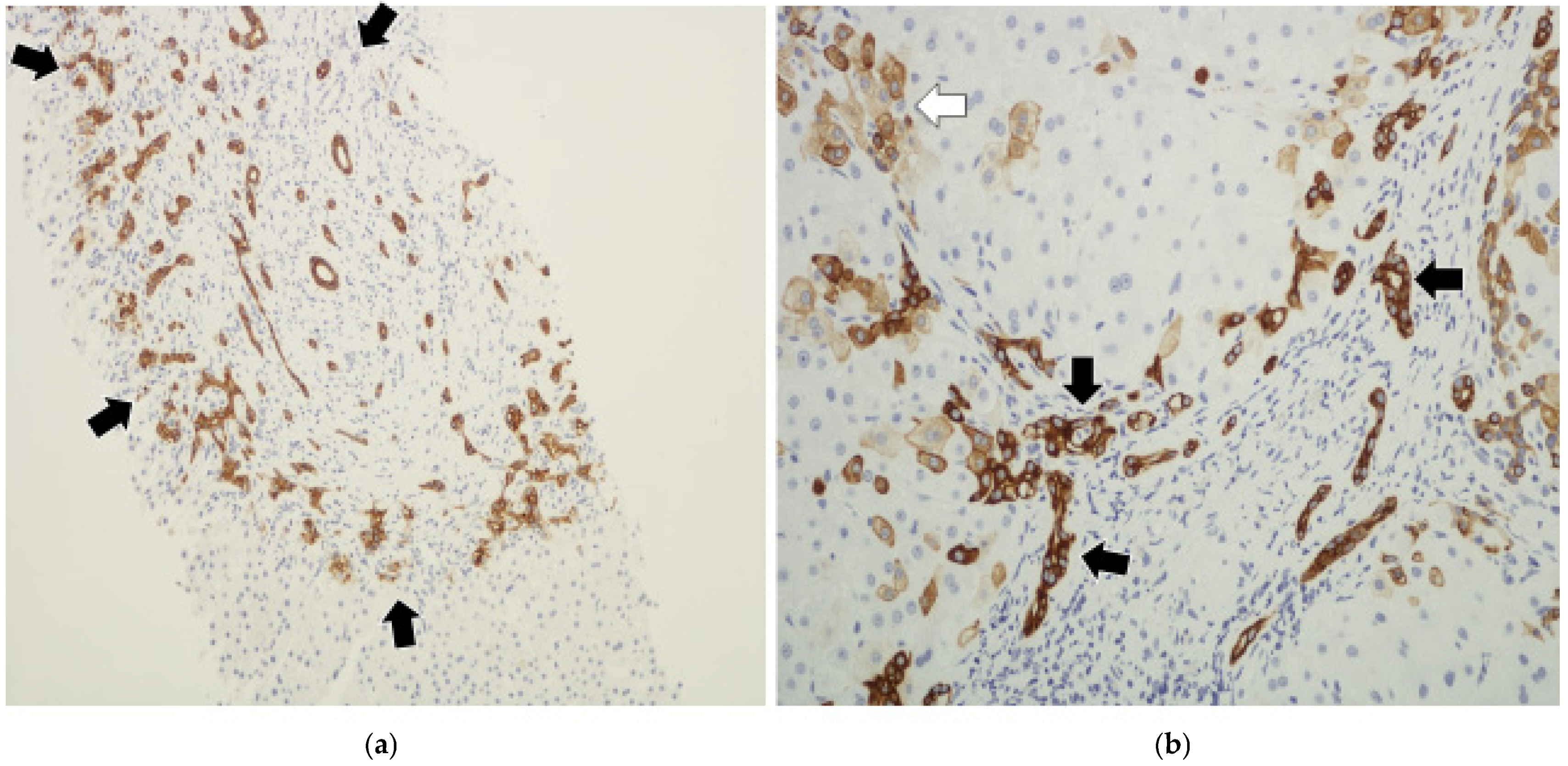
  • Stage 2: Bile duct proliferation/interface hepatitis (Figure 3)
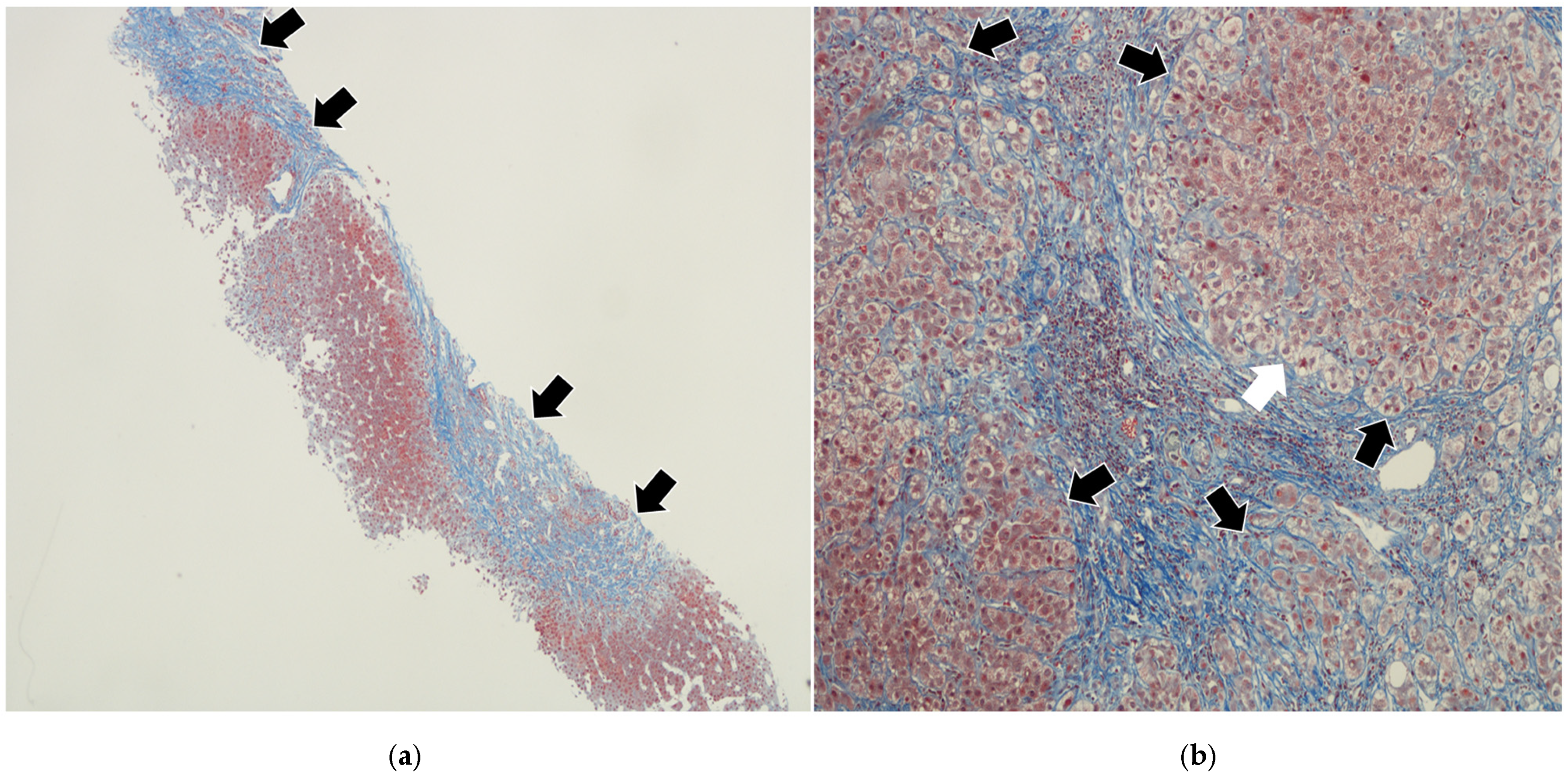
  • Stage 3: Septal fibrosis/bridging necrosis (Figure 4 and Figure 5)
  • Stage 4: Cirrhosis (Figure 4 and Figure 5)
Though this classification is conceptually useful, it assumes that liver histology worsens sequentially and that there is a sequential progression from stage 1 to stage 4. However, there is a marked individual variation in the rate of disease progression. In addition, staging has inherent difficulties that must be recognized. For example, it is common to see several stages in one biopsy specimen or liver explant, and at times, all 4 [42,43,44]. One could take the position that staging should best be based on the most advanced histology, but this is not without problems. Thus, a small percutaneous core biopsy may miss an advanced lesion. On the other hand, a subcapsular biopsy may exaggerate the pathologic stage. Sampling variability may also explain the suboptimal correlation between pathologic stage and symptoms. Visualization of the liver at laparoscopy may be the most accurate way to recognize cirrhosis, but unfortunately it is neither practical nor desirable in most cases. Notwithstanding these problems, liver histology remains a crucial resource for hepatologists in evaluating disease severity. For example, specific pathologic features such as interface hepatitis, ductopenia, cholestasis, and degree of fibrosis have management and prognostic implications [2,4,22]. At the same time, it should be recognized that major pathophysiologic concepts and treatments have been introduced since the visionary work of Scheuer and Ludwig in staging PBC in the 1960s and 70s. The question now is whether newer approaches can improve on the historical classifications [40,41].

7. Newer Histologic Classification

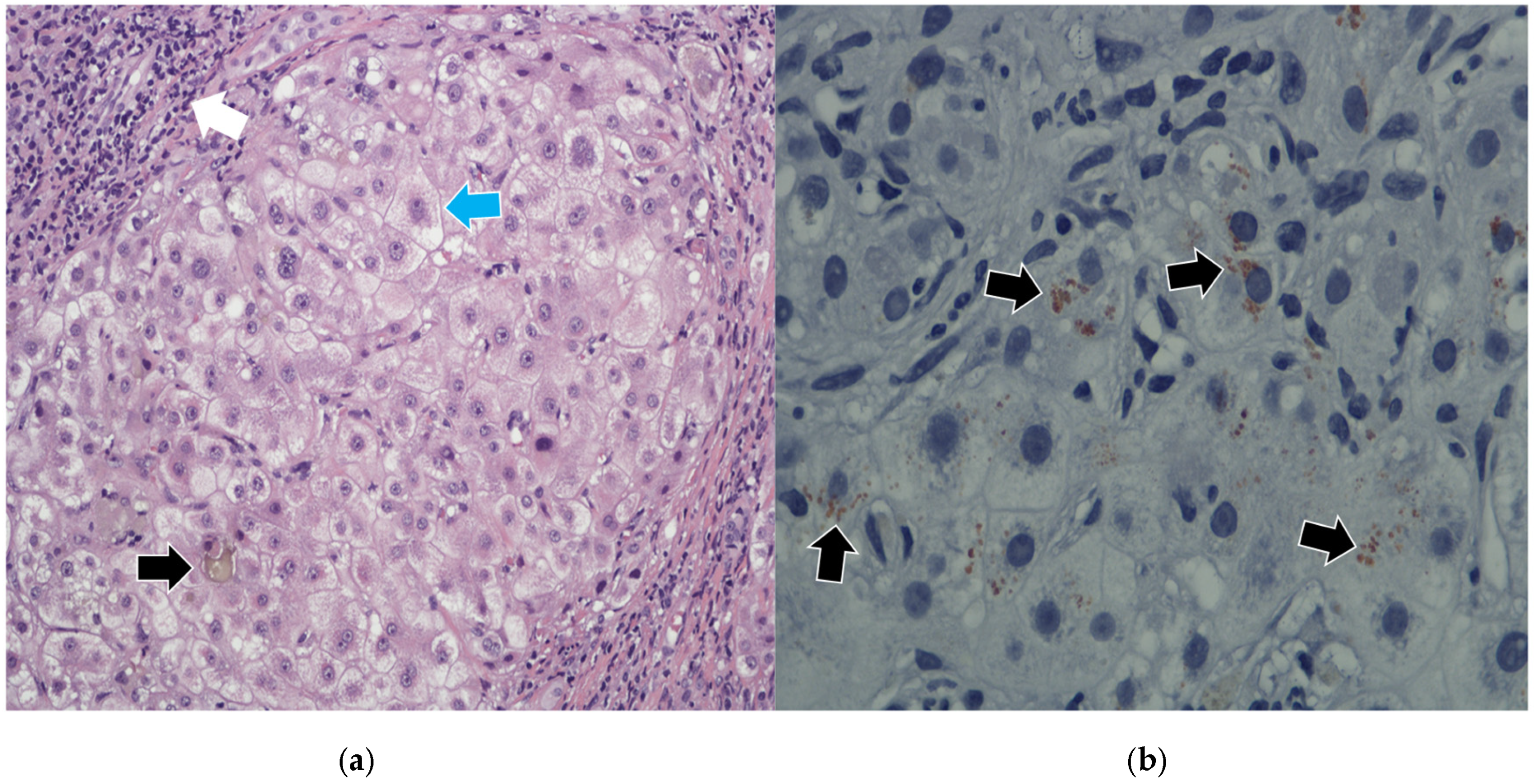
A more recent histologic classification of PBC has been proposed by Japanese investigators [45,46,47]. The main difference from the classical systems is that it separates histologic staging from grading. In essence, the fixed lesions (fibrosis, bile duct loss and deposition of copper-binding proteins) (Figure 5) are used for staging while the necroinflammatory lesions (cholangitis activity and hepatitis activity) are used for grading. Each of the 3 fixed lesions is semiquantitatively assessed on a 4-point score (0–3), and the sum of the scores is computed into an overall stage (1–4). The grading of each of 2 necroinflammatory criteria for activity is also assessed on a 4-point score 0–3 [45,46,47,48].
Just as with the Scheuer and Ludwig systems, the newer approach correlates well with clinical and laboratory findings [45,46,47]. Over and above that, the grading of the necroinflammatory activity may help to identify those patients who would benefit from budesomide treatment in combination with UDCA [39,47]. Overall, while this classification is meritorious, it is quite complex and more prone to interobserver variability due to the multiplicity of variables involved. This makes it difficult to use in the day-to-day reporting of liver biopsies [39,44]. Furthermore, the various criteria for staging and grading respectively are based on a composite score that may reflect different patterns of injury. For example, stage 4 in this system does not necessarily equate to the cirrhosis of the traditional classifications, and this can be problematic from a clinical viewpoint [39]. Hence, there is an ongoing impetus aimed at developing other biomarkers to stratify patient risk according to the degree of fibrosis. Unlike liver biopsy, which can potentially cause complications such as bleeding, perforation and pneumothorax, non-invasive liver disease assessments (NILDA) have a much better safety profile (Table 2).

8. Non-Invasive Liver Disease Assessments

8.1. Serum Biomarkers

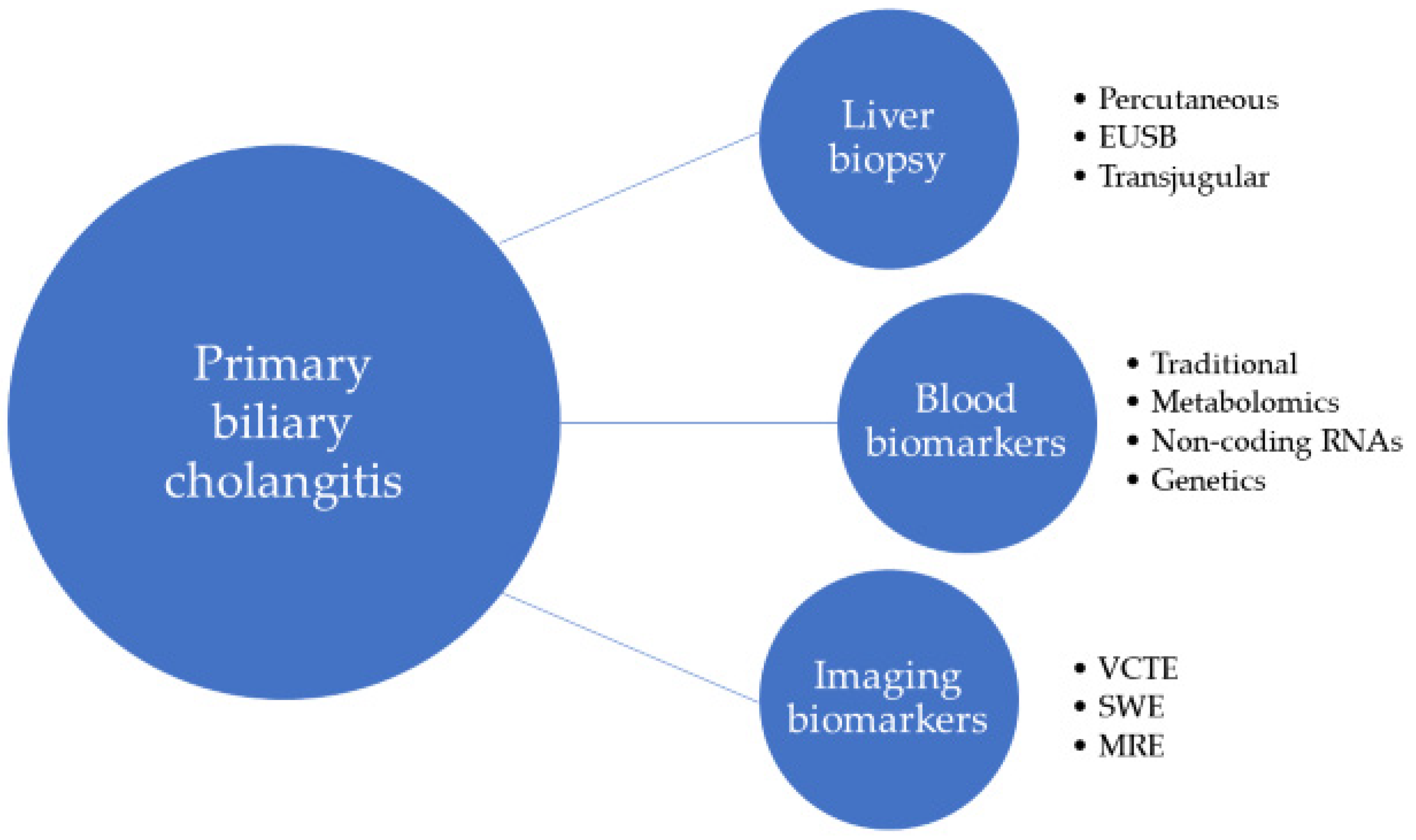
Since the degree of liver fibrosis is the critical determinant in the development of liver-related events, various NILDAs have been developed to predict fibrosis (Figure 6).
Of these, serum biomarkers offer much appeal since they are generally simple and inexpensive and can be easily used in the clinical setting (Table 2). They can be combined with other parameters to create liver scores such as: (i) Fibrosis-4 score (Fib-4), (ii) Aspartate Aminotransferase to Platelet Ratio Index (APRI), (iii) Enhanced Liver Fibrosis (ELF) score (iv) Hyaluronic acid and total bile acid to platelet ratio (TPR) [50,51,52,53,54]. However, a number of studies have found that they are not particularly sensitive or reproducible in assessing the fibrosis. Furthermore, caution is required in interpreting the results since they can be affected by the patient’s systemic condition [49,50,51,52].

8.2. Metabolic Reprogramming in Primary Biliary Cholangitis

Traditional markers sometimes fail to correlate with the extent of liver injury or disease progression in PBC. This underscores the desire for alternative biomarkers e.g., those involved in metabolic reprogramming that can more accurately reflect disease dynamics and guide therapeutic decisions [55,56,57]. An emerging area of research in this regard are complement proteins, involving both classical and non-classical pathways. Proteomics has shown that complement protein signatures such as CR1, C1QA, C1QL2, C7, and C9, are considerably elevated in PBC patients, and show high accuracy in differentiating PBC from non-PBC individuals [58]. In some instances, they significantly outperform traditional liver function markers such as FIB-4, ELF, or TPR [40,41,42,43,44]. Furthermore, these complement proteins are strongly associated with PBC onset and adverse outcomes such as cirrhosis and liver failure, potentially making them useful tools for early diagnosis, risk stratification and outcome prediction [58].
The metabolic reprogramming does not only involve proteomics but also lipid and carbohydrate pathways. For example, studies have shown distinct lipidome remodeling in PBC with alterations in polyunsaturated fatty acid, sphingolipids and serum HDL-cholesterol levels, and augmented fatty acid β-oxidation [55,59]. Furthermore, PBC patients showed high levels of glucose-6-phosphate and purines, as well as a reduction in pyruvate, suggesting impaired glycolysis and increased purines biosynthesis [55]. All in all, targeting specific metabolic reprogramming pathways may offer potential targets for therapeutic intervention in PBC.

8.3. Non-Coding RNAs in Primary Biliary Cirrhosis

Non-coding RNAs (ncRNAs) have emerged as promising predictive and prognostic biomarkers in PBC due to their key regulatory roles in autoimmunity [60,61,62]. They encompass 3 principal subtypes: microRNAs, long non-coding RNAs, and circular RNAs [63]. Collectively, they orchestrate gene expression networks by interacting with DNA, RNA, and proteins, thereby influencing transcriptional programs, translational efficiency, and post-translational modifications. Of particular relevance to PBC, ncRNAs can be encapsulated and transported within exosomes to generate stable exosomal ncRNAs that mediate intercellular communication and pathophysiological signaling across tissues [64,65].
Although most studies show that plasma ncRNAs expression profiles are heterogenous across the PBC continuum, emerging evidence suggests that certain ncRNAs (e.g., MiR-126-3p and exosomal lncRNA H19) can potentially complement AMAs as diagnostic biomarkers and/or predictive markers [60,61]. Furthermore, recent work has demonstrated the differential expression of miR-122-5p in serum exosomes of PBC patients and healthy controls by high-throughput sequencing. It also showed that hepatic stellate cell-derived exosomal miR-122-5p can regulate the expression of inflammatory factors in cholangiocytes through the p38 MAPK signaling pathway [62]. Put together, this recent work on ncRNAs and exosomes holds much promise for biomarkers in the pathophysiology of PBC.

8.4. Genetic Biomarkers

Since the pathogenesis of PBC invokes genetic susceptibility, extensive investigations aimed at the mechanistic basis of risk-associated variants have been conducted. Studies have shown that a number of genes such as TXNIP, CD44, and ENTPD1 are upregulated in high-risk PBC. Another one is CDKN1a; its upregulation correlated with significantly increased expression of the senescence marker p21WAF1/Cip [66]. Other investigators also found that high-risk PBC was characterised by upregulation of genes linked to T-cell activation, apoptosis, INF-γ signalling and leukocyte migration. In contrast, the genes linked to the complement pathway were downregulated. Related to these developments, tumor necrosis factor alpha-induced protein was associated with treatment response, and as such, could provide new insights into disease progression [67]. Hence there are promising biomarkers for monitoring disease progression and risk stratification of PBC [29]. In addition, Genetic analysis has a prospective role to play from a diagnostic viewpoint, especially in AMA-negative patients who have reservations about invasive liver histologic testing. Candidate genes such as ITGAL have potential to substantiate the diagnosis in PBC [68]. However, since the genetic architecture of PBC is complex, involving both HLA and non-HLA risk loci, further studies are required to analyze the polygenic traits involved [69].

8.5. Imaging Biomarkers

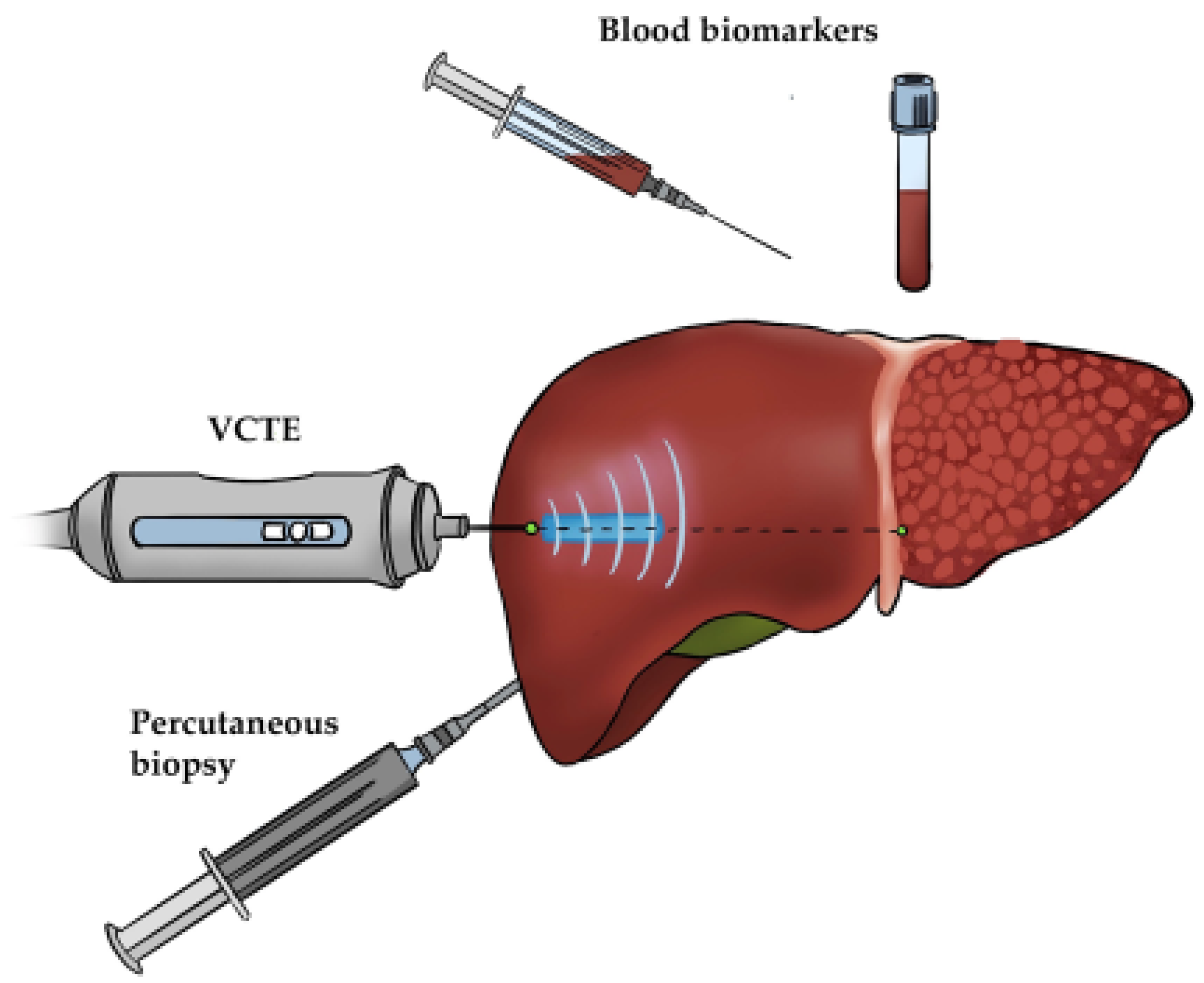
Imaging biomarkers are steadily gaining ground in PBC management since they can be used to assess changes in morphology, texture, or perfusion [70]. From the viewpoint of assessing fibrosis, elastography has taken an increasingly prominent role because it is quite amenable to evaluating liver stiffness measurement (LSM) (Table 3). It can be implemented on ultrasound or magnetic resonance elastography (MRE) [70,71]. Various ultrasound-based methods are currently available such as vibration-controlled transient elastography (VCTE), point shear wave elastography and two-dimensional shear wave elastography [72]. Of these, VCTE appears to have emerged as the preferred technique [70,71,72,73,74]. Although MRE has higher accuracy than VCTE, it is more expensive, requires more equipment and training, and therefore tends to be restricted to higher level institutions (Table 3). In contrast, VCTE is more widely available and can even be performed at the point-of-care in most health care centres [73,75] (Figure 7).
Using VCTE, several studies have established thresholds for distinguishing between low-, medium- and high-risk patients respectively, based on whether LSM values are below 8 kPa (low-risk) (≤F1) or above 15 kPa (high-risk) (F4) or in between (medium-risk F2/F3) [76]. However, the utility of LSM as a prognostic tool in PBC is evolving, especially with respect to the cut-offs e.g., the respective values in other studies are <6.5 kPa and >11 kPa [1]. The differences in cutoffs can be due to any of several factors: (i) different definitions of low-, medium- and high risk depending on the study e.g., F0–F2, F3, and F4 respectively (or F1, F2–F3, F4) (ii) the cut-offs can be influenced by the type of equipment, probe size, calibration, clinical practice guidelines and training depending on geographic location, (iii) histologic staging system that is used for validation e.g., Scheuer, Ludwig, Metavir, Brunt, Kleiner or Japanese system), (iv) age and gender [76,77,78,79,80]. There are ongoing efforts to standardize guidelines, but universally accepted guidelines have not yet been established.
Despite the growing popularity of VCTE, its utility is tempered by a number of limitations e.g., (i) technical: inter- and intra-patient variability, (ii) confounding factors such as extreme body habitus, acute inflammation, congestive cardiac failure, ascites, biliary obstruction, amyloidosis, and recent food intake, (iii) suboptimal performance in early disease (stages 1–2) [81,82]. In addition, studies have shown that a significant proportion of patients with initially high LSM can have normal LSM at a subsequent assessment, with nil or mild fibrosis on liver biopsy. Overall, it is estimated that the rate of unreliable or failed results is 10–15%. Hence patients with abnormal LSM scores should consider repeated testing before embarking on liver biopsy or treatment [70,71,81,82]
Taken together, it would appear that LSM assessed by VCTE improves prediction of survival beyond what is offered by biochemical parameters. Since a significant proportion (40%) of patients with PBC are at medium or high risk of poor clinical outcome, LSM can potentially be regarded as a useful prognostic marker and surrogate endpoint in routine care and clinical trials.

9. Variants of Autoimmune Liver Diseases

While the majority of PBC cases conform to the classic disease description, a small proportion have concurrent features of autoimmune hepatitis (AIH). These cases are classified as AIH-PBC variants (overlap syndrome). Their recognition is important because they mostly respond to immunosuppressive therapy. Likewise, AIH can have features resembling primary sclerosing cholangitis (PSC), the AIH-PSC variant. This highlights the importance of recognizing the 3 main entities comprising autoimmune liver disease i.e., AIH, PBC and PSC (Table 4).
Due to the inherent difficulties of establishing the correct diagnosis for a suspected variant syndrome, such patients should receive a complete work-up with liver histology, serology and imaging. For the majority of patients with either AIH or PBC, the focus is on early treatment i.e., immunosuppressants and UDCA respectively, since this can significantly change outcomes. The relative efficacy of these treatments has driven ongoing interest in clinical trials for additional regimens including novel and repurposed drugs [1,91,92]. Unfortunately, to date, no established medical therapies exist for PSC. Hence, for PSC, the emphasis appears to be directed at diagnostic and prognostic markers that can provide further insights into disease pathogenesis and effective therapies [93].

10. Future Directions

In the past decade, significant progress has been made in our understanding of the pathogenesis, diagnosis and prognostic biomarkers of PBC. An emerging area of research in this regard is metabolic reprogramming in proteomics, purine biosynthesis, glycolysis, and fatty acid metabolism. In particular, further exploration of complement dysregulation pathways could offer opportunities for early diagnosis, risk stratification, and personalized therapeutic strategies to improve patient outcomes [55,56,57,58]. However, since the majority of the biomarker studies were typically carried out on small groups of patients, this limits statistical power and affects the robustness and generalizability of the conclusions reached. Therefore, one of the key challenges is to conduct validation studies with large patient cohorts. Upon validation, diagnostic and prognostic biomarkers could also be used as surrogate endpoints in clinical trials, especially for patients with high-risk PBC.
Another area of continuing active investigation in PBC is the gut-microbiome and gut-liver axis. Recent studies suggest that microbiota dysbiosis has an adverse effect on treatment in PBC [94,95,96]. These studies report that the gut flora is less diverse in PBC patients compared to the general population. Furthermore, there is loss of certain protective bacteria (e.g., Bacteroides) coupled with enrichment in others (e.g., Pseudomonadota) [94,95,96]. However, further research is required to elucidate the interaction of microbiota and metabolite signatures in PBC patients.
A separate question that needs to be addressed is whether established fibrosis (F4) can be reversed in a clinically discernible manner. To date, this remains a formidable challenge. Hence, current management approaches are largely palliative with the goal of slowing disease progression, minimizing symptoms and preventing complications. However, recent approaches using biomolecules such as fabricated supramolecular carrier-free bilirubin nanofibers, hyaluronic acid–bilirubin nanoparticles or nano-bioconjugated vesicles, though still experimental, provide new perspectives for the treatment of liver fibrosis [97,98,99,100].
In summary, although UDCA has revolutionized treatment, alternative and adjunctive treatments are an area of active investigation. Since novel drug targets are based on complex pathophysiology, the hope is that future studies will elucidate additional pathophysiologic features, including the aforementioned metabolic reprogramming, gut-liver microbiome axis and biomolecules.

11. Conclusions

Liver biopsy is the traditional gold standard for evaluating fibrosis, the main predictor of liver-related morbidity and mortality [56,69]. However, since it is an invasive procedure, it has limited utility especially for diseases like PBC that require serial assessments [70]. According to the US Food and Drug Administration, to replace liver histology as a surrogate endpoint in clinical trials, a number of guiding principles have to be fulfilled before a NIT can be ratified for that specific purpose. First prerequisite pertains to the context of utilization, which defines the intended use of the NIT and the decisions that will emanate from the results i.e., the biomarker qualification pathway in which the FDA approves the use of the NIT. In this particular case, the intended use would be to replace liver biopsy in the assessment of fibrosis for diagnosis, disease monitoring, treatment response and prognostic purposes. The second important determinant of the NIT is the analytical robustness of the tool or assay to be used, particularly with respect to accuracy and reproducibility. The third key component is clinical performance i.e., the ability of the NIT to accurately reflect a biological phenomenon, e.g., fibrosis. Lastly, the NIT should demonstrate clinical utility i.e., the benefit to the patient in terms of outperforming what is currently available [58,71]. Currently, VCTE it does not appear to fulfill all these prerequisites to be the new gold standard. However, there may be value in combining it with various serum biomarkers to create nomograms for routine clinical practice [72,73,76]. Indeed, similar nomograms incorporating LSM have been constructed for predicting liver-related events in other hepatic diseases e.g., AGILE 3+, AGILE 4 and FibroScan-aspartate aminotransferase (FAST) scores in MASLD [58,73,74]. The serum biomarkers that can be co-opted into this predictive consortium of NITs include Fib-4, APRI, ELF, BHI and TPR. The hope is to create nomograms for predicting liver-related events and decision tree algorithms [40]. Indeed, studies have shown that combinations of NITs can improve the accuracy of detecting patterns of liver involvement in patients with or suspected of having various liver diseases e.g., MASLD [69,70].

Funding

This research received no external funding.

Institutional Review Board Statement

The study was conducted in accordance with the Declaration of Helsinki, and approved by the Institutional Review Board of the Ottawa Hospital Research Institute (protocol code 20120399-01H, 9 May 2025).

Informed Consent Statement

Patient consent was waived due to retrospective study with anonymization of the data.

Data Availability Statement

The raw data supporting the conclusions of this article will be made available by the authors on request.

Conflicts of Interest

The author declares no conflicts of interest.

Abbreviations

The following abbreviations are used in this manuscript:
AIHAutoimmune hepatitis
ALKAlkaline phosphatase
AMAAnti-mitochondrial antibodies
ANAAnti-nuclear antibodies
APRIAspartate Aminotransferase to Platelet Ratio Index
ELFEnhanced Liver Fibrosis
EUSBEndoscopic ultrasound biopsy
FDAFood and Drug Administration
Fib-4Fibrosis-4 score
GGTGamma-glutamyl transferase
HCCHepatocellular carcinoma
LSMLiver stiffness measurement
MASLDMetabolic dysfunction-associated steatotic liver disease
MREMagnetic resonance elastography
NILDANon-invasive liver disease assessment
NITNon-invasive test
PBCPrimary biliary cholangitis
PDCPyruvate dehydrogenase complex
PSCPrimary sclerosing cholangitis
SWEShear wave elastography
TPRTotal bile acid to platelet ratio
UDCAUrsodeoxycholic acid
ULNUpper limit of normal
VCTEVibration-controlled transient elastography

References

  1. Trivella, J.; John, B.V.; Levy, C. Primary biliary cholangitis: Epidemiology, prognosis, and treatment. Hepatol. Commun. 2023, 7, e0179. [Google Scholar] [CrossRef] [PubMed]
  2. Tanaka, A.; Ma, X.; Takahashi, A.; Vierling, J.M. Primary biliary cholangitis. Lancet 2024, 404, 1053–1066. [Google Scholar] [CrossRef]
  3. Lv, T.; Chen, S.; Li, M.; Zhang, D.; Kong, Y.; Jia, J. Regional variation and temporal trend of primary biliary cholangitis epidemiology: A systematic review and meta-analysis. J. Gastroenterol. Hepatol. 2021, 36, 1423–1434. [Google Scholar]
  4. Onofrio, F.Q.; Hirschfield, G.M.; Gulamhusein, A.F. A practical review of primary biliary cholangitis for the gastroenterologist. Gastroenterol. Hepatol. 2019, 15, 145. [Google Scholar]
  5. McGee, E.E.; Castro, F.A.; Engels, E.A.; Freedman, N.D.; Pfeiffer, R.M.; Nogueira, L.; Stolzenberg-Solomon, R.; McGlynn, K.A.; Hemminki, K.; Koshiol, J. Associations between autoimmune conditions and hepatobiliary cancer risk among elderly US adults. Int. J. Cancer 2019, 144, 707–717. [Google Scholar] [PubMed]
  6. Lynch, E.N.; Campani, C.; Innocenti, T.; Dragoni, G.; Biagini, M.R.; Forte, P.; Galli, A. Understanding fatigue in primary biliary cholangitis: From pathophysiology to treatment perspectives. World J. Hepatol. 2022, 14, 1111. [Google Scholar] [CrossRef] [PubMed]
  7. Macmahon, H.E.; Thannhauser, S.J. Xanthomatous biliary cirrhosis (a clinical syndrome). Ann. Intern. Med. 1949, 30, 121–179. [Google Scholar] [CrossRef] [PubMed]
  8. Tewari, R.; Yang, S.J.; McClain, E.D.; Hu, A.; Mortensen, E.; DeSchmidt, A.; Chen, J.; Kancharla, A.; Singh, A.K.; James, E.A.; et al. Identification of a novel PDC-E2 epitope in primary biliary cholangitis: Application for engineered Treg therapy. J. Autoimmun. 2024, 149, 103327. [Google Scholar] [CrossRef]
  9. Xu, H.; Yanny, B. Primary Biliary Cholangitis: A Review. Gene Expr. 2022, 21, 45–50. [Google Scholar]
  10. Lenci, I.; Carnì, P.; Milana, M.; Bicaj, A.; Signorello, A.; Baiocchi, L. Sequence of events leading to primary biliary cholangitis. World J. Gastroenterol. 2023, 29, 5305. [Google Scholar] [CrossRef]
  11. Smyk, D.; Cholongitas, E.; Kriese, S.; Rigopoulou, E.I.; Bogdanos, D.P. Primary biliary cirrhosis: Family stories. Autoimmune Dis. 2011, 2011, 189585. [Google Scholar] [CrossRef] [PubMed]
  12. Lazaridis, K.N.; Juran, B.D.; Boe, G.M.; Slusser, J.P.; De Andrade, M.; Homburger, H.A.; Ghosh, K.; Dickson, E.R.; Lindor, K.D.; Petersen, G.M. Increased prevalence of antimitochondrial antibodies in first-degree relatives of patients with primary biliary cirrhosis. Hepatology 2007, 46, 785–792. [Google Scholar] [CrossRef]
  13. Selmi, C.; Mayo, M.J.; Bach, N.; Ishibashi, H.; Invernizzi, P.; Gish, R.G.; Gordon, S.C.; Wright, H.I.; Zweiban, B.; Poqiudda, M.; et al. Primary biliary cirrhosis in monozygotic and dizygotic twins: Genetics, epigenetics, and environment. Gastroenterology 2004, 127, 485–492. [Google Scholar] [CrossRef]
  14. Qiu, F.; Tang, R.; Zuo, X.; Shi, X.; Wei, Y.; Zheng, X.; Dai, Y.; Gong, Y.; Wang, L.; Xu, P.; et al. A genome-wide association study identifies six novel risk loci for primary biliary cholangitis. Nat. Commun. 2017, 8, 14828. [Google Scholar] [CrossRef] [PubMed]
  15. Joshita, S.; Umemura, T.; Tanaka, E.; Ota, M. Genetic contribution to the pathogenesis of primary biliary cholangitis. J. Immunol. Res. 2017, 2017, 3073504. [Google Scholar] [CrossRef]
  16. Kouroumalis, E.; Tsomidis, I.; Voumvouraki, A. An Integrated Pathogenetic Model of Primary Biliary Cholangitis. Livers 2025, 5, 15. [Google Scholar] [CrossRef]
  17. Kennedy, L.; Francis, H.; Invernizzi, P.; Venter, J.; Wu, N.; Carbone, M.; Gershwin, M.E.; Bernuzzi, F.; Franchitto, A.; Alvaro, D.; et al. Secretin/secretin receptor signaling mediates biliary damage and liver fibrosis in early-stage primary biliary cholangitis. FASEB J. 2019, 33, 10269. [Google Scholar] [CrossRef]
  18. Meadows, V.; Baiocchi, L.; Kundu, D.; Sato, K.; Fuentes, Y.; Wu, C.; Chakraborty, S.; Glaser, S.; Alpini, G.; Kennedy, L.; et al. Biliary epithelial senescence in liver disease: There will be SASP. Front. Mol. Biosci. 2021, 8, 803098. [Google Scholar] [CrossRef]
  19. Škerlová, J.; Berndtsson, J.; Nolte, H.; Ott, M.; Stenmark, P. Structure of the native pyruvate dehydrogenase complex reveals the mechanism of substrate insertion. Nat. Commun. 2021, 12, 5277. [Google Scholar] [CrossRef] [PubMed]
  20. Beretta-Piccoli, B.T.; Mieli-Vergani, G.; Vergani, D.; Vierling, J.M.; Adams, D.; Alpini, G.; Banales, J.M.; Beuers, U.; Björnsson, E.; Bowlus, C.; et al. The challenges of primary biliary cholangitis: What is new and what needs to be done. J. Autoimmun. 2019, 105, 102328. [Google Scholar] [CrossRef]
  21. Rigopoulou, E.I.; Bogdanos, D.P. Role of autoantibodies in the clinical management of primary biliary cholangitis. World J. Gastroenterol. 2023, 29, 1795. [Google Scholar] [CrossRef] [PubMed]
  22. Lleo, A.; Wang, G.Q.; Gershwin, M.E.; Hirschfield, G.M. Primary biliary cholangitis. Lancet 2020, 396, 1915–1926. [Google Scholar] [CrossRef]
  23. Granito, A.; Muratori, P.; Quarneti, C.; Pappas, G.; Cicola, R.; Muratori, L. Antinuclear antibodies as ancillary markers in primary biliary cirrhosis. Expert Rev. Mol. Diagn. 2012, 12, 65–74. [Google Scholar] [CrossRef] [PubMed]
  24. Al-Handola, R.; Chinnappan, J.; Hussain, M.; Mahgoub, A.; Bachuwa, G.; Hussain, M. Antimitochondrial antibody-negative primary biliary cholangitis: A retrospective diagnosis. Cureus 2023, 15, e36309. [Google Scholar] [CrossRef] [PubMed]
  25. Haldar, D.; Janmohamed, A.; Plant, T.; Davidson, M.; Norman, H.; Russell, E.; Serevina, O.; Chung, K.; Qamar, K.; Gunson, B.; et al. Antibodies to gp210 and understanding risk in patients with primary biliary cholangitis. Liver Int. 2021, 41, 535–544. [Google Scholar] [CrossRef]
  26. Nakamura, M.; Kondo, H.; Mori, T.; Komori, A.; Matsuyama, M.; Ito, M.; Takii, Y.; Koyabu, M.; Yokoyama, T.; Migita, K.; et al. Anti-gp210 and anti-centromere antibodies are different risk factors for the progression of primary biliary cirrhosis. Hepatology 2007, 45, 118–127. [Google Scholar] [CrossRef] [PubMed]
  27. Hu, C.J.; Zhang, F.C.; Li, Y.Z.; Zhang, X. Primary biliary cirrhosis: What do autoantibodies tell us? World J. Gastroenterol. 2010, 16, 3616. [Google Scholar] [CrossRef]
  28. Muratori, P.; Granito, A.; Pappas, G.; Pendino, G.M.; Quarneti, C.; Cicola, R.; Menichella, R.; Ferri, S.; Cassani, F.; Bianchi, F.B.; et al. The serological profile of the autoimmune hepatitis/primary biliary cirrhosis overlap syndrome. Off. J. Am. Coll. Gastroenterol. 2009, 104, 1420–1425. [Google Scholar] [CrossRef] [PubMed]
  29. Tian, S.; Hu, Y.; Zhang, M.; Wang, K.; Guo, G.; Li, B.; Shang, Y.; Han, Y. Integrative bioinformatics analysis and experimental validation of key biomarkers for risk stratification in primary biliary cholangitis. Arthritis Res. Ther. 2023, 25, 186. [Google Scholar] [CrossRef]
  30. Fujinaga, Y.; Namisaki, T.; Tsuji, Y.; Shibamoto, A.; Kubo, T.; Koizumi, A.; Matsuda, T.; Inoue, T.; Iwai, S.; Tomooka, F.; et al. Fibrosis stage is an independent predictor of liver-related complications in primary biliary cholangitis. Hepatol. Res. 2025, 55, 968–976. [Google Scholar] [CrossRef]
  31. McCarty, T.R.; Bazarbashi, A.N.; Njei, B.; Ryou, M.; Aslanian, H.R.; Muniraj, T. Endoscopic ultrasound-guided, percutaneous, and transjugular liver biopsy: A comparative systematic review and meta-analysis. Clin. Endosc. 2020, 53, 583–593. [Google Scholar] [CrossRef]
  32. do Espirito Santo, P.A.; Meine, G.C.; Nau, A.L.; Barbosa, E.C.; Baraldo, S.; Lenz, L.; Maluf-Filho, F. Endoscopic ultrasound-guided versus percutaneous liver biopsy: A systematic review and meta-analysis of randomized controlled trials. Endoscopy 2025, 57, 41–48. [Google Scholar] [CrossRef]
  33. Chandan, S.; Deliwala, S.; Khan, S.R.; Mohan, B.P.; Dhindsa, B.S.; Bapaye, J.; Goyal, H.; Kassab, L.L.; Kamal, F.; Sayles, H.R.; et al. EUS-guided versus percutaneous liver biopsy: A comprehensive review and meta-analysis of outcomes. Endosc. Ultrasound 2023, 12, 171–180. [Google Scholar] [CrossRef] [PubMed]
  34. Facciorusso, A.; Ramai, D.; Conti Bellocchi, M.C.; Bernardoni, L.; Manfrin, E.; Muscatiello, N.; Crinò, S.F. Diagnostic yield of endoscopic ultrasound-guided liver biopsy in comparison to percutaneous liver biopsy: A two-center experience. Cancers 2021, 13, 3062. [Google Scholar] [CrossRef]
  35. Ali, A.H.; Nallapeta, N.S.; Yousaf, M.N.; Petroski, G.F.; Sharma, N.; Rao, D.S.; Yin, F.; Davis, R.M.; Bhat, A.; Swi, A.I.; et al. EUS–guided versus percutaneous liver biopsy: A prospective randomized clinical trial. Endosc. Ultrasound 2023, 12, 334–341. [Google Scholar] [CrossRef] [PubMed]
  36. Jearth, V.; Sundaram, S.; Rana, S.S. Diagnostic and interventional EUS in hepatology: An updated review. Endosc. Ultrasound 2022, 11, 355–370. [Google Scholar] [CrossRef] [PubMed]
  37. Purohit, T.; Cappell, M.S. Primary biliary cirrhosis: Pathophysiology, clinical presentation and therapy. World J. Hepatol. 2015, 7, 926. [Google Scholar] [CrossRef]
  38. Sarcognato, S.; Sacchi, D.; Grillo, F.; Cazzagon, N.; Fabris, L.; Cadamuro, M.; Cataldo, I.; Covelli, C.; Mangia, A.; Guido, M. Autoimmune biliary diseases: Primary biliary cholangitis and primary sclerosing cholangitis. Pathologica 2021, 113, 170. [Google Scholar] [CrossRef]
  39. Corpechot, C.; Wendum, D. Primary biliary cirrhosis: Is there still a place for histological evaluation? Clin. Res. Hepatol. Gastroenterol. 2013, 37, 556–558. [Google Scholar] [CrossRef] [PubMed]
  40. Scheuer Peter, J. Symposium: Advances in Liver Pathology [Abridged] Primary Biliary Cirrhosis. Proc. R. Soc. Med. 1967, 60, 1257–1260. [Google Scholar] [CrossRef]
  41. Ludwig, J.; Dickson, E.R.; McDonald, G.A. Staging of chronic nonsuppurative destructive cholangitis (syndrome of primary biliary cirrhosis). Virchows Arch. A 1978, 379, 103–112. [Google Scholar] [CrossRef]
  42. Garrido, M.C.; Hubscher, S.G. Accuracy of staging in primary biliary cirrhosis. J. Clin. Pathol. 1996, 49, 556–559. [Google Scholar] [CrossRef] [PubMed]
  43. Nakanuma, Y.; Zen, Y.; Harada, K.; Sasaki, M.; Nonomura, A.; Uehara, T.; Sano, K.; Kondo, F.; Fukusato, T.; Tsuneyama, K.; et al. Application of a new histological staging and grading system for primary biliary cirrhosis to liver biopsy specimens: Interobserver agreement. Pathol. Int. 2010, 60, 167–174. [Google Scholar] [CrossRef]
  44. Hirschfield, G.M.; Dyson, J.K.; Alexander, G.J.; Chapman, M.H.; Collier, J.; Hübscher, S.; Patanwala, I.; Pereira, S.P.; Thain, C.; Thorburn, D.; et al. The British Society of Gastroenterology/UK-PBC primary biliary cholangitis treatment and management guidelines. Gut 2018, 67, 1568–1594. [Google Scholar] [CrossRef] [PubMed]
  45. Nakanuma, Y.; Harada, K. The role of the pathologist in diagnosing and grading biliary diseases. Clin. Res. Hepatol. Gastroenterol. 2011, 35, 347–352. [Google Scholar] [CrossRef]
  46. Kakuda, Y.; Harada, K.; Sawada-Kitamura, S.; Ikeda, H.; Sato, Y.; Sasaki, M.; Okafuji, H.; Mizukoshi, E.; Terasaki, S.; Ohta, H.; et al. Evaluation of a new histologic staging and grading system for primary biliary cirrhosis in comparison with classical systems. Hum. Pathol. 2013, 44, 1107–1117. [Google Scholar] [CrossRef] [PubMed]
  47. Harada, K.; Kakuda, Y.; Tanaka, A.; Abe, M.; Namisaki, T.; Shimoda, S.; Zeniya, M.; Ido, A.; Yoshiji, H.; Ohira, H.; et al. Histological characteristics of primary biliary cholangitis in patients with incomplete responses to ursodeoxycholic acid. Hum. Pathol. 2025, 166, 105957. [Google Scholar] [CrossRef]
  48. Bioulac-Sage, P. Primary biliary cirrhosis: A new histological staging and grading system proposed by Japanese authors. Clin. Res. Hepatol. Gastroenterol. 2011, 35, 333–335. [Google Scholar] [CrossRef]
  49. Gerussi, A.; Bernasconi, D.P.; O’Donnell, S.E.; Lammers, W.J.; Van Buuren, H.; Hirschfield, G.; Janssen, H.; Corpechot, C.; Reig, A.; Pares, A.; et al. Measurement of gamma glutamyl transferase to determine risk of liver transplantation or death in patients with primary biliary cholangitis. Clin. Gastroenterol. Hepatol. 2021, 19, 1688–1697. [Google Scholar] [CrossRef] [PubMed]
  50. Gulamhusein, A.F.; Hansen, B.E. Beyond biochemical responses, use of histologic staging to predict outcomes of patients with primary biliary cholangitis. Clin. Gastroenterol. Hepatol. 2020, 18, 1033–1035. [Google Scholar] [CrossRef] [PubMed]
  51. Stasi, C.; Leoncini, L.; Biagini, M.R.; Arena, U.; Madiai, S.; Laffi, G.; Marra, F.; Milani, S. Assessment of liver fibrosis in primary biliary cholangitis: Comparison between indirect serum markers and fibrosis morphometry. Dig. Liver Dis. 2016, 48, 298–301. [Google Scholar] [CrossRef]
  52. Jiang, M.; Yan, X.; Song, X.; Yan, Q.; Zhao, Y.; Wang, L.; Gao, P. Total bile acid to platelet ratio: A noninvasive index for predicting liver fibrosis in primary biliary cholangitis. Medicine 2020, 99, e20502. [Google Scholar] [CrossRef] [PubMed]
  53. Fujinaga, Y.; Namisaki, T.; Takaya, H.; Tsuji, Y.; Suzuki, J.; Shibamoto, A.; Kubo, T.; Iwai, S.; Tomooka, F.; Takeda, S.; et al. Enhanced liver fibrosis score as a surrogate of liver-related complications and mortality in primary biliary cholangitis. Medicine 2021, 100, e27403. [Google Scholar] [CrossRef] [PubMed]
  54. Moyana, T.N. Metabolic dysfunction-associated steatotic liver disease: The question of long-term high-normal alanine aminotransferase as a screening test. World J. Gastroenterol. 2024, 30, 4576. [Google Scholar] [CrossRef] [PubMed]
  55. Bao, J.; Zhang, X.; Ye, M.; Yang, Y.; Xu, L.; He, L.; Guo, J.; Yao, D.; Wang, S.; Zhang, J.; et al. Exploration of Novel Metabolic Mechanisms Underlying Primary Biliary Cholangitis Using Hepatic Metabolomics, Lipidomics, and Proteomics Analysis. J. Proteome Res. 2025, 24, 562–578. [Google Scholar] [CrossRef]
  56. Yang, H.; Chen, L.; Liu, Y. A large-scale plasma proteome Mendelian randomization study identifies novel causal plasma proteins related to primary biliary cholangitis. Front. Immunol. 2023, 14, 1052616. [Google Scholar] [CrossRef]
  57. Vignoli, A.; Orlandini, B.; Tenori, L.; Biagini, M.R.; Milani, S.; Renzi, D.; Luchinat, C.; Calabrò, A.S. Metabolic signature of primary biliary cholangitis and its comparison with celiac disease. J. Proteome Res. 2018, 18, 1228–1236. [Google Scholar] [CrossRef] [PubMed]
  58. Ma, X.; Dong, H.; Han, J.; Han, M.; Zhang, T.; Zhou, M.; Fan, X.; Liu, L.; Wang, Z. Proteomics identifies complement protein signatures in patients with primary biliary cholangitis. Eur. J. Med. Res. 2025, 30, 1155. [Google Scholar] [CrossRef]
  59. Koop, P.H.; Schwenzer, C.; Clusmann, J.; Vell, M.S.; Jaeger, J.; Gui, W.; Trautwein, C.; Koch, A.; Bruns, T.; Schneider, C.V.; et al. Comorbidities, mortality and metabolic profile in individuals with primary biliary cholangitis—A Phenome-Wide-Association-Study. Liver Int. 2024, 44, 2038–2053. [Google Scholar] [CrossRef] [PubMed]
  60. Pan, S.D.; Xiong, C.Y.; Shen, Y.J.; Tian, J.H.; Wang, Y.L.; Wang, J.N.; Wang, S.Y.; Li, F.Y.; Wang, L.F.; Qiu, Q.; et al. MicroRNA-126-3p as a predictive biomarker for patients with primary biliary cholangitis refractory to ursodeoxycholic acid. World J. Gastroenterol. 2025, 31, 109828. [Google Scholar] [CrossRef] [PubMed]
  61. Chen, W.; Li, Q.; Xie, Y.; Zhu, H. Research progress and perspectives of non-coding RNAs in primary biliary cholangitis: From mechanisms to therapeutics. Front. Med. 2025, 12, 1611640. [Google Scholar] [CrossRef]
  62. Zhang, L.; Liu, T.; Shen, H.; Liu, B.; Mei, Y.; Liu, Y.; Chen, S.; Ma, X.; He, C.; Hu, T.; et al. Advanced strategies based on nanomedicine for Liver fibrosis treatment. Int. J. Pharm. 2026, 688, 126437. [Google Scholar] [CrossRef]
  63. Mattick, J.S.; Amaral, P.P.; Carninci, P.; Carpenter, S.; Chang, H.Y.; Chen, L.L.; Chen, R.; Dean, C.; Dinger, M.E.; Fitzgerald, K.A.; et al. Long non-coding RNAs: Definitions, functions, challenges and recommendations. Nat. Rev. Mol. Cell Biol. 2023, 24, 430–447. [Google Scholar] [CrossRef] [PubMed]
  64. Kumar, D.; Sahoo, S.S.; Chauss, D.; Kazemian, M.; Afzali, B. Non-coding RNAs in immunoregulation and autoimmunity: Technological advances and critical limitations. J. Autoimmun. 2023, 134, 102982. [Google Scholar] [CrossRef]
  65. Wang, J.; Yue, B.L.; Huang, Y.Z.; Lan, X.Y.; Liu, W.J.; Chen, H. Exosomal RNAs: Novel potential biomarkers for diseases—A review. Int. J. Mol. Sci. 2022, 23, 2461. [Google Scholar] [CrossRef] [PubMed]
  66. Hardie, C.; Green, K.; Jopson, L.; Millar, B.; Innes, B.; Pagan, S.; Tiniakos, D.; Dyson, J.; Haniffa, M.; Bigley, V.; et al. Early molecular stratification of high-risk primary biliary cholangitis. eBioMedicine 2016, 14, 65–73. [Google Scholar] [CrossRef]
  67. Zang, B.; Li, J.X.; Liu, Q.X.; Yao, Y.; Li, H.; Wang, Y.; Wang, J.G.; Yang, Y.F.; Liang, R.W.; Xin, X.R.; et al. Tumor necrosis factor alpha-induced protein 3: A key biomarker for response to ursodeoxycholic acid in primary biliary cholangitis. World J. Hepatol. 2025, 17, 107666. [Google Scholar] [CrossRef] [PubMed]
  68. Pham, H.N.; Pham, L.; Sato, K. Bioinformatic analysis identified novel candidate genes with the potentials for diagnostic blood testing of primary biliary cholangitis. PLoS ONE 2023, 18, e0292998. [Google Scholar] [CrossRef]
  69. Gu, D.; Lyu, L.; Ge, L.; Wang, Y.; Zhang, M. Genetic architecture of primary biliary cholangitis: Strong evidence for HLA and non-HLA risk loci. Front. Immunol. 2025, 16, 1600364. [Google Scholar] [CrossRef] [PubMed]
  70. Petitclerc, L.; Sebastiani, G.; Gilbert, G.; Cloutier, G.; Tang, A. Liver fibrosis: Review of current imaging and MRI quantification techniques. J. Magn. Reson. Imaging 2017, 45, 1276–1295. [Google Scholar] [CrossRef] [PubMed]
  71. Ozturk, A.; Olson, M.C.; Samir, A.E.; Venkatesh, S.K. Liver fibrosis assessment: MR and US elastography. Abdom. Radiol. 2022, 47, 3037–3050. [Google Scholar] [CrossRef]
  72. Schulz, M.; Wilde, A.C.; Demir, M.; Müller, T.; Tacke, F.; Wree, A. Shear wave elastography and shear wave dispersion imaging in primary biliary cholangitis—A pilot study. Quant. Imaging Med. Surg. 2022, 12, 1235. [Google Scholar] [CrossRef] [PubMed]
  73. Corpechot, C.; Carrat, F.; Gaouar, F.; Chau, F.; Hirschfield, G.; Gulamhusein, A.; Montano-Loza, A.J.; Lytvyak, E.; Schramm, C.; Pares, A.; et al. Liver stiffness measurement by vibration-controlled transient elastography improves outcome prediction in primary biliary cholangitis. J. Hepatol. 2022, 77, 1545–1553. [Google Scholar] [CrossRef] [PubMed]
  74. Ludwig, D.R.; Fraum, T.J.; Ballard, D.H.; Narra, V.R.; Shetty, A.S. Imaging biomarkers of hepatic fibrosis: Reliability and accuracy of hepatic periportal space widening and other morphologic features on MRI. Am. J. Roentgenol. 2021, 216, 1229–1239. [Google Scholar] [CrossRef]
  75. Yin, M.; Venkatesh, S.K. Ultrasound or MR elastography of liver: Which one shall I use? Abdom. Radiol. 2018, 43, 1546–1551. [Google Scholar] [CrossRef]
  76. Cristoferi, L.; Calvaruso, V.; Overi, D.; Viganò, M.; Rigamonti, C.; Degasperi, E.; Cardinale, V.; Labanca, S.; Zucchini, N.; Fichera, A.; et al. Accuracy of Transient Elastography in Assessing Fibrosis at Diagnosis in Naïve Patients with Primary Biliary Cholangitis: A Dual Cut-Off Approach. Hepatology 2021, 74, 1496–1508. [Google Scholar] [CrossRef] [PubMed]
  77. Gomez-Dominguez, E.; Mendoza, J.; Garcia-Buey, L.; Trapero, M.; Gisbert, J.P.; Jones, E.A.; Moreno-Otero, R. Transient elastography to assess hepatic fibrosis in primary biliary cirrhosis. Aliment. Pharmacol. Ther. 2008, 27, 441–447. [Google Scholar] [CrossRef]
  78. Osman, K.T.; Maselli, D.B.; Idilman, I.S.; Rowan, D.J.; Viehman, J.K.; Harmsen, W.S.; Harnois, D.M.; Carey, E.J.; Gossard, A.A.; LaRusso, N.F.; et al. Liver stiffness measured by either magnetic resonance or transient elastography is associated with liver fibrosis and is an independent predictor of outcomes among patients with primary biliary cholangitis. J. Clin. Gastroenterol. 2021, 55, 449–457. [Google Scholar] [CrossRef]
  79. Semmler, G.; Yang, Z.; Fritz, L.; Köck, F.; Hofer, B.S.; Balcar, L.; Hartl, L.; Jachs, M.; Stopfer, K.; Schedlbauer, A.; et al. Dynamics in liver stiffness measurements predict outcomes in advanced chronic liver disease. Gastroenterology 2023, 165, 1041–1052. [Google Scholar] [CrossRef]
  80. Hegmar, H.; Wester, A.; Aleman, S.; Backman, J.; Degerman, E.; Ekvall, H.; Lund, K.; Lundgren, Å.; Nasr, P.; Shahnavaz, A.; et al. Liver stiffness predicts progression to liver-related events in patients with chronic liver disease–A cohort study of 14 414 patients. Liver Int. 2024, 44, 1689–1699. [Google Scholar] [CrossRef] [PubMed]
  81. Bazerbachi, F.; Haffar, S.; Wang, Z.; Cabezas, J.; Arias-Loste, M.T.; Crespo, J.; Darwish-Murad, S.; Ikram, M.A.; Olynyk, J.K.; Gan, E.; et al. Range of normal liver stiffness and factors associated with increased stiffness measurements in apparently healthy individuals. Clin. Gastroenterol. Hepatol. 2019, 17, 54–64. [Google Scholar] [CrossRef]
  82. Lin, H.; Lee, H.W.; Yip, T.C.; Tsochatzis, E.; Petta, S.; Bugianesi, E.; Yoneda, M.; Zheng, M.H.; Hagström, H.; Boursier, J.; et al. Vibration-controlled transient elastography scores to predict liver-related events in steatotic liver disease. JAMA 2024, 331, 1287–1297. [Google Scholar] [CrossRef]
  83. Muratori, L.; Lohse, A.W.; Lenzi, M. Diagnosis and management of autoimmune hepatitis. BMJ 2023, 380, e070201. [Google Scholar] [CrossRef]
  84. Lindor, K.D.; Kowdley, K.V.; Harrison, E.M. ACG clinical guideline: Primary sclerosing cholangitis. Off. J. Am. Coll. Gastroenterol. 2015, 110, 646–659. [Google Scholar] [CrossRef] [PubMed]
  85. Volta, U.; Rodrigo, L.; Granito, A.; Petrolini, N.; Muratori, P.; Muratori, L.; Linares, A.; Veronesi, L.; Fuentes, D.; Zauli, D.; et al. Celiac disease in autoimmune cholestatic liver disorders. Off. J. Am. Coll. Gastroenterol. 2002, 97, 2609–2613. [Google Scholar] [CrossRef] [PubMed]
  86. Deneau, M.R.; El-Matary, W.; Valentino, P.L.; Abdou, R.; Alqoaer, K.; Amin, M.; Amir, A.Z.; Auth, M.; Bazerbachi, F.; Broderick, A.; et al. The natural history of primary sclerosing cholangitis in 781 children: A multicenter, international collaboration. Hepatology 2017, 66, 518–527. [Google Scholar] [CrossRef]
  87. Ricciuto, A.; Kamath, B.M.; Hirschfield, G.M.; Trivedi, P.J. Primary sclerosing cholangitis and overlap features of autoimmune hepatitis: A coming of age or an age-ist problem? J. Hepatol. 2023, 79, 567–575. [Google Scholar] [CrossRef] [PubMed]
  88. Dyson, J.K.; Beuers, U.; Jones, D.E.; Lohse, A.W.; Hudson, M. Primary sclerosing cholangitis. Lancet 2018, 391, 2547–2559. [Google Scholar] [CrossRef]
  89. Terziroli Beretta-Piccoli, B.; Mieli-Vergani, G.; Vergani, D. Autoimmune hepatitis: Serum autoantibodies in clinical practice. Clin. Rev. Allergy Immunol. 2022, 63, 124–137. [Google Scholar] [CrossRef]
  90. Covelli, C.; Sacchi, D.; Sarcognato, S.; Cazzagon, N.; Grillo, F.; Baciorri, F.; Fanni, D.; Cacciatore, M.; Maffeis, V.; Guido, M. Pathology of autoimmune hepatitis. Pathologica 2021, 113, 185. [Google Scholar] [CrossRef]
  91. Kuiper, E.M.; Zondervan, P.E.; Van Buuren, H.R. Paris criteria are effective in diagnosis of primary biliary cirrhosis and autoimmune hepatitis overlap syndrome. Clin. Gastroenterol. Hepatol. 2010, 8, 530–534. [Google Scholar] [CrossRef] [PubMed]
  92. Sohal, A.; Nikzad, N.; Kowdley, K.V. Overlap syndromes in autoimmune liver disease: A review. Transl. Gastroenterol. Hepatol. 2025, 10, 33. [Google Scholar] [CrossRef] [PubMed]
  93. Rolfes, P.S.; de Zoeten, E.F.; Forman, L.; Mack, C.L. Primary sclerosing cholangitis: A narrative review of diagnostic and prognostic biomarkers. Transitional Gastroenterol. Hepatol. 2025, 10, 72. [Google Scholar] [CrossRef] [PubMed]
  94. Han, W.; Song, T.; Huang, Z.; Liu, Y.; Xu, B.; Huang, C. Distinct signatures of gut microbiota and metabolites in primary biliary cholangitis with poor biochemical response after ursodeoxycholic acid treatment. Cell Biosci. 2024, 14, 80. [Google Scholar] [CrossRef] [PubMed]
  95. Furukawa, M.; Moriya, K.; Nakayama, J.; Inoue, T.; Momoda, R.; Kawaratani, H.; Namisaki, T.; Sato, S.; Douhara, A.; Kaji, K.; et al. Gut dysbiosis associated with clinical prognosis of patients with primary biliary cholangitis. Hepatol. Res. 2020, 50, 840–852. [Google Scholar] [CrossRef]
  96. Nie, Y.; Shi, Y.; Yang, Y. Gut Microbiota: Implications in Pathogenesis and Potential Therapeutic Target in Primary Biliary Cholangitis. J. Clin. Transl. Hepatol. 2025, 13, 776. [Google Scholar] [PubMed]
  97. Jiang, C.; Li, B.; Xu, Z.; Li, X.; Li, H.; Zou, Q. Supramolecular Carrier-Free Biological Nanofibers for Treatment of Liver Fibrosis. Colloids Surf. A Physicochem. Eng. Asp. 2026, 728, 138791. [Google Scholar] [CrossRef]
  98. Shinn, J.; Park, S.; Lee, S.; Park, N.; Kim, S.; Hwang, S.; Moon, J.J.; Kwon, Y.; Lee, Y. Antioxidative hyaluronic acid–bilirubin nanomedicine targeting activated hepatic stellate cells for anti-hepatic-fibrosis therapy. ACS Nano 2024, 18, 4704–4716. [Google Scholar] [CrossRef]
  99. Harini, K.S.; Ezhilarasan, D. Flavonoids-based nanomedicines for the treatment of liver fibrosis: A recent progress. J. Drug Deliv. Sci. Technol. 2024, 93, 105467. [Google Scholar] [CrossRef]
  100. Xing, J.H.; Hou, L.S.; Zhang, K.; Zhang, Y.W.; Zheng, C.; Cai, Z.; Sui, B.; Zhou, S.Y.; He, W.; Zhang, B.L. Microenvironment-responsive nano-bioconjugated vesicles for the multi-pronged treatment of liver fibrosis. J. Control. Release 2024, 376, 52–66. [Google Scholar] [CrossRef]
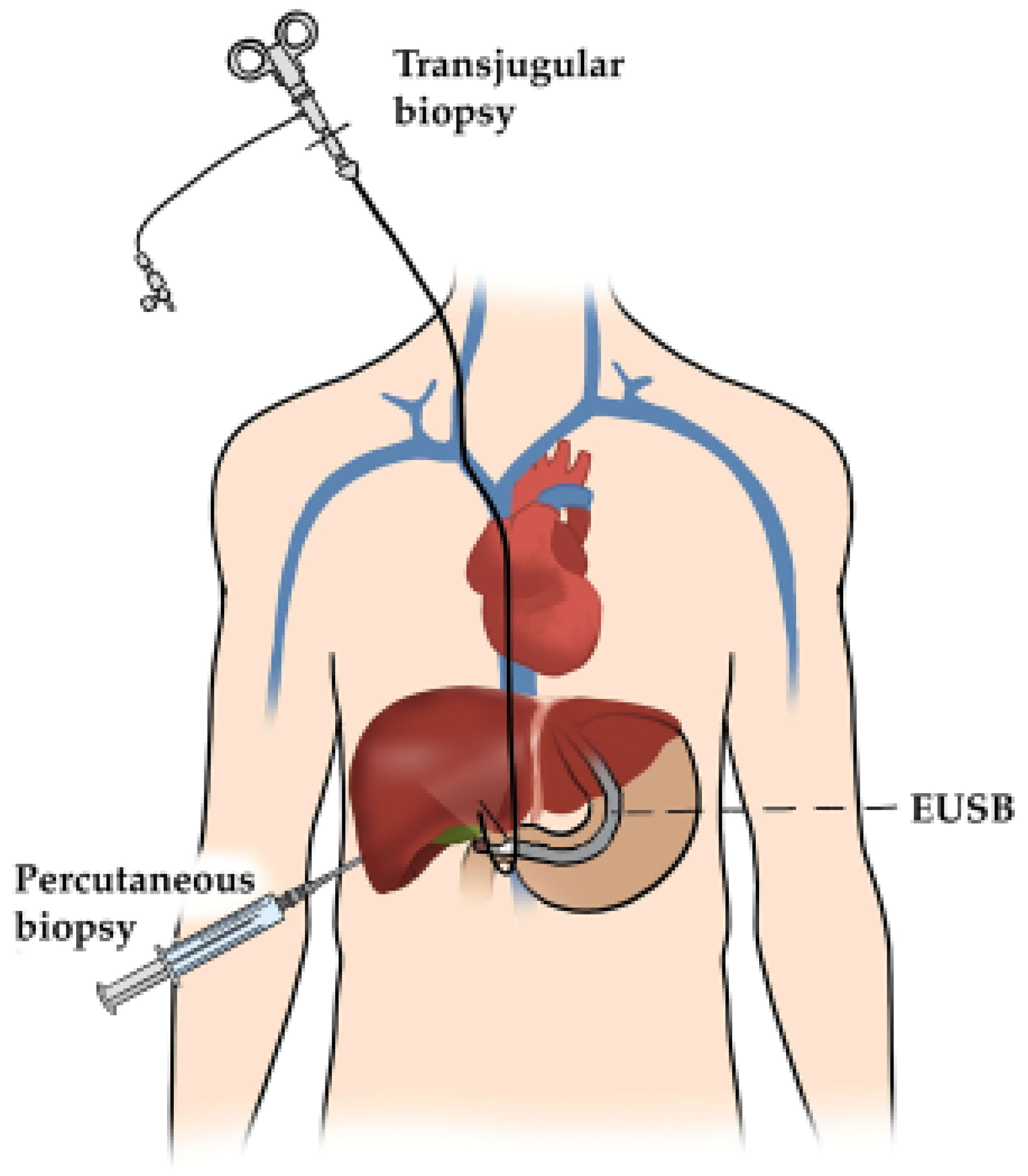
Figure 1. Diagram showing various modalities for obtaining liver biopsies.
Livers 06 00023 g001
Figure 2. Florid duct lesion. (a) (on the left) showing predominantly portal-based inflammation (delineated by arrows). The surrounding parenchyma shows preservation of the architecture with relatively healthy hepatocytes (H&E stain, original magnification ×100). (b) is a higher power showing a severely damaged bile duct (bottom arrow) with resultant granulomatous inflammation. The 2 top arrows show an even larger granuloma. The lymphocytes (small dark nuclei) have focally disrupted the limiting plate i.e., interface hepatitis (stage 1–2 in the traditional classification) (H&E stain, original magnification ×200).
Livers 06 00023 g002
Figure 3. Bile duct proliferation/reaction. (a) (on the left) is centred around a portal tract (arrows) that shows quite a pronounced ductular reaction which is characteristic of stage 2 in the traditional classification (CK7 immunohistochemistry, original magnification ×100). (b). Portal tract depicting damaged interlobular bile ducts (black arrows) associated with ductular reaction and biliary metaplasia of hepatocytes (white arrow) (CK7 immunohistochemistry, original magnification ×200).
Livers 06 00023 g003
Figure 4. Septal fibrosis and cirrhosis (fibrosis is blue). (a) on left. The blue stain depicts fibrous tissue. It is showing fibrous septae bridging portal tracts (arrows) and in the process creating nodule-like hepatocyte configurations (reddish-brown); stage 3–4 in the traditional classification). (Masson trichrome stain, original magnification ×40). (b). Established cirrhosis (stage 4) highlighting extensive alteration of the architecture due scarring (blue areas) and nodule formation (black arrows). Most of the hepatocytes appear reddish-brown but some have a greyish-white cytoplasm (white arrow) indicative of feathery degeneration (cholestasis). (Masson trichrome stain, original magnification ×100).
Livers 06 00023 g004
Figure 5. Cirrhosis and cholestasis. Deposition of copper in periportal hepatocytes. (a) on left. A higher magnification of same case as Figure 4b showing a liver nodule in the centre surrounded by fibrosis in keeping with cirrhosis. Within the nodule is a focus of yellow discoloration (black arrow) consistent with bile thrombus. The hepatocytes show greyish-white floccular change i.e., feathery degeneration (in keeping with cholestasis (blue arrow). Top area (white arrow) highlighting portal and interface hepatitis. (H&E stain, original magnification ×100). (b) Very high magnification of photomicrograph delineating copper granules (golden-brown) in periportal hepatocytes (arrows). This is one of the features that distinguishes the new classification from the traditional one (Rhodamine stain, original magnification ×600).
Livers 06 00023 g005
Figure 6. Diagram of liver biomarkers that can be deployed for PBC including non-invasive tests.
Livers 06 00023 g006
Figure 7. Diagram of biomarkers used in PBC including VCTE.
Livers 06 00023 g007
Table 1. Summary table of PBC tissue biomarkers highlighting key features.
Type of BiomarkerKey FeaturesComments
Liver biopsyTraditional gold standardInvasive; therefore, suboptimal for serial evaluations
(i) PercutaneousCurrently most common procurement methodLess acceptable to patients due to pain and other complications
(ii) EUSBLess pain and shorter recovery time compared to percutaneous biopsy. Greater accessibility to multiple sites on both right and left liver regardless of body habitus [31,32]More acceptable to patients. Gaining momentum and becoming more popular. Includes real-time imaging during procedure. Sample size comparable to percutaneous biopsy. Concurrent EUS portal pressure gradient measurement [33,34,35,36].
(iii) TransjugularUseful in patients with coagulopathies, ascites, liver transplants, extreme obesity, fulminant liver failure, vascular tumor.Biopsy samples often small, fragmented and suboptimal. Allows hemodynamic evaluations of hepatic and portal venous systems.
Abbreviations: EUSB: Endoscopic ultrasound biopsy.
Table 2. Summary table of PBC blood-based biomarkers showing key features.
Type of BiomarkerKey FeaturesComments
Blood-basedSimple, inexpensive, easily used in the clinical settingAnticipated increase in utilization in line with trends for molecular testing
(i) Persistent elevation of ALP > ×1.5 ULN for >24 weeks. Often the first clue of PBC. Discovered incidentally through routine blood tests for other conditions.Concurrent elevations of GGT and ALP substantiate that the elevated ALP is of hepatobiliary origin and increase prognostic value of ALP measurement [49]
(ii) Raised AMA titersMost specific serologic marker amongst >60 autoantibodies; present in 90% of patients; often antedate clinical signs by months or years. Multiple AMA subtypes but M2 is the most specificTiter of AMAs is not associated with disease progression or the patient’s clinical course [21]
(iii) ANA: specifically
-Anti-sp100 and anti-gp210
Helpful in diagnosis of AMA-negative PBCAssociated with more severe PBC phenotypes
(iv) HyperbilirubinemiaOften a late manifestationGenerally indicative of poor prognosis
Abbreviations: ALP: Alkaline phosphatase. AMA: anti-mitochondrial antibodies. ANA: anti-nuclear antibodies. GGT: Gamma-glutamyl transferase. ULN: Upper limit of normal.
Table 3. Summary table of PBC imaging biomarkers highlighting key features.
Type of BiomarkerKey FeaturesComments
ImagingUses LSM as a surrogate marker for fibrosis. Encompasses much larger area compared to tissue biopsy; hence, more representativeNon-invasive. Minimal risk compared to tissue biopsy
(i) VCTEGenerally cost effective; More accessible.Considerable intra- and inter-observer reproducibility. Accuracy limited by multiple variables e.g., age, body habitus, BMI, ascites.
(ii) MREHigher diagnostic accuracy. High equipment cost. Higher level training and expertise.Better at assessing more advanced fibrosis (stage 3 and 4) than earlier stages
Abbreviations: BMI: Body mass index. LSM: Liver stiffness measurement. MRE: Magnetic resonance elastography. VCTE: Vibration-controlled transient elastography.
Table 4. Summary table of the 3 main autoimmune liver diseases.
PBCAIHPSC
DemographicsFemale predominance (90%). Median age 50 years. Exceptionally rare in children.Affects all ages including children and all populations. Female 75% [83] Male predominance (70%). Median age 30 years. Does occur in children but prevalence 20% lower than in adults [84,85]
Associated diseasesSjogren’s syndrome Hashimoto’s thyroiditis, scleroderma, Raynaud’s disease, and celiac disease [57,86].Thyroiditis, arthritis, Sjogren syndrome, vitiligo, glomerulonephritisStrong association with IBD (70%) particularly UC, Pancreatitis,
Retroperitoneal fibrosis
Anatomic/histologic sitePredominantly interlobar and proximal septal bile ductsLiver parenchymaPredominantly extrahepatic bile ducts, or both extra- and intrahepatic. Small duct PSC is rare (<5% of patients)
Characteristic histologyNonsuppurative destructive cholangitis; florid duct lesionPortal lymphoplasmacytosis, interface hepatitis, necrosis, hepatocyte rosettes, emperipolesisMultifocal biliary strictures; concentric periductal fibrosis.
Conventional blood-based biomarkersChronic cholestatic biochemical profile: elevated ALP. Presence of AMA is serological hallmark of disease. IgM often high; helps to distinguish it from AIH [44]ALT activity is often purported as the biochemical hallmark of AIH. IgG levels typically high, while IgM levels are low [44,87].Elevated ALP is characteristic, along with GGT. No diagnostic serum autoantibody test [88]. Various non-specific autoantibodies (ANA, ASMA, anti-cardiolipin, Rheumatoid factor).
Serology>90% AMA-positive
50% ANA-positive
40% ANCA-positive
ANA, ASMA, ALKM1, ALC1A, ASLA > 20, Absence of viral hepatitis [89,90]0–5% AMA-positive
5% ANA-positive
>60% ANCA-positive but not disease specific. Therefore of limited value to establish the diagnosis
ImagingVCTE, MREInflammation is potential confounder for LSM. Thus, limited role e.g., assessment of complications such cirrhosis and HCC.ERCP or MRCP are the gold standard for diagnosis [44]
TreatmentUDCAResponds favourably to immunosuppressive treatment e.g., Corticosteroids, azathioprineNo effective medical therapies exist for PSC
AIH (overlap) variants. Paris criteria [91,92]About 10–20% of PBC patients may present AIHAIH-PBC more common than AIH-PSCPSC-AIH variant may reflect a PSC subphenotype
Complications Clinical coursecirrhosis, HCCAcute liver failure, cirrhosis, HCCStrong association with cholangiocarcinoma (10–20% of cases); colorectal cancer, cirrhosis, HCC
Abbreviations: AIH: Autoimmune hepatitis. ALC1A: anti-liver cytosol type 1 antibody. ALKM1: anti-liver kidney microsomal antibody type 1. ANCA: Anti-neutrophil cytoplasmic antibody. ASLA: Anti soluble liver antigen. ERCP: Endoscopic retrograde cholangiopancreatography. HCC: Hepatocellular carcinoma. IBD: Idiopathic inflammatory bowel disease. MRCP: Magnetic resonance cholangiopancreatography. PSC: Primary sclerosing cholangitis. UC: Ulcerative colitis. VCTE: Vibration-controlled transient elastography.
Disclaimer/Publisher’s Note: The statements, opinions and data contained in all publications are solely those of the individual author(s) and contributor(s) and not of MDPI and/or the editor(s). MDPI and/or the editor(s) disclaim responsibility for any injury to people or property resulting from any ideas, methods, instructions or products referred to in the content.