
Article

Completeness of Initial Laboratory Evaluation Impacts Chronic Hepatitis B Outcomes

by
Haris Imsirovic
1,
Jui-Hsia (Cleo) Hung
2,
Asnake Y. Dumicho
1,3,
Douglas Manuel
1,2,
Derek R. MacFadden
1,2 and
Curtis L. Cooper
1,2,*
1
Ottawa Hospital Research Institute, 1053 Carlin Ave, Ottawa, ON K1Y 4E9, Canada
2
The Ottawa Hospital-General Campus, University of Ottawa, G12-501 Smyth Rd, Ottawa, ON K1H 8L6, Canada
3
IC/ES, 2075 Bayview Ave V Wing, Toronto, ON M4N 3M5, Canada
*
Author to whom correspondence should be addressed.
Submission received: 13 November 2025 / Revised: 6 December 2025 / Accepted: 13 January 2026 / Published: 20 January 2026

Abstract

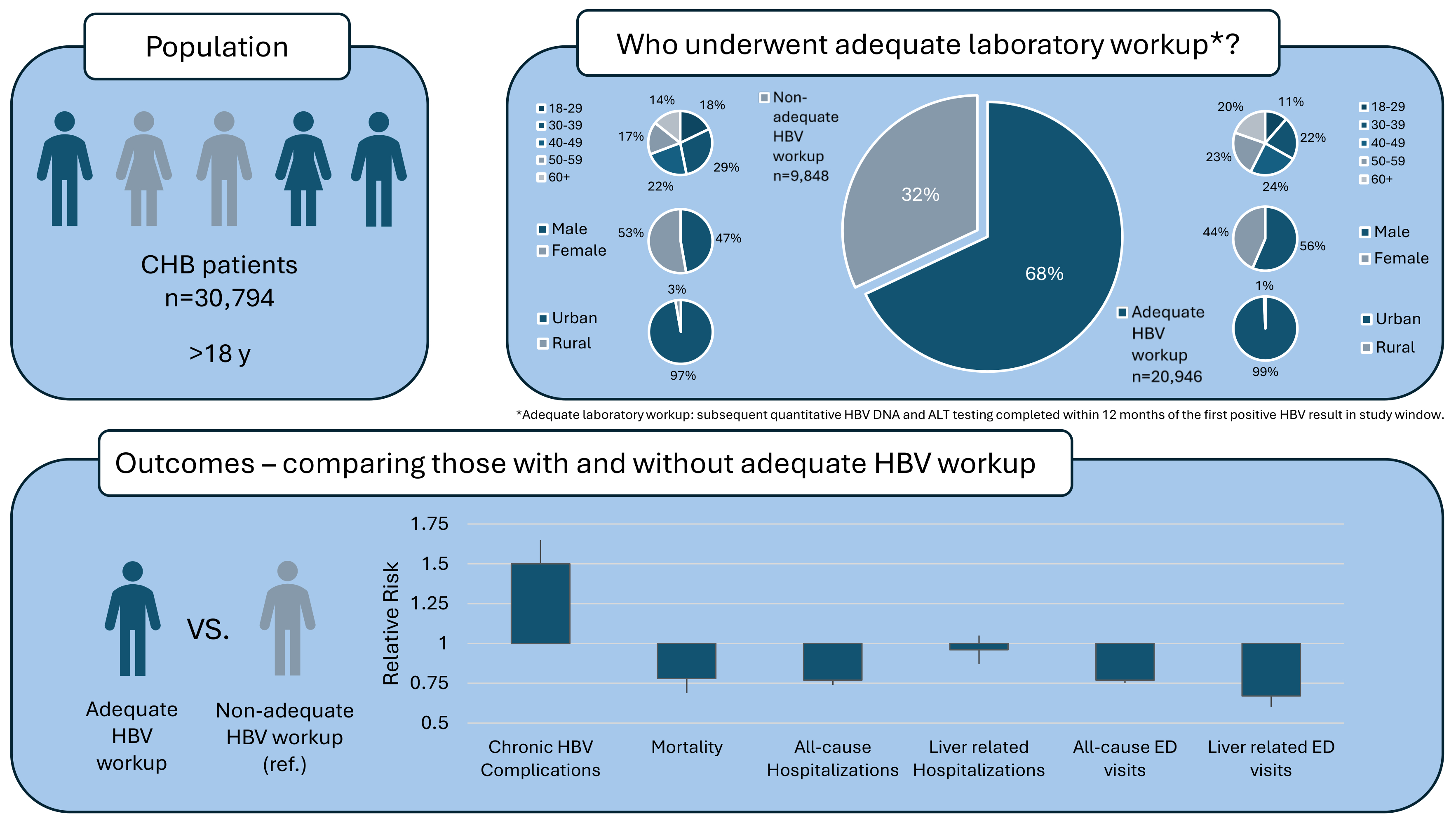
Introduction: The health care burden of chronic hepatis B virus (CHB) infection can be reduced by appropriate workup, treatment, and monitoring. Methods: As a primary objective, we determined whether adequate initial hepatitis B virus (HBV) laboratory workup in CHB patients is associated with improved CHB complications risk. Secondary outcomes assessed included: mortality, hospitalization, emergency department, and liver specialist visits. We conducted a retrospective cohort study from 1 January 2012 to 31 December 2018. Participants were followed from 12 months post index event until outcome occurrence, death, loss of eligibility, or 31 March 2023. Health administrative data from Ontario, Canada was utilized. The study cohort included individuals with at least one positive result of either hepatitis B surface antigen, hepatitis B e antigen, or HBV DNA viral load documented during the study window. The exposure of interest was defined as adequate laboratory workup, defined as having subsequent quantitative HBV DNA, and alanine aminotransferase testing completed within 12 months of the index event. CHB-related complications were assessed using previously validated diagnostic codes. Modified Poisson regression modelling was used to estimate relative risks. Results: The study cohort consisted of 30,794 CHB patients, with a mean age 45.7 years. The majority were male (53.5%) and within the lowest two income quintiles (50.2%). In total, 68.0% underwent adequate workup. Individuals with adequate workup were more likely to be older, male, urban based, and of the highest racialized and newcomer populations quintile. The risk for CHB complications was 1.50 (95% CI 1.36–1.65) times greater among those with adequate workup. By multivariable analysis, adequate workup was associated with a lower risk of mortality (RR 0.78; 95% CI 0.69–0.87), all-cause hospitalizations (RR 0.77; 95% CI 0.74–0.80), all-cause (RR 0.77; 95% CI 0.75–0.78), and liver-related (RR 0.67; 95% CI 0.60–0.75) ED visits. Conclusions: Adequate CHB clinical workup is associated with improved patient outcomes. Our findings advocate for the comprehensive evaluation of CHB patients using key laboratory tests to optimize clinical management and improve long-term health outcomes. We identified gaps in the workup of young adults, females, and those residing in rural settings, which should be addressed to ensure equity of HBV care.

1. Introduction

Chronic hepatitis B virus (CHB) infection impacts the health of an estimated 350 million individuals worldwide [1], of which between 250,000 and 460,000 live in Canada [2]. Overall, the health care burden of hepatitis B virus (HBV) remains high in Canada despite the availability of an effective vaccine for many years and the implementation of a universal immunization programme since the early 1990s. Without intervention, individuals are at risk for liver fibrosis progression, liver failure, and hepatocellular carcinoma [3,4]. HBV antiviral treatment provides protection against these outcomes [5,6,7].
It is important to identify CHB patients at risk of developing complications and initiate HBV antiviral treatment in these individuals. Factors that predict high risk of adverse outcomes include liver fibrosis stage, as well as three key laboratory measures including liver enzyme levels, specifically alanine aminotransferase (ALT), hepatitis B e antigen (HBeAg) status, and HBV DNA viral level [8,9,10]. The Canadian Association for the Study of the Liver/Association of Medical Microbiology and Infectious Disease guidelines recommend initiation of HBV antiviral therapy for HBeAg-positive and HBeAg-negative patients with HBV DNA levels greater than 2000 IU/mL and with elevated ALT (>1 time the upper limit of normal) for 6 months, and patients with significant inflammation or fibrosis (above stage 1) regardless of HBV DNA and ALT levels. Other key international guidelines provide similar recommendations [11,12]. Guidelines also recommend that all patients with cirrhosis and detectable HBV DNA should be treated [8]. Fibrosis stage can be determined based on a combination of clinical assessment, transient elastography, liver biopsy, and/or calculated fibrosis scores utilizing liver enzymes and platelet counts (e.g., aspartate aminotransferase to platelet ratio index, fibrosis-4) [13]. HBV serology and HBV DNA testing are generally available in most developed settings.
Without obtaining adequate baseline HBV laboratory investigations, it is not possible to make an informed decision regarding the need for HBV antiviral initiation. This could result in individuals not obtaining benefits of HBV antiviral therapy or receiving appropriate long-term monitoring. As a quality-of-care assessment, we evaluated the proportion of HBV patients undergoing standard HBV laboratory testing within one year of diagnosis in the publicly funded Canadian province of Ontario and assessed the association with key overall and liver-specific outcomes.

2. Methods

2.1. Population

The study cohort included individuals who have at least one positive result of either hepatitis B surface antigen (HBsAg), HBeAg, or HBV DNA viral load documented in the Public Health Ontario Lab (PHOL) and/or The Ottawa Hospital (TOH) Viral Hepatitis Program registry between 1 January 2012 and 31 December 2018. We defined the index event as the first positive result in the study period. We excluded organ transplant recipients, individuals with other chronic liver diseases (aside from steatosis) (Table S1), invalid sex, birth or death date, aged less than 18 or more than 105 years of age, date of last contact with the healthcare system more than 7 years, non-Ontario residents, patients without Ontario Health Insurance Plan (OHIP) eligibility, HBV diagnosis 2 years prior to index event, and those with less than 1 year of follow-up post index event. PHOL HBV testing data is available starting from 1 January 2010. We used a 2 year wash-out period to ensure there is at least 2 years between positive test results for each patient in the cohort. The study population was followed from 12 months post index event until death (the observation window for outcome occurrence), loss of OHIP eligibility, or 31 March 2023, whichever came first.

2.2. Data Sources

The study cohort was created using deidentified, linked health administrative databases housed at IC/ES (formerly the Institute for Clinical Evaluative Sciences) in Ontario, Canada. IC/ES is a non-profit organization that has been designated as a prescribed entity to collect, use, and disclose personal information under Ontario’s Personal Health Information Protection Act and the Coroners Act. IC/ES is permitted to collect and analyze health care and demographic data without consent for health system evaluation and improvement. IC/ES data encompasses the majority of publicly funded administrative health services records for Ontarians eligible for health coverage. There are around 15 million Ontario residents with access to universal health care services through OHIP. Conduct of this work was approved by the Ottawa Health Science Network Research Board (2021.0737) and Public Health Ontario’s Ethics Review Board (2021.052). The study was performed in accordance with the Helsinki Declaration of 1964 and its later amendments.

2.3. Covariates

The Registered Person Database (RPDB) and Postal Code Conversion File Plus (PCCF+) were used to gather information on patients’ sex, age, rural status, income quintile, and the Ontario Marginalization Index (ON-Marg). ON-Marg uses census data to rank geographical areas into five equal groups based on specific social determinants, which include: age and labour force (includes indicators to describe proportion of seniors (65+), ratio of seniors and children to 15–64 aged population, and proportion of those participating in the labour force); material resource (includes indicators that measure access to and attainment of basic material needs, such as proportion of those unemployed and without a high school degree); racialized and newcomer population (includes indicators to describe proportion of recent immigrants and those who self-identify as a visible minority); and household and dwelling (includes indicators that measure types and density of residences, and family structure characteristics, such as proportion living alone and not owning dwellings). Each group is assigned quintiles ranked from Q1 (least marginalized) to Q5 (most marginalized). We used data from the Ontario Health Insurance Plan Claims Database (OHIP), the National Ambulatory Care Reporting System (NACRS), and the Discharge Abstracts Database (DAD) to identify previous specialist utilization and comorbidities [14]. The Ontario Laboratory Information System (OLIS) was used to obtain patients’ blood laboratory data.
The cohort of CHB patients were classified as having either adequate or inadequate laboratory workup. Adequate laboratory workup was defined as having subsequent quantitative HBV DNA and ALT testing completed within 12 months of the index event. HBV DNA and ALT testing did not have to be completed on the same day. HBeAg was not used, as we were not confident that it was fully captured in PHOL.

2.4. Outcomes

The primary outcome of interest was CHB-related complications (cirrhosis, complications of cirrhosis, decompensated cirrhosis, hepatocellular carcinoma, chronic liver disease) (Table S2) occurring between 12 months post index event and death, loss of OHIP eligibility, or 31 March 2023, whichever came first. We used previously validated diagnostic codes to measure CHB-related complications [15]. We also examined mortality, all-cause and liver-related hospitalizations and emergency department (ED) visits, and specialist visits. OHIP, NACRS, DAD, and RPDB data were used to investigate outpatient visits, ED visits, hospitalizations, and mortality, respectively. These outcomes were also assessed 12 months post index event until death, loss of OHIP eligibility, or 31 March 2023, whichever came first. Patients diagnosed with CHB complications prior to or within 12 months post index event were excluded from the respective outcome analysis.
We compared and reported baseline characteristics of individuals who underwent adequate workup and those who did not. A t-test or one-way analysis of variance was employed to determine differences in means, and the Kruskal–Wallis test was used for median values. A chi-square test was used to compare differences among categorical variables. We used modified Poisson regression modelling to examine the association between our outcomes of interest and adequate workup. The models included the following variables selected a priori based on clinical relevance and previous literature: age, sex, income quintile, marginalization quintiles, rural status, baseline non-liver-related alcohol use conditions, diabetes, and prior general practitioner (GP) and specialist visits [Gastroenterology (GI), Infectious Diseases (ID)]. For hospital- and ED-related outcomes we also accounted for the number of visits that occurred on date of HBV diagnosis up to 12 months post. Participants with missing covariates were not included in the regression analysis. We treated results as statistically significant if the 95% CI did not overlap with 1.0 and if 2-sided p < 0.05. All analyses were conducted by using SAS Enterprise Guide version 8.3 (SAS Institute Inc., Cary, NC, USA).

3. Results

3.1. Cohort Creation

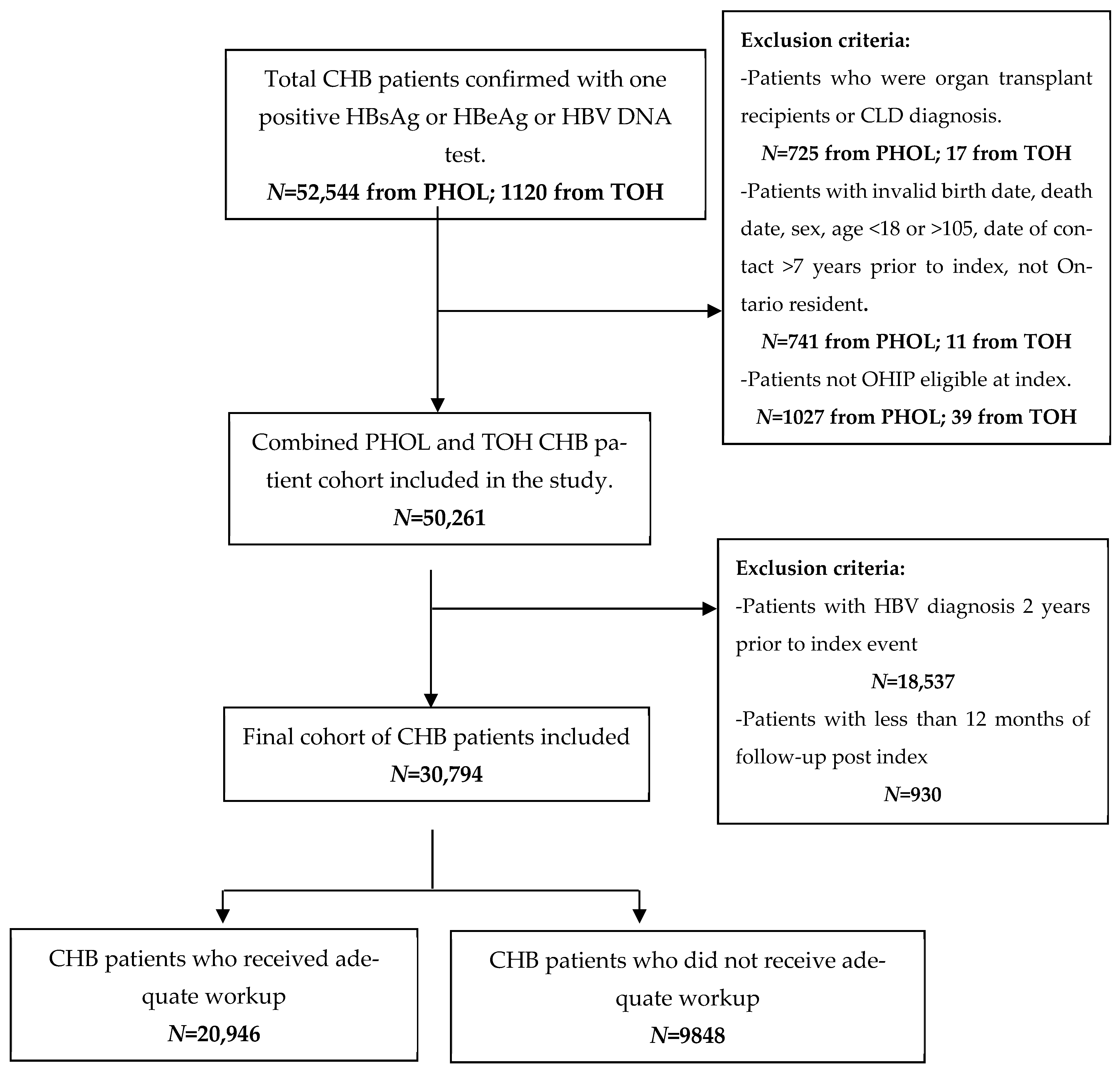
The final analysis cohort consisted of 30,794 CHB patients (Figure 1). In total, 52,544 (from PHOL) and 1120 (from TOH) patients diagnosed with HBV between 1 January 2012 and 31 December 2018 were considered for inclusion in this analysis. Seven hundred and forty-two patients were excluded (725 from PHOL, 17 from TOH) due to prior chronic liver disease diagnosis and/or because they were an organ transplant recipient. Of these, 742 patients (741 from PHOL, 11 from TOH) were excluded due to invalid birth date, death date, sex, age less than 18 or over 105 years, date of last contract greater than 7 years prior to index, or not an Ontario resident at index. An additional 1066 patients were excluded (1027 from PHOL, 39 from TOH), as they were not eligible for OHIP at index. The combined cohort of HBV patients from both PHOL and TOH was 50,261 (overlap of 843 patients). We further excluded those with HBV diagnosis 2 years prior to the index event (n = 18,537). Nine hundred and thirty HBV patients were excluded as they did not have at least 12 months of follow-up information post index event.

3.2. Baseline Characteristics

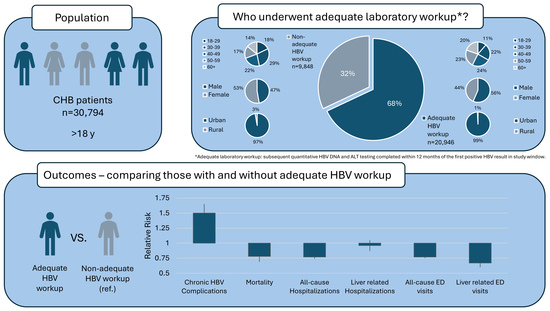
The mean age of the cohort was 45.7 years (14.3 SD) (Table 1). The majority were male (53.5%), urban residents (98.4%), of the lowest two income quintiles (50.2%), and with prior primary care visit history (95.9%). Among this cohort, 20,946 (68.0%) underwent adequate workup. Baseline characteristics in individuals who did and did not undergo adequate workup are described in Table 1. Individuals with adequate workup were older, more likely to be male, and of the highest racialized and newcomer populations quintile. They were more likely to live in an urban setting. They were also more likely to have CHB complications including cirrhosis and to have had prior GI physician evaluation. Laboratory results were comparable across the two groups (Table S3).

3.3. Outcome Assessment

By unadjusted analysis, those with adequate workup had a subsequent CHB complications rate 1.58 times greater than those without adequate workup (Table 2). They were more likely to have been subsequently assessed by a GI specialist. Patients without adequate baseline HBV workup were more likely to have subsequently visited a primary care provider. The rates of subsequent ID visits were comparable across the two groups. Subsequent hospitalization for liver-related outcomes rate was higher in those with adequate workup. The rate of all-cause hospitalizations and ED visits, as well as liver-related ED-visits was higher in those without adequate baseline HBV workup. The unadjusted death rate during the observation period was comparable between those with and without adequate baseline HBV workup.
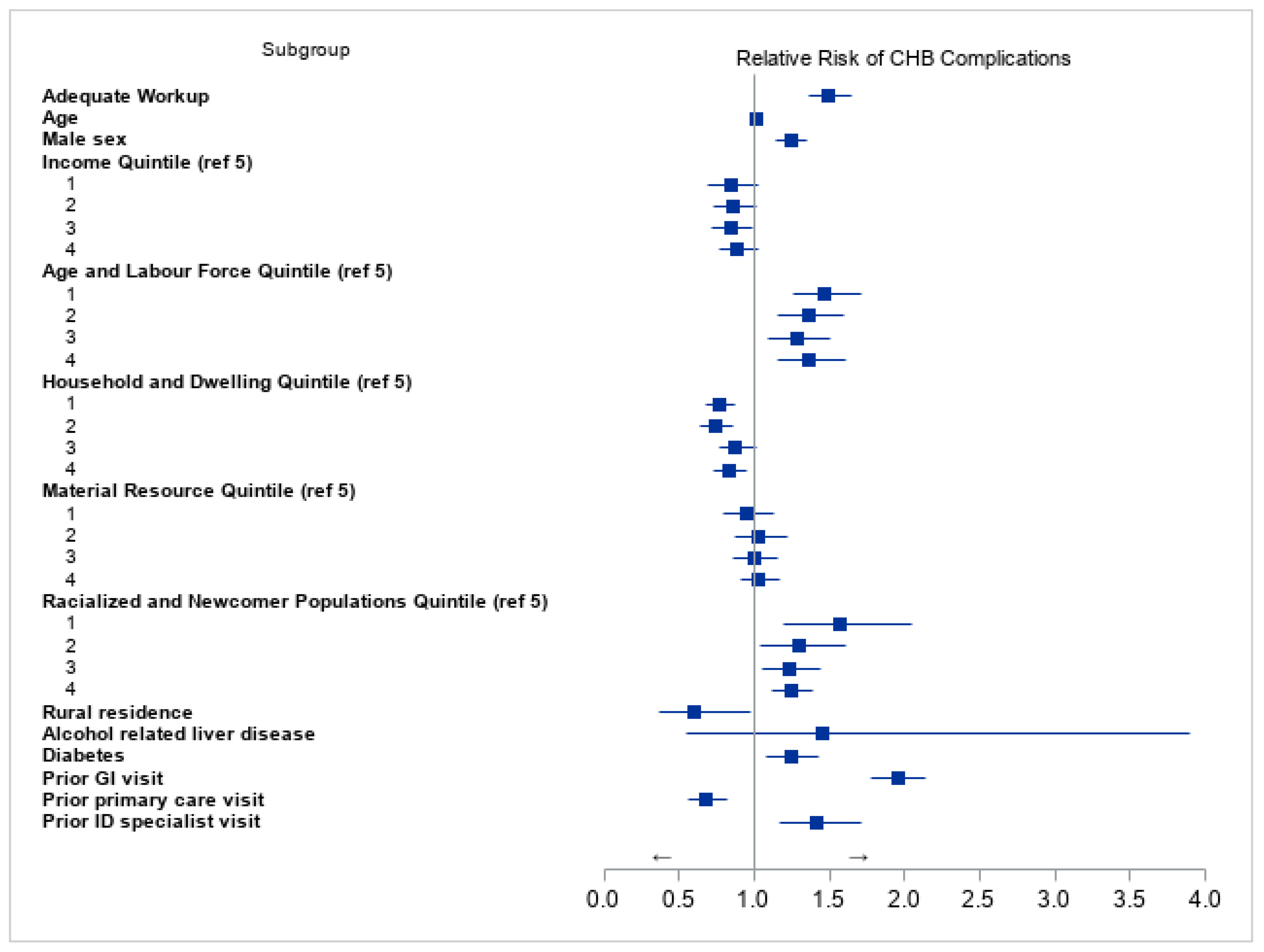
The relative risk estimates for CHB complication diagnosis after modelling the association with workup and adjusting for potential cofounders using a modified Poisson regression are illustrated in Figure 2 and reported in Table 3. Adequate workup was associated with an increased risk of CHB complications (RR 1.50; 95% CI 1.36–1.65). Similarly, male patients (RR 1.25; 95% CI 1.15–1.35), patients with a prior GI visit (RR 1.95; 95% CI 1.78–2.14), prior ID specialist visit (RR 1.42; 95% CI 1.17–1.71), of the lowest age and labour force quintile (RR 1.47; 95% CI 1.26–1.71), lowest racialized and newcomer populations quintile (RR 1.57; 95% CI 1.20–2.05), and diabetics (RR 1.24; 95% CI 1.08–1.43) were associated with a higher risk of CHB complications after adjusting for confounders. Lowest household and dwelling quintile (RR 0.77; 95% CI 0.68–0.88), rural residence (RR 0.60; 95% CI 0.37–0.97), and prior primary care visits (RR 0.68; 95% CI 0.57–0.82) had a protective effect after adjusting for confounders.
We further examined the association with adequate HBV workup and other relevant outcomes by adjusting for key variable (Table 4). Following adjustment, we found that adequate HBV workup was associated with a lower risk of death (RR 0.78; 95% CI 0.69–0.87), number of all-cause hospitalizations (RR 0.77; 95% CI 0.74–0.80), number of all-cause ED visits (RR 0.77; 95% CI 0.75–0.78), and liver-related ED visits (RR 0.67; 95% CI 0.60–0.75). Those with adequate workup were more likely to have been subsequently assessed by a GI physician (RR 1.36; 95% CI 1.30–1.42).
Adjusted relative risk estimates obtained by modelling the association between risk factors associated with CHB complications (cirrhosis, complications of cirrhosis, decompensated cirrhosis, hepatocellular carcinoma, chronic liver disease) and subsequent diagnosis of CHB complications, among patients with CHB using a modified Poisson regression. Risk factors are captured upon the index date, other than adequate workup, which was captured 12 months post index. CHB complications were assessed from 12 months post index to end of follow-up. Error bars represent 95% confidence intervals. Adequate workup defined as having subsequent quantitative HBV DNA, and ALT testing completed within 12 months of the index event. Rural residence defined as residing in a location with population < 10,000. Prior visit defined as a clinical visit with a care provider within one year prior to index.

4. Discussion

Complete workup is required to determine who should start HBV antiviral therapy. Overall, a suboptimal proportion (68.0%) of CHB patients received both ALT and HBV DNA viral testing within 12 months of HBV diagnosis. Predictors of adequate initial HBV workup included older age, male sex, urban residence, and highest racialized and newcomer populations quintile. Adequate initial HBV workup was associated with a lower risk of death, all-cause hospitalizations, as well as all-cause and liver-related ED visits. We suspect that these patients were most likely to have better linkage to and retention in care. Improved survival may have been due to more active disease progression monitoring, hepatocellular carcinoma (HCC) screening, and timely treatment administration. In one study, linkage to care was higher among HBV patients referred to local specialist hepatitis services [16]. Similarly, our cohort of HBV patients undergoing adequate initial HBV workup were more likely to see a GI specialist at baseline and during the follow-up period. Our findings highlight the need for healthcare systems to ensure that CHB patients receive comprehensive evaluations and monitoring.
Adequate initial HBV workup was associated with an increased risk of CHB complications. It is highly probable that those who received adequate initial HBV assessment were more likely to have been recognized to have CHB-related liver comorbidities at the time of initial assessment. Additionally, this likely reflects, at least in part, a higher detection rate of complications due to subsequent more comprehensive monitoring.
Adverse liver outcome risks are predicted by quantitative HBV DNA level, HBeAg status and older age [8]. The higher likelihood of older patients receiving complete workup in our assessment may be due to the higher perceived risk of liver disease progression and the greater emphasis on managing comorbidities that typically accompany aging. Younger age is associated with reduced engagement and retention in health care across the spectrum of many infectious diseases [17,18,19,20,21]. This likely also contributed to our finding that younger age was associated with lower likelihood of undergoing adequate baseline HBV evaluation and suggests that strategies to retain younger individuals living with HBV in care may be key in prevention of long-term negative outcomes [22,23].
The risk for cirrhosis and liver cancer with HBV are increased with male sex [24,25,26,27,28,29]. This knowledge may help explain why males were more likely to receive adequate baseline HBV workup from their health care providers. On the other hand, women often receive suboptimal consideration, investigation, and follow-up for other medical conditions [30,31,32,33]. Certainly, there is a balance to be struck between targeting those most at risk for serious HBV outcomes and ensuring equity of care for all living with CHB infection.
Individuals of the highest racialized and newcomer populations were more likely to receive adequate initial HBV workup and had a lower risk of CHB complications compared to all the other quintiles. Socioeconomic and racial factors play a key role in healthcare access and quality. It is encouraging to see that there appears to be an emphasis on targeting at-risk populations to ensure equitable care. However, our analysis did not explore long-term retention in adequate care, which has been identified as a concern in non-White and immigrant populations [20,22,34].
We identified several concerning findings related to HBV in rural settings. Only 36.8% of patients living in a rural residence received adequate initial HBV workup, which was much lower than those in urban settings. It is noteworthy that only 1.4% of our sample were rural residents, while Statistics Canada reports that 13.8% of Ontarians live in rural dwellings. Importantly, most people living with HBV in Ontario are immigrants and most immigrants in Ontario reside in urban settings. However, it is also possible that our cohort underrepresents rural residents living with HBV infection, as they face many systemic barriers to engaging healthcare and undergoing initial diagnostic testing. Furthermore, rural residents have lower levels of engagement in health-promoting behaviours and treatment adherence than their urban counterparts [34]. Although rural residents were identified as being protective for negative CHB outcomes, our sample of rural patients may have been underdiagnosed for complications due to barriers in accessing care. Our findings identify a need to further develop interventions to address barriers to rural health care to ensure rural-residing CHB patients receive proper care.
As far as we are aware, this is the first population level study to address the impact of adequate initial HBV workup on the health outcomes of CHB patients. The use of a large cohort provides a comprehensive overview of CHB patients and their outcomes, enhancing the generalizability of the findings. Our analysis further highlights the importance of adhering to HBV management guidelines.
We recognize that a weakness of this study was the inability to capture HBeAg testing in our effort to assess adequate workup. We conducted sensitivity analyses in which adequate workup was defined as having at least performed one laboratory test in the follow-up and where HBeAg was included. The overall results were similar. We did not have information on the frequency of monitoring between the two groups. This would have been an important covariate to account for in our regression models given the dynamic nature of CHB. We also did not have information on health providers ordering the tests. This is a potential covariate which could confound the relationship between our outcomes of interest and workup. We did not have complete information on HBV antiviral use. This would have been of value in determining the actual impact of standard of care laboratory testing on treatment initiation. The use of HBV antivirals influences the likelihood of developing the liver-specific outcomes evaluated in this analysis. As such, this information would have been a useful variable to account for in our analysis of liver-specific outcomes. Our definition of adequate workup did not include fibrosis assessment. Transient elastography and liver biopsy data are not systematically captured in Ontario administrative databases. We recognize that fibrosis status is highly predictive of our outcomes of interest and can affect decisions made by clinicians for further investigation. Accounting for this variable in our models would strengthen the study. We did not have information to identify surveillance imaging such as ultrasonography and alpha-fetoprotein (AFP) levels using our Ontario registry (IC/ES) dataset. Guidelines suggest the use of liver ultrasound with AFP for early detection of HCC. As such, accounting for baseline AFP levels and liver ultrasound would have strengthened our liver-specific outcomes analysis.

5. Conclusions

Our study highlights the importance of adequate initial HBV workup in managing CHB, demonstrating its association with improved overall patient outcomes. We have identified gaps in the workup of young adults, women, and those residing in rural settings. Our findings advocate for a comprehensive evaluation of CHB patients using key laboratory tests highlighted in all national and international guidelines, in both high and low-risk groups, to optimize their clinical management and improve long-term health outcomes.

Supplementary Materials

The following supporting information can be downloaded at: https://www.mdpi.com/article/10.3390/livers6010005/s1, Table S1: ICD-10 codes used for exclusion of patients with other chronic liver diseases. Table S2: Diagnostic, procedure, and death codes used to identify CHB complications. Table S3: Additional Descriptive Analysis of Analysis Cohort.

Author Contributions

H.I.: concept and design, analysis and interpretation of data, drafting and critical revision of the manuscript; J.-H.H.: concept and design, analysis and interpretation of data, critical revision of the manuscript; A.Y.D.: acquisition and analysis of data, critical revision of the manuscript; D.R.M.: critical revision of the manuscript, administrative and material support; D.M.: critical revision of the manuscript; C.L.C.: concept and design, interpretation of data, drafting and critical revision of the manuscript. All authors have read and agreed to the published version of the manuscript.

Funding

CanHepB research project support and internal research funds held by Cooper.

Institutional Review Board Statement

Conduct of this work was approved by the Ottawa Health Science Network Research Board (approval code: 2021.0373, approval date: 21 June 2021) and Public Health Ontario’s Ethics Review Board (approval code: 2021.052, approval date: 28 January 2022). The study was performed in accordance with the Helsinki Declaration of 1964, and its later amendments.

Informed Consent Statement

Patient consent was waived due to that this study utilized data housed at IC/ES, and IC/ES is permitted to collect and analyze health care and demographic data without consent for health system evaluation and improvement.

Data Availability Statement

The datasets generated and/or analyzed during the current study are not publicly available due to privacy concerns and the approved data sharing agreement but are available from the corresponding author on reasonable request.

Acknowledgments

We would like to thank Meltem Tuna from IC/ES for her guidance and assistance with this analysis. This study was supported by IC/ES, an independent, non-profit research institute funded by an annual grant from the MOH and MLTC. Parts of this material are based on data and information compiled and provided by: CIHI, Ontario Ministry of Health, Statistics Canada, and Toronto Community Health Profiles Partnership. The analyses, conclusions, opinions, and statements expressed herein are solely those of the authors and do not reflect those of the funding or data sources; no endorsement is intended or should be inferred.

Conflicts of Interest

CC has served as a speaker, a consultant and an advisory board member for Gilead, Abbvie, and has received research funding from Public Health Agency of Canada. Funding was provided by the Canadian HBV Research Network in support of this analysis.

References

  1. Te, H.S.; Jensen, D.M. Epidemiology of hepatitis B and C viruses: A global overview. Clin. Liver Dis. 2010, 14, 1–21. [Google Scholar] [CrossRef]
  2. Sherman, M.; Bilodeau, M.; Cooper, C.; Mackie, D.; Depew, W.; Villeneuve, J.P. Liver Disease in Canada: A Crisis in the Making; Canadian Liver Foundation: Markham, ON, Canada, 2013. [Google Scholar]
  3. Lee, W.M. Hepatitis B virus infection. N. Engl. J. Med. 1997, 337, 1733–1745. [Google Scholar] [CrossRef]
  4. Stuyver, L.; De Gendt, S.; Van Geyt, C.; Zoulim, F.; Fried, M.; Schinazi, R.F.; Rossau, R. A new genotype of hepatitis B virus: Complete genome and phylogenetic relatedness. J. Gen. Virol. 2000, 81, 67–74. [Google Scholar] [CrossRef]
  5. Chen, C.J.; Yang, H.I.; Su, J.; Jen, C.L.; You, S.L.; Lu, S.N.; Huang, G.T.; Iloeje, U.H.; Reveal-HBV Study Group. Risk of hepatocellular carcinoma across a biological gradient of serum hepatitis B virus DNA level. JAMA 2006, 295, 65–73. [Google Scholar] [CrossRef]
  6. Chen, G.; Lin, W.; Shen, F.; Iloeje, U.H.; London, W.T.; Evans, A.A. Past HBV viral load as predictor of mortality and morbidity from HCC and chronic liver disease in a prospective study. Off. J. Am. Coll. Gastroenterol. ACG 2006, 101, 1797–1803. [Google Scholar] [CrossRef] [PubMed]
  7. Iloeje, U.H.; Yang, H.I.; Su, J.; Jen, C.L.; You, S.L.; Chen, C.J. Predicting cirrhosis risk based on the level of circulating hepatitis B viral load. Gastroenterology 2006, 130, 678–686. [Google Scholar] [CrossRef]
  8. Coffin, C.S.; Fung, S.K.; Alvarez, F.; Cooper, C.L.; Doucette, K.E.; Fournier, C.; Kelly, E.; Ko, H.H.; Ma, M.M.; Martin, S.R.; et al. Management of hepatitis B virus infection: 2018 guidelines from the Canadian Association for the Study of Liver Disease and Association of Medical Microbiology and Infectious Disease Canada. Can. Liver J. 2018, 1, 156–217. [Google Scholar] [CrossRef]
  9. Yu, M.W.; Yeh, S.H.; Chen, P.J.; Liaw, Y.F.; Lin, C.L.; Liu, C.J.; Shih, W.L.; Kao, J.H.; Chen, D.S.; Chen, C.-J. Hepatitis B virus genotype and DNA level and hepatocellular carcinoma: A prospective study in men. J. Natl. Cancer Inst. 2005, 97, 265–272. [Google Scholar] [CrossRef] [PubMed]
  10. Fattovich, G.; Bortolotti, F.; Donato, F. Natural history of chronic hepatitis B: Special emphasis on disease progression and prognostic factors. J. Hepatol. 2008, 48, 335–352. [Google Scholar] [CrossRef] [PubMed]
  11. Terrault, N.A.; Lok, A.S.; McMahon, B.J.; Chang, K.M.; Hwang, J.P.; Jonas, M.M.; Brown, R.S., Jr.; Bzowej, N.H.; Wong, J.B. Update on prevention, diagnosis, and treatment of chronic hepatitis B: AASLD 2018 hepatitis B guidance. Hepatology 2018, 67, 1560–1599. [Google Scholar] [CrossRef]
  12. European Association for the Study of the Liver. EASL Clinical Practice Guidelines: Management of chronic hepatitis B. J. Hepatol. 2009, 50, 227–242. [Google Scholar] [CrossRef]
  13. Bonder, A.; Afdhal, N. Utilization of FibroScan in clinical practice. Curr. Gastroenterol. Rep. 2014, 16, 372. [Google Scholar] [CrossRef]
  14. Matheson, F.I.; Dunn, J.R.; Smith, K.L.; Moineddin, R.; Glazier, R.H. Development of the Canadian Marginalization Index: A new tool for the study of inequality. Can. J. Public Health Rev. Can. De Sante’e Publique 2012, 103, S12–S16. [Google Scholar] [CrossRef] [PubMed]
  15. Lapointe-Shaw, L.; Georgie, F.; Carlone, D.; Cerocchi, O.; Chung, H.; Dewit, Y.; Feld, J.J.; Holder, L.; Kwong, J.C.; Sander, B.; et al. Identifying cirrhosis, decompensated cirrhosis and hepatocellular carcinoma in health administrative data: A validation study. PLoS ONE 2018, 13, e0201120. [Google Scholar] [CrossRef] [PubMed] [PubMed Central]
  16. Martyn, E.; O’Regan, S.; Harris, P.; Leonard, M.; Veitch, M.; Sultan, B.; Matthews, P.C.; Ghosh, I.; Story, A.; Surey, J. Hepatitis B virus (HBV) screening, linkage and retention-in-care in inclusion health populations: Evaluation of an outreach screening programme in London. J. Infect. 2024, 88, 167–172. [Google Scholar] [CrossRef]
  17. Ulett, K.B.; Willig, J.H.; Lin, H.Y.; Routman, J.S.; Abroms, S.; Allison, J.; Chatham, A.; Raper, J.L.; Saag, M.S.; Mugavero, M.J. The therapeutic implications of timely linkage and early retention in HIV care. AIDS Patient Care STDs 2009, 23, 41–49. [Google Scholar] [CrossRef]
  18. Rebeiro, P.; Althoff, K.N.; Buchacz, K.; Gill, J.; Horberg, M.; Krentz, H.; Moore, R.; Sterling, T.R.; Brooks, J.T.; Gebo, K.A.; et al. Retention among North American HIV-infected persons in clinical care, 2000–2008. JAIDS J. Acquir. Immune Defic. Syndr. 2013, 62, 356–362. [Google Scholar] [CrossRef] [PubMed]
  19. Mugavero, M.J.; Amico, K.R.; Horn, T.; Thompson, M.A. The state of engagement in HIV care in the United States: From cascade to continuum to control. Clin. Infect. Dis. 2013, 57, 1164–1171. [Google Scholar] [CrossRef]
  20. Liou, I.W.; Nguyen, M.H. The cascade of care in chronic hepatitis B. Curr. Hepatol. Rep. 2016, 15, 209–219. [Google Scholar] [CrossRef]
  21. Havens, J.R.; Lofwall, M.R.; Young, A.M.; Staton, M.; Schaninger, T.; Fraser, H.; Vickerman, P.; Walsh, S.L. Predictors of engagement in screening for a hepatitis C virus (HCV) treatment trial in a rural Appalachian community. J. Viral Hepat. 2024, 31, 293–299. [Google Scholar] [CrossRef]
  22. Yeo, Y.H.; Nguyen, M.H. Current gaps and opportunities in HBV prevention, testing and linkage to care in the United States—A call for action. Aliment. Pharmacol. Ther. 2021, 53, 63–78. [Google Scholar] [CrossRef]
  23. Anderson, R.T.; Choi, H.S.; Lenz, O.; Peters, M.G.; Janssen, H.L.; Mishra, P.; Donaldson, E.; Westman, G.; Buchholz, S.; Miller, V.; et al. Association between seroclearance of hepatitis B surface antigen and long-term clinical outcomes of patients with chronic hepatitis B virus infection: Systematic review and meta-analysis. Clin. Gastroenterol. Hepatol. 2021, 19, 463–472. [Google Scholar] [CrossRef]
  24. Yim, H.J.; Lok, A.S. Natural history of chronic hepatitis B virus infection: What we knew in 1981 and what we know in 2005. Hepatology 2006, 43, S173–S181. [Google Scholar] [CrossRef] [PubMed]
  25. Lin, X.; Robinson, N.J.; Thursz, M.; Rosenberg, D.M.; Weild, A.; Pimenta, J.M.; Hall, A.J. Chronic hepatitis B virus infection in the Asia-Pacific region and Africa: Review of disease progression. J. Gastroenterol. Hepatol. 2005, 20, 833–843. [Google Scholar] [CrossRef]
  26. Yip, T.C.F.; Chan, H.L.Y.; Wong, V.W.S.; Tse, Y.K.; Lam, K.L.Y.; Wong, G.L.H. Impact of age and gender on risk of hepatocellular carcinoma after hepatitis B surface antigen seroclearance. J. Hepatol. 2017, 67, 902–908. [Google Scholar] [CrossRef] [PubMed]
  27. Fialla, A.D.; de Muckadell, O.B.S.; Touborg Lassen, A. Incidence, etiology and mortality of cirrhosis: A population-based cohort study. Scand. J. Gastroenterol. 2012, 47, 702–709. [Google Scholar] [CrossRef]
  28. Liu, M.; Tseng, T.C.; Jun, D.W.; Yeh, M.L.; Trinh, H.; Wong, G.L.; Chen, C.-H.; Peng, C.-Y.; Kim, S.E.; Oh, H.; et al. Transition rates to cirrhosis and liver cancer by age, gender, disease and treatment status in Asian chronic hepatitis B patients. Hepatol. Int. 2021, 15, 71–81. [Google Scholar] [CrossRef]
  29. Fung, J.; Lai, C.L.; But, D.; Wong, D.; Cheung, T.K.; Yuen, M.F. Prevalence of fibrosis and cirrhosis in chronic hepatitis B: Implications for treatment and management. Off. J. Am. Coll. Gastroenterol. ACG 2008, 103, 1421–1426. [Google Scholar] [CrossRef] [PubMed]
  30. McElroy, L.M.; Likhitsup, A.; Winder, G.S.; Saeed, N.; Hassan, A.; Sonnenday, C.J.; Fontana, R.J.; Mellinger, J. Gender disparities in patients with alcoholic liver disease evaluated for liver transplantation. Transplantation 2020, 104, 293–298. [Google Scholar] [CrossRef]
  31. Mellinger, J.L.; Fernandez, A.; Shedden, K.; Winder, G.S.; Fontana, R.J.; Volk, M.L.; Blow, F.C.; Lok, A.S. Gender disparities in alcohol use disorder treatment among privately insured patients with alcohol-associated cirrhosis. Alcohol. Clin. Exp. Res. 2019, 43, 334–341. [Google Scholar] [CrossRef]
  32. Darden, M.; Parker, G.; Monlezun, D.; Anderson, E.; Buell, J.F. Race and gender disparity in the surgical management of hepatocellular cancer: Analysis of the Surveillance, Epidemiology, and End Results (SEER) Program Registry. World J. Surg. 2021, 45, 2538–2545. [Google Scholar] [CrossRef] [PubMed]
  33. Bosomworth, J.; Khan, Z. Analysis of Gender-Based Inequality in Cardiovascular Health: An Umbrella Review. Cureus 2023, 15, e43482. [Google Scholar] [CrossRef] [PubMed]
  34. Roncoroni, J.; Tucker, C.M.; Wall, W.; Wippold, G.; Ratchford, J. Associations of health self-efficacy with engagement in health-promoting behaviors and treatment adherence in rural patients. Fam. Community Health 2019, 42, 109–116. [Google Scholar] [CrossRef] [PubMed]
Figure 1. Flow chart of study patient selection.
Livers 06 00005 g001
Figure 2. Risk factors associated with CHB complications among Chronic HBV patients after adjustment.
Livers 06 00005 g002
Table 1. Baseline characteristics of those with and without adequate initial HBV workup.
CharacteristicsTotalDid Not Have Adequate Initial HBV WorkupHad Adequate Initial HBV Workup (% of Total)p Value
N = 30,794N = 9848N = 20,946
Age at Index, mean (SD)45.73 (14.26)43.08 (14.24)46.98 (14.09)<0.01
Age group
18–29—n (%)4151 (13.5%)1758 (17.9%)2393 (11.4%)<0.01
30–39—n (%)7416 (24.1%)2855 (29.0%)4561 (21.8%)
40–49—n (%)7296 (23.7%)2207 (22.4%)5089 (24.3%)
50–59—n (%)6411 (20.8%)1621 (16.5%)4790 (22.9%)
60+—n (%)5520 (17.9%)1407 (14.3%)4113 (19.6%)
Sex
Female—n (%)14,311 (46.5%)5198 (52.8%)9113 (43.5%)<0.01
Male—n (%)16,483 (53.5%)4650 (47.2%)11,833
(56.5%)
Rural residence
Yes—n (%)432 (1.4%)273 (2.8%)159 (0.8%)<0.01
No—n (%)30,310 (98.4%)9554 (97.0%)20,756
(99.1%)
Missing—n (%)52 (0.2%)21 (0.2%)31 (0.1%)
Nearest Census-Based Neighbourhood
Income Quintile
Lowest Quintile—n (%)8129 (26.4%)2739 (27.8%)5390 (25.7%)<0.01
Second Quintile—n (%)7334 (23.8%)2196 (22.3%)5138 (24.5%)
Middle Quintile—n (%)5910 (19.2%)1849 (18.8%)4061 (19.4%)
Fourth Quintile—n (%)5286 (17.2%)1662 (16.9%)3624 (17.3%)
Highest Quintile—n (%)4028 (13.1%)1364 (13.9%)2664 (12.7%)
Missing—n (%)107 (0.3%)38 (0.4%)69 (0.3%)
Age and Labour Force Quintile
Lowest Quintile—n (%)10,043 (32.6%)3265 (33.2%)6778 (32.4%)<0.01
Second Quintile—n (%)7042 (22.9%)2107 (21.4%)4935 (23.6%)
Middle Quintile—n (%)5500 (17.9%)1668 (16.9%)3832 (18.3%)
Fourth Quintile—n (%)4626 (15.0%)1521 (15.4%)3105 (14.8%)
Highest Quintile—n (%)3486 (11.3%)1235 (12.5%)2251 (10.7%)
Missing—n (%)97 (0.3%)52 (0.5%)45 (0.2%)
Household and Dwelling Quintile
Lowest Quintile—n (%)9137 (29.7%)2509 (25.5%)6628 (31.6%)<0.01
Second Quintile—n (%)4880 (15.8%)1565 (15.9%)3315 (15.8%)
Middle Quintile—n (%)4002 (13.0%)1392 (14.1%)2610 (12.5%)
Fourth Quintile—n (%)4423 (14.4%)1566 (15.9%)2857 (13.6%)
Highest Quintile—n (%)8255 (26.8%)2764 (28.1%)5491 (26.2%)
Missing—n (%)97 (0.3%)52 (0.5%)45 (0.2%)
Material Resource Quintile
Lowest Quintile—n (%)4158 (13.5%)1551 (15.7%)2607 (12.4%)<0.01
Second Quintile—n (%)4694 (15.2%)1565 (15.9%)3129 (14.9%)
Middle Quintile—n (%)5304 (17.2%)1666 (16.9%)3638 (17.4%)
Fourth Quintile—n (%)7192 (23.4%)2080 (21.1%)5112 (24.4%)
Highest Quintile—n (%)9349 (30.4%)2934 (29.8%)6415 (30.6%)
Missing—n (%)97 (0.3%)52 (0.5%)45 (0.2%)
Racialized and Newcomer Populations
Quintile
Lowest Quintile—n (%)850 (2.8%)493 (5.0%)357 (1.7%)<0.01
Second Quintile—n (%)1283 (4.2%)648 (6.6%)635 (3.0%)
Middle Quintile—n (%)2512 (8.2%)1030 (10.5%)1482 (7.1%)
Fourth Quintile—n (%)6464 (21.0%)2246 (22.8%)4218 (20.1%)
Highest Quintile—n (%)19,588 (63.6%)5379 (54.6%)14,209
(67.8%)
Missing—n (%)97 (0.3%)52 (0.5%)45 (0.2%)
Non-Liver-Related Alcohol Use Conditions ab
Yes—n (%)58 (0.2%)30 (0.3%)28 (0.1%)<0.01
No—n (%)30,736 (99.8%)9818 (99.7%)20,918 (99.9%)
Chronic HBV Complications bc
Yes—n (%)2196 (7.1%)335 (3.4%)1861 (8.9%)<0.01
No—n (%)28,598 (92.9%)9513 (96.6%)19,085 (91.1%)
Cirrhosis b
Yes—n (%)1714 (5.6%)217 (2.2%)1497 (7.1%)<0.01
No—n (%)29,080 (94.4%)9631 (97.8%)19,449 (92.9%)
Decompensated Cirrhosis b
Yes—n (%)249 (0.8%)47 (0.5%)202 (1.0%)<0.01
No—n (%)30,545 (99.2%)9801 (99.5%)20,744 (99.0%)
Chronic Liver Disease b
Yes—n (%)592 (1.9%)84 (0.9%)508 (2.4%)<0.01
No—n (%)30,202 (98.1%)9764 (99.1%)20,438 (97.6%)
Complications of Cirrhosis b
Yes—n (%)627 (2.0%)111 (1.1%)516 (2.5%)<0.01
No—n (%)30,167 (98.0%)9737 (98.9%)20,430 (97.5%)
Hepatocellular Carcinoma b
Yes—n (%)295 (1.0%)39 (0.4%)256 (1.2%)<0.01
No—n (%)30,499 (99.0%)9809 (99.6%)20,690 (98.8%)
Diabetes b
Yes—n (%)2341 (7.6%)622 (6.3%)1719 (8.2%)<0.01
No—n (%)28,453 (92.4%)9226 (93.7%)19,227 (91.8%)
Gastroenterologist Visit d
Yes—n (%)5517 (17.9%)1025 (10.4%)4492 (21.4%)<0.01
No—n (%)25,277 (82.1%)8823 (89.6%)16,454 (78.6%)
General Physician Visit d
Yes—n (%)29,532 (95.9%)9345 (94.9%)20,187
(96.4%)
<0.01
No—n (%)1262 (4.1%)503 (5.1%)759 (3.6%)
Infectious Disease Specialist Visit d
Yes—n (%)1073 (3.5%)329 (3.3%)744 (3.6%)0.35
No—n (%)29,721 (96.5%)9519 (96.7%)20,202 (96.4%)
(a) Non-Liver-Related Alcohol Use Conditions includes diagnosis of any of the following: acute intoxication, harmful alcohol use, alcohol dependence, alcohol withdrawal, other alcohol-related psychoses, accidental or intentional poisoning by alcohol, alcohol gastritis, degeneration of nervous system due to alcohol, alcoholic polyneuropathy, alcoholic myopathy, alcoholic cardiomyopathy, alcohol-induced pancreatitis, alcohol-induced pseudo Cushing’s syndrome, toxic effect of alcohol, finding of alcohol in blood, maternal care for (suspected) damage to fetus from alcohol. (b) History of diagnosis within 2 years prior to index event. (c) CHB complications includes diagnosis of any of the following: cirrhosis, decompensated cirrhosis, complications of cirrhosis, chronic liver disease, hepatocellular carcinoma. (d) One or more visits within 2 years prior to index event.
Table 2. Unadjusted outcome rates per 10,000 person-years of those with and without adequate initial HBV workup.
Outcomes *Did Not Have Adequate Initial HBV Workup (95% CI)Had Adequate Initial HBV Workup (95% CI)p Value
Mortality
N = 30,794
71 (65–78)72 (67–76)0.98
Chronic HBV complications
N = 27,211
95 (87–103)150 (143–157)<0.01
Number of all-cause hospitalizations
N = 30,794
790 (768–812)618 (605–630)<0.01
Number of liver-related hospitalizations
N = 30,794
100 (93–109)124 (119–130)<0.01
Number of all-cause ED visits
N = 30,794
3388 (3343–3434)2372 (2347–2397)<0.01
Number of liver-related ED visits
N = 30,794
86 (79–93)64 (60–68)0.20
Subsequent Gastroenterology visit
N = 30,794
453 (437–470)676 (663–689)<0.01
Subsequent Infectious Diseases visit
N = 30,794
142 (133–152)149 (143–156)0.23
Subsequent General Practitioner visit
N = 30,794
1486 (1456–1516)1345 (1326–1363)<0.01
* All outcomes are assessed from 12 months post index event to end of follow-up. Adequate HBV workup defined as having quantitative HBV DNA, and ALT testing completed within 12 months of the HBV diagnosis index event. The index event included individuals who have at least one positive result of either HBsAg, HBeAg, or HBV DNA documented in the Public Health Ontario Lab (PHOL) and/or The Ottawa Hospital (TOH) Viral Hepatitis Program registry between 1 January 2012 and 31 December 2018. ED—emergency department.
Table 3. Adjusted relative risk estimates of chronic HBV complications among CHB patients *.
CharacteristicsRelative Risk (95% CI)p Value
Adequate Initial HBV Workup
Yes1.50 (1.36–1.65)<0.01
No1.00 [Reference]
Age1.02 (1.01–1.02)<0.01
Sex
Male1.25 (1.15–1.35)<0.01
Female1.00 [Reference]
Rural residence
Yes0.60 (0.37–0.97)0.04
No1.00 [Reference]
Income Quintile
Lowest Quintile0.84 (0.70–1.02)0.08
Second Quintile0.86 (0.73–1.02)0.08
Middle Quintile0.84 (0.72–0.98)0.03
Fourth Quintile0.88 (0.76–1.02)0.10
Highest Quintile1.00 [Reference]
Age and Labour Force Quintile
Lowest Quintile1.47 (1.26–1.71)<0.01
Second Quintile1.36 (1.16–1.59)<0.01
Middle Quintile1.28 (1.09–1.51)<0.01
Fourth Quintile1.36 (1.15–1.60)<0.01
Highest Quintile1.00 [Reference]
Household and Dwelling Quintile
Lowest Quintile0.77 (0.68–0.88)<0.01
Second Quintile0.74 (0.64–0.85)<0.01
Middle Quintile0.88 (0.76–1.01)0.06
Fourth Quintile0.83 (0.73–0.95)<0.01
Highest Quintile1.00 [Reference]
Material Resource Quintile
Lowest Quintile0.95 (0.79–1.14)0.56
Second Quintile1.03 (0.88–1.22)0.70
Middle Quintile1.00 (0.86–1.16)0.99
Fourth Quintile1.03 (0.91–1.17)0.60
Highest Quintile1.00 [Reference]
Racialized and Newcomer Populations Quintile
Lowest Quintile1.57 (1.20–2.05)<0.01
Second Quintile1.29 (1.04–1.61)0.02
Middle Quintile1.23 (1.05–1.44)0.01
Fourth Quintile1.25 (1.12–1.38)<0.01
Highest Quintile1.00 [Reference]
Non-Liver-Related Alcohol Use Conditions ab
Yes1.46 (0.55–3.90)0.45
No1.00 [Reference]
Diabetes b
Yes—n (%)1.24 (1.08–1.43)<0.01
No—n (%)1.00 [Reference]
Gastroenterologist Visit c
Yes1.95 (1.78–2.14)<0.01
No1.00 [Reference]
Infectious Disease Specialist Visit c
Yes1.42 (1.17–1.71)<0.01
No1.00 [Reference]
General Physician Visit c
Yes0.68 (0.57–0.82)<0.01
No1.00 [Reference]
* CHB complications are assessed from 12 months post index to end of follow-up. (a) Non-Liver-Related Alcohol Use Conditions includes diagnosis of any of the following: acute intoxication, harmful alcohol use, alcohol dependence, alcohol withdrawal, other alcohol-related psychoses, accidental or intentional poisoning by alcohol, alcohol gastritis, degeneration of nervous system due to alcohol, alcoholic polyneuropathy, alcoholic myopathy, alcoholic cardiomyopathy, alcohol-induced pancreatitis, toxic effect of alcohol, finding of alcohol in blood, and maternal care for (suspected) damage to fetus from alcohol. (b) History of diagnosis within 2 years prior to index event. (c) One or more visits within 2 years prior to index event.
Table 4. Unadjusted and Adjusted risks for outcomes comparing those with and without adequate HBV workup.
Outcomes * (Ref. Adequate Initial HBV Workup Not Conducted)Unadjusted RR (95% CI)Adjusted RR (95% CI)
Chronic HBV complications
N = 27,211 unadjusted;
N = 27,082 adjusted
1.63 (1.48–1.79)1.50 (1.36–1.65)
Mortality
N = 30,794 unadjusted;
N = 30,644 adjusted
1.00 (0.90–1.12)0.78 (0.69–0.87)
Number of all-cause hospitalizations from 12 months to end of follow-up
N = 30,794 unadjusted;
N = 30,644 adjusted
0.78 (0.76–0.81)0.77 (0.74–0.80)
Number of liver-related hospitalizations from 12 months to end of follow-up
N = 30,794 unadjusted;
N = 30,644 adjusted
1.24 (1.13–1.35)0.96 (0.87–1.05)
Number of all-cause ED visits from 12 months to end of follow-up
N = 30,794 unadjusted;
N = 30,644 adjusted
0.70 (0.69–0.71)0.77 (0.75–0.78)
Number of liver-related ED visits
N = 30,794 unadjusted;
N = 30,644 adjusted
0.74 (0.67–0.83)0.67 (0.60–0.75)
* All outcomes are assessed from 12 months post index to end of follow-up. Adequate HBV workup defined as having quantitative HBV DNA, and ALT testing completed within 12 months of the HBV diagnosis index event. The index event included individuals who have at least one positive result of either HBsAg, HBeAg, or HBV DNA documented in the Public Health Ontario Lab (PHOL) and/or The Ottawa Hospital (TOH) Viral Hepatitis Program registry between 1 January 2012 and 31 December 2018. ED—emergency department.
Disclaimer/Publisher’s Note: The statements, opinions and data contained in all publications are solely those of the individual author(s) and contributor(s) and not of MDPI and/or the editor(s). MDPI and/or the editor(s) disclaim responsibility for any injury to people or property resulting from any ideas, methods, instructions or products referred to in the content.