Skip to Content
LiversLivers
  • Review
  • Open Access

12 January 2026

Gut Microbiota-Mediated Molecular Events in Hepatocellular Carcinoma: From Pathogenesis to Treatment


,
,
,
,
,
,
,
and
Department of Clinical Medicine and Surgery, Gastroenterology, University Federico II, 80131 Naples, Italy
*
Author to whom correspondence should be addressed.
These authors equally contributed to this work.

Abstract

Background/Objectives: Hepatocellular carcinoma (HCC) is one of the most common causes of cancer and cancer-related death worldwide. Beyond the well-known factors influencing the risk of HCC, experimental data from animal models and observational human studies support a significant role of the gut microbiota (GM) in HCC initiation and progression. Dysbiosis and increased intestinal permeability synergistically disrupt the ‘gut–liver axis,’ exposing the liver to bacterial metabolites and microbial-associated molecular patterns, thereby contributing to hepatocarcinogenesis. While these findings have expanded our understanding of HCC pathogenesis, a critical translational gap persists as most data derive from preclinical settings, with limited validation in large-scale clinical studies. Methods: This narrative review aimed to contextualise the current evidence on the GM-HCC axis and its clinical translatability. A literature search was conducted in PubMed/MEDLINE, Scopus, and Web of Science up to July 2025 using Medical Subject Headings and related keywords, including HCC, GM, dysbiosis, intestinal permeability, gut–liver axis, microbial metabolites, inflammation/immune modulation, and microbiota-targeted interventions (probiotics, antibiotics, and faecal microbiota transplantation). Reference lists of relevant articles were also screened to identify additional studies. Results: Preclinical models consistently indicate that dysbiosis and impaired gut barrier function can promote hepatic inflammation, immune dysregulation, and pro-tumorigenic signalling through microbe-derived products and metabolite perturbations, supporting a contributory role of the GM in hepatocarcinogenesis. In humans, HCC and advanced chronic liver disease are associated with altered microbial composition and function, increased markers of intestinal permeability, and changes in bile acid and other metabolite profiles; however, reported signatures are heterogeneous across cohorts and analytical platforms. Conclusions: The GM is a biologically plausible and experimentally supported contributor to HCC initiation and progression, with potential for biomarker development and therapeutic targeting. However, clinical translation is limited by predominantly preclinical/associative evidence, interindividual variability, and non-standardised microbiome methods. Large longitudinal studies and adequately powered randomised trials are needed to establish causality, validate biomarkers, and determine whether GM modulation improves HCC prevention, detection, stratification, or outcomes.

1. Introduction

Hepatocellular carcinoma (HCC) is the most common primary liver cancer, ranking as the sixth most diagnosed cancer and the third leading cause of cancer-related death worldwide [1]. HCC mainly develops in the context of advanced chronic liver disease of different aetiologies, including chronic infection with the hepatitis B virus (HBV) or hepatitis C virus (HCV), heavy alcohol consumption, metabolic-associated steatotic liver disease (MASLD) and exposure to chemical agents such as aflatoxin B1. However, the risk of HCC significantly differs among patients since several factors, such as sociodemographic characteristics, clinical features, or environmental factors, can impact HCC development [2].
In recent years, growing evidence has indicated that gut microbiota (GM), the complex community of archaea, fungi, and viruses inhabiting the human gut, may play a significant role in HCC initiation and progression [3]. The gut and liver interact reciprocally: the portal vein carries nutrient-rich blood as well as gut microbiota-derived products (microbiota-associated molecular patterns, MAMPs) and metabolites to the liver, while the biliary tree transports bile and antibodies from the liver to the intestine [4]. The term ‘gut–liver axis’ has been proposed to conceptualise this anatomical and functional entity, thereby enabling GM to exert a significant influence on liver function and disease states. Under physiologic conditions, tolerance to commensal organisms and hepatic exposure to pathobionts and MAMPs is ensured by the integrity of a multi-layer structure composed of chemical (mucus layer, secretory immunoglobulin A, and antimicrobial peptides), physical (epithelial cell tight junctions and microbiota due to colonisation resistance), and immunological (gut-associated lymphoid tissue, GALT) barriers, overall defined “intestinal barrier [5].
Gut dysbiosis, defined as an imbalance in the composition or function of the GM, is a major contributor to dysfunction of the gut–liver axis, primarily altering the integrity of the intestinal barrier. The pathological translocation of microbial derivatives through the disrupted intestinal barrier would contribute to HCC pathogenesis by triggering inflammatory-mediated pathways or directly interacting with cellular pathways regulating cell senescence or death [6,7]. In different experimental mouse models of HCC induced by diethylnitrosamine (DEN) [8] or DEN combined with carbon tetrachloride (CCl4) [9], a high-cholesterol [10] or fat diet (HFD) with 7,12-dimethylbenz[a]anthracene (DMBA), [11] or myelocytomatosis (MYC) oncogene overexpression [12], tumour development was significantly reduced in germ-free or gut-sterilised mice, whereas exposure to MAMPs or gut-derived metabolites, as well as the disruption of intestinal homeostasis by penicillin or dextran sulfate sodium (DSS), significantly promoted tumorigenesis [13]. On the other hand, human studies have largely focused on profiling the gut microbiota of HCC patients [14,15,16,17]. Although distinct alterations in the composition and/or function of the gut microbiota have been identified, a causal relationship between these microbial changes and HCC development has not yet been established.
This review focuses on the mechanistic interplay through which the GM contributes to HCC development and progression, with particular emphasis on the multifaceted signalling cascades that sustain inflammation, immune evasion, and tumorigenesis. In addition, we examine the therapeutic opportunities to disrupt this deleterious crosstalk, highlighting the most promising drugs, modulatory interventions, and clinical settings in which these strategies may be effectively tested. Finally, we address existing research gaps and outline future directions to overcome current challenges in applying microbiota knowledge to HCC prevention and treatment. By dissecting the emerging molecular and cellular axes linking GM to HCC, we aim to identify novel intervention points that could expand the current therapeutic arsenal and pave the way toward more precise, microbiota-informed cancer treatments.

2. Gut Microbiota-Mediated Mechanisms of Hepatocarcinogenesis

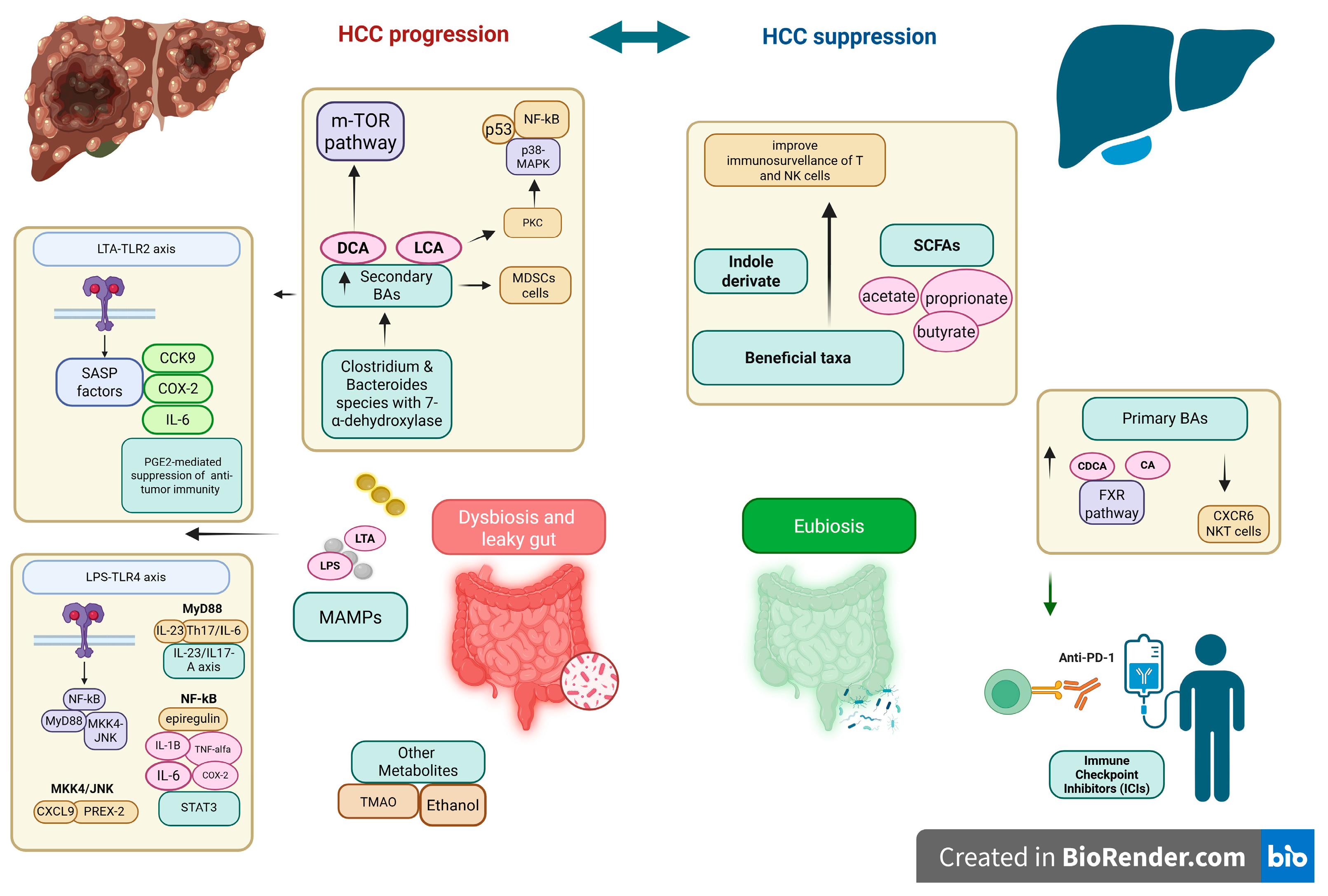
Gut microbiota can influence hepatocarcinogenesis via several mechanisms, primarily: (1) Toll-like receptor (TLR)-mediated activation of inflammatory pathways; (2) metabolites production; and (3) modulation of immune surveillance (Figure 1).
Figure 1. Gut–Liver Axis in Hepatocarcinogenesis. Dysbiosis and increased intestinal permeability synergistically disrupt the gut–liver axis, exposing the liver to bacterial metabolites and microbial-associated molecular patterns, thereby promoting hepatocarcinogenesis (left panel). In contrast, gut microbial balance (eubiosis) supports liver homeostasis, with enrichment of beneficial taxa exerting anti-inflammatory and immunomodulatory effects that suppress hepatocarcinogenesis and influence the efficacy of ICIs (right panel). BAs: biliary acids; CA: cholic acid; CDCA: chenodeoxycholic acid; COX-2: cyclooxygenase-2; CXCL16: C-X-C motif ligand 16; DCA: deoxycholic acid; FXR: farnesoid X receptor; ICIs: immune checkpoint inhibitors; IL-1β: interleukin-1 beta; JNK: c-Jun N-terminal kinase; LCA: lithocholic acid; LTA: lipoteichoic acid; LPS: lipopolysaccharide; MAMPs: microbial-associated molecular patterns; MAPK: mitogen-activated protein kinase; MDSCs: myeloid-derived suppressor cells; MyD88: Myeloid differentiation factor 88; NF-κB: nuclear factor kappa-light-chain-enhancer of activated B cells; NK: natural killer; PD-1: programmed cell death protein-1; SASP: senescence-associated secretory phenotype; SCFAs: short-chain fatty acids; STAT3: signal transducer and activator of transcription 3; TMAO: trimethylamine N-oxide; TLR: Toll-like receptor; TNF-α: tumour necrosis factor alpha.

2.1. TLR Signalling Pathways

Toll-like receptors (TLRs) are a subset of pattern recognition receptors (PRRs) that sense microbial-associated molecular patterns (MAMPs) from the intestinal microbiota, linking gut-derived signals to liver pathophysiology and modulating the innate immune response.
Among the 10 human TLRs, TLR2 and TLR4 are the most studied in liver disease. TLR4, expressed on hepatocytes, hepatic stellate cells (HSCs), Kupffer cells, macrophages, endothelial cells, and liver cancer stem cells, primarily recognises Gram-negative bacterial cell wall component lipopolysaccharide (LPS), a marker of bacterial translocation reflecting increased gut permeability. The TLR4–LPS interaction promotes tumour progression by activating proliferative and antiapoptotic signalling in resident liver cells [9]. Similarly, DSS-induced gut barrier damage increases systemic LPS levels, worsening liver fibrosis and promoting HCC formation [18,19].
TLR4 acts through a variety of mediators, including the transcription factors activator Protein-1 (AP-1), Nuclear Factor kappa-light-chain-enhancer of activated B cells (NF-κB), and Interferon Regulatory Factor 3 (IRF3); the adaptor proteins Toll–Interleukin 1 Receptor domain-containing adaptor protein (TIRAP) and TRIF-related adaptor molecule (TRAM); and the kinases Phosphoinositide 3-kinase (PI3K)/Protein Kinase B (Akt), Mitogen-Activated Protein Kinase (MAPK), and IκB Kinase (IKK), ultimately activating multiple downstream signalling pathways [20].
Activation of the NF-kB signalling pathway upregulates the expression of epiregulin, a potent hepatomitogen in HSCs [9], promotes HSCs’ transformation into fibroblasts [21] and stimulates Kupfer cells to release pro-inflammatory cytokines such as tumour necrosis factor-alpha (TNF-α), interleukin-6 (IL-6), interleukin-1β (IL-1β) and cyclooxygenase-2 (COX-2) [22]. IL-6, in turn, activates the STAT3 transcription factor, which regulates genes including cyclin D1, Bcl-2, c-myc and IL-10, thereby promoting cell proliferation [23], endothelial cell migration, and angiogenesis [24].
The TLR4/myeloid differentiation primary response 88 (MyD88) pathway upregulates IL-23 expression, promoting the differentiation of T cells into T helper 17 (Th17) cells in the presence of IL-6 and transforming growth factor-β [25]. These Th17 cells produce IL-17, which recruits neutrophils, enhances dendritic cell maturation, and stimulates macrophages to secrete IL-1β and TNF-α, thereby driving pro-inflammatory responses [26]. The IL-23/IL-17A axis contributes to cancer progression and metastasis by reducing CD8+ cell infiltration in tumours and enhancing the immunosuppressive activity of regulatory T cells [25,27]. The LPS-TLR4 axis activation further promotes hepatocarcinogenesis by inducing epithelial–mesenchymal transition [28], enhancing HCC cells’ invasiveness via the MAP kinase 4 (MKK4)/c-Jun N-terminal kinase (JNK) pathway [29], causing oxidative DNA damage [30], activating the TLR4/CXCL9/PREX-2 (phosphatidylinositol-3, 4, 5-trisphosphate RAC exchanger 2) pathway [31] and downregulating tumour suppressor microRNA-122 [32].
In contrast, the inhibition of TLR4 signalling has been shown to suppress inflammation, fibrosis and HCC development [9,21]. TLR4-deficient mice exhibit reduced liver injury and inflammatory responses in comparison to wild-type controls, suggesting that LPS derived from GM is a primary driver of hepatic inflammatory signalling [33]. Since–LPS-TLR4 axis also promotes HCC formation by inhibiting hepatocyte apoptosis, TLR4-deficient and gut-sterilised mice show increased expression of the apoptosis marker cleaved caspase-3 and reduced tumour development [9]. Toll-like receptor 2 (TLR2) is essential for the innate immune response to Gram-positive bacteria, being activated by bacterial lipoproteins and peptidoglycan. In a mouse model of NASH-induced HCC triggered by DMBA and HFD, activation of TLR2 by its ligand lipoteichoic acid (LTA), together with the secondary bile acid deoxycholic acid (DCA), which is known to cause DNA damage, induced the senescence-associated secretory phenotype (SASP) in HSCs. This upregulated SASP factors, including IL-6, growth-related oncogene α, proteases, chemokine-9, and COX-2, which suppressed anti-tumour immunity via a prostaglandin E2 (PGE2)-dependent mechanism, thereby promoting HCC progression [11].

2.2. Microbiota-Derived Metabolites Modulate Hepatocarcinogenesis

Gut dysbiosis has been demonstrated to influence the process of liver carcinogenesis through the production of metabolites originating from bacteria, or through the bacterial transformation of dietary compounds or host-produced molecules, including bile acids (BAs), short-chain fatty acids (SCFAs), trimethylamine N-oxide (TMAO), and indole derivatives.

2.3. Bile Acids

Bile acids are the main component of bile, accounting for about 85% of its solid composition. They are synthesised in the liver and conjugated with glycine or taurine through a cascade of enzymatic reactions, after which they are secreted into the intestinal lumen. In the intestine, BAs promote lipid and fat-soluble vitamin absorption, regulate energy metabolism, and contribute to immune modulation. Primary BAs include cholic acid (CA) and chenodeoxycholic acid (CDCA), whereas secondary BAs, such as deoxycholic acid (DCA) and lithocholic acid (LCA), are generated by gut microbiota—particularly Clostridium and Bacteroides species expressing bile salt hydrolase and 7-α-dehydroxylase [34,35].
Primary BAs have been shown to upregulate the expression of the chemokine CXCL16, the sole ligand for CXCR6, on liver sinusoidal endothelial cells (LSECs). This mechanism regulates the accumulation of CXCR6+ hepatic natural killer T (NKT) cells, which kill tumour cells in a CD1d-dependent manner. Treatment with vancomycin, which eliminates Gram-positive bacteria responsible for converting primary to secondary BAs, was sufficient to induce hepatic NKT cell accumulation and suppress liver tumour growth. Conversely, feeding mice with secondary BAs or colonising them with BA-metabolising bacteria reversed both NKT cell accumulation and inhibition of tumour growth in mice with altered gut microbiota [12]. In the DMBA-HFD model, DCA-driven SASP in HSCs facilitates HCC [11]. Similar results were observed in mice lacking a SASP inducer or depleted of senescent HSCs, confirming the critical role of the DCA–SASP axis in obesity-associated HCC [36]. DCA further activates the mammalian target of the rapamycin (mTOR) pathway, which is known to be associated with HCC development [33] in hepatocytes in the STHD-01-induced NASH model [10]. BAs also promote the release of inflammatory cytokines through multiple pathways. Toxic BAs such as taurolithocholic acid (T-LCA) cause direct plasma membrane damage and activate protein kinase C (PKC), which in turn stimulates the p38 MAPK pathway. This cascade activates downstream effectors, including p53 and NF-κB [37].
Toxic BAs promote hepatocyte apoptosis through multiple interlinked pathways. They activate TNF-related apoptosis-inducing ligand receptors (TRAILRs) and Fas (CD95/APO-1) signalling by inducing cellular FLICE-inhibitory protein (cFLIP) phosphorylation and caspases 8 and 10 activation [26], which cleaves Bid into truncated Bid (tBid), a pro-apoptotic Bcl-2 family protein that translocates to the mitochondria, causing mitochondrial dysfunction, release of damage-associated molecular patterns (DAMPs) and cytochrome C [38] and subsequently activating caspases 3, 6, and 7, as well as pro-inflammatory cytokine expression via TLR9 [39]. Consistently, the SK-Hep-1 hepatoma subline with complete mtDNA depletion exhibited reduced BA-induced pro-apoptotic signalling and lower reactive oxygen species (ROS) production [40]. Hydrophobic BAs like DCA or G-CDCA also trigger endoplasmic reticulum (ER) stress, elevating cytoplasmic Ca2+ and mitochondrial ROS, which activate apoptosis via the Ca2+/calmodulin-dependent protein kinase II (CaMKII)–C/EBP homologous protein (CHOP)/Bim pathway. The protective effect observed in Bim knockout mice highlights the importance of this pathway in BA-induced apoptosis [38].
The nuclear farnesoid X receptor (FXR) counterbalances the harmful effects of BAs by maintaining liver homeostasis, regulating bile acid, glucose, and lipid metabolism, enhancing hepatocyte survival, reducing inflammation, and promoting liver repair. FXR also upregulates tumour suppressor genes and inhibits oncogene activity. Loss of FXR, as observed in knockout mice or during HCC progression, leads to uncontrolled Wnt/β-catenin activation and spontaneous hepatocarcinogenesis [41,42].

2.4. Short-Chain Fatty Acids

Short-chain fatty Acids, including acetate, propionate, and butyrate, are the final products of dietary fibre fermentation by gut bacteria. These metabolites are essential for maintaining gut integrity, modulating immune responses, and influencing metabolic processes.
Butyrate possesses anti-inflammatory properties and can inhibit histone deacetylase (HDAC), thereby suppressing NF-κB signalling and reducing inflammation [43]. Additionally, the combination of acetate with programmed death 1/programmed death ligand-1 (PD-1/PD-L1) blockade significantly enhances anti-tumour immunity [44].
However, the role of SCFAs in HCCC is complex. While butyrate exerts protective effects against inflammation and carcinogenesis in certain contexts, SCFAs can also serve as substrates for gluconeogenesis and lipogenesis in the liver, processes that may contribute to metabolic dysregulation and potentially promote cancer progression under specific conditions [45]. SCFAs—particularly butyrate—can inhibit histone deacetylases (HDACs), leading to modulation of immune checkpoints like PD-1 and enhancement of anti-tumour immune responses [46].
Recent research indicates that diets high in inulin, a non-absorbable fibre converted into butyrate, can promote HCC development in mice with dysbiosis. The study also found that the tumour-promoting effects of SCFAs could be mitigated by bile acid depletion using cholestyramine treatment [47]. SCFAs can be protective or tumour-promoting in HCC, depending on metabolic context and gut microbiota composition.

2.5. Indole Derivatives and Other Metabolites

Indole derivatives, produced from the metabolism of tryptophan by gut microbiota, influence liver cancer development primarily through the aryl hydrocarbon receptor (AhR). AhR is a ligand-activated transcription factor that regulates xenobiotic metabolism, immune responses, and cell proliferation [48]. Indole-3-acetate (IAA) and other indole derivatives are reduced following exposure to a high-fat diet, leading to intestinal barrier disruption, overexpression of inflammatory cytokines, and inhibition of immune cells. These effects may be reversible with oral supplementation of indoles [49].
Additional microbial metabolites that may contribute to HCC development include trimethylamine (TMA), its metabolite trimethylamine N-oxide (TMAO), and ethanol. For example, the gut microbiota convert TMA precursors, such as the dietary lipid phosphatidylcholine, into TMA, which is absorbed from the intestine and subsequently transformed into TMAO by hepatic flavin monooxygenases (FMOs). Interestingly, TMAO has been associated with cardiometabolic risks and chronic inflammation [18]. Regarding the progression of chronic liver disease (CLD) and HCC development, the precise roles of TMA and TMAO remain unclear. However, elevated TMAO levels have been observed in the context of insulin resistance, which could potentially accelerate the progression of NAFLD and NASH-related HCC [39]. Conversely, lower choline levels may contribute to liver damage due to microbial conversion to TMA [50]. Finally, although ethanol is known to act as both a hepatotoxin and a carcinogen [50], whether endogenous ethanol produced by the GM contributes to CLD progression and HCC development remains unclear and requires further investigation.

2.6. Regulatory Role of Gut Microbiota on Immune Cells

The tumour microenvironment (TME) plays a critical role in HCC progression, influencing tumour development, invasion, and metastasis. It consists of cancer cells, cancer-associated fibroblasts, cytokines, chemokines, and various immune cells. Key immune populations within the TME include T cells, B cells, dendritic cells (DCs), natural killer (NK) cells, M1 and M2 macrophages, and myeloid-derived suppressor cells (MDSCs), each contributing to the dynamic balance between anti-tumour immunity and tumour-promoting mechanisms [51].
While there have been several studies evaluating the effect of the gut microbiota on hepatocarcinogenesis and tumour growth in the liver, less is known about how the GM affects hepatic immunosurveillance. GM is a key regulator of the host immune system, influencing innate and adaptive immune responses [52]. Translocation of bacterial species into the liver is associated with T cell exhaustion markers, including cytotoxic T lymphocyte-associated antigen 4 (CTLA-4), PD-1, and thymocyte-selection-associated HMG box (TOX), resulting in immunosuppression and impaired cancer surveillance [53]. Pan et al. demonstrated that 2,5-dimethylcelecoxib (DMC), a celecoxib derivative, strengthens the antitumor activity of natural killer (NK) cells and T cells by increasing the abundance of beneficial gut microbiota taxa, including Bacteroides acidifaciens, Odoribacter laneus, and Odoribacter splanchnicus. These changes activate AMPK and suppress mTOR signalling in CD4+/CD8+ T cells and NK cells, leading to enhanced IFN-γ secretion and reduced PD-1 expression, ultimately exerting anti-HCC effects [54]. A lower abundance of Bacteroides thetaiotaomicron—a gut commensal involved in plant polysaccharide degradation and acetic acid production—impairs M1 macrophage polarisation in HCC, thereby reducing CD8+ T cell activation, IFN-γ and granzyme B secretion, thus weakening T cell–mediated antitumor activity [55]. In HCC patients, an increased abundance of Bacteroides species is associated with elevated MDSCs, which promote tumour progression through enhanced survival, angiogenesis, invasion, and metastasis, driven in part by IL-8 and IL-13 [56]. Bacterial extracts from the NAFLD-HCC microbiota elicit an immunosuppressive T-cell phenotype, characterised by the expansion of regulatory T cells and attenuation of CD8+ T cell activity in an ex vivo model [57]. Bacterial-derived metabolites also play a key role in regulating the immune response. Primary BAs promote NKT cells accumulation in the liver, supporting tumour inhibition, whereas secondary BAs exert the opposite effect [12].

3. Gut Microbiota Composition in HCC Patients

Clinical trials have demonstrated a close association between gut microbial composition and HCC occurrence. Intestinal overgrowth of Escherichia coli in patients with HCC and cirrhosis, compared with aetiology- and MELD score-matched cirrhotic controls, was first reported in 2016 [14]. A subsequent study showed that the degree of dysbiosis, characterised by an expansion of pro-inflammatory bacteria belonging to the Proteobacteria phylum, correlates with the stage of HCC progression [58]. Several other changes in the GM composition of patients with HCC have been reported in different studies. Additional investigations have identified distinct microbial signatures in HCC. Cirrhotic patients with HCC exhibit enrichment of Clostridium and the CF231 genus of Paraprevotella, alongside depletion of α-Proteobacteria, Verrucomicrobia across multiple taxonomic levels, and Akkermansia muciniphila [16]. Similarly, NAFLD-related HCC is characterised by increased relative abundances of Bacteroides and Ruminococcaceae, and decreased levels of Bifidobacterium and Akkermansia [17].
Interestingly, changes in GM composition are so pronounced that they might serve as non-invasive biomarkers for early HCC diagnosis, potentially improving patient prognosis. Gut microbial diversity was found to increase during the transition from cirrhosis to HCC, with thirteen genera correlating with tumour size and three taxa (Enterococcus, Limnobacter, Phyllobacterium) identified as potential diagnostic biomarkers [59]. Ren et al. further identified 30 optimal OTUs for early HCC detection. Specifically, they observed a significant increase in the phylum Actinobacteria and 13 genera—including Gemmiger, Parabacteroides, and Paraprevotella—compared with liver cirrhosis (LC). Conversely, the phylum Verrucomicrobia and several butyrate-producing genera (Ruminococcus, Oscillibacter, Faecalibacterium, Clostridium IV, Coprococcus) were reduced in early HCC, whereas LPS-producing Klebsiella and Haemophilus were enriched. These microbial markers achieved cross-regional validation [15]. Notably, the decrease in Verrucomicrobia was likely due to the reduction in Akkermansia muciniphila, a Gram-negative intestinal commensal that degrades mucins to produce SCFAs [60], alleviates experimentally induced colitis, and enhances epithelial integrity [61]. Finally, the combined detection of Coriobacterium, Atopobium, and Coprococcus at the genus level, together with Veillonella dispar at the species level, has been proposed as a novel strategy for HCC diagnosis [62].
More recent studies have explored the potential of diagnostic panels combining microbial and metabolite biomarkers for HCC. One such panel, incorporating Odoribacter splanchnicus and Ruminococcus bicirculans together with the metabolites ouabain, tauro-CDCA, glyco-CDCA, theophylline, and xanthine, distinguished patients with HCC from healthy controls with an AUC of 0.86. Notably, the diagnostic performance improved substantially when this panel was combined with alpha-fetoprotein (AFP), achieving a combined AUC of 0.99 [63]. Similarly, in high-risk individuals with liver cirrhosis, a panel composed of Alloprevotella plus taurocholic acid, methionine, and methionine sulfoxide achieves 86% sensitivity and 61% specificity for HCC identification [64]. In a multicentre study involving 1448 participants, a biomarker panel of serum metabolites, including phenylalanyl-tryptophan and glycocholate combined with AFP, had the diagnostic performance for HCC detection with an area under the curve (AUC) ranging from 0.721 to 0.880 [65]. As HCC progresses, gut dysbiosis worsens, leading to higher endotoxin translocation. This systemic inflammatory stimulus is associated with increased VEGF levels, which in turn promote tumour angiogenesis and progression [66].
Growing evidence suggests that the gut microbiota GM impacts the efficacy of immune checkpoint inhibitors (ICIs) across different tumour types by modulating immune responses [67]. This is particularly relevant in HCC, where ICIs currently represent the first-line therapy for patients with advanced disease. In HCC patients, gut Bacteroidetes and E. coli were associated with upregulation of immune checkpoint molecules, such as Programmed Death 1 (PD-1), Programmed Death Ligand 1 (PD-L1), and Cytotoxic T-Lymphocyte Antigen 4 (CTLA-4), leading to an increase in regulatory T cells and a reduced efficacy of immunotherapy [68].
Distinct microbial signatures, such as Lachnoclostridium enrichment combined with Prevotella 9 depletion [69] or enrichment in the Faecalibacterium genus [70], strongly predict improved progression-free and overall survival, highlighting their potential as prognostic biomarkers. Responders to anti-PD-1 therapy exhibit enrichment of beneficial taxa, including Ruminococcaceae, Akkermansia muciniphila, Lachnospiraceae, and Alistipes sp., whereas non-responders are characterised by increased Proteobacteria (e.g., Escherichia coli) and Veillonellaceae [68,71]. Dysbiosis-induced TLR4/NF-κB activation leads to the accumulation of myeloid-derived suppressor cells (MDSCs), reduces CD8+ T cell and NK cell activity, and thereby dampens responsiveness to checkpoint blockade [69].
Microbial metabolites further modulate immunity: short-chain fatty acids (SCFAs) promote regulatory T cell expansion, while bile acid signalling via FXR/TGR5 drives pro-inflammatory Th17 polarisation, contributing to an immunosuppressive tumour microenvironment that can limit ICI efficacy [72]. Complementing these mechanistic insights, Ren et al. synthesised clinical and experimental evidence showing that specific microbial taxa and their metabolites are associated with enhanced antigen presentation, restoration of cytotoxic T cell functions, and improved outcomes under immune checkpoint inhibitor (ICI) therapy, whereas others correlate with resistance [73]. Collectively, these findings highlight the gut microbiota and its metabolites as promising biomarkers and modulators of ICI response in unresectable HCC.

4. Targeting Microbiota in HCC

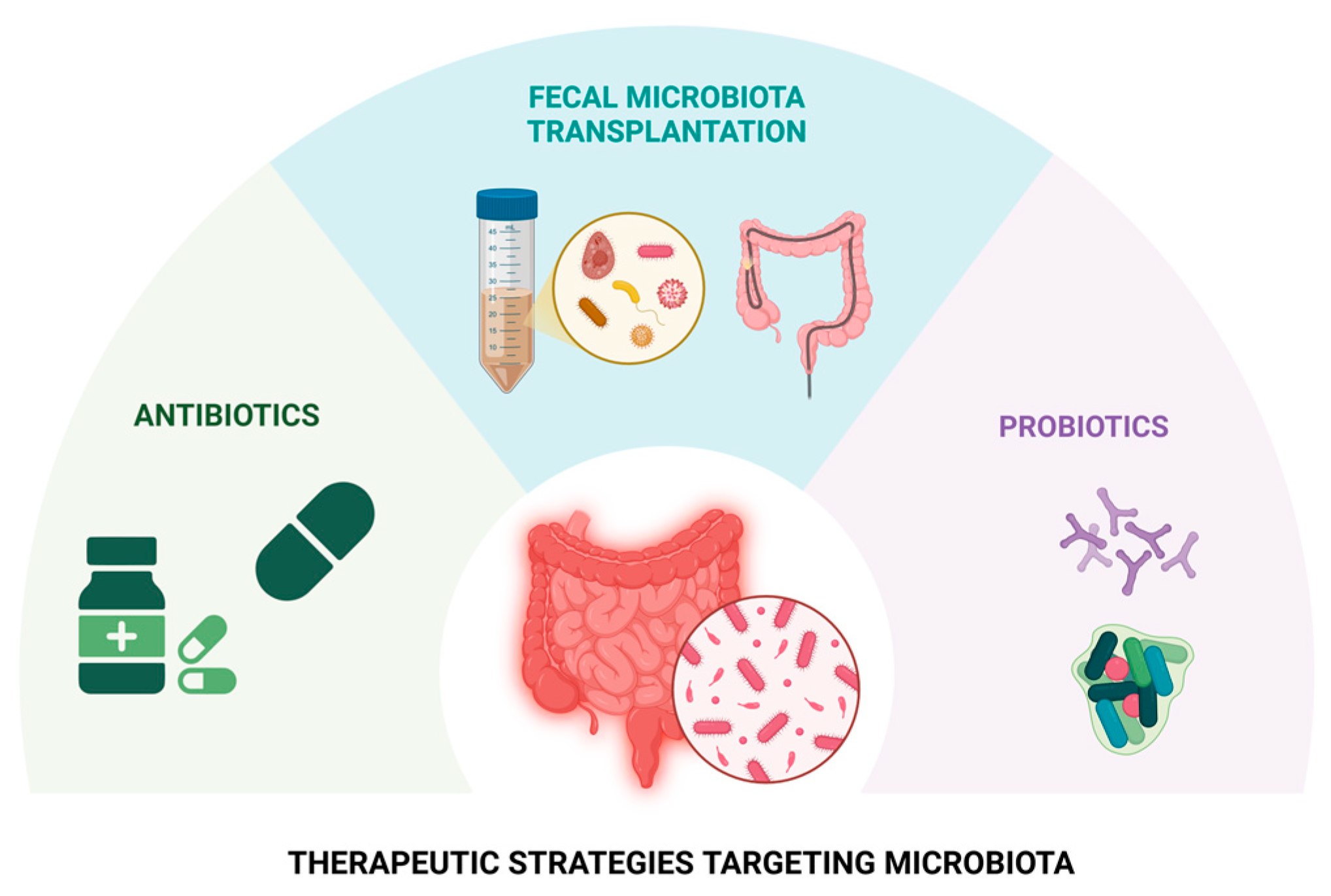
Therapeutic strategies aimed at modulating the gut microbiota, such as probiotics, prebiotics, antibiotics, and faecal microbiota transplantation (FMT), are being explored for their potential to restore GM equilibrium and prevent harmful translocation. However, due to limited specificity and potential side effects, microbiome-targeted strategies are currently considered primarily as a preventive approach for high-risk patients (Figure 2).
Figure 2. Microbiota-Targeted Therapeutic Strategies in HCC. Microbiota-targeted interventions—including antibiotics, FMT, and probiotics—reshape gut microbial communities, restore homeostasis, and modulate immune pathways. Despite differing mechanisms, they converge on enhancing anti-tumour responses in hepatocellular carcinoma.

4.1. Antibiotics

The rational use of antibiotics is based on the idea that reducing the overall number of gut bacteria and targeting those with a high ability to translocate can minimise bacterial translocation, thereby suppressing pro-inflammatory and pro-carcinogenic signals associated with a leaky gut [57,74]. Antibiotic treatment with vancomycin, which targets Gram-positive bacteria mediating primary-to-secondary Bas conversion, inhibited HCC development and the emergence of senescent HSCs [11]. Similarly, in MYC-driven HCC mice, an antibiotic cocktail (vancomycin, neomycin, primaxin) significantly reduced tumour number and size. While these findings are compelling, their clinical application is limited, as long-term or potentially lifelong antibiotic use would severely disrupt the commensal microbiota and lead to significant adverse effects, particularly nephrotoxicity [12].
In humans, rifaximin—a broad-spectrum, non-absorbable antibiotic—is widely used to prevent hepatic encephalopathy (HE) in cirrhosis. It significantly lowers endotoxin levels, positively impacting NAFLD, cirrhosis, and related complications. In preclinical models, rifaximin also reduced HCC development, as observed in the DEN-CCL4 model of HCC [9]. However, despite its use, the effects of rifaximin on HCC occurrence remain poorly defined.
Recent studies investigating early antibiotic exposure in HCC patients treated with immune checkpoint inhibitors (ICIs) or tyrosine kinase inhibitors (TKIs) have suggested a negative impact on treatment outcomes [44,75]. In a cohort of 4098 patients with advanced HCC treated with ICIs or targeted therapies, antibiotic exposure (n = 620, 15%) within 30 days before or after treatment initiation was associated with shorter median progression-free survival (PFS: 3.6 vs. 4.2 months; HR 1.29) and overall survival (OS: 8.7 vs. 10.6 months; HR 1.36) [44].

4.2. Probiotics

Probiotics are defined as “live microorganisms which, when administered in adequate amounts, confer a health benefit for the host”. While their mechanisms on the gut–liver axis are not fully defined, they may act by modulating gut microbiota, enhancing gut barrier function, and regulating immune responses. Traditional probiotics include Lactobacillus and Bifidobacterium, while newer-generation formulations also contain strains like Akkermansia muciniphila and Clostridium spp. [76].
Probiotics have been investigated in murine HCC models, whereas human data are scarce. Administration of a mixture of probiotics, namely VSL#3 (containing four Lactobacilli, three Bifidobacteria, and one Streptococcus thermophilus), has been proven to mitigate DEN-induced hepatocarcinogenesis by restoring gut homeostasis and ameliorating intestinal and hepatic inflammation [13]. Probiotics mixture Prohep administration (comprising Lactobacillus rhamnosus GG, Escherichia coli Nissle 1917 and heat-inactivated VSL#3) to tumour-injected mice shifted the GM composition towards beneficial bacteria such as Prevotella and Oscillibacter, reduced the size of liver tumours and down-regulated angiogenic factors. Furthermore, in probiotics-treated mice, the levels of Th17 cells in the gut and recruitment of Th17 to the tumour site were lower, thereby limiting tumour growth [77]. Escherichia coli Nissle 1917 has been shown to enhance the anti-tumour efficacy of galunisertib by suppressing HCC growth and metastasis through modulation of the immunosuppressive tumour microenvironment [78]. Probiotic fermented milk and chlorophyllin reduced tumour incidence, as well as decreased levels of c-myc, bcl-2, cyclin D1, and ras-21, exerting a protective capacity against aflatoxin B1 (AFB1)-induced molecular alterations in hepatic cells during carcinogenesis [79]. Lactobacillus plantarum can halt liver cirrhosis progression by reducing the expression of CXCL9, TLR4 and phosphatidylinositol 3, 4, and 5 trisphosphate RAC exchanger 2 (PREX-2) [31].
Lactobacillus reuteri transplantation exerts anticancer effects in HCC-bearing mice by increasing acetate production and suppressing IL-17A secretion from group 3 innate lymphoid cells. Moreover, combining acetate with programmed death-1/programmed death-ligand 1 (PD-1/PD-L1) blockade significantly enhanced antitumor immunity [80]. Finally, other results suggest that perioperative oral administration of Bifidobacterium longum improved OS in HCC patients [81].
Although evidence suggests that probiotics may offer a cost-effective and non-invasive approach to HCC treatment, clinical trials are still insufficient to confirm their effectiveness in managing the disease.

4.3. Faecal Microbiota Transplantation

Faecal microbiota transplantation involves transferring stool from a healthy donor to a recipient. The procedure can be performed via oral capsules, enema, or endoscopy, although there is no consensus on the optimal dose, frequency, or duration of treatment. Typically, FMT is used as a second-line treatment for recurrent Clostridium difficile infections [82]. Preliminary evidence suggests that FMT may serve as a potential therapy for various clinical conditions, including obesity, inflammatory bowel disease (IBD), and metabolic syndromes.
More interestingly, in clinical settings, FMT has demonstrated promising results in enhancing immunotherapy responses. In patients with melanoma, FMT from responders to PD-1 blockade into non-responders led to improved responses to PD-1 inhibitors [83]. Similarly, Kim et al. reported that FMT in 13 patients with advanced solid tumours resistant to anti-PD-1 therapy induced sustained shifts in the gut microbiota toward a more favourable composition and helped overcome resistance, particularly in gastrointestinal cancers [84].
While most clinical trials investigating FMT and immune checkpoint inhibitor (ICI) responses have focused on cancers other than HCC, the observed outcomes may be relevant for HCC as well, considering the gut microbiota’s ability to influence ICI response in this tumour type [85]. In preclinical studies, FMT has been shown to attenuate high-fat diet–induced steatohepatitis and reduce intrahepatic pro-inflammatory cytokines such as IFN-γ and IL-17. Specifically, total FMT alleviated steatohepatitis in mice via beneficial regulation of gut microbiota [86]. Hu et al. further demonstrated in an HCC mouse model that faecal bacteria transplantation from wild-type mice exerted anticancer effects by increasing acetate levels, which in turn reduced IL-17A secretion. This pathway inhibited histone deacetylase activity and decreased the expression of Sox13. Moreover, combining acetate with PD-1/PD-L1 blockade significantly enhanced anti-tumour immunity [80].
Currently, FMT is being investigated in HCC in the FLORA trial—a multicentre, randomised, placebo-controlled, double-blind phase II trial—to assess its safety and efficacy in overcoming resistance to atezolizumab/bevacizumab in patients with advanced HCC in comparison to standard immunotherapy (NCT05690048).
If the human microbiome indeed plays a key role in modulating responses to immunotherapy across cancer types, integrating microbiota-targeted interventions like FMT into clinical practice could represent a novel therapeutic avenue. However, further research is needed to ensure the safety, efficacy, and standardisation of such approaches [87].

5. Future Directions and Research Gaps

Despite significant advances in understanding the gut–liver axis, several research gaps remain, as the complexity of the interplay between the gut microbiota (GM) and the host makes it challenging to study and understand the functions and regulatory mechanisms of the gut–liver axis.
Studies on microbiota composition in patients with chronic liver disease have yielded conflicting results, likely due to the gut microbiota’s sensitivity to various demographic and biological factors, including age, sex, ethnicity, BMI, disease aetiology, geographic location, lifestyle, medications, and diet [88,89,90,91]. Additionally, the absence of standardised research methods—such as consistent animal models, sampling protocols, and analytical techniques—further complicates comparisons across studies. Creating unified protocols is therefore critical to improve reproducibility and data interpretation [92].
Establishing causality between specific microbiota signatures or metabolite changes and HCC development remains challenging, as genetic, environmental, and other factors also influence disease progression. While preclinical models have advanced our understanding of the gut–liver axis, most studies are observational and cannot distinguish cause from consequence, limiting the translation of these findings into clinical applications. Organoids—three-dimensional cultures derived from human tissues—offer a promising tool to elucidate mechanistic links between gut microbiota alterations and HCC development [93]. Longitudinal studies are crucial for evaluating how microbiota changes over time relate to cancer risk, progression, and treatment responses [94]. By following individuals over extended periods and across clinical milestones such as liver disease onset or initiation of cancer therapies, researchers can monitor microbiome dynamics and establish baseline profiles. Tracking these changes enables the identification of microbial shifts that may precede or accompany disease progression, potentially allowing early detection of dysbiosis as a predictive marker for HCC [95]. Additionally, these studies provide insights into how therapeutic interventions—including chemotherapy, immunotherapy, and dietary modifications—affect gut microbiota composition and function, informing optimal treatment timing and selection to maximise efficacy while minimising adverse effects.
In recent years, Mendelian randomisation (MR) has emerged as an innovative approach to investigate whether GM alterations play a causal role in hepatocarcinogenesis. MR uses inherited genetic variants—primarily single-nucleotide polymorphisms (SNPs) identified through genome-wide association studies—as proxies for microbial traits, such as bacterial taxa abundance or metabolite levels. Because these variants are randomly assigned at conception and unaffected by lifestyle or disease progression, MR minimises confounding and reverse causation, functioning as a “natural experiment” to infer causality beyond observational associations [96]. In MR studies investigating the role of the gut microbiota in hepatocarcinogenesis, increased abundance of Clostridium leptum was causally associated with a reduced risk of HCC, partly mediated by phosphoethanolamine levels [97]. Likely, Clostridia, Clostridiales, and Dorea were linked to a decreased HCC risk, while gut Bacteroides stercoris was linked to an increased HCC risk [98]. A recent study applying Mendelian randomisation (MR) in European and East Asian cohorts demonstrated that two taxa—Oscillospira (OR ≈ 2.59; 95% CI: 1.36–4.95) and Mollicutes RF9 (OR ≈ 2.03; 95% CI: 1.21–3.40)—were significantly and positively associated with increased liver cancer risk after correction for multiple testing in Europeans. In contrast, in East Asians, only Oscillibacter showed a significant positive association (OR ≈ 1.56; 95% CI: 1.11–2.19) after false discovery rate (FDR) correction [99]. Nevertheless, MR has limitations, including the scarcity of robust microbial genetic instruments, potential pleiotropic effects, and the inability to capture dynamic, longitudinal changes in the gut ecosystem. The full potential of MR will depend on its integration with large-scale longitudinal cohorts and mechanistic functional studies.
Additionally, to date, no studies have comprehensively investigated the relationship between fungi (the mycobiome), viruses (the virome), or archaea and HCC [100,101,102]. Most research on the gut microbiota and HCC has focused on bacterial communities, but these other microbial kingdoms may also play crucial roles in liver disease progression and carcinogenesis. The regulatory effects of current therapies on the gut–liver axis require further validation, and clinical studies demand rigorous attention to sample collection, data analysis, and result interpretation. Ethical and safety considerations are critical, given that studies involve detecting and modulating human gut microbiota and metabolic functions. Ensuring ethical compliance and data security is essential to protect participants’ rights and privacy [103,104].
Finally, few studies have integrated metagenomics, metabolomics, transcriptomics, and immune profiling to provide a holistic view of microbiota-mediated effects on HCC, yet multi-omics approaches have already yielded valuable insights into microbiota–host interactions in this disease. Integration of microbial and transcriptomic data in a study of 113 HBV-related HCC patients and 100 healthy controls revealed 31 associations between specific genera (e.g., Bacteroides, Lachnospiracea incertae sedis, Clostridium XIVa) and host genes involved in the tumour immune microenvironment, with serum BAs appearing to mediate the link between microbial abundance, hepatic transcriptional programmes, and clinical outcomes (AUC ≈ 0.81) [105]. Similarly, metagenomic sequencing and serum metabolomics in HCC, cirrhosis, and healthy control groups identified key microbial species and metabolites (e.g., Odoribacter splanchnicus, Ruminococcus bicirculans, taurochenodeoxycholic acid, glycochenodeoxycholate) whose interactions may serve as potential diagnostic panels for HCC [63]. Together, these studies highlight the power of integrated multi-omics analyses to elucidate microbiota–host crosstalk and identify clinically relevant biomarkers, though such comprehensive investigations remain limited in HCC.

6. Conclusions

The GM plays a critical role in hepatocarcinogenesis by modulating inflammation, producing microbial metabolites, and regulating the immune system. Dysbiosis and increased intestinal permeability contribute to chronic inflammation and a pro-tumorigenic hepatic environment. Specific microbial metabolites—such as SCFAs, BAs, and indole derivatives—can either promote or inhibit liver cancer depending on context.
Despite extensive mechanistic insights from preclinical models, translational evidence in humans remains limited. Promising applications of the GM in HCC management include its use as a biomarker for early diagnosis or its modulation through antibiotics, probiotics, or FMT to prevent or halt hepatocarcinogenesis. Furthermore, combining microbiota-targeted therapies with ICIs in unresectable HCC has been shown to improve treatment efficacy. Future research should prioritise longitudinal studies, humanised models, and interventional clinical trials to clarify causal relationships and validate predictive microbial signatures. Standardised methodologies for sampling, sequencing, and analysis are essential, as are studies exploring less-studied microbial components such as fungi and archaea, along with the implementation of integrated multi-omics approaches.
Overall, addressing these gaps will advance mechanistic understanding, identify causal drivers, and support the development of effective GM-based interventions for the prevention, early detection, and treatment of HCC.

Author Contributions

Conceptualisation: A.R., C.S. and S.A.M.; literature research: A.R., C.S., D.C., P.C., V.C., S.A.M., S.M. and C.A.; writing: A.R. and C.S.; review and editing: A.R., C.S. and D.C.; supervision: G.N. All authors have read and agreed to the published version of the manuscript.

Funding

This research received no external funding.

Acknowledgments

Artworks created in https://BioRender.com.

Conflicts of Interest

The authors declare no conflicts of interest.

References

  1. Sung, H.; Ferlay, J.; Siegel, R.L.; Laversanne, M.; Soerjomataram, I.; Jemal, A.; Bray, F. Global Cancer Statistics 2020: GLOBOCAN Estimates of Incidence and Mortality Worldwide for 36 Cancers in 185 Countries. CA. Cancer J. Clin. 2021, 71, 209–249. [Google Scholar] [CrossRef]
  2. Vogel, A.; Meyer, T.; Sapisochin, G.; Salem, R.; Saborowski, A. Hepatocellular Carcinoma. Lancet 2022, 400, 1345–1362. [Google Scholar] [CrossRef]
  3. Zhou, A.; Tang, L.; Zeng, S.; Lei, Y.; Yang, S.; Tang, B. Gut Microbiota: A New Piece in Understanding Hepatocarcinogenesis. Cancer Lett. 2020, 474, 15–22. [Google Scholar] [CrossRef]
  4. Tranah, T.H.; Edwards, L.A.; Schnabl, B.; Shawcross, D.L. Targeting the Gut-Liver-Immune Axis to Treat Cirrhosis. Gut 2021, 70, 982–994. [Google Scholar] [CrossRef] [PubMed]
  5. Albillos, A.; de Gottardi, A.; Rescigno, M. The Gut-Liver Axis in Liver Disease: Pathophysiological Basis for Therapy. J. Hepatol. 2020, 72, 558–577. [Google Scholar] [CrossRef] [PubMed]
  6. Schwabe, R.F.; Greten, T.F. Gut Microbiome in HCC—Mechanisms, Diagnosis and Therapy. J. Hepatol. 2020, 72, 230–238. [Google Scholar] [CrossRef] [PubMed]
  7. Luo, W.; Guo, S.; Zhou, Y.; Zhao, J.; Wang, M.; Sang, L.; Chang, B.; Wang, B. Hepatocellular Carcinoma: How the Gut Microbiota Contributes to Pathogenesis, Diagnosis, and Therapy. Front. Microbiol. 2022, 13, 873160. [Google Scholar] [CrossRef]
  8. Yu, L.X.; Yan, H.X.; Liu, Q.; Yang, W.; Wu, H.P.; Dong, W.; Tang, L.; Lin, Y.; He, Y.Q.; Zou, S.S.; et al. Endotoxin Accumulation Prevents Carcinogen-Induced Apoptosis and Promotes Liver Tumorigenesis in Rodents. Hepatology 2010, 52, 1322–1333. [Google Scholar] [CrossRef]
  9. Dapito, D.H.; Mencin, A.; Gwak, G.Y.; Pradere, J.P.; Jang, M.K.; Mederacke, I.; Caviglia, J.M.; Khiabanian, H.; Adeyemi, A.; Bataller, R.; et al. Promotion of Hepatocellular Carcinoma by the Intestinal Microbiota and TLR4. Cancer Cell 2012, 21, 504–516. [Google Scholar] [CrossRef]
  10. Yamada, S.; Takashina, Y.; Watanabe, M.; Nagamine, R.; Saito, Y.; Kamada, N.; Saito, H. Bile Acid Metabolism Regulated by the Gut Microbiota Promotes Non-Alcoholic Steatohepatitis-Associated Hepatocellular Carcinoma in Mice. Oncotarget 2018, 9, 9925–9939. [Google Scholar] [CrossRef]
  11. Yoshimoto, S.; Loo, T.M.; Atarashi, K.; Kanda, H.; Sato, S.; Oyadomari, S.; Iwakura, Y.; Oshima, K.; Morita, H.; Hattori, M.; et al. Obesity-Induced Gut Microbial Metabolite Promotes Liver Cancer through Senescence Secretome. Nature 2013, 499, 97–101. [Google Scholar] [CrossRef] [PubMed]
  12. Ma, C.; Han, M.; Heinrich, B.; Fu, Q.; Zhang, Q.; Sandhu, M.; Agdashian, D.; Terabe, M.; Berzofsky, J.A.; Fako, V.; et al. Gut Microbiome–mediated Bile Acid Metabolism Regulates Liver Cancer via NKT Cells. Science 2018, 360, eaan5931. [Google Scholar] [CrossRef]
  13. Zhang, H.L.; Yu, L.X.; Yang, W.; Tang, L.; Lin, Y.; Wu, H.; Zhai, B.; Tan, Y.X.; Shan, L.; Liu, Q.; et al. Profound Impact of Gut Homeostasis on Chemically-Induced pro-Tumorigenic Inflammation and Hepatocarcinogenesis in Rats. J. Hepatol. 2012, 57, 803–812. [Google Scholar] [CrossRef]
  14. Grąt, M.; Wronka, K.M.; Krasnodębski, M.; Masior, Ł.; Lewandowski, Z.; Kosińska, I.; Grąt, K.; Stypułkowski, J.; Rejowski, S.; Wasilewicz, M.; et al. Profile of Gut Microbiota Associated With the Presence of Hepatocellular Cancer in Patients With Liver Cirrhosis. Transplant. Proc. 2016, 48, 1687–1691. [Google Scholar] [CrossRef]
  15. Ren, Z.; Li, A.; Jiang, J.; Zhou, L.; Yu, Z.; Lu, H.; Xie, H.; Chen, X.; Shao, L.; Zhang, R.; et al. Gut Microbiome Analysis as a Tool towards Targeted Non-Invasive Biomarkers for Early Hepatocellular Carcinoma. Gut 2019, 68, 1014–1023. [Google Scholar] [CrossRef]
  16. Lapidot, Y.; Amir, A.; Nosenko, R.; Uzan-Yulzari, A.; Veitsman, E.; Cohen-Ezra, O.; Davidov, Y.; Weiss, P.; Bradichevski, T.; Segev, S.; et al. Alterations in the Gut Microbiome in the Progression of Cirrhosis to Hepatocellular Carcinoma. mSystems 2020, 5, e00153-20. [Google Scholar] [CrossRef]
  17. Ponziani, F.R.; Bhoori, S.; Castelli, C.; Putignani, L.; Rivoltini, L.; Del Chierico, F.; Sanguinetti, M.; Morelli, D.; Paroni Sterbini, F.; Petito, V.; et al. Hepatocellular Carcinoma Is Associated With Gut Microbiota Profile and Inflammation in Nonalcoholic Fatty Liver Disease. Hepatology 2019, 69, 107–120. [Google Scholar] [CrossRef]
  18. Wang, Z.; Klipfell, E.; Bennett, B.J.; Koeth, R.; Levison, B.S.; Dugar, B.; Feldstein, A.E.; Britt, E.B.; Fu, X.; Chung, Y.-M.; et al. Gut Flora Metabolism of Phosphatidylcholine Promotes Cardiovascular Disease. Nature 2011, 472, 57–63. [Google Scholar] [CrossRef] [PubMed]
  19. Achiwa, K.; Ishigami, M.; Ishizu, Y.; Kuzuya, T.; Honda, T.; Hayashi, K.; Hirooka, Y.; Katano, Y.; Goto, H. DSS Colitis Promotes Tumorigenesis and Fibrogenesis in a Choline-Deficient High-Fat Diet-Induced NASH Mouse Model. Biochem. Biophys. Res. Commun. 2016, 470, 15–21. [Google Scholar] [CrossRef] [PubMed]
  20. Peri, F.; Piazza, M. Therapeutic Targeting of Innate Immunity with Toll-like Receptor 4 (TLR4) Antagonists. Biotechnol. Adv. 2012, 30, 251–260. [Google Scholar] [CrossRef]
  21. Seki, E.; De Minicis, S.; Österreicher, C.H.; Kluwe, J.; Osawa, Y.; Brenner, D.A.; Schwabe, R.F. TLR4 Enhances TGF-β Signaling and Hepatic Fibrosis. Nat. Med. 2007, 13, 1324–1332. [Google Scholar] [CrossRef]
  22. Soares, J.B.; Pimentel-Nunes, P.; Afonso, L.; Rolanda, C.; Lopes, P.; Roncon-Albuquerque, R.; Gonçalves, N.; Boal-Carvalho, I.; Pardal, F.; Lopes, S.; et al. Increased Hepatic Expression of TLR2 and TLR4 in the Hepatic Inflammation-Fibrosis-Carcinoma Sequence. Innate Immun. 2012, 18, 700–708. [Google Scholar] [CrossRef]
  23. Lin, A.; Wang, G.; Zhao, H.; Zhang, Y.; Han, Q.; Zhang, C.; Tian, Z.; Zhang, J. TLR4 Signaling Promotes a COX-2/PGE2/STAT3 Positive Feedback Loop in Hepatocellular Carcinoma (HCC) Cells. Oncoimmunology 2016, 5, e1074376. [Google Scholar] [CrossRef]
  24. Wang, Z.; Yan, M.; Li, J.; Long, J.; Li, Y.; Zhang, H. Dual Functions of STAT3 in LPS-Induced Angiogenesis of Hepatocellular Carcinoma. Biochim. Biophys. Acta-Mol. Cell Res. 2019, 1866, 566–574. [Google Scholar] [CrossRef]
  25. Kang, Y.; Su, G.; Sun, J.; Zhang, Y. Activation of the TLR4/myd88 Signaling Pathwaycontributes to the Development of Human Hepatocellularcarcinoma via Upregulation of IL-23 and IL-17a. Oncol. Lett. 2018, 15, 9647–9654. [Google Scholar] [CrossRef] [PubMed]
  26. Langrish, C.L.; Chen, Y.; Blumenschein, W.M.; Mattson, J.; Basham, B.; Sedgwick, J.D.; McClanahan, T.; Kastelein, R.A.; Cua, D.J. IL-23 Drives a Pathogenic T Cell Population That Induces Autoimmune Inflammation. J. Exp. Med. 2005, 201, 233–240. [Google Scholar] [CrossRef] [PubMed]
  27. Kolls, J.K.; Lindén, A. Interleukin-17 Family Members and Inflammation. Immunity 2004, 21, 467–476. [Google Scholar] [CrossRef]
  28. Li, H.; Li, Y.; Liu, D.; Liu, J. LPS Promotes Epithelial–mesenchymal Transition and Activation of TLR4/JNK Signaling. Tumor Biol. 2014, 35, 10429–10435. [Google Scholar] [CrossRef]
  29. Dong, Y.-Q.; Lu, C.-W.; Zhang, L.; Yang, J.; Hameed, W.; Chen, W. Toll-like Receptor 4 Signaling Promotes Invasion of Hepatocellular Carcinoma Cells through MKK4/JNK Pathway. Mol. Immunol. 2015, 68, 671–683. [Google Scholar] [CrossRef] [PubMed]
  30. Szabo, G.; Petrasek, J. Gut-Liver Axis and Sterile Signals in the Development of Alcoholic Liver Disease. Alcohol. Alcohol. 2017, 52, 414–424. [Google Scholar] [CrossRef] [PubMed]
  31. Elshaer, A.M.; El-kharashi, O.A.; Hamam, G.G.; Nabih, E.S.; Magdy, Y.M.; Abd El Samad, A.A. Involvement of TLR4/ CXCL9/ PREX-2 Pathway in the Development of Hepatocellular Carcinoma (HCC) and the Promising Role of Early Administration of Lactobacillus Plantarum in Wistar Rats. Tissue Cell 2019, 60, 38–47. [Google Scholar] [CrossRef]
  32. Wei, X.; Liu, H.; Li, X.; Liu, X. Over-Expression of MiR-122 Promotes Apoptosis of Hepatocellular Carcinoma via Targeting TLR4. Ann. Hepatol. 2019, 18, 869–878. [Google Scholar] [CrossRef]
  33. Weiss, D.S. The Great Escape: Microbiotal LPS Takes a Toll on the Liver. Cancer Prev. Res. 2012, 5, 1078–1080. [Google Scholar] [CrossRef]
  34. Di Ciaula, A.; Garruti, G.; Baccetto, R.L.; Molina-Molina, E.; Bonfrate, L.; Wang, D.Q.H.; Portincasa, P. Bile Acid Physiology. Ann. Hepatol. 2017, 16, s4–s14. [Google Scholar] [CrossRef] [PubMed]
  35. Wahlström, A.; Sayin, S.I.; Marschall, H.U.; Bäckhed, F. Intestinal Crosstalk between Bile Acids and Microbiota and Its Impact on Host Metabolism. Cell Metab. 2016, 24, 41–50. [Google Scholar] [CrossRef] [PubMed]
  36. Orjalo, A.V.; Bhaumik, D.; Gengler, B.K.; Scott, G.K.; Campisi, J. Cell Surface-Bound IL-1α Is an Upstream Regulator of the Senescence-Associated IL-6/IL-8 Cytokine Network. Proc. Natl. Acad. Sci. USA 2009, 106, 17031–17036. [Google Scholar] [CrossRef] [PubMed]
  37. Jia, W.; Xie, G.; Jia, W. Bile Acid–microbiota Crosstalk in Gastrointestinal Inflammation and Carcinogenesis. Nat. Rev. Gastroenterol. Hepatol. 2018, 15, 111–128. [Google Scholar] [CrossRef]
  38. Wei, S.; Ma, X.; Zhao, Y. Mechanism of Hydrophobic Bile Acid-Induced Hepatocyte Injury and Drug Discovery. Front. Pharmacol. 2020, 11, 1084. [Google Scholar] [CrossRef] [PubMed]
  39. Oellgaard, J.; Winther, S.A.; Hansen, T.S.; Rossing, P.; von Scholten, B.J. Trimethylamine N-Oxide (TMAO) as a New Potential Therapeutic Target for Insulin Resistance and Cancer. Curr. Pharm. Des. 2017, 23, 3699–3712. [Google Scholar] [CrossRef]
  40. Marin, J.J.G.; Hernandez, A.; Revuelta, I.E.; Gonzalez-Sanchez, E.; Gonzalez-Buitrago, J.M.; Perez, M.J. Mitochondrial Genome Depletion in Human Liver Cells Abolishes Bile Acid-Induced Apoptosis: Role of the Akt/mTOR Survival Pathway and Bcl-2 Family Proteins. Free Radic. Biol. Med. 2013, 61, 218–228. [Google Scholar] [CrossRef]
  41. Huang, X.F.; Zhao, W.Y.; Huang, W.D. FXR and Liver Carcinogenesis. Acta Pharmacol. Sin. 2015, 36, 37–43. [Google Scholar] [CrossRef]
  42. Wolfe, A.; Thomas, A.; Edwards, G.; Jaseja, R.; Guo, G.L.; Apte, U. Increased Activation of the Wnt/β-Catenin Pathway in Spontaneous Hepatocellular Carcinoma Observed in Farnesoid X Receptor Knockout Mice. J. Pharmacol. Exp. Ther. 2011, 338, 12–21. [Google Scholar] [CrossRef] [PubMed]
  43. Canfora, E.E.; Meex, R.C.R.; Venema, K.; Blaak, E.E. Gut Microbial Metabolites in Obesity, NAFLD and T2DM. Nat. Rev. Endocrinol. 2019, 15, 261–273. [Google Scholar] [CrossRef]
  44. Pinato, D.J.; Li, X.; Mishra-Kalyani, P.; D’Alessio, A.; Fulgenzi, C.A.M.; Scheiner, B.; Pinter, M.; Wei, G.; Schneider, J.; Rivera, D.R.; et al. Association between Antibiotics and Adverse Oncological Outcomes in Patients Receiving Targeted or Immune-Based Therapy for Hepatocellular Carcinoma. JHEP Rep. Innov. Hepatol. 2023, 5, 100747. [Google Scholar] [CrossRef] [PubMed]
  45. He, J.; Zhang, P.; Shen, L.; Niu, L.; Tan, Y.; Chen, L.; Zhao, Y.; Bai, L.; Hao, X.; Li, X.; et al. Short-Chain Fatty Acids and Their Association with Signalling Pathways in Inflammation, Glucose and Lipid Metabolism. Int. J. Mol. Sci. 2020, 21, 6356. [Google Scholar] [CrossRef]
  46. Woods, D.M.; Sodré, A.L.; Villagra, A.; Sarnaik, A.; Sotomayor, E.M.; Weber, J. HDAC Inhibition Upregulates PD-1 Ligands in Melanoma and Augments Immunotherapy with PD-1 Blockade. Cancer Immunol. Res. 2015, 3, 1375–1385. [Google Scholar] [CrossRef]
  47. Singh, V.; Yeoh, B.S.; Chassaing, B.; Xiao, X.; Saha, P.; Aguilera Olvera, R.; Lapek, J.D.; Zhang, L.; Wang, W.B.; Hao, S.; et al. Dysregulated Microbial Fermentation of Soluble Fiber Induces Cholestatic Liver Cancer. Cell 2018, 175, 679–694.e22. [Google Scholar] [CrossRef]
  48. Kawajiri, K.; Fujii-Kuriyama, Y. The Aryl Hydrocarbon Receptor: A Multifunctional Chemical Sensor for Host Defense and Homeostatic Maintenance. Exp. Anim. 2017, 66, 75–89. [Google Scholar] [CrossRef]
  49. Ding, Y.; Yanagi, K.; Yang, F.; Callaway, E.; Cheng, C.; Hensel, M.E.; Menon, R.; Alaniz, R.C.; Lee, K.; Jayaraman, A. Oral Supplementation of Gut Microbial Metabolite Indole-3-Acetate Alleviates Diet-Induced Steatosis and Inflammation in Mice. Elife 2024, 12, RP87458. [Google Scholar] [CrossRef]
  50. Seitz, H.K.; Stickel, F. Molecular Mechanisms of Alcohol-Mediated Carcinogenesis. Nat. Rev. Cancer 2007, 7, 599–612. [Google Scholar] [CrossRef] [PubMed]
  51. Ringelhan, M.; Pfister, D.; O’Connor, T.; Pikarsky, E.; Heikenwalder, M. The Immunology of Hepatocellular Carcinoma Review-Article. Nat. Immunol. 2018, 19, 222–232. [Google Scholar] [CrossRef]
  52. Rooks, M.G.; Garrett, W.S. Gut Microbiota, Metabolites and Host Immunity. Nat. Rev. Immunol. 2016, 16, 341–352. [Google Scholar] [CrossRef]
  53. Krishnamurthy, N.; Kurzrock, R. Targeting the Wnt/beta-Catenin Pathway in Cancer: Update on Effectors and Inhibitors. Cancer Treat. Rev. 2018, 62, 50–60. [Google Scholar] [CrossRef] [PubMed]
  54. Pan, B.; Chen, Z.; Zhang, X.; Wang, Z.; Yao, Y.; Wu, X.; Qiu, J.; Lin, H.; Yu, L.; Tu, H.; et al. 2,5-Dimethylcelecoxib Alleviated NK and T-Cell Exhaustion in Hepatocellular Carcinoma via the Gastrointestinal Microbiota-AMPK-mTOR Axis. J. Immunother. Cancer 2023, 11, e006817. [Google Scholar] [CrossRef] [PubMed]
  55. Ma, H.; Yang, L.; Liang, Y.; Liu, F.; Hu, J.; Zhang, R.; Li, Y.; Yuan, L.; Feng, F.B. Thetaiotaomicron-Derived Acetic Acid Modulate Immune Microenvironment and Tumor Growth in Hepatocellular Carcinoma. Gut Microbes 2024, 16, 2297846. [Google Scholar] [CrossRef]
  56. Scarpellini, E.; Scarlata, G.G.M.; Santori, V.; Scarcella, M.; Kobyliak, N.; Abenavoli, L. Gut Microbiota, Deranged Immunity, and Hepatocellular Carcinoma. Biomedicines 2024, 12, 1797. [Google Scholar] [CrossRef]
  57. Behary, J.; Amorim, N.; Jiang, X.T.; Raposo, A.; Gong, L.; McGovern, E.; Ibrahim, R.; Chu, F.; Stephens, C.; Jebeili, H.; et al. Gut Microbiota Impact on the Peripheral Immune Response in Non-Alcoholic Fatty Liver Disease Related Hepatocellular Carcinoma. Nat. Commun. 2021, 12, 187. [Google Scholar] [CrossRef]
  58. Ni, J.; Huang, R.; Zhou, H.; Xu, X.; Li, Y.; Cao, P.; Zhong, K.; Ge, M.; Chen, X.; Hou, B.; et al. Analysis of the Relationship between the Degree of Dysbiosis in Gut Microbiota and Prognosis at Different Stages of Primary Hepatocellular Carcinoma. Front. Microbiol. 2019, 10, 1458. [Google Scholar] [CrossRef] [PubMed]
  59. Zheng, R.; Wang, G.; Pang, Z.; Ran, N.; Gu, Y.; Guan, X.; Yuan, Y.; Zuo, X.; Pan, H.; Zheng, J.; et al. Liver Cirrhosis Contributes to the Disorder of Gut Microbiota in Patients with Hepatocellular Carcinoma. Cancer Med. 2020, 9, 4232–4250. [Google Scholar] [CrossRef] [PubMed]
  60. McGuckin, M.A.; Lindén, S.K.; Sutton, P.; Florin, T.H. Mucin Dynamics and Enteric Pathogens. Nat. Rev. Microbiol. 2011, 9, 265–278. [Google Scholar] [CrossRef]
  61. Kang, C.S.; Ban, M.; Choi, E.J.; Moon, H.G.; Jeon, J.S.; Kim, D.K.; Park, S.K.; Jeon, S.G.; Roh, T.Y.; Myung, S.J.; et al. Extracellular Vesicles Derived from Gut Microbiota, Especially Akkermansia Muciniphila, Protect the Progression of Dextran Sulfate Sodium-Induced Colitis. PLoS ONE 2013, 8, e76520. [Google Scholar] [CrossRef]
  62. Xu, W.; Jiang, Y.; Tao, J.; Liu, Y.; Xia, Y.; Chen, C.; Jiang, X. Correlation Analysis for Alterations of Intestinal Flora in Hepatocellular Carcinoma Patients: Combinatorial Detection of Coriobacterium, Atopobium, Coprococcus and Veillonella Dispar May Be a New Method for HCC Diagnosis. J. Med. Microbiol. 2023, 72, 001713. [Google Scholar] [CrossRef]
  63. Li, X.; Yi, Y.; Wu, T.; Chen, N.; Gu, X.; Xiang, L.; Jiang, Z.; Li, J.; Jin, H. Integrated Microbiome and Metabolome Analysis Reveals the Interaction between Intestinal Flora and Serum Metabolites as Potential Biomarkers in Hepatocellular Carcinoma Patients. Front. Cell. Infect. Microbiol. 2023, 13, 1170748. [Google Scholar] [CrossRef]
  64. Dong, T.S.; Jacobs, J.P.; Agopian, V.; Pisegna, J.R.; Ayoub, W.; Durazo, F.; Enayati, P.; Sundaram, V.; Benhammou, J.N.; Noureddin, M.; et al. Duodenal Microbiome and Serum Metabolites Predict Hepatocellular Carcinoma in a Multicenter Cohort of Patients with Cirrhosis. Dig. Dis. Sci. 2022, 67, 3831–3841. [Google Scholar] [CrossRef]
  65. Luo, P.; Yin, P.; Hua, R.; Tan, Y.; Li, Z.; Qiu, G.; Yin, Z.; Xie, X.; Wang, X.; Chen, W.; et al. A Large-Scale, Multicenter Serum Metabolite Biomarker Identification Study for the Early Detection of Hepatocellular Carcinoma. Hepatology 2018, 67, 662–675. [Google Scholar] [CrossRef]
  66. Jiang, N.; Song, X.; Peng, Y.M.; Wang, W.N.; Song, Z. Association of Disease Condition with Changes in Intestinal Flora, and Plasma Endotoxin and Vascular Endothelial Growth Factor Levels in Patients with Liver Cancer. Eur. Rev. Med. Pharmacol. Sci. 2020, 24, 3605–3613. [Google Scholar] [CrossRef]
  67. Gunjur, A.; Shao, Y.; Rozday, T.; Klein, O.; Mu, A.; Haak, B.W.; Markman, B.; Kee, D.; Carlino, M.S.; Underhill, C.; et al. A Gut Microbial Signature for Combination Immune Checkpoint Blockade across Cancer Types. Nat. Med. 2024, 30, 797–809. [Google Scholar] [CrossRef]
  68. Zheng, Y.; Wang, T.; Tu, X.; Huang, Y.; Zhang, H.; Tan, D.; Jiang, W.; Cai, S.; Zhao, P.; Song, R.; et al. Gut Microbiome Affects the Response to Anti-PD-1 Immunotherapy in Patients with Hepatocellular Carcinoma. J. Immunother. Cancer 2019, 7, 193. [Google Scholar] [CrossRef] [PubMed]
  69. Lee, P.-C.; Wu, C.-J.; Hung, Y.-W.; Lee, C.J.; Chi, C.-T.; Lee, I.-C.; Yu-Lun, K.; Chou, S.-H.; Luo, J.-C.; Hou, M.-C.; et al. Gut Microbiota and Metabolites Associate with Outcomes of Immune Checkpoint Inhibitor–treated Unresectable Hepatocellular Carcinoma. J. Immunother. Cancer 2022, 10, e004779. [Google Scholar] [CrossRef] [PubMed]
  70. Li, L.; Ye, J.; Liu, M. Characterization of Gut Microbiota in Patients with Primary Hepatocellular Carcinoma Received Immune Checkpoint Inhibitors: A Chinese Population-Based Study. Med. 2020, 99, E21788. [Google Scholar] [CrossRef] [PubMed]
  71. Mao, J.; Wang, D.; Long, J.; Yang, X.; Lin, J.; Song, Y.; Xie, F.; Xun, Z.; Wang, Y.; Wang, Y.; et al. Gut Microbiome Is Associated with the Clinical Response to Anti-PD-1 Based Immunotherapy in Hepatobiliary Cancers. J. Immunother. Cancer 2021, 9, e003334. [Google Scholar] [CrossRef]
  72. Sinha, S.R.; Haileselassie, Y.; Nguyen, L.P.; Tropini, C.; Wang, M.; Becker, L.S.; Sim, D.; Jarr, K.; Spear, E.T.; Singh, G.; et al. Dysbiosis-Induced Secondary Bile Acid Deficiency Promotes Intestinal Inflammation. Cell Host Microbe 2020, 27, 659–670.e5. [Google Scholar] [CrossRef] [PubMed]
  73. Ren, S.; Zhang, Y.; Wang, X.; Su, J.; Wang, X.; Yuan, Z.; He, X.; Guo, S.; Chen, Y.; Deng, S.; et al. Emerging Insights into the Gut Microbiota as a Key Regulator of Immunity and Response to Immunotherapy in Hepatocellular Carcinoma. Front. Immunol. 2025, 16, 1526967. [Google Scholar] [CrossRef]
  74. Yu, L.X.; Schwabe, R.F. The Gut Microbiome and Liver Cancer: Mechanisms and Clinical Translation. Nat. Rev. Gastroenterol. Hepatol. 2017, 14, 527–539. [Google Scholar] [CrossRef]
  75. Cheung, K.S.; Ka, L.L.; Leung, W.K. Antibiotics Associated with Lower Survival in Hepatocellular Cancer Patients Receiving Immune Checkpoint Inhibitors Independent of Tumor Status. Liver Cancer 2023, 12, 91–92. [Google Scholar] [CrossRef]
  76. Kaźmierczak-Siedlecka, K.; Skonieczna-Żydecka, K.; Hupp, T.; Duchnowska, R.; Marek-Trzonkowska, N.; Połom, K. Next-Generation Probiotics—Do They Open New Therapeutic Strategies for Cancer Patients? Gut Microbes 2022, 14, 2035659. [Google Scholar] [CrossRef] [PubMed]
  77. Li, J.; Sung, C.Y.J.; Lee, N.; Ni, Y.; Pihlajamäki, J.; Panagiotou, G.; El-Nezami, H. Probiotics Modulated Gut Microbiota Suppresses Hepatocellular Carcinoma Growth in Mice. Proc. Natl. Acad. Sci. USA 2016, 113, E1306–E1315. [Google Scholar] [CrossRef]
  78. Shi, L.; Sheng, J.; Wang, M.; Luo, H.; Zhu, J.; Zhang, B.; Liu, Z.; Yang, X. Combination Therapy of TGF-β Blockade and Commensal-Derived Probiotics Provides Enhanced Antitumor Immune Response and Tumor Suppression. Theranostics 2019, 9, 4115–4129. [Google Scholar] [CrossRef]
  79. Kumar, M.; Verma, V.; Nagpal, R.; Kumar, A.; Gautam, S.K.; Behare, P.V.; Grover, C.R.; Aggarwal, P.K. Effect of Probiotic Fermented Milk and Chlorophyllin on Gene Expressions and Genotoxicity during AFB 1-Induced Hepatocellular Carcinoma. Gene 2011, 490, 54–59. [Google Scholar] [CrossRef] [PubMed]
  80. Hu, C.; Xu, B.; Wang, X.; Wan, W.H.; Lu, J.; Kong, D.; Jin, Y.; You, W.; Sun, H.; Mu, X.; et al. Gut Microbiota-Derived Short-Chain Fatty Acids Regulate Group 3 Innate Lymphoid Cells in HCC. Hepatology 2023, 77, 48–64. [Google Scholar] [CrossRef]
  81. Yu, J.; Zhu, P.; Shi, L.; Gao, N.; Li, Y.; Shu, C.; Xu, Y.; Yu, Y.; He, J.; Guo, D.; et al. Bifidobacterium Longum Promotes Postoperative Liver Function Recovery in Patients with Hepatocellular Carcinoma. Cell Host Microbe 2024, 32, 131–144.e6. [Google Scholar] [CrossRef]
  82. Peery, A.F.; Kelly, C.R.; Kao, D.; Vaughn, B.P.; Lebwohl, B.; Singh, S.; Imdad, A.; Altayar, O. AGA Clinical Practice Guideline on Fecal Microbiota–Based Therapies for Select Gastrointestinal Diseases. Gastroenterology 2024, 166, 409–434. [Google Scholar] [CrossRef]
  83. Davar, D.; Dzutsev, A.K.; McCulloch, J.A.; Rodrigues, R.R.; Chauvin, J.-M.; Morrison, R.M.; Deblasio, R.N.; Menna, C.; Ding, Q.; Pagliano, O.; et al. Fecal Microbiota Transplant Overcomes Resistance to anti–PD-1 Therapy in Melanoma Patients. Science 2021, 371, 595–602. [Google Scholar] [CrossRef]
  84. Kim, Y.; Kim, G.; Kim, S.; Cho, B.; Kim, S.Y.; Do, E.J.; Bae, D.J.; Kim, S.; Kweon, M.N.; Song, J.S.; et al. Fecal Microbiota Transplantation Improves Anti-PD-1 Inhibitor Efficacy in Unresectable or Metastatic Solid Cancers Refractory to Anti-PD-1 Inhibitor. Cell Host Microbe 2024, 32, 1380–1393.e9. [Google Scholar] [CrossRef]
  85. Bajaj, J.S.; Ng, S.C.; Schnabl, B. Promises of Microbiome-Based Therapies. J. Hepatol. 2022, 76, 1379–1391. [Google Scholar] [CrossRef] [PubMed]
  86. Zhou, D.; Pan, Q.; Shen, F.; Cao, H.X.; Ding, W.J.; Chen, Y.W.; Fan, J.G. Total Fecal Microbiota Transplantation Alleviates High-Fat Diet-Induced Steatohepatitis in Mice via Beneficial Regulation of Gut Microbiota. Sci. Rep. 2017, 7, 1529. [Google Scholar] [CrossRef] [PubMed]
  87. Bajaj, J.S.; Khoruts, A. Microbiota Changes and Intestinal Microbiota Transplantation in Liver Diseases and Cirrhosis. J. Hepatol. 2020, 72, 1003–1027. [Google Scholar] [CrossRef] [PubMed]
  88. Gacesa, R.; Kurilshikov, A.; Vich Vila, A.; Sinha, T.; Klaassen, M.A.Y.; Bolte, L.A.; Andreu-Sánchez, S.; Chen, L.; Collij, V.; Hu, S.; et al. Environmental Factors Shaping the Gut Microbiome in a Dutch Population. Nature 2022, 604, 732–739. [Google Scholar] [CrossRef]
  89. Palmas, V.; Pisanu, S.; Madau, V.; Casula, E.; Deledda, A.; Cusano, R.; Uva, P.; Vascellari, S.; Loviselli, A.; Manzin, A.; et al. Gut Microbiota Markers Associated with Obesity and Overweight in Italian Adults. Sci. Rep. 2021, 11, 5532. [Google Scholar] [CrossRef]
  90. Xu, C.; Zhu, H.; Qiu, P. Aging Progression of Human Gut Microbiota. BMC Microbiol. 2019, 19, 236. [Google Scholar] [CrossRef]
  91. Vitucci, D.; Amoresano, A.; Nunziato, M.; Muoio, S.; Alfieri, A.; Oriani, G.; Scalfi, L.; Frusciante, L.; Rigano, M.M.; Pucci, P.; et al. Nutritional Controlled Preparation and Administration of Different Tomato Purées Indicate Increase of β-Carotene and Lycopene Isoforms, and of Antioxidant Potential in Human Blood Bioavailability: A Pilot Study. Nutrients 2021, 13, 1336. [Google Scholar] [CrossRef] [PubMed]
  92. Porcari, S.; Mullish, B.H.; Asnicar, F.; Ng, S.C.; Zhao, L.; Hansen, R.; O’Toole, P.W.; Raes, J.; Hold, G.; Putignani, L.; et al. International Consensus Statement on Microbiome Testing in Clinical Practice. Lancet Gastroenterol. Hepatol. 2025, 10, 154–167. [Google Scholar] [CrossRef] [PubMed]
  93. Dong, R.; Zhang, B.; Zhang, X. Liver Organoids: An in Vitro 3D Model for Liver Cancer Study. Cell Biosci. 2022, 12, 152. [Google Scholar] [CrossRef]
  94. Mirshahi, F.; Aqbi, H.F.; Cresswell, K.; Saneshaw, M.; Coleman, C.; Jacobs, T.; Idowu, M.O.; Dozmorov, M.; Sanyal, A.J.; Manjili, M.H. Longitudinal Studies Can Identify Distinct Inflammatory Cytokines Associated with the Inhibition or Progression of Liver Cancer. Liver Int. 2020, 40, 468–472. [Google Scholar] [CrossRef]
  95. Zheng, C.; Lu, F.; Chen, B.; Yang, J.; Yu, H.; Wang, D.; Xie, H.; Chen, K.; Xie, Y.; Li, J.; et al. Gut Microbiome as a Biomarker for Predicting Early Recurrence of HBV-Related Hepatocellular Carcinoma. Cancer Sci. 2023, 114, 4717–4731. [Google Scholar] [CrossRef]
  96. Wei, X.; Yang, C.; Lin, Q.; Qiu, M.; Wen, Q.; Zhou, Z.; Jiang, Y.; Chen, P.; Liang, X.; Cao, J.; et al. Associations between Modifiable Risk Factors and Hepatocellular Carcinoma: A Trans-Ancestry Mendelian Randomization Study. BMC Cancer 2024, 24, 820. [Google Scholar] [CrossRef] [PubMed]
  97. Xu, B.; Zhu, L.; Hu, P.; Yao, W.; Ke, M.; Zhu, Z. Exploring the Mediation Effect of Metabolite Levels on the Association Between Gut Microbiota and HCC: A Two-Step, Two-Sample Bidirectional Mendelian Randomization. J. Cancer 2024, 15, 3975–3983. [Google Scholar] [CrossRef]
  98. Yang, L.; Wei, W.; Wang, Y.; Kuai, W.; Xu, L. Causal Relationship between Gut Microbiota and Hepatocellular Carcinoma: A Two-Sample Mendelian Randomization and Case–control Study. Discov. Oncol. 2025, 16, 994. [Google Scholar] [CrossRef]
  99. Jiang, H.; Song, T.; Li, Z.; An, L.; He, C.; Zheng, K. Dissecting the Association between Gut Microbiota and Liver Cancer in European and East Asian Populations Using Mendelian Randomization Analysis. Front. Microbiol. 2023, 14, 1255650. [Google Scholar] [CrossRef]
  100. Wu, X.; Xia, Y.; He, F.; Zhu, C.; Ren, W. Intestinal Mycobiota in Health and Diseases: From a Disrupted Equilibrium to Clinical Opportunities. Microbiome 2021, 9, 60. [Google Scholar] [CrossRef]
  101. Virgin, H.W. The Virome in Mammalian Physiology and Disease. Cell 2014, 157, 142–150. [Google Scholar] [CrossRef] [PubMed]
  102. Hoegenauer, C.; Hammer, H.F.; Mahnert, A.; Moissl-Eichinger, C. Methanogenic Archaea in the Human Gastrointestinal Tract. Nat. Rev. Gastroenterol. Hepatol. 2022, 19, 805–813. [Google Scholar] [CrossRef]
  103. Rhodes, R. Ethical Issues in Microbiome Research and Medicine. BMC Med. 2016, 14, 156. [Google Scholar] [CrossRef]
  104. Ma, Y.; Chen, H.; Lan, C.; Ren, J. Help, Hope and Hype: Ethical Considerations of Human Microbiome Research and Applications. Protein Cell 2018, 9, 404–415. [Google Scholar] [CrossRef] [PubMed]
  105. Huang, H.; Ren, Z.; Gao, X.; Hu, X.; Zhou, Y.; Jiang, J.; Lu, H.; Yin, S.; Ji, J.; Zhou, L.; et al. Integrated Analysis of Microbiome and Host Transcriptome Reveals Correlations between Gut Microbiota and Clinical Outcomes in HBV-Related Hepatocellular Carcinoma. Genome Med. 2020, 12, 102. [Google Scholar] [CrossRef] [PubMed]
Disclaimer/Publisher’s Note: The statements, opinions and data contained in all publications are solely those of the individual author(s) and contributor(s) and not of MDPI and/or the editor(s). MDPI and/or the editor(s) disclaim responsibility for any injury to people or property resulting from any ideas, methods, instructions or products referred to in the content.

Article Metrics

Citations

Article Access Statistics

Multiple requests from the same IP address are counted as one view.