Article

Uncertainty and Sensitivity Analysis of Input Parameters in the CANDLE Module: A Morris–Sobol–LHS–Iman–Conover Framework

Nuclear Power Safety Research Center, China Nuclear Power Engineering Co., Ltd., Beijing 100840, China
*
Author to whom correspondence should be addressed.
J. Nucl. Eng. 2026, 7(2), 27; https://doi.org/10.3390/jne7020027
Submission received: 15 January 2026 / Revised: 23 March 2026 / Accepted: 1 April 2026 / Published: 6 April 2026

Abstract

In this study, an uncertainty quantification (UQ) and sensitivity analysis (SA) workflow was developed for the input parameters of the CANDLE module, which is currently being tested and verified for calculating the downward relocation and solidification of molten core material. The workflow consists of three steps: (i) Morris screening to reduce the input set, (ii) Sobol variance decomposition on the screened subset to compute Sobol sensitivity indices, and (iii) uncertainty propagation using a 2 × 2 design that combines two sampling schemes (MC and LHS) with two dependence settings (independent and correlated inputs). The four cases considered were independent MC, correlated MC, independent LHS, and correlated LHS–Iman–Conover (LHS-IC). We considered 16 input parameters and three output figures of merit (FOMs) and compared the four cases in terms of propagated uncertainty and Shapley-based importance rankings, thereby distinguishing the effects of the sampling scheme, the imposed input dependence, and their interaction. The results show that the molten mass of the current material in the source node is the dominant factor governing the drained melt mass and the remaining melt mass in the receiving node, whereas the cold-wall surface temperature has a significant effect on the mass of molten material that solidifies in the receiving node. The mass of molten material that remains available in the receiving node is mainly governed by the coupled effects of the molten mass of the current material at the source node, the length of the receiving node, and the velocity limit. Under the non-uniform input-parameter distributions adopted in this study, LHS broadened the range of the outputs. After input correlations were introduced, the output distributions changed slightly. This study improves the understanding of input parameter sensitivities and uncertainty propagation in the CANDLE module. It also demonstrates the practical use of LHS-IC for module-level UQ/SA with correlated inputs, providing guidance for subsequent model improvements and parameter tuning.

1. Introduction

Integral severe accident analysis codes are indispensable tools for simulating accident progression and assessing potential consequences of severe accidents. Such codes generally cover key phenomena such as core heat-up and degradation, thermal-hydraulic response, and source-term release. They are used in probabilistic safety assessment (PSA) and severe accident management. During core-meltdown scenarios, the relocation and solidification of corium affect the integrity of the reactor pressure vessel and the evolution of the source term.
Severe accident codes such as MELCOR, MAAP, and ASTEC include models for core degradation and melt relocation. However, the underlying physical models and numerical approximations vary across codes. As a result, predicted outputs can be highly sensitive to inputs and modeling options, and uncertainties may be amplified as information is passed between different modules. Therefore, it is of great importance to identify and evaluate uncertainties of inputs and their sensitivities to figures of merit (FOMs) [1].
Within this framework, the engineering-grade capabilities of integral severe accident codes such as MELCOR, MAAP, and ASTEC have been continuously improved in areas including core degradation, hydrogen combustion, lower-head thermal behavior, and failure of the reactor pressure vessel, and source-term release [2,3,4,5]. Uncertainty and sensitivity studies for representative accident sequences, such as station blackout (SBO), medium-break loss-of-coolant accidents (MBLOCA), and large-break loss-of-coolant accidents (LBLOCA), have evolved from early parameter variation studies toward statistically based uncertainty quantification (UQ) and importance ranking of input parameters, often using generic platforms, such as DAKOTA, URANIE, or SUSA [6,7,8], and more recently being coordinated in large-scale UQ programs such as the EC MUSA project [9]. Recent examples include sensitivity and uncertainty analyses of MELCOR 2.2 for LBLOCA sequences using DAKOTA, coupled MELCOR–DAKOTA workflows for systematic sensitivity analysis (SA) and UQ, and ASTEC simulations of MBLOCA scenarios analyzed with the FSTC tool [9,10,11]. Further studies have addressed issues such as lower-head failure modes, early-phase core degradation, and melt-release conditions. For instance, analyses have been performed using MELCOR, ASTEC coupled with RAVEN, as well as through MAAP-based uncertainty working groups [12,13]. In addition, an MAAP5-based best-practice UQ/SA for short-term SBO sequences in a reference PWR has demonstrated similar UQ/SA capabilities for plant-level, severe-accident progression and source-term behavior [14].
These studies provide a research basis for system-level, severe-accident simulations in terms of source-term prediction and UQ/SA. However, these studies lack analysis of input parameter sensitivity and uncertainty propagation at the module level, making it difficult to attribute the overall output variance to individual modules. This limitation also obscures how uncertainty is propagated and amplified across modules and computational processes, thereby providing limited guidance for model improvement and parameter tuning.
To address these needs, a standalone, module-level UQ/SA was conducted in this study. The integral code PISAA (Program Integrated for Severe Accident Analysis) was referenced only to provide a complete input set, rather than to perform an integral calculation. As an initial case study, the CANDLE module was chosen as the target for the UQ/SA. It is currently undergoing testing and verification and is intended for future incorporation into PISAA once validated. In the present work, CANDLE is treated as a simplified single-time-step module rather than a full integral severe-accident simulation tool. For each time step, it predicts three output quantities of primary interest for each pair of source and receiving node: the mass of molten material that drains from the source node, the mass of molten material that is solidified in the receiving node, and the mass of molten material that remains available in the receiving node for further relocation. These quantities affect downstream phenomena such as flow-path blockage, lower-head loading, and source-term release; their sensitivities and uncertainties therefore merit systematic investigation.
Accordingly, the objective of this study is to perform module-level UQ/SA to identify dominant inputs and interaction effects, rather than to reproduce the full progression of a severe accident. To achieve this objective, a structured UQ/SA framework was developed: First, the Morris method was employed to screen the input parameters, thereby avoiding the need to estimate the Sobol indices over the full parameter set. Subsequently, the Sobol method (a variance-based global sensitivity analysis method) was applied to the screened parameter subset to obtain the first-order, second-order, and total-effect sensitivity indices. Finally, to distinguish the effect of the sampling scheme itself from that of the imposed input dependence structure, the uncertainty-propagation stage was designed as a 2 × 2 comparison. Two sampling schemes (MC and LHS) were each examined under two dependence settings (independent and correlated inputs). For the correlated cases, the target input dependence was imposed using the Iman–Conover (IC) method. This resulted in four cases: independent MC, correlated MC with IC, independent LHS, and correlated LHS with IC (i.e., LHS-IC).
The remainder of this paper is organized as follows: Section 2 describes the mechanisms of melt migration and solidification in the CANDLE module. Section 3 presents the sensitivity analysis methods, the characterization of input parameter uncertainties, and the overall UQ/SA framework. Section 4 discusses the results of the Morris screening, Sobol analysis, and uncertainty propagation analysis. Section 5 summarizes the main conclusions.

2. CANDLE Module

The CANDLE module is designed for the downward flow and resolidification of molten material between the source node and the receiving node within a single time step. The source node is where molten material flows out, and the receiving node is where molten material is deposited. In this study, three variables are selected as FOMs: the mass of molten material that drains from the source node (FOM1), the mass of molten material that solidifies in the receiving node (FOM2), and the mass of molten material that remains available in the receiving node for further relocation (FOM3). The technical details are described in the following subsections.

2.1. Melt Mass That Drains from the Source Node

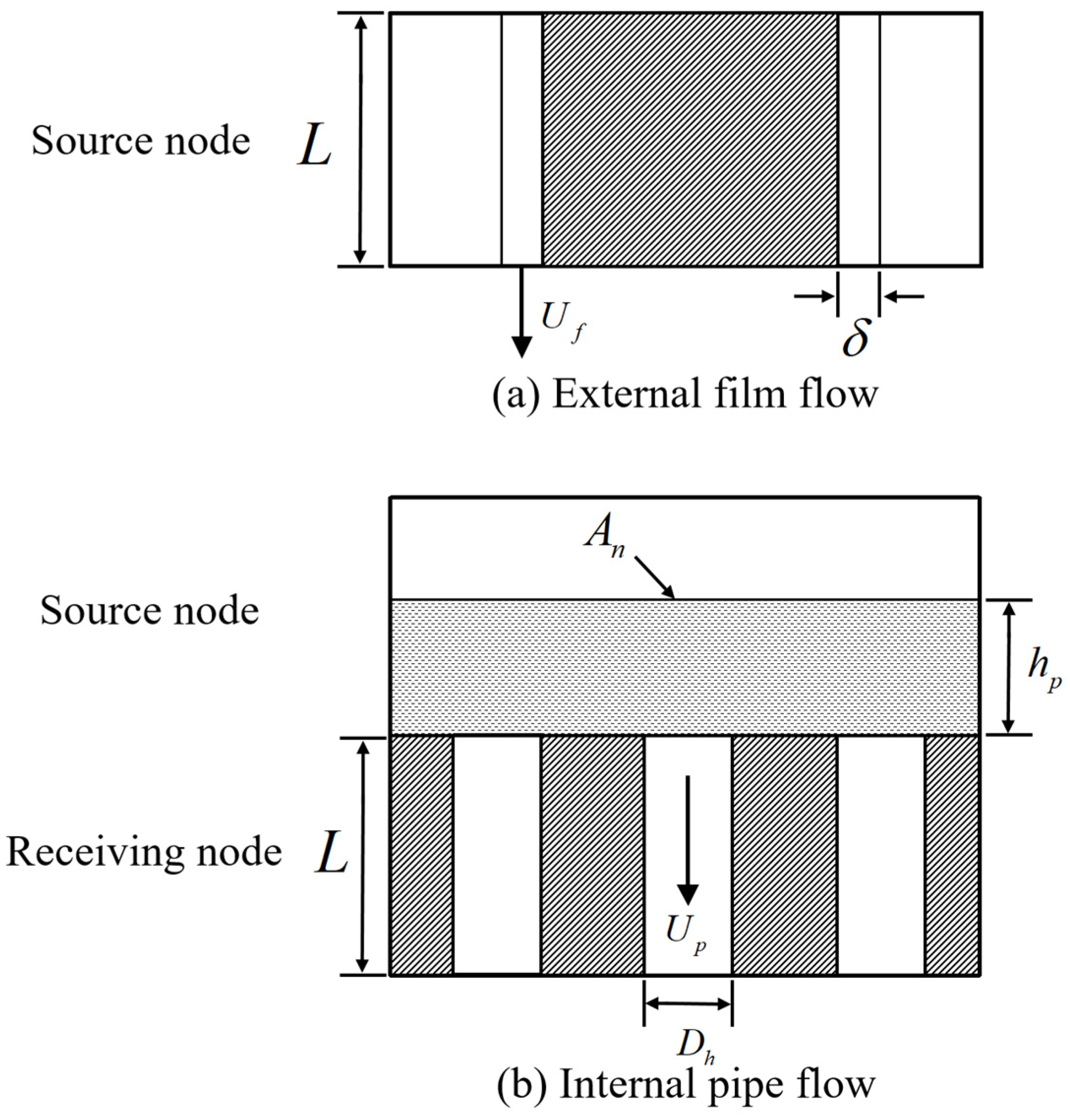
The mass of molten material that drains from the source node is defined as the mass of molten material that flows downward from the source node to the receiving node in one time step. Two flow modes, external film flow and internal channel flow (see Figure 1), are considered in the calculation, and the smaller of the two resulting values is adopted.
For external film flow, it is assumed that the molten material in the source node flows downward along the outer surface of the cylindrical fuel rods. The steady-state film thickness satisfies Equation (1), which is based on [15,16]. The ML, N, ρ, Xp, and L denote the mass of molten material available for downward drainage in the source node, the number of fuel rods, the density of molten material, the perimeter, and the length of the receiving node, respectively (corresponding to “ML”, “RHO”, and “L” in Table 1, respectively).
δ = M L N ρ X p L
The perimeter Xp is given by Equation (2), where Ap and Dh denote the internal flow area and hydraulic diameter of the receiving node (corresponding to “AP” and “DH” in Table 1), respectively.
X p = 4 A p D h
For a steady film flow, the gravitational force of the film is balanced by the viscous force. The average velocity Uf is given by Equation (3), where μ and g are the dynamic viscosity of molten material (corresponding to “MU” in Table 1) and gravitational acceleration, respectively. Thus, the mass flow rate of film flow can be obtained from Equation (4).
U f = ρ g δ 2 3 μ
W f = ρ U f X p δ
As melting proceeds, solidified debris or melt may severely constrict certain nodes. As a result, drainage of the melt from the source node may switch to internal channel flow mode. For internal channel flow, the liquid gravity head is balanced by the acceleration and frictional pressure losses. This balance is described by Equation (5), where f is the friction factor.
ρ g h p = 1 + f L D h W p 2 2 ρ A p 2
The gravity head hp is given by Equation (6), where An denotes the cross-sectional area of the source node, and MT denotes the total molten mass at the source node (corresponding to “AN” and “MT” in Table 1), respectively.
h p = M T ρ A n
For a height-restricted narrow channel, it is assumed that the flow is laminar and the corresponding friction factor can thus be expressed as Equation (7).
f = 64 μ ρ v D h = 64 A p μ W p D h
Substituting Equation (7) into Equation (5) yields Equation (8), from which the mass flow rate of internal channel flow can be solved and expressed as Equation (9). The corresponding velocity is determined by Equation (10).
W p 2 + 64 A p μ L D h 2 W p 2 ρ 2 A p 2 g h p = 0
W p = 64 A p μ L D h 2 + 64 A p μ L D h 2 2 + 8 ρ 2 A p 2 g h p 2
U p = W p A p ρ
Note that if the internal channel flow is not laminar, the friction factor given by Equation (7) is not applicable, and an alternative value or correlation for the friction factor should be used.
After the mass flow rate is determined, the drained molten mass in the current time step is obtained by multiplying the mass flow rate by the time-step size.
m l e a v = W Δ t

2.2. Mass of Molten Material That Solidifies in the Receiving Node

Under several simplifying assumptions, the mass of molten material that solidifies in the receiving node is computed from the solution of a one-dimensional, two-phase Stefan problem.

2.2.1. Two-Phase Stefan Problem and Basic Assumptions

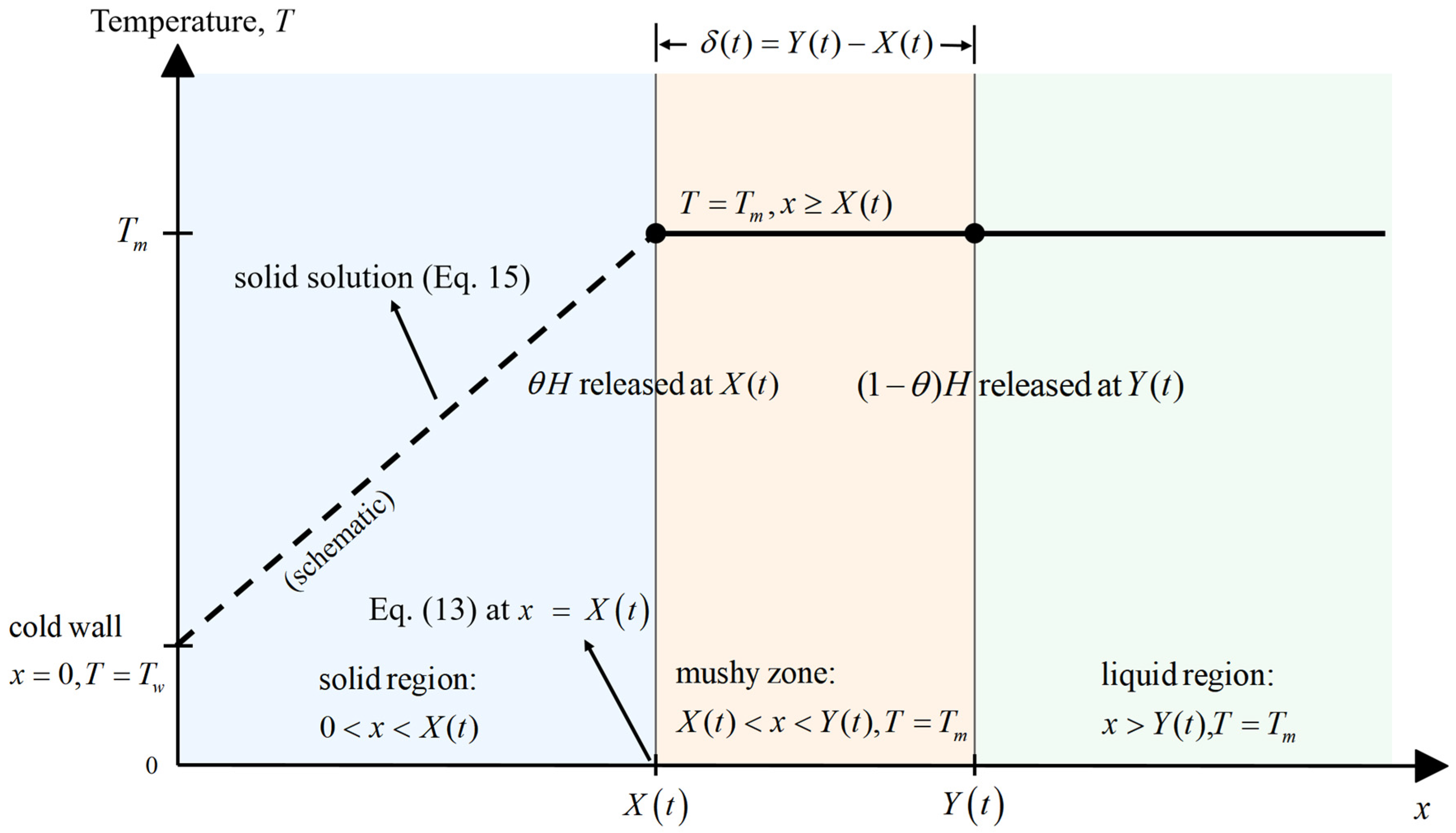
Figure 2 shows a one-dimensional semi-infinite conduction model for the two-phase Stefan problem. The coordinate x-axis is taken to be normal to the cold wall, with x = 0 at the wall and x increasing toward the liquid region. The region from the cold wall x = 0 to the interface x = X(t) is the solid region. Between the interface x = X(t) and the next interface x = Y(t), there exists a thin “mushy zone”, where the solid and liquid phases coexist in an isothermal state at the melting temperature Tm. The region x > Y(t) is the liquid region. With a finite-width mushy zone, the latent heat release associated with solidification is distributed between the two moving interfaces.
To solve this problem, Solomon et al. proposed two basic assumptions [17,18,19]: (a) The total latent heat is partitioned between the two interfaces: a fraction θH is released at x = X(t), and the remaining H(1 − θ) is released at x = Y(t). Here, θ is the latent-heat partition coefficient in the mushy zone, and H denotes the specific latent heat of fusion (corresponding to “TH” and “H” in Table 1, respectively). (b) The width of the mushy zone is assumed to be inversely proportional to the temperature gradient on the solid side as described in Equation (12), where γ denotes a material characteristic constant (corresponding to “GA” in Table 1).
T x x = X ( t ) [ Y ( t ) X ( t ) ]   =   γ

2.2.2. Stefan Condition and Similarity Solution

The interface x = X(t) between the solid region and the mushy zone can be regarded as a moving phase-change interface. At this interface, the Stefan condition must be satisfied, as given by Equation (13). Since both the mushy zone and the liquid region are treated as isothermal, the temperature gradient on the liquid side of x = Y(t) is taken to be negligible, and hence the conductive heat flux from the liquid side is neglected.
k ρ H T x x = X ( t ) = θ X ( t ) + ( 1 θ ) Y ( t )
An interfacial energy balance relates the conductive heat flux in the solid region to the latent heat of fusion released at the moving interface. In the present model, volume change upon solidification is neglected, and the density is assumed constant, and the boundary and interfacial conditions are prescribed as T(0,t) = T with T(X(t),t) = Tm. Tm denotes the melting point of the material (corresponding to “TM” in Table 1). By introducing the similarity variable ξ defined in Equation (14), the solution of the one-dimensional heat-diffusion equation in the solid region can be expressed as Equation (15) [15,19], where λ,ξ > 0 are dimensionless similarity parameters to be determined.
ξ = x 2 α t
T ( x , t ) = T w + ( T m T w ) erf x 2 α t erf ( λ ) ,   X ( t ) = 2 λ α t ,   Y ( t ) = 2 ζ α t
The thermal diffusivity α in Equation (14) is given by Equation (16), where k (corresponding to “K” in Table 1) and cp (corresponding to “CP” in Table 1) denote the thermal conductivity and specific heat capacity of the solid material, respectively.
α = k ρ c p
The first derivative of the solution of the heat-diffusion equation is given by Equation (17).
T x x = X ( t ) = T m T w erf ( λ ) 1 π α t   e λ 2
Combining Equations (15) and (17) with the assumption (b) yields Equation (18), where ζ is given by Equation (19). Here, Tm denotes the melting temperature of the material, and Td denotes the prescribed cold-wall surface temperature (corresponding to “TD” in Table 1).
T m T w erf ( λ ) 1 π α t e λ 2 ( 2 ζ α t 2 λ α t ) = γ
  ζ = λ + γ π e λ 2 erf ( λ ) 2 Δ T   ,     Δ T T m T d
Substituting Equation (16) and the interface velocities X′(t) and Y′(t) into Equation (13) and introducing the Stefan number St, yields Equation (20) for determining λ. By further substituting ζ from Equation (19) and rearranging terms, Equation (21) can be written in the final form used to solve λ.
St e λ 2 π erf ( λ ) = θ λ + ( 1 θ ) ζ   ,     St c p Δ T H
  λ π e λ 2 erf ( λ ) + ( 1 θ ) γ π 2 Δ T ( e λ 2 erf ( λ ) ) 2 = St  
For a numerical solution of Equation (21), an exponential–polynomial hybrid model as Equation (22) is introduced.
λ ( B ) = 0.114 B 0.18 1 + 0.0047 B 0.09 1 e 0.15 B 0.3
B = 2 Δ T · S t γ ( 1 σ ) π
Once λ is obtained by solving Equation (22), the solid–mushy zone interface position X(t) is given by Equation (15). The solidified mass in the receiving node is then calculated using Equation (24), where Aht denotes the effective heat-transfer area and X(t)/2 is taken as the node-averaged thickness of the solidified crust.
m f z = ρ A h t   X ( t ) 2   = ρ N X p L λ α t

2.3. Melt Mass That Remains for Further Relocation

The melt mass that remains for further relocation refers to the mass of molten material that remains available in the receiving node and can flow downward in the current time step.
If the time required for the molten material to pass through the receiving node exceeds the time step (i.e., Δt < Δtr), then the melt has not completed its migration within the step, and the accumulated mass is therefore taken to be zero. Conversely, if the time required for the molten material to pass through the receiving node is less than the time step (i.e., Δt > Δtr), then the mass of molten material that remains available in the receiving node is calculated as the mass of molten material that drains from the source node minus the mass of molten material that solidifies in the receiving node. Therefore, the mass of molten material that remains available in the receiving node is given by Equation (25),
m a c = m l e a v M I N ( M A X ( W Δ t r , m f z ) , m l e a v )
where Δtr denotes the time required for the molten material to pass through the receiving node (defined by Equation (26)).
Δ t r = L U

3. Methodology

3.1. Sensitivity Analysis Methods

This section outlines the UQ/SA methods used in this work, with detailed definitions in the following subsections.

3.1.1. Morris Method

The Morris method is a qualitative global sensitivity screening method that identifies influential inputs through their elementary effects with relatively low computational cost [20]. In this study, the Morris method was adopted for a preliminary screening of input parameters. In this approach, all k input variables are first linearly mapped onto the unit hypercube [0, 1]k, which is then discretized into a grid with p equally spaced levels. A set of one-at-a-time (OAT) trajectories is constructed such that, along each trajectory, only one parameter is perturbed at a time while the others are held fixed. For the i-th input variable, the corresponding elementary effect is defined by Equation (27), where Δ denotes the grid step size and Y(·) denotes the model output.
E E i = Y ( x 1 , , x i + Δ , , x k ) Y ( x 1 , , x i , , x k ) Δ
This procedure was repeated r times with randomly generated trajectories, yielding a sample of elementary effects for each parameter. The distribution of these elementary effects over the input space is summarized by two statistics—the mean of the absolute effects μi and the standard deviation σi—defined as follows:
μ i = 1 r j = 1 r E E i ( j ) ,   σ i = 1 r 1 j = 1 r E E i ( j ) E E ¯ i 2
where E E ¯ i denotes the arithmetic mean of the elementary effects of parameter xi. The index μi measures the overall influence of parameter i on the model response, whereas σi reflects the degree of nonlinearity and interaction with other parameters.

3.1.2. Sobol Method

After screening out a subset of key sensitive parameters by the Morris method, the Sobol method was applied for further SA. The Sobol method is a variance-based global sensitivity analysis method that decomposes the output variance into contributions from individual inputs and their interactions, but it generally requires a relatively large number of model evaluations, especially when second-order effects are included [21]. It decomposes the total variance of the output into the contributions of each input and their interactions. Sobol indices enable a precise quantification of input main effects and interaction effects of various orders. Details of the Sobol method can be found in.
Consider a model output Y = f(X), where X = (X1,…,Xn)∈In = [0, 1]n. The total variance D of the model output can be decomposed into the sum of partial variances, where Di denotes the main-effect variance of Xi and Dij denotes the interaction-effect variance for Xi and Xj.
D = i = 1 n D i + 1 i < j n D i j + + D 1 , 2 , , n
The first-order, second-order, and total-effect Sobol sensitivity indices are defined in Equations (30)–(32), respectively. Here D ( X i ) denotes the sum of the variances contributed by the main effects and interaction effects of all variables except Xi. Specifically, the first-order sensitivity index Si quantifies the influence of the independent variation in Xi on the output. The total-effect sensitivity index STi quantifies the overall contribution of Xi and all its interaction effects of various orders to the output. The second-order sensitivity index Sij quantifies the contribution of the interaction effect between Xi and Xj to the output variance.
S i = D i D
S T i = 1 D ( X i ) D
S i j   =   D i j D

3.1.3. LHS–Iman–Conover Sampling with Shapley Attribution

In the uncertainty-propagation stage, a 2 × 2 design was adopted to separate the effect of the sampling scheme from that of the imposed dependence structure. Two base sampling schemes were considered, namely MC and LHS, and each was examined under two dependence settings: independent inputs and correlated inputs. This resulted in four cases: independent MC, correlated MC, independent LHS, and correlated LHS-IC. Latin hypercube sampling (LHS) is a stratified sampling method that improves the coverage of the input space by sampling each input range more evenly.
For the two independent-input cases, samples were generated directly from the prescribed marginal distributions using either MC or LHS. For the two correlated-input cases, the same target Spearman rank correlation matrix was imposed by the Iman–Conover reordering procedure while preserving the marginal distributions. In this way, the correlated MC and correlated LHS-IC cases differed only in the underlying base sampler (MC or LHS), whereas the dependence-inducing procedure was the same [22].
The IC method is a rank-based reordering technique that imposes a prescribed rank-correlation structure on sampled inputs while preserving their marginal distributions [23]. The IC method can be summarized in three steps: First, specify a target Spearman rank correlation matrix C*. Second, generate an independent LHS sample matrix X, construct the score matrix R using normal scores (van der Waerden) based on the column-wise ranks of X, and compute a Cholesky factor P such that PP′ = C*, and form R* = RP′. Third, extract the column-wise rank orders of R* by sorting each column, and use these rank orders as permutation templates to reorder X column by column, so that the reordered sample preserves the prescribed marginals while its sample Spearman rank correlation matrix M approximates C*.
In the presence of correlated input parameters, the Shapley effects were adopted to quantify the importance of input parameters under the LHS-IC sampling strategy and the MC sampling strategy. The Shapley effect is a global importance measure that quantifies the overall contribution of each input to output uncertainty by averaging over all possible input combinations and is especially useful when the inputs are statistically dependent [24]. The associated value function is defined via an equivalent reduction in output variance. For each input, its contribution is obtained by averaging its marginal variance reduction over all possible input subsets and inclusion orders, thereby allocating the shared variance contribution induced by both interaction effects and input dependence according to each input’s average marginal contribution. Since the Morris and Sobol methods are formulated under the independent-input assumption, their results are used here only as qualitative reference sensitivity structures. Therefore, the Shapley results obtained under correlated-input conditions are not expected to match the Morris and Sobol results numerically.

3.2. Analysis Strategy and Framework

In this study, 16 input parameters were identified for the fuel pellet, fuel cladding, and control rod. In the present case study, the three material categories considered in the CANDLE module correspond to UO2, Zr/ZrO2, and Ag-In-Cd absorber with SS/SSO, respectively. Their ranges and distributions were mostly based on subjective judgments and assumptions, as well as data or recommendations from references [25,26,27,28]. For example, log-normal distributions were used for positive parameters with multiplicative percentage uncertainties. Truncated normal distributions were adopted for symmetrically distributed parameters. Triangular distributions were assigned based on engineering priors. Uniform distributions were used for the remaining parameters. The definitions, ranges, and distributions are presented in Table 1.
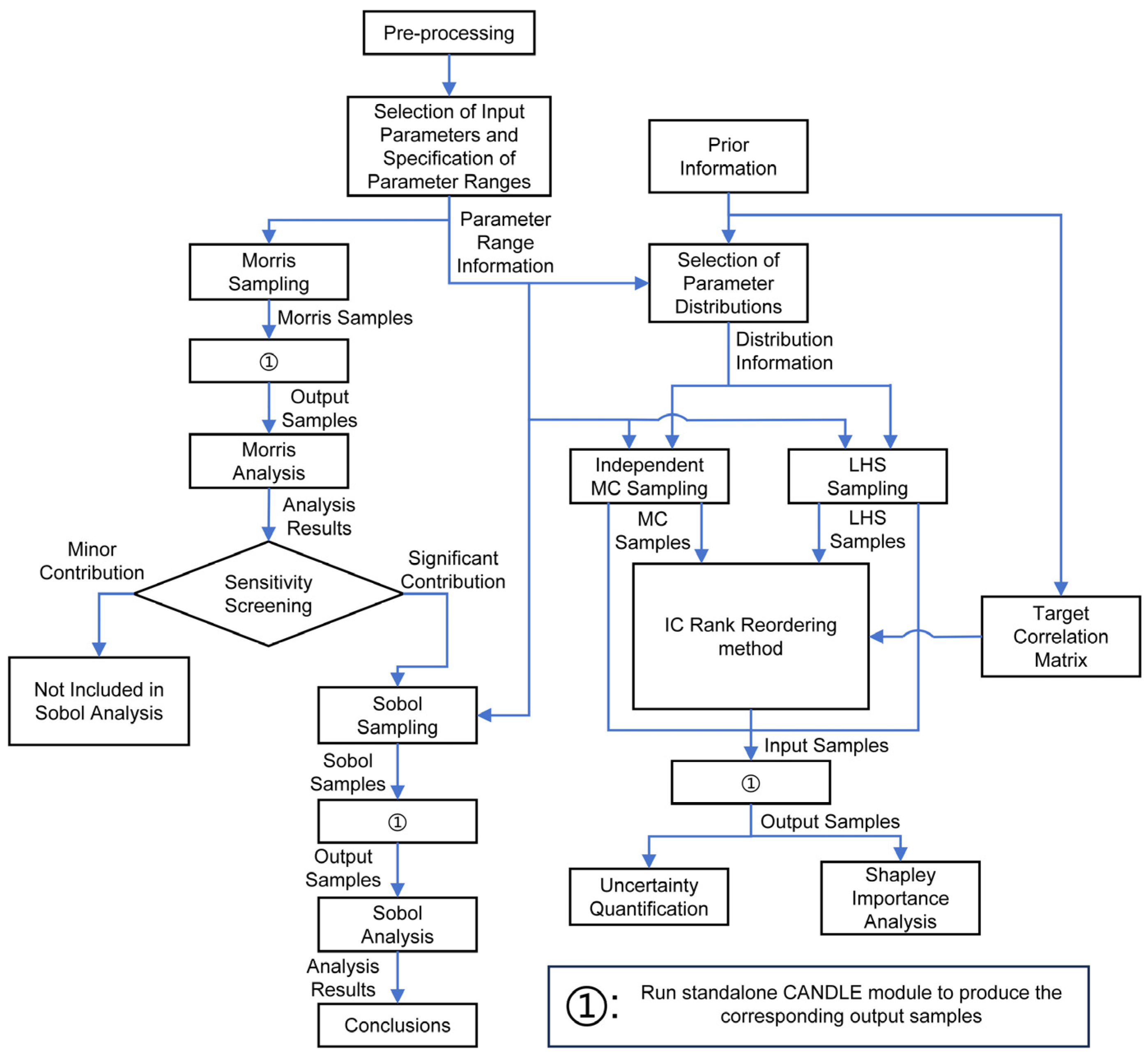
Figure 3 presents the workflow of this study. It generally consists of three stages as follows:
  • Pre-screening of input parameters by the Morris method:
The Morris method was applied to pre-screen 16 parameters selected as model input parameters for fuel pellet, fuel cladding, and control rod, separately, with their ranges specified in Table 1. In this study, k = 16 and r = 12, yielding N = 12 × (16 + 1) = 204 samples. The eight grid levels were used to discretize the input space and define the perturbation step size. The elementary effects of each input parameter were then calculated and interpreted on the two-dimensional (μi, σi) plot. Based on Morris’s screening results, a reduced subset of input parameters was retained for subsequent Sobol analysis.
2.
Quantitative sensitivity analysis by the Sobol method:
Sobol sampling and variance decomposition were performed for the input parameters retained after the Morris screening. The base sample size was set to 256, and the total number of samples was 5120. The Sobol sensitivity indices were calculated, including first-order indices Si, second-order indices Sij, and total-effect indices STi. Further increasing the number of samples produced negligible changes in the Sobol indices and would result in an unacceptable computational cost. Based on a simple test, the sample size was found to have basically reached convergence.
3.
Uncertainty analysis:
With the same marginal distributions, parameter ranges, and sample size, four uncertainty-propagation cases were considered: independent MC, correlated MC, independent LHS, and correlated LHS-IC. This 2 × 2 design was introduced to separate the effect of the sampling scheme (MC versus LHS) from that of the dependence setting (independent versus correlated inputs).
In the two independent-input cases, samples were generated directly from the prescribed marginals. In the two correlated-input cases, the target Spearman rank correlation matrix shown in Table 2 was imposed using the IC method while preserving the same marginal distributions. For each case, 2000 samples were generated for the 16 input parameters, and the output probability density functions and Shapley-based importance rankings were compared.
In the absence of experimental data and prior information, the Spearman rank correlation structure adopted in this study was chosen conservatively and hypothetically and did not necessarily reflect the true correlations among parameters in real accident scenarios. This assumption was made to explore how input parameter correlations might impact the results. Accordingly, any comparison between the correlated-input Shapley results and the independent-input Morris and Sobol results should be interpreted as a qualitative diagnosis of sensitivity structure. The validity of conclusions drawn under this assumed correlation structure should be interpreted with caution. Future studies should confirm these findings with actual correlation data or by testing different correlation assumptions.

4. Results and Discussion

4.1. Results of Morris Screening

Before presenting the results, it should be noted that the present calculations constitute a module-level case study based on the CANDLE module in the PISAA code, which is intended for severe-accident analysis of water-cooled pressurized water reactors (mainly Generation II/III reactors). Therefore, the results reported in this paper should be interpreted within a PWR-oriented material and geometric framework, rather than as being generally applicable to all reactor types.
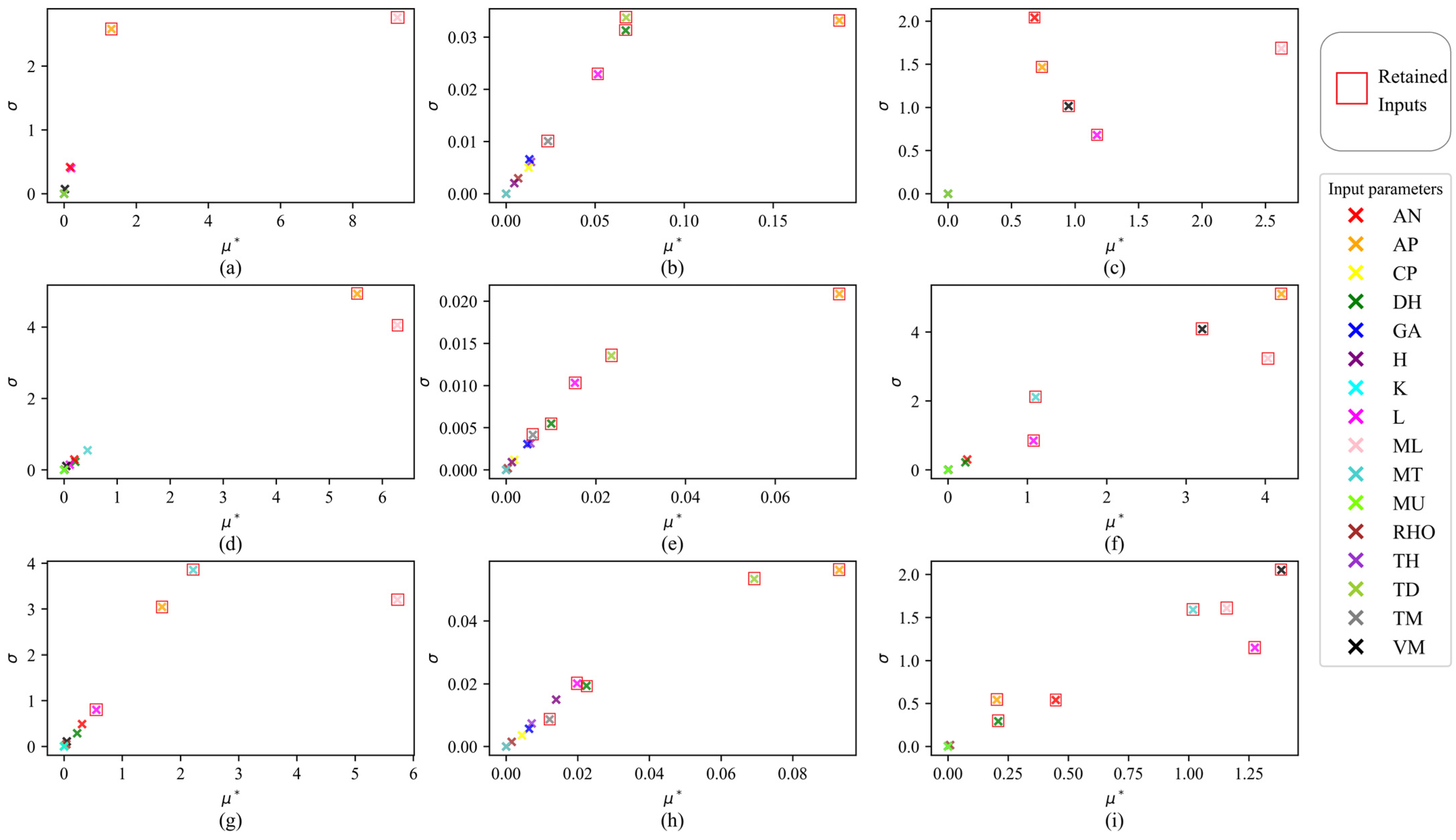
Figure 4 presents results from the Morris screening for the three FOMs. The parameters retained for the subsequent Sobol analysis are highlighted with red boxes. For a fuel pellet, the molten mass of the current material (ML) exerts a dominant effect on FOM1. This is because this input parameter controls the liquid film volume in the film flow model via the liquid-film-thickness equation (Equation (1)) and thus dominates the mass flow rate of the molten material.
The second most important input parameter is the length of the receiving node (L), indicating that the geometric dimension influences the resistance along the migration path through the head-balance equation of the internal channel flow model. Velocity limit (VM) also has an effect, but its impact is slight. Furthermore, the σi values indicate that these three input parameters have nonlinear interactions in their influence on FOM1. For fuel cladding, similar results are observed in general, with a few differences. For instance, flow area (AP) exhibits a noticeable influence on FOM1. This indicates that the internal channel flow model was triggered to calculate the mass of molten material that drains from the source node of the fuel cladding. For the control rod, the molten mass of the current material (ML) is also the most important parameter, followed by total molten mass (MT).
For FOM2, it appears that the effects of the input parameters for fuel pellet and fuel cladding are similar. The flow area (AP), length of the receiving node (L), cold-wall surface temperature (TD), and hydraulic diameter (DH) exhibit the highest sensitivities, as these input parameters determine the heat-transfer area, the characteristic heat-transfer time, and the wall undercooling, respectively. For the control rod, the same four input parameters remain among the most influential, while the cold-wall surface temperature shows the largest sensitivity. This may be attributed to the dependence of the Stefan condition on the wall undercooling. For the control rod material, the cold-wall surface temperature is closer to the melting point, so small changes in cold-wall surface temperature produce a disproportionately large change in the effective driving force for solidification.
As for FOM3, Morris’s screening results indicate that, for all materials, the top two dominant input parameters are the length of the receiving node (L) and the molten mass of the current material (ML). The length of the receiving node (L) affects the transport time Δtr and determines the temporal threshold for whether the melt can traverse the receiving node within a single time step. In contrast, the molten mass of the current material (ML) directly influences the drained mass and instantaneous mass flow rate. Moreover, the hard cutoff velocity limit (VM) adjusts flow velocity when the theoretical flow velocity exceeds its limit and thus affects effective transport time and the resulting value of FOM3.
For FOM3, its computational mechanism implies that it is jointly determined by a “switch” effect associated with the relationship between transport time/velocity and the mass of molten material that drains from the source node. This interpretation is supported by Morris’s screening results. Accordingly, two possible improvements are proposed. First, in order to improve the stability and interpretability of FOM3, the “switch” effect of the threshold should be explicitly identified and assessed. Specifically, the impacts of the velocity limit (VM) and the time-step size on the “switch” effect should be assessed, and it should be verified whether they compromise computational reasonableness. In addition, a consistent understanding of the relevant scales—such as the velocity and the length of the node—should be maintained. Second, one may adopt more physically reasonable constraints on the velocity limit, the threshold of the “switch” effect may be smoothed to some extent, or an alternative formulation for computing FOM3 may be used.

4.2. Results of Sobol Analysis

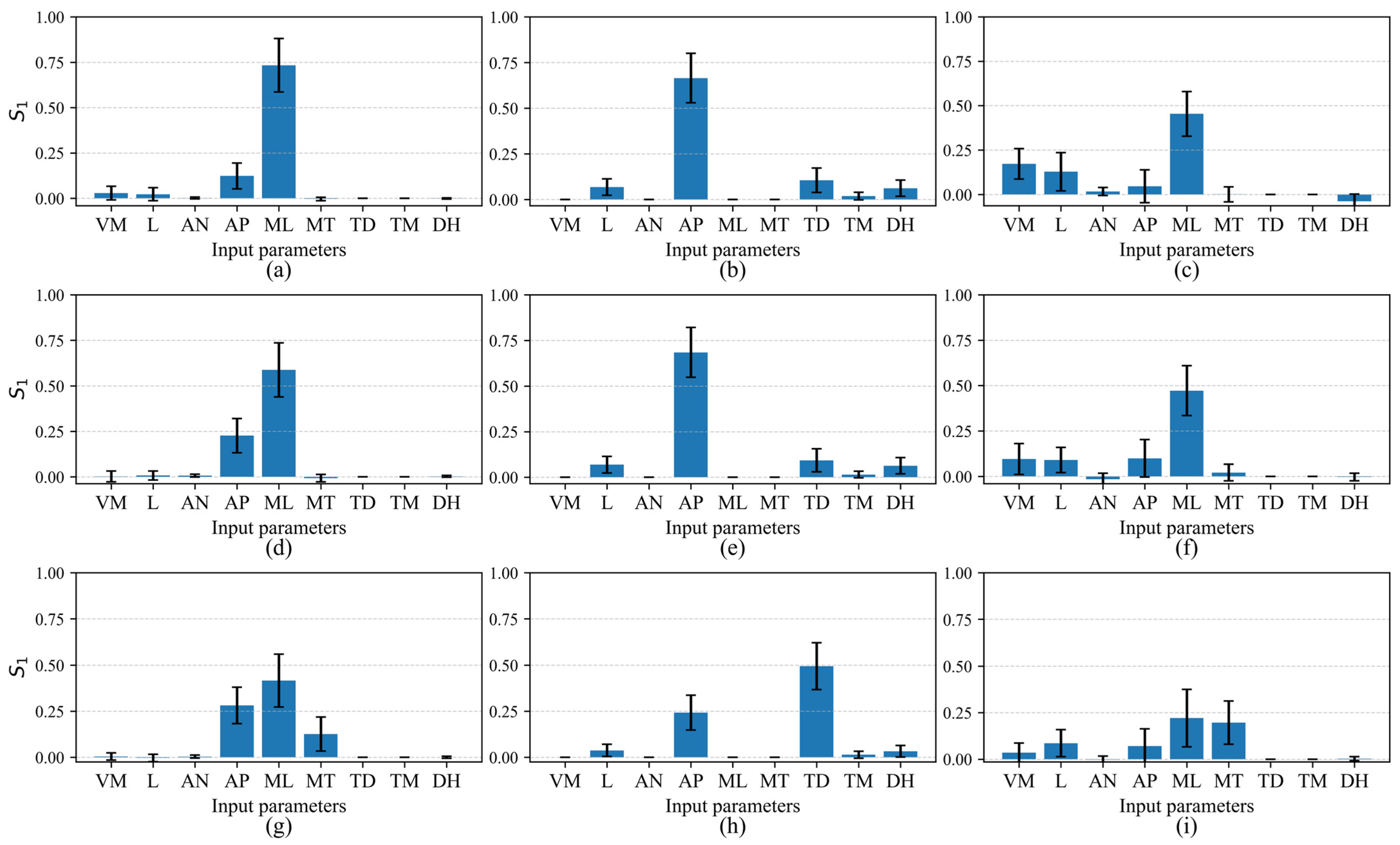
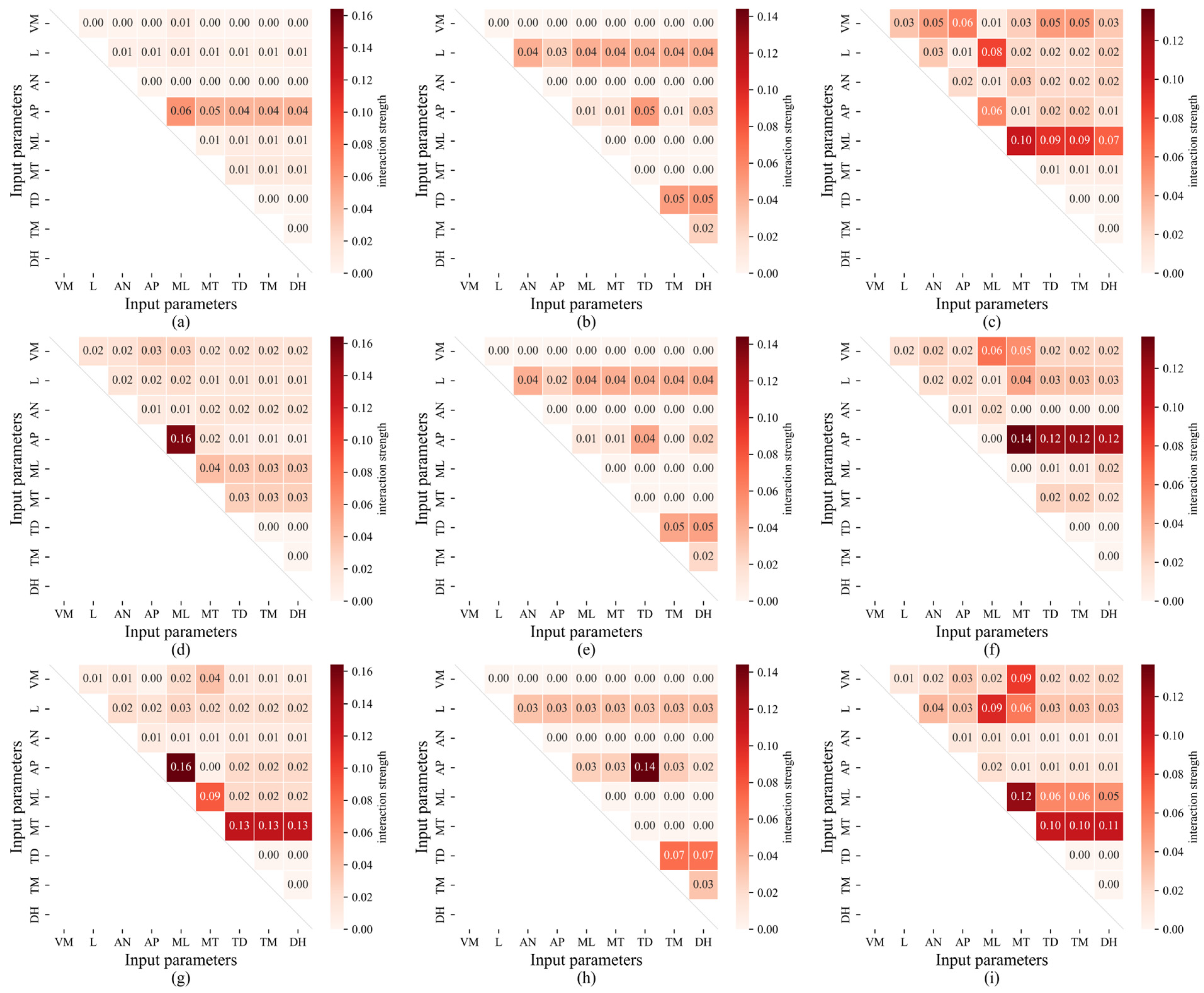
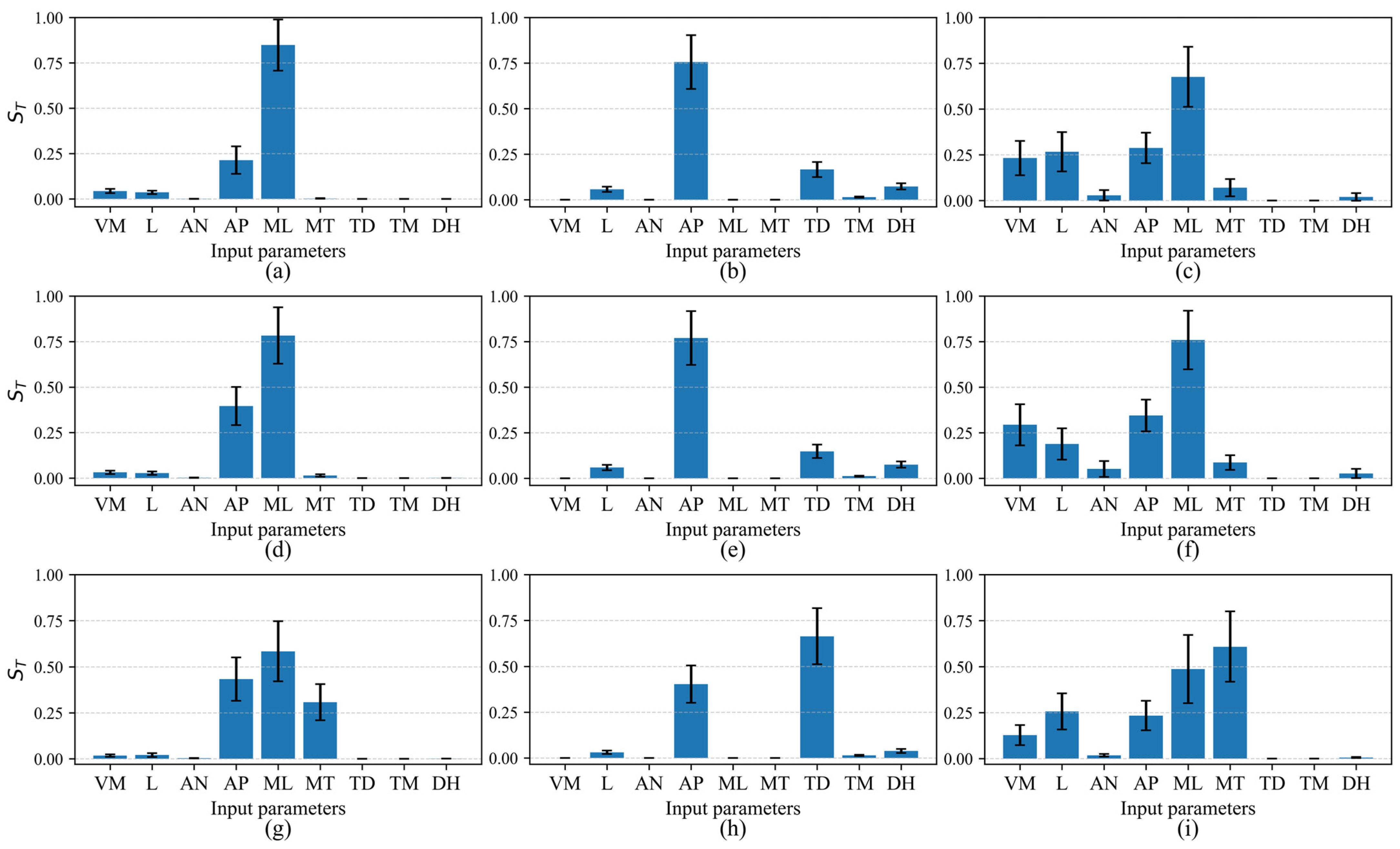
Based on Morris’s screening metrics (μ* and σ), nine influential input parameters were retained for the subsequent Sobol analysis. The corresponding first-order, second-order, and total-effect Sobol indices are shown in Figure 5, Figure 6 and Figure 7. Bootstrap error bars were added to the Sobol first-order and total-effect indices.
Figure 5 shows the first-order Sobol indices for the three FOMs. For FOM1, the molten mass of the current material at the source node remains the dominant input parameter, consistent with Morris’s screening results. The flow area (AP) exerts a moderate influence on this FOM, whereas the other input parameters show small first-order effects under the present conditions. For the control rod, both flow area (AP) and total molten mass (MT) exhibit higher sensitivity, whereas the sensitivity of molten mass of the current material decreases. This is because the melting point of the control rod is clearly lower than that of the fuel pellet and fuel cladding, and its latent heat is also smaller, so that the molten control rod material in the source node forms rapidly, and the supply-side source for molten-material migration is no longer scarce. Thus, the channel capacity and gravity head can exert a stronger influence, thereby weakening the dominant role of the molten mass of the current material.
Regarding FOM2, flow area (AP) has the largest first-order index for fuel pellet and fuel cladding, while cold-wall surface temperature (TD), melting point (TM), length of the receiving node (L), and hydraulic diameter (DH) exhibit smaller effects. The wall undercooling (melting point minus cold-wall surface temperature) modifies the driving temperature difference in the Stefan condition and thus provides a secondary control. For the control rod material, the sensitivity of flow area (AP) decreases while that of cold-wall surface temperature (TD) increases. Within the prescribed cold-wall surface temperature (TD), the largest undercooling makes the solidification rate more strongly governed by the driving temperature difference in the Stefan condition. Consequently, the first-order index of the cold-wall surface temperature increases, while the index for the flow area decreases.
These effects suggest a clear priority for model improvement and parameter tuning. Accordingly, model improvement should focus on ensuring that the values of heat-transfer area and geometric parameters are constrained by state variables and are continuously updated as accident conditions evolve. Meanwhile, the thermodynamic boundary parameters, such as cold-wall surface temperature (TD), should ideally not be treated as externally prescribed input parameters; instead, they should be determined within the model as boundary response variables that satisfy energy conservation and thermal constraints.
For FOM3, the molten mass of the current material (ML) has the largest first-order index, followed by the velocity limit (VM) and the length of the receiving node (L), whereas the first-order index of the flow area is comparatively small. The relatively small sum of first-order indices implies that interaction terms contribute substantially to the variance of FOM3. For the control rod, the contribution of the molten mass of the current material (ML) decreases, whereas the total molten mass (MT) becomes more influential, consistent with the trend observed for FOM1.
The dominant influence of molten mass of the current material (ML) on FOM1 and FOM3 indicates that the uncertainties in these two outputs are primarily governed by the inventory of molten material at the source node. If an inappropriate specification of the mass-conservation relationship or upstream models biases the molten mass of the current material toward larger values, the predicted core melt configuration may become anomalous. Therefore, it is necessary to impose stricter constraints on the molten mass of the current material under the mass-conservation requirements, upstream-model specifications, and available verification information, thereby improving its verifiability and controllability. In addition, more conservative treatments for evaluating the molten mass of the current material (ML) and total molten mass (MT) may be considered.
Figure 6 presents heat maps of the second-order Sobol indices for the three FOMs. For FOM1, interactions are mainly between mass-related and geometric parameters and are stronger for fuel cladding and control rods. For FOM2, interactions are dominated by couplings of thermophysical and geometric parameters with similar patterns across the three materials. For FOM3, interaction effects are the strongest, and pairs involving supply, channel, and temporal parameters all contribute significantly to the variance.
Figure 7 shows the total-effect Sobol sensitivity indices for the three output variables. Compared with the first-order indices, the total-effect indices for FOM3 are significantly larger, whereas for FOM1 and FOM2, only flow area (AP) and molten mass of the current material (ML) show noticeable increases. This indicates that the uncertainty of FOM3 is mainly driven by couplings among multiple parameters, whereas the sensitivity structures of FOM1 and FOM2 are largely explained by the main effects of a small subset of influential inputs.

4.3. Results of Uncertainty Analysis

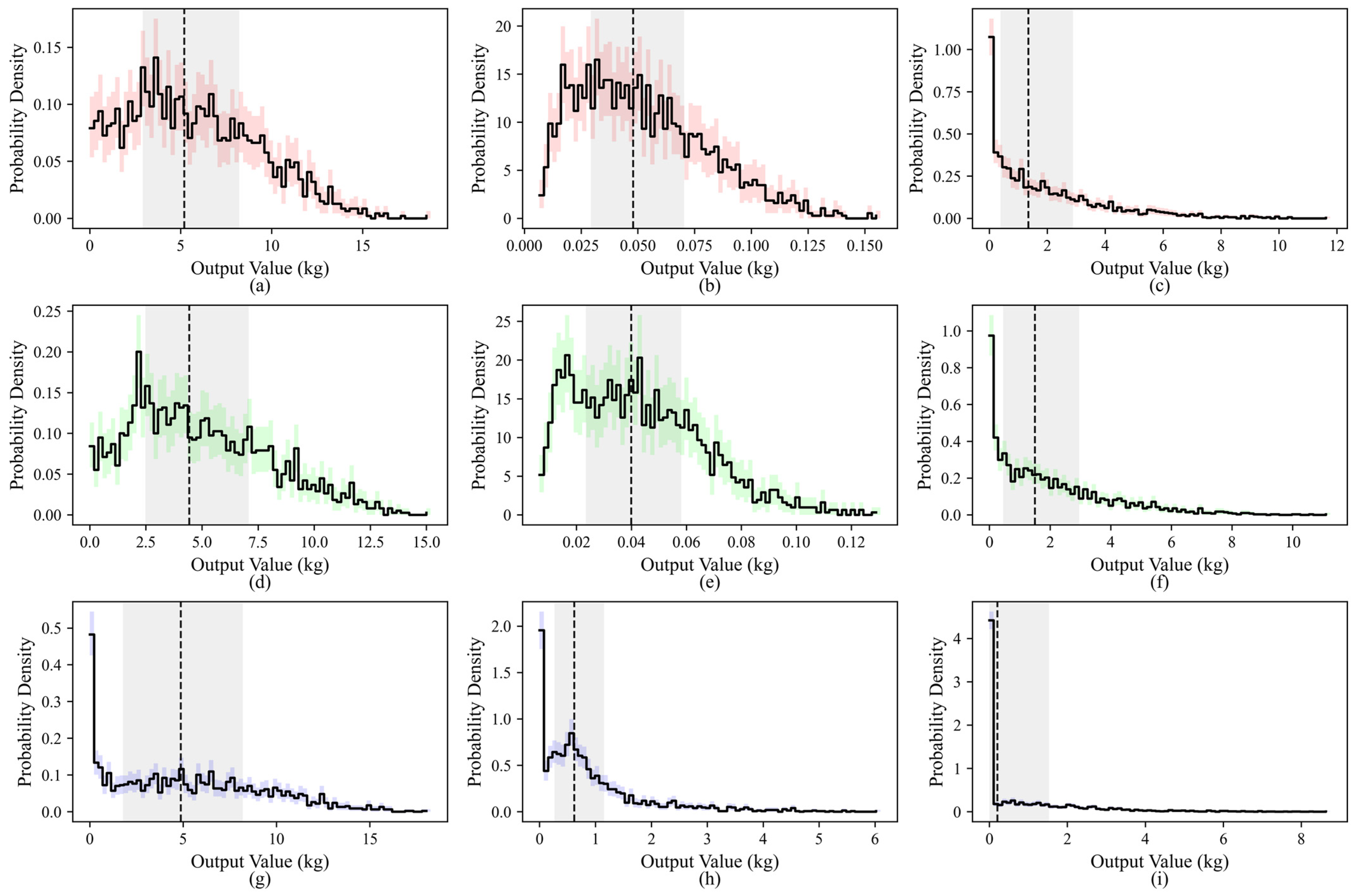
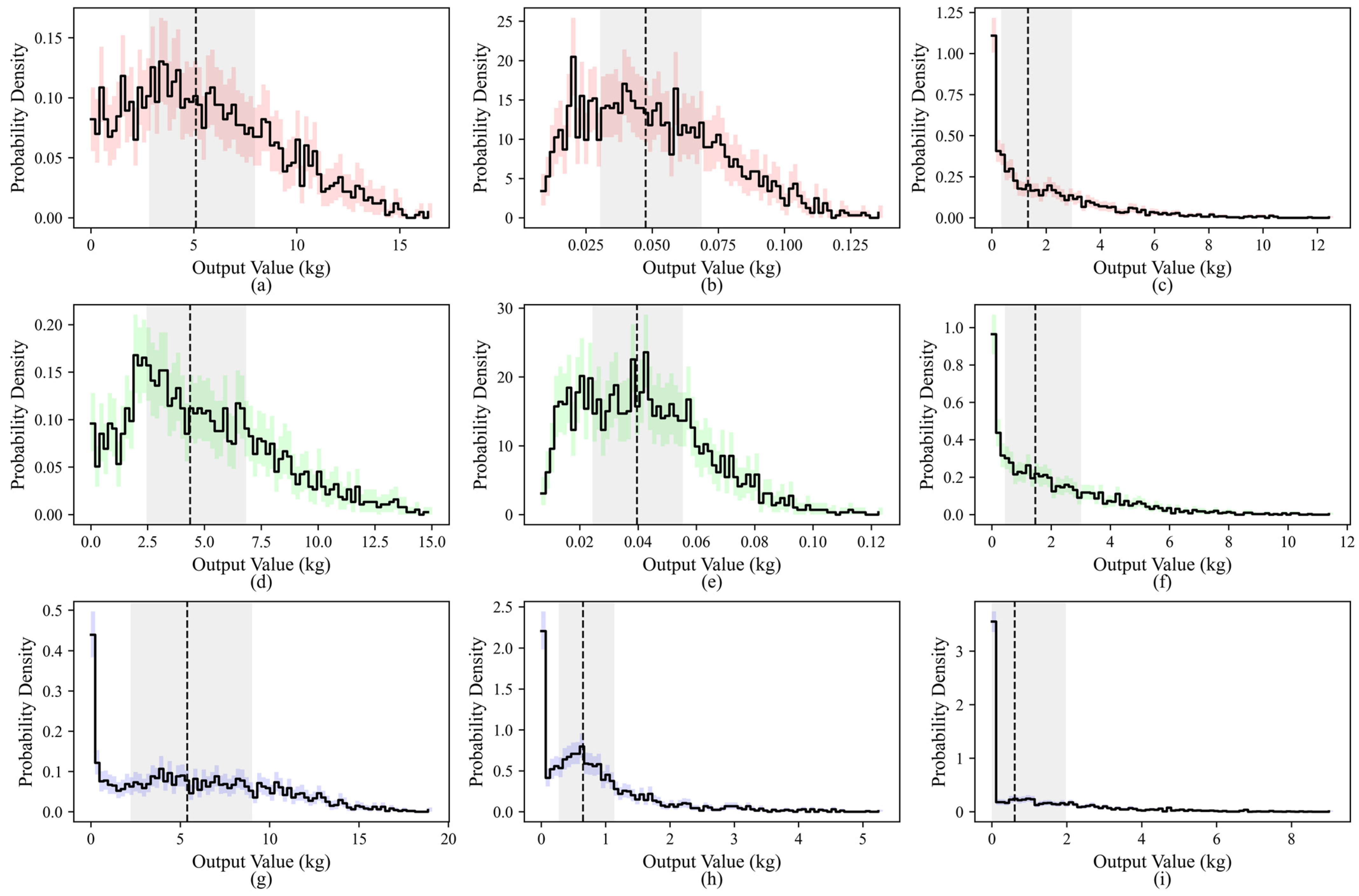
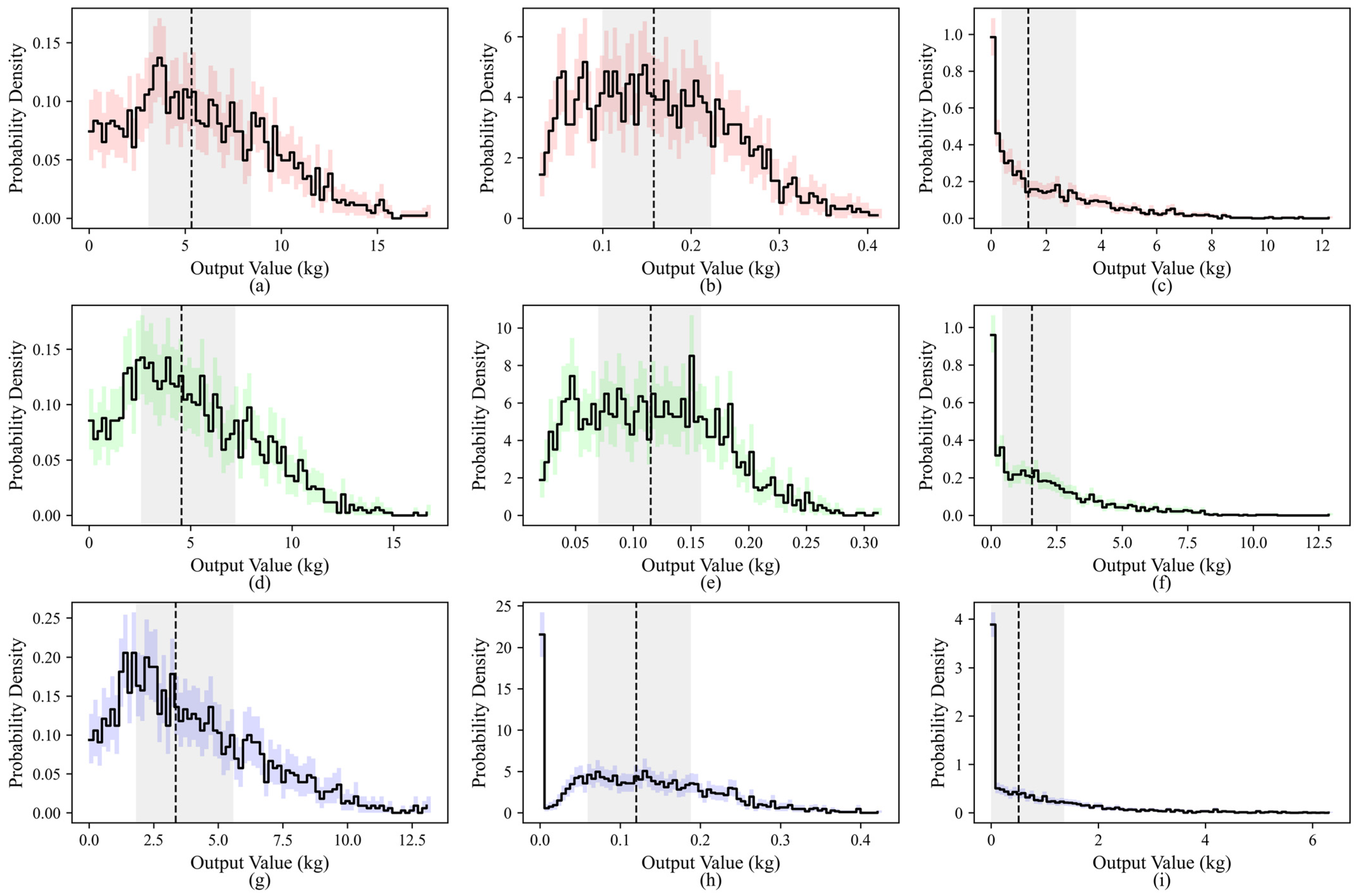
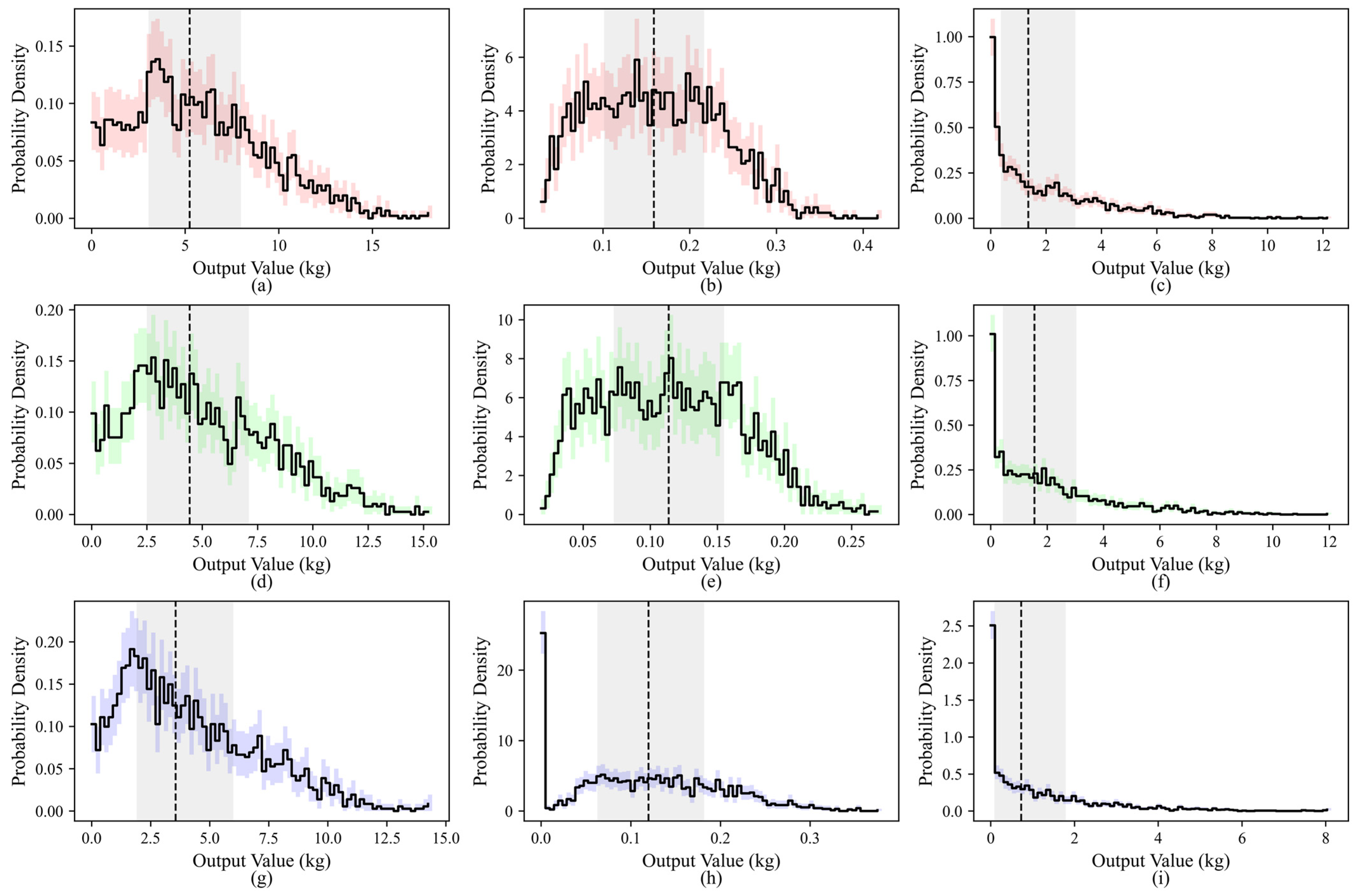
The results of the uncertainty analysis are shown in Figure 8, Figure 9, Figure 10 and Figure 11. For FOM2 and FOM3, compared with MC sampling, LHS exhibits a certain degree of extension in the high-value region of the output distribution. This may be related to the stratified sampling property of LHS. Compared with MC sampling, LHS provides more uniform coverage of the joint input space and, therefore, under the input distribution conditions specified in this study, is able to generate different sample combinations and further cover the regions corresponding to higher output values.
After input correlations were introduced, the shape of the output probability distribution also underwent certain adjustments because the effective joint input space changed. This indicates that, under the hypothetical correlation matrix adopted in this study, the introduction of correlations did not alter the overall characteristics of the output distribution but mainly affected its local shape. Nevertheless, we believe that, in future studies, if the outputs of module-level UQ/SA are expected to more closely reflect the true physical behavior, the construction and validation of input correlations and their correlation matrix still warrant further in-depth investigation.
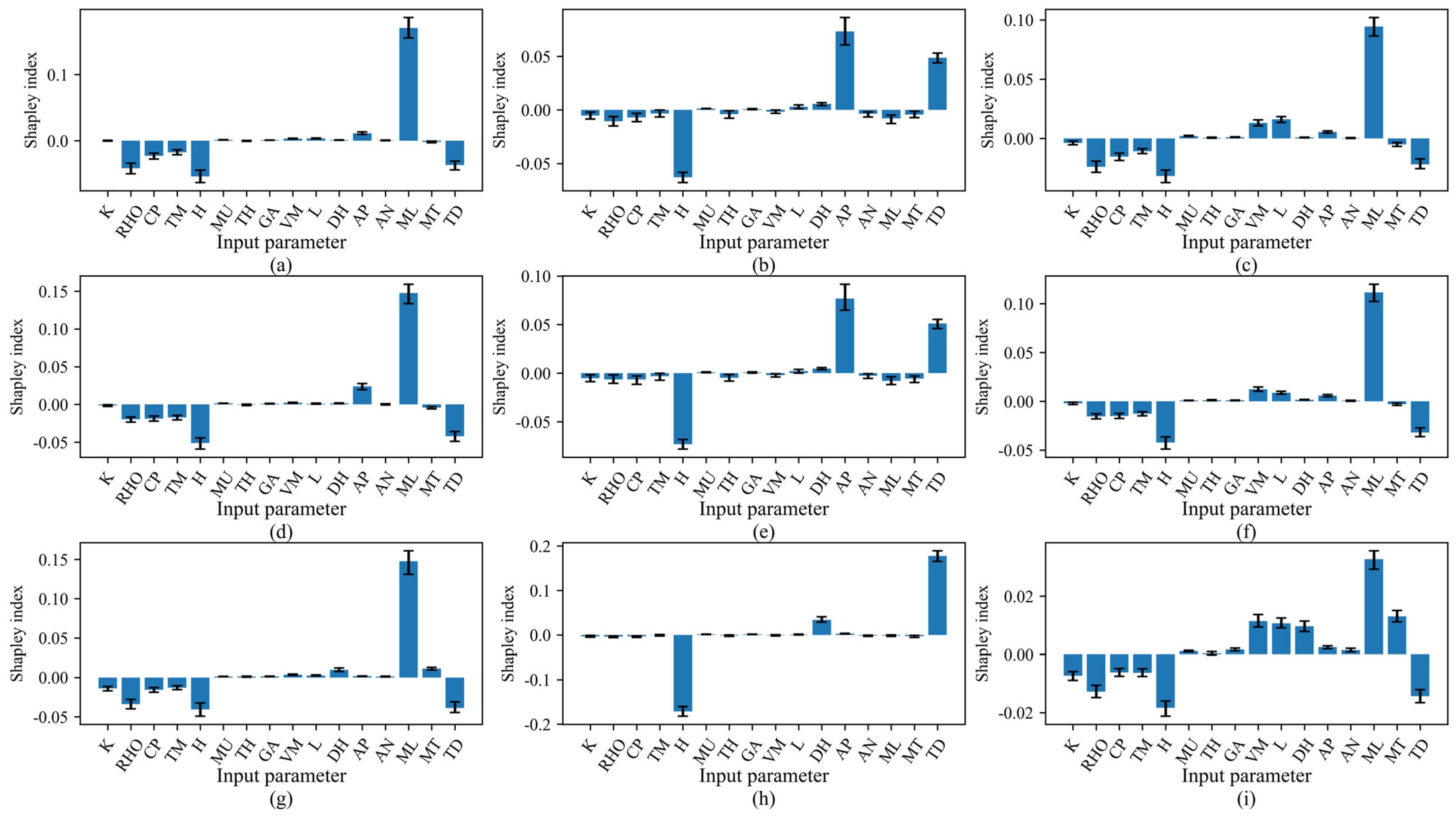
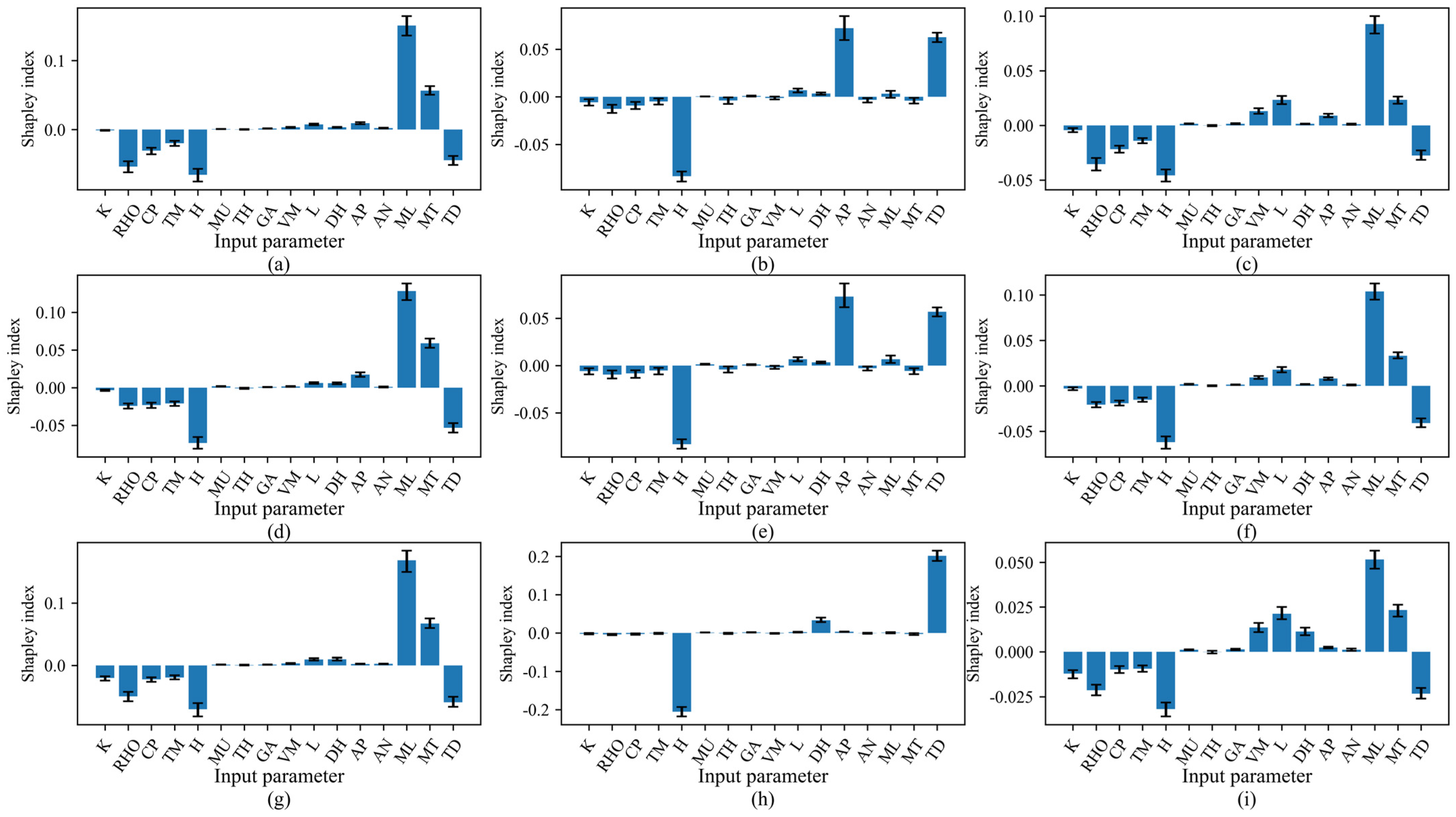
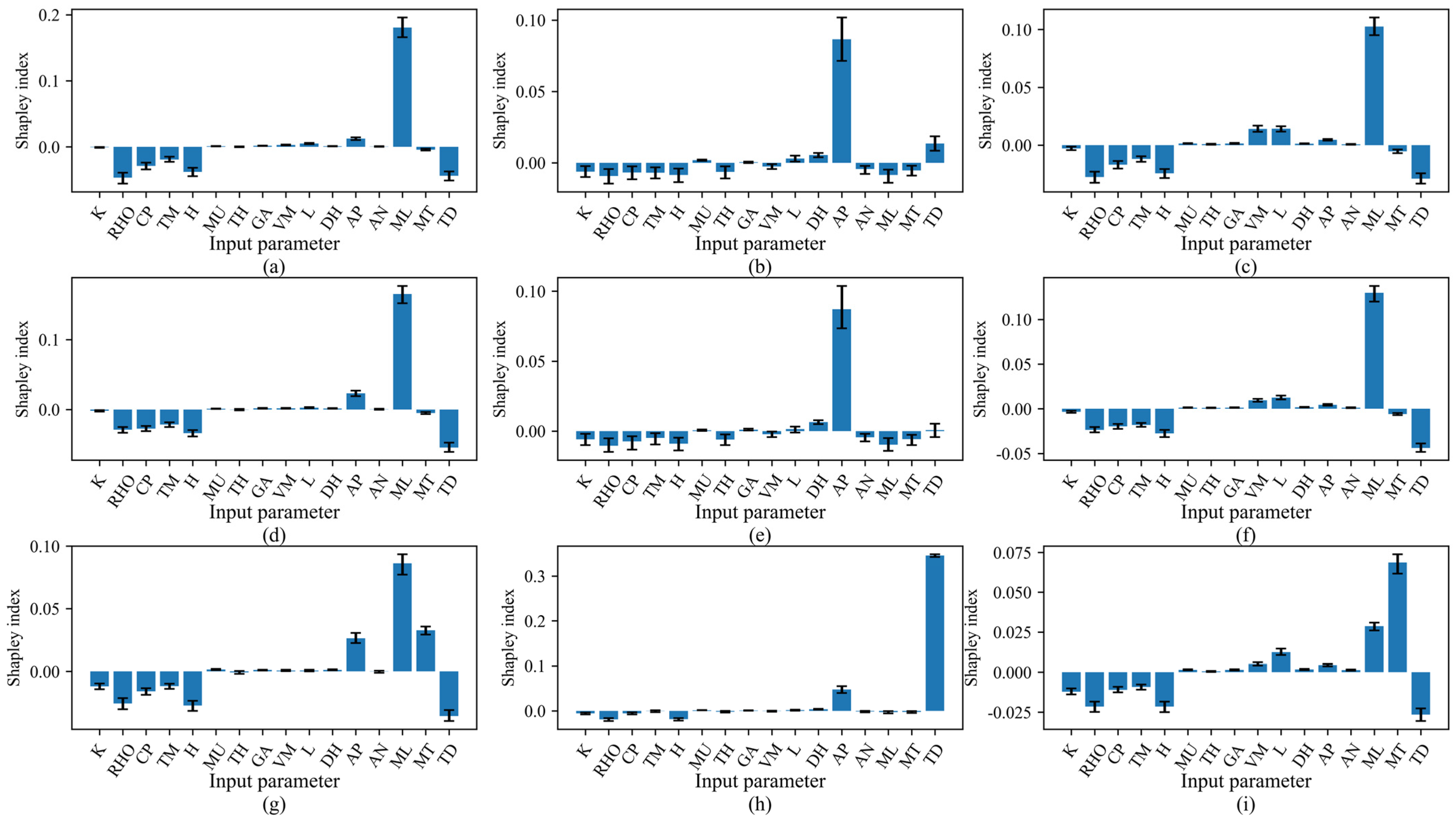
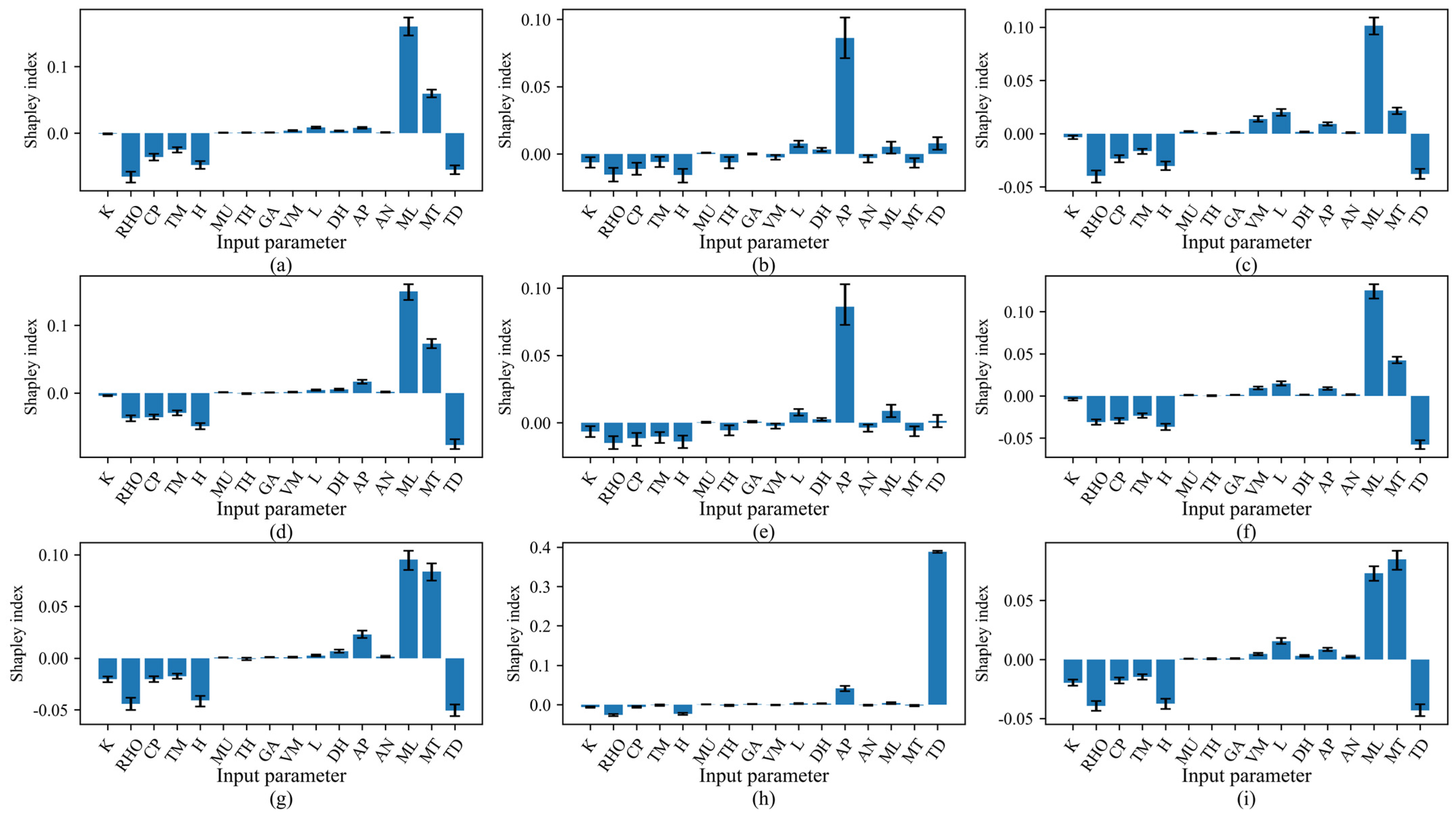
The results of the Shapley effect indices are shown in Figure 12, Figure 13, Figure 14 and Figure 15. The Morris and Sobol results are included only as qualitative reference sensitivity structures under the independent-input assumption. In terms of the sampling strategy, the differences are most evident for FOM2. For fuel pellets and fuel cladding, LHS generally preserves the dominant importance of AP, whereas MC sampling tends to overestimate the contributions of some less important parameters, such as TD. For the control rod, under MC sampling, AP exhibits almost no obvious importance. It should be noted that small negative values of the Shapley effect indices are acceptable because of numerical estimation errors. However, for FOM2, parameter H under MC sampling shows a relatively large negative value, which is an abnormal calculation result. For FOM1 and FOM3, the negative values of some parameters under MC sampling are still slightly larger than those under LHS. Therefore, overall, in this case, LHS is more stable than MC sampling in the calculation of the Shapley effect indices.
In terms of the effect of correlation, after input correlations are introduced, the influence on the ranking of the dominant parameters is generally limited, but the identifiability of several secondary parameters is enhanced. For example, for FOM1 and FOM3, the introduction of correlation increases the importance of MT.

5. Conclusions

This study developed a UQ/SA framework for the CANDLE module to analyze input parameter sensitivities and quantify output uncertainties for the three FOMs under both independent and correlation-preserving sampling strategies.
The SA results indicate that the molten mass of the current material is consistently the primary driving parameter for FOM1 and FOM3, whereas geometric and boundary parameters such as the length of the receiving node, the flow area, and the cold-wall surface temperature exert dominant influences on FOM2. For FOM3, a substantial share of the output variance arises from interactions among multiple inputs.
The Sobol analysis further decomposes the output variance into contributions from individual parameters and their second-order interaction terms, revealing couplings between mass-related and geometric parameters as well as among thermal properties.
The uncertainty analysis indicates that, for FOM2 and FOM3, under the non-uniform input-parameter distributions adopted in this study, LHS, owing to its stratified sampling property, improved the coverage of the input space and broadened the range of the outputs. After input correlations were introduced, the output distributions changed slightly. The introduction of correlations did not significantly alter the shape of the output distributions. As for the Shapley-based importance ranking, overall, under the conditions of this study, LHS was more stable than MC sampling in calculating the Shapley effect indices. After input correlations were introduced, the influence on the ranking of the dominant parameters was generally limited, but the identifiability of several secondary parameters was enhanced.
This work represents a first attempt to apply the proposed UQ/SA framework to melt migration and solidification modeling within a severe accident code module. Naturally, the scope of the study is limited: the analysis was confined to melt migration and solidification processes between adjacent nodes in the CANDLE module, without accounting for the effects induced by couplings with other modules. Moreover, the parameter ranges, marginal distributions, and the assumed correlation matrix were not yet supported by direct experimental data or extensive validation evidence but rather relied on several simplifying assumptions.
Future work will extend the framework to coupled multi-module analyses in integrated severe-accident code applications and will refine parameter characterization using experimental data and validation evidence.

Author Contributions

Conceptualization, F.Y.; methodology, F.Y. and W.W.; software, F.Y. and W.W.; validation, F.Y.; formal analysis, F.Y.; investigation, F.Y.; resources, F.Y.; data curation, F.Y.; writing—original draft preparation, F.Y.; writing—review and editing, W.W., X.Y., and R.M.; visualization, F.Y.; supervision, R.M.; project administration, F.Y.; funding acquisition, R.M. All authors have read and agreed to the published version of the manuscript.

Funding

This research was funded by China Nuclear Power Engineering Co., Ltd. under the project “Upgrade and Validation Research of Integrated Severe Accident Analysis Software”, grant number KY23132.

Data Availability Statement

To improve the reproducibility of this study, we have organized and publicly released the analysis and post-processing codes used in this paper in an open repository (https://github.com/Yang733-git/Sensitivity-and-Uncertainty-Analysis-of-Model-Parameters-in-the-Candle-Module-of-the-PISAA-Code-2/tree/main, accessed on 15 March 2026), including the sensitivity analysis, result statistics, and plotting scripts, as well as the corresponding running instructions and dependency environment information. For the PISAA code subject to confidentiality restrictions, the source code cannot be made publicly available in this study.

Conflicts of Interest

The authors were employed by the company Nuclear Power Safety Research Center, China Nuclear Power Engineering Co., Ltd., Beijing. The authors declare that the research was conducted in the absence of any commercial or financial relationships that could be construed as a potential conflict of interest.

Abbreviations

The following abbreviations are used in this manuscript:
ANCross-sectional area
APFlow area
ASTECSevere-accident analysis code
CANDLEModule name used in this study
CPSpecific heat capacity
DHHydraulic diameter
FOMFigures of merit
FOM1Mass of molten material that drains from the source node
FOM2Mass of molten material that solidifies in the receiving node
FOM3Mass of molten material that remains available in the receiving node for further relocation
GAMushy zone width constant
HSpecific latent heat of fusion
ICIman–Conover rank correlation method
KThermal conductivity
LBLOCALarge-break loss-of-coolant accident
LHSLatin hypercube sampling
LHS-ICLatin hypercube sampling with Iman–Conover rank correlation
LNTruncated log-normal distribution
LLength of the receiving node
MAAPModular Accident Analysis Program
MAAP5Version 5 of MAAP
MBLOCAMedium-break loss-of-coolant accident
MCMonte Carlo sampling
MELCORSevere-accident analysis code
MLMolten mass of the current material
MTTotal molten mass
MUDynamic viscosity
MUSAProject name cited in the Introduction
OATOne at a time
PISAAProgram Integrated for Severe Accident Analysis
PSAProbabilistic safety assessment
PWRPressurized water reactor
RHODensity
SASensitivity analysis
SBOStation blackout
TDCold-wall surface temperature
THMushy zone latent-heat partition coefficient
TMMelting point
TNTruncated normal distribution
TriTriangular distribution
UUniform distribution
UQUncertainty quantification
VMVelocity limit

References

  1. International Atomic Energy Agency. Advancing the State of the Practice in Uncertainty and Sensitivity Methodologies for Severe Accident Analysis in Water Cooled Reactors of the BWR Type: Final Report of a Coordinated Research Project; IAEA-TECDOC-2063; IAEA: Vienna, Austria, 2024; Available online: https://www-pub.iaea.org/MTCD/Publications/PDF/TE-2063web.pdf (accessed on 15 March 2026).
  2. Humphries, L.L.; Beeny, B.A.; Gelbard, F.; Louie, D.L.; Phillips, J. MELCOR Computer Code Manuals; Version 2.2.9541, Volume 1: Primer and Users’ Guide; SAND2017-0455O; Sandia National Laboratories: Albuquerque, NM, USA, 2017. Available online: https://www.nrc.gov/docs/ML1704/ML17040A429.pdf (accessed on 15 March 2026).
  3. Humphries, L.L.; Beeny, B.A.; Gelbard, F.; Louie, D.L.; Phillips, J. MELCOR Computer Code Manuals; Version 2.2.9541, Volume 2: Reference Manuals; SAND2017-0876O; Sandia National Laboratories: Albuquerque, NM, USA, 2017. Available online: https://www.nrc.gov/docs/ML1704/ML17040A420.pdf (accessed on 15 March 2026).
  4. EPRI. Modular Accident Analysis Program 5 (MAAP5) Applications Guidance: Desktop Reference for Using MAAP5 Software—Phase 3 Report; 3002010658; EPRI: Palo Alto, CA, USA, 2017; Available online: https://www.epri.com/research/products/000000003002010658 (accessed on 13 March 2026).
  5. Chatelard, P.; Reinke, N.; Arndt, S.; Belon, S.; Cantrel, L.; Carénini, L.; Chevalier-Jabet, K.; Cousin, F.; Eckel, J.; Jacq, F.; et al. ASTEC V2 Severe Accident Integral Code Main Features, Current V2.0 Modelling Status, Perspectives. Nucl. Eng. Des. 2014, 272, 119–135. [Google Scholar] [CrossRef]
  6. Boafo, E.K.; Numapau Gyamfi, E. Uncertainty Quantification in Support of Severe Accident Analysis Code User Confidence Using MELCOR-DAKOTA. ASME J. Nuclear Rad Sci. 2022, 8, 031703. [Google Scholar] [CrossRef]
  7. Bouloré, A.; Struzik, C.; Gaudier, F. Uncertainty and Sensitivity Analysis of the Nuclear Fuel Thermal Behavior. Nucl. Eng. Des. 2012, 253, 200–210. [Google Scholar] [CrossRef]
  8. Jaeger, W.; Sánchez Espinoza, V.H.; Montero Mayorga, F.J.; Queral, C. Uncertainty and Sensitivity Studies with TRACE-SUSA and TRACE-DAKOTA by Means of Steady State BFBT Data. Sci. Technol. Nucl. Install. 2013, 2013, 610598. [Google Scholar] [CrossRef][Green Version]
  9. Brumm, S.; Gabrielli, F.; Sanchez-Espinoza, V.; Stakhanova, A.; Nudi, M.; Groudev, P.; Ou, P.; Herranz, L.E. Uncertainty Quantification for Severe-Accident Reactor Modelling: Set-up and First Results of the Horizon-2020 Project MUSA. Ann. Nucl. Energy 2023, 191, 109919. [Google Scholar] [CrossRef]
  10. Malicki, M.; Lind, T. Parametric MELCOR 2.2 Sensitivity and Uncertainty Study with a Focus on Aerosols Based on Phébus Test FPT1. Prog. Nucl. Energy 2023, 158, 104609. [Google Scholar] [CrossRef]
  11. Stakhanova, A.; Gabrielli, F.; Sanchez-Espinoza, V.H.; Hoefer, A.; Pauli, E.M. Uncertainty and Sensitivity Analysis of the ASTEC Simulations Results of a MBLOCA Scenario in a Generic KONVOI Plant Using the FSTC Tool. Ann. Nucl. Energy 2023, 192, 109964. [Google Scholar] [CrossRef]
  12. Galushin, S.; Kudinov, P. Sensitivity and Uncertainty Analysis of the Vessel Lower Head Failure Mode and Melt Release Conditions in Nordic BWR Using MELCOR Code. Ann. Nucl. Energy 2020, 135, 106976. [Google Scholar] [CrossRef]
  13. Maccari, P.; Bersano, A.; Ederli, S.; Gabrielli, F.; Mascari, F. Validation and Uncertainty Analysis of ASTEC in Early Degradation Phase against QUENCH-06 Experiment. Nucl. Eng. Des. 2023, 414, 112600. [Google Scholar] [CrossRef]
  14. Ahn, K.-I.; Park, S.-Y. Best-Practice Severe Accident Uncertainty and Sensitivity Analysis for a Short-Term SBO Sequence of a Reference PWR Using MAAP5. Ann. Nucl. Energy 2022, 170, 108981. [Google Scholar] [CrossRef]
  15. Bergman, T.L.; Lavine, A.S. Fundamentals of Heat and Mass Transfer, 8th ed.; John Wiley & Sons: Hoboken, NJ, USA, 2017. [Google Scholar]
  16. Sinkunas, S.; Gylys, J.; Kiela, A. Analysis of Laminar Liquid Film Flowing Down a Vertical Surface. In Proceedings of the Fourth International Conference on CFD in the Oil & Gas, Metallurgical and Process Industries (CFD2005), Trondheim, Norway, 6–8 June 2005; Available online: https://www.researchgate.net/publication/237330067_ANALYSIS_OF_LAMINAR_LIQUID_FILM_FLOWING_DOWN_A_VERTICAL_SURFACE (accessed on 5 January 2026).
  17. Solomon, A.D.; Wilson, D.G.; Alexiades, V. A Mushy Zone Model with an Exact Solution. Lett. Heat Mass Transf. 1982, 9, 319–324. [Google Scholar] [CrossRef]
  18. Solomon, A.D.; Wilson, D.G.; Alexiades, V. The Quasi-Stationary Approximation for the Stefan Problem with a Convective Boundary Condition. Int. J. Math. Math. Sci. 1984, 7, 257386. [Google Scholar] [CrossRef]
  19. Alexiades, V.; Solomon, A.D. Mathematical Modeling of Melting and Freezing Processes; Routledge: New York, NY, USA, 2018. [Google Scholar] [CrossRef]
  20. Morris, M.D. Factorial Sampling Plans for Preliminary Computational Experiments. Technometrics 1991, 33, 161–174. [Google Scholar] [CrossRef]
  21. Saltelli, A.; Sobol’, I.M. Sensitivity Analysis for Nonlinear Mathematical Models: Numerical Experience. Mat. Model. 1995, 7, 16–28. [Google Scholar]
  22. McKay, M.D.; Beckman, R.J.; Conover, W.J. Comparison of Three Methods for Selecting Values of Input Variables in the Analysis of Output from a Computer Code. Technometrics 1979, 21, 239–245. [Google Scholar] [CrossRef] [PubMed]
  23. Iman, R.L.; Conover, W.J. A Distribution-Free Approach to Inducing Rank Correlation among Input Variables. Commun. Stat. Simul. Comput. 1982, 11, 311–334. [Google Scholar] [CrossRef]
  24. Song, E.; Nelson, B.L.; Staum, J. Shapley Effects for Global Sensitivity Analysis: Theory and Computation. SIAM/ASA J. Uncertain. Quantif. 2016, 4, 1060–1083. [Google Scholar] [CrossRef]
  25. International Atomic Energy Agency. Thermophysical Properties of Materials for Water Cooled Reactors; IAEA-TECDOC-949; IAEA: Vienna, Austria, 1997; Available online: https://www-pub.iaea.org/MTCD/Publications/PDF/te_949_prn.pdf (accessed on 15 March 2026).
  26. International Atomic Energy Agency. Thermophysical Properties of Materials for Nuclear Engineering: A Tutorial and Collection of Data; IAEA-THPH; IAEA: Vienna, Austria, 2008; Available online: https://www-pub.iaea.org/MTCD/Publications/PDF/IAEA-THPH_web.pdf (accessed on 15 March 2026).
  27. International Atomic Energy Agency. Thermophysical Properties Database of Materials for Light Water Reactors and Heavy Water Reactors. Available online: https://www.iaea.org/publications/7489/thermophysical-properties-database-of-materials-for-light-water-reactors-and-heavy-water-reactors (accessed on 15 March 2026).
  28. Atwood, C.L.; LaChance, J.; Martz, H.F.; Anderson, J.; Englehardt, M.; Whitehead, D.; Wheeler, T. Handbook of Parameter Estimation for Probabilistic Risk Assessment; NUREG/CR-6823; SAND2003-3348P; U.S. Nuclear Regulatory Commission: Washington, DC, USA, 2003. Available online: https://www.nrc.gov/docs/ML0329/ML032900131.pdf (accessed on 15 March 2026).
Figure 1. External film flow and internal channel flow.
Jne 07 00027 g001
Figure 2. One-dimensional semi-infinite heat-conduction model for a two-phase Stefan problem.
Jne 07 00027 g002
Figure 3. Workflow of the proposed UQ/SA framework for the CANDLE module.
Jne 07 00027 g003
Figure 4. Morris screening results in the (μ*, σ) plane for the three FOMs for fuel pellet, fuel cladding, and control rod. The retained input parameters for the subsequent Sobol analysis are highlighted by red squares. (a) Fuel pellet, FOM1; (b) fuel pellet, FOM2; (c) fuel pellet, FOM3; (d) fuel cladding, FOM1; (e) fuel cladding, FOM2; (f) fuel cladding, FOM3; (g) control rod, FOM1; (h) control rod, FOM2; and (i) control rod, FOM3.
Jne 07 00027 g004
Figure 5. First-order Sobol sensitivity indices (S1) for the FOMs for fuel pellet, fuel cladding, and control rod, with 95% bootstrap error bars. (a) Fuel pellet, FOM1; (b) fuel pellet, FOM2; (c) fuel pellet, FOM3; (d) fuel cladding, FOM1; (e) fuel cladding, FOM2; (f) fuel cladding, FOM3; (g) control rod, FOM1; (h) control rod, FOM2; and (i) control rod, FOM3.
Jne 07 00027 g005
Figure 6. Second-order Sobol sensitivity indices for the retained input parameters for the three FOMs for fuel pellet, fuel cladding, and control rod. (a) Fuel pellet, FOM1; (b) fuel pellet, FOM2; (c) fuel pellet, FOM3; (d) fuel cladding, FOM1; (e) fuel cladding, FOM2; (f) fuel cladding, FOM3; (g) control rod, FOM1; (h) control rod, FOM2; and (i) control rod, FOM3.
Jne 07 00027 g006
Figure 7. Total-effect Sobol sensitivity indices (ST) of the retained input parameters for the three FOMs for fuel pellet, fuel cladding, and control rod, with 95% bootstrap error bars. (a) Fuel pellet, FOM1; (b) fuel pellet, FOM2; (c) fuel pellet, FOM3; (d) fuel cladding, FOM1; (e) fuel cladding, FOM2; (f) fuel cladding, FOM3; (g) control rod, FOM1; (h) control rod, FOM2; and (i) control rod, FOM3.
Jne 07 00027 g007
Figure 8. Output probability density functions of the three FOMs under the independent MC sampling strategy for fuel pellet, fuel cladding, and control rod (the shaded region represents the 95% bootstrap uncertainty band of the probability density estimate). The dashed vertical line indicates the median, and the lightly shaded gray band denotes the interquartile range (IQR, from the 25th to the 75th percentile). (a) Fuel pellet, FOM1; (b) fuel pellet, FOM2; (c) fuel pellet, FOM3; (d) fuel cladding, FOM1; (e) fuel cladding, FOM2; (f) fuel cladding, FOM3; (g) control rod, FOM1; (h) control rod, FOM2; and (i) control rod, FOM3.
Jne 07 00027 g008
Figure 9. Output probability density functions of the three FOMs under the MC sampling strategy with correlated inputs for fuel pellet, fuel cladding, and control rod (the shaded region represents the 95% bootstrap uncertainty band of the probability density estimate). The dashed vertical line indicates the median, and the lightly shaded gray band denotes the interquartile range (IQR, from the 25th to the 75th percentile). (a) Fuel pellet, FOM1; (b) fuel pellet, FOM2; (c) fuel pellet, FOM3; (d) fuel cladding, FOM1; (e) fuel cladding, FOM2; (f) fuel cladding, FOM3; (g) control rod, FOM1; (h) control rod, FOM2; and (i) control rod, FOM3.
Jne 07 00027 g009
Figure 10. Output probability density functions of the three FOMs under the independent LHS strategy for fuel pellet, fuel cladding, and control rod (the shaded region represents the 95% bootstrap uncertainty band of the probability density estimate). The dashed vertical line indicates the median, and the lightly shaded gray band denotes the interquartile range (IQR, from the 25th to the 75th percentile). (a) Fuel pellet, FOM1; (b) fuel pellet, FOM2; (c) fuel pellet, FOM3; (d) fuel cladding, FOM1; (e) fuel cladding, FOM2; (f) fuel cladding, FOM3; (g) control rod, FOM1; (h) control rod, FOM2; and (i) control rod, FOM3.
Jne 07 00027 g010
Figure 11. Output probability density functions of the three FOMs under the LHS–IC sampling strategy for fuel pellet, fuel cladding, and control rod (the shaded region represents the 95% bootstrap uncertainty band of the probability density estimate). The dashed vertical line indicates the median, and the lightly shaded gray band denotes the interquartile range (IQR, from the 25th to the 75th percentile). (a) Fuel pellet, FOM1; (b) fuel pellet, FOM2; (c) fuel pellet, FOM3; (d) fuel cladding, FOM1; (e) fuel cladding, FOM2; (f) fuel cladding, FOM3; (g) control rod, FOM1; (h) control rod, FOM2; and (i) control rod, FOM3.
Jne 07 00027 g011
Figure 12. Shapley effect indices of the 16 input parameters for the three FOMs under the independent MC sampling strategy for fuel pellet, fuel cladding, and control rod, with 95% bootstrap error bars. (a) Fuel pellet, FOM1; (b) fuel pellet, FOM2; (c) fuel pellet, FOM3; (d) fuel cladding, FOM1; (e) fuel cladding, FOM2; (f) fuel cladding, FOM3; (g) control rod, FOM1; (h) control rod, FOM2; and (i) control rod, FOM3.
Jne 07 00027 g012
Figure 13. Shapley effect indices of the 16 input parameters for the three FOMs under the MC sampling strategy with correlated inputs for fuel pellet, fuel cladding, and control rod, with 95% bootstrap error bars. (a) Fuel pellet, FOM1; (b) fuel pellet, FOM2; (c) fuel pellet, FOM3; (d) fuel cladding, FOM1; (e) fuel cladding, FOM2; (f) fuel cladding, FOM3; (g) control rod, FOM1; (h) control rod, FOM2; and (i) control rod, FOM3.
Jne 07 00027 g013
Figure 14. Shapley effect indices of the 16 input parameters for the three FOMs under the independent LHS strategy for fuel pellet, fuel cladding, and control rod, with 95% bootstrap error bars. (a) Fuel pellet, FOM1; (b) fuel pellet, FOM2; (c) fuel pellet, FOM3; (d) fuel cladding, FOM1; (e) fuel cladding, FOM2; (f) fuel cladding, FOM3; (g) control rod, FOM1; (h) control rod, FOM2; and (i) control rod, FOM3.
Jne 07 00027 g014
Figure 15. Shapley effect indices of the 16 input parameters for the three FOMs under the LHS-IC sampling strategy for fuel pellet, fuel cladding, and control rod, with 95% bootstrap error bars. (a) Fuel pellet, FOM1; (b) fuel pellet, FOM2; (c) fuel pellet, FOM3; (d) fuel cladding, FOM1; (e) fuel cladding, FOM2; (f) fuel cladding, FOM3; (g) control rod, FOM1; (h) control rod, FOM2; and (i) control rod, FOM3.
Jne 07 00027 g015
Table 1. Distributions and ranges of input parameters, including log-normal (LN), truncated normal (TN), triangular (Tri), and uniform (U) distributions.
ParametersDistributions *
Fuel PelletFuel CladdingControl Rod
K, thermal conductivity (W/(m·K))LN(1.562, 0.202;
[2.5, 9.1])
Tri(32.9, 36.55, 40.2)Tri(47.7, 71.35, 95.0)
RHO, density (kg/m3)TN(8637.0, 113.776;
[8414, 8860])
TN(6084.0, 16.836;
[6051, 6117])
TN(9375.0, 61.224;
[9255, 9495])
CP, specific heat capacity (J/(kg·K))LN(6.092, 0.051;
[381, 513])
Tri(382, 415.5, 449)Tri(217, 241, 265)
TM, melting point (K)TN(3120.0, 15.306;
[3090, 3150])
Tri(2100, 2128, 2156)TN(1070.0, 10.204;
[1050, 1090])
H, specific latent heat of fusion (kJ/kg)Tri(1400, 1505, 1610)Tri(890, 945, 1000)Tri(183, 296, 409)
MU, dynamic viscosity (mPa·s)LN(1.375, 0.251; [3.565, 4.385])Tri(6, 10.5, 15)Tri(2, 4, 6)
TD, cold-wall surface temperature (K)U(2800, 3000)U(1800, 2000)U(850, 1100)
MT, total molten mass (kg)U(20, 30)U(10, 20)U(0, 10)
ML, molten mass of the current material (kg)U(0, 10)
TH, mushy zone latent-heat partition coefficient (–)U(0.40, 0.60)
GA, mushy zone width constant (K)Tri(0.025, 0.030, 0.035)
VM, velocity limit (m/s)U(0.10, 0.16)
L, length of the receiving node (m)U(0.08, 0.12)
DH, hydraulic diameter (m)U(0.014, 0.022)
AP, flow area (m2)U(0.001, 0.008)
AN, cross-sectional area (m2)U(0.3, 0.4)
* LN(μln, σln; [a,b]) denotes a log-normal distribution parameterized by ln(X)~N(μln, σln2) and truncated to X ∈ [a,b]; TN(μ, σ; [a, b]) denotes a normal distribution X~N(μ, σ2) truncated to X∈[a, b]; Tri(a, m, b) denotes a triangular distribution on [a,b] with mode m; and U(a, b) denotes a uniform distribution on [a,b].
Table 2. Target Spearman rank correlation matrix of input parameters.
KRHOCPTMHMUTHGAVMLDHAPANMLMTTD
K1.00000000−0.1000000000
RHO01.0000000000000000
CP001.000000000000000
TM0001.000.3000000000000
H0000.301.0000000000000
MU000001.000000000000
TH0000001.000.1000000000
GA−0.10000000.101.0000000000
VM000000001.000000000
L0000000001.00000−0.2000
DH00000000001.000.600000
AP00000000000.601.000−0.2000
AN0000000000001.00−0.2000
ML000000000−0.200−0.20−0.201.000.800
MT00000000000000.801.000
TD0000000000000001.00
Disclaimer/Publisher’s Note: The statements, opinions and data contained in all publications are solely those of the individual author(s) and contributor(s) and not of MDPI and/or the editor(s). MDPI and/or the editor(s) disclaim responsibility for any injury to people or property resulting from any ideas, methods, instructions or products referred to in the content.