Even though a worldwide supply chain is well established today for such medical isotopes, the current market is interested in diversifying production using unexplored production routes, or identifying other radionuclides equally efficient for treating patients’ diseases, ensuring a diversification of the supply chain. Such aspects are crucial for the stability of nuclear medicine worldwide. For certain key isotopes, e.g.,
99mTc, production is concentrated in only a handful of facilities globally, after which the radionuclide is distributed through international supply chains. This model entails two major risks: (i) the shutdown of even a single production center can lead to a worldwide shortage [
3,
4], (ii) external unexpected events—such as the COVID-19 pandemic—can disrupt or severely limit distribution channels. In both cases, the consequence is the same: patients may be deprived of essential diagnostic or therapeutic radiopharmaceuticals.
Developing multiple, geographically well distributed production lines would therefore help in mitigating these vulnerabilities, safeguarding patient care. The possible local production of medical radionuclides with small research reactor facilities already present in countries today could become a key improvement.
1.1. The Role of Medium- and Low-Size Nuclear Research Reactor Facilities
Research reactors—both TRIGA-type and other designs—have long provided the scientific community with a controlled environment for experimental radionuclide production. TRIGA reactors, in particular, are widely used for feasibility studies thanks to their inherent safety features, flexible operation, and moderate neutron fluxes. The examples shown hereafter demonstrate how such facilities can support the development of emerging medical radionuclides, enabling irradiation tests, modelling validation, and initial radiochemical separations, confirming the value of these reactors as R&D platforms, exploring also the potential for production batches to meet local demands.
The paper [
10] investigates the production of
111Ag, using the 250 kW TRIGA Mark II research reactor in Pavia (Italy). Researchers irradiated within the Central Thimble both natural and
110Pd-enriched Pd targets to produce
111Pd, subsequently decaying to
111Ag. Using this reactor, a 1-h irradiation of ∼60 mg of enriched Pd produced ∼120 μCi of
111Ag, and the study shows that with repeated daily irradiations (typical TRIGA duty cycle of 6 h/day), the reactor can reliably yield ∼1 mCi of
111Ag per day per 100 mg of
110Pd irradiated.
Within the paper [
11], the 250 kW TRIGA Mark II reactor of Vienna (Austria) was used to study the feasibility of the production of
99Mo from MoO
3 targeted with irradiation, namely with natural isotopic composition and enriched in
98Mo, using the neutron capture reaction. A technique for
99mTc production, which includes 120 h irradiation of natural or enriched MoO
3 targets with masses 10.6 g (natural Mo) and 3.3 g (enriched
98Mo), respectively, in the central reactor channel and subsequent separation of
99mTc using an extraction generator with multiple cycles, was proposed. The expected volume activity of the separated
99mTc radiopharmaceutical would be sufficient for a 1-week work cycle of one or several (in case of enriched samples) diagnostic single crystal scintillation cameras, and therefore has a potential to ensure some local provision of
99mTc even with small power reactors such as TRIGA Mark II.
Also, the Slovenian 250 kW TRIGA Mark II reactor [
12] was extensively used for the production of radioactive isotopes for medical purposes (
18F,
85mKr, and
99mTc) in the past. Due to the relatively low neutron flux (1
[cm
−2 s
−1] in the central channel), the production was focused more on short-lived isotopes. Technetium was obtained from
99Mo, which was produced by the irradiation of natural isotopic composition
98Mo. The production was based on the irradiation of 80–85 g of MoO
3 (four weeks in a flux of 4
[cm
−2 s
−1] and finally 48 h in a flux of 1
[cm
−2 s
−1]). The chemical processing allowed for a daily production of 50–70 GBq of
99mTc with a specific activity of about 4.8 GBq
mL
−1. Also,
18F production from the reactor irradiation of
6Li
2CO
3 was experimented in the past although well-established solutions via cyclotron are available today.
The paper in [
13] compared the 1 MW Portuguese Research Reactor (RPI) and TRIGA-type irradiation conditions to produce radiopharmaceutical radionuclides evaluating how such low-power research reactors can be effectively used to produce a range of therapeutic radionuclides despite their limited neutron flux. The study analyzes both direct (n and
) activation routes and generator systems to assess the feasibility of producing isotopes such as
64Cu,
153Sm,
168Ho,
177Lu,
185Re,
111Ag,
199Au, and
77As. Detailed flux calculations and irradiation experiments at RPI (position 45, 1.6
[cm
−2 s
−1] thermal neutron flux) confirm that even small research reactors can reliably generate specific activities suitable for preclinical and early-stage radiopharmaceutical development, particularly when enriched targets are used to overcome self-shielding effects and radionuclidic contaminants. The comparison with TRIGA reactors shows that for certain isotopes (notably
64Cu and
77As), RPI’s higher thermal flux can outperform typical TRIGA systems, though both reactor types remain valuable for small-scale therapeutic radionuclide production or generator development. The work concludes that optimized irradiation schedules, enriched targets, and appropriate cooling times allow low-power reactors to support meaningful biomedical research, demonstrating their strategic relevance for cooperative programs in radiopharmaceutical development.
The paper [
14] explored the capabilities of the Finnish TRIGA FiR 1 reactor for BNCT therapy and isotopes production. Several medical isotopes were produced, for R&D scopes mainly. No hospital supplies were produced.
The paper [
15] faced the possibility of producing
64Cu with a 250 kW TRIGA reactor via the activation channel
64Zn(n,p)
64Cu, as an alternative methodology to the current established
64Ni(p,n)
64Cu accelerator pathway. Samples in tens of mg quantities were irradiated in neutron flux ranging from 2
[cm
−2 s
−1] to 1
[cm
−2 s
−1] for 8 h. The final product has been declared to meet adequate medical standards but the activity quantities produced are limited due to the intrinsic low value of the neutron flux.
Also,
177Lu production via TRIGA reactors have been explored. Preliminary experimental results in [
16] conducted at a flux of 1.4
[cm
−2 s
−1] demonstrated that the direct neutron activation of natural lutetium oxide notably yielded a specific activity of
177Lu at 10.92 GBq
with a production yield of 44.8%, with projections reaching 222 GBq
after 40 days of neutron irradiation. In comparison, the indirect method, using natural ytterbium oxide as a precursor, achieved a maximum specific activity of
177Lu at 6.6 MBq
with a yield of 37.8% of a theoretical maximum of 17.6 MBq
after only 10 h of neutron activation. These results are declared to open to the possibility of a
177Lu local production in Thailand.
The paper [
17] showed that the indirect production route of irradiating
176Yb at the In-Core Irradiation Tube (ICIT) is the only feasible route of
177Lu production in the Oregon State 1 MW TRIGA reactor, USA. The amount of material that can be irradiated at one time is limited to 10 g of target material at the ICIT tube, with a maximum neutron flux of 1.1
[cm
−2 s
−1].
176Yb 96%-enriched Yb
2O
3 was irradiated for 15 days. For one gram of
176Yb, 23.71 μg of
177Lu can be produced. With the maximum limit of 10 g of the
176Yb target material, 0.269 mg of
177Lu can be produced. At a full load, and considering a 7-day decay period, about 60 doses of
177Lu (7 GBq each) can be obtained monthly.
Regarding
161Tb, production within a 2 MW TRIGA in Bandung, Indonesia, was tested and shown in [
18]. A 98.4% enriched
160Gd 5 mg Gd
2O
3 sample was irradiated at 5
[cm
−2 s
−1] for 3 days. Chemical processing and purification demonstrated that the final
161TbCl
3 product met the standard chemical and radiochemical purity established for
177Lu today.
The examples provided cover both current applications for the production of radionuclide quantities useful for scientific R&D and study cases regarding potential upscaling of facilities to possible medical supply productions.
Low- and medium-power research reactors, though currently used mainly for training and scientific studies, have the potential to diversify medical radionuclide production. With targeted upgrades—such as improved irradiation positions, better thermal–hydraulic management, automated transfer systems, and dedicated radiochemical processes—these facilities could become effective regional producers of medical isotopes. Although they are not yet integrated into the commercial supply chain, they represent a promising technological resource. With appropriate investment and focused R&D, such reactors could provide decentralised production capacity, reduce the dependence on a small number of ageing high-flux reactors, and support the development of emerging radionuclides requiring specialised experimental environments.
1.2. The Italian Context and the TRIGA RC-1 Use Case
In Italy there are few infrastructures dedicated to the production of medical radionuclides, and most of them are located directly inside hospitals running nuclear medicine procedures. Production devices are essentially accelerators, because of the lack of nuclear reactors within the country due to the national abrogative referenda about the utilisation of nuclear energy in Italy, the first held on November 1987 and the second on June 2011.
The necessity of developing a secured and reliable medical supply chain for well-established or novel radionuclides was felt by the Italian Government, promoting initiatives such as LARAMED, a project funded by the Italian Ministry of University and Research in 2014–2016 [
19,
20], i.e., after the sudden closure of the Petten High-Flux Reactor (HFR) in 2010 and the following
99mTc supply crisis in Europe.
With regard to the same concept, ENEA—the Italian National Agency for New Technologies, Energy and Sustainable Economic Development—in 2017 started a study about the Italian production of
99mTc via the neutron activation of
98Mo(n,
)
99Mo at the TRIGA RC-1, Casaccia Research Center, Rome, [
21] showing a similar conclusion as in [
11].
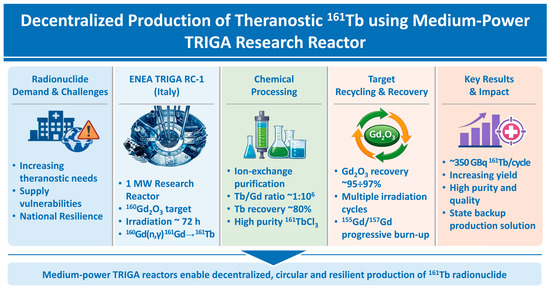
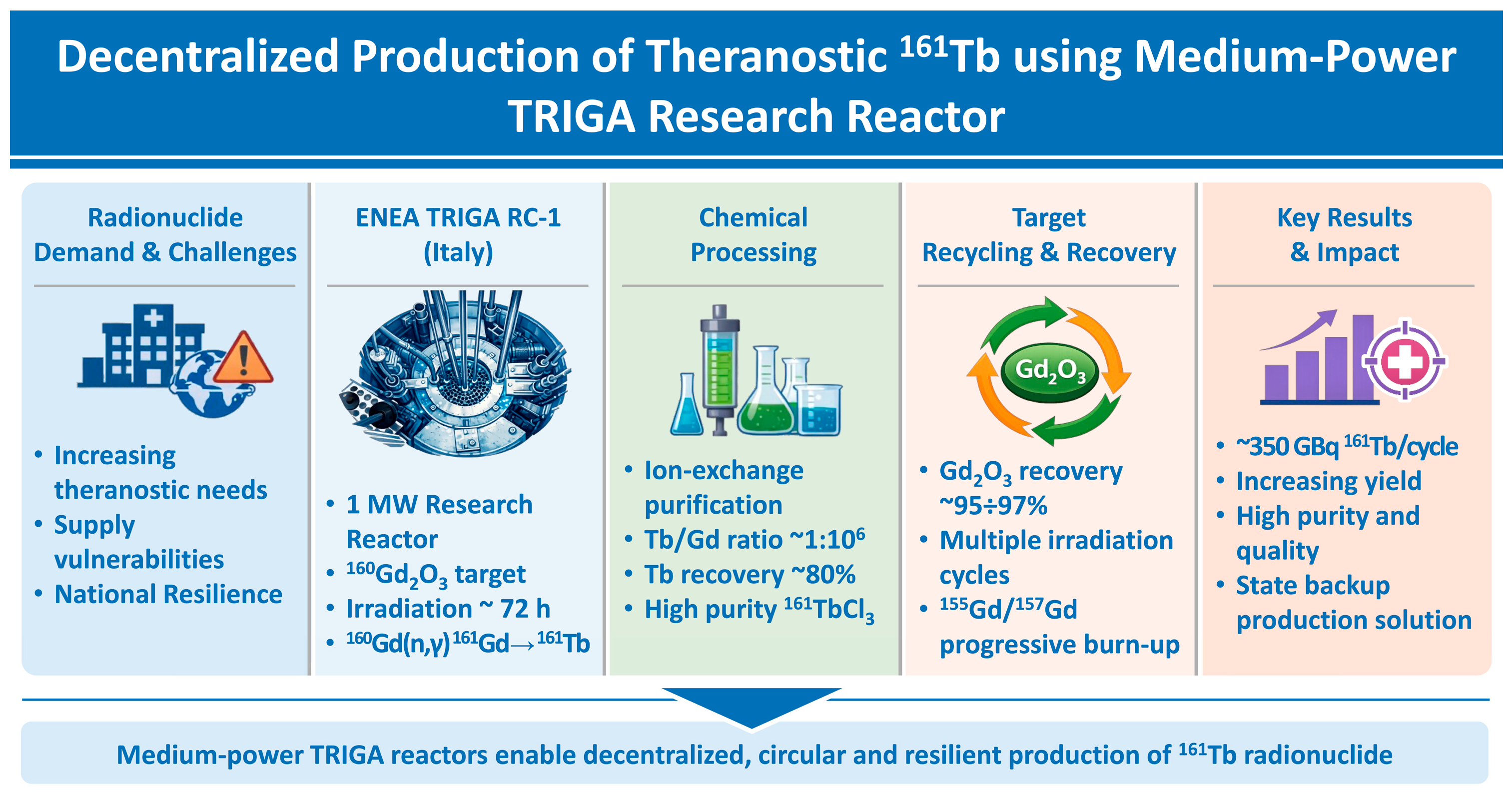
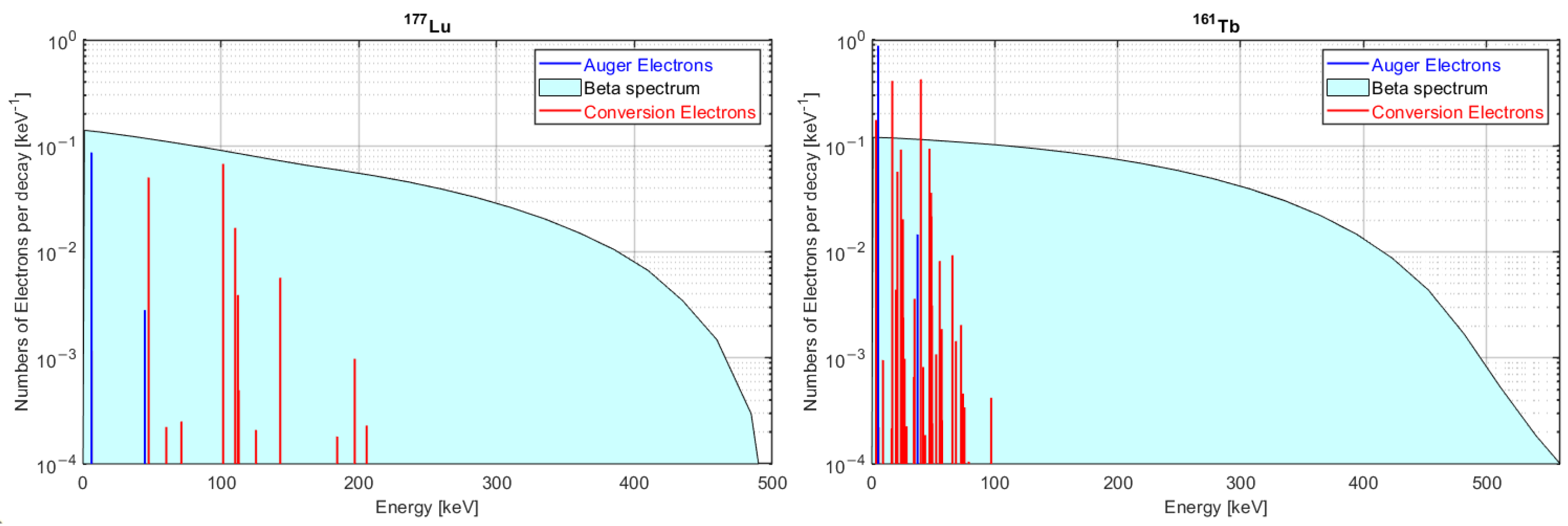
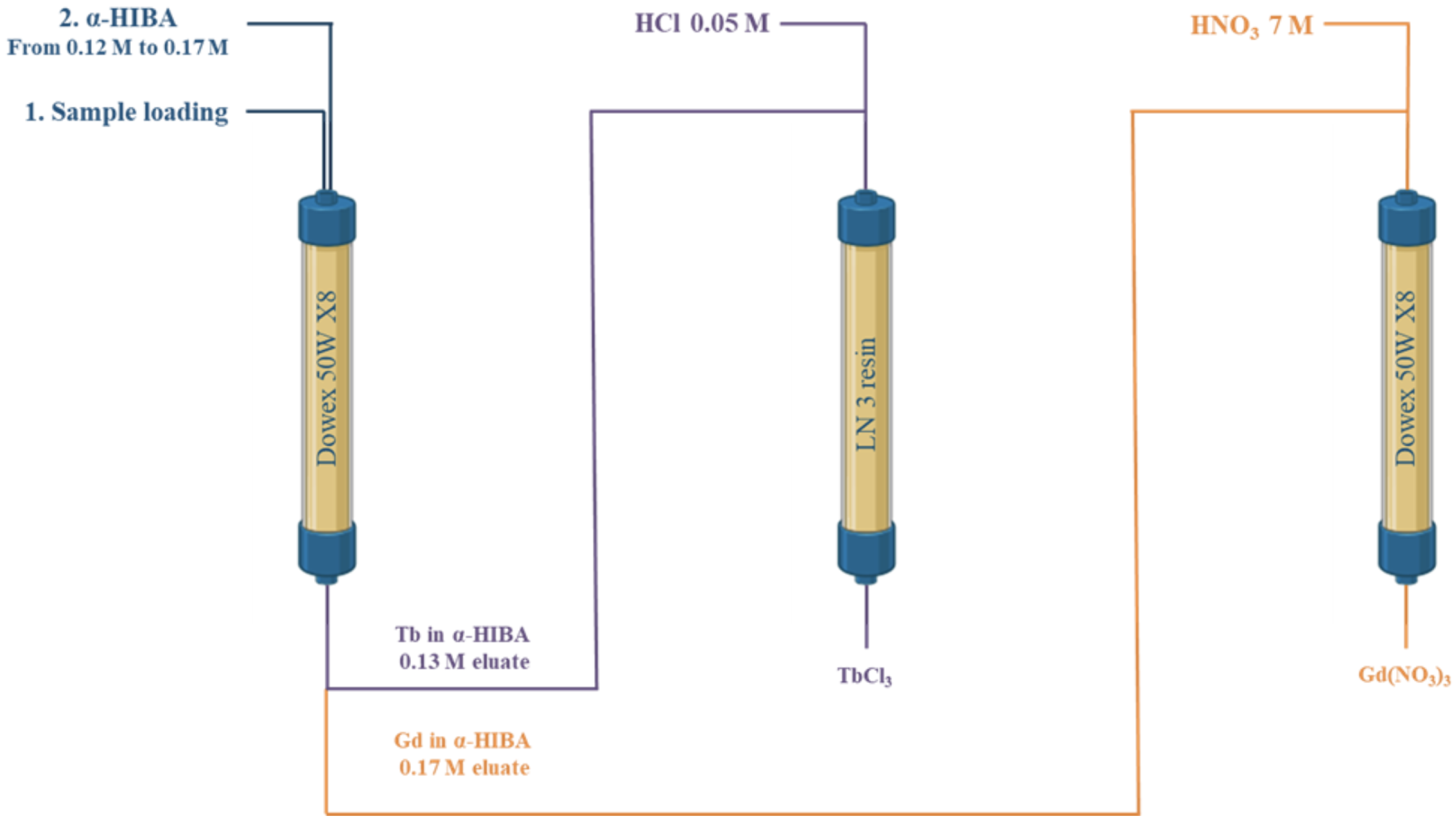
With the same aim, ENEA joined the SECURE Project in 2022, investigating the possibility of using the TRIGA RC-1 as a production facility for the emerging theranostic 161Tb isotope. 161Tb is a promising radionuclide for targeted radionuclide therapy (TRT) due to its favorable decay properties and chemical compatibility with 177Lu. It is obtained by the neutron activation of gadolinium target, highly enriched in 160Gd, exploiting the reaction channel 160Gd(n,)161Gd()→161Tb. The main challenge for large-scale production is the low specific activity concentration in the final irradiated target compared to commercial production methods. This is translated in a larger quantity of starting raw material to be irradiated per cycle, and the need to (i) optimize the irradiation condition, (ii) develop a chemical process to extract and purify the selected isotope, and (iii) recover and purify the high-cost raw material to start new irradiation batches.
It can be concluded that the potential contribution of low- and medium-size reactors to medical radionuclide market requires, for such facilities, to re-design the entire process together with its dedicated scaling-up, because currently established methodologies used in higher-neutron-flux reactors operating today cannot be applied directly.
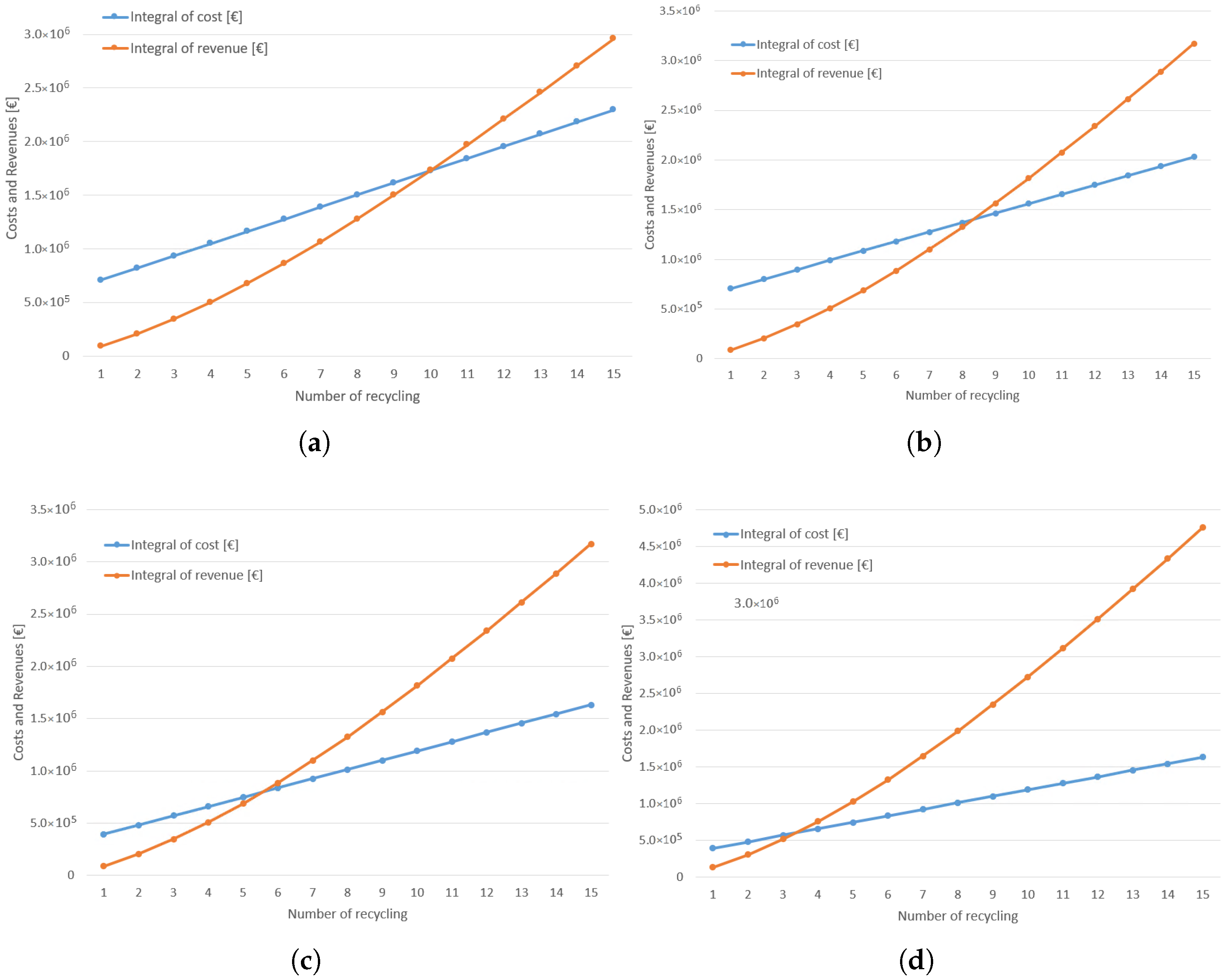
This paper presents the work conducted at the ENEA TRIGA RC-1 research reactor to design a potential Italian production cycle for
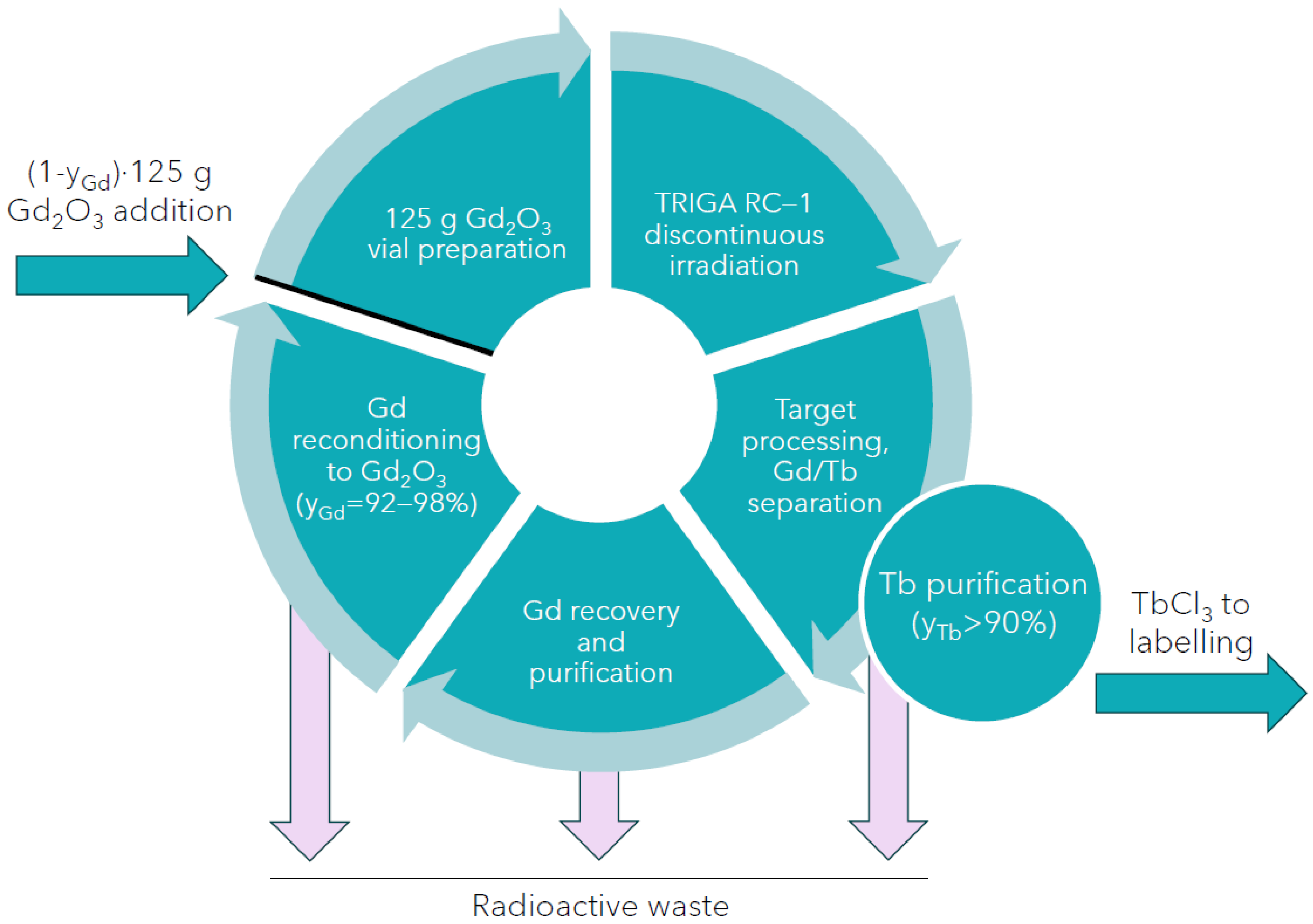
161Tb, integrating reactor-specific analyses, the definition of chemical processing workflows, and a comprehensive economic assessment encompassing the target recycling.
Figure 1 outlines the main actions of such circular process, showing the material workflows.
Overall, the present work represents the combined outcome of theoretical assessments, dedicated irradiation experiments, and extrapolations derived from the achieved results. Taken together, these activities provide a coherent basis for evaluating the potential upscale of 161Tb production at TRIGA RC-1 and for outlining a realistic pathway toward a fully implemented production cycle. The study therefore offers not only an initial feasibility analysis, but also a technically informed framework that may support future decision making regarding the role of small research reactors in strengthening the national medical radionuclide supply chain.





 ,
,