Review

Integrative Non-Pharmacological Interventions for Mental Health and Health-Related Quality of Life During Perimenopause: A Structured Narrative Review

by
Cibeles Serna-Menor
1,
Ivan Herrera-Peco
2,3,4,*,
María Aránzazu Sánchez-Calabuig
2,3,
Aranzazu Aparicio
5,6,7,
Alexis Serna-Menor
1,
Raquel Moreno-Sánchez
2,3,
Gema Mata-González
2,3,* and
Juan Pablo Hervás-Pérez
8
1
PhD Program in Pharmacy, Faculty of Pharmacy, Complutense University of Madrid, 28040 Madrid, Spain
2
University Center for Health Sciences—HM Hospitals (CUHMED), Camilo Jose Cela University, 28660 Madrid, Spain
3
Instituto de Investigación Sanitaria HM Hospitales, 28015 Madrid, Spain
4
Facultad de Ciencias Biomédicas y de la Salud, Universidad Alfonso X el Sabio, Villanueva de la Cañada, 28692 Madrid, Spain
5
VALORNUT-UCM (920030) Research Group, Department of Nutrition and Food Science, Faculty of Pharmacy, Complutense University of Madrid, 28040 Madrid, Spain
6
Department of Nutrition and Food Science, Complutense University of Madrid, 28040 Madrid, Spain
7
San Carlos Health Research Institute (IdISSC), 28040 Madrid, Spain
8
Department of Chemistry in Pharmaceutical Sciences, Analytical Chemistry Unit, Faculty of Pharmacy, Complutense University of Madrid, 28040 Madrid, Spain
*
Authors to whom correspondence should be addressed.
Women 2026, 6(3), 47; https://doi.org/10.3390/women6030047
Submission received: 9 June 2026 / Revised: 8 July 2026 / Accepted: 8 July 2026 / Published: 15 July 2026

Abstract

Perimenopause is a complex, multidimensional biopsychosocial transition characterized by endocrine fluctuations that interact with psychological vulnerabilities, sleep disturbances, and physical symptoms, significantly impacting women’s health-related quality of life (HRQoL). While hormonal therapies remain a viable option, there is an increasing demand for acceptable and accessible non-pharmacological interventions. This structured narrative review synthesizes recent randomized controlled trial (RCT) evidence evaluating integrative non-pharmacological interventions for mental health and HRQoL during the menopausal transition. A structured search was performed in MEDLINE via PubMed, Web of Science Core Collection, and the Cochrane Central Register of Controlled Trials (CENTRAL) for RCTs published between 1 January 2021 and 30 June 2026. Methodological quality was assessed using the Physiotherapy Evidence Database (PEDro) scale: Nineteen RCTs met the eligibility criteria and were categorized into five domains: (i) lifestyle and structured exercise interventions, (ii) psychological, educational, and coaching-based interventions, (iii) mind–body and meditative movement interventions, (iv) acupuncture and traditional technique-based interventions, and (v) herbal and nutraceutical interventions. Overall, physical activity, Mediterranean- or DASH-oriented dietary counseling, cognitive behavioral therapy (CBT), health coaching, mindfulness-based stress reduction (MBSR), yoga, and Tai Chi were associated with favorable findings for depressive and anxiety symptoms, perceived stress, insomnia, sexual functioning, and menopause-specific quality of life. Acupuncture, moxibustion, and specific nutraceuticals yielded positive but highly heterogeneous or formulation-specific outcomes. The breadth of reported effects appeared to vary according to comparator selection, with broader findings generally observed against inactive controls than against active or sham comparators. Current evidence supports integrating tailored non-pharmacological strategies within patient-centered perimenopausal care. However, substantial heterogeneity in perimenopause definitions, small sample sizes, high attrition in select trials, and a lack of long-term follow-up limit generalizable conclusions. Future research requires standardized staging, active comparative-effectiveness designs, and implementation evaluation within multidisciplinary healthcare settings.

1. Introduction

Perimenopause is a dynamic transitional stage in a woman’s life characterized by fluctuating ovarian hormone levels, irregular menstrual cycles, and the progressive emergence of menopause-related symptoms. Although the biological dimensions of this transition are well recognized, perimenopause is increasingly understood as a multidimensional biopsychosocial period that may substantially affect emotional well-being, sleep, daily functioning, and overall quality of life [1,2,3,4]. Perimenopause is commonly staged according to menstrual cycle variability and the interval relative to the final menstrual period, as described in the STRAW+10 framework [5].
The menopausal transition should not be interpreted as a universal cause of mental illness; however, it may represent a period of increased psychological vulnerability for specific subgroups of women. Longitudinal and population-based evidence indicates that depressive symptoms, anxiety, sleep disturbance, and vasomotor complaints are frequent concerns during this stage, although their prevalence and severity vary according to population characteristics, measurement instruments, and menopausal status [1,6,7,8,9,10,11,12]. Women with a previous history of depression, severe vasomotor symptoms, persistent insomnia, prolonged exposure to hormonal variability, or high levels of psychosocial stress appear to be particularly susceptible to clinically relevant emotional distress [1,8,10]. In a large real-world multisite study, symptomatic menopausal transition was associated with a higher risk of incident depression, anxiety, and sleep disorders compared with women without a symptomatic transition [7].
Many women also report irritability, cognitive complaints, fatigue, reduced sexual well-being, and increased stress sensitivity. These experiences are influenced not only by endocrine variability, but also by chronic sleep disruption, caregiving responsibilities, relationship changes, occupational pressures, and other midlife stressors [1,4,5,6,7,8,9,10,11,12,13]. Psychological complaints during the menopausal transition have been associated with lower resilience and self-efficacy, poorer social adjustment, greater functional impairment, and reduced health-related quality of life [11,12]. Taken together, these findings support a model in which endocrine changes interact with previous psychiatric vulnerability, sleep disturbance, symptom burden, and contextual stressors, thereby increasing the likelihood of mental distress in susceptible individuals rather than affecting all women uniformly.
Menopausal hormone therapy remains an important therapeutic option, particularly for vasomotor symptoms and selected menopause-related complaints [4]. However, not all women are candidates for hormonal treatment, and many prefer non-hormonal, behavioral, or integrative approaches aligned with personal values and health beliefs. In recent years, there has been growing interest in integrative and non-pharmacological strategies that address both physical and psychological symptoms while promoting long-term health and resilience [14,15,16].
Lifestyle medicine approaches such as physical activity, nutrition optimization, sleep regulation, and stress reduction may provide broad benefits during perimenopause. In parallel, mind–body therapies, including yoga, Tai Chi, meditation, and mindfulness-based programs, have gained increasing attention for their potential to improve mood, sleep, and symptom burden [13,15,16,17,18,19]. Psychological interventions, particularly cognitive behavioral therapies and coaching-based models, may further support coping, emotional regulation, and adaptation during this life transition [20,21,22,23]. Complementary approaches such as acupuncture and selected nutraceuticals are also commonly sought by women, although evidence quality varies [24,25,26,27,28,29,30,31].
Given the increasing demand for patient-centered, non-pharmacological, and whole-person approaches in midlife women’s health, an updated synthesis focused specifically on the perimenopausal transition is clinically and academically relevant. Although previous reviews have examined menopausal symptoms or specific intervention categories, evidence remains dispersed across lifestyle medicine, mind–body practices, psychological therapies, coaching-based strategies, acupuncture, and nutraceutical approaches. This structured narrative review therefore aims to synthesize recent randomized controlled evidence on integrative non-pharmacological interventions for mental health and health-related quality of life in perimenopausal women. In addition, this review seeks to organize current evidence into a clinically meaningful synthesis that may support individualized decision-making, symptom-oriented care, and future research on comprehensive perimenopausal health.

2. Methods

2.1. Review Design and Scope

This study was conducted as a structured narrative review of contemporary randomized evidence on non-pharmacological and integrative interventions addressing psychological health, sleep, sexual well-being, menopause-related symptom burden, and health-related quality of life during perimenopause. The review was not designed as a systematic review or meta-analysis and therefore does not claim full compliance with the PRISMA 2020 reporting framework. Nevertheless, a structured, transparent, and reproducible literature-identification process was implemented to improve the currency, traceability, and clinical relevance of the narrative synthesis [32,33].
The primary synthesis focused on full-length randomized controlled trials published between 1 January 2021 and 30 June 2026. Earlier landmark studies and relevant reviews were used only to support the conceptual, epidemiological, or clinical interpretation of the findings and were not counted among the randomized trials included in the primary evidence synthesis.

2.2. Information Sources and Search Period

A structured literature search was conducted in MEDLINE via PubMed, Web of Science Core Collection, and the Cochrane Central Register of Controlled Trials (CENTRAL) via the Cochrane Library. The search was conducted on 1 July 2026, and covered publications issued between 1 January 2021 and 30 June 2026.
PubMed/MEDLINE was used as the primary biomedical information source. Web of Science Core Collection was searched to identify multidisciplinary publications and potentially relevant records not indexed in MEDLINE. CENTRAL was consulted to improve the retrieval of randomized and controlled trials, including trial reports that might not have been identified through the other databases.

2.3. Search Strategy and Record Management

The search strategy combined terms relating to four conceptual domains: (i) perimenopause and the menopausal transition, (ii) non-pharmacological, behavioral, lifestyle, psychological, mind–body, complementary, herbal, probiotic, and nutraceutical interventions, (iii) mental health, sleep, psychological well-being, sexual health, menopause-related symptoms, and health-related quality of life, and (iv) randomized or controlled trial design.
In PubMed, Medical Subject Headings and free-text terms were combined. Population-related terms included “perimenopause,” “perimenopausal,” “menopausal transition,” “menopause transition,” and “climacteric.” Intervention-related terms included “exercise,” “physical activity,” “exercise therapy,” “lifestyle modification,” “diet,” “nutrition,” “yoga,” “Tai Chi,” “mindfulness,” “meditation,” “relaxation,” “cognitive behavioral therapy,” “health coaching,” “psychoeducation,” “acupuncture,” “auriculotherapy,” “moxibustion,” “probiotics,” “nutraceuticals,” “dietary supplements,” “phytotherapy,” and “herbal medicine.” Outcome-related terms included “quality of life,” “health-related quality of life,” “mental health,” “depression,” “anxiety,” “stress,” “psychological distress,” “psychological well-being,” “insomnia,” “sleep quality,” “sexual function,” “sexual well-being,” and “menopausal symptoms.”
Database-specific adaptations of the search syntax were used in Web of Science Core Collection and CENTRAL. Web of Science searches were conducted in the Topic field. In CENTRAL, a simplified combination of population and intervention terms was used because the database is specifically designed to identify controlled trials and because the addition of an outcome block substantially reduced search sensitivity. No additional textual randomized-trial filter was applied in CENTRAL. The complete database-specific search strategies are provided in Supplementary Table S1.
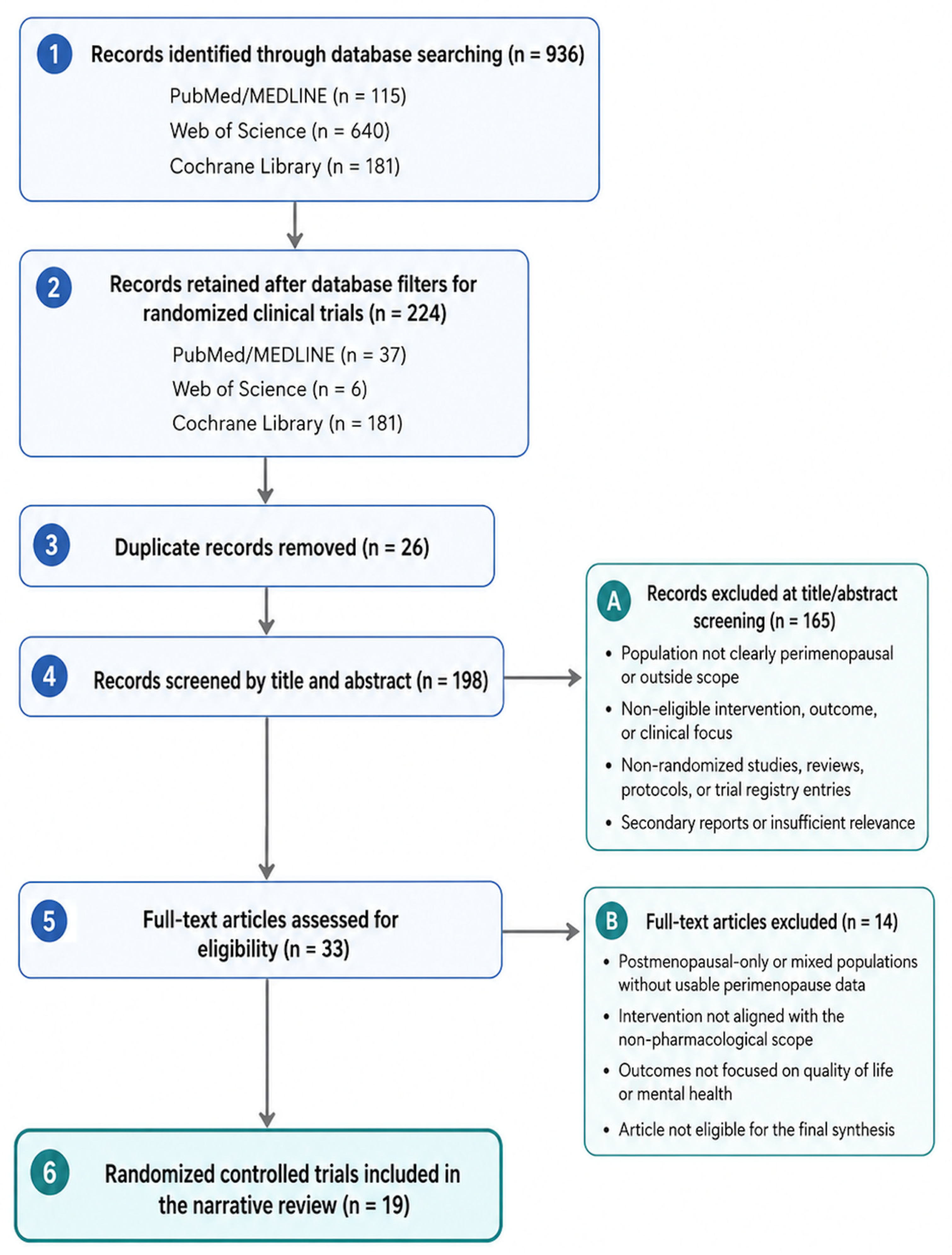
The initial searches retrieved 936 records: 115 from PubMed/MEDLINE, 640 from Web of Science Core Collection, and 181 from CENTRAL. After application of database-specific trial restrictions, 224 records remained: 37 from PubMed, six from Web of Science Core Collection, and 181 from CENTRAL. CENTRAL records were retained at this stage because the database includes not only published randomized trials but also trial registrations, protocols, conference records, secondary reports, and other trial-related entries that required subsequent eligibility assessment. Duplicate records were identified through DOI matching, normalized title comparison, and manual verification of author names, publication year, journal, and trial characteristics. Twenty-six duplicate records were removed, leaving 198 unique records for title and abstract assessment (Figure 1).

2.4. Eligibility Criteria

Studies were eligible for inclusion when they met all of the following criteria: (i) randomized controlled trial design, (ii) the study population consisted of women explicitly identified as being perimenopausal or undergoing the menopausal transition, (iii) studies involving mixed peri- and postmenopausal populations were eligible only when the inclusion of perimenopausal women was explicitly stated and the study was considered clinically relevant to the transition period, (iv) evaluation of a clearly defined non-pharmacological, behavioral, psychological, mind–body, physical, complementary, or nutraceutical intervention, (v) inclusion of a comparator condition, such as usual care, waitlist, placebo, sham treatment, an alternative active intervention, or a lower-intensity intervention, and (vi) at least one relevant clinical outcome was assessed, including depression, anxiety, stress, psychological well-being, sleep or insomnia, health-related quality of life, sexual function or sexual well-being, or clinically meaningful menopausal symptom burden.
Nutraceuticals, herbal preparations, probiotics, and dietary supplements were considered eligible as a separate complementary intervention category when they met all other inclusion criteria. Given their biologically active nature and their conceptual distinction from behavioral, psychological, physical, and mind–body interventions, their findings were interpreted separately and with additional caution.
Studies were excluded if they were: (i) trial registration only, including ClinicalTrials.gov or other registry entries, (ii) study protocol without published outcome data, (iii) conference abstract, poster, proceeding, letter, editorial, erratum, or publication without a complete peer-reviewed article, (iv) systematic review, narrative review, scoping review, meta-analysis, or methodological paper, (v) non-randomized, uncontrolled, observational, or open-label extension publication that did not preserve the original randomized comparison, (vi) exclusively postmenopausal population, (vii) menopausal, climacteric, or middle-aged population in which perimenopausal status was not explicitly defined or identifiable, (viii) population unrelated to the target clinical context, including exclusively male samples or oncology populations without a defined perimenopausal subgroup, (ix) intervention outside the intended scope, including hormone therapy, conventional pharmacological treatment as the main intervention, surgery, microablative radiofrequency, laser therapy, or procedures focused exclusively on urinary or pelvic floor dysfunction, and (x) absence of an eligible clinical outcome.
When the population, intervention, or outcome could not be clearly established from the title and abstract, the record was excluded rather than assuming eligibility based solely on age or broad expressions such as “menopausal women,” “climacteric women,” or “middle-aged women.” This conservative decision rule was applied to improve the specificity and internal coherence of the included evidence.

2.5. Study Selection

Two reviewers independently screened titles and abstracts and subsequently assessed the full texts of potentially eligible records. Records considered potentially relevant by either reviewer were discussed and reviewed in greater detail. Full-length articles were retained only when the population, intervention, comparator, randomized design, and eligible clinical outcomes could be confirmed. Disagreements between the two reviewers were resolved through discussion and consensus.
Trial registrations, protocols, conference abstracts, preliminary reports without an eligible complete article, and duplicate or secondary publications were excluded during the selection process.

2.6. Data Extraction

Data were extracted independently by two reviewers using a standardized data extraction framework. The following information was collected from each eligible study: (i) first author and year of publication, (ii) country and clinical setting, (iii) study design, (iv) sample size and participant characteristics, (v) definition or identification of perimenopause, (vi) inclusion of mixed peri- and postmenopausal populations, (vii) intervention and comparator characteristics, (viii) intervention duration and intensity, (ix) follow-up period, (x) primary and secondary outcome measures, (xi) principal between-group findings, (xii) adverse events, (xiii) attrition and adherence, and (xiv) relevant methodological limitations.

2.7. Definition of Perimenopause and Handling of Mixed Populations

Perimenopausal status was interpreted according to the definitions reported in the original trials. When available, menstrual cycle variability, duration of amenorrhea, reproductive hormone criteria, symptom-based criteria, or explicit reproductive-aging stages were extracted.
The Stages of Reproductive Aging Workshop +10 framework was used as the conceptual reference for reproductive-aging stages [5]. However, the included trials did not consistently apply standardized STRAW+10 criteria. Some studies relied on age ranges, symptom-based eligibility criteria, menstrual changes, hormonal thresholds, or combinations of these indicators.
Studies involving mixed peri- and postmenopausal populations were retained only when perimenopausal women were explicitly represented, and the intervention and outcomes were directly relevant to the menopausal transition. Evidence derived from mixed populations was considered less specific to perimenopause than evidence from trials enrolling exclusively perimenopausal participants. This distinction was considered throughout the narrative synthesis and when assessing the applicability of the findings.
Studies using only broad terms such as “menopausal,” “climacteric,” or “middle-aged” without a sufficiently clear definition of reproductive stage were excluded.

2.8. Methodological Quality Assessment

The methodological quality of the included randomized controlled trials was assessed using the Physiotherapy Evidence Database scale. The PEDro scale comprises 11 items, of which 10 contribute to the total score. The scale assesses random allocation, allocation concealment, baseline comparability, blinding of participants, therapists and outcome assessors, adequacy of follow-up, intention-to-treat analysis, between-group comparisons, and reporting of point estimates and variability [33].
Two reviewers independently evaluated each included trial using the PEDro criteria. Disagreements were resolved through discussion and, when consensus could not be reached, by consultation with a third reviewer. When an item was not clearly reported, it was rated as not satisfied, in accordance with the scoring principles of the instrument.
Because participant and therapist blinding is frequently infeasible in exercise, psychological, behavioral, coaching, and mind–body interventions, the PEDro findings were interpreted at both item and total-score levels. Attention was paid to allocation concealment, assessor blinding, completeness of follow-up, intention-to-treat analysis, and adequacy of between-group reporting, as these characteristics were considered especially relevant to the internal validity of the included trials.
PEDro scores were used to inform the critical appraisal of methodological quality and were not interpreted as a formal assessment of the certainty of the overall body of evidence. NR indicates insufficient reporting and was scored as criterion not satisfied when calculating the total PEDro score. No GRADE assessment was performed. Individual PEDro ratings and total scores are presented in Supplementary Table S2.

2.9. Narrative Synthesis

Owing to substantial heterogeneity in participant characteristics, definitions of menopausal status, intervention content, comparator conditions, outcome measures, intervention intensity, and follow-up periods, quantitative pooling was not considered appropriate. The evidence was therefore synthesized narratively. The included trials were organized into five clinically meaningful categories: (i) lifestyle and structured exercise interventions, (ii) psychological, educational, and coaching-based interventions, (iii) mind–body and meditative movement interventions, (iv) acupuncture and traditional technique-based interventions, and (v) herbal and nutraceutical interventions. This classification was used consistently across the narrative synthesis and the summary tables to facilitate comparison of intervention characteristics, assessed outcomes, overall patterns of findings, and major interpretative limitations.

3. Overview of Included Studies

A total of 936 records were identified through the database searches: 115 from PubMed/MEDLINE, 640 from Web of Science Core Collection, and 181 from the Cochrane Library. After application of database-specific filters for randomized clinical trials, 224 records remained. Following removal of 26 duplicates, 198 unique records underwent title and abstract screening. Of these, 33 full-text articles were assessed for eligibility, and 14 were excluded because they did not meet the predefined population, intervention, outcome, publication-type, or language criteria. The final narrative synthesis therefore included 19 randomized controlled trials. The study-identification and selection process is summarized in Figure 1.
The included clinical trials were conducted across diverse geographic and cultural settings, including countries in Asia, Europe, North America, and the Middle East. Study populations were generally composed of women explicitly identified as perimenopausal or undergoing the menopausal transition. Several trials included mixed peri- and postmenopausal samples; these studies were retained only when perimenopausal participants were clearly represented, and the intervention and outcomes were directly relevant to the menopausal transition. Definitions of perimenopause varied considerably and included menstrual cycle irregularity, amenorrhea duration, symptom-based eligibility, reproductive hormone criteria, age ranges, and, in a limited number of trials, explicit STRAW+10 staging.
The interventions were clinically heterogeneous and were organized into five broad categories: (i) lifestyle and structured exercise interventions, (ii) psychological, educational, and coaching-based interventions, (iii) mind–body and meditative movement interventions, (iv) acupuncture and traditional technique-based interventions, and (v) herbal and nutraceutical interventions. Intervention duration ranged from approximately 8 weeks to 20 weeks, although some programs extended for several months. Only a minority of trials incorporated follow-up assessments beyond the immediate post-intervention period, and long-term sustainability was therefore insufficiently evaluated across most intervention categories.
Comparator conditions included usual care, waitlist control, no-intervention control, health education, lower-intensity behavioral interventions, active exercise or psychological comparators, placebo capsules, and sham procedures. Considerable variation was also observed in intervention intensity, delivery format, supervision, professional involvement, and participant adherence. The principal characteristics of the study populations, interventions, comparators, treatment duration, and follow-up periods are summarized in Table 1.
The most frequently assessed outcomes were depressive and anxiety symptoms, perceived stress, sleep quality, insomnia severity, menopause-related quality of life, overall climacteric symptom burden, psychological well-being, sexual functioning, and vasomotor symptoms. Most trials used validated patient-reported instruments, including measures of depression, anxiety, sleep, menopausal symptoms, and health-related quality of life. Some studies additionally incorporated clinician-rated scales, hormonal biomarkers, anthropometric measures, pelvic floor assessments, or other objective physiological outcomes.
Reporting practices differed substantially across trials. Some studies presented adjusted between-group mean differences and 95% confidence intervals, whereas others reported group-by-time interactions, standardized effect sizes, p values, or predominantly within-group changes. Consequently, the direction and magnitude of intervention effects could not be compared consistently across all studies. The principal outcomes reported effect estimates, direction of findings, and study-specific interpretative considerations are presented in Table 2.
The heterogeneity of participant characteristics, definitions of menopausal status, intervention components, comparator conditions, outcome instruments, analytical approaches, and follow-up periods precluded quantitative pooling and supported the use of a narrative synthesis.

3.1. Methodological Quality of the Included Trials

The PEDro scores of the 19 included randomized controlled trials ranged from 4 to 10, with a mean score of 7.11 and a median score of 7. Fourteen trials obtained scores of 7 or higher, including two trials with scores of 9 or 10, whereas five trials scored between 4 and 6. The criteria most frequently unmet were blinding of participants and intervention providers, which were satisfied in only four and three trials, respectively. This limitation was particularly common in exercise, behavioral, psychological, coaching, and mind–body interventions, in which blinding was often not feasible. Allocation concealment was adequately reported in six trials, and outcome-assessor blinding was confirmed in seven trials, indicating inconsistent protection against selection and detection bias. Adequate follow-up was achieved in 15 trials, while intention-to-treat analysis was reported in 12. In contrast, all included trials reported random allocation, baseline comparability, between-group statistical comparisons, and point estimates with measures of variability. Individual item ratings and total PEDro scores are presented in Supplementary Table S2.

3.2. Psychological, Educational and Coaching-Based Interventions

Five randomized controlled trials evaluated psychological, educational, stress-management, or coaching-based interventions during the menopausal transition. These interventions included culturally adapted cognitive behavioral therapy delivered in group or individual formats, menopause-specific group cognitive behavioral therapy, structured health coaching, health education combined with progressive muscle relaxation, and a multicomponent stress-management program. Intervention duration ranged from 8 to 10 weeks. Comparator conditions included waitlist control, treatment as usual, usual care, progressive muscle relaxation alone, no intervention, and verbal advice.
Khoshbooii et al. [20] compared group and individual culturally adapted cognitive behavioral therapy with a waitlist control in perimenopausal women with depression. Both active formats produced greater reductions in Beck Depression Inventory-II scores and greater improvements in sexual satisfaction than the waitlist condition at follow-up, with no statistically significant difference between the group and individual formats. The reported benefits were maintained at 6 months. However, the study relied on self-reported outcomes, included 11.1% attrition, and did not use an active comparator, which limits the ability to separate treatment-specific effects from attention and expectancy effects.
Kim et al. [21] evaluated an 8-week menopause-specific group cognitive behavioral therapy program against treatment as usual in a pilot randomized trial. Cognitive behavioral therapy was associated with a statistically significant improvement in menopausal symptom severity compared with treatment as usual. Significant between-group improvements were also reported for overall quality of life, anxiety, somatic symptoms, and menopause-related emotional symptoms. In contrast, no significant between-group differences were observed for general depressive symptoms or subjective memory complaints. Interpretation is limited by the small sample, pilot design, absence of longer-term follow-up, and exclusion of five randomized participants from the final analysis.
Shokri-Ghadikolaei et al. [23] assessed a midwifery-led health-coaching program consisting of five biweekly sessions compared with usual care. The intervention produced greater improvements in menopausal symptom severity, depressive symptoms, and health-related quality of life. The reported between-group mean change differences were −12.51 for menopausal symptoms, −5.72 for depression, and 4.13 for quality of life. No significant effect was observed for physical activity. Although the study included a 4-month follow-up, the sample comprised both perimenopausal and menopausal women, which reduces the specificity of the findings for women exclusively undergoing the menopausal transition.
Pelit Aksu and Şentürk Erenel [34] compared health education plus progressive muscle relaxation, progressive muscle relaxation alone, and a no-intervention control. Both active interventions reduced vasomotor symptom frequency and severity and improved insomnia relative to the control condition. The combined health education and progressive muscle relaxation intervention also produced greater improvement in insomnia scores than progressive muscle relaxation alone. Nevertheless, the lack of blinding, the 16.7% attrition rate, and the possibility of additional attention associated with the educational component should be considered when interpreting the findings.
Augoulea et al. [35] evaluated an 8-week structured stress-management program incorporating breathing exercises, progressive muscle relaxation, visualization, and lifestyle education. The intervention improved total climacteric symptom scores and mood-related distress compared with verbal advice. However, no statistically significant between-group differences were observed for sleep quality, self-esteem, or health locus of control. The trial was limited by its pilot design, small sample, inclusion of both perimenopausal and postmenopausal women, and the use of a translated version of the Greene Climacteric Scale that had not been formally validated in the study population.
Taken together, psychological, educational, and coaching-based interventions were associated with favorable findings across depressive symptoms, anxiety, menopausal symptom burden, insomnia, sexual satisfaction, and quality of life. The most consistent benefits were observed for symptom-specific psychological and menopausal outcomes rather than across all assessed domains. However, the evidence remains heterogeneous because of differences in intervention content, comparator intensity, population definitions, outcome measures, attrition, and follow-up duration. Only two trials extended follow-up beyond the immediate post-intervention assessment, limiting conclusions regarding the long-term maintenance of treatment effects (Table 2).

3.3. Lifestyle and Structured Exercise Interventions

Four randomized controlled trials evaluated lifestyle modification, dietary counseling, structured exercise, or multicomponent health-promotion programs during the menopausal transition. The interventions included combinations of menopause education, DASH-style dietary guidance, Mediterranean diet counseling, resistance exercise, aerobic exercise, pelvic floor muscle training, Tai Chi, walking, and relaxation-based techniques. Intervention duration ranged from 8 weeks to 3 months, and comparator conditions included usual care, health education, dietary guidance alone, no counseling, and an active relaxation-based intervention.
Wang et al. [16] evaluated a 12-week therapeutic lifestyle modification program comprising menopause education, DASH-oriented dietary guidance, pelvic floor muscle training, and Bafa Wubu Tai Chi. Compared with usual care, the intervention produced a statistically significant improvement in menopause-specific quality of life, with a between-group mean difference of −0.60 (95% CI, −0.80 to −0.41; p < 0.001). Significant benefits were also observed for sexual functioning, pelvic floor muscle strength, waist circumference, and resting heart rate. No intervention-related adverse events were reported, although seven of the 94 randomized participants were lost to follow-up. Because the intervention incorporated several components, the relative contribution of diet, education, pelvic floor training, and Tai Chi could not be determined.
Hao et al. [36] compared three strategies: centralized health education, health education plus personalized DASH dietary guidance, and health education plus dietary guidance and intensive resistance exercise. Although climacteric symptom scores improved within all three groups, no statistically significant between-group difference was observed in total symptom scores at 3 months (p = 0.295). The combined diet-and-exercise group showed better post-intervention dietary scores than the other groups, but the study did not demonstrate a clear superiority of the more intensive intervention for total menopausal symptom burden. Interpretation is limited by the absence of a no-treatment control, the relatively small and uneven group sizes, and the predominance of within-group findings.
Ali Ismail et al. [37] examined whether adding aerobic exercise to Benson’s relaxation therapy improved outcomes in perimenopausal women with functional dyspepsia. Both groups received daily relaxation therapy, whereas the intervention group also completed aerobic exercise five times per week for 8 weeks. No significant between-group difference was found for post-intervention cortisol levels (p = 0.644), but the combined exercise-and-relaxation group showed greater improvements in dyspeptic symptom severity, depression, anxiety, stress, and sleep quality. The study reported no attrition, but its applicability to the broader perimenopausal population is limited because all participants had functional dyspepsia and the intervention was evaluated against an active relaxation comparator.
Senouci et al. [38] assessed an 8-week healthy lifestyle intervention based on Mediterranean diet counseling and regular walking for 30 min per day. Compared with the control condition, the intervention was associated with reductions in total menopausal symptom scores and sleep disturbance. Improvements were also reported for somatic and psychological symptom domains, whereas no significant between-group difference was observed for urogenital symptoms. The trial reported no attrition, but interpretation is constrained by the unblinded design, short intervention period, and reliance on self-reported dietary and physical activity behaviors.
Overall, lifestyle and structured exercise interventions were associated with favorable findings for quality of life, sexual functioning, psychological symptoms, sleep, menopausal symptom burden, and selected cardiometabolic outcomes. However, the pattern of benefit was not uniform across studies. Multicomponent programs frequently produced improvements across several domains, but their design prevented attribution of effects to any single component. In addition, some trials relied heavily on within-group changes or enrolled participants with specific comorbidities, which limits direct comparison and generalizability (Table 2).

3.4. Mind–Body and Meditative Movement Interventions

Five randomized controlled trials evaluated mind–body or meditative movement interventions, including Tai Chi, mindfulness-based stress reduction, yoga, and meditation. Intervention duration ranged from 8 to 20 weeks. Comparator conditions included waitlist, no intervention, sleep hygiene alone, and usual activity. Two studies incorporated follow-up beyond the immediate post-intervention assessment, although the duration and completeness of follow-up varied considerably.
Liu et al. [13] evaluated a 12-week program of 24-style simplified Tai Chi in perimenopausal women with depression. Compared with no intervention, Tai Chi produced a statistically significant reduction in Self-Rating Depression Scale scores. Favorable between-group differences were also observed in kynurenine-pathway metabolites, including lower kynurenine and quinolinic acid-related measures and higher kynurenic acid levels. A total of 6 of the 72 randomized participants did not complete the study. Interpretation is limited by the relatively small sample, absence of participant and provider blinding, and restriction of the population to women with clinically relevant depressive symptoms.
Gordon et al. [17] assessed an 8-week mindfulness-based stress reduction program comprising group sessions, meditation, yoga practice, and a retreat. Compared with a waitlist condition, mindfulness-based stress reduction was associated with fewer depressive symptoms across the 6-month observation period. Significant between-group findings were also reported for perceived stress, trait anxiety, resilience, and sleep quality. However, the intervention did not significantly reduce the incidence of major depressive episodes. A total of 9 of the 104 randomized participants were lost to follow-up. Although the extended follow-up strengthens the assessment of symptom persistence, the waitlist comparator and reliance on self-reported outcomes may have increased susceptibility to attention and expectancy effects.
Susanti et al. [18] evaluated a 20-week yoga program delivered in 75 min group sessions three times per week. Compared with no intervention, yoga produced significant improvements in menopausal symptom burden and sleep quality at weeks 16 and 20. Significant differences were also reported for depression, anxiety, stress, and perceived social support. Sleep improvements were observed among peri- and postmenopausal participants but were not clearly demonstrated in premenopausal women. The study included women across premenopausal, perimenopausal, and postmenopausal stages, which limits the directness of the findings for women specifically undergoing the menopausal transition. A total of 21 of the 208 randomized participants were lost during the study.
Portella et al. [39] compared Raja Yoga meditation combined with sleep hygiene alone in women undergoing the late menopausal transition. A significant group-by-time interaction favored the meditation intervention for overall menopausal symptom burden. In contrast, no significant between-group effects were observed for insomnia severity or sleep-quality scores. Sleep quality improved within the sleep-hygiene comparator group, suggesting that the added contribution of meditation to sleep outcomes was not clearly established. The trial was limited by its small sample and substantial attrition, with 14 of 47 randomized participants not completing the study.
Sijna and Shobhana [40] evaluated a 60-day clinical yoga package comprising Sukshma Vyayama, asanas, pranayama, and meditation. The intervention included 15 days of supervised training followed by 45 days of home practice. Compared with a waitlist control, yoga significantly improved total menopause-specific quality-of-life scores. Between-group improvements were also observed for sleep, energy, emotional well-being, home life, and work-related functioning, whereas memory, love life, and social-life domains did not differ significantly. No attrition was reported. However, the small sample, waitlist comparator, and limited reporting of allocation concealment and blinding restrict the strength and generalizability of the findings.
Mind–body and meditative movement interventions were associated with favorable findings for depressive symptoms, stress, anxiety, sleep, menopausal symptom burden, resilience, and quality of life. Nevertheless, benefits were not consistent across all outcomes. Meditation did not clearly improve insomnia or sleep quality beyond sleep hygiene in one trial, and mindfulness-based stress reduction improved depressive symptoms without reducing the incidence of major depressive episodes. Differences in population definitions, intervention content, comparator intensity, attrition, and follow-up duration limit direct comparison across studies (Table 2).

3.5. Complementary, Traditional Technique-Based, and Nutraceutical Interventions

Five randomized controlled trials evaluated acupuncture-related techniques, traditional medicine procedures, herbal preparations, or nutraceutical products. These included real acupuncture, auricular point seed therapy combined with moxibustion, chamomile supplementation, a combined Amberen® and Smart B® product, and a standardized Asparagus racemosus extract. Intervention duration ranged from 8 weeks to 180 days. Comparator conditions included sham acupuncture, active auricular therapy, and placebo capsules.
Feng et al. [24] compared auricular point seed burying combined with fire dragon pot moxibustion with auricular point seed therapy alone in perimenopausal women with insomnia. The combined intervention resulted in lower post-treatment Pittsburgh Sleep Quality Index scores and a higher overall treatment response than the active comparator. Anxiety and depression scores were also significantly lower, and improvements were reported for sleep latency and total sleep duration. No adverse reactions or attrition were reported. However, the study was single-center, did not use a sham control for the moxibustion component, and did not provide detailed between-group effect estimates or confidence intervals.
Zhao et al. [25] evaluated real acupuncture against sham acupuncture in women with comorbid perimenopausal depression and insomnia. Real acupuncture produced a greater reduction in sleep-quality scores at the end of treatment, with a mean between-group difference of −1.99 (95% CI, −3.02 to −0.97), and the advantage remained evident at the 8-week follow-up. Insomnia severity also improved relative to sham treatment. In contrast, no statistically significant between-group difference was found for depressive symptoms measured with the 17-item Hamilton Depression Rating Scale, and no clear benefit was observed for overall menopausal quality of life, Kupperman Index scores, or reproductive hormone measures. The between-group advantage was no longer significant at 16 weeks. Minor adverse events were reported in six participants, and attrition reached 41.4% by the final follow-up, limiting conclusions regarding durability.
Mohsenzadeh-Ledari et al. [27] assessed chamomile capsules against placebo over 12 weeks in women with peri- or early postmenopausal symptoms. Chamomile produced a greater reduction in total menopausal symptom scores than placebo, with a between-group mean difference of −10.36 (95% CI, −13.84 to −6.92; p < 0.001). Significant improvements were also reported for vasomotor, psychological, locomotor, and urological symptom domains. Two participants in the chamomile group discontinued because of mouth sores, skin lesions, or itching. The triple-blind design and intention-to-treat analysis represent methodological strengths, although the mixed peri- and postmenopausal population reduces the specificity of the findings for perimenopause.
Kachko et al. [28] evaluated combined daily supplementation with Amberen® and Smart B® against placebo for 180 days. The intervention was associated with significant improvements in several climacteric symptoms, anxiety, depressive symptoms, mood, activity, and subjective well-being. Differences between groups became apparent at different assessment points rather than uniformly across all outcomes. Mild and transient adverse events were reported, and one participant did not complete the trial. Interpretation should remain cautious because the study used a per-protocol analysis, allocation concealment and assessor blinding were incompletely described, the sample was limited to White women of European ancestry, and the study received industry support.
Yadav et al. [41] evaluated two daily doses of CL22209, a standardized Asparagus racemosus root extract, against placebo over 120 days in women with early perimenopause defined according to STRAW stage −2. Both the 50 mg and 100 mg doses produced greater reductions in total Menopause Rating Scale scores than placebo at day 120. Significant improvements were also reported for hot-flash burden and menstrual symptoms, together with dose-dependent changes in follicle-stimulating hormone, luteinizing hormone, anti-Müllerian hormone, and estradiol levels. No serious adverse events were reported, and three of the 75 randomized participants were discontinued. Although the double-blind placebo-controlled design strengthens internal validity, the analysis was conducted primarily in the per-protocol population, the sample was relatively small, and baseline Menopause Rating Scale scores differed significantly between the active and placebo groups. These factors warrant caution when interpreting the magnitude of the reported effects.
Overall, complementary, traditional technique-based, and nutraceutical interventions produced favorable but heterogeneous findings. The sham-controlled acupuncture trial supported a short-term benefit for sleep but not for depression, and the effect was not maintained at the final follow-up. Auricular therapy combined with moxibustion improved sleep and psychological symptoms relative to an active comparator, although treatment-specific effects could not be separated from differences in treatment intensity. Chamomile, Amberen® plus Smart B®, and Asparagus racemosus were associated with improvements in menopausal or psychological symptoms, but the findings remain formulation-specific and are limited by mixed populations, per-protocol analyses, baseline imbalance, industry involvement, or lack of independent replication.

4. Discussion

4.1. Principal Findings

This structured narrative review synthesized 19 randomized controlled trials evaluating lifestyle, psychological, educational, mind–body, acupuncture-related, herbal, and nutraceutical interventions for mental health, sleep, menopause-related symptom burden, sexual functioning, and health-related quality of life during perimenopause. Across the included trials, favorable between-group findings were most frequently reported for sleep quality, depressive and anxiety symptoms, perceived stress, climacteric symptom severity, menopause-specific quality of life, and sexual functioning. However, improvements were generally selective rather than uniform, and no intervention category produced consistent benefits across all assessed domains.
The findings support the biopsychosocial perspective outlined in the Introduction. Psychological distress during the menopausal transition appears to be shaped by interactions among endocrine variability, vasomotor symptoms, sleep disruption, coping, previous psychiatric vulnerability, and contextual stressors rather than by reproductive aging alone [1]. Consistent with this framework, interventions that combined behavioral, psychological, physical, or educational components frequently influenced more than one clinical domain. Nevertheless, the heterogeneity of populations, intervention protocols, comparator conditions, outcome measures, and follow-up periods prevents direct comparison and does not support a formal hierarchy of effectiveness.
A further cross-cutting finding was the apparent influence of comparator selection. Trials using waitlist, no-intervention, or usual-care controls generally reported broader improvements than those using sham procedures or active comparators. This pattern suggests that attention, treatment expectations, contact time, behavioral activation, and other nonspecific therapeutic effects may have contributed to some reported benefits. Accordingly, statistically significant findings should be interpreted in relation to the intensity and credibility of the comparator rather than considered in isolation.

4.2. Behavioral, Psychological, and Mind–Body Interventions

Lifestyle, psychological, educational, coaching-based, and mind–body interventions showed the broadest range of favorable outcomes, although their effects were not consistently replicated across studies or instruments. Lifestyle-oriented programs were associated with improvements in menopause-specific quality of life, sexual functioning, sleep, psychological symptoms, and selected cardiometabolic indicators [16,34,36,38]. These findings are clinically relevant because lifestyle interventions may address several interconnected concerns during perimenopause. However, most programs were multicomponent, combining education, diet, exercise, relaxation, pelvic floor training, or Tai Chi. Their pragmatic value therefore contrasts with limited causal interpretability, since the relative contribution of individual components could not be determined.
The absence of clear between-group superiority in some lifestyle trials is also important. In the study by Hao et al., symptoms improved within all groups, but the combined diet-and-resistance-exercise intervention did not outperform the less intensive conditions for overall climacteric symptoms [36]. This finding illustrates why within-group improvement should not be equated with comparative efficacy. Similarly, the favorable psychological and sleep outcomes observed after aerobic exercise added to Benson relaxation therapy were obtained in women with functional dyspepsia and against an active relaxation comparator, which limits generalizability to the broader perimenopausal population [37].
Psychological, educational, and coaching-based interventions produced favorable findings for depression, anxiety, insomnia, sexual satisfaction, menopausal symptom burden, and quality of life [20,21,23,34,35]. The effects were generally more consistent for symptom-specific or menopause-related measures than for broader psychological constructs. For example, menopause-specific CBT improved anxiety, somatic symptoms, emotional complaints, and quality of life but did not significantly improve general depression scores or subjective memory complaints [21]. Likewise, structured stress management improved climacteric symptoms and mood-related distress without significantly changing sleep quality, self-esteem, or health locus of control [35].
These selective effects suggest that interventions may be more effective when closely matched to the construct they are designed to address. General psychological scales, menopause-specific symptom measures, and broader quality-of-life instruments may capture different dimensions of change. The discrepancy between symptom improvement and behavioral change is also relevant. Health coaching improved menopausal symptoms, depression, and quality of life but did not produce a measurable increase in physical activity [23]. This indicates that improvement in perceived health does not necessarily imply modification of the behavioral pathway targeted by the intervention.
Mind–body interventions, including mindfulness-based stress reduction, yoga, meditation, and Tai Chi, were associated with favorable findings for mood, stress, anxiety, sleep, resilience, menopausal symptoms, and quality of life [13,17,18,39,40]. Their multidimensional nature may be relevant because these approaches combine movement, attentional regulation, breathing, relaxation, and repeated behavioral practice. However, the results do not justify treating these interventions as interchangeable.
The strongest illustration of this distinction was observed in trials using more active comparators. Mindfulness-based stress reduction reduced depressive symptoms, stress, anxiety, and sleep disturbance but did not reduce the incidence of major depressive episodes [17]. Raja Yoga meditation improved overall menopausal symptom burden but did not provide additional benefit for insomnia or sleep quality beyond sleep hygiene alone [39]. These findings distinguish symptom reduction from prevention of clinical disorders and highlight the need to assess the incremental value of mind–body interventions over credible behavioral comparators.
Evidence from yoga and Tai Chi trials was also constrained by population specificity. Some studies included women with depression, mixed menopausal stages, or broader pre-, peri-, and postmenopausal samples [13,18]. These studies suggest potential benefit but provide less direct evidence for women exclusively undergoing perimenopause. Mechanistic findings, such as changes in kynurenine-pathway metabolites following Tai Chi, are of interest but remain exploratory and require replication in larger, methodologically rigorous studies [13].

4.3. Acupuncture, Traditional Techniques, and Nutraceutical Interventions

Acupuncture-related, traditional technique-based, herbal, and nutraceutical interventions produced favorable but more heterogeneous and product-specific findings. This category requires caution because procedures, formulations, doses, standardization, regulation, and mechanisms differ substantially.
The sham-controlled acupuncture trial provides a useful example of selective efficacy. Real acupuncture improved sleep quality and insomnia severity at the end of treatment and at short-term follow-up but did not significantly improve depressive symptoms, menopause-related quality of life, or hormonal outcomes [25]. The sleep benefit was no longer evident at the final follow-up, and high attrition reduced confidence regarding durability. These results suggest that acupuncture may influence selected sleep outcomes without producing a broader effect across psychological or menopausal domains.
Auricular point seed therapy combined with moxibustion improved sleep, anxiety, and depression relative to auricular therapy alone [24]. However, because the combined group received greater procedural exposure and no sham moxibustion was used, the additional contribution of the specific technique cannot be distinguished fully from differences in attention, expectation, or treatment intensity.
The herbal and nutraceutical trials reported improvements in menopausal or psychological symptoms, but these findings should be interpreted as formulation-specific. Chamomile reduced overall menopausal symptom burden and several symptom subdomains relative to placebo [27]. The triple-blind design and intention-to-treat analysis strengthen this finding, although the mixed peri- and early postmenopausal population reduces directness, and adverse reactions indicate that herbal products should not be assumed to be risk-free.
Amberen® combined with Smart B® was associated with improvements in climacteric symptoms, anxiety, depression, mood, and subjective well-being [28]. Nevertheless, the per-protocol analysis, incomplete reporting of allocation procedures, restricted participant profile, and industry involvement limit external validity and reinforce the need for independent replication.
The standardized Asparagus racemosus extract produced favorable findings for menopausal symptoms, hot-flash burden, menstrual complaints, and reproductive hormone measures [41]. However, baseline imbalance, relatively small groups, and reliance on a per-protocol efficacy analysis complicate interpretation of effect magnitude. The hormonal findings should therefore be considered preliminary rather than evidence of a confirmed biological mechanism.
Taken together, these trials do not support treating complementary medicine as a homogeneous intervention category. Each procedure or product should be evaluated independently, with attention to formulation, dosing, manufacturing consistency, adverse events, comparator credibility, funding source, and reproducibility. This interpretation is consistent with previous reviews emphasizing substantial heterogeneity in herbal and phytoestrogen research [29,30].

4.4. Comparator Effects, Methodological Quality, and Applicability

The methodological appraisal identified several recurring limitations that affect interpretation across intervention categories. Although 14 of the 19 trials obtained PEDro scores of 7 or higher, participant and provider blinding was rarely feasible, allocation concealment was inconsistently reported, assessor blinding was uncommon, and intention-to-treat analysis was not universal. PEDro scores therefore indicate selected methodological characteristics of individual studies but do not constitute a formal assessment of certainty of evidence [33].
Comparator selection was a major source of heterogeneity. Waitlist and no-intervention controls do not account adequately for treatment attention, expectations, group participation, social interaction, or behavioral activation. Consequently, broader effects in these trials may reflect both specific and nonspecific components. By contrast, sham or active comparators provide a more demanding test of incremental efficacy but may reduce observed between-group differences because the control condition itself can have therapeutic effects.
Outcome selection further complicated interpretation. The included trials used diverse instruments for depression, anxiety, sleep, menopausal symptoms, sexual functioning, and quality of life. Some reported adjusted mean differences and confidence intervals, whereas others relied on interaction terms, p-values, or predominantly within-group changes. This inconsistency prevents comparison of effect magnitude and makes statistical significance difficult to translate into clinical relevance.
Applicability was also limited by variation in reproductive stage. Some studies enrolled women using explicit STRAW-related criteria [5], whereas others relied on symptoms, age ranges, hormonal thresholds, or mixed menopausal populations. Evidence derived from mixed peri- and postmenopausal samples is relevant to broader midlife care but less specific to the menopausal transition. Similarly, trials restricted to women with depression, insomnia, functional dyspepsia, or other defined clinical profiles may not generalize to asymptomatic or community-based populations.
The predominance of short interventions and limited follow-up further restricts conclusions regarding durability. Several studies demonstrated immediate post-treatment improvement, but only a minority assessed persistence beyond four to six months. The available evidence therefore addresses short-term symptom change more convincingly than maintenance, relapse prevention, sustained adherence, or long-term functional benefit.

4.5. Clinical Implications

The findings support consideration of non-pharmacological interventions as components of individualized perimenopausal care, but they do not establish a formal therapeutic hierarchy. Intervention selection should be guided by the predominant symptom profile, reproductive stage, previous psychiatric history, sleep disturbance, vasomotor burden, sexual and genitourinary concerns, comorbidities, treatment preferences, accessibility, cost, and willingness to engage in repeated practice.
Lifestyle, behavioral, psychological, and mind–body interventions may be relevant when symptoms are multidimensional or when women prefer non-hormonal approaches [14,15]. However, feasibility should not be assumed. Supervised yoga, group CBT, acupuncture, intensive lifestyle programs, and repeated coaching sessions require trained professionals, time, transportation, financial resources, and service availability. These requirements may reduce access for women with caregiving responsibilities, limited income, rural residence, reduced mobility, or limited access to specialist menopause services [3].
Pelvic-floor-related symptoms also deserve clinical attention within individualized perimenopausal care. Involuntary urine leakage, pelvic floor weakness, vulvovaginal discomfort, and related sexual concerns may substantially affect daily functioning, self-confidence, intimacy, and health-related quality of life. Pelvic floor muscle training, including Kegel-type exercises, may therefore represent a relevant non-pharmacological component of comprehensive care when urinary or pelvic floor symptoms are present. In the evidence reviewed here, pelvic floor muscle training was included as part of a multicomponent therapeutic lifestyle intervention [16]; however, its independent contribution could not be isolated. Future trials should specifically evaluate pelvic floor muscle training and Kegel-based protocols in relation to urinary symptoms, sexual function, psychological well-being, and menopause-specific quality of life during perimenopause.
Complementary and nutraceutical options may be considered only with product- and procedure-specific discussions of uncertainty, adverse events, cost, formulation consistency, and potential interactions. Evidence from one herbal product or supplement should not be generalized to related products or to the broader category of complementary medicine.
Non-pharmacological care should complement rather than replace appropriate clinical assessment. Major depression, suicidality, severe or persistent insomnia, substantial functional impairment, unexplained bleeding, severe vasomotor symptoms, or complex psychiatric and gynecological presentations require timely medical or specialist evaluation [1,4].
The intervention categories, outcomes assessed, overall patterns of findings, and principal interpretative limitations are summarized in Table 3. This table is descriptive and should not be interpreted as a formal ranking of comparative effectiveness or certainty of evidence.

4.6. Strengths and Limitations

This review has several strengths. It synthesized recent randomized evidence, applied explicit eligibility criteria, used duplicate screening and data extraction, prioritized between-group comparisons, documented variation in perimenopause definitions, and evaluated methodological characteristics using PEDro. The structured narrative approach was appropriate given the substantial clinical and methodological heterogeneity and avoided inappropriate quantitative pooling [31,32].
Several limitations should be acknowledged. First, heterogeneity in populations, interventions, comparators, outcomes, and analytical methods prevented quantitative synthesis and direct comparison of effect magnitude. Second, variation in reproductive-stage definitions reduced directness and comparability. Third, many studies were small, single-center, short in duration, or lacked extended follow-up. Fourth, inactive comparators and reliance on self-reported outcomes increased susceptibility to expectancy, attention, and performance effects.
Fifth, statistical reporting was inconsistent, and clinical importance could not always be distinguished from statistical significance. Sixth, PEDro does not provide an outcome-specific risk-of-bias assessment or a formal certainty-of-evidence rating. Seventh, the restriction to randomized controlled trials strengthened comparative internal validity but excluded qualitative, implementation, feasibility, and real-world evidence. Consequently, acceptability, adherence, treatment burden, cultural adaptation, accessibility, cost, and service-level sustainability could not be evaluated adequately.
Another limitation is that pelvic-floor-related outcomes, involuntary urine loss, and genitourinary symptoms were not systematically assessed across the included trials. Although pelvic floor muscle training was included in one multicomponent lifestyle intervention, the available evidence did not allow its independent effect on urinary leakage, pelvic floor dysfunction, sexual well-being, or menopause-specific quality of life to be isolated. Therefore, Conclusions regarding Kegel-type exercises or pelvic floor muscle training during the menopausal transition should therefore be considered exploratory and require dedicated trials.
The exclusion of non-English reports and unpublished or gray literature may also have introduced language and publication bias. In addition, the conservative exclusion of records whose eligibility could not be established clearly from titles and abstracts may have increased specificity at the expense of search sensitivity. Finally, findings from herbal and nutraceutical trials remain formulation-specific and, in some cases, potentially affected by industry involvement.

4.7. Future Research Priorities

Future trials should apply explicit reproductive-stage criteria, preferably STRAW+10, and distinguish early from late menopausal transition [5]. Larger multicenter samples are needed to improve precision, representation, and external validity.
Interventions should be described in sufficient detail to permit replication, including provider qualifications, session frequency, duration, adherence, treatment fidelity, and actual participant exposure. Multicomponent interventions would benefit from factorial or dismantling designs capable of identifying the contribution of individual components.
Future studies should prespecify clinically relevant primary outcomes and report adjusted between-group estimates with confidence intervals. Standardized measures of depression, anxiety, sleep, menopause-specific quality of life, sexual function, symptom burden, functional impairment, and work participation would improve comparability. Where available, minimal clinically important differences should be reported alongside statistical significance.
Longer follow-up is needed to assess maintenance, relapse, adherence, delayed adverse events, and sustained functional benefit. Follow-up periods of at least 6 to 12 months would provide more useful evidence for clinical decision-making.
Comparative-effectiveness trials using active controls are especially important. Direct comparisons between CBT, mindfulness, yoga, structured exercise, coaching, sleep-focused interventions, and multicomponent lifestyle programs would provide more informative evidence than repeated comparison with waitlist or no treatment.
Finally, implementation research should evaluate delivery in primary care, gynecology, nursing consultations, mental health services, and multidisciplinary menopause clinics. Digital, hybrid, group-based, culturally adapted, and community-delivered interventions should be assessed for reach, acceptability, equity, cost, fidelity, and sustainability.

5. Conclusions

Perimenopause is a multidimensional biopsychosocial transition in which hormonal variability, sleep disturbance, vasomotor symptoms, psychological vulnerability, and contextual stressors may interact to affect mental health, sexual well-being, daily functioning, and health-related quality of life. The randomized trials included in this structured narrative review indicate that a diverse range of non-pharmacological and integrative interventions has been evaluated during this stage, including lifestyle modification, structured exercise, psychological and educational programs, health coaching, mind–body practices, acupuncture-related techniques, and selected herbal and nutraceutical products.
Across the 19 included trials, favorable between-group findings were reported for several outcomes, including depressive and anxiety symptoms, perceived stress, sleep quality, insomnia, climacteric symptom burden, menopause-specific quality of life, and sexual functioning. However, improvements were not consistent across all outcomes or interventions. Several studies reported selective rather than global benefits, and findings were generally broader in trials using waitlist, usual-care, or no-intervention comparators than in those using sham or active controls. The current evidence therefore does not establish the superiority of one intervention category or support a formal hierarchy of non-pharmacological treatments.
The findings support consideration of these approaches within individualized and patient-centered care, considering the predominant symptom profile, reproductive stage, comorbidities, previous psychiatric history, treatment preferences, accessibility, cost, and willingness to engage in sustained practice. Non-pharmacological interventions should complement, rather than replace, appropriate gynecological, psychiatric, sleep, or primary care assessment when symptoms are severe, persistent, diagnostically complex, or associated with substantial functional impairment.
Interpretation remains limited by heterogeneous definitions of perimenopause, small and frequently single-center samples, variable comparator conditions, inconsistent outcome reporting, limited blinding, and short or absent follow-up. Multicomponent interventions also prevented identification of the specific elements responsible for observed effects, while findings for herbal and nutraceutical products remained formulation-specific and require independent replication.
Future research should apply standardized reproductive-stage criteria, prespecify clinically relevant primary outcomes, report adjusted between-group estimates with confidence intervals, use intention-to-treat analyses, and include longer follow-ups. Comparative effectiveness, implementation, acceptability, cost, cultural adaptation, and equitable access should also be examined in primary care, gynecology, mental health, nursing, and multidisciplinary menopause services. Overall, integrative non-pharmacological interventions represent a potentially valuable component of perimenopausal care, but their use should remain evidence-informed, individualized, and proportionate to the methodological quality, consistency, and applicability of the available evidence.

Supplementary Materials

The following supporting information can be downloaded at: https://www.mdpi.com/article/10.3390/women6030047/s1, Table S1: Search strategies; Table S2: Methodological quality of the randomized controlled trials included in the structured narrative review according to the PEDro scale.

Author Contributions

Conceptualization, C.S.-M., I.H.-P. and J.P.H.-P.; methodology, R.M.-S., I.H.-P. and J.P.H.-P.; validation, A.S.-M., G.M.-G. and C.S.-M.; formal analysis, C.S.-M., I.H.-P. and J.P.H.-P.; data curation, M.A.S.-C., A.A., R.M.-S. and A.S.-M.; visualization, C.S.-M. and I.H.-P.; supervision, I.H.-P. and J.P.H.-P.; writing—original draft preparation, C.S.-M., R.M.-S. and G.M.-G.; writing—review and editing, J.P.H.-P., A.A. and I.H.-P. All authors have read and agreed to the published version of the manuscript.

Funding

This research received no external funding.

Institutional Review Board Statement

Not applicable.

Informed Consent Statement

Not applicable.

Data Availability Statement

No new data were created or analyzed in this study. Data sharing is not applicable to this article.

Conflicts of Interest

The authors declare no conflicts of interest.

References

  1. Brown, L.; Hunter, M.S.; Chen, R.; Crandall, C.J.; Gordon, J.L.; Mishra, G.D.; Rother, V.; Joffe, H.; Hickey, M. Promoting good mental health over the menopause transition. Lancet 2024, 403, 969–983. [Google Scholar] [CrossRef] [PubMed]
  2. Coronado, P.J.; Fasero, M.; Mendoza, N.; González, S.P.; Sánchez-Méndez, S.; Presa, J.; Jurado, A.R.; de la Viuda, E.; Quereda, F. Quality of life at peri- and postmenopause: Analysis of the results from app “Mi Menopausia”. Maturitas 2025, 197, 108267. [Google Scholar] [CrossRef] [PubMed]
  3. Llaneza-Suarez, C.; Garcia-Portilla, P.; Rodriguez-Vijande, B.; Carriles, J.; Sánchez-Prieto, M.; Coronado Martín, P.J.; Coto, Á.P.L.; Sánchez-Borrego, R. Rural residence and health-related quality of life in a sample of Spanish perimenopausal women. Gynecol. Endocrinol. 2024, 40, 2336335. [Google Scholar] [CrossRef] [PubMed]
  4. “The 2022 Hormone Therapy Position Statement of The North American Menopause Society” Advisory Panel. The 2022 hormone therapy position statement of The North American Menopause Society. Menopause 2022, 29, 767–794. [CrossRef] [PubMed]
  5. Harlow, S.D.; Gass, M.; Hall, J.E.; Lobo, R.; Maki, P.; Rebar, R.W.; Sherman, S.; Sluss, P.M.; de Villiers, T.J. Executive summary of the Stages of Reproductive Aging Workshop +10: Addressing the unfinished agenda of staging reproductive aging. J. Clin. Endocrinol. Metab. 2012, 97, 1159–1168. [Google Scholar] [CrossRef] [PubMed]
  6. Lee, D.Y.; Andreescu, C.; Aizenstein, H.; Karim, H.; Mizuno, A.; Kolobaric, A.; Yoon, S.; Kim, Y.; Lim, J.; Hwang, E.J.; et al. Impact of symptomatic menopausal transition on the occurrence of depression, anxiety, and sleep disorders: A real-world multi-site study. Eur. Psychiatry 2023, 66, e80. [Google Scholar] [CrossRef] [PubMed]
  7. Zhang, F.; Cheng, L. Association between sleep duration and depression in menopausal women: A population-based study. Front. Endocrinol. 2024, 15, 1301775. [Google Scholar] [CrossRef] [PubMed]
  8. Bromberger, J.T.; Matthews, K.A.; Schott, L.L.; Brockwell, S.; Avis, N.E.; Kravitz, H.M.; Everson-Rose, S.A.; Gold, E.B.; Sowers, M.; Randolph, J.F. Depressive symptoms during the menopausal transition: The Study of Women’s Health Across the Nation. J. Affect. Disord. 2007, 103, 267–272. [Google Scholar] [CrossRef] [PubMed]
  9. Freeman, E.W. Depression in the menopause transition: Risks in the changing hormone milieu as observed in the general population. Women’s Midlife Health 2015, 1, 2. [Google Scholar] [CrossRef] [PubMed]
  10. Avis, N.E.; Colvin, A.; Chen, Y.; Joffe, H.; Kravitz, H.M. Depressive symptoms over the final menstrual period: Study of Women’s Health Across the Nation. J. Affect. Disord. 2024, 367, 426–433. [Google Scholar] [CrossRef] [PubMed]
  11. Wariso, B.A.; Guerrieri, G.M.; Thompson, K.; Koziol, D.E.; Haq, N.; Martinez, P.E.; Rubinow, D.R.; Schmidt, P.J. Depression during the menopause transition: Impact on quality of life, social adjustment, and disability. Arch. Women’s Ment. Health 2017, 20, 273–282. [Google Scholar] [CrossRef] [PubMed]
  12. Kuck, M.J.; Hogervorst, E. Stress, depression, and anxiety: Psychological complaints across menopausal stages. Front. Psychiatry 2024, 15, 1323743. [Google Scholar] [CrossRef] [PubMed]
  13. Liu, J.; Si, J.; Zhao, W. Investigation of the effect of Tai Chi training on depressive symptoms in perimenopausal women on the basis of serum kynurenine metabolites. Exp. Aging Res. 2025, 51, 331–349. [Google Scholar] [CrossRef] [PubMed]
  14. Kim, J.H.; Yu, H.J. Nonpharmacological intervention effects on middle-aged women with menopausal symptoms: A systematic review and meta-analysis. Healthcare 2025, 13, 3206. [Google Scholar] [CrossRef] [PubMed]
  15. van Driel, C.M.; Stuursma, A.; Schroevers, M.J.; Mourits, M.J.; de Bock, G.H. Mindfulness, cognitive behavioral and behavior-based therapy for natural and treatment-induced menopausal symptoms: A systematic review and meta-analysis. BJOG Int. J. Obstet. Gynaecol. 2019, 126, 330–339. [Google Scholar] [CrossRef] [PubMed]
  16. Wang, Y.; Miao, X.; Viwattanakulvanid, P. Effects of a therapeutic lifestyle modification intervention on health-related quality of life and sexual functioning and cardiometabolic health in perimenopausal Chinese women: A randomized controlled trial. Climacteric 2024, 28, 28–39. [Google Scholar] [CrossRef] [PubMed]
  17. Gordon, J.L.; Halleran, M.; Beshai, S.; Eisenlohr-Moul, T.A.; Frederick, J.; Campbell, T.S. Endocrine and psychosocial moderators of mindfulness-based stress reduction for the prevention of perimenopausal depressive symptoms: A randomized controlled trial. Psychoneuroendocrinology 2021, 130, 105277. [Google Scholar] [CrossRef] [PubMed]
  18. Susanti, H.D.; Sonko, I.; Chang, P.C.; Chuang, Y.H.; Chung, M.H. Effects of yoga on menopausal symptoms and sleep quality across menopause statuses: A randomized controlled trial. Nurs. Health Sci. 2022, 24, 368–379. [Google Scholar] [CrossRef] [PubMed]
  19. Liu, X.Y.; Peng, S.Z.; Pei, M.Y.; Zhang, P. The effects of physical activity on depression and quality of life in Chinese perimenopausal women. J. Affect. Disord. 2023, 328, 153–162. [Google Scholar] [CrossRef] [PubMed]
  20. Khoshbooii, R.; Hassan, S.A.; Deylami, N.; Muhamad, R.; Engku Kamarudin, E.M.; Alareqe, N.A. Effects of group and individual culturally adapted cognitive behavioral therapy on depression and sexual satisfaction among perimenopausal women. Int. J. Environ. Res. Public Health 2021, 18, 7711. [Google Scholar] [CrossRef] [PubMed]
  21. Kim, D.S.; Kim, N.Y.; Han, D.H.; Kim, H.J.; Yu, E.S.; Kim, S.M. Efficacy of cognitive behavioral therapy for menopausal symptoms and quality of life in Korean perimenopausal women: A pilot randomized controlled trial. Maturitas 2024, 189, 108103. [Google Scholar] [CrossRef] [PubMed]
  22. Green, S.M.; Donegan, E.; Frey, B.N.; Fedorkow, D.M.; Key, B.L.; Streiner, D.L.; McCabe, R.E. Cognitive behavior therapy for menopausal symptoms: A randomized controlled trial. Menopause 2019, 26, 972–980. [Google Scholar] [CrossRef] [PubMed]
  23. Shokri-Ghadikolaei, A.; Bakouei, F.; Delavar, M.A.; Azizi, A.; Sepidarkish, M. Effects of health coaching on menopausal symptoms in postmenopausal and perimenopausal women. Menopause 2022, 29, 1189–1195. [Google Scholar] [CrossRef] [PubMed]
  24. Feng, H.; Pan, A.; Zheng, G.; Yu, W. Clinical study of auricular point seed burying combined with fire dragon pot moxibustion in perimenopausal women with insomnia. J. Obstet. Gynaecol. Res. 2022, 48, 1938–1944. [Google Scholar] [CrossRef] [PubMed]
  25. Zhao, F.Y.; Zheng, Z.; Fu, Q.Q.; Conduit, R.; Xu, H.; Wang, H.R.; Huang, Y.L.; Jiang, T.; Zhang, W.J.; Kennedy, G.A. Acupuncture for comorbid depression and insomnia in perimenopause: A feasibility patient-assessor-blinded, randomized, and sham-controlled clinical trial. Front. Public Health 2023, 11, 1120567. [Google Scholar] [CrossRef] [PubMed]
  26. Li, Z.; Yin, S.; Feng, J.; Gao, X.; Yang, Q.; Zhu, F. Acupuncture combined with Chinese herbal medicine in the treatment of perimenopausal insomnia: A systematic review and meta-analysis. Medicine 2023, 102, e35942. [Google Scholar] [CrossRef] [PubMed]
  27. Mohsenzadeh-Ledari, F.; Agajani Delavar, M.; Moghadamnia, A.A.; Khafri, S.; Bekhradi, R.; Behmanesh, F.; Yazdani, S. Efficacy and safety of Matricaria chamomilla intervention in managing menopausal symptoms: A triple-blind clinical trial. Menopause 2025, 32, 353–358. [Google Scholar] [CrossRef] [PubMed]
  28. Kachko, V.A.; Shulman, L.P.; Kuznetsova, I.V.; Uspenskaya, Y.B.; Burchakov, D.I. Clinical evaluation of effectiveness and safety of combined use of dietary supplements Amberen® and Smart B® in women with climacteric syndrome in perimenopause. Adv. Ther. 2024, 41, 3183–3195. [Google Scholar] [CrossRef] [PubMed]
  29. Chen, M.N.; Lin, C.C.; Liu, C.F. Efficacy of phytoestrogens for menopausal symptoms: A meta-analysis and systematic review. Climacteric 2015, 18, 260–269. [Google Scholar] [CrossRef] [PubMed]
  30. Kargozar, R.; Azizi, H.; Salari, R. A review of effective herbal medicines in controlling menopausal symptoms. Electron. Physician 2017, 9, 5826–5833. [Google Scholar] [CrossRef] [PubMed]
  31. Sukhera, J. Narrative reviews: Flexible, rigorous, and practical. J. Grad. Med. Educ. 2022, 14, 414–417. [Google Scholar] [CrossRef] [PubMed]
  32. Grant, M.J.; Booth, A. A typology of reviews: An analysis of 14 review types and associated methodologies. Health Info. Libr. J. 2009, 26, 91–108. [Google Scholar] [CrossRef] [PubMed]
  33. Maher, C.G.; Sherrington, C.; Herbert, R.D.; Moseley, A.M.; Elkins, M. Reliability of the PEDro scale for rating quality of randomized controlled trials. Phys. Ther. 2003, 83, 713–721. [Google Scholar] [CrossRef]
  34. Pelit Aksu, S.; Şentürk Erenel, A. Effects of health education and progressive muscle relaxation on vasomotor symptoms and insomnia in perimenopausal women: A randomized controlled trial. Patient Educ. Couns. 2022, 105, 3279–3286. [Google Scholar] [CrossRef] [PubMed]
  35. Augoulea, A.; Palaiologou, A.; Christidi, F.; Armeni, E.; Soureti, A.; Alexandrou, A.; Panoulis, K.; Chroussos, G.; Zervas, I.; Lambrinoudaki, I. Assessing the efficacy of a structured stress management program in reducing stress and climacteric symptoms in peri- and postmenopausal women. Arch. Women’s Ment. Health 2021, 24, 727–735. [Google Scholar] [CrossRef] [PubMed]
  36. Hao, S.; Tan, S.; Li, J.; Li, W.; Li, J.; Liu, Y.; Hong, Z. The effect of diet and exercise on climacteric symptomatology. Asia Pac. J. Clin. Nutr. 2022, 31, 362–370. [Google Scholar] [CrossRef] [PubMed]
  37. Ali Ismail, A.M.; Saad, A.E.; Fouad Abd-Elrahman, N.A.; Abdelhalim Elfahl, A.M. Effect of Benson’s relaxation therapy alone or combined with aerobic exercise on cortisol, sleeping quality, estrogen, and severity of dyspeptic symptoms in perimenopausal women with functional dyspepsia. Eur. Rev. Med. Pharmacol. Sci. 2022, 26, 8342–8350. [Google Scholar] [CrossRef] [PubMed]
  38. Senouci, S.; Benhabib, W.; Fizi, R.; Mekki, K. Impact of promoting a healthy lifestyle on anthropometric characteristics, climacteric symptoms, sleep quality and quality of life in women during menopausal transition. Curr. Women’s Health Rev. 2024, 20, 88–97. [Google Scholar] [CrossRef]
  39. Portella, C.F.S.; Sorpreso, I.C.E.; de Assis, A.D.M.; de Abreu, L.Z.; Soares, J.M., Jr.; Baracat, E.C.; de Araujo Moraes, S.D.T.; Tanaka, A.C.D. Meditation as an approach to lessen menopausal symptoms and insomnia in working women undergoing the menopausal transition period: A randomized controlled trial. Adv. Integr. Med. 2021, 8, 278–284. [Google Scholar] [CrossRef]
  40. Sijna, V.P.; Shobhana, M.C. Effect of clinical yoga package on quality of life of perimenopausal women: A randomized controlled trial. Int. J. Res. Ayurveda Pharm. 2021, 12, 25–28. [Google Scholar] [CrossRef]
  41. Yadav, P.; Yadav, S.; Vedururu, S.S.; Kumari, G. Clinical assessment of CL22209, a standardized proprietary extract of Asparagus racemosus, for mitigating vasomotor and menstrual symptoms in perimenopausal women: A randomized, double-blind, placebo-controlled study. Funct. Foods Health Dis. 2025, 15, 415–443. [Google Scholar] [CrossRef]
Figure 1. Search and study selection flow diagram.
Women 06 00047 g001
Table 1. Characteristics of randomized controlled trials included in the structured narrative synthesis.
StudyCountryPopulation and Menopausal StatusRandomized SampleInterventionComparatorIntervention DurationFollow-UpMain Outcome Measures
Liu et al. [13]ChinaPerimenopausal women with depression.72 (36 Tai Chi, 36 Control)24-style simplified Tai Chi training (60 min sessions, 3 times/week).No intervention12 weeksNRSDS
Wang et al. [16]ChinaPerimenopausal women (MT; cycle variability to 12 months post-FMP).94 (47 TLM, 47 Usual Care)Therapeutic Lifestyle Modification (TLM; education, DASH diet, PFMT, Tai Chi).Usual care12 weeksNRMENQOL, FSFI
Gordon et al. [17]Canada, USAHealthy women in the menopause transition (Early MT: cycle length ±7 days; Late MT: 60+ days amenorrhea).104 (52 MBSR, 52 waitlist)Mindfulness-Based Stress Reduction (MBSR) 8-week group program (meditation/yoga) plus 1 retreat.Waitlist8 weeks6 monthsCES-D, PSS, STAI, CD-RISC, PSQI
Susanti et al. [18]IndonesiaMixed pre-, peri-, and postmenopausal women (Peri: changes in flow/frequency for 12 months).208 (104 Yoga, 104 Control)Yoga group practice (75 min sessions, 3 times/week).No intervention20 weeksNRDASS, MRS, PSQI, MSPSS
Khoshbooii et al. [20]IranPerimenopausal women with depression (menopausal transition).72 (24 GCA-CBT, 24 ICA-CBT, 24 Waitlist)Group (GCA-CBT) or Individual (ICA-CBT) Culturally Adapted CBT.Waitlist8 weeks6 monthsBDI-II, ENRICH
Kim et al. [21]South KoreaPerimenopausal women (irregularity within 12 months of FMP).45 (22 CBT, 23 TAU)Cognitive Behavioral Therapy (CBT) group protocol (8 weekly 60 min sessions led by clinical psychologist/psychiatrist).Usual care (TAU)8 weeksNRMRS, WHOQOL-BREF, PHQ-9, GAD-7, PHQ-15, MESQ, SMCQ
Shokri et al. [23]IranMenopausal and perimenopausal women.94 (47 Coaching, 47 Control)Health coaching program (5 biweekly 30–45 min sessions led by midwifery coach).Usual care10 weeks4 monthsModified Kupperman Index, SDS, SF-12
Feng et al. [24]ChinaPerimenopausal women with insomnia (onset around menopause with menstrual disorders).70 (35 combined, 35 control)Auricular point seed burying combined with fire dragon pot moxibustion.Active comparator (Auricular point seed burying alone)10 weeksNRPSQI, SAS, SDS
Zhao et al. [25]ChinaPerimenopausal women (STRAW criteria).70 (35 RA, 35 SA)Real acupuncture (RA; 17 sessions over 8 weeks).Sham acupuncture (SA)8 weeks16 weeksHAM-D17, PSQI, ISI, KI, MenQoL, HAM-A, Meno-D
Mohsenzadeh et al. [27]IranMixed perimenopausal and postmenopausal (Early/late peri or up to 2 yrs since menopause).80 (40 Chamomile, 40 Placebo)Chamomile (Matricaria chamomilla) 100 mg capsules, 4 times daily.Placebo12 weeksNRAMA Scorecard Symptom Questionnaire
Kachko et al. [28]RussiaWomen in the menopausal transition (STRAW+10 stage 2; 60+ days amenorrhea).106 (53 Intervention, 53 Placebo)Combined Amberen® (succinate-based) and Smart B® (vitamin B complex) capsules daily.Placebo180 daysNRGreene Climacteric Scale, STAI, HADS, WAM
Pelit Aksu et al. [34]TurkeyPerimenopausal women (STRAW stages +1 or +2).108 (36 HE+PMR, 36 PMR, 36 Control)Health Education (HE) booklet plus daily Progressive Muscle Relaxation (PMR) practice.PMR alone, Control (No intervention)8 weeksNRWHIIRS, VAS (VMS), VMS Diary
Augoulea et al. [35]GreeceMixed perimenopausal and postmenopausal (STRAW+10 criteria).63 (33 Intervention, 30 Control)Structured 8-week stress management program (breathing, PMR, visualization, lifestyle education).Control (Verbal advice)8 weeksNRGCS, PSQI, DASS, RSS, HLC
Hao et al. [36]ChinaPerimenopausal women (signs of ovarian decline until 1 yr post-last menses).78 (18 Grp A, 28 Grp B, 32 Grp C)Grp C: Centralized health education, personalized DASH diet guidance, and intensive resistance exercise.Education (Grp A); Education + DASH guidance (Grp B)3 monthsNRModified Kupperman Index
Ali Ismail et al. [37]NRPerimenopausal women with functional dyspepsia60 (30 Exercise + BRT, 30 BRT)Aerobic exercise (5 sessions/week) plus daily 40 min Benson’s relaxation therapy (BRT; diaphragmatic breathing/PMR).Active comparator (BRT)8 weeksNRGDSS, DASS-42, PSQI
Senouci et al. [38]AlgeriaWomen in the menopausal transition.80 (40 Intervention, 40 Control)Mediterranean diet nutritional counseling and regular physical activity (30 min walking/day).Control (No counseling)8 weeksNRMRS, PSQI
Portella et al. [39]BrazilWomen in the late menopausal transition (alterations in menstrual pattern).47 (24 M+SH, 23 SH)Raja Yoga Meditation combined with Sleep Hygiene (M+SH).Active comparator (Sleep Hygiene alone)8 weeksNRKMI, IGI, PSQ
Sijna & Shobhana [40]IndiaPerimenopausal women (approaching menopause to 1 yr after).40 (20 Yoga, 20 Control)Clinical Yoga Package (Sukshma vyayama, Asana, Pranayama, meditation; 15 days supervised, 45 days home).Waitlist60 daysNRMQOL
Yadav et al. [41]IndiaEarly perimenopausal women (STRAW stage -2).75 (25 low-dose, 25 high-dose, 25 Placebo)CL22209 (Asparagus racemosus extract) 50 or 100 mg capsules daily.Placebo120 daysNRMRS, MSQ, HFWWS
Note: AMA: Australian Menopause Association; BDI-II: Beck Depression Inventory-II; BRT: Benson’s Relaxation Therapy; CA-CBT: Culturally Adapted Cognitive Behavioral Therapy; CD-RISC: Connor-Davidson Resilience Scale; CES-D: Center for Epidemiologic Studies Depression Scale; DASH: Dietary Approaches to Stop Hypertension; DASS: Depression, Anxiety, and Stress Scale; ENRICH: Enriching and Nurturing Relationship Issues, Communication and Happiness; FMP: Final Menstrual Period; FSFI: Female Sexual Function Index; GAD-7: Generalized Anxiety Disorder-7; GCS: Greene Climacteric Scale; GDSS: Glasgow Dyspepsia Severity Score; HADS: Hospital Anxiety and Depression Scale; HAM-A: Hamilton Anxiety Rating Scale; HAM-D17: 17-item Hamilton Depression Rating Scale; HE: Health Education; HFWWS: Hot Flash Weekly Weighted Score; HLC: Health Locus of Control; IGI: Insomnia Grading Index; ISI: Insomnia Severity Index; KI: Kupperman Index; KMI: Kupperman Menopausal Index; MBSR: Mindfulness-Based Stress Reduction; MENQOL: Menopause-Specific Quality of Life; MESQ: Menopause Emotional Symptom Questionnaire; MQOL: Menopause-specific Quality of Life; MSQ: Menstrual Symptoms Questionnaire; MSPSS: Multidimensional Scale of Perceived Social Support; MT: Menopausal Transition; NR: Not Reported; PFMT: Pelvic Floor Muscle Training; PHQ: Patient Health Questionnaire; PMR: Progressive Muscle Relaxation; PSQ: Pittsburgh Sleep Questionnaire; PSQI: Pittsburgh Sleep Quality Index; PSS: Perceived Stress Scale; RA: Real Acupuncture; RSS: Rosenberg Self-Esteem Scale; SA: Sham Acupuncture; SAS: Self-Rating Anxiety Scale; SDS: Self-Rating Depression Scale; SF-12: 12-Item Short-Form Survey; SH: Sleep Hygiene; SMCQ: Subjective Memory Complaints Questionnaire; STRAW: Stages of Reproductive Aging Workshop; TAU: Treatment as Usual; TLM: Therapeutic Lifestyle Modification; VAS: Visual Analog Scale; VMS: Vasomotor Symptoms; WAM: Well-being, Activity, and Mood; WHOQOL-BREF: World Health Organization Quality of Life Brief Version.
Table 2. Main outcomes and findings of the included randomized controlled trials.
StudyPrimary Outcome(s) Relevant to the ReviewMain Between-Group FindingsAdditional Relevant FindingsAdverse Events and AttritionInterpretative Considerations
Liu et al. [13]SDS depressive symptomsSignificant reduction in SDS depression scores in Tai Chi group vs. control post-intervention (p < 0.01).Significant between-group differences in serum kynurenine metabolites (lower KYN/QUIN, higher KYNA; p < 0.01).AEs NR; 6/72 (8.3%) attrition.Small sample size; population limited to perimenopausal women with depression; lack of blinding.
Wang et al. [16]MENQOLSignificant between-group improvement in MENQOL total scores (−0.60; 95% CI, −0.80 to −0.41; p < 0.001).Significant improvements in total FSFI sexual function (p < 0.001), pelvic floor muscle strength (p = 0.006), and cardiometabolic markers (waist circumference, p < 0.001; resting heart rate, p = 0.032).No AEs related to intervention; 7/94 (7.4%) attrition.Single-center; lack of blinding; intent-to-treat analysis; multicomponent lifestyle program.
Gordon et al. [17]CES-D depressive symptomsMBSR associated with fewer depressive symptoms across 6 months (Treatment estimate −2.46; p = 0.006). Significant group-by-time interaction for depression (p < 0.001).Significantly lower perceived stress (estimate −4.98), lower trait anxiety (estimate −1.54), increased resilience (estimate −3.29), and improved PSQI sleep (estimate −3.58) in MBSR vs. control (all ps < 0.02).AEs NR; 9/104 (8.7%) attrition.Community-dwelling healthy women; 6-month follow-up; exploratory moderator analysis.
Susanti et al. [18]MRS and PSQISignificant between-group differences favoring yoga at 16 and 20 weeks for MRS symptoms (p < 0.01) and PSQI sleep (p < 0.01).Significant differences also noted for depression, anxiety, stress, and social support (all ps < 0.001). Yoga significantly improved sleep in peri- and postmenopausal women but not premenopausal women (p = 0.05).AEs NR; 21/208 (10.1%) attrition.20-week duration; inclusion of mixed menopausal statuses; intent-to-treat analysis; reliance on self-report.
Khoshbooii et al. [20]BDI-II and ENRICHBoth active CBT formats (GCA and ICA) showed significant reduction in BDI-II and increase in ENRICH vs. waitlist at follow-up (p < 0.001). No significant difference between group and individual formats.60–62% improvement in depression and 80–86% improvement in sexual satisfaction relative to control.AEs NR; 8/72 (11.1%) attrition.Lack of active control; restricted to depressed perimenopausal women; 6-month follow-up.
Kim et al. [21]MRSSignificant between-group difference in MRS change scores (F = 4.18, p = 0.048) favoring CBT.Significant between-group improvements in WHOQOL-BREF (p = 0.009), GAD-7 anxiety (p = 0.038), PHQ-15 somatic symptoms (p = 0.025), and MESQ emotional symptoms (p = 0.011). No significant differences for PHQ-9 depression or SMCQ memory.AEs NR; 5/45 (11.1%) attrition.Pilot design; small sample size; no long-term follow-up.
Shokri et al. [23]Modified Kupperman IndexSignificant mean difference between coaching and control groups in menopause symptom score change (−12.51; 95% CI, −14.42 to −10.59; p = 0.001).Significant between-group differences in SDS depression (−5.72; 95% CI, −7.61 to −3.83; p < 0.001) and quality of life (SF-12, 4.13; 95% CI, 2.95 to 5.31; p < 0.001). No effect on physical activity.AEs NR; Attrition NR.Midwifery-led coaching; 4-month follow-up; no effect on secondary behavioral outcomes.
Feng et al. [24]PSQIPSQI scores significantly lower in intervention group vs. control post-treatment (p < 0.05). Overall treatment efficacy significantly higher in intervention group (p = 0.008).SAS anxiety (p < 0.001) and SDS depression (p = 0.007) scores significantly lower in intervention group vs. control. Shorter sleep latency and longer total sleep duration (p = 0.002).No adverse reactions observed; 0/70 attrition.Small sample size; single-center; lack of blinding.
Zhao et al. [25]HAM-D17 and PSQISignificant reduction in PSQI scores in the RA vs. SA group at post-treatment (−1.99; 95% CI, −3.02 to −0.97; p < 0.01) and 8-week follow-up (p < 0.01). No significant difference in HAM-D17 depression (p = 0.19).Significant differences in ISI insomnia (p < 0.01). No significant differences in KI, MenQoL, or reproductive hormones. No significant differences at 16-week follow-up.Minor AEs in 6 RA/SA participants; 29/70 (41.4%) attrition at 16 weeks.Successful blinding; high attrition; limited to “Liver Depression and Kidney Deficiency” TCM pattern.
Mohsenzadeh et al. [27]Menopausal symptoms (AMA scorecard)Significant between-group difference in total symptom scorecard changes at 12 weeks (−10.36; 95% CI, −13.84 to −6.92; p < 0.001) favoring chamomile.Significant between-group subscore improvements for vasomotor (p < 0.001), psychological (p < 0.001), locomotor (p < 0.001), and urological symptoms (p < 0.001).2/40 (5%) dropped out of the chamomile group due to AEs (mouth sores, spots, itching); 2/80 (2.5%) attrition.Triple-blind design; short duration; single-center population; intent-to-treat analysis.
Kachko et al. [28]Greene Climacteric Scale, STAI, HADS, and WAM testSignificant improvements (p < 0.05) in intervention group vs. placebo for most Greene symptoms (including hot flashes and night sweats), STAI anxiety, HADS, and WAM starting from 30 to 90 days.Placebo group showed significant worsening of hot flashes and night sweats (p < 0.05).Few mild and transient AEs reported; 1/106 (0.9%) attrition.Industry funding; White/European descent participants only; per-protocol analysis.
Pelit Aksu et al. [34]Vasomotor diary frequency/severity and WHIIRSBoth active groups significantly improved compared to control in hot flash/night sweat frequency, VAS severity (p < 0.05), and WHIIRS (p < 0.001). HE+PMR significantly superior to PMR alone in WHIIRS scores at 8 weeks (p < 0.05).Large effect sizes observed for HE+PMR (WHIIRS f: 0.731).AEs NR; 18/108 (16.7%) attrition.Lack of blinding; potential Hawthorne effect from group sessions; intent-to-treat analysis.
Augoulea et al. [35]GCS, PSQI, DASS, RSS, and HLCSignificant between-subjects effects favoring intervention for total GCS (p < 0.001) and DASS mood status (p = 0.003).No significant between-group differences post-intervention for PSQI sleep quality (p = 0.883), self-esteem (p = 0.213), or health locus of control.AEs NR; 2/63 (3.2%) attrition.Pilot study; small sample size; Greek GCS translated but not validated.
Hao et al. [36]Climacteric symptoms (modified Kupperman Index)No significant between-group differences in total menopausal symptom scores at 3 months (p = 0.295).All three groups showed significant within-group reductions in symptom scores post-intervention (p < 0.05). Group C had higher total diet scores post-intervention than Groups A and B (p < 0.05).AEs NR; 0/78 attrition.Small sample size; 3-arm design; unclear perimenopause definition.
Ali Ismail et al. [37]Serum cortisolNo significant between-group difference in post-intervention cortisol (p = 0.644).Significant between-group improvements favoring exercise + relaxation in GDSS (p = 0.007), DASS-42 (p = 0.049), and PSQI (p = 0.044).AEs NR; 0/60 attrition.Small sample size; functional dyspepsia cohort; no long-term follow-up.
Senouci et al. [38]MRS and PSQISignificant decrease in total MRS (−25%, p < 0.001) and total PSQI (−31%, p < 0.01) in intervention group vs. control.Significant decreases in somatic and psychological MRS subscores (p < 0.01). No significant between-group difference in urogenital symptoms post-intervention.AEs NR; 0/80 attrition.Unblinded design; short-term follow-up; self-reported diet and exercise data.
Portella et al. [39]IGI and PSQ sleep qualitySignificant time x group interaction for KMI (p = 0.026) favoring meditation. No significant interaction for IGI (p = 0.278) or PSQ sleep scores.Within-group significant improvement in PSQ sleep quality for the sleep hygiene control group (p = 0.016).AEs NR; 14/47 (29.8%) attrition.High attrition; clerical worker population; baseline imbalance not reported; small sample size.
Sijna & Shobhana [40]MQOL quality of lifeTotal MQOL scores significantly improved in yoga vs. control post-intervention (p < 0.001).Significant improvements in sleep, energy, feelings, home life, and work activity domains (ps < 0.01); memory, love life, and social life domains not significantly different between groups.AEs NR; 0/40 attrition.Small sample size; waitlist control; 60-day duration.
Yadav et al. [41]MRS total scoreSignificant reductions in MRS total scores in both 50 mg and 100 mg dose groups vs. placebo at day 120 (p < 0.001).Significant reduction in hot flash burden (HFWWS, p < 0.001) and dysmenorrhea (MSQ, p < 0.001). Dose-dependent modulation of serum FSH, LH, AMH, and E2 (all ps < 0.001).No serious AEs reported; 3/75 (4%) attrition.Small sample size; per-protocol analysis; restricted to early perimenopause (STRAW stage -2).
Note: AEs: Adverse Events; AMA: Australian Menopause Association; AMH: Anti-Müllerian Hormone; BDI-II: Beck Depression Inventory-II; BRT: Benson’s Relaxation Therapy; CD-RISC: Connor-Davidson Resilience Scale; CES-D: Center for Epidemiologic Studies Depression Scale; CI: Confidence Interval; DASH: Dietary Approaches to Stop Hypertension; DASS: Depression, Anxiety, and Stress Scale; E2: 17β-estradiol; ENRICH: Enriching and Nurturing Relationship Issues, Communication and Happiness; FMP: Final Menstrual Period; FSH: Follicle-Stimulating Hormone; FSFI: Female Sexual Function Index; GAD-7: Generalized Anxiety Disorder-7; GCS: Greene Climacteric Scale; GDSS: Glasgow Dyspepsia Severity Score; HADS: Hospital Anxiety and Depression Scale; HAM-A: Hamilton Anxiety Rating Scale; HAM-D17: 17-item Hamilton Depression Rating Scale; HE: Health Education; HFWWS: Hot Flash Weekly Weighted Score; HLC: Health Locus of Control; IGI: Insomnia Grading Index; ISI: Insomnia Severity Index; ITT: Intent-to-Treat; KI: Kupperman Index; KMI: Kupperman Menopausal Index; KYN: Kynurenine; KYNA: Kynurenic Acid; LH: Luteinizing Hormone; MBSR: Mindfulness-Based Stress Reduction; MENQOL: Menopause-Specific Quality of Life; Meno-D: Perimenopausal Depression Scale; MESQ: Menopause Emotional Symptom Questionnaire; MQOL: Menopause-specific Quality of Life; MSQ: Menstrual Symptoms Questionnaire; MSPSS: Multidimensional Scale of Perceived Social Support; MT: Menopausal Transition; NR: Not Reported; PHQ-9: Patient Health Questionnaire-9; PHQ-15: Patient Health Questionnaire-15; PMR: Progressive Muscle Relaxation; PSQ: Pittsburgh Sleep Questionnaire; PSQI: Pittsburgh Sleep Quality Index; PSS: Perceived Stress Scale; QUIN: Quinolinic Acid; RA: Real Acupuncture; RSS: Rosenberg Self-Esteem Scale; SA: Sham Acupuncture; SAS: Self-Rating Anxiety Scale; SDS: Self-Rating Depression Scale; SF-12: 12-Item Short-Form Survey; SH: Sleep Hygiene; SMCQ: Subjective Memory Complaints Questionnaire; STAI: State-Trait Anxiety Inventory; STRAW: Stages of Reproductive Aging Workshop; TAU: Treatment as Usual; TLM: Therapeutic Lifestyle Modification; VAS: Visual Analog Scale; VMS: Vasomotor Symptoms; WAM: Well-being, Activity, and Mood; WHIIRS: Women’s Health Initiative Insomnia Rating Scale; WHOQOL-BREF: World Health Organization Quality of Life Brief Version.
Table 3. Summary of intervention categories, assessed outcomes, and interpretative considerations.
Intervention CategoryInterventions EvaluatedMain Outcomes AssessedOverall Pattern of FindingsMain Interpretative Limitations
Lifestyle and structured exerciseDietary counseling, Mediterranean and DASH-oriented approaches, aerobic and resistance exercise, walking, pelvic floor muscle training/Kegel-type exercises, Tai Chi-based lifestyle programs Menopausal symptoms, sleep, psychological distress, quality of life, sexual function, pelvic-floor-related outcomes, urinary symptoms, and cardiometabolic outcomesFavorable findings were reported across several domains, including quality of life, sexual function, and pelvic floor strength in one multicomponent lifestyle trial, although not all trials demonstrated significant between-group effects Multicomponent designs, short follow-up, self-reported adherence, limited ability to isolate individual intervention components, and insufficient evidence on the independent effect of pelvic floor muscle training/Kegel-type exercises on involuntary urine loss and genitourinary symptoms
Psychological, educational, and coaching-based interventionsCBT, culturally adapted CBT, health coaching, health education, progressive muscle relaxation, stress-management programsDepression, anxiety, insomnia, sexual satisfaction, quality of life, climacteric symptomsSeveral trials reported improvements in symptom-specific psychological and menopausal outcomesSmall samples, inactive comparators, attrition, limited long-term follow-up, and heterogeneous intervention content
Mind–body and meditative movement interventionsYoga, mindfulness-based stress reduction, meditation, Tai ChiDepression, anxiety, stress, sleep, resilience, menopausal symptoms, quality of lifeFavorable findings were observed in several domains, but effects were not consistent across all outcomesMixed menopausal populations, waitlist or no-treatment comparators, self-reported outcomes, and variable intervention intensity
Acupuncture and traditional technique-based interventionsAcupuncture, auricular point seed therapy, moxibustionSleep, insomnia, anxiety, depression, menopausal symptomsShort-term sleep-related benefits were reported, whereas effects on depression and longer-term outcomes were less consistentSham or active comparator differences, high attrition in one trial, limited blinding, and procedure-specific findings
Herbal and nutraceutical interventionsChamomile, Amberen® plus Smart B®, standardized Asparagus racemosus extractMenopausal symptoms, psychological symptoms, vasomotor symptoms, well-being, menstrual symptomsFavorable findings were reported for several product-specific outcomesFormulation-specific evidence, per-protocol analyses, baseline imbalances, mixed populations, adverse events, and industry involvement
Disclaimer/Publisher’s Note: The statements, opinions and data contained in all publications are solely those of the individual author(s) and contributor(s) and not of MDPI and/or the editor(s). MDPI and/or the editor(s) disclaim responsibility for any injury to people or property resulting from any ideas, methods, instructions or products referred to in the content.