Review

Examining the Pharmacologic and Holistic Treatments for Menopause Symptoms in Black Women: A Scoping Review


1
Faculty of Community Services, Toronto Metropolitan University, Toronto, ON M5B 2K3, Canada
2
Mount Sinai Hospital, Toronto, ON M5G 1X5, Canada
*
Author to whom correspondence should be addressed.
Submission received: 8 October 2025 / Revised: 11 November 2025 / Accepted: 3 December 2025 / Published: 20 January 2026

Abstract

African American (AA) women often experience earlier onset and more severe menopause symptoms, especially vasomotor symptoms (VMSs) like hot flashes, compared to other groups. However, limited research has examined the effectiveness and acceptability of menopause treatments in this population. This scoping review synthesized evidence on pharmacological (e.g., hormone replacement therapy [HRT], SSRIs, venlafaxine, nitroglycerin) and holistic (e.g., dietary changes, physical activity [PA], supplementation) approaches for managing menopause symptoms in AA women. Using Joanna Briggs Institute and PRISMA-ScR guidelines, a scoping review was conducted, guided by the PCC framework. Four databases (CINAHL, PsycInfo, PubMed, Scopus) were searched for English-language studies (2010–2025) involving AA women aged 40–65. Eligible studies included RCTs and observational designs with ≥10% AA participants. Data were charted and synthesized descriptively. Fourteen U.S.-based studies (11–53% AA representation) were included. Pharmacological treatments—especially HRT and SSRIs—were effective for VMSs and mood symptoms. Holistic approaches showed mixed outcomes; PA and magnesium offered modest benefit, while phytoestrogens sometimes worsened memory. Race-specific results were rarely reported. Effective pharmacological options exist, but evidence tailored to AA women is lacking. Future research must ensure greater AA representation and culturally responsive approaches to menopause care.

1. Introduction

In Canada, 14.7% of postmenopausal women report moderate-to-severe vasomotor symptoms, with a negative influence on personal and professional life [1]. In the United States of America (USA), approximately 1.3 million women transition into menopause each year, with black women (BW) at higher risk of symptoms when compared to white women (WW) [2]. Menopause is a natural stage of life for women defined as the permanent cessation of menstruation; however, the way women experience it varies greatly between individuals and between different ethnic groups. BW experience earlier onset of menopause at a median age of 49.3 years old and are more likely to experience their final menstrual period 8.5 months sooner compared to WW [3,4,5]. Additionally, BW experience greater severity and duration of menopausal symptoms, specifically vasomotor symptoms (VMSs), like hot flashes (HFs), which can persist for an average of 10 years, compared to 6.5 years experienced by WW [5,6,7]. BW experience greater disturbances for sleep quality and anxiety and depression compared to WW [5,6,8]. These factors are not influenced by anatomical differences, rather a complex combination of social and systemic inequities [9].
Structural racism in healthcare has been identified as a factor contributing to both symptom burden and barriers to treatment, and the cumulative effects of racism, discrimination, and implicit bias may further explain the greater severity of menopausal symptoms observed among BW [5,10]. BW face greater barriers to healthcare access compared to WW [10] and are often subject to medical dismissal [8]. Misdiagnosis, inadequate or improper treatment, and limited access to menopause-related information are common, and may help explain why, despite the symptom severity, BW are less likely to receive treatment for their symptoms and half as likely to use Hormone Replacement Therapy (HRT) compared to WW [5,10,11,12,13]. The frequent dismissal of symptoms and lack of appropriate care for VMSs can lead to prolonged suffering and an increased risk of cardiovascular disease (CVD) [14]. Similarly, disparities in osteoporosis screening and underestimation of bone fracture risk among BW often result in undiagnosed bone loss [12,13], further leading to disabilities and a reduced quality of life (QOL). Chronic stress from structural racism in healthcare can contribute to an accumulation of physiological wear and tear that accelerates ageing and increases vulnerability to hypertension, type 2 diabetes, and depression [10]. Additionally, menopause is regarded as a private matter, with many feeling shame about sharing their struggles with others or seeking treatment [15]. Among BW, these barriers may be influenced by culturally embedded ideals such as the Strong Black Woman (SBW) schema, which promotes strength, emotional restraint, independence, and caregiving, sacrificing vulnerability or seeking support [16]. Recent studies highlight that internalization of the SBW schema is associated with heightened psychological distress and poor health outcomes, reporting how cultural expectations can shape women’s engagement with healthcare [17]. These intersecting factors may contribute to the underreporting of menopausal symptoms and delays in treatment among BW.
The first line of clinical treatment for menopause symptoms in women without contraindications is estrogen and progesterone therapy, or HRT, which can help alleviate symptoms like VMSs, bone density loss, and genitourinary symptoms (GSs) [18,19,20]. Other treatments include, but are not limited to, bisphosphonates for bone density [18], or selective serotonin reuptake inhibitors (SSRIs), Gabapentinoids, Clonidine, and Oxybutynin for VMSs [21,22]. Non-medication-based therapies often include cognitive behavioural therapy or clinical hypnosis, which has shown some effectiveness in helping with VMSs [20,22]. Lubricants and moisturizers are also recommended for GS management, and a vitamin D intake of 1200 mg/day for bone health [18,19,20]. Some guidelines suggest weight loss for reducing VMSs in women with overweight or obesity [20].
In addition to alternative approaches, researchers have noted that AA women often rely on self-care strategies such as meditation, herbal teas, dietary changes, and cooling techniques, as well as social support and intergenerational learning to navigate menopause [21]. These culturally grounded coping methods frequently coexist with dissatisfaction toward medical care and highlight the importance of culturally responsive, community-informed menopause management [21]. Recent evidence reported that BW were less likely than WW to have menopause symptoms documented or to receive HRT, despite their increased risk of symptom burden [22].
While treatments for menopausal symptoms have been broadly studied, little is known specifically about the experiences and outcomes of AA women. This review seeks to summarize the available evidence, identify gaps, and provide directions for future research that can meaningfully address the unique needs of this population [8,22,23].

Rationale and Importance

Menopausal symptoms affect health, work productivity, finances, and social roles, and when combined with structural health disparities, the impact on AA women may be particularly significant. Health disparities, along with menopausal symptoms and higher pre-existing risk factors, can have population-wide consequences such as loss of time at work, financial strain, and social role strains. While treatments for menopausal symptoms have been broadly studied, less is known about the effectiveness of pharmacotherapy and holistic approaches, and barriers to receiving treatment in AA women. Given the limited and fragmented nature of existing evidence, a scoping review is the most appropriate approach to analyze and synthesize what is currently known, identify gaps in knowledge, and highlight directions for future research. Hence, this review aims to map the existing evidence on pharmacological (e.g., HRT, SSRIs) and holistic (e.g., diet, physical activity [PA], stress management) treatments for menopausal symptoms in AA women. Given the limited reporting of AA-specific outcomes in multi-ethnic studies, this review will also identify gaps in knowledge and highlight the need for studies with disaggregated data to better understand treatment effectiveness and experiences among AA women. A scoping review is particularly appropriate for this purpose, as it allows for a comprehensive mapping of the evidence base and identification of areas where further AA-specific research is needed.

2. Methods

This scoping review was conducted according to the Joanna Briggs Institute (JBI) guidelines for scoping reviews and followed the Preferred Reporting Items for Systematic Reviews and Meta-Analysis Extension for Scoping Reviews (PRISMA-ScR) guidelines. A review protocol was not registered in advance. The population, concept, and context (PCC) framework guided the objectives and eligibility criteria for this review [24]. A team approach was used to conduct this review, which is considered the best practice to conduct scoping reviews. The team approach guided by the PCC framework informed the source selection process, data extraction, and analysis, with reporting consistent with PRISMA-ScR recommendations [25]. This approach involves multiple reviewers to independently screen, extract, and resolve discrepancies through consensus to promote methodological rigour and reduce bias [24].
Population: AA women aged 40 to 65 years at any stage of menopause (premenopause, perimenopause, postmenopause). This age range captures the typical menopausal transition, with perimenopause beginning as early as mid-40s, and extends through the postmenopausal years [26]. The average age of natural menopause is approximately 51 years [27,28].
Perimenopause is the transition period when ovarian estrogen production reduces and menstruation becomes irregular, and can last months to years [26]. Menopause is diagnosed once there is an absence of menstrual period for 12 consecutive months, while postmenopause represents the years following menopause, causing low estrogen levels and increased risk for osteoporosis and CVD [26].
Concept: Effectiveness and associations of different management approaches for menopause, including pharmacological treatments such as HRT, SSRIs, and other medications. In addition, holistic approaches such as diet, PA, stress management, and lifestyle-based interventions will also be considered. Effectiveness was evaluated through change in VMS, bone health, mood, sleep, and QOL.
Context: Management of menopausal symptoms in AA women living in the community and primary healthcare settings, where access to menopause related healthcare and treatment options may be influenced by sociocultural, structural, and systemic factors.

2.1. Search Strategy and Eligibility Criteria

PubMed, Scopus, CINAHL, and PsycInfo were searched on 12 February 2025, with consultation from a librarian to determine the appropriate search terms and databases. An updated search was conducted on 30 September 2025, using the same search strategy to identify any newly published studies. No additional eligible articles were identified. The keywords used were African American women AND treatment OR intervention OR therapy AND menopause OR menopausal OR perimenopause OR perimenopausal OR postmenopause OR postmenopausal. We used the term “African American” (AA) due to its common usage in the literature and to hone in geographically on the USA for its high-quality research contributions in relation to race-based menopause studies. Although this review was conducted in Canada, the USA context was prioritized due to the limited global literature on BW and the greater relevance of USA findings to the Canadian healthcare context, which faces similar racial and structural disparities despite differing systems. Our inclusion criteria comprised English-language observational and clinical trial research articles published within the past 15 years (2010–2025) with multi-ethnic samples that included AA women aged 40 to 65 years who were experiencing any stage of menopause (pre, peri, and post) and receiving treatment, either pharmacological (e.g., HRT, SSRIs) or holistic (e.g., exercise, PA), to manage their symptoms. Studies were included if African American participants comprised at least 10% of the total sample or if results were reported separately by race/ethnicity. This threshold was selected based on preliminary scoping and prior reviews to ensure that AA-specific outcomes could be meaningfully analyzed, balancing the limited availability of AA-focused studies with the need to retain multi-ethnic studies that provide relevant subgroup information.
The 15-year window was selected to maximize discovery of the relevant literature given the limited volume of BW’s experience with menopause. A broader time frame allowed for inclusion of earlier foundational studies and more recent work. We excluded articles that did not have full-text availability, as well as dissertations, literature reviews, and grey literature (e.g., conference abstracts and non-peer-reviewed reports). Additionally, our exclusion criteria were studies that did not address menopause symptoms as the primary outcome, studies not featuring a relevant treatment strategy, and studies that included women outside the age range of interest. This review focused specifically on studies of AA women, as defined within the included USA-based literature. See Table A1 in Appendix A for the full overview of the search strategy.

2.2. Data Collection Process

Screening and Selection

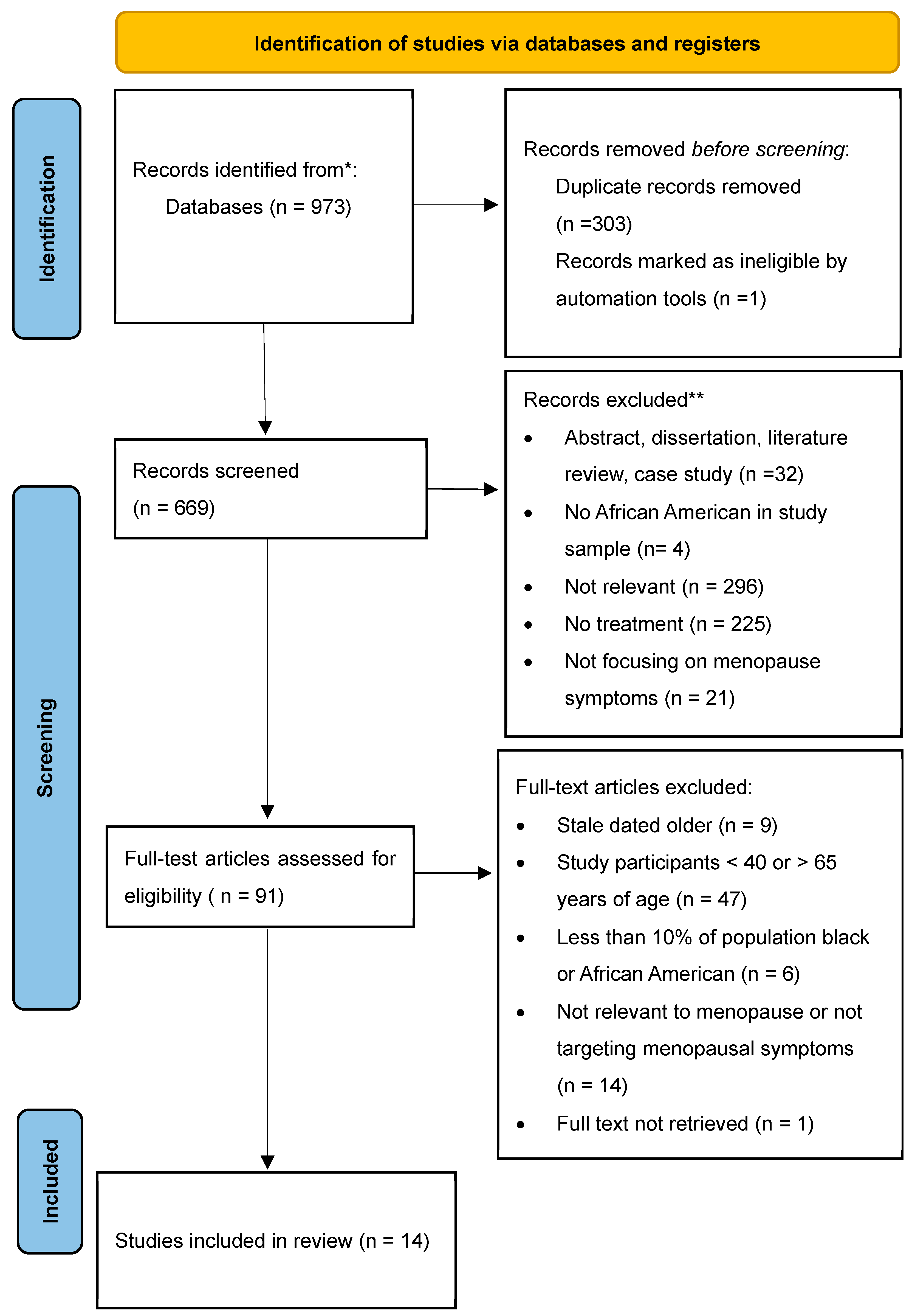
A total of 973 records were identified through the literature search, including 484 from PubMed, 353 from Scopus, 94 from CINAHL, and 64 from PsycInfo, and uploaded into DistillerSR by a member of the review team [28]. A total of 303 duplicates were removed, resulting in 670 records for screening. Prior to screening, the team collectively reviewed inclusion and exclusion criteria to ensure a shared understanding of study eligibility. Three members of the review team independently screened these records, and one team member resolved 150 conflicts. Inter-rater reliability (e.g., kappa) was not calculated, as discrepancies were resolved through consensus in accordance with JBI guidance for scoping reviews. A total of 585 records were excluded for the following reasons: they were literature reviews, abstracts, dissertations, or commentaries; they did not include or were unclear about the inclusion of AA women; they did not focus on menopause or symptoms; or they did not examine relevant treatments for menopause symptoms. In total, 91 studies met the inclusion criteria and were assessed for eligibility at the full-text level. Three members of the review team independently screened these studies, and 13 conflicts were resolved by one team member to ensure consistency and reduce selection bias. A total of 76 studies were excluded for the following reasons: they were abstracts or dissertations, they were too old, the participants were not within the age range of interest, less than 10% of participants were AA women, menopause symptoms were not the primary outcome, or the study did not examine a relevant treatment for menopause symptoms. A detailed breakdown of the number of studies excluded per reason is provided in Appendix A (PRISMA-ScR Flow Diagram) for transparency. In addition to electronic database searches, manual searches of the reference lists of relevant articles were conducted to identify any additional eligible studies. A manual search was conducted for a pilot study on PubMed to locate its follow-up randomized controlled trial (RCT), as mentioned in the original article, but no additional studies were identified through this method. One full-text article was unavailable for retrieval due to restricted journal access at the time of data collection, leaving 14 studies to be included in the final review. These studies consisted of eight RCTs [29,30,31,32,33,34,35,36], two cohort studies [37,38], one mixed cross-sectional and longitudinal study [37], one pre–post study [39], and two secondary analyses [40,41]. For full details, see Figure A1: PRISMA-Sc Flow Diagram.

2.3. Data Extraction

Data extraction was conducted and organized using a template created in Google Sheets by the review team. Two reviewers (BB and JP) independently reviewed each included study and entered key information into the data extraction template. Extracted variables included study characteristics (author, year, design, country, duration, and objectives), participant demographics (age range, race/ethnicity, and proportion of AA participants), intervention characteristics (type, delivery, duration, and menopause symptom of interest), and outcome measures (primary and secondary outcomes, measurement tools, and results). Information on treatment effectiveness, adverse effects, limitations, and implications for practice were also recorded. Extracted data were cross-checked among reviewers to ensure accuracy and consistency, with discrepancies resolved through discussion and consensus. The extracted information was summarized descriptively in Table A1. A secondary table was created to summarize methodological quality and risk-of-bias indicators, which were independently assessed by two reviewers (LZ and EH) using an algorithm-based evaluation form in Google Sheets. Differences in assessment were discussed and resolved by consensus. Extracted data were analyzed descriptively and synthesized narratively, grouping studies by intervention type (pharmacologic vs. holistic) and outcome domain (e.g., VMS, mood, bone health, sleep, and weight). Frequency counts were used to summarize study characteristics, and qualitative synthesis identified patterns in treatment effectiveness across study designs.

3. Results

3.1. Characteristics of Sources of Evidence

A total of 14 studies were included in this review, with sample sizes ranging from 25 to 1845 participants, all conducted in the USA. The age range of participants were between 40 and 65 years. The proportion of AA women in the samples ranged from 11% to 53%, with the remainder of participants from other ethnic backgrounds. Ten studies examined pharmacological treatments, including SSRIs, HRT, and transdermal Nitroglycerin (NTG), and the remaining five studies examined holistic approaches, including PA, dietary intake of phytoestrogens (e.g., isoflavones, lignans, coumestrol), and magnesium supplementation (see Table A2 in Appendix A). Many studies on menopause include multi-ethnic samples but do not provide disaggregated analyses for AA women, limiting the ability to draw conclusions about symptom burden or treatment responses specific to this group.

3.2. Included Study Designs

Nine clinical trials and five observational studies were included. Specifically, four studies employed randomized, blinded, multi-centre, placebo-controlled, parallel trial designs. One study [39] followed a single-arm, open-label, phase II pilot trial design, and another, Ref. [40], conducted a secondary analysis of survey data. Two studies [29,35] were three-arm, double-blind, 8-week RCTs, while one study [22] used a phase 3, randomized, double-blind, placebo-controlled, multi-centre trial design. Additionally, two studies [37,38] utilized both cross-sectional and longitudinal analyses, while one study [28] relied solely on longitudinal analysis. Finally, the remaining two studies [30,33] were randomized, double-blind, placebo-controlled clinical trials. It should be noted that the two studies investigating TX-001HR [29,30] report findings from the same primary study (trial registration number NCT01942668), while three studies investigating escitalopram reported findings from another primary study (trial registration number NCT00894543) [31,32,33].

3.3. Symptom Reduction Outcomes by Treatments

3.3.1. Pharmacologic Treatments

Nine studies examined the impact of pharmacological interventions including HRT (oral and transdermal estradiol/progesterone) [29,30,34,35], SSRIs (escitalopram, venlafaxine) [31,32,33,34], transdermal NTG patches [38] on the reduction in menopausal symptoms. One study also included a placebo condition using patches and pills that were visually identical to the active estradiol treatments [34]. The main outcomes of interest were reductions in VMSs [30,33], specifically HF frequency and severity, and interference [29,31,33,36,39]. Other studies looked at reducing depressive symptoms [34], insomnia [34], and GS [35]. Symptoms were assessed using daily diaries, questionnaires, and a 10-point scale. While most studies saw improvements in menopause symptoms, only a few conducted subgroup analyses specific to AA women (see Table A2 in Appendix A). AA women were also more likely to report meaningful symptom improvement compared to other ethnicities when taking a placebo for VMSs [41]. In addition, reductions in daily HF frequency from escitalopram were smaller in AA women than in WW [33].
HRT interventions included both oral and transdermal estradiol–progesterone combinations [29,30,34,35]. Across studies, most SSRIs and HRT regimens demonstrated significant improvement in VMS frequency and severity, while NTG showed no clinical benefit. Escitalopram and oral estradiol were the most consistently effective and well-tolerated pharmacotherapies, while venlafaxine and NTG had mixed or null effects.
Two studies reported findings from the same phase 3 REPLENISH trial (NCT01942668), which evaluated TX-001HR, a daily oral capsule containing estradiol and progesterone at doses of 1/100 mg, 0.5/100 mg, 0.5/50 mg, or 0.25/50 mg [29,30]. The main REPLENISH trial established the efficacy and safety of TX-001HR across these doses for reducing moderate-to-severe VMS over 12 weeks [30], while the follow-up analysis confirmed the clinical meaningfulness of these improvements and overall treatment tolerability [29]. Another randomized trial using transdermal estradiol (0.1 mg/day) with oral micronized progesterone (200 mg/day for 12 days every 3 months) reduced the risk of depressive symptoms, especially among women experiencing high stress or in early menopause transition [34].
SSRI interventions primarily investigated escitalopram (10 mg/day, increased to 20 mg/day at 4 weeks if <50% improvement) over 8 weeks [35]. Across three trials, escitalopram significantly reduced HF frequency, severity, and interference, and improved subjective sleep quality and insomnia symptoms compared with placebo [31,32,33]. SNRI treatment with venlafaxine XR (75 mg/day) for 8 weeks produced modest improvement in GS and VMSs, though between-group differences were not statistically significant [25]. NTG intervention involved the continuous application of transdermal NTG (0.2–0.6 mg/h) over 12 weeks. No sustained benefit was observed in hot-flash frequency or severity compared with placebo, despite good adherence [36].

3.3.2. Holistic Treatments

Five studies examined holistic interventions including phytoestrogens (e.g., isoflavones, lignans, coumestrol) [37,39], PA [38,40], and magnesium supplementation [39]. Some of the main outcomes of interest included bone mineral density (BMD) loss [37], cognitive performance [42], HF frequency [40], and overall QOL [39]. Stratification for AA participants and intervention outcomes was more prevalent among holistic compared to pharmacological treatment studies. Phytoestrogens were linked to verbal memory impairment across groups, including AA women [42], and no association was found between phytoestrogen intake and BMD loss in AA women [37]. PA was not associated with symptom relief among AA women, and in some cases, was linked to increased psychological distress and perceived symptoms [38].

3.3.3. Moderators of Effectiveness: Mental Health Status

Two studies noted an association between treatment effectiveness and mental health status among all participants, including AA women. Transdermal estradiol reduced the risk of depressive symptoms, specifically among women who had experienced more stressful life events in the last 6 months [34], and psychological states were associated with placebo effectiveness [33].

3.3.4. Treatment Acceptability and Adverse Effects

Holistic treatments were heterogeneously studied, including interventions such as dietary supplements, physical activity, and stress management strategies. Notably, some studies reported that physical activity interventions were associated with worsening psychological symptoms in AA women, although confounding factors such as caregiving and domestic responsibilities were not thoroughly considered. Across the studies examining pharmacologic interventions, treatment adherence and acceptability were generally high, even when participants experienced mild to moderate adverse effects. In one study, the most reported adverse effect of oral estradiol was insomnia, and 2.1% of participants developed high blood pressure [35]. Nonetheless, treatment satisfaction was high (70%) [35]. TX-001HR was associated with clinical meaningfulness to women [19], and discontinuation due to lack of effectiveness was low (0–1.9%). Common adverse effects were breast tenderness, headache, and nausea, and accounted for the discontinuation of 7.3–11% of participants [30]. In terms of holistic treatments, magnesium supplementation was well-tolerated, with 86% compliance and only minor adverse effects (grade 1 diarrhea, migraine headache, and nausea) [39].

4. Discussion

Across all the pharmacological treatments included in the review, escitalopram and HRT were the most effective in treating VMS and depression, while venlafaxine provided only modest improvement and transdermal NTG demonstrated no therapeutic benefit. Only two studies reported any race-specific findings. One study observed smaller reductions in HF frequency among AA women compared to WW [33], while the other study noted modest improvement in symptom bother among AA participants, though symptom type and comparative outcomes were not clearly specified [35]. No studies examined the mechanisms underlying these differences. Potential biological, cultural, and social factors, such as differential stress exposure, medication metabolism, or healthcare access, were not assessed. This gap emphasizes the persistent lack of race-conscious research design in menopause studies, where AA women are often included in samples but rarely analyzed as distinct subgroups. The limited stratification restricts understanding of treatment efficacy and safety across diverse populations and reinforces the need for intentional data collection in the future that accounts for both biological and sociocultural determinants of symptom experience and treatment response.
In terms of holistic treatments, PA, dietary intake of phytoestrogens, and magnesium supplementation were explored as nonpharmacologic approaches to menopause symptom management. One study reported that cultural beliefs, lifestyle patterns, and social contexts shape both engagement and perceived effectiveness among AA women [40]. Although PA has also been shown to improve hot flash symptoms in some contexts [38]. Across studies, phytoestrogen intake showed no benefit [37] or, in some cases, unwanted side effects [42]. Magnesium supplementation demonstrated a trend toward improved hot flash severity, fatigue, abnormal sweating, and perceived distress from hot flashes; however, these results were based on a very small AA sample, reducing generalizability [37]. AA-specific reporting on holistic treatments allows for a better understanding of how these interventions may address the specific needs and symptom experiences of AA women. Overall, the acceptability of holistic treatments was context-dependent, highlighting the need for culturally comprehensive and context-sensitive solutions.
Escitalopram, an SSRI, was effective in treating VMS severity and frequency and insomnia and sleep symptoms in AA (n = 95), white (n = 102), and other unspecified backgrounds (n = 8) [32]. With a reported adherence of 87% from one clinical trial, escitalopram may be a treatment that is easily followed [32]. HFs occur due to a decline in estrogen, which leads to reductions in norepinephrine and serotonin levels that impact the body’s thermoregulation [43]. SSRIs are believed to aid in inhibiting hyperthermia by maintaining serotonin levels and increasing serotonin receptors in tissues [44]. Given the potential side effects of HRT, it may not be suitable for all women, thus making escitalopram an alternative option for reducing HFs [44].
HRT was found to be effective in improving the risk of depression symptoms and VMSs. Current guidelines suggest that HRT must be individualized, with the risks and benefits being determined for individual users [45]. Still, HRT may have benefits that outweigh the risks if started at menopause and continued up to five years [45]. The primary contraindications include breast cancer, endometrial cancer, or other hormone-responsive cancers and CVD [45]. The value of HRT research in the AA population cannot be undervalued due to the high risks of breast cancer mortality and heart disease incidence in this population [46]. HRT is effective but must be prescribed with care, and more research specific to the AA population can better determine the risks and benefits.
Oral supplementation of magnesium was associated with decreased levels of HFs; however, findings may be limited for AA women due to their small sample size. While the role of magnesium in the pathophysiology is unclear, it is speculated that magnesium may influence serotonin, an imbalance of which may cause HFs [41]. The low cost of magnesium supplementation should also be considered, as it can be readily obtained for $0.02 per day from drugstores and has minimal side effects, suggesting it as a low-risk treatment option [41].
The association between dietary intake of phytoestrogens and cognitive function and BMD showed limited impacts on AA women. Phytoestrogens are compounds that are similar in structure and function to estrogens, and can be found in plants, and isoflavones specifically can be found most abundantly in soybeans and legumes [47]. A narrative review on the benefits of phytoestrogen on postmenopausal symptoms found small improvements on VMSs, bone health, and cognition; however, the lack of high-quality research and short follow-up durations limited these findings [48]. Furthermore, benefits in AA women may be limited due to AA women having significantly higher BMD independent of biological factors when compared to Caucasian women and Asian women, who have lower BMD [49]. Additionally, dietary phytoestrogen intakes are more prominent in Asian diets due to soy products such as soy milk and tofu, compared to Western diets [30]. This variable dietary intake should be noted, as lower exposure to dietary phytoestrogens may have limited its beneficial impacts in AA women [42].
Increases in PA exacerbated menopausal symptoms in AA women [38,40]. Higher levels of caregiving/household activities and low levels of active living were associated with worsening psychological menopause symptoms in AA women [40]. This may be due to the cultural norms and values regarding AA women’s role in the home, which may cause increased mental burdens to be placed on them [40]. Additionally, the perception of personal exercise as being self-indulgent may limit the benefits of leisure-time exercise on menopause symptom relief among AA women [40]. Similarly, another study found increased levels of PA to be associated with increased self-reported HFs, particularly in women with depression [38]. Stress is a factor associated with HFs due to dysregulation and imbalances of the autonomic nervous system and hypothalamus [50]. The literature on the efficacy of PA remains inconclusive; there is limited evidence in support of yoga compared to other forms of PA (e.g., aerobic and resistance training) for addressing certain menopause symptoms such as physical and urogenital [51]. Similarly, the effect of PA on HF symptoms is also inconsistent due to biases in reporting and the rigour of studies [50]. However, despite inconclusive evidence on the benefits of PA and diet to alleviate menopausal symptoms, AA women still hold positive attitudes regarding the matter when it comes to healthy living and weight management during menopause [52].

4.1. Implications

Disruptive menopause symptoms, coupled with racial disparities within the healthcare system, leave AA women feeling unprepared for the transition [52]. Healthcare providers should consider the gaps in AA women’s menopause knowledge and initiate conversations to provide tailored, individualized menopause treatments. However, given the limited research and training on menopause in racially diverse populations, providers themselves may also have knowledge gaps; thus, educational initiatives and continuing professional development on culturally responsive menopause care are equally important. Programmes with a strong social element to support women through this transition may also be beneficial, as AA women have expressed the desire to learn more about menopause alongside other women and ask questions to one another about their experiences [52]. Additionally, efforts should be taken from a policy perspective to reduce barriers to care, such as better access to healthcare and treatment options. Socioeconomic disadvantages, racism, and discrimination place burdens on AA women, leading to higher rates of disease, poor mental health outcomes, and increased barriers to healthcare support, further exacerbating health disparities [53].
Given the limited body of evidence, more dedicated research on menopause is needed on the AA population, including increased representation of AA women in study samples and research with full samples of AA women. No studies within this scoping review had a full sample of AA women, and specific results reported on AA women in the study samples were limited, leading to the generalization of study findings to the AA population. We recommend that research also consider variable baseline health status and medication usage of AA women to provide a more representative sample. Finally, more efforts are needed to engage AA women in research and overcome barriers to participation. Examples include building community partnerships with trusted organizations and churches, employing Black community liaisons, and providing transportation incentives. AA women’s mistrust of the scientific community and physicians and the high cost of participation must be addressed to ensure that this population’s unique perspectives and experiences are captured in research [54]. Culturally tailored recruitment materials and transparent communication about study goals may also help address mistrust and increase participation among BW.

4.2. Strengths and Limitations

There are several limitations that should be noted. First, generic search terms were used which lacked specificity on the treatment type (e.g., estradiol, escitalopram, exercise, etc.) and menopause symptoms (e.g., VMS, HF, insomnia), potentially limiting the number of retrievals per database. However, this search approach was intentionally selected to maximize the collection of a broad range of relevant studies to ensure that no significant evidence was missed, considering the already limited research focused on AA women and menopause treatment response. This review also excluded grey literature, non-peer-reviewed sources, and studies for which full-text access was not available. While this approach ensured inclusion of rigorously vetted studies, it may have inadvertently narrowed the scope of the review and excluded potentially relevant information, particularly in a field where AA women’s experiences are underrepresented. Some abstracts or non-peer-reviewed reports could provide additional insights into symptom experiences and treatment approaches that are not captured in the peer-reviewed literature. Future reviews could consider incorporating grey literature to broaden the evidence base and capture a more comprehensive understanding of menopause experiences among African American women.
Second, the term “African American” was used rather than “Black”, which resulted in studies from only the USA. This limits the generalizability of our findings to other countries. This was intentional, as most large-scale clinical trials conducted in North America use this terminology to describe participants of African descent. This term aligned best with the search strategy and the language used in the literature and ensured comprehensive collection of relevant studies. In addition, this approach improved the relevance of included studies to the North American context, as it prioritized research conducted within the USA, where healthcare resources and population demographics are comparable. Most studies relied on self-reported questionnaires, which may be subject to recall and reporting bias, potentially affecting the accuracy of symptom and treatment outcome assessments.
Most studies included in this review relied on multi-ethnic samples rather than exclusively AA participants, reflecting the limited availability of AA-focused research. Consequently, conclusions regarding AA women’s experiences and treatment responses are limited and should be interpreted with caution. While these studies provide some insight into menopause outcomes among AA women, the lack of disaggregated analyses restricts understanding of symptom burden, treatment efficacy, and acceptability in this population. This underscores the critical need for future research designed specifically for AA women, with intentional recruitment and analysis to generate AA-specific evidence. This scoping review employed a consensus-based approach for study selection and data extraction; however, inter-rater reliability (e.g., kappa) was not calculated, representing a potential limitation in quality assessment. A major limitation of the included studies is the lack of AA-specific power and disaggregated analyses, which restricts the ability to draw conclusions about menopause symptom burden and treatment effectiveness specifically for AA women.
The strengths of this review include the inclusion of both holistic and pharmacological treatments, which provide a comprehensive overview of the spectrum of treatments available for menopause symptoms. Second, over half of the studies included in the review were RCTs, the gold standard for research on cause-and-effect relationships. Furthermore, the Study of Women’s Health Across the Nation, and Menopause Strategies: Finding Lasting Answers for Symptoms and Health were included in our sample, both of which are multi-site studies across the USA with large sample sizes and representation of AA women. These studies strengthen the validity and generalizability of the review findings by offering robust data on menopause symptom management across racial groups within the North American context. This review also utilized a rigorous and comprehensive methodology to conceptualize the research question, search strategy, and screening of all eligible articles retrieved from the four databases.

5. Conclusions

In conclusion, this scoping review contributes to the growing body of literature on menopause in women of colour and serves as a strong foundation for future research for AA women. Findings of our review elucidated the effectiveness and acceptability of pharmacological treatments to treat common menopause symptoms such as VMSs. The implications of our review underpin the importance of individualized treatment to ensure that treatments are appropriate and acceptable for women of various ethnicities. Our review also identified the need for more culturally tailored interventions and dedicated research of middle-aged AA women undergoing this critical life transition stage, including dedicated studies on AA women and better representation of them in studies featuring multi-ethnic samples.
Unlike previous reviews, this study uniquely focuses on AA women’s menopause experiences and synthesizes both pharmacologic and holistic treatment evidence, areas that have rarely been examined together. It also highlights the lack of race-specific reporting and the methodological gaps that perpetuate underrepresentation of AA women in menopause research. Future research should prioritize culturally tailored interventions, longitudinal designs, and studies with full or adequately supported AA samples. Addressing these gaps will be critical to advancing equitable, evidence-based menopause care and improving health outcomes for AA women during this important life transition.

Author Contributions

Conceptualization, H.A.; methodology, H.A.; software, H.A.; validation, J.P., L.Z., B.B., E.H. and H.A.; formal analysis, J.P., L.Z., B.B., E.H., and H.A.; data extraction, B.B. and J.P.; writing—original draft preparation, J.P., L.Z., B.B. and E.H.; writing—review and editing, A.S., K.K., K.M., H.A., J.S.H. and S.N.; supervision, H.A.; project administration, H.A. All authors have read and agreed to the published version of the manuscript.

Funding

This research received no external funding.

Institutional Review Board Statement

Not applicable.

Informed Consent Statement

Not applicable.

Data Availability Statement

All data associated with manuscript has been included in the manuscript appendices.

Conflicts of Interest

The authors declare no conflicts of interest.

Abbreviations

The following abbreviations are used in this manuscript:
AAAfrican American
BMDBone Mineral Density
BWBlack Woman
CVDCardiovascular Disease
GSGenitourinary Symptoms
HFHot Flash
HRTHormone Replacement Therapy
JBIJoanna Briggs Institute
NTGNitroglycerin
PAPhysical Activity
PCCPatient, Concept and Context
PRSIMA-ScRPreferred Reporting Items for Systematic Reviews and Meta-Analysis Extension for Scoping Reviews
QOLQuality of Life
RCTRandomized Controlled Trial
SSRISelective Serotonin Reuptake Inhibitor
USAUnited States of America
VMSVasomotor Symptoms
WWWhite Woman

Appendix A

Table A1. Search strategy.
DatabaseDatabase:
Search Period
Search Terms
(keyword/MeSH Term)
Search Date Limits (Filter, Limits, Refine)Number of Records
PubMed2010–2025(African AND American AND women) AND (treatment OR intervention OR therapy) AND (menopause OR menopausal OR perimenopause OR perimenopausal OR postmenopause OR postmenopausal)12 February 2025Published: 2010–2025484
Scopus2010–2025(African AND american AND women) AND (treatment OR intervention OR therapy) AND (menopause OR menopausal OR perimenopause OR perimenopausal OR postmenopause OR postmenopausal)12 February 2025Published: 2010–2025353
CINAHL 2010–2025(african AND american AND women) AND (treatment OR intervention OR therapy) AND (menopause OR menopausal OR perimenopause OR perimenopausal OR postmenopause OR postmenopausal)12 February 2025Published: 2010–202594
PsychINFO 2010–2025(african AND american AND women) AND (treatment OR intervention OR therapy) AND (menopause OR menopausal OR perimenopause OR perimenopausal OR postmenopause OR postmenopausal) Published: 2010–2025 54
Figure A1. Prisma-Sc flow diagram.
Women 06 00008 g0a1
Table A2. Study results table.
Study (Author, Year)Study DesignCountry of StudyIntervention TypeOutcomes Reported (All Participants)Outcomes Reported in AA WomenStudy Population, Including African American Women
Pharmacologic Treatments
[29] aRCTUSAOral TX-001HR (17β-estradiol [E2]/progesterone [P4])Significantly reduced hot flash severity in postmenopausal women, with these doses [E2/P4 (1/100 and 0.5/100)] showing more clinically meaningful improvements in VMS severity.No AA-specific outcomes reported766 participants, including 225 (29%) who were African American
[30] aRCTUSAOral TX-001HR (17β-estradiol [E2]/progesterone [P4])Effectively reduced moderate-to-severe vasomotor symptoms without causing endometrial hyperplasia. Treatment was well tolerated, with no unexpected safety concerns. No AA-specific outcomes reported1845 participants, including 589 (32%) who were African American
[34]RCTUSATransdermal estradiol (0.1 mg/day) with oral micronized progesterone (200 mg/day for 12 days every 3 months) TE + IMP reduced the risk of depressive symptoms, with the greatest benefits seen in women in the early menopause transition and those experiencing more stressful life events. Other baseline factors did not impact outcomes. No AA-specific outcomes reported172 participants, including 70 (19%) who were African American
[41]Secondary AnalysisUSAPlacebo vs.
Escitalopram (10–20 mg/d), oral 17β-estradiol (0.5 mg/d), SNRI venlafaxine XR (75 mg/d),
33% of the placebo group showed clinically significant improvement by week 8, with 77% maintaining improvement at week 11.AA women had the highest rate of hot flash reporting and were more sensitive to somatic symptoms544 participants, including 211 (39%) who were African American
[35]RCTUSAEstradiol or VenlafaxineWomen receiving oral estradiol or venlafaxine and those with Lactobacillus-dominant microbiota showed more improvement, though differences were not statistically significant.No AA-specific outcomes reported30 participants, including 16 (53%) who were African American
[31] bRCTUSAEscitalopram (10 mg/day) Escitalopram alleviated hot flashes and improved QOL during menopause.No AA-specific outcomes reported205 participants, including 95 (46%) who were African American
[32] bRCTUSAEscitalopram (10 mg/day) Treatment with escitalopram 10 to 20 mg/day reduced insomnia symptoms and improved subjective sleep quality.No AA-specific outcomes reported205 participants, including 95 (46%) who were African American
[33] bRCTUSAEscitalopram (10 mg/day) Escitalopram at doses of 10 or 20 mg/d significantly reduced hot flash frequency relative to placebo.Reduction in daily hot flash frequency associated with escitalopram was smaller in AA women than in white women205 participants, including 95 (46%) who were African American
[36]RCTUSATransdermal nitroglycerin patches Continuous use of NTG did not result in sustained improvements in hot flash frequency or severity relative to placebo.No AA-specific outcomes reported141 participants, including 16 (11%) who were African American
Holistic Treatments
[39]Pre-postUSAOral magnesium (400 mg/day) No significant improvement in overall quality of life during the study period; however, symptoms associated with hot flashes, such as fatigue, abnormal sweating, and perceived distress from the hot flashes, were significantly reduced.No AA-specific outcomes reported25 participants, including 6 (24%) who were African American
[37]Mixed—cross-sectional and longitudinalUSADietary isoflavones Dietary isoflavone intake was not related to peak bone mass or bone loss during midlife transition (MT).No observed association between peak BMD or BMD loss during menopause among AA women853 participants, including 242 (28%) who were African American
[42] cCohortUSADietary phytoestrogen Overall, the cognitive differences were small and not clinically significant.Associated with verbal memory impairment among AA women1616 participants, including n ~496 (30.69%) who were African American
[40]Secondary AnalysisUSAPhysical activity Specific types of midlife women’s physical activity influenced the prevalence and severity of specific domains of menopausal symptoms.Leisure-time exercise specifically among AA women did not alleviate symptoms. Increased physical activity through domestic activities/ caregiving activities was associated with greater and more severe menopause symptoms.481 participants, including 113 (23%) who were African American
[38]CohortUSAPhysical activity Increased physical activity was linked to more self-reported, but not physiologically confirmed, hot flashes, especially in women with higher depressive symptoms.No AA-specific outcomes reported51 participants, including 25 (49%) who were African American
a Studies included in the review report on results obtained from the same study as per study registration number (NCT01942668). b Studies included in the review report on results obtained from the same study as per study registration number (NCT00894543). c The number (n) of AA participants in the sample was not available in the original study. The review team provided an estimate of the total number of AA participants based on the percentage provided in the original study.

References

  1. Yuksel, N.; Todorova, L.; Scrine, L.; Rea, C.; Bouchard, C. Prevalence and impact of vasomotor symptoms due to menopause among women in Canada: A subgroup analysis from an international cross-sectional survey of Women with Vasomotor Symptoms Associated with Menopause (WARM Study). Menopause 2025, 32, 38–44. [Google Scholar] [CrossRef]
  2. Peacock, K.; Ketvertis, K.M. Menopause. National Library of Medicine. 2023. Available online: https://www.ncbi.nlm.nih.gov/books/NBK507826/ (accessed on 15 March 2025).
  3. Palmer, J.R.; Rosenberg, L.; Wise, L.A.; Horton, N.J.; Adams-Campbell, L.L. Onset of natural menopause in African American women. Am. J. Public Health 2003, 93, 299–306. [Google Scholar] [CrossRef] [PubMed]
  4. Peate, M.; Johnson, T.L.; Avis, N.E.; Hickey, M. Addressing sociodemographic, socioeconomic, and gendered disparities for equity in menopause care. Cell Rep. Med. 2024, 5, 101616. [Google Scholar] [CrossRef] [PubMed]
  5. Harlow, S.D.; Burnett-Bowie, S.A.M.; Greendale, G.A.; Avis, N.E.; Reeves, A.N.; Richards, T.R.; Lewis, T.T. Disparities in reproductive aging and midlife health between black and white women: The study of women’s health across the nation (Swan). Women’s Midlife Health 2022, 8, 3. [Google Scholar] [CrossRef]
  6. Wallace, B.H.; Ford, C.D.; Baker, T.A. Advancing the inclusion of black women in studies of menopause. J. Gerontol. Ser. A Biol. Sci. Med. Sci. 2024, 79, glad284. [Google Scholar] [CrossRef] [PubMed]
  7. Avis, N.E.; Crawford, S.L.; Greendale, G.; Bromberger, J.T.; Everson-Rose, S.A.; Gold, E.B.; Hess, R.; Joffe, H.; Kravitz, H.M.; Tepper, P.G.; et al. Duration of menopausal vasomotor symptoms over the menopause transition. JAMA Intern. Med. 2015, 175, 531. [Google Scholar] [CrossRef]
  8. Lewis Johnson, T.; Rowland, L.M.; Ashraf, M.S.; Clark, C.T.; Dotson, V.M.; Livinski, A.A.; Simon, M. Key findings from mental health research during the menopause transition for racially and ethnically minoritized women living in the United States: A scoping review. J. Women’s Health 2024, 33, 113–131. [Google Scholar] [CrossRef]
  9. Williams, D.R.; Mohammed, S.A. Racism and Health I: Pathways and Scientific Evidence. Am. Behav. Sci. 2013, 57, 1152–1173. [Google Scholar] [CrossRef]
  10. Cortés, Y.I.; Marginean, V. Key factors in menopause health disparities and inequities: Beyond race and ethnicity. Curr. Opin. Endocr. Metab. Res. 2022, 26, 100389. [Google Scholar] [CrossRef]
  11. Schrager, S.; Williams, M.; Ward, E.; Henningfield, M.F.; Yuroff, A.; Johnson, G.; Sullivan-Wade, L.; Hawkins, J.; Turnquist, A. African American women’s experiences of menopause: A focus group study. Maturitas 2024, 187, 108043. [Google Scholar] [CrossRef]
  12. Ruiz-Esteves, K.N.; Teysir, J.; Schatoff, D.; Yu, E.W.; Burnett-Bowie, S.A.M. Disparities in osteoporosis care among postmenopausal women in the United States. Maturitas 2022, 156, 25–29. [Google Scholar] [CrossRef]
  13. Miller, R.G.; Ashar, B.H.; Cohen, J.; Camp, M.; Coombs, C.; Johnson, E.; Schneyer, C.R. Disparities in osteoporosis screening between at-risk African-American and white women. J. Gen. Intern. Med. 2005, 20, 847–851. [Google Scholar] [CrossRef]
  14. Thurston, R.C.; Aslanidou Vlachos, H.E.; Derby, C.A.; Jackson, E.A.; Brooks, M.M.; Matthews, K.A.; Harlow, S.; Joffe, H.; El Khoudary, S.R. Menopausal vasomotor symptoms and risk of incident cardiovascular disease events in SWAN. J. Am. Heart Assoc. 2021, 10, e017416. [Google Scholar] [CrossRef]
  15. Im, E.O.; Lee, B.; Chee, W.; Dormire, S.; Brown, A. A national multiethnic online forum study on menopausal symptom experience. Nurs. Res. 2010, 59, 26–33. [Google Scholar] [CrossRef]
  16. Liao, K.Y.H.; Wei, M.; Yin, M. The Misunderstood Schema of the Strong Black Woman: Exploring Its Mental Health Consequences and Coping Responses Among African American Women. Psychol. Women Q. 2019, 44, 84–104. [Google Scholar] [CrossRef]
  17. Parks, A.K.; Hayman, L.L. Unveiling the Strong Black Woman Schema—Evolution and Impact: A Systematic Review. Clin. Nurs. Res. 2024, 33, 395–404. [Google Scholar] [CrossRef]
  18. Stuenkel, C.A.; Davis, S.R.; Gompel, A.; Lumsden, M.A.; Murad, M.H.; Pinkerton, J.V.; Santen, R.J. Treatment of symptoms of the menopause: An endocrine society clinical practice guideline. J. Clin. Endocrinol. Metab. 2015, 100, 3975–4011. [Google Scholar] [CrossRef] [PubMed]
  19. Reid, R.; Abramson, B.L.; Blake, J.; Desindes, S.; Dodin, S.; Johnston, S.; Rowe, T.; Sodhi, N.; Wilks, P.; Wolfman, W. Managing menopause. J. Obstet. Gynaecol. Can. 2014, 36, 830–833. [Google Scholar] [CrossRef] [PubMed]
  20. Yuksel, N.; Evaniuk, D.; Huang, L.; Malhotra, U.; Blake, J.; Wolfman, W.; Fortier, M. Guideline no. 422a: Menopause: Vasomotor symptoms, prescription therapeutic agents, complementary and alternative medicine, nutrition, and lifestyle. J. Obstet. Gynaecol. Can. 2021, 43, 1188–1204.e1. [Google Scholar] [CrossRef] [PubMed]
  21. Way-Houser, M. A Qualitative Phenomenological Exploration of the Experience Menopausal African American Women Have with Their Health Care Providers and Accessing Treatment for Menopausal Symptoms. Scholars Crossing. 2025. Available online: https://digitalcommons.liberty.edu/doctoral/6837/ (accessed on 15 March 2025).
  22. Blanken, A.; Gibson, C.J.; Li, Y.; Huang, A.J.M.; Byers, A.L.; Maguen, S.; Inslicht, S.; Seal, K. Racial/ethnic disparities in the diagnosis and management of menopause symptoms among midlife women veterans. Menopause 2022, 29, 877–882. [Google Scholar] [CrossRef]
  23. Christmas, M.; Janssen, I.; Joffe, H.; Upchurch, D.; Santoro, N.; Kravitz, H.M. Menopause hormone therapy and complementary alternative medicine, quality of life, and racial/ethnic differences: The Study of Women’s Health Across the Nation (SWAN). Menopause 2022, 29, 1357–1364. [Google Scholar] [CrossRef]
  24. Pollock, D.; Peters, M.D.J.; Khalil, H.; McInerney, P.; Alexander, L.; Tricco, A.C.; Evans, C.; de Moraes, É.B.; Godfrey, C.M.; Pieper, D.; et al. Recommendations for the extraction, analysis, and Presentation of Results in Scoping Reviews. JBI Evid. Synth. 2023, 21, 520–532. [Google Scholar] [CrossRef] [PubMed]
  25. Tricco, A.C.; Lillie, E.; Zarin, W.; O’Brien, K.K.; Colquhoun, H.; Levac, D.; Moher, D.; Peters, M.D.J.; Horsley, T.; Weeks, L.; et al. PRISMA Extension for Scoping Reviews (PRISMA-ScR): Checklist and Explanation. Ann. Intern. Med. 2018, 169, 467–473. [Google Scholar] [CrossRef]
  26. Systematic Review and Literature Review Software by DistillerSR. DistillerSR. 27 August 2025. Available online: https://www.distillersr.com (accessed on 7 October 2025).
  27. Mayo Clinic. Mayo Clinic. Menopause—Symptoms and Causes. Mayo Clinic. 7 August 2024. Available online: https://www.mayoclinic.org/diseases-conditions/menopause/symptoms-causes/syc-20353397 (accessed on 1 October 2025).
  28. Cleveland Clinic. Cleveland Clinic. Menopause: Age, Stages, Signs, Symptoms & Treatment. Cleveland Clinic. 24 June 2024. Available online: https://my.clevelandclinic.org/health/diseases/21841-menopause (accessed on 10 March 2025).
  29. Constantine, G.D.; Simon, J.A.; Kaunitz, A.M.; Pickar, J.H.; Revicki, D.A.; Graham, S.; Bernick, B.; Mirkin, S. TX-001HR is associated with a clinically meaningful effect on severity of moderate to severe vasomotor symptoms in the REPLENISH trial. Menopause 2020, 27, 1236–1241. [Google Scholar] [CrossRef] [PubMed]
  30. Lobo, R.A.; Archer, D.F.; Kagan, R.; Kaunitz, A.M.; Constantine, G.D.; Pickar, J.H.; Graham, S.; Bernick, B.; Mirkin, S. A 17β-estradiol–progesterone oral capsule for vasomotor symptoms in postmenopausal women: A randomized controlled trial. Obstet. Gynecol. Surv. 2018, 73, 630–632. [Google Scholar] [CrossRef]
  31. Carpenter, J.S.; Guthrie, K.A.; Larson, J.C.; Freeman, E.W.; Joffe, H.; Reed, S.D.; Ensrud, K.E.; LaCroix, A.Z. Effect of escitalopram on hot flash interference: A randomized, controlled trial. Fertil. Steril. 2012, 97, 1399–1404.e1. [Google Scholar] [CrossRef]
  32. Ensrud, K.E.; Joffe, H.; Guthrie, K.A.; Larson, J.C.; Reed, S.D.; Newton, K.M.; Sternfeld, B.; LaCroix, A.Z.; Landis, C.A.D.; Woods, N.F.; et al. Effect of escitalopram on insomnia symptoms and subjective sleep quality in healthy perimenopausal and postmenopausal women with hot flashes: A randomized controlled trial. Menopause 2012, 19, 848–855. [Google Scholar] [CrossRef]
  33. Freeman, E.W. Efficacy of escitalopram for hot flashes in healthy menopausal women: A randomized controlled trial. JAMA 2011, 305, 267. [Google Scholar] [CrossRef]
  34. Gordon, J.L.; Rubinow, D.R.; Eisenlohr-Moul, T.A.; Xia, K.; Schmidt, P.J.; Girdler, S.S. Efficacy of transdermal estradiol and micronized progesterone in the prevention of depressive symptoms in the menopause transition: A randomized clinical trial. JAMA Psychiatry 2018, 75, 149. [Google Scholar] [CrossRef]
  35. Mitchell, C.M.; Srinivasan, S.; Plantinga, A.; Wu, M.C.; Reed, S.D.; Guthrie, K.A.; LaCroix, A.Z.; Fiedler, T.; Munch, M.; Liu, C.; et al. Associations between improvement in genitourinary symptoms of menopause and changes in the vaginal ecosystem. Menopause 2018, 25, 500–507. [Google Scholar] [CrossRef]
  36. Huang, A.J.; Cummings, S.R.; Ganz, P.; Schembri, M.; Raghunathan, H.; Vittinghoff, E.; Gibson, C.J.; Grady, D. Efficacy of continuous transdermal nitroglycerin for treating hot flashes by inducing nitrate cross-tolerance in perimenopausal and postmenopausal women: A randomized clinical trial. JAMA Intern. Med. 2023, 183, 776. [Google Scholar] [CrossRef]
  37. Greendale, G.A.; Tseng, C.H.; Han, W.; Huang, M.H.D.; Leung, K.; Crawford, S.; Gold, E.B.; Waetjen, L.E.; Karlamangla, A.S. Dietary isoflavones and bone mineral density during midlife and the menopausal transition: Cross-sectional and longitudinal results from the Study of Women’s Health Across the Nation Phytoestrogen Study. Menopause 2015, 22, 279–288. [Google Scholar] [CrossRef] [PubMed]
  38. Gibson, C.; Matthews, K.; Thurston, R. Daily physical activity and hot flashes in the study of women’s health across the nation (Swan) flashes study. Fertil. Steril. 2014, 101, 1110–1116. [Google Scholar] [CrossRef] [PubMed]
  39. Park, H.; Parker, G.L.; Boardman, C.H.; Morris, M.M.; Smith, T.J. A pilot phase II trial of magnesium supplements to reduce menopausal hot flashes in breast cancer patients. Support Care Cancer 2011, 19, 859–863. [Google Scholar] [CrossRef]
  40. Chang, S.J.; Chee, W.; Im, E. Menopausal symptoms and physical activity in multiethnic groups of midlife women: A secondary analysis. J. Adv. Nurs. 2013, 69, 1953–1965. [Google Scholar] [CrossRef]
  41. Freeman, E.W.; Ensrud, K.E.; Larson, J.C.; Guthrie, K.A.; Carpenter, J.S.; Joffe, H.M.; Newton, K.M.; Sternfeld, B.; LaCroix, A.Z. Placebo improvement in pharmacologic treatment of menopausal hot flashes: Time course, duration, and predictors. Psychosom. Med. 2015, 77, 167–175. [Google Scholar] [CrossRef] [PubMed]
  42. Greendale, G.A.; Huang, M.H.; Leung, K.; Crawford, S.L.; Gold, E.B.; Wight, R.; Waetjen, E.; Karlamangla, A.S. Dietary phytoestrogen intakes and cognitive function during the menopausal transition: Results from the Study of Women’s Health Across the Nation Phytoestrogen Study. Menopause 2012, 19, 894–903. [Google Scholar] [CrossRef]
  43. Morrow, P.K.H.; Mattair, D.N.; Hortobagyi, G.N. Hot flashes: A review of pathophysiology and treatment modalities. Oncologist 2011, 16, 1658–1664. [Google Scholar] [CrossRef]
  44. Witten, T.; Staszkiewicz, J.; Gold, L.; Granier, M.; Klapper, R.J.; Lavespere, G.; Dorius, B.; Allampalli, V.; Ahmadzadeh, S.; Shekoohi, S.; et al. Nonhormonal pharmacotherapies for the treatment of postmenopausal vasomotor symptoms. Cureus 2024, 16, e52467. [Google Scholar] [CrossRef]
  45. Ward, K.; Deneris, A. An update on menopause management. J. Midwife Womens Health 2018, 63, 168–177. [Google Scholar] [CrossRef]
  46. Obeidat, O.; Charles, K.R.; Akhter, N.; Tong, A. Social risk factors that increase cardiovascular and breast cancer risk. Curr. Cardiol. Rep. 2023, 25, 1269–1280. [Google Scholar] [CrossRef]
  47. Patisaul, H.B.; Jefferson, W. The pros and cons of phytoestrogens. Front. Neuroendocrinol. 2010, 31, 400–419. [Google Scholar] [CrossRef] [PubMed]
  48. Rowe, I.J.; Baber, R.J. The effects of phytoestrogens on postmenopausal health. Climacteric 2021, 24, 57–63. [Google Scholar] [CrossRef] [PubMed]
  49. Eskridge, S.L.; Morton, D.J.; Kritz-Silverstein, D.; Barrett-Connor, E.; Wingard, D.; Wooten, W. Estrogen therapy and bone mineral density in African-American and Caucasian women. Am. J. Epidemiol. 2010, 171, 808–816. [Google Scholar] [CrossRef]
  50. Sternfeld, B.; Dugan, S. Physical activity and health during the menopausal transition. Obstet. Gynecol. Clin. N. Am. 2011, 38, 537–566. [Google Scholar] [CrossRef]
  51. Money, A.; MacKenzie, A.; Norman, G.; Eost-Telling, C.; Harris, D.; McDermott, J.; Todd, C. The impact of physical activity and exercise interventions on symptoms for women experiencing menopause: Overview of reviews. BMC Women’s Health 2024, 24, 399. [Google Scholar] [CrossRef]
  52. Kracht, C.L.; Romain JSt Hardee, J.C.; Santoro, N.; Redman, L.M.; Marlatt, K.L. “It just seems like people are talking about menopause, but nobody has a solution”: A qualitative exploration of menopause experiences and preferences for weight management among Black women. Maturitas 2022, 157, 16–26. [Google Scholar] [CrossRef]
  53. Chinn, J.J.; Martin, I.K.; Redmond, N. Health equity among black women in the United States. J. Women’s Health 2021, 30, 212–219. [Google Scholar] [CrossRef] [PubMed]
  54. Le, D.; Ozbeki, H.; Salazar, S.; Berl, M.; Turner, M.M.; Price, O.A. Improving African American women’s engagement in clinical research: A systematic review of barriers to participation in clinical trials. J. Natl. Med. Assoc. 2022, 114, 324–339. [Google Scholar] [CrossRef]
Disclaimer/Publisher’s Note: The statements, opinions and data contained in all publications are solely those of the individual author(s) and contributor(s) and not of MDPI and/or the editor(s). MDPI and/or the editor(s) disclaim responsibility for any injury to people or property resulting from any ideas, methods, instructions or products referred to in the content.