
Review

Polysaccharides of Medicinal and Edible Homologous Plants and Mushrooms: Extraction, Structural Characterization, and Applications


1
School of Biological Science and Technology, Jiangsu University, Zhenjiang 212013, China
2
School of Basic Medical Science and Public Health, Jiangsu University, Zhenjiang 212013, China
*
Author to whom correspondence should be addressed.
Polysaccharides 2026, 7(3), 97; https://doi.org/10.3390/polysaccharides7030097
Submission received: 21 July 2026 / Revised: 16 August 2026 / Accepted: 25 August 2026 / Published: 27 August 2026

Abstract

Medicinal and edible homologous plant polysaccharides (MEHPs) and edible and medicinal mushroom polysaccharides (EMMPs) have attracted increasing attention due to their favorable safety profiles and diverse biological activities. However, existing reviews have mainly focused on individual extraction approaches or specific biological functions, lacking an integrated perspective that connects extraction strategies, structural characteristics, modification techniques, and industrial applications. This review provides a comprehensive analysis of MEHPs and EMMPs by systematically summarizing conventional and advanced extraction technologies, including ultrasound-, microwave-, and enzyme-assisted extraction, alongside deep eutectic solvent, supercritical fluid, and emerging physically assisted methods. Particular emphasis is placed on extraction mechanisms, kinetic modeling, structural preservation, and artificial intelligence-assisted process optimization. Furthermore, recent advances in multi-technique structural characterization, chemical modification strategies, structure–activity relationships, and applications in functional foods, prebiotics, drug delivery, and health-related fields are discussed. Finally, this review highlights key challenges limiting industrial translation, including raw material variability, insufficient higher-order structural characterization, unclear structure–activity relationships, limited clinical evidence, and regulatory barriers. Future perspectives integrating intelligent manufacturing, sustainable processing, and advanced computational approaches are proposed to facilitate the high-value and sustainable development of MEHPs and EMMPs.

1. Introduction

Medicinal and edible homologous (MEH) plants and mushrooms, recognized for their dual nutritional and medicinal attributes, have attracted growing attention as valuable resources for natural product research and the development of functional foods and health-related products [1]. Existing evidence indicates that plant-derived species constitute the predominant category of currently recognized MEH resources. Among the diverse bioactive constituents, polysaccharides are increasingly recognized as one of the most extensively investigated macromolecules because of their broad spectrum of biological activities, including immunomodulatory, antioxidant, metabolic regulatory, and anti-inflammatory properties [2,3]. Driven by this broad functional potential, research has increasingly shifted from the traditional utilization of MEHPs toward their modern extraction, structural characterization, and functional evaluation, thereby laying the foundation for their high-value utilization in food and pharmaceutical applications.
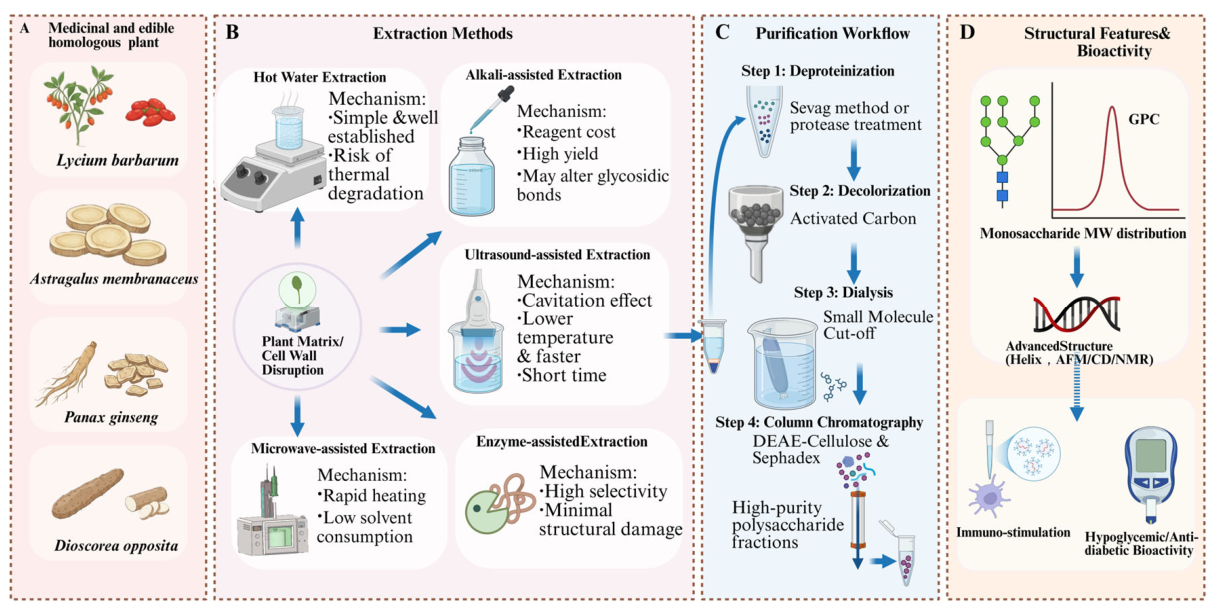
Building upon this shift, recent studies have substantially expanded the understanding of MEHPs from both methodological and functional perspectives. In particular, accumulating evidence indicates that extraction strategies play a pivotal role in determining the physicochemical characteristics of polysaccharides. Zhou et al. demonstrated that different extraction methods resulted in distinct structural characteristics of Lycium barbarum polysaccharides [4]. More importantly, structural characterization has become fundamental to elucidating the differences in their biological activities. Jiang et al. reported that the immunomodulatory activity of Astragalus membranaceus polysaccharides was closely associated with their molecular weight and monosaccharide composition [5]. Meanwhile, increasing attention has been directed toward the application of MEHPs in chronic disease intervention. In a recent review published in 2025, Li et al. highlighted that MEH-derived polysaccharides and oligosaccharides may contribute to the management of type 2 diabetes by modulating the gut microbiota, although their therapeutic potential appears to be highly dependent on structural characteristics [6]. Although several recent reviews have summarized the preparation, structural characterization, and biological activities of MEHPs, they mainly focused on specific research topics or disease-oriented applications [7]. A systematic perspective integrating extraction technologies, structural characterization and modification, food and health applications, as well as current research challenges remains limited. In particular, the relationships between extraction strategies, polysaccharide structures, and their functional applications have not been comprehensively discussed. Against this background, the present review systematically summarizes recent advances in MEHPs reported mainly from 2015 to 2025, with particular emphasis on their sources and classification, modern extraction technologies, structural characteristics and modification, as well as their emerging applications in the food and pharmaceutical sectors (Figure 1). Furthermore, the current challenges and limitations associated with their research and industrial utilization are critically discussed, and future research priorities are highlighted [8]. Collectively, this review is expected to provide a useful reference for the rational development, functional utilization, and value-added application of MEHPs in food and health-related industries.

2. Sources and Classification of MEH Plants and Mushrooms

2.1. Sources and Distribution of MEH Plants and Mushrooms

MEH plants and mushrooms are derived from botanical and fungal resources that can be consumed as foods while simultaneously exhibiting well-documented pharmacological activities [9]. According to recent reports, 103 species have been recognized as MEH resources in China by 2023 [10]. These species are widely distributed across different regions of China, and considerable interspecific variation exists in both the edible or medicinal tissues utilized and the sites of polysaccharide accumulation. Such variability not only reflects their geographical distribution but also has important implications for the selection of raw materials for polysaccharide extraction and subsequent functional investigations. Therefore, a systematic overview of polysaccharide sources from different plant species and tissue types is essential for understanding their resource characteristics and potential applications.
At the cellular level, polysaccharides are widely distributed in plant and fungal cell walls, intercellular matrices, and the cytoplasm, and their content and composition are largely influenced by plant species, tissue type, and environmental conditions [2]. Among these sources, Lycium barbarum L. is one of the most extensively investigated species and is predominantly cultivated in northwestern China, particularly in Ningxia, Gansu, and Qinghai provinces. L. barbarum polysaccharides primarily accumulate in mature dried fruits and represent one of the major bioactive components investigated for their immunomodulatory potential. By comparison, polysaccharides from Astragalus membranaceus are mainly obtained from dried roots, whereas those from Dioscorea opposita and Pueraria lobata are predominantly localized in underground tubers and enlarged roots, respectively. These observations indicate that the tissue-specific distribution of polysaccharides is closely associated with plant species.
Although the concept of medicinal and edible homologous plants originates mainly from traditional Chinese dietary and medicinal practices, plant resources with similar food–health dual functions are also widely distributed worldwide. For example, Aloe vera and Moringa oleifera have attracted attention as functional plant resources due to their polysaccharide-associated antioxidant, immunomodulatory, and gastrointestinal health-promoting properties. Opuntia ficus-indica, widely cultivated in the Mediterranean region and Latin America, represents another valuable polysaccharide source with potential applications in functional foods [11]. In addition, Echinacea spp. and Sambucus nigra have been investigated for their bioactive polysaccharides and health-related functions. These globally distributed plant resources expand the scope of MEHPs research beyond traditional Chinese medicinal plants and provide opportunities for developing diverse polysaccharide-based food and health products [12].
Beyond higher plants, several edible and medicinal fungi are also recognized as important MEH resources [13]. For example, polysaccharides from Ganoderma lucidum are primarily isolated from fruiting bodies, whereas those from Poria cocos are mainly extracted from sclerotia. Notably, growing attention has recently been paid to several underexplored MEH resources. For instance, polysaccharides derived from Taraxacum officinale have been demonstrated to exhibit promising antioxidant and anti-inflammatory activities [14]. Collectively, MEH resources exhibit considerable diversity in their polysaccharide structures and functional properties. For example, Lycium barbarum polysaccharides are typically characterized as acidic heteropolysaccharides rich in uronic acids, which are closely associated with antioxidant and immunomodulatory activities. Astragalus membranaceus polysaccharides generally exhibit moderate molecular weights and complex heteropolysaccharide structures, contributing to their immune-enhancing effects. In contrast, polysaccharides from Dioscorea opposita and Pueraria lobata are mainly derived from storage tissues and often contain glucose- or galactose-rich structures associated with antioxidant and metabolic regulatory functions. Fungal-derived resources, such as Ganoderma lucidum and Poria cocos, possess unique structural features, including complex branching patterns and triple-helical conformations, which contribute to their immunomodulatory and metabolic regulation activities. These differences highlight that plant species, tissue origin, and polysaccharide structural characteristics collectively determine the functional potential of MEHPs and EMMPs.

2.2. Structural Types of MEHPs and EMMPs

MEHPs and EMMPs exhibit remarkable structural diversity, which is primarily reflected in their charge characteristics, monosaccharide composition, and macromolecular architecture. Accordingly, these polysaccharides are generally classified based on these three structural features. Among them, charge characteristics represent one of the fundamental criteria for polysaccharide classification. Neutral polysaccharides are typically devoid of uronic acid residues and are mainly composed of monosaccharides such as glucose, galactose, and mannose. By contrast, acidic polysaccharides contain galacturonic acid, glucuronic acid, and/or sulfate groups, which confer an overall negative charge and largely determine their physicochemical properties.
Kim et al. isolated neutral and acidic polysaccharide fractions from Panax ginseng C. A. Meyer and compared their structural characteristics and antioxidant activities [15]. The acidic polysaccharide fraction exhibited stronger free radical scavenging capacity than the neutral fraction, which was associated with its higher uronic acid content, indicating that charge-related structural features contribute to the antioxidant potential of polysaccharides. Polysaccharides can also be classified according to their monosaccharide composition. Homopolysaccharides are composed of a single type of monosaccharide linked through glycosidic bonds, whereas heteropolysaccharides consist of two or more monosaccharide residues. Notably, most naturally occurring MEHPs belong to the latter category. For example, Ganoderma lucidum polysaccharides have been identified as structurally complex heteropolysaccharides [16]. Zhang et al. demonstrated that these polysaccharides are composed of multiple monosaccharide residues, including glucose, mannose, galactose, and arabinose [17]. Polysaccharides can also be classified according to the architecture of their glycan backbone. Linear polysaccharides are characterized by continuous, unbranched chains, whereas branched polysaccharides possess side chains of varying lengths and compositions attached to the main backbone. Such structural complexity is increasingly recognized as a key determinant of the three-dimensional conformation of polysaccharides and may consequently influence their biological functions. For example, Panax ginseng polysaccharides exhibit a typical branched architecture. Jia et al. demonstrated that their main backbone is predominantly composed of (1→3)-linked galactopyranosyl residues, whereas the side chains are enriched in arabinose residues [18].

2.3. Relationship Between Structural Diversity and Biological Functions of MEHPs

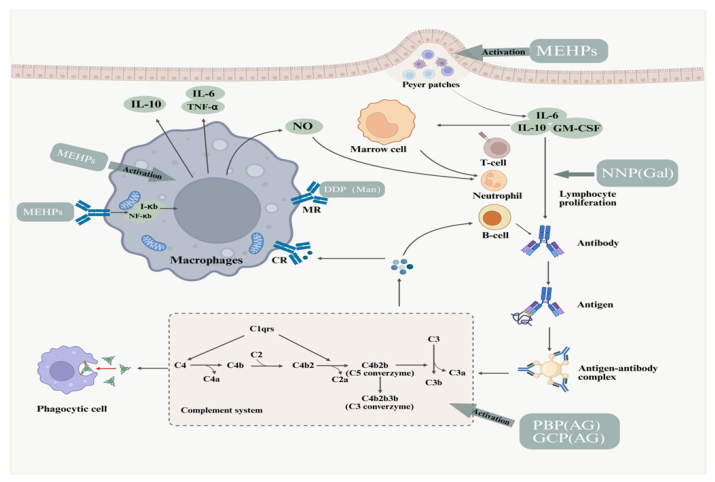
The biological activities of MEHPs are closely associated with their structural characteristics. In particular, monosaccharide composition, molecular weight distribution, and three-dimensional conformation collectively determine their physicochemical properties and functional performance (Figure 2).
Monosaccharide composition is widely recognized as one of the key structural factors governing the biological activities of polysaccharides [19]. Variations in the relative abundance of constituent monosaccharides may lead to distinct physicochemical characteristics and functional performance. In particular, polysaccharides enriched in uronic acids generally exhibit superior antioxidant capacity. Chen et al. investigated the structural characteristics of polysaccharides isolated from Crataegus pinnatifida leaves and demonstrated that the galacturonic acid content was positively correlated with their free radical scavenging capacity [20]. Supporting this trend, recent research has increasingly shown that the ratios of specific neutral sugars, such as galactose and arabinose, also significantly dictate immunomodulatory outcomes. For example, Jiang et al. found that the immune-enhancing efficacy of Astragalus membranaceus polysaccharides was strictly dependent on their specific monosaccharide ratios, confirming that composition is a primary driver of bioactivity [5].
Beyond composition, molecular weight distribution is another critical structural parameter influencing the physicochemical properties and biological functions of polysaccharides [21,22]. Excessively high molecular weight generally leads to increased solution viscosity, thereby limiting water solubility and bioavailability. Conversely, excessively low molecular weight may compromise the structural integrity of polysaccharides and reduce their binding affinity toward immune cell receptors. Zhang et al. fractionated Astragalus membranaceus polysaccharides according to molecular weight and demonstrated that the fraction with an intermediate molecular weight exhibited the greatest capacity to enhance macrophage phagocytic activity [23]. This phenomenon is widely observed across various MEHPs; as highlighted by Chen et al., while there is no universal optimal molecular weight, intermediate- to high-molecular-weight fractions typically exhibit the most potent immunomodulatory and hypoglycemic activities depending on the specific plant source [21,22]. Three-dimensional conformation represents another key structural determinant governing the biological functions of polysaccharides. Linear and branched polysaccharides adopt distinct molecular conformations, and branched architectures can further assemble into helical or spherical aggregates, thereby influencing their interactions with specific receptors. In particular, polysaccharides possessing a triple-helical conformation have been associated with enhanced biological activities, especially in immunomodulation and enzyme binding [24].
Collectively, these findings indicate that the higher-order conformations of polysaccharides provide the structural basis for their biological functions.

3. Modern Extraction Technologies for MEHPs

Conventional polysaccharide extraction methods primarily rely on hot water extraction (HWE) and acid–base-assisted extraction. Although these techniques remain widely employed owing to their operational simplicity and relatively low cost, their inherent limitations in extraction efficiency, structural preservation, and environmental sustainability have become increasingly evident.

3.1. Limitations of Conventional Extraction Methods

HWE is often constrained by prolonged extraction times and relatively low extraction efficiency. Extended exposure to elevated temperatures may induce the thermal degradation of polysaccharides, which is typically manifested by a marked reduction in molecular weight and alterations in glycosidic linkages [25]. Li et al. reported similar observations during the extraction of Schisandra chinensis polysaccharides [26]. Their results demonstrated that increasing the extraction temperature promoted the cleavage of the polysaccharide backbone, thereby compromising structural stability [27]. More importantly, excessive thermal treatment significantly diminished the immunostimulatory activity of the extracted polysaccharides. In addition, HWE requires substantial solvent consumption and energy input, making it less compatible with the principles of green and sustainable processing [28].
Acid–base-assisted extraction presents two major drawbacks: structural degradation of polysaccharides and environmental concerns. Strong acidic or alkaline media facilitate polysaccharide release by disrupting the plant cell wall matrix; however, these harsh conditions can also induce the non-specific hydrolysis of glycosidic linkages. Consequently, key functional groups, such as acetyl and sulfate groups, may be removed from the polysaccharide side chains, thereby altering their structural characteristics and biological functions. Chen et al. investigated the influence of alkali concentration on the structural properties of Poria cocos polysaccharides [29]. Their results demonstrated that strong alkaline treatment disrupted the native triple-helical conformation of the polysaccharides, leading to a marked reduction in their antitumor activity. Furthermore, acid–base-assisted extraction generates considerable amounts of acidic and alkaline wastewater, increasing the environmental burden associated with downstream treatment. Residual chemical reagents may also remain in the extracts, thereby increasing the complexity of subsequent purification processes.

3.2. Green and Advanced Extraction Technologies

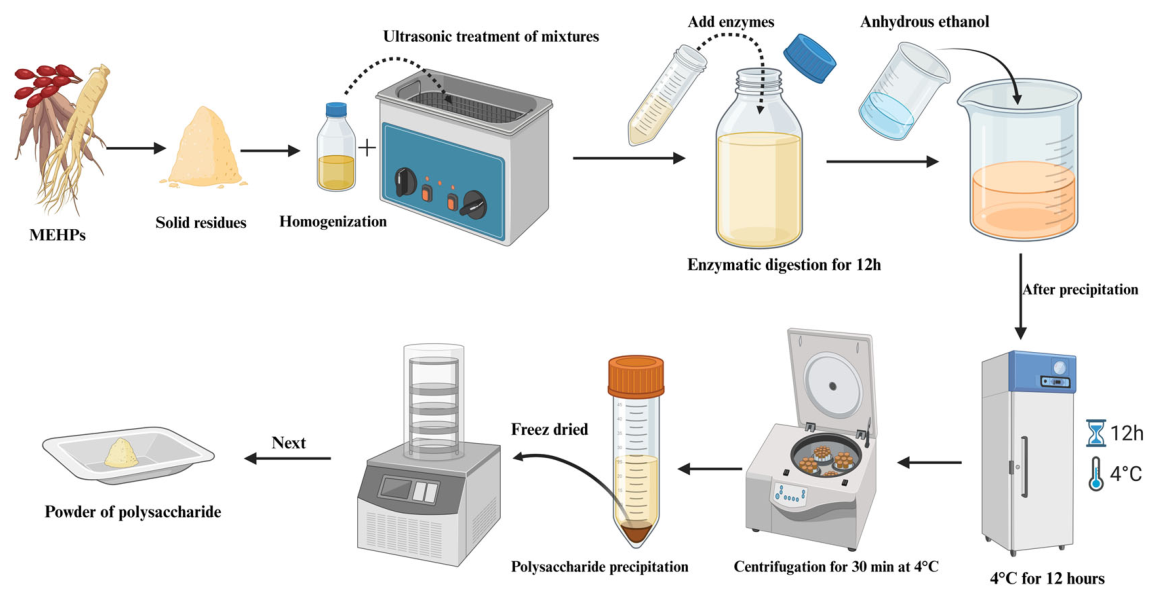
Given the limitations of conventional extraction methods, including low extraction efficiency, high energy consumption, and the potential for structural degradation of polysaccharides, growing attention has been paid to the development of green extraction technologies. These green and advanced approaches mainly include ultrasound-assisted extraction (UAE), microwave-assisted extraction (MAE), enzyme-assisted extraction (EAE), supercritical fluid extraction (SFE), and deep eutectic solvent (DES)-based extraction (Figure 3). Compared with conventional extraction methods, these technologies generally achieve higher polysaccharide yields under relatively mild operating conditions while better preserving the structural integrity and biological activity of the extracted polysaccharides [30,31] (Table 1).

3.2.1. Ultrasound-Assisted Extraction (UAE)

UAE is one of the most widely investigated green extraction technologies for polysaccharides. Its extraction mechanism is primarily based on the cavitation effect. During ultrasonic treatment, acoustic waves propagate through the extraction medium, generating alternating cycles of compression and rarefaction that lead to the formation of numerous microbubbles. Under continuous ultrasonic irradiation, these microbubbles rapidly expand and collapse, producing intense shear forces and microjet effects [44]. These mechanical forces effectively disrupt the rigid plant cell wall, thereby increasing the permeability of the plant matrix and facilitating solvent penetration into intracellular regions [45]. Consequently, intracellular polysaccharides can be released and transferred into the extraction solvent more efficiently. Compared with conventional extraction methods, UAE markedly shortens extraction time while operating at relatively low temperatures [46]. More importantly, these mild processing conditions contribute to the preservation of the structural integrity and biological activity of thermosensitive polysaccharides.
UAE has been extensively applied to the extraction of polysaccharides from a wide variety of MEH plant materials [47]. Hou et al. optimized the UAE conditions for extracting polysaccharides from Chrysanthemum morifolium using response surface methodology (RSM) [48]. Compared with conventional hot reflux extraction, UAE did not significantly affect the monosaccharide composition or Fourier-transform infrared (FT-IR) spectral characteristics of the polysaccharides. More importantly, the extracted polysaccharides exhibited enhanced antioxidant activity and stronger α-glucosidase inhibitory activity. More recent studies have extended the application of UAE to the extraction of polysaccharides from fermented Astragalus membranaceus. Ultrasonic treatment was demonstrated to increase polysaccharide yield while enhancing antioxidant activity [49]. Similarly, UAE has also been employed for the extraction of polysaccharides from Morus alba leaves. The ultrasonic treatment effectively promoted cell wall disruption, increased the contents of total sugars and uronic acids, and consequently enhanced free radical scavenging capacity. Nevertheless, excessive ultrasonic intensity or prolonged treatment may promote polysaccharide depolymerization, resulting in decreased molecular weight and altered bioactivity. Therefore, optimization of ultrasonic power, treatment duration, and extraction temperature is critical for maximizing extraction performance while preserving structural integrity [50]. When properly optimized, these collective findings demonstrate that UAE is applicable not only to individual plant systems but also to the efficient extraction of polysaccharides from a broad range of MEHPs and other medicinal and edible resources.

3.2.2. Microwave-Assisted Extraction (MAE)

MAE is an emerging extraction technology that utilizes electromagnetic energy to enhance extraction efficiency. Its extraction mechanism primarily relies on rapid internal heating induced by molecular polarization. During microwave irradiation, electromagnetic waves penetrate the plant matrix and interact directly with polar molecules, particularly water molecules, within plant cells. The oscillation and friction of these molecules generate heat rapidly, leading to a sharp increase in intracellular temperature and pressure. Once the internal pressure exceeds the mechanical strength of the cell wall, disruption of the cell wall and plasma membrane occurs, facilitating the release of intracellular polysaccharides. Consequently, mass transfer resistance is markedly reduced, allowing polysaccharides to be extracted more rapidly and efficiently [51,52].
MAE has been widely applied to enhance the extraction efficiency of polysaccharides from diverse plant sources. Wu et al. employed this technique to extract polysaccharides from Cassia obtusifolia seeds and optimized the extraction conditions, including microwave power, extraction time, and liquid-to-solid ratio, using response surface methodology (RSM) [53]. Compared with conventional HWE, MAE significantly increased polysaccharide yield while markedly shortening the extraction time. More importantly, the extracted polysaccharides retained favorable antioxidant activity, suggesting that microwave treatment can enhance extraction efficiency without compromising structural integrity. Emerging evidence further suggests that MAE offers several advantages, including rapid volumetric heating, reduced energy consumption, and improved mass transfer efficiency. Collectively, these characteristics make MAE a promising strategy for the efficient extraction of natural polysaccharides. However, localized overheating may compromise the stability of heat-sensitive polysaccharides, and challenges associated with microwave penetration and reactor design still limit large-scale industrial implementation [54].

3.2.3. Enzyme-Assisted Extraction (EAE)

EAE is a green extraction technology characterized by mild operating conditions and high substrate specificity. It employs hydrolytic enzymes, such as cellulase and pectinase, to selectively degrade the cellulose and pectin networks that constitute the plant cell wall. Following enzymatic disruption of the cell wall matrix, intracellular polysaccharides can be released and transferred into the extraction solvent with improved efficiency. Unlike conventional extraction methods that rely on elevated temperatures or extreme pH conditions, EAE is typically performed under relatively mild temperatures and near-neutral pH conditions. Consequently, the glycosidic linkages within the polysaccharide backbone remain largely preserved, enabling efficient polysaccharide extraction while maintaining their native three-dimensional conformation and functional groups. More importantly, these advantages make EAE particularly suitable for extracting thermosensitive polysaccharides that are susceptible to thermal degradation.
EAE has been extensively applied to the extraction of polysaccharides from MEHPs. Chen et al. employed EAE to extract polysaccharides from Astragalus membranaceus and optimized the enzymatic hydrolysis conditions using response surface methodology (RSM). Enzymatic treatment was demonstrated to significantly increase polysaccharide yield while preserving the structural integrity of the extracted polysaccharides [55]. Similarly, Liu et al. reported that the combined use of cellulase and pectinase effectively disrupted the plant cell wall matrix during the extraction of polysaccharides from Dioscorea opposita, thereby facilitating polysaccharide release and improving extraction efficiency [56]. In addition, Wang et al. demonstrated that EAE enhanced extraction efficiency while minimizing polysaccharide degradation during the extraction of polysaccharides from Taraxacum officinale leaves under mild operating conditions [57]. As highlighted by these studies, this ability to operate under mild conditions makes EAE particularly advantageous for preserving native polysaccharide structures. Despite these benefits, high enzyme costs, enzyme specificity, and limited enzyme recyclability remain important barriers to industrial-scale application. Future developments in enzyme immobilization and multi-enzyme systems may further improve its economic feasibility.

3.2.4. Supercritical Fluid Extraction (SFE)

Supercritical fluid extraction (SFE) is an environmentally friendly extraction technology that typically employs supercritical carbon dioxide (CO2) as the extraction medium. Owing to the highly polar nature of polysaccharides, polar modifiers such as water or ethanol are commonly introduced as co-solvents (entrainers) to enhance their extraction efficiency. Under supercritical conditions, CO2 exhibits unique physicochemical properties, combining gas-like diffusivity with liquid-like solvating capacity. These characteristics enable the supercritical fluid to penetrate deeply into the plant matrix, thereby facilitating the dissolution and mass transfer of polysaccharides. Following extraction, depressurization allows CO2 to rapidly revert to its gaseous state and separate completely from the extract, producing polysaccharide fractions with high purity and negligible solvent residues. More importantly, SFE is generally conducted under relatively mild thermal conditions, which contributes to preserving the native physicochemical properties and biological activity of polysaccharides to a greater extent than conventional extraction methods.
The extraction of polysaccharides from Panax ginseng using supercritical CO2 technology further demonstrates the advantages of SFE. Compared with conventional HWE, SFE exhibited superior performance in improving polysaccharide purity and enriching target polysaccharide fractions. Zhang et al. reported that the yield of P. ginseng polysaccharides reached 38.03%, while the purity increased to 54.71% following SFE. These values were 16.15% and 13.44% higher, respectively, than those obtained using conventional HWE [57]. Further compositional analysis revealed significantly higher proportions of glucose, galactose, and arabinose in the SFE-derived polysaccharides than in those obtained by HWE. Collectively, these findings suggest that SFE exhibits excellent selectivity toward specific polysaccharide fractions, thereby facilitating the enrichment of bioactive polysaccharide components. Further improvements in extraction efficiency, process economics, and scale-up feasibility are still required before widespread industrial application can be realized.

3.2.5. Deep Eutectic Solvent (DES)-Based Extraction

DESs have emerged as a novel class of green extraction media for the recovery of natural products. They are typically prepared by combining a hydrogen bond donor (HBD), such as urea or glycerol, with a hydrogen bond acceptor (HBA), such as a quaternary ammonium salt, at an appropriate molar ratio [58]. Compared with conventional organic solvents, DESs are characterized by low toxicity, negligible volatility, and excellent biodegradability. In polysaccharide extraction, the polarity of DESs can be readily tailored by varying the composition and molar ratio of the HBD and HBA, allowing the solvent system to better match the physicochemical properties of target polysaccharides [59,60]. During extraction, the extensive hydrogen-bonding network within DESs effectively disrupts the plant cell wall matrix while simultaneously establishing strong intermolecular interactions with polysaccharide molecules [61]. Consequently, mass transfer resistance is reduced, thereby facilitating the release and dissolution of polysaccharides from the plant matrix into the extraction medium. The effectiveness of DESs for polysaccharide extraction from complex biological matrices has been demonstrated in several studies [62]. Liu and Tan developed a DES-based aqueous two-phase system for the extraction of polysaccharides from Astragalus membranaceus and systematically evaluated the extraction performance of DESs with different compositions. Their results demonstrated that the DES composed of choline chloride and urea at a molar ratio of 1:1 achieved the highest extraction efficiency. Following statistical optimization, the extraction system produced a polysaccharide yield of 141.11 mg/g under the optimized conditions of 60 °C for 60 min [63]. The advantages of DESs have also been demonstrated in the extraction of polysaccharides from Dioscorea opposita [64]. Zhang and Wang prepared a series of choline chloride-based DESs and systematically evaluated their extraction efficiency for D. opposita polysaccharides. Comparative experiments demonstrated that an optimized DES system significantly increased polysaccharide yield compared with conventional water extraction. More importantly, subsequent physicochemical characterization confirmed that the major structural features of the extracted polysaccharides were well preserved. The authors further suggested that the extensive hydrogen-bonding network within DESs enhanced the affinity between the solvent and the plant matrix, thereby promoting polysaccharide extraction. These findings demonstrate that DESs represent an efficient and environmentally friendly alternative to conventional solvents for the extraction of natural polysaccharides [65]. However, their relatively high viscosity, solvent recovery, and regulatory acceptance for food applications remain major challenges before large-scale commercialization can be achieved.

3.2.6. Emerging Physical-Assisted Extraction Technologies

In addition to ultrasound-, microwave-, enzyme-, and solvent-based extraction methods, several emerging physical-assisted technologies, including pulsed electric field (PEF), ohmic heating (OH), hydrodynamic cavitation (HC), infrared-assisted extraction (IRAE), and subcritical water extraction (SWE), have attracted increasing attention for polysaccharide extraction. These approaches generally aim to enhance mass transfer, reduce extraction time and energy consumption, and improve the sustainability of extraction processes.
PEF is a non-thermal technology that enhances cell membrane permeability through electroporation induced by short high-voltage pulses, thereby facilitating the release of intracellular polysaccharides [66]. PEF offers advantages in reducing thermal degradation and improving extraction efficiency; however, its application is still limited by high equipment costs and insufficient scale-up validation.
OH utilizes electrical resistance within plant materials to generate rapid and uniform internal heating, which can accelerate mass transfer and shorten extraction time. Despite its high energy efficiency and potential for continuous processing, OH performance is strongly dependent on material conductivity, and further optimization is required for diverse MEH resources.
HC promotes cell disruption and mass transfer through the formation and collapse of vapor cavities generated by pressure changes. Compared with ultrasonic cavitation, HC shows potential advantages in continuous operation and industrial scalability, although challenges related to reactor design and process optimization remain [67].
IRAE uses infrared radiation to provide rapid heating and improve solvent penetration, offering reduced energy consumption and shorter processing times. However, limited penetration depth and insufficient large-scale studies currently restrict its broader application [44].
SWE employs high-temperature pressurized water as an environmentally friendly extraction medium, reducing the need for organic solvents and improving extraction efficiency. Nevertheless, the requirement for high-pressure equipment and potential thermal effects on polysaccharide structures remain important considerations for industrial implementation [43].
Overall, these emerging physical-assisted technologies provide promising alternatives for sustainable MEHP extraction. Compared with mature methods such as hot water extraction, they generally offer advantages in extraction efficiency, energy utilization, and environmental performance. However, most of them remain at laboratory or pilot scales, and further studies on process standardization, economic feasibility, and industrial scalability are required before commercial application.

3.3. Extraction Kinetics and Mass-Transfer Mechanisms

While the aforementioned extraction technologies offer distinct advantages for improving the recovery of MEHPs, their overall efficiency is ultimately governed by the underlying mass-transfer behavior between plant matrices and extraction solvents. Polysaccharide extraction involves several sequential processes, including solvent penetration, cell wall disruption, dissolution, diffusion, and equilibrium establishment. Understanding these mechanisms is essential for explaining the performance differences among extraction technologies and optimizing extraction conditions.
During extraction, polysaccharide release generally exhibits a rapid initial stage followed by a slower equilibrium stage. The initial stage is mainly associated with the dissolution of easily accessible polysaccharides and a high concentration gradient between the plant matrix and solvent, whereas the later stage is controlled by internal diffusion resistance. Different extraction technologies enhance mass transfer through distinct mechanisms. For example, UAE promotes diffusion through cavitation-induced cell disruption, MAE accelerates mass transfer through volumetric heating, and EAE improves solvent accessibility by degrading plant cell-wall structures [68].
Kinetic models provide quantitative approaches for describing extraction behavior. Fickian diffusion models are widely used to explain solute migration driven by concentration gradients and to estimate effective diffusion coefficients during solid–liquid extraction. However, their simplified assumptions may limit application in complex plant matrices involving multiple simultaneous mechanisms [32]. The second-order kinetic model is frequently applied to describe nonlinear extraction processes involving diffusion and desorption, providing useful parameters for evaluating extraction rate and equilibrium capacity [69]. In addition, the Peleg model is commonly used to characterize extraction systems with rapid initial release followed by gradual equilibrium, allowing prediction of initial extraction rate and extraction capacity under different processing conditions [70].
Integrating kinetic modeling with extraction technology evaluation provides a mechanistic basis for process optimization and scale-up. Future MEHP extraction strategies should consider not only extraction yield but also polysaccharide structural preservation, energy consumption, and economic feasibility. Combining kinetic analysis with advanced optimization approaches, such as artificial intelligence-assisted prediction, may further promote the development of efficient and scalable extraction processes [71].

3.4. Combined Application of Multiple Extraction Technologies

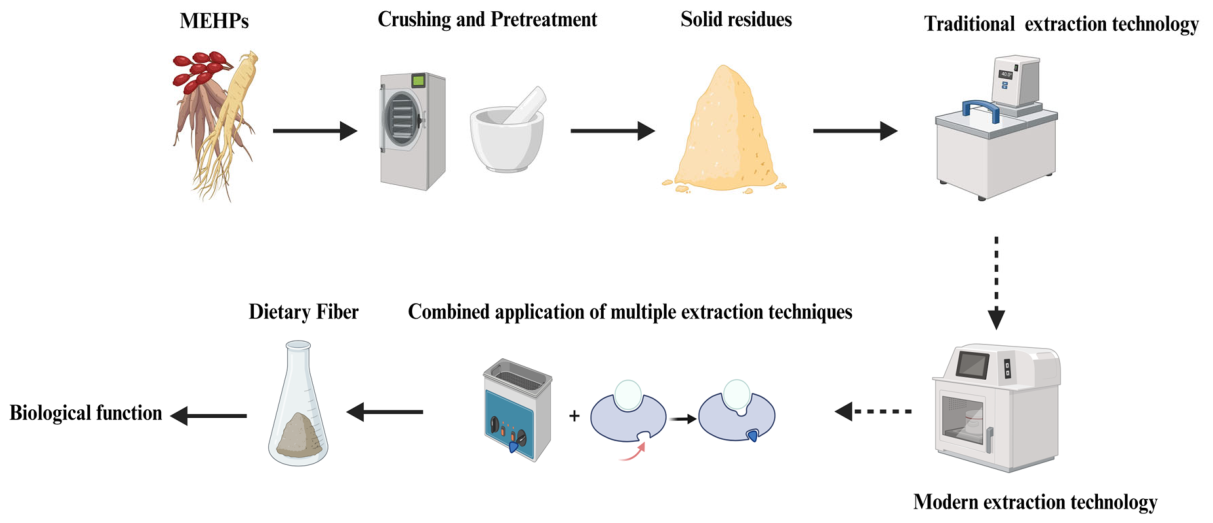
A single extraction technique often exhibits limited efficiency when processing dense plant matrices, primarily because of insufficient matrix penetration and restricted mass transfer. To overcome these limitations, increasing attention has been directed toward the integration of multiple extraction technologies. Combining complementary physical-assisted extraction techniques with biochemical approaches produces synergistic effects, enhancing extraction efficiency while minimizing structural damage to polysaccharides.
Among the various integrated extraction strategies, the combination of UAE and EAE has been widely employed to improve the efficiency of plant cell wall disruption. Under conventional extraction conditions, the effectiveness of enzymatic hydrolysis is often limited by poor substrate accessibility. Ultrasound-induced cavitation effectively disrupts the plant cell wall matrix and increases tissue porosity, thereby facilitating enzyme penetration and enhancing enzyme–substrate interactions. Wang et al. demonstrated that the incorporation of physical-assisted extraction into the enzymatic extraction of polysaccharides from Rosa roxburghii Tratt. not only accelerated the enzymatic hydrolysis process but also enhanced the antioxidant activity of the extracted polysaccharides [72]. Similarly, Yin et al. reported that ultrasonic or microwave pretreatment effectively promoted cell wall disruption and facilitated polysaccharide release during the extraction of polysaccharides from Cornus officinalis [73]. Collectively, these findings demonstrate that physical pretreatment enhances substrate accessibility, thereby substantially improving the extraction efficiency of EAE.
Beyond overcoming structural barriers within plant tissues, integrated extraction strategies can also improve mass transfer during the extraction process. DESs generally exhibit relatively high viscosity at room temperature, which may restrict the diffusion of polysaccharide molecules and consequently reduce extraction efficiency. The incorporation of physical-assisted techniques, such as ultrasound or microwave treatment, can decrease solvent viscosity through mechanical or thermal effects, thereby facilitating mass transfer. Zhang and Wang demonstrated that ultrasonic treatment significantly enhanced the mass transfer performance of DESs, resulting in improved extraction efficiency of polysaccharides from Dioscorea opposita [65]. Similarly, Ji et al. reported that the incorporation of ultrasonic treatment into an aqueous two-phase extraction system significantly increased the yield of polysaccharides from Ziziphus jujuba [4]. Collectively, these findings indicate that physical-assisted techniques effectively reduce mass transfer resistance in highly viscous extraction systems, thereby improving polysaccharide recovery.
Physical pretreatment strategies have also attracted increasing attention as an effective approach for improving the structural characteristics of plant materials prior to polysaccharide extraction [74]. For example, cold plasma treatment can generate microporous structures on the plant surface, thereby enhancing solvent penetration and facilitating subsequent polysaccharide extraction. Yang et al. demonstrated that the combined application of high-pressure and ultrasonic treatments effectively disrupted the tissue structure of Hovenia dulcis, resulting in enhanced polysaccharide release and improved in vitro biological activity of the extracted polysaccharides [75]. These findings further highlight the potential of physical pretreatment to modify plant matrices, thereby improving extraction efficiency and preserving polysaccharide functionality.
Collectively, current evidence suggests that the advantages of integrated extraction strategies are primarily reflected in the improvement of plant matrix disruption, the reduction in mass transfer resistance, and the enhancement of overall extraction efficiency (Figure 4). More importantly, the complementary integration of different extraction techniques enables these benefits to be achieved simultaneously, thereby overcoming the inherent limitations associated with individual extraction methods. From a practical perspective, selecting appropriate combinations of extraction technologies according to the characteristics of different plant matrices is essential for maximizing polysaccharide recovery while minimizing structural damage. Such integrated optimization is increasingly recognized as an effective strategy for achieving efficient polysaccharide extraction while preserving their structural integrity and functional properties.

3.5. Process Optimization Strategies

The extraction efficiency of polysaccharides is governed by the interactions among multiple process variables, including extraction temperature, extraction time, and liquid-to-solid ratio. Conventional one-factor-at-a-time (OFAT) experiments are often inadequate for quantitatively evaluating the synergistic and antagonistic interactions among these variables [76]. Therefore, growing attention has been paid to the application of mathematical modeling for extraction process optimization, with the aim of maximizing polysaccharide recovery while reducing energy consumption.
Response surface methodology (RSM) is one of the most widely adopted statistical tools for extraction process optimization. Based on multivariate experimental designs, RSM establishes quadratic polynomial regression models to describe the relationships between process variables and the target response. This approach enables the quantitative evaluation of interactions among multiple process variables and facilitates the identification of optimal extraction conditions. In a representative study, Ji et al. employed RSM to optimize the ultrasound-assisted aqueous two-phase extraction of polysaccharides from Ziziphus jujuba cv. Muzao [72]. The RSM model revealed a significant interaction between extraction temperature and solvent composition, leading to a marked improvement in polysaccharide yield. Similarly, Xue et al. applied RSM to optimize the key operating parameters for the ultrafiltration-assisted extraction of polysaccharides from Dioscorea opposite [77]. Their findings further demonstrated the effectiveness and reliability of RSM as a practical tool for optimizing conventional polysaccharide extraction processes.
Despite its widespread application in extraction process optimization, RSM is inherently constrained by the assumption of a quadratic polynomial model, which may limit its predictive capability when applied to complex extraction systems. The extraction of MEHPs involves multiple coupled processes, including cell wall disruption, mass transfer, and heat transfer, resulting in highly nonlinear interactions among process variables [78]. As the number of process variables increases or extraction conditions become more complex, the predictive accuracy of RSM may gradually decline, making it difficult to reliably identify the true optimum. Consequently, the fitted model may exhibit reduced accuracy and increased prediction errors, particularly in highly nonlinear extraction systems. Compared with RSM, artificial neural networks (ANNs) do not require predefined mathematical assumptions and can capture complex nonlinear relationships among multiple process variables. Therefore, ANN-based models generally show higher predictive capability in highly complex extraction systems involving multiple interacting factors. However, unlike RSM, ANN models usually require larger datasets and provide limited interpretability, which may restrict their application in industrial decision-making where process transparency is essential [79].
To overcome these limitations, artificial intelligence (AI)-based and machine learning (ML) approaches have emerged as promising alternatives for extraction process optimization. In particular, artificial neural networks (ANNs), support vector regression (SVR), random forest (RF), extreme gradient boosting (XGBoost), and genetic algorithm-assisted optimization (ANN-GA) have attracted increasing attention owing to their superior capability for modeling complex nonlinear systems [80]. Unlike RSM, which relies on predefined mathematical equations, ML algorithms establish nonlinear relationships between process variables and target responses through data-driven learning. These approaches have demonstrated distinct advantages in handling complex plant matrices and high-dimensional datasets. Among these approaches, RF models are particularly useful for identifying the relative importance of extraction variables and handling nonlinear interactions while maintaining good interpretability. XGBoost, as an advanced gradient boosting algorithm, provides high predictive accuracy for complex extraction datasets by capturing nonlinear relationships among multiple process parameters. Furthermore, ANN-GA hybrid models combine the strong prediction capability of ANNs with the global optimization ability of genetic algorithms, enabling efficient identification of optimal extraction conditions with fewer experimental trials. For example, Meng et al. reported that SVR-based models achieved high predictive accuracy for complex extraction systems while effectively reducing the prediction bias associated with conventional statistical models [81]. Similarly, Wu et al. demonstrated that deep belief networks (DBNs) exhibited superior feature extraction capability and better generalization performance than conventional linear models when applied to complex plant-derived signals [82]. Collectively, these findings demonstrate that both ANN-based models and tree-based algorithms (such as RF and XGBoost) offer unique advantages through ensemble learning strategies, providing powerful tools for comprehensive extraction optimization. Bayesian optimization has also emerged as an efficient optimization approach by minimizing experimental requirements through sequential selection of optimal processing conditions. These approaches are particularly valuable for MEHP extraction, where extensive experimental optimization is often time-consuming and resource-intensive. Collectively, these findings suggest that AI-driven approaches are increasingly recognized as powerful tools for modeling and optimizing complex polysaccharide extraction processes [83].
Recent advances further indicate that AI-based extraction optimization is moving toward intelligent and interpretable systems. Digital twins, which integrate real-time monitoring data, mechanistic models, and machine learning algorithms, provide opportunities for dynamic prediction and adaptive control of extraction processes [84]. Meanwhile, explainable artificial intelligence (XAI) approaches can improve model transparency by identifying the contribution of individual process variables to extraction performance, which is important for industrial adoption [36]. In summary, extraction process optimization is gradually shifting from conventional statistical approaches based on quadratic regression models toward data-driven machine learning strategies. Under complex multivariable conditions, ML algorithms not only improve predictive accuracy but also enhance the robustness and adaptability of process optimization. More importantly, their ability to capture complex nonlinear relationships provides a reliable foundation for scaling up extraction processes from laboratory research to industrial production. ML is increasingly recognized as a promising tool for developing efficient, intelligent, and sustainable extraction strategies for MEHPs. In the future, AI may further enable simultaneous prediction of polysaccharide structural characteristics and biological activities by integrating extraction parameters, molecular descriptors, structural characterization data, and bioactivity profiles [85]. However, the development of such predictive models remains challenging due to the structural heterogeneity of polysaccharides and the lack of standardized high-quality datasets.

4. Structural Characteristics and Modification of MEHPs

4.1. Structural Characterization of MEHPs and Multi-Technique Approaches

The biological activities of MEHPs are closely associated with their complex physicochemical structures. However, current structural characterization studies have largely focused on primary structural features, whereas higher-order conformations remain insufficiently characterized. This methodological limitation hinders the direct correlation between the structural characteristics of polysaccharides and their biological functions, thereby impeding a comprehensive understanding of their structure–activity relationships (SARs). Therefore, overcoming the limitations of individual analytical techniques has become increasingly important (Figure 5). Crucially, the integration of complementary analytical platforms enables high-resolution characterization spanning from monosaccharide composition and glycosidic linkages to three-dimensional conformations, thereby providing a robust foundation for establishing reliable SARs.

4.1.1. Primary Structure Characterization

Accurate characterization of the primary structure is fundamental to polysaccharide research. In addition to monosaccharide composition, the primary structure encompasses glycosidic linkage patterns, branching characteristics, and the precise distribution of substituent groups, all of which are closely associated with the physicochemical properties and biological functions of polysaccharides [86]. Conventional chromatographic techniques alone are often insufficient for accurately resolving the complex branching architecture of polysaccharides. Therefore, the integration of high-performance liquid chromatography–mass spectrometry (HPLC–MS) and gas chromatography–mass spectrometry (GC–MS) has become a powerful analytical strategy for primary structural characterization. More importantly, the incorporation of mass spectrometry enables high-resolution structural elucidation through the generation of characteristic fragment ions by collision-induced dissociation (CID) [87]. This integrated analytical approach has significantly improved the accuracy of identifying monosaccharide composition, glycosidic linkage patterns, and branching structures, thereby providing reliable structural information for SAR studies [88].
In practical structural characterization, the integration of chromatographic and mass spectrometric techniques has substantially improved the accuracy and resolution of polysaccharide structural analysis [89]. Yang et al. combined GC–MS with a derivatization strategy to accurately determine the monosaccharide composition and glycosidic linkage patterns of Dendrobium polysaccharides [90]. To overcome the challenge of resolving the complex branching architecture of polysaccharides, Li et al. developed a novel LC–MS/MS-based quantitative analytical platform [52,91]. By analyzing characteristic fragment ions derived from aldononitrile acetate derivatives, this approach enabled the precise characterization of monosaccharide composition, glycosidic linkage patterns, and branching structures. Collectively, these high-resolution hyphenated analytical techniques provide robust structural evidence for elucidating the backbone architecture of polysaccharides and lay a solid foundation for subsequent higher-order structural characterization and SAR studies.

4.1.2. Advanced Structure Characterization and Multi-Technique Approaches

Although primary structural characterization provides fundamental chemical information, the higher-order structures adopted by polysaccharides in solution, including helical conformations and three-dimensional architectures, are increasingly recognized as the structural basis underlying their biological functions [92]. However, no single analytical technique can comprehensively characterize the complex spatial organization of polysaccharides. Therefore, the complementary integration of atomic force microscopy (AFM), circular dichroism (CD), and nuclear magnetic resonance (NMR) has become an indispensable strategy for higher-order structural characterization [93]. Within this integrated analytical framework, AFM enables the direct visualization of the three-dimensional morphology and aggregation behavior of polysaccharide molecules. CD is particularly sensitive to conformational changes in helical secondary structures, whereas NMR provides detailed insights into intramolecular hydrogen-bonding networks and spatial interactions among functional groups [94]. Collectively, the complementary application of these techniques enables a more comprehensive understanding of polysaccharide conformations, thereby providing a solid structural basis for elucidating SARs.
The complementary application of advanced structural characterization techniques has substantially enhanced the understanding of the relationship between polysaccharide conformation and biological function. Zhu et al. systematically characterized polysaccharides from Astragalus membranaceus using AFM, CD spectroscopy, and Congo red assays [95]. Their results demonstrated that these polysaccharides adopted a stable triple-helical conformation in solution, which was closely associated with enhanced α-glucosidase inhibitory activity. Similarly, Ji et al. investigated the higher-order structures of polysaccharides from Ziziphus jujuba [96]. By integrating AFM observations of molecular aggregation behavior with spectroscopic analyses, they successfully characterized the three-dimensional conformational features of these polysaccharides. These findings demonstrate that the integration of complementary structural characterization techniques enables a more comprehensive and reliable elucidation of higher-order polysaccharide structures, thereby facilitating a deeper understanding of their SARs.
Building upon these insights, such multidimensional analytical strategies—combining high-resolution mass spectrometry with conformational techniques like AFM, CD, and NMR—provide a robust foundation for deciphering the biological functions of MEHPs. Nevertheless, despite these analytical advances, the individual contributions of specific structural features to biological activities remain difficult to distinguish because multiple structural parameters, such as molecular weight, monosaccharide composition, glycosidic linkages, branching degree, and higher-order conformations, often vary simultaneously. Therefore, the current understanding of the major structural determinants governing MEHP bioactivities is summarized in Table 2, highlighting representative structure–activity relationships together with the current evidence and remaining research limitations.

4.2. Regulation of Polysaccharide Functions Through Structural Modification

Native MEHPs generally possess relatively high molecular weights and complex branched architectures. These intrinsic structural characteristics are often associated with limited water solubility, pronounced steric hindrance, and consequently reduced bioavailability and biological functions [99]. To overcome these physicochemical constraints, a variety of chemical modification strategies have been extensively explored to tailor the structural properties of polysaccharides [98]. Growing attention has been paid to elucidating the molecular mechanisms underlying the enhanced biological activities of structurally modified polysaccharides, rather than merely describing changes in their apparent functional properties. More importantly, this research paradigm has substantially advanced the understanding of polysaccharide SARs and provides a theoretical basis for the rational design of polysaccharides with improved physicochemical properties and biological performance [100].
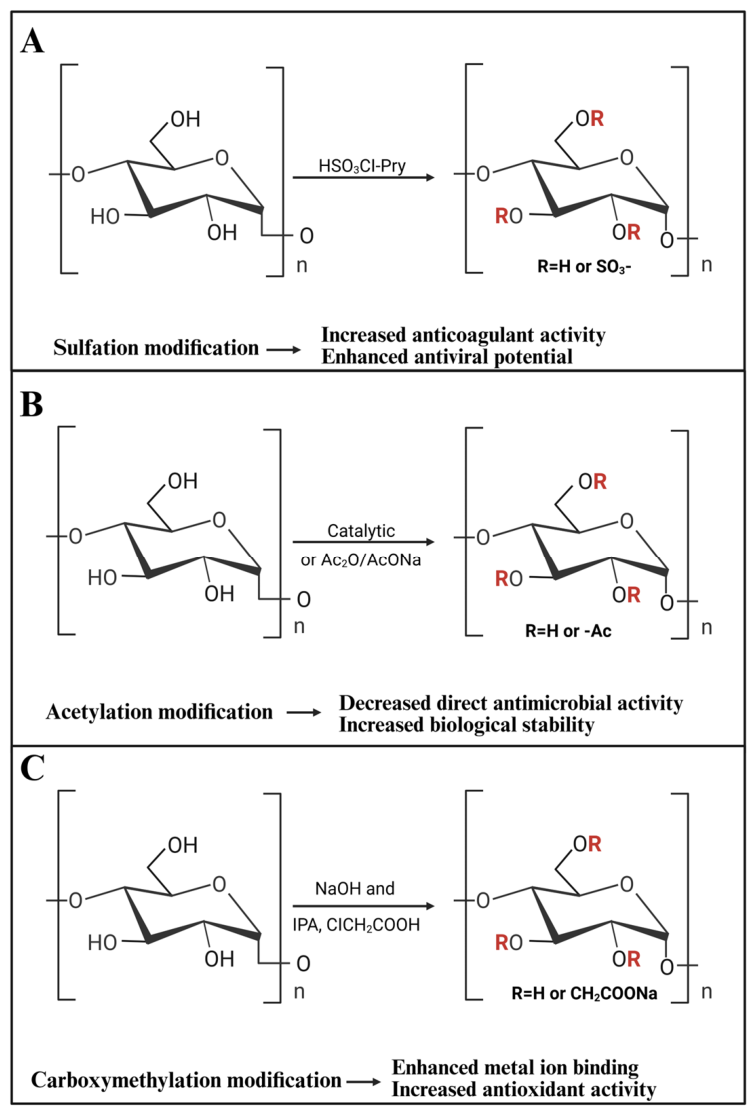
The primary objective of structural modification is to tailor the charge distribution and spatial conformation of polysaccharides through targeted chemical substitution [101]. Among the various modification strategies, sulfation, acetylation, and carboxymethylation are the most extensively investigated owing to their effectiveness in improving the physicochemical properties and biological functions of polysaccharides [102]. Of these approaches, sulfation is one of the most representative modification strategies, whereby negatively charged sulfate groups are introduced into the hydroxyl groups of polysaccharide chains. The electrostatic repulsion generated among these sulfate groups promotes the extension of the originally compact and coiled molecular chains, resulting in a more expanded molecular conformation. More importantly, this conformational rearrangement not only enhances the affinity of polysaccharides for aqueous media, thereby improving their water solubility, but also increases the exposure of bioactive binding sites. The enhanced accessibility of these sites facilitates stronger interactions between polysaccharides and cell-surface receptors, which may subsequently activate specific intracellular signaling pathways and ultimately contribute to enhanced biological functions (Figure 6). Beyond conventional modifications, phosphorylation, selenization, and hydrophobic derivatization have recently attracted increasing attention. Phosphorylation introduces phosphate groups into polysaccharide chains, altering charge density and molecular interactions, which may contribute to enhanced antioxidant and immunomodulatory activities [103]. Selenization provides selenium-containing functional groups and has been reported to improve antioxidant capacity and biological regulation. Hydrophobic derivatization introduces non-polar groups into polysaccharide structures, generating amphiphilic derivatives with improved interfacial properties and potential applications in drug delivery and functional materials. However, the biological effects of these modifications remain highly dependent on substitution degree, modification position, and polysaccharide backbone structure [104].
Comparative studies have provided compelling evidence that structural modification can effectively regulate the conformation and biological functions of polysaccharides. Peng et al. performed targeted sulfation of a native water-soluble polysaccharide isolated from Citrus medica L. var. sarcodactylis and systematically compared the physicochemical properties and biological functions of the native polysaccharide with those of its sulfated derivative [105]. The results demonstrated that sulfation markedly improved the water solubility of the polysaccharide. More importantly, in vitro cellular assays revealed that sulfated derivatives with an appropriate degree of substitution exhibited significantly stronger immunostimulatory activity than the native polysaccharide. In addition to sulfation, the introduction of metal complexes through chemical derivatization has also emerged as an effective strategy for modulating the charge distribution and conformational properties of polysaccharides. Song et al. prepared a chromium–polysaccharide complex derived from garlic polysaccharides, which induced localized conformational rearrangements within the native polysaccharide [106]. Both in vitro and in vivo experiments demonstrated that this structural modification significantly enhanced its hypoglycemic activity. These findings demonstrate that functional group substitution plays a pivotal role in regulating the structural characteristics of polysaccharides, thereby improving their physicochemical properties and biological functions.
Evidence from recent review studies further supports the general applicability of these structure–activity relationships. Through a systematic analysis of the modification mechanisms of traditional Chinese medicinal polysaccharides, Xue et al. concluded that the primary effect of chemical modification, including the introduction of carboxyl and acetyl groups, is to disrupt the rigid intra- and intermolecular hydrogen-bonding networks within native polysaccharides [107]. Such conformational rearrangements have been demonstrated to improve the bioavailability of polysaccharides while further enhancing their intrinsic physicochemical properties and pharmacological activities.
Current evidence suggests that chemical modification relies on the targeted substitution of specific chemical moieties. It is the introduction of new functional groups that leads to all the mentioned changes. Specifically, the attachment of these new groups alters the polarity, disrupts intrinsic hydrogen-bonding networks, and forces rearrangements in the molecular conformation of polysaccharides. For example, the introduction of negatively charged sulfate groups generates electrostatic repulsion, which can unwind tightly packed polysaccharide chains into more extended, flexible conformations [108]. Similarly, the substitution with acetyl or carboxymethyl groups can significantly alter the lipophilicity and water solubility of the polymer, thereby improving its affinity for specific cell surface receptors [109]. Consequently, these chemically induced changes comprehensively enhance their interactions with biological targets. Several representative examples of chemically modified MEHPs, along with their specific modification reagents and enhanced biological applications, are summarized in Table 3. A deeper understanding of the structure–activity relationships of polysaccharides will facilitate the rational optimization of their physicochemical properties and provide a theoretical basis for the targeted development of functional carbohydrates (Table 4).

5. Applications of MEHPs in Food and Medicine

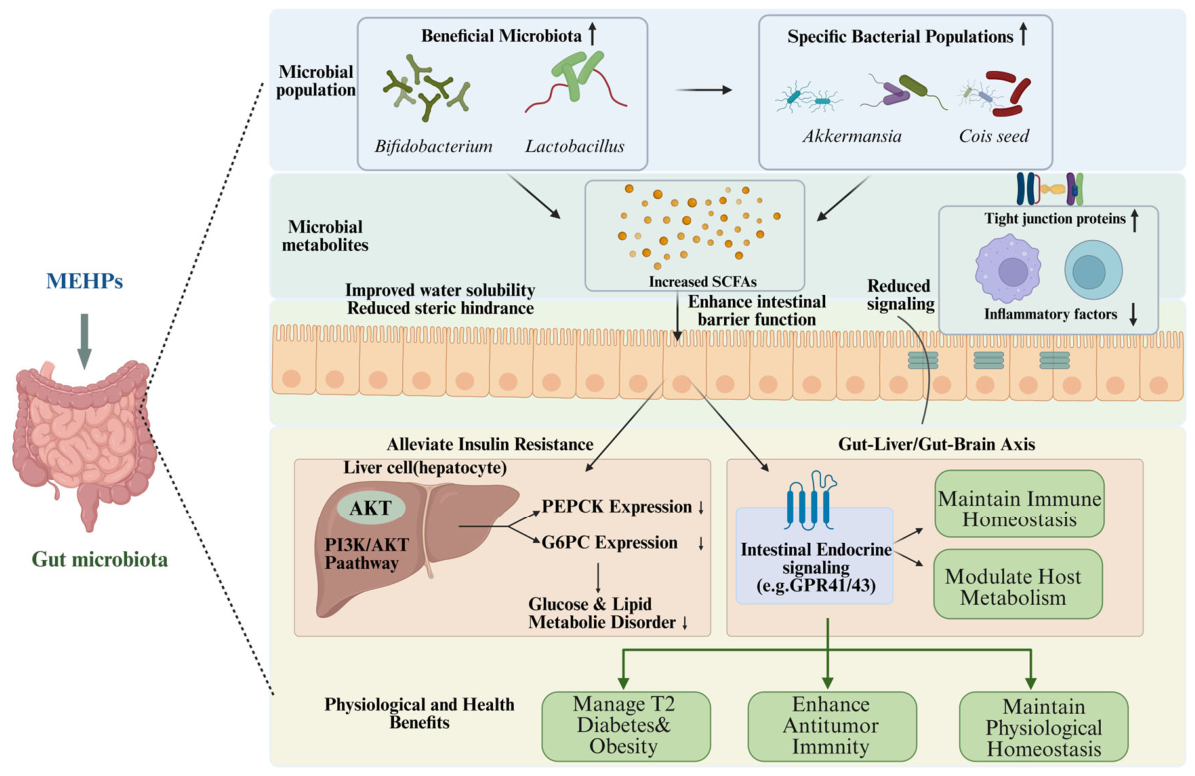
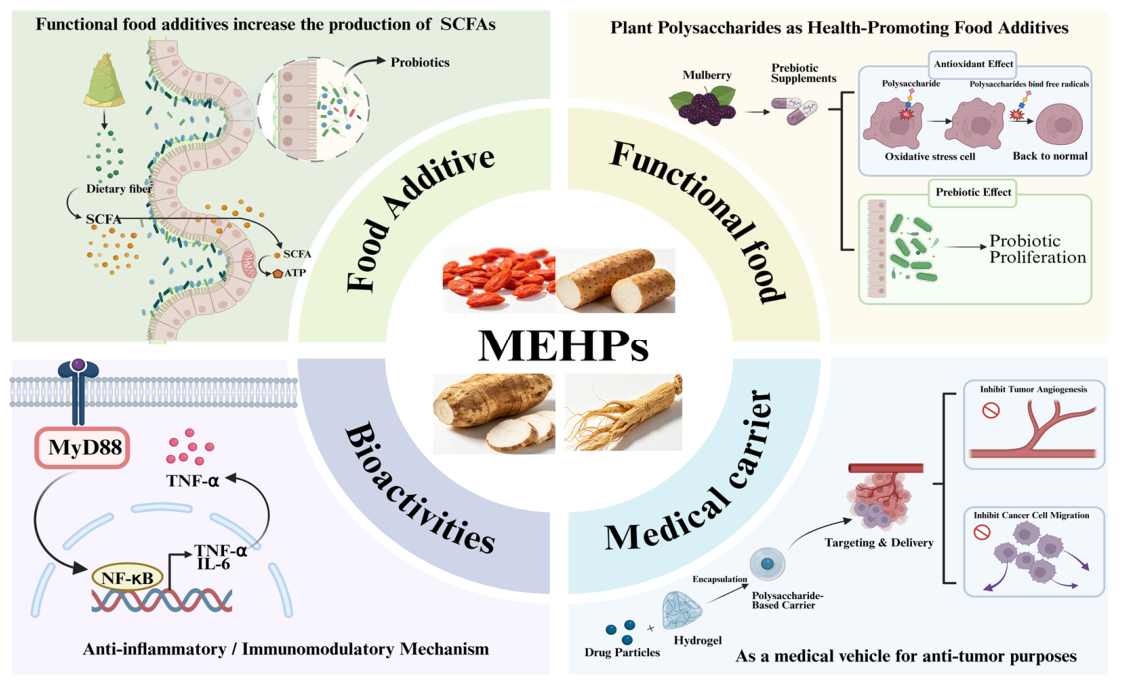
MEHPs have attracted considerable attention due to their favorable safety profiles and diverse biological functions, supporting their potential applications in both food and pharmaceutical fields. In food systems, these polysaccharides can serve as natural antioxidants, prebiotic ingredients, and functional components, thereby contributing to the development of personalized nutrition approaches. In pharmaceutical applications, MEHPs have been reported to exhibit various biological functions, including immunomodulatory effects, regulation of intestinal microecology, hypoglycemic activity, and potential antitumor effects. Moreover, their excellent biocompatibility and structural versatility make these polysaccharides promising carriers in drug delivery systems. The integration of nutritional and biological functions provides a theoretical basis for the coordinated development of functional foods and clinical adjunctive applications (Figure 7). Beyond their biological functions, MEHPs have attracted increasing interest as multifunctional food ingredients due to their physicochemical properties, including water-holding capacity, viscosity regulation, gel-forming ability, and film-forming capability. These properties enable their applications not only as health-promoting components but also as functional materials for improving food texture, stability, preservation, and delivery performance.

5.1. Food Applications

5.1.1. Functional Food Additives

MEHPs are increasingly recognized as valuable natural functional ingredients in food processing and functional food development. Polysaccharides isolated from Chimonobambusa quadrangularis have been reported to exhibit potential prebiotic activity by promoting the growth of beneficial gut microorganisms and enhancing short-chain fatty acid (SCFA) production [117]. These findings indicate that bamboo shoot polysaccharides may contribute to intestinal health maintenance as dietary fiber components and possess potential applications in functional food formulations. Furthermore, extraction methods were found to significantly influence the prebiotic activity of these polysaccharides, highlighting the importance of processing strategies in determining their functional properties [118]. Polysaccharides derived from the seeds of Lupinus luteus have also been isolated and comprehensively characterized. These polysaccharides exhibited notable antioxidant, immunostimulatory, and prebiotic activities, supporting their potential application as nutritional fortifiers or prebiotic ingredients in food products [119]. In addition, oligosaccharides and polysaccharides derived from Morus spp. have been explored as natural antioxidant and prebiotic ingredients [120]. In vitro studies demonstrated their free radical scavenging capacity and ability to promote the proliferation of beneficial gut microorganisms, providing experimental evidence for their incorporation into functional foods, particularly prebiotic supplements. Beyond their specific application in such solid supplements, MEHPs have also been widely explored as versatile additives in complex liquid matrices, including beverage and dairy systems. In functional beverages, polysaccharides can improve colloidal stability, regulate viscosity, and provide additional health benefits through antioxidant and prebiotic functions. Similarly, in dairy products, MEHPs may act as natural stabilizers and texture modifiers by improving water retention and gel properties. However, excessive polysaccharide addition may negatively affect sensory properties, such as viscosity and mouthfeel, highlighting the need for precise formulation optimization [121].

5.1.2. Development of Functional Foods

Beyond their physicochemical functions in food processing, polysaccharides have been increasingly utilized in the development of functional foods designed to address specific health-related needs, including glucose management, weight control, and immune support. Incorporation of polysaccharides with defined physiological functions into food formulations enables nutritional modulation through regular dietary consumption [122]. This strategy extends the application of polysaccharides beyond conventional food ingredients and contributes to the development of health-promoting functional foods.
For populations with glucose and lipid metabolism disorders, including individuals with diabetes, the development of low-glycemic-index (GI) foods represents a promising dietary strategy for managing postprandial blood glucose responses [123,124]. Polysaccharides may contribute to glucose regulation by delaying carbohydrate digestion and absorption through multiple mechanisms, including increasing intestinal viscosity, inhibiting amylase activity, and modulating intestinal microecology [125,126]. In a dietary intervention study related to diabetes, Xia et al. investigated the effects of polysaccharides derived from Coix lacryma-jobi [127]. Their findings demonstrated that these polysaccharides promoted short-chain fatty acid (SCFA) production by gut microorganisms. The enhanced SCFA production was associated with the regulation of metabolic pathways and accompanied by reductions in blood glucose and blood lipid levels in a mouse model of type 2 diabetes.
In addition, nutritional formulations containing bioactive polysaccharides may have potential applications for populations requiring immune support, particularly those with increased nutritional needs. He et al. investigated the immunomodulatory effects of polysaccharides derived from Dendrobium officinale. Their findings demonstrated that these polysaccharides enhanced phagocytic cell activity and promoted cytokine secretion, including tumor necrosis factor-α (TNF-α) and interleukin-1β (IL-1β). These immunomodulatory responses were accompanied by enhanced immune activity in the experimental model. Such results highlight the potential of D. officinale polysaccharides as functional ingredients in nutritional formulations designed to support immune health, particularly for populations with increased demands for immune-related nutritional support.
Accumulated evidence indicates that MEHPs have demonstrated diverse application potential in the food sector. Incorporating polysaccharides with specific functional properties into food products may provide opportunities to support the health-related requirements of different populations through dietary strategies. Beyond conventional functional foods, MEHPs show potential in emerging food applications, including bakery products and plant-based meat analogues. In bakery systems, polysaccharides can improve moisture retention, delay staling, and modify texture through their water-binding and gel-forming properties. In plant-based meat products, their rheological behavior and water-holding capacity may contribute to improved firmness, juiciness, and structural stability. Nevertheless, optimization of polysaccharide–protein interactions remains necessary to achieve desirable sensory characteristics and industrial-scale performance.

5.2. Pharmaceutical Applications

The increasing prevalence of chronic diseases and cancer has stimulated the exploration of safer and multifunctional bioactive compounds. Owing to their low toxicity and multifunctional regulatory properties, MEHPs have received increasing attention as potential candidates for therapeutic and adjunctive applications. Current research has progressed beyond the characterization of general biological functions and increasingly focuses on elucidating the molecular signaling pathways underlying their bioactive effects. Moreover, the applications of polysaccharides have expanded into interdisciplinary fields, particularly the development of targeted drug delivery materials. Accumulating preclinical evidence highlights the potential of these polysaccharides for adjunctive disease management and provides important insights into their future biomedical applications.

5.2.1. Pharmacological Activities in the Adjunctive Management of Chronic Diseases

The biological functions of polysaccharides generally involve the coordinated regulation of multiple genes and signaling pathways rather than the activation of a single receptor, enabling systemic modulation of metabolic processes [128]. In the adjunctive management of metabolic disorders, alleviation of insulin resistance represents an important target for intervention. Early studies investigating hypoglycemic activity mainly focused on changes in blood glucose levels, whereas recent research has increasingly elucidated the molecular mechanisms underlying polysaccharide-mediated metabolic regulation. Luo et al. evaluated the metabolic regulatory effects of polysaccharides derived from Pueraria lobata using a db/db diabetic mouse model [129]. Their findings demonstrated that P. lobata polysaccharides activated the hepatic PI3K/AKT signaling pathway. This activation subsequently downregulated the mRNA expression of phosphoenolpyruvate carboxykinase (PEPCK) and glucose-6-phosphatase (G6PC), thereby suppressing hepatic gluconeogenesis at the transcriptional level and alleviating glucose and lipid metabolic disturbances in diabetic mice. Similarly, Ren et al. reported that mulberry leaf polysaccharides alleviated oxidative stress and insulin resistance in type 2 diabetic rats by inhibiting protein tyrosine phosphatase 1B (PTP1B) expression and activating the PI3K/AKT signaling pathway [130]. Together, these findings highlight that the antidiabetic potential of polysaccharides is closely associated with the regulation of key metabolic signaling pathways rather than merely reflected by alterations in glycemic parameters.
Regarding intestinal microecology regulation and antitumor immunomodulation, polysaccharides may exert adjunctive biological effects by modulating the host microenvironment. Ma et al. systematically investigated the mechanisms underlying the gut microbiota-modulating activity of polysaccharides derived from Lycium barbarum [131]. Their findings demonstrated that supplementation with these polysaccharides increased the abundance of beneficial gut microorganisms and promoted short-chain fatty acid (SCFA) production. These microbial metabolites subsequently mediated host metabolic pathways and immune responses through G-protein-coupled receptors 41 and 43 (GPR41/43) signaling. Regarding antitumor immunity, polysaccharides have been reported to regulate tumor-associated immune responses through modulation of the immune microenvironment [132]. Shu et al. found that polysaccharides derived from Panax japonicus selectively regulated the polarization of CD4+ T cells and tumor-associated macrophages (TAMs), thereby enhancing antitumor immune responses [133]. Together, these mechanistic studies highlight that polysaccharides exert biological effects through complex signaling networks involving host metabolism, immune regulation, and microecological interactions. Such evidence provides important insights into the potential development of polysaccharides as adjunctive candidates for chronic disease management.

5.2.2. Drug Delivery Materials

In addition to their roles as bioactive components, the interdisciplinary applications of polysaccharides in biomedical and pharmaceutical fields have gained increasing attention. Many conventional therapeutic agents suffer from poor water solubility, short biological half-lives, and substantial systemic toxicity, which restrict their bioavailability and clinical performance [134]. Plant-derived polysaccharides contain abundant polar functional groups, particularly carboxyl and hydroxyl groups, which contribute to their excellent biocompatibility and biodegradability [135]. These structural characteristics make polysaccharides potential materials for the development of drug delivery systems [136]. Polysaccharides can be engineered into diverse delivery platforms, including hydrogels, nanospheres, and liposomal systems [137]. By incorporating therapeutic molecules into these carrier matrices, polysaccharide-based systems may facilitate targeted delivery and controlled release [138,139]. Consequently, drug stability may be improved, while systemic toxicity and off-target effects may be reduced [140].
Polysaccharide-based nanodelivery systems have emerged as promising platforms for tumor-targeted applications. Zhang et al. developed stable polysaccharide–selenium nanoparticle microspheres (SeNPs) using bioactive polysaccharides derived from Taraxacum mongolicum as matrix materials [141]. Physicochemical characterization revealed that the steric stabilization provided by polysaccharide chains effectively reduced selenium nanoparticle aggregation. More importantly, a zebrafish xenograft model demonstrated that these polysaccharide-coated nanoparticles improved the bioavailability of active components and suppressed tumor angiogenesis and cancer cell migration. In addition, Zhao et al. reported that similar T. mongolicum polysaccharide-based nanoparticles exhibited notable antiproliferative activity against several human cancer cell lines, including HepG2, A549, and HeLa cells, under in vitro conditions [142]. These studies highlight the multifunctional potential of polysaccharide-based nanocarriers as both drug delivery platforms and bioactive materials, supporting their further exploration for targeted cancer-related applications.
Polysaccharide-based delivery systems further expand the applications of polysaccharides beyond their roles as bioactive components. Through structural engineering, polysaccharides can be developed into delivery platforms that enhance the performance of conventional therapeutic molecules. Moreover, their intrinsic immunomodulatory properties may provide additional biological benefits when combined with loaded agents. This strategy highlights the value-added applications of polysaccharides as multifunctional biomaterials.

5.3. Synergistic Applications in Food and Medicine

Historically, the food and pharmaceutical industries have developed along relatively distinct trajectories, with the former focusing primarily on nutritional supply and food safety, and the latter emphasizing therapeutic development and clinical outcomes. MEHPs possess both favorable safety profiles and diverse biological functions, providing opportunities to bridge nutrition-oriented strategies with adjunctive health applications [143]. This multifunctional nature highlights their potential role in promoting the convergence of functional foods and biomedical approaches [111].
Intestinal microecology represents an important regulatory interface connecting the integrated applications of plant polysaccharides in nutrition and health [144]. Many plant polysaccharides are resistant to degradation by endogenous enzymes in the upper gastrointestinal tract and therefore reach the colon in a relatively undigested form, where they are subsequently fermented by specific gut microbial populations. During microbial fermentation, polysaccharides may function as potential prebiotic substrates that contribute to the maintenance of gut microbial diversity. The resulting metabolites, particularly short-chain fatty acids (SCFAs), serve as important signaling molecules involved in host regulation. Through gut–brain and gut–liver axis pathways, these metabolites may participate in systemic physiological regulation and influence the function of distant organs.
In vivo evidence further supports the dual nutritional and health-related functions of orally administered polysaccharides. Codonopsis pilosula is a representative MEH plant, and Zou et al. systematically evaluated the biological effects of its polysaccharides in an animal model [145]. Their findings demonstrated that oral administration of these polysaccharides increased the abundance of beneficial bacteria, including Bifidobacterium and Lactobacillus. Modulation of the gut microenvironment contributed to the maintenance of immune homeostasis and reduced gastric tissue injury in experimental gastric ulcer models by downregulating the expression of pro-inflammatory cytokines. These findings highlight the complementary roles of polysaccharides in nutritional support and adjunctive health applications.
In addition, polysaccharides have demonstrated nutritional and metabolic regulatory potential in the context of metabolic syndrome management. Sun et al. conducted a long-term in vivo investigation of polysaccharides derived from Poria cocos [146]. Their findings revealed that oral administration of these polysaccharides modulated gut microbiota composition and regulated host lipid metabolism. Continuous supplementation with P. cocos polysaccharides contributed to body weight management and decreased serum total cholesterol and triglyceride levels in hyperlipidemic mice. These findings indicate that dietary supplementation with structurally defined polysaccharides may contribute to the maintenance of physiological homeostasis and support metabolic health under conditions associated with metabolic dysfunction.
Building on these mechanistic insights, Food for Special Medical Purposes (FSMP) provides a potential framework for integrating nutritional and biomedical applications. Considering disease-specific metabolic requirements, such as those associated with diabetic nephropathy or nutritional challenges during cancer therapy, bioactive polysaccharides can be selectively obtained and incorporated into specialized formulations. These products can fulfill the basic nutritional requirements of individuals under specific physiological conditions while providing adjunctive nutritional support through the biological functions of polysaccharides.
The expanding applications of MEHPs across food and pharmaceutical fields reflect a transition from disease-oriented strategies toward preventive and health-promoting approaches. Advances in structural characterization and an improved understanding of SARs provide a foundation for the rational design of targeted polysaccharide-based functional products with defined physiological functions. This strategy represents a promising approach for advancing the development of functional foods and health-related applications. Furthermore, the functional properties of MEHPs enable their applications beyond direct food formulations. Polysaccharide-based edible films and coatings have attracted attention as biodegradable packaging materials due to their film-forming ability and antioxidant properties. When combined with natural pH-sensitive indicators, these materials may serve as smart packaging systems for monitoring food freshness. In addition, MEHPs can function as encapsulation matrices for protecting sensitive bioactive compounds, improving their stability, bioavailability, and controlled release in functional foods and nutraceutical products.
Although MEHP-derived ingredients have been incorporated into functional foods and nutraceutical formulations, large-scale commercialization remains limited by raw-material variability, standardization, regulatory approval, and production cost.

6. Conclusions and Future Perspectives

The preparation of MEHPs has progressed from conventional hot water extraction toward greener and more integrated extraction strategies, including the combination of deep eutectic solvents (DES) with physical-assisted techniques such as ultrasound- and microwave-assisted extraction [92]. These approaches have improved extraction efficiency while helping to preserve the bioactive conformational features of polysaccharides. Meanwhile, integrated analytical strategies involving chromatographic and spectroscopic techniques, together with targeted structural modification, have enabled more precise characterization of polysaccharides within complex macromolecular systems. Advances in structural elucidation and functional evaluation have further expanded the applications of MEHPs in functional foods and drug delivery systems. These developments provide scientific support for the convergence of food and medicine and highlight the translational potential of polysaccharides in addressing type 2 diabetes and other chronic metabolic disorders [107].
Although MEHPs have demonstrated diverse biological functions and health-promoting potential in laboratory and preclinical studies, their translation toward industrial-scale applications remains constrained by significant technological and practical challenges. First, the industrial scalability of emerging extraction technologies remains limited. Green extraction approaches, including EAE, DES, and SWE, have demonstrated potential for enhancing polysaccharide yield while preserving structural integrity. However, the high viscosity of DES systems can restrict mass transfer efficiency during large-scale processing, whereas SWE is associated with high equipment costs and complex process control requirements. These technological barriers currently limit their widespread industrial implementation [33]. Second, the structural heterogeneity of polysaccharides and the limitations of current analytical approaches restrict the precise elucidation of their SARs. Current analytical techniques remain limited in the dynamic characterization of higher-order conformational features during processing. Finally, the underutilization of plant resources and insufficient clinical validation remain important challenges for the further development of polysaccharide-based products. Current industrial production mainly relies on conventionally utilized medicinal tissues, whereas the bioactive potential of underexplored plant materials, including stems and leaves, remains insufficiently investigated. Such limited resource utilization may contribute to biomass waste and increase production costs. Moreover, evidence supporting the regulatory effects of polysaccharides on intestinal microecology and glycemic metabolism is still primarily derived from rodent models, particularly high-fat diet/streptozotocin (HFD-STZ)-induced models. Physiological and metabolic differences between animal models and humans restrict the direct extrapolation of these findings to clinical applications. Furthermore, the lack of large-scale multicenter clinical trials and multi-omics validation represents a critical limitation for advancing polysaccharide-based products toward applications such as Food for Special Medical Purposes (FSMP) and other health-oriented formulations [112]. Beyond scientific validation, regulatory challenges also remain a major barrier for the translation of MEHPs into food ingredients and pharmaceutical products. Due to the structural complexity and heterogeneity of polysaccharides, establishing standardized quality criteria, including molecular weight distribution, monosaccharide composition, structural fingerprints, and bioactivity-related markers, remains challenging. In addition, regulatory approval requires comprehensive evaluation of safety, efficacy, production consistency, and clinical evidence, highlighting the need for internationally harmonized standards and quality-control systems.
Regarding resource utilization and processing technologies, future research should place greater emphasis on whole-plant valorization within the framework of circular bioeconomy and zero-waste processing. The utilization of underexplored tissues of MEHPs, including stems, leaves, and agricultural residues, may reduce biomass waste and improve resource efficiency. Moreover, integrating MEHP production into sustainable biorefinery systems could enable the simultaneous recovery of multiple valuable components while reducing environmental burdens associated with conventional processing [147]. Meanwhile, emerging extraction technologies, such as pulsed electric field (PEF)-assisted extraction and ionic liquid (IL)-based extraction, have demonstrated potential for reducing thermal degradation and improving extraction selectivity [148]. However, future technology selection should not rely solely on extraction yield and laboratory performance. Comprehensive assessments based on carbon footprint analysis, life-cycle assessment (LCA), and techno-economic analysis (TEA) are needed to evaluate energy consumption, environmental impacts, resource utilization, and production costs. Such integrated evaluation frameworks will facilitate the identification of extraction strategies with improved sustainability and industrial feasibility.
In the fields of structural characterization and targeted modification, computational approaches may provide new opportunities to overcome current limitations in advanced structural analysis. Molecular docking and molecular dynamics simulations can facilitate the prediction of conformational dynamics and molecular interactions of three-dimensional polysaccharide structures at the molecular level [149]. Based on these computational insights, targeted chemical modifications, including sulfation, phosphorylation, and selenylation, may be rationally applied to modulate specific biological functions of polysaccharides. This integrated computational and experimental strategy provides a potential framework for the rational development of functional polysaccharide-based macromolecular products. In the future, computational approaches combined with artificial intelligence, multi-omics analysis, and structural databases may further promote precision nutrition by enabling the design of polysaccharide-based functional foods tailored to specific physiological requirements. To successfully translate these rationally designed concepts into reality, Industry 5.0 concepts, emphasizing intelligent manufacturing, human–machine collaboration, and adaptive production systems, may provide new opportunities for flexible and sustainable production of MEHP-based products. Regarding mechanistic validation and application expansion, future studies should incorporate more comprehensive validation strategies beyond conventional animal models. Large-scale multicenter clinical studies combined with multi-omics approaches, including gut microbiome analysis, metabolomics, and immunomics, will be essential for establishing stronger evidence regarding the biological functions and health-promoting effects of polysaccharides. Furthermore, owing to their favorable biocompatibility, polysaccharides hold potential for applications in tissue engineering scaffolds [150]. They may also serve as natural prebiotic alternatives in antibiotic-free animal production systems. These emerging applications may promote interdisciplinary development by connecting advances in agriculture, biotechnology, and health-oriented applications.

Author Contributions

Conceptualization, J.Z. and F.Y.; methodology, J.Z.; software, A.G.E.D.; investigation, W.Z.; resources, F.Y.; data curation, J.Z.; writing—original draft preparation, J.Z.; writing—review and editing, Q.W. and F.Y.; visualization, Z.M.; supervision, X.J.; project administration, Q.W.; funding acquisition, Q.W. All authors have read and agreed to the published version of the manuscript.

Funding

This work was supported by the College Students’ Innovative Training Program of Jiangsu University (X202610299896) and Student Research Project Funding of Jiangsu University (25A207).

Institutional Review Board Statement

Not applicable.

Data Availability Statement

No new data were created or analyzed in this study. Data sharing is not applicable to this article.

Acknowledgments

We thank all the anonymous reviewers for their constructive comments.

Conflicts of Interest

The authors declare no conflicts of interest.

References

  1. Zou, L.; Wu, D.; Ren, G.; Hu, Y.; Peng, L.; Zhao, J.; Garcia-Perez, P.; Carpena, M.; Prieto, M.A.; Cao, H.; et al. Bioactive compounds, health benefits, and industrial applications of Tartary buckwheat (Fagopyrum tataricum). Crit. Rev. Food Sci. Nutr. 2021, 63, 657–673. [Google Scholar] [CrossRef] [Scilit] [PubMed]
  2. Chen, M.; Wei, W.; Wang, Z.; Wang, W. Preparation, Structure, and Bioactivities of Medicinal and Edible Homologous Plant Polysaccharides: A Review. Food Sci. Nutr. 2025, 13, e70453. [Google Scholar] [CrossRef] [Scilit] [PubMed]
  3. Xue, H.; Wang, W.; Bian, J.; Gao, Y.; Hao, Z.; Tan, J. Recent advances in medicinal and edible homologous polysaccharides: Extraction, purification, structure, modification, and biological activities. Int. J. Biol. Macromol. 2022, 222, 1110–1126. [Google Scholar] [CrossRef] [Scilit] [PubMed]
  4. Zhou, S.; Rahman, A.; Li, J.; Wei, C.; Chen, J.; Linhardt, R.J.; Ye, X.; Chen, S. Extraction Methods Affect the Structure of Goji (Lycium barbarum) Polysaccharides. Molecules 2020, 25, 936. [Google Scholar] [CrossRef] [Scilit] [PubMed]
  5. Jiang, Y.; Qi, X.; Gao, K.; Liu, W.; Li, N.; Cheng, N.; Ding, G.; Huang, W.; Wang, Z.; Xiao, W. Relationship between molecular weight, monosaccharide composition and immunobiologic activity of Astragalus polysaccharides. Glycoconj. J. 2016, 33, 755–761. [Google Scholar] [CrossRef] [Scilit] [PubMed]
  6. Li, Y.; Feng, T.; Zhao, Y.; Zhang, X.; Chen, H.; Xia, P.; Yang, D.; Liang, Z. Medicinal and edible homologous poly/oligo-saccharides: Structural features, effect on intestinal flora and preventing and treating type 2 diabetes, and their applications: A review. Int. J. Biol. Macromol. 2025, 305, 141031. [Google Scholar] [CrossRef] [Scilit] [PubMed]
  7. Zeb, U.; Aziz, T.; Sun, W.-J.; Haleem, A.; Guan, G.-Q.; Meng, L.-J.; Sun, L.; Cui, F.-J. Recent innovations in Grifola frondosa polysaccharides: Production, properties, and their biological activity. Food Biosci. 2025, 69, 106765. [Google Scholar] [CrossRef] [Scilit]
  8. Yang, L.; Gao, Y.; Bajpai, V.K.; El-Kammar, H.A.; Simal-Gandara, J.; Cao, H.; Cheng, K.W.; Wang, M.; Arroo, R.R.J.; Zou, L.; et al. Advance toward isolation, extraction, metabolism and health benefits of kaempferol, a major dietary flavonoid with future perspectives. Crit. Rev. Food Sci. Nutr. 2023, 63, 2773–2789. [Google Scholar] [CrossRef] [Scilit] [PubMed]
  9. Bahramsoltani, R.; Ahmadian, R.; Daglia, M.; Rahimi, R. Petroselinum crispum (Mill.) Fuss (Parsley): An Updated Review of the Traditional Uses, Phytochemistry, and Pharmacology. J. Agric. Food. Chem. 2024, 72, 956–972. [Google Scholar] [CrossRef] [Scilit] [PubMed]
  10. Li, L.; Xie, J.; Zhang, Z.; Xia, B.; Li, Y.; Lin, Y.; Li, M.; Wu, P.; Lin, L. Recent advances in medicinal and edible homologous plant polysaccharides: Preparation, structure and prevention and treatment of diabetes. Int. J. Biol. Macromol. 2024, 258, 128873. [Google Scholar] [CrossRef] [Scilit] [PubMed]
  11. Ekumah, J.-N.; Ma, Y.; Akpabli-Tsigbe, N.D.K.; Kwaw, E.; Ma, S.; Hu, J. Global soil distribution, dietary access routes, bioconversion mechanisms and the human health significance of selenium: A review. Food Biosci. 2021, 41, 100960. [Google Scholar] [CrossRef] [Scilit]
  12. Surendhiran, D.; Li, C.; Cui, H.; Lin, L. Marine algae as efficacious bioresources housing antimicrobial compounds for preserving foods—A review. Int. J. Food Microbiol. 2021, 358, 109416. [Google Scholar] [CrossRef] [Scilit] [PubMed]
  13. Huang, K.; El-Seedi, H.R.; Xu, B. Critical review on chemical compositions and health-promoting effects of mushroom Agaricus blazei Murill. Curr. Res. Food Sci. 2022, 5, 2190–2203. [Google Scholar] [CrossRef] [Scilit] [PubMed]
  14. Zhou, S.; Wang, Z.; Hao, Y.; An, P.; Luo, J.; Luo, Y. Dandelion Polysaccharides Ameliorate High-Fat-Diet-Induced Atherosclerosis in Mice through Antioxidant and Anti-Inflammatory Capabilities. Nutrients 2023, 15, 4120. [Google Scholar] [CrossRef] [Scilit] [PubMed]
  15. Kim, H.M.; Song, Y.; Hyun, G.H.; Long, N.P.; Park, J.H.; Hsieh, Y.S.Y.; Kwon, S.W. Characterization and Antioxidant Activity Determination of Neutral and Acidic Polysaccharides from Panax Ginseng C. A. Meyer. Molecules 2020, 25, 791. [Google Scholar] [CrossRef] [Scilit] [PubMed]
  16. Khan, A.A.; Yao, F.-J.; Cui, F.-J.; Li, Y.; Lu, L.; Khan, I.; Jalal, A.; Fang, M.; Alabbosh, K.F.; Awad, M.F.; et al. Comparative analysis of physicochemical properties and biological activities of crude polysaccharides isolated from selected Auricularia cornea strains. Food Biosci. 2024, 60, 104486. [Google Scholar] [CrossRef] [Scilit]
  17. Zhang, Z.-Y.; Cui, F.-J.; Sun, L.; Zan, X.-Y.; Sun, W.-J. Recent advances in Ganoderma lucidum polysaccharides: Structures/bioactivities, biosynthesis and regulation. Food Biosci. 2023, 56, 103281. [Google Scholar] [CrossRef] [Scilit]
  18. Jia, H.; Zhao, B.; Zhang, F.; Santhanam, R.K.; Wang, X.; Lu, J. Extraction, Structural Characterization, and Anti-Hepatocellular Carcinoma Activity of Polysaccharides From Panax ginseng Meyer. Front. Oncol. 2021, 11, 785455. [Google Scholar] [CrossRef] [Scilit] [PubMed]
  19. Zhang, S.; Zhang, W.; Wu, X.; Li, S.; Shi, D.; Li, H.; Liu, T.; Gong, A. Inonotus obliquus Polysaccharides: Preparation, Structural Characteristics, Structure-Activity Relationships, Biological Activities and Applications. Nutrients 2026, 18, 1125. [Google Scholar] [CrossRef] [Scilit] [PubMed]
  20. Chen, R.; Dong, H.; Yang, T.; Gao, P.; Li, D.; Liu, X. Structural characterization and in vitro lipid-lowering activities of polysaccharides from Crataegus pinnatifida fruits. J. Food Meas. Charact. 2026, 20, 4819–4838. [Google Scholar] [CrossRef] [Scilit]
  21. Chen, R.; Xu, J.; Wu, W.; Wen, Y.; Lu, S.; El-Seedi, H.R.; Zhao, C. Structure-immunomodulatory activity relationships of dietary polysaccharides. Curr. Res. Food Sci. 2022, 5, 1330–1341. [Google Scholar] [CrossRef] [Scilit] [PubMed]
  22. Deng, W.; Yang, X.; Zhu, Y.; Yu, J.; Xu, X. Structural characterization and hypolipidemic activities of purified stigma maydis polysaccharides. Food Sci. Nutr. 2019, 7, 2674–2683. [Google Scholar] [CrossRef] [Scilit] [PubMed]
  23. Zhang, Y.; Li, N.; Gong, H.X.; Zhao, C.J.; Bao, X.R.; Liu, W.; Gao, J.; Zhang, J.L.; Yin, H.S.; Dong, Z.Q. Structural characterization and anti-tumor immunomodulatory effects of polysaccharides from Astragalus mongholicus with different cultivation modes. Int. J. Biol. Macromol. 2025, 318, 145233. [Google Scholar] [CrossRef] [Scilit] [PubMed]
  24. Guo, X.; Kang, J.; Xu, Z.; Guo, Q.; Zhang, L.; Ning, H.; Cui, S.W. Triple-helix polysaccharides: Formation mechanisms and analytical methods. Carbohydr. Polym. 2021, 262, 117962. [Google Scholar] [CrossRef] [Scilit] [PubMed]
  25. Mtetwa, M.D.; Qian, L.; Zhu, H.; Cui, F.; Zan, X.; Sun, W.; Wu, D.; Yang, Y. Ultrasound-assisted extraction and antioxidant activity of polysaccharides from Acanthus ilicifolius. J. Food Meas. Charact. 2020, 14, 1223–1235. [Google Scholar] [CrossRef] [Scilit]
  26. Zhao, T.; Feng, Y.; Li, J.; Mao, R.; Zou, Y.; Feng, W.; Zheng, D.; Wang, W.; Chen, Y.; Yang, L.; et al. Schisandra polysaccharide evokes immunomodulatory activity through TLR 4-mediated activation of macrophages. Int. J. Biol. Macromol. 2014, 65, 33–40. [Google Scholar] [CrossRef] [Scilit] [PubMed]
  27. Ding, Y.; Ma, H.; Wang, K.; Azam, S.M.R.; Wang, Y.; Zhou, J.; Qu, W. Ultrasound frequency effect on soybean protein: Acoustic field simulation, extraction rate and structure. LWT 2021, 145, 111320. [Google Scholar] [CrossRef] [Scilit]
  28. Ashraf, W.; Rehman, A.; Hussain, A.; Karim, A.; Sharif, H.R.; Siddiquy, M.; Lianfu, Z. Optimization of Extraction Process and Estimation of Flavonoids from Fenugreek Using Green Extracting Deep Eutectic Solvents Coupled with Ultrasonication. Food Bioprocess. Technol. 2023, 17, 887–903. [Google Scholar] [CrossRef] [Scilit]
  29. Jia, X.; Ma, L.; Li, P.; Chen, M.; He, C. Prospects of Poria cocos polysaccharides: Isolation process, structural features and bioactivities. Trends Food Sci. Technol. 2016, 54, 52–62. [Google Scholar] [CrossRef] [Scilit]
  30. Zhang, C.; Fu, Q.; Hua, Y.; Zhang, H.; Duan, Y. Correlation of conformational changes and immunomodulatory activity of lentinan under different subcritical water temperature. Food Biosci. 2022, 50, 102061. [Google Scholar] [CrossRef] [Scilit]
  31. Li, X.; Zhang, Z.H.; Qi, X.; Li, L.; Zhu, J.; Brennan, C.S.; Yan, J.K. Application of nonthermal processing technologies in extracting and modifying polysaccharides: A critical review. Compr. Rev. Food Sci. Food Saf. 2021, 20, 4367–4389. [Google Scholar] [CrossRef] [Scilit] [PubMed]
  32. Feng, Y.; Juliet, I.C.; Wen, C.; Duan, Y.; Zhou, J.; He, Y.; Zhang, H.; Ma, H. Effects of multi-mode divergent ultrasound pretreatment on the physicochemical and functional properties of polysaccharides from Sagittaria sagittifolia L. Food Biosci. 2021, 42, 101145. [Google Scholar] [CrossRef] [Scilit]
  33. Huang, C.; Wang, Y.; Zhou, C.; Fan, X.; Sun, Q.; Han, J.; Hua, C.; Li, Y.; Niu, Y.; Emeka Okonkwo, C.; et al. Properties, extraction and purification technologies of Stevia rebaudiana steviol glycosides: A review. Food Chem. 2024, 453, 139622. [Google Scholar] [CrossRef] [Scilit] [PubMed]
  34. Wu, B.; Qiu, C.; Guo, Y.; Zhang, C.; Li, D.; Gao, K.; Ma, Y.; Ma, H. Comparative Evaluation of Physicochemical Properties, Microstructure, and Antioxidant Activity of Jujube Polysaccharides Subjected to Hot Air, Infrared, Radio Frequency, and Freeze Drying. Agriculture 2022, 12, 1606. [Google Scholar] [CrossRef] [Scilit]
  35. Dzah, C.S.; Duan, Y.; Zhang, H.; Wen, C.; Zhang, J.; Chen, G.; Ma, H. The effects of ultrasound assisted extraction on yield, antioxidant, anticancer and antimicrobial activity of polyphenol extracts: A review. Food Biosci. 2020, 35, 100547. [Google Scholar] [CrossRef] [Scilit]
  36. Yixuan, L.; Qaria, M.A.; Sivasamy, S.; Jianzhong, S.; Daochen, Z. Curcumin production and bioavailability: A comprehensive review of curcumin extraction, synthesis, biotransformation and delivery systems. Ind. Crops Prod. 2021, 172, 114050. [Google Scholar] [CrossRef] [Scilit]
  37. Li, B.; Wang, H.; Cao, F.; Qian, S.; Chen, X.; Yao, G.; Zhao, L.; Chen, H. Comparative Evaluation of Different Extraction Methods on Chemical Composition, Antioxidant Activity of Mulberry Seed Oil: Pressing, Conventional Solvent, Supercritical Fluid and Micro-Aqueous Extraction Methods. J. Food Process Eng. 2025, 48, 70306. [Google Scholar] [CrossRef] [Scilit]
  38. Ai, J.; Yang, Z.; Liu, J.; Schols, H.A.; Battino, M.; Bao, B.; Tian, L.; Bai, W. Structural Characterization and In Vitro Fermentation Characteristics of Enzymatically Extracted Black Mulberry Polysaccharides. J. Agric. Food. Chem. 2022, 70, 3654–3665. [Google Scholar] [CrossRef] [Scilit] [PubMed]
  39. Dzah, C.S.; Duan, Y.; Zhang, H.; Boateng, N.A.S.; Ma, H. Ultrasound-induced lipid peroxidation: Effects on phenol content and extraction kinetics and antioxidant activity of Tartary buckwheat (Fagopyrum tataricum) water extract. Food Biosci. 2020, 37, 100719. [Google Scholar] [CrossRef] [Scilit]
  40. Bhatti, S.A.; Hussain, M.H.; Mohsin, M.Z.; Mohsin, A.; Zaman, W.Q.; Guo, M.; Iqbal, M.W.; Siddiqui, S.A.; Ibrahim, S.A.; Ur-Rehman, S.; et al. Evaluation of the antimicrobial effects of Capsicum, Nigella sativa, Musa paradisiaca L., and Citrus limetta: A review. Front. Sustain. Food Syst. 2022, 6, 1043823. [Google Scholar] [CrossRef] [Scilit]
  41. Tang, X.; Wang, Y.; Han, J.; Wang, L.; Li, C.; Ni, L. Separation, purification of anthocyanin and vitis linn polysaccharide from grape juice by the two-step extraction and dialysis. J. Food Process. Preserv. 2018, 42, 13344. [Google Scholar] [CrossRef] [Scilit]
  42. Dabbour, M.; Hamoda, A.; Mintah, B.K.; Wahia, H.; Betchem, G.; Yolandani; Xu, H.; He, R.; Ma, H. Ultrasonic-aided extraction and degossypolization of cottonseed meal protein: Optimization and characterization of functional traits and molecular structure. Ind. Crops Prod. 2023, 204, 117261. [Google Scholar] [CrossRef] [Scilit]
  43. Yan, J.K.; Wu, L.X.; Cai, W.D.; Xiao, G.S.; Duan, Y.; Zhang, H. Subcritical water extraction-based methods affect the physicochemical and functional properties of soluble dietary fibers from wheat bran. Food Chem. 2019, 298, 124987. [Google Scholar] [CrossRef] [Scilit] [PubMed]
  44. Otu, P.N.Y.; Haonan, J.; Cunshan, Z.; Hongpeng, Y. Sorghum Bicolor L. leaf sheath polysaccharides: Dual frequency ultrasound-assisted extraction and desalination. Ind. Crops Prod. 2018, 126, 368–379. [Google Scholar] [CrossRef] [Scilit]
  45. Chikari, F.; Han, J.; Wang, Y.; Luo, P.; He, X.; Kwaw, E.; Otu, P. Dual-frequency ultrasound-assisted alcohol/salt aqueous two-phase extraction and purification of Astragalus polysaccharides. J. Food Process Eng. 2020, 43, 13366. [Google Scholar] [CrossRef] [Scilit]
  46. Safdar, B.; Zhihua, P.; Xinqi, L.; Jatoi, M.A.; Rashid, M.T. Influence of different extraction techniques on recovery, purity, antioxidant activities, and microstructure of flaxseed gum. J. Food Sci. 2020, 85, 3168–3182. [Google Scholar] [CrossRef] [Scilit] [PubMed]
  47. Zhang, Z.; Li, L.; Shi, W.; Wang, Y.; Liu, J.; Meng, X.; He, R. Ultrasound-Assisted Treatment from Inonotus obliquus Polysaccharides: Extraction Optimization, Structures and Antioxidant Activity. Food Biophys. 2025, 20, 118. [Google Scholar] [CrossRef] [Scilit]
  48. Hou, X.; Huang, X.; Li, J.; Jiang, G.; Shen, G.; Li, S.; Luo, Q.; Wu, H.; Li, M.; Liu, X.; et al. Extraction Optimization and Evaluation of the Antioxidant and α-Glucosidase Inhibitory Activity of Polysaccharides from Chrysanthemum morifolium cv. Hangju. Antioxidants 2020, 9, 59. [Google Scholar] [CrossRef] [Scilit] [PubMed]
  49. Zhang, J.; Liang, Z.; Zhang, K.; Tang, X.; Wang, L.; Gu, X.; Savelkoul, H.F.J.; Li, J. Ultrasound-Assisted Extraction, Characterization, and Antioxidant Activities of the Polysaccharides from Fermented Astragalus membranaceus. Molecules 2025, 30, 1159. [Google Scholar] [CrossRef] [Scilit] [PubMed]
  50. Wang, T.; Zou, X.; Zhang, H.; Li, J.; Peng, X.; Ju, R.; Jia, Z.; Wen, Z.; Li, C. Ultrasound-Assisted Extraction of Polysaccharides from Mulberry Leaves Using Response Surface Methodology: Purification and Component Identification of Extract. Molecules 2025, 30, 1747. [Google Scholar] [CrossRef] [Scilit] [PubMed]
  51. Chen, Z.-L.; Wang, C.; Ma, H.; Ma, Y.; Yan, J.-K. Physicochemical and functional characteristics of polysaccharides from okra extracted by using ultrasound at different frequencies. Food Chem. 2021, 361, 130138. [Google Scholar] [CrossRef] [Scilit] [PubMed]
  52. Zhao, Y.; Li, N.; Bai, J.; Xiao, X. Mass spectrometry imaging: Applications and advances in analyzing bioactive components in foods. J. Food Compos. Anal. 2025, 148, 108355. [Google Scholar] [CrossRef] [Scilit]
  53. Wu, D.T.; Liu, W.; Han, Q.H.; Wang, P.; Xiang, X.R.; Ding, Y.; Zhao, L.; Zhang, Q.; Li, S.Q.; Qin, W. Extraction Optimization, Structural Characterization, and Antioxidant Activities of Polysaccharides from Cassia Seed (Cassia obtusifolia). Molecules 2019, 24, 2817. [Google Scholar] [CrossRef] [Scilit] [PubMed]
  54. Thirugnanasambandham, K.; Sivakumar, V.; Maran, J.P. Microwave-assisted extraction of polysaccharides from mulberry leaves. Int. J. Biol. Macromol. 2015, 72, 1–5. [Google Scholar] [CrossRef] [Scilit] [PubMed]
  55. Chen, H.; Zhou, X.; Zhang, J. Optimization of enzyme assisted extraction of polysaccharides from Astragalus membranaceus. Carbohydr. Polym. 2014, 111, 567–575. [Google Scholar] [CrossRef] [Scilit] [PubMed]
  56. Liu, X.-X.; Yan, Y.-Y.; Liu, H.-M.; Wang, X.-D.; Qin, G.-Y. Emulsifying and structural properties of polysaccharides extracted from Chinese yam by an enzyme-assisted method. LWT 2019, 111, 242–251. [Google Scholar] [CrossRef] [Scilit]
  57. Chen, X.; Ji, H.; Zhang, C.; Liu, A. Optimization of extraction process from Taraxacum officinale polysaccharide and its purification, structural characterization, antioxidant and anti-tumor activity. J. Food Meas. Charact. 2019, 14, 194–206. [Google Scholar] [CrossRef] [Scilit]
  58. Ma, Q.; Ji, Q.; Chen, L.; Zhu, Z.; Tu, S.; Okonkwo, C.E.; Out, P.; Zhou, C. Multimode ultrasound and ternary deep eutectic solvent sequential pretreatments enhanced the enzymatic saccharification of corncob biomass. Ind. Crops Prod. 2022, 188, 115574. [Google Scholar] [CrossRef] [Scilit]
  59. Ji, Q.; Yu, X.; Yagoub, A.E.-G.A.; Chen, L.; Zhou, C. Efficient removal of lignin from vegetable wastes by ultrasonic and microwave-assisted treatment with ternary deep eutectic solvent. Ind. Crops Prod. 2020, 149, 112357. [Google Scholar] [CrossRef] [Scilit]
  60. Zhou, C.; Adeyanju, A.A.; Nwonuma, C.O.; Inyinbor, A.A.; Alejolowo, O.O.; Al-Hamayda, A.; Akinsemolu, A.; Onyeaka, H.; Olaniran, A.F. Physical field-assisted deep eutectic solvent processing: A green and water-saving extraction and separation technology. J. Food Sci. 2024, 89, 8248–8275. [Google Scholar] [CrossRef] [Scilit] [PubMed]
  61. Zhou, M.; Fakayode, O.A.; Ren, M.; Li, H.; Liang, J.; Zhou, C. Green and sustainable extraction of lignin by deep eutectic solvent, its antioxidant activity, and applications in the food industry. Crit. Rev. Food Sci. Nutr. 2024, 64, 7201–7219. [Google Scholar] [CrossRef] [Scilit] [PubMed]
  62. Maneechote, W.; Pathom-aree, W.; Suwannarach, N.; Chaijaem, P.; Cheirsilp, B.; Chaipoot, S.; Srimongkol, P.; Huo, S.; Srinuanpan, S. Enhanced recovery of fluorescent pigment–protein complexes from Spirulina biomass via ultrasound-assisted deep eutectic solvent extraction: Toward sustainable natural food colorants with anti-colorectal cancer potential. Food Biosci. 2026, 77, 108350. [Google Scholar] [CrossRef] [Scilit]
  63. Liu, B.; Tan, Z. Separation and Purification of Astragalus membranaceus Polysaccharides by Deep Eutectic Solvents-Based Aqueous Two-Phase System. Molecules 2022, 27, 5288. [Google Scholar] [CrossRef] [Scilit] [PubMed]
  64. Okonkwo, C.E.; Olaniran, A.F.; Esua, O.J.; Elijah, A.O.; Erinle, O.C.; Afolabi, Y.T.; Olajide, O.P.; Iranloye, Y.M.; Zhou, C. Synergistic effect of drying methods and ultrasonication on natural deep eutectic solvent extraction of phytochemicals from African spinach (Amaranthus hybridus) stem. J. Food Sci. 2024, 89, 7115–7131. [Google Scholar] [CrossRef] [Scilit] [PubMed]
  65. Zhang, L.; Wang, M. Optimization of deep eutectic solvent-based ultrasound-assisted extraction of polysaccharides from Dioscorea opposita Thunb. Int. J. Biol. Macromol. 2017, 95, 675–681. [Google Scholar] [CrossRef] [Scilit] [PubMed]
  66. Oladejo, A.O.; Ma, H.; Qu, W.; Zhou, C.; Wu, B.; Uzoejinwa, B.B.; Onwude, D.I.; Yang, X. Application of pretreatment methods on agricultural products prior to frying: A review. J. Sci. Food Agric. 2018, 98, 456–466. [Google Scholar] [CrossRef] [Scilit] [PubMed]
  67. Zhang, J.; Wen, C.; Zhang, H.; Duan, Y.; Ma, H. Recent advances in the extraction of bioactive compounds with subcritical water: A review. Trends Food Sci. Technol. 2020, 95, 183–195. [Google Scholar] [CrossRef] [Scilit]
  68. Qin, X.; Zhao, L.; Zhang, Y.; Shi, J.; Tahir, H.E.; Xu, X.; Zheng, K.; Zou, X. Aptamer Sequence Optimization and Its Application in Food Safety Analysis. Foods 2025, 14, 2622. [Google Scholar] [CrossRef] [Scilit] [PubMed]
  69. Xu, B.; Feng, M.; Tiliwa, E.S.; Yan, W.; Wei, B.; Zhou, C.; Ma, H.; Wang, B.; Chang, L. Multi-frequency power ultrasound green extraction of polyphenols from Pingyin rose: Optimization using the response surface methodology and exploration of the underlying mechanism. LWT 2022, 156, 113037. [Google Scholar] [CrossRef] [Scilit]
  70. Tripathy, S.; Kumari, K.; Srivastav, P.P. Mechanistic kinetic modeling and green extraction technology for the valorization of plant bioactive compounds. Discov. Environ. 2026, 4, 322. [Google Scholar] [CrossRef] [Scilit]
  71. Mei, X.-Y.; Hong, Y.-Q.; Chen, G.-H. Review on Analysis Methodology of Phenoxy Acid Herbicide Residues. Food Anal. Methods 2015, 9, 1532–1561. [Google Scholar] [CrossRef] [Scilit]
  72. Ji, X.; Peng, Q.; Yuan, Y.; Liu, F.; Wang, M. Extraction and physicochemical properties of polysaccharides from Ziziphus Jujuba cv. Muzao by ultrasound-assisted aqueous two-phase extraction. Int. J. Biol. Macromol. 2018, 108, 541–549. [Google Scholar] [CrossRef] [Scilit] [PubMed]
  73. Yin, X.; You, Q.; Jiang, Z.; Zhou, X. Optimization for ultrasonic-microwave synergistic extraction of polysaccharides from Cornus officinalis and characterization of polysaccharides. Int. J. Biol. Macromol. 2016, 83, 226–232. [Google Scholar] [CrossRef] [Scilit] [PubMed]
  74. Damough, F.; Ramezan, Y.; Zargaraan, A. Optimization of quince seed mucilage extraction using cold plasma-activated water: Evaluation of the physicochemical, antioxidant, and thermal properties. LWT 2025, 237, 118762. [Google Scholar] [CrossRef] [Scilit]
  75. Yang, B.; Wu, Q.; Luo, Y.; Yang, Q.; Wei, X.; Kan, J. High-pressure ultrasonic-assisted extraction of polysaccharides from Hovenia dulcis: Extraction, structure, antioxidant activity and hypoglycemic. Int. J. Biol. Macromol. 2019, 137, 676–687. [Google Scholar] [CrossRef] [Scilit] [PubMed]
  76. Zheng, J.; Zhang, X.; Herrera-Balandrano, D.D.; Wang, J.; Chai, Z.; Beta, T.; Huang, W.; Li, Y. Extraction Optimization of Arctium lappa L. Polysaccharides by Box–Behnken Response Surface Design and Their Antioxidant Capacity. Starch-Stärke 2022, 74, 305. [Google Scholar] [CrossRef] [Scilit]
  77. Xue, H.Y.; Li, J.R.; Liu, Y.G.; Gao, Q.; Wang, X.W.; Zhang, J.W.; Tanokura, M.; Xue, Y.L. Optimization of the ultrafiltration-assisted extraction of Chinese yam polysaccharide using response surface methodology and its biological activity. Int. J. Biol. Macromol. 2019, 121, 1186–1193. [Google Scholar] [CrossRef] [Scilit] [PubMed]
  78. Chen, X.; Ding, J.; Ji, D.; He, S.; Ma, H. Optimization of ultrasonic-assisted extraction conditions for bioactive components from coffee leaves using the Taguchi design and response surface methodology. J. Food Sci. 2020, 85, 1742–1751. [Google Scholar] [CrossRef] [Scilit] [PubMed]
  79. Bai, J.-W.; Xiao, H.-W.; Ma, H.-L.; Zhou, C.-S. Artificial Neural Network Modeling of Drying Kinetics and Color Changes of Ginkgo Biloba Seeds during Microwave Drying Process. J. Food Qual. 2018, 2018, 3278595. [Google Scholar] [CrossRef] [Scilit]
  80. Zareef, M.; Chen, Q.; Hassan, M.M.; Arslan, M.; Hashim, M.M.; Ahmad, W.; Kutsanedzie, F.Y.H.; Agyekum, A.A. An Overview on the Applications of Typical Non-linear Algorithms Coupled With NIR Spectroscopy in Food Analysis. Food Eng. Rev. 2020, 12, 173–190. [Google Scholar] [CrossRef] [Scilit]
  81. Meng, D.; Ciyong, G.; Li, L.; Zhao, Z.; Zhang, W.; Du, C. Application of ultraviolet–visible spectroscopy coupled with support vector regression for the quantitative detection of thiamethoxam in tea. Appl. Opt. 2022, 61, 463293. [Google Scholar] [CrossRef] [Scilit] [PubMed]
  82. Wu, M.; Sun, J.; Lu, B.; Ge, X.; Zhou, X.; Zou, M. Application of deep brief network in transmission spectroscopy detection of pesticide residues in lettuce leaves. J. Food Process Eng. 2019, 42, 13005. [Google Scholar] [CrossRef] [Scilit]
  83. Okoye, C.O.; Jiang, H.; Ezenwanne, B.C.; Jiang, J. Advances in tea processing and mycotoxin detection: Prospects of machine learning-assisted multi-omics for enhancing safety and quality. J. Food Compos. Anal. 2025, 148, 108434. [Google Scholar] [CrossRef] [Scilit]
  84. Zhang, S.; Du, X.; Zhang, B.; Wu, Y.; Yang, X.; Hu, X.; Wu, C. Impedance-Driven Decoupling Water–Nitrogen Stress in Wheat: A Parallel Machine Learning Framework Leveraging Leaf Electrophysiology. Agronomy 2025, 15, 1612. [Google Scholar] [CrossRef] [Scilit]
  85. Khanal, S.; Kumar, A.; Kumar, P.; Thakur, P.; Chander, A.M.; Verma, R.; Tapwal, A.; Chauhan, V.; Kumar, D.; Kumar, D. Unraveling bioactive potential and production in Ganoderma lucidum through omics and machine learning modeling. Chin. Herb. Med. 2025, 17, 414–427. [Google Scholar] [CrossRef] [Scilit] [PubMed]
  86. Mao, G.; Yu, P.; Zhao, T.; Chen, Y.; Feng, W.; Zhang, Q.; Yang, L.; Wu, X. Aqueous two-phase simultaneous extraction and purification of a polysaccharide from Grifola frondosa: Process optimization, structural characteristics and antioxidant activity. Ind. Crops Prod. 2022, 184, 114962. [Google Scholar] [CrossRef] [Scilit]
  87. Wang, L.; Huang, X.; Yu, S.; Xiong, F.; Wang, Y.; Zhang, X.; Ren, Y. Characterization of the volatile flavor profiles of Zhenjiang aromatic vinegar combining a novel nanocomposite colorimetric sensor array with HS-SPME-GC/MS. Food Res. Int. 2022, 159, 111585. [Google Scholar] [CrossRef] [Scilit] [PubMed]
  88. Yang, X.; Wei, S.; Lu, X.; Qiao, X.; Simal-Gandara, J.; Capanoglu, E.; Wozniak, L.; Zou, L.; Cao, H.; Xiao, J.; et al. A neutral polysaccharide with a triple helix structure from ginger: Characterization and immunomodulatory activity. Food Chem. 2021, 350, 129261. [Google Scholar] [CrossRef] [Scilit] [PubMed]
  89. Zheng, D.; Zou, Y.; Cobbina, S.J.; Wang, W.; Li, Q.; Chen, Y.; Feng, W.; Zou, Y.; Zhao, T.; Zhang, M.; et al. Purification, characterization and immunoregulatory activity of a polysaccharide isolated from Hibiscus sabdariffa L. J. Sci. Food Agric. 2017, 97, 1599–1606. [Google Scholar] [CrossRef] [Scilit] [PubMed]
  90. Yang, W.H.; Hao, J.W.; Chen, N.D.; Li, J. Development of a joint derivatization protocol for the unequivocal identification of the monosaccharide composition in four dendrobium polysaccharides and free monosaccharide by GC-MS. Biomed. Chromatogr. 2023, 37, e5743. [Google Scholar] [CrossRef] [Scilit] [PubMed]
  91. Li, Y.; Liang, J.; Gao, J.N.; Shen, Y.; Kuang, H.X.; Xia, Y.G. A novel LC-MS/MS method for complete composition analysis of polysaccharides by aldononitrile acetate and multiple reaction monitoring. Carbohydr. Polym. 2021, 272, 118478. [Google Scholar] [CrossRef] [Scilit] [PubMed]
  92. Yan, J.K.; Wang, C.; Yu, Y.B.; Wu, L.X.; Chen, T.T.; Wang, Z.W. Physicochemical characteristics and in vitro biological activities of polysaccharides derived from raw garlic (Allium sativum L.) bulbs via three-phase partitioning combined with gradient ethanol precipitation method. Food Chem. 2021, 339, 128081. [Google Scholar] [CrossRef] [Scilit] [PubMed]
  93. Liu, Y.; Liu, Y.; Zhong, M.; Tuly, J.A.; Dong, W.; Ren, X.; Ma, H. Protein–Polysaccharide Complexes for O/W Emulsions: Structural Engineering and Their Relevance to Food Stability and Safety. Compr. Rev. Food Sci. Food Saf. 2025, 24, 70289. [Google Scholar] [CrossRef] [Scilit] [PubMed]
  94. Du, Z.; Hu, Y.; Ali Buttar, N.; Mahmood, A. X-ray computed tomography for quality inspection of agricultural products: A review. Food Sci. Nutr. 2019, 7, 3146–3160. [Google Scholar] [CrossRef] [Scilit] [PubMed]
  95. Zhu, Z.Y.; Luo, Y.; Dong, G.L.; Ren, Y.Y.; Chen, L.J.; Guo, M.Z.; Wang, X.T.; Yang, X.Y.; Zhang, Y. Effects of the ultra-high pressure on structure and alpha-glucosidase inhibition of polysaccharide from Astragalus. Int. J. Biol. Macromol. 2016, 87, 570–576. [Google Scholar] [CrossRef] [Scilit] [PubMed]
  96. Ji, X.; Hou, C.; Yan, Y.; Shi, M.; Liu, Y. Comparison of structural characterization and antioxidant activity of polysaccharides from jujube (Ziziphus jujuba Mill.) fruit. Int. J. Biol. Macromol. 2020, 149, 1008–1018. [Google Scholar] [CrossRef] [Scilit] [PubMed]
  97. Safdar, B.; Pang, Z.; Liu, X.; Jatoi, M.A.; Mehmood, A.; Rashid, M.T.; Ali, N.; Naveed, M. Flaxseed gum: Extraction, bioactive composition, structural characterization, and its potential antioxidant activity. J. Food Biochem. 2019, 43, e13014. [Google Scholar] [CrossRef] [Scilit] [PubMed]
  98. Zhao, Y.; Shao, Y.; Fan, S.; Bai, J.; Zhu, L.; Zhu, Y.; Xiao, X. Advanced Modification Strategies of Plant-Sourced Dietary Fibers and Their Applications in Functional Foods. Foods 2025, 14, 2710. [Google Scholar] [CrossRef] [Scilit] [PubMed]
  99. Ullah, Z.; Yan, Z.; Zhang, M.; Liu, P.; Yue, P.; Zhao, T.; Yang, L.; Chen, G. A Comprehensive Review on Targeting Hyperuricemia with Edible Bioactive Polysaccharides: Advances in Structure, Xanthine Oxidase inhibition, Uric acid-Lowering Strategies, Mechanisms, and Current Applications. Food Rev. Int. 2025, 42, 1112–1150. [Google Scholar] [CrossRef] [Scilit]
  100. Zhong, R.; Wan, X.; Wang, D.; Zhao, C.; Liu, D.; Gao, L.; Wang, M.; Wu, C.; Nabavid, S.M.; Daglia, M.; et al. Polysaccharides from Marine Enteromorpha: Structure and function. Trends Food Sci. Technol. 2020, 99, 11–20. [Google Scholar] [CrossRef] [Scilit]
  101. Yang, J.; Duan, Y.; Zhang, H.; Huang, F.; Wan, C.; Cheng, C.; Wang, L.; Peng, D.; Deng, Q. Ultrasound coupled with weak alkali cycling-induced exchange of free sulfhydryl-disulfide bond for remodeling interfacial flexibility of flaxseed protein isolates. Food Hydrocoll. 2023, 140, 108597. [Google Scholar] [CrossRef] [Scilit]
  102. Gu, J.; Zhang, H.; Wen, C.; Zhang, J.; He, Y.; Ma, H.; Duan, Y. Purification, characterization, antioxidant and immunological activity of polysaccharide from Sagittaria sagittifolia L. Food Res. Int. 2020, 136, 109345. [Google Scholar] [CrossRef] [Scilit] [PubMed]
  103. Yang, W.; Wu, J.; Liu, W.; Ai, Z.; Cheng, Y.; Wei, Z.; Zhang, H.; Ma, H.; Cui, F.; Zhou, C.; et al. Structural characterization, antioxidant and hypolipidemic activity of Grifola frondosa polysaccharides in novel submerged cultivation. Food Biosci. 2021, 42, 101187. [Google Scholar] [CrossRef] [Scilit]
  104. Feng, Y.; Qiu, Y.; Duan, Y.; He, Y.; Xiang, H.; Sun, W.; Zhang, H.; Ma, H. Characterization, antioxidant, antineoplastic and immune activities of selenium modified Sagittaria sagittifolia L. polysaccharides. Food Res. Int. 2022, 153, 110913. [Google Scholar] [CrossRef] [Scilit] [PubMed]
  105. Peng, B.; Luo, Y.; Hu, X.; Song, L.; Yang, J.; Zhu, J.; Wen, Y.; Yu, R. Isolation, structural characterization, and immunostimulatory activity of a new water-soluble polysaccharide and its sulfated derivative from Citrus medica L. var. sarcodactylis. Int. J. Biol. Macromol. 2019, 123, 500–511. [Google Scholar] [CrossRef] [Scilit] [PubMed]
  106. Song, S.; Qiu, Z.; Sun-Waterhouse, D.; Bai, X.; Xiang, L.; Zheng, Z.; Qiao, X. Garlic polysaccharide-Cr (III) complexes with enhanced in vitro and in vivo hypoglycemic activities. Int. J. Biol. Macromol. 2023, 237, 124178. [Google Scholar] [CrossRef] [Scilit] [PubMed]
  107. Xue, H.; Li, P.; Bian, J.; Gao, Y.; Sang, Y.; Tan, J. Extraction, purification, structure, modification, and biological activity of traditional Chinese medicine polysaccharides: A review. Front. Nutr. 2022, 9, 1005181. [Google Scholar] [CrossRef] [Scilit] [PubMed]
  108. Liu, X.; Chen, X.; Xie, L.; Xie, J.; Shen, M. Sulfated Chinese yam polysaccharide enhances the immunomodulatory activity of RAW 264.7 cells via the TLR4-MAPK/NF-κB signaling pathway. Food Funct. 2022, 13, 1316–1326. [Google Scholar] [CrossRef] [Scilit] [PubMed]
  109. Pires, M.C.; de Gois Andriolo, N.; Lopes, B.R.P.; Ruiz, A.; do Nascimento, V.M.G.; Toledo, K.A.; Santos, C.D. Some new insights into the biological activities of carboxymethylated polysaccharides from Lasiodiplodia theobromae. BMC Complement. Med. Ther. 2023, 23, 356. [Google Scholar] [CrossRef] [Scilit] [PubMed]
  110. Zhang, X.; Liu, J.; Wang, X.; Hu, H.; Zhang, Y.; Liu, T.; Zhao, H. Structure characterization and antioxidant activity of carboxymethylated polysaccharide from Pholiota nameko. J. Food Biochem. 2022, 46, e14121. [Google Scholar] [CrossRef] [Scilit] [PubMed]
  111. Feng, Y.; Song, Y.; Zhou, J.; Duan, Y.; Kong, T.; Ma, H.; Zhang, H. Recent progress of Lycium barbarum polysaccharides on intestinal microbiota, microbial metabolites and health: A review. Crit. Rev. Food Sci. Nutr. 2022, 64, 2917–2940. [Google Scholar] [CrossRef] [Scilit] [PubMed]
  112. Liu, S.; Hu, J.; Zhong, Y.; Hu, X.; Yin, J.; Xiong, T.; Nie, S.; Xie, M. A review: Effects of microbial fermentation on the structure and bioactivity of polysaccharides in plant-based foods. Food Chem. 2024, 440, 137453. [Google Scholar] [CrossRef] [Scilit] [PubMed]
  113. Liu, X.; Zhang, Z.; Xu, L.; Shi, W.; Sun, Q.; Ding, C.; Zheng, H.; Wang, F. Dioscorea saponin transforms the structure of truffle exo-polysaccharide and enhances its antioxidant activity. LWT 2020, 127, 109417. [Google Scholar] [CrossRef] [Scilit]
  114. Wang, F.; Wan, J.; Liao, Y.; Liu, S.; Wei, Y.; Ouyang, Z. Dendrobium species regulate energy homeostasis in neurodegenerative diseases: A review. Food Sci. Hum. Wellness 2023, 12, 2151–2174. [Google Scholar] [CrossRef] [Scilit]
  115. Shen, C.; Chen, W.; Aziz, T.; Khojah, E.; Al-Asmari, F.; Alamri, A.S.; Alhomrani, M.; Cui, H.; Lin, L. Drying kinetics and moisture migration mechanism of yam slices by cold plasma pretreatment combined with far-infrared drying. Innov. Food Sci. Emerg. Technol. 2024, 95, 103730. [Google Scholar] [CrossRef] [Scilit]
  116. Yang, M.; Xiao, Y.; Yan, Z.; Duan, Y.; Hu, K.; Cai, M.; Zhang, H. Poria cocos polysaccharide and lotus seedpod polyphenols synergistically inhibit CRFK cell damage induced by magnesium ammonium phosphate via activating Nrf2/HO-1 signaling pathway. Food Biosci. 2025, 66, 106184. [Google Scholar] [CrossRef] [Scilit]
  117. Lesa, K.N.; Ahmad, N.; Mayangsari, Y.; Khandaker, M.U.; Iqbal, F.M.R.; Nur Fibri, D.L.; Hassan, M.M.; Omara, T. Health Benefits of Okara for the Management of Diabetes Mellitus. J. Food Qual. 2023, 2023, 5540118. [Google Scholar] [CrossRef] [Scilit]
  118. Chen, G.; Chen, X.; Yang, B.; Yu, Q.; Wei, X.; Ding, Y.; Kan, J. New insight into bamboo shoot (Chimonobambusa quadrangularis) polysaccharides: Impact of extraction processes on its prebiotic activity. Food Hydrocoll. 2019, 95, 367–377. [Google Scholar] [CrossRef] [Scilit]
  119. Thambiraj, S.R.; Phillips, M.; Koyyalamudi, S.R.; Reddy, N. Yellow lupin (Lupinus luteus L.) polysaccharides: Antioxidant, immunomodulatory and prebiotic activities and their structural characterisation. Food Chem. 2018, 267, 319–328. [Google Scholar] [CrossRef] [Scilit]
  120. Chen, Z.; Mense, A.L.; Brewer, L.R.; Shi, Y.C. Wheat bran arabinoxylans: Chemical structure, extraction, properties, health benefits, and uses in foods. Compr. Rev. Food Sci. Food Saf. 2024, 23, e13366. [Google Scholar] [CrossRef] [Scilit] [PubMed]
  121. Li, E.; Yang, S.; Zou, Y.; Cheng, W.; Li, B.; Hu, T.; Li, Q.; Wang, W.; Liao, S.; Pang, D. Purification, Characterization, Prebiotic Preparations and Antioxidant Activity of Oligosaccharides from Mulberries. Molecules 2019, 24, 2329. [Google Scholar] [CrossRef] [Scilit] [PubMed]
  122. Bai, J.; Zhu, Y.; Dong, Y. Modulation of gut microbiota and gut-generated metabolites by bitter melon results in improvement in the metabolic status in high fat diet-induced obese rats. J. Funct. Foods 2018, 41, 127–134. [Google Scholar] [CrossRef] [Scilit]
  123. Ullah, H.; De Filippis, A.; Baldi, A.; Dacrema, M.; Esposito, C.; Garzarella, E.U.; Santarcangelo, C.; Tantipongpiradet, A.; Daglia, M. Beneficial Effects of Plant Extracts and Bioactive Food Components in Childhood Supplementation. Nutrients 2021, 13, 3157. [Google Scholar] [CrossRef] [Scilit] [PubMed]
  124. Li, B.Y.; Xu, X.Y.; Gan, R.Y.; Sun, Q.C.; Meng, J.M.; Shang, A.; Mao, Q.Q.; Li, H.B. Targeting Gut Microbiota for the Prevention and Management of Diabetes Mellitus by Dietary Natural Products. Foods 2019, 8, 440. [Google Scholar] [CrossRef] [Scilit] [PubMed]
  125. Xia, T.; Liu, C.S.; Hu, Y.N.; Luo, Z.Y.; Chen, F.L.; Yuan, L.X.; Tan, X.M. Coix seed polysaccharides alleviate type 2 diabetes mellitus via gut microbiota-derived short-chain fatty acids activation of IGF1/PI3K/AKT signaling. Food Res. Int. 2021, 150, 110717. [Google Scholar] [CrossRef] [Scilit] [PubMed]
  126. Xia, T.; Duan, W.; Zhang, Z.; Fang, B.; Zhang, B.; Xu, B.; de la Cruz, C.B.V.; El-Seedi, H.; Simal-Gandara, J.; Wang, S.; et al. Polyphenol-rich extract of Zhenjiang aromatic vinegar ameliorates high glucose-induced insulin resistance by regulating JNK-IRS-1 and PI3K/Akt signaling pathways. Food Chem. 2021, 335, 127513. [Google Scholar] [CrossRef] [Scilit] [PubMed]
  127. He, T.-B.; Huang, Y.-P.; Yang, L.; Liu, T.-T.; Gong, W.-Y.; Wang, X.-J.; Sheng, J.; Hu, J.-M. Structural characterization and immunomodulating activity of polysaccharide from Dendrobium officinale. Int. J. Biol. Macromol. 2016, 83, 34–41. [Google Scholar] [CrossRef] [Scilit] [PubMed]
  128. Wang, K.; Wang, Y.; Chen, S.; Gu, J.; Ni, Y. Insoluble and Soluble Dietary Fibers from Kiwifruit (Actinidia deliciosa) Modify Gut Microbiota to Alleviate High-Fat Diet and Streptozotocin-Induced TYPE 2 Diabetes in Rats. Nutrients 2022, 14, 3369. [Google Scholar] [CrossRef] [Scilit] [PubMed]
  129. Luo, D.; Dong, X.; Huang, J.; Huang, C.; Fang, G.; Huang, Y. Pueraria lobata root polysaccharide alleviates glucose and lipid metabolic dysfunction in diabetic db/db mice. Pharm. Biol. 2021, 59, 382–390. [Google Scholar] [CrossRef] [Scilit] [PubMed]
  130. Ren, C.; Zhang, Y.; Cui, W.; Lu, G.; Wang, Y.; Gao, H.; Huang, L.; Mu, Z. A polysaccharide extract of mulberry leaf ameliorates hepatic glucose metabolism and insulin signaling in rats with type 2 diabetes induced by high fat-diet and streptozotocin. Int. J. Biol. Macromol. 2015, 72, 951–959. [Google Scholar] [CrossRef] [Scilit] [PubMed]
  131. Ma, Q.; Zhai, R.; Xie, X.; Chen, T.; Zhang, Z.; Liu, H.; Nie, C.; Yuan, X.; Tu, A.; Tian, B.; et al. Hypoglycemic Effects of Lycium barbarum Polysaccharide in Type 2 Diabetes Mellitus Mice via Modulating Gut Microbiota. Front. Nutr. 2022, 9, 916271. [Google Scholar] [CrossRef] [Scilit] [PubMed]
  132. Yan, J.K.; Pei, J.J.; Ma, H.L.; Wang, Z.B.; Liu, Y.S. Advances in antitumor polysaccharides from phellinus sensu lato: Production, isolation, structure, antitumor activity, and mechanisms. Crit. Rev. Food Sci. Nutr. 2017, 57, 1256–1269. [Google Scholar] [CrossRef] [Scilit] [PubMed]
  133. Shu, G.; Jiang, S.; Mu, J.; Yu, H.; Duan, H.; Deng, X. Antitumor immunostimulatory activity of polysaccharides from Panax japonicus C. A. Mey: Roles of their effects on CD4+ T cells and tumor associated macrophages. Int. J. Biol. Macromol. 2018, 111, 430–439. [Google Scholar] [CrossRef] [Scilit] [PubMed]
  134. Zheng, Y.; Wang, T.; Zhang, J.; Wei, S.; Wu, Z.; Li, J.; Shi, B.; Sun, Z.; Xu, W.; Zhu, J. Plant-Derived Nanovesicles: A Promising Frontier in Tissue Repair and Antiaging. J. Agric. Food. Chem. 2025, 73, 13159–13177. [Google Scholar] [CrossRef] [Scilit] [PubMed]
  135. Ouyang, Y.; Qiu, Y.; Liu, Y.; Zhu, R.; Chen, Y.; El-Seedi, H.R.; Chen, X.; Zhao, C. Cancer-fighting potentials of algal polysaccharides as nutraceuticals. Food Res. Int. 2021, 147, 110522. [Google Scholar] [CrossRef] [Scilit] [PubMed]
  136. Yan, Z.; You, J.; Ullah, Z.; Zhang, M.; Yue, P.; Liu, P.; Zhao, T.; Yang, L. Bridging the Bioavailability Barriers of Apigenin via Modern Engineering Strategies: A Comprehensive and Critical Review. Food Rev. Int. 2026, 42, 4276–4314. [Google Scholar] [CrossRef] [Scilit]
  137. Xing, H.; Dong, H.; Guo, C.; Zou, Y.; Wang, Z.; Luo, X.; He, R. Rice bran protein-based self-propelled nanomotors for targeted delivery of dihydroquercetin: A food-grade nano-system for anti-atherosclerosis. Food Res. Int. 2026, 226, 118133. [Google Scholar] [CrossRef] [Scilit] [PubMed]
  138. Liaqat, F.; Xu, L.; Khazi, M.I.; Ali, S.; Rahman, M.U.; Zhu, D. Extraction, purification, and applications of vanillin: A review of recent advances and challenges. Ind. Crops Prod. 2023, 204, 117372. [Google Scholar] [CrossRef] [Scilit]
  139. Wang, H.; Li, Z.; Meng, Y.; Lv, G.; Wang, J.; Zhang, D.; Shi, J.; Zhai, X.; Meng, X.; Zou, X. Co-delivery mechanism of curcumin/catechin complex by modified soy protein isolate: Emphasizing structure, functionality, and intermolecular interaction. Food Hydrocoll. 2024, 152, 109958. [Google Scholar] [CrossRef] [Scilit]
  140. Wei, C.; Wang, Q.; Weng, W.; Adu-Frimpong, M.; Toreniyazov, E.; Ji, H.; Xu, X.; Yu, J. Enhanced oral bioavailability and anti-hyperuricemic activity of liquiritin via a self-nanoemulsifying drug delivery system. J. Sci. Food Agric. 2022, 102, 2032–2040. [Google Scholar] [CrossRef] [Scilit] [PubMed]
  141. Zhang, S.; Song, Z.; Shi, L.; Zhou, L.; Zhang, J.; Cui, J.; Li, Y.; Jin, D.Q.; Ohizumi, Y.; Xu, J.; et al. A dandelion polysaccharide and its selenium nanoparticles: Structure features and evaluation of anti-tumor activity in zebrafish models. Carbohydr. Polym. 2021, 270, 118365. [Google Scholar] [CrossRef] [Scilit] [PubMed]
  142. Zhou, M.J.; Zhou, G.S.; Liu, J.; Kang, L.; Cui, Q.Q.; Pu, C.J.; Chen, P.D.; Duan, J.A.; Yan, H. Structural characterization of a novel polysaccharide from Angelica sinensis (Oliv.) Diels and the evaluation of its angiogenic activity. Int. J. Biol. Macromol. 2025, 319, 145667. [Google Scholar] [CrossRef] [Scilit] [PubMed]
  143. Ruan, S.; Wang, L.; Li, Y.; Li, P.; Ren, Y.; Gao, R.; Ma, H. Staple food and health: A comparative study of physiology and gut microbiota of mice fed with potato and traditional staple foods (corn, wheat and rice). Food Funct. 2021, 12, 1232–1240. [Google Scholar] [CrossRef] [Scilit] [PubMed]
  144. Yan, J.-K.; Wang, C.; Yu, Y.-B.; Wang, Z.-W.; Chen, X.; Zhu, J.; Li, L. Preparation, physicochemical and structural characterizations, and bioactivities of polysaccharides from Corbicula fluminea industrial distillate. Food Biosci. 2022, 47, 101708. [Google Scholar] [CrossRef] [Scilit]
  145. Zou, Y.-F.; Zhang, Y.-Y.; Paulsen, B.S.; Fu, Y.-P.; Huang, C.; Feng, B.; Li, L.-X.; Chen, X.-F.; Jia, R.-Y.; Song, X.; et al. Prospects of Codonopsis pilosula polysaccharides: Structural features and bioactivities diversity. Trends Food Sci. Technol. 2020, 103, 1–11. [Google Scholar] [CrossRef] [Scilit]
  146. Sun, S.S.; Wang, K.; Ma, K.; Bao, L.; Liu, H.W. An insoluble polysaccharide from the sclerotium of Poria cocos improves hyperglycemia, hyperlipidemia and hepatic steatosis in ob/ob mice via modulation of gut microbiota. Chin. J. Nat. Med. 2019, 17, 3–14. [Google Scholar] [CrossRef] [Scilit] [PubMed]
  147. Chen, G.; Khan, I.M.; He, W.; Li, Y.; Jin, P.; Campanella, O.H.; Zhang, H.; Huo, Y.; Chen, Y.; Yang, H.; et al. Rebuilding the lid region from conformational and dynamic features to engineering applications of lipase in foods: Current status and future prospects. Compr. Rev. Food Sci. Food Saf. 2022, 21, 2688–2714. [Google Scholar] [CrossRef] [Scilit] [PubMed]
  148. Zhang, Z.-H.; Huang, X.; Chen, J.; Qin, Y.; Gao, X. Recent research and prospects of non-thermal physical technologies in green and high-efficient extraction of natural pigments: A review. Innov. Food Sci. Emerg. Technol. 2024, 92, 103593. [Google Scholar] [CrossRef] [Scilit]
  149. Otu, P.N.Y.; Osae, R.; Abdullateef, M.T.; Cunshan, Z.; Xiaojie, Y.; Azumah, B.K. Characterization of Moringa oleifera leaf polysaccharides extracted by coupling ionic liquid separation system with ultrasound irradiation. J. Food Process Eng. 2020, 43, 13417. [Google Scholar] [CrossRef] [Scilit]
  150. Wang, C.; Yu, Y.-B.; Chen, T.-T.; Wang, Z.-W.; Yan, J.-K. Innovative preparation, physicochemical characteristics and functional properties of bioactive polysaccharides from fresh okra (Abelmoschus esculentus (L.) Moench). Food Chem. 2020, 320, 126647. [Google Scholar] [CrossRef] [Scilit] [PubMed]
Figure 1. Overview of MEHPs and their biological functions. (Created in BioRender. Zheng, J. (2026). https://BioRender.com/r0y8ps0). Abbreviations: MEHPs, medicinal and edible homologous plant polysaccharides; IL, interleukin; TNF-α, tumor necrosis factor alpha; NO, nitric oxide; ROS, reactive oxygen species; NF-κB, nuclear factor kappa B; PI3K, phosphatidylinositol 3-kinase; AKT, protein kinase B; GPR41/43, G-protein-coupled receptors 41 and 43.
Polysaccharides 07 00097 g001
Figure 2. Relationship between MEHPs, gut microbiota, and host physiological regulation. (Created in BioRender. Zheng, J. (2026) https://BioRender.com/2er8kyw). Abbreviations: MEHPs, medicinal and edible homologous plant polysaccharides; SCFAs, short-chain fatty acids; PI3K, phosphatidylinositol 3-kinase; AKT, protein kinase B; PEPCK, phosphoenolpyruvate carboxykinase; G6PC, glucose-6-phosphatase catalytic subunit; GPR41/43, G-protein-coupled receptors 41 and 43.
Polysaccharides 07 00097 g002
Figure 3. Emerging extraction technologies for MEHPs preparation. (Solid arrows indicate sequential processing steps, and dashed arrows represent alternative pathways or comparisons between traditional and modern extraction technologies. Created in BioRender. Zheng, J. (2026) https://BioRender.com/y95jct9).
Polysaccharides 07 00097 g003
Figure 4. Integrated extraction strategies for MEHPs production. (Created in BioRender. Zheng, J. (2026) https://BioRender.com/lif3efm).
Polysaccharides 07 00097 g004
Figure 5. Workflow for purification, structural characterization, and functional evaluation of MEHPs. (A) Medicinal and edible homologous plants; (B) Extraction methods; (C) Purification workflow; (D) Structural features and bioactivity evaluation. (Created in BioRender. Zheng, J. (2026) https://BioRender.com/gw1lbne). Abbreviations: HWE, hot water extraction; UAE, ultrasound-assisted extraction; MAE, microwave-assisted extraction; EAE, enzyme-assisted extraction; GC–MS, gas chromatography–mass spectrometry; HPLC–MS, high-performance liquid chromatography–mass spectrometry; AFM, atomic force microscopy; GPC, gel permeation chromatography; DEAE, diethylaminoethyl; MW, molecular weight.
Polysaccharides 07 00097 g005
Figure 6. Structural modification strategies for MEHPs. (A) Sulfation modification; (B) Acetylation modification; (C) Carboxymethylation modification. Red bold letters indicate the modified functional groups (R and RO). (Created in BioRender. Zheng, J. (2026). https://BioRender.com/xmks8ky).
Polysaccharides 07 00097 g006
Figure 7. Applications of MEHPs in food and biomedical fields. Arrows indicate biological signaling pathways and conversion processes. (Created in BioRender. Zheng, J. (2026) https://BioRender.com/t9argyy).
Polysaccharides 07 00097 g007
Table 1. Critical comparison of conventional and emerging extraction technologies for MEHPs.
Extraction MethodTypical Extraction ConditionsExtraction YieldExtraction TimeEnergy ConsumptionSolvent ConsumptionMolecular Weight PreservationCostEnvironmental ImpactTRLIndustrial ScalabilityMajor LimitationsReferences
HWE80–100 °C; 1–4 hModerateLongHighHighExcellentLowModerate9ExcellentLong processing time; high water and energy consumption[32]
AAEAcidic conditions (pH 1–3)HighModerateModerateModerateModerateLowLow7–8GoodAcid corrosion, neutralization required, possible polysaccharide degradation[31]
AlAEAlkaline conditions (pH 10–13)HighModerateModerateModerateModerateLowLow7–8GoodStructural degradation and wastewater treatment required[33,34]
UAE20–40 kHz; 20–60 minHighShortLow–ModerateModerateGoodLowGood8GoodExcessive ultrasonication may decrease molecular weight[35]
MAE300–800 W; 5–20 minHighVery shortModerateLowModerateModerateGood7ModerateLocal overheating and scale-up challenges[36,37]
EAECell wall degrading enzymes; 35–55 °CHighModerateLowLowExcellentHighExcellent6ModerateHigh enzyme cost and enzyme recovery limitations[38]
DESDES/NADES systems; 40–80 °CHighModerateLowVery lowExcellentModerateExcellent4–5EmergingSolvent recovery and regulatory approval remain challenging[39]
Pulsed electric field (PEF)1–30 kV cm−1HighVery shortLowLowExcellentHighExcellent5–6DevelopingHigh equipment cost and limited industrial adoption[40]
Ohmic heating (OH)Electrical resistance heatingHighShortLowLowGoodModerateExcellent5–6DevelopingPerformance depends on sample conductivity[41]
Hydrodynamic cavitation (HC)Rotor–stator or Venturi reactorHighShortLowLowGoodModerateExcellent4–5EmergingEquipment optimization still required[7]
Infrared-assisted extraction (IRAE)Infrared heatingModerate–HighShortLowLowGoodModerateExcellent4–5EmergingLimited penetration depth and scarce industrial validation[42]
Subcritical water extraction (SWE)120–220 °C; 2–10 MPaHighShortModerateVery lowGoodHighExcellent5–6DevelopingHigh-pressure equipment and possible thermal degradation[43]
Table 2. Critical structure–activity relationships of MEHPs.
Structural CharacteristicRepresentative Structural VariationBiological Activities InfluencedProposed MechanismCurrent Evidence and LimitationsReferences
Molecular weightHigh, medium, or low molecular weightImmunomodulatory, antioxidant, hypoglycemicInfluences solubility, molecular flexibility, receptor recognition, and cellular uptakeNo universal optimal molecular weight; activity is source-dependent[21]
Monosaccharide compositionRelative proportions of Glc, Gal, Ara, Man, Rha, Xyl, etc.Immunomodulatory, antioxidant, gut microbiota regulationAlters receptor binding and signaling pathwaysIndividual sugar contributions remain difficult to distinguish[97]
Glycosidic linkageα- or β-linkages; linkage positionImmunomodulatory and antitumor activitiesDetermines molecular conformation and receptor affinityMechanistic evidence remains limited[47]
Degree of branchingLow or highly branched structuresImmunomodulatory, antioxidantAffects molecular flexibility and accessibility of active sitesOptimal branching varies among different polysaccharides[30]
Higher-order conformationTriple helix, random coil, aggregated structuresImmunomodulatory, antitumorRegulates molecular stability and biological recognitionConformational changes are difficult to characterize under physiological conditions[88]
Chemical modificationSulfation, carboxymethylation, acetylation, phosphorylationEnhanced antioxidant, immunomodulatory, anti-inflammatory, and hypoglycemic activitiesModifies charge density, solubility, and receptor interactionsDegree of substitution and modification position require further optimization[98]
Table 3. Examples of chemically modified MEHPs and mushroom polysaccharides, their preparative reagents, and functional applications.
Source of PolysaccharideType of ModificationModifying Reagents/MethodsEnhanced Bioactivities & ApplicationsReferences
Citrus medica L. var. sarcodactylisSulfationChlorosulfonic acid-pyridine methodImproved water solubility and significantly enhanced immunostimulatory activity for functional food formulations.[105]
Dioscorea oppositaSulfationChlorosulfonic acid-pyridine methodUnwound molecular conformation and enhanced macrophage immunomodulatory activity via specific signaling pathways.[65]
Ganoderma lucidumAcetylationAcetic anhydride/PyridineAltered lipophilicity leading to improved antioxidant capacity and biological stability.[17]
Pholiota namekoCarboxymethylationNaOH and Monochloroacetic acidIncreased water solubility, enhanced metal ion binding, and improved affinity for cell surface receptors.[110]
Allium sativumMetal complexationChemical derivatization with Chromium (III)Localized conformational rearrangements and significantly enhanced in vitro and in vivo hypoglycemic activities.[106]
Table 4. Structural Features, Bioactivities, and Potential Applications of Polysaccharides Derived from Medicinal and Edible Homologous Plants and Mushrooms.
Source PlantMain Structural CharacteristicsRepresentative Biological ActivitiesMechanisms of ActionApplicationsReferences
Lycium barbarumAcidic heteropolysaccharides rich in uronic acidsAntioxidant, immunomodulatoryScavenging free radicals and regulating gut microbiotaFunctional foods, health products[111]
Astragalus membranaceusMedium-molecular-weight heteropolysaccharidesImmune enhancementActivation of macrophages and promotion of cytokine secretionFunctional foods, immune-support formulations[45]
Panax ginsengBranched polysaccharidesAnti-fatigue, immunomodulatoryRegulation of immune-related signaling pathwaysNutritional supplements[112]
Dioscorea oppositaRich in glucose and galactose residuesAntioxidant, prebiotic activitiesModulation of intestinal microecologyFunctional foods[111,113]
Dendrobium officinaleHigh mannose contentImmunomodulatoryEnhancement of phagocytic cell activityPharmaceutical adjuvants[114]
Pueraria lobataBranched heteropolysaccharidesHypoglycemic activityActivation of the PI3K/Akt signaling pathwayAdjunctive intervention for diabetes[115]
Poria cocosTriple-helix polysaccharide conformationRegulation of lipid metabolismImprovement of gut microbiota compositionFunctional foods, metabolic syndrome intervention[116]
Disclaimer/Publisher’s Note: The statements, opinions and data contained in all publications are solely those of the individual author(s) and contributor(s) and not of MDPI and/or the editor(s). MDPI and/or the editor(s) disclaim responsibility for any injury to people or property resulting from any ideas, methods, instructions or products referred to in the content.