Review

Brown Algae-Derived Polysaccharides: From Sustainable Bioprocessing to Industrial Applications

1
Laboratoire de Génie Enzymatique et Microbiologie, Equipe Biotechnologie des Algues, Ecole Nationale d’Ingénieurs de Sfax, Université de Sfax, Sfax 3038, Tunisia
2
Université Clermont Auvergne, Clermont Auvergne INP, CNRS, Institut Pascal, F-63000 Clermont-Ferrand, France
3
Institut Universitaire de France (IUF), 1 Rue Descartes, F-75005 Paris, France
*
Author to whom correspondence should be addressed.
Polysaccharides 2026, 7(1), 10; https://doi.org/10.3390/polysaccharides7010010

Submission received: 11 November 2025 / Revised: 6 January 2026 / Accepted: 9 January 2026 / Published: 16 January 2026

Abstract

Brown seaweeds are marine bioresources rich in bioactive compounds such as carbohydrates, proteins, pigments, fatty acids, polyphenols, vitamins, and minerals. Among these substances, brown algae-derived polysaccharides (alginate, fucoidan, and laminarin) have promising industrial prospects owing to their distinctive structural features and diverse biological activities. Consequently, processing technologies have advanced substantially to address industrial requirements for biopolymer quality, cost-effectiveness, and sustainability. Over the years, significant progress has been made in developing various advanced methods for the sake of extracting, purifying, and structurally characterizing polysaccharides. Aside from that, numerous studies reported their broad spectrum of biological activities, such as antioxidant, anti-inflammatory, anticoagulant, and antimicrobial properties. Furthermore, these substances have various industrial, pharmaceutical, bioenergy, food, and other biotechnology applications. The present review systematically outlines the brown algae-derived polysaccharides treatment process, covering the entire value chain from seaweed harvesting to advanced extraction methods, while highlighting their biological activities and industrial potential as well.

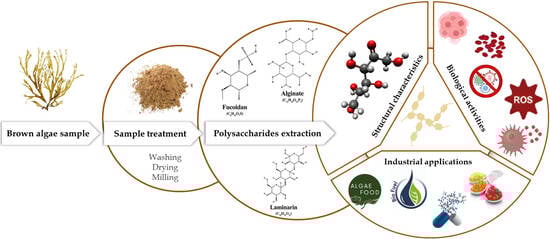
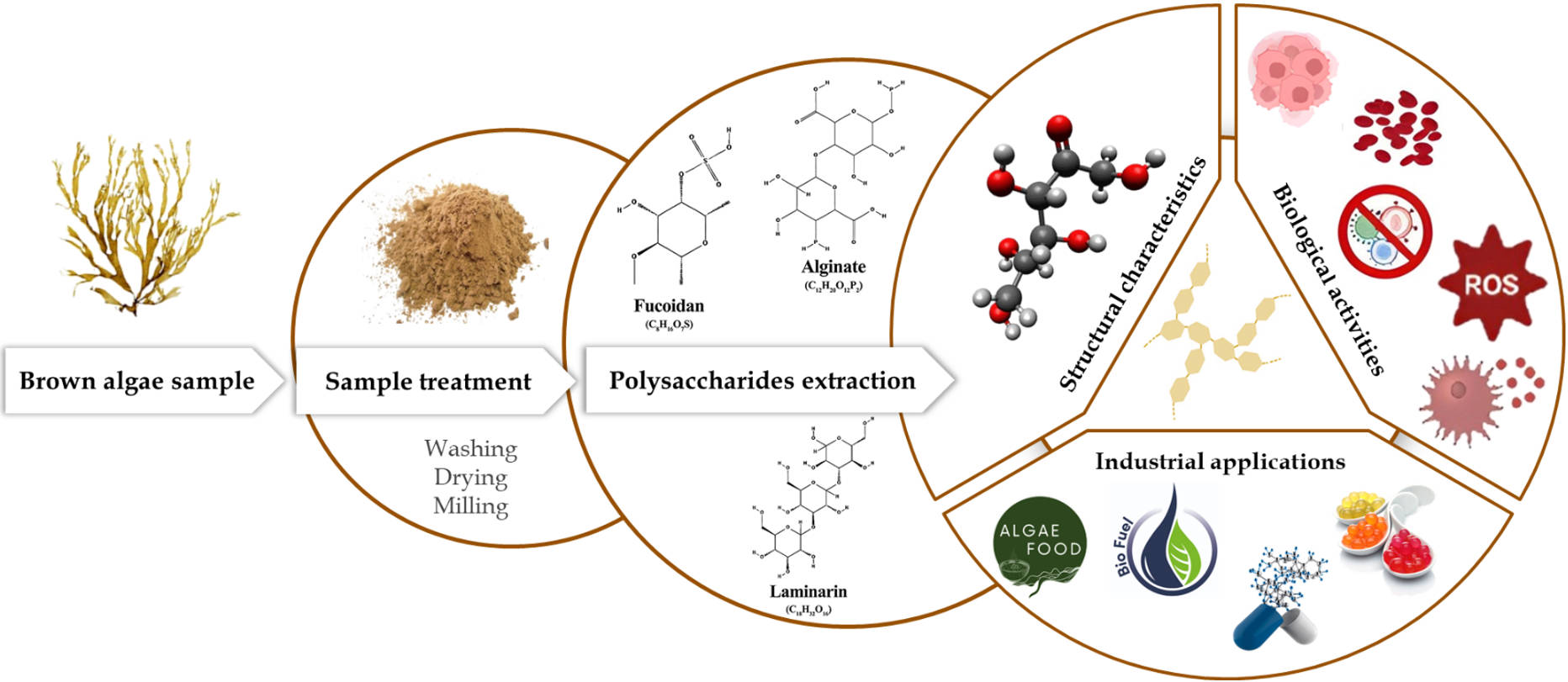
Graphical Abstract

1. Introduction

Phaeophyceae, commonly known as brown algae, are a large and diverse group of multicellular, photosynthetic organisms that belong to the kingdom Chromista [1]. Brown seaweed, comprising approximately 250 genera and 2000 species, is a significant part of intertidal zone biomass, notably from predominant genera such as Sargassum, Ascophyllum, Laminaria, and Macrocystis [2,3]. As a foundational group, brown algae species hold immense ecological value, providing essential habitats, nursery grounds, and shelter for numerous marine species while also playing a key role in carbon cycling [4,5]. Their name is derived from their distinctive greenish-brown color, which results from the fucoxanthin pigment in their chloroplasts and from specific tannins found in their cell walls that mask residual pigments [6,7].
For centuries, marine brown algae have been an integral part of oriental culture, especially in the Asian–Pacific region [8]. Their widespread use is owing to their dietary, medicinal, and functional food properties [9,10]. Today, seaweeds have become a globally important economic resource, especially in East and South Asia, where they are extensively cultivated [11]. Much attention has been paid to seaweeds as a valuable source of structurally novel and biologically active metabolites with a significant industrial potential, particularly polysaccharides [12,13,14]. As the principal structural polysaccharides in brown seaweed, fucoidan, alginate, and laminarin exhibit notable heterogeneity in their physicochemical properties and structural characteristics that directly influence their biological activities [15]. This diversity depends on several factors such as the species of algae, growth environment, harvesting season, and extraction process. Consequently, such variability poses substantial challenges in terms of pretreatment, extraction, characterization, and evaluation of bioactivity [16].
Although the discovery of new brown algal species is continually accelerating, a substantial number of these taxa is still without formal taxonomic classification or phylogenetic distinction [4]. Driven by accessible high-throughput sequencing, the development of comprehensive DNA barcode libraries has dramatically revolutionized specimen identification in taxonomic, ecological, and biogeographical research. DNA barcoding initiatives allow for the accurate identification of cryptic species, larval forms, and novel specimens previously unidentifiable after using traditional morphological methods [17,18,19]. The vision of a global and interconnected library of barcodes relied on standardized genetic markers exemplified by many initiatives targeting the ribosomal genes, ITS spacer, rbcL plastid gene, and the conserved mitochondrial genes as well [17,20].
The high quality of downstream extraction fundamentally depends on the preliminary treatment of raw seaweed material [21]. The production scheme involves various stages, including algal strain cultivation followed by biomass harvesting, which also involves the separation from carrier media and impurities (e.g., salts, heavy metals, and epiphytes), and ends in drying and milling into a usable form [22]. Thanks to great technological innovations, the processing of polysaccharides derived from brown algae has now become a highly sophisticated field [23]. Traditionally, solid-to-liquid extraction using acidic, alkaline, or aqueous solvents was the standard method for the extraction of polysaccharides. Still, innovative extraction systems have been developed in recent years to recover polysaccharides in a more efficient and environmentally friendly manner [24]. Current extraction technologies such as Ultrasound-Assisted Extraction (UAE), Microwave-Assisted Extraction (MAE), Enzymatic-Assisted Extraction (EAE), Pressurized Liquid Extraction (PLE), and Supercritical Fluid Extraction (SFE) have revolutionized brown algae processing. Indeed, these protocols have fewer drawbacks than conventional methods thanks to their considerable potential for enhancing extraction yields, reducing energy and solvent consumption, streamlining processing time, and providing safer working conditions through reduced chemical exposure. The crude extract typically contains impurities, which can lead to an overestimation of extraction yields and limit the biological applications of target polysaccharides [25]. However, promoting a high-purity product for advanced applications usually requires further purification through chromatographic and membrane-based methods [26,27]. These processes aim to decipher the molecular architecture such as the sugar composition, glycosidic linkage patterns, functional groups, molecular weight, and anomeric configuration [28]. For this purpose, a suite of sophisticated analytical techniques is required including chromatographic methods (e.g., HPAEC-PAD), spectroscopic analyses (e.g., NMR, FTIR), mass spectrometry (e.g., MS, GC-MS, LC-MS), and advanced microscopy [26,29].
As naturally derived biopolymers, brown algae polysaccharides have been extensively investigated for their broad spectrum of biological activities [30]. These biological effects are mediated via the direct initiation of complex reaction pathways [31]. This dual capacity accounts for the diverse biological characteristics observed including antioxidant, anti-inflammatory, anticoagulant, antimicrobial, and immunomodulatory activities [21]. Once their structure and functional properties are elucidated, these biologically active polysaccharides may serve as a source of fertile materials for various applications. Their innate biodegradability and low toxicity make them highly attractive candidates for diverse industries beyond traditional uses. Numerous studies highlight their importance in different sectors such as the food industry (as functional ingredients), pharmaceuticals (for drug delivery), cosmetics (in skincare formulations), agriculture (as biostimulants), and the environment (in bioremediation) [2,32].
In fact, many previous studies were made on specific biological activities or extraction techniques. Yet, a substantial gap still appears in providing a holistic system-level perspective that connects the entire valorization pipeline. Many studies predominantly focus on downstream aspects such as structure–activity relationships, often treating upstream biomass processing as a peripheral concern. To bridge this gap, this study is structured around the novel conceptual framework of an integrated value chain. By adopting this approach, the present study provides an extensive and updated overview of brown algae-derived polysaccharide processing, focusing on three core aspects essential for their research and application: (i) biomass pretreatment process, outlining key methods including washing, drying, size reduction, and taxonomic species delimitation; (ii) extraction and characterization techniques, from conventional to emerging methods, alongside the advanced analytical tools used to determine structural and functional properties; and (iii) bioactive properties associated with these polysaccharides. Through a critical analysis of these themes, this study seeks to offer valuable insights for the scientific community and industry partners, aiming to optimize the sustainable processing and application of brown algae polysaccharides across various fields.

2. Global Seaweed Production

Seaweed production originated approximately 1700 years ago in China for domestic purposes such as food, feed, and medicine prior to its adoption for industrial applications [33]. Over the years, the exponential growth of the global seaweed industry led to the cultivation and harvesting of a wide variety of seaweed species. This diversification is a direct response to market pressures seeking novel value-added products. However, the rapid expansion and transition from artisanal collection to large-scale commercial farming raise critical questions regarding its environmental and socio-economic sustainability, particularly for coastal countries in Asia [34].
According to statistics from the Food and Agriculture Organization [35], the global market share of seaweed farming production increased by approximately 203% between 2000 and 2019, reaching over 35 million tons per year. Recent studies (2020) have indicated that the algae industry, primarily dominated by Asia (97% of the total production), is expected to grow by 137% by 2027, increasing its value from 40 billion to 95 billion dollars. The leading Asian producers are China, Indonesia, Korea, and the Philippines, while recent growth has also been observed in Europe (0.8%, e.g., Ireland, Norway, and France) and the Americas (e.g., Chile, Canada, and Mexico) [36]. However, increasing production sustainably requires the optimization of cultivation systems [24]. The expansion of the seaweed sector is largely attributed to the increasing global demand for brown seaweed biomass and its bio-based derivatives. Statistical records indicate an average annual increase of around 11%, with production volumes expanding from 13,000 tons in 1950 to 17.6 million tons in 2021. Today, 96.5% of the total global production of brown seaweed comes from aquaculture [37]. This expanding biomass is crucial to respond to the market needs for valuable polysaccharides. For instance, the bioactivities of fucoidan have positioned it as a compound of notable commercial value, with a global market valuation of USD 30 million in 2022 [38]. Similarly, the alginate industry was valued at USD 728.4 million in 2020, with an expected annual growth rate of 5% until 2028 [39]. Microalgae can be farmed offshore in artificial ponds or wildly harvested from natural beds (Table 1) [11]. The choice of cultivation technique is largely determined by the biological requirements of the target species and its optimal growth environment [40].
Table 1. Seaweed cultivation techniques.
Cultivation
Method
AdvantagesDisadvantagesExamplesSpeciesMost-UsedReferences
Offshore seaweed farmingHigh environmental control (nutrients, temperature, light, pH, and pathogens)
Stable productivity (yield, growth cycles)
Lower physical risks (storms, currents)
Substantial operational costs (water, energy, and ponds)
External input dependency (fertilizers, treatments)
Limited scalability (available area, cost)
Bottom culture
Pond culture
Tank culture
Sargassum horneri
Cystoseira barbata
Himantothallus grandifolius
China
Indonesia
Philippines
South Korea
Netherlands
USA
[41,42,43,44]
Onshore seaweed farmingLower production costs
Natural resources (nutrients)
Unlimited space
High environmental risks (storms, waves, and grazing)
Yield variability
Logistical challenges (monitoring, harvesting, and maintenance)
Floating raft
Open water Rope
Sargassum muticum
Dictyota menstrualis
Turbinaria ornata
Norway
France
Portugal
Canada
Japan
Chile
[42,45,46]

3. Sample Processing

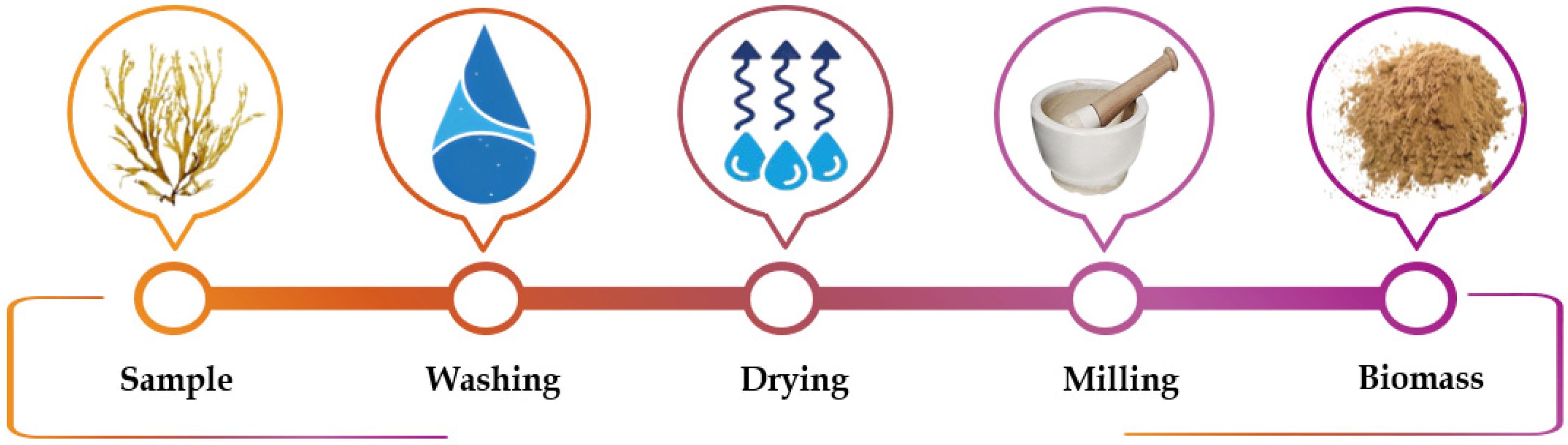
The postharvest handling of seaweed biomass is a critical factor influencing all subsequent valorization pathways. As illustrated in Figure 1, the standard processing chain involves key unit operations such as washing, drying, and size reduction. The choice of processing method primarily depends on the algal material, the intended end product, and the socio-economic objectives of production [47].

3.1. Washing

Unwashed algal biomass contains a wide range of natural contaminants including sediment (e.g., mud, sand), epibionts (e.g., small invertebrates), and associated macro algal species [31]. Washing with sea or tap waters is an important pretreatment step strongly recommended to reduce the salt content and eliminate adhering impurities [48]. The washing conditions for each macro algal species should be optimized to preserve color and texture regardless of whether freshwater or seawater was used [22].

3.2. Drying

Seaweeds, with a moisture content exceeding 90–95%, are considered highly perishable material [49]. Drying is a major operation in the seaweed industry, as it extends the shelf life and improves storage efficiency, transport, and distribution, as well [50]. Substantial progress has recently been made in drying technologies to satisfy the growing demands of the industry. Currently, two main drying technologies are commercially emerging: (i) natural sun drying, which is a relatively simple and low-cost technique, but its dependence on weather conditions affects both the quality and sanitary standards of the final product, hindering its application in some industrial sectors; and (ii) mechanical drying using industrial thermal drying systems, which, despite their fast processing rates, are constrained by limited throughput, high energy consumption, and degradation of key nutrients [51,52]. As a promising alternative, effective freezing ensures good preservation of the organoleptic and nutritional quality of seaweed, particularly for high-value applications that require fresh-like attributes [53].

3.3. Milling or Size Reduction

For extraction purposes, dried seaweeds are typically crushed or manually ground using a mechanical mill or blender to obtain a homogeneous mass and increase the surface-to-volume ratio [54]. Milling methods involve the production of particles with a wide range of sizes from millimeters to microns [55]. Finally, sieving is applied to separate algal particles into different size fractions and obtain the desired particle size [52]. However, the requirement for this mechanical pretreatment is highly species-specific. In taxa having fragile cell wall structures, the extraction medium led to effective cell disruption, thereby requiring less mechanical energy or potentially removing the necessity for prior milling [56].

4. Genus and Species Delimitation

Accurate algal species identification is crucial for ecological studies, biodiversity conservation, and sustainable management of marine resources, as well as for ensuring effective traceability and quality control in the commercialization of seaweed-based products [57]. The challenges associated with the morphological species concept revealed significant limitations. In algae, phenotypic plasticity, polymorphism, and convergent evolution are common phenomena, creating marked discrepancies between the morphologically defined species and those delimited by phylogenetic or reproductive isolation criteria [5,58]. Moreover, cryptic species are frequently observed in diverse lineages. In addition, morphological diagnostic keys may vary depending on the life stage or sex of the algae. Ultimately, the reliable application of morphological keys requires advanced taxonomic expertise for accurate identification [59].
To remove such constraints, integrative approaches that combine morphological characteristics with DNA data (nuclear, mitochondrial, and/or plastid) have been increasingly adopted in taxonomic and ecological research to complement classical morphological identification methods [57,60].
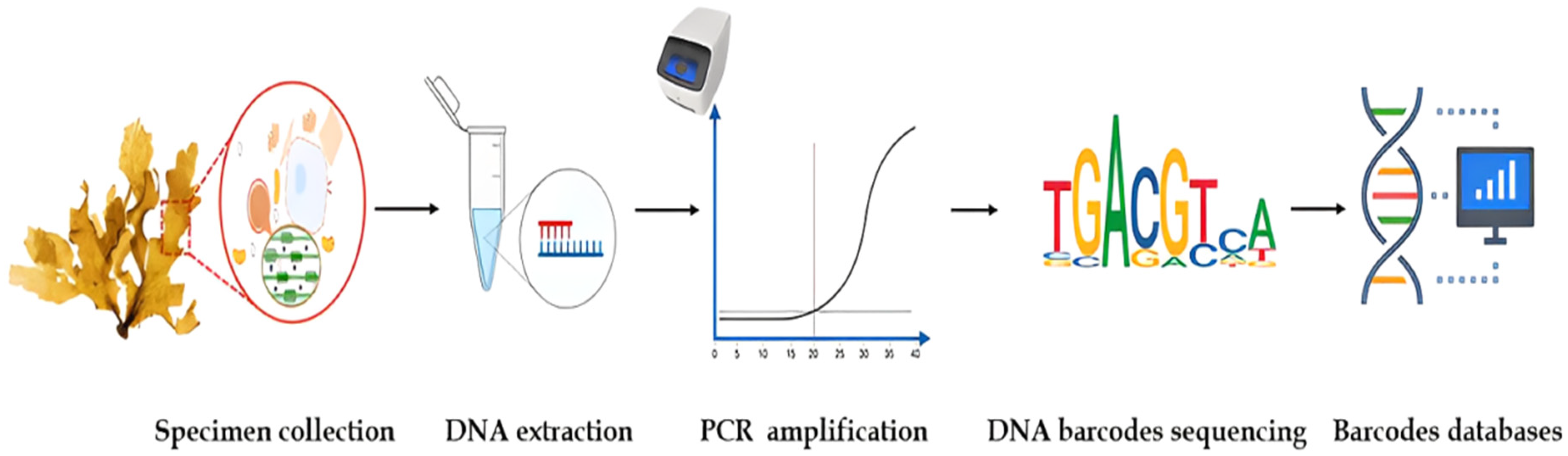
DNA-based tools, such as DNA barcoding, have proven to be a practical method for marine flora studies, making simple, rapid, and cost-effective identification of novel species [61]. As illustrated in Figure 2, this approach involves the sequencing of a target gene from accurately authenticated specimens to create a reference database and facilitate the identification of unknown species via a comparative sequence analysis with/of this library. With current advances in molecular technologies, multiple validated DNA barcodes are available in accessible sequence databases [17]. DNA barcoding markers are derived from distinct cellular compartments: (i) nuclear genomes, providing ribosomal RNA genes (18S/28S) and the ribosomal internal transcribed spacer region (ITS1-5.8SrDNA-ITS2); (ii) chloroplast genomes, featuring the widely adopted rbcL gene (ribulose-1,5-bisphosphate carboxylase/oxygenase large subunit) and psaA/psbA (photosystem I P700 chlorophyll Apo protein A1); and (iii) mitochondrial genomes, particularly the COI-5P (cytochrome c oxidase subunit I 5′ region) and the cox2–3 spacer (cytochrome c oxidase subunit II–III intergenic spacer) [17,62].

5. Marine Brown Algae Polysaccharides: Biodiversity and Chemical Structure

Brown seaweeds are characterized by a high content of polysaccharides that serve as structural cell wall constituents and energy-reserve storage compounds. Specifically, the brown algal intercellular matrix and cell walls are predominantly composed of alginate and fucoidan, which are both critical for thallus support in water. The primary storage of the polysaccharide laminarin is a direct product of photosynthesis and is sequestered within plastids as a carbon reserve for core metabolism [63]. As major components, brown seaweed polysaccharides, including sodium alginate, fucoidans, and laminarin, exhibit significant structural and chemical heterogeneity [64]. This heterogeneity is influenced by many factors such as species-specific traits, geographic location, harvesting season and extraction methods. The substantial variability among these polysaccharides presents great industrial challenges for valorization and innovation [65].

5.1. Alginate

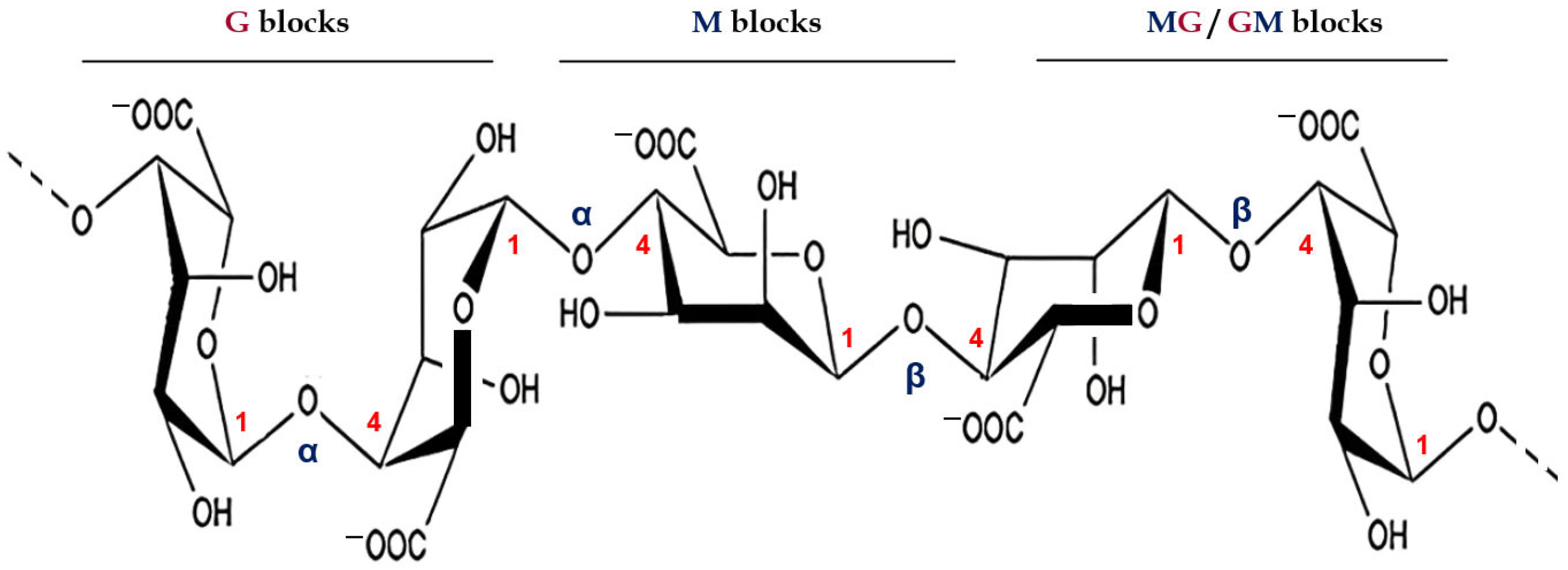
Alginate, which accounts for approximately 40% of the dry weight, is the primary polysaccharide in the cell wall and intercellular matrix of brown algae [66]. It naturally occurs as an insoluble mixed salt of alginic acid complexed with various cations, mainly Ca2+, Na+, Mg2+, and K+, along with other ions normally existing in seawater. Structurally, alginate is a linear and unbranched polysaccharide with a molecular mass larger than 50 kDa [11]. Its structure consists of β−D−mannuronic acid (M) and α−L−guluronic acid (G), linked through (1,4)−glycosidic linkages [67,68]. These monomers are arranged in homogeneous (MM or GG) or heterogeneous (MG) blocks (Figure 3). The monomeric ratios (M/G) of sodium alginate vary in different species of brown algae, with reported values of 0.52 for Sargassum dentifolium, 0.77 for Cystoseira compressa, 1.12 for Laminaria digitata, and 1.5 for Padina gymnospora [69]. The relative proportions of M and G, as well as block distributions (MM, GG, MG, and GM), influence the physicochemical properties of alginate. For example, alginate with high-M blocks showed higher viscosity, whereas high-G alginate shares better gelling properties [66]. Alginate’s gelling ability is intrinsically linked to its anionic polyelectrolyte nature. The process is initiated by the exchange of sodium ions from guluronic acid residues with divalent cations, leading to the formation of cross-linked junctions described by the «egg-box» model [69]. As a direct result, its rheological behavior in an aqueous solution, including flow and viscosity, is highly dependent on pH and ionic strength [70].

5.2. Fucoidan

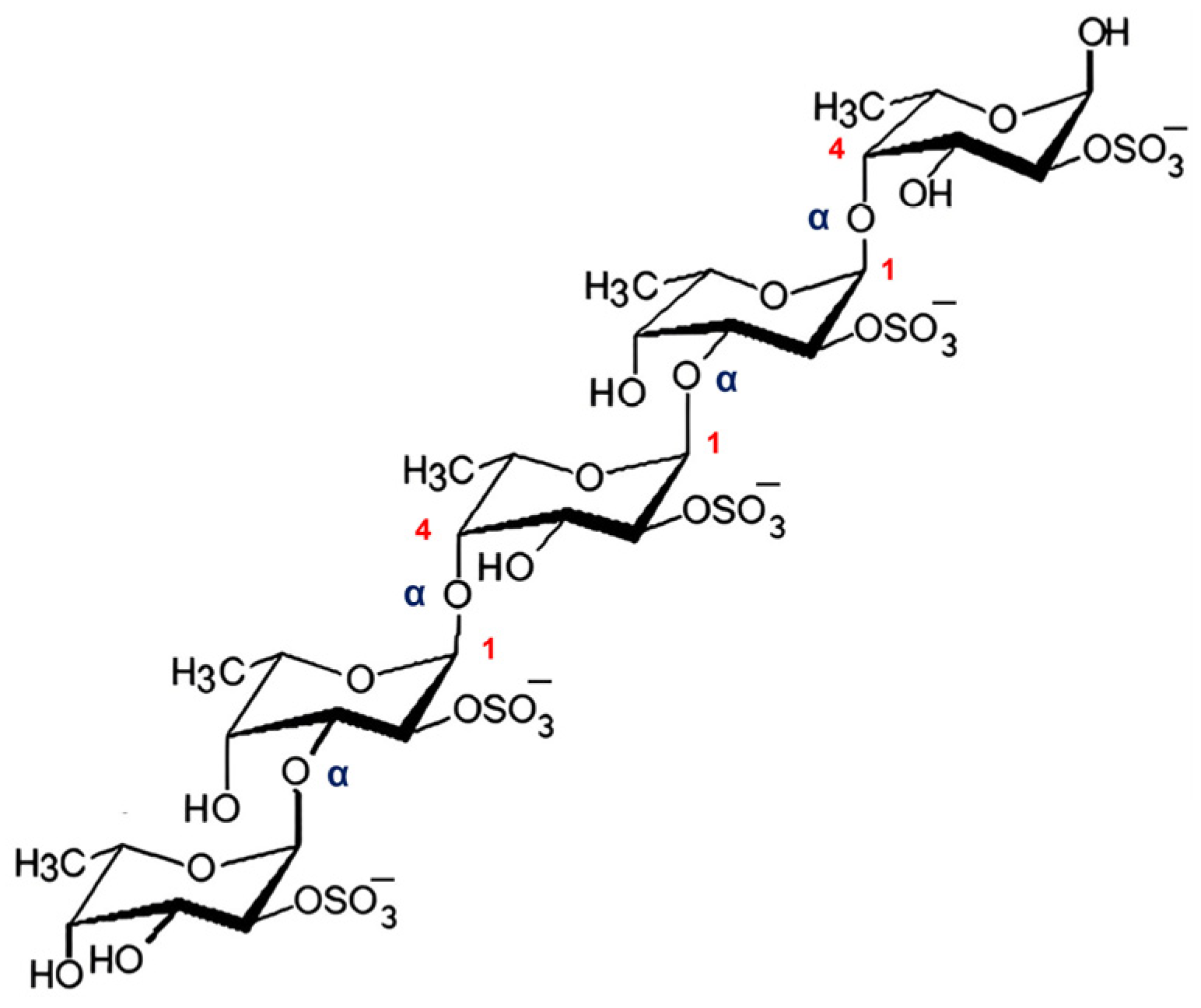
Fucoidan is a sulfated polysaccharide commonly found in brown seaweeds and some lower plants and typically yields up to 30% of dry weight [71]. As an alginate, fucoidan is essentially a structural component of the intercellular matrix where it plays a crucial role in maintaining cellular integrity and providing protection against environmental stresses. The relative molecular weight of fucoidan generally varies from about 7 kDa [72] to 2379 kDa [73]. The fucoidan backbone is highly variable among species primarily composed of fucose with additional monosaccharide residues (such as mannose, galactose, arabinose, glucose, xylose, and uronic acids). Generally, α−(1,3) and α−(1,4) glycosidic bonds constitute the main chain of the macromolecule (Figure 4) [21]. A major structural feature of fucoidan is its specific substitution pattern characterized by sulfate groups, particularly those attached at the C−2, C−4, and/or C−3 and the O-acetylation. These functionalities confer a strong polyanionic character and enhanced chain stiffness, which profoundly influence the molecule’s physicochemical behavior, particularly its conformation in aqueous media and its interactions with water and other polymers [74]. From a techno-functional standpoint, the polyanionic nature of fucoidan allows for interactions with counter-ions and cationic species (e.g., proteins, polysaccharides, or mineral ions), thereby modulating the rheology, stability, and texture of dispersions, emulsions, and gels, as well [75]. Rheologically, fucoidan solutions and blends typically exhibit non-Newtonian, shear-thinning (pseudoplastic) behavior, where the apparent viscosity decreases as the shear rate increases [76].

5.3. Laminarin

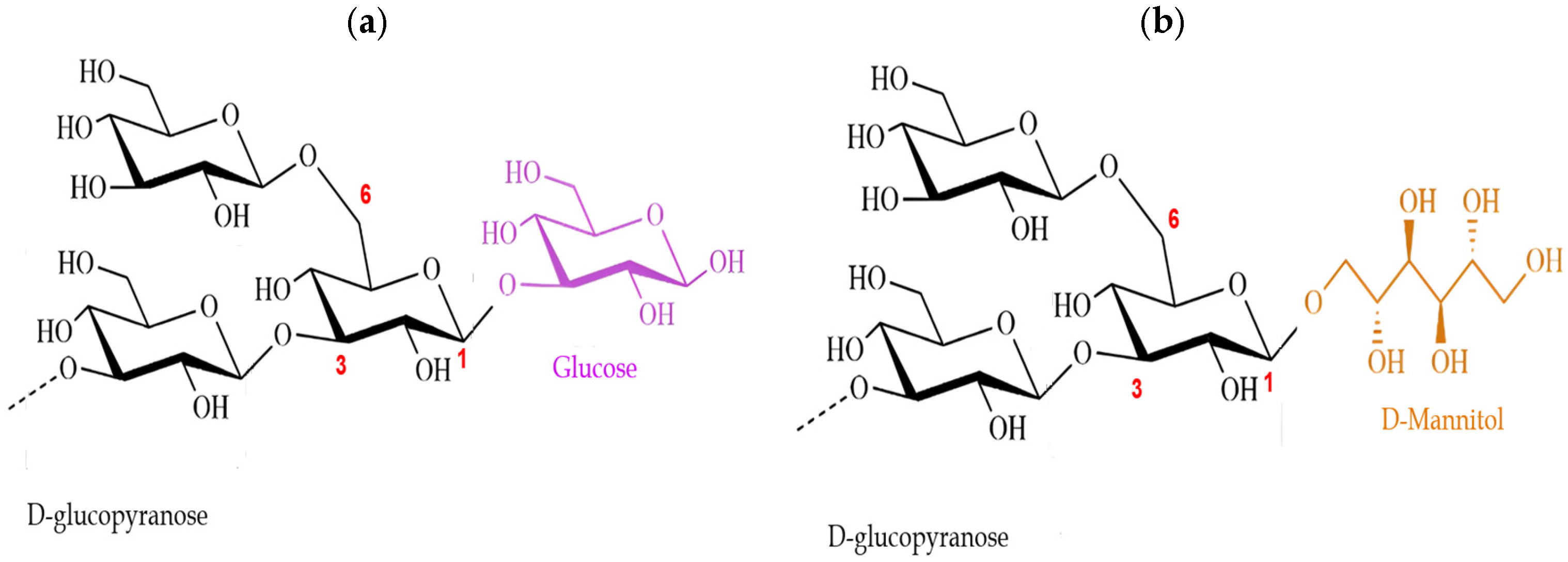
Laminarin, a water-soluble β−glucan, is another major storage polysaccharide found in brown algae, particularly in Laminaria, Saccharina, Ascophyllum, Fucus, and Alaria species [77]. Laminarin is mainly composed of β−(1,3)−β−D−glucan backbone with some 6-O-branching, glucose, and β−(1,6)−intrachain link. The ratio of β−(1,3) to β−(1,6) linkages vary depending on the type of algae [78]. Additionally, laminarin is structurally classified into two forms based on the type of sugar at the reducing end: M-chains, featuring a terminal D-mannitol (1−O-substituted), and G-chains, which end with glucose (Figure 5) [52]. The average molecular weight of laminarin is approximately 5 kDa, depending on the degree of polymerization. Furthermore, Laminarin represents around 22–49% of algal dry matter [30].

6. Polysaccharides Treatment Process

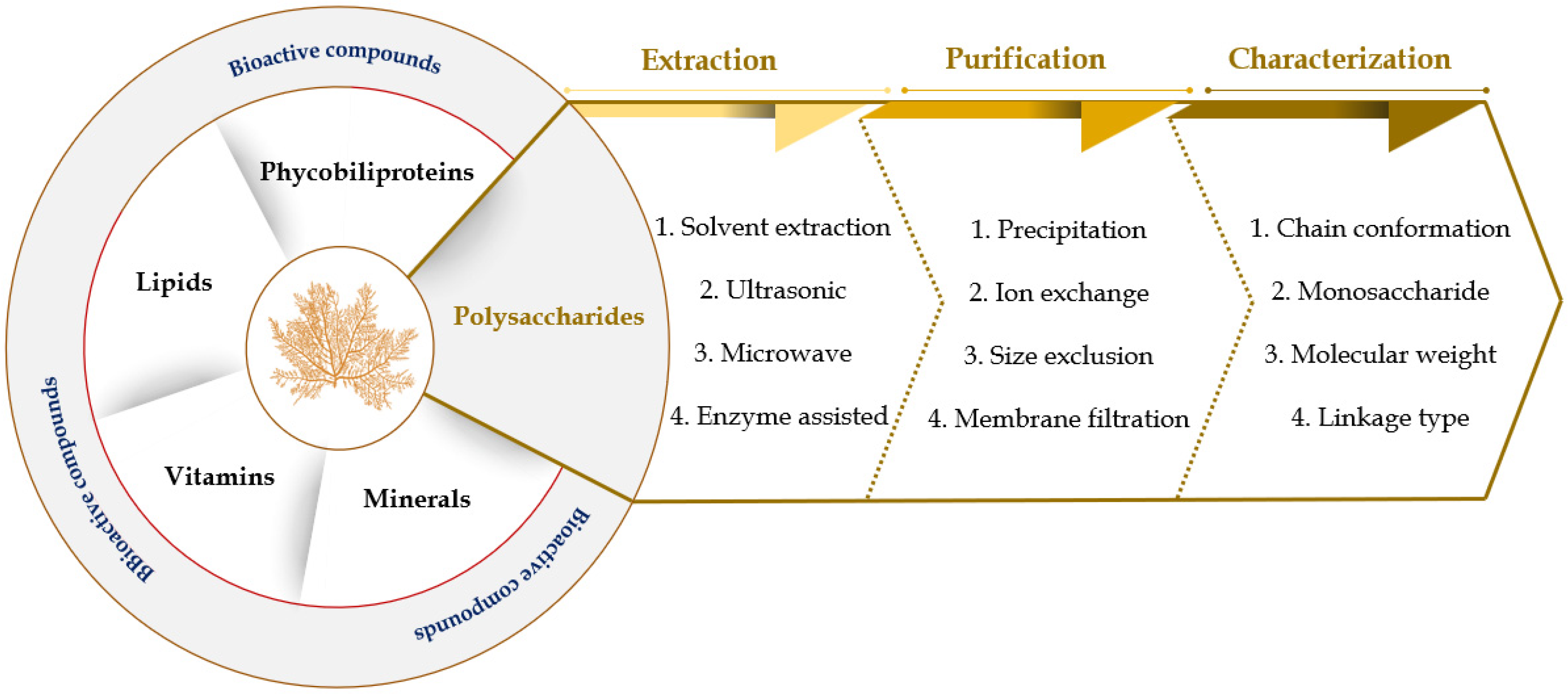
Processing polysaccharides from brown algae is a crucial technological pathway for accessing their functional and biological properties in various industrial applications [79]. Commercial-scale processing involves three interdependent critical stages (Figure 6): (i) pretreatment and primary extraction, (ii) successive purification, and (iii) complete analytical profiling [80].

6.1. Extraction Technologies

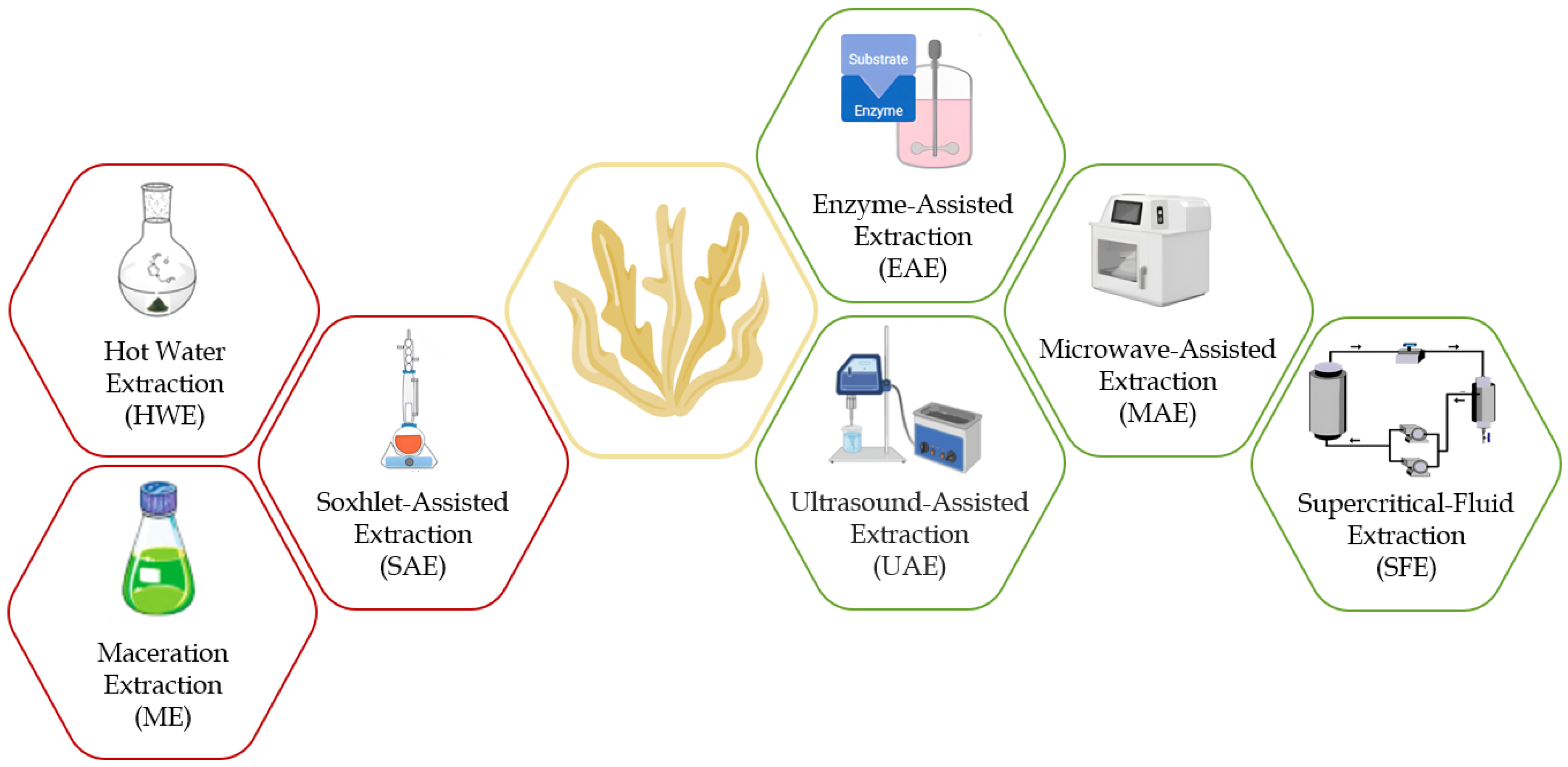
To obtain targeted brown algae hydrocolloids tailored to specific purposes and functions, a wide range of extraction methods, from the conventional to the more advanced ones, are documented (Figure 7). Although deep research has been made on extraction processes, few studies have systematically evaluated their efficiency, scalability, and suitability for industrial applications [9]. This lack of comprehensive assessment is a paramount concern, since effective recovery methods are required to achieve optimal yields of polysaccharides with high purity and strong bioactivity [80,81].

6.1.1. Hot Water Extraction

As the most commonly used extraction technique, hot water extraction (HWE) is adopted for its simplicity and selectivity towards water-soluble polysaccharide compounds [82,83]. This technique was implemented at temperatures above 80 °C for a controlled duration (1–4 h) using a solid-to-liquid ratio of 1:10 to 1:30 (w/v) to effectively disrupt the algal cell matrices and release selective polysaccharide fractions under mild conditions [80]. For instance, hydrothermal processing of Saccharina japonica under extreme conditions (180–420 °C, 13–520 bar) can achieve a yield of 98.91% of total organic carbon in dry seaweed [84].

6.1.2. Soxhlet-Assisted Extraction

The key advancement of the Soxhlet Extraction technique over traditional hot water extraction is the continuous flow of solvent through the sample matrix. This dynamic process enhances the extraction efficiency, typically completing a cycle within 2–3 h [85]. Despite the large-scale application, Soxhlet-Assisted Extraction is commonly applied as a preliminary step in macroalgae processing to remove non-targeted compounds (e.g., lipids, pigments) [86].

6.1.3. Maceration

Maceration is a flexible but cost-effective extraction technique that uses a combination of organic solvents (e.g., methanol, ethanol, and ethyl acetate) and/or acid or alkali solutions (e.g., HCl, H2SO4, Na2CO3, and NaOH) under controlled temperature and agitation [53,87]. It efficiently solubilizes and extracts functional polysaccharides from brown algal cell walls. For example, alginate extraction from Cystoseira compressa involves a sequential solvent-based approach using acidic pretreatment (0.1 M HCl) followed by alkali extraction (Na2CO3) at elevated temperatures (60 °C). The extraction protocol involves multiple maceration steps with acetone, methanol, and ethanol [29].

6.1.4. Ultrasound-Assisted Extraction

Ultrasound-Assisted Extraction (UAE) is an innovative non-thermal technique that uses high-frequency sound waves (16–100 kHz) to disrupt cellular structures through the cavitation phenomenon [88]. This process generates oscillating pressure waves in the liquid medium, creating microbubbles that mechanically damage cell walls and facilitate the release of bioactive compounds and polysaccharides from brown seaweeds [85]. According to the literature, water or acidic solutions are the most employed solvents for UAE. However, other organic solvents like methanol and ethanol are used for industrial-scale applications [86,89]. UAE combines enhanced yield, time efficiency, low solvent consumption, and low-temperature operation, all achievable through low-cost equipment [65].

6.1.5. Enzymatic-Assisted Extraction

Enzymatic-Assisted Extraction (EAE) is a promising green technology based on the use of selective enzymes as catalysts for cell wall degradation. The successful implementation of an EAE system depends on two interdependent factors: (i) screening target biocatalysts according to their specificity and selectivity profiles and (ii) adjustment of process parameters (temperature, pH, solvent polarity, and enzyme-to-substrate ratio) for the sake of maximizing extraction efficiency [90,91,92]. Various types of commercial enzymes are available, including proteases such as Alcalase and Flavourzymes, and carbohydrases like Celluclast, Viscozyme, Amyloglucosidase, Termamyl, and Ultraflo, as well [93,94]. By using biodegradable catalysts, EAE offers enhanced environmental sustainability, reduced energy consumption, and high extraction yields with improved specificity [95]. Yet, economic constraints often limit its industrial application on a large scale [80].

6.1.6. Microwave-Assisted Extraction

This energy-assisted technique is used to overcome the limitations of conventional procedures. Microwave-Assisted Extraction (MAE) is described as a process that employs microwave radiation to heat algal material, thereby accelerating the extraction process [92,96]. During microwave treatment, rapid heating occurs directly within the biological material, causing the evaporation of intracellular fluids [75]. This results in the disruption of the cell wall and the release of various bioactive compounds and polysaccharides into the solvent [97]. Generally, water and dilute acidic solutions (e.g., 0.01 M HCl) are used as solvents for this type of extraction [85]. This method is undoubtedly effective for brown algal polysaccharides, as it reduces processing time and energy and solvent consumption while allowing for integration with other extraction technologies [98]. Nevertheless, the main disadvantage lies in the potential alteration or degradation of thermo-labile compounds [86].

6.1.7. Pressurized Liquid Extraction

Pressurized Liquid Extraction (PLE) is also known as Pressurized Solvent Extraction (PSE), Accelerated Solvent Extraction (ASE), or Subcritical Water Extraction (SWE), depending on the used solvent [99]. The PLE technique is based on using water or organic solvents under high temperatures (50–200 °C) and pressures (35–200 bar) within an oxygen and light-free environment [94]. Higher temperatures enhance compound solubility, modify the physical properties of solvent, and accelerate diffusion rates, while elevated pressure maintains the solvent in its liquid state below its boiling point. The technique is known for its eco-efficiency and short extraction times [84]. Despite this efficiency, high-temperature operation may lead to undesired reactions or the degradation of compounds. Furthermore, industrial-scale implementation is still limited by high energy demand and infrastructure-related costs [86].

6.1.8. Supercritical Fluid Extraction

Another example of innovative techniques is the Supercritical Fluid Extraction (SFE) that is based on the application of supercritical fluids as solvents (e.g., CO2) to extract polysaccharides under high pressure and high temperatures [9]. Each fluid is defined by its corresponding temperature and pressure, which determines its thermophysical behavior. Beyond its critical temperature, a supercritical fluid cannot be liquefied regardless of the applied pressure, but it retains a density similar to that of a liquid. According to various studies, carbon dioxide (CO2) is the ideal solvent for Supercritical Fluid Extraction (SFE) due to its non-toxicity, safety, abundance, and ease of removal from the final product. Indeed, SFE is recognized as a highly selective, sustainable, and effective eco-friendly process for producing high-purity products [8].
The heterogeneity of experimental conditions, including variations in instrumental parameters, extraction duration, and solvent systems, together with the investigated broad spectrum of polysaccharides (Table 2), renders direct comparison among extraction techniques difficult.
Table 2. Overview of traditional and advanced methods for brown seaweed polysaccharide extraction.
SpeciesPolysaccharideExtraction ConditionsRecoveryReferences
Soxhlet Extraction
Fucus vesiculosusFucoidanCaCl2 (2%), 85 °C, 2 h2.6%[100]
Maceration Extraction
Ascophyllum nodosumFucoidanHCl (0.01 M), 70 °C, 3 h11.9%[101]
Coccophora langsdorfiiSodium alginateNa2CO3, 60 °C, 24 h13.3%[102]
Ultrasound-Assisted Extraction
Sargassum muticumSodium alginateH2O, 150 W/40 kHz, 25 °C, 30 min15%[76]
Sargassum binderiFucoidanHCl (0.1 M), 60 min22.40%[103]
Laminaria hyperboreaLaminarinHCl (0.1 M), 20 kHz, 15 min6.24%[52]
Enzymatic-Assisted Extraction
Padina gymnosporaTotal polysaccharidesAlcalase (0.32% w/w), 60.5 °C, 1.95 h87.45%[104]
Ascophyllum nodosumFucoidanCellulase, pH 4.5, 50 °C, 24 h3.89%[101]
Nizamuddinia zanardiniiFucoidanFlavourzyme (5% v/v, pH 7), 50 °C, 24 h4.36%[105]
Fucus vesiculosusNeutral sugarsβ−glucosidase, Botrytis glucanase, protease (5% w/w), 50 °C, 17 h60%[106]
Microwave-Assisted Extraction
Sargassum siliquosumFucoidanH2O, 750 W, 10 min6.94%[75]
Sargassum pallidumSulfated polysaccharidesEtOH (21%), (NH4)2SO4 (22%), 830 W, 95 °C, 15 min7.56%[107]
Ascophyllum nodosumFucoidanHCl (0.1 M), 120 °C, 15 min16.08%[16]
Pressurized Liquid Extraction
Nizamuddinia zanardiniiFucoidanH2O, 7.5 bar, 150 °C, 29 min25.98%[108]
Saccharina japonicaFucoidanNaOH (0.1%), 80 bar, 127.01 °C, 11.98 min13.56%[84]

6.2. Purification Procedure

The application of conventional extraction processes yields polysaccharide-rich fractions, such as fucoidan, alginate, and laminarin, which are invariably associated with coextracted compounds. Significant amounts of proteins, polyphenols, and flavonoids are often present as contaminants in the resulting mixture [109,110]. To obtain high-purity polysaccharides, various purification strategies can be applied, including ethanol precipitation, membrane separation, and chromatographic methods [91].

6.2.1. Ethanol Precipitation

Ethanol precipitation is the most commonly used method, often employed as the first step in polysaccharide purification. However, this approach not only effectively precipitates target polysaccharides but also removes low-molecular-weight impurities [111]. Standard precipitation is typically performed by adding two to three volumes of ethanol to the mixture and allowing it to precipitate overnight at 4° [112]. Ethanol’s low dielectric constant reduces ionic interactions between polysaccharide sulfate groups and positive ions, inducing aggregation. Target polysaccharides are then recovered as a pellet via centrifugation, while soluble non-polysaccharide impurities remain in the supernatant [94]. As a one-step purification strategy, ethanol precipitation delivers operational simplicity, cost-effectiveness, and industrial scalability. Several recent reports have highlighted the use of ethanol precipitation to purify polysaccharide fractions from brown algae species including Cystoseira compressa [29] and Halopteris scoparia [113].

6.2.2. Membrane-Based Methods

Membrane-based purification techniques, including ultrafiltration and dialysis, have emerged as size-selective approaches for the separation of heterogeneous mixtures [109]. In brief, the polysaccharide mixture containing low-molecular-weight contaminants such as salts, proteins, and phenolic compounds is placed inside a dialysis membrane to allow for selective and passive diffusion [114]. Membranes/filters with progressively graduated molecular-weight cut-off (MWCO) are available, providing diverse filtration modes including nanofiltration, microfiltration, ultrafiltration, and reverse osmosis [115,116]. Membrane-based systems offer extreme operational simplicity, cost-efficiency, and low chemical dependency, while allowing for the simultaneous removal of multi-contaminants and the processing of large volumes of solutions at a commercial scale [109,117]. Following fucoidan extraction from the brown seaweed Ascophyllum [27], a three-step purification process was applied involving a 10 kDa molecular-weight cut-off membrane, yielding 562.3 mg of pure fucoidan per g of dry extract.

6.2.3. Chromatographic Techniques

Brown algae polysaccharides are commonly purified using chromatography techniques such as ion exchange, size exclusion, and affinity chromatography, which separate molecules based on differences in their charge, size, and hydrophobicity.
Currently, ion exchange chromatography (IEC) is the most widely used tool for the separation and purification of charged biological polymers, such as proteins, DNA/RNA, and polysaccharides [118]. According to the principles of IEC, solute separation relies on three primary interactions: reversible ion exchange, electrostatic attraction, and adsorption phenomena, all involving charged groups from the column material, the biological sample, and eluent ions [119]. Briefly, charged solute molecules adsorb onto immobilized ion-exchange groups on the column matrix, followed by selective elution controlled by modulating the mobile phase buffer pH and/or ionic strength [120]. IEC separation modalities are charge-dependent: anion-exchange chromatography (AEC) is used for negatively charged targets, while cation-exchange chromatography (CEC) is used for cationic targets (pH < pI). Anion/cation exchangers are classified as “strong” or “weak” based on their pH-dependent charge variations. IEC’s prominence in modern chromatography derives from its superior resolution, high throughput, cost-effectiveness, and ease of automation. Recent literature revealed that modified Diethylaminoethyl (DEAE-Cellulose/Sepharose/Dextran) and quaternary ammonium (Q) groups are routinely adopted as AEC-ligands for polysaccharide separation [87].
As a physicochemical separation technique, Size-Exclusion Chromatography (SEC) resolves complex mixtures through differential elution based on the hydrodynamic volume and molecular weight of the target analytes [121,122]. Molecules are fractionated within a porous gel matrix, where larger molecules quickly pass through the column, while smaller molecules penetrate deeper and elute later. The resolution of polysaccharide separation depends mainly on the choice of gel filtration media relative to the target polysaccharide’s molecular weight. Current polysaccharide purification protocols predominantly rely on four common column types, namely, PL aquagel OH, Sepharose CL-6B, Sephacryl S-300, and Superdex 200 [93]. For sensitive biomolecules, SEC combines operational simplicity with high resolution while preserving their native molecular structures. Unlike binding-dependent techniques like IEC, SEC’s steric exclusion mechanism eliminates the influence of buffer chemistry on separation efficiency [80].
Affinity chromatography (AC) is a high-resolution liquid chromatography method that separates target compounds based on specific molecular interactions, such as antigen–antibody binding, enzyme–substrate recognition, and receptor–protein interactions. Molecular interactions are mediated through various chemical forces, including ionic, hydrophobic, hydrogen, and disulfide bonds. The selective binding between target molecules and the immobilized ligands on the chromatographic matrix enables selective retention, while nonspecific contaminants are eliminated during elution [116]. For sulfated polysaccharide extraction (e.g., fucoidans), conventional approaches leverage lectin proteins’ specific affinity for fucose residues, enabling selective separation from crude extracts. However, fucoidan’s sulfate groups disrupt lectin–fucose binding, reducing purification yields. As an alternative strategy, dye-based affinity chromatography using cationic dyes like toluidine blue and methylene blue can achieve selective purification. Cationic dyes form stable electrostatic complexes with sulfated polysaccharides via complementary charge interactions [123].
To understand the structure and activity relationships, a molecularly homogeneous preparation is required. Besides being a procedural step, purification critically influences or even defines the observed biological activity of these polysaccharides, often determining their expression or nature [124]. This process is necessary to remove interfering compounds (e.g., polyphenols, proteins) that may obscure the true effect of the polysaccharide itself and to precisely attribute bioactivity to specific structural features [100]. Yet, this technique is challenged by comparative research on Arctic brown seaweeds, where crude polysaccharide extracts exhibited consistently stronger antioxidant and anti-glycemic activities than their purified counterparts. This paradoxical finding reveals that the intrinsic synergistic interactions among compounds in the crude extract enhance bioactivity, or the purification removes essential co-factors needed for the full biological effect [125].

6.3. Quantitative and Qualitative Analyses of Polysaccharides

6.3.1. Colorimetric Assay

Colorimetric assays are analytical methods widely used for the quantitative determination of polysaccharides, relying on measurable color changes resulting from their reactions with specific chemical reagents [80]. Among the various strategies, cationic dye-based assays are noted for their high sensitivity, selectivity, and rapidity. However, their practical application is limited by critical drawbacks, including the requirement for stringently controlled conditions for dye–polyelectrolyte complex formation, as well as a pronounced vulnerability to matrix effects induced by common interferents like salts, acids, or bases [126]. Polysaccharide composition is algal-species-dependent, encompassing different proportions of neutral sugars, uronic acids, and sulfate groups, along with minor constituents such as proteins, polyphenols, and minerals [127]. Total carbohydrate content is typically quantified through two principal colorimetric methods: the phenol–sulfuric acid assay, using glucose as a universal calibration standard with detection at λ = 490 nm [128] and the anthrone method, which employs fucose as a standard for the specific analysis of fucose-rich polysaccharides at λ = 620 nm [129]. Neutral sugars are typically analyzed using the sulfuric resorcinol reaction (glucose standard, λ = 520 nm) [130], while uronic acids are determined via the m-hydroxydiphenyl method (glucuronic acid standard, λ = 525 nm) [131]. For evaluating the degree of sulfation in sulfated polysaccharides, two colorimetric approaches are available: turbidimetric BaCl2/gelatin precipitation (potassium sulfate standard, λ = 500 nm), as described by Dodgson and Price [132], and Dimethylmethylene Blue assay (chondroitin sulfate standard, λ = 525 nm), according to Farndale et al. [133]. Proteins and polyphenolic compounds, as minority components, are assessed using either the Bradford assay [134] or Lowry method [135] for proteins with bovine serum albumin (BSA) as the standard (λ = 595 nm) and the Folin–Ciocalteu method (gallic acid standard, λ = 760 nm) for polyphenols, as described by Singleton et al. [136].

6.3.2. Methods for Structural and Physicochemical Characterization

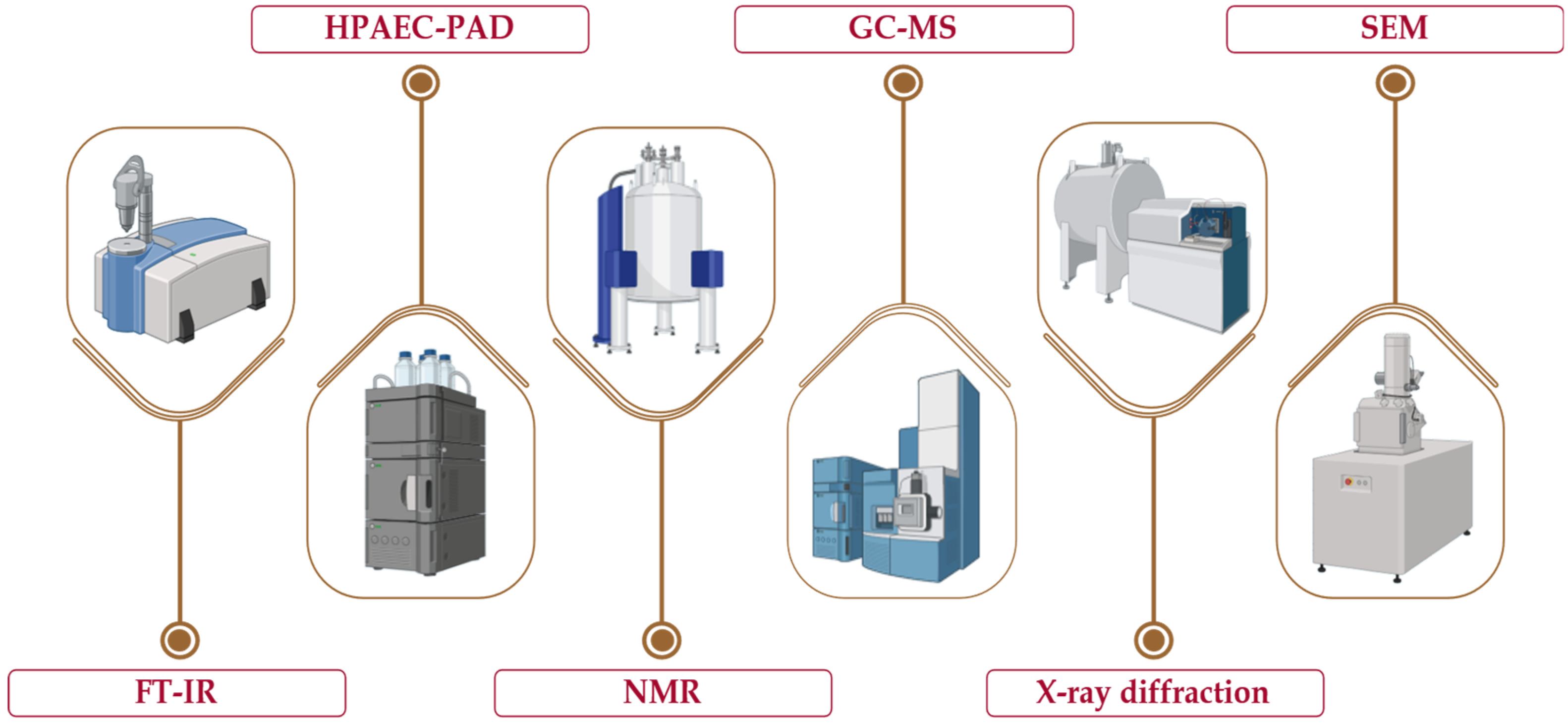
The current literature reported that structural features of polysaccharides, such as molecular weight, branching degree, chain conformation, and functional groups, are the primary determinants of their bioactivity and functional performance [28]. However, a comprehensive understanding of each polysaccharide’s characteristics is essential prior to further application [137]. Such comprehensive profiling is achieved through a diverse and sophisticated array of analytical techniques (Figure 8).
Molecular-Weight Determination
High-performance Size-Exclusion Chromatography coupled with the Multiangle Laser Light Scattering and Refractive Index (HPSEC-MALLS-RI) is an analytical technique particularly valuable for the absolute determination of molecular weight and size distribution [28]. This system integrates an HPSEC column for hydrodynamic size-based separation, a MALLS detector for calibration-independent molecular-weight measurement (λ = 658 nm), and an RI detector for concentration quantification. Unlike conventional Size-Exclusion Chromatography (SEC), which relies on calibration standards for relative molecular-weight estimation, the MALLS-RI detection system provides calibration-free and absolute molecular-weight/size determination, allowing for the standardized quality control of polysaccharides [120,122]. Recent HPSEC-MALLS analyses have revealed a substantial variability in the molecular weights of polysaccharides, reporting values for fucoidan (Mw = 122 kDa) from Tubinaria decurrens [104], alginate (100 kDa) from Cystoseira compressa [29], and fucoidan (814 kDa) and alginate (252 kDa) from Halopteris scoparia [113].
Functional Groups Constitution
Fourier transform infrared spectroscopy (FTIR) is a highly effective technique for identifying polysaccharide functional groups. It relies on the analysis of vibrational absorption peaks at certain wave numbers within the 500–4000 cm−1 spectral region [138]. Recently, the synergistic combination of conventional FTIR spectroscopy with Attenuated Total Reflectance (ATR) technology has significantly enhanced standard IR analytical capabilities. Therefore, functional groups of brown algal phycocolloids can be efficiently identified through rapid, direct, and non-destructive FTIR spectroscopy using minimal sample amounts [139]. Moreover, modern FTIR analysis software provides advanced tools for spectral data processing and interpretation. Seaweed-derived algal polysaccharides exhibit distinctive FTIR signatures, including O−H vibrations (3200–3400 cm−1), C−H stretching (2927–2891 cm−1), C=O stretching (1638–1597 cm−1), sulfate ester vibrations (1247–1257 cm−1), and carbohydrate backbone (C−H, 1134–1150 cm−1) absorptions [85].
Chain Conformations Analysis
Marine brown algal polysaccharides display different monosaccharide profiles, featuring glucose (Glc), mannose (Man), galactose (Gal), fucose (Fuc), xylose (Xyl), arabinose (Ara), rhamnose (Rha), mannuronic acid (ManA), and glucuronic acid (GluA) [140], which exhibit varied chain conformations and spatial arrangements [141]. Therefore, the accurate determination of monosaccharide composition investigation is fundamental for elucidating structure–activity relationships. Standard quantitative monosaccharide analysis requires the complete acid hydrolysis of polysaccharides into their constituent monosaccharides, followed by precise quantification using chromatographic systems (Table 3) such as high-performance liquid chromatography (HPLC), high-performance anion-exchange chromatography with pulsed amperometric detection (HPAEC-PAD), gas chromatography (GC), and ion-exchange chromatography (IEC) [142].
Furthermore, the comprehensive structural analysis of polysaccharides requires the determination of glycosidic linkage positions (e.g., 1,3; 1,4), anomeric configurations (α/β), and branching patterns. Current analytical strategies combine spectroscopic, chemical, and enzymatic approaches. Spectroscopic approaches such as mass spectrometry (MS; e.g., MALDI-TOF, ESI-MS) provide robust information on monosaccharide composition, relative abundance, molecular-weight distributions, and branching topology [143,144], while Nuclear Magnetic Resonance (NMR) yields definitive data on anomeric configurations (α/β) and glycosidic linkage arrangements [145]. In contrast, methylation-assisted GC-MS specifically targets branch point mapping through controlled chemical derivatization [146]. Complementarily, enzyme-mediated hydrolysis targets specific glycosidic bonds, providing the experimental validation of proposed structural models [80].
Table 3. Comparative analysis of chromatographic methods for polysaccharide characterization.
TechniqueAcronymCarrier GasStationary PhaseSeparationReference
Gas chromatographyGCGas
(He, H2, and N2)
Solid
(silica-based column)
Polarity[147]
High-performance liquid chromatographyHPLCLiquid
(acetonitrile/water)
Solid
(C18, NH2, and HILIC)
Polarity[148]
Ion chromatographyICLiquid
(Na2CO3/NaHCO3)
Solid
(ion-exchange resin)
Charge[149]
High-performance anion-exchange chromatography with pulsed amperometric detectionHPAEC-PADLiquid
(NaOH/KOH)
Solid
(polymeric matrices)
Charge
Affinity
[150]
Conformation Analysis
The spatial structure of phycocolloids can be described by a hierarchical model comprising four levels, namely, primary, secondary, tertiary, and quaternary structures [151]. The quaternary structure, defined as an aggregate formed through non-covalent interactions between polysaccharide chains, is a critical determinant of their physicochemical properties and biological functions. Owing to variations in monosaccharide composition, linkage stereochemistry, branching patterns, and inter-molecular forces, these molecules can adopt various conformations in a solution, defining their overall three-dimensional conformation [144]. Furthermore, the three-dimensional architecture dictates their interactions with solvents, ions, and other biomolecules, ultimately defining their functional roles in both natural and industrial contexts. The conformation of polysaccharide molecules is primarily governed by their molecular characteristics in dilute solutions. Key parameters of interest include molecular-weight distribution, chain size and flexibility, main-chain and substituent interactions, and morphological features of polysaccharide molecules. A multidisciplinary approach integrating data from Congo red assays, viscometry, scattering techniques (e.g., small-angle X-ray scattering, light scattering), chromatographic separation, fluorescence spectroscopy, and NMR spectroscopy is typically employed [152]. Furthermore, advanced microscopic techniques, such as Scanning Electron Microscopy (SEM), Atomic Force Microscopy (AFM), and Transmission Electron Microscopy (TEM), serve as a valuable complement to solution-based methods. Multiscale microscopy resolution (from the micro- to nano-level) includes (i) SEM scanning (1–10 nm) for 3D surface topology [153], (ii) AFM (0.1–5 nm) for nanomechanical mapping [154], and (iii) TEM (<0.5 nm) for internal ultrastructural analysis [155].

7. Biological Properties of Brown Algae Polysaccharides

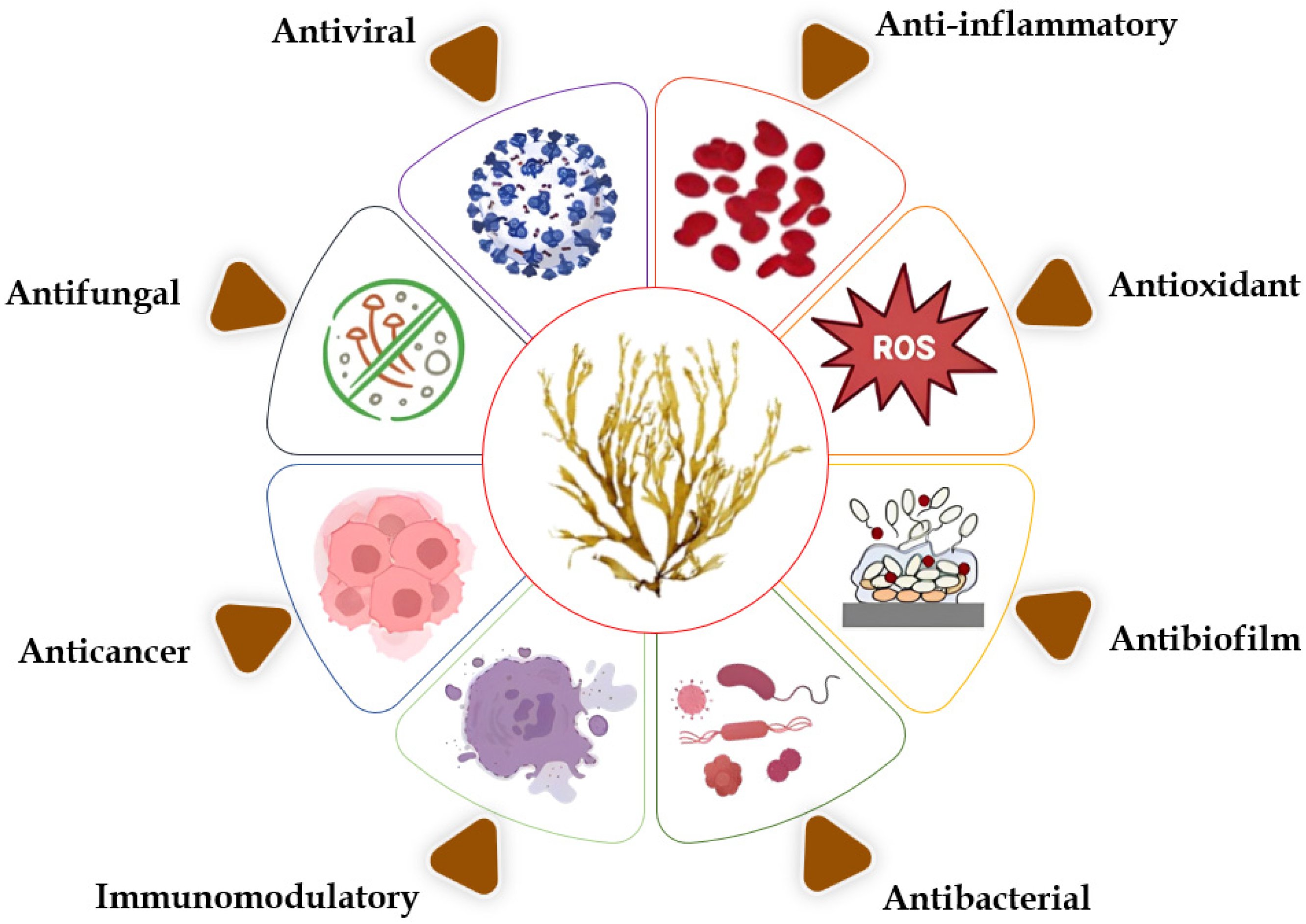
Bioactive polysaccharides from brown algae, such as fucoidan, laminarin, and alginic acid derivatives, exhibit a wide range of biological properties, including anticoagulant, antioxidant, anti-inflammatory, antiviral, and immunostimulatory activities (Figure 9). These bioactivities are primarily attributed to their distinct structural features, such as sulfate group distribution and glycosidic bonding patterns, which enable complex interactions with biological systems [156]. This structure–function relationship makes brown seaweeds valuable sources for next-generation product innovation and functional ingredients design [90]. However, the transition from documented bioactivities into approved large-scale industrial products across pharmaceutical, energy, and environmental domains remains limited, highlighting a significant gap between experimental evidence and market-ready products [157].

7.1. Antioxidant Activity

Oxidative stress (OS) involves a cascade of reactions leading to a significant increase in oxidized cellular components. OS is a major factor in the aging process and can cause direct damage to the central nervous system. Antioxidants comprise a variety of protective components, including enzymatic antioxidants such as glutathione peroxidase, glutathione-S-transferase, catalase, and superoxide dismutase (SOD), as well as non-enzymatic antioxidants like carotenoids, microelements, vitamins, polysaccharides, and other antioxidative substances, which directly or indirectly contribute to the inhibition or suppression of oxidation processes [158]. Natural antioxidants play an important role in preventing ROS formation and eliminating ROS in organisms [159,160]. Numerous studies have demonstrated that brown algae polysaccharides, particularly sulfated ones like fucoidan, exhibit robust antioxidant properties in various in vitro models (Table 4). Their biological efficacy is largely determined by their distinctive structural characteristics—such as the degree of sulfation, glycosidic branching, and molecular weight—which synergistically enhance their electron-donating capacity, metal-ion chelation, and broad-spectrum free radical scavenging activity [28]. Common assays to evaluate the radical scavenging abilities of antioxidants in vitro include DPPH radical scavenging, nitric oxide scavenging, ABTS radical scavenging, hydroxyl radical scavenging, the beta-carotene–linoleic acid system, ferric reducing power, and superoxide radical scavenging [161,162]. Consequently, significant research efforts are directed toward natural antioxidants, particularly polysaccharides, as alternatives to synthetic antioxidants traditionally used in the food and pharmaceutical industries, such as tert-butyl hydroquinone (TBHQ), butylated hydroxyanisole (BHA), and butylated hydroxytoluene (BHT), due to their potential carcinogenicity and possible hepatotoxic effects [163].
Table 4. Antioxidant assays of sulfated polysaccharides from different brown seaweed species.
SpeciesPolysaccharideAntioxidant ActivityReference
Sargassum policystumFucoidanFRAP: IC50 = 91.3 ppm[164]
Dictyota dichotomaFucoidanTotal antioxidant capacity (TAC): 71.76 ± 3.23%
DPPH scavenging: 51.13 ± 2.31%
H2O2 scavenging: 40.45 ± 1.87%
ABTS scavenging: 50.51 ± 2.27%
NO scavenging: 38.13 ± 1.72%
Ferrous ion chelating: 18.66 ± 0.84%
[162]
Cystoseira schiffneriFucoidanDPPH scavenging: IC50 = 104 ± 5 µg/mL (Ref: BHA IC50 = 14 ± 0.2 µg/mL)
Ferrous ion chelating: IC50 = 96 ± 3 µg/mL (Ref: EDTA IC50 = 10 ± 0.2 µg/mL)
FRAP: IC50 = 63 ± 3 µg/mL (Ref: BHA IC50 = 25 ± 0.1 µg/mL)
[165]
Ericaria crinitaFucoidanDPPH scavenging: IC50 = 412 µg/mL
FRAP: 118.72 µM Trolox Equivalent/g
[166]
Padina gymnosporaFucoidanDPPH scavenging: IC50 = 0.5256 ± 0.05 mg/mL (Ref: BHA IC50 = 0.31 ± 0.03 mg/mL)
ABTS scavenging: IC50 = 2.565 ± 0.02 mg/mL (Ref: ascorbic acid IC50 = 0.2859 ± 0.02 mg/mL)
[167]
Padina boryanaFucoidanIn vitro (reduced intracellular ROS levels, protection against apoptosis)
In vivo, zebrafish model (reduced ROS levels, reduced lipid peroxidation)
[159]
Colpomenia sinuosaFucoidanDPPH scavenging: IC50 = 46.2 ± 1.4 µg/mL
SOD-like activity: IC50 = 23.7 ± 1.1 µg/mL
[152]
Sodium alginateDPPH scavenging: IC50 = 280 ± 1.2 µg/mL
SOD-like activity: IC50 = 41.34 ± 1.07 µg/mL

7.2. Anti-Inflammatory Activity

Inflammation is the complex biological response of vascular tissues to harmful stimuli, such as pathogens, tissue damage, or deleterious agents, serving as a protective mechanism [168]. The inflammatory response involves precisely coordinated steps for effective immunity. Initially, immune cells recognize pathogens or damaged cells through pattern recognition receptors (PRRs), which identify specific molecular patterns. This recognition activates intracellular signaling pathways, such as NF-κB, MAPK, and JAK-STAT, leading to the production of inflammatory mediators. Activated immune cells then release these mediators, including cytokines and chemokines, which amplify the inflammatory response and recruit additional immune cells to the site of injury or infection. Once the harmful stimulus is eliminated, anti-inflammatory signals promote a resolution by inducing apoptosis of activated immune cells and initiating tissue repair mechanisms to restore homeostasis [169]. Studies across multiple brown algal species have consistently identified their polysaccharides as potent anti-inflammatory agents.
A sulfated heteropolysaccharide (PSCH) isolated from the brown alga Cystoseira humilis has been investigated for its anti-inflammatory potential. PSCH is mainly composed of fructose, xylose, galacturonic acid, arabinose, and glucuronic acid. In vivo experiments demonstrated pronounced anti-inflammatory activity, particularly in carrageenan-induced paw edema in rats, where treatment significantly reduced paw size. This response, which typically involves elevated leukocyte recruitment mediated by pro-inflammatory cytokines, was significantly attenuated by PSCH administration, suggesting the inhibition of cytokines as a likely mechanism. Additionally, platelet counts in treated rats remained comparable to healthy controls, suggesting that PSCH may modulate pro-inflammatory pathways involved in platelet synthesis. Overall, these findings highlight the potential of PSCH as a bioactive compound with cytokine-suppressive and platelet-modulatory effects contributing to its anti-inflammatory activity [170].
Another study reported by Wang et al. [171] investigated the mechanisms underlying the anti-inflammatory activity of two novel fucoidan fractions, ANP−6 and ANP−7, isolated from Ascophyllum nodosum, and further examined the relationship between their structural features and bioactivity. Both ANP−6 and ANP−7 were shown to modulate nitric oxide (NO) production and the mRNA expression of inflammatory mediators, such as iNOS, COX−2, TNF−α, IL−1β, IL−6, and IL−10 in lipopolysaccharide (LPS)-induced RAW 264.7 macrophages. Notably, the anti-inflammatory potential was closely associated with ANP−6 and ANP−7 structural features, which are also linked with the TLR/NF−κB signaling pathway, as evidenced by reduced expression levels of Toll-like receptors (TLR−2 and TLR−4). The lower molecular weight of ANP−6 correlated with the enhanced anti-inflammatory efficacy, underscoring the influence of molecular weight on fucoidan bioactivity [172].
Furthermore, the anti-inflammatory potential of SLCF5, a fucoidan fraction from Scytosiphon lomentaria, was demonstrated by its inhibition of LPS-induced NO production in macrophages. LPS stimulation induced prostaglandin E2, pro-inflammatory cytokines, and the phosphorylation of NF-κB and MAPK-related proteins, while SLCF5 treatment significantly downregulated their expression. Additionally, the in vivo results showed that SLCF5 increased the survival percentage while decreasing cell death, NO generation, and heart rate. In vivo experiments revealed that SLCF5 increased survival rates while decreasing cell death, NO generation, and heart rate [173].

7.3. Antibacterial Activity

The increasing prevalence of multidrug-resistant pathogens constitutes a significant challenge for public health worldwide, substantially reducing the effectiveness of standard antibiotic interventions against bacterial infections [174]. Moreover, the development of microbial biofilms represents a crucial survival strategy that enhances bacterial resistance against antimicrobial agents [175]. As a result, therapeutic options for such infections are increasingly constrained and frequently ineffective, leading to chronic and recalcitrant conditions. Therefore, the development of therapeutic alternatives with novel mechanisms of action constitutes a pressing need [176]. Accordingly, algal polysaccharides present a promising source of such novel agents, owing to their potent dual antibacterial and antibiofilm activities (Table 5). Their activity is mediated through multiple mechanisms, including membrane disruption, the inhibition of bacterial adhesion, and suppression of virulence factor expression [177]. Experimental evaluation commonly relies on standard in vitro methods, including Minimum Inhibitory Concentration (MIC) assays, biofilm biomass quantification (e.g., crystal violet staining), and confocal microscopy, while transcriptomic and proteomic analyses provide deeper insights into the molecular basis of their anti-virulence and antibiofilm properties [178].
Table 5. Antibacterial activity of brown algae polysaccharides.
PolysaccharideSourceMode of ActionTarget PathogensReference
FucoidanSargassum spp.Antibiofilm activityStreptococcus mutan
Porphyromonas gingivalis
Fusobacterium nucleatum
[179]
FucoidanSargassum polycystumAntibacterial activityPseudomonas aeruginosa
Staphylococcus aureus
Escherichia coli
Streptococcus mutans
[180]
Laminarin, AlginateAlaria esculentaAntibacterial activity
Anti-yeast activity
Bacillus subtilis
Escherichia coli
Saccharomyces cerevisiae
[181]
FucoidanSargassum wightiiOmpF porin inhibitionSalmonella typhi[182]
FucoidanFucus vesiculosusAntibacterial activityEscherichia coli
Staphylococcus aureus
Bacillus subtilis
Pseudomonas aeruginosa
[183]

7.4. Antidiabetic Activity

Diabetes is a chronic disease that arises either from insulin deficiency due to pancreatic beta-cell dysfunction or from impaired glucose homeostasis resulting from insulin deficiency. According to the World Health Organization (WHO), diabetes mellitus was responsible for an estimated 2 million deaths in 2021, making it one of the leading causes of premature mortality. Furthermore, hyperglycemia was associated with approximately 11% of cardiovascular-related deaths worldwide [184]. Brown algal bioactive polysaccharides have been reported to lower blood glucose levels through multiple mechanisms, including the modulation of glucose metabolism, stimulation of insulin secretion, and protection of pancreatic β−cells from postprandial hyperglycemia. Additionally, their ability to inhibit carbohydrate-hydrolyzing enzymes, including α-amylase and α-glucosidase, further contributes to reducing postprandial glucose levels, supporting an effective therapeutic approach for type 2 diabetes [30,185].
Recent investigations have identified a sulfated polysaccharide from Undaria pinnatifida, composed primarily of rhamnose, glucuronic acid, and fucose, which exhibited superior α-glucosidase inhibitory efficacy compared to acarbose, a standard antidiabetic drug, at a concentration of 100 μg/mL. In vivo evaluation using oral maltose and oral sucrose tolerance tests in C57BL/6J mice revealed significant anti-hyperglycemic effects. Specifically, during both the oral maltose and sucrose tolerance tests, which are commonly used to assess the inhibitory activity of compounds on α-glucosidase-mediated carbohydrate hydrolysis, the administration of the sulfated polysaccharide at a dose of 50 mg/kg resulted in a significant reduction in blood glucose levels within 30–60 min, exhibiting an effect comparable to acarbose [186].
Furthermore, the antidiabetic potential of alginate extracted from Laminaria digitata has been studied as an inhibitor of α-amylase. For this polysaccharide, the Km values increased due to the inhibitors’ competition with the substrates for a limited number of α-amylase active sites. In comparison to the control sample, the Vmax decreased when alginate was added. This demonstrates that the inhibitors are unable to attach to the enzyme’s active site. Instead, they bind allosterically to a different site on α-amylase, thereby affecting the enzyme–substrate complex and slowing the rate of reaction [187].
As noted by Daub et al. [188], fucoidan, isolated from Ecklonia maxima, has been identified as a potent mixed-type inhibitor of α-glucosidase compared to standard antidiabetic compounds. This sulfated polysaccharide may hold significant promise for the treatment of type 2 diabetes through the efficient regulation of postprandial hyperglycemia. The proposed inhibition mechanism involves direct interaction with the enzyme, independent of the enzyme–substrate complex, leading to the effective suppression of carbohydrate digestion. Notably, E. maxima fucoidan may avoid the gastrointestinal side effects commonly associated with acarbose therapy. These attributes make these bioactive molecules an ideal therapeutic candidate for the enzyme-targeted treatment of type 2 diabetes, particularly concerning action between starch and α-amylase.

7.5. Anticancer Activity

Cancer is a highly complex and multifactorial disease characterized by the uncontrolled growth and division of atypical cells. Unlike healthy cells, which follow a regulated cycle of growth, division, and programmed death (apoptosis), cancer cells evade these regulatory mechanisms, thereby enabling their uncontrolled proliferation. Recent research has highlighted the potential of polysaccharides derived from brown algae in cancer prevention and therapy. These bioactive compounds have been shown to inhibit the growth of cancer cells, induce cell death, and enhance immune system-mediated tumor suppression [189].
Fucoidan extracted from Spatoglossum vietnamense exhibited significant anticancer activity in vitro against human colon carcinoma cell lines HCT-116, HT-29, and DLD-1. These findings highlight a clear structure–activity relationship, showing that higher sulfate content increased colony formation inhibition from 2030% in low-sulfated fractions to 40–50% in highly sulfated fractions [190].
In vitro assays demonstrated that fucoidan from Dictyota dichotoma decreased the viability of Ehrlich ascites carcinoma cells in a concentration and time-dependent manner. At concentrations ranging from 0.05 to 1 mg/mL, fucoidan caused a significant decrease in cell viability over a 30 min exposure period. These findings emphasize the potential of fucoidan as an antitumor agent, particularly in the context of solid tumors [162].
Laminarin exhibited cytotoxic effects against human colon cancer cells (HT-29), predominantly through apoptosis. DNA fragmentation assays confirmed the induction of cell death in both cancer cell lines. Mechanistic investigations revealed that laminarin suppresses tumor cell proliferation and triggers apoptosis, reactive oxygen species (ROS) generation, DNA fragmentation, and activation of apoptotic signaling pathways. Additionally, laminarin promotes endoplasmic reticulum (ER) stress by disrupting calcium homeostasis and altering the ER–mitochondria axis, ultimately leading to mitochondrial dysfunction. These results highlight the potential of laminarin as a selective anticancer agent [191,192].
Alginate derived from Colpomenia sinuosa further demonstrated anticancer activity by reducing HCT-116 colon cancer cell viability in a dose- and time-dependent manner, mediated by increased ROS levels and apoptotic cell death. These findings highlight a clear structure–activity relationship, as higher sulfate content enhanced colony formation inhibition from 20–30% in low-sulfated fractions to 40–50% in highly sulfated fractions [152].

7.6. Others

Polysaccharides extracted from brown algae, such as fucoidan from Sargassum binderi and L-fucose-rich sulfated glycans from Scytosiphon lomentaria, demonstrated significant anti-obesity potential. In vivo studies in rats fed a high-fat diet showed that fucoidan treatment reduced body weight by 36% and visceral fat by 18% and also enhanced metabolic markers like insulin, leptin, and serum lipid profiles without inducing liver or kidney toxicity. Likewise, L-fucose-rich sulfated polysaccharides have been reported to suppress adipogenesis in vitro, modulating key regulators, including AMPK and PPARγ, while in zebrafish models, they increased energy expenditure and decreased lipid accumulation. Collectively, these findings highlight the potential of brown algae polysaccharides as natural functional agents for obesity management through their combined effects on fat reduction, metabolic regulation, and energy expenditure [75,174].
Furthermore, sulfated fucoidans from brown algae exhibit significant anticoagulant and antithrombotic effects, as demonstrated in recent studies. These compounds disrupt the coagulation cascade by inhibiting thrombin and factor Xa, modulating platelet aggregation, and improving fibrinolysis, illustrating a well-established structure–activity relationship where sulfation patterns and molecular size determine potency. Numerous studies highlight the diversity of marine polysaccharides that are efficient in producing these anticoagulant phenomena and provide experimental evidence, indicating that variations in fucoidan structures may improve or reduce these effects. Overall, these studies demonstrated that specific structural features of marine polysaccharides directly translate into measurable anticoagulant and antithrombotic activities, showing their potential as natural alternatives to conventional anticoagulants [193,194].
Polysaccharides derived from brown marine algae also exhibit a broad spectrum of neuroprotective properties including antioxidant activity that mitigates oxidative stress in neurons. They revealed anti-inflammatory effects through the downregulation of pro-inflammatory cytokines and anti-apoptotic actions that prevent programmed cell death in neuronal cells. In addition, these compounds display anti-amyloidogenic activities, inhibiting the aggregation of toxic amyloid−β proteins implicated in Alzheimer’s disease. In addition, they support mitochondrial function and protein clearance pathways, thereby maintaining neuronal integrity. Collectively, these mechanisms underscore a multi-targeted neuroprotective potential, enhancing neuronal survival, improving cognitive performance, and conferring resilience against neurotoxic stressors such as glutamate, hydrogen peroxide, amyloid−β, and ischemic injury [195].

8. Conclusions and Future Perspectives

Brown algae represent an approachable and abundant source of functional polysaccharides. Their biocompatible, biodegradable, and non-toxic properties have garnered significant industrial interest. Unlocking this potential requires the development of optimized and integrated processing value chains that simultaneously ensure product quality, cost-effectiveness, and environmental sustainability. This critical requirement has driven considerable innovation, resulting in advanced extraction, purification, and characterization techniques. Now, sustainable technologies (e.g., UAE, MAE, and SFE) and green solvents offer promising alternatives to conventional processing methods. Despite these advances, commercial-scale exploitation of brown algal polysaccharides faces several persistent technical and economic challenges. A primary obstacle is the lack of standardized processing protocols, leading to inconsistent outcomes due to methodological variations and source diversity. Additionally, while the bioactivities of these polysaccharides are well-established, their mechanistic pathways remain poorly elucidated. Further progress requires the integration of advanced molecular techniques, particularly proteomics, transcriptomics, and metabolomics, to identify key genes governing biosynthetic and regulatory pathways. Addressing these challenges through interdisciplinary collaboration represents a critical opportunity to unlock the full potential of brown algal polysaccharides for sustainable industrial development.

Author Contributions

Conceptualization, P.M. and S.A.; writing—original draft preparation, H.K., T.B., M.D., P.D. and G.P.; writing—review and editing, P.M. and S.A. All authors have read and agreed to the published version of the manuscript.

Funding

This research received no external funding.

Data Availability Statement

Data are contained within the article.

Acknowledgments

The authors are grateful to the Tunisian Ministry of Higher Education and Scientific Research for financial assistance. They are also deeply grateful to M. Chokri GHZAIEL for his careful reading of the manuscript and for his suggestions to improve the English language and clarity.

Conflicts of Interest

The authors declare no conflicts of interest.

Abbreviations

The following abbreviations are used in this manuscript:
ACAffinity chromatography
AFMAtomic force microscopy
COXCytochrome c oxidase subunit I
EAEEnzyme assisted extraction
FTIRFourier transform infrared spectroscopy
GCGas chromatography
HPAECHigh performance anion exchange chromatography
HPLCHigh performance liquid chromatography
HWEHot water extraction
IECIon exchange chromatography
ITSInternal transcribed spacer
MAEMicrowave assisted extraction
MALLSMultiangle laser light scattering
MSMass spectrometry
MWMolecular weight
NMRNuclear magnetic resonance
PADPulsed amperometric detection
PLEPressurized liquid extraction
psaAPhotosystem I P700 chlorophyll a apoprotein A1
psaBPhotosystem I P700 chlorophyll a apoprotein A2
rbcLRibulose-1,5-bisphosphate carboxylase/oxygenase large subunit
rDNARibosomal DNA
RIRefractive index
SAESoxhlet assisted extraction
SECSize exclusion chromatography
SEMScanning electron microscopy
SFESupercritical fluid extraction
TEMTransmission electron microscopy
UAEUltrasound assisted extraction

References

  1. Graiff, A.; Ruth, W.; Kragl, U.; Karsten, U. Chemical characterization and quantification of the brown algal storage compound laminarin—A new methodological approach. J. Appl. Phycol. 2016, 28, 533–543. [Google Scholar] [CrossRef]
  2. Flores-Contreras, E.A.; Araújo, R.G.; Rodríguez-Aguayo, A.A.; Guzmán-Román, M.; García-Venegas, J.C.; Nájera-Martínez, E.F.; Sosa-Hernández, J.E.; Iqbal, H.M.N.; Melchor-Martínez, E.M.; Parra-Saldivar, R. Polysaccharides from the Sargassum and Brown Algae Genus: Extraction, Purification, and Their Potential Therapeutic Applications. Plants 2023, 12, 2445. [Google Scholar] [CrossRef]
  3. Generalić Mekinić, I.; Skroza, D.; Šimat, V.; Hamed, I.; Čagalj, M.; Popović Perković, Z. Phenolic Content of Brown Algae (Pheophyceae) Species: Extraction, Identification, and Quantification. Biomolecules 2019, 9, 244. [Google Scholar] [CrossRef] [PubMed]
  4. Schiel, D.R.; Foster, M.S. The Population Biology of Large Brown Seaweeds: Ecological Consequences of Multiphase Life Histories in Dynamic Coastal Environments. Annu. Rev. Ecol. Evol. Syst. 2006, 37, 343–372. [Google Scholar] [CrossRef]
  5. Neiva, J.; Bermejo, R.; Medrano, A.; Capdevila, P.; Milla-Figueras, D.; Afonso, P.; Ballesteros, E.; Sabour, B.; Serio, D.; Nóbrega, E.; et al. DNA barcoding reveals cryptic diversity, taxonomic conflicts and novel biogeographical insights in Cystoseira s.l. (Phaeophyceae). Eur. J. Phycol. 2023, 58, 351–375. [Google Scholar] [CrossRef]
  6. Hadjkacem, F.; Elleuch, J.; Pierre, G.; Fendri, I.; Michaud, P.; Abdelkafi, S. Production and purification of fucoxanthins and β-carotenes from Halopteris scoparia and their effects on digestive enzymes and harmful bacteria. Environ. Technol. 2024, 45, 2923–2934. [Google Scholar] [CrossRef] [PubMed]
  7. Arunkumar, K.; Nalluri, M.; Anjana, K.; Mohan, G.; Raja, R. Fucoxanthin as antioxidant, anti-hyaluronidase and cytotoxic agent: Potential of brown seaweeds decoction for tea supplement. J. Food Meas. Charact. 2023, 17, 3980–3989. [Google Scholar] [CrossRef]
  8. Spagnuolo, D.; Genovese, G. Macroalgae-Derived Sugars and Polysaccharides: Innovations in Natural Sweeteners and Food Applications; IntechOpen: London, UK, 2025; Volume 6. [Google Scholar] [CrossRef]
  9. Bahrami, S.; Nateghi, L.; Rashidi, L.; Nobandegani, B.K.; Ghorbanpour, M. Evaluation of the properties of polysaccharides extracted from brown macroalgae (Sargassum ilicifolium) by methods of conventional, microwave, and subcritical water extraction. Innov. Food Sci. Emerg. Technol. 2025, 102, 103975. [Google Scholar] [CrossRef]
  10. Ben Soltana, O.; Barkallah, M.; Hentati, F.; Elhadef, K.; Ben Hlima, H.; Smaoui, S.; Michaud, P.; Abdelkafi, S.; Fendri, I. Improving the shelf life of minced beef by Cystoseira compressa polysaccharide during storage. Int. J. Biol. Macromol. 2024, 273, 132863. [Google Scholar] [CrossRef]
  11. Lee, O.K.; Lee, E.Y. Sustainable production of bioethanol from renewable brown algae biomass. Biomass Bioenergy 2016, 92, 70–75. [Google Scholar] [CrossRef]
  12. Tanna, B.; Choudhary, B.; Mishra, A.; Chauhan, O.P.; Patel, M.K.; Shokralla, S.; El-Abedin, T.K.Z.; Elansary, H.O.; Mahmoud, E.A.; Tanna, B.; et al. Antioxidant, Scavenging, Reducing, and Anti-Proliferative Activities of Selected Tropical Brown Seaweeds Confirm the Nutraceutical Potential of Spatoglossum asperum. Foods 2021, 10, 2482. [Google Scholar] [CrossRef]
  13. Drira, M.; Ben Mohamed, J.; Ben Hlima, H.; Hentati, F.; Michaud, P.; Abdelkafi, S.; Fendri, I. Improvement of Arabidopsis thaliana salt tolerance using a polysaccharidic extract from the brown algae Padina pavonica. Algal Res. 2021, 56, 102324. [Google Scholar] [CrossRef]
  14. Hadjkacem, F.; Pierre, G.; Christophe, G.; Elleuch, J.; Fendri, I.; Boual, Z.; Ould El Hadj, M.D.; El Alaoui-Talibi, Z.; El Modafar, C.; Dubessay, P.; et al. Bioconversion of the Brown Tunisian Seaweed Halopteris scoparia: Application to Energy. Energies 2022, 15, 4342. [Google Scholar] [CrossRef]
  15. Usoltseva, R.V.; Anastyuk, S.D.; Shevchenko, N.M.; Surits, V.V.; Silchenko, A.S.; Isakov, V.V.; Zvyagintseva, T.N.; Thinh, P.D.; Ermakova, S.P. Polysaccharides from brown algae Sargassum duplicatum: The structure and anticancer activity in vitro. Carbohydr. Polym. 2017, 175, 547–556. [Google Scholar] [CrossRef] [PubMed]
  16. Yuan, Y.; Macquarrie, D. Ascophyllum nodosum and its antioxidant activity. Carbohydr. Polym. 2015, 129, 101–107. [Google Scholar] [CrossRef]
  17. McDevit, D.C.; Saunders, G.W. On the utility of DNA barcoding for species differentiation among brown macroalgae (Phaeophyceae) including a novel extraction protocol. Phycol. Res. 2009, 57, 131–141. [Google Scholar] [CrossRef]
  18. Miladi, R.; Manghisi, A.; Minicante, S.A.; Genovese, G.; Abdelkafi, S.; Morabito, M. A DNA Barcoding Survey of Ulva (Chlorophyta) in Tunisia and Italy Reveals the Presence of the Overlooked Alien U. ohnoi. Cryptogam. Algol. 2018, 39, 85–107. [Google Scholar] [CrossRef]
  19. Miladi, R.; Manghisi, A.; Genovese, G.; Abdelkafi, S.; Morabito, M. Red Algal Diversity in Tunisia Revealed Using DNA Barcoding. 2015. Available online: https://iris.unime.it/handle/11570/3119132 (accessed on 21 July 2025).
  20. Kantachumpoo, A.; Uwai, S.; Noiraksar, T.; Komatsu, T. Systematics of marine brown alga Sargassum from Thailand: A preliminary study based on morphological data and nuclear ribosomal internal transcribed spacer 2 (ITS2) sequences. Ocean Sci. J. 2015, 50, 251–262. [Google Scholar] [CrossRef]
  21. Zayed, A.; Ulber, R. Fucoidan production: Approval key challenges and opportunities. Carbohydr. Polym. 2019, 211, 289–297. [Google Scholar] [CrossRef]
  22. Milledge, J.J.; Nielsen, B.V.; Sadek, M.S.; Harvey, P.J. Effect of Freshwater Washing Pretreatment on Sargassum muticum as a Feedstock for Biogas Production. Energies 2018, 11, 1771. [Google Scholar] [CrossRef]
  23. January, G.G.; Naidoo, R.K.; Kirby-McCullough, B.; Bauer, R. Assessing methodologies for fucoidan extraction from South African brown algae. Algal Res. 2019, 40, 101517. [Google Scholar] [CrossRef]
  24. Birgersson, P.S.; Oftebro, M.; Strand, W.I.; Aarstad, O.A.; Sætrom, G.I.; Sletta, H.; Arlov, Ø.; Aachmann, F.L. Sequential extraction and fractionation of four polysaccharides from cultivated brown algae Saccharina latissima and Alaria esculenta. Algal Res. 2023, 69, 102928. [Google Scholar] [CrossRef]
  25. Choudhary, B.; Patel, J.; Mishra, A. Physicochemical, radical–scavenging, and anti-proliferative analyses of enzyme-assisted extracted polysaccharides unravel the potential of tropical green seaweeds. Algal Res. 2025, 87, 103973. [Google Scholar] [CrossRef]
  26. Sichert, A.; Le Gall, S.; Klau, L.J.; Laillet, B.; Rogniaux, H.; Aachmann, F.L.; Hehemann, J.-H. Ion-exchange purification and structural characterization of five sulfated fucoidans from brown algae. Glycobiology 2021, 31, 352–357. [Google Scholar] [CrossRef]
  27. Rajauria, G.; Ravindran, R.; Garcia-Vaquero, M.; Rai, D.K.; Sweeney, T.; O’Doherty, J. Purification and Molecular Characterization of Fucoidan Isolated from Ascophyllum nodosum Brown Seaweed Grown in Ireland. Mar. Drugs 2023, 21, 315. [Google Scholar] [CrossRef]
  28. Chen, S.; Sathuvan, M.; Zhang, X.; Zhang, W.; Tang, S.; Liu, Y.; Cheong, K.-L. Characterization of polysaccharides from different species of brown seaweed using saccharide mapping and chromatographic analysis. BMC Chem. 2021, 15, 1. [Google Scholar] [CrossRef] [PubMed]
  29. Hentati, F.; Delattre, C.; Ursu, A.V.; Desbrières, J.; Le Cerf, D.; Gardarin, C.; Abdelkafi, S.; Michaud, P.; Pierre, G. Structural characterization and antioxidant activity of water-soluble polysaccharides from the Tunisian brown seaweed Cystoseira compressa. Carbohydr. Polym. 2018, 198, 589–600. [Google Scholar] [CrossRef]
  30. Remya, R.R.; Samrot, A.V.; Kumar, S.S.; Mohanavel, V.; Karthick, A.; Chinnaiyan, V.K.; Umapathy, D.; Muhibbullah, M. Bioactive Potential of Brown Algae. Adsorpt. Sci. Technol. 2022, 2020, 9104835. [Google Scholar] [CrossRef]
  31. Anisha, G.S.; Padmakumari, S.; Patel, A.K.; Pandey, A.; Singhania, R.R. Fucoidan from Marine Macroalgae: Biological Actions and Applications in Regenerative Medicine, Drug Delivery Systems and Food Industry. Bioengineering 2022, 9, 472. [Google Scholar] [CrossRef] [PubMed]
  32. Hentati, F.; Tounsi, L.; Djomdi, D.; Pierre, G.; Delattre, C.; Ursu, A.V.; Fendri, I.; Abdelkafi, S.; Michaud, P. Bioactive Polysaccharides from Seaweeds. Molecules 2020, 25, 3152. [Google Scholar] [CrossRef]
  33. Yang, L.E.; Lu, Q.Q.; Brodie, J. A review of the bladed Bangiales (Rhodophyta) in China: History, culture and taxonomy. Eur. J. Phycol. 2017, 52, 251–263. [Google Scholar] [CrossRef]
  34. Hinge, M.; Grilo, V.A.; Jehn, F.U.; Martinez, J.B.G.; Dingal, F.J.; Roleda, M.Y.; Denkenberger, D. Seaweed cultivation: A cost-effective strategy for food production in a global catastrophe. Aquac. Int. 2025, 33, 344. [Google Scholar] [CrossRef]
  35. FAO. The State of World Fisheries and Aquaculture 2022; FAO: Rome, Italy, 2022. [Google Scholar] [CrossRef]
  36. Waqas, M.A.; Hashemi, F.; Mogensen, L.; Knudsen, M.T. Environmental performance of seaweed cultivation and use in different industries: A systematic review. Sustain. Prod. Consum. 2024, 48, 123–142. [Google Scholar] [CrossRef]
  37. Ayala, M.; Thomsen, M.; Pizzol, M. Using quantitative storytelling to identify constraints in resource supply: The case of brown seaweed. J. Ind. Ecol. 2023, 27, 1567–1578. [Google Scholar] [CrossRef]
  38. Chadwick, M.; Carvalho, L.G.; Vanegas, C.; Dimartino, S. A Comparative Review of Alternative Fucoidan Extraction Techniques from Seaweed. Mar. Drugs 2025, 23, 27. [Google Scholar] [CrossRef]
  39. Soares, T.A.; Torres, A.H.F.; Dorm, B.C.; Amaral, A.C.; de Souza Nossa, T.; Trovatti, E. Alginate-cysteine conjugate: Antimicrobial hydrogel from natural source. J. Polym. Res. 2024, 31, 333. [Google Scholar] [CrossRef]
  40. Tullberg, R.; Nguyen, H.; Wang, C.M. Review of the Status and Developments in Seaweed Farming Infrastructure. J. Mar. Sci. Eng. 2022, 10, 1447. [Google Scholar] [CrossRef]
  41. Largo, D.B.; Diola, A.G.; Rance, G.M.S. Culture of the brown seaweed Sargassum siliquosum J. Agardh (Phaeophyceae, Ochrophyta): From hatchery to out-planting. J. Appl. Phycol. 2020, 32, 4081–4098. [Google Scholar] [CrossRef]
  42. Kim, J.K.; Yarish, C.; Hwang, E.K.; Park, M.; Kim, Y.; Kim, J.K.; Yarish, C.; Hwang, E.K.; Park, M.; Kim, Y. Seaweed aquaculture: Cultivation technologies, challenges and its ecosystem services. Algae 2017, 32, 1–13. [Google Scholar] [CrossRef]
  43. Dinesh Kumar, S.; Satish, L.; Dhanya, N.; Malar Vizhi, J.; Nadukkattu Nayagi, N.; Gopala Krishnan, S.; Ganesan, M. Tank cultivation of edible seaweeds: An overview of the Indian perspective for opportunities and challenges. Biomass Convers. Biorefinery 2024, 14, 11757–11767. [Google Scholar] [CrossRef]
  44. Wichachucherd, B.; Pannak, S.; Saengthong, C.; Koodkaew, I.; Rodcharoen, E. Correlation between Growth, Phenolic Content and Antioxidant Activity in the Edible Seaweed, Caulerpa lentillifera in Open Pond Culture System. J. Fish. Environ. 2019, 43, 66–75. [Google Scholar]
  45. Macaya, E.C.; López, B.; Tala, F.; Tellier, F.; Thiel, M. Float and Raft: Role of Buoyant Seaweeds in the Phylogeography and Genetic Structure of Non-buoyant Associated Flora. In Seaweed Phylogeography: Adaptation and Evolution of Seaweeds Under Environmental Change; Hu, Z.M., Fraser, C., Eds.; Springer: Dordrecht, The Netherlands, 2016; pp. 97–130. [Google Scholar] [CrossRef]
  46. Vandendriessche, S.; Vincx, M.; Degraer, S. Floating seaweed and the influences of temperature, grazing and clump size on raft longevity—A microcosm study. J. Exp. Mar. Biol. Ecol. 2007, 343, 64–73. [Google Scholar] [CrossRef]
  47. Mittal, R.; Ranade, V.V. Intensifying extraction of biomolecules from macroalgae using vortex based hydrodynamic cavitation device. Ultrason. Sonochem. 2023, 94, 106347. [Google Scholar] [CrossRef] [PubMed]
  48. Poeloengasih, C.D.; Srianisah, M.; Jatmiko, T.H.; Prasetyo, D.J. Postharvest handling of the edible green seaweed Ulva lactuca: Mineral content, microstructure, and appearance associated with rinsing water and drying methods. IOP Conf. Ser. Earth Environ. Sci. 2019, 253, 012006. [Google Scholar] [CrossRef]
  49. Djaeni, M.; Sari, D.A. Low Temperature Seaweed Drying Using Dehumidified Air. Procedia Environ. Sci. 2015, 23, 2–10. [Google Scholar] [CrossRef]
  50. Le Loeuff, J.; Boy, V.; Morançais, P.; Hardouin, K.; Bourgougnon, N.; Lanoisellé, J.L. Air drying of brown algae Sargassum: Modelling and recovery of valuable compounds. J. Appl. Phycol. 2023, 35, 1879–1892. [Google Scholar] [CrossRef]
  51. Dang, T.T.; Vuong, Q.V.; Schreider, M.J.; Bowyer, M.C.; Altena, I.A.V.; Scarlett, C.J. The Effects of Drying on Physico-Chemical Properties and Antioxidant Capacity of the Brown Alga (Hormosira banksii (Turner) Decaisne): The effect of drying on properties of the alga. J. Food Process. Preserv. 2016, 41, e13025. [Google Scholar] [CrossRef]
  52. Kadam, S.U.; O’Donnell, C.P.; Rai, D.K.; Hossain, M.B.; Burgess, C.M.; Walsh, D.; Tiwari, B.K. Laminarin from Irish Brown Seaweeds Ascophyllum nodosum and Laminaria hyperborea: Ultrasound Assisted Extraction, Characterization and Bioactivity. Mar. Drugs 2015, 13, 4270–4280. [Google Scholar] [CrossRef]
  53. Obluchinskaya, E.D.; Pozharitskaya, O.N.; Lapina, I.M.; Kulminskaya, A.A.; Zhurishkina, E.V.; Shikov, A.N. Comparative Evaluation of Dynamic Maceration and Ultrasonic Assisted Extraction of Fucoidan from Four Arctic Brown Algae on Its Antioxidant and Anticancer Properties. Mar. Drugs 2025, 23, 230. [Google Scholar] [CrossRef]
  54. Moreira, R.; Sineiro, J.; Chenlo, F.; Arufe, S.; Díaz-Varela, D. Aqueous extracts of Ascophyllum nodosum obtained by ultrasound-assisted extraction: Effects of drying temperature of seaweed on the properties of extracts. J. Appl. Phycol. 2017, 29, 3191–3200. [Google Scholar] [CrossRef]
  55. Bahari, A.; Moelants, K.; Kloeck, M.; Wallecan, J.; Mangiante, G.; Mazoyer, J.; Hendrickx, M.; Grauwet, T. Mechanical Disintegration and Particle Size Sieving of Chondrus crispus (Irish Moss) Gametophytes and Their Effect on Carrageenan and Phycoerythrin Extraction. Foods 2021, 10, 2928. [Google Scholar] [CrossRef]
  56. Tsarpali, M.; Arora, N.; Kuhn, J.N.; Philippidis, G.P. Lipid-extracted algae as a source of biomaterials for algae biorefineries. Algal Res. 2021, 57, 102354. [Google Scholar] [CrossRef]
  57. Cerqueira, T.; Oliveira, A.M.L.; Lemos, M.F.L. DNA barcoding and phylogenetic relationships of ecologically and commercially important seaweed species from the Azores (NE Atlantic). Aquat. Bot. 2024, 195, 103793. [Google Scholar] [CrossRef]
  58. Kim, S.; Choi, S.K.; Van, S.; Kim, S.T.; Kang, Y.H.; Park, S.R. Geographic Differentiation of Morphological Characteristics in the Brown Seaweed Sargassum thunbergii along the Korean Coast: A Response to Local Environmental Conditions. J. Mar. Sci. Eng. 2022, 10, 549. [Google Scholar] [CrossRef]
  59. Alshehri, M.; Aziza, A.; Alzahrani, O.; Alasmari, A.; Ibrahim, S.; Osman, G.; Bahattab, O. DNA-barcoding and species identification for some Saudi Arabia seaweeds using rbcL gene. J. Pure Appl. Microbiol. 2019, 13, 2035–2044. [Google Scholar] [CrossRef]
  60. Machín Sánchez, M. Phylogeography of the Red Algal Laurencia Complex in the Macaronesia Region and Nearby Coastal Areas: Recent Advances and Future Perspectives. Diversity 2018, 10, 10. [Google Scholar] [CrossRef]
  61. Zuccarello, G.; Paul, N.A. A beginner’s Guide to Molecular Identification of Seaweed. SQUALEN Bull. Mar. Fish. Postharvest Biotechnol. 2019, 14, 43. [Google Scholar] [CrossRef]
  62. Rožić, S.; Puizina, J.; Šamanić, I.; Žuljević, A.; Antolić, B. Molecular identification of the brown algae, Cystoseira spp. (Phaeophycae, Fucales) from the Adriatic Sea—Preliminary results. Acta Adriat. 2012, 53, 447–456. [Google Scholar]
  63. Cuong, D. Laminarin (Beta-glucan) of Brown Algae Sargassum mcclurei: Extraction, Antioxidant Activity, Lipoxygenase Inhibition Activity, and Physicochemistry Properties. World J. Food Sci. Technol. 2020, 4, 31. [Google Scholar] [CrossRef]
  64. Rupérez, P.; Ahrazem, O.; Leal, J.A. Potential Antioxidant Capacity of Sulfated Polysaccharides from the Edible Marine Brown Seaweed Fucus vesiculosus. J. Agric. Food Chem. 2002, 50, 840–845. [Google Scholar] [CrossRef]
  65. Norouzi, A.; Mehrgan, M.S.; Roomiani, L.; Islami, H.R.; Raissy, M. Ultrasound-assisted extraction of polysaccharides from brown alga (Sargassum angustifolium): Structural characterization, antioxidant, and antitumor activities. J. Food Meas. Charact. 2023, 17, 6330–6340. [Google Scholar] [CrossRef]
  66. Rashedy, S.H.; Abd El Hafez, M.S.M.; Dar, M.A.; Cotas, J.; Pereira, L. Evaluation and Characterization of Alginate Extracted from Brown Seaweed Collected in the Red Sea. Appl. Sci. 2021, 11, 6290. [Google Scholar] [CrossRef]
  67. Hentati, F.; Pierre, G.; Ursu, A.V.; Vial, C.; Delattre, C.; Abdelkafi, S.; Michaud, P. Rheological investigations of water-soluble polysaccharides from the Tunisian brown seaweed Cystoseira compressa. Food Hydrocoll. 2020, 103, 105631. [Google Scholar] [CrossRef]
  68. Ye, S.; Xie, C.; Agar, O.T.; Barrow, C.J.; Dunshea, F.R.; Suleria, H.A.R. Alginates from Brown Seaweeds as a Promising Natural Source: A Review of Its Properties and Health Benefits. Food Rev. Int. 2024, 40, 2682–2710. [Google Scholar] [CrossRef]
  69. Abka-khajouei, R.; Tounsi, L.; Shahabi, N.; Patel, A.K.; Abdelkafi, S.; Michaud, P. Structures, Properties and Applications of Alginates. Mar. Drugs 2022, 20, 364. [Google Scholar] [CrossRef] [PubMed]
  70. Demircan, H.; Oral, R.A. Parameters affecting calcium-alginate bead characteristics: Viscosity of hydrocolloids and water solubility of core material. Int. J. Biol. Macromol. 2023, 236, 124011. [Google Scholar] [CrossRef]
  71. Rodriguez-Jasso, R.M.; Mussatto, S.I.; Pastrana, L.; Aguilar, C.N.; Teixeira, J.A. Microwave-assisted extraction of sulfated polysaccharides (fucoidan) from brown seaweed. Carbohydr. Polym. 2011, 86, 1137–1144. [Google Scholar] [CrossRef]
  72. Zvyagintseva, T.N.; Shevchenko, N.M.; Chizhov, A.O.; Krupnova, T.N.; Sundukova, E.V.; Isakov, V.V. Water-soluble polysaccharides of some far-eastern brown seaweeds. Distribution, structure, and their dependence on the developmental conditions. J. Exp. Mar. Biol. Ecol. 2003, 294, 1–13. [Google Scholar] [CrossRef]
  73. Rioux, L.E.; Turgeon, S.L.; Beaulieu, M. Effect of season on the composition of bioactive polysaccharides from the brown seaweed Saccharina longicruris. Phytochemistry 2009, 70, 1069–1075. [Google Scholar] [CrossRef]
  74. de Oliveira Queiroz, L.P.; Aroucha, E.M.M.; Santos, F.K.G.D.; da Silva e Souza, R.L.; Nunes, R.I.; de Lima Leite, R.H. Influence of alginate extraction conditions from the brown seaweed Dictyota mertensii on the functional properties of a novel glycerol plasticized alginate film. Carbohydr. Polym. 2025, 352, 123225. [Google Scholar] [CrossRef]
  75. Wang, S.-H.; Huang, C.-Y.; Chen, C.-Y.; Chang, C.-C.; Huang, C.-Y.; Dong, C.-D.; Chang, J.-S. Isolation and purification of brown algae fucoidan from Sargassum siliquosum and the analysis of anti-lipogenesis activity. Biochem. Eng. J. 2021, 165, 107798. [Google Scholar] [CrossRef]
  76. Flórez-Fernández, N.; Domínguez, H.; Torres, M.D. A green approach for alginate extraction from Sargassum muticum brown seaweed using ultrasound-assisted technique. Int. J. Biol. Macromol. 2019, 124, 451–459. [Google Scholar] [CrossRef]
  77. Ha, H.A.; Aloufi, A.S.; Parveen, B. Essential bioactive competence of laminarin (β-glucan)/laminaran extracted from Padina tetrastromatica and Sargassum cinereum biomass. Environ. Res. 2024, 252, 118836. [Google Scholar] [CrossRef]
  78. Cui, Y.; Zhu, L.; Li, Y.; Jiang, S.; Sun, Q.; Xie, E.; Chen, H.; Zhao, Z.; Qiao, W.; Xu, J.; et al. Structure of a laminarin-type β-(1→3)-glucan from brown algae Sargassum henslowianum and its potential on regulating gut microbiota. Carbohydr. Polym. 2021, 255, 117389. [Google Scholar] [CrossRef]
  79. Kenny, H.M.; Reynolds, C.M.; Garcia-Vaquero, M.; Feeney, E.L. Keeping an eye on alginate: Innovations and opportunities for sustainable production and diverse applications. Carbohydr. Polym. 2025, 366, 123902. [Google Scholar] [CrossRef] [PubMed]
  80. Cheong, K.L.; Sabir, A.; Wang, M.; Zhong, S.; Tan, K. Advancements in the Extraction, Characterization, and Bioactive Potential of Laminaran: A Review. Foods 2025, 14, 1683. [Google Scholar] [CrossRef]
  81. Lorbeer, A.J.; Lahnstein, J.; Fincher, G.B.; Su, P.; Zhang, W. Kinetics of conventional and microwave-assisted fucoidan extractions from the brown alga, Ecklonia radiata. J. Appl. Phycol. 2015, 27, 2079–2087. [Google Scholar] [CrossRef]
  82. Rodríguez-Jasso, R.M.; Mussatto, S.I.; Pastrana, L.; Aguilar, C.N.; Teixeira, J.A. Extraction of sulfated polysaccharides by autohydrolysis of brown seaweed Fucus vesiculosus. J. Appl. Phycol. 2013, 25, 31–39. [Google Scholar] [CrossRef]
  83. Liu, X.; Liu, B.; Wei, X.L.; Sun, Z.L.; Wang, C.Y. Extraction, fractionation, and chemical characterisation of fucoidans from the brown seaweed Sargassum pallidum. J. Food Sci. 2016, 34, 406–413. [Google Scholar] [CrossRef]
  84. Saravana, P.S.; Choi, J.H.; Park, Y.B.; Woo, H.C.; Chun, B.S. Evaluation of the chemical composition of brown seaweed (Saccharina japonica) hydrolysate by pressurized hot water extraction. Algal Res. 2016, 13, 246–254. [Google Scholar] [CrossRef]
  85. Krishnan, L.; Ravi, N.; Mondal, A.K.; Akter, F.; Kumar, M.; Ralph, P.; Kuzhiumparambil, U. Seaweed-based polysaccharides—Review of extraction, characterization, and bioplastic application. Green. Chem. 2024, 26, 5790–5823. [Google Scholar] [CrossRef]
  86. Otero, P.; Carpena, M.; Garcia-Oliveira, P.; Echave, J.; Soria-Lopez, A.; Garcia-Perez, P.; Fraga-Corral, M.; Cao, H.; Nie, S.; Xiao, J.; et al. Seaweed polysaccharides: Emerging extraction technologies, chemical modifications and bioactive properties. Crit. Rev. Food Sci. Nutr. 2021, 63, 1901–1929. [Google Scholar] [CrossRef]
  87. Shi, L. Bioactivities, isolation and purification methods of polysaccharides from natural products: A review. Int. J. Biol. Macromol. 2016, 92, 37–48. [Google Scholar] [CrossRef]
  88. Rodrigues, D.; Sousa, S.; Silva, A.; Amorim, M.; Pereira, L.; Rocha-Santos, T.A.P.; Gomes, A.M.P.; Duarte, A.C.; Freitas, A.C. Impact of Enzyme- and Ultrasound-Assisted Extraction Methods on Biological Properties of Red, Brown, and Green Seaweeds from the Central West Coast of Portugal. J. Agric. Food Chem. 2015, 63, 3177–3188. [Google Scholar] [CrossRef] [PubMed]
  89. McGurrin, A.; Suchintita Das, R.; Soro, A.B.; Maguire, J.; Flórez Fernández, N.; Dominguez, H.; Torres, M.D.; Tiwari, B.K.; Garcia-Vaquero, M. Antimicrobial Activities of Polysaccharide-Rich Extracts from the Irish Seaweed Alaria esculenta, Generated Using Green and Conventional Extraction Technologies, Against Foodborne Pathogens. Mar. Drugs 2025, 23, 46. [Google Scholar] [CrossRef] [PubMed]
  90. Wijesinghe, W.A.J.P.; Jeon, Y.J. Exploiting biological activities of brown seaweed Ecklonia cava for potential industrial applications: A review. Int. J. Food Sci. Nutr. 2012, 63, 225–235. [Google Scholar] [CrossRef]
  91. Jönsson, M.; Allahgholi, L.; Sardari, R.R.R.; Hreggviðsson, G.O.; Nordberg Karlsson, E. Extraction and Modification of Macroalgal Polysaccharides for Current and Next-Generation Applications. Molecules 2020, 25, 930. [Google Scholar] [CrossRef] [PubMed]
  92. Xu, Z. Solubility of Polysaccharides; BoD–Books on Demand: Hamburg, Germany, 2017; p. 140. [Google Scholar]
  93. Garcia-Vaquero, M.; Rajauria, G.; O’Doherty, J.V.; Sweeney, T. Polysaccharides from macroalgae: Recent advances, innovative technologies and challenges in extraction and purification. Food Res. Int. 2017, 99, 1011–1020. [Google Scholar] [CrossRef]
  94. Dobrinčić, A.; Balbino, S.; Zorić, Z.; Pedisić, S.; Bursać Kovačević, D.; Elez Garofulić, I.; Dragović-Uzelac, V. Advanced Technologies for the Extraction of Marine Brown Algal Polysaccharides. Mar. Drugs 2020, 18, 168. [Google Scholar] [CrossRef]
  95. Hammed, A.; Jaswir, I.; Simsek, S.; Alam, Z. Enzyme aided extraction of sulfated polysaccharides from Turbinaria turbinata brown seaweed. Int. Food Res. J. 2017, 24, 1660–1666. [Google Scholar]
  96. Michalak, I.; Chojnacka, K. Algal extracts: Technology and advances. Eng. Life Sci. 2014, 14, 581–591. [Google Scholar] [CrossRef]
  97. Da Silva, J.; dos Santos, L.C.; Ibañez, E.; Ferreira, S.R.S. Green Extraction Methods Applied to the Brown Macroalga Saccharina latissima: Assessing Yield, Total Phenolics, Phlorotannins and Antioxidant Capacity. Foods 2025, 14, 1017. [Google Scholar] [CrossRef] [PubMed]
  98. Ptak Signe, H.; Knud, C.; Rafael, M.; Xavier, F. Improving Fucoidan Yield from Fucus Brown Algae by Microwave Extraction. Chem. Eng. Trans. 2019, 74, 109–114. [Google Scholar]
  99. Sánchez-Camargo, A.D.P.; Ibáñez, E.; Cifuentes, A.; Herrero, M. Bioactives Obtained From Plants, Seaweeds, Microalgae and Food By-Products Using Pressurized Liquid Extraction and Supercritical Fluid Extraction. In Comprehensive Analytical Chemistry; Elsevier: Amsterdam, The Netherlands, 2017. [Google Scholar] [CrossRef]
  100. Bittkau, K.S.; Neupane, S.; Alban, S. Initial evaluation of six different brown algae species as source for crude bioactive fucoidans. Algal Res. 2020, 45, 101759. [Google Scholar] [CrossRef]
  101. Okolie, C.L.; Mason, B.; Mohan, A.; Pitts, N.; Udenigwe, C.C. The comparative influence of novel extraction technologies on in vitro prebiotic-inducing chemical properties of fucoidan extracts from Ascophyllum nodosum. Food Hydrocoll. 2019, 90, 462–471. [Google Scholar] [CrossRef]
  102. Imbs, T.I.; Ermakova, S.P.; Malyarenko (Vishchuk), O.S.; Isakov, V.V.; Zvyagintseva, T.N. Structural elucidation of polysaccharide fractions from the brown alga Coccophora langsdorfii and in vitro investigation of their anticancer activity. Carbohydr. Polym. 2016, 135, 162–168. [Google Scholar] [CrossRef] [PubMed]
  103. Sinurat, E.; Marraskuranto, E.; Sihono Artanti, N.; Zakaria, Z.A.; Randy, A. Ultrasound extraction of fucoidan and its antioxidant activities from tropical brown seaweeds. Int. J. Biol. Macromol. 2025, 311, 143592. [Google Scholar] [CrossRef]
  104. Nguyen, H.C.; Ngo, K.N.; Tran, H.K.; Barrow, C.J. Enzyme-Assisted Coextraction of Phenolics and Polysaccharides from Padina gymnospora. Mar. Drugs 2024, 22, 42. [Google Scholar] [CrossRef] [PubMed]
  105. Alboofetileh, M.; Rezaei, M.; Tabarsa, M.; You, S.; Mariatti, F.; Cravotto, G. Subcritical water extraction as an efficient technique to isolate biologically-active fucoidans from Nizamuddinia zanardinii. Int. J. Biol. Macromol. 2019, 128, 244–253. [Google Scholar] [CrossRef]
  106. Choulot, M.; Jabbour, C.; Burlot, A.-S.; Jing, L.; Welna, M.; Szymczycha-Madeja, A.; Le Guillard, C.; Michalak, I.; Bourgougnon, N. Application of enzyme-assisted extraction on the brown seaweed Fucus vesiculosus Linnaeus (Ochrophyta, Fucaceae) to produce extracts for a sustainable agriculture. J. Appl. Phycol. 2025, 37, 1325–1340. [Google Scholar] [CrossRef]
  107. Cao, C.; Huang, Q.; Zhang, B.; Li, C.; Fu, X. Physicochemical characterization and in vitro hypoglycemic activities of polysaccharides from Sargassum pallidum by microwave-assisted aqueous two-phase extraction. Int. J. Biol. Macromol. 2018, 109, 357–368. [Google Scholar] [CrossRef]
  108. Alboofetileh, M.; Rezaei, M.; Tabarsa, M. Enzyme-assisted extraction of Nizamuddinia zanardinii for the recovery of sulfated polysaccharides with anticancer and immune-enhancing activities. J. Appl. Phycol. 2019, 31, 1391–1402. [Google Scholar] [CrossRef]
  109. Garcia-Vaquero, M.; Ravindran, R.; Walsh, O.; O’Doherty, J.; Jaiswal, A.K.; Tiwari, B.K.; Rajauria, G. Evaluation of Ultrasound, Microwave, Ultrasound–Microwave, Hydrothermal and High Pressure Assisted Extraction Technologies for the Recovery of Phytochemicals and Antioxidants from Brown Macroalgae. Mar. Drugs 2021, 19, 309. [Google Scholar] [CrossRef] [PubMed]
  110. Ale, M.T.; Mikkelsen, J.D.; Meyer, A.S. Important Determinants for Fucoidan Bioactivity: A Critical Review of Structure-Function Relations and Extraction Methods for Fucose-Containing Sulfated Polysaccharides from Brown Seaweeds. Mar. Drugs 2011, 9, 2106–2130. [Google Scholar] [CrossRef]
  111. Lee, J.-H.; Kim, J.-H.; Kim, S.-M.; Kim, J.-Y.; Kim, J.-H.; Eom, S.-J.; Kang, M.-C.; Song, K.-M. The Antioxidant Activity of Undaria pinnatifida Sporophyll Extract Obtained Using Ultrasonication: A Focus on Crude Polysaccharide Extraction Using Ethanol Precipitation. Antioxidants 2023, 12, 1904. [Google Scholar] [CrossRef] [PubMed]
  112. Xu, J.; Yue, R.-Q.; Liu, J.; Ho, H.-M.; Yi, T.; Chen, H.-B.; Han, Q.-B. Structural diversity requires individual optimization of ethanol concentration in polysaccharide precipitation. Int. J. Biol. Macromol. 2014, 67, 205–209. [Google Scholar] [CrossRef] [PubMed]
  113. Hadjkacem, F.; Elleuch, J.; Aitouguinane, M.; Chakou, F.Z.; Ursu, A.V.; Dubessay, P.; Bourgougnon, N.; Traikia, M.; Le Cerf, D.; El Alaoui-Talibi, Z.; et al. Primary structural features, physicochemical and biological properties of two water-soluble polysaccharides extracted from the brown Tunisian seaweed Halopteris scoparia. Int. J. Biol. Macromol. 2023, 253, 126757. [Google Scholar] [CrossRef]
  114. Shao, W.; Zhang, H.; Duan, R.; Xie, Q.; Hong, Z.; Xiao, Z. A rapid and scalable integrated membrane separation process for purification of polysaccharides from Enteromorpha prolifera. Nat. Prod. Res. 2018, 33, 3109–3119. [Google Scholar] [CrossRef]
  115. Hjelland, F.; Andersen, A.H.; Yang, H.S. Process for Isolating Fucoidan and Laminarin from Live, Harvested Seaweed. US10590207B2, 17 March 2020. Available online: https://patents.google.com/patent/US10590207B2/en (accessed on 21 August 2025).
  116. Praveen, M.A.; Parvathy, K.R.K.; Balasubramanian, P.; Jayabalan, R. An overview of extraction and purification techniques of seaweed dietary fibers for immunomodulation on gut microbiota. Trends Food Sci. Technol. 2019, 92, 46–64. [Google Scholar] [CrossRef]
  117. Marcati, A.; Ursu, A.V.; Laroche, C.; Soanen, N.; Marchal, L.; Jubeau, S.; Djelveh, G.; Michaud, P. Extraction and fractionation of polysaccharides and B-phycoerythrin from the microalga Porphyridium cruentum by membrane technology. Algal Res. 2014, 5, 258–263. [Google Scholar] [CrossRef]
  118. Huang, X.; Ai, C.; Yao, H.; Zhao, C.; Xiang, C.; Hong, T.; Xiao, J. Guideline for the extraction, isolation, purification, and structural characterization of polysaccharides from natural resources. Food 2022, 3, e37. [Google Scholar] [CrossRef]
  119. Zheng, Y.; Yan, J.; Cao, C.; Liu, Y.; Yu, D.; Liang, X. Application of chromatography in purification and structural analysis of natural polysaccharides: A review. J. Sep. Sci. 2023, 46, 2300368. [Google Scholar] [CrossRef]
  120. Xiao, Q.; Fan, X. The Guideline for the Extraction, Purification and Structural Characterization of Sulfated Polysaccharides from Macroalgae. Food Chem. Int. 2025, 1, 61–71. [Google Scholar] [CrossRef]
  121. Zhang, H.; Row, K.H. Extraction and Separation of Polysaccharides from Laminaria japonica by Size-Exclusion Chromatography. J. Chromatogr. Sci. 2014, 53, 498–502. [Google Scholar] [CrossRef]
  122. Gómez-Ordóñez, E.; Jiménez-Escrig, A.; Rupérez, P. Molecular weight distribution of polysaccharides from edible seaweeds by high-performance size-exclusion chromatography (HPSEC). Talanta 2012, 93, 153–159. [Google Scholar] [CrossRef] [PubMed]
  123. Hahn, T.; Zayed, A.; Kovacheva, M.; Stadtmüller, R.; Lang, S.; Muffler, K.; Ulber, R. Dye affinity chromatography for fast and simple purification of fucoidan from marine brown algae. Eng. Life Sci. 2016, 16, 78–87. [Google Scholar] [CrossRef]
  124. Je, J.G.; Lee, H.G.; Fernando, K.H.N.; Jeon, Y.J.; Ryu, B. Purification and Structural Characterization of Sulfated Polysaccharides Derived from Brown Algae, Sargassum binderi: Inhibitory Mechanism of iNOS and COX-2 Pathway Interaction. Antioxidants 2021, 10, 822. [Google Scholar] [CrossRef]
  125. Singh, A.; Jagtap, A.S.; Rajpurohit, K.; Singh, K.S. Chemical characteristics and bioactivity potential of polysaccharide extracts and purified fractions from Arctic brown macroalgae. Carbohydr. Polym. 2025, 352, 123222. [Google Scholar] [CrossRef]
  126. Li, A.; Liu, C.; Xing, R.; Liu, S.; Li, K. Investigation of Monosaccharide Colorimetric Efficiency by Phenol-Sulfuric Acid Method and Optimization of Quantitative Models for Polysaccharides; Elsevier B.V.: Amsterdam, The Netherlands, 2025; Available online: https://ouci.dntb.gov.ua/en/works/9ZPVXXW8/ (accessed on 11 September 2025).
  127. Rondel, C.; Marcato-Romain, C.E.; Girbal-Neuhauser, E. Development and validation of a colorimetric assay for simultaneous quantification of neutral and uronic sugars. Water Res. 2013, 47, 2901–2908. [Google Scholar] [CrossRef]
  128. Dubois, M.; Gilles, K.A.; Hamilton, J.K.; Rebers, P.A.; Smith, F. Colorimetric Method for Determination of Sugars and Related Substances. Anal. Chem. 1956, 28, 350–356. [Google Scholar] [CrossRef]
  129. Dreywood, R. Qualitative Test for Carbohydrate Material. Ind. Eng. Chem. Anal. Ed. 1946, 18, 499. [Google Scholar] [CrossRef]
  130. Monsigny, M.; Petit, C.; Roche, A.C. Colorimetric determination of neutral sugars by a resorcinol sulfuric acid micromethod. Anal. Biochem. 1988, 175, 525–530. [Google Scholar] [CrossRef] [PubMed]
  131. Blumenkrantz, N.; Asboe-Hansen, G. New method for quantitative determination of uronic acids. Anal. Biochem. 1973, 54, 484–489. [Google Scholar] [CrossRef] [PubMed]
  132. Dodgson, K.S.; Price, R.G. A note on the determination of the ester sulphate content of sulphated polysaccharides. Biochem. J. 1962, 84, 106–110. [Google Scholar] [CrossRef] [PubMed]
  133. Farndale, R.W.; Buttle, D.J.; Barrett, A.J. Improved quantitation and discrimination of sulphated glycosaminoglycans by use of dimethylmethylene blue. Biochim. Biophys. Acta BBA-Gen. Subj. 1986, 883, 173–177. [Google Scholar] [CrossRef]
  134. Bradford, M.M. A rapid and sensitive method for the quantitation of microgram quantities of protein utilizing the principle of protein-dye binding. Anal. Biochem. 1976, 72, 248–254. [Google Scholar] [CrossRef]
  135. Lowry, O.H.; Rosebrough, N.J.; Farr, A.L.; Randall, R.J. Protein measurement with the folin phenol reagent. J. Biol. Chem. 1951, 193, 265–275. [Google Scholar] [CrossRef]
  136. Singleton, V.L.; Orthofer, R.; Lamuela-Raventós, R.M. [14] Analysis of Total Phenols and Other Oxidation Substrates and Antioxidants by Means of Folin-Ciocalteu Reagent. In Methods in Enzymology; Oxidants and Antioxidants Part A; Academic Press: Cambridge, MA, USA, 1999; Volume 299, pp. 152–178. [Google Scholar]
  137. Liu, B.; Zhang, L.; Zhu, T.; Liu, Y.; Chu, J.; Chen, N. Structural characterization of polysaccharides of marine origin: A review. Int. J. Biol. Macromol. 2025, 317, 144797. [Google Scholar] [CrossRef]
  138. Beratto-Ramos, A.; Agurto-Muñoz, C.; Pablo Vargas-Montalba, J.; Castillo Rdel, P. Fourier-transform infrared imaging and multivariate analysis for direct identification of principal polysaccharides in brown seaweeds. Carbohydr. Polym. 2020, 230, 115561. [Google Scholar] [CrossRef]
  139. Vandanjon, L.; Burlot, A.-S.; Zamanileha, E.F.; Douzenel, P.; Ravelonandro, P.H.; Bourgougnon, N.; Bedoux, G. The Use of FTIR Spectroscopy as a Tool for the Seasonal Variation Analysis and for the Quality Control of Polysaccharides from Seaweeds. Mar. Drugs 2023, 21, 482. [Google Scholar] [CrossRef]
  140. Morya, V.K.; Kim, J.; Kim, E.K. Algal fucoidan: Structural and size-dependent bioactivities and their perspectives. Appl. Microbiol. Biotechnol. 2012, 93, 71–82. [Google Scholar] [CrossRef]
  141. Wei, X.; Cai, L.; Liu, H.; Tu, H.; Xu, X.; Zhou, F.; Zhang, L. Chain conformation and biological activities of hyperbranched fucoidan derived from brown algae and its desulfated derivative. Carbohydr. Polym. 2019, 208, 86–96. [Google Scholar] [CrossRef]
  142. Hu, D.J.; Cheong, K.L.; Zhao, J.; Li, S.P. Chromatography in characterization of polysaccharides from medicinal plants and fungi. J. Sep. Sci. 2013, 36, 1–19. [Google Scholar] [CrossRef]
  143. Niemi, C.; Takahashi, J.; Gorzsás, A.; Gentili, F.G. Quantitative and qualitative saccharide analysis of North Atlantic brown seaweed by gas chromatography/mass spectrometry and infrared spectroscopy. Int. J. Biol. Macromol. 2024, 254, 127870. [Google Scholar] [CrossRef]
  144. Fu, Y.; Jiao, H.; Sun, J.; Okoye, C.O.; Zhang, H.; Li, Y.; Lu, X.; Wang, Q.; Liu, J. Structure-activity relationships of bioactive polysaccharides extracted from macroalgae towards biomedical application: A review. Carbohydr. Polym. 2024, 324, 121533. [Google Scholar] [CrossRef] [PubMed]
  145. Hoang, T.V.; Alshiekheid, M.A.; K, P. A study on anticancer and antioxidant ability of selected brown algae biomass yielded polysaccharide and their chemical and structural properties analysis by FT-IR and NMR analyses. Environ. Res. 2024, 260, 119567. [Google Scholar] [CrossRef] [PubMed]
  146. Xu, L.; Yao, J.; Wang, Z.; Xie, S.; Ou, J.; Wang, B. A Methylation-Assisted Gc-Ms Strategy for Comprehensive Monosaccharide Profiling in Polygonatum Polysaccharides: Overcoming Limitations of Conventional Chromatographic Techniques. J. Chromatogr. A 2025, 1759, 466253. [Google Scholar] [CrossRef] [PubMed]
  147. James, A.T.; Martin, A.J.P. Gas-liquid partition chromatography: The separation and micro-estimation of volatile fatty acids from formic acid to dodecanoic acid. Biochem. J. 1952, 50, 679–690. [Google Scholar] [CrossRef]
  148. Horvath, C.G.; Preiss, B.A.; Lipsky, S.R. Fast liquid chromatography. Investigation of operating parameters and the separation of nucleotides on pellicular ion exchangers. Anal. Chem. 1967, 39, 1422–1428. [Google Scholar] [CrossRef]
  149. Small Hamish Stevens, T.S.; Bauman, W.C. Novel ion exchange chromatographic method using conductimetric detection. Anal. Chem. 1975, 47, 1801–1809. [Google Scholar] [CrossRef]
  150. Townsend, R.R.; Hardy, M.R.; Hindsgaul, O.; Lee, Y.C. High-performance anion-exchange chromatography of oligosaccharides using pellicular resins and pulsed amperometric detection. Anal. Biochem. 1988, 174, 459–470. [Google Scholar] [CrossRef]
  151. Du, B.; Nie, S.; Peng, F.; Yang, Y.; Xu, B. A narrative review on conformational structure characterization of natural polysaccharides. Food Front. 2022, 3, 631–640. [Google Scholar] [CrossRef]
  152. Al Monla, R.; Dassouki, Z.; Sari-Chmayssem, N.; Mawlawi, H.; Gali-Muhtasib, H. Fucoidan and Alginate from the Brown Algae Colpomenia sinuosa and Their Combination with Vitamin C Trigger Apoptosis in Colon Cancer. Molecules 2022, 27, 358. [Google Scholar] [CrossRef]
  153. Sadeghi-Shapourabadi, M.; Robert, M.; Elkoun, S.; Sadeghi-Shapourabadi, M.; Robert, M.; Elkoun, S. A Study of the Influence of Sodium Alginate Molecular Weight and Its Crosslinking on the Properties of Potato Peel Waste-Based Films. Appl. Sci. 2025, 15, 6385. [Google Scholar] [CrossRef]
  154. Akbarzadeh Solbu, A.; Koernig, A.; Kjesbu, J.S.; Zaytseva-Zotova, D.; Sletmoen, M.; Strand, B.L. High resolution imaging of soft alginate hydrogels by atomic force microscopy. Carbohydr. Polym. 2022, 276, 118804. [Google Scholar] [CrossRef] [PubMed]
  155. Mrázová, K.; Černayová, D.; Havlíčková, A.; Hrubanová, K.; Obruča, S.; Sedláček, P.; Krzyžánek, V. Enhanced electron microscopy imaging for a detailed structural study of alginate hydrogel containing the encapsulated cells. Carbohydr. Polym. 2025, 368, 124239. [Google Scholar] [CrossRef]
  156. Nguyen, A.N.; Van Ngo, Q.; Quach, T.T.M.; Ueda, S.; Yuguchi, Y.; Matsumoto, Y.; Kitamura, S.; Ho, C.D.; Thanh, T.T.T. Fucoidan from brown seaweed Tubinaria decurrens: Structure and structure—Anticancer activity relationship. Int. J. Biol. Macromol. 2024, 259, 129326. [Google Scholar] [CrossRef]
  157. Chudasama, N.A.; Sequeira, R.A.; Moradiya, K.; Prasad, K. Seaweed Polysaccharide Based Products and Materials: An Assessment on Their Production from a Sustainability Point of View. Molecules 2021, 26, 2608. [Google Scholar] [CrossRef] [PubMed]
  158. Lushchak, V.I. Classification of oxidative stress based on its intensity. EXCLI J. 2014, 13, 922–937. [Google Scholar]
  159. Jayawardena, T.U.; Wang, L.; Sanjeewa, K.K.A.; Kang, S.I.; Lee, J.S.; Jeon, Y.J. Antioxidant Potential of Sulfated Polysaccharides from Padina boryana; Protective Effect against Oxidative Stress in In Vitro and In Vivo Zebrafish Model. Mar. Drugs 2020, 18, 212. [Google Scholar] [CrossRef] [PubMed]
  160. Yang, M.; Deng, Q.; Chen, R.; Sun, Y.; Zhou, X.; Chen, H. Extraction, Purification, Structural Characteristics, and Biological Activities of Seaweed Polysaccharides: A Review. Starch 2024, 77, 2400029. [Google Scholar] [CrossRef]
  161. Zhou, Q.-L.; Wang, Z.; Chen, W.-T.; Liu, X.-F.; Cheong, K.-L.; Zou, Y.-X.; Zhong, S.-Y.; Li, R. The structural characteristics, biological activities and mechanisms of bioactive brown seaweed polysaccharides: A review. J. Funct. Foods 2024, 119, 106303. [Google Scholar] [CrossRef]
  162. El-Sheekh, M.M.; Ward, F.; Deyab, M.A.; Al-Zahrani, M.; Touliabah, H.E. Chemical Composition, Antioxidant, and Antitumor Activity of Fucoidan from the Brown Alga Dictyota dichotoma. Molecules 2023, 28, 7175. [Google Scholar] [CrossRef]
  163. Shahidi, F.; Ambigaipalan, P. Phenolics and polyphenolics in foods, beverages and spices: Antioxidant activity and health effects—A review. J. Funct. Foods 2015, 18, 820–897. [Google Scholar] [CrossRef]
  164. Manggau, M.; Kasim, S.; Fitri, N.; Aulia, N.S.; Agustiani, A.N.; Raihan, M.; Nurdin, W.B. Antioxidant, anti-inflammatory and anticoagulant activities of sulfate polysaccharide isolate from brown alga Sargassum policystum. IOP Conf. Ser. Earth Environ. Sci. 2022, 967, 012029. [Google Scholar] [CrossRef]
  165. Benslima, A.; Sellimi, S.; Hamdi, M.; Nasri, R.; Jridi, M.; Cot, D.; Li, S.; Nasri, M.; Zouari, N. Brown seaweed Cystoseira schiffneri as a promising source of sulfated fucans: Seasonal variability of structural, chemical, and antioxidant properties. Food Sci. Nutr. 2021, 9, 1551–1563. [Google Scholar] [CrossRef]
  166. Lukova, P.; Apostolova, E.; Baldzhieva, A.; Murdjeva, M.; Kokova, V. Fucoidan from Ericaria crinita Alleviates Inflammation in Rat Paw Edema, Downregulates Pro-Inflammatory Cytokine Levels, and Shows Antioxidant Activity. Biomedicines 2023, 11, 2511. [Google Scholar] [CrossRef]
  167. Bhuyar, P.; Sundararaju, S.; Rahim MHAb Unpaprom, Y.; Maniam, G.P.; Govindan, N. Antioxidative study of polysaccharides extracted from red (Kappaphycus alvarezii), green (Kappaphycus striatus) and brown (Padina gymnospora) marine macroalgae/seaweed. SN Appl. Sci. 2021, 3, 485. [Google Scholar] [CrossRef]
  168. Balde, A.; Nazeer, R.A. In vitro anti-inflammatory effects of alginate sulfate and optimization of alginate sulfate/PVA/CA-based microneedle system. Colloids Surf. B Biointerfaces 2025, 256, 115064. [Google Scholar] [CrossRef] [PubMed]
  169. Lukova, P.; Kokova, V.; Baldzhieva, A.; Murdjeva, M.; Katsarov, P.; Delattre, C.; Apostolova, E. Alginate from Ericaria crinita Possesses Antioxidant Activity and Attenuates Systemic Inflammation via Downregulation of Pro-Inflammatory Cytokines. Mar. Drugs 2024, 22, 482. [Google Scholar] [CrossRef]
  170. Boujhoud, Z.; Feki, A.; Eleroui, M.; Lakhram, M.; Kraiem, M.; Dghim, A.; Zeroual, A.; Youlyouz Marfak, I.; Essayagh, S.; Hilali, S.; et al. The anti-angiogenic, anti-inflammatory and anticoagulant potential of a polysaccharide extracted from the brown alga Cystoseira humilis. Eur. Polym. J. 2024, 220, 113461. [Google Scholar] [CrossRef]
  171. Wang, L.; Wang, L.; Yan, C.; Ai, C.; Wen, C.; Guo, X.; Song, S. Two Ascophyllum nodosum Fucoidans with Different Molecular Weights Inhibit Inflammation via Blocking of TLR/NF-κB Signaling Pathway Discriminately. Foods 2022, 11, 2381. [Google Scholar] [CrossRef]
  172. Usov, A.I.; Bilan, M.I.; Ustyuzhanina, N.E.; Nifantiev, N.E. Fucoidans of Brown Algae: Comparison of Sulfated Polysaccharides from Fucus vesiculosus and Ascophyllum nodosum. Mar. Drugs 2022, 20, 638. [Google Scholar] [CrossRef]
  173. Jayawardhana, H.H.A.C.K.; Lee, H.G.; Liyanage, N.M.; Nagahawatta, D.P.; Ryu, B.; Jeon, Y.J. Structural characterization and anti-inflammatory potential of sulfated polysaccharides from Scytosiphon lomentaria; attenuate inflammatory signaling pathways. J. Funct. Foods 2023, 102, 105446. [Google Scholar] [CrossRef]
  174. Hyun, J.; Lee, H.-G.; Je, J.-G.; Choi, Y.-S.; Song, K.-M.; Kim, T.-K.; Ryu, B.; Kang, M.-C.; Jeon, Y.-J. L-Fucose-Rich Sulfated Glycans from Edible Brown Seaweed: A Promising Functional Food for Obesity and Energy Expenditure Improvement. Int. J. Mol. Sci. 2024, 25, 9738. [Google Scholar] [CrossRef] [PubMed]
  175. Roy, A.; Roy, P.K.; Cho, S.R.; Park, S.Y. Effects of Fucoidan on the Inhibition of Biofilm Formation of Salmonella enterica Subsp. enterica Serovar Typhimurium on Seafoods and Its Molecular Antibiofilm Mechanisms. Microorganisms 2025, 13, 914. [Google Scholar] [CrossRef] [PubMed]
  176. Rajasekaran, J.; Viswanathan, P. Anti-bacterial and antibiofilm properties of seaweed polysaccharide-based nanoparticles. Aquac. Int. 2023, 31, 2799–2823. [Google Scholar] [CrossRef]
  177. Pérez, M.J.; Falqué, E.; Domínguez, H. Antimicrobial Action of Compounds from Marine Seaweed. Mar. Drugs 2016, 14, 52. [Google Scholar] [CrossRef]
  178. Khan, F.; Manivasagan, P.; Pham, D.T.N.; Oh, J.; Kim, S.K.; Kim, Y.M. Antibiofilm and antivirulence properties of chitosan-polypyrrole nanocomposites to Pseudomonas aeruginosa. Microb. Pathog. 2019, 128, 363–373. [Google Scholar] [CrossRef]
  179. Hamrun, N.; Oktawati, S.; Haryo, H.M.; Syafar, I.F.; Almaidah, N. Effectiveness of Fucoidan Extract from Brown Algae to Inhibit Bacteria Causes of Oral Cavity Damage. Syst. Rev. Pharm. 2020, 11, 686–693. [Google Scholar]
  180. Palanisamy, S.; Vinosha, M.; Rajasekar, P.; Anjali, R.; Sathiyaraj, G.; Marudhupandi, T.; Selvam, S.; Prabhu, N.M.; You, S. Antibacterial efficacy of a fucoidan fraction (Fu-F2) extracted from Sargassum polycystum. Int. J. Biol. Macromol. 2019, 125, 485–495. [Google Scholar] [CrossRef] [PubMed]
  181. Zhu, X.; Healy, L.; Das, R.S.; Bhavya, M.L.; Karuppusamy, S.; Sun, D.-W.; O’Donnell, C.; Tiwari, B.K. Novel biorefinery process for extraction of laminarin, alginate and protein from brown seaweed using hydrodynamic cavitation. Algal Res. 2023, 74, 103243. [Google Scholar] [CrossRef]
  182. Arunkumar, M.; Mahalakshmi, M.; Ashokkumar, V.; Aravind, M.K.; Gunaseelan, S.; Mohankumar, V.; Ashokkumar, B.; Varalakshmi, P. Evaluation of seaweed sulfated polysaccharides as natural antagonists targeting Salmonella typhi OmpF: Molecular docking and pharmacokinetic profiling. J. Basic Appl. Sci. 2022, 11, 8. [Google Scholar] [CrossRef]
  183. Ayrapetyan, O.N.; Obluchinskaya, E.D.; Zhurishkina, E.V.; Skorik, Y.A.; Lebedev, D.V.; Kulminskaya, A.A.; Lapina, I.M. Antibacterial Properties of Fucoidans from the Brown Algae Fucus vesiculosus L. of the Barents Sea. Biology 2021, 10, 67. [Google Scholar] [CrossRef]
  184. WHO. Leading Causes of Death. 2025. Available online: https://www.who.int/data/gho/data/themes/mortality-and-global-health-estimates/ghe-leading-causes-of-death (accessed on 25 September 2025).
  185. Li, Y.; Zheng, Y.; Zhang, Y.; Yang, Y.; Wang, P.; Imre, B.; Wong, A.C.Y.; Hsieh, Y.S.Y.; Wang, D. Brown Algae Carbohydrates: Structures, Pharmaceutical Properties, and Research Challenges. Mar. Drugs 2021, 19, 620. [Google Scholar] [CrossRef]
  186. Zhong, Q.-W.; Zhou, T.-S.; Qiu, W.-H.; Wang, Y.-K.; Xu, Q.-L.; Ke, S.-Z.; Wang, S.-J.; Jin, W.-H.; Chen, J.-W.; Zhang, H.-W.; et al. Characterization and hypoglycemic effects of sulfated polysaccharides derived from brown seaweed Undaria pinnatifida. Food Chem. 2021, 341, 128148. [Google Scholar] [CrossRef]
  187. Zaharudin, N.; Salmeán, A.A.; Dragsted, L.O. Inhibitory effects of edible seaweeds, polyphenolics and alginates on the activities of porcine pancreatic α-amylase. Food Chem. 2018, 245, 1196–1203. [Google Scholar] [CrossRef]
  188. Daub, C.D.; Mabate, B.; Malgas, S.; Pletschke, B.I. Fucoidan from Ecklonia maxima is a powerful inhibitor of the diabetes-related enzyme, α-glucosidase. Int. J. Biol. Macromol. 2020, 151, 412–420. [Google Scholar] [CrossRef]
  189. Yue, Q.; Liu, Y.; Li, F.; Hong, T.; Guo, S.; Cai, M.; Zhao, L.; Su, L.; Zhang, S.; Zhao, C.; et al. Antioxidant and anticancer properties of fucoidan isolated from Saccharina Japonica brown algae. Sci. Rep. 2025, 15, 8962. [Google Scholar] [CrossRef]
  190. Trung, D.T.; Surits, V.V.; Zueva, A.O.; Cao, H.T.T.; Shevchenko, N.M.; Ermakova, S.P.; Thinh, P.D. Anticancer Activity In Vitro of Sulfated Polysaccharides from the Brown Alga Spatoglossum vietnamense. Molecules 2024, 29, 4982. [Google Scholar] [CrossRef]
  191. Bae, H.; Song, G.; Lee, J.Y.; Hong, T.; Chang, M.J.; Lim, W. Laminarin-Derived from Brown Algae Suppresses the Growth of Ovarian Cancer Cells via Mitochondrial Dysfunction and ER Stress. Mar. Drugs 2020, 18, 152. [Google Scholar] [CrossRef]
  192. Sanniyasi, E.; Gopal, R.K.; Damodharan, R.; Arumugam, A.; Sampath Kumar, M.; Senthilkumar, N.; Anbalagan, M. In vitro anticancer potential of laminarin and fucoidan from Brown seaweeds. Sci. Rep. 2023, 13, 14452. [Google Scholar] [CrossRef]
  193. Carvalhal, F.; Cristelo, R.R.; Resende, D.I.S.P.; Pinto, M.M.M.; Sousa, E.; Correia-da-Silva, M. Antithrombotics from the Sea: Polysaccharides and Beyond. Mar. Drugs 2019, 17, 170. [Google Scholar] [CrossRef] [PubMed]
  194. Chen, S.-C.; Qin, X.; Xiong, N.; Lin, L.; Wu, Y.; Li, Q.; Sun, D.; Xiong, D.-C.; Callmann, C.E.; Wu, M.; et al. Comprehensive synthesis and anticoagulant evaluation of a diverse fucoidan library. Nat. Commun. 2025, 16, 4364. [Google Scholar] [CrossRef] [PubMed]
  195. Hannan, M.A.; Dash, R.; Haque, M.N.; Mohibbullah, M.; Sohag, A.A.M.; Rahman, M.A.; Uddin, M.J.; Alam, M.; Moon, I.S. Neuroprotective Potentials of Marine Algae and Their Bioactive Metabolites: Pharmacological Insights and Therapeutic Advances. Mar. Drugs 2020, 18, 347. [Google Scholar] [CrossRef] [PubMed]
Figure 1. Schematic overview of brown algae sample preparation.
Polysaccharides 07 00010 g001
Figure 2. Brown algae DNA barcoding workflow.
Polysaccharides 07 00010 g002
Figure 3. Structure of alginate.
Polysaccharides 07 00010 g003
Figure 4. Structure of fucoidan.
Polysaccharides 07 00010 g004
Figure 5. Structure of laminarin: (a) G-chain, (b) M-chain.
Polysaccharides 07 00010 g005
Figure 6. Schematic representation of polysaccharide treatment process.
Polysaccharides 07 00010 g006
Figure 7. Polysaccharides extraction techniques.
Polysaccharides 07 00010 g007
Figure 8. Structural analysis techniques.
Polysaccharides 07 00010 g008
Figure 9. Biological properties of brown seaweed.
Polysaccharides 07 00010 g009
Disclaimer/Publisher’s Note: The statements, opinions and data contained in all publications are solely those of the individual author(s) and contributor(s) and not of MDPI and/or the editor(s). MDPI and/or the editor(s) disclaim responsibility for any injury to people or property resulting from any ideas, methods, instructions or products referred to in the content.