Article

Elaboration and Characterization of New Polyurethane-Based Biocomposites from Jojoba Oil and Alfa Cellulose Fibers


Laboratory of Applied Chemistry, Environment-ECOMP-Faculty of Sciences, Mohammed First University, Bd Mohamed VI, Oujda 60000, Morocco
*
Authors to whom correspondence should be addressed.
Polysaccharides 2026, 7(1), 9; https://doi.org/10.3390/polysaccharides7010009
Submission received: 25 August 2025 / Revised: 29 September 2025 / Accepted: 6 January 2026 / Published: 13 January 2026
(This article belongs to the Special Issue Recent Progress on Lignocellulosic-Based Materials)

Abstract

A series of biocomposites were elaborated by incorporating cellulose fibers, obtained from raw alfa plant, into a new polyurethane (PU) matrix synthesized from jojoba oil. The cellulose content was adjusted between 0% and 50%. To examine their properties, several characterization methods were employed. Fourier-transform infrared spectroscopy (FTIR) and scanning electron microscopy (SEM) analyses confirmed that the extracted cellulose and the polyurethane matrix have high interfacial adhesion. Thermal stability was assessed using thermogravimetric analysis (TGA) and differential scanning calorimetry (DSC). They indicate that the composites remained thermally stable in air up to 265 °C and exhibited glass transition temperatures (Tg) in the range of −38 to −7 °C, depending on the fiber percentage inside the polyurethane-based biocomposite. The corresponding mechanical properties increased with the addition of cellulose, reaching optimal improvement at 40% fiber content.

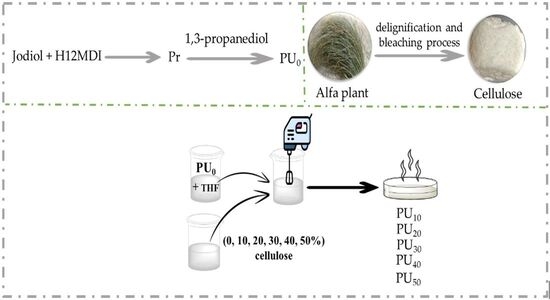
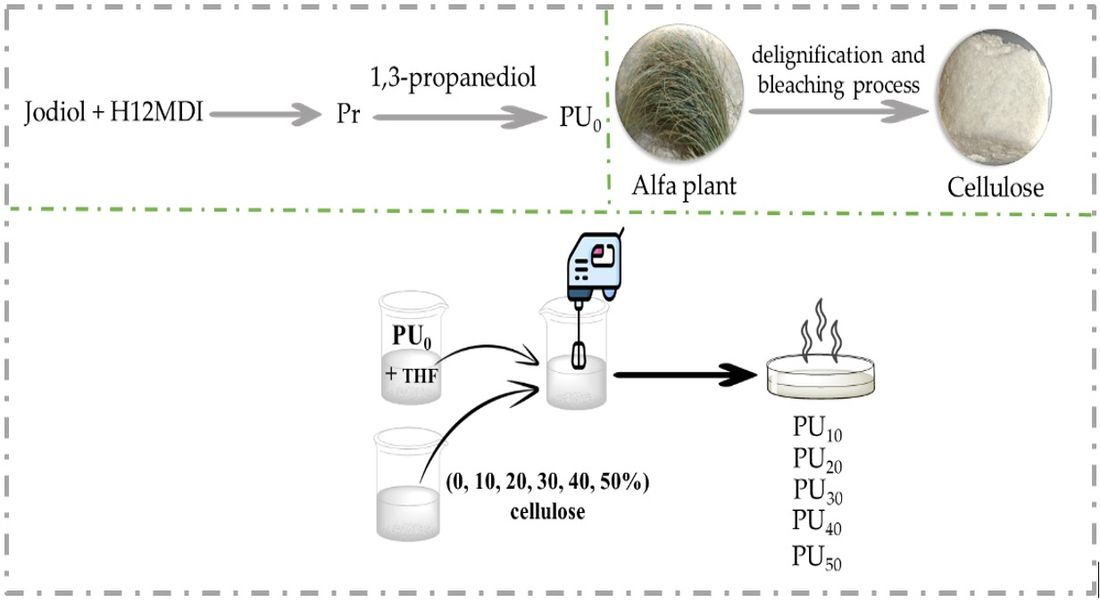
Graphical Abstract

1. Introduction

In the last several decades, the use of natural products has emerged as a widely supported sustainable approach to addressing environmental concerns and the exhaustion of non-renewable resources. Renewable raw materials present a valuable opportunity to replace petroleum-based products by enabling the development of cost-effective, high-performance biopolymers with a reduced environmental impact. Among these resources, vegetable oils have emerged as a key focus of research over these recent years, offering great potential for the synthesis of diverse polymeric materials endowing excellent mechanical and thermal properties [1,2,3,4,5,6,7,8].
Furthermore, these properties can be further enhanced by introducing reinforcing agents. As a result, biocomposites with reduced environmental impact have been developed from renewable resources to replace traditional composites. Such materials have attracted considerable interest in several research areas, including the automotive industry, biomedical applications, and fiberboard production [9].
Natural fibers have long been utilized as reinforcement materials in construction-related applications [10]. Indeed, several natural fibers demonstrate mechanical properties that compete with those of synthetic materials like carbon fibers and glass, particularly with their lightweight nature and excellent flexibility [11,12]. Cellulose is widely recognized as the main chemical component of biomass from plant sources, and numerous studies have highlighted its employment as a reinforcing additive in the preparation of various composite materials. This widespread application is largely due to its desirable characteristics, including high availability, low density, affordability, and favorable mechanical properties [13].
Agricultural by-products, hemp, and wood are among several sources of cellulose [14,15]. Furthermore, alfa, which belongs to the annual plants family, is increasingly recognized as a promising biomass source due to its high cellulose content and low lignin content. This favorable composition makes fiber extraction more straightforward and minimizes the degradation of cellulose during processing.
The literature reports the elaboration of several cellulose composite materials. Shibata et al. [16] successfully developed biocomposites mainly using microfibrillated cellulose as a reinforcing agent and tannic acid-epoxidized soybean oil as matrix system. The optimal formulation, containing 9 wt% of microfibrillated cellulose, exhibited the best thermomechanical properties. In a study by Mosiewicki et al. [17], cellulose fibers were incorporated into a polyurethane foam based on rapeseed oil. This reinforcement resulted in significant enhancements in the rigidity, water absorption, and mechanical properties of the obtained composites.
Maafi and his coworkers [18] described a new composite family made by combining castor oil-based polyurethane with alfa-derived cellulose fibers. The study revealed that incorporating these cellulosic reinforcements notably enhances their mechanico-thermal properties. Recently, our team has developed two new series of composites by reinforcing aliphatic and aromatic polyurethane-based biomatrices using cellulose obtained from raw alfa [19]. The resulting biomaterials have glass transition temperatures (Tg) varying from −43 to 6 °C and keep their thermal stability until 250 °C. The mechanical properties reach their best values with a cellulose reinforcement percentage of 40%.
Building on these studies, the present paper deals with the elaboration of a new biobased cyclohexyl polyurethane matrix. In this new polyurethane system, the hexyl part (aliphatic) and phenyl part (aromatic) in the polymer systems reported in our recent paper [19] were replaced by a bicyclohexyl one. The purpose was to achieve a polyurethane matrix with thermal and mechanical properties that could improve the equilibrium between both properties.
The incorporation of cellulose fibers as a reinforcing agent in this matrix at different degrees is also described. The effects of the introduced cellulose percentage on the mechanico-thermal as well as the interfacial characteristics are also investigated and interpreted.

2. Materials and Methods

2.1. Reagents and Instruments

Reagent-grade chemicals and solvents were purchased at high purty (≥98%) from Sigma-Aldrich (Saint-Louis, MO, USA) and employed without any additional purification. Proton (1H) and carbon (13C) nuclear magnetic resonance (NMR) spectra were acquired using a Bruker 400 MHz spectrometer (Bruker France SAS, Wissembourg, France), with deuterated chloroform (CDCl3). All the chemical shifts are expressed in parts per million (ppm) and referenced to tetramethylsilane (TMS). Fourier transform infrared (FTIR) spectra were obtained using an FTIR 8400 SHIMADZU (SpectraLab Scientifc Inc., Markham, ON, Canada). Size exclusion chromatography (SEC) was carried out using an IOTA2 system (JASCO, Lisses, France), equipped with a PU-980 Intelligent HPLC pump (JASCO, Lisses, France). Separation was achieved using PLgel 5 µm MIXED-D columns 300 × 7.5 mm (Agilent, Les Ulis, France). Scanning electron microscopy (SEM) images were obtained using a HIROX SH-5500P microscope (Hirox Europe, Limonest, France). Thermogravimetric analysis (TGA) analysis was performed on a TGA Q50 (TA instrument, Guyancourt, France). A NETZSCH Maia DSC200 calorimeter (NETZSCH Analyzing & Testing, Selb, Deutschland) was used to perform differential scanning calorimetry (DSC) analyses. The mechanical characteristics (elongation at break, tensile strength, and Young’s modulus) as well as length and width were obtained in traction mode using the instrument device “Zwick/Roell Zwicky” (Zwick/Roell, Ars-Laquenexy, France). Jojoba diol (Jodiol) was synthesized by functionalizing the jojoba oil using the protocol reported in the literature [3]. More details are included in the Supplementary Materials associated with this manuscript.

2.2. Extraction of Cellulose from Alfa Stems

Alfa plant was collected in July 2024 in Jerrada, Morocco [18]. All undesirable compounds were removed from the raw materials (alfa stems) using deionized water. Subsequently, extractives were removed in accordance with the T204 cm-07 standard [19] using a Soxhlet extraction system. The apparatus was fitted with a 1000 mL round-bottom flask containing 700 mL of an organic solvent mixture composed of toluene and ethanol in a 1:1 volume ratio. A lignocellulosic substance was recovered following an 8 h extraction process. Thereafter, cellulose fibers were isolated through successive delignification and bleaching treatments (Kraft method) [20]. The cellulose was obtained at a 48% yield with respect to the dried alfa stems’ initial weight.

2.3. Calculation of the Alfa Stem Moisture Content

The alfa stem moisture content was measured using a standard oven-drying method. Samples of stems were weighed and dried in a beaker within an oven set to 105 ± 5 °C for a duration of 24 h. Thereafter, they were transferred to a desiccator for 30 min before being weighed for a second time. The moisture content was then calculated as the difference between the initial and final weights.

2.4. Synthesis of Polyurethane PU0

A reactor (250 mL) with a nitrogen flow and mechanical agitation was charged with jodiol (10 g, 0.013 mol), 4,4′-diisocyanato dicyclohexylmethane (H12MDI) (7.4 g, 0.028 mol), and THF (50 mL). The reaction vessel was set at 64 °C for complete melting of the components. At this point, 0.3 wt% of Dibutyltin dilaurate (DBTDL) catalyst was added. Thereafter, the mixture was kept refluxed at 64 °C for 3 h, resulting in the formation of a prepolymer bearing terminal isocyanate groups. Subsequently, 1,3-propanediol (1 g, 0.013 mol) dissolved in THF (15 mL) was introduced. Following an extended reaction time of 3 h, the temperature was elevated to 80 °C in order to evaporate the residual THF, consequently yielding the PU0 matrix. The final product was purified by precipitation in methanol to remove any residual impurities or unreacted components.

2.5. Elaboration of Biocomposite Films PU10PU50

Five biocomposite films were prepared using the casting process at room temperature. PU0 matrix (2 g) was dissolved in THF (10 mL). Then, the resulting solution was blended with cellulosic fibers at various weight ratios relative to the polymer matrix PU0. Following 1 h of agitation at room temperature, the mixture was poured into Teflon molds and subsequently dried in an oven at 40 °C for 24 h to eliminate the residual THF. Triplicate samples were produced for each composition to verify the reproducibility of the results.

2.6. Statistical Analysis

Data are presented as mean ± standard error of the mean (SEM). Statistical significance was assessed using a one-way analysis of variance (ANOVA) in GraphPad Prism (version 8.0.2 for Windows, Boston, MA, USA) with p < 0.05 considered statistically significant.

3. Results and Discussion

3.1. Synthesis of Polyurethane-Based Biomatrix PU0

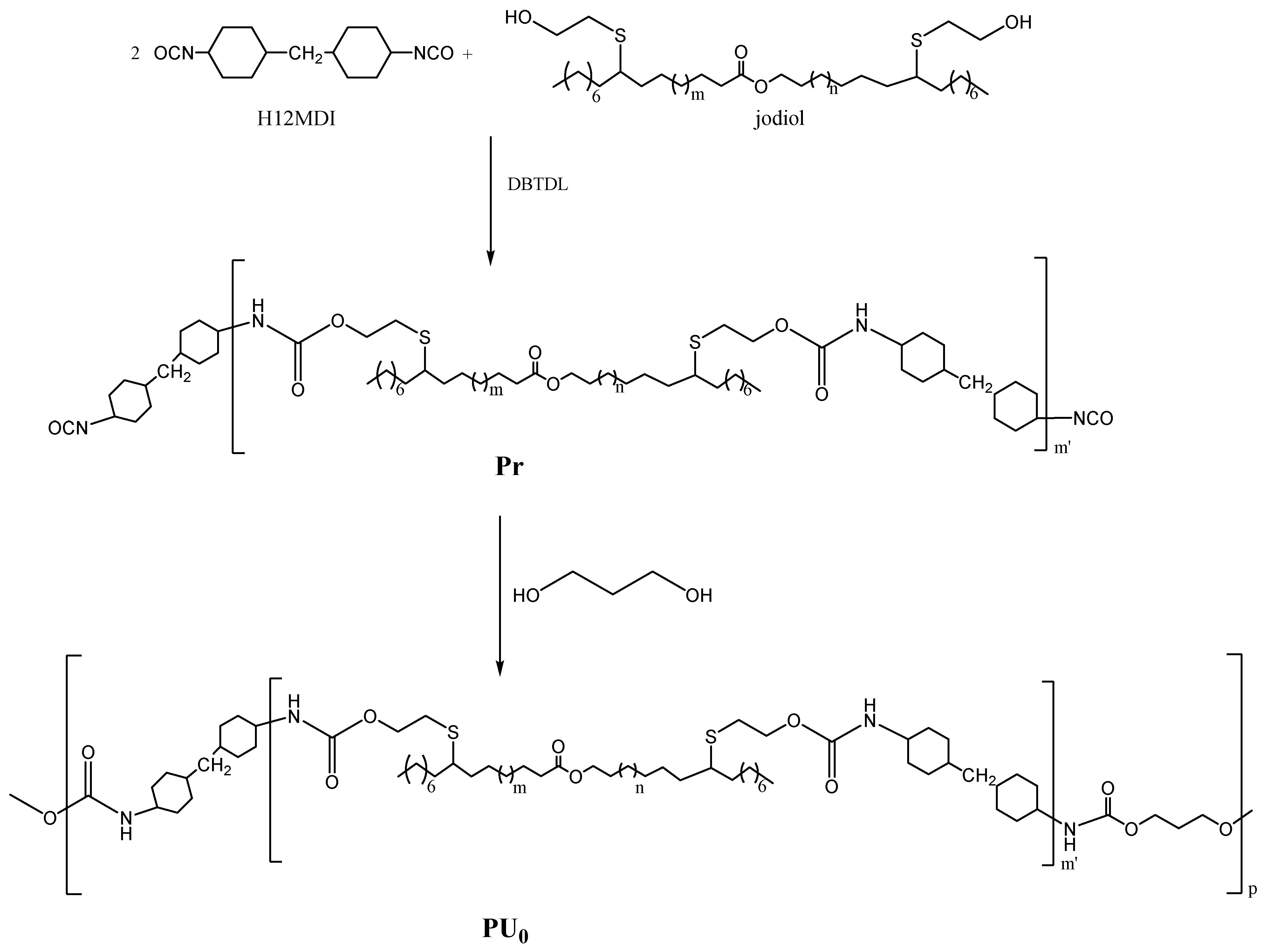
The synthesis of PU0 was performed using the prepolymer process in two steps (Scheme 1).
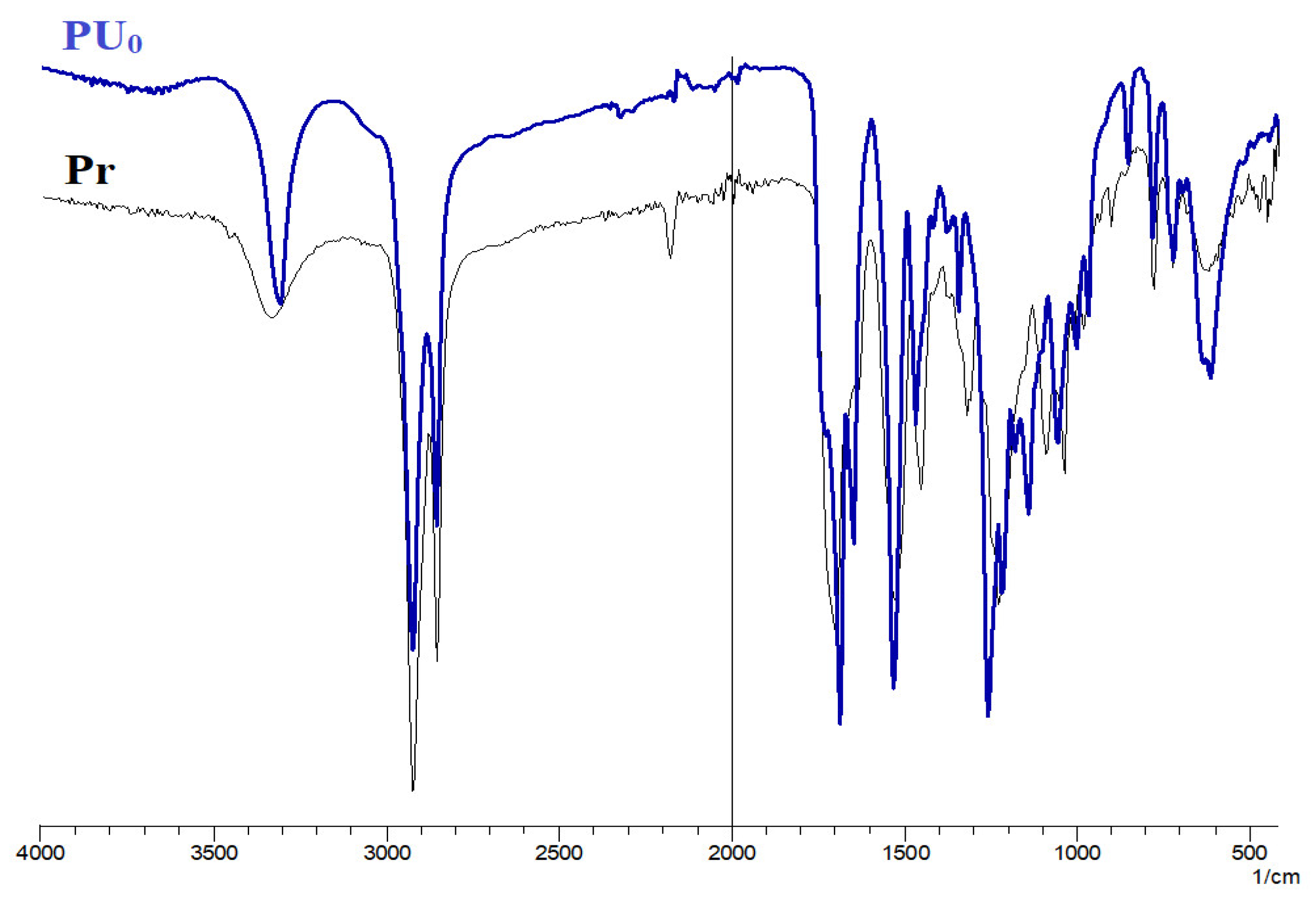
First, the condensation between the dihydroxy oligomers of jodiol with a slight excess of H12MDI was performed in the presence of DBTDL as a catalyst and under a N2 atmosphere. Indeed, this excess allows for obtaining a bifunctionalized prepolymer with NCO groups. The obtained prepolymer was subjected to an FTIR analysis. The corresponding spectrum (Figure 1) reveals the presence of weak peaks around 3334 and 2189 cm−1 associated with N–H bond stretching and the isocyanate group, respectively. We also noted the presence of N–H bond deformation at 1516 cm−1. The vibration corresponding to the carbonyl group of the ester function appears at 1707 cm−1. Such results clearly prove the formation of the desired prepolymer Pr.
The second step consists of adding 1,3-propandiol as a chain extender to the prepolymer Pr to achieve the polyurethane-based biomatrix PU0. When 1,3-propandiol was added, some changes in the appearance of the mixture were observed. In fact, the solution became slightly cloudy, which is probably due to phase separation within the material, corresponding to distinct soft and hard domains [8].
The infrared spectrum of the obtained PU0 (Figure 1) shows a major structural evolution, characterized by a total disappearance of the NCO isocyanate band at 2189 cm−1. This indicates the complete consumption of isocyanate groups during the polymerization reaction with propanediol. At the same time, (i) the persistence of a broad and intense band of N–H bond elongation vibration of the urethane group at 3324 cm−1, and (ii) that of bands at 1524 and 1228 cm−1 that are assigned to the out-of-plane vibrational deformations of the N–H and C–N bonds, characteristic of the urethane moiety, respectively, confirm the conversion of the prepolymer Pr into the polyurethane PU0.
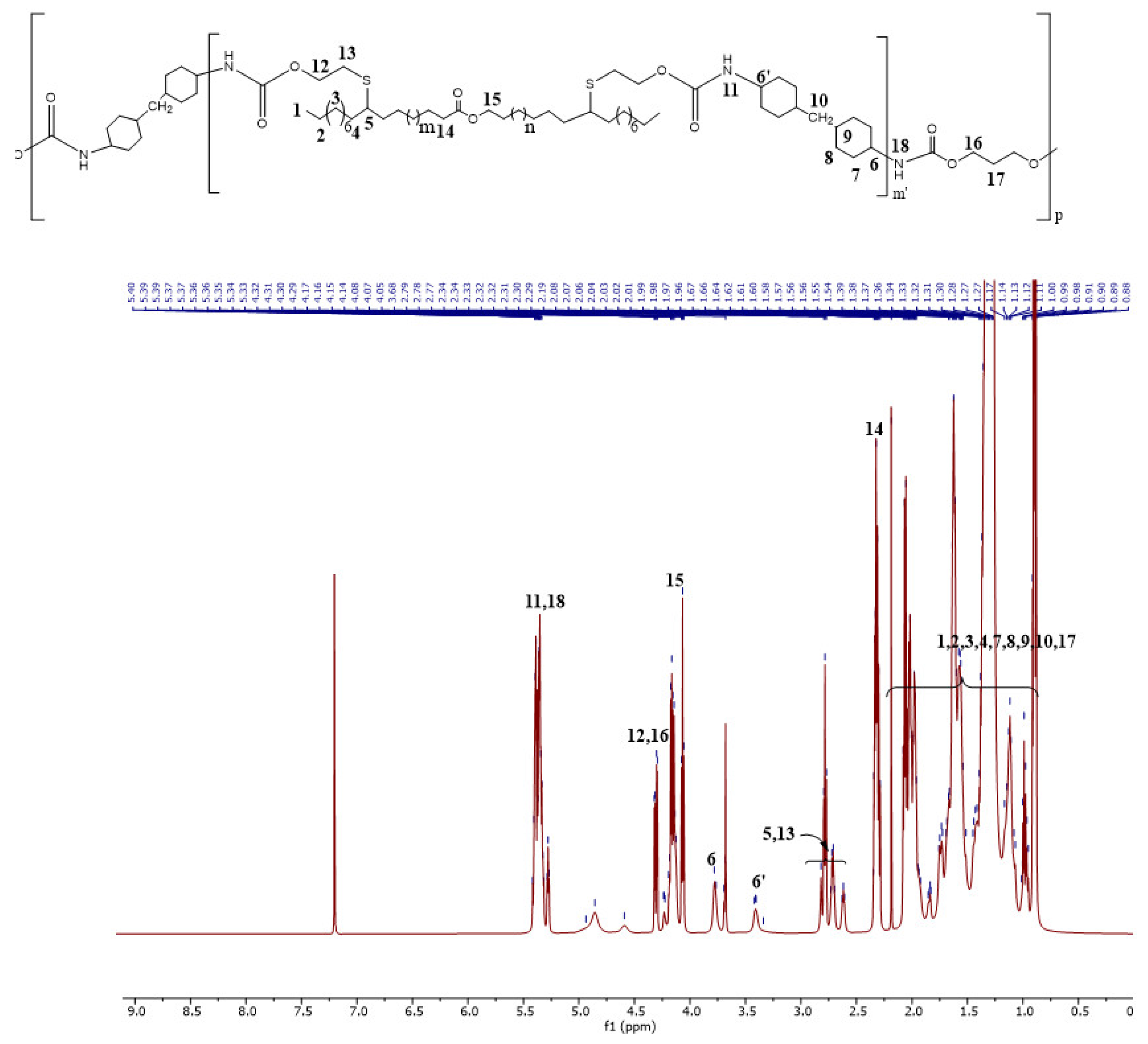
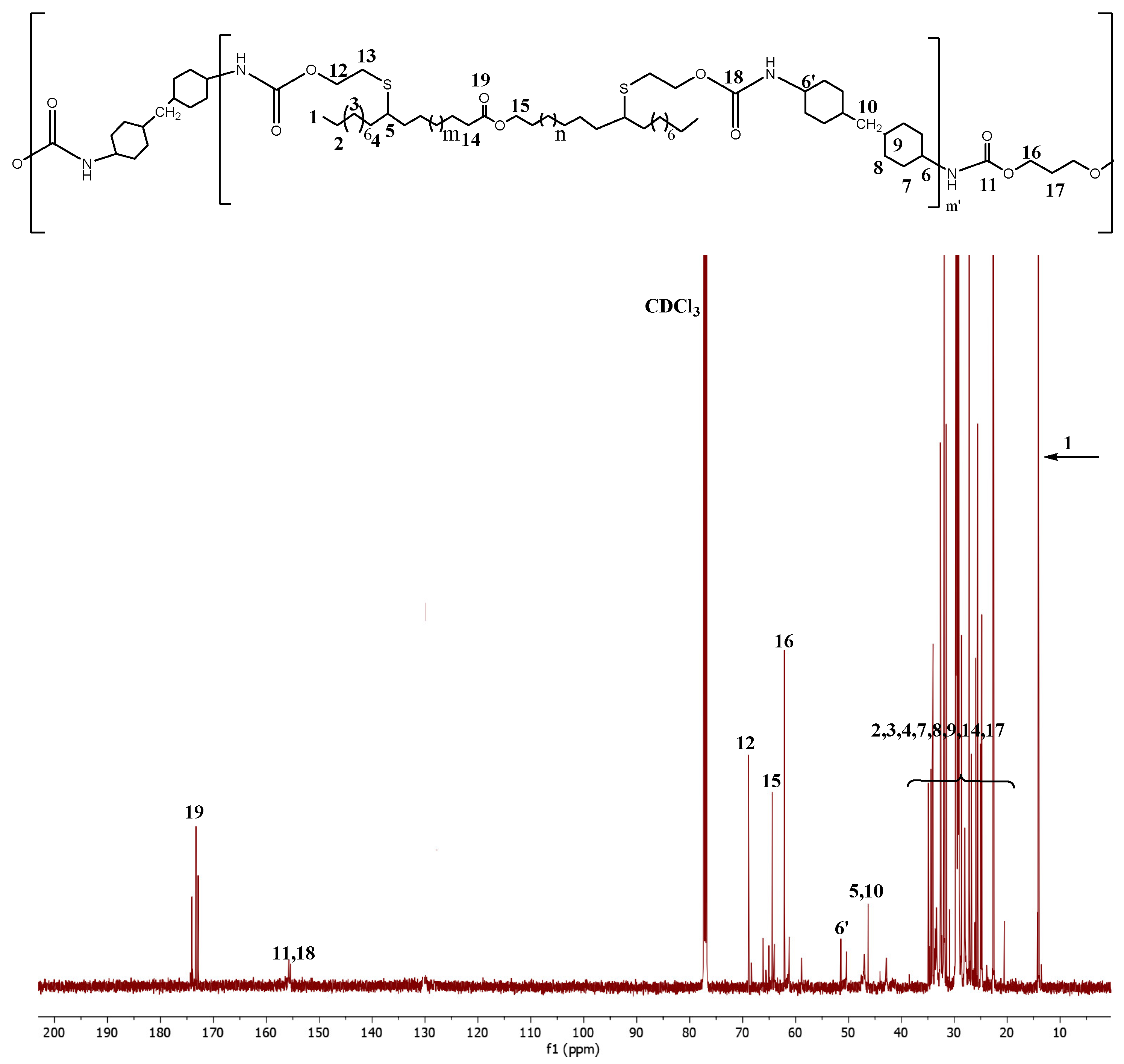
The structural characterization of PU0 was also confirmed by NMR spectroscopy (Figure 2 and Figure 3). All characteristic signals corresponding to both proton and carbon atoms were successfully detected. This indicates the expected chemical structure as well as the successful synthesis of the target matrix. For example, in the 1H NMR spectrum, the presence of two triplets at 4.17 and 4.31 ppm are highlighted. They are assigned to protons 16 and 17, respectively. This indicates the reaction between the 1,3-propandiol and the prepolymer Pr that led to the formation of PU0. Furthermore, the 13C NMR spectrum showed two peaks around 156 and 174 ppm. They were associated with the carbonyl carbons of the polyurethane and ester functions, respectively.
Furthermore, the number average molar mass M n ¯ of the obtained PU0 was 25,000 g·mol−1, while the polydispersity took a value of 1.75. This value indicates that the obtained PU0 has a balance of processability and mechanical strength [21].

3.2. Cellulose Extraction from Alfa Stems

After the subjection of alfa stems to the extraction process, the extractives were obtained in 4.2% yields by weight. Moisture content analysis was performed initially to assess the water content of the material.
The dry material percentage by weight was found to be 93%, which allowed us to conclude that the moisture content was 7%. Such results were very similar to those reported in the literature [22,23,24]. Thereafter, the extract was subjected to delignification and bleaching using the Kraft method. This step allows for obtaining the cellulose in 48% yields by weight.
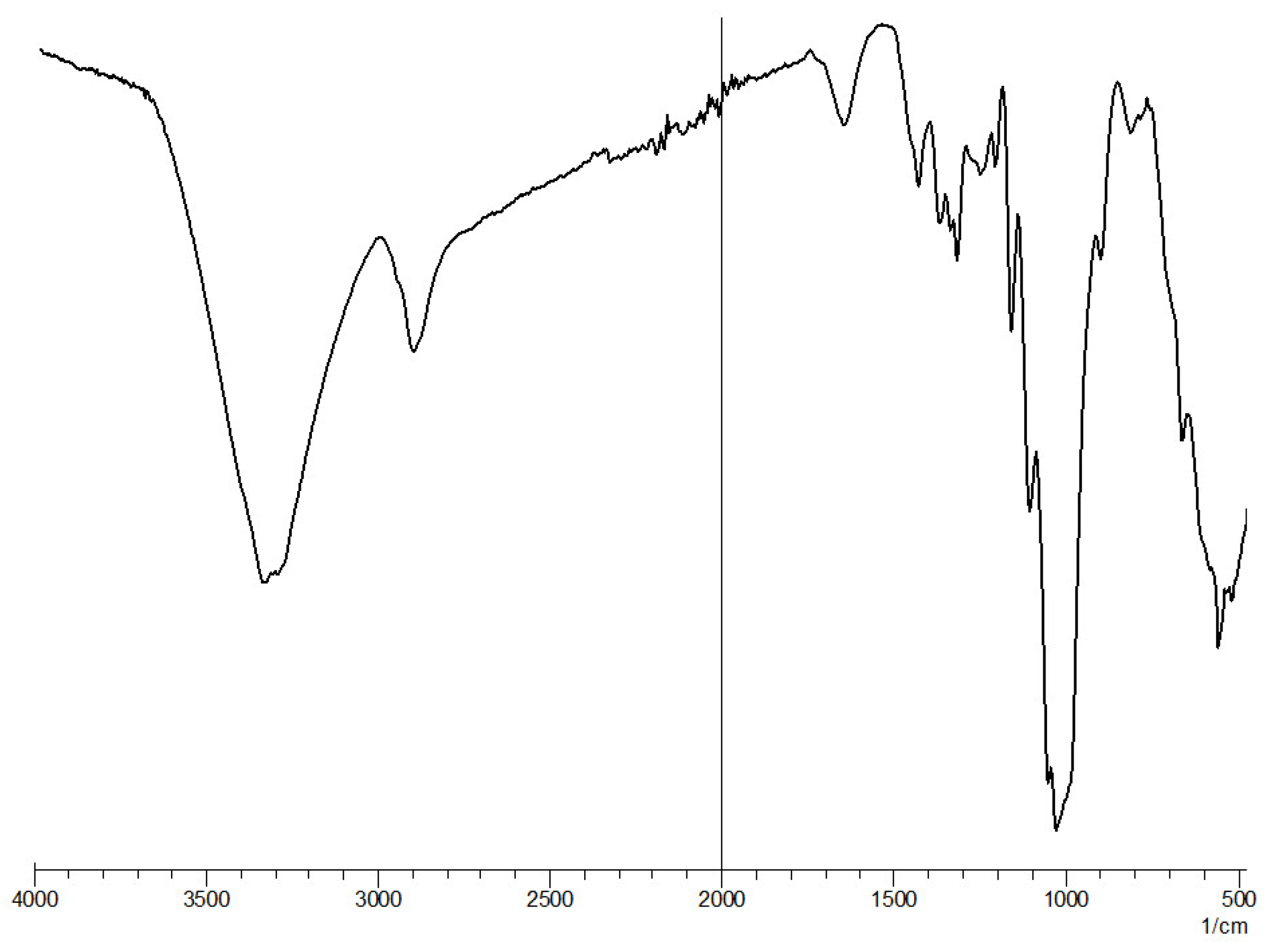
The extracted cellulose was analyzed by FTIR spectroscopy. Its spectrum (Figure 4) shows the presence of all the characteristic absorption bands of cellulose and corroborates spectra reported in the literature [25,26]. Indeed, the large band at 3312 cm−1 is assigned to the O–H bond stretching vibration. Furthermore, C–H and C–O vibrations were observed at 2890 cm−1 and 1030 cm−1, respectively. Ultimately, a low-intensity but distinct peak near 905 cm−1 is consistent with the presence of β-glycosidic bonds connecting glucose subunits. On the other hand, the absence of an intense band around 1740 cm−1 indicates that the hemicellulose was practically eliminated [27,28].

3.3. Elaboration of Polyurethane-Based Biocomposites

The casting method was employed for the elaboration of polyurethane-based biocomposites PU10PU50. Table 1 summarizes the composition of these different biocomposites.
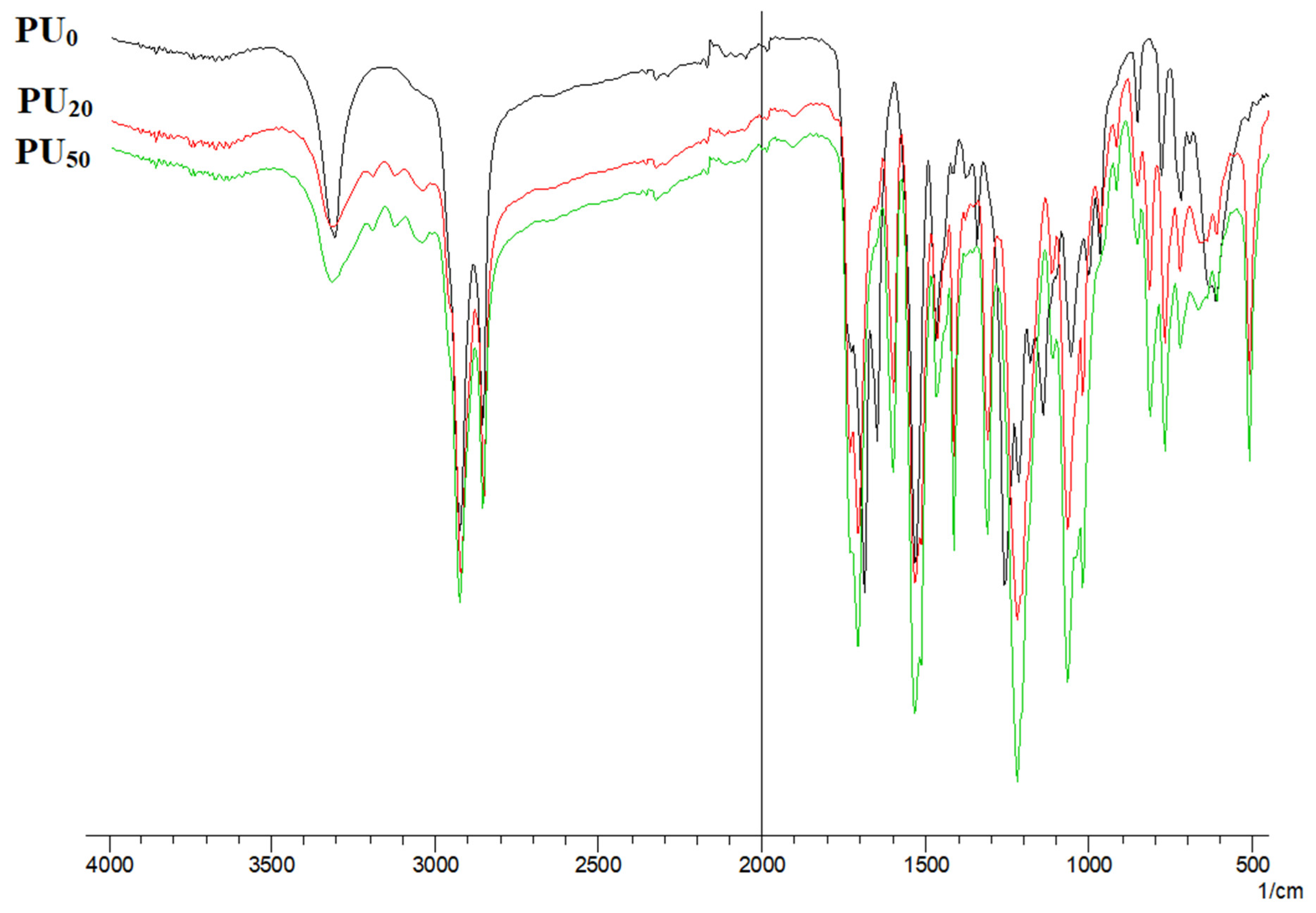
PU10PU50 biobased composites were characterized using FTIR spectroscopy, and the results are displayed in Figure 5. The N–H and O–H elongation bonds of the urethane group and cellulose appear together at 3324 cm−1. Furthermore, this band becomes larger when the PU0 is reinforced with cellulose fiber. The absorption band observed at 1719 cm−1 corresponds to the stretching vibrational mode of the carbonyl fragment (C=O) groups in the polyurethane function, while the signal around 1028 cm−1 is indicative of the C–O vibrations of cellulose. In addition, as the cellulose percentage increases in the polyurethane-based biocomposites, the intensity of this band becomes more pronounced. Such findings suggest that the cellulose hydroxyl (O–H) functions establish intense intermolecular interactions with the N–H and the C=O belonging to the polyurethane matrix via hydrogen bonds. This confirms a good adhesion between the polymer matrix and the reinforcing agent.
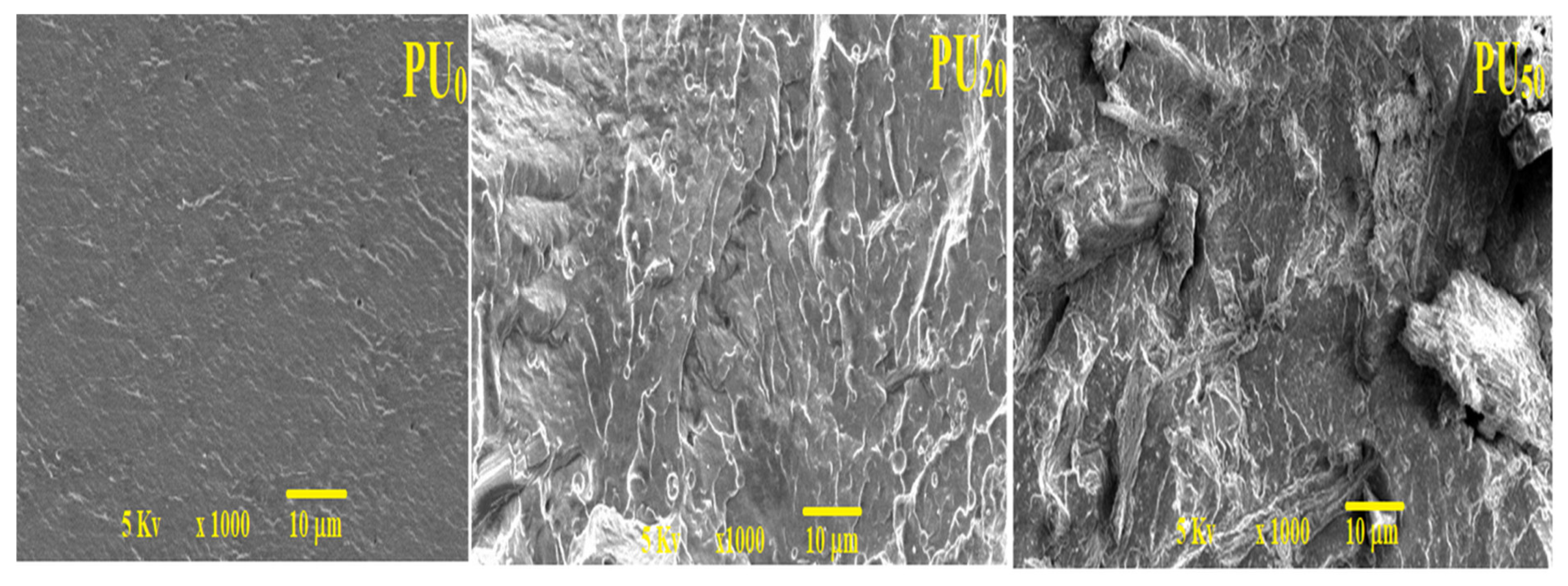
Furthermore, the morphologies of the composites PU10PU50, along with the unreinforced matrix PU0, were examined using the SEM tool. The image of PU0 (Figure 6) reveals a uniform and homogeneous structure. Upon the incorporation of cellulose fibers, the composites exhibit an increasing fiber content corresponding to the amount added. The polyurethane matrix is visibly adhered to the fiber surfaces, indicating strong interfacial bonding (PU20). This adhesion is likely facilitated by conventional hydrogen interactions connecting the cellulose hydroxyl groups to the urethane function of the matrix. Nevertheless, at a high cellulose percentage (PU50), we noted a poor dispersion of cellulose across the composite. This led to the formation of a clear agglomeration of the reinforcement agent on the surface.

3.4. Thermal Characteristics of the Polyurethane-Based Biocomposites PUi

3.4.1. DSC Analysis

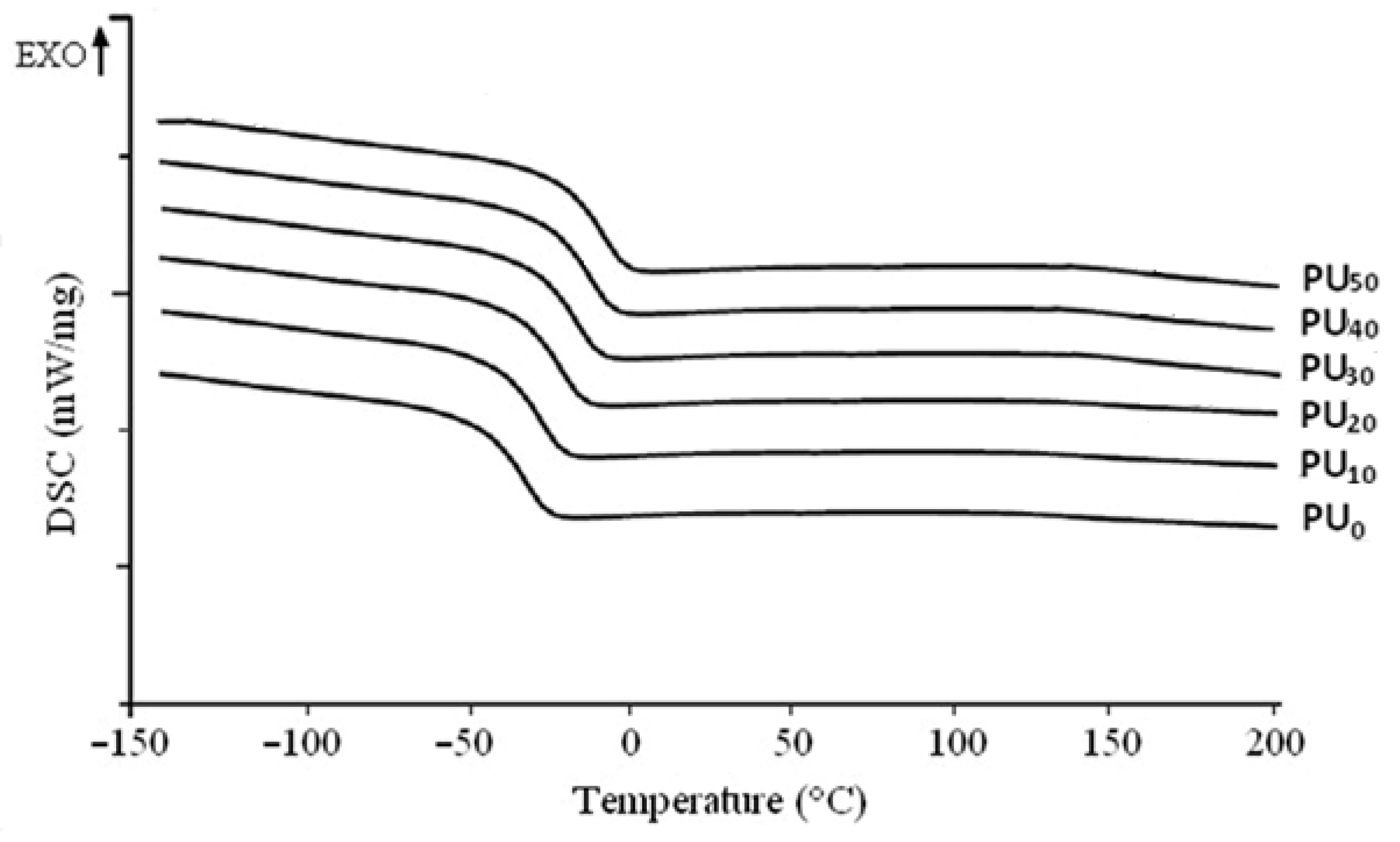
Figure 7 presents the DSC thermograms of the pure polyurethane PU0 and its corresponding composites. No melting endotherms are observed for the PU matrix. Although fibers of cellulose often play the role of nucleating agents that increase the crystallization of a polymer, this effect is not evident in the present system. Similar behaviors have been reported in other studies [29,30]. Indeed, the observed thermal transitions correspond to the polyurethane glass transition temperature Tg, indicating an amorphous structure for the composites.
Table 2 shows a progressive augmentation in the value of Tg with an increase in the degree of the incorporated cellulose. This shift reflects enhanced molecular connection between the cellulose fibers and polyurethane matrix, likely driven by conventional hydrogen binding between the cellulose hydroxyl groups and the urethane N–H ones. Such interactions promote better compatibility and interfacial adhesion between the matrix and the reinforcement, in agreement with the structural insights obtained from FTIR and SEM analyses.
On the other hand, it should be noted that the Tg increases with the cellulose percentage inside such a family of polyurethane-based biocomposites until 40% and becomes practically unchangeable after this value.

3.4.2. Thermogravimetrical Analysis

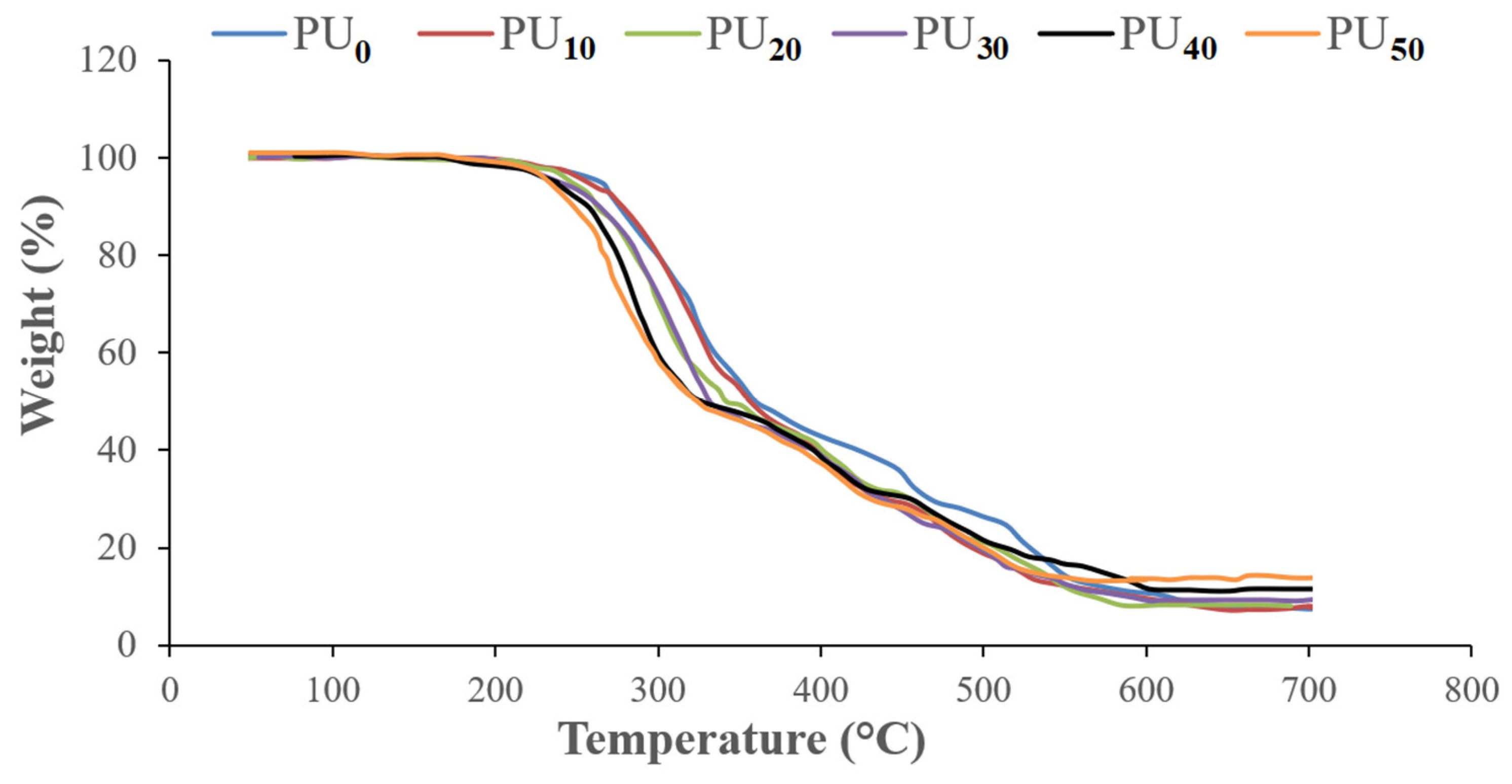
As shown in Figure 8 and Table 3, at 5% mass loss, the temperature of degradation decreases with increasing fiber content. However, the residual mass increases with cellulose incorporation, suggesting char formation from the natural fibers. Interestingly, while the fibers reduce the initial thermal stability, they also contribute to forming a protective barrier during decomposition, which can retard further degradation of the PU matrix. Similar behavior was communicated by Puglia and coworkers [31], who observed a slight shift in degradation profiles in Mater-Bi® composites containing cellulose fibers.

3.5. Mechanical Characteristics of the Polyurethane-Based Biocomposites PUi

The mechanical characteristics of PU0PU50 were also investigated. The obtained results are regrouped in Table 4.
The results clearly demonstrate that incorporating cellulose fibers into the PU0 matrix enhances the rigidity and mechanical performance of the composites. An augmentation in cellulose content leads to a significant rise in Young’s modulus for 10–40% cellulose, while no substantial change in tensile strength is observed. Conversely, a significant reduction in elongation at break is noted when the fiber content increases, particularly between 20% and 50%, indicating a loss in ductility. These findings are consistent with previous reports [32,33].
Young’s modulus increases with cellulose content up to 40%, after which it drops sharply. This decline is likely due to fiber agglomeration and poor dispersion at higher loadings, which compromise the composite’s structural integrity. Such observations corroborate those reported by Klason et al. [32]. In fact, they found a marked decrease in thermomechanical performance when the fiber content exceeded 50%, resulting in rough, cracked surfaces. Moreover, beyond this threshold, processing issues such as molding difficulties become significant, which explains why fiber loadings above 50% are rarely used in polymer composites. This limitation was also confirmed by Sair et al. [33].

4. Conclusions

In this study, a new polyurethane-based biomatrix from jojoba oil was prepared in two steps using the prepolymer process. Its structure was characterized by several methods including FTIR and NMR spectroscopies. Then, it was used to elaborate five biocomposite materials via a casting method, utilizing alfa-derived cellulose fibers as reinforcement. FTIR and SEM analyses confirmed strong interfacial compatibility between the polyurethane-based biomatrix and the fibers of cellulose, due to hydrogen bonding between cellulose through its hydroxyl functions and the matrix via its urethane functions. The incorporation of cellulose fibers had a marked effect on the composites’ thermal and mechanical performances, particularly improving stress at break and Young’s modulus. Mechanical properties were improved significantly with increasing fiber content, reaching optimal performance at 40% cellulose loading. Moreover, the composites were easily processed, with no handling difficulties encountered during fabrication. The resulting materials demonstrate that the integration of alfa-derived cellulose into a green polymer matrix can yield high-performance, sustainable composites using simple processing techniques. Such findings also valorize alfa plant residues in the development of sustainable materials. Finally, these biocomposites could find application in several promising sectors such as packaging, automotive, biomedicine, and textiles.

Supplementary Materials

The following supporting information can be downloaded at: https://www.mdpi.com/article/10.3390/polysaccharides7010009/s1. Figure S1: SEC chromatogram of PU0; Figure S2: Stress–strain curves of PUi composites. The Supplementary Materials contain details on the apparatus used during the characterization of polyurethane-based biomatrix PU0 and the corresponding composites PU10PU50.

Author Contributions

Conceptualization, A.R. and T.H.; methodology, A.R. and C.M.; software, C.M.; validation, F.M., C.M. and T.H.; formal analysis, C.M. and T.H.; investigation, A.R. and C.M.; resources, F.M.; writing—original draft preparation, F.M. and T.H.; writing—review and editing, F.M. and T.H.; visualization, A.R.; supervision, F.M.; project administration, F.M.; funding acquisition, T.H. and F.M. All authors have read and agreed to the published version of the manuscript.

Funding

This research was funded by the EU-PRIMA Section 2, Project DurInnPack.

Data Availability Statement

Data is contained within the article or Supplementary Material.

Acknowledgments

The authors are grateful to the Ministry of Higher Education, Scientific Research and Innovation of Morocco, for supporting this work. A.R. gratefully acknowledges the CNRST (Centre National pour la Recherche Scientifique et Technique) in Morocco for the PhD ASsociate Scholarship (PASS).

Conflicts of Interest

The authors declare no conflicts of interest.

References

  1. Ganewatta, M.S.; Wang, Z.; Tang, C. Chemical syntheses of bioinspired and biomimetic polymers toward biobased materials. Nat. Rev. Chem. 2021, 5, 753–772. [Google Scholar] [CrossRef] [PubMed]
  2. Falua, K.J.; Pokharel, A.; Babaei-Ghazvini, A.; Ai, Y.; Acharya, B. Valorization of starch to biobased materials: A review. Polymers 2022, 14, 2215. [Google Scholar] [CrossRef] [PubMed]
  3. Mokhtari, C.; Malek, F.; Caillol, S.; Negrell, C. Synthesis of Bio-Based Polyurethanes from Jojoba Oil. Eur. J. Lipid Sci. Technol. 2018, 120, 1700414. [Google Scholar] [CrossRef]
  4. Fan, Q.; Lu, T.; Deng, Y.; Zhang, Y.; Ma, W.; Xiong, R.; Huang, C. Bio-based materials with special wettability for oil-water separation. Sep. Purif. Technol. 2022, 297, 121445. [Google Scholar] [CrossRef]
  5. Mokhtari, C.; Malek, F.; Halila, S.; Belgacem, M.N.; Khiari, R. New Biobased Polyurethane Materials from Modified Vegetable Oil. J. Renew. Mater. 2021, 9, 1213–1223. [Google Scholar] [CrossRef]
  6. Yaradoddi, J.S.; Banapurmath, N.R.; Ganachari, S.V.; Soudagar, M.E.M.; Sajjan, A.M.; Kamat, S.; Mujtaba, M.A.; Shettar, A.S.; Anqi, A.E.; Safaei, M.R.; et al. Bio-based material from fruit waste of orange peel for industrial applications. J. Mater. Res. Technol. 2022, 17, 3186–3197. [Google Scholar] [CrossRef]
  7. Mokhtari, C.; Malek, F.; Manseri, A.; Caillol, S.; Negrell, C. Reactive jojoba and castor oils-based cyclic carbonates for biobased polyhydroxyurethanes. Eur. Polym. J. 2019, 113, 18–28. [Google Scholar] [CrossRef]
  8. Hadjadj, A.; Jbara, O.; Tara, A.; Gilliot, M.; Malek, F.; Maafi, E.M.; Tighzert, L. Effects of cellulose fiber content on physical properties of polyurethane based composites. Compos. Struct. 2015, 135, 217–223. [Google Scholar] [CrossRef]
  9. Akter, M.; Uddin, M.H.; Tania, I.S. Biocomposites based on natural fibers and polymers: A review on properties and potential applications. J. Reinf. Plast. Compos. 2022, 41, 705–742. [Google Scholar] [CrossRef]
  10. Baley, C.; Bourmaud, A.; Davies, P. Eighty years of composites reinforced by flax fibres: A historical review. Compos. Part A Appl. Sci. Manuf. 2021, 144, 106333. [Google Scholar] [CrossRef]
  11. Tiuc, A.E.; Nemeş, O.; Vermeşan, H.; Toma, A.C. New sound absorbent composite materials based on sawdust and polyurethane foam. Compos. Part B Eng. 2019, 165, 120–130. [Google Scholar] [CrossRef]
  12. Godavarti, S. Thermoplastic wood fibre composites. In Natural Fibers, Biopolymers, and Biocomposites; Mohanty, A.K., Misra, M., Drzal, L.T., Eds.; CRC Press: Boca Raton, FL, USA, 2005; pp. 348–386. [Google Scholar]
  13. Boudjellal, A.; Trache, D.; Bekhouche, S.; Khimeche, K.; Razali, M.S.; Guettiche, D. Preparation and characterization of Alfa fibers/graphene nanoplatelets hybrid for advanced applications. Mater. Lett. 2021, 289, 129379. [Google Scholar] [CrossRef]
  14. Faruk, O.; Bledzki, A.K.; Fink, H.P.; Sain, M. Biocomposites reinforced with natural fibers: 2000–2010. Prog. Polym. Sci. 2012, 37, 1552–1596. [Google Scholar] [CrossRef]
  15. Saba, N.; Jawaid, M.; Alothman, O.Y.; Paridah, M.T. A review on dynamic mechanical properties of natural fibre reinforced polymer composites. Constr. Build. Mater. 2016, 106, 149–159. [Google Scholar] [CrossRef]
  16. Shibata, M.; Teramoto, N.; Makino, K. Preparation and Properties of Biocomposites Composed of Epoxidized Soybean Oil, Tannic Acid, and Microfibrillated Cellulose. J. Appl. Polym. Sci. 2011, 120, 273–278. [Google Scholar] [CrossRef]
  17. Mosiewicki, M.A.; Rojek, P.; Michalowski, S.; Aranguren, M.I.; Prociak, A. Rapeseed oil-based polyurethane foams modified with glycerol and cellulose micro/nanocrystals. J. Appl. Polym. Sci. 2015, 132, 41602. [Google Scholar] [CrossRef]
  18. Maafi, E.M.; Malek, F.; Tighzert, L.; Dony, P. Synthesis of polyurethane and characterization of its composites based on Alfa cellulose fibers. J. Polym. Environ. 2010, 18, 638–646. [Google Scholar] [CrossRef]
  19. TAPPI T204-cm-07; Solvent Extractives of Wood and Pulp. TAPPI Press: Atlanta, GA, USA, 2007.
  20. Mokhtari, C.; Harit, T.; Khiari, R.; Malek, F. Biobased Composites from jojoba oil and fibers from alfa stems: Elaboration and characterization. Ind. Crops Prod. 2022, 176, 114294. [Google Scholar] [CrossRef]
  21. Tejuosho, T.; Kollipara, S.; Patankar, S.; Sampath, J. Dynamics of Polymer Chains in Disperse Melts: Insights from Coarse-Grained Molecular Dynamics Simulations. J. Phys. Chem. B 2024, 128, 11846–11854. [Google Scholar] [CrossRef]
  22. Jabli, M.; Tka, N.; Khiari, R.; Saleh, T.A. Physicochemical characteristics and dyeing properties of lignin-cellulosic fibers derived from Nerium oleander. J. Mol. Liq. 2018, 249, 1138–1144. [Google Scholar] [CrossRef]
  23. Khiari, R.; Belgacem, M.N. 21-Potential for Using Multiscale Posidonia Oceanica Waste: Current Status and Prospects in Material Science. In Woodhead Publishing Series in Composites Science and Engineering, Lignocellulosic Fibre and Biomass-Based Composite Materials; Jawaid, M., Tahir, M.P., Saba, N., Eds.; Woodhead Publishing: Cambridge, UK, 2017; pp. 447–471. [Google Scholar] [CrossRef]
  24. Khiari, R.; Belgacem, M.N. Date Palm Nanofibers and Composites. In Date Palm Fiber Composites: Processing, Properties and Applications; Composites Science and Technology; Midani, M., Saba, N., Alothman, O.Y., Eds.; Springer: Singapore, 2020; pp. 185–206. [Google Scholar] [CrossRef]
  25. Alemdar, A.; Sain, M. Isolation and characterization of nanofibers from agricultural residues–Wheat straw and soy hulls. Bioresour. Technol. 2008, 99, 1664–1671. [Google Scholar] [CrossRef] [PubMed]
  26. Pappas, C.; Tarantilis, P.A.; Daliani, I.; Mavromoustakos, T.; Polissiou, M. Comparison of classical and ultrasound-assisted isolation procedures of cellulose from kenaf (Hibiscus cannabinus L.) and eucalyptus (Eucalyptus rodustrus Sm.). Ultrason. Sonochem. 2002, 9, 19–23. [Google Scholar] [CrossRef] [PubMed]
  27. Kostryukov, S.G.; Matyakubov, H.B.; Masterova, Y.Y.; Kozlov, A.S.; Pryanichnikova, M.K.; Pynenkov, A.A.; Khluchina, N.A. Determination of lignin, cellulose, and hemicellulose in plant materials by FTIR spectroscopy. J. Anal. Chem. 2023, 78, 718–727. [Google Scholar] [CrossRef]
  28. Vârban, R.; Crișan, I.; Vârban, D.; Ona, A.; Olar, L.; Stoie, A.; Ștefan, R. Comparative FT-IR prospecting for cellulose in stems of some fiber plants: Flax, velvet leaf, hemp and jute. Appl. Sci. 2021, 11, 8570. [Google Scholar] [CrossRef]
  29. Mottershead, B.; Eichhorn, S.J. Deformation micromechanics of model regenerated cellulose fibre-epoxy/polyester composites. Compos. Sci. Technol. 2007, 67, 2150–2159. [Google Scholar] [CrossRef]
  30. Auad, M.L.; Contos, V.S.; Nutt, S.; Aranguren, M.I.; Marcovich, N.E. Characterization of nanocellulose-reinforced shape memory polyurethanes. Polym. Int. 2007, 57, 651–659. [Google Scholar] [CrossRef]
  31. Puglia, D.; Tomassucci, A.; Kenny, J.M. Processing, properties and stability of biodegradable composites based on Mater- Bi® and cellulose fibres. Polym. Adv. Technol. 2003, 14, 749–756. [Google Scholar] [CrossRef]
  32. Klason, C.; Kubat, J.; Strömvall, H.E. The efficiency of cellulosic fillers in common thermoplastics. Part 1. Filling without processing aids or coupling agents. Int. J. Polym. Mater. Polym. Biomater. 1984, 10, 159–187. [Google Scholar] [CrossRef]
  33. Sair, S.; Mansouri, S.; Tanane, O.; Abboud, Y.; El Bouari, A. Alfa fiber-polyurethane composite as a thermal and acoustic insulation material for building applications. SN Appl. Sci. 2019, 1, 667. [Google Scholar] [CrossRef]
Scheme 1. Structure of prepolymer Pr and polyurethane-based biomatrix PU0.
Polysaccharides 07 00009 sch001
Figure 1. FTIR spectrum of prepolymer Pr and polyurethane-based biomatrix PU0.
Polysaccharides 07 00009 g001
Figure 2. 1H NMR (CDCl3) spectrum of polyurethane-based biomatrix PU0.
Polysaccharides 07 00009 g002
Figure 3. 13C NMR (CDCl3) spectrum of polyurethane-based biomatrix PU0.
Polysaccharides 07 00009 g003
Figure 4. FTIR spectrum of the extracted cellulose.
Polysaccharides 07 00009 g004
Figure 5. FTIR spectra of polyurethane-based biomatrix PU0 and PUi composites.
Polysaccharides 07 00009 g005
Figure 6. SEM images of polyurethane-based biomatrix PU0 and PUi composites.
Polysaccharides 07 00009 g006
Figure 7. SC thermograms of polyurethane-based biomatrix PU0 and biocomposites PU10PU50.
Polysaccharides 07 00009 g007
Figure 8. TGA thermograms of polyurethane-based biomatrix PU0 and biocomposites PU10PU50.
Polysaccharides 07 00009 g008
Table 1. Composition by weight of polyurethane-based biocomposites.
CompositesFibers/Matrix
(Weight Fractions)
PU00/100
PU1010/90
PU2020/80
PU3030/70
PU4040/60
PU5050/50
Table 2. Tg of polyurethane-based biomatrix PU0 and biocomposites PU10PU50.
PUiPU0PU10PU20PU30PU40PU50
Tg (°C)−38.3 ± 1.5−30.3 ± 1.5−22.3 ± 1.1−14 ± 1.5−7.6 ± 0.57−7 ± 1.5
Table 3. Thermogravimetric properties of polyurethane-based biomatrix PU0 and biocomposites PU10PU50.
BiocompositeTemperature (°C)
T5%T50%
PU0265360
PU10256355
PU20247342
PU30240332
PU40238324
PU50232325
T5% and T50% are the temperatures corresponding to the degradation of 5% and 50% of the sample mass, respectively.
Table 4. Mechanical characteristics of the polyurethane-based biomatrix PU0 and biocomposites PU10PU50 (NS: not significant, ** p < 0.01, *** p < 0.001, indicating a statistically significant difference from the control (PU0)).
BiocompositeElongation at Break (%)Stress at Break (×106 Pa)Young’s Modulus (×106 Pa)
PU0137 ± 3.510.5 ± 1.532.3 ± 0.4
PU10128 ± 2.8 **11.4 ± 2.0 NS70.1 ± 1.4 ***
PU2094 ± 2.4 ***14.1 ± 1.6 NS117.5 ± 5.1 ***
PU3061 ± 1.9 ***15.9 ± 1.3 **140.9 ± 3.2 ***
PU4040 ± 1.5 ***16.9 ± 2.5 **157.2 ± 3.3 ***
PU5036 ± 1.0 ***6.6 ± 0.9 ***29.3 ± 1.9 NS
Disclaimer/Publisher’s Note: The statements, opinions and data contained in all publications are solely those of the individual author(s) and contributor(s) and not of MDPI and/or the editor(s). MDPI and/or the editor(s) disclaim responsibility for any injury to people or property resulting from any ideas, methods, instructions or products referred to in the content.