
You are currently viewing a new version of our website. To view the old version click .
Polysaccharides
  • Article
  • Open Access

8 December 2025

Effect of Glycerol and Isosorbide on Mechanical, Thermal, and Physicochemical Properties During Retrogradation of a Cassava Thermoplastic Starch

,
,
,
and
1
Escuela de Ingeniería de Química, Universidad del Valle, Calle 13 No. 100-00, Cali 760032, Colombia
2
Departamento de Ingenieria Agroindustrial, Facultad de Ingeniería, Universidad de Sucre, Carrera 28 No. 5-267, Sucre 700001, Colombia
3
Escuela de Ingeniería de Materiales, Grupo Materiales Compuestos, Universidad del Valle, Calle 13 No. 100-00, Cali 760032, Colombia
*
Authors to whom correspondence should be addressed.

Abstract

The mechanical, thermal, physicochemical and structural properties of a thermoplastic cassava starch obtained by a twin-screw extrusion process were evaluated, using glycerol and isosorbide as plasticizers at different concentrations (30, 35 and 40% by weight) and storage times (1, 15 and 30 days) under controlled conditions of relative humidity of 47 ± 2% and temperature of 25 ± 2 °C. The results obtained show a decrease in tensile strength and modulus of elasticity and an increase in elongation in the initial measurements, suggesting that, in both cases, a plasticization phenomenon via absorption of humidity predominated in short times, while at prolonged times, a rigidification of the material occurred due to the generation of a retrogradation process. Likewise, a higher tensile strength and lower elongation were found in the materials plasticized with isosorbide. Finally, it was observed that the retrogradation phenomenon was more evident in the thermoplastic starch samples made with glycerol, and that the starches plasticized with isosorbide had lower moisture absorption, higher crystallinity and a predominantly Eh-type crystalline pattern, related to greater stability over time.

1. Introduction

Population growth and lifestyle changes have led to increased consumption of products and the generation of waste from petroleum-based materials, which cause significant damage to the environment and well-being. As a result, there is growing interest in creating biodegradable plastics from biological sources in order to reduce dependence on fossil fuels and offer a sustainable long-term alternative [1].
Starch is a material with potential for the development of bioplastics, thanks to its various advantages such as being economical, abundant, renewable, and biodegradable [2]. Among the starches used, cassava starch (Manihot esculenta Crantz) stands out due to its use in the food sector in tropical and subtropical regions worldwide, as well as its application in various industries, including the production of thermoplastic starch (TPS) [3]. Native starch is not intrinsically a thermoplastic polymer, as its degradation temperature is lower than that required for plasticization. However, when an appropriate plasticizer is added under controlled temperature and shear conditions, it can undergo a thermal transformation process involving various physicochemical reactions, such as water diffusion, granule expansion, gelatinization, melting, and crystallization, resulting in a polymeric material known as TPS [4,5]. In addition to its semi-crystalline structure, it is worth mentioning the presence of domains rich in plasticizers and starch in the amorphous regions of TPS [6,7]. This allows it to be processed like conventional thermoplastic polymers. TPS has limited applications on a mass scale due to its low mechanical strength, high sensitivity to water, and brittle nature compared to synthetic materials [8]. In addition to the above, TPS can undergo retrogradation phenomena, which consist of the reorganization of starch molecules, which change from a predominantly amorphous state to an ordered structure with crystalline domains [9], affecting the stability of mechanical properties over time and the useful life of materials [10,11]. This structural instability is associated with changes in environmental conditions such as the relative humidity.
To obtain TPS with less tendency to retrogradation and that retain their properties for longer, one of the alternatives used has been to apply new plasticizers [12]. The plasticizers used in starches are characterized by small molecules with the ability to diffuse between starch molecules and possess groups capable of forming hydrogen bonds with the hydroxyl groups present in starch molecules [13]. During the gelatinization process, the intermolecular and intramolecular hydrogen bonds between the amylose and amylopectin chains are replaced by new interactions between the polymer and the plasticizer. This causes an increase in free volume and greater chain mobility, as well as a reduction in the glass transition temperature (Tg) [10]. Therefore, both the chemical properties of the plasticizer, and changes in its concentration are key factors that influence the final properties of the TPS [11]. The greater the amount of plasticizer in the starch mixture, the more flexible the material obtained will be. However, the presence of too much plasticizer results in a very soft, gel-like material [14]. A variety of plasticizers with different functional groups have been studied for the development of TPS. Examples include polyols (glycerol, xylitol, sorbitol, maltitol), nitrogen compounds (urea, formamide), and ionic liquids (choline salts) [9,10].
Furthermore, glycerol is the most widely used plasticizer for starch among polyols due to its reduced cost, high boiling point, and zero toxicity. However, starch and glycerol do not interact strongly enough, which causes the starch to frequently recrystallize after a period of storage, causing the material to undergo retrogradation [13]. Additionally, isosorbide is classified as an environmentally friendly plasticizer due to its biodegradability and lack of toxicity. Although its use in TPS has not yet been widely explored, it is reported that the materials obtained do not undergo retrogradation phenomena, so the use of isosorbide could make it possible to obtain more durable materials [10,11]. In addition, it has the advantage of requiring lower processing temperatures compared to glycerol [9].
On the one hand, studies related to isosorbide as a plasticizer have mainly focused on the development of TPS from corn starch [15] and on obtaining composite materials developed with this same type of starch [10,11,13,16,17]. On the other hand, work on the use of isosorbide as a plasticizer in cassava starch TPS is limited. Notably, the study conducted by Gómez-López et al. [18] used isosorbide as a plasticizer in cassava starch TPS, considering a co-plasticization approach with glycerol, evaluating the synergistic effect of both plasticizers mixed in different proportions. Similarly, Arfiathi et al. [19] evaluated the effect of citric acid on cassava starch TPS plasticized with isosorbide. The aforementioned studies reported the effect of isosorbide on reducing TPS retrogradation and on starch composite materials. In this work, a comparative analysis was performed of the effect of glycerol and isosorbide as plasticizers on the physicochemical, structural, and mechanical properties of cassava thermoplastic starch at different storage times.

2. Materials and Methods

2.1. Materials

Native cassava starch (Manihot esculenta cv. M-Tai) was used to produce TPS, which was supplied by the company Almidones de Sucre S.A.S (Induyuca®, Sincelejo, Colombia). The amylose content was determined using an enzymatic method following the methodology described by Ren et al. [20], finding that it was 29.91%, with the remainder being amylopectin with a content of 70.09%. The physicochemical characterization of cassava starch determined a moisture content of 12.006 ± 0.073%, an ash content of 0.283%, an acidity of 0.0989%, and a pH of 6.86. A techno-functional characterization of cassava starch was performed, determining the water adsorption index (WAI), water solubility index (WSI), and swelling power (SP) method proposed by [21]. The WAI was 2.368 ± 0.080 (g gel.g−1 sample), the WSI was 0.345 ± 0.090 (g soluble.g−1 sample), and the SP was 2.377 ± 0.080 (g gel.g−1 sample).
The glycerol used as a plasticizer is an industrial-grade material with a purity of 99.8% and was purchased from Químicos del Valle Uno A S.A.S. (Cali, Colombia). Isosorbide C6 H10O4, with a purity of 98%, a melting point of 60 °C, and a molar mass of 146.14 g·mol−1, was supplied by Haihang Industry Co., Ltd. (Jinan, China).
Table 1 shows the codes corresponding to the type and content of plasticizer used to prepare the TPS. All samples were based on the dry weight of the starch.
Table 1. Compositions used for the development of TPS with cassava starch.

2.2. Obtaining Thermoplastic Cassava Starch

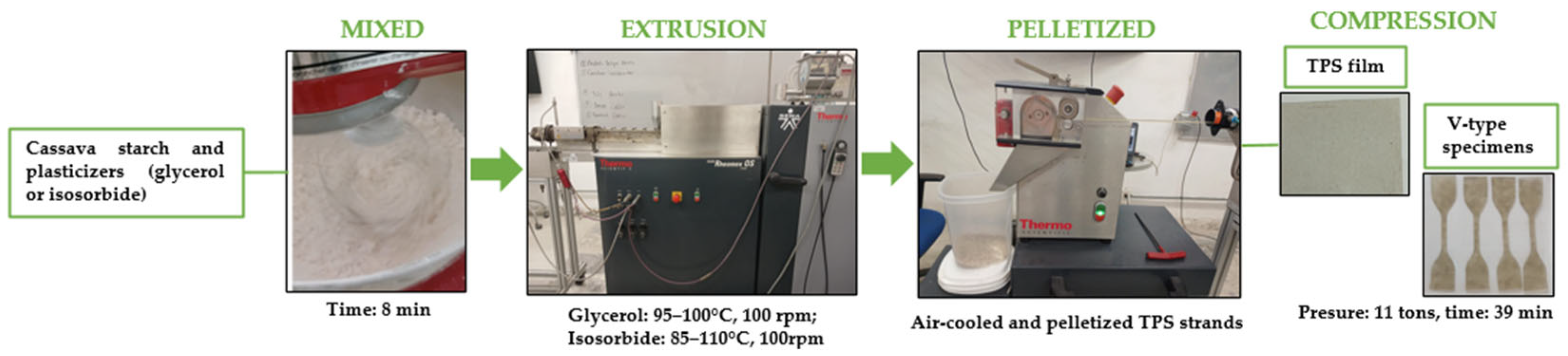
To obtain the TPS samples, the cassava starch was initially dried at 80 °C for 24 h and mixed with the corresponding plasticizer. The mixing process was carried out for 10 min using a high-speed mixer (Kitchen Aid Professional Troy, OH, USA). The mixture was then stored in high-barrier plastic bags for 48 h. The TPS were developed in a 16 mm co-rotating twin-screw extruder with an L/D ratio of 25 (Thermo Scientific, Haake Rheomex CTW 100 Polylab OS, Karlsruhe, Germany). The screw speed was set at around 100 rpm, and the temperature profile in the heating zones was set around to the type of plasticizer used, given that glycerol interacts more with the hydroxyl groups of the starch, which hinders initial plasticization; while isosorbide facilitates this process at lower temperatures, reducing the energy required to break down the native starch. For TPS made with glycerol, it was set between 95 and 120 °C, while for TPS made with isosorbide, it was set between 85 and 110 °C. The TPS strands were left to cool in the air, pelletized, and then ground until they passed through a sieve with an average opening of 1 mm [22]. Subsequently, plates were produced using a semi-automatic press equipped with heating plates and a forced water circulation cooling system. The pressing process was carried out at a temperature of 130 °C and a pressure of 11 tons for 39 min, consisting of a 24 min heating stage and a 15 min cooling stage under pressure. To finish, the plates were subjected to a die-cutting process to obtain standardized test specimens, following ASTM D638-14 (Figure 1). The TPS samples obtained were dried at 60 °C for 12 h and then stored in glass desiccators containing potassium carbonate to establish a relative humidity (RH) of 47 ± 2%, in accordance with ASTM E104-02, keeping the samples at a constant temperature of 25 ± 2 °C. The physical–chemical, mechanical, and structural properties of the TPS samples were characterized during a month of conditioning.
Figure 1. Process for obtaining TPS plasticized with glycerol or isosorbide.

2.3. Characterization Techniques

2.3.1. Moisture Absorption

The TPS samples were dried in an oven at 60 °C for 24 h and then stored at a relative humidity of 47 ± 2% and a temperature of 25 ± 2 °C using glass desiccators containing calcium carbonate salt. Moisture absorption (H) was calculated using mass gain as a function of time (Mt), the initial weight, and the mass obtained after oven drying (Md) as indicated in Equation (1) [23,24].
Moisture   absorption   % = Mt Md Md   ×   100

2.3.2. Scanning Electron Microscopy (SEM)

The microstructure and morphology of the TPS were studied by SEM with a scanning electron microscope (JEOL SEM model JSM-6490, Akishima, Tokyo, Japan), operated at an acceleration power of 20 kV. The samples were previously metallized with a gold layer using a Denton Vacuum Desk IV STANDARD A PHENOM cold sputter coater (Moorestown, NJ, USA) and analyzed in high vacuum mode [25,26].

2.3.3. Fourier Transform Infrared Spectroscopy (FT-IR)

A Jasco spectrophotometer (FT/IR-4100) Type A (JASCO Manufacturing, Portland, OR, USA) was used to analyze the TPS samples on days 1, 15 and 30 of storage, employing the attenuated total reflectance (ATR) mode with an ATR PRO450-S accessory. The spectra were recorded using 100 scans between 4000 and 1000 cm−1 [12,25]. All micrographs were obtained on the same day and under the same experimental conditions.

2.3.4. X-Ray Diffraction (XRD)

The TPS samples were analyzed on days 1 and 30 of storage, using a diffractometer (Malvern-PANalytical Model Empyrean 2012). The analysis was performed with CuKα radiation (λ= 1.5418 Å) generated at 45 kV and 40 mA. The spectra were acquired at an angular range of 2 and 60◦ with a step size of 0.02 ◦and a speed of 52 s/step. To determine the relative crystallinity of the TPS, the methodology proposed by [27] was followed. In this methodology, baselines were drawn on the X-ray diffractograms in the region from 4° to 30° (2θ), and the area of the amorphous region (Aa) and the area of the crystalline region (AC) were determined using Origin® software version 8.0 (OriginLab Corporation, Northampton, MA, USA). The relative crystallinity index (RC) was determined following the model described in Equation (2).
RC = Ac Ac + Aa

2.3.5. Differential Scanning Calorimetry (DSC)

The thermal behavior of the TPS was analyzed using a calorimeter (TA Instruments, model DSC25, New Castle, DE, USA). Approximately 5 mg of the dry sample was placed in sealed aluminum capsules, which were then placed in the DSC thermal chamber. The tests were performed at a heating rate of 10 °C.min-1 in a temperature range of 30–250 °C in a protective nitrogen atmosphere with a flow rate of 50 mL.min-1. Results were obtained for glass transition temperature (Tg), melting temperature (Tm), and melting enthalpy (ΔHm) for the TPS studied on days 1 and 30 of storage [28,29].

2.3.6. Mechanical Properties

The mechanical tensile properties of the TPS samples were determined using a Tinius Olsen H50KS universal testing machine (Horsham, PA, USA), equipped with a 10 kN load cell, following ASTM D638. The test was performed using type IV specimens with a head displacement speed of 5 mm.min−1 at a temperature of 25 ± 1 °C. Four samples were used for each material investigated, and the average values and corresponding standard deviation were calculated. This test provided the values of Young’s modulus (E), elongation at break (ɛ), and maximum tensile strength (σmax) on days 1, 15 and 30 of storage [15,24,30].

2.3.7. Statistical Analysis

The experimental results of the mechanical properties were analyzed using analysis of variance (ANOVA), followed by Tukey’s comparison test (p < 0.05) in order to identify significant differences between the mean values of the mechanical properties of the TPS.

3. Results and Discussions

3.1. Moisture Absorption

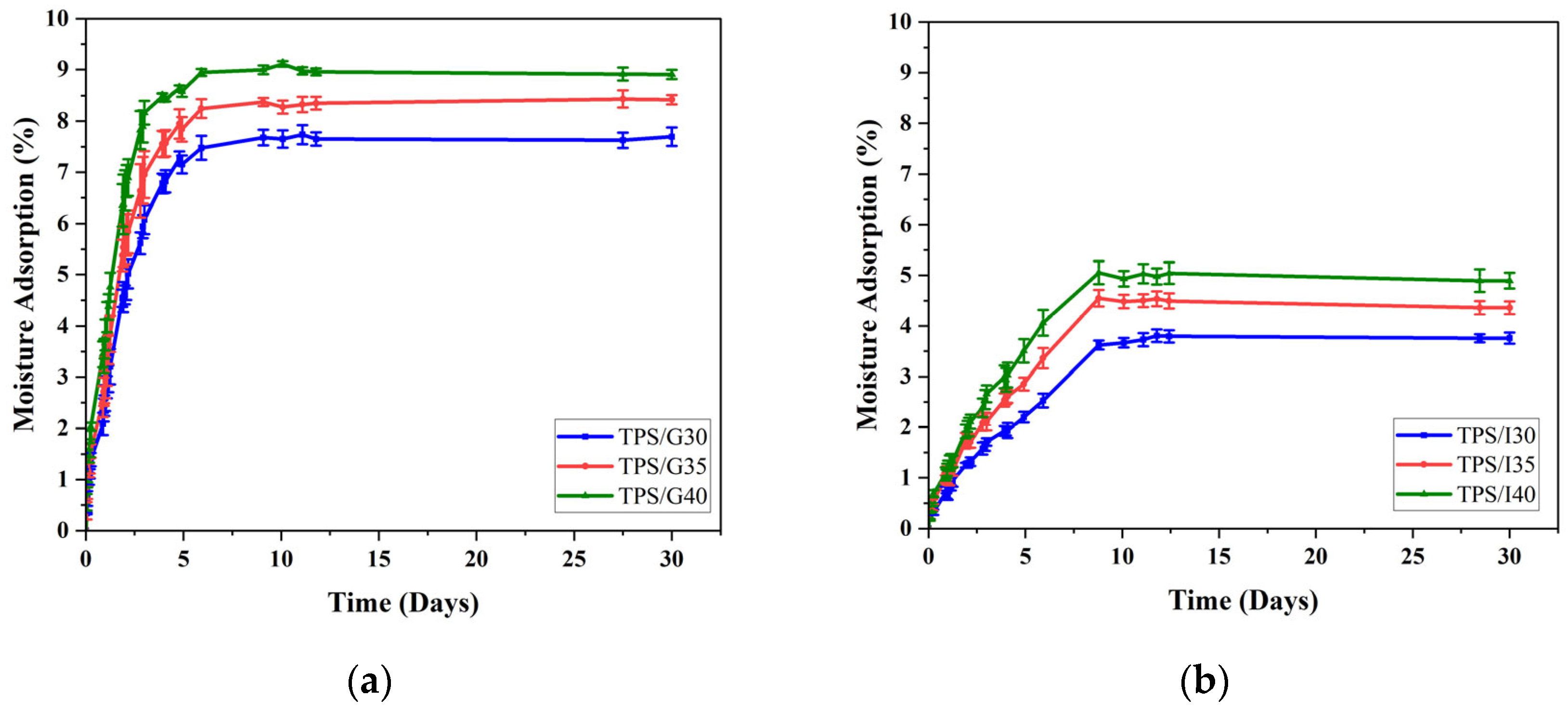
Figure 2a,b show the graphs of the moisture absorption isotherms at 47% RH and 25 °C for the TPS samples made with glycerol and isosorbide, respectively. In both figures, it can be seen that, in the slope of the curve related to the absorption rate of the material, there is a rapid increase in mass during the first days of conditioning, showing high-speed moisture absorption kinetics on days 0–5 for TPS with glycerol and on days 0–9 for TPS with isosorbide. Subsequently, a decrease in moisture absorption is observed until equilibrium is reached approximately 7–9% for samples made with glycerol and 3–5% for materials made with isosorbide, at the different plasticizer concentrations used. It should be noted that TPS plasticized with isosorbide showed significantly lower moisture absorption than those made with glycerol. This is probably because this plasticizer has a larger molecular size and only has two hydroxyl groups in its structure [15]. Likewise, the above behavior may be facilitated because in TPS plasticized with isosorbide, stronger interactions are achieved between the starch chains and the plasticizer molecules compared to those prepared with glycerol [18]. In this sense, a stronger plasticizer–starch interaction hinders the mobility of the polymer chains, making it difficult for water molecules to diffuse through the starch matrix [13]. The high moisture absorption capacity produced especially in the initial days of the conditioning period facilitates molecular mobility and is associated with rapid retrogradation [12]. This could have affected the mechanical properties, where an increase in tensile strength and modulus of elasticity was found, while elongation decreased.
Figure 2. Moisture absorption isotherms for TPS samples made with different concentrations of plasticizers: 30, 35, and 40%, for (a) glycerol, (b) isosorbide.
The moisture absorption results for TPS/G35 (8.42%) were lower than those obtained by Teixeira et al. [31], who reported 11.2% for a TPS made from cassava starch plasticized with 35% glycerol conditioned at 53% RH. As for TPS made with isosorbide, moisture absorption values of 4.36 and 4.90% were found in the TPS/I35 and TPS/I40 formulations, respectively, which were below the 7.8 and 8.2% reported by Area et al. [11] for cassava starch plasticized with 35 and 40% isosorbide, respectively, conditioned in an atmosphere of 54% RH. It should be noted that the differences found in the scientific literature regarding moisture absorption contents are associated with the botanical source of the starch, the type and amount of plasticizer used, and the conditioning conditions of the material, such as relative humidity and time, in addition to the drying conditions used before the stabilization of the material, among others [12]. Therefore, studies generally report significant variations in moisture absorption values for TPS. For both types of plasticizers, it can be observed that equilibrium moisture absorption increases as the plasticizer content used increases. This may be associated with a higher presence of hydroxyl groups in the TPS structure when there is a higher plasticizer content [12,32], which probably leads to greater mobility of the starch chains, favoring the diffusion of moisture in the material [11]. Similar results were reported by Jatmiko et al. [33] in sugar palm starch films using glycerol and sorbitol at different concentrations.

3.2. Scanning Electron Microscopy (SEM)

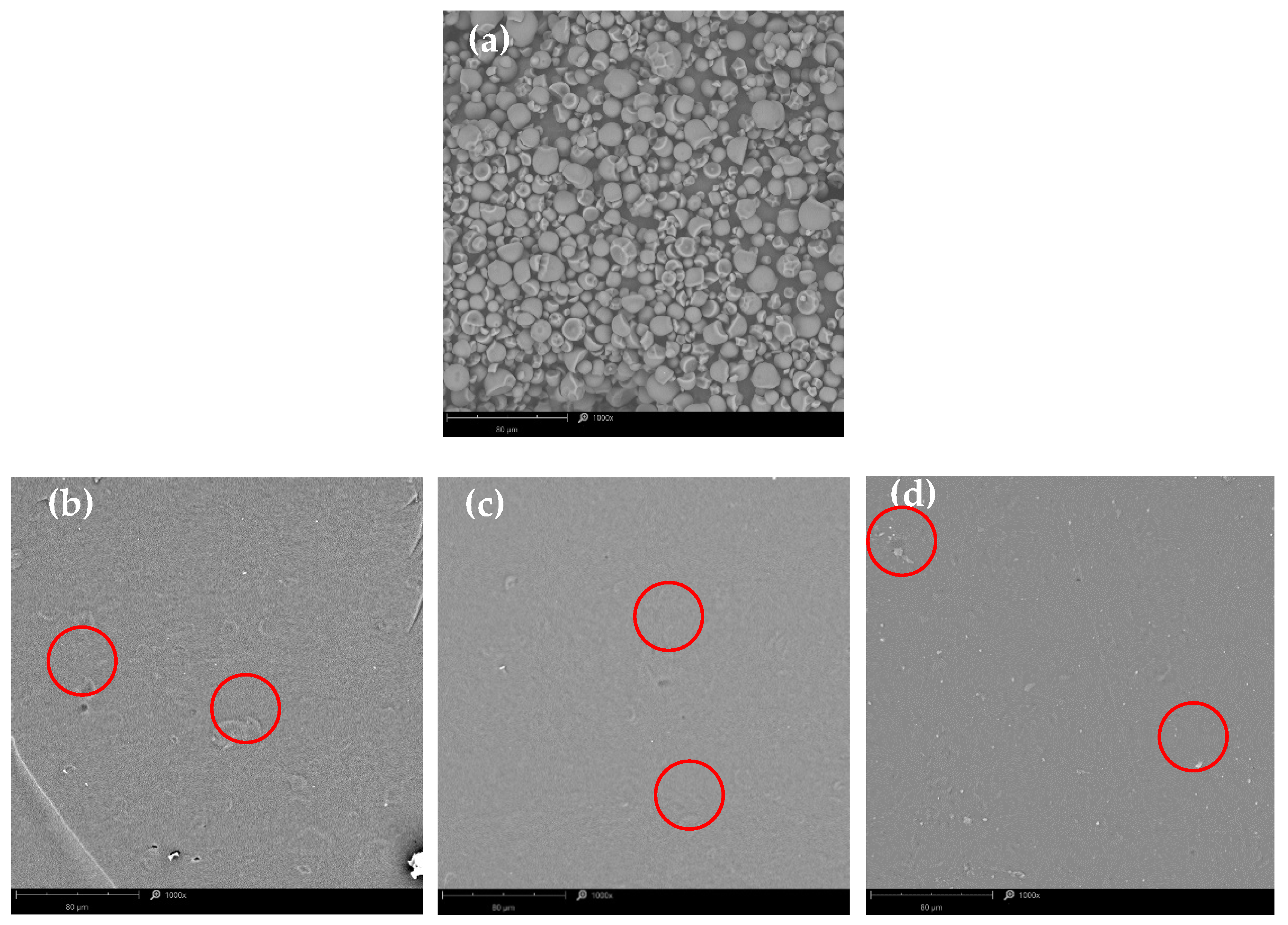
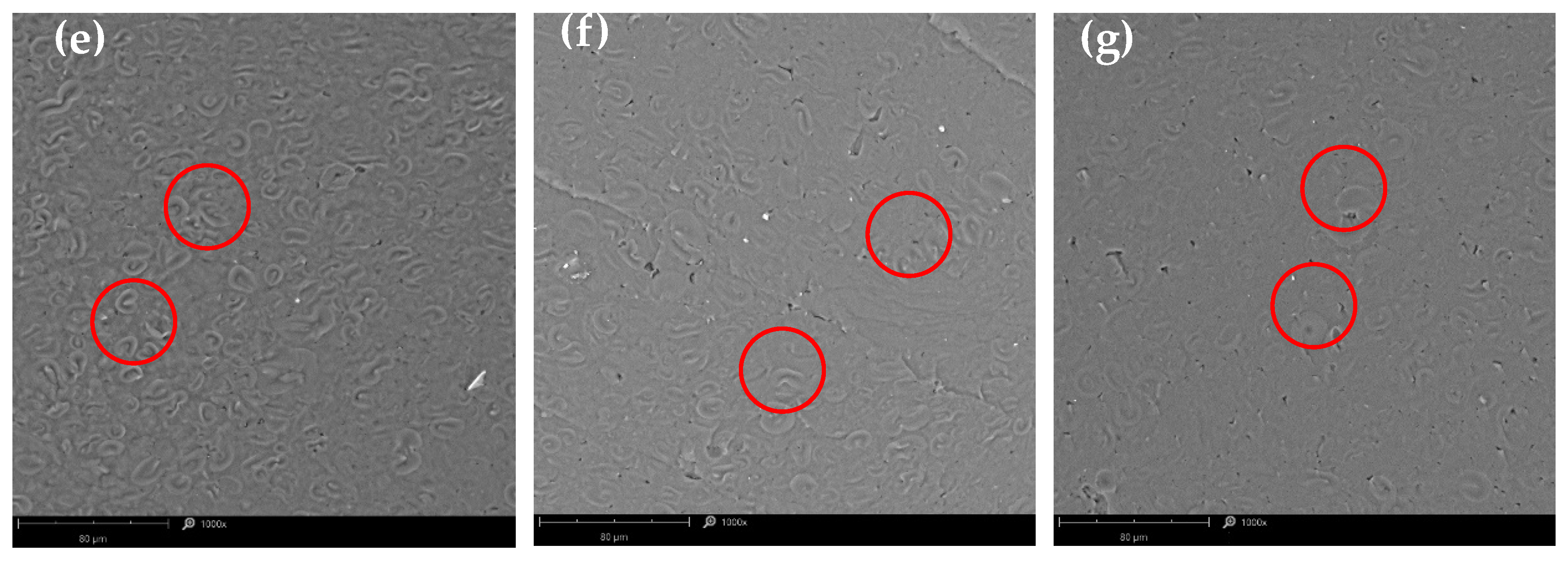
Figure 3 shows the SEM morphological characterization of cassava starch used in the plasticization process and TPS developed with glycerol or isosorbide. The geometry of the starch granules was similar throughout the sample, with a spherical shape and some truncated granules. They had a smooth and uniform surface, with heterogeneous sizes and some asymmetrical agglomerations of granules. Average diameters between 10.1 and 10.7 µm were found, which were similar to the 10.4 and 10.2 µm found by Medina, J., & Salas [34], and Akonor et al. [35], respectively. Starch granules are organized into small particles whose morphology, chemical composition, and molecular structure are characteristic of each species [36]. The original discrete shape of the starch granules undergoes a physical change in the presence of a plasticizer, under conditions of temperature and shear, which are characteristic of the extrusion plasticization process [37]. This change results in the breakdown of the granular structure, revealing a smooth, wavy surface (Figure 3b–g). These physical changes have been demonstrated in various studies [37,38,39] when processing materials based on cassava starch. The uniformity of the matrix in TPS is a relevant indicator of its structural integrity [40]. Furthermore, it suggests the complete loss of the ordered structure of cassava starch plasticization under the extrusion processing conditions used [11]. However, there is evidence of some granules that are not completely destructured, highlighted in red circles, indicating that the granular structures were not completely melted [41] and that it is possible to further improve the process of obtaining the material [12]. Granules that failed to gelatinize may affect the mechanical and thermal properties of the material.
Figure 3. SEM micrographs of (a) unplasticized starch, (b) TPS/G30, (c) TPS/G35, (d) TPS/G40, (e) TPS/I30 and (f) TPS/I35; (g) TPS/I40. The red circles show some granules that are not completely destroyed.
In general, microphotographs of TPS-G have shown a smooth surface with few starch granules (Figure 3b–d). A similar morphological structure was observed by Area et al. [16] in materials developed with glycerol. In TPS plasticized with isosorbide, it can be observed that as the plasticizer content increases, the surfaces appear smoother. Specifically, TPS/I40 exhibits smooth surfaces with few pores (Figure 3g). Similar results were observed by Area et al. [11] when obtaining TPS from corn starch plasticized with 35 and 40% isosorbide through a melting process. These characteristics can be attributed to molecular reorganization between the polymer chains of the starch and other smaller organic molecules, such as plasticizers, which allows miscibility thanks to the formation of physical bonds like hydrogen bonds [42,43].

3.3. Fourier Transform Infrared Spectroscopy (FT-IR)

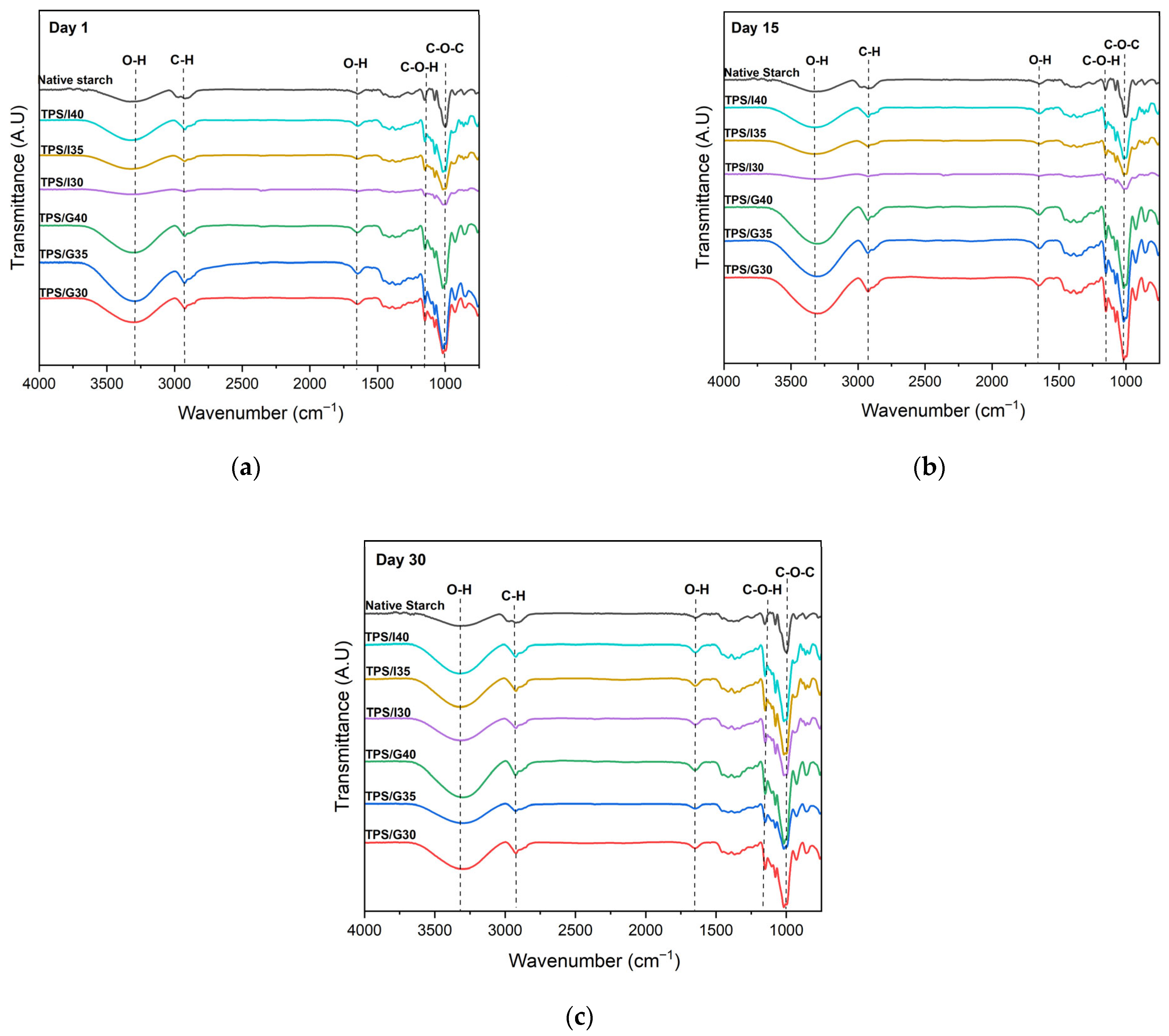
The plasticization process promoted shifts in the bands of all the TPS studied compared to native starch. A decrease in the wavenumbers corresponding to the -OH group was observed, from 3354 cm−1 in starch to 3300 cm−1 in TPS. Likewise, decreases were observed in the wave numbers assigned to the stretching of the C–O of the C–O–H bond from 1078 and 1152 cm−1 in starch to 1077 and 1150 cm−1 in the plasticized samples (Figure 4 and Table 2). The above behavior is related to the incorporation of plasticizers, which causes modifications in the interactions of the hydroxyl groups in the material, establishing new hydrogen bond links with less steric hindrance and greater mobility of the polymer chains. This contributes to the vibrations of the hydroxyl groups being exhibited at lower frequencies in plasticized materials compared to unplasticized starch [44]. In all TPS studied and during their storage period, a band around 3300 cm−1 was observed, attributed to the stretching of O–H groups, associated with the formation of hydrogen bonds between molecules. Bands at 2922 cm−1 were also identified, corresponding to the stretching of the C–H bond. The peak at 1648 cm−1 was assigned to the bending vibration of absorbed water. Additionally, the peaks at 1150 and 1077 cm−1 were related to the stretching of the C–O bond of the C–O–H functional group present in cassava starch. The results coincide with those reported for cassava starch-based films plasticized with glycerol, used as a control in the study of various plasticizers [40]. It was also possible to observe the 1016 and 997 cm−1 bands, which correspond to the C-O of the C-O-C. Specifically, the 1016 band is associated with the process of plasticization, and its presence reflects a low degree of crystallinity [18]. Specifically, TPS/I30 showed a significant decrease in the intensity of the bands corresponding to 3315, 2922, 2853, and 1648 cm−1 (Figure 4a). The low intensity presented in the 2922 and 2853 cm−1 bands is usually associated with a low concentration of plasticizer and a low degree of plasticization. Meanwhile, the low intensity of the 3315 and 1648 cm−1 bands is associated with more rigid materials and low moisture content, respectively. This finding parallels the results obtained in the tensile and moisture absorption tests, where the highest modulus of elasticity was obtained, and the low moisture absorption content (Figure 2b) were in the TPS/I30 sample.
Figure 4. Infrared spectra for TPS/G30, TPS/G35, TPS/G40, TPS/I30, TPS/I35, TPS/I40, stored for (a) 1, (b) 15, and (c) 30 days.
Table 2. Characteristic bands found in cassava starch and TPS plasticized with glycerol or isosorbide.
The spectra show a progressive increase in the intensity of the band at 3300 cm−1 associated with hydroxyl (-OH) groups as the days of storage increase and the plasticizer content increases. This could be related to the greater amount of water absorbed by the TPS over time, which becomes more evident in materials developed with higher plasticizer content [12]. This behavior is consistent with the results previously observed in the moisture absorption analysis (Figure 2). Similar results were reported by Liu et al. [45], who observed an increase in the band corresponding to -OH in a cassava starch (TPS)/nanosilica (SiO2) thermoplastic compound over time during retrogradation. High moisture absorption facilitates retrogradation in thermoplastic materials, evidenced by changes in their crystalline structure [46]. However, the wave number showed fewer changes in TPS-I, indicating better stability of hydrogen interactions in its molecular structure compared to TPS-G.
The absorption band located at 1650 cm−1, present in the native starch, showed a decrease in intensity in TPS as the plasticizer content decreased. This behavior is associated with lower water absorption in the amorphous regions of the plasticized starch, since this band corresponds to the vibrations of the water bonds [18], as corroborated by the results obtained in the moisture absorption tests. Likewise, the intensity of this band was lower in TPS plasticized with isosorbide compared to those developed with glycerol, which is consistent with the lower moisture absorption observed in materials with isosorbide (Figure 2).

3.4. X-Ray Diffraction (XRD)

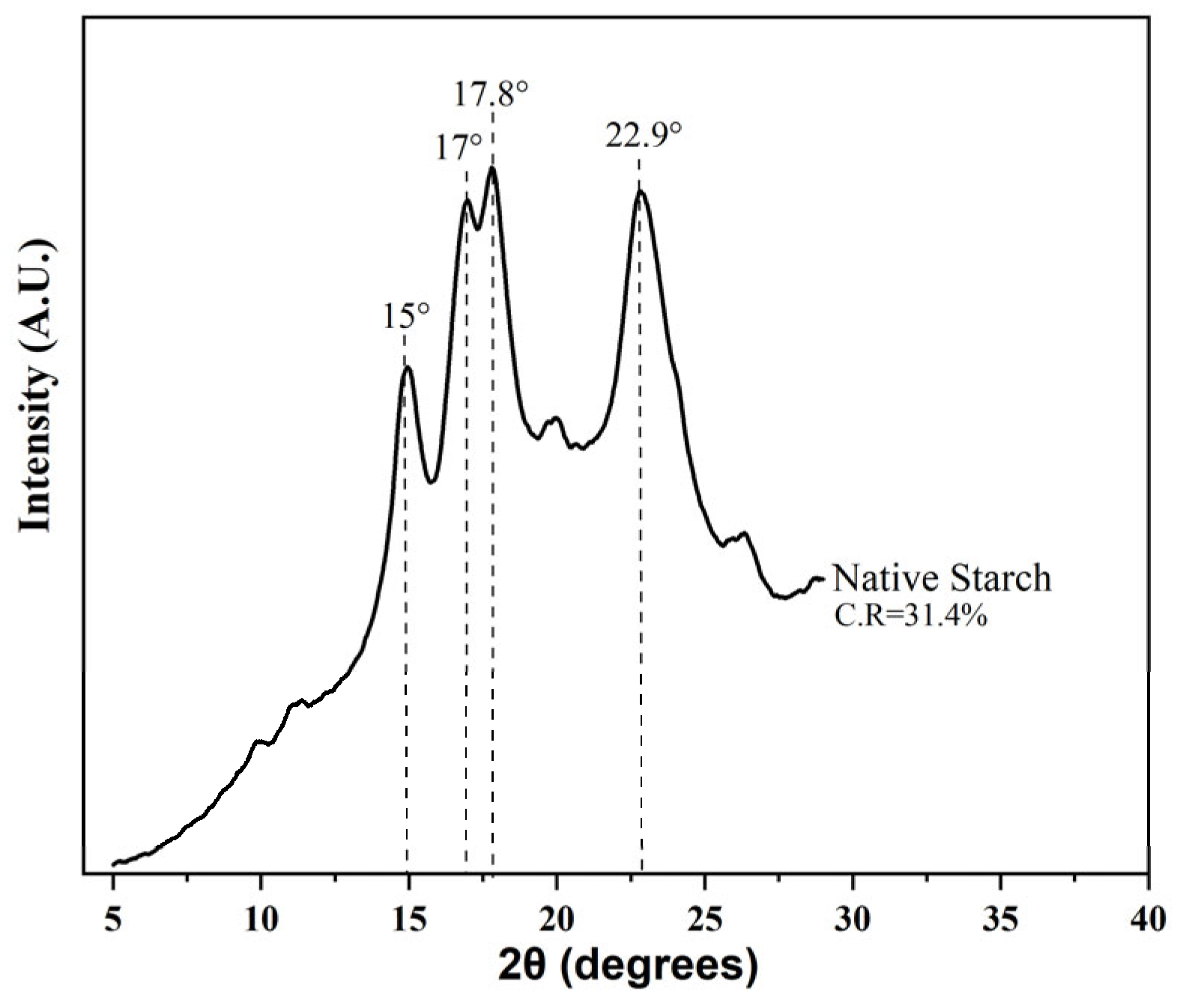
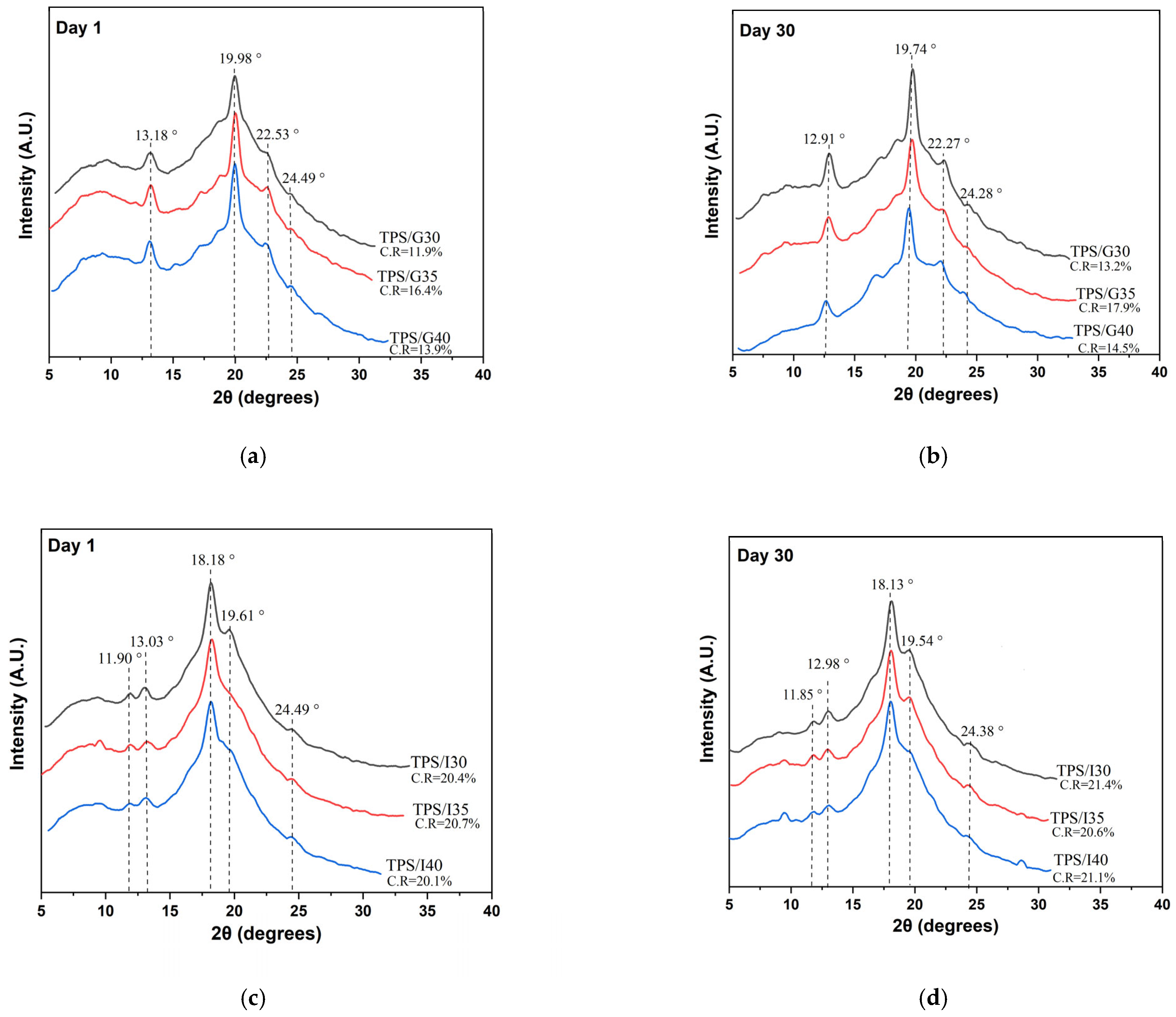
The crystallinity study was performed by X-ray diffraction analysis of TPS plasticized with glycerol and isosorbide on days 1 and 30 of conditioning (Figure 5 and Figure 6). Cassava starch showed an A-type diffraction pattern with four main peaks at angles 2θ of 15.0, 17.0, 17.8, and 22.9° (Figure 5). Some of these peaks have also been reported by Figueroa-Flórez et al. [47] and Lozano et al. [48], who worked with native cassava starches that also exhibited type-A crystallinity. These diffraction peaks correspond to the proportion of the structured component, composed of the amylopectin side chains and the amylose chains arranged in a helical form that make up the crystalline zones present in the granular structure, in relation to the unstructured component that represents the amorphous zone [49]. Cassava starch showed a relative crystallinity of 31.4%. These results are consistent with those found by Mina Hernández [12], and Gómez-López et al. [18], who report crystallinity of 32.60 and 29.05% in cassava starch, respectively. However, relative crystallinity values for cassava starch close to 46% have also been reported [47,48]. This parameter is strongly related to the starch variety, the amylose and amylopectin contents, and the analysis methods and calculations used [12,50]. In the TPS diffractograms, the characteristic peaks of the native starch disappeared, evidencing the destruction of the type-A crystalline structure during processing, indicating that both plasticizers were suitable for plasticizing the starch under the processing conditions used (Figure 5 and Figure 6). However, some residual crystallinity, type B, C or V, was found, resulting from incomplete fusion of the granules, as well as processing-induced crystalline structures, namely type Vh and Eh [10,16,51]. Compared to unplasticized cassava starch, all samples showed a significant reduction in the crystalline area in the diffractograms. This decrease is due to the breakdown of the granular structure of the starch during extrusion, a process in which high temperatures, shear stress, and the presence of plasticizers cause a loss of structural order, resulting in a continuous amorphous matrix, characteristic of TPS [48]. The two types of plasticizers used changed the crystalline pattern of the materials. In TPS made with glycerol as a plasticizer, a main peak can be observed at 2θ angles of 19° and a smaller peak at 13° (Figure 5 and Figure 6b). This crystalline structure is represented by a Vh-type pattern, which becomes more evident in materials plasticized with glycerol after 30 days of storage.
Figure 5. X-ray diffractogram for native cassava starch.
Figure 6. X-ray diffractogram for TPS. (a) TPS-G on day 1; (b) TPS-G on day 30; (c) TPS-I on day 1; (d) TPS-I on day 30.
However, in the case of TPS plasticized with isosorbide, the peak was located at an angle 2θ of 18°, relating to an Eh-type crystalline structure. In addition, a second low-intensity peak is observed at a 2θ angle of 11.9°, which could be attributed to residual starch crystallinity (Figure 6c,d). The Eh-type structure belongs to simple seven-fold amylose helices complexed with plasticizer molecules, while the Vh-type structure is a simple six-fold amylose complex. These differences in the patterns found in TPS are related to the larger size of the isosorbide molecule compared to that of glycerol. The size of the molecule could limit the availability of more plasticizer molecules to complex the amylose chains, favoring the development of an Eh-type structure in materials plasticized with isosorbide [16]. Similar results were reported in studies conducted by González et al. [10], who found this same trend in composite materials with glycerol and isosorbide as plasticizers and attributed this finding to higher shear stresses achieved during extrusion with TPS-I, which was due to the increase in melt viscosity due to the higher molecular weight and bulky geometry of the D-isosorbide molecule.
Furthermore, the diffractograms show that the crystallinity in materials made with isosorbide is higher than in samples with glycerol. Similar behavior has already been reported in materials made with these plasticizers [4,10]. The higher crystallinity values for TPS plasticized with isosorbide could be attributed to the increase in shear stress applied during the plasticization process of these samples. High shear stresses favor the orientation of the amylose chains complexed with the plasticizer, increasing in the crystallinity of the sample [16]. Although crystallinity was higher in the isosorbide samples, its variation over time was lower compared to the materials developed with glycerol. The above suggests that retrogradation has a lesser effect on TPS-I. These results show that the type of plasticizer plays an important role in the retrogradation process; the structure of isosorbide hinders chain mobility and decreases the likelihood that the material can reorganize over time [12,18]. With increased storage time, TPS samples show an increase in crystallinity when using both plasticizers and at all concentrations evaluated in this study, considered only as a trend, as seen in the diffractograms corresponding to TPS after 30 days of storage compared to day 1 (Figure 6). This phenomenon can be attributed to structural changes resulting from the rearrangement of polymer chains, leading to slight increases in signal intensities [12], which are located at 2θ angles of 19, 13, and 22° for TPS plasticized with glycerol (Figure 6a,b), and at peaks corresponding to angles 2θ of 18, 13, and 19° for TPS plasticized with isosorbide (Figure 6c,d). In both cases, a similar trend is observed, although the intensity of the peaks associated with the retrogradation process after 30 days of storage is lower in TPS with isosorbide compared to those with glycerol.

3.5. Differential Scanning Calorimetry (DSC)

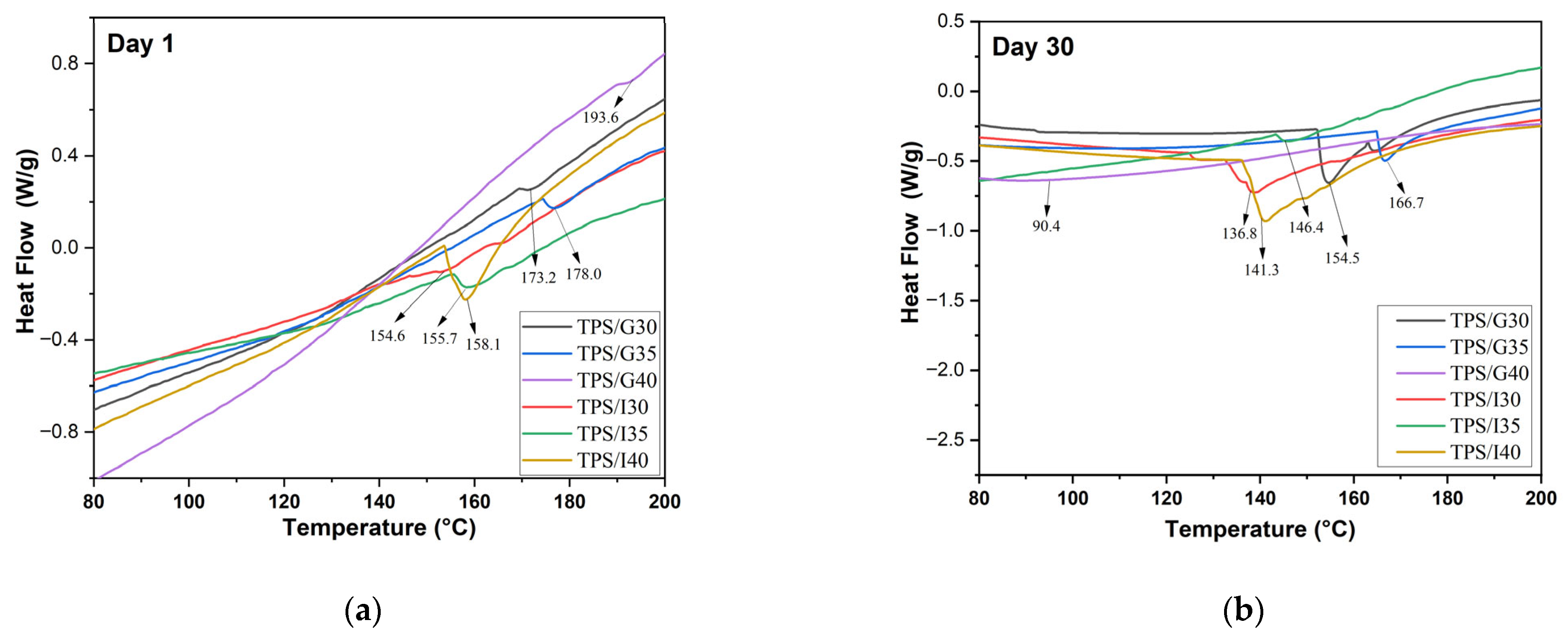
The thermal properties of TPS plasticized with glycerol and isosorbide were studied using DSC curves, which are shown in Figure 7a,b. The glass transition temperature (Tg), melting temperature (Tm), and melting enthalpy (ΔHm) of all samples are presented in Table 3. The values associated with the Tg of the TPS are around 34 and 37 °C for day 1. Similar results were reported by Ghanbari et al. [51] in a corn starch TPS plasticized with glycerol. The results obtained show that TPS formulated with the highest plasticizer content has the lowest Tg values. This decrease in Tg can be attributed to increased molecular mobility, an effect commonly associated with increased plasticizer content in the polymer matrix [15]. In particular, TPS/G30 had a higher Tg compared to the other TPS, which could be attributed to a less homogeneous distribution of the plasticizer and greater structural organization, reducing chain mobility and raising the Tg. Similar behaviors have been reported by De Graaf [52], and Leroy et al. [53], who observed that small variations in the homogeneity of plasticization can generate specific deviations in the thermal behavior of TPS. In addition, it is observed that materials plasticized with glycerol have a lower Tg compared to those formulated with isosorbide. This difference could be attributed to greater mobility of the starch chains, favored by interactions between the hydroxyl groups of the polymer and the glycerol molecules, as well as by the generation of greater free volume between the polymer chains [54]. As a result, materials with glycerol exhibit lower stiffness than those plasticized with isosorbide in equal proportions, as will be evident later in the tensile strength tests (Figure 8b). Together, glycerol-plasticized TPS reached equilibrium in moisture absorption in a shorter time (0–5 days) (Figure 2), a behavior consistent with the reduced Tg values observed in these materials. Tg is a fundamental property in polymeric materials and is influenced by various structural factors, such as molecular weight, intermolecular interactions, degree of branching, and flexibility of the polymer chains [51]. These parameters determine the mobility of the chain segments and therefore directly influence the thermal behavior of the material.
Figure 7. DSC heating curves of TPS plasticized with glycerol and isosorbide at concentrations of 30, 35, and 40% during (a) 1 and (b) 30 days of storage.
Table 3. Thermal properties of TPS plasticized with glycerol or isosorbide at concentrations of 30, 35, and 40% after 1 and 30 days of storage.
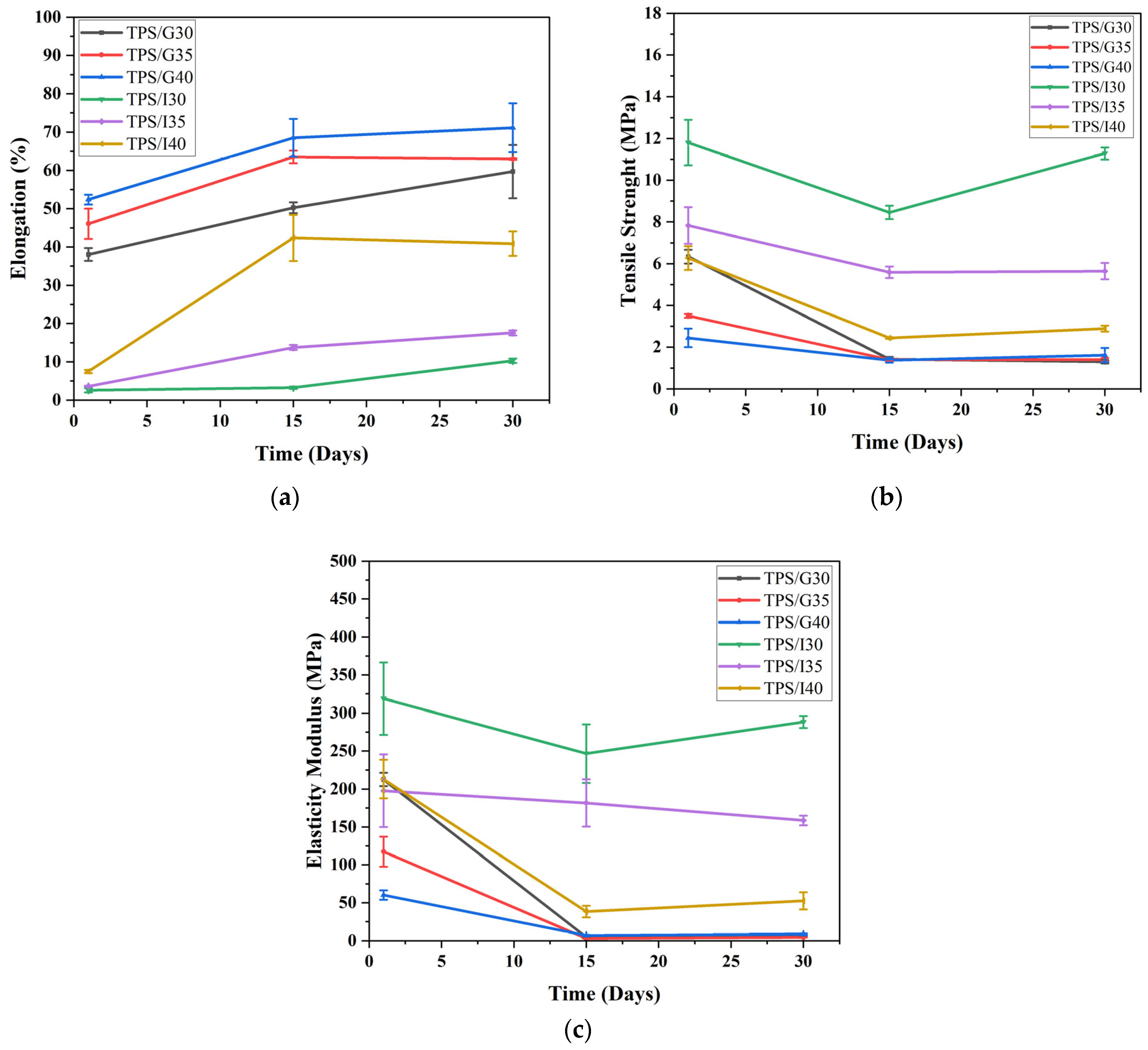
Figure 8. Mechanical properties for TPS/G30, TPS/G35, TPS/G40, TPS/I30, TPS/I35, TPS/I40, (a) Elongation at break (EL); (b) maximum strength and (c) modulus of elasticity.
Throughout conditioning, the transition peaks show specific shifts. An increase in the Tg results obtained on day 30 compared to day 1 of the study was observed. For their part, Castañeda-Niño et al. [43] reported a reduction in macromolecular mobility evidenced by the increase in the Tg of TPS made with banana starch and glycerol with the progress of conditioning time, which they associated with the retrogradation of the starch polymer chains and the migration of the plasticizer. Likewise, greater stability was observed in the Tg of materials developed with isosorbide, indicating greater thermal stability compared to glycerol TPS. The chemical structure of isosorbide could form many hydrogen bond interactions, resulting in reduced matrix mobility and also preventing early release of the plasticizer [10].
Endothermic peaks related to melting were observed between 126 and 190 °C (Figure 7). Peaks below 180 °C could be related to the enthalpy of evaporation of strongly adsorbed water, which is released between 80 and 180 °C [55]. The second peak can be attributed to the melting of remaining crystalline domains and the formation of crystalline structures resulting from co-crystallization between amylose and amylopectin during the material extraction process. Crystalline regions tend to form due to the reorganization of starch molecules in the presence of water and with the passage of time [18]. The smallest variations in Tg and Tm over time and higher Tg values were found in TPS/G35 and TPS/I35, indicating greater thermal stability during the storage period. As for Tm, a decreasing trend is observed over time in all samples at different concentrations of the plasticizers used. This behavior can be associated with the presence of absorbed water, which acts as a plasticizer, facilitating chain mobility and promoting the formation of less thermally stable crystals, which is an expected behavior during the initial stage of the retrogradation process [56]. The above results are consistent with the moisture absorption data (Figure 2), which shows an initial increase in moisture absorption of the materials over time until stability is reached. This is related to the effect that absorbed water has on the crystallization of starch chains, since the short- and long-term reorganization of amylose and amylopectin is lower when the water content is reduced [18]. The results obtained show an increase in ΔHm throughout the conditioning time. This considerable increase in enthalpy could be due to starch retrogradation, which involves a reorganization of the polymer chains and favors the formation of a more orderly and stable crystalline structure [46]. This trend is consistent with the results obtained by XRD, where an increase in crystallinity is observed. As TPS films age, the crystalline structure develops more clearly, requiring more thermal energy to melt, which is reflected in an increase in ΔH. This behavior is characteristic of starch retrogradation during storage.

3.6. Mechanical Tensile Properties

Figure 8 and Table 4 show the mechanical properties related to elongation at break, maximum strength, and modulus of elasticity, evaluated by tensile testing for TPS plasticized with glycerol or isosorbide, as a function of storage period. It can be observed that, as the plasticizer content increases significantly (p-value < 0.05), the tensile strength and modulus of elasticity decrease significantly (p-value < 0.05). This may be associated with structural modifications of the starch when plasticizers are added, which involve increase in free volume and a consequent decrease in the density of the material [32]. The greater amount of small plasticizer molecules may have caused a reduction in the interaction forces between the starch chains, leading to greater mobility and resulting in a decrease in the maximum strength and modulus of elasticity values, along with a notable increase in elongation at break [11,38]. A similar trend was reported for cassava starch plasticized with different proportions of glycerol and mixtures of glycerol and water [57].
Table 4. Mechanical properties of TPS made with glycerol or isosorbide, stored for 1, 15, and 30 days under controlled conditions of relative humidity of 47 ± 2%.
Among the different samples studied, TPS/I30 showed the highest strength of 11.8 MPa and the lowest elongation at break of 2.60%, recorded on the first day of measurement. After a storage period of 15 days, the strength decreased to a value of 8.45 MPa and the elongation at break increased to 3.25%. This behavior may be associated with the fact that water molecules present in the environment are integrated into the TPS through the formation of secondary hydrogen bond-type links. Likewise, the water absorbed during conditioning acts as a plasticizing agent in the structure of the material [44]. In TPS formulated with glycerol, the highest tensile strength values were recorded on day 1, reaching 6.34, 3.50, and 2.44 MPa for concentrations of 30, 35, and 40% glycerol, respectively. These samples had elongation at break values of 38.04, 46.05, and 52.36%. These results exceed those reported by González et al. [57] for TPS with the same glycerol concentrations, produced by injection molding and conditioned at 53% RH. Regarding the values obtained in the modulus of elasticity, TPS/G30 showed a value of 212 MPa in the first measurement, which decreased to 4.85 MPa on day 15 of the experiment. A similar behavior was observed in TPS using glycerol with an initial value of 297 MPa, which decreased to 43 MPa. They also report that, despite this initial decrease, the modulus of elasticity is the parameter that varies the least with the retrogradation phenomenon that prevails during prolonged storage [12]. As the days of storage pass, an initial decrease in the mechanical strength and elastic modulus of the TPS can be observed after 15 days of experimentation, followed by an increase. This behavior could be explained by the presence of two opposing phenomena: initially, a plasticization process due to moisture absorption that causes softening, followed by retrogradation that tends to harden the material [12]. The phenomenon of plasticization by moisture has also been reported in the study of thermoplastic starches subjected to different relative humidities [24]. The increases observed in the mechanical strength and elastic modulus of TPS suggest that, at this stage, retrogradation becomes the predominant phenomenon. Likewise, the results obtained in relative crystallinity measured by XRD show increases in the values reached on day 30 of the experiment compared to the initial measurement, which translates into an increase in mechanical strength due to the greater rigidity associated with a more compact molecular structure.
The results show significant differences (p-value < 0.05) in elongation at break, maximum strength, and modulus of elasticity between TPS plasticized with glycerol and those plasticized with isosorbide, demonstrating the influence of the type of plasticizer on the mechanical properties of the material. In TPS plasticized with isosorbide, tensile strength and modulus of elasticity values are higher than those obtained in TPS formulated with glycerol. Similar results have been reported by González et al. [10] in corn starch-based TPS using both plasticizers. This behavior can be attributed, as expected, to the larger molecular size of isosorbide compared to glycerol, which restricts the mobility of the polymer chains and leads to more rigid materials. These results could also indicate a stronger interaction between the starch chains and isosorbide, possibly facilitated by the presence of hydroxyl and ether groups, which favor specific interactions through hydrogen bonds between the plasticizer and the starch molecules, increasing the rigidity of the material [13]. These findings suggest that isosorbide provides greater structural stability, albeit at the expense of lower ductility. Morphological analyses obtained by SEM showed more homogeneous plasticization in TPS with isosorbide compared to those with glycerol, suggesting a more efficient plasticizing effect. In TPS with glycerol, the higher moisture content (Figure 2) probably contributed to the greater initial decrease observed in mechanical strength and elastic modulus. Among the plasticizers used in this study, glycerol promoted the most significant changes in modulus of elasticity after 30 days of storage, compared to materials plasticized with isosorbide at the same concentration. This behavior can be attributed to the smaller molecular size of glycerol, which allows it to interact more easily with the polymer chains of starch. As a result, retrogradation is more evident in materials with glycerol, due to the reorganization of molecular structures that were destroyed during the extrusion and plasticization process [45]. One of the main effects of gelatinized starch retrogradation is the strengthening of the material, along with an increase in the modulus of elasticity, associated with reorientation and recrystallization that restrict chain mobility [17,58]. This effect was evident in the TPS after 15 days of storage, being more pronounced in TPS-G after 15 days of storage. These results coincide with the XRD analyses, which showed that TPS-G films exhibited the greatest increase in crystallinity over time.

4. Conclusions

In this study, the effects of glycerol and isosorbide on the development of thermoplastic cassava starch were compared, evaluating different concentrations over 30 days of storage. TPS plasticized with isosorbide exhibited higher tensile strength, higher elastic modulus, and lower elongation. A high moisture absorption capacity was observed in TPS-G, with values between 7 and 9%, while TPS-I showed values between 3 and 5%. The high moisture absorption capacity, produced mainly in the first days of storage, is associated with rapid retrogradation, which suggests that this process is less evident in TPS-I. In line with the above, it was found that the crystallinity of materials made with isosorbide was higher, and a predominantly Eh-type crystalline pattern was observed, which is more stable over time and reduces the effects of retrogradation. These differences in the patterns found in TPS are related to the larger size of the isosorbide molecule compared to that of glycerol. The results obtained are promising and represent a significant advance in the development of biodegradable materials that better retain their properties over time, indicating the potential use of TPS-I in biodegradable packaging applications requiring greater stability during storage.

Author Contributions

Conceptualization, A.C.A.-T., H.R.-M. and J.H.M.H.; methodology, A.C.A.-T., J.H.M.H. and J.S.-M.; formal analysis, A.C.A.-T.; investigation, A.C.A.-T.; resources, H.R.-M., J.H.M.H. and J.S.-M.; writing—original draft preparation, A.C.A.-T.; writing—review and editing, A.C.A.-T., H.R.-M., J.H.M.H., J.S.-M. and N.M.-M.; visualization, N.M.-M.; project administration, J.H.M.H.; funding acquisition, A.C.A.-T., H.R.-M. and J.H.M.H. All authors have read and agreed to the published version of the manuscript.

Funding

This research has been funded by Vicerrectoría de Investigaciones de la Universidad del Valle through the Convocatoria Interna 161-2024-2 (C.I. 21287).

Institutional Review Board Statement

Not applicable.

Data Availability Statement

The original contributions presented in this study are included in the article.

Acknowledgments

The authors acknowledge Juan Castañeda Niño and Manuel Cervera Ricardo for their contribution during the composition of this work.

Conflicts of Interest

The authors declare no conflicts of interest.

References

  1. Zhang, C.; Show, P.L.; Ho, S.H. Progress and perspective on algal plastics—A critical review. Bioresour. Technol. 2019, 289, 121700. [Google Scholar] [CrossRef] [PubMed]
  2. Jantasrirad, S.; Mayakun, J.; Numnuam, A.; Kaewtatip, K. Effect of filler and sonication time on the performance of brown alga (Sargassum plagiophyllum) filled cassava starch biocomposites. Algal Res. 2021, 56, 102321. [Google Scholar] [CrossRef]
  3. Tappiban, P.; Smith, D.R.; Triwitayakorn, K.; Bao, J. Recent understanding of starch biosynthesis in cassava for quality improvement: A review. Trends Food Sci. Technol. 2019, 83, 167–180. [Google Scholar] [CrossRef]
  4. Khan, B.; Bilal Khan Niazi, M.; Samin, G.; Jahan, Z. Thermoplastic starch: A possible biodegradable food packaging material—A review. J. Food Process Eng. 2017, 40, e12447. [Google Scholar] [CrossRef]
  5. Xie, F.; Pollet, E.; Halley, P.J.; Avérous, L. Starch-based nano-biocomposites. Prog. Polym. Sci. 2013, 38, 1590–1628. [Google Scholar] [CrossRef]
  6. Esmaeili, M.; Pircheraghi, G.; Bagheri, R. Optimizing the mechanical and physical properties of thermoplastic starch via tuning the molecular microstructure through co-plasticization by sorbitol and glycerol. Polym. Int. 2017, 66, 809–819. [Google Scholar] [CrossRef]
  7. Schmitt, H.; Guidez, A.; Prashantha, K.; Soulestin, J.; Lacrampe, M.F.; Krawczak, P. Studies on the effect of storage time and plasticizers on the structural variations in thermoplastic starch. Carbohydr. Polym. 2015, 115, 364–372. [Google Scholar] [CrossRef] [PubMed]
  8. Chantawee, K.; Riyajan, S.A. Carboxylated styrene-butadiene rubber adhesion for biopolymer product-based from cassava starch and sugarcane leaves fiber. Ind. Crops Prod. 2018, 125, 639–647. [Google Scholar] [CrossRef]
  9. Montilla-Buitrago, C.E.; Gómez-López, R.A.; Solanilla-Duque, J.F.; Serna-Cock, L.; Villada-Castillo, H.S. Effect of plasticizers on properties, retrogradation, and processing of extrusion-obtained thermoplastic starch: A review. Starch-Stärke 2021, 73, 2100060. [Google Scholar] [CrossRef]
  10. González, K.; Iturriaga, L.; González, A.; Eceiza, A.; Gabilondo, N. Improving mechanical and barrier properties of thermoplastic starch and polysaccharide nanocrystals nanocomposites. Eur. Polym. J. 2020, 123, 109415. [Google Scholar] [CrossRef]
  11. Area, M.R.; Montero, B.; Rico, M.; Barral, L.; Bouza, R.; López, J. Isosorbide plasticized corn starch filled with poly (3-hydroxybutyrate-co-3-hydroxyvalerate) microparticles: Properties and behavior under environmental factors. Int. J. Biol. Macromol. 2022, 202, 345–353. [Google Scholar] [CrossRef] [PubMed]
  12. Mina Hernández, J.H. Effect of the incorporation of polycaprolactone (PCL) on the retrogradation of binary blends with cassava thermoplastic starch (TPS). Polymers 2020, 13, 38. [Google Scholar] [CrossRef] [PubMed]
  13. Area, M.R.; Montero, B.; Rico, M.; Barral, L.; Bouza, R.; López, J. Properties and behavior under environmental factors of isosorbide plasticized starch reinforced with microcrystalline cellulose biocomposites. Int. J. Biol. Macromol. 2020, 164, 2028–2037. [Google Scholar] [CrossRef]
  14. Brigham, C. Biopolymers: Biodegradable alternatives to traditional plastics. In Green Chemistry; Elsevier: Amsterdam, The Netherlands, 2018; pp. 753–770. [Google Scholar]
  15. Battegazzore, D.; Bocchini, S.; Nicola, G.; Martini, E.; Frache, A. Isosorbide, a green plasticizer for thermoplastic starch that does not retrogradate. Carbohydr. Polym. 2015, 119, 78–84. [Google Scholar] [CrossRef]
  16. Area, M.R.; Rico, M.; Montero, B.; Barral, L.; Bouza, R.; López, J.; Ramírez, C. Corn starch plasticized with isosorbide and filled with microcrystalline cellulose: Processing and characterization. Carbohydr. Polym. 2019, 206, 726–733. [Google Scholar] [CrossRef]
  17. González, K.; Martin, L.; González, A.; Retegi, A.; Eceiza, A.; Gabilondo, N. D-isosorbide and 1, 3-propanediol as plasticizers for starch-based films: Characterization and aging study. J. Appl. Polym. Sci. 2017, 134. [Google Scholar] [CrossRef]
  18. Gómez-López, R.A.; Montilla-Buitrago, C.E.; Villada-Castillo, H.S.; Sáenz-Galindo, A.; Avalos-Belmontes, F.; Serna-Cock, L. Co-Plasticization of Starch with Glycerol and Isosorbide: Effect on Retrogradation in Thermo-Plastic Cassava Starch Films. Polymers 2023, 15, 2104. [Google Scholar] [CrossRef] [PubMed]
  19. Arfiathi, A.; Sumirat, R.; Syamani, F.A.; Lubis, M.A.R.; Filianty, F.; Nurhamiyah, Y. Effect of citric acid on the properties of thermoplastic bitter cassava starch plasticized with isosorbide. Polym. Renew. Resour. 2024, 15, 43–59. [Google Scholar] [CrossRef]
  20. Ren, J.; Li, Y.; Li, C.; Gu, Z.; Cheng, L.; Hong, Y.; Li, Z. Pasting and thermal properties of waxy corn starch modified by1, 4—glucan branching enzyme. Int. J. Biol. Macromol. 2017, 97, 679–687. [Google Scholar] [CrossRef]
  21. Anderson, R.; Conway, H.F.; Pheiser, V.F.; Griffin, E.L. Gelatinization of corn grits by roll and extrusion cooking. Cereal Sci. Today 1969, 14, 4–12. [Google Scholar]
  22. Teixeira, E.D.M.; Curvelo, A.A.; Corrêa, A.C.; Marconcini, J.M.; Glenn, G.M.; Mattoso, L.H. Properties of thermoplastic starch from cassava bagasse and cassava starch and their blends with poly (lactic acid). Ind. Crops Prod. 2012, 37, 61–68. [Google Scholar] [CrossRef]
  23. Jose, M.; Valadez-González, A.; Herrera-Franco, P.; Zuluaga, F.; Delvasto, S. Physicochemical Characterization of Natural and Acetylated Thermoplastic Cassava Starch. DYNA 2011, 78, 166–173. [Google Scholar]
  24. Toro, F.; Jose, M.; Bolaños, C.A. Estudio físico-mecánico y térmico de una resina natural Mopa-Mopa acondicionada a diferentes humedades relativas. Biotecnol. Sect. Agropecu. Agroind. 2013, 11, 30–36. [Google Scholar]
  25. Florencia, V.; López, O.V.; García, M.A. Exploitation of by-products from cassava and ahipa starch extraction as filler of thermoplastic corn starch. Compos. Part B Eng. 2020, 182, 107653. [Google Scholar] [CrossRef]
  26. Jose, M.; Valadez, A.; Toledano, T. Estudio Fisicoquímico de mezclas de almidón termoplástico (TPS) y policaprolactona (PCL). Biotecnol. Sect. Agropecu. Agroind. 2013, 11, 31–40. [Google Scholar]
  27. Nara, S.; Komiya, T.J.S. Studies on the relationship between water-satured state and crystallinity by the diffraction method for moistened potato starch. Starch-Stärke 1983, 35, 407–410. [Google Scholar] [CrossRef]
  28. Travalini, A.P.; Lamsal, B.; Magalhães, W.L.E.; Demiate, I.M. Cassava starch films reinforced with lignocellulose nanofibers from cassava bagasse. Int. J. Biol. Macromol. 2019, 139, 1151–1161. [Google Scholar] [CrossRef] [PubMed]
  29. Galera Manzano, L.M.; Ruz Cruz, M.Á.; Moo Tun, N.M.; Valadez González, A.; Jose, M.H. Effect of cellulose and cellulose nanocrystal contents on the biodegradation, under composting conditions, of hierarchical PLA biocomposites. Polymers 2021, 13, 1855. [Google Scholar] [CrossRef]
  30. Jumaidin, R.; Diah, N.A.; Ilyas, R.A.; Alamjuri, R.H.; Yusof, F.A.M. Processing and characterisation of banana leaf fibre reinforced thermoplastic cassava starch composites. Polymers 2021, 13, 1420. [Google Scholar] [CrossRef]
  31. Teixeira, E.D.M.; Pasquini, D.; Curvelo, A.A.; Corradini, E.; Belgacem, M.N.; Dufresne, A. Cassava bagasse cellulose nanofibrils reinforced thermoplastic cassava starch. Carbohydr. Polym. 2009, 78, 422–431. [Google Scholar] [CrossRef]
  32. Edhirej, A.; Sapuan, S.M.; Jawaid, M.; Zahari, N.I. Effect of various plasticizers and concentration on the physical, thermal, mechanical, and structural properties of cassava-starch-based films. Starch-Stärke 2017, 69, 1500366. [Google Scholar] [CrossRef]
  33. Jatmiko, T.H.; Poeloengasih, C.D.; Prasetyo, D.J.; Rosyida, V.T. Effect of plasticizer on moisture sorption isotherm of sugar palm (Arenga Pinnata) starch film. In Proceedings of the AIP Conference Proceedings, International Symposium on Frontier of Applied Physics (ISFAP) 2015, Bandung, Indonesia, 5–7 October 2015; AIP Publishing: Melville, NY, USA, 2016; Volume 1711, p. 080004. [Google Scholar]
  34. Medina, J.; Salas, J. Morphological Characterization of Native Starch Granule: Appearance, Shape, Size and its Distribution. Rev. Ing. 2008, 27, 56–62. [Google Scholar] [CrossRef]
  35. Akonor, P.T.; Osei Tutu, C.; Arthur, W.; Adjebeng-Danquah, J.; Affrifah, N.S.; Budu, A.S.; Saalia, F.K. Granular structure, physicochemical and rheological characteristics of starch from yellow cassava (Manihot esculenta) genotypes. Int. J. Food Prop. 2023, 26, 259–273. [Google Scholar] [CrossRef]
  36. Bertoft, E. Understanding Starch Structure: Recent Progress. Agronomy 2017, 7, 56. [Google Scholar] [CrossRef]
  37. Kargarzadeh, H.; Johar, N.; Ahmad, I. Starch biocomposite film reinforced by multiscale rice husk fiber. Compos. Sci. Technol. 2017, 151, 147–155. [Google Scholar] [CrossRef]
  38. Reinaldo, J.S.; Milfont, C.H.; Gomes, F.P.; Mattos, A.L.; Medeiros, F.G.; Lopes, P.F.; Ito, E.N. Influence of grape and acerola residues on the antioxidant, physicochemical and mechanical properties of cassava starch biocomposites. Polym. Test. 2021, 93, 107015. [Google Scholar] [CrossRef]
  39. Schmidt, V.C.R.; Blanco-Pascual, N.; Tribuzi, G.; Laurindo, J.B. Effect of the degree of acetylation, plasticizer concentration and relative humidity on cassava starch films properties. Food Sci. Technol. 2019, 39, 491–499. [Google Scholar] [CrossRef]
  40. Edhirej, A.; Sapuan, S.M.; Jawaid, M.; Zahari, N.I. Cassava/sugar palm fiber reinforced cassava starch hybrid composites: Physical, thermal and structural properties. Int. J. Biol. Macromol. 2017, 101, 75–83. [Google Scholar] [CrossRef]
  41. Sagnelli, D.; Hebelstrup, K.H.; Leroy, E.; Rolland-Sabaté, A.; Guilois, S.; Kirkensgaard, J.J.; Blennow, A. Plant-crafted starches for bioplastics production. Carbohydr. Polym. 2016, 152, 398–408. [Google Scholar] [CrossRef]
  42. Li, M.; Tian, X.; Jin, R.; Li, D. Preparation and characterization of nanocomposite films containing starch and cellulose nanofibers. Ind. Crops Prod. 2018, 123, 654–660. [Google Scholar] [CrossRef]
  43. Castañeda-Niño, J.P.; Mina-Hernandez, J.H.; Solanilla-Duque, J.F. Effect of cellulose nanofibers and plantain peel fibers on mechanical, thermal, physicochemical properties in bio-based composites storage time. Results Eng. 2025, 25, 104185. [Google Scholar] [CrossRef]
  44. Jose, M.; Valadez, A.; Herrera, P.; Toleda, T. Influencia del tiempo de almacenamiento en las propiedades estructurales de un almidón termoplástico de yuca (TPS). Ing. Compet. 2009, 11, 95–106. [Google Scholar]
  45. Liu, Y.; Fan, L.; Pang, J.; Tan, D. Effect of tensile action on retrogradation of thermoplastic cassava starch/nanosilica composite. Iran. Polym. J. 2020, 29, 171–183. [Google Scholar] [CrossRef]
  46. Lai, D.S.; Osman, A.F.; Adnan, S.A.; Ibrahim, I.; Ahmad Salimi, M.N.; Alrashdi, A.A. Effective aging inhibition of the thermoplastic corn starch films through the use of green hybrid filler. Polymers 2022, 14, 2567. [Google Scholar] [CrossRef] [PubMed]
  47. Figueroa-Flórez, J.; Cadena-Chamorro, E.; Salcedo-Mendoza, J.; Rodríguez-Sandoval, E.; Ciro-Velásquez, H.; Serna-Fadul, T. Enzymatic biocatalysis processes on the semicrystalline and morphological order of native cassava starches (Manihot esculenta). Rev. Fac. Nac. Agron. Medellín 2024, 77, 10839–10852. [Google Scholar] [CrossRef]
  48. Lozano, K.P.C.; Mendes, J.F.; Ferreira, L.F.; Martins, M.A.; Mendoza, J.S.; Mendes, R.F. Hydrophobic bio-composites of stearic acid starch esters and micro fibrillated cellulose processed by extrusion. Ind. Crops Prod. 2024, 221, 119313. [Google Scholar] [CrossRef]
  49. Martens, B.M.J.; Gerrits, W.J.J.; Bruininx, E.M.A.M.; Schols, H.A. Amylopectin structure and crystallinity explains variation in digestion kinetics of starches across botanic sources in an in vitro pig model. J. Anim. Sci. Biotechnol. 2018, 9, 1–13. [Google Scholar] [CrossRef]
  50. Zhu, F. Composition, structure, physicochemical properties, and modifications of cassava starch. Carbohydr. Polym. 2015, 122, 456–480. [Google Scholar] [CrossRef]
  51. Ghanbari, A.; Tabarsa, T.; Ashori, A.; Shakeri, A.; Mashkour, M. Thermoplastic starch foamed composites reinforced with cellulose nanofibers: Thermal and mechanical properties. Carbohydr. Polym. 2018, 197, 305–311. [Google Scholar] [CrossRef]
  52. De Graaf, R.A.; Karman, A.P.; Janssen, L.P. Material properties and glass transition temperatures of different thermoplastic starches after extrusion processing. Starch-Stärke 2003, 55, 80–86. [Google Scholar] [CrossRef]
  53. Leroy, L.; Stoclet, G.; Lefebvre, J.M.; Gaucher, V. Mechanical behavior of thermoplastic starch: Rationale for the temperature-relative humidity equivalence. Polymers 2022, 14, 2531. [Google Scholar] [CrossRef]
  54. Gutiérrez, T.J.; Suniaga, J.; Monsalve, A.; García, N.L. Influence of beet flour on the relationship surface-properties of edible and intelligent films made from native and modified plantain flour. Food Hydrocoll. 2016, 54, 234–244. [Google Scholar] [CrossRef]
  55. Turco, R.; Ortega-Toro, R.; Tesser, R.; Mallardo, S.; Collazo-Bigliardi, S.; Chiralt Boix, A.; Santagata, G. Poly (lactic acid)/thermoplastic starch films: Effect of cardoon seed epoxidized oil on their chemicophysical, mechanical, and barrier properties. Coatings 2019, 9, 574. [Google Scholar] [CrossRef]
  56. Chanvrier, H.; Uthayakumaran, S.; Appelqvist, I.A.; Gidley, M.J.; Gilbert, E.P.; López-Rubio, A. Influence of storage conditions on the structure, thermal behavior, and formation of enzyme-resistant starch in extruded starches. J. Agric. Food Chem. 2007, 55, 9883–9890. [Google Scholar] [CrossRef] [PubMed]
  57. González, C.M.O.; Castillo, E.A.; Flores, S.; Gerschenson, L.N.; Bengoechea, C. Effect of plasticizer composition on the properties of injection molded cassava starch-based bioplastics. Food Packag. Shelf Life 2023, 40, 101218. [Google Scholar] [CrossRef]
  58. Rico, M.; Rodríguez-Llamazares, S.; Barral, L.; Bouza, R.; Montero, B. Processing and characterization of polyols plasticized-starch reinforced with microcrystalline cellulose. Carbohydr. Polym. 2016, 149, 83–93. [Google Scholar] [CrossRef] [PubMed]
Disclaimer/Publisher’s Note: The statements, opinions and data contained in all publications are solely those of the individual author(s) and contributor(s) and not of MDPI and/or the editor(s). MDPI and/or the editor(s) disclaim responsibility for any injury to people or property resulting from any ideas, methods, instructions or products referred to in the content.

Article Metrics

Citations

Article Access Statistics

Multiple requests from the same IP address are counted as one view.