


Abstract
Obesity is a risk factor in cardiovascular disease (CVD), and scalable treatment approaches are needed in routine care. The aim of this retrospective observational study was to investigate self-reported weight change during the use of a prescription digital therapy for multimodal lifestyle therapy for obesity. Adults with obesity and self-reported CVD risk factors (n = 4314) or self-reported established CVD (n = 1418) prescribed zanadio for up to 12 months were included. The primary outcome was percentage change in self-reported body weight over time. Clinically meaningful weight loss (≥5%) was observed in patients on continued prescriptions, with greater weight loss observed in patients with prolonged program exposure. The results were directionally consistent across analyses that used a randomly missing approach and a sensitivity analysis with the last observation forward, although estimates varied in magnitude. Interpretation of this data in a real-world setting is limited by self-reported weight and comorbidity data, attrition which is typical for weight loss programs in the reality of care, and uncertainty about the mechanism of missing data. These results suggest that zanadio may support clinically meaningful self-reported weight loss in patients continuing treatment, but further studies linking clinical data and with longer follow-up are needed.
1. Introduction
Obesity is a complex, chronic disease with distinct pathophysiology and is associated with over 200 chronic conditions [1,2,3]. Notably, obesity contributes to cardiovascular disease (CVD) through direct and indirect mechanisms [4,5]. It has been estimated that 60–70% of people living with obesity have abnormal lipids and obesity is responsible for up to 78% of essential hypertension cases [6,7]. These risk factors along with type 2 diabetes (T2D) are directly responsible for the high rates of coronary artery disease, heart failure and stroke in people living with obesity [8]. Given that 60% of adults are now living with overweight and obesity in Europe, along with the healthcare costs associated with clinical manifestations such as CVD, there is an urgent need for scalable, effective interventions [9].
Clinical guidelines for obesity recommend a tiered approach including lifestyle therapy, pharmacotherapy, and/or bariatric surgery [10]. For some patients with obesity the prevention and treatment of CVD can be significantly improved with structured lifestyle therapy. This is supported by evidence demonstrating that clinically significant weight loss results in improvements in CVD risk factors in patients with or without type 2 diabetes (T2D) [11]. Furthermore, post hoc analysis of patients with T2D in the Look AHEAD trial showed an association between the magnitude of weight loss and the incidence of CVD progression [12,13]. However, obesity remains substantially under-treated in clinical settings [14]. This is reflected in healthcare professionals (HCPs) frequently failing to initiate weight management conversations with patients [15].
GLP-1 receptor agonists such as semaglutide 1.0 mg and 2.4 mg have been shown to reduce morbidity and mortality in patients at risk of CV events [16,17]. In the SELECT trial, a 20% reduced risk of CVD progression occurred with a mean weight loss of just 9%. These findings have influenced major CVD organizations to revitalize their focus on obesity treatment, framing it as a means of preventing and treating CVD [14,18,19]. While pharmacotherapies represent a critical breakthrough in obesity care, it remains essential to consider lifestyle therapy as a first-line approach for many patients. With some patients responding to lifestyle therapy with clinically significant weight loss of ≥5%, it can serve as a tool to help prevent and treat CVD.
Digital enabled interventions are increasingly used in cardiometabolic and obesity management, encompassing mobile applications, telehealth, and web-based programs [20,21]. Reviews indicate that such technologies when implemented thoughtfully can support behavior change and clinically meaningful weight loss, while also offering scalable, accessible solutions that may help reduce disparities in obesity care [20,22]. This is most relevant when considering HCPs face significant time constraints, making the management of obesity in clinical settings challenging [15].
Digital health technologies in particular enable lifestyle therapy to be delivered in a location- and time-independent manner [23]. In Germany, reimbursable digital health applications known as DiGAs are Conformité Européenne (CE) marked medical devices prescribed by HCPs [24]. zanadio, a permanently listed DiGA, delivers a multi-modal lifestyle therapy for individuals living with obesity via a patient facing mobile-application. zanadio drives health gain through evidence-based and guideline-adherent nutrition therapy, exercise therapy, and psychosocial well-being support [25]. The efficacy of zanadio has been demonstrated through a randomized controlled trial with the intention-to-treat sample of patients reaching 7.8% weight loss at 12 months [26].
Given the renewed emphasis on obesity management for both prevention and treatment of CVD, this study aims to assess the real-world effectiveness of zanadio in patients with obesity, specifically those with CVD risk factors or self-reported CVD, with a primary focus on weight loss outcomes. Demonstrating real-world effectiveness of digital therapies like zanadio can inform clinical decision-making in both cardiology and primary care settings.
2. Materials and Methods
2.1. Study Design
This was a single arm, retrospective observational study utilizing longitudinal real-world data of patients living with obesity treated with zanadio (Hamburg, Germany). zanadio is an app-based multi-modal lifestyle therapy. It is a registered CE-marked legacy medical device under the European Union Medical Device Regulation (MDR) 2017/745. It is prescribed by medical doctors or psychotherapists in Germany and can be fully reimbursed by statutory health insurance. Patients access zanadio through a mobile application downloaded to their smartphone. Eligibility for the use of zanadio is determined by the prescribing HCP. In accordance with the intended use, zanadio is contraindicated in cases of pregnancy or where HCPs consider certain health conditions unstable. zanadio is not intended for patients suffering from syndromic obesity or patients pre- and within 3 years post-bariatric surgery. Patients should not be significantly impaired in their ability to engage in physical activity, nutritional change, or behavior change, be at least 18 years of age, and be able to operate a mobile device. A STROBE (Strengthening the Reporting of Observational Studies in Epidemiology) statement for transparent reporting of observational studies is included as a Supplementary File.
2.2. The zanadio Intervention
zanadio targets weight loss and health gain through self-care skill-building in the domains of exercise therapy, nutrition therapy, and psychosocial well-being, in line with clinical guidelines. A 12-month modular-based program is delivered through a patient-facing mobile application with the first 6 months targeting weight loss and the second 6 months targeting weight loss maintenance with an emphasis on health more so than weight. Users are encouraged to self-monitor body weight changes in-app on a weekly basis and can do so at any time. However, self-monitoring is recommended and not mandatory. In addition to core aspects of cognitive behavioral therapy, specific behavior change techniques are utilized to achieve this end, such as education and knowledge transfer, self-monitoring, motivation, feedback, and goal setting [25]. To register in the app, patients obtain a prescription code from their HCP. Each prescription code must be renewed every 3 months. The minimum duration is considered 6 months, with 12 months of use recommended. In-app therapy is delivered across 12 individual monthly modules related to a specific theme and topic. Prescriptions divide therapy into four 3-month blocks, enabling the prescribing HCP to assess response and make appropriate treatment decisions.
2.3. Patient Population and Sample Size
A post-market clinical follow-up analysis of zanadio included adults living with obesity with a BMI of 30–45 kg/m2 at treatment commencement. All individuals had received and activated their first zanadio prescription code valid from a date between 15 November 2020 and 14 August 2022. Inclusion required individuals to have completed at least 1 prescription and used the weight-tracking function for self-monitoring purposes at least once.
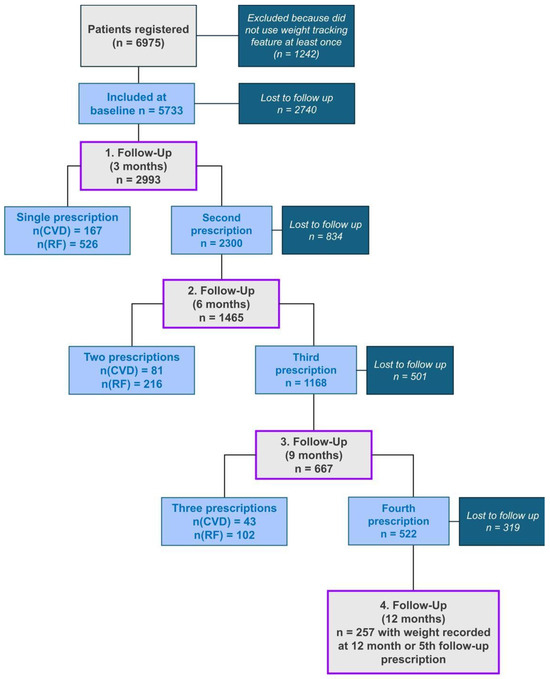
Data collection on self-reported comorbidities as part of the program enables grouping of patients across CVD risk factors including hypertension, obesity-related altered glucose metabolism, and dyslipidemia. Patients are able to select if they have or had diabetes (“Do/Did you have diabetes?”) and subsequently can provide their specific diagnosis through a free text box. Patients with self-reported diabetes were excluded if they reported to have type I diabetes or gestational diabetes resolved post-pregnancy. Patients answering “yes”, providing that their diabetes status is currently in clarification, were also included in the sample. Taken together, within the risk factor group, this subgroup is categorized as obesity-related altered glucose metabolism. Established CVD is also reported by patients. Patients who self-reported use of anti-obesity medication or glucagon-like peptide-1 therapy for the treatment of T2D were not excluded. In total, <3% of the entire cohort self-reported GLP-1-based therapy for T2D with just n = 2 patients reporting GLP-1 indicated for obesity (Saxenda). These patients were included as the self-reporting of medication is optional and we cannot assume those who left this field blank were not prescribed GLP-1 or anti-obesity medication. In this study we included CVD that benefits from obesity treatment such as coronary heart disease, peripheral artery disease, heart failure and stroke. Two distinct samples were analyzed. First, the risk factor sample included 4314 patients that self-reported one of the following risk factors for CVD: hypertension, obesity-related altered glucose metabolism or elevated blood lipid levels (see Table 1). For this sample, patients were excluded if they reported heart disease or history of stroke. For the established CVD sample, patients were included if they self-reported to have any established CVD that benefits from obesity treatment (such as coronary artery disease, heart failure or peripheral artery disease) or previous stroke. The number of patients with self-reported CVD was 1419 in total (see Table 1). The progression of patients through the observational period, from registration through to 12 months, is summarized in the flowchart presented in Figure 1.
Table 1.
Sample baseline characteristics for the two distinct samples based on self-reported comorbidities and optionally reported medication. Top: Patients with self-reported, obesity-related risk factors for CVD, but no CVD. Bottom: Patients with self-reported CVD. In addition, sample characteristics of patients available for follow-ups at 1st, 2nd, 3rd and 4th follow-up at 3, 6, 9 and 12 months respectively. Lost-to-follow-up was defined by either having no weight record at these observation time points or a renewed follow-up prescription period thereafter. Medication use was recorded at onboarding only. The body-mass index (BMI) is the weight in kilograms divided by the square of the height in meters. Age and BMI are presented as means (SD). Incretin therapy use was only assessed at baseline and is therefore n.a at follow up.
Figure 1.
Flow of patients through the observational period included in the study. The number of patients for each follow-up is the sum of patients that either have a weight documented at the respective month during their last prescription (left downwards flow) or that have a follow-up prescription (right downwards flow).
2.4. Data Collection and Ethical Considerations
For this study, the primary outcome of interest was change in body weight which was examined as the relative percentage change from baseline at the end of months 3, 6, 9, and 12 for patients with 1, 2, 3, or 4 prescription codes, respectively. The data included in this study are anonymized, collected as part of the post-market surveillance process of the device required according to MDR Article 61, Annex XIV, and directly through zanadio via patients’ self-reported documentation of body weight. There was no additional procedure for weight data collection in this study other than voluntary weight tracking for the purpose of self-monitoring. The patient’s self-reported pre-treatment BMI, gender, age, and comorbidities were collected during app onboarding. The Ethics Committee of the Hamburg Medical Association confirmed this study “does not fall within the scope of the research projects requiring consultation pursuant to Section 15 (1) of the Professional Code of Conduct for Hamburg Physicians.” (2025-300606-WF).
2.5. Statistical Analysis
All analyses were conducted using R version 4.5.0. Summary statistics were calculated for patient characteristics at baseline, patient characteristics at follow-up and for tracking frequency.
Linear mixed models (LMMs) were fitted using lme4:lmer and all available weight data documented in the app by patients with 1, 2, 3 or minimum 4 prescriptions within the first 3, 6, 9, or 12 months, respectively, since the start of the zanadio program. Percentage weight change was set as the dependent variable. Predictors included time (rounded to full months into the program; levels 0–12), ‘number of prescription codes’ (levels: 1, 2, 3, 4+) and the covariates ‘age’ and ‘pre-treatment BMI’. The predictor ‘number of prescription codes’ was chosen to account for differences in program exposure, allowing stratified reporting of the result.
LMMs can handle missing data and estimate model parameters based on the available date, thus producing robust results under the ‘missing-at-random’ (MAR) assumption. Therefore, the previously described approach will be referred to as the MAR method. MAR results have to be interpreted under this assumption, i.e., that the results hold true for the observable patients; however, a selection bias cannot be ruled out. In order to better understand a potential bias through missing data that is not random, additional analyses with a more conservative assumption were made.
For this sensitivity analysis, per month, a patient’s last observation was carried forward until month 12. This last observation carried forward (LOCF) was used to fit linear mixed models similar to the previous one.
Mixed models were fitted on the full cohorts (n = 4314/1419). For all models, analysis of variance (ANOVA; Type III Wald chi square tests) was performed using car::Anova. Results are reported as marginal means calculated using emmeans::emmeans, and separately by the between-subject factors ‘number of prescriptions’ and ‘gender’. Significance tests were performed for the one-sided hypothesis of ≥5% weight loss (the minimal clinically important difference; MCID) using emmeans::test and adjusted using the Bonferroni method.
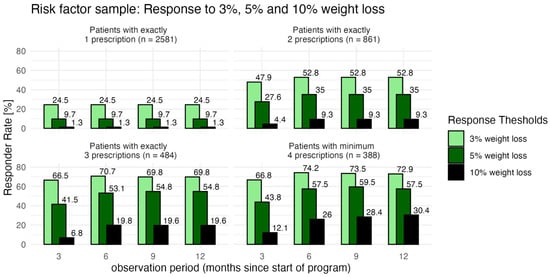
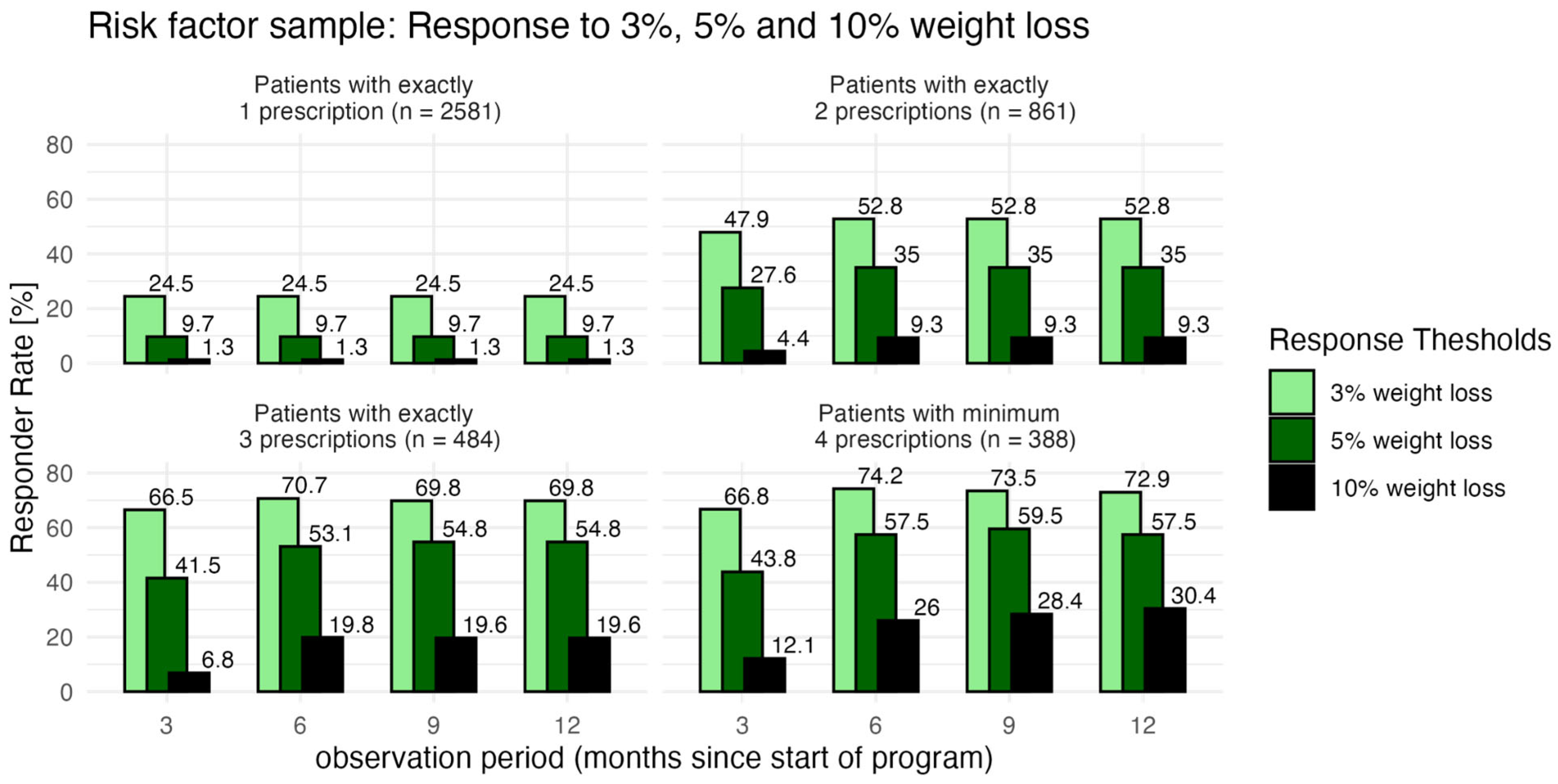
Responder rates to 3%, 5% and 10% weight loss were calculated based on the LOCF values, stratified by number of prescriptions and separately by observation time points at 3, 6, 9 and 12 months.
3. Results
3.1. Treatment Persistence and Weight Tracking
In accordance with clinical guidelines, zanadio is intended for 12 months of treatment for a total of four 3-month prescriptions. Patients are able to get further access to zanadio through their healthcare provider beyond 12 months, which is representative of >4 prescriptions in total. Across the entire cohort treatment persistence declined across the 12-month observation phase. From the 5733 patients at baseline, 2992 (52.2%), 1465 (25.6%), 667 (11.6%) and 257 (4.5%) recorded a weight with the tracking feature of the app or persisted with a follow-up prescription for ≥3, ≥6, ≥9, and ≥12 months respectively. Tracking frequency, recommended to be once a week, also declined over the 12-month observation period. In addition, tracking frequency was higher in patients with more follow-up prescriptions. At month 1, the patient’s tracking frequency was on average 0.78 (±1.19), 1.35 (±1.54), 1.63 (±1.75) and 2.06 (±1.82) records per week for patients with one, two, three and minimum four prescriptions, respectively. Patients with four or more prescriptions decreased their tracking frequency over the course of the program to 1.54 (±1.71), 1.19 (±1.45), 0.88 (±1.44) and 0.52 (±0.56) records per week at 3, 6, 9 and 12 months, respectively.
3.2. Patients with Obesity and Established Cardiovascular Disease
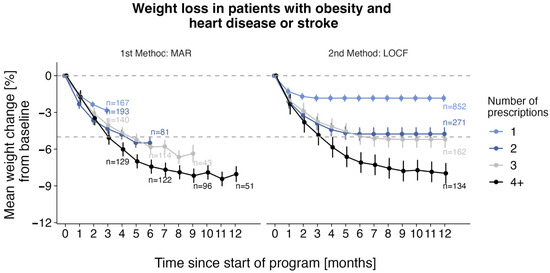
For the LMM using all available weight data from patients with one, two, three and minimum four prescriptions tracked within the first 3, 6, 9 and 12 months of app use, respectively, (MAR method), the ANOVA (Type III Wald chi-square tests) revealed significant main effects of time (X2(12) = 244.5047, p < 0.0001), number of prescription codes (X2(3) = 13.2235, p = 0.0042) and all interaction terms that included the factor ‘time’ were significant. Weight change after 6 months was significantly greater than the MCID of ≥5% from baseline weight for males with exactly two prescriptions (mean = −6.9%, z = −4.856, p < 0.0001) and females with exactly three prescriptions had a significantly higher weight loss than the MCID of ≥5% after 9 months (mean = −7.1, z = −6.3, p < 0.0001). Finally, weight loss after 12 months was significantly higher than 5% in both females (mean = −7.1, z = −6.919, p < 0.0001) and males (mean = −9.0, z = −7.170, p < 0.0001) with at least 4 prescriptions.
For the LMM without missing data using the last observation carried forward method (LOCF method), the ANOVA (Type III Wald chi square tests) revealed a significant main effect of time (X2(12) = 5077.41, p < 0.0001), number of prescription codes (X2(3) = 295.87, p < 0.0001) and all interaction terms that included the factor ‘time’. Overall LOCF was the more conservative assumption: weight loss with the LOCF method was slightly lower compared to the analysis under the MAR assumption. However, weight loss remained significantly higher than the MCID of ≥5% after 6 months for males with two prescriptions (mean = −5.8, z = −1.78, p = 0.0379), after 9 months for females with three prescriptions (mean = −6.4, z = −4.51, p < 0.0001) and after 12 months for both females (mean = −6.9, z = −5.95, p < 0.0001) and males (mean = −9.0, z = −5.28, p < 0.0001) with at least four prescriptions. Results for the MAR and LOCF methods are reported in Table 2 and illustrated in Figure 2.
Table 2.
Mean percentage weight loss and 95% confidence intervals for the two data sets (1) established CVD and (2) CVD risk factors, but no self-reported CVD, separately reported by gender and a patient’s maximum number of prescription codes. Patients are stratified by their total number of activated prescriptions (1, 2, 3, or 4+). Each prescription code allows access to the program for 3 months; therefore, for patients with 1, 2, 3 or at least 4 prescriptions weight loss after 3, 6, 9 or 12 months is reported, respectively. Weight loss is different between male and female patients. Top: Reported are the results from the analysis under the missing-at-random (MAR) assumption. The number of patients in the first column of the table reflects the number of patients in the respective strata at baseline, while column “Follow-Up” represents the number of patients that had a weight tracked during the respective month since first time activation of the app. However, due to gaps between prescriptions, patients may be at different points in the modular program. Bottom: Reported are the results from the analysis using the last observation carried forward (LOCF) method. Under the LOCF assumption, the last documented value was carried forward until month 12 (indicated as ‘3 to 12’, ‘6 to 12’ and ‘9 to 12’); therefore, the baseline sample size equals the sample size at follow-up.
Figure 2.
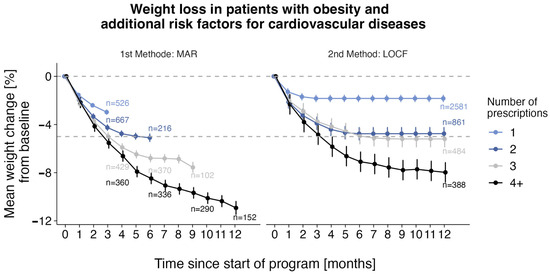
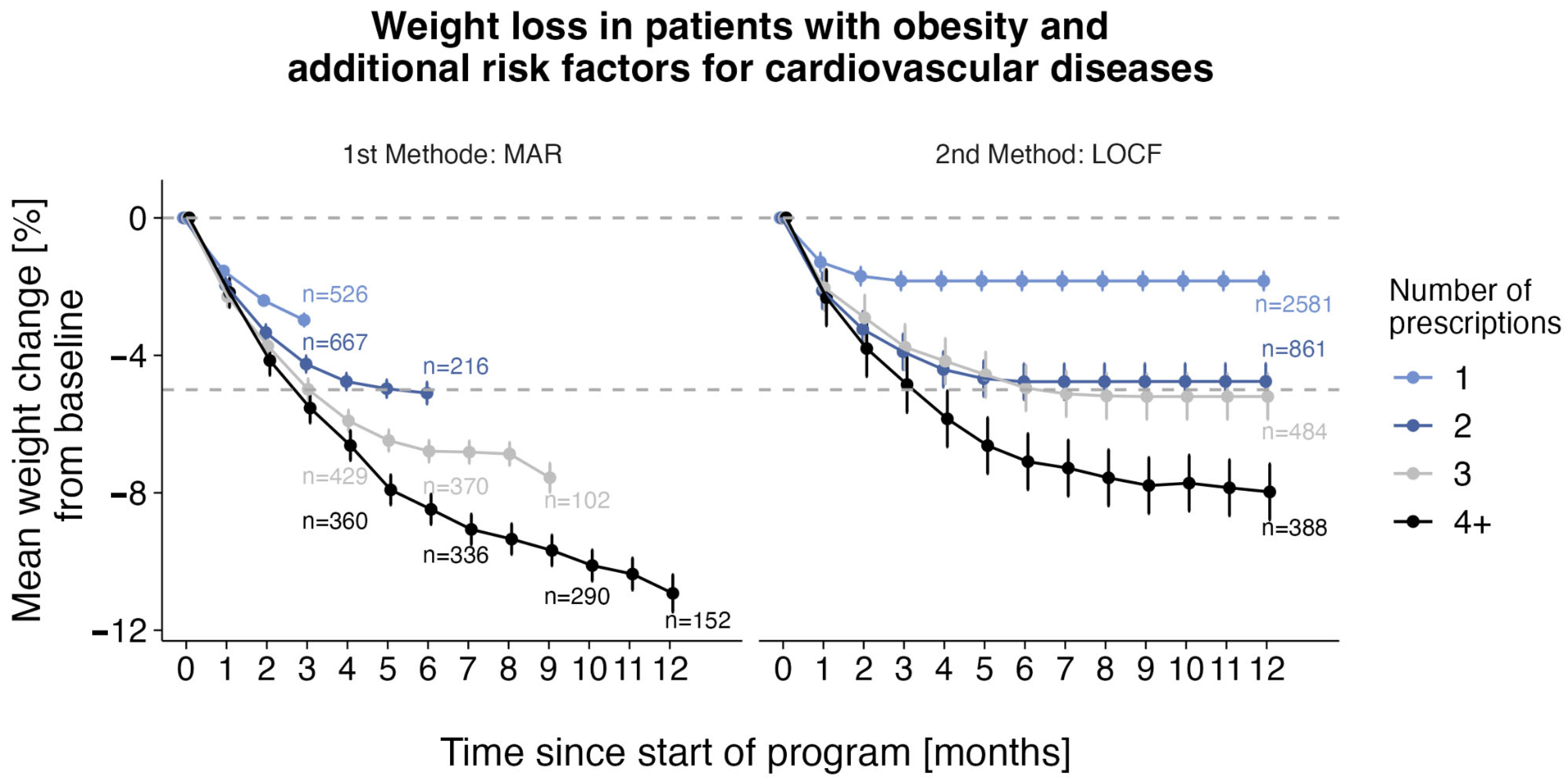
Weight Loss in Patients with Self-Reported Established CVD: For both methods, MAR (left) and LOCF (right), this figure illustrates the mean percentage weight change over 12 months for patients with self-reported CVD, separated by the number of prescriptions and averaged over the levels of gender. The number of patients that had a weight recorded during month 0, 3, 6, 9 and 12 is depicted in the MAR analysis. In the LOCF this number is identical over the course of the 12 months. Patients with less than four prescriptions did not have access to all 12 modules, as each prescription allows three months of access to the program. Therefore MAR data analysis for patients with exactly 1, 2 or 3 prescriptions ends with 3, 6 and 9 months, respectively. LOCF analysis was continued for 12 months. The weight progress for patients with exactly 2 (dark blue) and exactly 3 prescriptions (gray) is similar up to month 6 in the MAR analysis and over the 12-month course in the LOCF analysis. The greatest weight loss can be observed in patients with at least 4 prescriptions. The number of patients included in the analyses and separated by their number of prescription codes is reported in Table 2. Error bars represent 95% confidence intervals. Dashed horizontal lines indicate 0% (no weight loss) and 5% weight loss.
3.3. Patients with Obesity and Self-Reported Obesity-Related Risk Factors for CVD
For the model under the MAR assumption, the ANOVA revealed a significant main effect of time (X2(12) = 274.8706, p < 0.0001) and all interaction terms that included the factor ‘time’ were significant. For male individuals with exactly two prescriptions, weight change after 6 months was significantly better than the MCID (mean = −5.5%, z = −1.696, p = 0.0449). Weight change after 9 months was significantly greater than the MCID for females (mean = −6.6%, z = −6.408, p < 0.0001) and for males (mean = −8.4%, z = −8.714, p < 0.0001) with exactly three prescriptions and after 12 months for females (mean = −8.7, z = −18.660, p < 0.0001) and males (mean = −12.8, z = −14.696, p < 0.0001) with at least four prescriptions (Table 2). Weight change over 12 months averaged over the levels of gender is depicted in Figure 3.
Figure 3.
Weight Loss in Patients with Self-Reported CVD Risk Factors: For both methods, MAR (left) and LOCF (right), this figure illustrates the mean percentage weight change over 12 months for patients with self-reported CV risk factors, separated by the number of prescriptions and averaged over the levels of gender. The weight progress for patients with exactly 2 (dark blue) and exactly 3 prescriptions (gray) is similar up to month 6. The greatest weight loss can be observed in patients with at least 4 prescriptions. The number of patients included in the analyses and separated by their number of prescription codes is reported in Table 2. Error bars represent 95% confidence intervals. Dashed horizontal lines indicate 0% (no weight loss) and 5% weight loss.
For the model under the LOCF assumption, the ANOVA revealed significant main effects of time (X2(12) = 15,616.97, p < 0.0001), age (X2(1) = 8.25, p = 0.0041), gender (X2(1) = 18.7, p < 0.0001) and number of prescriptions (X2(3) = 857.98, p < 0.0001). Also, all interaction terms that included the factor ‘time’ were significant. Weight change after 9 months was significantly better than the MCID of ≥5% for females (mean = −5.9%, z = −4.89, p < 0.0001) and for males (mean = −6.7%, z = −4.41, p = 0.0006) with exactly three prescriptions and after 12 months for females (mean = −7.2, z = −11.52, p < 0.0001) and males (mean = −11.0, z = −10.23, p < 0.0001) with at least four prescriptions (Table 2). Weight change over 12 months averaged over the levels of gender is depicted in Figure 3.
3.4. Responder Rates
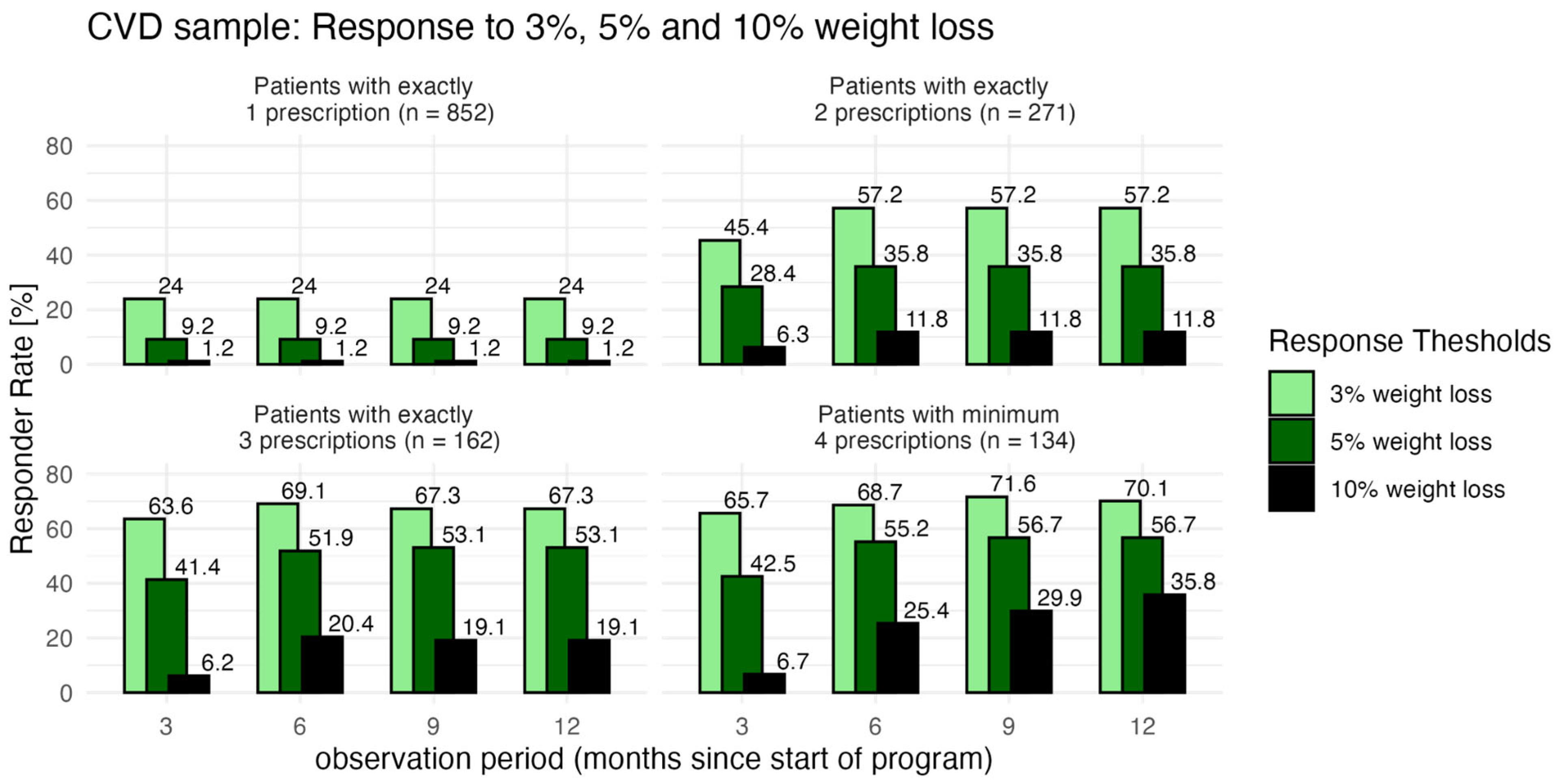
Figure 4 and Figure 5 show responder rates for 3%, 5% and 10% weight loss across patients stratified by their number of prescription codes and reported separately for observation time points 3, 6, 9 or 12 months after the start of the intervention. The panels further separate patients according to their number of prescriptions they registered in the app. Each prescription allows patients to register for 3 more months in the app. Hence, patients with one, two, three or more than four prescriptions have variable observation lengths, with a maximum observation period of 3, 6, 9 and 12 months, respectively.
Figure 4.
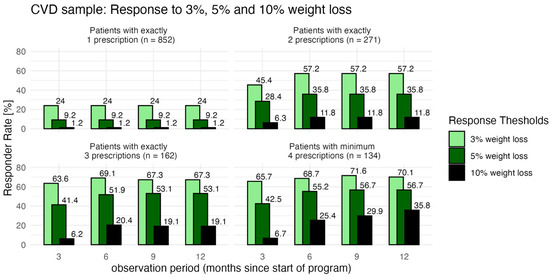
Responder Analysis: In the self-reported established CVD sample, patients with only a single prescription show the lowest response rates at 3 months of intervention. Also patients with exactly 2 prescriptions have lower response rates compared to patients with more prescriptions. Responder rates for patients with 3 or more prescriptions is between 63.6 and 71.6% for the 3% weight loss threshold across all observation time points, while responder rates for 5% weight loss plateau after roughly 6 months between 51.9 and 56.7%. In contrast the responder rates for 10% weight loss continue to increase with rates up to 35.8% for patients with a minimum of 4 prescriptions after 12 months.
Figure 5.
Responder Analysis: Response rates in the sample of patients with self-reported CVD risk factors are only slightly higher compared to those of the CVD sample (see Figure 3). Notably, similar patterns occur: patients with only a single prescription or exactly two prescriptions show lower rates compared to patients with more prescriptions. For those with 3 or more prescriptions the 3% weight loss response rates plateau between 69.8 and 74.2% after 6 months, while responder rates for 5% weight loss plateau between 53.1 and 59.5%. Finally, the responder rates for 10% weight loss continue to increase with rates up to 30.4% for patients with a minimum of 4 prescriptions after 12 months.
4. Discussion
The aim of our study was to examine the effectiveness of zanadio regarding weight loss in patients with obesity and CVD risk factors or self-reported CVD. For this, two types of analyses (MAR and LOCF method) have been conducted to assess weight loss through routinely collected data. Although missing data limits any real-world study, our use of MAR and LOCF provides complementary insights. MAR reflects expected outcomes under optimal engagement patterns, while LOCF offers a conservative reference point as indicated by the results (LOCF < MAR). Notably, for patients continuing prescriptions, missing weight logs do not necessarily indicate non-compliance or failure to complete program modules. Weight tracking is voluntary and intended for self-monitoring; patients may complete modules without recording weight. Hence, both methods (MAR & LOCF), interpreted alongside module completion and tracking behavior, allow for robust assessment of program effectiveness while acknowledging the uncertainty introduced by missing data.
Our findings reveal clinical significant weight loss and show the number of prescriptions was associated with the magnitude of response, when averaged over the levels of gender. To our knowledge, this is the first study to examine the clinical effectiveness of a lifestyle-based therapy delivered via a mobile application as a digital therapeutic in patients with obesity and CVD. It is important to frame these findings against the background of the current literature regarding lifestyle therapy and the primary and secondary prevention of CVD in people with obesity.
Clinically significant weight loss of ≥5% is characterized by favorable changes in blood lipids, blood pressure, multi-organ insulin sensitivity, and beta cell function [27]. The clinical utility of lifestyle-based obesity treatment to favorably impact CVD risk factors with ≥5% weight loss is well established [28]. It is therefore unsurprising that cardiovascular organizations increasingly frame obesity treatments as tools for both primary and secondary prevention of CVD through adequate risk factor management [14].
Obesity-related altered glucose metabolism is a common complication, with many patients converting from prediabetes to T2D. T2D itself is causally linked to CV death due to vascular complications [29]. With obesity directly contributing to the pathogenesis of T2D, there has been a shift in clinical practice toward prioritizing weight management in diabetes care. For example, the American Diabetes Association has established an Obesity Section to promote proactive, rather than reactive, approaches to treating patients with diabetes [30]. The value of this clinical stance is clear when considering the Diabetes Prevention Program, where 10 years post-randomization it was shown that the risk of T2D was reduced by 34% [31].
Although numerous studies have demonstrated that lifestyle therapy is effective in addressing CVD risk factors, there is less robust evidence pertaining to the efficacy of lifestyle therapy in secondary prevention. However, the literature available to date strongly suggests a positive effect on CV outcomes in some patients. Firstly, many Mediterranean diet studies, including the PREMED Trial, have demonstrated the favorable effects on preventing CV events [32]. Here, weight loss is thought to be a determinant of reduced CV incidence, although weight loss-independent effects are also likely causal [33]. In the Da Qing Diabetes Prevention Study, it was shown that in individuals with impaired glucose tolerance, lifestyle therapy reduced the incidence of T2D, CV and all-cause mortality in part through weight loss [34]. The Look AHEAD study examined the effectiveness of lifestyle therapy and weight loss on CV outcomes in patients with T2D. The study was stopped early as CV events were not reduced. However, machine learning post hoc analysis showed that weight loss was associated with a reduction in cardiovascular events across the study population, regardless of baseline HbA1c [35]. It is therefore likely that lifestyle therapy alone can favorably impact CV outcomes in some patients, which calls for much-needed personalized medical support long term and further research.
The SELECT study examined the effect of semaglutide 2.4 mg on CV outcomes in people with obesity without T2D [17]. A 20% reduced risk was observed with just 9% weight loss. Whilst weight loss independent effects of GLP-1 are driving some of this effect, this data, when combined with the Look AHEAD post hoc analysis, should remind us that the clinical utility of lifestyle therapy alone should not be underestimated for responders [36]. Indeed, 21% and 7% of patients in the SELECT control group lost 5% and 10%, respectively [37]. Response to therapy is determined by biological, psychological, and environmental factors [38]. In obesity medicine, the biological aspect has been underappreciated [39]. There is a need to ensure that patients get the right treatment at the right time based on their clinical needs. This requires continuous medical supervision to ascertain the need for maintenance on a specific therapy or switch/escalation based on response. Achieving this will also require changes in treatment access, including a paradigm shift in how key stakeholders view obesity as a disease, as well as appropriate reimbursement for evidence-based interventions.
A major challenge with lifestyle therapy for obesity in real-world settings is achieving both an effective weight loss response and sustained engagement in structured programs. These two outcomes are related but not necessarily interdependent. Previous studies have shown that persistence in real-world lifestyle-based digital therapeutic programs for obesity are notably low even when combined with HCP coaching [40,41]. In our sample, persistence declined across prescription phases (52.2%, 25.6%, 11.6% and 4.5% at 3, 6, 9, and 12). The directional implication of this attrition pattern is important: those contributing weight data at later timepoints are potentially a cohort of individuals with a favorable biological response to treatment who are also highly motivated, and the reported weight loss outcomes may not be generalized to all patients prescribed zanadio. While this is overall superior to that described by a similar digital therapeutic for obesity in Germany with persistence of 37%, 16.4% and 3.8% at 3, 6 and 12 months, it highlights the need to move these types of solutions into a model of care for obesity to ensure barriers to longitudinal engagement are addressed [41]. Moreover, low persistence in structured lifestyle treatment is not unique to the digital treatment of obesity. The EUROASPIRE surveys have also highlighted challenges in commencement and subsequent engagement and retention in structured cardiovascular prevention and rehabilitation programs across Europe [42]. This suggests that long-term engagement and retention to lifestyle change programs in chronic disease management is not unique to obesity alone but rather remains a wider challenge in overall chronic cardiometabolic care.
The determinants of weight loss response and long-term engagement for any obesity therapy, including pharmacotherapy, are complex and include physiological, psychological, social, and structural factors [43,44]. While we can only speculate, it is reasonable to assume that multiple factors influenced program persistence in this cohort. In Germany, while obesity is recognized as a chronic disease, perceptions and beliefs of patients and prescribers are often misaligned and present as a barrier to effective long-term care [45]. Combined with patients achieving weight loss that may be perceived as insufficient or below expectations, it is unsurprising that drop-out rates are high. Addressing these barriers is critical to ensure that obesity therapies—both lifestyle-based and pharmacological—are implemented at the right time and adhered to adequately.
An underexplored area is the impact of gender on response to treatment. While women appear to respond better relative to males with GLP-1-based therapy the opposite is observed with lifestyle therapy [46,47,48,49,50]. Whilst our analysis was limited by sample size a clear trend across subgroups was that men lost more weight than women. It is unclear what may be driving this, although it may be related to hormonal differences as the average age of female participants was 48 to 53 years of age, indicating the potential role of changes in estrogen which is involved in appetite and body weight regulation [51].
Our data support previous observations that females outnumber males in obesity clinical trials and real-world treatment [52]. The driver of this phenomenon is thought to be due to differences in attitudes and beliefs about weight with men less likely to view themselves as living with excess weight whilst concomitantly being less likely to present with weight dissatisfaction or perceive a need for weight management [53,54]. As a consequence, men compared to women may receive treatment at a later stage of their disease when disease burden is high. This is indicated by a higher proportion of men in this study of CVD patients and those at risk for CVD compared to samples in the previous studies [25,26].
Our study has several important limitations: medical history, medication intake and body weight were self-reported, and the available onboarding information did not allow for precise differentiation within the subgroup reporting obesity-related altered glucose metabolism. In addition, the retrospective observational design and the lack of a connection to electronic health record data limit clinical interpretation beyond self-reported weight change. This did not allow us to examine long-term changes to both weight and cardiometabolic risk factors. Further research should explore strategies to attenuate the phenomenon of weight regain to maintain cardioprotective effects through novel approaches [55,56]. Missing data may not have occurred by chance; therefore, the results of both the MAR and LOCF analyses should be interpreted with caution. The pattern of attrition observed in this study may reflect a responder bias, whereby individuals who continued tracking weight and renewing prescriptions are likely to represent individuals with a favorable biological response to treatment who are a more motivated and engaged subset of the broader population prescribed zanadio.
The mean age of the cohort was 48 and 53 years for the risk factor and established CVD groups respectively. While these ages do not represent an elderly population, variation in digital literacy across this age range cannot be excluded and may have influenced engagement with the app and study results. Individuals with lower digital proficiency may have been less likely to utilize self-monitoring features such as weight tracking, potentially contributing to missing data in a non-random manner. This is relevant to the interpretation of both the MAR and LOCF analyses and should be considered alongside the other self-reported data limitations described above.
Furthermore, granular engagement data such as module completion rates and app login frequency were not incorporated into this analysis. The use of prescription codes as a proxy for program exposure, while administratively meaningful, does not capture the depth of individual engagement with therapeutic content. Future analyses linking engagement metrics with weight outcomes would meaningfully advance understanding of the active components driving treatment response in this population.
Of note, the only GLP-1 therapy indicated for obesity available in Germany during the study period was Saxenda (liraglutide), reported by only n = 2 patients in the entire cohort. While unreported use of Saxenda or off-label use of GLP-1 therapy prescribed for T2D cannot be excluded, fewer than 3% of the cohort reported any GLP-1 or incretin-based therapy. The potential for undetected concomitant medication use remains a limitation of this study.
Taken together, these results are best understood as a pragmatic, real-world description of self-reported weight curves during the use of zanadio, especially in patients who continued treatment, rather than as confirmatory evidence of the effectiveness of cardiovascular outcomes. Future work should link app-based data with routine clinical data to better assess persistence, drug use, and long-term cardiometabolic outcomes. In addition, future research should examine the potential for digital solutions to address the burden of maternal obesity which has a well documented downstream impact on cardiometabolic disease risk [57]. The strengths of this study were its pragmatic nature, occurring in real-world settings building on the efficacy data for zanadio [26]. Overall, our findings align with recent frameworks from the Lancet Commission and the European Association for the Study of Obesity that underline the need for healthcare professionals, policymakers, and payers to treat obesity effectively by preventing and ameliorating clinical manifestations [1,2]. We aim to build on these findings by integrating future data collection efforts via interoperability with the broader digital health infrastructure, particularly electronic health record systems, enabling assessment of long-term impacts on medication use, disease-specific endpoints, and mortality [24].
5. Conclusions
In this real-world observational analysis of adults with obesity and self-reported cardiovascular risk factors or cardiovascular disease, clinically significant self-reported weight loss was observed in patients who continued treatment with zanadio. However, the interpretation of these results is limited by self-reported data, significant drop-out and uncertainties associated with missing data. zanadio could therefore be considered a potentially useful part of routine obesity care for selected patients engaged in treatment, but further research with more extensive clinical follow-up is needed.
Supplementary Materials
The following supporting information can be downloaded at: https://www.mdpi.com/article/10.3390/obesities6040051/s1, Table S1: Strobe Checklist.
Author Contributions
Conceptualization, A.G. (Andrew Grannell), S.C., D.O.A., S.J.O. and K.W.; methodology, A.G. (Andrew Grannell), D.O.A., S.J.O. and K.W.; formal analysis, A.G. (Andrew Grannell) and K.W.; writing—original draft preparation, A.G. (Andrew Grannell), D.O.A., S.J.O. and K.W.; writing—review and editing, K.W., R.Z., A.G. (Annika Gentz), S.J.O., T.H., D.O.A. and A.G. (Andrew Grannell); supervision, A.G. (Andrew Grannell). All authors have read and agreed to the published version of the manuscript.
Funding
This research received no external funding.
Institutional Review Board Statement
Ethical review and approval were waived for this study because the Ethics Committee of the Hamburg Medical Association confirmed that this study “does not fall within the scope of the research projects requiring consultation pursuant to Section 15 (1) of the Professional Code of Conduct for Hamburg Physicians” (2025-300606-WF).
Informed Consent Statement
Upon enrollment to the treatment program, patients provided written informed consent that their data stored in the zanadio app could be used for scientific purposes.
Data Availability Statement
The data analyzed in this study consist of de-identified real-world data collected during routine use of the zanadio digital therapeutic (Hamburg, Germany). The datasets are not publicly available because they contain sensitive health information and are subject to data protection regulations (including the General Data Protection Regulation [GDPR]). De-identified data supporting the findings of this study may be made available to qualified researchers upon reasonable request to the corresponding author or Sidekick Health, subject to applicable ethical approvals, data protection requirements, and execution of an appropriate data-sharing agreement.
Conflicts of Interest
K.W., R.Z., A.G. (Annika Gentz), S.C., S.J.O. and A.G. (Andrew Grannell) are employees of Sidekick Health. T.H. and D.O.A. report no conflicts of interest.
Correction Statement
This article has been republished with a minor correction of the information included in the Institutional Review Board Statement. This change does not affect the scientific content of the article.
References
- Rubino, F.; Batterham, R.L.; Koch, M.; Mingrone, G.; Le Roux, C.W.; Farooqi, I.S.; Farpour-Lambert, N.; Gregg, E.W.; Cummings, D.E. Lancet Diabetes & Endocrinology Commission on the Definition and Diagnosis of Clinical Obesity. Lancet Diabetes Endocrinol. 2023, 11, 226–228. [Google Scholar] [CrossRef] [Scilit]
- Busetto, L.; Dicker, D.; Frühbeck, G.; Halford, J.C.G.; Sbraccia, P.; Yumuk, V.; Goossens, G.H. A new framework for the diagnosis, staging and management of obesity in adults. Nat. Med. 2024, 30, 2395–2399. [Google Scholar] [CrossRef] [Scilit] [PubMed]
- Grannell, A.; Le Roux, C. Obesity as a disease: A pressing need for alignment. Int. J. Obes. 2024, 48, 1361–1362. [Google Scholar] [CrossRef] [Scilit] [PubMed]
- Frühbeck, G.; Busetto, L.; Dicker, D.; Yumuk, V.; Goossens, G.H.; Hebebrand, J.; Halford, J.G.; Farpour-Lambert, N.J.; Blaak, E.E.; Woodward, E.; et al. The ABCD of Obesity: An EASO Position Statement on a Diagnostic Term with Clinical and Scientific Implications. Obes. Facts 2019, 12, 131–136. [Google Scholar] [CrossRef] [Scilit] [PubMed]
- Luengo-Fernandez, R.; Walli-Attaei, M.; Gray, A.; Torbica, A.; Maggioni, A.P.; Huculeci, R.; Bairami, F.; Aboyans, V.; Timmis, A.D.; Vardas, P.; et al. Economic burden of cardiovascular diseases in the European Union: A population-based cost study. Eur. Heart J. 2023, 44, 4752–4767. [Google Scholar] [CrossRef] [Scilit] [PubMed]
- Shariq, O.A.; McKenzie, T.J. Obesity-related hypertension: A review of pathophysiology, management, and the role of metabolic surgery. Gland. Surg. 2020, 9, 80–93. [Google Scholar] [CrossRef] [Scilit] [PubMed]
- Klop, B.; Elte, J.W.F.; Cabezas, M.C. Dyslipidemia in obesity: Mechanisms and potential targets. Nutrients 2013, 5, 1218–1240. [Google Scholar] [CrossRef] [Scilit] [PubMed]
- Welsh, A.; Hammad, M.; Piña, I.L.; Kulinski, J. Obesity and cardiovascular health. Eur. J. Prev. Cardiol. 2024, 31, 1026–1035. [Google Scholar] [CrossRef] [Scilit] [PubMed]
- Balakrishnan, V.S. Europe’s obesity burden on the rise: WHO report. Lancet Diabetes Endocrinol. 2022, 10, 488. [Google Scholar] [CrossRef] [Scilit] [PubMed]
- Cornier, M.A. A review of current guidelines for the treatment of obesity. Am. J. Manag. Care 2022, 28, S288–S296. [Google Scholar] [CrossRef] [Scilit] [PubMed]
- Powell-Wiley, T.M.; Poirier, P.; Burke, L.E.; Després, J.-P.; Gordon-Larsen, P.; Lavie, C.J.; Lear, S.A.; Ndumele, C.E.; Neeland, I.J.; Sanders, P.; et al. Obesity and Cardiovascular Disease: A Scientific Statement From the American Heart Association. Circulation 2021, 143, e984–e1010. [Google Scholar] [CrossRef] [Scilit] [PubMed]
- Look AHEAD Research Group; Gregg, E.; Jakicic, J.; Blackburn, G.; Bloomquist, P.; Bray, G.; Clark, J.; Coday, M.; Curtis, J.; Egan, C.; et al. Association of the magnitude of weight loss and changes in physical fitness with long-term cardiovascular disease outcomes in overweight or obese people with type 2 diabetes: A post-hoc analysis of the Look AHEAD randomised clinical trial. Lancet Diabetes Endocrinol. 2016, 4, 913–921. [Google Scholar] [CrossRef] [Scilit] [PubMed]
- Gregg, E.W.; Chen, H.; Bancks, M.P.; Manalac, R.; Maruthur, N.; Munshi, M.; Wing, R. For the Look AHEAD Research Group Impact of remission from type 2 diabetes on long-term health outcomes: Findings from the Look AHEAD study. Diabetologia 2024, 67, 459–469. [Google Scholar] [CrossRef] [Scilit] [PubMed]
- Koskinas, K.C.; Van Craenenbroeck, E.M.; Antoniades, C.; Blüher, M.; Gorter, T.M.; Hanssen, H.; Marx, N.; McDonagh, T.A.; Mingrone, G.; Rosengren, A.; et al. Obesity and cardiovascular disease: An ESC clinical consensus statement. Eur. Heart J. 2024, 45, 4063–4098. [Google Scholar] [CrossRef] [Scilit] [PubMed]
- Caterson, I.D.; Alfadda, A.A.; Auerbach, P.; Coutinho, W.; Cuevas, A.; Dicker, D.; Hughes, C.; Iwabu, M.; Kang, J.; Nawar, R.; et al. Gaps to bridge: Misalignment between perception, reality and actions in obesity. Diabetes Obes. Metab. 2019, 21, 1914–1924. [Google Scholar] [CrossRef] [Scilit] [PubMed]
- Marso, S.P.; Bain, S.C.; Consoli, A.; Eliaschewitz, F.G.; Jódar, E.; Leiter, L.A.; Lingvay, I.; Rosenstock, J.; Seufert, J.; Warren, M.L.; et al. Semaglutide and Cardiovascular Outcomes in Patients with Type 2 Diabetes. N. Engl. J. Med. 2016, 375, 1834–1844. [Google Scholar] [CrossRef] [Scilit] [PubMed]
- Lincoff, A.M.; Brown-Frandsen, K.; Colhoun, H.M.; Deanfield, J.; Emerson, S.S.; Esbjerg, S.; Hardt-Lindberg, S.; Hovingh, G.K.; Kahn, S.E.; Kushner, R.F.; et al. Semaglutide and Cardiovascular Outcomes in Obesity without Diabetes. N. Engl. J. Med. 2023, 389, 2221–2232. [Google Scholar] [CrossRef] [Scilit] [PubMed]
- Romeo, S.; Vidal-Puig, A.; Husain, M.; Ahima, R.; Arca, M.; Bhatt, D.L.; Diehl, A.M.; Fontana, L.; Foo, R.; Frühbeck, G.; et al. Clinical staging to guide management of metabolic disorders and their sequelae: A European Atherosclerosis Society consensus statement. Eur. Heart J. 2025, 46, 3685–3713. [Google Scholar] [CrossRef] [Scilit] [PubMed]
- Gilbert, O.; Gulati, M.; Gluckman, T.J.; Kittleson, M.M.; Rikhi, R.; Saseen, J.J.; Tchang, B.G. 2025 Concise Clinical Guidance: An ACC Expert Consensus Statement on Medical Weight Management for Optimization of Cardiovascular Health: A Report of the American College of Cardiology Solution Set Oversight Committee. J. Am. Coll. Cardiol. 2025, 86, 536–555. [Google Scholar] [CrossRef] [Scilit] [PubMed]
- Chiavarini, M.; Giacchetta, I.; Rosignoli, P.; Fabiani, R. E-Health and M-Health in Obesity Management: A Systematic Review and Meta-Analysis of RCTs. Nutrients 2025, 17, 2200. [Google Scholar] [CrossRef] [Scilit] [PubMed]
- Bertini, A.; Bahamondes, M.; Rojas, J.; Puebla, P.; Rodriguez, S.; Quijada, J. Telemedicine and Digital Health Interventions for the Management of Metabolic Syndrome: A Systematic Review of Clinical Outcomes. Telemed. E-Health 2026, 21, 15305627261443161. [Google Scholar]
- Nunns, M.; Febrey, S.; Abbott, R.; Buckland, J.; Whear, R.; Shaw, L.; Bethel, A.; Boddy, K.; Coon, J.T.; Melendez-Torres, G.J. Evaluation of the Aspects of Digital Interventions That Successfully Support Weight Loss: Systematic Review With Component Network Meta-Analysis. J. Med. Internet Res. 2025, 27, e65443. [Google Scholar] [CrossRef] [Scilit] [PubMed]
- Nguyen, A.M.; Rivera, A.M.; Gualtieri, L. A New Health Care Paradigm: The Power of Digital Health and E-Patients. Mayo Clin. Proc. Digit. Health 2023, 1, 203–209. [Google Scholar] [CrossRef] [Scilit] [PubMed]
- Schmidt, L.; Pawlitzki, M.; Renard, B.Y.; Meuth, S.G.; Masanneck, L. The three-year evolution of Germany’s Digital Therapeutics reimbursement program and its path forward. npj Digit. Med. 2024, 7, 139. [Google Scholar] [CrossRef] [Scilit] [PubMed]
- Forkmann, K.; Roth, L.; Mehl, N. Introducing zanadio-A Digitalized, Multimodal Program to Treat Obesity. Nutrients 2022, 14, 3172. [Google Scholar] [CrossRef] [Scilit] [PubMed]
- Roth, L.; Ordnung, M.; Forkmann, K.; Mehl, N.; Horstmann, A. A randomized-controlled trial to evaluate the app-based multimodal weight loss program zanadio for patients with obesity. Obesity 2023, 31, 1300–1310. [Google Scholar] [CrossRef] [Scilit] [PubMed]
- Magkos, F.; Fraterrigo, G.; Yoshino, J.; Luecking, C.; Kirbach, K.; Kelly, S.C.; De Las Fuentes, L.; He, S.; Okunade, A.L.; Patterson, B.W.; et al. Effects of Moderate and Subsequent Progressive Weight Loss on Metabolic Function and Adipose Tissue Biology in Humans with Obesity. Cell Metab. 2016, 23, 591–601. [Google Scholar] [CrossRef] [Scilit] [PubMed]
- Wing, R.R.; Lang, W.; Wadden, T.A.; Safford, M.; Knowler, W.C.; Bertoni, A.G.; Hill, J.O.; Brancati, F.L.; Peters, A.; Wagenknecht, L.; et al. Benefits of modest weight loss in improving cardiovascular risk factors in overweight and obese individuals with type 2 diabetes. Diabetes Care 2011, 34, 1481–1486. [Google Scholar] [CrossRef] [Scilit] [PubMed]
- Einarson, T.R.; Acs, A.; Ludwig, C.; Panton, U.H. Prevalence of cardiovascular disease in type 2 diabetes: A systematic literature review of scientific evidence from across the world in 2007-2017. Cardiovasc. Diabetol. 2018, 17, 83. [Google Scholar] [CrossRef] [Scilit] [PubMed]
- Bannuru, R.R.; ADA Professional Practice Committee (PPC). Introduction and methodology: Standards of Care in Overweight and Obesity-2025. BMJ Open Diabetes Res. Care 2025, 13, e004928. [Google Scholar] [CrossRef] [Scilit] [PubMed]
- Diabetes Prevention Program Research Group. 10-year follow-up of diabetes incidence and weight loss in the Diabetes Prevention Program Outcomes Study. Lancet 2009, 374, 1677–1686. [Google Scholar] [CrossRef] [Scilit] [PubMed]
- Estruch, R.; Ros, E.; Salas-Salvadó, J.; Covas, M.-I.; Corella, D.; Arós, F.; Gómez-Gracia, E.; Ruiz-Gutiérrez, V.; Fiol, M.; Lapetra, J.; et al. Primary Prevention of Cardiovascular Disease with a Mediterranean Diet Supplemented with Extra-Virgin Olive Oil or Nuts. N. Engl. J. Med. 2018, 378, e34. [Google Scholar] [CrossRef] [Scilit] [PubMed]
- Hareer, L.W.; Lau, Y.Y.; Mole, F.; Reidlinger, D.P.; O’NEill, H.M.; Mayr, H.L.; Greenwood, H.; Albarqouni, L. The effectiveness of the Mediterranean Diet for primary and secondary prevention of cardiovascular disease: An umbrella review. Nutr. Diet. 2025, 82, 8–41. [Google Scholar] [CrossRef] [Scilit] [PubMed]
- Li, G.; Zhang, P.; Wang, J.; An, Y.; Gong, Q.; Gregg, E.W.; Yang, W.; Zhang, B.; Shuai, Y.; Hong, J.; et al. Cardiovascular mortality, all-cause mortality, and diabetes incidence after lifestyle intervention for people with impaired glucose tolerance in the Da Qing Diabetes Prevention Study: A 23-year follow-up study. Lancet Diabetes Endocrinol. 2014, 2, 474–480. [Google Scholar] [CrossRef] [Scilit] [PubMed]
- Baum, A.; Scarpa, J.; Bruzelius, E.; Tamler, R.; Basu, S.; Faghmous, J. Targeting weight loss interventions to reduce cardiovascular complications of type 2 diabetes: A machine learning-based post-hoc analysis of heterogeneous treatment effects in the Look AHEAD trial. Lancet Diabetes Endocrinol. 2017, 5, 808–815. [Google Scholar] [CrossRef] [Scilit] [PubMed]
- Deanfield, J.; Lincoff, A.M.; Kahn, S.E.; Emerson, S.S.; Lingvay, I.; Scirica, B.M.; Plutzky, J.; Kushner, R.F.; Colhoun, H.M.; Hovingh, G.K.; et al. Semaglutide and cardiovascular outcomes by baseline and changes in adiposity measurements: A prespecified analysis of the SELECT trial. Lancet 2025, 406, 2257–2268. [Google Scholar] [CrossRef] [Scilit] [PubMed]
- Ryan, D.H.; Lingvay, I.; Deanfield, J.; Kahn, S.E.; Barros, E.; Burguera, B.; Colhoun, H.M.; Cercato, C.; Dicker, D.; Horn, D.B.; et al. Long-term weight loss effects of semaglutide in obesity without diabetes in the SELECT trial. Nat. Med. 2024, 30, 2049–2057. [Google Scholar] [CrossRef] [Scilit] [PubMed]
- Tahrani, A.A.; Panova-Noeva, M.; Schloot, N.C.; Hennige, A.M.; Soderberg, J.; Nadglowski, J.; Tarasenko, L.; Ahmad, N.N.; Sleypen, B.S.; Bravo, R.; et al. Stratification of obesity phenotypes to optimize future therapy (SOPHIA). Expert Rev. Gastroenterol. Hepatol. 2023, 17, 1031–1039. [Google Scholar] [CrossRef] [Scilit] [PubMed]
- Sumithran, P.; Prendergast, L.A.; Delbridge, E.; Purcell, K.; Shulkes, A.; Kriketos, A.; Proietto, J. Long-term persistence of hormonal adaptations to weight loss. N. Engl. J. Med. 2011, 365, 1597–1604. [Google Scholar] [CrossRef] [Scilit] [PubMed]
- Lehmann, M.; Jones, L.; Schirmann, F. App engagement as a predictor of weight loss in blended-care interventions: Retrospective observational study using large-scale real-world data. J. Med. Internet Res. 2024, 26, e45469. [Google Scholar] [CrossRef] [Scilit] [PubMed]
- Schirmann, F.; Kanehl, P.; Jones, L. What intervention elements drive weight loss in Blended-Care behavior change interventions? A real-world data analysis with 25,706 patients. Nutrients 2022, 14, 2999. [Google Scholar] [CrossRef] [Scilit] [PubMed]
- De Bacquer, D.; Astin, F.; Kotseva, K.; Pogosova, N.; De Smedt, D.; De Backer, G.; Rydén, L.; Wood, D.; Jennings, C. For the EUROASPIRE IV and V surveys of the European Observational Research Programme of the European Society of Cardiology. Poor adherence to lifestyle recommendations in patients with coronary heart disease: Results from the EUROASPIRE surveys. Eur. J. Prev. Cardiol. 2022, 29, 383–395. [Google Scholar] [CrossRef] [Scilit] [PubMed]
- Dhurandhar, N.V.; Kyle, T.; Stevenin, B.; Tomaszewski, K. The ACTION Steering Group. Predictors of weight loss outcomes in obesity care: Results of the national ACTION study. Obesity 2018, 26, 61–69. [Google Scholar] [CrossRef] [Scilit]
- Martins, C.; Roekenes, J.A.; Rehfeld, J.F.; Hunter, G.R.; Gower, B.A. Metabolic adaptation is associated with a greater increase in appetite following weight loss: A longitudinal study. Am. J. Clin. Nutr. 2023, 118, 1192–1201. [Google Scholar] [CrossRef] [Scilit] [PubMed]
- Wangler, J.; Jansky, M. How are people with obesity managed in primary care?–results of a qualitative, exploratory study in Germany 2022. Arch. Public Health 2023, 81, 196. [Google Scholar] [CrossRef] [Scilit] [PubMed]
- Börchers, S.; Skibicka, K.P. GLP-1 and Its Analogs: Does Sex Matter? Endocrinology 2025, 166, bqae165. [Google Scholar] [CrossRef] [Scilit] [PubMed]
- Bhogal, M.S.; Langford, R. Gender differences in weight loss; evidence from a NHS weight management service. Public Health 2014, 128, 811–813. [Google Scholar] [CrossRef] [Scilit] [PubMed]
- Williams, R.L.; Wood, L.G.; Collins, C.E.; Callister, R. Effectiveness of weight loss interventions--is there a difference between men and women: A systematic review. Obes. Rev. 2015, 16, 171–186. [Google Scholar] [CrossRef] [Scilit] [PubMed]
- Susanto, A.; Fuller, N.R.; Hocking, S.; Markovic, T.; Gill, T. Motivations for participation in weight loss clinical trials. Clin. Obes. 2023, 13, e12604. [Google Scholar] [CrossRef] [Scilit] [PubMed]
- Christensen, P.; Larsen, T.M.; Westerterp-Plantenga, M.; Macdonald, I.; Martinez, J.A.; Handjiev, S.; Poppitt, S.; Hansen, S.; Ritz, C.; Astrup, A.; et al. Men and women respond differently to rapid weight loss: Metabolic outcomes of a multi-centre intervention study after a low-energy diet in 2500 overweight, individuals with pre-diabetes (PREVIEW). Diabetes Obes. Metab. 2018, 20, 2840–2851. [Google Scholar] [CrossRef] [Scilit] [PubMed]
- Holliday, A.; Horner, K.; Johnson, K.O.; Dagbasi, A.; Crabtree, D.R. Appetite-related Gut Hormone Responses to Feeding Across the Life Course. J. Endocr. Soc. 2025, 9, bvae223. [Google Scholar] [CrossRef] [Scilit] [PubMed]
- Johnson-Mann, C.N.; Cupka, J.S.; Ro, A.; Davidson, A.E.; Armfield, B.A.; Miralles, F.; Markal, A.; Fierman, K.E.; Hough, V.; Newsom, M.; et al. A Systematic Review on Participant Diversity in Clinical Trials-Have We Made Progress for the Management of Obesity and Its Metabolic Sequelae in Diet, Drug, and Surgical Trials. J. Racial Ethn. Health Disparities 2023, 10, 3140–3149. [Google Scholar] [CrossRef] [Scilit] [PubMed]
- Tsai, S.A.; Lv, N.; Xiao, L.; Ma, J. Gender Differences in Weight-Related Attitudes and Behaviors Among Overweight and Obese Adults in the United States. Am. J. Mens. Health 2016, 10, 389–398. [Google Scholar] [CrossRef] [Scilit] [PubMed]
- Muscogiuri, G.; Verde, L.; Vetrani, C.; Barrea, L.; Savastano, S.; Colao, A. Obesity: A gender-view. J. Endocrinol. Investig. 2024, 47, 299–306. [Google Scholar] [CrossRef] [Scilit] [PubMed]
- Quang, D.T.; Di Khanh, N.; Le Cu, L.; Hoa, H.N.T.; Quynh, C.V.T.; Ngoc, Q.P.; Thi, T.B. Partially unraveling mechanistic underpinning and weight loss effects of time-restricted eating across diverse adult populations: A systematic review and meta-analyses of prospective studies. PLoS ONE 2025, 20, e0314685. [Google Scholar] [CrossRef] [Scilit] [PubMed]
- Świątkiewicz, I.; Nuszkiewicz, J.; Wróblewska, J.; Nartowicz, M.; Sokołowski, K.; Sutkowy, P.; Rajewski, P.; Buczkowski, K.; Chudzińska, M.; Manoogian, E.N.C.; et al. Feasibility and cardiometabolic effects of time-restricted eating in patients with metabolic syndrome. Nutrients 2024, 16, 1802. [Google Scholar] [CrossRef] [Scilit] [PubMed]
- Rousian, M.; de Bruin, R.J.; Visser, E.J.A.-D.; Poley, M.J.; Schonewille-Rosman, A.N.; Broeke, P.T.; Figueroa, C.A.; Jeekel, P.; Fabbricotti, I.N.; Steegers-Theunissen, R.P.; et al. Further development and (cost-) effectiveness of the Smarter Pregnancy lifestyle program tailored for pregnant women with obesity (HYGEIA trial). BMC Pregnancy Childbirth 2026, 26, 686. [Google Scholar] [CrossRef] [Scilit] [PubMed]

Disclaimer/Publisher’s Note: The statements, opinions and data contained in all publications are solely those of the individual author(s) and contributor(s) and not of MDPI and/or the editor(s). MDPI and/or the editor(s) disclaim responsibility for any injury to people or property resulting from any ideas, methods, instructions or products referred to in the content. |
© 2026 by the authors. Licensee MDPI, Basel, Switzerland. This article is an open access article distributed under the terms and conditions of the Creative Commons Attribution (CC BY) license.