
Associations Between the Maternal Blood Microbiome During Pregnancy and Early Childhood Growth Trajectories: A Pilot Study

 , , ,
, , ,
Abstract
1. Introduction
2. Methods
2.1. Study Participants
2.2. Maternal Data Collection
2.3. Child Measures
2.4. Prenatal Blood Microbiome Analysis
2.5. Prenatal Metabolomics Analysis
2.6. Data Analysis
3. Results
3.1. Characteristics of the Study Subjects
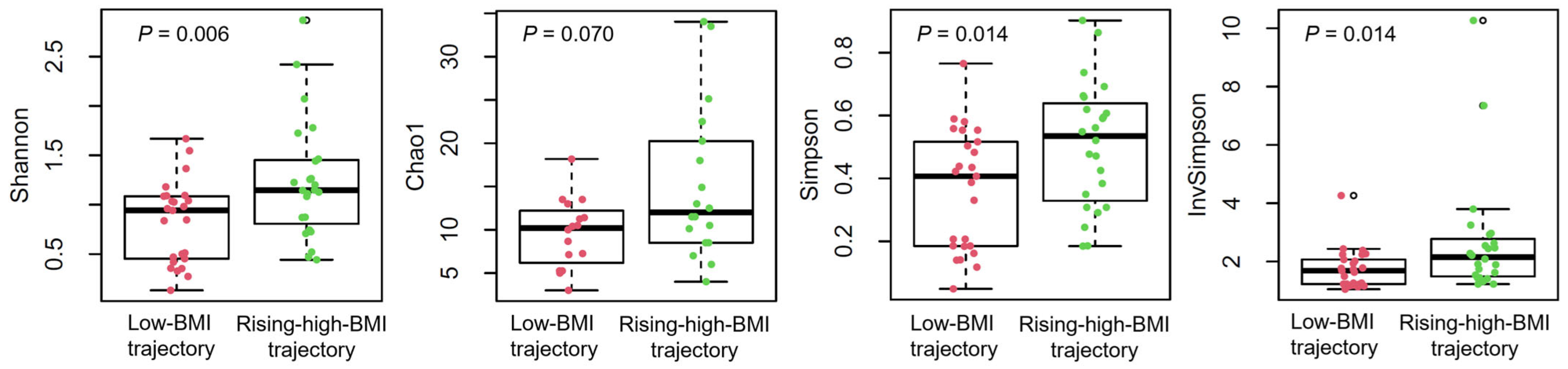
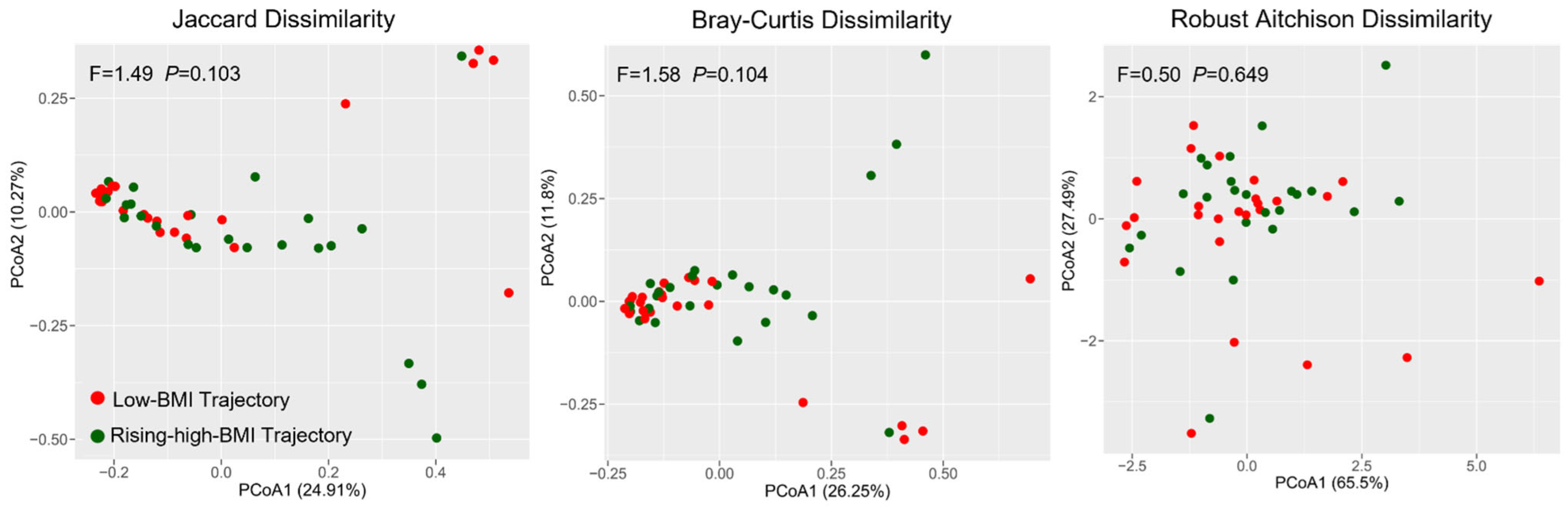
3.2. Diversity Analyses
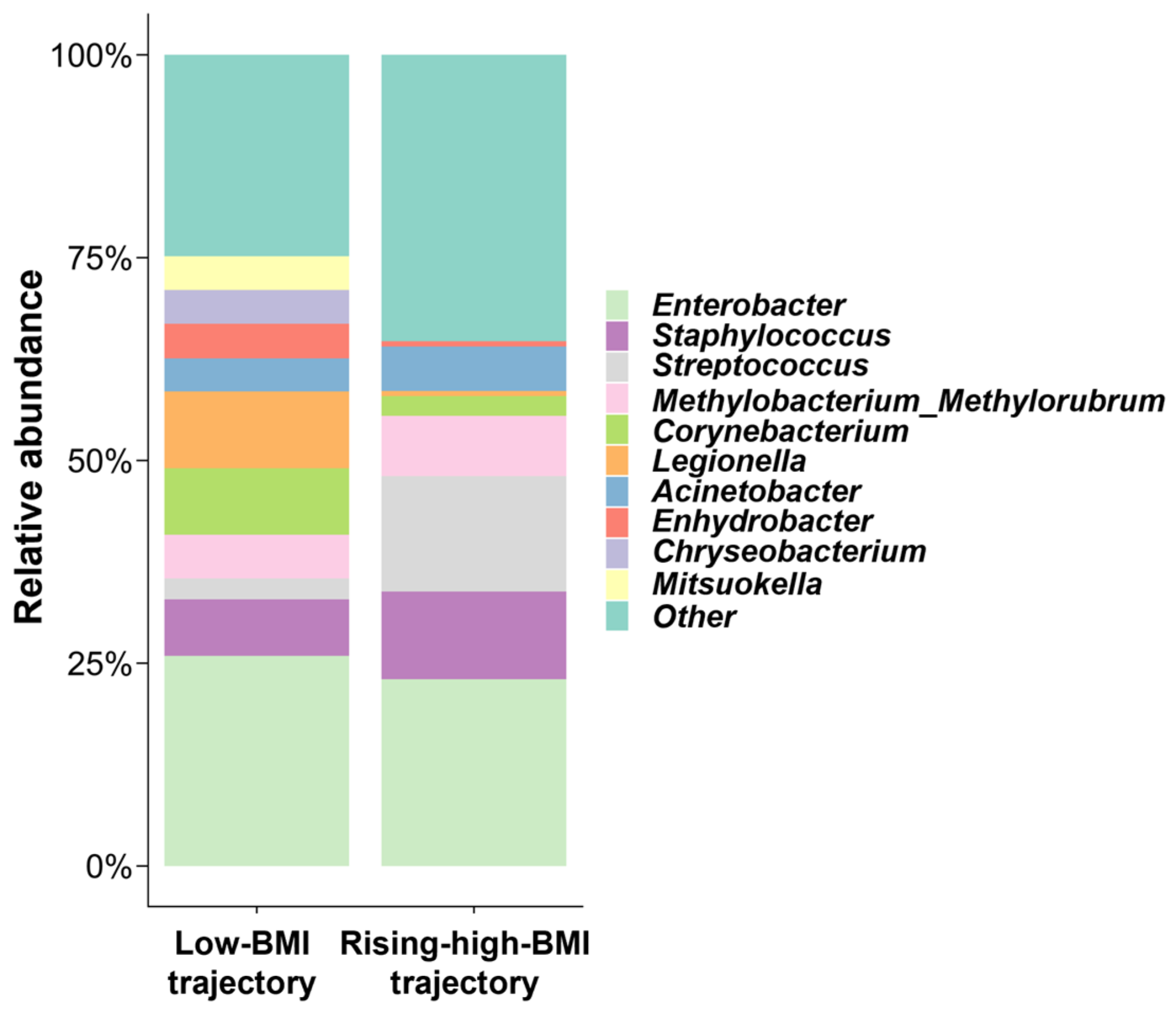
3.3. Taxonomic Composition of Prenatal Blood Microbiota
3.4. Associations Between Prenatal Blood Microbiota and Child Growth Trajectories
3.5. Metabolite Mediators Linking Prenatal Blood Microbiota and Child Growth Outcomes
4. Discussion
Author Contributions
Funding
Institutional Review Board Statement
Informed Consent Statement
Data Availability Statement
Acknowledgments
Conflicts of Interest
References
- Fryar, C.D.; Carroll, M.D.; Ogden, C.L. Prevalence of Overweight, Obesity, and Severe Obesity Among Children and Adolescents Aged 2–19 Years: United States, 1963–1965 Through 2015–2016; NCHS Health E-Stats; National Center for Health Statistics: Hyattsville, MD, USA, 2018. [Google Scholar]
- Nicholas, L.M.; Morrison, J.L.; Rattanatray, L.; Zhang, S.; Ozanne, S.E.; McMillen, I.C. The early origins of obesity and insulin resistance: Timing, programming and mechanisms. Int. J. Obes. 2016, 40, 229–238. [Google Scholar] [CrossRef]
- Rudd, K.L.; Zhao, Q.; Lisha, N.E.; Graff, J.C.; Norona-Zhou, A.; Roubinov, D.S.; Barrett, E.S.; Juarez, P.; Carroll, K.N.; Karr, C.J.; et al. The role of prenatal violence exposure in the development of disparities in children’s adiposity from birth to middle childhood. Obesity 2023, 31, 2119–2128. [Google Scholar] [CrossRef] [PubMed]
- Hu, Z.; Tylavsky, F.A.; Han, J.C.; Kocak, M.; Fowke, J.H.; Davis, R.L.; Lewinn, K.; Bush, N.R.; Zhao, Q. Maternal Metabolic Factors during Pregnancy Predict Early Childhood Growth Trajectories and Obesity Risk: The CANDLE Study. Int. J. Obes. 2019, 43, 1914–1922. [Google Scholar] [CrossRef] [PubMed]
- Medici Dualib, P.; Ogassavara, J.; Mattar, R.; Mariko Koga da Silva, E.; Atala Dib, S.; de Almeida Pititto, B. Gut microbiota and gestational Diabetes Mellitus: A systematic review. Diabetes Res. Clin. Pract. 2021, 180, 109078. [Google Scholar] [CrossRef] [PubMed]
- Ma, S.; Wang, Y.; Ji, X.; Dong, S.; Wang, S.; Zhang, S.; Deng, F.; Chen, J.; Lin, B.; Khan, B.A.; et al. Relationship between gut microbiota and the pathogenesis of gestational diabetes mellitus: A systematic review. Front Cell Infect. Microbiol. 2024, 14, 1364545. [Google Scholar] [CrossRef] [PubMed]
- Zong, Y.; Wang, X.; Wang, J. Research progress on the correlation between gut microbiota and preeclampsia: Microbiome changes, mechanisms and treatments. Front Cell Infect. Microbiol. 2023, 13, 1256940. [Google Scholar] [CrossRef] [PubMed]
- Colonetti, T.; Limas Carmo Teixeira, D.; Grande, A.J.; Rodrigues Uggioni, M.L.; Generoso, J.; Harding, S.; Rodriguez-Mateos, A.; Rech, P.; Rosa Silva, F.; Toreti, I.; et al. The role of intestinal microbiota on pre-eclampsia: Systematic review and meta-analysis. Eur. J. Obstet. Gynecol. Reprod. Biol. 2023, 291, 49–58. [Google Scholar] [CrossRef]
- Jordan, M.M.; Amabebe, E.; Khanipov, K.; Taylor, B.D. Scoping Review of Microbiota Dysbiosis and Risk of Preeclampsia. Am. J. Reprod. Immunol. 2024, 92, e70003. [Google Scholar] [CrossRef] [PubMed]
- Tao, Z.; Chen, Y.; He, F.; Tang, J.; Zhan, L.; Hu, H.; Ding, Z.; Ruan, S.; Chen, Y.; Chen, B.; et al. Alterations in the Gut Microbiome and Metabolisms in Pregnancies with Fetal Growth Restriction. Microbiol. Spectr. 2023, 11, e0007623. [Google Scholar] [CrossRef] [PubMed]
- Hu, J.; Benny, P.; Wang, M.; Ma, Y.; Lambertini, L.; Peter, I.; Xu, Y.; Lee, M.J. Intrauterine Growth Restriction Is Associated with Unique Features of the Reproductive Microbiome. Reprod. Sci. 2021, 28, 828–837. [Google Scholar] [CrossRef] [PubMed]
- Juliana, N.C.A.; Suiters, M.J.M.; Al-Nasiry, S.; Morre, S.A.; Peters, R.P.H.; Ambrosino, E. The Association Between Vaginal Microbiota Dysbiosis, Bacterial Vaginosis, and Aerobic Vaginitis, and Adverse Pregnancy Outcomes of Women Living in Sub-Saharan Africa: A Systematic Review. Front Public Health 2020, 8, 567885. [Google Scholar] [CrossRef] [PubMed]
- Parnell, L.A.; Briggs, C.M.; Mysorekar, I.U. Maternal microbiomes in preterm birth: Recent progress and analytical pipelines. Semin Perinatol. 2017, 41, 392–400. [Google Scholar] [CrossRef] [PubMed]
- Dahl, C.; Stanislawski, M.; Iszatt, N.; Mandal, S.; Lozupone, C.; Clemente, J.C.; Knight, R.; Stigum, H.; Eggesbo, M. Gut microbiome of mothers delivering prematurely shows reduced diversity and lower relative abundance of Bifidobacterium and Streptococcus. PLoS ONE 2017, 12, e0184336. [Google Scholar] [CrossRef] [PubMed]
- Saadaoui, M.; Djekidel, M.N.; Murugesan, S.; Kumar, M.; Elhag, D.; Singh, P.; Kabeer, B.S.A.; Marr, A.K.; Kino, T.; Brummaier, T.; et al. Exploring the composition of placental microbiome and its potential origin in preterm birth. Front Cell Infect. Microbiol. 2024, 14, 1486409. [Google Scholar] [CrossRef] [PubMed]
- Pinto, Y.; Frishman, S.; Turjeman, S.; Eshel, A.; Nuriel-Ohayon, M.; Shrossel, O.; Ziv, O.; Walters, W.; Parsonnet, J.; Ley, C.; et al. Gestational diabetes is driven by microbiota-induced inflammation months before diagnosis. Gut 2023, 72, 918–928. [Google Scholar] [CrossRef] [PubMed]
- Kim, S.Y.; Sharma, A.J.; Callaghan, W.M. Gestational diabetes and childhood obesity: What is the link? Curr. Opin. Obstet. Gynecol. 2012, 24, 376–381. [Google Scholar] [CrossRef] [PubMed]
- Wang, J.; Wang, L.; Liu, H.; Zhang, S.; Leng, J.; Li, W.; Zhang, T.; Li, N.; Li, W.; Baccarelli, A.A.; et al. Maternal gestational diabetes and different indicators of childhood obesity: A large study. Endocr. Connect. 2018, 7, 1464–1471. [Google Scholar] [CrossRef] [PubMed]
- Yan, S.; Lyu, J.; Liu, Z.; Zhou, S.; Ji, Y.; Wang, H. Association of gestational hypertension and preeclampsia with offspring adiposity: A systematic review and meta-analysis. Front Endocrinol. 2022, 13, 906781. [Google Scholar] [CrossRef] [PubMed]
- Gantenbein, K.V.; Kanaka-Gantenbein, C. Highlighting the trajectory from intrauterine growth restriction to future obesity. Front Endocrinol. 2022, 13, 1041718. [Google Scholar] [CrossRef] [PubMed]
- Gnawali, A. Prematurity and the Risk of Development of Childhood Obesity: Piecing Together the Pathophysiological Puzzle. A Literature Review. Cureus 2021, 13, e20518. [Google Scholar] [CrossRef] [PubMed]
- Whittle, E.; Leonard, M.O.; Harrison, R.; Gant, T.W.; Tonge, D.P. Multi-Method Characterization of the Human Circulating Microbiome. Front Microbiol. 2018, 9, 3266. [Google Scholar] [CrossRef] [PubMed]
- Amar, J.; Lange, C.; Payros, G.; Garret, C.; Chabo, C.; Lantieri, O.; Courtney, M.; Marre, M.; Charles, M.A.; Balkau, B.; et al. Blood microbiota dysbiosis is associated with the onset of cardiovascular events in a large general population: The D.E.S.I.R. study. PLoS ONE 2013, 8, e54461. [Google Scholar] [CrossRef] [PubMed]
- Vander Haar, E.L.; Wu, G.; Gyamfi-Bannerman, C.; Thomas, C.; Wapner, R.J.; Reddy, U.M.; Zhao, L.; Silver, R.M.; Goldenberg, R.L.; Han, Y.W. Microbial Analysis of Umbilical Cord Blood Reveals Novel Pathogens Associated with Stillbirth and Early Preterm Birth. mBio 2022, 13, e0203622. [Google Scholar] [CrossRef] [PubMed]
- You, Y.-A.; Yoo, J.Y.; Kwon, E.J.; Kim, Y.J. Blood Microbial Communities During Pregnancy Are Associated with Preterm Birth. Original Research. Front. Microbiol. 2019, 10, 1122. [Google Scholar] [CrossRef] [PubMed]
- Ruiz-Trivino, J.; Alvarez, D.; Cadavid, J.A.; Alvarez, A.M. From gut to placenta: Understanding how the maternal microbiome models life-long conditions. Front Endocrinol. 2023, 14, 1304727. [Google Scholar] [CrossRef] [PubMed]
- Vuong, H.E.; Pronovost, G.N.; Williams, D.W.; Coley, E.J.L.; Siegler, E.L.; Qiu, A.; Kazantsev, M.; Wilson, C.J.; Rendon, T.; Hsiao, E.Y. The maternal microbiome modulates fetal neurodevelopment in mice. Nature 2020, 586, 281–286. [Google Scholar] [CrossRef] [PubMed]
- Qin, X.; Zhang, M.; Chen, S.; Tang, Y.; Cui, J.; Ding, G. Short-chain fatty acids in fetal development and metabolism. Trends Mol. Med. 2024, 31, 625–639. [Google Scholar] [CrossRef] [PubMed]
- Aris, I.M.; Chen, L.W.; Tint, M.T.; Pang, W.W.; Soh, S.E.; Saw, S.M.; Shek, L.P.; Tan, K.H.; Gluckman, P.D.; Chong, Y.S.; et al. Body mass index trajectories in the first two years and subsequent childhood cardio-metabolic outcomes: A prospective multi-ethnic Asian cohort study. Sci. Rep. 2017, 7, 8424. [Google Scholar] [CrossRef] [PubMed]
- Hu, Z.; Han, L.; Liu, J.; Fowke, J.H.; Han, J.C.; Kakhniashvili, D.; LeWinn, K.Z.; Bush, N.R.; Mason, W.A.; Zhao, Q. Prenatal Metabolomic Profiles Mediate the Effect of Maternal Obesity on Early Childhood Growth Trajectories and Obesity Risk: The CANDLE Study. Am. J. Clin. Nutr. 2022, 116, 1343–1353. [Google Scholar] [CrossRef] [PubMed]
- Tylavsky, F.A.; Kocak, M.; Murphy, L.E.; Graff, J.C.; Palmer, F.B.; Volgyi, E.; Diaz-Thomas, A.M.; Ferry, R.J., Jr. Gestational Vitamin 25(OH)D Status as a Risk Factor for Receptive Language Development: A 24-Month, Longitudinal, Observational Study. Nutrients 2015, 7, 9918–9930. [Google Scholar] [CrossRef] [PubMed]
- Sontag-Padilla, L.; Burns, R.M.; Shih, R.A.; Griffin, B.A.; Martin, L.T.; Chandra, A.; Tylavsky, F. The Urban Child Institute CANDLE Study: Methodological Overview and Baseline Sample Description; RR-1336-TUCI; RAND Corporation: Santa Monica, CA, USA, 2015. [Google Scholar]
- National Health and Nutrition Examination Survey. 1999–2016 Survey Content Brochure; National Center for Health Statistics: Hyattsville, MD, USA, 2015. Available online: https://stacks.cdc.gov/view/cdc/83705 (accessed on 7 February 2026).
- Grummer-Strawn, L.M.; Reinold, C.; Krebs, N.F. Use of World Health Organization and CDC growth charts for children aged 0–59 months in the United States. MMWR Recomm. Rep. 2010, 59, 1–15. [Google Scholar] [PubMed]
- Rognes, T.; Flouri, T.; Nichols, B.; Quince, C.; Mahe, F. VSEARCH: A versatile open source tool for metagenomics. PeerJ 2016, 4, e2584. [Google Scholar] [CrossRef] [PubMed]
- Edgar, R.C. UPARSE: Highly accurate OTU sequences from microbial amplicon reads. Nat. Methods 2013, 10, 996–998. [Google Scholar] [CrossRef] [PubMed]
- Edgar, R.C.; Haas, B.J.; Clemente, J.C.; Quince, C.; Knight, R. UCHIME improves sensitivity and speed of chimera detection. Bioinformatics 2011, 27, 2194–2200. [Google Scholar] [CrossRef] [PubMed]
- Kyrpides, N.C. Genomes OnLine Database (GOLD 1.0): A monitor of complete and ongoing genome projects world-wide. Bioinformatics 1999, 15, 773–774. [Google Scholar] [CrossRef] [PubMed]
- Quast, C.; Pruesse, E.; Yilmaz, P.; Gerken, J.; Schweer, T.; Yarza, P.; Peplies, J.; Glockner, F.O. The SILVA ribosomal RNA gene database project: Improved data processing and web-based tools. Nucleic Acids Res. 2013, 41, D590–D596. [Google Scholar] [CrossRef] [PubMed]
- Edgar, R.C. Search and clustering orders of magnitude faster than BLAST. Bioinformatics 2010, 26, 2460–2461. [Google Scholar] [CrossRef] [PubMed]
- Johnson, J.S.; Spakowicz, D.J.; Hong, B.Y.; Petersen, L.M.; Demkowicz, P.; Chen, L.; Leopold, S.R.; Hanson, B.M.; Agresta, H.O.; Gerstein, M.; et al. Evaluation of 16S rRNA gene sequencing for species and strain-level microbiome analysis. Nat. Commun. 2019, 10, 5029. [Google Scholar] [CrossRef] [PubMed]
- Salter, S.J.; Cox, M.J.; Turek, E.M.; Calus, S.T.; Cookson, W.O.; Moffatt, M.F.; Turner, P.; Parkhill, J.; Loman, N.J.; Walker, A.W. Reagent and laboratory contamination can critically impact sequence-based microbiome analyses. BMC Biol. 2014, 12, 87. [Google Scholar] [CrossRef] [PubMed]
- Zhao, Q.; Hu, Z.; Kocak, M.; Liu, J.; Fowke, J.H.; Han, J.C.; Kakhniashvili, D.; Lewinn, K.Z.; Bush, N.R.; Mason, W.A.; et al. Associations of prenatal metabolomics profiles with early childhood growth trajectories and obesity risk in African Americans: The CANDLE study. Int. J. Obes. 2021, 45, 1439–1447. [Google Scholar] [CrossRef] [PubMed]
- Tingley, D.; Yamamoto, T.; Hirose, K.; Keele, L.; Imai, K. Mediation: R Package for Causal Mediation Analysis. J. Stat. Softw. 2014, 59, 1–38. [Google Scholar] [CrossRef]
- Tan, C.C.S.; Ko, K.K.K.; Chen, H.; Liu, J.; Loh, M.; Consortium, S.G.K.H.; Chia, M.; Nagarajan, N. No evidence for a common blood microbiome based on a population study of 9,770 healthy humans. Nat. Microbiol. 2023, 8, 973–985. [Google Scholar] [CrossRef] [PubMed]
- Cani, P.D.; Amar, J.; Iglesias, M.A.; Poggi, M.; Knauf, C.; Bastelica, D.; Neyrinck, A.M.; Fava, F.; Tuohy, K.M.; Chabo, C.; et al. Metabolic endotoxemia initiates obesity and insulin resistance. Diabetes 2007, 56, 1761–1772. [Google Scholar] [CrossRef] [PubMed]
- Proctor, C.; Thiennimitr, P.; Chattipakorn, N.; Chattipakorn, S.C. Diet, gut microbiota and cognition. Metab. Brain Dis. 2017, 32, 1–17. [Google Scholar] [CrossRef] [PubMed]
- Rosendo-Silva, D.; Viana, S.; Carvalho, E.; Reis, F.; Matafome, P. Are gut dysbiosis, barrier disruption, and endotoxemia related to adipose tissue dysfunction in metabolic disorders? Overview of the mechanisms involved. Intern Emerg. Med. 2023, 18, 1287–1302. [Google Scholar] [CrossRef] [PubMed]
- Parisi, F.; Milazzo, R.; Savasi, V.M.; Cetin, I. Maternal Low-Grade Chronic Inflammation and Intrauterine Programming of Health and Disease. Int. J. Mol. Sci. 2021, 22, 1732. [Google Scholar] [CrossRef] [PubMed]
- Godfrey, K.M.; Reynolds, R.M.; Prescott, S.L.; Nyirenda, M.; Jaddoe, V.W.; Eriksson, J.G.; Broekman, B.F. Influence of maternal obesity on the long-term health of offspring. Lancet Diabetes Endocrinol. 2017, 5, 53–64. [Google Scholar] [CrossRef] [PubMed]
- Sze, M.A.; Schloss, P.D. Looking for a Signal in the Noise: Revisiting Obesity and the Microbiome. mBio 2016, 7, e01018-16. [Google Scholar] [CrossRef] [PubMed]
- Magne, F.; Gotteland, M.; Gauthier, L.; Zazueta, A.; Pesoa, S.; Navarrete, P.; Balamurugan, R. The Firmicutes/Bacteroidetes Ratio: A Relevant Marker of Gut Dysbiosis in Obese Patients? Nutrients 2020, 12, 1474. [Google Scholar] [CrossRef] [PubMed]
- Ahmed, K.; Choi, H.N.; Cho, S.R.; Yim, J.E. Association of Firmicutes/Bacteroidetes Ratio with Body Mass Index in Korean Type 2 Diabetes Mellitus Patients. Metabolites 2024, 14, 518. [Google Scholar] [CrossRef] [PubMed]
- Bai, J.; Hu, Y.; Bruner, D.W. Composition of gut microbiota and its association with body mass index and lifestyle factors in a cohort of 7-18 years old children from the American Gut Project. Pediatr. Obes. 2019, 14, e12480. [Google Scholar] [CrossRef] [PubMed]
- Jeong, S. Gut microbiota’s impact on obesity. Clin. Exp. Pediatr. 2023, 66, 294–295. [Google Scholar] [CrossRef] [PubMed]
- Wang, J.; Zhuang, P.; Lin, B.; Li, H.; Zheng, J.; Tang, W.; Ye, W.; Chen, X.; Zheng, M. Gut microbiota profiling in obese children from Southeastern China. BMC Pediatr. 2024, 24, 193. [Google Scholar] [CrossRef] [PubMed]
- Shin, N.R.; Whon, T.W.; Bae, J.W. Proteobacteria: Microbial signature of dysbiosis in gut microbiota. Trends Biotechnol. 2015, 33, 496–503. [Google Scholar] [CrossRef] [PubMed]
- Xu, Z.; Jiang, W.; Huang, W.; Lin, Y.; Chan, F.K.L.; Ng, S.C. Gut microbiota in patients with obesity and metabolic disorders-A systematic review. Genes Nutr. 2022, 17, 2. [Google Scholar] [CrossRef] [PubMed]
- Jiang, Z.; He, L.; Li, D.; Zhuo, L.; Chen, L.; Shi, R.Q.; Luo, J.; Feng, Y.; Liang, Y.; Li, D.; et al. Human gut microbial aromatic amino acid and related metabolites prevent obesity through intestinal immune control. Nat. Metab. 2025, 7, 808–822. [Google Scholar] [CrossRef] [PubMed]
- Wang, P.; Wang, R.; Zhao, W.; Zhao, Y.; Wang, D.; Zhao, S.; Ge, Z.; Ma, Y.; Zhao, X. Gut microbiota-derived 4-hydroxyphenylacetic acid from resveratrol supplementation prevents obesity through SIRT1 signaling activation. Gut Microbes 2025, 17, 2446391. [Google Scholar] [CrossRef] [PubMed]
- Ejtahed, H.S.; Angoorani, P.; Soroush, A.R.; Hasani-Ranjbar, S.; Siadat, S.D.; Larijani, B. Gut microbiota-derived metabolites in obesity: A systematic review. Biosci. Microbiota Food Health 2020, 39, 65–76. [Google Scholar] [CrossRef] [PubMed]
- Koh, A.; Molinaro, A.; Stahlman, M.; Khan, M.T.; Schmidt, C.; Manneras-Holm, L.; Wu, H.; Carreras, A.; Jeong, H.; Olofsson, L.E.; et al. Microbially Produced Imidazole Propionate Impairs Insulin Signaling through mTORC1. Cell 2018, 175, 947–961. [Google Scholar] [CrossRef] [PubMed]
- Sciarra, F.; Franceschini, E.; Campolo, F.; Venneri, M.A. The Diagnostic Potential of the Human Blood Microbiome: Are We Dreaming or Awake? Int. J. Mol. Sci. 2023, 24, 10422. [Google Scholar] [CrossRef] [PubMed]



| Variables | Low-BMI Trajectory (N = 25) | Rising-High-BMI Trajectory (N = 25) | p Value |
|---|---|---|---|
| Maternal | |||
| Age, years | 24.4 (4.7) | 26.6 (6.7) | 0.188 |
| More than high school, % | 20.0 | 16.0 | 1.000 |
| Medicaid, % | 80.0 | 80.0 | 1.000 |
| Smoking, % | 8.0 | 20.0 | 0.417 |
| Alcohol drinking, % | 12.0 | 16.0 | 1.000 |
| Parity (primiparous), % | 36.0 | 28.0 | 0.762 |
| Pre-pregnancy BMI, kg/m2 | 26.9 (7.2) | 32.6 (10.4) | 0.030 |
| Child | |||
| Male, % | 48.0 | 48.0 | 1.000 |
| Gestational age at birth, week | 38.9 (1.0) | 39.4 (1.1) | 0.090 |
| Birth weight, kg | 3.0 (0.3) | 3.3 (0.5) | 0.007 |
| Birth length, cm | 50.4 (2.1) | 50.0 (2.9) | 0.650 |
| BMI-z-score at birth | −1.39 (0.86) | −0.16 (1.10) | <0.001 |
| BMI-z-score at age 1 | −0.20 (1.18) | 2.83 (1.26) | <0.001 |
| BMI-z-score at age 2 | −1.05 (1.28) | 2.17 (0.89) | <0.001 |
| BMI-z-score at age 3 | −0.80 (0.73) | 2.30 (1.05) | <0.001 |
| BMI-z-score at age 4 | −0.72 (0.85) | 1.99 (0.97) | <0.001 |
| Taxa | OR (95% CI) | p Value |
|---|---|---|
| Class | ||
| Gammaproteobacteria | 0.91 (0.84, 0.99) | 0.030 |
| Bacteroidia | 1.82 (1.05, 3.15) | 0.032 |
| Actinobacteria | 1.32 (1.00, 1.75) | 0.050 |
| Phylum | ||
| Proteobacteria | 0.90 (0.83, 0.99) | 0.026 |
| Bacteroidota | 1.82 (1.05, 3.15) | 0.032 |
| Actinobacteriota | 1.24 (0.94, 1.59) | 0.093 |
| Taxa | Metabolite Mediator | Metabolic Pathway | p Value of Mediation Effect | Proportion Mediated, % |
|---|---|---|---|---|
| Class | ||||
| Gammaproteobacteria | 4-vinylphenol sulfate | Benzoate Metabolism | 0.052 | 27.3 |
| 3beta-hydroxy-5-cholestenoate | Sterol | 0.064 | 22.1 | |
| phytanate | Food Component/Plant | 0.070 | 26.6 | |
| 1-linoleoyl-GPG (18:2) | Lysophospholipid | 0.082 | 32.1 | |
| Bacteroidia | cysteinylglycine disulfide | Glutathione Metabolism | 0.064 | 37.5 |
| 3-hydroxy-2-ethylpropionate | Leucine, Isoleucine and Valine Metabolism | 0.084 | −21.5 | |
| 4-hydroxyhippurate | Benzoate Metabolism | 0.084 | 39.4 | |
| 1-linoleoyl-GPG (18:2) | Lysophospholipid | 0.096 | 22.6 | |
| Actinobacteria | glutaconate | TCA Cycle | 0.030 | 42.1 |
| 3-hydroxypyridine sulfate | Chemical | 0.054 | 33.9 | |
| imidazole propionate | Histidine Metabolism | 0.098 | 18.5 | |
| Phylum | ||||
| Proteobacteria | phytanate | Food Component/Plant | 0.074 | 27.7 |
| 2-piperidinone | Food Component/Plant | 0.078 | 20.8 | |
| 4-vinylphenol sulfate | Benzoate Metabolism | 0.084 | 28.2 | |
| 4-hydroxyhippurate | Benzoate Metabolism | 0.090 | 37.8 | |
| Bacteroidota | cysteinylglycine disulfide | Glutathione Metabolism | 0.056 | 38.9 |
| 4-hydroxyhippurate | Benzoate Metabolism | 0.066 | 40.9 | |
| 1-linoleoyl-GPG (18:2) | Lysophospholipid | 0.080 | 21.9 | |
| 3-hydroxy-2-ethylpropionate | Leucine, Isoleucine and Valine Metabolism | 0.086 | −22.1 | |
| Actinobacteriota | glutaconate | TCA Cycle | 0.032 | 41.9 |
| 3-hydroxypyridine sulfate | Chemical | 0.066 | 31.4 | |
| 1-linoleoyl-GPG (18:2) | Lysophospholipid | 0.072 | 26.2 | |
| imidazole propionate | Histidine Metabolism | 0.096 | 19.5 |
Disclaimer/Publisher’s Note: The statements, opinions and data contained in all publications are solely those of the individual author(s) and contributor(s) and not of MDPI and/or the editor(s). MDPI and/or the editor(s) disclaim responsibility for any injury to people or property resulting from any ideas, methods, instructions or products referred to in the content. |
© 2026 by the authors. Licensee MDPI, Basel, Switzerland. This article is an open access article distributed under the terms and conditions of the Creative Commons Attribution (CC BY) license.
Share and Cite
Zhao, Q.; Chiu, C.-Y.; Han, L.; Rogers, A.J.G.; Liu, J.; LeWinn, K.Z.; Bush, N.R. Associations Between the Maternal Blood Microbiome During Pregnancy and Early Childhood Growth Trajectories: A Pilot Study. Obesities 2026, 6, 49. https://doi.org/10.3390/obesities6040049
Zhao Q, Chiu C-Y, Han L, Rogers AJG, Liu J, LeWinn KZ, Bush NR. Associations Between the Maternal Blood Microbiome During Pregnancy and Early Childhood Growth Trajectories: A Pilot Study. Obesities. 2026; 6(4):49. https://doi.org/10.3390/obesities6040049
Chicago/Turabian StyleZhao, Qi, Chi-Yang Chiu, Luhang Han, Anna Joy G. Rogers, Jiawang Liu, Kaja Z. LeWinn, and Nicole R. Bush. 2026. "Associations Between the Maternal Blood Microbiome During Pregnancy and Early Childhood Growth Trajectories: A Pilot Study" Obesities 6, no. 4: 49. https://doi.org/10.3390/obesities6040049
APA StyleZhao, Q., Chiu, C.-Y., Han, L., Rogers, A. J. G., Liu, J., LeWinn, K. Z., & Bush, N. R. (2026). Associations Between the Maternal Blood Microbiome During Pregnancy and Early Childhood Growth Trajectories: A Pilot Study. Obesities, 6(4), 49. https://doi.org/10.3390/obesities6040049