
Article

Determinants of Clinically Significant Weight Loss Among People with Obesity: The Roles of Healthcare Engagement, Motivation, and Comorbidities

by
Assim A. Alfadda
1,2,3,*,
Arthur C. Isnani
1,*,
Mahmoud Shams Eldin
4,
Salini Scaria Joy
5,
Hadeel M. Awwad
1,
Othman M. Othman
1,
Heba Elkhateb
1 and
Kenneth Domero
1
1
Obesity Research Center, College of Medicine, King Saud University, Riyadh 11461, Saudi Arabia
2
Division of Endocrinology, Department of Medicine, King Saud University, Riyadh 11461, Saudi Arabia
3
Obesity, Endocrine and Metabolism Center, King Fahad Medical City, Riyadh 11461, Saudi Arabia
4
Medical Affairs, Novo Nordisk, Riyadh 13315, Saudi Arabia
5
Strategic Center for Diabetes Research, College of Medicine, King Saud University, Riyadh 11461, Saudi Arabia
*
Authors to whom correspondence should be addressed.
Obesities 2026, 6(4), 46; https://doi.org/10.3390/obesities6040046
Submission received: 11 May 2026 / Revised: 22 June 2026 / Accepted: 25 June 2026 / Published: 29 June 2026
(This article belongs to the Special Issue Obesity and Its Comorbidities: Prevention and Therapy 2026)

Abstract

Background: A 5–10% weight loss has shown significant clinical improvements in the overall well-being of people with obesity (PwO). This study investigated the characteristics of PwO, their interaction with healthcare providers (HCP), associated comorbid conditions, and how these factors influence greater weight loss. Methods: A cross-sectional analysis of PwO aged ≥ 18 years using data from the Saudi Arabia Awareness, Care and Treatment in Obesity Management (ACTION-IO) study. We evaluated the relationship between PwO who achieved 5 to <10% weight loss (LWL) and those who achieved ≥10% weight loss (HWL) during the preceding 3 years. Owing to the cross-sectional design, associations rather than causal relationships were evaluated between participant characteristics and clinically significant weight loss. Results: A total of 842 PwO were surveyed, 133 (15.8%) had HWL, and 709 (84.2%) had a weight loss of <10% within 3 years (LWL). HWL was observed in individuals with cardiovascular disease and depression/anxiety, as well as those who were motivated and committed to weight-loss interventions. PwO who had LWL had fewer interactions with their HCP and had a lack of support from friends and family. After adjustment for demographic factors, exercise, and weight-loss medication use, having discussed weight management with a healthcare provider within the previous 6 months (OR = 2.525, 95% CI = 1.692–3.768, p < 0.001), commitment to weight-loss action (OR = 1.572, 95% CI = 1.071–2.309, p = 0.021), cardiovascular disease (OR = 2.496, 95% CI = 1.175–5.300, p = 0.020), and depression/anxiety (OR = 2.734, 95% CI = 1.605–4.655, p < 0.001) were independently associated with achieving ≥10% weight loss. Conclusion: Greater weight loss was associated with more frequent discussions with healthcare providers, higher motivation and commitment to weight-loss efforts, and stronger family support. Cardiovascular disease and depression/anxiety were also independently associated with clinically significant weight loss. These findings identify factors associated with successful weight loss that warrant further investigation in longitudinal studies.

1. Introduction

Globally, obesity is a serious public health issue that has become more prevalent over the past 50 years [1,2]. Data reported over 670 million adults worldwide classified as obese [3,4]. The worldwide prevalence of obesity in the adult population was 21.92% [5]. In Saudi Arabia, the prevalence of obesity and being overweight was 20% and 38%, respectively [6]. According to the Saudi World Health Survey conducted in 2019, obesity remains highly prevalent among adults in Saudi Arabia [6]. More recent national data from the 2023 Health Determinants Statistics Publication further confirm the substantial burden of being overweight and obesity in the Kingdom [7].
Obesity’s chronic and relapsing nature—driven by metabolic, hormonal, and behavioral factors—contributes to these challenges [8]. People with obesity (PwO) often struggle to achieve and maintain weight loss, and weight regain after structured interventions remains common [9]. Even modest reductions of 5–10% of initial body weight lead to meaningful improvements in cardiometabolic risk, including better glycemic control, lower blood pressure, and improved lipid profiles [10,11]. Pharmacological agents are used as adjuncts for selected patients, while bariatric surgery remains the most effective option for individuals with severe obesity and significant comorbidities [10,12,13,14,15,16,17]. Newer medications such as GLP-1 receptor agonists and dual agonists have produced substantially greater weight loss than older therapies, with additional metabolic benefits [18,19,20]. Despite the availability of multiple treatment modalities, long-term success is strongly influenced by motivation and adherence [21,22,23,24]. Biological adaptations to weight loss—including increased appetite and reduced energy expenditure—further contribute to weight regain and make sustained behavioral change difficult [25,26,27]. While lifestyle modification remains the foundation of treatment, it is often insufficient for sustained weight loss and cardiometabolic risk reduction [28]. The rising prevalence of obesity and its link to comorbidities such as type 2 diabetes, hypertension, dyslipidemia, and atherosclerotic cardiovascular disease necessitate a comprehensive, multidisciplinary approach to care [25,26,27,28,29]. The TikTok algorithm prioritizes engagement over content quality [28]. There is a substantial communication deficit regarding GLP-1 receptor 2 agonists on social media, necessitating better public health strategies to combat misinformation [29].
The ACTION-IO study was a collaborative, cross-sectional, non-interventional descriptive study conducted in 12 countries. This was one of the largest studies in obesity, with 19,700 individuals completing the survey, 1000 of whom were from Saudi Arabia [27]. Previous analyses from the ACTION-IO study have described perceptions, attitudes, and barriers related to obesity management among people with obesity in Saudi Arabia. Although previous publications from the Saudi ACTION-IO cohort have examined obesity perceptions, attitudes toward obesity management, barriers to care, and interactions between people with obesity and healthcare professionals, factors associated with achieving clinically significant weight loss have not been specifically evaluated [27,30,31]. The present secondary analysis was therefore undertaken to address this knowledge gap and identify characteristics associated with successful weight loss among Saudi adults with obesity. Therefore, the present study aimed to evaluate demographic, behavioral, and clinical factors associated with achieving ≥10% weight loss among Saudi participants in the ACTION-IO study. Using the ACTION-IO study data from 1000 Saudi PwO, we describe the characteristics of weight loss among Saudi PwO, determine the factors that influence weight loss, their interaction and discussion with their healthcare practitioners (HCPs), as well as their existing comorbid conditions.

2. Materials and Methods

The ACTION-IO Saudi Arabia study surveyed 1000 adult Saudi people with obesity (PwO) aged ≥ 18 years with a current body mass index (BMI) ≥ 30 kg/m2. Participants were recruited according to the standardized ACTION-IO study protocol using a structured survey methodology used in previous ACTION-IO studies conducted in Saudi Arabia [27,30,31]. The Saudi ACTION-IO study was a cross-sectional, questionnaire-based survey conducted as part of the international ACTION-IO program. Participants were recruited according to the standardized ACTION-IO study protocol. Data were collected using structured questionnaires administered to adults with obesity who met the predefined eligibility criteria. The survey employed a non-probability sampling approach designed to obtain a broad representation of adults with obesity across participating regions of Saudi Arabia. Detailed methodology of the ACTION-IO study has been published previously [27,30,31].
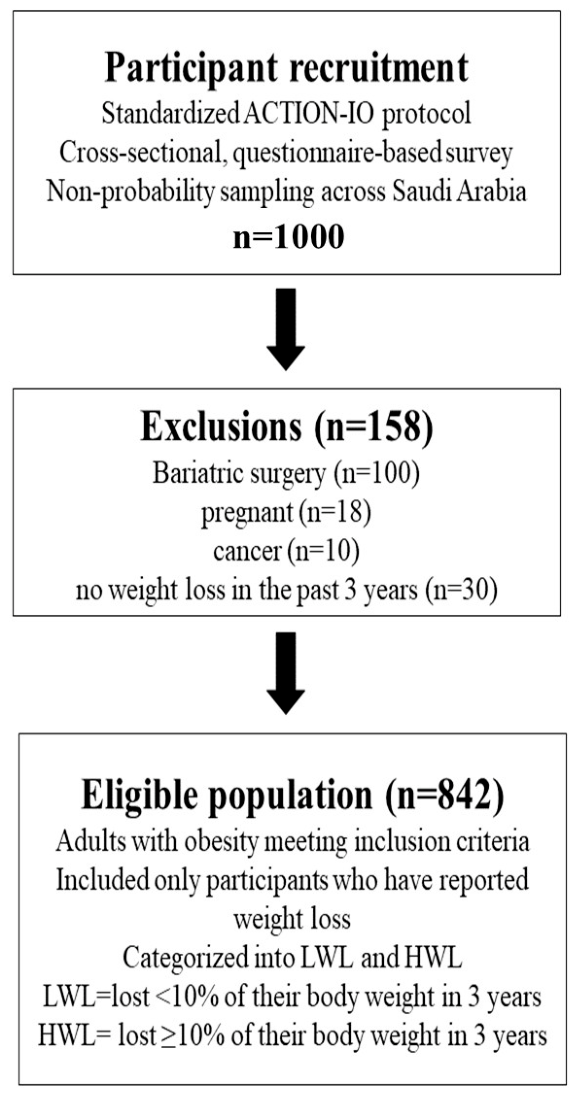
Exclusion criteria included the following: PwO who were engaged in intense fitness or bodybuilding programs, pregnant, had undergone bariatric surgery or organ transplantation, or had thyroid disorders, cancer, or were receiving chemotherapy or radiation therapy during the study period. Of the 1000 respondents, 158 were excluded (100 had bariatric surgery, 18 were pregnant at the time of study, 10 had cancer, and 30 PwO who had no recorded weight loss in the past three years). The remaining 842 PwO comprised our study population. The primary objective of this analysis was to compare individuals who achieved greater weight loss with those who achieved lesser weight loss. Because the focus of the study was specifically on variations among participants who reported losing weight, only respondents who provided complete weight-change data and reported a reduction in body weight were included. The final analytical sample consisted of participants with sufficient information to calculate weight change and classify individuals into the study groups. The study collected demographic information; anthropometric measures (self-reported height and weight, from which BMI was calculated); attitudes toward obesity and its management; comorbidities; knowledge about obesity; and perceived barriers to weight loss. Height and weight were self-reported and not independently verified; therefore, reporting bias—such as underreporting of weight or overreporting of height—should be considered when interpreting the findings. Body mass index (BMI) was calculated as weight (kg) divided by height squared (m2). BMI categories were defined according to World Health Organization criteria [14,15,16] (Figure 1).
Reported weight loss for individuals with obesity was determined by comparing their self-reported current weight (in kg) to their stated weight over the preceding three years. Participants were categorized according to whether they achieved <10% or ≥10% weight loss during the preceding three years: low weight losers (LWL), who lost less than 10% of their body weight, and high weight losers (HWL), who lost 10% or more. A threshold of ≥10% was selected because it represents a clinically meaningful degree of weight reduction associated with substantial improvements in obesity-related health outcomes and is frequently used as a benchmark for successful weight management. While weight losses of 5–10% are also recognized as clinically beneficial, the present analysis aimed to identify factors associated with achieving a higher level of weight reduction [14,15,16].
This study fulfilled the Declaration of Helsinki’s ethical principles and was given approval by King Fahad Medical City’s Institutional Review Board (IRB) in Riyadh, Saudi Arabia (IRB log: 18-295, dated 9 July 2018). This study received sponsorship from Novo Nordisk. All PwO were informed about the study’s objectives, and informed consent was obtained prior to enrollment in the research study. All the personal information provided by PwO was de-identified to protect the privacy and confidentiality. A nominal honorarium was provided to each PwO upon survey completion.
Data analysis was carried out using the Statistical Program for Social Sciences (SPSS) version 26.0 (SPSS Inc., Armonk, NY, USA). The reporting of data followed distinct methods: categorical data were presented as frequency distributions using counts and percentages, while continuous data were characterized by their mean, standard deviation, and range. We utilized a chi-square test to determine if there were significant differences in the proportions of variables when comparing the HWL and LWL groups. For assessing relationships between categorical variables, we performed Pearson’s chi-square test. To identify significant differences in the average values of continuous data between the two groups, an independent samples t-test was performed. Commitment to action was derived from the ACTION-IO questionnaire item assessing the participant’s self-reported commitment to implementing weight-loss efforts and behavioral changes. Responses were analyzed as an ordinal variable, with higher scores indicating greater commitment to engaging in weight-management activities. PWO who were engaged/committed to implementing weight loss efforts and behavioral changes were coded as 1 = yes and analyzed as an ordinal variable with higher scores indicating greater commitment to engaging in weight-management activities. Prior to multivariable logistic regression analysis, multicollinearity among candidate predictors was assessed using variance inflation factors (VIFs). All VIF values were below the commonly accepted threshold of 5, indicating no significant multicollinearity among the variables included in the final model. Subgroup analyses were conducted on an exploratory basis to evaluate potential associations between participant characteristics and weight-loss outcomes. Given the limited sample sizes of some subgroups and the multiple comparisons performed, these analyses were considered hypothesis-generating rather than confirmatory. No formal adjustment for multiple testing was applied; therefore, the results should be interpreted with appropriate caution. Multivariable logistic regression analysis was employed to ascertain the most significant predictors of enhanced weight loss. Unadjusted odds ratios were calculated, as were adjusted odds ratios controlling for age, gender, employment, educational level, exercise habits, and the use of weight-loss medications. Statistical significance was considered when the p-value was less than 0.05.

3. Results

3.1. Demographic Profile

Of 842 PwO surveyed, 474 (56.3%) were male, and 368 (43.7%) were female. The mean age was 36.5 ± 13.1 years (with a range of 18 to 74 years). Mean BMI was recorded at 34.0 ± 2.3 kg/m2 (30–40.2 kg/m2). Eating disorders and hypertension were the two most common comorbid conditions (19.6% and 19.2%, respectively). One hundred and thirty-three PwO (15.8%) recorded a weight loss of 10% or more (HWL), and the remaining 709 (84.2%) had a weight loss of <10% in 3 years (LWL) (Table 1). Exploratory subgroup analyses were performed to investigate potential differences in weight-loss outcomes across participant characteristics. Because several subgroup categories contained relatively small numbers of participants, the findings should be interpreted as exploratory observations.
Across the cohort, common comorbidities included hypertension (20.2%), dyslipidemia (14.3%), type II diabetes (13.1%), and depression/anxiety (10.9%). When comparing groups, individuals in the HWL category had significantly higher rates of cardiovascular disease (8.3% vs. 3.5%, p = 0.013) and depression/anxiety (22.6% vs. 8.7%, p < 0.001). All other comorbidities—including GI problems, eating disorders, liver disease, obstructive sleep apnea, osteoarthritis, prediabetes, and type II diabetes—did not differ significantly between groups (all p > 0.05), indicating that, aside from cardiovascular and mental health-related conditions, the overall comorbidity burden was similar across weight-loss categories (Table 1).

3.2. Perceived Barriers to Weight Loss and Percentage Weight Loss

Among the perceived barriers to losing weight, a significantly larger proportion of LWL claimed to have received less family and friends support to lose weight (87.9% vs. 80.5%, p = 0.021), as well as the lack of understanding of obesity as a disease (71.4% vs. 60.2%, p = 0.010). Although other perceived barriers, such as a preference for unhealthy food, lack of exercise, a lack of the ability to control hunger, and unhealthy eating habits, were proportionately higher among LWL, these did not reach statistical significance (Table 2).

3.3. Discussions with Their HCP on Weight-Loss Intervention, Commitment to Act on Weight-Loss Intervention, and Motivation to Lose Weight

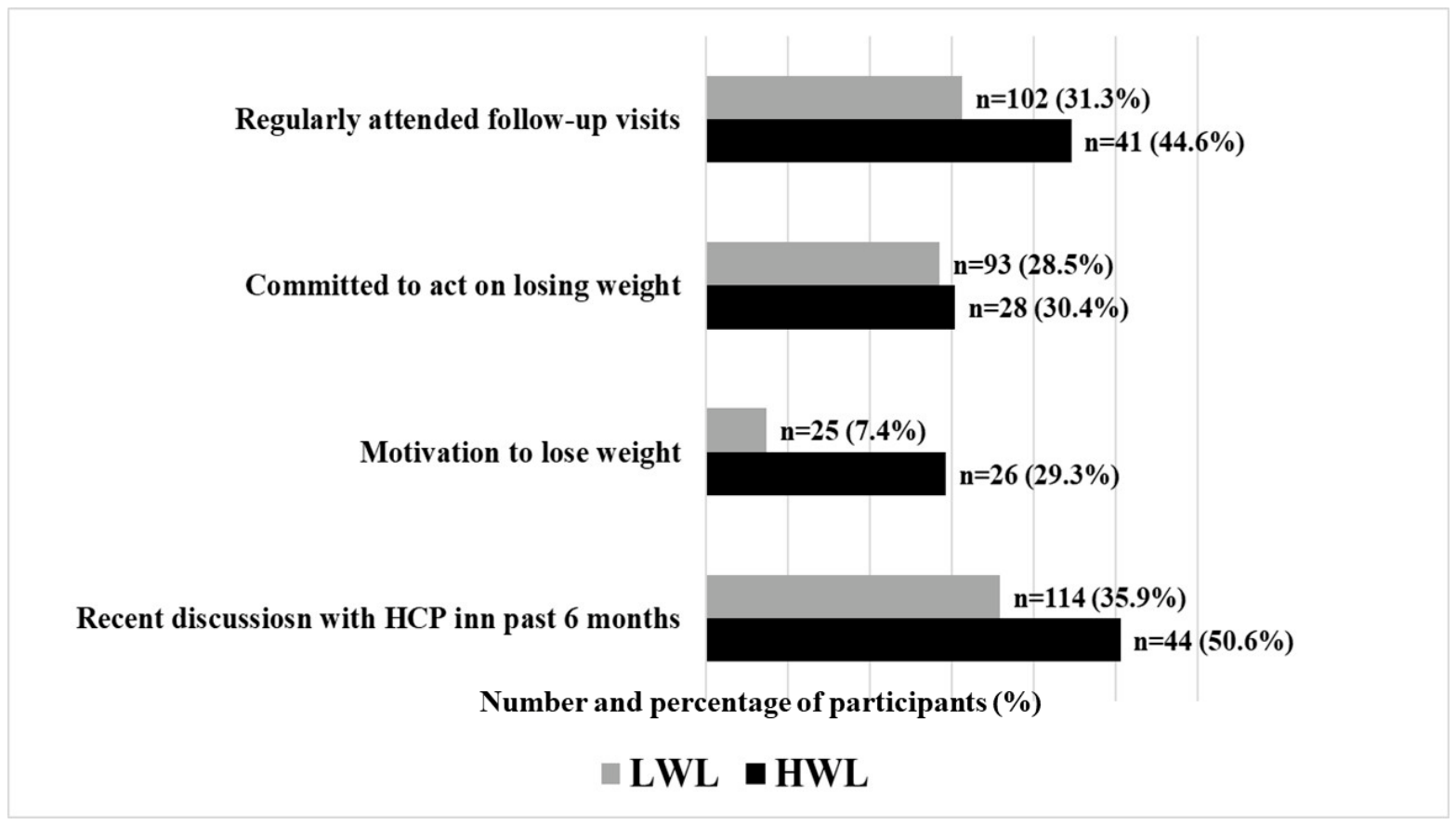
Four hundred and eighteen PwO had engaged in a discussion on their weight and weight-loss intervention with their HCP in the past six months. Of these, 44 of HWL (50.6%) had discussed weight-loss intervention within the past six months compared to 114 LWL (35.9%), (p = 0.024). There were no significant differences in the proportion of PwO who engaged in discussions on weight management interventions with their HCPs according to gender (p = 0.321), age (p = 0.167), education (p = 0.872), marital status (p = 0.649), and employment (p = 0.209).
Of these 418 PwO, motivation to lose weight was low at 36%, but motivation was significantly higher among HWL than LWL (29.3% versus 7.4%, p < 0.001). Commitment to act on losing weight was not significantly different between the two groups [HWL = 28 (30.4%) vs. LW = 93 (28.5%), p = 0.722]. Motivation to lose weight was not significantly different across gender (p = 0.806), age (p = 0.489), educational level (p = 0.664), marital status (p = 0.383), and employment (p = 0.251). Two hundred and eight-one PwO (67.2%) regularly attended follow-up visits with their HCP, significantly more among HWL than LWL (44.6% vs. 31.3%, p = 0.003) (Figure 2).

3.4. Use of Weight-Loss Medication

Two hundred thirty-one PwO (27.4%) claimed to use or have used weight-loss drugs; however, there was no significant difference in the amount of weight loss between LWL and HWL (28.1% vs. 24.1%, p = 0.342), as well as across gender (p = 0.224), education (p = 0.693), marital status (p = 0.447), employment (p = 0.600) and age (p = 0.246).
Unadjusted logistic regression analysis for factors for a greater weight loss showed exercise (OR = 1.607, 95%CI = 1.001–2.581, p = 0.050), having spoken with their HCP in the past six months (OR = 2.633, 95%CI = 1.789–3.875, p < 0.001), and being committed to act on losing weight (OR = 1.592, 95% CI = 1.189–4.872, p = 0.012) as modifiable factors for greater weight loss. Also, having been diagnosed with cardiovascular disease (OR = 2.407, 95% CI = 1.189–7.872, p = 0.016) and diagnosed with depression/anxiety (OR = 2.890, 95% CI = 1.789–4.669, p < 0.001) also showed to be factors for greater weight loss. The multivariable logistic regression model included all prespecified covariates entered into the adjusted analysis. Adjusted odds ratios, 95% confidence intervals, and p-values for all variables included in the final model are presented in Table 3. When adjusted for demographic variables (age, gender, educational status and employment), exercise and use of weight-loss drugs, recent discussion with a HCP in the past six months (OR = 2.525, 95%CI = 1.692–3.768, p < 0.001), being committed to action (OR = 1.572, 95% CI = 1.071–2.309, p = 0.021), having been diagnosed with cardiovascular disease (OR = 2.496, 95%CI = 1.175–5.300, p = 0.020), and having been diagnosed with depression/anxiety (OR = 2.734, 95%CI = 1.605–4.655, p < 0.001) were factors of greater weight loss (Table 3).
Multivariable logistic regression analysis of factors associated with achieving ≥10% weight loss (reference category: <10% weight loss). Adjusted odds ratios (ORs) and 95% confidence intervals are presented. Adjustments were made for age, gender, income, education, marital status, employment, exercise, and weight-loss medications. Subgroup analyses were exploratory in nature and should be interpreted with caution owing to small sample sizes in some categories and the absence of adjustments for multiple comparisons.

4. Discussion

In this study, we described the characteristics of Saudi PwO based on their degree of weight loss achieved in a span of three years. We found several factors that influence greater and successful weight loss, including a well-prepared and shared-decision discussion with an HCP.
The findings of the present study should be interpreted within the context of previous ACTION-IO publications from Saudi Arabia. While earlier analyses focused primarily on obesity awareness, perceptions, barriers to treatment, and communication between healthcare professionals and people with obesity, the current study addresses a distinct objective by examining factors associated with clinically significant weight loss. Consequently, the present analysis provides complementary information that extends the existing evidence generated from the Saudi ACTION-IO dataset.
The choice of a ≥10% weight-loss threshold warrants consideration. Current obesity management guidelines recognize that even modest weight loss of 5–10% can confer meaningful improvements in glycemic control, blood pressure, lipid parameters, and overall cardiometabolic health. However, a 10% reduction is often regarded as a clinically important benchmark associated with greater improvements in obesity-related complications. Therefore, the present study focused on factors associated with achieving this higher degree of weight loss. Future studies may benefit from evaluating alternative thresholds, including ≥5% weight loss, to determine whether similar associations are observed across varying levels of weight-loss success.
We found that PwO who reported more frequent discussions regarding weight-loss interventions and routine follow-up with their HCPs were more likely to have achieved greater weight loss. However, given the cross-sectional nature of the study, these findings should be interpreted as associations and do not establish a causal relationship between healthcare engagement and weight-loss outcomes. Because data were collected at a single time point, the temporal sequence between healthcare engagement, motivation, commitment, and weight-loss outcomes cannot be determined. Prospective studies are needed to clarify these relationships. A good weight-loss discussion with an HCP includes shared preferences and perspectives grounded in open and honest expectations. To accomplish long-term weight loss, obesity management requires a comprehensive and tailored approach that includes not just food and exercise but also psychological well-being, motivation, reassurance, and behavioral support [21]. Nowadays, even without face-to-face discussions, using telehealth lifestyle coaching is associated with long-term weight loss among PwO, demonstrating the importance of ongoing and continued interaction between the PwO and their HCP [25]. Pharmacological therapies may be used as an adjuvant for some patients, and bariatric surgery remains an option for those with extreme obesity and considerable comorbidities [24,26]. The growing influence of social media platforms on obesity management has introduced new opportunities and challenges for patient education. Significant gaps in the communication of information about GLP-1 receptor agonists on social media underscore the need for stronger public health strategies to address misinformation and promote evidence-based decision-making among individuals with obesity [29].
Higher levels of commitment to weight-loss interventions were associated with greater weight loss in this study. However, the cross-sectional design does not permit determination of whether commitment contributed to weight loss or whether successful weight loss reinforced participants’ commitment to intervention strategies. Long-term weight outcomes are diverse, and commitment to reduce weight should include spouse participation and family support in weight-loss intervention programs [26]. This study showed that one of the barriers to unsuccessful weight loss is the lack of support from family. Exercise and nutrition changes were found to be ineffective in many PwO and may not enhance physical fitness when commitment and adherence, as well as lack of family and spouse support, are lacking [24,26,32]. People with obesity who commit to actions and adhere to weight-loss intervention programs have a better chance of losing weight [30]. Thus, it is indispensable for HCPs as well as other healthcare providers to develop steps to enhance commitment and adherence to weight-loss intervention programs for their patients, as well as understand their patients’ strengths and passions.
The importance of self-monitoring mediated by increased adherence to energy intake targets and self-weighing for better weight control unfortunately declines with time, and weight regain follows [24,33]. Thus, strategies that could be incorporated and taken into consideration to continue with a weight-loss regimen include self-determination, self-weighing interventions, as well as customized behavioral modifications [33,34]. Furthermore, health professionals must gain greater awareness of PwO weight-loss motivations, as both internal and extrinsic factors may enhance the success of weight reduction initiatives [32].
This study showed greater weight loss among patients diagnosed with cardiovascular disease (CVD). Obesity and being overweight were associated with an increased risk of CVD and its consequences, including death from excess body fat, particularly in the abdomen [35]. Previous longitudinal and interventional studies have reported that intentional weight loss is associated with improved cardiovascular risk profiles among individuals with obesity and excess abdominal adiposity [36,37,38]. An association was observed between cardiovascular disease and achieving ≥10% weight loss. However, the cross-sectional design of the present study does not allow for the determination of the reasons underlying this association. Specifically, it is not possible to distinguish whether the observed weight loss reflected intentional weight-management efforts, increased healthcare engagement following a cardiovascular diagnosis, disease-related changes in health status, or other unmeasured factors. Therefore, the observed relationship should be interpreted as associative rather than causal. Furthermore, the available data do not permit differentiation between intentional and unintentional weight loss, including weight loss related to underlying disease processes. Prospective studies are needed to clarify the temporal and clinical factors contributing to this association [39,40,41]. On the other hand, weight loss among CVD patients may also have a negative impact on several organ systems and may manifest as a loss of lean mass, fat mass, and bone mineral density [40]. While weight loss matters much for cardiovascular protection, unintentional weight loss and cardiac cachexia occur because of several reasons, including malnutrition, inadequate food intake, loss of appetite, malabsorption, dietary salt restriction, as well as depression and anxiety [40,41].
Depression/anxiety was independently associated with achieving ≥10% weight loss in the adjusted analysis. Obesity is associated with depression and vice versa; depression could also play a role in the development of obesity or becoming overweight [42]. On the other hand, a study found that having a self-perception of being fat and being obese had a potentiating effect that markedly raised the risk of depression [43]. When obese patients with depression lose weight as a result of calorie restriction, their depressed symptoms get better [44]. For individuals who lose a significant amount of weight, lap-band surgery appears to be an effective treatment for depression [44]. The greater the weight loss, the greater the reduction in depression scores, especially for those at a higher initial risk [45]. Prior meta-regression study found a strong positive association between improvements in depressive symptoms during lifestyle modification programs and supervised exercise interventions [46,47]. The association between depression/anxiety and greater weight loss observed in this study is consistent with prior reports demonstrating interactions between obesity and mental health conditions. Nevertheless, the cross-sectional design precludes the determination of the directionality of this relationship. It remains unclear whether mental health status influenced weight-loss behaviors, whether weight loss affected psychological well-being, or whether both were influenced by other unmeasured factors [46,47,48,49,50,51]. Although previous studies have reported complex bidirectional relationships between obesity and mental health conditions, the mechanisms underlying the association observed in our study cannot be determined from the available data. Because information regarding symptom severity, treatment status, dietary intake, sleep patterns, and other behavioral factors was not collected, the present findings should be interpreted as an observed association rather than evidence of a specific underlying mechanism.
The findings of this study have several implications for obesity management in Saudi Arabia. Given the observed associations between healthcare-provider engagement and clinically significant weight loss, routine obesity screening and structured weight-management discussions should be incorporated into primary healthcare practice. In addition, multidisciplinary obesity-management programs involving physicians, dietitians, behavioral health specialists, and other healthcare professionals may help support sustained weight-loss efforts. The findings also highlight the importance of regular follow-up and patient engagement strategies within the Saudi healthcare system to improve obesity-related outcomes.
Due to the inherent limits of epidemiological surveys, our study has several limitations. First, the cross-sectional design precludes the determination of causal relationships, and the observed associations may operate in either direction. Second, obesity status and weight loss were assessed using self-reported height and weight measurements. Self-reported anthropometric data are known to be subject to systematic reporting bias, whereby individuals with obesity tend to underreport body weight and overreport height, resulting in underestimation of BMI. Previous studies have reported mean discrepancies ranging from approximately 1–3 kg for body weight and 1–3 cm for height, although the magnitude varies across populations. Because both current body weight and body weight three years prior were self-reported, the impact of these reporting errors on estimated weight change cannot be precisely determined. However, participants with reported weight loss values close to the 10% threshold used to define HWL and LWL may have been misclassified, potentially leading to either underestimation or overestimation of the proportion of participants achieving clinically significant weight loss. Because multiple subgroup comparisons were performed, these analyses should be interpreted as exploratory. Consequently, some statistically significant findings may reflect chance observations and require confirmation in future studies. Furthermore, the perception of weight was assessed based on a single question. In addition, the categorization of participants using a ≥10% weight-loss threshold may not fully capture clinically meaningful benefits achieved by individuals who lost 5–9.9% of their body weight. Future analyses using alternative thresholds could provide additional insight into factors associated with varying degrees of weight-loss success. The study gathered comprehensive data, including demographic details; anthropometric measures (self-reported height, weight, and BMI were calculated); their attitudes regarding obesity and its management; comorbidities; knowledge about obesity; and perceived barriers to weight loss. Height and weight data were self-reported by participants and were not independently verified. The study was unable to distinguish intentional weight loss from unintentional weight loss, nor could it evaluate clinical mechanisms underlying the observed associations with cardiovascular disease and depression/anxiety. Participants were not informed about when and under what conditions they should be weighed, as well as basic measurement methods, such as on an empty stomach or after a bowel movement, etc. Consequently, the observed associations should be interpreted with caution, should be limited to associations identified within the study population, and future studies incorporating objectively measured anthropometric data are warranted. A further constraint is that the small percentage of PwO had diagnoses of anxiety and depression, making the findings non-generalizable to the PwO population as a whole. Finally, the data analyzed in this study were collected as part of the Saudi ACTION-IO survey conducted in 2018. Although the interval between data collection and the present analysis should be acknowledged, the dataset remains valuable for understanding factors associated with weight-loss success among adults with obesity. Nevertheless, changes in obesity-management practices, availability of anti-obesity medications, and healthcare delivery models since 2018 may limit the direct applicability of some findings to current clinical practice. This study represents a secondary analysis of an existing dataset collected for the ACTION-IO program. As a result, the available variables and analyses were limited to information captured within the original survey design.
Accordingly, all observed relationships should be interpreted as associative rather than causal, and the directionality of these associations cannot be established from the current study design. Another limitation relates to the exploratory subgroup analyses. Several subgroup categories included relatively small sample sizes, which may have reduced statistical precision and increased the likelihood of unstable estimates. Multiple comparisons were performed without formal adjustment for multiplicity, increasing the risk of Type I error. Accordingly, subgroup findings should be interpreted as exploratory and confirmed in future studies. Even with these limitations, the way this study examines the mediating effects of weight loss and how it relates to demographic and comorbid variables is novel. Therefore, we believe that this work will benefit health authorities in putting public health policies and initiatives into action, as well as health professionals in their clinical practice.

5. Conclusions

More frequent interactions with healthcare providers, greater motivation and commitment to weight-loss efforts, and stronger family support were associated with achieving clinically significant weight loss among people with obesity. Furthermore, cardiovascular disease and depression/anxiety were independently associated with greater weight loss. Given the cross-sectional design, these findings should be interpreted as associations and not evidence of causality. These findings may help inform obesity-management strategies within the Saudi healthcare system, including earlier patient engagement, multidisciplinary care models, and structured follow-up programs designed to support long-term weight management. Future prospective studies are needed to evaluate these associations and their implications for clinical practice.

Author Contributions

Conceptualization: A.A.A., A.C.I.; Methodology: A.A.A., A.C.I., S.S.J.; Software: A.C.I.; Validation: A.A.A., A.C.I., M.S.E.; Formal Analysis: A.C.I., S.S.J.; Investigation: A.A.A., M.S.E.; Resources: A.A.A., M.S.E.; Data Curation: M.S.E.; Writing—Original Draft Preparation: All authors; Writing—Review and Editing: All authors; Visualization: H.M.A., H.E., O.M.O., K.D.; Supervision: A.A.A.; Project Administration: A.A.A., M.S.E.; Funding Acquisition: M.S.E. All authors have read and agreed to the published version of the manuscript.

Funding

This research was funded by Novo Nordisk, Riyadh, Saudi Arabia, and the APC was funded by Novo Nordisk, Riyadh, Saudi Arabia. The sponsor was provided the opportunity to review the manuscript for scientific accuracy and compliance with publication policies, but did not influence the interpretation of the results or the conclusions presented by the authors.

Institutional Review Board Statement

The study protocol and questionnaires were approved by the Institutional Review Board of King Fahad Medical City, Riyadh, Saudi Arabia (IRB number: H-01-R-012, 9 July 2018). The study was conducted in accordance with the Declaration of Helsinki.

Informed Consent Statement

Informed consent was obtained from all individual participants included in the study.

Data Availability Statement

The data analyzed in this study originate from the ACTION-IO program and are not publicly available. Access to the data may be considered upon reasonable request and subject to applicable data-sharing agreements, ethical approvals, and sponsor policies. Researchers interested in obtaining access to the data should contact the ACTION-IO study sponsor or the corresponding author for information regarding data availability and data-sharing requirements.

Acknowledgments

The authors would like to thank Ricardo Arturo Reynoso Mendoza of Novo Nordisk and the Medical Accuracy Review (MAR) of Novo Nordisk for reviewing the paper. The authors have reviewed and edited the output and take full responsibility for the content of this publication.

Conflicts of Interest

A.A.A. received financial support to attend an obesity conference during the conduct of the study and for meeting travel expenses. Moreover, they received consultancy fees during data analysis and manuscript development from Novo Nordisk and non-financial support outside the submitted work from Novo Nordisk. Mahmoud Shams is an employee of Novo Nordisk and was involved as a co-author of the manuscript. The sponsor had no role in the statistical analysis, interpretation of the data, preparation of the manuscript, or the decision to submit the manuscript for publication. All authors had full access to the study data and take responsibility for the integrity and accuracy of the analyses presented.

Abbreviations

The following abbreviations are used in this manuscript:
ACTION-IOAwareness, Care and Treatment in Obesity Management
CHFCongestive heart failure
CIConfidence interval
HCPHealthcare practitioner
HWLHigh weight loss
LWLLow weight loss
OROdds ratio
PEPulmonary embolism
PwOPeople with obesity

References

  1. Tappia, P.S.; Dhalla, N.S. Obesity as a major health hazard. In Cellular and Biochemical Mechanisms of Obesity; Advances in Biochemistry in Health and Disease; Springer: Cham, Switzerland, 2021; pp. 3–21. [Google Scholar]
  2. Magdy Beshbishy, A.; Hetta, H.F.; Hussein, D.E.; Saati, A.A.; Uba, C.C.; Rivero-Perez, N.; Zaragoza-Bastida, A.; Shah, M.A.; Behl, T.; Batiha, G.E.S. Factors Associated with Increased Morbidity and Mortality of Obese and Overweight COVID-19 Patients. Biology 2020, 9, 280. [Google Scholar] [CrossRef] [Scilit] [PubMed]
  3. Blüher, M. Obesity: Global epidemiology and pathogenesis. Nat. Rev. Endocrinol. 2019, 15, 288–298. [Google Scholar] [CrossRef] [Scilit] [PubMed]
  4. NCD Risk Factor Collaboration (NCD-RisC). Worldwide trends in body-mass index, underweight, overweight, and obesity from 1975 to 2016: A pooled analysis of 2416 population-based measurement studies in 128·9 million children, adolescents, and adults. Lancet 2017, 390, 2627–2642. [Google Scholar] [CrossRef] [Scilit] [PubMed]
  5. Zenas-Trujillo, G.Z.; Trujillo-Ramirez, I.; Carhuavilca-Torres, J.M.; Ayala-Mendivil, R.E.; Vera-Ponce, V.J. Prevalence of Metabolically-Obese Normal-Weight Worldwide: Systematic Review and Meta-Analysis. J. Endocrinol. Metab. 2023, 13, 104–113. [Google Scholar]
  6. Ministry of Health. World Health Survey Saudi Arabia (KSAWHS). 2019. Available online: https://www.moh.gov.sa/en/Ministry/Statistics/Population-Health-Indicators/Documents/World-Health-Survey-Saudi-Arabia.pdf (accessed on 15 June 2024).
  7. Health Determinants Statistics Publication 2023, National Health Survey. Available online: https://www.stats.gov.sa/sites/default/files/Health-Determinants-Statistics-Publication-2023-EN_0.pdf (accessed on 15 June 2024).
  8. Bray, G.A.; Ryan, D.H. Medical therapy for the patient with obesity. N. Engl. J. Med. 2022, 387, 235–246. [Google Scholar]
  9. Bray, G.A.; Frühbeck, G.; Ryan, D.H.; Wilding, J.P. Management of obesity. Lancet 2016, 387, 1947–1956. [Google Scholar] [CrossRef] [Scilit] [PubMed]
  10. Ward, S.J.; Coates, A.M.; Carter, S.; Baldock, K.L.; Berryman, C.; Stanton, T.R.; Yandell, C.; Buckley, J.D.; Tan, S.-Y.; Rogers, G.B.; et al. Effects of weight loss through dietary intervention on pain characteristics, functional mobility, and inflammation in adults with elevated adiposity. Front. Nutr. 2024, 11, 1274356. [Google Scholar] [CrossRef] [Scilit] [PubMed]
  11. American Diabetes Association Professional Practice Committee. 8. Obesity and Weight Management for the Prevention and Treatment of Type 2 Diabetes: Standards of Care in Diabetes-2024. Diabetes Care 2024, 47, S145–S157. [Google Scholar] [PubMed]
  12. Kumar, R.B.; Aronne, L.J. Review of multimodal therapies for obesity treatment: Including dietary, counseling strategies, and pharmacologic interventions. Tech. Gastrointest. Endosc. 2017, 19, 12–17. [Google Scholar] [CrossRef] [Scilit]
  13. Gaskin, C.J.; Cooper, K.; Stephens, L.D.; Peeters, A.; Salmon, J.; Porter, J. Clinical practice guidelines for the management of overweight and obesity published internationally: A scoping review. Obes. Rev. 2024, 25, e13700. [Google Scholar] [CrossRef] [Scilit] [PubMed]
  14. World Health Organization. Obesity and Overweight; World Health Organization: Geneva, Switzerland, 2025; Available online: https://www.who.int/news-room/fact-sheets/detail/obesity-and-overweight (accessed on 15 June 2024).
  15. World Obesity Federation. World Obesity Atlas 2026, 2nd ed.; Childhood Obesity: London, UK, 2026; Available online: https://www.worldobesity.org/resources/resource-library/world-obesity-atlas-2026 (accessed on 12 January 2026).
  16. Rubino, F.; Cummings, D.E.; Eckel, R.H.; Cohen, R.V.; Wilding, J.P.H.; Brown, W.A.; Stanford, F.C.; Batterham, R.L.; Farooqi, I.S.; Farpour-Lambert, N.J.; et al. Definition and diagnostic criteria of clinical obesity. Lancet Diabetes Endocrinol. 2025, 13, 221–262, Correction in Lancet Diabetes Endocrinol. 2025, 13, e6. https://doi.org/10.1016/S2213-8587(25)00006-3. [Google Scholar] [CrossRef] [Scilit] [PubMed]
  17. Jensen, M.D.; Ryan, D.H.; Apovian, C.M.; Ard, J.D.; Comuzzie, A.G.; Donato, K.A.; Hu, F.B.; Hubbard, V.S.; Jakicic, J.M.; Kushner, R.F.; et al. 2013 AHA/ACC/TOS guideline for the management of overweight and obesity in adults: A report of the American College of Cardiology/American Heart Association Task Force on Practice Guidelines and the Obesity Society. Circulation 2014, 129, S102–S138. [Google Scholar] [CrossRef] [Scilit] [PubMed]
  18. Seferović, P.M.; Polovina, M.M. New Perspectives on Semaglutide in Cardiovascular Disease. Lancet 2025, 406, 2198–2200. [Google Scholar] [CrossRef] [Scilit] [PubMed]
  19. Jastreboff, A.M.; Aronne, L.J.; Ahmad, N.N.; Wharton, S.; Connery, L.; Alves, B.; Kiyosue, A.; Zhang, S.; Liu, B.; Bunck, M.C.; et al. Tirzepatide once weekly for the treatment of obesity. N. Engl. J. Med. 2022, 387, 205–216. [Google Scholar] [CrossRef] [Scilit] [PubMed]
  20. Frías, J.P.; Davies, M.J.; Rosenstock, J.; Pérez Manghi, F.C.; Fernández Landó, L.; Bergman, B.K.; Liu, B.; Cui, X.; Brown, K.; SURPASS-2 Investigators. Tirzepatide versus Semaglutide Once Weekly in Patients with Type 2 Diabetes. N. Engl. J. Med. 2021, 385, 503–515. [Google Scholar] [CrossRef] [Scilit] [PubMed]
  21. Khattab, R. Weight Loss Programs: Why Do They Fail? A Multidimensional Approach for Obesity Management. Curr. Nutr. Rep. 2024, 13, 478–499. [Google Scholar] [CrossRef] [Scilit] [PubMed]
  22. Wang, D.; Benito, P.J.; Rubio-Arias, J.Á.; Ramos-Campo, D.J.; Rojo-Tirado, M.A. Exploring factors of adherence to weight loss interventions in population with overweight/obesity: An umbrella review. Obes. Rev. 2024, 25, e13783. [Google Scholar] [CrossRef] [Scilit] [PubMed]
  23. Almubark, R.A.; Alqahtani, S.; Isnani, A.C.; Alqarni, A.; Shams, M.; Yahia, M.; Alfadda, A.A. Gender Differences in the Attitudes and Management of People with Obesity in Saudi Arabia: Data from the ACTION-IO Study. Risk Manag. Healthc. Policy 2022, 15, 1179–1188. [Google Scholar] [CrossRef] [Scilit] [PubMed]
  24. Coupe, N.; Peters, S.; Rhodes, S.; Cotterill, S. The effect of commitment-making on weight loss and behaviour change in adults with obesity/overweight; a systematic review. BMC Public Health 2019, 19, 816. [Google Scholar] [PubMed]
  25. Christensen, J.R.; Hesseldal, L.; Olesen, T.B.; Olsen, M.H.; Jakobsen, P.R.; Laursen, D.H.; Lauridsen, J.T.; Nielsen, J.B.; Søndergaard, J.; Brandt, C.J. Long-term weight loss in a 24-month primary care-anchored telehealth lifestyle coaching program: Randomized controlled trial. J. Telemed. Telecare 2022, 28, 764–770. [Google Scholar] [PubMed]
  26. Garvey, W.T. New tools for weight-loss therapy enable a more robust medical model for obesity treatment: Rationale for a complications-centric approach. Endocr. Pract. 2013, 19, 864–874. [Google Scholar] [CrossRef] [Scilit] [PubMed]
  27. Caterson, I.D.; Alfadda, A.A.; Auerbach, P.; Coutinho, W.; Cuevas, A.; Dicker, D.; Hughes, C.; Iwabu, M.; Kang, J.H.; Nawar, R.; et al. Gaps to bridge: Misalignment between perception, reality and actions in obesity. Diabetes Obes. Metab. 2019, 21, 1914–1924. [Google Scholar] [CrossRef] [Scilit] [PubMed]
  28. Jackson, E.J.; Henry, M.; Willard, K.E. Team-based care and the role of the lipid specialist in obesity management. J. Clin. Lipidol. 2026, 20, 111–125. [Google Scholar] [CrossRef] [Scilit] [PubMed]
  29. Günaltay, M.M.; Kartal, N. TikTokfluence: The rise of GLP-1 receptor agonists in the age of social media health trends. J. Am. Pharm. Assoc. 2026, 66, 103082. [Google Scholar] [CrossRef] [Scilit] [PubMed]
  30. Alfadda, A.A.; Isnani, A.C.; Almubark, R.A.; Alqahtani, S.A.; Alqarni, A.; Shams, M.; Yahia, M. Early versus late-onset of weight struggles among patients with obesity: Data from the ACTION-IO study. J. Fam. Med. Prim. Care 2024, 13, 4194–4200. [Google Scholar] [CrossRef] [Scilit] [PubMed]
  31. Alfadda, A.A.; Al Qarni, A.; Alamri, K.; Ahamed, S.S.; Abo’ouf, S.M.; Shams, M.; Abdelfattah, W.; Al Shaikh, A. Perceptions, attitudes, and barriers toward obesity management in Saudi Arabia: Data from the ACTION-IO study. Saudi J. Gastroenterol. 2021, 27, 166–172. [Google Scholar] [CrossRef] [Scilit] [PubMed]
  32. Ng, J.Y.Y.; Ntoumanis, N.; Thøgersen-Ntoumani, C.; Deci, E.L.; Ryan, R.M.; Duda, J.L.; Williams, G.C. Self-determination theory applied to health contexts: A meta-analysis. Perspect. Psychol. Sci. 2012, 7, 325–340. [Google Scholar] [PubMed]
  33. Martins, C.; Dutton, G.R.; Hunter, G.R.; Gower, B.A. Revisiting the Compensatory Theory as an explanatory model for relapse in obesity management. Am. J. Clin. Nutr. 2020, 112, 1170–1179. [Google Scholar] [CrossRef] [Scilit] [PubMed]
  34. Peregrin-Alvarez, J.M. Self-determination: The key to successful weight loss and maintenance programs. Adv. Obes. Weight. Manag. Control 2023, 13, 22–23. [Google Scholar] [CrossRef] [Scilit]
  35. Martinez, M.; Salazar-Collier, C.L.; Pena, J.; Wilkinson, A.V.; Chavarria, E.A.; Reininger, B.M. Motivation for weight loss among completers of a free community-based weight loss program in a US-Mexico border region: A self-determination theory perspective. Front. Public Health 2022, 10, 652271. [Google Scholar] [CrossRef] [Scilit] [PubMed]
  36. Lopez-Jimenez, F.; Almahmeed, W.; Bays, H.; Cuevas, A.; Di Angelantonio, E.; le Roux, C.W.; Sattar, N.; Sun, M.C.; Wittert, G.; Pinto, F.J.; et al. Obesity and cardiovascular disease: Mechanistic insights and management strategies. A joint position paper by the World Heart Federation and World Obesity Federation. Eur. J. Prev. Cardiol. 2022, 29, 2218–2237. [Google Scholar] [CrossRef] [Scilit] [PubMed]
  37. Streng, K.W.; Voors, A.A.; Hillege, H.L.; Anker, S.D.; Cleland, J.G.; Dickstein, K.; Filippatos, G.; Metra, M.; Ng, L.L.; Ponikowski, P.; et al. Waist-to-hip ratio and mortality in heart failure. Eur. J. Heart Fail. 2018, 20, 1269–1277. [Google Scholar] [CrossRef] [Scilit] [PubMed]
  38. Anand, S.S.; Islam, S.; Rosengren, A.; Franzosi, M.G.; Steyn, K.; Yusufali, A.H.; Keltai, M.; Diaz, R.; Rangarajan, S.; Yusuf, S.; et al. Risk factors for myocardial infarction in women and men: Insights from the INTERHEART study. Eur. Heart J. 2008, 29, 932–940. [Google Scholar] [CrossRef] [Scilit] [PubMed]
  39. Larsen, A.I.; Aukrust, P.; Aarsland, T.; Dickstein, K. Effect of aerobic exercise training on plasma levels of tumor necrosis factor alpha in patients with heart failure. Am. J. Cardiol. 2001, 88, 805–808. [Google Scholar] [CrossRef] [Scilit] [PubMed]
  40. Christensen, H.M.; Kistorp, C.; Schou, M.; Keller, N.; Zerahn, B.; Frystyk, J.; Schwarz, P.; Faber, J. Prevalence of cachexia in chronic heart failure and characteristics of body composition and metabolic status. Endocrine 2013, 43, 626–634. [Google Scholar] [PubMed]
  41. von Haehling, S.; Lainscak, M.; Springer, J.; Anker, S.D. Cardiac cachexia: A systematic overview. Pharmacol. Ther. 2009, 121, 227–252. [Google Scholar] [CrossRef] [Scilit] [PubMed]
  42. Simon, G.E.; Ludman, E.J.; Linde, J.A.; Operskalski, B.H.; Ichikawa, L.; Rohde, P.; Finch, E.A.; Jeffery, R.W. Association between obesity and depression in middle-aged women. Gen. Hosp. Psychiatry 2008, 30, 32–39. [Google Scholar] [CrossRef] [Scilit] [PubMed]
  43. Paulitsch, R.G.; Demenech, L.M.; Dumith, S.C. Association of depression and obesity is mediated by weight perception. J. Health Psychol. 2021, 26, 2020–2030. [Google Scholar] [CrossRef] [Scilit] [PubMed]
  44. Vaghef-Mehrabany, E.; Ranjbar, F.; Asghari-Jafarabadi, M.; Hosseinpour-Arjmand, S.; Ebrahimi-Mameghani, M. Calorie restriction in combination with prebiotic supplementation in obese women with depression: Effects on metabolic and clinical response. Nutr. Neurosci. 2021, 24, 339–353. [Google Scholar] [CrossRef] [Scilit] [PubMed]
  45. Dixon, J.B.; Dixon, M.E.; O’Brien, P.E. Depression in association with severe obesity: Changes with weight loss. Arch. Intern. Med. 2003, 163, 2058–2065. [Google Scholar] [CrossRef] [Scilit] [PubMed]
  46. Greer, T.F.; Trivedi, M.H. Exercise in the treatment of depression. Curr. Psychiatry Rep. 2009, 11, 466–472. [Google Scholar] [CrossRef] [Scilit] [PubMed]
  47. Blake, H.; Mo, P.; Malik, S.; Thomas, S. How effective are physical activity interventions for alleviating depressive symptoms in older people? A systematic review. Clin. Rehabil. 2009, 23, 873–887. [Google Scholar] [CrossRef] [Scilit] [PubMed]
  48. Yang, X.J.; Jiang, H.M.; Hou, X.H.; Song, J. Anxiety and depression in patients with gastroesophageal reflux disease and their effect on quality of life. World J. Gastroenterol. 2015, 21, 4302–4309. [Google Scholar] [CrossRef] [Scilit] [PubMed]
  49. Sanna, L.; Stuart, A.L.; Berk, M.; Pasco, J.A.; Girardi, P.; Williams, L.J. Gastro oesophageal reflux disease (GORD)-related symptoms and its association with mood and anxiety disorders and psychological symptomology: A population-based study in women. BMC Psychiatry 2013, 13, 194. [Google Scholar] [PubMed]
  50. Kaplan, K.A.; Harvey, A.G. Hypersomnia across mood disorders: A review and synthesis. Sleep Med. Rev. 2009, 13, 275–285. [Google Scholar] [CrossRef] [Scilit] [PubMed]
  51. Briançon-Marjollet, A.; Weiszenstein, M.; Henri, M.; Thomas, A.; Godin-Ribuot, D.; Polak, J. The Impact of Sleep Disorders on Glucose Metabolism: Endocrine and Molecular Mechanisms. Diabetol. Metab. Syndr. 2015, 7, 25. [Google Scholar] [CrossRef] [Scilit] [PubMed]
Figure 1. Study flow diagram (participant recruitment, exclusion, and inclusion).
Obesities 06 00046 g001
Figure 2. Discussions with their HCP on weight-loss intervention, commitment to act on weight-loss intervention, motivation to exercise, use of weight-loss medication, and attendance at follow-up visits.
Obesities 06 00046 g002
Table 1. Demographic profile of 842 Saudi PwO who participated in the survey and a comparison between the HWL and LWL groups.
CharacteristicsN (%) or Mean ± SDLWL
709 (84.2%)
HWL
133 (15.8%)
p
Gender, n (%)
  Male
  Female

474 (56.3%)
368 (43.7%)

405 (57.1%)
304 (42.9%)

69 (51.9%)
64 (48.1%)

0.263
Age in years, mean ± SD (min-max)36.5 ± 13.136.4 ± 13.037.0 ± 13.60.614
Age groups, n (%)
  18–29
  30–40
  41 and older

303 (36.0%)
272 (32.3%)
267 (31.7%)

256 (36.1%)
228 (32.2%)
225 (31.7%)

47 (35.3%)
44 (33.1%)
42 (31.6%)


0.976
Educational status, n (%)
  Diploma and below
  Bachelors/Masters/Postgraduate

747 (88.7%)
95 (11.3%)

628 (88.6%)
81 (11.4%)

119 (89.5%)
14 (10.5%)

0.764
Employment status, n (%)
  Employed
  Unemployed

404 (48.0%)
438 (52.0%)

339 (47.8%)
370 (52.2%)

65 (48.9%)
68 (51.1%)

0.823
Comorbidities present, n (%)
  Cardiovascular disease
  Depression/Anxiety
  Dyslipidemia
  Eating disorder
  GI problems
  Hypertension
  Liver disease
  Obstructive sleep apnea
  Osteoarthritis
  Prediabetes
  Type II diabetes

36 (4.3%)
92 (10.9%)
120 (14.3%)
165 (19.6%)
68 (7.8%)
176 (20.2%)
23 (2.6%)
31 (3.6%)
15 (1.8%)
107 (11.8%)
110 (13.1%)

25 (3.5%)
62 (8.7%)
103 (14.5%)
136 (19.2%)
56 (7.9%)
144 (20.3%)
21 (2.9%)
24 (3.4%)
12 (1.7%)
87 (12.3%)
90 (12.7%)

11 (8.3%)
30 (22.6%)
17 (12.8%)
29 (21.8%)
12 (9.02%)
32 (24.1%)
2 (1.5%)
7 (5.2%)
3 (2.3%)
20 (15.0%)
20 (15.0%)

0.013
<0.001
0.502
0.613
0.748
0.441
0.319
0.332
0.693
0.468
0.560
Engaged in exercise to lose weight, n (%)134 (15.9%)105 (14.8%)29 (21.8%)0.048
Motivated to lose weight91 (10.8%)53 (7.5%)38 (28.6%)0.008
SD—standard deviation; BMI—body mass index; CAD—coronary artery disease; CHD—congenital heart disease; CHF—congestive heart failure; PE—pulmonary embolism; GI—gastrointestinal; n—frequency; PwO—people with obesity.
Table 2. Perceived barriers according to the degree of weight loss among 842 Saudi PwO.
Perceived BarriersLWL
n = 709
(84.2%)
HWL
n = 133
(15.8%)
p Values
Preference to unhealthy food, n (%)216 (30.5%)51 (38.3%)0.073
Lack of exercise, n (%)277 (39.1%)60 (45.1%)0.192
Genes, n (%)441 (62.2%)73 (54.9%)0.113
Lack of time to cook healthy foods, n (%)483 (68.1%)88 (66.2%)0.657
Lack of family and friends support, n (%)623 (87.9%)107 (80.5%)0.021
Financial strain, n (%)523 (73.8%)88 (66.2%)0.071
Lack of motivation to lose weight, n (%)365 (51.5%)63 (47.4%)0.384
Lack of ability to control hunger, n (%)203 (28.6%)43 (32.9%)0.389
Cost of healthy food, n (%)500 (70.5%)92 (69.2%)0.755
Limited access to healthy food, n (%)489 (69.0%)94 (70.7%)0.696
Mental and emotional status, n (%)508 (71.7%)93 (69.9%)0.686
Fear of failure, n (%)352 (49.6%)61 (45.9%)0.423
Limited coverage for healthcare costs, n (%)512 (72.2%)93 (69.9%)0.590
Limited mobility, n (%)503 (70.9%)93 (69.9%)0.812
Unhealthy eating habits, n (%)177 (25.0%)39 (29.3%)0.291
Lack of understanding of obesity, n (%)506 (71.4%)80 (60.2%)0.010 *
Cost of weight-loss drugs, n (%)509 (71.8%)91 (68.4%)0.431
Metabolism, n (%)415 (58.5%)85 (63.9%)0.247
Age, n (%)535 (75.5%)98 (73.7%)0.664
PwO—people with obesity; LWL = low weight losers; HWL = high weight losers; Chi-square test between two groups: <10% weight loss versus ≥10% weight loss; Statistical test—Chi-square test; * significant if p value is ≤0.05.
Table 3. Unadjusted and adjusted logistic regression analysis for factors of greater weight loss among PwO.
PredictorsUnadjustedAdjusted
Age1.004 [0.990–1.018]0.614
Gender1.236 [0.852–1.791]0.264
Income0.904 [0.728–1.121]0.356
Education0.912 [0.500–1.662]0.764
Marital status0.978 [0.756–1.264]0.864
Employment0.959 [0.662–1.388]0.823
Exercise1.607 [1.001–2.581]0.050
Weight-loss medications1.232 [0.801–1.893]0.342
Spoken/discussion with HCP2.633 [1.789–3.875]<0.0012.525 [1.692–3.768]<0.001
Followed the suggestions of HCP1.144 [0.594–2.204]0.6841.401 [0.701–2.798]0.340
Motivated1.383 [0.950–2.012]0.0911.256 [0.746–2.116]0.391
Committed to action1.592 [1.189–4.872]0.0121.572 [1.071–2.309]0.021
Cardiovascular disease2.407 [1.189–7.872]0.0162.496 [1.175–5.300]0.020
Depression/anxiety2.890 [1.789–4.669]<0.0012.734 [1.605–4.655]<0.001
Dyslipidemia0.882 [0.509–1.530]0.6560.844 [0.467–1.526]0.575
Hypertension1.083 [0.682–1.719]0.7351.135 [0.676–1.908]0.631
Infertility1.335 [0.148–12.041]0.7971.202 [0.1331–11.049]0.871
Liver disease0.261 [0.035–1.961]0.2610.273 [0.036–2.070]0.209
Sleep apnea1.657 [0.696–3.944]0.2541.697 [0.689–4.182]0.250
Osteoarthritis1.464 [0.403–5.321]0.5621.506 [0.404–5.613]0.542
GI problems1.228 [0.637–2.365]0.5401.206 [0.619–2.349]0.582
Prediabetes1.214 [0.702–2.099]0.4891.206 [0.684–2.127]0.516
T2DM0.991 [0.561–1.750]0.9740.968 [0.509–1.841]0.921
Eating disorder1.175 [0.748–1.846]0.4851.231 [0.776–1.953]0.377
Disclaimer/Publisher’s Note: The statements, opinions and data contained in all publications are solely those of the individual author(s) and contributor(s) and not of MDPI and/or the editor(s). MDPI and/or the editor(s) disclaim responsibility for any injury to people or property resulting from any ideas, methods, instructions or products referred to in the content.