
Article

Meal-Specific and Qualitative Patterns of Ultra-Processed Food Consumption in Adults with Food Addiction and Excess Weight: A Secondary Cross-Sectional Analysis of a Randomized Controlled Trial

by
Débora C. Ferro
1,
Marianna V. C. Rocha
1,
Thayná X. R. de Oliveira
1,
Mariana K. de B. Lima
1,
Cellyne V. da Silva
1 and
Nassib B. Bueno
2,*
1
Laboratório de Nutrição e Metabolismo (LANUM), Faculdade de Nutrição, Universidade Federal de Alagoas, Maceio - 57072-970, Brazil
2
Postgraduate Program in Nutrition, Escola Paulista de Medicina, Universidade Federal de São Paulo, Sao Paulo - 04023-062, Brazil
*
Author to whom correspondence should be addressed.
Obesities 2026, 6(3), 43; https://doi.org/10.3390/obesities6030043 (registering DOI)
Submission received: 29 April 2026 / Revised: 13 June 2026 / Accepted: 16 June 2026 / Published: 20 June 2026

Abstract

Evidence suggests that individuals with food addiction (FA) consume more ultra-processed foods (UPFs), but gaps remain regarding which types and at which meals. This study compared the types of UPFs consumed and the meals with the highest UPF density between individuals with and without FA. Food intake was assessed via 24 h dietary recalls, and foods were classified via the NOVA system and disaggregated into subgroups. FA was identified using the modified Yale Food Addiction Scale 2.0. Linear regression compared UPF consumption between groups, adjusted for confounders. A total of 144 participants were analyzed, and 26 (18%) met the criteria for FA. In multivariable analysis, the FA group had a higher UPF energy contribution (in %kcal) than those without FA (28.30% vs. 22.30%; p = 0.02), and a lower consumption of unprocessed and minimally processed foods (47.40% vs. 54.40%; p = 0.03). Higher consumption of ultra-processed sweets and confectionery (10.39% vs. 4.18%; p = 0.001) and greater UPF intake as part of the afternoon snack (8.34% vs. 4.67%; p = 0.005) were also observed in the FA group. UPF consumption differed between groups. Individuals with FA showed a sweets-dominant, meal-specific pattern with a higher intake of ultra-processed sweets and confectionery, concentrated during the afternoon snack.

1. Introduction

Modern societies are undergoing profound changes in food environments, influenced by socioeconomic factors, social media, and geographic distribution [1]. An obesogenic food environment, characterized by limited availability and high cost of fresh or minimally processed foods, encourages the consumption of energy-dense, hyper-palatable products rich in fats, sodium, and sugars, while being poor in fiber. These features are typically found in ultra-processed foods (UPFs) [2]. The widespread availability of UPFs has led to a structural shift in dietary patterns, closely linked to the development of non-communicable diseases and recognized as a major risk factor for obesity [3].
Parallel to the emergence of obesogenic environments, other factors related to UPF consumption have emerged, such as food addiction (FA), which affects dietary patterns and accentuates adiposity in individuals [4,5]. FA is defined as a compulsive desire to consume hyper-palatable foods, mediated by alterations in the reward system, similar to substance dependence [6]. Although FA is not formally recognized as a clinical diagnosis in the DSM-5, the Yale Food Addiction Scale (YFAS) has been widely used to operationalize addictive-like eating. This scale was developed based on the DSM-5 criteria for substance use disorders, adapted to the context of food intake, with higher scores associated with mechanisms involved in addictive disorders and more complex clinical presentations [7,8]. Meta-analyses indicate the prevalence of food addiction among 14% of adults and 28% of adults with obesity, which is comparable to the prevalence of licit substance abuse [9].
Emerging evidence suggests that UPF consumption is particularly elevated among individuals with FA, as these products, being rich in fats and sugars, influence the reward system by altering neurotransmitter release, such as dopamine, and hypothalamic neural responses, resulting in disruptions in hedonic intake control [10]. Despite the growing number of studies aimed at understanding the relationship between UPF consumption and FA, the literature remains limited in its investigation of this association [11]. Silva-Junior et al. [12] demonstrated that individuals with FA demonstrate a higher consumption of UPFs, such as hamburgers and/or sausages, instant noodles, industrialized snacks or savory crackers, as well as filled cookies, sweets, and candies, and reduced consumption of minimally processed foods. Furthermore, they observed that participants who met the diagnostic criteria for food addiction were less likely to consume breakfast and more likely to consume nighttime snacks, in addition to having the habit of eating in front of screens. In the same way, Jurema Santos et al. [13] in a systematic review found a greater consumption of UPFs in children and adolescents, such as sugary drinks, sweets, and chips, related to FA. The study by Mengi Çelik et al. [14] indicated that participants with higher UPF consumption presented higher FA scores and negative mood, with UPFs being most consumed by young adults, women, single individuals, and unemployed individuals. Our study advances beyond previous evidence by examining specific UPF subgroups and meal-specific temporal distribution.
However, the available evidence presents important gaps, particularly regarding the different types of UPFs consumed by individuals with FA and the meals at which they consume these products throughout the day. Given the heterogeneity within the UPF category, examining specific UPF subgroups may help clarify which products are more strongly associated with FA [15]. Furthermore, in other addictive behaviors, the moment of consumption has been associated with severity indicators [16,17]. Given the recent interest in the addictive potential of foods [10], investigations into the qualitative and meal-specific aspects of UPF consumption among individuals with FA are relevant. Therefore, this article aims to elucidate UPF consumption among individuals with FA by investigating the types of UPFs consumed and the meals in which this consumption predominates, compared to individuals without FA.

2. Materials and Methods

2.1. Study Design and Ethical Considerations

This study is a cross-sectional secondary analysis of a 12-month, parallel-arm, randomized clinical trial focused on weight loss [18]. The original trial was conducted at the Laboratory of Nutrition and Metabolism (LANUM) at the Federal University of Alagoas (UFAL), Brazil. The primary study was submitted to and approved by the Ethics Committee of UFAL (CAAE 56625522.0.0000.5013, approved at 6 May 2022) in accordance with national ethical guidelines for human subjects research. It was registered in the Brazilian Clinical Trials Registry (ReBEC), with the identifier RBR-3q9vgk9. All participants provided written informed consent prior to data collection and were previously informed about the aim of the study. This study was reported in accordance with STROBE-Nut guidelines.

2.2. Participants and Eligibility

The current analysis used baseline data from the randomized clinical trial. Recruitment was conducted using a convenience sampling method, with announcements via social media and campus advertisements for in-person data collection. For the analysis, the study population comprised adults aged 19–60, of both sexes, with excess adiposity. To be eligible, participants had to meet at least two of the following three criteria: (1) Body Mass Index (BMI) between 25 and 40 kg/m2; (2) waist circumference ≥ 88 cm for women and ≥102 cm for men; or (3) a body fat percentage ≥ 35% for women and ≥25% for men, as measured by bioelectrical impedance analysis. Furthermore, participants were required to have at least two 24 h dietary recalls available at baseline to ensure the reliability of the dietary intake assessment.

2.3. Dietary Intake Assessment

Food intake was assessed using three 24 h dietary recalls: two from weekdays and one from weekends. The recalls were conducted by trained nutritionists using the Multiple Pass Method (MPM), a five-step protocol that facilitates standardization and ensures accurate data collection [19]. These five steps include questions about meal details, place of consumption, time, food brand, and the name of each meal as reported by the participant. In addition, the collection used the Photographic Manual for Food Quantification developed by the Federal University of Paraná and the University of São Paulo [20]. Food items were classified according to the NOVA system, which categorizes foods into four groups based on the extent and purpose of industrial processing: (1) unprocessed or minimally processed foods (U/MPFs); (2) processed culinary ingredients; (3) processed foods; and (4) ultra-processed foods (UPFs) [21]. Within the UPF group, there are subclassifications, established based on the NOVA Score for Carnaúba et al. [22], defined as: (1) processed drinks, (2) processed meats, (3) pastries and savory foods, (4) sweets and confectionary, and (5) sauces and spreads, which were also used in the food assessment process.
The energy intake (Kcal) from each NOVA group was calculated, with focus on the meal of consumption throughout the day. The 24 h dietary recalls were analyzed using Nutrabem software, developed by the Nutrabem Institute in partnership with the Federal University of São Paulo. The tool specializes in analyzing food consumption, featuring experts and instruments that classify foods and each preparation’s ingredients into food groups using the NOVA classification.

2.4. Food Addiction Assessment

Food addiction was identified using the Modified Yale Food Addiction Scale 2.0 (mYFAS 2.0), a validated scale that applies the DSM-5 clinical criteria for substance dependence to eating behaviors. The study used the scale translated and validated into Portuguese by Nunes-Neto et al. (2018) [23]. The instrument comprises thirteen questions: ten concern eating behavior in the last twelve months, focusing on the consumption of sweets, salty snacks, sugary drinks, and fatty foods, and two address clinical distress. The scale was completed according to the frequency of each condition, ranging from 0 (Never) to 7 (Every day). For the diagnosis of FA, the participant must present at least two symptoms and clinical distress [24]. No classification of food addiction severity was used, as participants were categorized into two groups based on the presence or absence of FA for comparative analysis of eating patterns.

2.5. Additional Data

Physical activity was monitored using triaxial accelerometers (ActiGraph wGT3X-BT, ActiGraph LLC, Pensacola, FL, USA) worn on the waist for at least five consecutive days, including two weekend days. Data were considered valid when daily wear time was ≥10 h. Metrics included metabolic equivalent of task (MET) and counts per minute (CPM), processed via ActiLife software (version 6.13.3). In this study, we used CPM as a proxy of physical activity for the analysis.
Body composition was estimated using tetrapolar bioelectrical impedance analysis with the RJL Quantum IV device (RJL Systems Inc., Clinton Township, MI, USA). Four electrodes were placed on the right side of the participant’s body: on the wrist, between the distal prominences of the radius and ulna; on the hand, near the metacarpophalangeal joint on the dorsal surface; one on the ankle, between the medial and lateral malleoli; and one on the foot, on the transverse arch of the anterior surface. The resistance and reactance data obtained from the assessment were analyzed using RJL Systems Body Composition software (version 4.2.2), and the NHANES equation was applied to determine the percentages of fat-free mass, body fat, and total body water.
Economic classification was determined using the Brazilian Economic Classification Criteria (CCEB) questionnaire. Each item is assigned a score ranging from 0 to 4. The total score defines the economic class, which ranges from “A” to “D–E”, where class “A” corresponds to 45–100 points, “B1” to 38–44 points, “B2” to 29–37 points, “C1” to 23–28 points, “C2” to 17–22 points, and “D–E” to 0–16 points [25].

2.6. Statistical Analysis

Statistical analyses were performed using R software (version 4.5.1, R Foundation for Statistical Computing, Vienna, Austria) with the aid of the RStudio interface (version 2026.01.0+392, Posit Software, PBC, Boston, MA, USA) and the packages tidyverse, car, emmeans, lmtest, and sandwich. Continuous variables were expressed as mean (standard deviation), and categorical variables as frequencies. Multivariable linear regression models were employed with food addiction status as the main independent variable to assess the differences in UPF consumption (in kcal and %kcal), the %kcal of groups of UPFs, and the %kcal of UPFs in each meal, between individuals with and without food addiction, adjusted by covariates of interest. The models were adjusted for sex, age, socioeconomic status (CCEB score), physical activity (CPM), body fat percentage, and total energy intake. Total energy intake was included in the models to account for residual confounding and to estimate differences in dietary composition under isocaloric conditions. Estimated marginal means and 95% confidence intervals were retrieved using the emmeans package. The assumption of homoscedasticity of the models was assessed through the Studentized Breusch–Pagan test. Models that showed evidence of heteroskedasticity had their standard errors re-estimated using heteroskedasticity-consistent (robust) standard errors. Robust covariance matrices were computed using the HC3 estimator, and coefficient-level inference was obtained via Wald tests implemented in the lmtest and sandwich packages. Variance inflation factors (VIFs) were examined, and all were below 10, whereas model diagnostics were visually inspected. For all analyses, an alpha value of 5% was adopted.

3. Results

3.1. Participant Flow and Sample Characteristics

A total of 365 potentially eligible individuals were recruited for the study. After exclusions due to not meeting inclusion criteria (n = 180), refusal to participate (n = 25), dropout prior to randomization (n = 4), and other reasons (n = 6), the final sample comprised 150 participants. However, only participants with at least two dietary recalls, including one on a weekend day, were included in the analyses, resulting in a total of 144 individuals. Of the total analyzed sample, 26 were diagnosed with FA (Figure 1).
The sample presented similar sociodemographic characteristics regardless of FA diagnosis. Female sex was predominant, corresponding to 88 (74.60%) participants in the non-FA group and 26 (92.30%) in the FA group. Mean BMI was 31.30 kg/m2 (SD: 3.48) in the non-FA group and 32.90 kg/m2 (SD: 3.44) in the FA group. Body fat percentage was also elevated, with a mean of 41.40% (SD: 6.16) in the non-FA group and 44.70% (SD: 4.84) in the FA group (Table 1).

3.2. Dietary Intake: Energy and Macronutrients

Regarding dietary consumption patterns, mean energy intake was similar between groups: 2142.00 kcal (SD: 634.00) in the non-FA group and 2119.00 kcal (SD: 708.00) in the FA group. Macronutrient distribution also presented similar values, with a carbohydrate intake of 48.40% (SD: 6.95) in the non-FA group and 50.10% (SD: 6.22) in the FA group, a protein intake of 18.70% (SD: 4.08) and 17.00% (SD: 3.82), respectively, and a lipid intake of 32.00% (SD: 5.50) and 32.70% (SD: 4.81) (Table 1).

3.3. Ultra-Processed Food Consumption and NOVA Subgroups

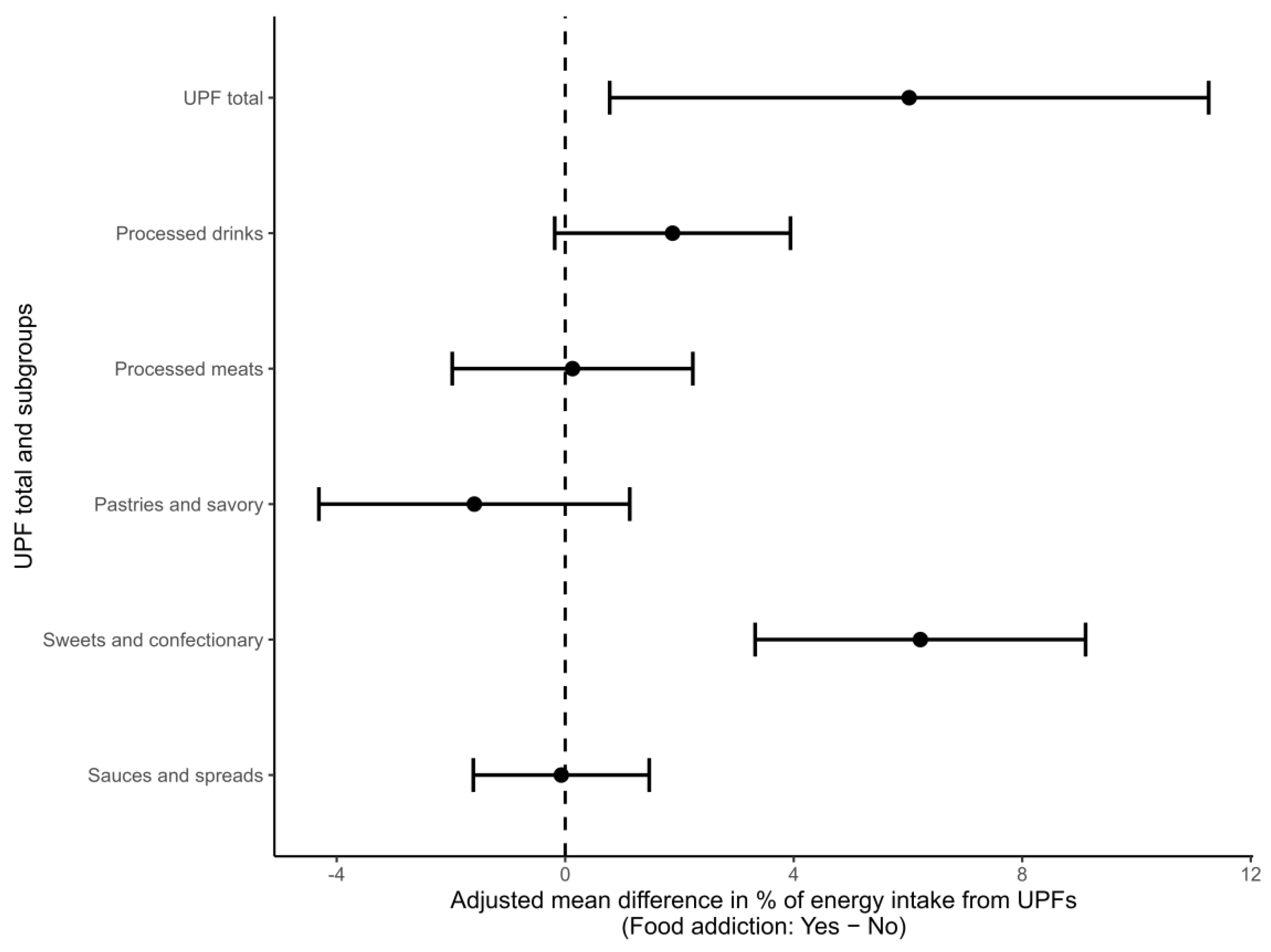
In multivariable analysis, individuals with FA showed higher UPF consumption (28.30%; 95% CI: 23.20; 33.50) and lower consumption of unprocessed or minimally processed foods (47.40%; 95% CI: 41.00; 53.90) compared to non-FA individuals (UPF: 22.30%; 95% CI: 19.20; 25.40; U/MPF: 54.40%; 95% CI: 50.50; 58.30). Regarding UPF subgroups, a higher consumption of Group 4 (sweets and confectionery) was observed among individuals with FA (10.39%; 95% CI: 7.55; 13.24) compared to the non-FA group (4.18%; 95% CI: 2.47; 5.89), with a statistically significant difference (p = 0.001; Table 2 and Figure 2).
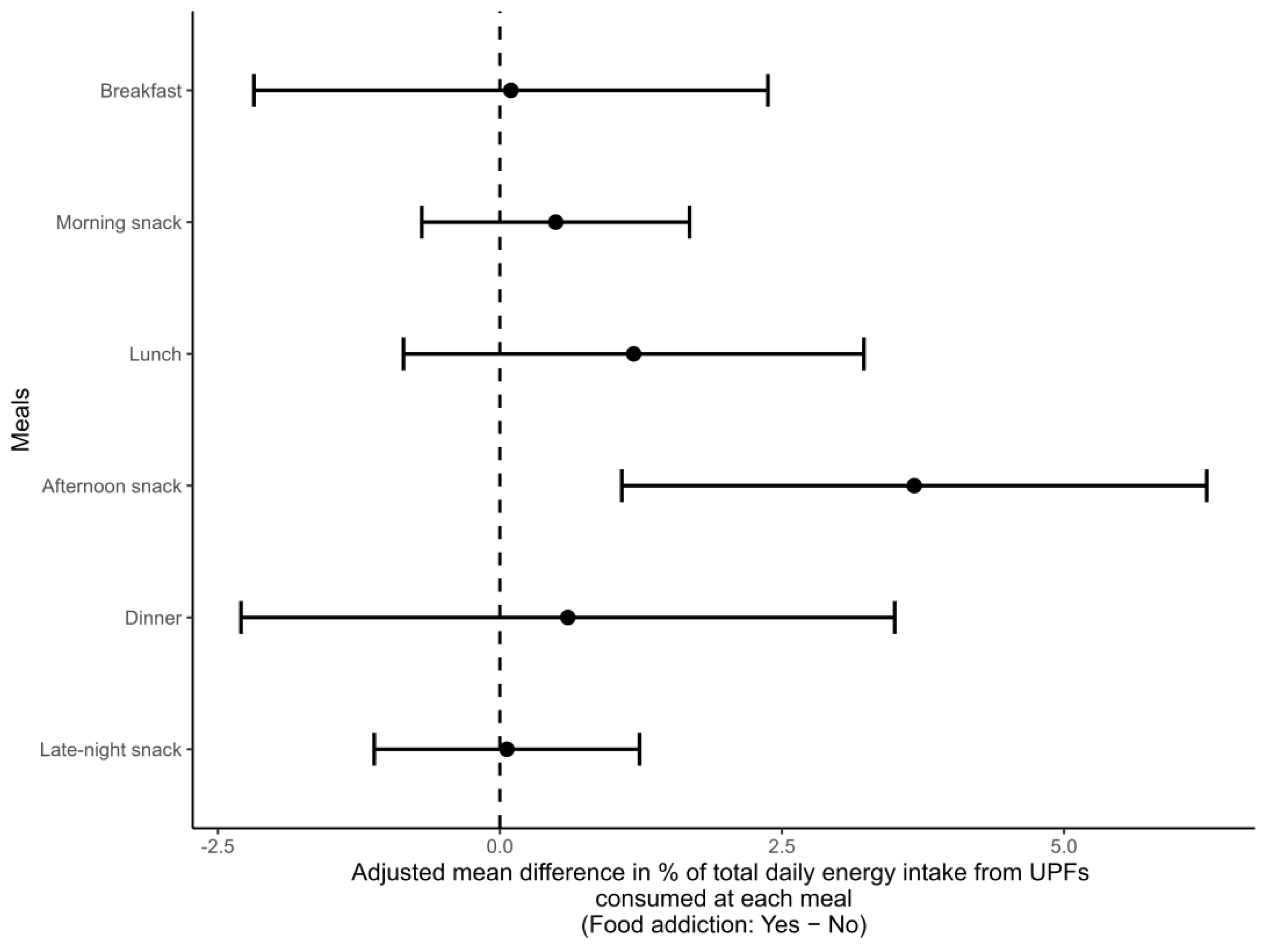
Values are adjusted means (estimated marginal means) and 95% confidence intervals obtained from multivariable linear regression models with food addiction status as the main independent variable. Models were adjusted for sex, age, socioeconomic status (CCEB score), physical activity (CPM), body fat percentage, and total energy intake.

3.4. Meal-Specific UPF Consumption

When evaluating the percentage of UPF consumption by meal, the FA group also presented a higher consumption as part of the afternoon snack (8.34%; 95% CI: 5.79; 10.89) compared to the non-FA group (4.67%; 95% CI: 3.14; 6.21), with a significant difference. No significant differences were observed for breakfast, morning snack, lunch, dinner, or late-night snack (p = 0.005; Table 2 and Figure 3).

4. Discussion

The findings of the present study indicate that UPF consumption was higher among adults with excess adiposity and FA than among those without FA, despite similar total energy intake and macronutrient distribution. Furthermore, UPF consumption showed qualitative and meal-specific differences between groups, with a higher consumption of sweets and confectionery and a greater energy contribution of UPFs during the afternoon snack, suggesting specific consumption patterns of these foods among individuals with FA.
Although previous studies have shown that individuals with FA consume higher amounts of UPFs [12] and added sugars [26], little is known about the specific UPF subgroups contributing to this intake. The present findings suggest that sweets and confectionery may represent a key contributor to this pattern. It is plausible that the high sugar content and palatability of these products make them particularly appealing in individuals with addictive-like eating behaviors [27]; however, experimental studies would be required to test this hypothesis. Also, the identification of a higher UPF intake as part of the afternoon snack suggests that differences between groups may not be uniformly distributed across the day. Craving as part of FA is often associated with night eating, but evidence suggests this behavior also occurs in the afternoon [28]. The concentration of differences as part of the afternoon snack may suggest that eating occasions characterized by snack-type foods represent contexts in which FA-related differences are more evident. A plausible mechanism is that executive control and inhibitory processes may become less effective later in the day due to cognitive fatigue, increasing susceptibility to impulsive food choices, and preference for highly palatable foods [29]. Additionally, circadian variations in reward-related processes may contribute to greater motivation to consume these products during the afternoon [28].
One possible explanation for the lack of quantitative dietary changes accompanied by alterations in total caloric and macronutrient intake is that differences in food processing level may influence dietary composition without necessarily altering total energy intake [30]. Regarding the higher intake of sweets and confectionery, this could be due to greater dopaminergic system activation. As the stimulus is repeatedly presented, it may lead to dopaminergic sensitization and, consequently, to craving [27]. Thus, the higher consumption of sweets and confectionery by individuals with FA may reflect the reward mechanisms of these UPFs [26]. A meta-analysis by Reche-García et al. [31] provides evidence that FA may be associated with an increased consumption of snacks, fast food, and candy bars (commonly classified as UPFs), as well as with higher overall energy intake in individuals with overweight or obesity. However, this pattern is not consistently observed in studies conducted in the general population [31]. Although the sample of this study present excess adiposity, there are no additional clinical conditions, such as disordered eating behaviors, that could influence increased energy consumption. In addition, UPFs may meet the criteria to be labeled as an addictive substance [10] and disrupt several biological characteristics, such as microbiota [32] and lipid metabolism [33], which are also associated with developing neurological disorders, such as FA. Notably, a recent study in a Chinese population with overweight and obesity identified tubers, fats, and sodium as FA dietary markers [34]. This discrepancy with our findings may reflect differences in dietary assessment methods and population characteristics, including distinct cultural food profiles.
Although the NOVA classification highlights the importance of food processing degrees, its concept includes foods with highly heterogeneous compositions [35], which may obscure differences between specific types of UPFs. Disaggregating UPFs into subgroups may improve analytical precision when examining associations with FA [36]. Using this approach, we observed that foods with a predominance of added sugar may contribute to higher UPF consumption among individuals with FA. Additionally, while a newly validated scale for UPF consumption (UPFCS) has shown promise for behavioral research [37], our approach using 24 h recalls and NOVA classification provides complementary specificity on meal-specific UPF intake, since the UPFCS is a frequency of consumption questionnaire and cannot provide meal-specific analysis.
In light of these perspectives, FA may serve as a marker of higher-risk dietary patterns associated with increased UPF intake and alterations in eating behavior. Understanding the consumption profile associated with FA enables the targeting of clinical strategies [5], which could include behavioral interventions focused on the food environment, identification of periods of greater vulnerability to consumption, and reduction in exposure to highly palatable UPFs during vulnerable eating occasions. These approaches may improve the quality of life and promote more effective nutritional management in individuals with FA.
This study has limitations inherent to its cross-sectional design, which precludes establishing causal relationships between UPF consumption and FA diagnosis, allowing only associations to be inferred. Furthermore, the sample consisted of adults with excess adiposity and without comorbidities, making it highly specific and reducing the generalizability of our findings. Additionally, dietary intake was assessed using self-reported questionnaires, which are susceptible to memory bias and underreporting of consumption, particularly in a sample with excess adiposity. In addition, our study considered the application of mYFAS 2.0 dichotomy criteria to FA instead of the degree of symptom severity. Moreover, the small sample size from the FA group could limit the power of the analysis in detecting relevant differences in UPF consumption during other meals. Also, this study was susceptible to social desirability bias or weight stigma, which could lead to a selective underreporting of sweets in the non-FA group or shame-induced underreporting in the FA group, which may have influenced the results. Further, participants were recruited through online announcements (convenience sampling), which may limit generalizability to other populations. Nevertheless, we used a validated recall-collection method recognized for reducing collection bias. Our findings contribute to the FA and UPF literature by shedding new light on this association. Finally, the relatively small number of participants with FA may have limited statistical power for some subgroup analyses.
Given the observed concentration of UPF intake as part of the afternoon snack and the predominance of sweets and confectionery among individuals with FA, future longitudinal studies should investigate whether reducing UPF consumption specifically at that eating occasion decreases FA symptoms. Experimental designs could also test whether limiting ultra-processed sweets attenuates FA symptoms in adults with excess weight.

5. Conclusions

In summary, individuals with FA show specific patterns of UPF consumption compared to those without FA, with a higher intake of sweets and confectionery items and a higher UPF intake as part of the afternoon snack. This study contributes to the characterization of FA and its behaviors and may inform future hypotheses for clinical trials aimed at analyzing the implications of food consumption and FA.

Author Contributions

Conceptualization, N.B.B.; methodology, N.B.B.; validation, N.B.B. and D.C.F.; formal analysis, N.B.B.; investigation, D.C.F.; resources, N.B.B.; data curation, D.C.F. and T.X.R.d.O.; writing—original draft preparation, D.C.F., M.V.C.R., T.X.R.d.O., M.K.d.B.L. and C.V.d.S.; writing—review and editing, D.C.F. and N.B.B.; visualization, D.C.F. and N.B.B.; supervision, N.B.B.; project administration, N.B.B.; funding acquisition, N.B.B. All authors have read and agreed to the published version of the manuscript.

Funding

This research was funded by the National Council for Scientific and Technological Development (CNPq) through the call CNPq/MECTI/FNDCT No. 18/2021, grant number 409166/2021-9.

Institutional Review Board Statement

The study was conducted in accordance with the Declaration of Helsinki, and approved by the Research Ethics Committee of the Federal University of Alagoas (UFAL) according to resolution No. 466/12 of the National Health Council/Ministry of Health (CAAE 69062123.2.0000.5013, approved at 2 June 2023).

Informed Consent Statement

Informed consent was obtained from all participants involved in the study.

Data Availability Statement

The raw data supporting the conclusions of this article will be made available by the authors on request.

Acknowledgments

The authors would like to thank the participants for their contributions and the Laboratório de Nutrição e Metabolismo (LANUM) team for their support in the data collection.

Conflicts of Interest

The authors declare no conflicts of interest.

Abbreviations

The following abbreviations are used in this manuscript:
FAFood addiction
UPFsUltra-processed foods
YFASYale Food Addiction Scale
LANUMLaboratório de Nutrição e Metabolismo (Laboratory of Nutrition and Metabolism)
UFALUniversidade Federal de Alagoas (Federal University of Alagoas)
ReBECRegistro Brasileiro de Ensaios Clínicos (Brazilian Clinical Trials Registry)
BMIBody Mass Index
MPMMultiple Pass Method
mYFAS 2.0Modified Yale Food Addiction Scale 2.0
METMetabolic equivalent of task
CPMCounts per minute
CCEBBrazilian Economic Classification Criteria
VIFVariance inflation factors
SDStandard deviation
CNPqNational Council for Scientific and Technological Development

References

  1. Goh, E.V.; Sobratee-Fajurally, N.; Allegretti, A.; Sardeshpande, M.; Mustafa, M.; Azam-Ali, S.H.; Omari, R.; Schott, J.; Chimonyo, V.G.P.; Weible, D.; et al. Transforming food environments: A global lens on challenges and opportunities for achieving healthy and sustainable diets for all. Front. Sustain. Food Syst. 2024, 8, 1366878. [Google Scholar] [CrossRef] [PubMed]
  2. Monteiro, C.A.; Levy, R.B.; Claro, R.M.; de Castro, I.R.R.; Cannon, G. Increasing consumption of ultra-processed foods and likely impact on human health: Evidence from Brazil. Public Health Nutr. 2011, 14, 5–13. [Google Scholar] [PubMed]
  3. Matos, R.A.; Adams, M.; Sabaté, J. Review: The Consumption of Ultra-Processed Foods and Non-communicable Diseases in Latin America. Front. Nutr. 2021, 8, 622714. [Google Scholar] [PubMed]
  4. Schmidt, L.A. Ultra-processed food addiction: A growing international concern. Addiction 2026, 121, 533–534. [Google Scholar] [CrossRef] [PubMed]
  5. Gearhardt, A.N.; Bueno, N.B.; DiFeliceantonio, A.G.; Roberto, C.A.; Jiménez-Murcia, S.; Fernandez-Aranda, F. Social, clinical, and policy implications of ultra-processed food addiction. BMJ 2023, 383, e075354. [Google Scholar] [CrossRef] [PubMed]
  6. Schulte, E.M.; Potenza, M.N.; Gearhardt, A.N. A commentary on the “eating addiction” versus “food addiction” perspectives on addictive-like food consumption. Appetite 2017, 115, 9–15. [Google Scholar] [CrossRef] [PubMed]
  7. Gearhardt, A.N.; Schulte, E.M. Is Food Addictive? A Review of the Science. Annu. Rev. Nutr. 2021, 41, 387–410. [Google Scholar] [CrossRef] [PubMed]
  8. Meule, A.; Gearhardt, A.N. Ten Years of the Yale Food Addiction Scale: A Review of Version 2.0. Curr. Addict. Rep. 2019, 6, 218–228. [Google Scholar] [CrossRef]
  9. Praxedes, D.R.S.; Silva-Júnior, A.E.; Macena, M.L.; Oliveira, A.D.; Cardoso, K.S.; Nunes, L.O.; Monteiro, M.B.; Melo, I.S.V.; Gearhardt, A.N.; Bueno, N.B. Prevalence of food addiction determined by the Yale Food Addiction Scale and associated factors: A systematic review with meta-analysis. Eur. Eat. Disord. Rev. 2021, 30, 85–95. [Google Scholar] [CrossRef] [PubMed]
  10. Gearhardt, A.N.; DiFeliceantonio, A.G. Highly processed foods can be considered addictive substances based on established scientific criteria. Addiction 2022, 118, 589–598. [Google Scholar] [CrossRef] [PubMed]
  11. Pereira, T.; Mocellin, M.C.; Curioni, C. Association between ultraprocessed foods consumption, eating disorders, food addiction and body image: A systematic review. BMJ Open 2024, 14, e091223. [Google Scholar] [CrossRef] [PubMed]
  12. da Silva Júnior, A.E.; Gearhardt, A.N.; Bueno, N.B. Association between food addiction with ultra-processed food consumption and eating patterns in a Brazilian sample. Appetite 2023, 186, 106572. [Google Scholar] [CrossRef] [PubMed]
  13. Jurema Santos, G.C.; de Sousa Fernandes, M.S.; Carniel, P.G.; da Silva Garcêz, A.; Góis Leandro, C.; Canuto, R. Dietary intake in children and adolescents with food addiction: A systematic review. Addict. Behav. Rep. 2024, 19, 100531. [Google Scholar] [CrossRef] [PubMed]
  14. Mengi Çelik, Ö.; Güler, Ü.; Ekici, E.M. Factors Affecting Ultra-Processed Food Consumption: Hedonic Hunger, Food Addiction, and Mood. Food Sci. Nutr. 2025, 13, e70248. [Google Scholar] [CrossRef] [PubMed]
  15. Tobias, D.K.; Hall, K.D. Eliminate or reformulate ultra-processed foods? Biological mechanisms matter. Cell Metab. 2021, 33, 2314–2315. [Google Scholar] [CrossRef] [PubMed]
  16. Graupensperger, S.; Calhoun, B.H.; Walukevich-Dienst, K.; Lee, C.M. What’s the Harm in Starting Early? Daily and Long-Term Risks of Daytime Drinking in Young Adults. J. Stud. Alcohol Drugs 2025, 86, 724–733. [Google Scholar] [CrossRef] [PubMed]
  17. Branstetter, S.A.; Muscat, J.E.; Mercincavage, M. Time to First Cigarette: A Potential Clinical Screening Tool for Nicotine Dependence. J. Addict. Med. 2020, 14, 409–414. [Google Scholar] [CrossRef] [PubMed]
  18. Macena, M.L.; Pereira, M.R.; Silva, D.R.; Silva-Júnior, A.E.; Oliveira, A.D.S.; Santos, J.V.L.; Paula, D.T.; Galdino-Silva, M.B.; Almeida, K.M.; Ferro, D.C.; et al. Effectiveness and metabolic impacts of restricting the consumption of ultra-processed foods in individuals with obesity submitted to energy restriction: A randomized clinical trial. Nutr. Metab. Cardiovasc. Dis. 2025, 36, 104426. [Google Scholar] [CrossRef] [PubMed]
  19. Moshfegh, A.J.; Rhodes, D.G.; Baer, D.J.; Murayi, T.; Clemens, J.C.; Rumpler, W.V.; Paul, D.R.; Sebastian, R.S.; Kuczynski, K.J.; Ingwersen, L.A.; et al. The US Department of Agriculture Automated Multiple-Pass Method reduces bias in the collection of energy intakes. Am. J. Clin. Nutr. 2008, 88, 324–332. [Google Scholar] [CrossRef] [PubMed]
  20. Crispim, S.P.; Fisberg, R.M.; Marchioni, D.M.L.; Steluti, J. Manual Fotográfico de Quantificação Alimentar; Universidade Federal do Paraná: Curitiba, Brazil, 2017. [Google Scholar]
  21. Monteiro, C.A.; Cannon, G.; Levy, R.B.; Moubarac, J.C.; Louzada, M.L.; Rauber, F.; Khandpur, N.; Cediel, G.; Neri, D.; Martinez-Steele, E.; et al. Ultra-processed foods: What They Are and How to Identify Them. Public Health Nutr. 2019, 22, 936–941. [Google Scholar] [CrossRef] [PubMed]
  22. Carnaúba, R.; Vieira, C.; Oliveira, T.; Silva-Júnior, A.E.; Macena, M.; Bueno, N. Ultra-processed Food Intake is Inversely Associated with Cooking Skills in Post-metabolic and Bariatric Surgery Individuals: A Cross-sectional study. Obes. Surg. 2025, 35, 2121–2131. [Google Scholar] [CrossRef] [PubMed]
  23. Nunes-Neto, P.R.; Köhler, C.A.; Schuch, F.B.; Quevedo, J.; Solmi, M.; Murru, A.; Vieta, E.; Maes, M.; Stubbs, B.; Carvalho, A.F. Psychometric properties of the modified Yale Food Addiction Scale 2.0 in a large Brazilian sample. Rev. Bras. Psiquiatr. 2018, 40, 444–448. [Google Scholar] [CrossRef] [PubMed]
  24. Silva-Júnior, A.E.; Bueno, N. Comments on the translated version of the modified Yale Food Addiction Scale 2.0 into Brazilian Portuguese. Braz. J. Psychiatry 2023, 45, 198–199. [Google Scholar]
  25. ABEP. Brazilian Economic Classification Criteria; ABEP: São Paulo, Brazil, 2020. [Google Scholar]
  26. Wattick, R.A.; Olfert, M.D.; Hagedorn-Hatfield, R.L.; Barr, M.L.; Claydon, E.; Brodie, C. Diet quality and eating behaviors of college-attending young adults with food addiction. Eat. Behav. 2023, 49, 101710. [Google Scholar] [CrossRef] [PubMed]
  27. Lennerz, B.; Lennerz, J.K. Food Addiction, High-Glycemic-Index Carbohydrates, and Obesity. Clin. Chem. 2018, 64, 64–71. [Google Scholar] [CrossRef] [PubMed]
  28. Reichenberger, J.; Richard, A.; Smyth, J.M.; Fischer, D.; Pollatos, O.; Blechert, J. It’s craving time: Time of day effects on momentary hunger and food craving in daily life. Nutrition 2018, 55–56, 15–20. [Google Scholar] [CrossRef] [PubMed]
  29. McGreen, J.; Kemps, E.; Tiggemann, M. The relationship between inhibitory control and food consumption or choice: A systematic review and meta-analysis. Appetite 2023, 183, 106466. [Google Scholar] [CrossRef] [PubMed]
  30. Smethers, A.D.; Roe, L.S.; Sanchez, C.E.; Zuraikat, F.M.; Keller, K.L.; Rolls, B.J. Both increases and decreases in energy density lead to sustained changes in preschool children’s energy intake over 5 days. Physiol. Behav. 2019, 204, 210–218. [Google Scholar] [CrossRef] [PubMed]
  31. Reche-García, C.; Piernas, C.; Martínez-Rodríguez, A.; Sánchez-Guerrero, A.; Hernández-Morante, J.J. Dietary intakes among people with vs without food addiction: A systematic review and meta-analysis. Clin. Nutr. 2022, 41, 1770–1780. [Google Scholar] [CrossRef] [PubMed]
  32. Samulėnaitė, S.; Rodriguez Parkitna, J.; Baltriukienė, D.; Martín-García, E.; Maldonado, R.; Burokas, A. Dysregulated eating behaviour and microbiota-based interventions targeting eating disorders and food addiction. Gut Microbes 2026, 18, 2647535. [Google Scholar] [CrossRef] [PubMed]
  33. Poon, E.; Li, C.; Schweitzer, D.; Akefe, I. Neurobiological insights into the effects of ultra-processed food on lipid metabolism and associated mental health conditions: A scoping review. Front. Nutr. 2026, 12, 1754492. [Google Scholar] [CrossRef] [PubMed]
  34. Mao, Y.; Zhou, Y.; Li, N.; Wang, X.; Luo, Y.; Cheng, D.; Li, J.; Zhong, L.; Zhu, Y. Impact of Food Addiction and Its Influencing Factors in Overweight/Obesity Population: A Cross-Sectional Study. J. Nutr. Sci. Vitaminol. 2026, 72, 40–52. [Google Scholar] [CrossRef] [PubMed]
  35. Astrup, A.; Monteiro, C.A. Does the concept of “ultra-processed foods” help inform dietary guidelines, beyond conventional classification systems? Debate consensus. Am. J. Clin. Nutr. 2022, 116, 1489–1491. [Google Scholar] [CrossRef] [PubMed]
  36. Rezende, L.F.M.; Martinez-Steele, E.; Louzada, M.L.C.; Levy, R.B.; Monteiro, C.A. Misleading narrative of “healthy” ultraprocessed foods. BMJ 2026, 392, e087538. [Google Scholar] [CrossRef] [PubMed]
  37. Mantzios, M.; Hussain, M.; Giannou, K. From concept to measurement: Initial validation of the Ultra-Processed Food Consumption Scale. Eat. Weight. Disord. 2026, 31, 22. [Google Scholar] [CrossRef] [PubMed]
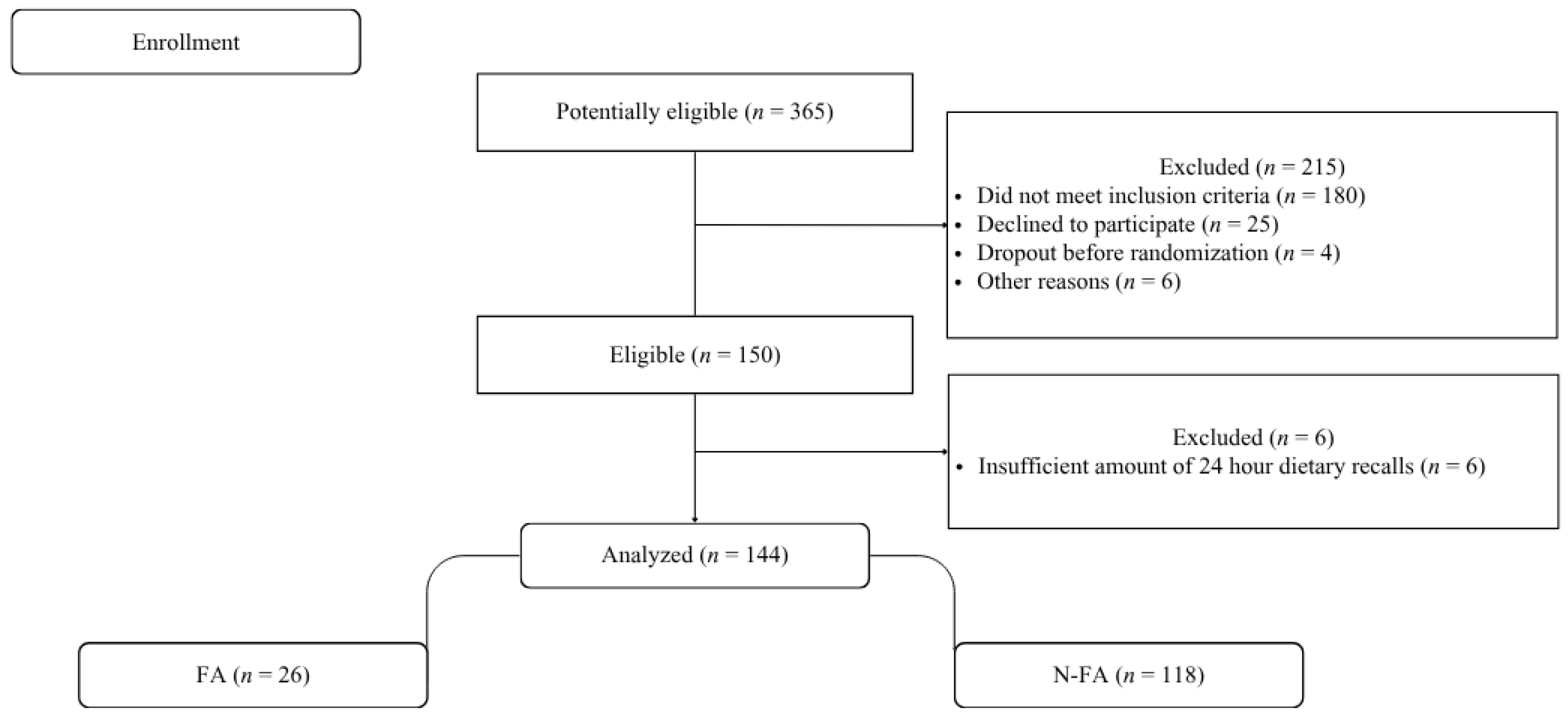
Figure 1. STROBE flow diagram of the sample. FA: Food Addiction.
Obesities 06 00043 g001
Figure 2. Adjusted means of UPFs energy consumption, as percentages of total energy intake and by UPF subgroups, obtained through a multivariable model.
Obesities 06 00043 g002
Figure 3. Adjusted means of daily energy consumption derived from the percentage of UPFs intake at each meal, obtained through a multivariable model.
Obesities 06 00043 g003
Table 1. Sociodemographic and clinical characterization of the sample, by exposure group (n = 144).
VariablesNon-FA
(n = 118)
FA
(n = 26)
N%N%
Female sex8874.602492.30
Economic class
  B23731.40311.50
  C12823.70830.80
  C23126.301038.50
  D–E75.93311.50
Age (years)30.708.1534.608.02
Weight (kg)84.9014.0088.4013.30
Height (m)1.640.091.640.07
MeanSD 1MeanSD 1
BMI (kg/m2)31.303.4832.903.44
Body fat (%)41.406.1644.704.84
Physical activity (CPM)517.00155.00524.00167.00
Number of FA symptoms1.071.576.232.45
Total energy (kcal)2142.00634.002119.00708.00
Carbohydrates (kcal)1024.00311.001058.00400.00
Carbohydrates (%)48.406.9550.106.22
Protein (kcal)396.00152.00352.00110.00
Protein (%)18.704.0817.003.82
Lipids (kcal)700.00262.00704.00266.00
Lipids (%)32.005.5032.704.81
1 SD: Standard Deviation; BMI: Body Mass Index; FA: Food Addiction; CPM: Counts Per Minute.
Table 2. Adjusted means of food consumption by processing degree, UPF type, and meal, according to FA diagnosis, obtained through a multivariable model.
VariablesNon-FA
(n = 118)
FA
(n = 26)
Mean95%CIMean95%CIp-Value 1
Total UPFs (%)22.3019.20; 25.4028.3023.20; 33.500.02
Total UPFs (kcal)492.00423.00; 562.00614.00498.00; 729.000.04
Nova Score2.692.18; 3.203.412.56; 4.260.10
Group 1 (%)4.082.86; 5.305.963.93; 7.990.07
Group 2 (%)4.122.88; 5.374.252.18; 6.320.90
Group 3 (%)6.164.54; 7.774.561.89; 7.240.24
Group 4 (%)4.182.47; 5.8910.397.55; 13.240.001
Group 5 (%)3.552.64; 4.473.491.97; 5.000.92
U/MPFs (%)54.4050.50; 58.3047.4041.00; 53.900.03
U/MPFs (kcal)1144.001064.00; 1224.00995.00862.00; 1128.000.03
Processed (%)12.1010.10; 14.0014.5011.20; 17.700.15
Processed (kcal)264.00224.00; 304.00306.00239.00; 372.000.22
Culinary ingredients (%)9.878.40; 11.309.156.70; 11.600.56
Culinary ingredients (kcal)216.00179.00; 253.00207.00146.00; 269.000.78
Percentage of UPF Consumption by Meal
Breakfast (%)3.782.44; 5.133.881.64; 6.120.93
Morning snack (%)0.62−0.07; 1.331.12−0.04; 2.290.41
Lunch (%)4.603.39; 5.815.793.78; 7.790.25
Afternoon snack (%)4.673.14; 6.218.345.79; 10.890.005
Dinner (%)7.555.84; 9.278.165.31; 11.010.68
Late-night snack (%)1.070.37; 1.761.13−0.02; 2.290.91
1 p-Values refer to Wald tests comparing individuals with and without food addiction. FA: Food Addiction; UPF: Ultra-processed Foods; 95%CI: 95% Confidence Interval; U/MPF: Unprocessed or Minimally Processed Foods.
Disclaimer/Publisher’s Note: The statements, opinions and data contained in all publications are solely those of the individual author(s) and contributor(s) and not of MDPI and/or the editor(s). MDPI and/or the editor(s) disclaim responsibility for any injury to people or property resulting from any ideas, methods, instructions or products referred to in the content.