
Next Article in Journal
Effectiveness of Metformin in Preventing Type 2 Diabetes in Children and Adolescents with Overweight or Obesity: A Protocol for a Systematic Review and Meta-Analysis
Previous Article in Journal
Patient Outcomes Under Varying Engagement Patterns on Real-World Lifestyle-Supported Pharmacological Weight-Loss Therapy
 
 
obesities-logo
Article Menu
Article

Chronotype and Social Jetlag: Impacts on Nutritional Status and Dietary Intake of University Students

by
Lyandra Deluchi Loch
1,
Gabriela Iber Correa
2,
Isabela Fernandes Araújo
1,
Amanda Portugal
1,
Gabriela Datsch Bennemann
1,
Caryna Eurich Mazur
1,2,
Guilherme Welter Wendt
2,
Lirane Elize Defante Ferreto
2,
Carolina Panis
2,
Camila Elizandra Rossi
2,
Kérley Braga Pereira Bento Casaril
2,
Gisele Arruda
2,
Léia Carolina Lucio
2,
Cleide Viviane Buzanello
2,
Geraldo Emílio Vicentini
2,
Claudiceia Risso Pascotto
2,
Aedra Carla Bufalo Kawassaki
2,
Ana Paula Vieira
2,
Dalila Moter Benvegnú
2,3,
Franciele Ani Caovilla Follador
2 and
Mariana Abe Vicente Cavagnari
2,4,*
add Show full author list remove Hide full author list
1
Nutrition Collegiate, Western Paraná State University (UNIOESTE), Francisco Beltrão 85605-010, Brazil
2
Graduate Program in Applied Health Sciences (PPGCAS), Francisco Beltrão 85601-839, Brazil
3
Programa de Pós-Graduação em Saúde, Bem-Estar e Produção Animal Sustentável na Fronteira Sul (PPG-SBPAS), Federal University of the Southern Border (UFFS), Realeza Campus, Realeza 85770-000, Brazil
4
Department of Nutrition, State University of the Central-West of Paraná (UNICENTRO), Guarapuava 85040-167, Brazil
*
Author to whom correspondence should be addressed.
Obesities 2026, 6(1), 3; https://doi.org/10.3390/obesities6010003
Submission received: 29 September 2025 / Revised: 24 December 2025 / Accepted: 29 December 2025 / Published: 9 January 2026

Abstract

The circadian cycle regulates metabolism in response to external stimuli, such as light exposure, sleep schedules, and eating patterns. However, misalignment between internal biological rhythms and social demands can compromise food choices, potentially leading to overweight and obesity. This research aimed to assess how a person’s chronotype links to social jet lag (SJL), which in turn would relate to their nutritional status and food consumption patterns as a university student. 617 students from a State University located in the State of Paraná, Brazil, completed a cross-sectional research study that collected sociodemographic information/anthropometrics by means of an online survey. It included self-reported height/weight data and dietary habits. The Munich Chronotype Questionnaire (MCTQ) was utilized to determine each participant’s chronotype classification and SJL calculation. Researchers found that nearly half of the students (49.3%) displayed an Intermediate Chronotype, which is associated with a diet that contained elements of the “Mixed” Diet, meaning there are equal portions of healthy food (Fresh Fruits, Beans, etc.) and unhealthy foods (Sweetened Beverages). The multivariate logistic regression analyses identified age as a significant predictor of obesity risk (OR: 1.15, p < 0.001), while dietary habits such as fruit consumption played a protective role. Additionally, having a breakfast protected them from being classified as obese compared to those who did not eat breakfast (OR = 0.59). Contrary to expectations, late-night supper was not a statistically significant predictor in the adjusted model. Predictors of an Intermediate chronotype included being male and eating morning snacks regularly. The results of this study suggest that students with an intermediate chronotype will predictably have skewed eating patterns, such as skipping breakfast and eating late—both of which affect obesity risks. Nutritional strategies for university students should focus on promoting circadian regularity and optimizing meal timing.

1. Introduction

Circadian rhythms are biological cycles of approximately 24 h, responsible for regulating physiological and behavioral processes in living organisms. These cycles are orchestrated by a system of internal biological clocks, composed of genes and proteins that operate in a coordinated manner. The central circadian clock, located in the suprachiasmatic nuclei (SCN) of the hypothalamus, plays a crucial role in synchronizing peripheral rhythms present in tissues such as the liver, heart, and skeletal muscle, ensuring the body’s adaptation to environmental variations throughout the day [1]. Proper alignment between these rhythms and external schedules, such as light exposure, sleep, and eating, is critical for metabolic homeostasis and overall health [2,3].
Recent scientific evidence shows that the circadian system interacts directly with nutrients, impacting essential metabolic functions. This concept underpins chrononutrition, an emerging field that investigates how the timing and distribution of meals influence circadian regulation and metabolic processes [4,5]. Studies suggest that misalignment between the biological clock and eating times can compromise metabolic homeostasis, favoring the development of disorders such as obesity and insulin resistance [6,7].
College students, in particular, are prone to irregular eating patterns, often with late-night meals and long periods of fasting, which can disrupt the circadian cycle and negatively impact nutritional status [8]. Such habits are influenced by factors such as academic workloads and social jet lag, which contribute to the mismatch between internal and external eating and sleeping schedules.
The term social jet lag describes the chronic discrepancy between individual biological rhythms, regulated by the circadian clock, and the schedules imposed by social obligations, such as work or school [9]. Studies indicate that social jetlag is associated with negative impacts on metabolic health, including weight gain with a consequent increase in BMI and a higher prevalence of obesogenic behaviors, such as irregular eating patterns and a sedentary lifestyle [10]. Indeed, a recent study reviewed the adoption of the Munich ChronoType Questionnaire over the last years, estimating its use in both community and clinical samples, as well as among individuals from varied ages [11].
In addition, chronotype, characterized by an individual’s biological predisposition to be more active at a certain time of day, plays a significant role in regulating food intake patterns [11]. Scientific evidence indicates that individuals with an evening chronotype tend to have less healthy eating patterns, characterized by higher consumption of ultra-processed foods, lower fiber intake, and later meals, factors that can increase the risk of obesity and metabolic disorders. In contrast, those with a morning chronotype had healthier eating habits and greater control over hunger [12,13].
The goal of this research was to examine the associations between chronotype, social jet lag, BMI, and dietary consumption patterns among university students in Brazil. Albeit the association between one’s chronotype and diet has been well-established, investigations into the dietary habits are still scarce in the global south. Further, by using validated tools for measuring chronotype (Munich ChronoType Questionnaire [MCTQ]) and dietary consumption (SISVAN food markers), the investigation may help fill existing gaps in the local literature, as well as addressing a sample with high vulnerability to circadian disruption due to academic/social demands. Further, this study aims to investigate the associations among misaligned sleep patterns, eating behaviors, and BMI in university students. The findings may provide insights into the potential benefits of nutritional planning and sleep hygiene in supporting long-term metabolic health.

2. Materials and Methods

A cross-sectional study conducted between September 2022 and August 2023 with university students regularly enrolled in undergraduate courses at the State University of Western Paraná (UNIOESTE). This study is part of the project “Factors associated with chrononutrition, mental health, food consumption, and food security among university students,” approved by the Research Ethics Committee (Opinion No. 5475767/2022) and followed the ethical guidelines established by Resolution No. 466/2012 of the National Health Council.
The sample consisted of university students of both sexes, aged between 18 and 59, who voluntarily agreed to participate in the study. As for the inclusion criteria, only participants who were regularly enrolled at the institution between September 2022 and August 2023 (population [n] of active user of approximately 10,000] and who provided completed data necessary for analysis were included (n = 617). Out of these, no exclusions were made.
The data were collected through an online questionnaire using convenience sampling, developed on the Microsoft Teams platform. This is the platform that connects all the classes offered by the institution, making in easier to invite individuals to access the survey based on inclusion and exclusion criteria. By using unique login credentials, participants were able to take part in the survey either on campus or elsewhere. The questionnaire covered sociodemographic information (age and sex), eating habits, and sleep schedules. Food consumption was assessed based on the Food Consumption Markers form, recommended by the Food and Nutrition Surveillance System (SISVAN), in accordance with the guidelines of the Ministry of Health and validated by Santos et al. [14].
This questionnaire is a structured instrument that investigates the frequency of consumption of certain foods on the previous day, allowing the identification of the presence or absence of relevant food groups, such as fruits, vegetables, legumes, beans, sweetened beverages, and other ultra-processed foods. It is composed of 25 items, in which responses are given on a yes and no fashion in instances of whether someone agrees with the statement, as well as to agreement range (i.e., 0 usually not to 4 Usually). Example questions include “Do you usually have breakfast?” or “Do you usually eat snacks such as fried or baked snacks, fast-food hamburgers, hot dogs and/or industrialized pizza (purchased ready-made)?”, and indices from confirmatory factor analysis and reliability analysis were above the acceptable threshold [14].
In this study, seven food markers were considered, grouped into two categories: (a) Healthy eating markers, including beans, fresh fruits, and vegetables and/or legumes; (b) Unhealthy eating markers, including hamburgers and/or sausages, sweetened beverages, instant noodles, packaged snacks or savory cookies, as well as filled cookies, sweets, or treats. For each participant, a healthy eating score was calculated by adding up the number of healthy food groups, ranging from 0 to 3, and a score for unhealthy eating markers was calculated by adding up the number of unhealthy food groups consumed, ranging from 0 to 4 [15].
Body Mass Index (BMI) was calculated based on the weight and height self-reported by the participants and classified according to the criteria established by the World Health Organization [16]. As such, the values were as follows: Malnutrition (<18.5 kg/m2), Eutrophy (18.5–24.9 kg/m2), Overweight (25.0–29.9 kg/m2), and Obesity (≥30.0 kg/m2).
The regularity of meals was assessed based on the frequency of consumption of the main meals of the day (breakfast, lunch, and dinner) and snacks (morning snack, afternoon snack, and supper). The analysis considered the presence or absence of these meals.
Chronotropic typology and social jet lag were assessed using the Munich Chronotype Questionnaire (MCTQ) [17], in its version validated for Portuguese by Reis et al. [18], which determines circadian typology using a scale that measures sleep and wakefulness rhythms on workdays and days off or weekends. Consequently, participants provided responses about the times at which they usually get ready for bed during weekdays and workdays, as well as for weekends or days-off. Similarly, responses about what time did they effectively fell asleep were recorded, along with waking up hours. As such, the MCTQ asks participants to report their bedtime, sleep latency (time to fall asleep), wake-up time, and use of an alarm clock separately for workdays (or school days) and free days (weekends). These self-reported times were used to calculate the midpoint of sleep on workdays and free days, and the absolute difference between these two midpoints yielded the social jet lag value in hours.
To determine chronotypes, the midpoint of sleep on days off corrected for sleep debt (MSFsc) was used as a reference. As there is no universally validated classification for categorizing chronotypes based on MSFsc, the approach adopted in this study was based on the methodology used by the CRONUS SONAR research group at the Federal University of Alagoas (UFAL). Following this methodology, chronotypes were classified based on the distribution of the sample into MSFsc quartiles. Individuals in the first quartile (lowest 25%) were classified as morning types, those between the second and third quartiles (middle 50%) were considered intermediate, while individuals in the last quartile (highest 25%) were categorized as evening types.
To determine social jetlag, the average bedtimes and wake-up times during weekdays and weekends of the study participants were assessed. The calculation of social jetlag was based on the difference between the midpoint of sleep on weekends and weekdays [9]. Following criteria established in the literature, differences of less than one hour (<1 h) were classified as low social jetlag; differences between one and two hours (1–2 h) as moderate social jetlag; and differences greater than two hours (>2 h) as high social jetlag [19].
The data were stored in an Excel® spreadsheet and analyzed using descriptive statistics, with means, standard deviation, relative and absolute frequencies. The distribution of the variables was verified using the Shapiro–Wilk and Kolmogorov–Smirnov tests. Inferential analyses were performed using SPSS version 25.0 and Jamovi software version 1.6.12, with a significance level of 5% (<0.05). Techniques were deployed in accordance with the nature of the variable (numerical and categorical), thus involving X2 Statistics (used to compare the meal frequency and food habits according to BMI status, social jetlag and chronotype), Analyses of Variance (comparing the means of BMI in terms of chronotype and jetlag groups), correlations assessing the bivariate associations between numerical variables and binary logistic regression analyses, aimed at identifying the predictors of this study’s main outcomes.
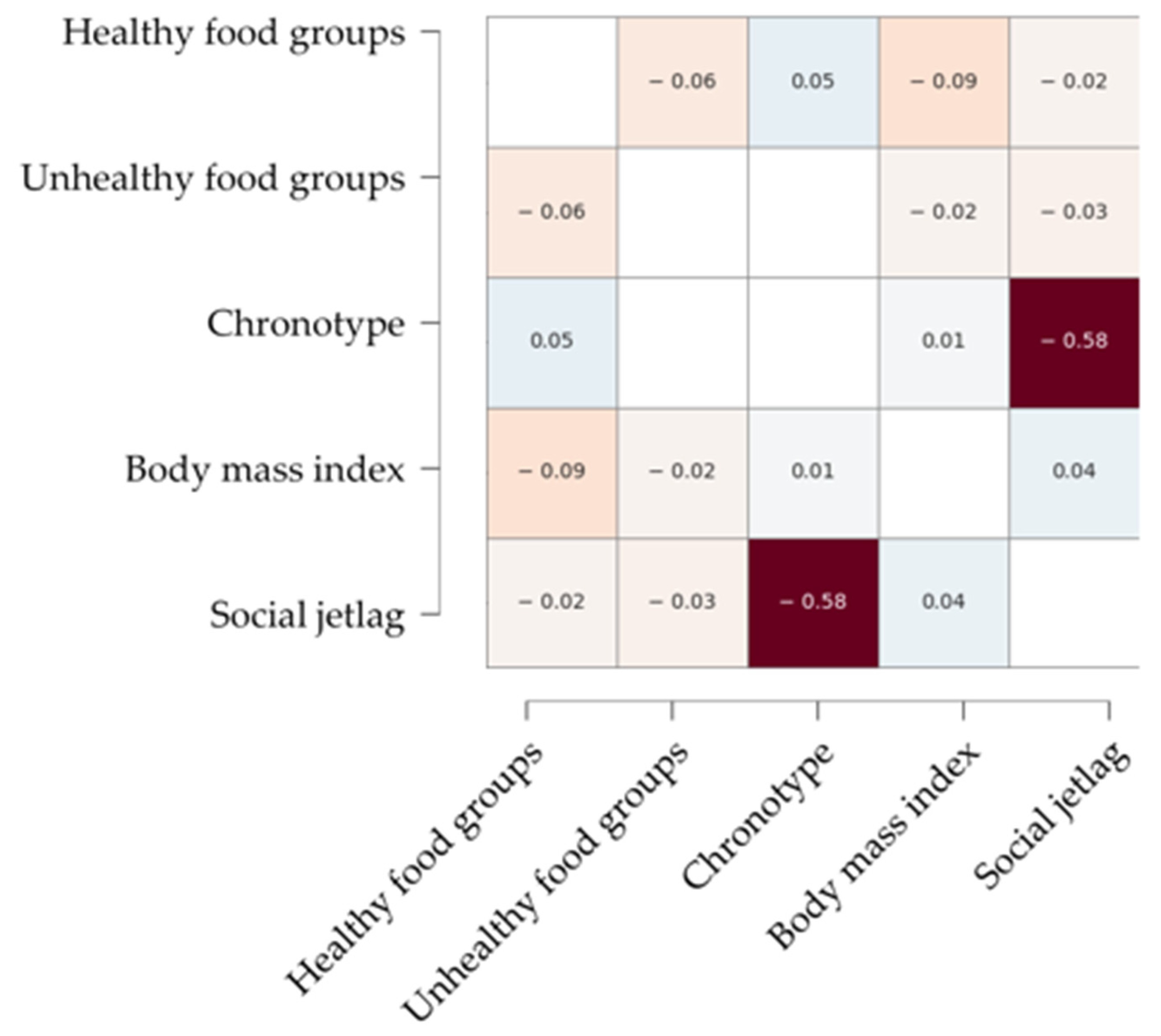
Heatmap of Kendall’s Tau correlations. The colors indicate the magnitude and direction of Kendall’s Tau correlation coefficients. Warmer colors represent positive correlations, while cooler colors indicate negative correlations. Neutral colors correspond to coefficients close to zero, reflecting weak or no monotonic association. Color intensity increases with the strength of the correlation. Kendall’s Tau values range from −1 (perfect negative association) to +1 (perfect positive association).
Power analysis was conducted on G*Power, version 3.1.9. By imputing the odds rations from the logistic regression, alongside explained variance and sample size, the achieved power was 99.7% (α = 0.05).

3. Results and Discussion

The study was conducted with 617 university students, with a mean age of 22.5 ± 5.03 years. Most participants were female (69.9%, n = 431). The intermediate chronotype predominated (49.3%), followed by the evening chronotype (40.4%) and the morning chronotype (10.4%), as shown in Figure 1. Also, females were the predominant sex across all chronotypes: Evening (80.7%, n = 201), Morning (66.7%, n = 42), and Intermediate (62.5%, n = 188). Age distributions were similar across groups, with Morning types being slightly older on average (23.1 ± 5.9) than Intermediate (22.6 ± 5.3) and Evening types (22.1 ± 4.4).
This distribution is similar to that observed in the study by Hasan et al. [20], which analyzed a sample of 500 university students in Saudi Arabia, aged between 18 and 26 years, and identified a higher prevalence of the intermediate chronotype (56.7%), evening chronotype (33.9%), and morning chronotype (9.4%). These results suggest that university students tend to have a higher prevalence of intermediate and evening chronotypes, possibly due to the flexibility of academic schedules and greater exposure to evening social commitments [21].
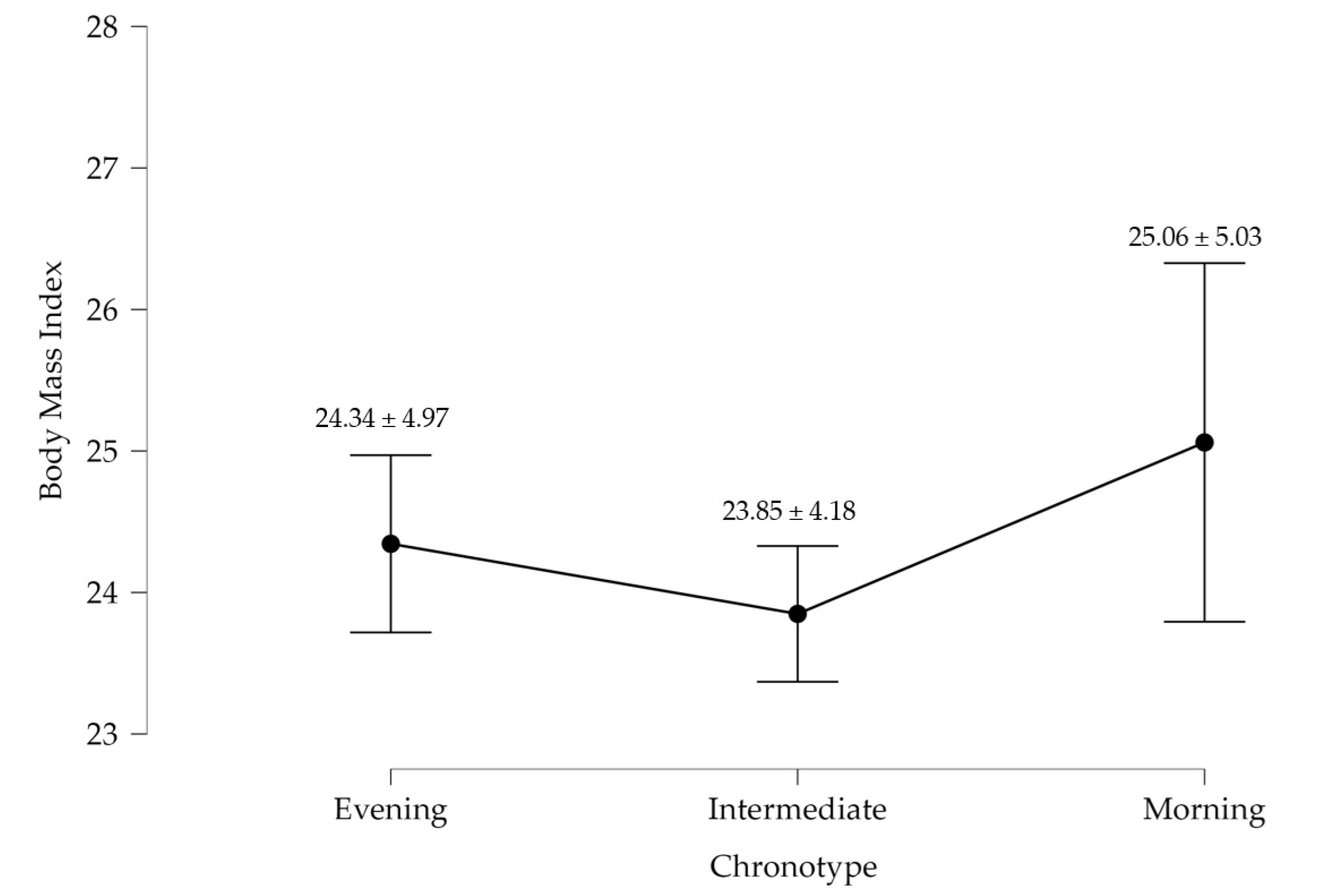
Albeit not statistically significant, Figure 2 shows that individuals with a morning chronotype had a higher mean BMI (24.6 ± 5.02) compared to evening chronotypes (23.8 ± 4.98) (p = 0.128). This finding contrasts with the prevailing literature, which generally associates the morning chronotype with a lower BMI, while evening individuals tend to have a higher risk of obesity due to their preference for ultra-processed foods and irregular meal times [22,23].
In a previous cross-sectional study conducted among university students, with a mean age of 20.68 ± 3.30 years, no significant association was found between increased BMI and evening chronotype. The authors suggest that this lack of association may be related to factors such as biological changes throughout aging and the sample distribution of chronotypes, indicating that BMI may be more influenced by eating habits and physical activity level than by chronotype alone [24]. Corroborating this hypothesis, Xiao, Garaulet, and Scheer [25] highlight that morning individuals are more common in older age groups, which may influence BMI distribution and body composition within this subgroup.
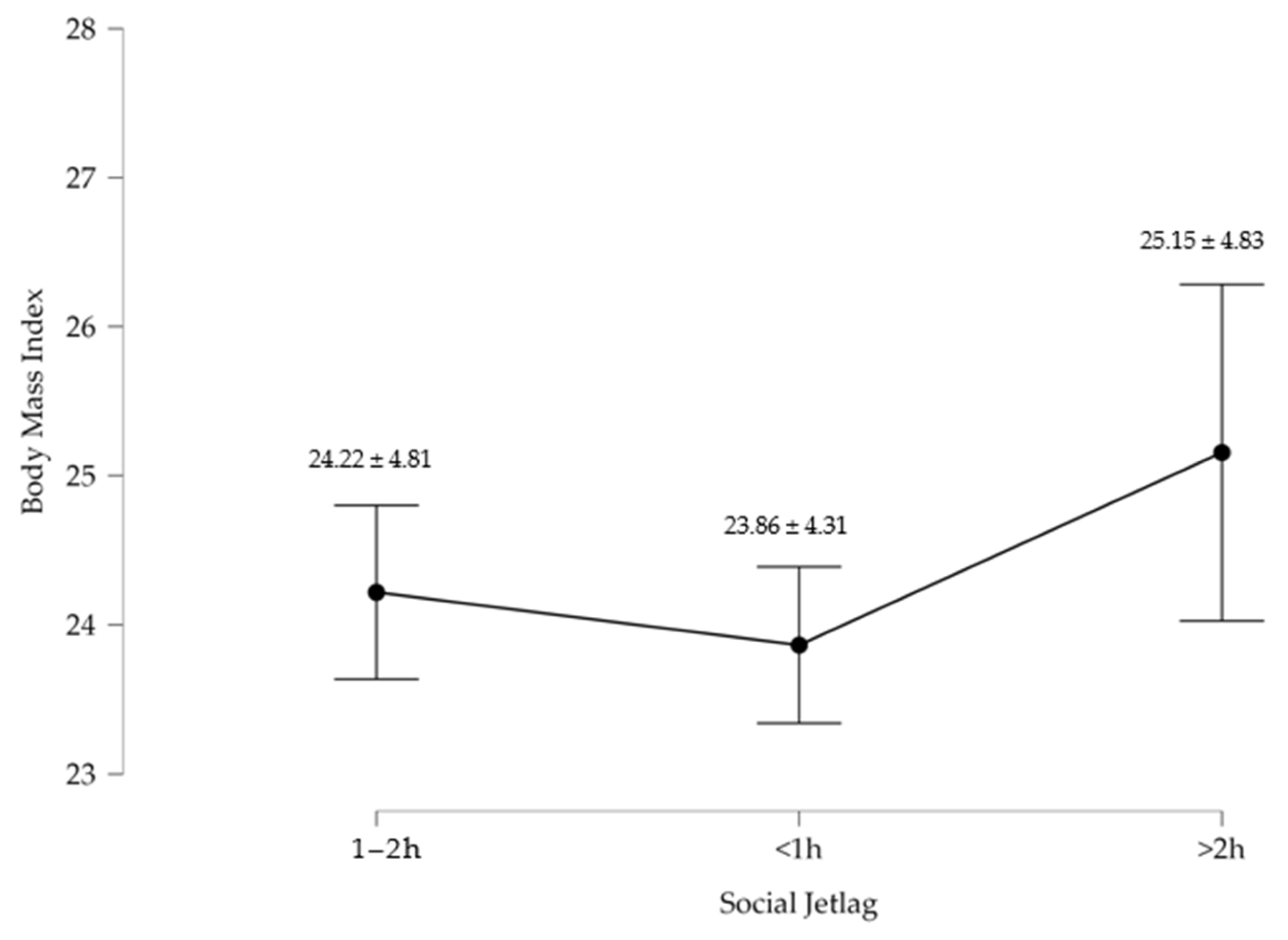
Most participants (44.1% and 43.8%) had social jet lag of <1 h and 1–2 h, respectively, with a lower prevalence in the >2 h category (12.1%). The group with high social jet lag (>2 h) had a means for BMI, albeit not statistically significant (Figure 3). These findings are in line with Mota et al. [26], who suggest that greater misalignment between biological and social schedules may contribute to weight gain. Furthermore, a multicenter study conducted with 2050 Brazilian adults indicated that social jet lag greater than 2 h was associated with an increase in BMI (+2.29 kg/m2) and obesogenic habits, such as poorer diet quality and less physical exercise [27].
There was no significant association between social jet lag and eating regularity (p > 0.05) for all meals analyzed. Meal frequency was similar among the different social jet lag groups, suggesting that individuals maintain structured eating patterns regardless of the mismatch between social and biological schedules. However, it was observed that the group with social jet lag > 1 h had a higher percentage of supper consumption (21.97%) compared to the <1 h group (16.61%), although this difference did not reach statistical significance (p = 0.10) (Table 1). This finding suggests a possible tendency toward late eating patterns in individuals with greater circadian misalignment, which has already been pointed out by Wehrens et al. [28] as a factor that may influence weight regulation and energy metabolism.
Further, individuals with an intermediate chronotype had a high frequency of consuming beans (74.34%) and fresh fruits (59.87%). However, they also reported a high prevalence of sweetened beverage consumption (65.13%), evidencing mixed dietary behavior. Regarding the predictors of this chronotype (Table 2), male sex and morning snack consumption were significant predictors, while sweetened beverages showed a borderline, non-significant association (p = 0.054).
Although there is evidence in the literature suggesting that social jet lag is associated with less healthy eating patterns, such as lower consumption of fruits and vegetables and higher intake of ultra-processed foods, such associations are not always consistent across studies. Zerón-Rugerio et al. [29], for example, observed that young adults with greater social jet lag had lower adherence to the Mediterranean diet, characterized by higher nutritional quality. In the present study, although a similar trend was observed in some groups, no statistically significant associations were found between social jet lag and food consumption markers. This lack of significance may be related to the methodology used to assess food consumption, since the instrument applied only considers consumption on the previous day, which may limit the capture of habitual eating patterns. Alternative methods, such as the 24 h dietary recall [30] and food frequency questionnaires [31], have been used to assess food intake more comprehensively, considering not only the presence or absence of consumption of certain foods, but also the amount and frequency of intake.
Table 2 presents the predictors of the study’s three main outcomes. It can be noted that, in regard to the predictors of having an Intermediate Chronotype, Table 2 indicates that male students were significantly more likely to belong to this group (OR = 2.44; p < 0.001). Furthermore, consuming morning snacks (OR = 2.01; p < 0.001) and fresh fruit (OR = 1.44; p = 0.041) increased the odds of being classified as an Intermediate chronotype. Still according to the adjusted model, age was a significant predictor of obesity (OR = 1.15; p < 0.001). Protective behaviors against obesity included regular breakfast consumption (OR = 0.53; p = 0.004) and fresh fruit intake (OR = 0.66; p = 0.034). Unlike previous unadjusted findings, supper consumption was not a significant predictor of obesity in the multivariate model (p = 0.381).
Studies, including recent systematic review that included 10 observational studies (2020–2022) confirmed that intermediate and evening chronotypes show less adherence to healthy diets, such as the Mediterranean diet, compared to morning individuals [32,33], suggesting that, although the intermediate chronotype may show some regularity in eating, the coexistence of healthy and unhealthy eating patterns may negatively influence metabolic regulation and body composition.
The Figure 4 presents a heatmap showing the non-parametric (Kendall’s Tau) comparisons of healthy and unhealthy eating scores among different chronotypes and social jet lag categories, based on food consumption markers. Individuals with an evening chronotype had moderate association with social jetlag (p < 0.001). These individuals also had highest proportion of high unhealthy eating scores, indicating a higher frequency of ultra-processed food consumption. In contrast, participants with a morning chronotype had a higher frequency of healthy eating scores, reflecting higher consumption of fruits, beans, and vegetables, which suggests a tendency toward more appropriate eating habits in this group. Recent studies corroborate the findings of this study by pointing out that individuals with an evening chronotype tend to consume more ultra-processed foods and have less healthy eating habits, as observed by Henrique and Bento [34] while morning and intermediate chronotypes showed greater adherence to balanced eating patterns.
The present study identified statistically significant bivariate associations between specific dietary habits, particularly regarding the frequency of morning snacks and fresh fruit consumption in relation to chronotypes and obesity risk. However, no significant differences were found regarding ultra-processed markers such as sweetened beverages or instant noodles. These results deserve attention, especially in groups with greater mismatch between social and biological schedules. In line with previous studies, such as that by Oliveira and Costa [35], which showed that individuals with greater social jet lag had a lower frequency of healthy food consumption, the data from the present study indicate that participants with high jet lag (>1 h) had lower adherence to main meals and a higher occurrence of late-night snacking.
On a concluding note, we must emphasize both the strengths and limitations of the present research. The MCTQ allowed for a highly accurate quantitative representation of one’s chronotype, as well as the amount of social jet lag they experienced, as this measurement is based not on the individual’s own perception of their sleep habits but rather based on the quantitative information collected from both work and free day sleep habits. The sample used in this study usually experience significant disruptions to their circadian rhythms, and are therefore highly relevant for examining the potential metabolic consequences of these disruptions. This analysis uses multivariate logistic regression (see Table 2) to identify specific times of day for meals (both breakfast and dinner) as separate predictors of obesity, significantly adding to our understanding of the area of chrononutrition. Additionally, the sample size of this study (n = 617) was adequate to detect significant differences among the groups of chronotypes, and to allow for statistically robust analyses.
Nonetheless, there are some limitations in the study that must be acknowledged in the interpretation of its results. First, the cross-sectional design limits the ability to determine if there is a causal link between chronotype, diet and nutritional condition; therefore, it is impossible to say whether chronotype affects diet or whether dietary patterns affect circadian rhythms. Second, the anthropometric self-report methods (height and weight) used to calculate BMI are prone to participant over- and underreporting, which could lead to an over- or understatement of the true prevalence of obesity. Third, the Food Consumption Markers (FCM) instrument was only designed to be used for evaluating intake for a 24 h period. Though validated for monitoring nutrition, this limited timeframe may not adequately capture the habitual and long-term eating behaviors of participants as thoroughly as methods such as food diary or food frequency questionnaire. Last, the convenience sampling approach employed in the current study was taken from one university and had a large number of female (69.9%) respondents. Therefore, the current findings may not be applicable to the total population of college-aged males or possibly college-aged females, as there were no males in the sample.

4. Conclusions

This study provided evidence of a relationship among university students’ diets, circadian rhythms, and obesity risk. The intermediate chronotype group appears to have a unique susceptibility to obesity, as they consume both healthy foods as well as ultra-processed foods. This mixed diet contributes to an increased risk of becoming overweight or obese. This study highlighted that the timing of meals might play a vital role with regard to chrononutrition (the timing/temporal distribution of calorie consumption). The findings also demonstrate that breakfast has a positive effect on BMI. Therefore, when designing intervention strategies to improve nutritional health of university students, consideration should also be given to when meals are consumed. Future longitudinal studies should explore whether adjusting meal timing has the potential to eliminate metabolic risks associated with specific chronotypes, as well as identify the biological mechanisms that facilitate the association between intermediate chronotype and the development of obesogenic behaviors.

Author Contributions

Conceptualization; methodology, software; validation, investigation; data curation L.D.L., G.I.C., I.F.A., A.P., G.D.B., C.E.M. and M.A.V.C.; formal analysis, resources, writing—original draft preparation, visualization, supervision, project administration writing L.D.L., C.E.M., G.W.W. and M.A.V.C.—review and editing, funding acquisition L.D.L., G.I.C., I.F.A., A.P., G.D.B., C.E.M., G.W.W., L.E.D.F., C.P., C.E.R., K.B.P.B.C., G.A., L.C.L., C.V.B., G.E.V., C.R.P., A.C.B.K., A.P.V., D.M.B., F.A.C.F. and M.A.V.C. All authors have read and agreed to the published version of the manuscript.

Funding

The APC was funded by Coordenação de Aperfeiçoamento de Pessoal de Nível Superior (CAPES), Grant number 88881.171777/2025-01.

Institutional Review Board Statement

Approved by the Research Ethics Committee (Opinion no. 5475767/2022) and followed the ethical guidelines established by Resolution No. 466/2012 of the National Health Council, 19 June 2022.

Informed Consent Statement

Informed consent was obtained from all subjects involved in the study.

Data Availability Statement

Data is available from the corresponding author upon request.

Acknowledgments

We acknowledge the financial support from the National Council for Scientific and Technological Development (CNPq, Brazil), Araucaria Foundation for your support, Western Paraná State University.

Conflicts of Interest

The authors declare no conflicts of interest.

Abbreviations

The following abbreviations are used in this manuscript:
BMIBody Mass Index
MCTQMunich Chronotype Questionnaire
MSFscMidpoint of sleep on days off corrected for sleep debt
SCNSuprachiasmatic nuclei
SISVANFood and Nutrition Surveillance System
SJLSocial jet lag

References

  1. Harder, L.; Oster, H. The Tissue Clock Network: Driver and Gatekeeper of Circadian Physiology. BioEssays 2020, 42, 1900158. [Google Scholar] [CrossRef] [PubMed]
  2. Gonçalves, C.F.; Meng, Q.J. Timing metabolism in cartilage and bone: Links between circadian clocks and tissue homeostasis. J. Endocrinol. 2019, 243, R29–R46. [Google Scholar] [CrossRef] [PubMed]
  3. Rijo-Ferreira, F.; Takahashi, J.S. Genomics of circadian rhythms in health and disease. Genome Med. 2019, 11, 82. [Google Scholar] [CrossRef] [PubMed]
  4. Benoliel, I.F.; Araújo, G.M.; Freitas, F.M.N.d.O.; Ferreira, J.C.d.S. Chronobiology: An analysis of how the biological clock can be an ally in weight loss and health gain. Braz. J. Dev. 2021, 7, 90646–90665. [Google Scholar] [CrossRef]
  5. Franzago, M.; Alessandrelli, E.; Notarangelo, S.; Stuppia, L.; Vitacolonna, E. Chrono-nutrition: Circadian rhythm and personalized nutrition. Int. J. Mol. Sci. 2023, 24, 2571. [Google Scholar] [CrossRef]
  6. Gill, S.; Panda, S. Erratic eating patterns and eating during the biological night are associated with metabolic disease. Cell Metab. 2015, 22, 789–798. [Google Scholar] [CrossRef]
  7. Rogers, M.; Coates, A.; Banks, S. Meal timing, sleep, and cardiometabolic outcomes. Curr. Opin. Endocr. Metab. Res. 2021, 18, 128–132. [Google Scholar] [CrossRef]
  8. Silva, C.M.; Mota, M.C.; Miranda, M.T.; Paim, S.L.; Waterhouse, J.; Crispim, C.A. Chronotype, social jetlag, and sleep debt are associated with dietary intake among Brazilian undergraduate students. Chronobiol. Int. 2016, 33, 740–748. [Google Scholar] [CrossRef]
  9. Wittmann, M.; Dinich, J.; Merrow, M.; Roenneberg, T. Social jetlag: Misalignment of biological and social time. Chronobiol. Int. 2006, 23, 497–509. [Google Scholar] [CrossRef]
  10. Bouman, E.J.; Slebe, R.; Stenvers, D.J.; Elders, P.J.M.; Beulens, J.W.J.; Rutters, F. A randomized controlled trial to assess if changing sleep timing can improve glucose metabolism in people with prediabetes and type 2 diabetes. Trials 2024, 25, 474. [Google Scholar] [CrossRef]
  11. Roenneberg, T.; Pilz, L.K.; Zerbini, G.; Winnebeck, E.C. Chronotype and social jetlag: A review. Biology 2019, 253, 54. [Google Scholar] [CrossRef] [PubMed]
  12. Mazri, F.H.; Manaf, Z.A.; Shahar, S.; Mat Ludin, A.F. The association between chronotype and dietary pattern among adults: A scoping review. Int. J. Environ. Res. Public Health 2020, 17, 68. [Google Scholar] [CrossRef] [PubMed]
  13. Teixeira, G.P.; Guimarães, K.C.; Soares, A.G.N.S.; Marqueze, E.C.; Moreno, C.R.C.; Mota, M.C.; A Crispim, C. Role of chronotype in dietary intake, meal timing, and obesity: A systematic review. Nutr. Rev. 2022, 81, 75–90. [Google Scholar] [CrossRef] [PubMed]
  14. Santos, T.; Araújo, P.H.d.M.; de Andrade, D.F.; Louzada, M.L.d.C.; de Assis, M.A.A.; Slater, B. Duas evidências de validade da ESQUADA e níveis de qualidade da dieta dos brasileiros. Rev. Saúde Pública 2021, 55, 39. [Google Scholar] [CrossRef]
  15. Louzada, M.C.; Couto, V.D.C.S.; Rauber, F.; Tramontt, C.R.; Santos, T.S.S.; Lourenço, B.H.; Jaime, P.C. Food and Nutrition Surveillance System markers predict diet quality. Rev. Saúde Pública 2023, 57, 82. [Google Scholar] [CrossRef]
  16. World Health Organization (WHO). Physical Status: The Use and Interpretation of Anthropometry; Report of a WHO Expert Committee; World Health Organization: Geneva, Switzerland, 1995. [Google Scholar]
  17. Roenneberg, T.; Wirz-Justice, A.; Merrow, M. Life between clocks: Daily temporal patterns of human chronotypes. J. Biol. Rhythm. 2003, 18, 80–90. [Google Scholar] [CrossRef]
  18. Reis, C.; Madeira, S.G.; Lopes, L.V.; Paiva, T.; Roenneberg, T. Validation of the Portuguese Variant of the Munich Chronotype Questionnaire (MCTQPT). Front. Physiol. 2020, 11, 795. [Google Scholar] [CrossRef]
  19. Koopman, A.M.; Rauh, S.P.; Riet, E.V.T.; Groeneveld, L.; Van Der Heijden, A.A.; Elders, P.J.; Dekker, J.M.; Nijpels, G.; Beulens, J.W.; Rutters, F. The Association between Social Jetlag, the Metabolic Syndrome, and Type 2 Diabetes Mellitus in the General Population: The New Hoorn Study. J. Biol. Rhythm. 2017, 32, 359–368. [Google Scholar] [CrossRef]
  20. Hasan, H.; Shihab, K.A.; Mohammad, Z.; Jahan, H.; Coussa, A.; Faris, M.E. Associations of smartphone addiction, chronotype, sleep quality, and risk of eating disorders among university students: A cross-sectional study. Heliyon 2023, 9, e12882. [Google Scholar] [CrossRef]
  21. Naja, F.; Hasan, H.; Khadem, S.H.; Buanq, M.A.; Al-Mulla, H.K.; Aljassmi, A.K.; Faris, M.E. Adherence to the Mediterranean diet and its association with sleep quality and chronotype among youth: A cross-sectional study. Front. Nutr. 2022, 8, 805955. [Google Scholar] [CrossRef]
  22. Romanenko, M.; Schuster, J.; Piven, L.; Synieok, L.; Dubiley, T.; Bogomaz, L.; Hahn, A.; Müller, M. Association of diet, lifestyle, and chronotype with metabolic health in Ukrainian adults: A cross-sectional study. Sci. Rep. 2024, 14, 5143. [Google Scholar] [CrossRef]
  23. Rodrigues, P.M.; Monteiro, L.S.; de Vasconcelos, T.M.; Alves, I.A.; Yokoo, E.M.; Sichieri, R.; Pereira, R.A. Time of Energy Intake: Association with Weight Status, Diet Quality, and Sociodemographic Characteristics in Brazil. Int. J. Environ. Res. Public Health 2024, 21, 1403. [Google Scholar] [CrossRef] [PubMed]
  24. Khan, W.A.; Badri, H.M.; Milibari, A.; Monshi, S.S.; Elamin, M.O.; Natto, H.A.; Haries, K.; Almurahhem, O.; Alrubaiaan, A.; Rayes, A.; et al. The Relationship Between Chronotype, Well-Being and Sleep Among College Students. Bahrain Med. Bull. 2024, 24, 2388–2392. Available online: https://www.bahrainmedicalbulletin.com/Dec_2024/BMB-24-681.pdf (accessed on 28 December 2025).
  25. Xiao, Q.; Garaulet, M.; Scheer, F. Meal Timing and Obesity: Interactions with Macronutrient Intake and Chronotype. Int. J. Obes. 2019, 43, 1701–1711. [Google Scholar] [CrossRef]
  26. Mota, M.C.; Silva, C.M.; Balieiro, L.C.T.; Gonçalves, B.F.; Fahmy, W.M.; Crispim, C.A. Association between social jetlag, food consumption and meal times in patients with obesity-related chronic diseases. PLoS ONE 2019, 14, e0212126. [Google Scholar] [CrossRef]
  27. Lima, M.O.; Pedrosa, A.K.P.; de Oliveira, P.M.B.; de Menezes, R.C.E.; Serenini, R.; Longo-Silva, G. Circadian misalignment proxies, BMI, and chronic conditions: The role for weekday to weekend sleep differences. Sleep Breath. 2024, 28, 1799–1808. [Google Scholar] [CrossRef] [PubMed]
  28. Wehrens, S.T.; Christou, S.; Isherwood, C.; Middleton, B.; Gibbs, M.A.; Archer, S.N.; Skene, D.J.; Johnston, J.D. Meal timing regulates the human circadian system. Curr. Biol. 2017, 27, 1768–1775. e3. [Google Scholar] [CrossRef] [PubMed]
  29. Zerón-Rugerio, M.F.; Cambras, T.; Izquierdo-Pulido, M. Social jet lag negatively affects adherence to the Mediterranean diet and body mass index among young adults. Nutrients 2019, 11, 1756. [Google Scholar] [CrossRef] [PubMed]
  30. Bailey, R.L. Overview of dietary assessment methods for measuring intakes of foods, beverages, and dietary supplements in research studies. Curr. Opin. Biotechnol. 2021, 70, 91–96. [Google Scholar] [CrossRef]
  31. Yue, Y.; Yuan, C.; Wang, D.D.; Wang, M.; Song, M.; Shan, Z.; Hu, F.; Rosner, B.; A Smith-Warner, S.; Willett, W.C. Reproducibility and validity of diet quality scores derived from food-frequency questionnaires. Am. J. Clin. Nutr. 2022, 115, 843–853. [Google Scholar] [CrossRef]
  32. Santana, K.P.; Confortin, S.C.; Bragança, M.L.B.M.; Batista, R.F.L.; Santos, I.d.S.d.; da Silva, A.A.M. Associations between sleep duration and fat, muscle, and body mass indices in adolescents in São Luís, Maranhão, Brazil. Cad. Saúde Pública 2022, 38, e00078721. [Google Scholar] [CrossRef]
  33. Godos, J.; Castellano, S.; Ferri, R.; Caraci, F.; Lanza, G.; Scazzina, F.; Alanazi, A.M.; Marx, W.; Galvano, F.; Grosso, G. Mediterranean diet and chronotype: Data from Italian adults and systematic review of observational studies. Exp. Gerontol. 2023, 181, 112284. [Google Scholar] [CrossRef]
  34. Henrique, I.; Bento, P. Circadian cycle: Its influence on sleep and the development of eating disorders. Braz. J. Health Rev. Curitiba 2024, 7, 1–18. [Google Scholar]
  35. Oliveira, B.H.; Costa, H.M. Social Jet Lag and related risks to human health. Multidiscip. Sci. J. Knowl. Cent. 2022, 6, 1–12. [Google Scholar] [CrossRef]
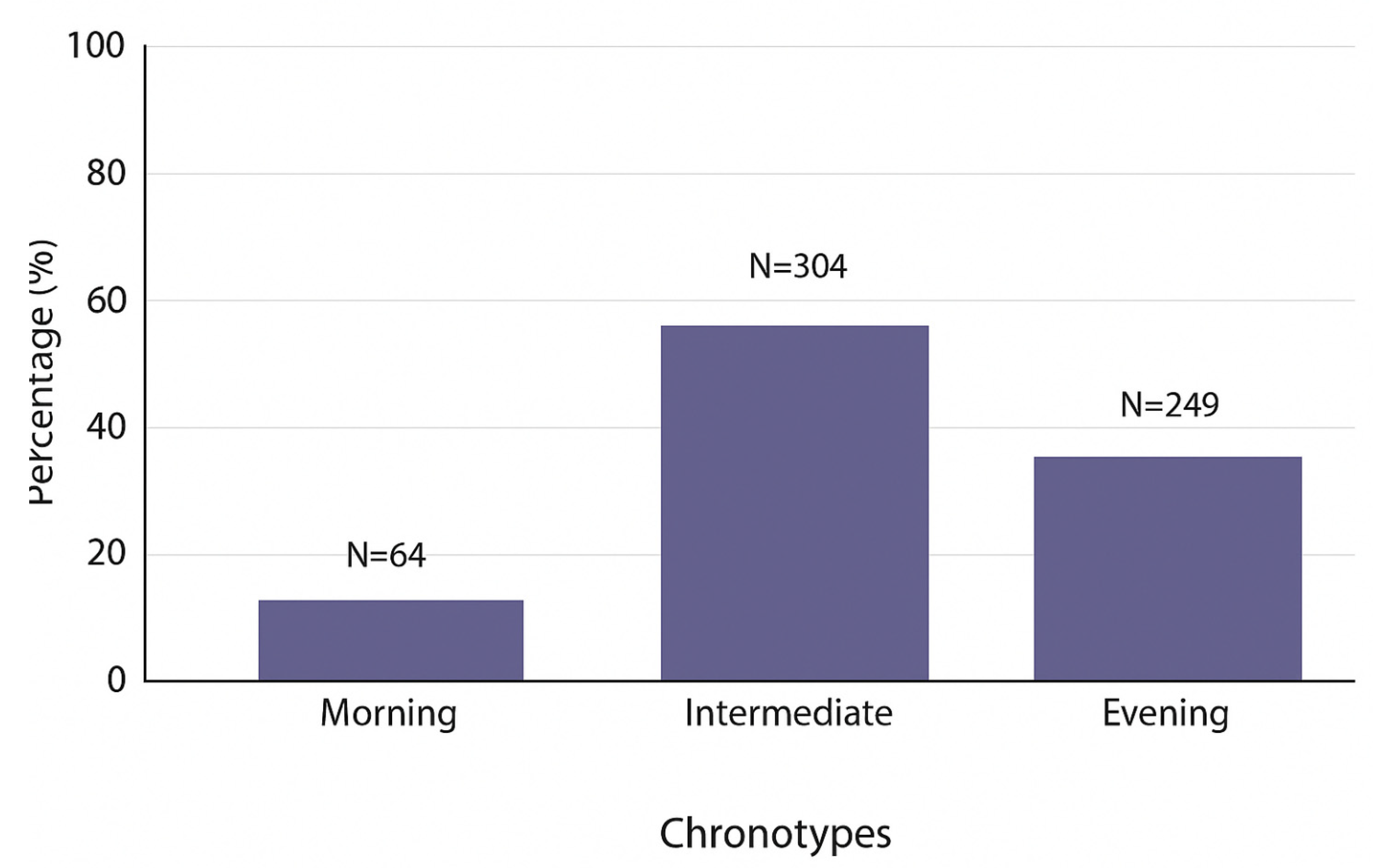
Figure 1. Chronotype distribution of university students. Source: Prepared by the authors.
Obesities 06 00003 g001
Figure 2. Chronotypes and means and standard-deviations of Body Mass Index. Note. Analysis of Variance (ANOVA) revealed no group differences (p = 0.128).
Obesities 06 00003 g002
Figure 3. Social Jetlag and means and standard-deviations of Body Mass Index. Note. Analysis of Variance (ANOVA) revealed no group differences (p = 0.105).
Obesities 06 00003 g003
Figure 4. Relationship between chronotype, social jet lag, and eating scores among university students. Heatmap of Kendall’s Tau correlations. The colors indicate the magnitude and direction of Kendall’s Tau correlation coefficients. Warmer colors represent positive correlations, while cooler colors indicate negative correlations. Neutral colors correspond to coefficients close to zero, reflecting weak or no monotonic association. Color intensity increases with the strength of the correlation. Kendall’s Tau values range from −1 (perfect negative association) to +1 (perfect positive association).
Obesities 06 00003 g004
Table 1. Meal frequency and food consumption according to Body Mass Index, Social Jetlag and chronotypes among university students.
Body Mass IndexChronotype Social Jetlag
Variable (Yes %)30 or More<30χ2 (p)MorningIntermediateEveningχ2 (p)<1 h>1 hχ2 (p)
Meals
Breakfast67.6378.438.37 (0.004)72.6978.6265.635.81 (0.05)72.6976.591.23 (0.27)
Morning Snack41.5539.340.27 (0.60)32.9347.3728.1315.83 (<0.001)41.3338.150.64 (0.42)
Lunch96.6298.221.52 (0.22)97.1999.0192.0610.86 (0.004)98.1597.100.71 (0.40)
Afternoon Snack68.6072.591.05 (0.30)68.2774.0168.752.40 (0.30)68.6373.121.49 (0.22)
Dinner87.9292.393.25 (0.07)89.1691.7890.631.10 (0.58)91.5189.880.47 (0.49)
Supper24.1517.773.47 (0.06)18.0720.7220.310.63 (0.73)16.6121.972.77 (0.10)
Food Groups
Beans67.6371.320.88 (0.35)65.4674.3467.195.41 (0.07)66.7972.542.40 (0.12)
Fresh Fruit49.2856.853.14 (0.08)48.5959.8751.567.26 (0.03)50.9257.232.43 (0.12)
Vegetables67.8074.813.31 (0.07)75.7169.0876.193.49 (0.17)74.4470.930.94 (0.33)
Hamburgers and cold cuts34.6336.130.13 (0.72)39.2734.8726.983.54 (0.17)38.8933.431.96 (0.16)
Sweetened beverages58.0561.070.51 (0.47)56.2865.1353.975.69 (0.06)61.4859.590.23 (0.63)
Instant noodles/savory snacks22.9323.920.07 (0.79)23.4824.0119.050.73 (0.69)22.9623.550.03 (0.87)
Filled cookies/sweets42.4445.800.62 (0.43)41.7047.3746.031.80 (0.41)44.0745.640.15 (0.70)
Note: Comparisons using Pearsons X2 statistics. Results are presented as absolute percentages.
Table 2. Adjusted Binary Logistic Regression Models predicting Obesity, Social Jetlag, and Intermediate Chronotype among university students.
VariableObesity (Yes) Social Jetlag (>1 h) Intermediate Chronotype (Yes)
OR (95% CI)pOR (95% CI)pOR (95% CI)p
Demographics
Age (years)1.15 (1.10–1.20)<0.0011.03 (0.99–1.06)0.1281.01 (0.97–1.04)0.774
Sex (Male)1.24 (0.82–1.88)0.3031.30 (0.89–1.90)0.1712.44 (1.65–3.61)<0.001
Meal Frequency
Breakfast0.53 (0.35–0.81)0.0041.16 (0.78–1.72)0.4601.50 (1.00–2.25)0.052
Morning Snack1.13 (0.76–1.67)0.5420.80 (0.56–1.14)0.2192.01 (1.40–2.89)<0.001
Lunch0.48 (0.15–1.54)0.2150.54 (0.17–1.73)0.3033.96 (0.98–16.03)0.053
Afternoon Snack1.04 (0.68–1.59)0.8451.42 (0.97–2.07)0.0751.04 (0.70–1.55)0.833
Dinner0.77 (0.40–1.46)0.4220.78 (0.43–1.43)0.4210.75 (0.40–1.40)0.364
Supper1.24 (0.76–2.03)0.3811.25 (0.80–1.97)0.3270.73 (0.46–1.15)0.176
Food Markers
Beans0.82 (0.55–1.24)0.3531.37 (0.95–1.97)0.0941.29 (0.89–1.88)0.185
Fresh Fruit0.66 (0.45–0.97)0.0341.24 (0.88–1.75)0.2121.44 (1.02–2.06)0.041
Vegetables0.77 (0.51–1.16)0.2050.81 (0.56–1.19)0.2830.76 (0.52–1.12)0.168
Processed Meats/Burgers1.00 (0.67–1.48)0.9810.79 (0.56–1.12)0.1880.82 (0.57–1.18)0.281
Sweetened Beverages0.99 (0.67–1.47)0.9640.91 (0.64–1.31)0.6251.43 (0.99–2.06)0.054
Ultra-processed Snacks *0.93 (0.58–1.47)0.7431.01 (0.67–1.52)0.9670.84 (0.56–1.28)0.426
Sweets/Candies **0.87 (0.58–1.29)0.4781.05 (0.74–1.49)0.7711.10 (0.77–1.57)0.612
Model Fitχ2(15) = 76.62, p < 0.001, McFadden R2 = 0.10χ2(15) = 22.65, p = 0.092, McFadden R2 = 0.03χ2(15) = 61.83, p < 0.001,
McFadden R2 = 0.07
Notes: OR = Odds Ratio; CI = Confidence Interval. All models were adjusted for Age and Sex. * Includes instant noodles, packaged snacks, or savory cookies. ** Includes filled cookies, sweets, or candy. Bold values indicate statistical significance (p < 0.05).
Disclaimer/Publisher’s Note: The statements, opinions and data contained in all publications are solely those of the individual author(s) and contributor(s) and not of MDPI and/or the editor(s). MDPI and/or the editor(s) disclaim responsibility for any injury to people or property resulting from any ideas, methods, instructions or products referred to in the content.