1. Introduction
In recent years, global climate change has intensified, extreme weather events have occurred frequently, and the impact of the greenhouse effect has become increasingly prominent. How to reduce emissions of greenhouse gases such as carbon dioxide and protect the global environment while ensuring energy security has become a worldwide challenge. As a clean, efficient and sustainable secondary energy source, hydrogen possesses diverse origins, low carbon emissions, high flexibility, high calorific value and strong energy storage capacity. It can be applied in energy, transportation, industry, construction and other fields to replace traditional fossil fuels, achieve the goals of carbon peaking and carbon neutrality, and promote sustainable socio-economic development, thus providing an effective solution to energy crises and environmental pollution [
1,
2].
The hydrogen energy industry chain mainly consists of four links: production, storage and transportation, refueling, and application. Among them, hydrogen storage and transportation connects upstream hydrogen production and downstream hydrogen utilization, and is regarded as a critical part of the hydrogen energy industry chain. Statistics show that the cost of hydrogen storage and transportation accounts for more than 30% of the final hydrogen cost, which has become one of the bottlenecks restricting the development of the hydrogen industry [
3]. Compared with liquid hydrogen storage and transportation, which is characterized by high energy consumption, strict requirements for hydrogen storage vessels and high costs, as well as solid hydrogen storage and transportation with low hydrogen storage density, low charging and discharging efficiency and difficult operation, gaseous hydrogen storage and transportation features mature technology, simple structure, fast hydrogen charging and discharging rates, and relatively low energy consumption and cost [
4]. It has been widely used in on-board hydrogen storage and stationary hydrogen storage systems such as hydrogen refueling stations, and is currently the most mature scheme for hydrogen storage and transportation [
5]. However, due to its low density, flammability and explosiveness, gaseous hydrogen is not suitable for long-distance and large-scale hydrogen storage and transportation. To improve hydrogen storage efficiency and reduce energy consumption and operating costs, hydrogen is generally compressed into hydrogen storage vessels by compressors for high-pressure storage and transportation. High-pressure gaseous hydrogen storage and transportation can not only increase the volumetric energy density of hydrogen, but also improve hydrogen refueling efficiency and shorten the refueling time, making it the optimal choice for hydrogen storage and transportation at present [
6]. Nevertheless, the substantial increase in pressure (up to 70–80 MPa) combined with short filling durations (approximately 4 min) may cause a severe temperature rise inside the vessel. Consequently, the mechanical integrity of vessel materials may be compromised by this thermal loading [
7]. Therefore, to guarantee the safety and reliability of high-pressure gaseous hydrogen storage and transportation technology, it is urgent to conduct in-depth investigations on the thermal effects during hydrogen charging and hydrogen refueling strategies for limiting the temperature rise, so as to determine the optimal hydrogen refueling scheme.
Aiming at the thermodynamic problems during the filling process of hydrogen storage devices, numerous scientific studies have been carried out by scholars worldwide through theoretical analysis, numerical simulation, and experimental investigation. Although phased achievements have been obtained in understanding thermodynamic behaviors during hydrogen filling, significant gaps are still encountered in the application of existing findings to practical engineering. This is due to the large number of influencing factors, complex thermodynamic responses, and limitations of current results, indicating that further in-depth investigations are still required. Therefore, to promote the development of theories and methods for the filling process and accelerate its application in hydrogen storage and transportation, it is necessary to systematically review the existing research results on filling processes, so as to help readers understand the research progress in the thermodynamics of the filling process.
At present, studies on the filling process in hydrogen storage devices involve many core issues, including heat and mass transfer mechanisms, evolution laws of temperature and pressure, and safety assessment. Based on the above considerations, this paper focuses on the thermodynamic characteristics of the filling process in hydrogen storage devices and provides a systematic review from four aspects: fundamental theory, numerical simulation, experimental verification, and thermal management technology.
Based on the research logic of “mechanism–method–validation–application”, this paper establishes a unified four-level framework for the thermodynamics of the filling process. Thermodynamic theoretical layer: Zero-dimensional (0D)/one-dimensional (1D) models and heat–mass transfer mechanism; Numerical simulation layer: Two-dimensional (2D)/three-dimensional (3D) computational fluid dynamics (CFD) multi-physics coupling calculation; Experimental validation layer: Full-scale test platforms and multi-condition data acquisition; Engineering application layer: Thermal management strategies and safety control standards. This framework runs through the whole paper and ensures the consistency and systematic of the review. Accordingly, the structure of this paper is organized as follows:
Section 1 introduces the thermodynamic analysis of the filling process in hydrogen storage devices;
Section 2 reviews the numerical simulation of filling processes;
Section 3 summarizes the experimental investigations on the filling process;
Section 4 discusses the thermal management methods for the filling process; and
Section 5 explores and prospects the future development directions of research on the filling process in hydrogen storage devices.
4. Experimental Studies on High-Pressure Gaseous Hydrogen Filling
High-pressure hydrogen charging experiments represent one of the most important approaches to investigate the thermodynamic behaviors of hydrogen storage devices. By conducting high-pressure hydrogen charging of storage vessels in a controlled environment, actual hydrogen storage processes can be faithfully simulated. In this way, the evolution laws of key parameters can be quantified, and the accuracy of theoretical thermodynamic analysis and CFD simulation models can be validated. These efforts effectively promote the application and popularization of high-pressure gaseous hydrogen storage technology in the hydrogen energy industry.
As early as 1958, scholars worldwide began to investigate the thermodynamic performance of hydrogen storage devices through high-pressure charging experiments [
48]. Since then, thermodynamic experimental studies on the charging process of high-pressure hydrogen storage devices have been gradually carried out. Although numerous thermodynamic data under real working conditions were obtained from experimental studies on fast-filling operations in the late 20th century, most of these experiments were focused on Type I and Type II hydrogen storage devices [
49,
50,
51,
52,
53]. After the year 2000, Type I and Type II hydrogen storage devices, which suffer from heavy weight, low storage efficiency, and high safety risks, were gradually replaced by lightweight, high-density, safe, and stable Type III and Type IV hydrogen storage devices. Due to differences in materials and experimental conditions, research findings obtained from Type I and Type II storage devices cannot be directly applied to Type III and Type IV vessels.
Therefore, scholars worldwide have established new experimental platforms to investigate the thermodynamic behaviors of Type III and Type IV high-pressure hydrogen storage devices during charging. Among these newly built platforms, the Gas Tank Testing Facility (GasTeF) was constructed earlier. It was completed in June 2006 at the Joint Research Centre in Petten, the Netherlands, by the Institute for Energy and Transport (JRC-IET) of the European Commission [
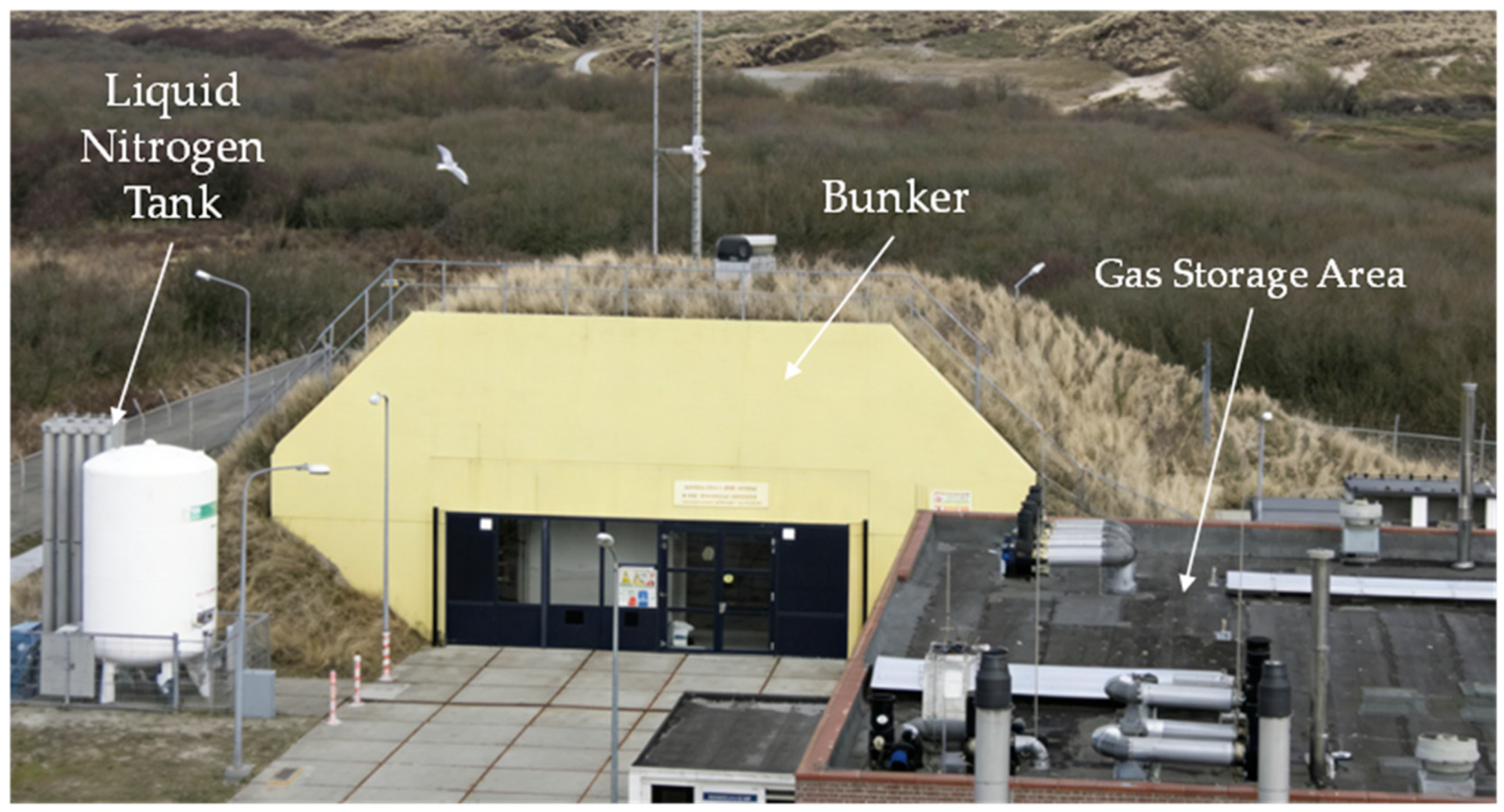
54]. This test facility allows performance verification tests on full-scale high-pressure on-board storage tanks for hydrogen or natural gas, as well as any other high-pressure components such as valves and pipelines. It is designed to simulate the working environment of high-pressure hydrogen storage and transportation, and to evaluate the efficiency, safety, environmental impact, and reliability of hydrogen technologies. The GasTeF consists of a semi-buried underground concrete bunker, an open-air auxiliary gas storage area and the liquid nitrogen tank, as shown in
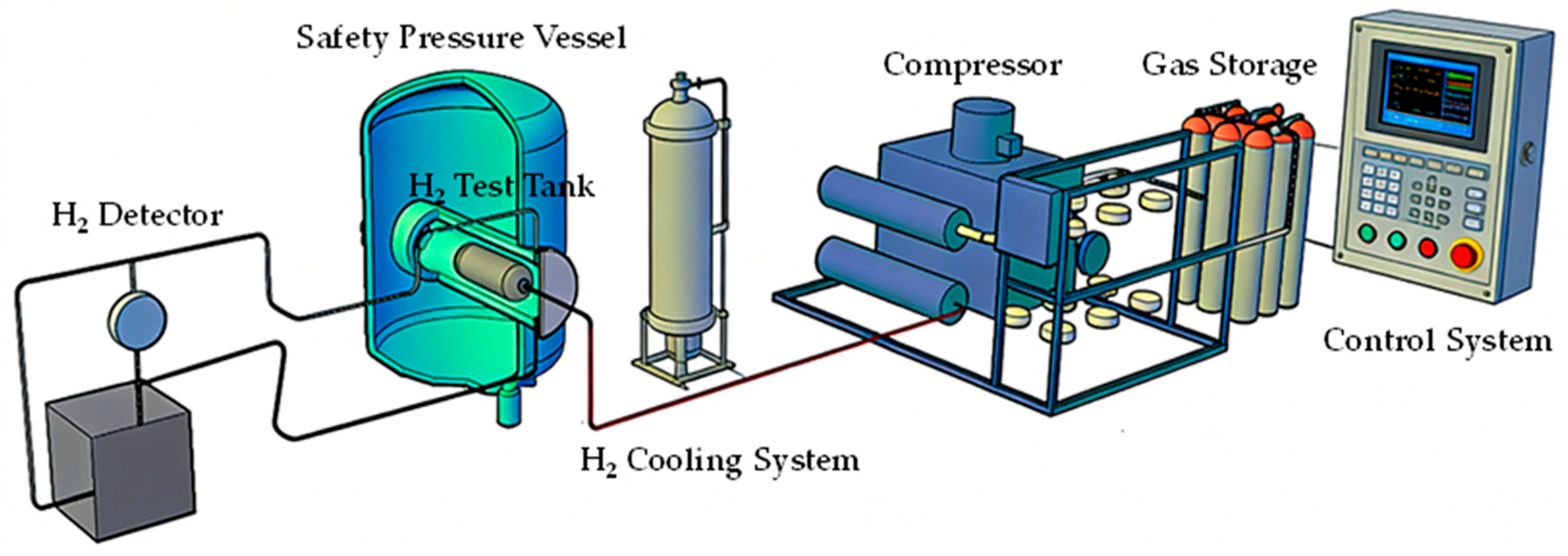
Figure 3. The bunker is built with double-layer concrete walls and a 3 m thick sand layer, which can withstand an explosion energy equivalent to 50 kg of TNT, with a safety factor of 10. The bunker is divided into three sections: a service room, a compressor room, and a test room. The compressor room is equipped with a two-stage compressor, which can pressurize and depressurize the test tank (i.e., charging and discharging), with a maximum filling pressure of 88 MPa. The test room contains a pressure vessel that can house the components to be tested. Inside the pressure vessel, a sleeve is installed, and the test component is placed in the sleeve. The sleeve is filled with an inert gas (helium or nitrogen) to prevent explosions or fires caused by hydrogen leakage. The sleeve is also equipped with a gas chromatograph and two hydrogen detectors to detect and quantify possible hydrogen permeation from the test component. The open-air auxiliary gas storage area consists of standard cylinder banks with a pressure of approximately 28 MPa. These cylinders are connected to the compressor in the compressor room via pipelines. For filling experiments, the compressor is first bypassed, and the storage tank (or component) is directly filled from the gas storage facility. The compressor then takes over to raise the pressure of the tank (or component) to the desired value. For discharging experiments, the gas first flows directly from the tank (or component) to the gas storage facility, bypassing the compressor. Once the pressure between the tank (or component) and the storage facility reaches equilibrium, the compressor starts to pump gas from the tank (or component) into the storage facility until the set final discharge pressure is achieved. Thermocouples, pressure sensors, and other measuring instruments are installed in the test tank (or component) to monitor the variations in temperature and pressure during charging/discharging cycles [
55]. The test system of GasTeF is shown as
Figure 4.
The first results of hydrogen charging/discharging cycle experiments on Type IV tanks using this platform show that when the tank is rapidly charged within 2–5 min, the maximum temperature may exceed the limit of 85 °C, but the gas temperature inside the tank can drop below 85 °C within a relatively short time. During the filling process, the measured temperature inside the tank is fairly uniform [
56]. After charging, a temperature stratification appears, with a higher temperature at the top of the tank. After six charging/discharging cycles, the temperature of the hydrogen storage tank stabilizes at 23 °C. The tank pressure drops sharply within the initial 30 min and reaches an equilibrium pressure of 30 MPa after 1.5 h [
57].
In addition, ET Energie Technologie GmbH in Munich, Germany, has designed and constructed three test chambers for the hydrogen cycling and permeability testing of storage systems and components [
58]. This test facility can test full-scale hydrogen storage tanks at different ambient temperatures ranging from −40 °C to 85 °C. The hydrogen temperature is controlled between −40 °C and 85 °C, with a maximum filling rate of 60 g/s. Maximator and TesTneT of Germany have built a laboratory for hydrogen pneumatic cycling tests in Garching near Munich. The laboratory is equipped with explosion-proof chambers for testing pre-damaged or newly designed vessels [
59]. This facility can test tanks with an internal volume up to 150 L and a maximum pressure of 105 MPa. CSA Testing & Certification Inc. and Powertech of Canada have established facilities for hydrogen cycling tests [
60]. These facilities can perform pneumatic pressure cycling tests using precooled hydrogen at a maximum pressure of 95 MPa, as well as permeability or leakage tests at ambient temperatures from −40 °C to 85 °C. Japan constructed the Hydrogen and Fuel Cell Vehicle Safety Evaluation Facility (HySEF) in 2007. This facility is equipped with high-pressure hydrogen filling test equipment [
61]. Hydrogen filling cycle tests and permeability measurements can be conducted on large-scale high-pressure tanks with volumes up to 260 L and pressures of 70 MPa in a temperature-controlled environment ranging from −40 °C to 85 °C. The Beijing Institute of Aeronautical Testing Technology owns a hydrogen environment fatigue test system [
62]. The system includes an 80 MPa high-pressure storage vessel, which can fill up to five tanks with a maximum volume of 100 L simultaneously. The maximum test pressure of the system is 70 MPa, and the maximum mass flow rate is 3.24 kg/min.
Existing experimental platforms are mostly built for small and medium-sized hydrogen storage tanks, and there is a lack of large-scale (≥300 L) storage device test systems. The GasTeF platform in Europe and HySEF platform in Japan have high test accuracy, but their test conditions are single and cannot cover extreme environments such as a low temperature and high altitude. Domestic experimental platforms have problems such as an uneven measuring point layout and low sensor precision, resulting in poor repeatability of experimental data. In addition, there is no unified experimental standard, leading to incomparable data from different platforms, which restricts the verification of theoretical models.
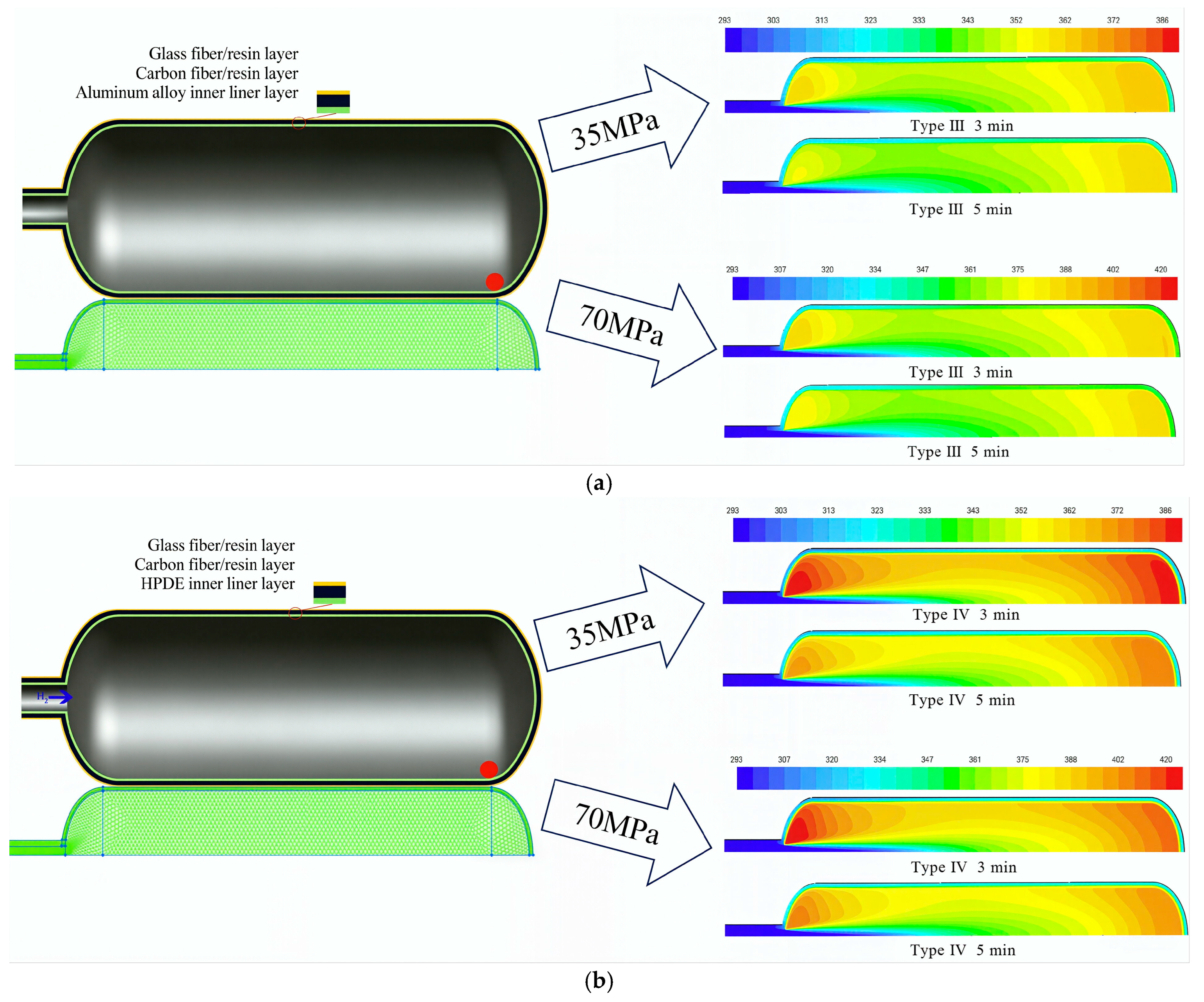
With the development of experimental techniques and the reduction in costs, scholars worldwide have designed and conducted numerous high-pressure hydrogen charging experiments based on existing technologies and equipment. Rapid hydrogen filling temperature rise tests, temperature distribution tests, and cyclic hydrogen charging–discharging tests on Type III hydrogen storage devices were carried out by Zheng’s team from Zhejiang University. Sixteen internal measuring points and five external wall measuring points were used. The influences of the initial pressure, ambient temperature, and other factors on the temperature rise were systematically studied. The results showed that the temperature rise increased with a lower initial pressure and higher filling rate. The filling time and discharge flow rate affected the temperatures after charging and discharging, respectively [
26,
63,
64]. Hydrogen filling tests and cyclic charging–discharging tests on Type III and Type IV storage devices were conducted using the GasTeF platform by D.Baraldi’s team from the Institute for Energy and Transport of the European Commission [
65,
66]. The effects of different initial temperatures on the filling process and thermal behavior during full cycles were studied. The results showed that the final gas temperature increased linearly with the initial tank temperature. A faster filling rate leads to a greater temperature rise. Meanwhile, the temperature rise in Type IV devices was higher than that in Type III devices. Heat transfer and temperature rise experiments during rapid high-pressure hydrogen filling were performed by Kadode Masanori’s team from Saga University [
14]. The gas and tank wall temperatures were measured simultaneously to investigate gas–solid coupled heat transfer. A lumped parameter model was proposed to estimate the temperature variation. The results showed that the hydrogen temperature first increased and then decreased, with a significant temperature rise at a high pressure and high flow rate. Thermal insulation increased the hydrogen temperature by 20 °C. Experimental studies under various filling conditions using a 90.5 L Type IV storage tank were conducted by Thomas Bourgeois et al. [
20]. Temperature sensors were used to monitor the gas temperature in real time during filling. The results showed that heat transfer between gas and the tank wall was dominated only by forced convection, and the effect of natural convection was negligible. Sixty-three thermocouples (as shown in
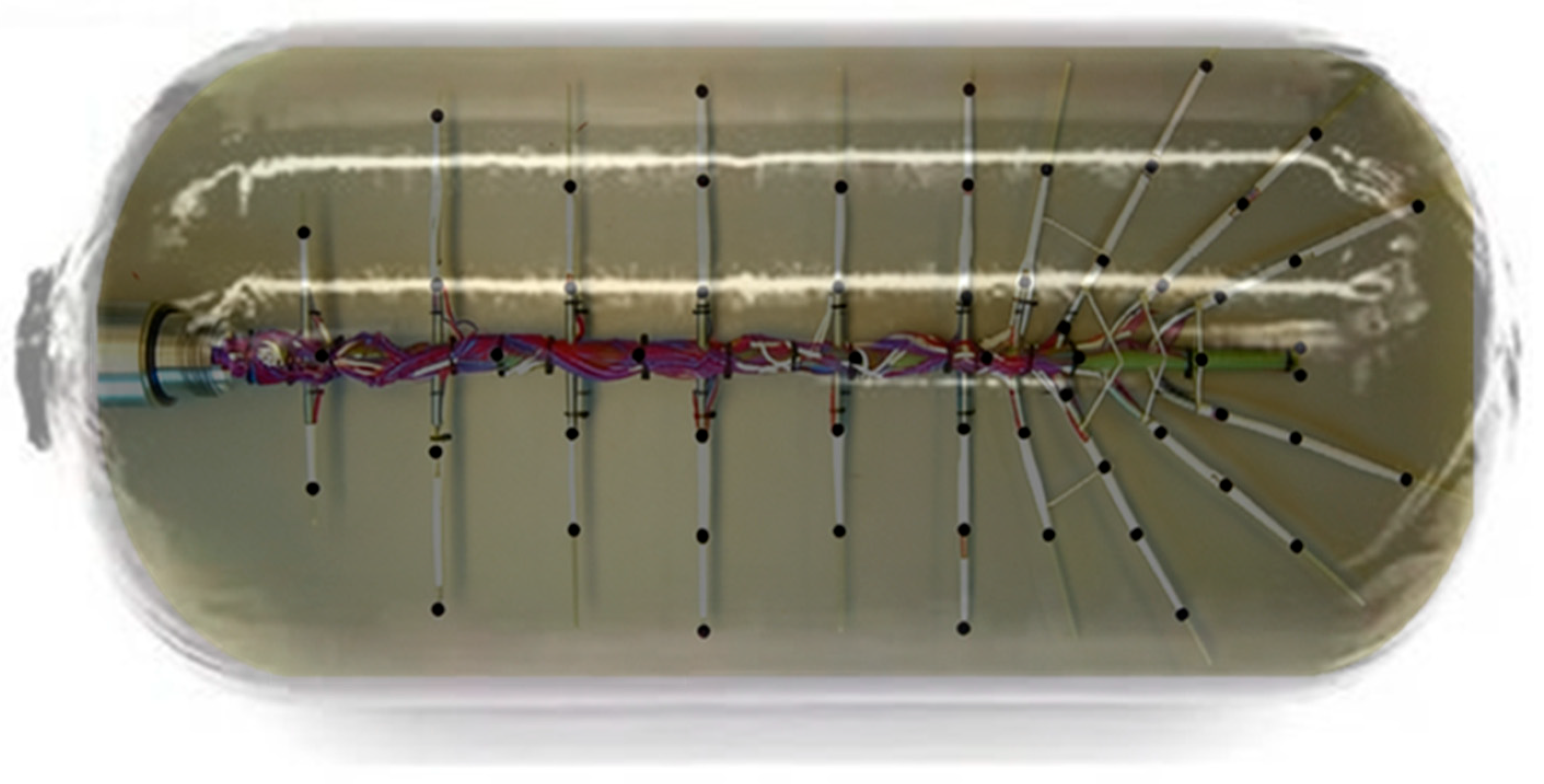
Figure 5) were arranged inside a Type III hydrogen tank for compressed hydrogen filling experiments by Dicken and Merida et al. [
30]. The 3D temperature field during filling was accurately obtained. Based on the experimental results, the influences of the filling duration and initial mass on temperature stratification were revealed. A hydrogen medium fatigue system simulating real charging and discharging conditions was established by Zhang and Wang et al. [
62]. Thermodynamic pressure coupled cyclic loads were applied. The fatigue performance of Type III hydrogen storage vessels in a real hydrogen environment was studied through high-pressure fatigue tests. The results showed that the ultimate strength of the tank decreased by 15% after 500 cycles, and the fatigue life was 5122 cycles. Failure occurs by leakage rather than burst. High-precision and repeatable tests were performed based on an explosion-proof chamber facility by Watanabe et al. [
65]. Comparative fire tests, flame exposure tests, and high-pressure hydrogen filling tests on hydrogen tanks were carried out. The effects of different fire sources on storage tanks were investigated, overcoming the limitations of outdoor tests. Temperature characteristic experiments on Type IV hydrogen tanks under various initial pressures were conducted by Kim and Kee et al. [
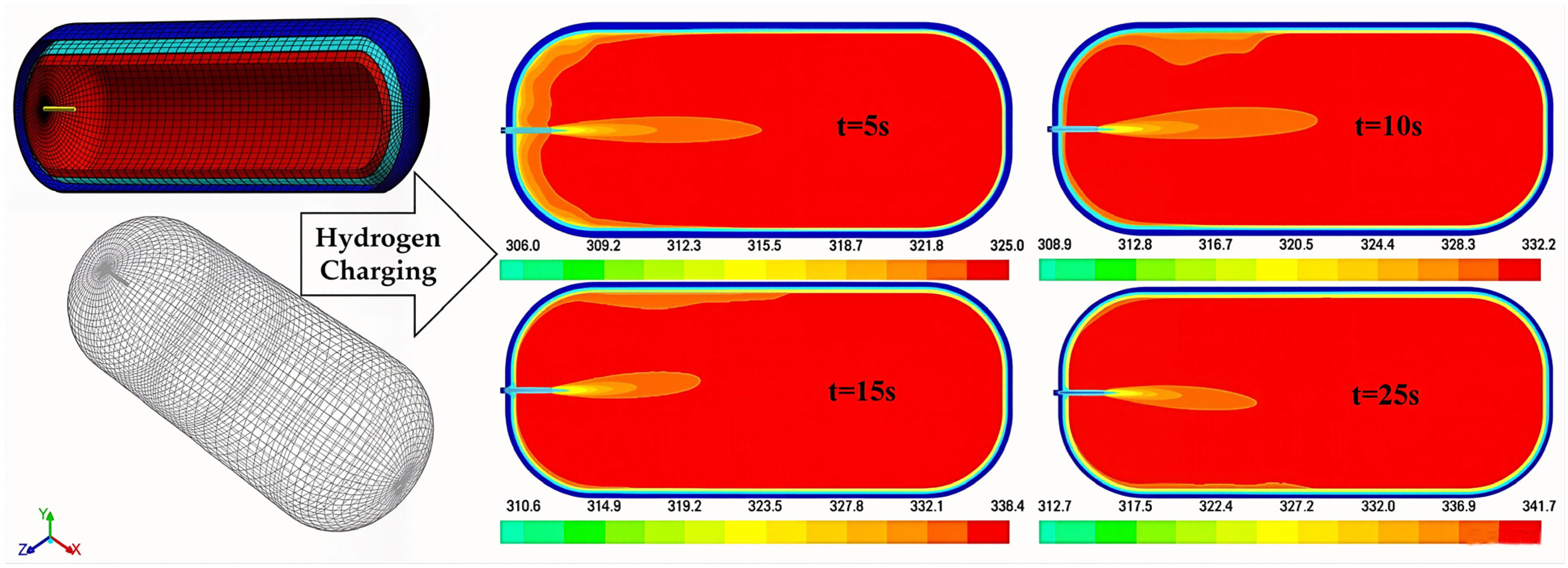
67]. Experimental and 3D transient CFD simulations were combined, considering gas–solid conjugate heat transfer. The influence of the initial pressure from 0 to 20 MPa on the filling temperature was explored. The buoyancy mechanism of the temperature difference inside the tank was revealed. A self-designed multi-point umbrella-shaped temperature measurement bracket was used by Li and Yang et al. [
68]. Thirteen T-type thermocouples were applied to measure the temperature variation during the fast filling of Type III hydrogen cylinders. The influences of key parameters, including the initial pressure, initial hydrogen temperature, and filling rate, on the temperature rise were investigated. The results showed that the temperature inside the cylinder increased with a lower initial pressure, higher ambient temperature, and shorter filling time. Based on the above experimental results, the main factors affecting the temperature rise and pressure dynamics during hydrogen charging include the initial pressure, inlet temperature, ambient temperature, mass flow rate, filling time, and tank material. Their quantitative influence is summarized in
Table 3. As shown in
Table 3, the initial pressure and mass flow rate exert the most prominent effects on thermal and pressure responses. The inlet temperature and tank material properties also serve as critical controllable variables. Reasonable parameter matching and targeted regulation are essential to suppress overheating and ensure the operational safety of high-pressure hydrogen charging.
Despite differences in facilities and conditions, consistent trends have been observed across most experiments: Rapid filling within 3–5 min causes a sharp temperature increase, frequently exceeding 85 °C. The temperature first rises rapidly during filling, then decreases slowly after filling stops. After filling, obvious temperature stratification appears inside the vessel, with a higher temperature at the top and lower temperature near the bottom. The pressure increases almost linearly during filling. After filling, the pressure drops rapidly in the first 30 min and then gradually stabilizes. Type IV tanks generally show a higher temperature rise than Type III tanks under the same filling conditions, due to the lower thermal conductivity of plastic liners. The temperature rise increases with a lower initial pressure, higher mass flow rate, higher inlet temperature, and higher ambient temperature.
Most experiments focus on Type III and Type IV hydrogen storage tanks, but there are obvious contradictions in the research on the temperature rise difference between the two types of tanks. Some studies show that Type IV tanks have a higher temperature rise, while others hold the opposite view, which is mainly caused by differences in liner materials and test conditions. In addition, existing experiments rarely consider the coupling effect of multiple factors (ambient temperature + initial pressure + filling rate), and the obtained laws are not universal. The experimental data of large-scale storage devices are extremely scarce, which cannot support the engineering application of large-scale hydrogen storage and transportation.
Existing experimental conclusions have provided direct guidance for practical engineering implications. To control the temperature below 85 °C, precooling or a reduced mass flow rate is necessary for 70 MPa fast filling. Type IV tanks need stricter thermal management due to a higher temperature rise. The initial pressure should be kept at a moderate level to balance temperature control and hydrogen capacity. However, current experimental investigations mainly focus on small-scale hydrogen storage devices. Data for large-scale stationary hydrogen storage devices are scarce. Most studies only analyze single factors such as the initial pressure or ambient temperature. Multi-factor coupling experiments are rare. In addition, few experiments focus on long-cycle repeated filling–depletion processes, which are critical for actual service life evaluation. Moreover, most experiments ignore the influence of the pipeline layout, valve structure, and on-board vibration, leading to differences from real working conditions.
6. Research Prospects
Research on the high-pressure gaseous charging process of hydrogen storage devices began in the mid-20th century and matured from the late 20th century to the early 21st century. With increasing investment and support in the hydrogen energy field from governments and enterprises worldwide, high-pressure gaseous hydrogen charging technology has advanced continuously and been commercially applied in fuel cell vehicles, ushering in new development opportunities. Although existing studies have covered many aspects of rapid hydrogen filling, a certain gap still exists before the large-scale application of this technology. To systematically sort out the research progress, core conclusions, and existing differences in representative studies, this paper summarizes key findings from the typical literature in
Table 6. This comparison intuitively presents the research status, methodological characteristics, and consensus or divergence in the field of hydrogen charging thermodynamics.
As shown in
Table 6, current studies have formed a relatively complete research system covering theoretical models, numerical simulations, experimental tests, and control strategies. Most studies consistently confirm that the initial pressure, mass flow rate, and inlet temperature are dominant factors influencing the temperature rise, and Type IV tanks are more sensitive to thermal behaviors. However, obvious differences exist in modeling accuracy, experimental conditions, thermal management efficiency, and application scope among different studies. These inconsistencies and limitations directly restrict the unified design, standardization, and large-scale application of hydrogen charging technology. On this basis, further research should be carried out in the following aspects:
(1) Current thermodynamic theoretical analyses have clearly revealed the thermodynamic behaviors during rapid hydrogen filling through mathematical models. However, due to the large differences in storage device structures and numerous influencing factors, a comprehensive mathematical model that fully considers various factors for different storage devices has not yet been established. Therefore, it is necessary to comprehensively integrate dynamic parameters, geometric parameters, material parameters, and operating parameters to construct a unified thermodynamic theoretical model for hydrogen filling, so as to achieve the efficient and accurate analysis of pressure–temperature–mass variations during the charging process.
(2) Existing CFD simulations of rapid hydrogen filling can effectively simulate the thermodynamic responses during rapid charging. Nevertheless, the thermophysical properties of hydrogen (density, specific heat capacity, thermal conductivity) exhibit nonlinear variations under high pressure, the accuracy of current databases is limited, and the accuracy of hydrogen parameters is insufficient. Meanwhile, the computational cost of refined simulation increases exponentially, leading to a prominent contradiction between accuracy and computational efficiency. Therefore, it is necessary to consider the nonlinearity of hydrogen thermophysics, combine machine learning/deep learning techniques, develop intelligent CFD simulation models and high-precision, high-efficiency algorithms, and establish an efficient and reliable hydrogen charging simulation system.
(3) Corresponding rapid hydrogen charging temperature rise experiments and cyclic hydrogen charging–discharging experiments have effectively promoted the progress of thermodynamic theories and numerical simulation technologies for high-pressure gaseous hydrogen charging. However, current rapid charging experiments usually adopt self-defined settings in core aspects such as site selection, test conditions, equipment specifications, and test methods, lacking unified and authoritative standard specifications. Therefore, it is essential to formulate corresponding experimental standards/specifications for high-pressure gaseous hydrogen charging, providing clear, unified, and safe guidelines for the research, development, testing, and application of high-pressure rapid gaseous hydrogen charging technology, and strongly supporting its large-scale deployment.
(4) Most existing studies on rapid hydrogen filling focus on the individual effects of the ambient temperature, initial pressure, and mass flow rate on the final temperature, pressure, and mass of hydrogen. However, the temperature, pressure, and other responses of the storage device during charging result from multi-parameter coupling effects. Therefore, future research should conduct theoretical analyses, simulations, and experimental tests on the thermodynamic behaviors of hydrogen storage devices under multi-factor coupled conditions.
(5) At present, thermal management methods for rapid hydrogen charging mainly consider individual strategies such as precooling, variable-rate charging, and multi-stage charging. Future research can focus on the coupled application of these three strategies. By integrating precooling, the charging rate, and multi-stage charging, an optimal thermal management scheme for rapid hydrogen charging can be developed to achieve multiple objectives including the fast charging of, temperature control of, cost reduction in, and efficiency improvement in hydrogen storage devices. While reducing the temperature rise, the scheme will further enhance efficiency, lower energy consumption, and cut costs.
To improve the future thermodynamics research of hydrogen charging in hydrogen storage and transportation devices, the research roadmap has been recommended as follows:
(a) Unified General Thermodynamic Model (Short-term, 1–3 years): Aiming at the inconsistency and poor applicability of existing models (
Section 2), a unified general thermodynamic model will be constructed by integrating dynamic parameters, geometric parameters, material thermophysical properties and real gas effects. It will adapt to Type III/IV tanks, a 35–80 MPa pressure range and various filling conditions, and realize high precision and fast calculation.
(b) Intelligent CFD Simulation with Balanced Accuracy and Efficiency (Medium-term, 3–5 years): To solve the contradiction between accuracy and cost in 2D/3D simulation (
Section 3), an intelligent CFD system combined with machine learning will be developed. It will automatically optimize meshes, turbulence models and real gas equations, and realize high-efficiency and high-precision simulation under large-scale and complex working conditions.
(c) Standardized Experimental System and Unified Specifications (Medium-term, 3–5 years): In view of the non-uniform experimental methods and missing large-scale data (
Section 4), a unified international experimental standard will be formulated. A full-size experimental platform for large-volume hydrogen storage devices (≥300 L) will be built to realize multi-factor coupling test and high-reliability data output.
(d) Integrated Thermal Management Strategy (Long-term, 5–10 years): Targeting the limitations of single precooling/variable-rate/multi-stage methods (
Section 5), an integrated optimal strategy will be formed by coupling the three technologies. It will take “fast filling, safe temperature control, low energy consumption and low cost” as multi-objective optimization, and support the large-scale commercial application of hydrogen refueling stations.
(e) Long-cycle Safety and Life Prediction (Long-term, 5–10 years): On the basis of thermodynamic behavior, the multi-physics field coupling mechanism of thermodynamics–mechanics–fatigue will be revealed. A long-cycle life prediction model for hydrogen storage devices under repeated charging and discharging will be established to provide theoretical support for structural design and safety certification.





 ,
,