1. Introduction
Chronic wounds represent a major healthcare challenge in aging societies and constitute a substantial global disease burden [
1,
2,
3]. In the management of chronic wounds, including burns and pressure ulcers, debridement is a fundamental and indispensable therapeutic procedure that removes necrotic tissue and microbial burden, thereby reducing the risk of infection and reconstructing the wound microenvironment [
4,
5,
6]. Among the various techniques available, hydrosurgical debridement, represented by systems such as Versajet, enables highly selective and reproducible tissue removal. This approach allows the effective elimination of pathological tissue, including biofilm, while minimizing damage to surrounding healthy structures; therefore, it has become widely used in clinical practice [
7,
8].
Hydrosurgical debridement is a therapeutic procedure in which tissue excision and irrigation are performed simultaneously [
8,
9,
10]. Compared with conventional sharp debridement, hydrosurgical debridement involves simultaneous tissue excision and irrigation under high-velocity fluid flow, which may induce more dynamic fluctuations in local oxygen exposure and redox conditions, potentially resulting in transient changes in ROS levels and redox instability. This procedural characteristic may provide a rational basis for targeting the redox environment during the intervention phase. In this context, the irrigation solution should be regarded not merely as a physical cleansing medium, but also as a factor capable of influencing the wound microenvironment through physicochemical and redox-related mechanisms during the procedure. In clinical practice, the selection of irrigation solutions is primarily guided by considerations of cleansing efficiency and safety, whereas their potential biological effects—particularly their influence on redox balance and inflammatory responses within the wound—remain insufficiently characterized.
Although debridement serves as an important trigger for reinitiating the wound-healing process, the biological changes induced by the procedure itself, especially rapid alterations in inflammatory responses and redox balance, have not been systematically conceptualized as therapeutic targets. Previous studies have suggested that debridement can induce inflammatory cytokine responses and increase the production of ROS [
11,
12,
13]. Nevertheless, while infection control and removal of devitalized tissue remain the primary clinical objectives, strategies aimed at actively modulating redox reactions during the procedure have not yet been established. Here, we propose that hydrosurgical debridement using hydrogen-enriched saline as an irrigation solution may enable procedural redox modulation, thereby improving the wound microenvironment during intervention (
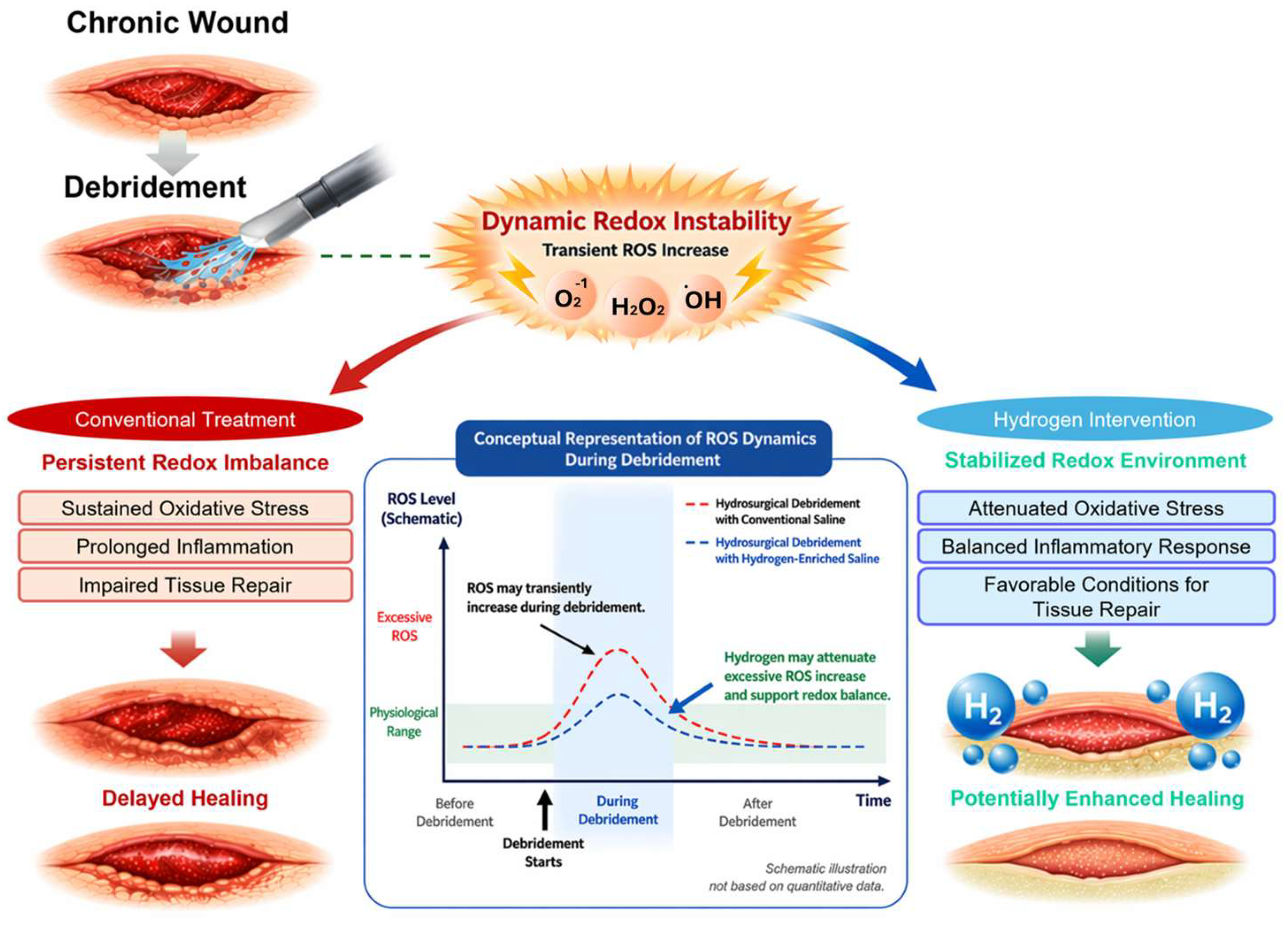
Figure 1).
In
Figure 1, the left panel illustrates conventional debridement without targeted modulation of the redox environment, resulting in persistent oxidative stress. The central panel depicts dynamic redox instability during debridement, characterized by a transient increase in ROS, including superoxide (O
2•
−), hydrogen peroxide (H
2O
2), and hydroxyl radicals (•OH). A schematic time course represents relative temporal changes in ROS levels during the intervention phase. The right panel illustrates the proposed concept of procedural redox modulation, in which administration of hydrogen-enriched saline may attenuate excessive ROS and stabilize the redox environment, facilitating the transition from inflammation to tissue repair. The schematic represents relative changes and does not reflect quantitative measurements.
From a pathophysiological perspective, excessive ROS production is not merely a byproduct of tissue injury but a central determinant of delayed wound healing [
8,
12,
14]. While physiological levels of ROS are essential for host defense and cellular signaling [
15,
16,
17], excessive ROS leads to cellular damage, prolonged inflammation, and impaired tissue repair. Therefore, therapeutic strategies that selectively modulate pathological redox imbalance without disrupting physiological signaling are considered a promising approach in chronic wound management. Recent experimental and preclinical studies suggest that molecular hydrogen may modulate the wound’s local redox conditions, rather than acting solely as a direct antioxidant, thereby influencing oxidative stress dynamics, inflammatory responses, and tissue repair processes [
18,
19,
20,
21,
22]. This perspective supports the concept that hydrogen may regulate redox signaling pathways, rather than simply acting as a scavenger of reactive species. These findings suggest that hydrogen may function as a modulator of the wound microenvironment. However, most of these studies have focused on post-injury administration, and the potential role of hydrogen in modulating redox dynamics during procedural interventions remains largely unexplored. In particular, the timing of redox intervention may be critical. Debridement represents a dynamic transitional phase during which the wound microenvironment is rapidly altered. This period may provide a unique therapeutic window in which excessive redox imbalance can be modulated before it becomes established, yet this concept has not been systematically explored in clinical practice.
In addition, current wound management strategies primarily focus on infection control, moisture balance, and mechanical removal of devitalized tissue [
5,
23,
24]. While these approaches are essential, they do not directly address the dynamic redox imbalance that emerges during therapeutic interventions. As a result, there remains an unmet need for strategies that can modulate the wound microenvironment in real time during clinical procedures. Addressing this gap may provide an opportunity to improve therapeutic outcomes without fundamentally altering existing treatment paradigms.
Debridement can be conceptualized as a biologically active intervention that induces rapid and dynamic changes in the wound microenvironment. In addition to the removal of necrotic tissue and microbial burden, the procedure involves mechanical disruption of tissue structures, exposure of previously hypoxic areas to oxygen, and activation of inflammatory cascades [
25,
26,
27,
28]. These processes are likely to induce a transient increase in ROS, resulting in substantial alterations in redox balance.
During this transitional phase, the wound environment may be particularly susceptible to excessive oxidative stress due to the combined effects of ischemia–reperfusion injury and procedural stimulation. Such a state may represent a critical window in which both beneficial and detrimental redox processes coexist. However, current clinical strategies do not specifically target this dynamic phase.
Therefore, reconceptualizing debridement as a “redox-active event” provides a novel perspective for therapeutic intervention. Instead of focusing solely on post-procedural management, modulating the redox environment during the procedure itself may offer a more effective approach to optimizing wound-healing outcomes. ROS exhibit context-dependent dual roles in wound healing, acting as both signaling molecules that support physiological processes and mediators of oxidative damage under pathological conditions [
29,
30,
31] (
Table 1).
This contrast further highlights the context-dependent nature of ROS, in which physiological levels support tissue repair, whereas excessive levels impair healing through oxidative damage (
Table 1). At physiological levels, ROS act as signaling molecules that contribute to host defense, angiogenesis, and cellular proliferation [
35]. In contrast, excessive ROS accumulation under pathological conditions leads to oxidative stress, resulting in lipid peroxidation, protein modification [
36], and DNA damage [
33,
34], ultimately impairing tissue repair.
Chronic wounds, such as pressure ulcers, are characterized by a persistent inflammatory state in which oxidative stress is sustained. In addition, the local wound environment is often shifted toward an acidic state, which may further enhance ROS-mediated tissue injury. This imbalance is further exacerbated by ischemia–reperfusion injury, microbial colonization, and repeated tissue damage [
31,
35,
37]. As a result, the redox environment in chronic wounds is not static but dynamically fluctuates in response to both endogenous and external factors. Importantly, therapeutic interventions themselves may significantly influence this redox balance. Mechanical procedures, including debridement, can transiently increase oxygen exposure and inflammatory signaling, thereby promoting ROS generation and amplifying oxidative stress. Despite this, current wound care strategies rarely consider redox modulation as a direct therapeutic target during procedural interventions. This abrupt shift in the wound environment may create a transient redox-unstable microenvironment in which both beneficial and detrimental processes coexist. Therefore, targeting these dynamics during intervention phases may represent a more effective strategy than conventional post hoc antioxidant therapies.
2. Redox Imbalance as a Pathophysiological Feature of Pressure Ulcers
Pressure ulcers are chronic wounds formed by repeated cycles of local ischemia caused by prolonged pressure and subsequent reperfusion after pressure relief. During ischemia–reperfusion, the production of ROS is markedly increased, leading to persistent inflammation and redox imbalance, which are considered the key pathological mechanisms underlying delayed wound healing. Excessive ROS generation associated with ischemia–reperfusion injury induces cellular damage, prolongs inflammatory responses, and disrupts tissue repair mechanisms, thereby impairing wound healing. In addition, redox signaling has been reported to influence fibroblast activity and extracellular matrix deposition, both of which are essential for structural remodeling during the wound-healing process [
11,
12,
13].
When debridement is performed in pressure ulcers with such a pathological background, the necrotic tissue and microbial burden are removed, thereby creating conditions that allow the healing process to be reinitiated. However, accumulated oxidative stress in the wound may be compounded by mechanical stimulation and acute inflammatory responses induced by the procedure itself. Consequently, the process of debridement in pressure ulcers can be viewed as a transitional phase in which the wound microenvironment shifts toward an unstable redox state, where both healing-promoting and healing-inhibiting factors coexist. Although the present hypothesis focuses on pressure ulcers, rapid alterations in the local redox conditions during therapeutic procedures have been reported in acute wounds such as burns [
38]. These observations suggest that microenvironmental control during medical procedures provides an important perspective that extends beyond specific wound types. These findings highlight the importance of targeting redox imbalance during therapeutic interventions, suggesting that procedural modulation of the wound microenvironment may represent a rational strategy for improving wound-healing outcomes.
3. Redox Dynamics in Wound Healing
ROS play a dual role in wound healing, acting as both signaling molecules and mediators of tissue damage. At physiological levels, ROS contribute to host defense, angiogenesis, and cellular proliferation. However, excessive ROS accumulation leads to oxidative stress, resulting in lipid peroxidation, protein modification, and DNA damage, ultimately impairing tissue repair [
32,
34,
35]. ROS exhibit functional heterogeneity in the wound environment. Highly reactive species such as hydroxyl radicals (•OH) and peroxynitrite (ONOO
−) are primarily associated with oxidative damage, whereas relatively stable species such as hydrogen peroxide (H
2O
2) and superoxide (O
2•
−) play important roles in cellular signaling and host defense. This functional distinction provides a mechanistic basis for selective redox modulation by molecular hydrogen. Under oxidative stress conditions, concentrations of ROS such as hydrogen peroxide have been reported to increase from physiological nanomolar levels to micromolar ranges, which are associated with oxidative damage and impaired cellular function. In addition, previous studies have demonstrated transient increases in ROS following tissue injury and ischemia–reperfusion, reflecting dynamic redox fluctuations in response to rapid environmental changes and reoxygenation [
25,
26,
27]. Chronic wounds, such as pressure ulcers, are characterized by a persistent inflammatory state in which oxidative stress is sustained. This imbalance is further exacerbated by ischemia–reperfusion injury, microbial colonization, and repeated tissue damage. As a result, the redox environment in chronic wounds is not static but dynamically fluctuates in response to both endogenous and external factors. Importantly, therapeutic interventions themselves may significantly influence this redox balance. Mechanical procedures, including debridement, can transiently increase oxygen exposure and inflammatory signaling, potentially amplifying oxidative stress. Despite this, current wound care strategies rarely consider redox modulation as a direct therapeutic target during procedural interventions.
Understanding the temporal and spatial dynamics of redox changes in the wound environment is therefore critical for developing novel therapeutic strategies. Targeting these dynamics at specific intervention points, particularly during intervention phases, may offer a more effective approach than conventional post hoc antioxidant therapies. Accordingly, modulation of the wound microenvironment, rather than simple scavenging of ROS, may represent a more effective therapeutic strategy. In this context, hydrogen has been reported to selectively neutralize highly reactive ROS, such as hydroxyl radicals and peroxynitrite, while preserving ROS involved in physiological redox signaling [
39,
40,
41]. This effect may involve the modulation of redox-sensitive signaling pathways, including Nrf2-mediated antioxidant responses and suppression of oxidative stress-induced inflammatory cascades [
20,
42,
43]. In particular, hydrogen may attenuate hydroxyl radical-mediated lipid peroxidation and peroxynitrite-driven protein nitration, thereby limiting oxidative damage while preserving redox-dependent signaling required for tissue repair. These effects have been supported by multiple in vivo wound models, including cutaneous injury and ischemia–reperfusion models, demonstrating improved healing outcomes following hydrogen administration [
18,
20,
44]. During wound healing, endogenous gaseous signaling molecules (gasotransmitters) function as physiological regulators of the local redox conditions.
Gasotransmitters, such as nitric oxide, carbon monoxide, and hydrogen sulfide, play important roles in vascular regulation and tissue repair. For instance, hydrogen sulfide promoted tissue repair in experimental skin wound models [
30]. Recent conceptual work has also suggested that hydrogen sulfide signaling may participate in systemic vascular recovery processes associated with physiological environmental stimuli [
45]. Compared with other gasotransmitters, molecular hydrogen has several unique advantages, including rapid diffusion, minimal toxicity, and selective reactivity toward highly reactive ROS, making it particularly suitable for application during dynamic procedural conditions. Unlike conventional antioxidants that non-selectively suppress redox reactions, molecular hydrogen selectively targets highly reactive ROS while preserving physiological redox signaling, which is essential for normal wound healing. This selective property may provide a mechanistic advantage over conventional antioxidants, particularly in dynamic procedural settings. In addition, hydrogen has been extensively investigated in clinical settings, and its safety profile in humans has been relatively well established, further supporting its potential applicability in clinical practice. Furthermore, the nuclear factor erythroid 2-related factor 2 (Nrf2) signaling pathway plays a central role in cellular responses to oxidative stress [
43,
45,
46,
47] and is considered a key molecular mechanism underlying redox regulation during tissue repair.
Accumulating evidence has indicated that hydrogen administration promotes wound healing through multiple mechanisms, including suppression of inflammatory responses, enhancement of angiogenesis, and improvement of fibroblast function [
18,
47]. Notably, these findings have been consistently observed across different experimental models, including cutaneous injury, burn wounds, and ischemia–reperfusion-related tissue damage. This consistency suggests that the beneficial effects of molecular hydrogen are not limited to a specific wound type but may reflect a fundamental mechanism of redox regulation in tissue repair.
Despite this growing body of evidence, the temporal aspect of hydrogen intervention has received limited attention. In particular, whether hydrogen can exert therapeutic effects when applied during a dynamic intervention phase, rather than after injury establishment, remains largely unexplored. However, most previous studies have focused on the biological effects of hydrogen, and the therapeutic design of incorporating hydrogen into established wound treatment procedures, particularly debridement, where tissue excision and irrigation occur simultaneously, has not been sufficiently explored [
20,
48,
49].
Hydrosurgical debridement is an invasive therapeutic event during which the wound microenvironment can change rapidly as the procedure progresses. Under these conditions, excessive redox reactions may occur in the wound tissue. Owing to its rapid diffusibility and selective antioxidant properties, molecular hydrogen may theoretically serve as a suitable agent for mitigating excessive redox imbalance without completely suppressing physiological redox signaling. In this context, integrating hydrogen into a standard therapeutic procedure should be regarded not as a replacement for existing treatments but rather as a complementary strategy aimed at optimizing the microenvironment during the procedural process itself.
The present hypothesis was derived from an integrative conceptual framework based on existing studies concerning redox regulation in the wound microenvironment and the biological effects of molecular hydrogen. Experimental validations, including animal models and basic investigations, are currently in progress. Therefore, the purpose of this article is to present the theoretical basis of this therapeutic concept from a pathophysiological perspective before presenting detailed experimental findings.
4. Debridement as a Redox-Modulating Intervention
Debridement is a fundamental component of wound management, primarily aimed at removing devitalized tissue and reducing microbial burden. However, beyond its mechanical role, debridement may induce significant biochemical changes within the wound microenvironment. From a clinical perspective, debridement techniques vary in their mode of action, including sharp, mechanical, enzymatic, and hydrosurgical approaches. While conventional sharp debridement primarily relies on direct excision of necrotic tissue, hydrosurgical systems integrate high-velocity saline flow with controlled tissue removal, enabling simultaneous irrigation and microdebridement. These differences may influence not only the efficiency of tissue removal but also the local wound environment, including oxygen exposure, fluid dynamics, and microbial distribution.
In particular, chronic wounds are frequently associated with biofilm formation, which contributes to persistent inflammation and resistance to treatment. Debridement has been shown to disrupt these biofilms, at least temporarily, thereby increasing the susceptibility of the wound environment to subsequent therapeutic interventions. This transient disruption phase may represent a critical window during which the biochemical and redox environment of the wound can be more effectively modulated.
The procedure involves mechanical disruption of tissue structures, exposure of previously hypoxic regions to oxygen, and activation of inflammatory pathways. These processes are likely to result in transient increases in ROS, contributing to dynamic shifts in redox balance. Hydrosurgical debridement, which utilizes high-pressure saline jets, may further influence redox dynamics through both mechanical and fluid-mediated mechanisms. The rapid removal of necrotic tissue and biofilm may reduce sources of oxidative stress, while the irrigation process itself may alter local oxygen availability and redox conditions.
This suggests that the choice of irrigation solution may not be biologically neutral. In particular, the abrupt reoxygenation of previously ischemic tissue during debridement may resemble ischemia–reperfusion phenomena, which are known to generate bursts of ROS. This transient oxidative surge may represent a critical but underrecognized factor influencing procedural outcomes. Instead, the irrigation solution may actively shape the biochemical environment of the wound during the procedure. Conventional saline has been considered inert; however, it does not provide any regulatory effect on oxidative stress.
Therefore, debridement can be reconceptualized as a “redox-modulating intervention” rather than a purely mechanical procedure. This perspective provides a rationale for integrating redox-active agents into the debridement process.
5. Physicochemical Regulation of the Wound Microenvironment
In chronic wounds, the local wound environment often shifts toward an acidic condition due to ischemia, inflammation, and metabolic disturbances [
50,
51]. Such acidic conditions may further enhance ROS-mediated tissue injury by promoting oxidative reactions and impairing cellular repair mechanisms, thereby contributing to persistent inflammation [
29,
31]. Reduced pH reportedly influences cell migration, fibroblast function, and inflammatory responses in the wound microenvironment [
52,
53]. Furthermore, pH can affect enzymatic activity and extracellular matrix remodeling, suggesting that it is an important environmental factor in the wound-healing process [
30,
54,
55].
When molecular hydrogen is dissolved in saline, changes in the composition of the dissolved gas may slightly alter the physicochemical properties of the solution. In procedures such as hydrosurgical debridement, in which tissue excision and irrigation occur simultaneously, the characteristics of the irrigation fluid may directly influence the wound microenvironment. In this study, the hypothesis specifically focuses on molecular hydrogen (H2) dissolved in saline as the clinically applicable form. Therefore, the physicochemical factors associated with the irrigation solution may also be considered as elements that contribute to the procedural microenvironment.
However, the principal mechanism proposed here is selective redox regulation mediated by molecular hydrogen. Molecular hydrogen is neither acidic nor basic, and any changes in pH resulting from hydrogen dissolution are generally expected to be minimal and transient. Similarly, the dissolution of molecular hydrogen is not expected to substantially alter the osmolarity of the irrigation solution, as hydrogen does not dissociate into ions or contribute significantly to solute concentration. Therefore, hydrogen-enriched saline is considered to remain physicochemically comparable to conventional saline, with minimal impact on pH and osmolarity under typical preparation conditions. These characteristics support the feasibility of integrating hydrogen into existing irrigation protocols without introducing significant physicochemical perturbations to the wound environment. Consequently, pH alteration is unlikely to represent the primary mechanism underlying the proposed therapeutic effect and should instead be regarded as a secondary factor that may contribute to the regulation of the wound microenvironment during the procedure. In other words, hydrogen-enriched saline is hypothesized to influence the wound-healing process primarily through the modulation of the redox environment, although subtle physicochemical changes in the irrigation fluid may provide additional supportive effects on the local microenvironment.
6. Redox Modulation During Debridement Using Hydrogen-Enriched Saline
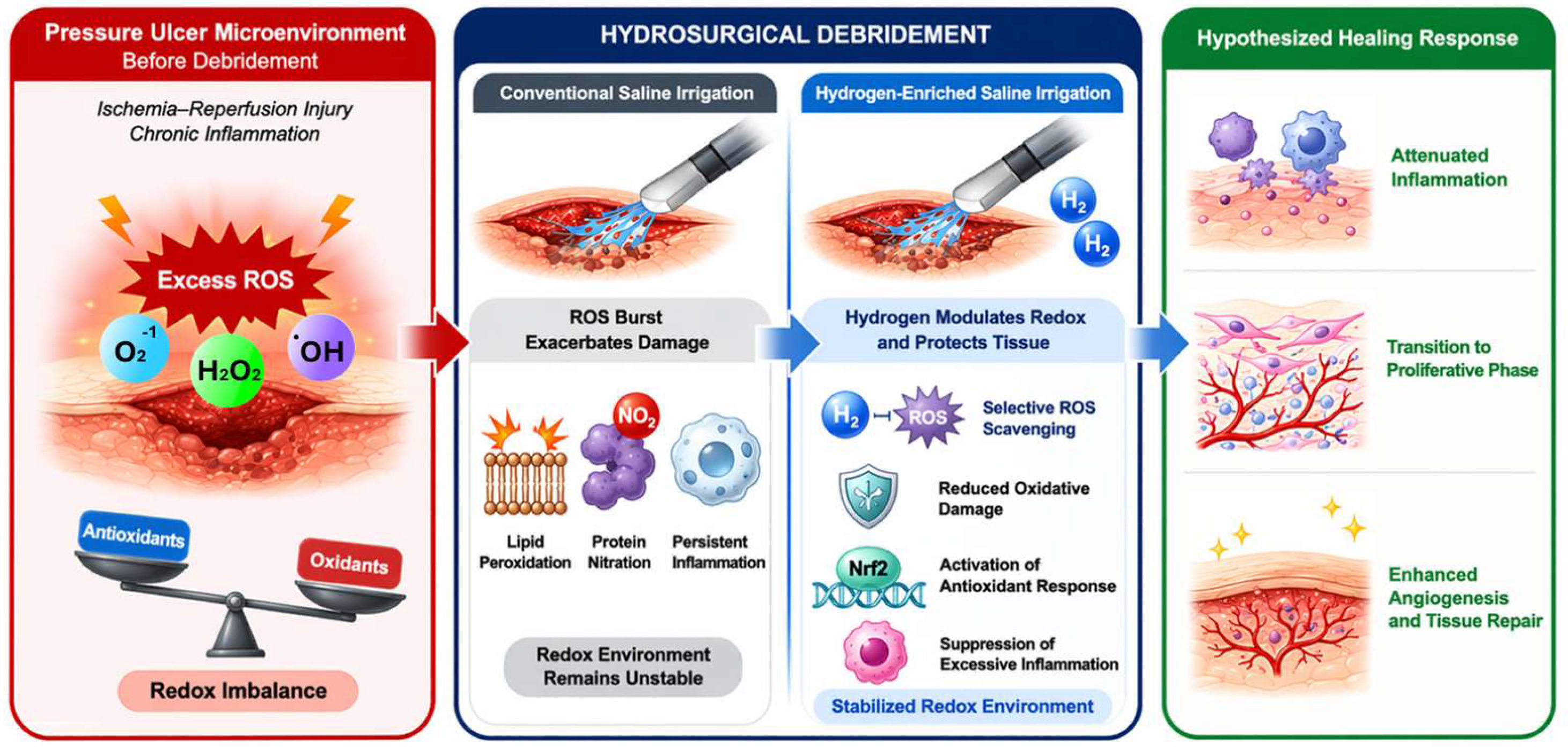
We hypothesized that hydrosurgical debridement performed with hydrogen-enriched saline as the irrigation solution may selectively attenuate the excessive redox imbalance that can arise during the procedural process in pressure ulcers, thereby promoting the transition from an inflammation-dominant state to a proliferation-dominant state and ultimately enhancing wound healing (
Figure 2). This hypothesis redefines debridement as both a mechanical intervention and a therapeutic opportunity to modulate the local redox conditions during the procedure itself. Essentially, the concept does not assume additional therapeutic intervention following debridement; rather, it positions the invasive event of debridement itself as an opportunity to optimize the redox environment of the wound.
In
Figure 2, the left panel shows chronic wound conditions characterized by persistent redox imbalance due to ischemia–reperfusion injury. The upper middle panel illustrates conventional hydrosurgical debridement using normal saline, where necrotic tissue is removed but redox imbalance remains unregulated. The lower middle panel depicts hydrosurgical debridement using hydrogen-enriched saline, which may selectively attenuate excessive ROS while preserving physiological redox signaling, thereby stabilizing the wound microenvironment. The right panel illustrates the proposed outcome, in which procedural redox modulation facilitates the transition from inflammation to tissue repair. This schematic represents a conceptual model and does not reflect quantitative measurements.
From a temporal perspective, the redox dynamics associated with hydrosurgical debridement can be conceptualized as a sequence of distinct phases (
Table 2). Prior to debridement, the wound is characterized by a sustained oxidative environment associated with chronic inflammation. During the debridement procedure, mechanical disruption and irrigation may induce a transient surge in ROS, representing a redox-unstable state. In this phase, the use of hydrogen-enriched saline may selectively modulate excessive ROS while preserving physiological redox signaling. Following the procedure, stabilization of the redox environment may facilitate the transition toward tissue repair.
A key aspect of this hypothesis is the selective antioxidant property of molecular hydrogen. As molecular hydrogen preferentially neutralizes highly reactive ROS while preserving the physiological redox signaling required for tissue repair [
39], it may mitigate the excessive redox imbalance generated during the procedure without suppressing the redox signals that are essential for the healthy progression of wound healing. Theoretically, this selectivity provides an advantage over interventions that uniformly suppress inflammatory responses, which may inadvertently interfere with the sequential phases of the wound-healing process.
Furthermore, the present hypothesis does not evaluate the superiority of specific debridement techniques or the mechanical effects of tissue removal. Instead, it focuses on the possibility that modifying the physicochemical characteristics of the irrigation solution may influence the wound microenvironment during the procedure when the same surgical technique is applied. As hydrogen-enriched saline is not intended to function as an antimicrobial agent, control of infection and reduction in bacterial burden remain dependent on debridement and standard wound management practices. Therefore, the intervention proposed here should be regarded as a complementary approach that can be implemented alongside existing infection control strategies rather than replacing them.
7. Technical Considerations and Limitations of Applicability
Recently, several hydrogen dissolution devices and closed-bag systems designed for medical applications have been developed, making it increasingly feasible to supply saline with stable concentrations of dissolved hydrogen in clinical settings. However, molecular hydrogen is highly volatile, and the amount of dissolved hydrogen may vary depending on the preparation method, storage conditions, and time elapsed before use. Therefore, we propose a conceptual framework based on the assumption that hydrogen-enriched solutions can be prepared appropriately. The optimal concentration of dissolved hydrogen, its stability, and its practical implementation in clinical settings are important issues that need to be clarified through future basic and preclinical investigations. In the context of hydrosurgical debridement, the stability of dissolved hydrogen under high-pressure irrigation conditions represents an important technical consideration. Due to its low molecular weight and high diffusibility, molecular hydrogen may be partially lost during high-velocity fluid delivery and exposure to ambient conditions. Therefore, maintaining a sufficient concentration of dissolved hydrogen at the point of tissue contact may be challenging and requires careful evaluation.
Although the minimum effective concentration of dissolved hydrogen required to achieve redox modulation during the intervention phase has not yet been established, previous experimental studies suggest that even relatively low concentrations may exert biological effects [
18,
40]. In particular, concentrations in the range of approximately 0.1–0.6 ppm have been reported to exert biological effects, providing a tentative reference for future procedural applications rather than a definitive therapeutic threshold [
20,
22]. This may include optimization of preparation methods, closed delivery systems, and real-time monitoring of dissolved hydrogen levels. Future studies are needed to determine the threshold concentration necessary for modulating excessive oxidative stress under dynamic procedural conditions, as well as to evaluate methods for maintaining hydrogen stability during clinical application. Although precise concentration–effect relationships remain to be defined, available evidence suggests that biologically active concentrations of dissolved hydrogen can modulate oxidative stress-related signaling pathways in a dose-dependent manner [
20,
22].
Furthermore, the present hypothesis primarily targets pressure ulcers characterized by substantial accumulation of oxidative stress resulting from ischemia–reperfusion injury and chronic inflammation. It should not be assumed that this approach can be uniformly applied to all types of wounds. The applicability of this concept should be carefully considered in conditions such as acute traumatic injuries, situations in which infection control is the highest priority, and wounds in which redox imbalance is not a major pathogenic factor.
8. Clinical Implications and Future Perspectives
If the present hypothesis is supported, hydrosurgical debridement using hydrogen-enriched saline as the irrigation solution could represent a highly implementable therapeutic strategy that can be introduced into existing pressure ulcer treatment protocols without substantial modification of current clinical procedures. Because the intervention involves modifying the characteristics of the irrigation fluid rather than altering the surgical technique itself, it may be applied without increasing the procedural complexity and could therefore be readily accepted in clinical practice.
The novelty of this hypothesis lies in redefining debridement not simply as a procedure for removing devitalized tissue but as a therapeutic opportunity to modulate the wound microenvironment during the procedural process. Particularly, the concept of regulating the redox environment during procedures in which tissue excision and irrigation occur simultaneously has not been sufficiently systematized as a therapeutic strategy. This perspective provides a new conceptual framework for designing interventions for pressure ulcer management.
Future studies are required to evaluate the temporal changes in redox-related biomarkers during the procedural process and their relationship with wound-healing outcomes through systematic, basic, and preclinical investigations. In particular, quantitative evaluation of redox-related biomarkers, such as ROS levels, oxidative DNA damage markers, and lipid peroxidation products, may provide a useful framework for assessing the validity of this hypothesis. Such studies are expected to clarify the validity, scope, and limitations of the proposed hypothesis. Further investigations combining redox biomarker analysis with controlled experimental models are also essential to clarify the therapeutic potential of procedural redox modulation and its possible clinical applications in wound management. Although the present concept is primarily discussed in the context of pressure ulcers, the proposed framework may also be extended to other wound treatment procedures from the perspective of microenvironmental control during therapeutic interventions.
To test this hypothesis, several experimental approaches can be considered. First, animal models of pressure ulcers can be used to compare wound-healing outcomes between conventional saline and hydrogen-enriched saline during hydrosurgical debridement. Second, temporal changes in redox-related biomarkers, such as ROS levels, 8-hydroxy-2′-deoxyguanosine, and inflammatory cytokines, can be evaluated during and after the procedure. Third, histological analyses focusing on angiogenesis, fibroblast activity, and extracellular matrix deposition may provide insights into the mechanisms underlying the proposed effects. These approaches would allow direct assessment of the causal relationship between procedural redox modulation and wound-healing dynamics. In addition to preclinical studies, translational approaches may include the use of intraoperative monitoring techniques to assess real-time changes in oxidative stress markers during debridement. Such approaches may provide insights into the temporal dynamics of redox modulation and help bridge the gap between experimental findings and clinical application.
Furthermore, comparative clinical studies evaluating wound-healing outcomes, such as time to closure, infection rates, and granulation tissue formation, may be useful in determining the clinical relevance of this approach. These investigations would contribute to establishing procedural redox modulation as a measurable and clinically actionable therapeutic concept.
9. Conclusions
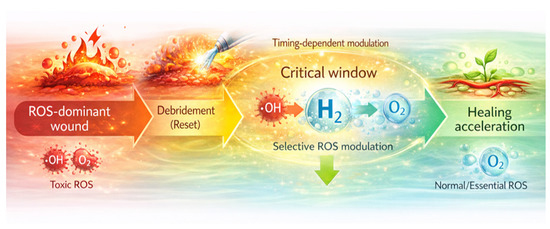
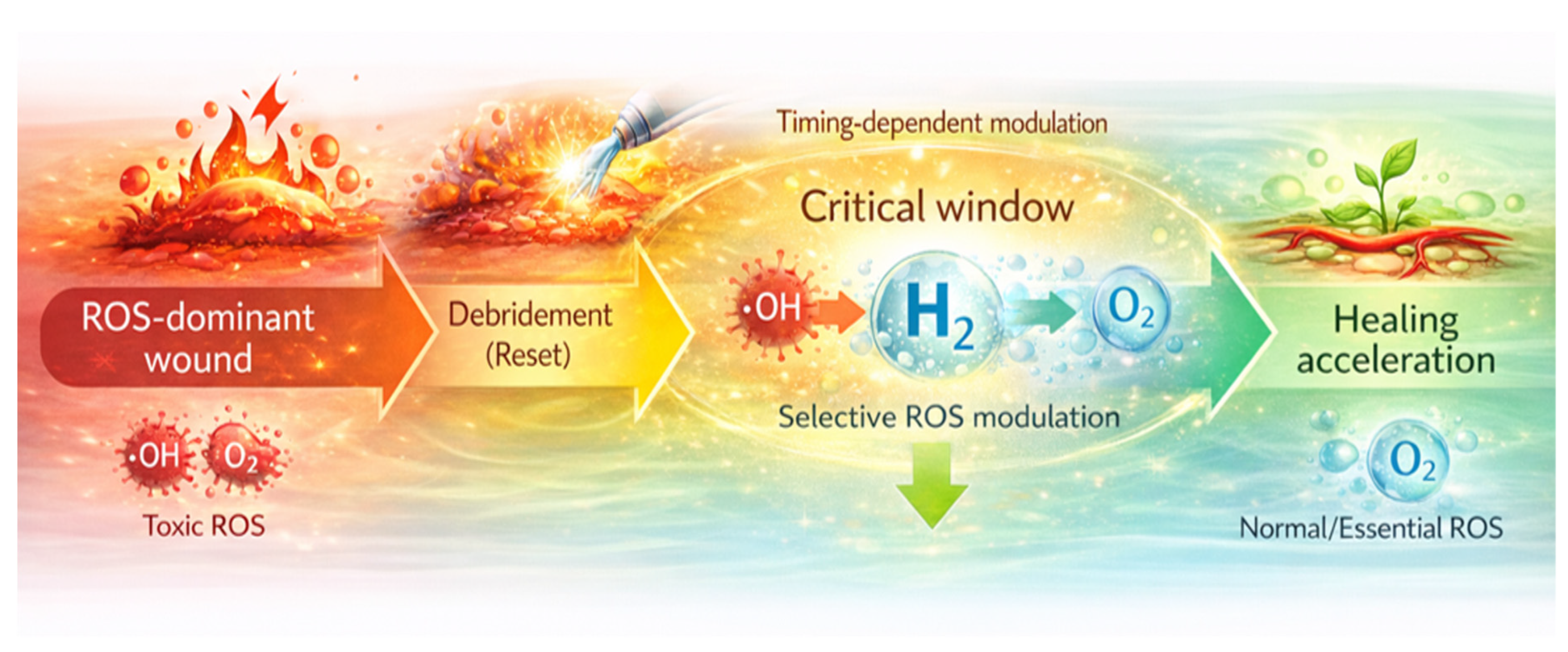
This article proposes a conceptual framework in which hydrosurgical debridement is redefined not only as a mechanical procedure for removing devitalized tissue but also as a therapeutic opportunity to regulate the wound microenvironment during the intervention. The use of hydrogen-enriched saline as an irrigation solution may enable selective redox modulation during the dynamic phase of debridement, thereby stabilizing the oxidative microenvironment and facilitating the transition from inflammation to tissue repair.
Importantly, this hypothesis highlights the concept of “procedural redox modulation,” in which the timing of intervention is integrated into therapeutic design. By targeting the dynamic phase of microenvironmental change during debridement, this approach may offer a novel strategy that complements existing wound management practices without requiring substantial modification of current surgical techniques. This study is intended as a hypothesis-generating framework and requires further validation through systematic experimental and preclinical studies. Future investigations should focus on evaluating the temporal dynamics of redox-related biomarkers and their association with wound-healing outcomes.
Validation of this concept may provide a foundation for integrating redox-targeted interventions into standard wound care and may open new avenues for the development of procedure-based therapeutic strategies in chronic wound management.
From a translational perspective, this concept represents a shift in therapeutic strategy from post hoc intervention to intra-procedural microenvironment control. By targeting redox imbalance at the moment it emerges, rather than after it has become established, this approach improves the efficiency of wound healing while minimizing additional treatment burden. Given that hydrosurgical debridement is already widely implemented in clinical practice, the integration of hydrogen-enriched saline offers a feasible and scalable strategy for enhancing therapeutic outcomes without increasing procedural complexity, making it particularly attractive for real-world clinical implementation. This hypothesis highlights intervention timing, rather than agent selection alone, as a critical determinant of therapeutic efficacy. This framework shifts the paradigm of wound care from post hoc intervention toward intra-procedural microenvironment control.