
Article

Reproductive Ecology of Maxillaria carinulata and Maxillaria meridensis (Orchidaceae) in the Andes of Caquetá, Colombia: Breeding System, Floral Visitors, Floral Compounds, and Pollen Transfer


by
Laura S. Cupitra-Vargas
1,
Albeiro Rojas-P
1,
Alejandro Lizcano
1,
Gabriela Motta-Rojas
1 and
Oscar Perdomo
2,*
1
Laboratorio de Agrobiodiversidad y Malherbología (LAMUA), Centro De Investigaciones Amazónicas Macagual, Universidad de la Amazonia, Caquetá, Florencia 180001, Colombia
2
Grupo de Investigación GIGASS, Escuela de Ciencias Agrícolas Pecuarias y del Medio Ambiente (ECAPMA), Universidad Nacional Abierta y a Distancia (UNAD), Boyacá, Tunja 15001, Colombia
*
Author to whom correspondence should be addressed.
Ecologies 2026, 7(3), 62; https://doi.org/10.3390/ecologies7030062
Submission received: 28 April 2026 / Revised: 20 June 2026 / Accepted: 24 June 2026 / Published: 1 July 2026

Abstract

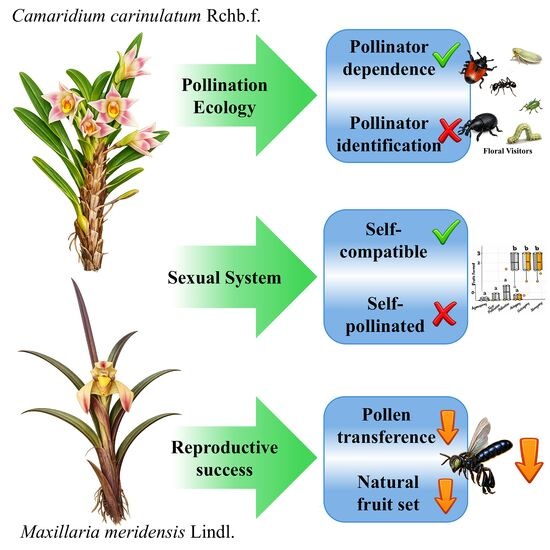
Maxillariinae is one of the most diverse Neotropical orchid groups, yet little is known about its reproduction and pollination. We studied Maxillaria carinulata and Maxillaria meridensis on the eastern slope of the Cordillera Oriental in Caquetá, Colombia (2000–2300 m), using pollinator exclusion, controlled pollination, observations, and histochemical tests. Hand pollination was used for manual autogamy, geitonogamy, and xenogamy treatments. Bagged flowers produced no fruit, confirming dependence on pollinators. Apomixis and spontaneous selfing failed, but manual autogamy, geitonogamy, and xenogamy yielded high fruit sets, showing self-compatibility and cross-fertility. In M. carinulata, fruit set reached 93.3%, 86.7%, and 90%; in M. meridensis, 80.0%, 83.3%, and 86.7%. The independent natural fruit-set survey showed low fruit production under field conditions, with 4.7% of monitored flowers forming fruits in M. carinulata and 16.3% in M. meridensis, reflecting inefficient pollen transfer. Both species showed floral scent and osmophore-like activity; M. meridensis also produced lipids, proteins, sugars, and starch in specific tissues. Visitors, mainly Stethobaris weevils, were recorded on M. meridensis, but no pollinarium removal or deposition occurred. These findings highlight strong pollination limitations and support conserving habitats to sustain effective pollinators in Andean populations.

Graphical Abstract

1. Introduction

Maxillariinae is one of the most diverse Neotropical orchid lineages, with nearly 700 species and high representation in Colombia [1,2,3]. Despite this diversity, reproductive ecology and pollination have been studied in only a small fraction of its species. This knowledge gap is especially relevant because many orchids depend on specific or infrequent pollinators, and reproductive success may be strongly limited by pollen transfer efficiency, floral rewards, and breeding-system traits [2,4].
In Colombia, the Andes harbor a high proportion of the national orchid diversity, including more than 200 species of Maxillariinae, and the eastern Andean-Amazonian foothills of Caquetá also make an important contribution to this diversity [3,5,6,7,8]. Within this group, Camaridium Lindl. and Maxillaria Ruiz & Pav. have been treated as separate lineages but are currently included under Maxillaria s.l. [2,8]. The species studied here belong to these lineages. Because information on pollinator dependence, floral rewards, and self-compatibility remains scarce for Andean species of Maxillaria s.l., studies focused on their reproductive systems are needed to understand the factors limiting fruit production under natural conditions. The taxonomic complexity and diversity of Maxillaria s.l. have been extensively documented in taxonomic treatments and monographic works [9].
Floral resources are substances produced or presented by flowers that floral visitors exploit as rewards or materials, most commonly nectar and pollen, but also oils, resins, fragrances, and other compounds [10,11]. In orchids, these resources may be expressed as starch, nectar, lipids, resins, or fragrance compounds produced by specialized tissues such as the labellum and osmophores, functioning either as true rewards or as cues that guide and stimulate visitor foraging behavior [12,13,14]. Overall, detecting these floral resources is crucial because they shape visitor behavior and fidelity, thereby increasing the likelihood of effective pollen transfer and successful pollination in orchids.
It was previously believed that most of the Maxillariinae Benth. did not reward their pollinators, although recent research has shown that many of them provide floral rewards such as nectar, trichomes, resins, or oils [15,16,17,18]. These resources are used by pollinators as food or building materials, as well as for pheromone production [18,19]. Bees of the tribe Meliponini and ants of the subfamily Ponerinae have been observed pollinating some species of Maxillaria [20,21,22], but our understanding of these interactions remains limited.
The reproductive and pollination biology of tropical epiphytic orchids remains insufficiently documented, especially when compared with their high taxonomic diversity. In many Neotropical orchids, reproductive success depends on specialized or infrequent pollinator interactions, and fruit production may be limited by low visitation rates, inefficient pollinarium transfer, or the absence of compatible pollen deposition [14]. In Maxillariinae, available studies show considerable variation in floral strategies, including rewardless flowers, nectar, labellar secretions, trichomes, resins, oils, pseudopollen-like structures, and fragrance-related cues [13,15,16,17,18,19]. However, for many species, it remains unclear whether detected floral compounds function as effective rewards, whether visitors actually act as pollinators, and whether low fruit set results from pollinator scarcity, pollen-transfer inefficiency, or intrinsic reproductive constraints. Therefore, studies integrating floral compounds, visitor observations, pollinator dependence, and breeding-system experiments are needed to understand the reproductive ecology of poorly studied Andean species of Maxillaria s.l.
In this research, we addressed the following questions on Maxillaria carinulata Rchb.f. and Maxillaria meridensis Lindl.: (i) are these species pollinator-dependent? If so, (ii) which organisms act as their pollinators? (iii) do these species produce floral compounds that may function as resources or attractants for visitors? and (iv) are these species self-incompatible?
We hypothesize that: (i) M. carinulata and M. meridensis are pollinator-dependent, as most of the studied species in these genera, such as Maxillaria densa Lindl. [23], Maxillaria lutescens Scheidw. [24], Maxillaria picta Hook. & Maxillaria rigida Barb.Rodr., (ii) the species are likely melittophilous, similar to other species in their genera such as M. lutescens (as Camaridium ochroleucum), Maxillaria pseudoneglecta J.T.Atwood (as Camaridium anceps), M. densa (as Camaridium densum), M. picta, Maxillaria lepidota Lindl., and M. rigida, as demonstrated in previous studies [25,26]; (iii) these species produce detectable floral compounds that may function as floral resources, as do most studied species in the genus [13]; (iv) both species are expected to be self-compatible, as studies conducted on species of Maxillaria s.l., including M. densa [23] and M. lepidota [27], have been demonstrated.

2. Materials and Methods

2.1. Study Area

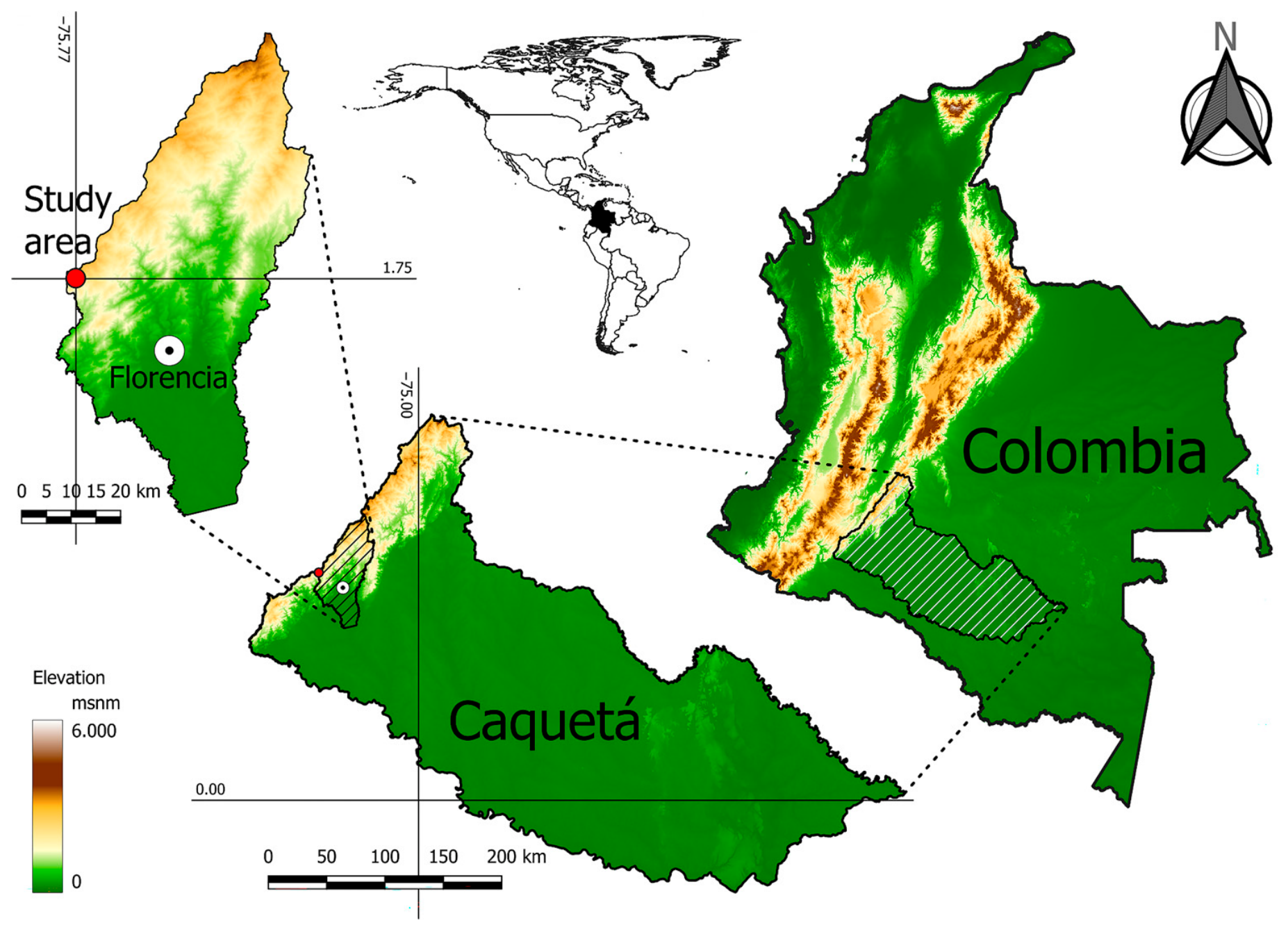
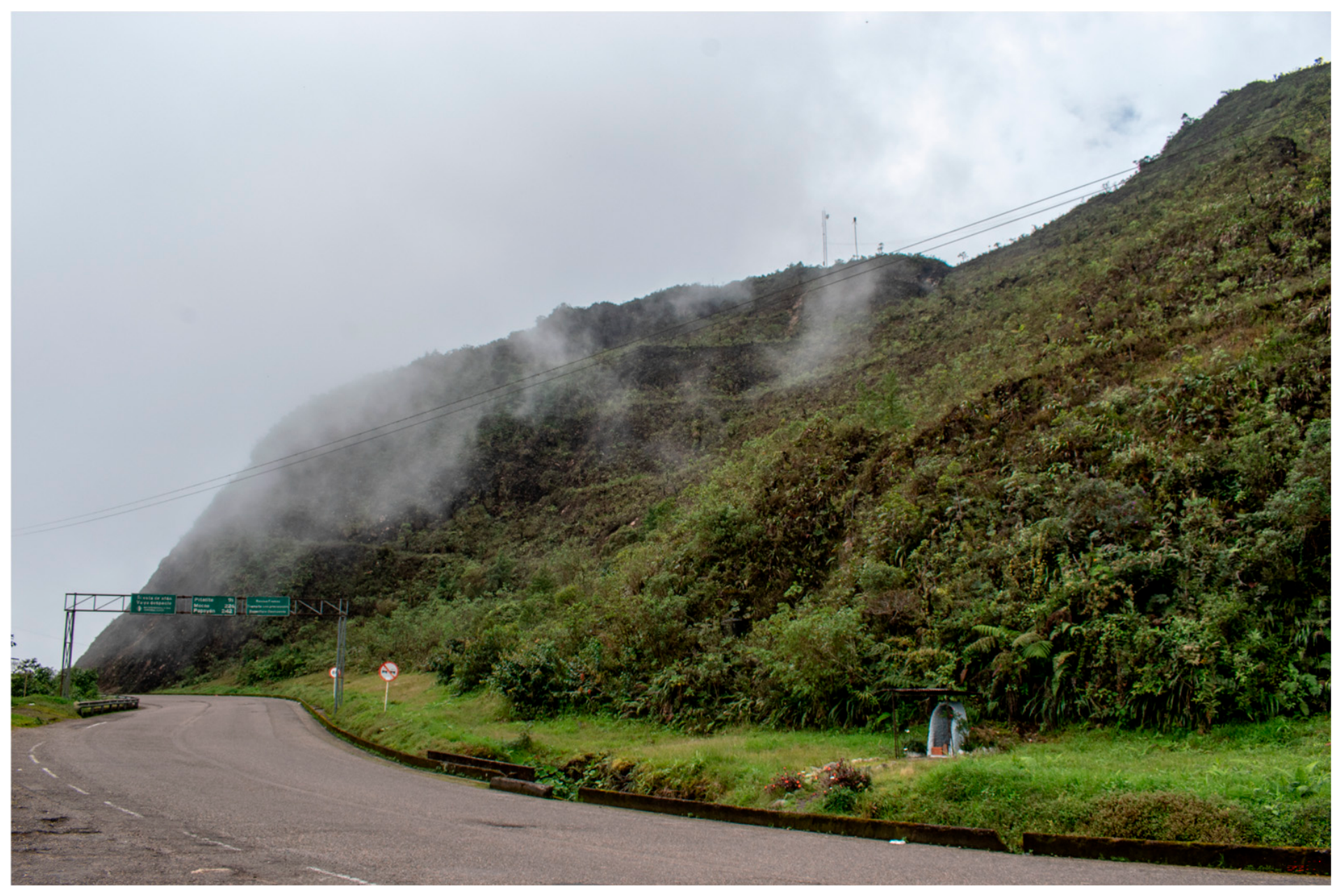
We conducted this research on the eastern slope of the Cordillera Oriental of the Andes, in the Municipality of Florencia, Caquetá, Colombia (Figure 1). The populations of M. carinulata and M. meridensis studied were located on embankments beside the Florencia-Suaza Road at an altitude of 2000–2300 m (Figure 2). The climate of the area is categorized as Cfb (temperate oceanic climate) according to the Köppen–Geiger climate classification, with temperatures ranging from 0 to 22 °C [28,29].

2.2. Studied Species

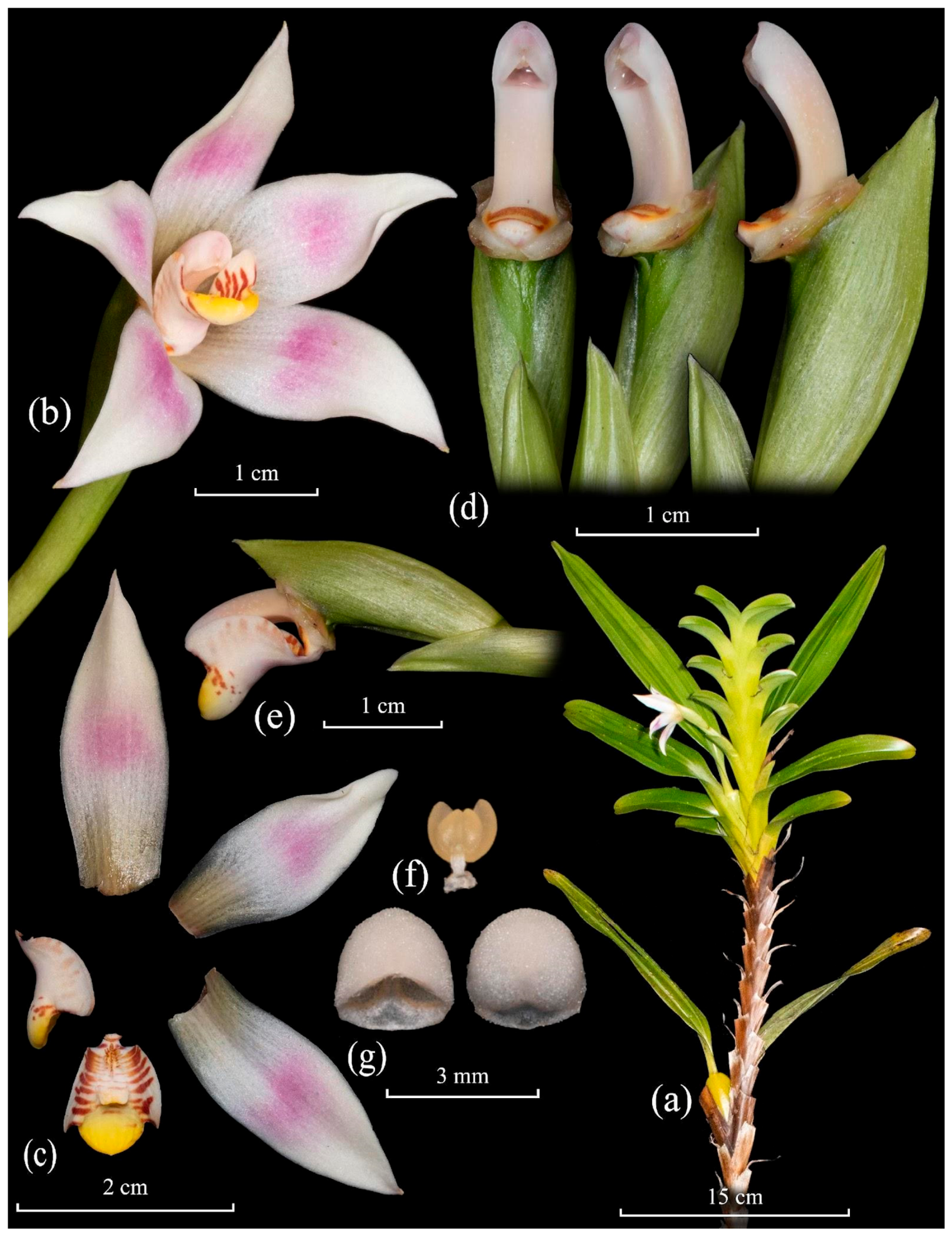
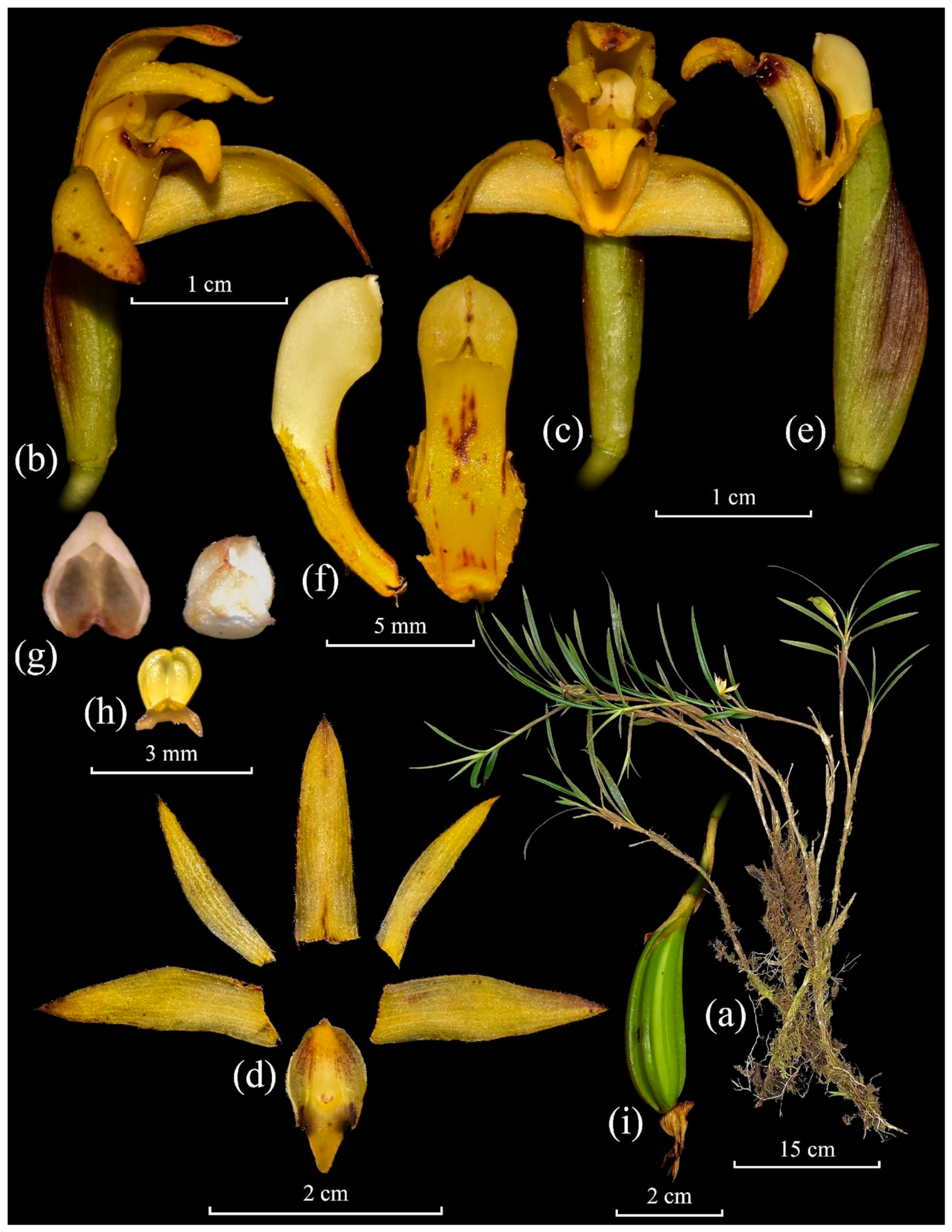
In this research we studied two orchid species. M. carinulata (Figure 3) is an epiphytic plant that grows on fallen and partially buried trunks within the site’s vegetation, occurring in small groups of up to 25 individuals. It has long rhizomes; with pseudobulbs arranged along the rhizome and leaves associated with or surrounding the pseudobulbs. The flowers have lanceolate, pointed sepals and petals, white to cream color, with pinkish tones in the middle. The labellum is trilobed, with red to brown spots; the tips of the lateral lobes are white, and the tip of the central lobe is yellow. It has papillose trichomes at the base yellow, red or brown in color. M. meridensis (Figure 4) is an epiphytic orchid, with long rhizomes and fusiform pseudobulbs set distantly apart, covered by rough sheaths. The cauline axis is elongated, bearing alternate, linear-lanceolate, acute leaves. Axillary flowers are subsessile, the perianth segments range from yellow to light orange, and from dull orange to yellowish-brown. The apical lobe of the lip is fleshy, ovate, or triangular-ovate, with a smooth or slightly rough surface [30,31]. In the study area, specimens were collected from both species, herbarium-mounted, and deposited at HUAZ [32].

2.3. Pollinator Dependence

To test whether M. carinulata and M. meridensis rely on pollinators, we isolated a total of 30 floral buds from ten different individuals, three buds per individual, using tulle bags and monitored them until fruit formation or flower fall [33,34,35,36]. All observations and tests for both species were developed from March to September in 2021 and 2022.

2.4. Floral Visitors and Pollinators

To identify the pollinators of these species we conducted focal observations from 06:00 to 18:00 h, accumulating a total of 304 h in total (124 h for M. carinulata and 180 h for M. meridensis) [35,37]. Additionally, we conducted nighttime observations for three consecutive nights to rule out nocturnal pollination. First, we marked newly opened flowers at 18:00. At 06:00 the following morning, we examined the flowers for signs of pollination, such as the removal of pollinarium or deposit of pollinia [38,39]. Floral visitors were documented using a digital camera Nikon D3500 (Tokio, Japan) with Sigma 105mm f/2.8 EX DG OS HSM Macro lens (Kanagawa, Japan) to acquire more precise data on the process [33,35,40]. We captured floral visitors using an insect aspirator. Subsequently, they were identified to the lowest taxonomic level possible and deposited in the entomological collection of the Laboratory of Entomology at the Universidad de la Amazonia (LEUA). For the purpose of this research, only individuals capable of removing pollinarium and depositing pollinia were considered pollinators [41,42].

2.5. Floral Compounds

To identify floral compounds that may act as resources or attractants for floral visitors and pollinators in both species, we conducted six tests in the Laboratory of Biology at Universidad de la Amazonia. First, we tested the presence of floral scent using a simple human olfactory test: team members smelled freshly opened flowers placed in a glass container and described the odor [43,44]. Then, we conducted five histochemical tests; (1) osmophore-like activity, we immersed five fresh flowers in a 0.1% aqueous neutral red solution for 20 min, after which we rinsed the samples with water and searched for red staining indicating cellular activity [15,45,46]; (2) to detect the presence of starch granules, we made histological cuts of the lip callus and applied potassium iodide-iodine (IKI), then observed them under the microscope for granules stained dark blue [47,48]; (3) for lipid detection, we made longitudinal and transverse cuts on the laminar tissue of the perianth, treated the samples with Sudan III in 70% ethanol, and then examined for orange-colored particles [15,47,49]; (4) to identify reducing sugars, we submerged a flower in a mixture of equal volumes of Fehling’s reagent (1 mL of Fehling A and 1 mL of Fehling B), heated the sample to its boiling point, removed it, and checked for red hues [19,46,50,51]. Additionally, (5) fragments of epidermal tissue from the lip were subjected to the xanthoproteic test to detect aromatic compounds, by applying concentrated nitric acid followed by 10% potassium hydroxide; orange reaction products indicated the presence of these compounds [47,48]. All reagents were supplied by Proquímica S.A. (Florencia, Caquetá, Colombia).

2.6. Breeding System

We conducted a study on the breeding system of both species using six pollination treatments, with ten individuals per species per treatment. Each individual contributed 18 flowers, with three flowers assigned to each treatment, resulting in 30 flowers per treatment and 180 flowers per species. Thus, all six treatments were applied to each individual. These plants were not the same individuals used in the pollinator-dependence test, but they belonged to the same populations. Because several flowers were evaluated on the same individual, the individual plant was considered the experimental unit. Flower-level responses were summarized for each individual as the percentage of flowers that developed fruits in each treatment, and these individual-level fruit-set values were used in the statistical analyses. Thus, flowers were not treated as fully independent replicates.
First, we selected ten flowering plants from different populations within the same locality, each at least 50 m apart, and marked flowers before the anthesis, conducting the experiments when they opened. To test for apomixis, the formation of fruits without pollination, we performed emasculation by removing the pollinarium and isolated the flowers with tulle fabric to prevent floral visitations. To test autonomous self-pollination, the pollinarium is deposited onto the stigma of the same flower by autonomous mechanisms. Geitonogamy, the formation of fruits from flowers pollinated with pollinarium from another flower on the same plant, was tested by hand-fertilizing flowers. Autogamy was tested by fertilizing flowers with their own pollen. Xenogamy, the production of fruits through cross-pollination, was tested by fertilizing flowers with pollinarium from flowers of another individual. In all cases, the flowers were enclosed in tulle mesh bags from before anthesis until the end of the observation period to prevent floral visitation. Finally, open or natural pollination was tested by allowing free visitation from potential pollinators [35,40]. This treatment was used for comparison among breeding-system treatments and should be distinguished from the independent natural fruit-set survey described below. In all treatments, flowers were monitored until fruit formation or abscission to indicate the test results.
For each species, fruit set was analyzed at the individual-plant level. For each treatment, we calculated the percentage of flowers that developed fruits for each individual plant, using the three flowers assigned to that treatment. These individual-level percentages were used as the response variable in the statistical analyses. We first evaluated normality using the Shapiro–Wilk test [52]. Because the data did not meet the assumptions of normality, we assessed differences among treatments using the non-parametric Kruskal–Wallis exact test [53]. When significant differences were detected, pairwise comparisons were performed using Dunn’s test with Bonferroni adjustment to control the family-wise error rate [53,54]. All statistical tests were conducted using R (version 4.3.5) and RStudio (version 4.3.1).
To estimate natural fruit set under field conditions, independently of the breeding-system experiment, we monitored all available flowers on 20 individuals per species. We calculated two complementary values: (i) total natural fruit set, obtained by dividing the total number of fruits formed by the total number of flowers monitored, and (ii) mean fruit set per plant, obtained by first calculating fruit set for each individual and then averaging these percentages across the 20 monitored plants [34,35]. Subsequently, we computed two pollen transfer efficiency indices: (1) Nilsson’s male efficiency factor, which is the ratio of pollinated flowers to donor flowers [55,56], and (2) Pollen Transfer Efficiency (PTE) measured using the equation: P T E = P s ( 2   F r ) , where Ps is the number of pollinia deposited on stigmas and Fr is the number of flowers with removed pollinaria [35,57].

3. Results

3.1. Pollinator-Dependent

Supporting our hypothesis, no fruits were formed by the isolated flowers of M. carinulata and M. meridensis, indicating these species are pollinator-dependent, relying on a vector for the fertilization of the flowers.

3.2. Floral Visitors

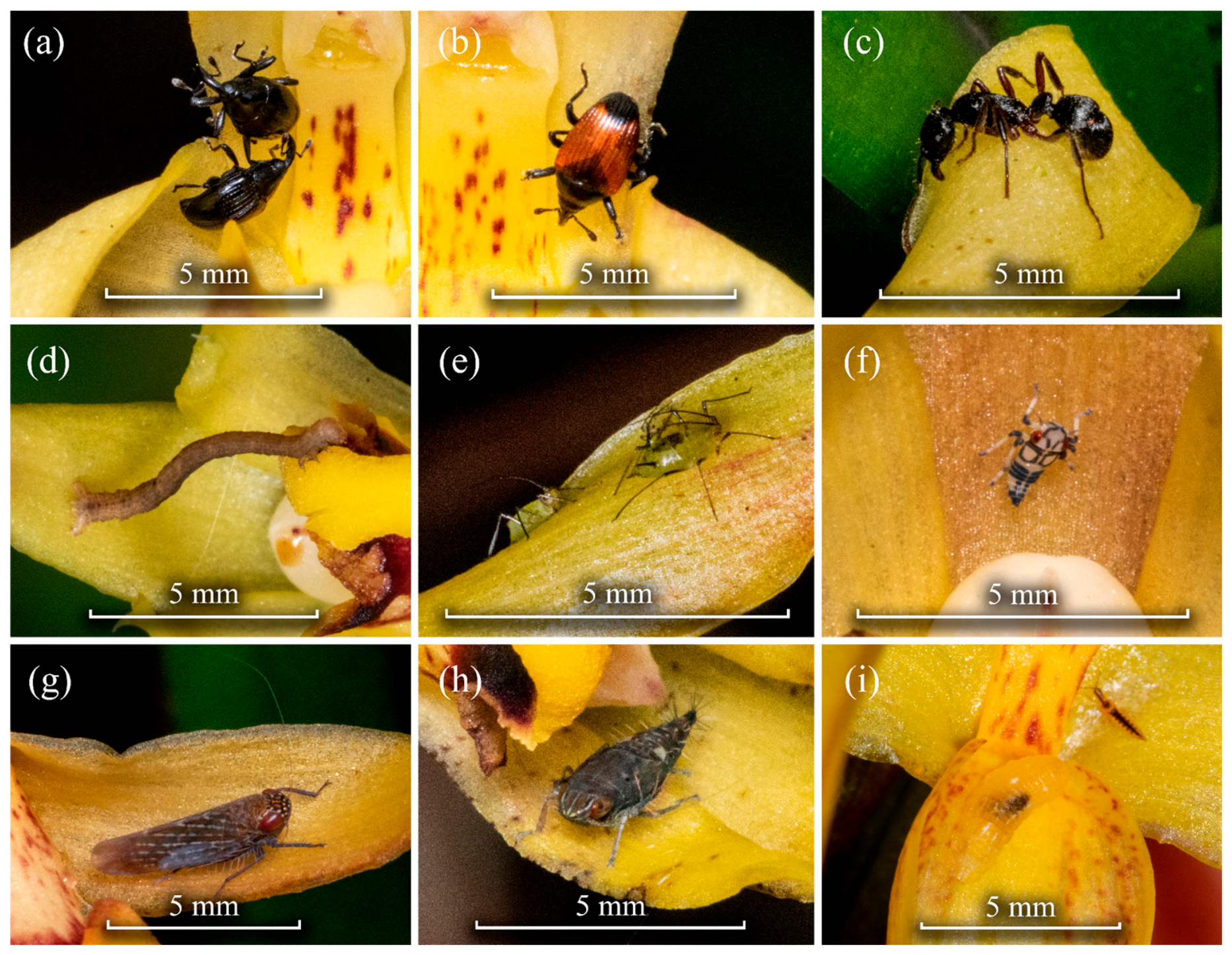
After 124 h of observation of M. carinulata, no floral visitors or pollinators were detected or captured. In contrast, during 180 h of observations on M. meridensis, flowers were most frequently visited by two species of Stethobaris spp. (Curculionidae: Baridinae) (Figure 5a,b). This genus includes orchid specialist herbivores. Individuals were observed resting inside flowers, frequently probing the stigmatic cavity with their mouthparts and feeding on floral tissues, standing on the anther cap, and occasionally consuming pollinia. At times, multiple individuals clustered on the column, but we did not observe pollinarium removal or deposition of pollinia. Workers of Crematogaster sp. (Formicidae: Myrmicinae) (Figure 5c) were also observed resting on the dorsal surface of the flowers, although they were not seen exploiting floral secretions. Additional visitors included an inchworm caterpillar (Lepidoptera: Geometridae) (Figure 5d), an aphid (Hemiptera: Aphididae) (Figure 5e), adult and nymphal leafhoppers (Hemiptera: Cicadellidae) (Figure 5f–h), and an unidentified larva feeding on floral tissues (Figure 5i).

3.3. Floral Compounds

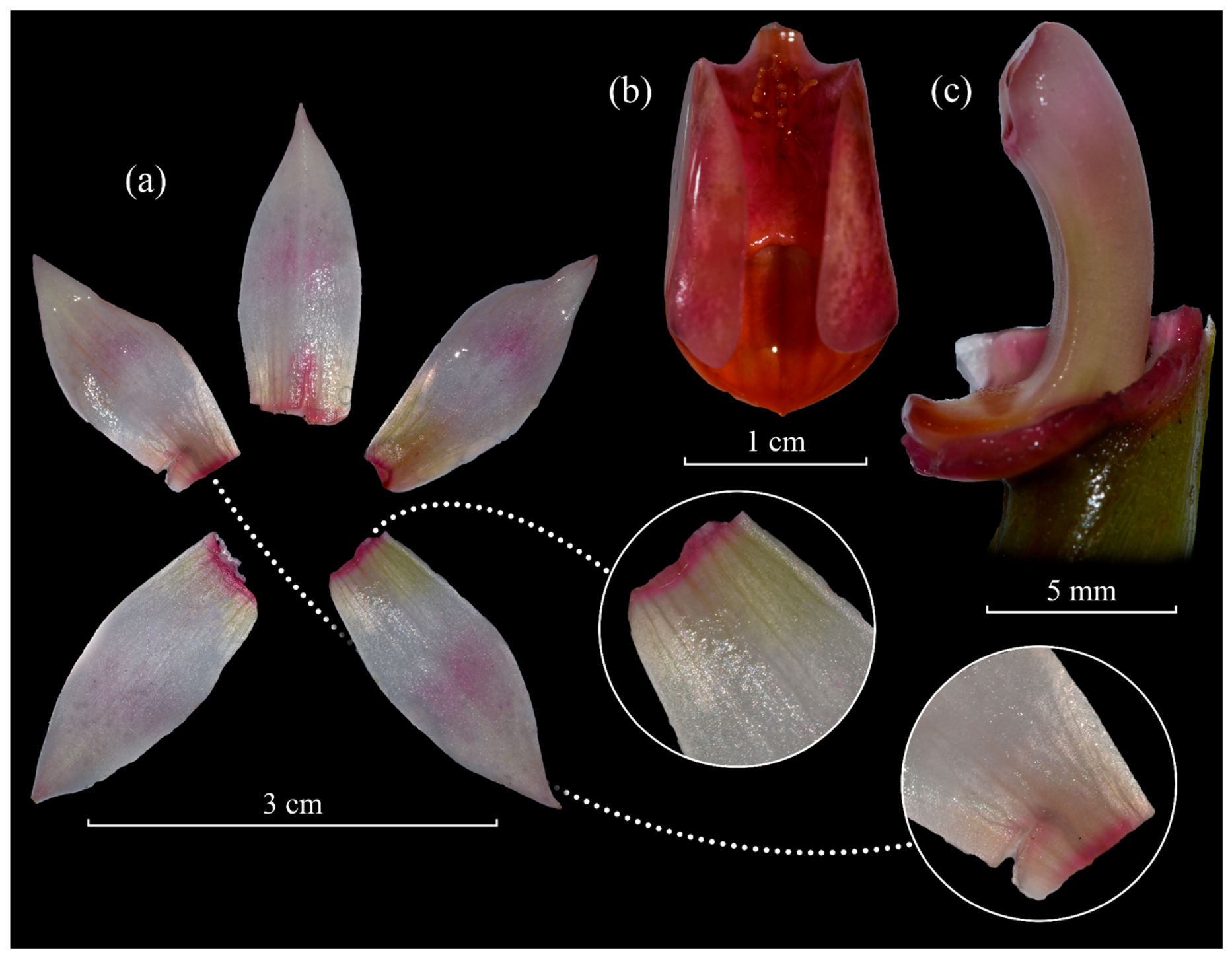
We detected a perceptible odor with the human nose test in both species, being stronger in M. carinulata. We also detected the presence of metabolic activity near the surface of the epidermis, from the central lobe of the lip to the apex of the upper petal using the neutral red test (Table 1). The positive neutral red reaction indicates metabolically active floral tissues and is consistent with the presence of osmophore-like areas; however, this test does not directly demonstrate volatile production. Therefore, these stained regions are interpreted here as potential sites involved in scent emission.
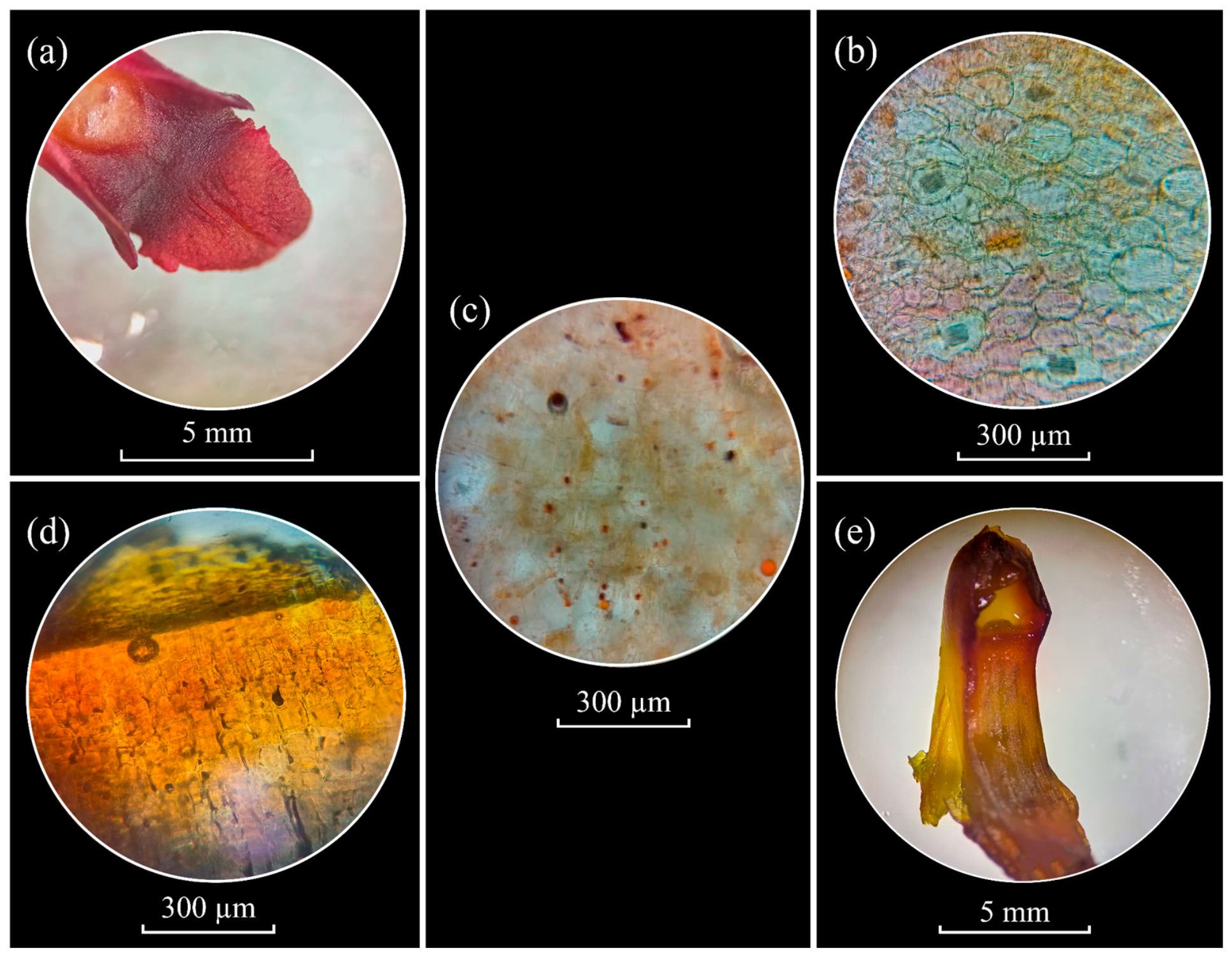
In M. carinulata (Figure 6) this was the only positive test, being negative for starch, lipid, reducing sugars and proteins. In M. meridensis (Figure 7) we observed a high concentration of papillose trichomes at the apex of the lip, and confirmed the presence of lipids and soluble proteins in trichomes and callus, while starch was detected only in the callus. Reducing sugars were detected in the ventral area of the column using the Fehling’s test (Table 1). These results indicate the presence of compounds that may act as cues, attractants, or potential reward-related substances, but their function as floral rewards remains unconfirmed because active collection by visitors was not observed.

3.4. Breeding System

The pollination treatments showed a similar pattern for both studied species. At the individual-plant level, neither apomixis nor spontaneous self-pollination produced fruits, whereas manual autogamy, geitonogamy, xenogamy, and open pollination resulted in fruit formation in at least some individuals (Table 2). Using individual-level fruit-set percentages as the response variable, the Kruskal–Wallis test revealed significant differences among treatments for M. carinulata (H(5) = 50.32, p < 0.0001) and M. meridensis (H(5) = 50.5, p < 0.0001). Pairwise Dunn tests with Bonferroni correction showed that apomixis and spontaneous self-pollination treatments did not differ significantly (Z = 0, adj-p > 0.05), neither from the results obtained by natural pollination (Z = −1.04, adj-p > 0.05), but they did differ from the other treatments (adj-p < 0.05). However, there were no significant differences among autogamy, geitonogamy, and xenogamy (adjusted p > 0.05). In the breeding-system experiment, the open-pollination treatment was based on 30 flowers per species, as in the other treatments. Under this experimental design, open pollination produced 10.0% fruit set in M. carinulata and 16.7% in M. meridensis (Table 2).
In the independent natural fruit-set survey, which included all monitored flowers on 20 individuals per species, total natural fruit set was very low in M. carinulata, with 9 fruits from 193 flowers, equivalent to 4.7%. Mean fruit set per plant was 7.1%. Nilsson’s male efficiency factor and the PTE index were null due to the absence of pollinia deposits (Table 3). In M. meridensis, the natural fruit set was 13 fruits from 13 different individuals, equivalent to 65% of the individuals and 16.3% of the 80 flowers, whereas the mean fruit set per plant was 16.8%. Nilsson’s male efficiency factor was 0.31, and the PTE value was 0.15 (Table 3).

4. Discussion

4.1. Pollination Vector

Our findings indicate that M. carinulata and M. meridensis are pollinator-dependent, because bagged flowers did not produce fruits in either species. This indicates that neither spontaneous self-pollination nor apomixis contributes to fruit production under the conditions evaluated. However, both species produced fruit after manual autogamy, geitonogamy, and xenogamy, showing that the main reproductive constraint is not physiological self-incompatibility, but the absence or inefficiency of effective pollen transfer under natural conditions. This pattern is consistent with other species of Maxillaria s.l. in which fruit production depends on pollinator-mediated pollen transfer, even when self-compatibility is present [21,23,27]. The low fruit set observed under natural conditions also suggests that these populations may be vulnerable to reductions in pollinator availability or activity, a pattern commonly associated with habitat degradation and environmental change in orchids [58,59,60]. Therefore, although the conservation status, habitat requirements, and specific threats affecting these species were not evaluated in this study, our results suggest that future conservation assessments should consider pollinator dependence, low natural fruit set, and the maintenance of suitable habitats for effective pollen transfer [61,62,63,64].

4.2. Pollinator

Although observations were extensive and the habitat was well conserved, no effective pollinators were detected for M. carinulata or M. meridensis, suggesting strong pollen limitation, a common pattern in rare orchids or in systems with temporally restricted pollinator activity [59,60]. In M. meridensis, floral visitation was dominated by non-pollinating insects, including aphids, cercopids, geometrid caterpillars, and Stethobaris spp., which can reduce floral longevity, damage reproductive structures, and interfere with pollination success [58,65]. Therefore, these insects should be interpreted as visitors or antagonists rather than pollinators.
The recurrent presence of Stethobaris spp., a genus widely reported as florivorous in Orchidaceae, supports their role as antagonists [65,66,67,68,69]. Although Stethobaris has been documented across multiple orchid lineages, its association with Maxillariinae has not previously been reported. The presence of Crematogaster sp. workers on M. meridensis flowers, despite no evidence of direct exploitation of floral resources, raises questions about their ecological role. The genus Crematogaster has been documented as a facultative mutualist with orchids in some cases [70,71,72], but also as an indirect antagonist through trophobiotic associations with scale insects [73]. However, no direct interactions between ants and hemipterans were observed during our study period, leaving their role in this system unclear and warranting further investigation.
The co-occurrence of multiple non-pollinating visitor guilds raises new questions about their possible effects on floral integrity, resource availability, and pollination success. However, because these effects were not directly evaluated in our study, their potential role as herbivores or floral resource thieves should be tested in future research [65,69]. These results suggest that the low reproductive success observed in the field may result from a combination of scarce effective pollinators and frequent non-pollinating or antagonistic visitors.
Pollinators are relevant for the persistence of Orchidaceae, particularly in hyperdiverse lineages such as Maxillariinae, because successful sexual reproduction often requires an external vector to remove and deposit pollinaria, sustaining gene flow and long-term population viability even in taxa that may be self-compatible under hand pollination [2,4,60]. Yet, identifying orchid pollinators becomes exceptionally challenging when pollinator abundance is low, seasonal, or characterized by brief activity windows, since the probability of observing effective visits declines sharply even after extensive focal monitoring. Surveys can be biased toward frequent but non-effective visitors or antagonists such as florivores, which may further depress reproductive performance while obscuring true pollination vectors [58,59].
Thus, the absence of confirmed pollinators in our study should not be interpreted as evidence that these species lack pollinators, but rather as a result that may reflect both the methodological difficulty of documenting rare pollination events in orchids and the particular ecological context of these Andean populations, where effective pollinators may be scarce, seasonal, or active outside the observation periods [58,59,60]. Based on floral morphology, particularly the relatively small flower size and the narrow space between the anther and the labellum, small bees remain plausible potential pollinators for both species, as has been reported for other similarly sized species of Maxillaria s.l. [25,26].
This difficulty is compounded by the fact that orchid attraction and visitor behavior are often mediated by subtle floral cues and localized compounds, including fragrance-related tissues, lipids, sugars, proteins, and starch, which can function as rewards or signals that structure fidelity and effective pollen transfer [10,11,12,14,47]. However, because this study did not evaluate forest structure, microclimatic requirements, nesting resources, or specific threats, these factors should be addressed in the future. For now, our results indicate that pollinator dependence, low natural fruit set, and inefficient pollen transfer should be considered in conservation assessments of these Andean populations [60,61,62,63].

4.3. Floral Compounds

Our olfactory and histochemical tests revealed compounds and tissue activity that may be relevant to floral attraction, but their ecological function should be interpreted cautiously. The positive human olfactory tests and neutral red reaction in both species are consistent with osmophore-like activity and suggest the presence of floral tissues potentially involved in scent emission, as reported for other orchids [1,74]. However, these results do not directly demonstrate volatile production or confirm that these floral cues are involved in pollinator attraction. Therefore, chemical analyses of floral volatiles and behavioral observations or bioassays with floral visitors are needed to confirm their ecological role. Similarly, the detection of lipids, proteins, reducing sugars, and starch in M. meridensis indicates the presence of compounds that may be related to floral attraction or potential rewards, as documented for some members of Maxillariinae [18,19].
However, these substances cannot be considered confirmed floral rewards unless they are accessible to visitors and are actively collected or consumed. In our observations, most compounds appeared internally or were poorly exposed, and no visitor was observed collecting them. Therefore, we interpret these compounds as potential cues, attractants, or reward-related substances rather than confirmed floral rewards. Compared with previous reports in Maxillaria s.l. and Maxillariinae, these results suggest that M. meridensis shares the presence of reward-related compounds or tissues described for other species, but differs in that no active collection, removal, or use of these substances by floral visitors was observed in our study [13,15,16,17,18,19].
These findings help explain the contrast between floral attractiveness and low effective pollination. Although both species showed evidence of scent-related tissues, and M. meridensis had several detected compounds, these traits did not translate into observed pollinarium transfer. The type, location, and accessibility of these compounds, whether potential rewards or cues, may influence whether visitors become effective pollen vectors, remain occasional visitors, or act mainly as antagonists, thereby shaping pollen transfer efficiency and fruit set under natural conditions [14,57].
Although these histochemical results show the presence of specific compounds and metabolically active tissues, their role in pollinator attraction remains unresolved. Future studies should combine histochemical screening with chemical analyses of floral volatiles and secretions, fine-scale behavioral observations, and pollinarium tracking to determine which compounds, if any, are involved in pollinator attraction and to confirm the identity of effective pollinators [15,35,45]. This information would also be relevant for conservation, because understanding pollinator attraction and effective pollen transfer can help identify interaction-based requirements for the persistence and management of orchid populations under pollination limitation [60,62,63].

4.4. Breeding System

Our findings reveal that M. carinulata and M. meridensis are self-compatible; both species produced fruits after manual autogamy and geitonogamy. Fruit set was also high after xenogamy, and no significant differences were detected among manual autogamy, geitonogamy, and xenogamy. Therefore, both species have the physiological capacity to produce fruits through self- and cross-pollination, but they require an external vector because spontaneous self-pollination and apomixis failed. Similar patterns have been reported in other species within the genus, such as M. lutescens, M. lepidota and Maxillaria bradei Schltr. ex Hoehne [21,27,75].
In this context, self-compatibility may provide reproductive assurance when effective pollinators are scarce, although repeated selfing may also involve costs such as inbreeding depression or reduced adaptive potential [76,77,78]. Despite the potential costs of inbreeding depression and reduced adaptive potential through the accumulation of deleterious mutations [79,80], a single selfing or outcrossing event yields an exceptionally large number of seeds, generating enormous numbers of genetic combinations. It has been suggested that such scenarios may be relatively common during founder events, where initial inbreeding is not necessarily associated with a loss of genetic diversity through genetic transilience [81]. Moreover, the low reproductive efficiency under natural pollination suggests substantial pollen losses driven by pollinator scarcity, leading to higher male than female reproductive success [19,82].
The contrast between high fruit set after hand pollination and low fruit set under natural conditions indicates strong pollination limitation. This limitation was especially severe in M. carinulata, where the independent natural fruit-set survey showed only 4.7% fruit formation and no pollinia deposition. In M. meridensis, natural fruit set was higher, 16.3%, but still low compared with the manual pollination treatments. The low Nilsson’s male efficiency factor and PTE value in M. meridensis indicate that many pollinaria removals did not result in successful deposition, suggesting inefficient pollen transfer under natural conditions [35,55,57]. This pattern suggests substantial pollen losses, with pollen export not necessarily translating into female reproductive success [19,82]. Reduced natural fruit set is common in orchids and may limit recruitment when effective pollinators are absent, rare, or inefficient [58,59,60].
Together, these results indicate that reproductive success in both species is limited mainly by pollinator availability or effectiveness, rather than by intrinsic reproductive incompatibility [35,55,57,58,59,60]. However, mechanisms such as histocompatibility, failure of pollen germination or pollen tube growth, and prezygotic incompatibility associated with inbreeding were not evaluated in this study. These mechanisms are relevant in orchids because self-incompatibility may involve different pollen tube growth responses, including lack of pollinia germination or arrested pollen tube development, and may interact with inbreeding depression in some species [83,84]. Therefore, future research should address these processes to better understand reproductive failure under natural conditions.

5. Conclusions

Maxillaria carinulata and M. meridensis are pollinator-dependent; they do not yield fruits in the absence of a pollinator. Despite extensive observation efforts, we were unable to capture and/or identify the pollinator of these species. For M. carinulata we did not observe floral visitors. However, we recorded floral visitors on M. meridensis from Curculionidae, Formicidae, Aphididae, Geometridae, and Cicadellidae, all belonging to genera known to be herbivorous. Based on the floral morphology of both species, including the overall flower size and the restricted space between the anther and the labellum, and considering the pollination of similarly sized flowers within the same lineage, we tentatively suggest that they may be pollinated by bees. In this sense, we hypothesize that the species may be melittophilous, as reported for other congeners such as M. ochroleuca, M. anceps, M. densa, M. picta, and M. rigida.
In both species, the positive neutral red reaction and detectable fragrance suggest the presence of osmophore-like activity and potential olfactory cues, although volatile production was not directly measured In M. meridensis, lipids, proteins, reducing sugars, and starch were detected in specific floral tissues; however, these compounds should be interpreted as potential cues or reward-related substances rather than confirmed floral rewards, because their accessibility and collection by floral visitors were not demonstrated. We concluded that M. carinulata and M. meridensis are self-compatible and can set fruit via both geitonogamy and xenogamy, but neither species produces fruit through spontaneous self-pollination or apomixis.

Author Contributions

Conceptualization, O.P.; methodology, L.S.C.-V., A.L., G.M.-R. and O.P.; software, L.S.C.-V., A.R.-P. and O.P.; validation, L.S.C.-V., A.R.-P., A.L., G.M.-R. and O.P.; formal analysis, O.P. and A.R.-P.; investigation, L.S.C.-V., A.L., A.R.-P., G.M.-R. and O.P.; resources, L.S.C.-V., A.L. and G.M.-R.; data curation, A.R.-P. and O.P.; writing—original draft preparation, L.S.C.-V., A.R.-P. and O.P.; writing—review and editing, L.S.C.-V., A.R.-P., A.L., G.M.-R. and O.P.; visualization, A.R.-P. and O.P.; supervision, O.P.; project administration, L.S.C.-V., A.L. and G.M.-R.; funding acquisition, L.S.C.-V., A.L., G.M.-R. and O.P. All authors have read and agreed to the published version of the manuscript.

Funding

This research was funded by the project: “Fortalecimiento de vocaciones científicas en jóvenes mediante becas-pasantías en la Región Centro Sur. Caquetá, Amazonas, Putumayo, Huila, Tolima”, BPIN 2022000100076.

Institutional Review Board Statement

Not applicable.

Informed Consent Statement

Not applicable.

Data Availability Statement

The original data presented in the study are openly available in Zenodo at https://doi.org/10.5281/zenodo.19922649 (accessed on 30 April 2026).

Acknowledgments

We would like to express our gratitude to the project: “Fortalecimiento de vocaciones científicas en jóvenes mediante becas-pasantías en la Región Centro Sur. Caquetá, Amazonas, Putumayo, Huila, Tolima”, BPIN 2022000100076, for providing financial support to carry out this research. We also want to thank the Montero family and Fabian Chicha for their invaluable assistance during our fieldwork. Special appreciation goes to teacher Maria Fernanda Bermudez and Stiven Lopez from the Laboratory of Entomology of the University of the Amazonia (LEUA) for their help in identifying floral visitors. As well as the Biology Laboratory of the University of the Amazonia and their staff for the support, and the Laboratory of Agrobiodiversity and Malherbology University of the Amazonia (LAMUA) and the project “Strategy for knowledge, study, and conservation of the orchid flora of the Andean-Amazonian foothills of Caquetá department” for support during the research (collection permit: ANLA Res. No. 01216, 31 July 2018).

Conflicts of Interest

The authors declare no conflicts of interest.

References

  1. Watteyn, C.; Scaccabarozzi, D.; Muys, B.; Van Der Schueren, N.; Van Meerbeek, K.; Guizar Amador, M.F.; Ackerman, J.D.; Cedeño Fonseca, M.V.; Chinchilla Alvarado, I.F.; Reubens, B.; et al. Trick or treat? Pollinator attraction in Vanilla pompona (Orchidaceae). Biotropica 2022, 54, 268–274. [Google Scholar] [CrossRef]
  2. Blanco, M.A.; Carnevali, G.; Witten, W.M.; Singer, R.B.; Koehler, S.; Williams, N.H.; Ojeda, I.; Neubig, K.M.; Endara, L. Generic realignments in Maxillariinae (Orchidaceae). Lankesteriana 2007, 7, 514–537. [Google Scholar]
  3. Ministerio de Ambiente y Desarrollo Sostenible; Universidad Nacional de Colombia. Plan Para el Estudio y la Conservación de las Orquídeas en Colombia; Betancur, J., Sarmiento, L., Toro-González, L., Valencia, L., Eds.; Ministerio de Ambiente y Desarrollo Sostenible: Bogotá, Colombia; Universidad Nacional de Colombia: Bogotá, Colombia, 2015; p. 336.
  4. Whitten, W.M.; Williams, N.H.; Chase, M.W. Subtribal and generic relationships of Maxillarieae (Orchidaceae) with emphasis on Stanhopeinae: Combined molecular evidence. Am. J. Bot. 2000, 87, 1842–1856. [Google Scholar] [CrossRef] [PubMed]
  5. Koehler, S.; Singer, R.B.; Amaral, M.C.E. Taxonomic revision of the neotropical genus Christensonella (Maxillariinae, Orchidaceae). Bot. J. Linn. Soc. 2012, 168, 449–472. [Google Scholar] [CrossRef]
  6. Arias, T.; Chaux-Varela, J.; Camero, M.P.; Calderon-Álvarez, R.A.; Trujillo, A.C.; Correa-Munera, M.A.; Zuluaga, A.; Perdomo, O.; Pérez-Escobar, O.A.; Trujillo-Trujillo, E.; et al. Checklist of Orchidaceae from Caquetá, Colombia. PhytoKeys 2023, 229, 21–46. [Google Scholar] [CrossRef] [PubMed]
  7. Bernal, R.; Gradstein, S.R.; Celis, M. (Eds.) Catálogo de Plantas y Líquenes de Colombia; Universidad Nacional de Colombia: Bogotá, Colombia, 2016; Volume 1, p. 1500. [Google Scholar]
  8. Schuiteman, A.; Chase, M. A reappraisal of Maxillaria (Orchidaceae). Phytotaxa 2015, 225, 1–78. [Google Scholar] [CrossRef]
  9. Christenson, E.A. Maxillaria: An Unfinished Monograph. In Maxillaria: An Unfinished Monograph; Harding, P.A., McIllmurray, M., Blanco, M.A., Eds.; Patricia Ann Harding: Lebanon, OR, USA, 2013; Volumes 1–2. [Google Scholar]
  10. Lichtenberg, E.M.; Heiling, J.M.; Bronstein, J.L.; Barker, J.L. Noisy communities and signal detection: Why do foragers visit rewardless flowers? Philos. Trans. R. Soc. Lond. B Biol. Sci. 2020, 375, 20190486. [Google Scholar] [CrossRef] [PubMed]
  11. Sponsler, D.B.; Iverson, A.; Steffan-Dewenter, I. Pollinator competition and the structure of floral resources. Ecography 2023, 2023, e06651. [Google Scholar] [CrossRef]
  12. van der Pijl, L.; Dodson, C.H. Orchid Flowers: Their Pollination and Evolution; University of Miami Press: Coral Gables, FL, USA, 1966; p. 214. [Google Scholar]
  13. Davies, K.L.; Stpiczynska, M.; Gregg, A. Nectar-secreting Floral Stomata in Maxillaria anceps Ames & C. Schweinf. (Orchidaceae). Ann. Bot. 2005, 96, 217–227. [Google Scholar] [CrossRef] [PubMed]
  14. Jersáková, J.; Johnson, S.D.; Kindlmann, P. Mechanisms and evolution of deceptive pollination in orchids. Biol. Rev. Camb. Philos. Soc. 2006, 81, 219–235. [Google Scholar] [CrossRef] [PubMed]
  15. Davies, K.L.; Pansarin, E.R.; Stpiczyńska, M. Labellar Structure of the Maxillaria splendens Alliance (Orchidaceae: Maxillariinae) Indicates Floral Polyphenols as a Reward for Stingless Bees. Plants 2023, 12, 921. [Google Scholar] [CrossRef] [PubMed]
  16. Davies, K.L.; Turner, M.P.; Gregg, A. Lipoidal Labellar Secretions in Maxillaria Ruiz & Pav. (Orchidaceae). Ann. Bot. 2003, 91, 439–446. [Google Scholar] [CrossRef] [PubMed]
  17. Davies, K.L.; Turner, M.P.; Gregg, A. Atypical pseudopollen-forming hairs in Maxillaria (Orchidaceae). Bot. J. Linn. Soc. 2003, 143, 151–158. [Google Scholar] [CrossRef]
  18. Davies, K.L.; Turner, M.P. Morphology of floral papillae in Maxillaria Ruiz & Pav. (Orchidaceae). Ann. Bot. 2004, 93, 75–86. [Google Scholar] [CrossRef] [PubMed]
  19. Krahl, A.; de Holanda, A.; Krahl, D.; Martucci, M.; Gobbo-Neto, L.; Webber, A.; Pansarin, E. Study of the reproductive biology of an Amazonian Heterotaxis (Orchidaceae) demonstrates the collection of resin-like material by stingless bees. Plant Syst. Evol. 2019, 305, 281–291. [Google Scholar] [CrossRef]
  20. Lipińska, M.M.; Kowalkowska, A.K. Floral morphology and micromorphology of selected Maxillaria species. Wulfenia 2018, 25, 242–272. [Google Scholar]
  21. Singer, R.B. The pollination mechanism in Trigonidium obtusum Lindl (Orchidaceae: Maxillariinae): Sexual mimicry and trap-flowers. Ann. Bot. 2002, 89, 157–163. [Google Scholar] [CrossRef] [PubMed]
  22. Singer, R.B.; Khoeler, S. Pollinarium morphology and floral rewards in Brazilian maxillariinae (Orchidaceae). Ann. Bot. 2004, 93, 39–51. [Google Scholar] [CrossRef] [PubMed]
  23. Solis-Montero, L.; Flores-Palacios, A.; Cruz-Angón, A. Shade-coffee plantations as refuges for tropical wild orchids in Central Veracruz, Mexico. Conserv. Biol. 2005, 19, 908–916. [Google Scholar] [CrossRef]
  24. Krahl, A.H.; Holanda, A.S.S.; Krahl, D.R.P.; Webber, A.C. Polinização de Camaridium ochroleucum Lindl. (Orchidaceae: Maxillariinae). Biota Amaz. 2015, 5, 1–7. [Google Scholar] [CrossRef]
  25. Davies, K.L.; Winters, C.; Turner, M.P. Pseudopollen: Its structure and development in Maxillaria (Orchidaceae). Ann. Bot. 2000, 85, 887–895. [Google Scholar] [CrossRef]
  26. Singer, R.B. Orchid pollination: Recent developments from Brazil. Lankesteriana 2003, 3, 111–114. [Google Scholar] [CrossRef]
  27. Cabrera, H.; Draper, D.; Marques, I. Pollination in the rainforest: Scarce visitors and low effective pollinators limit the fruiting success of tropical orchids. Insects 2021, 12, 856. [Google Scholar] [CrossRef] [PubMed]
  28. Köppen, W. Das geographische System der Klimate. In Handbuch der Klimatologie; Köppen, W., Geiger, R., Eds.; Verlag Gebrüder Borntrager: Berlin, Germany, 1936; Volume 1, p. 46. [Google Scholar]
  29. Kottek, M.; Grieser, J.; Beck, C.; Rudolf, B.; Rubel, F. World map of the Köppen-Geiger climate classification updated. Meteorol. Z. 2006, 15, 259–263. [Google Scholar] [CrossRef] [PubMed]
  30. Carnevali, G.; Ramírez, I. New or noteworthy orchids for the venezuelan floral IX: New taxa, new records, and nomenclatural changes, mainly from the Guayana shield and Northen Amazonas. Novon 1993, 3, 102–125. [Google Scholar] [CrossRef]
  31. Linden, J. Orchidaceae Lindenianae; or, Notes upon a Collection of Orchids Formed in Colombia and Cuba; Bradbury and Evans: London, UK, 1846; p. 28. [Google Scholar]
  32. Index Herbariorum: A Global Directory of Public Herbaria and Associated Staff. Available online: https://sweetgum.nybg.org/science/ih/ (accessed on 11 December 2025).
  33. Vale, A.; Rojas, D.; Álvarez, J.C.; Navarro, L. Breeding system and factors limiting fruit production in the nectarless orchid Broughtonia lindenii. Plant Biol. 2010, 13, 51–61. [Google Scholar] [CrossRef] [PubMed]
  34. Buzatto, C.R.; Nervo, M.H.; Sanguinetti, A.; Van Der Berg, C.; Singer, R. Efficient pollination and high reproductive success in two Brazilian Spiranthinae orchids: Insights on the evolutionary history of pollination within the Pelexia clade. Plant Species Biol. 2022, 37, 182–196. [Google Scholar] [CrossRef]
  35. Castro, J.B.; Perdomo, O.; Singer, R. Pollination biology and reproductive success in four Brazilian species of Gomesa (Orchidaceae: Oncidiinae): Specific pollinators, but high pollen loss and low fruit set. Plant Species Biol. 2021, 37, 132–147. [Google Scholar] [CrossRef]
  36. Calderon-Quispe, F.H.; Bustos Singer, R. Reproductive biology in Gomphichis valida Rchb. f. (Orchidaceae: Orchidoideae, Craichidinae): Generalist pollination in a high-Andean terrestrial orchid with long-lived flowers. Plant Species Biol. 2024, 39, 153–166. [Google Scholar] [CrossRef]
  37. Singer, R.B.; Sazima, M. The pollination mechanism in the ‘Pelexia alliance’ (Orchidaceae: Spiranthinae). Bot. J. Linn. Soc. 1999, 131, 249–262. [Google Scholar] [CrossRef]
  38. Balducci, M.G.; Van der Niet, T.; Johnson, S.D. Butterfly pollination of Bonatea cassidea (Orchidaceae): Solving a puzzle from the Darwin era. S. Afr. J. Bot. 2019, 123, 308–316. [Google Scholar] [CrossRef]
  39. Singer, R.B.; Böer, B.T.; Flach, A.; Farias-Singer, R. The Pollination Mechanism of Habenaria pleiophylla Hoehne & Schlechter (Orchidaceae: Orchidinae). Funct. Ecol. 2007, 1, 10–14. [Google Scholar]
  40. Pedron, M.; Buzatto, C.; Singer, R.; Batista, J.; Moser, A. Pollination biology of four sympatric species of Habenaria (Orchidaceae: Orchidinae) from southern Brazil. Bot. J. Linn. Soc. 2012, 170, 141–156. [Google Scholar] [CrossRef]
  41. Adams, P.B.; Lawson, S.D. Pollination in Australian Orchids: A Critical Assessment of The Literature 1882–1992. Aust. J. Bot. 1993, 41, 553–575. [Google Scholar] [CrossRef]
  42. Castro, J.B.; Singer, R.B. A literature review of the pollination strategies and breeding systems in Oncidiinae orchids. Acta Bot. Bras. 2019, 33, 618–643. [Google Scholar] [CrossRef]
  43. Yang, X.; Yin, J.; Lu, S.; Liao, Y.; Zheng, R.; Li, C. The characterization of volatile floral scent in Phalaenopsis type Dendrobium hybrids. Ornam. Plant Res. 2024, 4, e023. [Google Scholar] [CrossRef]
  44. Liu, X.; Sun, J.; Ming, F.; Liu, M.; Wang, X.; Zhang, Y. Correlation between floral color attributes and volatile components among 10 fragrant Phalaenopsis cultivars. Phyton 2025, 94, 379–391. [Google Scholar] [CrossRef]
  45. Dafni, A. Pollination Ecology: A Practical Approach; Oxford University Press: Oxford, UK, 1992; p. 265. [Google Scholar]
  46. Pansarin, E.R. Vanilla flowers: Much more than food-deception. Bot. J. Linn. Soc. 2021, 1898, 57–73. [Google Scholar] [CrossRef]
  47. Davies, K.L.; Stpiczyńska, M.; Kamińska, M. Dual deceit in pseudopollen-producing Maxillaria s.s. (Orchidaceae: Maxillariinae). Bot. J. Linn. Soc. 2013, 173, 744–763. [Google Scholar] [CrossRef]
  48. Davies, K.L.; Turner, M.P. Pseudopollen in Eria Lindl. section Mycaranthes Rchb.f. (Orchidaceae). Ann. Bot. 2004, 94, 707–715. [Google Scholar] [CrossRef] [PubMed]
  49. Stpiczyńska, M.; Davies, K.L.; Gregg, A. Elaiophore diversity in three contrasting members of Oncidiinae (Orchidaceae). Bot. J. Linn. Soc. 2007, 155, 135–148. [Google Scholar] [CrossRef]
  50. Purvis, M.J.; Collier, D.C.; Walls, D. Laboratory Techniques in Botany; Butterworths: London, UK, 1964; p. 439. [Google Scholar]
  51. Rodrigues, M.S.; Gregório, E.A.; Guimarães, E. Ovary Peltate Trichomes of Zeyheria montana (Bignoniaceae): Developmental Ultrastructure and Secretion in Relation to Function. Ann. Bot. 2006, 97, 357–369. [Google Scholar] [CrossRef] [PubMed]
  52. González-Estrada, E.; Cosmes, W. Shapiro–Wilk test for skew normal distributions based on data transformations. J. Stat. Comput. Simul. 2019, 89, 3258–3272. [Google Scholar] [CrossRef]
  53. Dinno, A. Nonparametric pairwise multiple comparisons in independent groups using Dunn’s test. Stata J. 2015, 15, 292–300. [Google Scholar] [CrossRef]
  54. Wróblewska, A.; Ostrowiecka, B.; Brzosko, E.; Jermakowicz, E.; Tałałaj, I.; Mirski, P. The patterns of inbreeding depression in food-deceptive Dactylorhiza orchids. Front. Plant Sci. 2024, 15, 1244393. [Google Scholar] [CrossRef] [PubMed]
  55. Nilsson, L.A.; Rabakonandrianina, E.; Razanaivo, R.; Randriamanindry, J.J. Long pollinia on eyes: Hawk-moth pollination of Cynorkis uniflora Lindley (Orchidaceae) in Madagascar. Bot. J. Linn. Soc. 1992, 109, 145–160. [Google Scholar] [CrossRef]
  56. Silveira, R.S.; Singer, R.B.; Ferro, V.G. Pollination in Epidendrum densiflorum Hook. (Orchidaceae: Laeliinae): Fraudulent Trap-Flowers, Self-Incompatibility, and a Possible New Type of Mimicry. Plants 2023, 12, 679. [Google Scholar] [CrossRef] [PubMed]
  57. Scopece, G.; Cozzolino, S.; Johnson, S.D.; Schiestl, F.P. Pollination efficiency and the evolution of specialized deceptive pollination systems. Am. Nat. 2010, 175, 98–105. [Google Scholar] [CrossRef] [PubMed]
  58. Ackerman, J.D.; Phillips, R.D.; Tremblay, R.L.; Karremans, A.; Reiter, N.; Peter, C.I.; Bogarín, D.; Pérez-Escobar, O.A.; Liu, H. Beyond the various contrivances by which orchids are pollinated: Global patterns in orchid pollination biology. Bot. J. Linn. Soc. 2023, 202, 295–324. [Google Scholar] [CrossRef]
  59. Duffy, K.J.; Johnson, S.D. Specialized mutualisms may constrain the geographical distribution of flowering plants. Proc. Biol. Sci. 2017, 284, 1866. [Google Scholar] [CrossRef] [PubMed]
  60. Tremblay, R.; Ackerman, J.D.; Zimmerman, J.K.; Calvo, R.N. Variation in sexual reproduction in orchids and its evolutionary consequences: A spasmodic journey to diversification. Bot. J. Linn. Soc. 2005, 84, 1–54. [Google Scholar] [CrossRef]
  61. Nuraini, L.; Hastangka; Rahmat, A. Orchids conservation action and education community based in Yogyakarta, Indonesia. IOP Conf. Ser. Earth Environ. Sci. 2023, 1266, 012039. [Google Scholar] [CrossRef]
  62. Swarts, N.D.; Dixon, K.W. Terrestrial orchid conservation in the age of extinction. Ann. Bot. 2009, 104, 543–556. [Google Scholar] [CrossRef] [PubMed]
  63. Armbruster, W.S. The specialization continuum in pollination systems: Diversity of concepts and implications for ecology, evolution and conservation. Funct. Ecol. 2017, 31, 88–100. [Google Scholar] [CrossRef]
  64. Benadi, G.; Blüthgen, N.; Hovestadt, T.; Poethke, H.J. Contrasting specialization-stability relationships in plant-animal mutualistic systems. Ecol. Model. 2013, 258, 65–73. [Google Scholar] [CrossRef]
  65. Prena, J. Orchid weevils (Coleoptera: Curculionidae) in Canada. Can. Entomol. 2017, 149, 38–47. [Google Scholar] [CrossRef]
  66. Catling, P.M. Pollination of northeastern North American Spiranthes (Orchidaceae). Can. J. Bot. 1983, 61, 1080–1093. [Google Scholar] [CrossRef]
  67. Recart, W.; Ackerman, J.D.; Cuevas, A.A. There goes the neighborhood: Apparent competition between invasive and native orchids mediated by a specialist florivorous weevil. Biol. Invasions 2013, 15, 283–293. [Google Scholar] [CrossRef]
  68. Foster, E.A.; Ackerman, J.D. Future changes in the distribution of two non indigenous orchids and their acquired enemy in Puerto Rico. Biol. Invasions 2021, 23, 3545–3563. [Google Scholar] [CrossRef]
  69. Córdova-Ballona, L.; Sánchez-Soto, S. Phytophagous invertebrates that damage orchids in gardens of western Tabasco, Mexico. Agro Prod. 2022, 15, 13–22. [Google Scholar] [CrossRef]
  70. Damon, A.; Pérez-Soriano, M.A. Interaction between ants and orchids in the Soconusco region, Chiapas, Mexico. Entomotropica 2005, 20, 59–65. [Google Scholar]
  71. Delabie, J.H.C. Formigas associadas aos nectários extraflorais de Epidendrum cinnabarinum Salzm. (Orchidaceae) numa área de restinga na Bahia. Neotrop. Entomol. 1995, 24, 497–504. [Google Scholar] [CrossRef]
  72. Houlihan, P.R.; Lucky, A.; Owen, M.; Emmel, T.C. Ants tend ghost orchids: Patrolling of Dendrophylax lindenii (Orchidaceae) by Crematogaster ashmeadi in Florida. Fla. Entomol. 2020, 103, 369–375. [Google Scholar] [CrossRef]
  73. Rico-Gray, V.; Thien, L.B. Effect of different ant species on reproductive fitness of Schomburgkia tibicinis (Orchidaceae). Oecologia 1989, 81, 487–489. [Google Scholar] [CrossRef] [PubMed]
  74. Shrestha, M.; Dyer, A.G.; Dorin, A.; Ren, Z.X.; Burd, M. Rewardlessness in orchids: How frequent and how rewardless? Plant Biol. 2020, 22, 555–561. [Google Scholar] [CrossRef] [PubMed]
  75. Dathe, S.; Dietrich, H. Comparative molecular and morphological studies in selected Maxillariinae orchids. Willdenowia 2006, 36, 89–102. [Google Scholar] [CrossRef]
  76. Ortiz-Barney, E.; Ackerman, J.D. Plant Systematics and Evolution The cost of selfing in Encyclia cochleata (Orchidaceae). Plant Syst. Evol. 1999, 219, 55–64. [Google Scholar]
  77. Razanajatovo, M.; van Kleunen, M.; Kreft, H.; Dawson, W.; Essl, F.; Pergl, J.; Pyšek, P.; Winter, M.; Weigelt, P. Autofertility and self-compatibility moderately benefit island colonization of plants. Glob. Ecol. Biogeogr. 2018, 28, 341–352. [Google Scholar] [CrossRef]
  78. Wang, X.-P.; Ollerton, J.; Prendergast, K.S.; Cai, J.C.; Tong, M.Y.; Shi, M.M.; Zhao, Z.T.; Li, S.J.; Tu, T.Y. The effect of elevation, latitude, and plant richness on robustness of pollination networks at a global scale. Arthropod Plant Interact. 2024, 18, 389–401. [Google Scholar] [CrossRef]
  79. Frankham, R.; Bradshaw, C.J.A.; Brook, B.W. Genetics in conservation management: Revised recommendations for the 50/500 rules, Red List criteria and population viability analyses. Biol. Conserv. 2014, 170, 56–63. [Google Scholar] [CrossRef]
  80. Pinheiro, F.; Cafasso, D.; Cozzolino, S.; Scopece, G. Transitions between self-compatibility and self-incompatibility and the evolution of reproductive isolation in the large and diverse tropical genus Dendrobium (Orchidaceae). Ann. Bot. 2015, 116, 457–467. [Google Scholar] [CrossRef] [PubMed]
  81. Templeton, A.R. The reality and importance of founder speciation in evolution. Bioessays 2008, 30, 470–479. [Google Scholar] [CrossRef] [PubMed]
  82. Tremblay, R.L. Trends in the pollination ecology of the Orchidaceae: Evolution and systematics. Can. J. Bot. 1992, 70, 642–650. [Google Scholar] [CrossRef]
  83. Zhang, X.; Zhang, S.; Zhao, X.; Wang, Y.; Xie, Z. Challenges and perspectives in the study of self-incompatibility in orchids. Int. J. Mol. Sci. 2021, 22, 12901. [Google Scholar] [CrossRef] [PubMed]
  84. Duarte, M.O.; Oliveira, D.M.T.; Borba, E.L. Two self-incompatibility sites occur simultaneously in the same Acianthera species (Orchidaceae, Pleurothallidinae). Plants 2020, 9, 1758. [Google Scholar] [CrossRef] [PubMed]
Figure 1. Location of the populations of Maxillaria carinulata and Maxillaria meridensis studied (red point) in the municipality of Florencia, department of Caquetá, Colombia.
Ecologies 07 00062 g001
Figure 2. One of the embankments beside the Florencia-Suaza road where the studies on the orchids Maxillaria carinulata and Maxillaria meridensis were conducted.
Ecologies 07 00062 g002
Figure 3. Maxillaria carinulata Rchb. f. (a) Habit; (b) flower in 3/4 view; (c) perianth dissection; (d) column in front; 3/4 and side view; (e) column and labellum in lateral view; (f) pollinarium; (g) anther cap (anterior and posterior view).
Ecologies 07 00062 g003
Figure 4. Maxillaria meridensis Lindl. (a) Habit; (b) flower, in 3/4 view; (c) flower, in front view; (d) dissected perianth; (e) floral bract, ovary, column, and labellum; (f) column, front and side view; (g) anther cap; (h) pollinia; (i) fruit.
Ecologies 07 00062 g004
Figure 5. Floral visitors of Maxillaria meridensis. (a) Individual of Stethobaris sp1 perched on the dorsal sepal and lateral petal; (b) Stethobaris sp2. entering the floral throat of M. meridensis; (c) Crematogaster sp. on the dorsal sepal of M. meridensis; (d) Unidentified larvae (Lepidoptera: Geometridae); (e) Aphididae on the abaxial surface of the dorsal sepal; (f) Cicadellidae in nymphal stage in the floral throat, (g) Cicadellidae on the lateral petal of M. meridensis; (h) nymph of Cicadellidae on the lateral petal; (i) unidentified larvae.
Ecologies 07 00062 g005
Figure 6. Maxillaria carinulata test of neutral red for osmophores. (a) dissected perianth with stain in the base of petals and sepals highlighted; (b) Labellum stained in adaxial view; (c) column with stained areas, especially at the insertion zone of the petals and sepals.
Ecologies 07 00062 g006
Figure 7. Maxillaria meridensis Floral compounds. (a) Labellum stained with neutral red in ventral view; (b) Histological sections of the lip callus treated with potassium iodide-iodine (IKI); (c) Sudan III in lamellar tissue of the perianth; (d) xanthoproteic test for aromatic compounds in epidermal tissue fragments of the lip; (e) Column with Fehling (1 mL of Fehling A and 1 mL of Fehling B).
Ecologies 07 00062 g007
Table 1. Floral compounds tested on Maxillaria carinulata and Maxillaria meridensis from the Andes of Caquetá, Colombia. The results are presented as “P” (positive) and “N” (negative), indicating the presence or absence of the tested substances.
Test—ObjectiveStudied Species
Maxillaria carinulataMaxillaria meridensis
Neutral red—OsmophoresPP
Potassium Iodide—Iodine—StarchNP
Sudan III—LipidsNP
Fehling’s—Reducing sugarsNP
Xanthoproteic—AromaticNP
Table 2. Results of the breeding-system experiment applied to Maxillaria carinulata and Maxillaria meridensis in the Andes of Caquetá, Colombia. The open-pollination treatment corresponds to the experimental breeding-system dataset and was calculated from 30 flowers per species. Statistical analyses were conducted using individual plants as the experimental unit, after calculating fruit set per individual for each treatment. Results are presented as: success percentage (fruits produced/flowers tested—Individuals producing fruits/Individuals tested).
Breeding-System TreatmentStudied Species
Maxillaria carinulataMaxillaria meridensis
Apomixis0% (0/30–0/10)0% (0/30–0/10)
Spontaneous self-pollination0% (0/30–0/10)0% (0/30–0/10)
Autogamy93.3% (28/30–10/10)80.0% (24/30–10/10)
Geitonogamy86.7% (26/30–10/10)83.3% (25/30–10/10)
Xenogamy90.0% (27/30–10/10)86.7% (26/30–10/10)
Open pollination10.0% (3/30–2/10)16.7% (5/30–10/10)
Table 3. Natural fruit set and pollen transfer efficiency in Maxillaria carinulata and Maxillaria meridensis in the Andes of Caquetá, Colombia. This survey was independent of the breeding-system experiment presented in Table 2.
FructificationStudied Species
Maxillaria carinulataMaxillaria meridensis
Flowers observed19380
Individuals observed2020
Fruits formed (individuals)9 (5)13 (13)
% fructification per individual 17.116.8
% fructification per flowers 24.716.3
Pollination
Flowers observed267137
Individuals observed3030
Pollinarium removed1145
Pollinarium deposited014
Nilsson’s male efficiency factor00.31
Pollen Transfer Efficiency00.15
1 Mean fruit set per individual, calculated by estimating the percentage of fruits formed for each monitored individual and then averaging these values across the 20 individuals. 2 Total natural fruit set, calculated as the total number of fruits formed divided by the total number of flowers monitored.
Disclaimer/Publisher’s Note: The statements, opinions and data contained in all publications are solely those of the individual author(s) and contributor(s) and not of MDPI and/or the editor(s). MDPI and/or the editor(s) disclaim responsibility for any injury to people or property resulting from any ideas, methods, instructions or products referred to in the content.