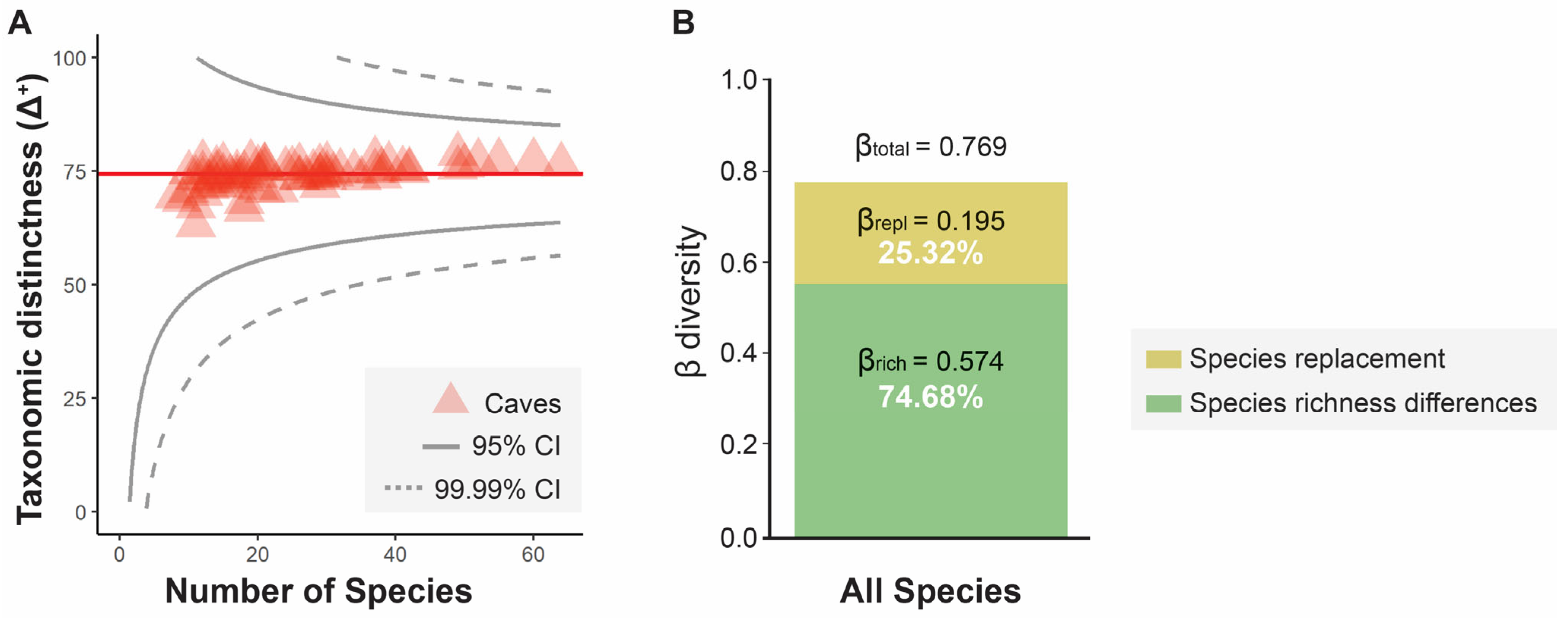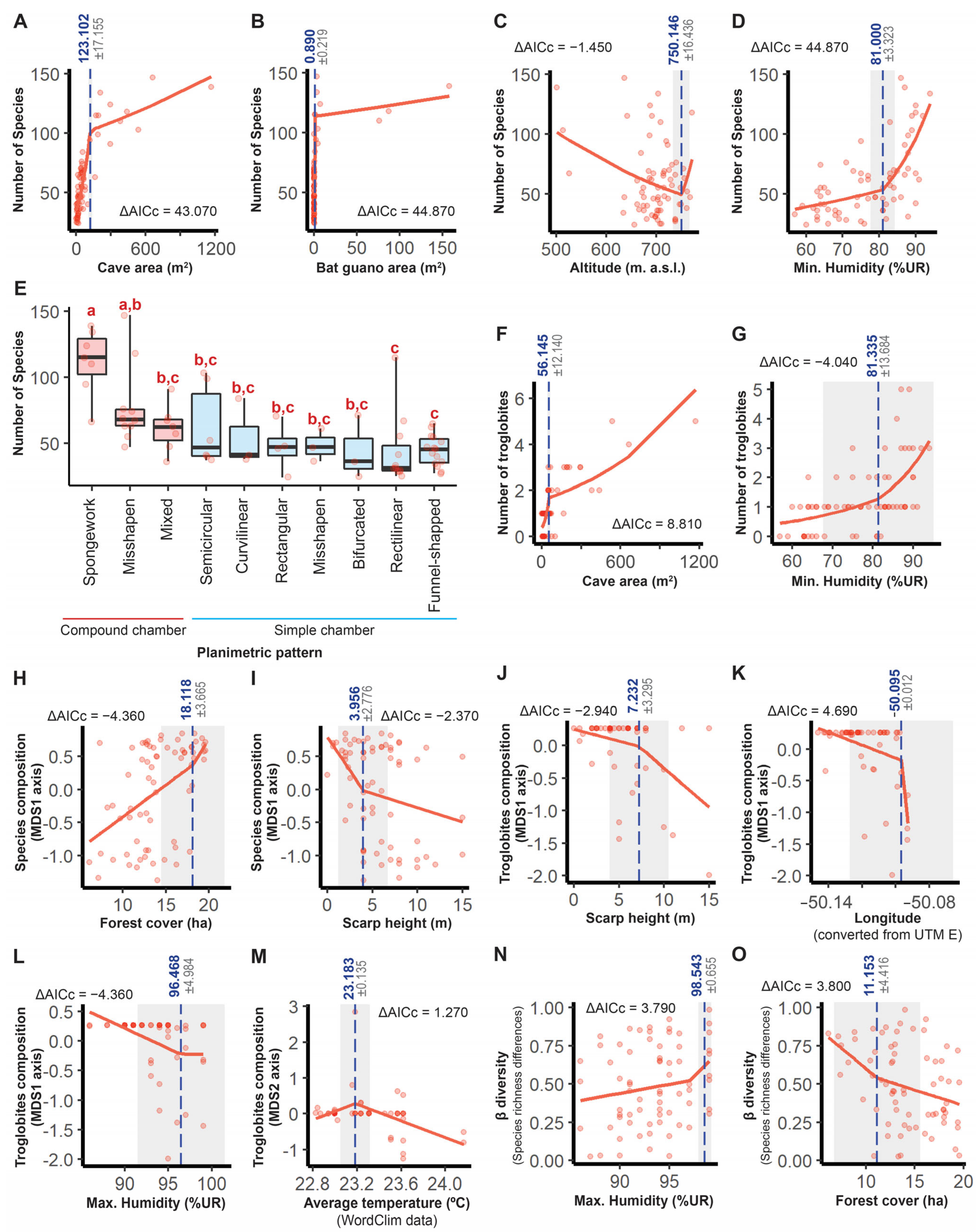

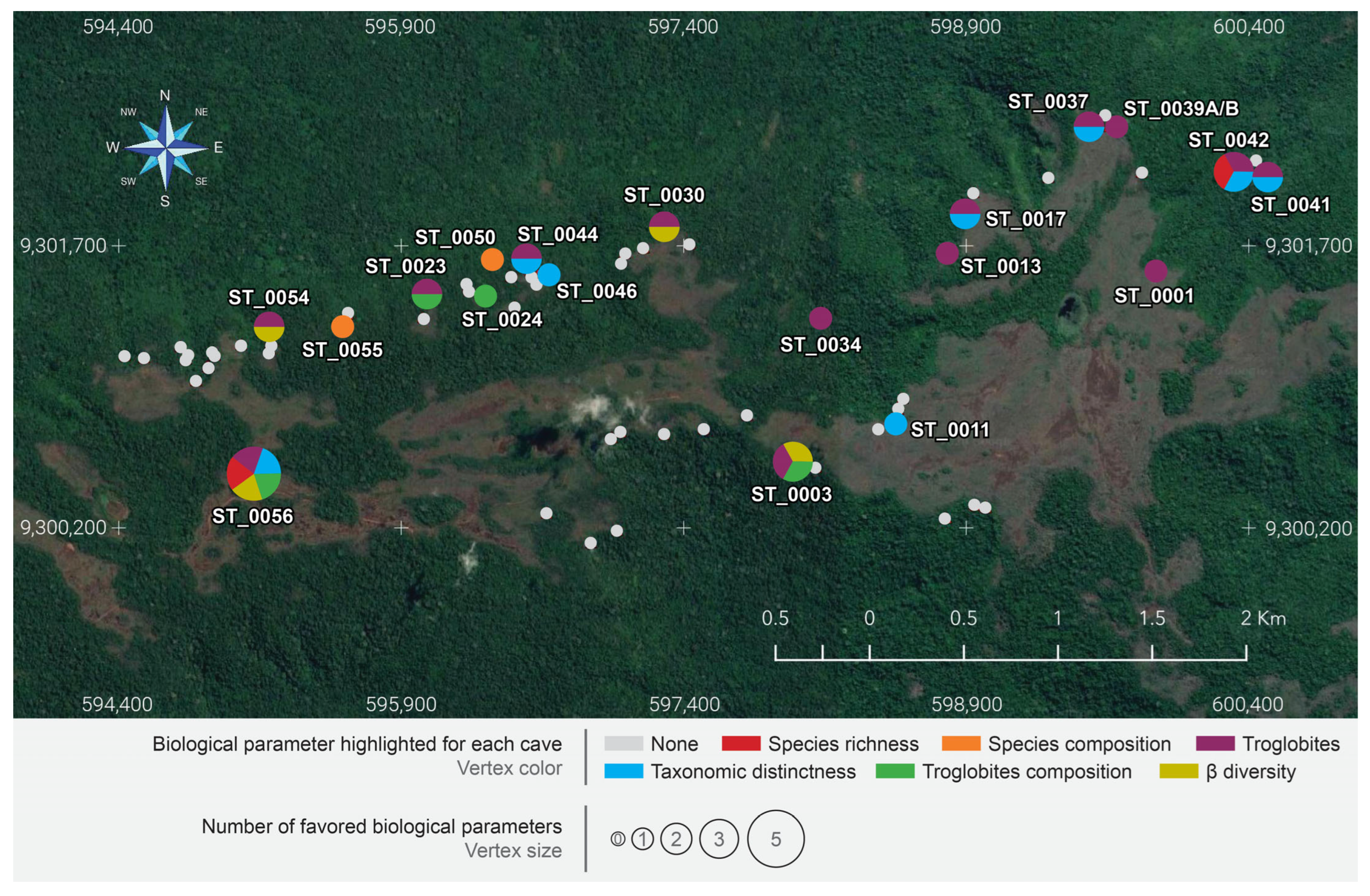
Buried Treasures, Hidden Thresholds: Integrating Cave and Landscape Drivers to Guide Conservation of Amazon Ferruginous Cave Biodiversity
 ,
, 
Abstract
1. Introduction
2. Materials and Methods
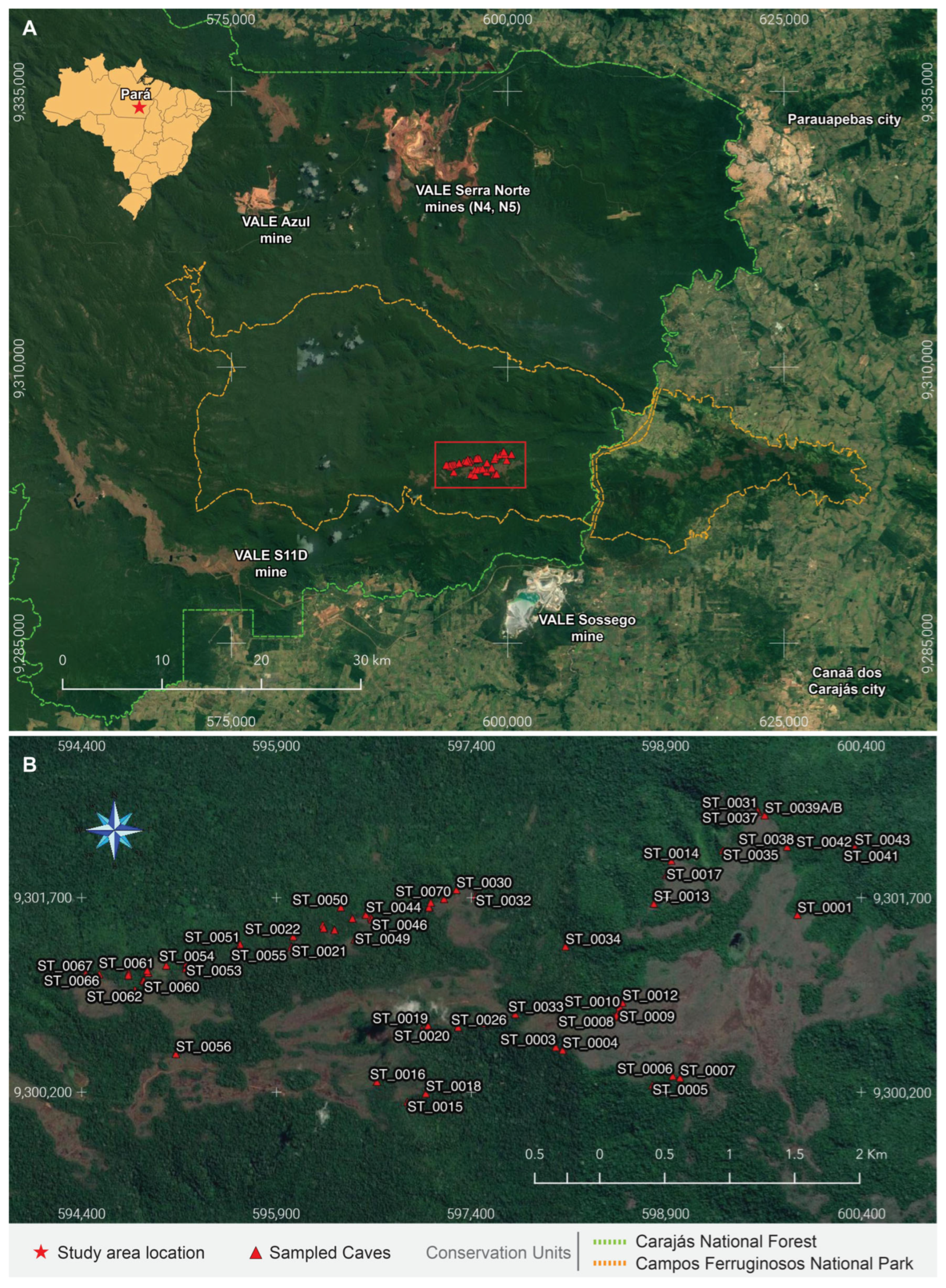
2.1. Study Site
2.2. Sampling of Environmental Variables and Cave Fauna
2.3. Data Analyses
2.3.1. Community Structure Parameters
2.3.2. Modeling Community Structure Parameters
2.3.3. Delimiting Thresholds and Levels for Community Structure Parameters
3. Results
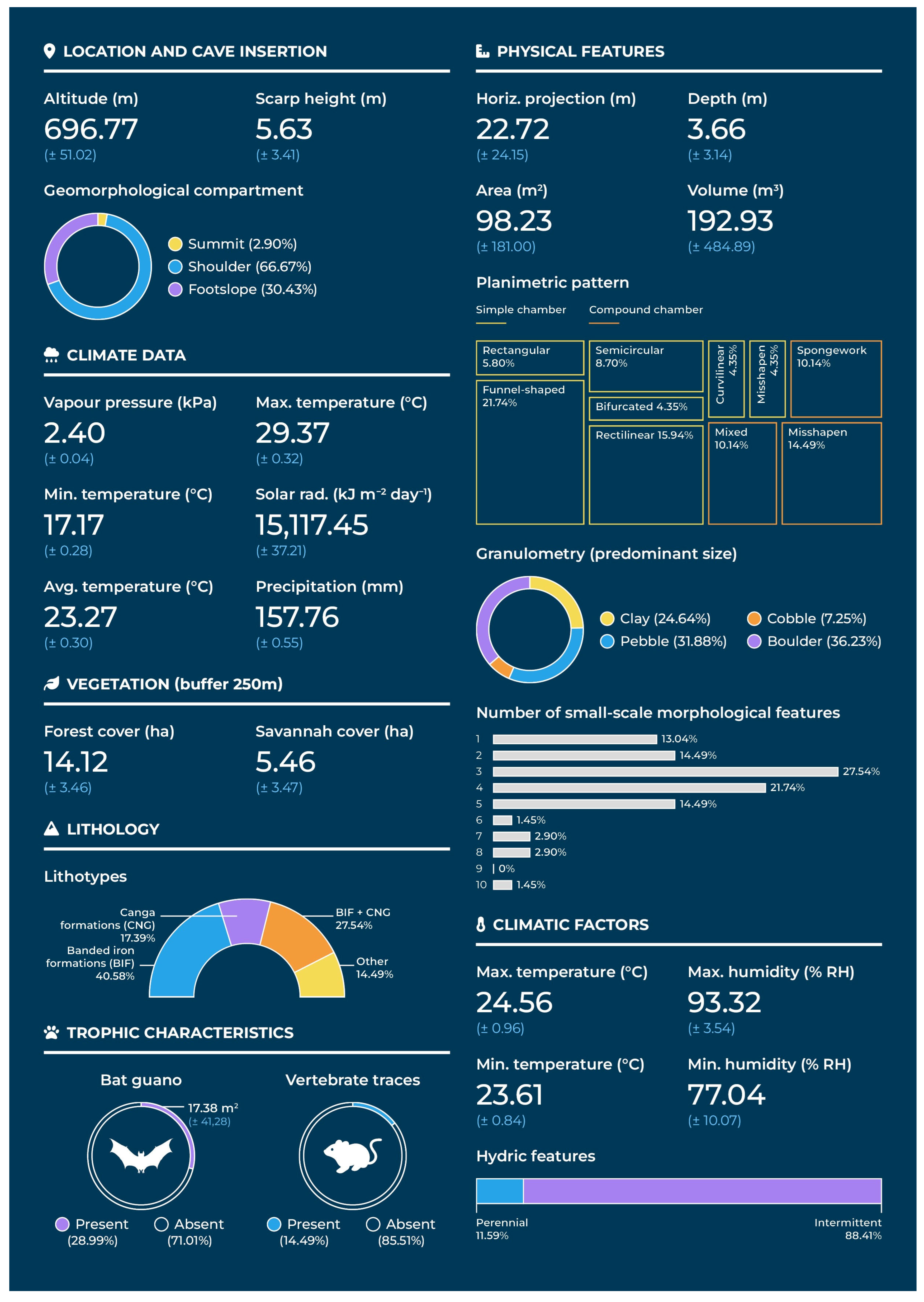
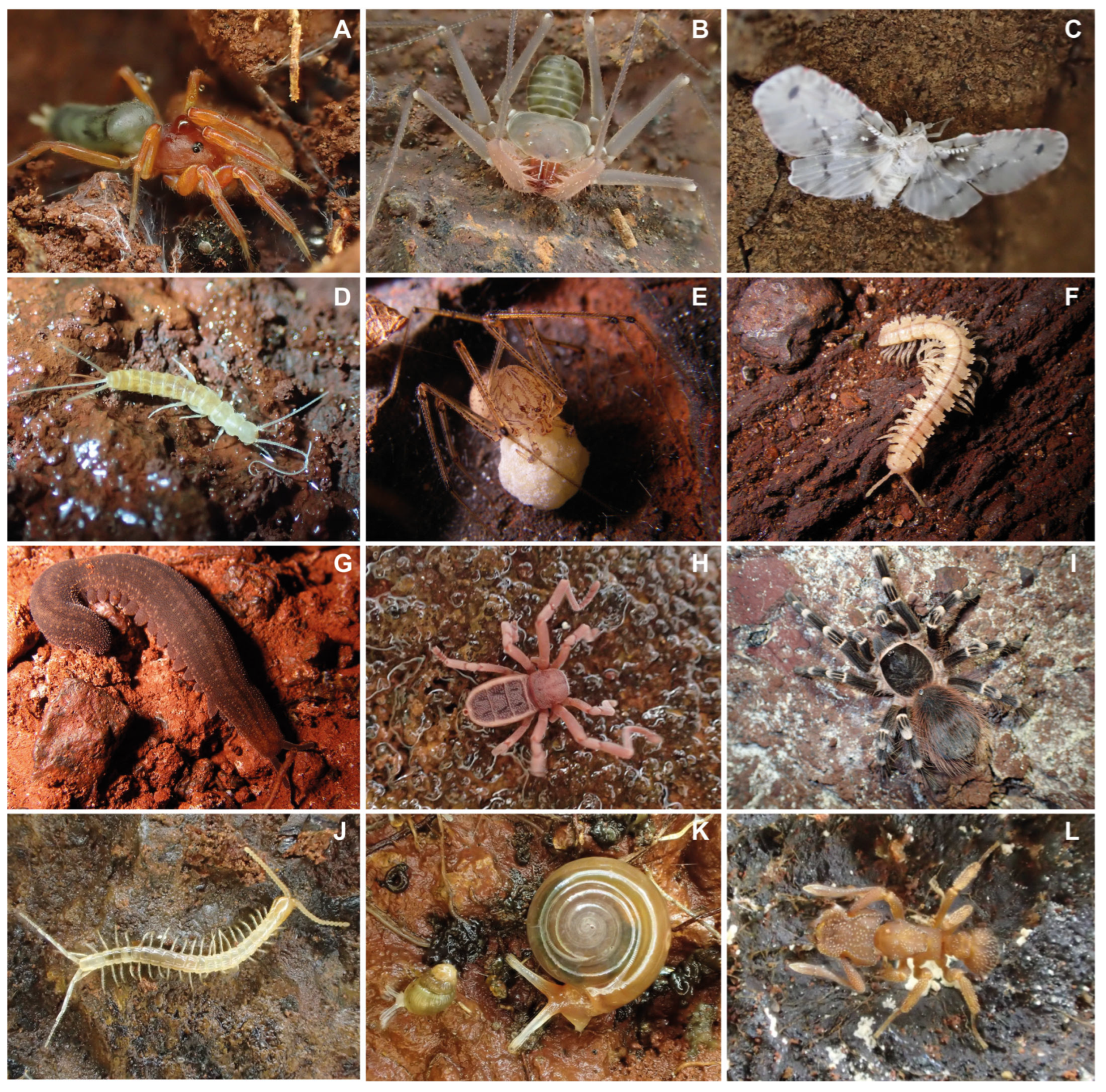
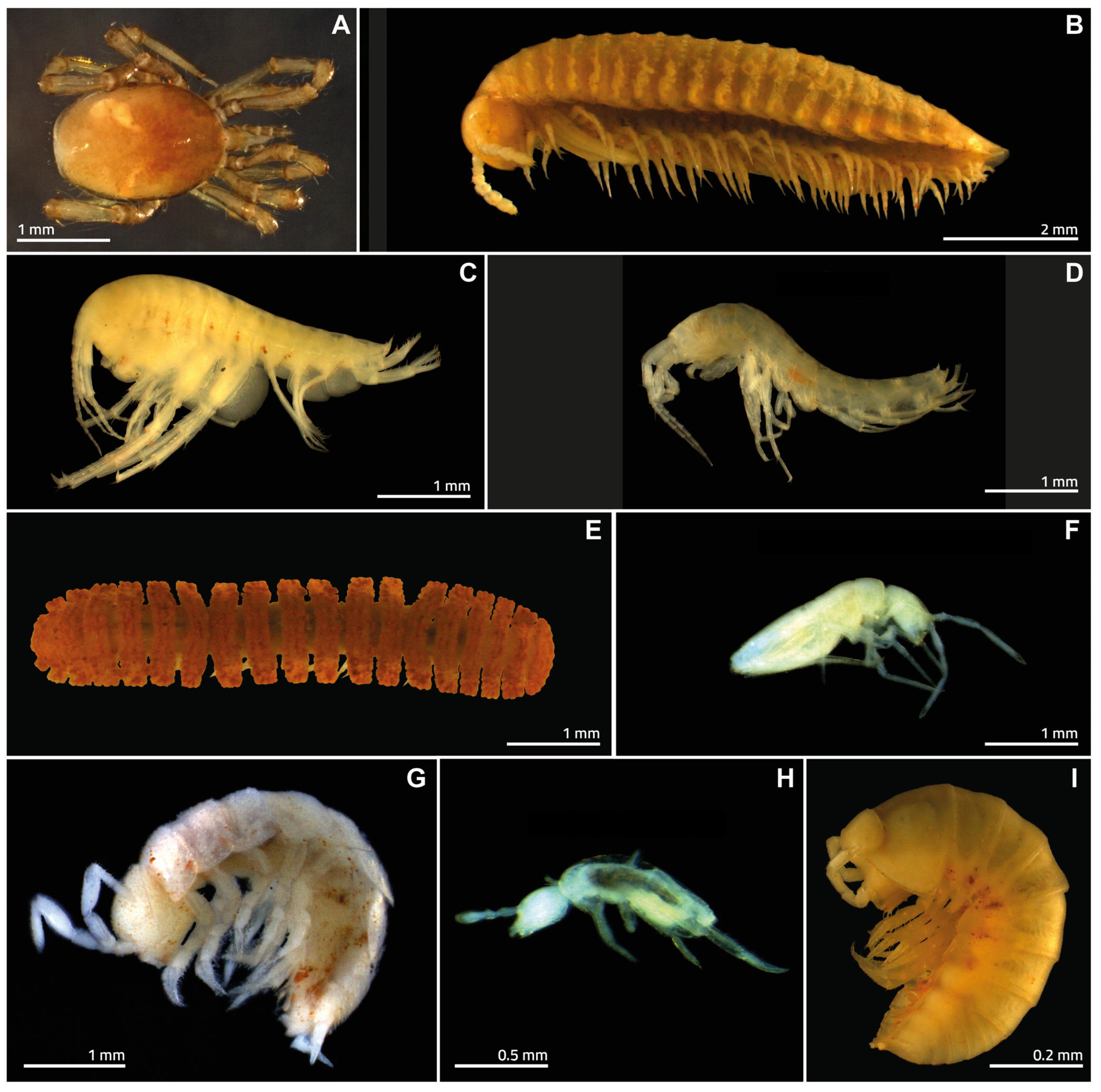
3.1. Environmental Variables and Cave Fauna
3.2. Community Structure Parameters
3.3. Community Structure Models
3.4. Thresholds and Levels for Community Structure Parameters
4. Discussion
5. Conclusions
Supplementary Materials
Author Contributions
Funding
Institutional Review Board Statement
Data Availability Statement
Acknowledgments
Conflicts of Interest
Abbreviations
| BIF | Banded iron formations |
| ICMBio | Instituto Chico Mendes de Conservação da Biodiversidade |
| PCoA | Principal Component Analysis |
| MDS1 | Metric Multidimensional Scaling first axis |
| MDS2 | Metric Multidimensional Scaling second axis |
| PCA | Principal Correlation Analysis |
| GLMs | Generalized Linear Models |
| RAC | Residual Autocovariate Model |
| LM | Linear Model |
| VIF | Variance Inflation Factor |
| AICc | Akaike Information Criterion corrected for small sample sizes |
| SDRY | Species richness in the dry season |
| SWET | Species richness in the wet season |
| STOT | Species richness in both seasons |
References
- Su, C.W.; Wang, K.H.; Chang, H.L.; Dumitrescu–Peculea, A. Do iron ore price bubbles occur? Resour. Policy 2017, 53, 340–346. [Google Scholar]
- Agência Nacional de Mineração (ANM). Brazilian Mineral Yearbook. Available online: https://www.gov.br/anm/pt-br/centrais-de-conteudo/publicacoes/serie-estatisticas-e-economia-mineral/anuario-mineral/anuario-mineral-brasileiro (accessed on 6 August 2020).
- Derby, O.A. Os minérios de ferro do Brasil. Rev. Esc. Minas 2010, 63, 473–479. [Google Scholar] [CrossRef]
- Gomes, M.; Ferreira, R.L.; Ruchkys, U.A. Landscape evolution in ferruginous geosystems of the Iron Quadrangle, Brazil: A speleological approach in a biodiversity hotspot. SN Appl. Sci. 2019, 1, 1102. [Google Scholar] [CrossRef]
- Ferreira, R.L.; Oliveira, M.P.A.; Silva, M.S. Subterranean biodiversity in ferruginous landscapes. In Cave Ecology; Moldovan, T.M., Kovác, L., Halse, S., Eds.; Springer: Cham, Switzerland, 2018; pp. 435–447. [Google Scholar]
- Cardoso, D.; Särkinen, T.; Alexander, S.; Amorim, A.M.; Bittrich, V.; Celis, M.; Daly, D.C.; Fiaschi, P.; Funk, V.A.; Giacomin, L.L.; et al. Amazon plant diversity revealed by a taxonomically verified species list. Proc. Natl. Acad. Sci. USA 2017, 114, 10695–10700. [Google Scholar] [CrossRef] [PubMed]
- Zampaulo, R.A.; Simões, M.H. History and evolution of knowledge about the cave fauna of Brazil. In Cave Fauna of Brazil, 1st ed.; Zampaulo, R.A., Prous, X., Eds.; Rupestre: Belo Horizonte, Brazil, 2023; pp. 23–56. [Google Scholar]
- Cizauskas, I.; Brescovit, A.D.; Rodrigues, B.V.B.; Rheims, C.A. Description of the female of P. pauferrense and three new species of Paracymbiomma from Brazil. Zootaxa 2024, 5474, 271–291. [Google Scholar] [CrossRef]
- López-Orozco, C.M.; Campos-Filho, I.S.; Gallo, J.S.; Gallão, J.E.; Carpio-Díaz, Y.M.; Borja-Arrieta, R.; Bichuette, M.E. Iron-isopods: New records and new species of terrestrial isopods from Brazilian Amazon iron ore caves. Eur. J. Taxon. 2024, 921, 116–135. [Google Scholar] [CrossRef]
- Jaffé, R.; Prous, X.; Zampaulo, R.; Giannini, T.C.; Imperatriz-Fonseca, V.L.; Maurity, C.; Oliveira, G.; Brandi, I.V.; Siqueira, J.O. Reconciling mining with the conservation of cave biodiversity. PLoS ONE 2016, 11, e0168348. [Google Scholar] [CrossRef]
- Jaffé, R.; Prous, X.; Calux, A.; Gastauer, M.; Nicacio, G.; Zampaulo, R.; Souza-Filho, P.W.; Oliveira, G.; Brandi, I.V.; Siqueira, J.O. Conserving relics from ancient underground worlds. PeerJ 2018, 6, e4531. [Google Scholar] [CrossRef]
- Trevelin, L.C.; Gastauer, M.; Prous, X.; Nicácio, G.; Zampaulo, R.; Brandi, I.; Oliveira, G.; Siqueira, J.O.; Jaffé, R. Biodiversity surrogates in Amazonian iron cave ecosystems. Ecol. Indic. 2019, 101, 813–820. [Google Scholar] [CrossRef]
- Oliveira, M.P.A.; Ferreira, R.L. Extending beyond individual caves: A graph theory approach broadening conservation priorities in Amazon iron ore caves. PeerJ 2024, 12, e16877. [Google Scholar] [CrossRef] [PubMed]
- Oliveira, M.P.A.; Ferreira, R.L. Beneath the canopy, beneath the ground: How surface microhabitats shape cave communities. PeerJ 2026, 14, e20593. [Google Scholar] [CrossRef]
- Piló, L.B.; Auler, A.S.; Martins, F. Carajás National Forest: Iron ore plateaus and caves in southeastern Amazon. In Landscapes and Landforms of Brazil; Springer: Dordrecht, The Netherlands, 2015; pp. 273–283. [Google Scholar]
- Santos, M.D.C.; Varajão, A.F. Sedimentation and pedogenic features in a clay deposit in Quadrilátero Ferrífero, Brazil. An. Acad. Bras. Cienc. 2004, 76, 147–159. [Google Scholar] [CrossRef]
- Schaefer, C.E.; Cândido, H.G.; Corrêa, G.R.; Pereira, A.; Nunes, J.A.; Souza, O.F.; Marins, A.; Filho, E.F.; Ker, J.C. Solos desenvolvidos sobre canga ferruginosa no Brasil. In Geossistemas Ferruginosos do Brasil; 3i Editora: Belo Horizonte, Brazil, 2015; pp. 77–102. [Google Scholar]
- Mota, N.F.O.; Silva, L.V.C.; Martins, F.D.; Viana, P.L. Vegetação sobre sistemas ferruginosos da Serra dos Carajás. In Geossistemas Ferruginosos do Brasil; 3i Editora: Belo Horizonte, Brazil, 2015; pp. 289–315. [Google Scholar]
- Auler, A.S.; Piló, L.B. Caves and mining in Brazil: The dilemma of cave preservation within a mining context. In Hydrogeological and Environmental Investigations in Karst Systems; Andreo, B., Carrasco, F., Durán, J.J., Jiménez, P., LaMoreaux, J.W., Eds.; Springer: Berlin/Heidelberg, Germany, 2015; pp. 487–496. [Google Scholar]
- Sahoo, P.K.; Guimaraes, J.T.; Souza-Filho, P.W.; Silva, M.S.D.; Júnior, R.O.S.; Pessim, G.; Moraes, B.C.D.; Pessoa, P.F.P.; Rodrigues, T.M.; Costa, M.F.D.; et al. Influence of seasonal variation on hydro-biogeochemical characteristics of upland lakes in the Amazon. An. Acad. Bras. Cienc. 2016, 88, 2211–2227. [Google Scholar] [CrossRef]
- Jiménez-Muñoz, J.C.; Mattar, C.; Barichivich, J.; Santamaría-Artigas, A.; Takahashi, K.; Malhi, Y.; Sobrino, J.A.; van der Schrier, G. Record-breaking warming and extreme drought in the Amazon rainforest during the course of El Niño 2015–2016. Sci. Rep. 2016, 6, 33130. [Google Scholar] [CrossRef] [PubMed]
- Erfanian, A.; Wang, G.; Fomenko, L. Unprecedented drought over tropical South America in 2016. Sci. Rep. 2017, 7, 13958. [Google Scholar] [CrossRef]
- Calux, A.; Cassimiro, R.; Salgado, A. Caves in iron formations in the Quadrilátero Ferrífero, Minas Gerais, southeastern Brazil: Lithological, morphological and hydrological settings and speleogenesis. Z. Geomorphol. 2019, 62, 125–144. [Google Scholar] [CrossRef]
- Fick, S.E.; Hijmans, R.J. WorldClim 2: New 1-km spatial resolution climate surfaces for global land areas. Int. J. Climatol. 2017, 37, 4302–4315. [Google Scholar] [CrossRef]
- Miller, B.A.; Schaetzl, R.J. Digital classification of hillslope position. Soil Sci. Soc. Am. J. 2015, 79, 132–145. [Google Scholar] [CrossRef]
- Scherer, B.S.; Scherer, R.S.; Silva, T.M. Levantamento espeleológico na Serra do Tarzan, Parauapebas, Pará. Rev. Sumaúma 2019, 11, 135–144. [Google Scholar]
- Oliver, I.; Beattie, A.J. Invertebrate morphospecies as surrogates for species. Conserv. Biol. 1996, 10, 99–109. [Google Scholar] [CrossRef]
- Pellegrini, T.G.; Sales, L.P.; Aguiar, P.; Ferreira, R.L. Linking spatial scale dependence of land-use descriptors and cave communities. Subterr. Biol. 2016, 18, 17–38. [Google Scholar] [CrossRef]
- Howarth, F.G.; Moldovan, O.T. Ecological classification of cave animals. In Cave Ecology; Springer: Cham, Switzerland, 2018; pp. 41–67. [Google Scholar]
- R Core Team. A Language and Environment for Statistical Computing; R Foundation: Vienna, Austria, 2025. [Google Scholar]
- Cardoso, P.; Rigal, F.; Carvalho, J.C. BAT—Biodiversity Assessment Tools. Methods Ecol. Evol. 2015, 6, 232–236. [Google Scholar] [CrossRef]
- Cardoso, P.; Rigal, F.; Borges, P.A.V.; Carvalho, J.C. Beta diversity components. Methods Ecol. Evol. 2014, 5, 452–461. [Google Scholar] [CrossRef]
- Crase, B.; Liedloff, A.C.; Wintle, B.A. Residual spatial autocorrelation. Ecography 2012, 35, 879–888. [Google Scholar] [CrossRef]
- Burnham, K.P.; Anderson, D.R.; Huyvaert, K.P. AIC model selection. Behav. Ecol. Sociobiol. 2011, 65, 23–35. [Google Scholar] [CrossRef]
- Vierling, L.A.; Vierling, K.T.; Adam, P.; Hudak, A.T. LiDAR and habitat occupancy. PLoS ONE 2013, 8, e80988. [Google Scholar]
- Mac Nally, R. Regression and model-building. Biodivers. Conserv. 2000, 9, 655–671. [Google Scholar] [CrossRef]
- Murray, K.; Conner, M.M. Variable importance. Ecology 2009, 90, 348–355. [Google Scholar] [CrossRef] [PubMed]
- Guisan, A.; Lehmann, A.; Ferrier, S.; Austin, M.; Overton, J.M.C.; Aspinall, R.; Hastie, T. Species distribution models. J. Appl. Ecol. 2006, 43, 386–392. [Google Scholar] [CrossRef]
- Guisan, A.; Thuiller, W.; Zimmermann, N.E. Habitat Suitability and Distribution Models; Cambridge University Press: Cambridge, UK, 2017. [Google Scholar]
- Ochoa-Quintero, J.M.; Gardner, T.A.; Rosa, I.; Ferraz, S.F.d.B.; Sutherland, W.J. Thresholds of species loss. Conserv. Biol. 2015, 29, 440–451. [Google Scholar] [CrossRef]
- Magnago, L.F.S.; Magrach, A.; Laurance, W.F.; Martins, S.V.; Meira-Neto, J.A.A.; Simonelli, M.; Edwards, D.P. Forest fragments and biodiversity. Glob. Change Biol. 2015, 21, 3455–3468. [Google Scholar] [CrossRef]
- QGIS Development Team. QGIS Geographic Information System; Open Source Geospatial Foundation Project; QGIS Development Team: Zurich, Switzerland, 2020. [Google Scholar]
- Oliveira, M.P.A.; Bastos-Pereira, R.; Torres, S.H.S.; Batista, F.M.; Alves, J.P.; Iniesta, L.F.M.; Bouzan, R.S.; Chagas, A.; Prous, X.; Pietrobon, T.; et al. Sampling methods in ferruginous landscapes. Appl. Soil Ecol. 2019, 143, 181–191. [Google Scholar] [CrossRef]
- Christman, M.C.; Culver, D.C.; Madden, M.K.; White, D. Endemism patterns. J. Biogeogr. 2005, 32, 1441–1452. [Google Scholar] [CrossRef]
- Mammola, S.; Goodacre, S.L.; Isaia, M. Climate change and cave spiders. Ecography 2018, 41, 233–243. [Google Scholar] [CrossRef]
- Ferreira, R.L. Guano communities. In Encyclopedia of Caves, 3rd ed.; Elsevier: Waltham, MA, USA, 2019; pp. 474–484. [Google Scholar]
- Ferreira, R.L.; Prous, X.; Martins, R.P. Structure of bat guano communities in a dry Brazilian cave. Eur. J. Soil Biol. 2007, 43, 127–134. [Google Scholar]
- Tews, J.; Brose, U.; Grimm, V.; Tielbörger, K.; Wichmann, M.C.; Schwager, M.; Jeltsch, F. Habitat heterogeneity. J. Biogeogr. 2004, 31, 79–92. [Google Scholar] [CrossRef]
- Brandi, I.V.; Barbosa, M.R.; de Paula, R.G.; Araújo, R.N.; de Moura, R.S.V.; de Lima, H.M. Instrumented geotechnical monitoring of a natural cave in a near mine operation–Towards a sustainable approach to mining and preservation of speleological heritage. J. Clean. Prod. 2019, 239, 118040. [Google Scholar] [CrossRef]



| Response Variable | Model | Predictor Variables | Group | VIF | t/z | p | Estimate | SE | Variable Relative Importance (%) |
|---|---|---|---|---|---|---|---|---|---|
| Species richness | GLM (with RAC approach) | Area | 4 | 4.964 | 10.220 | <0.001 | 0.002 | 0.000 | 100 |
| Bat guano | 6 | 3.851 | −7.261 | <0.001 | −0.011 | 0.003 | 100 | ||
| Vertebrate traces | 6 | 1.660 | 7.157 | <0.001 | 0.495 | 0.138 | 100 | ||
| RAC term | - | 1.098 | 6.851 | <0.001 | 1.788 | 0.522 | 100 | ||
| Planimetric pattern | 4 | 1.371 | −4.679 | <0.001 | −0.234 | 0.100 | 100 | ||
| Altitude | 1 | 1.783 | 4.355 | <0.001 | 0.002 | 0.001 | 100 | ||
| Minimum humidity | 7 | 1.455 | 4.538 | <0.001 | 0.012 | 0.005 | 99.872 | ||
| Troglobites | GLM (with RAC approach) | Minimum humidity | 7 | 1.328 | 3.048 | 0.002 | 0.002 | 0.001 | 99.178 |
| Area | 4 | 3.654 | 2.696 | 0.007 | 5.765 | 5.344 | 93.690 | ||
| RAC term | - | 1.157 | 1.939 | 0.053 | 0.044 | 0.029 | 76.533 | ||
| Bat guano | 6 | 3.066 | −1.173 | 0.241 | −0.005 | 0.011 | 43.645 | ||
| Taxonomic distinctness | GLM | Hydric features | 7 | 1.001 | 2.212 | 0.031 | 2.344 | 2.094 | 79.986 |
| Mean temperature | 2 | 1.001 | 1.095 | 0.277 | 1.266 | 2.290 | 37.959 | ||
| Species composition (MDS1) | LM | Forest cover | 3 | 1.379 | 3.116 | 0.003 | 0.091 | 0.048 | 100 |
| Scarp height | 1 | 1.054 | −3.607 | 0.001 | −0.073 | 0.044 | 99.686 | ||
| Altitude | 1 | 2.006 | −1.966 | 0.053 | −0.002 | 0.004 | 47.336 | ||
| Depth | 4 | 1.883 | 2.123 | 0.038 | 0.039 | 0.058 | 46.761 | ||
| Area | 4 | 6.266 | −2.029 | 0.047 | −0.001 | 0.002 | 31.340 | ||
| Bat guano | 6 | 3.796 | 1.720 | 0.090 | 0.004 | 0.012 | 29.045 | ||
| Species composition (MDS2) | LM | Mean temperature | 2 | 1.002 | −1.984 | 0.052 | −0.556 | 0.581 | 67.412 |
| Hydric features | 7 | 1.505 | 2.224 | 0.030 | 0.598 | 0.704 | 62.165 | ||
| Bat guano | 6 | 1.503 | −1.984 | 0.052 | −0.008 | 0.010 | 55.033 | ||
| Composition of troglobites (MDS1) | LM (with RAC approach) | Scarp height | 1 | 1.006 | −7.894 | <0.001 | −0.077 | 0.020 | 100 |
| RAC term | - | 1.004 | 7.914 | <0.001 | 8.103 | 2.058 | 100 | ||
| Longitude | 1 | 1.035 | −8.926 | <0.001 | 0.000 | 0.000 | 100 | ||
| Maximum humidity | 7 | 1.031 | −6.726 | <0.001 | −0.066 | 0.020 | 99.999 | ||
| Composition of troglobites (MDS2) | LM (with RAC approach) | RAC term | - | 1.020 | 5.798 | <0.001 | 8.708 | 3.019 | 100 |
| Mean temperature | 2 | 1.020 | −3.831 | <0.001 | −0.684 | 0.359 | 99.653 | ||
| β diversity (Species-richness differences component) | GLM | Forest cover | 3 | 1.000 | −3.166 | 0.002 | −0.027 | 0.017 | 98.269 |
| Maximum humidity | 7 | 1.000 | −2.094 | 0.040 | 0.017 | 0.016 | 75.295 |
Disclaimer/Publisher’s Note: The statements, opinions and data contained in all publications are solely those of the individual author(s) and contributor(s) and not of MDPI and/or the editor(s). MDPI and/or the editor(s) disclaim responsibility for any injury to people or property resulting from any ideas, methods, instructions or products referred to in the content. |
© 2026 by the authors. Licensee MDPI, Basel, Switzerland. This article is an open access article distributed under the terms and conditions of the Creative Commons Attribution (CC BY) license.
Share and Cite
Oliveira, M.P.A.d.; Coelho, A.H.F.; Piló, L.B.; Ferreira, R.L. Buried Treasures, Hidden Thresholds: Integrating Cave and Landscape Drivers to Guide Conservation of Amazon Ferruginous Cave Biodiversity. Ecologies 2026, 7, 26. https://doi.org/10.3390/ecologies7010026
Oliveira MPAd, Coelho AHF, Piló LB, Ferreira RL. Buried Treasures, Hidden Thresholds: Integrating Cave and Landscape Drivers to Guide Conservation of Amazon Ferruginous Cave Biodiversity. Ecologies. 2026; 7(1):26. https://doi.org/10.3390/ecologies7010026
Chicago/Turabian StyleOliveira, Marcus Paulo Alves de, Ataliba Henrique Fraga Coelho, Luís Beethoven Piló, and Rodrigo Lopes Ferreira. 2026. "Buried Treasures, Hidden Thresholds: Integrating Cave and Landscape Drivers to Guide Conservation of Amazon Ferruginous Cave Biodiversity" Ecologies 7, no. 1: 26. https://doi.org/10.3390/ecologies7010026
APA StyleOliveira, M. P. A. d., Coelho, A. H. F., Piló, L. B., & Ferreira, R. L. (2026). Buried Treasures, Hidden Thresholds: Integrating Cave and Landscape Drivers to Guide Conservation of Amazon Ferruginous Cave Biodiversity. Ecologies, 7(1), 26. https://doi.org/10.3390/ecologies7010026