Article

Mortality and Natural Regeneration of Mangroves in the Eastern Gulf of California: A Comparison Between Strong and Weak ENSO Events


by
Lidia Rodríguez-Arredondo
,
Olivia Millán-Aguilar
,
Miguel Ángel Hurtado-Oliva
and
Marlenne Manzano-Sarabia
*
Facultad de Ciencias del Mar, Universidad Autónoma de Sinaloa, Mazatlán 82000, Mexico
*
Author to whom correspondence should be addressed.
Ecologies 2026, 7(1), 25; https://doi.org/10.3390/ecologies7010025
Submission received: 24 January 2026 / Revised: 25 February 2026 / Accepted: 26 February 2026 / Published: 2 March 2026

Abstract

Mangrove wetlands in northwestern Mexico have been highlighted due to their ecological relevance and ecosystem services. This study evaluated the mortality and natural regeneration of mangroves located in six coastal lagoons in Sinaloa, considering five plots each (400 m2), during a warm–strong (2015–2016) and cold–weak (2017–2018) El Niño–Southern Oscillation. The highest mean mortality was recorded in Huizache–Caimanero—the southern coastal lagoon—during the second stage (390 stems ha−1; 22% corresponding to logging). While an increasing latitudinal (north–south) mortality trend was observed, differences between sites and stages were not statistically significant. Natural recovery was also observed due to higher abundance of seedlings, e.g., the largest increase from one stage to another was recorded in Santa María–La Reforma. Mortality and seedling regeneration are discussed in this study, particularly in relation to anthropogenic stressors, logging, and climate variability.

1. Introduction

Mangroves are among the most extensively studied coastal wetlands globally, driven by their vast extent, the essential ecosystem services that they provide, and their increasing vulnerability to multiple anthropogenic and climate threats. By 2020, global mangrove coverage was estimated at 147,359 km2 [1], representing a net loss of 5245 km2 since 1996 [2]. The main factors contributing to global mangrove loss between 2000 and 2020 include aquaculture (27%), climate-driven natural retraction (26%), oil palm and rice plantations (8% each), and other types of agriculture (12%) [3].
Mangrove coverage in Mexico is among the largest worldwide. According to official data, mangrove forests in this country covered 793,887 ha in 2015 and increased to 914,766 ha for 2020 (i.e., 14.9%), while areas with disturbed mangroves decreased from 2015 (18,332 ha) to 2020 (9680 ha) [4]. Mangroves in Sinaloa—a state located in the eastern margin of the Gulf of California—are a biological corridor for several resident and migrant bird species, and their coverage ranks fourth in the country, i.e., a total of 77,434 ha was estimated in 2020 (Quintana Roo, Campeche, and Yucatán recorded 248,191 ha, 201,327 ha, and 97,813 ha, respectively), with 1134 ha classified as disturbed mangrove [4]. The reported species in Sinaloa are Avicennia germinans, Laguncularia racemosa, Rhizophora mangle, and (to a lesser degree) the associate species Conocarpus erectus. Although mangroves are known to have high resilience to environmental variability [5], persistent stressors may cause disturbance or even mortality. For example, when temperature decreases significantly, the health of mangrove forests decreases as well [6]. The occurrence of hurricanes may also cause mass mortality of mangroves, depending on their intensity [7,8], as reported for Hurricane Rosa (October 1994, with winds up to 160 km h−1) and Hurricane Willa (October 2022), which affected mangroves located along the coast of Nayarit, Mexico (Marismas Nacionales Biosphere Reserve) [9]. On the other hand, climate phenomena—e.g., El Niño–Southern Oscillation (ENSO)—may affect mangroves from their origin as seedlings, affecting their growth and causing mortality [10]. Research related to the effects of ENSO in the Gulf of California includes diverse topics, e.g., its signature in sea surface temperature [11,12,13], changes in satellite-derived pigment concentration [13,14], cephalopod paralarval assemblages [15], and the breeding intensity and success of brown pelicans (Pelecanus occidentalis californicus) [16]. However, the impact of ENSO on mangroves is still poorly understood in this region, e.g., a search for the keywords “mangroves”, “ENSO”, and “Gulf of California” in Web of Science returned only four references [17].
Human activities are also an important disturbance factor for mangroves. For example, coastal lagoons in northwestern Mexico—particularly those in Sonora and Sinaloa—are highly exposed to nutrient enrichment derived from agriculture and aquaculture activities [18,19]. Nutrient pollution may cause water stress during the dry season, causing hypersaline soils, eutrophication, and subsequent mortality in mangroves [20]. Moreover, deforestation of mangroves is one of the main human activities leading to the loss of diverse ecosystem services [21]. The rate of change (2015–2020) at the national level was estimated at 2.8%, while for Sinaloa it was −1.5% [4].
The success of seedling establishment depends on several factors, such as soil conditions [21], precipitation and influence of rivers [22], light availability [23], canopy density [24], and tidal currents [25]. Therefore, different stressors may prevent the settlement and survival of seedlings, which are crucial for the natural regeneration of mangroves.
This study aimed to (1) quantify and compare mangrove mortality (differentiating between undetermined origin and logging) and seedling density across six coastal lagoons in Sinaloa, (2) assess whether these metrics changed significantly between a strong El Niño (2015–2016) and a weak La Niña (2017–2018) period, and (3) discuss the potential influences of climate variability and surrounding anthropogenic pressures on the observed patterns.

2. Materials and Methods

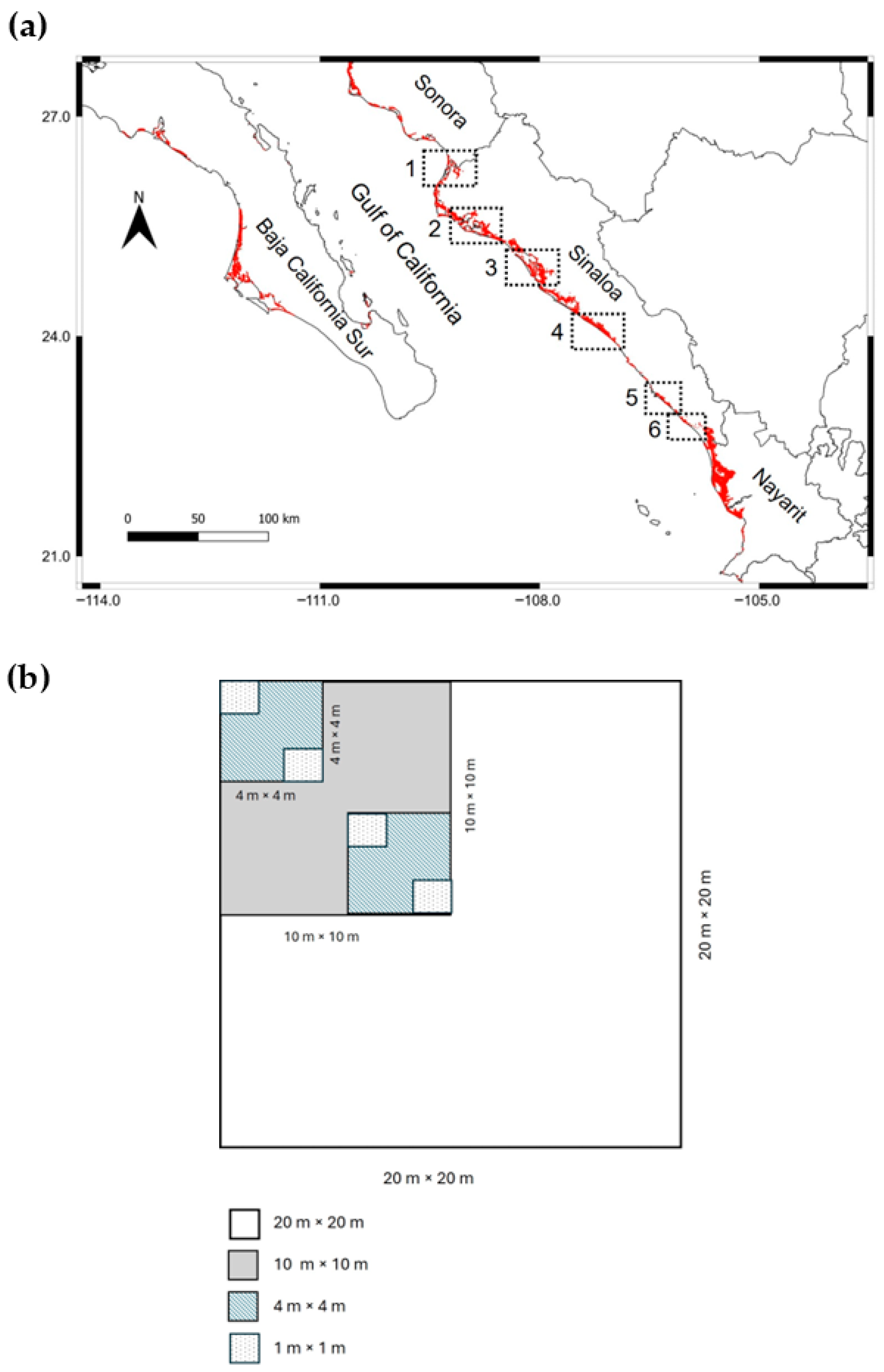
Thirty 20 m × 20 m permanent plots were evaluated during two stages (2015–2016 and 2017–2018) along six coastal lagoons in Sinaloa, Mexico (five plots each; Figure 1a,b), as suggested in [26,27] for monitoring mangrove structure at the national level. Plots were randomly selected in a previous prospective survey to represent key areas within each lagoon. They were approved and integrated as permanent plots into the Mexican Mangrove Monitoring System, led by the National Commission for the Knowledge and Use of Biodiversity (CONABIO), to investigate the structural attributes and ecological indicators of mangroves in Sinaloa.
The coastal lagoons considered in this study were Agiabampo, San Ignacio–Navachiste–Macapule, Santa María–La Reforma, Ceuta, Estero de Urías, and Huizache–Caimanero. Excluding Estero de Urías, those coastal lagoons are Ramsar sites [28], and all of them are surrounded by diverse anthropogenic activities, e.g., agriculture, rural or urban populations, tourism development, and shrimp farming.
Figure 1. (a) Mangrove coverage in Sinaloa (red areas) [29]. 1: Agiabampo, 2: San Ignacio–Navachiste–Macapule, 3: Santa María–La Reforma, 4: Ceuta, 5: Estero de Urías, 6: Huizache–Caimanero. (b) Sampling design consisted of 20 m × 20 m plots with 1 m × 1 m sub-plots distributed diagonally from the inner-left corner to the center.
Ecologies 07 00025 g001
Mangroves in each plot were counted and identified by species for individuals with diameter at breast height (DBH) greater than 2.5 cm. Mortality was assessed for each plot and categorized as either logging (cut mangroves; see Supplementary Materials Figure S1) or undetermined causes. While mortality associated with logging is evident due to clear stump marks, mortality resulting from other causes is difficult to determine due to the presence of multiple stressors. We acknowledge this limitation in our study; however, we discuss factors that may be influencing mortality beyond logging (warm water conditions, changes in water level, ENSO events, tropical storms and hurricanes, and surrounding anthropogenic pressures).
Satellite-derived sea surface temperature data (monthly multi-sensor images with a spatial resolution of 1 km) were provided by Dr. Mati Kahru, Scripps Institution of Oceanography, UC-San Diego, CA, for the adjacent coastal area in each lagoon. In situ data of interstitial water temperature and water level were recorded (2015–2017) with U20L–01 HOBO dataloggers (Agiabampo, Ceuta, Estero de Urías, and Huizache–Caimanero).
The likely influence of ENSO on mortality was discussed throughout the comparison of two periods: a very strong El Niño year (2015–2016) and a weak La Niña (2017–2018), according to the Multivariate El Niño Index V2 [30] and Oceanic El Niño Index [31]. In addition, the frequency of tropical storms and hurricanes was historically reviewed for each coastal lagoon using data from the NOAA Historical Hurricane Tracks website [32]. A centered buffer distance of 60 km to each site was considered for track counting of tropical storms and hurricanes.
The density of seedlings (individuals smaller than 130 cm but taller than 30 cm) in each plot was determined for four sub-plots (1 m × 1 m) and discussed in relation to environmental changes for both periods. The sampling design consisted of a fixed nested plot configuration between the 20 m × 20 m plot specified earlier and 1 m × 1 m sub-plots positioned diagonally from the inner-left corner to the center of the plot (Figure 1b). For comparisons of mean mangrove mortality and density of seedlings, the non-parametric Aligned Rank Transform (ART) ANOVA was performed in RStudio software version 2025.09.1 [33] to determine significant differences between sites and stages.

3. Results

3.1. Species Composition and Mortality

Mangrove density was determined for thirty permanent plots (20 m × 20 m) distributed along six coastal lagoons in Sinaloa (five plots each; N = 3458 trees in 2015–2016; N = 3636 trees in 2017–2018), recording a dominance of A. germinans and L. racemosa (Table 1).
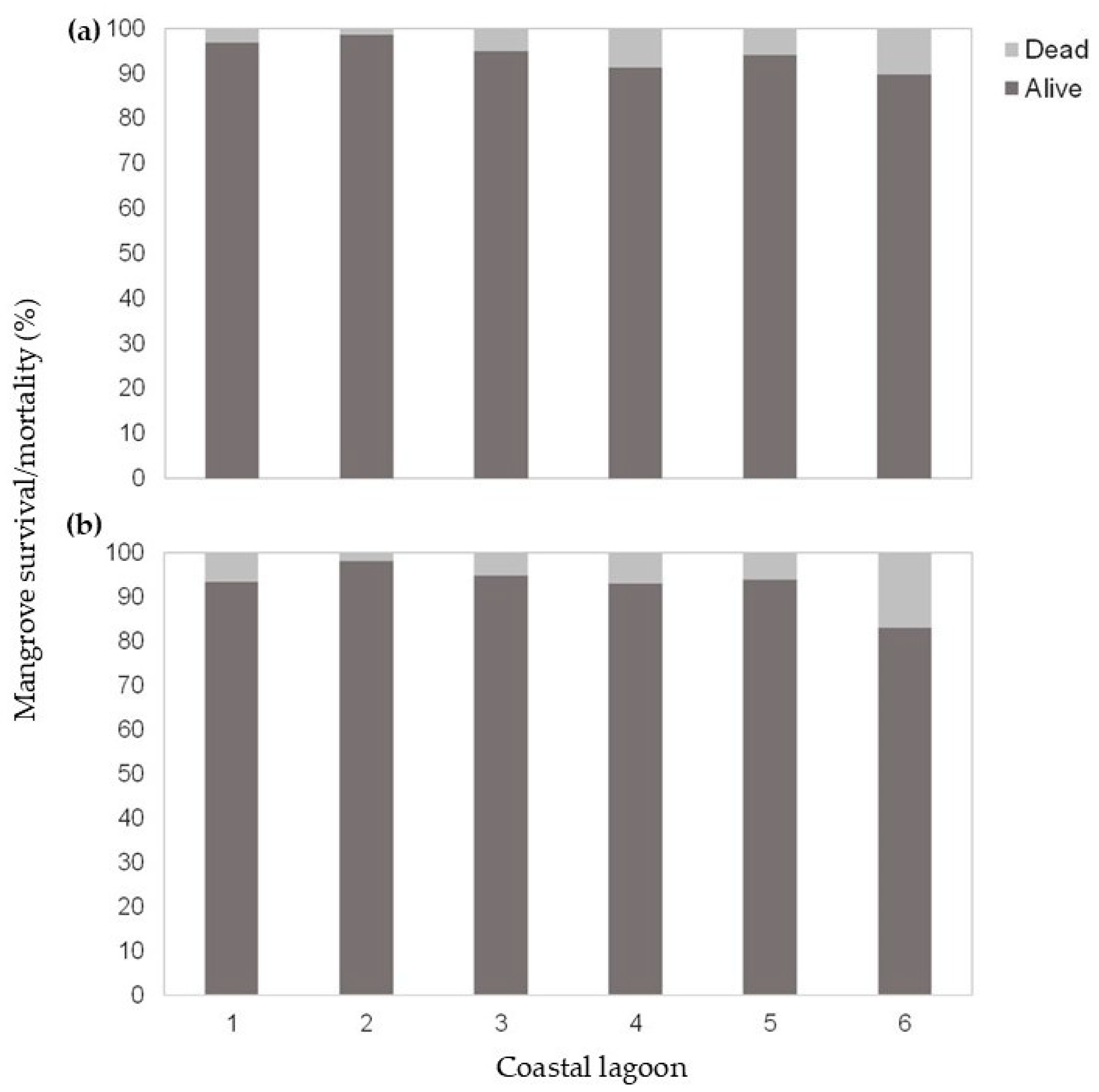
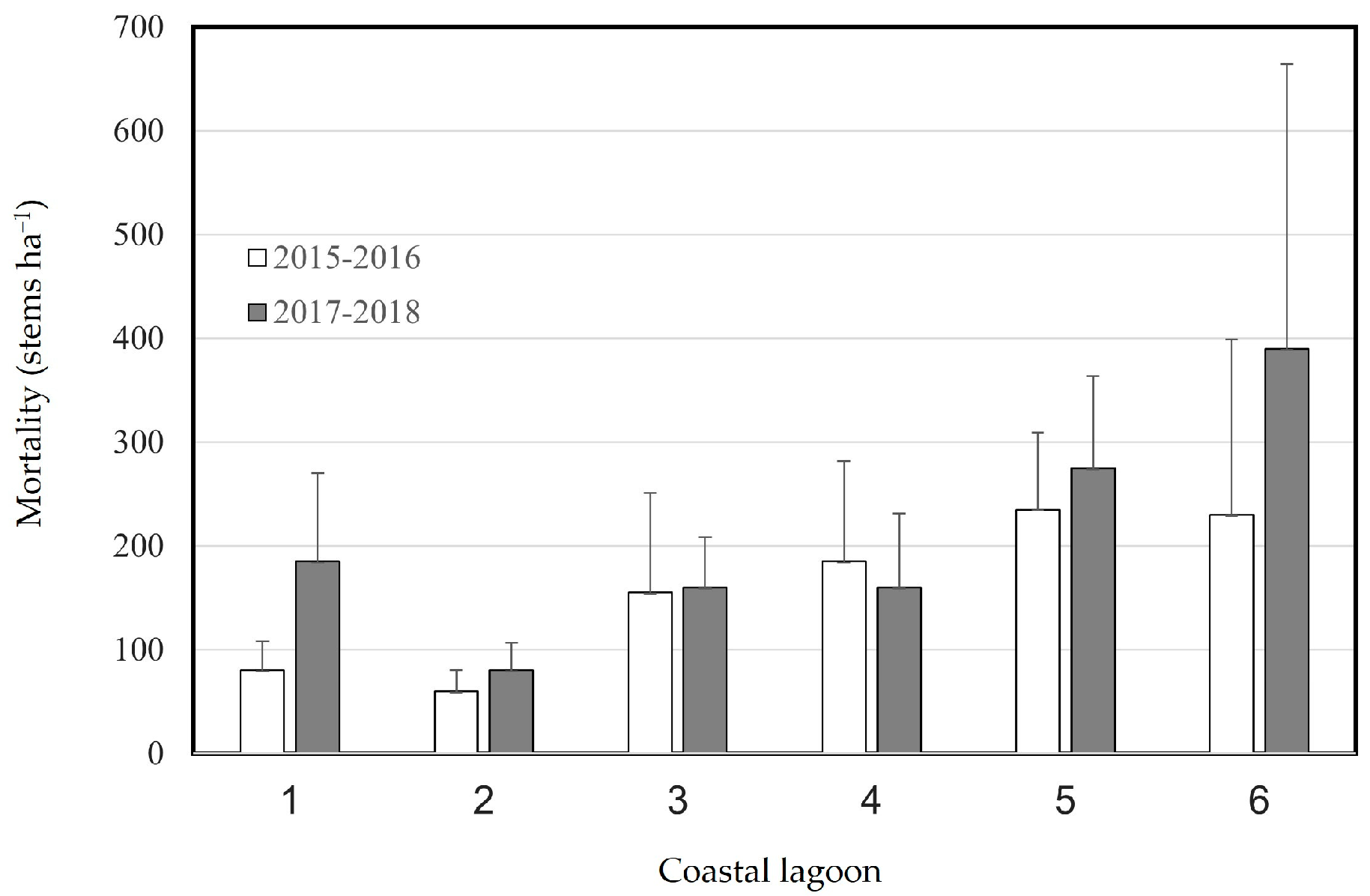
In relation to mangrove survival and mortality (%), the records for dead trees remained below 20% in both periods, with the highest percentages in Huizache–Caimanero (10.1% and 17.1%) and the lowest in San Ignacio–Navachiste–Macapule (1.5% and 2%). A latitudinal trend in mean mortality was observed, increasing from north to south in both stages (Figure 2), i.e., the lowest mean mortality was recorded in San Ignacio–Navachiste–Macapule (60 and 80 stems ha−1), while the highest mean was observed in Estero de Urías (235 and 275 stems ha−1) and Huizache–Caimanero (230 and 390 stems ha−1) (Figure 3). Nevertheless, the differences were not significant between coastal lagoons, stages, or their interaction according to the ART test (p > 0.05; Figure 3).
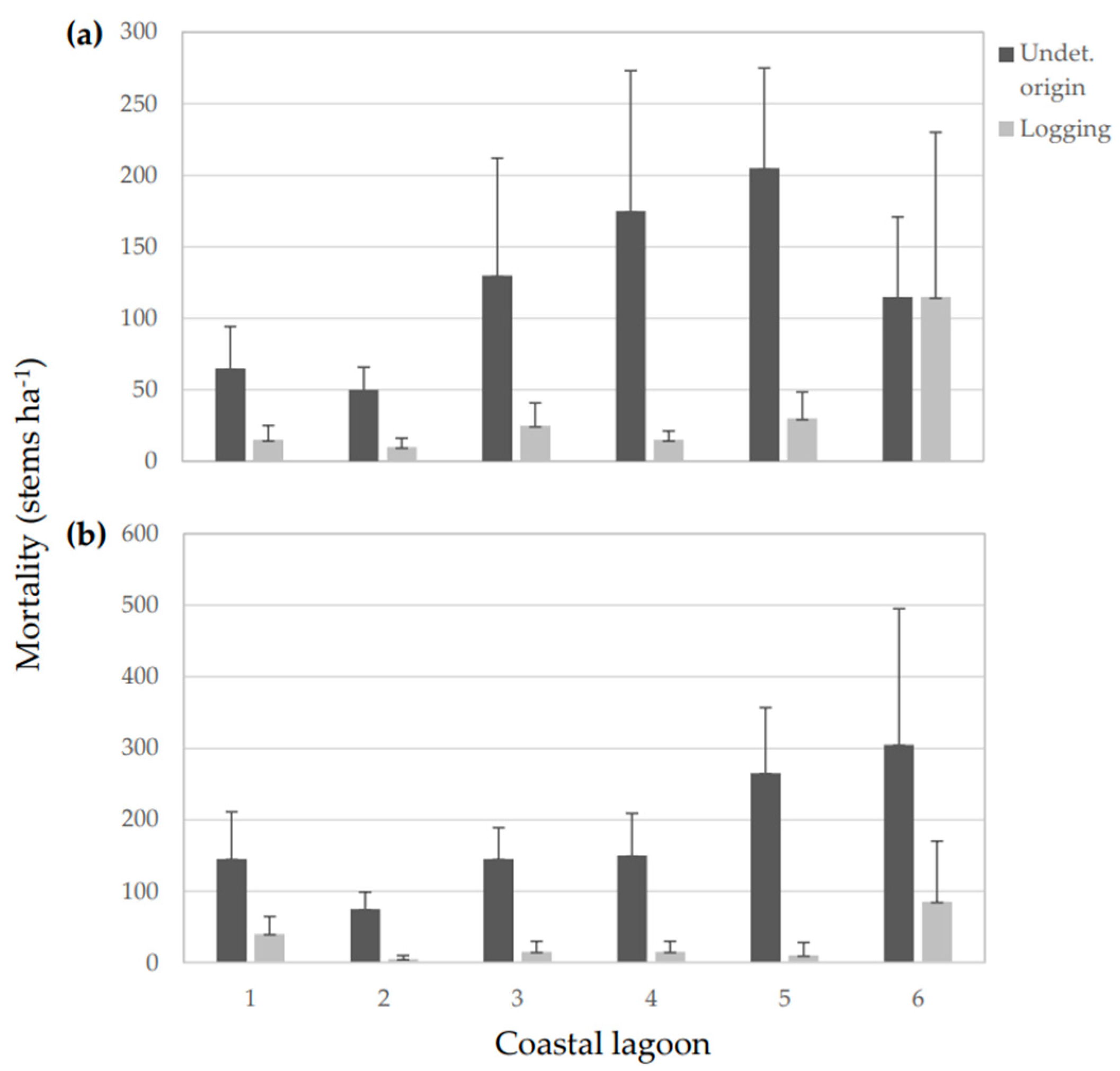
Mean mortality caused by undetermined causes and logging increased from northern to southern coastal lagoons, although the differences were not statistically significant. Mortality was generally linked to undetermined causes in both stages for all sites (Figure 4), except in Huizache–Caimanero, where the same density of dead trees from undetermined causes and from logging was observed during 2015–2016 (mean = 115 stems ha−1). The highest mean mortality value due to undetermined causes was observed in Huizache–Caimanero during the second stage (305 stems ha−1), while the lowest mean values of mortality for both causes and stages were observed in San Ignacio–Navachiste–Macapule (Figure 4).
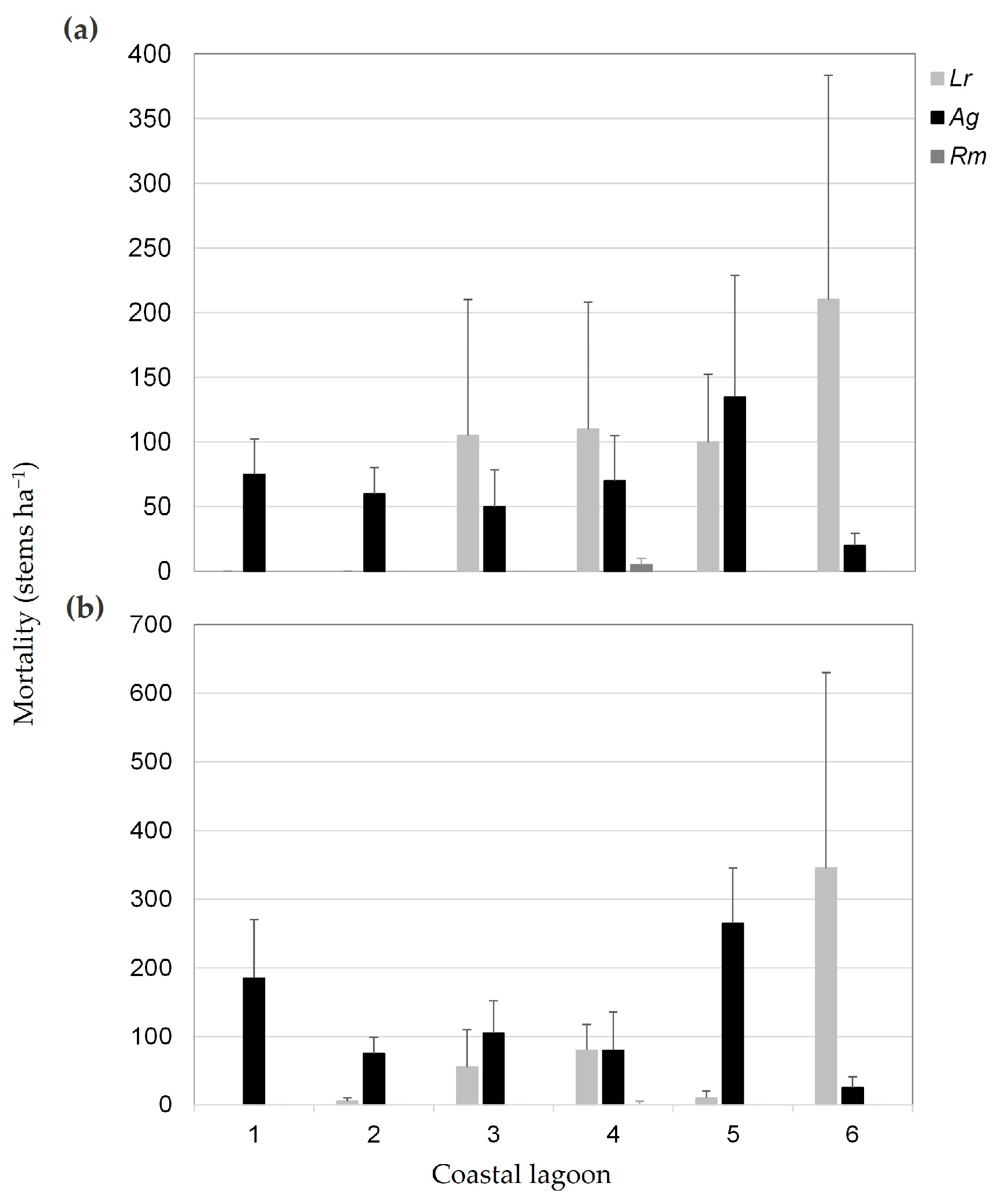
A. germinans was the dominant species for most of the plots located in northern and central Sinaloa—i.e., Agiabampo, San Ignacio–Navachiste–Macapule, and Santa María–La Reforma (Table 1)—while the dominance of L. racemosa increased from Ceuta to Huizache–Caimanero. Therefore, mortality followed a similar trend for such species (Figure 5), except for Estero de Urías, where the mean mortality was higher for A. germinans. On the other hand, L. racemosa showed the highest mortality in Huizache–Caimanero among all sites and stages (Figure 5). The abundance of R. mangle was lower in all sampling sites and, therefore, showed minor mortality records.

3.2. Seedlings

The mean density of seedlings increased from the first stage to the second stage in all cases except for Ceuta, where the same natural regeneration was observed between the two periods (5000 seedlings ha−1 for both stages). The highest mean density occurred in Santa María–La Reforma, recording 90,000 seedlings in the second stage (Table 2). No significant differences were found between lagoon systems or stages according to the ART test (p > 0.05).

3.3. Environmental Variability

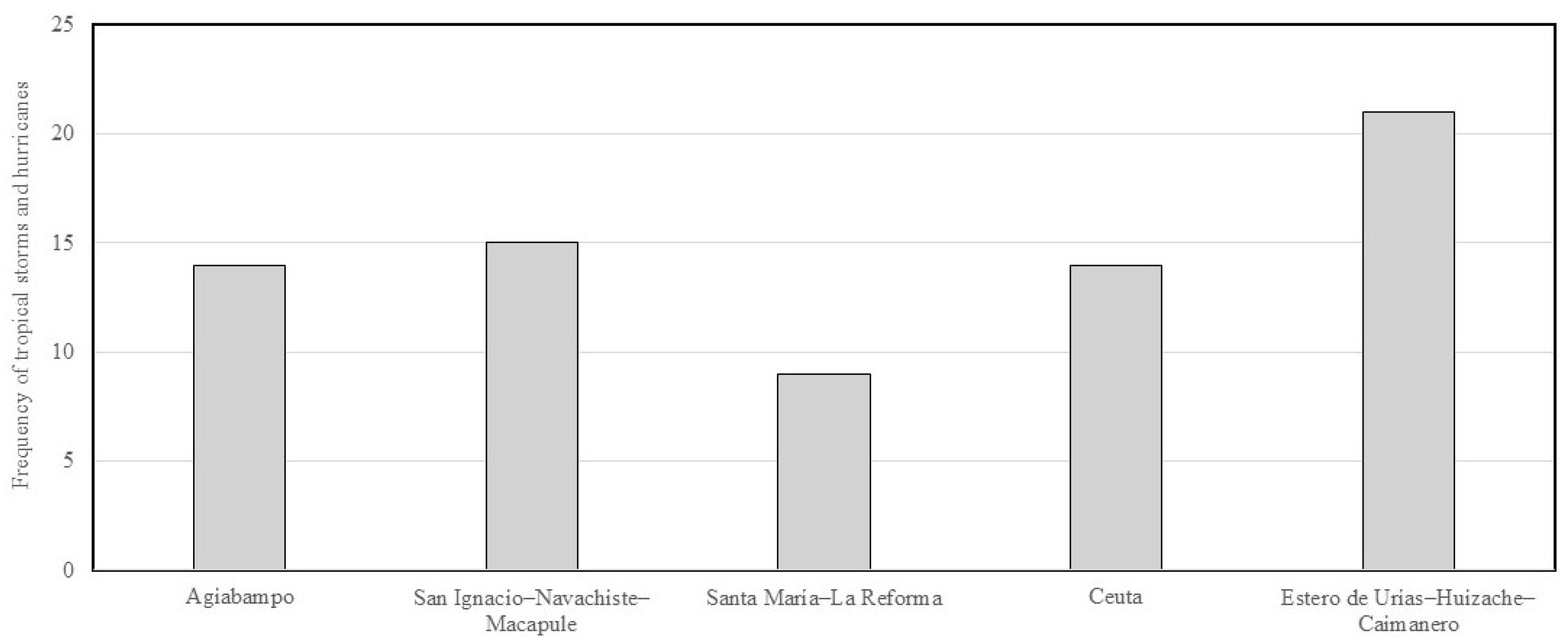
A total of 64 tropical storms and hurricanes have impacted the state of Sinaloa during 1957–2023 (Figure 6). Estero de Urías and Huizache–Caimanero recorded the highest frequency (21 events), while Santa María–La Reforma recorded the lowest (9 events). However, it must be highlighted that during both study periods, there was a very low record of such events, i.e., only one track was recorded near Ceuta lagoon (tropical depression, wind speed: ~37 km h−1) in November 2015.
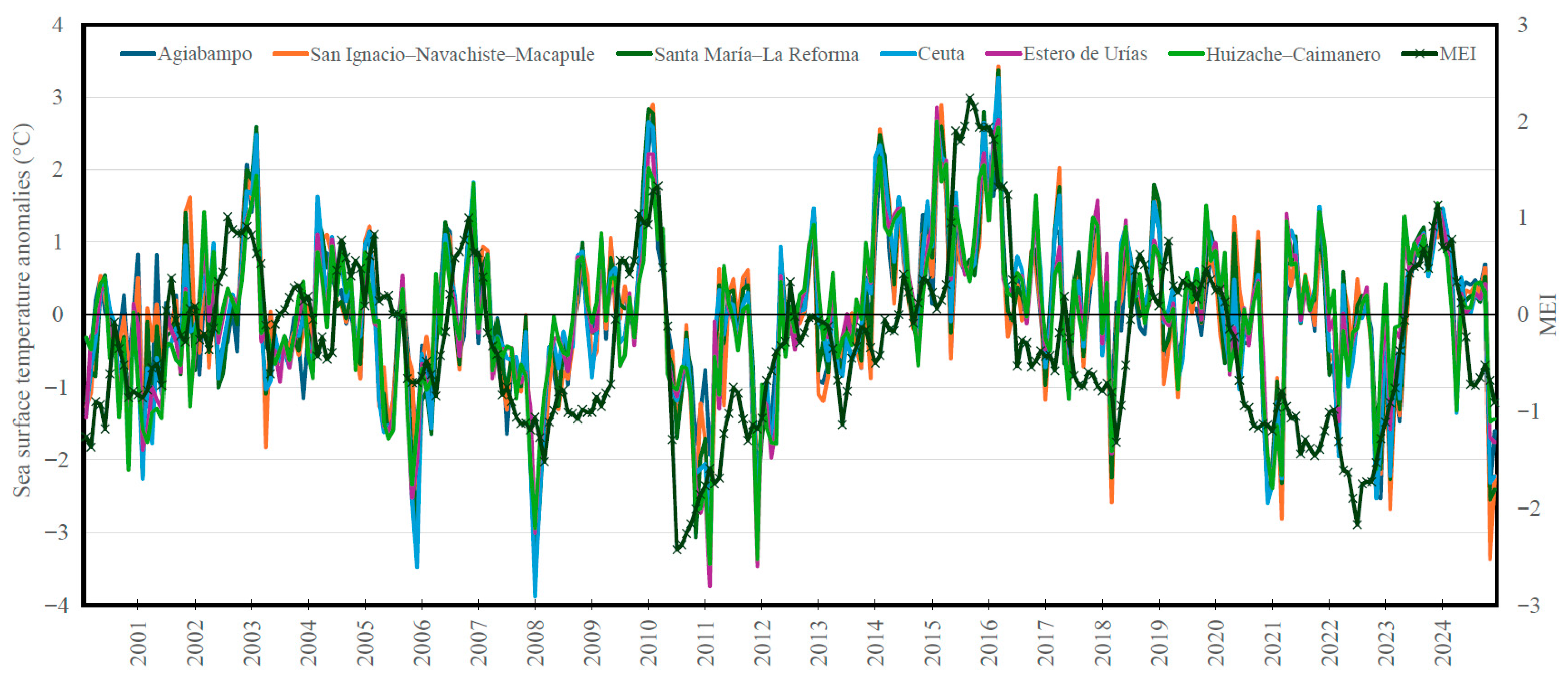
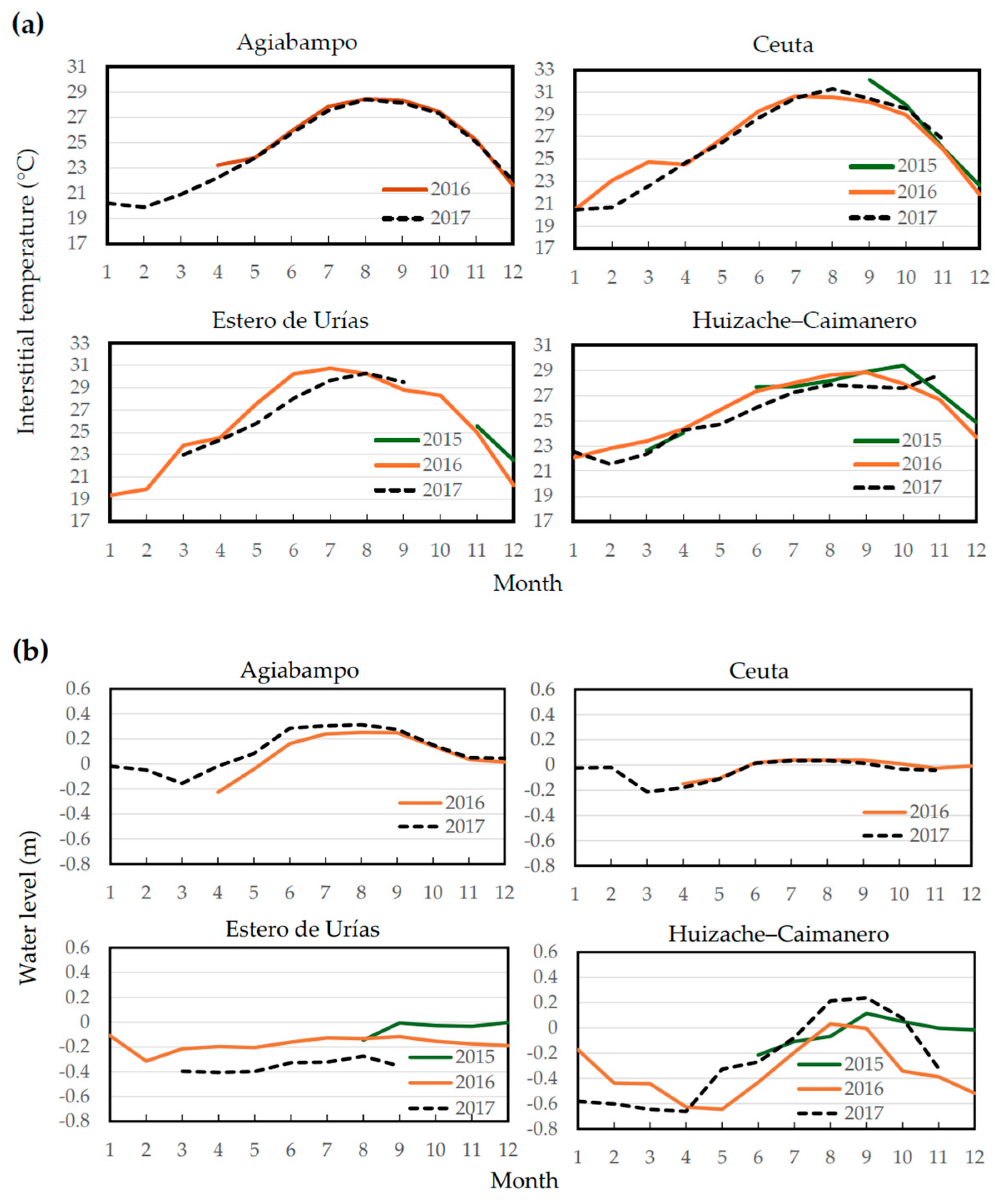
On the other hand, according to monthly satellite-derived data, positive sea surface temperature anomalies were predominant from 2014 to 2016, with the highest values in March 2016 (Figure 7). This warm period was followed by predominant negative anomalies until 2018. Sea surface temperature anomalies showed a positive correlation with the Multivariate El Niño Index in all cases (Pearson r = 0.5; p < 0.05; Figure 7). Datalogger-derived data showed that warmer conditions in interstitial water temperature predominated during 2015 and 2016 (Figure 8a), particularly in Estero de Urías and Huizache–Caimanero. This pattern matched with a predominant drop in water levels in those coastal lagoons (Figure 8b). In contrast, patterns for both variables remained consistent in Agiabampo throughout 2016–2017.

4. Discussion

The decline in mangrove coverage is a hot topic in the conservation agenda worldwide, as their loss is also related to a diminishment in the ecosystem services that they provide, e.g., productivity and carbon reservoirs [34]. Mangrove mortality has been associated with different sources, both natural and related to human activities. This study reports mangrove mortality for six coastal lagoons in Sinaloa (eastern Gulf of California). This state recorded a negative rate of change in mangrove coverage (−1.5%) between 2015 and 2020, contrasting sharply with the national rate (2.8%) [4]. Although the mortality differences across study sites and periods were not statistically significant, we discuss mortality patterns, prevailing environmental conditions associated with the strong 2015–2016 El Niño and weak 2017–2018 La Niña, and potential anthropogenic stressors in those mangrove wetlands.
Human activities have been frequently associated with loss of mangroves, e.g., land cover changes linked to aquaculture, agriculture, urban development, livestock, and contamination. Despite the lack of statistical significance, mean mortality showed an increasing latitudinal trend from northern to southern sites (Figure 2 and Figure 3), which may be attributed to a major influence of human activities, i.e., these coastal lagoons are surrounded by rural villages and urban cities. Mortality by logging (Figure 4) showed a similar trend—excluding Estero de Urías—with the number of inhabitants [35] of communities surrounding each coastal lagoon in a buffer area of 5 km (Agiabampo: 5894, San Ignacio–Navachiste–Macapule: 9493, Santa María–La Reforma: 13,062, Ceuta: 11,906, Estero de Urías: 457,680, Huizache–Caimanero: 14,956). Despite the urban development and population density around Estero de Urías, mortality caused by logging showed a low record (Figure 4). The studied plots in this wetland are located near harbor infrastructure, aquaculture facilities, and a power plant, whose associated thermal pollution may be influencing the entire ecosystem [36]. The vulnerability to thermal pollution must be assessed for this mangrove wetland, as these species might be affected in several ways, e.g., decreasing leaf area and growth, and affecting the recruitment and survival of seedlings [37]. On the other hand, logging was higher in Huizache–Caimanero despite a lower influence of population density—this wetland is surrounded by rural villages—and it was the only study area where logging-associated mortality doubled that of undetermined origin (Figure 4). Here, L. racemosa was the most vulnerable species (Figure 5), as it is the mangrove species preferred by local residents to build shelters roofed with branches on the beach—known as “palapas”—during spring and summer.
In relation to climate variability, tropical storms/hurricanes and their associated high wind speeds may cause significant disturbances to mangroves, including high mortalities, e.g., Hurricane Rosa impacted the Teacapán–Agua Brava Lagoon system (Sinaloa–Nayarit, Mexico) in October 1994, reducing the overall stem density and basal area by ~31 and 52%, respectively [8]. The long-term frequency (1957–2023) of tropical storms and hurricanes was higher in southern sites (Figure 6), i.e., Estero de Urías and Huizache–Caimanero were more vulnerable to these events and showed a higher mortality not related to logging during the second stage. Northern wetlands, i.e., Agiabampo and San Ignacio–Navachiste–Macapule, recorded similar historical frequency among them, and Santa María–La Reforma showed the lowest vulnerability to such events.
Fluctuating ocean/atmosphere conditions are important stressors of mangrove wetlands, e.g., during the winter of 2014–2015, cold fronts were reported in northern Sinaloa, and several patches with dead mangroves were observed after this event [38]. Particularly, ENSO events, along with the associated drought/flood and cold/warm conditions, may increase mortality depending on the phase (negative La Niña/positive El Niño) and intensity. A mangrove dieback event in Indonesia (East Lampung) was reported in 2021 [39], coinciding with a prolonged La Niña phase (excessive rainfall and prolonged inundation in that region). A very strong El Niño occurred during 2015–2016, and a weak La Niña was reported for 2017–2018 (Multivariate El Niño Index, Figure 7). The observed positive anomalies of sea surface temperature in all sites starting from 2014 until the 2015–2016 El Niño (Figure 7) emphasized predominant warm conditions that could affect mangrove survival. For instance, mortality not related to logging (undetermined origin) was generally higher during the second stage; this may suggest a lagged negative response, as discussed later.
Interstitial water temperature and water level data for four study sites (Ceuta, Estero de Urías, and Huizache–Caimanero) showed similar patterns: higher water temperature (Figure 8a) and predominantly low water levels (Figure 8b) during the 2015–2016 extreme El Niño. In Agiabampo, both factors showed similar patterns during 2016 and 2017—a result that may reflect the moderate influence of ENSO events within the central-inner Gulf of California. Warmer ocean temperatures may impact coastal vegetation in several ways. For example, heat stress may increase plant respiration or damage sensitive tissues [40] and reduce structural complexity [41]. A massive mangrove dieback event during the 2015–2016 El Niño was reported in the Gulf of Carpentaria, Australia, in this case mostly associated with a decline in sea level height, higher air temperatures, and drought conditions [42]. It is then possible that mangrove mortality increases simultaneously in both the western and eastern tropical Pacific during and following strong events, albeit forced by different ocean–atmospheric changes according to its known irregular patterns in both phases.
Threats to mangrove seedlings include urban development, agriculture, pollution, changes in sediments, and interannual variation in rainfall and river currents [22]. The limited growth and low survival of the seedlings are indicators of physicochemical stress, e.g., changes in soil and water salinity are typically the main constraints on seedling establishment and development [40]. A higher recruitment of seedlings during the second stage was recorded everywhere except for Ceuta, where no change was observed between the two periods (Table 2). The authors of [10] evaluated the growth and mortality of mangrove seedlings in Colombian mangrove forests during the 2015–2016 El Niño event, reporting low seedling growth rates but also low mortality despite the associated stressful environmental conditions. These findings suggest that mangrove seedlings may be resilient to anomalous conditions associated with ENSO extremes. Our results suggest that the higher mortality not linked to logging and recorded for mature trees during the second stage may be a lagged response related to the very warm and drought conditions of the extreme 2015–2016 El Niño, while the improved recruitment and regeneration observed in 2017–2018 (weak La Niña) highlight the resilience of the mangrove community after a disturbing event.

5. Conclusions

This study evaluated the mortality of mangroves located in six coastal lagoons in the eastern Gulf of California, Mexico, in two periods (2015–2016 and 2017–2018). Mortality was mainly associated with causes unrelated to logging. This finding is of significant concern, as the primary drivers of mortality remain unidentified, meaning that these mangroves are at risk notwithstanding their protected status (e.g., Ramsar sites, Important Bird Areas). Conversely, Estero de Urías lacks formal protection, despite its ecological importance for both local and migratory species.
While mangrove logging is an illegal activity, it occurred at all sites, albeit at a lower proportion in comparison with the undetermined cause category. Surveillance to prevent such activities is necessary to ensure the protection of these species, as established by Mexican laws (NOM-ECOL-059-2010). Predominant positive sea surface anomalies during 2014–2016, in addition to poor flooding conditions, affected mangroves in southern study sites, causing a gradual mortality that was observed in the 2017–2018 survey. An increase in the density of seedlings was observed from one stage to another, suggesting that mangroves in Sinaloa are resilient after extreme warm events such as the 2015–2016 El Niño. The mortality and regeneration results presented in this study can serve as a baseline for future long-term studies and may be helpful to identify persistent stressors in these mangrove wetlands. We suggest implementing a permanent fine-scale monitoring of in situ environmental data in mangroves at the national level to help separate the effects of climate events from other anthropogenic and natural stressors.

Supplementary Materials

The following supporting information can be downloaded at: https://www.mdpi.com/article/10.3390/ecologies7010025/s1, Figure S1: Mangrove logging in Huizache-Caimanero, Sinaloa.

Author Contributions

Conceptualization, M.M.-S.; methodology, L.R.-A., O.M.-A., M.Á.H.-O., and M.M.-S.; writing—original draft preparation, L.R.-A., O.M.-A., and M.M.-S.; writing—review and editing, O.M.-A., M.Á.H.-O., and M.M.-S.; investigation, L.R.-A., O.M.-A., M.Á.H.-O., and M.M.-S.; project administration, M.M.-S. All authors have read and agreed to the published version of the manuscript.

Funding

This research was founded by CONABIO LM004, PROFAPI-2015/164, and Infraestructura-CONACyT 280994 grants. The authors acknowledge the support from SEMARNAT to support permissions for field work.

Data Availability Statement

The original data presented in the study are openly available in CONABIO at http://www.conabio.gob.mx/institucion/proyectos/resultados/LM004_HOJA_CALC_Estrutura_regeneraci%C3%B3n_extracci%C3%B3n_mortalidad.xlsx (accessed on 25 February 2026).

Acknowledgments

We thank all those fishermen who supported the field work. Special acknowledgment to the Secretaría de Ciencia, Humanidades, Tecnología e Innovación (SECIHTI; formally the Consejo Nacional de Ciencia y Tecnología) for providing a doctoral scholarship to L. Rodríguez-Arredondo (No. 48313).

Conflicts of Interest

The authors declare no conflicts of interest.

References

  1. Bunting, P.; Rosenqvist, A.; Hilarides, L.; Lucas, R.M.; Thomas, N.; Tadono, T.; Worthington, T.A.; Spalding, M.; Murray, N.J.; Rebelo, L.M. Global Mangrove Extent Change 1996–2020: Global Mangrove Watch Version 3.0. Remote Sens. 2022, 24, 3657. [Google Scholar] [CrossRef]
  2. Global Mangrove Watch. Available online: http://www.globalmangrovewatch.org (accessed on 19 January 2026).
  3. FAO. The World’s Mangroves 2000–2020; Food and Agriculture Organization of the United Nations (FAO): Rome, Italy, 2023. [Google Scholar] [CrossRef]
  4. Velázquez-Salazar, S.; Rodríguez-Zúñiga, M.T.; Alcántara-Maya, J.A.; Villeda-Chávez, E.; Valderrama-Landeros, L.; Troche-Souza, C.; Vázquez-Balderas, B.; Pérez-Espinoza, I.; Cruz-López, M.I.; Ressl, R.; et al. Actualización y Análisis de Los Datos 2020, 1st ed.; Comisión Nacional Para el Conocimiento y Uso de la Biodiversidad: Cdmx, Mexico, 2021; p. 168. [Google Scholar]
  5. Huxham, M.; Kumara, M.P.; Jayatissa, L.P.; Krauss, K.W.; Kairo, J.; Langat, J.; Mencuccini, M.; Skov, M.W.; Kirui, B. Intra and interspecific facilitation in mangroves may increase resilience to climate change threats. Philos. Trans. R. Soc. Lond. B Biol. Sci. 2010, 365, 2127–2135. [Google Scholar] [CrossRef] [PubMed]
  6. Hutchings, P.; Saenger, P. Ecology of Mangroves; University of Queensland Press: St Lucia, Australia, 1987. [Google Scholar]
  7. Kovacs, J.M.; Wang, J.; Blanco-Correa, M. Mapping Disturbances in a Mangrove Forest Using Multi-Date Landsat TM Imagery. Environ. Manag. 2001, 27, 763–776. [Google Scholar] [CrossRef] [PubMed]
  8. Tovilla-Hernández, C.; Orihuela Belmonte, E.D. Impacto del huracán Rosa sobre los bosques de manglar de la costa norte de Nayarit, México. Mad. Y Bosq. 2004, 2, 63–75. [Google Scholar] [CrossRef]
  9. Vizcaya-Martínez, D.A.; Flores-de-Santiago, F.; Valderrama-Landeros, L.; Serrano, D.; Rodríguez-Sobreyra, R.; Álvarez-Sánchez, L.P.; Flores-Verdugo, F. Monitoring detailed mangrove hurricane damage and early recovery using multisource remote sensing data. J. Environ. Manag. 2022, 320, 115830. [Google Scholar] [CrossRef]
  10. Riascos, J.M.; Cantera, J.R.; Blanco-Libreros, J.F. Growth and mortality of mangrove seedlings in the wettest neotropical mangrove forests during ENSO: Implications for vulnerability to climate change. Aquat. Bot. 2018, 147, 34–42. [Google Scholar] [CrossRef]
  11. Herrera-Cervantes, H.; Lluch-Cota, D.B.; Lluch-Cota, S.E.; Gutiérrez-de-Velasco, G. The ENSO signature in sea-surface temperature in the Gulf of California. J. Mar. Res. 2007, 65, 589–605. [Google Scholar] [CrossRef]
  12. Lluch-Cota, S.E.; Parés-Sierra, A.; Magaña-Rueda, V.O.; Arreguín-Sánchez, F.; Bazzino, G.; Herrera-Cervantes, H.; Lluch-Belda, D. Changing climate in the Gulf of California. Prog. Oceanogr. 2010, 87, 114–126. [Google Scholar] [CrossRef]
  13. López Martínez, J.; Farach Espinoza, E.B.; Herrera Cervantes, H.; García Morales, R. Long-term variability in sea surface temperature and chlorophyll a concentration in the Gulf of California. Remote Sens. 2023, 15, 4088. [Google Scholar] [CrossRef]
  14. Kahru, M.; Marinone, S.G.; Lluch-Cota, S.E.; Parés-Sierra, A.; Mitchell, G. Ocean color variability in the Gulf of California: Scales from the El Niño-La Niña cycle to tides. Deep-Sea Res. II 2004, 51, 139–146. [Google Scholar]
  15. De Silva-Dávila, R.; Franco-Gordo, C.; Hochberg, F.G.; Godínez-Domínguez, E.; Avendaño-Ibarra, R.; Gómez-Gutiérrez, J.; Robinson, C.J. Cephalopod paralarval assemblages in the Gulf of California during 2004–2007. Mar. Ecol. Prog. Ser. 2015, 520, 123–141. [Google Scholar] [CrossRef]
  16. Anderson, D.W.; Godínez-Reyes, C.R.; Velarde, E.; Ávalos-Téllez, R.; Ramírez-Delgado, D.; Moreno-Prado, H.; Meltzer, L. Brown Pelicans, Pelecanus occidentalis californicus (Aves: Pelecanidae): Five decades with ENSO, dynamic nesting, and contemporary breeding status in the Gulf of California. Cienc. Mar. 2017, 43, 1–34. [Google Scholar] [CrossRef]
  17. Web of Science. Available online: https://www.webofscience.com/wos/ (accessed on 11 October 2025).
  18. Beman, M.J.; Arrigo, K.R.; Matson, P.A. Agricultural runoff fuels large phytoplankton blooms in vulnerable areas of the ocean. Nature 2005, 434, 211–214. [Google Scholar] [CrossRef]
  19. Ahrens, T.D.; Beman, J.M.; Harrison, J.A.; Jewett, P.K.; Matson, P.A. A synthesis of nitrogen transformations and transfers from land to the sea in the Yaqui Valley agricultural region of northwest Mexico. Water Resour. Res. 2008, 44, 7. [Google Scholar] [CrossRef]
  20. Lovelock, C.E.; Ball, M.C.; Martin, K.C.; Feller, I.C. Nutrient Enrichment Increase Mortality of Mangroves. PLoS ONE 2009, 4, e5600. [Google Scholar] [CrossRef]
  21. Numbere, O. Natural seedling recruitment and regeneration in deforested and sand-filled mangrove forest at Eagle Island, Niger Delta, Nigeria. Ecol. Evol. 2021, 11, 3148–3158. [Google Scholar] [CrossRef] [PubMed]
  22. Ellison, A.M.; Farnsworth, E.J. Spatial and temporal variability in growth of Rhizophora mangle saplings on Coral Cays: Links with variation in insolation, herbivory, and local sedimentation rate. J. Ecol. 1996, 84, 717–731. [Google Scholar] [CrossRef]
  23. Kathiresan, K.; Bingham, B.L. Biology of mangroves and mangrove ecosystems. Adv. Mar. Biol. 2001, 40, 81–251. [Google Scholar] [CrossRef]
  24. Berger, U.; Adams, M.; Grimm, V.; Hildenbrandt, H. Modelling secondary succession of neotropical mangroves: Causes and consequences of growth reduction in pioneer species. Perspect. Plant Ecol. Evol. Syst. 2006, 7, 243–252. [Google Scholar] [CrossRef]
  25. Sousa, W.P.; Kennedy, P.G.; Mitchell, B.J.; Ordóñez, B.M.L. Supply-side Ecology in Mangroves: Do propagule dispersal and seedling establishment explain forest structure? Ecol. Monogr. 2007, 77, 53–76. [Google Scholar] [CrossRef]
  26. Valdez-Hernández, J.I. Aprovechamiento forestal de manglares en el estado de Nayarit, costa Pacífica de México. Mad. Y Bosq. 2002, 8, 129–145. [Google Scholar] [CrossRef][Green Version]
  27. Rodríguez-Zúñiga, M.T.; Villeda-Chávez, E.; Vázquez-Lule, A.D.; Bejarano, M.; Cruz, M.I.; López, M.; Olguín, S.A.; Villela-Gaytán, S.A.; Flores, R. Métodos Para la Caracterización de Los Manglares Mexicanos: Un Enfoque Espacial Multiescala; Comisión Nacional para el Conocimiento y Uso de la Biodiversidad: Ciudad de Mexico, Mexico, 2018; 272p. [Google Scholar]
  28. Ramsar Sites. Available online: https://www.ramsar.org/country-profile/mexico (accessed on 1 October 2025).
  29. Comisión Nacional para el Conocimiento y Uso de la Biodiversidad (CONABIO). Available online: http://www.conabio.gob.mx/informacion/gis/ (accessed on 1 October 2025).
  30. Multivariate El Niño Index (MEI). Available online: https://psl.noaa.gov/enso/mei/ (accessed on 1 October 2025).
  31. Oceanic El Niño Index (ONI). Available online: https://origin.cpc.ncep.noaa.gov/products/analysis_monitoring/ensostuff/ONI_v5.php (accessed on 1 October 2025).
  32. NOAA Historical Hurricane Tracks. Available online: http://coast.noaa.gov/hurricanes (accessed on 1 October 2025).
  33. R 4.5.1 Software. Available online: https://www.r-project.org (accessed on 1 October 2025).
  34. Barbier, E.B.; Hacker, S.D.; Kennedy, C.; Koch, E.W.; Stier, A.C.; Silliman, B.R. The value of estuarine and coastal ecosystem services. Ecol. Monogr. 2011, 81, 169–193. [Google Scholar] [CrossRef]
  35. INEGI. Principales Resultados por Localidad (ITER) del Censo de Población y Vivienda 2020—Datos Oportunos 2020. Available online: https://www.inegi.org.mx/programas/ccpv/2020/#datos_abiertos (accessed on 1 October 2025).
  36. Cardoso-Mohedano, J.G.; Bernardello, R.; Sánchez-Cabeza, J.A.; Ruiz-Fernández, A.C.; Alonso-Rodríguez, R.; Cruzado, A. Thermal impact from a thermoelectric power plant on a tropical coastal lagoon. Water Air Soil Pollut. 2015, 226, 2202. [Google Scholar] [CrossRef]
  37. Hogarth, P. The Biology of Mangroves and Seagrasses Biology of Habitats Series; Oxford University Press: Oxford, UK, 2007; 280p. [Google Scholar] [CrossRef]
  38. Manzano-Sarabia, M.; Millán-Aguilar, O.; Flores-Cárdenas, F.; Rodríguez-Arredondo, L.; Grano-Maldonado, M.I.; Nieves-Soto, M. Current Status of Mangrove Wetlands in Sinaloa: A Biological Corridor Along the Eastern Margin of the Gulf of California, México. In Threats to Mangrove Forests: Hazards, Vulnerability, and Management; Makowski, C., Finkl, C.W., Eds.; Springer International Publishing: Cham, Switzerland, 2018; pp. 77–87. [Google Scholar]
  39. Dimas Permana, R.; Dwi Irawati, F.; Ashari Dwiputera, M.; Annisa, D.; Firmanto, A. Oceanic index variability and its role in mangrove dieback events in East Lampung. BIO Web Conf. 2025, 168, 1005. [Google Scholar] [CrossRef]
  40. Krauss, K.W.; Lovelock, C.E.; McKee, K.L.; López-Hoffman, L.; Ewe, S.M.L.; Sousa, W.P. Environmental drivers in mangrove establishment and early development: A review. Aquat. Bot. 2008, 89, 105–127. [Google Scholar] [CrossRef]
  41. Walden, G.; Noirot, C.; Nagelkerken, I. A future 1.2 °C increase in ocean temperature alters the quality of mangrove habitats for marine plants and animals. Sci. Total Environ. 2019, 690, 596–603. [Google Scholar] [CrossRef] [PubMed]
  42. Gulf Abhik, S.; Hope, P.; Hendon, H.H.; Hutley, L.B.; Johnson, S.; Drosdowsky, W.; Brown, J.R.; Duke, N.C. Influence of the 2015–2016 El Niño on the record-breaking mangrove dieback along northern Australia coast. Sci. Rep. 2021, 11, 20411. [Google Scholar] [CrossRef]
Figure 2. Mangrove survival and mortality (%): (a) 2015–2016; (b) 2017–2018.
Ecologies 07 00025 g002
Figure 3. Mean mortality ± SE along the six lagoon systems in Sinaloa. (1) Agiabampo; (2) San Ignacio–Navachiste–Macapule; (3) Santa María–La Reforma; (4) Ceuta; (5) Estero de Urías; (6) Huizache–Caimanero. Differences were not statistically significant (ART ANOVA; p > 0.05).
Ecologies 07 00025 g003
Figure 4. Mortality of mangroves classified by undetermined origin and logging. (a) 2015–2016; (b) 2017–2018. (1) Agiabampo; (2) San Ignacio–Navachiste–Macapule; (3) Santa María–La Reforma; (4) Ceuta; (5) Estero de Urías; (6) Huizache–Caimanero. Differences were not statistically significant (ART ANOVA; p > 0.05).
Ecologies 07 00025 g004
Figure 5. Mortality of mangroves for Laguncularia racemosa (Lr), Avicennia germinans (Ag), and Rhizophora mangle (Rm) in (a) 2015–2016 and (b) 2017–2018. (1) Agiabampo; (2) San Ignacio–Navachiste–Macapule; (3) Santa María–La Reforma; (4) Ceuta; (5) Estero de Urías; (6) Huizache–Caimanero.
Ecologies 07 00025 g005
Figure 6. Historical frequency (1957–2023) of tropical storms and hurricanes by coastal lagoon.
Ecologies 07 00025 g006
Figure 7. Satellite-derived sea surface temperature anomalies (°C) and Multivariate El Niño Index (MEI).
Ecologies 07 00025 g007
Figure 8. (a) Interstitial water temperature (°C) and (b) interstitial water level (m) in Agiabampo, Ceuta, Estero de Urías, and Huizache–Caimanero (the zero mark is relative to the soil surface).
Ecologies 07 00025 g008
Table 1. Dominant species of mangroves (%) per plot and stages in Sinaloa, Mexico.
Coastal LagoonPlot2015–20162017–2018
AgLrRmAgLrRm
Agiabampo1973010000
21000010000
31000010000
41000010000
51000010000
San Ignacio–61000010000
Navachiste–Macapule73466033670
898029812
999109820
1089928992
Santa María–La Reforma1189668955
121000010000
131000010000
141981019810
151000010000
Ceuta161000010000
1797039604
18108378856
194947443516
208713086131
Estero de Urías211000010000
223763038620
2396319371
246931062380
253169130701
Huizache–Caimanero263367045550
2719903970
2839707930
291000010000
3094609460
Ag: Avicennia germinans. Lr: Laguncularia racemosa. Rm: Rhizophora mangle.
Table 2. Mean density of mangrove seedlings ha−1 in six coastal lagoons for stage 1 (2015–2016) and stage 2 (2017–2018).
Density (Seedlings ha−1)Density (Seedlings ha−1)
SiteStage 1Stage 2
Agiabampo10,50044,000
San Ignacio–Navachiste–Macapule22,50032,000
Santa María–La Reforma30,50090,000
Ceuta50005000
Estero de Urías27,50063,000
Huizache–Caimanero16,00039,000
Disclaimer/Publisher’s Note: The statements, opinions and data contained in all publications are solely those of the individual author(s) and contributor(s) and not of MDPI and/or the editor(s). MDPI and/or the editor(s) disclaim responsibility for any injury to people or property resulting from any ideas, methods, instructions or products referred to in the content.