
The Pharmacology and Dual Role of Proteostasis in Amyloidoses

Abstract
1. Introduction
2. Systemic and Organ-Specific Amyloidoses
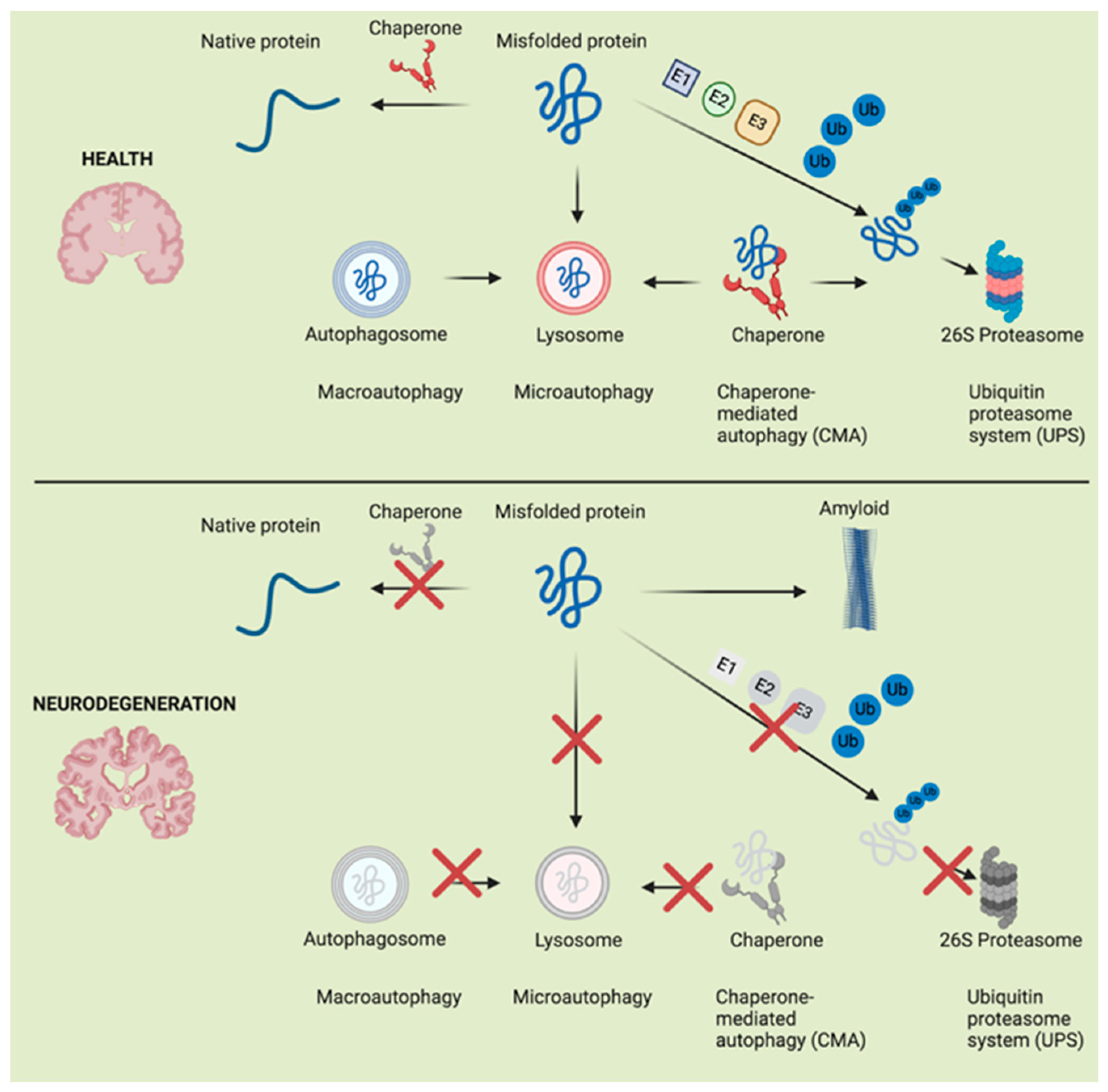
3. Proteostasis in Health and Neurodegeneration
4. Roles for the Proteasomes in Neurodegeneration
5. Drugs Targeting Proteasome Pathways
6. Autophagy–Lysosomal System in Neurodegeneration
7. Therapeutic Strategies Targeting Autophagy–Lysosomal Pathways
8. Molecular Chaperones in Neurodegeneration
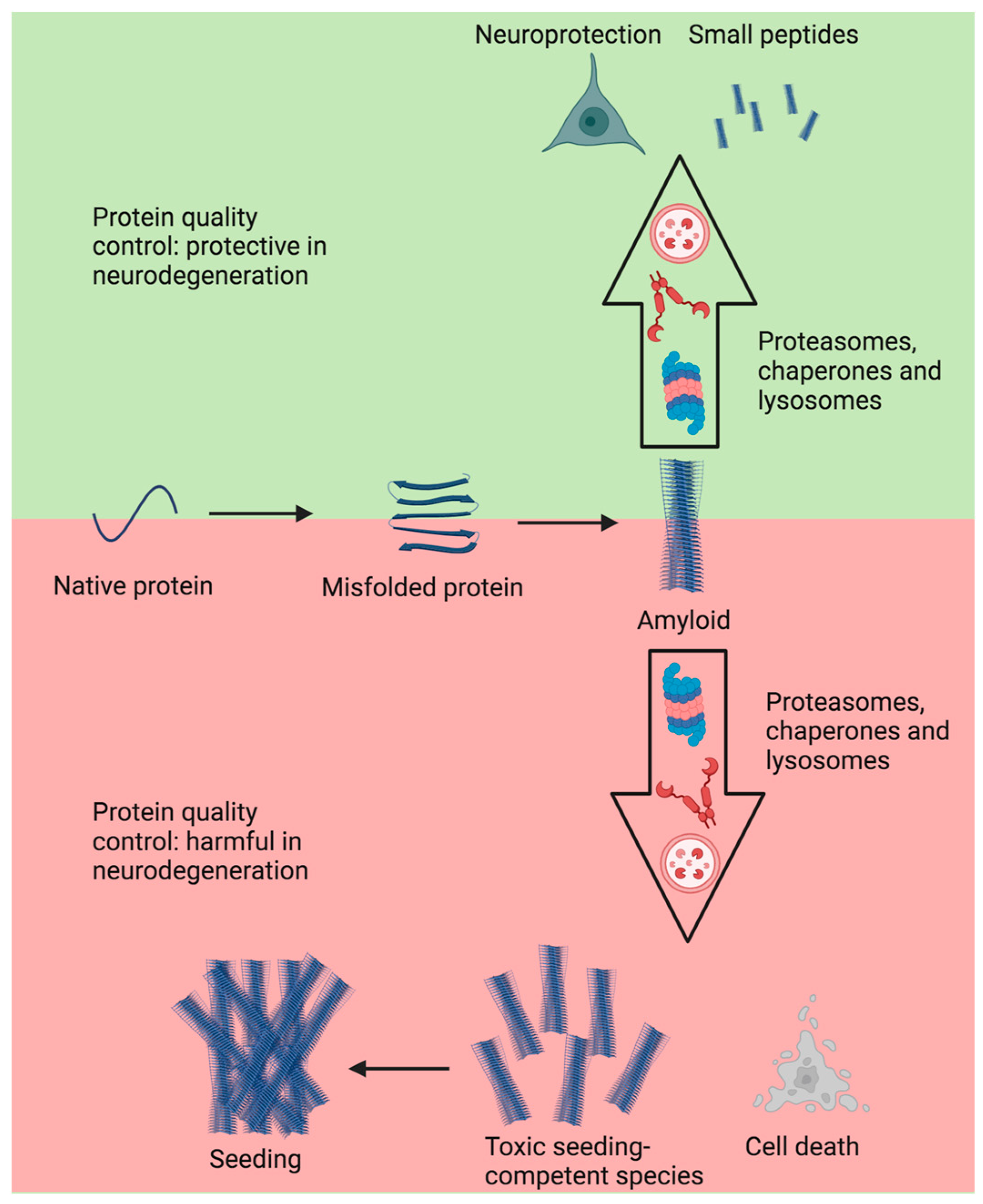
9. Cellular Proteostasis and Neurodegeneration: A Double-Edged Sword
10. Small Molecule Disaggregases of Amyloids and Protein Aggregates
11. Small Molecule Inhibitors of Amyloidogenic Protein Aggregation
12. Peptide Inhibitors of Amyloidogenic Protein Aggregation
13. Monoclonal Antibodies
14. Gene Silencing Therapeutic Approaches
15. Conclusions and Future Perspectives
Author Contributions
Funding
Data Availability Statement
Conflicts of Interest
References
- Acquasaliente, L.; De Filippis, V. The Role of Proteolysis in Amyloidosis. Int. J. Mol. Sci. 2023, 24, 699. [Google Scholar] [CrossRef]
- Labbadia, J.; Morimoto, R.I. The Biology of Proteostasis in Aging and Disease. Annu. Rev. Biochem. 2015, 84, 435–464. [Google Scholar] [CrossRef]
- Soto, C.; Pritzkow, S. Protein Misfolding, Aggregation, and Conformational Strains in Neurodegenerative Diseases. Nat. Neurosci. 2018, 21, 1332–1340. [Google Scholar] [CrossRef]
- Walker, L.C.; Diamond, M.I.; Duff, K.E.; Hyman, B.T. Mechanisms of Protein Seeding in Neurodegenerative Diseases. JAMA Neurol. 2013, 70, 304–310. [Google Scholar] [CrossRef] [PubMed]
- Yerbury, J.J.; Ooi, L.; Dillin, A.; Saunders, D.N.; Hatters, D.M.; Beart, P.M.; Cashman, N.R.; Wilson, M.R.; Ecroyd, H. Walking the Tightrope: Proteostasis and Neurodegenerative Disease. J. Neurochem. 2016, 137, 489–505. [Google Scholar] [CrossRef]
- Hipp, M.S.; Kasturi, P.; Hartl, F.U. The Proteostasis Network and Its Decline in Ageing. Nat. Rev. Mol. Cell Biol. 2019, 20, 421–435. [Google Scholar] [CrossRef] [PubMed]
- Lim, J.; Yue, Z. Neuronal Aggregates: Formation, Clearance, and Spreading. Dev. Cell 2015, 32, 491–501. [Google Scholar] [CrossRef] [PubMed]
- Wadsworth, J.D.F.; Collinge, J. Update on Human Prion Disease. Biochim. Biophys. Acta BBA Mol. Basis Dis. 2007, 1772, 598–609. [Google Scholar] [CrossRef]
- Collinge, J. Prion Diseases of Humans and Animals: Their Causes and Molecular Basis. Annu. Rev. Neurosci. 2001, 24, 519–550. [Google Scholar] [CrossRef]
- Sikorska, B.; Knight, R.; Ironside, J.W.; Liberski, P.P. Creutzfeldt-Jakob Disease. In Neurodegenerative Diseases; Springer: New York, NY, USA, 2012; pp. 76–90. [Google Scholar] [CrossRef]
- Kalaria, R.N.; Maestre, G.E.; Arizaga, R.; Friedland, R.P.; Galasko, D.; Hall, K.; Luchsinger, J.A.; Ogunniyi, A.; Perry, E.K.; Potocnik, F.; et al. Alzheimer’s Disease and Vascular Dementia in Developing Countries: Prevalence, Management, and Risk Factors. Lancet Neurol. 2008, 7, 812–826, Erratum in Lancet Neurol. 2008, 7, 867. [Google Scholar] [CrossRef]
- Ross, C.A.; Poirier, M.A. Protein Aggregation and Neurodegenerative Disease. Nat. Med. 2004, 10, S10–S17. [Google Scholar] [CrossRef] [PubMed]
- Mori, H.; Nishimura, M.; Namba, Y.; Oda, M. Corticobasal Degeneration: A Disease with Widespread Appearance of Abnormal Tau and Neurofibrillary Tangles, and Its Relation to Progressive Supranuclear Palsy. Acta Neuropathol. 1994, 88, 113–121. [Google Scholar] [CrossRef]
- Iwatsubo, T.; Hasegawa, M.; Ihara, Y. Neuronal and Glial Tau-Positive Inclusions in Diverse Neurologic Diseases Share Common Phosphorylation Characteristics. Acta Neuropathol. 1994, 88, 129–136. [Google Scholar] [CrossRef]
- Geddes, J.F.; Vowles, G.H.; Nicoll, J.A.R.; Révész, T. Neuronal Cytoskeletal Changes Are an Early Consequence of Repetitive Head Injury. Acta Neuropathol. 1999, 98, 171–178. [Google Scholar] [CrossRef]
- McKee, A.C.; Cairns, N.J.; Dickson, D.W.; Folkerth, R.D.; Dirk Keene, C.; Litvan, I.; Perl, D.P.; Stein, T.D.; Vonsattel, J.-P.; Stewart, W.; et al. The First NINDS/NIBIB Consensus Meeting to Define Neuropathological Criteria for the Diagnosis of Chronic Traumatic Encephalopathy. Acta Neuropathol. 2016, 131, 75–86. [Google Scholar] [CrossRef]
- Pollock, N.J.; Mirra, S.S.; Binder, L.I.; Hansen, L.A.; Wood, J.G. Filamentous Aggregates in Pick’s Disease, Progressive Supranuclear Palsy, and Alzheimer’s Disease Share Antigenic Determinants with Microtubule-Associated Protein, Tau. Lancet 1986, 328, 1211. [Google Scholar] [CrossRef]
- Tu, P.; Galvin, J.E.; Baba, M.; Giasson, B.; Tomita, T.; Leight, S.; Nakajo, S.; Iwatsubo, T.; Trojanowski, J.Q.; Lee, V.M.-Y. Glial Cytoplasmic Inclusions in White Matter Oligodendrocytes of Multiple System Atrophy Brains Contain Insoluble α-Synuclein. Ann. Neurol. 1998, 44, 415–422. [Google Scholar] [CrossRef] [PubMed]
- Spillantini, M.G.; Schmidt, M.L.; Lee, V.M.-Y.; Trojanowski, J.Q.; Jakes, R.; Goedert, M. α-Synuclein in Lewy Bodies. Nature 1997, 388, 839–840. [Google Scholar] [CrossRef] [PubMed]
- MacDonald, M.E.; Ambrose, C.M.; Duyao, M.P.; Myers, R.H.; Lin, C.; Srinidhi, L.; Barnes, G.; Taylor, S.A.; James, M.; Groot, N.; et al. A Novel Gene Containing a Trinucleotide Repeat That Is Expanded and Unstable on Huntington’s Disease Chromosomes. Cell 1993, 72, 971–983. [Google Scholar] [CrossRef]
- Scherzinger, E.; Sittler, A.; Schweiger, K.; Heiser, V.; Lurz, R.; Hasenbank, R.; Bates, G.P.; Lehrach, H.; Wanker, E.E. Self-Assembly of Polyglutamine-Containing Huntingtin Fragments into Amyloid-like Fibrils: Implications for Huntington’s Disease Pathology. Proc. Natl. Acad. Sci. USA 1999, 96, 4604–4609. [Google Scholar] [CrossRef]
- Rosen, D.R.; Siddique, T.; Patterson, D.; Figlewicz, D.A.; Sapp, P.; Hentati, A.; Donaldson, D.; Goto, J.; O’Regan, J.P.; Deng, H.-X.; et al. Mutations in Cu/Zn Superoxide Dismutase Gene Are Associated with Familial Amyotrophic Lateral Sclerosis. Nature 1993, 362, 59–62, Erratum in Nature 1993, 364, 362. [Google Scholar] [CrossRef] [PubMed]
- Neumann, M.; Sampathu, D.M.; Kwong, L.K.; Truax, A.C.; Micsenyi, M.C.; Chou, T.T.; Bruce, J.; Schuck, T.; Grossman, M.; Clark, C.M.; et al. Ubiquitinated TDP-43 in Frontotemporal Lobar Degeneration and Amyotrophic Lateral Sclerosis. Science 2006, 314, 130–133. [Google Scholar] [CrossRef]
- Kwiatkowski, T.J.; Bosco, D.A.; LeClerc, A.L.; Tamrazian, E.; Vanderburg, C.R.; Russ, C.; Davis, A.; Gilchrist, J.; Kasarskis, E.J.; Munsat, T.; et al. Mutations in the FUS/TLS Gene on Chromosome 16 Cause Familial Amyotrophic Lateral Sclerosis. Science 2009, 323, 1205–1208. [Google Scholar] [CrossRef]
- Arai, T.; Hasegawa, M.; Akiyama, H.; Ikeda, K.; Nonaka, T.; Mori, H.; Mann, D.; Tsuchiya, K.; Yoshida, M.; Hashizume, Y.; et al. TDP-43 Is a Component of Ubiquitin-Positive Tau-Negative Inclusions in Frontotemporal Lobar Degeneration and Amyotrophic Lateral Sclerosis. Biochem. Biophys. Res. Commun. 2006, 351, 602–611. [Google Scholar] [CrossRef]
- Moon, S.P.; Balana, A.T.; Pratt, M.R. Consequences of Posttranslational Modifications on Amyloid Proteins as Revealed by Protein Semi-Synthesis. Curr. Opin. Chem. Biol. 2021, 64, 76–89. [Google Scholar] [CrossRef]
- Pacheco, S.; Reselammal, D.S.; Li, S.; Zhang, Q.; Velloor, G.; Chen, J.; Siemer, A.B. Phosphorylation of α-Synuclein Fibrils at S129 Changes DNAJB1 Binding as Probed by Solid-State NMR. JACS Au 2026, 6, 343–356. [Google Scholar] [CrossRef]
- Sharma, K.; Stockert, F.; Shenoy, J.; Berbon, M.; Abdul-Shukkoor, M.B.; Habenstein, B.; Loquet, A.; Schmidt, M.; Fändrich, M. Cryo-EM Observation of the Amyloid Key Structure of Polymorphic TDP-43 Amyloid Fibrils. Nat. Commun. 2024, 15, 486. [Google Scholar] [CrossRef]
- Mammeri, N.E.; Dregni, A.J.; Duan, P.; Hong, M. Structures of AT8 and PHF1 Phosphomimetic Tau: Insights into the Posttranslational Modification Code of Tau Aggregation. Proc. Natl. Acad. Sci. USA 2024, 121, e2316175121. [Google Scholar] [CrossRef]
- Baker, K.R. Light Chain Amyloidosis: Epidemiology, Staging, and Prognostication. Methodist DeBakey Cardiovasc. J. 2022, 18, 27–35. [Google Scholar] [CrossRef] [PubMed]
- Al Hamed, R.; Bazarbachi, A.H.; Bazarbachi, A.; Malard, F.; Harousseau, J.-L.; Mohty, M. Comprehensive Review of AL Amyloidosis: Some Practical Recommendations. Blood Cancer J. 2021, 11, 97. [Google Scholar] [CrossRef] [PubMed]
- Desport, E.; Bridoux, F.; Sirac, C.; Delbes, S.; Bender, S.; Fernandez, B.; Quellard, N.; Lacombe, C.; Goujon, J.-M.; Lavergne, D.; et al. AL Amyloidosis. Orphanet J. Rare Dis. 2012, 7, 54. [Google Scholar] [CrossRef]
- Real de Asúa, D.; Costa, R.; Galván, J.M.; Filigheddu, M.T.; Trujillo, D.; Cadiñanos, J. Systemic AA Amyloidosis: Epidemiology, Diagnosis, and Management. Clin. Epidemiol. 2014, 6, 369–377. [Google Scholar] [CrossRef] [PubMed]
- Jaikaran, E.T.A.S.; Clark, A. Islet Amyloid and Type 2 Diabetes: From Molecular Misfolding to Islet Pathophysiology. Biochim. Biophys. Acta BBA Mol. Basis Dis. 2001, 1537, 179–203. [Google Scholar] [CrossRef] [PubMed]
- Charalampous, C.; Dasari, S.; McPhail, E.; Theis, J.D.; Vrana, J.A.; Dispenzieri, A.; Leung, N.; Muchtar, E.; Gertz, M.; Ramirez-Alvarado, M.; et al. A Proteomic Atlas of Kidney Amyloidosis Provides Insights into Disease Pathogenesis. Kidney Int. 2024, 105, 484–495. [Google Scholar] [CrossRef] [PubMed]
- Rosenblum, H.; Castano, A.; Alvarez, J.; Goldsmith, J.; Helmke, S.; Maurer, M.S. TTR (Transthyretin) Stabilizers Are Associated with Improved Survival in Patients with TTR Cardiac Amyloidosis. Circ. Heart Fail. 2018, 11, e004769. [Google Scholar] [CrossRef] [PubMed]
- Poli, L.; Labella, B.; Cotti Piccinelli, S.; Caria, F.; Risi, B.; Damioli, S.; Padovani, A.; Filosto, M. Hereditary Transthyretin Amyloidosis: A Comprehensive Review with a Focus on Peripheral Neuropathy. Front. Neurol. 2023, 14, 1242815. [Google Scholar] [CrossRef]
- Westermark, P.; Sletten, K.; Johansson, B.; Cornwell, G.G. Fibril in Senile Systemic Amyloidosis Is Derived from Normal Transthyretin. Proc. Natl. Acad. Sci. USA 1990, 87, 2843–2845. [Google Scholar] [CrossRef]
- Ciechanover, A. Intracellular Protein Degradation: From a Vague Idea through the Lysosome and the Ubiquitin–Proteasome System and onto Human Diseases and Drug Targeting. Bioorganic Med. Chem. 2013, 21, 3400–3410. [Google Scholar] [CrossRef]
- Sweeney, P.; Park, H.; Baumann, M.; Dunlop, J.; Frydman, J.; Kopito, R.; McCampbell, A.; Leblanc, G.; Venkateswaran, A.; Nurmi, A.; et al. Protein Misfolding in Neurodegenerative Diseases: Implications and Strategies. Transl. Neurodegener. 2017, 6, 6. [Google Scholar] [CrossRef]
- Liu, Y.; Ding, R.; Xu, Z.; Xue, Y.; Zhang, D.; Zhang, Y.; Li, W.; Li, X. Roles and Mechanisms of the Protein Quality Control System in Alzheimer’s Disease. Int. J. Mol. Sci. 2022, 23, 345. [Google Scholar] [CrossRef] [PubMed]
- Cook, C.; Stetler, C.; Petrucelli, L. Disruption of Protein Quality Control in Parkinson’s Disease. Cold Spring Harb. Perspect. Med. 2012, 2, a009423. [Google Scholar] [CrossRef]
- Harding, R.J.; Tong, Y. Proteostasis in Huntington’s Disease: Disease Mechanisms and Therapeutic Opportunities. Acta Pharmacol. Sin. 2018, 39, 754–769. [Google Scholar] [CrossRef] [PubMed]
- Dikic, I. Proteasomal and Autophagic Degradation Systems. Annu. Rev. Biochem. 2017, 86, 193–224. [Google Scholar] [CrossRef] [PubMed]
- Jung, T.; Grune, T. The Proteasome and Its Role in the Degradation of Oxidized Proteins. IUBMB Life 2008, 60, 743–752. [Google Scholar] [CrossRef] [PubMed]
- Njomen, E.; Tepe, J.J. Proteasome Activation as a New Therapeutic Approach to Target Proteotoxic Disorders. J. Med. Chem. 2019, 62, 6469–6481. [Google Scholar] [CrossRef]
- Tanaka, K. The Proteasome: Overview of Structure and Functions. Proc. Jpn. Acad. Ser. B 2009, 85, 12–36. [Google Scholar] [CrossRef] [PubMed]
- Husnjak, K.; Elsasser, S.; Zhang, N.; Chen, X.; Randles, L.; Shi, Y.; Hofmann, K.; Walters, K.J.; Finley, D.; Dikic, I. Proteasome Subunit Rpn13 Is a Novel Ubiquitin Receptor. Nature 2008, 453, 481–488. [Google Scholar] [CrossRef]
- Elsasser, S.; Chandler-Militello, D.; Müller, B.; Hanna, J.; Finley, D. Rad23 and Rpn10 Serve as Alternative Ubiquitin Receptors for the Proteasome. J. Biol. Chem. 2004, 279, 26817–26822. [Google Scholar] [CrossRef]
- Lee, M.J.; Lee, B.-H.; Hanna, J.; King, R.W.; Finley, D. Trimming of Ubiquitin Chains by Proteasome-Associated Deubiquitinating Enzymes. Mol. Cell. Proteom. 2011, 10, R110-003871. [Google Scholar] [CrossRef]
- Ciechanover, A.; Brundin, P. The Ubiquitin Proteasome System in Neurodegenerative Diseases: Sometimes the Chicken, Sometimes the Egg. Neuron 2003, 40, 427–446. [Google Scholar] [CrossRef]
- Thibaudeau, T.A.; Anderson, R.T.; Smith, D.M. A Common Mechanism of Proteasome Impairment by Neurodegenerative Disease-Associated Oligomers. Nat. Commun. 2018, 9, 1097. [Google Scholar] [CrossRef]
- Keck, S.; Nitsch, R.; Grune, T.; Ullrich, O. Proteasome Inhibition by Paired Helical Filament-Tau in Brains of Patients with Alzheimer’s Disease. J. Neurochem. 2003, 85, 115–122. [Google Scholar] [CrossRef]
- Keller, J.N.; Hanni, K.B.; Markesbery, W.R. Impaired Proteasome Function in Alzheimer’s Disease. J. Neurochem. 2000, 75, 436–439. [Google Scholar] [CrossRef]
- McNaught, K.S.P.; Belizaire, R.; Jenner, P.; Olanow, C.W.; Isacson, O. Selective Loss of 20S Proteasome α-Subunits in the Substantia Nigra Pars Compacta in Parkinson’s Disease. Neurosci. Lett. 2002, 326, 155–158. [Google Scholar] [CrossRef]
- McNaught, K.S.P.; Björklund, L.M.; Belizaire, R.; Isacson, O.; Jenner, P.; Olanow, C.W. Proteasome Inhibition Causes Nigral Degeneration with Inclusion Bodies in Rats. NeuroReport 2002, 13, 1437. [Google Scholar] [CrossRef] [PubMed]
- Seo, H.; Sonntag, K.-C.; Kim, W.; Cattaneo, E.; Isacson, O. Proteasome Activator Enhances Survival of Huntington’s Disease Neuronal Model Cells. PLoS ONE 2007, 2, e238. [Google Scholar] [CrossRef] [PubMed]
- Davidson, K.; Pickering, A.M. The Proteasome: A Key Modulator of Nervous System Function, Brain Aging, and Neurodegenerative Disease. Front. Cell Dev. Biol. 2023, 11, 1124907. [Google Scholar] [CrossRef] [PubMed]
- Ton, V.-K.; Mukherjee, M.; Judge, D.P. Transthyretin Cardiac Amyloidosis: Pathogenesis, Treatments, and Emerging Role in Heart Failure with Preserved Ejection Fraction. Clin. Med. Insights Cardiol. 2014, 8s1, CMC.S15719. [Google Scholar] [CrossRef]
- Santos, S.; Cardoso, I.; Magalhães, J.; Saraiva, M. Impairment of the Ubiquitin–Proteasome System Associated with Extracellular Transthyretin Aggregates in Familial Amyloidotic Polyneuropathy. J. Pathol. 2007, 213, 200–209. [Google Scholar] [CrossRef]
- Casas, S.; Gomis, R.; Gribble, F.M.; Altirriba, J.; Knuutila, S.; Novials, A. Impairment of the Ubiquitin-Proteasome Pathway Is a Downstream Endoplasmic Reticulum Stress Response Induced by Extracellular Human Islet Amyloid Polypeptide and Contributes to Pancreatic β-Cell Apoptosis. Diabetes 2007, 56, 2284–2294. [Google Scholar] [CrossRef]
- Hao, R.; Nanduri, P.; Rao, Y.; Panichelli, R.S.; Ito, A.; Yoshida, M.; Yao, T.-P. Proteasomes Activate Aggresome Disassembly and Clearance by Producing Unanchored Ubiquitin Chains. Mol. Cell 2013, 51, 819–828. [Google Scholar] [CrossRef]
- Bence, N.F.; Sampat, R.M.; Kopito, R.R. Impairment of the Ubiquitin-Proteasome System by Protein Aggregation. Science 2001, 292, 1552–1555. [Google Scholar] [CrossRef] [PubMed]
- Zhang, W.; Xu, C.; Sun, J.; Shen, H.-M.; Wang, J.; Yang, C. Impairment of the Autophagy–Lysosomal Pathway in Alzheimer’s Diseases: Pathogenic Mechanisms and Therapeutic Potential. Acta Pharm. Sin. B 2022, 12, 1019–1040. [Google Scholar] [CrossRef]
- Myeku, N.; Clelland, C.L.; Emrani, S.; Kukushkin, N.V.; Yu, W.H.; Goldberg, A.L.; Duff, K.E. Tau-Driven 26S Proteasome Impairment and Cognitive Dysfunction Can Be Prevented Early in Disease by Activating cAMP-PKA Signaling. Nat. Med. 2016, 22, 46–53. [Google Scholar] [CrossRef]
- Oh, S.; Hong, H.S.; Hwang, E.; Sim, H.J.; Lee, W.; Shin, S.J.; Mook-Jung, I. Amyloid Peptide Attenuates the Proteasome Activity in Neuronal Cells. Mech. Ageing Dev. 2005, 126, 1292–1299. [Google Scholar] [CrossRef]
- Snyder, H.; Mensah, K.; Theisler, C.; Lee, J.; Matouschek, A.; Wolozin, B. Aggregated and Monomeric α-Synuclein Bind to the S6′ Proteasomal Protein and Inhibit Proteasomal Function. J. Biol. Chem. 2003, 278, 11753–11759. [Google Scholar] [CrossRef] [PubMed]
- Díaz-Hernández, M.; Valera, A.G.; Morán, M.A.; Gómez-Ramos, P.; Alvarez-Castelao, B.; Castaño, J.G.; Hernández, F.; Lucas, J.J. Inhibition of 26S Proteasome Activity by Huntingtin Filaments but Not Inclusion Bodies Isolated from Mouse and Human Brain. J. Neurochem. 2006, 98, 1585–1596. [Google Scholar] [CrossRef] [PubMed]
- Perry, G.; Friedman, R.; Shaw, G.; Chau, V. Ubiquitin Is Detected in Neurofibrillary Tangles and Senile Plaque Neurites of Alzheimer Disease Brains. Proc. Natl. Acad. Sci. USA 1987, 84, 3033–3036. [Google Scholar] [CrossRef]
- van Leeuwen, F.W.; de Kleijn, D.P.; van den Hurk, H.H.; Neubauer, A.; Sonnemans, M.A.; Sluijs, J.A.; Köycü, S.; Ramdjielal, R.D.; Salehi, A.; Martens, G.J.; et al. Frameshift Mutants of Beta Amyloid Precursor Protein and Ubiquitin-B in Alzheimer’s and Down Patients. Science 1998, 279, 242–247. [Google Scholar] [CrossRef]
- Lindsten, K.; de Vrij, F.M.S.; Verhoef, L.G.G.C.; Fischer, D.F.; van Leeuwen, F.W.; Hol, E.M.; Masucci, M.G.; Dantuma, N.P. Mutant Ubiquitin Found in Neurodegenerative Disorders Is a Ubiquitin Fusion Degradation Substrate That Blocks Proteasomal Degradation. J. Cell Biol. 2002, 157, 417–427. [Google Scholar] [CrossRef]
- Hol, E.M.; van Leeuwen, F.W.; Fischer, D.F. The Proteasome in Alzheimer’s Disease and Parkinson’s Disease: Lessons from Ubiquitin B+1. Trends Mol. Med. 2005, 11, 488–495. [Google Scholar] [CrossRef]
- Muñoz-Arellano, A.J.; Chen, X.; Molt, A.; Meza, E.; Petranovic, D. Different Expression Levels of Human Mutant Ubiquitin B+1 (UBB+1) Can Modify Chronological Lifespan or Stress Resistance of Saccharomyces Cerevisiae. Front. Mol. Neurosci. 2018, 11, 200. [Google Scholar] [CrossRef]
- Jones, C.L.; Njomen, E.; Sjögren, B.; Dexheimer, T.S.; Tepe, J.J. Small Molecule Enhancement of 20S Proteasome Activity Targets Intrinsically Disordered Proteins. ACS Chem. Biol. 2017, 12, 2240–2247. [Google Scholar] [CrossRef] [PubMed]
- Medina, D.X.; Caccamo, A.; Oddo, S. Methylene Blue Reduces Aβ Levels and Rescues Early Cognitive Deficit by Increasing Proteasome Activity. Brain Pathol. 2011, 21, 140–149. [Google Scholar] [CrossRef]
- Trader, D.J.; Simanski, S.; Dickson, P.; Kodadek, T. Establishment of a Suite of Assays That Support the Discovery of Proteasome Stimulators. Biochim. Biophys. Acta BBA Gen. Subj. 2017, 1861, 892–899. [Google Scholar] [CrossRef]
- Kisselev, A.F.; van der Linden, W.A.; Overkleeft, H.S. Proteasome Inhibitors: An Expanding Army Attacking a Unique Target. Chem. Biol. 2012, 19, 99–115. [Google Scholar] [CrossRef] [PubMed]
- Salcedo-Tacuma, D.; Asad, N.; Islam, M.Q.; Anderson, R.; Smith, D.M. Hyperactive 20S Proteasome Enhances Proteostasis and ERAD in C. Elegans via Degradation of Intrinsically Disordered Proteins. Sci. Adv. 2025, 11, eadx3014. [Google Scholar] [CrossRef]
- Ben-Nissan, G.; Sharon, M. Regulating the 20S Proteasome Ubiquitin-Independent Degradation Pathway. Biomolecules 2014, 4, 862–884. [Google Scholar] [CrossRef] [PubMed]
- Georgiopoulos, G.; Makris, N.; Laina, A.; Theodorakakou, F.; Briasoulis, A.; Trougakos, I.P.; Dimopoulos, M.-A.; Kastritis, E.; Stamatelopoulos, K. Cardiovascular Toxicity of Proteasome Inhibitors: Underlying Mechanisms and Management Strategies. JACC Cardio Oncol. 2023, 5, 15–35. [Google Scholar] [CrossRef]
- Jelinek, T.; Kryukova, E.; Kufova, Z.; Kryukov, F.; Hajek, R. Proteasome Inhibitors in AL Amyloidosis: Focus on Mechanism of Action and Clinical Activity. Hematol. Oncol. 2017, 35, 408–419. [Google Scholar] [CrossRef] [PubMed]
- Bloom, M.W.; Vo, J.B.; Rodgers, J.E.; Ferrari, A.M.; Nohria, A.; Deswal, A.; Cheng, R.K.; Kittleson, M.M.; Upshaw, J.N.; Palaskas, N.; et al. Cardio-Oncology and Heart Failure: A Scientific Statement from the Heart Failure Society of America. J. Card. Fail. 2025, 31, 415–455. [Google Scholar] [CrossRef]
- Bertran-Mostazo, A.; Putriūtė, G.; Álvarez-Berbel, I.; Busquets, M.A.; Galdeano, C.; Espargaró, A.; Sabate, R. Proximity-Induced Pharmacology for Amyloid-Related Diseases. Cells 2024, 13, 449. [Google Scholar] [CrossRef]
- Silva, M.C.; Ferguson, F.M.; Cai, Q.; Donovan, K.A.; Nandi, G.; Patnaik, D.; Zhang, T.; Huang, H.-T.; Lucente, D.E.; Dickerson, B.C.; et al. Targeted Degradation of Aberrant Tau in Frontotemporal Dementia Patient-Derived Neuronal Cell Models. eLife 2019, 8, e45457. [Google Scholar] [CrossRef] [PubMed]
- Chu, T.-T.; Gao, N.; Li, Q.-Q.; Chen, P.-G.; Yang, X.-F.; Chen, Y.-X.; Zhao, Y.-F.; Li, Y.-M. Specific Knockdown of Endogenous Tau Protein by Peptide-Directed Ubiquitin-Proteasome Degradation. Cell Chem. Biol. 2016, 23, 453–461. [Google Scholar] [CrossRef]
- Wang, W.; Zhou, Q.; Jiang, T.; Li, S.; Ye, J.; Zheng, J.; Wang, X.; Liu, Y.; Deng, M.; Ke, D.; et al. A Novel Small-Molecule PROTAC Selectively Promotes Tau Clearance to Improve Cognitive Functions in Alzheimer-like Models. Theranostics 2021, 11, 5279–5295. [Google Scholar] [CrossRef]
- Kargbo, R.B. PROTAC Compounds Targeting α-Synuclein Protein for Treating Neurogenerative Disorders: Alzheimer’s and Parkinson’s Diseases. ACS Med. Chem. Lett. 2020, 11, 1086–1087. [Google Scholar] [CrossRef] [PubMed]
- Park, D.; Izaguirre, J.; Coffey, R.; Xu, H. Modeling the Effect of Cooperativity in Ternary Complex Formation and Targeted Protein Degradation Mediated by Heterobifunctional Degraders. ACS Bio Med. Chem. Au 2023, 3, 74–86. [Google Scholar] [CrossRef]
- Tran, N.L.; Leconte, G.A.; Ferguson, F.M. Targeted Protein Degradation: Design Considerations for PROTAC Development. Curr. Protoc. 2022, 2, e611. [Google Scholar] [CrossRef] [PubMed]
- Wen, T.; Chen, J.; Zhang, W.; Pang, J. Design, Synthesis and Biological Evaluation of α-Synuclein Proteolysis-Targeting Chimeras. Molecules 2023, 28, 4458. [Google Scholar] [CrossRef]
- Tseng, Y.-L.; Lu, P.-C.; Lee, C.-C.; He, R.-Y.; Huang, Y.-A.; Tseng, Y.-C.; Cheng, T.-J.R.; Huang, J.J.-T.; Fang, J.-M. Degradation of Neurodegenerative Disease-Associated TDP-43 Aggregates and Oligomers via a Proteolysis-Targeting Chimera. J. Biomed. Sci. 2023, 30, 27. [Google Scholar] [CrossRef]
- Thomas, B.I.; Lewis, H.L.; Jones, D.H.; Ward, S.E. Central Nervous System Targeted Protein Degraders. Biomolecules 2023, 13, 1164. [Google Scholar] [CrossRef]
- Farrell, K.; Jarome, T.J. Is PROTAC Technology Really a Game Changer for Central Nervous System Drug Discovery? Expert Opin. Drug Discov. 2021, 16, 833–840. [Google Scholar] [CrossRef]
- Monaco, M.; Pinto, A.; Grilli, M. Beyond Amyloid: Targeting Co-Aggregating Proteins and Targeted Degradation Strategies in Alzheimer’s Disease. Biomedicines 2026, 14, 216. [Google Scholar] [CrossRef] [PubMed]
- Zhou, Q.; Wang, W.; Deng, C. Advancements in Proteolysis Targeting Chimeras for Targeted Therapeutic Strategies in Alzheimer’s Disease. Mol. Neurobiol. 2025, 62, 9686–9709. [Google Scholar] [CrossRef]
- Lee, M.J.; Lee, J.H.; Rubinsztein, D.C. Tau Degradation: The Ubiquitin-Proteasome System versus the Autophagy-Lysosome System. Prog. Neurobiol. 2013, 105, 49–59. [Google Scholar] [CrossRef] [PubMed]
- Cao, J.; Zhong, M.B.; Toro, C.A.; Zhang, L.; Cai, D. Endo-Lysosomal Pathway and Ubiquitin-Proteasome System Dysfunction in Alzheimer’s Disease Pathogenesis. Neurosci. Lett. 2019, 703, 68–78. [Google Scholar] [CrossRef]
- Mizushima, N.; Levine, B. Autophagy in Mammalian Development and Differentiation. Nat. Cell Biol. 2010, 12, 823–830. [Google Scholar] [CrossRef] [PubMed]
- Malik, B.R.; Maddison, D.C.; Smith, G.A.; Peters, O.M. Autophagic and Endo-Lysosomal Dysfunction in Neurodegenerative Disease. Mol. Brain 2019, 12, 100. [Google Scholar] [CrossRef]
- Mani, S.; Swargiary, G.; Singh, M.; Agarwal, S.; Dey, A.; Ojha, S.; Jha, N.K. Mitochondrial Defects: An Emerging Theranostic Avenue towards Alzheimer’s Associated Dysregulations. Life Sci. 2021, 285, 119985. [Google Scholar] [CrossRef]
- Barmaki, H.; Nourazarian, A.; Khaki-Khatibi, F. Proteostasis and Neurodegeneration: A Closer Look at Autophagy in Alzheimer’s Disease. Front. Aging Neurosci. 2023, 15, 1281338. [Google Scholar] [CrossRef]
- Boland, B.; Kumar, A.; Lee, S.; Platt, F.M.; Wegiel, J.; Yu, W.H.; Nixon, R.A. Autophagy Induction and Autophagosome Clearance in Neurons: Relationship to Autophagic Pathology in Alzheimer’s Disease. J. Neurosci. 2008, 28, 6926–6937. [Google Scholar] [CrossRef]
- Nixon, R.A.; Yang, D.-S. Autophagy Failure in Alzheimer’s Disease—Locating the Primary Defect. Neurobiol. Dis. 2011, 43, 38–45. [Google Scholar] [CrossRef]
- Coen, K.; Flannagan, R.S.; Baron, S.; Carraro-Lacroix, L.R.; Wang, D.; Vermeire, W.; Michiels, C.; Munck, S.; Baert, V.; Sugita, S.; et al. Lysosomal Calcium Homeostasis Defects, Not Proton Pump Defects, Cause Endo-Lysosomal Dysfunction in PSEN-Deficient Cells. J. Cell Biol. 2012, 198, 23–35. [Google Scholar] [CrossRef]
- Kim, S.-H.; Cho, Y.-S.; Jung, Y.-K. Failure of Lysosomal Acidification and Endomembrane Network in Neurodegeneration. Exp. Mol. Med. 2025, 57, 2418–2428. [Google Scholar] [CrossRef] [PubMed]
- Wang, Y.-T.; Lu, J.-H. Chaperone-Mediated Autophagy in Neurodegenerative Diseases: Molecular Mechanisms and Pharmacological Opportunities. Cells 2022, 11, 2250. [Google Scholar] [CrossRef] [PubMed]
- Chen, J.J.; Nathaniel, D.L.; Raghavan, P.; Nelson, M.; Tian, R.; Tse, E.; Hong, J.Y.; See, S.K.; Mok, S.-A.; Hein, M.Y.; et al. Compromised Function of the ESCRT Pathway Promotes Endolysosomal Escape of Tau Seeds and Propagation of Tau Aggregation. J. Biol. Chem. 2019, 294, 18952–18966. [Google Scholar] [CrossRef]
- Michiorri, S.; Gelmetti, V.; Giarda, E.; Lombardi, F.; Romano, F.; Marongiu, R.; Nerini-Molteni, S.; Sale, P.; Vago, R.; Arena, G.; et al. The Parkinson-Associated Protein PINK1 Interacts with Beclin1 and Promotes Autophagy. Cell Death Differ. 2010, 17, 962–974. [Google Scholar] [CrossRef] [PubMed]
- Nah, J.; Yuan, J.; Jung, Y.-K. Autophagy in Neurodegenerative Diseases: From Mechanism to Therapeutic Approach. Mol. Cells 2015, 38, 381–389. [Google Scholar] [CrossRef]
- Sitron, C.S.; Trinkaus, V.A.; Galesic, A.; Garhammer, M.; Yuste-Checa, P.; Dransfeld, U.; Feigenbutz, D.; Zhang, J.; Ivashko, L.; Dudanova, I.; et al. α-Synuclein Aggregates Inhibit ESCRT-III through Sequestration and Collateral Degradation. Mol. Cell 2025, 85, 3505–3523.e17. [Google Scholar] [CrossRef]
- Liu, M.; Liu, Y.; Song, T.; Yang, L.; Qi, L.; Zhang, Y.-Z.; Wang, Y.; Shen, Q.-T. Three-Dimensional Architecture of ESCRT-III Flat Spirals on the Membrane. Proc. Natl. Acad. Sci. USA 2024, 121, e2319115121. [Google Scholar] [CrossRef]
- Ravikumar, B.; Vacher, C.; Berger, Z.; Davies, J.E.; Luo, S.; Oroz, L.G.; Scaravilli, F.; Easton, D.F.; Duden, R.; O’Kane, C.J.; et al. Inhibition of mTOR Induces Autophagy and Reduces Toxicity of Polyglutamine Expansions in Fly and Mouse Models of Huntington Disease. Nat. Genet. 2004, 36, 585–595. [Google Scholar] [CrossRef]
- Nagata, E.; Sawa, A.; Ross, C.A.; Snyder, S.H. Autophagosome-like Vacuole Formation in Huntington’s Disease Lymphoblasts. NeuroReport 2004, 15, 1325. [Google Scholar] [CrossRef]
- Shibata, M.; Lu, T.; Furuya, T.; Degterev, A.; Mizushima, N.; Yoshimori, T.; MacDonald, M.; Yankner, B.; Yuan, J. Regulation of Intracellular Accumulation of Mutant Huntingtin by Beclin 1. J. Biol. Chem. 2006, 281, 14474–14485. [Google Scholar] [CrossRef]
- Son, J.H.; Shim, J.H.; Kim, K.-H.; Ha, J.-Y.; Han, J.Y. Neuronal Autophagy and Neurodegenerative Diseases. Exp. Mol. Med. 2012, 44, 89–98. [Google Scholar] [CrossRef] [PubMed]
- Koga, H.; Martinez-Vicente, M.; Arias, E.; Kaushik, S.; Sulzer, D.; Cuervo, A.M. Constitutive Upregulation of Chaperone-Mediated Autophagy in Huntington’s Disease. J. Neurosci. 2011, 31, 18492–18505. [Google Scholar] [CrossRef] [PubMed]
- Guan, J.; Mishra, S.; Shi, J.; Lavatelli, F.; Rognoni, P.; Las, G.; Merlini, G.; Connors, L.H.; Seldin, D.C.; MacRae, C.A.; et al. Abstract 18695: Role of Autophagy in Amyloidogenic Light Chain Induced Cardiac Toxicity. Circulation 2012, 126, A18695. [Google Scholar] [CrossRef]
- Rivera, J.F.; Gurlo, T.; Daval, M.; Huang, C.J.; Matveyenko, A.V.; Butler, P.C.; Costes, S. Human-IAPP Disrupts the Autophagy/Lysosomal Pathway in Pancreatic β-Cells: Protective Role of P62-Positive Cytoplasmic Inclusions. Cell Death Differ. 2011, 18, 415–426. [Google Scholar] [CrossRef] [PubMed]
- Rubinsztein, D.C.; Mariño, G.; Kroemer, G. Autophagy and Aging. Cell 2011, 146, 682–695. [Google Scholar] [CrossRef]
- Hegde, A.N.; Duke, L.M.; Timm, L.E.; Nobles, H. The Proteasome and Ageing. In Biochemistry and Cell Biology of Ageing: Part III Biomedical Science; Harris, J.R., Korolchuk, V.I., Eds.; Springer International Publishing: Cham, Switzerland, 2023; pp. 99–112. [Google Scholar] [CrossRef]
- Yang, C.; Zhang, W.; Dong, X.; Fu, C.; Yuan, J.; Xu, M.; Liang, Z.; Qiu, C.; Xu, C. A Natural Product Solution to Aging and Aging-Associated Diseases. Pharmacol. Ther. 2020, 216, 107673. [Google Scholar] [CrossRef]
- Towers, C.G.; Thorburn, A. Therapeutic Targeting of Autophagy. eBioMedicine 2016, 14, 15–23. [Google Scholar] [CrossRef]
- Caccamo, A.; Majumder, S.; Richardson, A.; Strong, R.; Oddo, S. Molecular Interplay between Mammalian Target of Rapamycin (mTOR), Amyloid-β, and Tau: Effects on cognitive impairments. J. Biol. Chem. 2010, 285, 13107–13120. [Google Scholar] [CrossRef]
- Morita, S.; Sakagashira, S.; Shimajiri, Y.; Eberhardt, N.L.; Kondo, T.; Kondo, T.; Sanke, T. Autophagy Protects against Human Islet Amyloid Polypeptide-associated Apoptosis. J. Diabetes Investig. 2011, 2, 48–55. [Google Scholar] [CrossRef] [PubMed]
- Zhang, H.; Xiao, X.; Pan, Z.; Dokudovskaya, S. mTOR Signaling Networks: Mechanistic Insights and Translational Frontiers in Disease Therapeutics. Signal Transduct. Target. Ther. 2025, 10, 428. [Google Scholar] [CrossRef]
- Lee, H.-K.; Kwon, B.; Lemere, C.A.; de la Monte, S.; Itamura, K.; Ha, A.Y.; Querfurth, H.W. mTORC2 (Rictor) in Alzheimer’s Disease and Reversal of Amyloid-β Expression-Induced Insulin Resistance and Toxicity in Rat Primary Cortical Neurons. J. Alzheimers Dis. JAD 2017, 56, 1015–1036. [Google Scholar] [CrossRef] [PubMed]
- Powell, J.D.; Pollizzi, K.N.; Heikamp, E.B.; Horton, M.R. Regulation of Immune Responses by mTOR. Annu. Rev. Immunol. 2012, 30, 39–68. [Google Scholar] [CrossRef] [PubMed]
- Gonzales, M.M.; Garbarino, V.R.; Kautz, T.F.; Song, X.; Lopez-Cruzan, M.; Linehan, L.; Van Skike, C.E.; De Erausquin, G.A.; Galvan, V.; Orr, M.E.; et al. Rapamycin Treatment for Alzheimer’s Disease and Related Dementias: A Pilot Phase 1 Clinical Trial. Commun. Med. 2025, 5, 189. [Google Scholar] [CrossRef]
- Sarkar, S.; Perlstein, E.O.; Imarisio, S.; Pineau, S.; Cordenier, A.; Maglathlin, R.L.; Webster, J.A.; Lewis, T.A.; O’Kane, C.J.; Schreiber, S.L.; et al. Small Molecules Enhance Autophagy and Reduce Toxicity in Huntington’s Disease Models. Nat. Chem. Biol. 2007, 3, 331–338. [Google Scholar] [CrossRef]
- Benito-Cuesta, I.; Ordoñez-Gutierrez, L.; Wandosell, F. Trehalose Reduces the Secreted Beta-Amyloid Levels in Primary Neurons Independently of Autophagy Induction. Metabolites 2021, 11, 421. [Google Scholar] [CrossRef]
- Kim, J.; Park, K.; Kim, M.J.; Lim, H.; Kim, K.H.; Kim, S.-W.; Lee, E.-S.; Kim, H.; Kim, S.J.; Hur, K.Y.; et al. An Autophagy Enhancer Ameliorates Diabetes of Human IAPP-Transgenic Mice through Clearance of Amyloidogenic Oligomer. Nat. Commun. 2021, 12, 183. [Google Scholar] [CrossRef]
- Ji, C.H.; Kim, H.Y.; Lee, M.J.; Heo, A.J.; Park, D.Y.; Lim, S.; Shin, S.; Ganipisetti, S.; Yang, W.S.; Jung, C.A.; et al. The AUTOTAC Chemical Biology Platform for Targeted Protein Degradation via the Autophagy-Lysosome System. Nat. Commun. 2022, 13, 904, Correction in Nat. Commun. 2022, 13, 2108. [Google Scholar] [CrossRef]
- Lee, J.; Yoon, D.; Sung, K.W.; Bae, E.-J.; Park, D.-H.; Suh, Y.H.; Kwon, Y.T. Targeted Degradation of SNCA/α-Synuclein Aggregates in Neurodegeneration Using the AUTOTAC Chemical Platform. Autophagy 2024, 20, 463–465. [Google Scholar] [CrossRef]
- Li, Z.; Wang, C.; Wang, Z.; Zhu, C.; Li, J.; Sha, T.; Ma, L.; Gao, C.; Yang, Y.; Sun, Y.; et al. Allele-Selective Lowering of Mutant HTT Protein by HTT–LC3 Linker Compounds. Nature 2019, 575, 203–209. [Google Scholar] [CrossRef] [PubMed]
- Zhao, L.; Zhao, J.; Zhong, K.; Tong, A.; Jia, D. Targeted Protein Degradation: Mechanisms, Strategies and Application. Signal Transduct. Target. Ther. 2022, 7, 113. [Google Scholar] [CrossRef]
- Hou, M.; Zhao, R.; Wang, S.; Jiang, B.; Yan, X. Targeted Protein Degradation Technologies: Emerging Mechanisms and Nano-Based Innovations. Nano Res. 2025, 18, 94907983. [Google Scholar] [CrossRef]
- Shek, R.; Hilaire, T.; Sim, J.; French, J.B. Structural Determinants for Substrate Selectivity in Guanine Deaminase Enzymes of the Amidohydrolase Superfamily. Biochemistry 2019, 58, 3280–3292. [Google Scholar] [CrossRef]
- Ding, Y.; Xing, D.; Fei, Y.; Luo, S.; Lu, B. Perspectives of Autophagy-Tethering Compounds (ATTECs) in Drug Discovery. Med. Plus 2024, 1, 100004. [Google Scholar] [CrossRef]
- Szalai, P.; Hagen, L.K.; Sætre, F.; Luhr, M.; Sponheim, M.; Øverbye, A.; Mills, I.G.; Seglen, P.O.; Engedal, N. Autophagic Bulk Sequestration of Cytosolic Cargo Is Independent of LC3, but Requires GABARAPs. Exp. Cell Res. 2015, 333, 21–38. [Google Scholar] [CrossRef] [PubMed]
- Gestwicki, J.E.; Crabtree, G.R.; Graef, I.A. Harnessing Chaperones to Generate Small-Molecule Inhibitors of Amyloid β Aggregation. Science 2004, 306, 865–869. [Google Scholar] [CrossRef]
- Jarosińska, O.D.; Rüdiger, S.G.D. Molecular Strategies to Target Protein Aggregation in Huntington’s Disease. Front. Mol. Biosci. 2021, 8, 769184. [Google Scholar] [CrossRef]
- Hyun, S.; Shin, D. Chemical-Mediated Targeted Protein Degradation in Neurodegenerative Diseases. Life 2021, 11, 607. [Google Scholar] [CrossRef]
- Tang, L.; Zhang, W.; Liao, Y.; Wang, W.; Deng, X.; Wang, C.; Shi, W. Autophagy: A Double-Edged Sword in Ischemia–Reperfusion Injury. Cell. Mol. Biol. Lett. 2025, 30, 42. [Google Scholar] [CrossRef] [PubMed]
- Rutledge, B.S.; Choy, W.-Y.; Duennwald, M.L. Folding or Holding?—Hsp70 and Hsp90 Chaperoning of Misfolded Proteins in Neurodegenerative Disease. J. Biol. Chem. 2022, 298, 101905. [Google Scholar] [CrossRef] [PubMed]
- Hall, D. On the Nature of the Optimal Form of the Holdase-Type Chaperone Stress Response. FEBS Lett. 2020, 594, 43–66. [Google Scholar] [CrossRef]
- Hartl, F.U.; Bracher, A.; Hayer-Hartl, M. Molecular Chaperones in Protein Folding and Proteostasis. Nature 2011, 475, 324–332. [Google Scholar] [CrossRef] [PubMed]
- Kampinga, H.H.; Craig, E.A. The HSP70 Chaperone Machinery: J Proteins as Drivers of Functional Specificity. Nat. Rev. Mol. Cell Biol. 2010, 11, 579–592, Erratum in Nat. Rev. Mol. 2010, 11, 750. [Google Scholar] [CrossRef]
- Kim, Y.E.; Hipp, M.S.; Bracher, A.; Hayer-Hartl, M.; Hartl, F.U. Molecular Chaperone Functions in Protein Folding and Proteostasis. Annu. Rev. Biochem. 2013, 82, 323–355. [Google Scholar] [CrossRef]
- Balch, W.E.; Morimoto, R.I.; Dillin, A.; Kelly, J.W. Adapting Proteostasis for Disease Intervention. Science 2008, 319, 916–919. [Google Scholar] [CrossRef]
- Aprile, F.A.; Källstig, E.; Limorenko, G.; Vendruscolo, M.; Ron, D.; Hansen, C. The Molecular Chaperones DNAJB6 and Hsp70 Cooperate to Suppress α-Synuclein Aggregation. Sci. Rep. 2017, 7, 9039, Correction in Sci. Rep. 2018, 8, 11848. [Google Scholar] [CrossRef]
- Jinwal, U.K.; Miyata, Y.; Koren, J.; Jones, J.R.; Trotter, J.H.; Chang, L.; O’Leary, J.; Morgan, D.; Lee, D.C.; Shults, C.L.; et al. Chemical Manipulation of Hsp70 ATPase Activity Regulates Tau Stability. J. Neurosci. 2009, 29, 12079–12088. [Google Scholar] [CrossRef]
- Martín-Peña, A.; Rincón-Limas, D.E.; Fernandez-Fúnez, P. Engineered Hsp70 Chaperones Prevent Aβ42-Induced Memory Impairments in a Drosophila Model of Alzheimer’s Disease. Sci. Rep. 2018, 8, 9915. [Google Scholar] [CrossRef]
- Ferrari, V.; Cristofani, R.; Tedesco, B.; Crippa, V.; Chierichetti, M.; Casarotto, E.; Cozzi, M.; Mina, F.; Piccolella, M.; Galbiati, M.; et al. Valosin Containing Protein (VCP): A Multistep Regulator of Autophagy. Int. J. Mol. Sci. 2022, 23, 1939. [Google Scholar] [CrossRef]
- Muchowski, P.J.; Schaffar, G.; Sittler, A.; Wanker, E.E.; Hayer-Hartl, M.K.; Hartl, F.U. Hsp70 and Hsp40 Chaperones Can Inhibit Self-Assembly of Polyglutamine Proteins into Amyloid-like Fibrils. Proc. Natl. Acad. Sci. USA 2000, 97, 7841–7846. [Google Scholar] [CrossRef]
- Tittelmeier, J.; Nachman, E.; Nussbaum-Krammer, C. Molecular Chaperones: A Double-Edged Sword in Neurodegenerative Diseases. Front. Aging Neurosci. 2020, 12, 581374. [Google Scholar] [CrossRef]
- Bruinsma, I.B.; Bruggink, K.A.; Kinast, K.; Versleijen, A.A.M.; Segers-Nolten, I.M.J.; Subramaniam, V.; Kuiperij, H.B.; Boelens, W.; de Waal, R.M.W.; Verbeek, M.M. Inhibition of α-Synuclein Aggregation by Small Heat Shock Proteins. Proteins 2011, 79, 2956–2967. [Google Scholar] [CrossRef] [PubMed]
- Liu, C.; Ding, X.; Guo, X.; Zhao, M.; Zhang, X.; Li, Z.; Zhao, R.; Cao, Y.; Xing, J. Recombinant Human HspB5-ACD Structural Domain Inhibits Neurotoxicity by Regulating Pathological α-Syn Aggregation. Int. J. Biol. Macromol. 2024, 255, 128311. [Google Scholar] [CrossRef]
- Cox, D.; Selig, E.; Griffin, M.D.W.; Carver, J.A.; Ecroyd, H. Small Heat-Shock Proteins Prevent α-Synuclein Aggregation via Transient Interactions and Their Efficacy Is Affected by the Rate of Aggregation. J. Biol. Chem. 2016, 291, 22618–22629. [Google Scholar] [CrossRef]
- Secco, V.; Tiago, T.; Staats, R.; Preet, S.; Chia, S.; Vendruscolo, M.; Carra, S. HSPB6: A Lipid-Dependent Molecular Chaperone Inhibits α-Synuclein Aggregation. iScience 2024, 27, 110657. [Google Scholar] [CrossRef] [PubMed]
- Gao, X.; Carroni, M.; Nussbaum-Krammer, C.; Mogk, A.; Nillegoda, N.B.; Szlachcic, A.; Guilbride, D.L.; Saibil, H.R.; Mayer, M.P.; Bukau, B. Human Hsp70 Disaggregase Reverses Parkinson’s-Linked α-Synuclein Amyloid Fibrils. Mol. Cell 2015, 59, 781–793. [Google Scholar] [CrossRef]
- Gillis, J.; Schipper-Krom, S.; Juenemann, K.; Gruber, A.; Coolen, S.; Nieuwendijk, R.V.D.; Veen, H.V.; Overkleeft, H.; Goedhart, J.; Kampinga, H.H.; et al. The DNAJB6 and DNAJB8 Protein Chaperones Prevent Intracellular Aggregation of Polyglutamine Peptides. J. Biol. Chem. 2013, 288, 17225–17237. [Google Scholar] [CrossRef] [PubMed]
- Kakkar, V.; Månsson, C.; de Mattos, E.P.; Bergink, S.; van der Zwaag, M.; van Waarde, M.A.W.H.; Kloosterhuis, N.J.; Melki, R.; van Cruchten, R.T.P.; Al-Karadaghi, S.; et al. The S/T-Rich Motif in the DNAJB6 Chaperone Delays Polyglutamine Aggregation and the Onset of Disease in a Mouse Model. Mol. Cell 2016, 62, 272–283. [Google Scholar] [CrossRef]
- Batko, J.; Antosz, K.; Miśków, W.; Pszczołowska, M.; Walczak, K.; Leszek, J. Chaperones—A New Class of Potential Therapeutic Targets in Alzheimer’s Disease. Int. J. Mol. Sci. 2024, 25, 3401. [Google Scholar] [CrossRef]
- Koren, J., III; Jinwal, U.K.; Lee, D.C.; Jones, J.R.; Shults, C.L.; Johnson, A.G.; Anderson, L.J.; Dickey, C.A. Chaperone Signalling Complexes in Alzheimer’s Disease. J. Cell. Mol. Med. 2009, 13, 619–630. [Google Scholar] [CrossRef]
- Manchanda, S.; Galan-Acosta, L.; Abelein, A.; Tambaro, S.; Chen, G.; Nilsson, P.; Johansson, J. Intravenous Treatment with a Molecular Chaperone Designed against β-Amyloid Toxicity Improves Alzheimer’s Disease Pathology in Mouse Models. Mol. Ther. 2023, 31, 487–502. [Google Scholar] [CrossRef] [PubMed]
- Zhang, R.; Ohshima, M.; Brodin, D.; Wang, Y.; Morancé, A.; Schultzberg, M.; Chen, G.; Johansson, J. Intravenous Chaperone Treatment of Late-Stage Alzheimer’s Disease (AD) Mouse Model Affects Amyloid Plaque Load, Reactive Gliosis and AD-Related Genes. Transl. Psychiatry 2024, 14, 453. [Google Scholar] [CrossRef] [PubMed]
- Joshi, V.; Mishra, R.; Upadhyay, A.; Amanullah, A.; Poluri, K.M.; Singh, S.; Kumar, A.; Mishra, A. Polyphenolic Flavonoid (Myricetin) Upregulated Proteasomal Degradation Mechanisms: Eliminates Neurodegenerative Proteins Aggregation. J. Cell. Physiol. 2019, 234, 20900–20914. [Google Scholar] [CrossRef]
- Wentink, A.; Rosenzweig, R.; Kampinga, H.; Bukau, B. Mechanisms and Regulation of the Hsp70 Chaperone Network. Nat. Rev. Mol. Cell Biol. 2026, 27, 110–128, Correction in Nat. Rev. Mol. Cell Biol. 2026, 27, 172. [Google Scholar] [CrossRef] [PubMed]
- Carrettiero, D.C.; Hernandez, I.; Neveu, P.; Papagiannakopoulos, T.; Kosik, K.S. The Cochaperone BAG2 Sweeps Paired Helical Filament- Insoluble Tau from the Microtubule. J. Neurosci. 2009, 29, 2151–2161. [Google Scholar] [CrossRef]
- Tittelmeier, J.; Sandhof, C.A.; Ries, H.M.; Druffel-Augustin, S.; Mogk, A.; Bukau, B.; Nussbaum-Krammer, C. The HSP110/HSP70 Disaggregation System Generates Spreading-Competent Toxic α-Synuclein Species. EMBO J. 2020, 39, e103954. [Google Scholar] [CrossRef]
- Fricke, C.; Kunka, A.; Norrild, R.K.; Wang, S.; Dang, T.L.; Folke, J.; Shahnawaz, M.; Soto, C.; Aznar, S.; Wentink, A.S.; et al. Thermodynamic Stability Modulates Chaperone-Mediated Disaggregation of α-Synuclein Fibrils. Chem. Sci. 2026, 17, 283–298. [Google Scholar] [CrossRef]
- Jäger, S.; Tittelmeier, J.; Dang, T.L.; Bellande, T.; Redeker, V.; Buell, A.K.; Hennig, J.; Melki, R.; Nussbaum-Krammer, C.; Bukau, B.; et al. Structural Polymorphism of α-Synuclein Fibrils Alters the Pathway of Hsc70-Mediated Disaggregation. EMBO J. 2025, 44, 6499–6526. [Google Scholar] [CrossRef]
- Auld, N.K.; McMahon, S.; Marzano, N.R.; van Oijen, A.M.; Ecroyd, H. Competing Chaperone Pathways in α-Synuclein Disaggregation and Aggregation Dynamics. Protein Sci. Publ. Protein Soc. 2025, 34, e70296. [Google Scholar] [CrossRef] [PubMed]
- Cliffe, R.; Sang, J.C.; Kundel, F.; Finley, D.; Klenerman, D.; Ye, Y. Filamentous Aggregates Are Fragmented by the Proteasome Holoenzyme. Cell Rep. 2019, 26, 2140–2149.e3. [Google Scholar] [CrossRef] [PubMed]
- Wellington, C.L.; Singaraja, R.; Ellerby, L.; Savill, J.; Roy, S.; Leavitt, B.; Cattaneo, E.; Hackam, A.; Sharp, A.; Thornberry, N.; et al. Inhibiting Caspase Cleavage of Huntingtin Reduces Toxicity and Aggregate Formation in Neuronal and Nonneuronal Cells. J. Biol. Chem. 2000, 275, 19831–19838. [Google Scholar] [CrossRef] [PubMed]
- Chocron, E.S.; Munkácsy, E.; Kim, H.S.; Karpowicz, P.; Jiang, N.; Van Skike, C.E.; DeRosa, N.; Banh, A.Q.; Palavicini, J.P.; Wityk, P.; et al. Genetic and Pharmacologic Proteasome Augmentation Ameliorates Alzheimer’s-like Pathology in Mouse and Fly APP Overexpression Models. Sci. Adv. 2022, 8, eabk2252. [Google Scholar] [CrossRef]
- Saha, I.; Yuste-Checa, P.; Da Silva Padilha, M.; Guo, Q.; Körner, R.; Holthusen, H.; Trinkaus, V.A.; Dudanova, I.; Fernández-Busnadiego, R.; Baumeister, W.; et al. The AAA+ Chaperone VCP Disaggregates Tau Fibrils and Generates Aggregate Seeds in a Cellular System. Nat. Commun. 2023, 14, 560. [Google Scholar] [CrossRef]
- Batra, S.; Vaquer-Alicea, J.; Manon, V.A.; Kashmer, O.M.; Lemoff, A.; Cairns, N.J.; White, C.L.; Diamond, M.I. VCP Increases or Decreases Tau Seeding Using Specific Cofactors. bioRxiv 2023. [Google Scholar] [CrossRef]
- Fujikake, N.; Shin, M.; Shimizu, S. Association Between Autophagy and Neurodegenerative Diseases. Front. Neurosci. 2018, 12, 255. [Google Scholar] [CrossRef]
- Choi, K.-C.; Kim, S.-H.; Ha, J.-Y.; Kim, S.-T.; Son, J.H. A Novel mTOR Activating Protein Protects Dopamine Neurons against Oxidative Stress by Repressing Autophagy Related Cell Death. J. Neurochem. 2010, 112, 366–376. [Google Scholar] [CrossRef]
- Tung, Y.-T.; Wang, B.-J.; Hu, M.-K.; Hsu, W.-M.; Lee, H.; Huang, W.-P.; Liao, Y.-F. Autophagy: A Double-Edged Sword in Alzheimer’s Disease. J. Biosci. 2012, 37, 157–165. [Google Scholar] [CrossRef]
- Ingólfsson, H.I.; Thakur, P.; Herold, K.F.; Hobart, E.A.; Ramsey, N.B.; Periole, X.; de Jong, D.H.; Zwama, M.; Yilmaz, D.; Hall, K.; et al. Phytochemicals Perturb Membranes and Promiscuously Alter Protein Function. ACS Chem. Biol. 2014, 9, 1788–1798. [Google Scholar] [CrossRef]
- Baell, J.B. Feeling Nature’s PAINS: Natural Products, Natural Product Drugs, and Pan Assay Interference Compounds (PAINS). J. Nat. Prod. 2016, 79, 616–628. [Google Scholar] [CrossRef] [PubMed]
- Baell, J.B.; Nissink, J.W.M. Seven Year Itch: Pan-Assay Interference Compounds (PAINS) in 2017—Utility and Limitations. ACS Chem. Biol. 2018, 13, 36–44. [Google Scholar] [CrossRef] [PubMed]
- Shahidi, F.; Dissanayaka, C.S. Phenolic-Protein Interactions: Insight from in-Silico Analyses–a Review. Food Prod. Process. Nutr. 2023, 5, 2. [Google Scholar] [CrossRef]
- Khoury, A.E.; Seidler, P.M.; Eisenberg, D.S.; Harran, P.G. Catalytic Synthesis of PEGylated EGCG Conjugates That Disaggregate Alzheimer’s Tau. Synthesis 2021, 53, 4263–4271. [Google Scholar] [CrossRef]
- Shepard, C.D.; Chang, X.; Seidler, P.M.; Curran, S.P. Polyphyletic Screen Defines Distinct Classes of Plant-Derived Natural Products That Oppose Tauopathy. Life Sci. Alliance 2026, 9, e202503393. [Google Scholar] [CrossRef]
- Yang, F.; Lim, G.P.; Begum, A.N.; Ubeda, O.J.; Simmons, M.R.; Ambegaokar, S.S.; Chen, P.P.; Kayed, R.; Glabe, C.G.; Frautschy, S.A.; et al. Curcumin Inhibits Formation of Amyloid β Oligomers and Fibrils, Binds Plaques, and Reduces Amyloid in Vivo. J. Biol. Chem. 2005, 280, 5892–5901. [Google Scholar] [CrossRef]
- Ono, K.; Hasegawa, K.; Naiki, H.; Yamada, M. Curcumin Has Potent Anti-Amyloidogenic Effects for Alzheimer’s β-Amyloid Fibrils in Vitro. J. Neurosci. Res. 2004, 75, 742–750. [Google Scholar] [CrossRef]
- Ono, K.; Yamada, M. Antioxidant Compounds Have Potent Anti-Fibrillogenic and Fibril-Destabilizing Effects for Alpha-Synuclein Fibrils in Vitro. J. Neurochem. 2006, 97, 105–115. [Google Scholar] [CrossRef]
- Gautam, S.; Karmakar, S.; Bose, A.; Chowdhury, P.K. β-Cyclodextrin and Curcumin, a Potent Cocktail for Disaggregating and/or Inhibiting Amyloids: A Case Study with α-Synuclein. Biochemistry 2014, 53, 4081–4083. [Google Scholar] [CrossRef] [PubMed]
- Rane, J.S.; Bhaumik, P.; Panda, D. Curcumin Inhibits Tau Aggregation and Disintegrates Preformed Tau Filaments in Vitro. J. Alzheimers Dis. 2017, 60, 999–1014. [Google Scholar] [CrossRef]
- Ferreira, N.; Saraiva, M.J.; Almeida, M.R. Natural Polyphenols Inhibit Different Steps of the Process of Transthyretin (TTR) Amyloid Fibril Formation. FEBS Lett. 2011, 585, 2424–2430. [Google Scholar] [CrossRef]
- Bieschke, J.; Russ, J.; Friedrich, R.P.; Ehrnhoefer, D.E.; Wobst, H.; Neugebauer, K.; Wanker, E.E. EGCG Remodels Mature α-Synuclein and Amyloid-β Fibrils and Reduces Cellular Toxicity. Proc. Natl. Acad. Sci. USA 2010, 107, 7710–7715. [Google Scholar] [CrossRef]
- Zhao, J.; Liang, Q.; Sun, Q.; Chen, C.; Xu, L.; Ding, Y.; Zhou, P. (−)-Epigallocatechin-3-Gallate (EGCG) Inhibits Fibrillation, Disaggregates Amyloid Fibrils of α-Synuclein, and Protects PC12 Cells against α-Synuclein-Induced Toxicity. RSC Adv. 2017, 7, 32508–32517. [Google Scholar] [CrossRef]
- Seidler, P.M.; Murray, K.A.; Boyer, D.R.; Ge, P.; Sawaya, M.R.; Hu, C.J.; Cheng, X.; Abskharon, R.; Pan, H.; DeTure, M.A.; et al. Structure-Based Discovery of Small Molecules That Disaggregate Alzheimer’s Disease Tissue Derived Tau Fibrils in Vitro. Nat. Commun. 2022, 13, 5451. [Google Scholar] [CrossRef]
- Fan, Q.; Liu, Y.; Wang, X.; Zhang, Z.; Fu, Y.; Liu, L.; Wang, P.; Ma, H.; Ma, H.; Seeram, N.P.; et al. Ginnalin A Inhibits Aggregation, Reverses Fibrillogenesis, and Alleviates Cytotoxicity of Amyloid β(1–42). ACS Chem. Neurosci. 2020, 11, 638–647. [Google Scholar] [CrossRef] [PubMed]
- Ono, K.; Yoshiike, Y.; Takashima, A.; Hasegawa, K.; Naiki, H.; Yamada, M. Potent Anti-Amyloidogenic and Fibril-Destabilizing Effects of Polyphenols in Vitro: Implications for the Prevention and Therapeutics of Alzheimer’s Disease. J. Neurochem. 2003, 87, 172–181. [Google Scholar] [CrossRef] [PubMed]
- Janilkarn-Urena, I.; Tse, A.; Lin, J.; Tafolla-Aguirre, B.; Idrissova, A.; Zhang, M.; Skinner, S.G.; Mostowfi, N.; Kim, J.; Kalapatapu, N.; et al. Improving the Solubility of Pseudo-Hydrophobic Chemicals through Co-Crystal Formulation. PNAS Nexus 2025, 4, pgaf007. [Google Scholar] [CrossRef]
- Du, W.-J.; Guo, J.-J.; Gao, M.-T.; Hu, S.-Q.; Dong, X.-Y.; Han, Y.-F.; Liu, F.-F.; Jiang, S.; Sun, Y. Brazilin Inhibits Amyloid β-Protein Fibrillogenesis, Remodels Amyloid Fibrils and Reduces Amyloid Cytotoxicity. Sci. Rep. 2015, 5, 7992. [Google Scholar] [CrossRef] [PubMed]
- Guo, J.; Sun, W.; Li, L.; Liu, F.; Lu, W. Brazilin Inhibits Fibrillogenesis of Human Islet Amyloid Polypeptide, Disassembles Mature Fibrils, and Alleviates Cytotoxicity. RSC Adv. 2017, 7, 43491–43501. [Google Scholar] [CrossRef]
- Liu, F.; Wang, Y.; Sang, J.; Wei, W.; Zhao, W.; Chen, B.; Zhao, F.; Jia, L.; Lu, F. Brazilin Inhibits α-Synuclein Fibrillogenesis, Disrupts Mature Fibrils, and Protects against Amyloid-Induced Cytotoxicity. J. Agric. Food Chem. 2019, 67, 11769–11777. [Google Scholar] [CrossRef]
- Wang, Q.; Yu, X.; Patal, K.; Hu, R.; Chuang, S.; Zhang, G.; Zheng, J. Tanshinones Inhibit Amyloid Aggregation by Amyloid-β Peptide, Disaggregate Amyloid Fibrils, and Protect Cultured Cells. ACS Chem. Neurosci. 2013, 4, 1004–1015. [Google Scholar] [CrossRef] [PubMed]
- Ji, K.; Zhao, Y.; Yu, T.; Wang, Z.; Gong, H.; Yang, X.; Liu, Y.; Huang, K. Inhibition Effects of Tanshinone on the Aggregation of α-Synuclein. Food Funct. 2016, 7, 409–416. [Google Scholar] [CrossRef] [PubMed]
- Chang, X.; Tse, A.M.; Fayzullina, M.; Albanese, A.; Kim, M.; Wang, C.F.; Zheng, Z.; Joshi, R.V.; Williams, C.K.; Magaki, S.D.; et al. Monoaminergic Neurotransmitters Are Bimodal Effectors of Tau Aggregation. Sci. Adv. 2025, 11, eadr8055. [Google Scholar] [CrossRef]
- Murray, K.A.; Hu, C.J.; Pan, H.; Lu, J.; Abskharon, R.; Bowler, J.T.; Rosenberg, G.M.; Williams, C.K.; Elezi, G.; Balbirnie, M.; et al. Small Molecules Disaggregate Alpha-Synuclein and Prevent Seeding from Patient Brain-Derived Fibrils. Proc. Natl. Acad. Sci. USA 2023, 120, e2217835120. [Google Scholar] [CrossRef] [PubMed]
- Pan, H.; Cheng, X.; Zhang, J.; Hou, K.; Murray, K.A.; Manglani, K.; Zhu, C.; Hsu, H.-K.; Mekkittikul, M.; Halladay, T.; et al. In Vitro and In Vivo Evaluation of Small-Molecule Disassemblers of Pathological Tau Fibrils. ACS Chem. Neurosci. 2026, 17, 450–464. [Google Scholar] [CrossRef]
- Hou, K.; Pan, H.; Shahpasand-Kroner, H.; Hu, C.; Abskharon, R.; Seidler, P.; Mekkittikul, M.; Balbirnie, M.; Lantz, C.; Sawaya, M.R.; et al. D-Peptide-Magnetic Nanoparticles Fragment Tau Fibrils and Rescue Behavioral Deficits in a Mouse Model of Alzheimer’s Disease. Sci. Adv. 2024, 10, eadl2991. [Google Scholar] [CrossRef]
- Fitzpatrick, A.W.P.; Falcon, B.; He, S.; Murzin, A.G.; Murshudov, G.; Garringer, H.J.; Crowther, R.A.; Ghetti, B.; Goedert, M.; Scheres, S.H.W. Cryo-EM Structures of Tau Filaments from Alzheimer’s Disease. Nature 2017, 547, 185–190. [Google Scholar] [CrossRef]
- Scheres, S.H.; Zhang, W.; Falcon, B.; Goedert, M. Cryo-EM Structures of Tau Filaments. Curr. Opin. Struct. Biol. 2020, 64, 17–25. [Google Scholar] [CrossRef]
- Park, G.; Xue, C.; Wang, H.; Guo, Z. Distinguishing the Effect on the Rate and Yield of Aβ42 Aggregation by Green Tea Polyphenol EGCG. ACS Omega 2020, 5, 21497–21505. [Google Scholar] [CrossRef]
- Shyong, J.; Wang, J.; Huynh, Q.-D.T.; Fayzullina, M.; Yuan, B.; Lee, C.-K.; Minehan, T.; Seidler, P.M.; Wang, C.C.C. Discovery of Penicillic Acid as a Chemical Probe against Tau Aggregation in Alzheimer’s Disease. Chem. Sci. 2024, 15, 20467–20477. [Google Scholar] [CrossRef]
- Razavi, H.; Palaninathan, S.K.; Powers, E.T.; Wiseman, R.L.; Purkey, H.E.; Mohamedmohaideen, N.N.; Deechongkit, S.; Chiang, K.P.; Dendle, M.T.A.; Sacchettini, J.C.; et al. Benzoxazoles as Transthyretin Amyloid Fibril Inhibitors: Synthesis, Evaluation, and Mechanism of Action. Angew. Chem. Int. Ed. 2003, 42, 2758–2761. [Google Scholar] [CrossRef] [PubMed]
- Bulawa, C.E.; Connelly, S.; DeVit, M.; Wang, L.; Weigel, C.; Fleming, J.A.; Packman, J.; Powers, E.T.; Wiseman, R.L.; Foss, T.R.; et al. Tafamidis, a Potent and Selective Transthyretin Kinetic Stabilizer That Inhibits the Amyloid Cascade. Proc. Natl. Acad. Sci. USA 2012, 109, 9629–9634. [Google Scholar] [CrossRef] [PubMed]
- Gillmore, J.D.; Judge, D.P.; Cappelli, F.; Fontana, M.; Garcia-Pavia, P.; Gibbs, S.; Grogan, M.; Hanna, M.; Hoffman, J.; Masri, A.; et al. Efficacy and Safety of Acoramidis in Transthyretin Amyloid Cardiomyopathy. N. Engl. J. Med. 2024, 390, 132–142. [Google Scholar] [CrossRef] [PubMed]
- Ruberg, F.L.; Grogan, M.; Hanna, M.; Kelly, J.W.; Maurer, M.S. Transthyretin Amyloid Cardiomyopathy. J. Am. Coll. Cardiol. 2019, 73, 2872–2891. [Google Scholar] [CrossRef]
- Bergström, J.; Gustavsson, Å.; Hellman, U.; Sletten, K.; Murphy, C.L.; Weiss, D.T.; Solomon, A.; Olofsson, B.-O.; Westermark, P. Amyloid Deposits in Transthyretin-Derived Amyloidosis: Cleaved Transthyretin Is Associated with Distinct Amyloid Morphology. J. Pathol. 2005, 206, 224–232. [Google Scholar] [CrossRef]
- Pandey, N.; Strider, J.; Nolan, W.C.; Yan, S.X.; Galvin, J.E. Curcumin Inhibits Aggregation of α-Synuclein. Acta Neuropathol. 2008, 115, 479–489. [Google Scholar] [CrossRef]
- Masuda, M.; Suzuki, N.; Taniguchi, S.; Oikawa, T.; Nonaka, T.; Iwatsubo, T.; Hisanaga, S.; Goedert, M.; Hasegawa, M. Small Molecule Inhibitors of α-Synuclein Filament Assembly. Biochemistry 2006, 45, 6085–6094. [Google Scholar] [CrossRef]
- Ehrnhoefer, D.E.; Duennwald, M.; Markovic, P.; Wacker, J.L.; Engemann, S.; Roark, M.; Legleiter, J.; Marsh, J.L.; Thompson, L.M.; Lindquist, S.; et al. Green Tea (−)-Epigallocatechin-Gallate Modulates Early Events in Huntingtin Misfolding and Reduces Toxicity in Huntington’s Disease Models. Hum. Mol. Genet. 2006, 15, 2743–2751. [Google Scholar] [CrossRef]
- Perni, M.; Galvagnion, C.; Maltsev, A.; Meisl, G.; Müller, M.B.D.; Challa, P.K.; Kirkegaard, J.B.; Flagmeier, P.; Cohen, S.I.A.; Cascella, R.; et al. A Natural Product Inhibits the Initiation of α-Synuclein Aggregation and Suppresses Its Toxicity. Proc. Natl. Acad. Sci. USA 2017, 114, E1009–E1017, Correction in Proc. Natl. Acad. Sci. USA 2017, 114, E2543. [Google Scholar] [CrossRef]
- Perni, M.; Flagmeier, P.; Limbocker, R.; Cascella, R.; Aprile, F.A.; Galvagnion, C.; Heller, G.T.; Meisl, G.; Chen, S.W.; Kumita, J.R.; et al. Multistep Inhibition of α-Synuclein Aggregation and Toxicity in Vitro and in Vivo by Trodusquemine. ACS Chem. Biol. 2018, 13, 2308–2319. [Google Scholar] [CrossRef] [PubMed]
- Lo, C.H.; Pandey, N.K.; Lim, C.K.-W.; Ding, Z.; Tao, M.; Thomas, D.D.; Langen, R.; Sachs, J.N. Discovery of Small Molecule Inhibitors of Huntingtin Exon 1 Aggregation by FRET-Based High-Throughput Screening in Living Cells. ACS Chem. Neurosci. 2020, 11, 2286–2295. [Google Scholar] [CrossRef]
- Okuda, M.; Hijikuro, I.; Fujita, Y.; Wu, X.; Nakayama, S.; Sakata, Y.; Noguchi, Y.; Ogo, M.; Akasofu, S.; Ito, Y.; et al. PE859, a Novel Tau Aggregation Inhibitor, Reduces Aggregated Tau and Prevents Onset and Progression of Neural Dysfunction In Vivo. PLoS ONE 2015, 10, e0117511. [Google Scholar] [CrossRef]
- Bulic, B.; Pickhardt, M.; Khlistunova, I.; Biernat, J.; Mandelkow, E.-M.; Mandelkow, E.; Waldmann, H. Rhodanine-Based Tau Aggregation Inhibitors in Cell Models of Tauopathy. Angew. Chem. Int. Ed. 2007, 46, 9215–9219. [Google Scholar] [CrossRef]
- Pickhardt, M.; Larbig, G.; Khlistunova, I.; Coksezen, A.; Meyer, B.; Mandelkow, E.-M.; Schmidt, B.; Mandelkow, E. Phenylthiazolyl-Hydrazide and Its Derivatives Are Potent Inhibitors of τ Aggregation and Toxicity in Vitro and in Cells. Biochemistry 2007, 46, 10016–10023. [Google Scholar] [CrossRef] [PubMed]
- Pickhardt, M.; Biernat, J.; Khlistunova, I.; Wang, Y.-P.; Gazova, Z.; Mandelkow, E.-M.; Mandelkow, E. N-Phenylamine Derivatives as Aggregation Inhibitors in Cell Models of Tauopathy. Curr. Alzheimer Res. 2007, 4, 397–402. [Google Scholar] [CrossRef][Green Version]
- Bulic, B.; Pickhardt, M.; Schmidt, B.; Mandelkow, E.-M.; Waldmann, H.; Mandelkow, E. Development of Tau Aggregation Inhibitors for Alzheimer’s Disease. Angew. Chem. Int. Ed. 2009, 48, 1740–1752. [Google Scholar] [CrossRef]
- Sinha, S.; Lopes, D.H.J.; Du, Z.; Pang, E.S.; Shanmugam, A.; Lomakin, A.; Talbiersky, P.; Tennstaedt, A.; McDaniel, K.; Bakshi, R.; et al. Lysine-Specific Molecular Tweezers Are Broad-Spectrum Inhibitors of Assembly and Toxicity of Amyloid Proteins. J. Am. Chem. Soc. 2011, 133, 16958–16969. [Google Scholar] [CrossRef]
- Attar, A.; Chan, W.-T.C.; Klärner, F.-G.; Schrader, T.; Bitan, G. Safety and Pharmacological Characterization of the Molecular Tweezer CLR01–a Broad-Spectrum Inhibitor of Amyloid Proteins’ Toxicity. BMC Pharmacol. Toxicol. 2014, 15, 23. [Google Scholar] [CrossRef] [PubMed]
- Malik, R.; Meng, H.; Wongkongkathep, P.; Corrales, C.I.; Sepanj, N.; Atlasi, R.S.; Klärner, F.-G.; Schrader, T.; Spencer, M.J.; Loo, J.A.; et al. The Molecular Tweezer CLR01 Inhibits Aberrant Superoxide Dismutase 1 (SOD1) Self-Assembly in Vitro and in the G93A-SOD1 Mouse Model of ALS. J. Biol. Chem. 2019, 294, 3501–3513. [Google Scholar] [CrossRef] [PubMed]
- Di, J.; Siddique, I.; Li, Z.; Malki, G.; Hornung, S.; Dutta, S.; Hurst, I.; Ishaaya, E.; Wang, A.; Tu, S.; et al. The Molecular Tweezer CLR01 Improves Behavioral Deficits and Reduces Tau Pathology in P301S-Tau Transgenic Mice. Alzheimers Res. Ther. 2021, 13, 6, Correction in Alzheimers Res. Ther. 2021, 13, 88. [Google Scholar] [CrossRef]
- Attar, A.; Ripoli, C.; Riccardi, E.; Maiti, P.; Li Puma, D.D.; Liu, T.; Hayes, J.; Jones, M.R.; Lichti-Kaiser, K.; Yang, F.; et al. Protection of Primary Neurons and Mouse Brain from Alzheimer’s Pathology by Molecular Tweezers. Brain 2012, 135, 3735–3748. [Google Scholar] [CrossRef] [PubMed]
- Herrera-Vaquero, M.; Bouquio, D.; Kallab, M.; Biggs, K.; Nair, G.; Ochoa, J.; Heras-Garvin, A.; Heid, C.; Hadrovic, I.; Poewe, W.; et al. The Molecular Tweezer CLR01 Reduces Aggregated, Pathologic, and Seeding-Competent α-Synuclein in Experimental Multiple System Atrophy. Biochim. Biophys. Acta BBA Mol. Basis Dis. 2019, 1865, 165513. [Google Scholar] [CrossRef] [PubMed]
- Bengoa-Vergniory, N.; Faggiani, E.; Ramos-Gonzalez, P.; Kirkiz, E.; Connor-Robson, N.; Brown, L.V.; Siddique, I.; Li, Z.; Vingill, S.; Cioroch, M.; et al. CLR01 Protects Dopaminergic Neurons in Vitro and in Mouse Models of Parkinson’s Disease. Nat. Commun. 2020, 11, 4885. [Google Scholar] [CrossRef]
- Vöpel, T.; Bravo-Rodriguez, K.; Mittal, S.; Vachharajani, S.; Gnutt, D.; Sharma, A.; Steinhof, A.; Fatoba, O.; Ellrichmann, G.; Nshanian, M.; et al. Inhibition of Huntingtin Exon-1 Aggregation by the Molecular Tweezer CLR01. J. Am. Chem. Soc. 2017, 139, 5640–5643. [Google Scholar] [CrossRef]
- Sinha, S.; Du, Z.; Maiti, P.; Klärner, F.-G.; Schrader, T.; Wang, C.; Bitan, G. Comparison of Three Amyloid Assembly Inhibitors: The Sugar Scyllo-Inositol, the Polyphenol Epigallocatechin Gallate, and the Molecular Tweezer CLR01. ACS Chem. Neurosci. 2012, 3, 451–458, Correction in ACS Chem. Neurosci. 2022, 13, 2666. [Google Scholar] [CrossRef] [PubMed]
- Seidler, P.M.; Boyer, D.R.; Rodriguez, J.A.; Sawaya, M.R.; Cascio, D.; Murray, K.; Gonen, T.; Eisenberg, D.S. Structure-Based Inhibitors of Tau Aggregation. Nat. Chem. 2018, 10, 170–176. [Google Scholar] [CrossRef]
- Seidler, P.M.; Boyer, D.R.; Murray, K.A.; Yang, T.P.; Bentzel, M.; Sawaya, M.R.; Rosenberg, G.; Cascio, D.; Williams, C.K.; Newell, K.L.; et al. Structure-Based Inhibitors Halt Prion-like Seeding by Alzheimer’s Disease–and Tauopathy–Derived Brain Tissue Samples. J. Biol. Chem. 2019, 294, 16451–16464. [Google Scholar] [CrossRef]
- Soto, C.; Kindy, M.S.; Baumann, M.; Frangione, B. Inhibition of Alzheimer’s Amyloidosis by Peptides That Prevent β-Sheet Conformation. Biochem. Biophys. Res. Commun. 1996, 226, 672–680. [Google Scholar] [CrossRef]
- Soto, C.; Sigurdsson, E.M.; Morelli, L.; Asok Kumar, R.; Castaño, E.M.; Frangione, B. β-Sheet Breaker Peptides Inhibit Fibrillogenesis in a Rat Brain Model of Amyloidosis: Implications for Alzheimer’s Therapy. Nat. Med. 1998, 4, 822–826. [Google Scholar] [CrossRef]
- Kapurniotu, A.; Buck, A.; Weber, M.; Schmauder, A.; Hirsch, T.; Bernhagen, J.; Tatarek-Nossol, M. Conformational Restriction via Cyclization in β-Amyloid Peptide Aβ(1-28) Leads to an Inhibitor of Aβ(1-28) Amyloidogenesis and Cytotoxicity. Chem. Biol. 2003, 10, 149–159. [Google Scholar] [CrossRef]
- Saelices, L.; Johnson, L.M.; Liang, W.Y.; Sawaya, M.R.; Cascio, D.; Ruchala, P.; Whitelegge, J.; Jiang, L.; Riek, R.; Eisenberg, D.S. Uncovering the Mechanism of Aggregation of Human Transthyretin. J. Biol. Chem. 2015, 290, 28932–28943. [Google Scholar] [CrossRef] [PubMed]
- Wang, L.; Wang, N.; Zhang, W.; Cheng, X.; Yan, Z.; Shao, G.; Wang, X.; Wang, R.; Fu, C. Therapeutic Peptides: Current Applications and Future Directions. Signal Transduct. Target. Ther. 2022, 7, 48. [Google Scholar] [CrossRef]
- Muttenthaler, M.; King, G.F.; Adams, D.J.; Alewood, P.F. Trends in Peptide Drug Discovery. Nat. Rev. Drug Discov. 2021, 20, 309–325. [Google Scholar] [CrossRef]
- Al Musaimi, O.; Lombardi, L.; Williams, D.R.; Albericio, F. Strategies for Improving Peptide Stability and Delivery. Pharmaceuticals 2022, 15, 1283. [Google Scholar] [CrossRef]
- Zapadka, K.L.; Becher, F.J.; Gomes dos Santos, A.L.; Jackson, S.E. Factors Affecting the Physical Stability (Aggregation) of Peptide Therapeutics. Interface Focus 2017, 7, 20170030. [Google Scholar] [CrossRef] [PubMed]
- Whitehouse, P.; Gandy, S.; Saini, V.; George, D.R.; Larson, E.B.; Alexander, G.C.; Avorn, J.; Brownlee, S.; Camp, C.; Chertkow, H.; et al. Making the Case for Accelerated Withdrawal of Aducanumab. J. Alzheimer’s Dis. 2022, 87, 1003–1007. [Google Scholar] [CrossRef] [PubMed]
- Alexander, G.C.; Emerson, S.; Kesselheim, A.S. Evaluation of Aducanumab for Alzheimer Disease: Scientific Evidence and Regulatory Review Involving Efficacy, Safety, and Futility. JAMA 2021, 325, 1717–1718. [Google Scholar] [CrossRef]
- Arndt, J.W.; Qian, F.; Smith, B.A.; Quan, C.; Kilambi, K.P.; Bush, M.W.; Walz, T.; Pepinsky, R.B.; Bussière, T.; Hamann, S.; et al. Structural and Kinetic Basis for the Selectivity of Aducanumab for Aggregated Forms of Amyloid-β. Sci. Rep. 2018, 8, 6412. [Google Scholar] [CrossRef]
- Sevigny, J.; Chiao, P.; Bussière, T.; Weinreb, P.H.; Williams, L.; Maier, M.; Dunstan, R.; Salloway, S.; Chen, T.; Ling, Y.; et al. The Antibody Aducanumab Reduces Aβ Plaques in Alzheimer’s Disease. Nature 2016, 537, 50–56. [Google Scholar] [CrossRef]
- Tucker, S.; Möller, C.; Tegerstedt, K.; Lord, A.; Laudon, H.; Sjödahl, J.; Söderberg, L.; Spens, E.; Sahlin, C.; Waara, E.R.; et al. The Murine Version of BAN2401 (mAb158) Selectively Reduces Amyloid-β Protofibrils in Brain and Cerebrospinal Fluid of Tg-ArcSwe Mice. J. Alzheimer’s Dis. 2015, 43, 575–588. [Google Scholar] [CrossRef]
- Söllvander, S.; Nikitidou, E.; Gallasch, L.; Zyśk, M.; Söderberg, L.; Sehlin, D.; Lannfelt, L.; Erlandsson, A. The Aβ Protofibril Selective Antibody mAb158 Prevents Accumulation of Aβ in Astrocytes and Rescues Neurons from Aβ-Induced Cell Death. J. Neuroinflamm. 2018, 15, 98. [Google Scholar] [CrossRef]
- Swanson, C.J.; Zhang, Y.; Dhadda, S.; Wang, J.; Kaplow, J.; Lai, R.Y.K.; Lannfelt, L.; Bradley, H.; Rabe, M.; Koyama, A.; et al. A Randomized, Double-Blind, Phase 2b Proof-of-Concept Clinical Trial in Early Alzheimer’s Disease with Lecanemab, an Anti-Aβ Protofibril Antibody. Alzheimers Res. Ther. 2021, 13, 80, Correction in Alzheimers Res. Ther. 2022, 14, 70. [Google Scholar] [CrossRef]
- van Dyck, C.H.; Swanson, C.J.; Aisen, P.; Bateman, R.J.; Chen, C.; Gee, M.; Kanekiyo, M.; Li, D.; Reyderman, L.; Cohen, S.; et al. Lecanemab in Early Alzheimer’s Disease. N. Engl. J. Med. 2023, 388, 9–21. [Google Scholar] [CrossRef]
- DeMattos, R.B.; Lu, J.; Tang, Y.; Racke, M.M.; DeLong, C.A.; Tzaferis, J.A.; Hole, J.T.; Forster, B.M.; McDonnell, P.C.; Liu, F.; et al. A Plaque-Specific Antibody Clears Existing β-Amyloid Plaques in Alzheimer’s Disease Mice. Neuron 2012, 76, 908–920. [Google Scholar] [CrossRef] [PubMed]
- Lowe, S.L.; Willis, B.A.; Hawdon, A.; Natanegara, F.; Chua, L.; Foster, J.; Shcherbinin, S.; Ardayfio, P.; Sims, J.R. Donanemab (LY3002813) Dose-Escalation Study in Alzheimer’s Disease. Alzheimers Dement. Transl. Res. Clin. Interv. 2021, 7, e12112. [Google Scholar] [CrossRef] [PubMed]
- Mintun, M.A.; Lo, A.C.; Evans, C.D.; Wessels, A.M.; Ardayfio, P.A.; Andersen, S.W.; Shcherbinin, S.; Sparks, J.; Sims, J.R.; Brys, M.; et al. Donanemab in Early Alzheimer’s Disease. N. Engl. J. Med. 2021, 384, 1691–1704. [Google Scholar] [CrossRef]
- Hampel, H.; Elhage, A.; Cho, M.; Apostolova, L.G.; Nicoll, J.A.R.; Atri, A. Amyloid-Related Imaging Abnormalities (ARIA): Radiological, Biological and Clinical Characteristics. Brain 2023, 146, 4414–4424. [Google Scholar] [CrossRef]
- Ultsch, M.; Li, B.; Maurer, T.; Mathieu, M.; Adolfsson, O.; Muhs, A.; Pfeifer, A.; Pihlgren, M.; Bainbridge, T.W.; Reichelt, M.; et al. Structure of Crenezumab Complex with Aβ Shows Loss of β-Hairpin. Sci. Rep. 2016, 6, 39374. [Google Scholar] [CrossRef] [PubMed]
- Adolfsson, O.; Pihlgren, M.; Toni, N.; Varisco, Y.; Buccarello, A.L.; Antoniello, K.; Lohmann, S.; Piorkowska, K.; Gafner, V.; Atwal, J.K.; et al. An Effector-Reduced Anti-β-Amyloid (Aβ) Antibody with Unique Aβ Binding Properties Promotes Neuroprotection and Glial Engulfment of Aβ. J. Neurosci. 2012, 32, 9677–9689. [Google Scholar] [CrossRef]
- Fan, X.; Xu, L.; Zhang, J.; Wang, Y.; Wu, Z.; Sun, W.; Yao, X.; Wang, X.; Guan, S.; Shan, Y. Mechanism Exploration of Amyloid-β-42 Disaggregation by Single-Chain Variable Fragments of Alzheimer’s Disease Therapeutic Antibodies. Int. J. Mol. Sci. 2023, 24, 8371. [Google Scholar] [CrossRef]
- Liu, Y.-H.; Bu, X.-L.; Liang, C.-R.; Wang, Y.-R.; Zhang, T.; Jiao, S.-S.; Zeng, F.; Yao, X.-Q.; Zhou, H.-D.; Deng, J.; et al. An N-Terminal Antibody Promotes the Transformation of Amyloid Fibrils into Oligomers and Enhances the Neurotoxicity of Amyloid-Beta: The Dust-Raising Effect. J. Neuroinflamm. 2015, 12, 153. [Google Scholar] [CrossRef] [PubMed]
- Zhao, L.N.; Long, H.W.; Mu, Y.; Chew, L.Y. The Toxicity of Amyloid β Oligomers. Int. J. Mol. Sci. 2012, 13, 7303–7327. [Google Scholar] [CrossRef] [PubMed]
- Khalili-Shirazi, A.; Kaisar, M.; Mallinson, G.; Jones, S.; Bhelt, D.; Fraser, C.; Clarke, A.R.; Hawke, S.H.; Jackson, G.S.; Collinge, J. β-PrP Form of Human Prion Protein Stimulates Production of Monoclonal Antibodies to Epitope 91–110 That Recognise Native PrPSc. Biochim. Biophys. Acta BBA-Proteins Proteom. 2007, 1774, 1438–1450. [Google Scholar] [CrossRef] [PubMed]
- White, A.R.; Enever, P.; Tayebi, M.; Mushens, R.; Linehan, J.; Brandner, S.; Anstee, D.; Collinge, J.; Hawke, S. Monoclonal Antibodies Inhibit Prion Replication and Delay the Development of Prion Disease. Nature 2003, 422, 80–83. [Google Scholar] [CrossRef]
- Mead, S.; Khalili-Shirazi, A.; Potter, C.; Mok, T.; Nihat, A.; Hyare, H.; Canning, S.; Schmidt, C.; Campbell, T.; Darwent, L.; et al. Prion Protein Monoclonal Antibody (PRN100) Therapy for Creutzfeldt–Jakob Disease: Evaluation of a First-in-Human Treatment Programme. Lancet Neurol. 2022, 21, 342–354. [Google Scholar] [CrossRef]
- Ashfaque, A.; Shatnawi, Y.; Raza, S.; Basali, D.; Khouri, J.; Williams, L.; Mazzoni, S.; Samaras, C.; Hassan, H.; Acharya, U.; et al. Suppression to Removal, an Emerging Therapeutic Approach for AL Amyloidosis: A Comprehensive Review with Early Human Data and Pharmacokinetics of CAEL-101 Antibody. Blood Rev. 2025, 73, 101299. [Google Scholar] [CrossRef]
- Nuvolone, M.; Nevone, A.; Merlini, G. Targeting Amyloid Fibrils by Passive Immunotherapy in Systemic Amyloidosis. BioDrugs 2022, 36, 591–608. [Google Scholar] [CrossRef]
- Hrncic, R.; Wall, J.; Wolfenbarger, D.A.; Murphy, C.L.; Schell, M.; Weiss, D.T.; Solomon, A. Antibody-Mediated Resolution of Light Chain-Associated Amyloid Deposits. Am. J. Pathol. 2000, 157, 1239–1246. [Google Scholar] [CrossRef]
- Valent, J.; Liedtke, M.; Zonder, J.A.; Tulchinskiy, M.; Udata, C.; Ramirez, G.; Szymaniak, K.; Catini, J.; Quarta, C.C. 1-Year Results from a Phase 2 Study to Determine Safety and Tolerability of Treating Patients with Light-Chain (AL) Amyloidosis with Cael-101, an Anti-Amyloid Monoclonal Antibody, Combined with Anti-Plasma Cell Dyscrasia. Blood 2022, 140, 10127–10128. [Google Scholar] [CrossRef]
- Bowden, M. Update on CARES Phase III Clinical Programme of Anselamimab in Light Chain Amyloidosis. AstraZeneca. 2025. Available online: https://www.astrazeneca.com/content/astraz/media-centre/press-releases/2025/update-on-anselamimab-in-al-amyloidosis.html (accessed on 28 October 2025).
- Michalon, A.; Hagenbuch, A.; Huy, C.; Varela, E.; Combaluzier, B.; Damy, T.; Suhr, O.B.; Saraiva, M.J.; Hock, C.; Nitsch, R.M.; et al. A Human Antibody Selective for Transthyretin Amyloid Removes Cardiac Amyloid through Phagocytic Immune Cells. Nat. Commun. 2021, 12, 3142. [Google Scholar] [CrossRef]
- Weihofen, A.; Liu, Y.; Arndt, J.W.; Huy, C.; Quan, C.; Smith, B.A.; Baeriswyl, J.-L.; Cavegn, N.; Senn, L.; Su, L.; et al. Development of an Aggregate-Selective, Human-Derived α-Synuclein Antibody BIIB054 That Ameliorates Disease Phenotypes in Parkinson’s Disease Models. Neurobiol. Dis. 2019, 124, 276–288. [Google Scholar] [CrossRef]
- Lang, A.E.; Siderowf, A.D.; Macklin, E.A.; Poewe, W.; Brooks, D.J.; Fernandez, H.H.; Rascol, O.; Giladi, N.; Stocchi, F.; Tanner, C.M.; et al. Trial of Cinpanemab in Early Parkinson’s Disease. N. Engl. J. Med. 2022, 387, 408–420. [Google Scholar] [CrossRef]
- Schofield, D.J.; Irving, L.; Calo, L.; Bogstedt, A.; Rees, G.; Nuccitelli, A.; Narwal, R.; Petrone, M.; Roberts, J.; Brown, L.; et al. Preclinical Development of a High Affinity α-Synuclein Antibody, MEDI1341, That Can Enter the Brain, Sequester Extracellular α-Synuclein and Attenuate α-Synuclein Spreading in Vivo. Neurobiol. Dis. 2019, 132, 104582. [Google Scholar] [CrossRef]
- Takeda. A Randomized, Double-Blind, Placebo-Controlled, Phase 2 Study to Evaluate the Efficacy, Safety, Tolerability, Pharmacokinetics, and Pharmacodynamics of Intravenous TAK-341 in Subjects with Multiple System Atrophy. Clinical trial Registration NCT05526391. 2024. Available online: https://clinicaltrials.gov/study/NCT05526391 (accessed on 15 December 2024).
- Maier, M.; Welt, T.; Wirth, F.; Montrasio, F.; Preisig, D.; McAfoose, J.; Vieira, F.G.; Kulic, L.; Späni, C.; Stehle, T.; et al. A Human-Derived Antibody Targets Misfolded SOD1 and Ameliorates Motor Symptoms in Mouse Models of Amyotrophic Lateral Sclerosis. Sci. Transl. Med. 2018, 10, eaah3924. [Google Scholar] [CrossRef]
- Wirth, F.; Heitz, F.D.; Seeger, C.; Combaluzier, I.; Breu, K.; Denroche, H.C.; Thevenet, J.; Osto, M.; Arosio, P.; Kerr-Conte, J.; et al. A Human Antibody against Pathologic IAPP Aggregates Protects Beta Cells in Type 2 Diabetes Models. Nat. Commun. 2023, 14, 6294. [Google Scholar] [CrossRef]
- Luo, W.; Liu, W.; Hu, X.; Hanna, M.; Caravaca, A.; Paul, S.M. Microglial Internalization and Degradation of Pathological Tau Is Enhanced by an Anti-Tau Monoclonal Antibody. Sci. Rep. 2015, 5, 11161. [Google Scholar] [CrossRef] [PubMed]
- Costa, J.; Martins, S.; Ferreira, P.A.; Cardoso, A.M.S.; Guedes, J.R.; Peça, J.; Cardoso, A.L. The Old Guard: Age-Related Changes in Microglia and Their Consequences. Mech. Ageing Dev. 2021, 197, 111512. [Google Scholar] [CrossRef]
- Lloberas, J.; Celada, A. Effect of Aging on Macrophage Function. Exp. Gerontol. 2002, 37, 1325–1331. [Google Scholar] [CrossRef] [PubMed]
- Ioannou, A.; Fontana, M.; Gillmore, J.D. Patisiran for the Treatment of Transthyretin-Mediated Amyloidosis with Cardiomyopathy. Heart Int. 2023, 17, 27–35. [Google Scholar] [CrossRef]
- Benson, M.D.; Waddington-Cruz, M.; Berk, J.L.; Polydefkis, M.; Dyck, P.J.; Wang, A.K.; Planté-Bordeneuve, V.; Barroso, F.A.; Merlini, G.; Obici, L.; et al. Inotersen Treatment for Patients with Hereditary Transthyretin Amyloidosis. N. Engl. J. Med. 2018, 379, 22–31. [Google Scholar] [CrossRef] [PubMed]
- Tabrizi, S.J.; Leavitt, B.R.; Landwehrmeyer, G.B.; Wild, E.J.; Saft, C.; Barker, R.A.; Blair, N.F.; Craufurd, D.; Priller, J.; Rickards, H.; et al. Phase 1–2a IONIS-HTTRx Study Site Teams Targeting Huntingtin Expression in Patients with Huntington’s Disease. N. Engl. J. Med. 2019, 380, 2307–2316, Erratum in N. Engl. J. Med. 2019, 381, 1398. [Google Scholar] [CrossRef]
- Mansour, H.M.; El-Khatib, A.S. Oligonucleotide-Based Therapeutics for Neurodegenerative Disorders: Focus on Antisense Oligonucleotides. Eur. J. Pharmacol. 2025, 998, 177529. [Google Scholar] [CrossRef]
- Tabrizi, S.J.; Estevez-Fraga, C.; van Roon-Mom, W.M.C.; Flower, M.D.; Scahill, R.I.; Wild, E.J.; Muñoz-Sanjuan, I.; Sampaio, C.; Rosser, A.E.; Leavitt, B.R. Potential Disease-Modifying Therapies for Huntington’s Disease: Lessons Learned and Future Opportunities. Lancet Neurol. 2022, 21, 645–658. [Google Scholar] [CrossRef] [PubMed]
- Tuszyner, A. Antisense Therapy Fails to Delay the Progression of Huntington’s Disease. Mabion. 2024. Available online: https://www.mabion.eu/science-hub/science-news/antisense-therapy-fails-to-delay-the-progression-of-huntigntons-disease/ (accessed on 31 March 2026).
- Cole, T.A.; Zhao, H.; Collier, T.J.; Sandoval, I.; Sortwell, C.E.; Steece-Collier, K.; Daley, B.F.; Booms, A.; Lipton, J.; Welch, M.; et al. α-Synuclein Antisense Oligonucleotides as a Disease-Modifying Therapy for Parkinson’s Disease. JCI Insight 2021, 6, e135633. [Google Scholar] [CrossRef] [PubMed]
- Grabowska-Pyrzewicz, W.; Want, A.; Leszek, J.; Wojda, U. Antisense Oligonucleotides for Alzheimer’s Disease Therapy: From the mRNA to miRNA Paradigm. eBioMedicine 2021, 74, 103691. [Google Scholar] [CrossRef] [PubMed]



| Amyloid Disaggregant/Inhibitor | Amyloid Target | Reference |
|---|---|---|
| Small molecules (Natural products) | ||
| Curcumin | Aβ, tau, α-syn, TTR | [188,189,191,192,193,218] |
| EGCG | Aβ, tau, α-syn, TTR, Htt variant | [193,194,195,196,219,220] |
| Ginnalin A, Myricetin, Morin, Quercetin, Catechin, Epicatechin, Kaempferol | Aβ | [197,198] |
| Baicalein, Delphinidin, Exifone, Gallocatechin gallate, Gossypetin, Theaflavine | Aβ, tau, α-syn | [219] |
| Epigallocatechin, Gallocatechin, Myricetin, Rosmarinic acid, 2,3,4-trihydroxybenzophenone | Aβ, tau, α-syn | [219] |
| Catechin gallate, Luteolin | Aβ | [219] |
| Brazilin | Aβ, α-syn, hIAPP | [200,201,202] |
| Tanshinone I and II | Aβ, α-syn | [203,204] |
| Squalamine, trodusquemine | α-syn | [221,222] |
| DHM | tau | [199] |
| Dopamine, L-dopa | tau | [205] |
| Penicillic acid | tau | [212] |
| Small Molecules (Other) | ||
| CNS-11 | tau, α-syn | [196,206] |
| CNS-12 | tau | [206] |
| Tafamadis, acoramidis * | TTR | [213,214,215] |
| Niclosamide, 10058-F4, AMG, TNP, TBB, DMS | Htt variant | [223] |
| PE859 | tau | [224] |
| CLR01 | tau, Aβ, SOD1, α-syn, Htt variant, IAPP | [231,232,233,234,235,236,237] |
| Peptides | ||
| Tau aggregation inhibitor peptides | tau | [238,239] |
| β-sheet breaker peptides | Aβ | [240,241] |
| cyclo17,21-[Lys17, Asp21]Aβ(1–28) | Aβ | [242] |
| TTR aggregation inhibitor peptides | TTR | [243] |
| Monoclonal antibodies | ||
| Aducanumab | Aβ | [250,251] |
| Lecanemab * | Aβ | [252,253] |
| Donanemab * | Aβ | [256] |
| Crenezumab | Aβ | [260] |
| PRN100 | PrP | [265] |
| Anselamimab | AL light chain amyloids | [268,269,270] |
| ALXN2200 | TTR | [273] |
| Cinpanemab | α-syn | [274] |
| MEDI1341 | α-syn | [276] |
| α-miSOD1 | SOD1 | [278] |
| α-IAPP-O | hIAPP | [279] |
Disclaimer/Publisher’s Note: The statements, opinions and data contained in all publications are solely those of the individual author(s) and contributor(s) and not of MDPI and/or the editor(s). MDPI and/or the editor(s) disclaim responsibility for any injury to people or property resulting from any ideas, methods, instructions or products referred to in the content. |
© 2026 by the authors. Licensee MDPI, Basel, Switzerland. This article is an open access article distributed under the terms and conditions of the Creative Commons Attribution (CC BY) license.
Share and Cite
Albanese, A.; Natu, M.M.; Seidler, P.M. The Pharmacology and Dual Role of Proteostasis in Amyloidoses. Biophysica 2026, 6, 31. https://doi.org/10.3390/biophysica6020031
Albanese A, Natu MM, Seidler PM. The Pharmacology and Dual Role of Proteostasis in Amyloidoses. Biophysica. 2026; 6(2):31. https://doi.org/10.3390/biophysica6020031
Chicago/Turabian StyleAlbanese, Angela, Manasi M. Natu, and Paul M. Seidler. 2026. "The Pharmacology and Dual Role of Proteostasis in Amyloidoses" Biophysica 6, no. 2: 31. https://doi.org/10.3390/biophysica6020031
APA StyleAlbanese, A., Natu, M. M., & Seidler, P. M. (2026). The Pharmacology and Dual Role of Proteostasis in Amyloidoses. Biophysica, 6(2), 31. https://doi.org/10.3390/biophysica6020031