Next Article in Journal
A Skip-Free Collaborative Residual U-Net for Secure Multi-Center Liver and Tumor Segmentation
Previous Article in Journal
Predictive Modeling of Aggregate Polished Stone Value from Mineralogical and Chemical Composition
 
 
Due to scheduled maintenance work on our servers, there may be short service disruptions on this website between 11:00 and 12:00 CEST on March 28th.
Article

Mechanical Characterization of Shallow Soils with Varying Clay Content Under Confined Compression


by
Nihal D. Salman
1,
György Pillinger
2 and
Muammel M. Hanon
1,*
1
Baquba Technical Institute, Middle Technical University, Baghdad 10074, Iraq
2
Institute of Technology, Hungarian University of Agriculture and Life Sciences (MATE), Szent Istvan Campus, 2100 Gödöllő, Hungary
*
Author to whom correspondence should be addressed.
Eng 2026, 7(4), 150; https://doi.org/10.3390/eng7040150
Submission received: 20 February 2026 / Revised: 19 March 2026 / Accepted: 20 March 2026 / Published: 26 March 2026

Abstract

This study examines the confined compression behavior of soils with varying clay content under controlled boundary conditions. A carefully designed experimental setup was utilized, maintaining constant parameters including the soil thickness-to-plate diameter ratio (H/D), initial bulk density (ρ), and plate diameter (D). This controlled framework enabled the isolated investigation of the effects of clay content on soil compression behavior. A systematic range of soil textures, characterized by increasing clay content, was tested to observe trends and establish relationships between clay content and confined compression response. The evaluation involved the calculation of key parameters relevant to terrain–vehicle systems, such as the load-bearing capacity factor (k) and vertical soil pressure (p). By analyzing the variation in these parameters in relation to clay content, the study aims to clarify how clay proportion and associated soil characteristics, such as plasticity and cohesion, affect load-bearing capacity under confined conditions. Furthermore, the influence of moisture content on the load-bearing capacity factor was investigated within the same boundary conditions, providing additional insight into the interaction between moisture, clay content, and soil strength. The findings of this research will enhance the understanding of soil mechanical behavior under confined compression, with particular relevance to terrain–vehicle interactions and the optimization of off-road mobility.

1. Introduction

Vehicles designed for off-road use like military trucks, earth-moving equipment, tractors, and space rovers often operate in harsh, unprepared terrains. These environments are unpredictable and easily deformable, which can pose significant mobility challenges [1]. Tire–soil interaction is considered a crucial area of study in off-road vehicle engineering, as it significantly influences vehicle handling, dynamics, and ride comfort. These interactions are complex in nature, typically involving tire deformation, soil displacement, and the contact mechanics between the tire and the ground [2,3]. Terrain topology and soil parameters significantly impact vehicle performance. Accurately assessing the mechanical behavior related to off-road vehicle mobility requires testing under load conditions that closely resemble those exerted by actual vehicles. When an off-road vehicle applies vertical loads to the soil, it leads to sinkage, whereas horizontal forces from the tracks or wheels generate shear strength in the soil and result in slip [4,5]. Instruments such as the cone penetrometer and bevameter are commonly employed to assess the mechanical characteristics of terrains [6]. The bevameter simulates the loading conditions that a vehicle applies to the soil [7]. In 1959, Saakyan introduced a simplified load-bearing capacity (pressure–sinkage) relationship based on Boussinesq’s theory for an elastic half-space, as presented in Equation (1) [8]:
p = k a z D n
Here, p represents the average pressure beneath an indenter, D is the indenter diameter, z denotes the vertical deformation or sinkage, and ka is the sinkage modulus, which reflects the soil’s load-bearing capacity.
It is important to note that this equation is valid primarily for homogeneous soils without the presence of a hard sublayer. In such cases, sinkage increases consistently with pressure. However, in practical scenarios, vehicles frequently operate on soils containing a hardpan layer at a certain depth [9]. A rigid layer significantly alters the stress distribution within the soil mass; the presence of a firm layer results in a pressure increase of 60% compared to a uniform soil profile [8,10,11]. Pillinger et al. [12] used a cone penetrometer to assess soil density in deeper layers of sandy loam. Results showed that soil resistance initially increases linearly due to compaction ahead of the cone, then stabilizes beyond a critical depth influenced by soil moisture and density. Gorucu et al. [13] used similar measurements to identify optimal tillage depth for breaking hardpans, dividing the soil into shallow and deep zones based on penetrometer data. The study by Salman et al. [14] concludes that the presence of a shallow rigid layer significantly increases the load-bearing capacity, altering the pressure–sinkage relationship. The confined and unconfined tests show similar soil behavior, though unconfined conditions lead to lateral deformation. The influence of soil thickness and the hard bottom effect, expressed by the H/D ratio (soil thickness H to plate diameter D), was highlighted by Salman et al. [15]. A lower H/D ratio increases load-bearing capacity due to the underlying hard layer, a key factor in shallow soils common in agriculture and off-road vehicles. Soil compaction is influenced by agricultural tires and their inflation pressure; ground contact pressure mainly affects topsoil, whereas axle load contributes to subsoil compaction [16]. Soil compaction at 150 mm depth is caused primarily by heavy machinery, which increases soil bulk density [17]. The uniaxial confined compression test is widely used to assess soil compressibility and pre-compaction stress by restricting lateral expansion [18,19]. Studies by Dawidowski et al. [20] found similar stress predictions using plate sinkage and confined tests, while Mosaddeghi et al. [21] observed higher pre-compaction stress values from plate sinkage tests. Schjønning et al. [22] used uniaxial confined compression tests to develop equations that predict soil compressive strength from readily available soil properties. The natural soils are typically categorized as either sandy or clayey. Several studies have explored clay’s properties and applications. Muawia [23] found that cohesion increases with higher clay content, while rising moisture content reduces both cohesion and internal friction angle effects influenced by the clay–sand mixture’s density. Maria et al. [24] modeled three types of clayey loam soil in FEM to identify soil damage for agricultural purposes. The traction performance of a vehicle is heavily affected by the soil’s mechanical properties, and studies have shown that changes in soil moisture content (MC) also impact the traction capability of a tracked vehicle [25]. Farhadi et al. [26] simulated clay loam soil with different moisture contents. The results indicated that as soil moisture content increased, both the power loss due to rolling resistance and the overall power loss also increased. Mouazen et al. [27] found that for sandy loam soils, all mechanical properties except the internal friction angle increased as bulk density rose from 1.15 to 1.82 Mg∙m−3, but decreased with rising moisture content between 3% and 22%. Liu et al. [28] observed that the strength of silty clay initially declined and then increased as the content of coarse particles grew, while the failure strain consistently decreased. An increase in clay content initially enhances cohesion at low concentrations (5% and 10%). However, when the clay content exceeds 20%, cohesion begins to decrease. Additionally, shear strength declines progressively with increasing clay content [23,29]. Kim et al. [30] conducted direct shear tests on sand–clay mixtures with clay contents of 5%, 10%, 15%, 20%, 25%, and 30%. The internal friction angle of the mixtures was observed to reach its maximum at a clay content of 10%. Nagaraj H. [31] performed unconfined compressive tests on various sand–clay mixtures and observed that the maximum unconfined compressive strength occurred at clay contents between 40% and 60%, regardless of the clay type.
While the aforementioned studies offer valuable insights into hard layers, compaction, physical soil properties, and the influence of clay content on soil strength, few have specifically examined the effect of clay content on the load-bearing capacity modulus (k). Therefore, this study aims to investigate the significant impact of clay content on the load-bearing capacity factor across five different soil types.

2. Materials and Methods

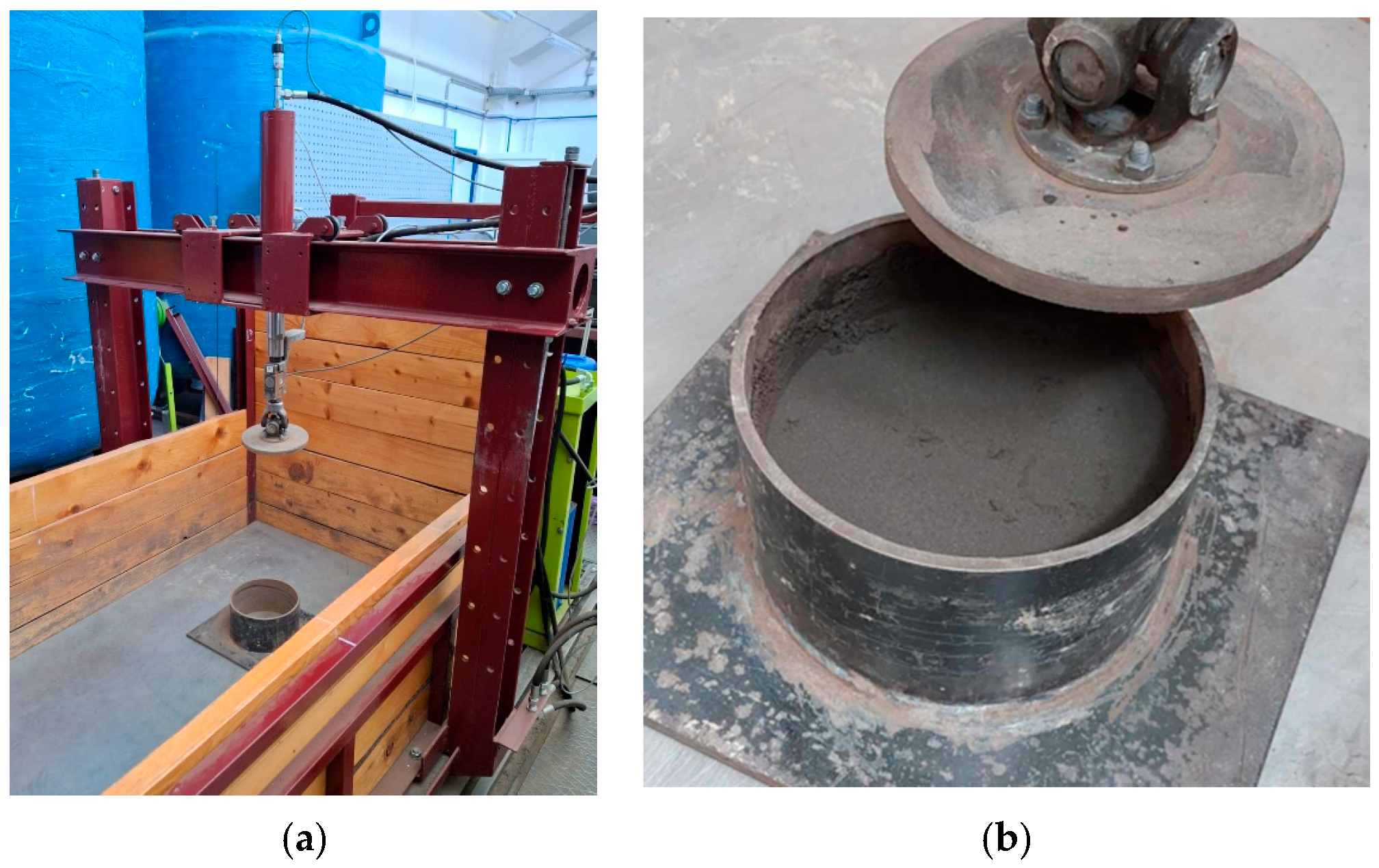
The confined compression test was conducted using a small soil bin, as illustrated in Figure 1b. The load was applied to the soil surface using the sinkage plate (a circular-shaped steel plate with a diameter of 20 cm and 10 mm thickness) of the bevameter, as shown in Figure 1a (Details of the design and construction are provided in [32]). The sinkage plate was joined using a thread to the load cell that was connected with the displacement sensors at the end of the hydraulic cylinder of the bevameter. The soil sample was compressed using a hydraulic press operating at a constant displacement rate of 2 mm/s. During the test, the applied stress—determined by the soil reaction force—varied depending on the soil type and moisture content. Overall, the applied pressure ranged approximately from 0.25 N cm−2 to 40 N cm−2. The small circular soil bin was specifically designed and built with a diameter of 120 mm, a height of 200 mm, and a wall thickness of 3 mm. Steel was the material used for its construction. To ensure stability, a rectangular steel plate measuring 0.5 m by 0.5 m was welded to the bottom of the bin and placed on solid ground.
The ratio of the sample height (H) to the plate diameter (D), or H/D ratio, significantly influences the soil’s behavior during the test. While some radial expansion can occur, the small soil bin provides substantial lateral confinement. As the H/D ratio decreases, this radial movement also decreases. Below a critical H/D value, the soil beneath the plate directly interacts with the bottom of the bin, effectively preventing any radial expansion from the start of the compression process. This interaction with the bottom boundary alters the stress distribution within the soil and affects the measured compression parameters.
The soil sample, prepared with a predetermined moisture content (M.C., m%), and an initial density of 1.5 g/cm3, was placed in the bin (Figure 1b). The soil was compacted by applying a controlled force to the pressure plate as it interacts with the soil sample. Throughout the compaction process, a measuring system continuously monitored and recorded both the vertical displacement of the pressure plate and the force exerted upon it. This measurement was performed on all soil textures included in the study. The soil specimens were prepared at a relatively high bulk density, resulting in the development of substantial compressive forces during testing. Under these conditions, the effect of sidewall friction was considered negligible in comparison with the applied vertical loading. In addition, an increase in soil moisture content tended to reduce the friction between the soil and the container wall, thereby further minimizing the potential influence of sidewall friction on the experimental results.
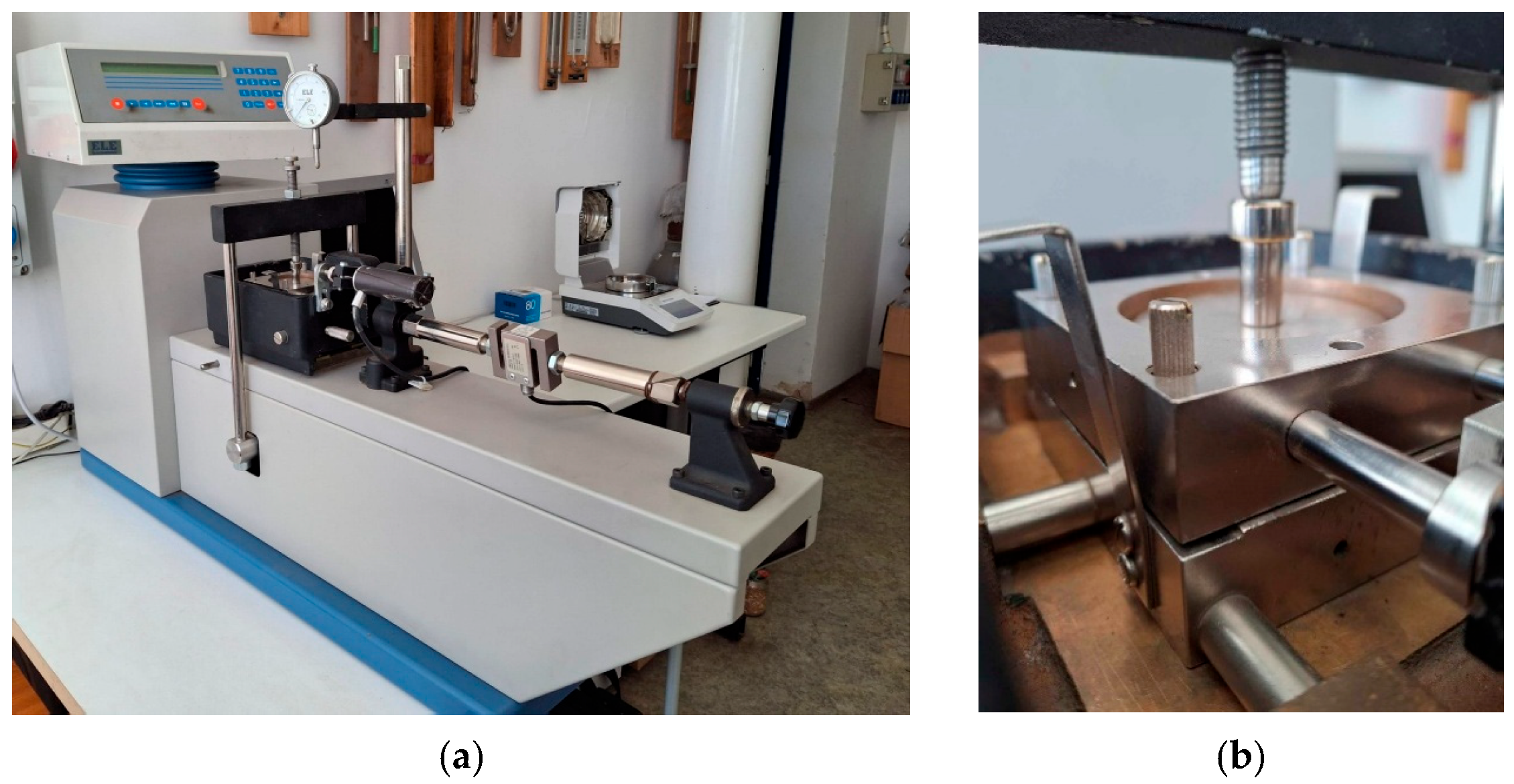
Direct shear apparatus (ELE Direct/Residual Shear Test Set 110 vAC, ELE International, Milton Keynes, UK), which is displayed in Figure 2a,b, was used to determine the soil’s mechanical properties, specifically the internal friction angle, represented by the symbol (φ). Shear strength is a critical parameter in soil mechanics, representing the soil’s resistance to failure along a shear plane [33]. The internal friction angle, derived from shear strength tests, quantifies the contribution of friction between soil particles to the overall shear strength [34]. This parameter is essential for analyzing the soil’s behavior under pressure plate. The internal friction angle of the soil influences the shape of the deformation zone formed under the pressure plate, specifically the angle of the shear cone or wedge that develops beneath the plate. This, in turn, affects the height (h) of this cone. A higher internal friction angle generally results in a steeper cone with a greater height, while a lower friction angle leads to a shallower cone with a smaller height. This relationship between internal friction angle and cone geometry is a key factor influencing the soil’s load-bearing capacity and deformation characteristics in confined compression.
Five distinct soil types, collected from different regions across Hungary, were systematically selected for this study to represent a range of increasing clay content. The specific characteristics of each soil type, including texture, internal friction angle, and other pertinent physical properties, are presented in Table 1.
The soil samples underwent minimal processing prior to testing. The soil was sieved so that larger particles, specifically those exceeding 2 mm in diameter, along with any pebbles and plant residues, were removed. This ensured that the tested samples primarily consisted of the fine earth fraction, allowing for more consistent and representative measurements of the soil’s inherent properties. This minimal preparation helps to standardize the soil samples, reducing variability caused by larger particles or organic matter. The soil bin was filled with the cleaned soil in successive layers, while carefully maintaining a uniform bulk density of 1.5 g cm−3 throughout the sample. The organic matter content of the soil was negligible (<1%), as determined using the loss-on-ignition method. Therefore, its influence on the mechanical behavior of the soil was considered insignificant.

3. Results and Discussion

3.1. Measurement Results

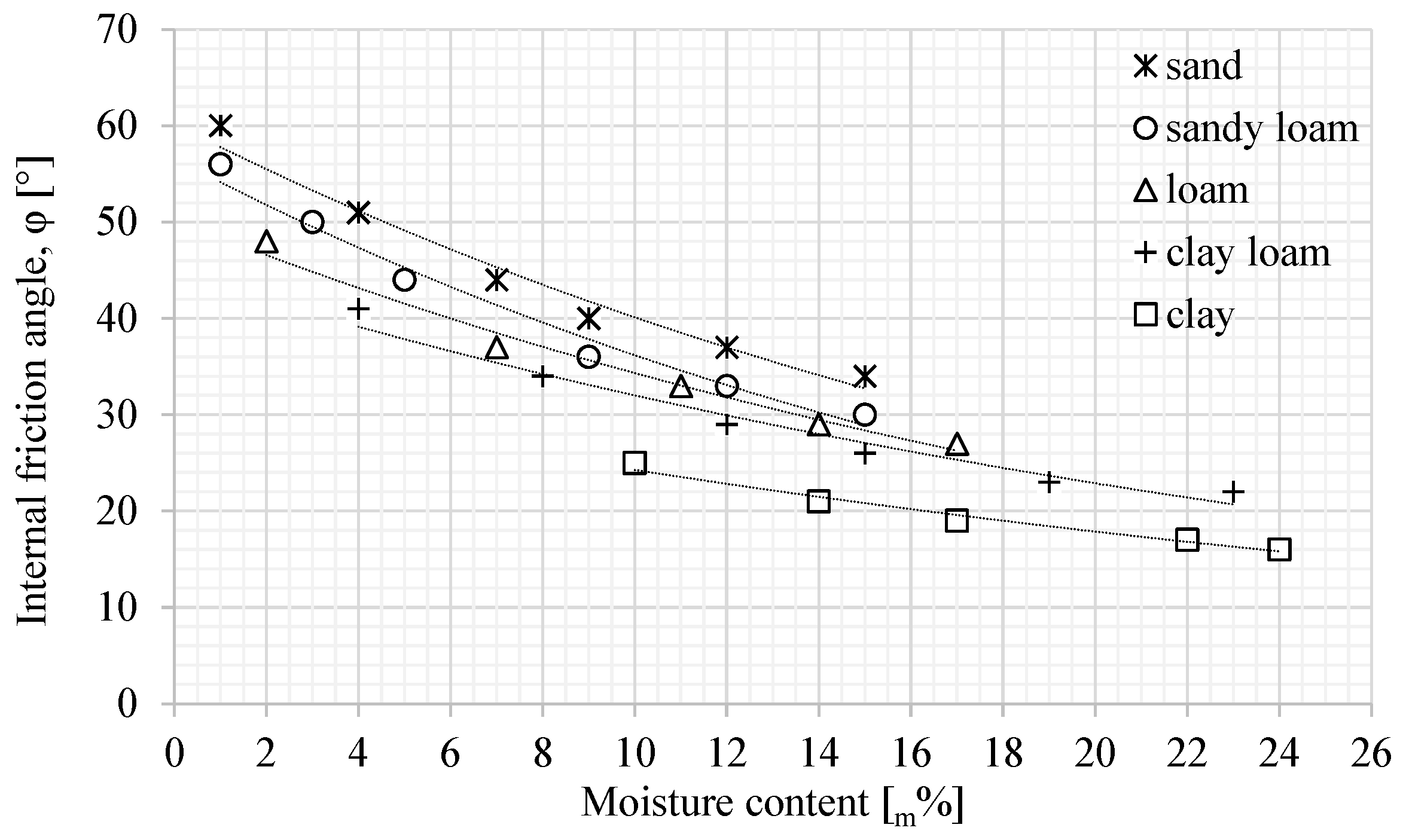
The internal friction angle of the investigated soil types decreased as moisture content increased, with the rate of decrease varying based on soil texture (Figure 3). Sand with low clay content (~2%) started with a high dry friction angle (~60°) due to strong particle interlocking, decreasing moderately to around 15° at saturation as water reduced interparticle friction. Sandy loam (clay content ~6%) had an initial friction angle of ~55° and decreased faster than sand to around 15° at saturation due to some cohesion from finer particles. Loam (~19% clay) had a moderate dry friction angle (~48°) and steadily decreased to ~17° at higher moisture levels as water lubricates grains. Clay–loam (~29% clay) started at a lower dry friction angle (~41°) and decreased more significantly to ~23° at a more saturated level, exhibiting plastic behavior. Clay (~56% clay) had the lowest dry friction angle (~35°) and decreased to 24°. As the water content increased, a thin water film formed around soil particles, acting as a lubricant and reducing friction between particles. At higher moisture contents, the thickening of this water film weakened interparticle contacts and particle interlocking, leading to a decrease in the internal friction angle [36,37,38].
The observed decrease in internal friction angle with increasing moisture content is consistent with previous studies, which report that water films forming around soil particles act as a lubricant, reducing interparticle contact forces and frictional resistance [39]. This effect becomes dominant at higher moisture contents, where the separation of particles reduces mechanical interlocking and shear strength.
In confined compression tests, the compaction behavior observed during the primary consolidation phase typically followed an exponential trend, making log-linear plots of the data suitable for analytical purposes. Achieving a specific pre-compaction level is influenced by the soil’s moisture content, as its ability to support its own structure varies accordingly [40,41]. Excessively high moisture content may lead to structural collapse under the soil’s own weight, whereas insufficient moisture may hinder the soil from occupying the available volume effectively, thereby preventing the attainment of the target density [42]. These factors collectively define the optimal moisture content range required to achieve a given soil density [43,44].
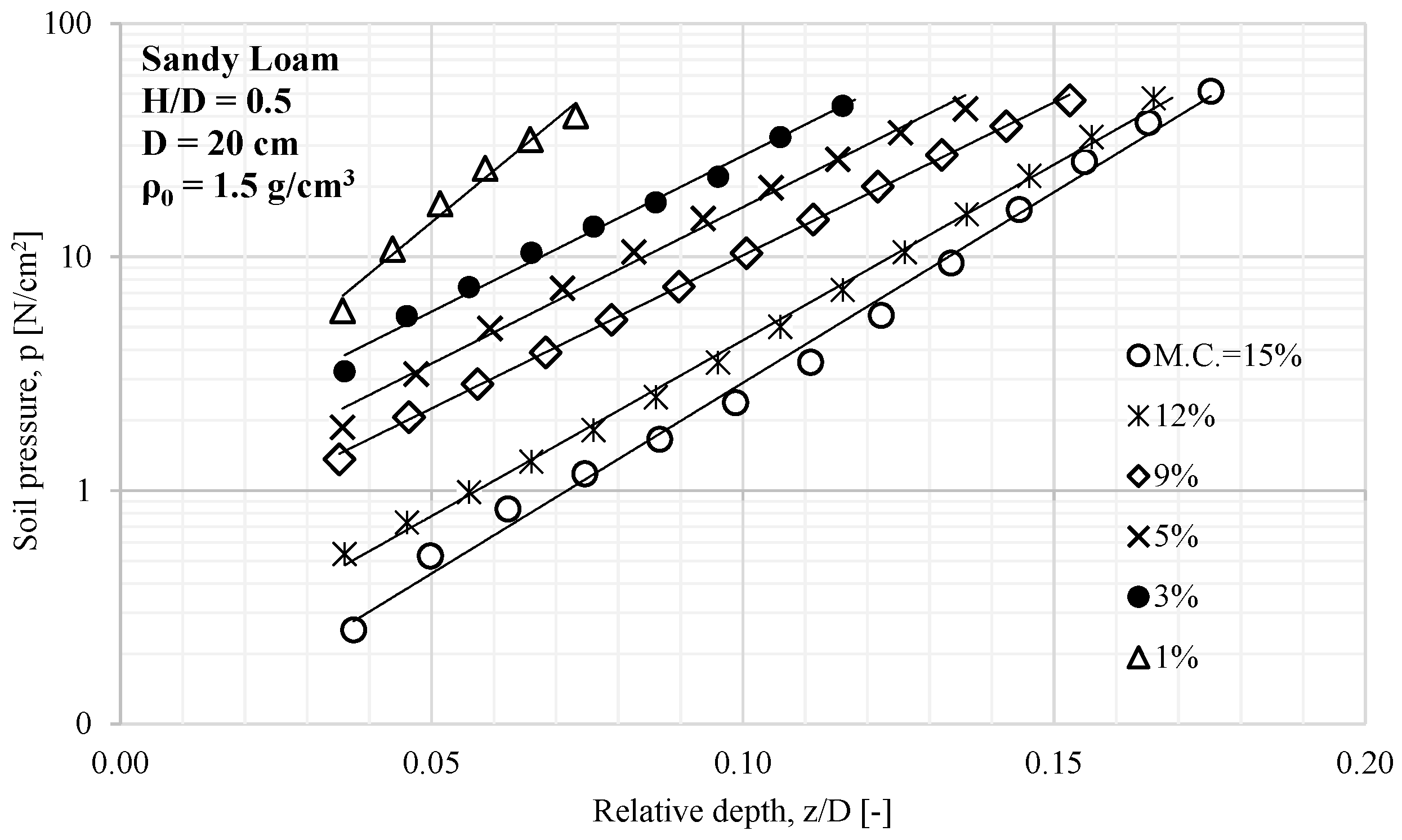
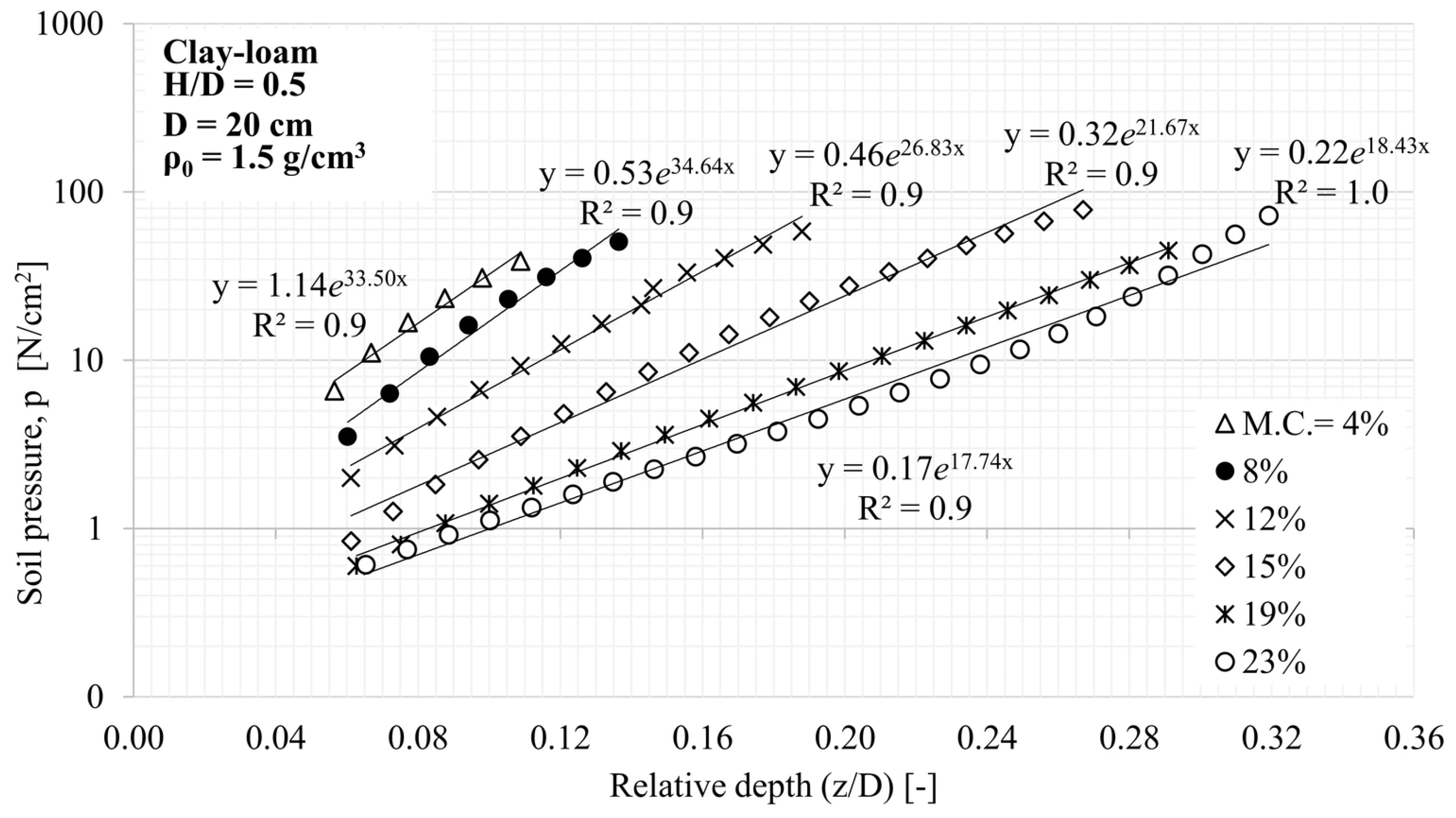
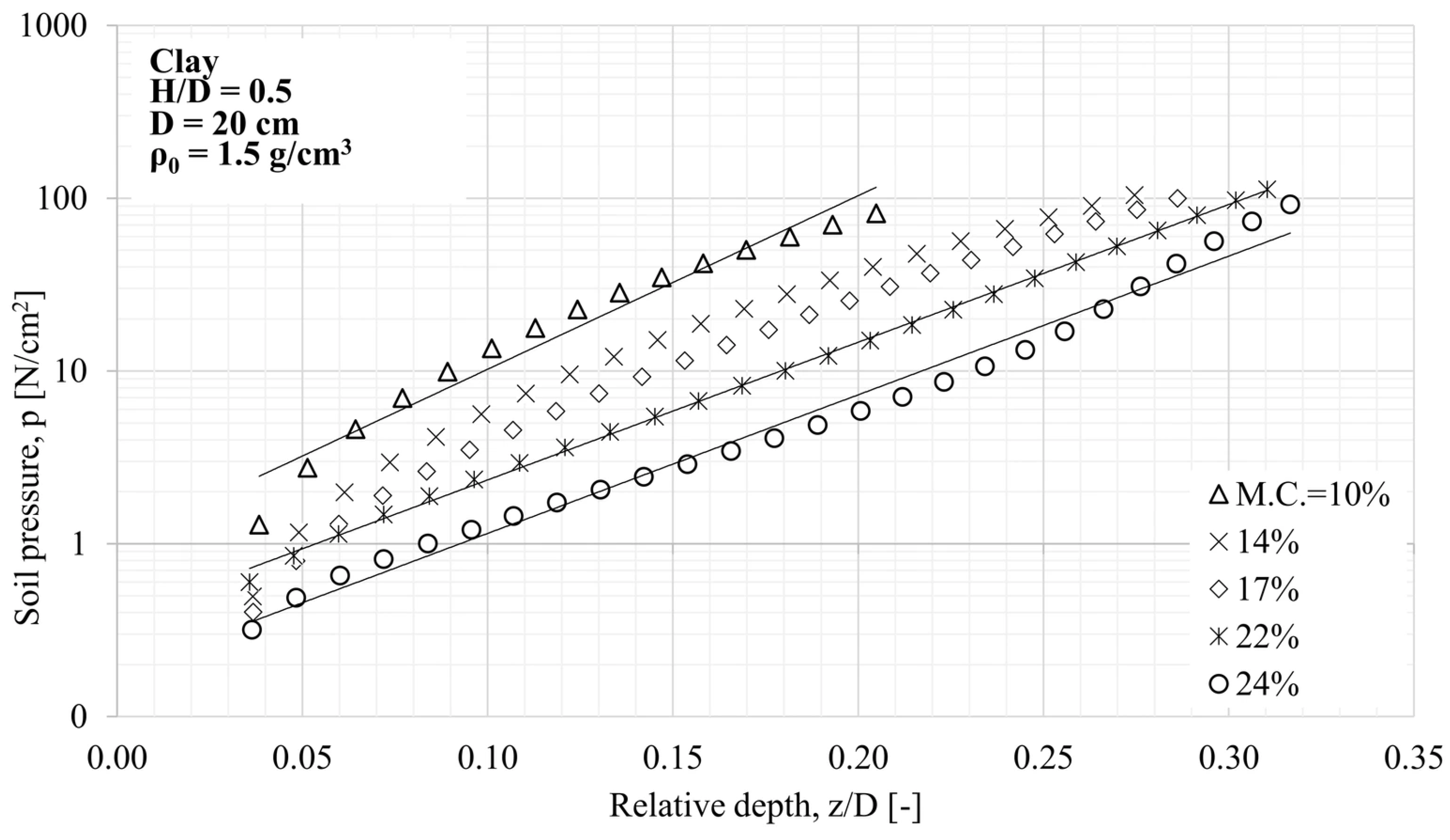
Figure 4 illustrates the relationship between relative depth (z/D), where z is sinkage and D is plate diameter, and soil pressure for sandy loam soil at different moisture contents. The curves of p-z/D for the other soil types are provided in Appendix A (Figure A1, Figure A2, Figure A3 and Figure A4), as they exhibit similar behavior. The data span a relative depth range of 0.35 to 1.75 in the wettest state, limited either by the measuring device’s pressure capacity or by soil squeezing out from beneath the plate. The curves generally follow a similar trend, although there is some scatter in their slopes. Drier soil conditions exhibit higher load-bearing capacity, while wetter conditions lead to greater compaction. Notably, a moisture content of 15% represents the maximum value at which a soil density of 1.5 g/cm3 can be achieved for this specific sandy loam. This observation is consistent with the findings of Mohamed [45], who reported that the sandy loam sample exhibited a substantially higher moisture content (13.68%) compared to the sandy sample (7.5%). This suggests that increased moisture content is generally associated with a reduction in bulk density.
The higher load-bearing capacity observed under drier conditions can be attributed to increased interparticle contact forces and reduced lubrication effects. Similar trends have been reported in previous studies, where increasing moisture content leads to reduced shear strength and stiffness due to the development of water films between particles [46].

3.2. Load-Bearing Capacity Factor ka, Δk

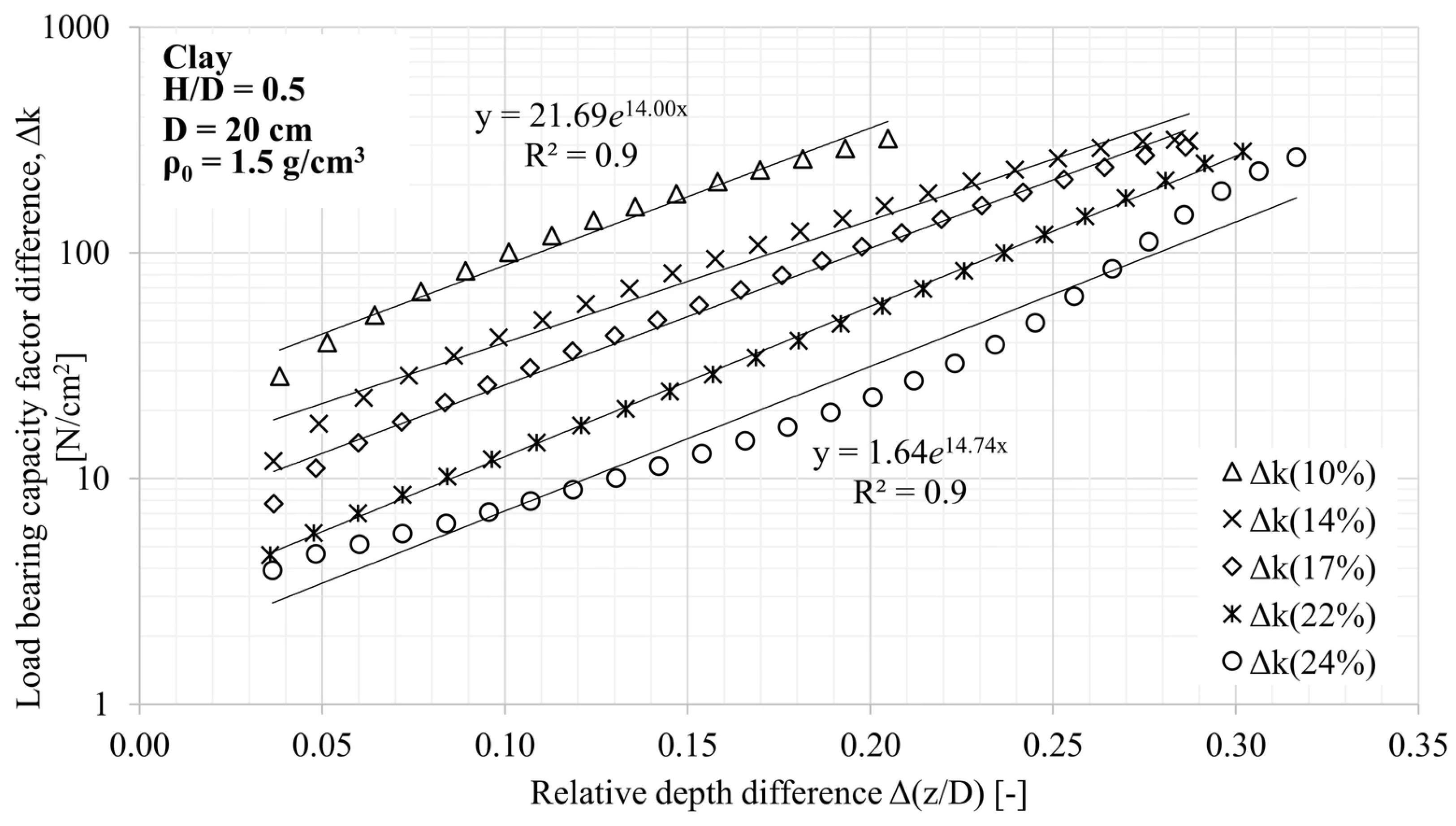
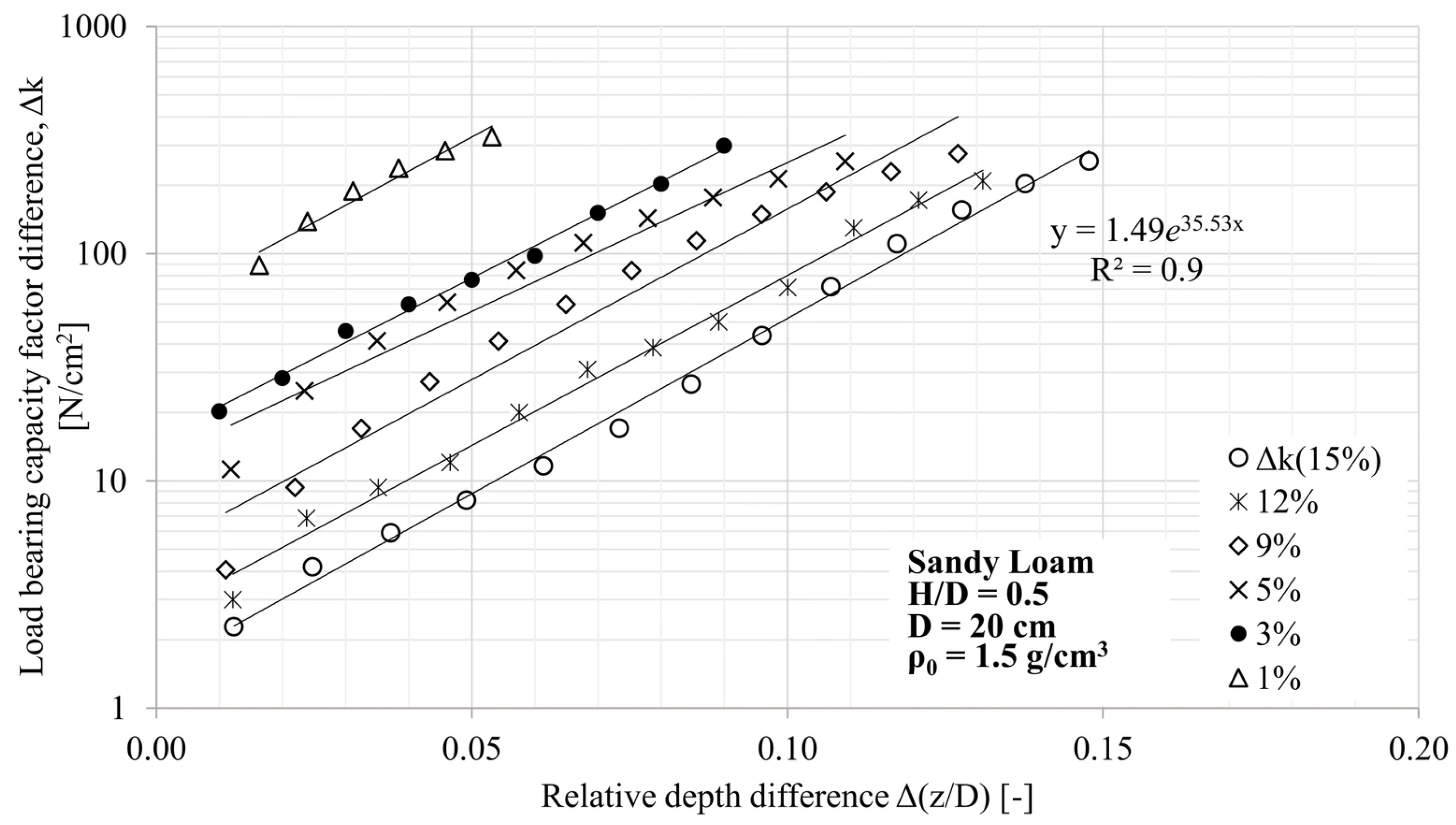
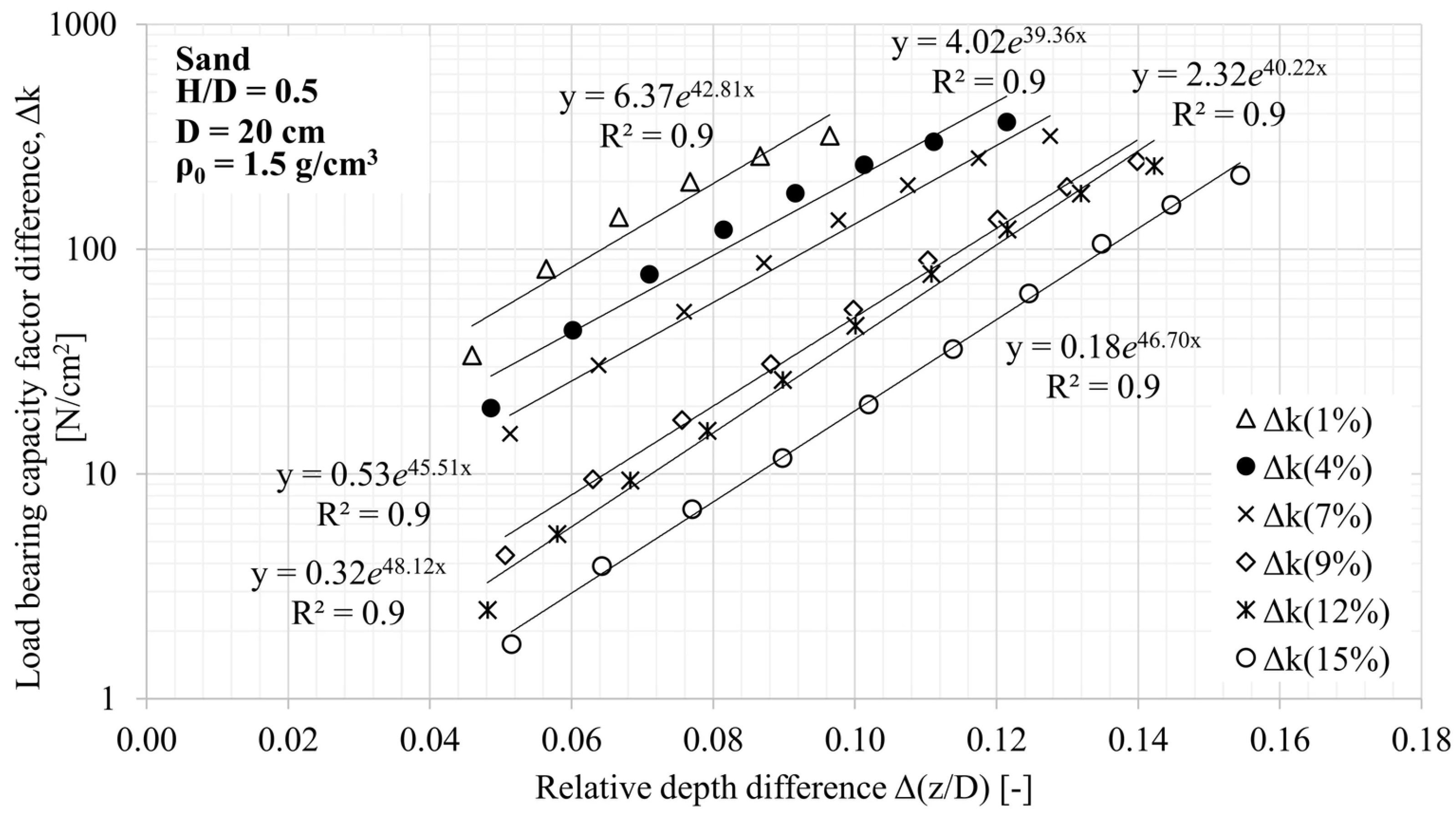
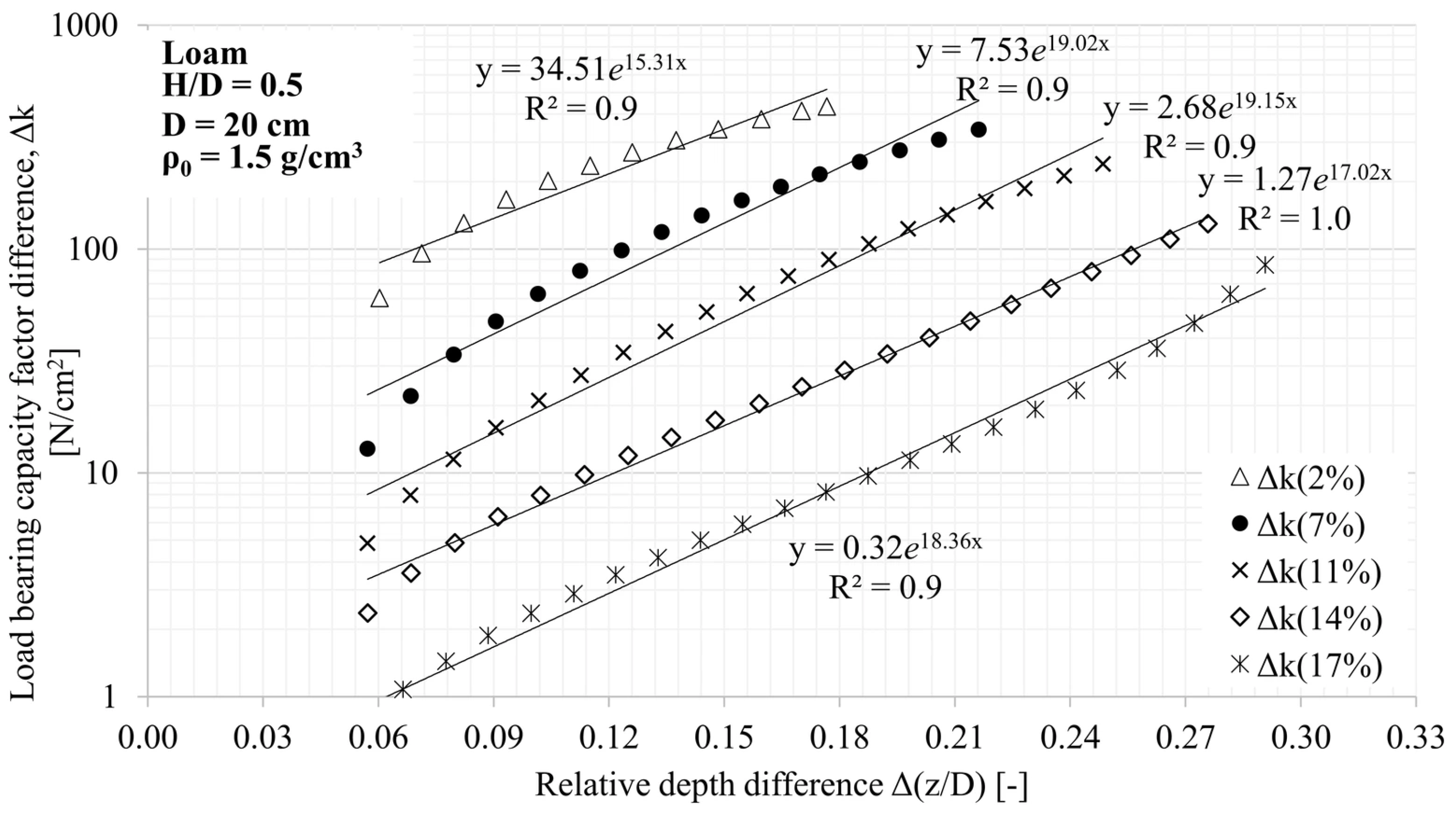
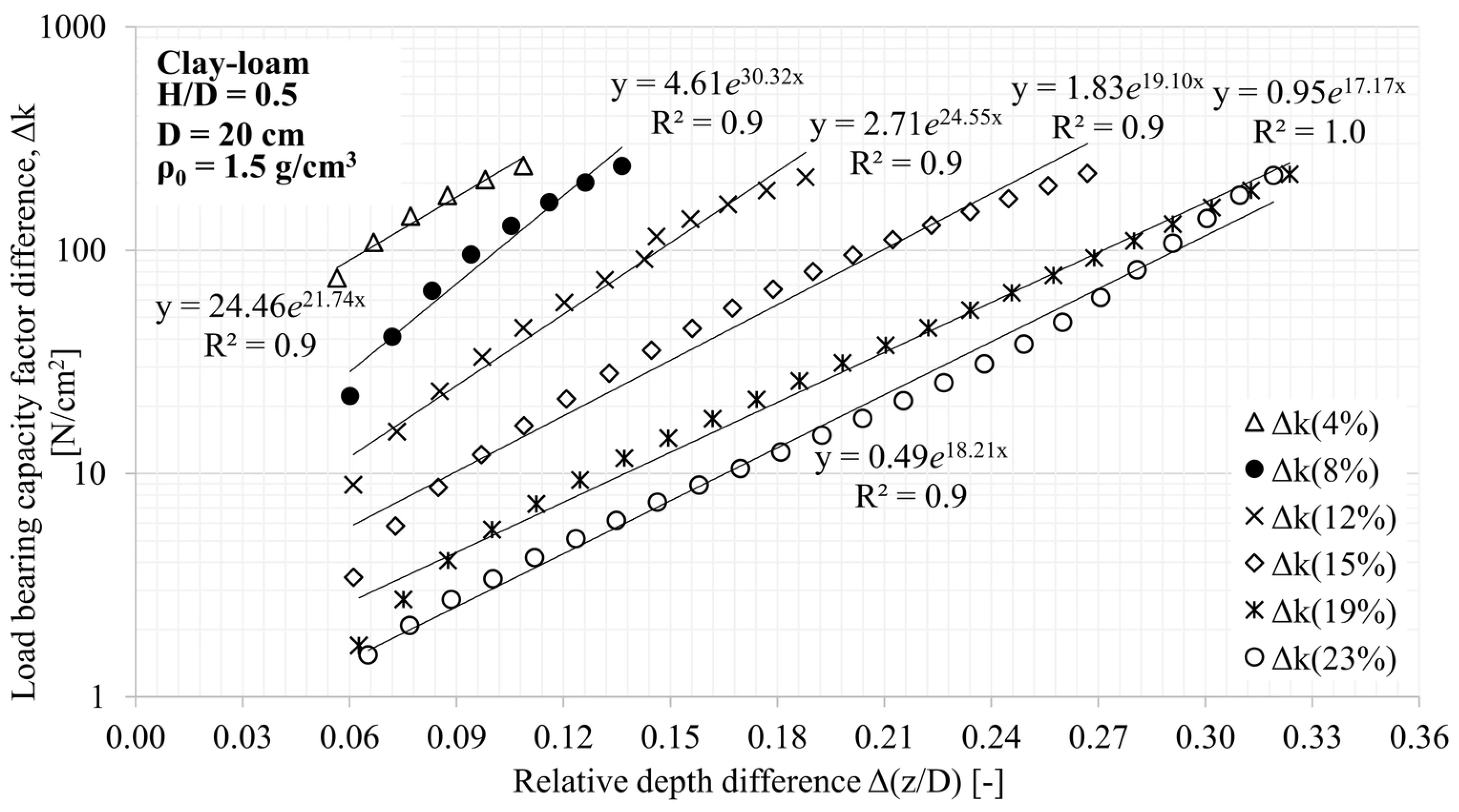
To determine the soil’s load-bearing capacity factor ka, Equation (1) was utilized, leading to the formulation of Equation (2), in which the exponent n was set to 0.8. Then, using the initial point of the pressure–sinkage curves, the Δk values were determined (according to Equation (3)), and these values were plotted in the function of relative depth difference Δ(z/D) as shown in Figure 5. Other figures of Δk with Δ(z/D)for other soils are presented in Appendix B (Figure A5, Figure A6, Figure A7 and Figure A8).
k a = p · D z n
And
Δk = k a k 0   and   Δ z D = z D z 0 D
where (k0) is associated with (z0/D), the starting point of the pressure–sinkage curves. This suggests that k0 represents the initial soil resistance or modulus at the very beginning of plate penetration, before significant soil compaction or deformation occurs.
When the soil layer’s thickness (H) is half the diameter of the loading plate (D), i.e., an H/D ratio of 0.5, the presence of the underlying hard layer significantly influences the soil’s load-bearing capacity. This effect is accounted for by using an increased bearing capacity factor, denoted as (ka) (apparent load-bearing capacity factor). The hard layer restricts soil displacement, leading to a higher resistance to penetration compared to a theoretically infinite half-space where such restriction is absent (more details about the hard layer can be found in [14,15].
The exponential relationship observed between Δk and Δ(z/D) is in agreement with the general non-linear behavior of soil compression and bearing capacity described in classical terramechanics and soil mechanics models. However, the present formulation explicitly incorporates moisture-dependent parameters, which extends the applicability of traditional approaches.
To facilitate the analysis of soil load-bearing capacity, Figure 5 introduces the relative depth difference, Δ(z/D), which quantifies the variation in sinkage between the initial and current relative depths under different conditions. This term provides a consistent basis for calculating the change in the load-bearing capacity factor, Δk, according to Equation (3), and for establishing the mathematical relationship used in the proposed model.
By combining the equation illustrated in Figure 5 with Equation (3), the relationship between the initial load-bearing capacity factor and the relative depth is established. The constant B within the resulting equation depends on moisture content and clay content. The constant c is basically independent of the moisture content.
k a = k 0 + B e c z D z 0 D
The calculated B and c values for the other soil textures are shown in Table 2. Besides the coefficients, the characteristic value of the clay content is also shown Κ = (Cc/(1 − Cc)), in the table.
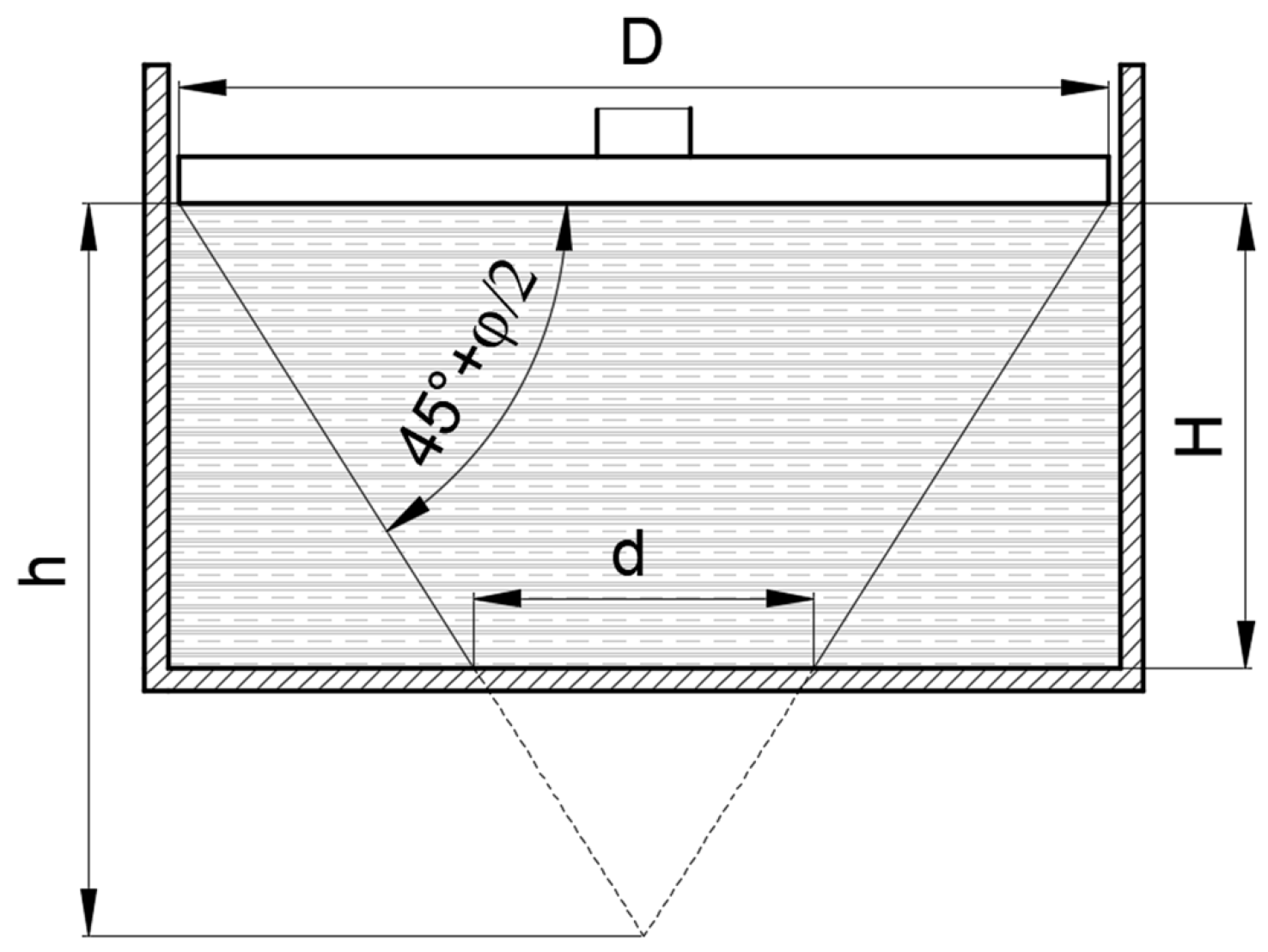
When the H/D ratio is held constant, variations in soil properties, specifically the internal friction angle, lead to differences in the cone height h formed beneath the pressure plate. This, in turn, affects the diameter d of the cone at its interface with the hard underlying layer. The d/D ratio (cone diameter to plate diameter) then quantifies the relationship between the size of the compacted soil cone and the size of the pressure plate. The height of the cone according to Terzaghi, [47] (Figure 6):
h = D 2 · tan 45 ° + φ 2
where φ is the internal friction angle of the soil. Therefore, the cone height depends on the internal friction angle of the soil, and the internal friction angle is a function of the clay content. Equation (5) was derived based on Terzaghi’s cone hypothesis to represent the stress distribution beneath the loading plate. However, the validity of this assumption depends on the relative thickness of the soil layer. When H/D = 0, the soil layer thickness becomes zero, indicating the absence of a soil layer and, consequently, the inability of a shear mechanism to develop. For small H/D ratios, such as 0.5, the soil layer remains extremely shallow. Under such conditions, the classical failure cone assumed in Terzaghi’s theory cannot fully develop. Instead, the soil response is dominated primarily by confined compression rather than by the formation of a fully developed shear surface. Figure 6 shows a schematic diagram of the compression test, showing the soil placed in a confined space and the pressure plate above it. Below the pressure plate, the soil cone that builds up under pressure is visible, the size of which is a function of the soil’s angle of internal friction. The figure illustrates a relationship where the diameter (d) of the soil cone formed under the pressure plate can be calculated based on the soil’s internal friction angle ( φ ) and the thickness (H) of the soil layer, as shown in Equation (6).
d = D 2 · H tan 45 + φ 2
It should be noted that the applicability of Terzaghi’s failure mechanism is limited under the present experimental conditions, particularly due to the shallow soil layer (H/D = 0.5). Under such conditions, the failure mechanism is dominated by confined compression rather than classical shear failure, which may lead to deviations from the theoretical cone geometry.
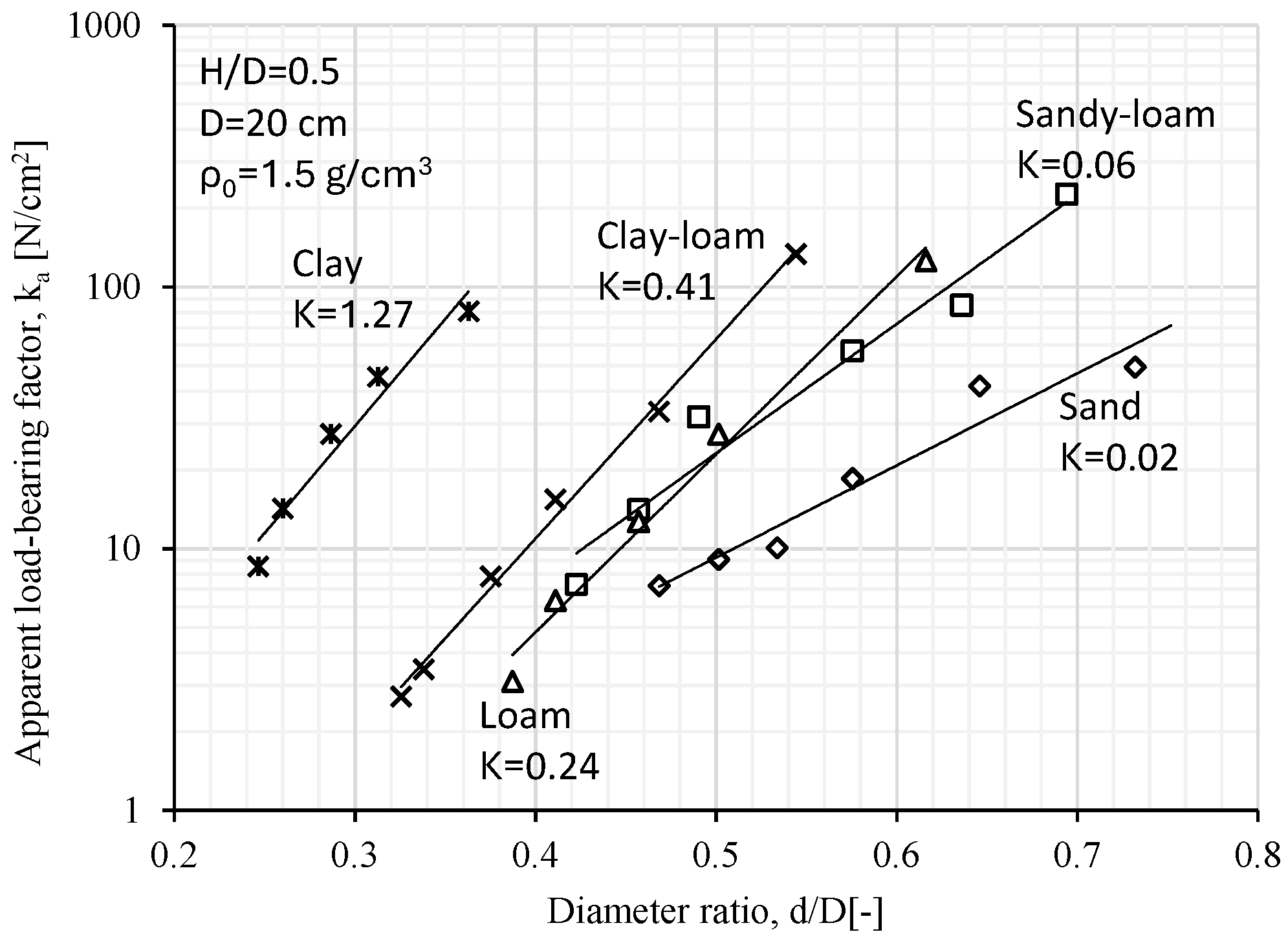
Figure 7 shows the load-bearing capacity coefficient (ka) of the pressure Equation (2) for the shallow layer as a function of the diameter ratios for the examined soil textures. The figure also shows the characteristic value of the clay content (Κ).
The increasing slope of the curves with higher clay content indicates a greater sensitivity of load-bearing capacity to deformation. This behavior can be attributed to the higher plasticity and water retention capacity of clay-rich soils, which leads to more pronounced changes in mechanical response with moisture variations.
In all soil texture cases examined in this study, the pressure cone overhangs the bottom plate. The smallest extent is for the clay soil in its wettest state, where d/D = 0.242, and the largest extent is for the last value of the sandy soil in its driest state, where d/D = 0.738. (ka), increases exponentially with increasing (d/D). Some relationships can also be determined based on the clay content. In the examined range, the slope of the curves also increases for higher clay contents, which means that the apparent load-bearing capacity increases to a greater extent. The slopes of the curves are clay: 86.96°; clay-loam: 86.7°; loam: 86.4°; sandy-loam: 84.98°; and sand: 82.96°.
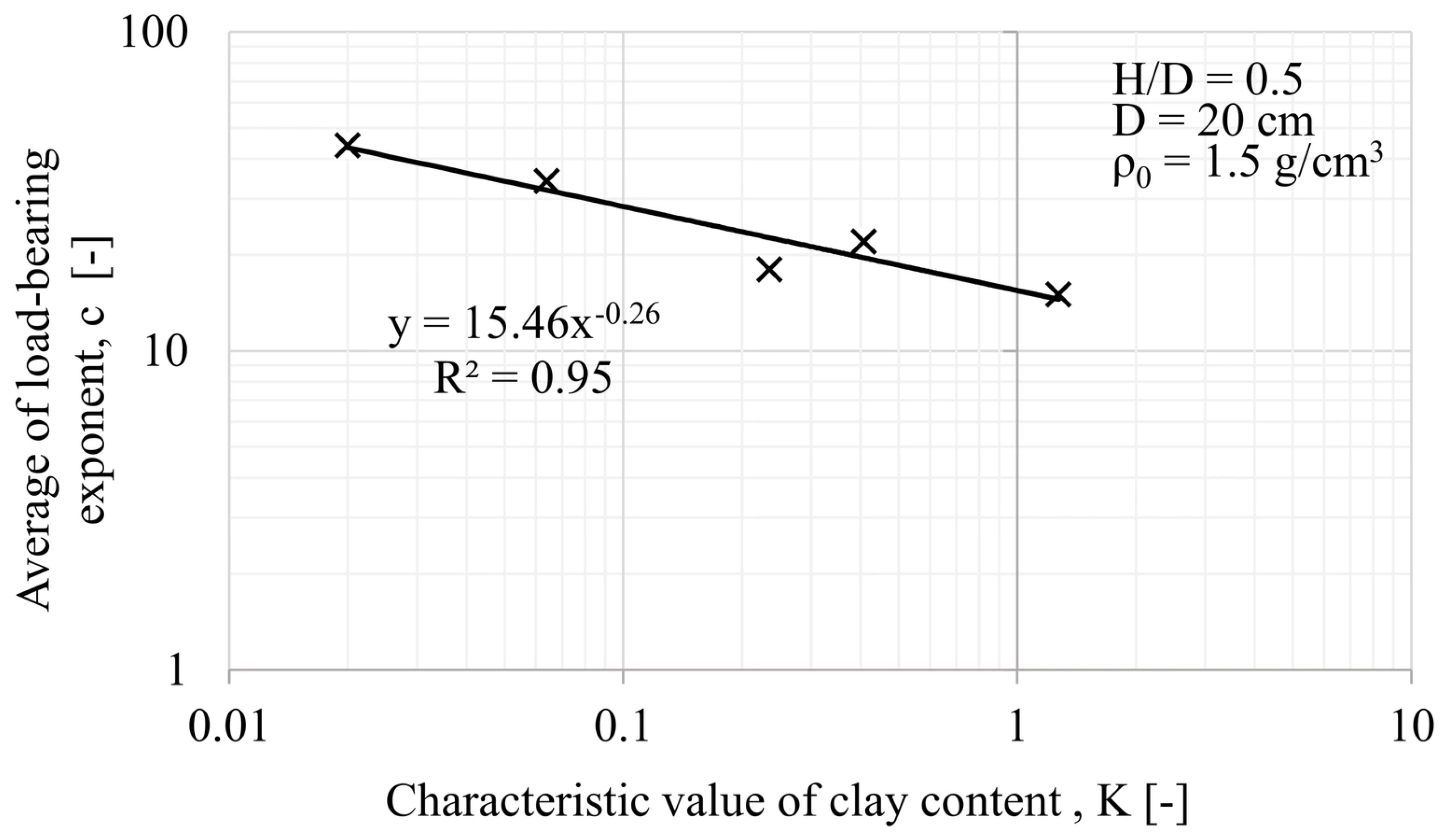
Since the (c) exponents in Equation (4) were almost the same with a small difference, the statement that the exponent does not depend on the moisture content but is typically determined by the soil texture and grain size distribution was confirmed. Therefore, for a soil texture, the average of the exponents valid for different moisture contents can be determined, which can be plotted as a function of the characteristic value of the clay content. In Figure 8, a good correlation can be observed between the clay content and the average of the (c) exponents. The averages of (c) exponents are clay: 44; clay-loam: 34; loam: 18; sandy-loam: 22; and sand: 15.
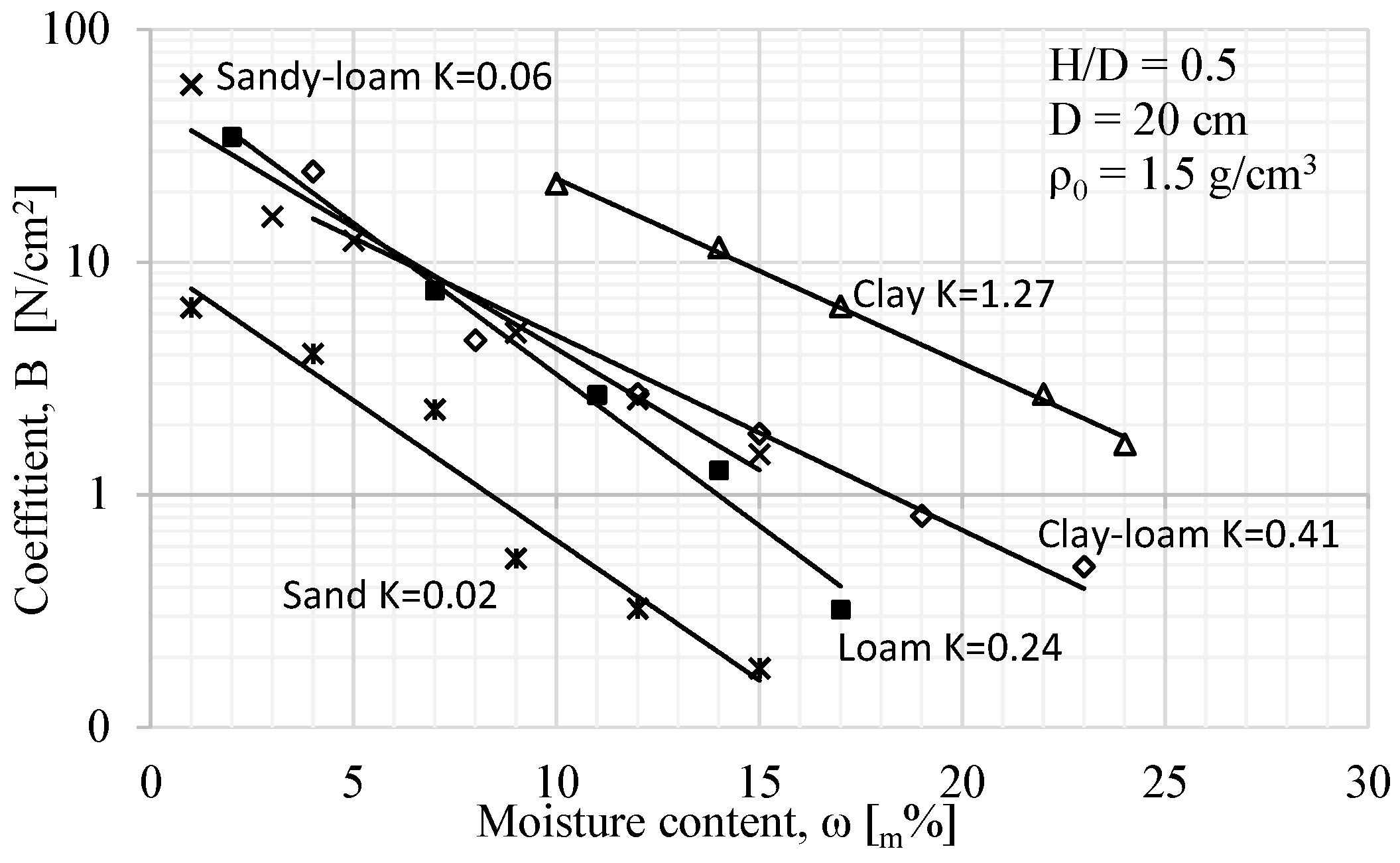
The values of loam and sandy loam are close to each other in several cases (Figure 7, Figure 8 and Figure 9). Due to the inhomogeneity of the samples and the measurement difficulties, it is more difficult to recognize the trend here, but it can be stated that despite the significant differences in clay content, the effect of (d/D) on (ka) is similar, and the moisture content also has a similar influence on the (B) coefficient. Figure 9 shows that the loam, sandy loam, and clay loam overlap in curves.

4. Conclusions

Based on both theoretical analysis and experimental investigation, the following key conclusions can be derived:
  • In the case of soil textures with a higher internal friction angle, the soil-cone on the pressure plate extends deeper, so for the same H/D ratio, compaction immediately starts with a higher d/D ratio, which increases the apparent load-bearing capacity coefficient.
  • The angle of internal friction of the soil and the moisture content of the soil are inversely proportional to each other in the case of a rigid layer. Soil with a higher angle of internal friction reacts more quickly to the hard layer, and an increase in moisture content always reduces the load-bearing capacity, as well as the constant (B) and the (ka).
  • The exponent (c) of the load-bearing capacity equation is independent of moisture content, thus confirming previous literature knowledge. However, the coefficient (B) is not independent of moisture content and is strongly related to it. Knowing the characteristic value of the clay content of the soil alone is not enough to further investigate the coefficient (B).
In later studies, it may be worth examining the role of the sand ratio on the coefficients. Because, as can be seen in the case of mixed soil, where the three components are present in similar proportions (loam and clay loam), the behavior of the soil is not clear, and a lot of overlaps occur; it may be worth searching for, or creating a dimensionless number that considers all three components (sand, silt, and clay).
Since the preliminary selection of soils was based on clay content (Cc), larger gaps were created between the values of the clay content characteristic number (Κ) used in the evaluation processing stage. In future studies, it is worth selecting soils by considering (Κ) or a similar parameter to more accurately describe the functional relationships.

Author Contributions

Conceptualization, N.D.S. and G.P.; methodology, G.P.; software, N.D.S.; validation, N.D.S., G.P. and M.M.H.; formal analysis, M.M.H.; investigation, N.D.S.; resources, G.P.; data curation, N.D.S.; writing—original draft preparation, N.D.S. and G.P.; writing—review and editing, M.M.H.; visualization, G.P.; supervision, G.P.; project administration, N.D.S.; funding acquisition, G.P. All authors have read and agreed to the published version of the manuscript.

Funding

Project no. 2022-2.1.1-NL-2022-00012 has been implemented with the support provided by the Ministry of Culture and Innovation of Hungary from the National Research, Development and Innovation Fund, financed under the 2022-2.1.1-NL funding scheme.

Institutional Review Board Statement

Not applicable.

Informed Consent Statement

Not applicable.

Data Availability Statement

The data used to support this study’s findings can be provided by the corresponding author upon reasonable request.

Conflicts of Interest

The authors declare no conflicts of interest.

Appendix A

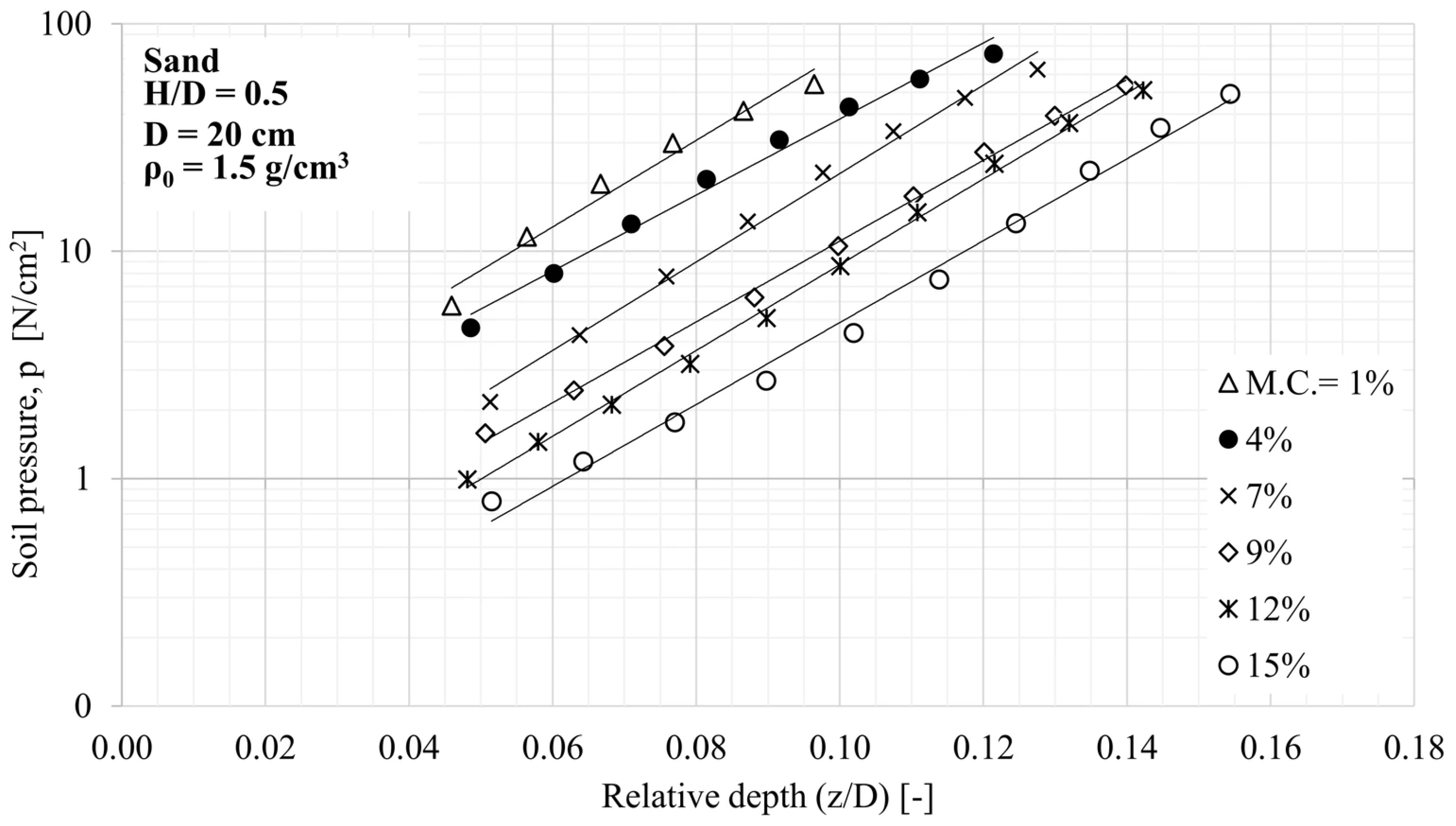
Figure A1. Soil pressure-relative depth for sand soil.
Eng 07 00150 g0a1
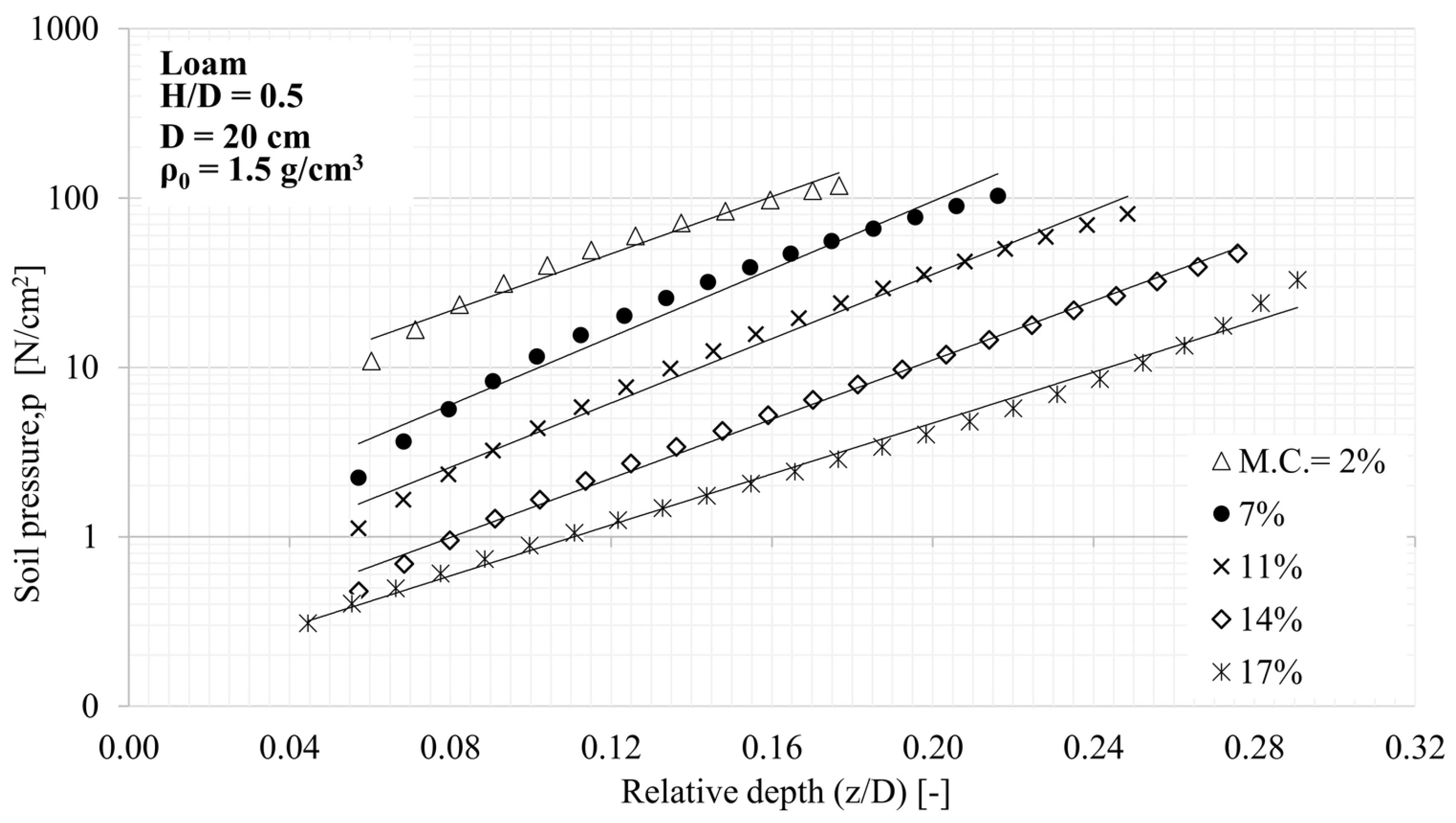
Figure A2. Soil pressure-relative depth for loam soil.
Eng 07 00150 g0a2
Figure A3. Soil pressure-relative depth for clay-loam soil.
Eng 07 00150 g0a3
Figure A4. Soil pressure-relative depth for clay soil.
Eng 07 00150 g0a4

Appendix B

Figure A5. Load-bearing capacity difference ∆k with relative depth difference ∆(z/D) for sand soil.
Eng 07 00150 g0a5
Figure A6. Load-bearing capacity difference ∆k with relative depth difference ∆(z/D) for loam soil.
Eng 07 00150 g0a6
Figure A7. Load-bearing capacity difference ∆k with relative depth difference ∆(z/D) for clay-loam soil.
Eng 07 00150 g0a7
Figure A8. Load-bearing capacity difference ∆k with relative depth difference ∆(z/D) for clay soil.
Eng 07 00150 g0a8

References

  1. Swamy, V.S.; Pandit, R.; Yerro, A.; Sandu, C.; Rizzo, D.M.; Sebeck, K.; Gorsich, D. Review of Modeling and Validation Techniques for Tire-Deformable Soil Interactions. J. Terramech. 2023, 109, 73–92. [Google Scholar] [CrossRef]
  2. Zeng, H.; Zhao, C.; Chen, S.; Xu, W.; Zang, M. Numerical Simulations of Tire-Soil Interactions: A Comprehensive Review. Arch. Comput. Methods Eng. 2023, 30, 4801–4829. [Google Scholar] [CrossRef]
  3. Ally, H.; Wang, X.; Wu, T.; Liu, T.; Ge, J. Improving Agricultural Tire Traction Performance Through Finite Element Analysis and Semi-Empirical Modeling. Eng 2025, 6, 63. [Google Scholar] [CrossRef]
  4. Bekker, M.G. Off-the-Road Locomotion; University of Michigan Press: Ann Arbor, MI, USA, 1960. [Google Scholar]
  5. Ding, L.; Gao, H.; Deng, Z.; Li, Y.; Liu, G. New Perspective on Characterizing Pressure–Sinkage Relationship of Terrains for Estimating Interaction Mechanics. J. Terramech. 2014, 52, 57–76. [Google Scholar] [CrossRef]
  6. Chen, D.; Hou, L.; Bu, X.; Chen, Y. A Piecewise Bearing Capacity Method of Unstructured Terrain Considering Characteristics of Soil Mechanic and Wheel Geometry. J. Terramech. 2020, 89, 13–20. [Google Scholar] [CrossRef]
  7. Bekker, M.G. Introduction to Terrain-Vehicle Systems, 1st ed.; University of Michigan Press: Ann Arbor, MI, USA, 1969. [Google Scholar]
  8. Sitkei, G.; Pillinger, G.; Máthé, L.; Gurmai, L.; Kiss, P. Methods for Generalization of Experimental Results in Terramechanics. J. Terramech. 2019, 81, 23–34. [Google Scholar] [CrossRef]
  9. Lyasko, M. LSA Model for Sinkage Predictions. J. Terramech. 2010, 47, 1–19. [Google Scholar] [CrossRef]
  10. Yang, Y.; Huang, F.; Kang, S. Mechanism of Penetration Rate Improvement in Hot Dry Rock Under the Coupling of Impact Load and Confining Pressure Release. Reserv. Sci. 2026, 2, 52–64. [Google Scholar] [CrossRef]
  11. Tahir, M.U.; Guo, S. Preliminary Investigation of Fracture Behavior during Carbon Dioxide Fracturing of Natural Hydrogen Reservoir with Hard-Core Imperfections. Reserv. Sci. 2026, 2, 34–51. [Google Scholar] [CrossRef]
  12. Pillinger, G.; Géczy, A.; Hudoba, Z.; Kiss, P. Determination of Soil Density by Cone Index Data. J. Terramech. 2018, 77, 69–74. [Google Scholar] [CrossRef]
  13. Gorucu, S.; Khalilian, A.; Han, Y.J.; Dodd, R.B.; Smith, B.R. An Algorithm to Determine the Optimum Tillage Depth from Soil Penetrometer Data in Coastal Plain Soils. Appl. Eng. Agric. 2006, 22, 625–631. [Google Scholar] [CrossRef]
  14. Salman, N.D.; Pillinger, G.; Kiss, P. Soil Behavior of Shallow Homogenous Upper Layer Soil. J. Appl. Sci. Eng. 2022, 25. [Google Scholar] [CrossRef]
  15. Salman, N.D.; Pillinger, G.; Sitkei, G.; Kiss, P. Load Bearing Capacity of Finite Half Space Agricultural Homogeneous Soil. J. Terramech. 2023, 107, 35–46. [Google Scholar] [CrossRef]
  16. Atanasov, A.I.; Atanasov, A.Z. Soil Density Measurement During Cultivation Through Analysis of the Elastic Deformation of a Cultivator Shank. Eng 2025, 6, 310. [Google Scholar] [CrossRef]
  17. Shaheb, M.R.; Venkatesh, R.; Shearer, S.A. A Review on the Effect of Soil Compaction and Its Management for Sustainable Crop Production. J. Biosyst. Eng. 2021, 46, 417–439. [Google Scholar] [CrossRef]
  18. Schjønning, P. Interpretation of Uniaxial, Confined Compression Test Data for Agricultural Topsoils. Soil Tillage Res. 2024, 235, 105866. [Google Scholar] [CrossRef]
  19. Schjønning, P.; Lamandé, M.; De Pue, J.; Cornelis, W.M.; Labouriau, R.; Keller, T. The Challenge in Estimating Soil Compressive Strength for Use in Risk Assessment of Soil Compaction in Field Traffic. Adv. Agron. 2023, 178, 61–105. [Google Scholar]
  20. Dawidowski, J.B.; Morrison, J.E., Jr.; Snieg, M. Measurement of Soil Layer Strength with Plate Sinkage and Uniaxial Confined Methods. Trans. ASAE 2001, 44, 1059–1064. [Google Scholar] [CrossRef]
  21. Mosaddeghi, M.R.; Hemmat, A.; Hajabbasi, M.A.; Vafaeian, M.; Alexandrou, A. Plate Sinkage versus Confined Compression Tests for In Situ Soil Compressibility Studies. Biosyst. Eng. 2006, 93, 325–334. [Google Scholar] [CrossRef]
  22. Kim, U.-G.; Zhuang, L.; Kim, D.; Lee, J. Evaluation of Cyclic Shear Strength of Mixtures with Sand and Different Types of Fines. Mar. Georesour. Geotechnol. 2017, 35, 447–455. [Google Scholar] [CrossRef]
  23. Dafalla, M.A. Effects of Clay and Moisture Content on Direct Shear Tests for Clay-Sand Mixtures. Adv. Mater. Sci. Eng. 2013, 2013, 562726. [Google Scholar] [CrossRef]
  24. di Maria, E.; Reina, G.; Ishii, K.; Giannoccaro, N.I. Rolling Resistance and Sinkage Analysis by Comparing FEM and Experimental Data for a Grape Transporting Vehicle. J. Terramech. 2021, 97, 59–70. [Google Scholar] [CrossRef]
  25. Lyasko, M. Multi-Pass Effect on off-Road Vehicle Tractive Performance. J. Terramech. 2010, 47, 275–294. [Google Scholar] [CrossRef]
  26. Farhadi, P.; Golmohammadi, A.; Sharifi Malvajerdi, A.; Shahgholi, G. Tire and Soil Effects on Power Loss: Measurement and Comparison with Finite Element Model Results. J. Terramech. 2020, 92, 13–22. [Google Scholar] [CrossRef]
  27. Mouazen, A.M.; Ramon, H.; De Baerdemaeker, J. SW—Soil and Water: Effects of Bulk Density and Moisture Content on Selected Mechanical Properties of Sandy Loam Soil. Biosyst. Eng. 2002, 83, 217–224. [Google Scholar] [CrossRef]
  28. Liu, X.; Liu, E.; Zhang, D.; Zhang, G.; Yin, X.; Song, B. Study on Effect of Coarse-Grained Content on the Mechanical Properties of Frozen Mixed Soils. Cold Reg. Sci. Technol. 2019, 158, 237–251. [Google Scholar] [CrossRef]
  29. Krim, A.; Arab, A.; Chemam, M.; Brahim, A.; Sadek, M.; Shahrour, I. Experimental Study on the Liquefaction Resistance of Sand–Clay Mixtures: Effect of Clay Content and Grading Characteristics. Mar. Georesour. Geotechnol. 2019, 37, 129–141. [Google Scholar] [CrossRef]
  30. Kim, D.; Nam, B.H.; Youn, H. Effect of Clay Content on the Shear Strength of Clay–Sand Mixture. Int. J. Geo-Eng. 2018, 9, 19. [Google Scholar] [CrossRef]
  31. Nagaraj, H.B. Influence of Gradation and Proportion of Sand on Stress–Strain Behavior of Clay–Sand Mixtures. Int. J. Geo-Eng. 2016, 7, 19. [Google Scholar] [CrossRef]
  32. Salman, N.D.; Pillinger, G.; Hanon, M.M.; Kiss, P. Design and Performance Evaluation of Bevameter Equipment. J. Adv. Mech. Des. Syst. Manuf. 2020, 14, JAMDSM0084. [Google Scholar] [CrossRef]
  33. Zhu, L.; Liao, Q.; Wang, Z.; Chen, J.; Chen, Z.; Bian, Q.; Zhang, Q. Prediction of Soil Shear Strength Parameters Using Combined Data and Different Machine Learning Models. Appl. Sci. 2022, 12, 5100. [Google Scholar] [CrossRef]
  34. El Hariri, A.; Elawad Eltayeb Ahmed, A.; Kiss, P. Review on Soil Shear Strength with Loam Sand Soil Results Using Direct Shear Test. J. Terramech. 2023, 107, 47–59. [Google Scholar] [CrossRef]
  35. Nrcs, U. Soil Survey Manual Soil Science Division Staff Agriculture Handbook No. 18; United States Department of Agriculture: Washington, DC, USA, 2017. [Google Scholar]
  36. Liu, X.; Wang, J.; Wu, J. Influence of Compaction and Water Content on the Shear Performance of Gobi Soil as a Sustainable Construction Material. Appl. Sci. 2025, 15, 13089. [Google Scholar] [CrossRef]
  37. Zheng, F.; Li, W.; Song, Z.; Wang, J.; Zhang, Y.; Wang, J. Experimental Study on the Damage Properties of Mechanical Properties of Saline Soil Under Different Influencing Factors. Buildings 2025, 15, 324. [Google Scholar] [CrossRef]
  38. Jiang, Q.; Cao, M.; Wang, Y.; Wang, J.; He, Z. Estimation of Soil Shear Strength Indicators Using Soil Physical Properties of Paddy Soils in the Plastic State. Appl. Sci. 2021, 11, 5609. [Google Scholar] [CrossRef]
  39. Canakci, H.; Hamed, M.; Celik, F.; Sidik, W.; Eviz, F. Friction Characteristics of Organic Soil with Construction Materials. Soils Found. 2016, 56, 965–972. [Google Scholar] [CrossRef]
  40. Alexandrou, A.; Earl, R. The Relationship among the Pre-Compaction Stress, Volumetric Water Content and Initial Dry Bulk Density of Soil. J. Agric. Eng. Res. 1998, 71, 75–80. [Google Scholar] [CrossRef]
  41. Mousavi, S.B.; Uteau, D.; Peth, S. Assessment of Mechanical Elasticity of Soils Based on Confined Compression Tests. Soil Tillage Res. 2022, 221, 105389. [Google Scholar] [CrossRef]
  42. Hu, W.; Jia, X.; Zhu, X.; Su, A.; Du, Y.; Huang, B. Influence of Moisture Content on Intelligent Soil Compaction. Autom. Constr. 2020, 113, 103141. [Google Scholar] [CrossRef]
  43. Farhadi, P.; Golmohammadi, A.; Sharifi Malvajerdi, A.; Shahgholi, G. Finite Element Modeling of the Interaction of a Treaded Tire with Clay-Loam Soil. Comput. Electron. Agric. 2019, 162, 793–806. [Google Scholar] [CrossRef]
  44. Woldeyohannis, Y.S.; S Hiremath, S.; Tola, S.; Wako, A. Influence of Soil Physical and Chemical Characteristics on Soil Compaction in Farm Field. Heliyon 2024, 10, e25140. [Google Scholar] [CrossRef] [PubMed]
  45. Mohamed, A.A.I. Evaluation of Different Methods for Estimating the Rolling Resistance of Agricultural Tractors Based on Bekker’s Soil Parameters. J. Soil Sci. Agric. Eng. 2007, 32, 6329–6346. [Google Scholar] [CrossRef]
  46. Feng, X.; Teng, J.; Wang, H. Influence Mechanism of Water Content and Compaction Degree on Shear Strength of Red Clay with High Liquid Limit. Materials 2023, 17, 162. [Google Scholar] [CrossRef] [PubMed]
  47. Terzaghi, K. Theoretical Soil Mechanics; John Wiley & Sons, Inc.: Hoboken, NJ, USA, 1943; ISBN 9780470172766. [Google Scholar]
Figure 1. Confined compression test: (a) Bevameter equipment; (b) Small soil bin.
Eng 07 00150 g001
Figure 2. (a) Direct shear apparatus; (b) Soil sample box.
Eng 07 00150 g002
Figure 3. Measured internal friction angle as a function of gravimetric (mass) moisture content (%).
Eng 07 00150 g003
Figure 4. Soil pressure–relative depth for sandy loam soil (M.C.: soil moisture content; ρ0: bulk density; H: soil thickness; D: pressure plate diameter).
Eng 07 00150 g004
Figure 5. Calculated Δk with Δ(z/D).
Eng 07 00150 g005
Figure 6. Confined compaction’s main dimensions and the cone-shaped zone.
Eng 07 00150 g006
Figure 7. Load-bearing factor ka with diameter ratio d/D.
Eng 07 00150 g007
Figure 8. The average load-bearing exponent in the function of the characteristic value of clay content.
Eng 07 00150 g008
Figure 9. Relationship between moisture content and the coefficient.
Eng 07 00150 g009
Table 1. Analyzed soil textures (Based on USDA soil texture [35]).
Soil Sample No.Soil TextureSand (%)Silt (%)Clay (%)Plastic Limit (PL)Liquid Limit (LL)
1Sand95.682.122--
2Sandy loam90.53.2617.2-
3Loam31.2949.67193022
4Clay loam30.7740.7294232
5Clay13.1631.28564525
Table 2. The characteristic values of the clay content and coefficients of Equation (4) (M.C.: soil moisture content; B: constant; c: constant; k0: initial load-bearing capacity factor; Κ: characteristic value of the clay content).
TextureM.C. [m%]B [N/cm2]c [-]k0 [N/cm2]Κ [-]
Sand150.17946.76.80.02
120.32448.18.3
90.5345.58.8
72.3240.212.9
44.0239.432.2
16.3742.834
Sandy-loam151.4935.53.70.06
122.5634.47.9
94.9634.619.9
512.3430.227.2
315.6434.347.3
157.8734.686.2
Loam170.3218.42.340.24
141.2717.03.27
112.6819.26.24
77.5319.09.3
234.515.342.9
Clay-loam230.4918.21.540.41
190.8117.31.5
151.8319.13.4
122.7124.68.9
84.6130.322.2
424.4621.774.9
Clay241.64517.74.61.27
222.70215.37.7
176.44213.912
1411.5212.517.6
1021.6914.028.4
Disclaimer/Publisher’s Note: The statements, opinions and data contained in all publications are solely those of the individual author(s) and contributor(s) and not of MDPI and/or the editor(s). MDPI and/or the editor(s) disclaim responsibility for any injury to people or property resulting from any ideas, methods, instructions or products referred to in the content.