Article

Response Characteristics of Buildings and Pile Foundations Under Blasting Vibration at the Adjacent Waterway


1
Pinglu Canal Group Co., Ltd., Nanning 530201, China
2
Guangxi Modern Canal Laboratory, Nanning 530000, China
3
Changjiang Nanjing Waterway Engineering Bureau, Nanjing 210011, China
4
State Key Laboratory of Precision Blasting, Jianghan University, Wuhan 430056, China
5
Hubei Key Laboratory of Blasting Engineering, Jianghan University, Wuhan 430056, China
6
Faculty of Engineering, China University of Geosciences, Wuhan 430074, China
7
Guangxi Communications Design Group Co., Ltd., Nanning 530025, China
*
Author to whom correspondence should be addressed.
Eng 2026, 7(3), 140; https://doi.org/10.3390/eng7030140
Submission received: 6 February 2026 / Revised: 11 March 2026 / Accepted: 12 March 2026 / Published: 20 March 2026
(This article belongs to the Section Chemical, Civil and Environmental Engineering)

Abstract

Clarifying the dynamic response characteristics of buildings and pile foundations under the action of blasting vibration is of great significance to ensure the safety and stability of the buildings adjacent to the underwater drill blasting project in the waterway. Based on the blasting construction project of the HD13 section of the Western Land-Sea New Passage (Pinglu) Canal Waterway Project, the attenuation law of the blasting vibration along the riverbank was obtained through the on-site blasting vibration monitoring. Based on on-site blasting vibration monitoring results, the dynamic response characteristics of residential buildings in the adjacent waterway were analyzed using the LS-DYNA dynamic finite element analysis method. The numerical results show that the roof’s peak vibration velocity decreases with increasing height from the foundation within the same building, and the peak attenuation is 67.76%. The peak vibration velocity and the maximum principal stress of the pile foundation increase with increasing pile depth. Based on the numerical analysis results, a linear relationship formula is established between the peak vertical vibration velocity of the pile body and the peak maximum principal stress. It is calculated that the safe control threshold value of pile foundation blasting vibration within the parameter range of this study is 13.92 cm/s.

1. Introduction

In the field of water transport construction engineering, the drilling and blasting method has demonstrated significant technical advantages in waterway dredging and underwater rock blasting projects due to its high efficiency, strong adaptability, and low economic costs. It has been widely applied [1,2]. During blasting excavation, the tremendous energy released by the explosion effectively breaks rock, but some of it is converted into seismic waves, causing particle vibration in the surrounding medium. This poses a potential threat to the structural safety of buildings and structures within a certain spatial range of the blasting source.
Many domestic and foreign scholars have conducted extensive research in related fields [3,4,5,6]. For example, Ma Haiyue et al. [7] took single-story brick-concrete residential houses as the research object, applying measured blasting vibration waves to house models through numerical simulation to explore the peak particle velocity patterns of single-story brick-concrete residential structures. Lin Jian et al. [8] conducted wavelet analysis of field-measured blasting seismic waves, obtaining the vibration response spectra and energy distribution characteristics for each floor structure of 3–4-story residential buildings. Meanwhile, many scholars have also conducted related research on taller structures. For instance, Zhang Yuqi et al. [9] analyzed the dynamic response characteristics of a 17-story structure under blasting vibration using a combination of field blasting tests and numerical simulation, finding that the building’s vibration showed a trend of first decreasing and then increasing with increasing floor height. Liao Dehua et al. [10] studied the height effect of blasting vibration in high-rise buildings through field monitoring analysis, discovering the three-dimensional spatial effect of blasting vibration in buildings. Generally, multi-story or high-rise buildings typically use pile foundations to ensure the stability of the superstructure, so when studying the dynamic response of structures under blasting vibration, the dynamic response characteristics of pile foundations cannot be ignored. Xia Yuqing [11] analyzed the effects of pile foundation vibration through model tests, numerical simulations, and theoretical analysis, finding that when pile foundations are in the far blasting zone, the particle vibration of the pile foundation is affected by its depth. Yang Nianhua et al. [12] explored the impact of blasting from an underpass tunnel on the overlying pile foundations through field blasting tests. L.B. Jayasinghe et al. [13] found that the effects of pile foundation deformation and blasting vibration on pile foundations decrease rapidly with increasing distance from the blasting center. In contrast, the dynamic response of pile foundations increases with increasing superimposed load. Furthermore, since blasting vibrations are not isolated, their cumulative effects and potential subsequent effects also need to be explored. Xin Zhou et al. [14] proposed a ratio-based index—the Tunnel Interaction Ratio (TIR)—based on long-term field monitoring for quantifying disturbance intensity and revealing its environmental impact; Yimo Zhu et al. [15] developed a rate-based damage intrinsic model to evaluate the effects of blasting loads and the cumulative damage caused by repeated blasting; Yunhao Che et al. [16] found that as the distance between the bridge and tunnel increases, the rate of decrease in vibration velocity on the bridge surface is faster compared to that at the pier base.
This paper focuses on underwater blasting in navigation channels of adjacent buildings, taking the blasting construction project of the urban section of the HD13 section of the Pinglu Canal Project of the Western Land-Sea New Channel as the basis, and conducts on-site monitoring of blasting vibration. First, the ground vertical peak particle velocity data under the underwater blasting conditions of the navigation channel were obtained through on-site measurements, and an empirical formula for the attenuation of ground vertical peak particle velocity was fitted, correcting the applicability deviation of the traditional land blasting formula under the coupling conditions of water depth and flow field. Second, the dynamic finite element software LS-DYNA was used to establish a three-dimensional numerical model of the project site, and the reliability of the model was verified based on on-site monitoring data. On this basis, the attenuation law of blasting vibration in residential buildings and the dynamic response characteristics of pile foundations were analyzed, accurately revealing the attenuation law and dynamic transmission characteristics of underwater blasting vibration in interlayer sandstone and mudstone strata and adjacent building structures. Finally, based on the numerical simulation results, a linear relationship between the vertical peak particle velocity and the maximum principal stress of the pile body was established, and the safety control standard of blasting vibration for pile foundations was calculated, providing an important scientific basis and technical support for the safety assessment of structural safety in blasting projects with similar complex aquatic environments.

2. Project Overview and On-Site Blasting Vibration Monitoring Analysis

2.1. Project Overview

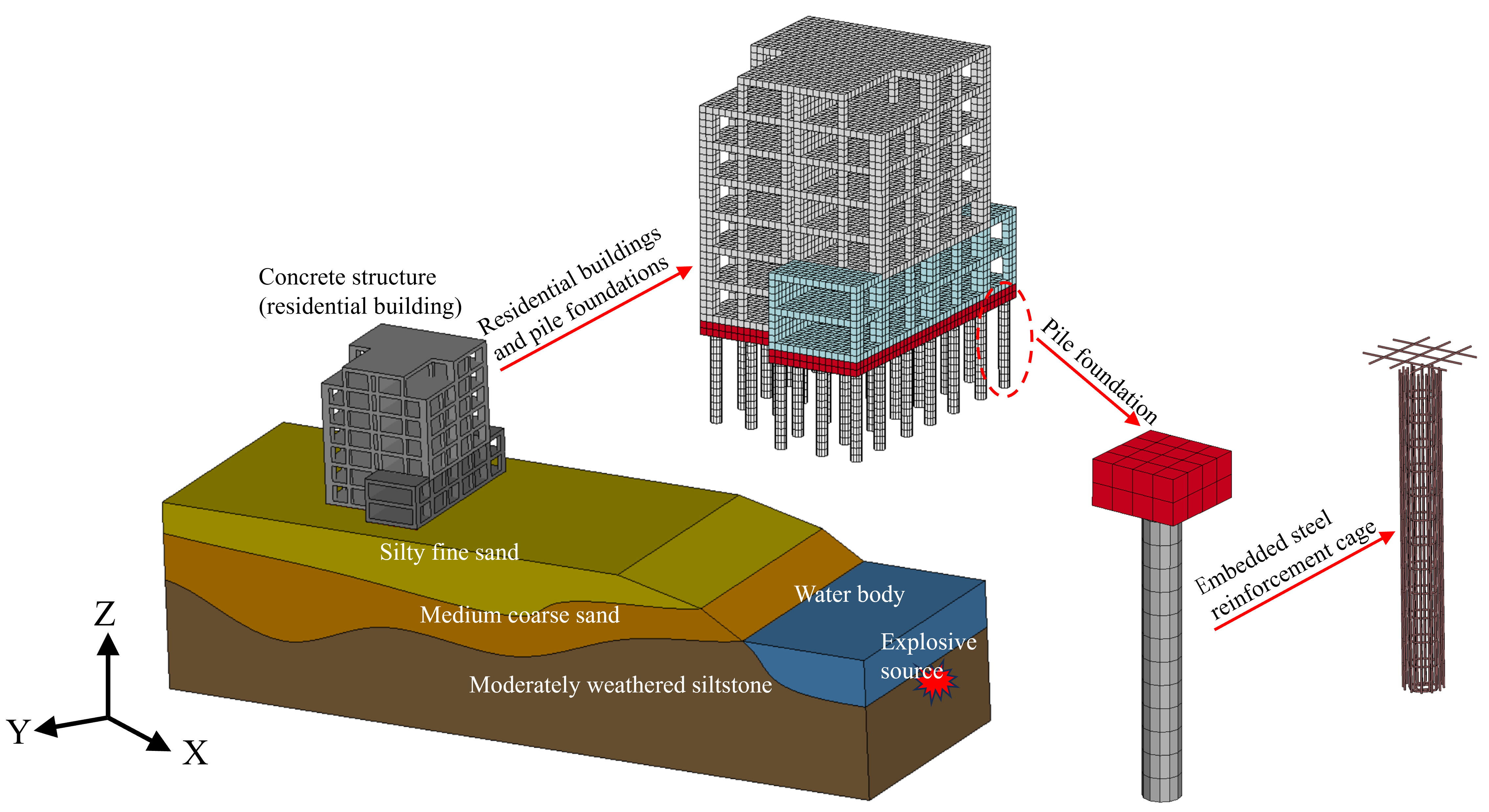
The Pinglu Canal originates from the Xijin Reservoir area of the Xijiang mainstream in the Pingtang River Estuary, Hengzhou City, Nanning. It crosses the watershed between the Shaping River and the Jiuzhou River, a tributary of the Qin River. Passing through Luwu Town, Lingshan County, and Qinzhou City, it follows the mainstream of the Qin River southward into the Qinzhou Bay waters of the Beibu Gulf, with a total length of approximately 135 km. This project is the HD13 bid section of the Pinglu Canal waterway construction, specifically the urban section of the Qin River in Qinzhou City, Guangxi Province. It starts from the Qin River Bridge of the G325 Guangnan Line and ends below the Zicai Bridge, with a waterway length of approximately 4.7 km. The main construction works include dredging and reef blasting. The main dimensions of this waterway section are water depth 6.3 m, width 90 m, and minimum bending radius 450 m. As shown in Figure 1, the research object of this paper is a 7-story residential building in a specific community. The structure is a brick-concrete-frame-slab-tower composite frame structure, located on the right bank (west side) of the waterway blasting area, at a straight-line distance of 70 m. The building is 27 m high, 28 m long, and 12 m wide. The residential building uses concrete friction pile foundations. The pile cap is buried at a depth of 2 m, with pile dimensions of 500 mm × 1000 mm, a pile length of 9 m, and a pile spacing of 1.5 m. Both the pile cap and pile body use C30 concrete, with HRB335 Φ12 reinforcement bars for the pile cap’s stressed reinforcement.
Based on field drilling and sample identification, combined with a comprehensive analysis of the formation era, origin, sedimentary characteristics, and engineering geological properties of the strata, the stratigraphic distribution was determined. The soil layers at the top of the riverbank slope and along the riverside road are mainly plain fill and miscellaneous fill, composed of cohesive soil, sand, and gravel, with poor compaction. The riverbed surface and banks are primarily fine sand, medium-coarse sand, and moderately weathered siltstone. The average thickness of the reef blasting area in this project is approximately 4.5 m, constructed using underwater drilling and blasting. The underwater drilling method on the blasting vessel is vertical drilling, with a staggered hole arrangement. The hole-by-hole initiation technique is used, detonating one row of 6 holes at a time. The delayed initiation method employs millisecond micro-difference hole-by-hole blasting, with electronic millisecond detonators in series between holes.

2.2. Field Monitoring Scheme

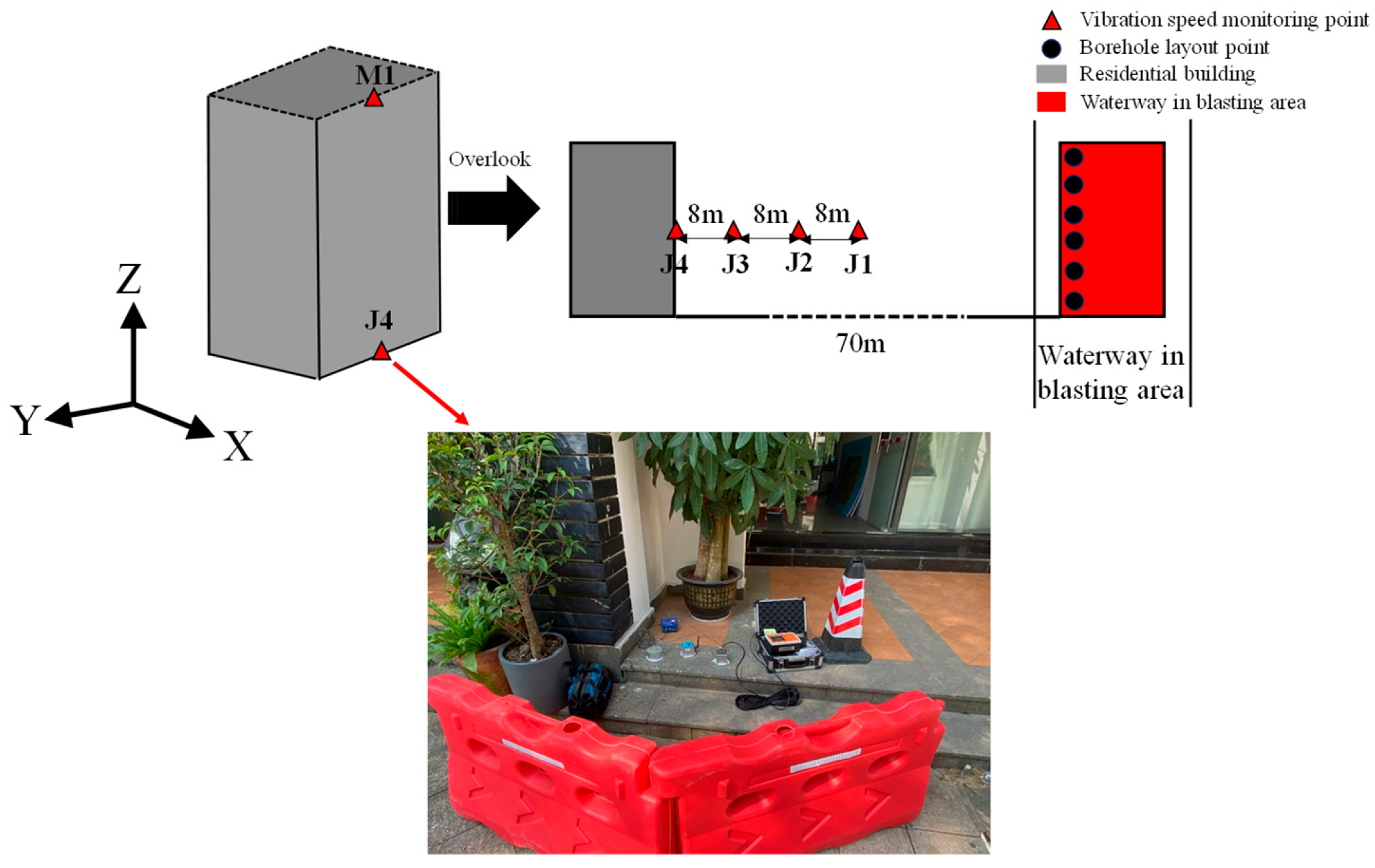
To study the dynamic response characteristics of residential buildings under blasting vibration loads, combined with the site geological conditions and blasting construction design scheme, dynamic testing instruments were used to monitor the site at the bottom and top of the pile-connected column closest to the blast source, as well as at the ground surface on the blast source side of the residential building. The main monitoring contents were vibration velocity and vibration amplitude. The vibration velocity was monitored using a new TC-4850 blasting vibration monitor. The equipment used in this study is the TC-4850 New Type Blasting Vibration Monitor. It was sourced from Chengdu Zhongke Measuring and Controlling Co., Ltd., Chengdu, China. As shown in Figure 2, along the horizontal connection line between the residential building and the blast source, monitoring points were set every 8 m from the bank to the bottom of the residential building, with one monitoring point each at the bottom of the pile-connected column and on the roof of the residential building, making a total of 5 monitoring points. To ensure that the sensors formed an integral vibration with the measuring point surface, the sensors were bonded to the ground surface with plaster of Paris. When installing the sensors, the unidirectional vibration velocity sensor was kept vertical; the X direction pointed to the blast source, which was the horizontal radial direction; the Y direction was the horizontal tangential direction; and the Z direction was vertical.

2.3. Analysis of On-Site Blasting Vibration Velocity

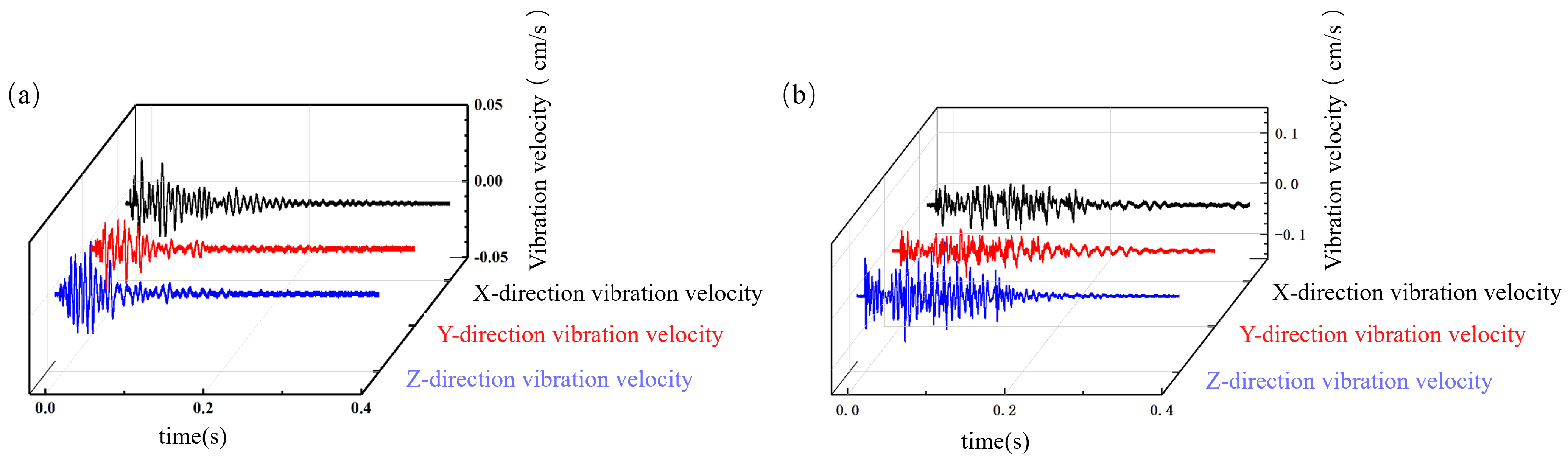
To analyze the impact of underwater blasting vibration in the canal on nearby residential buildings during field tests, research was conducted using data collected from vibration velocity monitoring points in the field experimental environment. As shown in Figure 3, the vibration velocity waveforms in the X, Y, and Z directions at the top and bottom measurement points of the residential building during the field test. As the height of the residential building floors increases, each vibration velocity component shows a decreasing trend. The peak vibration velocity in the Z direction decreases from 0.107 cm/s to 0.035 cm/s, with a peak attenuation of 67.28%. The monitoring data from vibration velocity measurement points at the residential building and the bank are shown in Table 1.
As shown in Table 1, the peak particle velocity at the measurement points decreases with increasing distance from the blast center. At measurement point J1, the relationship among the velocity components in different directions shows that the vertical velocity component is greater than the horizontal radial velocity component, while the horizontal tangential velocity component is the smallest. Measurement points M1 and J4 are closest to the residential building. The relationships among their velocity components are similar to those at J1, which can well reflect the velocity pattern of the residential building under blasting vibration. This proves that the vertical velocity component (Z-direction velocity) is the main factor affecting the dynamic response pattern of the residential building.
To better study the propagation law of the vertical velocity component of the blasting seismic wave in the site formation during field construction, this paper uses the Sadovski formula. It conducts regression analysis on the Z-direction vibration velocity based on field monitoring data of blasting charge amount Q, blasting center distance R, and vertical vibration velocity Vz. The Sadovski formula is as follows.
V z = K Q 3 R α
where Vz is the peak particle vibration velocity in cm/s, K is the site coefficient, Q is the maximum charge per delay in kg, R is the distance from the blast center in m, and α is the attenuation coefficient.
Taking the logarithm of both sides of the equation, we obtain the formula:
ln V z = ln K + α ln Q 3 R α
Let ln V z = y , ln Q 3 R = x , α = a , ln K = b obtain the linear equation:
y = a x + b
As shown in Table 2 and Table 3, the field blasting test parameters and the required fitting parameters are substituted into the linear equation for fitting.
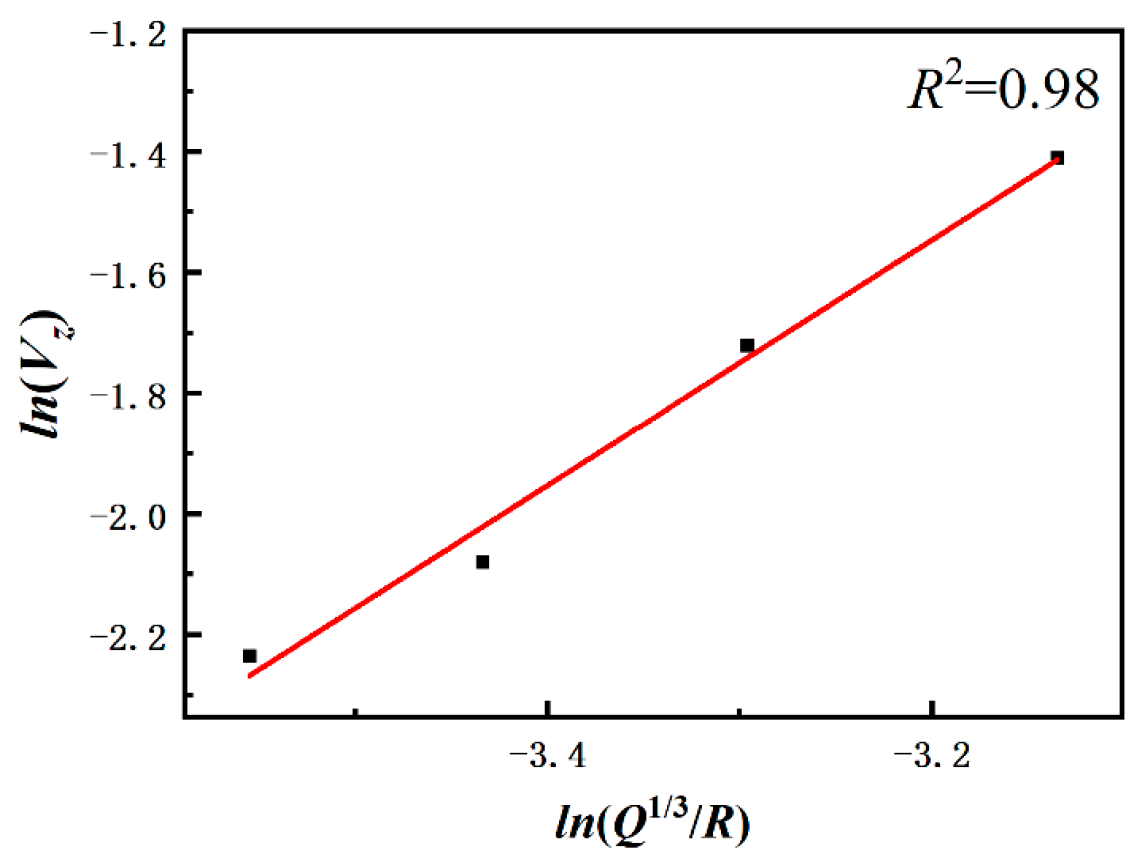
The linear fitting equation for vibration velocity was determined as y = 2.03x + 4.96, from which K = 143 and α = 2.03 were obtained. As shown in Figure 4, the fitting curve has a correlation coefficient of R2 = 0.98, indicating that this curve can well represent the relationship between the vertical vibration velocity component and the blasting center distance. The formula for analyzing the vertical component attenuation law of seismic waves in the strata of the reaction construction site, derived from the Sadowsky formula, is shown in Equation (4). It should be noted that this attenuation law is fitted based on the specific blasting parameters, geological conditions, and monitoring point layout of this project, and its validity is strictly limited to the data analysis range of this study.
V z = 143 Q 3 R 2.03
Meanwhile, the vibration attenuation law established in this study has the following limitations: The law is based solely on monitoring data under one charge quantity condition and cannot reflect the influence of different blasting parameters (such as charge structure, initiation method) on vibration attenuation; the number of monitoring points is limited, and their distribution range is narrow, making it difficult to capture the spatial variability of vibration response under complex geological conditions; the Sadovsky formula is an empirical model, and its parameters K and α are highly dependent on field conditions, requiring re-verification when extrapolated to other projects.

3. Numerical Modeling of the Dynamic Response of Building Superstructure and Pile Foundation

3.1. Overall Model

The underwater blasting environment in field construction conditions is relatively complex, involving factors such as irregular formation interfaces, heterogeneous soil properties, and the influence of surrounding traffic. Currently, if modeled in strict accordance with the actual situation, the workload would be enormous. For the convenience of simulation, the computational model is reasonably simplified [17]. As shown in Figure 5, the model is 100 m long, 32 m wide, and 50 m high and is modeled at a 1:1 scale based on the actual field position relationship and soil profile drawings. The model consists of soil layers, water, residential buildings, and explosives. The soil surface is set as flat ground, and the soil structure is simplified into fine sand, medium-coarse sand, and moderately weathered siltstone. The lower formation consists of a 6 m-thick fine sand layer, a 6 m-thick medium-coarse sand layer, and an 8 m-thick moderately weathered siltstone layer, with a water depth of 6 m, as shown in Figure 5a. The mesh division of the residential building and pile foundation is shown in Figure 5b,c, where the reinforcement of the superstructure is arranged according to architectural design specifications, with reinforcement ratios of 0.2–2.5% for beams and 0.5–5% for columns. The reinforcement of the pile foundation is arranged in accordance with the technical code for building pile foundations, with a normal section reinforcement ratio of 0.2–0.65% and reinforcement length greater than 2/3 of the pile length. The explosive density is set to 1.1 g/cm3; the blast hole diameter is 115 mm; the excavation depth is 5 m; the drilling overdepth is 1.5 m; the hole depth is 6.5 m; the hole spacing is 2.2 m; the row spacing is 2.5 m; the backfill length is 3 m, with a total of 6 blast holes; the charging length is 3.5 m; each explosive cartridge weighs 4 kg; using coupled charging, the amount of explosive per blast hole is 8 kg, with two explosive cartridges in the hole equivalent to one. The numerical model uses 8-node SOLID164 solid elements. Soil, concrete, reinforcement, and explosives all use the Lagrange algorithm, while water uses the ALE (Arbitrary-Lagrange-Euler) algorithm. The basic calculation units are cm-g-us. According to the characteristics of field construction, the top of the numerical model is defined as a free surface, and all other surfaces are defined as non-reflecting boundaries using the keyword *BOUNDARY_NON_REFLECTING. A graded mesh strategy was adopted for the model, with a fine mesh size of 0.05 m in critical regions (including the pile foundation, explosive, and adjacent soil) to accurately capture the dynamic response gradients. In the far-field regions away from the structure, the mesh size was gradually increased to 2 m, which balances computational accuracy and efficiency. The total number of nodes reaches 1,101,779, and the number of elements is 1,036,252.

3.2. Model Constitutive Parameters

Modeling with LS-DYNA requires selecting the constitutive models and equations of state for the materials used. A total of five material types need to be established in this model: soil layer, concrete structure, explosive, steel reinforcement, and water. Among these, the soil layer and concrete structure have similar material properties and are uniformly modeled as elastoplastic materials. The constitutive models for each material are reasonably selected with reference to relevant field test data. The selection of constitutive models and equations of state for each material is as follows.

3.2.1. Soil Layers and Concrete Structures

The soil layer and concrete structure in the model are simulated using the *MAT_PLASTIC_KINEMATIC elastoplastic dynamic model, which can accurately describe the yield, hardening, and failure behavior of materials under dynamic loads and is suitable for engineering scenarios involving high strain rates and large deformations, such as blasting vibrations. The relationship between the yield stress σy and strain rate ε of the rock mass medium is shown in Equation (5). Based on the construction materials, the relevant parameters of the proposed soil layers and concrete structures are obtained, as shown in Table 4.
σ y = 1 + ε C 1 P · σ 0 + b E 0 E 1 E 0 E 1 ε p e
where σ 0 is the initial yield limit strength of the rock mass, C and P are strain-rate parameters, which are constants in this model; E0 and E1 are the elastic modulus and tangent modulus; b is the material hardening parameter; and εp is the effective plastic strain.
For concrete structures, the *MAT_PLASTIC_KINEMATIC model can simulate their tensile failure and compressive damage under blast-induced vibrations, with parameters determined based on the mechanical property test results of C30 concrete, ensuring consistency between numerical simulation and the actual mechanical behavior of the material.
In modal analysis, the Rayleigh damping simulation system is used to model energy dissipation, with the target damping ratio set to 5%.

3.2.2. Explosive

In KEYWORD, add the *INITIAL_DETONATION keyword, setting the initiation times of the six blastholes to 0 s, 0.040 s, 0.80 s, 0.12 s, 0.16 s, and 0.20 s, respectively; add the *CONTROL_TERMINATION keyword, setting the total calculation time to 0.4 s; add the *DATABASE_BINARY_D3PLOT and *DATABASE_BINARY_D3THDT keywords, setting the post-processing software LS-PREPOST 4.9 to output calculation results every 0.001 s. The explosive and soil layers are modeled with surface-to-surface contact, with a friction coefficient of 0.20. According to the design plan, the explosive used in this blasting test is a 2# rock emulsion explosive. In the numerical simulation, the *MAT_HIGH_EXPLOSIVE_BURN material model is used, combined with the *EOS_JWL equation of state to describe the relationship between pressure and internal energy in the detonation products and the relative volume of detonation products. The *EOS_JWL equation of expression and explosive model parameters are shown in Table 5.
p = A 1 ω R 1 V e R 1 V + B 1 ω R 2 V e R 2 V + ω E 0 V
where p is the pressure in the detonation products, V is the relative volume of the detonation products, A, B, R1, R2, and ω are material parameters, and E0 is the initial specific internal energy.
Table 5. Parameter modeling of explosive materials.
ρ
g/cm3
Detonation Velocity
m/s
Detonation Pressure
GPa
A
GPa
B
GPa
R1R2ωE0V0
GPa
1.08336049.720.2174.20.90.154.191

3.2.3. Steel Reinforcement

In the model, the superstructure of the building and the embedded steel cages in the piles are represented using an elastic-plastic model, *MAT_PLASTIC_KINEMATIC, that accounts for strain rate to characterize the steel’s constitutive behavior. This material model uses the Cowper-Symonds model to calculate the strain rate as shown in Equation (7). Meanwhile, *SECTION_BEAM is used to define the cross-sectional characteristics of the steel, and the *CONSTRAINED_BEAM_IN_SOLID keyword is used to couple the steel *SECTION_BEAM elements with the concrete *SECTION_SOLID elements.
σ d σ s = 1 + ε C R S 1 P R S
where σ d is the dynamic yield stress under uniaxial plastic strain rate, σ s is the corresponding static yield stress; CRS and PRS are material strain-rate effect parameters. The material parameters of steel reinforcement are shown in Table 6. In the table, E is the elastic modulus, µRS is Poisson’s ratio, σy is the yield stress, and ET is the tangent modulus.

3.2.4. Water

For the water in the model, the *MAT_NULL material model is selected and described using the *EOS_GRUNEISEN equation of state, as shown in the equation. Since the ALE algorithm is used for water, while the Lagrange algorithm (LAGRANGE) is used for the soil in the numerical model, the *CONSTRAINED_LAGRANGE_IN_SOLID keyword is required to couple the elements of these two algorithms. The model’s material-related parameters for water are shown in Table 7.
p = ρ 0 C 2 μ 1 + 1 γ 0 2 μ α 2 μ 2 1 S 1 1 μ S 2 μ 2 1 + μ S 3 μ 3 1 + μ 2 + γ 0 + α μ E
In the formula,
μ = γ γ 0 1
where p is the medium pressure, C is the speed of sound in the medium, ρ and ρ0 are the density and initial density of the medium, E is the specific internal energy, γ0, S1, S2, and S3 are all constants, and α is the correction coefficient.
It should be noted that in this study, the water density parameter adopted the typical value of clear water density. However, the continuous construction along the entire canal may lead to the transport of large amounts of solid materials by the flow, thereby altering the density and sediment content of the water medium, which could potentially affect the propagation speed and attenuation characteristics of blasting waves in the water. The numerical model of this study adopts a conservative clear water assumption. Subsequent research can further optimize model parameters by measuring the in situ water density, thereby improving simulation accuracy.

3.3. Numerical Simulation Results and Verification

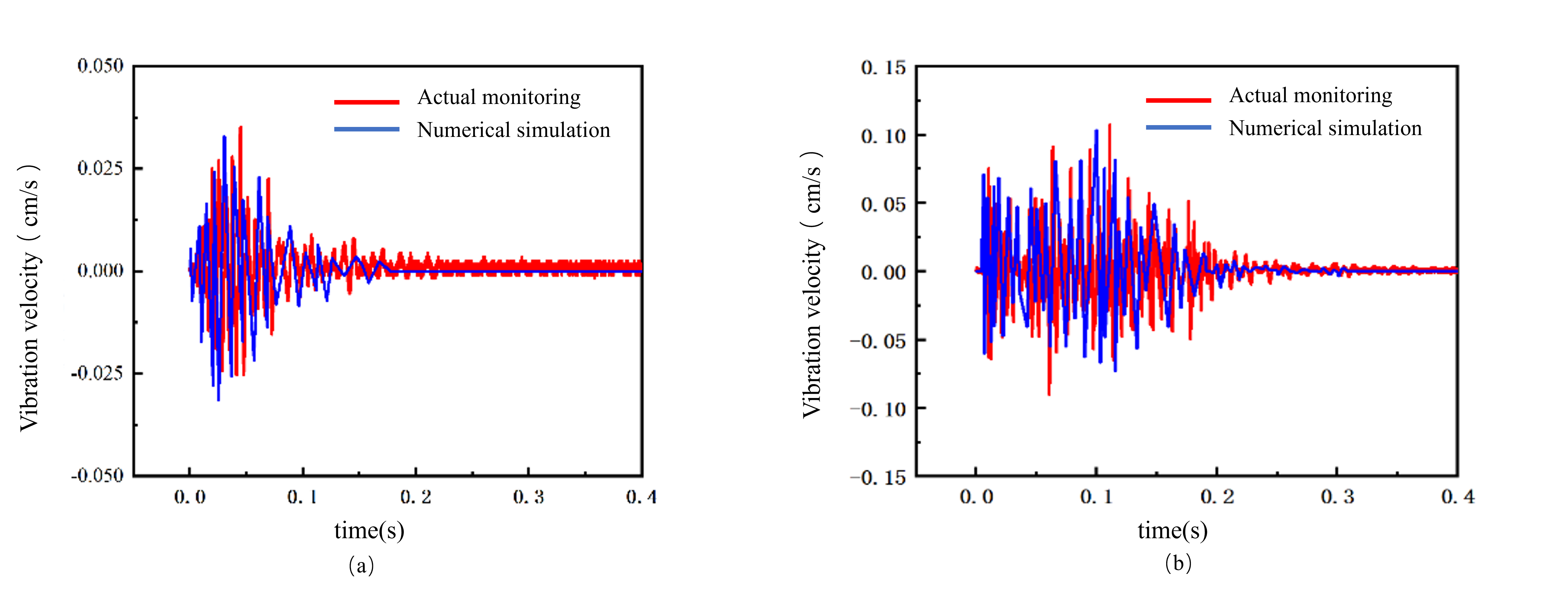
To verify the reliability of the numerical simulation results, a comparative analysis of the field test and numerical simulation results is required. The vibration velocity of particles at the same positions in the numerical model as in the field test was monitored. Since the relationship between vibration velocity components in both field tests and numerical simulations shows that the peak vibration velocity in the Z-direction is the largest, the Z-directional vibration velocity was selected as the primary monitoring parameter for analysis. The peak vibration velocities of the measurement points in the numerical model and field experiment are shown in Table 8. From the table, it can be seen that the error between the peak vibration velocity obtained from numerical simulation and that from field testing is small, with a maximum error of 6.72%, which is within a reasonable range. Figure 6 shows a comparison of the Z-direction vibration velocity at the M1 measurement point on the roof of the residential building and the J4 measurement point at the bottom of the residential building between the field experiment and the numerical model. From the figure, it can be seen that the vibration velocity waveforms of the two measurement points in the numerical model are basically consistent with the actual monitoring waveforms, indicating that the numerical simulation results and the constitutive parameter settings are reasonable and reliable.

4. Analysis of Dynamic Response Characteristics of Structures and Buildings

4.1. Analysis of Dynamic Response Characteristics of Building Superstructure

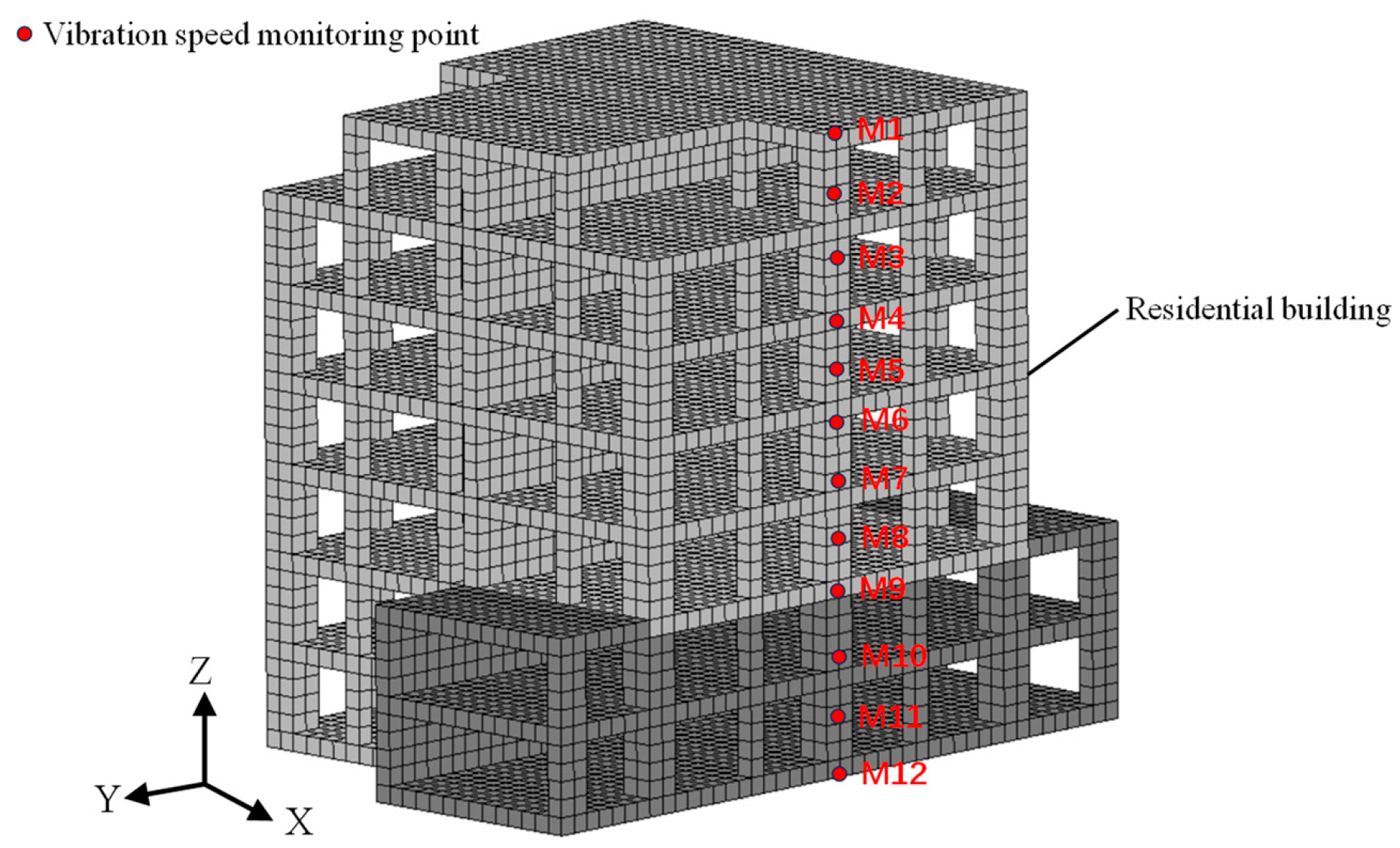
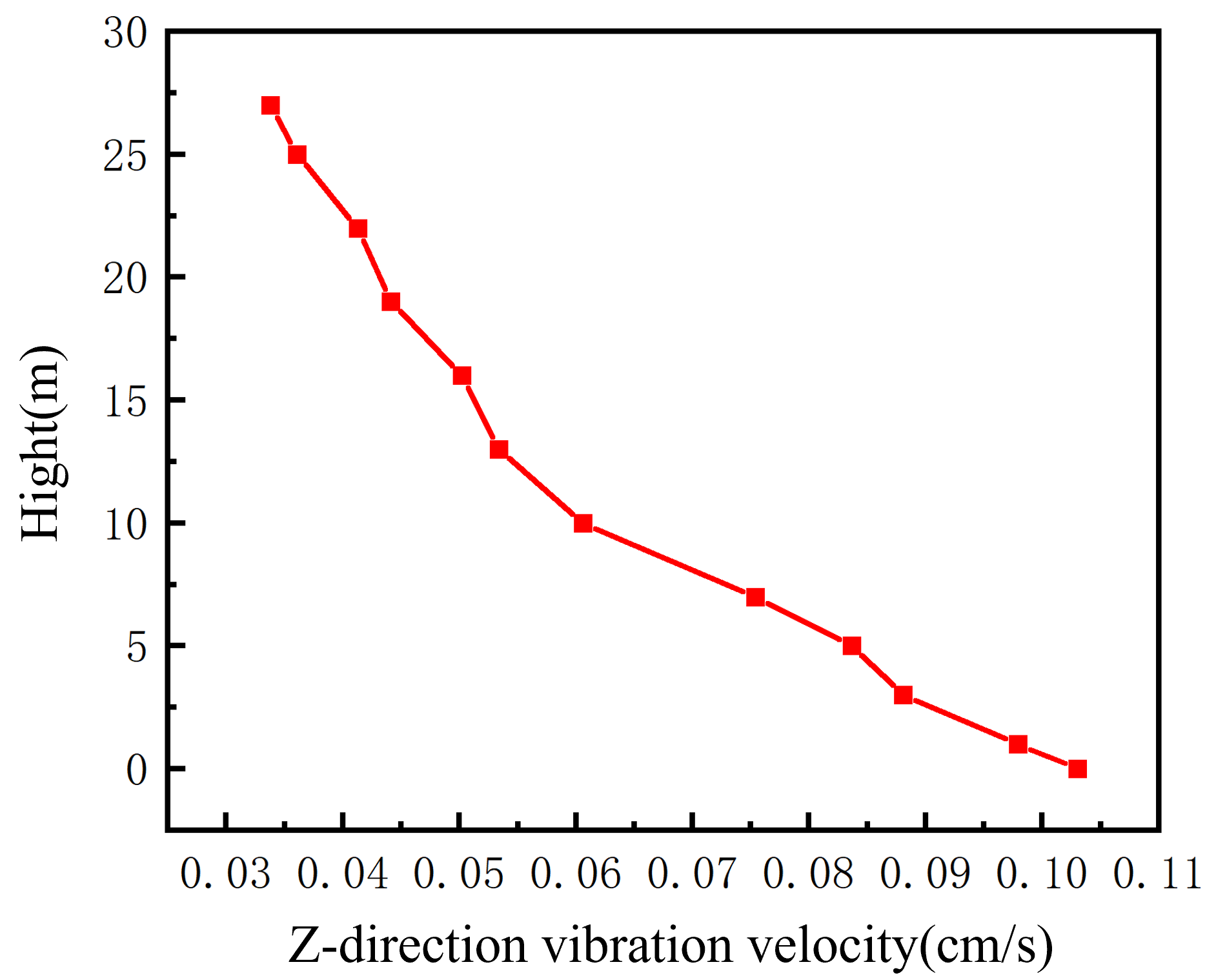
Due to the limited number of vibration velocity monitoring points on the superstructure of the residential building during field testing, a supplementary analysis was conducted by selecting suitable mass points in the numerical model as vibration velocity monitoring points based on the building’s structural characteristics. As shown in Figure 7, on the explosion-source side of the residential building, 12 vibration velocity monitoring points were selected along the same vertical section, starting from the bottom of the building.
A comparative analysis of the vibration velocities at the 12 measurement points reveals that the maximum peak vibration velocity occurs at point M12 at the bottom of the superstructure, reaching 0.103 cm/s. As the height of the measurement points increases, the peak vibration velocity gradually decreases, reaching a minimum of 0.033 cm/s at the top of the residential building, with a peak attenuation of 67.96%. This is consistent with the relationship between blasting seismic wave intensity and attenuation with increasing distance from the blast center. According to relevant research, the main reason for the attenuation zone is that as the distance from the blast center increases, when vibration waves transfer from a column section with a smaller cross-sectional area to a floor section with a relatively larger cross-sectional area, wave reflection and transmission occur. At this point, part of the wave’s energy is lost, resulting in reduced vibration velocity. This indicates that the propagation law of blasting seismic waves is consistent with field conditions, further confirming the reliability of the numerical model. Figure 8 shows the variation curve of vibration velocity in the Z-direction at measured points, and Table 9 lists the peak vibration velocities in the Z-direction for the selected measured points.
According to the “Safety Regulations for Blasting,” the safety allowance for particle vibration velocity in residential buildings should be less than 1.5–2.0 cm/s. The peak vibration velocity in the Z direction at each selected measurement point was below regulatory requirements, indicating that this blasting operation was relatively safe for the superstructure and posed an extremely low risk of structural damage. Additionally, during on-site construction, blasting seismic waves often cause significant interference to human perception. According to research by relevant scholars [18], in blasting operations, the vertical ground vibration velocity in densely populated areas should not exceed 0.7 cm/s. Comparative analysis shows that the vertical peak vibration velocity of the residential buildings in this blasting operation was also below the vibration limit for human comfort, indicating that the blasting construction has minimal impact on surface structures and human perception. However, through extensive analysis of engineering cases, it can be found that in blasting construction environments, damage to adjacent residential buildings is often caused by cracks at the base of the building or by instability and damage to the foundation, leading to instability of the superstructure. Therefore, analyzing the dynamic response characteristics of the foundation under blasting vibration is extremely important for the safety assessment of residential buildings [19].

4.2. Analysis of Pile Foundation Dynamic Response Characteristics

4.2.1. Distribution Law of Vibration Velocity Along Pile Foundation Depth

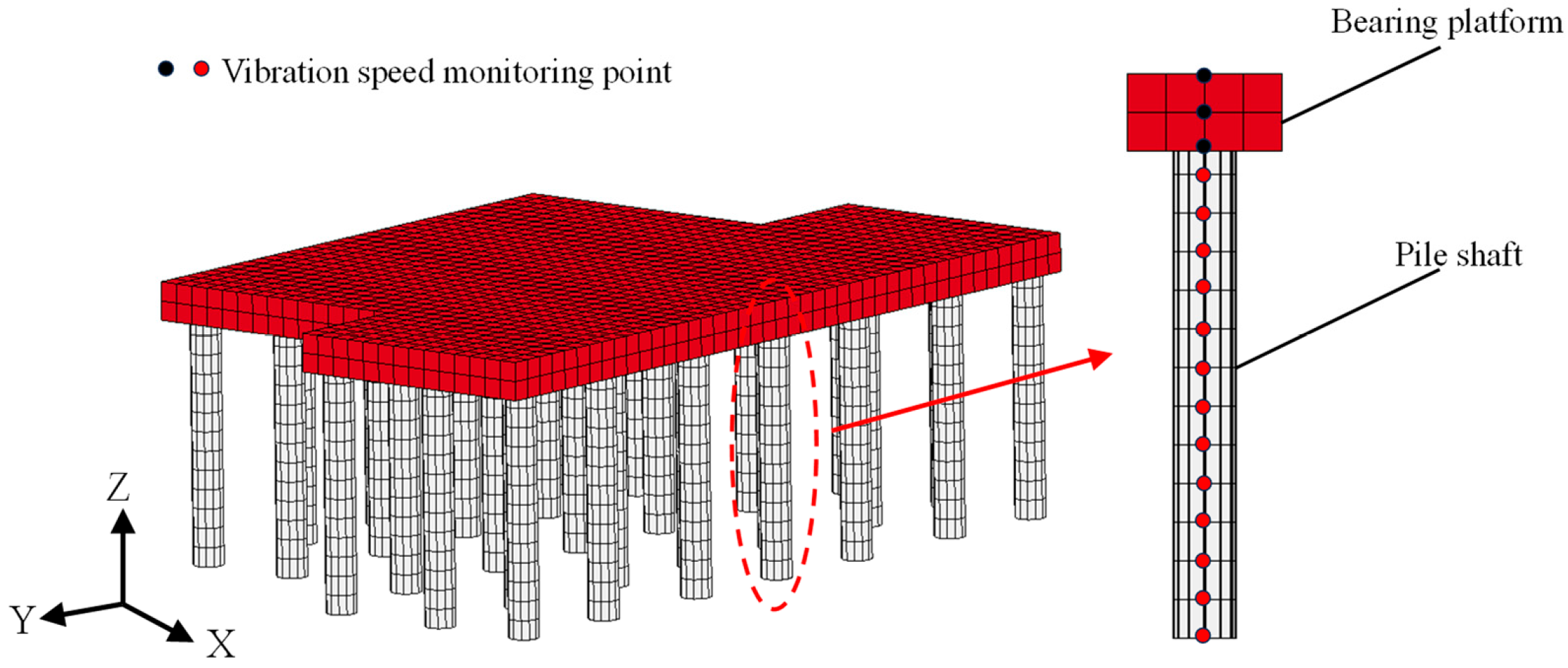
The pile shaft is the main component of pile foundations and an important force-transmitting element that transfers partial or total building loads to the soil layers. As shown in Figure 9, the selection of monitoring points for pile shaft vibration velocity along the negative Z-axis direction is presented. Analysis is conducted on a section of pile caps and corresponding pile shafts on the blasting source side, specifically those closest to the blasting source in straight-line distance. Taking the top of the pile cap as the reference plane, monitoring points for pile foundation vibration velocity are selected at intervals of 0.73 m along the negative Z-axis direction on both the pile cap and pile shaft. A total of 16 vibration velocity monitoring points are established from the top of the pile cap to 11 m below the reference plane at the bottom of the pile foundation.
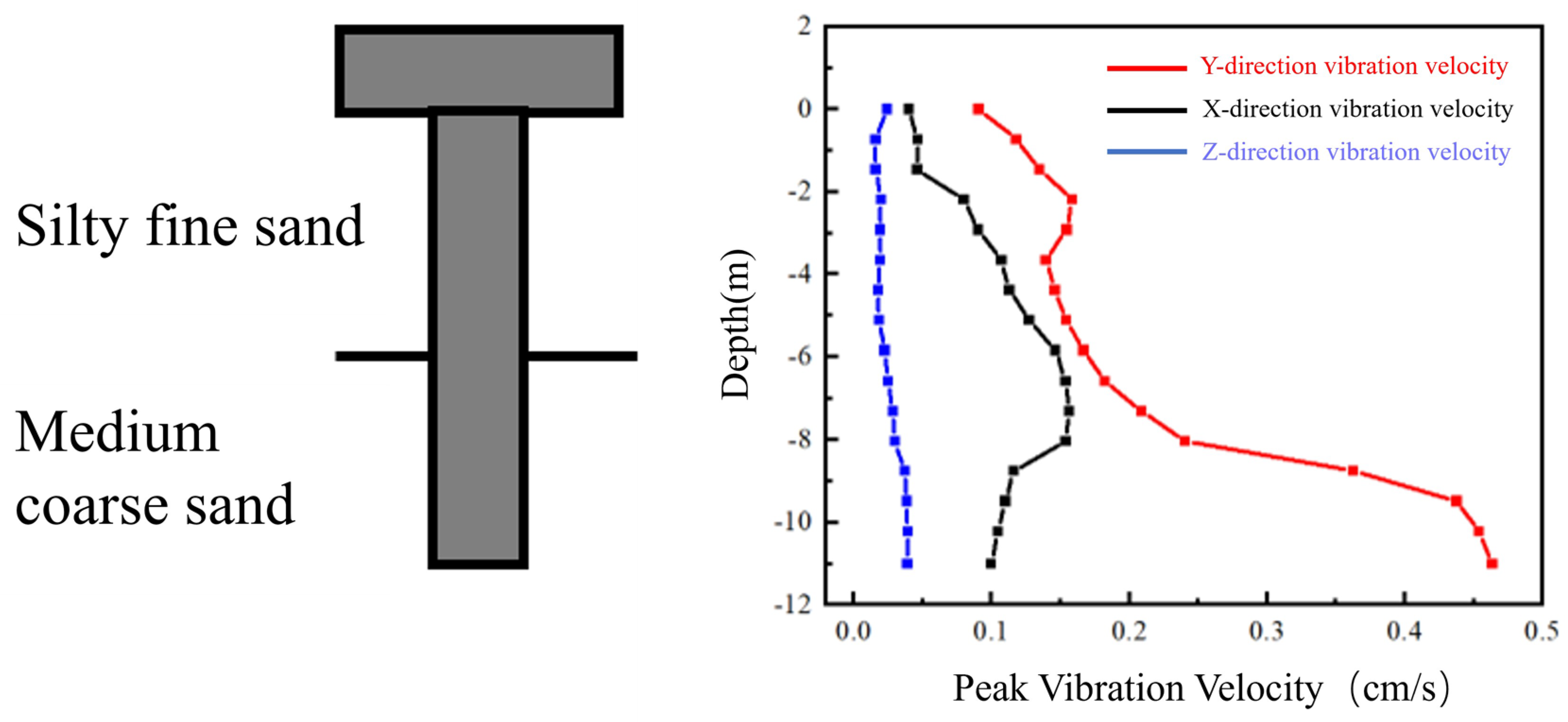
Through a comparative analysis of vibration velocity at the 16 monitoring points, it can be observed that the variation patterns in the X, Y, and Z directions along the depth differ significantly. Figure 10 shows the variation patterns of peak vibration velocity in X, Y, and Z directions at various monitoring points along the pile foundation burial depth. As shown in the figure, the soil layer interfaces in the numerical calculation model are at burial depths of 6 m and 12 m, with silty fine sand from 0 m to −6 m and a medium-coarse sand layer from −6 m to −12 m. The geometric center of the blast source is located at the 20 m burial depth plane. Comparative analysis of peak vibration velocity patterns reveals that the variation of Y-direction vibration velocity at various monitoring points along the pile body with burial depth is minimal, with the maximum peak vibration velocity being only 0.039 cm/s, which can be negligible compared to the effects in the X and Z directions. The peak vibration velocity in the X-direction at each monitoring point gradually increases with the pile foundation’s burial depth, reaching a maximum of 0.156 cm/s at the −7.3 m monitoring point, after which it gradually decreases. The peak vibration velocity in the Z-direction increases with burial depth in the silty fine sand layer, but the rate of increase is relatively slow. In the medium-coarse sand layer, the peak vibration velocity at each monitoring point increases sharply. The increasing trend gradually decreases near the interface between the medium-coarse sand layer and the moderately weathered sandstone layer, reaching a maximum peak vibration velocity of 0.463 cm/s at the bottom of the pile foundation at −11 m, with a peak increment of 66.31%.
By comparing changes in peak vibration velocity above and below the soil layer boundary in the Y, X, and Z directions, it can be seen that peak vibration velocities in the Y and X directions are less affected by soil layer changes. In contrast, the peak vibration velocity in the Z direction is more significantly impacted. Additionally, the pile foundation has the highest peak vibration velocity at its base, making it the most vulnerable part of the foundation to vibration.

4.2.2. Distribution Pattern of Maximum Principal Stress Along Pile Foundation Depth

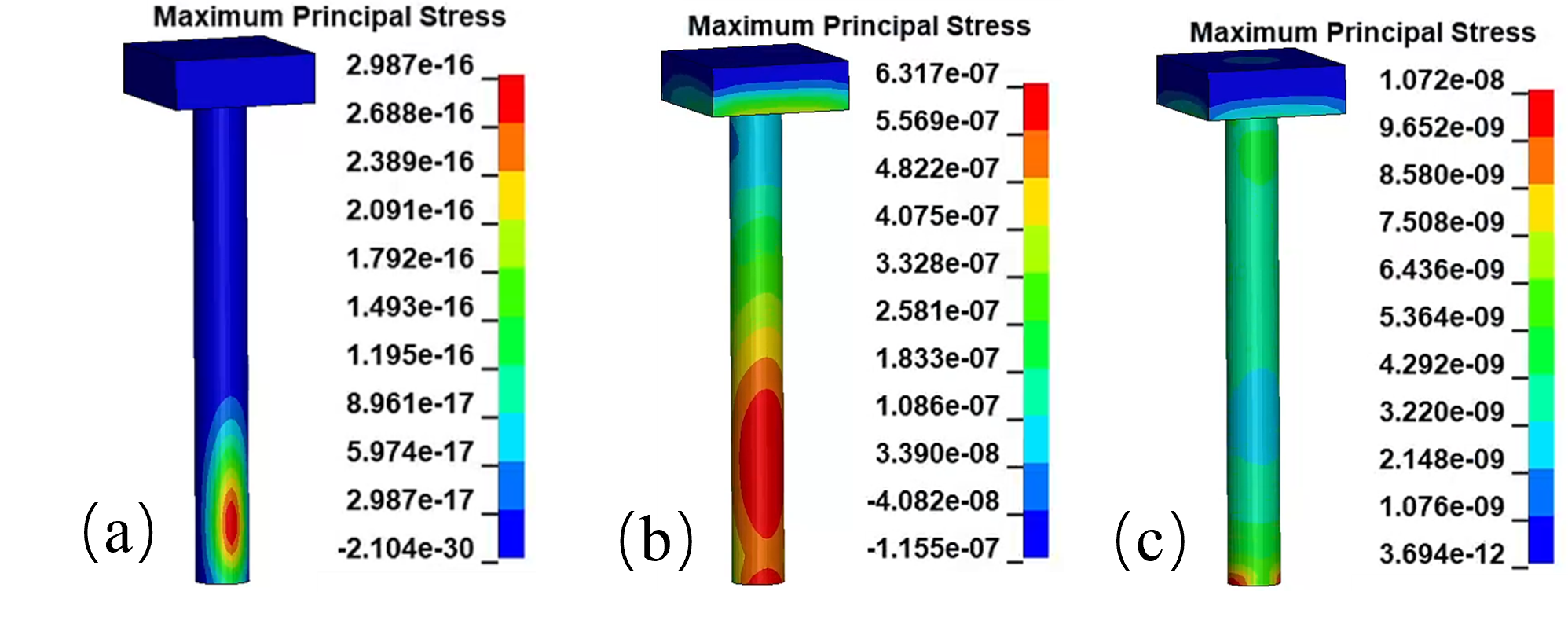
Since concrete is a brittle material with tensile strength much lower than compressive strength, the first strength theory is often used to check whether concrete structures fail. The first strength theory states that the main factor in material failure is the maximum tensile stress. According to this theory, if the maximum principal stress reaches the maximum tensile stress that concrete can withstand at fracture, the concrete structure will be damaged. The maximum principal stress peak of the pile body was selected as the research object to determine whether the model concrete structure would have safety issues. The same measuring points of the same pile foundation mentioned above were chosen for the study of the maximum principal stress of the pile body. The cloud diagrams of the maximum principal stress of the pile body at different blasting times are shown in Figure 11.
From the figure, it can be observed that, at 100 ms after blasting Figure 11a, the impact seismic wave reaches the bottom of the pile shaft. At this moment, the overall stress in the pile is relatively small, and the blasting impact stress first appears at the bottom of the pile, closer to the blast source. At 150 ms after blasting, as shown in Figure 11b, as the blasting seismic wave imparts stress to the pile, the maximum principal stress at the pile foundation reaches its peak. At 300 ms after blasting, as shown in Figure 11c, the pile’s tension gradually dissipates.
From the time evolution characteristics of the stress cloud map, it can be observed that the maximum principal stress in the pile body exhibits a dynamic process of “rapid growth—peak maintenance—slow attenuation.” At the initial stage of the blasting action (t = 100 ms), the stress is mainly concentrated at the bottom of the pile foundation. Subsequently, the stress wave propagates along the pile body upwards, and at t = 150 ms, the stress in the middle and upper part of the pile reaches its peak, indicating a significant time lag effect in the vibration response. By t = 300 ms, the overall stress level in the pile body has dropped significantly, and no obvious stress accumulation phenomenon occurs. This time evolution pattern indicates that the stress disturbance caused by a single blast in this project is instantaneous. Under the current blasting parameters, the duration of the vibration response is short, providing a reference basis for the safety interval design of subsequent repeated blasts.
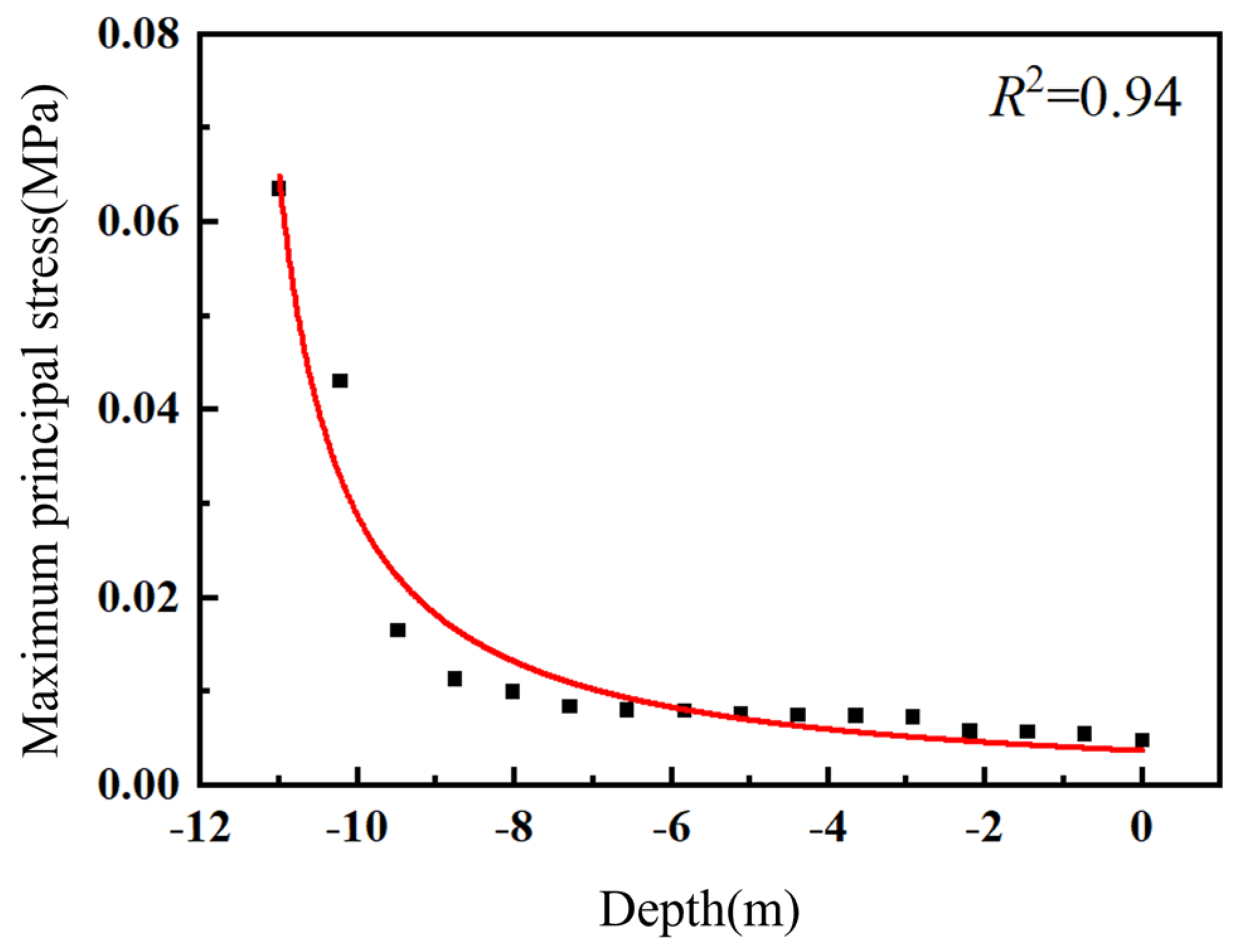
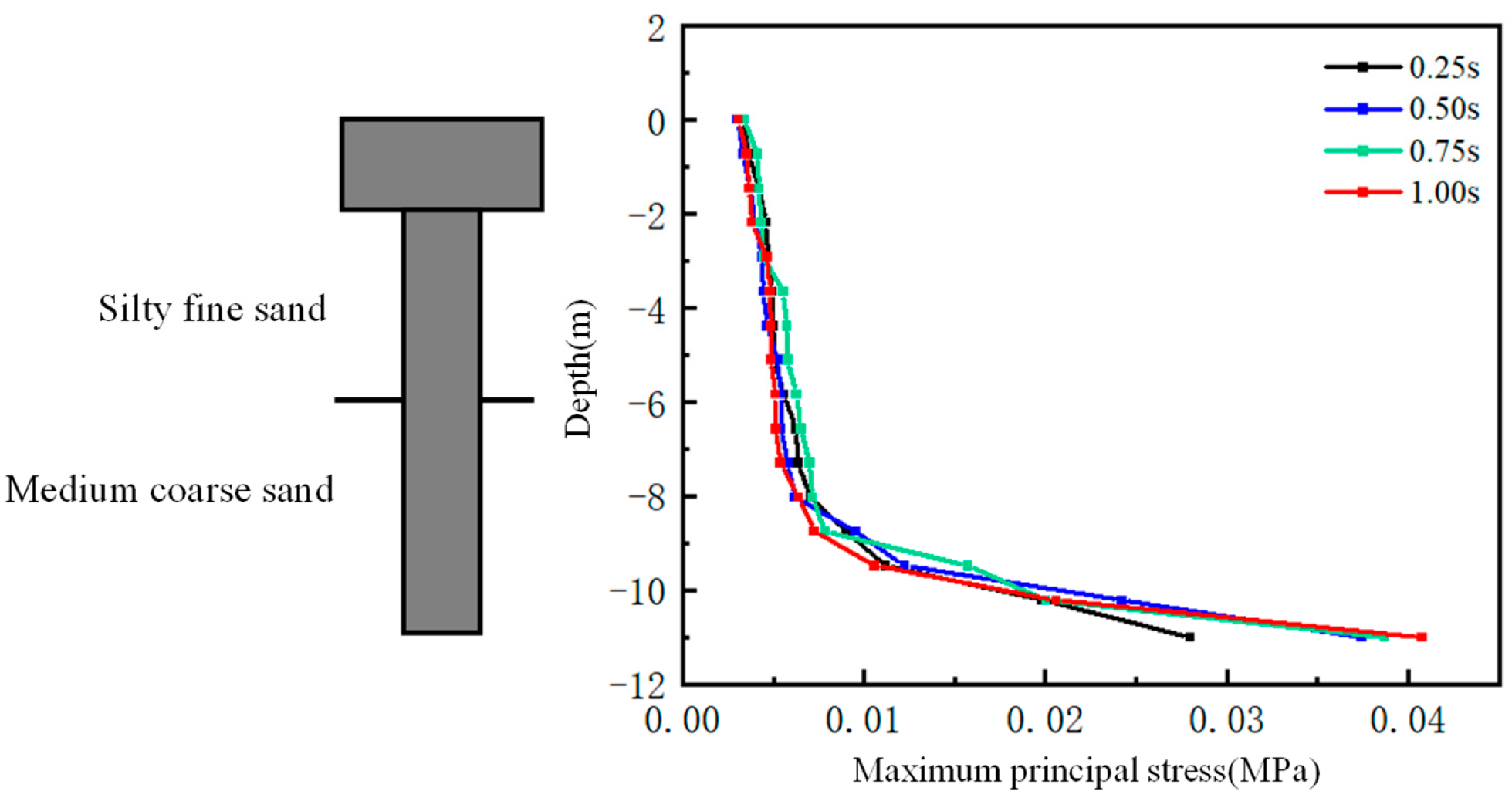
Figure 12 shows the distribution curve of the maximum principal stress along the pile depth. As shown in the figure, the maximum principal stress in the pile foundation under blasting seismic waves is generally small. The peak principal stress in the pile body is located at the pile foundation bottom 150 ms after blasting starts, with a magnitude of 0.064 MPa. The maximum principal stress distribution curves at the four moments have the same characteristics. Between 0 m and −8 m, the maximum principal stress of the pile body remains essentially unchanged, with a range of 0.004 MPa to 0.01 MPa; below −8 m, it increases sharply. The formula and relationship curve derived from fitting the variation of the maximum principal stress of the residential building pile foundation with depth are as shown in Figure 13. Compared with the upper part of the pile foundation, the maximum principal stress at the bottom of the pile foundation is larger. If the amount of explosive is increased during underwater blasting construction, the bottom of the residential building pile is most likely to be damaged.
σ max = 275 + 28 h 0.42 h 2 1
where σ max is the maximum principal stress of the pile foundation particle, in MPa, and h is the pile foundation depth, in m.
Figure 12. Distribution of maximum principal stresses along the depth of the pile foundation.
Eng 07 00140 g012
Figure 13. Maximum principal stress of pile foundation vs. soil depth.
Eng 07 00140 g013

4.3. Research on Vibration Safety Criteria for Piles

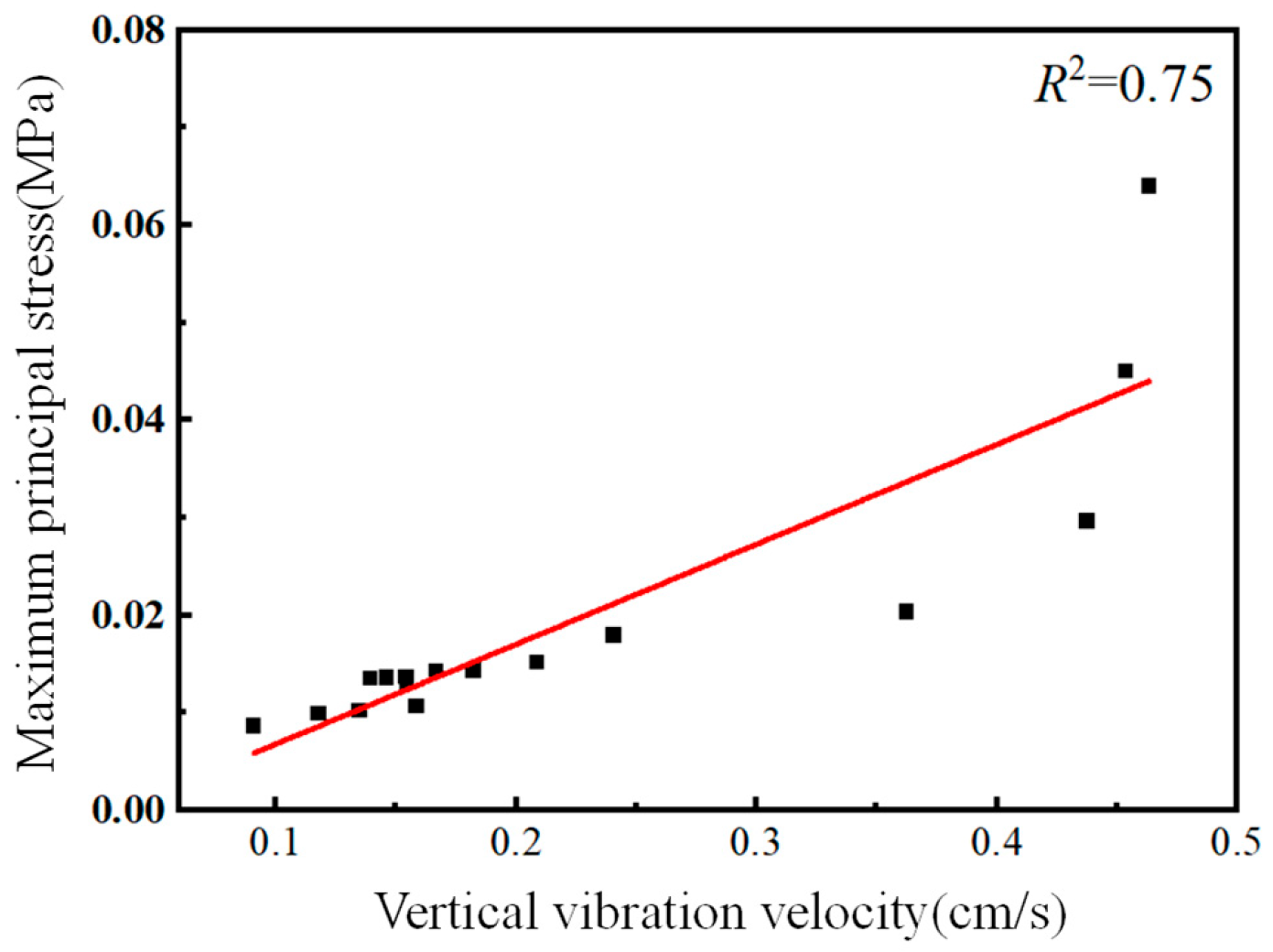
In practical engineering, damage to pile foundations from blasting vibration primarily results from stress changes in pile foundation elements induced by the propagation of blasting seismic waves within the pile foundation. Concrete materials have high compressive strength but relatively low tensile strength, and their failure mode is primarily tensile. According to the concrete structure design code, the standard axial tensile strength for C30 concrete is ftk = 2.01 MPa. Taking a = 1.4 as the correction coefficient for the ultimate dynamic tensile strength of concrete structure, the ultimate dynamic tensile strength of pile concrete under normal service conditions is ft = ftk/a = 1.43 MPa. According to relevant research [20], there is a specific linear relationship between pile tensile stress and vibration velocity. The relationship between the pile’s peak principal stress and its peak vertical vibration velocity was fitted, and the results are shown in Figure 14. The statistical relationship between the maximum principal stress of the pile and the vertical vibration velocity is
σ max = 0.103 V P 0.004
where σ max is the maximum principal stress at each measuring point in the pile body, in MPa; Vp is the vertical peak vibration velocity at each measuring point in the pile body, in cm/s. Combining the maximum tensile stress intensity theory and the statistical relationship between the maximum principal stress and vibration velocity, based on the fitting range of the monitoring data in this study, substituting the ultimate dynamic tensile strength of concrete ft into Equation (11), it can be obtained that within the parameter range of this study, when the vertical vibration velocity peak of the pile structure reaches 13.92 cm/s, the horizontal tensile stress of the pile structure reaches its tensile strength.
It should be noted that the above statistical relationship is established based on the specific geological conditions, pile foundation form, and blasting construction parameters of this project. The validity of the fitting results is strictly limited to the data analysis interval of this study. Therefore, 13.92 cm/s is only used as a safe reference threshold for pile blasting vibration control in this project and should not be extrapolated to other conditions or projects with significantly different parameter ranges. Actual engineering blasting vibration control should comply with relevant national standards, such as the “Safety regulations for blasting” (GB6722-2014) [21], and select more conservative control limit values.

5. Conclusions

Based on the New Western Land-Sea Passage (Pinglu) Canal waterway project, this paper analyzes construction-site monitoring data. It supplements it with numerical calculation models to determine the dynamic response of the superstructure and pile foundation of adjacent residential buildings under underwater drilling blasting, with the results as follows:
(1)
This study is based on field monitoring data under single charge quantity conditions, using field monitoring data to fit the blast center distance and blasting charge, and derived a formula representing the attenuation law of the vertical vibration component of seismic waves in the strata of the construction site.
(2)
By comparing the field monitoring results with the numerical simulation results, it was found that the numerical simulation results had a small error. The relative error in the peak vibration speed at the J3 measuring point between the two was 6.72%, which is within the reasonable range of <10%, indicating that the numerical model and its parameters are reliable.
(3)
According to field monitoring data and numerical simulation results, the blasting vibration in residential buildings shows an attenuation trend with increasing floor height. The vertical peak vibration velocities at the bottom and top of the residential building are 0.103 cm/s and 0.033 cm/s, respectively, both of which meet the safety control standards.
(4)
Through numerical simulation, the dynamic response characteristics of residential building friction pile foundations along the buried depth were analyzed. As the pile depth increases, both the pile vibration velocity and maximum stress show an increasing trend, with the maximum peak vibration velocity reaching 0.463 cm/s and the maximum peak principal stress reaching 0.064 MPa. A fitting was performed between the pile depth and the maximum principal stress of the pile foundation at 0.15 s after blasting, revealing a pattern of increasing maximum principal stress with increasing depth.
(5)
Based on the results of numerical simulation, a linear relationship formula between the peak vertical vibration velocity of the pile body and the peak maximum principal stress is established. Combining the concrete structure design code and the maximum tensile stress criterion, it is calculated that the safe control threshold value of pile body blasting vibration within the parameter range of this study is 13.92 cm/s. It should be specially noted that the theoretical ultimate vibration velocity of 13.92 cm/s for the pull failure of piles derived in this paper is an extrapolated result based on limited monitoring data, which exceeds the vibration range of the on-site measurements conducted this time, and can only serve as a theoretical reference for the ultimate state of the structure.

Author Contributions

Conceptualization, P.Y.; Methodology, P.Y.; Software, P.Y.; Validation, P.Y. and S.P.; Formal analysis, P.Y., Q.L. and S.P.; Investigation, Q.L., Y.H. and S.P.; Resources, Q.L., Y.H., J.L. and S.P.; Data curation, Q.L., J.L., N.J. and S.P.; Writing—original draft, P.Y. and Y.H.; Writing—review & editing, Q.L., Y.H. and N.J.; Visualization, N.J.; Supervision, J.L. and N.J.; Project administration, J.L. and N.J.; Funding acquisition, N.J. All authors have read and agreed to the published version of the manuscript.

Funding

This research is supported by the Natural Science Foundation of Hubei Province (Grant No. 2024AFA092), the National Natural Science Foundation of China (Grant No. 52578584, No. 52478525 and No. U25A20355), and the “Intelligent Construction” Joint Program for Young Scientific and Technological Talents of Hubei Province, China (Grant No. 2025DJA118).

Institutional Review Board Statement

Not applicable.

Informed Consent Statement

Informed consent was obtained from all subjects involved in the study.

Data Availability Statement

The original contributions presented in this study are included in the article. Further inquiries can be directed to the corresponding author.

Conflicts of Interest

Author Peng Yuan was employed by the company Pinglu Canal Group Co., Ltd. Author Junyi Liu was employed by the company Guangxi Communications Design Group Co., Ltd. The remaining authors declare that the research was conducted in the absence of any commercial or financial relationships that could be construed as a potential conflict of interest.

References

  1. Yu, C.X.; Qin, G.J.; Zeng, L. Research on the technology of underwater reef drilling blasting in an inland waterway. Eng. Blasting 2021, 27, 58–63. [Google Scholar]
  2. Wang, Y.L. Analysis and application of construction technology for underwater reef blasting in inland waterway regulation. Pearl River Water Transp. 2024, 96–98. [Google Scholar] [CrossRef]
  3. Norén-Cosgriff, K.M.; Ramstad, N.; Neby, A.; Madshus, C. Building damage due to vibration from rock blasting. Soil Dyn. Earthq. Eng. 2020, 138, 106331. [Google Scholar] [CrossRef]
  4. Ma, Y.Q.; Zhou, C.B.; Jiang, N. Study on dynamic response of adjacent high-rise frame structure under tunnel blasting. Eng. Blasting 2023, 29, 85–94. [Google Scholar]
  5. Ni, H.G.; Pan, Z.H.; Sun, K.; Zhang, Y.L.; Zhou, B.C. Field measurement and numerical simulation of dynamic response of masonry structure under blasting ground motion. Build. Struct. 2020, 50, 122–126. [Google Scholar]
  6. Ran, C. Study on the Dynamic Response of Building Structures Under Blasting Seismic Waves. Master’s Thesis, Wuhan University of Technology, Wuhan, China, 2017. [Google Scholar]
  7. Ma, H.Y.; Zhang, Y.P.; Liu, H.Y.; Liu, Y.L. Dynamic Response of Single-layer Masonry-concrete Building under Blasting Vibration. Explos. Mater. 2020, 49, 59–64. [Google Scholar]
  8. Lin, J.; Lin, C.M.; Lin, L.Q. Research on response characteristics of structure under dynamic blasting load. J. Vib. Shock. 2010, 29, 48–51. [Google Scholar]
  9. Zhang, Y.Q.; Jiang, N.; Zhou, C.B.; Wu, T.Y.; Luo, X.D.; Xia, Y.Q. Dynamic response of building structures with high-rise frames caused by blasting vibration at adjacent subway foundation pit. J. China Coal Soc. 2019, 44, 118–125. [Google Scholar]
  10. Liao, D.H.; Zhang, J.Q.; Hu, S.L.; Tang, M.J. Analysis of Elevation Effect of Blasting Vibration on High-rise Buildings near River in Channel Dredging. Blasting 2023, 40, 170–176. [Google Scholar]
  11. Xia, Y.Q. Study on the Vibration Effect of Adjacent Pile Foundations Caused by Tunnel Blasting Using the Drilling and Blasting Method in Urban Areas. Ph.D. Thesis, China University of Geosciences, Wuhan, China, 2023. [Google Scholar]
  12. Yang, N.H.; Xue, L.; Zhang, Z.Y. Influence of Tunnel Blasting on Top Pile Foundations. Blasting 2015, 32, 22–25. [Google Scholar]
  13. Jayasinghe, L.B.; Zhou, H.Y.; Goh, A.T.C.; Zhao, Z.Y.; Gui, Y.L. Pile response subjected to rock blasting-induced ground vibration near soil-rock interface. Comput. Geotech. 2017, 82, 1–15. [Google Scholar] [CrossRef]
  14. Zhou, X.; Chen, H.; Zhou, Y.; Hou, L.; Wang, J.; Du, S. Measured Spatiotemporal Development and Environmental Implications of Ground Settlement and Carbon Emissions Induced by Sequential Twin-Tunnel Shield Excavation. Buildings 2025, 16, 25. [Google Scholar] [CrossRef]
  15. Zhu, Y.; Tang, Y.; Wang, H.; Zhang, Q.B. Development of a dynamic cumulative damage model and its application to underground hydropower caverns under multiple blasting. Int. J. Rock Mech. Min. Sci. 2024, 184, 105948. [Google Scholar] [CrossRef]
  16. Che, Y.; Chi, E. Study on the Vibration Effects of Cyclic Blasting on Bridge Structures under Construction. Appl. Sci. 2024, 14, 5940. [Google Scholar] [CrossRef]
  17. Liu, C.H.; Zhu, B.; Jiang, N.; Zhou, C.B.; Zhang, Y.Q.; Liu, J. Dynamic Response Characteristics and Safety Evaluation of Frame Structures Adjacent to Foundation Pit Blasting in Subway Stations. Saf. Environ. Eng. 2023, 30, 35–43. [Google Scholar]
  18. Zhang, J.K.; Jiang, N.; Zhou, C.B.; Zhao, K.; Zhu, B. Quantitative evaluation method of human comfort under the influenceof blast vibration based on human physiological indexes and its application. Appl. Acoust. 2023, 202, 109175. [Google Scholar] [CrossRef]
  19. Pu, C.J.; Guo, W.L.; Qin, X.X.; Wu, S.H.; Zhang, S. Prediction of Blasting Vibration Velocity of Pile Foundation Based on BP Neural Network. Blasting 2018, 35, 177–181. [Google Scholar]
  20. Zhang, Z. Study on the Dynamic Effect of Building Structure Piles Induced by Subway Tunnel Blasting. Ph.D. Thesis, China University of Geosciences, Wuhan, China, 2020. [Google Scholar]
  21. GB 6722-2014; Safety Regulations for Blasting [Including MODIFICATION 1]. National Standards of People’s Republic of China: Beijing, China, 2014.
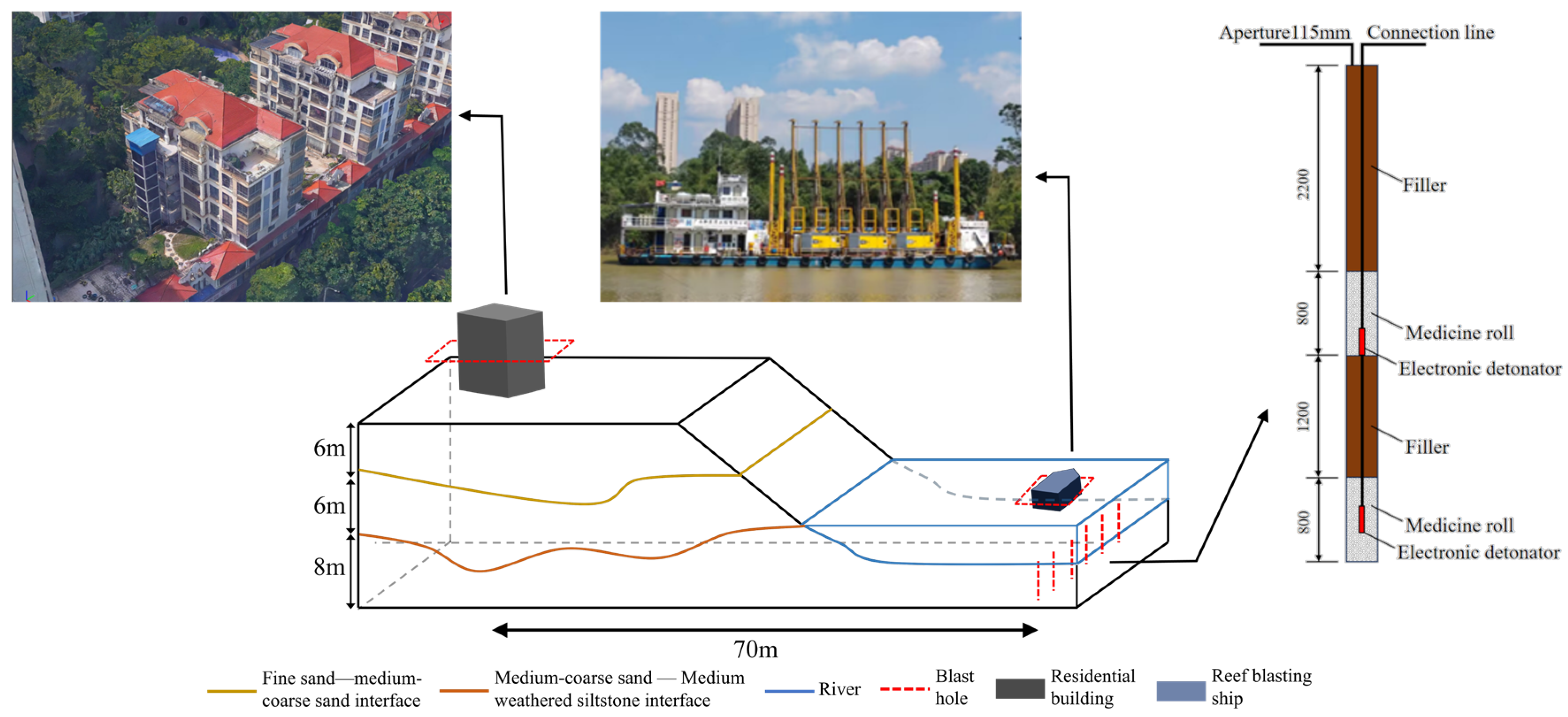
Figure 1. Schematic diagram of site construction.
Eng 07 00140 g001
Figure 2. Layout of vibration monitoring points.
Eng 07 00140 g002
Figure 3. Waveforms of vibration velocity monitored in the field: (a) vibration velocity at point M1; (b) vibration velocity at point J4.
Eng 07 00140 g003
Figure 4. Vertical vibration velocity component vs. burst center distance.
Eng 07 00140 g004
Figure 5. Numerical calculation model diagram.
Eng 07 00140 g005
Figure 6. Numerical model waveforms of vibration velocity: (a) at point M1; (b) at point J4.
Eng 07 00140 g006
Figure 7. Layout of superstructure measurement points.
Eng 07 00140 g007
Figure 8. Decay of vibration velocity of the superstructure.
Eng 07 00140 g008
Figure 9. Pile measurement point layout.
Eng 07 00140 g009
Figure 10. Comparison of peak vibration velocity along depth for pile foundation.
Eng 07 00140 g010
Figure 11. Maximum principal stress cloud of pile foundation at different moments; (a) t = 100 ms; (b) t = 150 ms; (c) t = 300 ms.
Eng 07 00140 g011
Figure 14. Relationship between maximum principal stress and vertical peak vibration velocity of pile body.
Eng 07 00140 g014
Table 1. Blasting vibration monitoring data for each monitoring point.
Measurement Point NumberPeak Vibration Velocity (cm/s)
XYZ
J10.1420.0830.244
J20.1150.0660.179
J30.0750.0590.125
J40.0470.0520.107
M10.0240.0200.035
Table 2. Blast vibration data is required for the formula.
Point NumberBlast Center Distance (m)VxVyVz
J1460.1420.0830.244
J2540.1150.0660.179
J3620.0750.0590.125
J4700.0470.0520.107
Table 3. Fitting parameters.
Blast Center Distance (m)Explosive Amount (kg) ln ( Q 3 / R ) lnVz
468−3.135−1.410
548−3.296−1.720
628−3.434−2.079
708−3.555−2.235
Table 4. Material parameter modeling of soil and concrete structures.
Materialρ (g/cm3)E0 (GPa)μRSσy (MPa)b
Silty Fine Sand1.80.150.3351
Medium-Coarse Sand2.00.40.3070.5
Moderately Weathered Siltstone2.20.90.26110.5
Concrete2.5300.1914.31
Table 6. Parametric modeling of reinforcing steel material.
ρEμRSσvETCRSPiRS
g/cm3GPaMPaGPa
7.82100.35482405
Table 7. Modeling of water body material parameters.
ρ
g/cm3
C
m/s
S1S2S3γ0aE
1.02516402.60−1.9790.230.50.000.00
Table 8. Comparison results of vibration velocity between the field test and numerical simulation.
Measurement PointPeak Vibration Velocity (cm/s)Error/%
Numerical SimulationPractical Monitoring
M10.0330.0355.71
J10.2360.2443.28
J20.1850.1793.24
J30.1340.1256.72
J40.1030.1073.74
Table 9. Peak Velocities at Superstructure Measurement Points.
Point NumberHeight (m)Peak Vibration Velocity (cm/s)
M1270.033
M2250.036
M3220.041
M4190.044
M5160.050
M6130.053
M7100.061
M870.075
M950.084
M1030.088
M1110.098
M1200.103
Disclaimer/Publisher’s Note: The statements, opinions and data contained in all publications are solely those of the individual author(s) and contributor(s) and not of MDPI and/or the editor(s). MDPI and/or the editor(s) disclaim responsibility for any injury to people or property resulting from any ideas, methods, instructions or products referred to in the content.