Article

Damage Mechanism and Sensitivity Analysis of Cement Sheath Integrity in Shale Oil Wells During Multi-Stage Fracturing Based on the Discrete Element Method

1
Oil Extraction Technology Research Institute, Xinjiang Oilfield Company, Karamay 834000, China
2
School of Petroleum, China University of Petroleum-Beijing at Karamay, Karamay 834000, China
*
Authors to whom correspondence should be addressed.
Submission received: 8 December 2025 / Revised: 11 January 2026 / Accepted: 14 January 2026 / Published: 15 January 2026

Abstract

As the retrieval of unconventional oil and gas resources extends to the deep and ultra-deep domains, the issue of cement sheath failure in shale oil wellbores seriously endangers wellbore safety, making it imperative to uncover the relevant damage mechanism and develop effective assessment approaches. In response to the limitations of conventional finite element methods in representing mesoscopic damage, in this study, we determined the mesoscopic parameters of cement paste via laboratory calibrations; constructed a 3D casing–cement sheath–formation composite model using the discrete element method; addressed the restriction of the continuum assumption; and numerically simulated the microcrack initiation, propagation, and interface debonding behaviors of cement paste from a mesomechanical viewpoint. The model’s reliability was validated using a full-scale cement sheath sealing integrity assessment apparatus, while the influences of fracturing location, stage count, and internal casing pressure on cement sheath damage were analyzed systematically. Our findings indicate that the DEM model can precisely capture the dynamic evolution features of microcracks under cyclic loading, and the results agree well with the results of the cement sheath sealing integrity evaluation. During the first internal casing pressure loading phase, the microcracks generated account for 84% of the total microcracks formed during the entire loading process. The primary interface (casing–cement sheath interface) is fully debonded after the second internal pressure loading, demonstrating that the initial stage of cyclic internal casing pressure exerts a decisive impact on cement sheath integrity. The cement sheath in the horizontal well section is subjected to high internal casing pressure and high formation stress, resulting in more frequent microcrack coalescence and a rapid rise in the interface debonding rate, whereas the damage progression in the vertical well section is relatively slow.

1. Introduction

With the increasing depletion of conventional oil and gas resources, unconventional resources such as shale oil have become increasingly prominent in China’s energy structure [1,2,3]. Unconventional oil and gas reservoirs are characterized by low porosity and low permeability, making it difficult to gain economic benefits through conventional development methods; currently, horizontal wells combined with multi-stage fracturing are mainly adopted for development [4,5,6]. During the multi-stage fracturing process, the rise and fall in internal casing pressure exerts a significant impact on the cement sheath’s integrity, and in severe cases, failure of the sealing in the cement sheath leads to annular pressure buildup, which poses a serious threat to wellbore safety [7,8]. Statistics show that among 15,500 wells in the outer continental shelf of the U.S. Gulf of Mexico, at least 6692 show annular pressure buildup [9]. Experimental results from the Tarim Oilfield indicate that annular pressure buildup in gas wells is the main cause of well integrity failure; in fact, wellbore integrity failures caused by annular pressure account for 50% of all problem wells and occur in 21% of all wells generally [10].
The cement sheath is located between the casing and formation rock, and changes in wellbore conditions, such as temperature, pressure, and in situ stress, can all affect the stress state and even the integrity of the cement sheath. To address this issue, scholars have conducted a series of studies, with the finite element method (FEM) dominating the field of numerical simulation: Xiaojun Zhang, Yan Yan, KuanHai Deng et al. [11,12,13] established a numerical model of plastic damage in the cement sheath; analyzed the effects of the cyclic pressure amplitude, number of cycles, and temperature on compressive damage and microannulus size; and quantified the microannulus size. Yan Yan et al. [14] developed a thermo-hydro-mechanical (THM) coupled numerical model to investigate the laws of influence of internal casing pressure, fracturing fluid displacement, cement elastic modulus, pore diameter, and pore density on the cement sheath’s sealing integrity. KuanHai Deng, Leiju Tian et al. [15,16] constructed an elastoplastic mechanical model of the casing–cement sheath–formation system under alternating pressure, concluding that the interfacial debonding of the cement sheath is mainly related to the accumulation of plastic strain. Shiming Wei, Xiaoyu Zhang et al. [17,18] adopted a fully coupled solid–liquid flow numerical model to study the effects of fracturing fluid injection pressure, mechanical properties of the cement–casing–formation, perforation orientation, and fracturing fluid viscosity on cement sheath failure; however, the finite element method has limitations in simulating crack propagation.
A small number of researchers have adopted the discrete element method (DEM): Sohrab Gheibi et al. [19] utilized the modified discrete element method (MDEM) to conduct a numerical analysis on cement sheath integrity; investigated the formation processes of radial fracture, shear failure, and interfacial debonding of the cement sheath under conditions of internal casing pressure rise and fall; and discussed the influences of parameters such as casing size, rock elastic parameters, and loading time. Zhang Guangqing et al. [20] combined the finite element method with the discrete element method, established a calculation model for cement sheath integrity in horizontal well staged fracturing, and recorded the number of microcracks in the plastic deformation zone of the cement sheath during multi-stage fracturing.
In addition to numerical simulation, laboratory experiments are also an important method for conducting research on cement sheath integrity. Wang Dian et al. [21] carried out mechanical tests under simulated bottom-hole conditions by curing standard cement stone samples and cemented samples, and explored the damage and failure laws of the cement stone itself and the cemented interface in well cementing. Chen Haodong et al. [22] performed tests on the interfacial cementation integrity of the cement sheath under alternating thermal loads, and compared the differences in the results between small-scale and full-scale physical experiments. Li Juan et al. [23] conducted experiments on the changes in cement sheath sealing pressure under the injection-production conditions of gas storage wells, analyzing the variation law of the cement sheath sealing pressure and the influence of cement sheath mechanical properties on its integrity. Fang Zhongqi et al. [24] developed a tensile strength testing device for cement stone and proposed a corresponding testing method, optimizing the cement slurry system that meets the requirements of gas storage production and operation. Guan Zhigang et al. [25] carried out testing and evaluation of the sealing performance and interfacial mechanical properties of full-scale wellbore assemblies under alternating pressure, clarifying the correlation between the sealing performance and interfacial mechanical properties of the cement sheath. Diana Maury Fernandez et al. [26] conducted experiments on the effect of different hydrogen exposure durations on cement stone properties, evaluating the role of hydrogen in cement sealing and mechanical integrity. Niantao Zhou et al. [27] proposed an evaluation method and experimental device for assessing cement sheath integrity under thermal cycling, and experimentally clarified the influences of factors such as inner and outer casing sizes and cementation length on the sealing performance of the cement sheath. Yuanhua Lin et al. [28] tested and evaluated the sealing integrity and mechanical integrity of wellbore assemblies under strong alternating thermal loads, exploring the failure mechanism of cement sheath integrity under different working conditions and providing a reference for the large-scale fracturing design of deep horizontal wells. Bathija et al. [29] carried out research on cement sheath properties under simulated reservoir conditions, using new equipment to conduct three-dimensional monitoring of the in situ dynamic changes in cement with acoustic data, and analyzing the influences of confining pressure, temperature, curing time, and other factors on the cement strength and shear bond strength.
From the perspective of existing research methods, the finite element method (FEM) dominates techniques for studying cement sheath integrity, and it is mainly used to analyze the stress and strain of the cement sheath under complex conditions. However, since the cement sheath itself is a brittle material, the plastic deformation process is accompanied by the initiation and propagation of microcracks, which are difficult to quantitatively evaluate using the finite element method. This makes it challenging to quantitatively characterize the damage and failure behavior of the cement sheath during multi-stage fracturing. To address the above issues, this study established a three-dimensional (3D) assembly model of casing–cement sheath–formation based on the discrete element method (DEM), breaking through the constraint of the continuum hypothesis. From the perspective of mesomechanics, the initiation and propagation of microcracks in cement stone and the interfacial debonding behavior were simulated. The influences of fracturing position, number of stages, and internal casing pressure on cement sheath damage were systematically analyzed. The research results are conducive to furthering our understanding of the cement sheath’s failure mechanism during multi-stage fracturing.

2. Meso-Parameter Setting of Discrete Element Model

2.1. Discrete Element Contact Model

The discrete element method (DEM) can effectively simulate the mesomechanical processes of rock crack initiation and propagation [30]. To characterize the contact state between discrete element particles, two typical bonding models are generally used (Figure 1): the parallel bonding model (PBM) and contact bonding model (CBM). Unlike the contact bonding model, which can only transmit forces, the parallel bonding model can realize torque transmission between particles [31], making it more suitable for strongly bonded materials such as rocks and metals; in contrast, the contact bonding model is mainly applicable to materials like powders and sands. Therefore, combined with the microscopic particle contact characteristics of cement stone, we selected the parallel bonding model to simulate its cyclic loading–unloading process. This not only accurately reflects the cementation characteristics between particles but also reproduces the initiation and evolution paths of microcracks, thereby making up for the limitation of the conventional finite element method being ineffective for quantitatively evaluating the damage and failure behavior of the cement sheath during multi-stage fracturing.

2.2. Meso-Parameters of Discrete Element Model

To systematically study the mechanical properties of cement stone and provide calibration parameters for particle flow numerical simulation, mechanical experiments were carried out on cement stone. Samples of this material were prepared in accordance with API specifications and cured in a high-temperature and -pressure autoclave (100 °C × 21 MPa × 30 d). After curing, the samples were processed into standard specimens (Ø25 mm × 50 mm) that met the requirements of uniaxial compression, triaxial compression, Brazilian splitting, cyclic loading–unloading, and interfacial cementation tests. Mechanical experiments were conducted under the conditions shown in Table 1, and finally, the mechanical parameters of the cement stone and the casing–cement bonding interface were obtained. The mechanical parameters of the shale and casing were chosen according to existing data from the literature [32,33], and all parameters are summarized in Table 2.
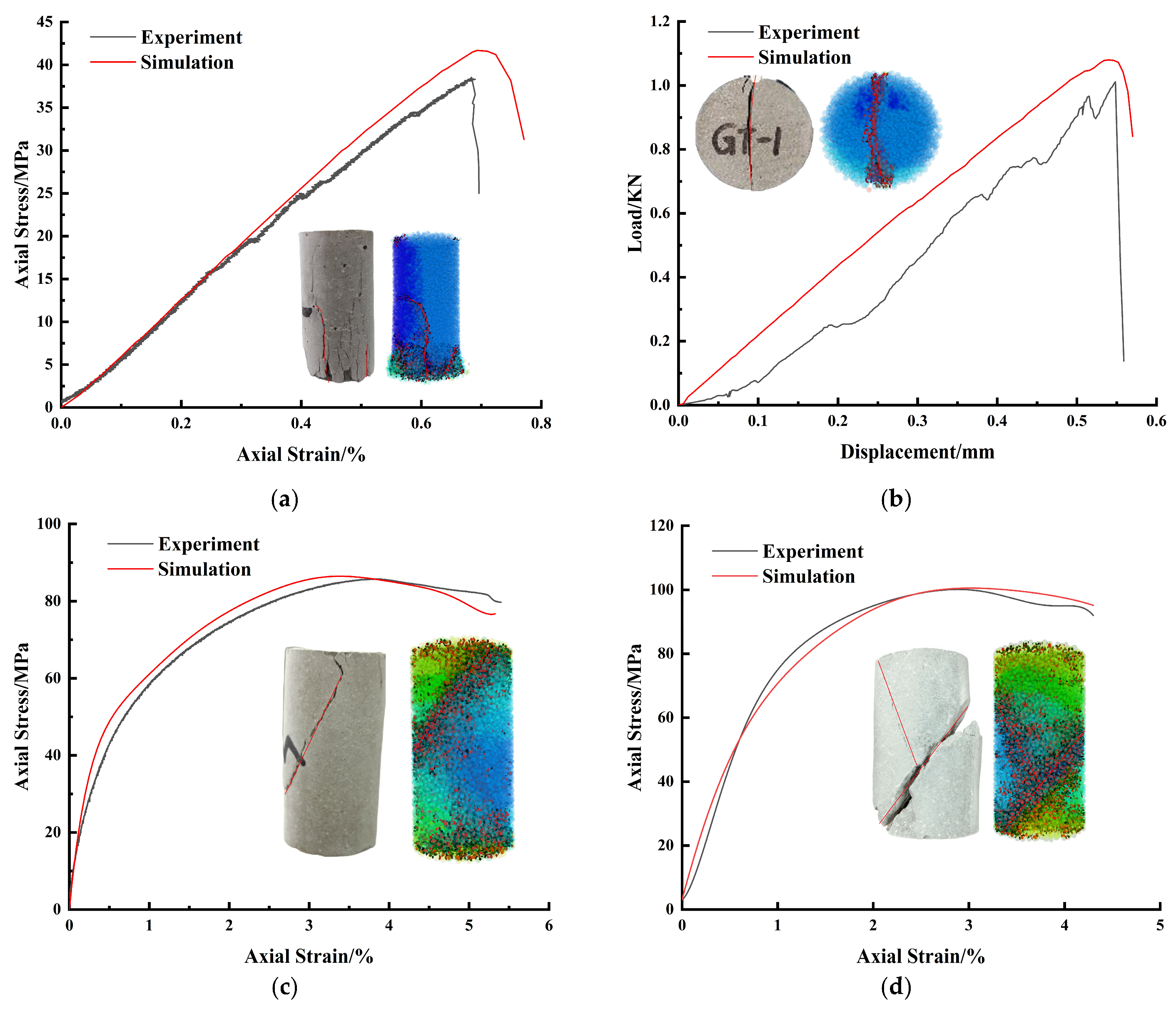
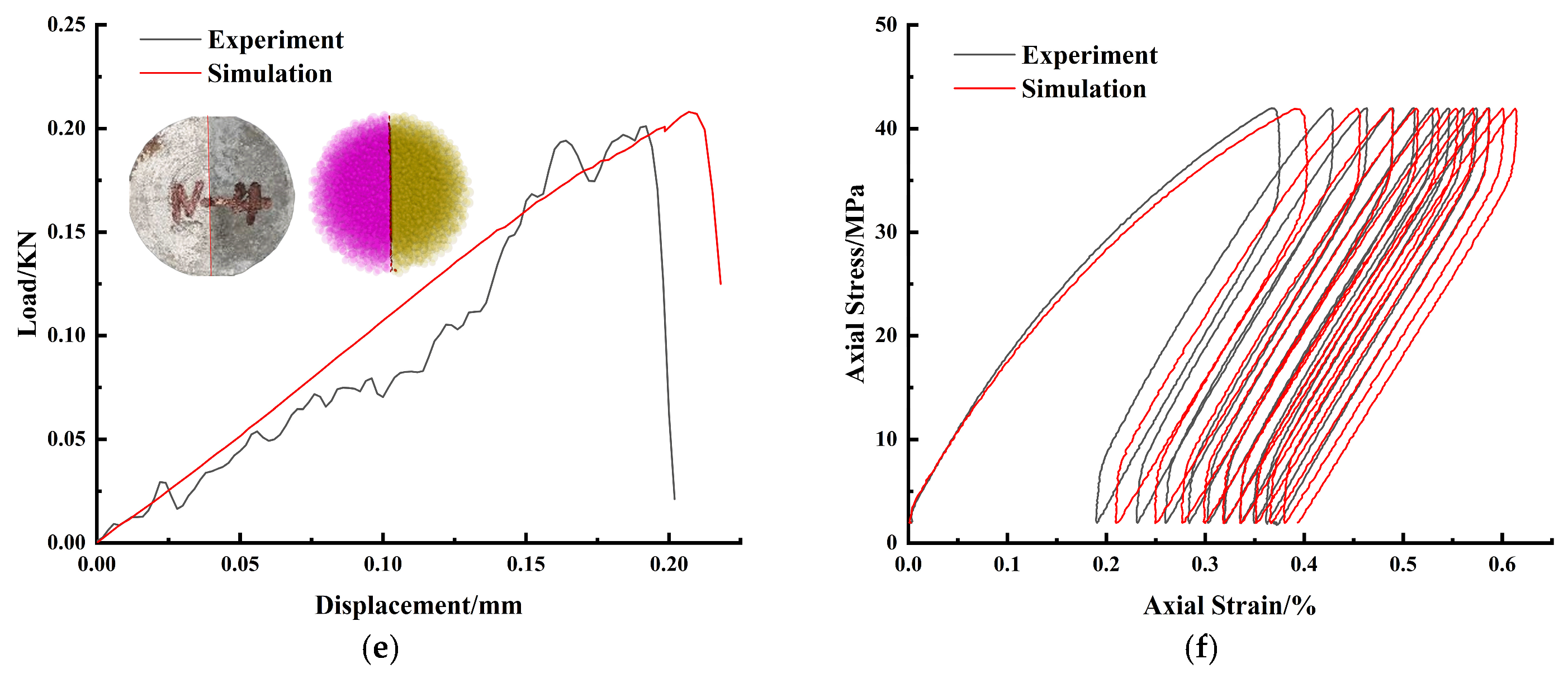
The discrete element method (DEM) characterizes the macroscopic mechanical behavior of materials through particle contact mechanical models, but there exists a complex nonlinear relationship between the particles’ microscopic parameters and macroscopic mechanical responses. Since the microscopic parameters of real materials are difficult to directly measure, calibration is required to match the simulation results with experimental data, thereby establishing a reliable parameter system and ensuring that the model accurately reflects the mechanical properties of cement stone. This study adopts discrete element numerical simulation technology to calibrate the particle parameters of the aforementioned material mechanical parameters based on trial and error; in the discrete element model, the casing and shale formation are assumed to be elastic bodies, and their failure behaviors are not considered temporarily. The particle parameters of each material are shown in Table 3, the simulated and experimental material mechanical parameters are compared in Table 4, and Figure 2 shows the comparison curves between the numerical simulation and real experiments for cement stone uniaxial compression, multi-confining-pressure triaxial compression, Brazilian splitting, casing–cement stone interfacial bonding, and cyclic load experiments.

3. Establishment and Validation of Discrete Element Numerical Model

3.1. Model Construction

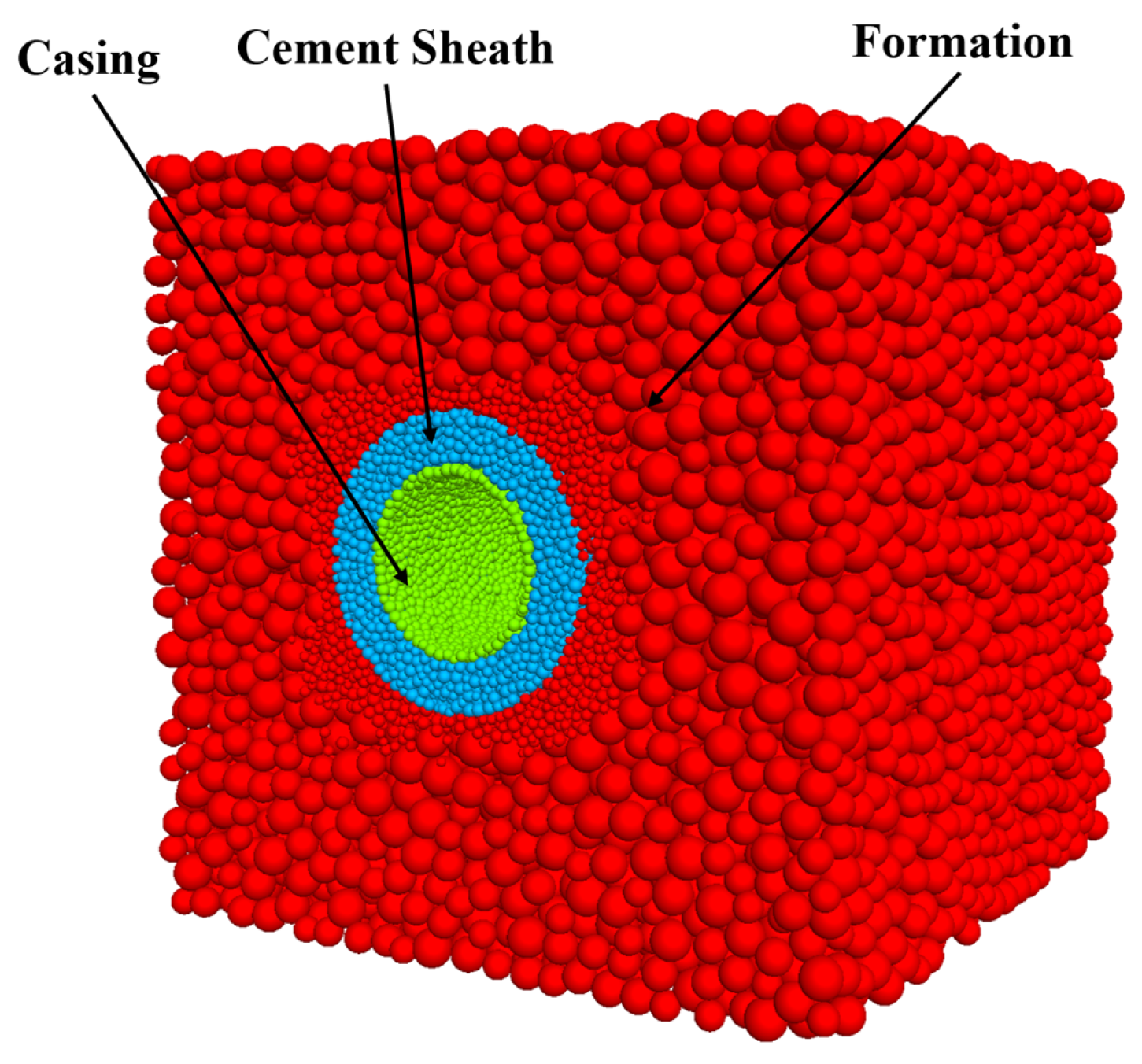
Based on the calibration results of the mesoscopic parameters of the aforementioned cement stone discrete element model, a three-dimensional discrete element model of the casing–cement sheath–formation assembly was established (Figure 3). The inner and outer diameters of the casing are 115/127.00 mm, and the outer diameter of the cement sheath is 168.28 mm. Based on Saint-Venant’s principle, the side length of the model is more than 5 times the wellbore diameter to eliminate the influence of end effects; to simulate the integrity of the cement sheath at the horizontal section of a shale oil well in Xinjiang, the corresponding vertical depth of the model is set to 3700 m, with the maximum horizontal in situ stress, minimum horizontal in situ stress, and vertical in situ stress being 107.0, 96.0, and 92.0 MPa, respectively. Uniform loads are applied to the outer part of the model through servo-controlled hexahedral boundary walls to simulate three-dimensional in situ stresses, and uniform loads are applied via servo-controlled wellbore-shaped walls to simulate the cyclic loading–unloading process of the casing internal pressure. Since the considered model is static, the damping dissipation value is set to 0.7 [34], a commonly used value in statics, to reduce the model calculation time. The maximum and minimum particle sizes are 3 mm/4.98 mm, in which the maximum particle diameter is 1.66 times the minimum diameter, corresponding to 75,455 particles. Due to the short duration of the multi-stage fracturing process, time-dependent effects such as creep are not considered in the model.

3.2. Analysis of Results

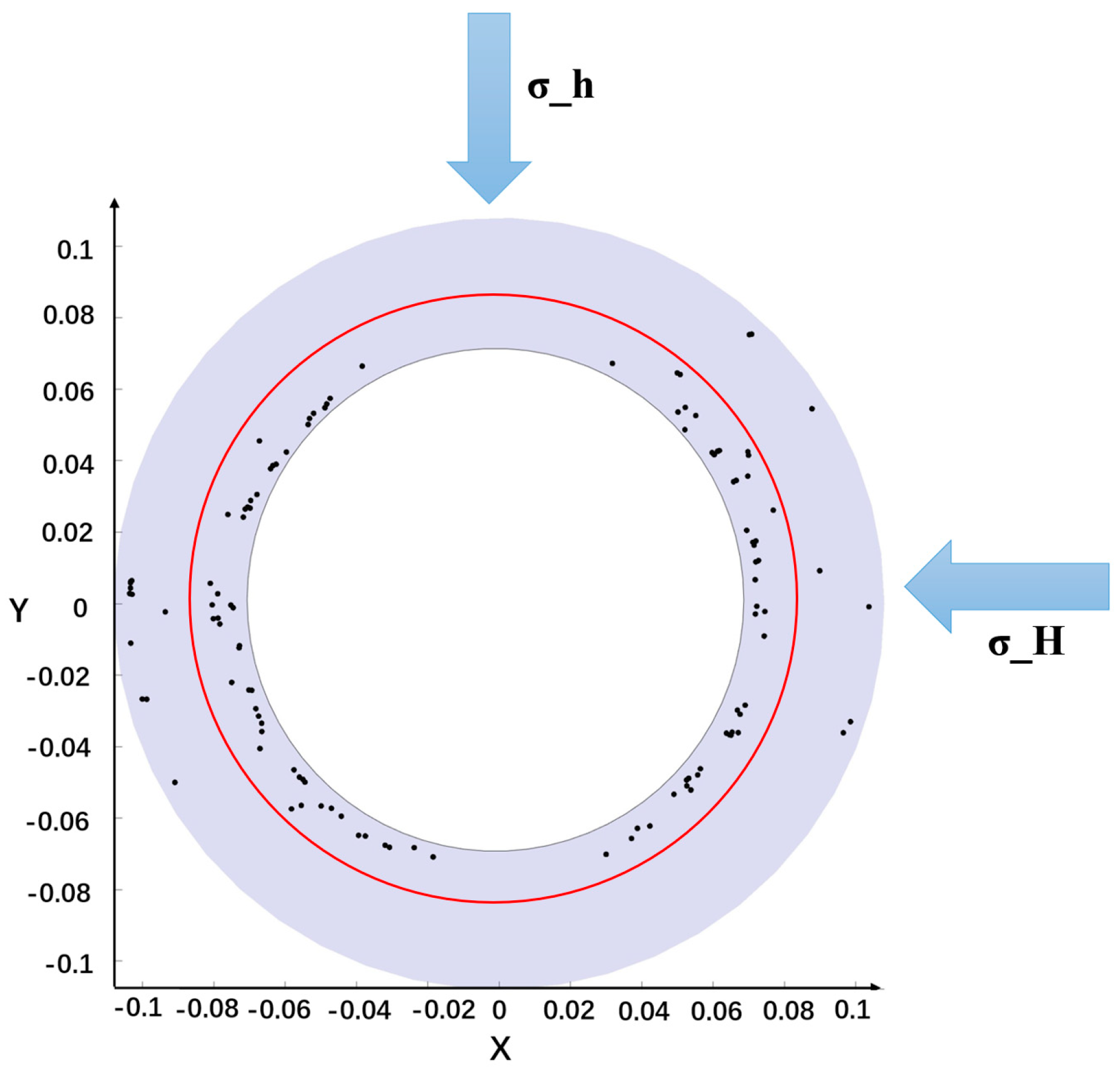
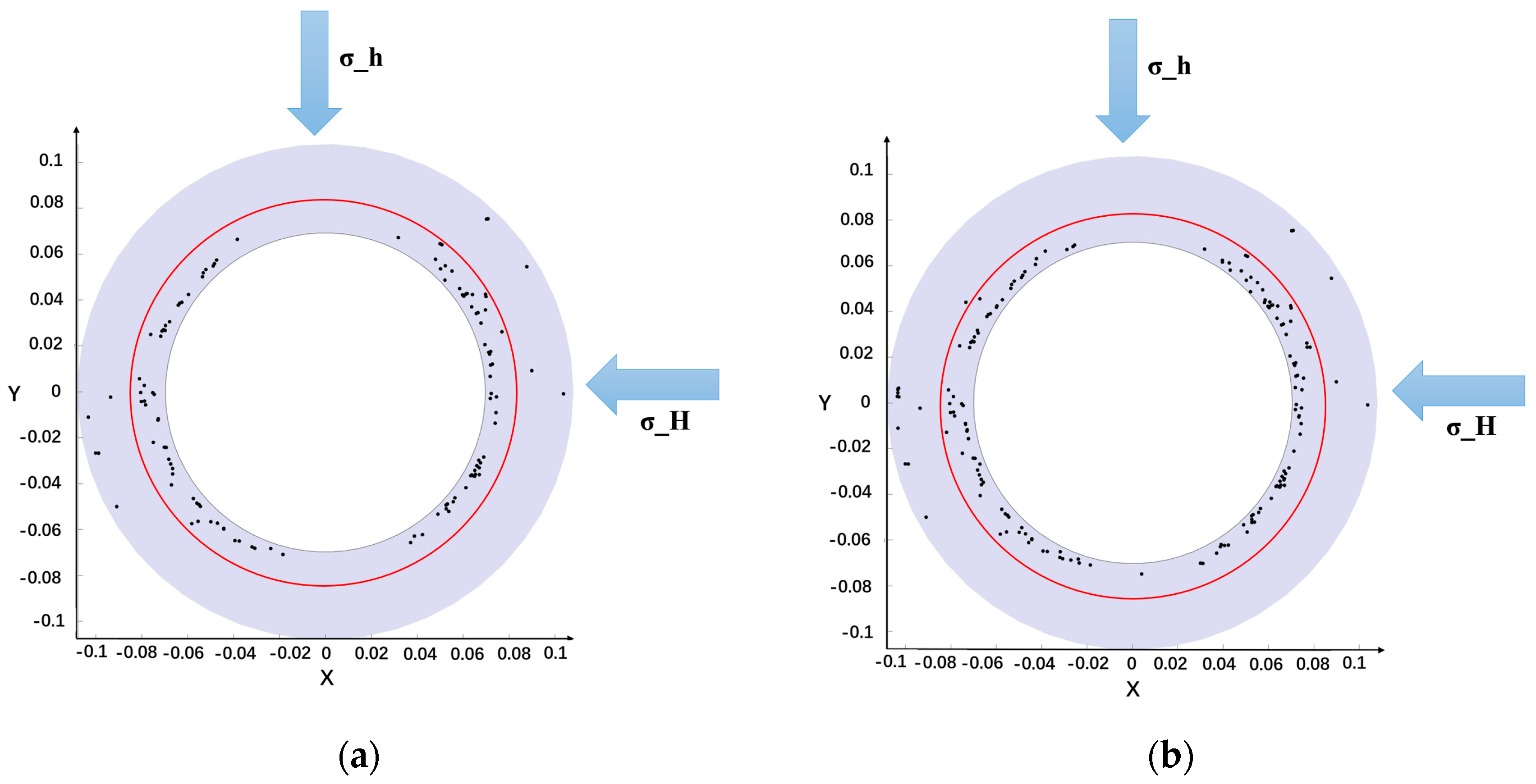
Figure 4 shows the microcrack distribution results of the cement stone under the conditions of a casing internal pressure range of 35–80 MPa and 30 fracturing stages (a microcrack is formed when the bonding link between a pair of particles is broken; thus, the number of microcracks is equal to the number of broken bonding links between particles, where σH in the figure denotes the maximum horizontal in situ stress and σh denotes the minimum horizontal in situ stress). It can be seen that during the multi-stage fracturing process, the microcracks inside the cement stone are mainly distributed near its inner wall, with those within the red circle accounting for more than 90% of the total. The number of microcracks near the outer wall is relatively small, mainly because the stress on the inner wall of the cement stone is greater than that on the outer wall, leading to faster crack initiation and propagation. Meanwhile, the existence of non-uniform in situ stress results in an uneven distribution of circumferential stress in the cement stone, which is reflected in a larger number of microcracks in the direction of the maximum horizontal principal stress and fewer in the direction of the minimum horizontal principal stress.
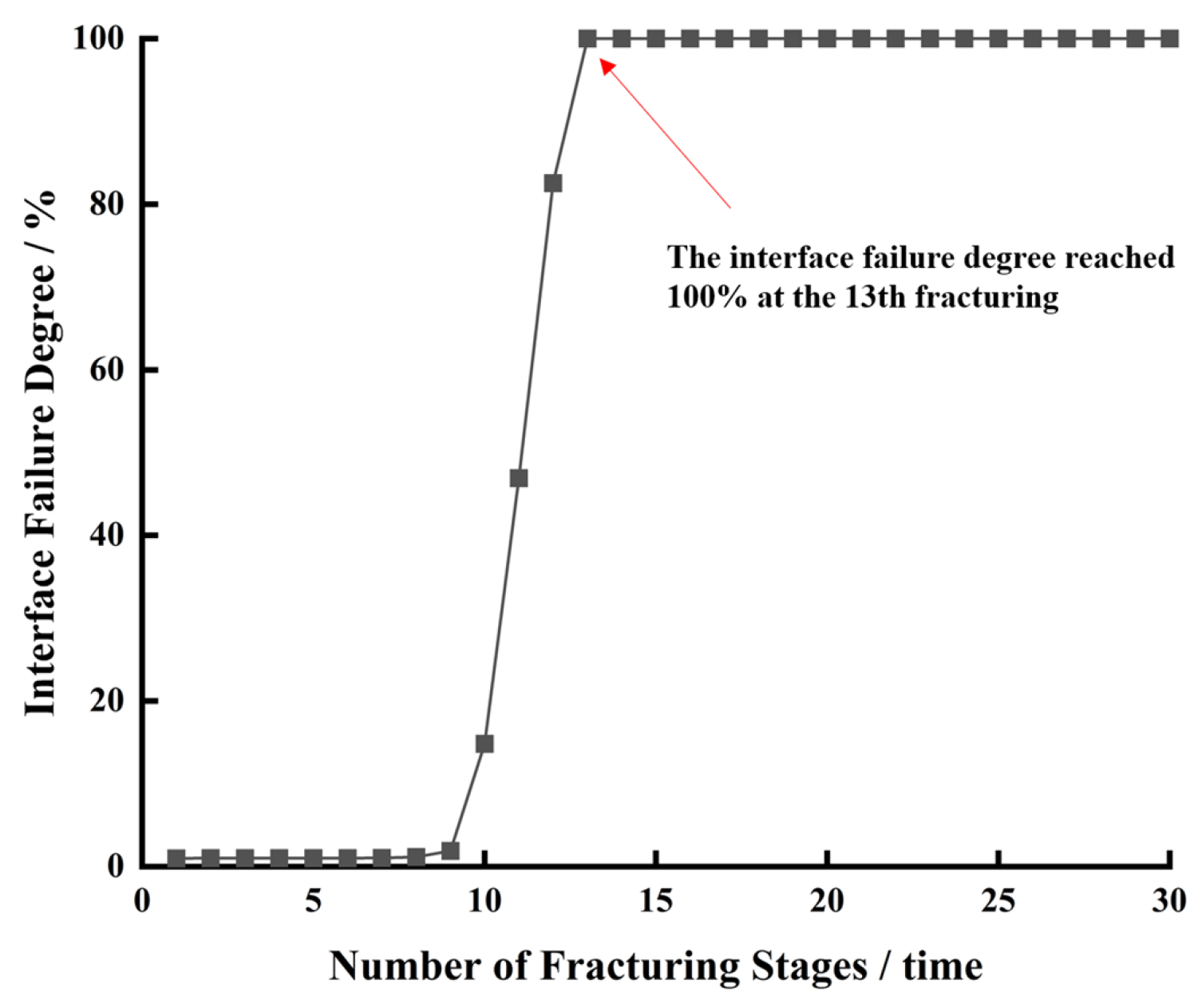
On the basis of evaluating the microcrack distribution of the cement sheath during multi-stage fracturing, the variation law of the failure degree of the first cementing interface with the number of fracturing stages was studied further, as shown in Figure 5. The interface failure degree is defined as the ratio of the failed area of the cemented surface to the total area. It can be seen from Figure 5 that the failure process of the cemented surface can be divided into two stages: In the first stage, no failure occurs on the cemented surface, which is because the plastic accumulation of the cement sheath causes the interface tensile stress during the unloading stage to be less than the bonding strength. When the number of fracturing stages reaches 9, the interface begins to fail, and the failure degree basically changes linearly.
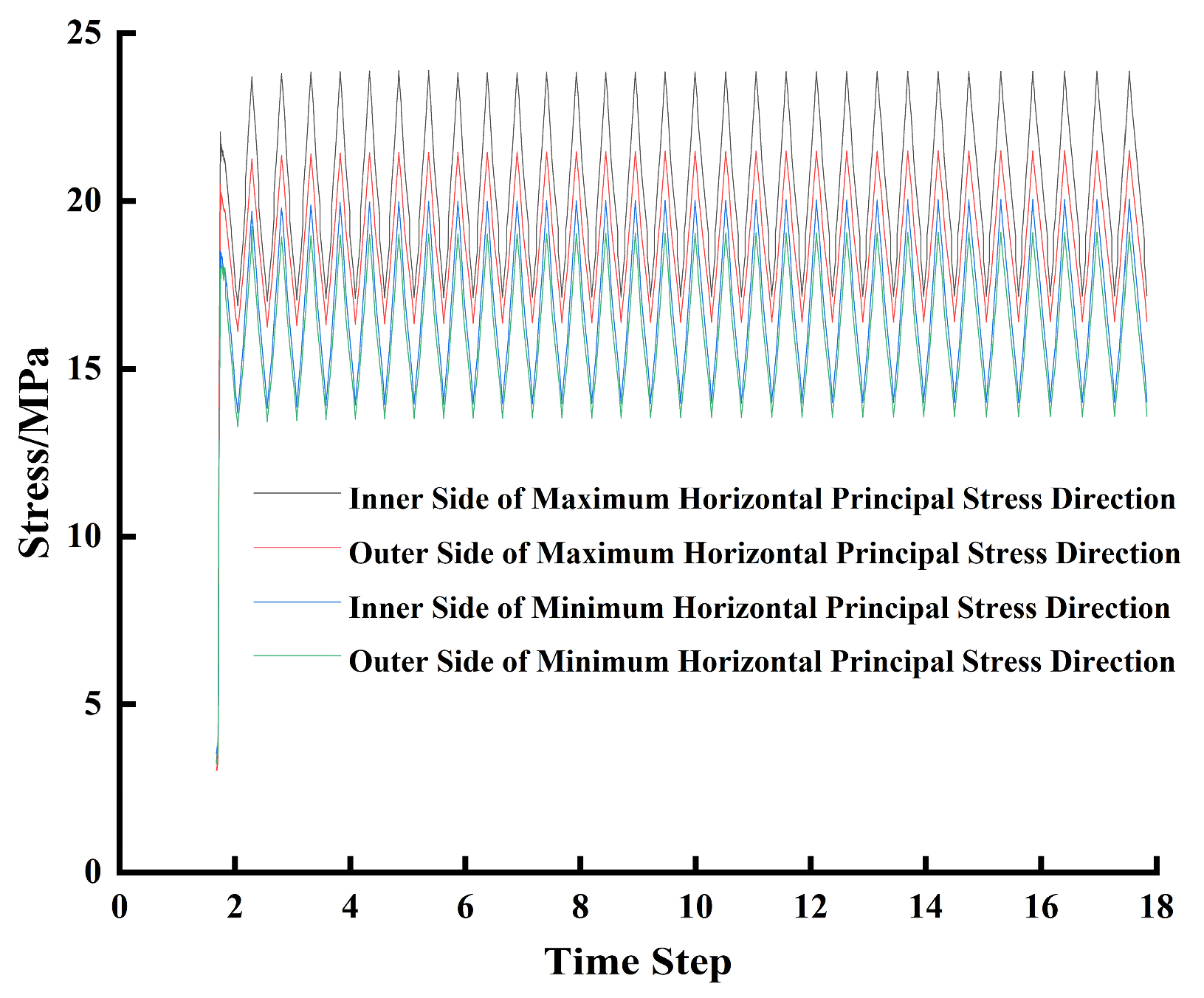
To explain the aforementioned microcrack distribution characteristics of the cement sheath, stress curves of the inner and outer sides in the directions of the maximum and minimum horizontal principal stresses were obtained by monitoring the internal stress of the cement sheath (Figure 6). It can be concluded from the curves that the stress in the direction of the maximum horizontal principal stress is greater than that in the direction of the minimum horizontal principal stress, which concentrates the microcracks in the cement sheath body in the direction of the maximum horizontal principal stress. The stress on the inner side of the cement sheath is greater than that on the outer side, so there are more microcracks on the inner side than on the outer side, which is consistent with Wei Lian et al. [35]’s results.

3.3. Model Validation

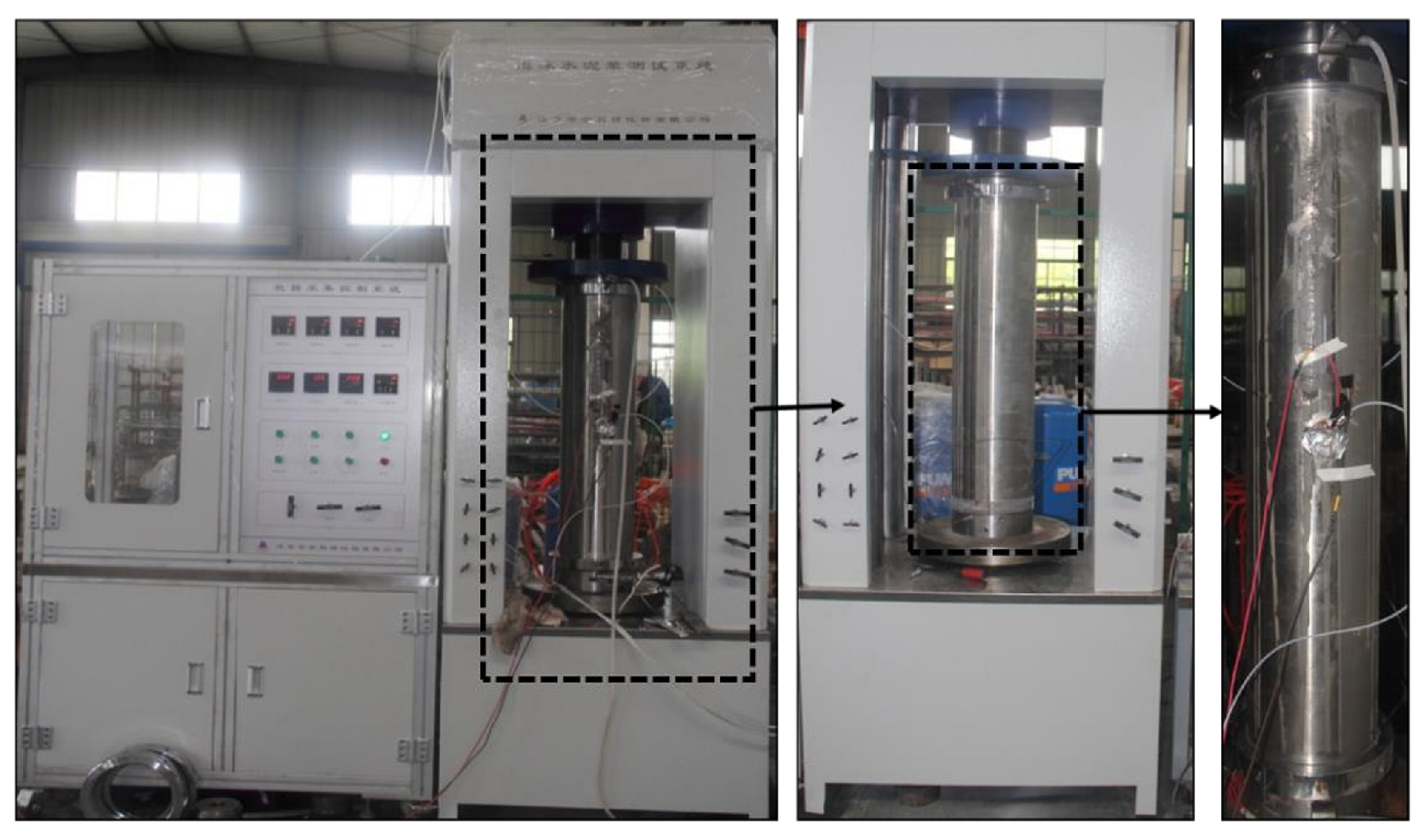
A full-scale cement sheath sealing integrity evaluation device (Figure 7) was used to assess the cement sheath sealing performance of shale oil wells under multi-stage fracturing conditions, aiming to verify the reliability of the discrete element numerical model. This device simulates real multi-stage fracturing conditions by constructing a casing–cement sheath–formation assembly, with the specific parameters as follows: the inner casing has an outer diameter of 139.0 mm and a steel grade of P110; the middle part is a cement sheath with a wall thickness of 26.7 mm; and an outer cylinder with an outer diameter of 244.5 mm and a steel grade of N80 is set on the outer layer to simulate formation constraints. Cyclic loads of multi-stage fracturing were simulated by applying periodic internal pressure inside the casing. Meanwhile, gas was injected into the bottom of the device to monitor the gas sealing performance of the cement sheath–casing interface (the first interface) and the outer cylinder–cement sheath interface (the second interface) in real time.
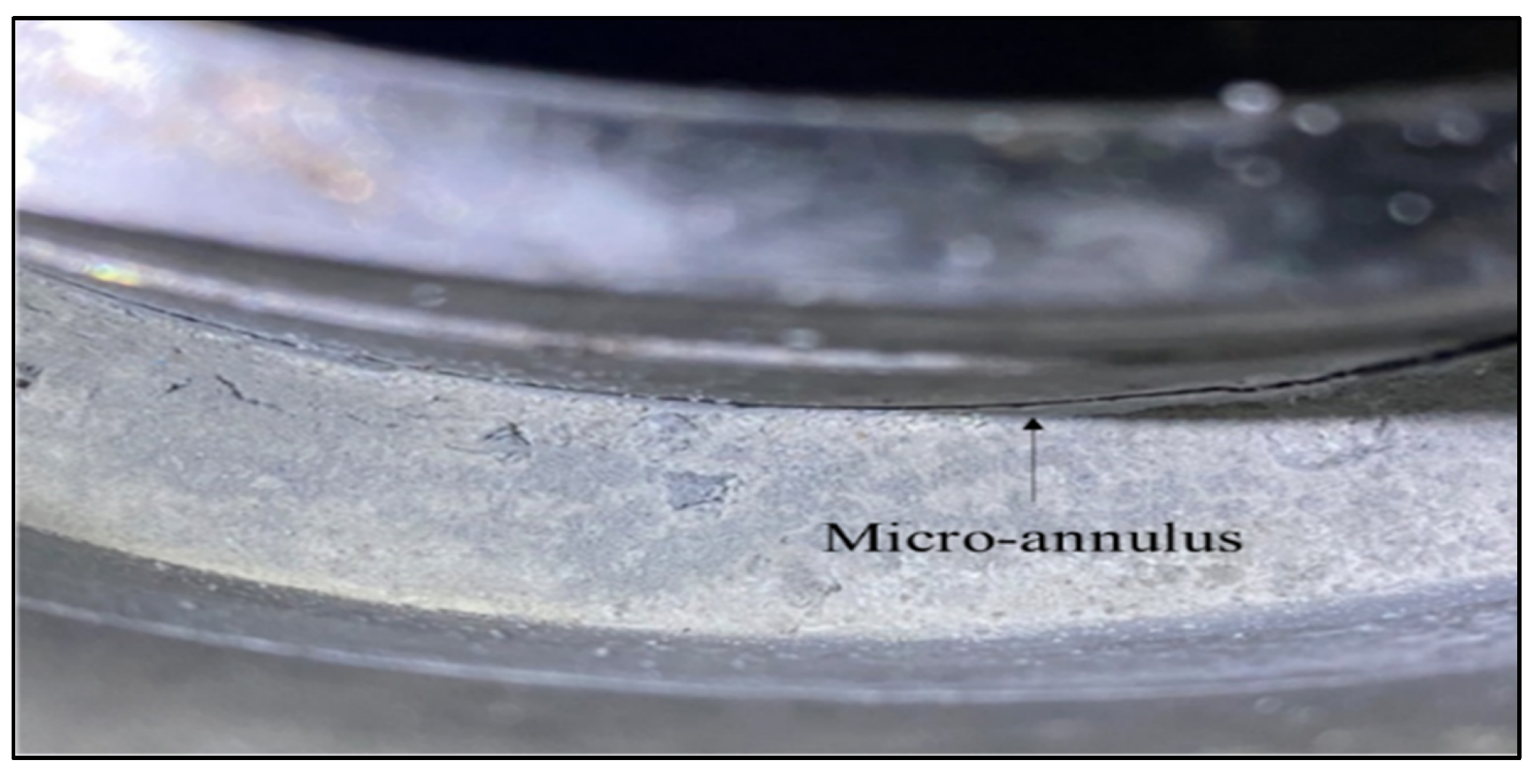
During the experiment, the casing internal pressure was cyclically loaded 30 times within the range of 35–80 MPa to simulate the cyclicity of the casing’s internal pressure during fracturing, and the interface sealing state was continuously monitored. The experimental results show that gas breakthrough occurred at the first cementing interface after the 13th internal pressure cycle (see Figure 8), while no gas leakage was detected at the second cementing interface during the entire process.
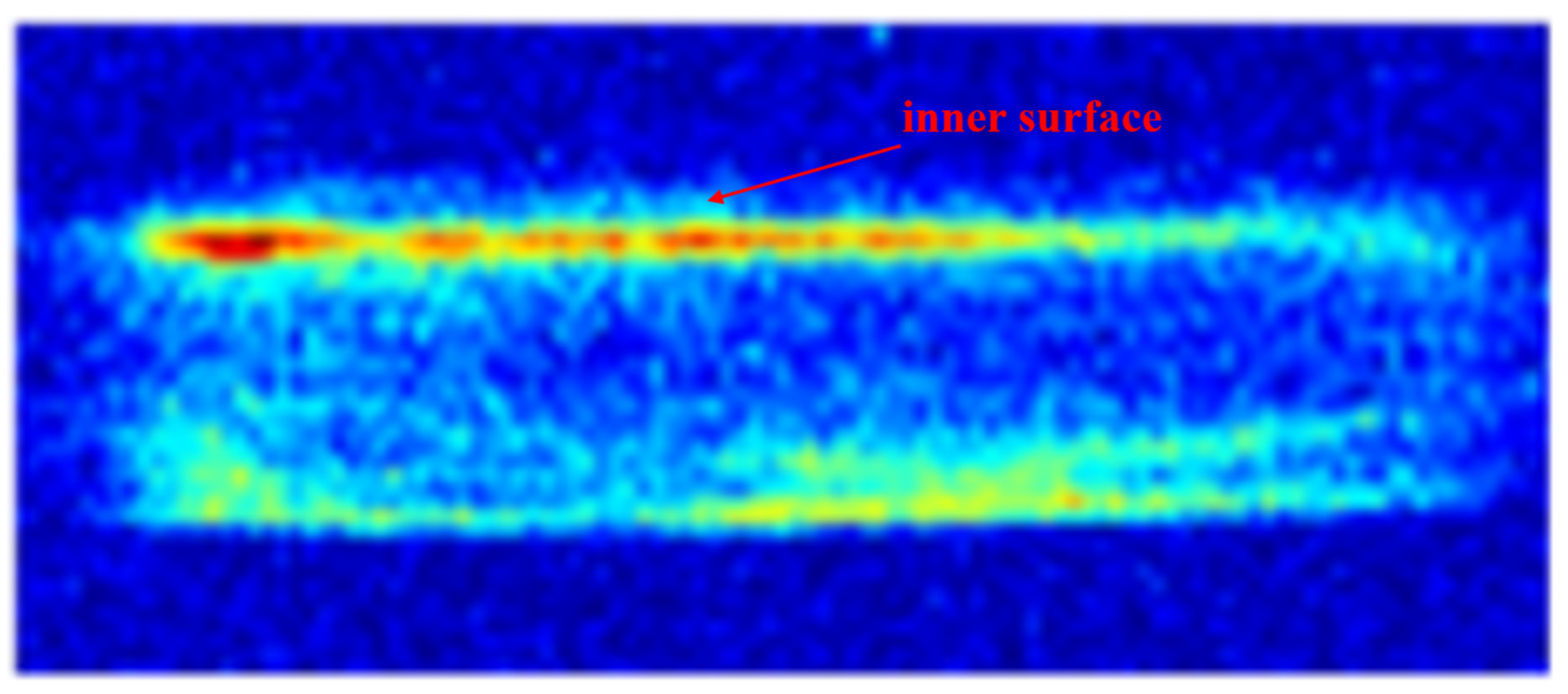
Further, CT scanning was conducted on cement sheath samples to analyze the microcrack distribution law at the first and second cementing interfaces. It can be seen from Figure 9 that dense microcracks develop on the inner side of the cement sheath body. Compared with the numerical simulation results, the first interface in the model was found to be completely debonded after the 13th cycle, which is consistent with the experimental findings. In the model, microcracks in the cement sheath are mainly concentrated near the inner side of the wellbore, and this is also consistent with the experimental results. The above phenomena indicate that the synergistic effect of the microannulus at the first interface and the microcrack propagation in the cement body leads to the sealing failure of the cement sheath, and at the same time confirms the rationality of the three-dimensional discrete element casing–cement sheath–formation model.
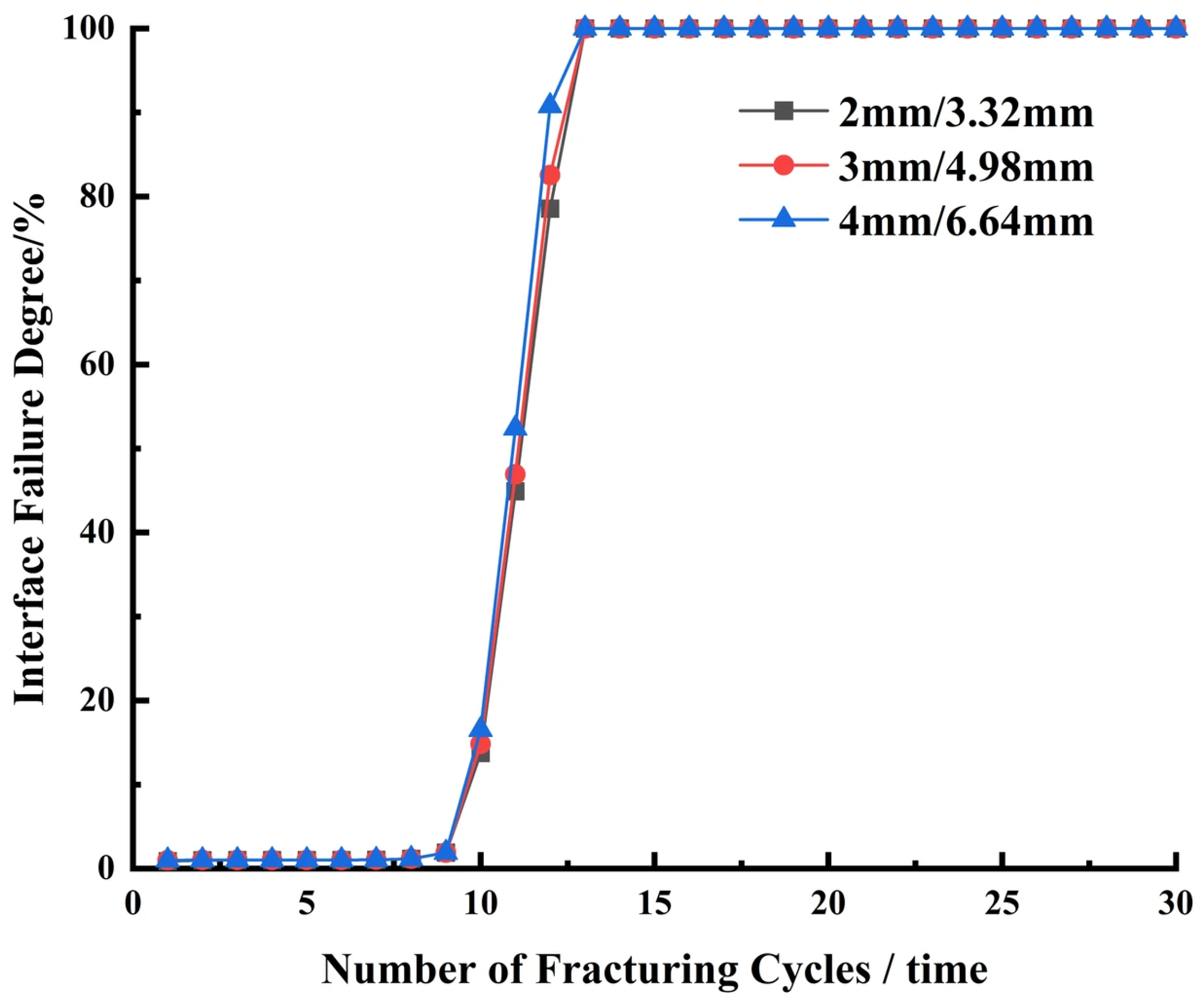
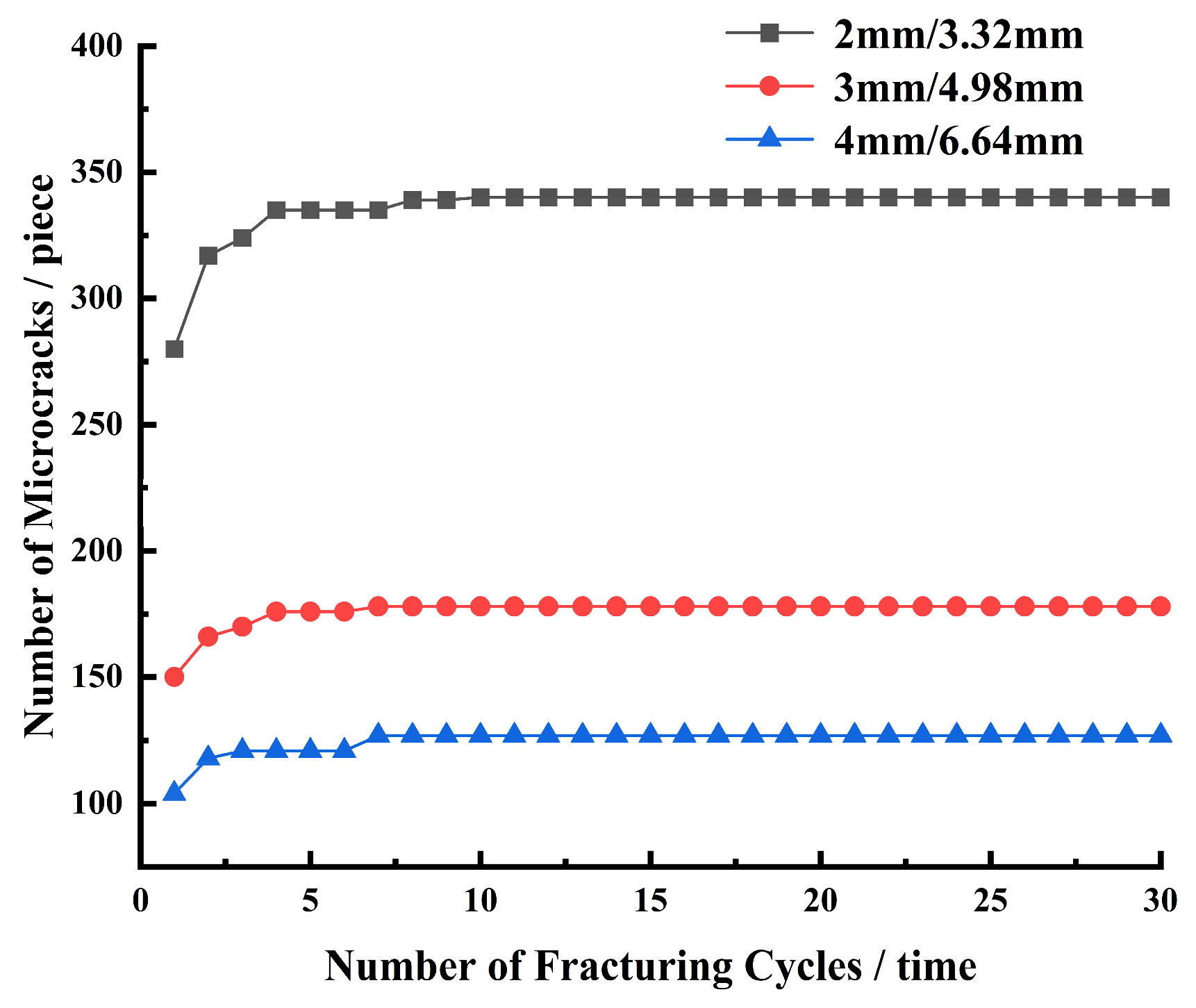
Further, a sensitivity analysis of the model’s particle size was carried out: three sets of parameters with minimum and maximum particle sizes of 2 mm/3.32 mm, 3 mm/4.98 mm, and 4 mm/6.64 mm were selected. Under the conditions of a casing internal pressure of 35–80 MPa and 30 fracturing stages, multi-stage fracturing simulations of the cement stone were performed, respectively. Figure 10 and Figure 11 show the failure degree curves of the first interface of the cement stone and the microcrack growth curves of the cement stone corresponding to different particle sizes, respectively. It can be seen from the figures that the failure degree of the first interface of the cement stone is similar under different particle sizes, and its influence is negligible; in addition, the number of microcracks generated in the cement stone during the first fracturing is maintained at about 80%, and the number gradually decreases until no more are generated in the subsequent fracturing process, with a consistent overall law.

4. Sensitivity Analysis of Cement Sheath Damage Degree

4.1. Influence of Fracturing Location on Cement Sheath Damage Degree

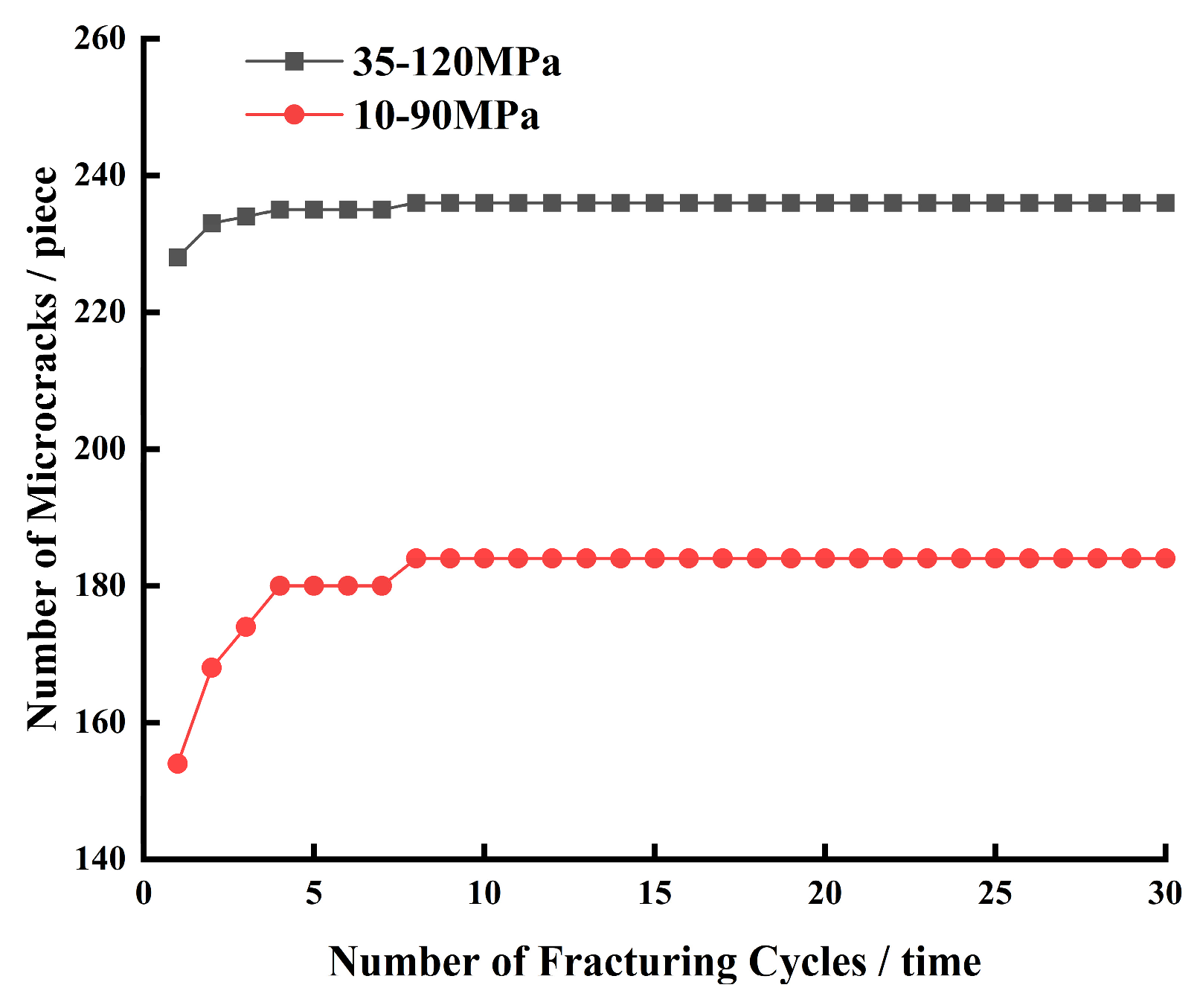
Sensitivity simulations of 30-stage fracturing were performed for the horizontal (well depth 3700 m, pipe pressure 10–90 MPa) and vertical sections (well depth 1000 m, casing pressure 35–120 MPa). Figure 12 shows the distributions of microcracks in the vertical and horizontal sections. Here, it can be seen that the microcracks in both sections are highly concentrated along the direction of the maximum horizontal principal stress (X-axis), and more than 90% of the microcracks are distributed in the inner region of the cement stone (inside the red circle). The microcracks in the horizontal section are denser, while the microcracks in the vertical section are distributed relatively sparsely.
Figure 13 shows the growth curve of microcracks with the number of fracturing stages. During the fracturing process, the number of microcracks in the cement sheath of the horizontal section increases in a stepwise manner with the number of fracturing operations, accumulating to 236, which is significantly higher than the value of 184 found in the vertical section. Meanwhile, although the number of microcracks generated in the first fracturing of the horizontal section is much higher than that of the vertical section, with an increase in fracturing stages, the increment in microcracks caused by a single fracturing in the vertical section gradually surpasses that in the horizontal section.
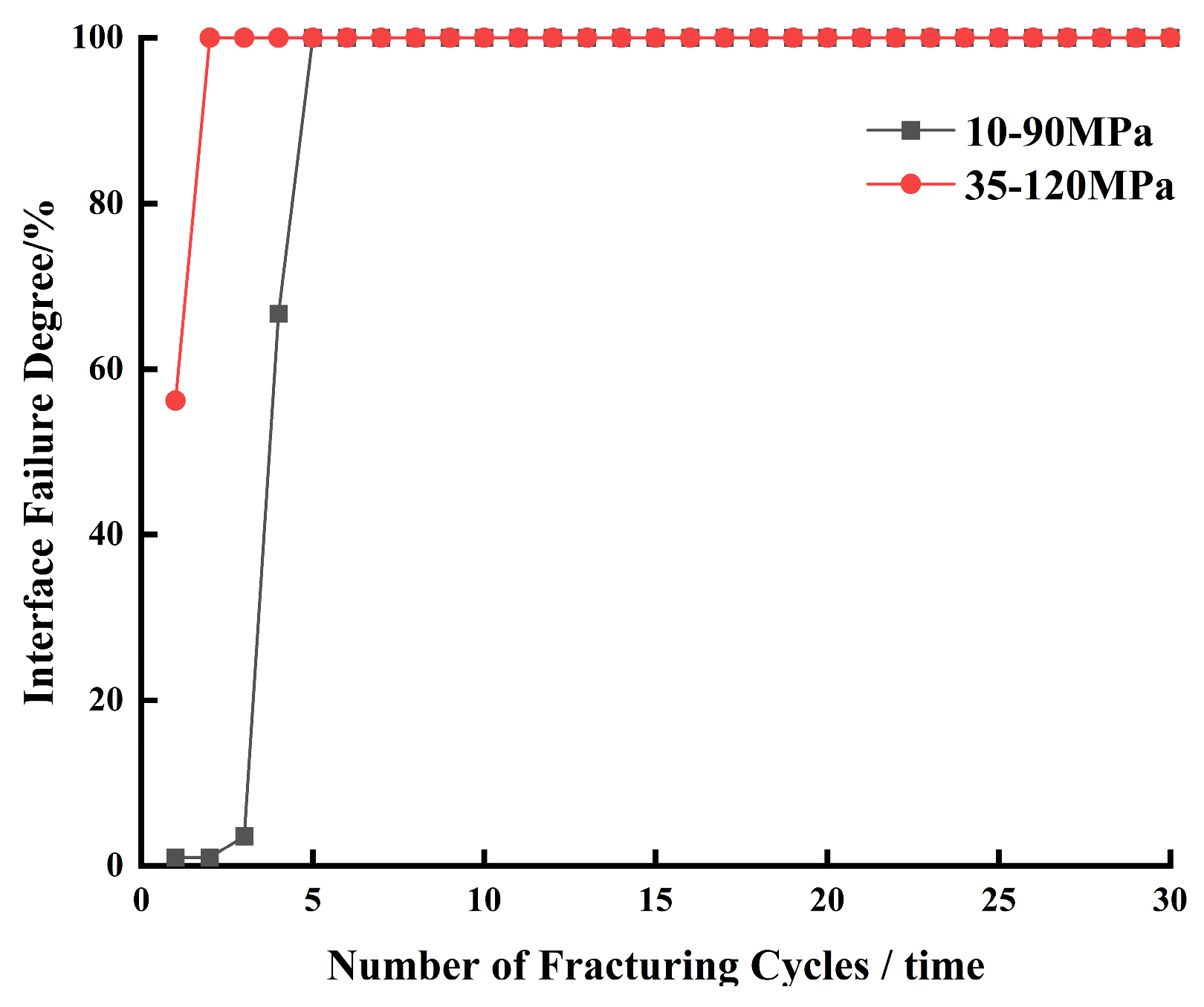
Figure 14 shows the growth curve of the microcrack interface failure degree with the number of fracturing stages for the vertical and horizontal sections. It can be seen that the interface debonding rate of the horizontal section rises sharply with the increase in fracturing pressure, and the first interface is completely damaged after the second fracturing. However, for the vertical section, the debonding rate is only stable at 1%. Large-scale bonding failure begins to occur from the fourth fracturing stage, with a bonding failure degree of 71.67%, and complete failure occurs in the fifth fracturing stage. The above results reveal the significant influence of wellbore position difference on cement sheath damage. Under the synergistic effect of a higher casing internal pressure and higher in situ stress, the horizontal section is more prone to inducing microcrack formation and propagation as well as bonding failure of the first interface.

4.2. Influence of Fracturing Stage Number on Cement Sheath Damage Degree

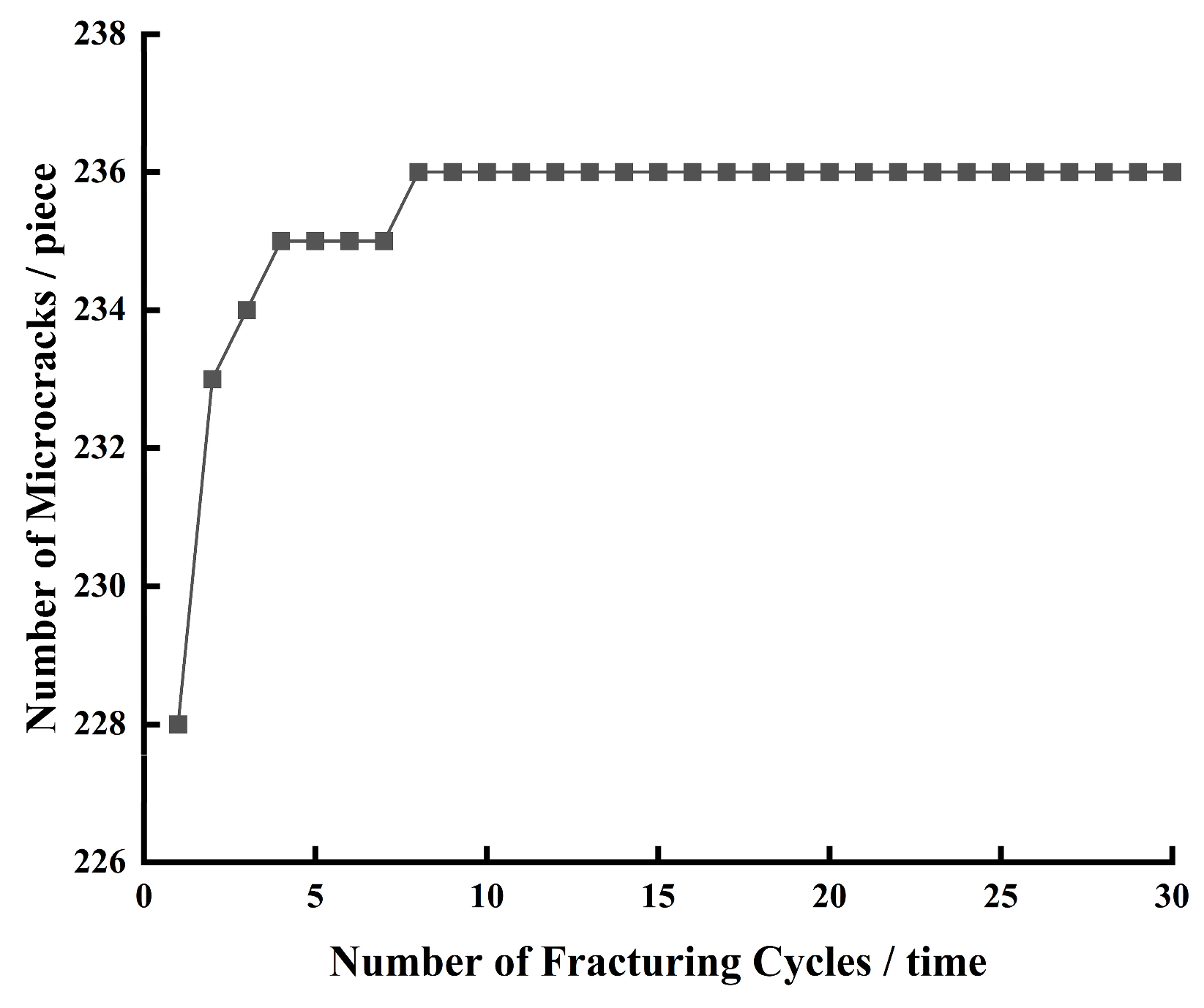
The 30-stage fracturing process was studied under a casing internal pressure range of 35–120 MPa. Figure 15 shows the number of microcracks in the cement sheath body, showing that with the increase in fracturing stages, the number of microcracks in the cement sheath shows a significant growth trend. The first fracturing operation induces 228 microcracks, accounting for more than 96% of the total. When the number of subsequent fracturing stages increases, the growth rate of the number of microcracks gradually slows down and stabilizes. When the number of fracturing stages reaches 8, the number of microcracks essentially no longer increases, showing a three-stage evolution process comprising “rapid growth—decreasing growth rate—stable saturation”.
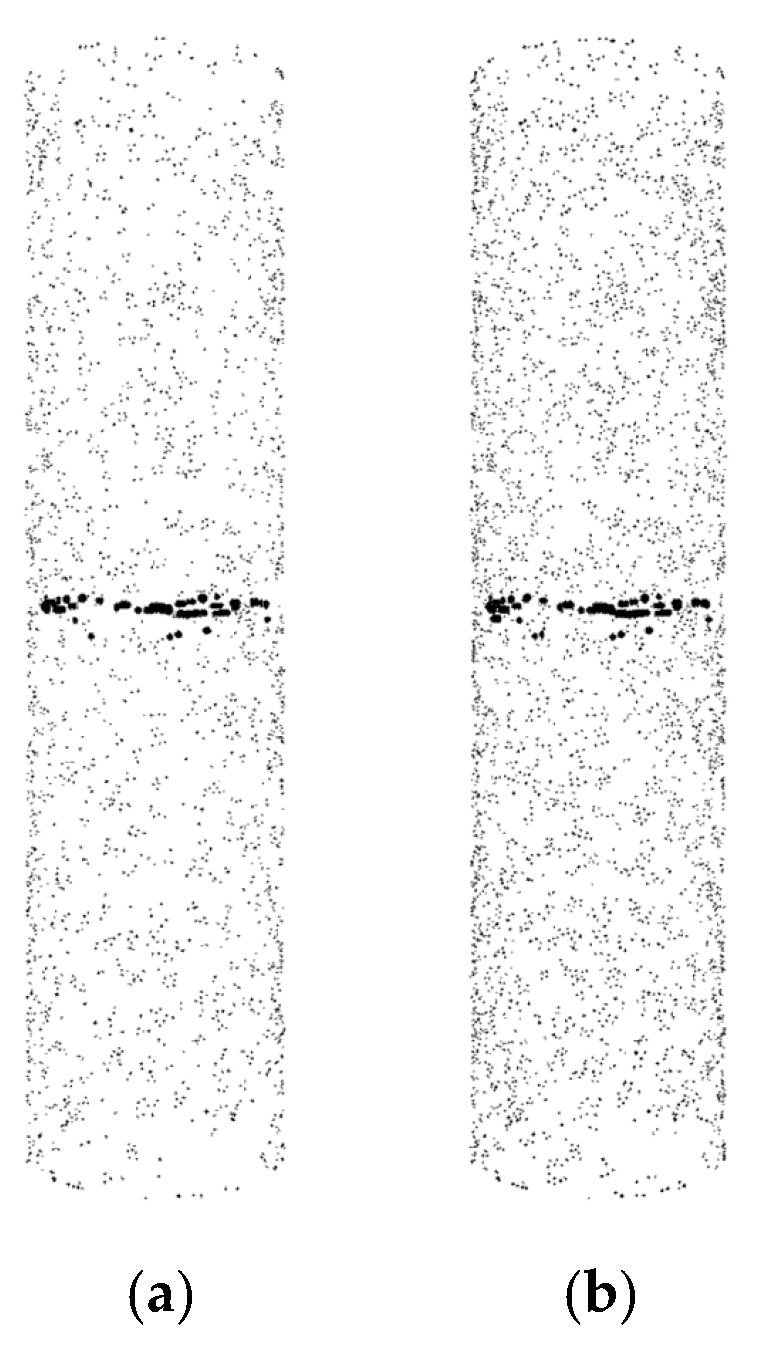
Figure 16 shows the failure image of the casing–cement sheath bonding interface (the more black cracks, the greater the damage to the bonding interface), in which it can be seen that under the action of the first fracturing cyclic load, the degree of damage to the first cementing interface reaches 56%, and it has completely failed by the second fracturing stage; this indicates that the internal pressure cycle in the early stage of fracturing has a decisive influence on the integrity of the first interface.

4.3. Influence of Casing Internal Pressure on Cement Sheath Damage Degree

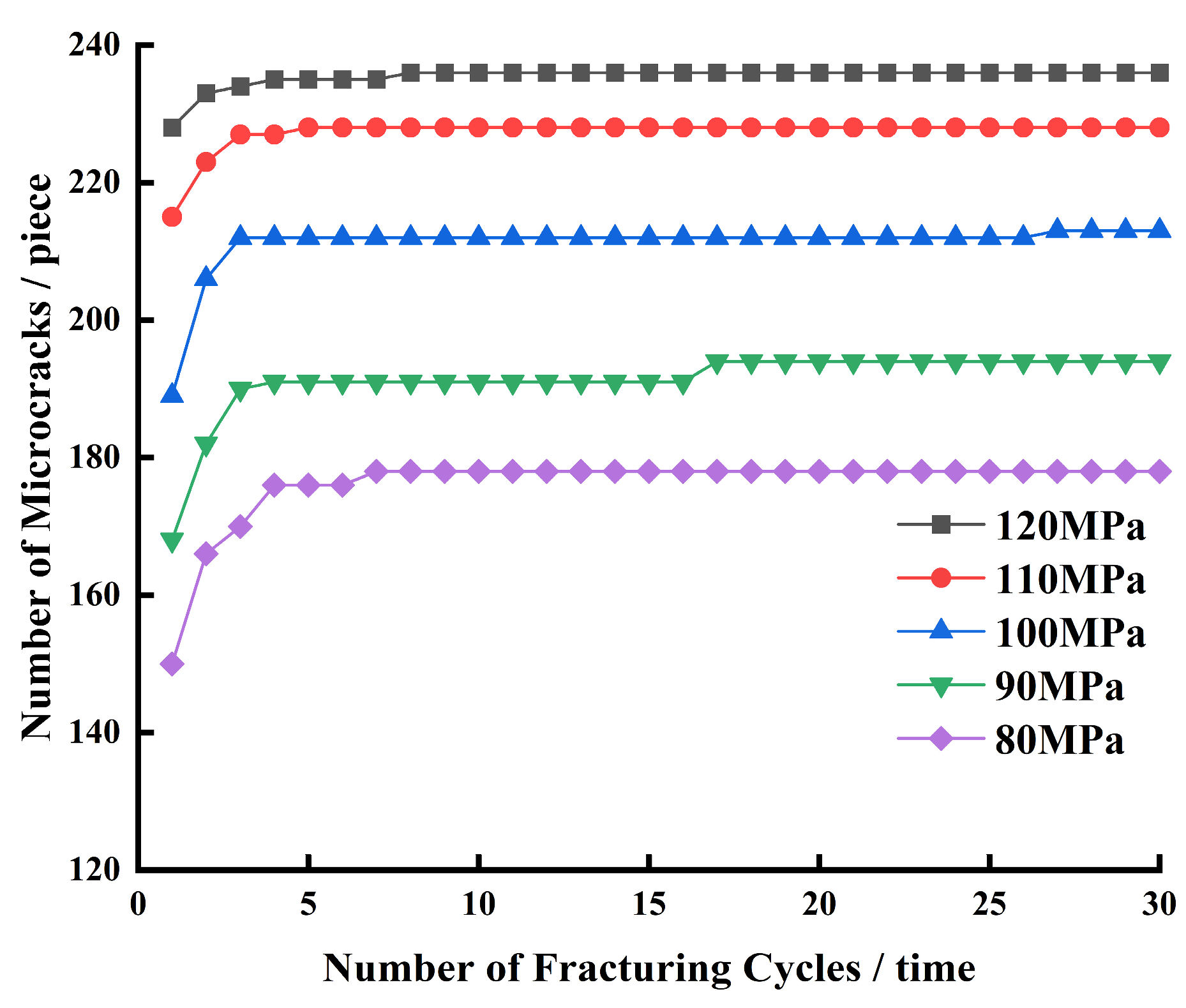
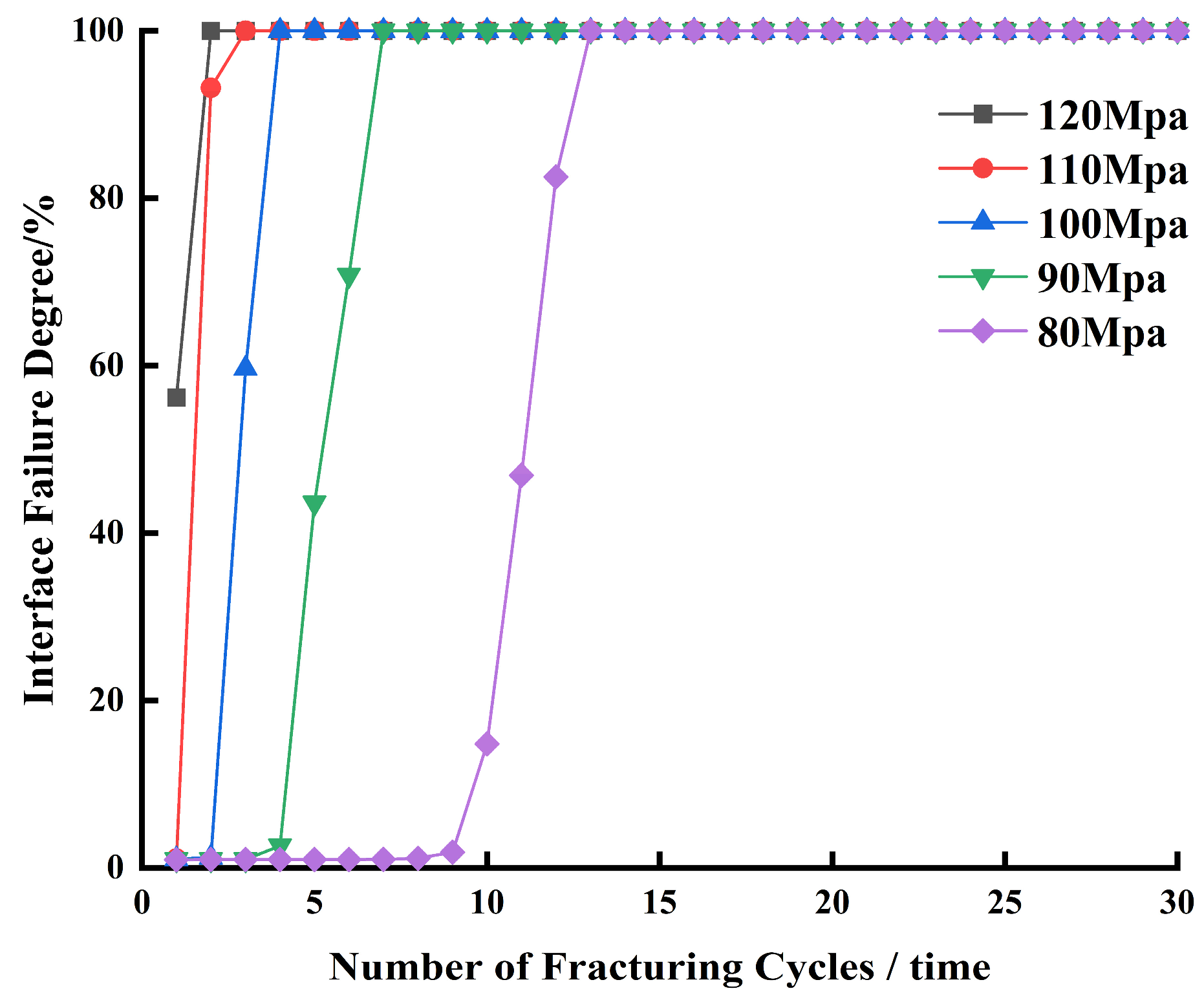
The peak casing internal pressure value was set to vary between 80 and 120 MPa with 30 fracturing stages to analyze the influence of different peak casing internal pressures on the number of microcracks in the cement sheath body. Figure 17 shows the growth curve of the number of microcracks in the cement sheath body with the change in fracturing stages. It can be seen from Figure 17 that there is a positive correlation between the casing internal pressure and microcrack development in the cement sheath body, but the crack evolution under different pressure conditions presents phased characteristics: The first fracturing stage produces the most microcracks, accounting for 84.3–96.6% of the total number of cracks. After that, with the increase in fracturing times, the increment in cracks decreases sharply, and finally, the number of microcracks stabilizes. In addition, under the condition of a high casing internal pressure, the proportion of all microcracks that are generated in the first fracturing is significantly higher than that in the low-pressure group, but the crack increment in the subsequent fracturing stages is significantly lower than that in the low-pressure group.
Figure 18 shows the growth curve of the bonding failure degree of the first interface of the cement sheath with the change in fracturing stages. It can be seen from Figure 18 that there is a correlation between the casing internal pressure and the initiation of bonding failure in the cement sheath’s first interface. Specifically, it is manifested as follows: when the casing internal pressure is 120 MPa, the first fracturing cycle causes significant damage to the interface bonding; in the pressure range of 80–110 MPa, although the first fracturing only causes slight damage, with the decrease in the peak casing internal pressure value, the number of cycles required for the first significant damage to the interface bonding shows an increasing trend. This indicates that the higher the casing’s internal pressure level, the earlier the cement sheath interface bonding is completely damaged.
The above research results indicate that the casing’s internal pressure level has a significant impact on cement stone damage. Especially in the first fracturing stage, it plays a decisive role in microcrack generation and the interface bonding state. This provides important guidance for field wellbore design and fracturing operations: in high-pressure well sections, ductile cement systems should be prioritized to reduce the generation of microcracks and interface debonding. In addition, this study reveals that the damage caused by the first fracturing is dominant. On-site monitoring and evaluation of cement stone integrity in the early stage of fracturing need to be strengthened, and remedial measures should be taken in a timely manner to ensure the long-term sealing safety of the wellbore.

5. Conclusions

Under cyclic loading, the synergistic effect of a microannulus in the first interface and microcrack propagation in the cement matrix leads to failure of the cement sheath’s sealing. Microcracks mainly initiate in the inner region of the cement sheath.
The cement sheath in the horizontal section bears high casing internal pressure and high in situ stress, making microcracks more prone to coalescence. The interface debonding rate rises sharply with fracturing progression, while damage development in the vertical section is slow.
The number of microcracks in the cement sheath exhibits a three-stage process of “rapid growth—decreasing growth rate—stable saturation” with the increase in fracturing stages. A proportion of 84% of all microcracks in the entire loading process are generated during the first casing internal pressure loading stage. The first interface is completely debonded after the second internal pressure loading, indicating that the initial stage of casing internal pressure cycling plays a decisive role in the cement sheath’s integrity.
The casing internal pressure level is positively correlated with the initial response of bonding failure at the cement sheath’s first interface. At a casing internal pressure of 120 MPa, the first fracturing cycle causes significant damage to the interface bonding. In the pressure range of 80–100 MPa, although the first fracturing only causes slight damage, the number of cycles required for the first significant damage to the interface bonding shows an increasing trend as the peak casing internal pressure value decreases.
The discrete element model established in this study effectively simulates the mesoscopic damage behavior of cement stone but has limitations: it assumes that the casing and formation are purely elastic, ignoring their plastic deformation and failure, so future research should incorporate elastoplastic material model analysis and conduct full-scale experimental verification under different working conditions to improve the model’s predictive ability and engineering applicability in complex scenarios. For field operations, ductile cement systems should be prioritized in high-pressure well sections to reduce microcracks and interface debonding, and since the first fracturing stage dominates cement stone damage, early-stage on-site monitoring and evaluation of cement stone integrity must also be prioritized, with timely remedial measures taken to ensure long-term wellbore sealing safety.

Author Contributions

X.W. performed the discrete element model construction and numerical simulation, conducted formal analysis of cement sheath damage mechanisms, and created visualizations of microcrack distribution and stress curves. S.X. conceptualized the research framework for meso-parameter calibration, coordinated validation activities with full-scale experimental devices, and secured funding. H.Z. performed sensitivity analysis of fracturing location and stage number on cement sheath damage, and contributed to manuscript review and editing. Z.G. curated triaxial compression experiment data and discrete element model parameter data, and provided critical resources for laboratory calibrations. S.Z. conducted CT scanning analysis of cement sheath samples and verified the consistency between simulation and experimental results. J.M. assisted in the establishment of the 3D casing–cement sheath–formation composite model and participated in data curation of interface debonding experiments. W.S. supervised the overall research process, oversaw project administration, and revised the manuscript for academic rigor. W.L. designed the full-scale cement sheath sealing integrity evaluation experiment, analyzed the experimental data on interface sealing performance, and provided technical guidance for the validation of the discrete element model. All authors have read and agreed to the published version of the manuscript.

Funding

This research was funded by PetroChina Company Limited Major Science and Technology Program (Grant No.: 2023ZZ15YJ05) and National Major Science and Technology Program for New-Type Oil and Gas Exploration and Development (Grant No.: XQZX20240054).

Institutional Review Board Statement

Not applicable.

Informed Consent Statement

Informed consent was obtained from all subjects involved in the study. Written informed consent has been obtained from the patient(s) to publish this paper.

Data Availability Statement

Data are only available upon request due to restrictions. The data are not publicly available due to privacy.

Conflicts of Interest

Authors Xuegang Wang, Shiyuan Xie, Haohao Zhang, Zhigang Guan, Jiaxing Mu, and Weiguo Sun are employed by the Oil Extraction Technology Research Institute of Xinjiang Oilfield Company. The remaining authors declare that this research was conducted in the absence of any commercial or financial relationships that could be construed as a potential conflict of interest.

References

  1. Zou, C.N.; Yang, Z.; Zhang, G.S.; Zhu, R.; Tao, S.Z.; Yuan, X.J.; Hou, L.H.; Dong, D.Z.; Guo, Q.L.; Song, Y.; et al. Theory, Technology and Practice of Unconventional Petroleum Geology. Earth Sci. 2023, 48, 2376–2397. [Google Scholar] [CrossRef]
  2. Qi, H.Y.; Wu, C.M.; Hu, K.; Chen, Y.W.; Xu, T.L.; Wang, Y.J. Key Technologies and Practice of Shale Oil Cost-Effective Development in Jimsar Sag, Junggar Basin. Xinjiang Oil Gas 2024, 20, 15–22. [Google Scholar] [CrossRef]
  3. Wang, H.G.; Chang, L.; Zhou, L.B.; Xi, C.M.; Ouyang, Y. Current Status and Suggestions for Drilling Technology of CNPC Continental Shale Oil Reservoirs. Xinjiang Oil Gas 2024, 20, 1–14. [Google Scholar] [CrossRef]
  4. Liu, S.Q.; Li, D.Q.; Yuan, J.P.; Qi, F.Z.; Sheng, J.Y.; Guo, M.M. Cement sheath integrity of shale gas wells: A case study from the Sichuan Basin. Nat. Gas Ind. 2017, 37, 76–82. [Google Scholar] [CrossRef]
  5. Ibukun, M.; Elyan, E.; Amish, M.; Njuguna, J.; Oluyemi, G.F. A Review of Well Life Cycle Integrity Challenges in the Oil and Gas Industry and Its Implications for Sustained Casing Pressure (SCP). Energies 2024, 17, 5562. [Google Scholar] [CrossRef]
  6. Sheng, M.; Deng, C.; Li, J.; Gu, M.Z.; Wang, T.Y.; Tian, S.C. Non-Uniform Perforation to Balance Multi-Cluster Fractures Propagation and Parameter Optimization. Xinjiang Oil Gas 2024, 20, 54–63. [Google Scholar] [CrossRef]
  7. Gao, D.; Liu, K.; Tian, S.C. Progresses in shale gas well integrity research. Oil Gas Geol. 2019, 40, 602–615. [Google Scholar] [CrossRef]
  8. Su, Y.N.; Lu, B.P.; Liu, Y.S.; Zhou, Y.C.; Liu, X.S.; Liu, W.; Zang, Y.B. Status and research suggestions on the drilling and completion technologies for onshore deep and ultra deep wells in China. Oil Drill. Prod. Technol. 2020, 42, 527–542. [Google Scholar] [CrossRef]
  9. Zhang, Z.; Wang, X.H.; Huang, M.; Feng, S. A prediction method of annular pressure in high-pressure gas wells based on the RF and LSTM network models. Nat. Gas Ind. 2024, 44, 167–178. [Google Scholar] [CrossRef]
  10. Feng, X.Z.; Sun, Y.D.; Wang, X.L.; Feng, D.F.; Ha, S.M.; Song, W.R. Risk assessment model of sustained casing pressure of gas well based on Bayesian network and its application analysis. Oil Drill. Prod. Technol. 2021, 43, 532–537. [Google Scholar] [CrossRef]
  11. Zhang, X.J.; Li, J.; Lian, W.; Sun, Z.C.; Zhang, J.C.; Liu, G.H. Study on the sealing integrity of cement sheath under cyclic internal pressure considering temperature effects. Geoenergy Sci. Eng. 2025, 249, 213761. [Google Scholar] [CrossRef]
  12. Yan, Y.; Guan, Z.C.; Han, L.L.; Liu, Y.H. Coupled thermo-hydro-mechanical analysis of perforated cement sheath integrity during hydraulic fracturing. J. Pet. Sci. Eng. 2022, 218, 110950. [Google Scholar] [CrossRef]
  13. Deng, K.H.; Zhou, N.T.; Lin, Y.H.; Peng, Y.; Yan, K.; Qin, H.; Xie, P.F.; Li, Z.H. Failure mechanism and control method of cement sheath sealing integrity under alternating thermal-stress coupling in geothermal wells. Renew. Energy 2024, 226, 120448. [Google Scholar] [CrossRef]
  14. Yan, Y.; Liu, X.B.; Li, J.L.; Wang, P.; Han, L.L.; Liu, Y.H. Numerical Simulation of Perforated Cement Sheath Integrity during Staged Fracturing. Sci. Technol. Eng. 2023, 23, 9903–9910. [Google Scholar]
  15. Deng, K.H.; Zhou, N.T.; Lin, Y.H.; Wu, Y.X.; Chen, J.; Shu, C.; Xie, P.F. Failure mechanism and influencing factors of cement sheath integrity under alternating pressure. Pet. Sci. 2023, 20, 2413–2427. [Google Scholar] [CrossRef]
  16. Tian, L.J.; Bu, Y.H.; Liu, H.J.; Lu, C.; Guo, S.L.; Xu, H.Z.; Ren, Y.Q. Effects of the mechanical properties of a cement sheath and formation on the sealing integrity of the cement-formation interface in shallow water flow in deep water. Constr. Build. Mater. 2023, 369, 130496. [Google Scholar] [CrossRef]
  17. Wei, S.M.; Kuru, E.; Jin, Y.J.; Yang, X.X. Numerical investigation of the factors affecting the cement sheath integrity in hydraulically fractured wells. J. Pet. Sci. Eng. 2022, 215, 110582. [Google Scholar] [CrossRef]
  18. Zhang, X.Y.; Bi, Z.H.; Wang, L.; Guo, Y.T.; Yang, C.H.; Yang, G.G. Shakedown analysis on the integrity of cement sheath under deep and large-scale multi-section hydraulic fracturing. J. Pet. Sci. Eng. 2022, 208, 109619. [Google Scholar] [CrossRef]
  19. Gheibi, S.; Agofack, N.; Sangesland, S. Modified discrete element method (MDEM) as a numerical tool for cement sheath integrity in wells. J. Pet. Sci. Eng. 2021, 196, 107720. [Google Scholar] [CrossRef]
  20. Zhang, G.Q.; Zhao, Z.F.; Wang, X.X. Effect of Horizontal Staged Fracturing on the Integrity of Cement Annulus. J. Southwest Pet. 2021, 43, 147–154. [Google Scholar]
  21. Wang, D.; Li, J.; Zhang, W.; Lian, W. Performance Evaluation of the Cement Sheath in Jimsar Shale Oil Wells. Xinjiang Oil Gas 2023, 19, 49–55. [Google Scholar] [CrossRef]
  22. Chen, H.D.; Luo, M.; Xiao, P.; Zhou, N.T.; Lin, Y.H. Study on the interface bonding damage behavior of cement sheath under alternating thermal load. Nat. Gas Oil 2024, 42, 114–120. [Google Scholar] [CrossRef]
  23. Li, J.; Guo, X.Y. Effect of Injection and Production Conditions of Gas Storage Well on Seal-Gas Pressure of Cement Sheath. Contemp. Chem. Ind. 2024, 53, 2560–2563. [Google Scholar] [CrossRef]
  24. Fang, Z.Q.; Tan, Y.M.; Yan, J.T.; Wang, X.Q.; Hou, F.; Zhu, G.P.; Liao, S.Z. Optimization of Cement Slurry System for Gas Storage Based on the Stretching Tensile Strength. Drill. Prod. Technol. 2023, 46, 128–134. [Google Scholar]
  25. Guan, Z.G.; Deng, K.H.; Wu, Y.X.; Lin, Z.W.; Lin, Y.H. Experimental Evaluation on the Cement Sheath Integrity of Unconventional Oil and Gas Well During Large-scale Hydraulic Fracturing. J. Southwest Pet. 2023, 45, 121–132. [Google Scholar] [CrossRef]
  26. Fernandez, D.M.; Emadi, H.; Hussain, A.; Thiyagarajan, S.R.; Ispas, I.; Watson, M. Experimental investigation of the impact of short-term hydrogen exposure on cement sheath’s mechanical and sealing integrity. Geoenergy Sci. Eng. 2025, 251, 213885. [Google Scholar] [CrossRef]
  27. Zhou, N.T.; Wu, L.W.; Yuan, J.J.; Xiao, F.P.; Deng, K.H.; Lin, Y.H. Feasibility evaluation of cement sheath sealing within large-size casing structures in gas and hydrogen storage wells. Int. J. Hydrogen Energy 2025, 115, 265–280. [Google Scholar] [CrossRef]
  28. Lin, Y.H.; Deng, K.H.; Yi, H.; Zeng, D.Z.; Tang, L.; Wei, Q. Integrity tests of cement sheath for shale gas wells under strong alternating thermal loads. Nat. Gas Ind. B 2020, 7, 671–679. [Google Scholar] [CrossRef]
  29. Bathija, A.P.; Boyd, P.; Martinez, R. Cement sheath integrity at simulated reservoir conditions of pressure, temperature, and wellbore configuration in a laboratory setup. Geoenergy Sci. Eng. 2024, 232, 212446. [Google Scholar] [CrossRef]
  30. Shi, C.; Zhang, Q.; Wang, S.N. Particle Flow Code (PFC5.0) Numerical Simulation Technology and Its Applications. Rock Soil Mech. 2018, 39, 36. [Google Scholar]
  31. Zhou, Z.; Li, K.; Chen, L.; Zhao, Y.Y.; Zhang, Z.Z. Discrete Element Fluid-Solid Coupling Simulation of Fracture Mechanisms in Deep Fluid-Bearing Rocks. J. Oil Gas Technol. 2025, 47, 426–440. [Google Scholar] [CrossRef]
  32. Wang, H.; Guo, Y.T.; Wang, L.; Hou, Z.K.; Xu, F. An experimental study on mechanical anisotropy of shale reservoirs at different depths. Rock Soil Mech. 2017, 38, 2496–2506. [Google Scholar] [CrossRef]
  33. Xi, Y.; Li, F.Y.; Wang, S.; Liu, M.J.; Xia, M.L.; Zeng, X.M.; Zhong, W.L. Study on Prevention of Micro—Annulus in Cement Sheath by Prestressed Cementing Method. Spec. Oil Gas Reserv. 2021, 28, 144–150.1006–6535. [Google Scholar]
  34. Xu, X.M.; Ling, D.S.; Huang, B.; Chen, Y.M. Determination of shear wave velocity in granular materials by shear vibration within discrete element simulation. Chin. J. Geotech. Eng. 2011, 33, 1462–1468. [Google Scholar]
  35. Lian, W.; Li, J.; Xu, D.R.; Lu, Z.Y.; Ren, K.; Wang, X.G.; Chen, S. Sealing failure mechanism and control method for cement sheath in HPHT gas wells. Energy Rep. 2023, 9, 3593–3603. [Google Scholar] [CrossRef]
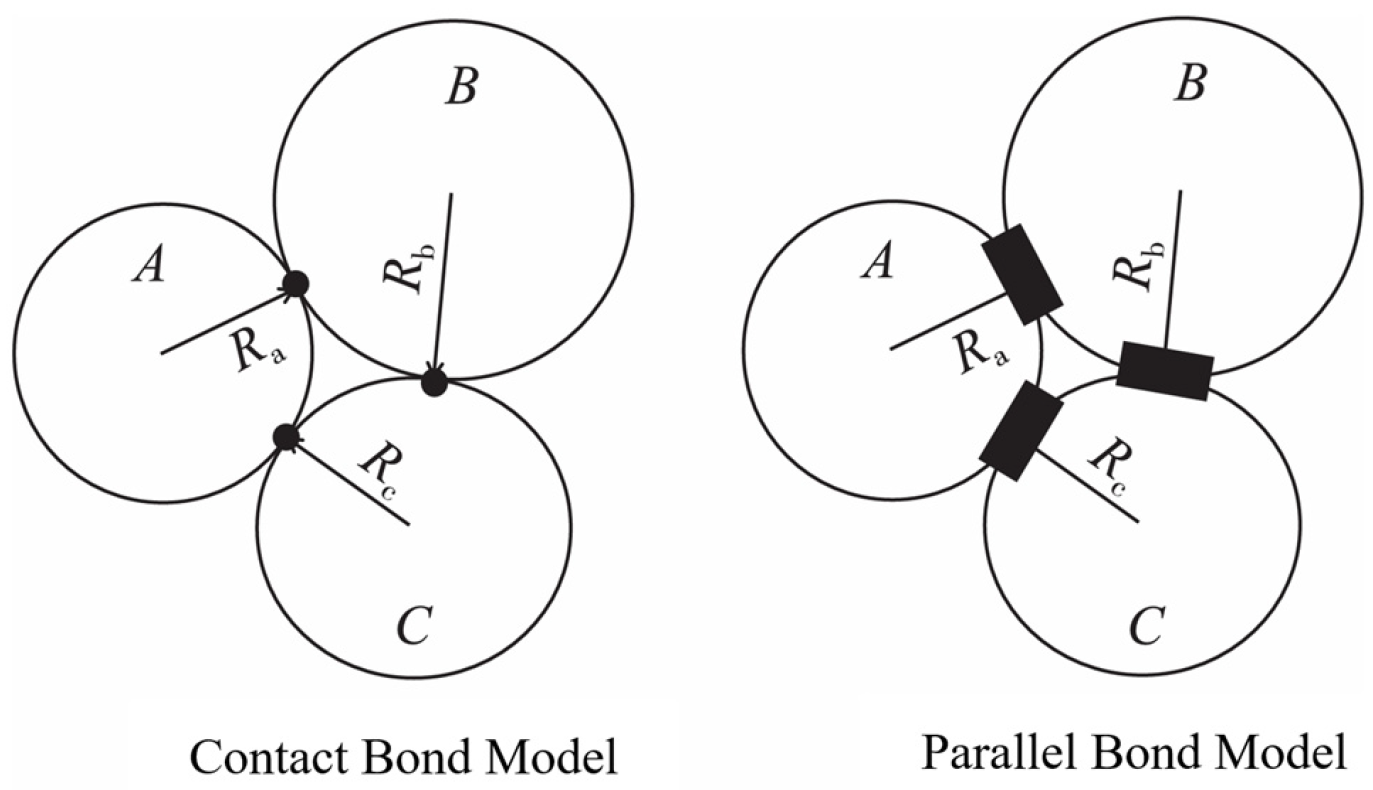
Figure 1. Contact model schematic diagram.
Eng 07 00048 g001
Figure 2. (a) Simulation comparison curve of cement stone uniaxial compression test; (b) simulation comparison curve of cement stone Brazilian splitting test; (c) simulation comparison curve of cement stone triaxial compression test under 10 MPa confining pressure; (d) simulation comparison curve of cement stone triaxial compression test under 15 MPa confining pressure; (e) simulation comparison curve of casing–cement stone Brazilian splitting test; (f) simulation comparison curve of cement stone cyclic loading–unloading test with 15 MPa confining pressure and 50 MPa load upper limit.
Eng 07 00048 g002aEng 07 00048 g002b
Figure 3. Three-dimensional discrete element model.
Eng 07 00048 g003
Figure 4. Cement sheath microcrack distribution map.
Eng 07 00048 g004
Figure 5. Curve of failure degree of first interface of cement sheath.
Eng 07 00048 g005
Figure 6. Stress curves at different positions in cement sheath.
Eng 07 00048 g006
Figure 7. Full-scale cement sheath sealing integrity evaluation device.
Eng 07 00048 g007
Figure 8. Diagram of microannulus in cement sheath.
Eng 07 00048 g008
Figure 9. CT scan image of cement sheath microfracture.
Eng 07 00048 g009
Figure 10. Failure degree curve of the cement stone’s first interface under different particle sizes.
Eng 07 00048 g010
Figure 11. Microcrack growth curve of cement stone under different particle sizes.
Eng 07 00048 g011
Figure 12. (a) Distribution of microcracks in the vertical section of the cement sheath. (b) Distribution of microcracks in the horizontal section of the cement sheath.
Eng 07 00048 g012
Figure 13. Comparison Curve of Microcrack Growth in Cement Sheath Between Horizontal and Vertical Well Sections.
Eng 07 00048 g013
Figure 14. Comparison Curve of Damage Degree Evolution of the First Interface of Cement Sheath Between Horizontal and Vertical Well Sections.
Eng 07 00048 g014
Figure 15. Growth Curves of Microcracks in Cement Sheath Under Different Fracturing Cycles.
Eng 07 00048 g015
Figure 16. (a) Failure image of casing–cement sheath bonding interface after the first fracturing; (b) failure image of casing–cement sheath bonding interface after the second fracturing.
Eng 07 00048 g016
Figure 17. Growth Curves of Microcracks in Cement Sheath Under Different Casing Internal Pressure Peaks.
Eng 07 00048 g017
Figure 18. Damage Degree Evolution Curves of the First Interface of Cement Sheath Under Different Casing Internal Pressure Peaks.
Eng 07 00048 g018
Table 1. Conditions of mechanical experiment on cement stone.
Experiment NamesTemperatureLoading Rate
Cement stone uniaxial compression test25 °C2 kN/min
Cement stone triaxial compression test (10 MPa)70 °C2 kN/min
Cement stone triaxial compression test (15 MPa)70 °C2 kN/min
Cement stone Brazilian splitting test25 °C2 kN/min
Casing–cement interface cementation test25 °C2 kN/min
Cement stone cyclic loading–unloading test (15 MPa)70 °C2 kN/min
Table 2. Mechanical parameters of materials.
Material NameElastic Modulus/GPaCompressive Strength/MPaTensile Strength/MPaPoisson’s Ratio/Dimensionless
Casing2067588600.30
Casing–Cement Bonding Interface  0.34 
Cement Stone7.03638.52.120.138
Shale3411860.25
Table 3. Microscopic parameters of materials.
Material Name E * /GPa E ¯ * /Dimless σ ¯ C /MPa c ¯ /MPa ¯ ( ° ) k/Dimless μ /Dimless
Casing5454200200451.50.5
Casing–Cement Sheath Interface1.91.933401.30.5
Cement Sheath1.91.91818401.30.5
Cement Sheath–Shale1.91.91818401.30.5
Shale1111200200451.50.5
Note: E * —Effective Modulus, GPa; E ¯ * —Bonding Effective Modulus, GPa; σ ¯ C —Tensile Strength, MPa; c ¯ —Cohesion, MPa; ¯ —Friction Angle, ( ° ) ; k—Stiffness Ratio, Dimensionless; μ —Coefficient of Friction, Dimensionless.
Table 4. Comparison of simulated and experimental material mechanical parameters.
Mechanical ParametersSimulated ValueExperimental ValueError Rate
Cement Stone Elastic Modulus/GPa7.527.046.87%
Cement Stone Compressive Strength/MPa41.338.57.27%
Cement Stone Tensile Strength/MPa2.252.126.12%
Cement Stone Peak Stress (Confining Pressure 10 MPa)/MPa86.4385.541.04%
Cement Stone Peak Stress (Confining Pressure 15 MPa)/MPa99.93100.040.11%
Casing–Cement Bonding Interface Tensile Strength/MPa0.390.368.3%
Cement Stone Residual Strain under 50 MPa Cyclic Loading (Confining Pressure 10 MPa)/%0.3930.3677.08%
Disclaimer/Publisher’s Note: The statements, opinions and data contained in all publications are solely those of the individual author(s) and contributor(s) and not of MDPI and/or the editor(s). MDPI and/or the editor(s) disclaim responsibility for any injury to people or property resulting from any ideas, methods, instructions or products referred to in the content.