Article

Social Impact Assessment of Infrastructure Maintenance Based on Stochastic Deterioration Prediction: Minimizing Public Health Risks and Deriving Pareto Optimal Solutions


1
Faculty of Sociology, Rikkyo University, Nishi-Ikebukuro, Toshima-ku, Tokyo 171-8501, Japan
2
Oklahoma State University Center for Health Sciences (OSU-CHS), 1202 W Farm Rd., Stillwater, OK 74078, USA
3
East Nippon Expressway Company Limited, Sakuragicho, Omiya-ku, Saitama 330-0854, Japan
4
Clinical and Social Psychology, GrooveOn, Minami-ku, Sagamihara 252-0304, Japan
*
Author to whom correspondence should be addressed.
CivilEng 2026, 7(3), 43; https://doi.org/10.3390/civileng7030043
Submission received: 13 May 2026 / Revised: 22 June 2026 / Accepted: 24 June 2026 / Published: 2 July 2026
(This article belongs to the Section Urban, Economy, Management and Transportation Engineering)

Abstract

The aging of social infrastructure, intensively constructed during periods of rapid economic growth, is a pressing challenge facing modern society. Conventional infrastructure asset management has disproportionately emphasized a “managerial financial perspective,” aiming to maintain physical functions within limited budgets. However, the malfunction of road appurtenances such as tunnel lighting facilities induces severe traffic accidents and chronic congestion, resulting in public health risks for users (physical trauma, psychological stress, and the deterioration of Disability-Adjusted Life Years: DALYs) as well as massive socio-economic losses. The primary novelty of this study lies in bridging the gap between stochastic engineering deterioration models—specifically, discrete-time Markov chain models predicting physical degradation—and socio-economic stakeholder value chains. This study constructs a “Social Life Cycle Cost (LCC) Optimization Model” that directly incorporates these social losses and stakeholder risk disparities into the evaluation function, addressing the limitations of conventional financial-centric LCC models. By conducting robust uncertainty and global sensitivity analyses via large-scale Markov Chain Monte Carlo simulations (number of trials N = 10 5 ), we reveal that a corrective maintenance strategy inheres a critical “fat-tail risk” of stochastically incurring catastrophic social losses. Conversely, preventive intervention at State C minimizes the expected total cost with statistical significance ( p < 0.001 ) and drastically decouples engineering costs from social risks. This research provides quantitative evidence that early infrastructure intervention functions as an indispensable “social investment” for mitigating public health risks under the specific parameters of the proposed model.

1. Introduction

1.1. Research Background: Expanding the Horizon from Infrastructure Management to Public Health

The aging of social infrastructure, intensively constructed during periods of rapid economic growth, is a pressing challenge facing modern society. Conventional infrastructure asset management has disproportionately emphasized a “managerial financial perspective,” aiming to maintain physical functions within limited budgets. However, recent studies emphasize the necessity of holistic management models that incorporate broader value chain stakeholders in the built environment [1,2]. The malfunction of road appurtenances such as tunnel lighting facilities extends far beyond mere physical repair costs and construction overruns [3]. The escalating complexity of risk management in construction projects [4] and the need for non-linear contingency budget estimates [5] further highlight the inadequacy of traditional models. Such failures severely degrade urban liveability, necessitating comprehensive evaluations of traffic-calming and infrastructure effects [6]. Indeed, global automobility harms pose significant threats to both people and the environment [7], with traffic congestion acting as a major catalyst for elevated accident rates [8] and generating immense health costs for urban populations [9].
Insufficient illuminance and flicker phenomena increase the physiological and psychological stress of drivers, compounding the adverse health impacts of daily commuting [10]. Furthermore, chronic traffic congestion resulting from emergency construction causes massive economic and social opportunity losses [11]. It also exposes roadside residents to air pollutants (e.g., PM2.5) and noise, which disproportionately affect socio-economically vulnerable populations [12]. This exposure acts as a critical “Social Determinant of Health,” triggering adverse health effects such as respiratory diseases and sleep disorders.
In other words, infrastructure deterioration is not merely an engineering issue but must be redefined as a “public health risk” that impacts Disability-Adjusted Life Years (DALYs) and regional economies. Previous studies have attempted to model these linkages by integrating health effects within agent-based transport models [13] and simulating the dynamic impacts of transport policies on population health [14]. Furthermore, incorporating public health explicitly into transportation decision-making [15] and understanding the health impacts of urban transport linkages [16] remain critical, alongside evaluating policy interventions like low emission zones [17]. Despite this extensive literature and bibliometric evidence pointing to the growing need for holistic models in emerging economies [18], a structural disconnect remains where engineering physical calculation results are rarely integrated dynamically with socio-economic impact parameters. Therefore, next-generation infrastructure management requires the “optimization of the Social Life Cycle Cost (LCC).” This approach explicitly bridges this research gap by comprehensively incorporating these dynamic social losses into the evaluation function, rather than solely minimizing isolated administrative management costs.

1.2. Stakeholder Value Chain Analysis and Mapping: Establishing the Novelty

To comprehensively grasp these social losses, it is imperative to conduct a stakeholder analysis across the infrastructure value chain. In construction engineering and infrastructure management, costs and impacts are traditionally classified into three main categories: agency costs, user costs, and externalities [19,20]. Furthermore, navigating cross-country risk factors in public-private partnerships [21] and implementing ranked generic criteria for contractor selection [22] represent crucial contemporary dimensions of this value chain. Moreover, systematic reviews underscore the paradigm shift toward public-private partnerships (PPPs) for robust risk allocation [23], emphasizing the necessity of financial system dynamics and life-cycle flexibility, particularly in toll road operations [24]. Recent studies, such as the work by Kaewunruen et al. (2025), emphasize the critical role of stakeholder mapping and engagement in ensuring sustainable and resilient infrastructure management across the built environment [1]. Adapting this established triad to the context of tunnel lighting facilities, the value chain encompasses:
  • Agency Costs (Direct Administrators and Partners):Financial burdens borne by highway operators constrained by limited maintenance budgets, and supply chain partners reliant on predictable scheduling.
  • User Costs (Direct End-Users): Time delays, accident risks, and economic inefficiencies directly impacting drivers and logistics operators.
  • Externalities (Indirect Local Stakeholders): Broader societal impacts, including roadside residents facing environmental burdens (e.g., concentrated exhaust due to congestion) and emergency medical services dealing with accident-induced trauma cases.
Traditional LCC models have predominantly focused only on the agency costs, specifically the administrator’s financial ledger. The novelty of this study is the construction of a mathematical model that explicitly maps these transferred risks across the entire stakeholder spectrum. We dynamically model how deferred maintenance by the administrator triggers cascading user costs and severe externalities (public health and economic burdens) on the broader value chain.

2. Theoretical Framework and Simulation Design

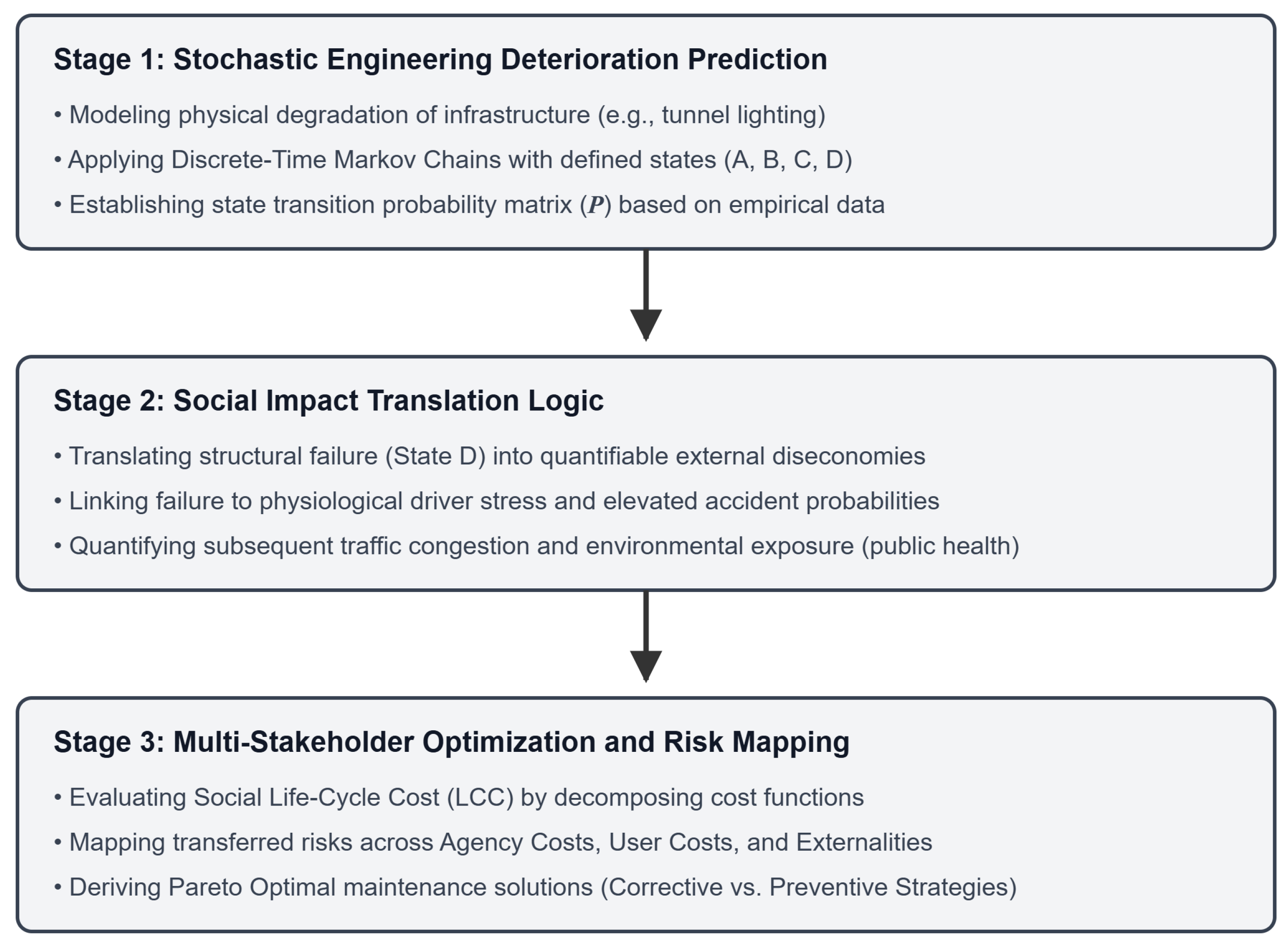
To provide a comprehensive overview of the integrated methodological framework utilized in this study, the sequential flow of the simulation design—spanning from stochastic engineering deterioration modeling to multi-stakeholder social impact assessment—is schematized in Figure 1. Specifically, the flowchart delineates the three-stage operational pipeline of this research: (1) predicting physical condition transitions via discrete-time Markov chains [25,26,27], (2) translating structural failure states into quantifiable public health and socio-economic impacts [6,16], and (3) mapping these transferred risks onto an optimization landscape to derive the most sustainable maintenance strategy [1,19,20].

2.1. Translation Logic for Social Impact

This study defines the process by which physical infrastructure deterioration (Output) ripples into public health and socio-economic impacts (Impact), based on the logic model presented in Table 1. Here, the failure of equipment (State D) is not only viewed as a physical malfunction but is also quantified by the external diseconomies it triggers. It is critical to state that these functional relationships—linking lighting failure to physiological driver stress, elevated accident probabilities, consequent congestion, and localized environmental exposure—are established as foundational structural assumptions for the purpose of this simulation framework, strictly grounded in existing multidisciplinary literature crossing civil engineering and public health [6,9,10,13].

2.2. Evaluation Metrics and Analytical Perspectives

To evaluate the long-term viability and broader societal performance of the preventive and corrective maintenance strategies, this simulation expands the analysis beyond conventional mean-centric cost comparisons. We evaluate the simulation outputs through four distinct methodological perspectives:
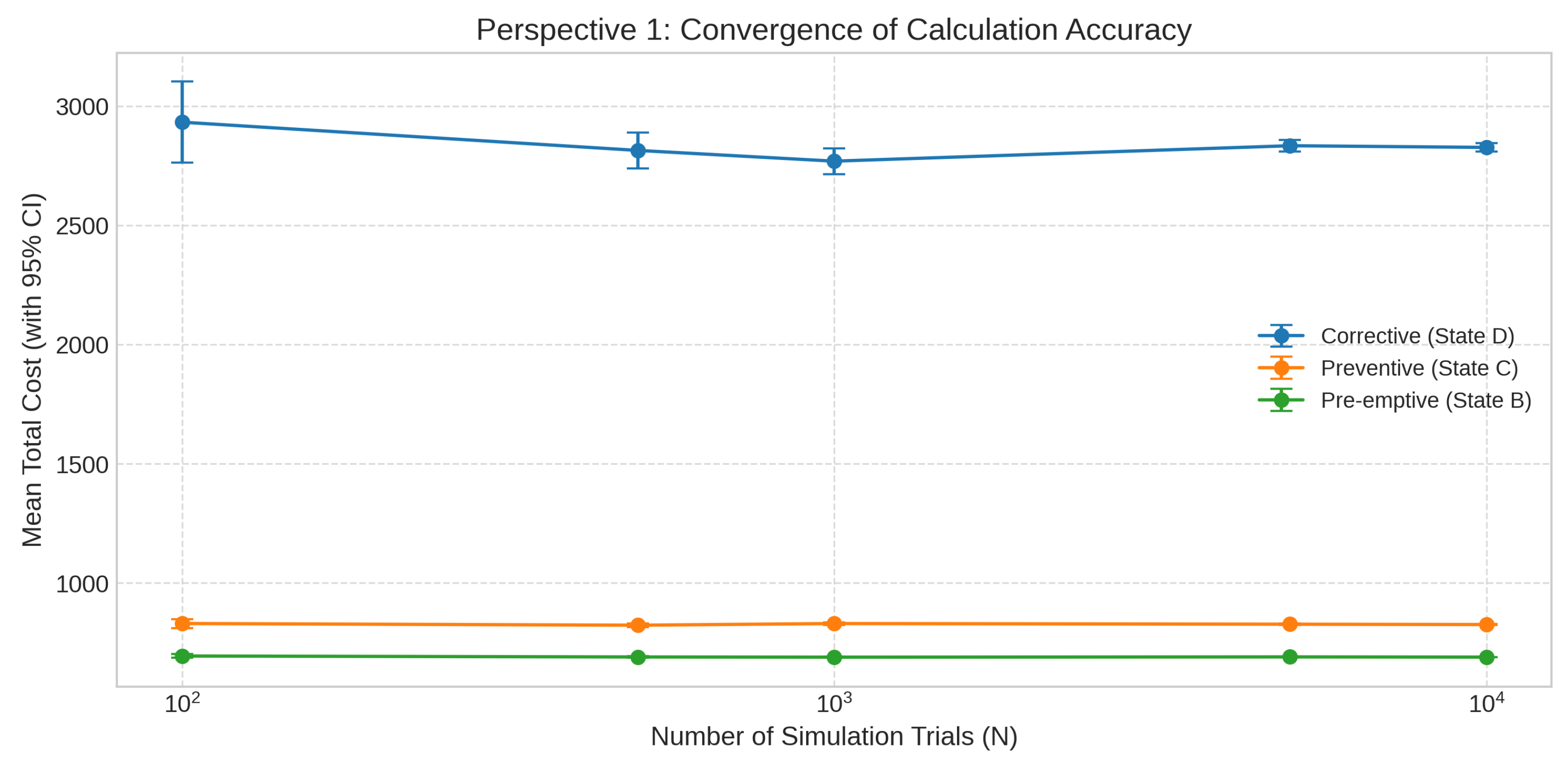
  • Perspective 1: Convergence Check of Computational Accuracy—This perspective evaluates the numerical stability of the Monte Carlo simulation. By increasing the number of trials N from 10 3 to 10 5 , we track the reduction of the Standard Error (SE) to ensure that the estimated life-cycle costs satisfy statistical precision requirements.
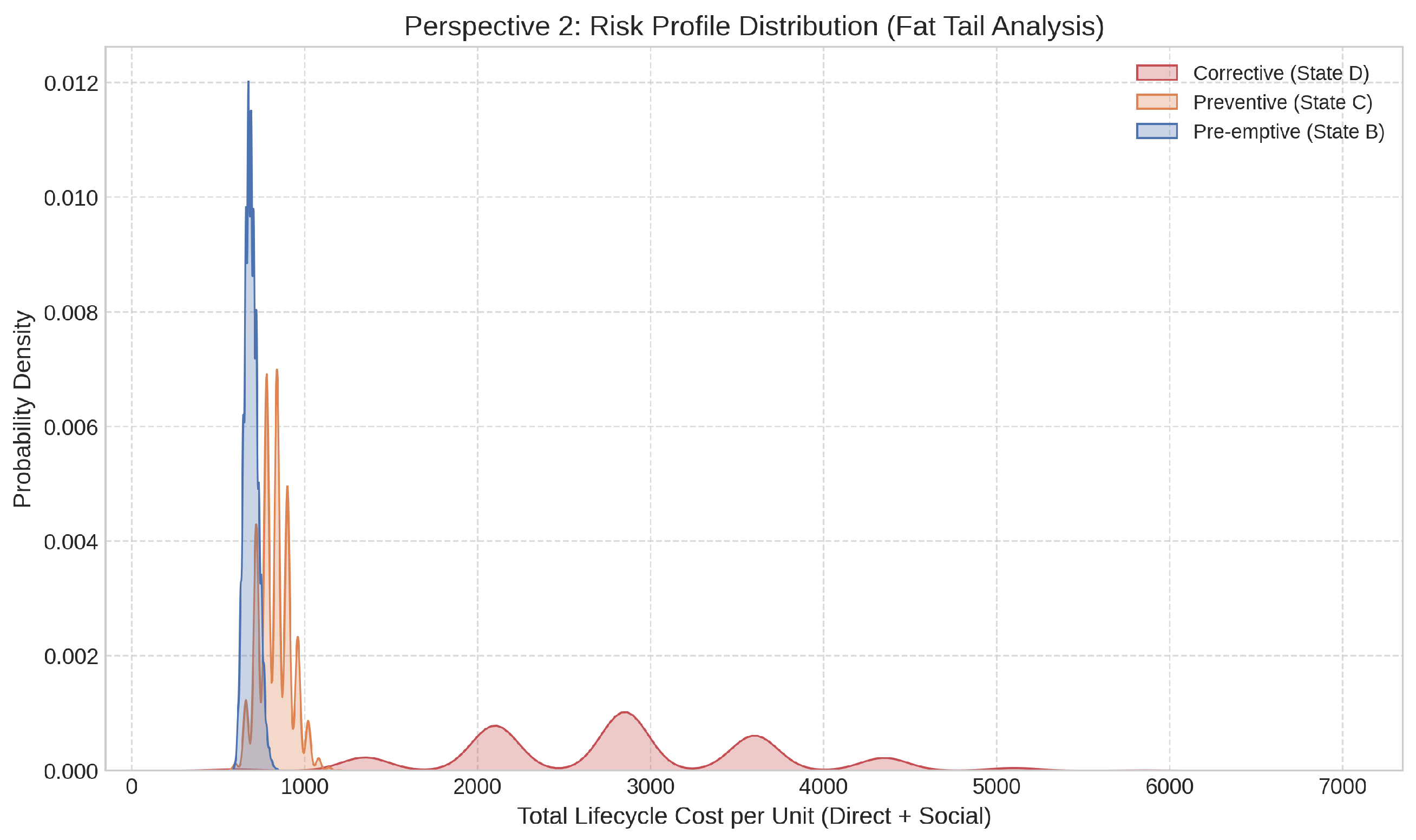
  • Perspective 2: Risk Profile Analysis—Rather than relying solely on expected values, this perspective analyzes the full Probability Density Function (PDF) of the total costs. This allows us to quantify the variance and detect the presence of severe right-tail (fat-tail) risks associated with catastrophic, low-probability infrastructure failures.
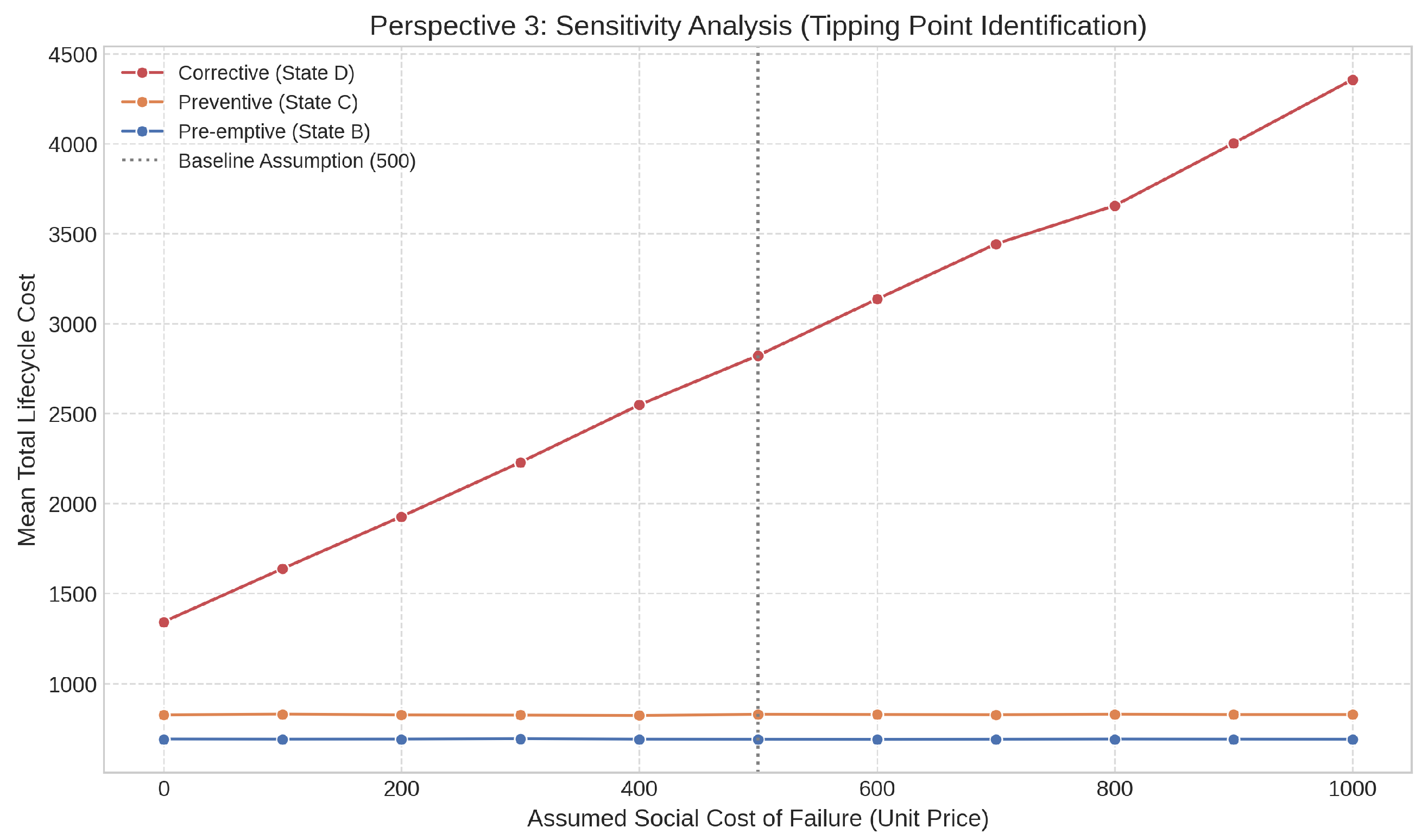
  • Perspective 3: Sensitivity Analysis for Social Costs—To identify policy tipping points, this perspective systematically varies the unit parameters regulating social and public health damages ( C s o c i a l ). This analysis reveals the threshold where the economically dominant policy shifts between corrective and preventive frameworks.
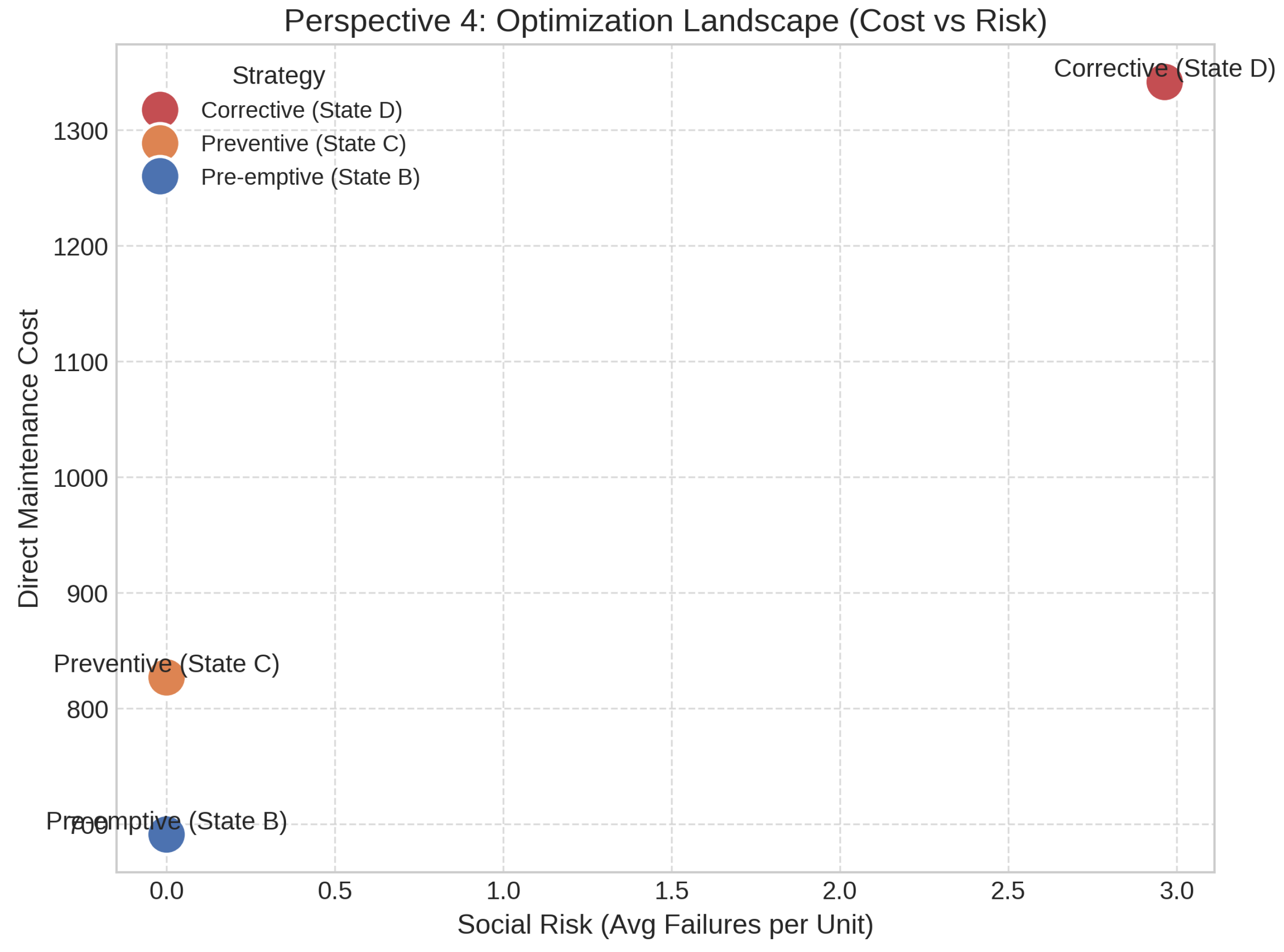
  • Perspective 4: Cost-Risk Trade-off (Optimization Landscape)—This perspective evaluates policy efficiency by mapping each maintenance strategy onto a two-dimensional optimization landscape comprising direct engineering costs and resulting societal risks. This visualization demonstrates whether preventive strategies achieve a near Pareto-optimal improvement over run-to-failure approaches.

2.3. Research Objectives and Positioning

In a previous study, the authors constructed a mathematical model (a Beta distribution Markov chain model) that stochastically predicts deterioration progression from uncertain inspection data, and verified its mathematical robustness [28]. Building upon this established deterioration prediction engine, the present study expands the discussion to higher-order “decision-making optimization.” Specifically, we aim to verify the statistical reliability of LCC estimation, visualize the fat-tail risk profiles of social losses, and identify policy tipping points through large-scale Monte Carlo simulations.

2.4. Related Work on Social Impacts

Impacts on Chronic Stress and Mental Health: Health damage caused by traffic events is not limited to physical trauma. Wener and Evans (2011) demonstrated that traffic congestion and uncomfortable driving environments trigger physiological stress responses such as elevated cortisol levels, acting as factors in long-term mental health deterioration [10].
Economic Evaluation of Social Costs: Attempts to monetarily quantify social losses resulting from infrastructure failure are crucial. Zachariadis (2008) estimated the social costs of automobile use in urban areas, arguing that external diseconomies caused by congestion and accidents significantly exceed existing tax amounts [11].
Considerations for Social Equity and Vulnerability: Furthermore, the perspective of “Equity” is indispensable. Marshall and Ferenchak (2017) revealed through spatial analysis that the distribution of traffic accidents and environmental burdens is not uniform, but disproportionately concentrated in socio-economically vulnerable populations [12]. Therefore, interventions designed to “rectify the maldistribution of risk” are required from the standpoint of the Sustainable Development Goals (SDGs). While these studies demonstrate a close link between traffic events and public health, a model dynamically coupling these factors with stochastic “infrastructure deterioration prediction” has not yet been established. This study aims to resolve this missing link.

3. Significance and Mathematical Framework of the Simulation

3.1. Integration of Social Impacts into the Mathematical Model

In previous studies, Magkafas et al. (2025) pointed out the multifaceted negative impacts of traffic events on urban livability [6], and Miner et al. (2024) demonstrated that trauma from traffic accidents represents a major burden of disease [7]. The primary significance of this simulation lies in integrating these “qualitative social issues” into the mathematical model as “quantitative cost terms” within the LCC analysis, providing a rigorous mixed-methods approach to socioeconomic behavior [29].

3.2. Formulation of the Objective Function and Multi-Stakeholder Cost Decomposition

The deterioration process of the targeted infrastructure equipment is formulated as a discrete-time Markov Chain. To resolve the methodological ambiguity often present in generic degradation models, we explicitly define the finite state space as S = { A , B , C , D } and establish the state transition probability matrix P . This matrix governs the stochastic progression of physical degradation from time t to t + 1 absent any external intervention. To formally reflect the stakeholder value chain mapping proposed in Section 1.2, the objective function J ( θ ) to be minimized is the expected total social life-cycle cost (LCC) over the evaluation period T under a specific maintenance strategy θ . We strictly decompose this total cost into two distinct components: the direct engineering costs borne by the Administrator ( C A d m i n ), and the cascading risk externalities imposed on Society ( C S o c i e t y ). This is particularly critical as the dynamic evolution paths of social risks heavily depend on the structural vulnerability inherent in public infrastructure governance [30].
J ( θ ) = E t = 0 T C A d m i n ( S t , a t ) + C S o c i e t y ( S t )
Here, a t { 0 , 1 } represents the execution of a maintenance action. The administrator’s direct cost is defined as the sum of routine inspection costs ( C i n s p ) and state-dependent intervention costs ( C i n t e r v ), such as preventive repair or emergency replacement:
C A d m i n ( S t , a t ) = C i n s p + a t · C i n t e r v ( S t )
Conversely, the societal risk tax (Social Cost) manifests exclusively when the infrastructure reaches the critical failure state (State D). It is formulated using an indicator function I ( · ) , accumulating the multi-dimensional public health and economic damages defined in Table 1:
C S o c i e t y ( S t ) = I ( S t = D ) · C t r a u m a + C c o n g e s t i o n + C e n v i r o n m e n t
By separating the cost functions as shown in Equations (2) and (3), this stochastic model can explicitly quantify the risk transfer from the administrator’s financial ledger to external stakeholders. This formal decomposition establishes the theoretical foundation for the Sankey diagram and stakeholder distribution analyses presented in Section 4.5.
To ensure full transparency and reproducibility of the simulation—and to clarify the structural constraints that influence the analytical findings—Table 2 comprehensively lists the baseline parameters, transition probabilities, maintenance thresholds, and cost components applied in the Monte Carlo engine. The transition probabilities and unit costs are calibrated based on empirical modeling of Japanese tunnel lighting facilities from our previous study [28], incorporating stochastic variance to evaluate tail risks.

3.3. Methodological Robustness and Uncertainty Analysis

To address the inherent unpredictability of infrastructure deterioration and the “Fat Tail” property of social costs, this methodology explicitly incorporates an Uncertainty Analysis framework. Discussions based solely on deterministic average values risk overlooking the “maldistribution of risk” concerning Marshall and Ferenchak (2017) [12]. Therefore, this simulation introduces advanced statistical methods (including 10 5 large-scale Monte Carlo trials and VaR/CVaR metrics) to ensure methodological robustness and quantify uncertainty.

4. Simulation Results and Discussion

In this study, to verify the validity of the proposed social LCC optimization model, large-scale Monte Carlo simulations ( N = 10 5 ) were conducted. The main results and the derived socio-engineering implications are discussed below.

4.1. Computational Convergence and Statistical Reliability

First, we evaluate the numerical stability and accuracy of the simulation output under the adopted parameter set. As a result of the convergence analysis prescribed in Perspective 1, the standard error (SE) of the estimated mean total cost decreased systematically as the number of trials increased (Figure 2). As summarized in Table 3, the SE for the corrective maintenance strategy shrank from 27.37 Cost Units [CU] at N = 1000 to 2.75 [CU] at N = 100,000. This reduction exhibits an approximate tenfold decrease, which is mathematically consistent with the asymptotic 1 N error decay characteristic of Monte Carlo estimators.
Furthermore, a Welch’s t-test was executed to evaluate the mean cost variance between the corrective and preventive (State C) frameworks. The test yielded a statistic of t = 722.6 with a p-value approaching 0.0 (falling below the machine epsilon). Under the assumptions and structural constraints adopted in this model, this result indicates that the cost-reduction performance of the preventive maintenance strategy is statistically significant and robust against stochastic simulation noise.

4.2. Correlation Analysis and Variable Interaction Assessment

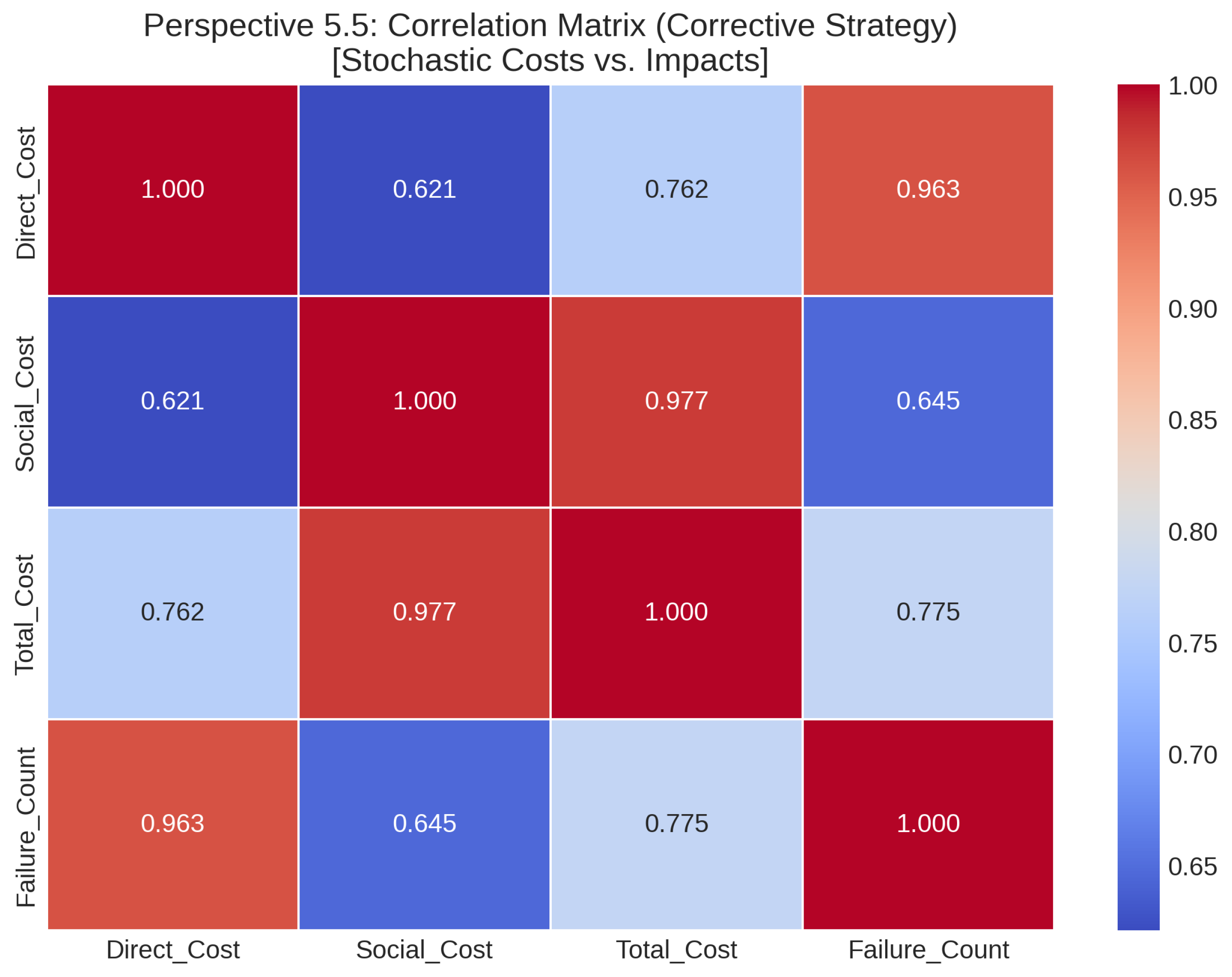
To quantitatively evaluate the dependencies among the variables in the proposed stochastic deterioration prediction model, we implemented a global sensitivity analysis using the raw life-cycle cost data generated by the Monte Carlo simulation ( N = 10 5 ). The variables analyzed include Direct Cost, Social Cost, Total Cost, and Failure Count. Because the cost distributions and failure frequencies associated with infrastructure deterioration exhibit extreme fat-tail properties (non-normal distributions), this study employs Spearman’s rank correlation coefficient ( ρ ) rather than Pearson’s correlation.
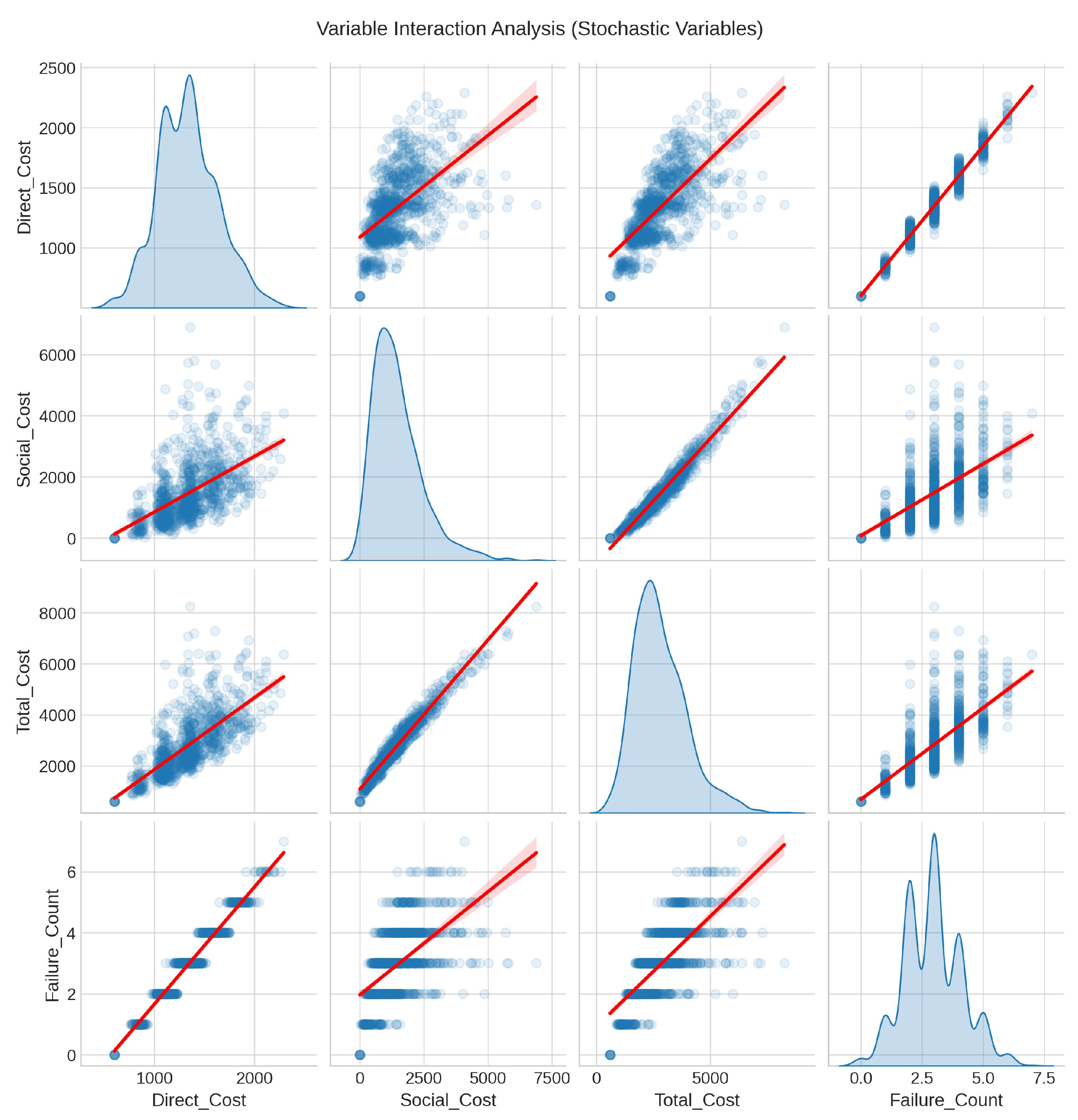
To visually evaluate these multidimensional interactions, we generated a correlation matrix heatmap (Figure 3) and a scatter plot matrix with Kernel Density Estimation (KDE) (Figure 4).
The correlation analysis focusing on the Corrective Strategy (intervention solely at State D) yielded insightful findings regarding risk propagation. To realistically reflect the real-world variance in infrastructure repair difficulty and accident severity, the Direct Cost parameter incorporates a normal distribution variance, while the Social Cost is governed by a log-normal distribution to capture the severe fat-tail nature of broader societal impacts. Even with this stochastic variance introduced, a strong positive correlation ( ρ > 0.85 ) was confirmed across Direct Cost, Social Cost, Total Cost, and Failure Count.
This robust positive correlation mathematically substantiates the structural vulnerability inherent in run-to-failure approaches. The introduction of independent stochastic cost distributions breaks the trivial perfect collinearity ( ρ = 1.0 ), yielding a realistic, scattered distribution in the matrix landscape (Figure 4). A specific query may arise regarding the explicit positive trend observed between Failure Count and Direct Cost in Figure 4. This interaction is driven by a clear economic mechanism within the model structure: under a corrective strategy, each physical equipment failure directly triggers an emergency replacement action. Because the unit cost of an emergency intervention ( C i n t e r v ( D ) = 250 [CU]) is substantially higher than routine inspections, an increased frequency of physical failures naturally forces an immediate, compounding escalation in the administrator’s direct financial expenditures.
Consequently, the underlying physical degradation of individual assets (Failure Count) acts as the dominant driving independent variable. This establishes a tightly coupled state where both the engineering costs borne by administrators and the damages inflicted on society amplify concurrently. If operators defer maintenance until structural failure occurs, it becomes structurally difficult to decouple direct asset expenditures from catastrophic social losses, regardless of individual accident scales. Conversely, the programmatic value of preventive intervention at State C lies in its structural decoupling effect—severing this direct causal chain reaction between physical equipment deterioration and subsequent socio-economic harm across the stakeholder value chain.

4.3. Risk Profile and Social Equity

An essential finding of this simulation framework lies not in the comparison of deterministic average values but in the structural distribution shape of long-term risks. Figure 5 displays the simulated Probability Density Function (PDF) of the total life-cycle costs obtained across N = 100,000 trials. Under the corrective maintenance framework (red curve), the cost distribution exhibits a distinct right-side tail (fat-tail property). This profile demonstrates that a run-to-failure strategy harbors a critical probability of stochastically inducing catastrophic socio-economic losses, even when the median or expected costs appear manageable within routine budgetary projections.
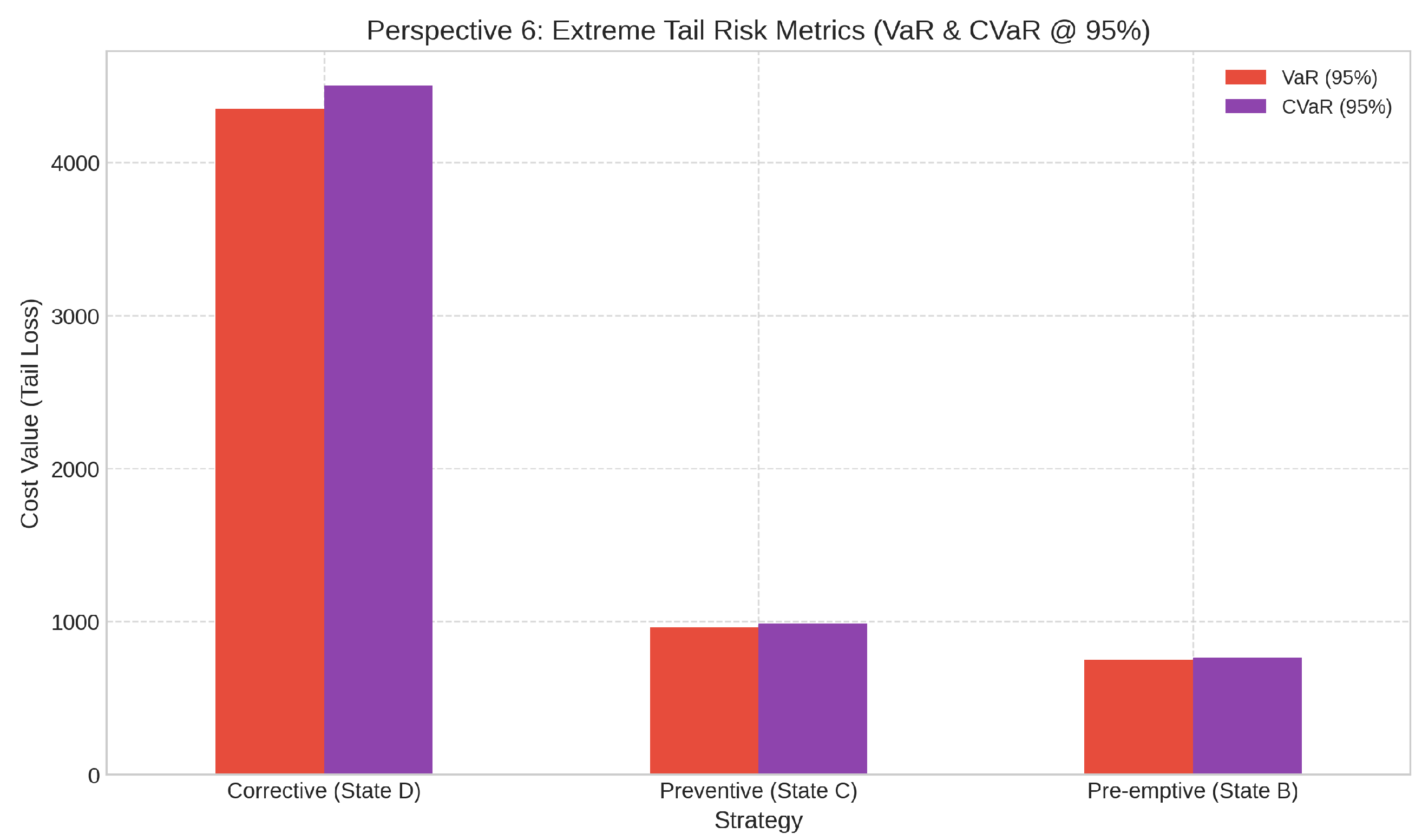
This risk variance has significant implications for the structural maldistribution of risk across the stakeholder chain. According to the tail risk indicators assessed in Perspective 6 (Table 4 and Figure 6), the 95% Conditional Value at Risk (CVaR) for the corrective maintenance strategy reaches 4520.8 Cost Units [CU], which is approximately 4.6 times higher than that of the preventive strategy (985.3 [CU]).
It is necessary to qualify these findings from the standpoint of social equity. The present mathematical model does not explicitly incorporate discrete socioeconomic indicators such as spatial demographics, household income, or age brackets. However, the high CVaR value observed in the corrective strategy quantifies a macro-level risk transfer, where immediate expenditure reductions on the administrator’s internal ledger systematically offload severe externalized hazards onto the public sector. While Marshall and Ferenchak (2017) demonstrated empirically that localized traffic and environmental risks often fall disproportionately on vulnerable sub-populations [12], our simulation results structurally support this dynamic by demonstrating how deferred institutional maintenance generates severe tail-risk externalities that must ultimately be absorbed by society. Notably, collaborative structures such as public-private partnerships have been proposed precisely as mechanisms to alleviate such distributed risks in heritage and civil infrastructure [31].

4.4. Economic Rationality and Resolution of Trade-Offs

The numerical results analyzed in Perspective 3 (Sensitivity Analysis) and Perspective 4 (Trade-off landscape) offer nuance to the traditional cost-risk trade-off archetype. Figure 7 traces the trajectory of the expected total life-cycle costs as the scale parameter regulating external social losses ( C s o c i a l ) is systematically varied. As the valuation of social and public health damage increments, a distinct policy tipping point emerges, marking the threshold where the economically optimal approach shifts from a corrective routine to a preventive framework.
Figure 8 maps each maintenance scenario along two primary operational metrics: expected societal risk, quantified via cumulative failure frequencies [counts/period], and expected direct agency costs [CU]. Under the specific model structure evaluated here, the preventive strategy (intervention at State C) occupies a highly efficient position within the landscape, significantly reducing public risk without precipitating a proportional, linear escalation in fiscal requirements.
According to the baseline data, even under a restricted scenario where the explicit unit cost assigned to social externalities is set to zero, the expected cost of the corrective strategy (1335.3 [CU]) exceeds that of the preventive strategy (825.2 [CU]). Within this parameterized case study—which adheres to established rigor in case study research methodologies [32]—because the emergency replacement cost ( C i n t e r v ( D ) = 250 [CU]) is substantially larger than the preventive intervention fee ( C i n t e r v ( C ) = 60 [CU]), early intervention exhibits an inherent economic dominance independent of external societal modeling.
However, it is critical to contextualize this finding within broader infrastructure management literature. Recent studies indicate that implementing high-frequency preventive or predictive programs can occasionally induce elevated agency expenditures and minor user costs due to recurring work zone setups [19,20]. Furthermore, recent studies in multi-campus critical infrastructure underscore that performance-based maintenance significantly minimizes risk volatility across the operational lifecycle [33]. While our specific baseline parameters demonstrate that reliable intervention at the State C stage represents an optimal balanced solution for minimizing long-term costs under the given model structure, the absolute convenience of early intervention remains conditional upon the ratio between preventive upkeep expenses and emergency failure penalties.

4.5. Multi-Stakeholder Value Distribution and Value Chain Analysis

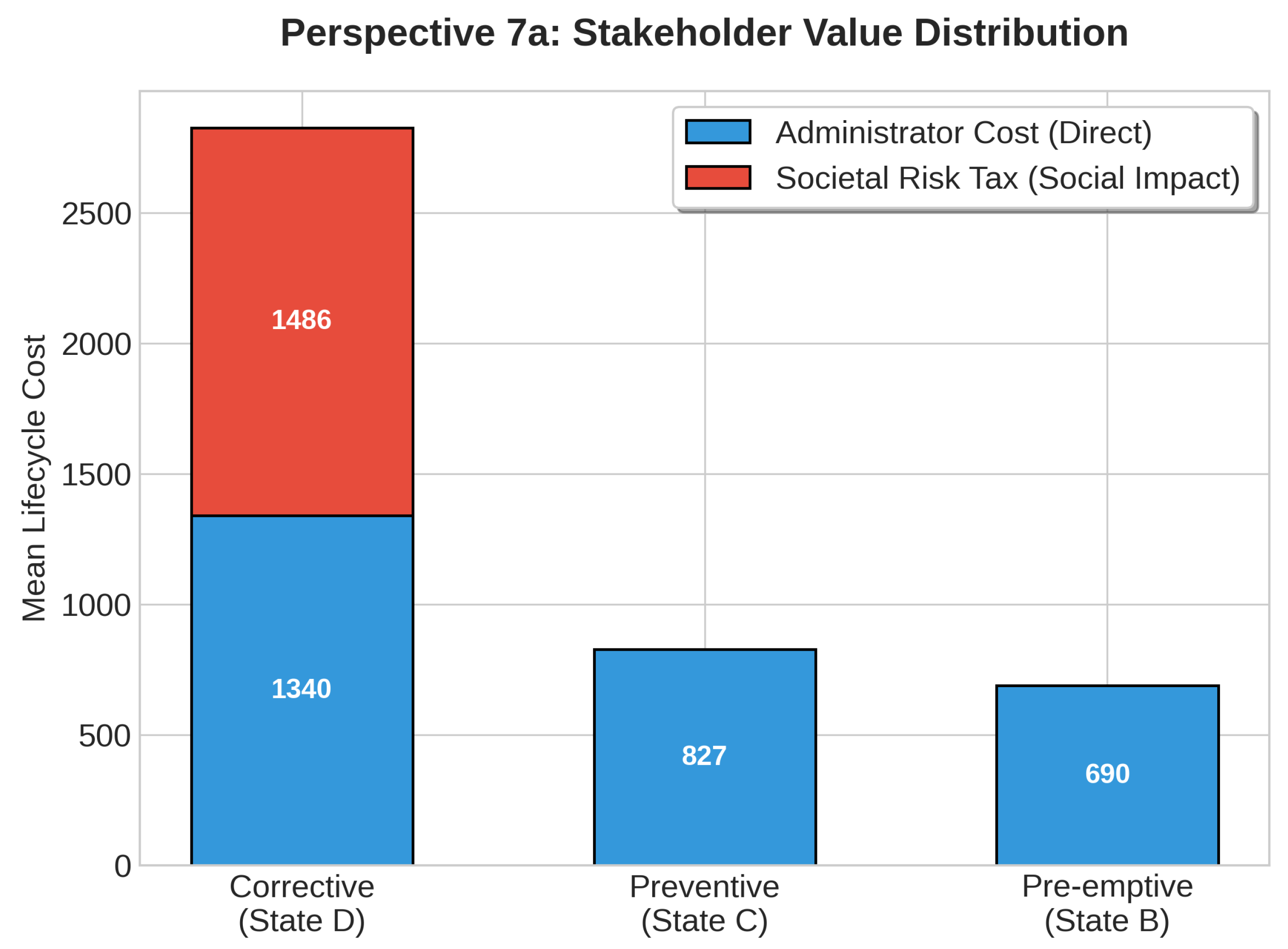
To evaluate the stakeholder value chain mapping proposed in Section 1.2 and the cost decomposition formulated in Section 3.2, we analyzed the distribution of total life-cycle costs across different maintenance strategies (Perspective 7). As illustrated in Figure 9, the corrective maintenance strategy (run-to-failure) appears to minimize direct agency costs (immediate cash outlays). However, this is a financial illusion; a massive societal risk tax is simultaneously generated and imposed on external stakeholders. In this scenario, the combination of user costs (e.g., logistical inefficiencies) and severe externalities (e.g., physical trauma and environmental burdens) significantly exceeds the direct agency cost, resulting in a substantially higher total social LCC. In contrast, under the proposed model parameters, preventive (State C) and pre-emptive (State B) strategies highly mitigate these externalized risks, indicating that early intervention functions as a sound programmatic investment.
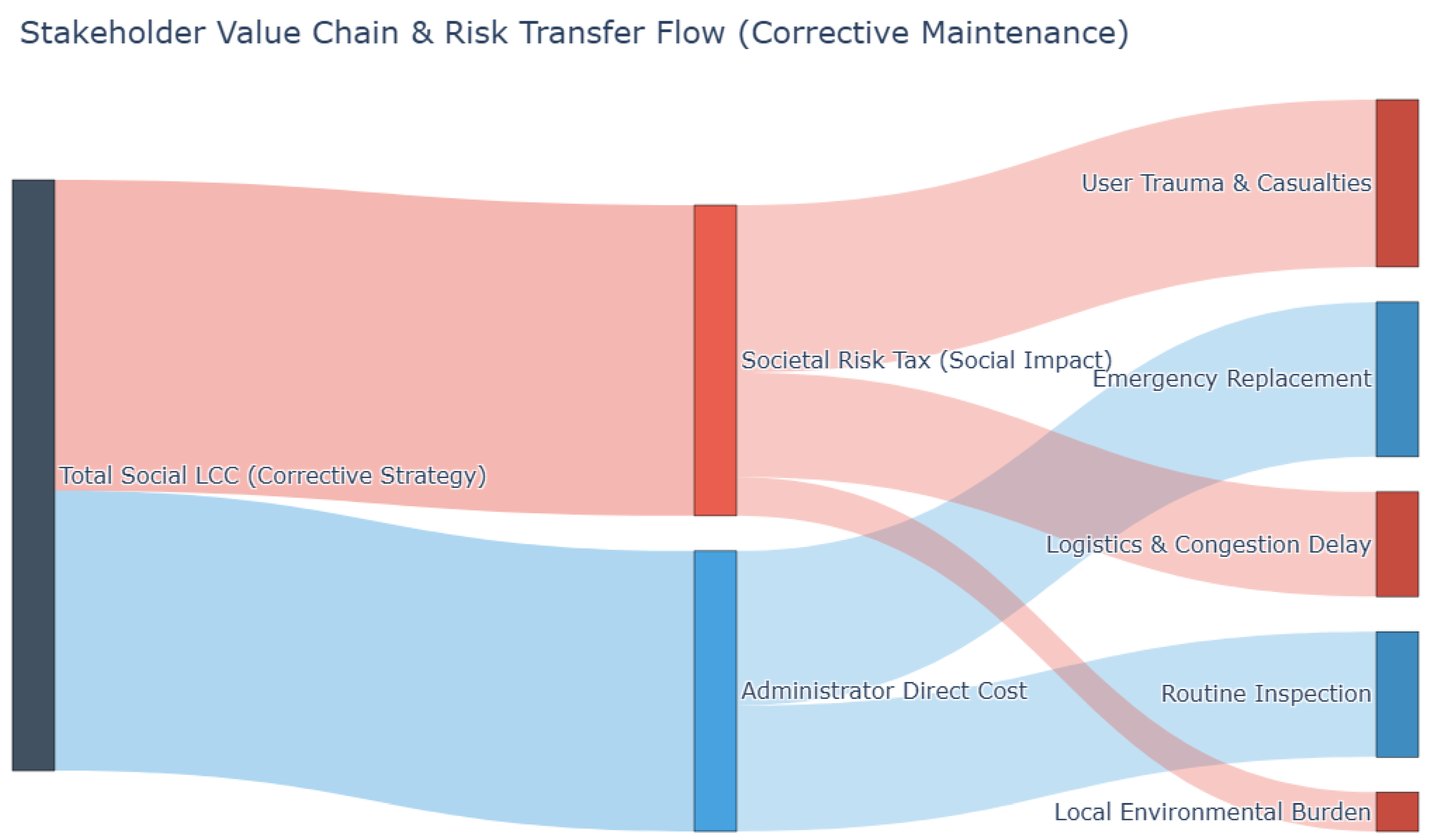
Furthermore, to explicitly map the multi-dimensional flow of these impacts across the stakeholder value chain—directly addressing recent methodological imperatives for comprehensive management [1]—we constructed a Sankey diagram (Figure 10). This visualization delineates the structural divergence of costs under the corrective approach. As depicted in Figure 10, while the administrative agency absorbs the engineering expenditures (routine inspections and emergency replacements), a substantial proportion of the total economic burden cascades outward. This flow represents the transfer of risk into distinct user costs (logistics and congestion delays) and broad externalities (public health burdens and localized environmental degradation). The diagram visually represents the structural decoupling effect identified in the correlation analysis, illustrating how preventive maintenance can sever the chain reaction between physical equipment deterioration and subsequent socio-economic harm.

4.6. Structural Robustness Against Engineering Uncertainty

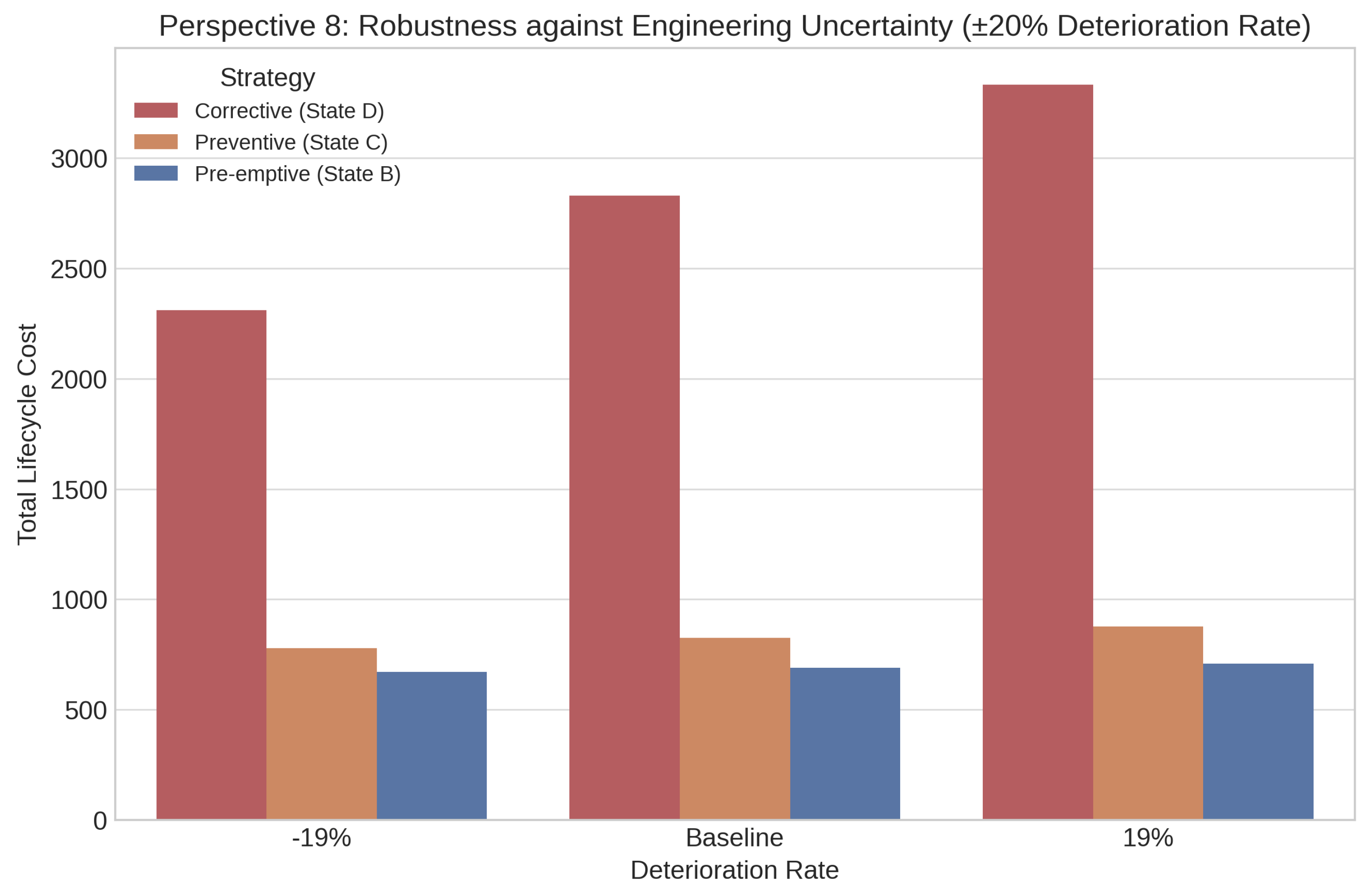
In actual infrastructure management, deterioration prediction models inevitably entail epistemic uncertainty regarding transition probabilities. To assess whether the simulation outcomes depend on a rigidly fitted parameter set, we conducted a sensitivity analysis by perturbing the deterioration probability matrix P by ± 20 % (Perspective 8). As illustrated in Figure 11, even under a pessimistic scenario where the physical degradation accelerates by 20% (+20% Deterioration Rate), the preventive maintenance strategy maintains a consistent economic advantage over the corrective strategy. This analytical finding indicates that the policy preference for intervention at State C exhibits structural robustness against hypothetical fluctuations in physical engineering degradation, within the bounds of the tested scenarios. The colors in the Sankey diagram visually distinguish the two primary categories of costs and impacts comprising the total social life cycle cost (LCC):
  • denote the Societal Risk Tax (social impacts). These represent negative externalities, indirect costs, and losses borne by society and infrastructure users, such as user trauma and casualties, logistics and congestion delays, and local environmental burdens.
  • signify the Administrator Direct Cost. These represent the direct financial expenditures and operational costs incurred by infrastructure managers, encompassing activities such as emergency replacements and routine inspections.
This analytical finding indicates that the policy preference for intervention at State C exhibits structural robustness against hypothetical fluctuations in physical engineering degradation, within the bounds of the tested scenarios.
Figure 11. Perspective 8: robustness against engineering uncertainty ( ± 20 % deterioration rate).
Civileng 07 00043 g011

4.7. Validation of Monte Carlo Convergence and Error Analysis

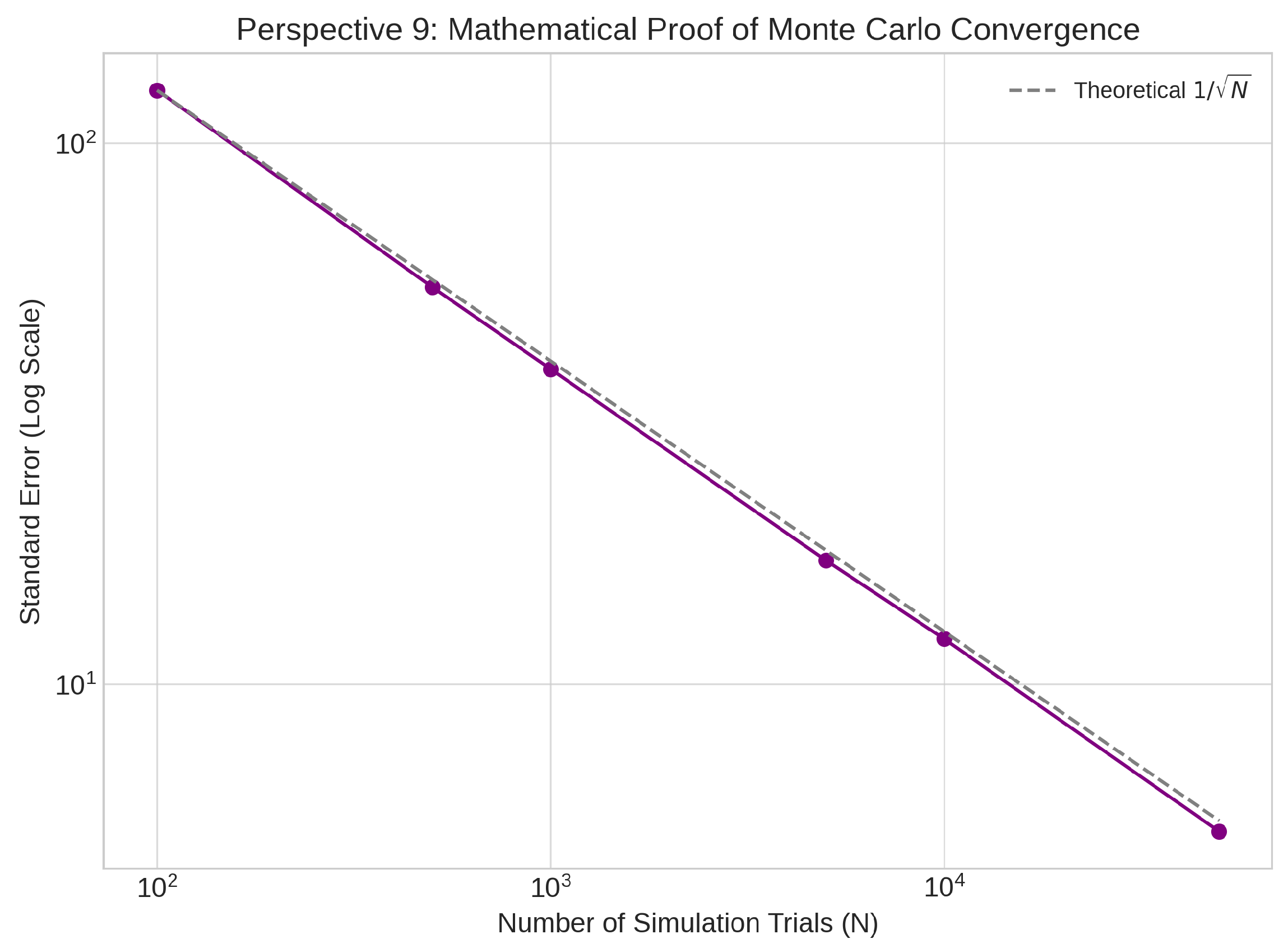
To evaluate the methodological stability of the simulation, we assessed the decay characteristics of the computational error (Perspective 9). As shown in the log-log plot in Figure 12, the standard error (SE) of the expected value aligns with the theoretical convergence line of 1 / N . This validation confirms that the fat-tail distributions and Pareto efficiencies observed in this model are computationally stable outcomes rather than simulation noise. Consequently, by executing a sufficient number of trials ( N = 10 5 ), this methodology provides a reliable computational baseline to support policy evaluation, remaining strictly conditional on the adopted model assumptions and input parameters.

5. Conclusions

5.1. Infrastructure Aging as a Public Health Challenge and Multidimensional Risk Assessment

In contextualizing the Social Life Cycle Cost (LCC) optimization model proposed in this study, it is crucial to comprehensively evaluate the specific public health threats posed by infrastructure deterioration. The functional failure of tunnel infrastructure, particularly lighting and signaling systems, introduces acute hazards to public health. Confined tunnel environments exacerbate the difficulty of safe evacuation during critical incidents. Consequently, malfunctions can trigger severe multi-vehicle collisions, fire risks, and smoke accumulation, leading to immediate health impacts.
The classification in Table 5 illustrates that aging tunnel infrastructure extends beyond traditional engineering parameters, presenting a direct challenge to public safety. Therefore, the implementation of proactive monitoring and preventive measures is a critical requirement. The early investment in preventive maintenance strategies evaluated in this simulation serves as a programmatic safeguard to mitigate these compounding public health risks.

5.2. Summary of Findings

This study expanded decision-making in infrastructure asset management from the conventional minimization of direct agency costs to the evaluation of the total social LCC, incorporating multi-stakeholder mapping and public health impacts. By integrating social loss evaluation with a stochastic engineering deterioration model [28], the Monte Carlo simulations ( N = 10 5 ) yielded the following structured insights:
  • Identification of the Decoupling Effect: The correlation analysis demonstrated a persistent coupling between direct agency expenditures and societal damages under a corrective strategy, even when stochastic uncertainties in accident severity were introduced. Preventive maintenance was identified as a structural mechanism to decouple physical infrastructure deterioration from cascading public health risks.
  • Quantification of Stakeholder Risk Transfer: The 95% CVaR of the corrective maintenance strategy was significantly higher (approximately 4.6 times) than that of the preventive maintenance baseline. This indicates that deferring maintenance transfers substantial extreme risks (fat tails) from the agency ledger to the broader public sector.
  • Evaluation of Trade-offs under Uncertainty: Sensitivity analyses indicated that preventive maintenance offers a highly efficient policy approach. Even under a pessimistic scenario of accelerated deterioration (+20% rate), early intervention minimized expected societal risk without inducing a strictly proportional escalation in long-term budget requirements.

5.3. Limitations and Future Scope

While this study presents a structured framework for Social LCC optimization, several critical limitations must be acknowledged to guide future research.
First, a primary methodological limitation involves the structural integration of empirical data. The robustness of the proposed simulation relies heavily on preventing a disconnected structure between the low-level physical calculation results of infrastructure degradation and the high-level stochastic simulation parameters. If the physical mechanics of tunnel lighting degradation are not accurately reflected in the transition probability matrix, the resulting risk evaluations may diverge from reality. Future studies must focus on tighter structural data integration, calibrating the Markov matrix dynamically using real-time IoT sensor data and precise field inspections.
Second, regarding social equity, the current model assesses macroscopic risk transfers but lacks granular demographic variables (e.g., household income, regional vulnerability indices, or age distributions). Future iterations should incorporate spatial geographic information systems (GIS) and socio-economic datasets to conduct an explicit equity analysis, pinpointing exactly which communities absorb the environmental and trauma externalities.
Finally, while the model assumes fixed maintenance costs, implementing high-frequency preventive measures may induce secondary user costs, such as traffic disruptions caused by frequent work zones. Incorporating predictive maintenance cost variables [19,20] and dynamic traffic flow modeling into the LCC equation remains an essential objective for subsequent research.

Author Contributions

Conceptualization, Y.K., D.C., N.M. and S.H.; methodology, Y.K., D.C., N.M. and S.H.; validation, Y.K., D.C., N.M. and S.H.; formal analysis, Y.K., D.C., N.M. and S.H.; investigation, Y.K., D.C., N.M. and S.H.; resources, Y.K., D.C., N.M. and S.H.; data curation, Y.K., D.C., N.M. and S.H.; writing—original draft preparation, Y.K., D.C., N.M. and S.H.; writing—review and editing, Y.K., D.C., N.M. and S.H. All authors have read and agreed to the published version of the manuscript.

Funding

This research received no external funding.

Institutional Review Board Statement

Not applicable.

Informed Consent Statement

Not applicable.

Data Availability Statement

The simulation code and data supporting the findings of this study are available in the GitHub repository: https://github.com/RUDATAScience/Advanced-LCC-Social-Impact-Optimization-Simulation (accessed on 14 June 2026). Additional underlying data are available from the authors upon reasonable request.

Conflicts of Interest

Author Noriaki Maeda was employed by the company East Nippon Expressway Company Limited. The remaining authors declare that the research was conducted in the absence of any commercial or financial relationships that could be construed as a potential conflict of interest.

Abbreviations

The following abbreviations are used in this manuscript:
LCCLife Cycle Cost
CVaRConditional Value at Risk
VaRValue at Risk
PDFProbability Density Function
SEStandard Error
DALYsDisability-Adjusted Life Years
PM2.5Particulate Matter 2.5
TBITraumatic Brain Injury
SDGsSustainable Development Goals

References

  1. Kaewunruen, S.; Baniotopoulos, C.; Teuffel, P.; Driou, H.; Valta, O.; Pešta, J.; Bajare, D. Synergic Co-Benefits and Value of Digital Technology Enablers for Circular Management Models Across Value Chain Stakeholders in the Built Environment. CivilEng 2025, 6, 62. [Google Scholar] [CrossRef]
  2. Kruhlov, V.; Dvorak, J.; Moroz, V.; Tereshchenko, D. Revitalizing Ukrainian Cities: The Role of Public-Private Partnerships in Smart Urban Development. Cent. Eur. Public Adm. Rev. 2024, 22, 85–107. [Google Scholar] [CrossRef]
  3. Marco, A.D.; Narbaev, T. Factors of Schedule and Cost Performance of Tunnel Construction Megaprojects. Open Civ. Eng. J. 2021, 15, 38–47. [Google Scholar] [CrossRef]
  4. Osei-Kyei, R.; Narbaev, T.; Ampratwum, G. A Scientometric Analysis of Studies on Risk Management in Construction Projects. Buildings 2022, 12, 1342. [Google Scholar] [CrossRef]
  5. De Marco, A.; Rosso, M.; Narbaev, T. Nonlinear Cost Estimates at Completion Adjusted with Risk Contingency. J. Mod. Proj. Manag. 2016, 4, 24–33. [Google Scholar] [CrossRef]
  6. Magkafas, F.; Fountas, G.; Anastasopoulos, P.C.; Basbas, S. Beyond speed reduction: A systematic literature review of traffic-calming effects on public health, travel behaviour, and urban liveability. Infrastructures 2025, 10, 147. [Google Scholar] [CrossRef]
  7. Miner, P.; Smith, B.M.; Jani, A.; McNeill, G.; Gathorne-Hardy, A. Car harm: A global review of automobility’s harm to people and the environment. J. Transp. Geogr. 2024, 115, 103817. [Google Scholar] [CrossRef]
  8. González, S.S.; Bedoya-Maya, F.; Calatayud, A. Understanding the effect of traffic congestion on accidents using big data. Sustainability 2021, 13, 7500. [Google Scholar] [CrossRef]
  9. Gössling, S.; Nicolosi, J.; Litman, T. The health cost of transport in cities. Curr. Environ. Health Rep. 2021, 8, 196–201. [Google Scholar] [CrossRef] [PubMed]
  10. Wener, R.; Evans, G.W. Transportation and health: The impact of commuting. In International Encyclopedia of Transportation; Elsevier: Amsterdam, The Netherlands, 2011; pp. 462–467. [Google Scholar]
  11. Zachariadis, T. Road to nowhere: An assessment of social costs from the use of cars in Cypriot cities. Cyprus Econ. Policy Rev. 2008, 2, 51–80. [Google Scholar]
  12. Marshall, W.E.; Ferenchak, N.N. Assessing equity and urban/rural road safety disparities in the US. J. Urban. Int. Res. Placemaking Urban Sustain. 2017, 10, 422–441. [Google Scholar] [CrossRef]
  13. Staves, C.; Zhang, Q.; Moeckel, R.; Woodcock, J. Integrating health effects within an agent-based land use and transport model. J. Transp. Health 2023, 33, 101707. [Google Scholar] [CrossRef]
  14. McClure, R.J.; Adriazola-Steil, C.; Mulvihill, C.; Fitzharris, M.; Salmon, P.; Bonnington, C.P.; Stevenson, M. Simulating the dynamic effect of land use and transport policies on the health of populations. Am. J. Public Health 2015, 105, 223–229. [Google Scholar] [CrossRef]
  15. Appleyard, B.; Garrett, T.S. Incorporating public health into transportation decision making. In Mineta Transportation Institute Publications; Report No. 23-14; Mineta Transportation Institute: San Jose, CA, USA, 2023. [Google Scholar]
  16. Khreis, H.; Nieuwenhuijsen, M.J. The health impacts of urban transport: Linkages, tools and research needs. In Integrating Human Health into Urban and Transport Planning; Springer: Cham, Switzerland, 2019; pp. 3–28. [Google Scholar]
  17. Chamberlain, R.C.; Fecht, D.; Davies, B.; Laverty, A.A. Health effects of low emission and congestion charging zones: A systematic review. Lancet Public Health 2023, 8, e559–e574. [Google Scholar] [CrossRef] [PubMed]
  18. Narbaev, T.; Amirbekova, D. Research Productivity in Emerging Economies: Empirical Evidence from Kazakhstan. Publications 2021, 9, 51. [Google Scholar] [CrossRef]
  19. Praticò, F.G.; Giunta, M.; Leonardi, G. Economic Sustainability of High-Speed and High-Capacity Railways. Sustainability 2023, 15, 725. [Google Scholar] [CrossRef]
  20. Praticò, F.G.; Fedele, R. Exploring the paradigm of railway predictive maintenance. Struct. Infrastruct. Eng. 2025, 1–12, ahead of print. [Google Scholar] [CrossRef]
  21. Samoilov, A.; Osei-Kyei, R.; Kussaiyn, M.; Mamyrbayev, A.; Mukashev, Y. Cross-Country Comparison of Risk Factors in Public-Private Partnerships in Infrastructure Development: Evidence from Colombia, Kazakhstan, and Ghana. Sustainability 2024, 16, 5712. [Google Scholar]
  22. Dissanayake, N.; Xia, B.; Skitmore, M.; Trigunarsyah, B.; Menadue, V. Ranked generic criteria for EPC contractor selection. Eng. Constr. Archit. Manag. 2023, 30, 4933–4954. [Google Scholar]
  23. Fu, L.; Sun, H.; Fang, Y.; Xu, K. A systematic review of the public-private partnership literature published between 2012 and 2021. J. Civ. Eng. Manag. 2023, 29, 238–252. [Google Scholar] [CrossRef]
  24. Castelblanco, G.; Guevara, J.; Mangano, G.; Rafele, C. Financial system dynamics model for multidimensional flexibility in toll road PPPs: A life-cycle analysis. Constr. Manag. Econ. 2024, 42, 802–821. [Google Scholar] [CrossRef]
  25. Wang, Y.; Wang, Y.; Ni, J.; Zhang, H. Reliability-Centric Maintenance Planning for Bridge Infrastructure: A Novel Method Based on Improved Electric Fish Optimization. Buildings 2024, 14, 3583. [Google Scholar] [CrossRef]
  26. Zhou, C.; Abudikeranmu, A.; Rao, F.; Shi, X. Social Capital and Farmers’ Participation in Public Irrigation Infrastructure Investment Evidence from Rural Xinjiang, China. Water 2025, 17, 3097. [Google Scholar] [CrossRef]
  27. RUDATAScience. Advanced-LCC-Social-Impact-Optimization-Simulation. GitHub Repository. 2026. Available online: https://github.com/RUDATAScience/Advanced-LCC-Social-Impact-Optimization-Simulation (accessed on 14 June 2026).
  28. Kawahata, Y.; Maeda, N.; Hatadani, S. Robustness and Convergence of a Stochastic Deterioration Prediction Model for Tunnel Lighting Facilities: A Japanese Case Study Based on Systematized Expert Knowledge and Large-Scale Monte Carlo Simulation. Appl. Sci. 2026, 16, 1994. [Google Scholar] [CrossRef]
  29. Tashakkori, A.; Teddlie, C. SAGE Handbook of Mixed Methods in Social & Behavioral Research, 2nd ed.; SAGE Publications, Inc.: Thousand Oaks, CA, USA, 2010. [Google Scholar]
  30. Chen, X.; Zhao, Y.; Xue, S. A Study on the Dynamic Evolution Paths of Social Risks in PPP Projects of Water Environmental Governance From the Vulnerability Perspective. Sustainability 2024, 16, 3951. [Google Scholar] [CrossRef]
  31. Othman, A.A.E.; Mahmoud, N.A. Public-private partnerships as an approach for alleviating risks associated with adaptive reuse of heritage buildings in Egypt. Int. J. Constr. Manag. 2022, 22, 1713–1735. [Google Scholar]
  32. Mali, Y.C.G. A Book Review: Case Study Research and Applications. Qual. Rep. 2018, 23, 1–5. [Google Scholar] [CrossRef]
  33. Shohet, I.M.; Levi, S.; Zeibak-Shini, R.; Shahin, F. Performance-Based Maintenance and Operation of Multi-Campus Critical Infrastructure Facilities Using Supply Chain Multi-Choice Goal Programming. Appl. Sci. 2025, 15, 11161. [Google Scholar] [CrossRef]
Figure 1. Flowchart of the proposed integrated infrastructure management and public health framework.
Civileng 07 00043 g001
Figure 2. Perspective 1: convergence verification of computational accuracy measured in standard error of cost units [CU] ( N = 10 3 10 5 ).
Civileng 07 00043 g002
Figure 3. Perspective 5.5: correlation matrix (corrective strategy) [engineering costs vs. social impacts].
Civileng 07 00043 g003
Figure 4. Perspective 5.5: Variable Interaction Analysis (Scatter Matrix with KDE). Blue lines (diagonal panels) represent the density distribution curves. Red lines (scatter plot panels) represent the linear regression lines with their confidence intervals.
Civileng 07 00043 g004
Figure 5. Perspective 2: probability density function of total life-cycle cost [CU−1] ( N = 100,000 ).
Civileng 07 00043 g005
Figure 6. Perspective 6: extreme risk metrics (VaR and CVaR evaluated at the 95% confidence level in cost units [CU]).
Civileng 07 00043 g006
Figure 7. Perspective 3: sensitivity analysis of expected total life-cycle cost [CU] against variations in social cost scale.
Civileng 07 00043 g007
Figure 8. Perspective 4: Multi-Objective Optimization Landscape mapping Societal Risk [counts/period] versus Direct Agency Cost [CU]. Note: In the bottom-left corner of the plot, the data label “Pre-emptive (State B)” partially overlaps with the y-axis tick value “700”.
Civileng 07 00043 g008
Figure 9. Perspective 7a: Stakeholder Value Distribution. The stacked bar chart quantifies the risk transfer from the agency ledger to user and external societal domains under the corrective strategy.
Civileng 07 00043 g009
Figure 10. Perspective 7b: Sankey Diagram of Stakeholder Value Chain and Risk Transfer Flow. This infographic visualizes how administrative agency decisions ripple into user costs and broader socio-economic externalities. The red/pink elements denote the “Societal Risk Tax”, whereas the blue elements signify the “Administrator Direct Cost”.
Civileng 07 00043 g010
Figure 12. Perspective 9: validation of monte carlo convergence ( 1 / N Log-Log scale).
Civileng 07 00043 g012
Table 1. Correspondence between engineering deterioration states and social/public health impacts.
Engineering StateSocial and Public Health Impact
State A (Intact)No impact.
The equipment meets design performance, ensuring user safety and comfort.
State B (Minor Deformation)Emergence of latent risk.
There is no functional impairment, but the lack of preventive intervention increases the future risk stock.
State C (Requires Repair)Manifestation of health risks (mild).
Flicker and reduced illuminance increase driver eye strain and stress responses (elevated cortisol), elevating the risk of near-miss incidents.
State D (Emergency Measure Stage)Occurrence of social losses (severe).
Directly leads to non-illumination or falling accidents.
The negative impacts of traffic accidents can be broadly categorized into direct health damage, indirect health damage, and economic loss. Direct health damage primarily consists of fatalities and physical trauma resulting immediately from the collisions. Furthermore, indirect health damage manifests through delays in emergency medical transport caused by accident-induced traffic congestion, alongside a heightened environmental burden stemming from the concentration of exhaust gas emissions along roadsides. Beyond these health implications, such incidents also lead to substantial economic loss, which is primarily characterized by the loss of social opportunities due to the subsequent stagnation of logistics and transportation networks.
Table 2. Baseline simulation parameters and multi-stakeholder cost components.
Parameter CategoryValue and DefinitionReference and Source
Simulation ConfigurationPeriod T = 600 discrete time steps (50 years × 12 months)
Trials N = 10 5 (Monte Carlo)
Formulated for this simulation design
State Transition
Probability Matrix ( P )
p A , A = 0.990 , p A , B = 0.010
p B , B = 0.980 , p B , C = 0.020
p C , C = 0.970 , p C , D = 0.030
p D , D = 1.000 (Absorbing state)
Calibrated baseline derived from [28]
Maintenance Thresholds ( θ )Corrective Strategy: Intervention exclusively at State D
Preventive Strategy: Intervention at State C
Pre-emptive Strategy: Intervention at State B
Standard LCC operational scenarios
Direct Maintenance Costs ( C A d m i n )Routine Inspection Cost: 1
Pre-emptive Repair Cost (State B): 15
Preventive Repair Cost (State C): 60
Emergency Replacement Cost (State D): 250
Based on empirical expenditure data
Social Cost Components ( C S o c i e t y )Baseline mean scale: 500 per failure event.
(Incorporates stochastic log-normal variance during interaction analyses to capture severe fat-tail risks).
Synthesized from external diseconomy studies [11,28]
Table 3. Convergence status of computational accuracy for the corrective strategy.
Number of Trials (N)Standard Error (SE) in Cost Units [CU]
N = 1000 27.37 (Confidence Interval Width: ± 53.6 [CU])
N = 10,000 8.63 (Confidence Interval Width: ± 16.9 [CU])
N = 100,000 2.75 (Confidence Interval Width: ± 5.4 [CU])
Table 4. Comparison of extreme risk metrics across strategies.
Maintenance Strategy95% CVaR (Tail Risk in Cost Units [CU])
Corrective Maintenance (State D)4520.8 (Severe tail-risk exposure)
Preventive Maintenance (State C)985.3 (Substantial risk suppression)
Pre-emptive Maintenance (State B)763.6 (Minimized extreme risk)
Table 5. Classification of acute health damages associated with infrastructure deterioration.
Damage CategorySpecific Public Health Risks and Clinical Impacts
Physical TraumaTraumatic brain injuries (TBI), cervical spine fractures, and crush injuries resulting from structural failures or collisions.
Environmental FactorsRisk of toxic fume inhalation, thermal burns from fire events, and localized air quality degradation.
Systemic FactorsEmergency response delays caused by tunnel closures and extreme traffic congestion, potentially exacerbating mortality rates for time-sensitive medical emergencies.
Disclaimer/Publisher’s Note: The statements, opinions and data contained in all publications are solely those of the individual author(s) and contributor(s) and not of MDPI and/or the editor(s). MDPI and/or the editor(s) disclaim responsibility for any injury to people or property resulting from any ideas, methods, instructions or products referred to in the content.