

Effect of Technological Variables on Thermal Conductivity and Compressive Strength of Hemp–Lime Composites


Abstract
1. Introduction
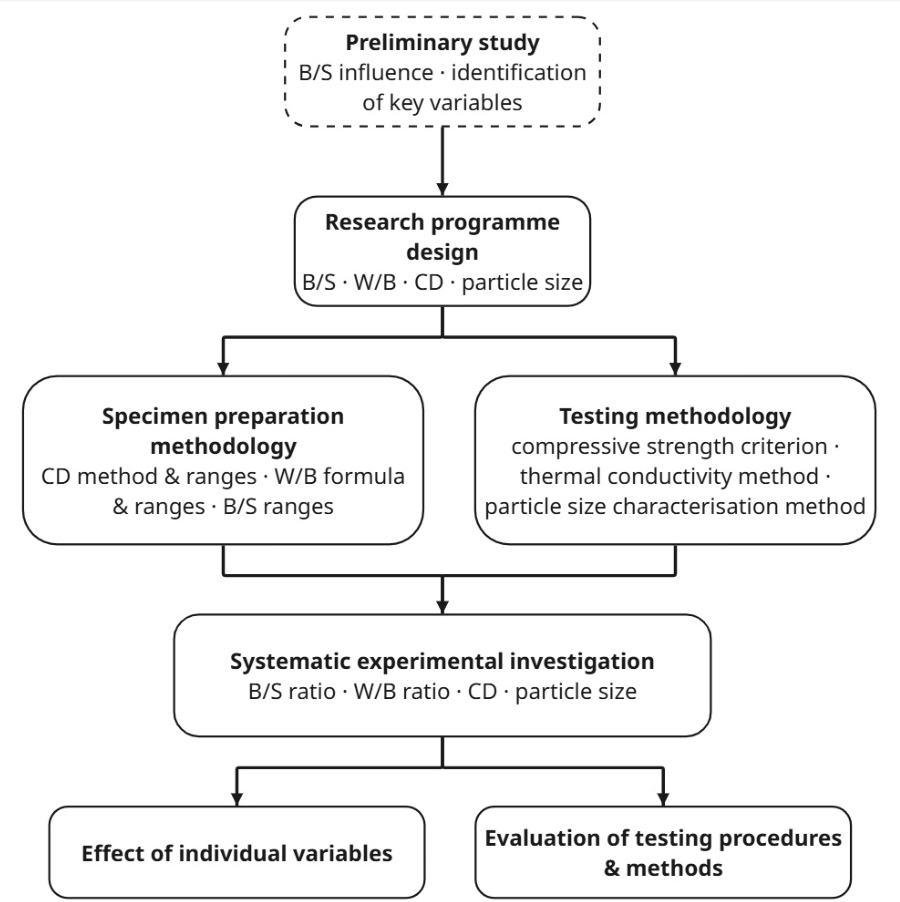
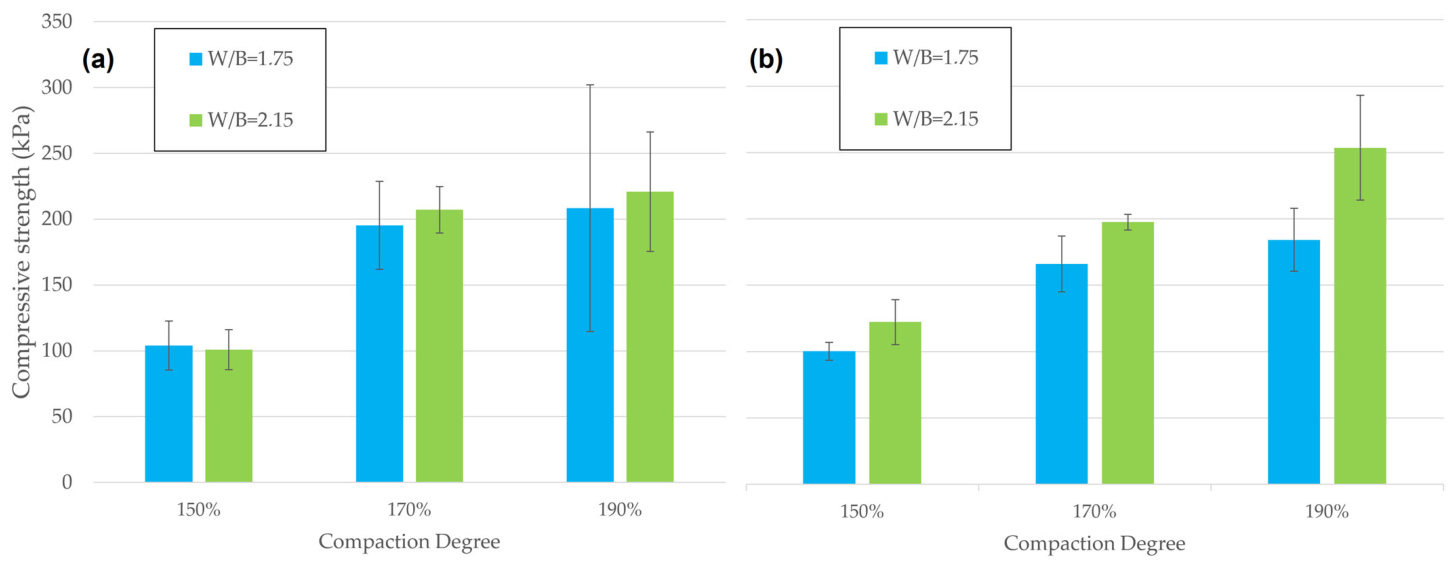
- Systematic investigation of W/B influence on thermal conductivity and compressive strength using a 3 × 3 factorial design (W/B = 1.75, 1.95, 2.15 × CD = 150%, 170%, 190%), enabling identification of interactions between variables;
2. Materials and Methods
2.1. Materials
2.1.1. Hemp Shives
2.1.2. Binder Characteristics
2.1.3. Water
2.2. Methods
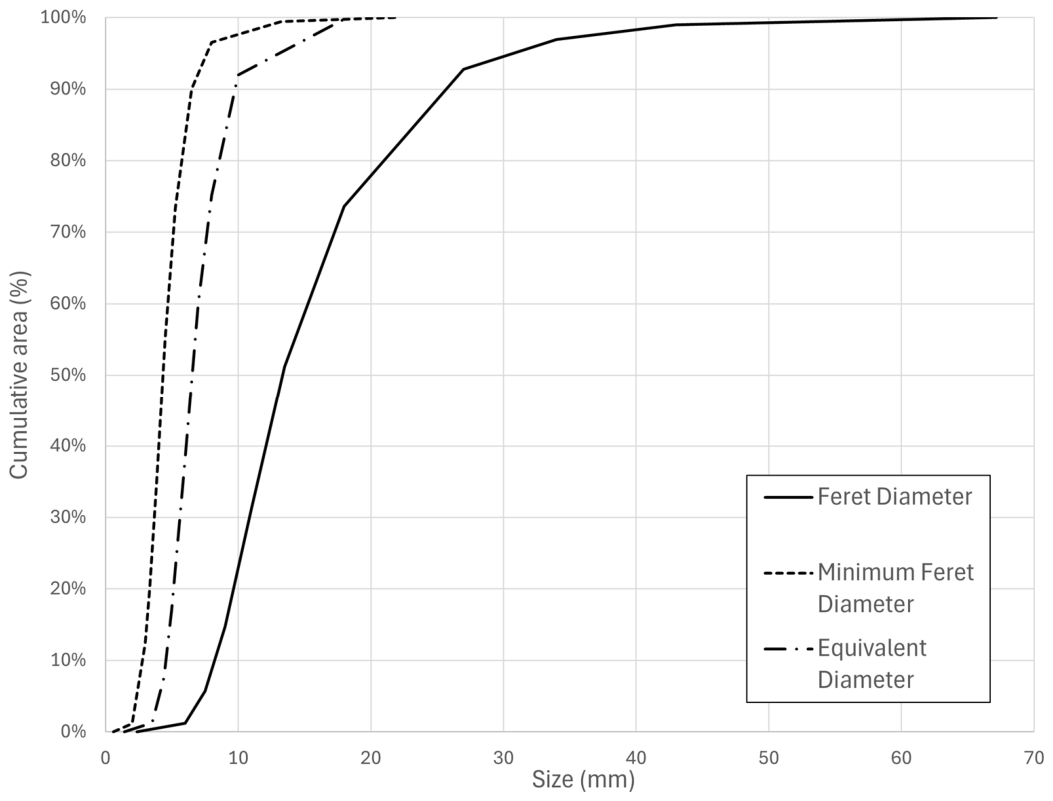
- Image analysis for particle characterization,
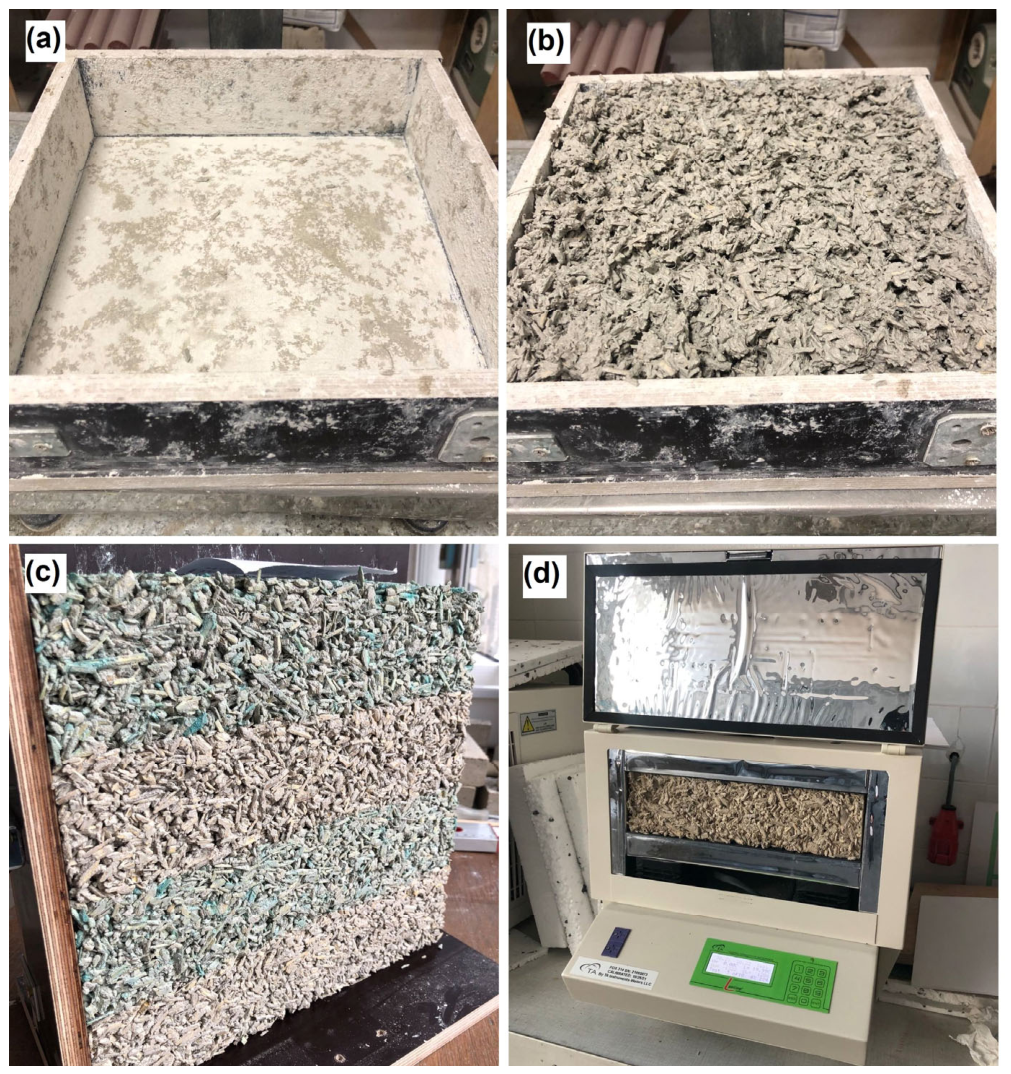
- The Compaction Degree (CD) method for compaction level quantification,
- The Proposed Method based on the permanent deformation criterion for compressive strength determination.
2.2.1. Particle Characterization
2.2.2. Compaction Level Quantification
- ρC—bulk density of specimen after compaction [kg/m3]
- ρL—bulk density of specimen in loose state [kg/m3]
2.2.3. Compressive Strength Criterion
2.3. Experimental Design
- WB is the water-to-binder ratio (W/B);
- BS is the binder-to-shiv ratio (B/S).
- The main effect of water-to-binder ratio at constant compaction;
- The main effect of compaction degree at constant water content;
- Interaction effects between W/B and CD.
2.3.1. Specimen Preparation
2.3.2. Testing Methods
3. Results
3.1. Samples Density
3.2. Thermal Conductivity
3.3. Compressive Strength
3.4. Extended Dataset
4. Discussion
4.1. Effect of Binder-to-Shiv Ratio on Composite Properties
4.2. Effect of Compaction Degree on Composite Properties
4.3. Effect of Water-to-Binder Ratio on Composite Properties
4.4. Effect of Hemp Shive Particle Size on Composite Properties
5. Conclusions
- The binder-to-shiv ratio (B/S) is the dominant technological variable governing composite density, thermal conductivity, and compressive strength. Beyond its quantitative effect, B/S determines the fundamental mechanical character of the composite and the applicability of strength determination methods: at B/S = 1:1 the material behaves as a plastic insulating fill and the Proposed Method shows limited applicability, while at B/S ≥ 2:1 the binder matrix dominates load transfer and the Proposed Method yields reliable results. The 5% strain criterion is recommended for low-binder mixes where serviceability rather than strength governs design.
- Compaction degree (CD) acts as the most effective lever for adjusting composite properties within a fixed B/S ratio, with a non-linear response: the transition from CD = 150% to CD = 170% produced the largest gains in both compressive strength and density, with substantially diminishing returns at CD = 190%. From a practical standpoint, CD = 170% therefore represents an effective compaction target. The CD method provides a consistent and objective measure of compaction applicable under both laboratory and field conditions. A key limitation identified during the research programme is the sensitivity of the loose-fill reference density to mixture workability. To minimize this effect, determination of loose-fill density using a wide shallow mould (300 × 300 × 80 mm) is recommended.
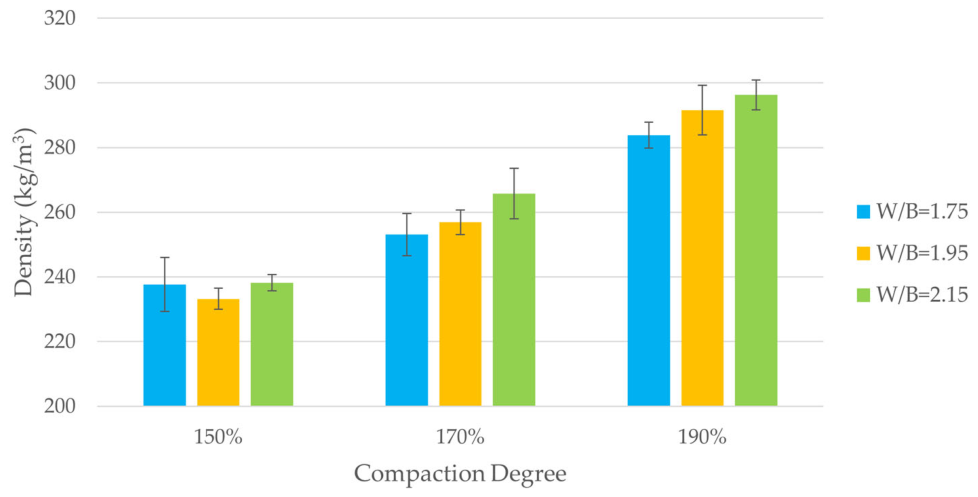
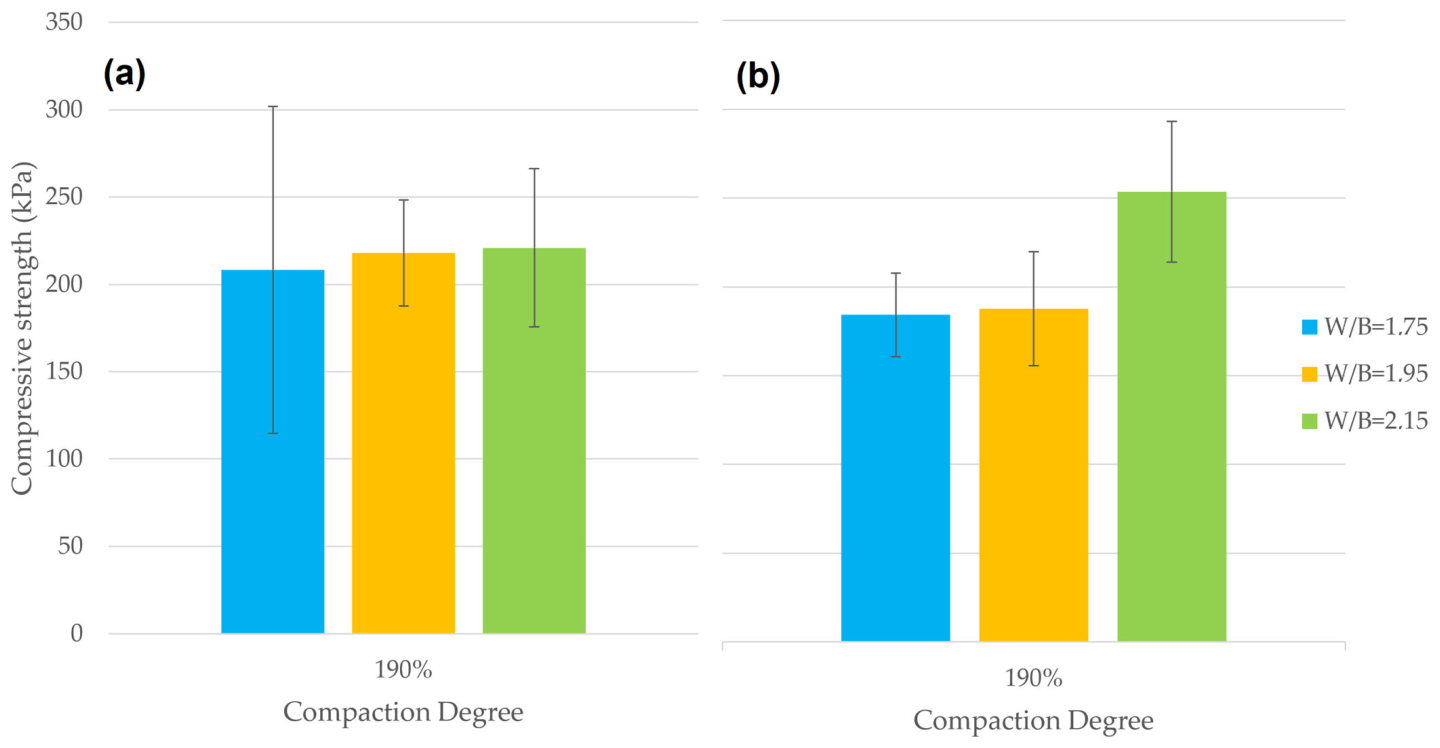
- The water-to-binder ratio had a moderate influence on composite properties at the investigated binder content (B/S = 1:1). Increasing W/B resulted in a marginal increase in bulk density (≤5%) and a corresponding increase in thermal conductivity, with differences between series frequently within measurement uncertainty. The effect of W/B on compressive strength remains inconclusive at this B/S ratio: the low absolute binder content limits the quality of the binding matrix regardless of water availability, and the investigated W/B increment of 0.2 may be insufficient to produce a detectable effect on strength. These findings should not be generalized to mixes with higher binder content, where W/B effects on mechanical properties are expected to be more pronounced. The empirical formula developed within the programme for determining W/B appears well-suited to the binder composition employed; however, its applicability may require verification for different binders and shiv origins. Investigation of W/B effects on mechanical properties at higher B/S ratios is recommended as a direction for further research.
- Hemp shive particle size had a limited but real effect on thermal conductivity: in investigations at B/S = 2:1, coarser fractions yielded lower composite density and correspondingly lower λ, with the total reduction from fine to coarse fraction reaching approximately 7.6%. No systematic effect of particle size on compressive strength was identified. Given the moderate influence of granulometry on both properties investigated, the selection of shiv fraction in practice should be guided primarily by technological considerations and raw material homogeneity. It should be noted that finer fractions improve workability and compactability, which facilitates the production process, but leads to higher composite density and ultimately higher thermal conductivity.
- Image analysis enables more objective determination of hemp shive particle size distribution than traditional sieve analysis, while also providing geometric parameters such as elongation and circularity relevant to binder demand and mix workability. A 15 g sample was found sufficient for reliable characterization.
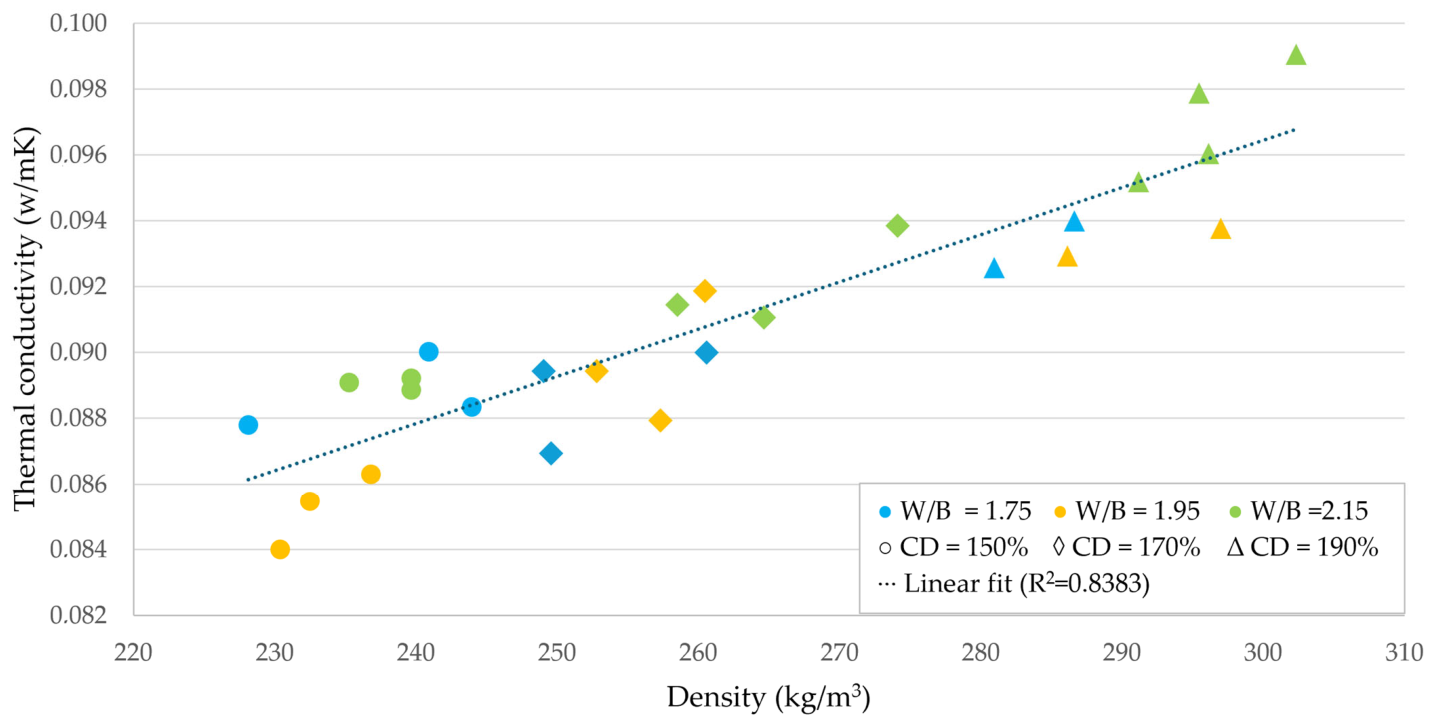
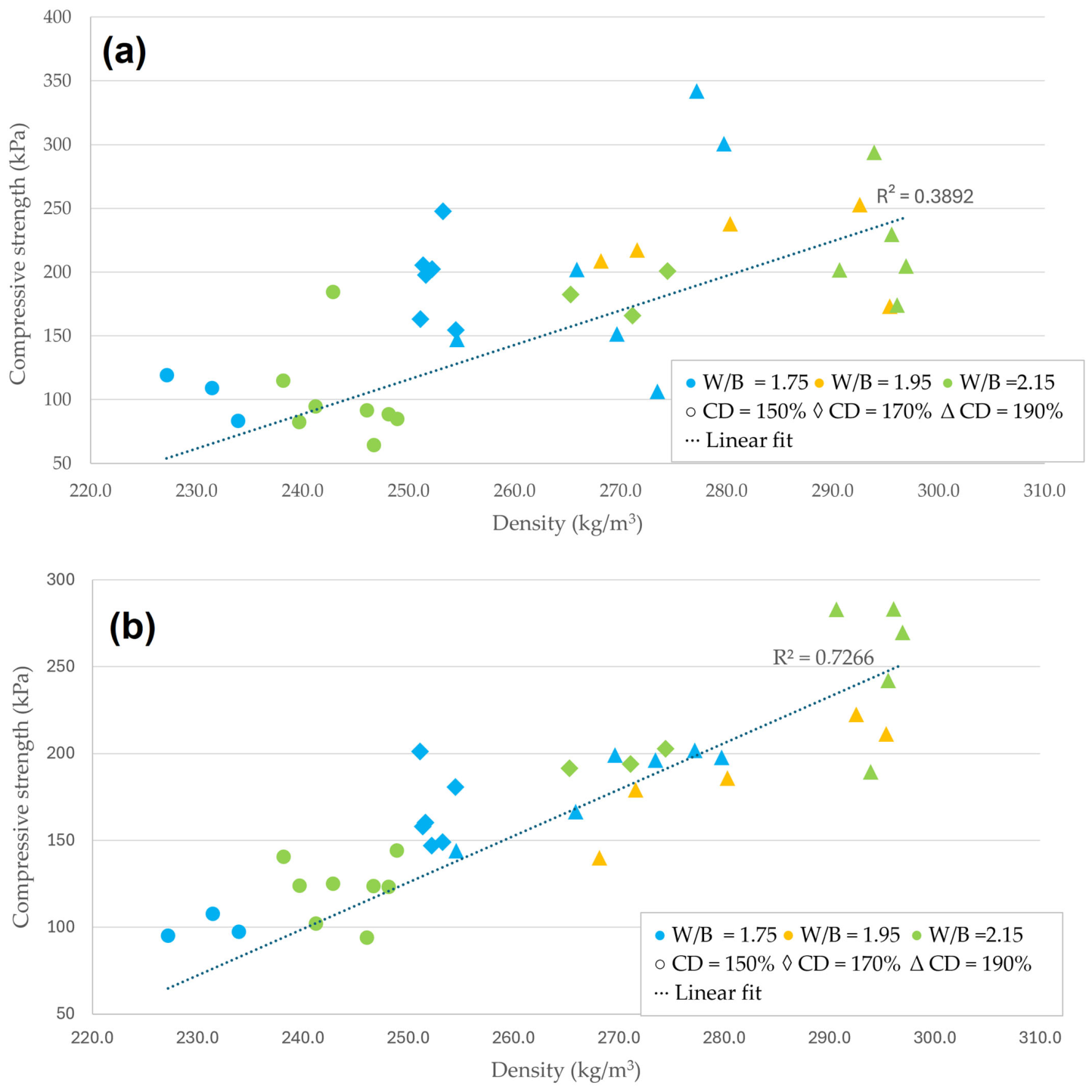
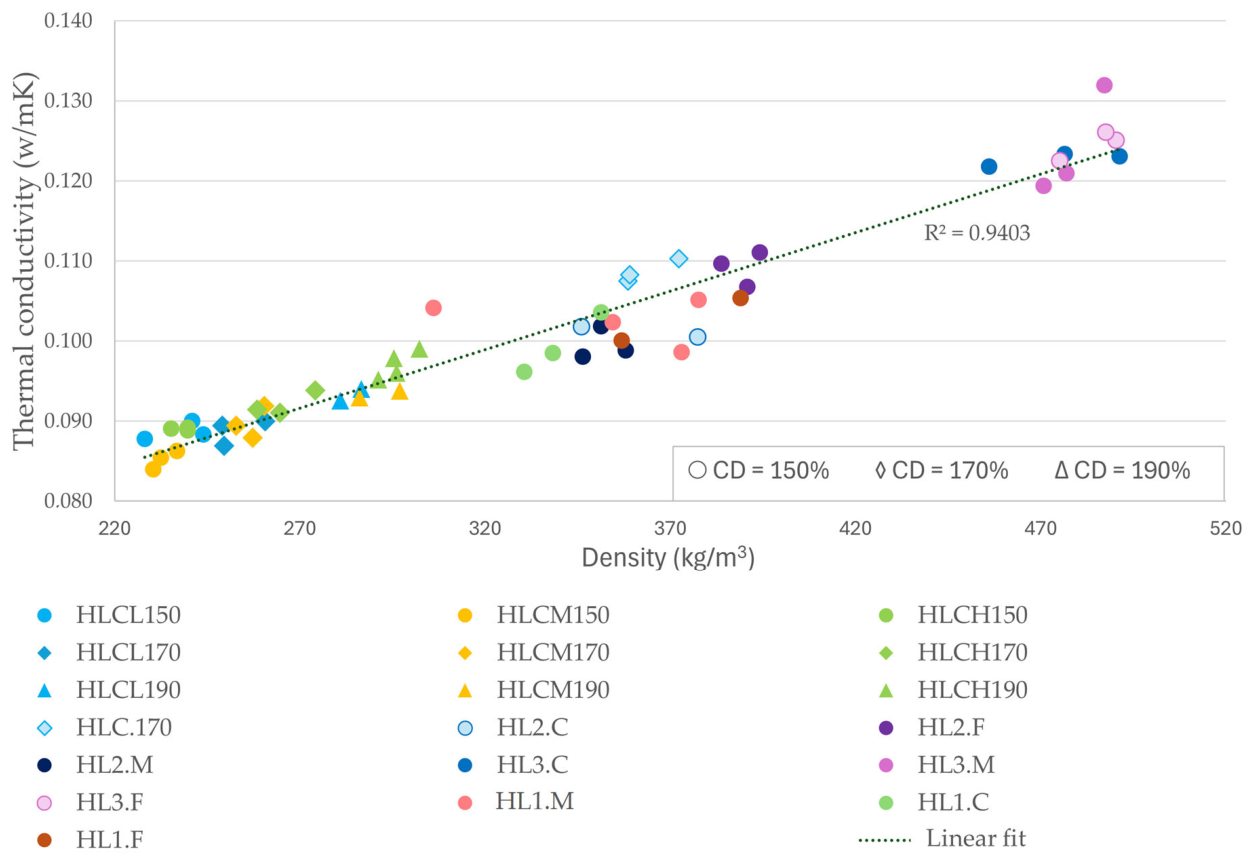
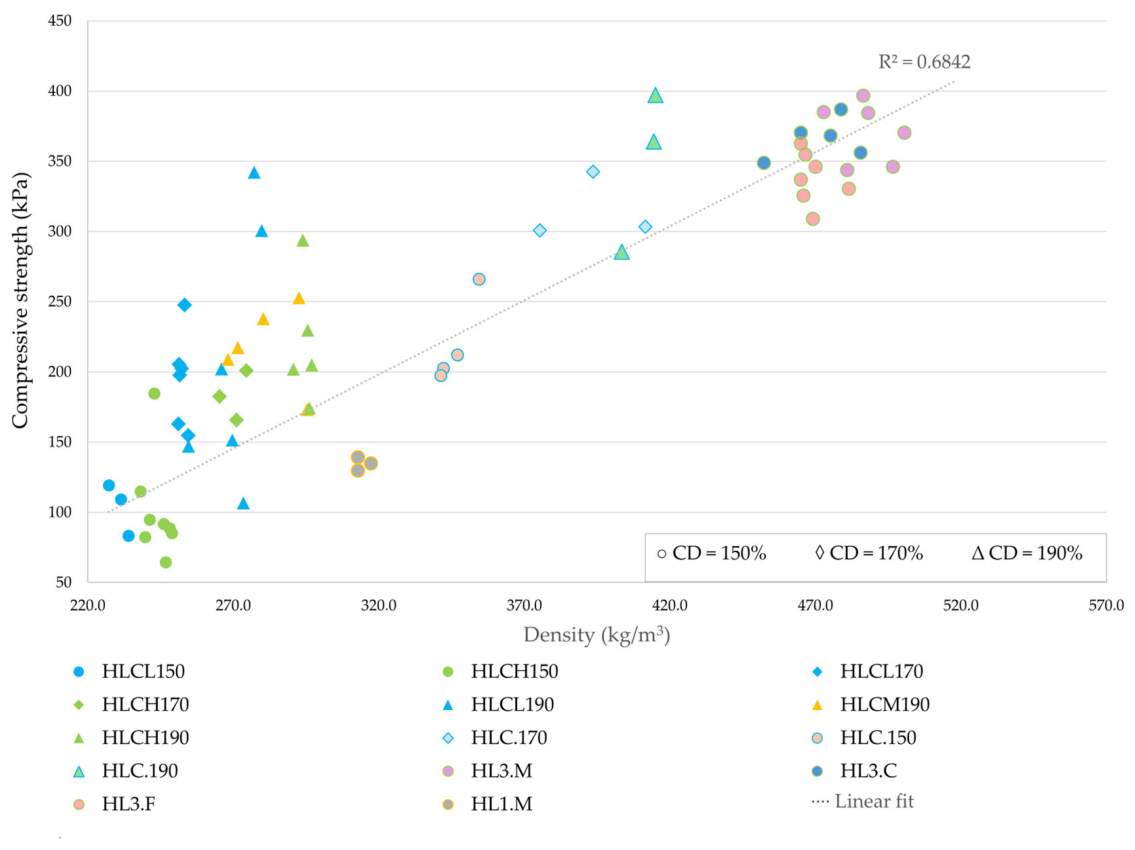
- Across the extended dataset, comprising all series from the research programme over a density range of approximately 227 to 518 kg/m3, both thermal conductivity and compressive strength exhibited strong positive linear relationships with bulk density (R2 = 0.94 and R2 = 0.68, respectively). Bulk density therefore serves as a reliable intermediate descriptor linking technological variables to composite performance across a wide range of mix designs.
Funding
Data Availability Statement
Conflicts of Interest
Abbreviations
| HLC | Hemp–lime composite |
| B/S | Binder-to-shiv |
| CD | Compaction degree |
| W/B | Water-to-binder |
References
- United Nations Environment Programme. Building Materials and the Climate: Constructing a New Future; United Nations Environment Programme: Nairobi, Kenya, 2023. [Google Scholar]
- Government of Canada, Treasury Board of Canada Secretariat. Greening Government Strategy: A Government of Canada Directive. Available online: https://www.canada.ca/en/treasury-board-secretariat/services/innovation/greening-government/strategy.html (accessed on 12 April 2026).
- U.S. General Services Administration (GSA). Low-Embodied Carbon (LEC) Material Requirements for IRA-Funded Projects. Available online: https://www.gsa.gov/real-estate/for-businesses-seeking-opportunities/ira-lec-material-requirements (accessed on 12 April 2026).
- Liu, Z.; Zhou, Q.; Tian, Z.; He, B.J.; Jin, G. A Comprehensive Analysis on Definitions, Development, and Policies of Nearly Zero Energy Buildings in China. Renew. Sustain. Energy Rev. 2019, 114, 109314. [Google Scholar] [CrossRef]
- Zhu, C.; Yang, Z.; Huang, B.; Li, X. Embodied Carbon Emissions in China’s Building Sector: Historical Track from 2005 to 2020. Buildings 2023, 13, 211. [Google Scholar] [CrossRef]
- Parlament Europejski; Rada Unii Europejskiej. Rozporządzenie Parlamentu Europejskiego i Rady (UE) 2021/1119 z Dnia 30 Czerwca 2021 r. w Sprawie Ustanowienia Ram Na Potrzeby Osiągnięcia Neutralności Klimatycznej i Zmiany Rozporządzeń (WE) Nr 401/2009 i (UE) 2018/1999 (Europejskie Prawo o Klimacie). Dz. Urzędowy Unii Eur. 2021, L 243, 1–17. Available online: https://eur-lex.europa.eu/legal-content/PL/ALL/?uri=CELEX:32021R1119 (accessed on 12 April 2026).
- Global Alliance for Buildings and Construction; International Energy Agency; The United Nations Environment Programme. 2019 Global Status Report for Buildings and Construction: Towards a Zero-Emission, Efficient and Resilient Buildings and Construction Sector; UNEP: Paris, France, 2019. [Google Scholar]
- Pittau, F.; Krause, F.; Lumia, G.; Habert, G. Fast-Growing Bio-Based Materials as an Opportunity for Storing Carbon in Exterior Walls. Build. Environ. 2018, 129, 117–129. [Google Scholar] [CrossRef]
- Muhit, I.B.; Omairey, E.L.; Pashakolaie, V.G. A Holistic Sustainability Overview of Hemp as Building and Highway Construction Materials. Build. Environ. 2024, 256, 111470. [Google Scholar] [CrossRef]
- Asghari, N.; Memari, A.M. State of the Art Review of Attributes and Mechanical Properties of Hempcrete. Biomass 2024, 4, 65–91. [Google Scholar] [CrossRef]
- Hrčka, R.; Štompf, P.; Jochim, S.; Mikuš, M.E.; Iskra, M. The Measurement of Hemp Concrete Thermal and Moisture Properties for an Effective Building Construction Proposal in Region of Slovakia (Central Europe). Materials 2025, 18, 1651. [Google Scholar] [CrossRef]
- Sassoni, E.; Manzi, S.; Motori, A.; Montecchi, M.; Canti, M. Novel Sustainable Hemp-Based Composites for Application in the Building Industry: Physical, Thermal and Mechanical Characterization. Energy Build. 2014, 77, 219–226. [Google Scholar] [CrossRef]
- Hirst, E.; Walker, P.; Paine, K.; Yates, T. Characterisation of Low Density Hemp-Lime Composite Building Materials under Compression Loading. In Proceedings of the Second International Conference on Sustainable Construction Materials and Technologies, Ancona, Italy, 28–30 June 2010; pp. 1395–1405. [Google Scholar]
- Stevulova, N.; Cigasova, J.; Schwarzova, I.; Sicakova, A.; Junak, J. Sustainable Bio-Aggregate-Based Composites Containing Hemp Hurds and Alternative Binder. Buildings 2018, 8, 25. [Google Scholar] [CrossRef]
- Sinka, M.; Van Den Heede, P.; De Belie, N.; Bajare, D.; Sahmenko, G.; Korjakins, A. Comparative Life Cycle Assessment of Magnesium Binders as an Alternative for Hemp Concrete. Resour. Conserv. Recycl. 2018, 133, 288–299. [Google Scholar] [CrossRef]
- Walker, R.; Pavía, S. Moisture Transfer and Thermal Properties of Hemp—Lime Concretes. Constr. Build. Mater. 2014, 64, 270–276. [Google Scholar] [CrossRef]
- Piątkiewicz, W.; Narloch, P.; Wólczyńska, Z.; Mańczak, J. Effect of Hemp Shive Granulometry on the Thermal Conductivity of Hemp–Lime Composites. Materials 2025, 18, 3458. [Google Scholar] [CrossRef]
- Sáez-Pérez, M.P.; Brümmer, M.; Durán-Suárez, J.A. A Review of the Factors Affecting the Properties and Performance of Hemp Aggregate Concretes. J. Build. Eng. 2020, 31, 101323. [Google Scholar] [CrossRef]
- Delannoy, G.; Marceau, S.; Glé, P.; Gourlay, E.; Guéguen-minerbe, M.; Diafi, D.; Nour, I.; Amziane, S. Influence of Binder on the Multiscale Properties of Hemp Concretes. Eur. J. Environ. Civ. Eng. 2019, 23, 609–625. [Google Scholar] [CrossRef]
- de Bruijn, P.B.; Jeppsson, K.-H.; Sandin, K.; Nilsson, C. Mechanical Properties of Lime–Hemp Concrete Containing Shives and Fibres. Biosyst. Eng. 2009, 103, 474–479. [Google Scholar] [CrossRef]
- Mazhoud, B.; Collet, F.; Pretot, S.; Lanos, C. Mechanical Properties of Hemp-Clay and Hemp Stabilized Clay Composites. Constr. Build. Mater. 2017, 155, 1126–1137. [Google Scholar] [CrossRef]
- Haustein, E. Thermal Insulation Properties of the Lime-Cement Composite with Hemp Shives. Ecol. Eng. 2018, 19, 72–78. [Google Scholar] [CrossRef] [PubMed]
- Brzyski, P. Hemp-Lime Composite as Wall Material Meeting the Requirements for Sustainable Development in Construction Industry. Ph.D. Thesis, Lublin University of Technology, Lublin, Poland, 2018. [Google Scholar]
- Dinh, T.M.; Magniont, C.; Coutand, M. Hemp Concrete Using Innovative Pozzolanic Binder. In Proceedings of the First International Conference on Bio-Based Building Materials; RILEM Publications: Bagneux, France, 2015. [Google Scholar]
- Piątkiewicz, W.; Narloch, P.; Pietruszka, B. Influence of Hemp-Lime Composite Composition on Its Mechanical and Physical Properties. Arch. Civ. Eng. 2020, 66, 485–503. [Google Scholar] [CrossRef]
- Tronet, P.; Lecompte, T.; Picandet, V.; Baley, C. Study of Lime Hemp Concrete (LHC)—Mix Design, Casting Process and Mechanical Behaviour. Cem. Concr. Compos. 2016, 67, 60–72. [Google Scholar] [CrossRef]
- Arnaud, L.; Gourlay, E. Experimental Study of Parameters Influencing Mechanical Properties of Hemp Concretes. Constr. Build. Mater. 2012, 28, 50–56. [Google Scholar] [CrossRef]
- Williams, J.; Lawrence, M.; Walker, P. The Influence of Constituents on the Properties of the Bio-Aggregate Composite Hemp-Lime. Constr. Build. Mater. 2018, 159, 9–17. [Google Scholar] [CrossRef]
- Brzyski, P.; Gładecki, M.; Rumińska, M.; Pietrak, K.; Kubiś, M.; Łapka, P. Influence of Hemp Shives Size on Hygro-Thermal and Mechanical Properties of a Hemp-Lime Composite. Materials 2020, 13, 5383. [Google Scholar] [CrossRef] [PubMed]
- Williams, J.; Lawrence, M.; Walker, P. The Influence of the Casting Process on the Internal Structure and Physical Properties of Hemp-Lime. Mater. Struct. 2017, 50, 108. [Google Scholar] [CrossRef] [PubMed]
- Piątkiewicz, W.; Piotrowski, A.; Narloch, P. Determination of Compressive Strength in Hemp–Lime Composites: Comparative Study of Testing Methodologies and Proposal of Improved Approach. Appl. Sci. 2025, 16, 306. [Google Scholar] [CrossRef]
- Bošković, I.; Radivojević, A. Life Cycle Greenhouse Gas Emissions of Hemp-Lime Concrete Wall Constructions in Serbia: The Impact of Carbon Sequestration, Transport, Waste Production and End of Life Biogenic Carbon Emission. J. Build. Eng. 2023, 66, 105908. [Google Scholar] [CrossRef]
- Arrigoni, A.; Pelosato, R.; Meli, P.; Ruggieri, G.; Sabbadini, S.; Dotelli, G. Life Cycle Assessment of Natural Building Materials: The Role of Carbonation, Mixture Components and Transport in the Environmental Impacts of Hempcrete Blocks. J. Clean. Prod. 2017, 149, 1051–1061. [Google Scholar] [CrossRef]
- Gołębiewski, M.; Pietruszka, B.; Piątkiewicz, W.; Kubiś, M.; Oleksiienko, O. Compressive Strength, Thermal Conductivity, Vapor Permeability and Specific Heat of Hemp-Lime Composites Varying in Density for Wall, Roof and Floor Applications. Materials 2025, 18, 4958. [Google Scholar] [CrossRef]
- Collet, F.; Pretot, S. Thermal Conductivity of Hemp Concretes: Variation with Formulation, Density and Water Content. Constr. Build. Mater. 2014, 65, 612–619. [Google Scholar] [CrossRef]
- Colinart, T.; Glouannec, P.; Chauvelon, P. Influence of the Setting Process and the Formulation on the Drying of Hemp Concrete. Constr. Build. Mater. 2012, 30, 372–380. [Google Scholar] [CrossRef]
- Pinkos, J. The Effectiveness of Hempcrete as an Infill Insulation in the Prairies Compared to a Standard Building Based on Power Consumption. Master’s Thesis, University of Manitoba, Winnipeg, MB, Canada, 2014. [Google Scholar]
- Abdellatef, Y.; Khan, M.A.; Khan, A.; Alam, M.I.; Kavgic, M. Mechanical, Thermal, and Moisture Buffering Properties of Novel Insulating Hemp-Lime Composite Building Materials. Materials 2020, 13, 5000. [Google Scholar] [CrossRef]
- Walker, R.; Pavia, S.; Mitchell, R. Mechanical Properties and Durability of Hemp-Lime Concretes. Constr. Build. Mater. 2014, 61, 340–348. [Google Scholar] [CrossRef]
- Sutton, A.; Black, D.; Pete, W. Hemp Lime: An Introduction to Low-Impact Building Materials; IHS BRE Press: Watford, UK, 2011; pp. 1–6. [Google Scholar]
- Niyigena, C.; Amziane, S.; Chateauneuf, A. Multicriteria Analysis Demonstrating the Impact of Shiv on the Properties of Hemp Concrete. Constr. Build. Mater. 2018, 160, 211–222. [Google Scholar] [CrossRef]
- Diquélou, Y.; Gourlay, E.; Arnaud, L.; Kurek, B. Impact of Hemp Shiv on Cement Setting and Hardening: Influence of the Extracted Components from the Aggregates and Study of the Interfaces with the Inorganic Matrix. Cem. Concr. Compos. 2015, 55, 112–121. [Google Scholar] [CrossRef]
- Gołębiewski, M.; Narloch, P.; Piątkiewicz, W.; Wasilewski, I. Trwałość Kompozytów Wapienno-Konopnych w Świetle Różnych Metod Badawczych. Mater. Bud. 2023, 2023, 2–8. [Google Scholar] [CrossRef]
- Amziane, S.; Collet, F. Bio-Aggregates Based Building Materials; Springer: Dordrecht, The Netherlands, 2017. [Google Scholar]
- Evrard, A.; De Herde, A.; Minet, J. Dynamical Interactions Between Heat and Mass Flows in Lime-Hemp Concrete; Taylor & Francis: London, UK, 2006; pp. 69–76. [Google Scholar]
- Sokołowska, J.J. Utilizing Sakurajima Volcanic Ash as a Sustainable Partial Replacement for Portland Cement in Cementitious Mortars. Sustainability 2025, 17, 7576. [Google Scholar] [CrossRef]
- Narloch, P.; Piątkiewicz, W.; Anysz, H.; Wółczyńska, Z.; Mańczak, J. Digital Image-Based Characterization of Particle Size and Shape Distribution in Industrial Hemp Shives; Zenodo: Geneva, Switzerland, 2025. [Google Scholar] [CrossRef]
- EN 408:2010+A1:2012; Timber Structures—Structural Timber and Glued Laminated Timber—Determination of Some Physical and Mechanical Properties. European Committee for Standardization (CEN): Brussels, Belgium, 2012.
- EN 12667:2001; Thermal Performance of Building Materials and Products. Determination of Thermal Resistance by Means of Guarded Hot Plate and Heat Flow Meter Methods—Products of High and Medium Thermal Resistance. European Committee for Standardization (CEN): Brussels, Belgium, 2001.
- Dhakal, U.; Berardi, U.; Gorgolewski, M.; Richman, R. Hygrothermal Performance of Hempcrete for Ontario (Canada) Buildings. J. Clean. Prod. 2017, 142, 3655–3664. [Google Scholar] [CrossRef]
- Somé, S.C.; Ben Fraj, A.; Pavoine, A.; Hajj Chehade, M. Modeling and Experimental Characterization of Effective Transverse Thermal Properties of Hemp Insulation Concrete. Constr. Build. Mater. 2018, 189, 384–396. [Google Scholar] [CrossRef]
- Bardouh, R.; Toussaint, E.; Amziane, S.; Marceau, S. Mechanical Behavior of Bio-Based Concrete under Various Loadings and Factors Affecting Its Mechanical Properties at the Composite Scale: A State-of-the-Art Review. Clean. Eng. Technol. 2024, 23, 100819. [Google Scholar] [CrossRef]
- Akkaoui, A.; Caré, S.; Vandamme, M. Experimental and Micromechanical Analysis of the Elastic Properties of Wood-Aggregate Concrete. Constr. Build. Mater. 2017, 134, 346–357. [Google Scholar] [CrossRef]
- Nguyen, T.; Picandet, V.; Amziane, S.; Baley, C. Influence of Compactness and Hemp Hurd Characteristics on the Mechanical Properties of Lime and Hemp Concrete. Eur. J. Environ. Civ. Eng. 2009, 13, 1039–1050. [Google Scholar] [CrossRef]
- Nguyen, T.T.; Picandet, V.; Carre, P.; Lecompte, T.; Amziane, S.; Baley, C. Effect of Compaction on Mechanical and Thermal Properties of Hemp Concrete. Eur. J. Environ. Civ. Eng. 2010, 14, 545–560. [Google Scholar] [CrossRef]
- Bourdot, A.; Moussa, T.; Gacoin, A.; Maalouf, C.; Vazquez, P.; Thomachot-Schneider, C.; Bliard, C.; Merabtine, A.; Lachi, M.; Douzane, O.; et al. Characterization of a Hemp-Based Agro-Material: Influence of Starch Ratio and Hemp Shive Size on Physical, Mechanical, and Hygrothermal Properties. Energy Build. 2017, 153, 501–512. [Google Scholar] [CrossRef]
- Sheridan, J.; Sonebi, M.; Taylor, S.; Amziane, S. The Effect of a Polyacrylic Acid Viscosity Modifying Agent on the Mechanical, Thermal and Transport Properties of Hemp and Rapeseed Straw Concrete. Constr. Build. Mater. 2020, 235, 117536. [Google Scholar] [CrossRef]
- Bourdot, A.; Magniont, C.; Lagouin, M.; Niyigena, C.; Evon, P.; Amziane, S. Impact of Bio-Aggregates Properties on the Chemical Interactions with Mineral Binder, Application to Vegetal Concrete. J. Adv. Concr. Technol. 2019, 17, 542–558. [Google Scholar] [CrossRef]



| Bulk Density (kg/m3) | Particle Feret (mm) | Minimum Feret (mm) | Equivalent Diameter (ED) (mm) | Area (mm2) | Circularity (-) | Elongation (-) |
|---|---|---|---|---|---|---|
| 97.5 | 12.34 | 4.01 | 5.79 | 36.49 | 0.45 | 3.33 |
| Compaction Degree | Water-to-Binder Ratio | ||
|---|---|---|---|
| 1.75 | 1.95 | 2.15 | |
| CD = 150% | HLCL150 | HLCM150 | HLCH150 |
| CD = 170% | HLCL170 | HLCM170 | HLCH170 |
| CD = 190% | HLCL190 | HLCM190 | HLCH190 |
| Series ID | B/S | W/B | CD | Hemp Shive Group | Thermal Conductivity | Compressive Strength | Source |
|---|---|---|---|---|---|---|---|
| HLCL150 | 1 | L | 150% | C | ● | ● | This study |
| HLCM150 | 1 | O | 150% | C | ● | ○ | This study |
| HLCH150 | 1 | H | 150% | C | ● | ● | This study |
| HLCL170 | 1 | L | 170% | C | ● | ● | This study |
| HLCM170 | 1 | O | 170% | C | ● | ○ | This study |
| HLCH170 | 1 | H | 170% | C | ● | ● | This study |
| HLCL190 | 1 | L | 190% | C | ● | ● | This study |
| HLCM190 | 1 | O | 190% | C | ● | ● | This study |
| HLCH190 | 1 | H | 190% | C | ● | ● | This study |
| HLC.150 | 2 | L | 150% | F | ○ | ● | [31] |
| HLC.170 | 2 | L | 170% | F | ○ † | ● | [31] |
| HLC.190 | 2 | L | 190% | F | ○ | ● | [31] |
| HL1.C | 2 | O | 150% | C | ● | ○ | [17] |
| HL1.F | 2 | O | 150% | F | ● | ○ | [17] |
| HL1.M | 2 | O | 150% | M | ● | ○ † | [17] |
| HL2.C | 2 | H | 150% | C | ● | ○ | [17] |
| HL2.F | 2 | H | 150% | F | ● | ○ | [17] |
| HL2.M | 2 | H | 150% | M | ● | ○ | [17] |
| HL3.C | 3 | H | 150% | C | ● | ○ † | [17] |
| HL3.F | 3 | H | 150% | F | ● | ○ † | [17] |
| HL3.M | 3 | H | 150% | M | ● | ○ † | [17] |
| Compaction Degree | CD = 150% | CD = 170% | CD = 190% |
|---|---|---|---|
| Mean tamping strokes per layer | 4–6 | 10–22 | n.d. * |
| W/B Ratio | 1.75 (Low) | 1.95 (Optimal) | 2.15 (High) |
|---|---|---|---|
| Loose bulk density (kg/m3) | 264.4–273.1 | 290.4–293.8 | 287.0–313.9 |
| Series | W/B | CD | Density (kg/m3) | λ (W/(m·K)) | ||
|---|---|---|---|---|---|---|
| Mean | SD | Mean | SD | |||
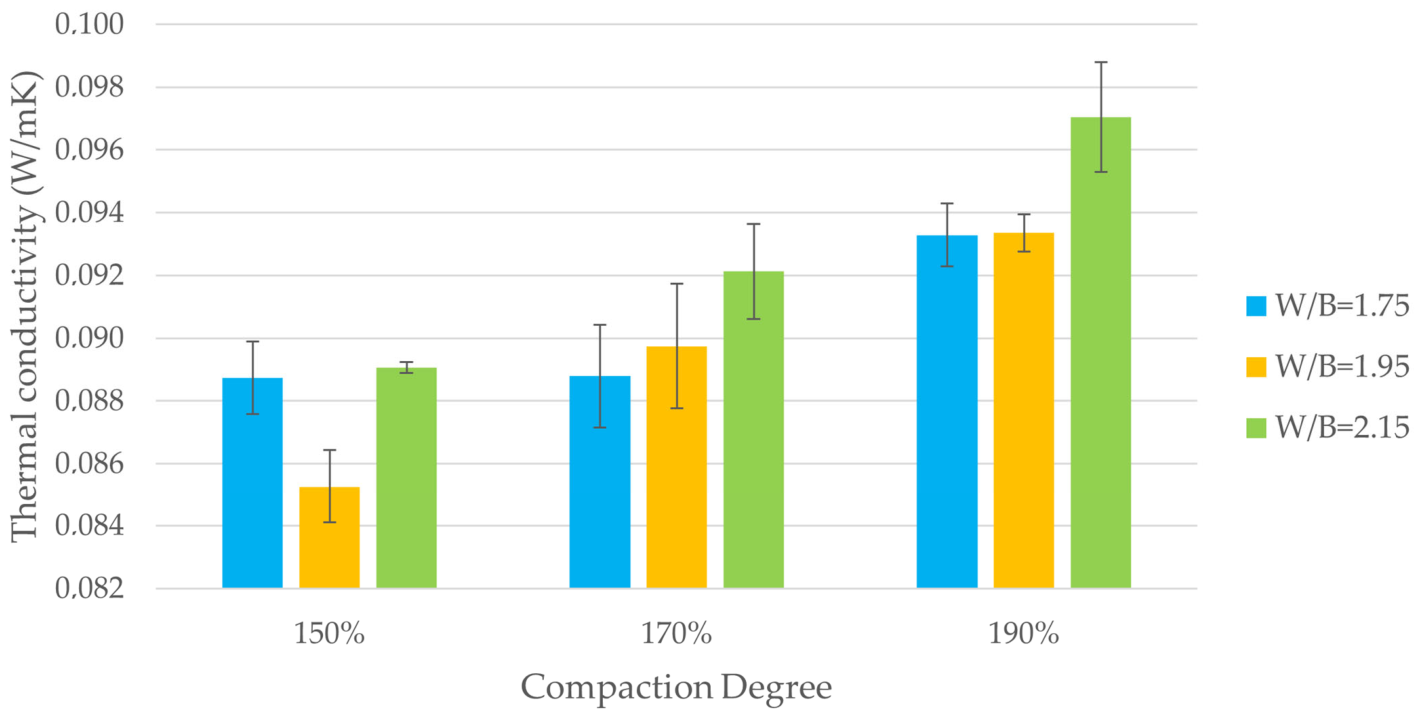
| HLCL150 | 1.75 | 150% | 237.6 | 8.4 | 0.08873 | 0.00116 |
| HLCM150 | 1.95 | 150% | 233.2 | 3.3 | 0.08526 | 0.00116 |
| HLCH150 | 2.15 | 150% | 238.2 | 2.5 | 0.08906 | 0.00018 |
| HLCL170 | 1.75 | 170% | 253.1 | 6.5 | 0.08879 | 0.00163 |
| HLCM170 | 1.95 | 170% | 256.9 | 3.8 | 0.08974 | 0.00198 |
| HLCH170 | 2.15 | 170% | 265.7 | 7.9 | 0.09212 | 0.00151 |
| HLCL190 | 1.75 | 190% | 283.8 | 4.0 | 0.09328 | 0.00100 |
| HLCM190 | 1.95 | 190% | 291.6 | 7.7 | 0.09335 | 0.00059 |
| HLCH190 | 2.15 | 190% | 296.3 | 4.6 | 0.09704 | 0.00175 |
Disclaimer/Publisher’s Note: The statements, opinions and data contained in all publications are solely those of the individual author(s) and contributor(s) and not of MDPI and/or the editor(s). MDPI and/or the editor(s) disclaim responsibility for any injury to people or property resulting from any ideas, methods, instructions or products referred to in the content. |
© 2026 by the author. Licensee MDPI, Basel, Switzerland. This article is an open access article distributed under the terms and conditions of the Creative Commons Attribution (CC BY) license.
Share and Cite
Piątkiewicz, W. Effect of Technological Variables on Thermal Conductivity and Compressive Strength of Hemp–Lime Composites. CivilEng 2026, 7, 33. https://doi.org/10.3390/civileng7020033
Piątkiewicz W. Effect of Technological Variables on Thermal Conductivity and Compressive Strength of Hemp–Lime Composites. CivilEng. 2026; 7(2):33. https://doi.org/10.3390/civileng7020033
Chicago/Turabian StylePiątkiewicz, Wojciech. 2026. "Effect of Technological Variables on Thermal Conductivity and Compressive Strength of Hemp–Lime Composites" CivilEng 7, no. 2: 33. https://doi.org/10.3390/civileng7020033
APA StylePiątkiewicz, W. (2026). Effect of Technological Variables on Thermal Conductivity and Compressive Strength of Hemp–Lime Composites. CivilEng, 7(2), 33. https://doi.org/10.3390/civileng7020033