Review

Emerging Reliability Challenges of Spillway Discharging Systems in Aging Hydroelectric Dams

by
Peter Ghoche
1,2,*,
Bernard Lavoie
1,
Maryam Kamali Nezhad
1 and
Georges Abdul-Nour
2,*
1
Department of Strategic Asset Management, Hydro-Québec, Montréal, QC H2L 4N4, Canada
2
Department of Industrial Engineering, University of Quebec in Trois-Rivières, Trois-Rivières, QC G8Z 4M3, Canada
*
Authors to whom correspondence should be addressed.
CivilEng 2026, 7(2), 31; https://doi.org/10.3390/civileng7020031
Submission received: 23 March 2026 / Revised: 29 April 2026 / Accepted: 6 May 2026 / Published: 14 May 2026
(This article belongs to the Section Water Resources and Coastal Engineering)

Abstract

Factors such as asset aging, climate change affecting hydrological events, and the growing demand in electricity are placing huge pressure on hydroelectric infrastructure—in particular, hydroelectric dams, whose most important and critical component is the spillway, which operates through a system of discharge gates. This research aims to present the technical, environmental, and functional parameters and issues affecting this system, highlighting the causes of their degradation and proposing solutions to improve their service life and their reliability. A literature review has been undertaken to identify the challenges related to the reliability and durability of the system. In addition, a case study based on real-world data was made to support and reveal the problems related to the spillway gates system. What sets this research apart is its integration of theoretical studies with a practical case study, supporting the proposed theories and uncovering potential hidden factors. Following the identification of key challenges, new updated and adaptable solutions explored world-widely are recommended to be developed in future research.

1. Introduction

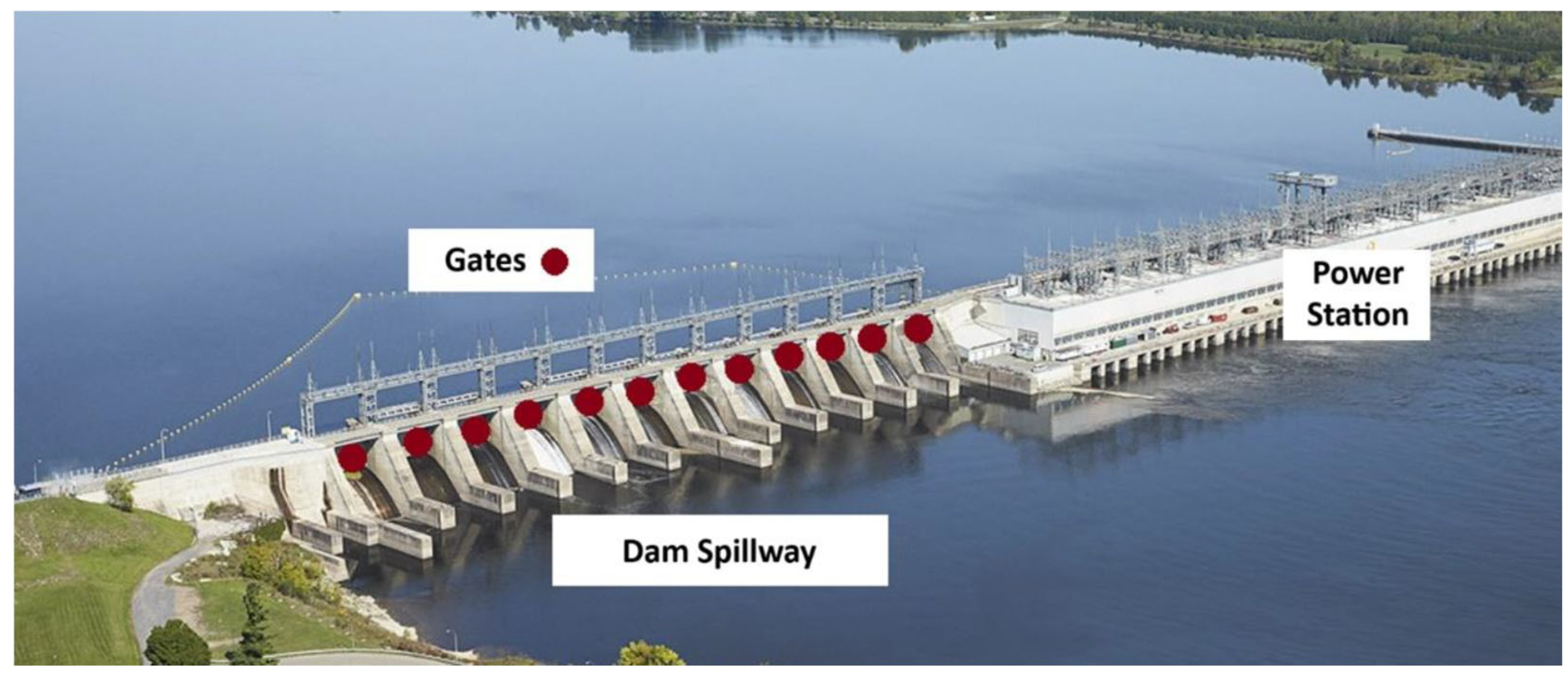
Globally, the leading source of renewable energy is hydropower, contributing 16% of total electricity production [1]. Most hydropower dams were installed and adapted in the early years of the 20th century. Thus, aging raises concerns because signs affecting safety, environmental sustainability and energy efficiency have been seen, requiring an increase in investments concerning adaptation and modernization [2]. One of the most crucial parts of a dam is the spillway, which is designed to protect the infrastructures and downstream communities by managing excess water to prevent reservoir overflow during events such as floods or plant shutdowns. As shown in Figure 1, a spillway mainly consists of gates that discharge water to regulate the flow, ensuring effective flood management and minimizing the risk of overflow [3]. This is applicable to an existing dam, the Carillon spillway located in Québec, Canada, which is 239 m long and 31 m high. It has 12 heated and remotely operated discharge gates, each 15.24 m wide, with a maximum opening of 8 m [4].
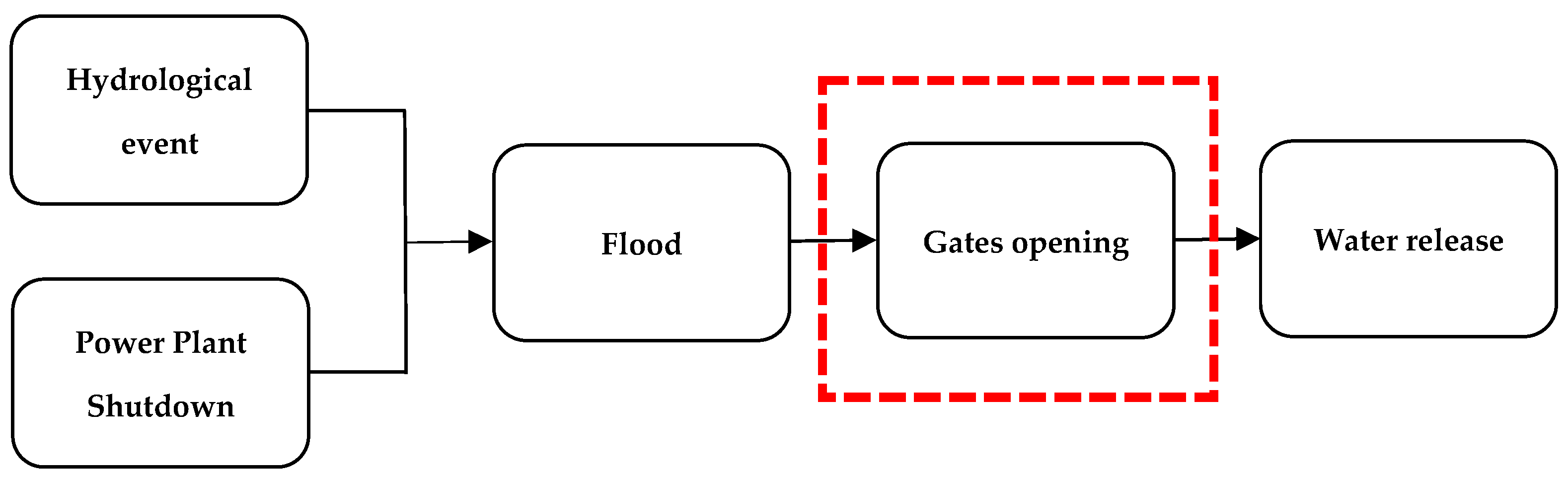
In dams, extreme hydrological events, such as torrential rain, rapid snowmelt, or a prolonged storm, as well as the shutdown of turbine–generator units, either for maintenance or due to grid overload, preventing water from being turbinated, can cause a rapid increase in water inflows into the reservoir. In hydroelectric dams, when these inflows exceed storage capacity, the flood risk increases significantly. Therefore, to manage such an event, a flood management process begins. The excess water must then be discharged through the spillway to avoid exceeding reservoir capacity [5].
Figure 2 illustrates a simplified flood management procedure.
This article focuses on the discharging spillway gate systems responsible for this critical step, as they relieve pressure on the dam while reducing downstream flood risks. However, they must be carefully planned to avoid generating excessive flows that could damage infrastructure or riverside communities.
In recent years, numerous studies have investigated the reliability and safety of hydraulic infrastructures, with particular emphasis on dam aging [6], hydromechanical degradation, and climate-induced hydrological variability [7]. Several works focus on material aging, corrosion, and mechanical wear affecting gates and hoisting systems, while others examine the impacts of climate change on flood frequency, reservoir inflows, and spillway capacity requirements. However, most existing studies address these aspects independently, without systematically considering their combined influence on spillway discharge gate systems. In addition, studies related to power system evolution and increasing electricity demand rarely extend their analysis to the indirect effects imposed on spillway gate operation.
Multiple factors impact these spillway systems, including the aging of dams and their components, which have a direct impact; the growing demand for electricity, which has an indirect impact; and climate change, which alters hydrological patterns and increases the frequency of extreme weather events, thereby affecting reservoir levels and spillway operations. As assets begin to deteriorate in a complex system like a spillway, assessing overall reliability becomes increasingly challenging. This complexity arises from a combination of repairable and non-repairable failures, the presence or absence of redundancy, and the interactions between subsystems arranged in parallel or in series, some of which may influence each other, while others do not. Additionally, components do not age at the same rate or in the same way, whether they are structural, electrical, mechanical, or related to automation.
Regarding indirect impact, the growing demand for electricity, driven by globalization, industry 4.0 [8], and the widespread adoption of electric vehicles [9], is placing increased stress on hydroelectric systems. Increased power generation at upstream dams leads to higher water discharges through turbine units, which are directly transferred to downstream facilities in cascaded hydropower systems. This additional inflow increases hydraulic loading and operational stress on downstream dams, requiring the more frequent operation of regulation and spillway gates to safely manage incoming flows, thereby accelerating mechanical wear and aging. In certain configurations, particularly where intermediate dams do not have hydroelectric generating units and where flow velocities are low, spillway gates must be operated to redirect water toward downstream power stations to meet energy demand, further increasing gate utilization and associated stress.
Despite the growing body of literature on dam safety and hydropower reliability, there remains a lack of integrated risk assessment approaches that simultaneously account for infrastructure aging, climate change, and increasing operational stress linked to energy demand. This gap is particularly critical for spillway discharge gate systems, which operate under intermittent and extreme conditions while having to maintain high reliability throughout extended service lives. The absence of such a holistic perspective may lead to an underestimation of failure risks and limit the effectiveness of maintenance and modernization strategies.
Among the largest producers of hydropower, Canada, Brazil, and Norway have infrastructures that were built to endure each country’s specific geographic and hydrological contexts. For example, Canada widely uses medium-head systems with underground power stations, while Brazil combines high-capacity dams with run-of-river facilities in the Amazon region [10]. However, given that these hydrological contexts are not the same anymore, temperature and precipitation fluctuations are impacting the patterns of snowmelt and river flows, as caused by climate change, impacting hydroelectric plants, as seen in many countries such as the United States, China, Canada and Brazil in 2021 [11].
The objective of this article is to model and to study the reliability and the safety of spillways in the presence of the aging of dams, climate change, and rare events, the variation of electricity demand caused by the globalization of the market, and the advent of intelligent industry (I4.0).
Through a systematic literature review and a real-world industrial case study, this paper examines how aging, climate change, and evolving operational demands interact and challenge conventional assumptions used in spillway safety and reliability assessments. By exposing this overlooked operational reality, this paper establishes the problematics that motivate the need for advanced reliability modeling and decision-support approaches.
The remainder of this study follows the following organization. Section 2 outlines the research methodology used in this study. Section 3 provides a detailed literature review on spillway discharge gate systems, covering the main types of gates, their functional structure, common degradation mechanisms, and comparative failure and risk assessment approaches such as FMEA. This section also discusses the main factors influencing spillway performance, concepts related to dam resilience, spillway operation, and management practices, and potential mitigation or modernization options. Section 4 presents the research framework developed to organize and connect these elements. Section 5 then introduces an industrial case study based on Hydro-Québec facilities, using real-life operational and maintenance data to apply the same analytical perspective as the literature review; validates the findings; and identifies additional operational factors that can adversely affect spillway gate systems in practice. The results are discussed in Section 6, followed by conclusions and directions for future research in Section 7.

2. Research Methodology

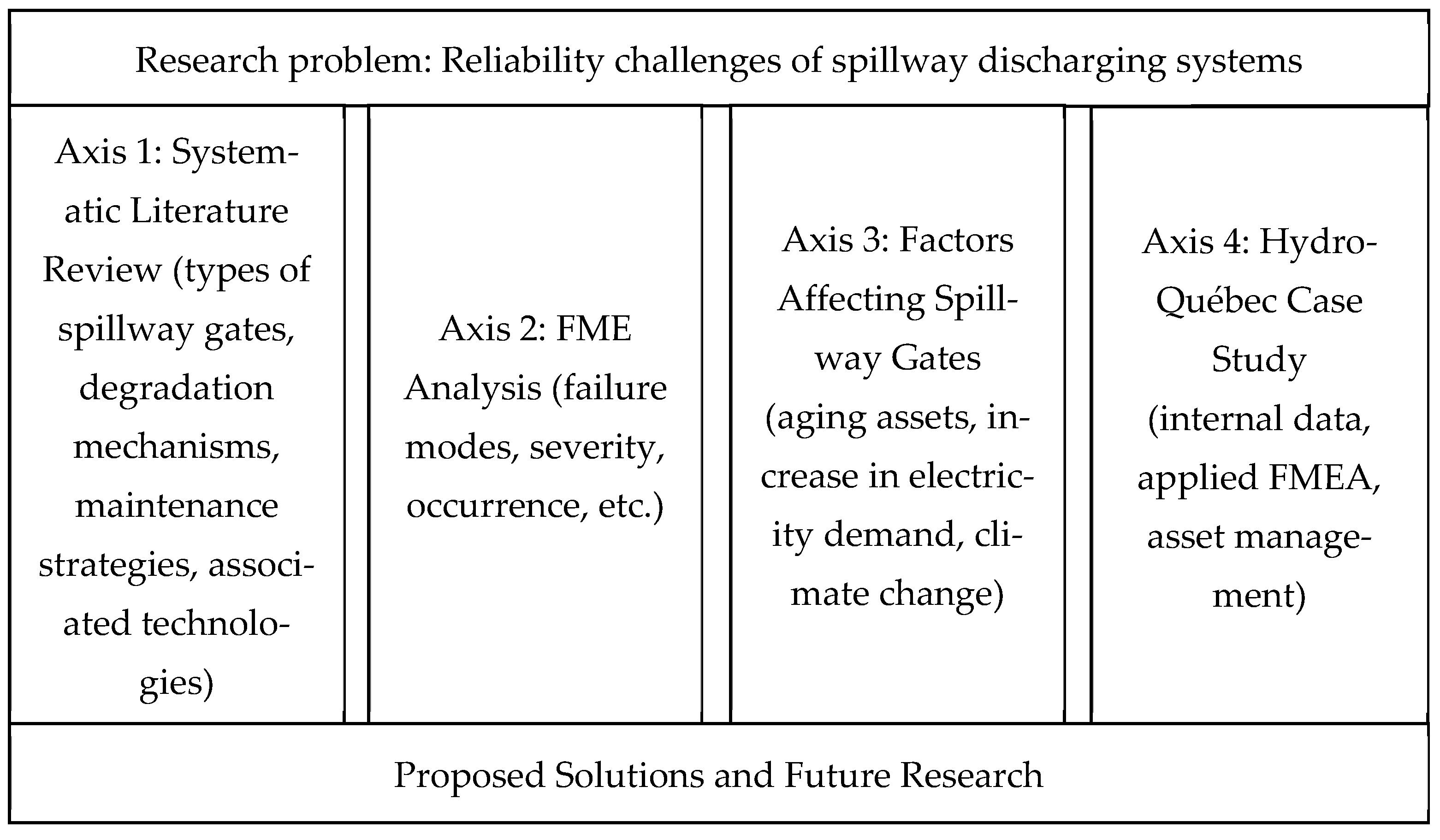
This research is based on a multidimensional methodological approach structured around four main axes: a systematic literature review, a Failure Modes Analysis, a study of factors affecting spillway gates, and a case study applied to Hydro-Québec installations. Figure 3 illustrates the integrated methodological framework adopted in this research, highlighting the four main axes guiding the analysis: systematic review, FMEA, influential factors study, and applied case study.

2.1. Systematic Literature Review (SLR)

A systematic literature review was conducted to identify current knowledge on spillway gates, including their types, failure modes, aging indicators, and maintenance strategies. This method enables a rigorous and reproducible structuring approach, following the recommendations of Kitchenham et al. [12].
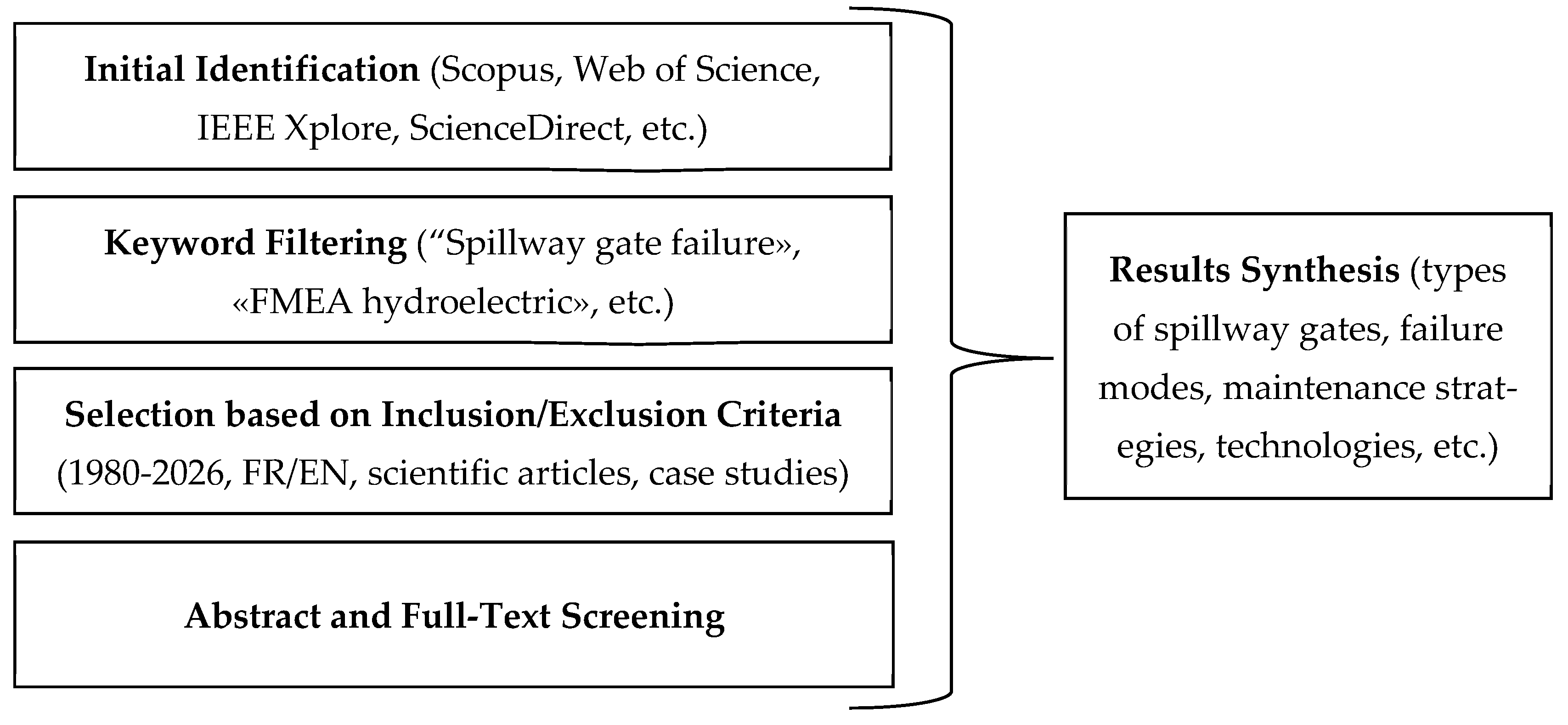
The literature search, as shown in Figure 4, was performed using scientific databases such as Scopus, Web of Science, IEEE Xplore, and ScienceDirect, with keywords including “hydraulic gate failure,” “dam spillway reliability,” “maintenance strategies,” “FMEA in dams,” and “Innovative technologies in reliability.” Selected publications span the period from 1972 to 2025, in both French and English, and include scientific articles, technical reports, industry standards, and case studies.
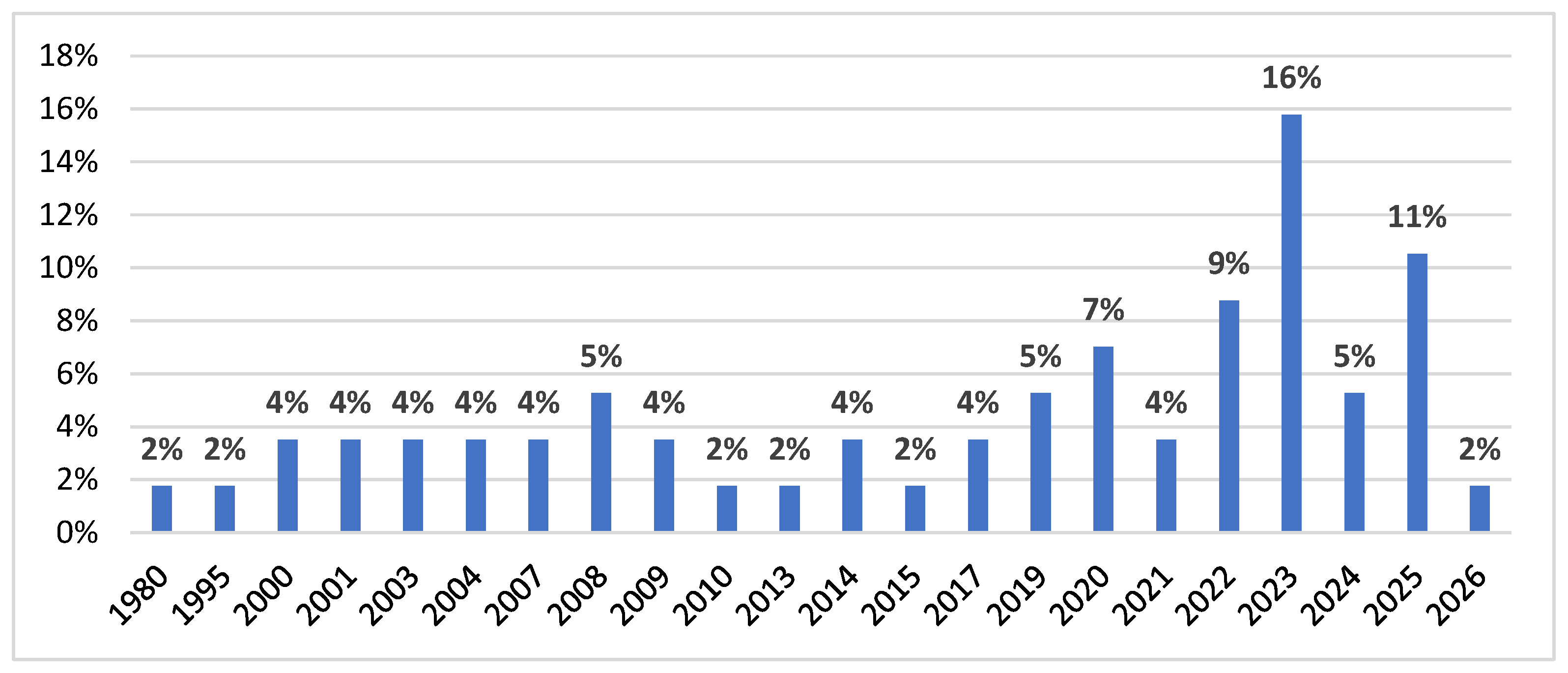
Figure 5 shows the percentage of the publications in this review dated from 1980 to present, with 54% of them dating between 2020 and 2026.

2.2. Study of Factors Affecting the Spillway

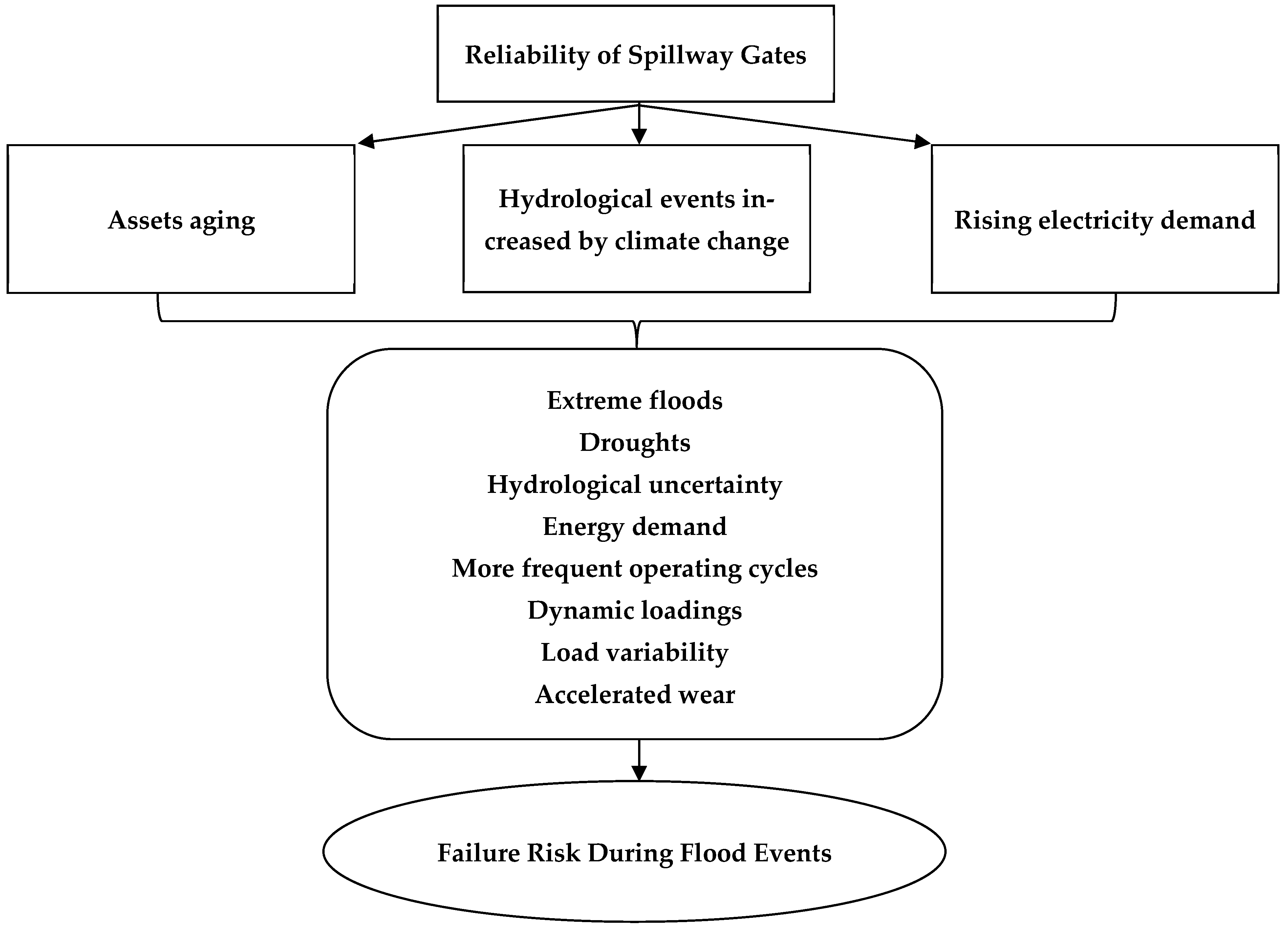
A transversal axis of the analysis focuses on the ascending factors that have an impact on the spillway and cause problems, as shown in Figure 6. These factors include the following:
  • Assets aging, which shows the complexity of a spillway system, where lots of components do not wear at the same time;
  • Climate change, which alters hydrological regimes and increases the frequency of extreme floods [13];
  • Rising electricity demand, which has an indirect impact on spillways [14,15].

2.3. Functionality of Strategic Infrastructure Systems

Strategic infrastructures, such as hydroelectric dams, are designed to provide essential services whose failure may result in significant safety, economic, and environmental consequences [2,16,17]. In this context, the performance of such systems cannot be evaluated solely in terms of structural integrity [5,16,18] or nominal availability but must be assessed based on their functional ability to deliver the required service under normal, degraded, and extreme operating conditions.
For dam infrastructure, spillway discharge systems represent a function-critical component [3], as they constitute the primary safety mechanism for controlling reservoir water levels during floods, emergency shutdowns, or abnormal operating scenarios. A spillway gate system may remain structurally intact while still failing to fulfill its intended function due to mechanical degradation, control system malfunction, environmental constraints [19] such as ice formation, or delayed operational response. Consequently, a loss of functionality can lead to unacceptable risk levels for downstream populations and infrastructure [20].
This functional perspective justifies the adoption of a reliability-oriented assessment approach, in which failure is defined not only as structural damage but also as the inability of the system to perform its required function [21,22,23] within specified conditions and time constraints. By focusing on functional degradation mechanisms and their contributing factors, reliability and risk-based methods such as FMEA provide a structured framework for identifying vulnerabilities in strategic infrastructure systems and supporting informed asset management and maintenance decisions.
This literature review broadens the perspective of spillway discharge systems—in particular, the types of discharge gates commonly used, their functional structure and their signs of degradation. Moreover, it includes a failure mode study, the factors affecting these systems and how these systems are managed. While also considering worldwide knowledge, a case study was applied to support the research, followed by a discussion and what future research needs to be done.

3. Literature Review

This review focuses on the spillway’s discharging system, researching the types of gates used, examining their functional structure and showing their signs of degradation. Afterwards, multiple Failure Modes, Effects Analyses are shown to quantify the impact of these factors on the reliability and availability of the spillway in different regions. All factors that are affecting the spillway’s discharging system are examined, and the assets that are being managed under such circumstances are indicated, to finally review all technologies used in similar contexts, along with concrete recommendations to improve the performance, resilience, and durability of these essential hydraulic system components.

3.1. Spillway Discharge Gates

One of the most crucial assets for dam management and safety is a discharge gate, as it allows control over the discharged water from the reservoir. When it is closed, the water is retained within the dam. However, when it is open, the water is allowed to flow out. Therefore, it plays a critical role: regulating excess water flows to prevent dam overload, a challenge that has become increasingly urgent due to the rise in extreme precipitation events [24]. Usually, spillway gates are integrated into a lifting system composed of concrete piers, metal towers, winches, bridge-cranes, overhead guides, gated passages, and maintenance beams.

3.2. Types of Spillway Gates Used

As obtained from multiple resources, Table 1 shows a synthesis of the main types of spillway gates employed in dams across the globe. It outlines their primary functions, the regions where they are most used, their current level of usage, and the associated scientific references.
All information in Table 1 was adapted from [15,16].

3.3. Functional Structure of a Spillway Gate System

The literature review on the functional structure of a spillway gate system presents each component that plays a specific role in the overall operation, with their main function, typical use and common materials. This functional structure, inspired by [25,26], is presented in Table 2, highlighting the complexity and diversity of components involved.
Each element plays a distinct role in ensuring operational reliability, with materials and configurations varying according to the type and function of the gate. These findings provide a foundational understanding for a further analysis of performance, maintenance, and risk assessment.

3.4. Signs of Degradation in the Spillway Gate System

Following the examination of the types and structures of the spillway gate system, this analysis focuses on signs of degradation to propose targeted solutions. Spillway gates are subject to multiple degradation mechanisms that compromise the reliability and operational safety of the system. The main degradation mechanisms identified (corrosion, fatigue, cavitation, wear, leakage, instabilities) are documented in ICOLD bulletins (99, 118, 164) and literature sources like [16,17,25,26,27,28,29]. These studies have shown that the most recurrent degradation mechanism is the corrosion of metallic components, particularly in humid and saline environments, where chemical exposure accelerates deterioration, while those in aging hydraulic structures are fatigue and cracking due to mechanical stress and material degradation over time. Moreover, in high-head spillways, cavitation erosion is a major concern, leading to the progressive loss of material. Table 3 summarizes and classifies degradations by environment and causes.
The signs of degradation in a spillway gate system are influenced strongly by environmental conditions, hydrodynamic loading, and maintenance practices. For example, as seen in Table 3, in areas with cold climates, such as Canada, Russia and Scandinavia, the loss of joint watertightness worsens due to freeze–thaw cycles. For countries found in seismic regions, such as Japan, Turkey and Iran, where external loading combines with aging, structural deformation and instability are the most critical. Generally, for all spillways globally, the mechanical and hydraulic wear of operating systems is a big issue, especially in countries with limited maintenance resources. Therefore, a systematic understanding of these deterioration patterns is essential to design targeted inspection protocols, prioritize rehabilitation, and ensure long-term dam safety.

3.5. Comparative Failure Modes Studies on Spillway Gates

Failure Modes, Effects, and Criticality Analysis, known as FMECA, is a method that allows risk prioritization based on severity, frequency and detectability [21]; it is used in this research to identify the most critical failures in spillway gates. The specific constraints of hydraulic infrastructures, including flow-induced vibrations (FIVs), alignment issues, corrosion, and abnormal operating conditions, are considered in this study on the spillway gate discharge system.
To better understand how risk analysis is applied to spillway gates, it is useful to look at case studies where FMEA or FMECA methods have already been used. This explains why this exercise combines different approaches, environments, and results that have been shown to help to compare failure modes and to identify which are most common and how different teams measure risk. Thus, three different dams, located in different regions, were selected for this study, as shown in Table 4, with each one representing a distinctive style of analysis: a classical FMECA, a design-phase FMEA, and a reliability study using fault trees.
The reference studies, Ajaure Dam (Sweden), Temple Town Lake Dam (USA), and Glenmaggie and Little Nerang Dams (Australia), mainly addressed mechanical, hydraulic, and control failures under moderate environmental exposure, focusing on hoist malfunction, seal leakage, gate jamming, and structural deformation. These analyses [22,23,32] applied conventional FMECA or fault-tree methods with criticality indices based on severity × occurrence or probabilistic likelihoods, but they did not explicitly account for temperature-induced degradation such as ice blockage, material embrittlement, or freeze–thaw corrosion.
Table 5 presents the results of a Failure Modes and Effects Analysis (FMEA) conducted by Hydro-Québec for the Coteau 1 dam. The analysis covers several critical subsystems, including the dam body, spillway gates, the gantry crane, the crane runway, and the service bridge. For each identified failure mode, the table summarizes the potential causes, the effects on system operation, and the associated risk scores: severity (S), occurrence (O), and detectability (D). The Risk Priority Number (RPN) is calculated as the product of these three scores and is used to rank failure modes according to their relative criticality. This FMEA reflects Hydro-Québec’s asset management practices applied to a large hydroelectric structure located in Québec, a region characterized by a cold climate with long freezing periods and frequent freeze–thaw cycles.
The FMEA was carried out using a structured, yet practical, risk-ranking approach based on detection, occurrence, and severity. For each failure mode, these three criteria were discussed and scored on a scale from 1 to 5 by a multidisciplinary expert team. The detection score represents how easily a failure can be identified before leading to adverse consequences, ranging from failures that are almost always detected through routine inspections to those that cannot realistically be detected in advance. The occurrence score reflects the likelihood of failure and is primarily based on historical failure records at the site, complemented by experience from similar hydroelectric facilities; past failure frequency is therefore used as an indicator of future probability. The severity score describes the consequences of failure in operational terms, with particular emphasis on dam safety and spillway availability. For civil components, severity is linked to the loss of discharge capacity over time, expressed as the number of spillway gate openings that cannot be operated or used to pass flow multiplied by the duration of the outage. For mechanical and electrical components, severity is mainly associated with outage duration, as failures of these systems typically affect all bays simultaneously. Financial impacts are deliberately excluded at this stage of the analysis. The overall risk level, referred to as the criticality or Risk Priority Number (RPN), is obtained by multiplying the severity, occurrence, and detection scores, and is used to prioritize mitigation and rehabilitation actions.
The application of the FMEA to the Coteau 1 dam highlights that the highest-risk failure modes are associated with the crane runway and the spillway gates. The complete failure of crane runway supports due to insufficient bearing capacity exhibits the highest RPN values, reflecting severe consequences combined with limited detectability. Several gate-related failure modes also show elevated RPN values, especially those linked to gate degradation and freezing phenomena that can prevent gate operation during critical flow conditions. Overall, the analysis indicates that freezing conditions tend to amplify existing mechanical and structural vulnerabilities by increasing the likelihood of gate blockage, constraining component mobility, and aggravating load transfer and deformation mechanisms. These effects lead to higher severity and criticality scores for several failure modes identified at Coteau 1.
When compared with the FMEA applications summarized in Table 4, the analysis presented in Table 5 shows that, while the general FMEA framework remains consistent with previously published studies, the Coteau 1 FMEA more clearly captures the amplifying role of freezing conditions on mechanical degradation, structural load redistribution, and the detectability of failure modes. As a result, failure modes related to gate operability and crane-supported systems exhibit higher criticality than comparable modes reported in milder climatic contexts, reflecting the influence of cold-region operating conditions on the overall risk profile.
Overall, the inclusion of RPN-based quantification in this analysis enables a clearer prioritization of adaptation and mitigation measures aimed at ensuring reliable spillway operation in cold-climate environments. The results extend the existing literature by illustrating how climatic stressors not only exacerbate known mechanical and structural issues but also introduce cross-system vulnerabilities that directly affect the reliability and operational safety of spillway gates in cold regions.
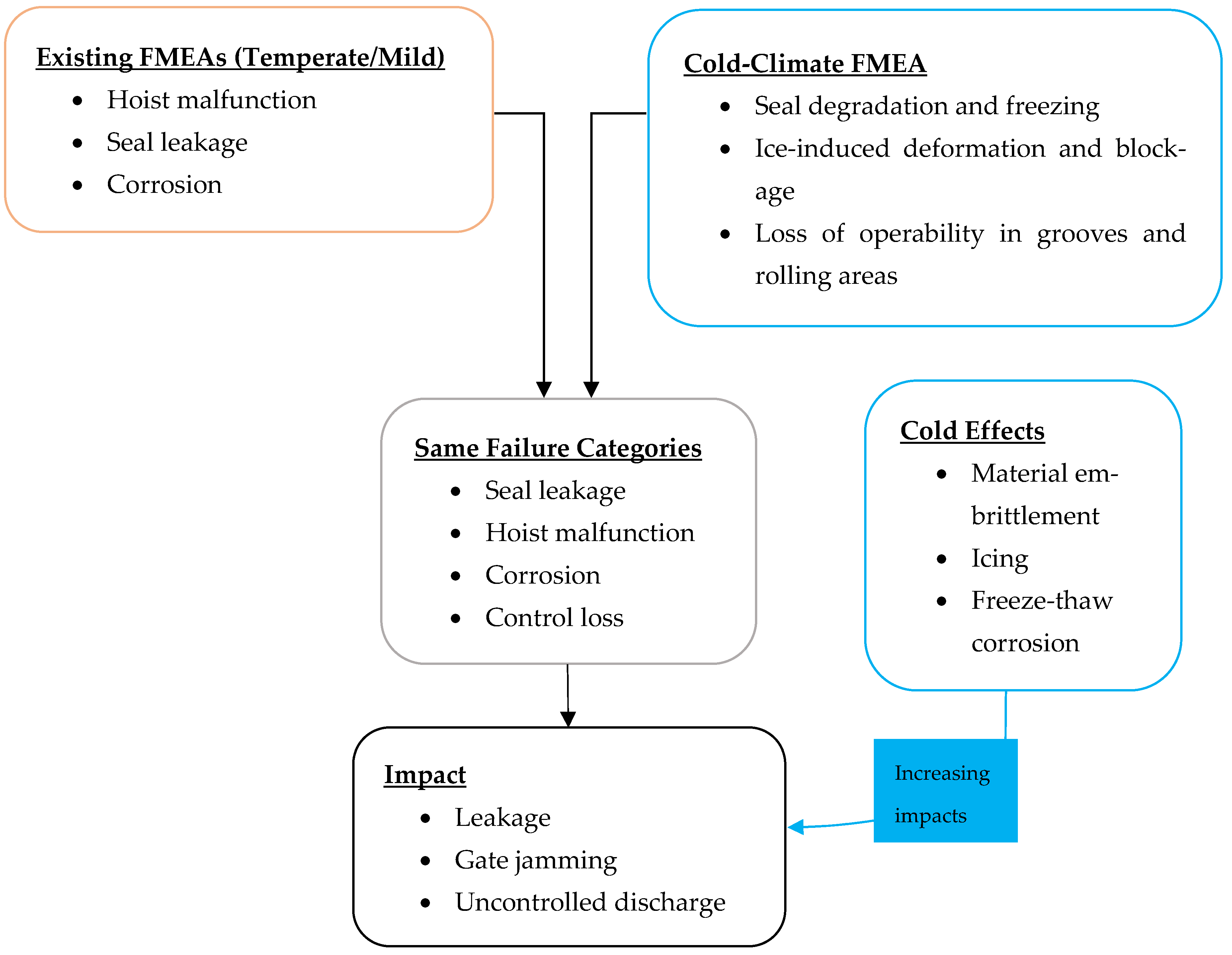
Figure 7 illustrates this comparative analysis between spillway gate FMEAs conducted in temperate climates from Table 5 for cold-climate conditions. The diagram highlights that, while the same main categories of failures appear across all environments, their severity differs. As seen in cold climates, low temperatures, icing, material embrittlement and freeze–thaw cycles amplify the impact of these failures.
This section has presented all the FMEAs together, showing the different failure modes identified in each case and how similar issues appear across various dams and climates. It also highlights the factors that can make these failures worse. However, this analysis alone is not enough. Knowing that failures occur and how they are aggravated does not explain why they happen in the first place. Therefore, the next section focuses on understanding the root causes behind these failures, distinguishing between direct causes and indirect causes, and examining whether these failures are becoming more severe or frequent over time.

3.6. Factors Affecting a Spillway System

Beyond the technical analysis, there are factors influencing the performance and reliability of a spillway discharging gate system and affecting the long-term reliability of dam structures, requiring substantial investment in maintenance, modernization, and resilience planning, including the following.

3.6.1. Aging Assets

As discussed before, most hydropower dams were installed and adapted in the early years of the 20th century, making them aged assets [36]. Aging in dams refers to the slow, time-driven changes that occur in their materials and foundations, which can threaten safety if not properly managed [6]. These changes include deformation, settlement, the loss of strength, internal erosion, and the breakdown of soil or rock that are often caused by seepage, chemical reactions, and exposure to environmental conditions [6,27]. Over time, this aging process can increase permeability, raise pore pressures, cause cracking and surface erosion, and damage protective layers such as geosynthetics, asphalt, or soil–cement [6]. The result is a decline in structural integrity, greater slope instability, and a higher risk of piping or even a breach [6], causing stress on the spillway gate system, making it weaker and unreliable when needed [36].

3.6.2. Hydrological Events Increased by Climate Change

In contrast, climate change is intensifying extreme precipitation events, leading to more frequent and severe floods. Such events may exceed the original design discharge capacities of spillways. This evolving hydrological context is prompting dam operators to revise design and operational standards to maintain hydraulic safety under changing conditions [7,37]. For many years, hydrological models relied on historical climate data and, because climate change introduces uncertainty in dam management, these models are failing to account for the increasing variability in precipitation and temperature, limiting the ability to anticipate extreme events such as flash floods or prolonged droughts. This is why the spillway gate systems, which are, according to Lovgren in 2022, considered the last line of defense against catastrophic dam failure, are becoming unreliable under more intense and unpredictable climatic conditions [38]. More studies were done to support these claims; for example, in 2025, a study conducted by Ho et al. modeled overtopping risks for major dams in Australia under various warming scenarios, and the results have shown that, under a 4 °C warming scenario, flooding risks increased by a factor of 2.4 to 17 compared to design conditions [13], For this reason, concerns are rising for aging infrastructure not designed to withstand such hydrological stress. These examples underscore the importance of integrating environmental factors into the design and operation of spillway gates to ensure long-term dam safety and efficiency.

3.6.3. The Rise in Electricity Demand

Globalization has made an enormous impact, connecting the world together; in the domain of electricity, countries are trading electricity to cover their needs in peak hours, leading to an increase in electricity production. For example, in North America, there are a lot of electricity trades between Canada and the United States and, based on Hydro-Québec’s (a Canadian electricity producer, transporter and distributor company) annual report in 2024, the globalization of electricity markets has led to increased exports to the United States and Ontario, accounting for approximately 15% of annual production (around 30 TWh).
In addition, industry 4.0, characterized by the widespread deployment of IoT sensors, industrial robotics, and data centers, is increasing electricity demand in manufacturing sectors. In addition, the widespread adoption of electric vehicles (EVs) and the rise of industry 4.0 are reshaping consumption patterns, driven by ambitious climate policies; this growth in consumption increases peak demand and forces electric plants to adjust operations dynamically [14,15]. And, in countries such as Canada—especially in Québec, where hydroelectricity powers most transportation and manufacturers—water flows need to be managed more often by partially or temporarily activating the spillway gate system, overworking it in a way that can compromise long-term reliability.

3.7. Operational and Management-Related Factors Affecting Spillways

In addition to external factors, operational strategies and maintenance practices play a critical role in determining the reliability and service life of spillway gate systems. Decisions related to maintenance scheduling, operational frequency, and emergency response can significantly accelerate mechanical wear and functional degradation.

3.7.1. Maintenance Practices

Maintenance for all mechanical/machinery assets is required to maintain their reliability, availability, life cycle and health. Systematic maintenance is based on fixed planned schedules rather than real-time conditions, but, according to Martinez in 2020, these practices can lead to unnecessary interventions or undetected failures [39]. For the spillways, the maintenance of the gates requires lifting operations, meaning the gates must be opened during each maintenance activity. This reduces the life cycle of these assets, given that this maintenance forces the asset to perform its opening action, which is its operational movement.

3.7.2. Power Plant Tripping

According to Neupane et al. [40] in 2021, hydropower plant tripping is a shutdown that refers to the process of stopping a turbine, which can occur either as a normal or emergency procedure. A normal shutdown is manually executed by the operator in gradual steps to reduce mechanical stress, involving the sequential closure of guide vanes, followed by the main inlet valve (MIV). In contrast, an emergency shutdown is rapid and triggered automatically by protection systems or grid disconnection, resulting in strong hydraulic transients. The duration and method of shutdown significantly influence the pressure dynamics within the tunnel and surrounding rock mass, with shorter, abrupt shutdowns causing greater hydraulic impact [40]. Therefore, the interruption of turbine flow forces incoming water to be redirected entirely through spillway gates, which may exceed their nominal capacity, and this overload can cause mechanical stress, accelerate wear, and lead to malfunction if gates are not fully operational [19,41].

3.8. Resilience of Structures in Dams

In the context of increasing uncertainty and intensifying extreme events, resilience has become a central concept in the design and management of infrastructure [42]. Concrete and embankment dams are increasingly exposed to high-impact hazards such as extreme floods, earthquakes, rapid reservoir level variations, and the compounded effects of aging and climate change. Dam resilience refers to the ability of these structures not only to withstand such extreme events without catastrophic failure, but also to limit performance degradation and recover critical functions within acceptable timeframes [43,44]. This capacity relies on robust structural design with adequate safety margins, redundancy in critical systems, effective emergency preparedness, and adaptive operational and maintenance strategies [43]. As extreme hydrological and climatic events become more frequent and severe, strengthening resilience is no longer optional but essential. Ultimately, enhancing the resilience of dams is key to ensuring long-term structural integrity, protecting downstream communities, and maintaining the safety and reliability of water and energy systems under extreme and evolving conditions [45].

3.9. Spillway Discharge Gate System Management

The management of gated spillways aims to anticipate and mitigate all potential failure modes to ensure dam safety [46]. Therefore, in the event of failures preventing gate opening, backup systems such as emergency power supplies, manual operation devices, and redundant gates must be available to maintain flood discharge capacity. In contrast, if a gate remains stuck in the open position due to failures, operators must control reservoir drawdown using other gates and activate downstream emergency plans to minimize damage from uncontrolled releases [47]. Accordingly, to prevent unintended openings, modern control systems incorporate safety interlocks, and operational protocols include continuous monitoring to enable immediate response to any detected malfunction [46]. But we must also remember that human factors play a key role in reducing the risk of errors or delays during flood events through regular operator training, detailed maneuvering plans, and the automation of critical actions [46]. However, as explained in Section 3.6, the factors that are increasing the frequency and intensity of floods beyond historical norms, and the growing pressure to maximize hydroelectric production by keeping reservoirs as full as possible, require further improvements in spillway gate systems. This is why studies have concluded that balancing hydraulic safety with energy optimization is becoming increasingly complex and demands adaptive strategies [7,20].

3.10. Potential Solutions

The risks to the reliability of spillway gates are severely increased by environmental and operational conditions, and this is why their performance and reliability are no longer governed solely by engineering design but are deeply influenced by external pressures such as climate variability and hydrological events which can no longer be predicted, leading to traditional management plans becoming unreliable. Global energy trade and technological transformation are increasing energy demand, causing operational stress and failure risks, especially during flood events. Therefore, to address these challenges, it becomes imperative to modernize spillway gate management systems to ensure the performance and sustainability of hydroelectric dams, as well as public safety. This modernization must include the integration of more advanced and strategic technologies capable of analyzing real-time data and simulating various hydrological scenarios to be prepared for any instability caused by the impact of climate change. As highlighted by CSA Group in 2022, adaptive and dynamic approaches can enable proactive rather than reactive management, thereby reducing risks and costs associated with emergency interventions, maximizing efficiency, and minimizing the risk of failures [48]. Thus, according to a study conducted in 2022, artificial intelligence for the management of hydroelectric dams is a new technology solution that can be adapted to reduce losses [49]. Artificial intelligence can be implemented in different forms; for example, AI can be represented as data analyst agent that can predict problems and manage dams or as a digital twin that can anticipate failures, optimize operations and simulate critical scenarios to better manage risks.
During extreme weather events, such as sudden floods or periods of drought, decisions regarding the opening and closing of gates must be made quickly and accurately. A data analyst agent based on artificial intelligence stands out in these situations by offering optimal solutions based on a rapid and in-depth analysis of available data. Artificial intelligence could calculate the gate opening sequence to balance upstream and downstream flow, thereby minimizing downstream flood risks while protecting the dam structure. And, during periods of low precipitation, AI could adjust flows to maximize water usage while maintaining minimum levels for downstream ecosystems [49]. Not only that, but the agent can also help to predict anomalies in the spillway discharging system so these can be taken care of, prior to the tests or events, preventing catastrophes. In a concrete example, a dam in the Amazon Basin equipped with an AI system was able to reduce flood risk by up to 30% by optimizing real-time operational decisions related to spillway gate management [49]. Therefore, the benefits of integrating AI agents into spillway gate management are numerous and measurable. AI-based systems reduce the likelihood of unplanned outages in dams equipped with these technologies [50].
In a perfect world—where data are readily available and flawless, infrastructure is robust or can be accurately modeled in its current state, operating conditions are normal, and reliable sensors provide continuous high-quality measurements—digital twins are the go-to. Digital twins are virtual replicas of a physical system, continuously fed by data collected in the field via connected sensors. They are revolutionizing the management of hydraulic infrastructures by offering dynamic virtual replicas that integrate real-time data, and, in the context of assets, these tools make it possible to anticipate failures, optimize operations and simulate critical scenarios to better manage risks linked to climate change [51]. Digital twins allow managers to observe the exact conditions of spillway gate and dams remotely and in real time and to simulate critical scenarios. For example, a digital twin can simulate the impacts of a flash flood or prolonged drought to assess gate performance and adjust management strategies [52]. They can anticipate maintenance needs while analyzing the collected data and can predict when a gate is at risk of deterioration, allowing for targeted preventive maintenance. In a concrete example reported by Bentley Systems, a dam equipped with a digital twin was able to reduce the impacts of a flood by 20% by simulating and optimizing the opening of the gates before the arrival of the flood [52].

4. Research Framework

The research framework is the conceptual and analytical basis of this article, situating the issue studied within a structured set, linking external factors, technical parameters, and the methodological approaches used to guide and organize the entire process.
The research conducted was aimed at addressing the following problems: with the advanced aging of equipment, unpredictable hydrological events, increased electricity demand, and outdated asset management plans, how can the reliability and durability of spillway discharging systems be improved to ensure their availability?
The study focused on the following key questions:
  • What types of spillway discharging gates are used?
  • What are the degradation indicators?
  • What are the factors affecting the life cycle of spillway gates?
  • What are the current maintenance plans for spillway gates? Are these plans still effective given the recent changes?
  • What technologies can be used to improve the reliability, availability, and durability of spillway gates?
  • What is the future research that will be done?
From a theoretical perspective, the research draws on several approaches and models on the spillway discharging system, such as the types of gates used, the functional structure and the signs of degradation, to show its performance and problems, followed by an FMEA that served as a systematic method that identified and prioritized risks. In parallel, the challenges that the spillways are confronted with are the advanced aging of equipment (most of which were built in the 20th century), environmental impacts (such as climate change, fluctuating hydrological events), the globalization of electricity markets (modifying asset working strategies), transition into electrical vehicles and industry 4.0 (increasing electricity demand), and traditional asset management (maintenance that is based on predictable hydrological events). And it was shown that these factors are transforming the operating conditions and exposing spillways to increased risks of failure. Finally, small research on potential solutions, such as implementing artificial intelligence in the form of an AI agent or a digital twin model, was conducted to offer emerging perspectives for modern asset management.
For the conceptual framework, this research is structured around the interaction between independent, dependent and moderating variables. As shown in Table 6, environmental factors, the globalization of electricity markets, transition into EVs and industry 4.0, and asset management are treated as independent variables. Their effects converge on the dependent variables, namely, the signs of degradation, FMEA, and the reliability and availability of the spillway discharging system. At the same time, factors such as the types of gates used and the environment where the dam is present play a moderating role that shapes the intensity and direction of these relationships.
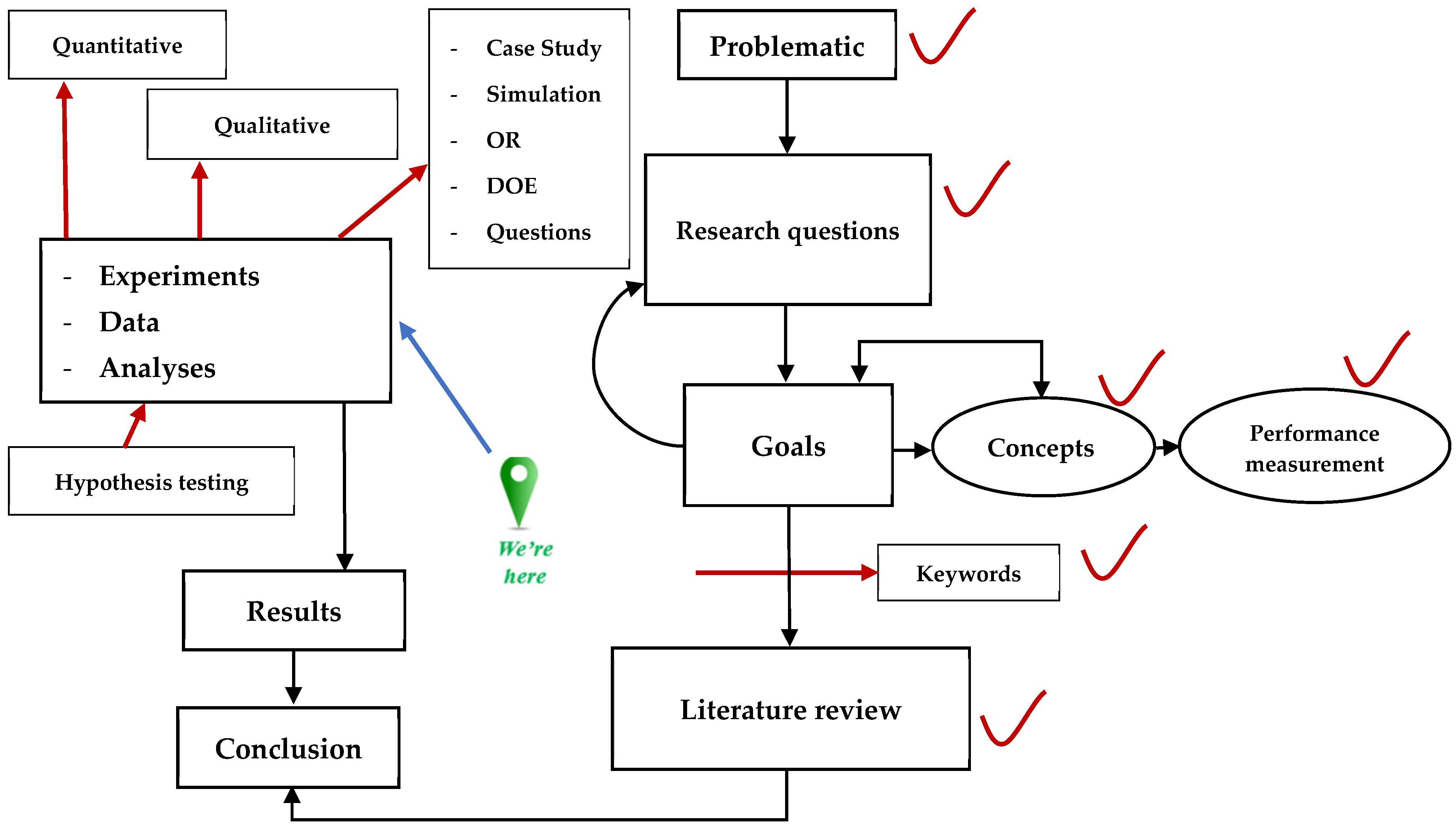
Figure 8 shows the article roadmap.

5. Case Study

To reinforce this research and validate the hypothesis formulated in the literature review, a case study was conducted on Hydro-Québec. The Hydro-Québec system was selected due to its relevance as a hydroelectric infrastructure operating under cold-climate conditions, where spillway gate systems are subject to evolving hydrological factors and increased operational demand. The availability of maintenance and operational data enables the application of this case study. Within this system, wagon gates were selected for detailed analysis due to their widespread use across Hydro-Québec’s spillway installations and their critical role in ensuring discharge capacity during flood events. Furthermore, the Carillon generating station was chosen as a representative facility because of its documented operational variability, the availability of historical work-order data spanning multiple maintenance strategies, and it being in an area where electricity demand is on the rise. These characteristics provide a suitable basis for evaluation.
According to its official website, Hydro-Québec is the largest electricity producer in Canada and one of the world’s top hydroelectric producers. It operates an extensive network, comprising sixty-two hydroelectric power stations, twenty-four thermal power plants, six hundred eighty-one dams, and ninety-three regulating structures. Hydro-Québec delivers electricity across vast territories, maintains complex transmission and distributes networks, and meets growing demand while ensuring service reliability.
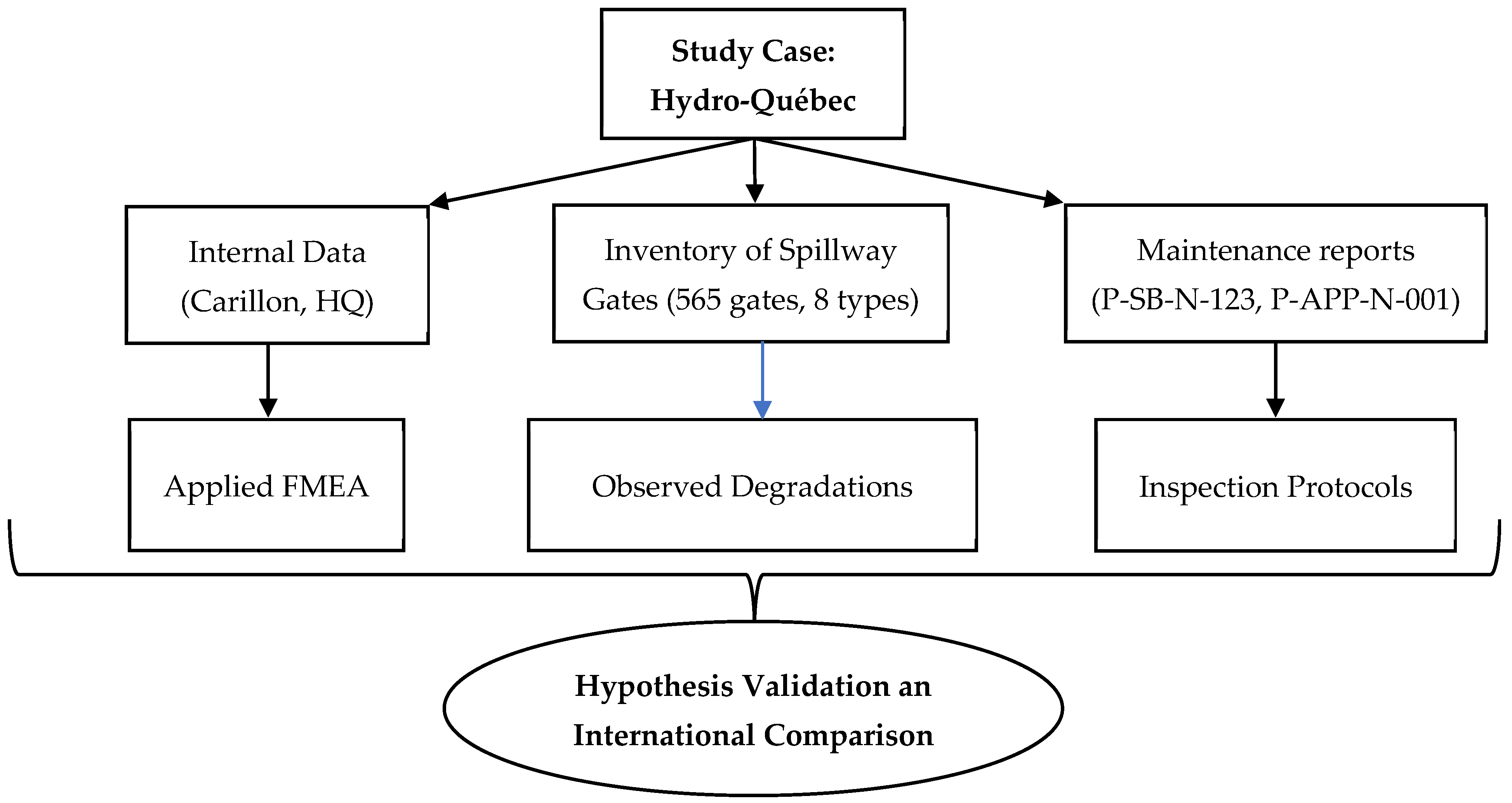
The methodology used in this chapter is illustrated in Figure 9.
Thus, this study aims to analyze the types of discharging gates Hydro-Québec uses in their spillways, which gates are mainly used, and which are going to be used for future installations, so that the analyses can be focused on them. This case study also demonstrates the functional structure of a spillway to showcase the identified failure modes and how the companies are trying to solve them.

5.1. Discharge Gates Used at Hydro-Québec

According to internal data and experts at Hydro-Québec, the company operates a total of 565 gated passages, categorized into eight types: wagon gates, PMEV (Live Water Operated Beams), slide gates, trigger gates, inflatable gates, segment gates, stoney gates, bottom outlets. From Hydro-Québec’s inventory, Table 7 shows the number of gates based on their types.
From Table 7, the two most used gates by the company are the wagon gates at 57% and the PMEV at 27%, indicating that these two are the most reliable spillway gates. But, according to engineer Roger Nicolet, a recognized expert in dam safety, the use of manually operated beams (PMEV) poses significant risks:
“Handling beams under flow, often without mechanical assistance, exposes personnel to hazardous conditions, including hydraulic thrust and rapid flow. Mechanized, remotely controlled closure systems are preferable for ensuring both personnel safety and reliable flow control.”
[53]
And this explains why Hydro-Québec considers wagon gates as the most efficient and future-oriented gates to use. This is why they are the model used in this case study.

5.2. Functional Structure at Hydro-Québec

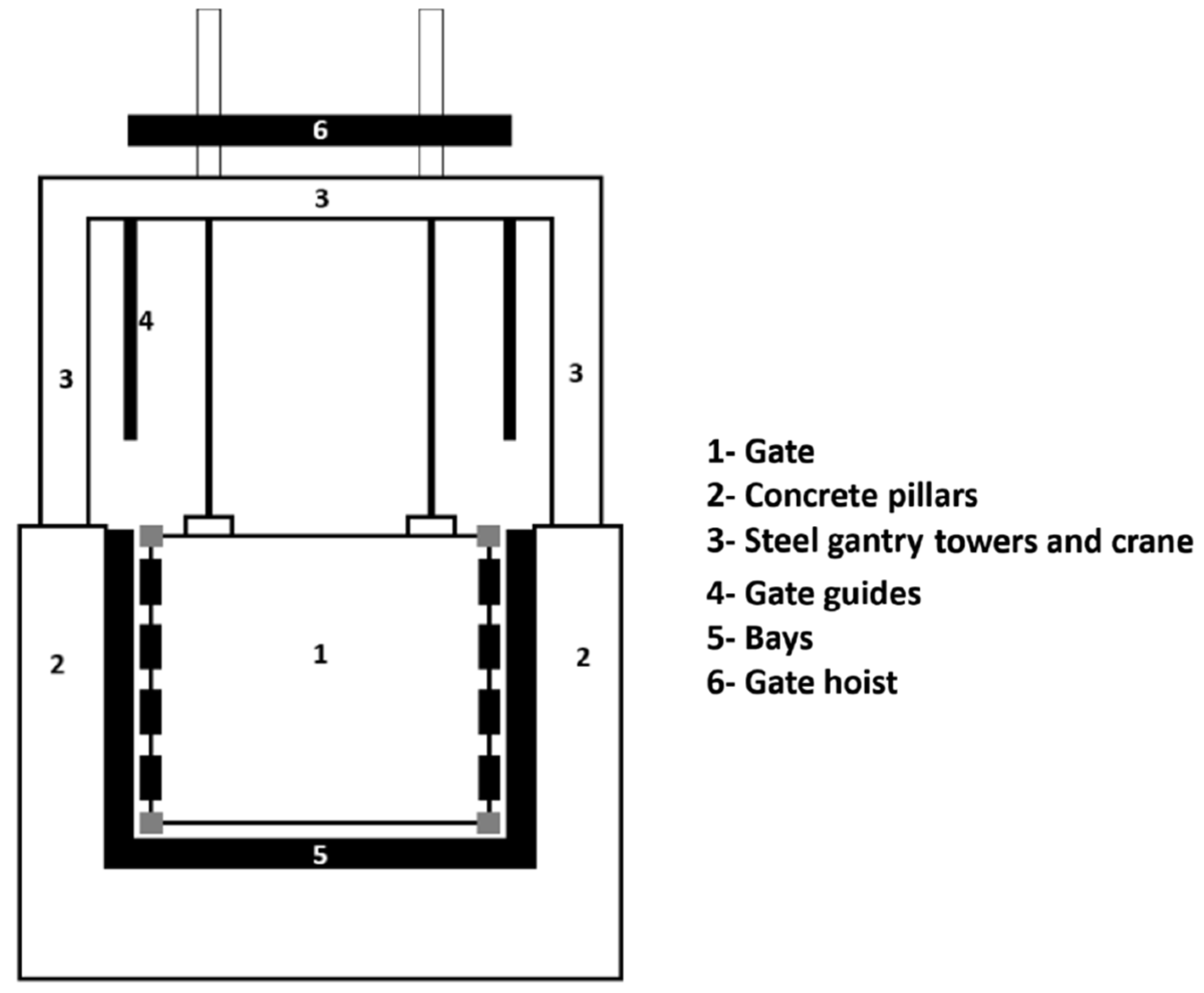
Based on Hydro-Québec’s engineering documentation (Ref. 1231-111-04), Figure 10 illustrates the structural configuration of a typical spillway gate highlighting the mechanical and hydraulic interfaces, including lifting mechanisms, guide rails, sealing systems, and so on, where each element is a subsystem by itself.
The functional roles of the main subsystems and components, including the gate, concrete piers, steel gantry towers and gantry, gate guides, bays, and gate hoist, are in Table 8, which presents the work done by Hydro-Québec, showing each subsystem’s critical role.

5.3. Signs of Degradation at Hydro-Québec

Based on data from work performed on the Carillon spillway (one of the best examples of a hydroelectric plant in Québec), such as projects and systematic, conditional, corrective, and improvement maintenance, degradation patterns were identified, as seen in Table 9. And, after filtering out unreliable or incomplete data, the percentages were obtained, confirming that mechanical stress and operational environment are the main threats to gate reliability. Similar trends have been observed in other studies such as [19], and [41], highlighting frequent issues such as misalignment, corrosion, and ice or debris blockages.
The dataset used in this study consists of 80 work orders on average per year, issued between 2000 and 2025, covering improvement maintenance, condition-based maintenance, corrective maintenance, logistics, project activities, and systematic maintenance. The raw data were carefully filtered to remove inconsistencies and ensure that only reliable and usable records were retained for analysis.
The degradation signs identified in the Hydro-Québec dataset primarily reflect functional and operational symptoms observed during inspections, such as misalignment, leakage, abnormal operating conditions, and material deterioration. In contrast, the literature reviewed in Section 3 mainly describes the underlying physical degradation mechanisms affecting spillway gate systems, including corrosion, fatigue cracking, cavitation, wear, and global deformation [16,17,25,26,27,28,29]. The comparison between field-observed degradation signs and the mechanisms reported in the literature shows strong consistency between both perspectives, indicating that operational symptoms observed during inspections represent the observable manifestations of fundamental degradation processes extensively documented in previous studies [16,17,25,26,27,28,29]. This complementarity highlights the importance of integrating operational feedback with physics-based degradation models to support a comprehensive understanding of hydromechanical system aging.

5.4. FMEA by Hydro-Québec

To manage risks associated with spillway systems and to enhance the resilience of its infrastructure, Table 10 presents a general FMEA conducted by Hydro-Québec in Canada, highlighting the main failure modes observed in spillway gate systems under cold-climate conditions [35]:
  • DC—Hidden failure whose condition is not obvious to determine due to the difficulty or impossibility of inspection (e.g., concrete core, anchorage systems, etc.).
  • S—May have consequences for the safety of workers and/or the public.
  • E—Potential for environmental impact.
  • L—May result in non-compliance with legal or regulatory requirements.
  • A—Expected service of the facility, with an impact on the availability of the different systems.
  • É—Economic in nature, with no consequences other than the costs incurred to repair the failure.
Table 10 lists failure modes affecting discharge gates, beams, seals, and heating systems, primarily characterized by deterioration and wear, leakage or the loss of tightness, and the partial or total loss of heating efficiency. Identified causes include ice cover pressure, debris impact, corrosion, freezing in grooves, excessive internal temperatures in heated gates, the wear and degradation of seals, insulation failure, power supply loss, the malfunction of heating components, and water infiltration into compartments containing heating elements. The associated effects reported in the table include deformation, reduced safety factors, accelerated degradation, corrosion, paint loss, reduced heating capacity, the risk of ice formation, and the difficulty or impossibility of operating gates during winter load-shedding. Cold-climate conditions are directly reflected through ice formation, freezing water, ice adhesion, and temperature-related effects, which appear across multiple components and functions and are linked in the table to consequences related to hidden failures (DC), system availability (A), safety (S), and economic impacts (É).

5.5. Spillway’s System Management at Hydro-Québec

At Hydro-Québec, asset management is a very important field, applying strategies to ensure the reliability of their assets, such as spillways, to ensure their dams’ safety. For example, the spillway asset management strategy includes inspections at 3-, 6-, and 12-year intervals, with each inspection accompanied by a gate lifting test that raises the gate to a higher level than the previous test. These measures are part of a government-approved dam safety program, ensuring compliance with all regulatory obligations under the Dam Safety Act. In accordance with internal documents P-SB-N-123-2020 and P-APP-N-001-00, the strategies must cover mechanical and electrical components, painted surfaces, internal structural integrity, sealing systems, and the presence of debris or ice that could hinder operation. International standards align with Hydro-Québec’s practices related to the implementation of regular inspections and monitoring tools. But these strategies do not cancel the fact that the spillway discharge system continues to be challenged due to climate change and the increase in electricity demand, especially at Carillon, where a new hospital has been constructed and the population increased.

5.6. Operating Rate of a Spillway

As part of asset management and reliability strategies, critical hydromechanical equipment such as spillway gates are designed to operate according to a predefined number of opening and closing cycles over their entire service life. This planning, based on theoretical usage profiles, enables optimized component design, preventive maintenance scheduling, and a reduced risk of premature failure [18].
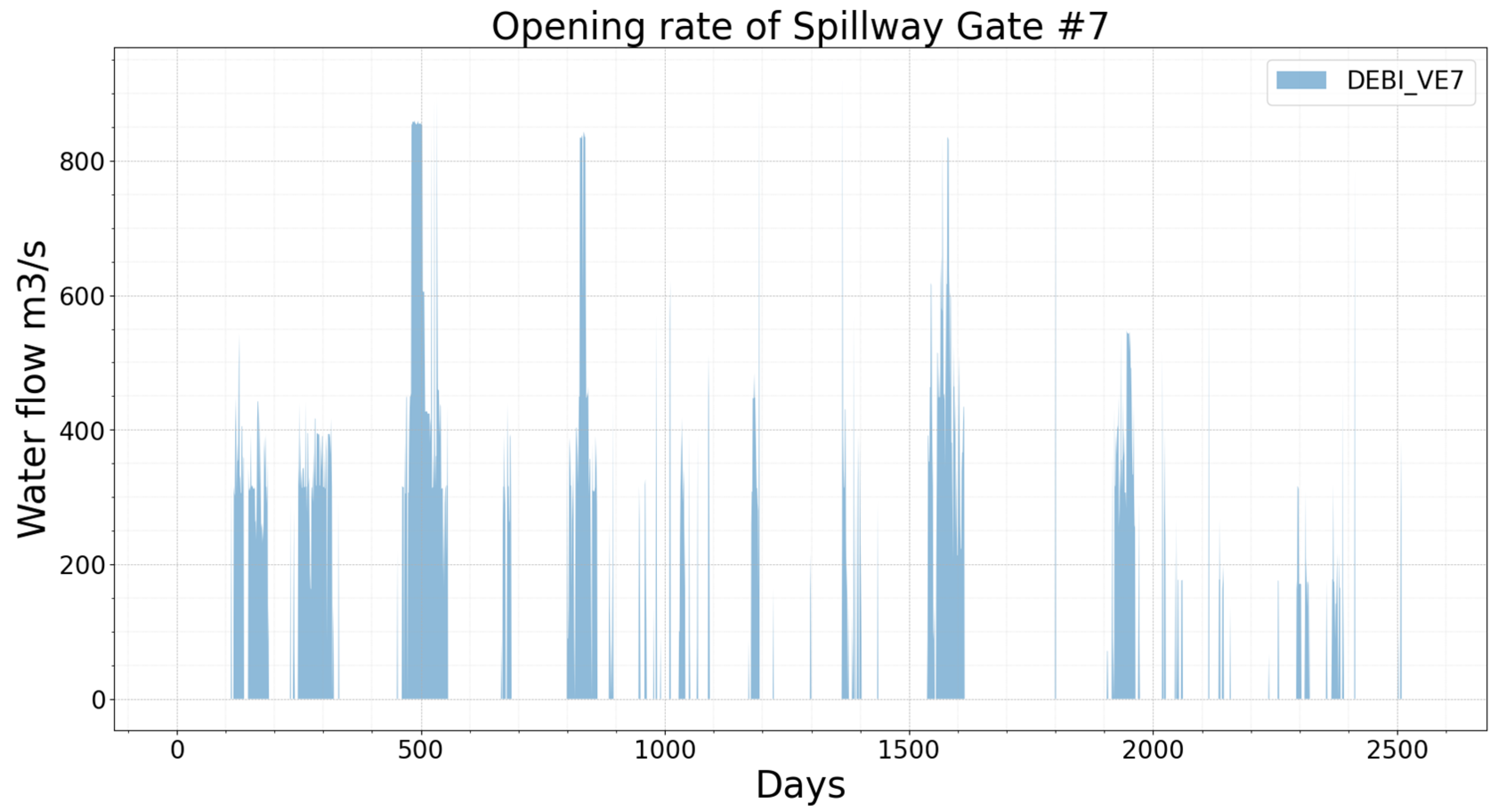
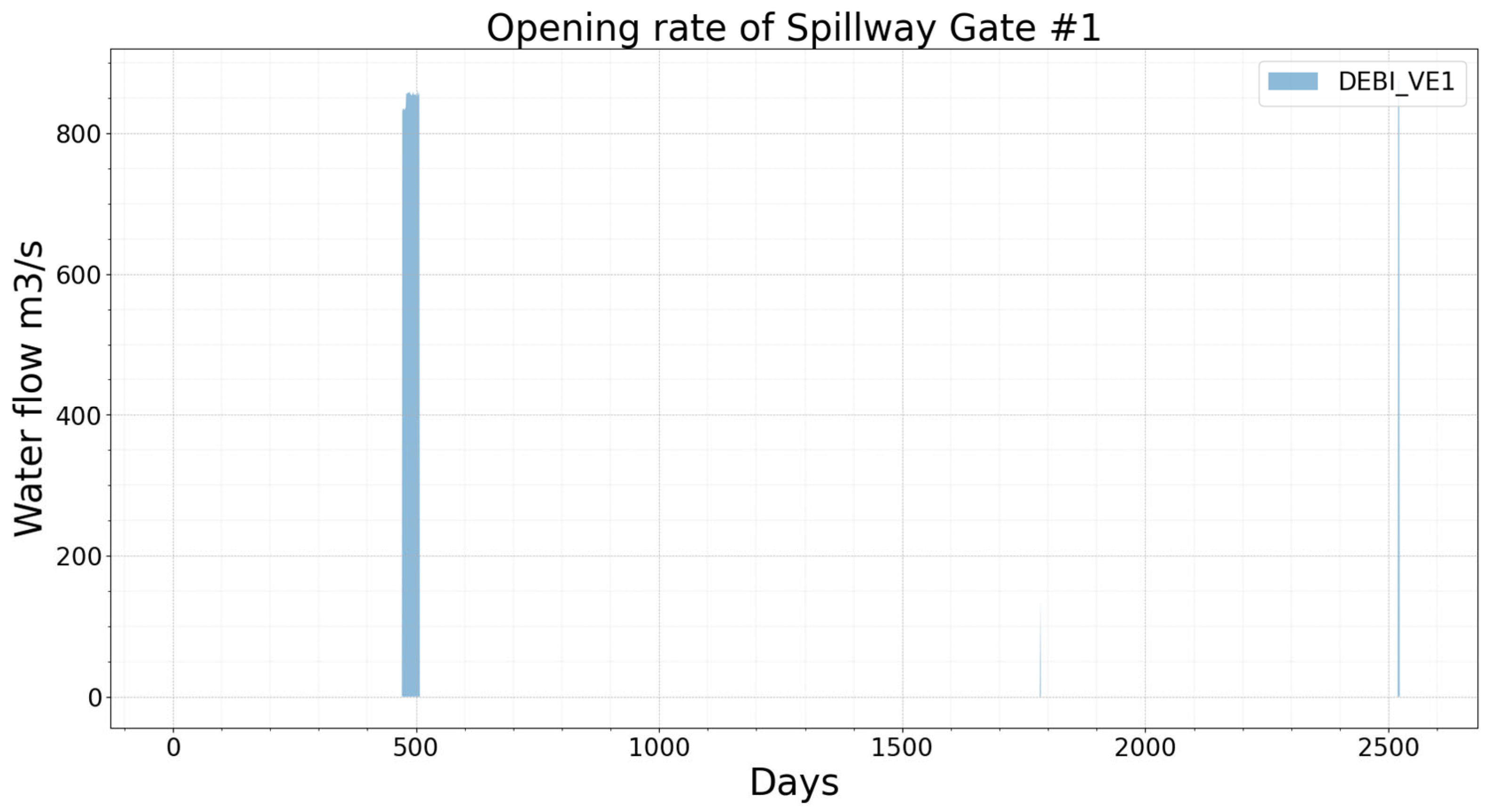
However, as seen in Figure 11, which presents the operating rate of Gate #7 at the Carillon plant, practical operating data reveals that Gate #7 has been operating almost continuously for the past six years. In contrast, Figure 12, which illustrates the operating rate of Gate #1 on the same spillway, shows that Gate #1 has been opened only once during that same six-year period. Because spillways operate by prioritizing the central gates to manage water flow, while the gates located at the ends of the structure are used as a last resort to evacuate water, these gates have markedly different operational roles; however, they are all inspected and maintained in the same manner.
This disparity exposes a major reliability concern because it proves that gates belonging to the same spillway do not age uniformly. Even though Gate #1 and Gate #7 are part of the same spillway, they have been subjected to completely different operating demands. As a result, their mechanical condition, wear level, and probability of failure are no longer comparable. In Weibull-based lifetime modeling, differences in usage intensity may translate into distinct scale parameters and, in some cases, accelerated transition toward wear-out regimes [55]. Similarly, from the standpoint of cumulative fatigue damage theory, a higher number of operating cycles directly contributes to more rapid damage accumulation [56]. As a result, the mechanical condition, wear level, remaining useful life, and probability of failure of these two gates are no longer comparable.
In a critical flood event, the safety of the dam relies on the assumption that all spillway gates will be able to open simultaneously to achieve the designed discharge capacity. However, when one gate has barely been operated over several years while another has been used extensively, the likelihood of an unexpected malfunction increases significantly. A gate that rarely moves may seize, suffer from corrosion, or experience mechanical binding; conversely, a heavily used gate may suffer from accelerated wear or fatigue, creating an uncertainty that directly translates into risk based on dam safety engineering. And when nothing guarantees that each individual gate can operate on demand, the entire discharge system becomes vulnerable, showcasing that, at crucial times, spillways cannot be relied upon because no one can guarantee that all discharging gates will be available to open at the same time. More generally, because spillway gates do not share the same failure modes, risk profiles, or resulting reliability, the absence of assurance that each individual gate can respond on demand undermines the overall reliability of the discharge system. This variability calls into question the validity of uniform, “one-size-fits-all” maintenance strategies [57] for spillway gate systems.

5.7. Proposed Solutions by Hydro-Québec

At the institutional level, Hydro-Québec is discussing a complementary approach, aiming to enhance inspections in a way that Hydro-Québec receives more detailed information concerning the problems that result in in the blockage of spillways [36]. This initiative is called the SFOR (Sûreté Fonctionnelle des Ouvrages Régulateurs) project, an internal project for the company that is structured around a distinct but coordinated methodology:
  • On-site data collection during inspections;
  • Help with analysis and performance criteria;
  • Output and decision support;
  • Detection of generator anomalies.
The SFOR goal is to detect issues like excessive friction, mechanical binding, or inadequate power margins that could cause a gate to stall or jam. However, SFOR does not evaluate structural integrity or hydraulic capacity: it will not reveal, for example, if a steel gate is structurally weakened by corrosion or if a spillway is undersized for extreme floods. But, by collecting real time data, this project can help to enhance technological aspects that can be used by lots of new technologies to fix and prevent future problems.

6. Discussion

According to the scientific literature review, analyzing the functional structure, degradation indicators, and comparative failure modes of spillway systems makes it possible to identify certain common trends observed across different countries and various types of gates, like the cold weather conditions that tend to exacerbate several degradation mechanisms, further increasing the vulnerability of spillway components during winter periods. Moreover, the failures may also be influenced by broader systemic factors, like aging effects, hydrological events that are becoming more frequent due to climate change, and increasing energy demand, all of which place greater pressure on hydroelectric infrastructure.
In this context, the case study conducted at Hydro-Québec showed that spillways exhibit degradation modes like those identified in the literature. However, the observed gap between the actual operating conditions of two gates within the same facility indicates that spillways deteriorate differently depending on their frequency of use, which can influence their long-term reliability.
The comparison of current management approaches highlights certain limitations of traditional models, particularly in the face of evolving operating conditions. Although these models have proven effective in the past, their ability to adapt to new realities may be challenged. To maintain reliability in the face of aging, climate change, and increased electricity demand, asset management will need to be adapted. Furthermore, despite significant efforts in maintenance and management, some aspects still require improvement, particularly anticipating failures in the context of rapid change. The potential increase in risk during extreme hydrological events underscores the importance of integrating advanced technological tools. The adoption of innovative solutions, such as digital twins or predictive agents based on artificial intelligence, could strengthen managers’ ability to anticipate failures, optimize interventions, and enhance infrastructure resilience.
Overall, this analysis highlights the importance of evolution in spillway management models. A proactive approach, integrating emerging technologies and accounting for actual systemic dynamics, appears essential to ensure the long-term sustainability of dams and their ability to meet future challenges related to hydraulic regulation and energy production.

7. Conclusions

This study aimed to identify the main factors affecting the reliability and longevity of spillway gates and to highlight the challenges posed by aging assets, changing hydrological conditions, and evolving operational demands. According to the scientific literature, environmental conditions play a major role in asset degradation; in particular, cold weather and freeze–thaw cycles further aggravate existing weaknesses and accelerate failure mechanisms. The case study confirmed these findings and showed that, within the same spillway, two gates were operated very differently over the years, creating unequal levels of mechanical stress and contributing to divergent degradation patterns.
Beyond day-to-day operation, the results also have clear implications for the recertification of spillway systems that were designed in the 1950s, based on the needs of this period, when hydrological assumptions were very different from today’s needs. Recertification therefore must reflect how the system truly performs under aging, actual need and current environmental conditions, respecting modern safety requirements.
These combined observations show that current systems face growing stress and that the adjustment of traditional practices can increase adaptation to new realities. Future research will therefore focus on comparing global solutions to determine which methods would be most suitable for Hydro-Québec to improve reliability and extend asset life. The next article will explore these methods and outline the most promising strategies to move forward.

Future Research

Based on the conclusion of this review, future research should explore several key areas:
  • Build reliable databases based on industry 4.0 technologies that make it possible to use artificial intelligence algorithms for the modeling and monitoring of systems. This makes it possible to adapt maintenance policies to the condition of the system for better life cycle management.
  • Evaluate and compare the different types of system modeling: FMEA, simulations, digital twins, Markovian (Bayesian) modeling, etc., to choose the best way to model spillway systems, for better life cycle management and system resilience.
  • Validate our results through case studies at Hydro-Québec.
These avenues will help to refine predictive maintenance strategies, support policy development, and ensure the long-term resilience of hydropower systems in a changing world.

Author Contributions

Conceptualization, P.G. and G.A.-N.; methodology, P.G. and G.A.-N.; validation, B.L., M.K.N. and G.A.-N.; formal analysis, P.G.; investigation, P.G. and G.A.-N.; resources, B.L.; data curation, P.G.; writing—original draft preparation, P.G.; writing—review and editing, P.G., B.L. and G.A.-N.; visualization, P.G.; supervision, B.L., M.K.N. and G.A.-N.; project administration, B.L.; funding acquisition, G.A.-N. All authors have read and agreed to the published version of the manuscript.

Funding

This research was funded by Natural Sciences and Engineering Research Council of Canada: CRSN GALLRP-571396-22; Hydro-Québec: CRSNG ALLRP-571396-22.

Data Availability Statement

The data supporting the findings of this study are not publicly available due to confidentiality restrictions imposed by Hydro-Québec. Only aggregated results are presented in this article.

Conflicts of Interest

The authors declare no conflict of interest.

Abbreviations

The following abbreviations are used in this manuscript:
HQHydro-Québec
RAMReliability, Availability, Maintainability
AIArtificial Intelligence
PMEVPoutrelles de Maintenance à Eau Vive
FMEAFailure Mode Effects and Analysis
FMECAFailure Mode, Effects, and Criticality Analysis
EVElectric Vehicle
USBRU.S. Bureau of Reclamation
ICOLDInternational Commission On Large Dams
SFORSûreté Fonctionnelle des Ouvrages Régulateurs
RPNRisk Priority Number

References

  1. IEA. Key World Energy Statistics 2019; OECD Publishing: Paris, France, 2019. [Google Scholar] [CrossRef] [Scilit]
  2. Perera, D.; Smakhtin, V.; Williams, S.; North, T.; Curry, A. Ageing Water Storage Infrastructure: An Emerging Global Risk; UNU-INWEH Report Series; United Nations University Institute for Water, Environment and Health (UNU-INWEH): Hamilton, ON, Canada, 2021; Available online: https://www.preventionweb.net/quick/18068 (accessed on 1 December 2025).
  3. Cottin, L. Les évacuateurs de crues des barrages hydroélectriques concédés français; vue synthétique du parc. In CFBR-SHF: «Dimensionnement et Fonctionnement des Évacuateurs de Crues»; Bureau d’Etude Technique et de Contrôle des Grands Barrages: Lyon, France, 2009; p. 8. [Google Scholar]
  4. Hydro-Québec. Refurbishment of Carillon Generating Station. Planning for the Energy of Tomorrow—Projects. Available online: https://www.hydroquebec.com/projets/carillon/ (accessed on 1 December 2025).
  5. Loucks, D.P.; van Beek, E. Water Resources Planning and Management: An Overview. In Water Resource Systems Planning and Management; Springer: Cham, Switzerland, 2017. [Google Scholar] [CrossRef] [Scilit]
  6. United States Society on Dams. The Aging of Embankment Dams; USSD Committee on Materials for Embankment Dams: Denver, CO, USA, 2010.
  7. Soriano Martín, E.; Mediero Orduña, L.; Petroselli, A.; Grimaldi, S.; De Luca, D.L. Effects of climate change on hydrological safety of dams with gated spillways. In Proceedings of the IAHS2022 Scientific Assembly; Copernicus Meetings: Göttingen, Germany, 2022. [Google Scholar] [CrossRef] [Scilit]
  8. García-Moreno, S.; López-Ruiz, V.-R. A Review of the Energy Sector as a Key Factor in Industry 4.0: The Case of Spain. Energies 2023, 16, 4446. [Google Scholar] [CrossRef] [Scilit]
  9. Wong, W.; Anwar, M.F.; Soh, K.L. Transportation 4.0 in supply chain management: State-of-the-art and future directions towards 5.0 in the transportation sector. Oper. Manag. Res. 2024, 17, 683–710. [Google Scholar] [CrossRef] [Scilit]
  10. Alfredsen, K.; Amundsen, P.A.; Hahn, L.; Harrison, P.M.; Helland, I.P.; Martins, E.G.; Twardek, W.M.; Power, M. A synoptic history of the development, production and environmental oversight of hydropower in Brazil, Canada & Norway. Hydrobiologia 2022, 849, 269–280. [Google Scholar] [CrossRef] [Scilit]
  11. Soomro, S.; Soomro, A.; Batool, S.; Guo, J.; Li, Y.; Bai, Y.; Hu, C.; Tayyab, M.; Zeng, Z.; Li, A.; et al. How does the climate change effect on hydropower potential, freshwater fisheries, and hydrological response of snow on water availability? Appl. Water Sci. 2024, 14, 65. [Google Scholar] [CrossRef] [Scilit]
  12. Kitchenham, B.; Brereton, O.P.; Budgen, D.; Turner, M.; Bailey, J.; Linkman, S. Systematic literature reviews in software engineering—A systematic literature review. Inf. Softw. Technol. 2009, 51, 7–15. [Google Scholar] [CrossRef] [Scilit]
  13. Ho, M.; O’Shea, D.; Wasko, C.; Nathan, R.; Sharma, A. The impact of climate change on dam overtopping floods in Australia. Hydrol. Earth Syst. Sci. 2025, 29, 5851–5870. [Google Scholar] [CrossRef] [Scilit]
  14. Li, B.; Chen, M.; Li, Q.; Cheng, T.; Ma, Z.; Zhang, S.; Qian, X. Integration of battery electric vehicles in a regional hydro–thermal–wind power system. Energy Rep. 2020, 6, 1199–1205. [Google Scholar] [CrossRef] [Scilit]
  15. Hao, F. Impact of electric vehicle charging demand on clean energy regional power grid control. Energy Inform. 2025, 8, 83. [Google Scholar] [CrossRef] [Scilit]
  16. ICOLD. Dam Safety Management: Operational Phase of the Dam Life Cycle; Bulletin No. 118; International Commission on Large Dams: Paris, France, 2013. [Google Scholar]
  17. ICOLD. Dam Failures—Statistical Analysis; Bulletin No. 99; International Commission on Large Dams: Paris, France, 1995. [Google Scholar]
  18. ISO 55000; Asset Management—Overview, Principles and Terminology. International Organization for Standardization: Geneva, Switzerland, 2014.
  19. Wang, H.; Li, D.; Sheng, T.; Sheng, J.; Jing, P.; Zhang, D. A Modeling of Human Reliability Analysis on Dam Failure Caused by Extreme Weather. Appl. Sci. 2023, 13, 12968. [Google Scholar] [CrossRef] [Scilit]
  20. Ntemiroglou, C.; Sakki, G.-K.; Efstratiadis, A. Flood control across hydropower dams: The value of safety. In Role of Dams and Reservoirs in a Successful Energy Transition, 1st ed.; CRC Press: Boca Raton, FL, USA, 2023. [Google Scholar] [CrossRef]
  21. Stamatis, D.H. Failure Mode and Effect Analysis: FMEA from Theory to Execution; ASQ Quality Press: Milwaukee, WI, USA, 2003. [Google Scholar]
  22. Bartsch, M. FMECA of the Ajaure Dam. In BDS Conference on Reservoirs; Thomas Telford: London, UK, 2004; pp. 179–190. [Google Scholar] [CrossRef] [Scilit]
  23. Durkee, D.; Kabala, C. “It is a New Dam, How Can it Fail?”—FMEA for Design of New Tempe Town Lake Dam; Association of State Dam Safety Officials: San Diego, CA, USA, 2014. [Google Scholar]
  24. Bates, B.C.; Kundzewicz, Z.W.; Wu, S.; Palutikof, J. Climate Change and Water; Technical Paper VI; IPCC: Geneva, Switzerland, 2008; Available online: https://www.ipcc.ch/site/assets/uploads/2018/03/climate-change-water-en.pdf (accessed on 1 December 2025).
  25. Novak, P. Hydraulic Structures, 4th ed.; Taylor & Francis: London, UK, 2007. [Google Scholar] [CrossRef] [Scilit]
  26. Lewin, J. Hydraulic Gates and Valves: In Free Surface Flow and Submerged Outlets, 2nd ed.; Thomas Telford: London, UK, 2001; Available online: https://books.google.ca/books?id=ftoydBCm-4wC (accessed on 1 December 2025).
  27. Adamo, N.; Al-Ansari, N.; Sissakian, V.; Laue, J.; Knutsson, S. Dam Safety: Technical Problems of Ageing Concrete Dams. J. Earth Sci. Geotech. Eng. 2020, 10, 241–279. Available online: https://urn.kb.se/resolve?urn=urn:nbn:se:ltu:diva-79850 (accessed on 1 December 2025).
  28. ICOLD. Automated Dam Monitoring Systems—Guidelines and Case Histories; Bulletin No. 118; International Commission on Large Dams: Paris, France, 2000. [Google Scholar]
  29. ICOLD. Internal Erosion of Existing Dams, Levees and Dikes, and Their Foundations; Bulletin No. 164; International Commission on Large Dams: Paris, France, 2017. [Google Scholar]
  30. IDAS. Kraftföretagens Riktlinjer för Dammsäkerhet (Guidelines for Dam Safety). 2025. Available online: https://www.ridas.se/ (accessed on 1 December 2025).
  31. Arizona Administrative Code. Title 12, Chapter 5, Article 12 (Dam Safety Procedures). 2007. Available online: https://www.azwater.gov/dam-safety (accessed on 1 December 2025).
  32. Foster, M.; Spannagle, M. Reliability of spillway gates at Glenmaggie and Little Nerang Dams. In Proceedings of the ANCOLD Conference on Dams, Hobart, Tasmania, Australia; Australian National Committee on Large Dams: Hobart, Australia, 2000. [Google Scholar]
  33. ANCOLD. Guidelines on Dam Safety Management. Lake Glenmaggie. 2003. Available online: https://www.srw.com.au/ (accessed on 1 December 2025).
  34. Queensland Water Supply (Safety and Reliability) Act 2008. Available online: https://www.seqwater.com.au/dams/little-nerang (accessed on 1 December 2025).
  35. Bryan, C.; Langlais, N. Rapport AMDEC—Travaux Prioritaire Coteau 1 et 3. 700363-0000-40ER-0001_00; Hydro-Québec-AtkinsRéalis: Montréal, QC, Canada, 2024; 66p. [Google Scholar]
  36. Boivin, G. Beyond operational testing—A methodology for spillway gates. In Proceedings of the 92nd ICOLD Annual Meeting—Symposium “Dams for People, Water and Environment and Development”, New Delhi, India, 29 September–3 October 2024; Hydro-Quebec Research Center: Varennes, QC, Canada, 2024. [Google Scholar]
  37. Adamo, N.; Al-Ansari, N.; Sissakian, V.; Laue, J.; Knutsson, S. Dam Safety: Sediments and Debris Problems. J. Earth Sci. Geotech. Eng. 2020, 11, 27–63. [Google Scholar] [CrossRef] [Scilit]
  38. Lovgren, S. Les Barrages, Un Outil Controversé Dans la Lutte Contre le Changement Climatique. National Geographic. 2022. Available online: https://www.nationalgeographic.fr/environnement/2022/10/les-barrages-un-outil-controverse-dans-la-lutte-contre-le-changement-climatique (accessed on 1 December 2025).
  39. Martinez Monseco, F.J. Analysis of maintenance optimization in a hydroelectric power plant. J. Appl. Res. Technol. Eng. 2020, 1, 23–29. [Google Scholar] [CrossRef] [Scilit]
  40. Neupane, B.; Vereide, K.; Panthi, K.K. Operation of Norwegian Hydropower Plants and Its Effect on Block Fall Events in Unlined Pressure Tunnels and Shafts. Water 2021, 13, 1567. [Google Scholar] [CrossRef] [Scilit]
  41. Schleiss, A.J.; Erpicum, S.; Matos, J. Advances in Spillway Hydraulics: From Theory to Practice. Water 2023, 15, 2161. [Google Scholar] [CrossRef] [Scilit]
  42. Forcellini, D.; Kalfas, K.N. A framework to quantify the impact of deterioration on the seismic resilience of structures. Struct. Infrastruct. Eng. 2025, 1–9. [Google Scholar] [CrossRef] [Scilit]
  43. Du, A.; Wang, X.; Xie, Y.; Dong, Y. Regional seismic risk and resilience assessment: Methodological development, applicability, and future research needs—An earthquake engineering perspective. Reliab. Eng. Syst. Saf. 2023, 233, 109104. [Google Scholar] [CrossRef] [Scilit]
  44. Kameshwar, S.; Forcellini, D.; Barbosa, A.R. Assessment of building recovery functions for local and global resilience assessment to tsunamis. Resilient Cities Struct. 2025, 4, 132–145. [Google Scholar] [CrossRef] [Scilit]
  45. Hariri-Ardebili, M.A. Risk, Reliability, Resilience (R3) and beyond in dam engineering: A state-of-the-art review. Int. J. Disaster Risk Reduct. 2018, 31, 806–831. [Google Scholar] [CrossRef] [Scilit]
  46. Paxson, G.; Indri, R.; Landis, M. Addressing Operational Risks and Uncertainties for Gated Spillways. In Proceedings of the USSD 2015 Annual Conference, Louisville, KY, USA, 13–17 April 2015; United States Society on Dams (USSD): Denver, CO, USA, 2015; Available online: https://www.ljcainc.com/uploads/1/1/2/0/112055939/addressing_operational_uncertainties_for_gated_spillways.pdf (accessed on 1 December 2025).
  47. Graham, W.J.; Hilldale, R.C. Spillway Gate Failure or Misoperation: Representative Case Histories; U.S. Bureau of Reclamation: Denver, CO, USA, 2001. Available online: https://www.usbr.gov/damsafety/TechDev/DSOTechDev/DSO-01-01.pdf (accessed on 1 December 2025).
  48. CSA Group. Adaptation aux Changements Climatiques pour les Barrages; Groupe CSA: Toronto, ON, Canada, 2022; Available online: https://www.csagroup.org/wp-content/uploads/Groupe-CSA-Recherche-Adaptation-aux-changements-climatiques-pour-les-barrages.pdf (accessed on 1 December 2025).
  49. Flecker, A.S.; Shi, Q.; Almeida, R.M.; Angarita, H.; Gomes-Selman, J.M.; García-Villacorta, R.; Sethi, S.A.; Thomas, S.A.; Poff, N.L.; Forsberg, B.R.; et al. Reducing adverse impacts of Amazon hydropower expansion. Science 2022, 375, 753–760. [Google Scholar] [CrossRef] [Scilit]
  50. Tancrédi, S. Comment l’IA Contribue au Bon Fonctionnement des Barrages: Rapport. Nouvelles Quotidiennes, Nouvelles Environnementales. Sigma Earth. 2023. Available online: https://sigmaearth.com/fr/how-ai-is-aiding-in-smooth-running-of-dams-report/ (accessed on 1 December 2025).
  51. Hariri-Ardebili, M.A.; Mahdavi, G.; Nuss, L.K.; Lall, U. The role of artificial intelligence and digital technologies in dam engineering: Narrative review and outlook. Eng. Appl. Artif. Intell. 2023, 126, 106813. [Google Scholar] [CrossRef] [Scilit]
  52. Bentley Systems. Jumeaux Numériques d’Infrastructure: Logiciels de Bentley Systems. Available online: https://fr.bentley.com/software/infrastructure-digital-twins/ (accessed on 1 December 2025).
  53. Nicolet, R. Rapport de la Commission d’Enquête sur la Sécurité des Barrages Rapide-Blanc et Rapide-des-Coeurs; Hydro-Québec: Québec, QC, Canada, 1980. [Google Scholar]
  54. Boussaha, F.; Belkalem, C.; Brouillette, J. Analyse de la maintenance et évaluation de la dégradation des actifs—Barrage en béton; P-GAB-N-122-2022; Hydro-Québec: Montréal, QC, Canada, 2022; 52p. [Google Scholar]
  55. Carrasco, J.M.; Ortega, E.M.; Cordeiro, G.M. A generalized modified Weibull distribution for lifetime modeling. Comput. Stat. Data Anal. 2008, 53, 450–462. [Google Scholar] [CrossRef] [Scilit]
  56. Liu, X.; Ma, M. Cumulative fatigue damage theories for metals: Review and prospects. Int. J. Struct. Integr. 2023, 14, 629–662. [Google Scholar] [CrossRef] [Scilit]
  57. Stoffels, R.J.; Thompson, R.M. Avoiding the ‘One-Size-Fits-All’ Trap in Policy-Based Monitoring. River Res. Appl. 2026, 42, 732–746. [Google Scholar] [CrossRef] [Scilit]
Figure 1. The Carillon dam; Hydro-Québec.
Civileng 07 00031 g001
Figure 2. Simplified flood management process.
Civileng 07 00031 g002
Figure 3. Integrated methodological framework of research.
Civileng 07 00031 g003
Figure 4. Process of the systematic literature review (SLR).
Civileng 07 00031 g004
Figure 5. Percentage of publications per year in this literature review.
Civileng 07 00031 g005
Figure 6. Map of factors affecting the reliability of spillway gates.
Civileng 07 00031 g006
Figure 7. FMEA comparison.
Civileng 07 00031 g007
Figure 8. Research project roadmap.
Civileng 07 00031 g008
Figure 9. Diagram of the applied case study on Hydro-Québec facilities.
Civileng 07 00031 g009
Figure 10. Structure by Joel Crispin—planning engineer at HQ (1231-111-04).
Civileng 07 00031 g010
Figure 11. Opening rate of spillway Gate #7 at Carillon, Québec since 2018.
Civileng 07 00031 g011
Figure 12. Opening rate of spillway Gate #1 at Carillon, Québec since 2018.
Civileng 07 00031 g012
Table 1. Comparative overview of spillway gate types used in dams—functions, geographic distribution, and scientific references.
Gate/Valve TypePrimary FunctionEnvironment Best Suited forNotes
Radial (Tainter/Segment) gateSpillway flow regulationLarge spillways needing wide clear openings and moderate hoist forcesWorkhorse crest gate in modern dams
Vertical-lift Sluice/slide gateClosure/diversionIntakes, outlets, canals; moderate headsSimple, robust, economical
Roller/Wagon gateWide bay opening with low rolling frictionNavigation dams and very wide spillwaysSpecialized; legacy but still used
Drum (hinged crest) gateAutomatic crest level regulationOverflow weirs needing near automatic level controlBuoyant/hinged system; higher O&M
Flap gate (incl. tide/non return)One-way discharge (non-return)Coastal/tidal drainage, storm protectionOpens under head differential
Tilting/Bascule gateLevel and navigation controlLow-head rivers/canals; frequent operationsCompact hoists; good debris passage
Siphon spillway/Siphon gateAutonomous discharge (no hoists)Sites needing unattended crest control and compact worksPriming/de-priming governs flow
Hollow-jet (Howell–Bunger) valveEnergy-dissipating outletHigh-head bottom outlets needing aerated jetsStable hollow jet; cavitation-resistant
Fixed cone (dissipation) valveEnergy-dissipating outletHigh-head controlled releasesHighly aerated, stable jet
Butterfly valveIsolation/regulation in pressure linesPenstocks and plant pipingCompact (for pressurized conduits)
Canal knife/Slide valveCanal regulation and isolationIrrigation/sluice structuresLow cost; small to medium openings
Stoplogs/BulkheadsTemporary closure for maintenanceAny intake/bay needing dewateringAccessory (not for regulation)
Fuse gates/Fuse plugsPassive extra flood capacityDams needing rare-event capacity boostSacrificial/tilting units at extremes
Table 2. Functional structure of a spillway gate system.
ComponentMain FunctionEnvironment Best Suited forCommon MaterialsLink with Other Components
Gate bodyStructural shell resisting hydrostatic loadAll gates; high headStructural steel, cast iron, reinforced concreteCarries closure element, transmits load to piers/foundations
Closure element (disc/segment/slide/cone)Interrupts/allows flowSpillways, outlets, canalsStructural/Stainless steels (alloys)Moves within gate body along guides, pressed against seals (actuated by hoists)
Actuation system (hoists, cylinders, motors)Provide motionDepending on head and operation frequencySteel machinery; hydraulic/electric drivesConnects to closure element; supported by piers/bridges and linked with control systems
Sealing jointsPrevent leakageAll gates under headRubber (neoprene/EPDM)
PTFE facings
Mounted on closure and frame; pressed by guides/actuation
Discharge conduit/tunnelCarries water downstreamOutlet works, tunnelsReinforced concrete
Steel lining
Receives flow from closure; interacts with valves/dissipators
Guides/embedded partsAlign closure, transfer loadsHigh-head, precision gatesStainless steel, bronze, cast steelAnchor closure to piers
ensures sealing and controlled movement
Instrumentation and controlPosition/pressure monitoringModernized damsSensors, encoder, control panelsIntegrated with actuation; feeds operator feedback
Winches/operating machineryLifting/rotationRadial, tilting, flap gatesSteel winches, gearboxes, ropesDrive actuation mounted on gantries, linked to closure
Gantry bridges (overhead cranes)Support hoists, handlingMulti-bay/tall baysStructural steelCarry winches/hoists; move stoplogs; link to piers
Concrete piers/pillarsStructural supportMulti-bay spillwaysReinforced concreteHouse guides and seals; support bridges and hoists
Maintenance/winch beamsHandling and accessAll damsSteel or reinforced concreteEnable handling stoplogs/closure; connect to gantry
Table 3. Signs of spillway gate degradation by environments and causes.
Sign of DegradationMost Affected EnvironmentsMain Causes
Corrosion of metallic partsHumid/tropical climates, saline reservoirs, industrially polluted waterHumidity, chlorides, aging or lack of protective coatings
Cracking and structural fatigueGates with high operational frequency; aging steel structuresCyclic stress from repeated operations; stress concentrations; fatigue of metals
Cavitation damageHigh-head outlets and spillways with high velocitiesFormation and collapse of vapor cavities causing surface erosion
Wear of hydromechanical mechanismsWorldwide (especially under poor maintenance)Friction, abrasion, lack of lubrication, aging of moving
Loss of joint watertightnessCold climates with freeze–thaw cycles; aging assetsSeal aging, hydraulic pressure cycles, freeze–thaw deterioration
Global deformation/instabilitySeismic regions; dams under overload or agingEarthquakes, extreme floods, design/foundation defects
Table 4. Comparison of published failure modes on spillway gates.
Dam and CountryGate TypeMethod AppliedKey Failure ModesHow Criticality Was AssessedExplanation for ReaderMaintenance StrategyRef.
Ajaure Dam (Sweden)Controlled spillway gatesFMECA with worksheets, subsystem “Spillway Gate Control”Hoist and control failure, gate not opening on demand, loss of discharge capacityCriticality index per failure mode (severity x occurrence) ranked in tablesA textbook-style FMECA: clear identification of failure modes, causes, effects, and numerical criticality. Demonstrates how to apply FMECA to gate control systems in practice.The Ajaure spillway requires mandatory annual functional gate testing and weekly visual monitoring, with comprehensive technical reviews occurring every five to seven years.[22,30]
Temple Town Lake Dam (USA, Arizona)8 hydraulically operated steel crest gates (spillway)Design phase FMEA at 60% design reviewSeal leakage, hydraulic cylinder failure, gate jamming, structural deformation, control system failureConsequence categories (safety, operational, financial); no RONA proactive FMEA carried out during design. Shows how gate failure modes can be anticipated before commissioning, with consequences categorized rather than scored numerically.The Temple Town Lake annual formal engineering inspections and quarterly operational reviews, supplemented by mandatory functional gate testing and immediate assessments before and after major storm events. [23,31]
Glenmaggie and Little Nerang Dams (Australia)Glenmaggie (14 radial gates)
Little Nerang (2 drum gates)
Reliability/fault-tree analysis (FMECA-equivalent)Bearing failure, hoist malfunction, gate seizure, seal leakage, operator errorQuantified probabilities of single versus multiple gate failureAlthough labeled “fault tree”, this analysis is functionally an FMECA: it breaks gates into components, identifies failure paths, and quantifies failure likelihoods. Adds a probabilistic dimension missing in traditional FMEA tables.The Glenmaggie spillway requires weekly visual checks and annual functional gate testing to ensure all fourteen floodgates remain operational for frequent spilling.
Little Nerang Dam undergoes weekly visual inspections, annual engineering assessments, and comprehensive reviews every five years to monitor its ungated spillway and structural stability.
[32,33,34]
Table 5. FMEA applied to Coteau 1 dam [35].
Subsystem/ComponentFailure ModePotential Cause(s)Effect(s) on SystemSODRPN
Dam bodyAn earthquake damages the abutments, prevents access to the structure and makes the two end spillways unusable.Inadequate stability under seismic loading.Damage to the dam body limits discharge capacity.51525
An earthquake damages all the piers and renders the spillway inoperative.Inadequate lateral stability of piers due to lack of reinforcement between piers and slabs.Damage to the dam body limits discharge capacity.51525
Uplift of a slab renders a spillway inoperable.Inadequate structural integrity of slabs under uplift loads.Damage to the dam body limits discharge capacity.32424
Gates and piersThe gate no longer has the capacity to resist loads and deforms. Unable to release the spillway gate.Gate degradation.It is impossible to release the gate of a spillway.33327
The gate no longer has the capacity to resist loads and fails.Gate degradation.It is impossible to release the gate of a spillway.52330
Gate and/or groove heating malfunctions and prevents its lifting.Frozen gates in grooves and do not move.It is impossible to release the gate of a spillway.44348
Gantry craneThe gantry crane does not operate due to mechanical or electrical problems.Motors do not function: translation/lifting.The gantry crane is unusable.43448
The gantry crane does not operate due to mechanical or electrical problems.Electromagnetic brakes do not function.The gantry crane is unusable.33436
The gantry crane does not operate due to mechanical or electrical problems.Gears do not function.The gantry crane is unusable.42216
The gantry crane does not operate due to mechanical or electrical problems.Reducers do not function.The gantry crane is unusable.42432
Crane runwaySolicitation of the upstream beam exceeds its capacity during a valve lift and it deforms (overload protection failure).Absence of reinforcement causes failure of upstream or downstream beam.One or more spans of the crane runway are unusable, isolating the crane on a section of the structure.33327
Complete failure of one or more supports of a span and loss of the gantry crane during empty crane passage.Replace deformed anchors of crane runway beams.One or more spans of the crane runway are unusable, isolating the crane on a section of the structure.53575
Lack of mobility in the supports leads to compression of a beam and the removal of the runway span to perform stress-relief work.Absence of oblong holes and movable supports.One or more spans of the crane runway are unusable, isolating the crane on a section of the structure.22312
Lack of mobility in the supports leads to compression of a beam and the beam breaks during crane travel.Absence of oblong holes and movable supports.One or more spans of the crane runway are unusable, isolating the crane on a section of the structure.52330
Partial failure of one or more supports of a span during empty crane passage leads to span removal.Lack of capacity of supports of crane runway.One or more spans of the crane runway are unusable, isolating the crane on a section of the structure.24432
Complete failure of one or more supports of a span and loss of the gantry crane during empty crane passage.Lack of capacity of supports of crane runway.One or more spans of the crane runway are unusable, isolating the crane on a section of the structure.52440
Complete failure of one or more supports of a span and loss of the gantry crane during empty crane passage.Lack of capacity of supports of crane runway.One or more spans of the crane runway are unusable, isolating the crane on a section of the structure.33327
Complete failure of one or more supports of a span and loss of the gantry crane during empty crane passage.Loss of verticality and horizontality of the rail.One or more spans of the crane runway are unusable, isolating the crane on a section of the structure.13412
Lack of mobility in the supports leads to compression of a beam and the removal of the runway span to perform stress-relief work.Absence of reinforcement causes failure of upstream or downstream beam.One or more spans of the crane runway are unusable, isolating the crane on a section of the structure.51210
Severity (S), occurrence (O), and detectability (D). The Risk Priority Number (RPN).
Table 6. Conceptual framework.
Independent VariablesDependent VariablesModerating Variables
Asset agingSigns of degradationsTypes of gates used
Hydrological events affected by climate changeRAMEnvironment
Rising electricity demandRisk
Table 7. Gate distributions.
GatesNumber%
Wagon31457
PMEV15727
Slide366
Stoney244
Segment193
Bottom outlets61
Inflatable51
Butterfly41
Table 8. Subsystems and components of the discharge system.
SubsystemsComponentsAdditional InformationFunctional Role
GateFrameComposed of the screen plate (steel deck) and the gate structure (horizontal beams and vertical side members)Provides the main structure to resist water pressure and transfer loads to supports.
Sealing componentsIncludes sealing joints, bronze rods, cylindrical rods, clamps, and sealing plateEnsures watertight closure of the gate to prevent leakage.
Rolling systemConsists of lateral wheels and a guide system connected to a lubrification stationAllows smooth gate misalignment and transfers structural loads.
Lateral wheels and fixed shoesLateral shoes limit the gate’s movement to avoid jamming; lateral wheels are protected by fixed shoes that carry the loadPrevents gate misalignment and transfers structural loads.
Heating system-Prevents ice formation, ensures operability in cold climates.
Gate knife-Cut water flows when the gate is lowered.
Lifting pointsGate attachment pointsProvide anchor points for hoisting and safe lifting.
Concrete piersSurvey terminal-Allows monitoring and deformation control.
Steels towers & gantryGantry bridge structureSteel structure, bolted/assembledSupports hoisting equipment for gate lifting.
Bearings & expansion joints-Compensate for structural movements and thermal effects.
Anchors-Transfer loads to foundation.
Overhead guidesLateral guides-Guide gates along their tracks.
Spillway passageEmbedded partsIncludes lateral grooves, gate tracks, and sealing surfacesProvide tracks and sealing interfaces for gate operation.
Crest-Defines spillway discharge elevation
Concrete-Provides structural strength and water passage.
Sealing components-Ensure tightness of gate passage.
HoistsMechanical elementsCables, drums, screws, nuts, shafts, gears, etc.Provide tracks and sealing interfaces for gate operation.
Gearbox & motor setMotor, speed reducer, drum, bearings, braking system (electromagnetic brake, fans, ventilation system), limit switches, gate lifting equipmentDefines spillway discharge elevation.
Control & protectionsProtection systems (limit switches, slack cable switches, overload devices)Ensure safe and reliable operation of hoists.
Power supplyPower supply from plants, auxiliary generatorProvide energy for hoist motors and control.
Maintenance beamsMaintenance beams-Allow gate support during maintenance.
Grooves-Provide insertion points for stoplogs or beams.
Auxiliary lifting system-Assists in handling during maintenance operations.
Spillway chute & floorSpillway chute and stilling basin-Guides floodwater downstream, dissipates energy to reduce erosion.
Control & monitoringControl panels, sensors, SCADA integration, position detectors, emergency backup systemsMonitor gate position, loads, motor conditions, water levels; integrated into automated control systemAutomates gate operation, provides real-time monitoring, improves safety and operational decision-making.
Table 9. Spillway gates degradation (internal data from Hydro-Québec).
Causes%
Mechanical and alignment problems40.47
Abnormal operating conditions37.09
Leakage problems7.75
Final material deterioration5.38
Deformations and functional interfaces4.33
Structural and design-related causes4.33
Environmental degradation0.65
Table 10. FMEA of a spillway discharge system by Hydro-Québec’s engineer Fateh Boussaha [54].
Component Function Failure Mode Cause(s) Effect(s) Consequences
DC S E L A É
Discharge GateRetain WaterDeterioration/wear
  • Ice cover pressure
  • Impact of ice or debris
  • Corrosion
  • Freezing in grooves
  • Excessive temperature inside heated gate
  • Design safety factor not respected
  • Deformation
  • Possible ultimate failure of the gate
  • Deformation
X X
Leakage/loss of tightness/infiltrationWear/degradation
  • Accelerated gate degradation
  • Paint loss
  • Corrosion
X
Gate heatingHeat air volume (sufficient to prevent ice cover adhesion to the screen plate and ice formation in the rolling area)Partial or total loss of heating efficiency
  • Failure of insulation elements
  • Openings in the gate structure
  • Power supply loss, thermostat misadjusted
  • End of service life of fan motor
  • Failure of insulation
  • Reduced heating capacity
    Accelerated gate degradation
  • Paint loss
  • Corrosion
  • Risk of ice formation
  • Difficulty or impossibility of lifting the gate during winter load shedding (ice sticking to screen plate, etc.)
X
Presence of water in watertight compartment of heating elementsDeterioration of silicone sealant of connection boxes or sealing joints of bolted coversAccelerated corrosion of heating elements X
Defective side sealsCorrosion of fasteners, rubber deteriorationReduced efficiency of wheel heating, potential wheel, freezing, risk of gate blockage in cold weather X
Beams operated in flowing waterRetain waterDeterioration/wearWear/degradationBeams can no longer be operated or used X
Remotely triggered beamsRetain waterDeterioration/wearWear/degradationBeams can no longer be operated or used X
‘X’ shows which consequence is connected to the failure mode.
Disclaimer/Publisher’s Note: The statements, opinions and data contained in all publications are solely those of the individual author(s) and contributor(s) and not of MDPI and/or the editor(s). MDPI and/or the editor(s) disclaim responsibility for any injury to people or property resulting from any ideas, methods, instructions or products referred to in the content.