1. Introduction
Stress redistribution of surrounding rock and continuous expansion of the plastic zone caused by tunnel excavation are the core inducements leading to large deformation and even instability failure of soft rock tunnels. Anchor bolt support has become a core technology for reinforcing tunnel-surrounding rock by enhancing rock mass integrity and mobilizing the bearing potential of deep rock mass [
1,
2,
3,
4]. Conventional anchor bolts are passive support structures, which only provide constraints through the bond friction between the bolt body and rock mass after the surrounding rock deforms, and they have limited control effect on the early deformation of the surrounding rock. However, prestressed anchor bolts can quickly form a constrained stress field after tunnel excavation by actively applying pre-tightening force, which can effectively inhibit the loosening, sliding, and plastic development of surrounding rock and show remarkable support advantages in soft rock tunnels, deep foundation pits, high and steep slopes, and other projects [
5,
6,
7,
8]. Exploring the synergistic bearing characteristics of prestressed anchor bolts and the surrounding rock and quantifying their improvement effect on the bearing capacity and anti-deformation capacity of tunnels are of great theoretical significance and engineering value for improving the design theory of prestressed anchor support and guiding the engineering practice of large deformation control of soft rock tunnels.
Scholars at home and abroad have carried out extensive research on prestressed anchorage technology, covering model test methods and field engineering applications, support mechanism and mechanical behavior analysis, anchor-rock interaction and time effect, the development of new anchorage structures, special environmental adaptability and dynamic response, etc., which have laid a solid foundation for the theoretical development and engineering application of prestressed anchor bolts.
In terms of model test methods and field engineering applications, relevant studies focus on the optimization of test design methods, the construction of similarity theory, and the verification of engineering practice, providing direct reference for the development of prestressed anchorage model tests. Li et al. [
5] analyzed the deformation control mechanism of prestressed anchor bolts in jointed rock mass through model tests, providing a key basis for the preparation of similar materials and the design of test working conditions. Wang et al. [
8] proposed a high prestressed anchorage support reinforcement technology for ultra-shallow buried large-span urban tunnel projects, and the field application results show that this technology can significantly improve the self-bearing capacity of the surrounding rock, solve the engineering problem of easy loosening and damage of surrounding rock after excavation, and verify the engineering practicability of prestressed anchorage technology. Lei et al. [
9] verified the support effect of high prestressed anchor cables in the layered stratum based on the field test of Haidong soft rock tunnel, and the monitoring results show that it can homogenize the rock mass stress, effectively control the expansion of the surrounding rock plastic zone, and realize the combination of laboratory test and field engineering. Jiang et al. [
10] proposed the similarity theory and equivalent simulation method of high prestressed anchorage support aiming at the problem of tunnel-surrounding rock deformation control under complex geological conditions, which verified the significant control effect of high prestressing on the surrounding rock deformation and stress release through geomechanical model tests, as well as provided core method reference for the test scheme design of this study.
In terms of support mechanism and mechanical behavior analysis, scholars have revealed the regulation law and core action mechanism of prestressed anchor bolts on surrounding rock stress field and plastic zone from the perspectives of theoretical analysis and numerical simulation. Li et al. [
3] established the design principles of tunnel prestressed anchor bolts based on the bearing arch effect, clarified the key control effect of anchor bolt parameters on the formation and development of surrounding rock bearing arch, and became an important theoretical basis for the design of prestressed anchor support. Wei et al. [
4] studied the influence of prestressed anchorage system on the mechanical behavior of large-deformation squeezed soft rock tunnels through numerical simulation and confirmed that the system can improve the physical and mechanical properties of the surrounding rock by increasing the confining pressure of the surrounding rock, thus inhibiting tunnel excavation displacement. Luo et al. [
6] revealed the action mechanism and diffusion characteristics of prestress field in deformation-sensitive tunnels under active support. They emphasized that prestressed anchor bolts can form a wider and stronger prestress constrained zone and effectively limit the expansion of surrounding rock plastic zone; they also explained the support advantages of prestressed anchor bolts from the mechanism; Zhao et al. [
11] studied the stress and deformation characteristics of prestressed anchor bolts, bonding interfaces and anchor solid with rock mass during shearing through tests, and revealed the anchorage synergy mechanism between the rock mass and anchor bolts.
In the research of anchor-rock interaction and time effect, many scholars have clarified the reinforcement mechanism of prestress from the micro and macro perspectives and at the same time considered the time effects such as anchorage force relaxation and rock mass creep, which made up for the deficiency of static analysis and enriched the theoretical system of prestressed anchorage. Xia et al. [
12] proposed the I·L·4S mechanism theory of the synergy between anchorage system and the surrounding rock, providing an overall theoretical framework for the design and optimization of anchorage support system. Yang et al. [
13] quantified the improvement effect of prestress on the bearing capacity of tunnel anchorage layer by combining P-wave velocity and particle image velocimetry technology, and they clarified the reinforcement mechanism of prestressed anchor bolts from the perspective of micromechanical properties. Yang et al. [
2] established a coupled analysis model considering rock mass creep and anchorage force relaxation, revealed the mechanical response law of prestressed anchor bolts in the long-term service process, and provided theoretical support for the long-term support design of prestressed anchor bolts.
In recent years, the research focus of prestressed anchorage technology has gradually extended to the development of new anchorage structures, special environmental adaptability, and dynamic response characteristics, and relevant research has further expanded the application scenarios and design ideas of prestressed anchorage technology [
14,
15]. In terms of new anchorage structures, Wu et al. [
1] optimized the support parameters of prestressed anchor cables in large deformation tunnels by combining genetic algorithm, providing a new method for the intelligent design of anchorage support. Fan et al. [
14] developed a sand-consolidated anchorage prestressed bolt, revealed its sealing resistance and mechanical behavior characteristics through indoor tensile tests, and provided an effective alternative to the traditional rigid sealing technology. Chang et al. [
16] proposed a weakened wedge anchorage system for the anchorage problem of basalt fiber-reinforced plastic laminates, optimized the anchorage parameters through tests, and significantly improved the anchorage efficiency of low-modulus FRP materials. Zhan et al. [
17] conducted an in-depth study on the NPR prestressed bolt with mechanical-resin combined anchorage and clarified the stress distribution characteristics of its anchorage section and the prestress retention effect; field application verified its excellent support performance in shallow buried large-span tunnels. Yu et al. [
18] proposed the design methods of active prestress and prestress-yielding anchorage systems for large-deformation traffic tunnels, clarified the applicable conditions and parameter design principles of different support modes, and provided systematic design guidance for engineering practice. In terms of anchorage technology in special environments, Hu et al. [
19] established a simplified calculation model of frost heave-induced deformation of prestressed anchorage system based on the Stefan phase change theory, providing a reliable tool for the prediction of frost heave deformation of anchorage projects in cold regions. Hu et al. [
20] analyzed the overwintering safety performance of prestressed anchorage system for deep foundation pit projects in high-altitude freeze–thaw areas and determined the optimal design scheme of key parameters, such as prestress and anchorage angle. In terms of dynamic response characteristics, Wang et al. [
15] revealed the energy absorption mechanism of prestressed anchorage support through dynamic impact tests and clarified the influence law of high prestress on the impact resistance of the support system. Fu et al. [
21] carried out tests on the lateral impact resistance of prestressed anchored rock mass, put forward reasonable design suggestions for anchorage support of deep rock burst roadways, and provided test basis for the design of anchorage support under dynamic load conditions.
With the continuous improvement of theoretical and experimental research on prestressed anchorage support, there are still two research gaps to be solved urgently: first, most of the existing studies are based on numerical simulation and field monitoring [
4,
8,
10], and physical model tests mostly focus on surrounding rock deformation control [
5]. Large-scale model test research on the bearing capacity and bearing characteristics of tunnels supported by prestressed anchor bolts is relatively scarce, and the bearing differences under three working conditions of unsupported, ordinary bolt support, and prestressed anchor bolt support have not been systematically compared under the same boundary conditions, making it difficult to quantify the accurate improvement effect of prestressed anchor bolts on the bearing capacity of tunnel systems; second, most of the existing tunnel model tests adopt a large geometric similarity ratio, and the cross-sectional size of the model is small, which is not conducive to the accurate monitoring of the stress of the support structure and the intuitive observation of failure phenomena, and it is difficult to deeply reveal the synergistic bearing mechanism between prestressed anchor bolts and surrounding rock [
5,
10].
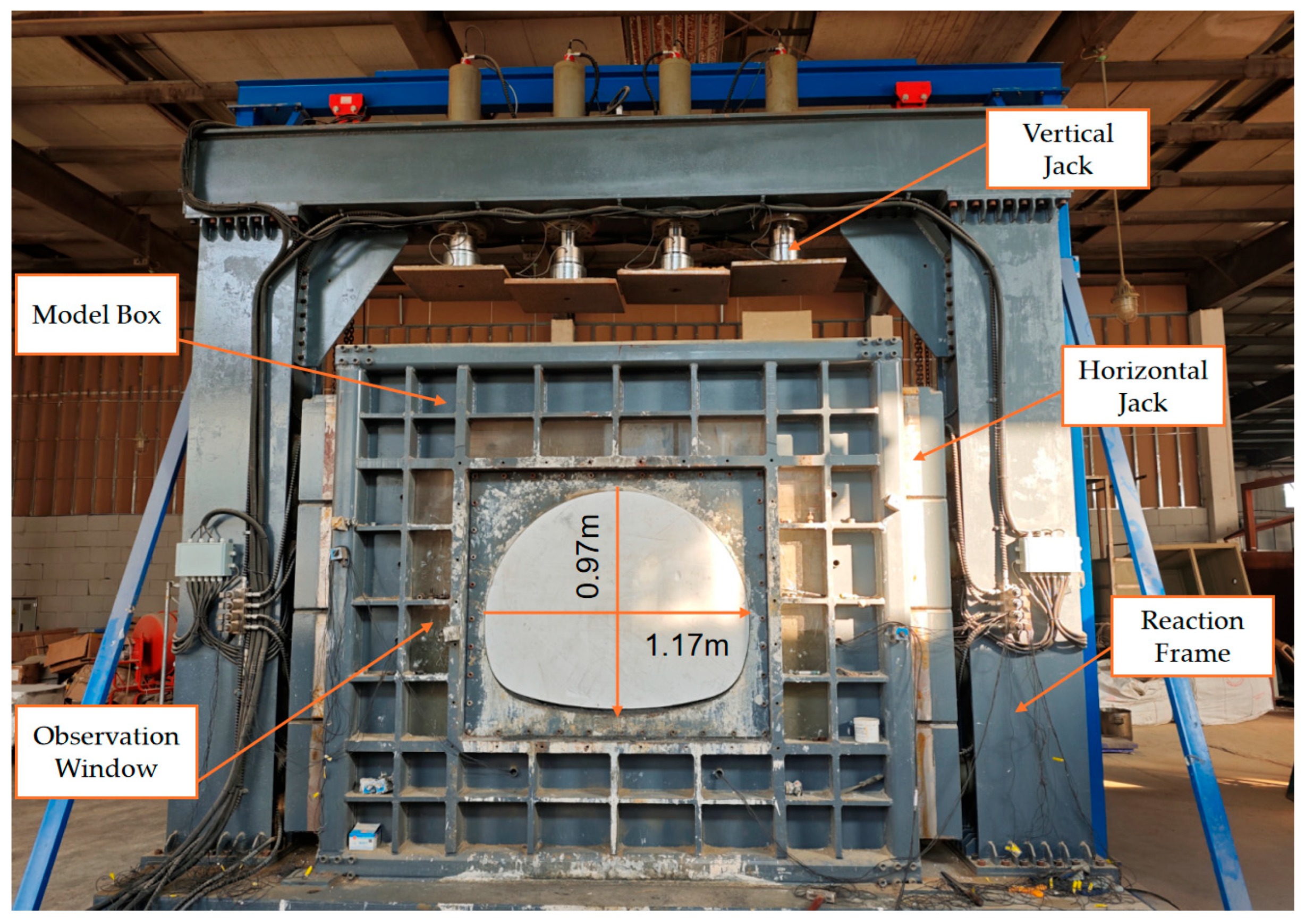
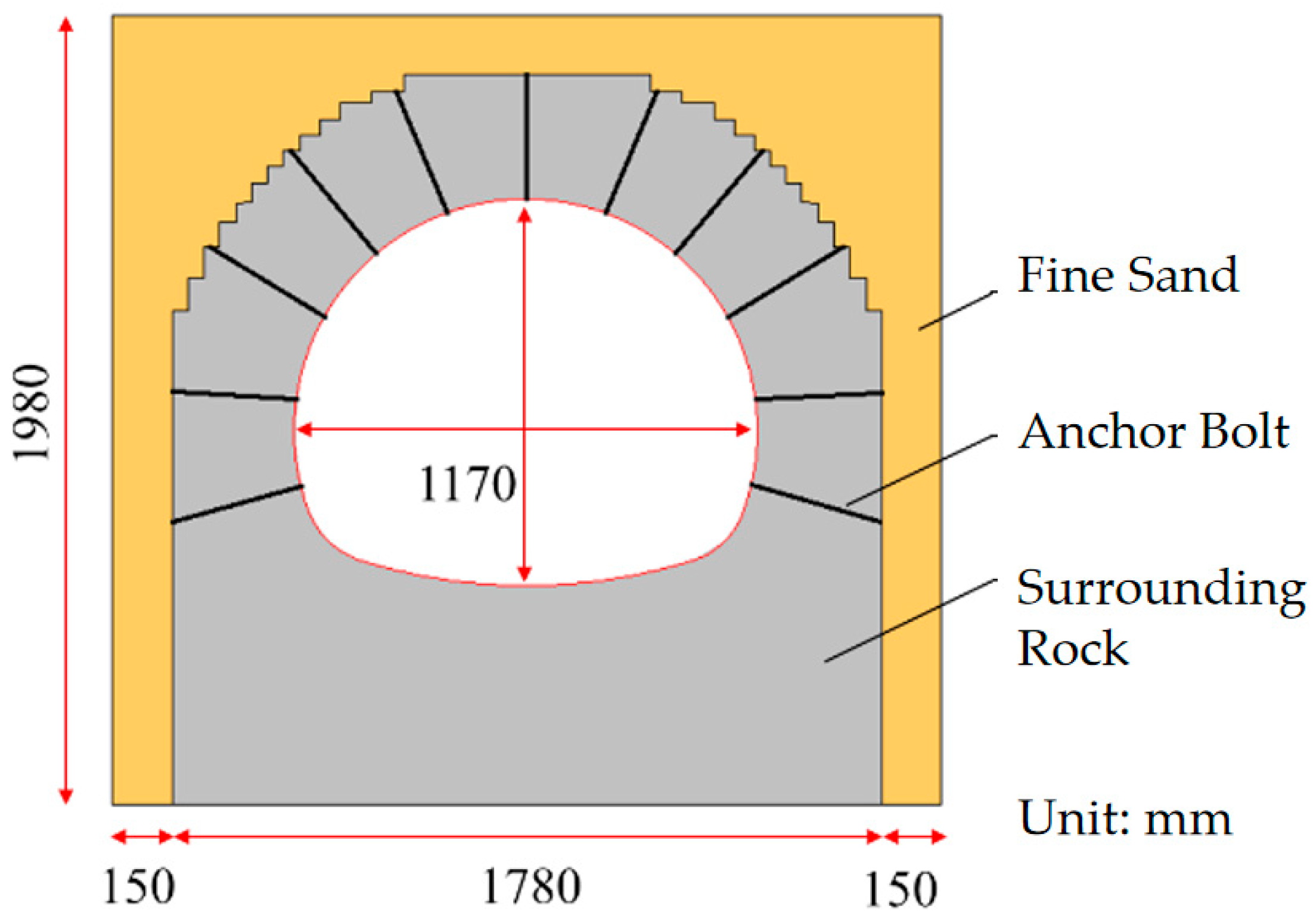
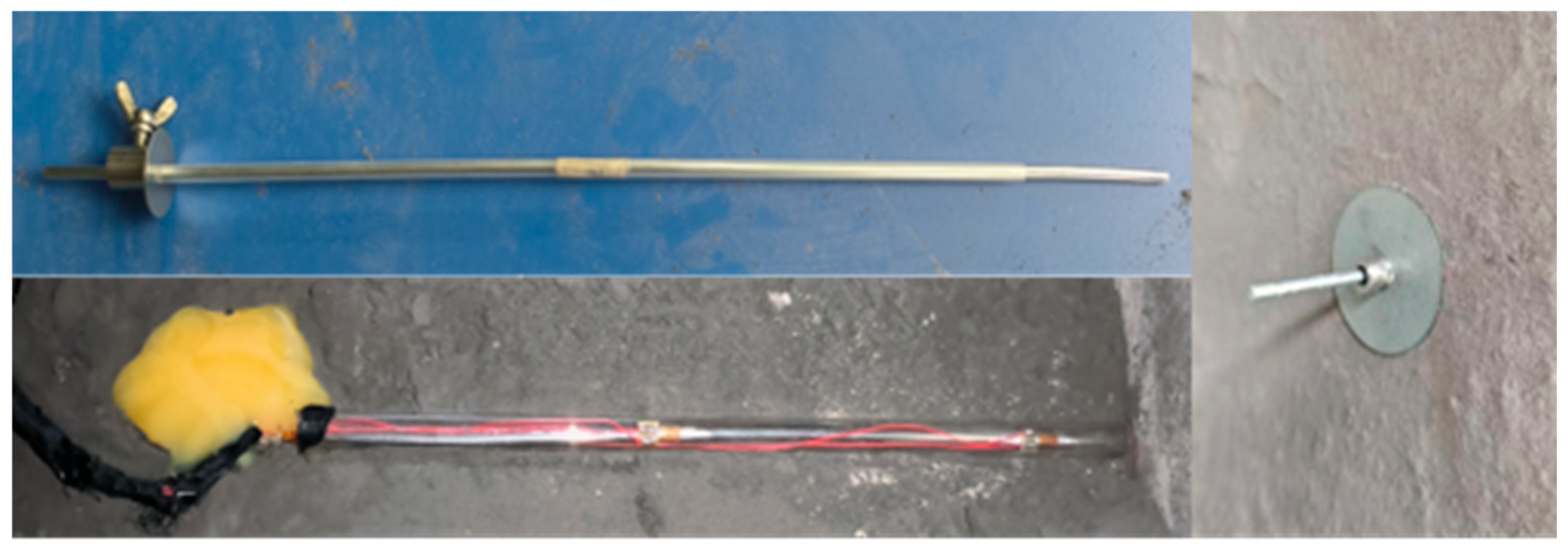
Aiming at the above problems, this study took a 350 km/h double-line high-speed railway tunnel as the engineering prototype, designed a large-scale tunnel structure model test system, prepared similar materials of surrounding rock and anchor bolts with reference to relevant research results [
5,
13], and carried out model tests under three working conditions: unsupported, ordinary bolt support, and prestressed anchor bolt support. By monitoring the tunnel failure process and stress characteristics of the support structure throughout the test, the failure modes, bearing capacity, deformation characteristics, and axial force distribution of anchor bolts of tunnels under different support forms were systematically analyzed to reveal the active support bearing mechanism of prestressed anchor bolts and quantify their improvement effect on the initial anti-deformation capacity and bearing capacity of tunnels, which provides the test basis and theoretical reference for the optimal design and engineering application of prestressed anchor bolts in soft rock tunnels.
3. Analysis of Model Test Results
Combined with the tunnel engineering design code and the characteristics of gradient step loading in the model test, this study uniformly defined the core indicators of bearing capacity: the design bearing capacity is the load of the previous stage when the tunnel-surrounding rock has local damage and the damage begins to affect the integrity of the bearing arch and the section shape, with auxiliary judgment combined with the measured vault displacement data; the ultimate bearing capacity is the load of the previous stage before the overall collapse of the tunnel, corresponding to the maximum stable load before the surrounding rock completely loses its bearing capacity and structural failure.
In this test, the support form was the only variable (working condition 1: unsupported; working condition 2: ordinary bolt support; and working condition 3: prestressed anchor bolt support), and all other initial parameters were completely consistent: the mix ratio of surrounding rock similar materials, the specification and layout of anchor bolts were unified, and the loading mode, loading rate, load holding time, and monitoring scheme were the same, which effectively eliminated the interference of irrelevant variables on the test results.
3.1. Failure Phenomena
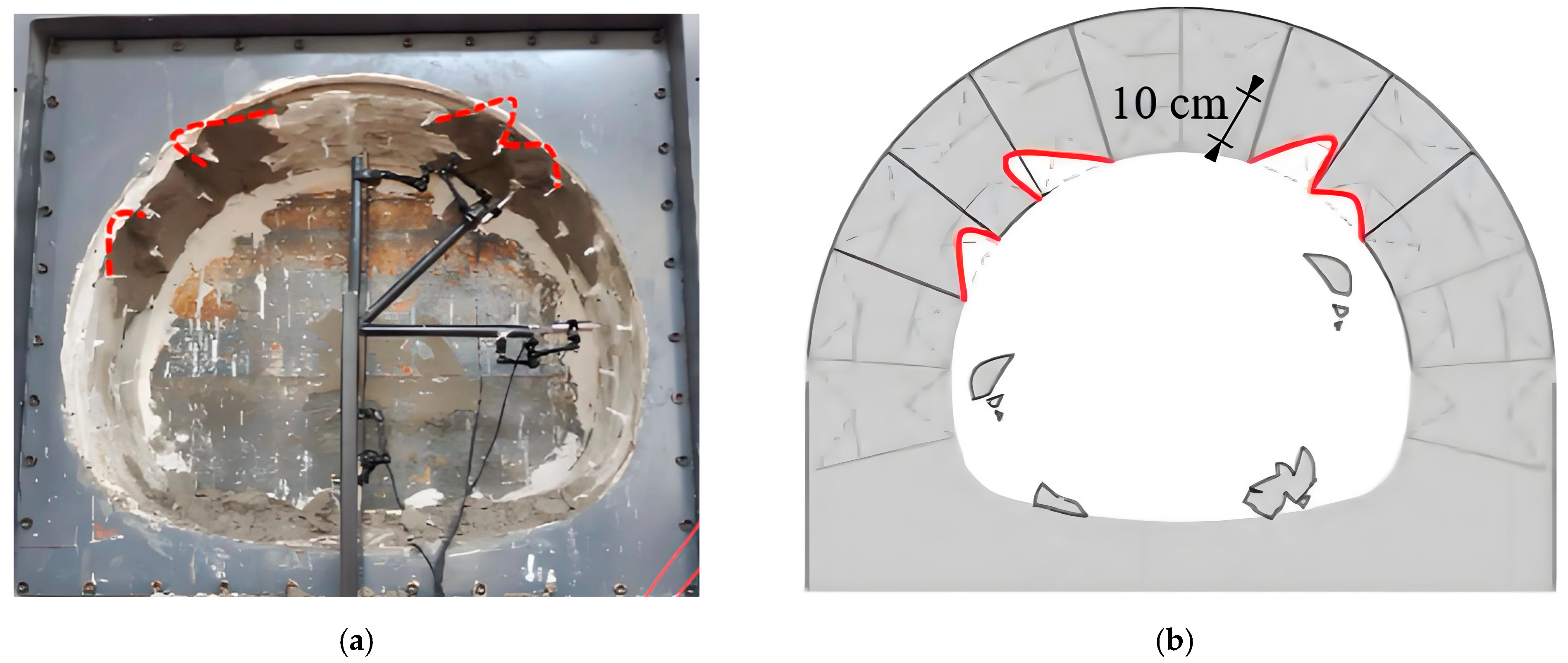
Case 1: The surrounding rock bears the load only by its own self-bearing capacity without external constraints. The deformation of the surrounding rock accumulates continuously during the loading process. When the vertical load rises to 130 kPa, a large-scale spalling and block falling occur in the surrounding rock on the left side of the vault. The local damage has affected the integrity of the bearing arch and the tunnel section shape, and the vault displacement has a sudden change, with the measured vault displacement reaching 3.5 mm. According to the definition standard, the previous stage load of 110 kPa is taken as the design bearing capacity. At this time, the structural stiffness begins to decay rapidly. With the continuous increase in load, the local damage expands to the whole section. When the load rises to 170 kPa, the tunnel collapses as a whole, and the previous stage load of 150 kPa is taken as the ultimate bearing capacity, corresponding to the maximum stable load before the surrounding rock completely loses its bearing capacity. (
Figure 8).
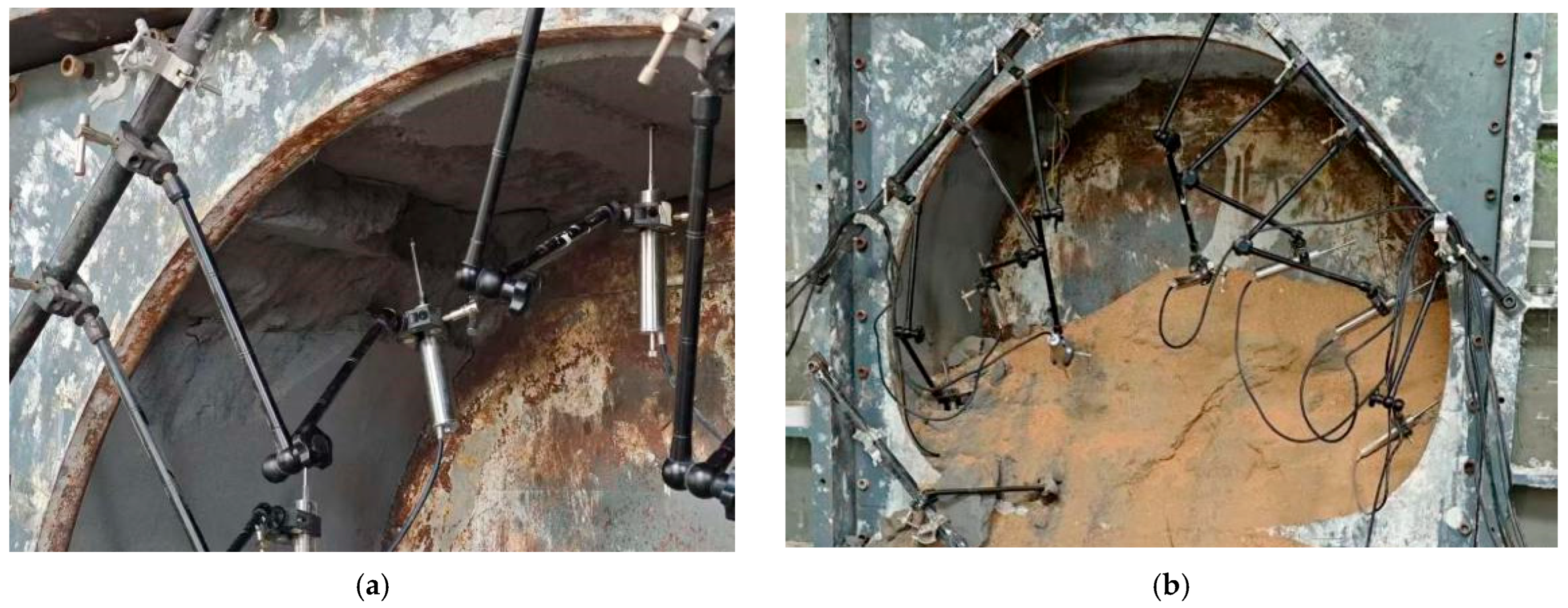
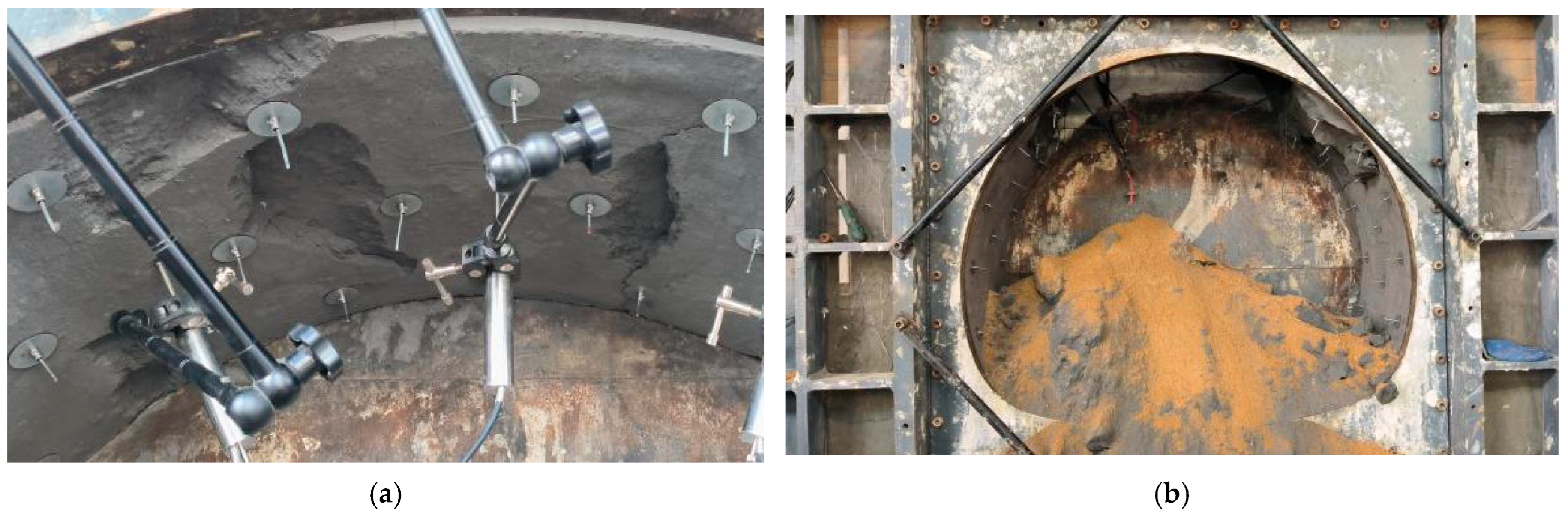
Case 2: A slight sudden change in vault displacement occurs at the initial loading stage, reflecting the typical characteristic of passive support of ordinary anchor bolts—no pre-tightening force is applied, and the load is gradually borne only after the surrounding rock deforms, resulting in limited constraint effect on the initial deformation of the surrounding rock. When the vertical load rises to 210 kPa, multiple local damages occur at the arch shoulders on both sides of the tunnel, with the damage zone depth reaching 8~10 cm. Some anchor bolts are detached from the surrounding rock and exposed, the integrity of the bearing arch is damaged, and the cross-sectional shape is affected. Meanwhile, the vault displacement increases sharply to 15.2 mm, so the previous stage load of 190 kPa is taken as the design bearing capacity. The damaged area at the arch shoulder becomes a structural weak point, leading to a significant decrease in the overall stiffness. During subsequent loading, the damage continues to expand and intensify. When the load rises to 250 kPa, the tunnel collapses entirely, and the previous stage load of 230 kPa is taken as the ultimate bearing capacity (
Figure 9).
Case 3: The vault displacement increases steadily without obvious sudden changes at the initial loading stage, demonstrating the advantage of active support of prestressed anchor bolts—by applying pre-tightening force in advance to form an integral anchor solid with the surrounding rock, effective constraint on the deformation of the surrounding rock is achieved from the early stage of loading, delaying the occurrence of local damage. When the vertical load rises to 270 kPa, multiple local collapses occur at the vault and on the left side. These local damages affect the integrity of the bearing arch and the cross-sectional shape. Under this load, a small deformation occurs at the vault with the measured displacement of 4.4 mm. According to the standard, the previous stage load of 250 kPa is taken as the design bearing capacity. After continuous loading, the anchor solid only undergoes slight deformation without sudden damage. When the load rises to 350 kPa, the tunnel collapses entirely, and the previous stage load of 330 kPa is taken as the ultimate bearing capacity, corresponding to the maximum stable bearing state before structural failure (
Figure 10).
3.2. Bearing Capacity
Based on the uniformly defined bearing capacity indicators and judgment criteria mentioned above, combined with the failure phenomena and displacement monitoring data of each case, the test results of design bearing capacity and ultimate bearing capacity of each case are statistically obtained, as shown in
Table 3. The “increase compared with the unsupported tunnel” in the table refers to the net increase in system bearing capacity under a specific loading configuration and not the bearing capacity of the support structure alone.
It can be seen from the test results in
Table 3 that both types of anchor bolt support can effectively improve the design bearing capacity and ultimate bearing capacity of the tunnel system, and the prestressed anchor bolt support has a better improvement effect, highlighting the advantages of active support technology: the design bearing capacity and ultimate bearing capacity of ordinary anchor bolt support are increased by 72.7% and 53.3% compared with the unsupported tunnel, respectively; on the other hand, those of prestressed anchor bolt support are increased by 127.3% and 120.0% compared with the unsupported tunnel, and they are further increased by 31.6% and 43.5% compared with the ordinary anchor bolt support. The core reason is that prestressed anchor bolts constrain the deformation of the surrounding rock and optimize the stress state from the early stage of loading by applying pre-tightening force in advance, inhibit the expansion of plastic deformation and local damage, improve the integrity of the bearing arch, and mobilize the bearing potential of deep rock mass, realizing the “support structure + surrounding rock” synergistic bearing. In contrast, ordinary anchor bolts are passive support, which only play a role after the deformation and local damage of the surrounding rock occur, with insufficient constraint on early deformation and damage, resulting in limited improvement effect.
3.3. Deformation and Mechanical Characteristics of the Bearing Arch
3.3.1. Deformation Characteristics
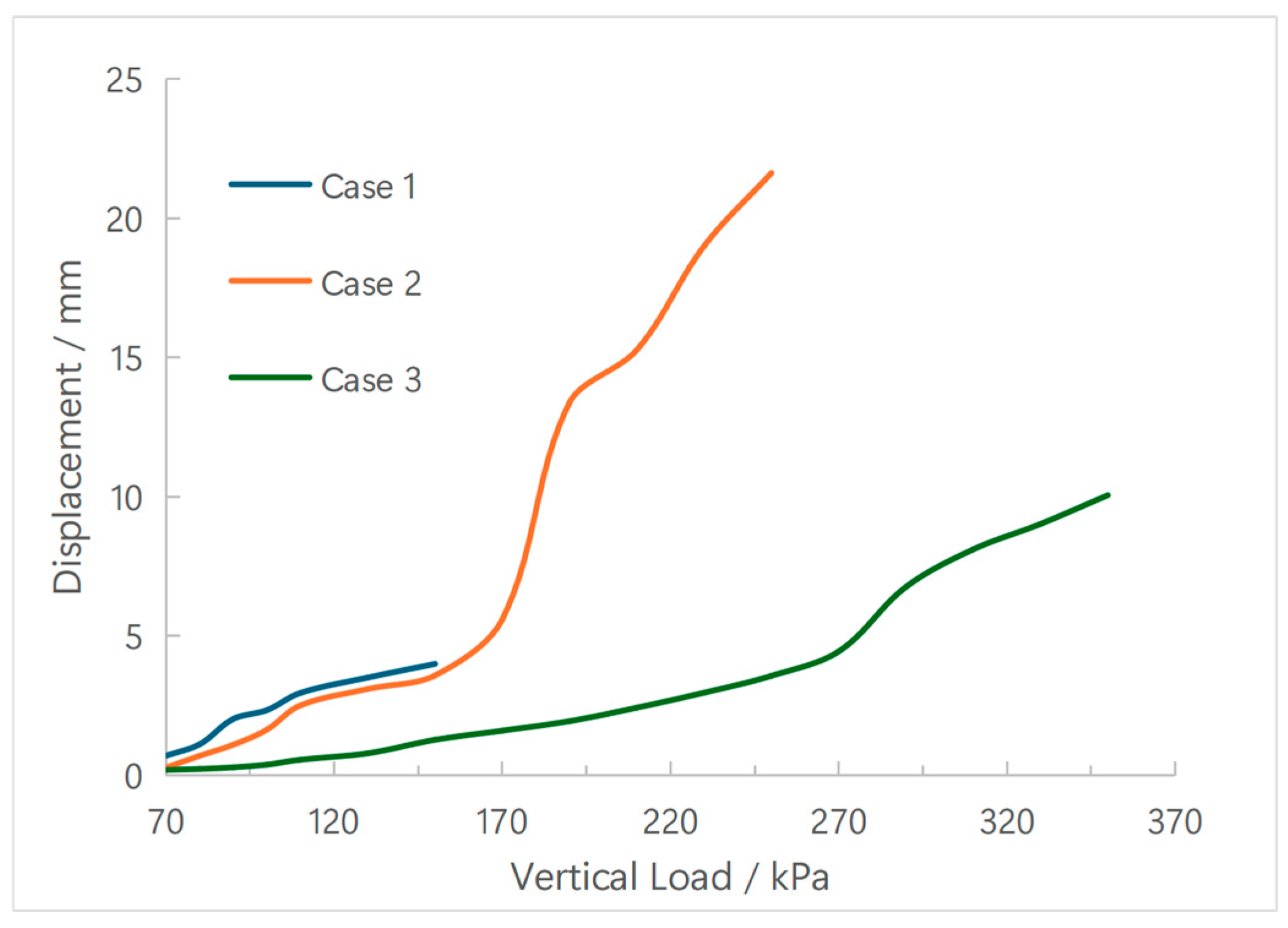
Figure 11 shows the relationship curves between tunnel vault displacement and vertical load under three cases, obtained from the displacement meter monitoring data. The secant stiffness in the load range of 70~110 kPa is calculated as the initial structural stiffness. This range is the initial loading stage of the test, and no plastic damage occurs in all three cases, which can objectively reflect the initial anti-deformation capacity of different support forms. The calculation formula of secant stiffness is
(
is the load increment, and
is the displacement increment), and this stiffness calculation method is a general method for evaluating the anti-deformation capacity of tunnel structures [
7,
10,
13].
After the calculation, the secant stiffness of Case 1, Case 2 and Case 3 in the load range of 70~110 kPa is 13.3 kPa/mm, 16.0 kPa/mm and 80.0 kPa/mm, respectively. The initial stiffness of Case 3 is significantly higher than that of Case 1 and Case 2, being six times and five times that of them, respectively. When the vertical load reaches 110 kPa (the design load of Case 1), the vault displacements of Case 1, Case 2, and Case 3 are 3.0 mm, 2.5 mm, and 0.5 mm, respectively. The vault displacement of Case 1 is slightly larger than that of Case 2, and the vault displacement of Case 3 is much smaller than that of the previous two. This indicates that at the initial loading stage, the ordinary anchor bolt support is passive support, which has a limited effect on improving the initial anti-deformation capacity of the tunnel; on the other hand, the prestressed anchor bolt support exhibits high initial stiffness, which significantly enhances the anti-deformation capacity of the tunnel, and this characteristic is closely related to the active support mechanism of prestressed anchor bolts.
From the perspective of curve shape and measured data, Case 2 (ordinary anchor bolt support) shows a significant sudden change in displacement in the range of 170~190 kPa: the displacement is 5.61 mm at 170 kPa and jumps sharply to 13.39 mm at 190 kPa. This is a typical manifestation of the passive support mechanism—ordinary anchor bolts do not apply pre-tightening force and only bear the load passively after the surrounding rock produces large plastic deformation, leading to a sharp increase in displacement. When reaching 190 kPa (the design bearing capacity of Case 2), the curve enters a short flat section. This is because the bonding effect between the anchor bolt and the surrounding rock temporarily forms a constraint before local damage, slowing down the displacement growth rate. However, at this time, the surrounding rock has entered the elasto-plastic stage, and the structural stiffness decreases significantly. When the load increases to 210 kPa, local damage occurs at the tunnel arch shoulder (
Figure 9a), the integrity of the bearing arch is damaged, and the displacement further increases to 15.27 mm. At this time, the vault displacement of Case 3 is only 2.4 mm, which is 15.8% of that of Case 2. Subsequent displacement continues to grow rapidly, and finally the tunnel collapses entirely at 250 kPa.
In contrast, the displacement of Case 3 (prestressed anchor bolt support) increases steadily in the range of 170~190 kPa, with a displacement of only 1.60 mm at 170 kPa and 1.95 mm at 190 kPa, without obvious sudden changes. This is a direct result of the prestressed anchor bolts forming an integral anchor solid with the surrounding rock through pre-tightening force and effectively constraining deformation from the early stage of loading. When the load rises to 270 kPa, local damage occurs at the vault (
Figure 10a), the integrity of the bearing arch is affected, and the displacement increases from 2.43 mm to 4.45 mm, showing a period of displacement sudden change, which reflects the decrease in synergistic bearing capacity. However, due to the active constraint effect, the anchor solid still maintains overall stability, and the displacement growth is controllable until the tunnel collapses entirely at 350 kPa. This law has also been verified in relevant prestressed anchorage model tests [
5,
9].
In summary, under the same load, anchor bolt support can effectively improve the anti-deformation capacity of the tunnel, and the effect of prestressed anchor bolt support is more significant; ordinary anchor bolt support is passive support, and the vault is prone to displacement sudden changes with poor support stability; prestressed anchor bolt support is active support, which can effectively constrain the early plastic deformation of the surrounding rock, and its high initial stiffness is the key factor determining the anti-deformation capacity of the tunnel. This conclusion is consistent with the results of the existing numerical simulations and experimental studies [
4,
12].
3.3.2. Stress Characteristics
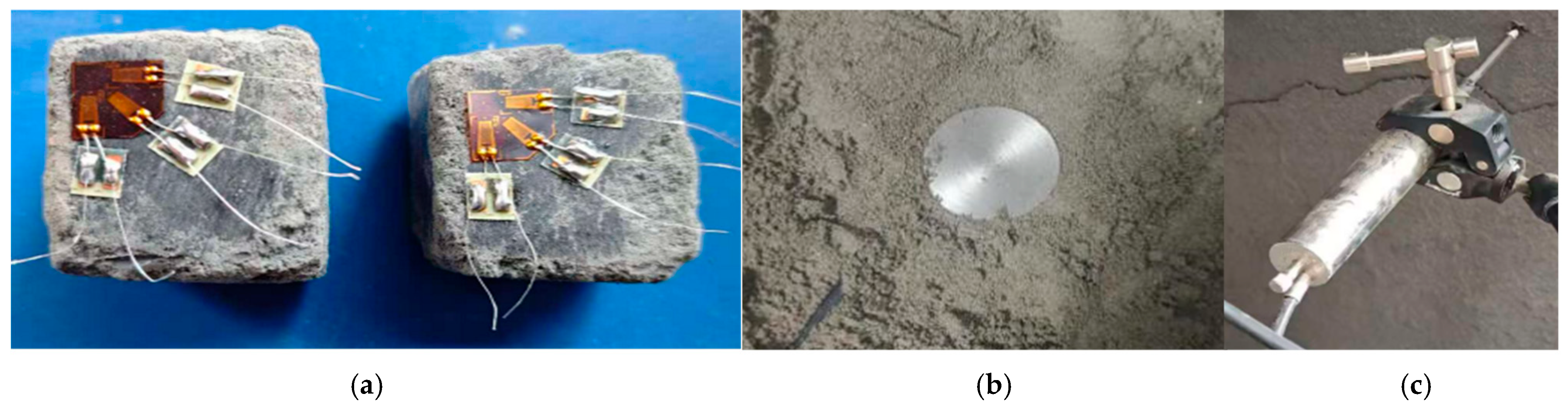
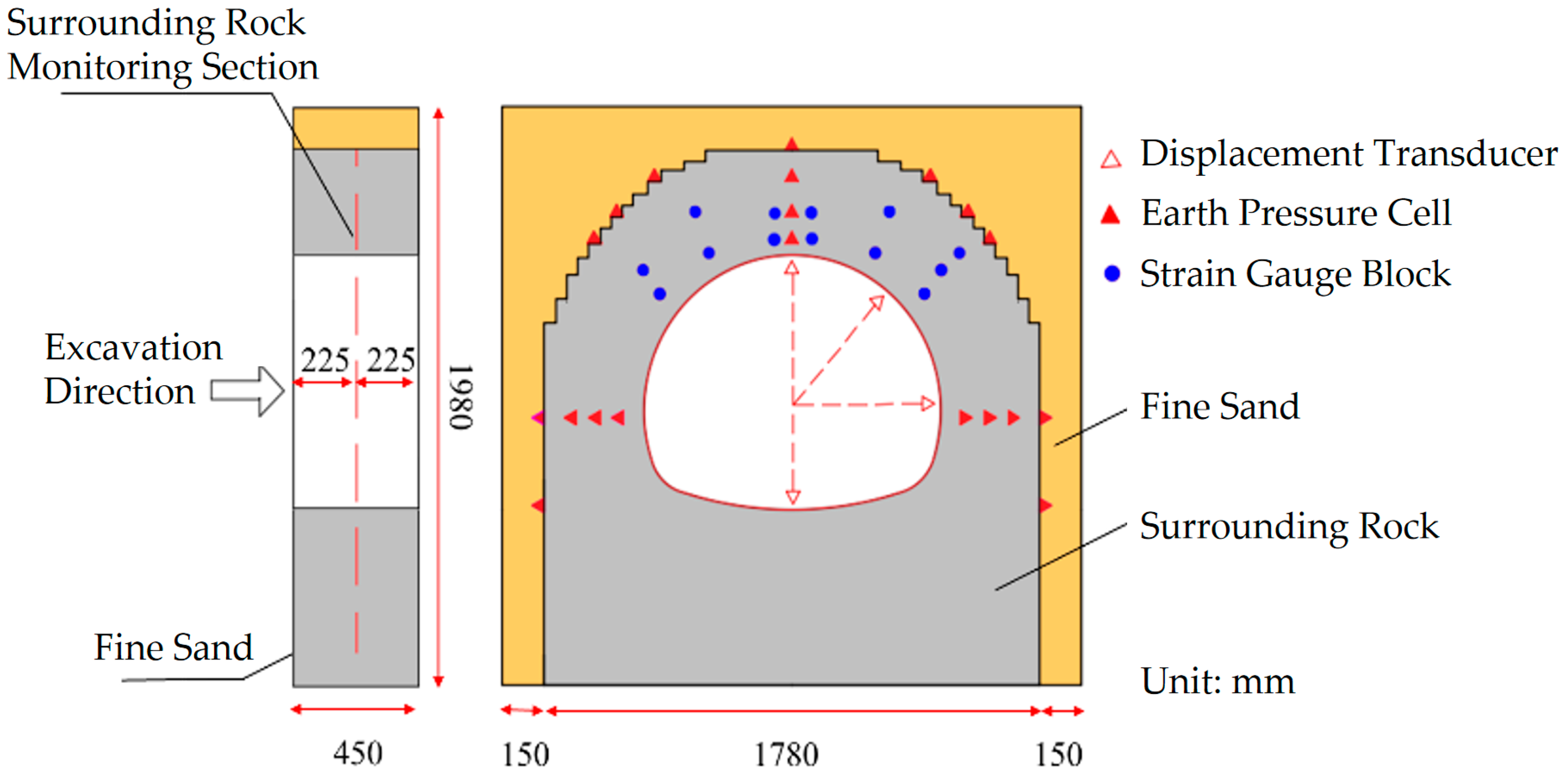
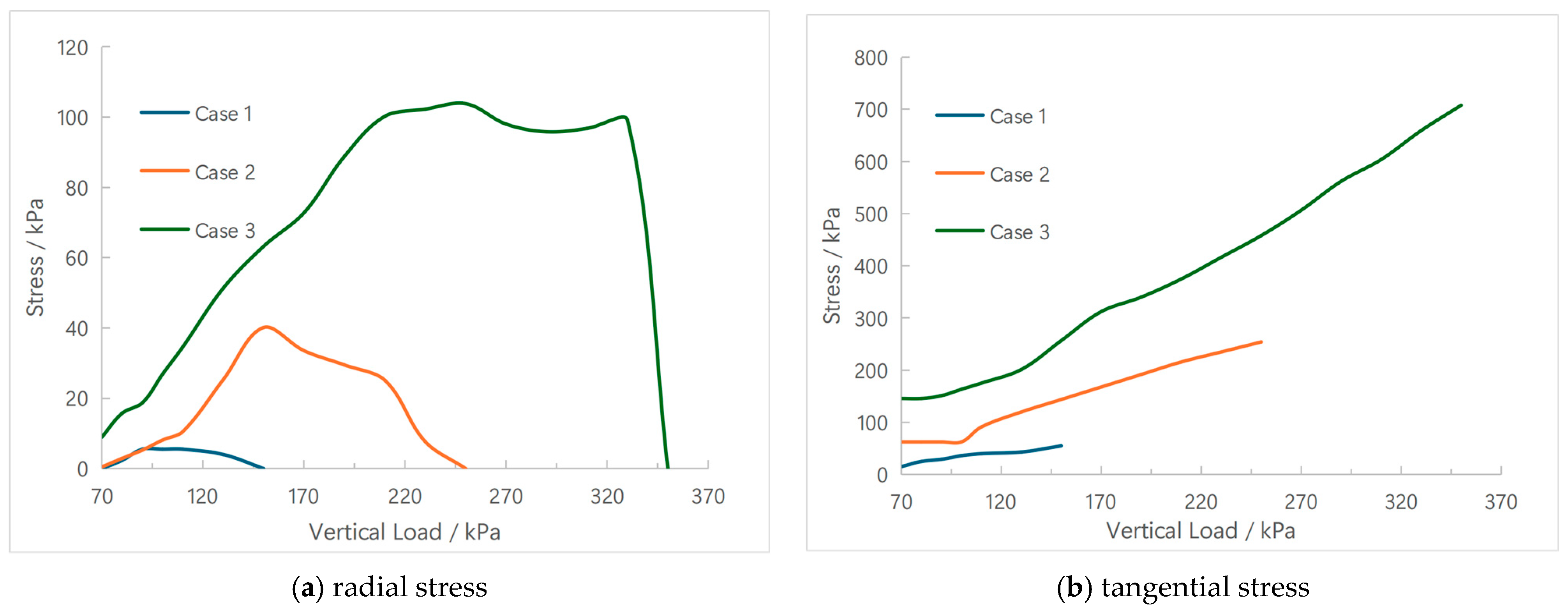
Figure 12 shows the variation curves of radial stress, tangential stress, and vertical load at the center of the bearing arch vault, which are obtained from the measured data of a single strain brick at the center of the vault (the upper left one among the four strain bricks at the vault, see
Figure 5 for details). This measuring point is a key stress-bearing position of the tunnel vault, and its stress change can effectively reflect the overall stress state of the anchor solid. During the test, the data of this measuring point is stable without obvious discreteness, and the selection method of this measuring point refers to the general principle of the tunnel-surrounding rock stress monitoring [
9,
13]. Among them, the stress value of the surrounding rock in the elastic stage is quantitatively calculated by combining the measured strain of the strain brick with the linear elastic constitutive relation; after entering the plastic deformation and failure stage, the stress value is converted from the measured strain of the strain brick, assisted by the measured data of the vault earth pressure cell for verification. At the same time, the stress evolution trend and numerical range in the plastic stage are comprehensively determined by coupling the local damage phenomenon of the tunnel and the sudden change characteristic of the vault displacement. Through the mutual verification of multi-source data, the rationality and reliability of the stress analysis results in the entire stress-bearing stage are guaranteed.
From the overall perspective of the curves in the figure, under the same load, the radial stress and tangential stress at the center of the anchor solid vault show the law of Case 1 < Case 2 < Case 3, indicating that the prestressed anchor bolt support significantly optimizes the surrounding rock stress state through active pre-tightening force and strengthens the structural performance of the bearing arch.
The radial stress in
Figure 12a reflects the lateral constraint and compaction degree of the surrounding rock. In the early stage of loading when the vertical load is less than 150 kPa, the stress of the two anchor bolt support cases increases steadily, and the stress level of Case 3 is significantly higher, reflecting the active compaction effect of pre-tightening force on the surrounding rock. The radial stress of Case 2 reaches a peak of 40.14 kPa when the vertical load is 150 kPa and then continues to decrease. This inflection point is highly linked to the displacement curve—corresponding to the rapid growth of vault displacement after the vertical load reaches 150 kPa (
Figure 11). Its essence is that passive support can only play a role after the significant settlement of the surrounding rock, but the early deformation has led to the damage of the bearing arch integrity and the micro-detachment between the anchor bolt and the surrounding rock, resulting in the attenuation of constraint. Later, when the vertical load rises to 210 kPa (the local failure load of Case 2), its radial stress drops to 25.11 kPa, a decrease of 37.4% compared with the peak value, which echoes the subsequent significant increase in vault displacement, indicating that the anchor bolt is largely detached from the surrounding rock and the lateral constraint is almost ineffective. However, the radial stress of Case 3 still maintains 100.22 kPa when the vertical load is 210 kPa, which is four times that of Case 2, and no detachment occurs in the anchor solid, which is consistent with the characteristic of stable displacement growth. When the vertical load continues to rise to 270 kPa (the local failure load of Case 3), the radial stress of Case 3 slightly drops to 97.99 kPa, corresponding to the shallow local damage of the vault, but the stress attenuation amplitude is much smaller than that of Case 2, and the structural stability remains good.
The tangential stress in
Figure 12b reflects the circumferential stiffness and structural integrity of the bearing arch. The tangential stress of the three cases increases continuously with the load, and the growth rate and final stress level of Case 3 are significantly higher than those of Case 1 and 2, which intuitively reflects the strengthening effect of prestressed anchor bolts on the stiffness of the bearing arch. When the vertical load is 190 kPa (the design load of Case 2), the tangential stress of Case 3 reaches 340 kPa, which is 1.77 times that of Case 2, indicating that the prestressed anchor solid constructs a high-stiffness composite bearing arch through active pre-compression, fully mobilizing the circumferential bearing potential of deep rock mass.
From the perspective of mechanical mechanism, prestressed anchor bolts convert the surrounding rock from a “loose stress-bearing” state to an “integral synergistic stress-bearing” state by actively applying pre-tightening force: the increase in radial stress enhances the friction and cohesion between rock blocks, inhibiting the loosening of the surrounding rock; the increase in tangential stress increases the circumferential stiffness of the bearing arch, delaying the occurrence and development of local damage. This mechanism is highly consistent with the prestressed anchor bolt bearing arch theory proposed by Li et al. [
3], and it also verifies the importance of active constraint for optimizing surrounding rock pressure.
In contrast, ordinary anchor bolts, as passive support, only provide frictional resistance after the deformation of the surrounding rock, and it is difficult to effectively control the early plastic deformation, leading to the detachment of the interface between the anchor bolt and the surrounding rock and ultimately the failure of the bearing structure. In summary, prestressed anchor bolt support significantly improves the radial and tangential stress of the anchor solid, optimizes the surrounding rock stress field, and significantly enhances the compressive strength and structural stability of the tunnel system, providing a solid experimental basis for the control of large deformation of soft rock tunnels.
3.4. Anchor Bolt Axial Force
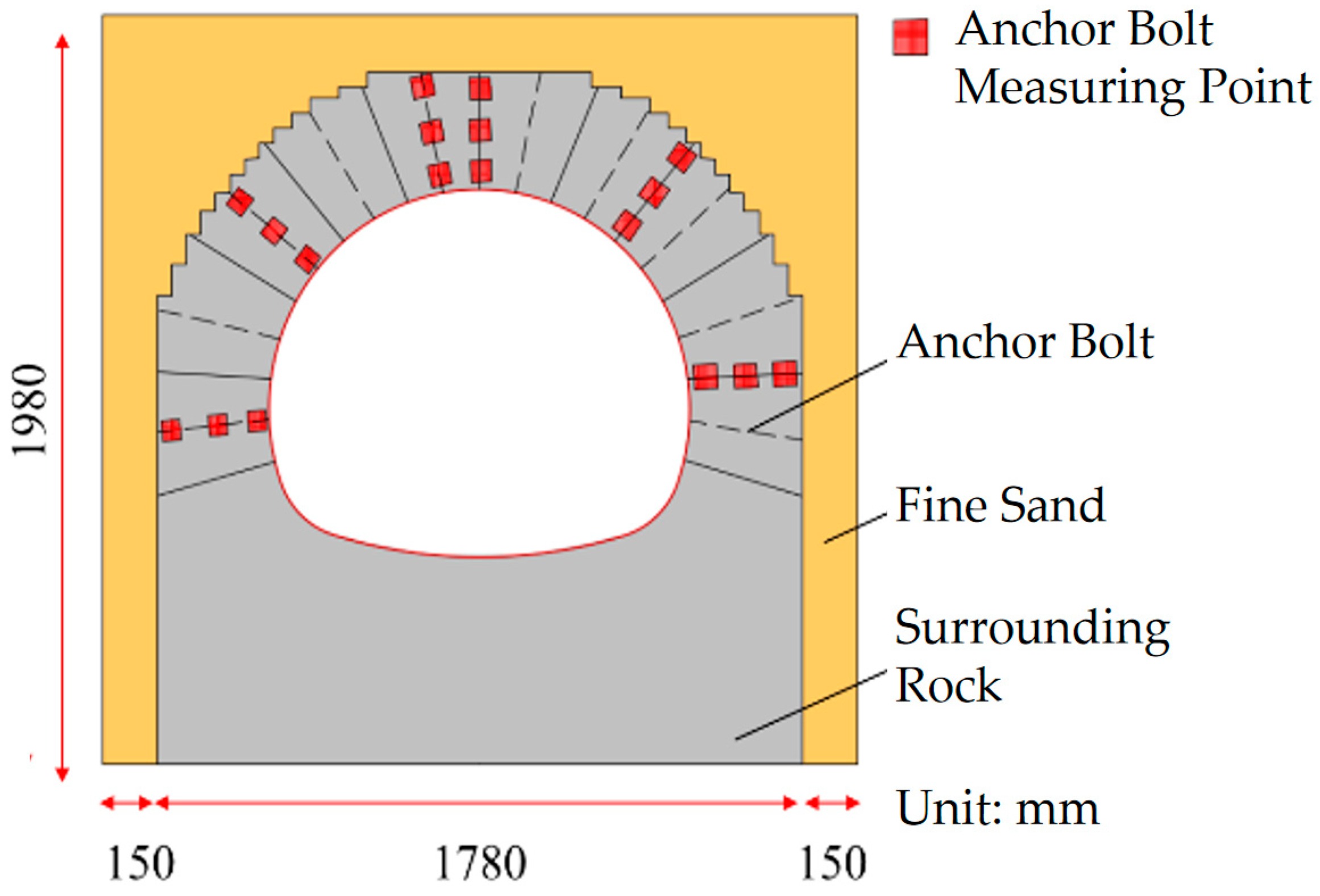
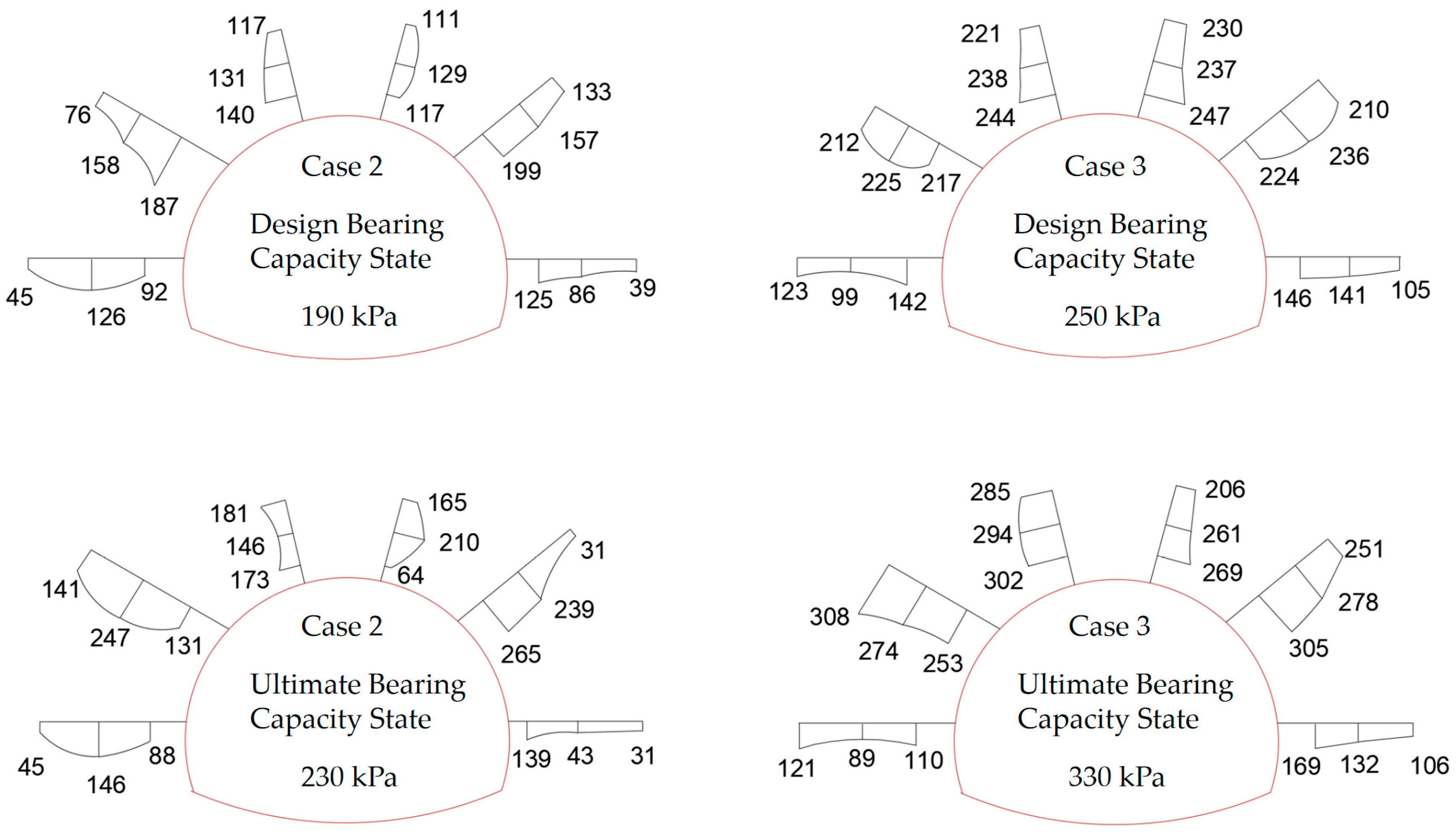
Figure 13 clearly shows the axial force distribution characteristics of anchor bolts at various positions under the design bearing capacity and ultimate bearing capacity states of Case 2 and Case 3. The evolution law and mechanical mechanism of axial force are analyzed in combination with the measured data as follows:
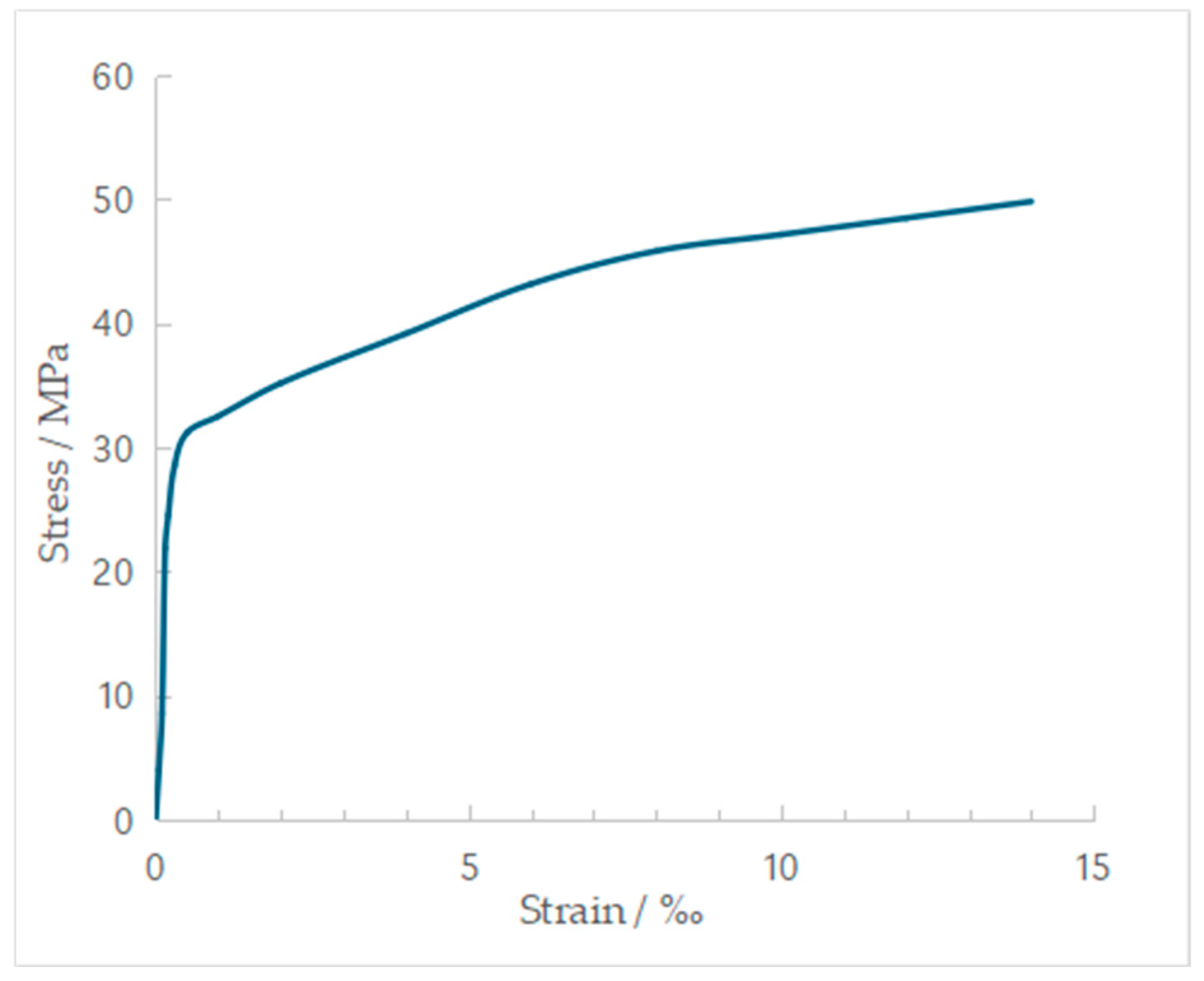
When Case 2 reaches the design bearing capacity (190 kPa), the maximum axial force measured by each anchor bolt is 125~199 N, corresponding to a tensile stress of 17.7~28.1 MPa, which is lower than the yield strength of the anchor bolt (30 MPa), indicating that the anchor bolt is in the linear elastic working stage and the material mechanical properties are not effectively exerted. From the perspective of axial force distribution of a single anchor bolt, most of them show a gradient of “head < middle < tail”, with uneven axial force distribution. The maximum values appear at the tail of the left arch shoulder (187 N) and the tail of the right arch shoulder (199 N), indicating that under passive support, the anchor bolt only bears the load locally after the significant settlement of the surrounding rock, and the axial force transmission is uneven, making it difficult to fully mobilize the material performance.
When Case 3 reaches the design bearing capacity (250 kPa), the maximum axial force of each anchor bolt is 142~247 N, corresponding to a tensile stress of 20.1~34.9 MPa. Among them, the tensile stress of 52.9% of the measuring points reaches or exceeds the yield strength, and the tensile stress accounts for 40.2~69.8% of the ultimate tensile strength (50 MPa). This ratio is calculated by the ratio of the tensile stress of each measuring point to the ultimate tensile strength. From the perspective of axial force distribution of a single anchor bolt, the axial force distribution of the prestressed anchor bolt is more uniform, and the maximum values appear at the tail of the left vault (244 N) and the tail of the right vault (247 N). The axial forces at other parts of these two anchor bolts are not much different from them, reflecting that the active pre-tightening force enables the anchor bolt to form an integral synergistic bearing system with the surrounding rock, effectively mobilizing the bearing potential of deep rock mass.
When reaching the ultimate bearing capacity state, the maximum axial force of each anchor bolt in Case 2 rises to 146~265 N, corresponding to a tensile stress of 20.7~37.4 MPa. Although some measuring points enter the yield stage, the axial force growth is still mainly concentrated in the arch shoulder area, and the maximum axial force at the side wall is only 146 N, indicating that passive support is difficult to fully mobilize the material performance, and the interface between the anchor bolt and the surrounding rock is prone to detachment under high load, resulting in the attenuation of constraint effect. In contrast, the maximum axial force of each anchor bolt in Case 3 rises to 169~308 N, corresponding to a tensile stress of 23.9~43.6 MPa, accounting for 47.8~87.2% of the ultimate tensile strength. The axial force distribution of a single anchor bolt still remains uniform, and the axial forces at the vault, arch shoulder, and side wall are all at a high level, indicating that the active constraint system effectively inhibits interface detachment, enabling the anchor bolt and surrounding rock to carry the load synergistically to the critical state before structural failure. However, neither of them reaches the ultimate tensile strength of 50 MPa. The reason is that after the plastic deformation and damage of the tunnel model, the bonding effect between the anchor bolt and the surrounding rock is weakened, the radial constraint effect of the anchor bolt on the surrounding rock is not fully exerted, and the mechanical properties of the anchor bolt are not completely utilized. This phenomenon has also been observed in similar anchorage support model tests [
5].
In summary, the prestressed anchor bolt has uniform axial force distribution and high material utilization rate, which can better improve the bearing capacity of the tunnel bearing arch. In contrast, the ordinary anchor bolt, as passive support, only bears the load locally after the deformation of the surrounding rock with uneven axial force transmission and low material utilization rate, making it difficult to effectively control the early plastic deformation and resulting in the insufficient exertion of the bearing arch effect. At the same time, the test data shows that the maximum axial force appears at the vault and arch shoulder positions, indicating that the vault and arch shoulder are the key stress-bearing positions of the tunnel anchor bolt support. In the design, the anchor bolt support parameters at this position should be strengthened through increasing the anchor bolt diameter and reducing the anchor bolt spacing. This conclusion can provide an important experimental basis for the engineering layout of prestressed anchor bolts.
5. Conclusions
Taking a 350 km/h double-line high-speed railway tunnel as the engineering prototype, this study built a large-scale tunnel structure model test system and carried out comparative tests under three working conditions: unsupported, ordinary anchor bolt support, and prestressed anchor bolt support. By monitoring the tunnel failure process, mechanical response of the support structure, and surrounding rock stress evolution throughout the test, the bearing characteristics, deformation laws, and anchor bolt axial force distribution characteristics of tunnels under different support forms were systematically analyzed, and the active support mechanism of prestressed anchor bolts was quantitatively revealed. The main conclusions are as follows:
Prestressed anchor bolt support can significantly improve the overall bearing capacity of the soft rock tunnel model, and the improvement effect is much better than that of ordinary anchor bolt support. Compared with the unsupported and ordinary anchor bolt-supported tunnel models, the design bearing capacity of the tunnel model with prestressed anchor bolt support is increased by 127.3% and 31.6%, respectively; the ultimate bearing capacity is increased by 120.0% and 43.5%, respectively. The core reason is that prestressed anchor bolts optimize the distribution of surrounding rock stress field by actively applying pre-tightening force, effectively improve the integrity of the bearing arch structure, realize the synergistic bearing between the support structure and surrounding rock, and greatly mobilize the bearing potential of deep rock mass.
The tunnel model with prestressed anchor bolt support has high initial stiffness and excellent early anti-deformation capacity, which can effectively constrain the early plastic deformation of surrounding rock. In the initial loading range of 70~110 kPa without plastic failure, the secant stiffness of the tunnel model under this support form reaches 80.0 kPa/mm, which is 6.0 times and 5.0 times that of the unsupported and ordinary anchor bolt supported tunnel models, respectively. Under the same load, the vault displacement is much smaller than that of the other two working conditions; in addition, the radial and tangential stresses of the surrounding rock are significantly higher than those of the unsupported and ordinary anchor bolt supported working conditions. At the load level, where local damage occurs in the ordinary anchor bolt-supported tunnel, the radial stress of the surrounding rock of the tunnel model with prestressed anchor bolt support still remains at a high level, which is four times that of the ordinary anchor bolt support. The active compaction effect of pre-tightening force strengthens the lateral constraint and circumferential stiffness of the surrounding rock, inhibits the loosening of surrounding rock and the expansion of plastic zone from the stress level, and delays the occurrence and development of local damage.
The axial force distribution of prestressed anchor bolts is more uniform, and the utilization rate of material mechanical properties is significantly higher than that of ordinary anchor bolts. Moreover, the vault and arch shoulder are the key stress-bearing positions of anchor bolt support. When the design bearing capacity is reached, the tensile stress of ordinary anchor bolts is in the linear elastic stage of 17.7~28.1 MPa, which does not reach the yield strength. However, the tensile stress of 52.9% of the measuring points of prestressed anchor bolts reaches or exceeds the yield strength, accounting for 40.2~69.8% of their ultimate tensile strength; under the ultimate bearing capacity state, the proportion of tensile stress of prestressed anchor bolts further rises to 47.8~87.2%, and the full-section axial force remains at a high level, while the axial force growth of ordinary anchor bolts is only concentrated in the arch shoulder area. The maximum axial force of anchor bolts in both support forms appears at the vault and arch shoulder positions, confirming that this area is the core stress-bearing part of tunnel anchor bolt support.
Through large-scale multi-working condition comparative tests, this study synchronously obtained complete mechanical response data of tunnel displacement field, surrounding rock stress field and anchor bolt axial force field under unified boundary conditions, loading paths, and monitoring schemes. It quantitatively revealed the accurate improvement law of prestressed anchor bolts on the bearing capacity and anti-deformation capacity of tunnel support systems, making up for the lack of large-scale test data on the bearing characteristics of tunnels supported by prestressed anchor bolts in the existing studies; at the same time, it clarified the action mechanism of prestressed anchor bolts in improving the synergistic bearing capacity of tunnels by optimizing the surrounding rock stress field and realizing uniform axial force distribution, which forms an effective connection with the existing research on prestressed anchorage bearing arch theory and active support mechanism, and it improved the experimental verification system of prestressed anchorage support for soft rock tunnels.
Through large-scale model tests, this study refinedly revealed the quantitative laws of prestressed anchor bolts in surrounding rock stress regulation, axial force evolution, and synergistic bearing, clarified the key stress-bearing parts, and supported strengthening ideas, which can provide direct experimental support and engineering reference for the parameter design, section layout, and large deformation control of prestressed anchorage systems in high-speed railway soft rock tunnels, and it has important practical value for improving the safety and economy of tunnel support under soft rock geological conditions.