1. Introduction
Eccentrically braced frames (EBFs) have been recognized as effective lateral-load-resisting systems, providing large ductility comparable to that of moment-resisting frames (MRFs) and excellent stiffness similar to that of concentric braced frames (CBFs). Several studies have been conducted on EBFs over the last two decades. The first experimental study on eccentrically braced frames consisted of a series of quasi-static tests conducted in the 1970s at the University of California, Berkeley [
1]. A large number of experiments were conducted to study the cyclic behavior of link beams [
2,
3]. Engelhardt and Popov [
4] investigated the behaviour of long W-section links. Popov et al. [
5] investigated the effect of maintaining a uniform link strength factor along the height of the frame by evaluating previous full-scale experiments on EBFs [
6]. Recently, Mansour [
7] conducted full-scale testing of a one-storey chevron-type EBF with a replaceable shear link. Another full-scale experiment was a pseudo-dynamic test of a dual EBF with a removable link [
8]. Research on EBFs over the past decade has focused primarily on improving the seismic performance of EBF links. Innovative replaceable [
9,
10] and self-centering links [
11] have been developed. In addition, self-centering EBFs using a superelastic shape memory alloy (SMA) have been developed for improved seismic performance [
12,
13]. Numerical models have also advanced significantly, incorporating fiber-based elements and specialized link components to accurately capture inelastic cyclic responses [
14].
The performance-based seismic design (PBSD) method has gained wide acceptance as a promising and efficient seismic design approach over the last decade. Accurate estimation of seismic demand parameters is essential for implementing performance-based seismic design. While nonlinear time history analysis (NLTHA) is the most rigorous and accurate procedure to estimate seismic demand parameters, the additional computational effort and inherent complexity of NLTHA make it not so popular in engineering design offices. Thus, simplified nonlinear static methods are adopted in various codes [
15,
16]. In pushover analysis, the structure is pushed with monotonically increasing lateral forces with a predefined height-wise load pattern until a target displacement is obtained. In this method, it is assumed that the response of the structure is controlled by the fundamental mode and that the mode shape remains unchanged even after the structure yields. However, once the structure yields, the vibration properties of the structure change. This redistribution of inertia forces, as well as higher mode effects, cannot be accounted for in conventional pushover analysis. To overcome the limitations of conventional pushover analysis procedures, a number of improved static procedures considering different loading vectors (derived from mode shapes) to account for contributions of higher modes than the fundamental mode to seismic demand were proposed. Among them, the most commonly used procedure is modal pushover analysis (MPA), which was proposed by Chopra and Goel [
17]. The fundamental assumption of MPA is that the coupling of structural responses due to different modes is neglected after the structure enters the inelastic stage. Such an assumption of the MPA procedure simplifies the estimation of structural responses of inelastic systems. MPA has been shown to increase the accuracy of seismic demand estimation in taller moment-frame buildings compared to the conventional pushover analysis [
18]. In the MPA procedure, pushover analysis is first performed to determine the maximum response parameters of the structure at its nth vibration mode. Thus, concept-wise, the MPA procedure does not increase complexity, as higher-mode pushover analyses are similar to conventional first-mode pushover analyses. However, the assumption of decoupling of structural responses in MPA might cause some estimation errors compared with results from nonlinear time history analysis. Thus, the procedure must be evaluated in estimating seismic demands for any primary lateral-load-resisting system before its recommended use. Previous research evaluated the applicability of the MPA procedure for moment-resisting frames [
18,
19]. Kalkan and Kunnath [
20] examined the performance of the MPA procedure in estimating the seismic demands of a set of existing steel and reinforced concrete buildings. Nguyen et al. [
21] investigated the applicability of the MPA procedure for buckling-restrained braced frame (BRBF) buildings. To the best of the authors’ knowledge, no research is currently available on the application of MPA on ductile eccentrically braced frames (EBFs). EBFs are increasingly used in low-to-medium-rise buildings, and such systems exhibit different deformation characteristics from the frame structures. Therefore, one of the objectives of this paper is to address a significant gap in the literature by evaluating the applicability of the MPA procedure for ductile EBFs. The selected buildings represent low-rise (four-storey), medium-rise (eight-storey) and high-rise (14-storey) EBFs. The results from modal pushover analyses are compared with more accurate seismic analyses results from a nonlinear dynamic time history analysis.
Another nonlinear static method adopted in Eurocode 8 [
15] for performance evaluation and design verification of new and existing buildings is the N2 method. The N2 method, originally proposed by Fajfar [
22], is an easy-to-use nonlinear static method using a constant ductility inelastic response spectrum. In this method, the seismic capacity curve is obtained from pushover analysis, and the demand curve is represented by the design response spectrum. The point where the demand and capacity curve intersect is called the performance point, which shows the probable performance of the structure for a certain seismic demand. At the performance point, seismic demand and capacity are equal. Research has previously shown good predictions of seismic performance parameters for reinforced concrete frame buildings by the N2 method [
22]. This paper further assesses the applicability of the N2 method for estimating the seismic demands of EBFs. This is done by comparing seismic analysis results of the three selected EBFs (four-, eight-, and 14-storey EBFs) with results from the N2 method.
For this research, the N2 and MPA methods were selected because they are widely accepted and computationally inexpensive. Both the N2 and the MPA methods provide reliable estimates of global seismic performance, such as target displacement and drift, for many lateral-load-resisting systems. In addition, both methods use nonlinear pushover curves and thus incorporate actual strength degradation and plastic behaviour.
The selected EBFs have been designed in accordance with the NBC 2020 and CSA S16-19 [
23] requirements and are analyzed for ground motions compatible with Western Canada. Thus, this study provides one of the few detailed performance assessments of EBFs under Vancouver-compatible ground motions, making the results directly relevant to Canadian practice.
Accurate estimation of the fundamental period of a structure is a prime consideration in calculating the design base shear and lateral forces for seismic design. Recently, Kuşyilmaz and Topkaya [
24] proposed a hand calculation method to estimate fundamental periods of EBF buildings. They used Rayleigh’s method as a basis and utilized the roof drift ratio to formulate their proposed period equation. Most building codes propose simple empirical expressions to estimate the fundamental period of building structures. ASCE 7-22 [
25] recommends provisions for the design of buildings and other structures. The following expression has been proposed for calculating the building period.
where
is the fundamental period,
is the height of the structure above the base, and
and
are constants. ASCE 7-22 proposes
and
for the estimation of fundamental periods of EBFs.
Eurocode 8 [
15] recommends a similar empirical equation with slight modification for period estimation of EBFs with heights up to 40 m, and a value of
is recommended.
The National Building Code of Canada provides a more simplified period formula for EBFs:
While the fundamental period expressions in NBC, ASCE 7-22, and Eurocode 8 are commonly represented using empirical equations, the intent of these equations varies significantly. ASCE 7-22 employs a deliberately conservative approach, calibrated as a lower-bound estimate of stiffness, and enforces a strict upper limit on analytically derived periods to avoid unintentional base shear reductions when designing EBFs. In contrast, the NBC period formula for EBFs is intended to approximate the system-specific elastic stiffness closely and enables analytical period determination, particularly when dynamic analysis is performed using numerical models that accurately represent stiffness and mass distribution. The period formula in Eurocode 8 for EBFs is primarily used for simplified analysis, while more advanced methods are permitted without any period caps, provided the modelling assumptions are justified.
It is interesting to note that while other building codes such as ASCE 7-22 and Eurocode 8 provide different period formulas for steel concentric braced frames (CBFs) and EBFs, the CBF system is considered stiffer than the EBF system. NBC 2020 provides the same empirical equation for period estimation of all braced frames. Thus, another objective of this study is to evaluate the current period formula in NBCC for EBFs. To achieve this objective, periods of 24 EBF buildings from previous studies [
26,
27,
28,
29] are compiled to build a period database. The period database is augmented in the current study by adding eight EBFs designed according to current Canadian seismic guidelines. The augmented period database re-evaluates the current code period formula for EBFs in Canada. An improved formula to estimate fundamental periods of EBFs for use in the equivalent lateral force method specified in the building codes is presented. The proposed formula is compared against the measured periods from buildings with EBF systems, as reported by Kwon and Kim [
30].
2. Selected EBF Buildings
A set of three hypothetical office buildings (4-, 8-, and 14- storey) was designed according to the seismic design guidelines in the National Building Code of Canada [
16] and steel design standard, CAN/CSA S16-19. The office buildings located in Vancouver, BC, Canada had the same floor plan with a total area of 1400 m
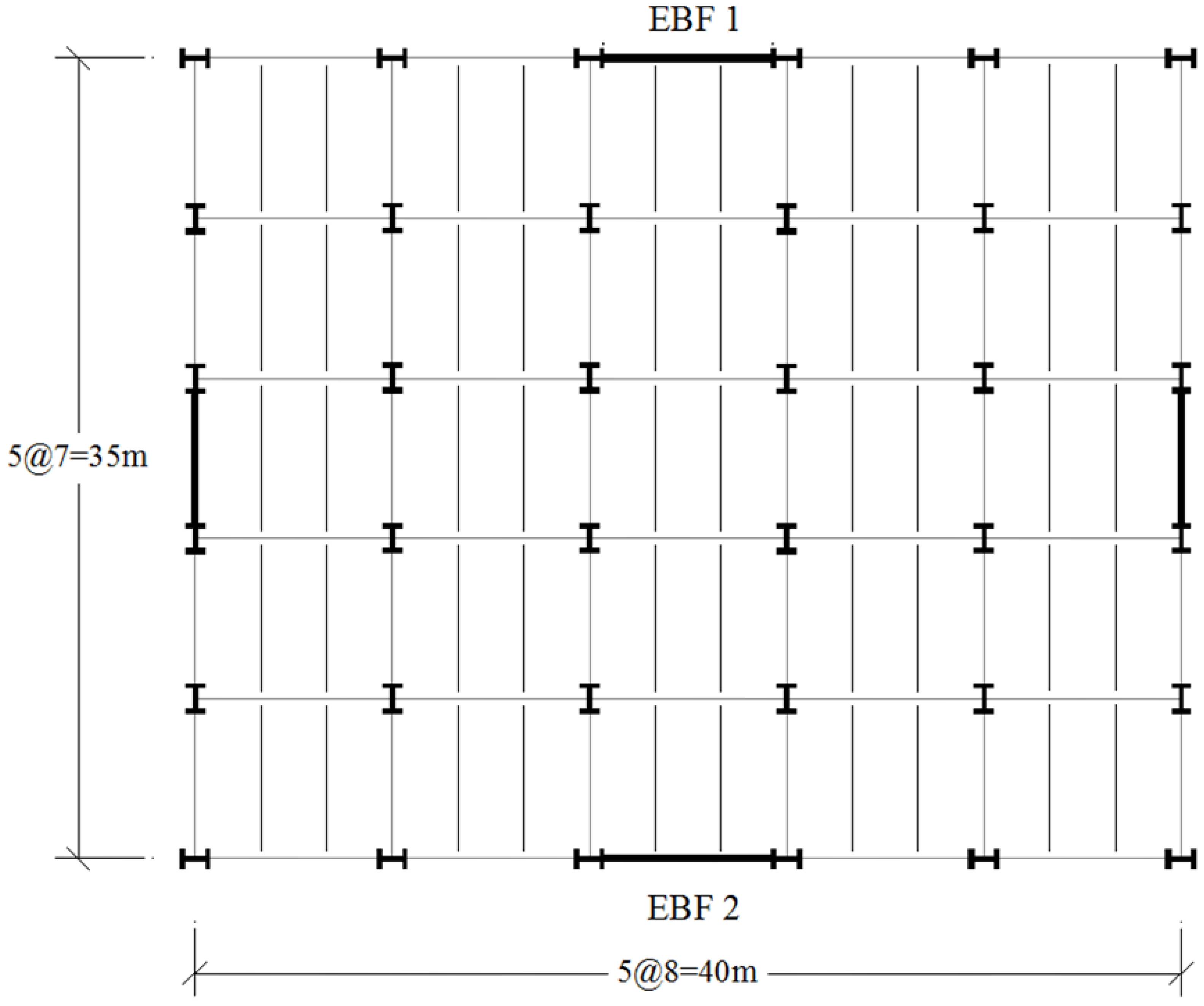
2. The buildings were assumed to be situated on site class C (very dense soil and soft rock), according to NBC 2020. Site class C has been used because it represents average soil conditions and serves as the reference ground condition in the NBCC. The typical floor plan for the selected buildings is shown in
Figure 1. As shown in
Figure 1, two identical chevron-type EBFs were used symmetrically in N-S and E-W directions to resist lateral forces. Thus, each EBF was designed to resist half of the design seismic loads. Since there was no eccentricity in the buildings, the effect of accidental torsion was only considered in the design of EBF system. It was introduced in design by shifting the center of mass (CM) of the building in each horizontal direction by
, where
is the plan dimension of the building at level x perpendicular to the direction of seismic loading [
31].
All the EBFs had equal bay widths of 8.0 m and storey heights of 3.8 m. The dead load and live load of the floors were 4.2 kPa and 2.4 kPa, respectively. The roof dead load was considered as 1.5 kPa, and the snow load, calculated based on NBCC 2020 [
16], was equal to 1.82 kPa.
The NBC 2020 load combination
(where
dead loads,
live loads and
earthquake loads) was considered for intermediate floors and for the roof, and the load combination
(where
snow loads) was considered. The selected EBFs were designed according to the provisions in CSA S16-19.
Table 1 and
Table 2 present details of four-storey and eight-storey EBFs.
Table 3 presents details of the 14-storey EBF. The modulus of elasticity and nominal yield strength of all steel sections were 200,000 MPa and 350 MPa, respectively. The selected EBFs were modelled and analyzed using ABAQUS Standard Version 6.14 [
32]. All the members (links, beams, columns and braces) of EBFs were modelled using general-purpose shell elements with reduced integration (ABAQUS element S4R). The element S4R accounts for finite membrane strains and large rotations and has six degrees of freedom in each node: three translations and three rotations. Continuity and compatibility between adjacent storeys were ensured by using a single continuous FE model in ABAQUS, in which members from consecutive storeys share common nodes, inherently enforcing displacement compatibility.
One of the important factors in FE modelling is selecting the appropriate mesh size, as it directly influences the accuracy of the results and the computational demands. Using a coarse mesh may yield an imprecise solution; on the other hand, a finer mesh can improve accuracy but also increase computation time. A detailed mesh convergence study was conducted to determine the optimal mesh sizes for four-, eight-, and 14-storey EBFs. Details of the mesh convergence study are available in the authors’ original master’s thesis [
31].
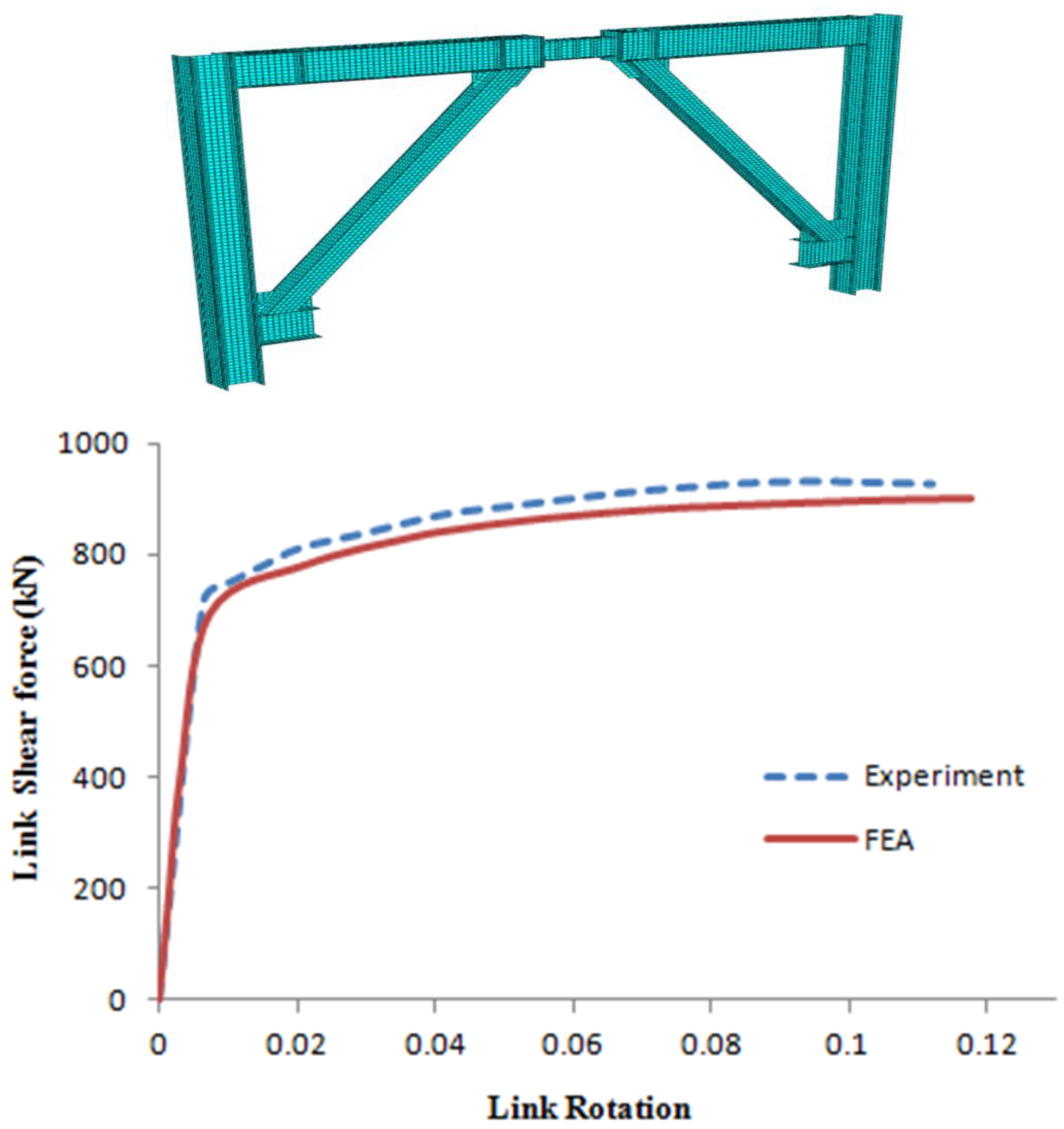
Before conducting nonlinear seismic analyses of the selected EBFs, the FE modelling approach was validated against the experimental results of a single-storey EBF with replaceable shear link (specimen 11A as tested by Mansour [
7]). In the experimental model, the width and height of the frame were 7.5 m and 4.58 m, respectively. The link length was equal to 800 mm. A summary of sections and dimensions used in the experimental study is shown in
Table 4. More details about the selected test specimen are available elsewhere [
7]. The selected specimen 11A was modelled and analysed in ABAQUS. The material properties used for validation were obtained from available stress-strain data from tension coupon tests [
7]. The FE model used boundary conditions (BCs) similar to those of the corresponding experiment. The columns had pin support conditions at the base. The connection between the link and the floor beam was defined using common nodes to transfer the forces and moments generated by the strain-hardened link. Also, the connection between the braces and the beam is a moment connection. All other connections were considered as pin connections. Lateral bracings were also provided to restrain the out-of-plane movements of the EBFs. Lateral bracing was employed at the top and bottom flanges of the floor beams at two ends of the links. To account for the lateral bracings in the FE model, the out-of-plane displacements of the nodes were restrained. The same modelling technique and boundary conditions were used for the four-, eight-, and 14-storey braced frames. A displacement-controlled pushover analysis was used to validate the experimental model. This displacement was applied to the center of the floor beam, and the structure was pushed increasingly to reach the target displacement obtained from the experimental test.
Figure 2 compares the pushover analysis results with the experimental results obtained from the single-storey specimen (specimen 11A) tested by Mansour [
7]. It is observed that the finite element model provides an excellent prediction of the experimental results with less than a 3% difference in the link shear force. The validated FE model was then used to conduct a seismic analysis of the three selected EBFs.
For seismic analysis, a leaning column was added to the FE model to account for P-Δ effects. The leaning column was modelled using a 2-node linear 3D truss (ABAQUS T2D3) element and was connected to the EBF frame at every floor using pin-ended rigid links. The leaning column was designed to carry half of the floor masses and gravity loads that were not carried by the EBFs. The leaning column approach adopted in this study is widely used in nonlinear seismic analysis of steel frames. It allows the destabilizing effects of gravity loads to be represented without introducing additional lateral stiffness or strength. It is acknowledged that the magnitude and influence of P-Δ effects on the structural response were not explicitly quantified in the original manuscript. A detailed parametric investigation quantifying the sensitivity of response to P-Δ effects (e.g., by comparing analyses with and without leaning columns) would provide additional insight and will be conducted in future research. The effects of other structural components, such as the floor diaphragm and foundation systems, were not considered in this study. Additionally, the FE model used in this research assumed a rigid diaphragm.
For seismic analysis, nonlinear material behaviour was modelled using an elastoplastic stress-strain curve with a strain hardening of 2% of the elastic stiffness. For all pushover analyses, the nonlinear isotropic hardening was employed, and for all seismic analyses, the kinematic hardening rule was adopted. A Rayleigh damping model was used with 5% critical damping ratios for the first two modes of vibration, which include a cumulative modal mass equal to more than 90% of the total mass applied on the EBFs. A 5% Rayleigh damping ratio is consistent with standard practice in the nonlinear seismic analysis of steel structures. It is acknowledged that Rayleigh damping is a simplified representation of energy dissipation mechanisms in EBFs, particularly once inelastic behavior develops in the links. In EBFs, a substantial portion of energy dissipation arises from hysteretic behavior of the links, while viscous damping primarily affects the elastic response and higher-frequency modes. As a result, the assumed 5% Rayleigh damping ratio can introduce uncertainty in nonlinear time history analysis (NLTHA), particularly post-yield. It is recommended that future research explore refined damping models, such as stiffness proportional damping after yielding or sensitivity analyses with different damping levels to improve response estimates, especially for tall frames and higher-mode responses. Also, uncertainties associated with the damping model primarily affect NLTHA results rather than pushover-based capacity estimates.
5. Inelastic Seismic Analysis Results
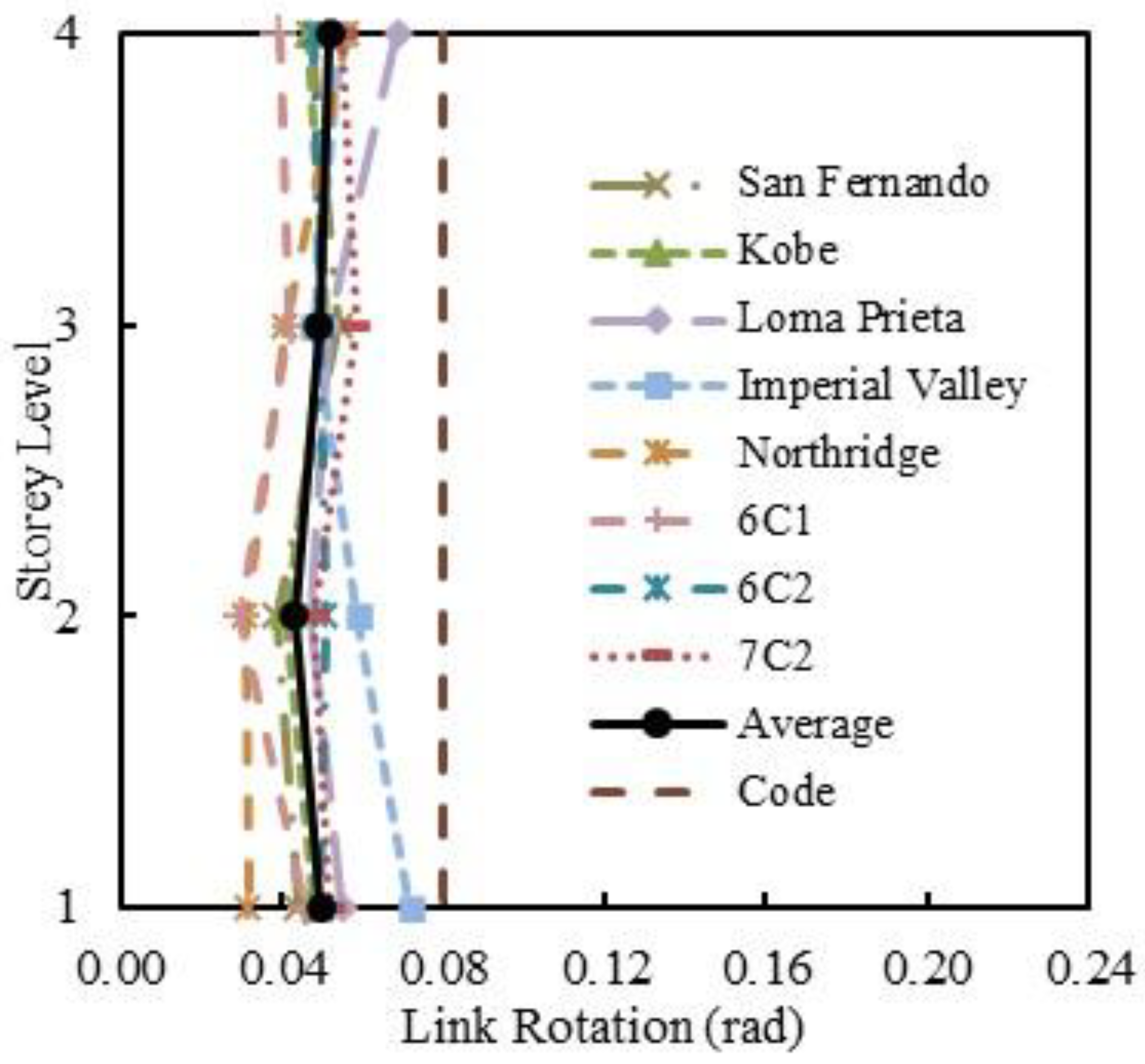
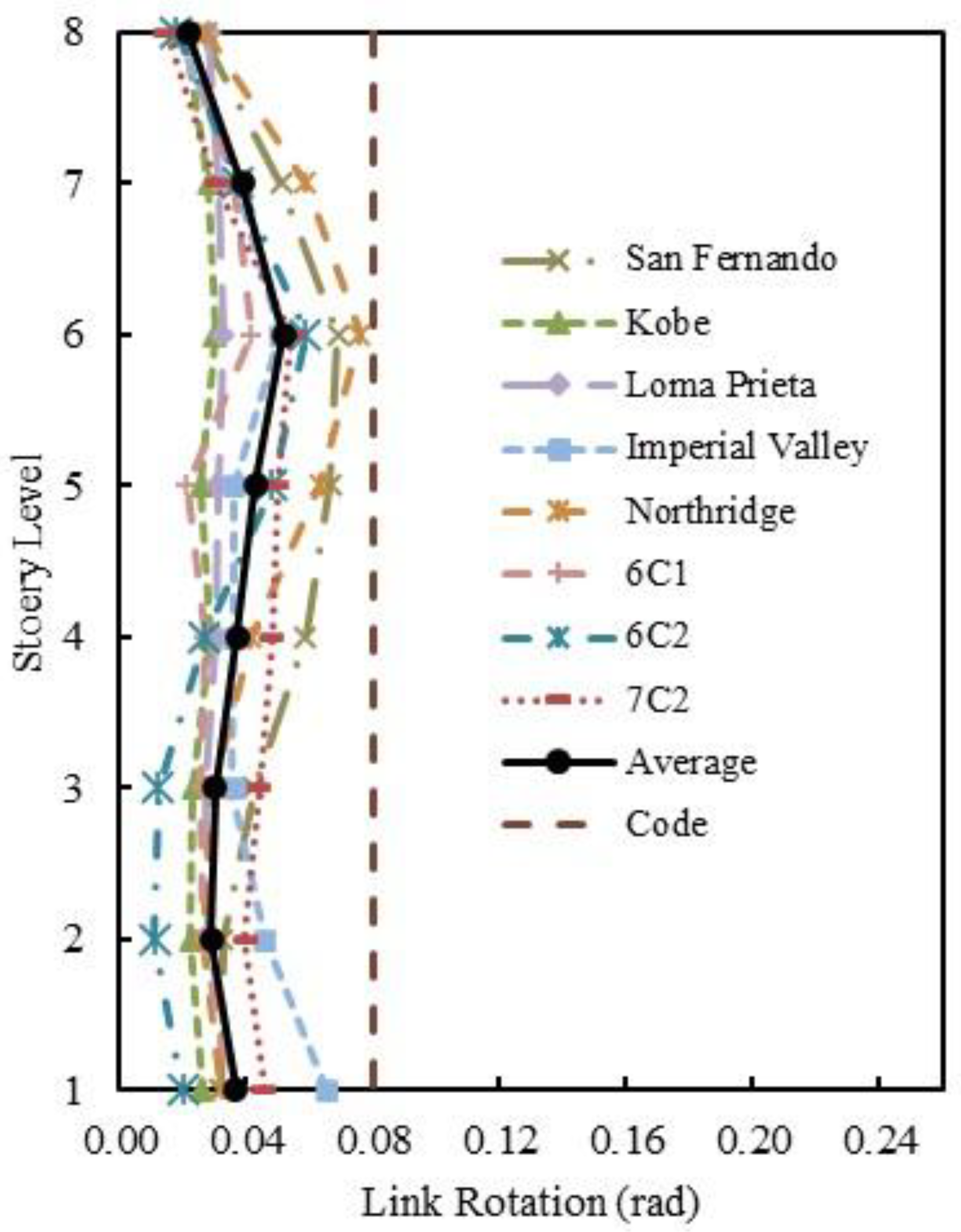
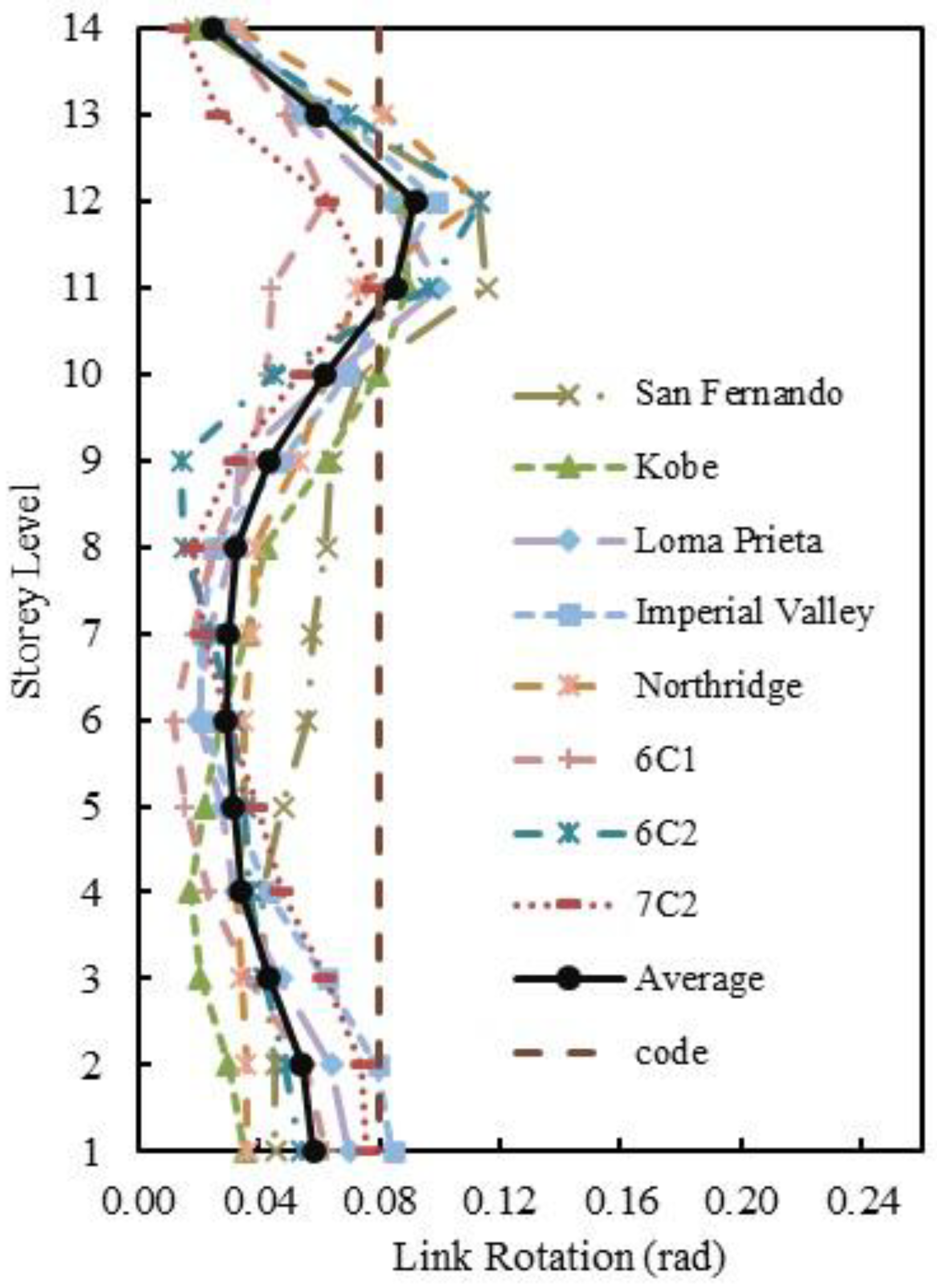
Nonlinear dynamic analyses were performed on four-, eight- and 14-storey EBFs using the ground motions introduced in the previous section. The seismic performance objective of the NBC is to prevent collapse and protect life under a rare, severe earthquake (2% in 50 years). Since the link is the most important element in EBFs, the responses of the link are the main concentration of this study. The critical response parameters for the links are the inelastic link rotations and the maximum normalized shear forces in the link. The maximum inelastic link rotations extracted from ABAQUS were compared with the code limit of 0.08 rad. The results of maximum link rotations and its average value for eight earthquakes are presented in
Figure 3,
Figure 4 and
Figure 5 for the three EBFs under study. The use of averaged peak response quantities in this study is consistent with the provisions of ASCE 7-22 [
25], which permit the use of the average of maximum responses when a minimum of seven ground motion records is employed in nonlinear time history analysis. It is acknowledged that while this approach satisfies code requirements, additional statistical descriptors (e.g., dispersion, standard deviation, or confidence intervals) can provide further insight into record-to-record variability.
For the four-storey EBF, for all records, the link rotations were less than the limit of 0.08 rad specified in CSA S16-19 [
23]. For most records, the largest deformation occurred at the first and third stories.
Figure 3 shows that for four-storey EBF, the average link rotation is about 0.05 rad. For the eight-storey structure, as shown in
Figure 4, most ground motions indicated the maximum link rotation at the first and sixth levels. The link rotations varied from 0.02 rad to 0.05 rad, which were lower than the limit. For the 14-storey structure, as shown in
Figure 5, the average link rotation is between 0.02 rad and 0.06 rad for all the floors, except for the eleventh and twelfth levels, where link rotations exceeded the 0.08 limit. These values were 0.085 rad and 0.09 rad for the 11th and 12th floors, respectively. A concentration of link rotation was also observed on the first floor; however, the median value for the first floor was well below the limit.
The seismic analysis also showed that all EBFs behaved in accordance with the capacity design method outlined in Canadian seismic regulations. For all ground motions, all the links were yielded. Although some partial yielding of adjacent beams to the links was observed for some ground motions, all other framing members remained essentially elastic [
31]. In addition, other seismic response parameters, such as inter-storey drifts, floor displacements, and base shear, were calculated for all selected records and all three selected EBFs. Inter-storey drift was calculated as the difference in lateral displacement between two consecutive floors, divided by the corresponding storey height. It was observed that inelastic inter-storey drifts in all the floors were within the NBCC drift limit of 2.5% of the inter-storey height. Also, it was observed that the average base shear obtained from nonlinear dynamic analysis was higher than the design base shear. This is due to the overstrength of the selected members for beams, columns, and links. Details of the seismic analysis results are presented elsewhere [
31].
6. Application of MPA and N2 Method on Ductile EBF
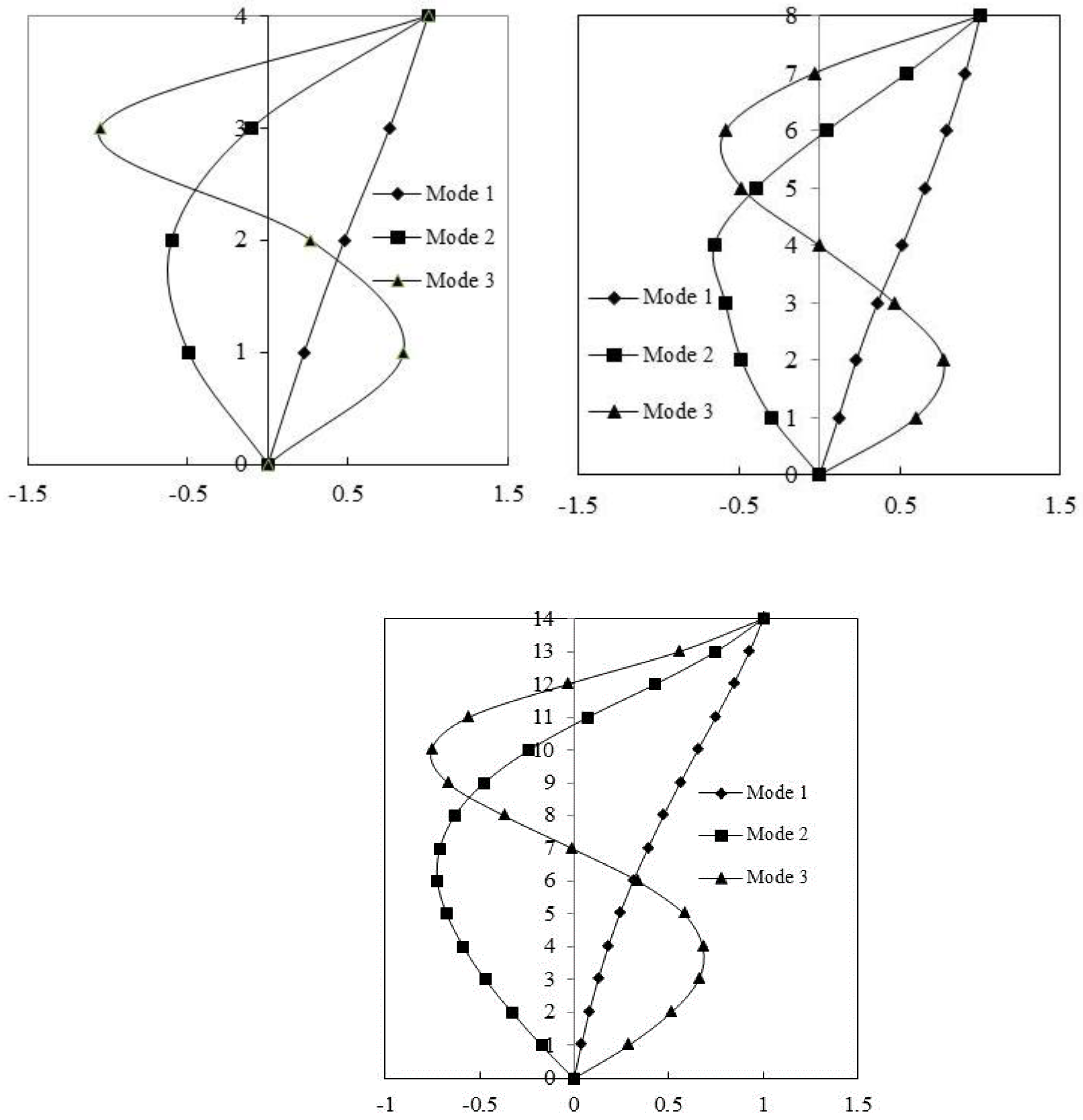
Frequency analyses were conducted for all selected EBFs in ABAQUS and elastic vibration periods, and the corresponding mode shapes were obtained.
Figure 6 presents the first three elastic mode shapes of the selected EBFs. The modal periods are reported in
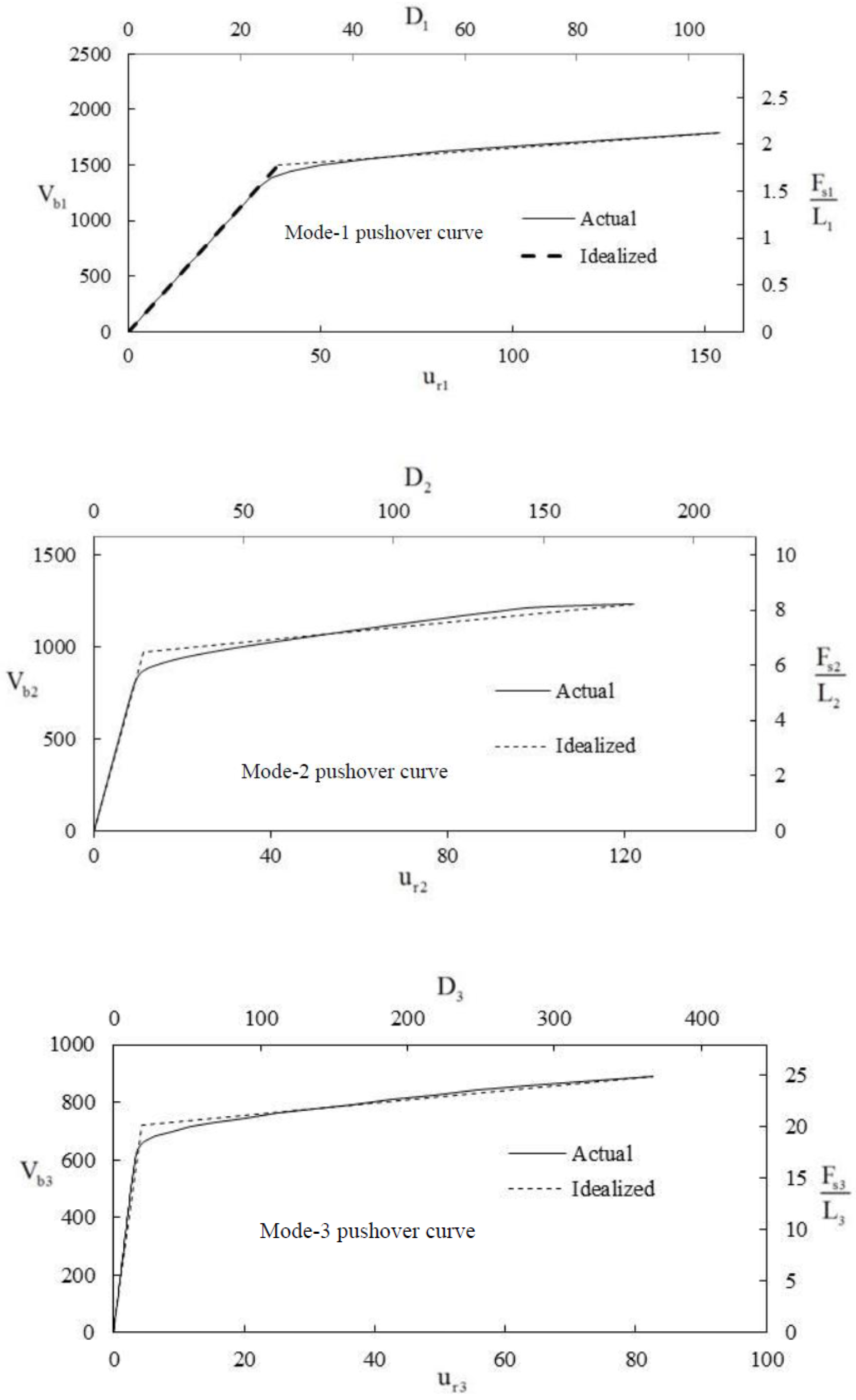
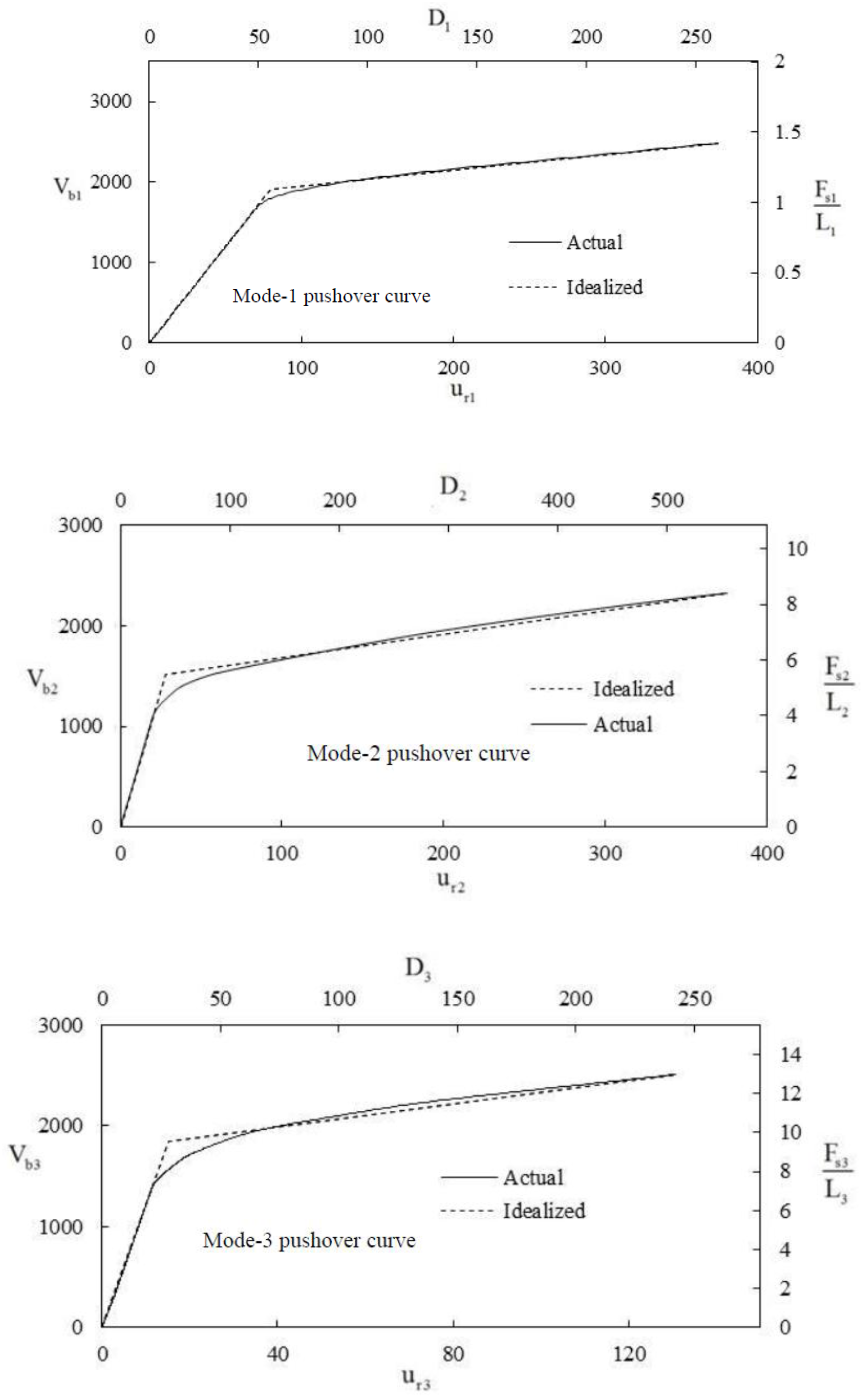
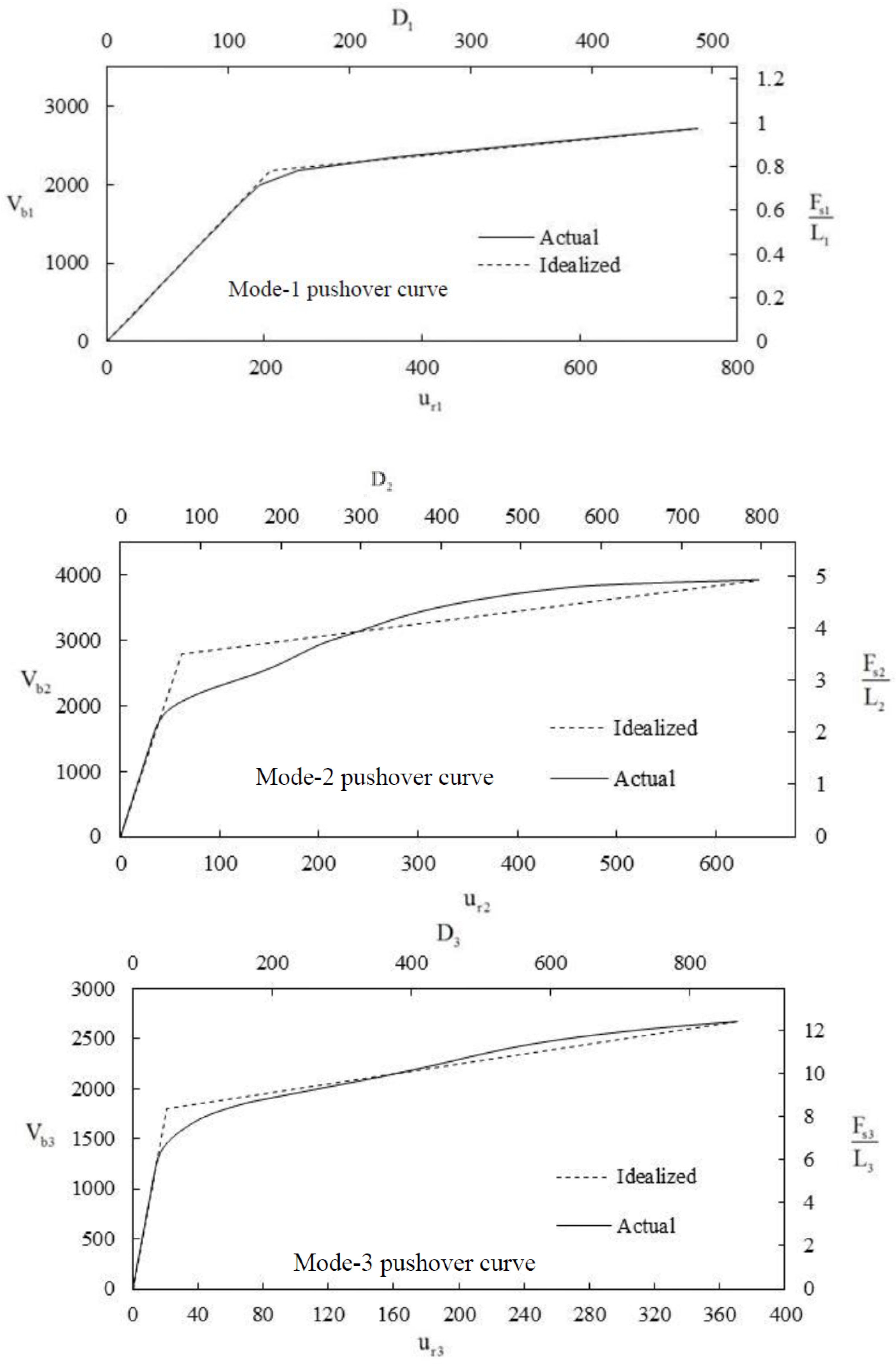
Table 7. Since the summation of the mass corresponding to the first three primary modes is higher than 90% of the whole building mass, the first three modes were considered for the MPA. Multiplying the modal vectors of each mode by the mass of each floor led to the force distribution, which was applied increasingly to each structure to provide the pushover curves corresponding to each mode. Gravity loads were applied prior to pushover analysis. All the pushover curves of the selected EBFs were idealized into bilinear curves. Base shear-roof displacement (
Vbn −
urn) pushover curves of MDOF were converted into a force-displacement relation (
Fsn/Ln −
Dn) of nth-mode inelastic SDOF. Actual pushover curves and idealized pushover curves for MDOFs and SDOFs are presented in the same plot in
Figure 7,
Figure 8 and
Figure 9. Properties of “modal” inelastic SDOF systems for all selected EBFs are presented in
Table 7. As observed from
Figure 7,
Figure 8 and
Figure 9, for the first mode, both the actual and idealized pushover curves are in excellent agreement for all three EBFs. For the second and third modes, there are slight differences between the idealized pushover curves, especially for the 8-storey and 14-storey EBFs. This is expected and has been observed by other researchers as well [
17,
18,
19]. The slight difference in pushover curves is because the SDOF curve is the modal approximation of the MDOF behaviour. This slight difference is not a problem as long as the first-mode mass participation is high and the global pattern of the curves is the same. As observed in
Table 7 of the revised manuscript, the model participation factor for the 4-, 8-, and 14-storey EBFs is 1.33, 1.44, and 1.54, respectively, indicating that all three selected EBFs are first-mode dominant. Thus, the SDOF approximation of all selected EBFs is reasonably accurate. Nonlinear seismic analysis was carried out for inelastic SDOF systems.
Calculated peak deformations of SDOF systems, Dn, were utilized to calculate the peak deformation of MDOF. Then, other properties, such as floor displacement and inter-storey drift, were also calculated from the urno. The modal combination rule SRSS has been utilized to combine the modal responses. Maximum roof displacements and inter-storey drifts were estimated for 1-mode, 2-mode and 3-mode combinations.
Nonlinear dynamic analyses were performed on the 4-, 8- and 14-storey EBFs using the ground motions selected above. In general, the selected EBFs behaved in a ductile and stable manner. As expected in the capacity design approach, all the links were yielded on all floors. It was observed that the EBFs did not lose their load-carrying capacity when all the links were yielded. After yielding all the links, the outer beam participated in carrying the load as it was considered in the design. Some partial yielding of adjacent beams was observed for a few ground motions. All the links showed inelastic behaviour, and as anticipated, the response of the other frame members remained essentially elastic.
Table 8 presents the peak roof displacements for the 4-, 8-, and 14-storey EBFs. It can be observed that roof displacements were predicted well with the MPA procedure, with just a few percent errors with respect to the displacements obtained from the nonlinear seismic analysis. It was also observed from
Table 8 that adding the second and third mode contributions increased the accuracy of the prediction of the roof displacements.
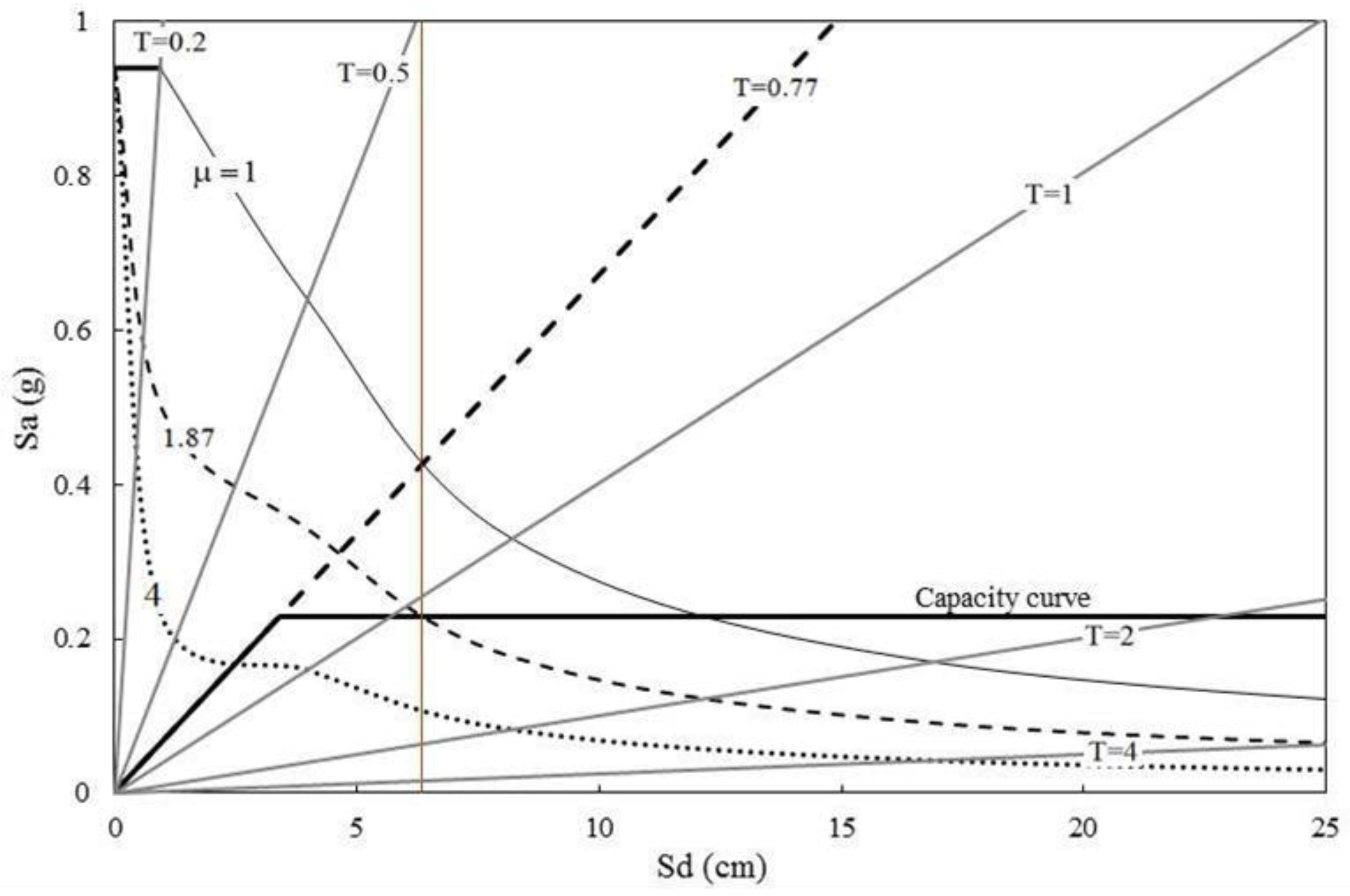
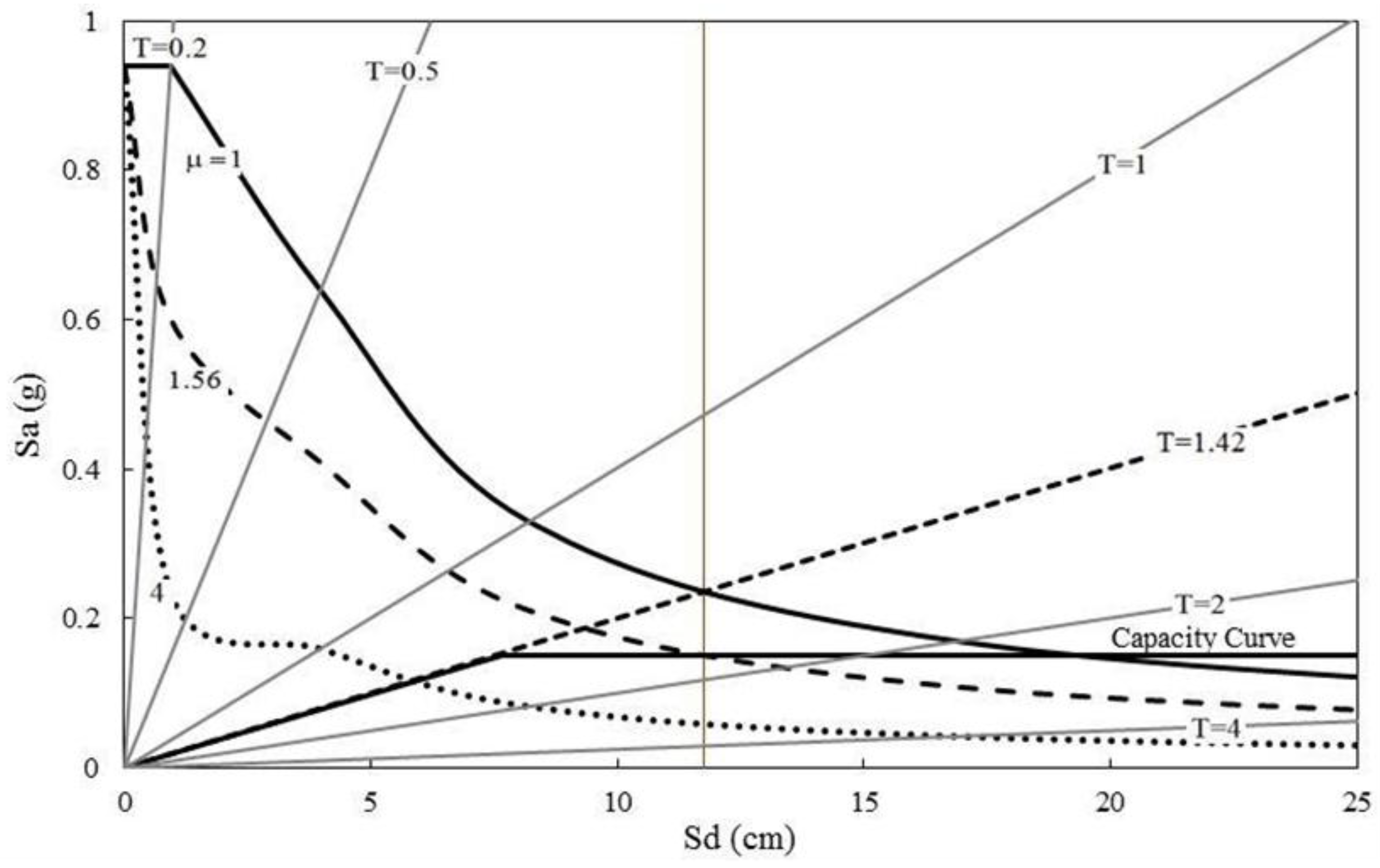
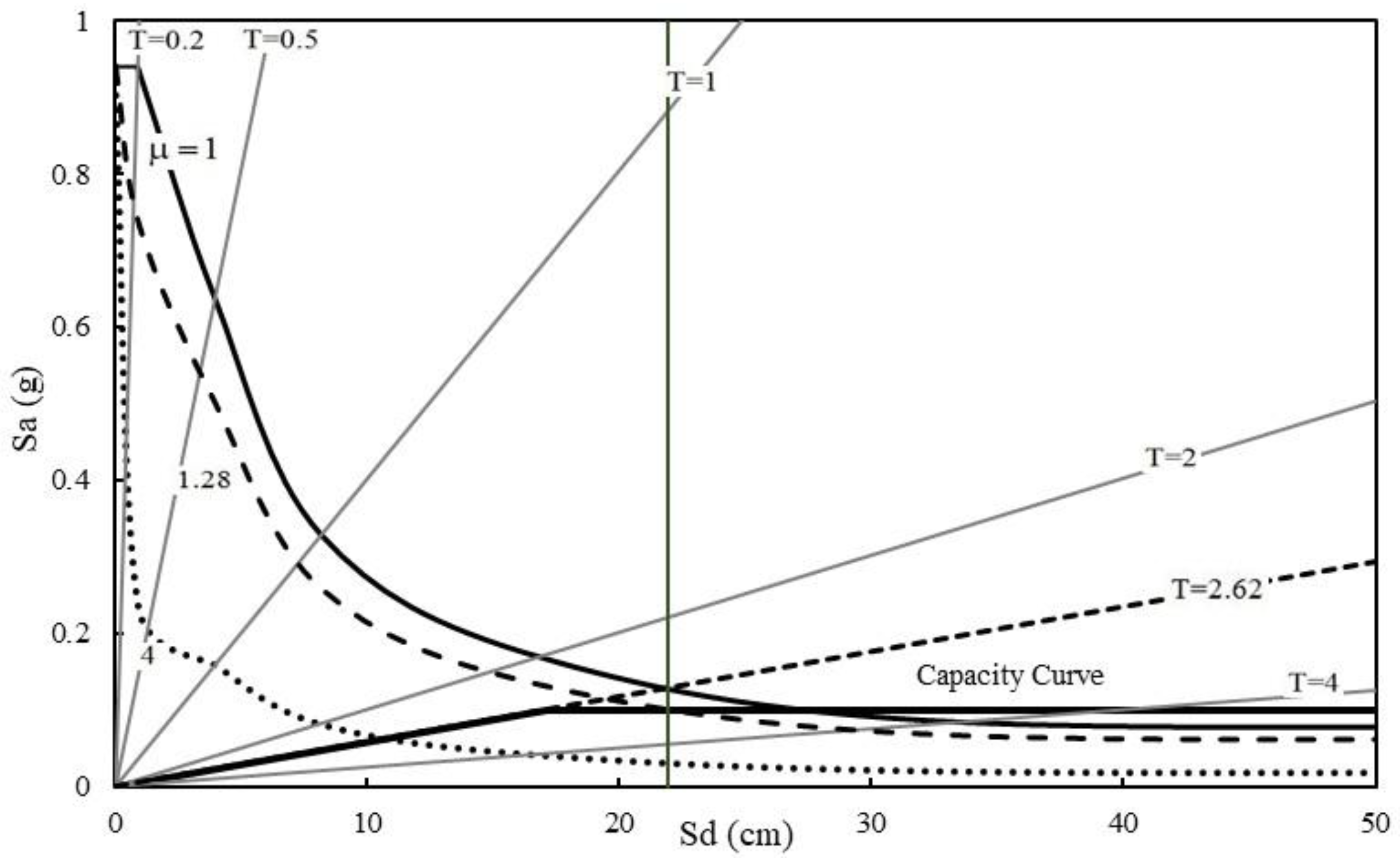
For the N2 method, bilinear idealized force-displacement curves associated with the first mode were converted into spectral acceleration versus spectral displacement curves of SDOF systems for all three selected EBFs. These are known as capacity curves and are presented in
Figure 10,
Figure 11 and
Figure 12. The design response spectrum (5% damped) of Vancouver was used as a seismic demand curve. For the inelastic SDOF system, the acceleration spectrum, Sa, and displacement spectrum, Sd, were determined from elastic ADRS by using the reduction factor obtained from Equations (11) and (12). At the beginning of this procedure, a demand curve was constructed for the elastic response of the structure (e.g., ductility factor is equal to one). Demand spectra and capacity spectra for the SDOF system were drawn in the same plot.
Figure 10,
Figure 11 and
Figure 12 present a graphical representation of the capacity curve of the SDOF system of a 4-storey, 8-storey and 14-storey EBF system. Displacement demands were determined from the intersection points of the capacity curves and the demand curves corresponding to the ductility demands. Finally, displacement demands of SDOF systems were transferred into displacement demands of MDOF by reverse transformation. The top displacement demands for the 4-storey EBF, 8-storey EBF, and 14-storey EBF were determined as 92.63 mm, 169.08 mm, and 336.75 mm, respectively. For the three selected EBFs, the displacement demands obtained from the N2 method were compared with the average top-storey displacements from the nonlinear time history analysis.
Table 9 presents the displacement demands of the selected EBFs. It is observed that the displacement demands from the N2 method agree very well with the average maximum top-storey displacements from the nonlinear seismic analysis. The maximum difference between seismic analysis and the N2 method was 4.52% and was observed for the 8-storey EBF. According to NBC 2020 [
16], the ductility-based reduction factor for the EBF is 4.0, and the overstrength-related reduction factor is 1.5. The ductility demands of the selected EBFs obtained from the N2 method were lower than the code-suggested ductility. However, ductility demand calculations using the N2 method have some limitations. First, the elastic period calculated using the N2 method may not be constant after yielding the structure. In addition, all the analysis approximations also have some influence on this lower ductility demand.
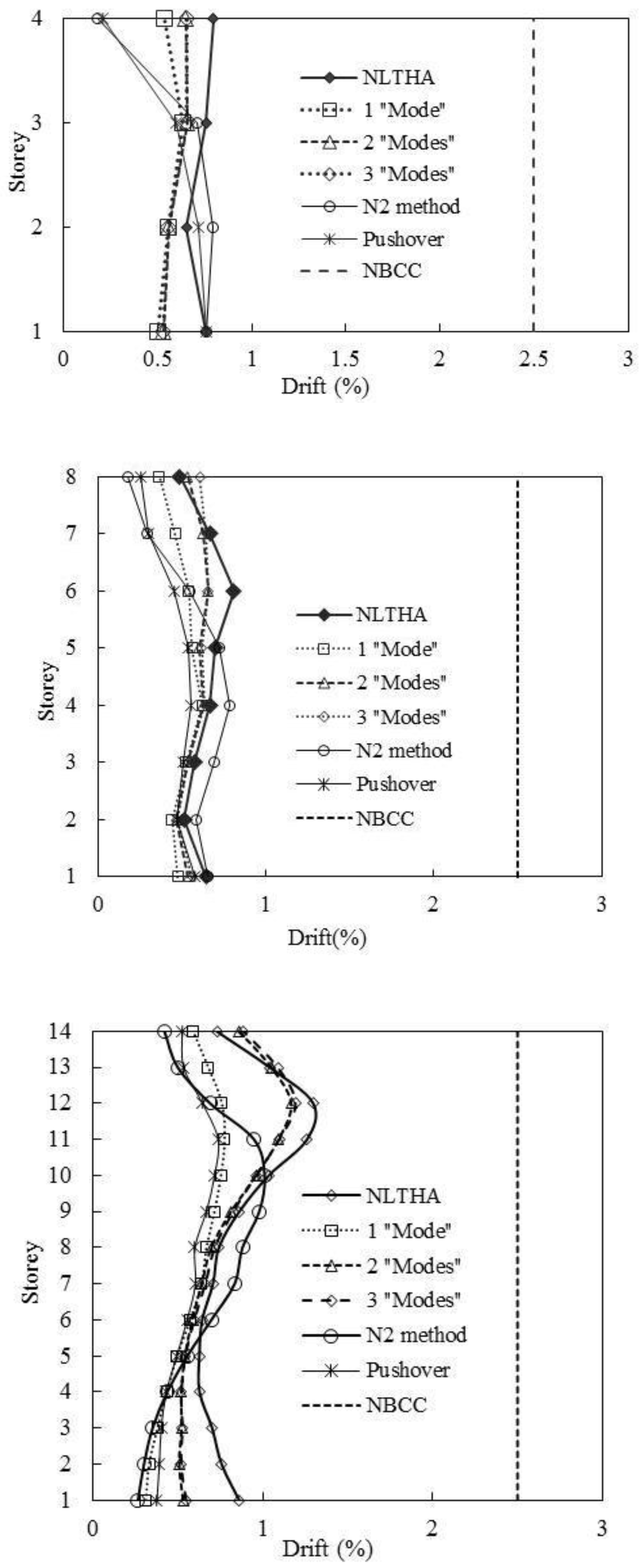
Estimated results from the MPA and N2 methods are compared in
Figure 13, with results obtained from the nonlinear seismic analysis and regular pushover analysis using the NBCC 2020 lateral load pattern.
Figure 13 shows that for the low-rise EBF, in comparison to MPA, the regular pushover analysis following the NBC 2020 equivalent lateral load pattern and the N2 method were able to predict the inter-storey drifts at the bottom two floors reasonably. However, inter-storey drift at the top floor was underestimated in the regular pushover analysis. For the medium-rise EBF (8-storey EBF),
Figure 13 shows that the 1-mode combination did not predict the inter-storey drifts very well, and the 2-mode combination significantly improved the predictions at the bottom floors. However, the 3rd-mode contribution did not make any difference to inter-storey drifts for medium-rise EBF. It was also observed that the N2 method and regular pushover analysis using the NBC 2020 load pattern reasonably predicted the inter-storey drifts at the bottom storeys but underestimated at the upper storeys.
The MPA for the high-rise EBF (14-storey), as presented in
Figure 13, showed a considerably higher mode contribution. The first-mode combination did not predict the storey drifts well. The 2-mode combination significantly improved predictions of inter-storey drifts, and, as with the 8-storey EBF, the 3rd-mode contribution did not make a difference in inter-storey drift predictions for the 14-storey EBF. It should be noted that the MPA assumes linear-elastic mode shapes to define lateral load patterns then combines modal responses using SRSS rules. However, once yielding occurs in the links of EBFs, structural stiffness degrades, and mode shapes change. As a result, modal superposition is no longer strictly valid, and interaction between modes cannot be fully captured by using SRSS rules. It was also observed that, compared with the MPA, both the regular pushover analysis and the N2 method significantly underestimated the inter-storey drifts of taller EBFs. This is because the N2 method assumes that the first vibration mode dominates structural response and neglects higher-mode contributions to force and deformation demands. This limitation is the main drawback of the N2 method.
Finally, base shears for all the selected EBFs were obtained from the N2 method and MPA method and compared with seismic analysis results.
Table 10 shows that for all the selected EBFs, compared to the N2 method and regular pushover analysis, the MPA procedure closely predicts the base shears. The average base shear obtained from nonlinear dynamic analysis is higher than the design base shear. This was mainly due to the overstrength of the selected members. In the current design of EBFs suggested by CSA S16-19 [
23], the link and the outer beam have the same section. The link should be designed to yield, while the outer beam with the same section should resist forces by the strain-hardened link. Meeting these two requirements was an iterative process that led to oversized link elements and, consequently, stronger EBF members, which were designed for the capacity of the link. This resulted in larger shear force demands for the selected EBFs. In addition, overstrength in base shear may arise from material strain hardening of steel. To quantify this effect, an overstrength factor can be defined as the ratio of the average base shear obtained from nonlinear seismic analysis to the design base shear. Based on the results summarized in
Table 10, the overstrength factors for the 4-storey and 8-storey EBFs are calculated as 2.2, while for the 14-storey EBF, it is 2.7. Nonlinear static procedures, including SDOF-based approaches, typically do not fully capture this overstrength because they rely on idealized capacity curves and do not account explicitly for cyclic hardening and redistribution effects that develop during dynamic response.
7. Evaluation of Code Period Formula for Ductile EBF
In addition to the three selected EBFs (four-, eight-, and 14-storey EBFs), five more EBFs (two-, three-, six-, 10-, and 12-storey) were designed as per Canadian seismic provisions. Frequency analyses were carried out to determine the fundamental periods of the eight EBFs designed in this research. The estimated periods are shown in
Table 11. As stated earlier, in addition to the eight designed EBFs, four other computed period datasets for EBFs from other sources [
26,
27,
28,
29] are presented in
Table 12. The period database used in this study is carefully selected and includes representative buildings designed using a capacity design approach. Thus, 32 fundamental period data points for EBFs with different heights and geometries are used to evaluate the period formulas recommended by different building codes.
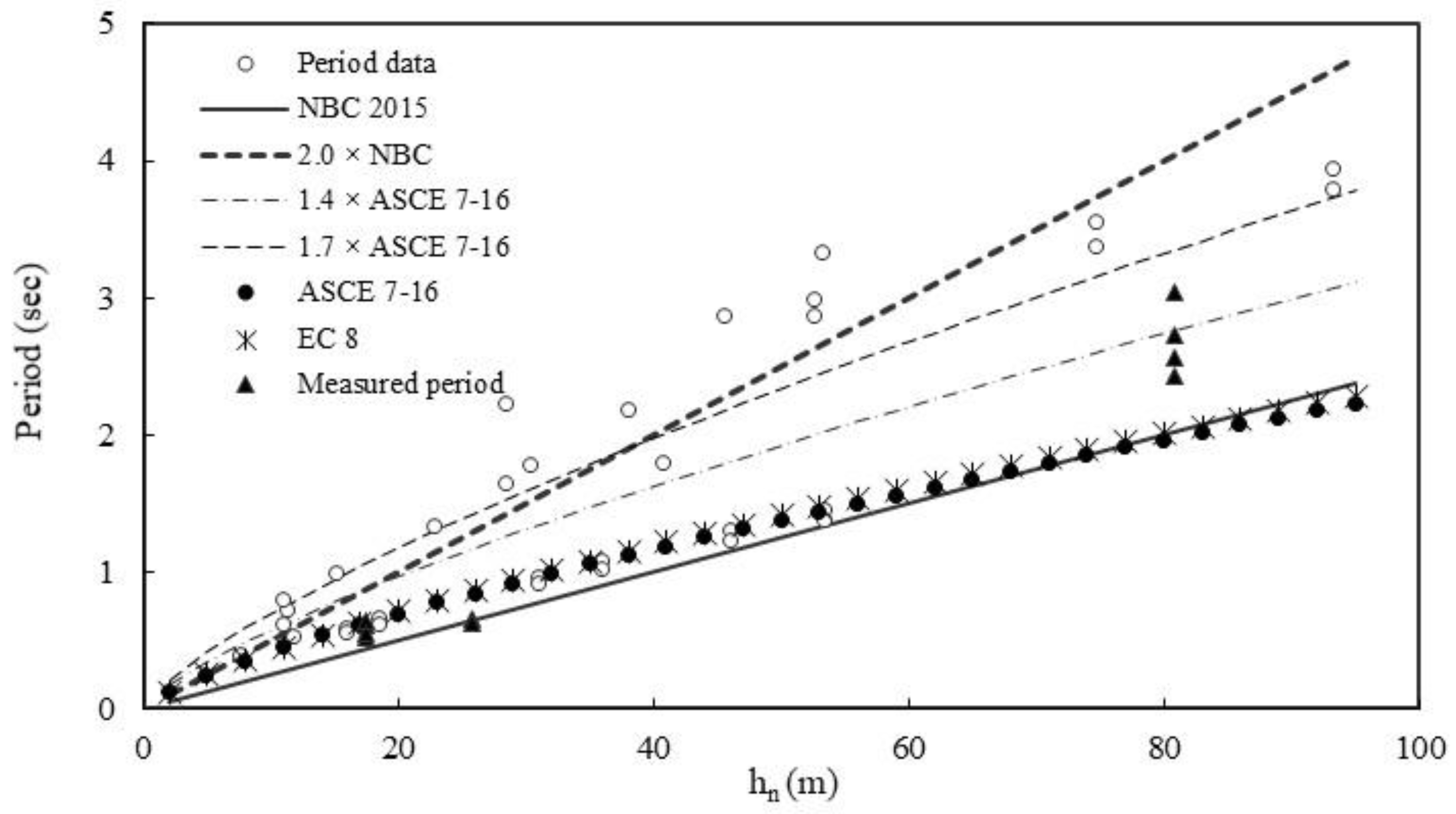
Figure 14 presents the computed periods as a function of building height,
, for all 32 EBFs.
Figure 14 also presents the measured period data obtained for buildings with EBF systems.
The intent of building codes is to specify an upper limit on fundamental periods calculated based on methods of structural mechanics in order to prevent the use of seismic loads that are too low due to simplified modelling assumptions. NBCC 2020 specifies that, for EBFs, periods calculated by any established analytical method must not exceed 2.0 times the value determined by Equation (2). In the ASCE 7-22 standard, this multiplication factor varies from 1.4 for high seismic zones to 1.7 for low seismic zones, although the upper limits are not applicable for drift estimation. The upper limits of fundamental periods specified by the NBCC and ASCE 7-22 are also illustrated in
Figure 14. It is observed from this figure that the empirical expression in NBCC [
16] and ASCE 7-22 [
25] tends to give very conservative period estimates for EBFs, leading to higher seismic design forces.
Figure 14 also shows that if the NBCC upper limit for the fundamental period is used in seismic design, it can be non-conservative. Thus, existing code-based empirical period formulas for EBFs may be conservative, but this conservatism provides a safety margin against uncertainties in modelling, construction variability, and nonlinear response. Shorter empirical periods often result in higher design base shear, which helps guard against underestimating stiffness degradation and strength loss due to link yielding and connection behaviour. While updated period formulas may reduce seismic force demand, they can reduce safety margins unless appropriate inelastic behaviour representation is included in the analysis.
8. Improved Period Formula for Ductile EBF
Although
Figure 14 indicates that the code-specified formula provides periods that are, in general, much shorter than the computed periods, this formula can be improved to provide better correlation. The generalized Equation 1 can be adopted, with the constants
and
adjusted to improve the correlation between computed and empirical values. The constants
and
depend on building properties and are determined by linear regression of the numerical analysis of period data, as was done by Goel and Chopra [
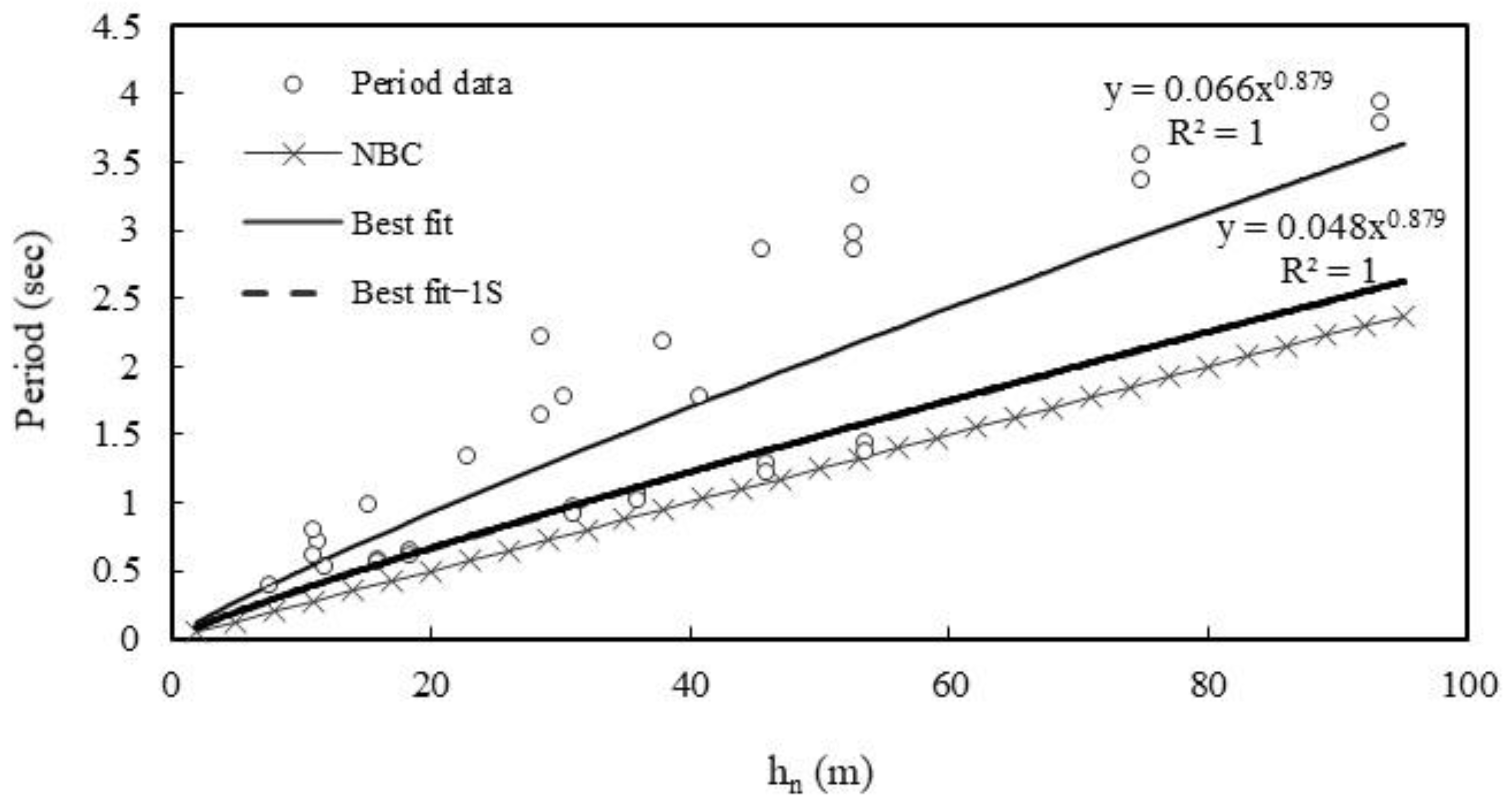
40] for other lateral-load-resisting systems. From a least square regression analysis of the available EBF periods, the resulting expression to represent the best fit to the period data of EBFs is obtained as
The best-fit expression is illustrated in
Figure 15. The value of the standard error,
, for the selected period data points was calculated as 0.142. In addition, the coefficient of determination (R
2) is reported, providing a quantitative measure of how well the regression explains the variability of the numerical data. The obtained R
2 value indicates a strong correlation between period and height for the analyzed EBF models, consistent with trends reported in existing empirical formulations.
For design purposes, the estimate of the natural period needs to be a conservative value. This can be obtained by lowering the best-fit line by one standard deviation. Thus, the lower value of
, is
This curve is also shown in
Figure 15. As discussed by Goel and Chopra [
40], one assumption in the derivation of Equation (1) is that the base shear is proportional to
. The value of
is bounded between 0 to 1.0, giving a recommended value of
between 0.5 and 1.0 for Equation (1). Thus, constrained regression analyses with fixed
values of 0.75 and 1.0 were carried out to determine values of
. The results from these additional analyses are presented in
Table 13. Consistent with the current period formula for EBF, an
value of 1.0 is used. For the seismic design of EBFs, the best-fit curve, for
x = 1.0, minus one standard deviation equation is recommended.
As mentioned previously, building codes also specify an upper limit on the period calculated using any rational method. This upper limit is obtained by raising the best-fit line by
without changing its slope as the mean regression line plus one standard deviation. Thus, the upper value of
,
, is given as
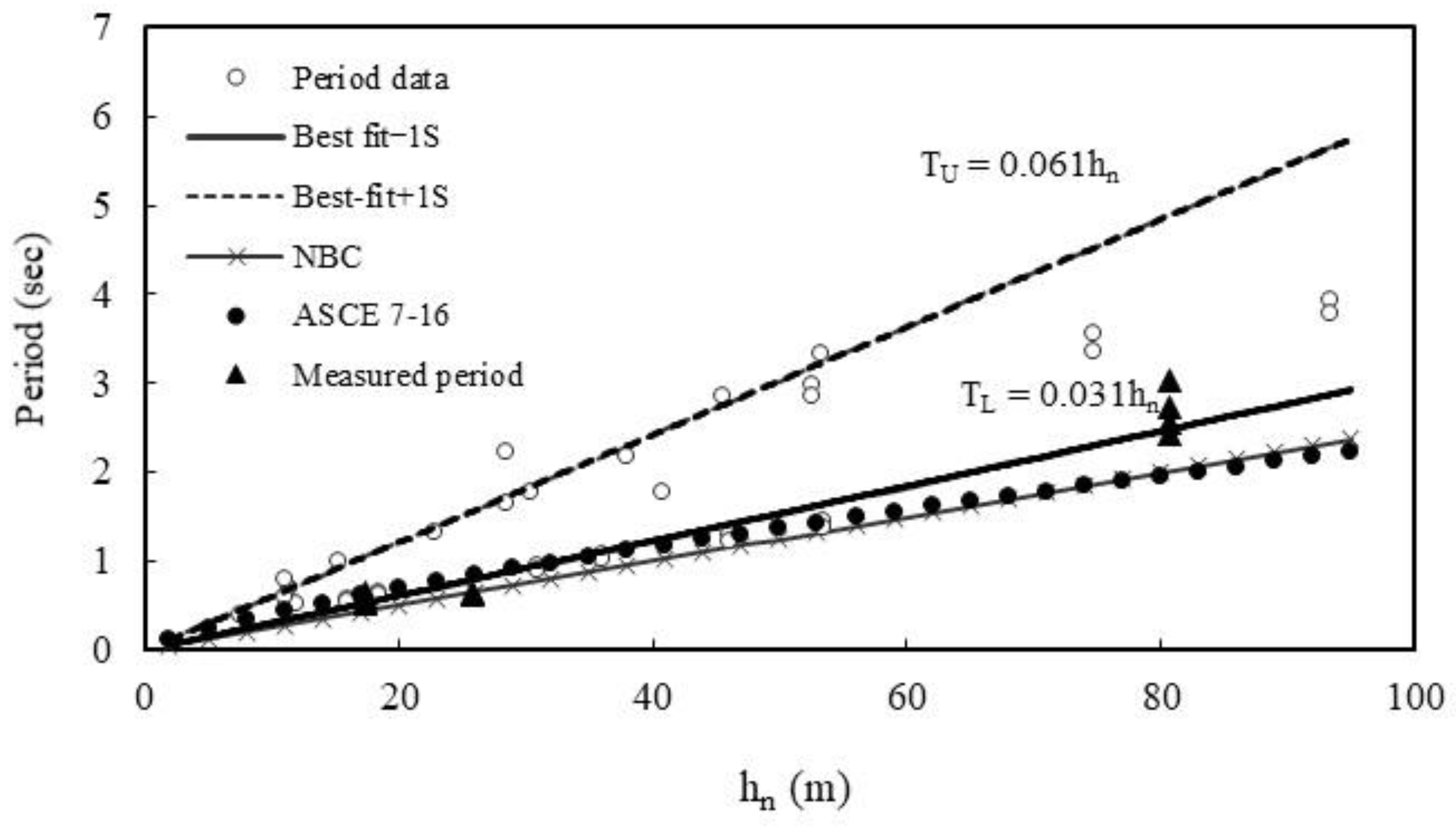
Both the upper limit
and the lower limit
of the period with
constrained to 1.0 are plotted in
Figure 16. The proposed empirical formula is also compared to the current building code equation in
Figure 16. It is observed that the current NBC 2020 [
16] formula gives a lower bound value of fundamental periods from the dataset, which is more conservative in terms of seismic design, especially for taller EBFs. Also, the upper limit for the proposed formula is determined as 2.0 (2.0 = 0.061/0.031) times the proposed design curve. Thus, when any rational method is used for determining the fundamental period of EBFs, it should not be taken as longer than 2.0 times the period obtained from Equation (5).