Article

Microstructural Analysis and Subgrade Improvement of Silty Sand Using Xanthan Gum Biopolymer and Eggshell Powder


1
Department of Civil Engineering, North Eastern Regional Institute of Science and Technology, Nirjuli 791109, Arunachal Pradesh, India
2
Hydro Informatics Unit, Water Resources Department, Assam Water Center, Guwahati 781029, Assam, India
3
Department of Civil Engineering, Graphic Era Deemed to be University, Dehradun 248002, Uttarakhand, India
4
Department of Civil and Environmental Engineering and Construction, University of Nevada, Las Vegas, NV 89154, USA
*
Authors to whom correspondence should be addressed.
CivilEng 2026, 7(1), 11; https://doi.org/10.3390/civileng7010011
Submission received: 15 December 2025 / Revised: 3 February 2026 / Accepted: 7 February 2026 / Published: 11 February 2026
(This article belongs to the Section Geotechnical, Geological and Environmental Engineering)

Abstract

The demand for sustainable and environmentally friendly soil stabilization methods for subgrade improvement for pavements has led to exploring techniques that minimize ecological impact while optimizing engineering properties. Traditional stabilizers like cement and lime, though effective, have significant environmental drawbacks, including a high carbon footprint, disruption of vegetation, and health risks to workers. This study investigates the efficiency of biopolymers and eggshell powder as eco-friendly, sustainable soil stabilization agents. Parameters such as compaction characteristics, California Bearing Ratio (CBR), and micro-structural analysis were assessed. The research evaluates soil samples treated with varying concentrations of biopolymer (1%, 2%, and 3%) and eggshell powder (4%, 6%, and 8%). Results indicated that biopolymer addition slightly decreased the maximum dry density (MDD) and increased the optimum moisture content (OMC), while eggshell powder slightly increased MDD and decreased OMC. The optimal mix, soil + 1% xantham gum + 6% eggshell powder, enhanced CBR by 225.6% and 323.8% for soaked and unsoaked conditions, respectively. The scanning electron microscope revealed that treated soil samples transformed into a hard solid matrix, demonstrating improved stability. EDX analysis revealed the mineralogical composition of the mixes. Overall, the use of biopolymers and eggshell powder not only enhances soil strength but also promotes environmental sustainability.

1. Introduction

Rapid urbanization and industrialization around the majority of the world demands civil infrastructure developments, which require a stable foundation with adequate safety and serviceability. However, foundations constructed in weak and compressible clay and loose sand are unsuitable for this purpose due to low bearing capacity and inadequate serviceability criteria. Stabilizing such weak and vulnerable soil prior to the design and construction of the foundation is thus imperative.
According to the available soil information system, the state of Arunachal Pradesh in the north-eastern part of India has different kinds of soil due to the wide variety of factors that influence the ecosystem. The soil in the majority of Arunachal Pradesh is gravelly loam soil [1]. Gravelly loam soil is a mixture of sand, silt, clay, and a significant amount of gravel.
The main aim of soil stabilization is to improve strength and stiffness, along with its compaction and penetration characteristics [2]. Depending upon the different types of soil, environmental considerations, availability of materials, etc., varying techniques of soil stabilization are used. Various types of ground improvement techniques have been mechanical, preloading with consolidation, reinforcement, and chemical stabilizations [3]. Soil stabilization plays a crucial role in civil infrastructure development, as it directly influences the safety, durability, and performance of structures.
Among various chemical soil stabilization techniques, cement and lime stabilization is popular. However, the utilization of cement in soil stabilization poses significant environmental issues. [4]. Cement used in geotechnical applications has long-term environmental impacts due to its low degradability, causing ecological disturbances and increased desertification [5,6,7]. In the case of lime stabilization, the process of producing lime or any calcium-based material requires calcination of calcium carbonate at high temperatures, consuming significant energy and producing environmental pollution [8,9,10].
For the past few decades, in pursuit of sustainable and environmental friendliness, researchers have been looking for alternatives to provide the desired strength and durability without the environmental adversities. This has led to experimentation with non-hazardous industrial wastes, biopolymers, bio-cementation, geo-polymer, etc. With this viewpoint, this work has been conducted to study the effectiveness of soil stabilization technique using xanthan gum biopolymer and eggshell powder.

1.1. Use of Biopolymer in Soil Stabilization

Biopolymers are polymeric compounds that are produced from renewable resources and are often biodegradable and non-toxic [11,12]. The addition of the biopolymers to the soil leads to a decrease in its maximum dry density (MDD), an increase in the optimum moisture content (OMC) and CBR value, improvement in shear strength, and reduction in permeability [13,14,15,16,17,18,19]. The addition of biopolymers as a chemical soil stabilizer could be a potential ground improvement technique [20]. It provides carbon-neutral, economic, sustainable, and environmentally friendly alternatives to traditional admixtures [21,22]. Moreover, due to easy availability, the acquisition and treatment costs are low [23,24]. Biopolymers can also be used to line engineered landfills [25].
The selection of Xantham Gum (XG) as one of the biopolymer stabilizers has several advantages. XG effectively stabilizes soil particles, significantly raises the viscosity even at small doses, and readily dissolves in both hot and cold water. It exhibits pseudo-plastic behavior, ensuring ease of application and spreading [18,26,27,28,29,30].
The strength gain mechanism of the soil-biopolymer mixes derive from the ability of biopolymer to form a film coat around the soil particles, thereby holding them together and bridging between the soil particles that are not connected directly. Biopolymer, when added to the soil, increases the liquid limit of the soil and facilitates the formation of soil–biopolymer agglomeration [2]. The formation of linkages and bridges of biopolymer between the soil particles and the strength of the soil treated with biopolymer increased due to the linkages holding together the soil particles [16,31]. The interaction between soil–biopolymer displays the mechanism of bond formation.

1.2. Use of Eggshell Powder in Soil Stabilization

Eggshell is a natural waste and is easily available in large quantities; the global production of eggs in a year is around 81 million, 10% of which is the mass of the eggshell, CaCO3 being its main component [4]. Eggshell Powder (ESP) produces a chemical bond with soil particles initiating soil stabilization [32]. Also, ESP has been found to improve the geotechnical properties of soil and produce low to negligible environmental impacts [33].
The mechanism of improvement in strength and stiffness characteristics of soil by addition of ESP is mainly due to its chemical action with the soil particles [34]. This is initiated by four main processes: cation exchange, agglomeration and flocculation, cementitious hydration, and a pozzolanic reaction [35,36]. The change in compaction and penetration properties of soil due to the addition of the ESP is due to the effective soil particles rearrangement apart from chemical reaction [37]. The Scanning Electron Microscopy (SEM) micrograph of the untreated soil and the soil treated with ESP shows that the original soil has many cavities and cracks, whereas the treated soil appears denser and more solid due to the pozzolanic reaction taking place, binding the soil particles together [38].
The present study is primarily aimed at carrying out an extensive laboratory investigation to study the influence of the addition of XG and ESP on improving the compaction and penetration characteristics of unsteady soil. Furthermore, a microscopic study has also been attempted to investigate the specific effect of the XG and ESP on soil particles. This research provides practical insights into using biopolymer and eggshell powders both separately and in combination to enhance soil stability.

2. Materials and Methods

2.1. Soil

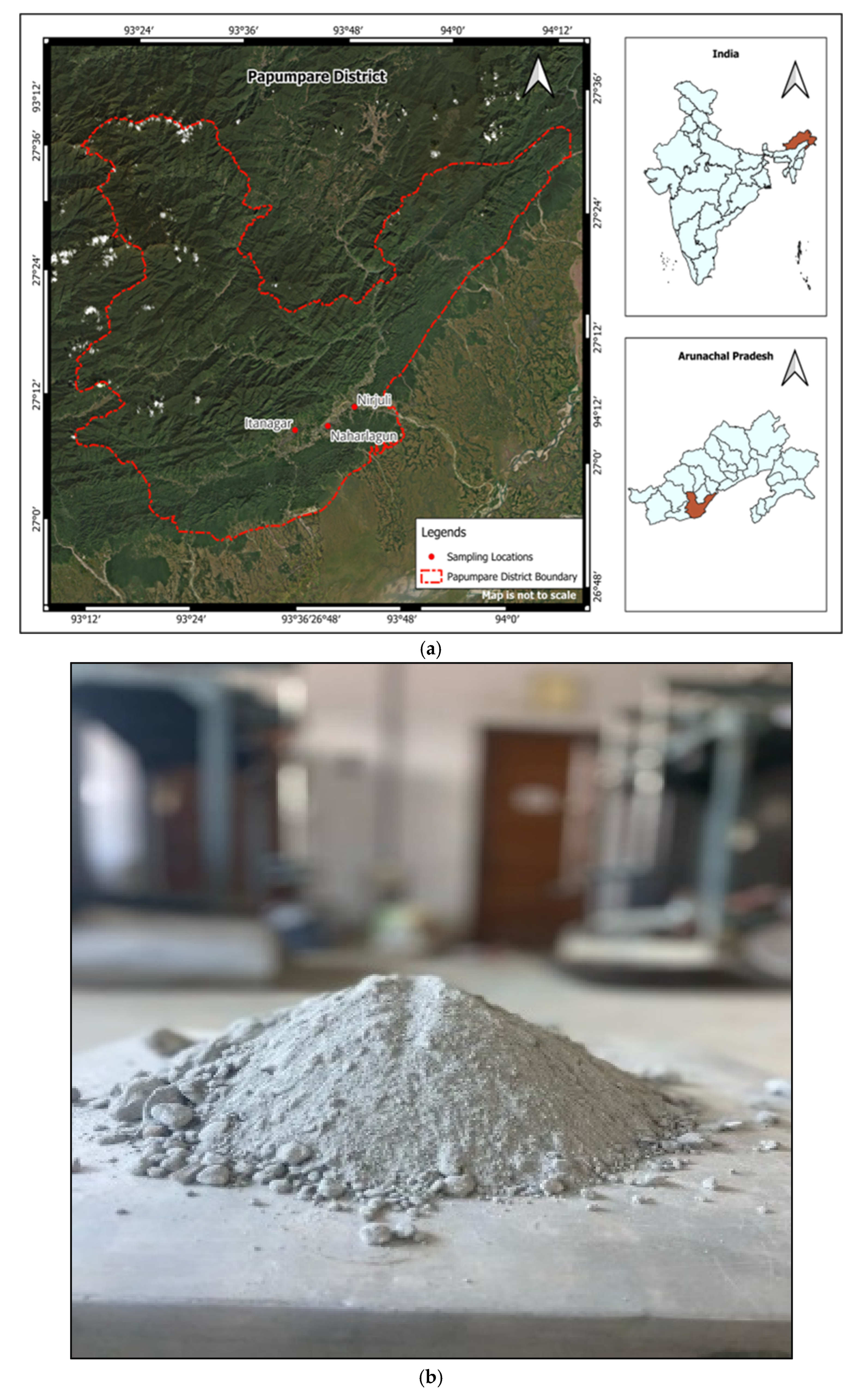
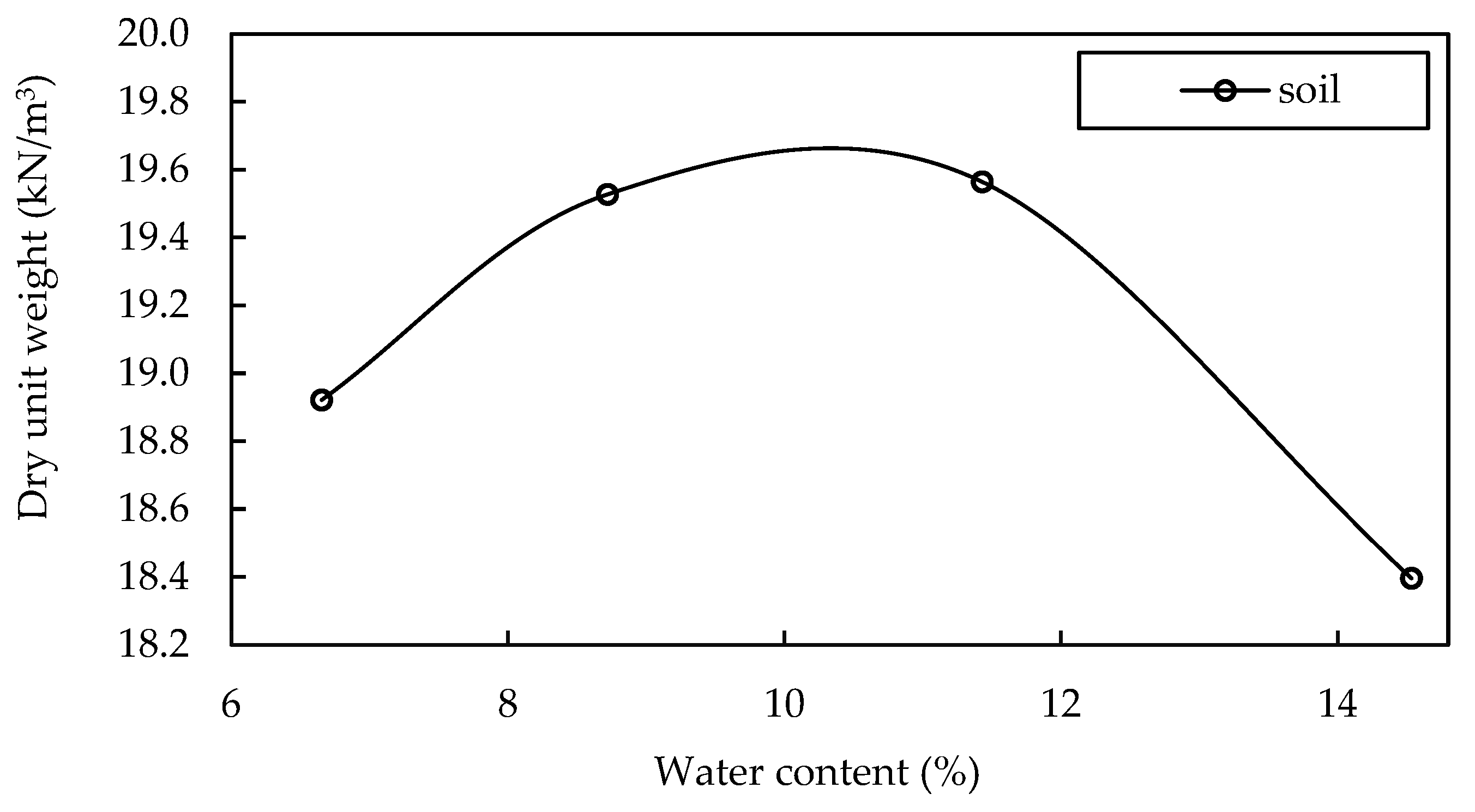
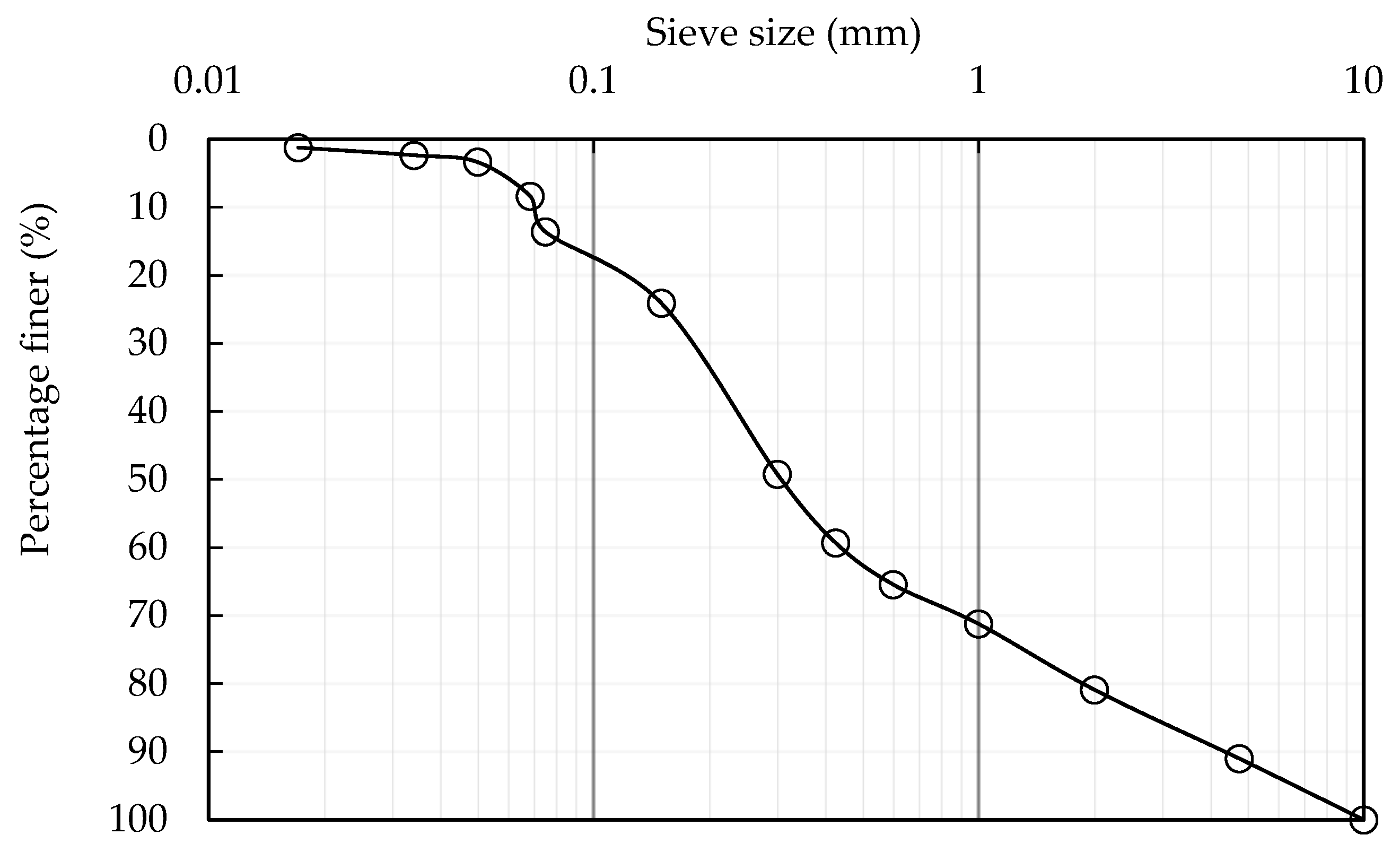
The soil was collected from landslide-prone zones near the Capital region of Arunachal Pradesh, India. Figure 1a shows the location from which the soil was collected. The soil was collected by excavating the side slope of National Highway-415 with the help of a shovel and a hoe from a depth of 0.5 m. Special attention was given to exclude any waste materials, humus, or plant roots during the excavation. The gathered soil was carefully placed in a plastic bag and transported to the laboratory for further analysis. A soil sample was also collected to determine the field water content and density. The soil was kept for air drying, and lumps of soil were broken with a mallet. Figure 1b shows the soil sample after drying. The selection of this specific site was based on the observation of repeating landslides and damage to retaining walls during the rainy season. This area was identified as particularly susceptible to such geological challenges. Landslides and damage are very frequent and common in this location during the rainy season. The physical characteristics of the soil are given in Table 1. According to the IS Soil Classification, the properties of the soil have been found to be silty sand (SM). Figure 2 shows the MDD and the OMC of the only soil. The value of OMC was 10.4%, and the MDD value was 19.7 kN/m3. Figure 3 shows the grain size analysis of the parent soil. The MDD and the OMC of the parent soil were found using light proctor compaction tests.

2.2. Xanthan Gum

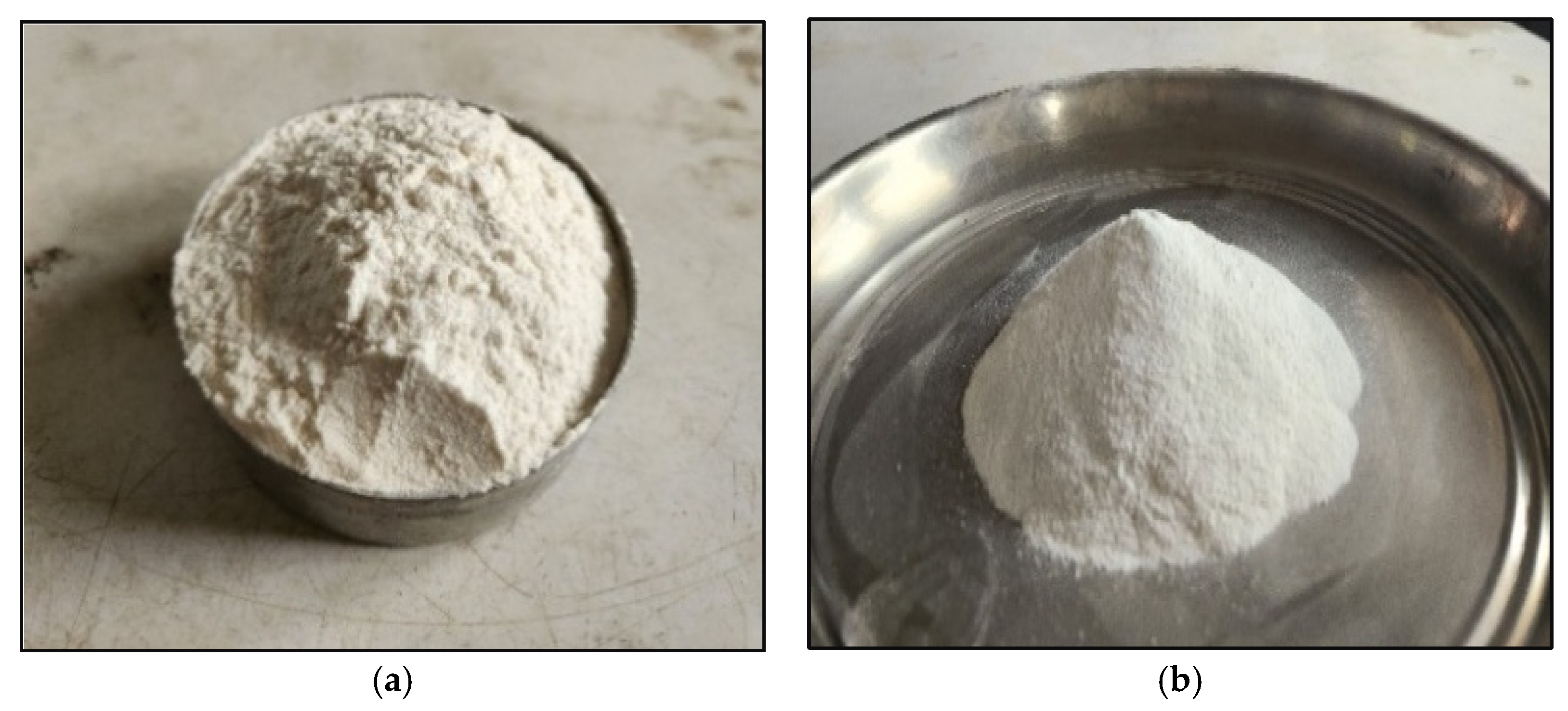
The xanthan gum used in this study was ordered online from a chemist in a sealed bottle in powdered form. Xanthan gum dissolves readily in both hot and cold water, providing flexibility in application across a range of temperatures. It also demonstrates pseudo-plastic behavior, meaning its viscosity decreases under shear stress, allowing for easy application and spreading. Xanthan gum maintains its stability and functionality even when subjected to freeze/thaw cycles, and it remains effective over a broad range of pH levels, providing stability in formulations with varying acidity or alkalinity. Xanthan gum has minimal effects on the environment and is effective in stabilizing and suspending particles in a solution, enhancing the overall stability of formulations. Even at low concentrations, xanthan gum exhibits a remarkable increase in viscosity, contributing to its effectiveness as a thickening agent at low concentrations. In this study Xanthan gum was used in varying dosages, i.e., 1%, 2%, and 3% of the dry weight of the soil. Table 2 shows the properties of the xanthan gum used. Figure 4a shows the xanthan gum sample.

2.3. Eggshell Powder

Eggshells used in this study were collected from Subansiri Hostel, NERIST, Nirjuli, Arunachal Pradesh. The collected eggshells were washed thoroughly and were sun dried and then ground. The milled eggshell powder (ESP) was then passed through a 150 µm sieve. Figure 4b shows the milled eggshell powder. Eggshells are produced in a very large amount, which needs to be disposed of and treated. Using eggshells in soil stabilization addresses this environmental problem and contributes to sustainability. The major component of the eggshell is CaCO3, which exhibits cementitious characteristics. Using eggshells encourages waste utilization because they are biodegradable and cost-effective. For the study, varying percentages of the ESP were used, i.e., 4%, 6%, and 8% of the dry weight of the soil and/or xanthan gum. Table 3 shows the properties of the eggshells.

2.4. Laboratory Test Procedures

This section summarizes the different laboratory tests that were performed in this study. Tests were executed as per the rules and specifications in the Indian Standard. The different samples were prepared to conduct the following tests with different combinations of eggshell and xanthan gum proportions. The mixed design of the sample is shown in Table 4.

2.4.1. Compaction Tests (IS: 2720-Part 7 1992)

Compaction tests determined the MDD and OMC for soil, soil–xanthan gum, soil–eggshell powder, and soil–xanthan gum–eggshell powder mixes. These values guided the specimen preparation for unconfined compression, triaxial, and CBR tests, providing a comprehensive analysis of the material’s engineering properties.

2.4.2. California Bearing Ratio Test (IS: 2720-Part 16, 1992)

CBR tests were conducted on untreated soil, soil–xanthan gum, soil–eggshell powder, and soil–xanthan gum–eggshell powder mixes, following IS: 2720-Part 16, 1992. Samples were prepared in a 150 mm diameter, 175 mm height mold, compacted at the maximum dry density and the optimum moisture content. Tests were initially done in unsaturated conditions. The samples were then soaked in water for 4 days (96 h) before testing. Three different CBR results for each mix, in both soaked and unsoaked conditions, were averaged and reported.

2.4.3. Microstructural Analysis

The microstructural analysis of the samples plays an important role in understanding the properties of the samples under different conditions. The microstructural analysis for this study was conducted on the soil, XG, ESP, S + 1XG, S + 6ESP, and S + 1XG + 6ESP samples to understand the effect on their mechanical properties and strength behavior on the microstructural level due to certain conditions. Two types of tests were conducted on the samples: Scanning Electron Microscope (SEM) and the Electron Dispersive X-ray (EDX) tests.

3. Results: Analysis and Interpretations

3.1. Compaction Tests

3.1.1. Soil Without Additive

The compaction behavior of parent soil refers to how the soil responds to external forces and compaction efforts. When subjected to compaction, the parent soil undergoes significant changes in its physical properties. The compaction curve of the original soil shows MDD of 19.7 kN/m3 and OMC of 10.4%. The untreated soil was observed to be porous and dispersed.

3.1.2. Soil–Xanthan Gum Mixture

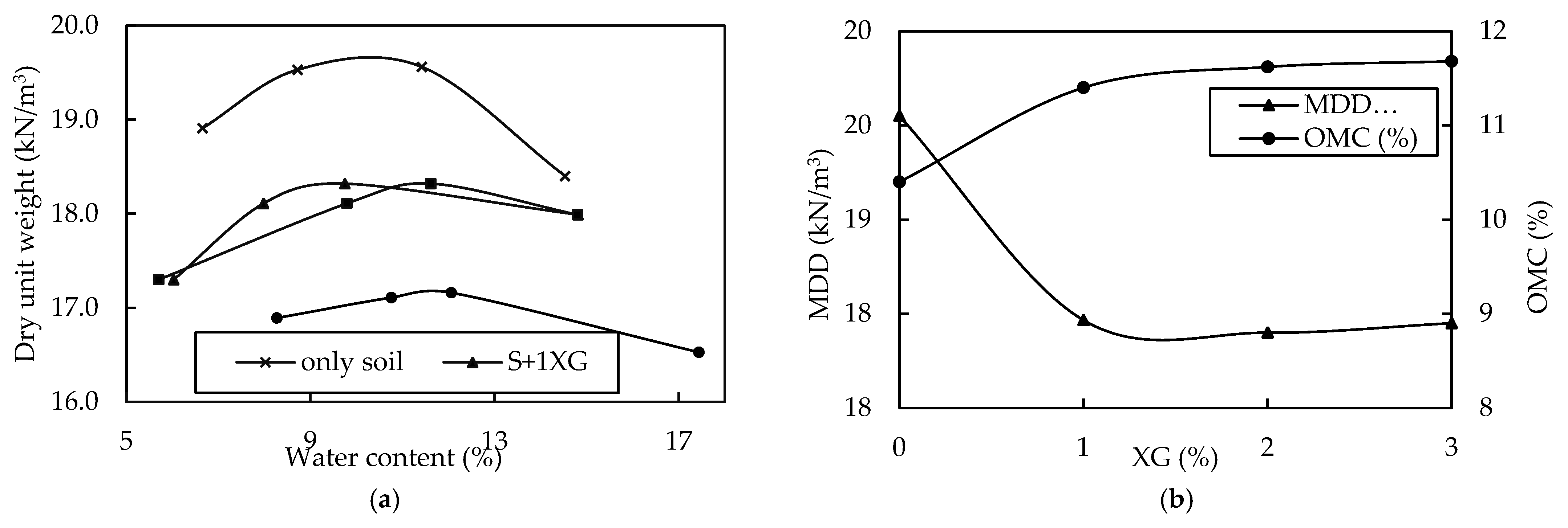
The MDD and OMC soil–xanthan gum mixes, with varying percentages of xanthan gum, i.e., 1.0%, 2.0%, and 3.0%, are illustrated in Figure 5a. When xanthan gum content was increased from 1% to 2%, the MDD decreased from 18.36 kN/m3 to 18.28 kN/m3, OMC increased from 11.4% to 11.7%, and the MDD increased for 3% XG, but the OMC remained constant. The deviations in the compaction properties of the soil–xanthan gum mixes are shown in Figure 5b, which displays the specimen’s variation of the MDD and OMC when the XG content varies from 0%, 1%, 2%, and 3%.
The water content in Figure 2 and Figure 5 represents the gravimetric moisture content, defined as the ratio of the mass of water to the mass of dry soil solids. This measure is conventionally adopted in classical soil mechanics for compaction characteristics, whereas volumetric moisture content is not typically used for such analyses [39,40].
In some cases, if the soil is very porous, the MDD increases as the biopolymer fills the void, thereby increasing the MDD, and a slight upsurge in OMC is due to the rise in the absorption of the water [25]. The increasing content of XG has decreased the MDD, which is attributed to the lower specific gravity of the XG. Because of the viscous solution of biopolymer, the slight rise in the OMC is due to the biopolymer’s hydrophilic nature, which tends to increase the OMC of the specimen [5,16,26,27,28]. Similar observations were found in this study: a slight reduction in the MDD and an increase in the OMC with the increase in the XG content.

3.1.3. Soil–Eggshell Powder Mixes

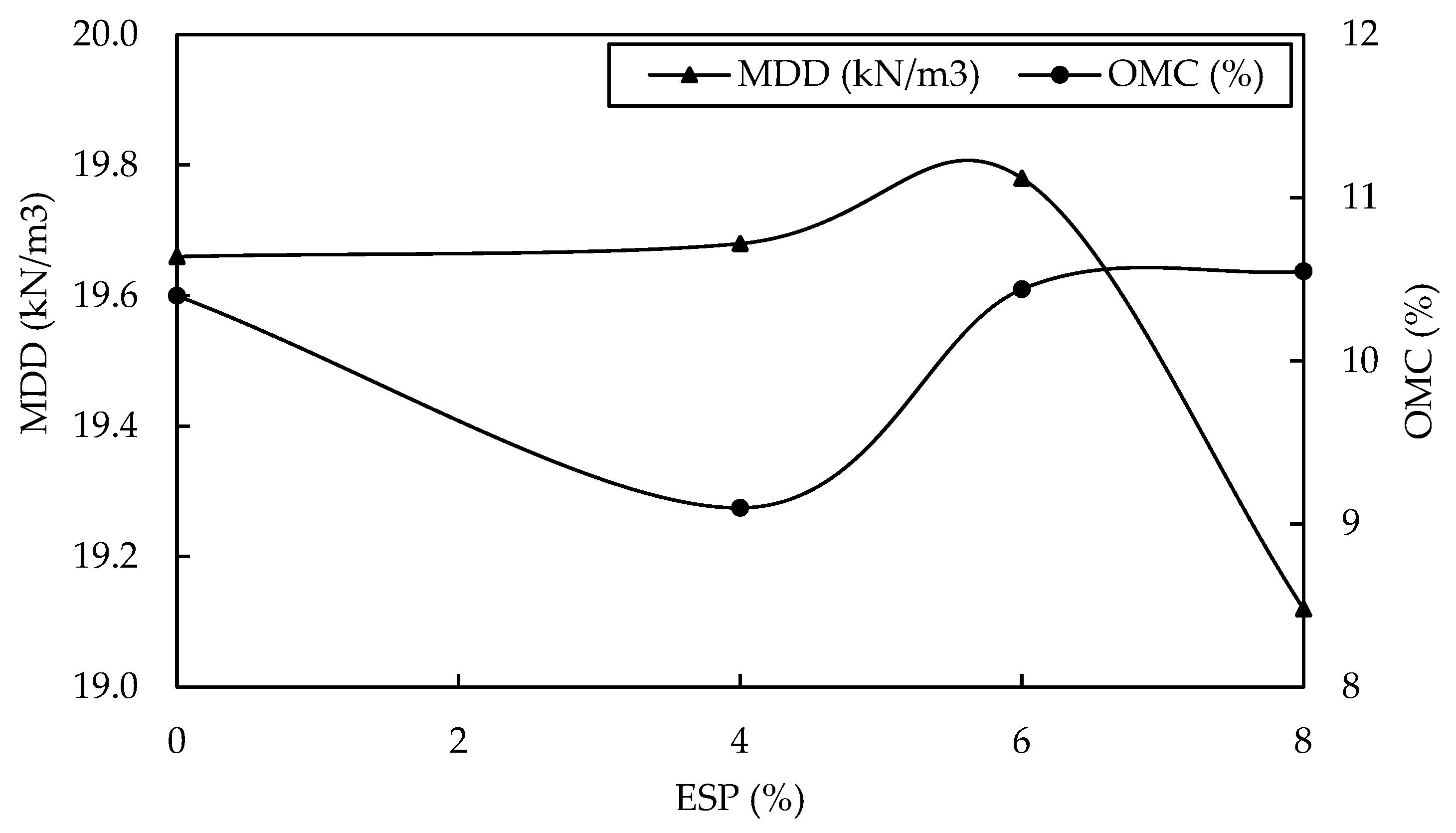
Compaction test results of soil–eggshell powder mixes are shown in Figure 6, which shows the variation resulting from incorporating varying concentrations of ESP to the soil, i.e., 4.0%, 6.0% and 8.0%. The MDD of the untreated soil was 19.7 kN/m3, which was increased to 19.68 kN/m3 at 4%ESP, and 19.8 kN/m3 at the ESP concentration of 6%. The sample with 8% ESP content decreased the MDD to 19.1 kN/m3. The increase in the MDD of soil treated with the ESP occurs due to cation exchange, flocculation, when the soil particles aggregate together and become a larger particle; agglomeration, when the soil particles cluster together to form a larger particle; and the pozzolanic reaction, also the replacement of the soil particle by the ESP particle as it has higher specific gravity [4,36,41,42,43]. The decrease in the MDD at the 8% ESP content is probably due to the replacement of the soil particles by the ESP units. The increase in the OMC of the sample treated with the ESP is due to the dry density, the shape and size and the specific gravity of the soil, and the ESP [32,44]. Initially, the eggshell powder filled the void of the porous soil, but as the content of ESP increased, it started to replace the soil particles, leading to the decrease of the overall decrease in the MDD. The increase in the OMC of the specimen is mainly due to the cementitious reaction, which releases heat and causes the water to evaporate. This is mainly due to the presence of the calcite, which promotes an exothermic reaction [45]. The OMC initially decreases at 4% ESP from 10.4% OMC of the parent soil to 9.1% OMC, but further increasing dosages of the ESP increase the OMC to 10.44% and 10.55% at the incorporation of 6% ESP and 8% ESP, respectively.

3.1.4. Soil–Xanthan Gum–Eggshell Powder Mixes

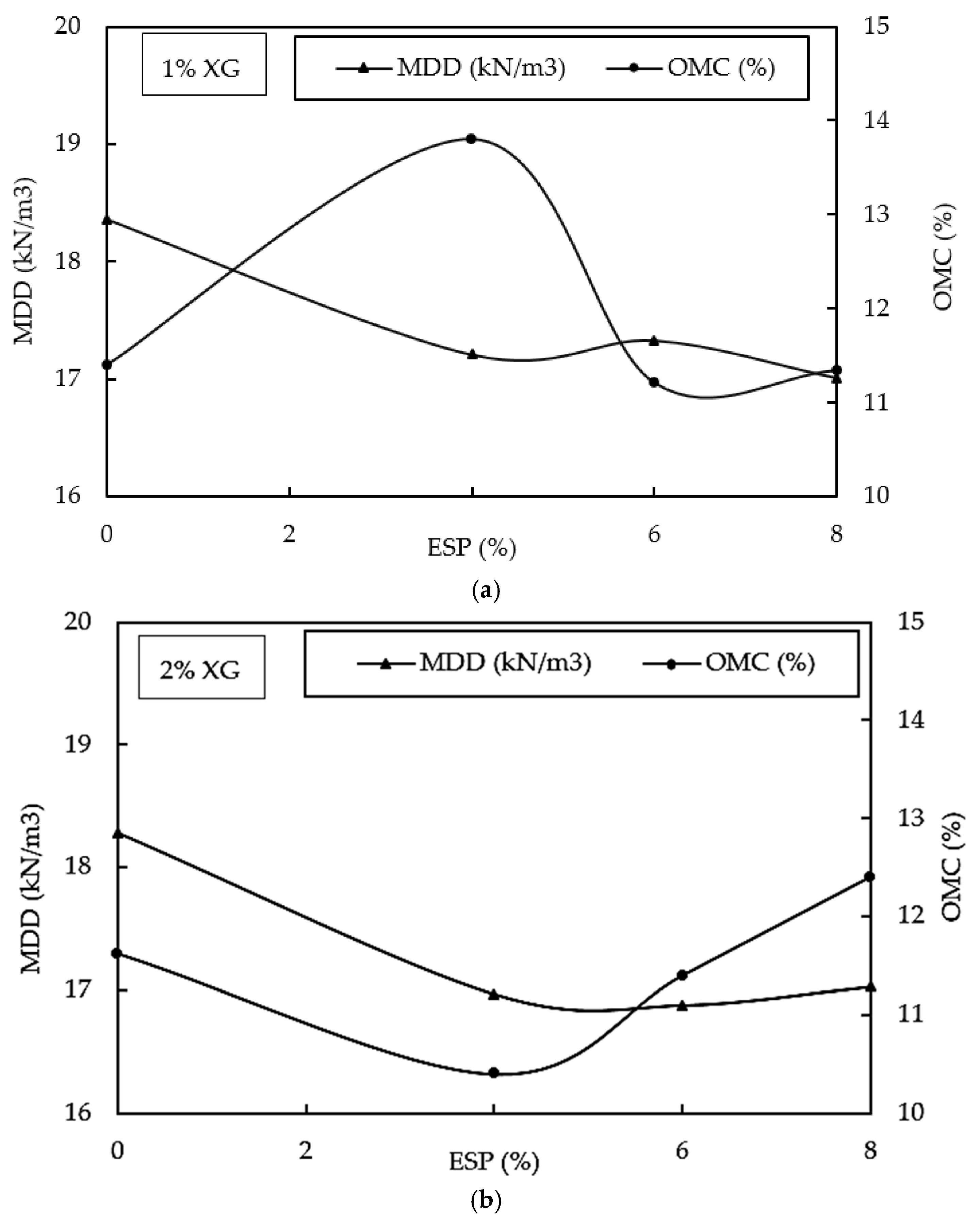
Initially, keeping the content of xanthan gum constant at 1% and increasing the content of eggshell powder showed an increase in the MDD and a slight decrease in the OMC compared to the parent soil; at 4% ESP, the OMC obtained, which was 13.8%, was comparatively greater than OMC of the 6%ESP and 8% ESP, which was 11.21% and 11.34%, respectively.
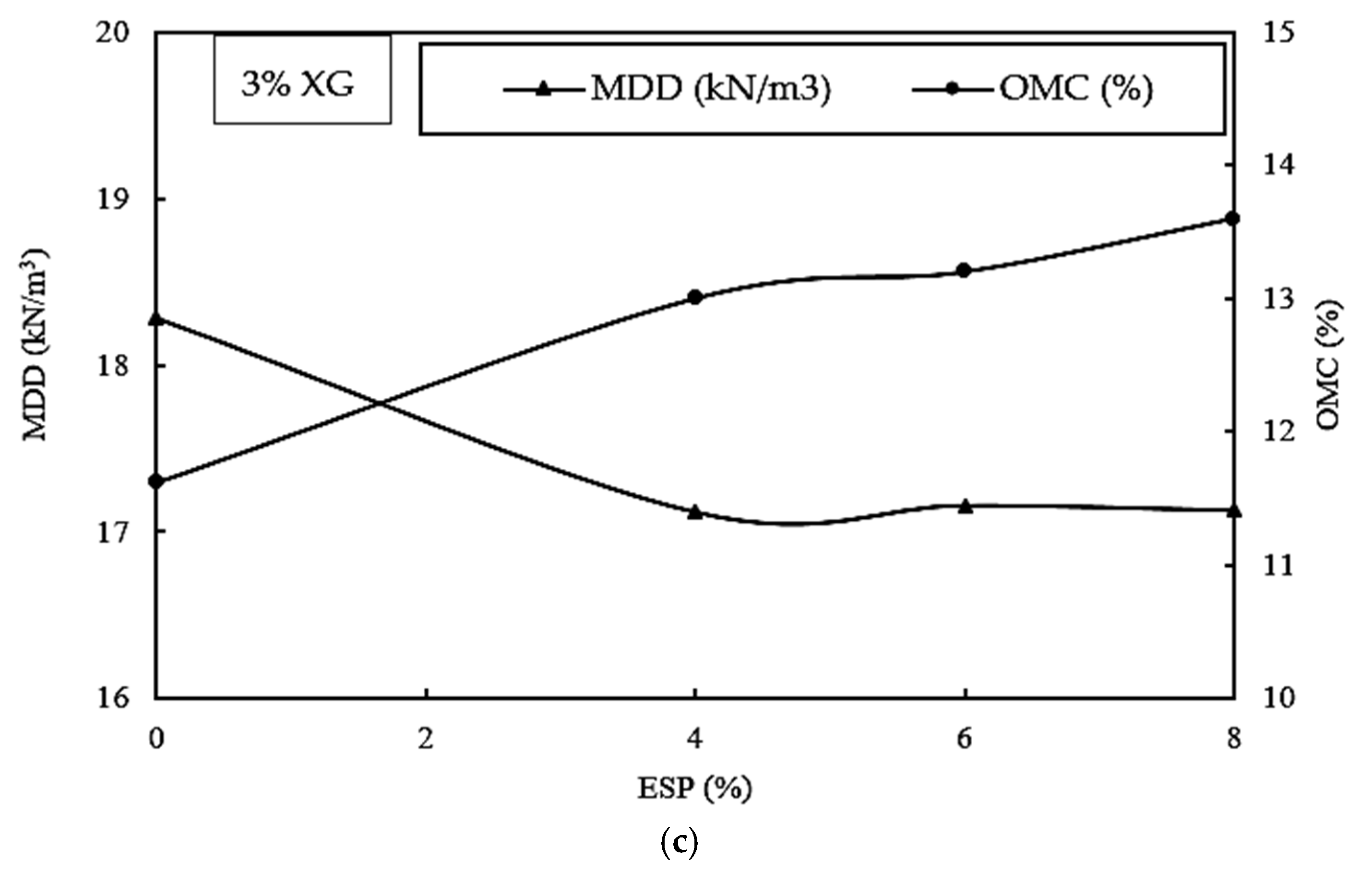
Figure 7a shows the variations in the MDD and OMC when the XG is kept constant at 1%, and the percentage of the ESP varies from 0 8%. The same procedure of keeping XG constant at 2% and varying the ESP content was followed; the keynotes were that the MDD seemed to decrease and the OMC increased. The OMC of the mixes increased with the increasing dosage of the ESP. When the content of the xanthan gum is kept constant at 3%, and the ESP was increased from 0% to 4%, 6%, and 8%, which is highlighted in the increase in MDD and OMC. Figure 7b shows the variation of the MDD and OMC with the increase in the ESP and keeping XG constant at 2%. Figure 7c illustrates the changes in MDD and OMC with the increase in the ESP while keeping XG constant at 3%. When the XG was kept constant at 3% and the ESP dosage was increased, the MDD increased slightly, but then again at the later end, it started to decrease, while the OMC kept on increasing with the increase in the ESP.
The observed compaction behavior can be explained by the contrasting mechanisms of xanthan gum and eggshell powder. Xanthan gum is hydrophilic in nature and has a high water-absorption capacity, which leads to an increase in optimum moisture content and a corresponding reduction in maximum dry density with increasing XG content. This trend is consistent with observations reported in earlier studies.
When ESP is introduced in combination with XG, a competing effect is observed. Eggshell powder is relatively denser and less water-absorbent, and at higher ESP contents, its influence becomes dominant. As a result, the addition of ESP counteracts the water-absorbing behavior of xanthan gum, leading to an increase in MDD and a decrease in OMC. This interaction between the two additives results in non-monotonic and seemingly erratic trends in the combined XG + ESP mixes, rather than indicating non-uniform mixing or experimental error.
Similar variations in MDD and OMC have been reported in studies involving biopolymers combined with mineral additives such as marble powder, where opposing material properties govern the overall compaction response of the soil mixture [46].

3.2. California Bearing Ratio

The results obtained by conducting CBR tests of 28-day cured samples for various mixes are tabulated below in Table 5 and discussed under various sections. Understanding the results gave valuable insight into the engineering behavior of the soil.

3.2.1. Parent Soil

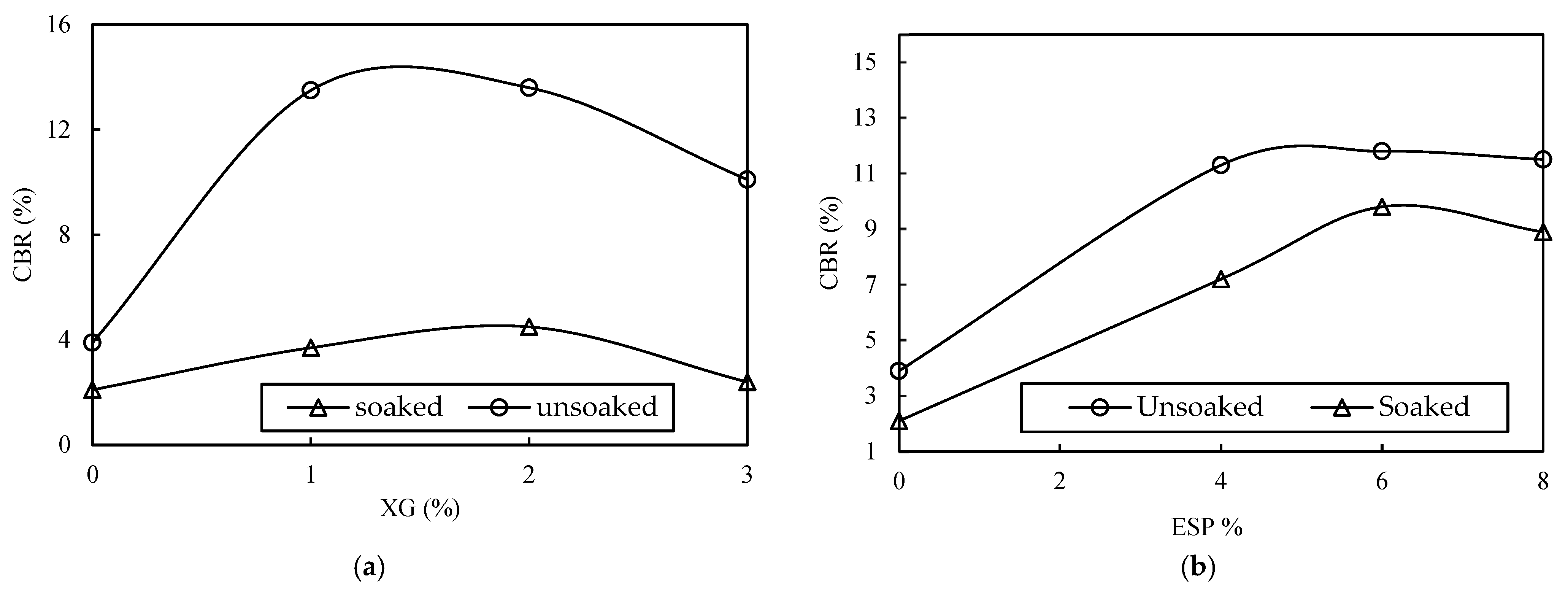
The CBR test was conducted on the parent soil for both soaked and unsoaked conditions for the ageing period of 0 and 4 days. A CBR test on the soil is done to reveal the soil’s strength and to provide appropriate thickness for the anticipated traffic. The value for the unsoaked sample was 3.9%, and the value for the soaked sample was 2.1%. The soaked and unsoaked values were observed to be less than the minimum specified subgrade CBR value, which is 5%. Therefore, to ensure the stability and durability of soil structures, it is crucial to implement soil stabilization techniques. This will ensure the overall strength and performance of the soil, providing a safer and more reliable foundation.

3.2.2. Soil–Xanthan Gum Mixes

The CBR results obtained from the varying mixes of the soil–xanthan gum are discussed in this section. The result of the CBR tests conducted on the varying percentages of the xanthan gum is given in Table 4, along with the increased percentage of the CBR value. It was observed that the biopolymer substantially improved the CBR of the soil. Specifically, the addition of 1%, 2%, and 3% xanthan gum increased the CBR by 239.5%, 239.9%, and 154.4% in the soaked condition, respectively. The optimum result was observed at 1% XG. Upon increasing the XG beyond 1%, not much increase can be seen, even though the value is greater than that of the parent soil. The incorporation of XG has greatly improved the strength of the soil owing to the formation of an agglomerate, i.e., the soil particles are being bound together as a collection of the mass due to the electrostatic force, or Vander Waals force [20,24,28].
Additionally, hydrogels of the biopolymer fill void spaces, and flocculation occurs due to the induced adhesion of the biopolymer to the soil. In a related study by Fatehi et al. [47] on sand, the CBR value increased by approximately 3.16% and 3.57% with the addition of sodium caseinate and casein, respectively [47]. Figure 8a shows the variation in CBR values for different mixes of soil and xanthan gum. The results suggest that biopolymers like xanthan gum can be effective alternatives to traditional additives for improving the strength of silty sand.

3.2.3. Soil–Eggshell Powder Gum Mixes

Incorporation of the eggshell powder (ESP) increases the strength of the soil sample, as the main component of the ESP is calcite (calcium carbonate), which interacts with soil particles through pozzolanic reactions. These reactions involve the formation of calcium silicate hydrates (CSH), which bind soil particles together, resulting in agglomeration and flocculation. These phenomena enhance the overall cohesion and structural integrity of the soil [3,48]. Additionally, the irregular shape and rough texture of ESP particles contribute to improved soil stabilization by providing improved interlocking capabilities with soil particles. Due to the irregular shape of the ESP, it increases the friction between the soil and the ESP particles, which further increases the mechanical interlocking and enhances the soil’s strength and resistance to deformation. Consequently, the use of ESP not only leverages its chemical properties for pozzolanic activity but also its physical characteristics for mechanical stabilization, making it an effective additive for improving soil strength and stability [22,49]. The variation in the CBR with the increase of the ESP content is shown in Figure 8b. The eggshell powder was added in 4%, 6%, and 8% of the dry unit weight of the soil. The increased CBR percentage of the unsoaked value for the 4%, 6%, and 8% dosages are 189.7%, 195.2%, and 187.2%, respectively. For the soaked condition, the value increased by 256.72%, 385.6%, and 345.3% for 4%, 6%, and 8% of the ESP, respectively. This increase can be attributed to the formation of CSH gel, agglomeration, cationic exchange, cementation, flocculation, and pozzolanic reaction [22]. The initial strength gain of the sample is mainly because of the flaky shape of the ESP, which enables the ESP to interlock with the soil particles. Furthermore, the strength of the sample does not change after the dosage of 6% ESP, indicating that this is the optimum content for its addition. Utilizing ESP, an industrial waste byproduct, in soil stabilization not only enhances soil strength but also provides significant environmental benefits. By incorporating ESP into soil stabilization practices, we can effectively reduce the waste volume requiring disposal and the associated demand for landfill space. This sustainable approach not only mitigates environmental pollution but also promotes the efficient use of industrial byproducts, contributing to a circular economy. Therefore, the use of ESP in soil stabilization presents a double benefit of improving soil properties while simultaneously addressing waste management challenges.

3.2.4. Soil–Xanthan Gum–Eggshell Powder Mixes

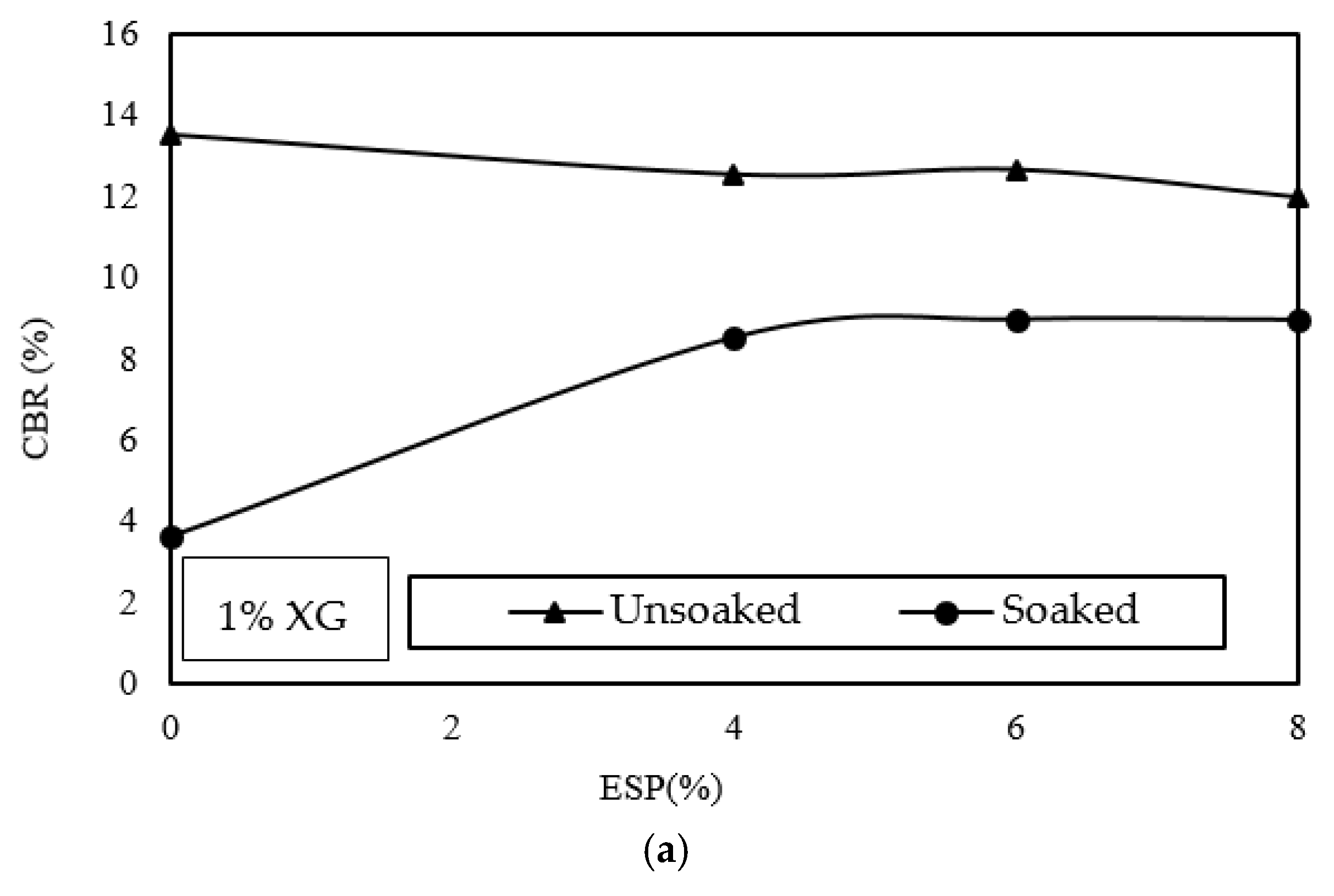
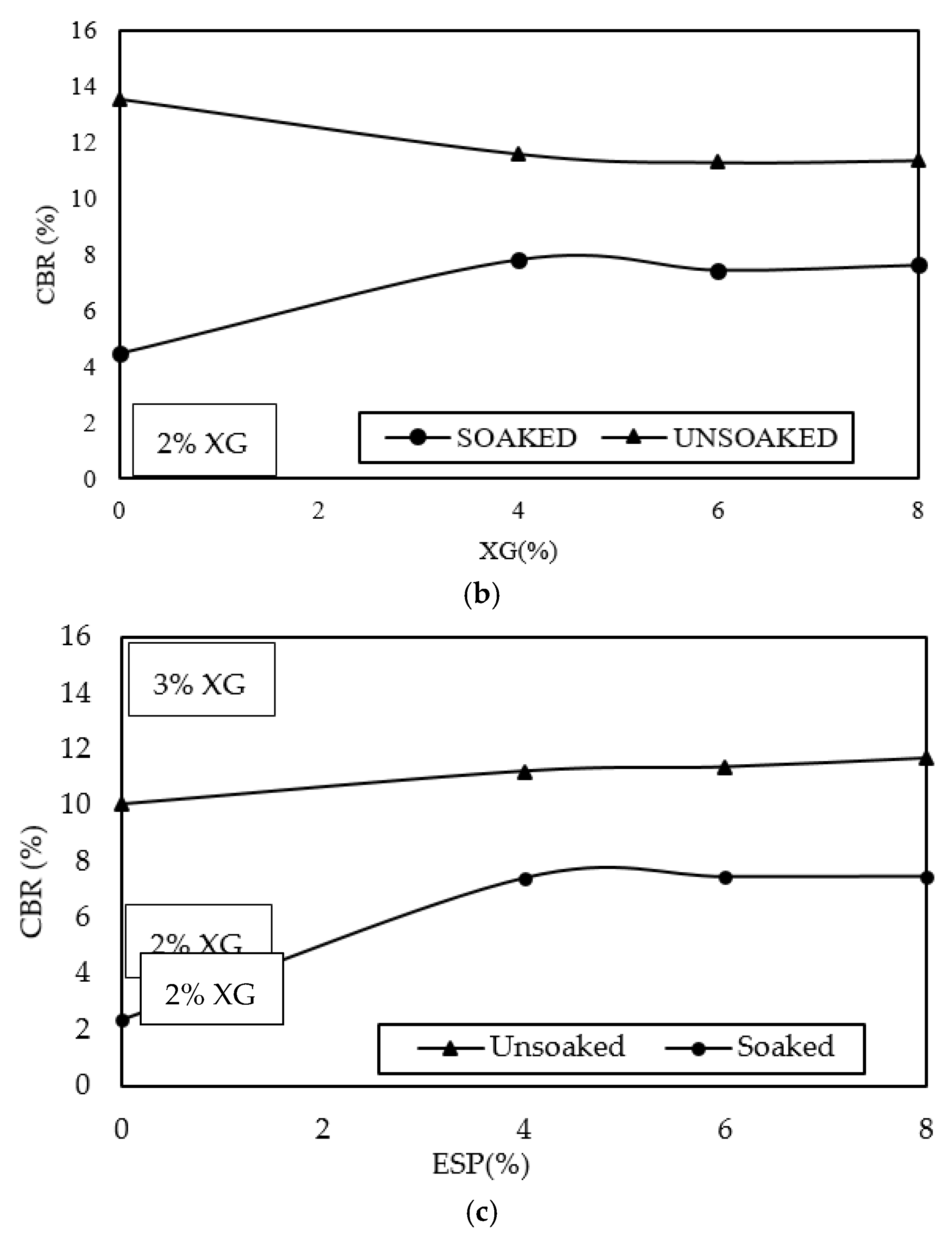
In this section, the results obtained from the different mixes of both the xanthan gum and the eggshell powder will be analyzed. The additives xanthan gum and ESP were added in different dosages of 1%, 2%, and 3%, and 4%, 6% and 8%, respectively, relative to the dry unit weight of the soil. The incorporation of XG and ESP greatly increased the strength of the soil, while XG filled the voids, and the formation of the hydrogel slightly increased the sample’s adhesiveness, whereas the ESP enhanced the specimen’s strength via the pozzolanic reaction. The observed value showed that, with the increase in the ESP content, the strength of the sample increased, whereas the increase is negligible when increasing the biopolymer beyond the optimum dosage. An increase in the best result was obtained in the mix of S + 1XG + 6ESP. The increase in the strength of this sample was found to be 225.6% and 323.8% for soaked and unsoaked conditions, respectively. For the specimen S + 1XG + 4ESP, the CBR values were 12.6% and 8.5% for soaked and unsoaked conditions, keeping XG constant at 1%. As the ESP content increased, the mixture did not have a significant increase. The mixes with constant 2%XG, such as S + 2XG + 4ESP, S + 2XG + 6ESP, and S + 2XG + 8ESP, demonstrated impressive increases of 271.4%, 257.1%, and 261.9%, respectively, under soaked conditions. The samples with a constant 3% XG content showed improvements, though slightly less compared to those with lower XG concentrations. Yet, these were still noteworthy when compared to the untreated soil sample. Notably, mixes like S + 3XG + 4ESP, S + 3XG + 6ESP, and S + 3XG + 8ESP showcased improvements of 187.2%, 192.3%, and 200.0% in unsoaked and 252.4%, 252.4%, and 257.1% in soaked conditions, respectively. This comprehensive assessment, considering both performance and economic viability, concludes that the S + 1XG + 6ESP mix is the optimal solution, indicating its potential for practical soil stabilization applications.
The variations in California Bearing Ratio (CBR) values corresponding to differing ESP levels are shown in Figure 9, providing further insights into the effectiveness of the stabilization methods employed. Figure 9a shows the CBR of the constant 1%XG with the increasing ESP content, i.e., 0%, 4%, 6%, and 8%, for both soaked and unsoaked conditions. Figure 9b shows the changes in the mixes’ CBR with a constant 2% XG and varying ESP dosage, and Figure 9c shows the CBR variation of the specimen with 3% XG and different ESP content. Combining XG and ESP in soil stabilization can be highly effective, as their complementary properties synergistically enhance the mechanical characteristics of the soil, increasing the strength and stability.

3.3. Microstructural Analysis

In this section, the micrographs and the results from the micro-structural analysis, such as Field Emission Scanning Electron Microscopy (FESEM), and Energy Dispersion X-ray Spectroscopy (EDX) of the soil, will be discussed, which will help in understanding the soil’s key features. The microstructure analysis of untreated and treated soils was done using a standard procedure [50]. The equipment adopted a focused electron beam to produce high-resolution images, particle shape, fabric orientation, including yielding the microstructural soil composition and quantifying element composition.
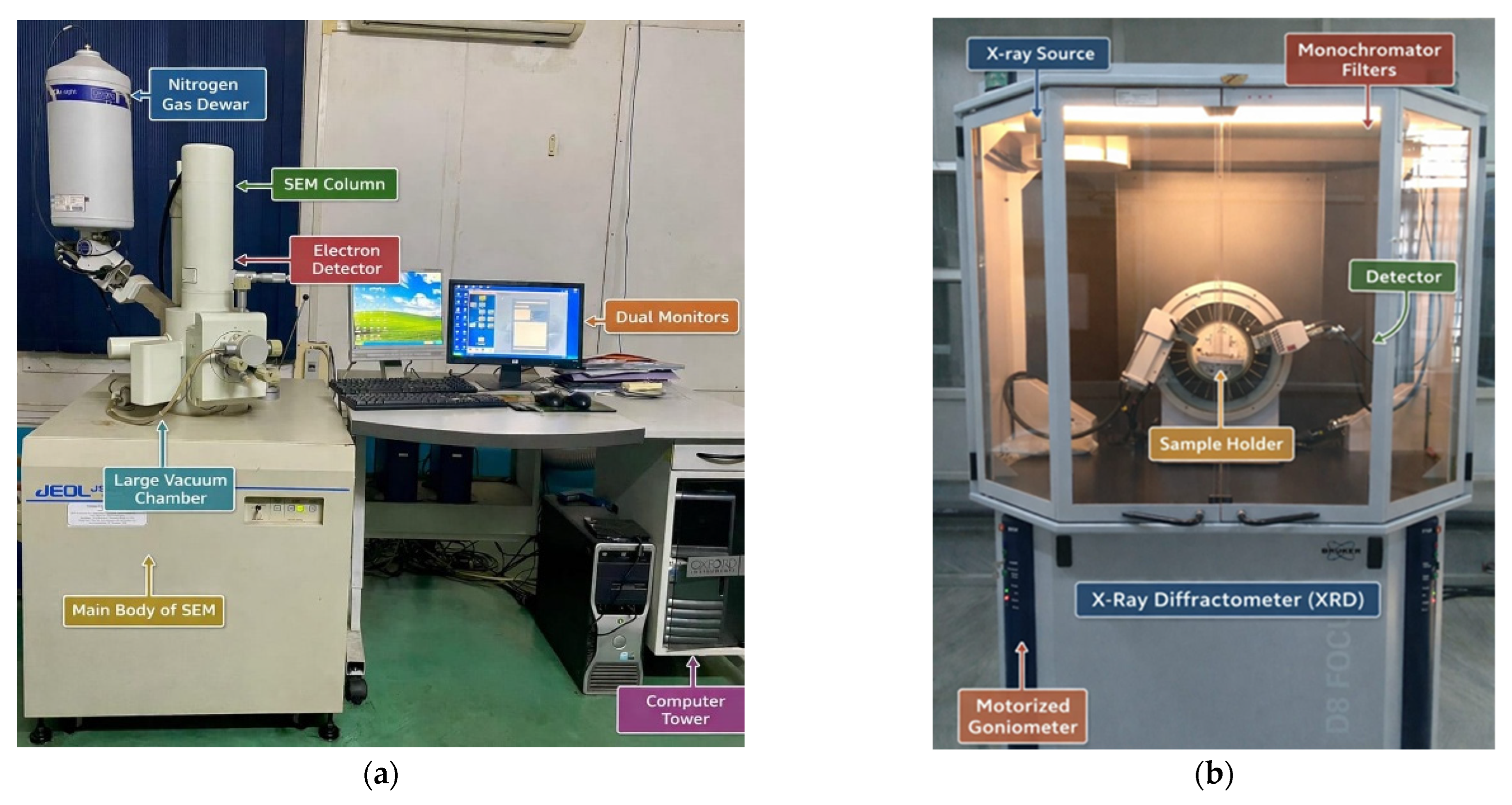
Figure 10a shows the image of the instrument used for the FESEM and EDX analysis. It utilizes high beam spatial resolution for nanoscale imaging, offering magnification ranging from X25 to X1,000,000. The accelerating voltage ranges from 0.1 kV to 30 kV, with probe currents of a few mA to 200 mA. The scanning electron image resolution is 1.0 nm (15 kV) and 1.3 nm (1 kV). During analysis, 15 KV was used for FESEM, and 20 kV was used for EDX. The manufacturer is JEOL, Japan.
Figure 10b shows the image of the instrument used for the XRD analysis, popularly known as Malvern Panalytical Xpert3 Powder X-ray Diffractometer, which operates on software, consisting of an X-ray tube operating at a voltage of 40 kV and a current of 30 mA–40 mA, having a power of up to 2.2 kW. The sample is mounted on the sample holder, and the door is locked. An output was obtained keeping the high voltage of 40 kV and current of 30 mA in a scanning time of 15 min.

3.3.1. FESEM

Field Emission Scanning Electron Microscopy (FESEM) is an advanced microscopy technique that provides detailed morphology and composition of the materials at nano-scale resolution. Through this test, the investigation of the structural properties of the sample can be conducted.
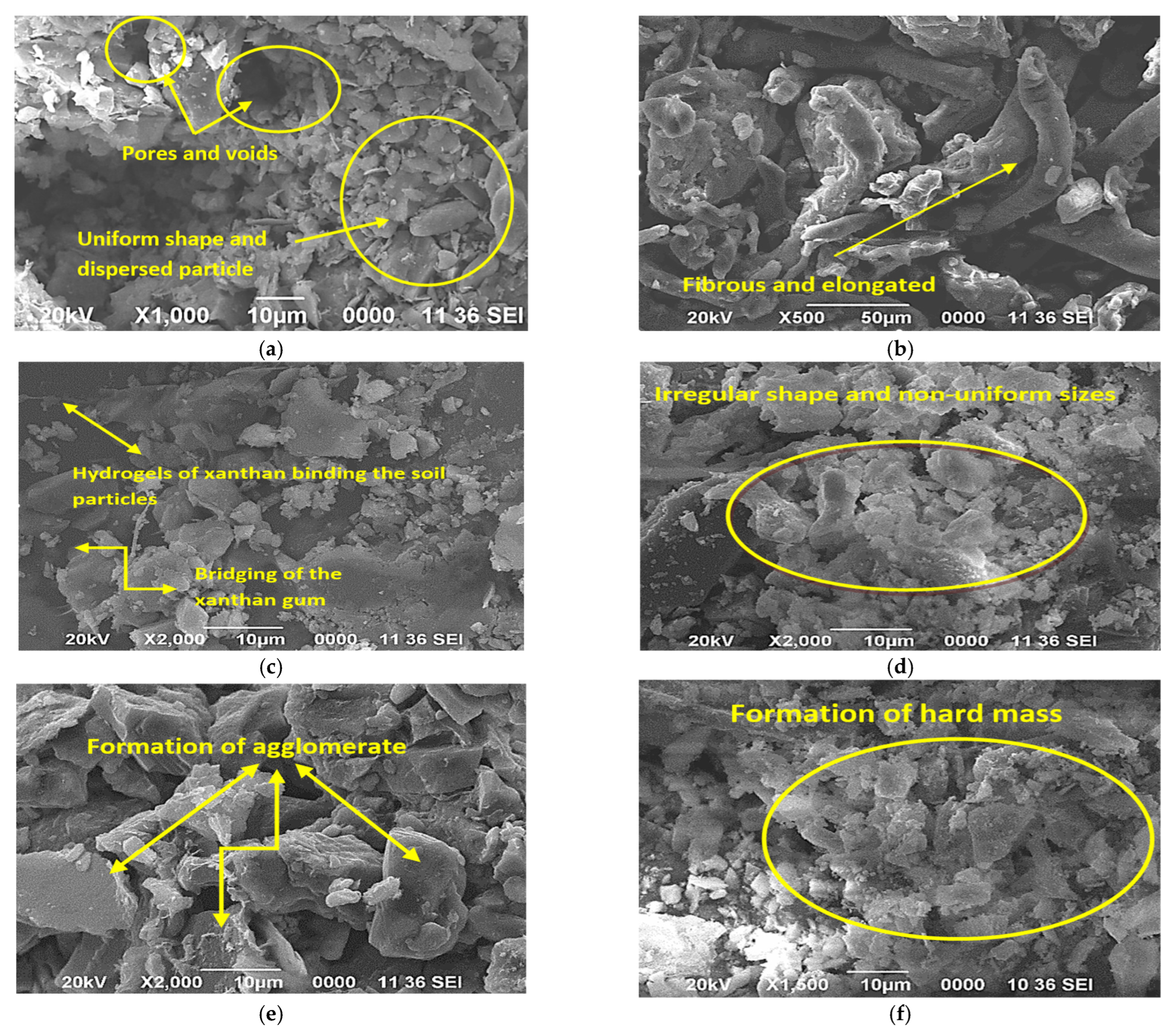
The SEM micrograph of the untreated soil is shown in Figure 11a. It is evident that the parent soil particles have no adhesion, are of uniform shape and size, and are dispersed with the presence of visible cracks and porosity. The SEM micrograph of the biopolymer is shown in Figure 11b. The particles of xanthan gum appear elongated, fibrous and look like a thread filament.
The soil treated with the biopolymer xanthan gum, as illustrated in Figure 11c, demonstrates the hydrogel formation and pore filling capabilities of xanthan gum. It also shows the film formation of XG coating of the soil particles and filling the void spaces, making the soil particles a hard matrix and significantly enhancing the strength of the soil. Many researchers made similar observations. The soil particles were coated with biopolymer gel, increasing the contact area among the particles and forming a bridge to connect the particles that were not connected directly [5]. The biopolymer gel form fills the void, and due to partial/full hydration, it hardens and stiffens the soil matrix [51]. The biopolymer acted as a cementitious material and bonded the soil particles closely, filling the pores [11,52]. The biopolymer acts like a blanket, holds the soil particles together and provides cohesion among the soil particles [53]. Biopolymer-treated soil formed better-aligned soil particles due to the formation of hydrogels, which also further improves the strength of the soil [6,21]. The micrographs revealed the accumulation of biopolymer in the voids of the soil, creating links and bridges to connect the soil particles and increasing the strength of the soil, which also depends upon the strength and density of the linkages existing in the pores [16].
The SEM micrograph revealed that the ESP particles were of irregular shape, which helps in interlocking soil particles, thus increasing the soil’s mechanical properties [32], as shown in Figure 11d. The soil treated with ESP, as shown in Figure 11e, exhibits the formation of a hard agglomerate matrix, a clear indication of a pozzolanic reaction. The incorporation of ESP into the soil significantly improves its structure, making it denser and thereby enhancing its load-bearing capacity [11]. The SEM image provides evidence that the pozzolanic reaction is initiated by the addition of ESP to the soil particles [36].
Furthermore, the soil treated with ESP showed an image of a hardened mass, resulting from a combination of cationic exchange, agglomeration, and a pozzolanic reaction [32,36,41]. These processes collectively contribute to the soil’s improved properties, as the irregularly shaped ESP particles facilitate interlocking among soil particles, leading to a more stable and resilient soil matrix. This transformation highlights the effectiveness of ESP in soil stabilization, resulting in a material that is better suited to withstand structural loads and environmental stresses. The sample treated with both xanthan gum and eggshell powder, as shown in Figure 11f, demonstrates significant structural transformation. The SEM image reveals that the soil mass has been converted into a hard matrix, indicating flocculation and the development of larger aggregates. This also indicates successful interaction between the additives and the soil particles, resulting in the formation of larger and more stable soil structures.
This transformation is attributed to the cementitious properties of ESP and xanthan gum, which effectively bind the soil particles together [28,49,52,54]. The combined use of ESP and xanthan gum enhances the load-resisting ability of the soil, creating a strong sample with the soil’s load-resisting capacity. Additionally, the application of these additives is both environmentally friendly and cost-effective, offering sustainable soil improvement solutions. Figure 11 shows the SEM micrograph, which clearly shows the formation of a hardened, agglomerated matrix, emphasizing the successful interaction between the additives and the soil particles, developing in a stronger specimen.

3.3.2. EDX

Energy-dispersive X-ray spectroscopy is a systematic procedure used for the chemical characterization of a specimen. When applied to soil samples, EDX provides in-depth information about the elemental composition, which is very important for knowing the behavior and properties of soil.
The EDX result of the untreated soil showed that the original soil mainly comprises silicon (Si) as the major constituent, followed by traces of compounds of aluminum, iron and feldspar. Figure 12 shows the EDX analysis of the untreated soil. The soil’s high silicon content leads to CSH gel formation.
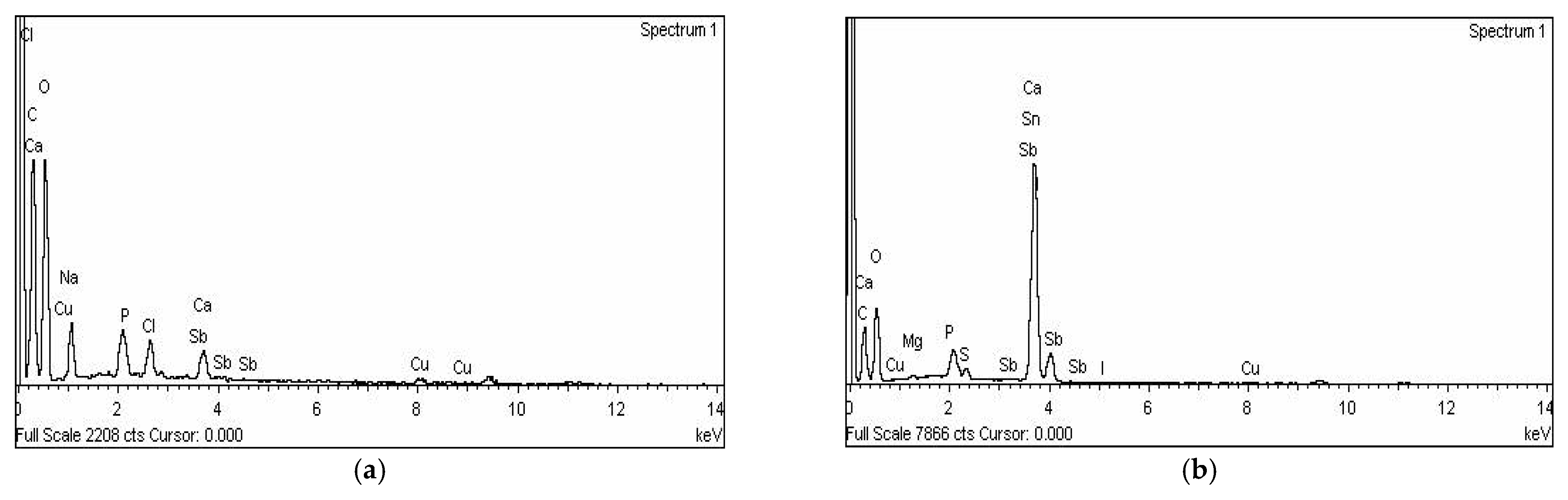
The EDX of xanthan gum and the ESP are shown in Figure 12a,b, respectively. The EDX of xanthan gum showed that the primary composition of the XG are the compounds of calcium and silicon, and a trace amount of albite, was found along with some other minor components, while ESP primarily consisted of calcium, silicon and wollastonite, which is calcium silicate mineral and slight amount of antimony (Sb), and presence of other minerals were found but in negligible amounts. The presence of calcium and silicon could be the reason for the increase in the strength of the sample mixed with ESP and XG, which aided in the soil particles’ adherence.
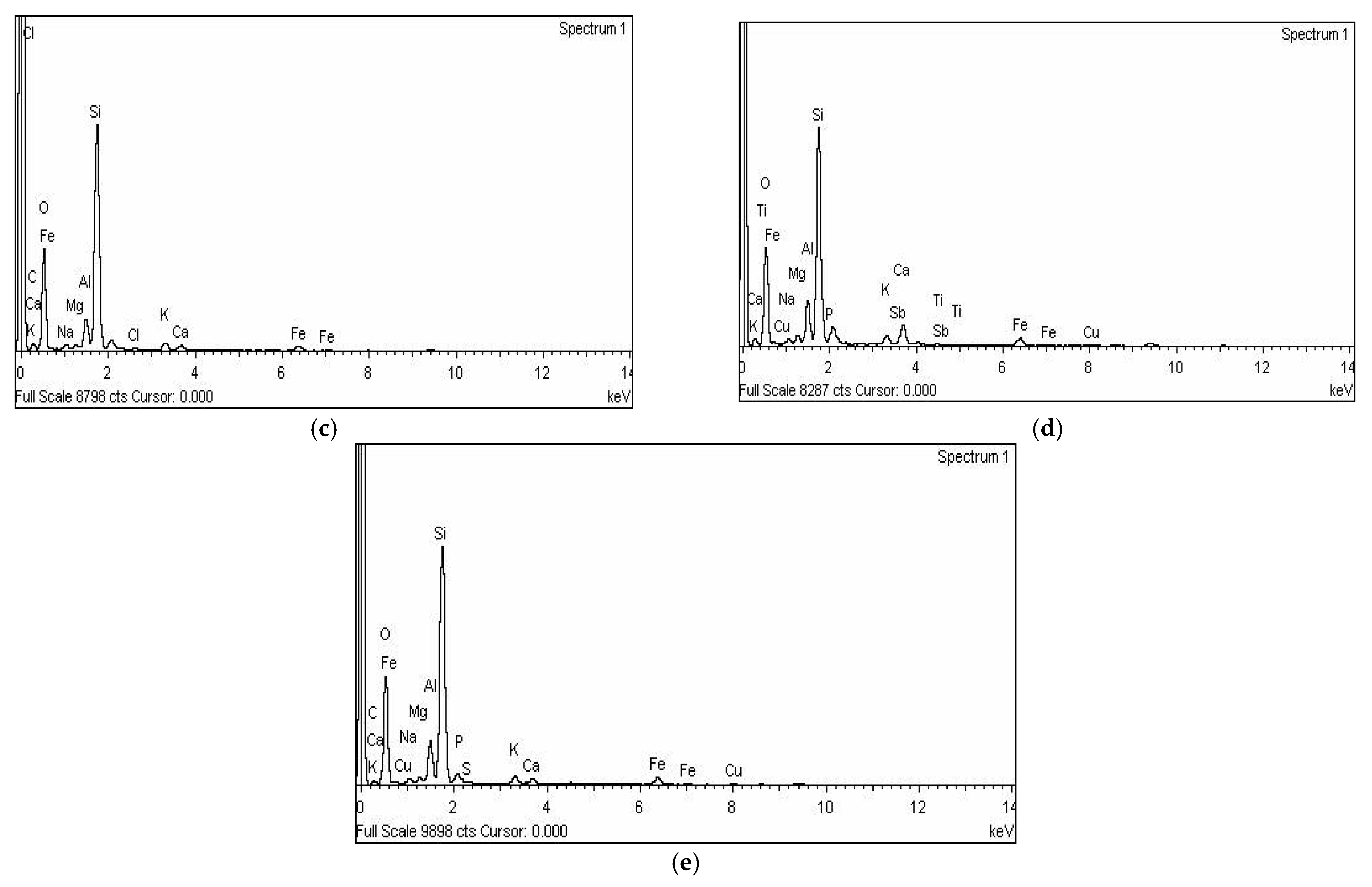
The EDX of soil treated with xanthan gum, i.e., the mix designation of S + 1XG, showed that the dominant composition is silicon. In minor amounts, the presence of albite, aluminate, iron and feldspar was also found. The EDX image is shown in Figure 12c. Figure 12d shows the EDX image of the mix. The EDX result shows that the mix is primarily composed of compounds of silicon, and in minor amounts, the presence of wollastonite and aluminate was traced.
In the EDX of the soil–xanthan gum–eggshell powder, for the S + 1XG + 4ESP mix, the S stands for the soil, 1XG stands for the 1% xanthan gum of the dry unit weight of the soil, and the 6ESP stands for the 6% ESP of the dry unit weight of the soil. The EDX of the mix S + 1XG + 4ESP is given in Figure 12e, which shows the mineralogical composition of the soil. From the EDX obtained from the mix of S + 1XG + 6ESP, the main constituents were compounds of silicon and calcite, whereas trace amounts of wollastonite, compounds of aluminum and iron.
In the figure above, Calcium Silicate Hydrate (CSH) formation has been identified from the element composition with significant magnitudes of calcium, silicon, oxygen, and calcium/silicon molar ratio. Figure 12a,b are dominated by Ca, O and C, indicating a calcium-carbonate-rich matrix, which is characteristic of eggshell-derived material and confirms its suitability as a calcium source for soil stabilization. Minor traces of Na, P, Sn and Sb observed in these samples may be attributed to inherent impurities or experimental artefacts. In contrast, Figure 12c,d show a pronounced increase in Si and O contents along with appreciable amounts of Al and Fe, confirming the alumino-silicate nature of the soil matrix. The gradual reduction in Ca content and simultaneous enrichment of Si–Al–Fe phases suggest effective interaction between the stabilizing additives and the native soil minerals. The presence of Ca and silicon in treated soil samples in Figure 12e indicates possible formation of cementitious compounds, which contribute to improved particle bonding and enhanced strength. Overall, the EDX results corroborate the observed improvements in index and strength properties by evidencing mineralogical modification and cementation within the treated soil system. The element concentration is shown in Table 6. The CSH gel formation is usually initiated primarily through hydration and pozzolanic reactions between soil particles and the applied admixtures [55,56].

4. Discussion

In this section, a comparative study has been included, wherein few of the results obtained from the present study are compared with existing studies of other researchers and appropriate interpretations are made.
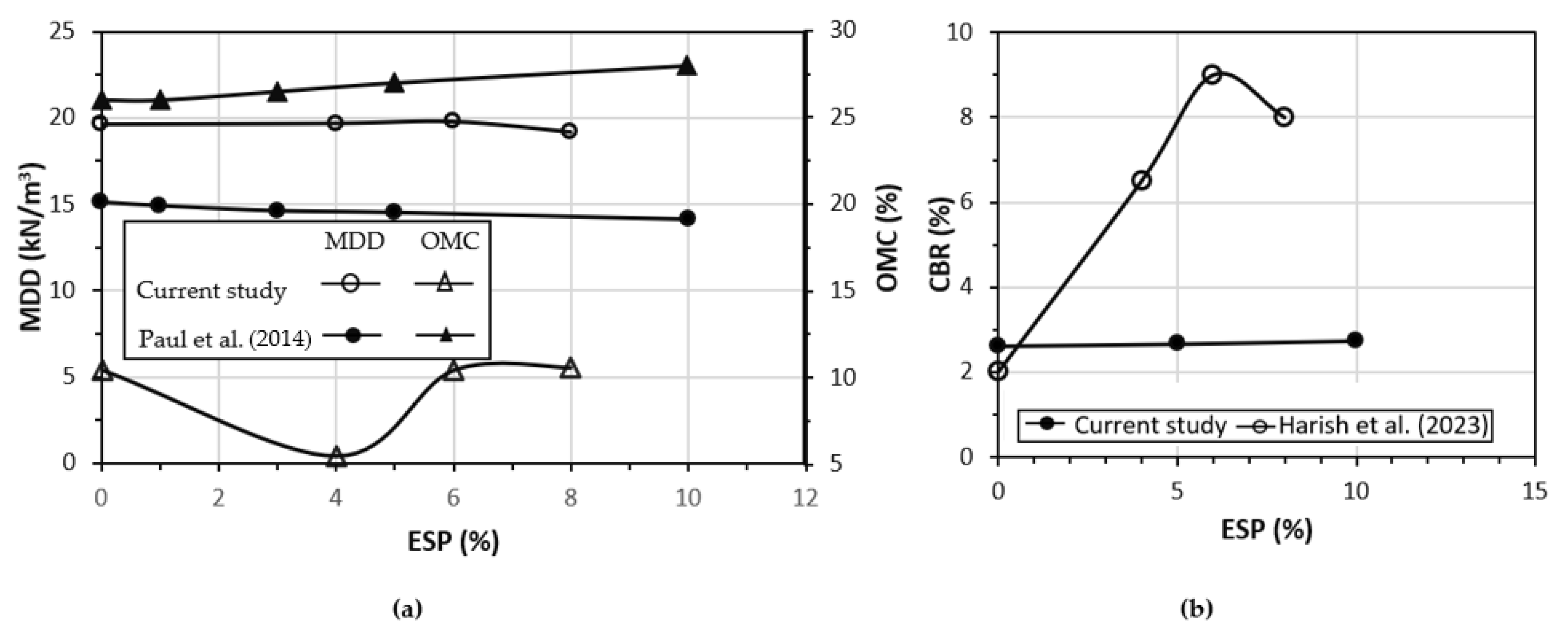
Paul et al. [57] conducted a series of experimental studies to investigate the improvement characteristics of clayey soil by addition of eggshell powder and quarry dust. Tests were performed for the two individual admixtures as well as a combination of both. The data pertaining to standard Proctor compaction test results have been compared with those obtained from the current studies and presented in Figure 13a. As observed, the maximum dry density decreased linearly with ESP content in Paul et al. [57]. In the current study, on the other hand, the variation has been nonlinear with an initial ascend followed by a subsequent descend with the peak value at 6% ESP. For optimum moisture content, on the other hand, a linear trend of ESP increase has been found against a nonlinear variation in the current study, where the OMC initially reduced to a minimum value at 4% ESP and increased thereafter.
To conduct a comparative study in terms of CBR, the investigation by Harish et al. [58] has been taken into consideration, which contains experimental work on the stabilization of soft clay using eggshell powder. The comparative variation in CBR with ESP (%) is presented in Figure 13b. In Harish et al. [58], the variation is negligibly small compared to the current study’s significant and highly nonlinear variation.
From the above comparative study, the pattern of variation of critical soil parameters using eggshell powder is highly sensitive to the type of soil in particular.

5. Novelty

Most soil stabilization studies reported in the literature primarily focus on chemical additives and fibers, whereas investigations involving biopolymers remain limited. Moreover, many of the existing studies are restricted to conventional laboratory tests without examining the underlying microstructural mechanisms. In contrast, the present study integrates comprehensive laboratory testing with microstructural analysis to provide a more holistic understanding of the stabilization mechanism. Another key novelty lies in the selection of additives: a biopolymer used in combination with eggshell powder, both of which are readily available, cost-effective, and practical for field application. While few studies have independently examined the effects of biopolymers (such as xanthan gum) and eggshell powder on soil properties, studies investigating their combined use as a composite stabilizing agent are rare. This research demonstrates that the combined application of a biopolymer and eggshell powder significantly improves the soil strength and stiffness. This synergistic behavior makes the proposed composite additive particularly suitable for subgrade soil improvement, thereby distinguishing the present work from existing studies.

6. Conclusions

The results obtained from the study have been summarized as follows:

6.1. Compaction Test

The compaction test results showed that the addition of the biopolymer XG results in a slight decrease in the MDD and an increase in the OMC. The lower specific gravity of xanthan gum lowers the overall density of the soil–biopolymer mixture.
In contrast, the inclusion of ESP in the soil increases the MDD and decreases the OMC. The higher specific gravity of ESP compared to xanthan gum contributes to a denser soil structure, while its pozzolanic properties enhance the soil’s binding and compaction characteristics, thus reducing the amount of water needed for optimum compaction.

6.2. California Bearing Ratio

The value for the unsoaked sample was 9.21%, and the value for the soaked sample was 3.65%.
The CBR of the soil cured with the xanthan gum was found to be 13.5%, 13.54%, and 10.1% for the unsoaked and 3.7%, 4.5% and 2.4% for soaked, for the increase in the xanthan gum content from 1%,2%, and 3%, respectively.
The CBR of the soil treated with the eggshell powder added by 4%, 6%, and 8% were 11.3%, 11.8%, and 11.5% in unsoaked conditions and 7.2%, 9.8% and 8.9% for soaked conditions, respectively.
The mixture of the soil with the combination of both XG and ESP provided excellent results; among all the mixes, the best result was obtained in the mix of S + 1XG + 6ESP with the CBR value of 12.7% in unsoaked conditions, which shows an increase of 225.6% and 8.9%, which shows an increase of 323.8% for soaked conditions.

6.3. Microstructural Studies

The untreated soil is porous, dispersed, and of uniform size and shape.
The soil treated with the XG seems to have voids filled with XG hydrogels and the bridging of the biopolymer to bind the soil particles together, forming a larger and stiffer soil mass.
The soil treated with the ESP has converted into a hard solid mass due to the pozzolanic reaction that occurred because of the presence of calcium in the ESP.
The microstructural analysis of the samples was done to examine the structural and orientational behavior and the mineralogical constituents of the soil samples. The untreated soil had silicon comprising up to 85.52% of the soil weight.
The EDX of the samples showed that the presence of a huge amount of silicon has insinuated the formation of CSH gel with the aid of the carbonate compound present in the ESP.

6.4. Field Application

The soil treated with 6% ESP delivered the highest overall performance, according to the findings. Additionally, the optimal outcome when combining Xanthan Gum (XG) and ESP was achieved with the mix design of S + 1XG + 6ESP. This mix design not only enhanced the subgrade strength of the soil but also proved to be cost-efficient. The economic feasibility and availability of the stabilizers in the locality, along with the significant improvement of the strength of the soil, show that the application of the xanthan gum and eggshell powder will be beneficial. However, the grade of soft soil stabilization by addition of XG and ESP is highly sensitive to the type of oil in particular, as evidenced from the comparative studies conducted.

6.5. Limitations and Scope of Future Investigation

The work described in this paper involves rigorous laboratory studies followed by in-depth analysis and interpretations. As future research directives, the authors are planning to conduct extensive field-based work to investigate the suitability of the particular soil stabilization technique in large-scale schemes. Simultaneously, the cost-effectiveness of the ground improvement method in terms of real-life projects compared to other conventional methods would be crucial. Similar studies have been carried out [59,60,61,62], but a complete study with detailed design recommendations would benefit the practicing engineers.

Author Contributions

Conceptualization, A.K., N.K.S. and G.G.; methodology, A.K. and N.K.S.; validation, A.K., N.K.S., G.G. and S.B.; formal analysis, A.K., N.K.S., G.G. and S.B.; investigation, A.K. and N.K.S.; resources, A.K., N.K.S., G.G., S.B. and M.K.; data curation, N.K.S. and S.B.; writing—original draft preparation, A.K., N.K.S. and G.G.; writing—review and editing, A.K., N.K.S., G.G., S.B. and M.K.; visualization, G.G. and M.K.; supervision, A.K.; project administration, A.K., G.G. and M.K. All authors have read and agreed to the published version of the manuscript.

Funding

This research received no external funding.

Data Availability Statement

All data are available in the paper.

Acknowledgments

The experiments were carried out at North Eastern Regional Institute of Science & Technology, Arunachal Pradesh and Tezpur University, Assam, India. The infrastructural supports are received from Graphic Era Deemed to be University, Dehradun, Uttarakhand, India and University of Nevada, Las Vegas, United States.

Conflicts of Interest

The authors declare no conflicts of interest.

Abbreviations

The following abbreviations are used in this manuscript:
CBRCalifornia Bearing Ratio
EDXEnergy Dispersive X-ray
ESPEggshell Powder
FESEMField Emission Scanning Electron Microscope
MDDMaximum Dry Density
OMCOptimum Moisture Content
SEMScanning Electron Microscope
XGXanthan Gum

References

  1. Maji, A.K.; Nayak, D.C.; Krishna, N.D.; Srinivas, C.V.; Kamble, K.; Reddy, G.P.O.; Velayutham, M. Soil Information System of Arunachal Pradesh in a GIS Environment for Land Use Planning. Int. J. Appl. Earth Obs. Geoinf. 2001, 3, 69–77. [Google Scholar] [CrossRef]
  2. Chang, I.; Lee, M.; Tran, A.T.P.; Lee, S.; Kwon, Y.M.; Im, J.; Cho, G.C. Review of Biopolymer-Based Soil Treatment (BPST) Technology in Geotechnical Engineering Practices. Transp. Geotech. 2020, 24, 100385. [Google Scholar] [CrossRef]
  3. Raj, P.P. Ground Improvement Techniques; Firewall Media: New Delhi, India, 1999. [Google Scholar]
  4. Rashid, A.S.A.; Latifi, N.; Meehan, C.L.; Manahiloh, K.N. Sustainable Improvement of Tropical Residual Soil Using an Environmentally Friendly Additive. Geotech. Geol. Eng. 2017, 35, 2613–2623. [Google Scholar] [CrossRef]
  5. Ghadir, P.; Ranjbar, N. Clayey Soil Stabilization Using Geopolymer and Portland Cement. Constr. Build. Mater. 2018, 188, 361–371. [Google Scholar] [CrossRef]
  6. Chang, I.; Im, J.; Prasidhi, A.K.; Cho, G.C. Effects of Xanthan Gum Biopolymer on Soil Strengthening. Constr. Build. Mater. 2015, 74, 65–72. [Google Scholar] [CrossRef]
  7. Guo, R.; Wang, J.; Bing, L.; Tong, D.; Ciais, P.; Davis, S.J.; Andrew, R.M.; Xi, F.; Liu, Z. Global CO2 Uptake by Cement from 1930 to 2019. Earth Syst. Sci. Data 2021, 13, 1791–1805. [Google Scholar] [CrossRef]
  8. Kalia, S.; Avérous, L. Biopolymers: Biomedical and Environmental Applications; Wiley: Hoboken, NJ, USA, 2011. [Google Scholar]
  9. Bing, L.; Ma, M.; Liu, L.; Wang, J.; Niu, L.; Xi, F. An Investigation of the Global Uptake of CO2 by Lime from 1963 to 2020. Earth Syst. Sci. Data Discuss. 2023, 15, 2431–2444. [Google Scholar] [CrossRef]
  10. Jawad, I.T.; Taha, M.R.; Majeed, Z.H.; Khan, T.A. Soil Stabilization Using Lime: Advantages, Disadvantages and Proposing a Potential Alternative. Res. J. Appl. Sci. Eng. Technol. 2014, 8, 510–520. [Google Scholar] [CrossRef]
  11. Ojuri, O.O.; Ramdas, V.; Aderibigbe, E.A.; Williams, C.G.; Ramchuran, S.; Al-Nageim, H. Improving Strength and Hydraulic Characteristics of Regional Clayey Soils Using Biopolymers. Case Stud. Constr. Mater. 2022, 17, e01319. [Google Scholar] [CrossRef]
  12. Etemadi, O.; Petrisor, I.G.; Kim, D.; Wan, M.W.; Yen, T.F. Stabilization of Metals in Subsurface by Biopolymers: Laboratory Drainage Flow Studies. Soil Sediment Contam. 2003, 12, 647–661. [Google Scholar] [CrossRef]
  13. Anburuvel, A.; Sathiparan, N.; Dhananjaya, G.M.A.; Anuruththan, A. Characteristic Evaluation of Geopolymer-Based Lateritic Soil Stabilization Enriched with Eggshell Ash and Rice Husk Ash for Road Construction: An Experimental Investigation. Constr. Build. Mater. 2023, 387, 131659. [Google Scholar] [CrossRef]
  14. Li, H.; Li, Y.; Zhu, S.; Li, Y.; Zada, I.; Li, Y. Recent Advances in Biopolymer-Based Carbon Materials for Supercapacitors. RSC Adv. 2023, 13, 33318–33335. [Google Scholar] [CrossRef]
  15. Vydehi, K.V.; Moghal, A.A.B. Effect of Biopolymeric Stabilization on the Strength and Compressibility Characteristics of Cohesive Soil. J. Mater. Civ. Eng. 2022, 34, 04021428. [Google Scholar] [CrossRef]
  16. Ayeldeen, M.K.; Negm, A.M.; El Sawwaf, M.A. Evaluating the Physical Characteristics of Biopolymer/Soil Mixtures. Arab. J. Geosci. 2016, 9, 371. [Google Scholar] [CrossRef]
  17. Ayeldeen, M.; Negm, A.; El-Sawwaf, M.; Kitazume, M. Enhancing Mechanical Behaviors of Collapsible Soil Using Two Biopolymers. J. Rock Mech. Geotech. Eng. 2017, 9, 329–339. [Google Scholar] [CrossRef]
  18. Armistead, S.J.; Smith, C.C.; Staniland, S.S. Sustainable Biopolymer Soil Stabilization: The Effect of Microscale Chemical Characteristics on Macroscale Mechanical Properties. Acta Geotech. 2023, 18, 3213–3227. [Google Scholar] [CrossRef]
  19. Hamza, M.; Nie, Z.; Aziz, M.; Ijaz, N.; Ijaz, Z.; Rehman, Z.U. Strengthening Potential of Xanthan Gum Biopolymer in Stabilizing Weak Subgrade Soil. Clean Technol. Environ. Policy 2022, 24, 2719–2738. [Google Scholar] [CrossRef]
  20. Banne, S.; Dhawale, A.; Kulkarni, S.; Muthekar, V.; Onyelowe, K. Enhancement of Properties of Laterite Soil Used as Subgrade Using Xanthan Gum Biopolymer. Multiscale Multidiscip. Model. Exp. Des. 2023, 6, 333–345. [Google Scholar] [CrossRef]
  21. Anandha Kumar, S.; Sujatha, E.R.; Pugazhendi, A.; Jamal, M.T. Guar Gum-Stabilized Soil: A Clean, Sustainable and Economic Alternative Liner Material for Landfills. Clean Technol. Environ. Policy 2023, 25, 323–341. [Google Scholar] [CrossRef]
  22. Dehghan, H.; Tabarsa, A.; Latifi, N.; Bagheri, Y. Use of Xanthan and Guar Gums in Soil Strengthening. Clean Technol. Environ. Policy 2019, 21, 155–165. [Google Scholar] [CrossRef]
  23. Acharya, R.; Pedarla, A.; Bheemasetti, T.V.; Puppala, A.J. Assessment of Guar Gum Biopolymer Treatment toward Mitigation of Desiccation Cracking on Slopes Built with Expansive Soils. Transp. Res. Rec. 2017, 2657, 78–88. [Google Scholar] [CrossRef]
  24. Hamza, M.; Nie, Z.; Aziz, M.; Ijaz, N.; Ameer, M.F.; Ijaz, Z. Geotechnical Properties of Problematic Expansive Subgrade Stabilized with Xanthan Gum Biopolymer. Road Mater. Pavement Des. 2023, 24, 1869–1883. [Google Scholar] [CrossRef]
  25. Biju, M.S.; Arnepalli, D.N. Effect of Biopolymers on Permeability of Sand–Bentonite Mixtures. J. Rock Mech. Geotech. Eng. 2020, 12, 1093–1102. [Google Scholar] [CrossRef]
  26. Adabi, M.; Darvishan, E.; Eyvazi, G.; Jahanbaksh Motlagh, H. Geoenvironmental Application of Novel Persian Gum Biopolymer in Sandy Soil Stabilization. Arab. J. Sci. Eng. 2022, 47, 12915–12929. [Google Scholar] [CrossRef]
  27. Cabalar, A.F.; Akbulut, N.; Demir, S.; Yildiz, O. Use of a Biopolymer for Road Pavement Subgrade. Sustainability 2023, 15, 8231. [Google Scholar] [CrossRef]
  28. Cabalar, A.F.; Wiszniewski, M.; Skutnik, Z. Effects of Xanthan Gum Biopolymer on the Permeability, Oedometer, Unconfined Compressive and Triaxial Shear Behavior of a Sand. Soil Mech. Found. Eng. 2017, 54, 356–361. [Google Scholar] [CrossRef]
  29. Kaplan, D.L. Introduction to Biopolymers from Renewable Resources. In Biopolymers from Renewable Resources; Kaplan, D.L., Ed.; Springer: Berlin/Heidelberg, Germany, 1998; pp. 1–29. [Google Scholar] [CrossRef]
  30. Gedela, R.; Indraratna, B.; Medawela, S.; Nguyen, T.T. Effects of Fines Content on the Strength and Stiffness of Biopolymer-Treated Low-Plasticity Soils. Aust. Geomech. J. 2023, 58, 33–41. [Google Scholar] [CrossRef]
  31. Ayeldeen, M.; Negm, A.; El Sawwaf, M.; Gädda, T. Laboratory Study of Using Biopolymer to Reduce Wind Erosion. Int. J. Geotech. Eng. 2018, 12, 228–240. [Google Scholar] [CrossRef]
  32. Diana, W.; Widianti, A.; Hartono, E. The Strength Behaviour of Eggshell Powder Substitution on Soil–Lime Stabilization. IOP Conf. Ser. Mater. Sci. Eng. 2021, 1144, 012089. [Google Scholar] [CrossRef]
  33. Arasan, S.; Bagherinia, M.; Akbulut, R.K.; Zaimoglu, A.S. Utilization of Polymers to Improve Soft Clayey Soils Using the Deep Mixing Method. J. Environ. Eng. Geosci. 2017, 23, 1–12. [Google Scholar] [CrossRef]
  34. Esmaeili, A.; Barzegar, M.; Yazdi, A.P.G.; Karimi, A. Eggshell Powder as a Mineral Source for Calcium Fortification of Brownie. Appl. Food Res. 2025, 5, 101232. [Google Scholar] [CrossRef]
  35. Harikaran, M.; Kulanthaivel, P.; Gokulakannan, S.; Vinodhkumar, S. Eco-Friendly Soil Stabilization: A Combined Approach Using Lime and Waste Eggshell Powder. Glob. Nest J. 2023, 25, 120–130. [Google Scholar] [CrossRef]
  36. Sathiparan, N. Utilization Prospects of Eggshell Powder in Sustainable Construction Material—A Review. Constr. Build. Mater. 2021, 293, 123465. [Google Scholar] [CrossRef]
  37. Zada, U.; Haleem, K.; Saqlain, M.; Abbas, A.; Khan, A.U. Reutilization of Eggshell Powder for Improvement of Expansive Clayey Soil. Iran. J. Sci. Technol. Trans. Civ. Eng. 2023, 47, 1059–1066. [Google Scholar] [CrossRef]
  38. Soon, N.W.; Lee, L.M.; Khun, T.C.; Ling, H.S. Improvements in Engineering Properties of Soils through Microbial-Induced Calcite Precipitation. KSCE J. Civ. Eng. 2013, 17, 718–728. [Google Scholar] [CrossRef]
  39. Das, B.M. Advanced Soil Mechanics, 5th ed.; CRC Press: Boca Raton, FL, USA, 2019. [Google Scholar]
  40. Ferraz, E.; Gamelas, J.A.; Coroado, J.; Monteiro, C.; Rocha, F. Eggshell Waste to Produce Building Lime: Calcium Oxide Reactivity, Industrial, Environmental and Economic Implications. Mater. Struct. 2018, 51, 115. [Google Scholar] [CrossRef]
  41. Hasan, M.; Zaini, M.S.I.; Yie, L.S.; Masri, K.A.; Jaya, R.P.; Hyodo, M.; Winter, M.J. Effect of Optimum Utilization of Silica Fume and Eggshell Ash on the Engineering Properties of Expansive Soil. J. Mater. Res. Technol. 2021, 14, 1401–1418. [Google Scholar] [CrossRef]
  42. Ramli, R.; Yahaya, N.N.; Bakar, N.N.A.A.; Dollah, Z.; Idrus, J.; Abdullah, N.H.H. Effectiveness of Crushed Coconut Shell and Eggshell Powder to Act as Subgrade Stabilizer. J. Phys. Conf. Ser. 2019, 1349, 012076. [Google Scholar] [CrossRef]
  43. Shekhawat, P.; Sharma, G.; Singh, R.M. Potential Application of Heat-Cured Eggshell Powder and Fly Ash-Based Geopolymer in Pavement Construction. Int. J. Geosynth. Ground Eng. 2020, 6, 28. [Google Scholar] [CrossRef]
  44. Huang, J.; Shiva Kumar, G.; Ren, J.; Sun, Y.; Li, Y.; Wang, C. Towards the Potential Usage of Eggshell Powder as Bio-Modifier for Asphalt Binder and Mixture: Workability and Mechanical Properties. Int. J. Pavement Eng. 2022, 23, 3553–3565. [Google Scholar] [CrossRef]
  45. Kalsi, A.; Celin, S.M.; Bhanot, P.; Sahai, S.; Sharma, J.G. A Novel Eggshell-Based Bioformulation for Remediation of RDX (Hexahydro-1,3,5-Trinitro-1,3,5-Triazine) Contaminated Soil. J. Hazard. Mater. 2021, 401, 123346. [Google Scholar] [CrossRef]
  46. Kurt Albayrak, Z.N.; Altun, B. Strength Properties of Biopolymer-Treated Clay/Marble Powder Mixtures. Challenge J. Concr. Res. Lett. 2021, 12, 131–137. [Google Scholar] [CrossRef]
  47. Fatehi, H.; Abtahi, S.M.; Hashemolhosseini, H.; Hejazi, S.M. A Novel Study on Using Protein-Based Biopolymers in Soil Strengthening. Constr. Build. Mater. 2018, 167, 813–821. [Google Scholar] [CrossRef]
  48. Latifi, N.; Horpibulsuk, S.; Meehan, C.L.; Abd Majid, M.Z.; Tahir, M.M.; Mohamad, E.T. Improvement of Problematic Soils with Biopolymer—An Environmentally Friendly Soil Stabilizer. J. Mater. Civ. Eng. 2017, 29, 04016204. [Google Scholar] [CrossRef]
  49. Pongsivasathit, S.; Horpibulsuk, S.; Piyaphipat, S. Assessment of Mechanical Properties of Cement-Stabilized Soils. Case Stud. Constr. Mater. 2019, 11, e00301. [Google Scholar] [CrossRef]
  50. ASTM F1372-93; Standard Test Method for Scanning Electron Microscope (SEM) Analysis of Metallic Surface Condition for Gas Distribution System Components. ASTM International: West Conshohocken, PA, USA, 2012.
  51. Sujatha, E.R.; Saisree, S. Geotechnical Behaviour of Guar Gum-Treated Soil. Soils Found. 2019, 59, 2155–2166. [Google Scholar] [CrossRef]
  52. Saldanha, R.B.; da Rocha, C.G.; Caicedo, A.M.L.; Consoli, N.C. Technical and Environmental Performance of Eggshell Lime for Soil Stabilization. Constr. Build. Mater. 2021, 298, 123648. [Google Scholar] [CrossRef]
  53. Oluwatuyi, O.E.; Adeola, B.O.; Alhassan, E.A.; Nnochiri, E.S.; Modupe, A.E.; Elemile, O.O.; Obayanju, T.; Akerele, G. Ameliorating Effect of Milled Eggshell on Cement-Stabilized Lateritic Soil for Highway Construction. Case Stud. Constr. Mater. 2018, 9, e00191. [Google Scholar] [CrossRef]
  54. Soldo, A.; Miletić, M.; Auad, M.L. Biopolymers as a Sustainable Solution for the Enhancement of Soil Mechanical Properties. Sci. Rep. 2020, 10, 267. [Google Scholar] [CrossRef]
  55. Barman, D.; Dash, S.K. Stabilization of Expansive Soils Using Chemical Additives: A Review. J. Rock Mech. Geotech. Eng. 2022, 14, 1319–1342. [Google Scholar] [CrossRef]
  56. Tang, S.; Wang, Y.; Geng, Z.; Xu, X.; Yu, W.; A, H.; Chen, J. Structure, Fractality, Mechanics and Durability of Calcium Silicate Hydrates. Fractal Fract. 2021, 5, 47. [Google Scholar] [CrossRef]
  57. Paul, A.; Anumol, V.S.; Moideen, F.; Jose, J.K.; Abraham, A. Studies on improvement of clayey soil using egg shell powder and quarry dust. Int. J. Eng. Res. Appl. 2014, 4, 55–63. [Google Scholar]
  58. Harish, K.; Reddy, C.S.; Yuvaraju, A.; Prabhudeva, P.; Hemalatha, K.; Bramham, V.; Srinivas, P. A Study on stabilization of soils by using egg shell powder. Int. J. Innov. Res. Eng. Manag. 2023, 10, 96–98. [Google Scholar] [CrossRef]
  59. Tao, G.; Yuan, J.; Chen, Q.; Peng, W.; Yu, R.; Basack, S. Chemical stabilization of calcareous sand by polyurethane foam adhesive. Constr. Build. Mater. 2021, 295, 123609. [Google Scholar] [CrossRef]
  60. Basack, S.; Goswami, G.; Khabbaz, H.; Karakouzian, M.; Baruah, P.; Kalita, N. A comparative study on soil stabilization relevant to transport infrastructure using bagasse ash and stone dust and cost effectiveness. Civil Eng. J. 2021, 7, 1947–1963. [Google Scholar] [CrossRef]
  61. Kalita, A.; Singh, N.K.; Perme, T.; Rigia, J.; Goswami, G.; Basack, S. Analyzing the performance of ground granulated blast furnace slag and marble powder as stabilizers in enhancing geotechnical properties of peat soil. J. Taibah Univ. Sci. 2025, 19, 2569146. [Google Scholar] [CrossRef]
  62. Yan, G.; Li, Z.; Galindo-Torres, S.A.; Scheuermann, A.; Li, L. Transient two-phase flow in porous media: A literature review and engineering application in geotechnics. Geotechnics 2022, 2, 32–90. [Google Scholar] [CrossRef]
Figure 1. (a) Location map of sampling site. (b) Soil sample.
Civileng 07 00011 g001
Figure 2. Dry density–moisture content relationship of the parent soil.
Civileng 07 00011 g002
Figure 3. Grain size analysis of the parent soil.
Civileng 07 00011 g003
Figure 4. (a) Xanthan gum. (b) Eggshell powder.
Civileng 07 00011 g004
Figure 5. (a) Compaction curve with xanthan gum mixes; (b) Variation in MDD and OMC with XG content.
Civileng 07 00011 g005
Figure 6. Variation in MDD and OMC of soil with different ESP content.
Civileng 07 00011 g006
Figure 7. Variation in MDD and OMC of soil with varying ESP and XG: (a) 1%XG, (b) 2% XG, (c) 3%XG.
Civileng 07 00011 g007aCivileng 07 00011 g007b
Figure 8. CBR of soil under soaked and unsoaked conditions with different percentages of (a) XG and (b) ESP.
Civileng 07 00011 g008
Figure 9. CBR at constant XG with varying ESP: (a) 1%XG, (b) 2% XG, (c) 3%XG.
Civileng 07 00011 g009aCivileng 07 00011 g009b
Figure 10. Images of (a) Field Emission Scanning Electron Microscope, (b) X-ray Diffractometer.
Civileng 07 00011 g010
Figure 11. FESEM microphotographs (a) Untreated soil, (b) Soil with XG, (c) Soil with XG, (d) Soil with ESP, (e) Soil treated with ESP, (f) Soil with XG and ESP.
Civileng 07 00011 g011
Figure 12. EDX of (a) Xanthan gum, (b) Eggshell powder, (c) Soil–xanthan gum mix, (d) Soil–eggshell powder mix, and (e) S with XG and ESP.
Civileng 07 00011 g012aCivileng 07 00011 g012b
Figure 13. Comparison of current study with existing studies for: (a) standard Proctor compaction test [57], and (b) CBR test [58].
Civileng 07 00011 g013
Table 1. Physical properties of soil.
PropertiesValue
Specific gravity (G)2.63
Grain size analysis
   Gravel size (>4.74 mm)9.1%
   Coarse sand (2–4.75 mm)10.1%
   Medium sand (425 micron–2 mm)31.7%
   Fine sand (75 micron–425 micron)40.9%
   Silt (<75 micron)8.3%
Consistency limits
   Liquid limit (LL)14.8%
   Plastic limitNP (non-plastic)
   IS soil classificationSilty Sand (SM)
   Coefficient of uniformity (Cu)7.1
   Coefficient of curvature (Cc)1.3
   Optimum moisture content (OMC)10.4%
   Maximum dry density (MDD)19.7 kN/m3
Table 2. Properties of xanthan gum.
PropertiesValue
ColorPale white
Specific gravity1.6
pH6–7
SolubilitySoluble in water
Table 3. Eggshell properties.
PropertiesValue
Size150 µm
Specific gravity2.7
Density26.48 kN/m3
Specific surface area21 m2/g
Table 4. Mixed design of the sample.
SampleMix
Soil–xanthan gumS + 0% XG
S + 1.0% XG
S + 2.0% XG
S + 3.0% XG
Soil–eggshell powderS + 0% ESP
S + 4% ESP
S + 6% ESP
S + 8% ESP
Soil–xanthan gum–eggshell powderS + 1.0% XG + 4% ESP
S + 1.0% XG + 6% ESP
S + 1.0% XG + 8% ESP
S + 2.0% XG + 4% ESP
S + 2.0% XG + 6% ESP
S + 2.0% XG + 8% ESP
S + 3.0% XG + 4% ESP
S + 3.0% XG + 6% ESP
S + 3.0% XG + 8% ESP
Table 5. CBR of the soil, soil–xanthan gum, soil–ESP and soil–xanthan gum–ESP mixes.
MixesUnsoakedIncrease % for UnsoakedSoaked (4 Days Curing)Increase % for Soaked
S3.9%-2.1%-
S + 1XG13.5%239.5%3.7%85.6%
S + 2XG13.6%239.9%4.5%121.9%
S + 3XG10.1%154.4%2.4%169.2%
S + 4ESP11.3%189.7%7.2%256.7%
S + 6ESP11.8%195.2%9.8%385.6%
S + 8ESP11.5%187.2%8.9%345.3%
S + 1XG + 4ESP12.6%223.1%8.5%304.8%
S + 1XG + 6ESP12.7%225.6%8.9%323.8%
S + 1XG + 8ESP11.9%205.1%8.9%323.8%
S + 2XG + 4ESP11.6%197.4%7.8%271.4%
S + 2XG + 6ESP11.3%189.7%7.5%257.1%
S + 2XG + 8ESP11.4%192.3%7.6%261.9%
S + 3XG + 4ESP11.2%187.2%7.4%252.4%
S + 3XG + 6ESP11.4%192.3%7.4%252.4%
S + 3XG + 8ESP11.7%200.0%7.5%257.1%
Table 6. Element concentration of additives and treated soil samples.
ElementXanthan Gum (Ca-Rich)Eggshell Powder (Ca–Sn–Sb)Soil–Xanthan Gum Mix (Si–Al–Fe)Soil–Eggshell Powder Mix (Si–Ti–Fe)S with XG and ESP (Si–Al–Fe)
O4544384041
Si313032
Ca3639564
C137633
Al767
Fe878
Mg0.5–11–21–21–2
Na0.6–0.80.5–1.50.5–1.50.5–1.5
K1–21–21–2
P0.5–0.90.3–0.60.3–0.60.3–0.6
S0.3–0.6
Ti2–3
Sn1–2
Sb<0.51–1.5<0.5
Cl0.3–0.70.5–1
Cu<0.5<0.5<0.5<0.5<0.5
Disclaimer/Publisher’s Note: The statements, opinions and data contained in all publications are solely those of the individual author(s) and contributor(s) and not of MDPI and/or the editor(s). MDPI and/or the editor(s) disclaim responsibility for any injury to people or property resulting from any ideas, methods, instructions or products referred to in the content.