You are currently viewing a new version of our website. To view the old version click .
CivilEng
  • Article
  • Open Access

30 November 2025

Fragility and Seismic Performance Assessment of RC Frames Under Chinese and Pakistani Building Codes


,
,
,
,
and
1
Department of Civil, Construction, and Environmental Engineering, Ames, IA 50011, USA
2
Department of Disaster Mitigation for Structures, Tongji University, Shanghai 200092, China
3
School of Architecture and Environment, College of Arts, Technology and Environment, University of the West of England, Bristol BS16 1QY, UK
4
Civil and Building Services Engineering Division, School of Built Environment and Architecture, London South Bank University, 103 Borough Road, London SE1 0AA, UK
CivilEng2025, 6(4), 65;https://doi.org/10.3390/civileng6040065 
(registering DOI)
This article belongs to the Topic Advances on Structural Engineering, 3rd Edition

Abstract

The increasing integration of Chinese-engineered infrastructure in Pakistan under the China–Pakistan Economic Corridor (CPEC) necessitates a comparative evaluation of seismic resilience between the Chinese and Pakistani building codes. This study focused on the seismic performance of reinforced concrete (RC) frames designed according to these two codes. Fragility curves were generated for 4-story, 8-story, and 12-story buildings subjected to varying seismic intensities using Incremental Dynamic Analysis (IDA). The results indicate that structures designed under the Chinese code exhibit up to 12% lower fragility values, suggesting enhanced seismic resilience, particularly at higher seismic intensities. Additionally, the study investigates the effectiveness of Lead Rubber Bearings (LRBs) for seismic isolation, demonstrating that their integration improves the seismic performance of RC frames by enhancing energy dissipation and reducing the likelihood of exceeding various damage states by up to 25%. These findings underscore the importance of adopting stringent seismic design provisions, such as those found in the Chinese code, to enhance the resilience and safety of infrastructure, especially in seismic-prone regions.

1. Introduction

With the expansion of the China–Pakistan Economic Corridor (CPEC) under the Belt and Road Initiative, there has been a notable increase in Chinese-engineered infrastructure projects within Pakistan. This strategic partnership necessitates a comprehensive understanding of both Chinese and Pakistani seismic design standards to ensure the structural resilience of reinforced concrete (RC) frames across both nations. In this context, the comparison of seismic provisions between the Chinese seismic code (GBT-51408-2021) [] and the Building Code of Pakistan (BCP-2021) [] is both timely and essential. Reinforced concrete (RC) frames are widely utilized in modern construction due to their high compressive strength, economic viability, and adaptability. These structures are essential in seismic-prone regions, such as China and Pakistan, where earthquake-induced damage poses significant risks to life and property. Several studies have significantly contributed to the assessment of seismic performance in RC and masonry structures. For instance, studies on the seismic capacity and resilience of various materials include work on eco-friendly fly ash masonry with retrofitting [], the evaluation of GFRP-reinforced RC frames [], and through conditional probability methods []. Additionally, research by Siddique and Schwarz [] and Ahmed et al. [] on seismic risk mapping and localized assessments has provided essential data for regional seismic zoning and risk evaluation. In terms of hybrid systems and seismic retrofitting, Khan and Rizwan [] demonstrated that RC/ECC hybrid frames offer improved ductility and energy dissipation, while Faharidine et al. [] studied the buckling performance of telecommunication towers under wind loading, contributing to the broader understanding of code-based structural resilience under different environmental hazards. Similarly, Ahmed and Tanoli [] proposed a performance-based retrofitting framework aimed at improving RC buildings’ seismic resilience. Comparative analyses of seismic codes have been conducted by Suliman and Lu [], who highlighted the differences between Chinese and African seismic codes, and Gyawali and Jiang [], who performed a fragility analysis of RC frames designed under Chinese and Indian codes, revealing that structures designed under the Indian code exhibited higher inter-story drifts. These studies, along with Jiang et al. [], who assessed the fragility of RC frame-shear wall structures under the Chinese seismic code, provide valuable insights into the comparative performance of structures under different national codes. Furthermore, comparisons of seismic provisions have been explored by Kunwar et al. [], who examined variations in seismic codes from Himalayan countries, including China and Pakistan, highlighting differences in design demand and detailing. Moreover, research on structural vulnerability and non-code-compliant designs by Zameeruddin and Sangle [], Ali et al. [], and Munir et al. [] has highlighted the importance of proper detailing and code-compliant retrofitting to mitigate structural vulnerabilities and enhance seismic resilience. Further, Rizwan et al. [] focused on the seismic vulnerability of RC frames with low-strength concrete, underscoring the significance of considering material behavior and detailing in seismic design. Finally, energy dissipation and damping systems have been explored by Guo et al. [], who confirmed the effectiveness of metallic dampers in retrofitting RC frames, and Kim and Yi [], who proposed a system-reliability-based model for seismic resilience assessment. Seismic performance evaluations, including studies [] on concentrically braced frames in industrial structures, emphasize the importance of brace configuration and redundancy in enhancing seismic resilience. Additionally, cost–benefit analyses of seismic retrofitting strategies highlight the structural and economic effectiveness of retrofitting approaches, demonstrating their critical role in improving the long-term resilience of infrastructure. Wasse et al. also reviewed the seismic performance of concentrically braced frames in industrial structures, emphasizing the role of brace configuration and redundancy in seismic resilience.
Despite the valuable insights provided by previous studies, a notable gap exists in the direct comparative assessment of RC frame structures designed under the Chinese (GBT-51408-2021) and Pakistani (BCP-2021) seismic codes. While the existing literature has explored code-based performance in regional contexts or with individual retrofitting strategies, few studies have holistically evaluated the seismic resilience of RC frames across these two national standards. Moreover, performance-based assessments incorporating nonlinear static and dynamic simulations, particularly in the context of cross-national code comparison, remain limited. Given the rising integration of Chinese construction practices in Pakistan under CPEC, this gap becomes increasingly critical. This study addresses this deficiency by evaluating the seismic performance and post-earthquake resilience of RC frame structures designed according to both codes, thereby contributing to safer, code-compliant infrastructure in seismically active regions. Additionally, the study investigates the potential benefits of Lead Rubber Bearings (LRBs) in improving seismic isolation, further enhancing the safety and longevity of these structures. It should be noted that the present study models the RC frame structures as bare frames, without explicitly accounting for the stiffness or mass contribution of masonry infills. While this assumption is common in comparative code-based studies, it may slightly underestimate the global stiffness and overestimate the ductility of the frames. Future work incorporating infill panels and their nonlinear interaction with the surrounding RC members could further refine the fragility and performance predictions.

2. Materials and Methods

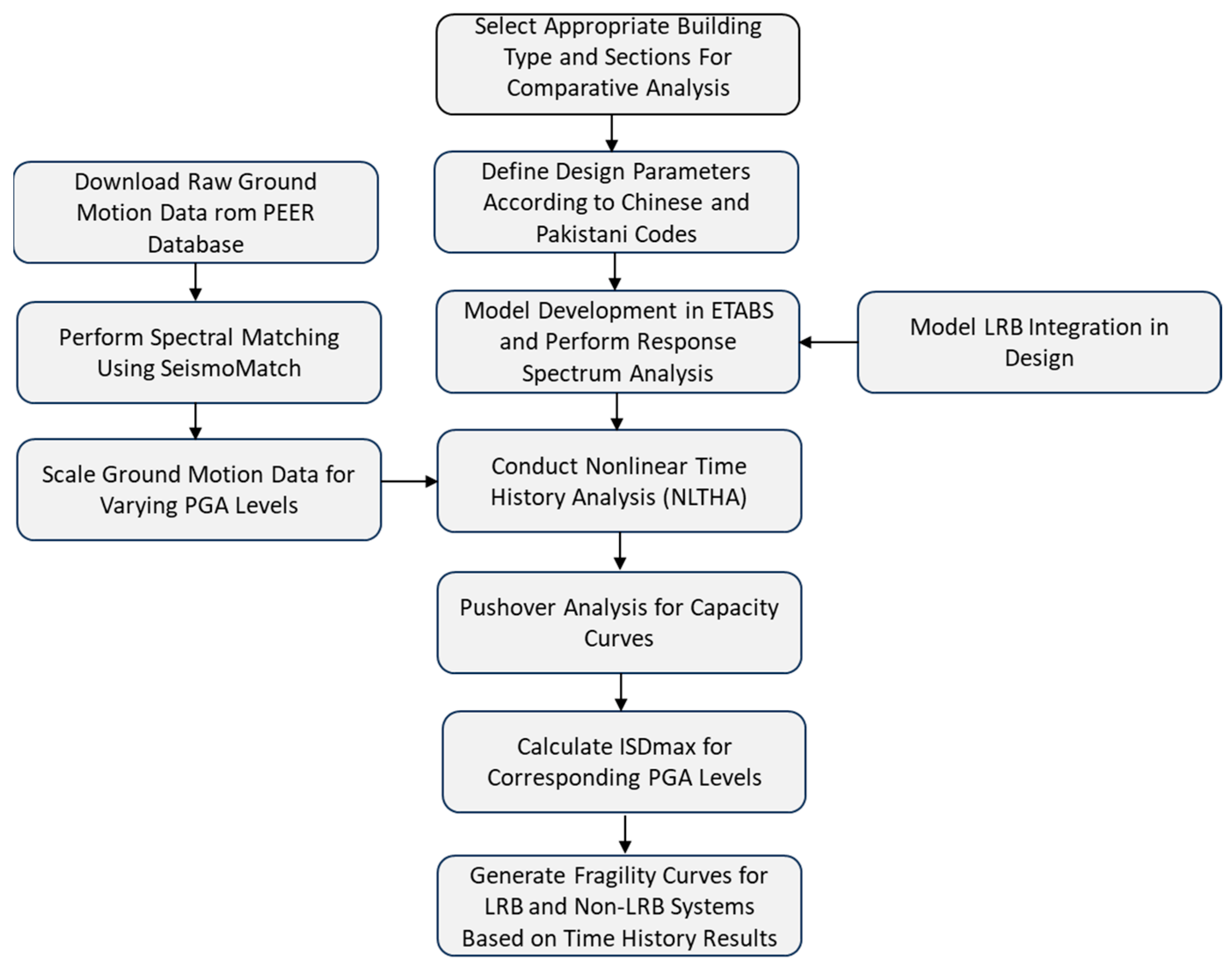
The seismic performance of reinforced concrete (RC) moment-resisting frame structures was investigated through a detailed comparative analysis between the Chinese (GBT-51408-2021) and Pakistani (BCP-2021) seismic codes. Three representative RC buildings, 4-story, 8-story, and 12-story, were structurally designed according to each code’s respective seismic provisions, including lateral force coefficients, load combinations, zoning criteria, and ductility detailing requirements. Nonlinear finite element models were developed using ETABS v21.0.0, incorporating material and geometric nonlinearities through appropriate hinge definitions and modeling techniques. Nonlinear time history analyses (NLTHA) were performed using a suite of ground motions scaled to multiple intensity levels. Peak responses, including inter-story drift ratios, base shear, and roof displacements, were extracted to evaluate seismic performance. Incremental dynamic analysis (IDA) was used to generate fragility curves, enabling probabilistic assessment of damage states. This methodology allowed a comprehensive evaluation of code-to-code performance differences in terms of seismic demand, ductility, and structural safety margins. The overall flowchart of the paper can be seen in Figure 1.
Figure 1. Flowchart of the methodology for seismic performance evaluation and fragility curve development.

2.1. Structural Configuration and Material Modeling

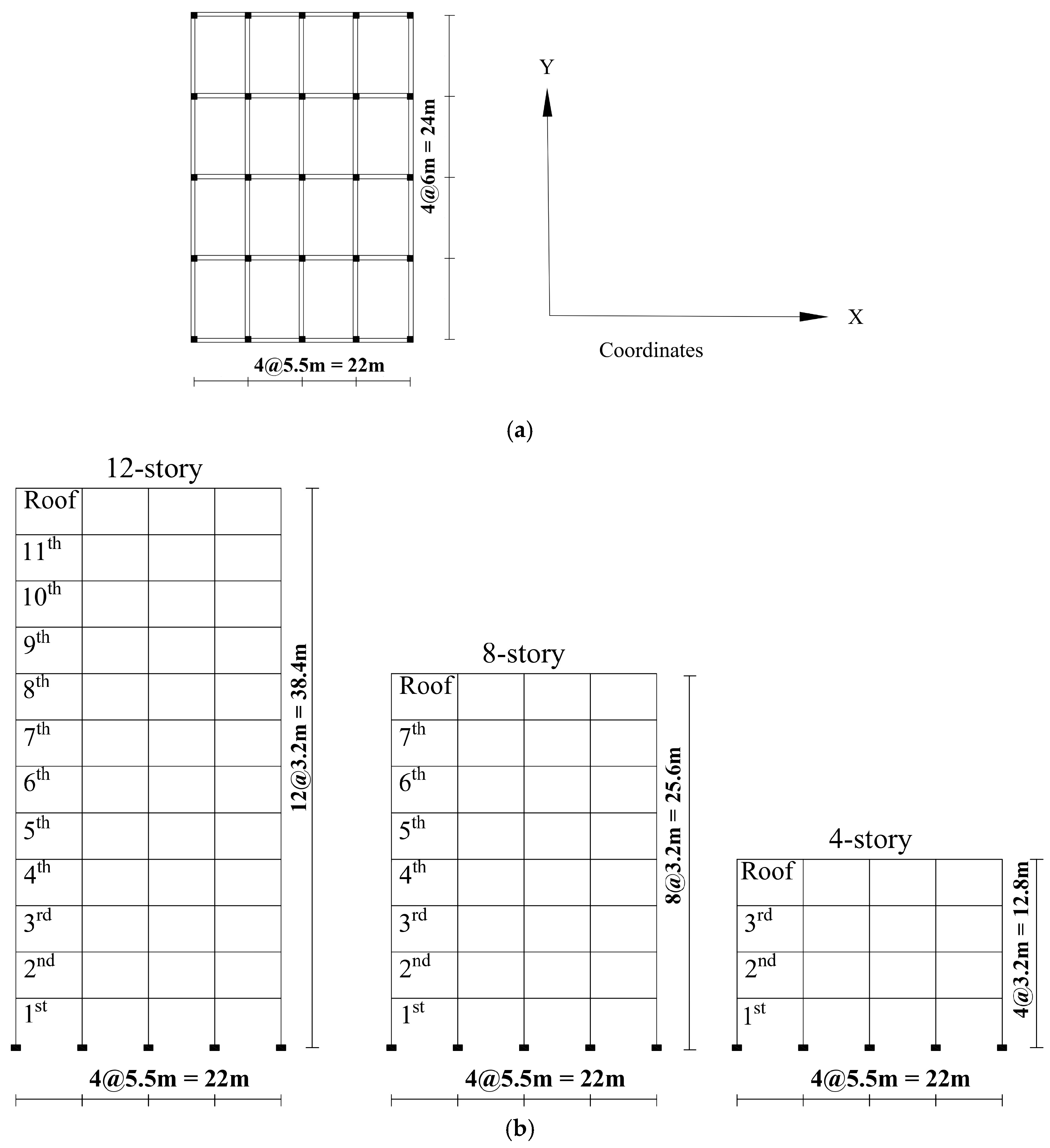
The structure type chosen for this study is the RC moment-resisting frame structure, a common building design. Based on the HAZUS Directory (Department of Homeland Security Emergency Preparedness and Response Directorate, FEMA, 2003) [], buildings are categorized by their height or number of stories. These heights were selected to represent typical low-, mid-, and high-rise office buildings in urban areas of China and Pakistan, where multi-story RC frames are prevalent due to population density and economic growth [e.g., Siddique and Schwarz []]. The floor-to-floor height was maintained at 3.2 m, resulting in a total story height of 12.8 m for the 4-story building, 25.6 m for the 8-story building, and 38.4 m for the 12-story building. Each building was modeled using ETABS v21.0.0 [], and all floors were designed as office buildings with a live load of 2.5 kN/m2 for all stories. The dead load of the floors was calculated as 3 kN/m2, excluding the self-weight of the building’s members. The roof load was assigned as 0.75 kN/m2. Figure 2a illustrates the typical floor plans for the 4-, 8-, and 12-story models, while Figure 2b presents the elevation views, which show the distribution of stories and the overall building height.
Figure 2. (a) Typical floor plan of model buildings and (b) 4, 8, and 12-story model elevations.
Material modeling for both steel and concrete was performed using appropriate constitutive models. Reinforcing steel was modeled with a bilinear elastoplastic stress–strain law with a modulus of elasticity (E) of 210 GPa and a yield strength (σy) of 400 MPa. The concrete material used the Mander confined concrete model, which accounts for the effects of confinement on compressive behavior. The longitudinal compressive strength of the concrete was set to 30 MPa, and the tensile strain capacity was defined as 0.002, consistent with typical concrete material properties. The nonlinear behavior of the structures was incorporated using plastic hinges, with steel and concrete assigned nonlinear properties in accordance with FEMA guidelines. The nonlinear behavior of beam–column elements was modeled using M3, P–M2–M3, and V2–V3 interaction hinges, in accordance with FEMA-356 guidelines [], to ensure that moment–axial force (P–M) interactions were captured in the column elements. This approach enables a more realistic representation of strength degradation and stiffness reduction under combined axial and bending loads. These models simulate the inelastic behavior of the frame components during seismic loading, allowing for accurate prediction of their seismic response.

2.2. Nonlinear Dynamic Time History Analysis

Nonlinear Dynamic Analysis (NL-DA) is a critical tool for evaluating the seismic performance of structures by simulating their response under varying levels of earthquake intensity. Incremental Dynamic Analysis (IDA), a variant of NL-DA, involves performing nonlinear time-history analysis (NL-THA) for a range of ground acceleration intensities and recording the structural response. IDA provides more accurate results by considering the nonlinear behavior of structural components and the dynamic characteristics of ground motion. This approach is preferred over traditional linear methods, as it better represents the true performance of a structure during seismic excitation, as demonstrated by Krawinkler et al. []. A key element in performing nonlinear dynamic analysis (NL-DA) is the choice of an appropriate intensity measure (IM). Common IMs include Peak Ground Acceleration (PGA), spectral acceleration at the fundamental period, and other period-dependent measures. In this study, PGA is adopted as the reference IM to allow a direct comparison between the Chinese and Pakistani code-based designs under a consistent hazard level. Nonlinear Time-History Analysis (NLTHA) was employed to simulate the structural response under earthquake loading, capturing inelastic material behavior. Incremental Dynamic Analysis (IDA) was then performed by scaling a suite of ground motions to increasing intensity levels to develop seismic demand relationships. This combined approach provides a robust probabilistic assessment of structural performance, as demonstrated by Chen et al. [,].
The relationship between PGA and inter-story drift ratio (IDR) is used to generate IDA curves, which are essential for evaluating structural performance at different levels of seismic intensity. O’Neill et al. [] noted that this correlation between PGA and drift ratio is central to generating IDA curves for effective seismic assessment. In this study, 54 pairs of seismic ground motion records were selected, derived from 18 unique ground motions, with each motion applied in the X-direction only. These motions were scaled to three seismic intensity levels (Low, Moderate, and High). The ground motions, sourced from the PEER NGA Database [], are summarized in Table 1. Each of the 18 seismic events contributed a single X-direction component, which was applied at all three intensity levels, leading to a total of 54 motion pairs. The data spans a broad range of seismic intensities, with PGA values varying from 0.148 g to 1.107 g. These records were selected for use in the Nonlinear Time-History Analysis (NL-THA) to assess the performance of the buildings under varying seismic conditions.
Table 1. Summary of earthquake ground motion data used in analysis.

2.3. Pushover Analysis and Static Capacity Evaluation

Nonlinear static analysis, commonly referred to as pushover analysis, was adopted to evaluate the inelastic seismic performance of reinforced concrete (RC) moment-resisting frames designed in accordance with the Chinese seismic code (GBT-2021) [] and the Pakistani seismic code (BCP-2021) []. This well-established method generates a capacity curve representing the structure’s lateral force–deformation relationship up to failure, offering essential insights into strength, stiffness, and ductility before collapse. Such results are critical for identifying potential deficiencies and informing retrofit strategies to enhance earthquake resilience. To ensure the applied seismic demands accurately matched the target spectra of each code, spectral matching was performed using SeismoMatch v2022 software []. This software adjusts the recorded ground motions to match the target response spectrum for the selected codes. The wavelet transformation method used by SeismoMatch allows for accurate alignment of the response spectra by decomposing the ground motion into frequency-specific components and optimizing the match using algorithms such as Enhanced Colliding Bodies Optimization (ECBO). This ensures that the modified ground motions reflect the required seismic parameters while preserving the original characteristics of the recorded motions. Stewart et al. [] and Lin and Cramer [] have used similar methods in seismic engineering to ensure proper alignment between the recorded motions and design spectra. Pushover analyses were executed in ETABS v21, modeling nonlinear behavior using FEMA-356 default hinge properties for beams and columns. Beams were assumed to carry no axial load, and the axial load in columns was set to 0.25 DL + 0.25 LL for Chinese code models and 0.25 DL + 0.5 LL for Pakistani code models, in accordance with FEMA recommendations []. Material properties were modeled using HRB400 reinforcement steel and 30 MPa concrete, consistent with the design assumptions for both codes. The hinge length (Lp) was taken as half the section depth in the load direction, following ATC-40 [], to ensure conservative results. The plastic rotation capacity for each hinge was computed as:
θ p = Φ u Φ y L p  
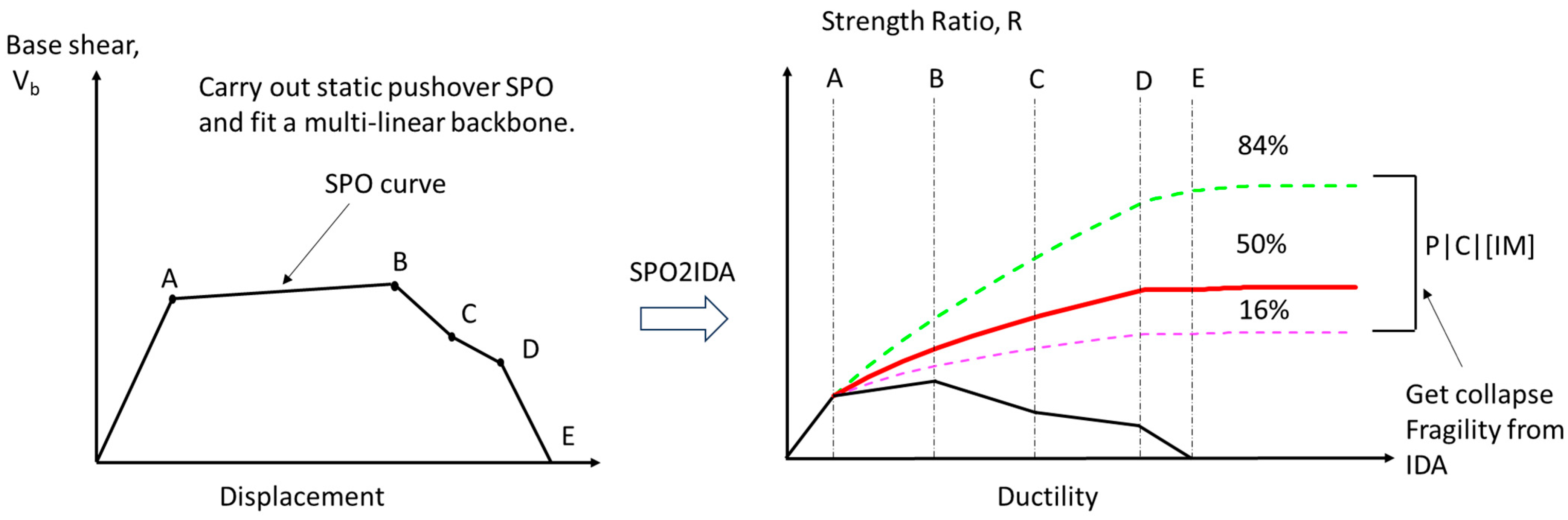
Figure 3 shows the IDA percentile curves (16/50/84%) developed in this study from the pushover backbone using the SPO2IDA method, adapted from Vamvatsikos & Cornell []. These curves provide a visualization of the seismic performance at various levels of intensity. The critical points shown in Figure 4 correspond to key performance states throughout the pushover and SPO2IDA transformation process. Point A represents the initial yield state, where the first plastic hinge is formed and the structure transitions from elastic to inelastic behavior. Point B denotes the peak strength state, corresponding to the maximum base shear capacity before degradation initiates. Point C marks the onset of strength deterioration due to progressive damage and increased ductility demand. Point D represents a near-collapse condition, where the structure experiences significant loss of strength and is on the verge of instability. Finally, Point E corresponds to the collapse point, characterized by substantial strength reduction and loss of global load-carrying capacity. These points are subsequently mapped into equivalent ductility and strength ratio states using the SPO2IDA framework, enabling the derivation of 16%, 50%, and 84% incremental dynamic analysis (IDA) percentile curves and the corresponding collapse fragility functions. The static pushover (SPO) curves were transformed into equivalent single-degree-of-freedom (SDOF) systems and processed using the SPO2IDA methodology []. This approach correlates the strength ratio R and ductility μ using:
R = F e l F y = S a T 1 S a y
μ = Δ * Δ y * .
where Fel is the elastic spectrum demand on an SDOF system with period T1, Fy is the yield strength, Δ∗ is the maximum displacement, Δy is the yield displacement, Sa(T1) is the spectral acceleration at period T1, and Say is the spectral acceleration at yielding. Using these relationships, SPO curves were converted to equivalent IDA curves for 16%, 50%, and 84% fractiles. This process allows direct comparison of seismic performance between Chinese and Pakistani code-compliant frames under identical hazard scenarios. The SPO2IDA method was applied to bare-frame models, as infill inclusion would complicate the transformation due to added stiffness []. This limitation is discussed in the Introduction.
Figure 3. IDA percentile curves (16/50/84%) developed in this study from the pushover backbone using the SPO2IDA method, adapted from Vamvatsikos & Cornell [].
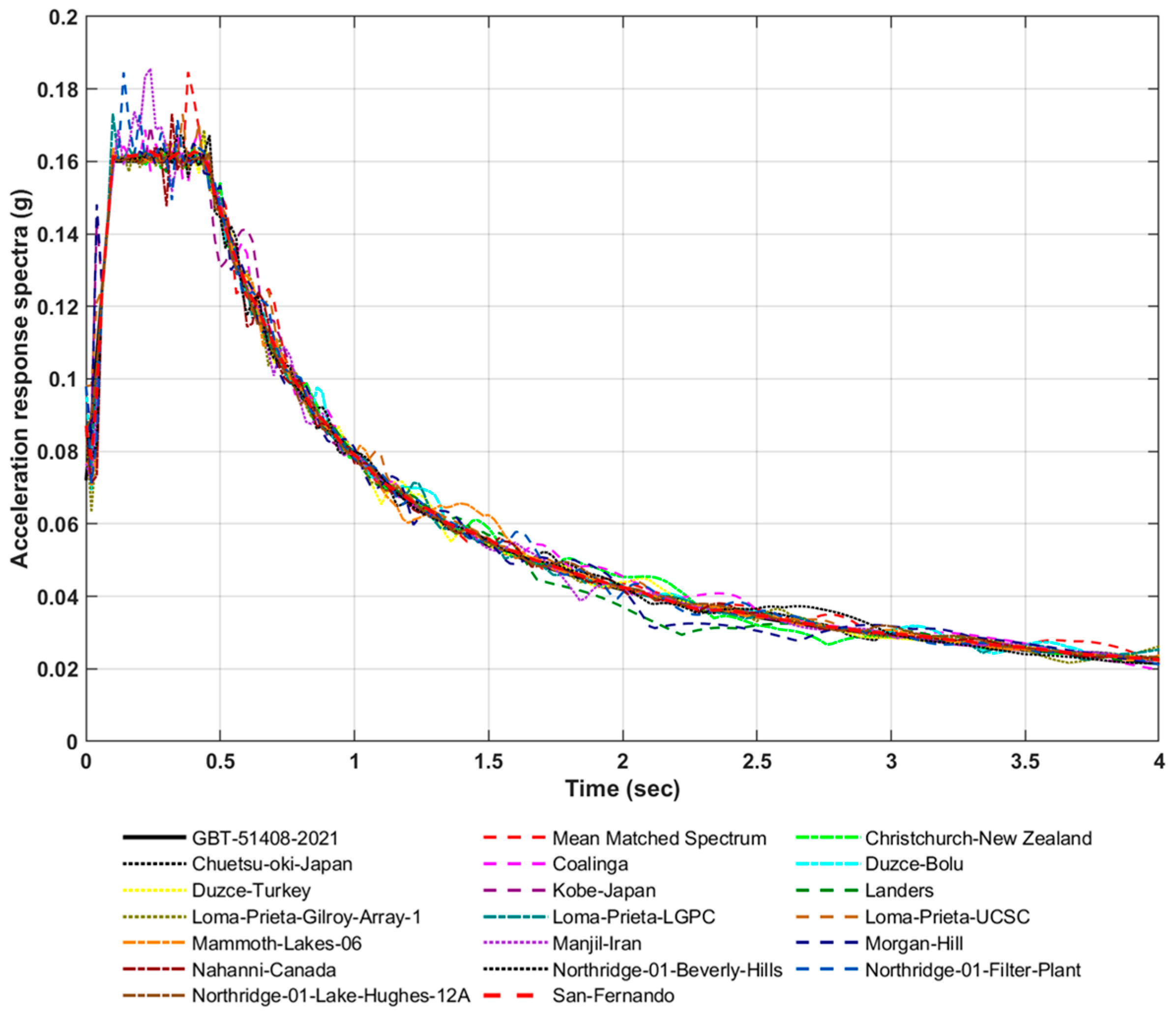
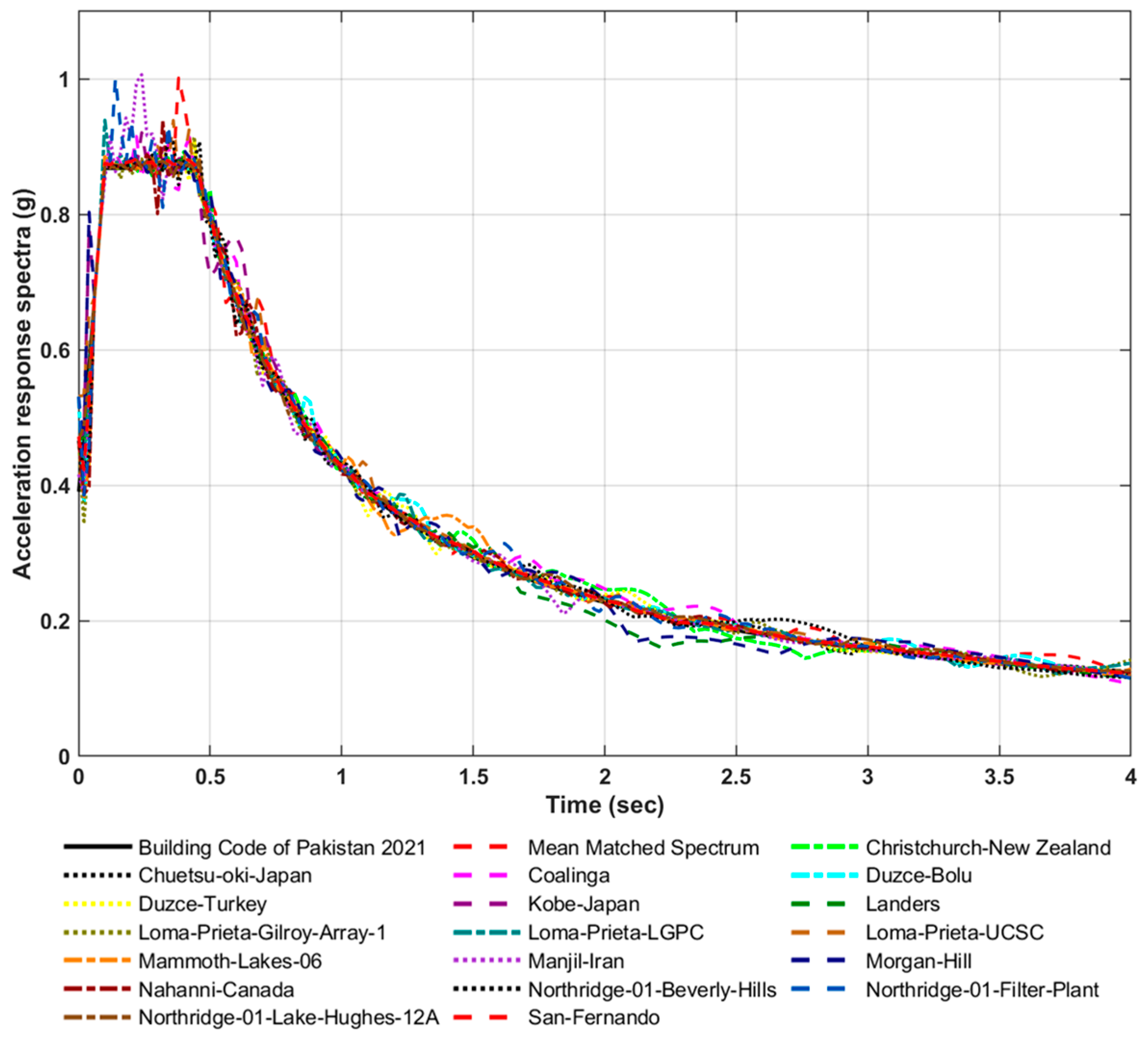
Figure 4. The matched response spectrum with design response spectra (GBT-51408-2021).
Figure 4 and Figure 5 show the matched response spectra with the design spectra for the Chinese (GBT-51408-2021) and Pakistani (BCP-2021) codes. These figures demonstrate how the ground motions were adjusted to align with the seismic demands of each code, ensuring a realistic evaluation of structural performance under different seismic conditions. It is noted that the spectral matching process was applied solely for the nonlinear dynamic analyses, to ensure consistency between the recorded motions and the target design spectra of each code. The pushover analysis itself was based purely on the structural capacity curves and did not utilize these adjusted ground motions. These Figures illustrate the matched response spectra compared with the respective code design spectra for Chinese and Pakistani provisions. The observed differences in spectral intensity are due to the distinct design acceleration coefficients and damping assumptions adopted by each code.
Figure 5. The matched response spectrum with design response spectra (BCP-2021).

3. Seismic Design and Modeling Criteria for Comparative Code Evaluation

This section compares the seismic provisions outlined in the GBT-51408-2021 (Chinese Code) and BCP-2021 (Pakistani Code) for reinforced concrete frame buildings. Both codes aim to provide a safe and efficient approach to seismic design but have distinct methodologies, particularly concerning soil classification, seismic intensity, and structural parameters.
The seismic design provisions for the buildings were based on rigid subsoil, with the properties of rigid soil specified by a Standard Penetration Test (SPT) value range of 15 to 50 and a shear wave velocity of 175 to 350 m/s. In the comparison of seismic provisions between the Chinese code (GB-50011-2010) and the Pakistani code (BCP-2021), the soil classification is different, with the Chinese code classifying the soil as Type III and the Pakistani code classifying it as Sd. Both codes define the seismic intensity as ag = 0.20 g, but the seismic zone in the Chinese code is classified as 8, whereas it is classified as 2B in the Pakistani code. This is a code-prescribed default for comparative purposes, not site-specific. For seismic and soil factors, the Chinese code uses a ζa value of 1.3, while the Pakistani code uses an S value of 1.5.
The importance factor (I) is set to 1 in both codes, and the response modification factor (R) for Reinforced Concrete Moment Resisting Frames is 3.5 in the Pakistani code, and the response modification factor is not specified in the Chinese code. Regarding the fundamental time period and base shear, further details can be found in Table 2. The story drift limit in the Chinese code is dr ≤ 1/550 h, while the Pakistani code allows for a drift of dr ≤ 0.020 h. The seismic weight is calculated using the formula W G i + 0.5 W Q i in the Chinese code and WGi + 0.25WQi in the Pakistani code. In seismic analysis, factors such as the behavior factor (ω), ductility factor (kD), and seismic coefficients are crucial in estimating the seismic response. The behavior factor (ω) adjusts for the structure’s ability to withstand seismic forces, based on its ductility and structural type. The ductility factor (kD) accounts for the structure’s inelastic deformations. As shown in Table 2, the seismic mass includes both dead load and a fraction of live load, with adjustments for occupancy categories and seismic zones. Seismic coefficients like S, ζa, and β are used to adjust for soil classification, seismic zone, and the building’s importance. The reinforcement design for beams and columns in reinforced concrete frame buildings is crucial for ensuring their ability to withstand seismic forces. Detailed beam and column reinforcement designs are provided in Table 3 and Table 4. These tables include the cross-sectional dimensions and reinforcement details for both beam and column sections for various story heights under both the Chinese and Pakistani codes. These tables outline the reinforcement details for both beam and column sections for various story heights and specify the required reinforcement for different types of structural configurations under the Chinese and Pakistani codes. The observed variations in beam and column sizes between the two codes arise primarily from differences in their design base shear coefficients, allowable drift limits, and ductility requirements. The Chinese GBT-51408-2021 code prescribes a higher base shear demand (due to larger seismic coefficients and stricter stiffness assumptions) and enforces tighter drift control (dr ≤ 1/550 h), resulting in larger member cross sections. Conversely, the BCP-2021 code allows higher drift limits (dr ≤ 0.020 h) and adopts a response modification factor R = 3.5 , which reduces the design base shear and leads to relatively smaller section sizes and reinforcement areas.
Table 2. Comparison of seismic provisions.
Table 3. Beam section and reinforcement design of frames.
Table 4. Column section and reinforcement design of frames.
Further design considerations, such as the placement of stirrups, rebar at the top and bottom, and required concrete strengths, are also discussed in these tables, which serve as a comprehensive guide for engineers to ensure compliance with both codes’ seismic requirements.

4. Seismic Performance Assessment

4.1. Evaluation of Structural Mode Shapes

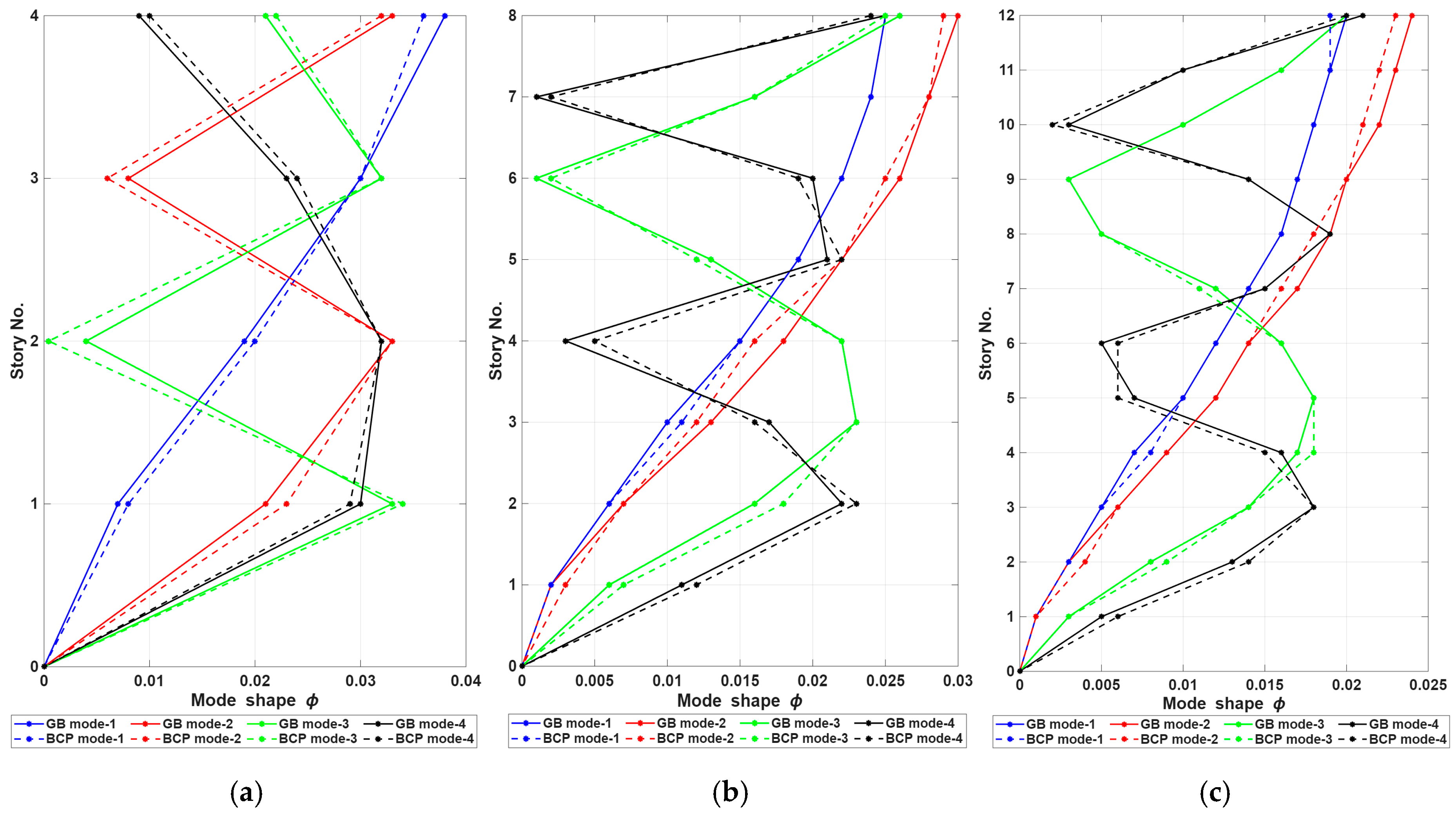
The mode shapes of the 4-, 8-, and 12-story frames were obtained using eigenvalue analysis, which solves the structural mass and stiffness matrices to determine natural frequencies and mode shapes []. The analysis considered key structural parameters, such as seismic mass and shear diaphragms, all of which influence the building’s mode shapes and dynamic behavior. As shown in Figure 6, the mode shapes of buildings with different heights (4-story, 8-story, and 12-story) were evaluated, with the first few modes (1st to 4th) extracted in the X direction (short span). These modes govern how the buildings respond to seismic loading. Comparing the BCP-2021 and GBT-51408-2021 designs shows small differences in mode shapes caused by variations in mass distribution and member stiffness. These differences affect the dynamic stiffness, fundamental period, and potential for resonance under earthquake excitation. As summarized in Table 5, the fundamental periods of the GBT-51408-2021 models are slightly shorter, while their first-mode mass participation ratios are marginally higher, indicating greater stiffness and a stiffer dynamic response compared to the BCP-2021 frames.
Figure 6. Mode shapes (X direction): (a) 4-story, (b) 8-story, and (c) 12-story.
Table 5. Fundamental periods and modal mass participation ratios of RC frames designed under BCP-2021 and GBT-51408-2021.

4.2. Seismic Base Reaction Forces

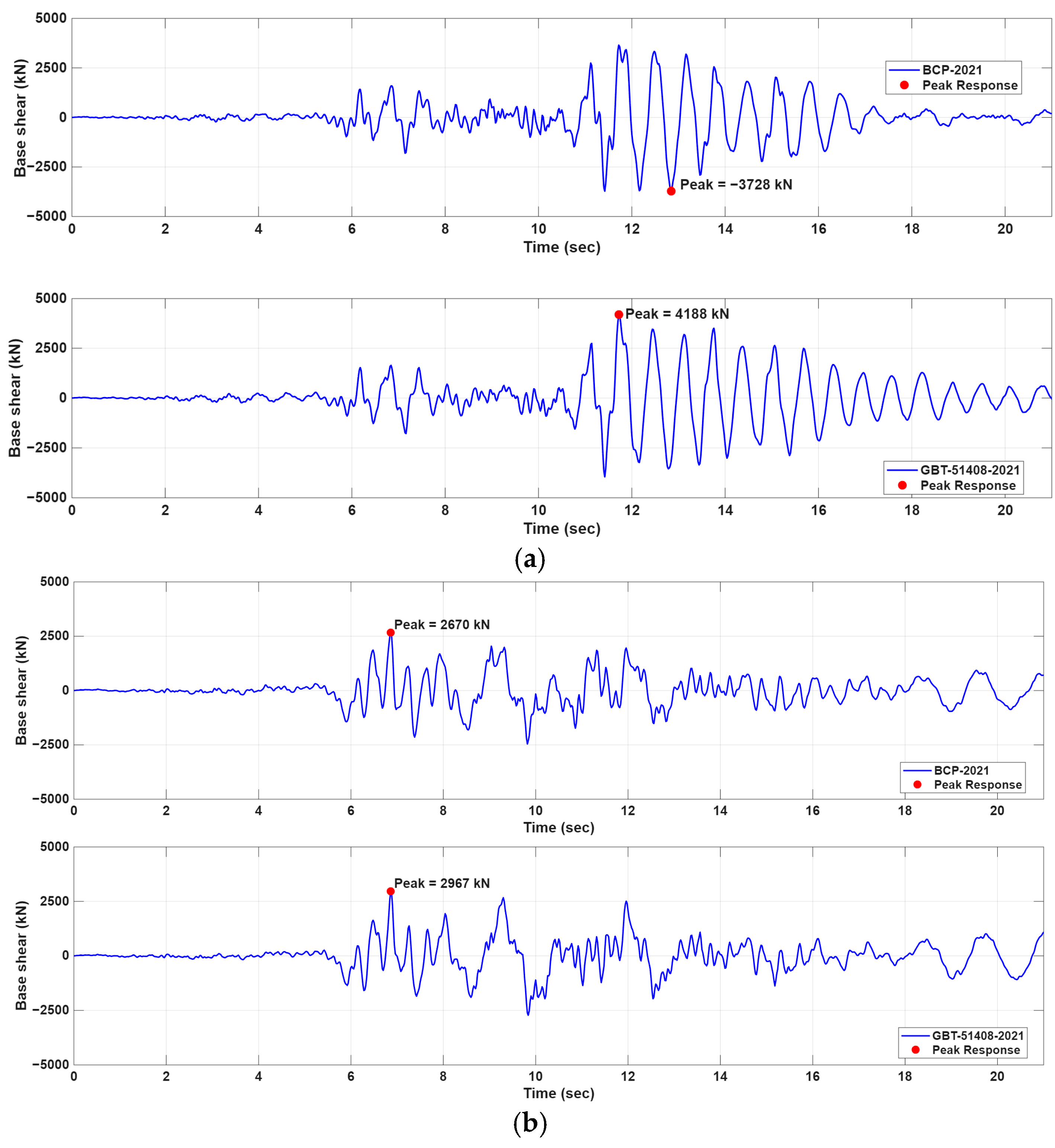
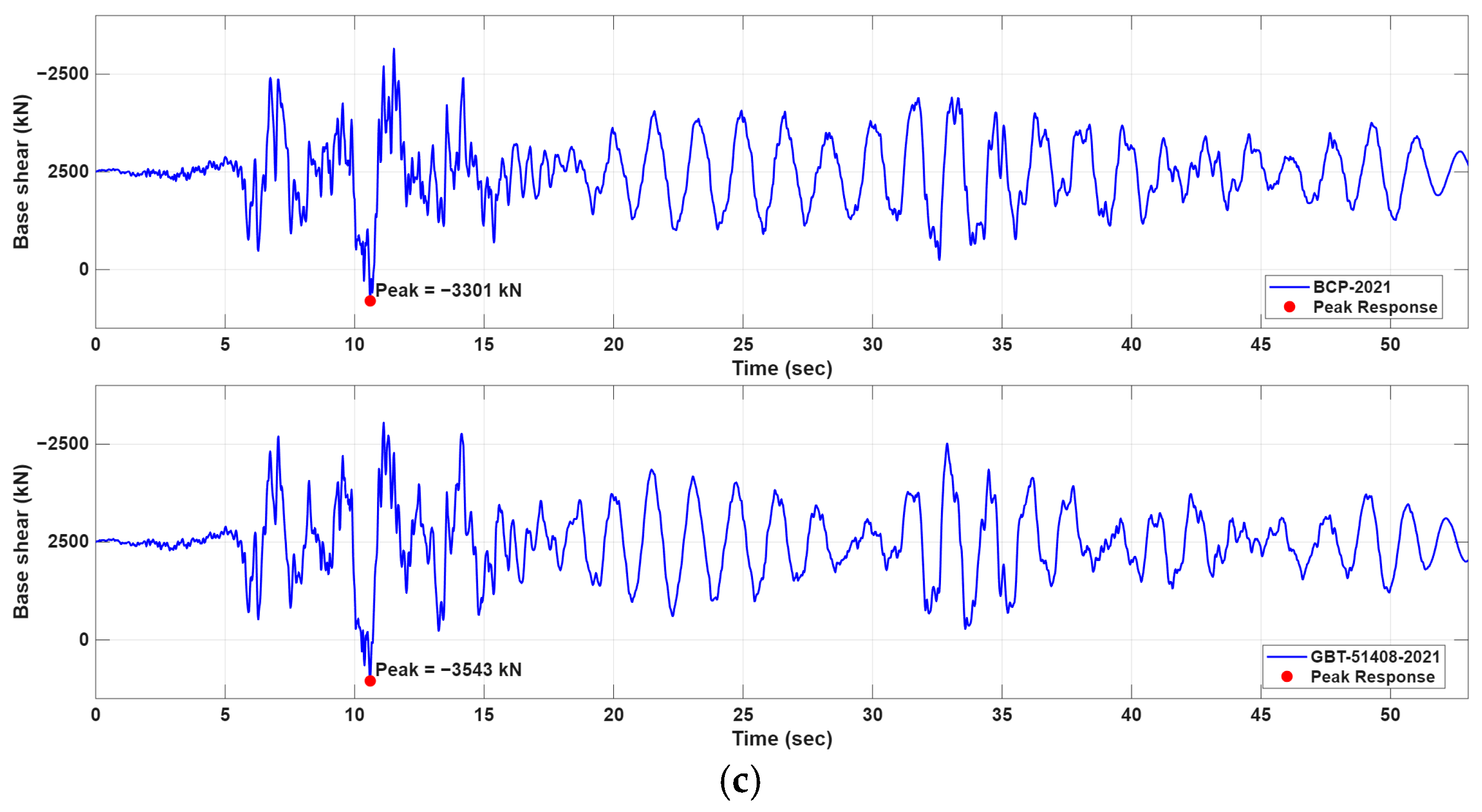
Seismic base shear is a critical parameter in the dynamic evaluation of structural systems, representing the total horizontal force transferred from a structure to its foundation due to ground motion excitation. It serves as a primary indicator of the seismic demand imposed on a building. Figure 7 illustrates the time history response of base shear in the X direction for 4-story, 8-story, and 12-story reinforced concrete frames subjected to the Landers Earthquake ground motion. Each frame was analyzed under two seismic design codes: the Building Code of Pakistan (BCP-2021) and the Chinese code GBT-51408-2021, enabling a comparative study of their seismic force demands. Frames designed in accordance with GBT-51408-2021 generally showed larger base shear amplitudes than those designed in accordance with BCP-2021, according to the observed time histories, especially in the mid- to high-rise models. This discrepancy stems from differences in spectral shape, base shear coefficients, and mass participation ratios defined in each code. In particular, for the 12-story frame, the peak base shear demand under GBT-51408-2021 reaches approximately −3543 kN, whereas the BCP-2021 design yields a slightly lower peak of about −3301 kN, confirming a more conservative estimation of seismic action by the Chinese code. This aligns with the fact that GBT-51408-2021 generally imposes higher effective seismic weights and more restrictive lateral stiffness requirements, resulting in elevated dynamic responses. Overall, the comparison underscores how base reaction forces are not only affected by the ground motion input but are significantly influenced by the design philosophy and structural assumptions embedded within national seismic codes. Such evaluations are essential for identifying over-conservatism or underestimation in design, which may lead to inefficient material use or inadequate safety margins in seismic-prone regions.
Figure 7. Base shear due to Coalinga ground motion: (a) 4-story, (b) 8-story, and (c) 12-story.

4.3. Story-Wise Shear Force Response

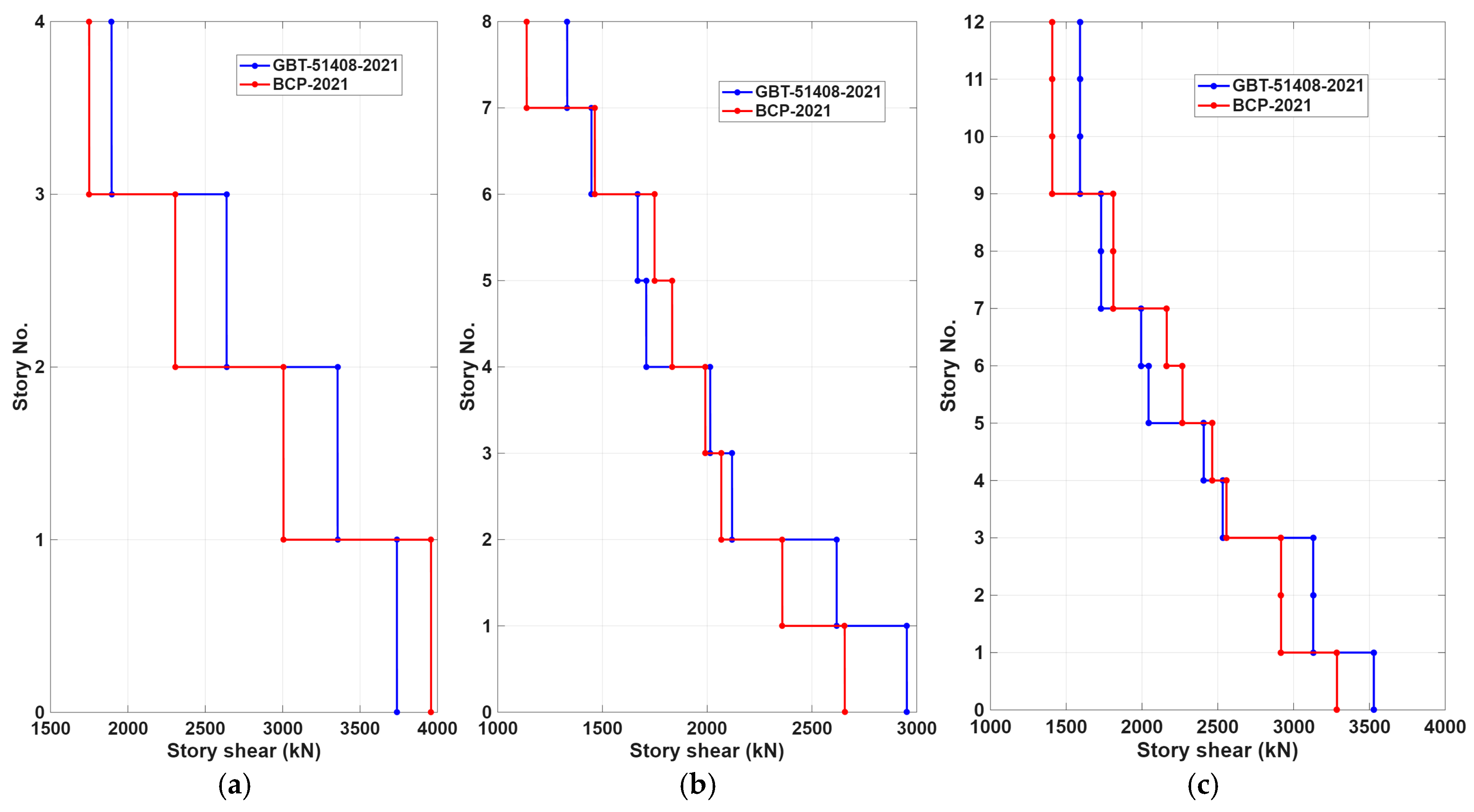
The story shear force distribution is a key parameter for understanding the internal forces that buildings experience during seismic events. Figure 8 shows the time history of the story shear forces for 4-story, 8-story, and 12-story frames designed using BCP-2021 and GBT-51408-2021 codes. The shear forces are significantly influenced by frame stiffness, which increases with the number of stories and the associated lateral resistance. Frames designed under GBT-51408-2021 generally exhibit higher shear forces, particularly in the mid- to upper stories, due to the more conservative assumptions in the Chinese code, which incorporates higher seismic weight and stricter lateral stiffness criteria. The 12-story frame, as shown in Figure 8c, demonstrates a more pronounced difference in shear distribution. This typical distribution of shear forces, with higher shear at the lower floors decreasing towards the top, reflects the larger mass at the base. These findings underscore the importance of adequate structural member sizing, particularly in taller buildings where shear demands are more pronounced.
Figure 8. Story shear force: (a) 4-story, (b) 8-story, and (c) 12-story.

4.4. Inter-Story Drift Ratios (IDR)

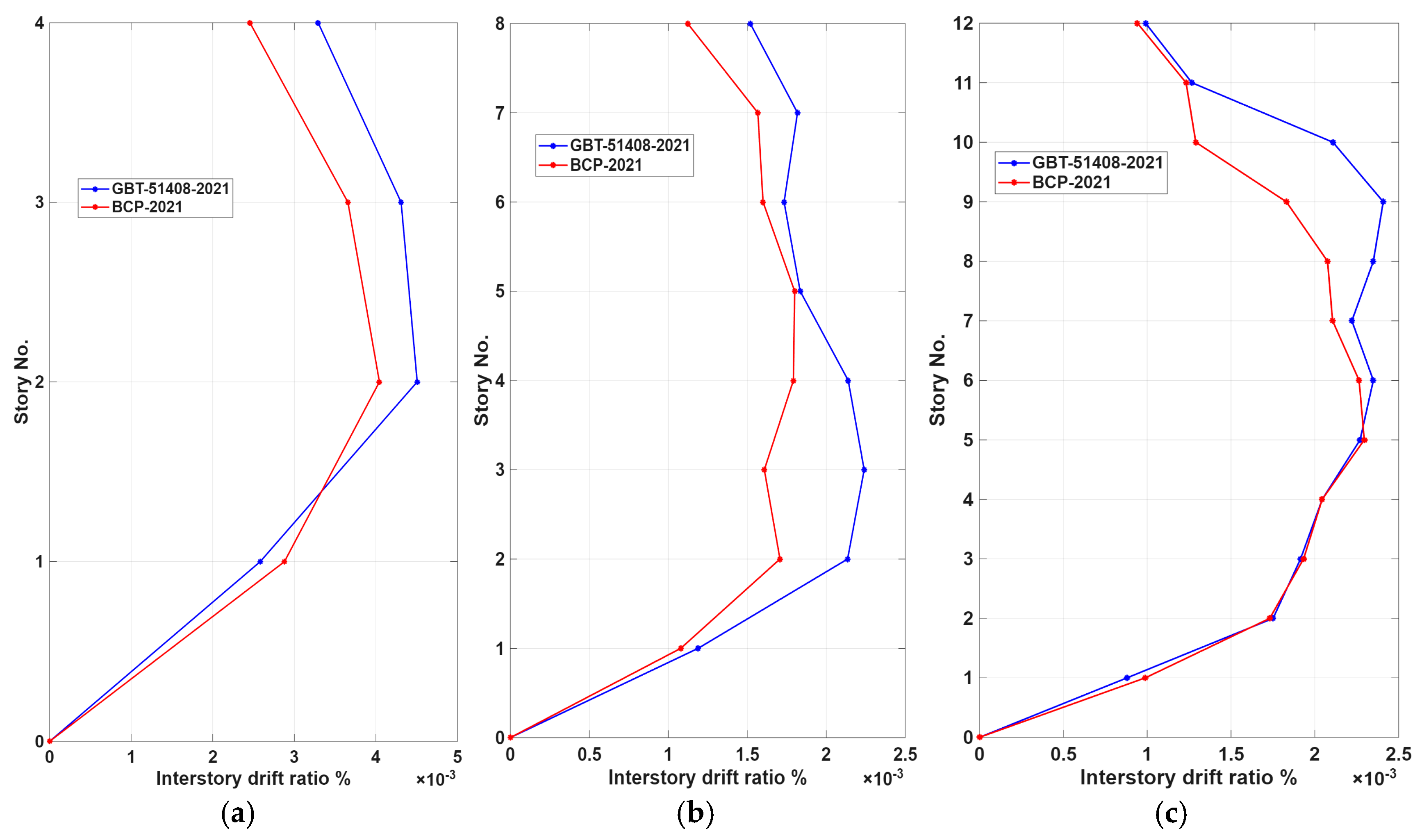
One important measure of structural deformation and possible damage during seismic events is the inter-story drift ratio (IDR). As a measurement of structural flexibility and stability, it measures the relative lateral displacement between two successive floors, normalized by the story height. IDRs for 4-, 8-, and 12-story reinforced concrete frames that were designed in compliance with both BCP-2021 and GBT-51408-2021 codes were calculated in this study based on the time-history response under seismic loading as shown in Figure 9. The findings show that frames designed in accordance with GBT-51408-2021 had significantly higher IDR values, particularly in mid-height stories where mode shape contributions and stiffness irregularities concentrate the demand for lateral displacement. These irregularities arise from variations in column sizing and mass distribution across heights, as per code detailing (e.g., larger bases in GBT-51408-2021), amplifying drifts in mid-stories due to higher-mode effects. A pronounced soft-story behavior was observed in several models, with the maximum IDR reaching up to 0.44%, remaining within the code-prescribed limits but signaling elevated deformation demands. Comparatively, BCP-2021 resulted in lower drift values, suggesting a more flexible response due to relatively less conservative stiffness assumptions. The distribution and magnitude of IDRs across building height emphasize the influence of code provisions on deformation profiles and highlight the need for careful drift control in seismic design to prevent story instability and non-structural damage.
Figure 9. Story drift: (a) 4-story, (b) 8-story, and (c) 12-story.

4.5. Seismic Energy Dissipation

Seismic energy dissipation describes how input energy from ground shaking is absorbed, stored, and dissipated within structural systems. The total energy input is partitioned into kinetic energy (movement of mass), potential energy (elastic strain storage), and damping energy (irrecoverable energy loss due to internal friction, hysteresis, and material damping). As shown in Table 6, energy dissipation varies significantly with building height, ground motion intensity, and design code. For instance, under the Loma Prieta ground motion, the 12-story frame designed with GBT-51408-2021 absorbed the highest total input energy (2935.39 kN·m), with substantial damping energy (2465.31 kN·m), indicating a superior capacity for energy dissipation. In contrast, the BCP-2021 design exhibited lower kinetic and damping energy across all frames, reflecting a less stiff and more flexible behavior. These differences emphasize the influence of code-based stiffness and damping assumptions on energy absorption and dissipation mechanisms. Higher energy dissipation, particularly through damping, is critical for reducing structural damage and ensuring seismic resilience. Energy dissipation plays a crucial role in protecting buildings from excessive displacements and minimizing damage, as highlighted by previous research on damping systems and their performance under seismic loading [,]. Effective damping systems, including Rayleigh damping and material damping, have been shown to improve a structure’s ability to dissipate energy, thus enhancing its seismic performance [].
Table 6. Total Energy Components.

4.6. Pushover Analysis

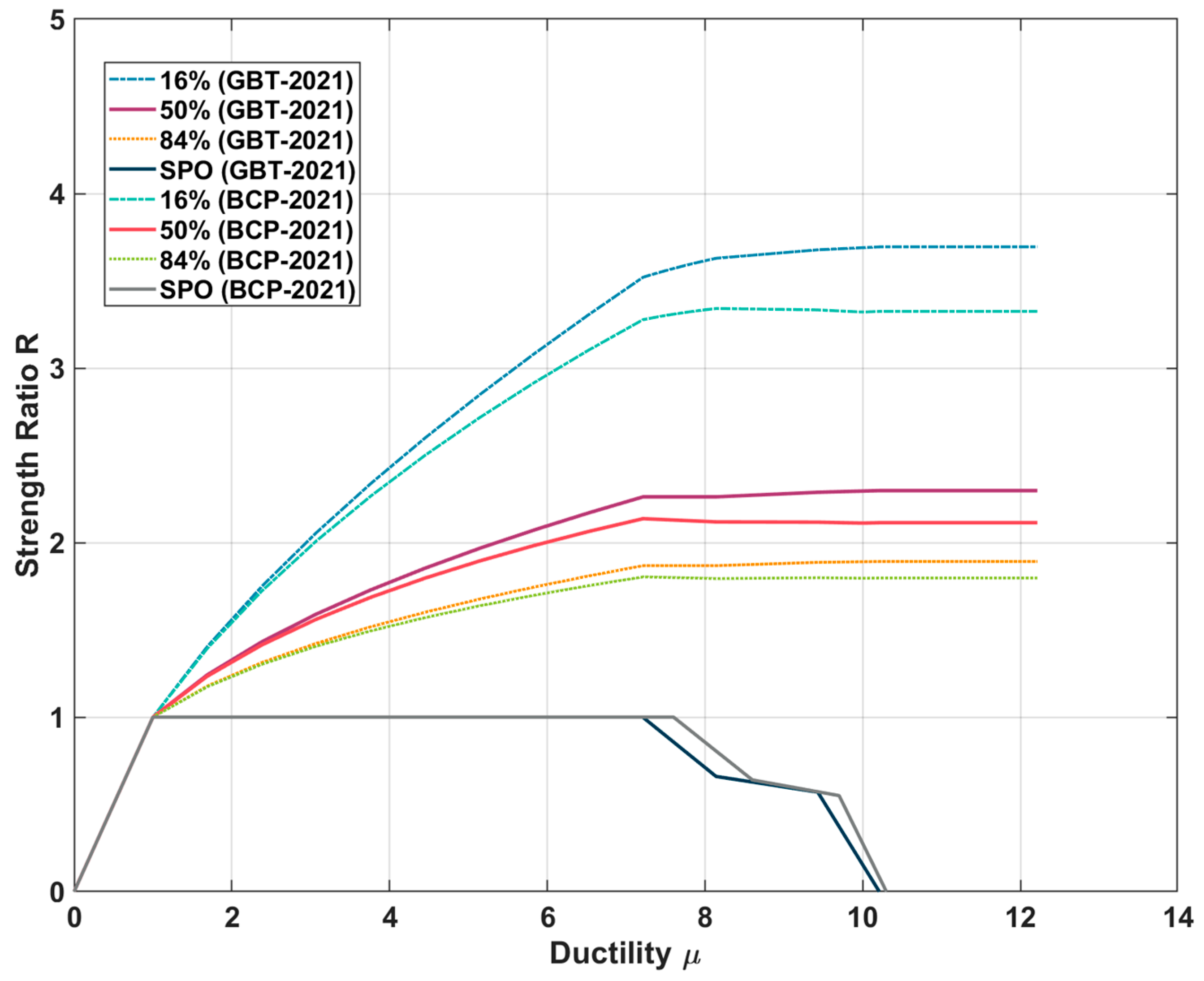
The pushover analysis was conducted to evaluate and compare the seismic performance of RC frame structures designed according to the Chinese GBT-2021 and Pakistani BCP-2021 seismic provisions. The performance criteria considered were the strength ratio R and ductility μ. Here, R is defined as the ratio of the base shear capacity to the structural weight, while μ represents the ratio of the maximum displacement to the corresponding elastic displacement. These parameters were extracted from nonlinear static analyses performed under different seismic intensity levels. Figure 10 illustrates the relationship between strength ratio and ductility for the 4-story frame, presenting the 16%, 50%, and 84% fractile curves along with the static pushover (SPO) envelopes for each design code. The fractiles correspond to probabilistic seismic demand levels: the 16% fractile represents the lower bound, the 50% fractile corresponds to the median response, and the 84% fractile indicates the upper bound. The results indicate that the GBT-2021 design consistently achieves higher strength ratios across the ductility range compared to the BCP-2021 design, signifying greater lateral load capacity. In contrast, the BCP-2021 frames exhibit slightly lower overstrength but maintain comparable ductility capacity, with curves running nearly parallel to those of the GBT-2021. The SPO envelopes for both codes show similar initial stiffness; however, the GBT-2021 retains a higher post-yield plateau, reflecting enhanced energy dissipation potential. Overall, the GBT-2021 design results in a higher probability of achieving greater lateral strength capacity compared to the BCP-2021 design, while both codes provide comparable ductility performance. This indicates that GBT-2021 provisions lead to frames with larger reserve strength, which may offer improved seismic performance under extreme loading conditions.
Figure 10. Comparison of the strength ratio to ductility response from pushover analysis of a 4-story RC frame designed according to Chinese (GBT-51408-2021) and Pakistani (BCP-2021) seismic codes.

4.7. Lead Rubber Bearing (LRB) Modeling and Integration

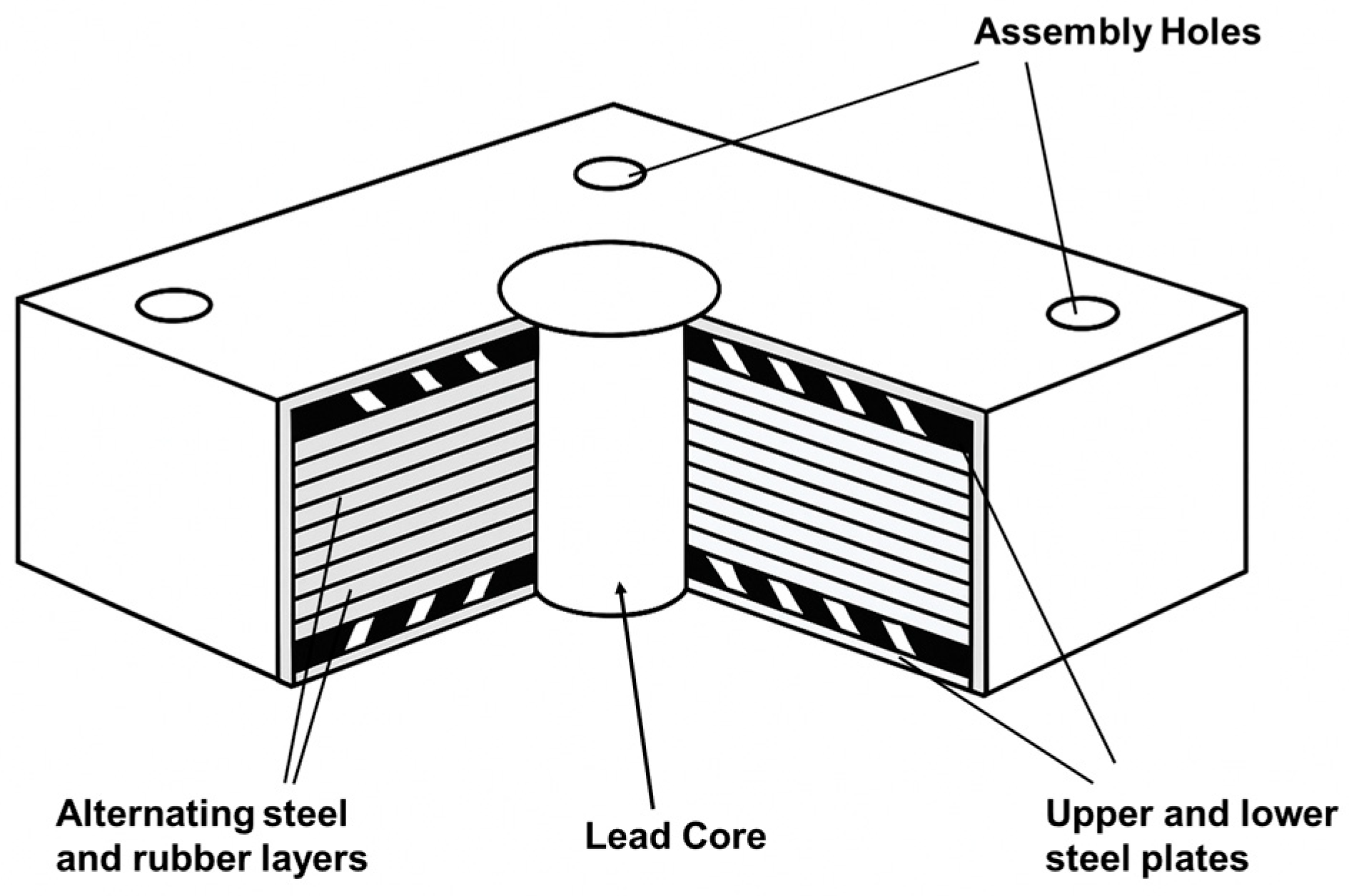
Lead Rubber Bearings (LRBs) are widely used seismic isolation devices composed of alternating layers of natural rubber and steel plates, with a central lead core. The lead core deforms in shear, providing a bilinear force–deformation response that offers high initial stiffness to resist minor service loads, while yielding under strong seismic excitation to dissipate energy. The embedded steel plates enhance vertical load-bearing capacity, whereas the rubber layers provide lateral flexibility, enabling large horizontal displacements without significant loss of stability. Compared to conventional elastomeric bearings, the inclusion of a lead core improves energy dissipation, reduces residual displacements, and enhances structural resilience. Owing to their combined vertical stiffness, lateral flexibility, and energy dissipation capacity, LRBs present a cost-effective solution for seismic isolation in bridges and buildings.
Recent advancements in seismic isolation research have focused on enhancing fragility-based performance evaluation and improving the resilience of structural systems through optimized isolator design. Lead rubber bearings are widely utilized to reduce seismic demands by increasing structural flexibility and dissipating input energy, while modified configurations incorporating negative-stiffness mechanisms (LRB-NS) have been shown to further improve displacement control and post-yield stability [,,]. In parallel, inerter-based energy dissipation systems have been investigated as supplemental damping solutions to enhance isolation performance under varying seismic intensity levels []. More recent design-oriented studies have demonstrated that optimized isolation configurations, such as LRB-NS systems, can lead to reduced fragility and enhanced resilience compared to conventional isolation strategies. These findings support the development of fragility-based evaluation frameworks for isolated structural systems, as adopted in the present study.
In this study, the LRB system was modeled in ETABS using nonlinear link elements to simulate the isolators’ bilinear hysteretic behavior. Figure 11 shows the schematic diagram of a lead rubber bearing (LRB), illustrating the construction and operational principles of this isolation device. The mechanical properties including effective stiffness, yield strength, post-yield stiffness ratio, and damping ratio were defined according to the parameters summarized in Table 7. The isolators were positioned between the foundation and the superstructure, ensuring that the upper structure behaves predominantly as a rigid body while allowing controlled horizontal displacement at the isolation interface. The lead core’s yielding was captured through kinematic hysteresis modeling, while the rubber layers were represented with appropriate lateral stiffness to account for shear flexibility. This modeling approach provides an accurate representation of both energy dissipation and displacement capacity.
Figure 11. Schematic diagram of a lead rubber bearing (LRB).
Table 7. Summary of lead rubber bearing (LRB) parameters used in ETABS modeling.
The integration of LRBs in the structural model enables a comparative fragility analysis under seismic loading conditions, considering two scenarios without isolation and with isolation. This dual-case assessment allows for quantifying the improvement in seismic performance achieved through LRB implementation, including reductions in base shear, inter-story drifts, and structural damage probabilities. The results offer a performance-based evaluation framework, demonstrating the practical benefits of LRBs in enhancing performance and ensuring serviceability under design-level and extreme seismic events.

4.8. Fragility Curves

Fragility curves provide a probabilistic representation of the likelihood that a structural system will reach or exceed a specified damage state under a given seismic intensity measure. In this study, they are used to quantify and compare the seismic vulnerability of RC frame buildings designed according to the Chinese seismic code (GBT-51408-2021) and the Pakistani Building Code (BCP-2021). These curves represent the probability of reaching or exceeding a specified damage state under a given level of seismic intensity, with Peak Ground Acceleration (PGA) selected as the intensity measure due to its direct correlation with seismic demand in both Incremental Dynamic Analysis (IDA) and fragility assessment. Inter-story drift ratios (IDRs) obtained from IDA were used to define the limit states, corresponding to drift thresholds of 0.5%, 1.0%, 1.5%, 2.0%, and 2.5% for operational phase (OP), immediate occupancy (IO), damage control (DC), life safety (LS), and collapse prevention (CP), respectively, following FEMA P-695 [] guidelines. The deflection percentage was calculated as:
%   D r i f t = R o o f   d i s p l a c e m e n t B u i l d i n g   h e i g h t × 100
For each limit state, the exceedance probability was obtained using the lognormal cumulative distribution function, and given as:
  P D P G A =   ln P G A α σ
where is the standard normal cumulative distribution function, σ is the standard deviation of the logarithm, α is the median (logarithmic mean) value of PGA for the damage state, and D is the damage state under consideration.
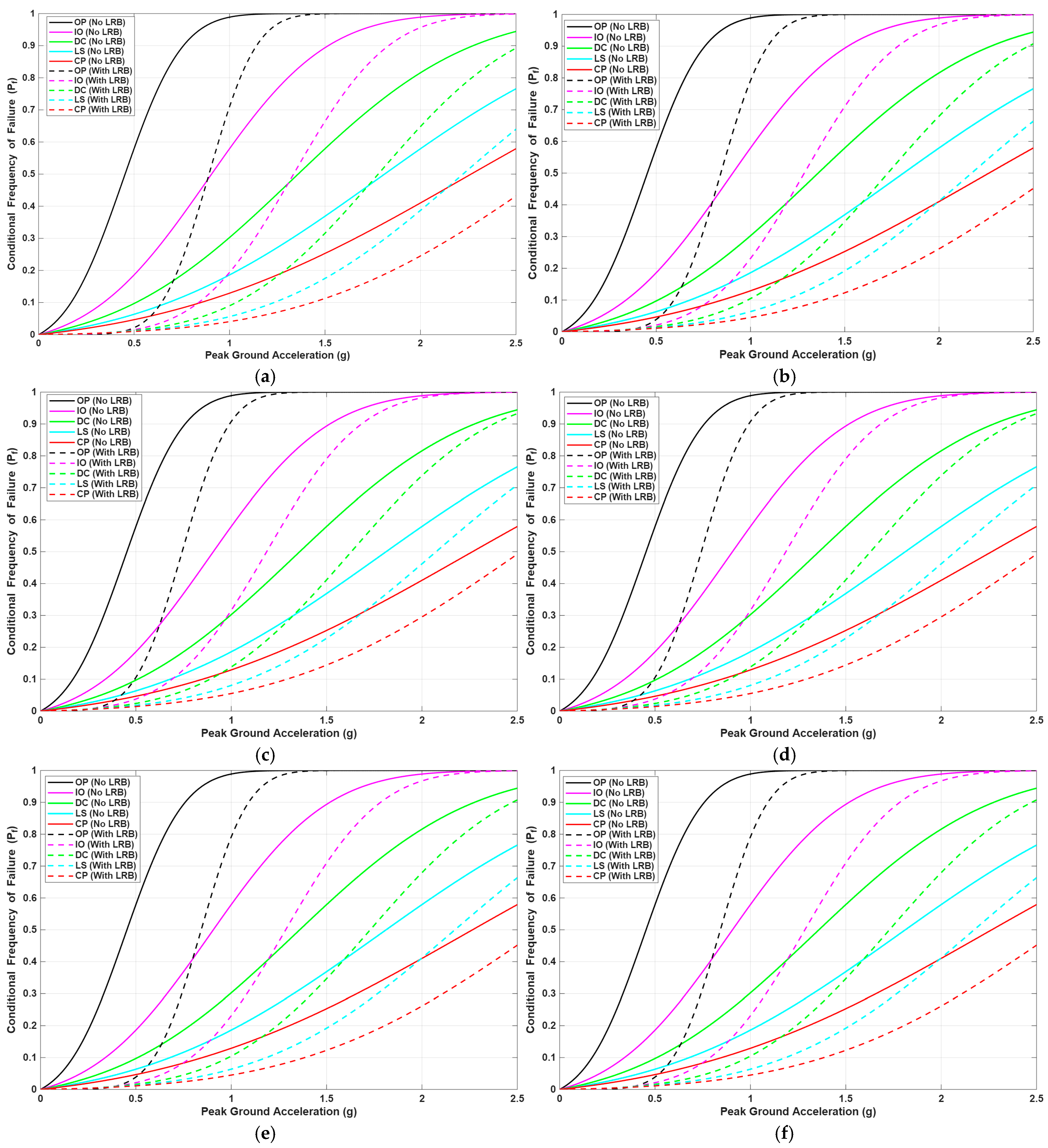
Figure 12 presents the fragility curves for both the BCP-2021 and GBT-51408-2021 designs across various building configurations. Based on the analysis of fragility curves derived from this study, structures designed under the GBT-51408-2021 code (Chinese code) demonstrate enhanced seismic resilience compared to those designed under the BCP-2021 code (Pakistani code), as evidenced by lower conditional failure probabilities across various levels of Peak Ground Acceleration (PGA). Specifically, at 0.75 g, the BCP-2021 code shows a 40.41% probability of reaching or exceeding the Immediate Occupancy (IO) level, while the GBT-51408-2021 code shows a 39.03% probability. At 1.5 g, the BCP-2021 code has a 40.36% probability of reaching or exceeding the Life Safety (LS) level, while the GBT-51408-2021 design shows a 39.04% probability. Additionally, at the Damage Control (DC) level, the BCP-2021 code shows a 59.35% probability of reaching or exceeding this level at 1.5 g, compared to 59.00% for the GBT-51408-2021 code. These results indicate that the GBT-51408-2021 code provides lower fragility values, suggesting more robust seismic performance. The GBT-51408-2021 design also exhibits the most robust performance, particularly in the 4-story configuration, likely due to the reduced height of the structure, which aligns with the expectation that shorter buildings tend to be more stable under seismic loading. The fragility analysis shows that the GBT-51408-2021 code has slightly lower mean values (e.g., MOP = 0.43895 vs. 0.44267) and higher standard deviations (e.g., SOP = 0.26605 vs. 0.2426), indicating a wider range of potential outcomes and reflecting the code’s more flexible, conservative design approach. In contrast, the BCP-2021 code has lower standard deviations, suggesting a more concentrated distribution of fragility values.
Figure 12. Fragility curve of BCP-2021 and GBT-51408-2021. (a) 4-story BCP; (b) 8-story BCP; (c) 12-story BCP; (d) 4-story GB; (e) 8-story GB; (f) 12-story GB.
The GBT-51408-2021 code leads to a more conservative design with lower fragility values, especially at the Immediate Occupancy (IO) level (around 0.75 g PGA), compared to the BCP-2021 code, which shows higher vulnerability. This is due to the GBT code’s stricter seismic provisions, such as higher base shear demands, offering better protection, particularly for taller buildings. These findings underscore the importance of adopting stricter seismic provisions, like those in the GBT-51408-2021 code, to enhance the seismic resilience of structures, especially taller ones.
A direct comparison between the fixed-base and isolated configurations shows that the inclusion of LRBs decreases peak inter-story drift demands and base shear forces and shifts the fragility curves toward lower probabilities of exceeding severe limit states at higher PGA levels. This indicates improved seismic performance in terms of drift control and damage probability for the same structural system. However, a full implementation decision for isolation typically depends not only on reduced engineering demand parameters but also on project-specific cost–benefit metrics, which are not evaluated in this study and are identified as future work.

5. Conclusions

This study presents a comprehensive comparison of the seismic performance of reinforced concrete (RC) frames designed using the Chinese Seismic Code (GBT-51408-2021) and the Building Code of Pakistan (BCP-2021). The evaluation includes key structural parameters such as base shear, inter-story drift, fragility, seismic energy dissipation, story-wise shear force response, and mode shapes. The results show that structures designed according to the Chinese seismic code exhibit up to 12% lower fragility values, indicating enhanced seismic resilience, particularly under higher Peak Ground Accelerations (PGAs). In contrast, the Pakistani code leads to higher fragility values, particularly for taller buildings, due to its relatively less conservative design provisions. This trend is particularly noticeable when comparing base shear demands, where the Chinese code generally results in higher values, reflecting a more conservative approach to lateral force-resisting design. The study also reveals that the story-wise shear force response is higher for structures designed under the Chinese code, especially for taller buildings. This outcome is attributed to the more stringent assumptions in the Chinese code regarding seismic weight and lateral stiffness, which result in a greater seismic force demand, particularly in the lower stories. The Pakistani code, with its less conservative lateral stiffness requirements, results in a more flexible seismic response with lower shear forces, particularly in mid- to high-rise structures.
In terms of inter-story drift, buildings designed under the Chinese seismic code showed higher drift ratios, particularly in the mid-height stories, which can be attributed to the increased lateral forces due to higher seismic weight. This indicates a stiffer response, which, while within acceptable limits, highlights the need for careful drift control, especially in taller buildings. On the other hand, structures designed under the Pakistani code exhibited lower drift values, suggesting a more flexible response that may perform better under moderate seismic events but could be at risk during stronger shaking. The comparison of mode shapes revealed subtle differences between the two codes, with structures designed under the Chinese code exhibiting slightly stiffer behavior due to higher seismic weight and more restrictive lateral stiffness requirements. These differences in mode shapes are crucial for understanding the resonance risk of the buildings and ensuring that structures are not prone to amplification of seismic forces at their natural frequencies. Seismic energy dissipation, a critical factor in enhancing the resilience of structures, was found to be higher for structures designed according to the Chinese code. This is attributed to the higher base shear and more conservative design provisions, which contribute to enhanced energy dissipation capacity. The integration of Lead Rubber Bearings (LRBs) for seismic isolation further improved the energy dissipation capacity of both codes, with the Chinese design demonstrating superior performance in terms of damping energy, which is critical for reducing structural damage during seismic events. In fact, the energy dissipation capacity was found to be 25% higher in structures designed with LRBs under the Chinese code.
In conclusion, this study underscores the importance of adopting stricter seismic design provisions, such as those in the Chinese code, to enhance the seismic resilience of structures. The findings also highlight the effectiveness of LRB-based seismic isolation in improving the seismic performance of RC frames, reducing base shear, inter-story drift, and enhancing energy dissipation. These provisions, particularly in the context of taller buildings, ensure greater protection and performance under seismic loading, making them essential for ensuring the safety of infrastructure in seismic-prone regions.

Author Contributions

Conceptualization, M.U.A. and T.U.; methodology, M.U.A. and M.S.; software, M.U.A.; validation, T.U. and H.R.; formal analysis, M.S. and M.U.S.; investigation, M.U.A. and M.U.S.; data curation, M.U.S. and M.S.; writing—original draft preparation, M.U.A. and A.F.; writing—review and editing, T.U., H.R. and A.F. All authors have read and agreed to the published version of the manuscript.

Funding

This research received no external funding.

Data Availability Statement

The data that has been used to support the results of this study are contained in the article.

Conflicts of Interest

The authors declare that they have no known competing financial interests or personal relationships that could have appeared to influence the work reported in this paper.

References

  1. GB50011; The National Standard. Code for Seismic Design of Buildings. Ministry of Housing and Urban-Rural Development of China: Beijing, China, 2010.
  2. Pakistan Engineering Council. Building Code of Pakistan, 2021st ed.; Pakistan Engineering Council: Islamabad, Pakistan, 2021. [Google Scholar]
  3. Zeb, S.; Shahzada, K.; Noor, U.A.; Arshad, M.A.; Khan, A.R.; Khan, H.U. Seismic capacity assessment of eco-friendly fly ash brick masonry structures after retrofitting. Innov. Infrastruct. Solut. 2025, 10, 112. [Google Scholar] [CrossRef]
  4. Ghomi, S.K.; El-Salakawy, E. Seismic performance improvement of GFRP-RC moment frames. Can. J. Civ. Eng. 2020, 47, 704–717. [Google Scholar] [CrossRef]
  5. Kubica, J.; Ahmed, B.; Muhammad, A.; Usama, A.M. Dynamic reliability calculation of random structures by conditional probability method. Eksploat. I Niezawodn. 2024, 26. [Google Scholar] [CrossRef]
  6. Siddique, M.S.; Schwarz, J. Elaboration of multi-hazard zoning and qualitative risk maps of Pakistan. Earthq. Spectra 2015, 31, 1371–1395. [Google Scholar] [CrossRef]
  7. Ahmed, H.A.; Shahzada, K.; Fahad, M. Performance-based seismic assessment of capacity enhancement of building infrastructure and its cost-benefit evaluation. Int. J. Disaster Risk Reduct. 2021, 61, 102341. [Google Scholar] [CrossRef]
  8. Khan, M.S.; Rizwan, M. Fragility and vulnerability assessment of code-conforming and non-conforming RC Bridge piers retrofitted with ECC jackets. J. Build. Pathol. Rehabil. 2025, 10, 107. [Google Scholar] [CrossRef]
  9. Faharidine, M.; Aslam, M.U.C.M. Improving stability and buckling resistance of self-supporting isotrussed telecommunication tower under wind load. J. Rehabil. Civ. Eng. 2025, 13, 54–68. [Google Scholar]
  10. Ahmed, H.A.; Tanoli, W.A. Seismic Retrofitting of RC Buildings Using a Performance-Based Approach for Risk Resilience and Vulnerability Assessment. Buildings 2025, 15, 1333. [Google Scholar] [CrossRef]
  11. Suliman, M.; Lu, L. A Comparative Study of Seismic Performance Evaluation of Reinforced Concrete Frame Structures Using Chinese and African Seismic Codes. Adv. Civ. Eng. 2024, 2024, 5588833. [Google Scholar] [CrossRef]
  12. Biva, G.; Huanjun, J. Comparison of seismic fragility of RC moment-resisting frame structures designed according to Chinese and Indian code. Structures 2023, 50, 347–358. [Google Scholar] [CrossRef]
  13. Jiang, H.; Liu, X.; Hu, L. Seismic fragility assessment of RC frame-shear wall structures designed according to the current Chinese seismic design code. J. Asian Archit. Build. Eng. 2015, 14, 459–466. [Google Scholar] [CrossRef]
  14. Kunwar, S.; Thapa, D.; Paudel, A.; Shrestha, A. A comparative analysis of an RC low-rise building with the seismic codes of countries lying in the Himalayas: China, India, Nepal, and Pakistan. Discov. Civ. Eng. 2024, 1, 117. [Google Scholar] [CrossRef]
  15. Zameeruddin, M.; Sangle, K.K. Performance-based Seismic Assessment of Reinforced Concrete Moment Resisting Frame. J. King Saud Univ. Eng. Sci. 2021, 33, 153–165. [Google Scholar] [CrossRef]
  16. Ali, Q.; Ahmad, N.; Ashraf, M.; Schacher, T. Seismic Performance Evaluation of Two-story Dhajji-dewari Traditional Structure. Int. J. Archit. Herit. 2022, 16, 1233–1251. [Google Scholar] [CrossRef]
  17. Munir, S.; Najam, F.A.; Rahman Aur Malik, U.J.; Rana, I.A.; Ali, A. Seismic evaluation of non-seismically detailed RC buildings in Pakistan: Performance and damage accumulation under repeated earthquakes. Bull. Earthq. Eng. 2024, 22, 4547–4579. [Google Scholar] [CrossRef]
  18. Rizwan, M.; Ahmad, N.; Naeem Khan, A. Seismic performance assessment of reinforced concrete moment resisting frame with low strength concrete. Structures 2021, 30, 1140–1160. [Google Scholar] [CrossRef]
  19. Guo, L.; Wang, J.; Wang, W.; Wang, H. Performance-based seismic design and vulnerability assessment of concrete frame retrofitted by metallic dampers. Structures 2023, 57, 105073. [Google Scholar] [CrossRef]
  20. Kim, T.; Yi, S.-R. Accelerated system-reliability-based disaster resilience analysis for structural systems. Struct. Saf. 2024, 109, 102479. [Google Scholar] [CrossRef]
  21. Wasse, A.D.; Dai, K.; Wang, J.; Sharbati, R. State-of-the-Art Review: Seismic Design and Performance Assessment of Special Concentrically Braced Frames Developed for Complex Industrial Building Structures. Int. J. Steel Struct. 2024, 24, 280–295. [Google Scholar] [CrossRef]
  22. Department of Homeland Security, Emergency Preparedness and Response Directorate, Federal Emergency Management Agency (FEMA). Multi-Hazard Loss Estimation Methodology Earthquake Model HAZUS®MH MR4 Technical Manual; Federal E: Washington, DC, USA, 2003. [Google Scholar]
  23. Computers and Structures, Inc. ETABS: Integrated Building Design Software, Version 21.0.0; Computers and Structures, Inc.: Berkeley, CA, USA, 2021; Available online: https://www.csiamerica.com/products/etabs (accessed on 1 July 2025).
  24. Malley, J.O.; Hom, D.B. The Role of Nonlinear Analysis in Modern Engineering Practice Related to Performance-Based Seismic Design. In Advanced Technology in Structural Engineering, Proceedings of the Structures Congress 2000, Philadelphia, PA, USA, 8–10 May 2000; American Society of Civil Engineers: Reston, VA, USA, 2000; pp. 1–8. [Google Scholar]
  25. Chen, X.; Li, J.; Guan, Z. Influence of Ground Motion Characteristics on Higher-Mode Effects and Design Strategy for Tall Pier Bridges. J. Bridge Eng. 2023, 28, 04022126. [Google Scholar] [CrossRef]
  26. Chen, X.; Wu, S.; Li, J.; Guan, Z.; Xiang, N. Seismic performance assessment and design procedure of base-isolated bridges with lead-rubber-bearing and negative stiffness springs (LRB-NS). Eng. Struct. 2024, 306, 117871. [Google Scholar] [CrossRef]
  27. O’Neill, A.M. Use of Ground Motion Intensity Measures in Nonlinear Dynamic Analysis. Struct. Saf. 2006, 28, 67–84. [Google Scholar]
  28. PEER Pacific Earthquake Engineering Research ground motion database. Ground Motion Database 2014, 1.
  29. Available online: https://seismosoft.com/products/seismomatch/ (accessed on 15 June 2025).
  30. Stewart, J.P. Wavelet Transformations in Seismic Ground Motion Spectral Matching. Seismol. Res. Lett. 2014, 85, 107–120. [Google Scholar]
  31. Lin, Y.L.; Cramer, M.S.H. Optimization of Ground Motion Records Using Spectral Matching. Earthq. Spectra 2017, 21, 279–296. [Google Scholar]
  32. Applied Technology Council. ATC-40: Seismic Evaluation and Retrofit of Concrete Buildings; Applied Technology Council: Redwood City, CA, USA, 1996; Volume 1, Available online: https://www.atcouncil.org/pdfs/atc40toc.pdf (accessed on 15 June 2025).
  33. Vamvatsikos, D.; Cornell, C.A. Direct Estimation of Seismic Demand and Capacity of Multidegree-of-Freedom Systems through Incremental Dynamic Analysis of Single Degree of Freedom Approximation. J. Struct. Eng. 2005, 131, 589–599. [Google Scholar] [CrossRef]
  34. Mucedero, G.; Perrone, D.; Monteiro, R. Nonlinear static characterisation of masonry-infilled RC building portfolios accounting for variability of infill properties. Bull. Earthq. Eng. 2021, 19, 2597–2641. [Google Scholar] [CrossRef]
  35. Chopra, A.K. Dynamics of Structures: Theory and Applications to Earthquake Engineering; Pearson Education: London, UK, 2012. [Google Scholar]
  36. Goyal, R.; Singh, A. Seismic Performance of Damped Structures: Energy Dissipation and Structural Behavior. J. Struct. Eng. 2019, 145, 04019252. [Google Scholar]
  37. Liu, Z.; Zhao, Y. Effect of Damping Systems on Seismic Energy Dissipation in Tall Buildings. Earthq. Eng. Struct. Dyn. 2020, 49, 576–589. [Google Scholar]
  38. Tanaka, M.; Yoshimoto, N.; Nakamura, K. Rayleigh Damping in Structural Systems: A Review on Energy Dissipation and Application. J. Earthq. Eng. 2017, 21, 26–41. [Google Scholar]
  39. Chen, X. System Fragility Assessment of Tall-Pier Bridges Subjected to Near-Fault Ground Motions. J. Bridge Eng. 2020, 25, 04019143. [Google Scholar] [CrossRef]
  40. Chen, X.; Ikago, K.; Guan, Z.; Li, J.; Wang, X. Lead-rubber-bearing with negative stiffness springs (LRB-NS) for base-isolation seismic design of resilient bridges: A theoretical feasibility study. Eng. Struct. 2022, 266, 114601. [Google Scholar] [CrossRef]
  41. Chen, X.; De Domenico, D. LIC Seismic resilient design of rocking tall bridge piers using inerter-based systems. Eng. Struct. 2023, 281, 115819. [Google Scholar] [CrossRef]
  42. Applied Technology Council. Quantification of Building Seismic Performance Factors: Component Equivalency Methodology; Federal Emergency Management Agency: Washington, DC, USA, 2011. [Google Scholar]
Disclaimer/Publisher’s Note: The statements, opinions and data contained in all publications are solely those of the individual author(s) and contributor(s) and not of MDPI and/or the editor(s). MDPI and/or the editor(s) disclaim responsibility for any injury to people or property resulting from any ideas, methods, instructions or products referred to in the content.

Article Metrics

Citations

Article Access Statistics

Multiple requests from the same IP address are counted as one view.