1. Introduction
Bronchogenic cysts are rare congenital cystic lesions resulting from abnormal budding of the primitive foregut. They are most commonly located in the mediastinum or lung parenchyma; purely oesophageal (bronchogenic cysts are uncommon and represent a small subset of foregut duplication lesions, although cases have been reported in the stomach wall, gallbladder wall, and even the cardiac wall [
1,
2,
3]. While usually asymptomatic, these cysts can cause symptoms from compression of adjacent structures. Acute presentations are uncommon but may result from infection or haemorrhage following cyst rupture, leading to sudden clinical deterioration [
4]. Cysts may also provoke cardiac arrhythmias [
3]. Despite the high sensitivity of imaging studies, the only definitive way to establish the diagnosis is surgical excision of the lesion and its histopathological examination. Recurrent bronchogenic cysts at the surgical site have been reported decades after resection, often related to incomplete removal or intraoperative rupture [
5]. Therefore, careful dissection to avoid rupture and to achieve complete excision is important. Although rare cases of malignant transformation have been reported, bronchogenic cysts are generally considered benign [
6,
7].
We report a case in which an oesophageal bronchogenic cyst was successfully enucleated through the abdominal minimally invasive approach, with completion of the anti-reflux procedure (Nissen fundoplication) in the same anaesthetic.
2. Case Description
A 75-year-old patient was referred to the surgical clinic with symptoms of gastroesophageal reflux. The patient reported food regurgitation, a burning sensation in the chest, periodic postprandial nausea, and occasional pain in the left periumbilical and epigastric regions. The medical history included cardiac arrhythmia in the form of ventricular extrasystoles, prior ERCP for acute biliary pancreatitis with common bile duct stones, and endoscopic gastric polypectomy.
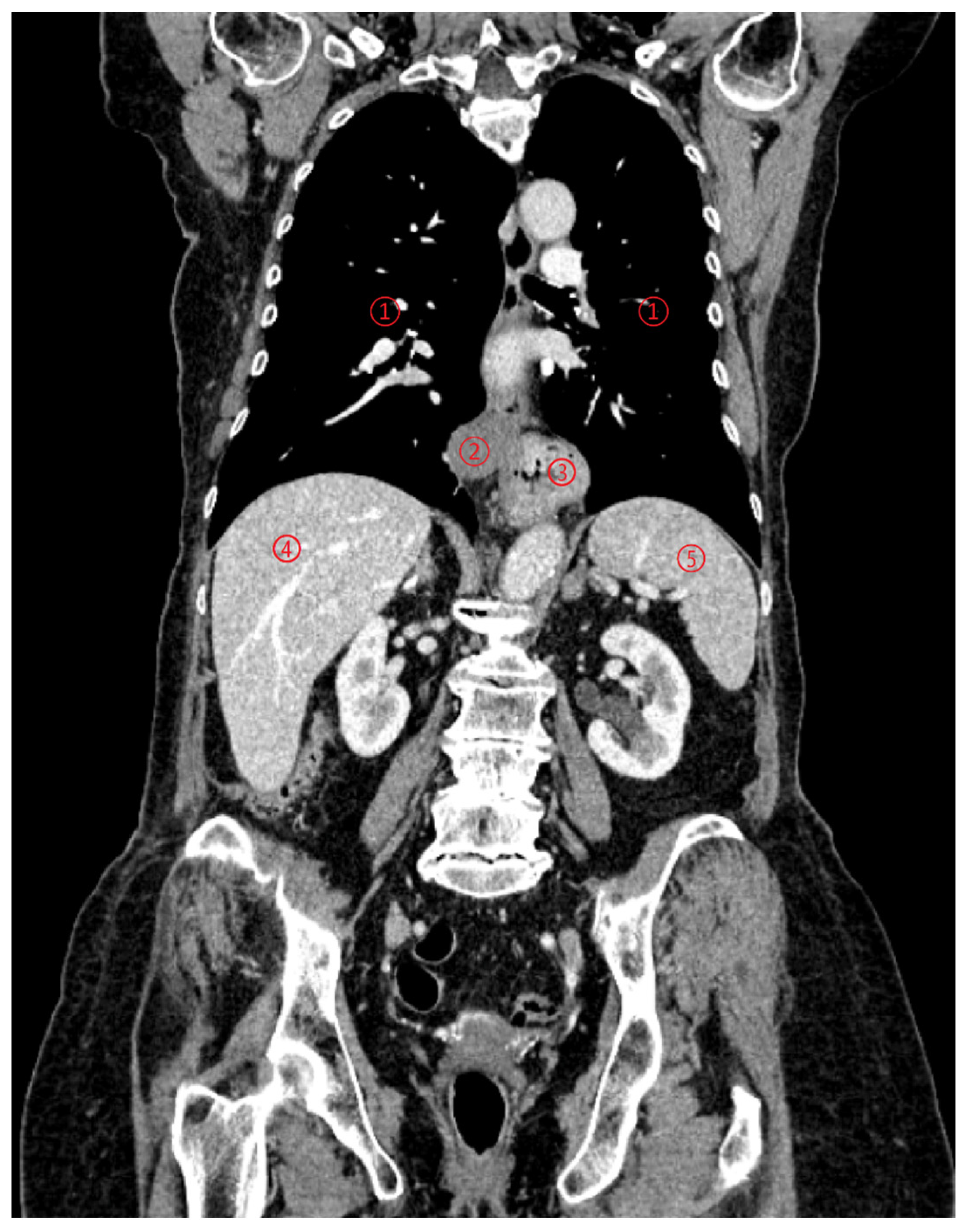
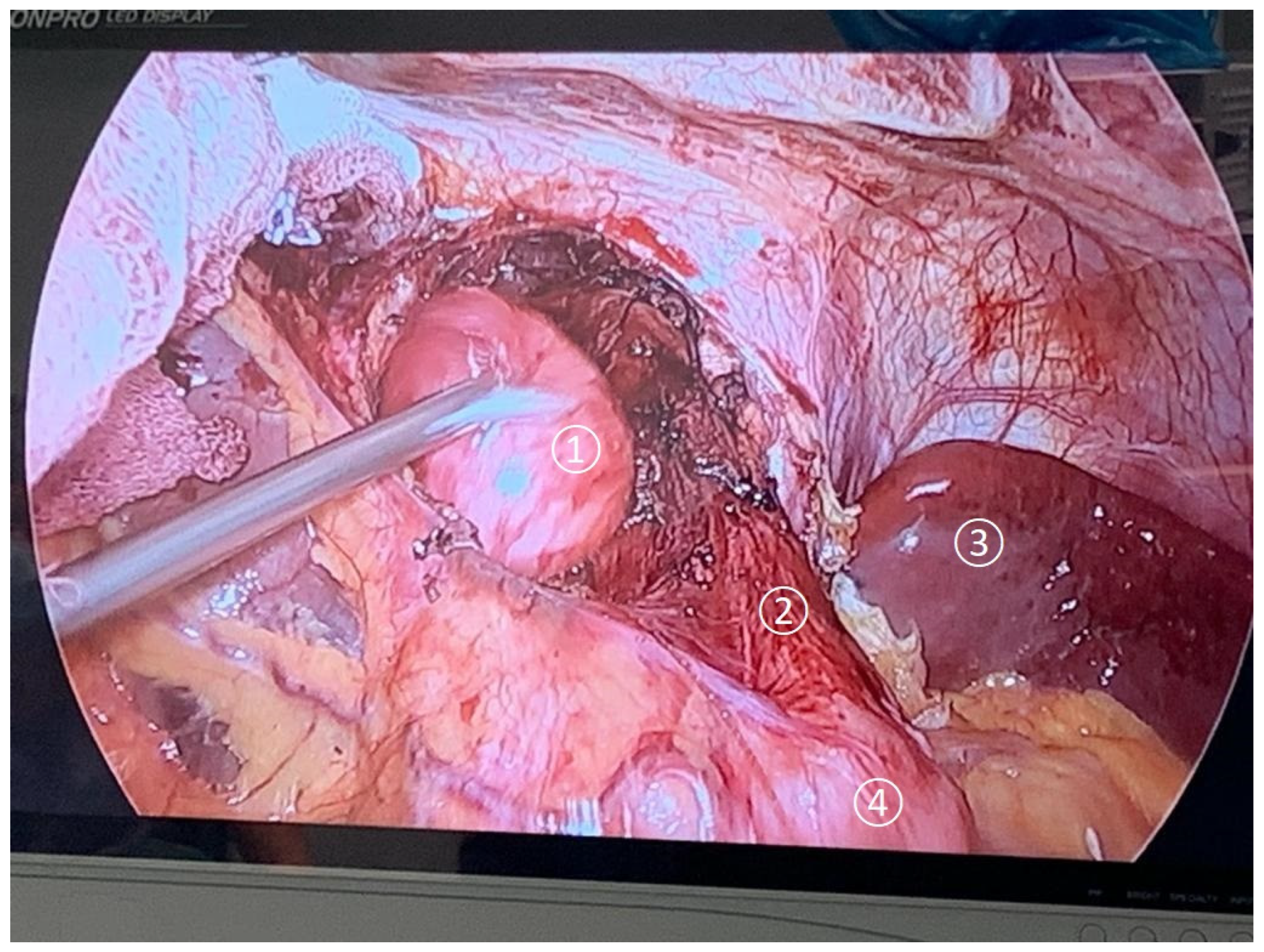
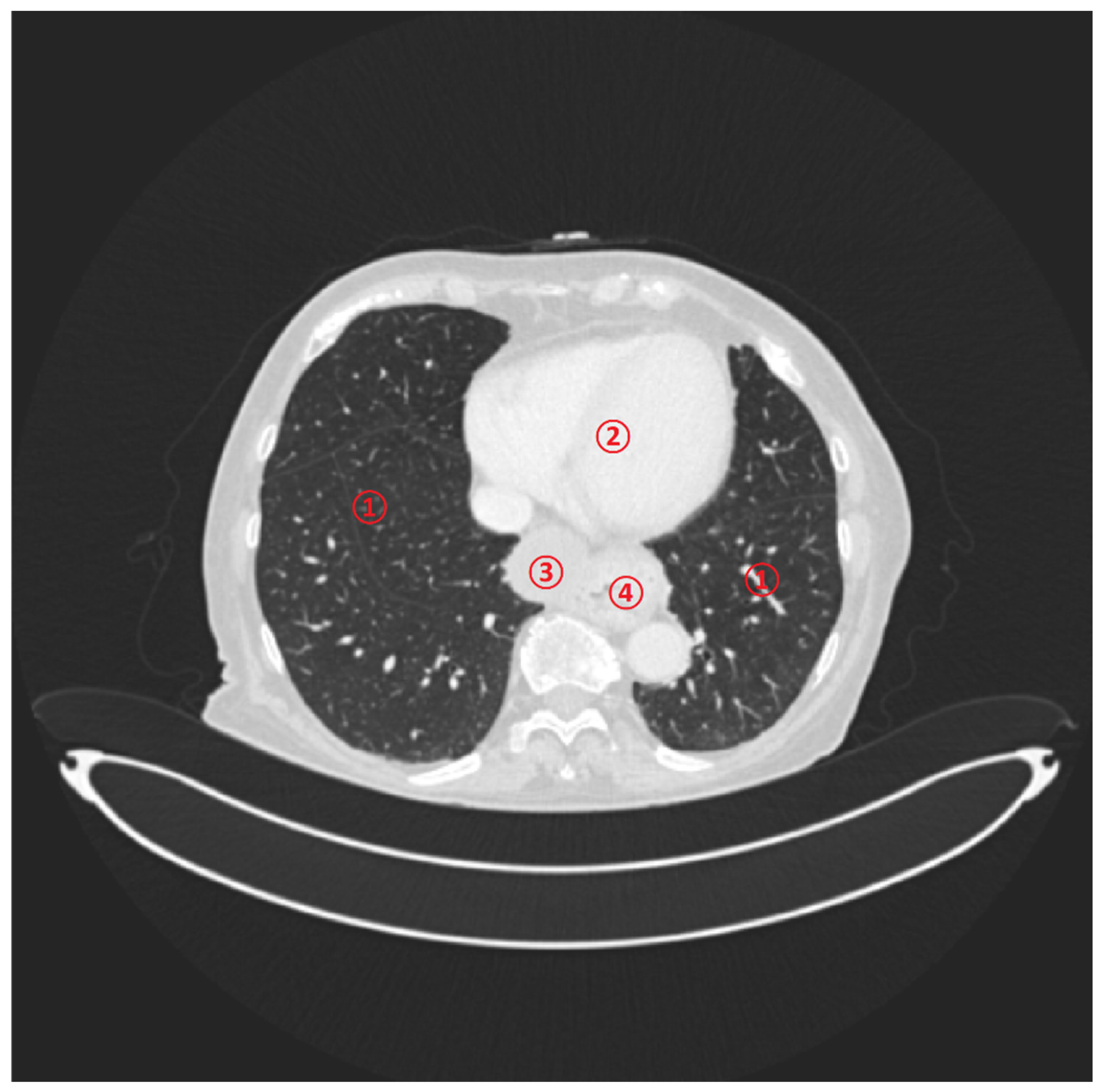
Preoperative outpatient investigations included contrast CT of the chest, abdomen, and pelvis (
Figure 1 and
Figure 2) and gastroscopy. These revealed a large hiatal hernia involving the fundus and part of the gastric body. Within the hernia, there was a soft-tissue, non–contrast-enhancing mass adjacent to the stomach measuring 32 × 34 × 37 mm, with no radiological signs of invasion of surrounding tissues—most consistent with a thoracic/gastrointestinal cyst.
The patient was scheduled for laparoscopic hiatal hernia repair with Nissen fundoplication, crural repair, and cyst removal. Admission blood tests showed no significant abnormalities. Standard antibiotic prophylaxis and thromboprophylaxis were administered.
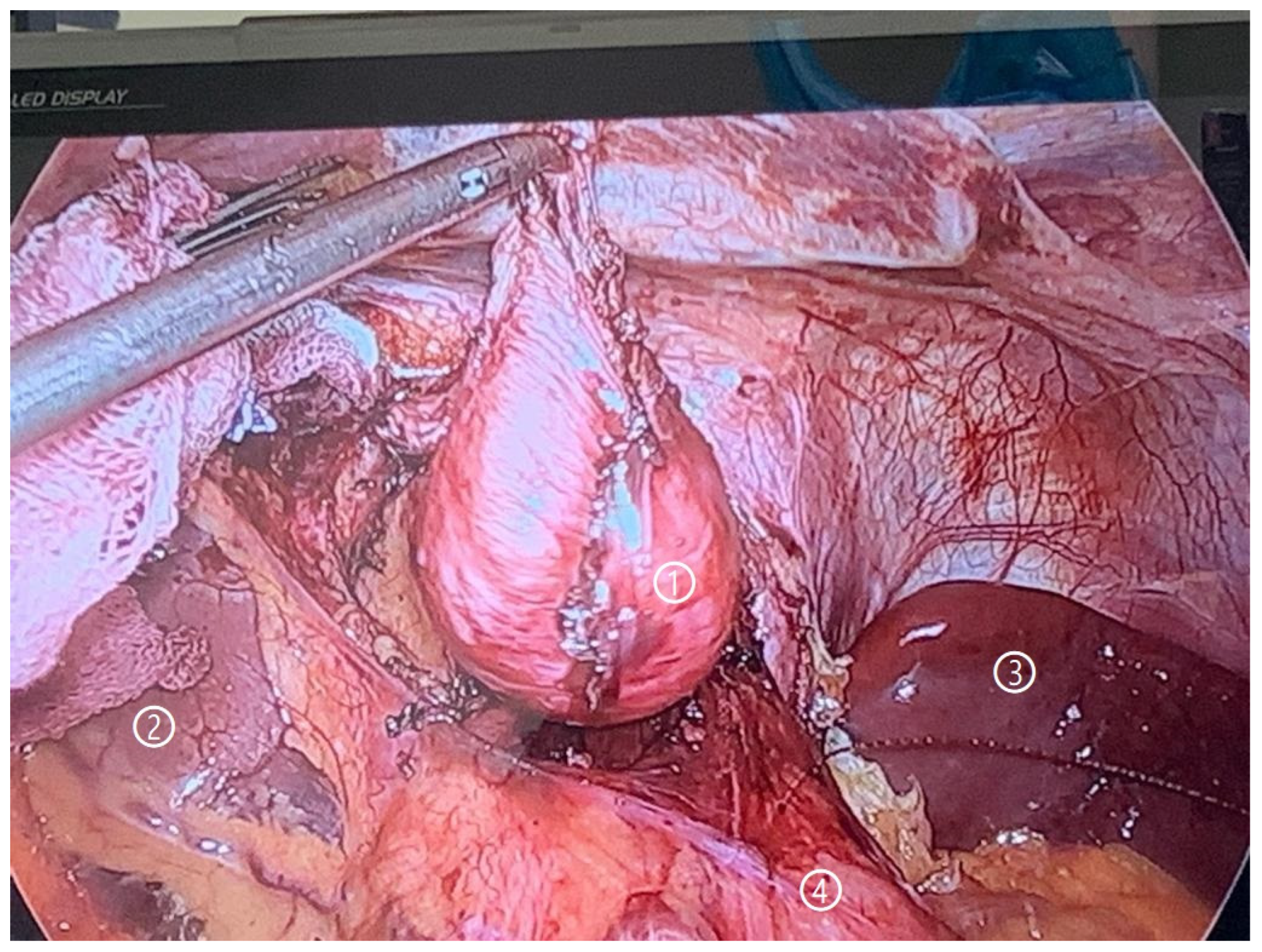
Laparoscopic access and dissection were performed in the standard manner for Nissen fundoplication. The gastric fundus and body were mobilised from the hernia sac. A cystic lesion adjacent to the distal oesophagus was identified (
Figure 3) and dissected free from the oesophageal wall without breaching mucosal continuity (
Figure 4). Because the lesion was closely adherent to the oesophagus, the muscular layer required suturing; the defect was closed with a continuous suture. Gastrointestinal patency was checked with a large gastric tube. Crural repair and 360° fundoplication were then completed. The specimen was extracted through the abdominal wall in an endoscopic retrieval bag.
Macroscopic examination showed a thin-walled cyst containing yellowish mucous material. Histopathology demonstrated a glandular epithelial lining without features of malignancy, consistent with a bronchogenic cyst. The patient commenced a liquid diet on postoperative day 1. During the early postoperative period, the patient experienced reflux, belching, and mild dysphagia, which resolved during hospitalisation. The oral diet was gradually advanced. No complications occurred, and the patient was discharged in good condition 2 days after surgery.
3. Discussion
Bronchogenic cysts develop during early embryogenesis and histologically often contain ciliated respiratory epithelium, mucous glands and occasionally cartilage—features that distinguish them from other foregut cysts. Oesophageal bronchogenic cysts most commonly present incidentally on imaging but can cause symptoms when they compress or involve adjacent structures; typical presentations include progressive dysphagia (solids > liquids), retrosternal chest pain or fullness, odynophagia, cough or recurrent respiratory infections, and rarely acute chest pain or haemoptysis if infected or complicated. Large or infected cysts may produce systemic features (fever, malaise) and can mimic mediastinal tumours or oesophageal submucosal lesions; symptom severity correlates with cyst size, location (proximal vs. distal oesophagus), and relationship to the mucosa, and sudden worsening may indicate infection, rupture, or fistula formation. Cross-sectional imaging (contrast CT or MRI) is useful to localise and characterise a cystic lesion adjacent to the oesophagus; endoscopic ultrasound (EUS) is particularly helpful to define the lesion’s layer of origin and its relationship to the mucosa and muscularis and is often used to guide management decisions. Definitive diagnosis is usually made on histopathology after excision [
7,
8].
When a cyst is encountered incidentally during a preoperative diagnostic or an abdominal anti-reflux operation, decisions to proceed with enucleation depend on accessibility via the transabdominal route, the surgeon’s experience with oesophageal dissection and repair, and pre- and intraoperative assessment of whether the lesion appears benign and separable from the oesophageal mucosa.
During preparation, it is important to maintain the integrity of the cyst wall and, when possible, remove the specimen intact to reduce spillage; if the mucosa of the oesophagus is breached, primary repair with absorbable sutures and confirmation of integrity with an air (or methylene blue) leak test or intraoperative endoscopy are essential. For intramural cysts confined to the distal oesophagus, the abdomen can provide excellent exposure during hiatal dissection, allowing combined resection and hiatal repair/fundoplication in experienced hands. Minimally invasive thoracoscopic and uniportal approaches have also been reported for oesophageal bronchogenic cysts when a thoracic approach is preferable [
9,
10].
For lesions that are small, intramural (originating in the submucosa or muscularis propria) and well defined on EUS, endoscopic techniques such as submucosal tunnelling endoscopic resection (STER) have been used successfully as a minimally invasive alternative to surgical enucleation. Recent case reports and small series demonstrate STER and other endoscopic approaches can achieve complete removal with short recovery times for appropriately selected lesions, though long-term comparative data remain limited [
8].
Combining cyst enucleation with Nissen fundoplication offers the advantage of definitive management of both pathologies in a single operation, reducing cumulative anaesthetic exposure and length of hospitalisation. However, risks include oesophageal mucosal injury with leak or later stricture, incomplete excision with potential recurrence, infection from cyst spillage, and the usual fundoplication-related morbidity (dysphagia, gas-bloat). Surgeons should be prepared to repair mucosal injuries, convert to an alternative approach (thoracoscopic or open) if needed, and use intraoperative adjuncts such as endoscopy as available. Multidisciplinary preoperative planning (radiology, endoscopy) is helpful when a cyst is identified preoperatively; intraoperative flexibility and meticulous technique are critical when the lesion is an unexpected finding [
7,
8].
There is no consensus guideline for managing patients with a suspected bronchogenic cyst. For small, asymptomatic cysts without features suggestive of malignancy, a conservative approach with close clinical and radiological surveillance is reasonable. Surgery should be considered for cysts that increase in size, become symptomatic, or show radiologic signs concerning for malignancy. Surgical excision is also appropriate when the diagnosis is uncertain, since histopathological examination of the resected lesion provides a definitive diagnosis. Patients should be evaluated individually, balancing the potential benefits of surgery against the risks of operative complications.
4. Conclusions
Oesophageal bronchogenic cysts are rare but treatable lesions. When a cyst is accessible via the abdominal approach and the operating team has appropriate expertise, concurrent laparoscopic enucleation with Nissen fundoplication is a reasonable and effective strategy that enables definitive treatment of both the cyst and reflux disease in a single procedure. Key elements for success include careful dissection with preservation of the oesophageal mucosa, intraoperative evaluation for mucosal integrity (and prompt repair if breached), intact specimen retrieval when possible, and confirmation by histopathology. This combined approach can minimise overall patient morbidity and hospital stay, but requires careful intraoperative assessment and readiness to escalate care if complex pathology or complications arise. Where anatomy or pathology preclude safe transabdominal enucleation, thoracoscopic, uniportal VATS, or endoscopic STER remain valid alternatives depending on lesion location and layer of origin.
Further extensive discussion and comprehensive research are necessary to establish clear diagnostic and treatment schemes for suspected bronchogenic cysts.
Author Contributions
Conceptualization, J.L. and J.P.; validation, J.L. and T.S.; formal analysis, J.L. and P.R.; investigation, P.R. and P.J.; resources, J.L. and P.J.; writing—original draft preparation, P.R., P.J. and J.L.; writing—review and editing, J.P., visualisation, P.R. and J.P.; supervision, J.P. and T.S. All authors have read and agreed to the published version of the manuscript.
Funding
This research received no external funding.
Institutional Review Board Statement
Ethical review and approval were waived for this study due to the fact that it represents a single case report.
Informed Consent Statement
Informed consent was obtained from all subjects involved in the study.
Data Availability Statement
The original contributions presented in this study are included in the article. Further inquiries can be directed to the corresponding author.
Conflicts of Interest
The authors declare no conflicts of interest.
Abbreviations
The following abbreviations are used in this manuscript:
| ERCP | Endoscopic Retrograde Cholangiopancreatography |
| CT | Computed Tomography |
| MRI | Magnetic Resonance Imaging |
| EUS | Endoscopic Ultrasound |
| STER | Submucosal Tunnelling Endoscopic Resection |
References
- Lin, Z.; Cao, Q. Gastric bronchogenic cyst. Rev. Esp. Enferm. Dig. 2023, 115, 665–666. [Google Scholar] [CrossRef] [PubMed]
- Wu, Z.; Qiu, X.; Lv, G. Ectopic bronchogenic cyst of gallbladder: An unusual anatomical position. Am. J. Med. Sci. 2023, 365, e19–e20. [Google Scholar] [CrossRef] [PubMed]
- Escalante, J.M.; Molina, G.; Rincón, F.M.; Acosta Buitrago, L.M.; Perez Rivera, C.J. Giant Intrapericardial bronchogenic cyst associated with congestive heart failure and atrial fibrillation: A case report. J. Cardiothorac. Surg. 2021, 16, 29. [Google Scholar] [CrossRef] [PubMed] [PubMed Central]
- Liang, J.S.; Yin, G.L.; Zhang, X.M.; Zhu, S.B.; Dong, Y.Q. Intramural esophageal bronchogenic cyst with wall hemorrhage results in acute esophageal obstruction: Report of two cases. Am. Surg. 2014, 80, E27–E29. [Google Scholar] [CrossRef] [PubMed]
- Esme, H.; Eren, S.; Sezer, M.; Solak, O. Primary mediastinal cysts: Clinical evaluation and surgical results of 32 cases. Tex. Heart Inst. J. 2011, 38, 371–374. [Google Scholar] [PubMed] [PubMed Central]
- Sullivan, S.M.; Okada, S.; Kudo, M.; Ebihara, Y. A retroperitoneal bronchogenic cyst with malignant change. Pathol. Int. 1999, 49, 338–341. [Google Scholar] [CrossRef] [PubMed]
- Gross, D.J.; Briski, L.M.; Wherley, E.M.; Nguyen, D.M. Bronchogenic cysts: A narrative review. Mediastinum 2023, 7, 26. [Google Scholar] [CrossRef] [PubMed] [PubMed Central]
- Sha, H.; Jiang, Z.D. Esophageal bronchogenic cyst treated with submucosal tunneling endoscopic resection: Two case reports. J. Med. Case Rep. 2024, 18, 139. [Google Scholar] [CrossRef] [PubMed] [PubMed Central]
- Kim, Y.S. Uniportal video-assisted thoracoscopic surgery in the prone position for esophageal bronchogenic cyst. J. Surg. Case Rep. 2024, 2024, rjae186. [Google Scholar] [CrossRef] [PubMed] [PubMed Central]
- Nitsa, Z.; Kanavidis, P.; Kastanaki, P.; Faltsetas, S.; Charalabopoulos, A. Right Thoracoscopic Excision of an Esophageal Bronchogenic Cyst. Cureus 2024, 16, e66119. [Google Scholar] [CrossRef] [PubMed] [PubMed Central]
| Disclaimer/Publisher’s Note: The statements, opinions and data contained in all publications are solely those of the individual author(s) and contributor(s) and not of MDPI and/or the editor(s). MDPI and/or the editor(s) disclaim responsibility for any injury to people or property resulting from any ideas, methods, instructions or products referred to in the content. |