Systematic Review

PerClot for Use in Surgical Hemostasis: A Systemic Review and Meta-Analysis of Clinical Data

1
Medical Affairs Advanced Surgery, Worldwide Medical Affairs, Baxter Healthcare Corporation, One Baxter Parkway, Deerfield, IL 60015, USA
2
Research and Development, Baxter Healthcare Corporation, One Baxter Parkway, Deerfield, IL 60015, USA
*
Author to whom correspondence should be addressed.
Surgeries 2025, 6(4), 111; https://doi.org/10.3390/surgeries6040111
Submission received: 22 September 2025 / Revised: 25 November 2025 / Accepted: 11 December 2025 / Published: 16 December 2025

Abstract

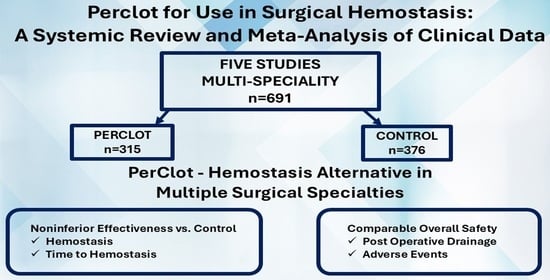
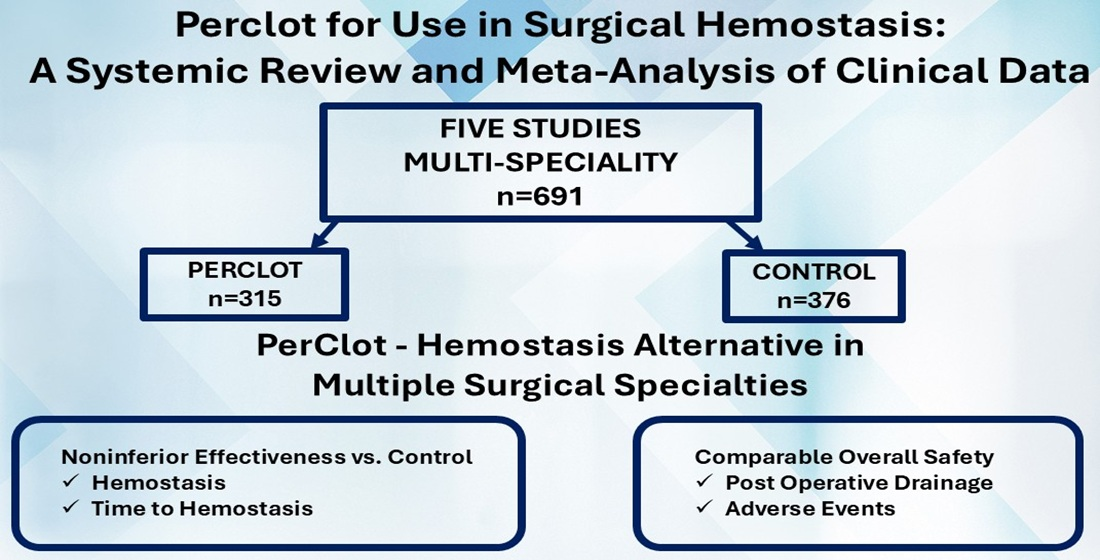
Objective: To demonstrate that PerClot’s efficacy is non-inferior to other hemostatic treatments and its safety is non-inferior to the standard of care (SoC) during surgery. Methods: Applying keywords and inclusion criteria, we queried electronic databases to conduct a systematic (e.g., Embase and Cochrane Library, etc.) and manual search (e.g., Google Scholar, etc.) for studies from 1 January 2008 (first CE marked date) to 30 March 2024. Results: Five published studies were included in this systematic review. From the included studies, 691 patients received either PerClot (n = 315) or other hemostatic agents/SoC/control (n = 376) in different surgical specialties. All five studies had comparable outcome measures, interventions, and control groups, allowing for the pooling of the study data. The primary outcomes were the achievement of hemostasis and time to hemostasis. At 7 min post-application, PerClot demonstrated non-inferior hemostasis performance as compared to Arista (absolute difference: −1.4%; 95% CI: −7.54, 4.74; p = 0.65). The time to achieve hemostasis was comparable between PerClot and other hemostatic agents (mean difference: 0.00 min; 95% CI: 0.00, 0.00; p = 1.00). No statistically significant difference in adverse event occurrence was observed between PerClot and other hemostatic agents/SoC groups (absolute difference: 0.02; 95% CI: −0.30, 0.35; p = 0.2691) and the absence of new unknown adverse events indicates the safety profile of PerClot. The results of all outcome measures are statistically insignificant. Conclusions: Our systematic review demonstrated that PerClot achieved comparable hemostasis with no new safety concerns and a statistically significant reduction in postoperative drainage volume, indicating its safety, efficacy, and performance as an alternative for hemostasis across multiple surgical specialties.

Graphical Abstract

1. Introduction

Globally, an estimated 100 million adults receive inpatient noncardiac surgery annually. Each year, at least 4.2 million postoperative deaths occur within 30 days of surgery, accounting for 7.7% of worldwide deaths, surpassed only by ischemic heart disease and stroke, as reported by the Lancet Commission on Global Surgery in 2019. In a global prospective cohort of 40,004 patients, nearly 50% of noncardiac surgical deaths were associated with major bleeding, cardiovascular complications, and sepsis. The median timing of major bleeding occurred on the day of surgery, and its impact extends beyond mortality to significant morbidity [1]. Another study reported that approximately one-third of patients in the United States having surgery, including cardiac surgery, experienced bleeding with complications or required a blood transfusion [1].
Coagulation is a normal physiological process with a cascade of events involving the coordination of various blood components. Effective hemostasis works through vasoconstriction, the formation of platelet plugs, and blood clotting [2]. Severe bleeding can lead to an increased risk of intraoperative complications, prolonged operating time, and difficulty in identifying important anatomic landmarks and structures. Uncontrollable bleeding poses a significant risk of increased morbidity and mortality. The appropriate management of patients with bleeding remains a major challenge in routine clinical practice, as choosing the appropriate therapeutic agent requires understanding the mechanism of action, clinical efficacy, and potential adverse events. Current clinical practice reflects a patient population with advanced age, multiple comorbidities, and taking chronic antiplatelet and anticoagulation medications. With that, surgeons are looking to understand the efficacy and safety of next-generation hemostatic technologies for these bleeding and compromised patients in the surgical setting [1].
Conventional intraoperative interventions include compression, ligature or sutures, and heat-generating cautery devices. However, these methods are at times insufficient or inappropriate for a few procedures or anatomic locations. The risk of surrounding tissue damage (such as near nerves, major blood vessels, or other vital structures intolerant to thermal injury) may also limit the use of these conventional techniques [3]. Absorbable topical hemostatic agents have emerged as valuable adjunctive therapies to manage bleeding when conventional hemostasis techniques are ineffective or impractical. Topical hemostatic agents are classified into two categories: mechanical agents, which stimulate hemostasis using a scaffolding for platelets to aggregate, and biologically active agents, which enhance the coagulation cascade directly at a bleeding site. Adjunctive hemostatic therapies include thrombin-based products, gelatins matrices, collagen sponges, oxidized regenerated celluloses (ORCs), and fibrin or synthetic sealants [3].
The properties of an ideal hemostatic agent include quick and successful hemostatic efficacy; the ability to maintain coverage with the bleeding surface; have minimal risk; and easy preparation and application [4]. However, topical hemostats also carry risks such as immunologic reaction, nerve compression, granuloma formation, antibody development, and the transmission of viral infections [5]. Hence, the effective use of topical agents is highly influenced by the surgeon’s experience or clinical preference and their availability in the surgical setting [6]. The key to successful surgical outcomes is critically dependent on the clinician’s familiarity with implementing a hemostatic strategy appropriate for the level of intraoperative bleeding experienced by the patient. Additionally, a knowledge of the indications, components, characteristics, safety, effectiveness, and costs of the available topical hemostatic agents furthers appropriate selection in the operating room. Ineffective hemostasis includes risks and costs associated with transfusion, prolonged hospitalization, and further invasive interventions. Furthermore, the hemostatic agents must be applied quickly to control bleeding and increase the survival rate [7]. It is important to study the hemostatic agents that are devoid of existing drawbacks like poor biodegradability, high infection rates, the inability to control bleeding, and the risk of causing unavoidable serious complications, etc. [8]. In a recent study, Tibi et al. surveyed 585 multispecialty surgeons regarding bleeding intensity in both minimally invasive and open surgical procedures, highlighting the significance in the selection of hemostatic agents [1].
PerClot, the focus of this study, is designed to control bleeding over focal and large bleeding areas. The absorbable polysaccharide granules instantly attract fluid from blood, initiating clotting factors to concentrate, creating a gelled adhesive matrix, which provides a mechanical barrier to further bleeding. It accelerates the intrinsic clotting cascade with no inherent risk of adverse events after forming the clot. The cross-linked particles reach their maximum volume within 10 min upon contact with blood or other fluids. The granules are enzymatically degraded and are completely resorbed in a few days [9].
PerClot has been on the global market outside of the United States (US) for more than 15 years, with its first approval being acquired in 2008. Outside of the US, PerClot is indicated in surgical procedures (except neurological and ophthalmic) as an adjunctive hemostatic device to assist when the control of suture line bleeding or capillary, venous, and arteriolar bleeding by pressure, ligature, and other conventional procedures are ineffective or impractical. In 2022, PerClot received the Food and Drug Administration’s approval with the same indication for use in the US. The clinical benefit of PerClot has been established, with 15 years of clinical research history and product use around the world.
This systematic review aimed to demonstrate that the efficacy and safety of PerClot are comparable and non-inferior to other similar hemostatic agents.

2. Materials and Methods

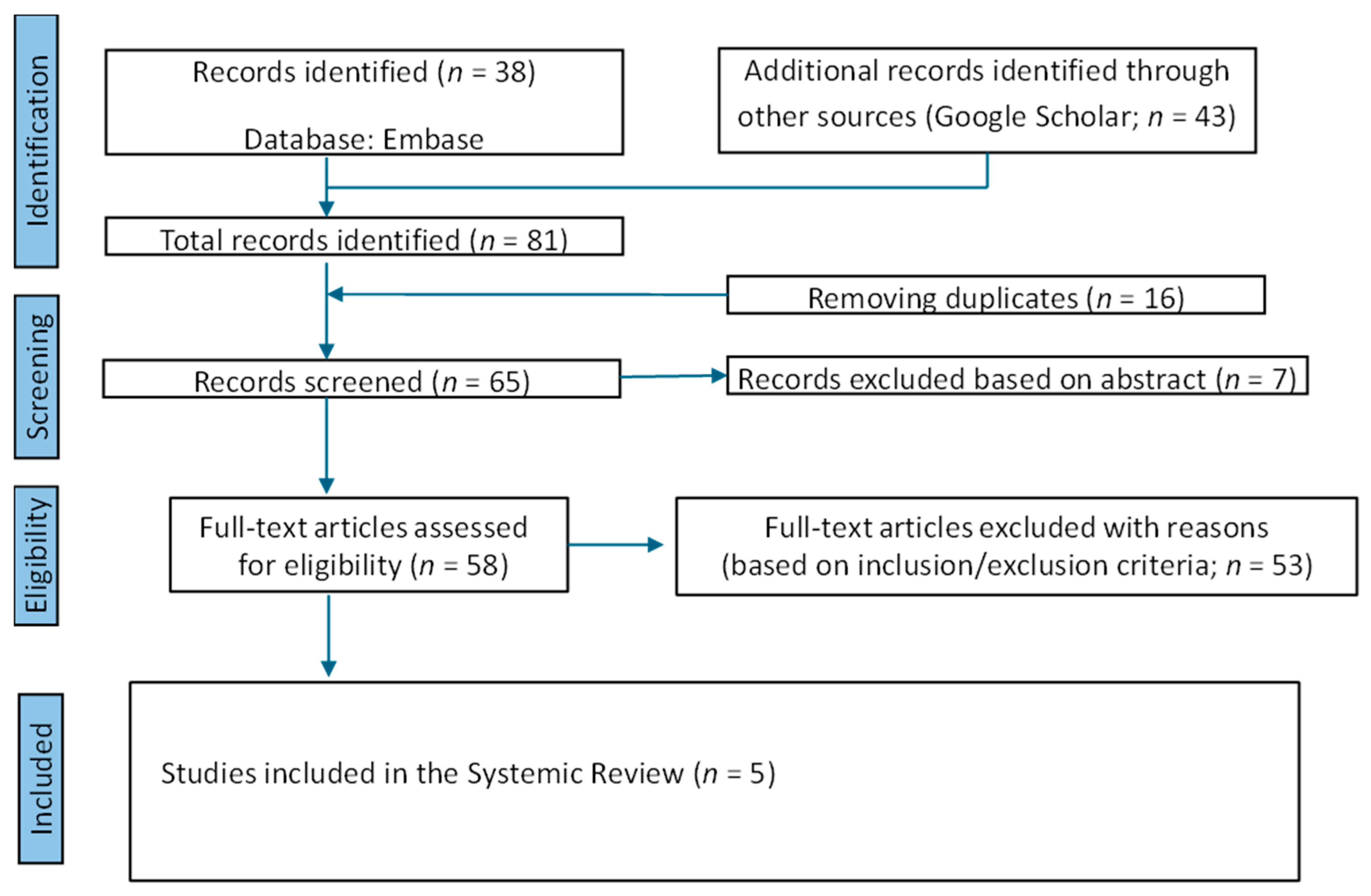
Our systematic review and meta-analysis study was based on the PRISMA guidelines. In the review protocol, we outlined our inclusion and exclusion criteria, methodology, and defined primary and secondary outcomes [10]. This review was conducted following the Prisma 2020 statement, including the updated checklist and PRISMA flow diagram (Figure 1) [10].
The requirement for informed consent was not required due to the untraceable and anonymous nature of the data. The use of these data posed no risk to participants or their privacy. Due to the type of study design, ethics approval and the study was not registered.

2.1. Information Resources

The following electronic databases were searched from 1 January 2008 (first CE marked date) to 30 March 2024: MEDLINE, EMBASE, Cochrane Library, and Science Direct. A sixteen-year period was considered to ensure that all relevant published data that reported the safety and performance of PerClot was captured. We manually searched Google Scholar and Europe PMC, etc., to identify potentially relevant publications during the same timeframe.

2.2. Search Scheme and Suitability Criteria

The search strategy was developed in accordance with PRISMA-P item 8; the patient, intervention, comparison, and outcome (PICO) framework was used to conduct a systematic literature search. The following search terms were included: polysaccharide hemostatic powder or granule or starch or system, starch-based hemostat, and microporous polysaccharide hemosphere or PerClot. There were no limitations on the included patients regarding age, sex, race, disease severity, or type of surgery. Published clinical studies have been included or excluded based on the following criteria:
Inclusion criteria
  • No language restrictions
  • Described design and method
  • Clinical studies
  • Published clinical studies reporting PerClot performance and/or safety
  • Published within search parameters
Exclusion criteria
  • Off-label use of PerClot (e.g., improper application technique)
  • Preclinical and nonclinical studies
  • Comments, reviews, opinions, editorials, and letters
  • Duplicate publications
  • Device identity was unclear

2.3. Outcome Measurements

2.3.1. Primary Outcomes

The primary outcomes were to evaluate the achievement of hemostasis and time for hemostasis.

2.3.2. Secondary Outcomes

The secondary outcomes were to evaluate the postoperative drainage volume and adverse events.

2.3.3. Information Extraction and Processing

Study Collection
An electronic data extraction spreadsheet was created for review. Two reviewers independently reviewed and extracted data. The following data was documented in the spreadsheet: authors, publication date, title, and abstracts of the retrieved articles. The studies were then identified for eligibility according to the inclusion/exclusion criteria. The full texts of relevant articles were retrieved and verified for inclusion/exclusion criteria. Ineligible studies and duplicates were excluded. The PRISMA flow diagram (Figure 1) highlights the review process and study selection.
Information Selection and Evaluation Procedure
Two reviewers independently reviewed and extracted data from the included studies. The data was entered into a predefined form in Excel. Reviewer discordances were resolved through structured consensus discussion. The extracted data were evaluated for quality using the Oxford Centre for Evidence-Based Medicine Levels of Evidence and synthesized for systematic review. The authors assessed the efficacy and safety of PerClot based on hemostasis achievement, hemostasis time, postoperative drainage volume, and adverse events.
The following data were extracted:
  • General publication information
  • Study methods and design, and other sources of bias
  • Baseline demographics, study population clinical information, and procedure type
  • Hemostasis interventions
  • Comparison: Hemostasis with study device versus other hemostatic agents/standard of care (SoC)/control
  • Outcomes data: primary and secondary outcomes.

2.3.4. Assessment of Risk of Bias

To assess the risk of bias across the included studies, two reviewers independently assessed each publication. The following fields were reviewed: allocation concealment, incomplete outcome data, selective outcome reporting, and other potential sources of biases. Studies were excluded if critical information was missing, inaccessible, or insufficient.

2.4. Statistical Assessment

The statistical analysis was performed using the Meta (R Package version 4.18-2) software. The inverse variance method was applied to estimate both common-effect and random-effect models. For dichotomous outcomes, absolute differences were calculated to assess effect sizes. When p ≤ 0.05, it is considered statistically significant. Heterogeneity among the included studies was assessed using Cochran’s Q test (χ2), a traditional method for evaluating variability in meta-analyses. This test is based on the chi-square distribution and provides a p-value indicating whether the observed variation across studies is greater than expected by chance. To quantify inconsistencies, the I2 statistic was used to test heterogeneity amongst the included studies. Interpretation with I2 values of 25%, 50%, and 75% indicated the existence of heterogeneity; these were considered to be low, moderate, and high, respectively. Maximum likelihood estimation was used for t2 calculation (to calculate variance between studies).

3. Results

Comprehensive systematic scientific literature was considered for the relevant clinical data pertaining to PerClot. The identified published studies have been analyzed for efficacy, safety, and other outcomes. A total of 691 patients (315 received PerClot and 376 patients received other hemostatic agents/SoC/control) from five clinical studies that reported the safety and/or performance of PerClot were included in this systematic review. As per the exclusion criteria, four publications reporting the off-label use of PerClot were not considered for the current analysis. The studies (n = 5) with a comparator were considered for meta-analysis of the primary and secondary outcome parameters, where the comparative data was presented as mean difference (MD) or absolute difference (AD). Regarding primary outcomes, all five studies [11,12,13,14,15] included an assessment of hemostasis and two studies [11,12] reported time to hemostasis. Reporting on secondary outcomes, two studies [13,14] quantified postoperative drainage while two studies [12,13] reported on adverse events.

3.1. Qualitative Systematic Evaluation of Studies

Five studies met the specified inclusion criteria and were included in the analysis. The included studies comprise three prospective and randomized study designs, one prospective, and one retrospective study design. In these, the use of PerClot during cholecystectomy, vascular, radical retropubic prostatectomy, ventral hernia, cardiac, general, and urological surgeries was reported. The details of the included studies are presented in Table 1.

3.2. Bleeding Control

All five included studies reported the achievement of hemostasis using PerClot (n = 315) and other hemostatic agents/SoC/control (n = 376). Each study compared the hemostatic effectiveness of PerClot with other hemostatic agents/SoC/control.
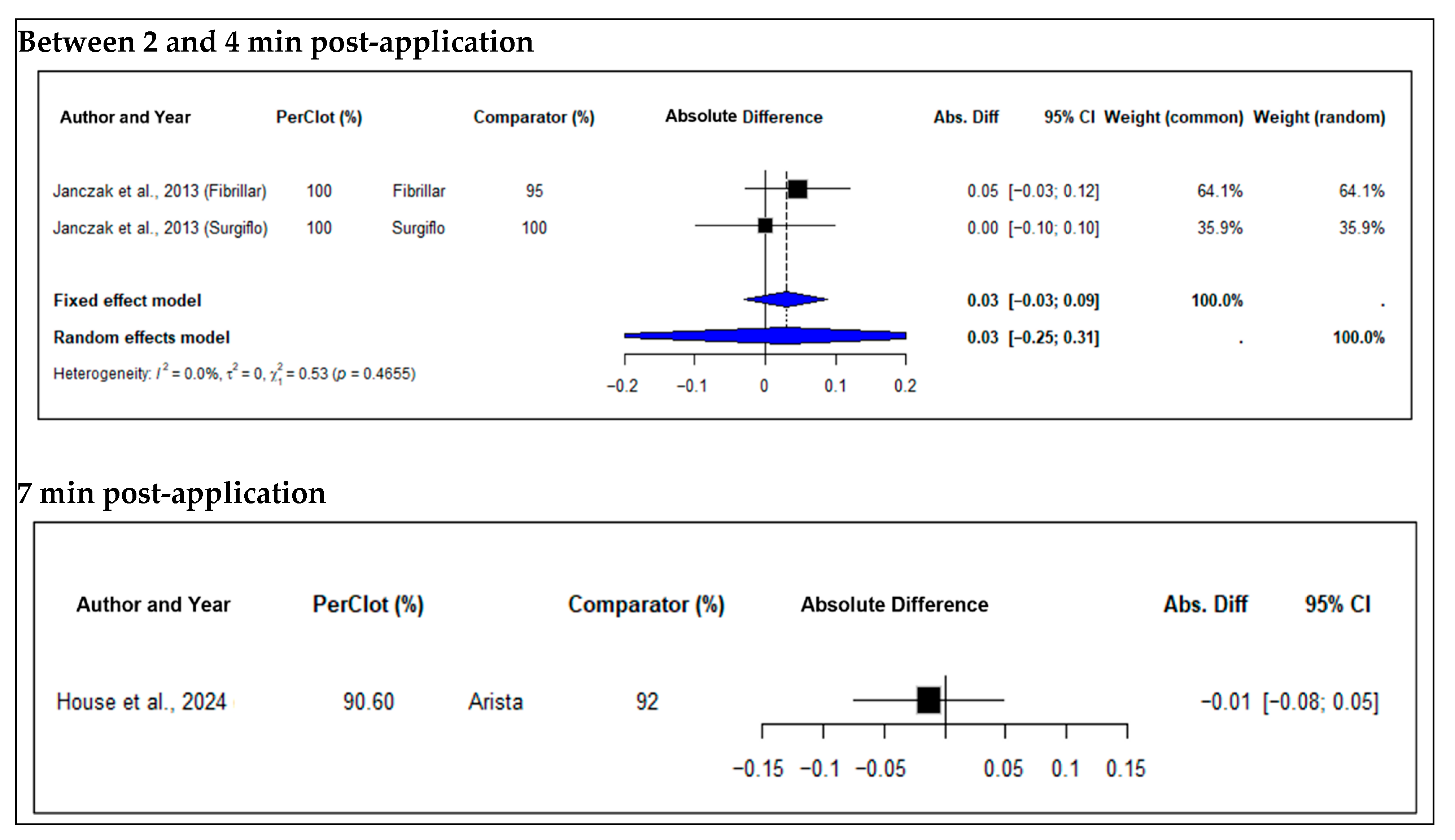
Hemostasis rates were reported at 2 to 4 min in one study and 7 min in another study. At 2 to 4 min, 100% hemostasis was reported with PerClot and Surgiflo [11] and Fibrillar was 95% [11]. At 7 min, PerClot was found to be non-inferior to Arista in achieving hemostasis (90.6% vs. 92.0%; p = 0.005) [12].
A pooled meta-analysis was conducted on the achievement of hemostasis with PerClot versus comparators at 2 to 4 min and 7 min. A total of 428 patients from two studies (186 patients in the PerClot group and 242 in the other hemostatic agent groups) were included in the analysis. The AD in achieving hemostasis (%) between groups, along with the 95% confidence interval of the difference, is presented in Table 2 and Figure 2. The negative or positive AD values indicate the percentage by which the achievement of hemostasis is lower or higher in PerClot than in the comparators, respectively. Analysis revealed that PerClot demonstrated more effective hemostasis between 2 and 4 min (AD: 3%; 95% CI: −25.16, 31.08; p = 0.47) compared to the other hemostatic agent groups, whereas at 7 min post-application, PerClot demonstrated a hemostasis performance not inferior to that of Arista (AD: −1.4%; 95% CI: −7.54, 4.74; p = 0.65). The results at all points of time are statistically insignificant.

3.3. Hemostasis Onset Interval

Two out of the five studies compared the time to hemostasis of PerClot with other hemostatic agents. The results demonstrated that PerClot showed a time to hemostasis comparable to that of Fibrillar and Surgiflo (2 to 4 min) and Arista (7 min) [11,12].
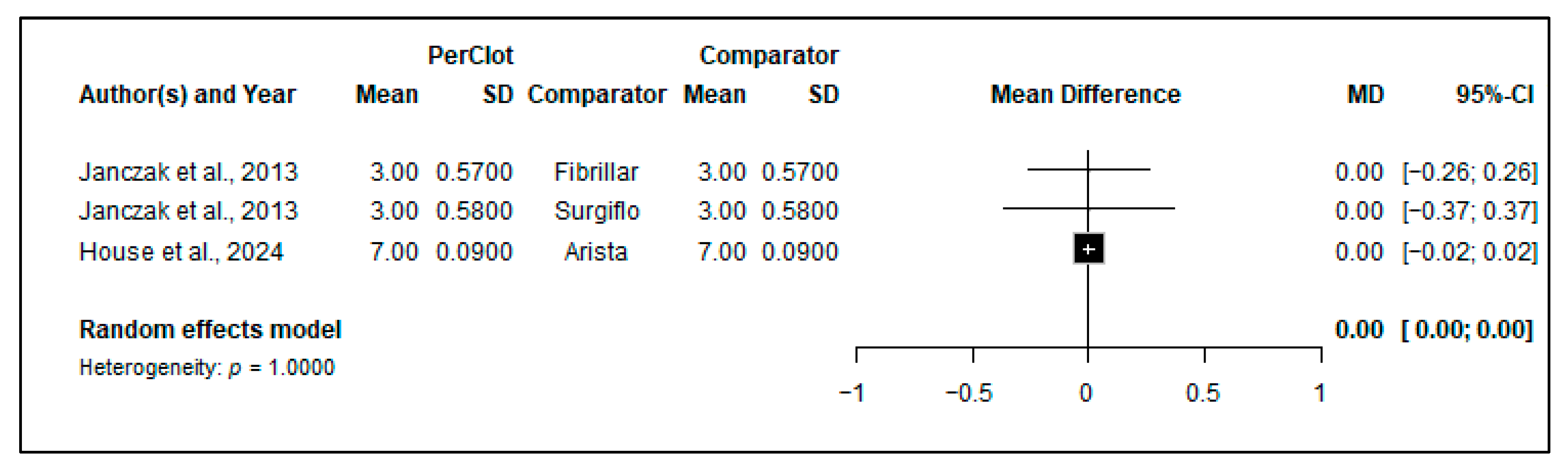
A pooled meta-analysis was conducted on time to hemostasis from two studies comparing PerClot with other treatments (Fibrillar, Surgiflo, and Arista). A total of 428 patients from two studies (186 patients in the PerClot group and 242 in the other hemostatic agent groups) were included in the analysis. The MD in time to hemostasis (min) between groups, along with the 95% confidence interval of the difference, is presented in Table 3 and Figure 3. The positive or negative MD values indicate whether PerClot stops bleeding slower or faster than its comparators, respectively. The results demonstrated that the time for cessation of bleeding is comparable between PerClot and other hemostatic agents (MD: 0.00 min; 95% CI: 0.00, 0.00; p = 1.00; statistically insignificant). The MD value of 0.00 min indicates that the PerClot achieved hemostasis in a time equivalent to its comparators, with no statistically significant difference.

3.4. Volume of Postoperative Drainage

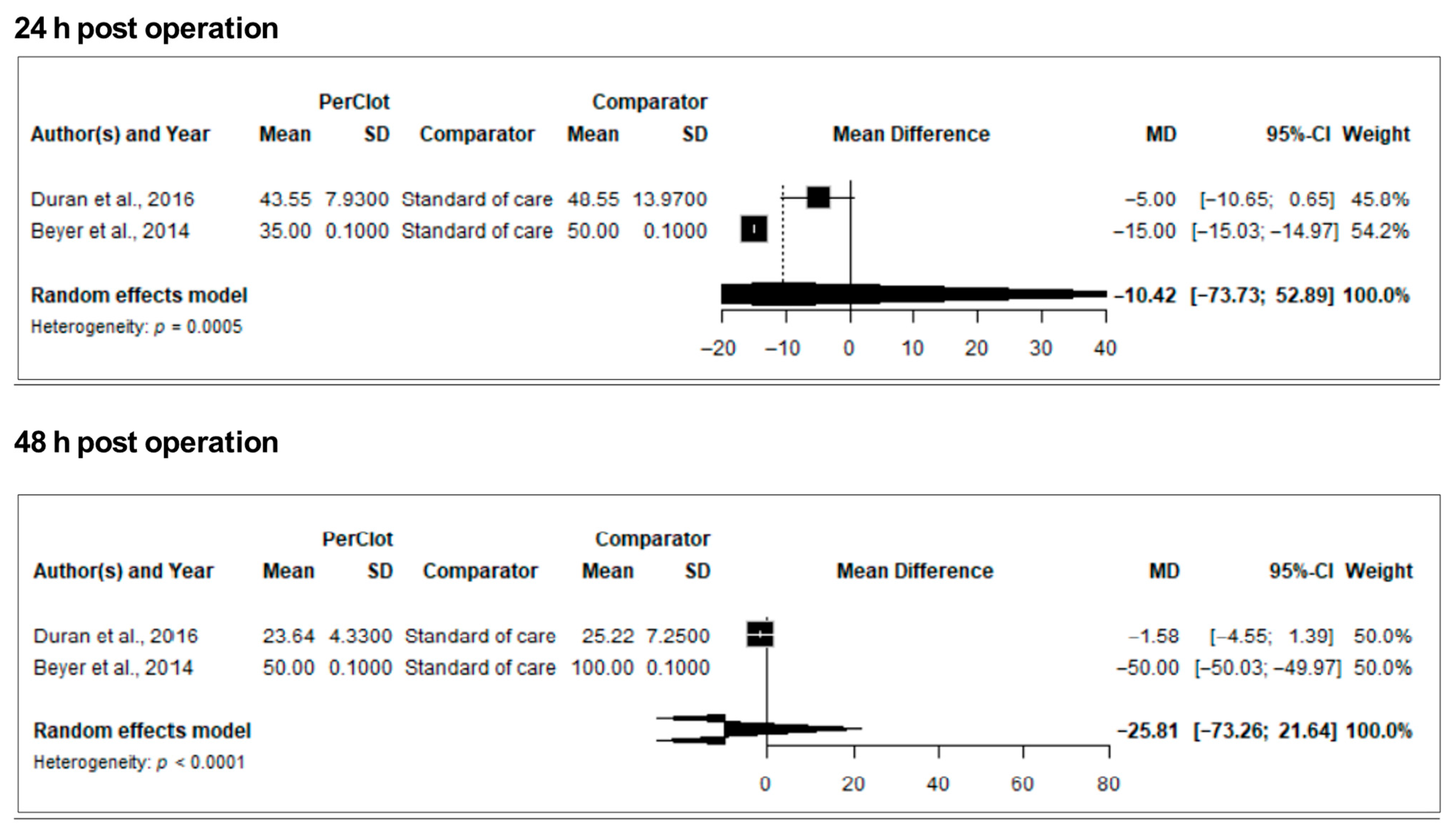
Two out of the five studies compared the postoperative drainage volume of PerClot with SoC at 24 h and 48 h after surgery. The findings at 24 h showed that the postoperative drainage volume was comparable between PerClot and SoC (43.6 ± 7.9 vs. 48.6 + 14 mL; p = 0.66; statistically insignificant) [13]. Patients who received PerClot as an additional hemostatic agent had a lower median wound drainage volume (35 mL vs. 50 mL; p < 0.05; statistically significant) compared to those without the additional application of PerClot [14]. At 48 h post-surgery, drainage volume was comparable between the PerClot and SoC groups (23.6 ± 4.3 mL vs. 25.2 ± 7.3 mL; p = 0.80) [13]; however, it was significantly lower in the PerClot group compared to the no-PerClot group (50 mL vs. 100 mL; p < 0.05; statistically significant) [14].
A pooled meta-analysis was conducted on postoperative drainage volume from two studies comparing PerClot with SoC. A total of 212 patients from two studies (106 patients received PerClot and 106 received SoC) were included in the analysis. The MD in postoperative drainage volume (mL) between groups, along with the 95% confidence interval of the difference, is presented in Table 4 and Figure 4. The positive or negative MD values indicate whether the postoperative drainage volume was higher or lower than that of its comparators, respectively. The PerClot-treated patients showed less drainage volume at 24 h post-operation (MD: −10.4 mL; 95% CI: −73.73, 52.89; p = 0.0005) and 48 h post-operation (MD: −25.8 mL; 95% CI: −73.26, 21.64; p < 0.0001) compared to the SoC. The results at 24 h and 48 h post-operation are statistically significant.

3.5. Adverse Events

Out of the five included studies, one study reported adverse events related to PerClot and other hemostatic agents (Arista) [12], one study stated that no adverse event was reported [13], and the remaining three studies did not provide data on adverse events [11,14,15]. A total of 16 types of adverse events with 21 occurrences (20 non-serious adverse events; 1 serious adverse event) were reported in 191 patients treated with PerClot and 11 event types with 13 occurrences (all 13 are non-serious adverse events) were reported in 162 patients treated with Arista (Table 5). The most frequent adverse events reported were anemia (n = 3), thromboembolic events (n = 3), and pleural effusion (n = 2) for PerClot application and anemia (n = 2) and hyperglycemia (n = 2) for Arista application. Overall, the rate of complications reported was 10.99% for PerClot and 8.02% for Arista. The rate of adverse event occurrence in the various modes to achieving hemostasis is reported in Table 5. Further details of adverse events related to PerClot and the other hemostatic agents are presented in Table 6.
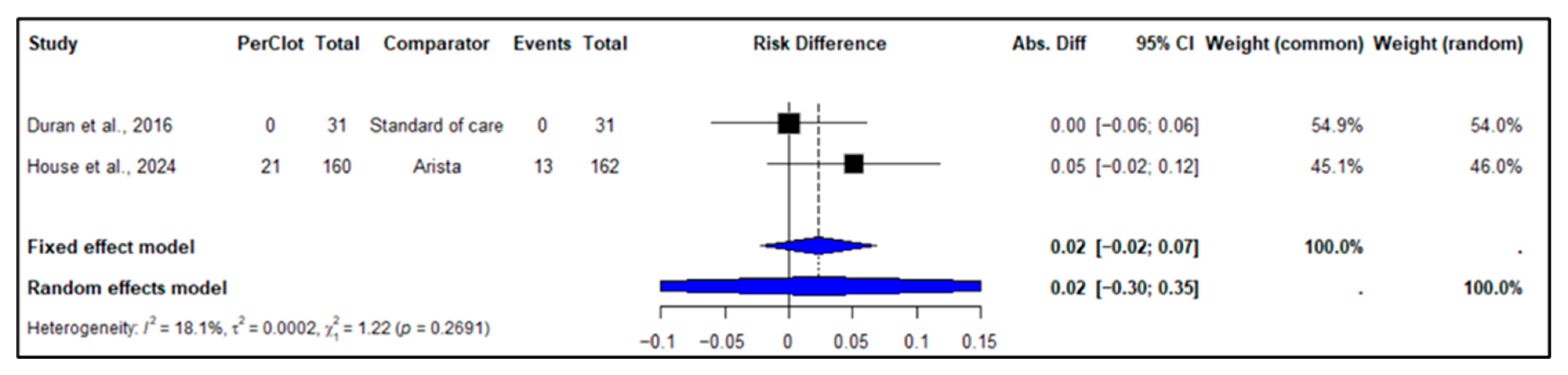
Of the five studies, a total of 384 patients from two studies (191 patients in the PerClot group and 193 in the other hemostatic agents/SoC groups) were included in the adverse events meta-analysis. The AD of the occurrence of events between groups, along with the 95% confidence interval of the difference, is presented in Table 7. Pooled data analysis showed no statistically significant variation in adverse event incidence across the PerClot and other hemostatic agents or standard of care cohorts (AD: 0.02; 95% CI: −0.30, 0.35; p = 0.2691; Figure 5).

4. Discussion

Hemostasis is the process of stopping blood loss following an injury or during surgical procedures. Achieving effective hemostasis not only ensures a safer surgical environment but also promotes better patient outcomes and faster recovery times [16]. Local hemostatic agents have been on the market for many decades. An increase in the frequency of use of these agents in various kinds of surgeries has been observed [9].
Intraoperative bleeding continues to represent a major surgical challenge, as it may compromise patient outcomes, increase operative complexity, and escalate overall healthcare resource utilization [17].
Conventional hemostatic modalities such as electrocautery, sutures, and staples may be inadequate or impractical for achieving complete hemostasis, particularly in complex surgical scenarios. In such instances, adjunctive topical hemostatic agents are employed to enhance hemostatic efficacy by supplementing the body’s coagulation mechanisms when standard techniques fail to provide sufficient bleeding control [18,19]. In another recently published large retrospective study, Iannitti et al. [20] discussed how adjunctive topical hemostatic products are used in addition to primary methods (mechanical and thermal) to control bleeding [20].
Adjunctive hemostatic agents exert their effect through multiple mechanisms, including serving as mechanical barriers to bleeding, providing a scaffold for clot formation, activating the coagulation cascade, and sealing tissue surfaces. These mechanisms enhance intraoperative hemostasis, particularly in scenarios where conventional methods are insufficient. A broad spectrum of adjunctive hemostatic agents including absorbable matrices, gelatins, fibrin sealants, and patches are available to meet the diverse clinical demands encountered in surgical practice. Their varied compositions and mechanisms of action allow for tailored application based on the nature, severity, and location of bleeding, thereby enhancing intraoperative hemostatic control [18,19].
Despite the availability of diverse adjunctive hemostatic agents, selecting the most appropriate product remains a significant clinical challenge. This difficulty is compounded by ambiguous bleeding classifications, inconsistent guidelines regarding optimal use, and limited indications tailored to specific bleeding scenarios. Such uncertainties contribute to variability in clinical practice and may result in suboptimal bleeding management, increased procedural complexity, and elevated healthcare costs [20].
PerClot consists of absorbable, biocompatible, and nonpyrogenic polysaccharide granules derived from purified plant starch. The granules are cross-linked to enhance structural integrity and do not contain any human or animal components. Upon application to a bleeding site, their molecular properties enable rapid fluid absorption from blood. This dehydration effect concentrates plasma components such as red blood cells, platelets, and coagulation proteins, including thrombin and fibrinogen, at the site of application, while simultaneously forming a gelled adhesive matrix. The gelled matrix acts as a mechanical barrier to ongoing bleeding. These processes accelerate the clotting cascade and the formation of a stable clot. It is important to note that the efficacy of PerClot is dependent on an intact endogenous coagulation cascade; therefore, its performance may be compromised in patients with severe coagulopathies or anticoagulant therapy [9,11,12,13,15].
In this systematic review, the effectiveness of PerClot in various surgeries was determined through the achievement of hemostasis and time to hemostasis. This review revealed that PerClot exhibited effective hemostasis compared to other hemostatic agents/SoC at different timeframes, ranging from 2 min to 7 min.
Several studies have assessed the effectiveness of topical hemostatic agents in controlling bleeding in various surgeries. In a prospective study, Al-Attar et al. [21] reported that Surgicel powder achieved hemostasis in patients undergoing general, gynecological, urological, and cardiothoracic surgeries within 3 min, 5 min, and 10 min, reporting success rates of 77.7%, 87.4%, and 92.2%, respectively. In a non-inferiority trial across multiple surgical specialties, PerClot was proven to be non-inferior to Arista for achieving successful hemostasis within 5 min and 7 min during open general, cardiac, and urologic procedures. PerClot is demonstrated to be an effective alternative to Arista for controlling persistent bleeding after conventional methods of hemostasis are attempted [12].
The safety profile of PerClot was similar to that of other hemostatic agents/SoC/control regarding the type and severity of adverse events. House et al. [12] reported the highest number of events for both PerClot and Arista during cardiac, general, or urological surgeries; however, the comparable rate of occurrence, lack of sequelae, and overall lack of difference in event occurrence between PerClot and Arista suggest that these events do not represent a significant safety risk. Overall, the studies reported that PerClot was safe to use. Various studies reported adverse events or complications with other hemostatic agents. In a prospective study, David et al. [22] identified no significant differences in seroma (p = 0.733), hematoma (p = 0.492), or infection (p = 1.000) between the Arista and control groups. Similar results were provided by Selfridge et al. [23] for Arista. From Bardi et al.’s [24] observations, no postoperative complications have been reported with Arista. Reynbakh et al. [25] reported a lower complication rate (p < 0.05), device implantation site hematoma rate, and no postoperative infections using Arista in patients who underwent cardiac implantable electronic device implantation. In addition to the positive hemostatic characteristics of PerClot, evaluating the postoperative drainage volume adds a better understanding of the performance. After the application of hemostatic agents, a reduction in the drainage volume after surgery is expected, with Duran et al. [13] and Beyer et al. [14] reporting reduced drainage volumes in the PerClot group.
In summary, the increased complexity of operating procedures would require advanced methods to achieve quick hemostasis with ease of application and reduced complications. Though current state-of-the-art hemostatic agents/SoC have proven to be safe and effective in multiple surgeries, they still need improvement. PerClot is one product that can be considered a suitable hemostatic agent with comparable hemostasis, ease of application, and reduced complications.
The current systematic review’s limitations include the small number of analyzed studies and the heterogeneity of the data. Considerable heterogeneity was observed among the selected studies, which may be attributed to the fact that these studies included different surgical procedures. Achievement of hemostasis was not compared at a single time point. Moreover, few studies have reported the hemostasis success rate and the time to hemostasis. Multiple hemostatic agents or SoCs were considered for comparison. Finally, while this sample size was limited to peer-reviewed publications, the difference in adverse event occurrence in PerClot and other hemostatic agents/SoC groups demonstrated that there was no statistical significance according to the pooled meta-analysis of current data. We encourage future research on hemostatic products to address the growing need for the effective management of perioperative bleeding in the changing patient population.

5. Conclusions

Several studies have supported the clinical use of PerClot, assessing its efficacy and safety during various surgical procedures and comparing it with other hemostatic agents/SoC/control. PerClot has been shown to achieve comparable hemostasis, have an acceptable adverse event profile, and improve postoperative outcomes. In summary, this systematic review demonstrated the clinical effectiveness and overall safety of PerClot as a viable alternative method for achieving stable and complete hemostasis with a lower consumption of health resources in a variety of surgical procedures when compared to conventional methods of achieving hemostasis (such as electrocautery, suturing, and ligature, etc.) or hemostatic agents (such as Arista, Surgiflo, and Fibrillar, etc.). The use of PerClot could enhance the achievement of hemostasis and reduce the frequency of postoperative complications.

Author Contributions

T.S.: Writing—review and editing, writing—original draft, supervision, methodology, data curation, conceptualization, project administration, resources, and validation. S.D.: Writing—review and editing, writing—original draft, formal analysis, conceptualization, investigation, methodology, and validation. P.M.: Writing—review and editing, writing—original draft, formal analysis, conceptualization, data curation, resources, validation, and investigation. T.C.: Writing—review and editing, validation, methodology, investigation, formal analysis, funding acquisition, and resources. All authors have read and agreed to the published version of the manuscript.

Funding

The development of this manuscript was supported by Baxter Healthcare Corporation Medical Affairs, Deerfield, Illinois.

Institutional Review Board Statement

Ethics and Institutional Review Board approvals were not required.

Informed Consent Statement

Not applicable.

Data Availability Statement

The data utilized from peer-reviewed publications is available through public on-line databases (PubMed and Scopus, etc.).

Acknowledgments

The authors would like to acknowledge HCL Technologies Corporate Services Limited, UK, for assistance in the preparation of this manuscript, literature search, study selection, data and statistical analysis, and interpretation.

Conflicts of Interest

Terri Siebert, RN, Stephen Dierks, MD, Piotr Maniak, and Torben Colberg, MD, are employees of Baxter Healthcare Corporation.

References

  1. Tibi, P.R.; DeAnda, A.; Leung, S.K.W.; Huang, A.P.H.; Siebert, T.; Dierks, S.M.; Sciubba, D.M. Global observational survey verifying surgeon utilization of the Validated Intraoperative Bleeding (VIBe) scale for use in clinical practice. Surg. Pract. Sci. 2023, 12, 100123. [Google Scholar] [CrossRef]
  2. Zhong, Y.; Hu, H.; Min, N.; Wei, Y.; Li, X.; Li, X. Application and outlook of topical hemostatic materials: A narrative review. Ann. Transl. Med. 2021, 9, 577. [Google Scholar] [CrossRef]
  3. Chiara, O.; Cimbanassi, S.; Bellanova, G.; Chiarugi, M.; Mingoli, A.; Olivero, G.; Ribaldi, S.; Tugnoli, G.; Basilicò, S.; Bindi, F.; et al. A systematic review on the use of topical hemostats in trauma and emergency surgery. BMC Surg. 2018, 18, 68. [Google Scholar] [CrossRef]
  4. Dang, N.C.; Ardehali, A.; Bruckner, B.A.; Parrino, P.E.; Gillen, D.L.; Hoffman, R.W.; Spotnitz, R.; Cavoores, S.; Shorn, I.J.; Manson, R.J.; et al. Prospective, multicenter, randomized, controlled trial evaluating the performance of a novel combination powder vs hemostatic matrix in cardiothoracic operations. J. Card. Surg. 2020, 35, 313–319. [Google Scholar] [CrossRef]
  5. Le Huec, J.C.; AlEissa, S.; Bowey, A.J.; Debono, B.; El-Shawarbi, A.; Fernández-Baillo, N.; Han, K.; Martin-Benlloch, A.; Pflugmacher, R.; Sabatier, P.; et al. Hemostats in Spine Surgery: Literature Review and Expert Panel Recommendations. Neurospine 2022, 19, 1–12. [Google Scholar] [CrossRef] [PubMed]
  6. Moldovan, H.; Antoniac, I.; Gheorghiță, D.; Safta, M.S.; Preda, S.; Broască, M.; Badilă, E.; Fronea, O.; Scafa-Udrişte, A.; Cacoveanu, M.; et al. Biomaterials as Haemostatic Agents in Cardiovascular Surgery: Review of Current Situation and Future Trends. Polymers 2022, 14, 1189. [Google Scholar] [CrossRef]
  7. José, S.D.V.F.; Luis, N.; Juan, G.M.; Antonio, D.P.; Lidia, S.R. Utility of microporous polysaccharide hemospheres in severe hepatic trauma: Experimental study of hemostatic strength and ease of use. Injury 2023, 54, 339–344. [Google Scholar] [CrossRef]
  8. Guo, Y.; Wang, M.; Liu, Q.; Liu, G.; Wang, S.; Li, J. Recent advances in the medical applications of hemostatic materials. Theranostics 2023, 13, 161–196. [Google Scholar] [CrossRef]
  9. Rao, K.; Gomati, A.; Tong, E.Y.H.; Ah-See, K.W.; Shakeel, M. Use of PerClot® in head and neck surgery: A Scottish centre experience. Eur. Arch. Otorhinolaryngol. 2021, 278, 1965–1969. [Google Scholar] [CrossRef] [PubMed]
  10. Page, M.J.; McKenzie, J.E.; Bossuyt, P.M.; Boutron, I.; Hoffmann, T.C.; Mulrow, C.D.; Shamseer, L.; Tetzlaff, J.M.; Akl, E.A.; Brennan, S.E.; et al. The PRISMA 2020 statement: An updated guideline for reporting systematic reviews. Syst. Rev. 2021, 10, 89. [Google Scholar] [CrossRef] [PubMed]
  11. Janczak, D.; Ruciński, A.; Rucińska, Z.; Janczak, D.; Dorobisz, K.; Chabowski, M. Nowoczesne preparaty o miejscowym działaniu hemostatycznym—Przełom w chirurgii naczyniowej [Modern topical hemostatic agents—A breakthrough in vascular surgery]. Polim. Med. 2013, 43, 221–225. [Google Scholar] [PubMed]
  12. House, M.G.; Kim, R.; Tseng, E.E.; Kaufman, R.P.; Moon, M.R.; Yopp, A.; Master, V.A. Evaluating the safety and efficacy of a novel polysaccharide hemostatic system during surgery: A multicenter multispecialty prospective randomized controlled trial. Surg. Open Sci. 2024, 19, 205–211. [Google Scholar] [CrossRef]
  13. Duran, J.M.R.; Vivancos Costaleite, K.; Torrez Gonzalez, V.; Salvi Martinez, M.; Vara Thorbeck, Y.C. Comparative Study of Different Media of Bed Hemostasia from the Liver Bed in the Course of Complicated Laparoscopic Cholecystectomies; Sociedad Española de Cirugía Laparascópica: Madrid, Spain, 2016; Volume 50. [Google Scholar]
  14. Beyer, B.; Boehm, K.; Leyh-Bannurah, S.-R.; Michl, U.; Steuber, T.; Heinzer, H.; Huland, H.; Graefen, M.; Budäus, L. PD14-01 Prevention of pelvic lymphoceles after radical retropubic prostatectomy by using a polysaccharide hemostat—First results of a prospective randomized trial. J. Urol. 2014, 191, e411. [Google Scholar] [CrossRef]
  15. García León, A.; Tamayo López, M.J.; Bustos Jiménez, M.; Docobo Durantez, F.; Sánchez Arteaga, A.; Perea del Pozo, E.; Tinoco González, J.; Durán Muñoz Cruzado, V.M.; Padillo Ruiz, J. CPO018 Preliminary results of the study prospective with PerClot in the reduction of seromas in ventral hernia smaller than 10 cm. Andal. Surg. 2019, 30, 399–409. [Google Scholar]
  16. Bracey, A.; Shander, A.; Aronson, S.; Boucher, B.A.; Calcaterra, D.; Chu, M.W.; Culbertson, R.; Jabr, K.; Kehlet, H.; Lattouf, O.; et al. The Use of Topical Hemostatic Agents in Cardiothoracic Surgery. Ann. Thorac. Surg. 2017, 104, 353–360. [Google Scholar] [CrossRef] [PubMed]
  17. Stokes, M.E.; Ye, X.; Shah, M.; Mercaldi, K.; Reynolds, M.W.; Rupnow, M.F.; Hammond, J. Impact of bleeding-related complications and/or blood product transfusions on hospital costs in inpatient surgical patients. BMC Health Serv. Res. 2011, 11, 135. [Google Scholar] [CrossRef]
  18. Samudrala, S. Topical hemostatic agents in surgery: A surgeon’s perspective. AORN J. 2008, 88, S2–S11. [Google Scholar] [CrossRef]
  19. Gabay, M.; Boucher, B.A. An essential primer for understanding the role of topical hemostats, surgical sealants, and adhesives for maintaining hemostasis. Pharmacotherapy 2013, 33, 935–955. [Google Scholar] [CrossRef] [PubMed]
  20. Iannitti, D.A.; Kim, C.; Ito, D.; Epstein, J. Impact of an active hemostatic product treatment approach on bleeding-related complications and hospital costs among inpatient surgeries in the United States. J. Med. Econ. 2021, 24, 514–523. [Google Scholar] [CrossRef]
  21. Al-Attar, N.; de Jonge, E.; Kocharian, R.; Ilie, B.; Barnett, E.; Berrevoet, F. Safety and Hemostatic Effectiveness of SURGICEL® Powder (Oxidized Regenerated Cellulose) in Controlling Mild or Moderate Parenchymal or Soft-Tissue Intraoperative Bleeding. Clin. Appl. Thromb. Hemost. 2023, 29, 10760296231190376. [Google Scholar] [CrossRef] [PubMed]
  22. David, A.P.; Zebolsky, A.L.; Park, A.M.; Heaton, C.M.; Knott, P.D.; Seth, R. Effect of microporous polysaccharide hemospheres on anterolateral thigh free flap donor site complications. Laryngoscope Investig. Otolaryngol. 2022, 7, 380–387. [Google Scholar] [CrossRef] [PubMed]
  23. Selfridge, J.M.; Sinner, H.F.; Whiting, J.; Sun, W.; Mallory, M.A.; Hoover, S.J.; Kiluk, J.V.; Khakpour, N.; Czerniecki, B.J.; Laronga, C.; et al. Effect of Microporous Polysaccharide Particles in Patients Undergoing Mastectomy. Clin. Breast Cancer 2022, 22, e922–e927. [Google Scholar] [CrossRef]
  24. Bardi, M.; Pezzetti, G.; Laquintana, R.; Chiesa, A.; Gangarossa, G.; Iliakis, A.; Salerno, B.; Rebecchi, A.; Rosaschino, P. Absorbable Hemostatic Particles to Reduce the Damage on the Follicular Reserve After Ovarian Endometriomas Stripping. Gynecol. Women’s Health Care 2021, 1, 1–4. [Google Scholar] [CrossRef]
  25. Reynbakh, O.; Akhrass, P.; Souvaliotis, N.; Pamidimukala, C.K.; Nahar, H.; Bastawrose, J.; Boktor, P.; Aziz, J.E.; Mehta, D.; Aziz, E.F. Use of MPH hemostatic powder for electrophysiology device implantation reduces postoperative rates of pocket hematoma and infection. Curr. Med. Res. Opin. 2018, 34, 1861–1867. [Google Scholar] [CrossRef] [PubMed]
Figure 1. PRISMA flow diagram (study selection).
Surgeries 06 00111 g001
Figure 2. Forest plot illustrating the results of the meta-analysis comparing the achievement of hemostasis by PerClot and its comparator. CI: Confidence interval. References—Janczak et al., 2013 [11] and House et al., 2024 [12].
Surgeries 06 00111 g002
Figure 3. Forest plot illustrating the results of the meta-analysis comparing the time to hemostasis of PerClot and its comparators. CI: Confidence interval; MD: mean difference; and SD: standard deviation. References—Janczak et al., 2013 [11] and House et al., 2024 [12].
Surgeries 06 00111 g003
Figure 4. Forest plot illustrating the results of the meta-analysis comparing the postoperative drainage volume of PerClot and its comparator. CI: Confidence interval; MD: mean difference; and SD: standard deviation. References—Duran et al., 2016 [13] and Beyer et al., 2014 [14].
Surgeries 06 00111 g004
Figure 5. Forest plot illustrating the results of the meta-analysis comparing number of adverse events for PerClot and its comparator. AD: Absolute difference and CI: confidence interval. References—Duran et al., 2016 [13] and House et al., 2024 [12].
Surgeries 06 00111 g005
Table 1. Studies included in the systematic review.
Author and YearStudy DesignSurgery TypeMean Age (years)ComparatorNumber of PatientsAchievement of Hemostasis (%) *Time to Hemostasis (min)Postoperative Drainage Volume (mL)Adverse Events
PerClotComparator
Duran et al., 2016 [13]Pros. and Rand.Cholecystectomy38Electrocoagulation3131Successful hemostasisNR24 h: 43.6 ± 7.9 (PerClot); 48.6 ± 14 (Electrocoagulation)
48 h: 23.6 ± 4.3 (PerClot); 25.2 ± 7.3 (Electrocoagulation)
None
Janczak et al., 2013 [11]Retro.VascularNRFibrillar and Surgiflo2665 (Fibrillar); 15 (Surgiflo)100 (PerClot); 95 (Fibrillar); 100 (Surgiflo)2 to 4NRNR
Beyer et al., 2014 [14]Pros. and Rand.Radical retropubic prostatectomyNRStandard options—Sutures, Coagulation, and Titanium Clipping7575Successful hemostasisNRDay 1: 35 (Additional PerClot application); 50 (No Additional PerClot application)
Day 2: 50 (Additional PerClot application); 100 (No Additional PerClot application)
NR
Garcia-Leon et al., 2019 [15]Pros. Ventral herniaNRWithout PerClot2328Successful hemostasisNRNRNR
House et al., 2024 [12]Pros. and RCTCardiac, general, or urological59.2 ± 13.78Arista16016290.6 (PerClot); 92.0 (Arista)7NR21 (PerClot); 13 (Arista)
* For studies that reported hemostasis success without a specific success rate (%), the data is presented as “Successful Hemostasis.”: NR: not reported; Pros.: prospective; Rand.: randomized; RCT: randomized controlled; and Retro: retrospective.
Table 2. Achievement of hemostasis.
Author and YearPerClotComparatorAbsolute Difference (%; 95% CI)
Hemostasis (%)Patients (n) Hemostasis (%)Patients (n)
Between 2 and 4 min post-application
Janczak et al., 2013 [11]10026Fibrillar95655 (−3, 12)
Surgiflo100150 (10, 10)
At 7 min post-application
House et al., 2024 [12]90.6160Arista92.0162−1.4 (−7.54, 4.74)
Table 3. Time to hemostasis.
Author and YearPerClotComparatorMean Difference (min; 95% Confidence Interval)
Time (min)Patient NumberComparatorTime (min)Patient Number
Janczak et al., 2013 [11]2 to 426Fibrillar2 to 4650.00 (−0.26, 0.26)
Surgiflo150.00 (−0.37, 0.37)
House et al., 2024 [12]7160Arista71620.00 (−0.02, 0.02)
Table 4. Postoperative drainage volume.
Author and YearPerClotComparatorMean Difference (95% Confidence Interval)
Mean ± SD (mL)TotalNameMean ± SD (mL)Total
24 h post-operation
Duran et al., 2016 [13]43.6 ± 7.931Standard of care48.6 ± 1431−5.00 (−10.65, 0.65)
Beyer et al., 2014 [14]3575Standard of care5075−15.00 (−15.03, −14.97)
48 h post-operation
Duran et al., 2016 [13]23.6 ± 4.331Standard of care25.2 ± 7.331−1.58 (−4.55, 1.39)
Beyer et al., 2014 [14]5075Standard of care10075−50.00 (−50.03, −49.97)
Table 5. Rate of occurrence of adverse events.
Mode to Achieving HemostasisNumber of Occurrence of EventsNumber of PatientsRate (%)
Arista131628.02%
PerClot2119110.99%
Table 6. Number of adverse events reported in all studies.
Author and YearPerClotComparator
Adverse Event(n)Patients (n)Device/MethodAdverse Event(n)Patients (n)
House et al., 2024 [12]Anemia3160AristaAnemia2162
Thromboembolic event3Hyperglycemia2
Pleural effusion2Hypoxia1
Hyperglycemia1INR increased1
Hypoxia1Ileus1
INR increased1Abdominal infection1
Respiratory failure1Hepatic failure1
Sepsis1Bloody airway discharge1
aPTT increased1Duodenal perforation1
Distributive shock1Portal vein thrombosis1
Gastric perforation1Uncontrolled hemorrhage1
Total13
Hematoma infection1
Implant site fluid collection1
Pericardial tamponade1
Perihepatic fluid collection1
Pneumonia1
Total21
Duran et al., 2016 [13]None031ElectrocoagulationNone031
Janczak et al., 2013 [11]Not reported26FibrillarNot reported65
SurgifloNot reported15
Garcia-Leon et al., 2019 [15]Not reported23Without PerClotNot reported28
Beyer et al., 2014 [14]Not reported75Standard options—sutures, coagulation, and titanium clippingNot reported75
Table 7. Number of adverse events reported.
Author and YearPerClotComparatorAbsolute Difference (95% Confidence Interval)
EventsPatient NumberComparatorEventsPatient Number
Duran et al., 2016 [13]031Standard of care0310.00 (−0.06, 0.06)
House et al., 2024 [12]21160Arista131620.05 (−0.02, 0.12)
Disclaimer/Publisher’s Note: The statements, opinions and data contained in all publications are solely those of the individual author(s) and contributor(s) and not of MDPI and/or the editor(s). MDPI and/or the editor(s) disclaim responsibility for any injury to people or property resulting from any ideas, methods, instructions or products referred to in the content.