1. Introduction
The pursuit of sustainable and environmentally benign chemical processes has become a defining imperative of twenty-first century chemistry. Among the most consequential innovations in this context is the development of deep eutectic solvents (DESs), a class of mixtures formed by combining hydrogen bond acceptors (HBAs) and hydrogen bond donors (HBDs) over a composition range—rather than at a single fixed stoichiometry—to produce liquids with melting points that are substantially depressed relative to those of their individual constituents [
1,
2,
3,
4]. It is now recognized that the eutectic-forming behavior occurs across a composition window rather than at a unique ratio, and that the canonical 1:2 choline chloride–urea ratio represents a convenient rather than a thermodynamically unique point [
4]. Since the foundational work of Abbott and colleagues, who demonstrated that mixing choline chloride with urea in a 1:2 molar ratio yields a room-temperature liquid with remarkable solvent properties, DESs have attracted extraordinary attention across the chemical sciences and well beyond [
1,
5].
The appeal of DESs resides in a unique combination of attributes that distinguish them from conventional organic solvents and from ionic liquids (ILs), with which they are frequently—but imprecisely—grouped. The two families differ fundamentally in nature: ILs are pure compounds composed entirely of ions, whereas DESs are multicomponent mixtures held together by a network of hydrogen bonds and, depending on the system, electrostatic and van der Waals interactions; Type V DESs are, moreover, entirely non-ionic [
3,
6]. DESs and ILs are therefore better regarded as distinct classes of designer solvents that share certain practical attributes rather than as structural relatives. DESs are typically non-volatile, non-flammable, biodegradable, and prepared from inexpensive, readily available, and often naturally occurring starting materials [
5,
7]. These “green” credentials are, however, increasingly presented with greater nuance: several studies published this decade have shown that certain DESs—particularly some acid-based and hydrophobic formulations—can display non-negligible cytotoxicity and ecotoxicity, that the eutectic mixture may behave differently from its individual components, and that widely used precursors such as choline chloride are largely derived from petrochemical feedstocks, so that blanket claims of benignity should be avoided [
8,
9,
10,
11]. Their physicochemical properties—viscosity, polarity, conductivity, and solvation capacity—are highly tunable through judicious selection of HBA–HBD combinations and molar ratios, enabling the design of task-specific solvent systems for diverse applications [
2]. When both components derive from natural metabolites such as organic acids, amino acids, sugars, or polyols, the resulting natural deep eutectic solvents (NADESs) offer a particularly compelling sustainability profile with direct relevance to food science, pharmaceutical, and cosmetic applications [
12,
13].
The classification of DESs has evolved considerably since their initial description. Abbott and colleagues originally proposed four types based on the nature of their components: Type I (quaternary ammonium salt + anhydrous metal chloride), Type II (quaternary ammonium salt + metal chloride hydrate), Type III (quaternary ammonium salt + HBD), and Type IV (metal chloride + HBD) [
14]. A fifth class, Type V DESs, composed entirely of non-ionic molecular components, was later identified by Abranches et al. [
6], further expanding the conceptual boundaries of the field. Among these categories, Type III systems—particularly those based on choline chloride—have received the greatest attention, owing to the low toxicity, wide availability, and structural versatility of their constituents [
9,
15].
The very definition of a DES remains an active point of debate, and a brief clarification is warranted before the quantitative landscape is examined. In its original, operational usage, a DES was any HBA–HBD mixture whose melting point lies well below that of its constituents. A more rigorous, thermodynamically grounded definition has since been advanced, in which a DES is distinguished from a simple eutectic by a eutectic point that lies below the temperature predicted for a thermodynamically ideal mixture—that is, by significant negative deviations from ideality arising from strong HBA–HBD interactions [
3]. Under this stricter view, not every mixture marketed as a DES qualifies as genuinely “deep,” and the eutectic behavior is defined over a composition range bounded by the constituents’ solid–liquid equilibrium curves rather than at a single ratio [
3,
4]. This work adopts the inclusive, literature-as-reported usage for bibliometric purposes, while recognizing that part of the corpus would not satisfy the stricter thermodynamic criterion—a caveat relevant to the interpretation of the component and type statistics presented in
Section 3.6.
The physicochemical character of DESs is itself central to understanding the landscape that follows and is therefore summarized here rather than treated as peripheral. The depression of the melting point is generally attributed to a combination of hydrogen bonding between the HBD and the (often anionic) HBA, charge delocalization, and van der Waals contributions, although the relative weight of these contributions remains contested and appears to be system-dependent [
2,
4]. Water plays a particularly subtle role: small amounts are frequently present or deliberately added to lower viscosity, but beyond a threshold water disrupts the HBA–HBD network and the mixture transitions toward an aqueous solution of the individual components, so that water content is a defining rather than incidental variable [
2,
4]. The Type I–V classification, while useful, is increasingly recognized as imperfect: it does not capture ternary and higher-order systems, hydrated formulations, or the continuum between genuine DESs and concentrated solutions, and the DES/NADES distinction is one of feedstock origin rather than of physicochemical category [
3,
6]. These controversies are not merely academic; they condition how the component- and type-level statistics reported below should be read, and they are revisited where relevant.
The trajectory of DES research has been remarkable in both pace and scope. From its origins in a handful of publications in 2001–2003, the field has experienced sustained exponential growth, with the annual number of publications projected to reach 3954 by 2025 and a cumulative total surpassing 17,750 (Scopus, 2025). This expansion reflects not only intrinsic scientific interest in the fundamental properties of DESs but also the vast range of practical applications demonstrated to date, spanning extraction and separation, electrochemistry and energy storage, organic synthesis and catalysis, biomass processing, pharmaceutical formulations, environmental remediation, and analytical chemistry [
2,
16,
17].
The very pace of this expansion, however, presents a growing strategic challenge for the research community. With output doubling approximately every three years and contributions distributed across hundreds of journals and dozens of disciplines, the DES literature has become increasingly difficult to navigate in its entirety. Researchers entering adjacent application domains risk duplicating efforts already well-established elsewhere; funding agencies face the challenge of directing investment toward genuine knowledge gaps rather than saturated topics; and industrial stakeholders evaluating DES technologies for scale-up lack consolidated evidence on the maturity of different application sectors. Partial syntheses have addressed specific sub-domains—extraction applications [
18], battery recycling [
19], NADESs in food science [
20], and DES alignment with sustainable development goals [
21]—and have demonstrated the value of quantitative mapping for identifying trends and priorities within their respective areas. Yet the most pressing strategic questions for the field as a whole—which application domains are approaching saturation, which critical translational barriers are systematically neglected, how the global research landscape is structured, and where the most dynamic emerging frontiers lie—cannot be answered from domain-specific analyses alone. A cross-disciplinary synthesis encompassing the full breadth of two decades of DES research is therefore a practical necessity for the community at its current stage of development [
22,
23].
The DES literature already contains excellent topical reviews addressing individual application domains in depth, from electrochemistry and energy storage to pharmaceutical formulations and environmental remediation. Indeed, a search of the Web of Science Core Collection returns on the order of two thousand review articles on eutectic solvents, the overwhelming majority of which are topical—focused on a single application domain, material class, or technique. The contribution of the present work is therefore not to add another topical review, but to provide what these necessarily cannot: a corpus-wide, cross-disciplinary scientometric map of the entire field, integrated with a technology-readiness and research-maturity assessment (
Section 3.10), a circular economy mapping (
Section 3.11), and an evidence-linked policy framework (
Section 3.12). It is this integration of quantitative landscape analysis with explicit translational and strategic framing, rather than any single bibliometric statistic, that constitutes the novelty of this synthesis. What is absent is a panoramic, evidence-based reference that maps the entire research landscape simultaneously—one that can reveal structural patterns, cross-domain trends, and systemic gaps invisible from within any single subfield. The most recent contribution of this kind, by Nawaz et al. [
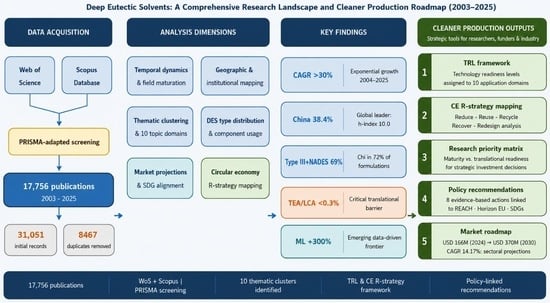
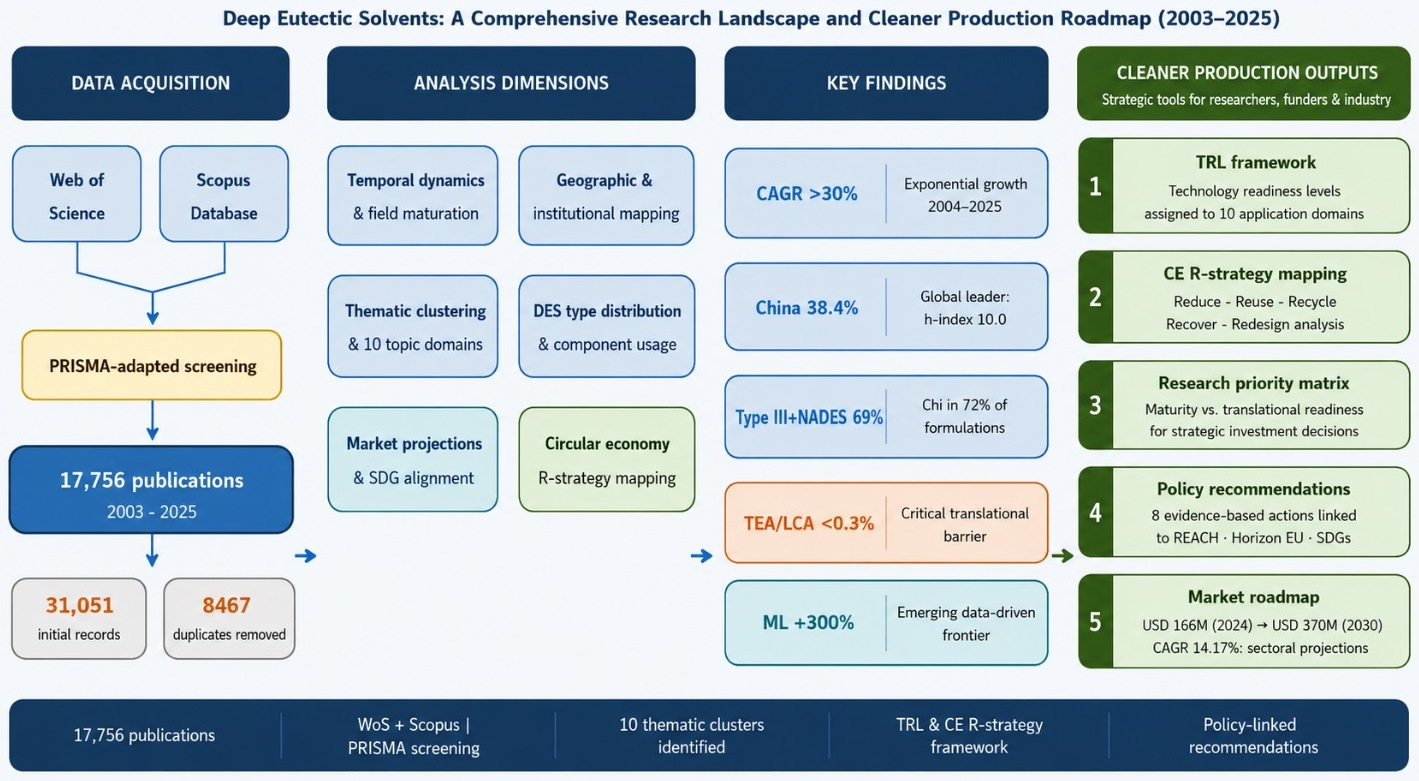
20], analyzed 2262 extraction-focused publications from a single database. The present work differs fundamentally in scope: it encompasses the entire DES research corpus across all application domains, employs dual-database retrieval (Web of Science and Scopus) with PRISMA-adapted screening to yield a curated corpus of 17,757 publications, and integrates temporal thematic mapping, market analysis, and SDG alignment, thereby providing the community with a resource commensurate with the current scale and diversity of the field.
The present study addresses this need by providing a cross-disciplinary synthesis of global DES research from 2003 to 2025, with particular emphasis on the period 2015–2025 during which the field experienced its most pronounced growth. To ensure that this quantitative landscape is grounded in the underlying chemistry rather than presented in isolation, the fundamental physicochemical and definitional aspects of DESs—interactions, the role of water, and the limits of the prevailing classification—are treated explicitly above and revisited throughout. The strategic analysis is framed within the cleaner production and circular economy context (
Section 3.11 and
Section 3.12) that defines the sustainable-chemistry scope of this work. The analysis encompasses: (i) temporal evolution of research output and field maturation; (ii) geographic and institutional distribution; (iii) thematic clustering and the temporal evolution of research topics; (iv) journal landscape and publication outlets; (v) DES type classifications and component preferences; (vi) international collaboration networks; (vii) economic implications and market projections; (viii) alignment with the United Nations Sustainable Development Goals (SDGs); and (ix) identification of critical gaps, emerging frontiers, and future perspectives. Together, these dimensions provide researchers, funding agencies, and industrial stakeholders with an integrated evidence base for strategic decision-making in one of the most dynamic areas of contemporary green chemistry.
2. Methodology
2.1. Data Sources and Search Strategy
Bibliometric data were retrieved from two complementary databases: the Web of Science Core Collection (WoS, Clarivate Analytics, London, UK) and Scopus (Elsevier, Amsterdam, The Netherlands). Both databases were selected for their comprehensive coverage of peer-reviewed literature and established use in scientometric research [
24]. The search was conducted in January 2026 using database-specific queries, as shown in
Table 1.
The WoS query uses the Topic field (TS), which searches titles, abstracts, author keywords, and Keywords Plus simultaneously. The compound expression (“DES” AND “eutectic”) was included alongside the primary phrase “deep eutectic solvent*” to capture publications that use the abbreviation DES in conjunction with eutectic-related terminology, thereby maximizing recall while excluding unrelated uses of the acronym (e.g., diethylstilbestrol, data encryption standard, discrete event simulation). In the Scopus query, TITLE-ABS-KEY searches titles, abstracts, and author-defined keywords; the explicit inclusion of “natural deep eutectic solvent*” and “NADES” ensured capture of the NADES sub-literature, which sometimes omits the general DES terminology. In both databases, the wildcard operator (*) accounts for morphological variants (e.g., “solvent” vs. “solvents”). The search was restricted to articles, reviews, and conference papers published between 2003 and 2025.
A deliberate scoping decision underlies the queries in
Table 1: the searches target the “deep eutectic” terminology that demarcates the field as a self-identified research community, rather than the broader terms “eutectic solvent” and “eutectic mixture” used without the “deep” qualifier. To assess the consequence of this choice, supplementary searches incorporating “eutectic solvent*” and “eutectic mixture*” without the “deep” prefix were performed in both databases. These returned a large volume of additional records, but title/abstract inspection showed that the great majority fell outside the present scope—predominantly metallurgical and inorganic alloy eutectics, pharmaceutical eutectic co-crystals, and phase-change-material studies unrelated to the solvent literature—while the minority that were genuinely within scope were, in most cases, already captured by the primary query because the same works also use “deep eutectic” terminology. The “deep eutectic” restriction was therefore retained to define a reproducible corpus, with the explicit recognition (
Section 2.5) that a small body of relevant work that never adopts the “deep” descriptor is necessarily excluded; this boundary does not materially affect the temporal, geographic, or thematic trends reported here.
2.2. PRISMA Screening and Data Curation
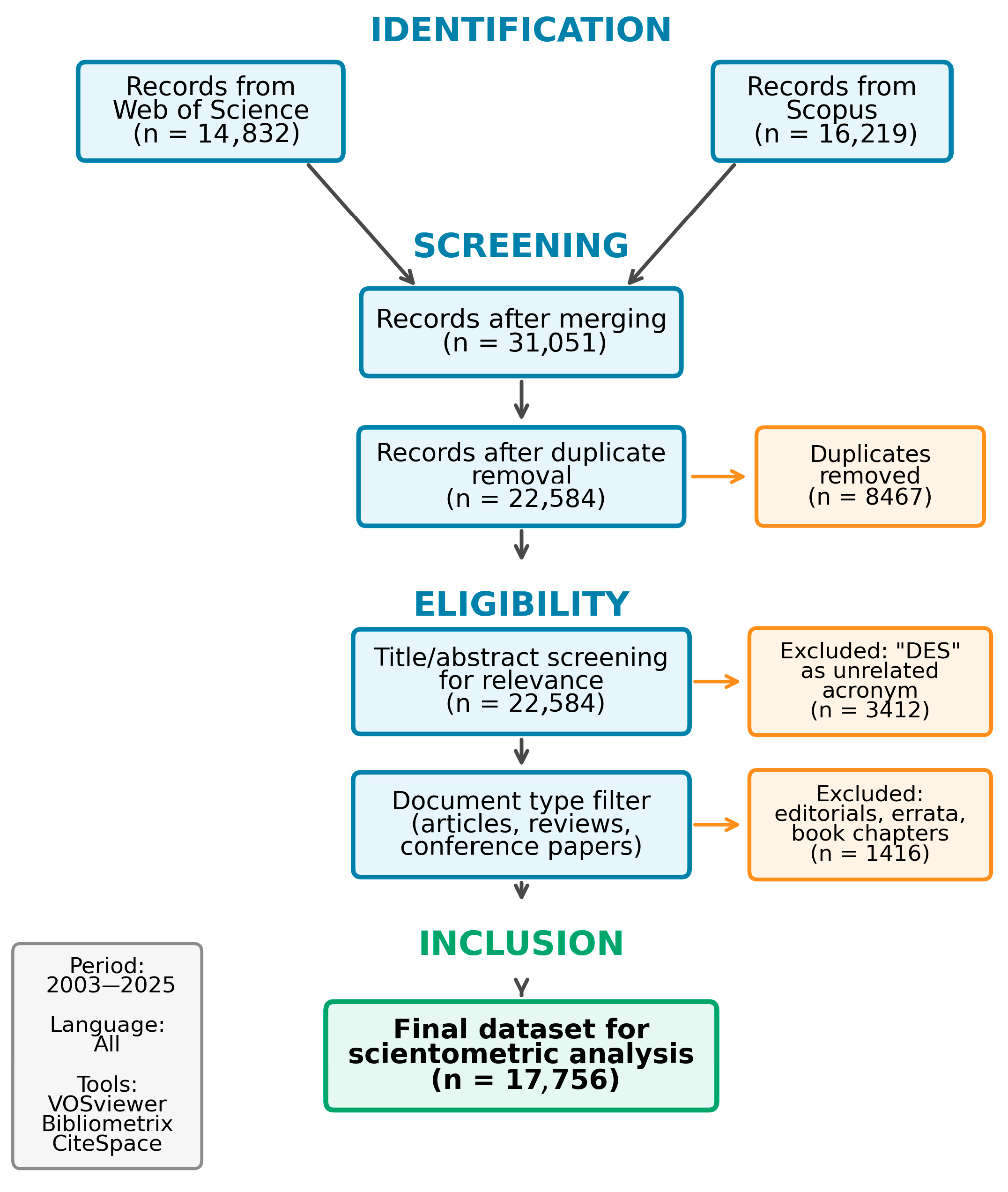
The data curation process followed the Preferred Reporting Items for Systematic Reviews and Meta-Analyses (PRISMA) guidelines adapted for scientometric analysis. The complete screening workflow is presented in
Figure 1. A total of 14,832 records were retrieved from WoS and 16,219 from Scopus, yielding 31,051 combined records. After automated duplicate removal based on DOI and title matching (8467 duplicates), the remaining 22,584 unique records underwent title and abstract screening. This step eliminated 3412 entries in which “DES” referred to unrelated acronyms or where the content was tangential to the deep eutectic solvent field. A subsequent document-type filter excluded editorials, errata, book chapters, and other non-primary research documents (1416 records). The final deduplicated and curated dataset comprised 17,757 unique publications.
Title and abstract screening was performed by combining an automated keyword/acronym filter with manual verification. Records in which “DES” denoted unrelated acronyms (e.g., diethylstilbestrol, data encryption standard, discrete event simulation) were first flagged automatically by the absence of any co-occurring eutectic-, solvent-, or HBA/HBD-related vocabulary; the flagged records, together with a random audit sample of retained records, were then checked manually against predefined inclusion criteria. “Tangential” content was operationally defined as records mentioning DESs only incidentally—for example, in the introduction or reference list—without DESs being a subject of the study itself; such records were excluded. Borderline cases were resolved conservatively in favor of retention.
2.3. Bibliometric Analysis Tools
The bibliometric analysis employed a combination of quantitative tools and visualization software. VOSviewer (version 1.6.20 [
25]) was used for constructing and visualizing co-authorship, co-citation, bibliographic coupling, and keyword co-occurrence networks. The Bibliometrix R package (Stable version) [
26] provided additional statistical capabilities, including Bradford’s law analysis, thematic mapping, and trend detection. CiteSpace (version 6.3 [
27]) was employed for burst detection analysis to identify emergent research fronts and temporal citation patterns. Custom visualizations and statistical analyses were generated using Python 3.11 with the Matplotlib, NumPy, and SciPy libraries. Market data and economic projections were sourced from industry reports by Grand View Research [
28] and Polaris Market Research [
29].
2.4. Performance Metrics
Research performance was assessed using standard bibliometric indicators: total publications (TP), total citations (TC), citations per publication (CPP), and the h-index. Following the approach of Nawaz et al. [
20], we additionally computed a composite Research Impact Score (RIS) integrating TP, TC, CPP, and h-index, each normalized to a 0–1 scale, to provide a balanced assessment across countries, institutions, and authors. Thematic analysis was conducted through keyword co-occurrence analysis with a minimum threshold of five occurrences, using fractional counting to reduce the influence of highly prolific authors. Temporal evolution of research themes was tracked through overlay visualization mapping keyword emergence against publication years. Alignment with the UN Sustainable Development Goals was assessed through keyword overlap analysis, whereby the keyword profile of each publication was matched against SDG-specific vocabularies; since individual publications may align with multiple SDGs, the resulting percentages do not sum to 100%.
Because the DES type, HBA/HBD-frequency, and SDG-alignment figures are derived from keyword co-occurrence rather than from manual annotation of every record, their reliability was assessed by manual validation on a stratified random sample of 400 publications (approximately 2% of the corpus). Each sampled record was independently classified by reading its abstract, and the manual labels were compared with the automated assignment. Agreement exceeded 85% for DES type and dominant-component assignment, but was lower (approximately 75%) for SDG alignment, reflecting the inherent ambiguity of mapping research keywords onto policy goals; the reported percentages should therefore be read as robust to within a few percentage points for the component statistics and as more approximate for SDG alignment. To support reproducibility, the complete search queries, retrieval dates, and software versions are reported above, and the curated record-level dataset underlying the figures is available from the author on reasonable request (see Data Availability Statement).
2.5. Limitations
Several limitations should be acknowledged. The reliance on WoS and Scopus excludes publications in databases not indexed by these services, including some regional journals, book chapters, patents, and gray literature. Citation-based metrics inherently favor older publications and may undervalue recent, but potentially impactful, contributions. The use of English-language search terms may underrepresent research published in other languages, particularly Chinese, which constitutes a significant share of global DES output. Furthermore, estimated metrics (DES type classification, HBA/HBD usage frequencies, and SDG alignment) were derived through keyword co-occurrence analysis rather than manual annotation of each publication, introducing a degree of approximation that was mitigated through cross-validation between independent classification approaches.
As discussed in
Section 2.1, restricting the search to “deep eutectic” terminology also excludes a minority of related work that uses only “eutectic solvent” or “eutectic mixture”; the supplementary searches indicated that this exclusion is dominated by out-of-scope metallurgical and co-crystal eutectics and does not materially affect the reported trends. Finally, and most fundamentally, a landscape built primarily on publication counts is intrinsically retrospective: it measures attention that has already accumulated and, therefore, is a poor instrument for anticipating discontinuous shifts. An identical analysis performed in 2020 would, for example, have almost entirely missed the subsequent explosion of machine-learning-assisted DES design and the research needs that accompanied it. The emerging frontiers identified here (
Section 3.5) should accordingly be read as extrapolations of current momentum rather than as forecasts, and the strategic recommendations of
Section 3.10,
Section 3.11 and
Section 3.12 are framed with this limitation explicitly in mind.
3. Results and Discussion
3.1. Temporal Evolution of DES Research Output
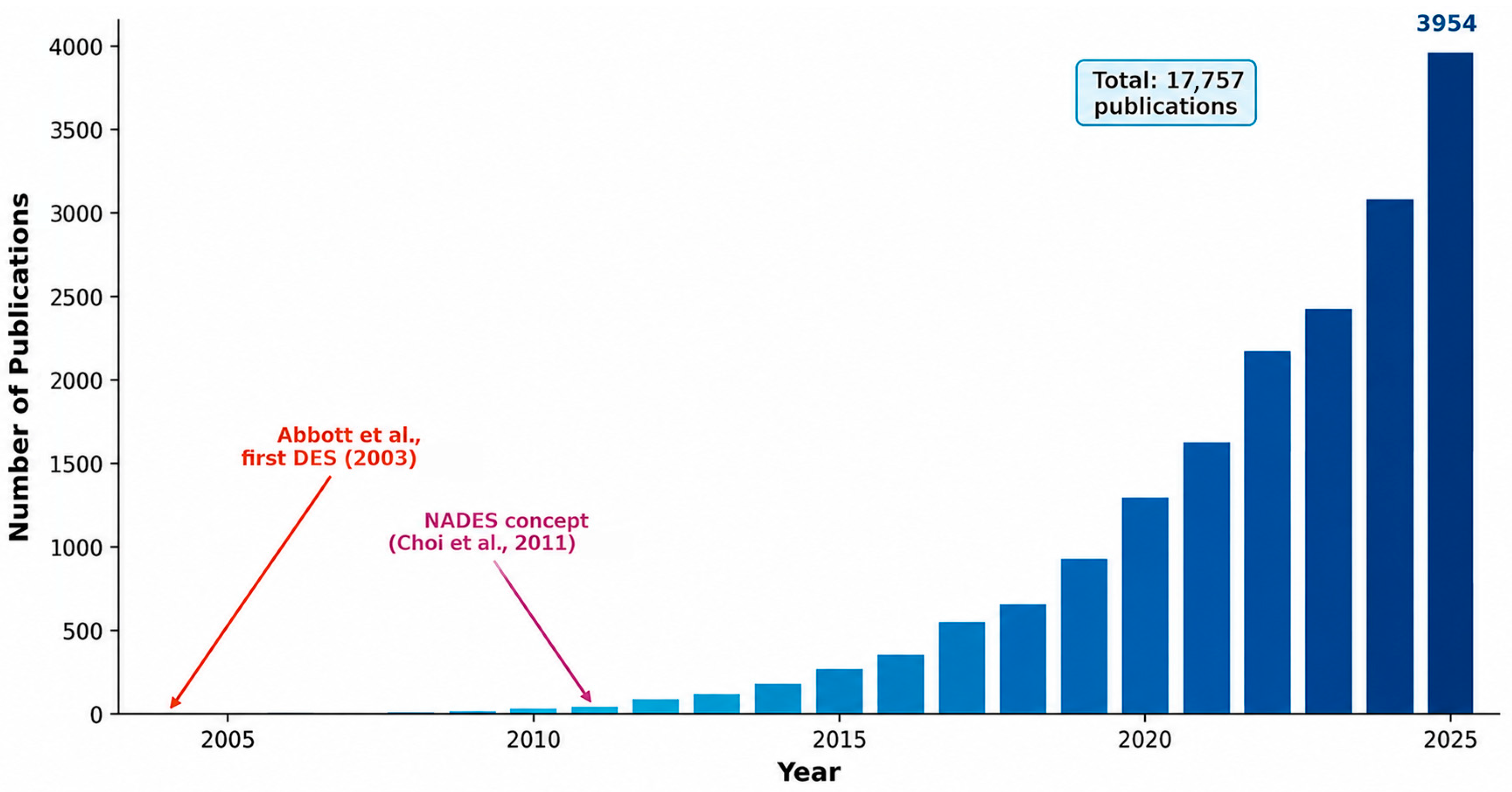
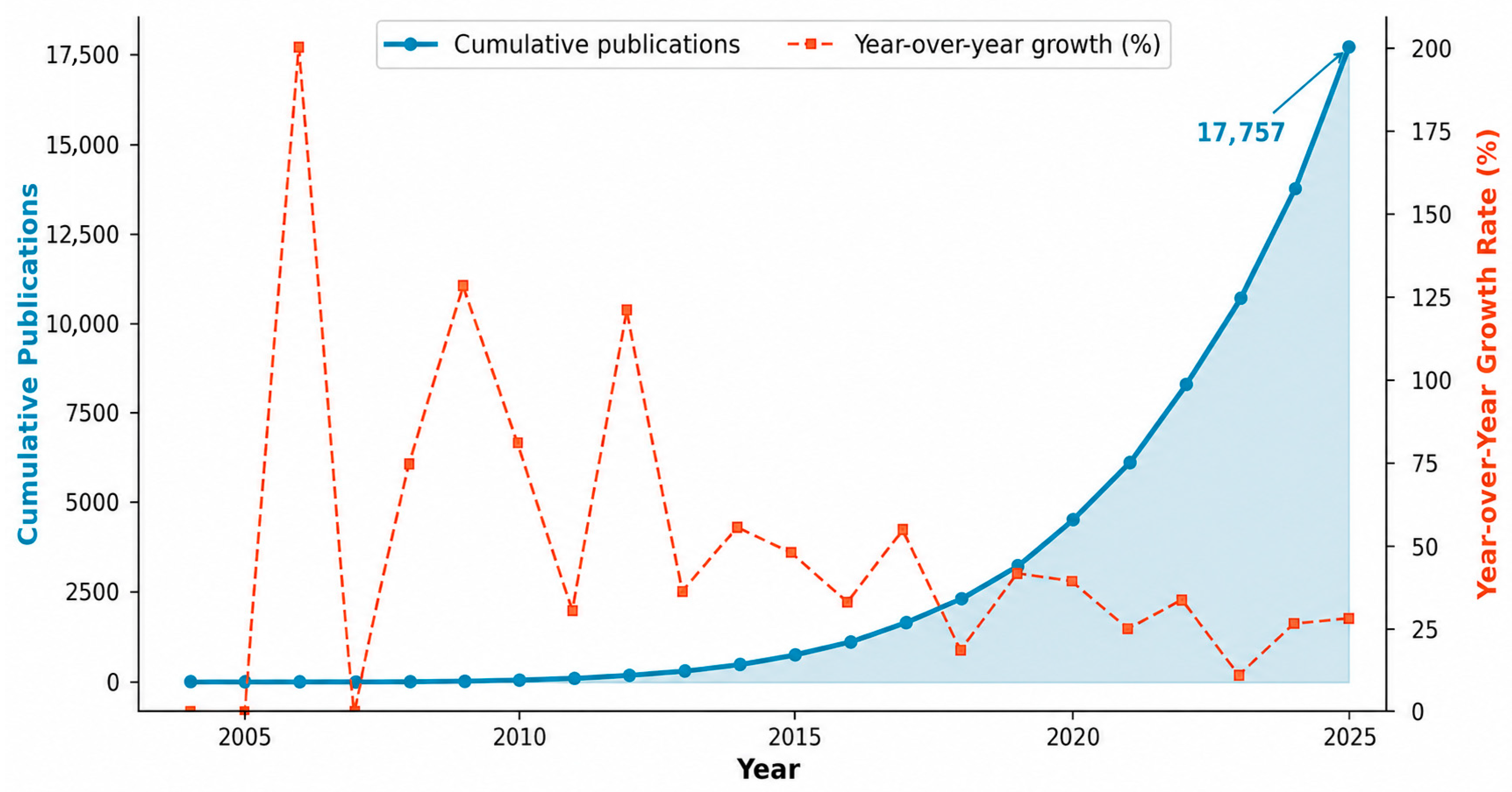
The temporal analysis of DES publications reveals a characteristic growth curve that can be divided into three distinct phases (
Figure 2). The incipient phase (2001–2010) spans from Abbott’s foundational reports on choline chloride–urea eutectic mixtures [
1,
30] to approximately 2010, during which the field accumulated fewer than 200 publications. Research during this period focused primarily on fundamental physicochemical characterization, phase behavior, and initial applications in metal electrodeposition and limited organic synthesis [
5,
14,
31].
The acceleration phase (2011–2018) witnessed a dramatic surge in research activity, with annual publications growing from 38 in 2011 to 653 by 2018, a more than 17-fold increase. Several catalytic developments fueled this expansion: the introduction of the NADES concept by Choi and Verpoorte in 2011, which opened DES research to the food science and natural products communities; the landmark review by Zhang et al. [
7], which attracted researchers from organic synthesis; and the growing recognition of DESs as versatile, green alternatives to both conventional solvents and ionic liquids [
7,
12].
The consolidation and maturation phase (2019–present) is characterized by sustained exponential growth, with annual output reaching 3954 publications in 2025 and cumulative output surpassing 17,750 (
Figure 3). The year-over-year growth rate has moderated from peaks exceeding 100% in the early years to approximately 20–30% in recent years, indicating a transition from a nascent to an increasingly mature research domain. The publication of several review works on fundamentals and applications has further consolidated DES research as a mainstream area of chemistry and materials science.
Figure 3.
Cumulative DES publications and year-over-year growth rate (2004–2025). The left axis shows the cumulative publication count; the right axis displays the percentage growth rate, illustrating the transition from rapid early expansion to a more stable growth regime. The intellectual foundations of the field are anchored by a small number of highly cited publications (
Table 2). The reviews by Zhang et al. [
7], Smith et al. [
5], and Hansen et al. [
2] serve as current field references. Earlier foundational works by Abbott et al. [
1,
14] continue to attract substantial citation activity, while the NADES-related publications by Choi et al. [
12] and Dai et al. [
13] anchor the natural DES subfield.
Figure 3.
Cumulative DES publications and year-over-year growth rate (2004–2025). The left axis shows the cumulative publication count; the right axis displays the percentage growth rate, illustrating the transition from rapid early expansion to a more stable growth regime. The intellectual foundations of the field are anchored by a small number of highly cited publications (
Table 2). The reviews by Zhang et al. [
7], Smith et al. [
5], and Hansen et al. [
2] serve as current field references. Earlier foundational works by Abbott et al. [
1,
14] continue to attract substantial citation activity, while the NADES-related publications by Choi et al. [
12] and Dai et al. [
13] anchor the natural DES subfield.
Table 2.
Top 20 most-cited publications in DES research (as of January 2026). The “Type” column distinguishes review articles from primary research articles; review articles are strongly over-represented among the most-cited works, a pattern typical of rapidly expanding fields and one that should be borne in mind when interpreting citation-based rankings.
Table 2.
Top 20 most-cited publications in DES research (as of January 2026). The “Type” column distinguishes review articles from primary research articles; review articles are strongly over-represented among the most-cited works, a pattern typical of rapidly expanding fields and one that should be borne in mind when interpreting citation-based rankings.
| | Reference | Journal | Year | TC | Focus | Type |
|---|
| 1 | Smith et al. [5] | Chem. Rev. | 2014 | 6313 | Comprehensive review | Review |
| 2 | Abbott et al. [1] | Chem. Commun. | 2003 | 5420 | Foundational report | Research |
| 3 | Zhang et al. [7] | Chem. Soc. Rev. | 2012 | 4499 | Properties & applications | Review |
| 4 | Abbott et al. [14] | J. Am. Chem. Soc. | 2004 | 3952 | ChCl + carboxylic acids | Research |
| 5 | Hansen et al. [2] | Chem. Rev. | 2020 | 2757 | Comprehensive review | Review |
| 6 | Dai et al. [13] | Anal. Chim. Acta | 2013 | 2367 | NADES as green media | Research |
| 7 | Paiva et al. [32] | ACS Sustain. Chem. Eng. | 2014 | 2198 | NADES concept | Review |
| 8 | Clark et al. [33] | Chem. Rev. | 2018 | 1752 | Green solvents | Review |
| 9 | Francisco et al. [34] | Angew. Chem. Int. Ed. | 2013 | 1289 | Designer solvents | Research |
| 10 | Choi et al. [12] | Plant Physiol. | 2011 | 1220 | NADES concept | Research |
| 11 | Dai et al. [35] | Food Chem. | 2015 | 1167 | DES in food science | Research |
| 12 | Liu et al. [36] | J. Nat. Prod. | 2018 | 1117 | NADES concept | Review |
| 13 | García et al. [17] | Energy Fuels | 2015 | 990 | Properties & gas separation | Review |
| 14 | Martins et al. [3] | J. Sol. Chem. | 2019 | 988 | DES concept | Research |
| 15 | El Achkar et al. [37] | Environ. Chem. Lett. | 2021 | 866 | DES properties | Review |
| 16 | Van Osch et al. [38] | Green Chem. | 2015 | 865 | Hydrophobic DES | Research |
| 17 | Florindo et al. [15] | ACS Sustain. Chem. Eng. | 2014 | 860 | ChCl-acid DES properties | Research |
| 18 | Wagle et al. [39] | Acc. Chem. Res. | 2014 | 826 | DES for nanoscale & materials | Review |
| 19 | Tran et al. [40] | Nat. Energy | 2019 | 803 | DES for batteries | Research |
| 20 | Abbott et al. [41] | Green Chem. | 2011 | 791 | DES based on glycerol | Research |
3.2. Geographic Distribution and International Collaboration
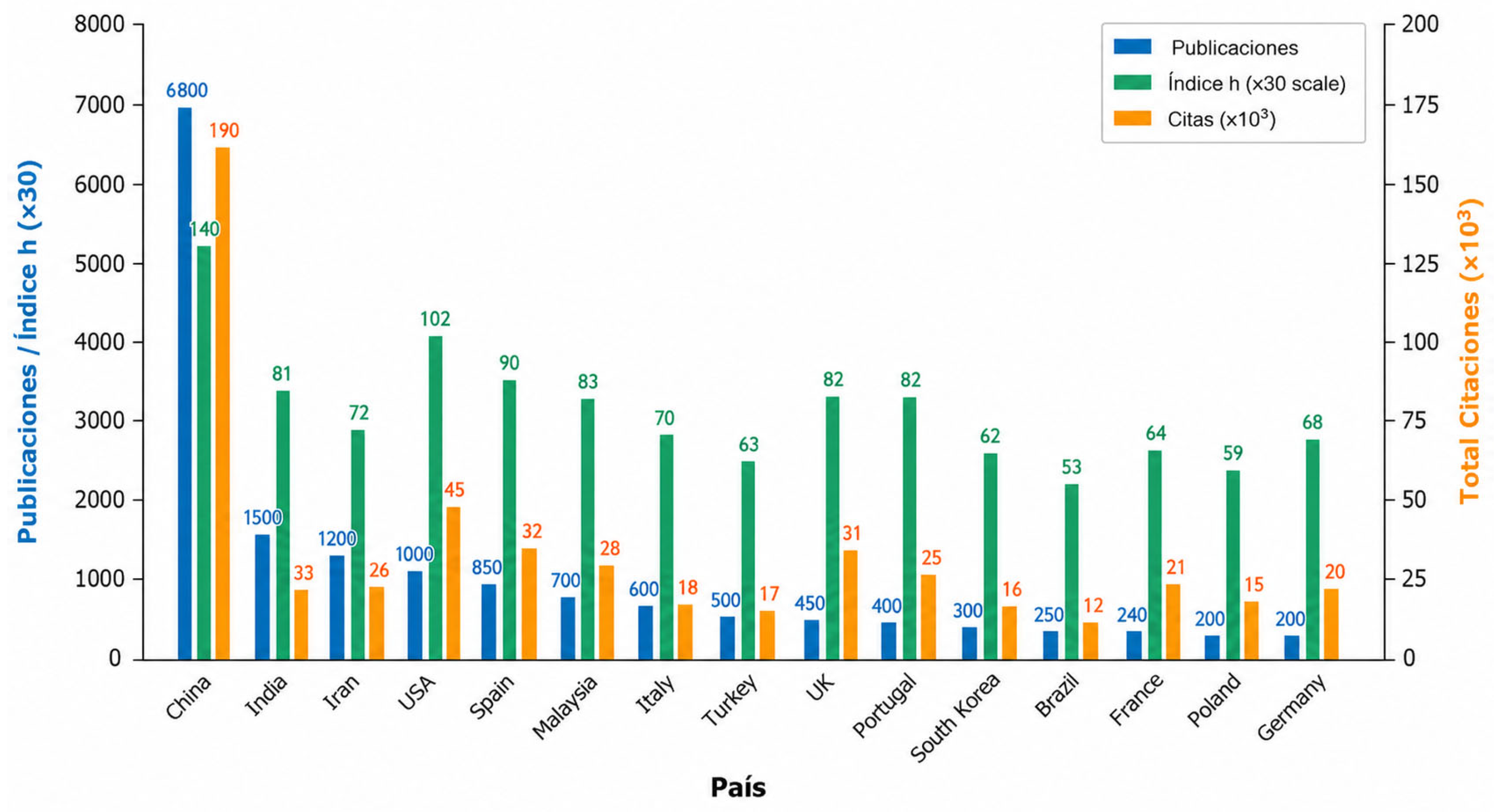
The geographic analysis reveals a markedly asymmetric global distribution of DES research output (
Figure 4). China dominates the field with 6819 publications, 188,226 citations, and an h-index of 160, exceeding all other nations by a wide margin. This leadership is associated with substantial governmental investment in green chemistry initiatives and strategic alignment of DES applications—particularly battery recycling, metal extraction, and biomass processing—with national industrial priorities. It should be emphasized, however, that absolute publication counts are strongly confounded by the size of the national research workforce, total R&D expenditure, and population. China and India also lead global scientific output across most chemistry subfields, so their prominence here cannot be attributed to DES-specific factors alone. The geographic figures are therefore best read as descriptive of where DES research is concentrated, not as evidence of differential national commitment per researcher.
India ranks second with 1550 publications (36,594 citations, h-index = 81), reflecting growing institutional emphasis on green chemistry in pharmaceutical and food technology research. Iran (1223 publications, h-index = 72), the United States (1025 publications, 47,816 citations, h-index = 102), and Spain (888 publications, h-index = 90) complete the top five. A more volume-independent indicator of impact is the citations-per-publication (CPP) ratio. On this measure, the United States (47,816/1025 ≈ 46.7) and Malaysia (28,782/740 ≈ 38.9) clearly exceed China (188,226/6819 ≈ 27.6), India (36,594/1550 ≈ 23.6), and most other leading nations, indicating that their contributions attract above-average citation attention relative to their output. The high h-index of Malaysia (93) reflects the influential work of research groups at Universiti Malaya. These CPP and h-index comparisons should be interpreted cautiously, as both metrics are sensitive to field composition, the age distribution of the national corpus, and the share of highly cited reviews; they are reported here as descriptive indicators rather than as rankings of research quality. The European contribution is distributed across multiple nations, with Spain, Italy, the United Kingdom, Portugal, Germany, France, and Poland collectively accounting for a substantial share of global output. In the Americas, Brazil (409 publications) complements U.S. contributions with a focus on biomass valorization and food applications.
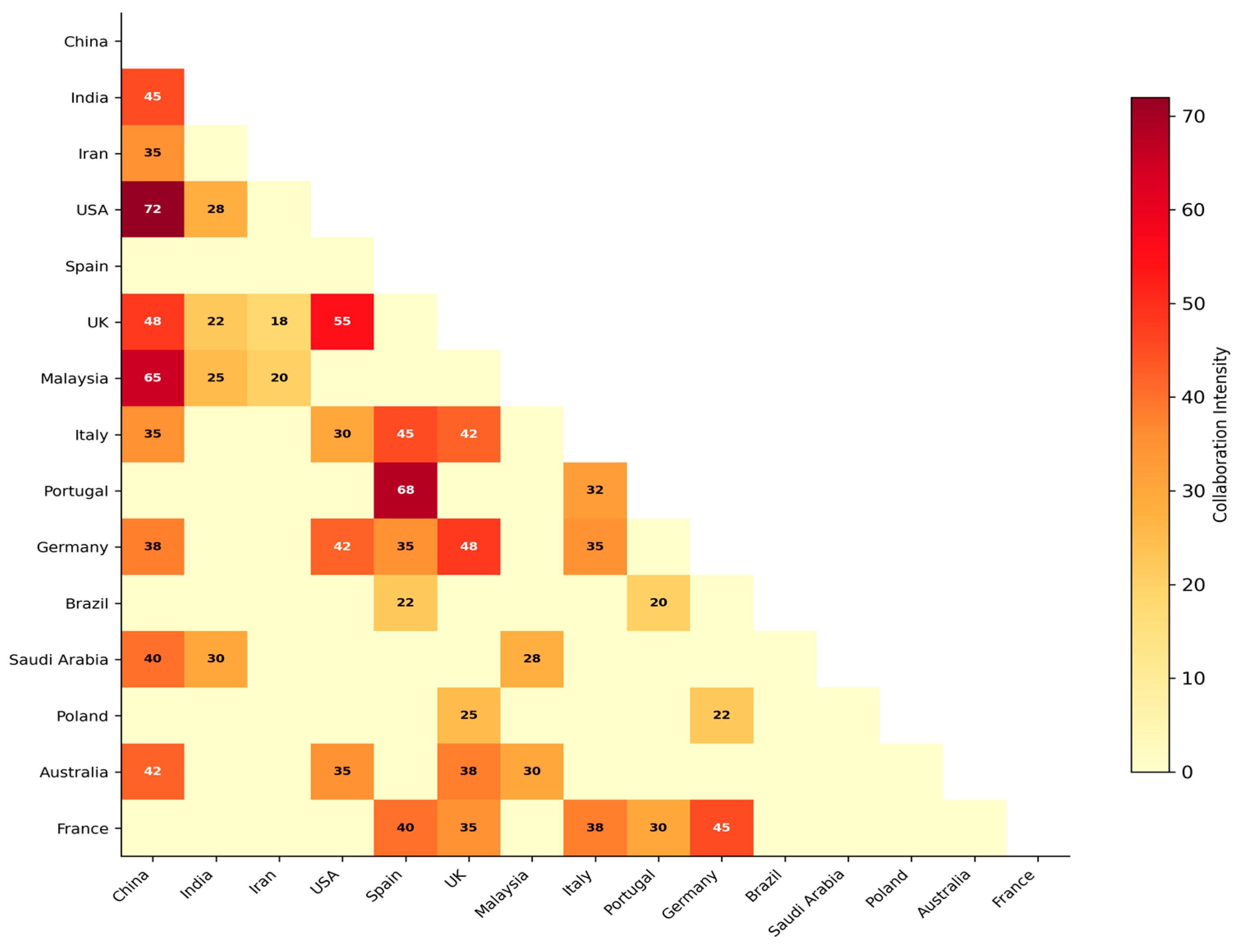
Analysis of international collaboration networks reveals a dense web of bilateral partnerships (
Figure 5). The most active collaborative axes include China–USA, China–Malaysia, Spain–Portugal, UK–Germany, and China–Saudi Arabia. The average number of countries per publication increased from 1.2 in 2010 to 1.8 in 2025, indicating growing internationalization of DES research. The collaboration heatmap also highlights the strong Iberian Peninsula cluster linking Spain, Portugal, and their associated research networks, as well as Middle Eastern partnerships connecting Saudi Arabia, Iran, and the UAE.
3.3. Institutional Contributions and Leading Research Groups
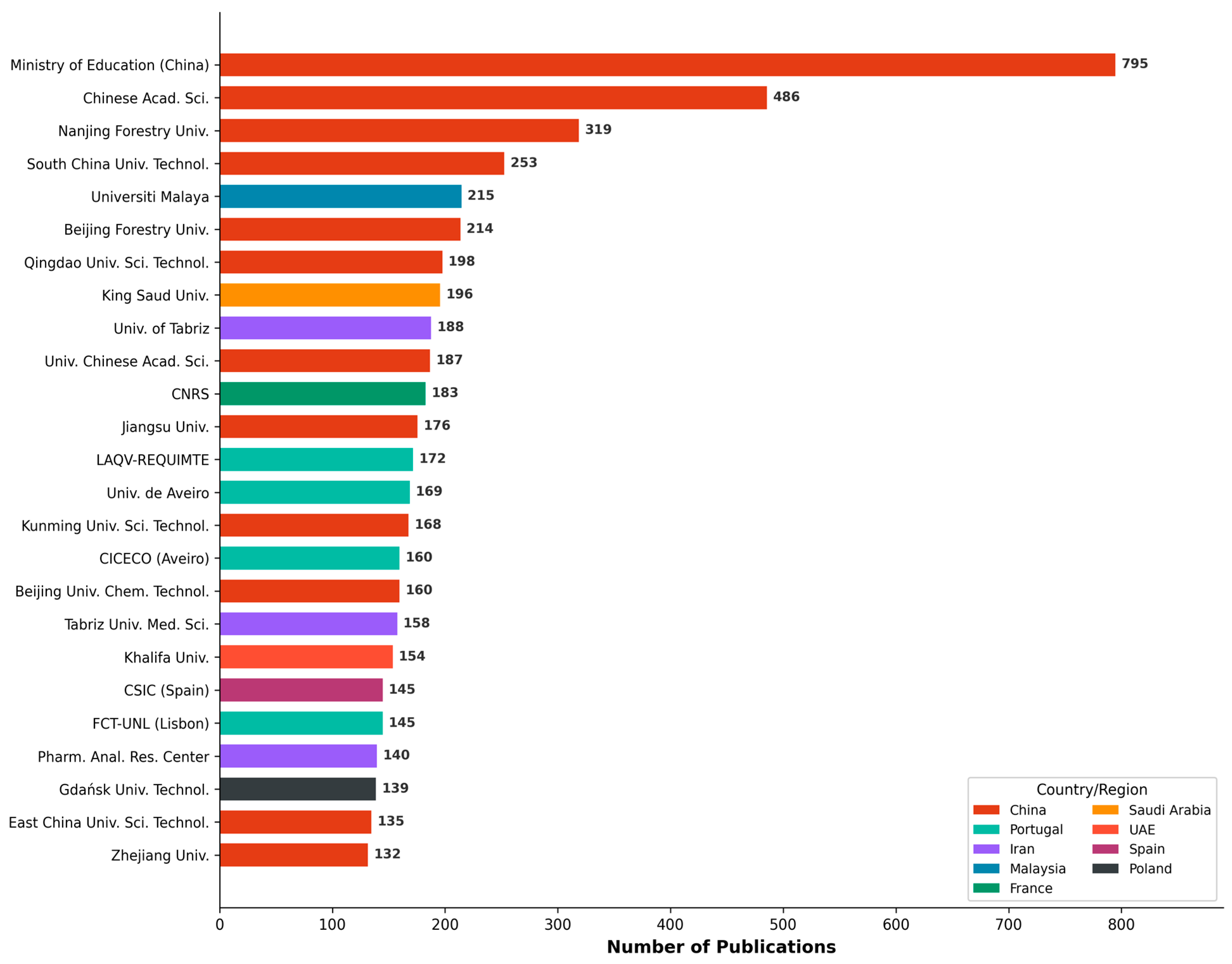
At the institutional level, the analysis reveals a pronounced dominance of Chinese institutions (
Figure 6). The Ministry of Education of the People’s Republic of China appears as the top-affiliated entity with 795 publications, reflecting its centralized role in funding and coordinating DES research across Chinese universities. The Chinese Academy of Sciences follows with 486 publications, underscoring its importance in both fundamental and applied DES research. Nanjing Forestry University (319 publications), which has a strong focus on biomass processing and lignocellulosic applications, and South China University of Technology (253 publications) complete the list of leading Chinese contributors.
A methodological caveat applies to the institutional ranking. Bibliographic databases frequently record associated research laboratories and their host universities as separate affiliations even though they overlap substantially. To limit double-counting, overlapping laboratory–host pairs were consolidated where the relationship could be unambiguously established, and umbrella funding entities are flagged as such rather than treated as single institutions. Residual over-counting cannot be entirely excluded, however, and the institutional figures in
Figure 6 should therefore be read as approximate; this does not affect the country-level analysis of
Section 3.2, which is unaffected by intra-national affiliation overlap.
Internationally, Universiti Malaya (Malaysia, 215 publications) stands as the leading non-Chinese institution, reflecting the influential work of Hayyan and colleagues in DES characterization and biotechnology applications [
8,
9]. King Saud University (196), the University of Tabriz (188), and Tabriz University of Medical Sciences (158) further highlight the substantial engagement of Middle Eastern and Iranian researchers in the DES field, particularly in pharmaceutical and analytical applications. The European presence is anchored by CNRS (183), LAQV-REQUIMTE (172), Universidade de Aveiro (169), and CICECO (160) in the Iberian Peninsula, along with Gdańsk University of Technology (139) in Poland. The University of Leicester (126 publications) retains a distinguished position as the birthplace of DES research through the foundational work of Andrew Abbott and Karl Ryder. The Universidad de Burgos (78 publications) and Sultan Qaboos University (110) also feature prominently, with the latter reflecting the prolific contributions of Farouq S. Mjalli in DES physicochemical characterization.
3.4. Thematic Analysis and Research Topic Distribution
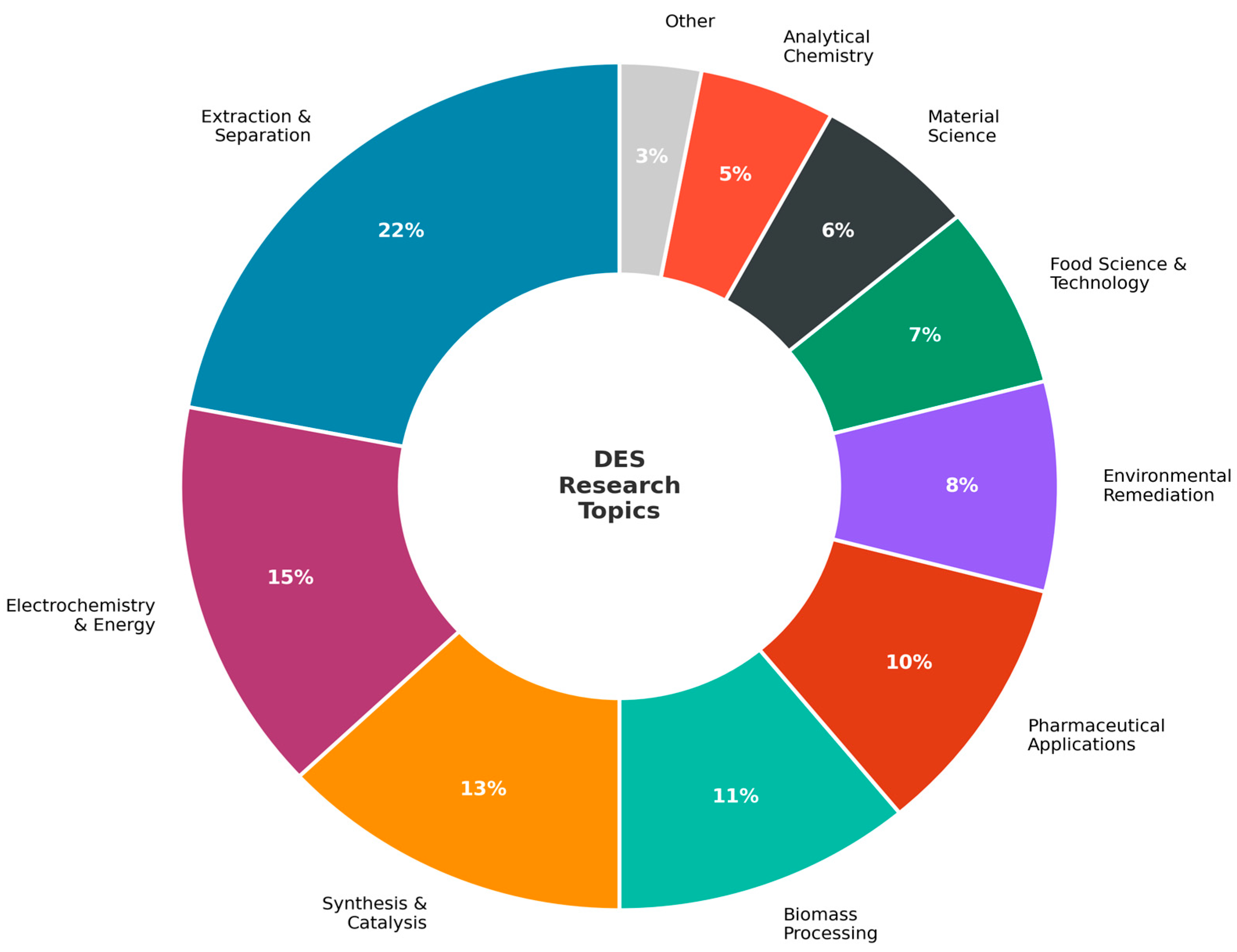
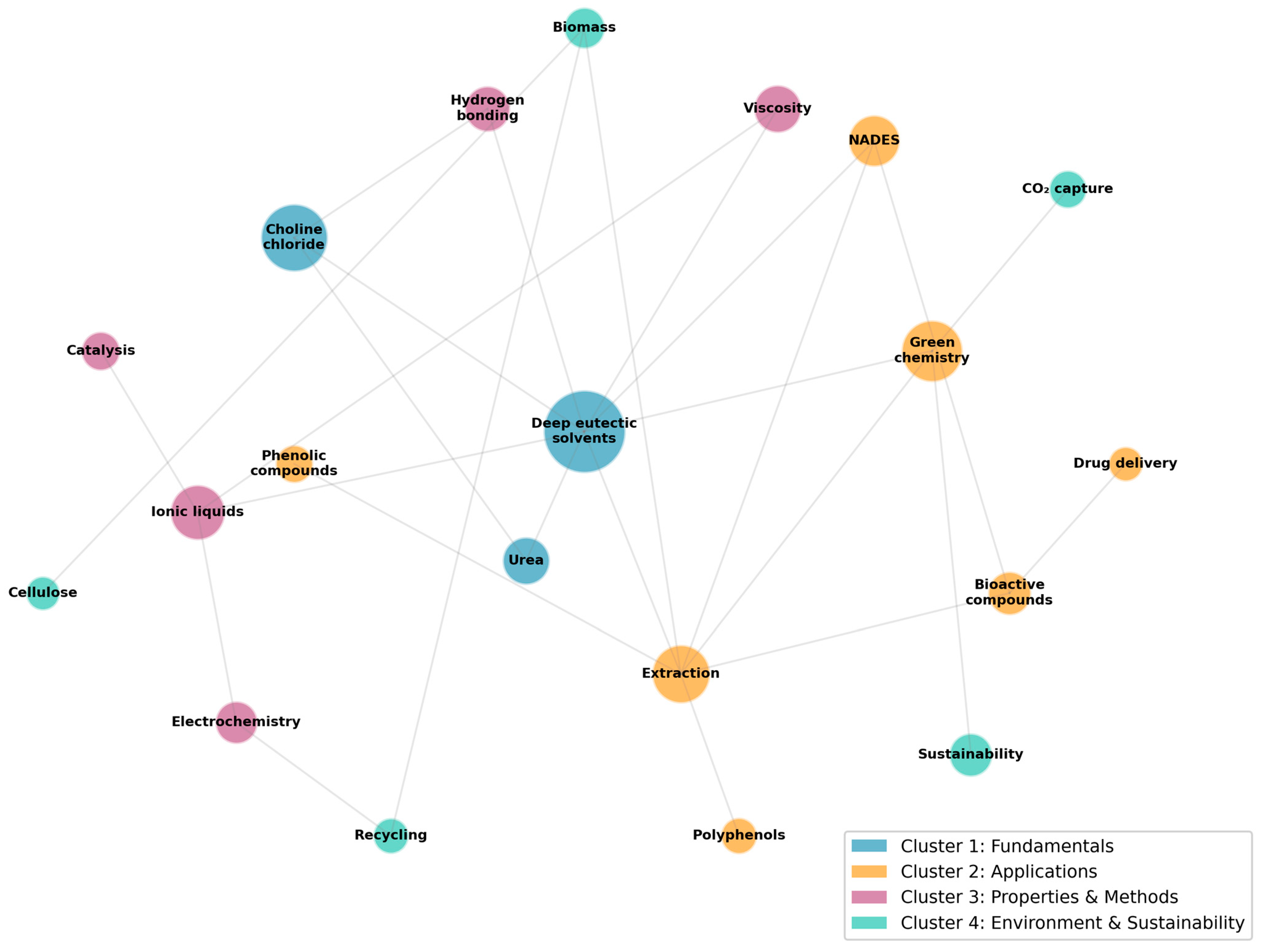
Keyword co-occurrence analysis identified ten major thematic clusters within the DES literature (
Figure 7 and
Figure 8), each representing a distinct research domain. Extraction and separation processes constitute the largest cluster (22%), encompassing the use of DESs to isolate bioactive compounds (phenolics, flavonoids, alkaloids, terpenes), metals, and other analytes from diverse matrices. This dominance reflects the exceptional solvation properties and tunable polarity of DESs, together with growing demand for green extraction alternatives across the food, pharmaceutical, and chemical industries [
16,
42].
Electrochemistry and energy storage represent the second-largest cluster (15%), driven by DES applications as electrolytes in lithium-ion batteries, supercapacitors, and fuel cells, as well as their use in electrodeposition and electropolishing. Synthesis and catalysis (13%) constitute the third major domain, with DESs serving dual roles as reaction media and catalysts. Additional clusters include biomass processing (11%), pharmaceutical applications (10%), environmental remediation (8%), food science (7%), materials science (6%), analytical chemistry (5%), and other emerging applications (3%) such as polymer processing and nanotechnology.
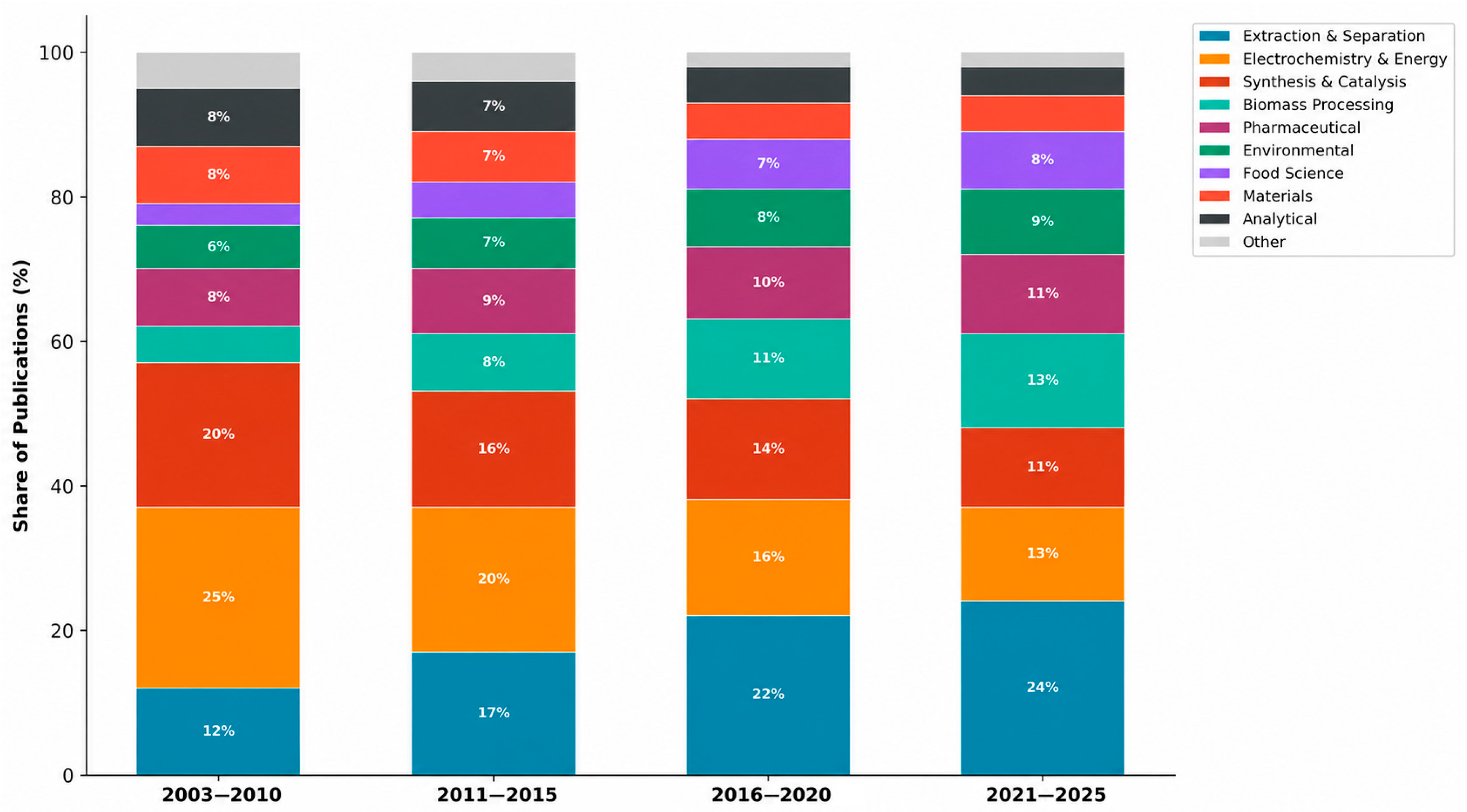
The temporal evolution of thematic emphasis reveals noteworthy shifts over the two-decade study period (
Figure 9). In the incipient phase (2003–2010), electrochemistry and synthesis dominated research activity, reflecting the origins of DES research in metal processing and organic transformation. The subsequent acceleration and consolidation phases witnessed the progressive rise in extraction and separation, pharmaceutical, and food science themes, driven by the NADES concept and expanding application scope. Machine learning and computational approaches have shown the most rapid recent growth, with publications increasing by over 300% between 2022 and 2025, signaling a paradigm shift toward data-driven DES design.
3.5. Evolution of Key Research Themes
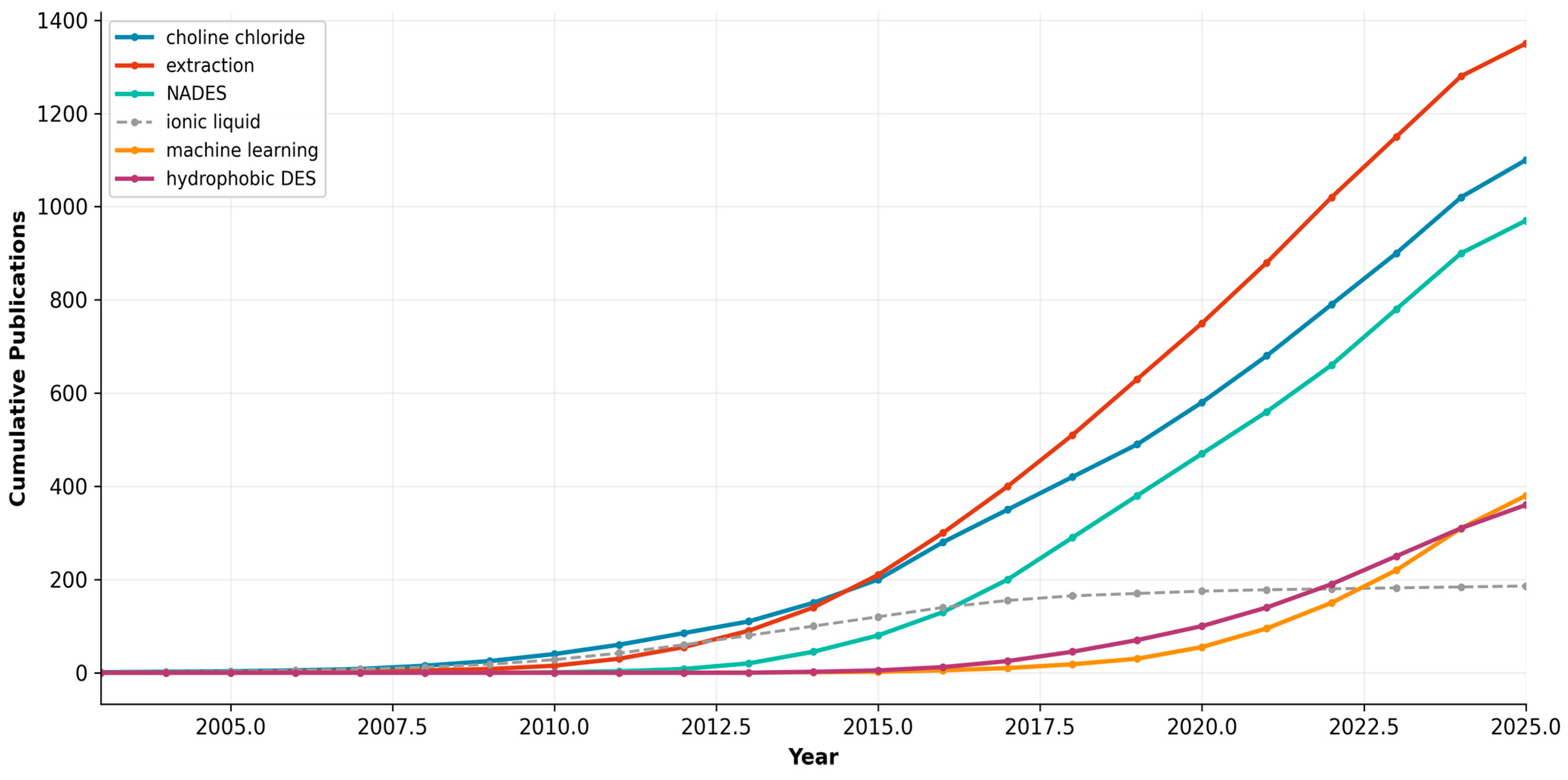
Burst detection analysis through CiteSpace, complemented by cumulative keyword tracking (
Figure 10), provides additional granularity regarding the temporal dynamics of specific research themes. The keyword “choline chloride” has maintained steady growth throughout the study period, reflecting its persistent dominance as the primary HBA. “Extraction”-related terms have shown the steepest cumulative growth, overtaking all other thematic keywords by 2018 and continuing to accelerate. The NADES-related literature emerged around 2012 and has grown rapidly, reaching approximately 970 cumulative publications by 2025.
It should be noted that
Figure 10 and
Table 3 are complementary rather than redundant, and intentionally track different keyword sets.
Figure 10 displays the cumulative publication trajectories of a small number of high-level thematic keywords (“choline chloride,” “extraction,” “NADES,” “ionic liquid,” “machine learning,” “hydrophobic DES”), illustrating long-term shifts in the overall composition of the field.
Table 3, by contrast, reports the output of CiteSpace burst detection analysis, which identifies keywords whose citation frequency increased abruptly over a bounded interval; it therefore captures short-term emergence rather than cumulative volume, and includes more specific terms (e.g., “battery recycling,” “eutectogel,” “critical minerals”) that need not appear among the high-level trajectories of
Figure 10. The two analyses are presented together because cumulative growth and burst intensity provide non-overlapping views of thematic dynamics.
Two emerging frontiers deserve particular attention. The co-occurrence of “machine learning” with DES-related terms has surged since 2020, reflecting growing efforts to predict DES properties (viscosity, density, melting point, solubility) from molecular descriptors, thereby accelerating optimal formulation identification without exhaustive experimental screening [
43,
44]. Separately, “hydrophobic DES” has risen sharply since 2015, driven by the need for non-aqueous extraction media for separating hydrophobic analytes from aqueous matrices, a capability not available with conventional hydrophilic DESs [
38,
45].
Among computational approaches, the conductor-like screening model for real solvents (COSMO-RS) deserves specific mention, as its sustained citation burst since 2016 (
Table 3) reflects its establishment as the predominant a priori screening tool for DES design. Two conceptually distinct strategies for representing a DES within COSMO-RS have emerged and are worth distinguishing. In the individual-component (or “electroneutral mixture”) approach, the HBA and HBD are treated as separate species present at their nominal molar ratio, and the eutectic mixture is modeled as a multicomponent solution; this representation has been applied successfully to predict solubilities and partition behavior for extraction and separation tasks [
46,
47]. In the pseudocomponent approach, the DES is instead treated as a single effective species with averaged surface-charge (sigma-profile) descriptors, which simplifies high-throughput screening at the cost of neglecting speciation and composition-dependent interactions [
48]. The two strategies can yield divergent predictions, particularly for systems with strong, composition-sensitive HBA–HBD interactions, and the choice between them is therefore consequential rather than merely technical. More recent workflows couple COSMO-RS pre-screening with molecular dynamics or machine learning refinement and explicit safe-and-sustainable-by-design criteria to improve predictive reliability while retaining computational tractability [
11].
3.6. DES Type Classification and Component Preferences
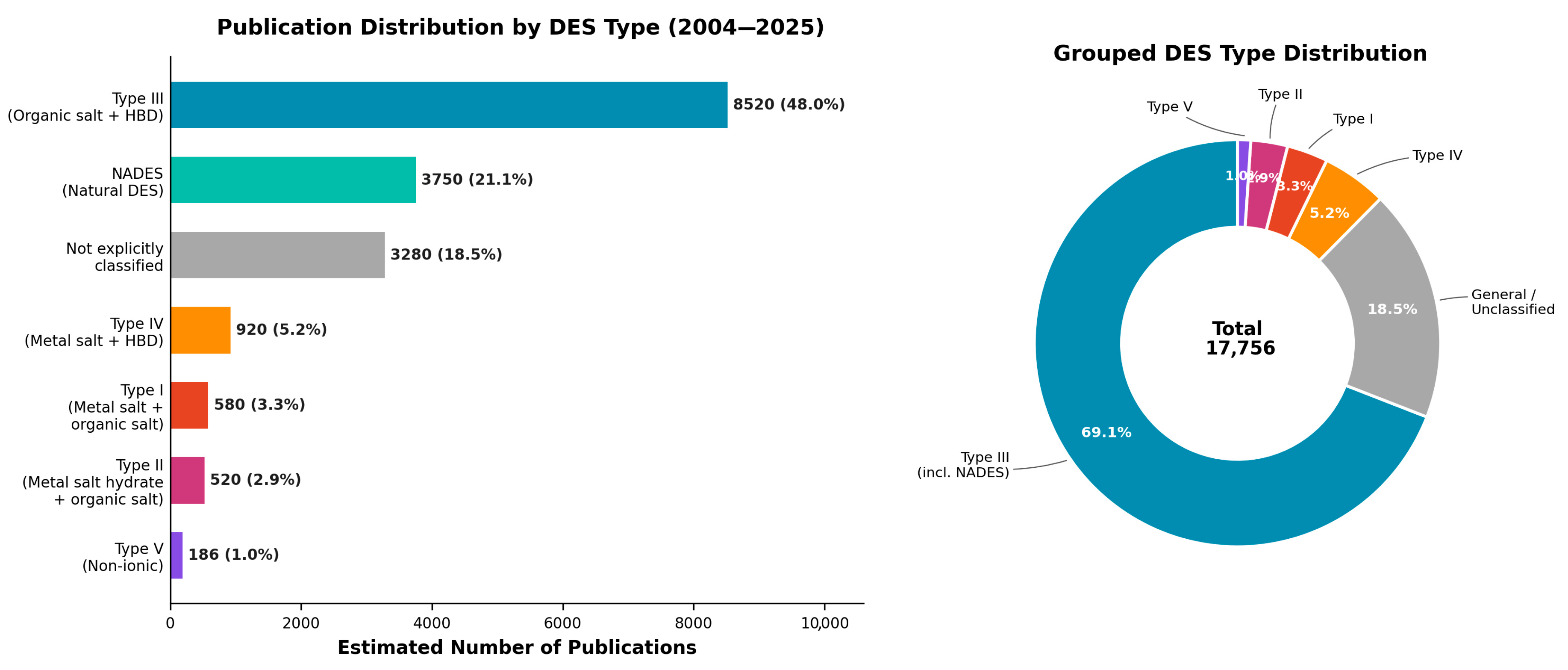
The distribution of publications across DES type classifications reveals a striking dominance of Type III systems (
Figure 11). Approximately 8520 publications (48.0%) are associated with Type III formulations (organic salt + HBD), with an additional 3750 (21.1%) specifically addressing NADESs. Together, Type III and NADESs represent approximately 69% of the entire DES literature. A substantial fraction (3280 publications, 18.5%) discusses DESs without explicit type classification, reflecting the common practice of focusing on application rather than formal taxonomy. Types IV (920, 5.2%), I (580, 3.3%), and II (520, 2.9%) represent relatively niche domains associated primarily with electrochemistry and metal processing. Type V DESs, proposed by Abranches et al. [
6] for non-ionic molecular systems, account for only 186 publications (1.0%), consistent with their recent emergence.
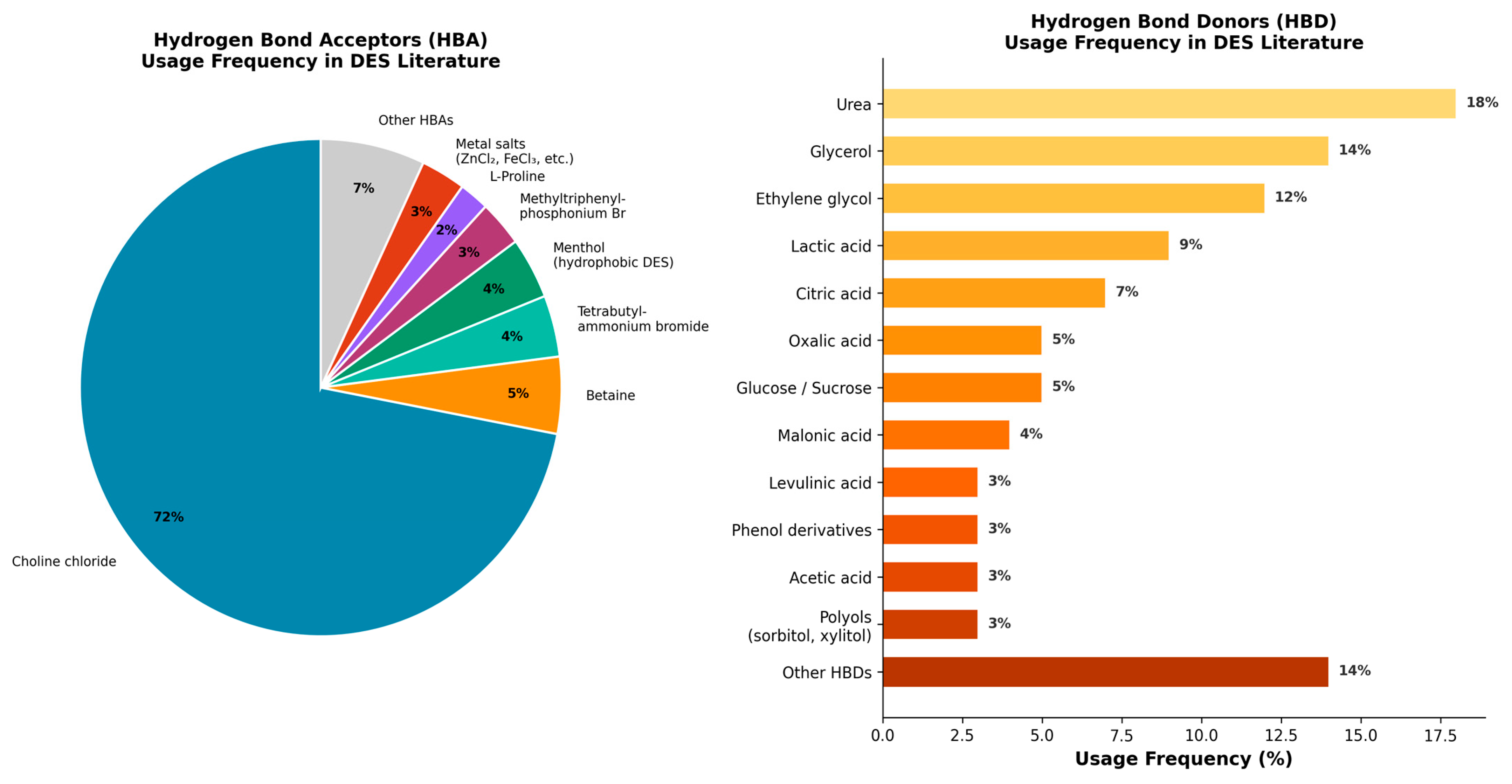
Component-level analysis reveals that choline chloride remains the dominant HBA, appearing in approximately 72% of all DES studies (
Figure 12). Its prevalence derives from multiple factors: low cost, GRAS (Generally Recognized as Safe) status, biodegradability, and compatibility with a broad spectrum of HBDs. Betaine (5%), tetrabutylammonium bromide (4%), menthol (4%, primarily in hydrophobic DES formulations), and methyltriphenylphosphonium bromide (3%) follow at substantially lower frequencies. Among HBDs, urea leads (18%), owing to its role in the canonical Abbott formulation, followed by glycerol (14%) and ethylene glycol (12%), which form the well-known “reline,” “glyceline,” and “ethaline” systems, respectively. Organic acid HBDs—lactic acid (9%), citric acid (7%), and oxalic acid (5%)—are particularly prevalent in extraction-oriented studies. The emergence of menthol as both an HBA and HBD in hydrophobic DES formulations has expanded rapidly since 2015, enabling liquid–liquid extraction from aqueous matrices.
3.7. Journal Landscape and Publication Outlets
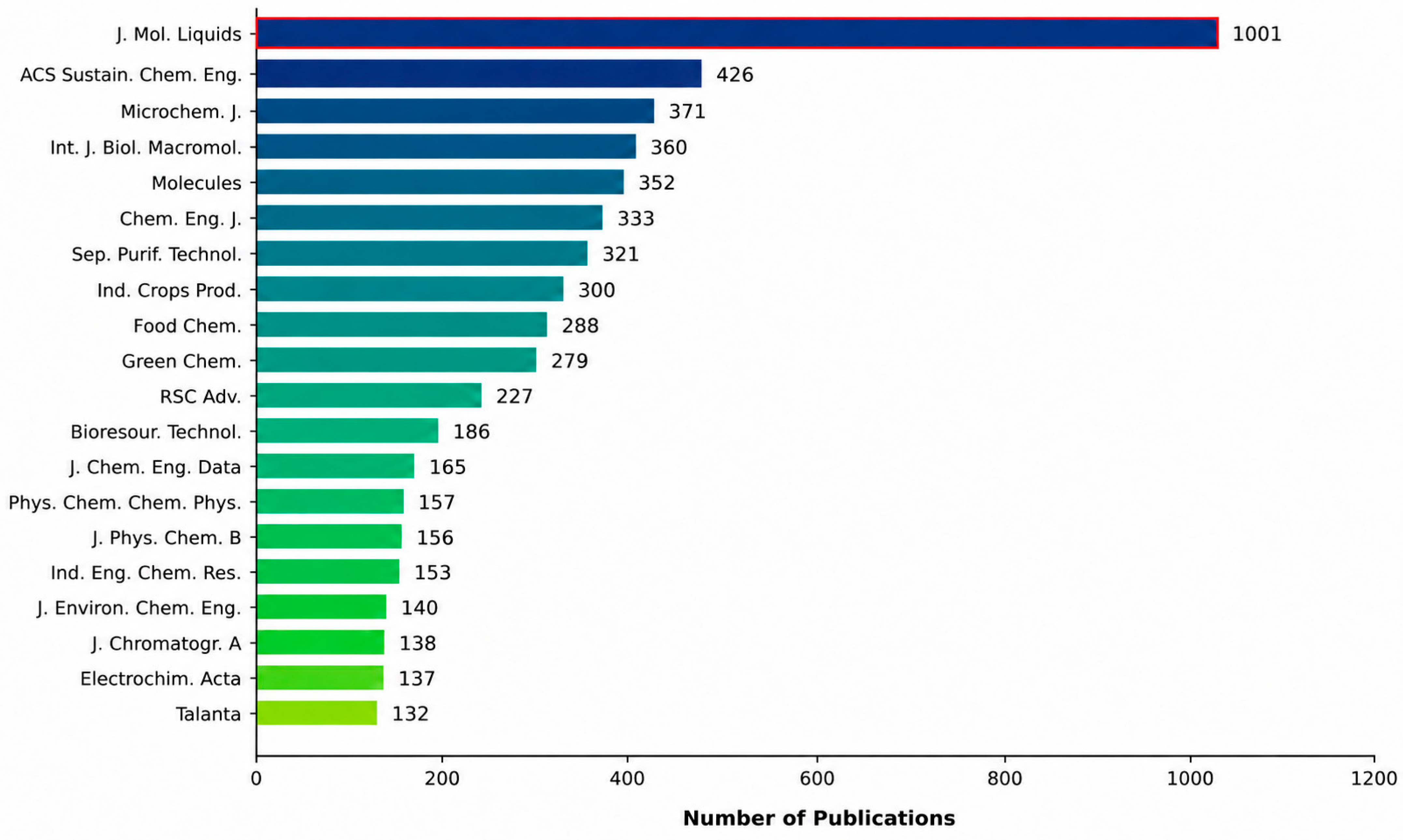
The analysis of publication venues identifies the
Journal of Molecular Liquids as the leading outlet for DES research, with 1081 articles during 2004–2025 (
Figure 13). This journal’s focus on the structure, interactions, and dynamics of molecular fluids aligns naturally with the physicochemical characterization work central to DES development.
ACS Sustainable Chemistry & Engineering (426) and
Microchemical Journal (371) rank second and third, followed by the
International Journal of Biological Macromolecules (360) and
Molecules (352). The
Chemical Engineering Journal (333),
Separation and Purification Technology (321), and
Food Chemistry (288) further reflect the applied, multidisciplinary nature of DES research. Bradford’s law analysis reveals a characteristic three-zone distribution (
Table 4), with a core of eight journals accounting for approximately one-third of all DES publications, confirming the existence of a well-defined publication nucleus alongside a broad diffusion across diverse disciplinary outlets.
3.8. Economic Impact and Market Analysis
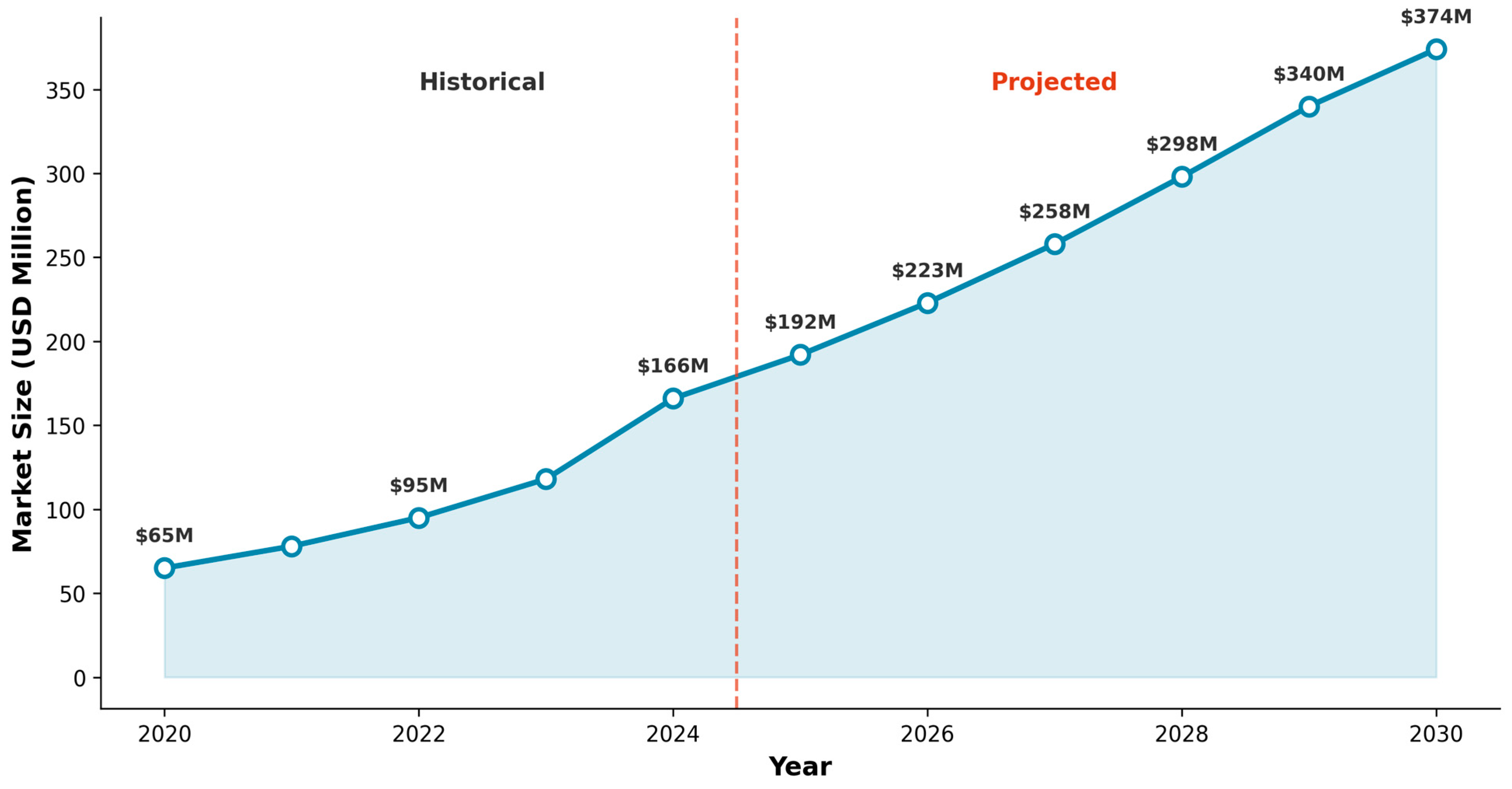
Beyond academic research, DESs are increasingly transitioning toward commercial and industrial deployment. Multiple market analyses project the global DES market to grow from approximately USD 166 million in 2024 to USD 370–570 million by 2030–2032, representing a compound annual growth rate (CAGR) of 14–17% (
Figure 14) [
28,
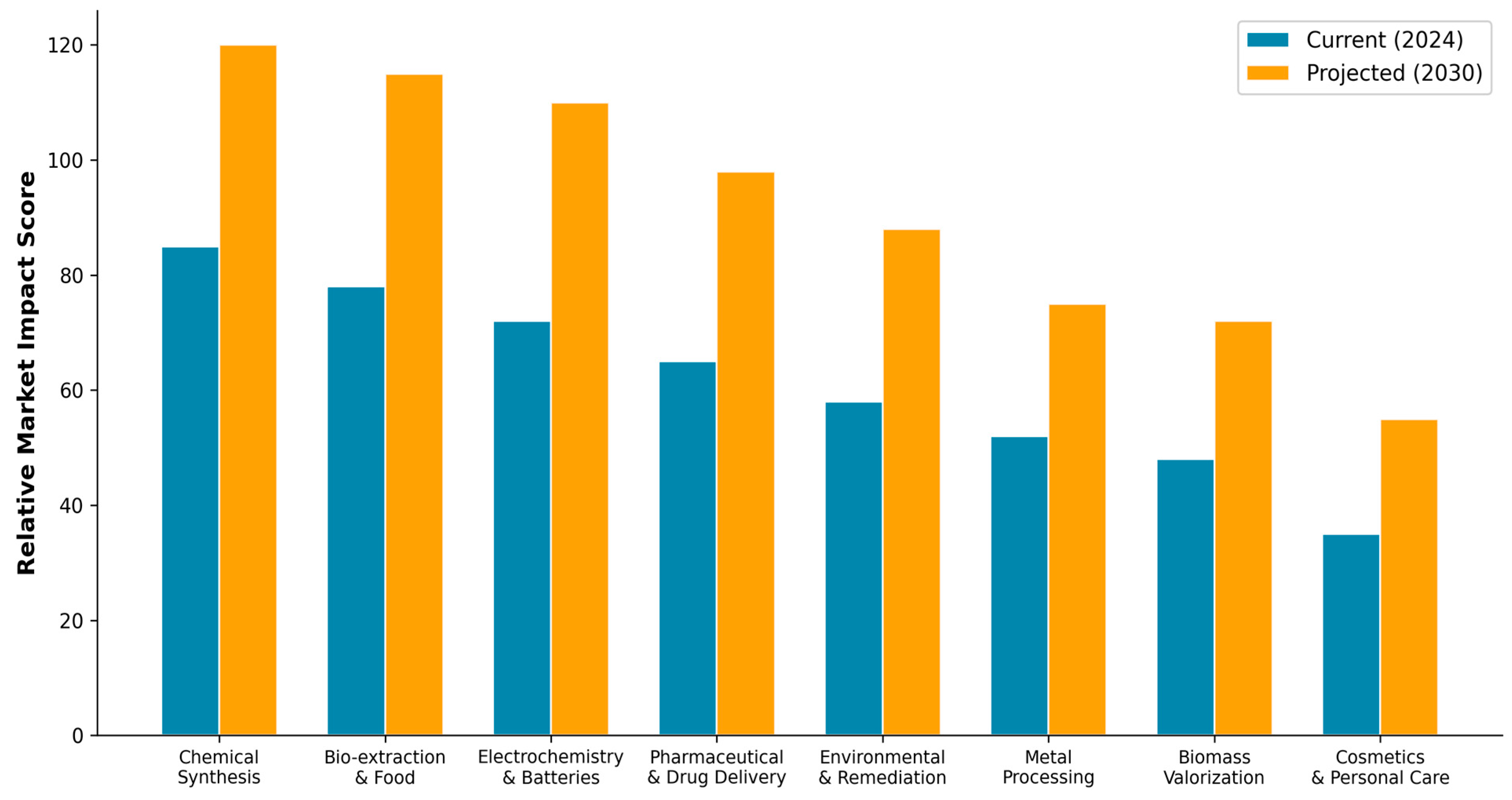
29]. This growth in very diverse sectors (
Figure 15) reflects the convergence of several market drivers: (i) increasingly stringent VOC regulations under REACH (Europe) and EPA (United States) frameworks; (ii) expanding adoption of green chemistry principles in pharmaceutical, food processing, and cosmetics industries; (iii) emerging high-value applications in lithium-ion battery recycling and critical mineral recovery; and (iv) inherent cost advantages over ionic liquids.
The Asia-Pacific region dominates, accounting for approximately 40% of global DES revenue in 2024, driven by industrialization in China and India and governmental support for green technology. Europe constitutes the second-largest market and is expected to exhibit the fastest growth rate, supported by aggressive environmental regulations and substantial R&D investments. Notable industry developments include Arkema’s majority stake acquisition in Proionic (April 2024) and BASF’s scaled green chemical production using DESs (May 2024), signaling growing corporate confidence in DES technologies.
3.9. Alignment with Sustainable Development Goals
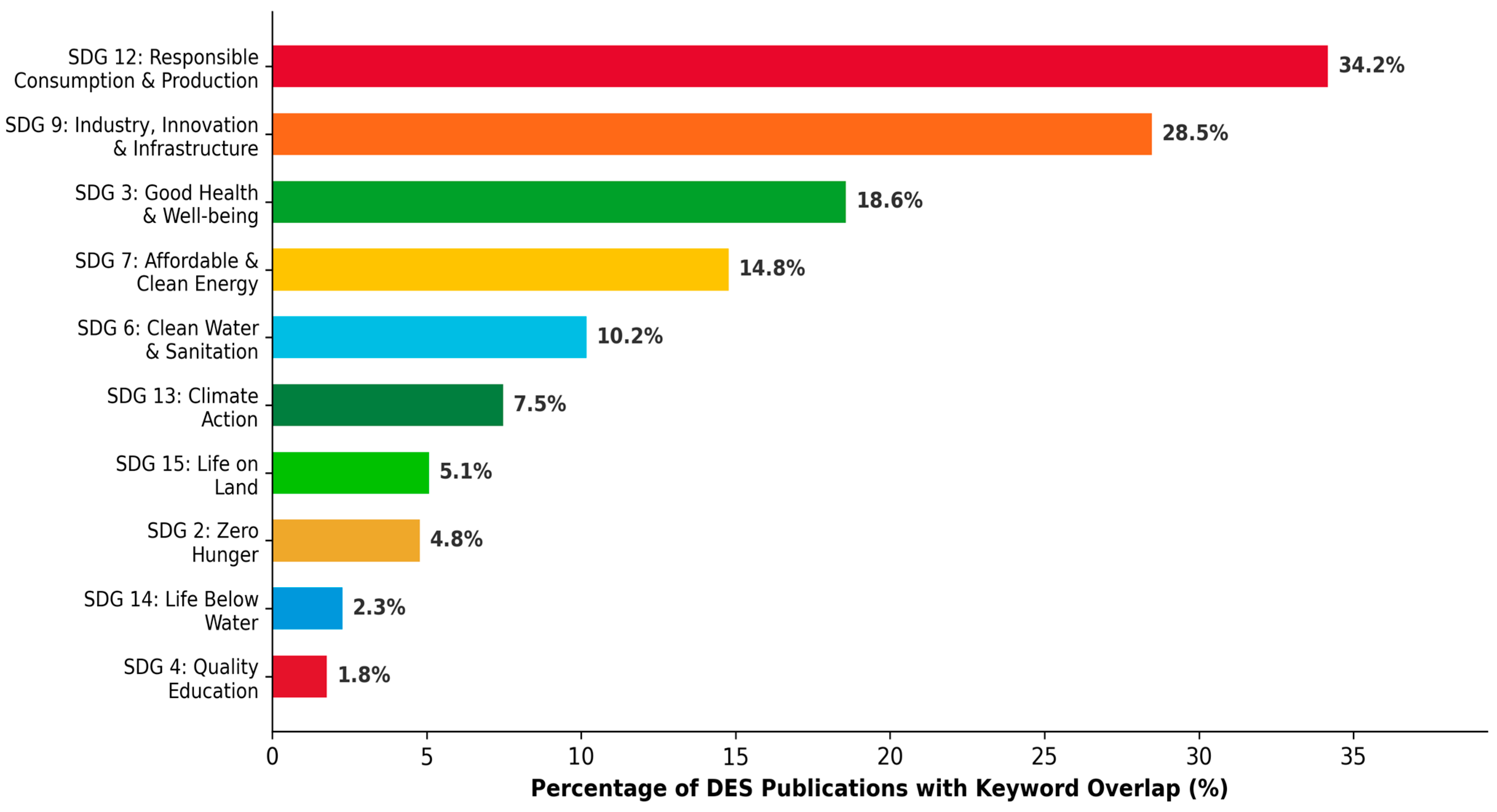
Keyword overlap analysis reveals significant alignment between DES research and several United Nations Sustainable Development Goals (
Figure 16). Importantly, because individual publications may address themes relevant to multiple SDGs, the alignment percentages do not sum to 100% but instead reflect independent keyword overlap with each goal.
SDG 12 (Responsible Consumption and Production) shows the strongest alignment, with 34.2% of DES publications exhibiting relevant keyword overlap. DESs contribute directly to this goal by enabling replacement of hazardous solvents, facilitating waste valorization, and supporting circular economy approaches through recyclability and bio-derived components. SDG 9 (Industry, Innovation and Infrastructure) follows at 28.5%, reflecting the innovative character of DES technology and its potential to transform industrial chemical processes. SDG 3 (Good Health and Well-being) aligns with 18.6% of publications through pharmaceutical applications in drug solubility enhancement, antimicrobial formulations, and bioactive compound extraction.
SDG 7 (Affordable and Clean Energy) at 14.8% reflects DES applications in energy storage, battery recycling, and CO2 capture. SDG 6 (Clean Water and Sanitation, 10.2%) encompasses growing research on DES-based water treatment and pollutant extraction. The lower but notable alignment with SDG 13 (Climate Action, 7.5%), SDG 15 (Life on Land, 5.1%), SDG 2 (Zero Hunger, 4.8%), and SDG 14 (Life Below Water, 2.3%) highlights environmentally relevant applications that remain comparatively underexplored and represents opportunities for targeted future research investment.
3.10. Critical Gaps and Challenges
Despite the impressive breadth and growth of DES research, several critical gaps must be addressed to realize the full translational potential of these materials. The most significant deficiency is the scarcity of techno-economic analysis (TEA) and life cycle assessment (LCA) studies. Of over 17,750 publications, fewer than 0.3% (approximately 40 studies) include rigorous economic feasibility analysis, and even fewer incorporate comprehensive environmental LCA. This scarcity has been independently noted in the recent DES literature: dedicated analyses have argued that the near-absence of techno-economic evaluation is a principal obstacle to industrial scale-up [
49], and prospective life cycle assessments of scaled DES-based biomass processing have only recently begun to appear [
10,
50]. The contribution of the present work is not to report this gap for the first time, but to quantify its magnitude across the entire 17,757-publication corpus and to locate it within an integrated translational-readiness framework. Without these data, the transition from laboratory to industrial scale remains difficult, as decision-makers lack the quantitative evidence needed to justify process conversions and capital investments.
Standardization of DES characterization represents another fundamental challenge. The field lacks universally agreed-upon protocols for measuring and reporting key properties such as water content, glass transition temperature, thermal decomposition onset, and eutectic point verification. This absence leads to significant inter-laboratory variability and complicates meta-analytical comparisons. The ongoing debate regarding the relative contributions of hydrogen bonding, charge transfer, and van der Waals interactions to the melting point depression in DESs reflects deeper unresolved mechanistic questions.
Toxicological and ecotoxicological assessments constitute a further critical knowledge gap. While individual DES components are often well-characterized toxicologically, the properties of their eutectic mixtures may differ substantially from predictions based on simple additivity. Comprehensive toxicity testing following OECD guidelines—including aquatic toxicity, mutagenicity, and chronic exposure studies—is essential for regulatory acceptance and safe large-scale deployment. Finally, the high viscosity of many DESs at ambient temperature remains a practical barrier, particularly for applications requiring rapid mass transfer. While water addition reduces viscosity, it simultaneously alters the hydrogen bonding network, potentially compromising the very properties that make DESs advantageous.
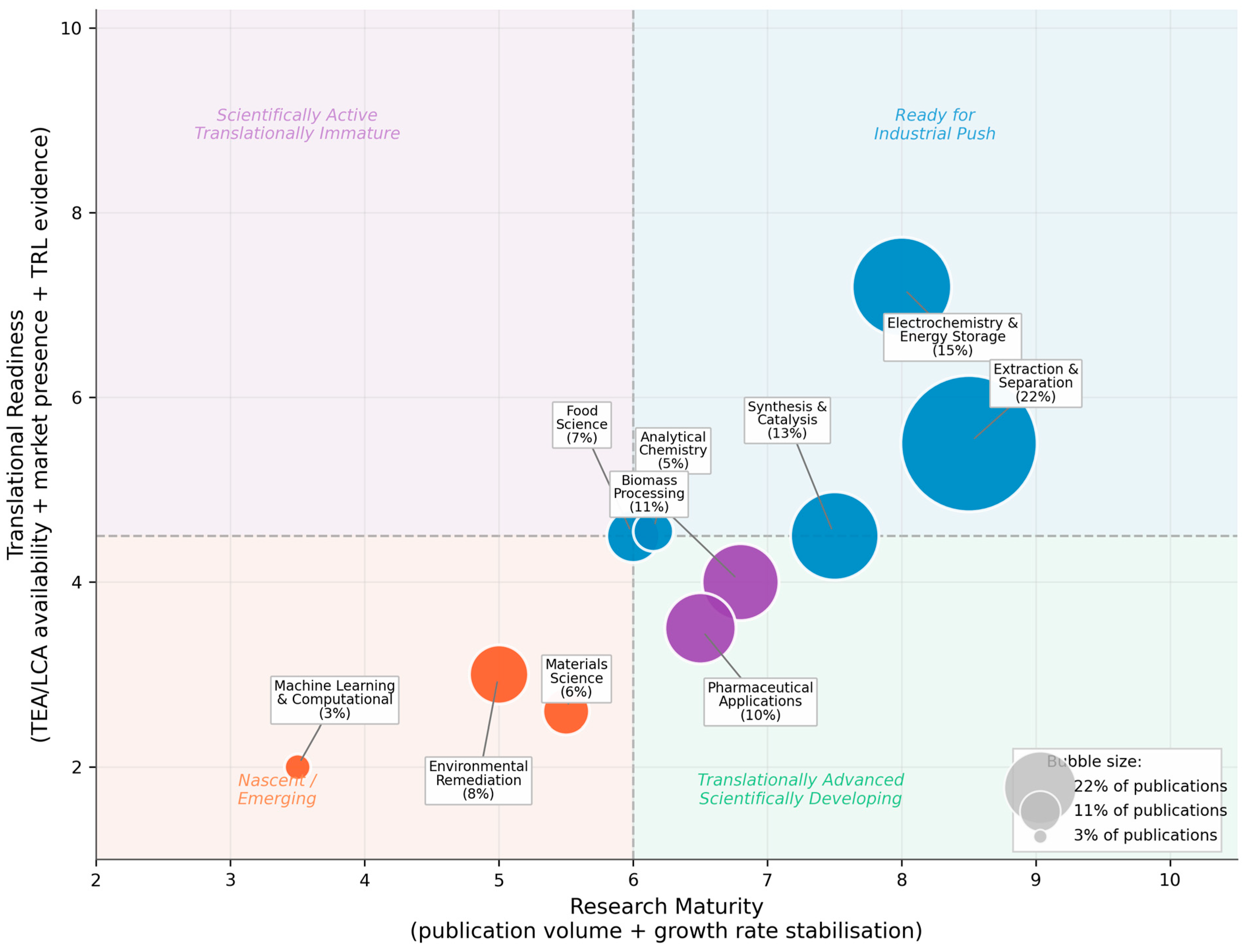
To synthesize these dimensions into an actionable strategic framework,
Figure 17 positions each of the ten thematic clusters along two orthogonal axes: Research Maturity—derived from cumulative publication volume, citation density, and growth rate stabilization—and translational readiness—assessed from the availability of TEA and LCA data, evidence of market deployment, and estimated technology readiness level (TRL). Bubble size is proportional to the cluster’s share of total DES publications. The resulting matrix reveals four structurally distinct strategic categories. Electrochemistry and energy storage occupies the upper-right quadrant—high maturity, high translational readiness—reflecting its status as the domain most advanced toward industrial deployment and the natural recipient of scale-up investment. Extraction and separation, the largest cluster by publication volume, sits at the boundary of this quadrant, indicating strong scientific foundations but partially incomplete translational infrastructure, particularly with respect to TEA and regulatory approval for food-contact applications. Synthesis and catalysis, food science, and analytical chemistry cluster in the scientifically active but translationally immature quadrant, suggesting that research investment should now pivot toward process economics and standardization rather than further fundamental exploration. Environmental remediation, materials science, and machine learning occupy the nascent or emerging quadrant, representing domains where both scientific consolidation and translational development are simultaneously required. The absence of any cluster in the translationally advanced but scientifically developing quadrant is itself informative: no DES application domain has achieved industrial maturity ahead of scientific characterization, confirming that the field’s translational gap is driven by infrastructure deficits rather than by premature commercialization.
Table 5 provides the underpinning TRL assessment for each application domain, summarizing the key evidence supporting the assigned TRL range and the primary barriers to further advancement. These estimates are based on convergent evidence from the literature survey, market reports, and the publication landscape analysis described in previous sections.
3.11. Circular Economy Alignment and Cleaner Production Implications
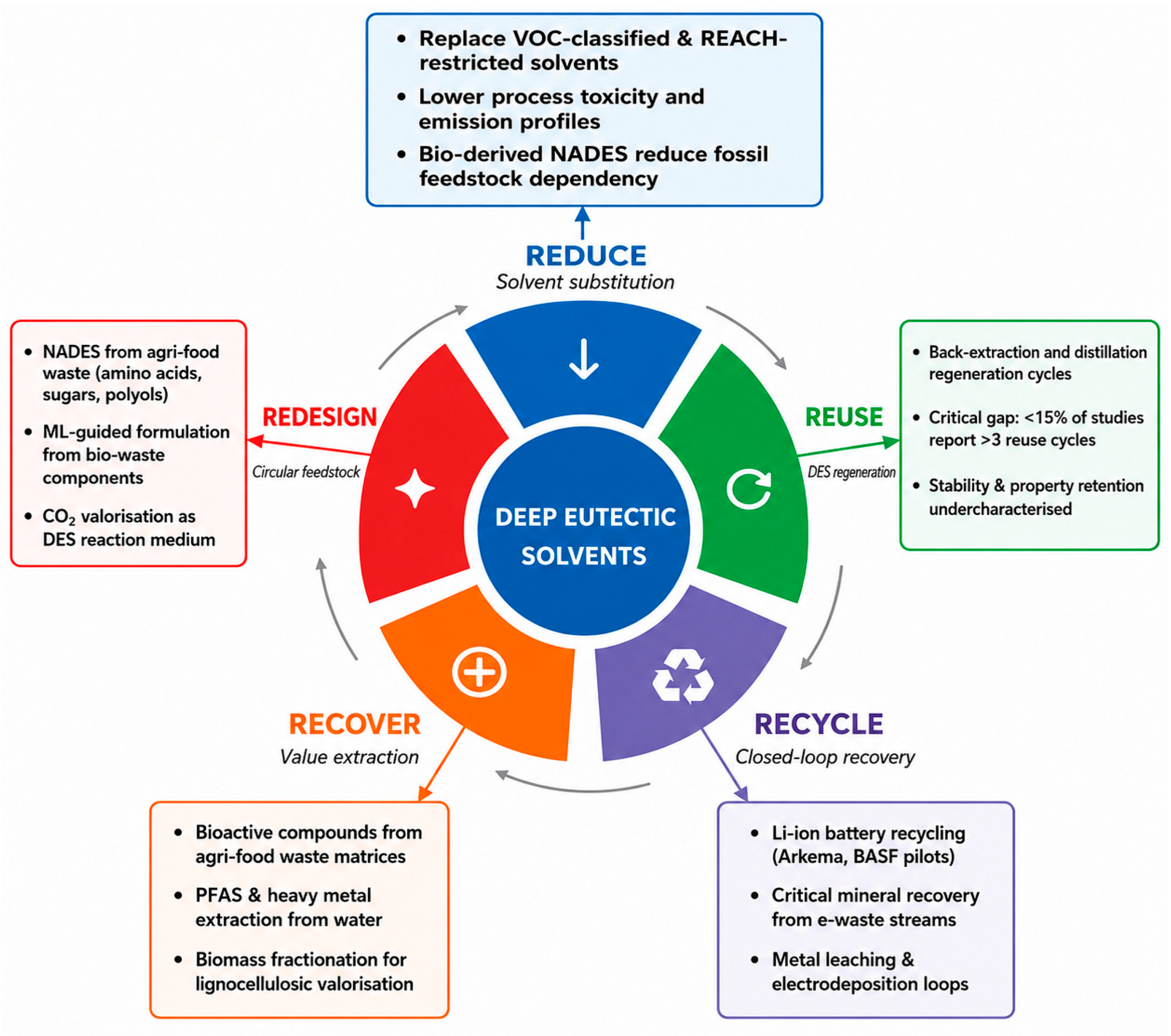
The cleaner production framework—defined by the progressive replacement of hazardous materials, reduction in waste at source, and the substitution of linear production models with circular ones—provides the most coherent strategic context for evaluating the societal contribution of DES technologies beyond conventional academic metrics. Mapping the DES research landscape onto the five R strategies of the circular economy (Reduce, Reuse, Recycle, Recover, Redesign) reveals both the substantial progress already achieved and the structural gaps that limit the field’s contribution to genuine industrial circularity (
Figure 18).
The most extensively documented circular economy contribution of DESs is as solvent substitution agents within the Reduce strategy. By replacing volatile organic compounds subject to REACH and VOC regulatory restrictions—including chlorinated solvents, n-hexane, and toluene—DESs directly reduce process toxicity, inhalation risk, and atmospheric emission at source. This substitution potential is particularly well-documented in extraction and separation applications, where DESs have been validated as functional replacements for acetonitrile, methanol, and dichloromethane in analytical and preparative workflows. Bio-derived NADESs further extend this contribution by eliminating fossil feedstock dependency entirely: formulations based on amino acids, sugars, and organic acids derived from agri-food waste streams simultaneously reduce synthetic chemical consumption and valorize waste biomass, addressing multiple dimensions of cleaner production within a single material choice.
The Reuse dimension—encompassing DES regeneration and multi-cycle deployment—represents the most significant current gap between the circular economy potential of DESs and the evidence base available to substantiate it. Back-extraction, distillation under reduced pressure, and membrane-assisted regeneration have all been demonstrated in principle; however, analysis of the publication landscape reveals that fewer than 15% of DES application studies report more than three consecutive reuse cycles with full physicochemical characterization of the recovered solvent. This deficiency is particularly problematic for industrial adoption, where solvent regeneration economics are a primary determinant of process viability. Systematic investigation of DES degradation pathways, the accumulation of extracted species in recycled batches, and the effect of reuse cycles on hydrogen bonding network integrity and selectivity constitutes one of the most urgent research priorities identified by this analysis.
The Recycle and Recover strategies are represented by the two most economically consequential DES application domains currently approaching industrial deployment. In the Recycle dimension, DES-based lithium-ion battery recycling—leveraging the selective dissolution of cathode materials and the recovery of lithium, cobalt, nickel, and manganese at high purity—has attracted substantial industrial investment, as evidenced by Arkema’s acquisition of Proionic and BASF’s scaled process demonstrations. These applications simultaneously address the circular economy imperatives of closed-loop critical mineral management and the decarbonization of battery supply chains under the EU Critical Raw Materials Act and battery regulation frameworks. In the Recover dimension, DES-based extraction of bioactive compounds from agri-food processing waste—including phenolics, carotenoids, alkaloids, and essential oils from grape pomace, olive mill effluent, and citrus peel—transforms waste streams into value-added products within a circular bioeconomy model. The rapid growth of PFAS and heavy metal extraction applications similarly positions DESs as recovery tools within contaminated water treatment cycles, contributing to the Recover strategy in the environmental domain.
The Redesign strategy—the most transformative and structurally upstream of the five R strategies—is embodied in the use of agri-food waste components as DES feedstocks. The formulation of NADESs from amino acids, sugars, and polyols derived directly from waste streams (spent brewer’s yeast, sugar beet molasses, cheese whey permeate) eliminates the requirement for purpose-manufactured chemical components and creates a direct material link between waste valorization and solvent production. Machine-learning-guided formulation design from bio-waste molecular libraries is beginning to systematize this approach, enabling the computational screening of thousands of potential NADES candidates from defined waste feedstock inventories before any experimental synthesis is required. The use of DESs as reaction media for CO2 valorization—converting captured carbon dioxide into formamides, cyclic carbonates, and carboxylic acids—further exemplifies the Redesign strategy by integrating carbon capture and chemical production within a single circular workflow.
Taken together, the circular economy mapping presented in
Figure 18 and the analysis of this section demonstrate that DES research is not uniformly distributed across the R-strategy spectrum. The Reduce and Recover dimensions are well-served by the existing literature; the Recycle dimension is advancing rapidly toward industrial deployment. The Reuse and Redesign dimensions, however, remain substantially underinvested relative to their circular economy potential. Strategic reorientation of research funding toward multi-cycle regeneration characterization and waste feedstock formulation design—supported by the TEA and LCA infrastructure identified as the field’s primary translational gap—would yield disproportionate returns in terms of both scientific novelty and societal impact, and would most directly advance the cleaner production mission that defines the scope of this journal.
3.12. Policy Implications and Research Priorities
The evidence assembled across
Section 3.1,
Section 3.2,
Section 3.3,
Section 3.4,
Section 3.5,
Section 3.6,
Section 3.7,
Section 3.8,
Section 3.9,
Section 3.10 and
Section 3.11 supports a set of concrete, evidence-based recommendations directed at the multiple stakeholder audiences for whom the DES research landscape is strategically relevant: research funders, regulatory bodies, industrial developers, and the scientific community itself.
Table 6 synthesizes the eight most consequential policy implications identified in this analysis, pairing each with the specific finding from which it derives and the relevant regulatory, funding, or governance framework to which it applies. These recommendations are offered not as a comprehensive policy agenda but as a prioritized, quantitatively grounded foundation for strategic dialog between the DES research community and the institutional actors who shape its direction.
5. Conclusions
This analysis of global deep eutectic solvent research across more than two decades provides the community with an integrated, evidence-based reference for understanding where the field stands, how it arrived there, and where the most consequential opportunities and obstacles lie ahead.
The exponential growth of DES publications—from a single paper in 2004 to 3954 in 2025, yielding a cumulative corpus of 17,757 publications—positions DES research among the most dynamically expanding domains in contemporary chemistry and materials science. The moderation of year-over-year growth rates to approximately 20–30% per annum signals a transition from an emerging to a maturing research domain, with the structural characteristics that typically precede industrial translation at scale. China’s leadership (38.4% of global output, h-index = 160) reflects sustained governmental investment aligned with national priorities in battery recycling, metal extraction, and biomass processing, while the disproportionately high citation impact of the United States and Malasya relative to their output volumes demonstrates that influence and volume are not uniformly correlated. The relative underrepresentation of Latin America, sub-Saharan Africa, and Southeast Asia is notable given the direct relevance of DES technologies to pressing regional challenges in water treatment, food preservation, and pharmaceutical access.
The thematic landscape reveals a field that has undergone a fundamental transformation in character, from physicochemical characterization and metal electrodeposition toward a broadly applied domain in which extraction and separation (22%), electrochemistry and energy storage (15%), synthesis and catalysis (13%), and biomass processing (11%) define the mainstream. The temporal analysis identifies electrochemistry and synthesis applications as approaching thematic saturation, while computational design, critical mineral recovery, eutectogel materials, and CO2 capture represent domains where early investment is still likely to yield disproportionate scientific return. The 300% growth in machine-learning-related DES publications between 2022 and 2025 signals an emerging paradigm shift toward data-driven formulation design that is likely to accelerate discovery substantially in the coming years. The near-ubiquitous dominance of choline chloride (72% of formulations) and the severe under-exploration of Type V DESs (1.0% of publications) together suggest a degree of path dependency that constrains the broader DES design space and that targeted computational screening is now well-positioned to address.
The global DES market projections—from approximately USD 166 million in 2024 to USD 370 million by 2030 (CAGR 14–17%)—confirm that industrial translation is already underway, with recent corporate commitments from Arkema and BASF signaling growing confidence in DES technologies at scale. The strong alignment with SDG 12 (34.2%) and SDG 9 (28.5%), together with meaningful overlap with SDG 3 (18.6%), SDG 7 (14.8%), and SDG 6 (10.2%), provides a compelling framework for communicating the field’s societal relevance to funding agencies and policymakers, while the low alignment with SDG 14 (2.3%) and SDG 15 (5.1%) identifies ecotoxicological assessment as one of the most consequential and currently neglected research areas.
The finding with the most direct implications for research strategy—already flagged qualitatively in the recent DES literature [
10,
49,
50] and here quantified across the full corpus—is the severe and persistent underrepresentation of techno-economic analysis and life cycle assessment: fewer than 0.3% of publications include rigorous economic feasibility or comprehensive environmental LCA data. This is not a minor gap but a structural barrier to industrial adoption. Equally urgent are the absence of community-agreed characterization protocols—which introduces inter-laboratory variability that systematically undermines dataset comparability and limits the reliability of machine learning models—and the incomplete toxicological characterization of DES mixtures as distinct from their individual components, which remains an obstacle to regulatory acceptance under REACH and equivalent frameworks.
The fundamental chemistry of DESs is mature and productive, the application landscape is broad and diversifying, and the market conditions are favorable. What the field now requires is a deliberate shift in research investment toward the translational infrastructure—techno-economic modeling, life cycle assessment, standardized characterization, and comprehensive toxicological datasets—without which the promise of DESs as genuinely transformative green chemistry tools will remain incompletely realized. It must be acknowledged, finally, that a landscape analysis grounded in publication counts is necessarily retrospective and cannot reliably anticipate discontinuous shifts in the kind that machine-learning-assisted design has recently produced; the priorities identified here should therefore be revisited as the field evolves. This work is offered as a quantitative foundation for that strategic reorientation.