Article

Evaluation of CO2 Adsorption and Activation in CuxScy Nanoclusters by Analyzing DFT and PDOS/TDOS Signatures


by
Katherine Liset Ortiz Paternina
1,*,
Rodrigo Ortega-Toro
2 and
Joaquín Hernández Fernández
1,3,4,*
1
Chemistry Program, Department of Natural and Exact Sciences, San Pablo Campus, University of Cartagena, Cartagena de Indias D.T. y C., Cartagena 130015, Colombia
2
Food Packaging and Shelf-Life Research Group (FP&SL), Food Engineering Program, University of Cartagena, Cartagena 130015, Colombia
3
Department of Natural and Exact Science, Universidad de la Costa, Barranquilla 080002, Colombia
4
Grupo de Investigación GIA, Fundacion Universitaria Tecnologico Comfenalco, Cr 44 D N 30A, 91, Cartagena 30015, Colombia
*
Authors to whom correspondence should be addressed.
Sustain. Chem. 2026, 7(2), 16; https://doi.org/10.3390/suschem7020016

Submission received: 19 February 2026 / Revised: 16 March 2026 / Accepted: 17 March 2026 / Published: 25 March 2026

Abstract

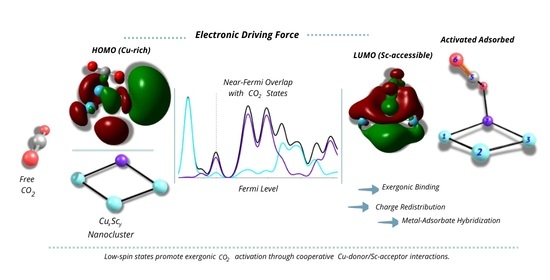
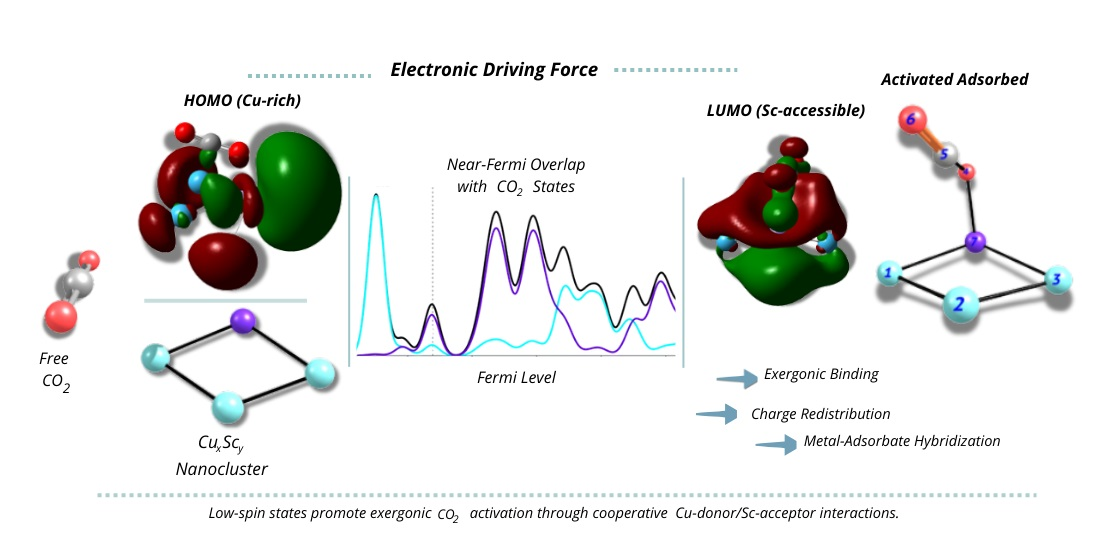
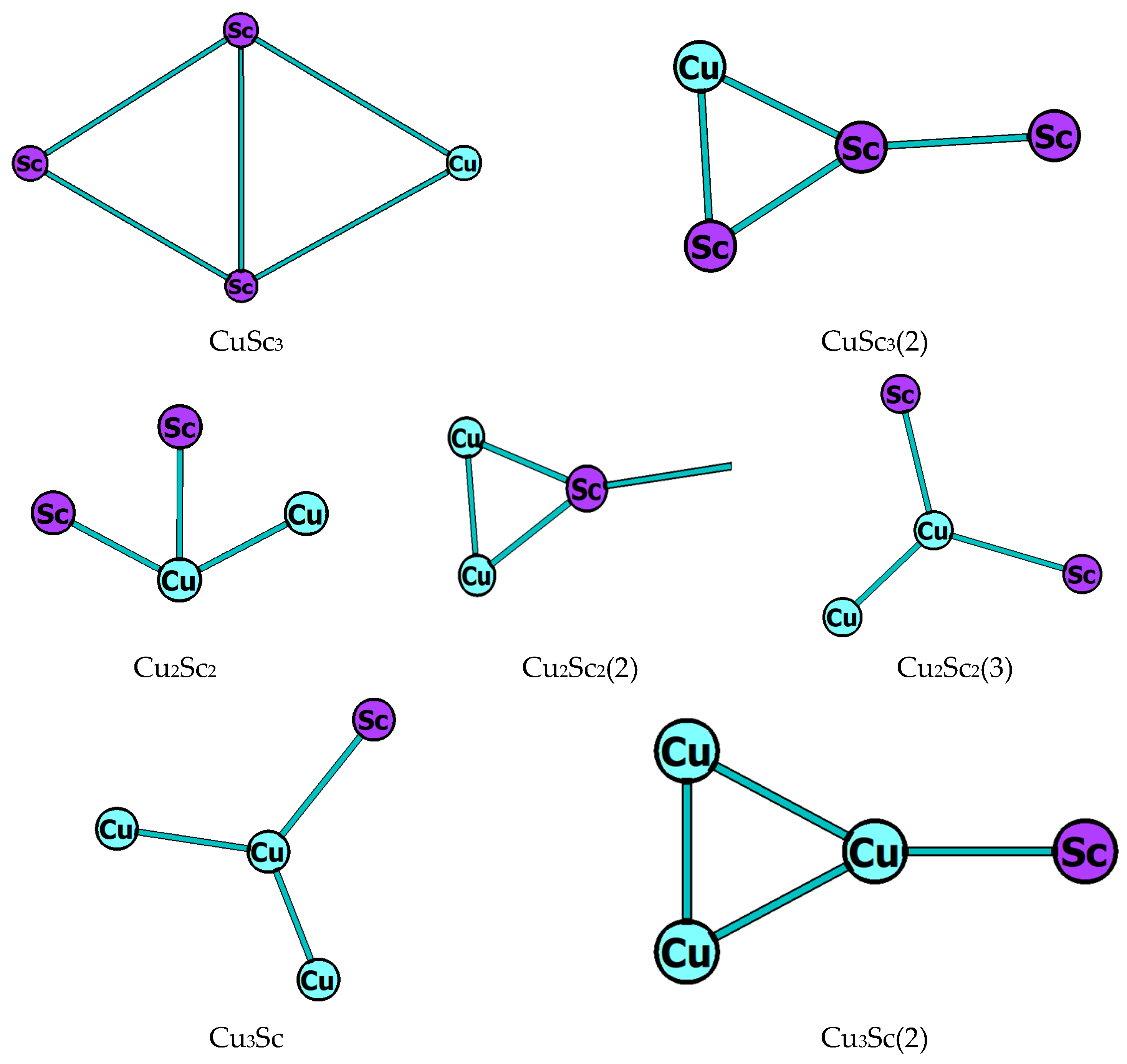
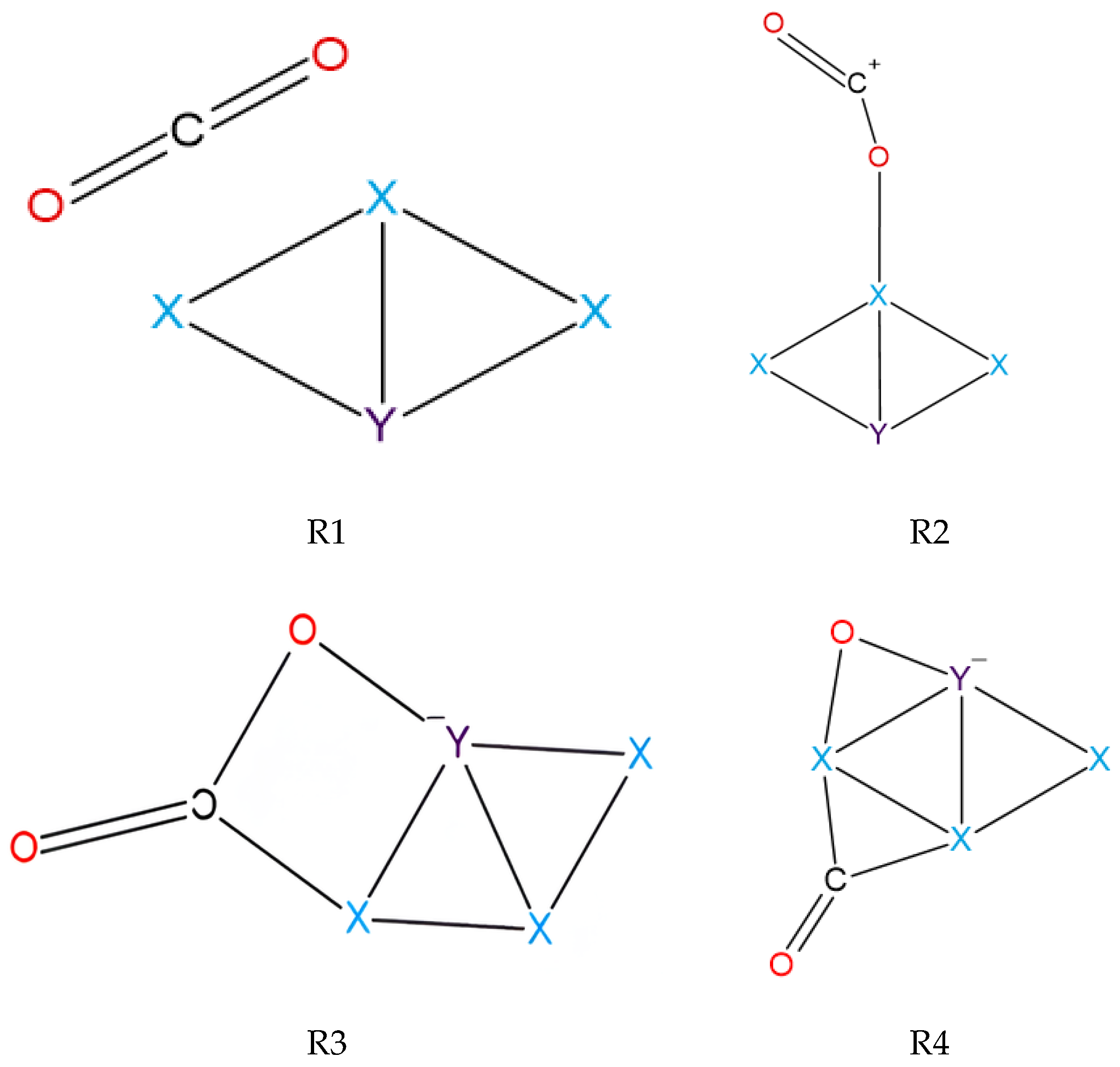
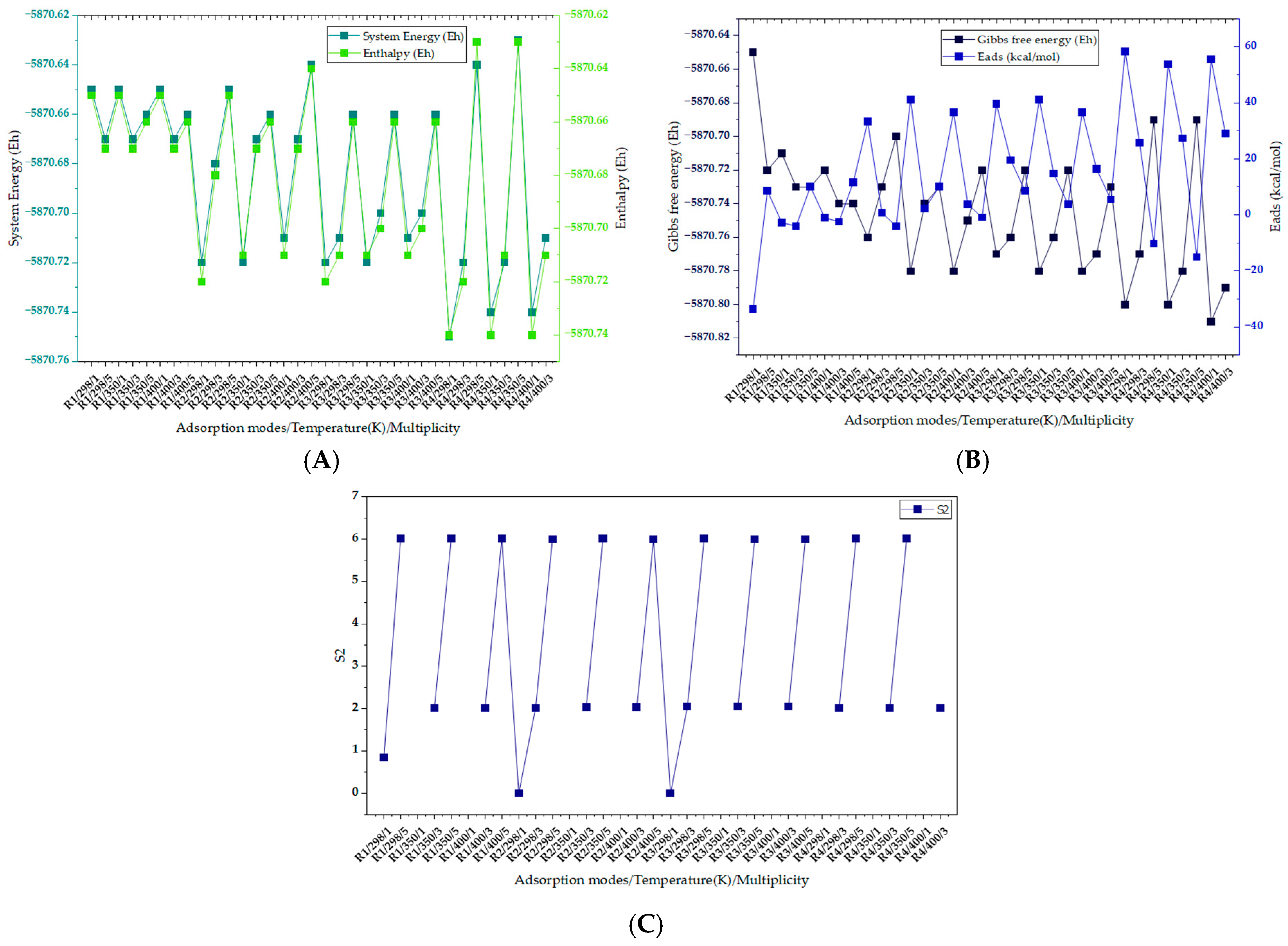
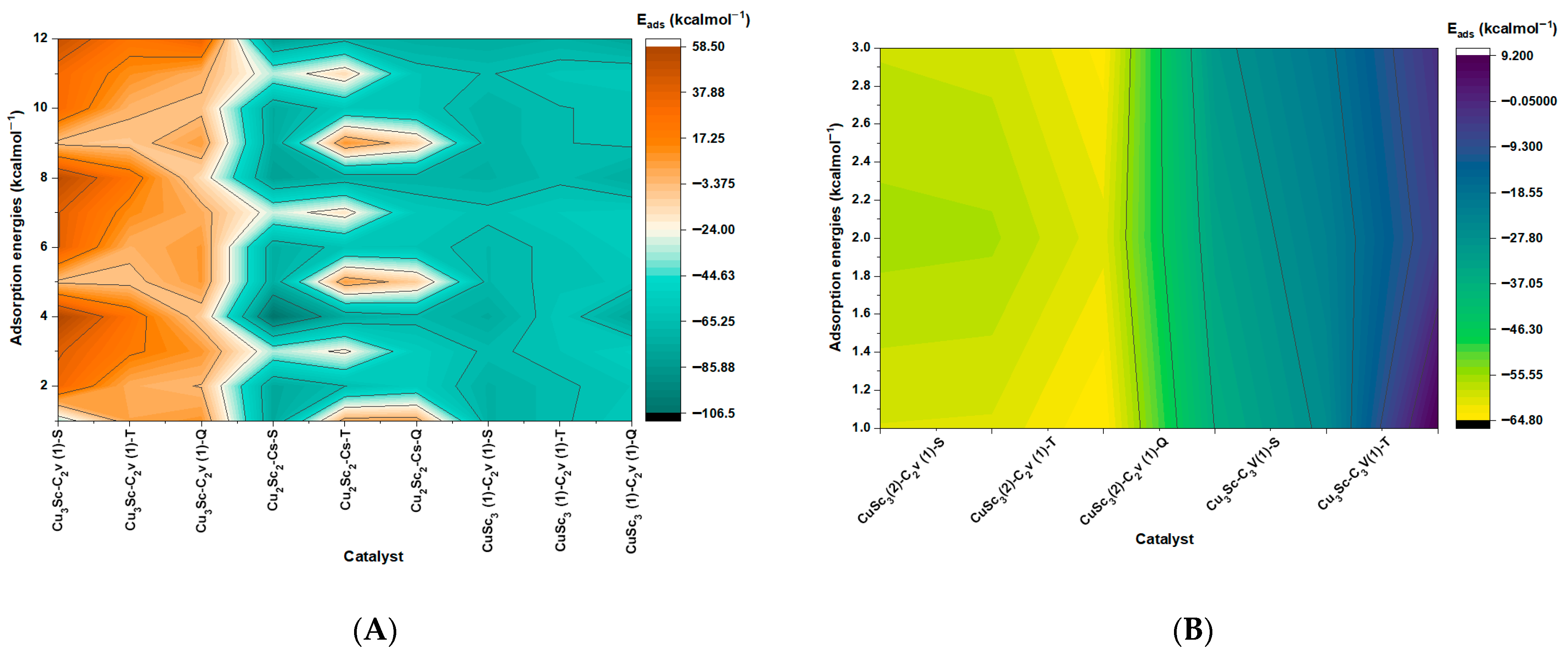
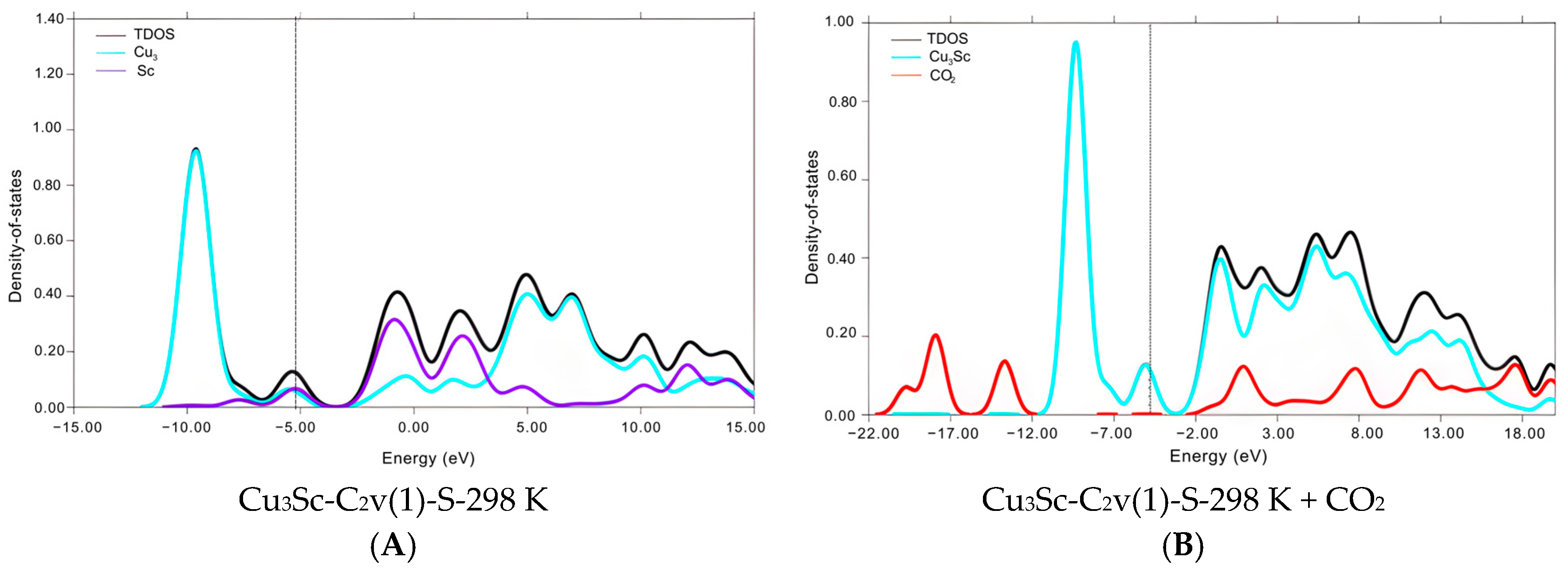
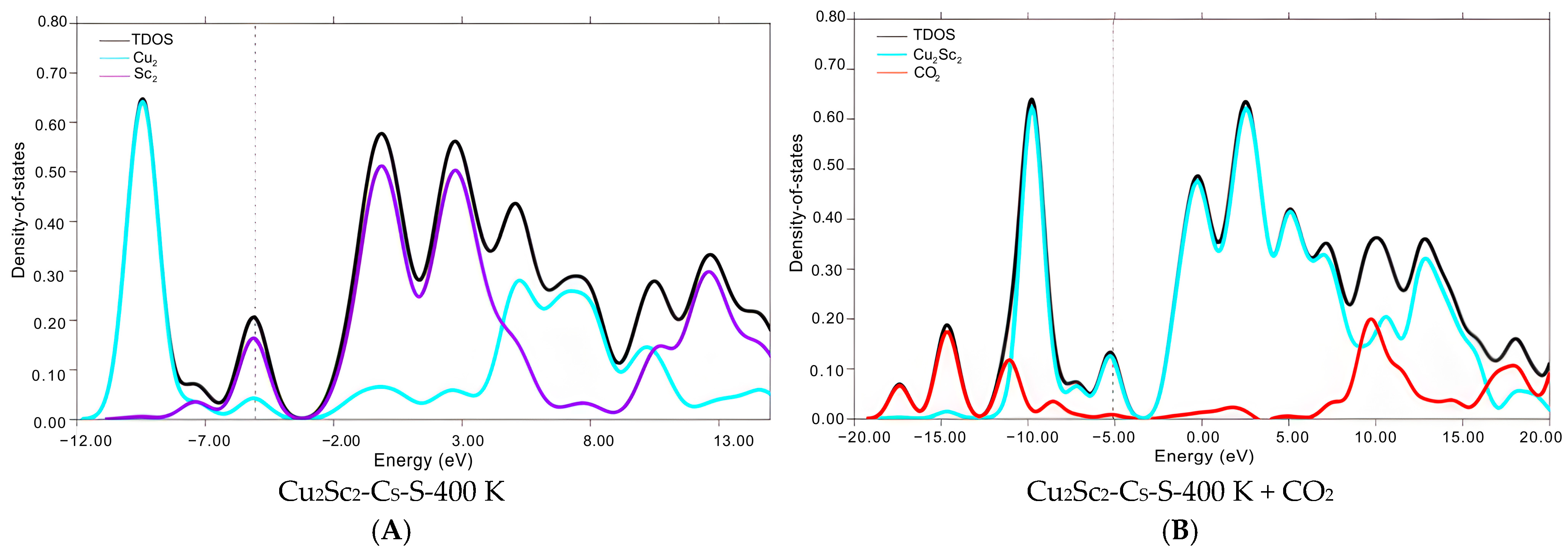
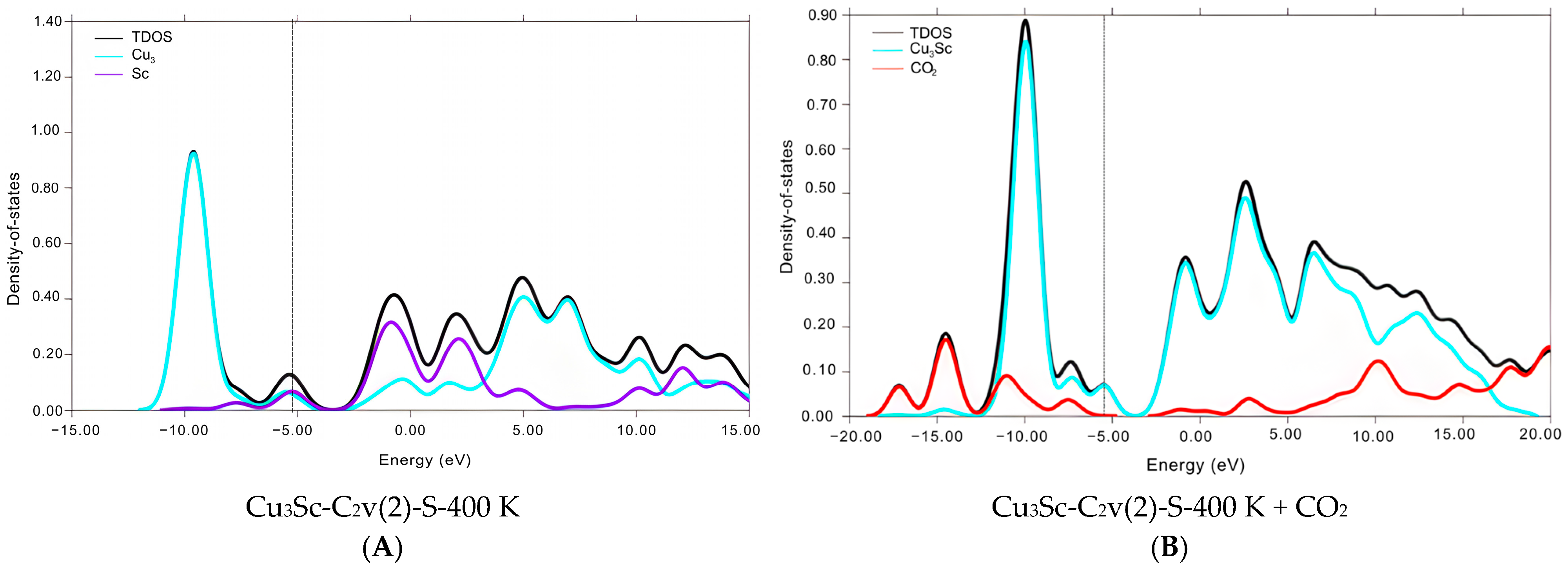
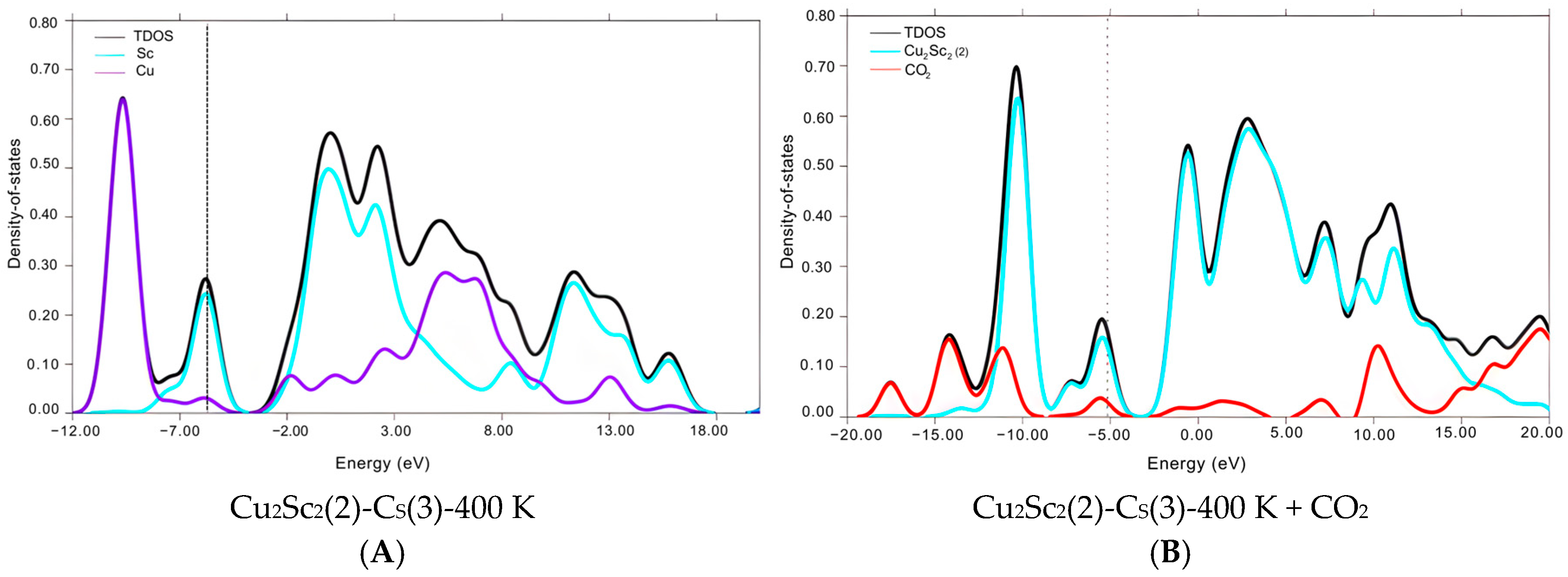
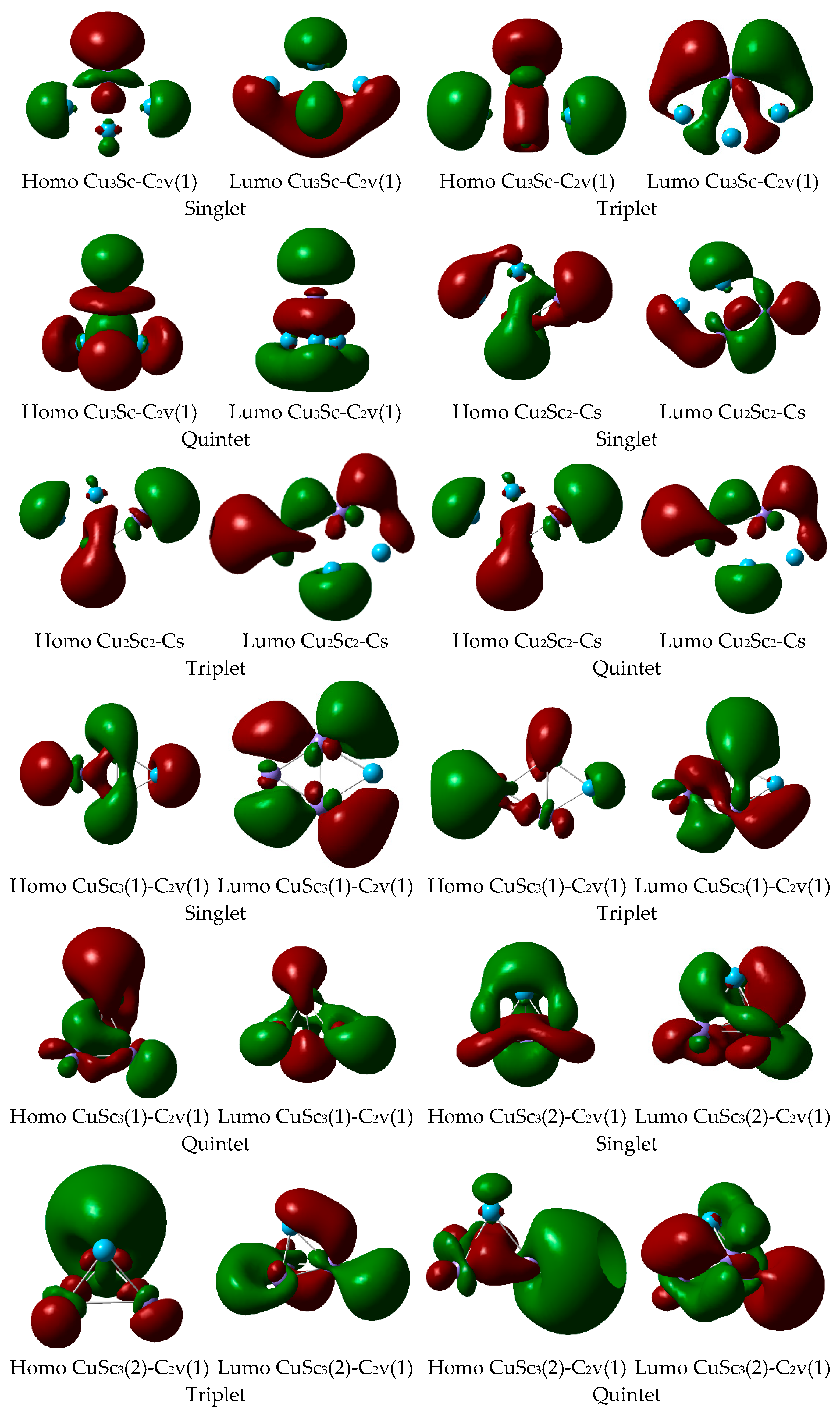
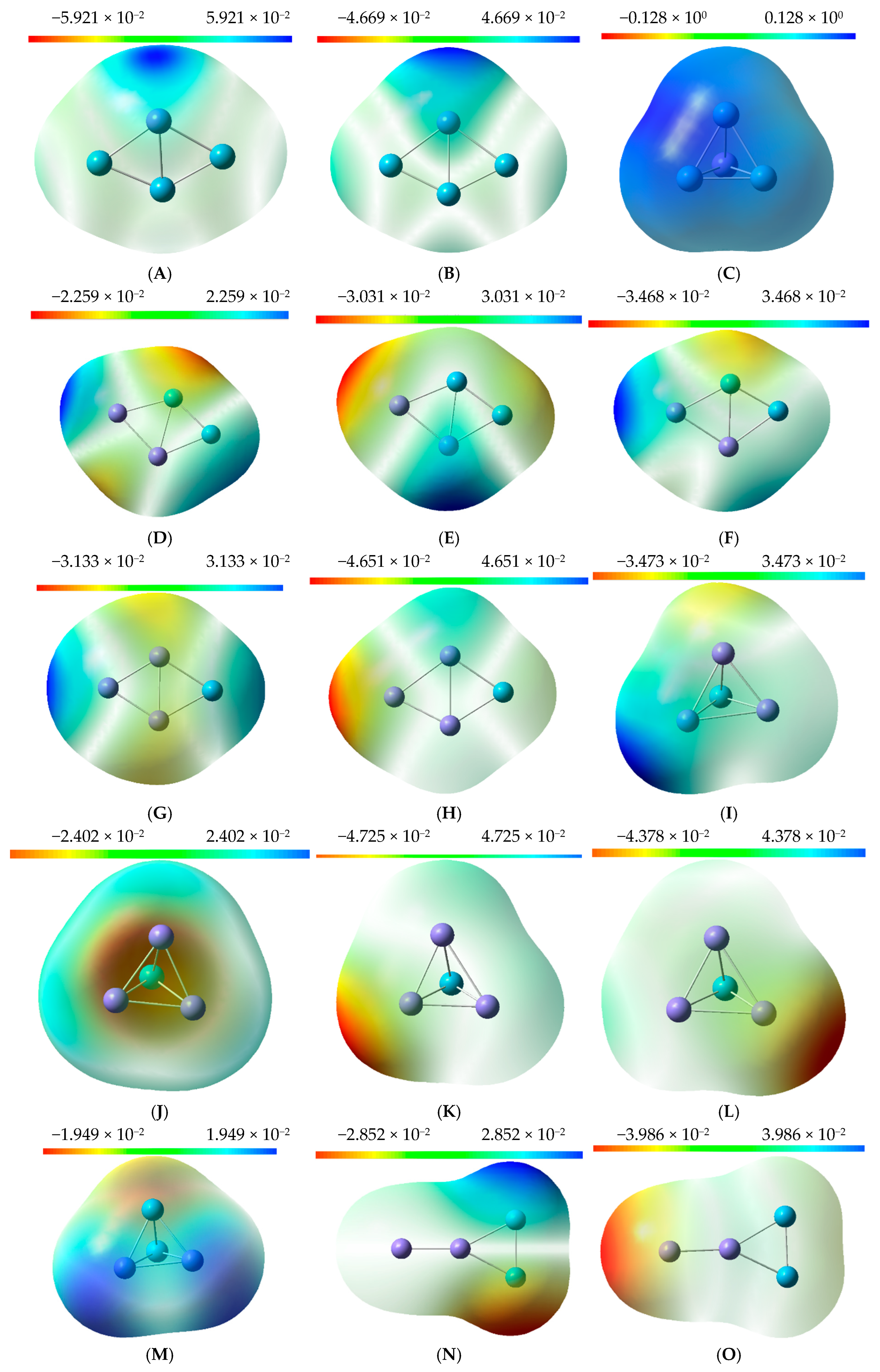
The adsorption and activation of CO2 on CuxScy nanoclusters with x + y equal to 4 were analyzed using DFT and PDOS and TDOS signatures. The geometries of Cu3Sc, Cu2Sc2, and CuSc3 were optimized in the gas phase, and the minima were verified by frequencies in ORCA using M06-2X/def2-TZVP. Multiplicities 1, 3, and 5, temperatures between 298 and 400 K, and four CO2 coordination modes R1 to R4 were evaluated. Naked and complex cluster comparison panels were constructed, and two energy windows, −18 to −10 eV and −8 to 6 eV around the Fermi level, were analyzed, complemented by frontier orbitals and charge maps. Thermodynamics indicated that mode and multiplicity control the adsorption energy, with ANOVA p-values of 0.002 and 0.008, while temperature was not significant (p = 0.682). In Cu3Sc–C2v(1), the R1 singlet at 298 K showed Eads −33.43 kcal·mol−1 with spin contamination, while alternative modes in the singlet were unfavorable. In PDOS and TDOS, the bare cluster exhibits a Cu d band at −11 to −10 eV and a valley around −5 eV. The exergonic complexes show CO2 signals near the Fermi level, superimposed on Cu and Sc states, with state filling and broadening. Transferable indicators based on CO2 intensity in the −8 to 6 eV range and metal–adsorbate overlap are proposed as predictors of exergonic adsorption.
Keywords: CO2 adsorption; Cu–Sc nanoclusters; DFT; PDOS/TDOS; metal–adsorbate hybridization CO2 adsorption; Cu–Sc nanoclusters; DFT; PDOS/TDOS; metal–adsorbate hybridization
Graphical Abstract