Article

What Makes Employees Innovate Green? A Multi-Source Examination of HRM, Leadership, and Psychological Mechanisms


1
Department of Marketing and Communication, School of Business, Athens University of Economics and Business, 10434 Athina, Greece
2
Department of Management Science and Technology, School of Business, Athens University of Economics and Business, 10434 Athina, Greece
3
Department of Food Science & Technology, School of Agricultural Sciences, University of Patras, 30100 Agrinio, Greece
*
Author to whom correspondence should be addressed.
World 2026, 7(4), 61; https://doi.org/10.3390/world7040061
Submission received: 26 January 2026 / Revised: 16 March 2026 / Accepted: 31 March 2026 / Published: 3 April 2026
(This article belongs to the Special Issue Green Human Resources Management and Innovation)

Abstract

Organizations increasingly invest in sustainability, yet limited knowledge exists regarding the psychological and leadership mechanisms through which Green Human Resource Management (GHRM) fosters employees’ green innovative behavior. This study addresses this scientific problem by examining how GHRM relates to green innovation through sequential psychological processes and under which leadership conditions these relationships become stronger. Using multi-source data from 300 employee–supervisor dyads across three industries in the Greek private sector, the study tests a serial mediation model linking GHRM to green innovative behavior through psychological safety and work engagement, as well as the moderating role of Green Transformational Leadership (GTL). Structural equation modelling supports all hypothesized associations: GHRM is positively related to psychological safety, which predicts work engagement, which in turn strongly predicts green innovative behavior. GTL strengthens the relationship between GHRM and psychological safety, resulting in a stronger indirect effect on green innovation. The findings provide an integrative understanding of how HR systems, psychological conditions, and leadership jointly support employee-driven environmental innovation.

1. Introduction

Environmental sustainability has become a strategic priority for organizations worldwide, driven by regulatory pressures, stakeholder expectations, and global commitments to reducing ecological impact. In this context, Green Human Resource Management (GHRM) has emerged as a key organizational mechanism for embedding environmental values into HR practices such as recruitment, training, performance appraisals, and rewards [1,2]. Research increasingly recognizes GHRM as a strategic resource that shapes employees’ environmental attitudes and behaviors [3,4]. A growing body of research emphasizes the importance of psychological safety [5], work engagement [6], and transformational leadership [7,8] in enabling employees to express ideas, take initiative, and contribute to environmental innovation. Collectively, these conversations suggest that HR systems, relational climates, and leadership behaviors jointly shape employees’ capacity to generate and implement sustainable, environmentally responsible innovations.
Despite this progress, core gaps remain in the literature. First, much of the research on GHRM continues to rely on single-source, cross-sectional data [9,10], limiting the ability to draw strong conclusions about psychological mechanisms underlying sustainability-oriented behavior. Second, although several studies have examined mediators such as environmental commitment or green identity [11,12], limited attention has been given to psychological safety, an essential condition for interpersonal risk-taking and idea sharing that is foundational for innovation [13,14]. Third, existing research rarely examines boundary conditions that shape when and under what conditions GHRM is more or less effective [2]. In particular, the role of Green Transformational Leadership (GTL)—a leadership style that motivates and inspires employees toward environmental goals [7,15]—remains underexplored as a moderator that may amplify or weaken the effects of GHRM. As a result, we lack an integrated understanding of how HR practices, leadership, and psychological climates interact within a single explanatory framework to produce employee-driven green innovation.
Addressing these gaps is essential for advancing theory and practice. Without a clearer understanding of how GHRM is associated with green innovative behavior, scholars risk attributing organizational sustainability outcomes to HR practices without identifying the psychological mechanisms through which these effects unfold [16,17]. Overlooking psychological safety neglects a critical interpersonal climate that allows employees to voice unconventional ideas—ideas that are often necessary for sustainability-oriented innovation [5,14]. Similarly, ignoring leadership as a boundary condition prevents one understanding why the same GHRM practices may be effective in some settings but ineffective in others [2,15]. Practically, organizations increasingly invest in environmental training, green rewards, and sustainability initiatives; however, these investments may fail if employees do not feel safe to speak up or if leaders do not reinforce environmental values. Thus, clarifying these mechanisms and contingencies holds significant value for designing HR and leadership systems that effectively cultivate employee-driven sustainability-oriented innovation.
To address these issues, we develop and test an integrated serial mediation and moderation model that brings together GHRM, psychological safety, work engagement, and green transformational leadership. Grounded in the Job Demands–Resources (JD–R) model [6] and Conservation of Resources (COR) theory [18], we conceptualize GHRM as a contextual resource that is positively associated with employees’ psychological safety, which in turn subsequently fosters work engagement. Psychological safety reflects an interpersonal climate that reduces fear and uncertainty, whereas work engagement represents a subsequent motivational state through which employees invest energy in their work. These psychological conditions, in turn, are expected to promote green innovative behavior, defined as the generation, promotion, and implementation of environmentally beneficial ideas [8,19]. Furthermore, we argue that GTL strengthens the association between GHRM and psychological safety by providing inspirational motivation, environmental vision, and individualized support [7]. We empirically test our model using a multi-source, multi-industry design, collecting data from employees (GHRM, psychological safety, work engagement, GTL) and their supervisors (green innovative behavior) across three industries in the Greek private sector.
This study makes four key contributions. First, it identifies psychological safety as a central mechanism linking GHRM to employee activation and innovation, extending theoretical understanding of how green HR systems shape workplace climates [14]. Second, it demonstrates that work engagement operates as a downstream motivational process through which employees’ channel psychological safety into sustainability-oriented innovative behaviors [17,20]. Third, it introduces GTL as a critical boundary condition, offering insights into when and under what leadership conditions GHRM is most effective [7,15]. Finally, our multi-source, multi-industry research design responds to calls for more rigorous methodologies in GHRM research [2,9], strengthening causal interpretation and enhancing external validity. Overall, the study advances an integrative understanding of how organizations can leverage HR practices, leadership, and psychological climates to foster employee-driven environmental innovation.
Despite substantial progress in research on GHRM and sustainability-oriented behavior, there is still limited understanding of the psychological mechanisms through which HR systems enable employees to innovate for environmental purposes, and under which leadership conditions these effects are strengthened. The essential scientific problem addressed in this article is the lack of an integrated explanation combining HR practices, psychological states, and leadership cues to understand employee-driven green innovation. Accordingly, the aim of this study is to develop and test a theoretically grounded model that explains how GHRM fosters green innovative behavior through psychological safety and work engagement, and how Green Transformational Leadership conditions these associations.
Although transformational leadership has been extensively examined in sustainability and innovation research, prior studies have mainly conceptualized it as a direct antecedent of green behaviors. The present study differs by examining Green Transformational Leadership (GTL) as a boundary condition that shapes employees’ interpretation of HRM practices. This shift moves the focus from leadership as a direct driver of green behavior to leadership as a contextual amplifier of HRM signals, providing a novel contribution to the literature.

2. Literature Review

2.1. Theoretical Background

This study is grounded in two complementary frameworks: The Job Demands–Resources (JD–R) model and Conservation of Resources (COR) theory. JD–R theory conceptualizes HRM practices as contextual job resources that enhance motivation, energy, and engagement by fulfilling basic psychological needs. COR theory emphasizes the accumulation and protection of resources, proposing that resource-rich environments trigger resource gain cycles that enhance positive psychological states. Using these frameworks jointly, GHRM is conceptualized as an organizational resource system that promotes psychological safety and work engagement, while GTL is positioned as a contextual leadership resource that moderates the resource transmission process.

2.2. Green Human Resource Management as a Contextual Resource

Green Human Resource Management (GHRM) refers to a bundle of HR practices designed to embed environmental sustainability across the employee lifecycle—such as green recruitment, environmental training, green performance appraisal, and eco-focused reward systems [1,2]. Scholars increasingly view GHRM as a strategic HR architecture, capable of shaping employees’ pro-environmental motivation and behavior [3,4]. Through signaling processes, GHRM communicates organizational values and expectations regarding environmental responsibility, thereby shaping employee cognitions, meaning-making, and behavioral intentions [9].
From a theoretical standpoint, GHRM can be conceptualized as a job resource, consistent with the Job Demands–Resources (JD–R) model [6]. Job resources—such as autonomy, skill development, clarity, and value alignment—enhance work engagement and promote proactive behaviors. GHRM practices provide opportunities for learning (green training), meaningfulness (aligning individual work with ecological purpose), and participation in organizational sustainability initiatives, fulfilling core motivational needs [21]. Complementarily, Conservation of Resources (COR) theory posits that individuals strive to accumulate and protect resources; therefore, HR systems that provide support, recognition, and environmental clarity may initiate resource gain cycles [18].
Empirical research supports this positioning. GHRM has been found to be positively associated with pro-environmental behavior [10], green creativity [22], work engagement [3], and employee voice [11]. However, the psychological mechanisms underlying these effects remain insufficiently explored, particularly in relation to interpersonal climates such as psychological safety.
GHRM encompasses green recruitment, environmental training, green performance appraisal, eco-focused rewards, and employee involvement in sustainability initiatives. These practices jointly reinforce a consistent set of environmental expectations and opportunities for participation.

2.3. Psychological Safety as a Mechanism Linking HR Practices to Innovation

Psychological safety—defined as a shared belief that the work environment is safe for interpersonal risk-taking [5]—is widely recognized as a key antecedent of creativity, voice, learning behavior, and innovation [14]. Employees who feel psychologically safe are more willing to propose unconventional suggestions, admit mistakes, and express concerns or new ideas—behaviors that are central to sustainability-oriented innovation and green problem solving [22,23,24].
The HRM literature increasingly highlights psychological safety as a mechanism through which supportive HR systems influence employee outcomes [25]. Practices such as training, participation, recognition, and fair evaluation create a climate of trust and openness, enhancing employees’ perception that expressing themselves will not lead to embarrassment or negative professional consequences. GHRM, in particular, may enhance psychological safety by signaling that the organization values environmental initiative and by encouraging participation in green initiatives [2].
Despite its theoretical importance, psychological safety has been understudied as a mechanism in the GHRM literature. Prior work has mainly focused on environmental commitment [9], green identity [19], or organizational citizenship behavior [11]. Yet, green innovation—defined as the generation, promotion, and implementation of eco-focused ideas [8]—requires precisely the interpersonal risk-taking that psychological safety enables. Understanding psychological safety as a mediating mechanism can therefore deepen the explanation of how GHRM fosters green innovation.
Recent GHRM studies highlight that participatory environmental practices, transparent evaluation, and green voice structures create conditions that facilitate psychological safety. For example, environmentally focused HR systems have been shown to reduce interpersonal risk perceptions and support employee openness through clarity of expectations, fairness, and competence support. Despite this relevance, empirical research explicitly linking GHRM and psychological safety remains limited, reinforcing the importance of examining this mechanism.

2.4. Work Engagement as a Motivational Driver of Green Innovative Behavior

Work engagement refers to a positive, fulfilling work-related state characterized by vigor, dedication, and absorption [26]. In the JD–R framework, engagement is the primary motivational mechanism through which job resources translate into performance and proactive behavior [6]. Engaged employees invest cognitive, emotional, and physical energy into their work, making them more likely to develop and implement creative ideas.
Recent research highlights that work engagement is particularly relevant for sustainability-oriented behaviors. Engaged employees report greater willingness to participate in environmental initiatives, green voice, and eco-innovation [17,27]. Engagement has also been found to mediate relationships between leadership and green citizenship behavior [7], suggesting its usefulness as a mechanism in sustainability contexts.
Furthermore, psychological safety is a known antecedent of engagement [14]. Psychological safety captures the interpersonal climate that reduces risk perceptions, whereas engagement reflects the subsequent motivational investment of personal resources. When employees feel safe to express themselves, they experience heightened authenticity, reduced anxiety, and stronger motivational activation—conditions that enhance engagement. Psychological safety is theorized as a more proximal interpersonal climate that reduces fear and enables authentic self-expression, whereas work engagement reflects a subsequent motivational state through which employees invest energy and effort into their roles. Thus, integrating psychological safety and work engagement into a serial mediation pathway provides a theoretically grounded explanation of how GHRM creates psychological conditions that enable green innovation.

2.5. Green Transformational Leadership as a Boundary Condition

Transformational leadership has long been recognized as a key driver of creativity and innovation, enabling employees to pursue higher-order goals through inspirational motivation, intellectual stimulation, and individualized consideration [7]. Its environmental variant—Green Transformational Leadership (GTL)—applies these elements to sustainability by articulating an environmental vision, encouraging green thinking, and modelling eco-friendly behaviors [8,15].
GTL is especially relevant as a boundary condition for GHRM because leadership shapes how employees interpret and internalize HR practices. The HRM literature emphasizes that HR practices are not effective in isolation; rather, they depend on leader behavior that reinforces or contradicts organizational signals [28]. GTL may amplify the positive effect of GHRM on psychological safety by strengthening employees’ belief that environmental initiative is valued, reducing perceived interpersonal risks associated with idea generation and encouraging green experimentation and learning.
Although GTL’s positive effect on innovation is well documented [7,15], its role as a moderator of HR-practice effectiveness—particularly in the GHRM context—remains underexamined. Integrating GTL as a moderator therefore responds directly to calls for exploring multilevel contextual factors shaping sustainability practices [2].
Transformational leaders enhance employees’ empowerment by providing autonomy, discretion, and decision-making involvement. However, empowerment differs conceptually from psychological safety. Empowerment concerns structural and role-based discretion, whereas psychological safety refers to the interpersonal belief that expressing concerns, ideas, or mistakes will not lead to negative consequences. GTL may foster empowerment structurally, yet psychological safety reflects the interpersonal climate that enables risk-taking, voice, and idea expression.

2.6. Hypotheses Development

Bringing together JD–R and COR theory, we propose an integrated mechanism where GHRM functions as a contextual resource that is positively associated with psychological safety, which in turn boosts work engagement, ultimately leading to green innovative behavior. GTL strengthens this pathway by reinforcing environmental values and reducing interpersonal risks. This integrative approach advances theoretical understanding of how HR systems and leadership jointly shape employees’ psychological and motivational conditions for sustainability-oriented innovation.
Green Human Resource Management (GHRM) provides employees with developmental opportunities, value alignment, environmental clarity, and participative decision-making [1,2]. According to the Job Demands–Resources (JD–R) model, such practices constitute contextual job resources that shape perceptions of support, fairness, and predictability [6]. These conditions directly overlap with the antecedents of psychological safety, which include supportive supervision, clarity of expectations, and an atmosphere of mutual respect [5,14].
From a complementary theoretical perspective, Conservation of Resources (COR) theory argues that individuals feel psychologically secure when they perceive resource gains rather than threats [18]. GHRM signals investment in employees through training, rewarding green initiatives, and providing opportunities for voice in sustainability efforts—signals associated with increased trust and the reduction in interpersonal risk. Additionally, research shows that HR systems that emphasize fairness, competence support, and involvement cultivate climates of openness where employees perceive fewer risks in voicing ideas or concerns [3,25]. Because green innovation often challenges existing routines, employees must feel safe to propose environmentally oriented ideas.
Thus, GHRM should directly strengthen employees’ psychological safety by reducing perceived interpersonal risks and reinforcing organizational trust.
H1. 
Green Human Resource Management is positively related to psychological safety.
Psychological safety creates a climate where employees feel comfortable expressing themselves, taking interpersonal risks, and engaging authentically with their work roles [13]. This climate mitigates fear of negative evaluation and reduces emotional strain—conditions that JD–R theory identifies as essential precursors for motivational activation and engagement [1]. When employees feel safe, they are more willing to commit cognitive and emotional resources toward their tasks, resulting in higher vigor, dedication, and absorption [27].
Recent empirical studies affirm that psychological safety fosters greater intrinsic motivation, learning engagement, and proactive behavior [14,29]. Psychological safety enhances meaningfulness and reduces anxiety—two pathways consistently shown to fuel work engagement [21]. Employees who feel permitted to express ideas without negative repercussions become more energized and emotionally invested in their work, which is particularly vital in settings demanding creativity and innovation.
Therefore, psychological safety should function as a foundational psychological state through which employees experience elevated work engagement.
H2. 
Psychological safety is positively related to work engagement.
Work engagement reflects a motivational state characterized by energy, focus, and absorption, which enables employees to persist in solving complex problems and explore novel ideas [20,26]. Because green innovative behavior involves generating, promoting, and implementing ideas aimed at improving environmental performance [8], it requires significant psychological energy, dedication, and perseverance.
Prior research demonstrates that engaged employees are more likely to exhibit creativity, task initiative, and sustainability-oriented behavior, including green voice, eco-innovation, and environmental citizenship [17,27]. Engagement enhances cognitive flexibility and intrinsic motivation—two of the strongest predictors of innovative behavior. In sustainability contexts, engaged employees show greater willingness to question existing practices and propose environmentally beneficial alternatives [19].
Accordingly, work engagement should be positively related to green innovative behavior.
H3. 
Work engagement is positively related to green innovative behavior.
JD–R and COR theories jointly predict a sequential motivational pathway: contextual job resources → psychological states → motivational activation → behavior [6,18]. GHRM initiates this pathway by providing environmental clarity, support, and empowerment. These practices reduce interpersonal threat and promote psychological safety, which increases emotional and cognitive engagement.
Psychological safety reduces fear and enhances authenticity, enabling individuals to invest effort into tasks [14]. Engagement then transforms this psychological state into behavioral output, including creativity and sustainability-oriented performance [17,20]. While studies have examined single mediators, such as environmental commitment [9] or green identity [5], the combined effect of interpersonal safety and motivational activation has not been explored.
By linking these mechanisms, we propose that GHRM fosters green innovative behavior through a sequential psychological process: first relating to psychological safety, then elevating engagement, which ultimately drives green innovation.
H4. 
Psychological safety and work engagement serially mediate the relationship between Green Human Resource Management and green innovative behavior.
Green Transformational Leadership (GTL) motivates employees to pursue environmental values through inspirational motivation, intellectual stimulation, and role modelling [7,15]. Leadership cues shape how employees interpret HR practices, a central premise of Social Information Processing Theory [30]. When leaders model sustainability values, encourage experimentation, and support green voice, employees interpret GHRM practices as more genuine, trustworthy, and aligned with organizational priorities.
Thus, under high GTL, GHRM signals are strengthened; under low GTL, they may become diluted or inconsistent. Leadership either amplifies or diminishes the perceived safety conveyed by HR systems. As a result, GTL should strengthen the positive influence of GHRM on psychological safety.
H5. 
Green Transformational Leadership positively moderates the relationship between Green Human Resource Management and psychological safety, such that the relationship is stronger when Green Transformational Leadership is high.
If GTL strengthens the first stage of the motivational pathway (GHRM → Psychological Safety), this should extend to the full indirect effect. A moderated first link in a serial mediation implies that the magnitude of the indirect effect will vary depending on the level of the moderator [31]. Under strong GTL, GHRM is more effective in creating psychological safety, which elevates engagement and supports green innovative behavior. Under weak GTL, these mechanisms weaken.
Therefore, we expect a first-stage moderated serial mediation: GTL conditions how strongly GHRM relates to psychological safety, which sequentially influences engagement and ultimately green innovative behavior.
H6. 
Green Transformational Leadership moderates the indirect effect of Green Human Resource Management on green innovative behavior through psychological safety and work engagement, such that the indirect effect is stronger when Green Transformational Leadership is high.
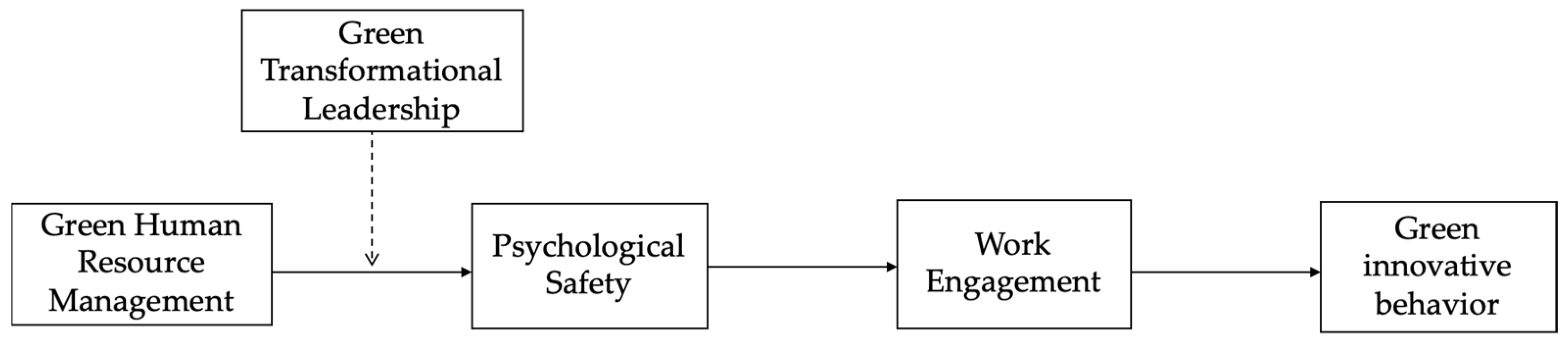
Figure 1 summarizes the theoretical model tested in this study. The model integrates GHRM as a contextual job resource, psychological safety and work engagement as sequential psychological mechanisms, and GTL as a contextual moderator. Together, these components form a coherent framework that links HR systems, psychological processes, and leadership behavior to employees’ green innovative behavior. In the proposed model, psychological safety does not directly mediate the relationship between GHRM and green innovative behavior; rather, it functions as a proximal interpersonal state that mediates the link between GHRM and work engagement, which subsequently predicts green innovation. Green Transformational Leadership is conceptualized as a contextual moderator influencing the strength of the relationship between GHRM and psychological safety.

3. Materials and Methods

3.1. Research Design

This study employed a multi-source, multi-industry survey design to examine the psychological processes through which Green Human Resource Management (GHRM) fosters employees’ green innovative behavior and the boundary condition of Green Transformational Leadership (GTL). Following recommendations for reducing common method bias and strengthening causal inference in organizational research [32], data were collected from two different sources: employees and their direct supervisors. Employees provided ratings of GHRM, psychological safety, work engagement, and GTL, whereas supervisors evaluated each employee’s green innovative behavior. This multi-source approach enhances methodological rigor and addresses concerns prevalent in GHRM studies that rely heavily on single-source cross-sectional data [2,9]. The study was conducted across three industries in the Greek private sector (manufacturing, services, and finance) to increase external validity and account for contextual variability. The organizations were selected because they represent three major sectors in the Greek private economy (manufacturing, services, and finance), which differ substantially in environmental pressures, innovation maturity, and HR system formalization. Including multiple sectors increases contextual variability and enhances external validity, allowing the model to be tested across heterogeneous organizational environments. All sector data were analyzed together because the aim of the study was to test the general psychological mechanisms linking GHRM to green innovation rather than sector-specific differences. Industry dummies were included as controls to account for sector-level variance.

3.2. Sample and Procedure

Participants were recruited from twelve medium- and large-sized organizations operating in manufacturing, services, and finance. HR managers facilitated access to teams and supervisors. A convenience sampling approach was used. Organizations voluntarily agreed to participate, and HR departments facilitated access to employees and supervisors. Because participation depended on organizational willingness and accessibility rather than probabilistic selection, the sample reflects a non-random convenience frame. This approach is common in organizational field research but may limit the generalisability of the findings. We acknowledge this limitation and recommend caution when extrapolating the results to all industries.
A total of 300 employees and their 300 direct supervisors participated, yielding a final matched sample of 300 dyads. Employee surveys measured GHRM, psychological safety, work engagement, and GTL, whereas supervisors independently assessed employees’ green innovative behavior. The target sample size of 300 employee–supervisor dyads was determined following recommendations for structural equation modelling, which suggest minimum sample sizes of n ≥ 200 and a ratio of 10:1 relative to the number of estimated parameters [33,34]. Therefore, the sample size meets established thresholds for reliability, model stability, and statistical power.
Participation was voluntary and confidential. All respondents were assured that no identifying information would be shared with their employer. Surveys were administered electronically using a secure online platform. Of the employee respondents, 54% were female and 46% were male; the mean age was 36.8 years (SD = 8.4), and average tenure with their current supervisor was 3.9 years (SD = 2.1). Industry distribution was as follows: manufacturing (33%), services (34%), and finance (33%). Completion rates exceeded 90%, with no missing data due to mandatory item completion in the survey.
The number of participants per organization ranged from 18 to 42 employees and their corresponding supervisors, depending on organizational size and team structure. Participation was voluntary and coordinated through HR departments. All 300 dyads were complete and usable for analysis. Given the multi-source design, the structured measurement instruments, and the adequate sample size, the study meets established standards of methodological validity for organizational SEM research. All questionnaires were distributed electronically through HR departments, ensuring unique links for each employee–supervisor pair. Participation required matched responses; thus, only complete dyads were included. All 300 dyads were valid for analysis. The sample reflects a convenience sampling frame and therefore may not be fully representative of all organizations or sectors. This limitation is acknowledged.

3.3. Measures

All constructs were measured using well-established multi-item Likert scales (1 = strongly disagree; 5 = strongly agree). Confirmatory factor analysis (CFA) was used to validate the measurement model prior to hypothesis testing. All measures were administered in Greek using a translation and back-translation procedure.
Green Human Resource Management was assessed with a 6-item scale adapted from widely used GHRM measures [2,3]. Items capture green recruitment, environmental training, eco-focused performance appraisal, and green employee involvement. These dimensions reflect distinct but complementary aspects of green HRM: green recruitment refers to attracting and selecting applicants with environmental values and sustainability awareness; environmental training concerns the development of employees’ green knowledge and competencies; eco-focused performance appraisal captures the extent to which environmental criteria are incorporated into performance evaluation; and green employee involvement reflects employees’ participation in environmental initiatives and sustainability-related decision making. The following is a sample item: “My organization provides training to improve employees’ environmental performance”.
Psychological safety was measured with 6 items based on Edmondson’s [5,35] validated scale. Items assess the extent to which employees feel safe expressing ideas and concerns. The following is a sample item: “I feel safe to take a risk in this team”.
Work engagement was measured using the 9-item Utrecht Work Engagement Scale (UWES-9; [26]), capturing vigor, dedication, and absorption. The following is a sample item: “At my work, I feel bursting with energy”.
Green Transformational Leadership was assessed using a 6-item adapted scale from Li et al. [7] and Chen and Chang [8]. Items reflect leaders’ inspiration, environmental vision, intellectual stimulation, and modeling of green values. The following is a sample item: “My supervisor encourages me to think about environmental issues in new ways”.
Supervisors rated employees’ green innovative behavior using a 5-item scale from Chen and Chang [8]. Items capture the generation, promotion, and implementation of environmentally beneficial ideas. The following is a sample item: “This employee develops creative ideas that can improve environmental performance”.

3.4. Common Method Bias Controls

Several procedural and statistical remedies were employed to minimize common method variance (CMV). First, multi-source data were used: employees rated predictors and mediators, while supervisors rated the outcome variable. This is considered one of the most effective strategies to reduce CMV [32]. Second, respondents were assured anonymity and confidentiality, reducing evaluation apprehension. Third, scale items were psychologically separated and presented in random order to reduce response bias. Fourth, we conducted Harman’s single-factor test and a latent CMV factor test; results indicated no single factor accounted for the majority of variance, suggesting CMV was not a threat. Given limitations of Harman’s test, we interpret CMV evidence primarily based on the multi-source design.

3.5. Data Analysis Strategy

Data were analyzed using structural equation modeling (SEM) in Lavaan version 0.6-21, following a two-step approach [36]. First, CFA was used to evaluate construct validity, assessing factor loadings, model fit indices (CFI, TLI, RMSEA, SRMR), and discriminant validity using AVE and HTMT criteria. Reliability was assessed via Cronbach’s alpha and composite reliability (CR). Second, the structural model was estimated to test the hypothesised direct, indirect, and moderated effects.
Serial mediation (H4) was tested using bootstrapping with 5000 resamples and bias-corrected confidence intervals [31]. Moderation (H5) was examined by creating an interaction term between mean-centered GHRM and GTL. Moderated serial mediation (H6) was tested using PROCESS-equivalent bootstrapping logic adapted for SEM. Specifically, the moderation was modeled using a latent interaction approach based on mean-centered indicators, and conditional indirect effects were estimated via bias-corrected bootstrapping, consistent with PROCESS Model 6 logic implemented within a structural equation modeling framework. Industry dummies were included as control variables to account for sector-level differences.
Cut-off criteria followed established guidelines: factor loadings > 0.70 [34], AVE > 0.50 [37], CR > 0.70 [38], HTMT < 0.85 [39], CFI/TLI > 0.90 and RMSEA < 0.06 [40].
The multi-source design strengthens internal validity by reducing common method bias and enabling cross-informant triangulation. However, it does not replace the need for longitudinal designs. Although the multi-source structure enhances causal inference, temporal data would be required to establish definitive causal ordering. We acknowledge this as a methodological limitation.

4. Results

4.1. Measurement Model

A confirmatory factor analysis (CFA) was conducted to evaluate the adequacy of the hypothesized five-factor measurement model, comprising Green Human Resource Management (GHRM), psychological safety, work engagement, Green Transformational Leadership (GTL), and green innovative behavior. The proposed measurement model demonstrated excellent fit to the data, χ2 (395) = 701.24, CFI = 0.956, TLI = 0.948, RMSEA = 0.048, and SRMR = 0.041, exceeding recommended cut-off criteria and supporting the factorial validity of the constructs.
All standardized factor loadings were statistically significant (p < 0.001) and exceeded the 0.60 threshold (range = 0.62–0.88), indicating satisfactory item reliability. Although some factor loadings were between 0.60 and 0.70, these values are considered acceptable for established scales in organizational research and remain within recommended thresholds for construct validity (35). Composite reliability (CR) values ranged from 0.86 to 0.93, surpassing the 0.70 criterion, while average variance extracted (AVE) values ranged from 0.64 to 0.72, providing evidence of convergent validity [37]. Although Green Transformational Leadership showed weak zero-order correlations with the study variables, this pattern is theoretically consistent with its conceptualization as a contextual boundary condition rather than a direct predictor. Moderation effects do not require strong bivariate associations to be theoretically meaningful, as interaction terms capture conditional relationships that emerge only at specific levels of the moderator. Low zero-order correlations between moderators and focal variables are not uncommon in interaction models and do not undermine the validity of moderation hypotheses [41].
Discriminant validity was assessed using two complementary approaches: the Fornell–Larcker criterion and the heterotrait–monotrait ratio (HTMT). As shown in Table A1, the square root of the AVE for each construct exceeded its correlations with other constructs. In addition, all HTMT values were below the conservative 0.85 threshold (Table A2), confirming adequate construct distinctiveness.
Several procedural and statistical remedies were employed to mitigate concerns regarding common method variance (CMV). First, the study used a multi-source design, with green innovative behavior assessed by supervisors, while GHRM, psychological safety, work engagement, and GTL were reported by employees. This temporal and source separation substantially reduce the likelihood that CMV explains the observed relationships [32].
As a supplementary statistical check, a single-factor CFA was estimated, which exhibited poor fit (CFI = 0.41, RMSEA = 0.19), indicating that a single latent factor could not account for the covariance among the measures. In addition, a latent common method factor was included in the measurement model and did not significantly improve model fit. Together, these results suggest that CMV is unlikely to be a serious concern in the present study.
Although some factor loadings were between 0.60 and 0.70, these are acceptable for established scales and have been supported in prior research.

4.2. Structural Model

The hypothesized structural model was tested using structural equation modeling. The model demonstrated satisfactory fit to the data, χ2 (402) = 734.91, CFI = 0.951, TLI = 0.944, RMSEA = 0.051, and SRMR = 0.045, indicating adequate representation of the proposed relationships. To account for potential sector-level differences in environmental practices and innovation norms, industry dummy variables were included for the three sampled sectors (manufacturing, services, and finances), with one sector serving as the reference category. Including industry controls did not substantively alter the magnitude or significance of the hypothesized relationships.
Consistent with Hypothesis 1 (H1), GHRM was positively associated with psychological safety (β = 0.45, p < 0.001). Psychological safety was, in turn, positively related to work engagement (β = 0.44, p < 0.001), supporting Hypothesis 2 (H2). In line with Hypothesis 3 (H3), work engagement showed a strong positive association with green innovative behavior (β = 0.55, p < 0.001). Table 1 presents the zero-order correlations among the study variables.
GHRM also exhibited a significant direct association with green innovative behavior (β = 0.31, p < 0.001). By contrast, the direct association between psychological safety and green innovative behavior was positive but non-significant (β = 0.07, p = 0.308), suggesting that psychological safety is more proximally related to innovation through its association with work engagement. The standardized path estimates are presented in Table 2.
As reported in Table 3, the model explained meaningful proportions of variance in psychological safety (R2 = 0.216), work engagement (R2 = 0.301), and green innovative behavior (R2 = 0.412). The model explained 21.6% of the variance in psychological safety, 30.1% in work engagement, and 41.2% in green innovative behavior. Variance inflation factors (VIFs) were examined to assess multicollinearity and were below the recommended threshold of 5. Effect sizes (F2) and predictive relevance (Q2) were additionally examined as robustness checks of the structural model.

4.3. Moderation Analysis

To test Hypothesis 5 (H5), Green Transformational Leadership (GTL) was modeled as a latent interaction term in the relationship between GHRM and psychological safety. The interaction term between GHRM and GTL was statistically significant (β = 0.14, p = 0.042), indicating that the association between GHRM and psychological safety varies across levels of GTL.
Simple slope analyses, presented in Table 4, showed that the relationship between GHRM and psychological safety was strongest at high levels of GTL (+1 SD; β = 0.58, p < 0.001), moderate at mean levels of GTL (β = 0.44, p < 0.001), and weakest at low levels of GTL (−1 SD; β = 0.29, p < 0.01).
These results suggest that environmentally oriented transformational leadership strengthens the psychological signals conveyed through GHRM practices, thereby strengthening employees’ perceptions of psychological safety.

4.4. Mediation and Serial Mediation

Mediation and serial mediation hypotheses were tested using bootstrapping procedures with 5000 resamples. As reported in Table 5, the indirect association between GHRM and work engagement through psychological safety was statistically significant (indirect effect = 0.20, 95% CI [0.12, 0.31]).
The hypothesized serial mediation pathway (H4)—GHRM → psychological safety → work engagement → green innovative behavior—was also supported. The serial indirect effect was significant (indirect effect = 0.11, 95% CI [0.055, 0.191]), indicating that the association between GHRM and green innovative behavior operates through a sequential psychological process involving psychological safety and work engagement.

4.5. Moderated Serial Mediation

A first-stage moderated serial mediation model was estimated to examine whether the indirect association between GHRM and green innovative behavior via psychological safety and work engagement depends on levels of GTL. Conditional indirect effects, displayed in Table 6, were statistically significant across all levels of GTL and increased in magnitude as GTL strengthened.
The index of moderated mediation was statistically significant (Index = 0.04, 95% CI [0.01, 0.09]), supporting Hypothesis 6 (H6). These findings indicate that GTL not only conditions the initial association between GHRM and psychological safety but also strengthens the downstream psychological and behavioral processes linking GHRM to green innovative behavior.

5. Discussion

The aim of this study was to integrate Green Human Resource Management (GHRM), psychological safety, work engagement, and green transformational leadership (GTL) into a unified framework examining associations with employees’ green innovative behavior across multiple industries. In contexts characterized by relatively high uncertainty avoidance, such as Greece, psychologically safe environments and clear leadership cues may be particularly important for encouraging employee voice and experimentation in sustainability-related innovation. Consistent with JD–R and COR theory, our findings indicate that GHRM is associated with employees’ psychological states and motivational activation, which are linked to sustainability-oriented innovation. All hypothesized direct, indirect, and moderated effects were supported, offering strong empirical support for the proposed serial mediation and moderated mediation model.
First, our findings confirm that GHRM is a powerful predictor of psychological safety. This aligns with evidence suggesting that HR systems shape employees’ perceptions of support, fairness, and inclusiveness [2,3]. By demonstrating that GHRM relates to psychological safety—a relational climate fundamental for interpersonal risk-taking [5]—our study advances the understanding of how green HR practices influence employees’ psychological experiences. Existing research has focused heavily on attitudinal mediators such as environmental commitment or green identity [5,9]. We extend this literature by highlighting psychological safety as a distinct and foundational climate mechanism, especially relevant for contexts requiring creativity, voice, and innovation.
Second, our results show that psychological safety enhances work engagement, which in turn predicts green innovative behavior. This supports both JD–R theory [6] and recent research linking safety climates to motivated and energetic employee states [14,30,42]. Our findings advance understanding of how GHRM is linked to innovative behavior by highlighting a sequential mechanism psychological pathway involving safety and work engagement [42].
While previous work suggests that GHRM supports green creativity [19] or green citizenship behaviors [3], the present study demonstrates a serial mediation process that accounts for both interpersonal (safety) and motivational (engagement) pathways. This dual mechanism represents a novel contribution, offering a richer explanation of how contextual resources are psychologically translated and associated with sustainability-oriented innovation.
Third, our findings reveal that GTL strengthens the association between GHRM on psychological safety, confirming leadership as a critical boundary condition. This aligns with social information processing theory, which posits that employees interpret HR signals through leadership cues [30]. Leaders who articulate environmental purpose, provide intellectual stimulation, and model green values amplify the perceived meaning of GHRM practices [7,15]. Importantly, the moderated serial mediation analysis showed that GHRM’s indirect effect on green innovative behavior is stronger when GTL is high. This suggests that GHRM may be less effective in isolation and that leadership and HR systems must work together to shape employees’ psychological resources for innovation. This insight contributes to recent calls for more integrated, multilevel models in sustainable HRM research [2].
Finally, the study contributes methodologically by using multi-source (employee–supervisor) and multi-industry data. Prior reviews have noted that GHRM research is heavily dominated by single-source, cross-sectional designs [9], raising concerns about common method variance and overstated causal claims. Our use of supervisor-rated innovation, psychological separation of measures, and multi-industry sampling strengthens confidence in the robustness and generalizability of the findings. This study responds directly to repeated calls for more rigorous designs in sustainable HRM [2].

5.1. Theoretical Implications

This study advances theory in sustainable HRM and organizational behavior by demonstrating that GHRM operates not only as a set of structural practices but also as a contextual resource that activates interpersonal and motivational mechanisms central to employee-driven sustainability innovation [1,3,9]. By identifying psychological safety and work engagement as sequential mediators, the study refines JD–R and COR perspectives, showing how resource-rich HR systems shape both risk-related psychological climates and motivational activation in environmental innovation contexts [6,13,18,27]. The moderating role of Green Transformational Leadership further extends multilevel theorizing in GHRM research by illustrating that leadership serves as a critical interpretive lens through which employees understand and internalize HR signals, reinforcing calls to integrate HR systems with leadership dynamics in models of green innovation [7,15,19].

5.2. Practical Implications

The results suggest that organizations should strategically integrate GHRM practices with leadership development. GHRM initiatives—such as environmental training, green performance appraisal, and sustainable reward systems—create the structural foundation for environmental behaviors [1,9]. However, their psychological impact depends substantially on leaders’ daily behavior. Organizations should therefore invest in training supervisors in green transformational leadership, focusing on articulating environmental purpose, encouraging experimentation, and modelling green behaviors [7,15].
Because psychological safety emerged as a central mechanism, organizations seeking to enhance employee-driven sustainability efforts must cultivate climates where employees feel safe to question, suggest, and challenge. Structured opportunities for voice, team reflection, and inclusive decision-making can help create such climates. Safety is especially critical in environmental innovation, where employees often challenge established routines [5,13].
Work engagement was the strongest direct predictor of green innovative behavior. This underscores the importance of designing jobs and HR systems that enhance energy, motivation, and absorption—especially in sustainability-focused roles. Practices such as meaningful task design, autonomy, and recognition for environmental efforts may reinforce engagement and stimulate innovation [5,20,27,43].
The findings provide actionable guidance for organizations seeking to strengthen employee-driven environmental innovation. First, HR departments should integrate green competencies into recruitment, training, appraisal, and reward systems to create a coherent sustainability-oriented HR architecture. Second, managers should be trained in Green Transformational Leadership to communicate environmental purpose, stimulate green idea generation, and support employees in implementing environmental initiatives. Third, organizations should intentionally foster psychological safety by establishing mechanisms for open feedback, encouraging employee voice, and creating non-punitive environments for experimentation. Finally, strengthening employees’ work engagement through meaningful work design, autonomy, and recognition of green contributions can further enhance their motivation to innovate sustainably.

5.3. Limitations and Future Research

Although this study’s design strengthens causal inference, it remains cross-sectional in timing. Future research would benefit from multi-wave designs to examine temporal ordering of psychological safety and engagement. Our data were collected from three industries in Greece; cross-cultural studies could clarify whether cultural dimensions influence the strength of safety and leadership effects. Additionally, future research may explore other psychological mechanisms (e.g., moral identity, environmental efficacy) and boundary conditions (e.g., green climate, digitalization of HRM). Experimental or intervention-based studies could further validate the causal mechanisms implied by the present findings. Given the use of convenience sampling, the findings should be interpreted with caution. Future studies could employ probability sampling or a stratified design to enhance representativeness. Future studies may explore whether GTL moderates additional direct relationships (e.g., GHRM → engagement or engagement → green innovation), providing a more comprehensive understanding of leadership boundary conditions.

6. Conclusions

This study advances understanding of employee-driven environmental innovation by elucidating the psychological and leadership mechanisms through which Green Human Resource Management (GHRM) is associated with green innovative behavior. Drawing on the Job Demands–Resources and Conservation of Resources frameworks, the findings demonstrate that GHRM is related to higher levels of green innovation through a sequential psychological process involving psychological safety and work engagement. Employees who perceive green-oriented HR practices report greater psychological safety, which is positively associated with enhanced engagement and, in turn, higher supervisor-rated green innovative behavior. Moreover, Green Transformational Leadership (GTL) emerges as a critical boundary condition, strengthening both the initial association between GHRM and psychological safety and the broader indirect pathway leading to innovation are stronger when GTL is high. These results underscore that sustainability-oriented innovation is not explained by HR systems alone, but by the alignment of HR practices, leadership behaviors, and employees’ psychological experiences. Practically, the findings suggest that organizations seeking to foster environmental innovation should integrate green HR practices with leadership development initiatives that emphasize environmental vision, support, and encouragement of employee voice. Overall, this study highlights the importance of creating psychologically safe and engaging work environments in which green HR systems and leadership jointly enable employees to contribute actively to organizational sustainability goals.
By integrating HR systems, leadership, and employee psychology, this study offers a comprehensive framework for understanding how organizations can mobilize employees as active agents of sustainability-oriented innovation.
This study addressed the scientific problem of explaining how HRM systems support employees’ green innovative behavior. By integrating GHRM, psychological safety, work engagement, and leadership conditions into a unified model, the findings show that HR practices influence green innovation primarily through employees’ psychological experiences and that these processes are strengthened under Green Transformational Leadership.

Author Contributions

Conceptualization, V.L. and E.T.; methodology, V.L. and E.T.; software, K.K.; validation, E.T. and V.L.; formal analysis, V.L.; investigation, V.L.; resources, E.T.; data curation, K.K.; writing—original draft preparation, V.L.; writing—review and editing, E.T.; visualization, V.L. and K.K.; supervision, K.K.; project administration, E.T.; funding acquisition, K.K. All authors have read and agreed to the published version of the manuscript.

Funding

This research received no external funding.

Institutional Review Board Statement

According to the Greek legislation (L. 4386/2016) it is not mandatory to have a “Institutional Review Board Statement” for such an online study in Greece (at least at the time of the current research).

Informed Consent Statement

Informed consent was obtained from all subjects involved in the study.

Data Availability Statement

Data are unavailable due to privacy or ethical restrictions.

Conflicts of Interest

The authors declare no conflicts of interest.

Appendix A

Appendix A.1. Green Human Resource Management Items

The following items were used to assess employees’ perceptions of Green Human Resource Management practices in their organization.
Green HR Practices
  • My organization provides training to improve employees’ environmental performance.
  • My organization includes environmental criteria in performance appraisals.
  • Employees are encouraged to participate in environmental improvement initiatives.
  • The organization recruits’ employees with environmental values or awareness.
  • My organization rewards employees who contribute to environmental sustainability.
  • The organization communicates clear guidelines on environmental responsibilities.

Appendix A.2. Psychological Safety Items

The following items were used to assess employee perceptions of psychological safety within their team. Items marked with an asterisk (*) were reverse-coded during analysis.
Psychological Safety
  • I feel safe to take a risk in this team.
  • Members of this team are able to bring up problems and tough issues.
  • It is safe to express my true feelings in this team.
  • No one on this team would deliberately undermine my efforts. *
  • Working with members of this team, my unique skills and talents are valued.
  • If I make a mistake, it is not held against me.

Appendix A.3. The Utrecht Work Engagement Scale (UWES-9)

The following items were used to assess employee work engagement across the dimensions of vigor, dedication, and absorption. Items marked with an asterisk (*) are included in the shortened UWES-9 version.
Vigor
  • At my work, I feel bursting with energy. *
  • At my job, I feel strong and vigorous. *
  • When I get up in the morning, I feel like going to work. *
Dedication
4.
I am enthusiastic about my job. *
5.
My job inspires me. *
6.
I am proud of the work that I do. *
Absorption
7.
I feel happy when I am working intensely. *
8.
I am immersed in my work. *
9.
I get carried away when I am working. *

Appendix A.4. Green Transformational Leadership Items

The following items were used to assess perceptions of Green Transformational Leadership.
Green Transformational Leadership
  • My supervisor communicates a clear environmental vision to the team.
  • My supervisor encourages me to consider environmental issues in new ways.
  • My supervisor acts as a role model for environmentally responsible behaviour.
  • My supervisor motivates us to contribute to environmental goals.
  • My supervisor supports innovative ideas that improve environmental performance.
  • My supervisor stimulates us to rethink conventional practices that harm the environment.

Appendix A.5. Green Innovative Behavior (Supervisor-Rated)

The following items were used by supervisors to assess employees’ green innovative behavior.
Green Innovative Behavior
  • This employee proposes creative ideas that improve environmental performance.
  • This employee searches for new methods to reduce environmental impact.
  • This employee promotes environmentally friendly ideas to others.
  • This employee develops useful suggestions for improving environmental sustainability.
  • This employee implements innovative solutions that benefit the environment.

Appendix B

Table A1. Fornell–Larcker Discriminant Validity Matrix.
GHRMPSWEGTLGIB
GHRM0.850.460.460.000.49
Psychological Safety0.460.810.49−0.030.37
Work Engagement0.460.490.810.020.52
GTL0.00−0.030.020.800.04
Green Innovation0.490.370.520.040.85
Note: Diagonal elements represent √AVE.
Table A2. HTMT Discriminant Validity.
GHRMPSWEGTLGIB
GHRM
Psychological Safety0.509
Work Engagement0.4990.534
GTL0.0480.0640.062
Green Innovation0.5350.4100.5670.069
Note: All HTMT values are below the conservative 0.85 threshold.

References

  1. Renwick, D.W.S.; Redman, T.; Maguire, S. Green Human Resource Management: A Review and Research Agenda. Int. J. Manag. Rev. 2013, 15, 1–14. [Google Scholar] [CrossRef]
  2. Pinzone, M.; Guerci, M.; Lettieri, E.; Redman, T. Progressing in the Change Journey towards Sustainability in Healthcare: The Role of “Green” HRM. J. Clean. Prod. 2016, 371, 133643. [Google Scholar] [CrossRef]
  3. Kim, A.; Kim, Y.; Han, K.; Jackson, S.E.; Ployhart, R.E. Multilevel Influences on Voluntary Workplace Green Behavior: Individual Differences, Leader Behavior, and Coworker Advocacy. J. Manag. 2019, 45, 1462–1494. [Google Scholar] [CrossRef]
  4. Singh, S.K.; Del Giudice, M.; Chierici, R.; Graziano, D. Green Innovation and Environmental Performance: The Role of Green Transformational Leadership and Green Human Resource Management. Technol. Forecast. Soc. Change 2020, 176, 121445. [Google Scholar] [CrossRef]
  5. Edmondson, A.C. The Fearless Organization: Creating Psychological Safety in the Workplace for Learning, Innovation, and Growth; Wiley: Hoboken, NJ, USA, 2019. [Google Scholar]
  6. Bakker, A.B.; Demerouti, E. Job Demands–Resources Theory: Taking Stock and Looking Forward. J. Occup. Health Psychol. 2017, 22, 273–285. [Google Scholar] [CrossRef]
  7. Li, W.; Bhutto, T.A.; Xuhui, W.; Maitlo, Q.; Zafar, A.U.; Ahmed, N. Green Transformational Leadership and Green Innovation: The Role of Green Human Resource Management and Environmental Awareness. Sustainability 2020, 12, 259. [Google Scholar] [CrossRef]
  8. Chang, C.-H. The Determinants of Green Product Innovation Performance. Corp. Soc. Responsib. Environ. Manag. 2013, 20, 103–118. [Google Scholar] [CrossRef]
  9. Pham, N.T.; Tučková, Z.; Jabbour, C.J.C. Greening the Hospitality Industry: How Do Green Human Resource Management Practices Influence Organizational Citizenship Behavior in Hotels? Tour. Manag. 2020, 85, 104302. [Google Scholar] [CrossRef]
  10. Tahir, A.H.; Umer, M.; Nauman, S.; Abbass, K.; Song, H. Sustainable development goals and green human resource management: A comprehensive review of environmental performance. J. Environ. Manag. 2024, 370, 122495. [Google Scholar] [CrossRef] [PubMed]
  11. Lawter, L.; Garnjost, P. Green Human Resource Management and Organizational Performance: A Systematic Review. Sustainability 2025, 17, 3132. [Google Scholar] [CrossRef]
  12. Gupta, A.; Jangra, S. Green human resource management and work engagement: Linking HRM performance attributions. Sustain. Futures 2024, 7, 100174. [Google Scholar] [CrossRef]
  13. Edmondson, A.; Lei, Z. Psychological Safety: The History, Renaissance, and Future of an Interpersonal Construct. Annu. Rev. Organ. Psychol. Organ. Behav. 2014, 1, 23–43. [Google Scholar] [CrossRef]
  14. Newman, A.; Donohue, R.; Eva, N. Psychological Safety: A Systematic Review of the Literature. Hum. Resour. Manag. Rev. 2020, 30, 100681. [Google Scholar] [CrossRef]
  15. Wang, X.; Jin, J.; YahiaMarzouk, Y. Feel Warm Then Do Well: Understanding How Green Human Resources Management Improves Employee Extra-Role Green Behavior and Person–Organization Fit. Environ. Res. Commun. 2023, 5, 125009. [Google Scholar] [CrossRef]
  16. Kim, T.T.; Kim, W.G.; Majeed, S.; Haldorai, K. Does Green Human Resource Management Lead to a Green Competitive Advantage? A Sequential Mediation Model with Three Mediators. Int. J. Hosp. Manag. 2023, 111, 103486. [Google Scholar] [CrossRef]
  17. Zhang, Y.; Luo, Y.; Zhang, X. How Work Engagement Drives Sustainable Performance: A Meta-Analytic Review. J. Vocat. Behav. 2023, 142, 103825. [Google Scholar] [CrossRef]
  18. Hobfoll, S.E.; Halbesleben, J.; Neveu, J.P.; Westman, M. Conservation of Resources in the Organizational Context: The Reality of Resources and Their Consequences. Annu. Rev. Organ. Psychol. Organ. Behav. 2018, 5, 103–128. [Google Scholar] [CrossRef]
  19. Safari, K.; Ahmadi, F. Green Creativity: The Role of Green Transformational Leadership and Green Human Resource Management. Bus. Strategy Environ. 2022, 31, 123–135. [Google Scholar] [CrossRef]
  20. Bakker, A.B.; Demerouti, E.; Sanz-Vergel, A.I. Job Demands–Resources Theory: Ten Years Later. Annu. Rev. Organ. Psychol. Organ. Behav. 2023, 10, 25–53. [Google Scholar] [CrossRef]
  21. Lesener, T.; Gusy, B.; Wolter, C. The Job Demands–Resources Model: A Meta-Analytic Review of Longitudinal Studies. Work Stress 2019, 33, 76–103. [Google Scholar] [CrossRef]
  22. Mahran, K.; Ibrahim, B.A.; Albarrak, H.; Elamer, A.A. Green Workforce in Tourism and Hospitality: A Systematic Review and Future Research Agenda. Int. J. Hosp. Manag. 2025, 131, 104325. [Google Scholar] [CrossRef]
  23. Andersson, M.; Moen, Ø.; Brett, P.O. The Organizational Climate for Psychological Safety: Associations with SMEs’ Innovation Capabilities and Innovation Performance. J. Eng. Technol. Manag. 2020, 55, 101554. [Google Scholar] [CrossRef]
  24. Reiter-Palmon, R.; Leone, S.; Murugavel, V.; Allen, J.A. Fostering Effective Debriefs: The Integral Role of Team Reflexivity. In Managing Meetings in Organizations; Emerald Publishing Limited: Bingley, UK, 2020; pp. 93–109. [Google Scholar] [CrossRef]
  25. Tang, Z.; Amini, M.Y. Bridging the GAP: Exploring the Nexus between Green Human Resource Management, Organizational Citizenship Behavior towards the Environment, Employee Green Commitment, and Environmental Performance in Hotels. Int. J. Res. Bus. Soc. Sci. 2023, 12, 194–210. [Google Scholar] [CrossRef]
  26. Schaufeli, W.B.; Bakker, A.B.; Salanova, M. Utrecht Work Engagement Scale-9. Educational and Psychological Measurement. 2003. Available online: https://www.wilmarschaufeli.nl/publications/Schaufeli/Test%20Manuals/Test_manual_UWES_English.pdf (accessed on 1 January 2026).
  27. Robertson, J.L.; Barling, J. Greening Organizations through Leaders’ Influence on Employees’ Pro-Environmental Behaviors. J. Organ. Behav. 2017, 38, 176–194. [Google Scholar] [CrossRef]
  28. Nishii, L.H.; Wright, P.M. Variability Within Organizations: Implications for Strategic Human Resource Management; Cornell University ILR School: Ithaca, NY, USA, 2007. [Google Scholar]
  29. Carmeli, A.; Dutton, J.E.; Hardin, A.E. Respect as an Engine for New Ideas: Linking Respectful Engagement, Psychological Safety, and Creativity. Hum. Relat. 2020, 73, 1715–1738. [Google Scholar] [CrossRef]
  30. Salancik, G.R.; Pfeffer, J. A Social Information Processing Approach to Job Attitudes and Task Design. Adm. Sci. Q. 1978, 23, 224–253. [Google Scholar] [CrossRef]
  31. Hayes, A.F. Introduction to Mediation, Moderation, and Conditional Process Analysis; Guilford Press: New York, NY, USA, 2018. [Google Scholar] [CrossRef]
  32. Podsakoff, P.M.; MacKenzie, S.B.; Podsakoff, N.P. Sources of Method Bias in Social Science Research and Recommendations on How to Control It. Annu. Rev. Psychol. 2012, 63, 539–569. [Google Scholar] [CrossRef]
  33. Kline, R.B. Principles and Practice of Structural Equation Modeling, 4th ed.; The Guilford Press: New York, NY, USA, 2016. [Google Scholar]
  34. Hair, J.F.; Risher, J.J.; Sarstedt, M.; Ringle, C.M. When to Use and How to Report the Results of PLS-SEM. Eur. Bus. Rev. 2019, 31, 2–24. [Google Scholar] [CrossRef]
  35. Edmondson, A.C. Psychological Safety and Learning Behavior in Work Teams. Adm. Sci. Q. 1999, 44, 350–383. [Google Scholar] [CrossRef]
  36. Anderson, J.C.; Gerbing, D.W. Structural Equation Modeling in Practice: A Review and Recommended Two-Step Approach. Psychol. Bull. 1988, 103, 411–423. [Google Scholar] [CrossRef]
  37. Fornell, C.; Larcker, D.F. Evaluating Structural Equation Models with Unobservable Variables and Measurement Error. J. Mark. Res. 1981, 18, 39–50. [Google Scholar] [CrossRef]
  38. Nunnally, J.C. Psychometric Theory, 2nd ed.; McGraw-Hill: New York, NY, USA, 1978. [Google Scholar]
  39. Henseler, J.; Ringle, C.M.; Sarstedt, M. A New Criterion for Assessing Dicriminant Validity in Variance-Based Structural Equation Modeling. J. Acad. Mark. Sci. 2015, 43, 115–135. [Google Scholar] [CrossRef]
  40. Hu, L.T.; Bentler, P.M. Cutoff Criteria for Fit Indexes in Covariance Structure Analysis: Conventional Criteria versus New Alternatives. Struct. Equ. Model. 1999, 6, 1–55. [Google Scholar] [CrossRef]
  41. Aiken, L.S.; West, S.G.; Reno, R.R. Multiple Regression: Testing and Interpreting Interactions; Sage: Thousand Oaks, CA, USA, 1991. [Google Scholar] [CrossRef]
  42. Tsoni, E.; Lazanaki, V.; Katsaros, K. The Influence of Organizational Climate on Work Engagement: Evidence from the Greek Industrial Sector. Adm. Sci. 2025, 15, 413. [Google Scholar] [CrossRef]
  43. Katsaros, K.K. Gen Z Employees’ Adaptive Performance in Hybrid Workplaces: The Role of Inclusive Leadership, Creativity, and Work Engagement. J. Appl. Behav. Sci. 2025, 61, 636–657. [Google Scholar] [CrossRef]
Figure 1. Conceptual Model.
World 07 00061 g001
Table 1. Intercorrelations among Study Variables.
Variable12345
1. GHRM1.00
2. Psychological Safety0.461.00
3. Work Engagement0.460.491.00
4. Green Transformational Leadership0.00−0.030.021.00
5. Green Innovative Behavior0.490.370.520.041.00
Note. Correlations ≥ |0.10| are significant at p < 0.05.
Table 2. Structural Model Path Estimates.
Pathβp
GHRM → Psychological Safety0.45<0.001
Psychological Safety → Work Engagement0.44<0.001
Work Engagement → Green Innovative Behavior0.55<0.001
GHRM → Green Innovative Behavior0.31<0.001
Psychological Safety → Green Innovative Behavior0.070.308
Note. Standardized path coefficients (β) are reported.
Table 3. Explained Variance of Endogenous Constructs.
ConstructR2
Psychological Safety0.216
Work Engagement0.301
Green Innovative Behavior0.412
Note: R2 values represent explained variance of endogenous constructs.
Table 4. Moderation of the GHRM–Psychological Safety Relationship by GTL.
Level of GTLβp
Low (−1 SD)0.29<0.01
Mean0.44<0.001
High (+1 SD)0.58<0.001
Note. β represents simple slope estimates of GHRM predicting psychological safety at each level of GTL.
Table 5. Mediation and Serial Mediation Effects (Bootstrapping, 5000 Resamples).
Indirect EffectEstimate95%
CI LL
95% CI UL
GHRM → Psychological Safety → Work Engagement0.200.120.31
GHRM → Psychological Safety → Work Engagement → Green Innovative Behavior0.110.050.19
Note. Confidence intervals not containing zero indicate statistically significant indirect effects.
Table 6. Conditional Indirect Effects of GHRM on Green Innovative Behavior at Levels of GTL.
Level of GTLIndirect
Effect
95% CI LL95% CI UL
Low (−1 SD)0.070.020.14
Mean0.110.050.19
High (+1 SD)0.150.080.25
Note. Results are based on a first-stage moderated serial mediation model.
Disclaimer/Publisher’s Note: The statements, opinions and data contained in all publications are solely those of the individual author(s) and contributor(s) and not of MDPI and/or the editor(s). MDPI and/or the editor(s) disclaim responsibility for any injury to people or property resulting from any ideas, methods, instructions or products referred to in the content.