Systematic Review

Defining and Advancing Pro-Environmental Behavior in Hospitality: A Systematic Review of the Hospitality Literature


School of Environment, Enterprise and Development (SEED), Faculty of Environment, University of Waterloo, Waterloo, ON N2L 3G1, Canada
*
Author to whom correspondence should be addressed.
World 2026, 7(3), 41; https://doi.org/10.3390/world7030041
Submission received: 27 December 2025 / Revised: 26 February 2026 / Accepted: 2 March 2026 / Published: 4 March 2026

Abstract

Despite the growing body of literature on pro-environmental behavior (PEB) across various domains, a systematic review that synthesizes the application of theoretical frameworks to examine the internal and external factors influencing PEB within the hospitality domain remains noticeably absent. Therefore, this study aims to examine the progress of the current literature in exploring the concept of PEB by answering three primary questions: (1) How has PEB been defined in the hospitality literature? (2) What theories have various authors adopted? (3) What future research recommendations have been identified in the literature? A total of 104 peer-reviewed articles were analyzed using thematic analysis. The analysis indicated that the view of employee-focused studies on the definition of PEB has changed to be conceptualized through the lens of workplace–environmental citizenship, while the current guest-focused studies have acknowledged the psychological effect of hotel guests on their engagement in environmental practices. Traditional theories, such as the theory of planned behavior and socially oriented theories, remain dominant, and most studies recommend future research to integrate constructional and psychological factors to expand current research models. Overall, this review can serve as a useful tool for future studies to identify the right definition and theoretical lens. Additionally, the review calls for the use of diverse frameworks to deepen our understanding of how PEB unfolds within hospitality settings.

1. Introduction

Pro-environmental behavior (PEB) has emerged as a prominent theme in the current hospitality literature. The growing scholarly interest in this theme is due to the global demands calling for an immediate change in the way we conduct our businesses and exploit our natural resources [1]. Therefore, various authors have become active in identifying the primary factors that would foster hotel guests’ and employees’ engagement in environmental initiatives such as reducing the single use of plastic bags, reusing towels and linens, reducing electricity consumption, and recycling [2,3]. Also, environmental practices in business operations can take various forms. For instance, some hotels may focus on integrating advanced technology, such as adopting smart thermostats or green energy sources. However, relying on advanced technology alone without fostering individuals’ engagement has proven less effective in generating a meaningful impact on the environment [4]. Therefore, to avoid such a complex issue, numerous studies argue that integrating environmental practices in the workplace requires organizational management to focus on engaging stakeholders in meaningful behaviors that provide a positive impact on both the environment and the organization [5]. This meaningful behavioral change has been referred to by the current hospitality research as ecological behavior, environmentally friendly behavior, sustainability behavior, and PEB [6].
To date, there is no single definition that fully captures the scope of PEB. Current research exhibits that authors have become aware of using a precise definition of PEB. Miao and Wei [7] conducted a study to examine individuals’ PEB in two different environmental settings: the household and the hotel. They define PEB from a hotel guest perspective as actions to reduce negative impacts and promote sustainability. In contrast, other studies conceptualize PEB in terms of the organizational citizenship perspective as “behaviors that move beyond the realm of their required work tasks” [8] (p. 943). As a result, some scholars have captured the advancement of PEB research as an opportunity to conduct a systematic literature review (SLR) to evaluate the progress of hospitality and tourism research in exploring the concept of PEB [7]. For instance, Loureiro and colleagues [9] identified 210 published articles that focus on PEB from the tourism and hospitality perspective. Similarly, Lin and colleagues [6] analyzed 234 empirical studies drawn from hospitality and non-hospitality publications that explored PEB from a consumer perspective. Both studies confirmed that traditional theories continue to dominate the current literature. Their findings offer valuable insights into current themes and future research suggestions for exploring PEB. However, there remains a lack of clarity about why researchers choose specific theoretical frameworks to analyze the relationships among variables. Also, both studies have recommended that future research should use similar keywords to PEB to uncover relevant articles. Furthermore, they suggest that future systematic literature reviews should explore studies that aim to assess actual behavior, rather than paying attention to both intention and actual behavior, to examine PEB through a more focused lens. Additionally, future research is required to explore PEB from both guest-oriented and employee-oriented perspectives to identify how each domain defines PEB and which theory is most dominant. A hotel guest is considered a visitor, and their behavior is mostly influenced by factors such as egoism, while an employee’s behavior is embedded within the hotel’s operation, and their engagement in environmental programs is influenced by internal and external factors that can go beyond egoistic motivations, such as social pressure, self-satisfaction, and career development. Accordingly, the meaning of PEB can differ between hotel guests and employees, which subsequently impacts the application of theories.
To respond to the gaps outlined above, this review advances hospitality PEB research by synthesizing patterns across PEB definitions and theoretical models and by proposing a contextual framework that supports clearer PEB definition and theory alignment, rather than introducing a new empirical model. Accordingly, the primary aim of this study is to conduct an SLR to evaluate how PEB has been conceptualized and examined within the hospitality literature by addressing three research questions: (1) How has PEB been defined in the hospitality literature? (2) What theories have various authors adopted? (3) What future research recommendations have been identified in the literature? By answering these questions, future studies will have a solid foundation to develop a robust research model by applying systematic sequences for defining the scope of PEB, examining new variables to explore and assess the concept of PEB, and applying new frameworks to capture different patterns in the interrelationship between internal and external factors for fostering PEB. We hope that this study provides vital insights into why scholars adopt specific theories to outline the pathway of PEB and what the alternatives are. Accordingly, the remainder of this study is organized into the following sections: Materials and Methods, Results, Discussion, and Conclusion.

2. Materials and Methods

2.1. Data Collection

The data for this study were collected using the ProQuest, Scopus, and Web of Science platforms to identify relevant articles. These database platforms offer comprehensive records of abstract and citation information linked across various disciplines [10]. They are also user-friendly and provide quick analysis options on specific topics. Consequently, authors have widely used these platforms for conducting systematic literature reviews [10,11].

2.2. Selection Criteria

To identify relevant articles, the review assigned the following keywords, which were divided into two categories. The first category consisted of pro-environmental behavior keywords (pro-environmental behavior, eco-friendly behavior, green behavior, sustainable behavior, and ecological behavior). The assigned keywords were applied to scan the titles, abstracts, and keywords of articles. The second category consisted of hospitality keywords (hotel, hospitality, motel, lodge, and resort). Hospitality-related keywords were restricted to the title field to enhance search precision and reduce the retrieval of non-relevant studies. By limiting these keywords to the title field, the review prioritized studies in which hospitality was the primary research context, thereby reducing retrieval of studies from unrelated industries. While this title-based restriction enhanced contextual precision, it may have excluded some studies in which hospitality settings were discussed primarily in abstracts rather than titles. As a result, the review may place greater emphasis on studies with an explicit hospitality focus, potentially underrepresenting interdisciplinary research where hospitality is a secondary context. This trade-off was intended to prioritize a specific domain over breadth. Further research criteria were applied during the data search process to identify potential articles: journal articles and English language. The data search was conducted in December 2024. The time duration for the article search was not restricted, as the review aimed to capture all relevant studies published up to 31 December 2024 and to enable descriptive analysis of publication trends over time rather than to test period-specific theoretical shifts. The data search process identified 574 articles. These records represent the initial search output prior to duplicate removal and eligibility screening. Figure 1 shows the query code used by the researchers to identify relevant articles in three database sources: ProQuest, Web of Science, and Scopus.

2.3. Exclusion Criteria

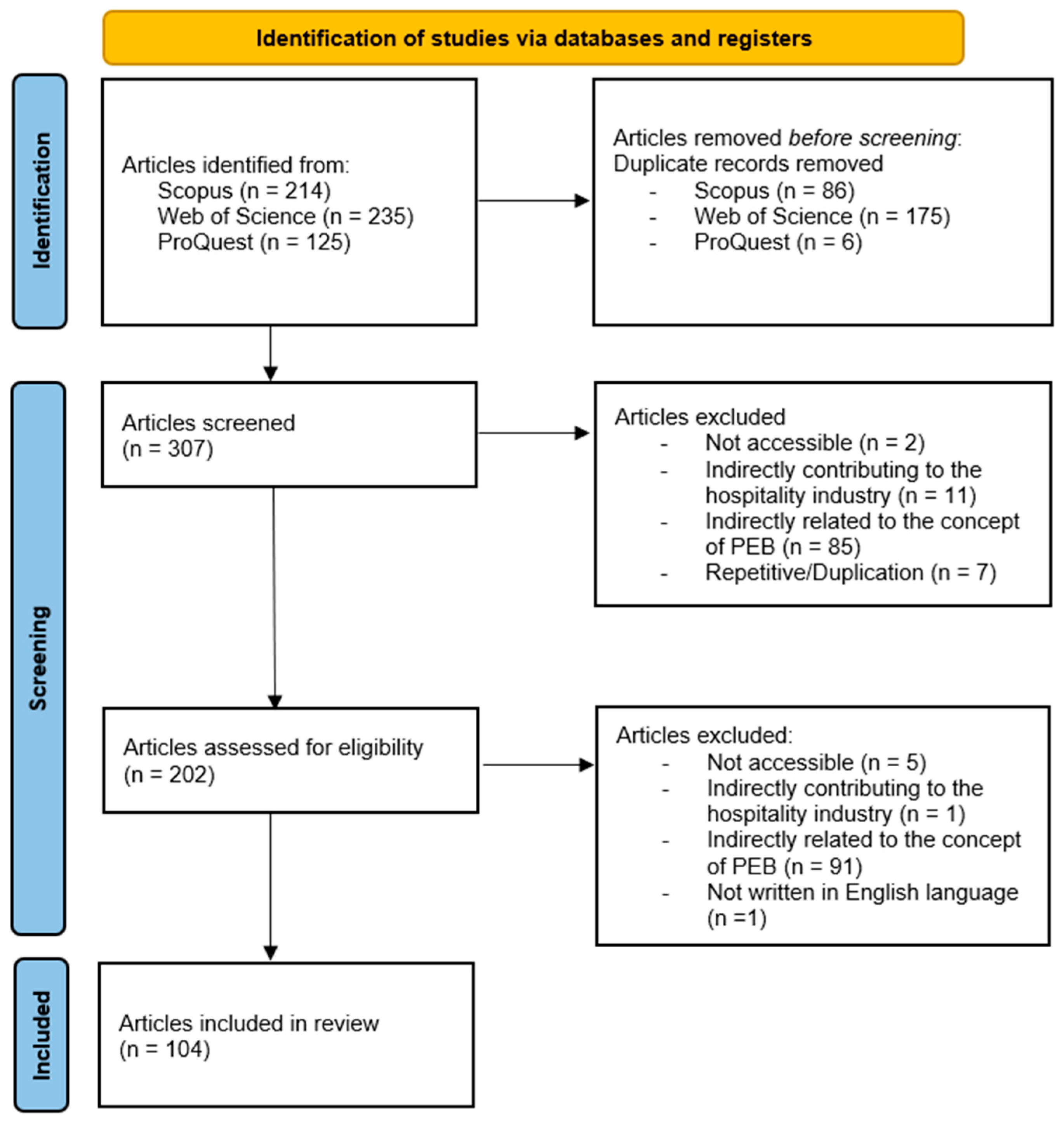
The study used the Covidence platform to conduct a scanning process for the selected articles. A total of 267 articles were removed by Covidence due to duplication, which reduced the number of articles to 307. Afterward, title and abstract screening was conducted by a single researcher, under the supervision of another researcher, to ensure that the predefined exclusion criteria were applied consistently. Although dual independent screening is typically recommended, other studies have demonstrated that single screening approaches can achieve sufficient reliability, particularly when oversight mechanisms are in place [12]. The primary researcher conducted the title and abstract screening, and the supervising researcher validated the process by checking a sample of decisions and discussing any uncertainties to ensure consistent application of the exclusion criteria [12]. Although this data screening approach may not fully eliminate subjectivity, the supervisory validation process and the use of predefined exclusion criteria were implemented to minimize selection bias and enhance procedural consistency [12]. The implications of this screening design were taken into account when interpreting the review findings. The applied exclusion criteria were as follows: related to the hospitality industry (focusing on hotels); related to the concept of PEB (referring to pro-environmental as a behavior not intention); duplication (duplicate articles were removed); and not accessible. These exclusion criteria were applied consistently across both screening phases using Covidence to ensure traceability of decisions and procedural transparency.
Consequently, the number of articles was reduced to 202. Following the initial screening process, a comprehensive full-text scan of the remaining articles was conducted. Any article that did not meet the assigned criteria applied in the previous phase for article selection was removed, including articles that were irrelevant to PEB (the articles that were irrelevant to PEB included those focusing on measuring behavioral intentions or a hotel’s environmental performance). The exclusion of intention-focused studies was deliberate and consistent with the keyword strategy, which prioritized research examining explicit representations of PEB rather than determinants of behavioral intention. The search strategy specifically used the keyword “pro-environmental behavior” to maintain consistency and ensure that included studies addressed environmental engagement through behavior not intention within hospitality settings. Intention-based studies, often grounded in the theory of planned behavior, focus primarily on predicting intentions rather than explaining actual behaviors. Therefore, including them could lead to unclear theoretical outcomes that would not effectively unfold the theoretical landscape within the specific domain. However, studies drawing on intention-based theories such as the theory of planned behavior were retained where these frameworks were used to explain or predict PEB, rather than intentions being the sole outcome.
In terms of studies that used both intention and behavior as part of their research model, during the full-text screening stage, the research model of each study was carefully examined to verify whether behavior was explicitly included as a variable. Studies that used pro-environmental behavior to predict intentions were included, as they defined a clear role for behavioral engagement within their models. However, studies that measured only intentions without assessing or conceptualizing actual behavior were excluded. Furthermore, in this review, “behavior” refers primarily to self-reported PEB measured at the individual or organizational level, as directly observed or experimentally assessed behavioral measures remain limited within hospitality research. This approach ensured that the review remained focused on studies where PEB was empirically represented within the model rather than indirectly through intention-based constructs. Also, any article that was written in a language other than English or was not accessible for full-text scanning was excluded from the study. This resulted in a final list of 104 articles. The selection process was designed to be transparent and replicable and was guided by the PRISMA 2020 checklist, enabling other researchers to follow the same procedures and arrive at comparable results [13] (see Figure 2).

2.4. Data Extraction and Synthesis

Data extraction and synthesis were conducted by applying three approaches. The first approach applied a list of deductive codes using Covidence, a web-based systematic review management platform, to identify data about selected articles, such as the year of publication, geographical location (by continent), journal name, sample target, type of article (SLR, conceptual, or empirical), and research methodology (qualitative, quantitative, or mixed). The second approach, applied for theme development, used Covidence to extract relevant data based on the three primary research questions. The extracted data were subsequently reviewed and confirmed by other authors through iterative discussion and cross-checking [12]. Afterward, the extracted data were uploaded to NVivo. The thematic analysis followed an inductive coding approach to answer the first research question (Q1: How has PEB been defined in the hospitality literature?). A deductive–inductive coding approach was applied to answer the second and third research questions (Q2: What theories have various authors adopted? Q3: What future research recommendations have been identified in the literature?). While the data addressing Research Questions 1 and 2 were synthesized across three analytical periods (2010–2015, 2016–2019, and 2020–2024), the data related to Research Question 3, which focuses on future research recommendations, were synthesized based on recurring thematic patterns across the entire review period rather than analyzing specific time intervals. This approach was adopted to capture recurring thematic patterns in future research recommendations, as these recommendations appeared consistently across the literature rather than clustering within specific time periods. The thematic analysis and synthesis process were informed by Braun and Clarke’s [14] framework. The analysis began with identifying meaningful keywords across the dataset that reflected recurring concepts, phrases, or theoretical references. These keywords were grouped into initial codes, then organized into sub-themes based on conceptual similarities, and finally synthesized into emerging themes that respond to the three primary research questions. Therefore, the synthesis moved beyond frequency-based aggregation by interpreting how recurring concepts and theoretical patterns collectively shape the current understanding of PEB in hospitality.
In establishing the codes and identifying emerging themes, the coding and theme development were conducted by a single reviewer. The research supervisor reviewed the coding framework and theme development process to ensure a systematic and coherent analytical approach and confirmed the final themes and sub-themes. This approach prioritizes analytical coherence and interpretive depth rather than statistical agreement, which is consistent with reflexive thematic analysis practices as outlined by Braun and Clarke [14]. The overreaching themes for every question have been presented in Table 1, Table 2 and Table 3. Additionally, once the final themes were established, a robustness check was conducted by re-examining the excluded studies to ensure that their removal did not alter the outcomes of the thematic analysis. This step was intended to assess the stability of the identified themes and to ensure that exclusion decisions did not systematically bias the thematic structure of the review. Furthermore, the review process was guided by the PRISMA 2020 checklist to enhance transparency and reporting clarity, and the completed checklist is provided as Supplementary Material [13]. The review was also retrospectively registered on the Open Science Framework (OSF): https://doi.org/10.17605/OSF.IO/F2WD4.

3. Results

3.1. Descriptive Findings

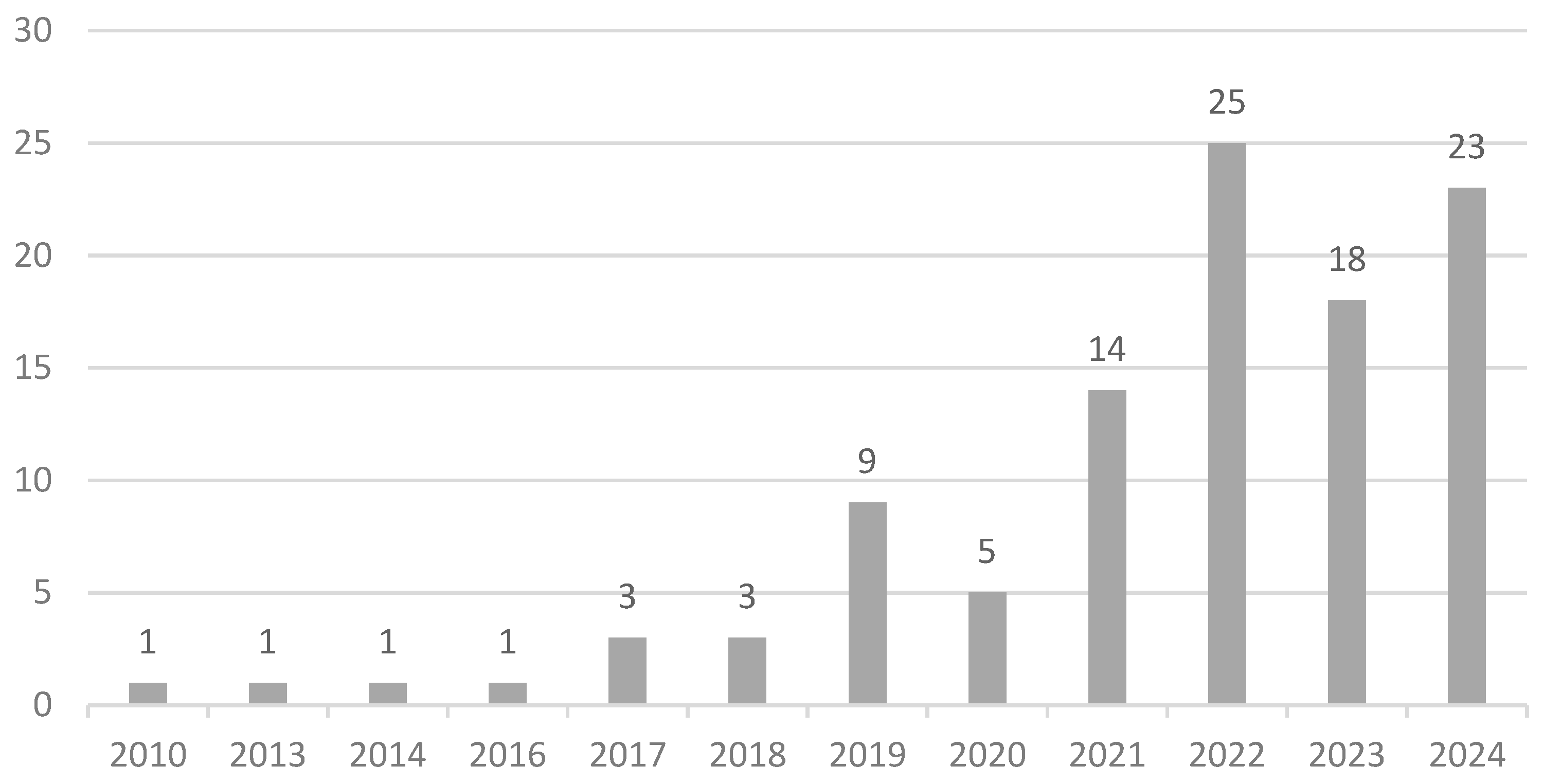
The reviewed studies reflected a growing interest in exploring the concept of PEB, with nine studies published in 2019 alone. Since then, the number of publications on this topic has grown rapidly each year, reaching its peak in 2022 with 25 studies, followed by 2024 with 23 studies. These findings showed that the topic of PEB is receiving growing interest from scholars seeking to identify various means to foster hotel employee–guest engagement in environmental initiatives. Figure 3 provides further details about the selected articles categorized by year of publication.
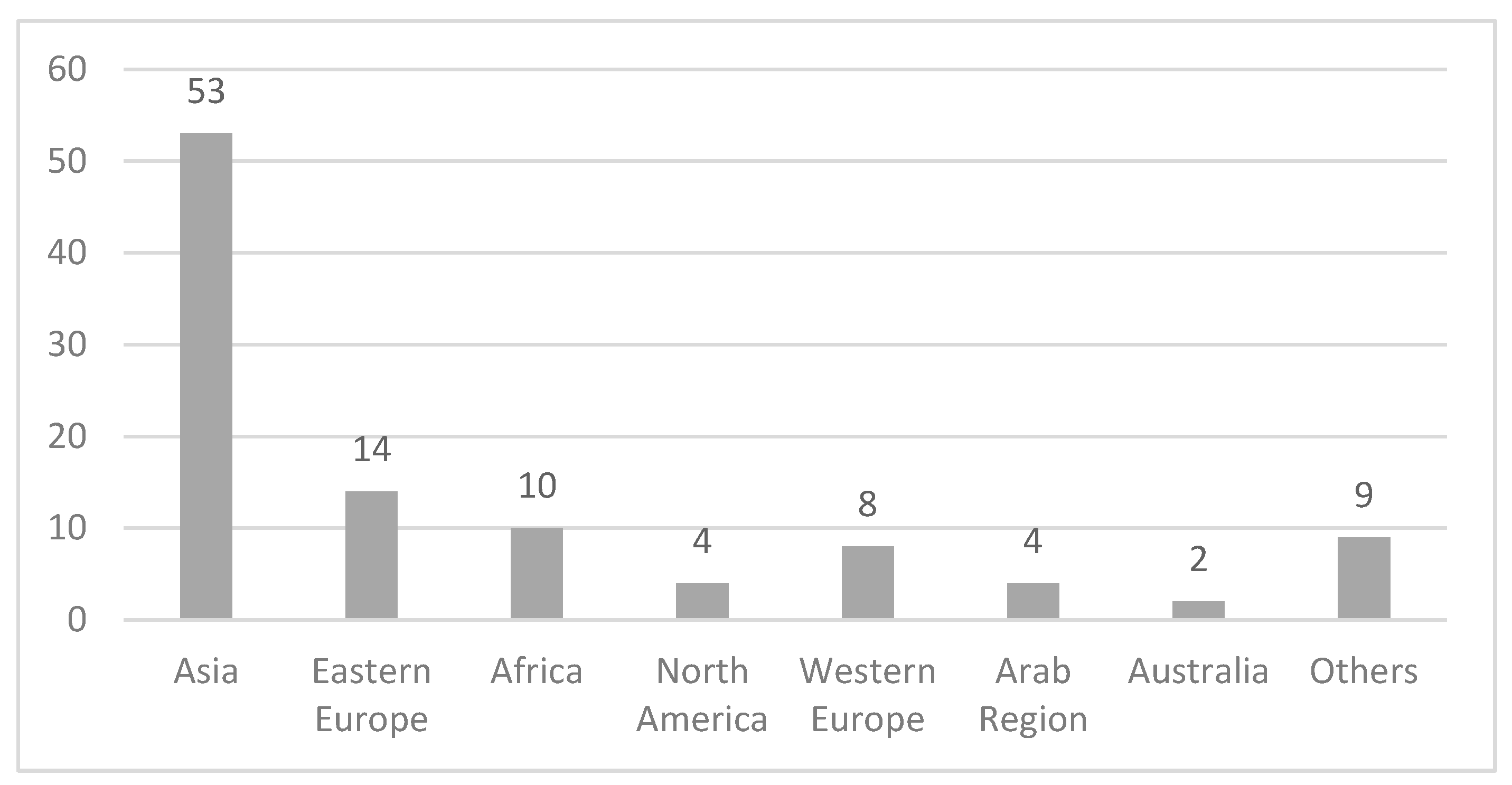
In terms of geographical distribution, Asia accounted for the largest number of studies (53), followed by Eastern Europe (14), Africa (10), and Western Europe (8). A smaller number of studies were conducted in other regions, with two studies in Australia, four in the Arab region, and four in North America. Figure 4 presents the regional distribution of publications. These figures reflect the geographic locations of data collection sites as reported in the reviewed studies and provide a descriptive overview of publication patterns rather than an assessment of regional development status or research priorities.
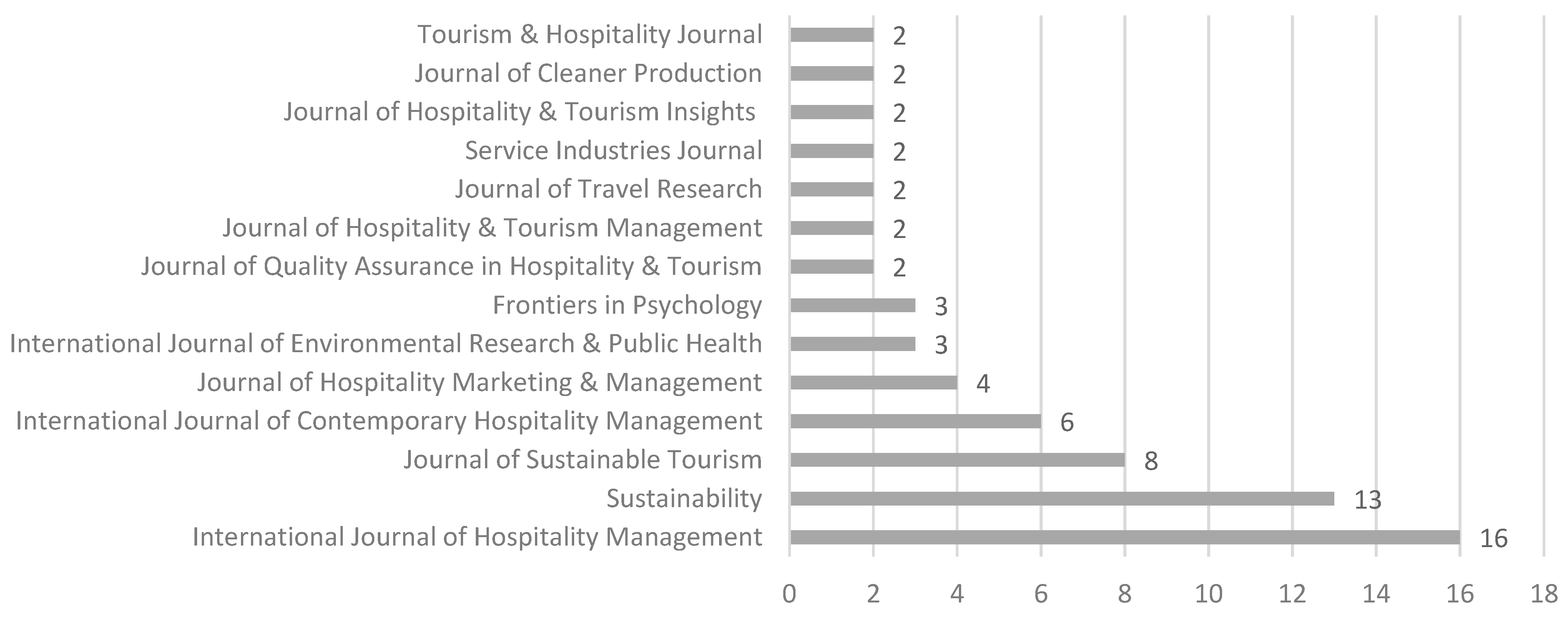
Regarding journal contribution to this topic, Figure 5 presents the distribution of publications across journals. The International Journal of Hospitality Management accounted for the highest number of articles (16), followed by Sustainability (13) and the Journal of Sustainable Tourism (8). Journals with only one publication were not included in Figure 5 (e.g., Heliyon, Vision, International Journal of Organization Analysis, Administrative Science, etc.). This outcome shows that top hospitality journals are interested in publishing articles regarding the topic of PEB. In addition to hospitality and tourism journals, sustainability-focused journals are interested in publishing articles on the subject as well. This distribution highlights the prominence of PEB within sustainability-focused hospitality research.
Regarding research methods, the reviewed studies comprised 96 quantitative studies, 6 qualitative studies, and 2 mixed-methods studies, yielding a total of 104 articles. Among the quantitative studies, the majority relied on cross-sectional survey designs, while six studies used an experimental intervention approach [15,16,17,18,19,20]. In addition, three quantitative studies applied longitudinal data collection designs [15,21,22]. The qualitative studies primarily used interview and case-based approaches to explore PEB in hospitality contexts, e.g., [6,9,23,24,25,26]. The two mixed-methods studies combined qualitative and quantitative techniques, with one study using an SLR to identify a research model and a quantitative approach to test the model for predicting an individual’s PEB [27], and the other using a qualitative study to develop a survey for advancing a green purchase theory within the hospitality context, followed by a quantitative method for analyzing the responses [28].
When it comes to publication type, 100 articles utilized an empirical approach to test a research model that seeks to examine a set of hypotheses or explore a new phenomenon. Meanwhile, one study employed a conceptual approach to create a theoretical research model for potential future testing [24]. Additionally, three articles employed an SLR method to determine to what degree tourism and hospitality research has delved into the subject of PEB [6,9,26]. This distribution indicates that the PEB research in the hospitality domain remains predominantly hypothesis-driven, with comparatively limited use of conceptual synthesis or secondary review approaches.

3.2. Thematic Analysis

3.2.1. Changing Emphases in the Definition of PEB

To address the first research question (How has PEB been defined in the hospitality literature?), the selected articles were first organized by study focus (hotel guests and hotel employees) and then examined across three analytical periods (2010–2015, 2016–2019, and 2020–2024). These periods were used as analytical groupings to compare emphasis on PEB definitions over time rather than to imply discrete theoretical stages of development. This process enabled comparison of how authors emphasized different behavioral, psychological, and organizational elements when defining PEB across contexts and timeframes. Additionally, given the limited number of studies in the earliest period, patterns identified during this phase were interpreted with caution. In terms of thematic analysis, the review applied an inductive process, where initial codes were developed manually based on recurring terms and phrases identified across the various definitions mentioned by selected studies. Subsequently, the extracted data were sorted under each code, then grouped into sub-themes, and finally consolidated into broader themes. The analysis revealed changes in defining the psychological and contextual dimensions of PEB. Specifically, guest-focused PEB definitions increasingly incorporated psychological and behavioral components beyond general environmental awareness, while employee-focused PEB definitions placed greater emphasis on organizationally situated and role-prescribed behaviors (see Table 1).
G-PEB—Consumer Environmental Psychology
Focusing on G-PEB, the analysis indicated a shift in the definition across three analytical periods. From 2010 to 2015, studies were conceptualized primarily in terms of general environmental awareness and self-interest, often without a clear distinction between guest and employee behaviors. For example, Maio and Wei [7] (p. 103) described PEB as “behavior that consciously seeks to minimize the negative impact of one’s actions on the natural and built world”. Between 2016 and 2019, studies increasingly emphasized identity, personal values, and context-specific guest practices, reflecting a move toward more behavior-specific conceptualizations. For instance, when guests with a strong environmental identity visit a hotel, they may have a higher intention to engage in environmental programs such as recycling. However, they may not convert this intention into actual behavior without an external trigger. Accordingly, several studies during this period drew on cognitive theory to interpret the effect of hotel messages in addressing the gap between guests’ environmental intentions and their actual behavior [14]. As a result, definitions of PEB became increasingly behavior-specific over time, centering on guest practices such as conserving water, reusing towels, or saving energy. Grazzini and colleagues [17] defined PEB as follows: “consumers’ pro-environmental behavior includes their willingness to stay in green hotels and reduce resource consumption”. This definition indicates that authors have started to incorporate psychological elements such as self-interest and belief in forming guests’ willingness to engage in hotels’ environmental initiatives (i.e., reusing linen and reducing energy and water consumption). Nonetheless, studies published during this period placed limited emphasis on other behavioral elements, such as feeling responsible toward the environment or engaging in environmental programs beyond the boundaries of self-interest. During this period, definitions largely remained centered on self-interest-based behaviors, with limited integration of broader responsibility-oriented behavioral dimensions.
In the most recent period (2020–2024), definitions of guest-focused PEB increasingly emphasized consumer environmental psychology and associated ecological behavior with psychological elements such as morality, awareness, and intentions. For instance, Wang and colleagues [29] described PEB as being “influenced by intrinsic and extrinsic motivators, including social norms, incentives, and hotel sustainability policies”. Furthermore, Kim and colleagues [18] argued that G-PEB can be influenced by choice architecture, defined as the strategic presentation of environmentally friendly options to guide decision-making. They strengthened this argument by highlighting the normative roles of attribution theory and the value–belief–norm theory as underlying psychological mechanisms. Within this body of literature, choice architecture was commonly described as a contextual element that interacted with personal norms and psychological dispositions in shaping guest behavior. Across this period, definitions of G-PEB frequently foregrounded internal psychological elements, including ethics, beliefs, intentions, and motivations, as central components of guest engagement. For instance, Han [28] mentioned that green purchase activity was driven by prosocial behavior and involved choosing green products based on an ethical decision-making process. Similarly, Makoondlall-Chadee [30] argued that PEB was an activity driven by environmental responsibility. The reviewed studies expanded the definition of PEB to incorporate psychological elements [31]; however, these definitions placed comparatively less emphasis on organizational contextual factors, such as hotel brands, service quality, and organizational culture, that influenced guest engagement in environmental initiatives.
To date, few studies have drawn on social-oriented theories to explore G-PEB. Furthermore, social-oriented theories provide an interpretive framework for understanding how social norms, identities, and social expectations shape the relationship between hotel management and guests. Elshaer and colleagues [32] used social learning theory and social cognitive theory to explain the influence of social commerce, such as recommendations and reviews, on hotel guests’ eco-friendly behavior. The results of their study showed that social-oriented theories were applied to examine the influence of social cues on hotel guests’ PEB.
Overall, the synthesis of guest-focused studies revealed a shift toward greater emphasis on personal ethics, values, and motivations in defining G-PEB. The thematic analysis showed that G-PEB was frequently conceptualized in relation to internal motivations and cognitive decision-making processes. These drivers included personal values and beliefs, ethical and environmental responsibility, awareness of environmental issues and consequences, and the desire to derive personal or environmental benefit from one’s actions. Across the reviewed studies, explicit consideration of ability-related factors, such as physical, financial, or resource-based constraints that enable or limit guest participation, was rarely incorporated into definitions of G-PEB. A customer may have the willingness to engage in a PEB initiative, but due to their weak physical ability, they may not be seen as someone who is willing to engage in PEB. As a result, guest-focused definitions of PEB predominantly emphasized motivational and cognitive dimensions, while enabling conditions were less frequently addressed.
E-PEB—Workplace–Environmental Citizenship
Definitions of employee-focused PEB showed a shift from individual workplace actions toward organizational and leadership-related dimensions. Between 2010 and 2015, the review identified one study that drew on the theory of planned behavior to conceptualize PEB within a model linking employees’ environmental awareness, intentions, and behavioral engagement in hotel-based sustainability practices [33]. During this period, E-PEB was commonly framed as a mechanism linking employees’ environmental awareness and intentions to participate in hotel’s environmental programs. In the subsequent period (2016–2019), authors viewed PEB as part of workplace environmental enhancement, and they further developed its definition by including psychological elements such as cognitive factors. During this period, PEB was described not only as performing green actions but also as sharing ideas, showing that environmental behavior could involve green innovation and environmental thinking [34,35,36,37,38]. For instance, Zhang & Huang adopted the definition by Graves and colleagues, which views PEB as “learning about sustainability, applying green practices, and developing eco-friendly initiatives within hotels” [39] (p. 81). They also test the influence of employees’ motivation on environmental concerns and PEB by applying self-determination theory to elaborate on the impact of autonomous and controlled motivations on PEB through environmental concerns. Across these studies, environmental concern continued to appear as a mediating construct, alongside emerging attention to organizational identity, leadership, and environmental values.
In the most recent period (2020–2024), definitions of E-PEB increasingly drew on concepts from organizational citizenship behavior, emphasizing workplace environmental citizenship, e.g., [30,40,41,42,43,44,45,46,47,48,49,50,51,52]. For example, defined PEB as “actions performed in private or public domains to avoid harm or safeguard the environment. In hotels, PEB is classified as voluntary (beyond work tasks) or involuntary (required by the organization)” [8] (p. 943). This definition was further developed by Robertson and Barling by referring to PEB as “individual behavior that is discretionary, not directly or explicitly recognized by the formal reward system, and that in the aggregate, immediately benefits the natural environment, and indirectly through this means, contributes to the organization and benefits specific individuals” [53] (p. 58). This definition was derived from Boiral and Paillé’s study, in which they described PEB as “individual and discretionary social behaviors that are not explicitly recognized by the formal reward system and that contribute to a more effective environmental management by organizations” [54] (p. 431). Moreover, this definition was mentioned by 10 studies, most of which focused on green human resources management and green leadership as a primary driver that fosters employees’ engagement in PEB, e.g., [22,45,55,56,57]. Although the definition proposed by Robertson and Barling has been infrequently cited in the current literature, this definition highlights that E-PEB may generate direct environmental benefits and indirect organizational benefits. They also provide examples of these indirect benefits, such as promoting environmental initiatives, enhancing environmental procedures, and proposing eco-innovative ideas. Although Robertson and Barling developed a definition of PEB tailored to workplace settings, uptake of this definition within hospitality research was limited, with few studies explicitly adapting it to hospitality-specific operational contexts. Many studies defined employees’ PEB in broad terms, without specifying contextual criteria that distinguish normative workplace environmental behavior. Some studies also defined E-PEB in context-dependent ways, with behaviors such as recycling or commuting interpreted differently across regulatory and cultural settings. For example, recycling was framed as discretionary PEB in some regions, while functioning as a regulatory requirement in others, and commuting by bicycle was interpreted either as environmental engagement or economic necessity depending on context [58]. Thus, the analysis revealed variation in how environmental activities were categorized, with some framed as discretionary behavior and others embedded within regulatory or normative structures. This variability suggests a lack of conceptual clarity in distinguishing voluntary PEB from contextually mandated environmental actions.
Nonetheless, recent studies increasingly attempted to advance workplace PEB definitions by introducing new categories to classify environmental behaviors. A study conducted by Javed and colleagues [59] divided PEB into three categories: eco-civic engagement (helping the organization), eco-helping (engaging in energy consumption activities), and eco-initiative (similar to eco-helping). Although the framework categorized workplace PEB activities, the identified categories were closely interrelated and frequently overlapped in their operational descriptions. Similarly, a study conducted by Madan and colleagues [60] approached PEB from an innovation and creativity perspective, suggesting that green innovation was an activity supported by organizational culture, which provided employees with opportunities to share green creative ideas. They acknowledged that promoting green innovative workplace behavior was a challenging task that required substantial organizational support. While recent research became more active in expanding the concept of PEB to include proactive behaviors and green innovative ideas, it still lacked the detailed descriptions necessary to fully understand the nature of these behaviors. Existing studies rarely delineated the specific characteristics or boundaries of green innovative behaviors beyond general references to creativity or idea-sharing. As a result, definitions extended PEB to include proactive and innovative behaviors, often without offering detailed specifications of the environmental settings, cultural dimensions, or underlying influence mechanisms.

3.2.2. Theories, Models, and Frameworks

A deductive–inductive thematic analysis approach was applied to capture the theoretical frameworks used across the selected studies. The extracted data related to theories applied by selected articles were uploaded from Covidence into NVivo and sorted by publication period (2010–2015, 2016–2019, and 2020–2024) to enable comparison of dominant theoretical orientations across time. Within each period, the data were organized based on the specific theories mentioned in the studies. Sub-themes were developed based on recurring theoretical orientations explicitly identified in the reviewed studies, including planned behavior, motivational, social, organizational, cognitive, moral, and connection-based perspectives. These theoretical orientations were then grouped into one of three overarching theoretical role categories (explanatory, interpretive, and normative). Each theoretical role was operationalized based on how the theory functioned within the structure of the study. The explanatory role was assigned when the theory directly informed hypothesis development, model construction, or the testing of causal relationships between variables. The interpretive role was coded when the theory was not used to formulate hypotheses but was applied to contextualize findings or provide conceptual explanations for observed relationships. The normative role was identified when the theory was employed to prescribe recommended actions, managerial implications, or ethical guidance regarding environmental practice. This approach for categorizing theories based on their primary role within the reviewed studies was conceptually derived from the work of Gregor [61]. Furthermore, the thematic classification was initially conducted by a single reviewer. When the theoretical function was not immediately explicit, the study was re-examined to determine whether the theory structured hypothesis development or was applied primarily for contextual explanation. Ambiguous cases were reviewed with a co-author to ensure consistency in assignment. Although some theories may plausibly span more than one analytical role, each theory was classified according to its dominant analytical function as operationalized in the reviewed studies to maintain consistency in synthesis. This structured coding process enabled the review to move beyond simply listing theoretical framework and instead map how they were functionally used to frame or interpret PEB in hospitality research. The outcome of this analysis is summarized in Table 2, which highlights both the frequency and how the theories have been used by the selected studies.
Explanatory Theories
Explanatory theories aim to explain why and how PEB occurs by specifying causal relationships between variables in a research model. They seek to clarify the mechanisms through which particular factors influence behavioral outcomes. Within this role category, two dominant theoretical clusters emerged: planned-behavior-oriented theories, which focus on the process of targeting a desired behavior, and motivation-based theories, which emphasize the role of internal and external drivers in shaping behavioral engagement. Studies within this explanatory role applied various behavioral frameworks to clarify the processes underlying guest and employee PEB. In terms of G-PEB studies, the explanatory theories served as the primary framework to understand interrelationships between various factors to foster hotel guest engagement in environmental programs. The analysis indicated a shift away from heavy reliance on the theory of planned behavior, e.g., [3,15,33,62], to applying theories such as the theory of green purchase, e.g., [28,63], goal-setting theory, e.g., [7], ability–behavior–context theory, e.g., [64], the goal-directed behavioral model, e.g., [65], and the ability–motivation–opportunity model, e.g., [2]. The theory of planned behavior was the most frequently applied theory within the explanatory theme in guest-focused studies. This result reflects that current studies continue to rely heavily on traditional theoretical frameworks to identify the psychological factors underlying hotel guests’ engagement in environmental practices.
In regard to E-PEB studies, an explanatory theme derived from studies that aim to assess the impact of employees’ motivations, a group of behavioral elements, and organizational practices on fostering engagement in PEB. These theories included the theory of planned behavior, e.g., [33,35,66,67,68,69], interaction-based theory, e.g., [36], Lewin’s field theory, e.g., [45], psychological contract theory, e.g., [70], and self-determination theory, e.g., [25,34,71]. Additionally, a shift was observed within the explanatory theme toward greater application of organizational context theories, such as the stimulus–organism–response model, e.g., [72,73], regulatory focus theory, e.g., [74], behavioral reasoning theory, e.g., [23], and the ability–motivation–opportunity theory, e.g., [75,76,77]. Among the most frequently applied theories were the theory of planned behavior and self-determination theory. These frameworks were commonly used in employee-focused studies.
Interpretive Theories
Interpretive theories aim to understand how individuals make sense of environmental behaviors within specific social and organizational contexts, emphasizing meaning, perception, and relational dynamics rather than purely causal prediction. Within this interpretive role category, three dominant theoretical clusters emerged: organizational-related theories, which examine how organizational structures and practices shape individuals’ perceptions and behaviors; social-relational theories, which explain how individuals interpret and respond to social expectations and group dynamics; and cognitive-oriented theories, which focus on how awareness, attention, and evaluation processes influence behavioral engagement. This interpretive role was observed across both guest-focused and employee-focused studies. In hotel guest-oriented studies, the interpretive theme increased in the most recent period, reflecting a shift away from exclusive reliance on traditional theories and toward cognitive-oriented theories. These theories included cognitive appraisal theory, e.g., [78], cognitive dissonance theory, e.g., [16], contractual level theory, prospect theory, e.g., [17], intervention theory, e.g., [19], the theory of information, e.g., [15], innovation diffusion theory, e.g., [79], social learning theory, social cognitive theory, e.g., [32], and choice architecture of decision mode, e.g., [18].
Regarding E-PEB studies, an interpretive theme emerged from studies that used theories to offer further explanation on how organizational practices, social systems, and the mechanism of understanding the surrounding world shape specific behaviors. These categories reflected theories such as social exchange theory, e.g., [59,75,80], social identity theory, e.g., [57,81], social cognitive theory, e.g., [82,83], transformative learning theory, e.g., [84], social identity theory, e.g., [81,85], social learning theory, e.g., [77,86], organizational fit theory, e.g., [87,88], organizational support theory, e.g., [89], resource-based view theory, e.g., [90], leadership theory, e.g., [91], stakeholder theory, e.g., [92], institutional theory, e.g., [93], ability–motivation–opportunity theory, e.g., [25,94], and the theory of green transformation, e.g., [95]. In addition, social-oriented theories were the dominant frameworks within the interpretive theme. The frequent application of social identity theory, social learning theory, and social exchange theory in employee-centered research reflected attention to the role of social and cultural workplace dynamics in shaping PEB. The application of social-oriented theories increased in the most recent period.
Normative Theories
Normative theories prescribe or justify particular courses of action based on ethical principles, values, or socially desirable outcomes. They provide guidance on how individuals or organizations should behave to achieve environmental or moral ideals. Within this normative role category, two dominant theoretical clusters emerged: moral-oriented theories, which emphasize the influence of values, ethics, norms, and beliefs on individual behavior, and connection-based theories, which highlight how emotional or spatial connectedness to nature generates value orientations that influence environmental behavior. Normative theories were applied infrequently in guest-oriented studies; however, when used, they were associated with value-based behavioral frameworks, such as the norm activation theory, e.g., [2,27,63], value–belief–norm theory, e.g., [19,63,96], equity theory, e.g., [64], environmental fit theory, e.g., [97], and connectedness to nature, e.g., [98].
Similarly, the normative theme within employee-oriented studies has derived from two main categories: moral and connection. Examples of theories utilized by various authors under the normative themes are value–belief–norm theory, e.g., [99], norm-activation theory, e.g., [87], connectedness to nature theory, e.g., [100], and capability theory, e.g., [21]. These theories were rarely applied in employee-focused studies. When applied, they were associated with value-based or identity-oriented behavioral frameworks.

3.2.3. Recommendations

Future research recommendations were synthesized based on recurring thematic patterns across the reviewed studies, rather than by publication period, as similar recommendations appeared consistently throughout the literature regardless of timeframe. To address the final research question (What future research directions are identified in the hospitality PEB literature?), the thematic synthesis revealed three overarching categories of recommendations: empirical, methodological, and theoretical. The empirical theme contained four recurring areas: constructional, psychological, dependent, and mediator/moderator. The methodological theme included data analysis, data collection methods, and broader research methodologies. Lastly, the theoretical theme included two subcategories addressing new theory development and theoretical framework extension (see Table 3).
Empirical Recommendations
Empirical recommendations refer to suggestions offered by authors to develop a research model that includes integrating new variables that directly/indirectly influence the level of engagement in PEB. The reviewed studies proposed four categories of variables for integration into future research models: independent variables, moderators, mediators, and dependent variables.
Independent variables are the predictors in a research model. Independent variables were divided into constructional and psychological variables. About 25 studies recommended constructional variables, which were those that reflected on organizational and environmental practices as a factor that fosters individuals’ participation in environmental behaviors such as corporate social responsibility, artificial intelligence, green organizational climate, e.g., [39,101,102], green job analysis, green design, human resources management, hotel geographical location, and environmental–social–governance, e.g., [58,71]. Twenty-eight studies recommended psychological variables to be integrated into future research. Psychological variables focus on an individual’s attitude, self-efficacy, beliefs, norms, and knowledge as the main factor for forming an environmental behavior, e.g., [55,82,103,104,105]. The analysis identified environmental knowledge, environmental concern, and environmental awareness as frequently proposed independent variables in models examining PEB. Several studies recommended incorporating additional independent variables, such as social norms, cultural diversity, habitual decisions, green labor relations, and green mindfulness, into future research models predicting PEB or green hotel choice, e.g., [7,29,58,59,106].
Dependent variables are those impacted by changes in independent variables. This theme derived from studies that suggested assessing PEB as a single task, such as reducing water consumption, electricity usage, or green dish selection, e.g., [2,17,20,107]. In addition, several studies recommended assessing the actual behavior instead of focusing on behavioral intentions as a main predictor for environmental behaviors, e.g., [7,72]. Other studies proposed dividing PEB based on creativity into traditional tasks and innovative tasks, e.g., [34,68,106].
Mediator variables serve as essential factors that help illuminate the underlying mechanism or process between the independent and dependent variables. These variables are crucial in clarifying how the independent variable impacts the dependent variable. Nine studies recommended extending future research models by including a mediator variable that focuses on hotel guests’ and employees’ engagement in environmental behaviors such as employee satisfaction, green customer involvement, personal environmental norms and intrinsic/extrinsic motivations, organizational identification, understanding green initiatives, organizational commitment, job satisfaction, and transformational leadership, e.g., [30,45,65,83,90,106].
The inclusion of moderator variables is crucial in determining the factors that impact the relationship between independent and dependent variables. Approximately 33 recent studies suggested utilizing a moderator variable to better understand the circumstances in which an effect may or may not be applicable when promoting PEB. Moreover, most of these studies emphasized the importance of incorporating contextual and cultural elements as moderator variables to identify the conditions under which individuals engage in PEB, e.g., [88,100,108]. Moderator variables such as environmental values, self-efficacy, duration of stay, service quality, green finance, organizational culture, industry regulation, and purpose of travel were proposed for inclusion in future research models, e.g., [18,59,70,89,109,110].
Data Analysis, Collection, and Methodological Recommendations
Guidelines for conducting research or systematic problem-solving are known as methodological recommendations. This area of study encompasses data analysis, data collection, and research methodology. Seven studies recommended using distinctive data analysis techniques such as comparative data analysis, e.g., [107], cross-lagged panel design, e.g., [70,106], and multilevel path analysis, e.g., [57]. Meanwhile, the vast majority of the studies advised future research to conduct new forms of data collection to improve the generalizability of the findings by targeting new sectors (14 studies), identifying new geographical locations (29 studies), including a greater diversity of participants (5 studies), adopting longitudinal data collection methodology (25 studies), and observing data and random samples (5 studies). Regarding research methodology, seven studies advocated for qualitative research, e.g., [20,33,76,83,91], while only four studies suggested a mixed research approach [64,77,89,111].
Theoretical Recommendations
Theoretical recommendations encompass guidelines and suggestions for the development and implementation of theoretical frameworks in research and problem-solving scenarios. Two sub-themes emerge from this theme: introducing a novel theoretical framework and extending an established one. Studies suggest that future research should adopt newer theories such as commitment–trust theory, antecedent–behavior–consequence theory, equity theory, ability–motivation–opportunity theory, and the Fogg behavioral model, e.g., [9,16,64]. Moreover, limited studies propose expanding conventional theories like the theory of planned behavior, ability–motivation–opportunity theory, theory broadening, and theory deepening to amplify their efficacy, e.g., [25,28,60].
In summary, the current hospitality studies place considerable emphasis on empirical findings and methodological recommendations while paying limited attention to theoretical implications. Although a significant number of studies employ quantitative methods for data collection, relatively few adopt qualitative approaches. Furthermore, while many studies recommend the use of longitudinal designs in future research, qualitative methods are rarely suggested. An analysis of 104 studies reveals a consistent pattern: hospitality research largely adheres to traditional norms by encouraging research model replication across countries or industry settings or by recommending longitudinal data collection to enhance generalizability. However, most studies fall short in offering detailed guidance for advancing theoretical frameworks, such as integrating new variables or exploring novel applications. To strengthen the field, future research should aim to make more meaningful contributions to theoretical development.

4. Discussion

4.1. PEB Definition

A review of the three distinct periods reveals a notable shift in how PEB is framed, moving from a broad concept such as protecting the environment to a more specific behavior such as sharing green proactive ideas, unincentivized behavior, and voluntary or extra-task behavior. Furthermore, the reviewed studies indicate that both guest- and employee-focused research have relied on similar definitions derived from Axelrod and Lehman: “Actions that contribute to the preservation and/or conservation of the environment” [112] (p. 153). When guest- and employee-focused studies use the same definition of PEB, this pattern suggests the need for more context-sensitive definitions that account for differences between guest and employee roles. For example, some studies often frame attitudes as the main drivers of PEB for hotel guests, while hotel staff are driven by internal motivations such as self-satisfaction. Therefore, future research should clearly specify both the environmental context and the actor category (hotel guest or employee) when defining PEB.
Another important conceptual implication of this analysis signals the need to distinguish clearly between environmental intentions and PEB. Pro-environmental intentions are frequently examined in empirical studies and generally reflect a favorable orientation toward environmental protection. However, the reviewed studies reveal greater conceptual ambiguity in how PEB is defined compared to the relatively consistent treatment of environmental intentions. Accordingly, scholars should differentiate clearly between behavioral intentions and those investigating enacted behaviors, rather than treating the constructs as interchangeable. This gap between intention and action can be interpreted through behavioral frameworks such as the Fogg behavior model, which conceptualizes behavior as the combined outcome of motivation, ability, and trigger [113]. From this perspective, motivation may offer a more direct lens for understanding workplace behavior than attitudes alone, particularly within high-pressure hospitality environments [114]. This interpretation helps explain the continued prominence of intention-focused theories in hospitality PEB research while clarifying why definitions and empirical examinations of enacted behaviors remain comparatively fragmented.
Beyond motivation, the analysis identifies ability as an underexamined element in how PEB is defined within hospitality research. While many definitions place more emphasis on psychological and contextual drivers, such as attitudes and green leadership, as the main drivers of PEB, scholars devote less attention to ability factors as behavioral constraints. Effective engagement requires sufficient capacity. This perspective aligns with the Fogg behavior model, which conceptualizes ability in terms of simplicity, emphasizing barriers such as time constraints, physical and cognitive capacity, financial resources, and established routines [113]. From this perspective, definitions of PEB become more complete when they explicitly acknowledge ability as a factor enabling behavioral performance. Accordingly, PEB should be understood not only as intention-driven action but also as behavior constrained or enabled by individual ability.
In addition, distinguishing between voluntary and mandated forms of PEB is important when interpreting PEB in hospitality contexts. For example, although recycling may be mandated in countries such as Canada, effective implementation still depends on voluntary actions, such as cleaning containers properly or removing bottle caps before disposal. Recognizing this distinction, alongside ability constraints, improves conceptual precision in defining and interpreting PEB across hospitality settings.

4.2. Theory Use and Extension in PEB Research

The patterns identified in this review reflect how frequently and in what ways theories are used in the hospitality literature, rather than how strong the empirical evidence is behind them. For example, the dominance of the theory of planned behavior may indicate its popularity within publication trends or disciplinary norms, rather than confirming that it is empirically stronger than other frameworks. Because this review did not conduct a formal quality appraisal of individual studies, the findings should be read as mapping the intellectual direction of the field rather than evaluating the strength of evidence across studies. In this sense, the review highlights theoretical preferences and usage patterns, not comparative empirical validity. With this interpretive scope in mind, the following discussion synthesizes the dominant theoretical patterns and their implications for the development of PEB research in hospitality.
The three primary theoretical role themes reveal a consistent pattern in how behavioral theories are applied in hospitality PEB research. The theory of planned behavior emerged as the most frequently applied framework in both guest- and employee-focused studies, indicating that hospitality PEB research largely conceptualizes behavior as the outcome of rational evaluation, potentially underemphasizing structural constraints, organizational systems, and behavioral triggers. Moreover, most guest-focused studies rely on intentions and norm-based theories to explain participation in PEB (see Table 2). In contrast, socially oriented theories, such as social identity theory, social exchange theory and social learning theory, remain underrepresented in guest-focused research. This imbalance suggests a conceptual gap, particularly given that guest behavior in hospitality settings is often shaped by group belonging, social expectations and observational cues. While these theories have been frequently applied in employee-focused studies to explain how social relations and organizational context foster engagement in PEB, their application remains largely absent from guest-centered research. Expanding the application of social frameworks may therefore offer a more comprehensive understanding of guest PEB beyond rational intention-based models.
Furthermore, several employee-focused studies apply the theory of planned behavior to explain how workplace attitudes influence engagement in PEB. In these applications, TPB frames employees’ environmental engagement as the result of attitude evaluation, perceived social expectations, and perceived behavioral control within the organizational setting. Therefore, the theory of planned behavior positions PEB as the outcome of individual cognition operating within organizational constraints. Additionally, employee-focused studies draw on social exchange theory, social identity theory, social cognitive theory, and social learning theory. These theories were primarily used to explain how organizational practices, such as green human resource management and corporate social responsibility, influence engagement in PEB. Together, these frameworks emphasize that employees’ environmental behavior emerges not only from individual evaluation but also from perceived organizational support, social belonging, reciprocal relationships, and observational learning within the workplace.
While the theory of planned behavior provides a strong foundation for understanding behavioral intentions, its scope becomes more constrained when assessing how PEB is enacted and sustained within complex workplace environments [114]. More recently, research has demonstrated growing interest in alternative theoretical approaches that offer a more contextualized understanding of behavior rather than a complete departure from intention-based models. Emerging frameworks such as ability–motivation–opportunity theory, connectedness to nature theory, and Lewin’s field theory illustrate this shift. These approaches extend beyond individual intention and self-efficacy by incorporating workplace structures, emotional bonds with nature, and environmental field forces. Loureiro and colleagues [9], in their systematic literature review, similarly advocate moving beyond conventional theories and encourage the adoption of innovative behavioral models such as the Fogg behavioral model. Taken together, this progression underscores the need to capture the dynamic interplay between individual, organizational, and contextual elements in shaping workplace environmental behavior.

4.3. Intervention-Based Design Studies vs. Traditional Design Studies

One key insight concerns the dominance of cross-sectional study designs in assessing PEB, which may help explain the prevalence of explanatory theories such as the theory of planned behavior and self-determination theory. These theories align closely with cross-sectional designs, as they are typically operationalized through survey-based models examining relationships among attitudes, norms, motivations, and self-reported behaviors at a single point in time. In contrast, intervention-based designs remain limited in hospitality research, particularly in employee-focused studies, where experimental approaches to assessing actual behavior are rare. Instead, most employee-focused research relies on self-reported measures to examine associations between internal and external variables and engagement in PEB.
This heavy reliance on self-reported, cross-sectional survey designs carries important methodological implications. Prior research has demonstrated that PEB is often measured inconsistently across studies, with substantial variation in behavioral indicators and scale construction [115]. Such variation, combined with self-assessment measures, increases the risk of common method bias and social desirability effects, particularly given the morally valued nature of environmental engagement. Moreover, many studies assess behavioral intentions rather than directly observed actions, reinforcing the well-documented intention–behavior gap and potentially overstating actual levels of engagement [116]. The cross-sectional structure of these designs further limits causal inference and makes it difficult to assess behavioral stability or change over time [115]. Collectively, this methodological orientation may constrain the field’s ability to capture the dynamic and context-dependent dimensions of PEB in hospitality settings.
A subset of studies adopts an intervention-based approach to examine what triggers hotel guests to engage in environmental actions, such as selecting low-carbon menu options or green accommodation, e.g., [15,16,17,18,19]. These intervention-based studies draw on theories emphasizing decision-making processes, behavioral cues, and situational triggers, including nudge theory, cognitive dissonance theory, choice architecture, signaling theory, and prospect theory. Rather than focusing solely on intentions, these frameworks test how contextual cues and environmental prompts shape actual behavioral choices during hotel stays. For example, Chi and colleagues [15] utilize the stimulus–organism–response (SOR) model, self-regulation theory, and signaling theory to explore how hotel green certification and transparent pricing influence customers’ booking behavior. Their scenario-based booking experiments demonstrate how informational cues can reduce the intention–behavior gap by activating situational triggers. Similarly, Kim and colleagues [18] apply choice architecture theory to test how decision modes (choice vs. rejection) affect sustainable hotel selection, grounding their findings in cognitive information processing mechanisms. Furthermore, Dolnicar and colleagues [16] and Mair and Bergin-Seers [19] conducted real-world field experiments using framed signage or educational messaging in hotel rooms to test how appeals influence actual behaviors like towel reuse and recycling. Message framing studies grounded in prospect theory illustrates how gain–loss framing alters guest recycling behavior. Last but not least, Voss and colleagues [20] conducted a study to examine how a menu would affect the guest choice of green food with lower carbon emissions. The authors conducted covert field experiments using theory-informed menu designs to encourage vegetarian food choices. They used four types of menus: the hotel’s default menu or one of the three intervention menus. The intervention menus were designed to test cognitive (using the bandwagon effect) or behavioral interventions (a labeled menu with vegetarian meals and a non-labeled menu with vegetarian meal options). Together, these findings indicate that intervention-based designs offer valuable insights into how behavioral triggers operate in real-time hospitality contexts.
Despite these contributions, intervention methods remain limited in guest-focused research. In employee-focused research, workplace constraints may partly explain the limited use of intervention-based approaches due to confidentiality concerns, chain policies and operational disruptions. Such experiments often require strong academic–industry partnerships, substantial financial resources, and long-term involvement at the operational site [115]. These constraints help explain why intervention-based designs remain relatively rare, while cross-sectional surveys continue to dominate due to lower cost and logistic feasibility. This methodological preference shapes the literature by positioning hotel environmental management practices as the primary driver of employee engagement in PEB through green human resources initiatives, green leadership, or corporate social responsibility. It also reinforces the use of socially oriented theories to explain the relationship between management practices and employees’ PEB. This pattern suggests that future research should assess environmental management practices beyond green policy enforcement and education, examining them as behavioral triggers that foster employee engagement through performance evaluation, environmental feedback, and effective communication. Emerging technologies, including artificial intelligence, may further enable longitudinal examination of how behavioral cues influence energy use, material waste, and employee responses to organizational prompts.

4.4. Cultural Diversity

The synthesis identifies cultural diversity as an underexplored contextual dimension shaping PEB in hospitality settings. In particular, few studies examine how PEB varies across cultural contexts, despite increasing diversity within hospitality workforces and guest populations. This omission limits understanding of how cultural factors shape environmental engagement in hospitality contexts. Certain environmental behaviors may reflect cultural or religious norms rather than environmental motivations alone. In some contexts, dietary choices such as vegetarian meals may reflect religious practices rather than conscious carbon-reduction intentions. Similarly, financial contributions rooted in cultural or religious obligations, such as donations, may intersect with, but are not equivalent to, PEB. Consequently, understanding cultural variations may prompt future research to examine how cultural dimensions interact with and shape PEB. One explanation for the limited integration of cultural dimensions may lie in the concentration of studies within relatively homogeneous contexts, which may reduce the perceived relevance of cultural diversity in shaping employee and guest behavior, in contrast to hospitality contexts characterized by rich cultural diversity in hotel workforces and guest populations, such as those found in highly multicultural hospitality markets. Incorporating cultural and demographic dimensions into contextual analysis can therefore support more inclusive and tailored strategies for promoting PEB in hospitality settings.

4.5. Implications for Future Research

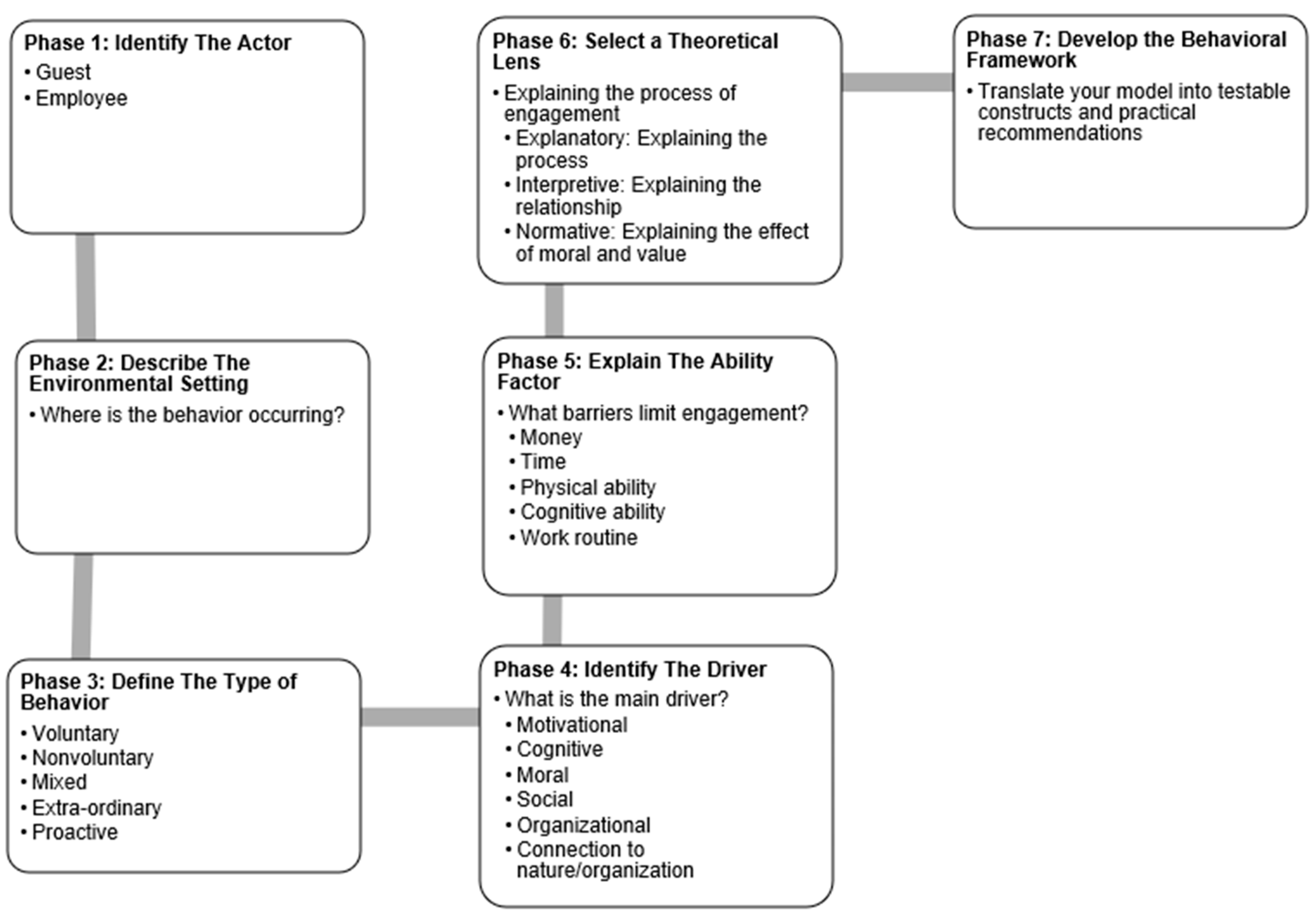
This review explores how PEB is being understood within hospitality research. The study synthesizes existing insights into a structured conceptual guide intended to support more precise definitions of PEB within specific hospitality contexts. Derived from thematic patterns across the reviewed studies, the framework functions as a heuristic tool rather than an empirically validated model. The primary aim of the framework is to guide a systematic reflective process through which scholars can clarify behavioral context, identify key drivers, and align theoretical frameworks with the constructs under investigation. Figure 6 presents a seven-phase conceptual framework, with each phase representing an analytical consideration that can be applied sequentially to enhance conceptual clarity when studying PEB in specific contexts:
  • Phase one is about identifying the actor. Who exactly is performing the behavior? It might be guests, staff, management, or any member of the stakeholders, depending on the study scope. This step is important as it embarks on PEB by identifying the role and the position of an individual within a specific context. For instance, what drives a hotel manager to go green might be very different from what motivates a housekeeper or a guest. This phase highlights the importance of specifying the actor and role involved, as different stakeholders may engage in PEB for distinct reasons within the same organizational setting. Is it implemented by all hotel staff or targeting a specific department?
  • Phase two focuses on defining the context. Behavior does not happen in a vacuum. Whether it is taking place in a guest room, a break room, or the front office, or even within a specific field, the environmental setting influences not just what is possible but also what is expected. Context shapes the norms, the opportunities, and even the pressure to act (or not act) in environmentally conscious ways.
  • In phase three, attention turns to the type of behavior: is it voluntary, non-voluntary, or somewhere in between? This phase consolidates earlier discussion by situating voluntary and non-voluntary behaviors within a broader analytical spectrum, allowing researchers to differentiate between passive compliance and active environmental engagement. Voluntary behaviors are usually driven by personal values or internal motivations. Non-voluntary ones, on the other hand, tend to be dictated by policy or job requirements. This distinction helps researchers line up the behavior with the most fitting theory. Also, identifying the behavior in terms of quality level (ordinary or extraordinary) would help scholars differentiate between passive compliance and active engagement, which would contribute to developing a PEB spectrum within the hospitality industry.
  • Phase four dives into what is driving the behavior. The influences here can vary widely; the main force of behavior could stem from self-satisfaction (motivational), knowledge or awareness (cognitive), a sense of duty (moral), peer influence (social), company policies (organizational), or just feeling connected to nature. Pinning down the drivers is a crucial key for theory or behavioral model selection that answers the question of what is going on.
  • Drawing on Fogg’s conceptualization of ability as simplicity, phase five encourages researchers to reflect on practical barriers that may condition behavioral engagement, rather than treating intention as sufficient for explaining PEB [113]. According to Fogg, there are five primary elements that define the ability element: money, time, physical ability, cognitive ability, and work routine [113]. In this phase, a list of barriers needs to be identified by the researcher in order to understand how an individual will overcome the barriers to engage in environmental programs. For instance, money for a guest can be a primary factor in choosing a hotel (green or not green), while for an employee, work routine may be one of the primary barriers, as the hotel work environment requires employees to prioritize guest satisfaction, which may force them to treat environmental practices as a secondary option.
  • Phase six supports theory alignment by encouraging researchers to reflect on how different theoretical orientations (explanatory, interpretive, or normative) may be more or less appropriate depending on the dominant drivers and contextual conditions identified in earlier phases. If it is about values and responsibility (normative), the value–belief–norm theory might work within this context. In terms of organization–individual relationships (interpretive), social identity theory or social exchange theory could have an effective mechanism in interpreting the relationship between organizational practices and individuals’ perceptions and actions. While building an entire research model on how multiple variables interact to form a behavior, the ability–motivation–opportunity or Fogg behavioral model can be a useful framework to define the pathway of PEB.
  • Rather than prescribing measurement strategies, phase seven highlights the conceptual transition from abstract theoretical considerations to operational constructs, emphasizing coherence between theory, context, and empirical design. It is the bridge from theory to data. Additionally, this phase helps researchers to identify the chain value of their research not only within the academic domain but also within the hospitality industry by thinking deeply about how to convert these theoretical and conceptual behavioral models into practical elements.
By articulating these analytical considerations, the framework encourages a shift away from generalized definitions toward more context-sensitive conceptualizations of PEB in hospitality research. Hopefully, this conceptual framework supports future research by promoting greater conceptual precision in PEB definitions and stronger alignment between behavioral frameworks and real-world hospitality dynamics.

5. Conclusions

This SLR should be viewed not as a definitive authority but as a starting point for understanding the concept of PEB through the lens of hospitality literature. At the same time, this study provides several insights that may inform future research. First, this study examined how definitions of PEB have been framed across three analytical periods, revealing inconsistencies and shifts in emphasis within the existing literature. These insights may support future studies in refining how PEB is conceptualized in ways that better align with specific research contexts and objectives. Second, this study contributes to the current literature by going beyond listing applied theories and grouping them into three emerging themes based on how most selected studies have used them: explanatory, interpretive, and normative. By grouping theories according to their primary analytical role, this review synthesizes the theoretical landscape of hospitality PEB research, highlighting the most frequently applied approaches and areas of emerging interest, thereby contributing to greater theoretical clarity and supporting more informed theory selection in future hospitality PEB research. Finally, this study has compiled all the recommendations mentioned by previous studies, which can be viewed as a list of ideas for future research to review and explore. Researchers can use this list to consider different options and determine which recommendations are most feasible based on their research background and expertise.
Despite the valuable contribution that this study has offered, our research identifies some limitations that can be an opportunity for conducting a future SLR on this specific topic. First, this review followed PRISMA 2020 reporting guidelines; however, it did not apply a formal risk-of-bias or structured quality appraisal tool to evaluate the methodological rigor of individual studies. All included articles were peer-reviewed journal publications and were screened for reporting clarity and relevance during the selection process. Nevertheless, the absence of a structured quality assessment means that studies were synthesized without weighting them based on methodological rigor. Future reviews may incorporate formal appraisal tools to further strengthen evidentiary evaluation. Second, another limitation of this review is that the hospitality-related keywords were applied to the title field only. This approach was intended to ensure that hospitality represented the primary context of the study. However, it may have excluded studies that discussed hospitality within the abstract or listed hospitality-related terms in the keywords section without explicitly mentioning them in the title. As a result, some relevant studies situated within hospitality contexts may not have been captured. Third, this review focused only on exploring PEB. Even though six articles applied an intervention approach to assess actual behavior, the vast majority of studies used a self-assessment approach, which still measures behavioral intentions rather than actual behavior. Thus, future SLRs could aim to identify the differences between actual behaviors and behavioral intentions in terms of variables, theories, and research models. Fourth, the review has included articles that aim to explore the PEB from both the guest and employee perspectives. Future SLRs should narrow the list of articles by targeting consumers or employees. This would lead the research to provide more specific recommendations for future research targeting either the hotel guest or the employee. Fifth, this review examined current patterns in defining PEB and the application of theory. However, the review did not conduct a systematic evaluation of measurement validity, contradictory empirical findings, or comparative methodological quality across studies. These areas were beyond the primary scope of the review, which focused on conceptual framing and theoretical application. Future SLRs or meta-analyses may build on this work by conducting a deeper examination of construct validity, empirical inconsistencies, and methodological rigor within the field. Finally, the inclusion of only English-language publications may have excluded relevant insights from studies published in other languages.

Supplementary Materials

The following supporting information can be downloaded at: https://www.mdpi.com/article/10.3390/world7030041/s1, Table S1: Selected_Articles; File S1: PRISMA 2020 checklist.

Author Contributions

Research questions, D.D. and A.C.; data collection, D.D.; data analysis, D.D.; writing—original draft preparation, D.D.; writing—review, further writing and editing, D.D., J.W., and A.C.; supervision, A.C. and J.W. All authors have read and agreed to the published version of the manuscript.

Funding

This research received no external or internal funding.

Institutional Review Board Statement

Not applicable.

Conflicts of Interest

The authors declare no conflicts of interest.

References

  1. Martinez-Alier, J.; Temper, L.; Del Bene, D.; Scheidel, A. Is there a global environmental justice movement? J. Peasant Stud. 2016, 43, 731–755. [Google Scholar] [CrossRef]
  2. Palani, H.; Karatas, A. Identifying energy-use behavior and energy-use profiles of hotel guests. Appl. Sci. 2021, 11, 6093. [Google Scholar] [CrossRef]
  3. Wang, Q.C.; Xie, K.X.; Liu, X.; Shen, G.Q.P.; Wei, H.H.; Liu, T.Y. Psychological drivers of hotel guests’ energy-saving behaviours—Empirical research based on the extended theory of planned behaviour. Buildings 2021, 11, 401. [Google Scholar] [CrossRef]
  4. Hammer, J.; Pivo, G. The triple bottom line and sustainable economic development: Theory and practice. Econ. Dev. Q. 2017, 31, 25–36. [Google Scholar] [CrossRef]
  5. Higgins-Desbiolles, F. Sustainable tourism: Sustaining tourism or something more? Tour. Manag. Perspect. 2018, 25, 157–160. [Google Scholar] [CrossRef]
  6. Lin, M.T.; Zhu, D.; Liu, C.; Kim, P.B. A systematic review of empirical studies of pro-environmental behavior in hospitality and tourism contexts. Int. J. Contemp. Hosp. Manag. 2022, 34, 3982–4006. [Google Scholar] [CrossRef]
  7. Miao, L.; Wei, W. Consumers’ pro-environmental behavior and the underlying motivations: A comparison between household and hotel settings. Int. J. Hosp. Manag. 2013, 32, 102–112. [Google Scholar] [CrossRef]
  8. Fatoki, O. Environmentally specific servant leadership and employees’ pro-environmental behaviour in hospitality firms in South Africa. Geoj. Tour. Geosites 2021, 37, 943–950. [Google Scholar] [CrossRef]
  9. Loureiro, S.M.C.; Guerreiro, J.; Han, H. Past, present, and future of pro-environmental behavior in tourism and hospitality: A text-mining approach. J. Sustain. Tour. 2022, 30, 258–278. [Google Scholar] [CrossRef]
  10. Siemieniako, D.; Kubacki, K.; Mitręga, M. Inter-organisational relationships for social impact: A systematic literature review. J. Bus. Res. 2021, 132, 453–469. [Google Scholar] [CrossRef]
  11. Marlowe, J.; Clarke, A. Carbon accounting: A systematic literature review and directions for future research. Green Financ. 2022, 4, 71–87. [Google Scholar] [CrossRef]
  12. Waffenschmidt, S.; Knelangen, M.; Sieben, W.; Bühn, S.; Pieper, D. Single screening versus conventional double screening for study selection in systematic reviews: A methodological systematic review. BMC Med. Res. Methodol. 2019, 19, 132. [Google Scholar] [CrossRef] [PubMed]
  13. Page, M.J.; McKenzie, J.E.; Bossuyt, P.M.; Boutron, I.; Hoffmann, T.C.; Mulrow, C.D.; Shamseer, L.; Tetzlaff, J.M.; Akl, E.A.; Brennan, S.E.; et al. The PRISMA 2020 statement: An updated guideline for reporting systematic reviews. PLoS Med. 2021, 18, e1003583. [Google Scholar] [CrossRef]
  14. Braun, V.; Clarke, V. Using thematic analysis in psychology. Qual. Res. Psychol. 2006, 3, 77–101. [Google Scholar] [CrossRef]
  15. Chi, C.G.; Chi, O.H.; Xu, X.; Kennedy, I. Narrowing the intention–behavior gap: The impact of hotel green certification. Int. J. Hosp. Manag. 2022, 107, 103305. [Google Scholar] [CrossRef]
  16. Dolnicar, S.; Knezevic Cvelbar, L.; Grün, B. Do pro-environmental appeals trigger pro-environmental behavior in hotel guests? J. Travel Res. 2017, 56, 988–997. [Google Scholar] [CrossRef]
  17. Grazzini, L.; Rodrigo, P.; Aiello, G.; Viglia, G. Loss or gain? The role of message framing in hotel guests’ recycling behaviour. J. Sustain. Tour. 2018, 26, 1944–1966. [Google Scholar] [CrossRef]
  18. Kim, J.; Kim, S.; Lee, J.S.; Kim, P.B.; Cui, Y. Influence of choice architecture on the preference for a pro-environmental hotel. J. Travel Res. 2020, 59, 512–527. [Google Scholar] [CrossRef]
  19. Mair, J.; Bergin-Seers, S. The effect of interventions on the environmental behaviour of Australian motel guests. Tour. Hosp. Res. 2010, 10, 255–268. [Google Scholar] [CrossRef]
  20. Voss, S.; Andre, H.; Kock, F.; Karl, M.; Josiassen, A. Guiding pro-environmental behaviour: Examining the impact of cognitive and behavioural interventions on sustainable food choices in hospitality. J. Sustain. Tour. 2024, 34, 21–41. [Google Scholar] [CrossRef]
  21. Luu, T.T. CSR and organizational citizenship behavior for the environment in the hotel industry: The moderating roles of corporate entrepreneurship and employee attachment style. Int. J. Contemp. Hosp. Manag. 2017, 29, 2867–2900. [Google Scholar] [CrossRef]
  22. Tuan, L.T. Promoting employee green behavior in the Chinese and Vietnamese hospitality contexts: The roles of green human resource management practices and responsible leadership. Int. J. Hosp. Manag. 2022, 105, 103253. [Google Scholar] [CrossRef]
  23. Han, H.; Kim, S.; Sarah, B.-S.-O.; Jung, I.; Chi, X. Determinants of hospitality and tourism employees’ green behaviors: A deeper insight into the application of behavioral reasoning theory. J. Hosp. Tour. Insights 2025, 8, 3043–3066. [Google Scholar] [CrossRef]
  24. Rezapouraghdam, H.; Alipour, H.; Arasli, H. Workplace spirituality and organization sustainability: A theoretical perspective on hospitality employees’ sustainable behavior. Environ. Dev. Sustain. 2019, 21, 1583–1601. [Google Scholar] [CrossRef]
  25. Sibian, A.-R.; Ispas, A. An approach to applying the ability-motivation-opportunity theory to identify the driving factors of green employee behavior in the hotel industry. Sustainability 2021, 13, 4659. [Google Scholar] [CrossRef]
  26. Zizka, L.; Dias, Á.; Ho, J.A.; Simpson, S.B.; Singal, M. From extra to extraordinary: An academic and practical exploration of Extraordinary (E) Pro-Environmental Behavior (PEB) in the hotel industry. Int. J. Hosp. Manag. 2024, 119, 103704. [Google Scholar] [CrossRef]
  27. Puciato, D.; Szromek, A.R.; Bugdol, M. Willingness to pay for sustainable hotel services as a perspective of pro-environmental behaviors of hotel guests. Econ. Sociol. 2023, 16, 106–122. [Google Scholar] [CrossRef]
  28. Han, H. Theory of green purchase behavior (TGPB): A new theory for sustainable consumption of green hotel and green restaurant products. Bus. Strategy Environ. 2020, 29, 2815–2828. [Google Scholar] [CrossRef]
  29. Wang, J.; Wang, S.; Wang, Y.; Chen, J. Work and leisure: Negative cross-contextual spillover of individuals’ pro-environmental behaviours from workplace to hotel. J. Sustain. Tour. 2023, 32, 737–752. [Google Scholar] [CrossRef]
  30. Makoondlall-Chadee, T.; Bokhoree, C. Understanding the influencing factors of pro-environmental behavior in the hotel sector of Mauritius Island. Tour. Hosp. 2024, 5, 942–976. [Google Scholar] [CrossRef]
  31. Yu, J.; Baah, N.G.; Kim, S.; Moon, H.; Chua, B.-L.; Han, H. Effects of green authenticity on well-being, customer engagement and approach behavior toward green hospitality brands. Int. J. Contemp. Hosp. Manag. 2024, 36, 3129–3150. [Google Scholar] [CrossRef]
  32. Elshaer, I.A.; Alyahya, M.; Azazz, A.M.S.; Mansour, M.A.; Mohammad, A.A.A.; Fayyad, S. Understanding the nexus between social commerce, green customer citizenship, eco-friendly behavior and staying in green hotels. Sustainability 2024, 16, 1409. [Google Scholar] [CrossRef]
  33. Chan, E.S.; Hon, A.H.; Chan, W.; Okumus, F. What drives employees’ intentions to implement green practices in hotels? The role of knowledge, awareness, concern and ecological behaviour. Int. J. Hosp. Manag. 2014, 40, 20–28. [Google Scholar] [CrossRef]
  34. Kim, S.H.; Kim, M.; Han, H.; Holland, S. The determinants of hospitality employees’ pro-environmental behaviors: The moderating role of generational differences. Int. J. Hosp. Manag. 2016, 52, 56–67. [Google Scholar] [CrossRef]
  35. Okumus, F.; Köseoglu, M.A.; Chan, E.; Hon, A.; Avci, U. How do hotel employees’ environmental attitudes and intentions to implement green practices relate to their ecological behavior? J. Hosp. Tour. Manag. 2019, 39, 193–200. [Google Scholar] [CrossRef]
  36. Peng, X.; Lee, S. Self-discipline or self-interest? The antecedents of hotel employees’ pro-environmental behaviours. J. Sustain. Tour. 2019, 27, 1457–1476. [Google Scholar] [CrossRef]
  37. Fatoki, O. Hotel employees’ pro-environmental behaviour: Effect of leadership behaviour, institutional support and workplace spirituality. Sustainability 2019, 11, 4135. [Google Scholar] [CrossRef]
  38. Kim, Y.J.; Kim, W.G.; Choi, H.-M.; Phetvaroon, K. The effect of green human resource management on hotel employees’ eco-friendly behavior and environmental performance. Int. J. Hosp. Manag. 2019, 76, 83–93. [Google Scholar] [CrossRef]
  39. Zhang, J.; Huang, R. Employees’ pro-environmental behaviours (PEBs) at international hotel chains (IHCs) in China: The mediating role of environmental concerns (ECs). J. Hosp. Tour. Manag. 2019, 39, 129–136. [Google Scholar] [CrossRef]
  40. Karatepe, O.M.; Hassannia, R.; Karatepe, T.; Enea, C.; Rezapouraghdam, H. The effects of job insecurity, emotional exhaustion, and met expectations on hotel employees’ pro-environmental behaviors: Test of a serial mediation model. Int. J. Ment. Health Promot. 2023, 25, 287–307. [Google Scholar] [CrossRef]
  41. Karatepe, T. Do qualitative and quantitative job insecurity influence hotel employees’ green work outcomes? Sustainability 2022, 14, 7235. [Google Scholar] [CrossRef]
  42. Karatepe, T.; Ozturen, A.; Karatepe, O.M.; Uner, M.M.; Kim, T.T. Management commitment to the ecological environment, green work engagement and their effects on hotel employees’ green work outcomes. Int. J. Contemp. Hosp. Manag. 2022, 34, 3084–3112. [Google Scholar] [CrossRef]
  43. Muisyo, P.K.; Su, Q.; Hashmi, H.B.A.; Ho, T.H.; Julius, M.M. The role of green HRM in driving hotels’ green creativity. Int. J. Contemp. Hosp. Manag. 2022, 34, 1331–1352. [Google Scholar] [CrossRef]
  44. Nisar, Q.A.; Haider, S.; Ali, F.; Gill, S.S.; Waqas, A. The role of green HRM on environmental performance of hotels: Mediating effect of green self-efficacy and employee green behaviors. J. Qual. Assur. Hosp. Tour. 2022, 25, 85–118. [Google Scholar] [CrossRef]
  45. Nurul Alam, M.; Mashi, M.S.; Azizan, N.A.; Alotaibi, M.; Hashim, F. When and How Green Human Resource Management Practices Turn to Employees’ Pro-Environmental Behavior of Hotel Employees in Nigeria: The Role of Employee Green Commitment and Green Self-Efficacy. J. Qual. Assur. Hosp. Tour. 2023, 26, 383–410. [Google Scholar] [CrossRef]
  46. Patwary, A.K.; Rasoolimanesh, S.M.; Hanafiah, M.H.; Aziz, R.C.; Mohamed, A.E.; Ashraf, M.U.; Azam, N.R.A.N. Empowering pro-environmental potential among hotel employees: Insights from self-determination theory. J. Hosp. Tour. Insights 2024, 7, 1070–1090. [Google Scholar] [CrossRef]
  47. Peng, X.; Lee, S.; Lu, Z. Employees’ perceived job performance, organizational identification, and pro-environmental behaviors in the hotel industry. Int. J. Hosp. Manag. 2020, 90, 102632. [Google Scholar] [CrossRef]
  48. Raza, S.A.; Khan, K.A. Impact of green human resource practices on hotel environmental performance: The moderating effect of environmental knowledge and individual green values. Int. J. Contemp. Hosp. Manag. 2022, 34, 2154–2175. [Google Scholar] [CrossRef]
  49. Shao, J.; Mahmood, A.; Han, H. Unleashing the potential role of CSR and altruistic values to foster pro-environmental behavior by hotel employees. Int. J. Environ. Res. Public Health 2021, 18, 13327. [Google Scholar] [CrossRef]
  50. Thabet, W.M.; Badar, K.; Aboramadan, M.; Abualigah, A. Does green inclusive leadership promote hospitality employees’ pro-environmental behaviors? The mediating role of climate for green initiative. Serv. Ind. J. 2023, 43, 43–63. [Google Scholar] [CrossRef]
  51. Tian, H.; Suo, D. The trickle-down effect of responsible leadership on employees’ pro-environmental behaviors: Evidence from the hotel industry in China. Int. J. Environ. Res. Public Health 2021, 18, 11677. [Google Scholar] [CrossRef]
  52. Uslu, F.; Keles, A.; Aytekin, A.; Yayla, O.; Keles, H.; Ergun, G.S.; Tarinc, A. Effect of green human resource management on green psychological climate and environmental green behavior of hotel employees: The moderator roles of environmental sensitivity and altruism. Sustainability 2023, 15, 6017. [Google Scholar] [CrossRef]
  53. Robertson, J.L.; Barling, J. Toward a new measure of organizational environmental citizenship behavior. J. Bus. Res. 2017, 75, 57–66. [Google Scholar] [CrossRef]
  54. Boiral, O.; Paillé, P. Organizational citizenship behaviour for the environment: Measurement and validation. J. Bus. Ethics 2012, 109, 431–445. [Google Scholar] [CrossRef]
  55. Tariq, M.; Yasir, M.; Majid, A. Promoting employees’ environmental performance in hospitality industry through environmental attitude and ecological behavior: Moderating role of managers’ environmental commitment. Corp. Soc. Responsib. Environ. Manag. 2020, 27, 3006–3017. [Google Scholar] [CrossRef]
  56. Vila-Vázquez, G.; Castro-Casal, C.; Carballo-Penela, A. Employees’ CSR attributions and pro-environmental behaviors in the hotel industry: The key role of female supervisors. Serv. Ind. J. 2023, 43, 24–42. [Google Scholar] [CrossRef]
  57. Zheng, S.; Jiang, L.; Cai, W.; Xu, B.; Gao, X. How can hotel employees produce workplace environmentally friendly behavior? The role of leader, corporate and coworkers. Front. Psychol. 2021, 12, 725170. [Google Scholar] [CrossRef] [PubMed]
  58. Hong, N.T.; Hieu, L.T.; Huong, D.T.; Phuong, T.T.M. Impact of green human resource management on employees’ green behavior in hotels. Herit. Sustain. Dev. 2024, 6, 639–656. [Google Scholar] [CrossRef]
  59. Javed, M.; Ali Nisar, Q.; Awan, A.; Nasir, U. Environmentally specific servant leadership and workplace pro-environmental behavior: A dual mediation in context of hotel industry. J. Clean. Prod. 2024, 446, 141095. [Google Scholar] [CrossRef]
  60. Madan, P.; Srivastava, S.; Alzeiby, E.A.; Cao, D. Proliferating green innovative work behavior through green organizational culture: Mediating role of green ambidexterity and values in the hospitality context. Int. J. Hosp. Manag. 2024, 125, 104006. [Google Scholar] [CrossRef]
  61. Gregor, S. The Nature of Theory in Information Systems. MIS Q. 2006, 30, 611–642. [Google Scholar] [CrossRef]
  62. Težak Damijanić, A.; Pičuljan, M.; Goreta Ban, S. The Role of Pro-Environmental Behavior, Environmental Knowledge, and Eco-Labeling Perception in Relation to Travel Intention in the Hotel Industry. Sustainability 2023, 15, 10103. [Google Scholar] [CrossRef]
  63. Sözer, E.G.; Civelek, M.E.; Ertemel, A.V.; Pehlivanoğlu, M.Ç. The determinants of green purchasing in the hospitality sector: A study on the mediation effect of LOHAS orientation. Sustainability 2024, 16, 10590. [Google Scholar] [CrossRef]
  64. Sadiq, M.; Adil, M.; Paul, J. Eco-friendly hotel stay and environmental attitude: A value-attitude-behaviour perspective. Int. J. Hosp. Manag. 2022, 100, 103094. [Google Scholar] [CrossRef]
  65. Raza, A.; Farrukh, M.; Wang, G.; Iqbal, M.K.; Farhan, M. Effects of hotels’ corporate social responsibility (CSR) initiatives on green consumer behavior: Investigating the roles of consumer engagement, positive emotions, and altruistic values. J. Hosp. Mark. Manag. 2023, 32, 870–892. [Google Scholar] [CrossRef]
  66. Arshad, M.; Abid, G.; Contreras, F.; Elahi, N.S.; Ahmed, S. Greening the hospitality sector: Employees’ environmental and job attitudes predict ecological behavior and satisfaction. Int. J. Hosp. Manag. 2022, 102, 103173. [Google Scholar] [CrossRef]
  67. Chan, E.S.; Hon, A.H.; Okumus, F.; Chan, W. An empirical study of environmental practices and employee ecological behavior in the hotel industry. J. Hosp. Tour. Res. 2017, 41, 585–608. [Google Scholar] [CrossRef]
  68. Patwary, A.K.; Mohd Yusof, M.F.; Bah Simpong, D.; Ab Ghaffar, S.F.; Rahman, M.K. Examining proactive pro-environmental behaviour through green inclusive leadership and green human resource management: An empirical investigation among Malaysian hotel employees. J. Hosp. Tour. Insights 2023, 6, 2012–2029. [Google Scholar] [CrossRef]
  69. Pillai, R.; Islam, A.; Kumar, P.; Almustafa, H. Assessing the influence of organisational citizenship behaviour towards environment on economic cost performance in UAE hotels. Bus. Ethics Environ. Responsib. 2024, 34, 1106–1120. [Google Scholar] [CrossRef]
  70. Karatepe, O.M.; Rezapouraghdam, H.; Hassannia, R. Does employee engagement mediate the influence of psychological contract breach on pro-environmental behaviors and intent to remain with the organization in the hotel industry? J. Hosp. Mark. Manag. 2021, 30, 326–353. [Google Scholar] [CrossRef]
  71. Ansong, A.; Owusu, N.K.; Hayford, C.; Ansong, L.O.; Kweku Andoh, R.P. Green knowledge sharing and workplace environmentally friendly behaviours in the hotel industry: Green autonomy as mediator and green reward and compensation as moderator. Tour. Hosp. Manag. 2024, 30, 389–399. [Google Scholar] [CrossRef]
  72. Baydeniz, E.; Kart, N. Factors affecting the green behaviour of hotel managers. Eur. J. Tour. Res. 2024, 36, 3611. [Google Scholar] [CrossRef]
  73. Su, L.; Swanson, S.R. Perceived corporate social responsibility’s impact on the well-being and supportive green behaviors of hotel employees: The mediating role of the employee-corporate relationship. Tour. Manag. 2019, 72, 437–450. [Google Scholar] [CrossRef]
  74. Zheng, Y.; Gao, Y.L.; Li, M.; Dang, N. Leadership styles and employee pro-environmental behavior in the tourism and hospitality industry: A cognitive-affective personality system perspective. Int. J. Hosp. Manag. 2023, 113, 103509. [Google Scholar] [CrossRef]
  75. Khan, N.U.; Cheng, J.; Yasir, M.; Saufi, R.A.; Nawi, N.C.; Bazkiaei, H.A. Antecedents of employee green behavior in the hospitality industry. Front. Psychol. 2022, 13, 836109. [Google Scholar] [CrossRef] [PubMed]
  76. Kim, T. Assessing the impacts of individual and organizational factors on South Korea hotels’ green performance using the AMO model. Int. J. Environ. Res. Public Health 2022, 19, 10440. [Google Scholar] [CrossRef]
  77. Pham, N.T.; Tučková, Z.; Jabbour, C.J.C. Greening the hospitality industry: How do green human resource management practices influence organizational citizenship behavior in hotels? A mixed-methods study. Tour. Manag. 2019, 72, 386–399. [Google Scholar] [CrossRef]
  78. Foroughi, B.; Arjuna, N.; Iranmanesh, M.; Kumar, K.M.; Tseng, M.L.; Leung, N. Determinants of hotel guests’ pro-environmental behaviour: Past behaviour as moderator. Int. J. Hosp. Manag. 2022, 102, 103167. [Google Scholar] [CrossRef]
  79. Adeel, H.B.; Sabir, R.I.; Shahnawaz, M.; Zafran, M. Adoption of environmental technologies in the hotel industry: Development of sustainable intelligence and pro-environmental behavior. Discov. Sustain. 2024, 5, 79. [Google Scholar] [CrossRef]
  80. Aboramadan, M.; Crawford, J.; Turkmenoglu, M.A.; Farao, C. Green inclusive leadership and employee green behaviors in the hotel industry: Does perceived green organizational support matter? Int. J. Hosp. Manag. 2022, 107, 103330. [Google Scholar] [CrossRef]
  81. Yang, L.; Cherian, J.; Sial, M.S.; Samad, S.; Yu, J.; Kim, Y.; Han, H. Advancing the debate on hotel employees’ environmental psychology by promoting energy-saving behavior in a corporate social responsibility framework. Front. Psychol. 2022, 13, 990922. [Google Scholar] [CrossRef] [PubMed]
  82. Nisar, Q.A.; Hussain, K.; Sohail, S.; Yaghmour, S.; Nasir, N.; Haider, S. Green HRM and sustainable performance in Malaysian hotels: The role of employees’ pro-environmental attitudes and green behaviors. Tour. Int. Interdiscip. J. 2023, 71, 367–387. [Google Scholar] [CrossRef]
  83. Ogiemwonyi, O.; Alam, M.N.; Alotaibi, H.S. Connecting green HRM practices to pro-environmental behavior through green human capital in the hospitality sector. Bus. Strategy Dev. 2023, 6, 1053–1071. [Google Scholar] [CrossRef]
  84. Murillo-Ramos, L.; Huertas-Valdivia, I.; García-Muiña, F.E. Green human resource management in hospitality: Nurturing green voice behaviors through passion and mindfulness. J. Hosp. Mark. Manag. 2024, 33, 784–806. [Google Scholar] [CrossRef]
  85. Zientara, P.; Zamojska, A. Green organizational climates and employee pro-environmental behaviour in the hotel industry. J. Sustain. Tour. 2018, 26, 1142–1159. [Google Scholar] [CrossRef]
  86. Khattak, S.R.; Nouman, M.; Fayaz, M.; Cismaș, L.M.; Negruț, L.; Negruț, C.V.; Salem, S. Corporate social responsibility and employee green behavior in the hospitality industry: A cross-country study. Sustainability 2021, 13, 10534. [Google Scholar] [CrossRef]
  87. Asante, K. Hotels’ green leadership and employee pro-environmental behaviour: The role of value congruence and moral consciousness—Evidence from symmetrical and asymmetrical approaches. J. Sustain. Tour. 2023, 32, 1370–1391. [Google Scholar] [CrossRef]
  88. El Baroudi, S.; Cai, W.; Khapova, S.N.; Jiang, Y. Green human resource management and team performance in hotels: The role of green team behaviors. Int. J. Hosp. Manag. 2023, 110, 103436. [Google Scholar] [CrossRef]
  89. Yayla, O.; Keles, H.; Silik, C.E.; Akbulut, C. How does the green and non-green star moderate the effect of hotel environmental strategy on sustainable awareness and green employee behavior? Int. J. Tour. Res. 2024, 26, e2768. [Google Scholar] [CrossRef]
  90. Elshaer, I.A.; Azazz, A.M.; Semlali, Y.; Mansour, M.A.; Elziny, M.N.; Fayyad, S. The nexus between green transformational leadership, employee behavior, and organizational support in the hospitality industry. Adm. Sci. 2024, 14, 107. [Google Scholar] [CrossRef]
  91. Wood, B.P.; Eid, R.; Agag, G. A multilevel investigation of the link between ethical leadership behaviour and employees green behaviour in the hospitality industry. Int. J. Hosp. Manag. 2021, 97, 102993. [Google Scholar] [CrossRef]
  92. Dung, P.T.H.; Hoang, H.T.; Son, N.P. Unlocking sustainable success: The transformative impact of CSR on hotel performance. Cogent Soc. Sci. 2024, 10, 2392025. [Google Scholar] [CrossRef]
  93. Elshaer, I.A.; Azazz, A.M.; Fayyad, S. Green management and sustainable performance of small- and medium-sized hospitality businesses: Moderating the role of an employee’s pro-environmental behaviour. Int. J. Environ. Res. Public Health 2023, 20, 2244. [Google Scholar] [CrossRef] [PubMed]
  94. Abbas, Z.; Khan, A.G.; Smaliukienė, R.; Zámečník, R.; Hussain, K.; Mubarik, S. Green HRM pursuit of social sustainability in the hotels: AMO theoretical perspective. Qual.-Access Success 2022, 23, 95–102. [Google Scholar] [CrossRef]
  95. Sachdeva, C.; Singh, T. Green transformational leadership and pro-environmental behaviour: Unravelling the underlying mechanism in the context of hotel industry. Int. J. Organ. Anal. 2024, 32, 255–271. [Google Scholar] [CrossRef]
  96. Wang, Q.C.; Lou, Y.N.; Liu, X.; Jin, X.; Li, X.; Xu, Q. Determinants and mechanisms driving energy-saving behaviours of long-stay hotel giuests: Comparison of leisure, business and extended-stay residential cases. Energy Rep. 2023, 9, 1354–1365. [Google Scholar] [CrossRef]
  97. Yu, J. Exploring recreationist-environment fit hospitality experiences of green hotels in China. Sustainability 2022, 14, 1850. [Google Scholar] [CrossRef]
  98. Qohin, A.; Wihuda, F. Does Spiritual Leadership Influence Hotel Employees’ Voluntary Eco-Friendly Behavior? The Role of Harmonious Green Passion and Nature Connectedness. Organizacija 2023, 56, 155–170. [Google Scholar] [CrossRef]
  99. Darvishmotevali, M.; Altinay, L. Toward pro-environmental performance in the hospitality industry: Empirical evidence on the mediating and interaction analysis. J. Hosp. Mark. Manag. 2022, 31, 431–457. [Google Scholar] [CrossRef]
  100. Rezapouraghdam, H.; Alipour, H.; Darvishmotevali, M. Employee workplace spirituality and pro-environmental behavior in the hotel industry. J. Sustain. Tour. 2018, 26, 740–758. [Google Scholar] [CrossRef]
  101. Fu, Q.; Ghardallou, W.; Comite, U.; Siddique, I.; Han, H.; Arjona-Fuentes, J.M.; Ariza-Montes, A. The role of CSR in promoting energy-specific pro-environmental behavior among hotel employees. Sustainability 2022, 14, 6574. [Google Scholar] [CrossRef]
  102. Srivastava, S.; Dhiman, N. Does green HRM practices infuse green behaviour among hotel employees? The mediating role of psychological green climate. Vision 2022, 09722629221129759. [Google Scholar] [CrossRef]
  103. Bashir, S.; Khwaja, M.G.; Turi, J.A.; Toheed, H. Extension of planned behavioral theory to consumer behaviors in green hotel. Heliyon 2019, 5, e02974. [Google Scholar] [CrossRef]
  104. Dharmesti, M.; Merrilees, B.; Winata, L. “I’m mindfully green”: Examining the determinants of guest pro-environmental behaviors (PEB) in hotels. J. Hosp. Mark. Manag. 2020, 29, 830–847. [Google Scholar] [CrossRef]
  105. Henriques, I.; Mouro, C.; Duarte, A.P. Green organizational climate’s promotion of managers’ organizational citizenship behavior for the environment: Evidence from the Portuguese hospitality context. Sustainability 2024, 16, 9611. [Google Scholar] [CrossRef]
  106. Tuan, L.T. Disentangling green service innovative behavior among hospitality employees: The role of customer green involvement. Int. J. Hosp. Manag. 2021, 99, 103045. [Google Scholar] [CrossRef]
  107. Zhang, H.; Omhand, K.; Li, H.; Ahmad, A.; Samad, S.; Gavrilut, D.; Badulescu, D. Corporate social responsibility and energy-related pro-environmental behaviour of employees in hospitality industry. Int. J. Environ. Res. Public Health 2022, 19, 16141. [Google Scholar] [CrossRef]
  108. Chan, M.K.M.; Tsang, N.K.; Au, W.C.W. Effective approaches for encouraging hotel guests’ voluntary bedding linen reuse behavior. Int. J. Hosp. Manag. 2022, 101, 103105. [Google Scholar] [CrossRef]
  109. Nisar, Q.A.; Haider, S.; Ali, F.; Jamshed, S.; Ryu, K.; Gill, S.S. Green human resource management practices and environmental performance in Malaysian green hotels: The role of green intellectual capital and pro-environmental behavior. J. Clean. Prod. 2021, 311, 127504. [Google Scholar] [CrossRef]
  110. Orgun, E.; Solunoglu, A.; Kutlu, D.; Kasalak, M.A.; Unal, A.; Celen, O.; Gozen, E. The effect of green leadership perception on environmental commitment, awareness, and employees’ green behavior in hotel businesses: Research from a generation cohort theory perspective. Sustainability 2024, 16, 9621. [Google Scholar] [CrossRef]
  111. Alsetoohy, O.; Al-Abyadh, M.H.A.; Döngül, E.S.; Agina, M.F.; Elshaer, A. How humble leadership affects voluntary green behavior and green performance? The roles of job autonomy and green supporting climate in hotels. Probl. Ekorozwoju 2022, 17, 230–242. [Google Scholar] [CrossRef]
  112. Axelrod, L.J.; Lehman, D.R. Responding to environmental concerns: What factors guide individual action? J. Environ. Psychol. 1993, 13, 149–159. [Google Scholar] [CrossRef]
  113. Fogg, B.J. A behavior model for persuasive design. In Proceedings of the 4th International Conference on Persuasive Technology; Ploug, T., Hasle, P., Oinas-Kukkonen, H., Eds.; Article 40; ACM: New York, NY, USA, 2009. [Google Scholar] [CrossRef]
  114. Gagné, M.; Deci, E.L. Self-determination theory and work motivation. J. Organ. Behav. 2005, 26, 331–362. [Google Scholar] [CrossRef]
  115. Markle, G.L. Pro-environmental behavior: Does it matter how it’s measured? Development and validation of the pro-environmental behavior scale (PEBS). Hum. Ecol. 2013, 41, 905–914. [Google Scholar] [CrossRef]
  116. Sheeran, P.; Webb, T.L. The Intention–Behavior Gap. Soc. Personal. Psychol. Compass 2016, 10, 503–518. [Google Scholar] [CrossRef]
Figure 1. Query code. Note: The asterisk (*) represents a truncation symbol used to capture lexical variations (e.g., behavior/behaviour; environment/environmental).
World 07 00041 g001
Figure 2. A visual representation of the screening process used to identify the final articles for analysis.
World 07 00041 g002
Figure 3. Publications per year.
World 07 00041 g003
Figure 4. Publications by region.
World 07 00041 g004
Figure 5. Publications by journal.
World 07 00041 g005
Figure 6. A contextual framework for understanding pro-environmental behavior (PEB) in hospitality.
World 07 00041 g006
Table 1. Main themes organized by Research Question 1 (definition).
Study FocusYearNo. of StudiesCodeSub-ThemeEmerged Theme
Guest2010–20152Eco-conscious travelers
Personal values and beliefs
Awareness
Moral
Eco-conscious guest
2016–20193Personal benefit
Environmental helpfulness
Benefit to the environment
Motivational
Identity
Environmental identity and personal value
2020–202422Ethical responsibility
Environmental responsibility
Personal values and beliefs
Responsible behavior
Environmental commitment
Environmental awareness
Consequences awareness
Altruistic value
Green purchase
Proactive eco-behaviors
Eco-friendly consumption
Environmental impact reduction
Intention–behavior gap
Spill-over behavior
Moral


Awareness


Action


Intention
Consumer environmental psychology
Employee2010–20151Preserving the environment
Ecological behavior
ActionWorkplace–environmental action
2016–201913Voluntary behavior
Engagement in green behavior
Rational use of resources
Impactful actions
Environmental learning and resources
Green innovation
Environmental thinking
Action


Cognitive
Workplace–environmental enhancement
2020–202462In-role green behavior
Extra-role green behavior
Extraordinary
Voluntary/non-voluntary acts
Proactive PEB
Turning off lights
Double-sided printing
Reducing disposable material
Eco-civic engagement
Organizational green policy
Assisting the hotel in green strategy
Generating new initiatives
Promoting environmental products
Green human resources management
Company’s environmental performance
Not part of formal environmental policies
Green voice
Driven by environmental values
Influenced by environmental attitude
Eco-helping
Environmental responsibility
Self-initiative
Willingness to engage
Interest in contributing
Green service innovation
Prioritize environmental issues.
Green ideas
Green creativity
Learning and thinking about the environment
Questioning harmful practices
Action


Organizational


Moral


Motivational


Cognitive

Workplace–environmental citizenship
Note: No. = number of studies
Table 2. Main themes organized by Research Question 2 (applied theories).
Study FocusYearNo. of StudiesTheory UsedTheoretical ClusterEmerged Theoretical Role Theme
Guest2010–20152Goal-Setting Theory
Value–Belief–Norm Theory
Intervention Theory
Planned Behavior
Moral
Explanatory
Normative
2016–20193Theory of Planned Behavior
Cognitive Dissonance Theory
Contractual Level Theory
Prospect Theory
Planned Behavior
Cognitive
Explanatory
Interpretive
2020–202422Theory of Planned Behavior (6)
Theory of Green Purchase
Ability–Behavior–Context Theory
Ability–Motivation–Opportunity
Goal-Directed Behavior Model
Self-Determination Theory
Cognitive Appraisal Theory
Prospect Theory
Choice Architecture of Decision Mode
Innovative Diffusion Theory
Theory of Information
Social Learning Theory
Social Cognitive Theory
Mindfulness Theory
Value–Belief–Norm Theory
Norm Activation Theory
Equity Theory
Person–Environment Fit Theory
Connectedness to Nature Theory
Planned Behavior


Motivation
Cognitive


Social Relation

Moral


Connection
Explanatory


Interpretive


Normative


Employee2010–20151Theory of Planned BehaviorPlanned BehaviorExplanatory
2016–201913Theory of Planned Behavior (2)
Stimulus–Organism–Response
Interaction-Based Theory
Self-Determination Theory (4)
Ability–Motivation–Opportunity
Social Exchange Theory
Social Identity Theory (5)
Social Learning Theory
Gender Role Theory
Capability Theory
Connectedness to Nature Theory
Planned Behavior


Motivation
Organizational Relation
Social Relation


Moral

Connection
Explanatory


Interpretive


Normative
2020–202462Theory of Planned Behavior (9)
Stimulus–Organism–Response
Lewin’s Field Theory
Regulatory Focus Theory
Behavioral Reasoning Theory
Self-Determination Theory
Goal-Setting Theory
Psychological Contract Theory
Organizational Identity Theory
Organizational Support Theory
Stakeholder Theory
Institutional Theory
Organizational Fit Theory
Ability–Motivation–Opportunity (5)
Responsible Leadership Theory
Theory of Green Transformational Leadership Theory
Conservation of Resources Theory
Resource-Based View Theory
Cognitive-Affective Personal System Theory
Sharing Information Theory
Transformative Learning Theory
Generational Theory
Social Exchange Theory (11)
Social Identity Theory
Social Cognitive Theory (5)
Social Learning Theory (9)
Value–Belief–Norm Theory
Norm Activation Theory
Connectedness to Nature Theory
Planned Behavior


Motivation

Organizational Relation


Cognitive


Social Relation


Moral
Connection
Explanatory


Interpretive


Normative
Note: No. = number of studies.
Table 3. Main themes organized by Research Question 3 (Recommendations).
CodeSub-ThemeEmerged Theme
Organizational–environmental practices
Corporate social responsibility
Artificial intelligence
Organizational climate
Green job analysis
Green design
Human resources management
Hotel geographical location
Organizational support
Environmental–social–governance
Environmental strategy
Environmental beliefs
Environmental emotions
Green labor relations
Environmental attitudes
Environmental concerns
Self-efficacy
Environmental knowledge
Personal belief
Social norms
Habitual decisions
Cultural diversity
Single-task behavior
Focusing on actual behavior
Divide PEB based on creativity
Green dish
Motivation
Understanding green initiatives
Environmental attitude
Organizational identity
Organizational commitment
Job satisfaction
Culture
Green finance
Green customer involvement
Transformational leadership
Environmental value
Self-efficacy
Organizational culture
Industry regulation
Service quality
Duration of stay in hotel
Purpose of travel
Comparative analysis technique
Cross-lagged panel design
Targeting a new sector
Targeting a new geographical location
Longitudinal data
Observation
Random sample
Qualitative
Mixed method
Commitment–trust theory
Equity theory
Ability–motivation–opportunity theory
Fogg behavioral model
Antecedent–behavior–consequence theory
Extending the theory of planned behavior
Extending the application of ability–motivation–opportunity theory
Theory broadening
Theory deepening
Independent/Constructional (25)


Independent/Psychological (28)


Dependent (2)


Mediator (10)


Moderator (36)


Data Analysis (7)

Data Collection (91)


Research Methodology (11)

New Theory (4)

Theory Extension (3)
Empirical


Methodological


Theoretical
Disclaimer/Publisher’s Note: The statements, opinions and data contained in all publications are solely those of the individual author(s) and contributor(s) and not of MDPI and/or the editor(s). MDPI and/or the editor(s) disclaim responsibility for any injury to people or property resulting from any ideas, methods, instructions or products referred to in the content.