1. Introduction
According to figures from the National Center for Disaster Prevention (CENAPRED), Sonora is the state in northwestern Mexico with the highest number of emergency or disaster declarations caused by hydrometeorological events among others (i.e., chemical, biological) issued between 2000 and 2024, with 85 declarations [
1]. Emergency and disaster declarations are published in the Official Gazette of the Federation (DOF), and through this, the Secretary of the Government recognizes an abnormal situation generated by a disruptive agent, as well as damage that exceeds local financial and operational capacity to address it, so that municipalities can access financial resources for the population [
1]. For instance, the CENAPRED database documents the disasters that have occurred by municipality and the hydrometeorological phenomena associated with them. Mostly due to large rains, tropical cyclones, and frosts, hydrometeorological phenomena cause significant damage to agricultural production [
2], affecting economic and financial recovery from the resulting deterioration for several years, in addition to the social problems they trigger [
3]. In order for a disaster declaration to be issued, the disruptive phenomenon and the affected area must be described in sufficient detail, which is why timely information and monitoring are so important in this process [
4].
Consequently, the issuance of a disaster declaration results from adequately describing the extreme event. The Intergovernmental Panel on Climate Change (IPCC) [
5] defines extreme events as all those events that are very uncommon for a place and time of the year. In other words, an extreme weather event is one whose characteristics are so far from its average condition that it occurs very infrequently or with very low probability. Van der Wiel and Bintanja [
6] show that increased occurrence of monthly high-temperature events is governed by a warming mean climate. On the contrary, extreme freeze events represent a rapid and intense fall of environmental temperature in a constrained area due to low-pressure systems at mid-levels of the atmosphere during winter [
7]. The occurrence of such hydrometeorological events can have a significant impact on agricultural production. Although the IPCC has shown an increase in the length of the frost-free season in many regions of the world, frosts continue to produce severe damages in Mexico, mainly in the agricultural sector; this is due to high inter-annual climate variability and, presumably, the increase in extreme events due to global warming. For instance, the frosts of February 2011 affected 11 municipalities of Sinaloa, 39 of Durango, 59 of Sonora, 15 of Chihuahua, and 38 of Coahuila. The estimates show that these events, in combination with the droughts of 2011–2012 that affected 23 of the 32 Mexican States, produced damages in more than seven million hectares of cultivated areas [
8].
There are few studies that link the effects of hydrometeorological phenomena on agricultural productivity. García-Acosta and Padilla-Lozoya [
9], find that hurricanes, with their destructive power and heavy rainfall resulted in total crop losses since colonial times. Cortés-Ramos et al. [
10] reported the occurrence of extreme frosts in February 2011 in the northwest region of Mexico that left huge crop losses.
The climatic variability of precipitation is the main factor that can trigger droughts and heavy rains which, due to their magnitude, can affect agriculture, ecology and health [
11], affecting the economic and social development of the region in which they occur. Drought can be defined as recurrent and irregular meteorological phenomena, typically caused by the large-scale subsidence of dry air, which is the result of anticyclonic circulations [
12]. One of the ways in which precipitation variability can manifest itself in response to climate change is in the intensification of the mechanisms responsible for the generation of rainfall, resulting in extreme meteorological events such as heavy rains. Climate change could increase climate variability by affecting natural circulation patterns, climate teleconnections, and the frequency and intensity of extreme events [
13]. Therefore, it is extremely important to understand the current climate variability of natural phenomena that are regularly associated with damage to agriculture, livestock, health, housing, transportation, energy, and tourism with the aim of increasing adaptability of the population.
The World Meteorological Organization (WMO) notes that, in Latin America and the Caribbean, climate variations have caused changes in regional rainfall and drought cycles, which in turn have affected crop development and reduced yields. However, this organization does not provide specific data on each crop or on the magnitude of these declines [
14]. Most studies focus on the impact of a single disaster on crops. Therefore, it is useful to carry out a study on the consistency between agricultural impacts and the consequent issuance of declarations for hydrometeorological phenomena in sites of interest.
Globally, wheat remains the most important source of vegetable protein and calories for food [
15]. The United States Department of Agriculture (USDA) estimates that global wheat production during the 2024/25 marketing year reached 793.2 million tons. This projection represents an increase of 0.3%, accounting for 27% of total cereals [
16]. Therefore, it is crucial to consider the importance of crops such as wheat, which, in addition to being one of the most important crops worldwide, is the most widely used cereal in human nutrition [
17].
In Mexico, wheat is the second most important cereal for food [
18], with Sonora being the leading state in its agricultural production [
19]. According to official figures, in the last agricultural cycle on record at the national level (2024), just over half (50.78%) of the area planted with wheat was planted in Sonora, a state that contributed 61.85% of the total value of wheat production in the country [
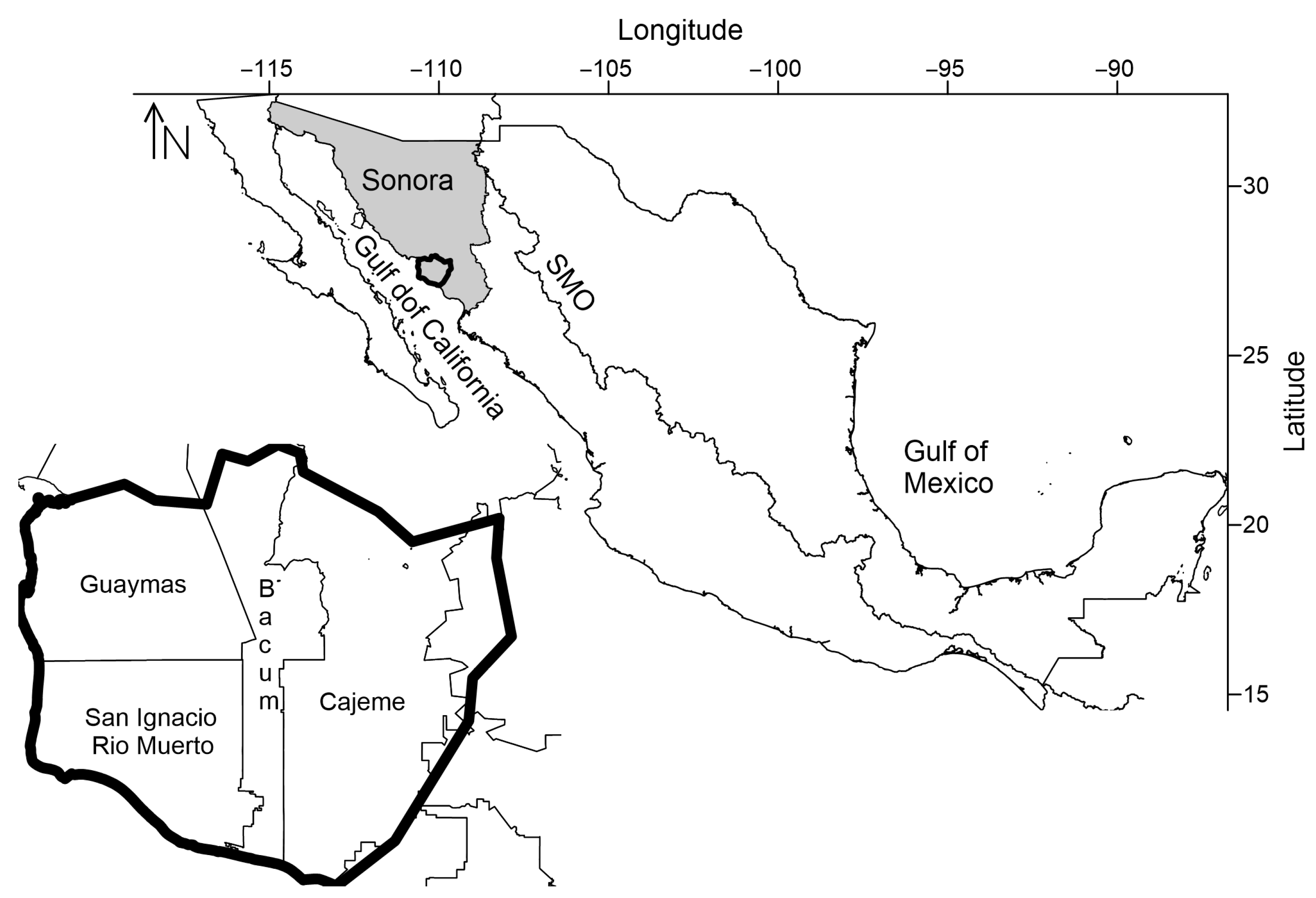
20]. In 2024, an area of 250,069 ha was allocated for wheat planting in Sonora, of which 121,124 ha (48.44%) were planted in municipalities of the Yaqui Valley (Bacum, Cajeme, Guaymas, and San Ignacio Rio Muerto), located in the south of Sonora, generating a total production value of more than 5 million pesos, which represents 51.6% of the total value contributed by the state.
The Yaqui Valley region [
1] is one of Mexico’s most important agricultural regions, producing wheat one of the country’s main cereals [
21]. This region was recognized for its fertile soil, irrigation canals, and climatic capacity to maintain two annual production cycles: fall–winter and spring–summer, thanks to the creation of the Yaqui River Irrigation District to meet crop demand [
22].
The Agri-Food and Fisheries Information Service (SIAP) [
21], the official department in Mexico that provides agricultural statistics, does not indicate in its records the causes of the impact on agricultural productivity. This situation limits a real analysis of the magnitude of the problem caused by hydrometeorological phenomena affecting Mexican agriculture, particularly in the northwestern region of Mexico, where agricultural productivity is essential for the development of the regional economy.
Generally, the direct impact of an extreme hydrometeorological event on crop areas results in decreased production and damaged area. The impact of such an event on a large crop area may result in the issuance of a disaster declaration, although this is not always the case. Therefore, there may be inconsistency between low agricultural production and damaged area caused by an extreme hydrometeorological event and the failure to issue a disaster declaration. The objective of this research is to identify the causes of this inconsistency. We assume that one of the main causes of such inconsistency is the lack of timely information and data that would allow for a detailed description of the extreme hydrometeorological phenomenon. The results of this research will clarify whether the reduction in wheat productivity in the Yaqui Valley or in portion of its territory is consistent with the issuance of declarations caused by anomalous hydrometeorological events. This could serve to provide a more precise diagnosis of the problem facing Mexican agriculture, ensure its proper dissemination, and ensure that authorities and decision-makers receive due attention. This knowledge can be useful in identifying wheat-producing areas in Sonora that are vulnerable to the impact of extreme hydrometeorological events.
3. Results
According to CENAPRED, between 2000 and 2024, a total of 101 declarations were issued for the municipalities comprising the Yaqui Valley region. The results of the distribution of declarations associated with the different hydrometeorological phenomena that will affect the region are presented in
Table 1. The largest number was associated with rainfall, with a total of 45 declarations (44.6%), followed by tropical cyclones with 37 (36.6%), to a lesser extent frost was found with only three (3%), while declarations due to drought and extreme temperature occurred in equal numbers 8 (7.9%) each. Regarding municipalities, Guaymas had the highest number of declarations with 33 (32.6%), followed by Cajeme with 25 (24.8%), finally Bacum and San Ignacio Rio Muerto registered 22 and 21 declarations, respectively, representing 21.8% and 20.8% of the total.
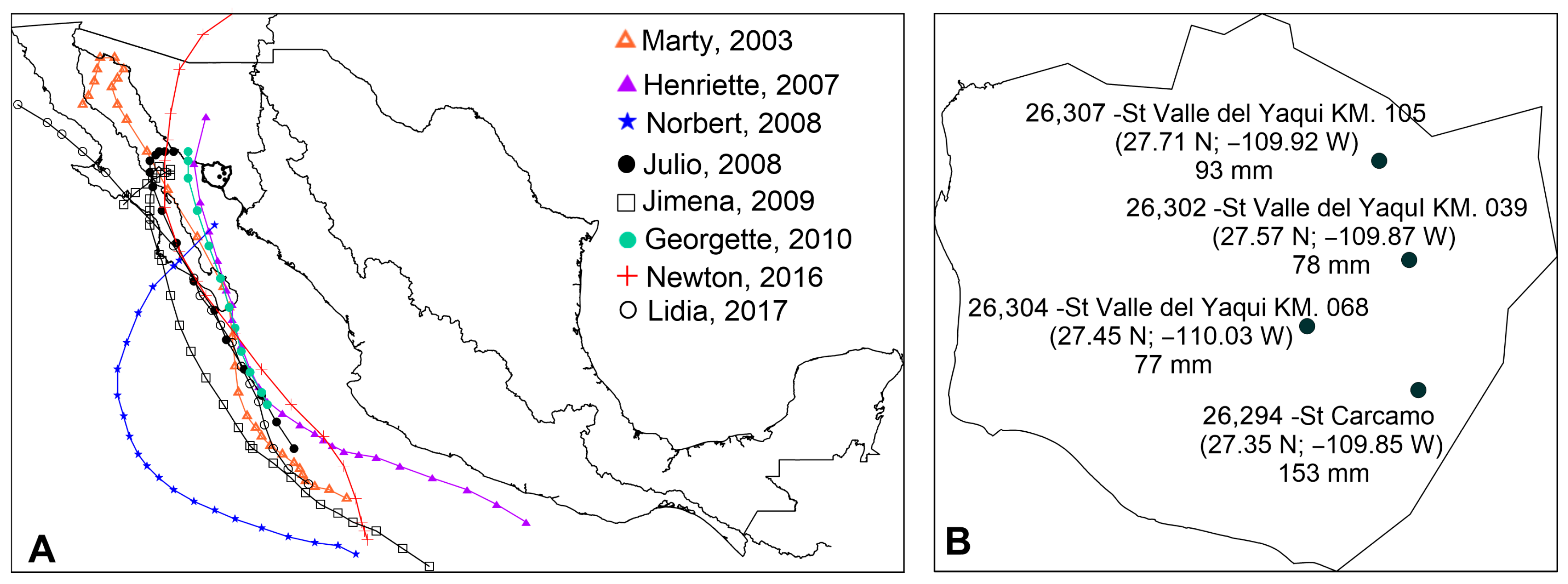
According to data from the International Best Trajectory Archive for Climate Management (IBTraACS) [
27,
28], in 58.3% of the years with a declaration (12 years), at least one tropical cyclone was recorded (
Figure 2A), significantly contributing moisture to the region, which translates into rainfall that can be extreme as reported in [
29].
In addition to tropical cyclones and rainfall, other hydrometeorological phenomena have led to emergency or disaster declarations, such as droughts. According to the CONAGUA Drought Monitor, a severe drought began in September 2020, particularly in the municipalities of Cajeme and Guaymas, and spread to Bacum and San Ignacio Rio Muerto starting in October of that year. This drought was the third hydrometeorological phenomenon to affect the Yaqui Valley; however, it should be noted that the high level of agricultural technology in the Yaqui Valley allows farmers to be more resilient to droughts. The lands most affected by drought are those near the sea, as crops are irrigated with groundwater, some of which has a high salt content [
30]. Finally, extreme temperatures contributed to the development of heat waves and frosts in the Valley.
3.1. Damaged Area and Yields in Response to Emergency Declarations
The correlations between agricultural production and emergency or disaster declarations are presented in
Table 2. We can observe that yield showed a statistically significant negative correlation in all municipalities of the Yaqui Valley region, where a greater number of declarations were issued due to tropical cyclones. Significant correlations were also found for frost in Bacum and Cajeme, and for rain in Guaymas and San Ignacio Rio Muerto. Regarding the damaged area, statistically significant correlations were found for Bacum and San Ignacio Rio Muerto.
Nationally, several studies have been conducted to analyze the impact of climate change on agriculture. For example, Ibarrarán and Rodríguez [
31] found a decrease in various crops, including wheat, due to changes in temperature and precipitation. During the 12 years in which declarations were reported, a total of 972 hectares of wheat were damaged in the Yaqui Valley. A considerable portion of damaged crop hectares was also documented even though no disaster declaration was issued.
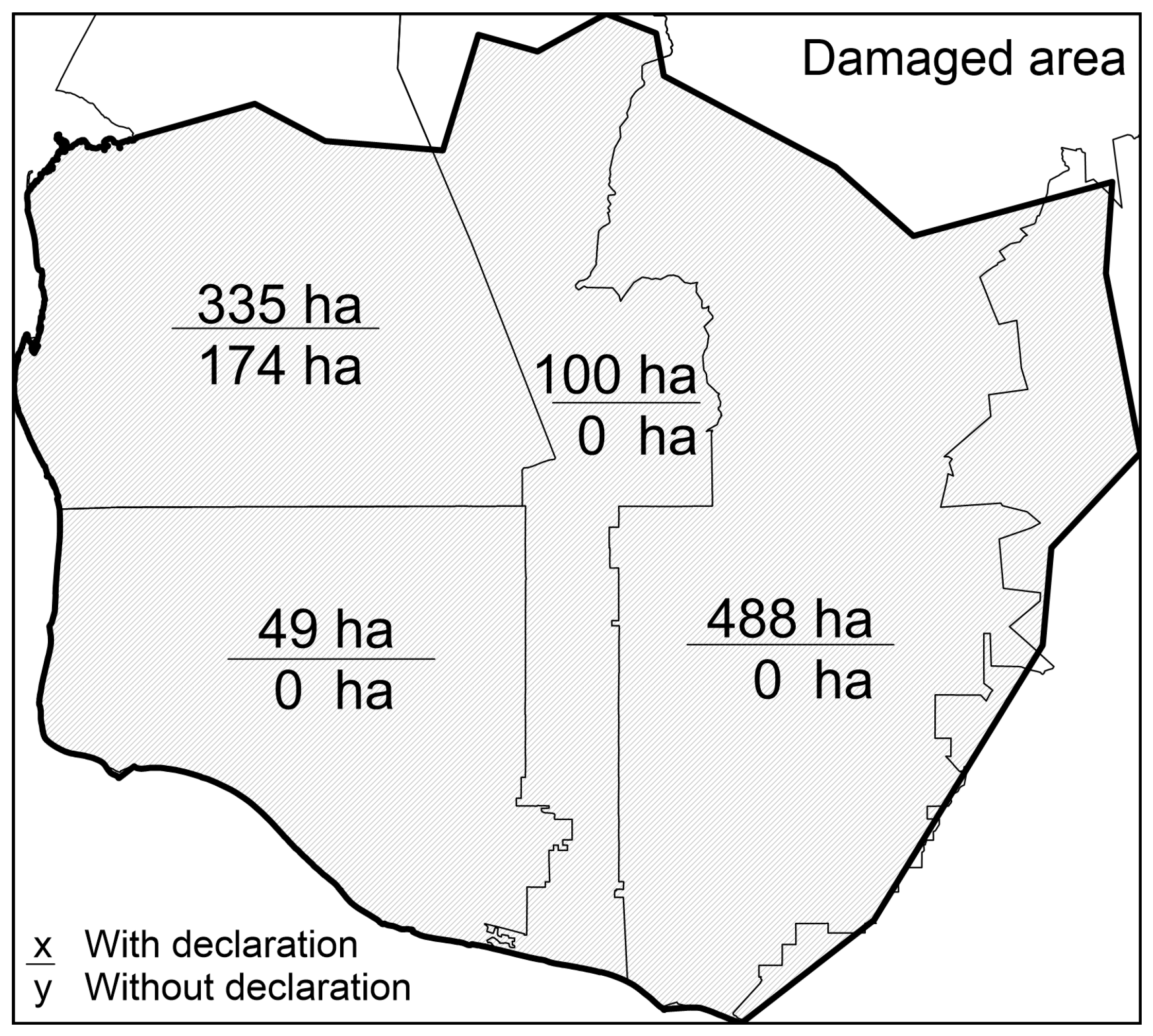
Figure 3 shows the total area damaged by municipality during the years with a declaration versus years without a declaration.
In the Guaymas Valley, 174 hectares of damaged land accumulated during the autumn-winter agricultural cycle (
Figure 3); 9 hectares were reported in 2004 and 164 hectares in 2006. However, no type of emergency or disaster declaration was issued for that region in either 2004 or 2006. This result indicates inconsistency between damaged crop areas and the lack of declarations related to this impact.
3.2. Wheat Yield in the Yaqui Valley Region
The agricultural productivity of wheat crops in the state of Sonora is significant, as it is the leading state nationally in terms of production value, with more than 10 million pesos in the most recent year on record (2024), according to SIAP. On average, wheat grows in approximately 28 municipalities in the state. The graph in
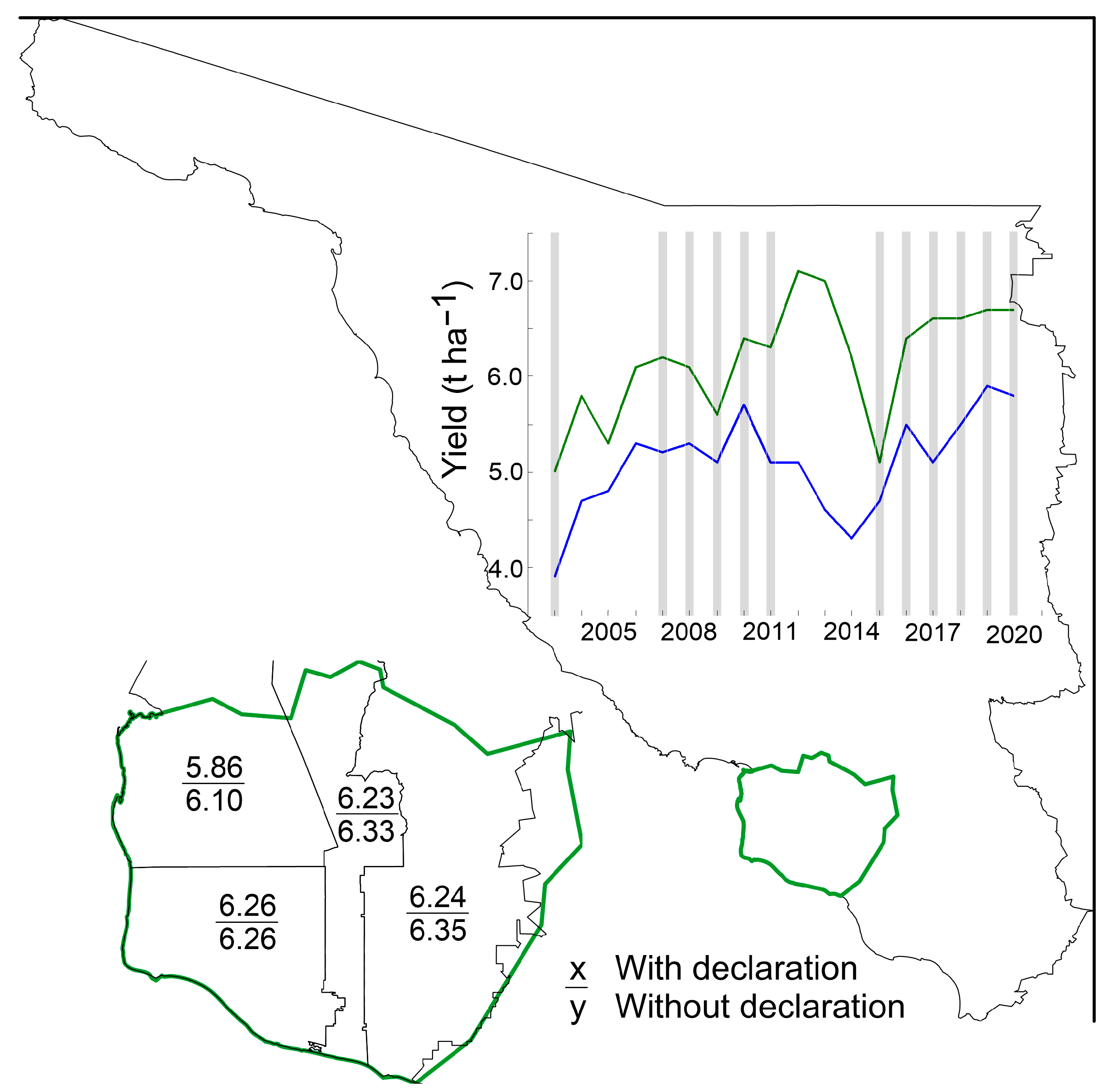
Figure 4 shows the average yield distribution for the entire state versus the yield for the Yaqui Valley. As can be seen in
Figure 4, the state’s overall yield is lower than that of the Yaqui Valley from 2000 to 2024. It is also worth noting that the highest wheat yield in the Yaqui Valley occurred in 2012, 2013, and 2014, i.e., years when no declarations were issued, with the highest figures in 2012 and 2013, at 7.1 and 7.0 t ha
−1, respectively. Unlike, the Yaqui Valley, in 2012–2014 the Sonora state as a whole experienced a decline in wheat production, a situation that was influenced by contingencies in some municipalities that affected the overall average. For instance, in 2014, wheat was planted in 37 municipalities and four of them (Bacerac, Bavispe, Divisaderos, and Moctezuma) reported a yield of 0 t ha
−1, because the entire planted area of these municipalities was destroyed.
The average yield values (x/y) for the municipalities considered for the Yaqui Valley are shown in
Figure 4. The results indicate that differences between the yields are a little smaller in years with declaration than years without declaration (i.e., the difference is not statistically significant according to Student’s
t-test). According to [
30], this result may be attributed to improvements in irrigation efficiency, in the management of stable techniques, which may help reduce the vulnerability of crops to climatic emergencies in the Yaqui Valley region.
On the other hand, wheat yield was negatively affected when tropical cyclone declarations were made (
Table 2), as occurred in 2003 and 2009 (
Figure 4) when the lowest average wheat yield values were recorded with 5.0 and 5.6 t ha
−1 in the Yaqui Valley. The passage of tropical cyclones Marty (2003) and Jimena (2009) left significant rainfall accumulations in southern Sonora. According to records from CONAGUA, weather stations located in Yaqui Valley recorded values of 36.5 to 71.4 mm in just 24 h. In the case of Jimena (2009), a particular feature was that its erratic trajectory was difficult to predict, stalling over the Guaymas region for three days (3–5 September) and dumping an amount of rain that exceeded the historical annual accumulation (515 mm) in just 48 h [
32]. High rainfall accumulations can be negatively associated with delays in crop soil preparation due to excessive rainfall, as well as an increase in weeds due to early moisture.
This is consistent with some studies reporting a decrease in different crops in the presence of tropical cyclones, for example, Valdés-Rodríguez [
33] reports citrus losses for the state of Veracruz. Sánchez Cohen et al. [
34] mention that the effects of global climate change are manifested in different economic, social and hydrological variables, for example, in terms of agriculture, in rainfed areas, it has impacted the affected surfaces with annual increases, while for irrigated areas the impact has been on runoff during the rainy season.
3.3. Production Value in the Yaqui Valley
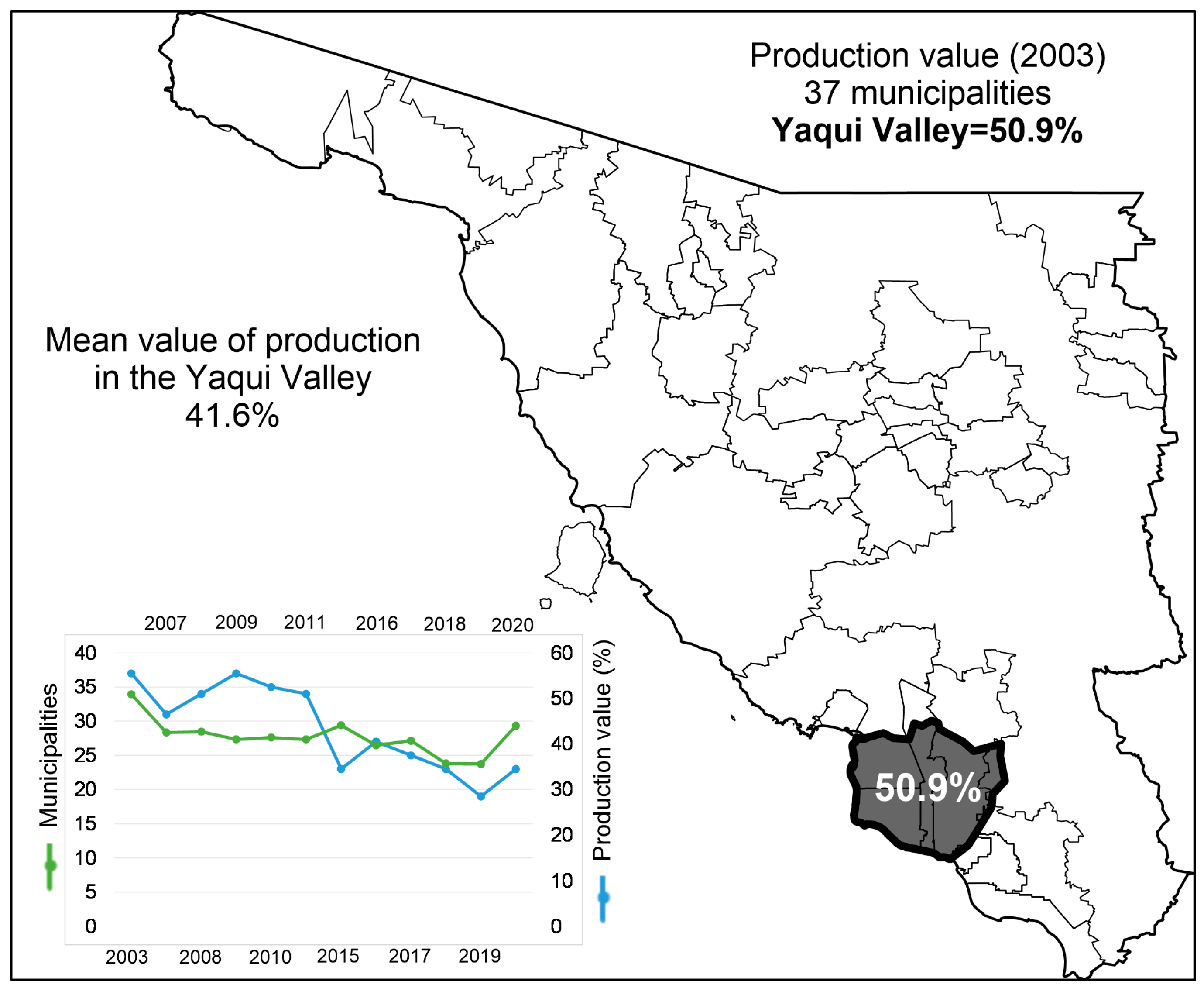
The percentage of production value in the Yaqui Valley in 2003 was 50.9% of total production in Sonora when wheat was grown in a total of 37 municipalities (
Figure 5). The graph in
Figure 5 indicates the distribution of the percentage of production value for the years in which a declaration was reported versus the number of municipalities in which wheat was grown. Among the years with a declaration, 2018 and 2019 recorded the lowest production percentages, at 35.7% and 35.6%, respectively, while 2003 recorded the highest. Overall, the Yaqui Valley recorded an average of 41.6% of production value for the years with declarations.
To estimate losses due to unharvested wheat surface, Equation 1 was used. The greatest loss occurred in the municipality of Cajeme with 57.9% of the total loss of production, followed by Guaymas (23.3%), Bacum (13.5%) and San Ignacio Rio Muerto (5.3%), with the years 2010 and 2011 having the greatest losses.
4. Discussion
One of the essential aspects to consider in the study region is that producers in the Yaqui Valley adapt technologies to develop commercial agriculture based on sustainability and profitability [
30]. This characteristic gives it greater advantages compared to other regions in Mexico where wheat is produced, allowing them to be more competitive in the face of domestic and international market demands. In addition, the adaptation of new technologies has enabled farmers in the Yaqui Valley to be more resilient to droughts and early frosts, which is reflected in a lower number of declarations associated with these phenomena. On the other side, heat waves can seriously affect crops, especially when they coincide with drought conditions, as occurred between 3 and 5 June 2016, when a heat wave affected western and southern Sonora [
7,
35]. This phenomenon was associated with a drought and severe winds that affected the agricultural, aquaculture and fishing sectors, resulting in the issuance of a natural disaster declaration [
36,
37]. According to our analysis, tropical cyclones are the second hydrometeorological phenomenon involved with the highest number of declarations, only behind rainfall (caused by tropical storms other than tropical cyclones). This is consistent with IBTRACS reports, which show that in 58.3% of the years with declarations, at least one tropical cyclone occurred in the region (
Figure 2). In addition to tropical cyclones, other sources of moisture in the region are Mesoscale Convective Systems [
38] and the North American Monsoon [
39,
40] which favor the occurrence of severe rains [
41], which can significantly affect farmland due to the large accumulated volumes of rain in 24 h, as occurred on 20–21 September 2015 (
Figure 2B), when station Cárcamo (27.4 LN, −109.9 LW) located in the Yaqui Valley recorded more than 150 mm in 48 h. It has been documented that extreme climatic events such as severe rains negatively affect the production and deterioration of grains [
42], because short—term heavy rainfall leads to soil waterlogging and oxygen deficiency, damaging wheat roots and consequently resulting in yield reduction. In addition to rainfall, another factor that determines good wheat production is temperature. Temperature has a widespread influence on plant growth and development; it affects growth processes [
43] as well as development processes. According to [
44], and given the prevailing climate conditions in Sonora, the risk of damage from high temperatures is greater than the risk from cold temperatures. This is consistent with our results, as eight declarations of extreme temperatures were reported in the Yaqui Valley (
Table 1). Temperatures below 0 °C have historically occurred most frequently in January. Their presence in wheat-growing areas in the state of Sonora occurs from south to north and with increasing frequency [
44]. The risk of cold weather affecting wheat crops is feasible if frosts occur in February, as this is when they can affect the flowering and grain filling stages. This is consistent with our results, as three reports of frost declarations were identified in the Yaqui Valley, making it less frequent than high temperatures. Likewise, it has been documented in the literature that during February 2011, frosts occurred in the region [
8,
33]. According to the DOF, 59 municipalities in the state of Sonora were affected, including those located in the Yaqui Valley, causing damage to wheat crops, which resulted in a total of 480 hectares damaged [
21].
In terms of the damaged area, our results show a total of 972 hectares in years with declarations. However, in years when no declaration was issued, a total of 174 hectares were recorded (
Figure 3), mainly in the Guaymas Valley according to the records of the General Coordination of the National Meteorological Service of CONAGUA, on 13 January and 22 February 2004, an accumulated precipitation (24 h) of 51 and 30 mm, respectively, was recorded, these records being the extreme values in the historical series (1974–2024) for the station Francisco (FFCC) (28.0 LN, 111.0 LW) located in the Guaymas valley. From 3 to 6 January 2006, temperatures of 31° to 36 °C were recorded, extremely warm for a January month, positioning January 5 as the warmest day in the region’s historical records with a value of 36 °C, that is, more than 10 °C above its climatology (25.8 °C). Severe rainfall in 2004 and a heat wave in 2006 were likely related to the damaged areas in the Guaymas Valley; however, no emergency or disaster declarations were issued in those years. Some of the reasons why no declaration was issued could be related to technical non-compliance, i.e., the justification was probably not solid, or the requirements set out in the Official Gazette of the Federation were not met. In some cases, it may be due to political factors such as the prioritization of public spending, which influences the approval of declarations regardless of the damage in the field.
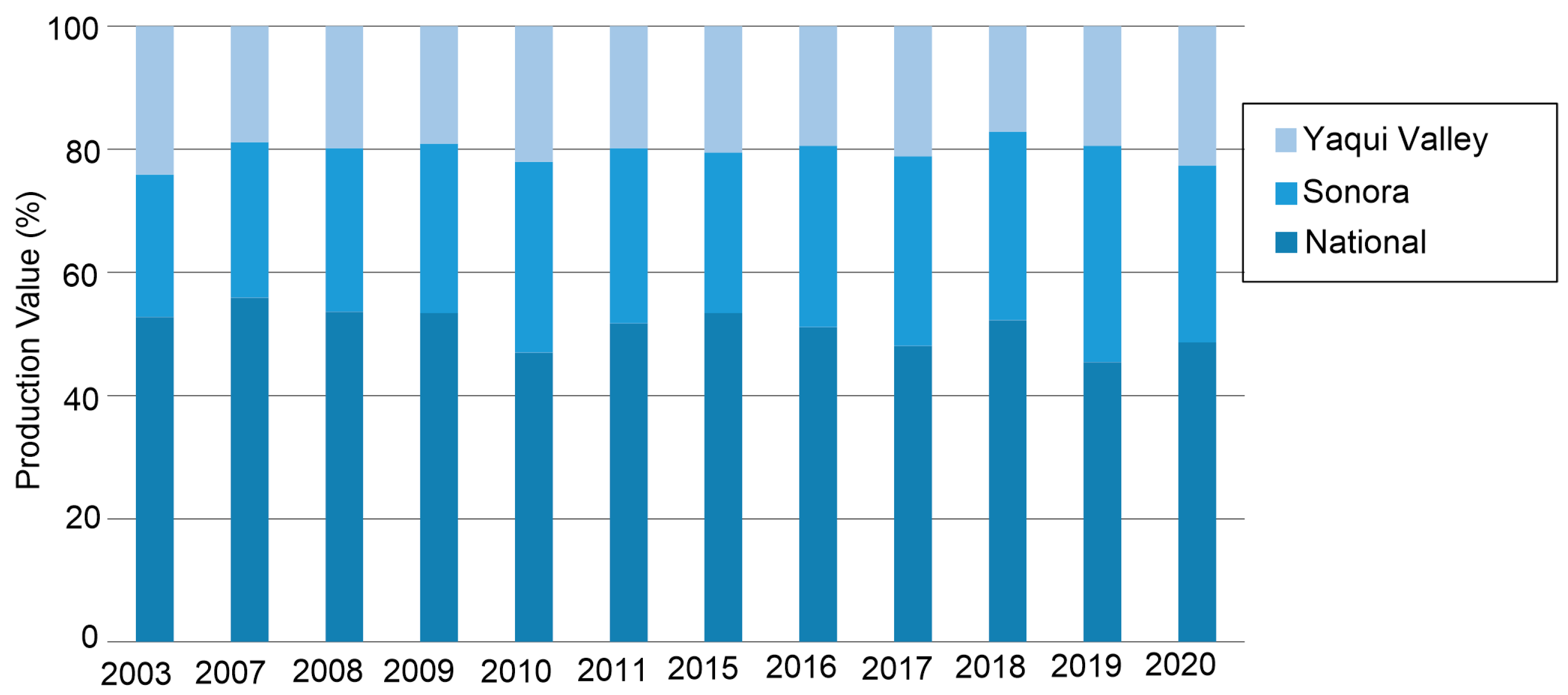
According to SIAP records, at the national level, of the total value of agricultural production for wheat in years with a declaration, Sonora contributed an average of 48.9% of the value, with the Yaqui Valley being the most productive region. These results demonstrate the regional importance of the Yaqui Valley in agricultural and economic wheat production due to its state and national contribution. For example, in 2010, 2017, 2019, and 2020, with the contribution of the Yaqui Valley, the state of Sonora managed to position itself with more than 50% of the value of wheat production (
Figure 6). This is consistent with what Moreno-Dena et al. [
20] reported, who mention that 40% of the tons of Mexican wheat were harvested in Sonora, importance the agricultural region of the Yaqui Valley.
In addition to Mexico, some countries with arid and semi-arid regions have conducted studies on emergency declarations and their association with agricultural production. For example, ref. [
45] conducted a study in La Pampa, Argentina, which showed that the highest number of emergency or disaster declarations corresponded to droughts, followed by floods and, to a lesser extent, fires and storms (hail and wind). The greatest territorial impact occurred in 2009, with more than 90% of the territory of La Pampa affected by drought. On the other hand, ref. [
46] mentions that agricultural production in the provinces of Argentina, and Buenos Aires in particular, especially in the last fifteen years, has been disrupted by climatic contingencies of recurrent floods and droughts, adding, with less recurrence, fires. In the Yaqui Valley, Sonora, tropical cyclones and heavy rainfall are most commonly associated with the issuance of declarations, explaining between 2% and 34% of the variance in wheat production. Recently, ref. [
47] conducted a study for one of the world’s largest cereal-producing regions, located in southern Brazil, finding that in recent years they have experienced severe and unprecedented summer droughts, such as the one that occurred in 2023, followed by extreme flooding in 2024, causing exceptional losses in cereal production, translating into substantial economic losses, with an estimated loss of unharvested soybeans valued at approximately US
$8.2 billion. They also made future projections, indicating an increase in temperature of up to 3 °C and greater rainfall variability by 2100, consistent with our research, where, in addition to droughts and severe rains, extreme temperatures are also presented as a determining factor in the declarations of emergency for the Yaqui Valley.
In this research, the years in which the greatest number of damaged surfaces were recorded corresponded to declarations of tropical cyclones and severe rains. According to the Official Gazette of the Federation, severe rainfall is defined as daily precipitation that, when compared to the series of maximum rainfall in 24 h for the month in relation to the historical data available at the representative weather station for the municipality under study, is greater than 90% of the values in the sample, while rainfall associated with a tropical cyclone generates an average of between 150 and 300 mm of rain or more in 24 h, causing severe flooding, landslides, and mudslides. The heaviest rains are generally associated with tropical storms or hurricanes that move more slowly (less than 16 km per hour) [
48]. In 2011 the cause was different, reporting 480 damaged hectares in the municipalities of Bacum and Cajeme due to frost, considered one of the main causes of reduced winter wheat yield [
34].
5. Conclusions
This study provides partial evidence of the relationship between reduced wheat productivity in the Yaqui Valley and the issuance of emergency declarations due to hydrometeorological phenomena indicating that there are other factors affecting wheat production. For example, the lack of timely data and information due to the lack of monitoring stations is one of them. Without data, there is no way to accurately document a phenomenon. Other causes are related to the incidence of pets or the imposition of tariffs, but going into detail on these issues is beyond the scope of this research. The main hydrometeorological phenomena associated with the declarations were rainfall (44.6%), followed by tropical cyclones (36.6%). Frost was the phenomenon with the lowest incidence, accounting for only 3% of the declarations, affecting the municipalities of Bacum and Cajeme. Although the correlations obtained indicate that the issuance of declarations for hydrometeorological phenomena explain between 2% (r2 = 0.017) and 34% (r2 = 0.34) of the variance in wheat productivity in the Yaqui Valley, these are statistically significant, resulting in negative correlations. In all municipalities, the declarations were related to the presence of tropical cyclones.
The municipalities most affected by declarations were Guaymas and Cajeme, with a total of 33 and 25 declarations, respectively. In years in which emergency or disaster declarations were issued, a decrease in wheat yield was observed compared to years without declarations, and an increase in the total damaged area. The municipalities that make up the Yaqui Valley, in the southern part of the state of Sonora, are the main source of wheat production in the state. Together, they account for nearly half of the area dedicated to wheat cultivation and their contribution to production value is essential. This significantly contributes to Sonora’s position as the leading producer of this cereal nationwide, contributing more than 60% of the country’s production value.
Therefore, it is recommended to optimize the local disaster declaration standards, include local short—duration heavy rains, extreme high temperatures and other phenomena in the monitoring scope, and strengthen risk prevention and control in disaster—affected areas where no declarations were issued. This is being achieved thanks to improvements in the atmospheric monitoring network. For instance, in 2013, thanks to the contribution of Sonora farmers, Sonora State Plant Health Committee (CESAVESON) and Sonora State Phytosanitary Alert System (SIAFESON), more than 90 automatic weather stations were installed in Sonora (
https://remas.siafeson.org.mx/ (accessed on 1 July 2025)), whose information enabled a rapid response to issue an emergency declaration in Sonora’s agricultural areas, as occurred when a heat wave hit the region between 3 and 5 June 2016 [
7,
35]. Therefore, it is possible for farmers to access support in the event of hydrometeorological contingencies; what is needed is to increase atmospheric monitoring.
As noted above, 174 hectares of damage were reported in the Guaymas Valley between 2000 and 2024 during years in which no declarations were made. These results contribute to a better understanding of the problem facing Mexican agriculture, its proper dissemination, and its proper attention by authorities and decision-makers. This knowledge can help prevent and mitigate damage and reduce losses in wheat production in the Yaqui Valley.
This study does not take interfering factors such as agricultural technological progress and policy support into account. In the future, multiple variables can be incorporated for comprehensive analysis. Understanding the impact of climate change and its relationship with wheat cultivation, which is highly sensitive to variations in temperature and precipitation and can result in lower yields due to frost, drought, flooding, and other events, will enable more effective management of hydrometeorological risks through an integrated management approach and support for agricultural decision-making. The adoption of adaptation and mitigation measures will help to ensure wheat productivity in the country and reduce the negative effects on the production and economic processes involved, thereby strengthening farmers’ resilience.




 ,
,