
Review

Mapping Inclusive Development: A Global Bibliometric Performance Analysis

1
Department of Mathematics, Physics and Statistics, University of Guyana, Turkeyen Campus, Georgetown P.O. Box 101110, Guyana
2
School for the Future of Innovation in Society, Arizona State University, Tempe, AZ 85287, USA
*
Author to whom correspondence should be addressed.
World 2026, 7(2), 17; https://doi.org/10.3390/world7020017
Submission received: 12 December 2025 / Revised: 16 January 2026 / Accepted: 19 January 2026 / Published: 23 January 2026
(This article belongs to the Section Inclusive and Regenerative Development)

Abstract

The growing prominence of inclusive development reflects persistent dissatisfaction with traditional growth-centric paradigms that failed to integrate social equity and environmental sustainability. However, the literature discourse of inclusive development lacks systematic analyses of its theoretical and conceptual structures. This paper presents a bibliometric analysis of inclusive development, mapping its intellectual structure, research dynamics, and scholarly contributions. Using bibliographic data from the Scopus and analytical tools including R version 4.5.1 and VOSviewer version 1.6.19, we assess the publication trends and citation patterns. The term first appeared in 1995, emerged slowly, and saw an exponential increase in publications around 2015, coinciding with the Sustainable Development Goals. There are 1871 publications (302 were published in 2024), with over 4500 scholars across 143 countries, publishing in over 1000 sources. The results feature prolific and influential authors, sources, countries, larger geographic regions, and publications. We find disparities among countries, anomalies between influential and prolific contributors, and hints of distinct author groupings. Findings suggest scholars and practitioners risk forming skewed conceptualizations of inclusive development without a clear understanding of the field’s structure. This paper provides such structure, highlighting the value of periodic assessments in consolidating theoretical coherence, strengthening cross-constituency scholarship, and advancing inclusive development’s role in sustainability science.

1. Introduction

1.1. Inclusive Development

The concept of inclusive development has become a buzzword in the discourse among scholars and practitioners. It is a development model that addresses the systemic exclusionary practices linked to traditional growth-centric models [1,2]. Furthermore, it provides a framework that promotes structural changes to guarantee equitable access to opportunities and resources [3,4]. The concept is an intertwining of two ideas: inclusiveness and development. On the one hand, development has historically been defined as economic growth, characterized by the Western model [5], with indicators such as gross domestic product (GDP), industrialization, and modernization. By the 1990s, scholars conceptualized development as more than just economics; it was seen as a holistic approach that addresses human well-being, capability, and agency [6,7]. The contemporary understanding of development suggests a multidimensional perspective that captures various aspects of human interactions and well-being [8]. On the other hand, inclusivity refers to broadening participation and access, especially for marginalized, disadvantaged groups and minorities. It involves equality of opportunities and outcomes [9] and extends beyond representation to recognize and value contributions from all stakeholders. A limitation of inclusiveness is that, while it focuses on widening participation and access to resources, it does not inherently require structural and transformative changes that challenge the foundations that uphold exclusionary practices. As a fusion, inclusive development encompasses improvements in participation and access as well as the structural reconfigurations necessary to ensure equitable improvements in the multidimensional well-being of all members of society [10].
The emergence of inclusive development reflects dissatisfaction with prior development models that failed to emphasize the social and environmental dimensions. The modernization theory of the 1950s gained prominence after World War II, characterized by economic growth and industrialization and shaped by Western culture and politics. While its legacy includes the introduction of stages of growth [11], it was fundamentally ethnocentric and overlooked inequality [12]. The dependency theory of the 1960s and 1970s emerged to challenge this linear view of development. It asserts that the underdevelopment of the Global South is not an intrinsic stage of growth but rather a result of extreme cases of inequalities and exploitation by the Global North [13,14]. The basic needs approach of the 1970s, proposed by the International Labor Organization (ILO), shifted attention from aggregated indicators to basic human needs, such as food, shelter, education, and healthcare. This approach formed the basis for other models, such as the Human Development Index. Neoliberalism and the structural adjustments of the 1980s and 1990s aimed to stabilize economies but are widely criticized for their overall failures and for prioritizing macroeconomic stability over human development [15,16]. Nevertheless, its failures led to calls for more inclusive, people-centered approaches. The 1990s saw (1) the redefining of development to expanding individuals’ freedoms, capabilities, and agency to lead lives they value [7], and (2) the use of the human development index. While this approach is criticized for its philosophical abstraction and implementation difficulties, its multidimensional view of development serves as the cornerstone of inclusive development. A contemporary model is sustainable development, which integrates the social, economic, and environmental dimensions and is concerned with the long-term availability and use of resources [17,18]. Unfortunately, this model is susceptible to being hijacked by common growth-centered agendas that dilute its transformative potential [19,20].
Inclusive development builds on and transcends these prior models by extending the emphasis to social, ecological, and relational inclusion, which addresses empowerment and active participation [10]. Furthermore, unlike other models that aim for fairness in development outcomes, the unique contribution of inclusive development is that it embodies fairness in both development outcomes and the processes that lead to them [9,21,22]. The importance of inclusive development cannot be overemphasized if there are to be any meaningful responses to the Sustainable Development Goals (SDGs) or any other global calls for equity in socioeconomic and ecological matters [20]. Such is its importance that, although it may still be considered in its infancy, inclusive development has attracted widespread attention from scholars, practitioners, and policymakers. Organizations and conferences such as Inclusive Development International [23] and the Society for International Development’s 2022 annual conference [24] promote its principles, highlight violations, and provide a platform for scholarly contributions and discourse. Moreover, inclusive development is a burgeoning field within the development discourse [25] and applies to country and municipal governance, institutions, industries, and other social organizations.
Notwithstanding its successes and potential, inclusive development is not without trouble. First, it remains conceptually fluid and contested due to nuances arising from discipline-specific conceptualizations in the field [26]. Consequently, such ambiguity may result in inclusive development suffering the same fate as sustainable development, rendering it susceptible to instrumentalization by growth-centric agendas [27]. Second, a pathway to reducing the probability of such unfavorable outcomes for inclusive development rests in streamlining and unifying the field. Accomplishing this would rely on systematic reviews, bibliometric literature reviews, and meta-analyses. In the case of inclusive development, we found a few related review papers [28,29], but no evidence of substantial efforts to conduct a bibliometric research of the field. Consequently, if such research is not conducted in a timely manner, the fragmentation in the fields may persist to the point where inclusive development is no longer uniquely identifiable.
Considering the necessity for a common understanding of the general thrust of inclusive development, this paper aims to fill this gap through bibliometric research in the field.

1.2. Bibliometric Analysis

Bibliometric research involves analyzing the bibliographical data of publications in a field. It traces the development, nuances, and trends [30], identifies the contributing scholars and constituents, outlines their contributions, and assesses their effectiveness [31]. It maps the field’s social, conceptual, and intellectual structures, allowing for comprehensive insights into the field. Furthermore, it reduces the author’s subjectivity by allowing for the systematic inclusion and analysis of most (if not all) publications in the field [32]. Moreover, the importance of bibliometric research to inclusive development scholars and practitioners lies in its utility and epistemology for understanding the field’s trajectory, tracking research evolution, and providing quick access to evidence of progress [33].
There are numerous examples of bibliometric analyses of other fields. On the one hand, bibliometric research focuses on the performance analysis of two main areas: the intellectual and the conceptual structures. The intellectual structure emphasizes influential contributors to the field, including authors, institutions, countries, and journals, and illustrates how knowledge builds on previous work. It requires a quantitative approach for analyzing the temporal and spatial distributions of their contributor and their affiliated publications. In contrast, the conceptual structure encompasses the author’s keywords and the themes they converge on. This qualitative approach uses thematic analysis to detect convergence, emerging trends, and the field’s evolution. On the other hand, both approaches are underpinned by the social structure, which examines collaboration and interactions, and are conducted through science mapping that illustrates their networks. Databases such as Scopus and Web of Science provide comprehensive bibliographical details of thousands of publications. Furthermore, software such as VosViewer version 1.6.19 makes analyzing these massive volumes of data less laborious.
In response to the need for this type of analysis for inclusive development, this paper sought to answer the question: What is the intellectual structure of the field of inclusive development? This was addressed through a bibliometric performance analysis of its contributors. We relied on the Scopus database for the data and VOSviewer for analysis. The results provide a comprehensive overview of the current state of the intellectual structure of inclusive development. It is a significant step toward understanding the field’s general thrust, paving the way for further systematic reviews of inclusive development. Furthermore, this paper initiates the process of defragmenting the field towards a unified understanding and conceptualization, thereby reducing the chances of the concept of inclusive development being diluted. Moreover, it provides quick access to understanding the trajectory of inclusive development and simplifies the positioning of new contributions to the field [30].

2. Materials and Methods

This paper adopts the bibliometric research approach to investigate and provide a concise understanding of the intellectual structure of contributors to the field of inclusive development. The approach is justified by the need to streamline and consolidate numerous substantial scholarly contributions to a field [34,35]. The precedence of its successful application is evident in various fields, including safety culture [36], neuromarketing [37], human resources [38], knowledge management [39], neuroscience [33], and innovation [40].

2.1. Data

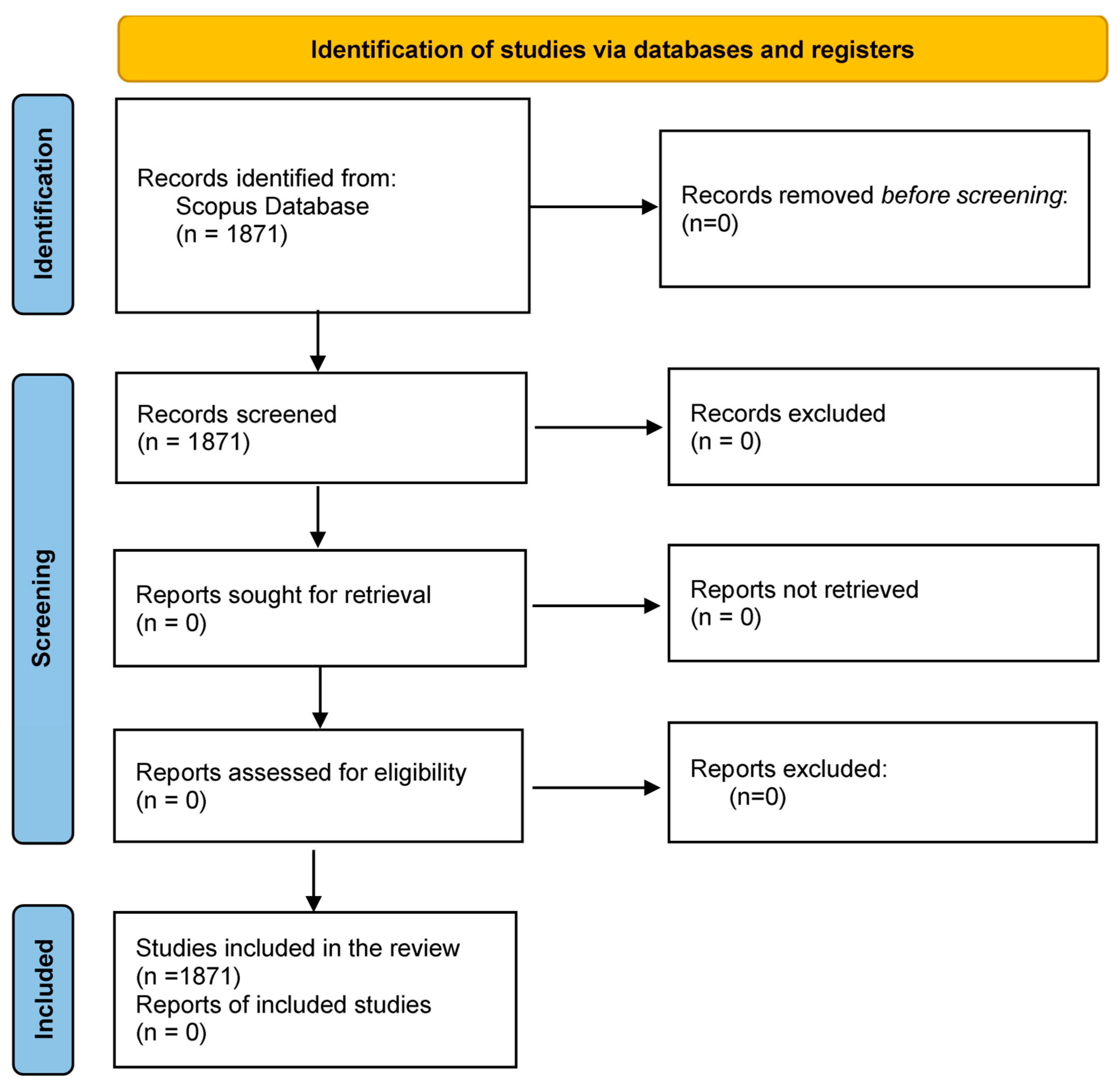
The data consist of bibliographic information on publications about inclusive development. We relied exclusively on the Scopus database, which is known to provide extensive coverage across interdisciplinary and development fields, and offers a wide array of standardized bibliographic metadata, enabling more in-depth and reliable analyses [29]. Although including other databases might have yielded a larger sample, it would require substantial data harmonization and may diminish methodological consistency [30]. We employed the Preferred Reporting Items for Systematic reviews and Meta-Analyses (PRISMA) framework [41,42] to transparently identify the study’s data elements. Figure 1 illustrates the PRISMA framework as applied to this study. To increase our chances of capturing only publications that address the concept of inclusive development, we applied the search term “inclusive development” to titles, abstracts, and keywords, with a single search restriction of “Language = English”. No other exclusion criteria were applied. This was performed on 30 May 2025, and yielded 1871 publications dating back to 1995; all were extracted into a comma-separated values (CSV) file containing all the bibliographic fields provided by Scopus.
This study relied exclusively on bibliometric data from the Scopus database and did not feature human participants. Therefore, no formal ethical approval was required. Nevertheless, ethical considerations were addressed through the transparent reporting of the data source, search criteria, data extraction, and analysis. We employ reflexive interpretations of findings, acknowledging known database biases, including language, geographic representation, and field coverage.

2.2. Analysis

There are a variety of specialized software tools available for conducting bibliometric analyses, including BibExcel, UCINET, SCIMAT, VOSviewer, CoPalRed, VantagePoint, IN-SPIRE, Biblioshiny, and CiteSpace. In this paper, we employed VOSviewer version 1.6.19 in conjunction with Microsoft Excel 2016 and R version 4.5.1. Microsoft Excel 2016 was used to present basic statistics, such as the frequency and rate of publications over time. R version 4.5.1 was used for sorting and expanding the dataset, for example, to extract the number of publications and citations by individual authors, especially for publications with multiple authors. The VOSviewer [43] version 1.6.19 allowed for further in-depth analysis and performance diagrams.
The VOSviewer software version 1.6.19 is widely regarded as a leading stand-alone tool for bibliometric analytics, distinguished by its diverse range of visualization options [44,45,46,47]. Furthermore, it is compatible with bibliographic files generated by Scopus [43]. It was introduced in 2009 and has been widely used: neuromarketing [37], human resources [38], medical sciences [48], managerial science [49], and more proximate: innovation [40], sustainability [47], inclusive education [50], and social entrepreneurship and inclusive development [29]. VOSviewer’s analysis capabilities provide an in-depth understanding of scholarly works. It employs various units of analysis, including documents or publications, authors, and affiliations. These are represented as nodes within the network and are connected by lines to show relational attributes. The font size, the dimensions of the nodes and connecting lines, are proportionate to the respective attribute’s quantitative measure. Color schemes are also used to compare and contrast the units of analysis, especially over time. Various performance analyses and science mappings can be conducted, such as citation analysis, bibliographic coupling, or co-authorship [43].
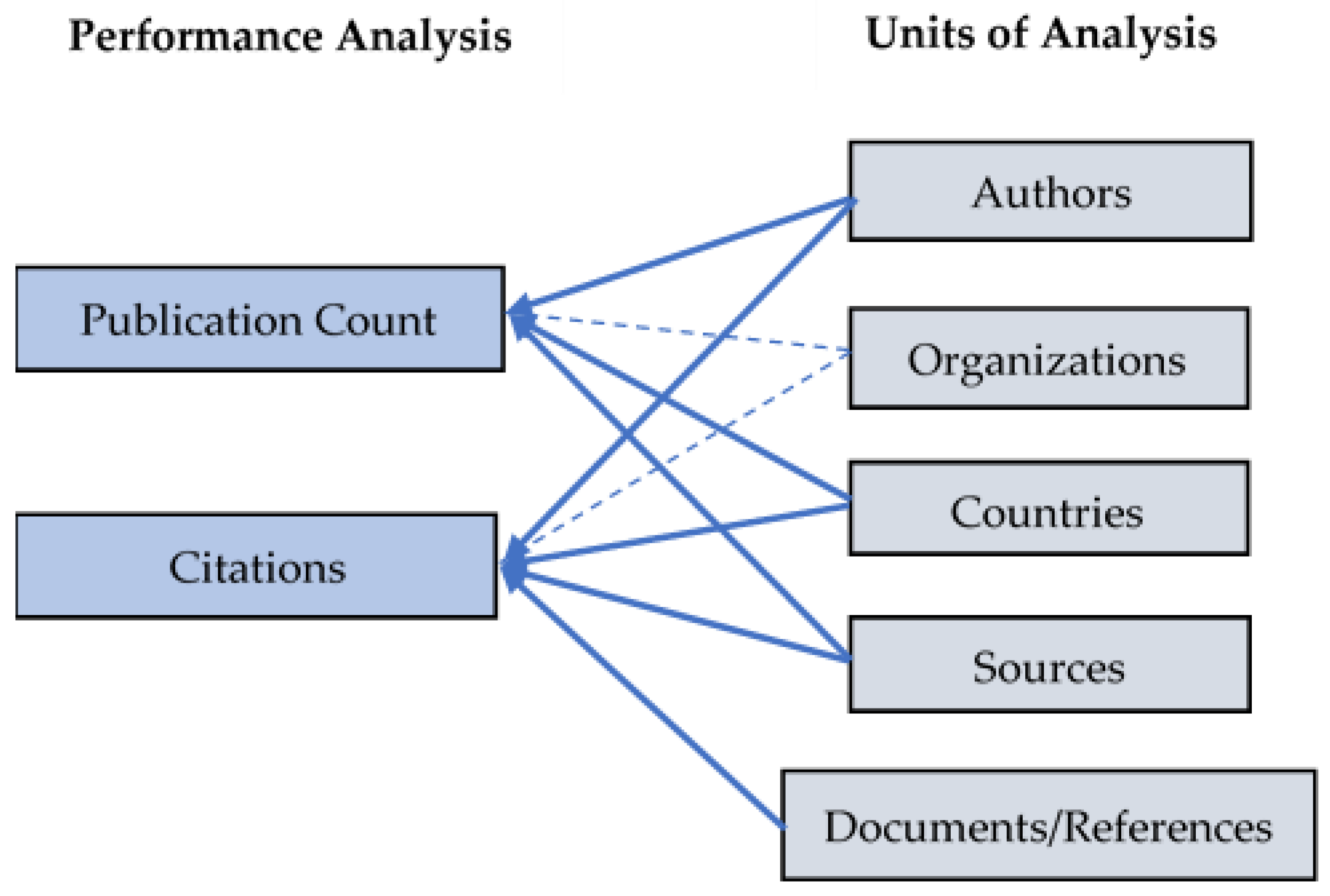
Figure 2 outlines the units of analysis and the performance analysis, along with their interconnections, with the solid lines indicating the areas of analysis featured in this study. The units of analysis are the authors and other contributors to the fields. Performance analyses provide insights into how well these units have performed—for example, the number and distribution of publications and citations associated with a particular author or country. We also relied on the normalized citation, a ratio of the citations of a given publication and the average citation of all publications in the dataset within the same year, as it indicates the impact of the unit of analysis [33,43,51]. The computation of these values are represented as
N . C i , j = C i , j i = 1 m C i , j m = m C i , j i = 1 m C i , j
where
  • N C i , j is the normalized citation of publication i in year j ;
  • C i , j is the number of citations for publication i in year j ;
  • m is the total number of publications in the given year j .
Figure 2. Analysis framework relating units of analysis and performance analysis.
World 07 00017 g002
These analyses serve as indicators of scholarly contributions and influence in the field.
Regarding the affiliated organizations, we found numerous instances of non-standard descriptions of these affiliations. For example, while some articles provide the department, school/faculty, campus, and university, other articles that are suspected to have the same affiliation only provide partial data, such as the department and the university. Attempts at reconciling the dataset proved to be a time-consuming and monumental task. Consequently, analyses by organizations were omitted as they could affect the accuracy, validity, and reproducibility of our results. These potential analyses are indicated with broken lines in Figure 2.
Given the large number of documents and other units of analysis, we applied certain restrictions to make diagrams and tables more readable and less cumbersome. For example, we present results showing the top 19 sources by publication count. We consider that whereas some publications have a single author, many are collaborative. We acknowledge the utility of analyzing collaboration and understand that such collaborations may influence the correlation of publication counts among co-authors. Nevertheless, we include analyses of individual authors’ contributions, as this may provide further insights into the most prolific authors based on their publication and citation counts. To accomplish this, we disaggregated contributions by the authors’ unique Scopus identifiers.

3. Results

3.1. Publication Trends 1995–2025

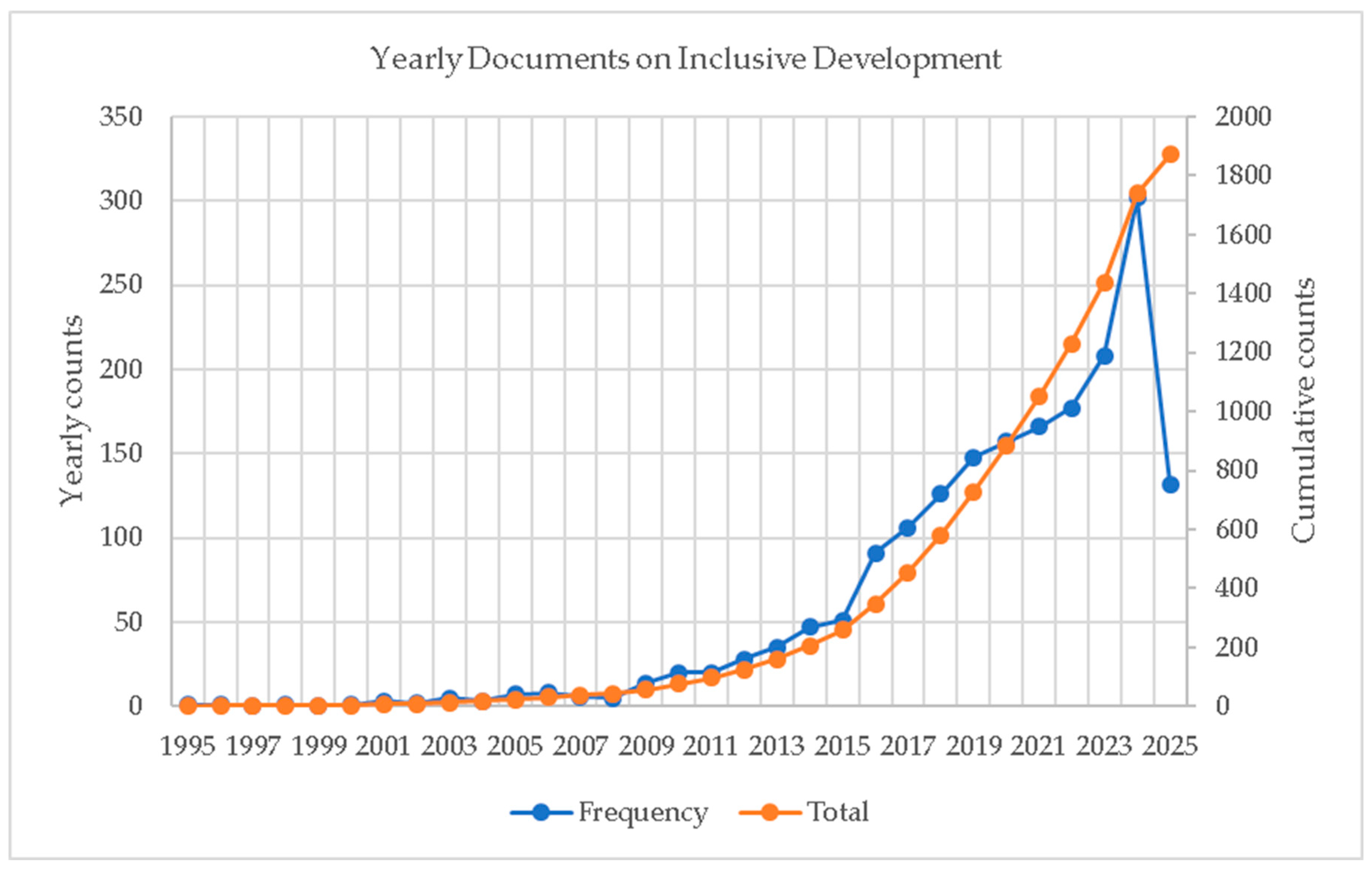
Based on the Scopus dataset, the term inclusive development first appeared in 1995 in a peer-reviewed article by Paul Gootenberg, a historian of Latin America, on how the discursive framing of development, centered on order and progress, was constructed and how it shaped the development trajectories in Peru. Since then, the term has been widely adopted and evolved into a distinct field of study. Figure 3 illustrates the growth of the number of publications that featured the term ‘inclusive development’. The blue curve represents the number of publications per year and corresponds to the left vertical axis; the orange-colored curve shows the cumulative number of publications and corresponds to the right vertical axis. The figure shows a slow start and sharp increases in recent times. The term appeared in just four publications by 2000. It continued to attract fluctuating single-digit numbers of publications per year for the next 14 years, totaling 43 and averaging just under 3 per year. In 2009, 14 publications were published, and since then, except for 2011, the number has continued to increase each year. 2016 was the year following the launch of the Sustainable Development Goals, and it saw the highest percentage increase over the previous year’s total. There were 91 publications in that year, which is 178% of the 51 publications in 2015. The rate of increase in publications dropped between 2020 and 2022. The most significant absolute increase of almost 100 publications occurred in 2024, with 302 publications, up from 208 in 2023. By the time the dataset was extracted in May 2025, the partial count for 2025 stood at 132.

3.2. Performance Analyses

The 1871 publications were authored/coauthored by 1783 unique combinations of scholars (collaborations), compiled from 1168 sources, and affiliated with 3670 organizations and 143 countries. In this section, we present results for each unit of analysis.

3.2.1. Most Prolific Source by Publication Count and Citations

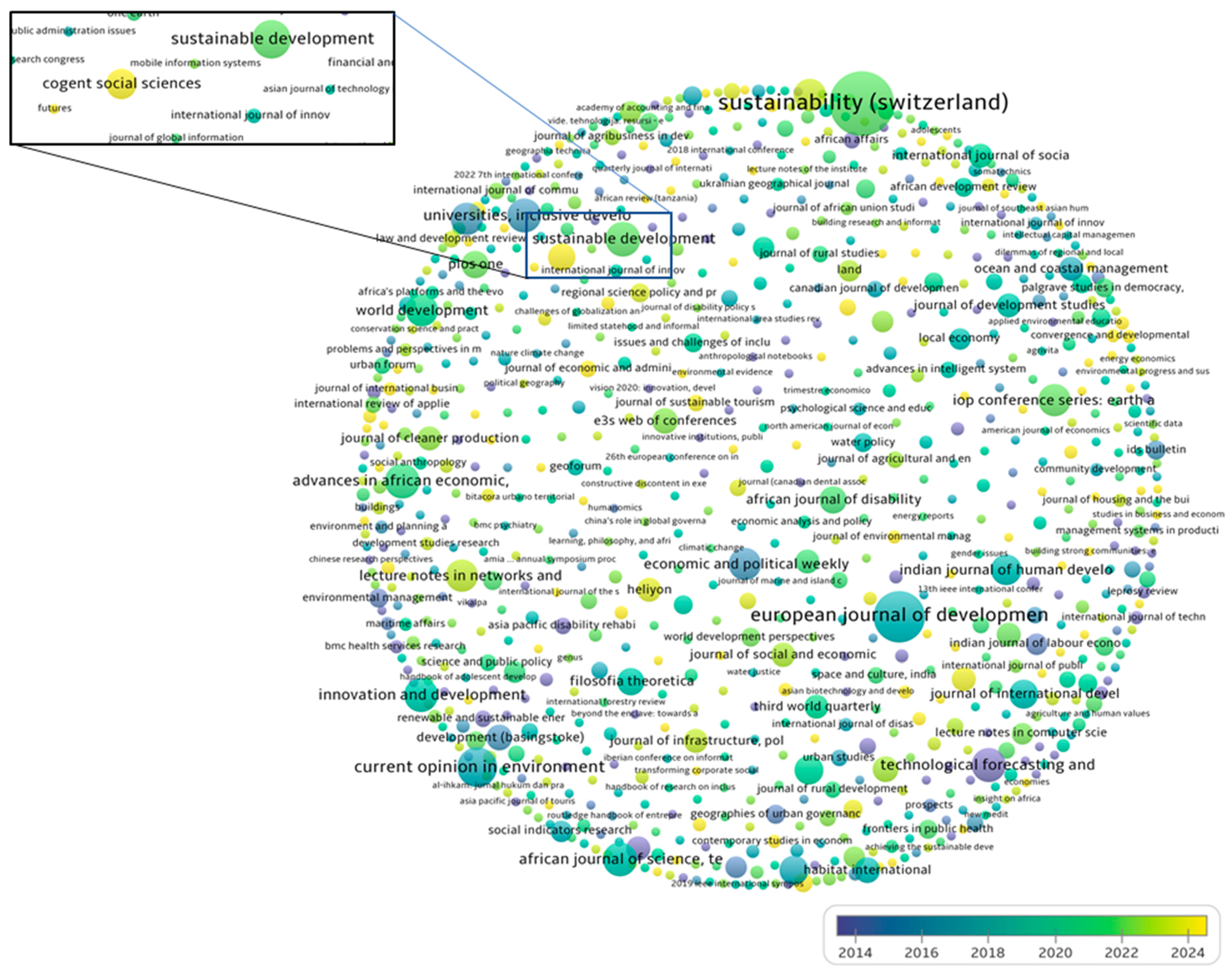
Figure 4 illustrates how the publications mentioning ‘inclusive development’ are distributed across sources over time. The illustration accounts for 823 sources with at least one publication and at least one citation. We find that, for example, Sustainability (Switzerland), with the largest bubble, which is light green, has the highest number (44) of publications and a relatively recent average year of publication, 2021.41. Cogent Social Sciences (inset), with a smaller, yellow bubble, has eight publications in the field and an average year of publication of 2023.75. Contrasting the average year of publication is Technology Forecasting and Social Change (bottom right), which has 12 publications in the field with an average year of publication of 2011.08. There are 593 sources with a single publication, 112 with two publications, 99 with 3 to 8 publications, and 19 with at least 9 publications. The many smaller yellow bubbles suggest that more and more sources are publishing in the field.
Table 1 lists the top 19 sources, ranked by the number of publications featuring the term ‘inclusive development’ of the 823 sources with at least one citation. Also featured is the average year of publication, which indicates the recentness of the publications. Aside from Sustainability, the European Journal of Development Research follows with 28 publications, averaging about the second half of 2017. Current Opinions in Environmental Sustainability has the third-highest frequency (17), with an average year of publication being early 2017. All other sources have at most 13 publications. Ten of these 19 sources have an average year of publication after 2019, indicating the recentness of attention to the concept. The Sustainable Development Goals series is the most recent, centered on 2023, and Technological Forecasting and Social Change has the least recent average year of publication, dating back to early 2011. It is worth noting that three of the top five sources of articles on inclusive development have sustainability as a primary focus.
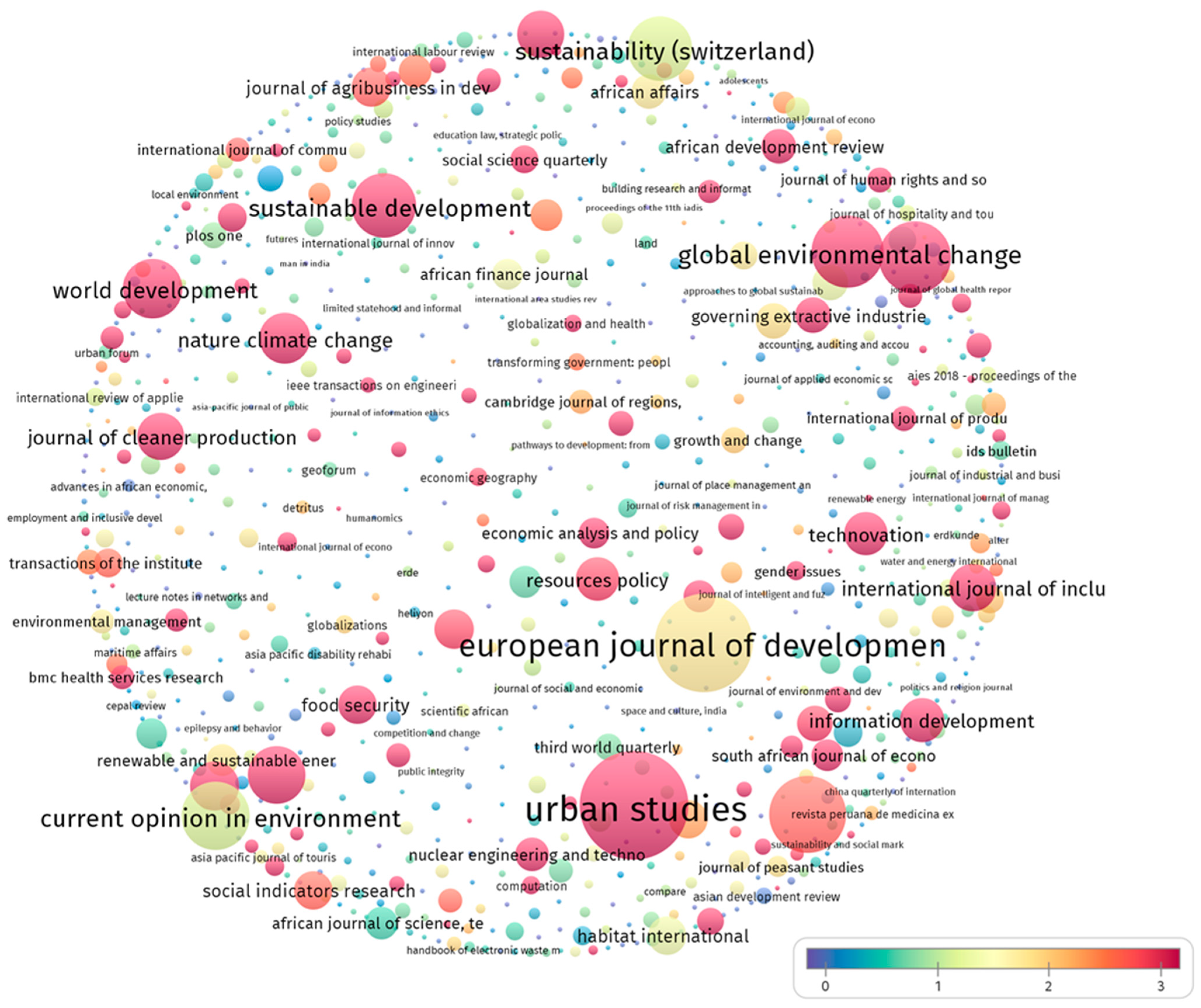
We now draw your attention to citation statistics as a measure of the influence of these sources. Figure 5 illustrates an overlay visualization of citations to sources based on related publications in the field for the 823 sources with at least one citation. The Urban Studies source stands out, with 1434 citations and a high average normed citation of 4.30. The European Journal of Development Research has the second-highest number of publications, 1181, with an average normed citation of 1.71. Global Environmental Change is among the highest-cited sources and has the highest average normed citation. In contrast, we find that, for example, the Asian Development Review (bottom right) and the Advances in African Economics, Social and Political Development (left) have among the lowest average normed citations. Overall, there are 345 sources with at most a single citation to publications featuring the term ‘inclusive development’, and a total of 467 sources with fewer than 10 citations to such documents. We also find that 311 sources had 10–99 citations, 25 had 100–194 citations, and 16 had 200–729 citations.
Table 2 highlights the top 18 of these 823 sources, in descending order of citations, for publications on inclusive development; it also includes their average normed citations. Highlighted is the set of sources that also feature among the sources with the highest number of publications. Aside from Urban Studies and European Journal of Development Research, the third most cited source is Technological Forecasting and Social Change with 729 citations and an average normed citation of 2.59. The Global Environmental Change source has 636 citations from a single article published in 2017. Similarly, Nature Climate Change has 321 citations from a single publication dated 2017. Consequently, these two sources have the highest normed citation. Overall, the majority of the list has a normed citation above 3.0. We find that the Sustainable Development and the World Development sources have performed well across documents, citations, and average normed citation. This underlines their contribution and influence in the field.

3.2.2. Most Prolific Countries by Publication Count and Citations

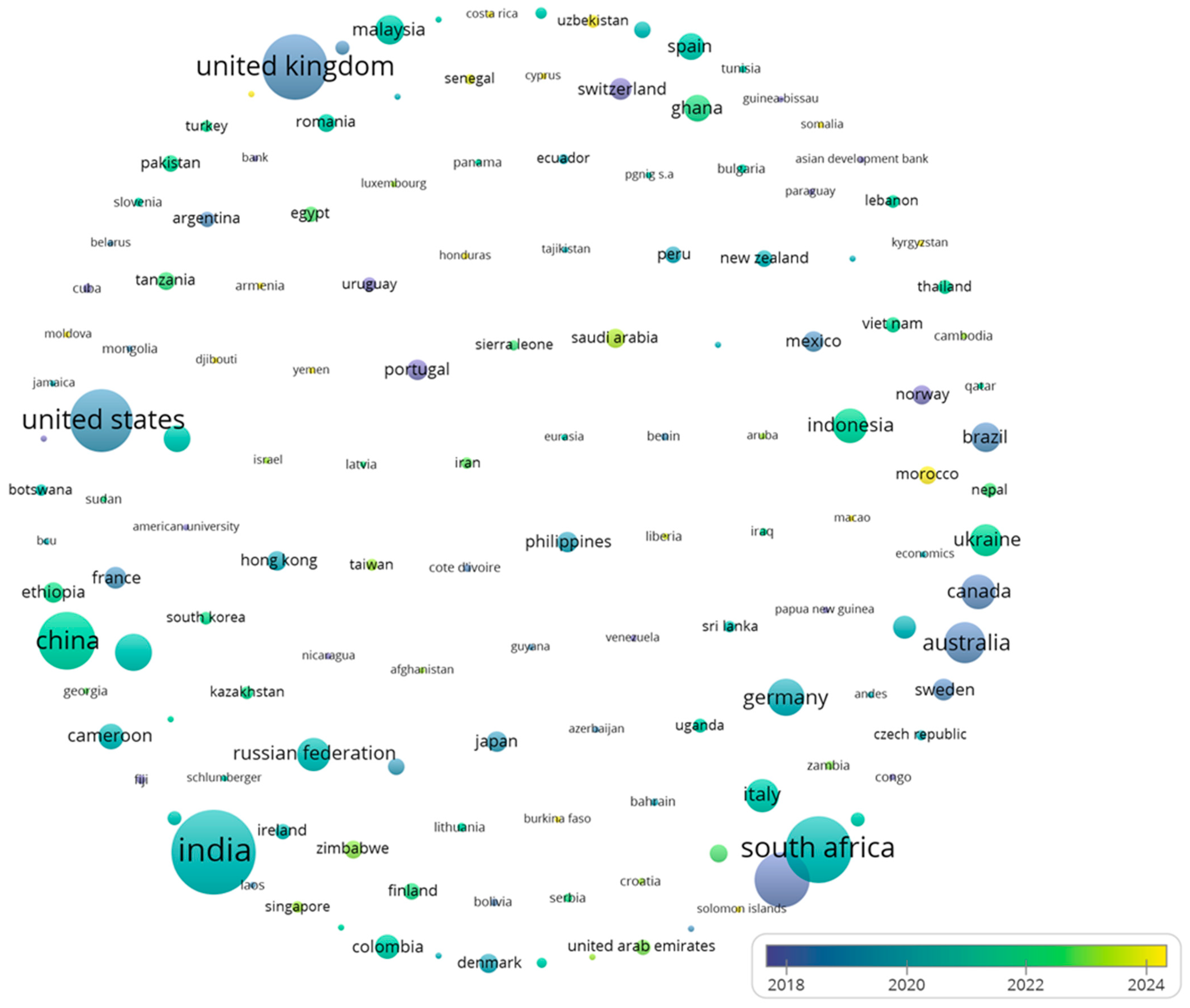
Figure 6 shows the overlay visualization of the number of publications and the average year of publication by country. Of the 143 countries contributing to the field, 42 have a single publication, and a total of 90 have fewer than 10 publications. The number of publications for the remaining 47 countries ranges from 10 to 97, and the remaining six countries have counts ranging from 136 to 314. The majority of countries have an average year of publication before 2021, suggesting that they have been making contributions for several years. Notably, Portugal is affiliated with 19 publications, averaging 2011.53. In contrast, among countries with at least five publications, Uzbekistan has the most recent average year of publication, 2024.00. Morocco, Senegal, Singapore, and Saudi Arabia are other countries with average year of publication as recent as 2023. Such statistics demonstrate the broadening geographic spread of contributions to the field, pointing to a more global adoption of the inclusive development concept.
Table 3 lists the top 20 countries that are affiliated with at least 30 articles featuring the term ‘inclusive development’. In each case, the publication frequency and the average year of publication are provided. India dominates the list with 314 publications and an average publication year of 2020.03. The top 20 list spans countries from around the globe. Of these, seven countries are from Europe, while five are from Africa and Asia. Two countries represent North America. Appearing once are South America and Australia.
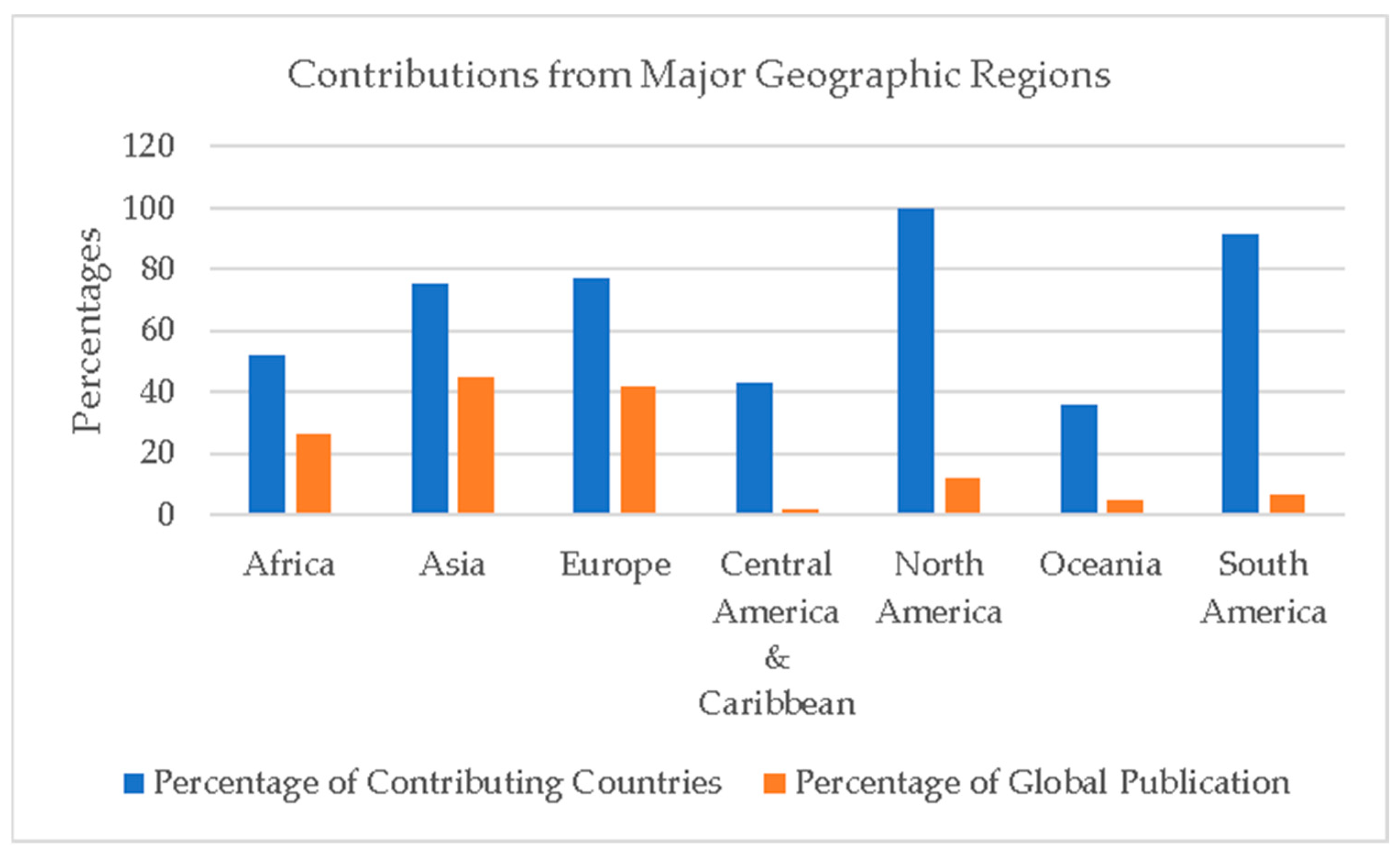
In general, while we find worldwide contributions to the field from the top 20 contributing countries, the percentages vary significantly across major geographic regions. The bar chart in Figure 7 shows the contributions of larger geographic areas, expressed as scores out of 100%, for countries affiliated with publications in the field. North America scores 100%, with both the USA and Canada contributing. For geographic areas spanning more than two countries, South America leads the list, with over 90% of contributing countries. Asia and Europe follow, both having more than 75% contributing countries. Half of the African countries have contributions, while just about 40% of Oceanic, Caribbean, and Central American countries are affiliated with publications in the field. Figure 7 also provides a breakdown of the percentage of publications in the field that are affiliated with these regions. At just over 40%, Asia and Europe are both affiliated with more than two out of every five publications in the field. At 26%, African countries are affiliated with about one in every four publications in the field. In contrast, Central America and the Caribbean countries are affiliated with only 1.67% of all publications in the field. Oceana, South America, and North America are affiliated with 5.0%, 6.4% and 12.3%, respectively.

3.2.3. Most Prolific Authors by Publication Count and Citations

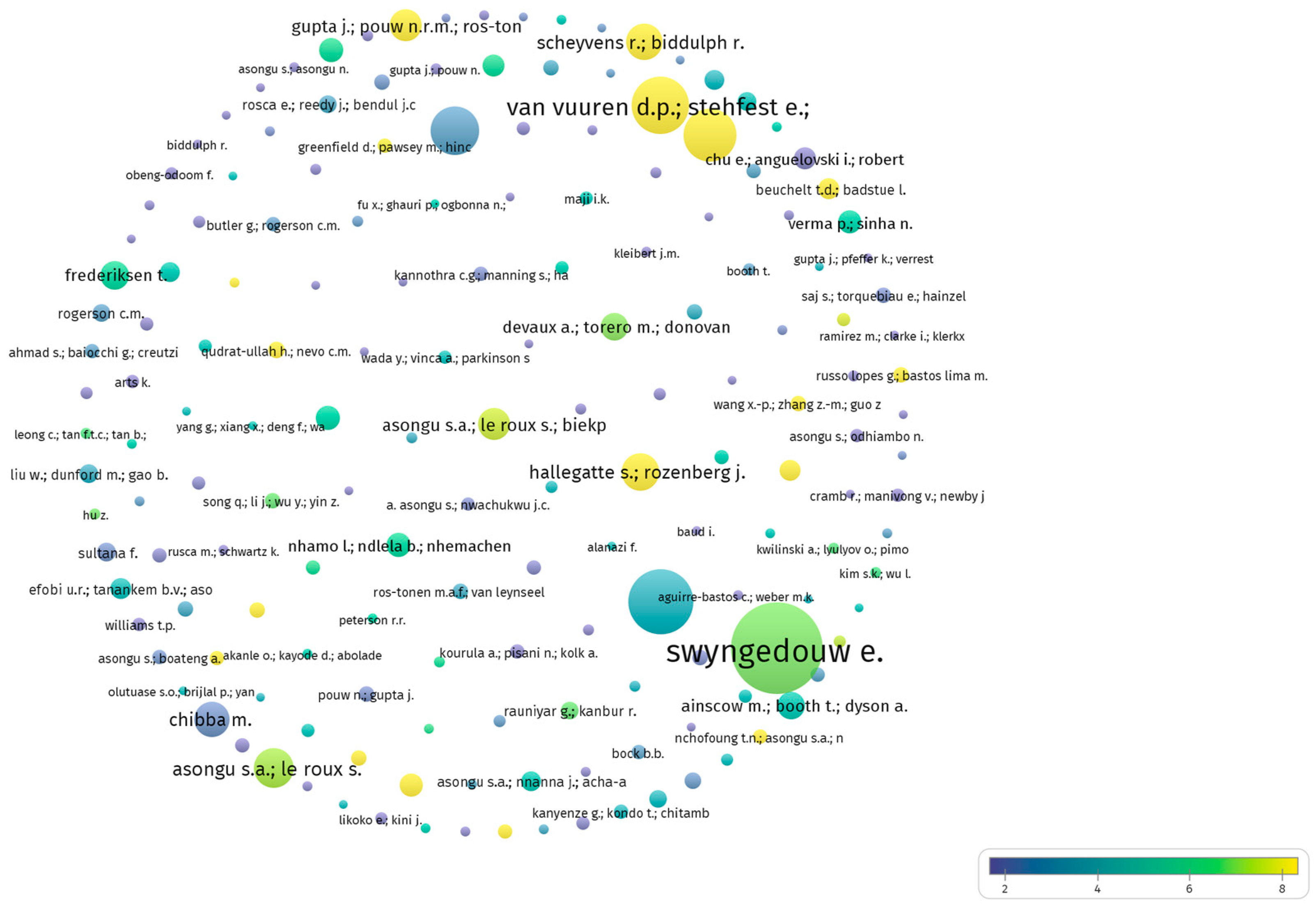
First, we present results based on the 1783 unique sets of authors. Of these, we find that 26% are single authors, who together account for 27% of all publications in the field. Authors Simplice A. Asongu and Glenda Kruss produced four single-authored publications, while Suresh C. Aggarwal, K.P. Kannan, and Michael Chibba fielded three publications each. Collaborative efforts accounted for 74% of all publications in the field. The pair, Simplice A. Asongu and Nicholas M. Odhiambo, is the most prolific with 15 publications in the field. This is followed by another pair, Simplice A. Asongu and Jacinta C. Nwachukwu, with six publications. For publications in the field, Figure 8 shows citations and average normed citations for the top 169 sets of authors who have a minimum of one publication and 30 citations. The size and color of the bubbles corresponds to the number of citations and the average normed citations, respectively. We find that 522 of them have no citations, 780 were cited between 1 and 10 times, 450 were cited between 11 and 100 times, and 31 sets were cited over 100 times. Among all sets of authors, Erik Swyngedouw, with a single publication in the field, has the largest bubble, indicating the highest number of citations, 1383. In terms of the average normed citations, the set Roy S., Bose A., Basalt D., and Chowdhury I.R. tops with 21.34. Two sets of authors, van Vuuren D.P. and Stehfest E. et al., and Gupta J. and Vegelin T., perform exceptionally well in both citation and normed citation statistics. They yield 636 at 19.08 from one publication and 560 at 12.62 from two publications, respectively.
Second, we present results based on individual authors’ contributions to the field. There are 4539 individual authors. Of these, 4293 contributed with a single publication, 253 have two publications, 51 have three publications, 21 have four publications, 5 have five publications, and 15 have six or more publications. Table 4 lists the top 15 authors and their affiliated institutions and countries by the number of publications featuring the term ‘inclusive development’. We find that the top two bring different perspectives to the field. On the one hand, we have the most prolific author, Simplice A. Asongu, an economist and scholar, as well as the director of the African Governance and Development Institute in Yaoundé, Cameroon. His 59 contributions to the field more than double those of the second author on the list and center on his extensive econometric and policy analyses, which highlight the practical ways in which financial innovation, governance, technology, and institutional quality shape equitable growth and social progress across Africa and the Global South. On the other hand, we have Joyeeta Gupta, a social scientist and professor of environment and development at the University of Amsterdam. Through her 27 publications, she has contributed to the field by addressing the theoretical underpinnings. Inclusive development is conceptualized through a justice-oriented, planetary boundaries framework that integrates equity, sustainability, and governance, with an emphasis on the participation of those previously marginalized in society. We find that none of the top 15 scholars in the field has affiliations outside of Europe and Africa. Seven are affiliated with the University of Amsterdam in The Netherlands, and four with Universities in South Africa. Notwithstanding the outstanding contributions of these most prolific authors, we find high rates of collaboration among them. For example, Odhiambo and Asongu have 21 publications, Gupta and Pouw have 6, and Heitor and Conceição have 7.

3.2.4. Documents with the Most Citations

Of the 1871 publications used in this study, 556 have not been cited, and a total of 1110 have received fewer than five citations. A further 493 publications were cited between 5 and 20 times, 237 between 21 and 99 times, 22 between 100 and 199 times, and 9 publications were cited at least 200 times. For the nine publications receiving the most citations, Table 5 itemizes the citation and norm citation values, the reference, and a synopsis of their contributions to the field. Reference [52] has the highest citation count and the lowest normed citation, attracting many citations over a longer period. The high citation and normalized citation counts for both [20,53] set them apart as the most cited contemporary articles. The brief synopsis of these highly influential articles illustrates how well they collectively capture various aspects of the field. They point to having a clear and concise understanding of what constitutes inclusive development and how this helps ensure that development initiatives and practical solutions to current issues are not counter-productive.

4. Discussion

This paper captures the contributors to the field of inclusive development since the term’s first appearance in 1995. We argue that this bibliometric research on inclusive development is both timely and necessary. First, the findings indicate that the field has attracted significant attention and has accumulated a sufficient corpus, which serves as a basis for this research [30]. Second, the literature review identifies a lack of bibliometric research in the field, a gap that warrants our study [32]. Third, the literature suggests that the field is evolving with nuanced conceptualizations, and so the bibliometric research will highlight its maturity [31]. Fourth, 30 years since the term was first used is considered more than enough for a bibliometric research into such a burgeoning field. This is evidenced by similar studies where, for example, it took as little as eleven years of publications on Neuromarketing [37], a more proximate 28 years of publications on safety culture [36], and 20 and 33 years for smart cities [59,60].
The findings show that the distribution of publications on inclusive development started slowly, with small increments over many years, resembling that of other studies, including knowledge management [39], social entrepreneurship and inclusive development [29], and artificial intelligence in health care [61]. To illustrate this slow start, it took up to 18 years for the annual publication count to reach 30, in contrast to the concept of ‘neuromarketing’, which required only 11 years to reach the same target [37]. However, the exponential increase in publications after this slow period suggests growing interest in the field and a glimpse of its potential for widespread adoption. Furthermore, the literature points to the likelihood that such massive increases are often driven by global phenomena such as frameworks and policies [20,53], pandemics and crises [55], and technological advancements [62]. In the case of inclusive development, we propose that the SDGs of 2015 played a significant role in influencing the growth spurt in publications. These exogenous factors contribute to the field’s dynamic nature, but such insights are often obscured and revealed only through bibliometric research.
The findings also show that publications are produced by over 1000 sources spanning a wide range of disciplines, with many having a post-2020 average publication year. Sustainability is a prevailing theme and provides substantial evidence of the SDGs’ influence on inclusive development. In fact, we find that Sustainability (Switzerland) is the most prolific source for articles on inclusive development. These findings suggest that the discourse on sustainable development has provided a viable pathway for publications on inclusive development and for integrating it into theoretical frameworks and practical implementation in various fields. Moreover, the future of inclusive development may rest heavily on how well the SDGs remain on the global development agenda. Therefore, we argue that any meaningful attempt to conceptualize, articulate, or implement inclusive development hinges on a reasonable understanding of the SDGs: their formulation, adoption, content, and implementation.
At the country level, 143 countries are affiliated with publications on inclusive development. Many of these have at least two publications, while others have recent average publication years, indicating increasing global attention to the field. India is, by far, the most prolific country. We also found that while Asia, Europe, and Africa are high-producing regions, the Oceanic, Caribbean, Central American, and African regions have low percentages of contributing nations. A notable anomaly of great potential is that Africa is a high-producing region, while half of the countries are yet to be affiliated with publications in the field. In contrast, while South America is not among the top-producing areas, the overwhelming majority of South American countries contribute to production. These findings demonstrate that while inclusive development has captured global attention, there are gaps and significant output disparities among countries. A likely consequence is the difficulty in capturing a universally acceptable conceptualization of inclusive development. Furthermore, as existing voids transition to contributing regions, new context-specific conceptualizations may unfold, bringing new insights into what inclusive development means to different people. Consequently, we argue that conducting bibliometric research at regular intervals will help describe these evolutions and assist scholars in tracking changes in the field.
Authorship of publications is increasing both numerically and across many disciplines. Our findings reveal over 4500 scholars contributing to the discourse on inclusive development. We find that there are prolific scholars with numerous publications and influential scholars with high citation counts and normed citation scores. Among the best-performing scholars in the field are Simplice Asongu, with 59 publications attracting over 2800 citations, and Joyeeta Gupta, with 27 publications and over 1300 citations. Such prolific and influential scholars are known to define and shape the field’s core, set the foundation for new scholars, steer the field along a particular path, add stability to the field, and, in general, help the field evolve and mature. Moreover, our findings of high collaboration among authors provide strong evidence of the field’s evolving interdisciplinary nature. Notwithstanding this, our analysis reveals no evidence of a collaborative effort between these two leading scholars. While this illustrates the independence of scholarly contributions, it may promote context-specific conceptualizations, leading to nuances in the field [26]. Consequently, if great care is not taken in sampling literature, such distinctions in scholarly contributions may potentially engender skewed understandings of the concept. This further underscores the need for bibliometric research to facilitate holistic literature reviews.
Regarding our findings on publication citation counts, the majority are cited at least once. Erick Swyngedouw’s publication attracted more than twice as many citations as any other publication in the field. Among other things, this article provides a compelling argument for authorities to genuinely engage citizens in active participation in development [52]. Such early seminal publications were instrumental in shaping the discourse on the participatory aspect of inclusive development. Alongside Eick Swyngedouw, we argue that based on high citation counts and normalized citation scores, the publication by van Vuuren et al. [54] and that by Gupta and Vegelin [20] are among the most influential in the field. These focused on the green growth pathway for efficient and sustainable environmental stewardship, and on a comprehensive critique of the SDGs through social, ecological, and relational lenses, respectively. Overall, the most influential publications articulate various aspects of inclusive development and serve as excellent indicators of the field’s maturity.
Our findings show that the evolution and trajectory of research on inclusive development are shaped not just by its intellectual structure but also by exogenous global factors. These include factors that favor the expansion of the field, such as the SDGs, as well as negatively influencing factors associated with global crises, such as the COVID-19 pandemic. Notwithstanding the unpredictable effects of exogenous factors, the field’s intellectual structure is largely consolidated by its prolific and influential scholars. Moreover, the field has seen consistent and significant improvements, indicating its appeal and applicability to global scholars and practitioners.
Based on these findings, we recommend conducting further studies to better understand the field’s evolution and trajectory. This includes additional bibliometric research that details keyword analysis and networking relationships among contributors, to create a pool of research that captures the field’s social, structural, and conceptual structures. Moreover, as a pertinent field to global development, and in the context of dynamic exogenous forces, we recommend regular bibliometric research to continuously monitor the field’s evolution, ensuring that inclusive development remains empirically grounded, globally relevant, and theoretically robust.

5. Conclusions

Inclusive development has intrigued scholars as it has evolved from a mere concept into a pertinent development agenda with the potential to shape many aspects of the global development paradigm. However, inclusive development remains a nuanced concept, with little understanding of its evolutionary dynamics. This paper addresses this gap by providing a bibliometric performance analysis to uncover the field’s intellectual structure. Our findings provide unambiguous answers to the research question. It shows that while inclusive development endured a slow start, it blossomed into an interdisciplinary field, attracting 1871 publications by May 2025. With just over 300 in 2024, it is likely to top that in 2025. This burgeoning effect is closely timed with the SDGs and, together with the adverse impacts of the COVID-19 pandemic, demonstrates how exogenous global factors influence academic discourse. Furthermore, we find that contributing scholars surpassed 4500, representing 143 countries, affiliated with 3670 organizations, and publishing in 1168 sources. The top contributing constituents include Simplice Asongu and Joyeeta Gupta among scholars, India and South Africa among countries, Sustainability (Switzerland) and the European Journal of Development Research among sources, and Asia and Europe among larger geographic regions. In contrast, the regional disparities, particularly the underrepresentation of the Caribbean, Central America, and several African nations, highlight ongoing gaps in global knowledge production.
The implications of these findings are many and include promoting interdisciplinary and interregional scholarly efforts, unifying the field’s theoretical perspectives, and advancing methodological innovations to uncover its intellectual and conceptual evolution. Additionally, this study underscores the need for representative sampling of the literature to increase the likelihood of forming unbiased conceptualizations of inclusive development. Methodologically, the study demonstrates the utility of bibliometric performance analysis in providing transparent, replicable, and data-driven insights into emerging research domains. The study was limited to a single data source, suggesting that our results do not reflect all publications in the field. Scholars and practitioners of the field are likely to benefit from further studies that dive deeper and capture other components that reveal more of the field’s structure. However, the performance analysis of this paper contributes to a more coherent, evidence-based understanding of inclusive development. Moreover, as a baseline study, it will serve as a springboard for advancing the unification of the field’s nuanced conceptualization.

Author Contributions

This paper is the result of a combination of significant contributions from the co-authors. Conceptualization, D.S.R. and N.C. (Netra Chhetri); methodology, D.S.R. and N.C. (Netra Chhetri); software, D.S.R., L.F., B.B. and N.C. (Neha Chhetri); validation, D.S.R., N.C. (Neha Chhetri) and B.B.; formal analysis, D.S.R. and B.B.; investigation, D.S.R., N.C. (Netra Chhetri), L.F., B.B. and N.C. (Neha Chhetri); resources, D.S.R., L.F., B.B. and N.C. (Neha Chhetri); data curation, N.C. (Neha Chhetri), L.F. and B.B.; writing—original draft preparation, D.S.R.; writing—review and editing, L.F., N.C. (Netra Chhetri) and D.S.R.; visualization, D.S.R.; supervision, N.C. (Netra Chhetri); project administration, D.S.R. All authors have read and agreed to the published version of the manuscript.

Funding

This research received no external funding.

Institutional Review Board Statement

Not applicable.

Informed Consent Statement

Not applicable.

Data Availability Statement

The bibliographic data were retrieved from SCOPUS using transparently outlined search queries in the methods. The extracted data supporting the findings of this study are available on request from the corresponding author.

Conflicts of Interest

The authors declare no conflicts of interest.

Abbreviations

The following abbreviations are used in this manuscript:
PRISMAPreferred Reporting Items for Systematic Reviews and Meta-Analyses
SDGsSustainable Development Goals

References

  1. Sachs, I. Inclusive development and decent work for all. Int. Labour Rev. 2004, 143, 161–184. [Google Scholar] [CrossRef]
  2. Johnson, B.; Andersen, A.D. (Eds.) Learning, Innovation and Inclusive Development: New Perspectives on Economic Development Strategy and Development Aid; Aalborg Universitetsforlag: Ålborg, Denmark, 2012; ISBN 9788771120585. Available online: https://www.researchgate.net/publication/272795954_Learning_Innovation_and_Inclusive_Development_-_New_perspectives_on_economic_development_strategy_and_development_aid (accessed on 15 February 2022).
  3. Casadella, V.; Uzunidis, D. Innovation capacities as a prerequisite for forming a national innovation system. Collect. Innov. Process. Princ. Pract. 2018, 4, 177–199. [Google Scholar] [CrossRef]
  4. Wong, C.Y. Evolutionary targeting for inclusive development. J. Evol. Econ. 2016, 26, 291–316. [Google Scholar] [CrossRef]
  5. Escobar, A. Encountering Development The Making and Unmaking of the Third World; Princeton University Press: Princeton, NJ, USA, 1995. [Google Scholar]
  6. Sen, A. Devleopment as Freedom; Alfred A. Knopf Inc.: New York, NY, USA, 1999. [Google Scholar]
  7. Robeyns, I. The Capability Approach: A theoretical survey. J. Hum. Dev. 2005, 6, 93–117. [Google Scholar] [CrossRef]
  8. Fukuda-Parr, S. Theory and Policy in International Development: Human Development and Capability Approach and the Millennium Development Goals. Int. Stud. Rev. 2011, 13, 122–132. [Google Scholar] [CrossRef]
  9. Hickey, S.; Sen, K.; Bukenya, B. The Politics of Inclusive Development: Interrogating the Evidence; Oxford University Press: Oxford, UK, 2015. [Google Scholar]
  10. Gupta, J.; Pouw, N.R.M.; Ros-Tonen, M.A.F. Towards an Elaborated Theory of Inclusive Development. Eur. J. Dev. Res. 2015, 27, 541–559. [Google Scholar] [CrossRef]
  11. Rostow, W.W. The Stages of Economic Growth: A Non-Communist Manifesto, 3rd ed.; Cambridge University Press: Cambridge, UK, 1990. [Google Scholar]
  12. Frank, A.G. Capitalism and Underdevelopment in Latin America; Monthly Review Press: New York, NY, USA, 1967. [Google Scholar]
  13. Smith, T. The Underdevelopment of Development Literature: The Case of Dependency Theory. Smith Source World Polit. 1979, 31, 247–288. [Google Scholar] [CrossRef]
  14. Angotti, T. The Political Implications of Dependency Theory. Lat. Am. Perspect. 1981, 8, 124–137. [Google Scholar] [CrossRef]
  15. Kay, C. For a renewal of development studies: Latin American theories and neoliberalism in the era of structural adjustment. Third World Q. 1993, 14, 691–702. [Google Scholar] [CrossRef]
  16. Mohan, G. Structural Adjustment. Int. Encycl. Hum. Geogr. 2009, 1–9. [Google Scholar] [CrossRef]
  17. Parris, T.M.; Kates, R.W. Characterizing and measuring sustainable development. Annu. Rev. Environ. Resour. 2003, 28, 559–586. [Google Scholar] [CrossRef]
  18. Gasper, D. Pioneering the human development revolution: Analysing the trajectory of Mahbub ul Haq. J. Hum. Dev. Capab. 2011, 12, 433–456. [Google Scholar] [CrossRef]
  19. David, G. Victor Recovering Sustainable Development. Foreign Aff. Foreign Aff. 2006, 85, 91. [Google Scholar]
  20. Gupta, J.; Vegelin, C. Sustainable development goals and inclusive development. Int. Environ. Agreem. Polit. Law Econ. 2016, 16, 433–448. [Google Scholar] [CrossRef]
  21. Adekunle Yusuf, M. ECOWAS agenda and regional integration development in West Africa: Any role for all-inclusive education ECOWAS agenda and regional integration development in West Africa: Any role for all-inclusive education? J. Educ. Econ. Dev. 2019, 10, 76–93. [Google Scholar] [CrossRef]
  22. Aguirre-Bastos, C. Universities and inclusive development in Bolivia. In Universities, Inclusive Development and Social Innovation: An International Perspective; Brundenius, C., de Mello, J.M.C., Goransson, B., Eds.; Springer International Publishing: Cham, Switzerland, 2016; pp. 97–123. ISBN 9783319437002. [Google Scholar]
  23. IDI Home—Inclusive Development International—Inclusive Development International. Available online: https://www.inclusivedevelopment.net/ (accessed on 7 June 2025).
  24. SID Annual Conference: Inclusive Development, A Healthy, Prosperous, & Resilient Planet for All|SID-US. Available online: https://sid-us.org/annual-conference-inclusive-development-healthy-prosperous-resilient-planet-all (accessed on 7 June 2025).
  25. Renville, D.S.; Chhetri, N.; Cheng, C.; Francois, L.; Zeng, R. Towards the Conceptual Framing of Inclusive Urban Flood Resilience. Climate 2025, 13, 114. [Google Scholar] [CrossRef]
  26. Pouw, N.; Gupta, J. Inclusive development: A multi-disciplinary approach. Curr. Opin. Environ. Sustain. 2017, 24, 104–108. [Google Scholar] [CrossRef]
  27. Demaria, F.; Kothari, A. The Post-Development Dictionary agenda: Paths to the pluriverse. Third World Q. 2017, 38, 2588–2599. [Google Scholar] [CrossRef]
  28. Dörffel, C.; Schuhmann, S. What is Inclusive Development? Introducing the Multidimensional Inclusiveness Index. Soc. Indic. Res. 2022, 162, 1117–1148. [Google Scholar] [CrossRef]
  29. Satar, M.S.; Aggarwal, D.; Bansal, R.; Alarifi, G. Mapping the Knowledge Structure and Unveiling the Research Trends in Social Entrepreneurship and Inclusive Development: A Bibliometric Analysis. Sustainability 2023, 15, 5626. [Google Scholar] [CrossRef]
  30. Donthu, N.; Kumar, S.; Mukherjee, D.; Pandey, N.; Lim, W.M. How to conduct a bibliometric analysis: An overview and guidelines. J. Bus. Res. 2021, 133, 285–296. [Google Scholar] [CrossRef]
  31. Cobo, M.J.; López-Herrera, A.G.; Herrera-Viedma, E.; Herrera, F. An approach for detecting, quantifying, and visualizing the evolution of a research field: A practical application to the Fuzzy Sets Theory field. J. Informetr. 2011, 5, 146–166. [Google Scholar] [CrossRef]
  32. Öztürk, O.; Kocaman, R.; Kanbach, D.K. How to design bibliometric research: An overview and a framework proposal. Rev. Manag. Sci. 2024, 18, 3333–3361. [Google Scholar] [CrossRef]
  33. Yeung, A.W.K.; Goto, T.K.; Leung, W.K. The changing landscape of neuroscience research, 2006–2015: A bibliometric study. Front. Neurosci. 2017, 11, 120. [Google Scholar] [CrossRef]
  34. Merigó, J.M.; Yang, J.B. A bibliometric analysis of operations research and management science. Omega 2017, 73, 37–48. [Google Scholar] [CrossRef]
  35. Verma, S.; Gustafsson, A. Investigating the emerging COVID-19 research trends in the field of business and management: A bibliometric analysis approach. J. Bus. Res. 2020, 118, 253–261. [Google Scholar] [CrossRef]
  36. van Nunen, K.; Li, J.; Reniers, G.; Ponnet, K. Bibliometric analysis of safety culture research. Saf. Sci. 2018, 108, 248–258. [Google Scholar] [CrossRef]
  37. Alsharif, A.H.; Salleh, N.Z.M.; Baharun, R. Research trends of neuromarketing: A bibliometric analysis. J. Theor. Appl. Inf. Technol. 2020, 98, 2948–2962. [Google Scholar]
  38. Andersen, N. Mapping the expatriate literature: A bibliometric review of the field from 1998 to 2017 and identification of current research fronts. Int. J. Hum. Resour. Manag. 2019, 32, 4687–4724. [Google Scholar] [CrossRef]
  39. Gaviria-Marin, M.; Merigó, J.M.; Baier-Fuentes, H. Knowledge management: A global examination based on bibliometric analysis. Technol. Forecast. Soc. Change 2019, 140, 194–220. [Google Scholar] [CrossRef]
  40. Merigó, J.M.; Cancino, C.A.; Coronado, F.; Urbano, D. Academic research in innovation: A country analysis. Scientometrics 2016, 108, 559–593. [Google Scholar] [CrossRef]
  41. Liberati, A.; Altman, D.G.; Tetzlaff, J.; Mulrow, C.; Gøtzsche, P.C.; Ioannidis, J.P.A.; Clarke, M.; Devereaux, P.J.; Kleijnen, J.; Moher, D. The PRISMA Statement for Reporting Systematic Reviews and Meta-Analyses of Studies That Evaluate Health Care Interventions: Explanation and Elaboration. BMJ 2009, 6, b2700. [Google Scholar] [CrossRef]
  42. PRISMA 2020 Flow Diagram—PRISMA Statement. Available online: https://www.prisma-statement.org/prisma-2020-flow-diagram (accessed on 13 January 2026).
  43. van Eck, N.J.; Waltman, L. VOSviewer Manual Version 1-6-19; Univeristeit Leiden: Leiden, The Netherlands, 2023; p. 54. Available online: http://www.vosviewer.com/documentation/Manual_VOSviewer_1.6.1.pdf (accessed on 19 June 2025).
  44. Puspita, K.; Chiari, W.; Abdulmadjid, S.N.; Idroes, R.; Iqhrammullah, M. Four Decades of Laccase Research for Wastewater Treatment: Insights from Bibliometric Analysis. Int. J. Environ. Res. Public Health 2023, 20, 308. [Google Scholar] [CrossRef] [PubMed]
  45. Seguí-Amortegui, L.; Clemente-Almendros, J.A.; Medina, R.; Gala, M.G. Sustainability and competitiveness in the tourism industry and tourist destinations: A bibliometric study. Sustainability 2019, 11, 6351. [Google Scholar] [CrossRef]
  46. Shi, J.-g.; Miao, W.; Si, H. Visualization and analysis of mapping knowledge domain of urban vitality research. Sustainability 2019, 11, 988. [Google Scholar] [CrossRef]
  47. Tang, M.; Liao, H.; Wan, Z.; Herrera-Viedma, E.; Rosen, M.A. Ten years of Sustainability (2009 to 2018): A bibliometric overview. Sustainability 2018, 10, 1655. [Google Scholar] [CrossRef]
  48. Kumar, M.L.; George, R.J.; Anisha, P.S. Bibliometric Analysis for Medical Research. Indian J. Psychol. Med. 2023, 45, 277–282. [Google Scholar] [CrossRef]
  49. Mas-Tur, A.; Kraus, S.; Brandtner, M.; Ewert, R.; Kürsten, W. Advances in management research: A bibliometric overview of the Review of Managerial Science. Rev. Manag. Sci. 2020, 14, 933–958. [Google Scholar] [CrossRef]
  50. Cretu, D.M.; Morandau, F. Initial teacher education for inclusive education: A bibliometric analysis of educational research. Sustainability 2020, 12, 4923. [Google Scholar] [CrossRef]
  51. Rousseau, S.; Rousseau, R. Bibliometric techniques and their use in business and economics research. J. Econ. Surv. 2021, 35, 1428–1451. [Google Scholar] [CrossRef]
  52. Swyngedouw, E. Governance innovation and the citizen: The Janus face of governance-beyond-the-state. Urban Stud. 2005, 42, 1991–2006. [Google Scholar] [CrossRef]
  53. Hallegatte, S.; Rozenberg, J. Climate change through a poverty lens. Nat. Clim. Change 2017, 7, 250–256. [Google Scholar] [CrossRef]
  54. van Vuuren, D.P.; Stehfest, E.; Gernaat, D.E.H.J.; Doelman, J.C.; van den Berg, M.; Harmsen, M.; de Boer, H.S.; Bouwman, L.F.; Daioglou, V.; Edelenbosch, O.Y.; et al. Energy, land-use and greenhouse gas emissions trajectories under a green growth paradigm. Glob. Environ. Change 2017, 42, 237–250. [Google Scholar] [CrossRef]
  55. Biddulph, R.; Scheyvens, R. Introducing inclusive tourism. Tour. Geogr. 2018, 20, 583–588. [Google Scholar] [CrossRef]
  56. Chibba, M. Financial inclusion, poverty reduction and the millennium development goals. Eur. J. Dev. Res. 2009, 21, 213–230. [Google Scholar] [CrossRef]
  57. Asongu, S.A.; Le Roux, S. Enhancing ICT for inclusive human development in Sub-Saharan Africa. Technol. Forecast. Soc. Change 2017, 118, 44–54. [Google Scholar] [CrossRef]
  58. Asongu, S.A.; Le Roux, S.; Biekpe, N. Environmental degradation, ICT and inclusive development in Sub-Saharan Africa. Energy Policy 2017, 111, 353–361. [Google Scholar] [CrossRef]
  59. Guo, Y.M.; Huang, Z.L.; Guo, J.; Li, H.; Guo, X.R.; Nkeli, M.J. Bibliometric analysis on smart cities research. Sustainability 2019, 11, 3606. [Google Scholar] [CrossRef]
  60. Mora, L.; Bolici, R.; Deakin, M. The First Two Decades of Smart-City Research: A Bibliometric Analysis. J. Urban Technol. 2017, 24, 3–27. [Google Scholar] [CrossRef]
  61. Guo, Y.; Hao, Z.; Zhao, S.; Gong, J.; Yang, F. Artificial intelligence in health care: Bibliometric analysis. J. Med. Internet Res. 2020, 22, e18228. [Google Scholar] [CrossRef]
  62. Vasconcelos, R.N.; Lima, A.T.C.; Lentini, C.A.D.; Miranda, G.V.; Mendonça, L.F.; Silva, M.A.; Cambuí, E.C.B.; Lopes, J.M.; Porsani, M.J. Oil spill detection and mapping: A 50-year bibliometric analysis. Remote Sens. 2020, 12, 3647. [Google Scholar] [CrossRef]
Figure 1. PRISMA framework for the bibliometric research on inclusive development.
World 07 00017 g001
Figure 3. Line graph of the yearly and cumulative counts of publications on Inclusive Development (partial for 2025).
World 07 00017 g003
Figure 4. Visualization of the distribution of publications and the average number of publications by source.
World 07 00017 g004
Figure 5. Overlay visualization of the number of citations and the average normed citations by sources.
World 07 00017 g005
Figure 6. Overlay visualization of the number of publications and the average year of publication by country.
World 07 00017 g006
Figure 7. Contributions from major geographic regions worldwide.
World 07 00017 g007
Figure 8. Overlay visualization of authors by citations and average normed citations.
World 07 00017 g008
Table 1. The most Prolific Sources by the number of publications.
#Name of SourceFrequencyAve. Yr. Pub.
1Sustainability (Switzerland)442021.41
2European journal of development research282017.61
3Current opinion in environmental sustainability172017.12
4Advances in African economic, social and political development132020.77
5Sustainable development132021.46
6African journal of science, technology, innovation and development122018.75
7Innovation and development122019.08
8Technological forecasting and social change122011.08
9Springer International Publishing Switzerland122016.00
10Development in practice112016.00
11Economic and political weekly112015.82
12IOP conference series: earth and environmental science112021.55
13Lecture notes in networks and systems112022.82
14Sustainable development goals series112023.00
15World development112020.36
16Indian journal of human development102018.10
17Development policy review92020.11
18Disability, cbr and inclusive development92016.89
19Journal of international development92018.22
Table 2. The top 18 Sources by Citation Count and Average Normed Citations for Publications on Inclusive Development.
#SourcesDocumentsCitationsAve. N. Cit.
1Urban Studies314344.30
2European Journal of Development Research2811811.71
3Technological forecasting and social change127292.59
4Global environmental change163619.08
5International environmental agreements: politics, law and economics46347.81
6Current opinion in environmental sustainability175761.18
7Sustainable development135134.71
8Sustainability (Switzerland)445121.21
9World development114303.83
10Tourism geographies34024.72
11Nature climate change13219.63
12Energy policy42994.67
13Transport policy22785.36
14Journal of cleaner production62757.51
15International journal of inclusive education32693.85
16Information development42446.51
17Resources policy62292.81
18Technovation22286.70
Table 3. The most prolific countries by the number of publications.
#Name of CountryFrequencyAve. Yr. Pub
1India3142020.30
2South Africa1972020.35
3United Kingdom1902018.85
4United States1742019.18
5China1432021.42
6Netherlands1362018.42
7Australia742018.68
8Germany632019.86
9Nigeria612020.74
10Canada542018.63
11Indonesia532021.66
12Italy502020.96
13Russian Federation502020.42
14Ukraine472021.66
15Brazil402018.83
16Malaysia382021.03
17Ghana342021.97
18Spain332021.00
19Kenya322020.81
20Cameroon302020.23
Table 4. Most prolific authors in the field of inclusive development.
#Authors’ Name (ID)FrequencyAffiliated University and Country
1Asongu, Simplice A. (55489726500)59African Governance and Development Institute, Cameroon
2Gupta, Joyeeta (7202539901)27University of Amsterdam, The Netherlands
3Odhiambo, Nicholas M. (13607855500)21University of South Africa, South Africa
4Grobbelaar, Sara S. (56072755400)14Stellenbosch University, South Africa
5Pouw, Nicky (25930990100)11University of Amsterdam, The Netherlands
6Ros-Tonen, Mirjam (6507965134)11University of Amsterdam, The Netherlands
7Kruss, Glenda (56215606400)10Human Science Research Council, South Africa
8Nwachukwu, Jacinta C. (23493047400)10Lancashire School of Business and Enterprise, UK
9Heitor, Manuel (7006835647)10University of Lisbon, Portugal
10Verrest, Hebe (17436036800)7University of Amsterdam, The Netherlands
11Lorenzo, Theresa (12759510200)7University of Cape Town, South Africa
12Conceição, Pedro (58297120000)7Technical University of Lisbon, Portugal
13Bavinck, Maarten (6508181587)6University of Amsterdam, The Netherlands
14Ramani, Shyama V. (7006366996)6University of Amsterdam, The Netherlands
15Rammelt, Crelis (14420316400)6University of Amsterdam, The Netherlands
Table 5. Most cited documents featuring the term ‘inclusive development’.
#Citations
(Normed Citation)
ReferencesSynopsis of the Contribution to Inclusive Development
11385
(6.64)
[52]A demonstration of how governance innovations, such as decentralization, may appear to foster participation and empower citizens, but often reinforce neoliberal agendas, reproduce exclusionary power relations, and thereby undermine substantive inclusivity.
2636
(19.08)
[54]An assessment of the “green growth” pathway and its utility in enhancing resource management that support sustainability and well-being, both being important components of inclusive development.
3551
(23.96)
[20]A conceptualization of inclusive development driven by the interconnection of the social, ecological, and relational dimensions in society and critiques the SDGs, revealing their shortcomings with respect to the ecological and relational dimensions.
4321
(9.63)
[53]An assessment of the impacts of climate change at the household level, and how it affects particularly the poor in the absence of systems and structures akin with inclusive development.
5310
(10.39)
[55]An analysis of tourism as a tool and model for overcoming barriers in the inclusion of producers, consumers, and marginalized groups for promoting equity in environmental and resource management and benefit.
6288
(7.14)
[56]An argument that, while poverty reduction is necessary, it is not sufficient to achieve financial inclusion, which requires moving from poverty reduction to poverty alleviation and equity in economic participation.
7270
(8.10)
[57]An empirical analysis of the utility of information and communication technology in promoting inclusive development attributes and how this vary for Sub-Saharan African countries.
8256
(11.37)
[10]A theory-based argument that inclusive development moves beyond inclusive growth to capture the social, ecological, and relational dimensions of society that collectively advance equity in participation and resource distribution, as well as the well-being of the people and their environment.
9247
(7.41)
[58]An empirical analysis of the utility of information and communication technology in mitigating environmental degradation and its related impact on the peoples of Sub-Saharan African countries.
Disclaimer/Publisher’s Note: The statements, opinions and data contained in all publications are solely those of the individual author(s) and contributor(s) and not of MDPI and/or the editor(s). MDPI and/or the editor(s) disclaim responsibility for any injury to people or property resulting from any ideas, methods, instructions or products referred to in the content.