


Article

Integrated In Silico and Chromatographic Evaluation of the Biological Properties of Novel Bis-Substituted Thiocarbohydrazone Derivatives

Department of Chemistry, Biochemistry and Environmental Protection, Faculty of Sciences, University of Novi Sad, Trg Dositeja Obradovića 3, 21000 Novi Sad, Serbia
*
Author to whom correspondence should be addressed.
Organics 2026, 7(2), 19; https://doi.org/10.3390/org7020019
Submission received: 11 April 2026 / Revised: 5 May 2026 / Accepted: 8 May 2026 / Published: 12 May 2026

Abstract

Thiocarbohydrazone derivatives represent a highly significant class in medicinal chemistry, characterized by a versatile scaffold defined with a thiocarbonyl (C=S) core and one or two imine (–C=N–) functionalities, allowing for precise modulation of their physicochemical and biological properties. The biological potential of a series of novel bis-substituted thiocarbohydrazone derivatives was predicted and evaluated through comprehensive in silico analysis. All investigated compounds complied with Lipinski’s Rule of 5, with most also satisfying the Rule of 3 while simultaneously exhibiting favorable pharmacokinetic properties and low predicted ecotoxicity. To substantiate these findings and elucidate the influence of para-substituents, chromatographic behavior of the studied derivatives was evaluated using reversed-phase thin-layer chromatography (RP-TLC). Initial linear regression analysis revealed statistically significant correlations between chromatographic parameters and in silico-derived descriptors of lipophilicity, pharmacokinetics, and ecotoxicity. Furthermore, cluster analysis and principal component analysis provided a robust and unambiguous interpretation of the structure–property relationships, highlighting substituent polarity as the leading factor controlling the bioactivity of bis-substituted thiocarbohydrazones, although the contribution of electronic effects cannot be neglected. Moreover, RM0 correlates with lipophilicity and pharmacokinetics, whereas m reflects ecotoxicity. Collectively, these findings emphasize the critical role of subtle structural variations in shaping the overall properties of these novel derivatives.

1. Introduction

Between 2015 and 2025, the FDA approved approximately 450–500 new drugs, including novel molecular entities (NMEs) and therapeutic biologics, with an annual average of 40–50 approvals [1]. During this period, the cost of research and development (R&D) for bringing a new drug to market remained both substantial and highly variable. Estimates indicate that R&D costs range from $314 million to over $4.46 billion per drug, depending on factors such as the specific therapeutic area and the methodology used in the studies [2]. Moreover, the most approved drugs are in the categories of oncology, rare diseases, biologics (including monoclonal antibodies and biosimilars), gene therapies, immunotherapies, and neurological treatments [1]. Among others, thiocarbohydrazone-based entities have emerged as promising therapeutic agents. Their broad pharmacological activity is attributed to their ability to chelate biologically relevant metal ions, disrupt metalloenzymes, and induce oxidative stress, thereby impairing enzymes involved in DNA replication, metabolism, and protein synthesis [3]. These properties make them valuable in cancer treatment, where they disrupt cancer cell metabolism [4,5]. Additionally, their modulation of oxidative stress pathways offers promise for treating neurodegenerative diseases by mitigating ROS damage [6]. Their antimicrobial effects are also linked to metal chelation, disrupting metal ion balance in pathogens [7]. Consequently, thiocarbohydrazones remain an active area of investigation in coordination chemistry, medicinal chemistry, and the rational design of metal-based therapeutic agents. The distinctive feature of thiocarbohydrazones is their molecular framework, which usually contains one or two imine (–C=N–) groups attached to a central thiocarbonyl (C=S) unit. This arrangement gives rise to mono- or bis-thiocarbohydrazone systems, depending on the stoichiometry and the type of carbonyl precursor used. The presence of both hard (nitrogen) and soft (sulfur) donor atoms confers pronounced coordination ability and electronic flexibility, enabling thiocarbohydrazones to function as bi-, tri-, or tetradentate ligands that can coordinate with a wide range of transition metal ions, such as Cu(II), Ni(II), Co(II), Fe(III), and Zn(II) [8,9].
Considering the costs involved, basic and preliminary research is crucial before progressing to the next phase in the development of a new therapeutic. Contemporary drug discovery predominantly relies on computational modeling and bioinformatics to identify and refine compounds that exhibit optimal structural compatibility with their molecular targets, ensuring strong binding affinity. The design of these compounds must not only adhere to the physicochemical properties of the target but also integrate green chemistry principles to enhance the sustainability, safety, and efficiency of the synthetic processes [10]. Once hit molecules are identified during the discovery phase, they undergo systematic refinement to enhance their affinity, selectivity, efficacy, stability, and bioavailability.
Bioavailability refers to the fraction of an administered drug that reaches systemic circulation in its active form, and it is a crucial factor in determining the drug’s therapeutic efficacy. A drug’s physicochemical properties strongly influence its bioavailability by affecting processes such as absorption, distribution, metabolism, and excretion (ADME) [11]. For instance, solubility dictates how readily a drug dissolves in the gastrointestinal tract, which is essential for it to cross the intestinal lining and enter the bloodstream. Lipophilicity, as the tendency of a compound to dissolve in fats, affects its ability to penetrate cell membranes, with lipophilic drugs typically passing through lipid-rich barriers more easily than hydrophilic ones. Molecular size also plays an important role, as smaller molecules can traverse cellular membranes more efficiently, promoting better absorption. These properties are central to the first concept of drug-likeness, which describes whether a compound has characteristics favorable for becoming an effective, orally bioavailable drug. Lipinski’s Rule of 5 is a widely used guideline for assessing drug-likeness, highlighting compounds that are more likely to have good bioavailability. According to the rule, good bioavailability is more likely if the molecular weight is under 500 Da, hydrogen bond donors are fewer than five, acceptors fewer than ten, and lipophilicity is moderate, logP < 5 [12]. Compared to Lipinski’s rule, which applies to larger molecules, in fragment-based drug discovery (FBDD), small molecular fragments are used as starting points for drug design. Their properties are guided by the Rule of 3, which recommends a molecular weight under 300 Da, no more than three hydrogen bond donors, no more than three hydrogen bond acceptors, and a ClogP ≤ 3 [13].
Following preliminary evaluation, the next stage in optimizing these molecules involves quantitative structure−activity relationship (QSAR) modeling. QSAR provides a computational approach to link chemical structures with biological activity, allowing researchers to pinpoint which molecular features contribute most to potency, selectivity, and pharmacokinetic behavior [14]. Beyond predicting efficacy, QSAR can offer insights into ADME properties, helping to anticipate oral bioavailability and overall drug-likeness [15]. Combining these predictions with experimental results, rational modifications to the molecules can be made, efficiently guiding the design of compounds that are not only biologically active but also pharmacologically optimized for therapeutic use.
This research centers on a novel series of bis-substituted thiocarbohydrazone derivatives, each bearing a distinct para-substituent on the benzene ring. In silico analyses provided the evaluation of key molecular properties, including lipophilicity, pharmacokinetic properties, and environmental acute toxicity. Radar plots were employed to visualize predicted bioavailability, allowing for detailed comparison across the series. Thin-layer chromatography can be used as an indirect experimental approach for estimating lipophilicity, based on compound behavior under chromatographic conditions [16,17,18]. This system allows for a general assessment of a compound’s hydrophobic properties and its potential affinity for membrane-like environments. Considering this, the chromatographic parameters of the examined bis-substituted thiocarbohydrazone derivatives (RM0 and m) were determined experimentally by using reversed phase thin-layer chromatography (RP-TLC), in two organic modifier–water mixtures. Organic modifiers with contrasting solvent properties were selected, which allow for the assessment of substituent and modifier interactions on chromatographic retention. For each compound examined across applied mobile phases, the average value of retardation factor, Rf was determined by conducting three independent measurements. Based on the average Rf value, the corresponding retention factor RM was calculated. A linear correlation was observed between the calculated RM values and the volume fraction of the organic modifier in the mobile phase (φ) according to Equation (1) [19]:
RM = RM0 + mφ
The intercept, RM0 (chromatographic retention constant), represents the extrapolated RM value when the mobile phase contains 0% organic modifier, while the slope of the regression line, m, indicates the compound’s specific hydrophobic surface area and reflects the energy required to transfer the solute from the mobile to the stationary phase [20]. Chromatographic parameters (RM0 and m) subsequently correlated with the computational descriptors through linear regression, yielding robust predictive models. Given the highly heterogeneous nature of the dataset, identifying the factors that govern the bioactivity of these derivatives was inherently challenging. To address this complexity, multivariate statistical techniques, including cluster analysis (CA) and principal component analysis (PCA), were applied. These methods facilitated the systematic identification of the key determinants of bioactivity, such as the type and position of substituents and the influence of organic modifiers, providing a detailed and nuanced characterization of the bis-substituted thiocarbohydrazone derivatives’ biological activity.

2. Materials and Methods

2.1. In Silico Evaluation of New Bis-Substituted Thiocarbohydrazone Derivatives

The initial phase of the study involved conducting in silico calculations to assess the properties of the newly synthesized bis-substituted thiocarbohydrazone derivatives. The structures of the compounds under investigation are summarized in Table 1, and detailed synthesis procedures and full characterization have been previously documented in the literature [21]. To evaluate molecular properties such as lipophilicity (logP), aqueous solubility (logS), and bioavailability-related descriptors and pharmacokinetic properties, several computational tools were utilized, including ChemBioDraw 13.0, Molinspiration, Certara, pkCMS, SwissADME, and PreADMET [22,23,24,25,26,27]. Additionally, the acute environmental toxicity of the studied compounds was predicted by estimating the effective concentration (EC50, mg kg−1) values for various aquatic species by using PreADMET [27].

2.2. RP-TLC Examination

For the chromatographic analysis of the bis-substituted thiocarbohydrazone derivatives, solvent systems consisting of LC-grade organic modifiers and water were employed, including ethanol and dioxane (Sigma-Aldrich, Saint-Quentin-Fallavier, France). A 3 μL aliquot of each freshly prepared solution in dimethyl sulfoxide (DMSO), with a concentration of 2 mg mL−1, was carefully applied to RP-18V/UV254 plates (5 cm × 10 cm, Macherey-Nagel GmbH & Co., Düren, Germany) using a capillary pipette. The resulting spots had an average diameter of approximately 1.5 mm. The separation process was carried out using an ascending technique in horizontal chromatographic chambers (TLC Development Chamber, Macherey-Nagel GmbH & Co., Düren, Germany) at ambient temperature. Previously, the chromatographic chambers were pre-saturated with the mobile phase vapors. The proportion of organic modifier in the mobile phase varied in increments of 4%, ranging from 36% to 52% (v/v). After the chromatograms were developed, the plates were air-dried, and the studied compounds were visualized under UV light at a wavelength of 254 nm.

2.3. Statistical Calculations

The statistical analysis was conducted using Origin v8.0 for linear regression and Statistica v14.1.0.8 for multivariate methods. A data matrix was constructed comprising 8 rows representing the bis-substituted thiocarbohydrazone derivatives and 31 columns encompassing various features, including chromatographic parameters, molecular descriptors, lipophilicity, and pharmacokinetic and ecotoxicity predictors obtained computationally. This matrix was the basis for performing both cluster analysis (CA) and principal component analysis (PCA). To eliminate any scale discrepancies and ensure uniform weighting of variables, the data underwent standardization prior to applying the multivariate analysis techniques. For CA, the Ward method was used for hierarchical clustering, with Euclidean distance serving as the metric to assess dissimilarity between the data points.

3. Results and Discussion

3.1. Assessment of the Studied Thiocarbohydrazone Derivatives’ Compliance with Drug-Likeness Criteria

Software obtained values of molecular descriptors covered by the Lipinski Rule of 5 and Rule of 3 are presented in Tables S1 and S2 (Supplementary Materials).
Data from Tables S1 and S2 show that all studied bis-substituted thiocarbohydrazone derivatives satisfied Lipinski’s Rule of 5, while derivatives functionalized with −OCH3, −NO2, and −OH groups deviated from two criteria of the Rule of 3 (HBA > 3 and ClogP > 3). However, given that the Rule of 3 is designed for fragment-based screening rather than lead compounds, this criterion is not appropriate for evaluating their lead-like potential. Table S2 reveals that the logP values for the same compound vary, likely due to differences in the computational methods employed. Derivatives with nonpolar substituents exhibited higher lipophilicity than the unsubstituted compound, whereby halogenated derivatives showed an increasing trend in the order −F < −Cl < −Br. Conversely, derivatives containing polar substituents displayed lower logP values relative to the unsubstituted derivative. Independent of the calculation method, the lowest average logP values were observed for the OH- and NO2-substituted derivatives, while the Br-substituted derivative exhibited the highest. Furthermore, compared to the unsubstituted derivative, compounds bearing nonpolar substituents exhibited lower solubility in water, whereas derivatives containing −OH or −NO2 groups showed higher solubility, reflecting their increased polarity and hydrogen-bonding capacity (insoluble < −10 < poorly soluble < −6 < moderately soluble < −4 < soluble < −2 < very soluble < 0 < highly soluble) [26]. These trends underscore the critical role of substituent polarity in modulating the dissolution of bis-substituted thiocarbohydrazone derivatives and demonstrate that an optimal balance between these two properties is pivotal for achieving favorable ADME profiles, enhancing bioavailability, and guiding rational drug design.
Egan’s framework provides a quantitative approach to evaluate this balance, defining optimal bioavailability as lipophilicity (WlogP) between −1 and 5.88 and polarity (TPSA) between 20 and 130 Å2 (Table S1) [28]. Analysis of the studied derivatives showed that all compounds satisfied these criteria, suggesting favorable predicted oral bioavailability.
In support of these findings, radar plots (Figure 1) were employed to integrate and evaluate multiple physicochemical parameters, offering a comprehensive visualization of the derivatives’ drug-likeness and predicted oral bioavailability.
The optimal ranges encompassed lipophilicity (−0.7 < XlogP3 < 5), molecular weight (150–500 Da), polarity (TPSA 20–130 Å2), solubility (logS ≥ −6), saturation (0.25 < Csp3 < 1), and flexibility (0–9 rotatable bonds) [29]. The radar plots revealed that the profiles of all compounds consistently fell within these optimal ranges, decisively confirming that the bis-disubstituted thiocarbohydrazone derivatives exhibit strong drug-like characteristics, excellent predicted oral bioavailability, and overall favorable ADME profiles [29,30].

3.2. In Silico Pharmacokinetic and Ecotoxicity Evaluation of the Studied Thiocarbohydrazone Derivatives

Values of important pharmacokinetic predictors of the new bis-substituted thiocarbohydrazone derivatives are shown in Table S3.
Biological membranes impose a strict permeability barrier that many compounds fail to overcome, effectively preventing systemic exposure and target engagement. This property dictates absorption efficiency, distribution patterns, and intracellular access while concurrently shaping elimination through hepatic and renal pathways [31]. As such, poor permeability is not a minor drawback but a decisive factor that can render a compound pharmacologically ineffective.
Because direct measurements of human intestinal absorption (HIA) remain scarce, early-stage evaluation relies heavily on established in vitro permeability systems as functional proxies. The Caco-2 model, derived from human intestinal epithelium, provides a physiologically relevant platform that captures transcellular transport and can reflect aspects of carrier-mediated uptake and efflux [32]. In contrast, MDCK assays represent a more reductionist approach, largely reflecting passive diffusion across membrane barriers [33]. All investigated derivatives fell within the class of well-absorbed compounds, with predicted HIA values exceeding 80%, whereby the Br-substituted derivative showed the highest value [34]. Evaluation of Caco-2 permeability placed these molecules in the moderate transport range (4–70 nm s−1) [35], indicating balanced membrane passage rather than rapid diffusion. Again, the best Caco-2 permeability was exhibited by the derivative with –Br as the substituent. A comparable trend was observed in the MDCK system, where most compounds exhibited moderate permeability (25–500 nm s−1) [33]. Although a previously noted trend was generally expected, the highest MDCK permeability was observed for the derivative bearing the –CH3 substituent. It is assumed that the Br-substituted derivative shows high Caco-2 but low MDCK permeability because its absorption is likely driven by active or carrier-mediated transport rather than passive diffusion. Oral administration remains the standard, but transdermal delivery offers sustained systemic exposure and avoids first-pass metabolism. Its applicability is limited by the skin’s highly selective barrier, making it a stringent test of a compound’s permeability rather than a broadly feasible route [36]. As expected, derivatives with nonpolar, lipophilic substituents are more likely to cross the skin barrier than those with polar groups. This trend is reflected in the log Ksp values (skin permeability coefficient), with the CH3-substituted derivative exhibiting the highest skin permeability, while the OH-substituted derivative showed the lowest. The blood–brain barrier (BBB) distribution parameter indicates that the Cl- and Br-substituted derivatives exhibited the highest potential for activity in the central nervous system (BBB > 0.4) [37]. The results indicate that polar compounds have limited ability to cross the blood–brain barrier, whereas the derivative containing the bulky −NO2 substituent exhibited the poorest BBB permeability [38]. Plasma protein binding (PPB) quantifies the fraction of a compound associated with plasma proteins relative to its total concentration. Compounds with PPB > 90% are strongly bound, limiting the free (pharmacologically active) fraction, whereas lower PPB favors greater tissue distribution and systemic availability [39]. Data in Table S3 show that the most lipophilic derivative had the lowest free fraction in systemic circulation, whereas the most polar derivative remained predominantly unbound.
Potentially biologically active compounds, by virtue of their targeted modes of action, pose a risk to non-target aquatic organisms when introduced into the environment. Their persistence and tendency to bioaccumulate can disrupt key physiological processes such as growth, reproduction, and endocrine balance, with possible consequences at the population and ecosystem levels. In line with these considerations, preliminary ecotoxicity screening of the new bis-substituted thiocarbohydrazone derivatives was conducted by determining their EC50 values (mg kg−1) for selected organisms (Table S4).
The ecotoxicity data in Table S4 highlight both species- and structure-dependent effects of the tested derivatives. Daphnia consistently exhibited the lowest sensitivity, whereas Minnow was the most vulnerable, reflecting inherent differences in species susceptibility. Structurally, the Br-substituted derivative showed the highest toxicity toward all organisms, suggesting that halogenation increases bioaccumulative or disruptive potential. Conversely, the OH-substituted derivative demonstrated the lowest average toxicity, implying that polar functional groups may reduce adverse environmental impacts. Overall, these patterns emphasize that subtle chemical modifications strongly influence ecological risk and can inform the design of safer bis-substituted thiocarbohydrazone derivatives.

3.3. RP-TLC Parameters as Descriptors of Bioactivity of New Thiocarbohydrazone Derivatives

Table 2 presents the values of the chromatographic parameters of the examined derivatives. High regression coefficients r, confirm the robustness of the linear RMφ relationships across the experimental range.
The data presented in Table 2 clearly shows that the RM0 values of the investigated derivatives varied considerably within the same organic modifier, underscoring the significant influence of the substituent properties attached to the benzene ring on chromatographic behavior. Specifically, derivatives with nonpolar substituents exhibited higher RM0 values, while those with polar substituents showed lower RM0 values compared to the unsubstituted compound, regardless of the modifier used. Namely, hydrophobic substituents such as –CH3 increase retention primarily through enhanced hydrophobic and dispersion interactions with the stationary phase. Halogens (–Cl, –Br) also generally increase retention due to their overall lipophilic character, with additional contributions from moderate to high polarizability that strengthens dispersion interactions. As expected, substituents such as –OH and –NO2 increased molecular polarity and introduced strong hydrogen-bonding and dipole–dipole interactions, which enhanced solvation in the mobile phase and consequently reduced retention. Among the nonpolar derivatives, halogen substituents led to an increase in RM0 in the following order: −F < −Cl < −Br. Notably, the Br-substituted derivative had the highest RM0 values, whereas the OH-substituted derivative possessed the lowest RM0 values in both modifiers used. These experimental outcomes align precisely with the in silico predictions. Furthermore, Table 2 reveals a clear dependency of RM0 values on the selection of the organic modifier applied. A detailed analysis of the table shows that RM0 values were higher in nonpolar aprotic dioxane than in polar and protic ethanol. This can be attributed to dioxan’s ability to form strong dispersion interaction with the studied derivatives. The slope parameter m, closely follows the trends observed in RM0. Larger absolute values of m indicate stronger hydrophobic interactions with the nonpolar stationary phase [20]. The linear correlation between the two parameters (Table 3) confirms that both are governed by the same physicochemical factors, underscoring the congeneric nature of the bis-thiocarbohydrazone derivatives [40].
By replicating the physicochemical interactions inherent to biological membranes, RP-TLC facilitates a detailed analysis of a compound’s hydrophobicity, polarity, and its potential affinity for membrane-like environments. This approach is particularly valuable in the context of assessing the compound’s pharmacokinetic parameters, including permeability and distribution, as well as its potential for bioaccumulation and ecotoxicity. In pursuit of this objective, the chromatographic parameters (RM0 and m) were systematically correlated not only with the software-derived lipophilicity values but also with computationally-derived pharmacokinetic and ecotoxicological predictors through linear regression analysis. The outcomes of these analyses are presented in Table 4, Table 5 and Table 6.
The satisfactory correlation coefficients (r ≥ 0.814), as presented in Table 4, Table 5 and Table 6, confirm the robustness of the linear models. These findings demonstrate that the chromatographic parameters, determined using both applied modifiers, can be reliably used as predictive measures of the lipophilicity, pharmacokinetic behavior, and ecotoxicological properties of the bis-substituted thiocarbohydrazone derivatives tested.

3.4. Statistical Elucidation of Key Determinants Governing Bioactivity of New Bis-Substituted Thiocarbohydrazone Derivatives by Multivariate Approach

The effective interpretation, integration, and extraction of meaningful insights from large, heterogeneous datasets, along with the inherent complexity of the information they contain, can be effectively addressed through the application of multivariate approaches [41,42,43,44]. Within this framework, cluster analysis (CA) functions as an unsupervised classification technique that organizes objects into groups based on similarity or distance measures, thereby uncovering inherent patterns and relationships in the data without relying on prior assumptions. In parallel, principal component analysis (PCA) achieves dimensionality reduction by converting a set of correlated variables into a smaller number of principal components that preserve the majority of the dataset’s variance. This transformation improves the clarity of data visualization and facilitates the recognition of the key variables driving the system.

3.4.1. CA Analysis

The dendrogram obtained by CA is presented in Figure 2 for the analyzed bioactivity parameters, as well as in Figure 3 for the examined bis-substituted thiocarbohydrazone derivatives.
Figure 2 shows two primary clusters of bioactivity-related parameters of the studied bis-substituted thiocarbohydrazone derivatives. The first cluster comprises the chromatographic parameter m (measured in both modifiers), molecular descriptors associated with good bioavailability, toxicity parameters, and logS. The second cluster includes RM0, the computational lipophilicity parameter, pharmacokinetic predictors, and the rest of the drug/lead-likeness descriptors. The clustering pattern highlights the similarity among the analyzed parameters while also revealing the presence of distinct subclusters. Within the first cluster, the descriptors nRotB, HBA, and TPSA are separated from the second subcluster. This separation suggests that within second subcluster, the chromatographic parameter m is more strongly aligned with the ecotoxicity parameters while also capturing aspects of compound polarity and their likelihood of reaching aquatic organisms and eliciting toxic effects. The second cluster is further subdivided into several subclusters: one predominantly comprising logP values, another including pharmacokinetic predictors strongly associated with molecular weight (MW), and a third grouping centered around the chromatographic parameter RM0 obtained in both modifiers. Overall, these results indicate that in comparison with parameter m, the chromatographic parameter RM0 represents a more reliable descriptor for assessing lipophilicity and predicting the pharmacokinetic behavior of new bis-substituted thiocarbohydrazone derivatives.
Figure 3 indicates that the primary classification of the examined derivatives into two main clusters is driven by the nature of the substituent attached to the benzene ring. The first cluster contains derivatives with a polar substituent (−NO2 and –OH), while the second cluster includes the remaining derivatives. These are further divided into two subclusters: the first subcluster comprises derivatives with the most nonpolar substituents (−Br, −Cl, and −CH3), while the second subcluster includes derivatives with moderately nonpolar substituents (−F and −OCH3) as well as the unsubstituted derivative.

3.4.2. PCA Analysis

Dimensionality reduction and removal of redundant information were achieved by applying PCA to the original data matrix, resulting in loading vectors that include molecular descriptors, experimentally determined and in silico lipophilicity parameters, and pharmacokinetic and ecotoxicity predictors, alongside score vectors representing the studied derivatives. For subsequent analysis, only principal components (PCs) explaining more than 80.00% of the total variance were considered significant.
As presented in Figure S1, the first three principal components accounted for approximately 88.15% of the total variance, indicating that most of the dataset variability is effectively captured within this reduced dimensional space.
The grouping of the bioactivity parameters of the examined bis-substituted thiocarbohydrazone derivatives is presented in Figure 4 (loading plot).
Figure 4 shows that distribution of the analyzed bioactivity parameters is evidently governed by the intercorrelation of the three principal components. The contribution of each principal component is significant and complex, underscoring the importance of all three in shaping the distribution of the studied bioactivity parameters, in a manner consistent with the patterns observed in the cluster analysis. In particular, the results confirm again that the chromatographic retention constant RM0 is more suitable for assessing the lipophilicity and pharmacokinetic behavior of new bis-substituted thiocarbohydrazone derivatives, while the chromatographic parameter m is more effective for evaluating their environmental impact.
Figure 5 illustrates the partition of the studied derivatives (score plot).
The first and second principal components (PC1 and PC2) provide complementary insights into the structural factors governing the properties of the studied bis-substituted thiocarbohydrazone derivatives. The first principal component (PC1) clearly separates the derivatives studied according to the polarity of their substituents. This distribution closely aligns with the cluster analysis results and is further better understood by considering the Hansch parameter π [45]. The Hansch parameter reflects the contribution of each substituent to the overall lipophilicity of the molecule, with values for the substituents analyzed summarized in Table S5. In this context, it was observed that derivatives containing substituents with negative π values exhibited negative PC1, whereas derivatives with substituents having positive π values displayed positive PC1.
To quantitatively assess this relationship, PC1 scores were compared with the Hansch parameter π, via linear regression (Figure 6).
The obtained PC1–π linear dependence is described by the following equation:
PC1 = −1.373 + 8.450·π, r = 0.968 sd = 0.015 p < 1∙10−4
The high value of the correlation coefficient confirms that the polarity of the substituent presented in the molecule has a high impact on the studied properties of the novel bis-substituted thiocarbohydrazone derivatives.
PCA provided a more nuanced differentiation of the derivatives than cluster analysis, as observed through PC2. Namely, PC2 reflects the electronic effect of the substituent R, as quantified by the Hammett substituent constant σ (Table S5) [46]. Derivatives with negative PC2 values generally contain electron-donating substituents, reflected by their negative σ values (–OH, –OCH3, –CH3). In contrast, positive PC2 values are associated with derivatives containing electron-withdrawing groups, described by positive σ values (–NO2, –Cl, –Br). The derivative with –F is described by negative PC2, although –F has a positive σ value (overall electron-withdrawing due to its strong –I inductive effect). Namely, its lone pairs enable resonance donation (+M effect), partially offsetting its inductive electron-withdrawing nature, so it can be considered to occupy an intermediate position between electron-donating and electron-withdrawing substituents. The –NO2-substituted derivative emerged as a distinct outlier, being the only compound with negative PC1 and positive PC2 values (Figure 5). This atypical positioning likely arises from the nature of the –NO2 substituent, which is a strong deactivator and directs electrophilic substitution toward the meta position on the benzene ring, unlike the other groups studied. These observations prompted a quantitative assessment of the relationship between substituent electronic effects and the properties of the studied derivatives, achieved by correlating PC2 values with the Hammett substituent constant σ (Figure 7).
Thereby, significant dependence is obtained:
PC2 = 0.071 + 4.447∙σ, r = 0.926 sd = 0.009 p < 1∙10−4
Although the first two principal components accounted for nearly 80% of the total variance, the influence of the third principal component on the distribution of the studied derivatives was also evaluated. However, no meaningful separation or contribution was observed.

4. Conclusions

Motivated by the proven pharmacological activity of structurally related derivatives and the substantial time and resources required to develop entirely new compounds, a novel series of bis-substituted thiocarbohydrazones was systematically explored in silico to predict their biological potential. Within this congeneric series, the impact of the chemical nature of the para-position substituent on their key bioactivity parameters was closely examined. Computational analyses offered a multidimensional evaluation, encompassing drug-likeness, lipophilicity, pharmacokinetic properties, and environmental acute toxicity. The findings revealed that all studied bis-substituted thiocarbohydrazone derivatives satisfied the Rule of 5 and derivatives with −OCH3, −NO2 and −OH groups deviated from the Rule of 3. All examined derivatives possessed favorable ADME properties and highlighted that the Br-substituted derivative may exhibit the highest ecotoxicity. To complement the computational predictions, the chromatographic behavior of the derivatives was investigated using RP-TLC. The analysis revealed that the chromatographic behavior of the tested derivatives is primarily determined by the nature of the substituent, with the type of applied modifier playing a secondary, less pronounced role. The chromatographically derived parameters (RM0 and m) were considered reliable molecular descriptors of the bis-substituted thiocarbohydrazone derivatives, as linear regression analysis revealed satisfactory correlations with conventional lipophilicity indices, pharmacokinetic predictors, and ecotoxicity measures. In addition, a more detailed understanding of the observed relationships was achieved through the application of multivariate methods (CA and PCA). The multivariate analysis suggests that the bioactivity properties of the examined derivatives are largely shaped by the polarity of the substituent R, whereas PCA detected that its electronic effects play a secondary role. Notably, the chromatographic parameters capture different aspects of the compounds’ behavior whereby RM0 aligns closely with the lipophilicity and pharmacokinetic properties, while m correlates more strongly with ecotoxicity. Together, these descriptors provide a refined understanding of how subtle variations in substituent chemistry govern both the physicochemical and biological properties, providing an essential guide for future investigations of novel bis-substituted thiocarbohydrazone derivatives.

Supplementary Materials

The following supporting information can be downloaded at: https://www.mdpi.com/article/10.3390/org7020019/s1, Figure S1: Eigenvalues of the correlation matrix for the analyzed bis-substituted thiocarbohydrazones; Table S1: Selected molecular descriptors of the examined bis-substituted thiocarbohydrazone derivatives; Table S2: Software obtained logP and logS values of the studied bis-substituted thiocarbohydrazone derivatives; Table S3: Pharmacokinetic predictors of the bis-substituted thiocarbohydrazone derivatives; Table S4: Computational EC50 values of the bis-substituted thiocarbohydrazone derivatives; Table S5: Hansch substituent constant π and Hammett substituent constant σ.

Author Contributions

Conceptualization, S.A. and G.V.; methodology, S.A. and G.V.; software, D.M. and G.V.; validation, S.A. and G.V.; formal analysis, S.A. and G.V.; investigation, S.A., D.M., G.M., G.V.; resources, G.V.; data curation, S.A. and G.V.; writing—original draft preparation, S.A. and G.V.; writing—review and editing S.A. and G.V.; visualization, D.M. and G.V.; supervision, S.A. and G.V.; project administration, G.V. All authors have read and agreed to the published version of the manuscript.

Funding

This research was funded by the Ministry of Science, Technological Development and Innovation of the Republic of Serbia (Grants No. 451-03-33/2026-03/200125 & 451-03-34/2026-03/200125).

Data Availability Statement

The original contributions presented in this study are included in the article/Supplementary Material.

Acknowledgments

The authors gratefully acknowledge the financial support of the Ministry of Science, Technological Development and Innovation of the Republic of Serbia (Grant Nos. 451-03-33/2026-03/200125 & 451-03-34/2026-03/200125).

Conflicts of Interest

The authors declare no conflicts of interest.

References

  1. de la Torre, B.G.; Albericio, F. The Pharmaceutical Industry in 2025: An Analysis of FDA Drug Approvals from the Perspective of Molecules. Molecules 2026, 31, 419. [Google Scholar] [CrossRef] [Scilit] [PubMed]
  2. Sertkaya, A.; Beleche, T.; Jessup, A.; Sommers, B.D. Costs of Drug Development and Research and Development Intensity in the US, 2000–2018. JAMA Netw. Open 2024, 7, 2415445. [Google Scholar] [CrossRef] [Scilit]
  3. Gangarapu, K.; Manda, S.; Jallapally, A.; Thota, S.; Karki, S.S.; Balzarini, J.; De Clercq, E.; Tokuda, H. Synthesis of thiocarbohydrazide and carbohydrazide derivatives as possible biologically active agents. Med. Chem. Res. 2014, 23, 1046–1056. [Google Scholar] [CrossRef] [Scilit]
  4. Shukla, S.; Trivedi, P.; Johnson, D.; Sharma, P.; Jha, A.; Khan, H.; Thiruvenkatam, V.; Banerjee, M.; Bishnoi, A. Synthesis, crystal structure analysis, computational modelling and evaluation of anti-cervical cancer activity of novel 1,5-dicyclooctyl thiocarbohydrazone. Phys. Chem. Chem. Phys. 2024, 26, 24135–24150. [Google Scholar] [CrossRef] [Scilit] [PubMed]
  5. Menon, L.V.; Manoj, E. Fluorometric Detection of Sodium Ion Using Bis(2,4-dihydroxyphenylmethylene) Thiocarbohydrazone; Crystal Structure, DFT Studies, Anti-Cancer Assay, ADMET Study and Molecular Docking. J. Fluoresc. 2025, 35, 11147–11162. [Google Scholar] [CrossRef] [Scilit]
  6. Bonaccorso, C.; Marzo, T.; La Mendola, D. Biological Applications of Thiocarbohydrazones and Their Metal Complexes: A Perspective Review. Pharmaceuticals 2020, 13, 4. [Google Scholar] [CrossRef] [Scilit]
  7. Muhammad, M.T.; Ghouri, N.; Khan, K.M.; Arshia; Choudhary, M.I.; Perveen, S. Synthesis of Thiocarbohydrazones and Evaluation of their in vitro Antileishmanial Activity. Med. Chem. 2018, 14, 725–732. [Google Scholar] [CrossRef] [Scilit]
  8. Georgiou, N.; Katsogiannou, A.; Skourtis, D.; Iatrou, H.; Tzeli, D.; Vassiliou, S.; Javornik, U.; Plavec, J.; Mavromoustakos, T. Conformational Properties of New Thiosemicarbazone and Thiocarbohydrazone Derivatives and Their Possible Targets. Molecules 2022, 27, 2537. [Google Scholar] [CrossRef] [Scilit]
  9. Abu-Hussen, A.A.A.; Emara, A.A.A. Metal complexes of some thiocarbohydrazone ligands: Synthesis and structure. J. Coord. Chem. 2004, 57, 973–987. [Google Scholar] [CrossRef] [Scilit]
  10. Biala, G.; Kedzierska, E.; Kruk-Slomka, M.; Orzelska-Gorka, J.; Hmaidan, S.; Skrok, A.; Kaminski, J.; Havrankova, E.; Nadaska, D.; Malik, I. Research in the Field of Drug Design and Development. Pharmaceuticals 2023, 16, 1283. [Google Scholar] [CrossRef] [Scilit] [PubMed]
  11. Wu, K.; Kwon, S.H.; Zhou, X.; Fuller, C.; Wang, X.; Vadgama, J.; Wu, Y. Overcoming Challenges in Small-Molecule Drug Bioavailability: A Review of Key Factors and Approaches. Int. J. Mol. Sci. 2024, 25, 13121. [Google Scholar] [CrossRef] [Scilit]
  12. Lipinski, C.A.; Lombardo, F.; Dominy, B.W.; Feeney, P.J. Experimental and computational approaches to estimate solubility and permeability in drug discovery and development settings. Adv. Drug Deliv. Rev. 1997, 23, 3–25. [Google Scholar] [CrossRef] [Scilit]
  13. Congreve, M.; Carr, R.; Murray, C.; Jhoti, H. A ‘rule of three’ for fragment-based lead discovery? Drug Discov. Today 2003, 8, 876–877. [Google Scholar] [CrossRef] [Scilit]
  14. Martínez-Campos, Z.; Hernandez-Dominguez, L.E.; Romero-Rivera, F.; López-López, D.; Corona-González, M.V.; López-Cortina, S.T.; Palacios-Can, F.J.; Razo-Hernández, R.S.; Fernández-Zertuche, M. Synthesis and In Silico Evaluation of GABA, Pregabalin and Baclofen N-Heterocyclic Analogues as GABAB Receptor Agonists. Organics 2025, 6, 13. [Google Scholar] [CrossRef] [Scilit]
  15. Ghannay, S.; Kadri, A.; Aouadi, K. Synthesis, in vitro antimicrobial assessment, and computational investigation of pharmacokinetic and bioactivity properties of novel trifluoromethylated compounds using in silico ADME and toxicity prediction tools. Monatsh. Chem. 2020, 151, 267–280. [Google Scholar] [CrossRef] [Scilit]
  16. Trifunović, J.; Borčić, V.; Vukmirović, S.; Kon, S.G.; Mikov, M. Retention data of bile acids and their oxo derivatives in characterization of pharmacokinetic properties and in silico ADME modeling. Eur. J. Pharm. Sci. 2016, 92, 194–202. [Google Scholar] [CrossRef] [Scilit]
  17. Studziński, M.; Malinowska, I. Comparison of computational and thin-layer chromatographic methods for prediction of biological properties of organic compounds. J. Planar Chromatogr.-Mod. TLC 2023, 36, 529–539. [Google Scholar] [CrossRef] [Scilit]
  18. Czopek, A.; Żmudzki, P.; Dąbrowska, M.; Starek, M.; Łątka, K.; Bajda, M.; Jaromin, A.; Fryc, M.; Zagórska, A. Reversed-phase thin-layer chromatography and ultra-performance liquid chromatography/mass spectrometry to estimate the drug likeness of phosphodiesterase 10A inhibitors with phthalimide core. J. Planar Chromatogr.-Mod. TLC 2024, 37, 299–308. [Google Scholar] [CrossRef] [Scilit]
  19. Soczewiński, E.; Wachtmeister, C.A. The relation between the composition of certain ternary two-phase solvent systems and RM values. J. Chromatogr. A 1962, 7, 311–320. [Google Scholar] [CrossRef] [Scilit]
  20. Biagi, G.L.; Barbaro, A.M.; Sapone, A.; Recanatini, M. Determination of lipophilicity by means of reversed-phase thin-layer chromatography. I. Basic aspects and relationship between slope and intercept of TLC equations. J. Chromatogr. A 1994, 662, 341–361. [Google Scholar] [CrossRef] [Scilit]
  21. Mrđan, G.S.; Radanović, M.M.; Rodić, M.V.; Bogdanović, M.G.; Apostolov, S.L.J.; Mekić, D.C.; Matijević, B.M. Synthesis, characterization, intermolecular interactions, and antioxidant activity of novel derivatives of asymmetric bisthiocarbohydrazones. Res. Chem. Intermed. 2026, 52, 1363–1386. [Google Scholar] [CrossRef] [Scilit]
  22. Chemdraw. Available online: https://computing.ch.cam.ac.uk/software/chemdraw-and-chemoffice (accessed on 20 March 2025).
  23. Molinspiration. Available online: https://www.molinspiration.com (accessed on 19 January 2025).
  24. Chemaxon. Available online: https://www.certara.com/marvin (accessed on 1 February 2025).
  25. Biosig Lab. Available online: https://biosig.lab.uq.edu.au/pkcsm/prediction (accessed on 10 February 2026).
  26. SwissADME. Available online: http://www.swissadme.ch/ (accessed on 31 January 2026).
  27. PreADMET. Available online: https://preadmet.webservice.bmdrc.org (accessed on 10 December 2025).
  28. Egan, W.J.; Merz, K.M., Jr.; Baldwin, J.J. Prediction of drug absorption using multivariate statistics. J. Med. Chem. 2000, 43, 3867–3877. [Google Scholar] [CrossRef] [Scilit] [PubMed]
  29. Villoutreix, B.O.; Laconde, G.; Lagorce, D.; Martineau, P.; Miteva, M.A.; Dariavach, P. Tyrosine kinase syk non-enzymatic inhibitors and potential anti-allergic drug-like compounds discovered by virtual and in vitro screening. PLoS ONE 2011, 6, 21117. [Google Scholar] [CrossRef] [Scilit]
  30. Alsalim, T.A.; Al-Hujaj, H.H.; Abood, R.G.; Majed, A.A.; Al-Mutairi, A.A.; Zaki, M.E.A.; Al-Hussain, S.A.; Gomha, S.M.; Elhenawy, A. Design, synthesis, and integrated in silico analysis of novel difluoroboron curcumin analogues as potent inhibitors of the K562 leukemia cell line. J. Comput.-Aided Mol. Des. 2026, 40, 28. [Google Scholar] [CrossRef] [Scilit]
  31. Steyn, J.D.; Haasbroek-Pheiffer, A.; Pheiffer, W.; Weyers, M.; van Niekerk, S.E.; Hamman, J.H.; van Staden, D. Evaluation of Drug Permeation Enhancement by Using In Vitro and Ex Vivo Models. Pharmaceuticals 2025, 18, 195. [Google Scholar] [CrossRef] [Scilit] [PubMed]
  32. Angelis, I.D.; Turco, L. Caco-2 Cells as a Model for Intestinal Absorption. Curr. Protoc. Toxicol. 2011, 47, 20.6.1–20.6.15. [Google Scholar] [CrossRef] [Scilit]
  33. Irvine, J.D.; Takahashi, L.; Lockhart, K.; Cheong, J.; Tolan, J.W.; Selick, H.E.; Grove, J.R. MDCK (Madin-Darby canine kidney) cells: A tool for membrane permeability screening. J. Pharm. Sci. 1999, 88, 28–33. [Google Scholar] [CrossRef] [Scilit]
  34. Pérez, M.A.C.; Sanz, M.B.; Torres, L.R.; Évalos, R.G.; González, M.P.; Díaz, H.G. A topological sub-structural approach for predicting human intestinal absorption of drugs. Eur. J. Med. Chem. 2004, 39, 905–916. [Google Scholar] [CrossRef] [Scilit]
  35. Yamashita, S.; Furubayashi, T.; Kataoka, M.; Sakane, T.; Sezaki, H.; Tokuda, H. Optimized conditions for prediction of intestinal drug permeability using Caco-2 cells. Eur. J. Pharm. Sci. 2000, 10, 195–204. [Google Scholar] [CrossRef] [Scilit] [PubMed]
  36. Potts, R.O.; Guy, R.H. Predicting skin permeability. Pharm. Res. 1992, 9, 663–669. [Google Scholar] [CrossRef] [Scilit]
  37. Lobell, M.; Molnár, L.; Keserü, G.M. Recent advances in the prediction of blood-brain partitioning from molecular structure. J. Pharm. Sci. 2003, 92, 360–370. [Google Scholar] [CrossRef] [Scilit]
  38. Pajouhesh, H.; Lenz, G.R. Medicinal chemical properties of successful central nervous system drugs. NeuroRx 2005, 2, 541–553. [Google Scholar] [CrossRef] [Scilit] [PubMed]
  39. Banker, M.J.; Clark, T.H. Plasma/serum protein binding determinations. Curr. Drug Metab. 2008, 9, 854–859. [Google Scholar] [CrossRef] [Scilit]
  40. Cserháti, T. Lipophilicity determination of some monoamine oxidase inhibitors by reversed-phase thin-layer chromatography. The effect of pH. J. Liq. Chromatogr. 1993, 16, 1805–1817. [Google Scholar] [CrossRef] [Scilit]
  41. Vastag, G.; Apostolov, S.; Perišić-Janjić, N.; Matijević, B. Multivariate analysis of chromatographic retention data and lipophilicity of phenylacetamide derivatives. Anal. Chim. Acta 2013, 767, 44–49. [Google Scholar] [CrossRef] [Scilit]
  42. Kovačević, S.; Karadžić Banjac, M.; Anojčić, J.; Podunavac-Kuzmanović, S.; Jevrić, L.; Nikolić, A.; Savić, M.; Kuzminac, I. Chemometrics of anisotropic lipophilicity of anticancer androstane derivatives determined by reversed-phase ultra high performance liquid chromatography with polar aprotic and protic modifiers. J. Chromatogr. A 2022, 1673, 463197. [Google Scholar] [CrossRef] [Scilit]
  43. Al-Sulaiti, M.M.; Soubra, L.; Ramadan, G.A.; Ahmed, A.Q.S.; Al-Ghouti, M.A. Total Hg levels distribution in fish and fish products and their relationships with fish types, weights, and protein and lipid contents: A multivariate analysis. Food Chem. 2023, 421, 136163. [Google Scholar] [CrossRef] [Scilit]
  44. Apostolov, S.; Mekić, D.; Mitrović, M.; Petrović, S.; Vastag, G. Profiling of Disubstituted Chloroacetamides’ Potential Biological Activity by Liquid Chromatography. Organics 2025, 6, 35. [Google Scholar] [CrossRef] [Scilit]
  45. Fujita, T.; Iwasa, J.; Hansch, C. A new substituent constant, π, derived from partition coefficients. J. Am. Chem. Soc. 1964, 86, 5175–5180. [Google Scholar] [CrossRef] [Scilit]
  46. Hammett, L.P. The effect of structure upon the reactions of organic compounds; Benzene derivatives. J. Am. Chem. Soc. 1937, 59, 96–103. [Google Scholar] [CrossRef] [Scilit]
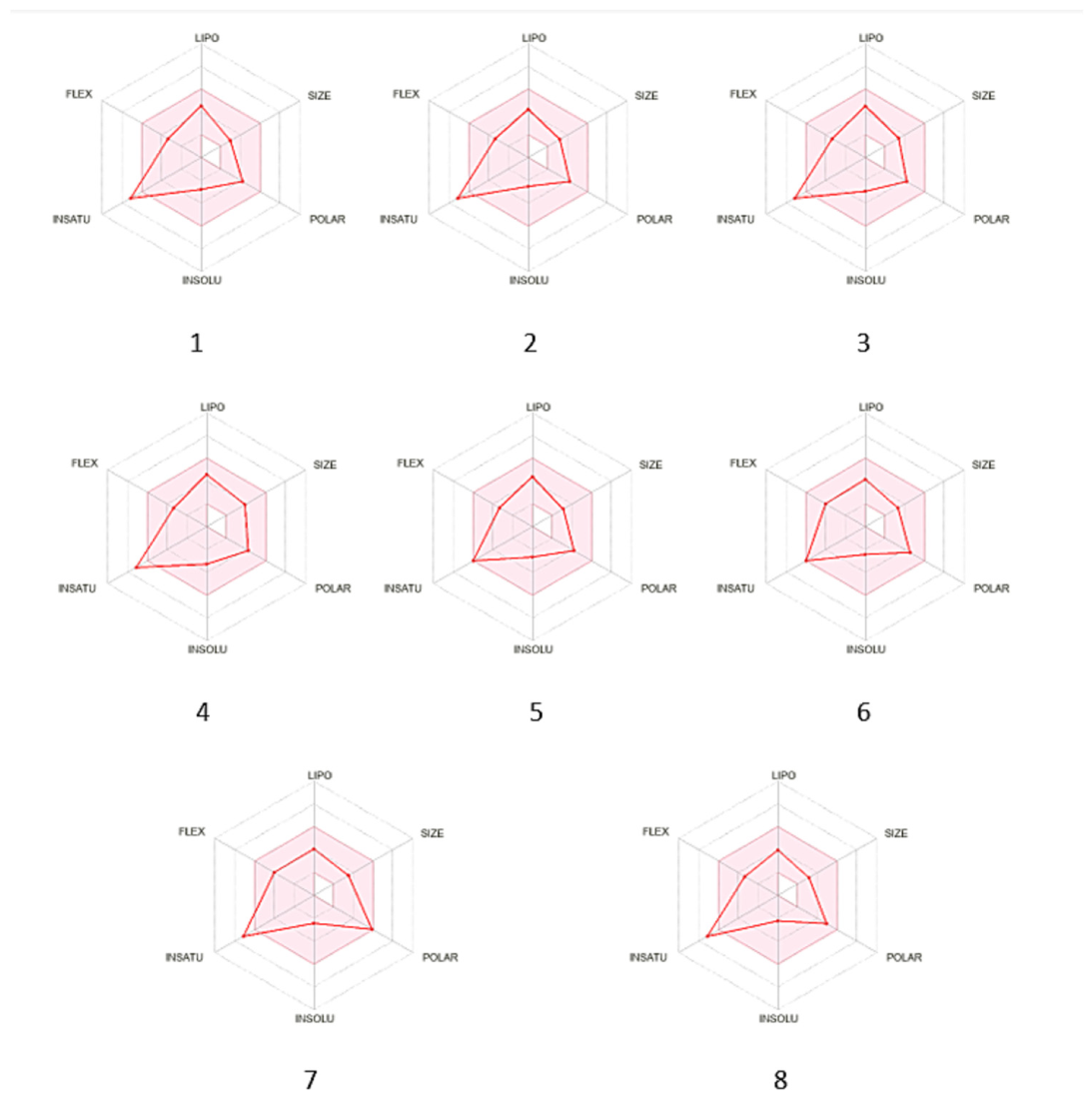
Figure 1. Bioavailability radar chart for the studied bis-substituted thiocarbohydrazones.
Organics 07 00019 g001
Figure 2. Dendrogram of the bioactivity parameters of the examined thiocarbohydrazones.
Organics 07 00019 g002
Figure 3. Dendrogram of the analyzed bis-substituted thiocarbohydrazone derivatives.
Organics 07 00019 g003
Figure 4. Loading plot as a result of PC1−PC2–PC3.
Organics 07 00019 g004
Figure 5. Score plot as a result of PC1–PC2.
Organics 07 00019 g005
Figure 6. PC1–π relationship.
Organics 07 00019 g006
Figure 7. PC2–σ relationship.
Organics 07 00019 g007
Table 1. Structures of the studied bis-thiocarbohydrazone derivatives.
Deriv.–RStructure
1.–HOrganics 07 00019 i001
2.–F
3.–Cl
4.–Br
5.–CH3
6.–OCH3
7.–NO2
8.–OH
Table 2. Chromatographic parameters of the examined bis-substituted thiocarbohydrazone derivatives in applied organic modifiers.
–RModifier
EthanolDioxane
RM0mrRM0mr
–H1.789−2.8780.9992.693−4.5600.998
–F1.914−2.9620.9972.851−4.6600.996
–Cl1.977−3.0250.9982.942−4.7180.997
–Br2.079−3.0700.9993.068−4.7780.999
–CH31.957−3.0100.9962.884−4.6720.998
–OCH31.887−2.9500.9982.730−4.5720.997
–NO21.452−2.6080.9982.489−4.4050.998
–OH1.286−2.4750.9981.983−4.0620.997
Table 3. Equations of RM0m relationships of the studied derivatives in used modifiers.
ModifierEquationrsdp
EthanolRM0 = −1.487–0.773m0.9980.012<0.0001
DioxaneRM0 = −2.735–0.672m0.9990.011<0.0001
Table 4. Basic statistical parameters of the chromatographic parameters—logP correlation.
logPcdClogPmilogPMollogPilogPXlogP3WlogPMlogPSILICOS-IT
logP
Consensus logP
Ethanol****** *********
RM0r0.9560.8870.9220.9770.9600.8660.8440.9310.9740.971
sd0.0650.0500.0420.0470.0840.1640.0580.0810.0500.053
p7.45·10−40.0180.0091.51·10−41.52·10−40.0120.0350.0022.022·10−42.690·10−4
mr0.9510.9050.9400.9740.9620.8600.8250.9250.9840.970
sd0.0520.0320.0260.0380.0640.1300.0420.0640.0300.041
p9.76·10−40.0130.0051.98·10−41.37·10−40.0130.0430.003<0.00012.84·10−4
Dioxane*****************
RM0r0.9780.9360.8990.9750.9010.8780.9120.9560.9560.959
sd0.0430.0730.0910.0460.0690.1930.0850.0610.0450.044
p1.28·10−40.0020.0061.88·10−40.0370.0090.0047.54·10−40.0030.002
mr0.9840.9220.8760.9800.8820.8690.9080.9740.9720.974
sd0.0240.0520.0650.0260.0440.1340.0560.0300.0220.021
p<0.00010.0030.0101.03·10−40.0480.0110.0052.04·10−40.0019.66·10−4
* derivative with –OH is excluded; ** derivatives with –OH and –NO2 are excluded; *** derivatives with –OH, –NO2 and –OCH3 are excluded; **** unsubstituted derivative is excluded.
Table 5. Basic statistical parameters of the chromatographic parameters—pharmacokinetic parameters correlation.
HIACaco-2MDCKPPBBBBlogKsp
Ethanol* ****
RM0r0.984--0.8140.8470.884
sd0.051--0.0630.0580.1396
p<0.0001--0.0490.0330.004
mr0.982--0.8320.8410.893
sd0.041--0.0420.0410.104
p<0.0001--0.0400.0360.003
Dioxane* ******
RM0r0.981--0.8460.9540.854
sd0.075--0.1100.0620.191
p<0.0001--0.0168.68·10−40.007
mr0.981--0.8270.9520.857
sd0.050--0.0760.0410.127
p<0.0001--0.0229.45·10−40.006
* derivative with –NO2 is excluded; ** derivatives with –OH and –NO2 are excluded; *** derivative with –OH is excluded.
Table 6. Basic statistical parameters of the chromatographic parameters—ecotoxicity parameters correlation.
Algae *Daphnia *Medaka *Minnow *
Ethanol
RM0r0.9460.9220.9160.886
sd0.0350.0420.0440.050
p0.0040.0090.0100.018
mr0.9740.9400.9430.896
sd0.0170.0260.0250.033
p9.64·10−40.0050.0050.016
Dioxane
RM0r0.8750.9570.9540.951
sd0.0750.0450.0460.048
p0.0220.0030.0030.004
mr0.8580.9580.9600.970
sd0.0480.0270.0260.023
p0.0290.0030.0020.001
* derivative with –OH and derivative with –NO2 are excluded.
Disclaimer/Publisher’s Note: The statements, opinions and data contained in all publications are solely those of the individual author(s) and contributor(s) and not of MDPI and/or the editor(s). MDPI and/or the editor(s) disclaim responsibility for any injury to people or property resulting from any ideas, methods, instructions or products referred to in the content.


