Article

Industrial 5G Adoption in Ayrshire, Scotland: Evidence, Barriers, and Implications for 6G

School of Computing, Engineering and Physical Sciences, University of the West of Scotland, Paisley PA1 2BE, UK
*
Authors to whom correspondence should be addressed.
Telecom 2026, 7(3), 57; https://doi.org/10.3390/telecom7030057
Submission received: 26 March 2026 / Revised: 7 May 2026 / Accepted: 15 May 2026 / Published: 21 May 2026

Abstract

Fifth-generation (5G) mobile networks are widely positioned as key enablers of industrial digital transformation. However, despite extensive coverage expansion, the deployment landscape remains dominated by Non-Standalone (NSA) architectures integrated with legacy 4G cores, limiting the practical availability of advanced capabilities such as Ultra-Reliable Low-Latency Communication (URLLC), Massive Machine-Type Communication (mMTC), and network slicing. This has contributed to a disparity between projected 5G functionality and realised industrial utility. This paper investigates the economic and structural factors constraining advanced 5G adoption and examines their implications for emerging sixth-generation (6G) frameworks. We conceptualise the current stagnation as arising from concurrent supply-side and demand-side constraints: elevated Radio Access Network (RAN) capital expenditure relative to previous generations, and limited demonstrable return on investment (ROI) for advanced service capabilities. To evaluate these dynamics empirically, a regional stakeholder study was conducted across industrial and public sector organisations in Ayrshire, Scotland. Data were collected through structured surveys and workshop-based questionnaires involving 34 participants, with proportional sectoral analysis performed to assess representativeness. The results indicate that high initial deployment costs and ROI uncertainty are the primary adoption barriers, with 45.83% of respondents reporting no immediate operational requirement for advanced 5G features. The findings identify an implementation gap in which economic viability, rather than technical feasibility, limits progression beyond basic 5G deployment. The paper argues that unless cost-efficiency and sector-specific value articulation are addressed, similar adoption constraints may extend into 6G development. These results provide empirically grounded insights to inform more economically aligned next-generation network planning.

1. Introduction

In recent years and with the path to 6G rapidly approaching, much academic, industrial, and commercial interest has been turned to 5G in pursuit of satisfying both demand and national digital strategies. Governments and Mobile Network Operators (MNOs) have prioritised broad coverage, rapid rollout, and high throughput above other network factors. This approach, along with a focus on reusing or retaining existing network infrastructure to reduce cost, has created a landscape where headline statistics often mask the true operational realities of 5G networks, particularly to the extent that these networks can support the advanced features touted as core to 5G and which are necessary to support industrial automation, autonomous vehicles, and other near future use cases.
While total 5G adoption rates are generally high across developed economies, analysis only of site counts and population coverage can hide the ubiquity of 5G Non-Standalone (NSA) architectures, which are often deployed in place of full 5G Standalone (SA) sites. NSA 5G utilises new 5G radio access hardware with an existing 4G core to deliver higher data rates, reuse of existing infrastructure, and a pathway to full 5G to Mobile Network Operators (MNOs) for substantially cheaper than a greenfield 5G deployment. However, NSA 5G lacks support for many of the core 5G features, such as Ultra-Reliable Low-Latency Communication (URLLC), Massive Machine-Type Communication (mMTC), and network slicing, which are all operationally dependant on the 5G core; the differences are summarised in Table 1. Globally, of the 39 markets evaluated in the Global System for Mobile Communications Association (GSMA) 5G index, only five had achieved near-full 5G SA adoption, and 17 reported no SA deployments at all as of early 2024 [1].
Regional leadership in 5G SA penetration is concentrated in Asia and North America, with China holding the position of global leader, with all major operators offering nationwide SA coverage with some launched as early as 2020 [2]. Many major US operators have also deployed SA networks at scale, with one operator providing full 5G SA at the metropolitan scale in over 150 locations [2]. In contrast, the European union shows considerably less enthusiasm, with most member states reporting no more than one operator investing in public 5G SA networks [2].
In the UK, 5G SA has seen some limited deployment by MNOs, including BT and Virgin Media [2]. Ofcom reports a 5G SA availability of 47% across the UK and 40% in Scotland [3]. However, these figures are not supported by some independent measurements, which indicate lower realized 5G SA coverage than expected even in metropolitan areas [4].
Given the specialized nature of the telecommunications landscape and the difficulties in surveying the concentrated population of relevant organizational stakeholders in the Ayrshire region, this study is presented as an exploratory investigation. Rather than seeking to provide a definitive and exhaustive review, this study adopts a descriptive, analytical approach aimed at identifying the major factors in the region and any localized variation from adoption barriers observed elsewhere. This framing ensures insights remain grounded in the socio-economic context of the region while providing a baseline for further research.
To address the disparity between 5G projections and operational realities, this study investigates the sentiment of industrial and public sector organizations toward advanced wireless technologies. This empirical research is structured around three central research questions:
  • RQ1: What are the primary barriers preventing operators and consumers from fully adopting 5G SA solutions in public, commercial, and industrial environments?
  • RQ2: What is the typical capital investment that operators are willing to make in order to implement 5G SA architectures at a site?
  • RQ3: What systemic technical and financial barriers identified in 5G adoption must be addressed to enable new 5G and future 6G deployments?
The key contributions of this paper are as follows:
  • We identify a critical disparity between the advertised industrial value of 5G and the architectural realities of current deployments, particularly in the context of Non-Standalone (NSA) and Standalone (SA) transitions.
  • We present empirical evidence from a regional stakeholder study in Ayrshire, Scotland, showing that nearly half of surveyed organisations perceive no immediate need for 5G, primarily due to unclear return on investment (ROI) and high capital costs.
  • We analyse how these adoption barriers contribute to systemic stagnation in SA deployment, and argue that this dynamic risks propagating similar implementation gaps into future 6G networks.
The remainder of this paper is organised as follows: Section 4 and Section 5 describe the research methodology and present the results of the regional stakeholder surveys and the Digital Ambassador Programme. Finally, Section 6 discusses systemic barriers to industrial adoption, and Section 7 provides strategic recommendations for bridging the emerging value gap in future network generations.

2. Background and Related Work

While the technical superiority of SA architecture is well documented, the transition from widespread NSA to SA adoption has hit significant bottlenecks. The NSA transition allowed for rapid and cost-effective rollout, but left network operators with equipment that lacks the functionality to support all the 5G service pillars that define much of 5G’s unique value. This stagnation is not merely a technical delay but is deeply rooted in the broader economic climate of the telecommunications industry.

2.1. Economic and Deployment Constraints

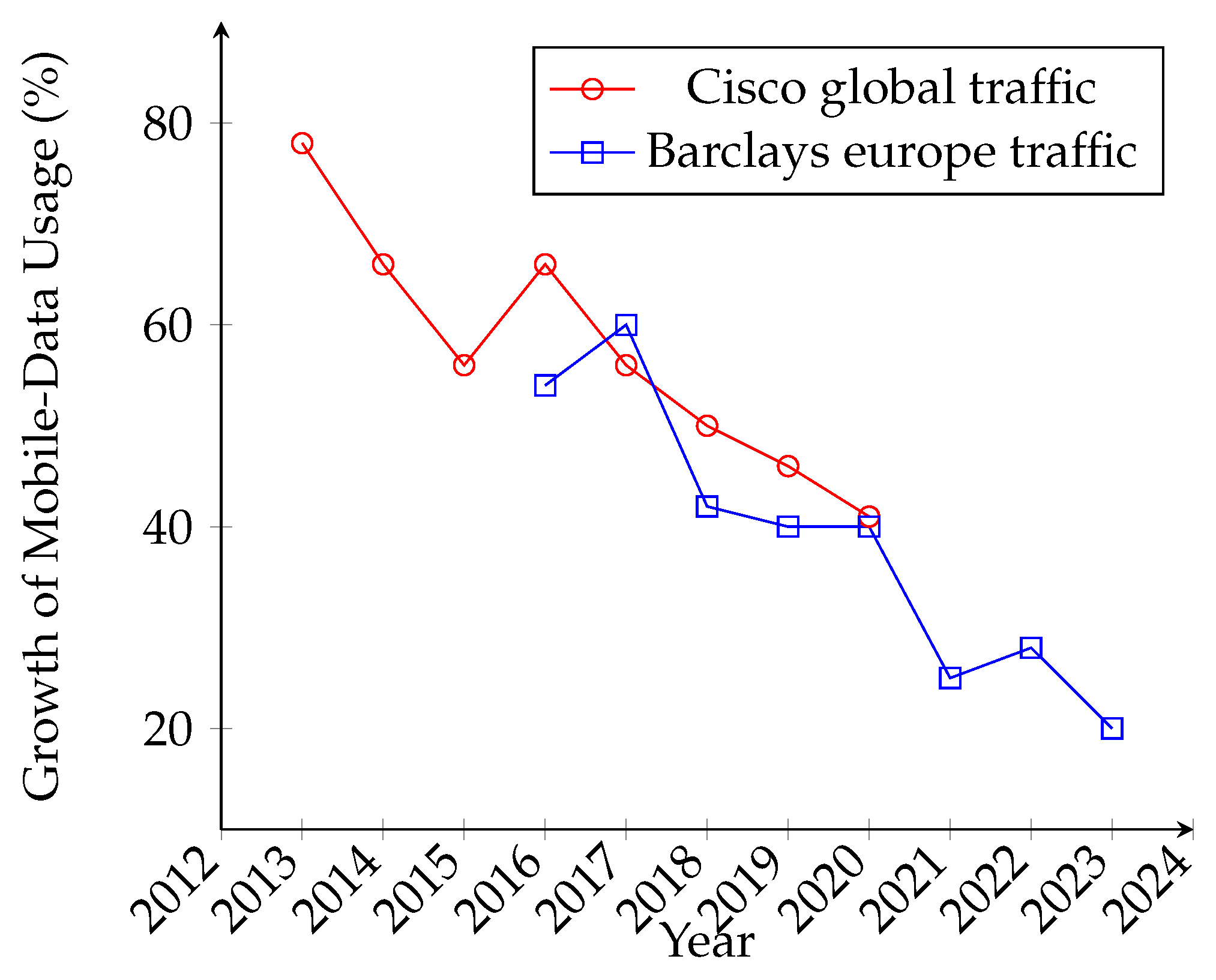
Economic stagnation across mobile markets has slowed the progression of 5G SA deployment, largely due to the substantial capital investment required for full SA infrastructure. The GSMA reports that Radio Access Network (RAN) costs for a 5G system, for an established operator, may be up to 65% higher than for an equivalent LTE deployment [5]. Our own studies similarly indicate that 5G systems remain prohibitively expensive even at the research scale. Experimental or evaluation-focused 5G installations capable of serving only a small number of devices across a limited indoor area have been observed to cost between £200k and £250k [6]. This cost burden is particularly significant for mobile network operators whose investment returns in many markets have plateaued or declined in recent years [1]. A contributing factor is a global reduction in demand growth for high-performance wireless communication systems. Cisco and Barclays both report a dramatic decline in mobile data traffic growth over the past decade, as shown in Figure 1, with projections indicating that growth rates may reach zero—or even turn negative—before 2030 [7].
Further supporting this trend, Ericsson documents a sharp drop in year-on-year mobile network data traffic growth, falling from approximately 60% in Q3 2019 to around 20% in Q4 2024—a decline occurring over just five years [8]. Additionally, stagnation in connectivity demand and subscriber-base growth has been observed globally across high-, intermediate-, and lower-income nations [9].

2.2. Industrial and Commercial 5G Adoption Literature

A further compounding constraint on 5G SA deployment is the limited market demand for the advanced capabilities uniquely enabled by SA architectures. Despite the maturity of the 5G lifecycle, commercialisation of network slicing remains at an early stage as of Q4 2024 [8]. This is likely due to deployment difficulties, as network slicing is both technically challenging to implement at scale and difficult to monetise across public networks, due to limited consumer demand and net neutrality regulations, which restrict differential treatment of traffic once it traverses the wider network [10].
URLLC and mMTC face demand issues, as consumers demonstrate a lack of appetite for the services offered, and monetisation remains complicated [11]; consequently, consumer uptake for these services remains limited. These challenges are further compounded by the stringent Quality of Service (QoS) requirements that URLLC and mMTC impose, including reliability, latency, and scalability demands. Meeting these requirements generally necessitates network slicing for effective service provisioning over 5G networks. The limited availability of deployable slicing capabilities therefore adds an additional layer of constraint, making practical deployment of URLLC and mMTC even more difficult. For mMTC, the situation is exacerbated by trends in device connectivity: the number of non-smartphone devices connected to mobile networks is declining, driven by the increasing functional convergence of modern smartphones. This reduces both the diversity and stability of device populations within cells, complicating the economic justification for mMTC-oriented deployments outside of incredibly high-density locations such as stadiums and conference centres [10]. As a result, many authors conclude that no clear “killer” services have emerged for 5G. Saturation of user equipment (UE) markets, combined with the widespread availability of unlimited data plans, has limited opportunities for new data-driven revenue streams for mobile network operators. Fixed Wireless Access (FWA) has emerged as a contemporary 5G business model; however, because FWA does not rely exclusively on 5G and can be delivered with comparable performance over existing 4G networks, it has not acted as a strong driver for 5G adoption [12]. Even in sectors often cited as highly promising for 5G, such as smart manufacturing and digital healthcare, service offerings continue to struggle to demonstrate compelling use cases that can only be addressed through 5G-specific capabilities [12], or are not severely limited by policy and ethical concerns [13]. These sentiments are echoed by broader UK and European stakeholder feedback, indicating that industrial adoption remains greatly behind expectations and largely relegated to showcase and development deployments [14].

2.3. Divergence Between Envisaged and Realized Use Cases

The initial range of use cases defined to support the core service pillars of 5G was codified in the 2016 3rd Generation Partnership Project (3GPP) SMARTER technical report, and aims to enable several novel use cases [15].
  • Ultra-Reliable Low-Latency Communications (URLLC): Motivated by anticipated requirements in industrial control, telemedicine, and remote operation, including drone delivery systems and automated road vehicles.
  • Enhanced Mobile Broadband (eMBB): Targeted improvements in conventional broadband performance, with particular emphasis on virtual reality, high-definition video streaming, telepresence, and teleworking.
  • Massive Machine-Type Communications (mMTC): Encompassed large-scale Internet of Things (IoT) ambitions such as smart cities, smart wearables, connected vehicles, and smart grids.
However, these envisaged use cases did not effectively materialise in practice. 5G for industrial control has seen little commercial interest, with less than a third of organisations progressing to trials or real-world implementations 5G [16], aligning with patterns seen in industrial digitization where little evidence of tangible returns on investment are observed [17].
Likewise autonomous driving has seen resistance, in this case with significant legislative pushback, due in part to perceived safety issues driven by various high-profile fatal incidents [18].
While NB-IoT has seen some promising adoption, nearly 90% of these connections are in China. In other regions, LoraWAN and the older LTE-M dominates due to years of unchallenged growth and momentum as poor 5G SA penetration impedes the coverage of NB-IoT networks [19].
Finally, VR use cases such as the metaverse remain unfulfilled, while consumer intentions to use VR have continued to drop since 2022 [20].

2.4. Implications for the Development and Adoption of 6G Frameworks

The stagnation of 5G SA architectures provides a sobering perspective for the deployment of 6G. While 5G was marketed as a revolutionary leap targeting use cases previously not considered for the mobile communications system, the reality has been far from what was envisioned. As the industry pivots to 6G, it does so under even more precarious conditions, all the while targeting the same service pillars as 5G and pursuing a new set of features and use cases without demonstrating any tangible demand.
Drafts of the 3GPP TR 22 870 6G Service Requirements document [21] define six service pillars and the supporting use cases to be provided by 6G in pursuit of evolving the mobile communications system, which are as follows:
  • Artificial Intelligence (AI): Driven by the meteoric rise of generative AI, 6G aims to support AI applications in connected cars, industrial automation, healthcare, Unmanned Air Vehicles (UAVs), and AI agents.
  • Integrated Sensing and Communication: Improvements in beamforming, signal processing, and computation present the option of allowing communication infrastructure to serve double duty as radar style sensing installations; this functionality is leveraged to support mapping, UAVs, and smart cities.
  • Ubiquitous connectivity: These features aim to improve network resilience through the integration of Non-Terrestrial Networks (NTNs), as well as extending and supporting both terrestrial and non-terrestrial positioning systems to support existing use cases.
  • Immersive communication: Immersive realities, extended reality (XR), and virtual reality (VR) remain priorities, with focus given to introduce additional features to support XR for gaming, education, and various other use cases.
  • Massive communication: Network range will again be improved, with wider area coverage both in rural and urban areas to support IOT use cases such as smart infrastructure for power, water, and environmental sensing.
  • Further use cases: Finally, much value is seen in robotics applications, and so industrial applications, specifically targeting industrial robotics, UAV aircraft, and swarm robotics will be targeted when developing the protocol.
While certainly ambitious, and with a broad set of enticing capabilities, authors have identified that 6G presents a great deal of the scope issues identified with 5G, namely many of the use cases targeted by 6G such as autonomous vehicles, UAVs, smart cities, smart infrastructure, and virtual reality share a high degree of similarity to the use cases targeted with 5G [22]. As previously identified, these use cases have struggled to materialize during the lifetime of 5G, and as such, hope for the development of these use cases under 6G, and to the degree that 6G is designed to support, are vanishingly slim.

3. Regional Context and Problem Framing

For Scotland, and specifically non-central regions such as Ayrshire, the previously discussed implementation gap is of critical importance. While there have been government incentives and national digital strategies to foster the rollout of 5G, the reality in many communities is one of stark disparity. 5G coverage in Scotland remains concentrated in major urban centres like Glasgow and Edinburgh, but even in these areas, however, full SA coverage is largely absent. In rural areas, the digital divide is most prominent, with 5G availability as low as 16% compared to the 97% of 4G [3]. This environment has created a unique necessity for Private 5G Networks. Because organizations and communities requiring mMTC, URLLC, or slicing features cannot rely on public NSA infrastructure, private deployments have become the only viable route to full 5G SA sites. And as the Scottish government is actively incentivising industrial automation and modernization, understanding this environment and the factors driving it will be critical to fostering the adoption of 5G SA systems in both organisational and community installations.

3.1. Network Availability: The Scottish Landscape

Currently, Scotland exhibits substantial shortcomings for 5G availability in all regions, with significant disparity between urban and rural areas. Coverage is focussed on major population centres such as Glasgow, Aberdeen, and Edinburgh; however, even in these places, only around 42% of cell-site locations provide 5G access. Rural sites perform even poorer, with less than 16% of sites offering 5G connectivity. This stands in contrast to the near-ubiquitous 97% landmass coverage already achieved by 4G, covering even sparsely populated areas such as the highlands and islands [3]. This uneven rollout reflects economic and logistical restraints: high capital expenditure with a low projected revenue per user limit the commercial opportunities in many communities. These issues are further exacerbated by geographical issues, with Scotland’s challenging terrain increasing the cost and complexity of backhaul and power supply solutions.

3.2. Regional Socio-Economic Drivers for Connectivity in Ayrshire

Correctly utilized, 5G stands to be of enormous benefit to Ayrshire. 5G Fixed Wireless Access (FWA) can provide high-speed connectivity to entire settlements quickly and cost-effectively, helping to close the digital divide and unlocking greater commercial opportunities across a wider range of communities, including teleworking, online trading, and other digital services. NB-IoT will enable extensive sensing and monitoring applications, supporting conservation efforts, precision farming, and the management of natural resources, while also providing secure control for the region’s renewable energy infrastructure. Finally, URLLC offers the potential to reduce operational costs through teleoperation and centralized resource reuse, while increasing industrial capability by enabling access to more advanced resources without replication; in addition, it can enhance digital healthcare provision, delivering services efficiently to more remote communities.

4. Research Methodology

4.1. Data Acquisition Framework

In order to better understand the sentiment toward 5G in industrial settings, a survey series was selected to target private and public sector organizations in the Ayrshire region. Contacts for the program were collated through outreach via 5G Innovation Region (5GIR) project partners and by leveraging the existing networks of UWS and its collaborators. These networks included UWS Business Innovation connections, the Prestwick Airport Operations Group, Ayrshire Council Business Development contacts, and organisations that had expressed prior interest in the project. An initial cohort of 130 contacts from 67 distinct organisations across North, South, and East Ayrshire was identified. The strategy of engaging multiple contacts within a single organisation was employed to gain more comprehensive intra-organisational insight into 5G knowledge and utilisation.
Participants were provided with a brief contextual primer for 5G and the relevant 6G sections prior to the questionnaires and surveys. 6G was defined as the anticipated next-generation mobile standard. The objective was not to gauge knowledge of 6G, but to determine if participants perceived the current 5G adoption barriers as persistent challenges that would extend to the next generation.

4.2. Regional Stakeholder Survey

The first dataset was generated through a regional stakeholder study, which was performed by the distribution of questionnaires to organisations throughout the Ayrshire region. Initially, a consent form was distributed to prospective participants. This form was subsequently integrated into the main questionnaire to streamline the process and enhance the overall completion rate. This initial stage served two purposes: to secure ethical consent for the use of collected data and to gather categorical information necessary for subsequent meta-analysis. Of the 130 contacts invited, 32 provided an initial response. Following this, tailored questionnaires were distributed to the 32 respondents based on their sector. The questionnaire for private sector companies focused on 5G adoption in terms of business incentives and implementation. The questionnaire for public sector entities focused specifically on regional impacts and challenges. From the 32 respondents who received the tailored surveys, six private sector contacts and two public sector contacts completed the questionnaire, resulting in a final sample size of eight participants.

4.3. Digital Ambassador Program

The second series of questionnaires was acquired as part of the Digital Ambassador Program (DAP), a pilot initiative of the University of the West of Scotland (UWS) operating under the Ayrshire Digital Economy Ecosystem (ADEE) education program. The DAP aimed to promote progress, facilitate knowledge sharing between organisations, and raise awareness of the challenges associated with the implementation and broadening use of 5G through a series of workshops, presentations from industrial and academic experts, and collaborative discussion sessions. Organisations from around the Ayrshire region were invited to attend. In total, 26 attendees from 16 individual organisations attended the event. The questionnaires were presented as part of breakout sessions held during the DAP; a total of 13 multiple choice questions were presented, of which 8 addressed 5G and its related technologies. Two more qualitative questions were presented in which participants could give freeform answers.

4.4. Sectoral Proportionality Analysis and Limitations

To determine how accurately our results represented the opinions of business in the Ayrshire region, proportional representativeness analysis is performed based on the data collected and total Ayrshire employment in those sectors as reported by NOMIS [23].
R a t i o = O b s e r v e d R e s p o n d e n t s T o t a l R e s p o n d e n t s × S e c t o r J o b s A l l S e c t o r s
A ratio of 1 indicates perfect proportionality; values over and under this represent over and under representation respectively, and the results can be seen in Table 2.
The construction sector was well represented. Following closely, the education sector showed an acceptable representation. With the transportation and storage sector, the results start to diverge, with 150% of the expected respondents. Subsequent sectors demonstrated increasingly divergent representation, with many sectors receiving ratios greater than 2.5. Furthermore, several sectors, including those with a high degree of relevance to the Scottish economy, received no representation at all. While these results may limit the generalizability of the data to the entire Ayrshire region, it provides valuable insights into 5G perceptions within these specific sectors and offers a preliminary indication of how these opinions might extend to the broader Ayrshire economy.

4.5. Statistical Significance

Given the small and irregular sample sizes, (Total N = 34, and sub samples ranging from N = 9 to N = 24), as well as the categorical nature of the data, significance testing was employed using Wilson score 95% Confidence Intervals, one-sided exact binomial tests, and chi-square goodness-of-fit (X2) tests where shape of distribution was of interest. Due to the very low (N = 8) Likert data, statistical analysis would lack meaning, and as such, should be treated as ordinal only. Binomial tests are used to compare the dominant response category against the uniform expectation (1/Q, where Q is the number of options in a question).

5. Results

5.1. Regional Stakeholder Survey

Our results for the findings of the initial survey are presented in Table 3 and Table 4:
The scepticism for VR and AR seen in commercial markets is weakly indicated in Table 3, as well as the mixed attitudes towards the need for 5G.
Responses to the first three rounds of the regional stakeholder surveys had a high level of variability, with responses becoming more uniform in later rounds, suggesting a high degree of variability in use cases but similar final network requirements.

5.2. Digital Ambassador Program

Our results of the follow up surveys are presented in Table 5, Table 6, Table 7, Table 8, Table 9, Table 10, Table 11 and Table 12:
The massive 58% of respondents citing “Falling behind competitors” as a significant cost of 5G inaction in Table 9 may indicate that some of the drive for adopting 5G is simply fear of missing out.
Table 11 provides a broad image of extant 5G use cases in the Ayrshire region.

5.3. Statistical Significance Analysis

Four findings were identified that clear the threshold for statistical significance, which are presented in Table 13 with the findings detailed below:

5.3.1. “No Perceived Need for 5G”

Identified in Table 8, “No perceived need for 5G” is the statistically dominant adoption barrier (45.8%; p = 0.007), which is then built upon by the following observation:

5.3.2. “Unclear Business Case”

The differently framed Table 10 identifies “Unclear business case” (46.7%; p = 0.007) as the dominant adoption barrier. Together with the previously identified barrier, these provide a strong indication that value proposition ambiguity, and not any technical factor, is the primary adoption constraint.

5.3.3. “Falling Behind Competitors”

Reinforcing the earlier observations, the statistical certainty identified in Table 9 for “Falling behind competitors” (58.3%; p = 0.014), and the chi-squared distribution ( χ 2 = 8.00; p = 0.046), suggests that extant adoption pressure may be driven by the earlier identified “Fear of Missing out” rather than tangible operational requirements.

5.3.4. “Public 5G Only (No Cost)”

Finally, there was an overwhelming preference for zero capital investment in Table 12 (53.3%; p = 0.001), ( χ 2 = 16.60; p = 0.005), with only one respondent willing to contribute more than £50k (one fifth of our observed minimum installation CAPEX), which confirms that the incredibly high upfront cost of 5G systems is a real barrier.

6. Discussion

Here we present our analysis of our findings.

6.1. Supply-Side Economic Challenges and Value Proposition Ambiguity

6.1.1. Unclear Value Proposition

A key concern indicated was the value of 5G: many potential adopters could not justify the cost, as they did not see clear financial or operational incentives to adopting the technology. Table 8 shows that 45.83%, almost half of the 24 respondents, chose “No perceived need for 5G” as the biggest barrier their organisation faces in adopting 5G. Table 6 reinforces this, with a further 44.44% of nine respondents believing that “unclear business case or ROI” was the biggest challenge for adopting 5G in their sector. Table 12 supports this with 47% of respondents seeing an “unclear business case”. Finally, Table 6 weakly agrees with this, with 50% agreeing they had concerns about ROI, compared to the 33% disagreeing that this was a concern.

6.1.2. High Deployment Cost

Deployment costs represent another significant barrier to adoption. Survey results indicate that a majority of organizations would only consider adoption if public 5G access were available at no additional cost; Table 12 shows that 53% of respondents supported this, with only 33% supporting an initial private system installation cost of up to 25k. The weight of this financial burden is reflected in Table 6, where 33.33% of stakeholders cited “High costs and investment requirements” as the leading challenge in their sector. This is reinforced by Table 8, where 16.67% of respondents specifically pinpointed the “High initial investment” as their biggest hurdle.

6.2. Demand-Side Constraints and Infrastructure Dependencies

6.2.1. Low Availability of 5G Coverage

Due to limited tower rollouts in both urban and rural areas, many organizations that cannot afford private 5G systems must rely on public networks. However, this dependence restricts availability to locations where mobile network operators have chosen to deploy infrastructure. Our data reflects this geographic frustration; Table 7 shows that “poor network access in rural areas” was selected as a top-three challenge by 23.53% of respondents. This is further validated by qualitative feedback in the freeform survey responses, where one stakeholder explicitly noted, “We do not have 5G available in the location we work from”.

6.2.2. Low Availability of 5G Engineers

A recurring concern is the availability and quality of 5G-trained personnel; Table 8 shows that 16.67% of respondents believed that lack of technical expertise was the biggest barrier that their organisation faced in 5G adoption. This is weakly reinforced by Table 6, where 11.11% of respondents listed lack of technical expertise and training as the biggest challenge, as well as Table 4, where there was distinct uncertainty around the availability of suitably trained 5G engineers.

6.3. Limitations

While this study provides critical insights into regional telecoms adoption, several limitations must be acknowledged. First, the small sample size and potential selection bias are inherent to studies focused on regional variability. However, the participants represent core decision makers within Ayrshire organisations. Second, the previously identified proportional representational analysis defines the relevant sectors to this study, and limits the findings of this study from being applied to the wider Ayrshire economy. Finally, the analysis is primarily descriptive, and lacks a longitudinal control group.
Future studies and research building on this work should seek to cross-validate these findings with data from other sectors and regions to determine if these limitations are unique to Ayrshire or the sectors analysed.

7. Conclusions

The “Future that never happened” in 5G networks is the result of a disconnect between consumer needs of network operators and industrial users and the use cases envisioned by technology designers. While 5G was envisioned to enable hyper-connected use cases such as automated factories, self-driving cars, and autonomous UAVs, these use cases have struggled due to high infrastructure costs and the continued adequacy of extant wireless networks such as 4G, WiFi, and LoRa.
If the conditions that have constrained the adoption of 5G persist, the outlook for 6G is dire. MNOs, policymakers, and infrastructure vendors are entering early 6G discussions with weaker investment incentives than ever before. The issues discussed in Section 2, such as consumer demand, applicable use cases, and return on investment, has tightened capital expenditure cycles, leaving many organisations increasingly sceptical of claims of “revolutionary” generational shifts delivering meaningful new returns. Consequently, stakeholders must once again choose whether to risk an expensive greenfield 6G deployment, attempt to bridge the gap with limited stopgap solutions, or simply not deploy 6G networks.
Fixed and mobile private networks have emerged as a clear solution for many organisations in need of the core features of 5G. While this may present a significant investment, the value added by features such as network slicing, and the lack of public 5G networks in many regions of interest, make non-public networks the only option for providing modern, mature wireless connectivity.
Some strategic recommendations are given for new 5G and future 6G deployments:
  • Cost Reduction: For both 5G and the upcoming 6G, the cost of basic deployments must be severely reduced to enable broader adoption beyond large, capital-rich organizations.
  • Infrastructure & Policy: There is a need for a simultaneous policy push to ensure the proliferation of key use cases and a greater emphasis on NB-IoT to support sensing and monitoring applications.
  • Addressing the “Value Gap”: Future frameworks must move beyond “solutions searching for a problem” and focus on clear financial and operational incentives that address specific sector challenges, such as rural connectivity and operational efficiency.
Without addressing these systemic barriers, the mobile communications industry risks a cycle of diminishing investment incentives and market saturation that could further impede the development of 6G.

Author Contributions

Conceptualization, H.S.; methodology, H.S., L.I., and C.G.; software, H.S.; validation, H.S. and P.S.-G.; formal analysis, H.S.; investigation, H.S., A.H., P.S.-G., L.I., and C.G.; resources, M.Z.S.; data curation, H.S.; writing—original draft preparation, H.S.; writing—review and editing, A.H., P.S.-G., and H.S.; visualization, H.S.; supervision, P.S.-G. and M.Z.S.; project administration, H.S., P.S.-G., and M.Z.S.; funding acquisition, M.Z.S. All authors have read and agreed to the published version of the manuscript.

Funding

This research was funded by the 5G Innovation Region (5GIR) through the Digital Connectivity Innovation Centre (DCIC). The APC was funded by the University of the West of Scotland.

Institutional Review Board Statement

This study was conducted in accordance with the Declaration of Helsinki and received ethical approval from the University of the West of Scotland Computing, Engineering and Physical Sciences SAIEC, reference number: 18216.

Informed Consent Statement

Informed consent was obtained from all subjects involved in the·study.

Data Availability Statement

The data presented in this study are available on request from the corresponding author.

Acknowledgments

The authors would like to acknowledge the support of the 5G Innovation Region (5GIR) project partners and the collaborators at the University of the West of Scotland (UWS) Business Innovation unit, the Prestwick Airport Operations Group, and Ayrshire Council for their assistance with contact outreach and data collection.

Conflicts of Interest

The authors declare no conflicts of interest.

Abbreviations

The following abbreviations are used in this manuscript:
3GPP3rd Generation Partnership Project
5GC5G Core
5GIR5G Innovation Region
ADEE        Ayrshire Digital Economy Ecosystem
AIArtificial Intelligence
AWTAdvanced Wireless Technologies
CapExCapital Expenditure
DAPDigital Ambassador Program
eMBBEnhanced Mobile Broadband
EPCEvolved Packet Core
FWAFixed Wireless Access
GSMAGlobal System for Mobile Communications Association
IoTInternet of Things
LoRaWANLong Range Wide Area Network
LTELong-Term Evolution
mMTCMassive Machine-Type Communication
MNOMobile Network Operator
NB-IoTNarrowband Internet of Things
NSANon-Standalone
QoSQuality of Service
RANRadio Access Network
ROIReturn on Investment
SAStandalone
UAVUnmanned Aerial Vehicle
URLLCUltra-Reliable Low-Latency Communication
UWSUniversity of the West of Scotland
VR/XRVirtual Reality/Extended Reality

References

  1. GSMA Intelligence. The State of 5G in 2024; Technical Report; GSMA Intelligence: London, UK, 2024. [Google Scholar]
  2. European Commission. 5G Observatory Report 2025; Technical Report; European Commission–Digital Strategy: Brussels, Belgium, 2025. [Google Scholar]
  3. Ofcom. Connected Nations 2025; Technical Report; Office of Communications (Ofcom): London, UK, 2025. [Google Scholar]
  4. Hart, A.; Sturley, H.; McLean, P.; Garcia, P.S.; Shakir, M.Z. Glasgow Public and Private 5G Performance Dataset (2025): Acquisition and Comparative Analysis. Res. Sq. 2026. [Google Scholar] [CrossRef] [Scilit]
  5. GSMA. 5G-Era Mobile Network Cost Evolution; Technical Report; GSMA: London, UK, 2025. [Google Scholar]
  6. Sturley, H.; Salva-Garcia, P.; Salau, N.; Zhu, Y.; Vichare, P.; Shakir, M.Z. 5G MPN Design and Deployment: Challenges and opportunities for Industrial Use Cases. In Proceedings of the 2025 International Conference on Software, Knowledge, Information Management & Applications (SKIMA); IEEE: Piscataway, NJ, USA, 2025; pp. 1–6. [Google Scholar] [CrossRef] [Scilit]
  7. Webb, W. The End of Telecoms History: How We Reached the Point of Having All That We Need; Independently Published: London, UK, 2024; ISBN 979-8328402729. [Google Scholar]
  8. Ericsson. Ericsson Mobility Report, November 2024; Technical Report; Ericsson: Plano, TX, USA, 2024. [Google Scholar]
  9. GSMA Intelligence. The State of Mobile Internet Connectivity 2024; Technical Report; GSMA Intelligence: London, UK, 2024. [Google Scholar]
  10. Department for Science, Innovation and Technology; Department for Digital, Culture, Media & Sport. Ensuring Future Wireless Connectivity Needs Are Met; Technical Report; UK Government: London, UK, 2023.
  11. Moreno-Cardenas, E.; Guijarro, L. Market and Sharing Alternatives for the Provision of Massive Machine-Type and Ultra-Reliable Low-Latency Communications Services over a 5G Network. Electronics 2023, 12, 4994. [Google Scholar] [CrossRef] [Scilit]
  12. Jang, H.S.; Yeo, J. Current status analysis of 5G mobile communication services industry using business model canvas in South Korea. Asia Pac. Manag. Rev. 2024, 29, 462–476. [Google Scholar] [CrossRef] [Scilit]
  13. Zhou, L.; Jiang, M.; Duan, R.; Zuo, F.; Li, Z.; Xu, S. Barriers and Implications of 5G Technology Adoption for Hospitals in Western China: Integrated Interpretive Structural Modeling and Decision-Making Trial and Evaluation Laboratory Analysis. JMIR mHealth uHealth 2024, 12, e48842. [Google Scholar] [CrossRef] [Scilit] [PubMed]
  14. Hulls, P.M.; Castaño-Vinyals, G.; Röösli, M.; Joseph, W.; Polańska, K.; Politański, P.; Guxens, M.; de Vocht, F. Fulfilment of the promises of 5G according to business and industry stakeholders in Europe and the United Kingdom. Sci. Rep. 2025, 15, 42383. [Google Scholar] [CrossRef] [Scilit] [PubMed]
  15. 3rd Generation Partnership Project (3GPP). Study on New Services and Markets Technology Enablers (TR 22.891 V14.2.0); Technical Report 22.891; Release 14; 3rd Generation Partnership Project (3GPP): Sophia Antipolis, France, 2016. [Google Scholar]
  16. Capgemini Research Institute. Accelerating the 5G Industrial Revolution: State of 5G and Edge in Industrial Operations; Industry Research Report; Capgemini Research Institute: Paris, France, 2021. [Google Scholar]
  17. Attaran, M. The impact of 5G on the evolution of intelligent automation and industry digitization. J. Ambient. Intell. Humaniz. Comput. 2023, 14, 5977–5993. [Google Scholar] [CrossRef] [Scilit] [PubMed]
  18. Yang, X.; Shi, Y.; Xing, J.; Liu, Z. Autonomous driving under V2X environment: State-of-the-art survey and challenges. Intell. Transp. Infrastruct. 2022, 1, liac020. [Google Scholar] [CrossRef] [Scilit]
  19. Omdia, Informa Tech. Low Power Wide Area Network (LPWAN) Market Report—2024 Analysis; Industry Report; Omdia, Informa Tech: London, UK, 2024. [Google Scholar]
  20. Ball, C.; Huang, K.T.; Francis-Levin, J. Beyond the hype: Longitudinal trends in virtual reality perceptions beyond the COVID-19 pandemic. Inf. Res. Int. Electron. J. 2025, 30, 260–279. [Google Scholar] [CrossRef] [Scilit] [PubMed]
  21. 3rd Generation Partnership Project (3GPP). 3GPP TR 22.870: Study on 6G Use Cases and Service Requirements; Technical Report (Draft) 22.870; 3rd Generation Partnership Project (3GPP): Sophia Antipolis, France, 2025. [Google Scholar]
  22. Akbar, M.S.; Hussain, Z.; Ikram, M.; Sheng, Q.Z.; Mukhopadhyay, S. 6G Survey on Challenges, Requirements, Applications, Key Enabling Technologies, Use Cases, AI integration issues and Security aspects. arXiv 2024, arXiv:2206.00868. [Google Scholar]
  23. Office for National Statistics (ONS)/Nomis. Nomis Labour Market Profile—Ayrshire Regions (Data Used for Ayrshire Summary). 2025. Available online: https://www.nomisweb.co.uk/ (accessed on 16 January 2026).
Figure 1. Growth of Mobile-Data Traffic, 2013–2023.
Telecom 07 00057 g001
Table 1. High-level comparison of 5G NSA and SA characteristics.
Characteristic5G NSA (4G Core)5G SA (5G Core)
Peak Data Rate1–5 Gbps10–20 Gbps
Latency20–50 ms∼1 ms
Device Density∼100,000/km21 million/km2
Core ArchitectureMonolithic (EPC)Service-Based (5GC)
Key Service PillarsMobile BroadbandeMBB, URLLC, mMTC
Table 2. Results of proportional representativeness analysis; 34 total respondents.
Ayshire Jobs, All Regions, (2023)NOMISSurveyDAPRatio
Human health and social work27,000000
Wholesale and retail; vehicle repair21,000000
Accommodation and food services13,000000
Manufacturing12,000352.55
Education10,000020.77
Administrative and support services9000000
Public admin and defence; social security7750295.43
Construction7000111.1
Transportation and storage5250111.46
Professional, scientific & technical activities4750075.63
Arts, entertainment and recreation4000000
Other service activities2100000
Water supply; sewerage & waste management2050000
Real estate activities1750000
Financial and insurance activities1300000
Information and communication1050013.64
Electricity, gas, steam & air conditioning supply645105.93
Mining and quarrying190000
Table 3. Driving factors.
The significantly faster data speeds and lower latency of 5G is a significant driver for its adoption.Telecom 07 00057 i001
The potential for 5G to support a large number of connected devices simultaneously is a significant driver for its adoption.Telecom 07 00057 i002
The ability of 5G to enable innovative applications such as augmented reality (AR) and virtual reality (VR) enhances its attractiveness.Telecom 07 00057 i003
The promise of increased network reliability and availability with 5G is a key factor driving its adoption.Telecom 07 00057 i004
The potential cost savings and efficiency improvements associated with 5G technology adoption are compelling reasons for organisations to invest.Telecom 07 00057 i005
The growing demand for high-bandwidth applications and services necessitate the adoption of 5G technology.Telecom 07 00057 i006
The desire to remain competitive in the market motivates organisations to adopt 5G technology.Telecom 07 00057 i007
The expectation that 5G technology will enable new business models and revenue streams is driving its adoption.Telecom 07 00057 i008
The need to support emerging technologies such as Internet of Things (IoT) and artificial intelligence (AI) is driving the adoption of 5G.Telecom 07 00057 i009
The recognition of 5G as a critical infrastructure for economic growth and development is a key driver for its adoption.Telecom 07 00057 i010
Telecom 07 00057 i011 Strongly agree. Telecom 07 00057 i012 Agree. Telecom 07 00057 i013 Neither agree nor disagree. Telecom 07 00057 i014 Disagree. Telecom 07 00057 i015 Strongly disagree.
Table 4. Challenges.
There are concerns about the initial cost of implementing 5G technology.Telecom 07 00057 i016
There is uncertainty about the return on investment (ROI) of 5G technology adoption.Telecom 07 00057 i017
There is limited availability of skilled workforce with expertise in 5G technology.Telecom 07 00057 i018
There are potential security risks associated with 5G networks and devices.Telecom 07 00057 i019
There are challenges related to the integration of existing infrastructure with 5G technology.Telecom 07 00057 i020
There are regulatory and compliance issues that may delay the adoption of 5G technology.Telecom 07 00057 i021
There is a lack of awareness and understanding about the capabilities and benefits of 5G technology.Telecom 07 00057 i022
There are potential interoperability issues between different 5G networks and devices.Telecom 07 00057 i023
There are challenges related to spectrum allocation and management for 5G networks.Telecom 07 00057 i024
Telecom 07 00057 i011 Strongly agree. Telecom 07 00057 i012 Agree. Telecom 07 00057 i013 Neither agree nor disagree. Telecom 07 00057 i014 Disagree. Telecom 07 00057 i015 Strongly disagree.
Table 5. How does your business currently engage with digital technologies?
ResponseRespondentsRatio
IOT426.67%
AI16.67%
Automation213.33%
Digital Transformation Strategy746.67%
None of above16.67%
Table 6. What is the biggest challenge for adopting 5G in your sector?
ResponseRespondentsRatio
High costs and investment requirements333.33%
lack of technical expertise and training111.11%
concerns over security and data privacy111.11%
Limited infrastructure and coverage00.00%
unclear business case or ROI444.44%
Table 7. What are the top three challenges that are most relevant to your organisation?
ResponseRespondentsRatio
Real-time monitoring and response delays211.76%
Cybersecurity risks317.65%
Downtime and network failures00.00%
scaling iot and device connectivity529.41%
public spaces overloaded with users15.88%
remote work and collaboration challenges15.88%
smart cities and public safety limitations15.88%
sustainability and environmental monitoring00.00%
poor network access in rural areas423.53%
advanced training and immersive learning limitations00.00%
Table 8. What is the biggest barrier your organisation faces in adopting 5G?
ResponseRespondentsRatio
High initial investment416.67%
Uncertainty about ROI520.83%
Lack of technical expertise416.67%
No perceived need for 5G1145.83%
Table 9. If your organisation delays 5G adoption, what do you think will be the most significant cost of inaction?
ResponseRespondentsRatio
Falling behind competitors758.33%
Higher long-term operational costs325.00%
Missed revenue opportunities18.33%
Security & connectivity risks18.33%
Table 10. What is the single biggest barrier preventing your organisation from adopting 5G?
ResponseRespondentsRatio
unclear business case747%
high initial cost320%
limited local coverage213%
lack of 5g training and skills17%
security or regulatory concerns17%
other17%
Table 11. What do you currently use mobile networks for, or would use 5G for, in your organisational operations?
ResponseRespondentsRatio
Telemetry & large-scale IOT and sensors417%
Automation and real-time robotics control521%
video surveillance or live streaming521%
general onsite connectivity417%
site-to-site or mobile workforce connectivity521%
other14%
Table 12. When choosing a 5G Network, what one-time CAPEX would your organisation be willing to commit per site?
ResponseRespondentsRatio
Public 5G Only (No Cost)853%
<10k213%
10–25k320%
25–50k17%
50–200k00%
200k+17%
Table 13. Statistically significant response patterns ( p < 0.05 ).
SourceDominant Findingk/n%95% CITestp-Value
Table 8No perceived need for 5G11/2445.8%[27.9, 64.9]Exact Binomial0.021
Table 9Falling behind competitors7/1258.3%[32.0, 80.7]Exact Binomial0.014
Table 9Falling behind competitors (Chi) χ 2 ( d f = 3 ) 0.046
Table 10Unclear business case7/1546.7%[24.8, 69.9]Exact Binomial0.007
Table 12Public 5G only (no cost)8/1553.3%[30.1, 75.2]Exact Binomial0.001
Table 12Public 5G only (no cost) (chi) χ 2 ( d f = 5 ) 0.005
Wilson Score 95% CIs. Binomial H 0 : selection probability = 1 / k . χ 2 H 0 : responses uniformly distributed across all options.
Disclaimer/Publisher’s Note: The statements, opinions and data contained in all publications are solely those of the individual author(s) and contributor(s) and not of MDPI and/or the editor(s). MDPI and/or the editor(s) disclaim responsibility for any injury to people or property resulting from any ideas, methods, instructions or products referred to in the content.