1. Introduction
The rapid expansion of digital infrastructures has amplified both the scale and complexity of modern TCP/IP networks. These networks are no longer static systems operating under predictable conditions but rather dynamic ecosystems subject to continuous change. On one hand, physical communication channels are inherently imperfect, with noise, interference, and hardware imperfections creating unpredictable fluctuations in transmission quality. On the other hand, the same infrastructures are the constant target of increasingly sophisticated cyber attacks, ranging from denial-of-service attempts to advanced persistent threats capable of disrupting traffic flows and degrading service quality.
Traditional models based on linear approximations or probabilistic frameworks often fail to capture the interplay between these two classes of disturbances. In particular, chaotic behaviors in the physical medium may resemble the effects of deliberate attacks, making the differentiation between natural perturbations and adversarial actions non-trivial. Chaos theory, with its ability to model sensitivity to initial conditions and emergent non-linear patterns, offers a powerful framework to better represent such dynamics.
This study proposes the integration of chaos-based perturbation models with adversarial traffic modeling in order to create a unified view of network behavior under stress. Furthermore, artificial intelligence is introduced as a complementary tool capable of detecting anomalies, classifying events, and assisting in the proactive mitigation of risks in real time.
The motivation for this research stems from the urgent need to address the limitations of conventional approaches in network monitoring and defense. Current tools often rely on fixed thresholds or statistical assumptions that prove inadequate in the face of complex, non-linear phenomena. When a transmission medium is affected by chaotic disturbances, performance degradations may mimic the early phases of a cyber attack, leading to false alarms or delayed responses. Conversely, subtle attack patterns can be concealed within background noise, escaping detection until the network is already compromised.
By developing a model that explicitly accounts for both chaotic perturbations and adversarial activities, this work seeks to provide a more faithful representation of real-world network conditions. The ultimate objective is to empower network administrators and security specialists with analytical tools that improve situational awareness and decision-making. Artificial intelligence plays a central role in this vision: by learning from simulated and real data, AI systems can distinguish between chaotic variability and malicious intent, adaptively adjust network policies, and optimize mitigation strategies.
This study is therefore motivated not only by theoretical curiosity but also by the pressing practical demands of securing critical infrastructures. In an era where communication networks underpin economic, social, and national security functions, robust and intelligent models are indispensable for anticipating and countering threats in highly dynamic environments.
Main Contributions. The primary contributions of this research are summarized as follows:
Interdisciplinary Framework: The proposal of a unified theoretical framework that integrates formal TCP/IP network modeling with non-linear chaos theory to characterize network instabilities.
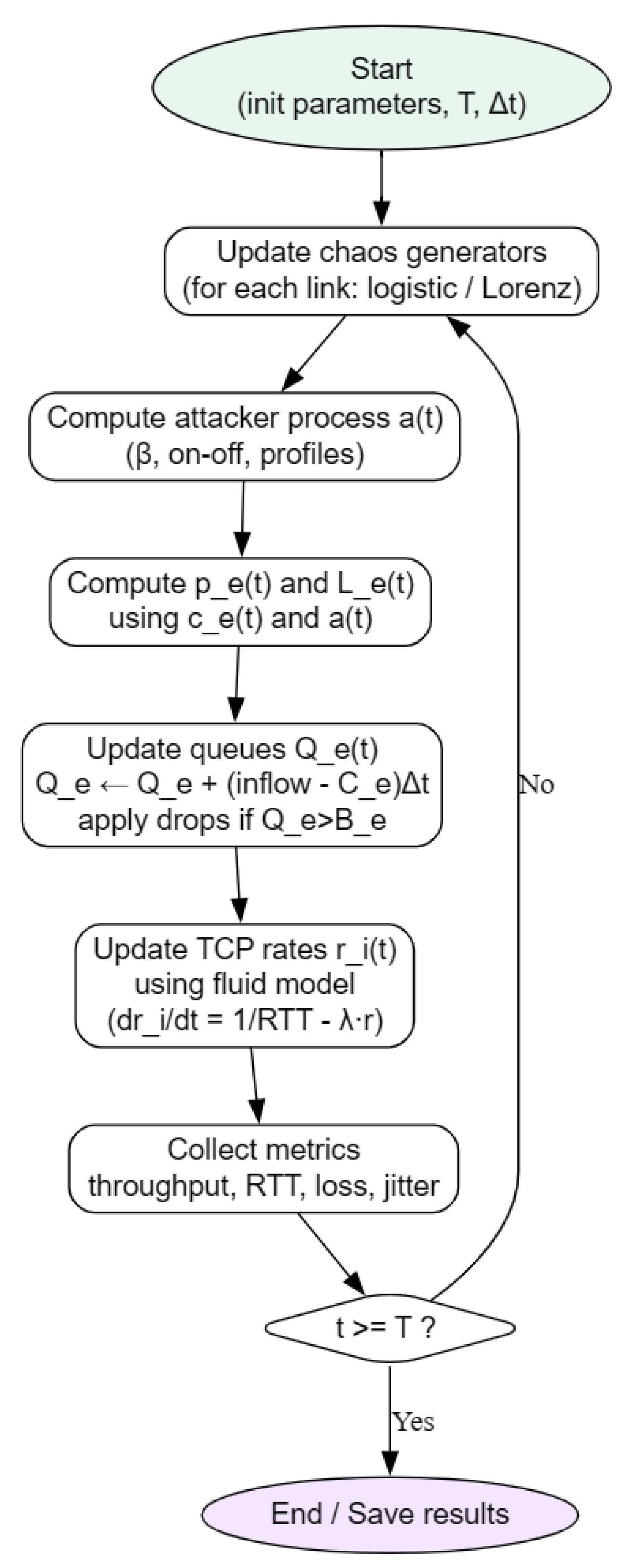
AI-Driven Stochastic Approximation: The development of an innovative methodology using AI to generate synthetic datasets that emulate chaotic perturbations (latencies and packet loss) through stochastic approximation of the Logistic Map and Lorenz Attractor.
Multi-Scenario Discrimination: A comprehensive comparative analysis of machine learning (ML) classifiers—specifically RF, KNN, and Logistic Regression—in distinguishing between deterministic chaotic noise and malicious DoS attack signatures across four distinct operational scenarios.
Formal Pipeline Mapping: The formalization of a continuous-to-discrete transformation pipeline, defining mapping operators () that bridge the gap between differential network equations and discrete flow-based features.
Paper Organization. The remainder of this paper is structured as follows:
Section 2 summarizes relevant literature in
Related Works.
Section 3 introduces the
Notation and Base Network Model, while the theoretical foundation of
Chaos Theory Perturbations is detailed in
Section 4.
Section 5 describes the
Attacker Model and Combined Model, followed by the formalization of the
Four Scenarios and Example Equations in
Section 6. The analytical framework is presented in
Section 7, covering
Metrics of Interest and Comparative Analysis. The core empirical findings are discussed in
Section 8 (
Experimental Results and AI Analysis) and
Section 9 (
Experimental Results).
Section 10 provides an
Discussion and Future Work (Extended Analysis), and
Section 11 concludes the paper. Technical implementation details and algorithms are provided in
Appendix A and
Appendix B.
2. Related Works
The application of chaos theory within network security and traffic analysis is largely motivated by the premise that network traffic inherently exhibits
non-linear and fractal characteristics, which traditional stochastic models often fail to capture accurately. This fundamental assumption has been robustly established in the literature, with studies by [
1,
2] demonstrating the direct applicability of chaotic theory to the analysis of computer network traffic dynamics. Further analysis by [
3] provided a rigorous chaotic characteristic evaluation across different time scales, confirming that key chaotic identification indexes, such as the Largest Lyapunov Exponent and Kolmogorov entropy, vary significantly, reinforcing the idea that network behavior is a complex, sensitive system. Notably, [
4] extended this observation by proving that chaotic dynamics can emerge even within
deterministic networks, suggesting that chaos is an intrinsic property of network congestion rather than solely a result of external randomness. This concept is also applied in other contexts, such as the prediction of motorised traffic flows on urban networks [
5].
Historically, the convergence of chaos and security has focused heavily on
data protection and secrecy. A comprehensive survey by [
6] detailed how chaotic maps are primarily exploited for
cryptography, steganography, and secure key generation, leveraging properties like ergodicity for robust security primitives, a principle also explored by [
7] in the context of chaotic quantum cryptography. More broadly, the literature has provided recent extensive reviews of chaos theory applications across various domains, including security [
8] and cultural applications [
9]. Other related work explores the theoretical synchronization of neural networks, a concept adjacent to chaotic dynamics modeling [
10].
In recent years, the focus has broadened to
detection and prediction through hybrid models that integrate chaotic analysis with machine learning (ML). Early works include the short-term network traffic forecasting algorithm developed by [
11], which combined chaos theory with support vector machines (SVM) to improve prediction accuracy. The utility of chaotic modeling in countering specific threats was shown by [
12], who proposed a chaos-theory-based approach for detection against network mimicking distributed denial-of-service (DDoS) attacks, and by [
13], who designed a DDoS detection algorithm integrating traffic prediction via chaos theory. This dual focus is also evident in specialized architectures, where [
14] applied chaos theory and wavelet analysis to model traffic in wireless sensor networks. In contemporary research, the integration has evolved towards deep learning, with [
15] developing anomaly detection methods based on
chaotic neural networks to address high-dimensional traffic features and model overfitting.
More widely, the integration of deep learning architectures, such as Autoencoders [
16] and Unsupervised Ensembles [
17], has become standard practice for anomaly detection. Specifically in the domain of IoT security, numerous hybrid methods have been proposed, leveraging deep learning alongside optimization algorithms and other technologies, for instance, in DDoS detection using Elman NNs with Chaotic Bacterial Colony Optimization [
18], Robust DDoS detection with Piecewise Harris Hawks Optimizer [
19], and Blockchain-assisted deep DDoS detection [
20]. These studies underscore the relentless pursuit of high-performance detection, particularly in complex and resource-constrained environments, including future 6G systems [
21], whose overall objectives are defined by bodies like the ITU-R [
22]. Furthermore, cutting-edge anomaly detection methods, such as that by [
23] which uses deep residual shrinkage networks, predominantly target the objective of
optimizing detection performance by maximizing accuracy and minimizing false alarms.
In contrast, the present study introduces a methodological shift. We utilize controlled chaotic perturbation—derived from the logistic map—not to improve a detector or model traffic, but to
simulate adversarial ambiguity specifically to
validate the stability and locate the failure boundaries of different ML classifiers. This transition from achieving superior accuracy to intentionally observing and measuring controlled model confusion provides a critical assessment of ML model resilience, representing the key distinction from the prior art. The application of non-linear dynamics and chaos theory spans across various scientific disciplines, providing a robust mathematical foundation for modeling complex and unpredictable system behaviors [
9]. In the context of hardware security and the Internet of Things (IoT), chaotic mapping has been successfully utilized to enhance the non-linear properties of cryptographic components, such as the design of lightweight S-boxes that optimize the trade-off between computational cost and security [
24]. The increasing complexity of network infrastructures, particularly concerning overlay and virtual private networks (VPNs), requires rigorous performance and security analysis, especially when deployed through open-source infrastructures [
25]. As threats evolve, the role of artificial intelligence (AI) has become central to modern cybersecurity. Recent studies have emphasized the potential of AI-enabled threat detection for advanced mitigation strategies [
26], as well as its application in critical infrastructures like next-generation smart grids, where AI-driven defense and cyber deception techniques are vital against operational technology (OT) threats [
27]. However, the integration of deep learning also introduces new vulnerabilities; for instance, Yang et al. [
28] demonstrated how adversarial attacks can effectively compromise deep-learning-based estimation models by targeting covariance inputs, highlighting the ongoing arms race between AI-driven defense and adversarial exploitation
11. Conclusions
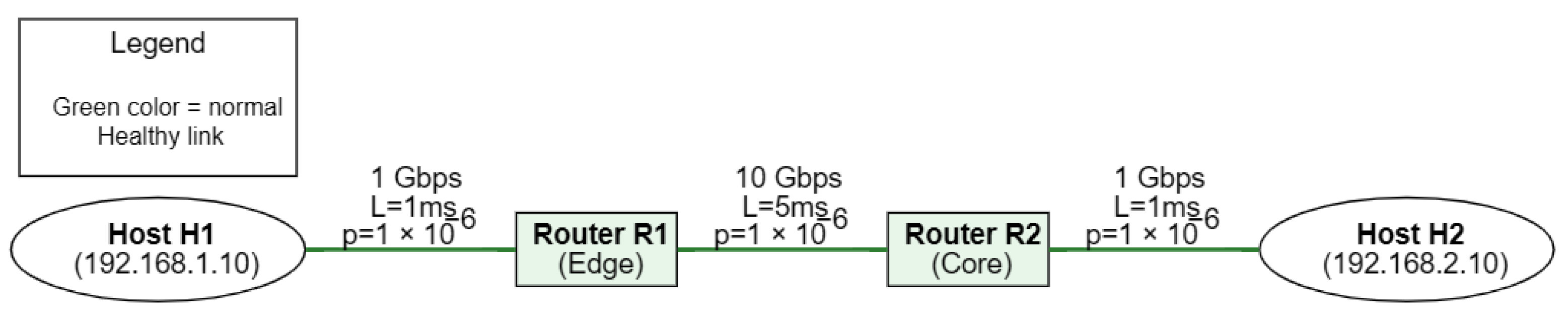
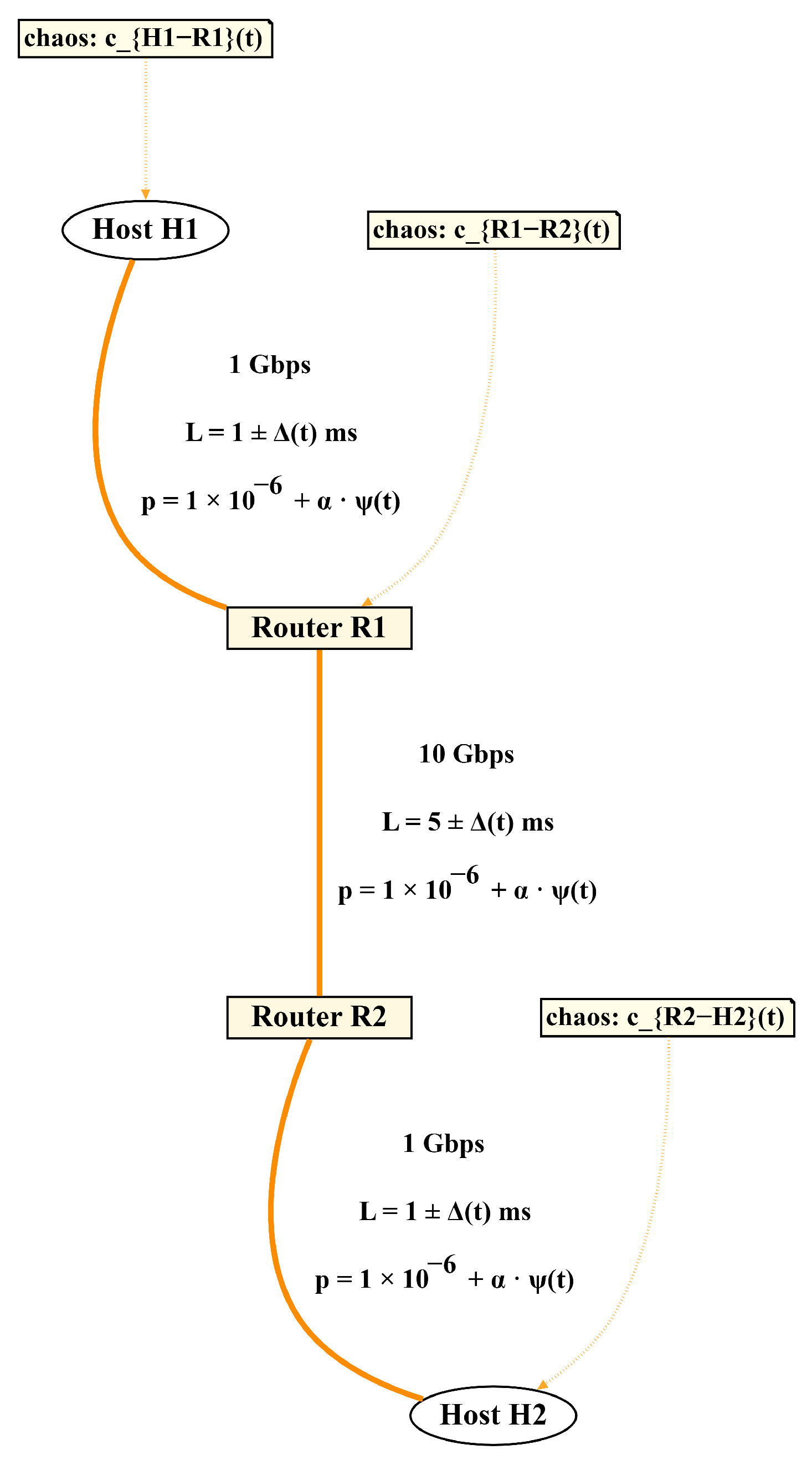
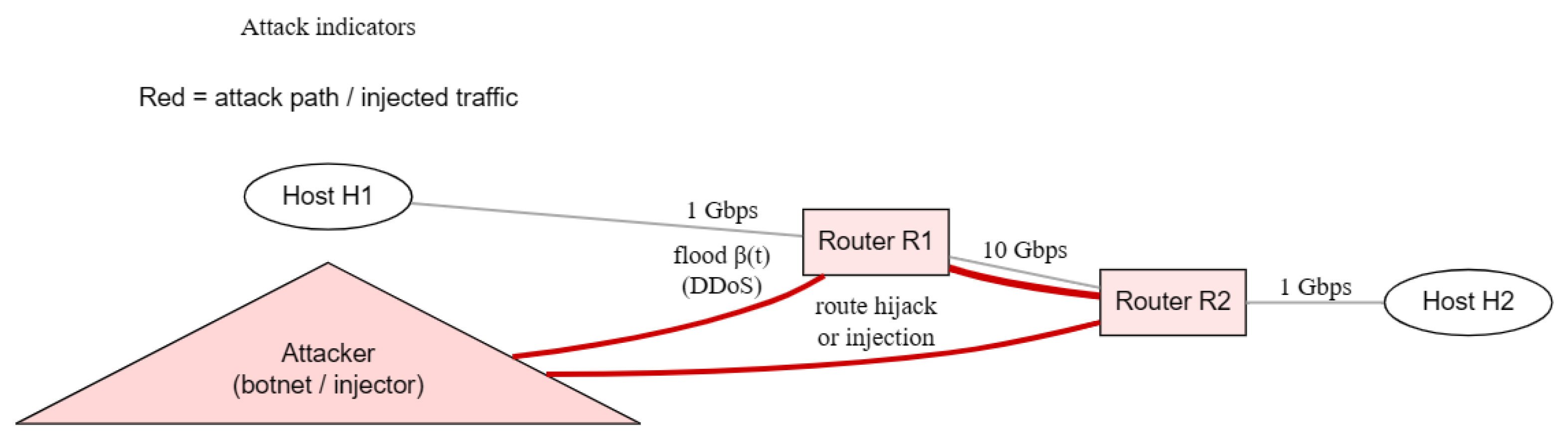
This framework defines a formal and mathematical model of a TCP/IP network under both chaotic perturbations and cyber attacks. The four scenarios (quiescent, perturbed, attacked, perturbed-attacked) allow studying resilience, non-linear interactions, and the impact of chaotic disturbances on attack efficiency.
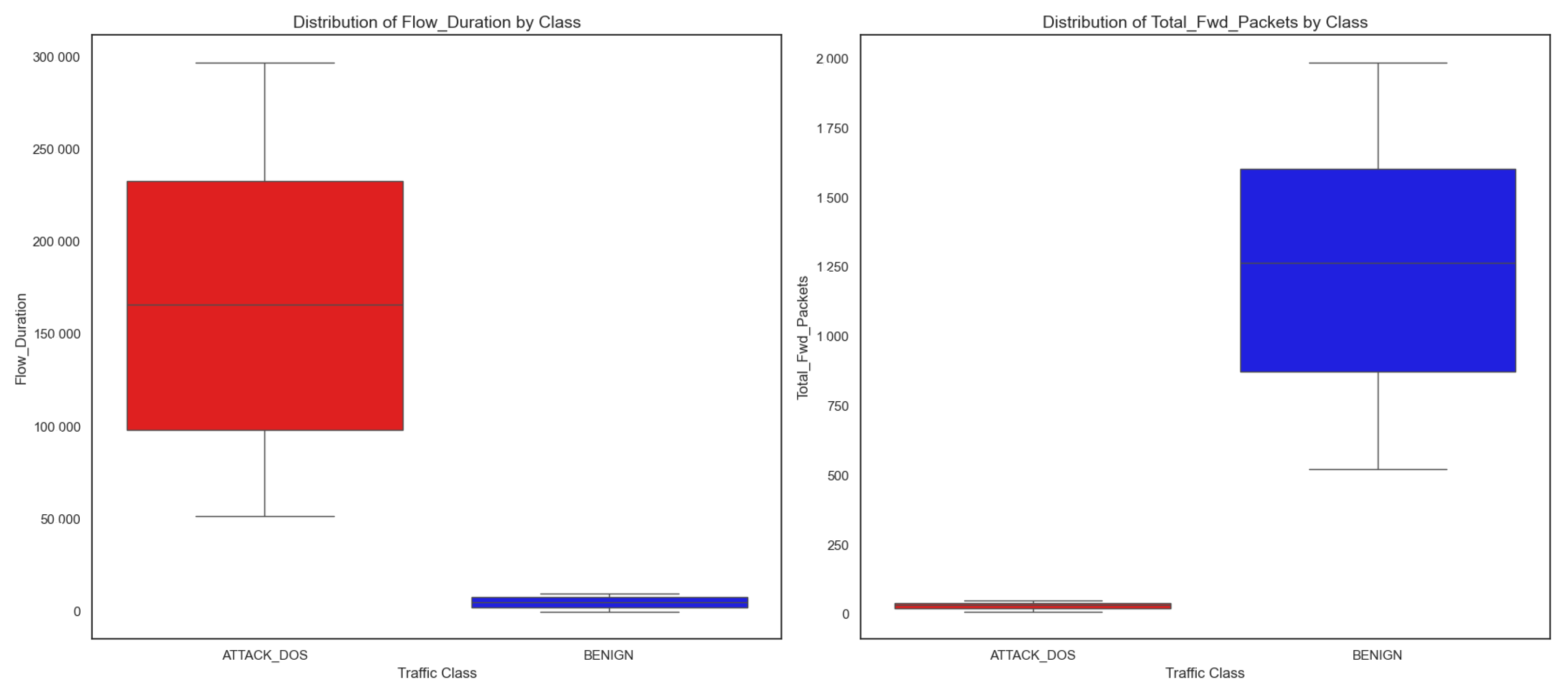
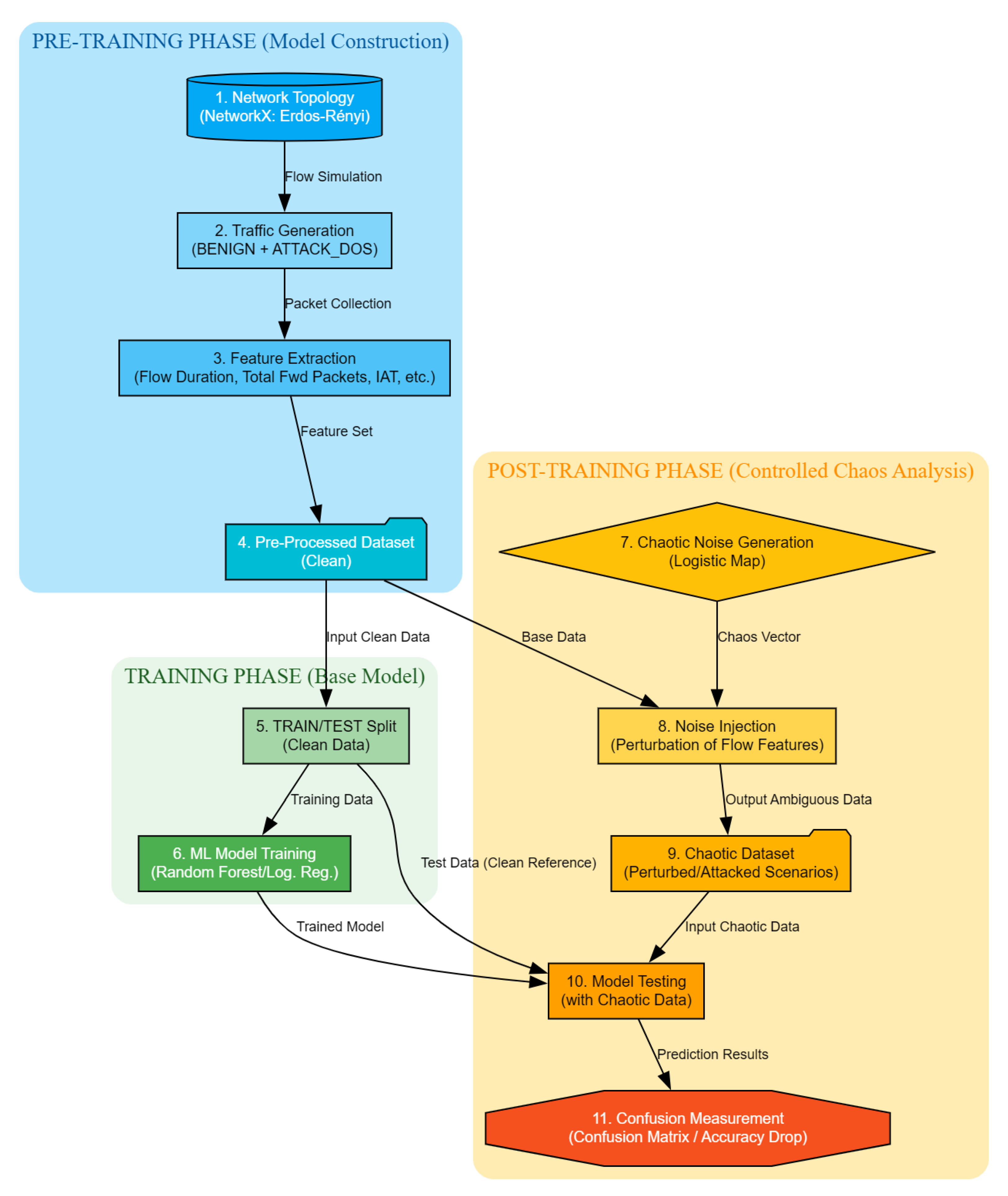
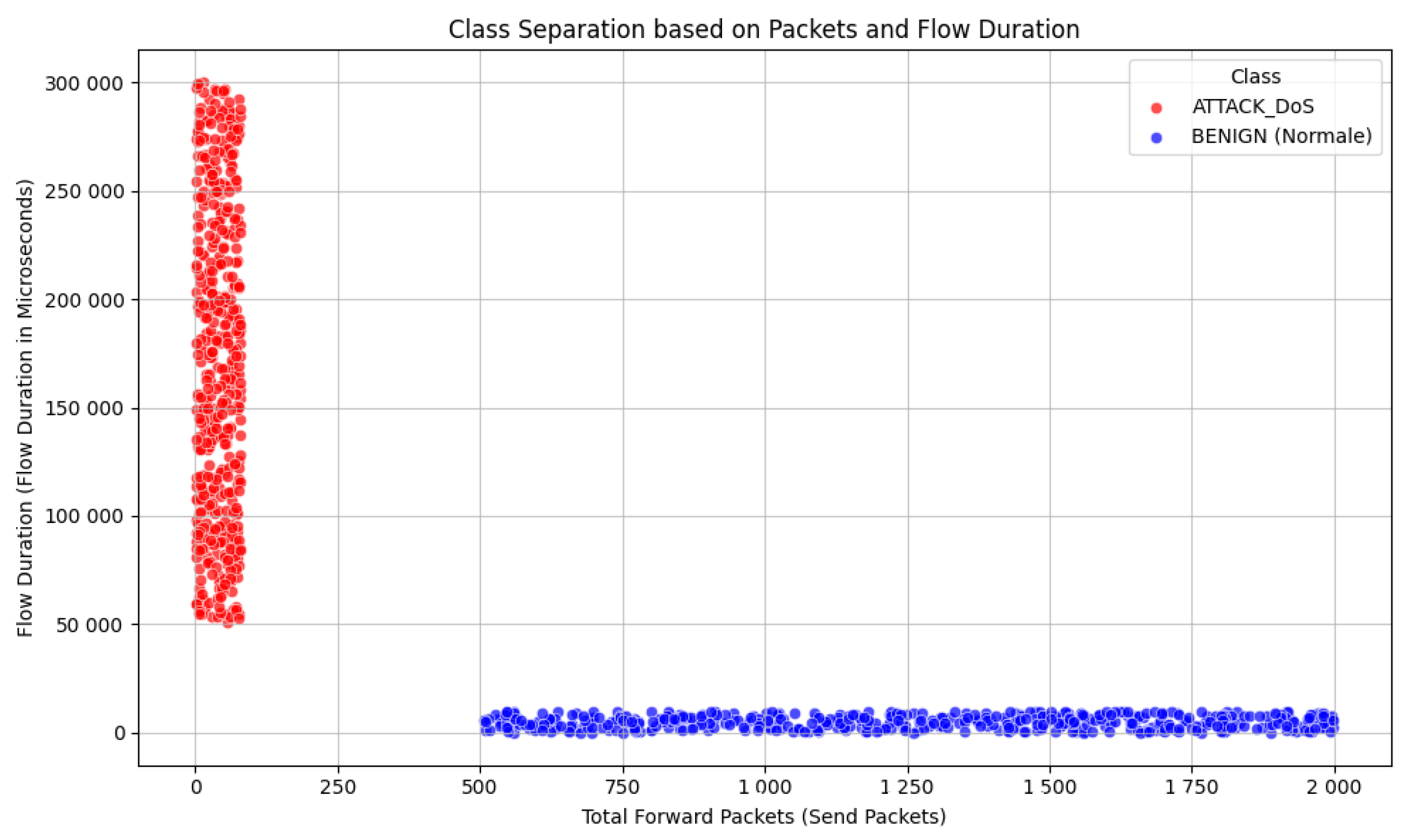
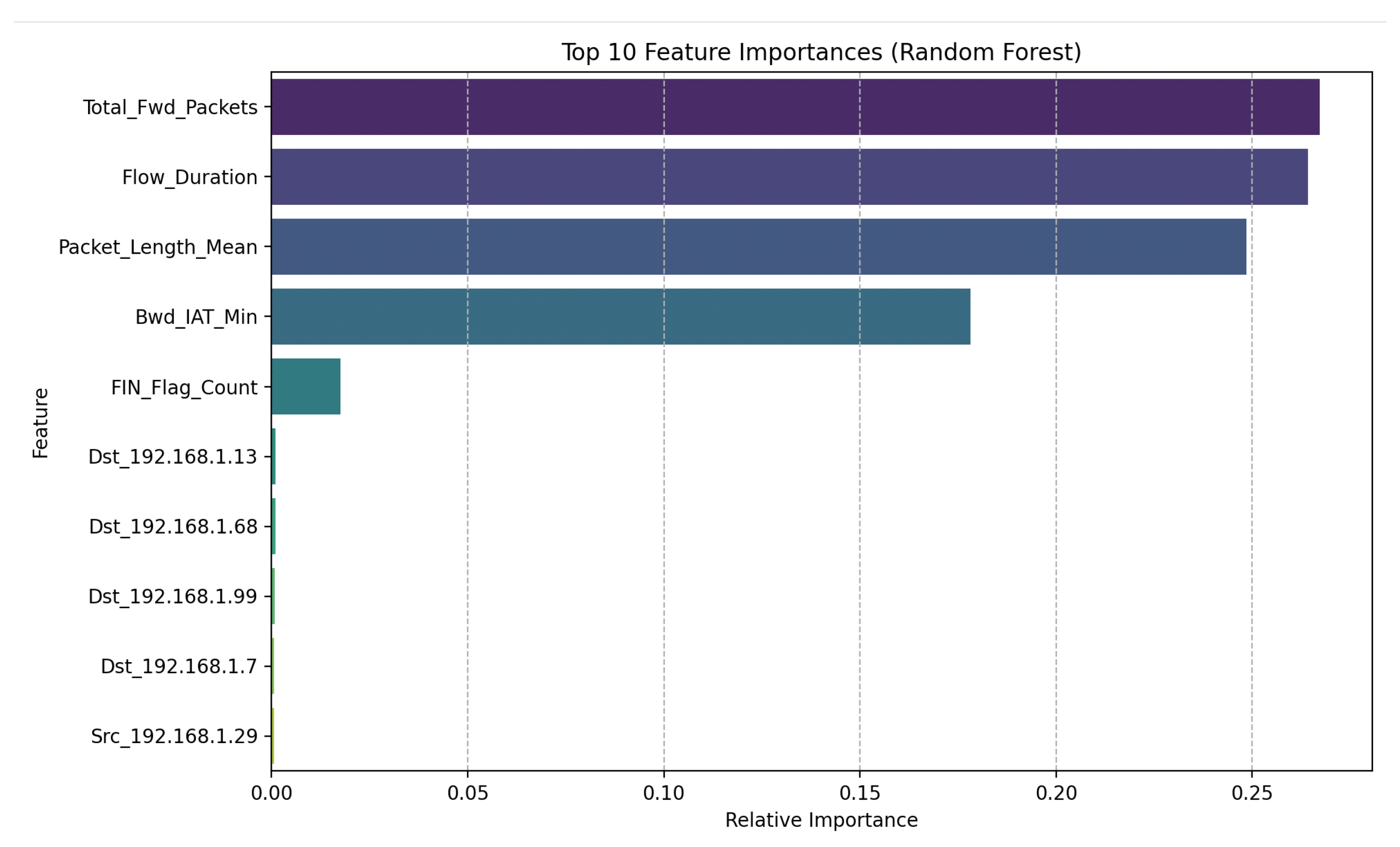
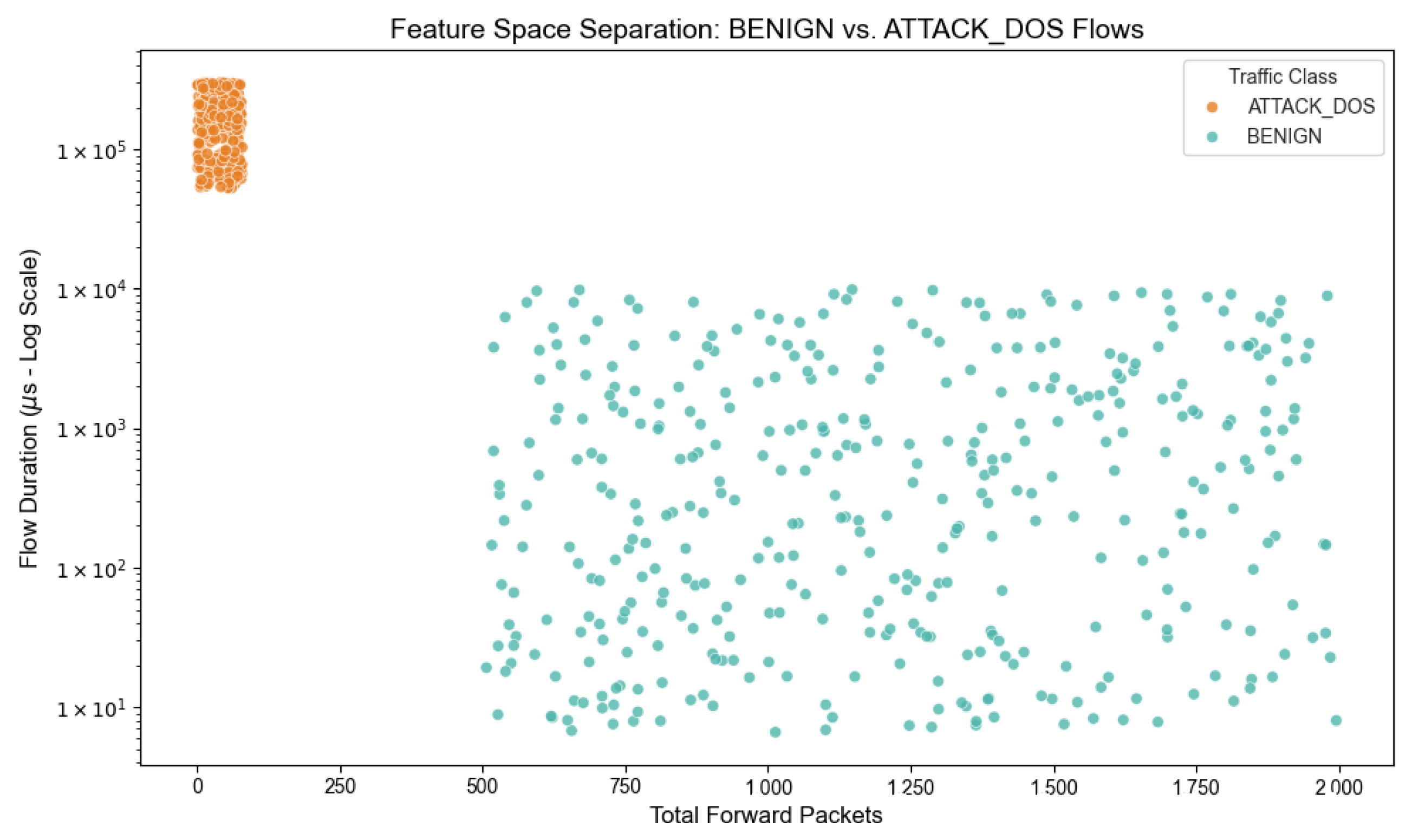
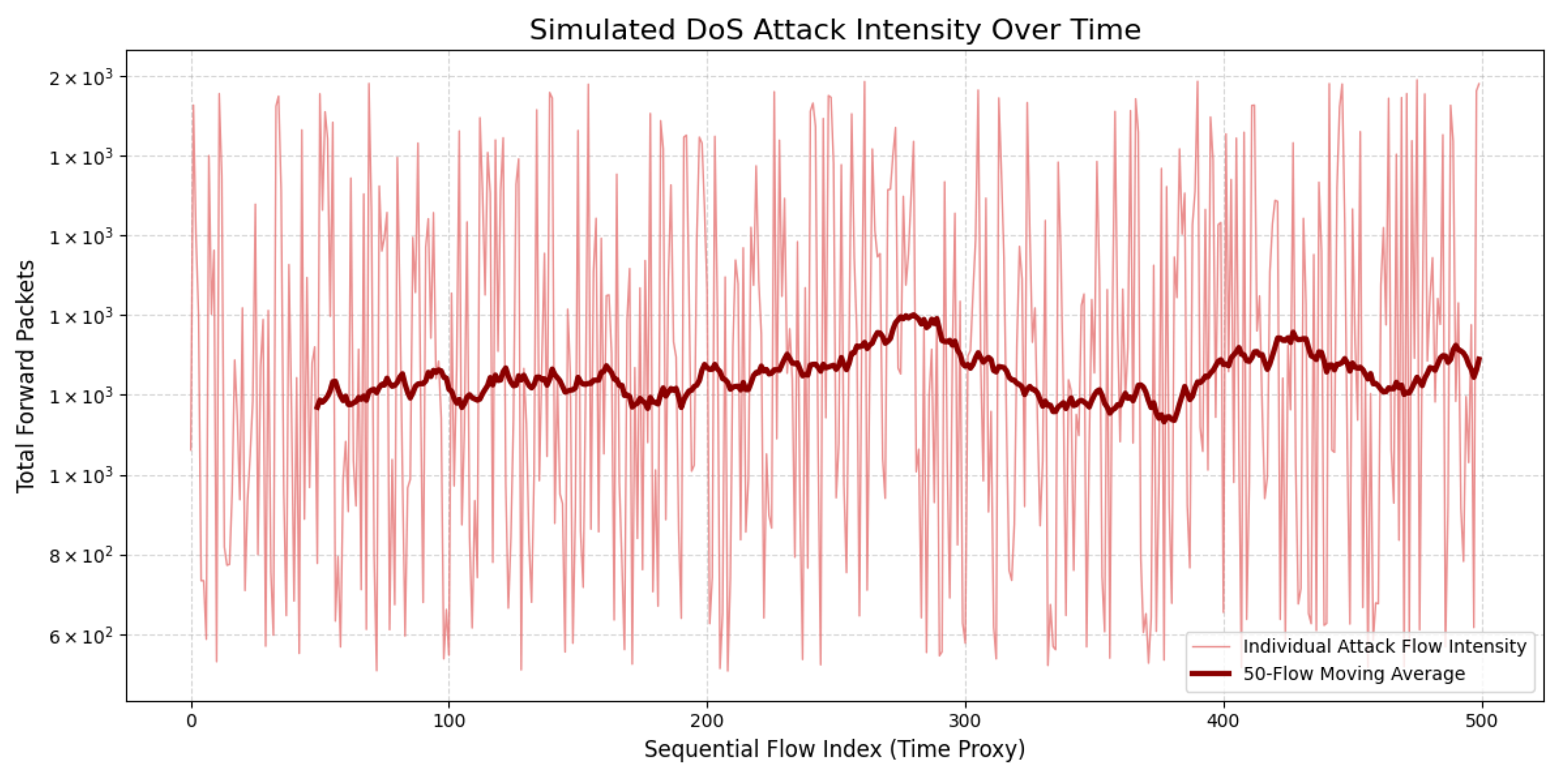
This work developed a formal framework that integrates network modeling, controlled chaos perturbations, and machine learning (ML) techniques to analyze the resilience of cyber defense systems. The central contribution is the methodological approach used to validate the core hypothesis: chaotic disturbance can compromise the decision boundary of simple classifiers. The experimental analysis confirmed the efficacy of the chosen flow features (Total_Fwd_Packets, Flow_Duration, Packet_Length_Mean, and Bwd_IAT_Min) as primary discriminators for the simulated denial of service (DoS) attack.
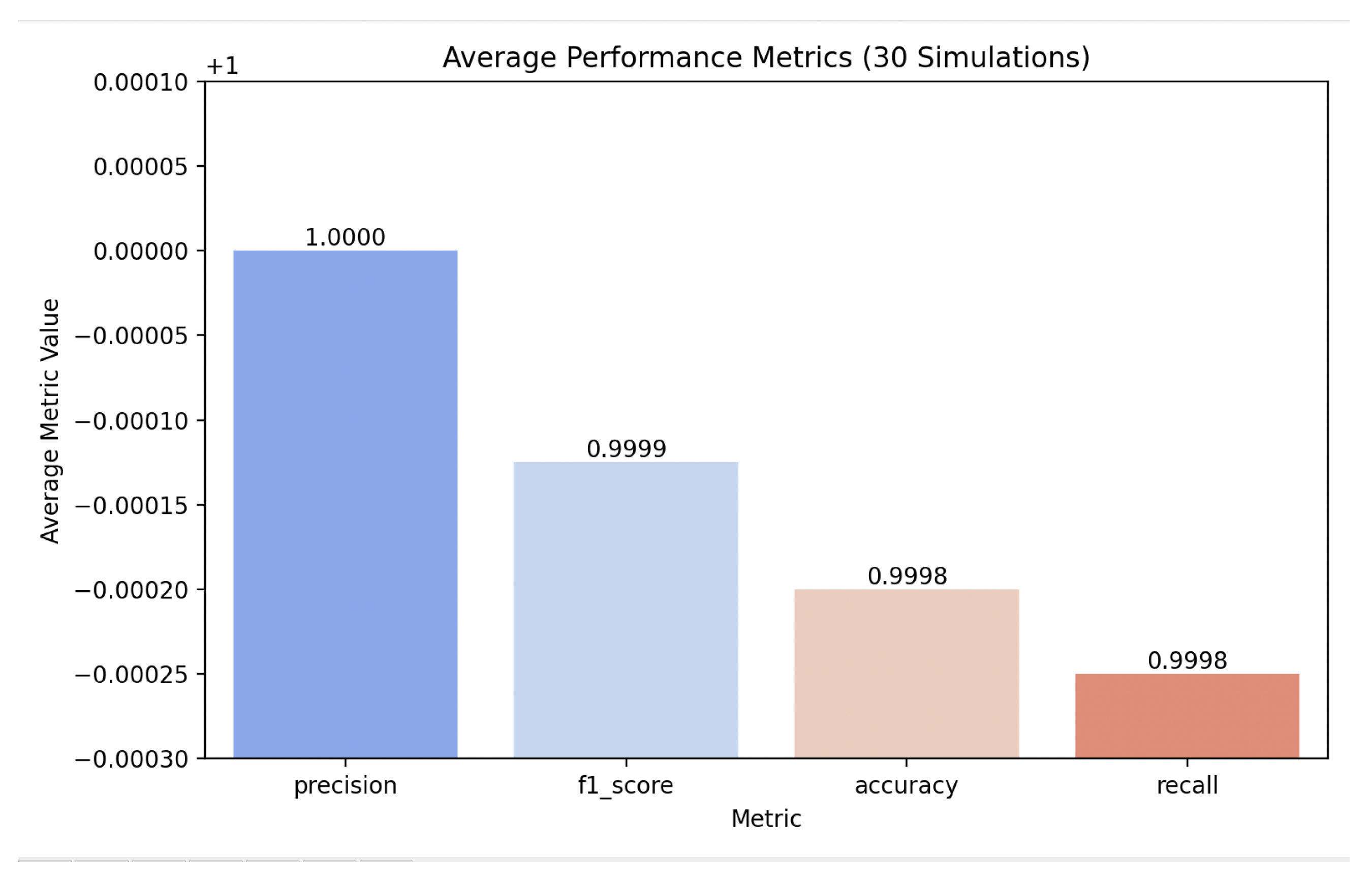
The results yielded a perfect accuracy () in the baseline scenario using the RF (RF) classifier. While this performance highlights the exceptional robustness and stability of the model in conditions of well-separated traffic, it also represented a methodological limitation. The extreme resilience of the RF, which maintained an accuracy close to even on the chaotically perturbed dataset, effectively masked the ambiguity the chaotic inputs were intended to introduce. This success, while a merit for a real-world Intrusion Detection System (IDS), suggests that the simulated dataset was overly separable, limiting the generalizability of the perfect accuracy to network scenarios characterized by greater feature overlap.
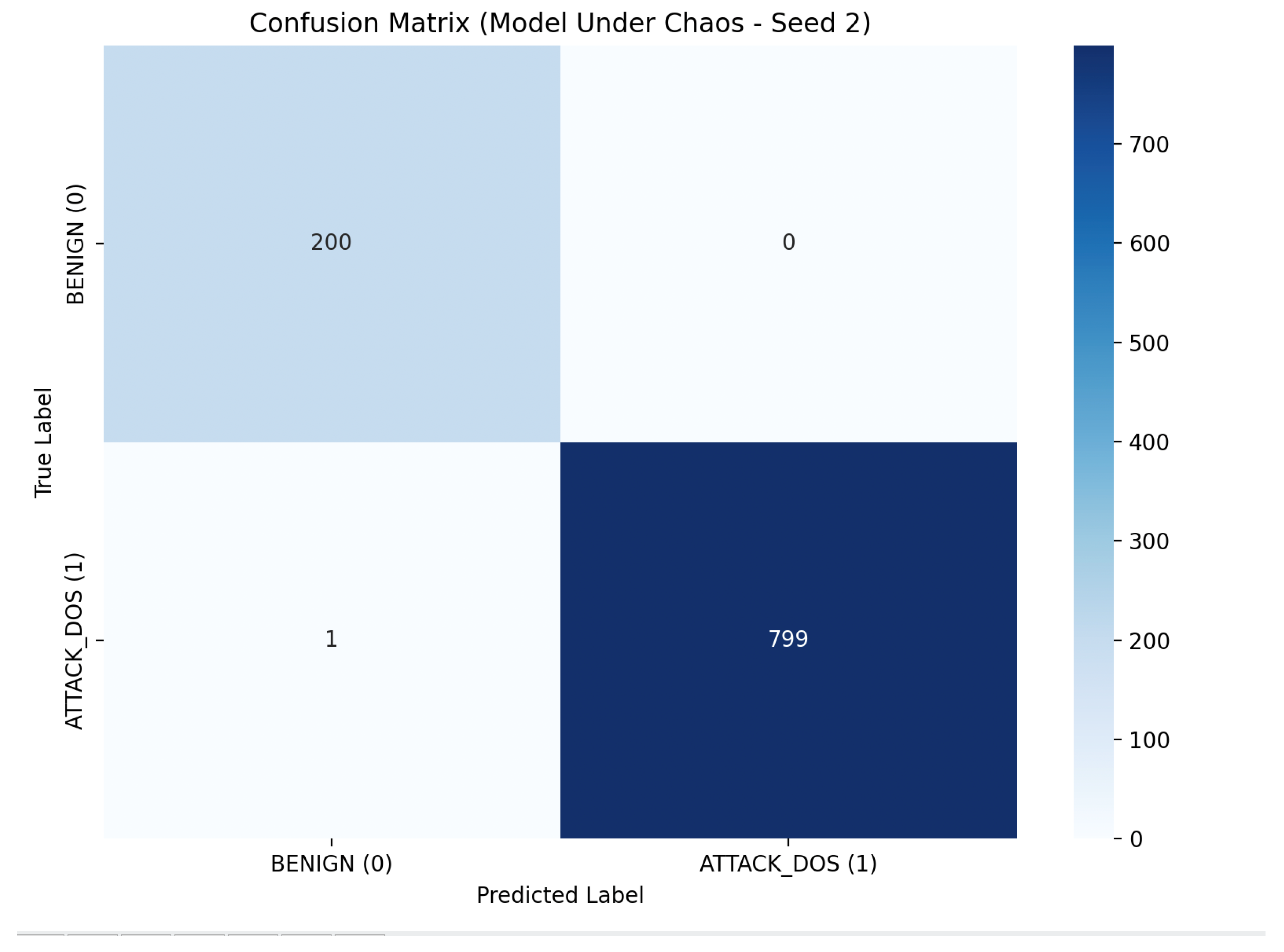
To isolate and measure the effect of ambiguity, it was necessary to employ Logistic Regression (LR), a linear classification model. The main merit of this approach was to force a controlled failure, which allowed for a measurable error (a single False Negative) in the Confusion Matrix under the effect of the chaotic perturbation. This result validated the hypothesis: chaotic inputs challenge linear discrimination, compromising the simplicity of the decision boundary. The clear flaw of the LR, however, is its excessive fragility and practical inapplicability in a production NIDS, where its linear nature would render it vulnerable to minimal non-linear fluctuations, making it too simple for real-world deployment.
Future work will focus on extending the chaotic model with a non-linear control system capable of actively measuring and compensating for the impact of perturbations, rather than merely measuring its effect. It will also be crucial to employ deep learning (DL) models, which are intrinsically more resilient to noise, to verify if they can match the robustness of the RF while providing a more generalized classification boundary. Finally, the generation of more complex and non-linearly separable datasets, including a wider variety of attack types and background traffic, is necessary to enhance the practical relevance of the findings.