1. Introduction
Microbial contamination in jet fuel presents a significant risk to the aviation industry. From the moment jet fuel leaves the refinery until it is stored in an aircraft’s fuel tank, it remains vulnerable to microbial contamination [
1]. Over the past few decades, numerous studies have emphasized the high susceptibility of conventional jet fuels to microbial spoilage, which can lead to various issues such as biofilm formation, biocorrosion, and a reduction in fuel quality [
2,
3]. Recently, sustainable aviation fuel (SAF) has been introduced to the global energy mix. While SAF is designed to reduce the aviation industry’s carbon emissions, little is known about its susceptibility to microbial contamination [
4,
5,
6,
7].
Conventional jet fuels consist of a complex mixture of hydrocarbons, including alkanes, naphthenes, and aromatics, with carbon chain lengths ranging from C
8 to C
16 [
8,
9]. SAF is derived from various feedstocks that include biological and non-biological resources such as oil crops, sugar crops, algae waste oil, among others, which are the major players in the value chain of producing sustainable aviation fuel. Various SAF production pathways have been certified for blending with conventional jet fuel under ASTM D7566 [
10].
Over the past few decades, the ability of microorganisms to metabolize hydrocarbons has been extensively documented in the literature [
2,
4,
11,
12]. Several factors contribute to the susceptibility of jet fuel to microbial growth, such as the presence of water, nutrient sources (including organic compounds or additives that may support microbial activity), and temperature fluctuations during storage [
2]. These factors can negatively impact fuel quality and infrastructure integrity, leading to issues like corrosion, filter clogging, and engine performance problems. Additionally, they can result in economic losses and safety concerns. Therefore, effective monitoring and control practices are essential to mitigate these risks [
1].
There are several types of microorganisms commonly found in jet fuels worldwide, including bacteria, yeasts, and molds [
2]. Some representatives of the bacterial genera detected in aviation fuels include
Pseudomonas,
Micrococcus,
Mycobacterium, and
Nocardia. Commonly recovered yeast genera include
Candida and
Rhodotorula, and commonly recovered molds include
Aspergillus,
Hormoconis,
Penicillium, and
Cladosporium. These microorganisms can be found widely distributed throughout fuel systems [
1,
2]. While numerous reports highlight the general presence of bacteria and fungi in fuel systems, there is a scarcity of detailed, global studies that identify and quantify the diverse range of microbial taxa involved. This gap in research is concerning, as it limits our understanding of the full scope of microbial contamination and its impact on fuel quality, system integrity, and operational safety. Without a thorough understanding of the microbial populations present in fuel systems, it is difficult to design effective strategies for monitoring, prevention, and mitigation of microbial-related problems, including biofilm formation, biocorrosion, and fuel degradation. Therefore, focused research on the microbial composition of fuel systems is essential to improve the management and control of these contaminants in aviation and other fuel-dependent industries.
The aim of this systematic review and meta-analysis was to comprehensively evaluate the existing literature on jet fuel biodeterioration, synthesizing data on microbial agents and the influence of environmental factors on fuel quality. By consolidating findings from various studies, this review seeks to quantify the prevalence of specific microorganisms associated with biodeterioration worldwide. Additionally, the meta-analysis offers statistical insights into the global prevalence and biodiversity of bacteria and fungi in fuel and fuel systems. Ultimately, this work aimed to identify key challenges, gaps, and limitations, as well as provide recommendations to enhance current understanding of the impacts of microbial contamination in aviation fuel systems, thereby contributing to improved operational reliability and safety within the aviation sector.
3. Results
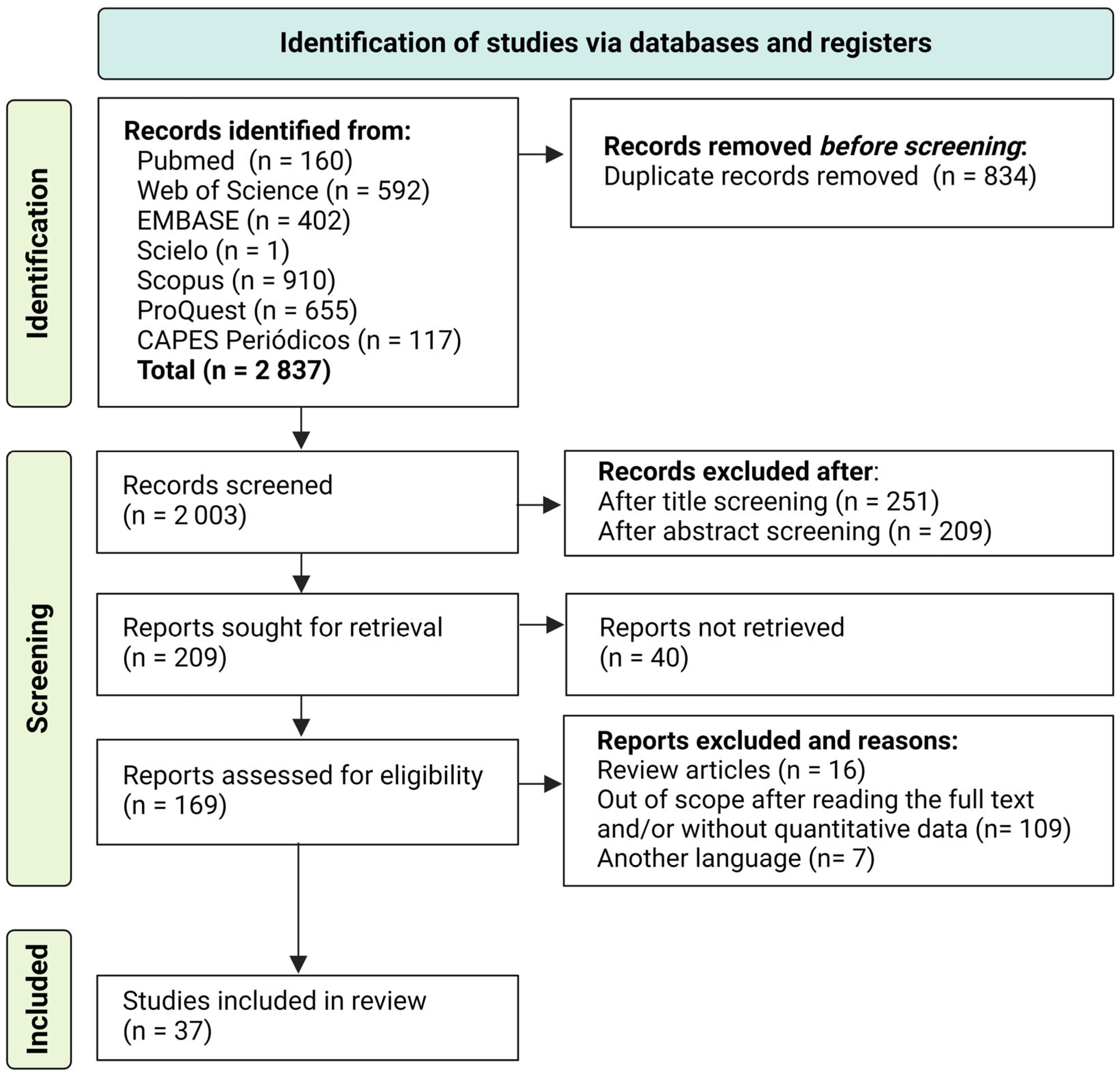
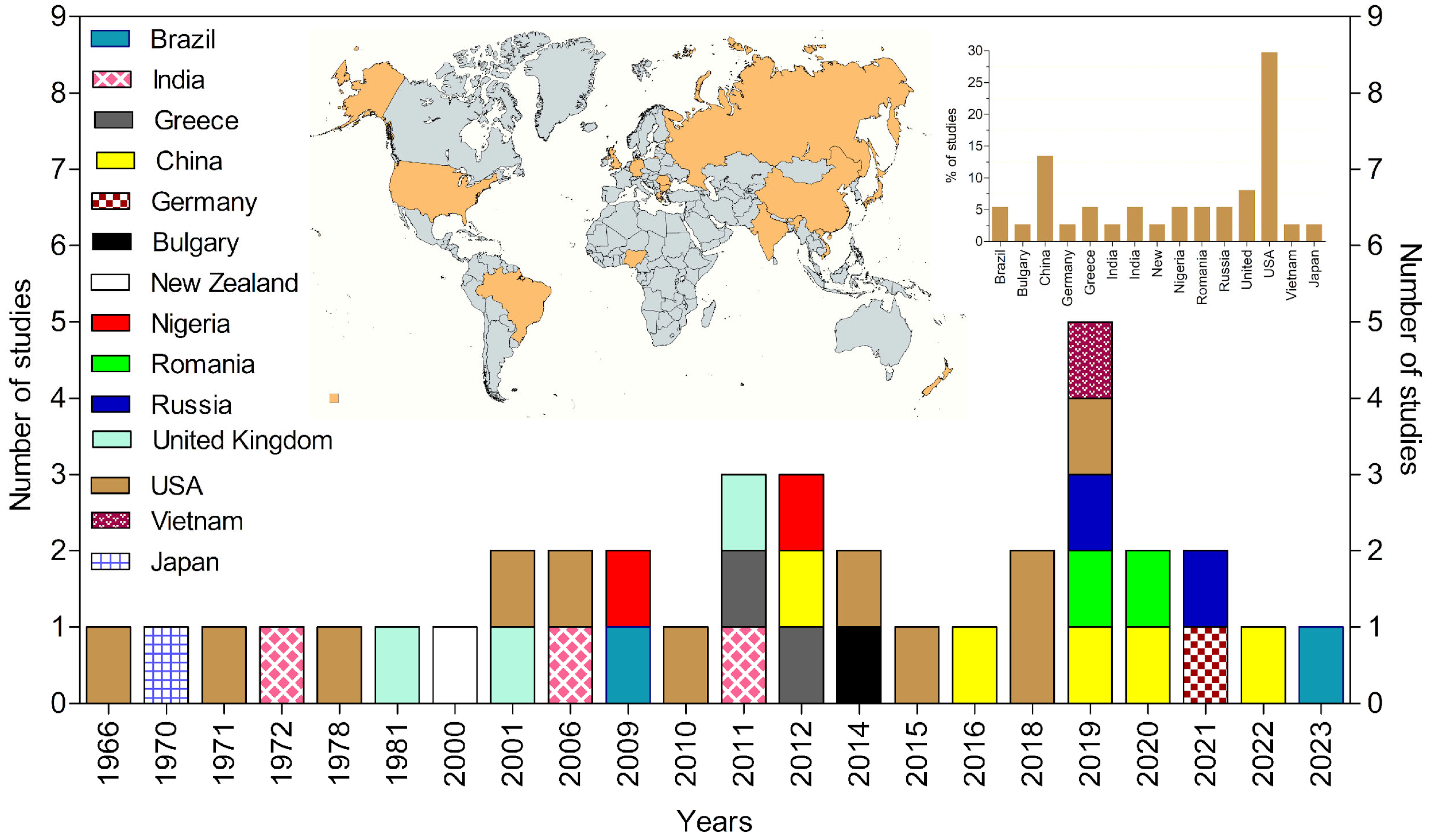
Of the 2837 studies retrieved from the databases, 37 met the selection criteria and were included in this review. These studies (
Table 1), published between 1966 and 2023, originate from various countries across nearly all continents, as detailed in
Figure 2.
3.1. Overview of the Global Prevalence of Microorganisms in Jet Fuel Systems
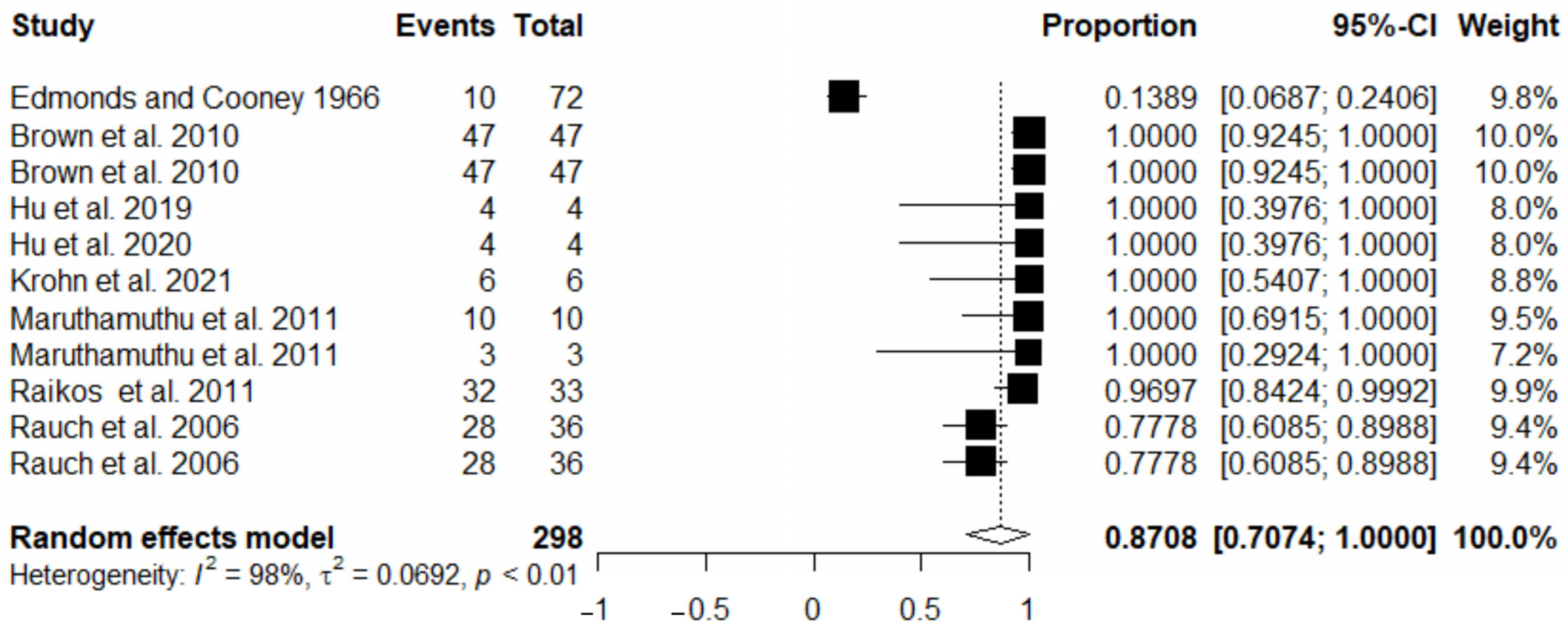
The overall prevalence of microorganisms in jet fuel systems was 87% (95% CI, 76.10–100) (
Figure 3). However, when studies with a high risk of methodological bias were included, the prevalence increased to 91% (95% CI, 78.86–100) (
Figure S1).
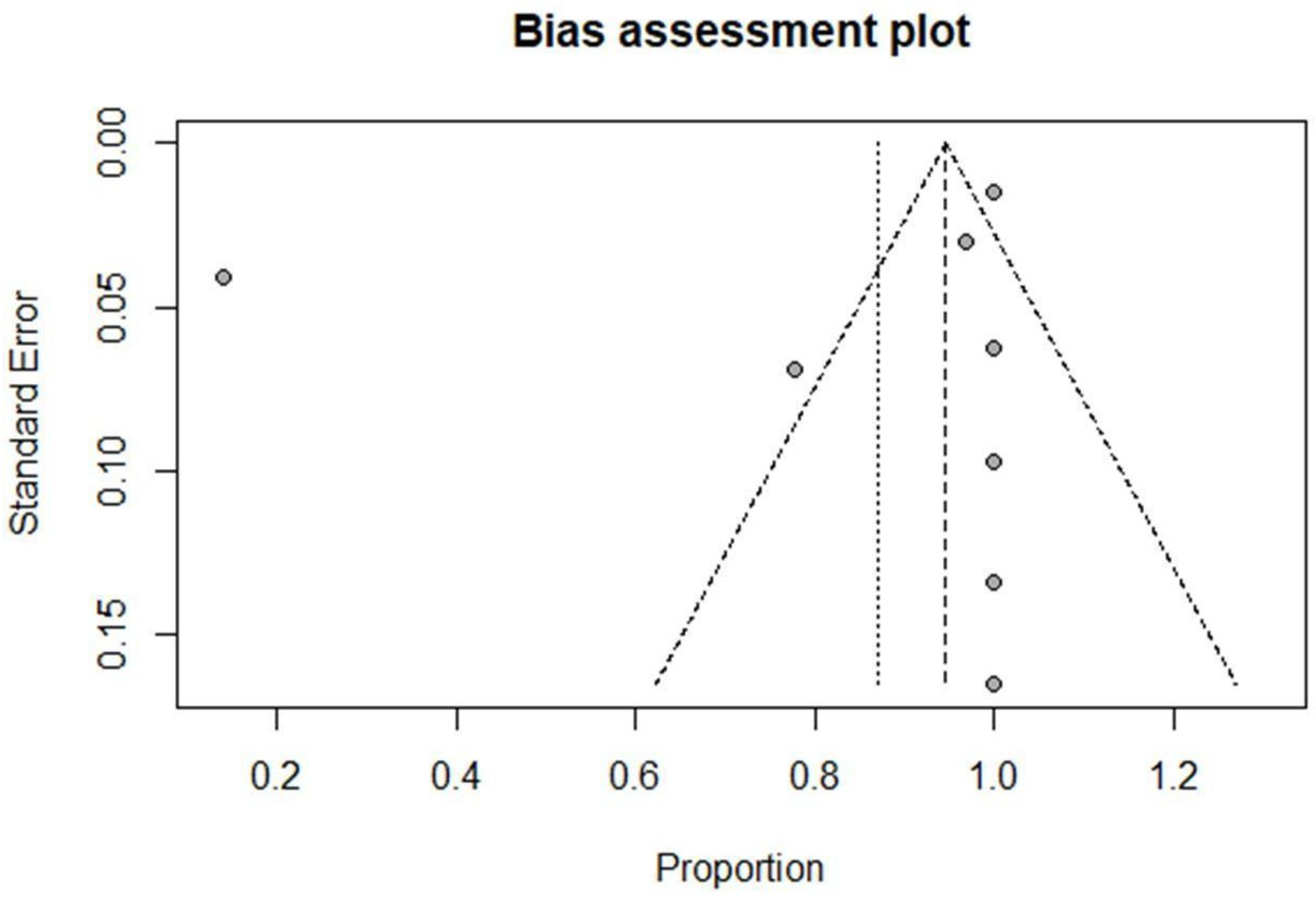
Data from the risk of bias assessment, as evaluated through the funnel plot, along with heterogeneity assessment parameters, suggested a significant influence of publication bias and study heterogeneity on the overall reported prevalence (
Figure 4). The data pointed to the presence of a potential publication bias, with studies reporting the detection of microbial contaminants in jet fuel systems being more frequently published than those reporting their absence.
The results (
Table 2 and
Table S2) indicated that the global prevalence of microorganisms in jet fuel systems was consistently high across all continents (80–100%) and countries (80–100%). All sample collection sources demonstrated very high global prevalence values for fuels (94–100%) (
Table 2 and
Table S2).
Among sample types, the highest prevalence of microorganisms (100%) was observed in biofilm, water, corrosion products, and fuel. In contrast, the prevalence observed in water alone (79%) and in combined fuel–water samples (55%) was lower than the overall global microbial prevalence of 87% reported in this study (
Table 2 and
Table S2).
Most fuel types showed high global prevalence values for microbial contamination, with TS-1 (Russian jet fuel), RT (Bulgarian aviation kerosene), and Jet A-1 (kerosene-based aviation turbine fuel) at 100%, followed by JP-8 (jet propellant 8 aviation turbine fuel) at 90%. The lowest value was recorded for JP-4 (Jet propellant 4 aviation turbine fuel) (14%).
The sample analysis methods that reported the highest prevalence rates of microorganisms (100%) were sequencing and ASTM D6974, followed by serial dilution and plating (87%), and plating alone (82%).
Studies that identified microorganisms in jet fuel systems using combined morphological and molecular methods, or morphological and biochemical methods, or molecular methods alone, reported the highest overall prevalence rates (100%). In contrast, studies utilizing FAME (fatty acid methyl esters) chromatography and molecular methods (78%), and morphological methods alone (52%) reported relatively lower prevalence values.
3.2. Global Prevalence of Bacterial Genera in Jet Fuel Systems
The prevalence of various bacterial genera in jet fuel systems is detailed in
Table 3 and
Table S3. The most prevalent genera (100%) included
Actinomycetes sp.,
Halomonas sp.,
Mycobacterium sp.,
Nocardioides sp.,
Rhodococcus sp.,
Stenotrophomonas sp. Genera with a relatively lower prevalence, ranging from 48% to 79%, included
Arthrobacter sp.,
Brachybacterium sp.,
Flavobacterium sp.,
Sarcina sp., and
Streptomyces sp. Less prevalent genera (≤10%) included
Alcaligenes sp.,
Bacillus sp.,
Brevibacterium sp.,
Dietzia sp.,
Herellea sp.,
Klebsiella sp.,
Leucobacter sp.,
Pantoea sp.,
Staphylococcus sp., and
Xenorhabdus sp.
3.3. Global Profile of Bacterial Prevalence by Analysis Subgroup
The overall prevalence of bacteria in jet fuel systems, based on studies published up to the year 2000, was 32% (95% CI: 24.52–40.22). In contrast, studies published after 2000 reported a markedly lower prevalence of 3% (95% CI: 1.26–3.33) (
Table 4), both of which are substantially lower than the overall global microbial prevalence observed in fuel systems.
The highest bacterial prevalence values (100%) were reported in Africa and Europe, specifically in Nigeria, Bulgaria, Russia, and Vietnam.
Bacteria were most frequently detected (58–100%) in aircraft tanks, aircraft storage tanks, filters, and gas turbines. Bacteria known for their fuel-degrading capability were particularly more prevalent (57% (95% CI, 43.18–71.07)) in jet fuels, especially in Jet A-1, TS-1, and RT (Bulgarian aviation kerosene) types, with prevalence values ranging from 57% to 100%.
3.4. Occurrence of Fungal Genera in Jet Fuel Systems
Although less diverse, fungal genera were highly prevalent in jet fuel systems, with all (except
Rhodotorula sp.) showing overall prevalence values between 78 and 100% (
Table 5 and
Table S4).
3.5. Global Fungal Prevalence in Jet Fuel Systems, Classified by Analysis Subgroup
Unlike bacteria, the global prevalence of fungi in fuel systems was relatively low in studies published up to the year 2000 (3%; 95% CI: 0.59–4.97). In contrast, studies published between 2001 and 2023 reported a substantially higher prevalence (76%; 95% CI: 62.66–89.19) (
Table 6); however, both estimates remain lower than the overall global microbial prevalence observed in fuel systems (87%).
The prevalence of fungi was particularly high on the African and European continents, reaching 100%, followed by Asia with 45%. Among individual countries, Nigeria, Russia, India, and Bulgaria reported the highest prevalence (100%), and China followed at 41%.
Fungi were highly prevalent (85–100%) in aircraft tanks, storage tanks, and jet fuel. Fungal detection rates were also high in both fuel and water samples, with prevalence values of 78% and 62%, respectively. Similar to bacteria, fungi known for their ability to degrade jet fuels were especially more prevalent (75%) in jet fuel systems, with the highest prevalence (100%) observed in Jet A-1, RT, and TS-1 jet fuels.
3.6. Global Prevalence of Bacterial and Fungal Species in Jet Fuel Systems
Table 7 lists the bacterial and fungal species associated with fuels as reported in the literature, highlighting their deteriogenic potential and prevalence in fuels and fuel-impacted environments [
4,
12,
20,
21,
22,
23,
24,
25,
26,
27,
28,
29,
30,
31,
32,
33,
34,
35,
36,
37,
38,
39,
40,
41,
42,
43,
44,
45,
46,
47,
48,
49,
50]. More details of the statistical parameters are presented in
Table S5.
The most prevalent deteriogenic bacteria (48.36–100%) in fuels and fuel-impacted environments included Bacillus brevis, Micrococcus varians, Flavobacterium oderatum, Brachybacterium paraconglomeratum, Kocuria rosea, and Sarcina flava. However, the most prevalent deteriogenic fungi (100%) were Aspergillus flavus, Aspergillus fumigatus, Aspergillus niger, Aspergillus sydowii, Byssochlamys fulva, Candida albicans, Candida tropicalis, Cladosporium resinae, Fusarium fujikuroi, Penicillium chrysogenum, Penicillium citrinum, Penicillium frequentans, Saccharomyces cerevisiae, Saccharomyces estuary, Schizosaccharomyces pombe, and Talaromyces amestolkiae. The fungi Penicillium oxalicum, Amorphotheca resinae, Talaromyces dimorphus, and Talaromyces verruculosus showed prevalence between 50–75%.
3.7. Global Profile of Deteriogenic and Non-Deteriogenic Microorganism Prevalence in Fuel Systems
Overall, the global prevalence of both deteriogenic (69%) and non-deteriogenic (52%) microorganisms was substantial in studies published after the year 2000 (
Table 8,
Tables S6 and S7).
Microorganisms capable of deteriorating jet fuels displayed high prevalence rates (40–100%) across Asia, North America, Africa, and Europe, with particularly high rates observed in the USA, India, Russia, and Nigeria. In contrast, microorganisms not associated with jet fuel deterioration were highly prevalent (43–100%) only in Asia and Europe, especially in China and Russia.
The non-deteriogenic microorganisms were primarily prevalent (52%) in a single sampling source: storage tanks. On the other hand, the deteriogenic ones exhibited high prevalence rates (95–100%) across a variety of sampling sources, including storage tanks, aircraft tanks, aircraft storage tanks, filters, and gas turbines.
In general, microorganisms capable of fuel deterioration were more prevalent in jet fuel systems, with prevalence values of 75% for fungi and 57% for bacteria.
4. Discussion
The susceptibility of aviation fuel to microbial contamination and its potential for biodegradation present significant challenges and pose serious risks across multiple levels. Although growing awareness within the scientific community and substantial research efforts [
1,
2,
51], a comprehensive synthesis of the global risks associated with microbial contamination of jet fuels remains lacking. This gap in the literature motivated the present systematic review. The topic is particularly timely and gains increasing relevance as sustainable jet fuels emerge as a viable and environmentally friendly alternative to traditional hydrocarbon-based fuels [
5,
6].
A total of 37 studies were included in this analysis, spanning 14 countries across all continents. While the spatial distribution of these studies is noteworthy, the findings underscore the continued need for research into the microbiological profile of jet fuel systems worldwide.
Our results (
Figure 3) revealed a global prevalence of microorganisms in jet fuel systems of 87.08%, a notably high value. This remarkably high global prevalence suggested that jet fuel systems lack sufficiently effective mechanisms to prevent microbial contamination. Furthermore, it highlighted that jet fuels not only remain accessible to microorganisms but also provide favorable conditions for their proliferation. This is particularly concerning given the well-documented ability of microorganisms to metabolize kerosene-based jet fuel, with fungi [
4,
29,
40,
44] and bacteria [
20,
27,
52] playing prominent roles in this process.
The results (
Table 2) also revealed that the global prevalence of microorganisms in fuel systems remained consistently high across all continents, all sampled countries (with sufficient data for robust analysis), and all fuel types, except JP-4. These findings reinforce the earlier argument that fuel systems are widely accessible environments that favor microbial proliferation, further indicating that this susceptibility is a global phenomenon.
Water is a key driver of microbial contamination in aviation fuel systems. Although jet fuels are sterile at refinery release, water is introduced during storage and handling via condensation and operational processes, accumulating as dissolved water, suspended droplets, or free water layers. Microbial growth depends on liquid water, occurring predominantly at fuel–water interfaces and within water-containing zones of tanks and pipelines [
10]. Our prevalence results (particularly the relatively lower estimate in Fuel and water (55%) compared with Fuel only (100%) and high values in Water (79%) and Biofilm and water (100%)) align with this mechanism. These patterns suggest that when free or interfacial water is present, it provides a favorable habitat for microbes, including bacteria and fungi capable of metabolizing hydrocarbons and forming biofilms on wetted surfaces. Microbial proliferation within water layers can result in biomass accumulation, surfactant production, corrosion, and filter fouling, with biofilm formation being most pronounced at the water–fuel interface. This reinforces the importance of effective water control as a key preventive strategy [
53]. Consistent with industry guidance, routine water management (e.g., sumping and removal of free water) is a key mitigation measure to reduce microbial risk, given that free water presence is a prerequisite for significant microbial growth [
10,
54].
Although all prospecting methods yielded high global prevalence values (
Table 2), the sequencing, ASTM D6974, and serial dilution and plating methods were associated with noticeably higher prevalence rates. A similar trend was noted in microorganism identification, where molecular and biochemical methods reported higher prevalence than purely morphological identification. This underscores the need for standardizing studies to prioritize these more sensitive methods [
2]. Nonetheless, data from lower-yield methods, especially in resource-limited settings, remain valuable for understanding microbial contamination in jet fuel systems. It should be noted that the available data were insufficient to conduct a subgroup analysis stratified by the method of bacterial detection. Therefore, consistent estimation of bacterial prevalence according to the detection technique was not feasible. Consequently, prevalence values are omitted from the tables following
Table 2.
Our findings revealed that bacteria in jet fuel systems exhibited greater taxonomic diversity compared to fungi, with 34 bacterial genera and 16 fungal genera detected (
Table 3 and
Table 5, respectively). However, when considering the number of species identified, particularly those known to degrade jet fuels (
Table 7), the prevalence was comparable between bacteria and fungi. Notably, fungi exhibited a higher proportion of species with 100% prevalence in fuel systems. These results suggested that the occurrence of bacteria and fungi in engineered jet fuel environments was similar, contrasting with proportions observed in natural and host-associated environments, where fungi and bacteria typically dominate, respectively [
55].
The global prevalence values of bacteria in jet fuel systems were higher (32%), considering studies published up to the year 2000 (
Table 4), contrary to the prevalence values of fungi in these environments, which were higher (76%) in studies published after 2000. There is no clear explanation for the substantial differences in prevalence values between the periods analyzed for bacteria and fungi, nor for the contrasting prevalence profiles observed between these two groups. A more plausible explanation may relate to the predominance of morphological analytical methods (for both prospecting and identification) in studies published prior to 2001, which likely overestimated the presence of bacteria while underestimating the prevalence of fungi. This explanation aligns with the interpretation offered for similar findings in studies that analyzed the prevalence of free-living amoebae in sewage [
56], solid matrices [
57], and water [
58].
Although culture-independent profiling often reveals a higher diversity of bacterial taxa in jet fuel systems compared to fungi, this pattern can be understood mechanistically in terms of niche specialization and ecological competition at the water–fuel interface. Microbial growth in fuels typically occurs where free water accumulates, since water provides essential oxygen and a microhabitat for metabolic activity; this zone is thus a primary site of colonization for both bacteria and fungi. High-throughput sequencing studies have shown that Proteobacteria, Firmicutes, and Actinobacteria form a broad array of bacterial phyla in aviation fuel microbiomes, reflecting many taxa capable of exploiting subtle gradients in oxygen and nutrients at micro-scales within the interface or even in microscale water droplets, which increases apparent bacterial diversity in sequencing data compared to culture-dependent methods. Meanwhile, fungi detected in these systems are almost exclusively within Ascomycota, and although fewer taxa are present, some like
Amorphotheca (Hormoconis) resinae and
Penicillium spp. can dominate biomass accumulation once established because their physiology and growth form confer competitive advantages in these environments [
1,
18,
20].
These differences are further shaped by colonization physics, biofilm architecture, and metabolic capacities. Microbes preferentially colonize the water–fuel interface where both oxygen and soluble hydrocarbons are accessible, and surface properties influence which organisms attach and persist; for example, bacterial biofilms by
Pseudomonas spp. produce extracellular polymeric substances (EPS) that adhere strongly to surfaces and enable complex multispecies layers, while filamentous fungi form hydrophobic hyphal networks that bridge across the interface and create dense mats that physically dominate and persist even under variable hydrodynamic conditions [
53]. Metabolically, both bacteria and fungi can utilize hydrocarbons, but hydrocarbon chain length and oxygen availability modulate which taxa thrive: many bacteria possess enzymes optimized for shorter n-alkane degradation under aerobic conditions in well-oxygenated microzones, contributing to diverse bacterial profiles, whereas fungi like
A. resinae produce organic acids and extracellular enzymes that not only degrade hydrocarbons but also alter local pH and redox conditions, contributing both to their prevalence and to microbiologically influenced corrosion of fuel system materials [
4,
34].
The high prevalence of bacteria and fungi capable of degrading fuels in aircraft tanks, storage tanks, gas turbines, and filters is concerning (
Table 4 and
Table 6). In addition to their ability to degrade fuels, thereby compromising fuel quality and engine performance, these microorganisms can cause clogging of filters and pipes [
1]. Furthermore, these microorganisms have been reported to corrode the aluminum used in the construction of jet fuel tanks [
12,
45,
59].
It is important to note that most of the bacteria and fungi found in jet fuel systems have been confirmed to have fuel-deteriorating capabilities (
Table 7 and
Table 8). Additionally, the presence of microorganisms with uncharacterized fuel deterioration potential raises concerns. The detection of microorganisms previously described as incapable of degrading jet fuels is also concerning (
Table 7 and
Table 8), as they may enhance the degradation of fuel by jet-fuel-deteriorating microorganisms. This could occur, for example, through competition for nutrients made available by the enzymatic activity of the jet fuel-degrading microorganisms. The association of non-culturable bacteria with fungi and their synergistic effect on jet fuel degradation has been documented [
44].
A limitation of our analysis was the scarcity of genomic taxonomic profiles, which limited our ability to assess how genomic versus culture-based methods affect reported microbial community structures in fuel systems. This constraint limited the statistical power of comparisons, introduced potential bias toward readily cultivable taxa, and reduced our ability to discern whether observed trends in population profiles reflected true ecological patterns or methodological artifacts. Consequently, interpretations drawn from the literature may overrepresent culture-biased perspectives. Addressing this gap through the generation and integration of more comprehensive genomic datasets of fuel and fuel systems will be critical for advancing the reliability and ecological relevance of microbial population assessments in this important field.
4.1. High Microbial Prevalence in Jet Fuel Systems in the Era of SAF
The introduction of SAF into the global energy matrix has brought significant promise, offering advantages that surpass those of conventional jet fuel, including environmental benefits such as a reduction in carbon footprint (27–87%) and pollutant emissions, as well as opportunities for industrial evolution [
5,
60]. Additionally, SAF provides social benefits but also presents important challenges, particularly economic (120–700% more expensive) and logistical [
6,
61]. While microbial contamination of SAF has received limited attention, it remains a critical challenge that should be addressed in current efforts to drive growth in the SAF industry.
It is important to note that, at the time this article was written, only one study had addressed the potential risk of microbial degradation of farnesane (2,6,10-trimethyldodecane) produced via the SIP (synthetic isoparaffin) route [
4]. Although this study reported comparable biodegradability of conventional jet fuel (alone or blended with 10% farnesane) and neat farnesane by the fungi
Hormoconis resinae and
Exophiala phaeomuriformis, the limited scope of this evidence precludes robust conclusions regarding microbial risk across the broader spectrum of sustainable aviation fuel (SAF) pathways. SAFs encompass a wide range of chemical compositions and production routes, which may influence microbial susceptibility and storage stability in different ways. Consequently, targeted, pathway-specific studies are needed to systematically assess microbial degradation behavior and associated risks for individual SAF types.
Differences in chemical composition between sustainable aviation fuels (SAFs) and conventional Jet A-1 are expected to differentially influence microbial community selection and metabolic activity during storage through effects on substrate availability and metabolic accessibility. Conventional Jet A-1 comprises a complex mixture of n-alkanes, isoalkanes, cycloalkanes, and aromatic hydrocarbons, enabling the coexistence of microbial taxa with diverse enzymatic capabilities, including pathways for linear alkane oxidation, branched hydrocarbon degradation, and aromatic ring activation. In contrast, many SAFs exhibit narrower hydrocarbon class distributions, reduced aromatic content, and higher proportions of structurally uniform and branched hydrocarbons, depending on the production pathway. These features may limit the range of enzymatic entry points available for microbial metabolism, thereby selectively favoring microorganisms equipped with specific alkane monooxygenases or β-oxidation pathways capable of processing particular molecular structures. Consequently, SAF composition may not only influence overall microbial growth rates but also shift community structure toward specialized taxa with distinct metabolic strategies, leading to fuel- and pathway-specific microbial degradation behavior.
In addition, SAF blends must be designed to satisfy ASTM D7566 and D1655 specifications for density, volatility, freezing point, and seal compatibility, which inherently link chemical composition to operational stability and performance in fuel systems (ASTM D7566-24D) [
10]. Differences in hydrophilicity/hygroscopicity and stability between SAFs, conventional fuels, and their blends arise from these compositional differences and influence microbial contamination dynamics. Pure hydroprocessed SAF components are essentially hydrocarbons with few polar functional groups, leading to similarly low affinity for water as conventional jet fuels; however, the presence of trace oxygenates or residual polar compounds from biomass feedstocks (depending on production route) may subtly influence water partitioning at the water-fuel interface, which can potentially affect fuel handling and microbial growth potential when water is introduced. SAF blends are generally considered “drop-in” fuels, meaning they meet jet fuel standards and do not inherently increase microbial contamination risk beyond that of conventional fuels, provided water management and handling practices are maintained, though blend stability (e.g., phase separation in the presence of water and temperature fluctuations) remains a critical operational consideration. Moreover, the physical properties of blended fuels (such as density, viscosity, and freezing point) can differ from neat petroleum fuels, which affects atomization, combustion behavior, and storage stability; these properties are directly tied to SAF chemical composition and the blend ratio, with intermediate values observed in blended samples relative to neat components [
62,
63].
Although further research is needed in this area, current scientific findings suggest that biofuels (especially biodiesel) are as susceptible as, or even more susceptible to, microbial biodegradation compared to fossil fuels [
64,
65,
66,
67]. The high global prevalence of microorganisms in jet fuel systems reported here appears to be linked both to the susceptibility of these systems to microbial contamination and to the ability of microorganisms to degrade and proliferate in jet fuel. Therefore, the incorporation of SAF into the global energy matrix does not mitigate the microbial risks associated with jet fuel.
4.2. Limitations
The findings reported here faced some limitations that may have contributed to the shaping of the conclusions. These limitations include: (1) the limited availability of studies from certain regions, which restricted the possibility of performing some statistical analyses, particularly subgroup analyses; (2) considerable heterogeneity among the studies; (3) substantial heterogeneity across studies; (4) the lack of standardization in study methodologies; and (5) the absence of studies specifically addressing microbial contamination of SAF. (6) Some studies may have been conducted in response to suspected contamination; however, there is a lack of reliable reporting standards regarding the primary motivation for these investigations (whether reactive or proactive). This limitation, combined with the potential risk of publication bias, indicates that any generalization of the findings on contamination risk in aviation fuel systems should be approached with caution.
4.3. Recommendations
- -
Further research on the global prevalence and activity of microorganisms in aviation fuel systems is needed, with an emphasis on studies employing larger sample sizes and standardized, robust methodological approaches. Such efforts are essential to reduce heterogeneity, improve comparability across studies, and generate more reliable estimates of microbial risk associated with aviation fuels.
- -
Integrate multi-omics approaches: Traditional detection methods often identify the presence of microorganisms without determining their actual activity or potential to cause biodeterioration. Future research should incorporate metabolomics and proteomics analyses to reveal active metabolic pathways and protein expressions, offering insights into microbial functionality under specific environmental conditions [
68].
- -
Distinguishing between microbial presence and activity: The mere detection of microbial taxa in fuel systems does not necessarily reflect active biodeterioration processes. Evidence indicates that tanks with moderate microbial abundance may experience more severe biodeterioration than systems with higher microbial loads, underscoring that microbial metabolic activity, rather than simple presence, is the primary driver of adverse outcomes [
69]. Accordingly, future research should prioritize direct assessments of microbial activity and its functional relevance to biodeterioration. In this context, integrated multi-omics approaches (including metagenomics, metatranscriptomics, metaproteomics, and metabolomics) represent strategic and complementary tools for linking microbial community composition to metabolic activity, functional pathways, and real-world biodeterioration impacts [
70,
71]. Notably, such integrative metaproteomics strategies have been successfully applied in fermented food systems to elucidate the relationship between microbial communities, metabolic activity, and product quality [
72], demonstrating their potential applicability to fuel system biodeterioration studies.
- -
Consider environmental and fuel parameters: Microbial gene expression and activity are influenced by various environmental factors, including fuel chemistry, temperature, and water content [
2,
73]. Incorporating analyses of these parameters can help identify conditions that trigger harmful microbial behaviors, leading to more effective prevention strategies.
- -
Characterizing the microbial community’s composition is crucial, as the deteriogenic impact of microbiota on aviation fuel systems is influenced by the specific nature of the community. Certain microbial consortia can enhance fuel biodegradation, while others may attenuate it. This understanding can elucidate why smaller bioburdens sometimes lead to greater degradation than larger ones and inform strategies for controlling or bioremediating microbial risks in aviation fuel systems.
5. Conclusions
The absence of a comprehensive systematic review addressing the microbial contamination profile of jet fuel systems motivated this study, which aimed to estimate the global prevalence of microorganisms in these systems through a systematic review and meta-analysis. The main conclusions are as follows:
The pooled global prevalence of microorganisms in jet fuel systems was estimated at 87% (95% CI: 76.10–100%), indicating a remarkably high level of contamination worldwide. However, substantial between-study heterogeneity was observed (I2 = 96%), indicating that prevalence estimates vary markedly across different operational, methodological, and geographical contexts. Although a random-effects model was employed to account for this variability, the pooled estimate should be interpreted as reflecting an overall pattern rather than a single, uniform effect.
This high prevalence was consistent across all continents (80–100% in Africa, Asia, Europe, and North America) and in all countries analyzed (80–100% in Bulgaria, China, Germany, Greece, India, Nigeria, Russia, the USA, and Vietnam).
The overall prevalence of microorganisms was high across all sampling sites (95–100% in aircraft tanks, storage tanks, pipelines, filters, jet fuel, and gas turbines), all jet fuel types (89–100% in Jet A-1, JP-8, RT, and TS-1) except JP-4, and all sample types (55–100% in fuel and water, fuel-water, biofilm and water, and corrosion products).
The most prevalent bacterial genera (100%) in jet fuel systems included: Actinomycetes, Halomonas sp., Mycobacterium sp., Nocardioides sp., Rhodococcus sp., and Stenotrophomonas sp. Genera with a relatively lower prevalence, ranging from 48% to 79%, included Arthrobacter sp., Brachybacterium sp., Flavobacterium sp., Sarcina sp., and Streptomyces sp.
Fungal genera with the highest prevalence value in jet fuel systems (100%) included: Aspergillus sp., Alternaria sp., Amorphotheca sp., Byssochlamys sp., Candida sp., Fusarium sp., Saccharomyces sp., Schizosaccharomyces sp. Talaromyces sp., and Trichocomaceae sp. Other highly prevalent genera (76–85%) were: Aureobasidium sp., Cladosporium sp., Discophaerina sp., and Penicillium sp.
The most prevalent bacterial species capable of deteriorating jet fuels in jet fuel systems include B. brevis, F. oderatum, and M. varians (100%), and B. megaterium, P. aeruginosa, S. flava, K. rosea, and B. paraconglomeratum (31–79%).
The most prevalent species of fungi capable of deteriorating jet fuels found in jet fuel systems were: A. flavus, A. fumigatus, A. niger, A. sydowii, B. fulva, C. albicans, C. tropicalis, C. resinae, F. fujikuroi, P. chrysogenum, P. citrinum, P. frequentans, S. cerevisiae, S.estuary, S. pombe, and T. amestolkiae (100%), and A. pullulans, T. dimorphus, T. verruculosus, A. resinae, and P. oxalicum (45–75%).
The overall prevalence of deteriorative microorganisms in jet fuel systems was higher for both bacteria (57%) and fungi (75%) than for non-deteriogenic microorganisms, with bacteria at 12% and fungi at 32%.
The microbiological risks inherent to kerosene-based jet fuel systems also apply to SAF, necessitating the continued implementation of mitigation measures to prevent contamination and associated damage in SAF systems.
Although a high microbial load does not necessarily correlate with increased jet fuel degradation, the findings of this study highlighted the significant susceptibility of jet fuel systems to microbial contamination, indicating a substantial risk of fuel biodegradation.




 ,
,