Review

Ricinus communis as a Sustainable Alternative for Biodiesel Production: A Review

by
Miriam Martínez-González
1,
Miguel Angel Ramos-López
2,
Ana L. Villagómez-Aranda
2,
José Alberto Rodríguez-Morales
2,
Juan Campos-Guillén
2,
Karla Elizabeth Mariscal-Ureta
3,
Aldo Amaro-Reyes
2,
Juan Antonio Valencia-Hernández
2,
Diana Saenz de la O
2 and
Carlos Eduardo Zavala-Gómez
2,*
1
Facultad de Contabilidad y Administración, Universidad Autónoma de Querétaro, Querétaro 76010, Mexico
2
Facultad de Química, Universidad Autónoma de Querétaro, Querétaro 76010, Mexico
3
Facultad de Derecho, Universidad Autónoma de Querétaro, Querétaro 76010, Mexico
*
Author to whom correspondence should be addressed.
Fuels 2025, 6(4), 90; https://doi.org/10.3390/fuels6040090 (registering DOI)
Submission received: 14 September 2025 / Revised: 8 October 2025 / Accepted: 15 November 2025 / Published: 2 December 2025
(This article belongs to the Special Issue Biomass Conversion to Biofuels: 2nd Edition)

Abstract

The current rise in global energy demand and environmental degradation has highlighted the need to use renewable energy as an alternative to fossil fuels. Ricinus communis L. (castor bean oil) has emerged as a promising source for biofuels production due to high oil content (45–55%), ability to grow on marginal soils, and resistance to adverse conditions. This review analyzes 93 relevant studies from 2019 to 2025, selected by the PRISMA method (Preferred Reporting Items for Systematic reviews and Meta-Analyses) from databases such as Google Scholar and Web of Science. There were identified that agronomic techniques such as optimized plant spacing, balanced fertilization, and elicitation can significantly increase productivity. Among the production methods used, heterogeneous catalysis (96.8%) and enzymatic processes (90%) stand up for their sustainability and efficiency. However, the main limitation remains the high viscosity of castor biodiesel (14–18 mm2/s at 40 °C), which exceeds international quality standards. Even so, castor biodiesel offers excellent lubricity (reduces injection wear by 20%), has standard oxidative stability, and has a relatively low cetane number (38–42), which poses challenges for ignition quality. Improvement strategies such as blending, enzymatic modification, and additive incorporation have shown potential to mitigate these limitations. The review also addresses environmental benefits, regulatory challenges, and market opportunities where the castor biodiesel offers competitive advantages. Enhancing research and innovation, supported by targeted public policies and technical standards, is essential to overcome current barriers and enable the commercial adoption of castor biodiesel as part of a more sustainable and diversified energy future.

1. Introduction

The global energy sector faces significant challenges related to fossil resource depletion, oil price volatility, and environmental impacts associated with their use. According to the International Energy Agency, global energy consumption will increase by 28% by 2040, making the development of sustainable energy sources imperative [1]. In this context, biofuels have gained attention as a viable and sustainable alternative, with the potential to reduce CO2 emissions by up to 80% compared to fossil fuels [2].
Among the available oilseed raw materials, Ricinus communis presents unique characteristics that position it as an attractive option for biodiesel production. This plant belongs to the Euphorbiaceae family, is native to Africa, and has become naturalized in tropical and subtropical regions worldwide [3]. Global castor seed production reached approximately 2.8 million tons in 2023, with India as the main producer with 86% of global output, followed by Mozambique and Brazil [4].
R. communis seeds contain 40–60% oil, rich in ricinoleic acid (80–95%), which confers special properties for industrial and energy applications [5]. Additionally, this plant can grow on poor-quality soils and arid conditions, with annual precipitation as low as 250 mm, which does not directly compete with food production [6]. Recent studies have demonstrated that R. communis can produce between 1320 and 4000 kg of seeds per hectare, depending on agronomic conditions and the variety used [7].
This bibliographic review aims to explore the literature published between 2019 and 2025 to critically examine advances in production yield, processing methods, and conversion technologies, as well as the environmental, economic, and policy perspectives surrounding biodiesel from R. communis. The purpose is to highlight the progress achieved in recent years and to identify the key technical challenges that remain unresolved, which must be addressed to enable its commercial adoption.

2. Materials and Methods

The PRISMA 2020 (Preferred Reporting Items for Systematic Reviews and Meta-Analyses) method was used to conduct this search. This method was selected due to its replicable and structured framework for identifying, screening, and analyzing scientific literature. Considering the growing publications on R. communis for biodiesel production, PRISMA ensures the transparency, traceability, reproducibility, methodological rigor, and synthesis of information relevant over a period of time (2019–2025).
A systematic literature review helps researchers make informed and reproducible decisions, ensuring that all previously conducted studies are considered advances through a comprehensive and transparent review [8].
The PRISMA 2020 method follows four stages of analysis, which are conceptually novel, helping to improve the selection of the obtained data [9]. The first stage consists of identifying the information through an open search in databases; in the case of this research, Google Scholar and Web of Science were used. Once the results are obtained, the second stage begins, which is the triage evaluation or analysis of duplicate results to obtain a master list. Once the master list is identified, a review of the study summaries is carried out to evaluate which are eligible according to the previously established criteria. The last stage of the PRISMA method is inclusion, where the final studies that will be part of the qualitative synthesis are presented.

2.1. Bias Assessment in Studies

During the bibliographic search, eligibility criteria were used to allow the inclusion and exclusion of articles for the final synthesis, as well as for the grouping of information. Databases such as Google Scholar and Web of Science were used to conduct the search, with the aim of ensuring the impact factor of the information obtained and its scientific rigor. During the study selection stage, eligibility criteria were set to include only studies conducted in English and Spanish, which included keywords such as “Ricinus communis,” “biofuels,” “castor bean,” “biodiesel,” “characterization,” “production processes,” “castor biodiesel properties,” “environmental,” “technological challenges,” “economic perspectives,” and “prospective.” For the selection of the relevant studies across multiple disciplines, Boolean operators (AND, OR, NOT) were used to filter out material across databases. Restricted-access articles, conference proceedings, theses, and articles published outside the 2019–2025 period were excluded.

2.2. Analysis and Structure

For the eligibility stage, the results were considered according to the reported authors, considering the title of the research conducted, the year of publication, and articles that met scientific rigor. To extract the data, once the inclusion criteria were established, the descriptors included in the search were entered into the databases. Among the keywords used to structure the data extraction were “Ricinus communis,” “biofuels,” “characterization,” “production processes,” “castor biodiesel properties,” among others. Once the articles were selected, a content analysis was performed to verify the information and compare it to avoid bias. Mendeley was used as the bibliographic manager to eliminate duplicate articles. In these last criteria, the empirical data and technical findings presented in the study were considered in the methodological and results sections, due to the lack of specific relevant data provided.

3. Results

Table 1 shows the systematic analysis of the bibliography using the PRISMA method. A total of 1840 records were identified initially across the databases, of which 60 were duplicates, 1030 were excluded for unrelated sector and industrial use, and 657 were excluded for lack of empirical and technical analysis. In the end, a total of 93 studies met the eligibility criteria and were included in the synthesis.
Once the information obtained was synthesized, the articles were categorized according to the authors’ contributions, which informed the synthesis. The intrinsically related variables were selected, focusing on the research objective and their contributions.
This literature review excludes studies that do not meet the previously established criteria, as they are not aligned with the study objective. However, some studies not included in this work may be relevant to other research.
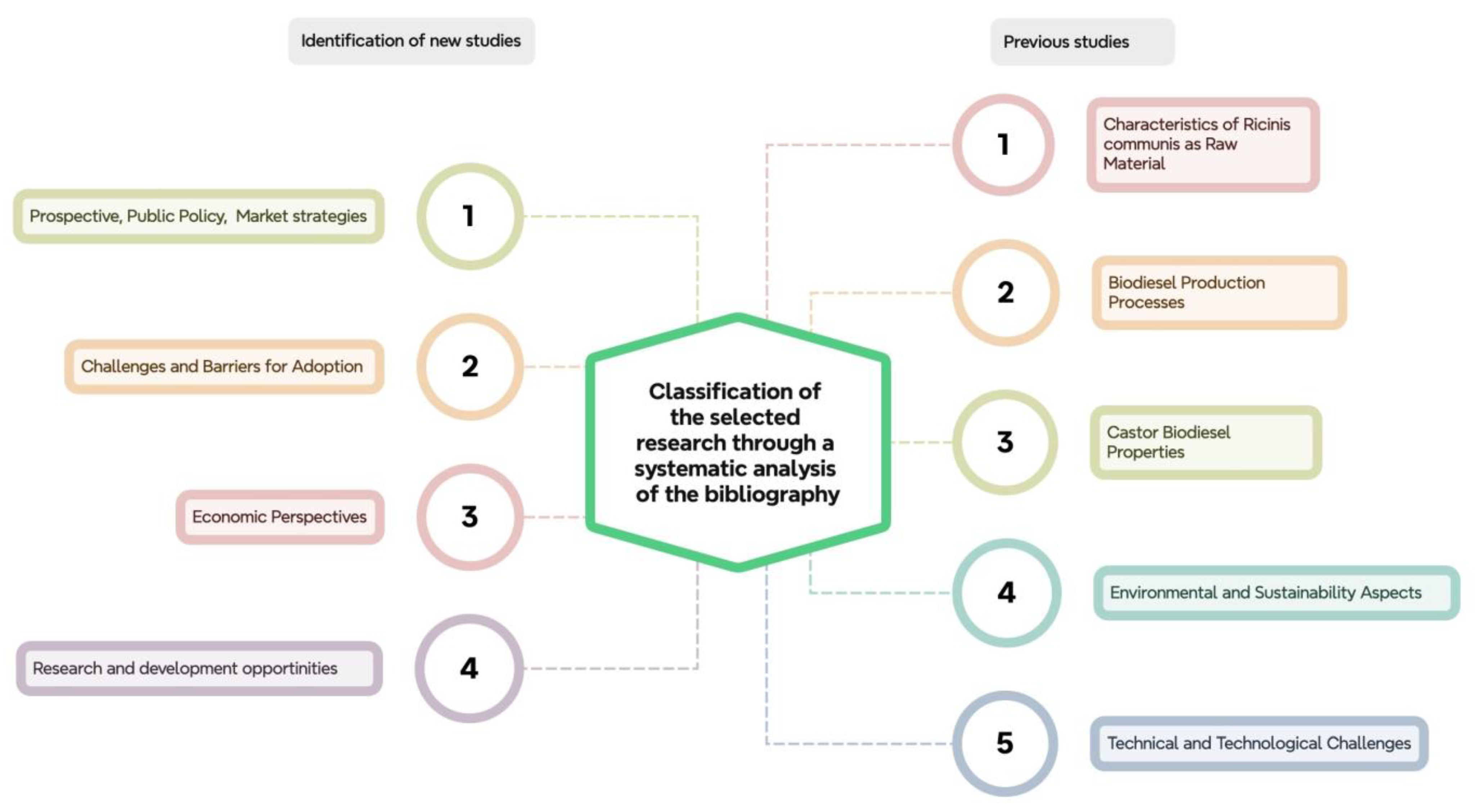
The results obtained are presented in an orderly manner in Figure 1:

3.1. Characteristics of Ricinus communis as Raw Material

3.1.1. Oil Composition and Fatty Acid Profile

Castor oil is characterized by its unique fatty acid composition, dominated by ricinoleic acid (12-hydroxy-9-cis-octadecenoic acid), which represents 85–95% of the total fatty acids present [10]. This characteristic distinguishes it from other vegetable oils and gives it special physicochemical properties, including high viscosity (210–297 mPa·s at 38 °C), excellent lubricity, and superior thermal stability compared to other vegetable oils [11].
Recent studies have exhaustively characterized the composition of castor oil from different varieties and geographical regions. The typical fatty acid profile includes: ricinoleic acid (85–95%), oleic acid (2–6%), linoleic acid (1–5%), palmitic acid (0.5–1.5%), stearic acid (0.5–1%), and other minor fatty acids (0.5–2%) [12]. Yeboah et al. [6] reported significant variations in oil composition between different cultivars from India, China, Brazil, Ethiopia, Pakistan, Saudi Arabia, Nigeria, and Tanzania, finding that ricinoleic acid content can vary between 82 and 92% depending on genetic and environmental factors.
The presence of the hydroxyl group in ricinoleic acid confers unique properties to castor oil such as high polarity, ability to form hydrogen bonds, and compatibility with various polar solvents [13]. These characteristics directly influence the properties of the resulting biofuel and the required production processes [14].

3.1.2. Agronomic Yield and Productivity

The productivity of R. communis varies considerably according to cultivation conditions, variety used, and implemented agronomic practices [15]. Khater et al. [16] conducted a comparative study in different regions of Egypt, finding yields ranging from 1200 to 4000 kg/ha of seeds, with oil contents varying between 45 and 55%. These values are competitive compared to other oilseeds used for biodiesel, especially considering the plant’s ability to grow on marginal soils.
Recent research has demonstrated that the application of improved agronomic techniques can significantly increase productivity. Llaven Valencia et al. [17] reported increases of 35–40% in seed yield through implementation of optimal plant spacing (2.0 × 1.0 m), balanced fertilization (N-P-K: 60-40-40 kg/ha), and integrated pest control. Additionally, the use of elicited castor varieties has shown potential to achieve yields exceeding 5000 kg/ha under optimal conditions [18].
The adaptability of R. communis to adverse conditions is one of its main advantages. Studies in regions of Greece and Iran have demonstrated that the plant can maintain acceptable productivities (1500–2500 kg/ha) with annual precipitation between 300 and 600 mm and temperatures up to 45 °C [15,19]. This drought resistance is due to its deep root system that can reach up to 2 m depth and its ability to close stomata during periods of water stress [20].

3.1.3. Elicitation

The elicitation of R. communis has been the subject of intense research in recent years, focusing mainly on increasing oil content and improving disease resistance [21]. Elicitation strategies using specific nutrients have shown promising results. Sulfur has emerged as an effective elicitor for improving both growth and yield of castor plants. Recent studies have demonstrated that sulfur application not only increases plant biomass but also improves the quality of produced oil, contributing to more sustainable biodiesel production [22].
Sulfur elicitation works by improving the synthesis of sulfur-containing amino acids and proteins, resulting in better foliar development and greater lipid accumulation in seeds. This nutritional approach represents an economically viable alternative for optimizing production in extensive cultivation systems [23].
Population density management has proven to act as an important eliciting factor. Studies in Mexico have reported that densities of 12,000 plants ha−1 can generate yields of up to 3569 kg ha−1, evidencing the importance of spacing management as a strategy for eliciting productive potential [23].
Controlled irrigation also functions as an elicitor of adaptive responses. Plants subjected to moderate water stress have shown greater efficiency in oil accumulation, suggesting that controlled water deficit can act as a natural elicitor to improve final product quality [24].
The development of varieties adapted to marginal lands represents a key strategy for expanding cultivation area without competing with food production. Research has identified genotypes tolerant to salinity, drought, and low-fertility soils, essential characteristics for establishing productive systems in areas not suitable for food crops [25,26].
Salt tolerance has become a priority objective, considering the need to use treated wastewater and saline-sodic soils. The evaluated cultivars have shown differential responses, with some capable of maintaining acceptable yields under saline concentrations that would be lethal for other oilseed crops [25].

3.2. Biodiesel Production Processes

3.2.1. Conventional Alkaline Transesterification

The most widely used method for biodiesel production from castor oil is alkaline transesterification using methanol or ethanol as alcohol and sodium or potassium hydroxide as a catalyst. This process converts triglycerides into fatty acid methyl or ethyl esters (biodiesel) and glycerol as a by-product [14].
Several studies have optimized reaction conditions to maximize biodiesel yield. Angassa et al. [27] used response surface methodology to optimize castor oil transesterification, finding optimal conditions of: methanol/oil molar ratio of 6:1, KOH catalyst concentration of 1.5% w/w, temperature of 60 °C, and reaction time of 90 min, obtaining biodiesel yields exceeding 95%.
However, the presence of ricinoleic acid presents unique challenges due to its hydroxyl group, which can interfere with conventional transesterification reaction [28]. The hydroxyl group can form intermolecular hydrogen bonds, increasing final product viscosity and complicating phase separation. To overcome this limitation, some researchers have proposed oil pre-treatments or modifications in reaction conditions [29].

3.2.2. Heterogeneous Catalysis

Heterogeneous catalysis has emerged as a promising alternative to overcome the limitations of homogeneous catalysis, offering advantages such as ease of catalyst separation, reduction in purification steps, and possibility of catalyst reuse [30].
Saptura et al. [31] developed catalysts based on supported metal oxides that showed high catalytic activity for castor oil transesterification. The use of CaO-MgO catalysts supported on γ-Al2O3 resulted in 92% biodiesel yields under optimized conditions (temperature: 150 °C, methanol/oil molar ratio 12:1, 5% w/w catalyst, 4 h reaction). Catalyst characterization by XRD, SEM, and BET analysis revealed a porous structure with high surface area (180 m2/g) and strong basic sites.
Enzymatic catalysts have also shown promising results. Fu et al. [32] used mixed metal oxides (ZnFe2O4/CaO), achieving 96.8% biodiesel yields at 63.69 °C in 212.22 min. The main advantage of this system is catalyst stability, maintaining more than 85% of its initial activity after 4 reuse cycles.

3.2.3. Enzymatic Processes

Enzymatic transesterification using lipases has shown promising results for castor oil, offering advantages such as mild reaction conditions, high selectivity, and ease of product purification [33]. Lipases can catalyze transesterification without forming soaps, eliminating the need for complex purification steps.
Pérez-Bravo et al. [34] investigated the use of immobilized lipase from Candida antarctica (Novozym 435) for biodiesel production from castor oil. The conditions included temperature of 45 to 65 °C, methanol/oil molar ratio of 15:1 to 30:1, 5% w/w enzyme, and reaction time of 4 to 8 h, achieving 87% conversions. The enzyme maintained more than 80% of its initial activity after 4 reuse cycles.
Recent research has explored the use of lipases from alternative sources. Toldrá-Reig et al. [35] used lipase from Penicillium cyclopium immobilized on magnetic chitosan for oil transesterification. This system showed high thermal and operational stability, maintaining 90% of its initial activity after 28 use cycles. The additional advantage of this system is the ease of magnetic separation of the catalyst.

3.2.4. Supercritical Processes

Transesterification under supercritical conditions has emerged as an innovative technology that does not require catalysts, reducing separation and purification steps. This process uses supercritical alcohols as both reaction medium and reactant simultaneously [36].
Singh et al. [37] studied supercritical transesterification of castor oil using ethanol as alcohol. Optimal conditions included temperature of 300 °C, pressure of 20 MPa, ethanol/oil molar ratio of 40:1, and reaction time of 30 min, obtaining 94% yields. Although conditions are severe, the process is very fast and requires no catalysts or complex purification steps.
A variant of the supercritical process is transesterification with supercritical CO2 as co-solvent. Quintana-Gómez et al. [38] demonstrated that adding supercritical CO2 can reduce reaction temperature from 40 °C to 60 °C while maintaining yields above 90%, CO2 acts as a co-solvent, improving mass transfer and miscibility between oil and alcohol.

3.3. Castor Biodiesel Properties

3.3.1. Detailed Physicochemical Characteristics

Biodiesel produced from castor oil presents unique properties due to the dominant presence of ricinoleic acid methyl ester. These properties have been exhaustively characterized in recent studies, revealing both advantages and limitations for their use as fuel [19]. Data in Table 2 were compiled from multiple recent studies [12,39,40].
The high viscosity of castor biodiesel (14–18 mm2/s at 40 °C) is its main limitation, significantly exceeding the limits established by international standards ASTM D6751 (1.9–6.0 mm2/s) and EN 14214 (3.5–5.0 mm2/s). This high viscosity is due to the presence of the hydroxyl group in ricinoleic acid methyl ester, which forms intermolecular hydrogen bonds [41].
On the other hand, castor biodiesel presents notable advantages such as an exceptionally high flash point (260–290 °C), making it very safe for handling and storage. Additionally, its cold-flow properties are superior to palm biodiesel, facilitating its use in temperate climates [42].

3.3.2. Combustion Properties and Emissions

The combustion characteristics of castor biodiesel have been evaluated in various engine studies. The relatively low cetane number (38–42) indicates inferior ignition quality compared to fossil diesel (48–55) and other biodiesels, which may result in longer ignition delay periods [43].
Recent emission studies have shown promising results. Zheng & Cho [44] evaluated emissions from a direct injection diesel engine fueled with 20%, 40%, 60%, and 80% castor biodiesel blends (B20, B40, B60, B80). Results showed significant reductions in carbon monoxide emissions (15–25%), hydrocarbons (12–20%), and smoke opacity (9–55%) compared to fossil diesel.
The lubricity properties of castor biodiesel are exceptional due to the presence of the hydroxyl group. Chuepeng et al. [45] found that castor biodiesel reduces wear of injection system components by 20% compared to fossil diesel, which can extend engine life. Castor biodiesel has a wear scar diameter of approximately 223 µm, measured by high-frequency reciprocating rig (HFRR) tests, which is acceptable according to the EN 590 and ASTM D975 standards (typically < 460 µm), indicating excellent lubricity.

3.3.3. Oxidative Stability and Storage

Oxidative stability is a critical parameter for biodiesel quality during storage. Castor biodiesel shows moderate oxidative stability due to the presence of monounsaturated fatty acids [46]. Hazrat et al. [47] evaluated castor biodiesel oxidative stability through the Rancimat test, finding induction times of 6 h at 100, 110, 120 °C, meeting minimum standards (6 h for ASTM D6751 and EN 14214).
The addition of natural and synthetic antioxidants has shown effectiveness in improving stability. Moreno et al. [48] evaluated the effect of three xanthophylls as additives for ecological lubricant applications (lutein, zeaxanthin, and astaxanthin) at 0.001 molal concentrations. The oxidative behavior of castor oil was notably improved with the use of xanthophylls as additives. The highest antioxidant capacity was observed with astaxanthin additive.

3.3.4. Property Improvement Strategies

To overcome the limitations of pure castor biodiesel, several innovative strategies have been developed.
Blending castor biodiesel with biodiesels from other sources has shown promising results for adjusting final properties. Beyene et al. [41] evaluated binary blends of castor biodiesel with microalgae biodiesels (Chlorella vulgaris). Blends containing 50% castor biodiesel with 50% microalgae biodiesel (Chlorella vulgaris) met all quality standards while maintaining castor’s lubricity advantages. By mentioned, the viscosity issue was solved, obtaining a viscosity of 5.80 mm2/s, a value within the range specified in ASTM D6751 (1.90–6.0 mm2/s). Aengchuan et al. [49] developed an artificial neural network-based property prediction model to optimize castor biodiesel blends with other biodiesels. The model allowed accurate prediction (R2 > 0.95) of properties such as viscosity, density, and cetane number of complex blends.
Esterification of the ricinoleic acid hydroxyl group has been explored to reduce viscosity without affecting other desirable properties. Dhanuskar et al. [50] investigated castor oil acetylation prior to transesterification, achieving 40–50% reductions in final biodiesel viscosity while maintaining superior lubricity properties.
Another approach is enzymatic oil modification. Gotovuša et al. [51] used lipases to catalyze selective hydroxyl group esterification with short-chain fatty acids (acetic, propionic), obtaining modified oils that produce biodiesels with 5.07 mm2/s viscosity, within ranges specified by standards.
Cetane number-improving additives have also been investigated. Hazrat et al. [47] demonstrated that adding 0.5–1.0% di-tert-butyl peroxide increases castor biodiesel cetane number from 40 to 48–52, meeting international standards.

3.4. Environmental and Sustainability Aspects

3.4.1. Use of Marginal Lands and Socio-Environmental Impacts

A key advantage of R. communis is its ability to grow on marginal lands unsuitable for food crops, reducing land-food competition. Kidane et al. [52] evaluated castor cultivation potential on degraded lands in Sub-Saharan Africa, identifying approximately 50 million hectares suitable for cultivation that currently have no agricultural use.
Studies in arid regions have demonstrated that castor cultivation can even improve soil quality. The plant’s deep root system (up to 2 m) improves soil structure and facilitates water infiltration. Additionally, fallen leaves contribute organic matter, increasing soil carbon content by 0.5–1.0% annually [15].
Castor cultivation can also contribute to desertification mitigation. Khan et al. [53] demonstrated that castor can be successfully established on moderately saline soils (EC 6–12 dS/m), acting as a pioneer crop for saline land rehabilitation. The plant shows tolerance to pH between 5.5 and 8.5 and can grow in soils with low organic matter content (<1%).

3.4.2. Biodiversity and Ecosystem Services

Castor cultivation can provide important ecosystem services. Castor flowers are a nectar source for bees and other pollinators, contributing to local biodiversity. Jacobi et al. [54] evaluated insect diversity in castor plantations, finding greater diversity compared to soybean or corn monocultures in the same regions.
However, it is important to consider that R. communis can be invasive in some ecosystems. Studies in Australia have documented species naturalization in native environments, requiring careful management to avoid negative impacts on local biodiversity [55].

3.4.3. Waste Management and Circular Economy

Castor biodiesel production generates valuable by-products that can contribute to a circular economy. Castor cake, after oil extraction, contains 35–40% protein and can be used as organic fertilizer due to its nitrogen (5–6%), phosphorus (1.5–2%), and potassium (1–1.5%) content [56].
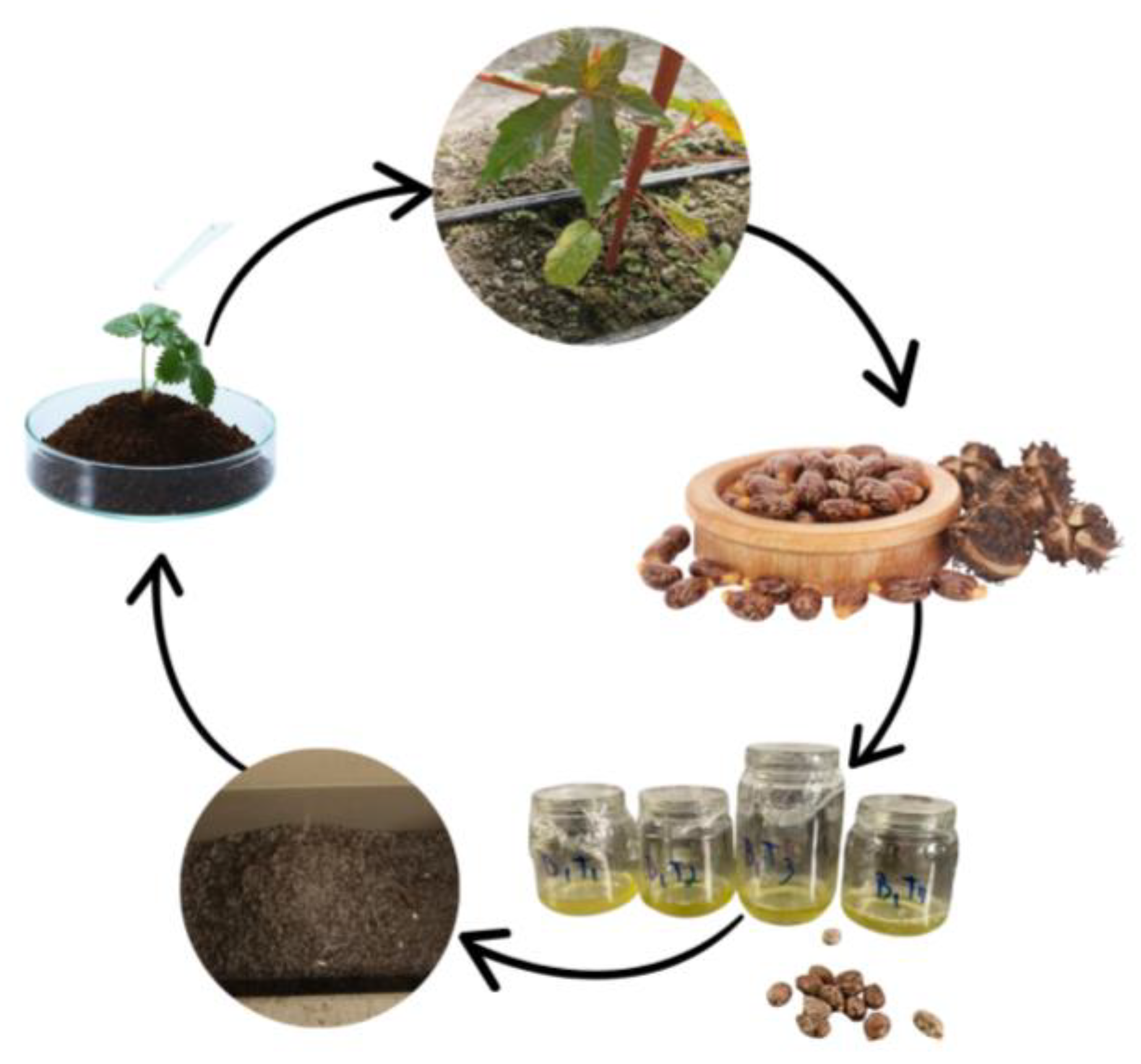
Glycerol produced during transesterification (approximately 10% of oil weight) can be converted into value-added products [57]. Seed hull pyrolysis can generate bio-charcoal for soil improvement and additional bioenergy [58]. Figure 2 illustrates the application of the circular economy in the management of waste from the production of castor bean biodiesel.

3.5. Technical and Technological Challenges

3.5.1. Challenges in Biodiesel Production

The main technical challenges for commercial castor biodiesel production include its high viscosity and limited ignition quality. Castor biodiesel exhibits a viscosity range of 14–18 mm2/s, which significantly exceeds international standards and restricts its direct use in conventional diesel engines. This elevated viscosity leads to poor fuel atomization, the formation of injector deposits, and difficulties during cold starts [59]. Woldetensy et al. [60] observed that using pure castor biodiesel in diesel engines can increase specific fuel consumption by 20%, largely due to inefficient atomization.
Another challenge is related to storage and combustion characteristics. While castor biodiesel has good thermal stability, its oxidative stability tends to deteriorate over time, especially during extended storage. This degradation results in the formation of peroxides and secondary oxidation products, which increase acidity and lead to sedimentation [39]. Additionally, its relatively low cetane number (38–42) can cause ignition delays, particularly under cold start conditions, necessitating the use of cetane improver additives or modifications to the injection system [44].

3.5.2. Processing Challenges

Castor oil’s high viscosity can impede phase separation during transesterification, significantly delaying the settling of glycerol from biodiesel—often taking 2–3 times longer than with other vegetable oils [61]. Its unique physical properties also complicate biodiesel purification; conventional water washing can result in stable emulsions, necessitating more advanced separation techniques [14]. Additionally, the presence of free fatty acids and water may lead to corrosion in carbon steel equipment, making the use of corrosion-resistant materials such as 316 L stainless steel or protective coatings essential [62]. These processing challenges are shown in Table 3.

3.5.3. Agronomic Challenges

The genetic variability of Ricinus communis leads to inconsistent oil content and yield, with the absence of uniform commercial varieties hindering large-scale cultivation [63]. While generally pest-resistant, castor remains vulnerable to specific threats such as Achaea janata (castor leaf caterpillar) and fungal infections like Botrytis ricini, which can substantially reduce yields without proper management [64]. Additionally, plant morphology and capsule dehiscence complicate full mechanization—particularly harvesting—thereby raising production costs and limiting viability in regions with high labor expenses [65]. These agronomic challenges are shown in Table 4.

3.6. Research and Development Opportunities

3.6.1. Advanced Genetic Improvement

Emerging biotechnologies offer promising avenues for enhancing Ricinus communis. CRISPR gene editing enables targeted improvements such as the removal of toxicity genes (ricin and ricinine), increased oil content, and alterations in fatty acid composition to reduce biodiesel viscosity [66]. The use of molecular tools, including SNP markers, is also accelerating breeding efforts Xu et al. [67] identified 13 SNPs linked to oil content through genome-wide association studies. Additionally, hybrid development is showing strong potential; exploiting heterosis can boost yields by 25–40% compared to open-pollinated varieties while improving disease resistance and oil quality [68].

3.6.2. Innovate Processing Technologies

Advanced processing technologies are enhancing the efficiency of castor biodiesel production. Microwave-assisted transesterification significantly shortens reaction times Fatimah et al. [69] achieved yields above 90% in just 60 min at 60 °C. Ultrasonic cavitation improves mass transfer, particularly beneficial for viscous oils like castor; Houshyar [70] reported a 15% increase in reaction rate using ultrasound between 100 and 400 W. Continuous flow reactors further improve scalability Wong [71] demonstrated a microchannel reactor achieving 74% conversion in just 3 min of residence time. Additionally, membrane technologies support biodiesel purification and catalyst recovery; Awogbemi and Desai [72] developed ceramic membranes that enable continuous separation of biodiesel and glycerol during the reaction.

3.7. Economic Perspectives

3.7.1. Economic Competitiveness

The competitiveness of castor biodiesel strongly depends on crude oil prices and government policies. With oil prices above $70/barrel, castor biodiesel can be competitive without subsidies in regions with low agricultural production costs [14]. Government incentives such as tax exemptions, blending mandates, and carbon certificates can significantly improve economic viability. In Brazil, the national biodiesel program (PNPB) includes specific incentives for castor biodiesel produced by small farmers in semi-arid regions [73].

3.7.2. Policies and Regulations

Government policies play a crucial role in the development of the castor biodiesel market. The EU Renewable Energy Directive (RED II) establishes targets of 14% renewable energy in transport by 2030, creating opportunities for biodiesels from non-food feedstocks like castor [74]. In the United States, the Renewable Fuel Standard (RFS) categorizes castor biodiesel as advanced renewable fuel, eligible for additional incentives. India has established a 20% biodiesel blend target by 2030, with emphasis on non-edible feedstocks [75].

3.8. Challenges and Barriers for Adoption

3.8.1. Technical

The commercial deployment of castor biodiesel faces several technical and infrastructural challenges. Existing fuel quality standards (e.g., ASTM D6751, EN 14214) do not fully account for the unique properties of castor-based fuel, highlighting the need for tailored specifications or standard revisions [76]. Its high viscosity also necessitates infrastructure adaptations, such as heated storage systems and modified pumping equipment [77]. Furthermore, limited technical training among fleet operators and maintenance staff regarding castor biodiesel’s handling and performance characteristics can hinder its broader adoption [78].

3.8.2. Economic

The economic viability of castor biodiesel is challenged by high initial investment costs, as specialized equipment is required to manage the oil’s high viscosity [77]. Additionally, castor oil’s price volatility stemming from its smaller, niche market poses greater financial risks than other feedstocks [79]. These factors contribute to limited access to financing, as investors perceive higher technological and market risks, with required capital investments estimated to be 5–25% higher than for conventional biodiesel plants [77].

3.8.3. Regulatory

  • Sustainability certification: Sustainability certification schemes for biofuels may not include specific criteria for castor grown on marginal lands, limiting access to premium markets [43].
  • Safety regulations: The presence of ricin in seeds requires special safety protocols in processing, increasing costs and regulatory complexity [66].
  • Trade barriers: Tariffs and non-tariff barriers can limit international trade of castor biodiesel, especially between developing and developed countries [80].

3.9. Prospective

3.9.1. Priority Research Directions

Development of improved varieties:
The development of improved castor bean varieties represents a fundamental priority in contemporary agricultural research, focusing on multiple interconnected objectives that seek to optimize both productivity and crop safety. First, it is essential to increase oil content above 55%, which would maximize economic yield and extraction efficiency. Simultaneously, the fatty acid profile must be optimized to reduce oil viscosity, a crucial characteristic for its application in the production of high-quality biodiesel. From a safety perspective, it is imperative to completely eliminate natural toxins such as ricin and ricinin, components that significantly limit the safe handling and potential applications of crop byproducts [81]. Additionally, new varieties must incorporate genetic resistance to the main pests and diseases that affect production, thus reducing dependence on agrochemicals and the associated costs [66]. Finally, full adaptation to mechanization is an essential requirement for making industrial-scale production viable, facilitating automated planting, handling, and harvesting processes that guarantee the crop’s economic competitiveness in the global biofuels market.
Processing technologies:
The development of specialized processing technologies is a fundamental pillar for the consolidation of the castor oil-based biodiesel industry, requiring innovative approaches that address the unique characteristics of this feedstock [82]. Research into heterogeneous catalysts specific to castor oil represents a priority, given that conventional catalysts fail to efficiently optimize the transesterification of this oil due to its particular fatty acid composition, especially its high ricinoleic acid content, which presents distinctive physicochemical characteristics.
Continuous process optimization emerges as a critical need to facilitate industrial scale-up, as the transition from batch laboratory processes to mass production systems requires the development of technologies that guarantee uniform product quality, energy efficiency, and large-scale economic viability. These continuous systems must incorporate automated controls and real-time monitoring to maintain optimal reaction conditions.
Purification and chemical modification:
Specific purification technologies for high-viscosity biodiesel represent another fundamental technical challenge, as traditional separation and purification methods are not completely effective in managing the unique rheological properties of castor-derived biodiesel. This requires the development of tailored refining processes to ensure a final product that meets international quality standards [83].
Finally, chemical modification methods to reduce viscosity represent a promising technological frontier, including techniques such as selective transesterification, molecular fractionation, and controlled partial hydrogenation processes. These methodologies seek to alter the molecular structure of the resulting biodiesel to optimize its flow and combustion properties, making the final product comparable in performance to conventional biodiesels derived from other oilseed sources [84].
Conceptual Framework for Biorefinery Integration:
The integration of biorefineries is emerging as a fundamental strategy to maximize the economic and environmental viability of castor bean biodiesel production. It requires a multidisciplinary research approach that transforms the traditional single-product processing paradigm, toward highly efficient integrated systems.
This conceptual transition demands the development of technologies that enable the comprehensive utilization of all plant components, from oilseeds to plant residues, including stems, leaves, and husks, which have traditionally been underutilized or considered waste from the production process [77].
Development of High-Value Co-Products:
The development of high-value-added co-products is a strategic pillar of this integration, as the diversification of the product portfolio allows operating costs to be distributed across multiple revenue streams, significantly improving the overall profitability of the system.
These by-products may include high-quality animal feed proteins derived from the residual oil cake after oil extraction, bioactive compounds with pharmaceutical and cosmetic applications extracted from different parts of the plant, biomaterials for industrial enforcement, and solid biofuels obtained through thermochemical processes from lignocellulosic waste [85].
Energy Optimization in Integrated Processes:
The energy optimization of integrated processes represents a complex technical challenge that requires the design of systems where energy and mass, are managed synergistically to minimize external energy consumption and maximize overall system efficiency. This involves the implementation of heat recovery technologies, cogeneration systems that leverage biomass waste to generate thermal and electrical energy, and the integration of processes that allow the use of byproducts from one stage as energy inputs, for other stages of the production process [86].
Life Cycle Assessment and Sustainability Evaluation
Finally, the life cycle analysis of integrated systems becomes an essential tool for objectively assessing the environmental, economic, and social performance of these complex biorefineries, allowing for the identification of critical optimization points and the quantification of real environmental benefits, in terms of greenhouse gas emissions reduction, efficient use of natural resources, and waste minimization. This comprehensive analysis should consider everything from the cultivation and agricultural production phase to the final use of all products and by-products, providing a solid scientific basis for strategic decision-making and the development of public policies that favor the commercial implementation of these integrated technologies [66].

3.9.2. Public Policy

Government Incentives and Policy Framework for Non-Food Biofuels:
The design and implementation of targeted incentives by governments is a fundamental catalyst for the sustainable development of the non-food biofuels sector, requiring a comprehensive approach that recognizes the technical, economic, and environmental specificities of these energy alternatives [87]. The incentive structure must be carefully designed to overcome existing market barriers and create favorable conditions for the competitiveness of these biofuels, compared to conventional energy options.
Differentiated Tax Incentives for Non-Food Biodiesel:
Differentiated tax incentives for biodiesel from non-food feedstocks represent a strategic public policy tool that should include significant exemptions or reductions in fuel taxes, tax credits per gallon produced, and preferential tax treatments that recognize the added environmental and social value of these products. This differentiation is crucial to correct market distortions that favor fossil fuels, which fail to internalize their environmental and social costs, thus creating a more level playing field that reflects the true costs and benefits of each energy alternative [88].
Public Support for Research and Technological Development:
Support for research and development in public institutions emerges as a long-term strategic investment that should include specific funding for genetic improvement programs, development of processing technologies, research in integrated biorefineries, and sustainability studies. This support should materialize through the creation of specialized research centers, scholarship programs for researchers, funding for collaborative projects between universities and companies, and the construction of world-class research infrastructure that allows for maintaining national technological competitiveness in this emerging sector.
Financial Inclusion and Credit Programs for Small Producers:
Subsidized credit programs for small producers constitute an essential mechanism for social inclusion and rural development, offering financing lines with preferential interest rates, grace periods adapted to production cycles, and flexible collateral requirements that recognize the specificities of small-scale agriculture. These programs should include technical assistance components, training in good agricultural and business practices, and guaranteed purchase schemes that provide market security to rural producers, thus contributing to the reduction in rural poverty and balanced territorial development.
Sustainability Certification for Crops on Marginal Lands:
Sustainability certification specific to crops grown on marginal lands represents an innovative instrument that must recognize and enhance the positive environmental externalities of these production systems, including the restoration of degraded soils, carbon sequestration, biodiversity conservation, and the provision of ecosystem services. This certification must be supported by rigorous technical protocols, transparent monitoring systems, and independent verification mechanisms that guarantee the system’s credibility in increasingly demanding international markets in terms of sustainability, thus enabling access to premium markets and payment schemes for environmental services that recognize the comprehensive value of these sustainable production systems.
Regulatory Framework for Castor Bean Biodiesel Commercialization:
The development of a robust and specific regulatory framework is a fundamental prerequisite for the commercial consolidation of castor bean biodiesel. This requires an innovative regulatory approach that recognizes the unique physicochemical characteristics of this biofuel and establishes the legal and institutional foundations necessary for its effective integration into national and international energy markets. This framework must carefully balance the objectives of operational safety, product quality, commercial competitiveness, and environmental sustainability, creating a regulatory environment conducive to investment and technological development in the sector.
Need for Specific Quality Standards for Castor Bean Biodiesel:
The development of specific quality standards for castor bean biodiesel represents an urgent technical necessity, as current standards such as ASTM D6751 and EN 14214 were designed primarily for biodiesels derived from conventional vegetable oils and do not adequately address the unique properties of castor bean biodiesel, particularly its high kinematic point, and superior lubricity. These specific standards must establish differentiated technical parameters that recognize these characteristics as advantages in particular applications, defining appropriate acceptance ranges for viscosity, cetane number, oxidative stability, and impurity content, thus guaranteeing product quality without imposing technically unnecessary restrictions that limit its commercialization [89].
International Regulatory Harmonization and Trade Facilitation:
International regulatory harmonization is emerging as a critical factor in facilitating cross-border trade and promoting the development of efficient global supply chains. It requires coordination between regulatory bodies in different countries to establish mutually recognized technical criteria, equivalent certification procedures, and information exchange protocols that reduce technical barriers to trade. This harmonization must consider differences in technical and institutional capacities among countries, promoting mutual recognition mechanisms that allow for the free circulation of certified castor bean biodiesel, thereby facilitating access to international markets and fostering economies of scale that improve the sector’s global competitiveness.
Simplified processing safety protocols are an essential element in reducing regulatory complexity and compliance costs, particularly considering the natural presence of ricin in castor beans, which has traditionally raised safety concerns. These protocols must be based on solid scientific evidence on the real risks of industrial processing, establishing proportional and technically justified safety measures, including standardized handling, storage, and transportation procedures, personnel training requirements, and monitoring systems that guarantee operational safety without imposing excessive regulatory burdens that discourage investment in the sector [90].
Inclusion of Castor Biodiesel in Biofuel Mandates:
Recognition in biofuel mandates represents the logical culmination of the regulatory framework, ensuring that castor bean biodiesel is eligible to meet the blending obligations established by national biofuel policies, renewable fuel programs, and transportation sector decarbonization goals. This recognition must be accompanied by differentiation mechanisms that adequately value the additional benefits of castor bean biodiesel, including its non-food origin, its ability to grow on marginal lands, and its superior environmental performance in terms of greenhouse gas emissions reduction, thereby creating market incentives that reflect the comprehensive value of this specialized biofuel in the context of the energy transition toward renewable and sustainable sources [91].

3.10. Market Strategies

3.10.1. Development of Niche Markets and Specialized Applications

The development of niche markets is emerging as a fundamental business strategy for the castor bean biodiesel industry, representing a differentiated approach that capitalizes on the unique properties of this biofuel to create specialized market segments where its particular characteristics, traditionally perceived as limitations, become distinct competitive advantages. This strategic approach makes it possible to overcome entry barriers in highly competitive conventional fuel markets, establishing defensible market positions in specific applications where added value justifies potential price differentials and where the exceptional properties of castor bean biodiesel provide tangible benefits to end users [92].

3.10.2. Product Diversification, Supply Chains, and Strategic Alliances

The development of specialized products, particularly lubricants and hydraulic fluids, represents a strategic diversification opportunity that fully leverages the exceptional physicochemical properties of castor bean biodiesel to create high-value products targeted at specific industrial markets. Biodegradable lubricants derived from castor bean biodiesel offer significant advantages in environmentally sensitive applications such as forestry operations, precision agriculture, marine activities, and construction equipment operating near water sources, where superior biodegradability and low aquatic toxicity provide crucial environmental benefits [93].
Specialized hydraulic fluids can capitalize on the exceptional thermal stability and anti-corrosion properties of castor bean biodiesel for applications in high-pressure hydraulic systems, precision manufacturing equipment, and industrial machinery operating in challenging environments. The establishment of specialized supply chains is a critical operational component that must be specifically designed to meet the unique needs of these niche markets. These chains include logistics systems tailored to handle high-viscosity products, storage infrastructure with heating capabilities when necessary, and distribution networks that ensure product quality throughout the entire delivery process. These chains must incorporate full traceability systems that document the sustainable origin of the product, application-specific quality certifications, and specialized technical service capabilities that provide ongoing support to industrial customers, thus creating sustainable competitive advantages based on operational excellence and customer service [94].
The creation of strategic alliances with end-users represents the culmination of this niche market strategy, establishing long-term business relationships that go beyond simple purchase and sale transactions to include collaboration in product development, joint certification programs, and applied research projects that optimize the performance of castor bean biodiesel in specific applications [95].

4. Conclusions

Ricinus communis is consolidating as a high-potential feedstock for sustainable biodiesel production due to its high oil concentration, adaptability to marginal soils, and resistance to adverse conditions. A review of progress between 2019 and 2025 shows notable advances in transesterification processes, biodiesel characterization, and genetic and agronomic improvement strategies, confirming its viability as a renewable alternative within the energy mix. However, there persist technical challenges, mainly the high viscosity (14–18 mm2/s) and low cetane number (38–42), which significantly exceed international standards (ASTM D6751 and EN 14214), making neat castor biodiesel non-compliant without prior modification. Addressing these constraints requires not only blending and chemical modifications, but also enzymatic processing and the use of low-viscosity co-feedstocks.
Beyond the technological aspect, R. communis offers environmental and socioeconomic benefits by utilizing land unsuitable for food, restoring degraded soils, and providing ecosystem services. The integration of its byproducts into biorefinery schemes strengthens the circular economy and improves the sector’s profitability. Regulatory frameworks, specific quality standards, and public policies that boost competitiveness will be crucial to consolidate its commercial adoption. Enhancing research and innovation, mainly through enzymatic catalysis, agronomic optimization, and strategic blending, supported by targeted public policies and adaptive technical standards, is essential to overcome current regulatory and performance barriers. More research needs to be performed to reach the optimization that meets the international standards. These coordinated efforts will enable the commercial adoption of castor biodiesel not as a marginal alternative, but as a strategic contributor to a more resilient, inclusive, and diversified energy future.

Author Contributions

M.M.-G., M.A.R.-L. and C.E.Z.-G.: conceptualization, investigation, writing—original draft, validation. A.L.V.-A., J.A.R.-M., J.C.-G., K.E.M.-U., A.A.-R., J.A.V.-H. and D.S.d.l.O.: writing—review and editing, charts construction, validation. All authors have read and agreed to the published version of the manuscript.

Funding

This research received no external funding.

Institutional Review Board Statement

Not applicable.

Informed Consent Statement

Not applicable.

Data Availability Statement

The present investigation is a review by which the reported results were obtained from the cited references.

Conflicts of Interest

The authors declare no conflicts of interest.

References

  1. International Energy Agency. World Energy Outlook 2024. IEA Publications. 2024. Available online: https://www.iea.org/reports/world-energy-outlook-2024 (accessed on 12 February 2025).
  2. Jeswani, H.K.; Chilvers, A.; Azapagic, A. Environmental sustainability of biofuels: A review. Proc. R. Soc. A 2020, 476, 20200351. [Google Scholar] [CrossRef]
  3. Aguilera Flores, M.M.; Sánchez Castro, M.A.; Ávila Vázquez, V.; Correa Aguado, H.C.; García Torres, J. Evaluation of the lipase from castor bean (Ricinus communis L.) as a potential agent for the remediation of used lubricating oil contaminated soils. J. Environ. Health Sci. Eng. 2022, 20, 657–673. [Google Scholar] [CrossRef]
  4. FAO. FAOSTAT Statistical Database; Food and Agriculture Organization of the United Nations: Rome, Italy, 2024; Available online: https://www.fao.org/faostat/ (accessed on 3 March 2025).
  5. Chakrabarty, S. Castor (Ricinus communis): An Underutilized Oil Crop in the. In Agroecosystems: Very Complex Environmental Systems; IntechOpen: London, UK, 2021; p. 61. [Google Scholar] [CrossRef]
  6. Yeboah, A.; Ying, S.; Lu, J.; Xie, Y.; Amoanimaa-Dede, H.; Boateng, K.G.A.; Chen, M.; Yin, X. Castor oil (Ricinus communis): A review on the chemical composition and physicochemical properties. Food Sci. Technol. 2020, 41, 399–413. [Google Scholar] [CrossRef]
  7. Setayeshnasab, M.; Sabzalian, M.R.; Rahimmalek, M. The relation between apomictic seed production and morpho-physiological characteristics in a world collection of castor bean (Ricinus communis L.). Sci. Rep. 2024, 14, 5013. [Google Scholar] [CrossRef]
  8. Serrano, S.S.; Navarro, I.P.; González, M.D. ¿Cómo hacer una revisión sistemática siguiendo el protocolo PRISMA?: Usos y estrategias fundamentales para su aplicación en el ámbito educativo a través de un caso práctico. Bordón Rev. Pedagog. 2022, 74, 51–66. [Google Scholar] [CrossRef]
  9. Barrios Serna, K.V.; Orozco Núñez, D.M.; Pérez Navas, E.C.; Conde Cardona, G. Nuevas recomendaciones de la versión PRISMA 2020 para revisiones sistemáticas y metaanálisis. Acta Neurológica Colomb. 2021, 37, 105–106. [Google Scholar] [CrossRef]
  10. Román-Figueroa, C.; Cea, M.; Paneque, M.; González, M.E. Oil content and fatty acid composition in castor bean naturalized accessions under Mediterranean conditions in Chile. Agronomy 2020, 10, 1145. [Google Scholar] [CrossRef]
  11. Paul, A.K.; Borugadda, V.B.; Reshad, A.S.; Bhalerao, M.S.; Tiwari, P.; Goud, V.V. Comparative study of physicochemical and rheological property of waste cooking oil, castor oil, rubber seed oil, their methyl esters and blends with mineral diesel fuel. Mater. Sci. Energy Technol. 2021, 4, 148–155. [Google Scholar] [CrossRef]
  12. Alemayehu, Y.A.; Fenta, F.W.; Birhan, Y.S. Fatty Acid Composition and Physicochemical Properties of Ricinus communis Seed Oil Grown from Jabi Tehinan Woreda, Ethiopia. Eur. J. Biophys. 2024, 12, 15–20. [Google Scholar] [CrossRef]
  13. Ma, Y.; Zhu, X.; Zhang, Y.; Li, X.; Chang, X.; Shi, L.; Zhang, Y. Castor oil-based adhesives: A comprehensive review. Ind. Crops Prod. 2024, 209, 117924. [Google Scholar] [CrossRef]
  14. Osorio-González, C.S.; Gómez-Falcon, N.; Sandoval-Salas, F.; Saini, R.; Brar, S.K.; Ramírez, A.A. Production of biodiesel from castor oil: A review. Energies 2020, 13, 2467. [Google Scholar] [CrossRef]
  15. Esmaeilian, Y.; Babaeian, M.; Caballero-Calvo, A. Optimization of castor bean (Ricinus communis L.) cultivation methods using biostimulants in an arid climate. Euro-Mediterr. J. Environ. Integr. 2023, 8, 823–834. [Google Scholar] [CrossRef]
  16. Khater, E.S.G.; Abd Allah, S.A.; Bahnasawy, A.H.; Hashish, H.M.A. Enhancing bio-oil yield extracted from Egyptian castor seeds by using microwave and ultrasonic. Sci. Rep. 2023, 13, 4606. [Google Scholar] [CrossRef]
  17. Llaven Valencia, G.; Borbon Gracia, A.; Ochoa Espinoza, X.M.; Antuna Grijalva, O.; Hernández Hernández, A.; Coyac Rodríguez, J.L. Productividad de higuerilla (Ricinus communis L.) en el norte de Sinaloa. Rev. Mex. Cienc. Agrícolas 2019, 10, 1011–1022. [Google Scholar] [CrossRef]
  18. Tamariz, M.N.B.; Calzada, R.T.; Cohen, I.S.; Hernández, A.F.; Valle, M.Á.V.; Sandoval, A.P. Castor seed yield at suboptimal soil moisture: Is it high enough? Cienc. Investig. Agrar. 2019, 46, 253–265. [Google Scholar] [CrossRef]
  19. Papazoglou, E.G.; Alexopoulou, E.; Papadopoulos, G.K.; Economou-Antonaka, G. Tolerance to drought and water stress resistance mechanism of castor bean. Agronomy 2020, 10, 1580. [Google Scholar] [CrossRef]
  20. Iqbal, U.; Gul, M.F.; Aslam, M.U.; Rehman, F.U.; Farooq, U. Do structural and functional traits modulation determine the ecological fate of castor bean (Ricinus communis L.) under variable pedospheric and atmospheric conditions? S. Afr. J. Bot. 2025, 177, 68–87. [Google Scholar] [CrossRef]
  21. Huibo, Z.; Yong, Z.; Rui, L.; Guorui, L.; Jianjun, D.; Qi, W.; Fenglan, H. Analysis of the mechanism of Ricinus communis L. tolerance to Cd metal based on proteomics and metabolomics. PLoS ONE 2023, 18, e0272750. [Google Scholar] [CrossRef]
  22. Mukhtar, A.; Awan, M.I.; Sadaf, S.; Mahmood, A.; Javed, T.; Shah, A.N.; Siuta, D. Sulfur enhancement for the improvement of castor bean growth and yield, and sustainable biodiesel production. Front. Plant Sci. 2022, 13, 905738. [Google Scholar] [CrossRef] [PubMed]
  23. Rosales-Serna, R.; Arellano-Arciniega, S.; Nava-Berumen, C.A.; Jiménez-Ocampo, R.; Espinoza, S.S.; Borja-Bravo, M.; Martínez-Reyes, E. Productividad y calidad del grano de higuerilla cultivada en el Centro-Norte de México. Ecosistemas Recur. Agropecu. 2023, 10, e3223. [Google Scholar]
  24. Seleiman, M.F.; Al-Suhaibani, N.; Ali, N.; Akmal, M.; Alotaibi, M.; Refay, Y.; Dindaroglu, T.; Abdul-Wajid, H.H.; Battaglia, M.L. Drought stress impacts on plants and different approaches to alleviate its adverse effects. Plants 2021, 10, 259. [Google Scholar] [CrossRef]
  25. Chieb, M.; Gachomo, E.W. The role of plant growth promoting rhizobacteria in plant drought stress responses. BMC Plant Biol. 2023, 23, 407. [Google Scholar] [CrossRef]
  26. Akbarzadeh, A.; Shahnazari, A. The effect of deficit irrigation strategies on the efficiency from plant to es-sential oil production in peppermint (Mentha piperita L.). Front. Water 2021, 3, 682640. [Google Scholar] [CrossRef]
  27. Angassa, K.; Tesfay, E.; Weldmichael, T.G.; Kebede, S. Response surface methodology process optimization of biodiesel production from castor seed oil. J. Chem. 2023, 2023, 6657732. [Google Scholar] [CrossRef]
  28. Nitbani, F.O.; Tjitda, P.J.P.; Wogo, H.E.; Detha, A.I.R. Preparation of ricinoleic acid from castor oil: A review. J. Oleo Sci. 2022, 71, 781–793. [Google Scholar] [CrossRef]
  29. Wang, L.; Yuan, H.; Ma, X.; Li, Z.; Sun, H.; Zhang, X.; Peng, Q.; Tan, Y. Synthesis of high molecular weight poly (ricinoleic acid) via direct solution polycondensation in hydrophobic ionic liquids. RSC Sustain. 2024, 2, 2541–2548. [Google Scholar] [CrossRef]
  30. Kibar, M.E.; Hilal, L.; Çapa, B.T.; Bahçıvanlar, B.; Abdeljelil, B.B. Assessment of homogeneous and heterogeneous catalysts in transesterification reaction: A mini review. ChemBioEng Rev. 2023, 10, 412–422. [Google Scholar] [CrossRef]
  31. Saputra, D.A.; Amin, A.K.; Wijaya, K.; Triyono, T.; Trisunaryanti, W.; Fitroturokhmah, A.; Oh, W.C. MgO/γ-Alumina and CaO/γ-Alumina Catalysts for The Transesterification of Castor Oil (Ricinus communis) into Biodiesel. Iran. J. Chem. Chem. Eng. 2024, 43, 1622–1634. [Google Scholar] [CrossRef]
  32. Fu, H.; Xiao, Y.; Abulizi, A.; Okitsu, K.; Maeda, Y.; Ren, T. Surfactant-modified ZnFe2O4/CaOPS porous acid-base bifunctional catalysts for biodiesel production from waste cooking oil and process optimization. J. Environ. Chem. Eng. 2024, 12, 114234. [Google Scholar] [CrossRef]
  33. Moschona, A.; Spanou, A.; Pavlidis, I.V.; Karabelas, A.J.; Patsios, S.I. Optimization of enzymatic transesterification of acid oil for biodiesel production using a low-cost lipase: The effect of transesterification conditions and the synergy of lipases with different regioselectivity. Appl. Biochem. Biotechnol. 2024, 196, 8168–8189. [Google Scholar] [CrossRef] [PubMed]
  34. Pérez-Bravo, S.G.; Aguilera-Vázquez, L.; Castañeda-Chávez, M.D.R.; Gallardo-Rivas, N.V. Condiciones del proceso de transesterificación en la producción de biodiésel y sus distintos mecanismos de reacción. TIP Rev. Espec. Cienc. Químico-Biológicas 2022, 25, 1–19. [Google Scholar] [CrossRef]
  35. Toldrá-Reig, F.; Mora, L.; Toldrá, F. Developments in the use of lipase transesterification for biodiesel production from animal fat waste. Appl. Sci. 2020, 10, 5085. [Google Scholar] [CrossRef]
  36. Salaheldeen, M.; Mariod, A.A.; Aroua, M.K.; Rahman, S.A.; Soudagar, M.E.M.; Fattah, I.R. Current state and perspectives on transesterification of triglycerides for biodiesel production. Catalysts 2021, 11, 1121. [Google Scholar] [CrossRef]
  37. Singh, C.S.; Kumar, N.; Gautam, R. Supercritical transesterification route for biodiesel production: Effect of parameters on yield and future perspectives. Environ. Prog. Sustain. Energy 2021, 40, e13685. [Google Scholar] [CrossRef]
  38. Quintana-Gómez, L.; Ladero, M.; Calvo, L. Enzymatic production of biodiesel from alperujo oil in supercritical CO2. J. Supercrit. Fluids 2021, 171, 105184. [Google Scholar] [CrossRef]
  39. Mustapha, L.M.; Shago, M.I.; Burhanudden, R.H.; Suleiman, G. Physicochemical analysis and characterization of biodiesel production from Ricinus communis seed oil. FUDMA J. Sci. 2021, 5, 404–410. [Google Scholar] [CrossRef]
  40. Abel, S.; Jule, L.T.; Gudata, L.; Nagaraj, N.; Shanmugam, R.; Dwarampudi, L.P.; Ramaswamy, K. Preparation and characterization analysis of biofuel derived through seed extracts of Ricinus communis (castor oil plant). Sci. Rep. 2022, 12, 11021. [Google Scholar] [CrossRef]
  41. Beyene, D.; Abdulkadir, M.; Befekadu, A. Production of biodiesel from mixed castor seed and microalgae oils: Optimization of the production and fuel quality assessment. Int. J. Chem. Eng. 2022, 2022, 1536160. [Google Scholar] [CrossRef]
  42. Bayi, B.A.; Khamisu, A.I.; Abubakar, T.S.; Shitu, I.G. Biodiesel production from castor oil and analysis of its physical properties. J. Found. Appl. Phys. 2023, 10, 1–8. [Google Scholar]
  43. Carrino, L.; Visconti, D.; Fiorentino, N.; Fagnano, M. Biofuel production with castor bean: A win–win strategy for marginal land. Agronomy 2020, 10, 1690. [Google Scholar] [CrossRef]
  44. Zheng, F.; Cho, H. Combustion and emission of castor biofuel blends in a single-cylinder diesel engine. Energies 2023, 16, 5427. [Google Scholar] [CrossRef]
  45. Chuepeng, S.; Klinkaew, N.; Thumanu, K.; Theinnoi, K.; Sukjit, E.; Dearn, K. Effects of castor oil as lubricity enhancer on friction and wear characteristics of piston engine running on diesohol. Int. J. Engine Res. 2025, 6, 1305–1318. [Google Scholar] [CrossRef]
  46. Longanesi, L.; Pereira, A.P.; Johnston, N.; Chuck, C.J. Oxidative stability of biodiesel: Recent insights. Biofuels Bioprod. Biorefining 2022, 16, 265–289. [Google Scholar] [CrossRef]
  47. Hazrat, M.A.; Rasul, M.G.; Khan, M.M.K.; Mofijur, M.; Ahmed, S.F.; Ong, H.C.; Vo, D.N.; Show, P.L. Techniques to improve the stability of biodiesel: A review. Environ. Chem. Lett. 2021, 19, 2209–2236. [Google Scholar] [CrossRef]
  48. Moreno, K.J.; Hernández-Sierra, M.T.; Báez, J.E.; Rodríguez-deLeón, E.; Aguilera-Camacho, L.D.; García-Miranda, J.S. On the tribological and oxidation study of xanthophylls as natural additives in castor oil for green lubrication. Materials 2021, 14, 5431. [Google Scholar] [CrossRef] [PubMed]
  49. Aengchuan, P.; Wiangkham, A.; Klinkaew, N.; Theinnoi, K.; Sukjit, E. Prediction of the influence of castor oil–ethanol–diesel blends on single-cylinder diesel engine characteristics using generalized regression neural networks (GRNNs). Energy Rep. 2022, 8, 38–47. [Google Scholar] [CrossRef]
  50. Dhanuskar, S.; Naik, S.N.; Pant, K.K. Castor oil-based derivatives as a raw material for the chemical industry. In Catalysis for Clean Energy and Environmental Sustainability: Biomass Conversion and Green Chemistry-Volume 1; Springer International Publishing: Cham, Switzerland, 2021; pp. 209–235. [Google Scholar] [CrossRef]
  51. Gotovuša, M.; Pucko, I.; Racar, M.; Faraguna, F. Biodiesel produced from propanol and longer chain alcohols—Synthesis and properties. Energies 2022, 15, 4996. [Google Scholar] [CrossRef]
  52. Kidane, G.; Makonnen, B.T. Dryland Agriculture and Climate Change Adaptation in Sub-Saharan Africa: A Case of Policies, Technologies, and Strategies in Ethiopia. 2024. Available online: https://hdl.handle.net/10568/141481 (accessed on 1 July 2025).
  53. Khan, I.; Ali, S.M.; Chattha, M.U.; Barbanti, L.; Calone, R.; Mahmood, A.; Albishi, T.S.; Hassan, M.U.; Qari, S.H. Neem and castor oil–coated urea mitigates salinity effects in wheat by improving physiological responses and plant homeostasis. J. Soil Sci. Plant Nutr. 2023, 23, 3915–3931. [Google Scholar] [CrossRef]
  54. Jacobi, J.; Andres, C.; Assaad, F.F.; Bellon, S.; Coquil, X.; Doetterl, S.; Dierks, J. Syntropic farming systems for reconciling productivity, ecosystem functions, and restoration. Lancet Planet. Health 2025, 9, e314–e325. [Google Scholar] [CrossRef]
  55. Wijekoon, W.; Priyashantha, H.; Gajanayake, P.; Manage, P.; Liyanage, C.; Jayarathna, S.; Kumarasinghe, U. Review and prospects of phytoremediation: Harnessing biofuel-producing plants for environmental remediation. Sustainability 2025, 17, 822. [Google Scholar] [CrossRef]
  56. Severino, L.S.; da Silva Mendes, B.S.; Saboya, R.D.C.C.; Barros, L.A.; de Farias Marinho, D.R. Nutrient content of solvent-extracted castor meal separated in granulometric fractions by dry sieving and applied as organic fertilizer. Ind. Crops Prod. 2021, 161, 113178. [Google Scholar] [CrossRef]
  57. Lima, P.J.M.; da Silva, R.M.; Neto, C.A.C.G.; Gomes e Silva, N.C.; Souza, J.E.D.S.; Nunes, Y.L.; Sousa dos Santos, J.C. An overview on the conversion of glycerol to value-added industrial products via chemical and biochemical routes. Biotechnol. Appl. Biochem. 2022, 69, 2794–2818. [Google Scholar] [CrossRef]
  58. Singh, Y.; Singh, N.K.; Sharma, A.; Lim, W.H.; Palamanit, A.; Alhussan, A.A.; El-kenawy, E.S.M. Bio-oil yield maximization and characteristics of neem-based biomass at optimum conditions along with feasibility of biochar through pyrolysis. AIP Adv. 2024, 14, 085104. [Google Scholar] [CrossRef]
  59. Sbani, N.H.A.; Meelad, A.; Mohammed, A.; Kwadikha, A.; Tweib, S. Biodiesel Production from Castor Oil. Al-Khwarizmi Eng. J. 2025, 21, 1–11. [Google Scholar] [CrossRef]
  60. Woldetensy, H.Z.; Zeleke, D.S.; Tibba, G.S. Study of the impact on emissions and engine performance of diesel fuel additives made from cotton and castor blended seed oils. Heliyon 2025, 11, e41659. [Google Scholar] [CrossRef] [PubMed]
  61. Obayomi, K.S.; Bello, J.O.; Ogundipe, T.A.; Olawale, O. Extraction of castor oil from castor seed for optimization of biodiesel production. In IOP Conference Series: Earth and Environmental Science; IOP Publishing: Bristol, UK, 2020; Volume 445, p. 012055. [Google Scholar] [CrossRef]
  62. Maleque, A.; Cetin, S.Y.; Hassan, M.; Sulaiman, M.H.; Rosli, A.H. A systematic review on corrosive-wear of automotive components materials. J. Tribol. 2022, 35, 33–49. [Google Scholar]
  63. Pilu, S.R.; Ghidoli, M.; Padovani, D. Preliminary characterization of a worldwide collection of castor bean (Ricinus communis L.) Germplasm. In Scientific Conference on Breeding to Meet Environmental and Societal Challenges; Zenodo: Geneva, Switzerland, 2025; p. 121. [Google Scholar] [CrossRef]
  64. Jigyasu, D.K.; Patidar, O.P.; Shabnam, A.A.; Kumar, A. Castor Plant in Ericulture: Opportunities and Challenges. In Ricinus communis: A Climate Resilient Commercial Crop for Sustainable Environment; Springer: Singapore, 2025; pp. 113–134. [Google Scholar] [CrossRef]
  65. Cafaro, V.; Testa, G.; Patanè, C. Castor: A Renewed Oil Crop for the Mediterranean Environment. Agronomy 2025, 15, 1402. [Google Scholar] [CrossRef]
  66. Landoni, M.; Bertagnon, G.; Ghidoli, M.; Cassani, E.; Adani, F.; Pilu, R. Opportunities and challenges of castor bean (Ricinus communis L.) genetic improvement. Agronomy 2023, 13, 2076. [Google Scholar] [CrossRef]
  67. Xu, W.; Wu, D.I.; Yang, T.; Sun, C.; Wang, Z.; Han, B.; Wu, S.; Yu, A.; Chapman, M.A.; Muraguri, S.; et al. Genomic insights into the origin, domestication and genetic basis of agronomic traits of castor bean. Genome Biol. 2021, 22, 113. [Google Scholar] [CrossRef]
  68. Senthilvel, S.; Manjunatha, T.; Lavanya, C. Castor breeding. In Fundamentals of Field Crop Breeding; Springer Nature Singapore: Singapore, 2022; pp. 945–970. [Google Scholar] [CrossRef]
  69. Fatimah, I.; Sagadevan, S.; Murugan, B.; Muraza, O. Castor oil (Ricinus communis). Biorefinery Oil Prod. Plants Value-Added Prod. 2022, 1, 51–78. [Google Scholar] [CrossRef]
  70. Houshyar, E.; Mahmoodi-Eshkaftaki, M.; Ghani, A.; Arazo, R. Optimized biodiesel production from Ricinus communis oil using CaO, C/CaO and KOH catalysts under conventional and ultrasonic conditions. Agric. Eng. Int. CIGR J. 2024, 26, 141–152. [Google Scholar]
  71. Wong, K.Y. Reaction Kinetics Mechanisms of Novel Intensified Transesterification Methods via Microturbulence and Micro-Level Diffusion for Biodiesel Production. Ph.D. Dissertation, University of Southampton, Southampton, UK, 2021. Available online: http://eprints.soton.ac.uk/id/eprint/456809 (accessed on 1 July 2025).
  72. Awogbemi, O.; Desai, D.A. Recent advances in purification technologies for biodiesel-derived crude glycerol. Int. J. Ambient Energy 2025, 46, 2533373. [Google Scholar] [CrossRef]
  73. Manzi, M. The making of speculative biodiesel commodities on the agroenergy frontier of the Brazilian Northeast. Antipode 2020, 52, 1794–1814. [Google Scholar] [CrossRef]
  74. Ilves, R.; Küüt, A.; Allmägi, R.; Olt, J. The Impact of RED III Directive on the Use of Renewable Fuels in Transport on the Example of Estonia. Rigas Tech. Univ. Zinat. Raksti 2024, 28, 165–180. [Google Scholar] [CrossRef]
  75. Parvez, M.; Lal, S.; Khan, O.; Ahmad, M.; Lal Meena, S.; Salvi, B.L. Sustainable regulatory framework for ethanol and biodiesel blending with petro-fuels in India to meet fuel demand: A review of biofuel policies. Biofuels 2025, 16, 638–651. [Google Scholar] [CrossRef]
  76. Rodrigues, A.C.C. Policy, regulation, development and future of biodiesel industry in Brazil. Clean. Eng. Technol. 2021, 4, 100197. [Google Scholar] [CrossRef]
  77. Sandoval-Salas, F.; Méndez-Carreto, C.; Ortega-Avila, G.; Barrales-Fernández, C.; Hernández-Ochoa, L.R.; Sanchez, N. A biorefinery approach to biodiesel production from castor plants. Processes 2022, 10, 1208. [Google Scholar] [CrossRef]
  78. Busari, R.A.; Olaoye, J.O.; Adebayo, E.S.; Fadeyibi, A. Development and evaluation of a combined roaster expeller for castor seeds for biodiesel production. Res. Agric. Eng. 2022, 68, 169–179. [Google Scholar] [CrossRef]
  79. RL, M.; Mishra, A.K. Market efficiency and price risk management of agricultural commodity prices in India. J. Model. Manag. 2023, 18, 190–211. [Google Scholar] [CrossRef]
  80. Vichare, S.A.; Morya, S. Exploring waste utilization potential: Nutritional, functional and medicinal properties of oilseed cakes. Front. Food Sci. Technol. 2024, 4, 1441029. [Google Scholar] [CrossRef]
  81. Kocyigit, E.; Kocaadam-Bozkurt, B.; Bozkurt, O.; Ağagündüz, D.; Capasso, R. Plant toxic proteins: Their biological activities, mechanism of action and removal strategies. Toxins 2023, 15, 356. [Google Scholar] [CrossRef]
  82. Wu, T.; Kong, F.; Zhang, B.; Xie, Q.; Sun, Y.; Zhao, H. Research Progress on Castor Harvesting Technology and Equipment. Sustainability 2025, 17, 5703. [Google Scholar] [CrossRef]
  83. Monika; Pathak, V.V.; Banga, S. A comprehensive analysis of refining technologies for biodiesel purification. Braz. J. Chem. Eng. 2025, 1–17. [Google Scholar] [CrossRef]
  84. Beghetto, V. Strategies for the Transformation of Waste Cooking Oils into High-Value Products: A Critical Review. Polymers 2025, 17, 368. [Google Scholar] [CrossRef]
  85. Avramovic, J.M.; Marjanović Jeromela, A.M.; Krstić, M.S.; Kiprovski, B.M.; Veličković, A.V.; Rajković, D.D.; Veljković, V.B. Castor oil extraction: Methods and impacts. Sep. Purif. Rev. 2025, 54, 60–82. [Google Scholar] [CrossRef]
  86. Kashif, M.; Sabri, M.A.; Aresta, M.; Dibenedetto, A.; Dumeignil, F. Sustainable synergy: Unleashing the potential of biomass in integrated biorefineries. Sustain. Energy Fuels 2025, 9, 338–400. [Google Scholar] [CrossRef]
  87. Kipkoech, R.; Takase, M.; Ahogle, A.M.A.; Ocholla, G. Analysis of properties of biodiesel and its development and promotion in Ghana. Heliyon 2024, 10, e39078. [Google Scholar] [CrossRef]
  88. Aguilar-Aguilar, F.A.; Mena-Cervantes, V.Y.; Hernandez-Altamirano, R. Analysis of public policies and resources for biodiesel production in México. Biomass Bioenergy 2025, 196, 107762. [Google Scholar] [CrossRef]
  89. Kumar, D.; Kumar, A.; Singla, A.; Dewan, R. Production and tribological characterization of castor based biodiesel. Mater. Today Proc. 2021, 46, 10942–10949. [Google Scholar] [CrossRef]
  90. Hamood ur Rehman, M.; Hussain, M.; Akhter, P.; Jamil, F. Breaking Barriers in Biodiesel: From Feedstock Challenges to Technological Advancements. Chem. Afr. 2025, 8, 2225–2256. [Google Scholar] [CrossRef]
  91. Sarwer, A.; Hussain, M.; Al-Muhtaseb, A.A.H.; Inayat, A.; Rafiq, S.; Khurram, M.S.; Ul-Haq, N.; Shah, S.N.; Din, A.A.; Ahmad, I.; et al. Suitability of biofuels production on commercial scale from various feedstocks: A critical review. ChemBioEng Rev. 2022, 9, 423–441. [Google Scholar] [CrossRef]
  92. Singh, S.; Sharma, S.; Sarma, S.J.; Brar, S.K. A comprehensive review of castor oil-derived renewable and sustainable industrial products. Environ. Prog. Sustain. Energy 2023, 42, e14008. [Google Scholar] [CrossRef]
  93. Rivas, A.G.; Vázquez, V.Á.; Flores, M.M.A.; Cerrillo-Rojas, G.V.; Correa-Aguado, H.C. Sustainable castor bean biodiesel through Ricinus communis L. lipase extract catalysis. Appl. Biochem. Biotechnol. 2023, 195, 1297–1318. [Google Scholar] [CrossRef] [PubMed]
  94. Prasannakumar, P.; Sankarannair, S.; Prasad, G.; S, P.; P, V.; S, S.; Shanmugam, R. Bio-based additives in lubricants: Addressing challenges and leveraging for improved performance toward sustainable lubrication. Biomass Convers. Biorefinery 2025, 15, 17969–17997. [Google Scholar] [CrossRef]
  95. Narayanan, S.; Kasture, J.; Dangate, M.S. Production of Bio-Diesel and By-Product Processing. In Biomass and Solar-Powered Sustainable Digital Cities; Wiley: Hoboken, NJ, USA, 2024; pp. 209–220. [Google Scholar] [CrossRef]
Figure 1. Classification of the selected research through a systematic analysis of the bibliography.
Fuels 06 00090 g001
Figure 2. Use of circular economy in castor biodiesel production.
Fuels 06 00090 g002
Table 1. Lists the studies selected for the qualitative synthesis.
ResearchRecords Identified in DatabasesDuplicate RecordsRecords for ScreeningExcluded RecordsRecords Selected by Title and AbstractRecords Excluded Due to Their Specificity
Prospects and scientific advances for the production of biodiesel from R. communis 18406017801030750657
Table 2. Physicochemical properties of castor biodiesel compared with international standards and other biodiesels.
PropertyCastor BiodieselSoybean
Biodiesel
Palm BiodieselASTM
D6751
EN
14214
Density at 15 °C (kg/m3)920–940870–890860–880860–900860–900
Kinematic viscosity at 40 °C (mm2/s)14–183.5–4.54.0–5.01.9–6.03.5–5.0
Flash point (°C)260–290178–190164–180>130>120
Cloud point (°C)−2 to +5−2 to +313–16--
Pour point (°C)−9 to −3−7 to −212–15--
Cetane number38–4250–5558–62>47>51
Iodine number (g I2/100 g)82–88120–14050–55<120<120
Heating value (MJ/kg)37.2–39.139.5–40.239.8–40.3--
Table 3. Processing challenges in castor oil.
ChallengesProblemAuthor
Phase separation during transesterificationDelaying the settling of glycerolObayomi et al. [61]
Physical propertiesConventional water washingOsorio-González et al. [14]
Presence of free fatty acids and waterCorrosion in carbon steel equipmentMaleque et al. [62]
Table 4. Agronomic challenges in Ricinus communis.
ChallengesProblemAuthor
Genetic variability Inconsistent oil content and yieldPilu et al. [63]
Pest-resistantVulnerable to specific threatsJigyasu et al. [64]
Raising production costs and limiting viabilityPlant morphology and capsule dehiscenceCafaro et al. [65]
Disclaimer/Publisher’s Note: The statements, opinions and data contained in all publications are solely those of the individual author(s) and contributor(s) and not of MDPI and/or the editor(s). MDPI and/or the editor(s) disclaim responsibility for any injury to people or property resulting from any ideas, methods, instructions or products referred to in the content.