
Article

Machine Learning for Coronary Heart Disease Prediction: Comparative Analysis of Framingham and Cleveland Subset of the UCI Dataset with SHAP-Based Interpretability

1
Khoury College of Computer Sciences, Northeastern University, Boston, MA 02115, USA
2
Vagelos College of Physicians and Surgeons, Columbia University, New York, NY 10032, USA
3
Department of Medicine, University of Massachusetts Chan School of Medicine, Worcester, MA 01655, USA
4
Department of Medicine, Norton College of Medicine, SUNY Upstate Medical University, Syracuse, NY 13210, USA
5
Carver College of Medicine, University of Iowa, Iowa City, IA 52242, USA
6
Department of Medicine, Duke University School of Medicine, Durham, NC 27710, USA
7
School of Osteopathic Medicine, Campbell University School of Osteopathic Medicine, Lillington, NC 27546, USA
8
Department of Radiology, University of Virginia, Charlottesville, VA 22903, USA
9
Department of Medicine, Virginia Tech Carilion School of Medicine, Roanoke, VA 24016, USA
10
Department of Medicine, Jacobs School of Medicine and Biomedical Sciences, University at Buffalo, Buffalo, NY 14203, USA
11
Department of Medicine, UB Clinical and Translational Research Center, University at Buffalo, Buffalo, NY 14203, USA
*
Author to whom correspondence should be addressed.
Epidemiologia 2026, 7(3), 75; https://doi.org/10.3390/epidemiologia7030075

Submission received: 23 February 2026 / Revised: 5 May 2026 / Accepted: 25 May 2026 / Published: 1 June 2026
(This article belongs to the Special Issue Recent Advances in Acute Diseases and Epidemiological Studies)

Abstract

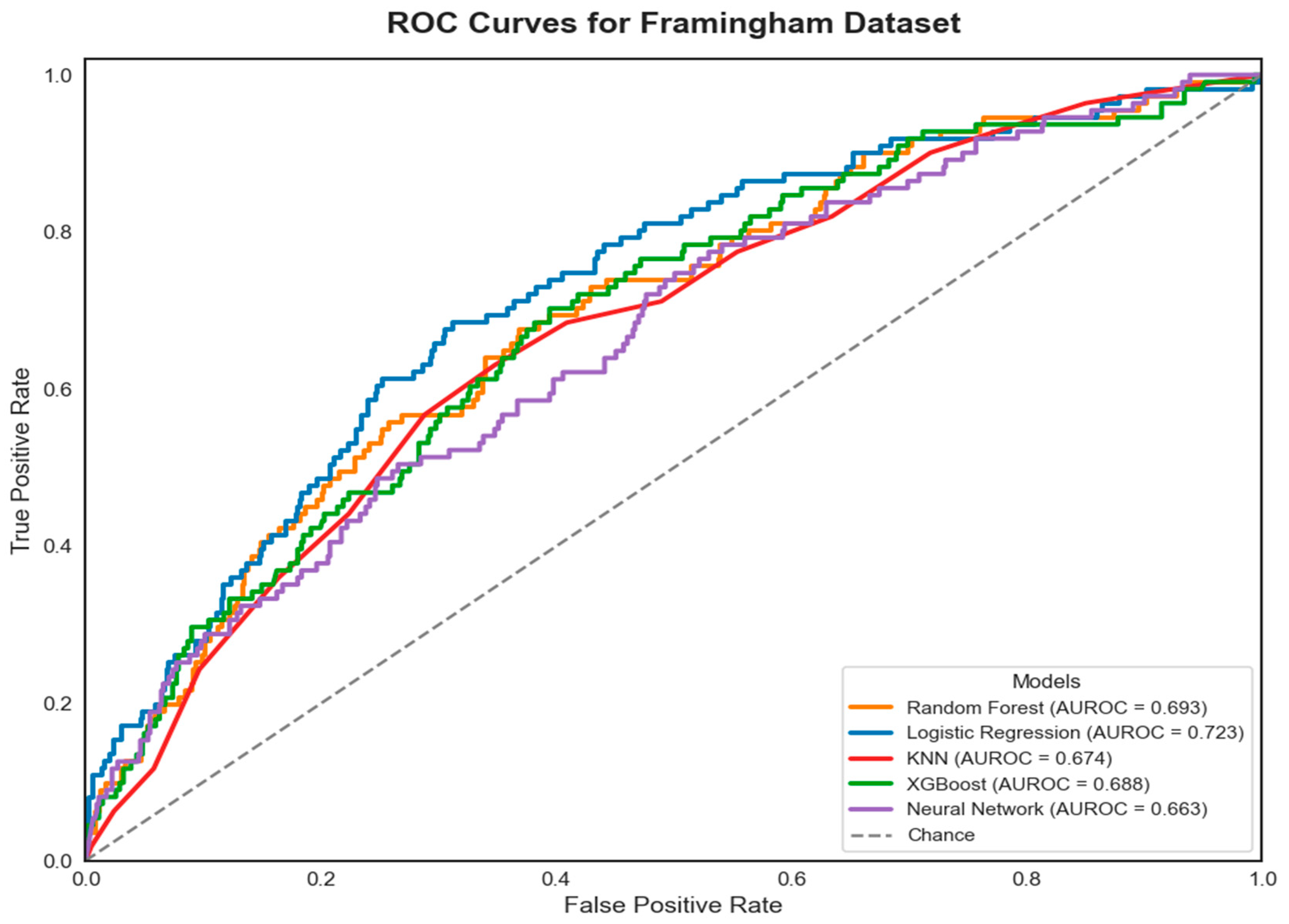
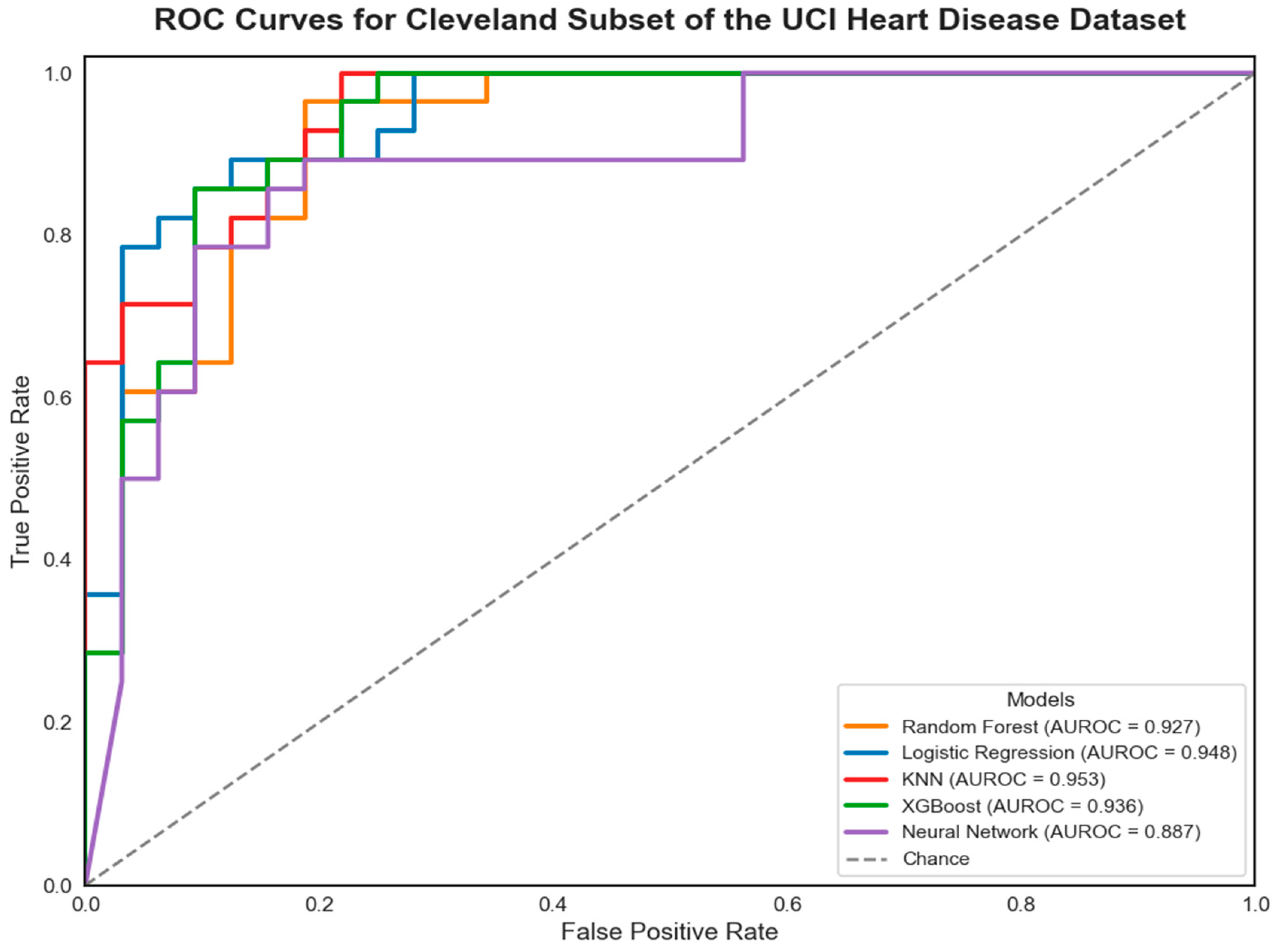
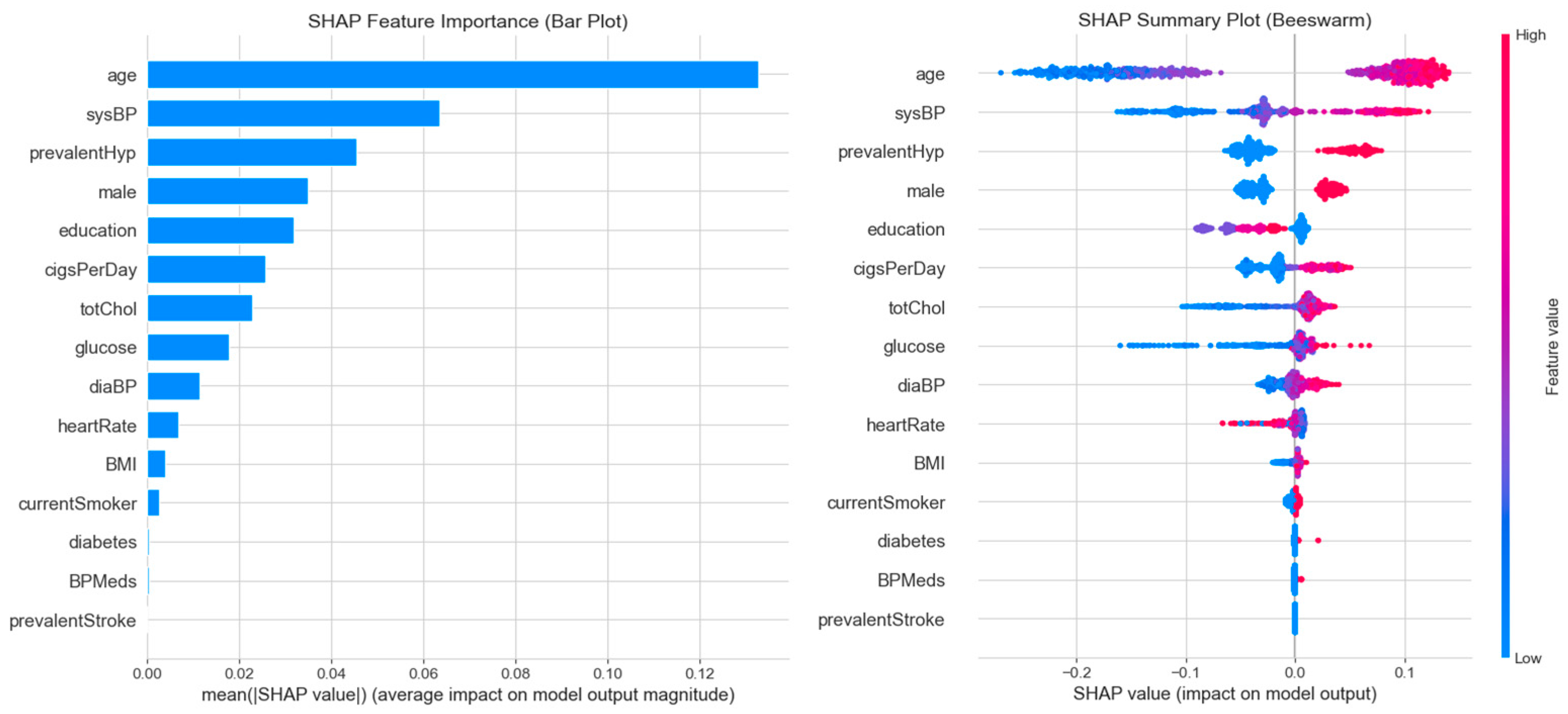
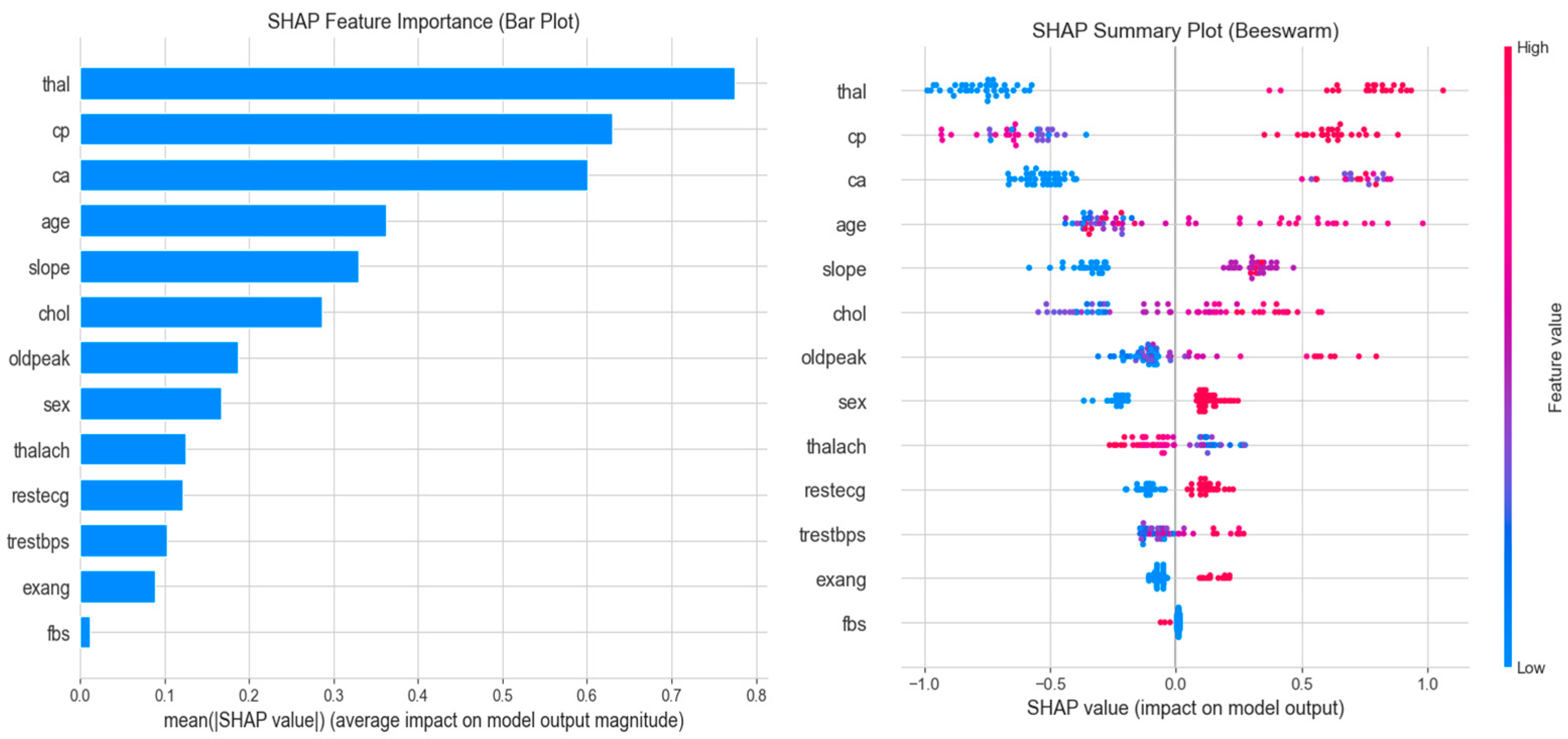
Introduction: Cardiovascular disease (CVD) remains the leading cause of mortality worldwide, with coronary artery disease (CAD), also known as ischemic heart disease (IHD), responsible for approximately 13% of global deaths in 2021. Studies applying machine learning (ML) and deep learning (DL) to heart disease classification have demonstrated promising results in risk prediction and feature extraction. Background/Objectives: In this study, we develop an AI/ML framework to predict and classify ischemic heart disease risk using publicly available datasets, the Framingham Heart Study and the Cleveland subset of the UCI Heart Disease dataset, along with explanations for how predictions were made by a process called SHAP (SHapley Additive exPlanations). Methods: We implemented a leakage-controlled machine learning pipeline that included data cleaning, stratified 80/20 train-test splitting, training-fold-only feature scaling and class balancing, 5-fold hyperparameter tuning, SHAP interpretability, and Brier score-based calibration assessment. Logistic regression, random forest, K-nearest neighbors, XGBoost, and a feedforward neural network were evaluated on the Framingham dataset and the Cleveland subset of the UCI Heart Disease dataset. Performance was assessed using accuracy, precision, recall, F1-score, Matthews correlation coefficient, AUROC, and Brier score. Results: After leakage-controlled evaluation, Framingham performance was more modest than in the preliminary analysis. Logistic regression achieved the highest AUROC on the Framingham dataset (0.7234), while random forest achieved the lowest Brier score (0.1750), and the feedforward neural network achieved the highest accuracy (0.7719). On the Cleveland subset, logistic regression achieved the strongest threshold-based performance (accuracy 0.8667, precision 0.8571, recall 0.8571, F1-score 0.8571, MCC 0.7321), whereas K-nearest neighbors achieved the highest AUROC (0.9531) and lowest Brier score (0.0942). SHAP highlighted systolic blood pressure, smoking status, and hypertension as influential predictors (Framingham) and number of major vessels, chest pain type, thallium stress-test result (thal; normal, fixed defect, or reversible defect), and age (Cleveland) as top predictors. Conclusions: Optimal model performance is dataset-dependent, and SHAP enhances clinical interpretability. Broader access to high-quality, de-identified medical data could accelerate reproducible ML research in cardiology.
Keywords: machine learning; coronary heart disease; cardiovascular risk prediction; Framingham Heart Study; Cleveland subset; SHAP; interpretability machine learning; coronary heart disease; cardiovascular risk prediction; Framingham Heart Study; Cleveland subset; SHAP; interpretability